


from the Editor
PETER SAUNDERS

PETER SAUNDERS
Are you a keen follower of social media?
If you’re a contractor who buys electrical products, then those products’ distributors are sure counting on it.
According to a recent survey conducted by consultant Katrina Olson and sponsored by Sylvania general lighting manufacturer LEDvance, the proportion of electrical distributors using social media throughout North America has more than doubled since 2012, from 41% to nearly 90%.
“It’s an exciting and challenging time for marketers in electrical distribution,” Olson tells Electrical Business. “There are more tools than ever before, including marketing automation systems that spark engagement, generate leads and drive sales.”
The respondents to Olson’s survey suggest the most effective social media platforms are LinkedIn, YouTube, Facebook and Twitter. In 2019, 77% of them plan to increase their use of social media overall.
“Unfortunately, not all distributors’ marketing departments are positioned to take advantage of new technologies that leverage customer data for content marketing,” Olson adds. “Many lack the staff, training, time and/or support from management to get—and stay—up to speed.”
With that in mind, she points to examples of organizations that are nudging distributors to modernize their marketing.
“I’m encouraged to see them taking a leadership role in adopting next-level technologies,” she says. “Rockwell Automation has outlined high expectations for their distributor partners, for example, and in April, AD identified three initiatives to support its members in digital content, business intelligence (BI) and marketing automation. The commitment of both organizations is likely to have a positive impact on their Canadian distributors’ marketing departments.”
To delve further into electrical distributors’ best practices for marketing—as well as for hiring and retaining staff and corporate social responsibility (CSR) strategies—be sure to check out our special Distribution & Supply section, starting on page 19.
On another note, the application deadline for Electro-Federation Canada’s (EFC’s) scholarship program, May 31, is coming up fast. Be sure to encourage your kids to submit their entries today at scholarship.electrofed.com.



The rise of IoT applications brings opportunities for electrical contractors to help clients implement energy management principles.
The right resources and contacts can reduce the strain of complex LED system installations in commercial office buildings.
For maintenance and troubleshooting purposes, a DMM needs to have been tested to withstand hazardous working environments.

AD (adhq.com), a member-owned buying and marketing group for electrical supplies and other products, merged with IDI (idiind.com), a co-operative network of Canadian distributors of industrial supplies, power transmission devices, bearing products, fluid power and safety products. The transaction creates a new brand, ‘AD Canada Industrial & Safety.’
Merging with IDI adds 107 independent industrial distributors with more than 360 locations to AD, along with 21 employees and a distribution centre in Mississauga, Ont. The deal marks AD’s ninth merger since it was founded and its fourth within Canada, following previous agreements with Canadian electrical groups in 1993 and 2012 and a plumbing and heating group in 2016. Today, AD’s Canadian members represent 20% of its consolidated sales.
The IDI merger further enhances the group’s private label and redistribution capabilities, reaffirms AD’s commitment to independent industrial distribution throughout North America and reinforces the value of single industry groups coming together under the AD multi-industry umbrella.
“We are proud to join this group,” says IDI board chair Steve Drummond. “IDI members will now get the best of both worlds: programs and services we value from IDI; and the multi-divisional scale and infrastructure of AD.”
Former IDI president Rob Dewar (pictured, top row, second from left) remains president of AD Canada Industrial & Safety.
“The investment AD continues to make in e-commerce is unparalleled and will be a true game-changer for the new members,” says Dewar.
Arlington (aifittings.com), which manufactures electrical fittings and connectors, recently signed sales representative deals with Electra Sales for Saskatchewan and TMC Sales for Manitoba and Ontario’s Lakehead Region.
Electra, led by Kirby and Brandie Kotylak, has a track record of serving Saskatchewan’s residential, industrial and commercial markets.
The business is now responsible for implementing Arlington’s business plan through selective Canadian distributor partners and can be contacted at 306-791-0266 or by email at brandie@electrasalesltd.ca.
TMC, meanwhile, is led by Jason Thor, who can be contacted at 204-837-5036 or by email at jason@ tmcsales.ca.
ELECTRICAL BUSINESS is the #1 Canadian resource for electrical contractors, maintenance and engineering professionals, distributors, manufacturers and their agents and associated stakeholders.
Editor Peter Saunders psaunders@ebmag.com
Associate Publisher/Advertising Sales Anthony Capkun acapkun@ebmag.com
Account Manager Jennifer Dilorio jdiiorio@ebmag.com
Media Designer Svetlana Avrutin savrutin@annexbusinessmedia.com
Account Coordinator Kathryn Nyenhuis knyenhuis@annexbusinessmedia.com
Circulation Manager Urszula Grzyb ugrzyb@annexbusinessmedia.com Tel: 416-442-5600 ext. 3537
Executive Publisher & VP Tim Dimopoulos tdimopoulos@annexbusinessmedia.com
COO Scott Jamieson sjamieson@annexbusinessmedia.com
President & CEO Mike Fredericks
Published by Annex Business Media 111 Gordon Baker Road, Suite 400 Toronto, ON M2H 3R1 Tel. 416-442-5600 • Fax 416-442-2191
Printed in Canada ISSN 0013-4244
Publication Mail Agreement #40065710
Circulation
Email: blao@annexbusinessmedia.com
Tel: 416-442-5600 ext.3552
Fax: 416-510-6875 or 416-442-2191
Mail: 111 Gordon Baker Road, Suite 400 Toronto, ON M2H 3R1
Subscription rates
Canada: Single issue $7.50 • 7 issues: $38.00
USA: $66.50 (US)
International: $80.00 (US) per year
Annex Privacy Officer Email: privacy@annexbusinessmedia.com Tel: 800-668-2374
Occasionally, Electrical Business will mail information on behalf of industry related groups whose products and services we believe may be of interest to you. If you prefer not to receive this information, please contact our circulation department in any of the four ways listed above.
The contents of Electrical Business are copyright ©2019 by Annex Publishing & Printing Inc. and may not be reproduced in whole or part without written consent. Annex Publishing & Printing Inc. disclaims any warranty as to the accuracy, completeness or currency of the contents of this publication and disclaims all liability in respect of the results of any action taken or not taken in reliance upon information in this publication.

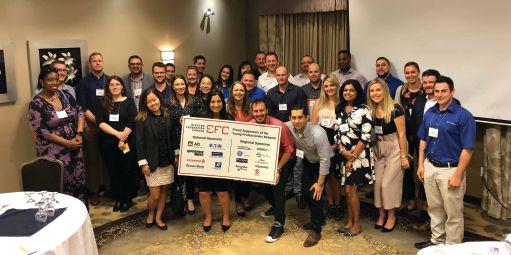
Members of EFC’s Young Professionals Network (YPN) members will speak at this year’s conference about how the next generation will transform the industry.
will host a complimentary breakfast session at this year’s conference for Canadian manufacturers.
in our people
EFC is addressing human resources (HR) on three levels: how to attract talent to our market, how to retain key employees and how to ensure our industry represents equity and diversity.
Talent attraction
To help increase awareness of our industry, members participate in our scholarship program, which awards more than 50 bursaries to Canadian post-secondary students each year.
Additionally, we have released a new video to promote the many career opportunities available in our industry, in support of our regional school outreach programs and our members’ recruiting efforts. Check it out at www.electrofed.com.
Talent retention
Among our workforce development programs for member companies’ employees, EFC is developing training modules to help new recruits navigate the industry ‘ecosystem’ and various codes and standards. These modules will be available beginning this summer.
Diversity and equity
At the conference, we will host our first annual national Women in Industry breakfast. This event will provide members with an opportunity to help shape our Women’s Initiative, which is designed to break down barriers and promote success.
EFC will continue exploring new ways our industry can become more diverse and inclusive. HR professionals from our member companies gather regularly at committee meetings to share best practices and gain insight into how to address new issues surrounding people management.
These efforts demonstrate the role EFC plays in powering a changing world. There is a great deal of potential in how we distribute goods and services. Together, we can make a significant difference in society.
Swati Vora-Patel is director of research and communications for EFC. She can be reached via email at spatel@electrofed.com.
nLight® AIR - Because Your Time Matters
Simplified Wireless Lighting Control
A wireless lighting control solution comprised of nLight ® AIR enabled fixtures, wireless battery powered wall switches and using CL AIR ITY, your mobile app for quick and easy start-up.
Factory Installed Smart Sensor
• 360° PIR Occupancy Detection
• Occupancy and Daylight Sensor - All in One
• Smart-Building Ready
• No On-Site Wiring Required Simple As



Your employees’ self-actualization is in your best interest. / BY BRIAN SMITH
Your position as a leader requires more than just keeping your team on track for your company’s goals. You should also strive to empower your employees to stay on track for their personal goals.
For guidance in this area, you should review and understand psychologist Abraham Maslow’s hierarchy of needs (see Figure 1), which suggests people first need to fill their physiological needs (including food, shelter and safety) before they can meet their psychological needs (including their relationships, sense of belonging and self-esteem) and finally attain self-actualization (including their potential, ego and accomplishments).
Cultivating meaningful relationships with your employees is vital for your company’s success. Through these relationships, they should feel comfortable enough to share their personal goals with you and, hopefully, the rest of the team. Empowerment activates trust, which enables more open communication and understanding. When employees feel empowered, they contribute to a more positive company culture.
Personal goals should be set throughout the year. We can always strive to become better versions of ourselves, after all. When you help your employees set personal goals, you are encouraging them to be their best selves, such that they contribute a better influence on the team.
Therefore, it is in your best interest to empower your staff to dedicate themselves to goals outside the business.
Laying a solid foundation
If you do not already practise a method of empowering your staff to set personal goals and follow through on them, you should start. There are a few ways you can integrate this approach into your company culture.
Understanding the importance Maslow’s hierarchy lays a solid foundation. From there, you can begin to empower your employees individually. If you meet with them one-onone and discuss their goals within the business, you should be able to discuss their personal goals, as well.
You can also empower your employees as a team. So, if you have team meetings where you all discuss company goals, set time aside to have all them contribute to a discussion about personal goals.
The key to helping them set and stick to their personal goals, whether one-on-one or in a group, is accountability.
You can track progress together, offer words of encouragement and support one another through the difficult aspects of change.
It is a good idea to ask each person what will help them to be held accountable. For some, it will be a daily verbal reminder; for others, a sticky note left at their desk.
Once you start applying this method in your workplace, you will notice several changes in how your team performs.
When people feel good about themselves, they exude confidence onto others, which contributes to a positive working environment.
One of the keys, however, is to hold them accountable for their goals in a positive way.
Accountability should not be a punishment, but rather a positive reminder of goals and what reaching them will mean. As a leader, it is your job to give your team the tools they will need to accomplish both work-related and personal goals.
Science has shown how setting and completing goals is one of the foundations to living a happy life. Helping your team become content will be reflected in their positivity and their work performance. They will feel doubly empowered knowing (a) they can complete goals they set for themselves and (b) they can rely on you as their leader to help them.
People who feel good about themselves can establish trust in the people and organizations that influence them. They are able to be their best selves and perform better.
Feelings of sadness, low self-worth, anxiety and other negative emotions can affect employees’ performance and carry over to the other people they influence. When you empower them to follow through with their personal goals, on the other hand, and they feel good about themselves for achieving those goals, they will in turn have a positive influence on their peers. Those who feel valued and know they can contribute to their work environment in a positive manner are able to complete tasks more quickly and efficiently.

Managers and employees can support each other in reaching both business and personal goals.
If you can understand the foundation of human needs, as defined by Maslow, and apply it to your leadership tactics through communication and empowerment, then you will provide a positive influence on your team. The domino effect will create a working environment with strong individuals performing at their optimal status—a passionate team ready to tackle both individual and shared goals.
Brian Smith is author of the new book, Individual Advantages: Find the “I” in Team. He has a background in organizational psychology, management information systems (MISs) and accounting. His company, IA Business Advisors, has served more than 18,000 clients since 1996. For more information, visit www.iabusinessadvisors.com.
SceptaCon is a water-tight PVC raceway system designed specifically for horizontal directional drilling (HDD) applications. No open-trenching, traffic interruptions or costly damage to roads and sidewalks.

SPLINE INSERTION HOLE
LOCKING SPLINE
LUBRICATED GASKET
CHAMFERED LIP Makes joint assembly easy
ROUNDED BELL
Reduces pull forces
RIGID PVC CONDUIT
Toll Free: 1-866-473-9462 | ipexna.com
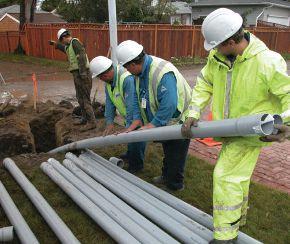
SceptaCon is available in a wide range of sizes and lengths to fit the needs of any HDD project. Every length is delivered with protective plugs in either end of the pipe to keep the conduit free of dirt and debris during shipping and job site handling.
/ BY EARL VAN AS
Analyzing and understanding the dynamic relationships between a business, its employees and its customers is a foundational element for any successful enterprise. For electrical distributors, certainly creating open lines of communication and a pleasant ‘customer journey’ are key to remaining profitable.
These tasks primarily fall on your customer service representatives (CSRs). In light of ongoing industry changes, including digital transformations, retaining valuable employees in these positions has become more important than ever.
High employee turnover can cost a business time, produc -
tivity and revenues. This is the case across the human resources (HR) spectrum, but particularly true with CSRs in sales departments who are product experts. According to The HR Digest, employee turnover can cost businesses tens of thousands of dollars. Distributors are facing hurdles when it comes to managing internal roles—and the supply chain as a whole has witnessed a significant increase in staff shortages in recent years. As CSRs remain the primary touchpoint for customers, understanding the valuable relationships they develop is a major competitive advantage, but retaining such employees— who contribute a great deal to

As CSRs remain the primary touchpoint for customers, the relationships they develop are a major competitive advantage.

the customer experience and are direct revenue-generators— continues to be a great challenge facing distributors today.
The supply chain has suffered staff shortages in recent years.
Employee retention often hinges on one simple factor: job satisfaction. While this may seem obvious, maintaining such satisfaction for CSRs in distribution can be very challenging.
For one thing, improving the employee experience is often overlooked when leveraging new technology to improve the customer experience. For another, the role of CSRs is changing.
CSRs represent your business as product experts.
For distributors, CSRs are important assets in maintaining a loyal customer base. They must represent the company as industry experts.Those who have been employed at the same company for 10, 20 or 30 years, certainly, have become product experts—and this is why they are so valuable.
As customers seek products, the CSR’s value shines when a problem arises. If a large customer is looking to purchase a particular electrical product that is currently out of stock, by way of example, the CSR’s in-depth understanding of functionality and availability can enable them to make alternative recommendations, which could even turn

out to be better-suited for the customer’s needs. There is also an opportunity to upsell.
Skilled CSRs are essential to drive product sales, business growth and innovation. And when it comes to solving customer challenges, they are responsible for ensuring a positive experience.
The role of a CSR has been drastically affected by digital transformation, however, and companies need to plan their strategies accordingly. As automation continues to shift the
focus of business operations, CSRs must be considered before implementation.
Implementing digital solutions across the supply chain can create a valuable support system to allow CSRs to focus on what they do best, i.e. connect with customers. Their knowledge in this respect not only delivers a significant return on investment (ROI), but also helps fulfil their needs as employees. Their customer relationships and problem-solving capabilities are at the core of their roles.
So, as distributors embrace digital transformation, it is important to ensure such solutions not only streamline day-to-day tasks for employees, but also support the key elements of their skill set.The more they enjoy their tasks, the more rewarded they will feel in their role and, thus, the greater the employee retention for the company. The team needs to feel valued for its skills.
Meanwhile, lower-value tasks, such as administration, can be digitized to better allow CSRs to focus on value-added tasks, such as upselling. By automating sales order entry, for example, a company can free up CSRs’ time to better maintain attentive contact with customers.
The CSR of the future should be enabled to entirely facilitate the customer journey and drive business growth through the use of both inherent skills and technology. When given the right tools that can deliver valuable insights, they can better cater their services to their customers.
Today’s distributors should even consider restructuring their team and adjusting their job descriptions accordingly. In doing so, they can foster more supportive, dynamic and efficient internal operations.
Your team is one of your most valuable assets, particularly in warding off competitive threats. By giving your employees the digital tools for success in their day-to-day work, while shifting their focus away from administrative tasks, you are more likely to retain them—and steer their focus toward greater sales opportunities.
Earl van As is vice-president (VP) of marketing and product management for Vancouver-based ecmarket, developer of Conexiom sales order and invoice automation and supplier relationship management technology for manufacturers and distributors. He can be contacted via email at evanas@ conexiom.com. For more information, visit www.conexiom.com.


ANDREW HOUSTON
What if you never had a lack of cash? What would it be like? Would you have less stress? Buy new equipment? Give yourself a paycheque?
It is nothing new to suggest contractors are likely to encounter cash flow issues, but you may be unaware you’re living day to day within a stifling context that is stunting your growth. You’ve been living it for so long, you’ve forgotten what anything else feels like. So, it is important to keep an eye out for the following tell-tale signs:
1. You are scared to look at your bank account
You’ve been taking on lots of jobs lately, your crews are busy and you’re certainly busy. Yet, despite that, you know when you muster up the courage to stare down those digits next to your account, you’re not going to be happy with them. So, you don’t look.
2. You constantly shuffle money around from one supplier to the next Your suppliers are offering discounts for prompt payment, but you’re struggling to pay them in 30 or even 45 days. You know things are approaching a disastrous state, but you only have enough cash to pay just one of your suppliers.
3. No matter how much work you land, you’re still broke
You’re looking for as many ways to save cash as possible—driving old trucks, using old tools and equipment, You’ve thought about shutting down your business; maybe you would be better off as an employee, instead of an employer.
4. You feel like a bank to your clients
Just as you’re in debt to your suppliers, so too are there more clients who owe you money than those who have settled up. Everyone wants to get paid, but nobody wants to pay you.
5. You can’t predict your cash flow
The busy season means too much work, which leaves cash tied up in payroll. At quieter times, too little work means no cash is coming in and you can’t keep your crew busy.
6. You can’t pay your tax bill
Another quarterly business tax bill has come
in from the government and you can’t pay it. The penalties are severe. So you start panicking and dropping your prices to get more work to pay the bill.
7. You pay yourself last, not first
When you sit down and look closer into what you’re actually making per hour, you figure out you’re actually the lowest-paid person in the company.
next steps
Cash flow issues for contractors aren’t going away, but there are actions you can take to escape the cycle and gain control.
Forecast your cash flow
This is a matter of balancing how much cash is coming in and going out of the business. It is not your bank statement, but a report that tells you your current cash-flow situation, which can then allow you to predicts weeks ahead—if not months—whether you are going in the right direction or need to course-correct.
Ensure you quote profitably
You also need to balance different cycles in sales against your breakeven margin, i.e. the amount you need to cover your overhead expenses. Then you need to consider your yearly profit goals and work them into your quotes. If you do not, you could be quoting yourself out of business.
Every extra day your clients hold onto your money is another day you are acting as their bank. Too often, contractors simply call their clients again to ask, “When can we expect payment?” Instead, you need an accounts receivable system set up such that it does most of the heavy lifting, can be delegated to your team and includes an escalation component. If you systematize accounts receivables, you can be in the driver’s seat.
Andrew Houston is the owner and founder of Profit for Contractors (PFC), an industrial controls licensed electrician and an electronics engineering technologist. He helps entrepreneurs in the skilled trades improve their business skills, so they can enjoy more control, freedom and money. To register for his free ‘cash flow mastery’ webinar, which discusses common cash-flow issues and strategies to improve your business, visit www.contractorprofitmastery.com/opt-in. You can also join PFC’s Facebook group, ‘Contractor Tips.’
Lightfair International
May 19-23, Philadelphia, Pa. Visit lightfair.com
EFC Industry Conference
Electro-Federation Canada (EFC)
May 28-30, Quebec City Visit electrofed.com
Canadian CommTech West
May 28-30, Calgary
Visit commtechshow.com/ west
ECAA Annual Convention
ECA of Alberta
May 30 – June 2, Jasper, Alta. Visit ecaa.ab.ca
EUFMC 2019
Electric Utility Fleet Managers Conference (EUFMC)
June 2-5, Williamsburg, Va. Visit eufmc.com
CSA Annual Conference and Committee Week CSA Group June 17-21, Ottawa Visit tinyurl.com/hyb9l4u
EASA Convention and Exposition Electrical Apparatus Service Association (EASA) June 29 – July 2, Las Vegas, Nev. Visit easa.com
NETCO Annual Training Conference
National Electric Trade Council (NETCO) August 10-11, Vancouver Visit netco.org
IEEE PCIC Conference Petroleum & Chemical Industry Committee (PCIC) September 9-11, Vancouver Visit ieeepcic.com
Indicates EB will be there.
Visit EBMAG.COM for an extensive list of upcoming industry events.
TACKLE THE CODE CONUNDRUM IF YOU DARE!
Answers to this month’s questions will appear in the June 2019 issue of Electrical Business
Compiled by Ray Yousef, code engineer
Ontario’s Electrical Safety Authority • esasafe.com
QUESTION 1
Each vehicle space in a carport or garage is required to have:
a) One receptacle located in each vehicle space.
b) One receptacle for each vehicle space, readily accessible.
c) One receptacle for each vehicle space, readily accessible and GFCI protected.
d) One receptacle for each vehicle space located on the ceiling for a future garage door operator.
e) All of the above.
QUESTION 2
Rapid shutdown is required for photovoltaic (PV) systems on or in buildings where the PV source or output conductors are:
a) More than 1.5 m from the array with shutdown within 10 seconds.
b) More than 1.5 metres from the array with shutdown within 30 seconds.
c) More than 1 metre from the array with shutdown within 10 seconds.
d) More than 1 metre from the array with shutdown within 30 seconds.
c) n/a: Rapid shutdown is not required.
QUESTION 3
True or false: equipment marked Ex ia Gb is suitable for installation in Zone 0 location.
a) True. b) False.
ANSWERS Electrical Business, April 2019
Question 1
TC-ER cables may transition exposed between cable trays:
d) B & C: Up to 1.5 m when not supported / Up to 7.5 m when supported. Rule 12-2202, CE Code 2018.
Question 2
When metal enclosed high-voltage equipment is installed in an electrical room, which of the following—within the electrical room—is to be grounded to the station ground electrode?
e) None of the above. Rule 36-308, CE Code 2018
Question 3
True or false: An identified conductor is required at a switch controlling a receptacle used for lighting in a living room or sleeping room.
b) False. Rule 4-022 2), CE Code 2018
How did YOU do?
3 • Seasoned journeyman 2 •Need refresher training
1 • Apprentice 0 • Just here for fun!

Wire and cable producer Southwire has introduced the Maxis XD1 circuit puller for contractors. The lightweight portable device accepts most commercial 18-V drills and reportedly delivers continuous cable pulling power up to 600 lb, with a peak of 1,000 lb. Its design eliminates the need to pull wire or rope by hand, which could otherwise lead to repetitive strain injuries (RSIs). southwire.com
Eltek’s DPR6000B rectifiers promise 96% efficiency
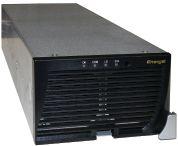
Eltek, a Delta Group company, has introduced its DPR6000B high-efficiency rectifiers for central office, data centre, cable multiple-system operator (MSO) and mobile network applications in the Canadian market. Designed for use with Eltek EcoTower and scalable DC power systems, the three-phase 125-A and 48-V rectifiers reportedly offer 96% conversion efficiency for high-power applications and deliver up to 6 kW of output power. Models include the DPR6000B-48 ID:A1 for 480-V input applications and the DPR6000B-48 ID:B1 for 208-V input. eltek.com

Montreal-based Eureka, part of The Luminaires Group (TLG), recently introduced its Scout line of cylindrical architectural lighting products for decorative applications, claiming nearly 20,000 combinations of colours, sizes and functions are possible. The luminaires are available in three lengths (6.25, 10.5 and 18 in.) and two diameters (2.75 and 4.5 in.). eurekalighting.com
Megger collects accessories in
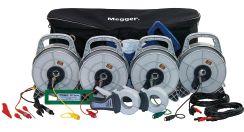
Megger’s Earth Test Kit (ETK) provides a variety of accessories in one hold-all case to help complete earth electrode testing and soil resistivity surveys. The kit is designed for use in conjunction with one of Megger’s ground testers to determine the effectiveness of ground rods, ground grids and connections, by measuring the electrical properties of soil for conducting current and prospecting for low-resistance ground locations. Each kit comes standard with reels that can be daisy-chained together for extended reach, along with test leads and earth spikes that attach to the reels. ca.megger.com

NANSY HANNA, P.ENG
Rule 2-024 of the CE Code mandates that all equipment used within the scope of the Code must be approved. ‘Approved’ is a specifically defined term, requiring the certification of equipment to ensure it complies with the applicable recognized standard(s), as listed in Appendix A. One important aspect of approval requirements for equipment is correlation with the provisions of the CE Code. The approval requirement presents a challenge for high-voltage equipment that has no applicable certification standard.
For three-phase liquid-filled transformers, by way of example, there are engineering standards (i.e. CSA C2.1, Single-Phase and Three-Phase Liquid-Filled Distribution Transformers , and CSA C227.4, Three-Phase, Pad-Mounted Distribution Transformers with Separable Insulated High-Voltage Connectors) that can be used to build to their requirements, but there are no certification standards that include testing criteria for approval purposes.
for now the authority-having jurisdiction (AHJ) can grant permission to use such equipment under the CE Code, which may come with certain conditions.
In the past, these transformers were mainly used by utilities and rarely installed under the scope of the CE Code. Today, however, they are becoming more common in customer-owned installations, so the lack of certification standards for approval is an ongoing issue.
personnel are specially trained to work with equipment outside the scope of the CE Code.
When these transformers are installed under the scope of the CE Code, it is important to be aware of Section 36, which provides requirements for high-voltage installations. Specifically, based on Rules 36-208 and 36-214, any doors giving access to live parts containing fuses in the equipment shall be interlocked with an external means providing visible isolation of all ungrounded conductors (e.g. the load break switch). The doors cannot be opened until the means of visible isolation is locked open and cannot be closed until the doors are locked closed.
ity-type installations. Therefore, when high-voltage liquid-filled transformers built to CSA C2.1 or CSA C227.4 are customer-owned and installed within the CE Code scope, additional requirements may be imposed by the AHJ.
The two main additional provisions are ensuring the compartment that provides access to fuses (a) does not contain consumer service conductors or other parts that remain energized when the main load break switch is in the open position and (b) is interlocked with the load break switch.
In fact, both standards for high-voltage liquid-filled transformers—the aforementioned CSA C2.1 and CSA C227.4—include a statement indicating “the operation of transformers complying with this standard by other than an electric utility may be subject to additional requirements by the electrical inspection AHJ.”
The rationale for this statement is the recognition that utility personnel are specially trained to work with high-voltage equipment differing from installations within the scope of the CE Code.
While efforts are still underway by standards development organizations to develop such certification criteria,
Transformer standards do not correlate with these requirements, since they are more geared toward util-
There are some transformers available that both (a) are built to the standards and (b) satisfy additional requirements to correlate with Section 36 of the CE Code, but it is important to understand high-voltage equipment built to engineering standards does not necessarily comply with the CE Code provisions.
Always consult your AHJ for more specific interpretations.
Nansy Hanna, P.Eng, is the director for engineering and program development at Ontario’s Electrical Safety Authority (ESA) where, among other things, she is responsible for product safety, code development, improving harmonization and alternative compliance, worker safety and aging infrastructure programs. She is vice-chair of the Canadian Advisory Council on Electrical Safety (CACES) and a member of the ULC Advisory Council, CSA Technical Committee on Industrial, Consumer and Commercial Products and CSA CE Code-Part I, Sections 24, 32, and 46. She can be reached at nansy.hanna@ electricalsafety.on.ca.
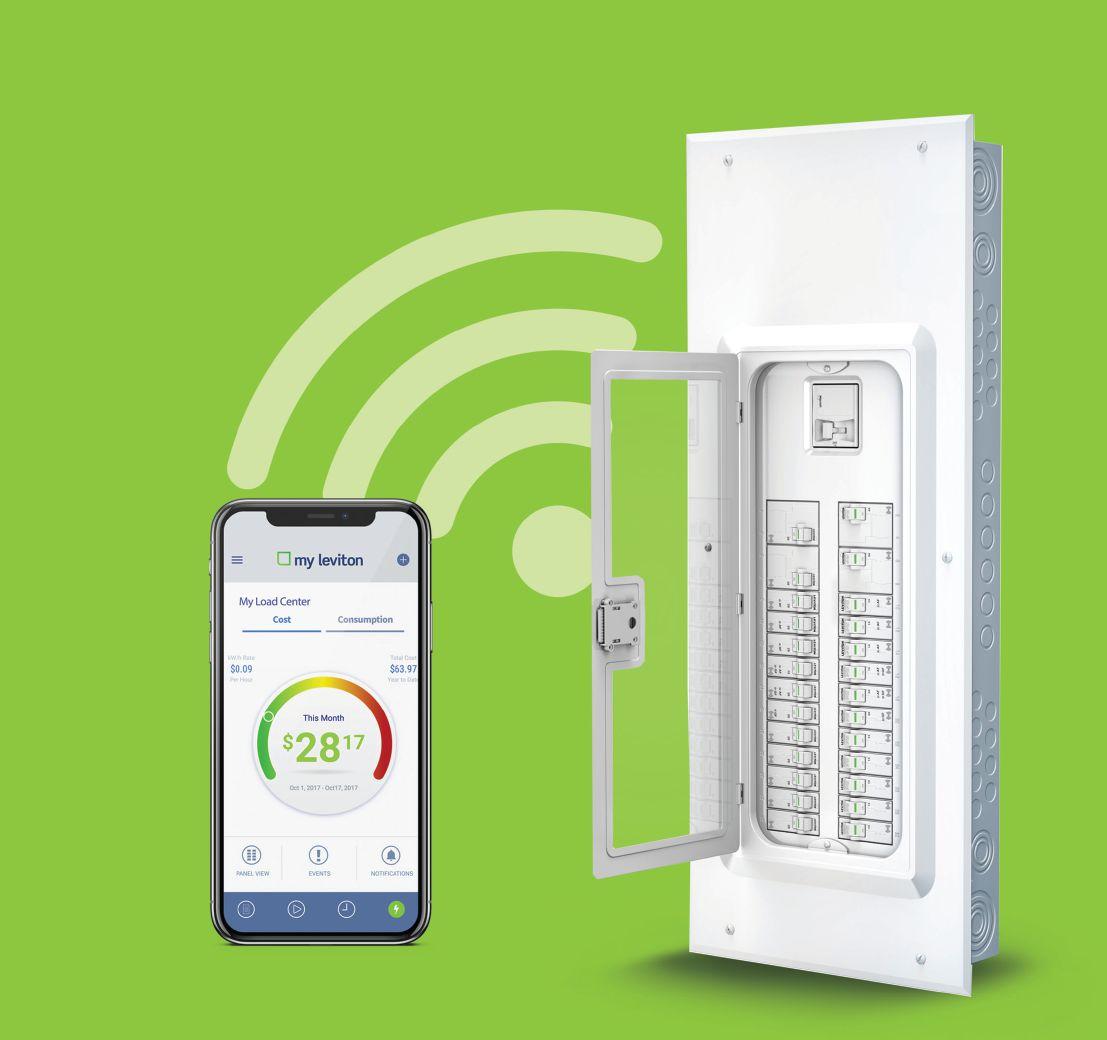
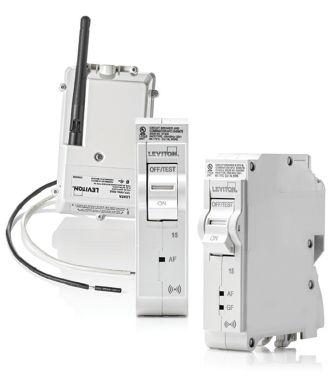






With AD Rewards, you can be rewarded for purchasing participating products from AD Canada Distributors. Earn one point for every dollar spent(1) at any AD Rewards Distributor(2) across Canada. You may already have points and not even know it. It’s the best rewards program in the industry. Isn’t it time you started rewarding yourself?