can create an automated solution or a simple keypad that checks all the boxes.”
The customer is delighted, and the referrals will start coming in. “But if you’re trying to shoehorn a solution to a problem that doesn’t exist in the first place, your client won’t be as inclined to recommend you to others.”
This all speaks to the importance of working with the homeowner, which means being flexible with your business model.
“Some homeowners want to buy their own product, some of them want to install the products themselves—and almost all of them need some degree of help.”
Mowles works with one installer who serves as a kind of final piece to the homeowner’s automation puzzle... and it’s not always the same piece. Whether it’s performing a full or partial installation, or programming the
components to ensure they work, “At the end of the day, it doesn’t really matter. By making himself available, he always gets enough of the project to make money and garner additional referrals”. Instead of forcing his way into a home and insisting on only one
set of products, his business model is to be flexible with a homeowner’s specific needs. When you make the homeowner an integral part of the project, Mowles says, you’ll have the most success. “Don’t fight them. We all hate to be told what to do.”
NEW NALOXONE REQUIREMENTS IN ONTARIO: DO YOU NEED TO COMPLY?
BY WORKPLACE SAFETY & PREVENTION SERVICES
Recent amendments to Ontario’s Occupational Health & Safety Act— which came into effect June 1—require lifesaving naloxone kits in workplaces where workers are deemed at risk of overdose.
Naloxone is a medication that temporarily reverses the effects of an opioid overdose and allows time for medical help to arrive.
A ccording to the province, roughly 2500 people died from opioid-related causes between March 2020 and January 2021. Of the victims who were employed, 30% were construction workers—“by far the most of any industry impacted”.
The province is offering guidance on how to determine whether your workplace must comply with new naloxone requirements, as well as support in the form of a free naloxone kit and training for two workers.
What are the new legal requirements?
Workplaces at risk of a worker opioid overdose must have at least one (1) naloxone kit onsite and train staff on administering it. Note: the requirements only apply when your own workers are at risk, not others who may be in the workplace.
“ A workplace can decide to provide multiple kits, depending on the degree of risk and the size of the workplace, in order to meet
the legal obligation to take every reasonable precaution to protect workers,” says Pam Patry, WSPS consultant.
Determining risk of worker opioid overdose
When you are aware of—or ought to be aware of—a risk of overdose, the regulations apply to you.
“There are five ways you might become aware of a risk of worker opioid overdose,” Patry notes:
1. A worker opioid overdose has already occurred in the workplace.
2. A worker who uses opioids voluntarily discloses this risk.
3. Opioid use is observed in the workplace or discovered during a workplace investigation.
4. Discarded opioid parapher nalia, such as needles, are
Ontario’s Workplace Naloxone Program will provide support to employers for up to two years by providing free online naloxone training for two (2) workers per workplace and a free nasal spray naloxone kit
found in the workplace.
5. The joint health & safety committee (JHSC) or others in the workplace bring the risk to the employer’s attention.
“If workplaces are still unsure of their status, they can opt to purchase a kit and provide training on its use to be on the safe side,” says Patry.
How
many staff need to be trained, and on what?
“ The requirements only say trained staff must be available to administer naloxone anytime there are workers in the workplace,” says Patry. “You’ll need to take into consideration vacation, sick days, shifts, and the number of naloxone kits you have when determining how many people require training.”
Those kits must be located in
photo shown for illustration purpose only
CALENDAR
If workplaces are still unsure of their status, they can opt to purchase a kit and provide training on its use to be on the safe side”.
the vicinity of trained staff.
Training covers how to recognize an opioid overdose, how to administer naloxone, and hazards related to administering naloxone. Depending on the form in which the naloxone is administered (nasal spray or injection), these hazards could include physical, chemical, biological and psychological.
What supports are available to help comply?
Ontario’s Workplace Naloxone Program will provide support to employers for up to two years by providing free online naloxone training for two (2) workers per workplace and a free nasal spray naloxone kit. Visit program providers, such as the Canadian Red Cross or St. John Ambulance.
Incorporating naloxone kits into existing plans
“Follow the process you use for other first aid emergencies,” says Patry. Set down, in writing:
• who administers the
naloxone
• where kits are stored
• training that is required
• procedures to follow when administering naloxone
• who to contact, externally and internally
• controls you have in place to prevent identified hazards
• personal protective equipment that must be worn
• how you will support first aid providers and other employees affected by the incident
Should you find that your workplace needs to comply with the requirements, then don’t delay, Patry concludes. “Opioid overdoses can happen tomorrow.”
A not-for-profit organization, Workplace Safety & Prevention Services is the largest health and safety association in Ontario, supporting the agricultural, manufacturing, and service sectors. WSPS is a partner in Ontario’s OHS system, which includes the Ministry of Labour, Immigration, Training and Skills Development (MLITSD), Workplace Safety & Insurance Board, and five other organizations.
EASA Convention June 24-27, National Harbor, Md. easa.com
IES Annual Conference August 3-5, Schaumburg, Ill. ies.org
NETCO Annual Training Conference
August 13, Toronto netco.org
IEEE PCIC
September 11-14, New Orleans, La. ieeepcic.com
CANEW
September 24-29, Lethbridge, Alta. canew.ca
The Utility Expo September 26-28, Louisville, Ky. theutilityexpo.com
Energy Storage Canada October 3-4, Toronto energystoragecanada.org
ECABC AGM, Conference, Tradeshow
October 10-11, Whistler, B.C. eca.bc.ca
AD Electrical North American Meeting October 18-20, Grapevine, Texas adhq.com
AEA Learning Expo October 25, Edmonton albertaelectricalalliance.com
Got an event to share? Email the editor at acapkun@ebmag.com. Meantime, scroll through Electrical Business Magazine’s online industry calendar at ebmag.com/events for direct links to these events (and others).
23_003263_Electrical_Business_JUN_CN Mod: May 12, 2023 10:22 AM Print: 05/12/23 1:52:04 PM page 1 v7
THE SHIFT TO LIGHT AS AN AMENITY
High-quality solutions mark residential lighting trend
Hom eowners are over whelmingly demanding modern, high-quality lighting solutions, with 91% of U.S. homeowners saying that quality lighting is important to their home design, and 75% expressing that lighting is one of the most important design choices for their home.
“Light brings atmosphere and can enhance not only the aesthetic of a home but how we look, feel, and live within it,” said Cecilia Ramos, senior director, Lutron Electronics.
Lutron recently published its first-ever “Lighting Trend Report”, which is informed by a survey conducted by Lutron/Harris Poll in the U.S., coupled with additional expert insights.
The report shows lighting’s importance to everything from supporting wellness and sleep
routines to creating ambiance, connecting to nature, incorporating sustainable design elements, and more.
“With the launch of our first trend report, we’re excited to dig into first-hand consumer sentiments about what’s motivating the demand for innovative new lighting solutions, and to explore the shift in thinking about lighting as a utility to light as an amenity that can truly shape our experiences within the home.”
Connecting with nature
82% of homeowners say it is important to have a connection to nature, while 87% believe a connection to nature is important in their home design. This trend toward bringing the outdoors in has been on the rise in recent years, says Lutron, adding that one of the most organic ways to support this connection is through natural
For many, the key to relaxing at home is creating the right ambiance.
light: both sunlight and LED solutions that mimic the changing colour temperature of sunlight.
The control of light through windows is critical as well, with 89% of homeowners reporting that window coverings that optimize views/access to nature (e.g. semi-transparent blinds) are important.
Homes as relaxing retreats T he majority of respondents (90%) say it is important that their home help them relax and disconnect from work and/or the outside world.
For many, the key to relaxing at home is creating the right ambiance; lighting has emerged as an important factor toward achieving this, with almost four in five homeowners (78%) saying the ability to adjust lighting is one of the most important factors for creating the desired ambiance.
Wellness on the rise
6 8% of homeowners wish they could integrate wellness into their home design “in a bigger way”. Design elements like lighting can help build healthy habits into daily routines through tailored settings that support anything from an invigorating workout to a relaxing yoga session.
W hat’s more, a majority of respondents (75%) say light control is important to their sleep routine, “acknowledging the impact of lighting and shades on one of the most important daily wellness habits—our sleep cycle”.
Closet and bathrooms
W hile the majority of homeowners say lighting is one of the most important design choices in their home, nearly one in five (19%) are unhappy with the lighting in the rooms in which they get
68%
of homeowners wish they could integrate wellness into their home
design “in a bigger way”.
ready for the day.
84% believe that bad lighting in a closet, dressing room, or bathroom can make getting ready an unpleasant process. This supports the idea that homeowners see a connection between light and their self-perceptions of beauty and style, and that “the routine activity of choosing clothes and making oneself presentable is positively impacted by a well-lit space”.
Lighting as a must-have
About 3/4 of homeowners would not purchase a new home without “good, natural light”, even when it checks the other boxes on their home search.
A ccording to respondents, priority rooms or areas for high-quality lighting:
72% Kitchen
69% Living/family room
61% Bathrooms
56% Bedrooms
41% Home office
32% Entryways
32% Closets
24% Basement
18% Home theatre
3% Other
Prioritizing
environmental choices
Over four in five homeowners are willing to invest in eco-friendly options; 76% say they would prioritize the purchase of products that help reduce their environmental impact.
Lutron says a home can be optimized to save energy and reduce waste with proper smart and automated lighting. 78% of respondents would invest in LED lighting or automated shades to help limit their carbon footprint.
— With files from Lutron
PATAGONIA HQ’S WINDOWS ARE “GENERATING” INTEREST... AND ELECTRICITY!
Next Energy Technologies has installed windows that are generating solar power at Patagonia’s corporate headquarters, marking the first time its window technology is being demonstrated on a building.
Next’s proprietary transparent PV coating transforms commercial windows into energy-generating windows, says the company. Patagonia worked with Next to install 22 of the windows on the south-facing facade of the Olive Building on Patagonia’s main campus.
The windows deliver dedicated power to the building for charging phones and other devices.
The windows are a production demonstration of how the technology can be “seamlessly integrated into commercial buildings to generate electricity to power the building and alleviate strain on the grid”.
“Global building stock is expected to double by 2060 and, if transparent PV windows can be deployed widely on buildings during this timeframe, they have the potential to reduce GHG emissions from the built environment by over 1 gigaton per year […]” said Daniel Emmett, CEO and co-founder of Next.
T he windows deliver dedicated power to the building for charging phones and other devices. Employees also have access to proprietary metrics with real-time power output and charging information from the windows.
Next estimates that its windows have the potential to produce significant onsite renewable power, offsetting anywhere from 10% to 40% of a typical commercial building’s energy load. The windows also capture and convert
infrared light, which reduces the building’s heat load.
Next’s windows are created by printing a transparent photovoltaic coating directly onto architectural glass. The coating is then sealed behind a secondary sheet of glass and subsequently integrated into a traditional glazing system which carries cables that deliver
renewable energy to be used onsite in the building.
Partners on this project include Walters & Wolf, who designed, fabricated, and installed the glazing system integrating Next’s technology. The glass fabricator of the module units was SolarFab, a division of GlassFab Tempering Services.
REDUCE ENERGY MISMANAGEMENT WITH POWER QUALITY ANALYSIS
BY JASON AXELSON
No matter the industry in which you work, energy is a part of the how the work gets done, which is why uncovering wasted energy or energy savings opportunities in a facility can be like looking for a needle in a haystack.
That’s where power quality testing and analysis comes in.When you know where to seek out—and how to analyze—power quality data, you’re well on your way toward minimizing energy waste and/or saving energy cost.
Power quality studies
Before you can begin addressing
issues, you need to conduct power quality studies in your facility. These studies will help highlight a lot of what you can do to save energy or reduce wasted energy throughout your plant.
Adding a power quality monitoring regimen to your preventive maintenance routine can also tip you off to emerging issues, allowing you to mitigate quickly so that your facility doesn’t waste even more energy.
Looking for energy mismanagement
The best way to start your search for energy waste is to identify when and where your energy is being used. Look at your utility
The best way to start your search for energy waste is to identify when and where your energy is being used.
bills, highlight any peak demand charges, and look at the rate schedule from the utility provider. Compare that to your own facility schedule to see when you’re using energy at different times of the day.
From there, you will map out your electrical supply system and look at the areas of your facility that tend to have the highest wasted energy usage, but with fairly easy-to-fix issues.
Electromechanical
Here are the five most common sources of energy waste in an electromechanical system.
1. Electrical. Electrical energy
waste often presents in voltage overload, current overload, or phase imbalance. A power quality analyzer or thermal imager can detect these issues.
2. Scheduling. Using your PQ analyzer, log power consumption to catch one of the easiest energy savings solutions. Determine which machinery uses the most energy, and check whether you can adjust their operation align with the cheapest utility rates.
3. On/Off/Idle. Again, log power consumption to get a baseline of what assets are using power and when. If any machinery is drawing power while not being used, see if it can be turned off or idled.
4. Age and efficiency. Overhauling or replacing assets before they fail can often save money in the long run. It’s worth logging how much power older assets are using compared with their sizing and efficiency rating requirements. If they’re using more power than they should be, how long will it take a new motor to pay for itself? Sometimes it’s worth replacing early.
5. Mechanical/friction. Overheating and excess vibration can be signs of a motor or drive wasting energy due to a mechanical issue. Detect these issues using a thermal imaging camera or vibration meter.
And a few more to keep in mind...
Steam. Process heating can account for a large portion of operating costs, but it can also be controlled. Regularly inspect your system for failed
steam traps, leaks, blockages, or failures. A thermal imager can help ensure as much preheated condensate returns to the boiler as possible.
Log energy consumption with a power quality analyzer at the boiler to get a baseline for what’s normal. Inspect the distribution system— including pressure gauges, insulation, pumps, valves, and steam traps—to catch wasted energy through steam and heat.
Compressed
air/gas. Compressed air or gas leaks can waste a huge amount of energy as the system(s) struggles to maintain pressure. Identify and quantify the level of waste by logging power over a full business cycle at air compressors to establish how much energy it currently takes to produce air pressure levels.
Then go through your facility with a sonic industrial imager to find leaks. Once those have been repaired, you can rerun the power quality analyzer to see how much energy you’re saving.
How
to spot energy waste
As you’re logging and pulling data across your facility, you need to know what kinds of measurements to monitor. Key areas that provide a insight into your power quality are: harmonics, voltage regulation, and unbalanced loads.
Harmonics. Signs of harmonics will show up in your power quality logging as distorted current or voltage. The ideal sine wave is not maintained. On your equipment, this may present as excess heat created in the conductors carrying the harmonics, resulting in
overheating in phase and neutral conductors, cable runs, motor windings, and even transformers.
Voltage regulation. Issues with voltage regulation will show up as transient voltages and voltage imbalance on a power quality analyzer. Both issues can lead to unplanned downtime, asset failure, and even expensive repairs if not caught soon enough.
Unbalanced loads. Diagnose and measure voltage imbalance at a motor load with a power quality analyzer. Small amounts of voltage imbalance can lead to significant current imbalance. These issues come with an increased power cost and can lead to increased vibration, pulsations, and
mechanical stresses on your machinery.
Continuous power quality monitoring
Power quality studies highlight a lot of what can be done to save energy, reduce energy losses due to issues throughout a facility, and lower energy costs. Power quality monitoring can help identify where issues are coming from and how to fix them. From individual equipment data to all-up system health, power quality studies are a must for everyone responsible for uptime and energy efficiency.
Jason Axelson is a product application specialist for Fluke, a manufacturer of electrical test and measurement tools. He regularly conducts application training to help end users diagnose and resolve both technical and product enquiries.
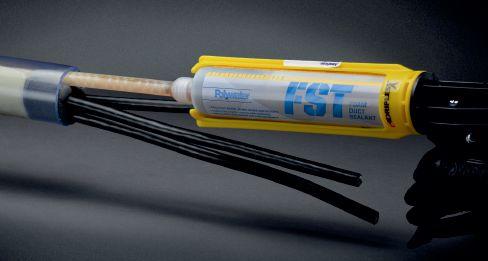
• Holds 22 ft. (6.7 m) of water head pressure and up to 90 ft. (27m) surges.
• Can seal conduits of all sizes and is re-enterable.
• Use with a wide range of cable jacket and conduit materials.
• Meets Canadian Electrical Code requirements.
WHY DOES DUCT PUTTY FAIL TO SEAL CONDUITS?
BY CHRIS JONNES
Duct putty is arguably the most common product used to seal electrical and telecom conduits worldwide. The product is cheap, safe, easy, and ubiquitous, allowing cable installers to comply with industry codes that mandate conduits be sealed.
Unfortunately, this seemingly ideal sealant too often falls short of expectations, resulting in expensive damage that far outweighs any perceived convenience or cost savings over high-performance, engineered sealing solutions. This article reviews duct putty and analyzes why its use as a duct sealant can be problematic.
What is duct putty?
Although formulations vary by manufacturer, duct putty is typically a thick and pliable inert commodity made of clay and water. Variations include mastic or oil and wax blends. It can be easily worked by hand to form an infinite variety of shapes that are pressed into place to seal HVAC ductwork—hence the name “duct putty”. It is also commonly used in the refrigeration and plumbing trades.
U ses in the electrical and communications markets include sealing around electrical boxes, flashings, junction boxes, pedestals, service mast entries, etc. It seals gaps and cracks and works well to reduce drafts, moisture, dust, insects, and noise. Many commercially available duct putties are UL approved.
Duct putty is not, however, an excellent conduit sealant. It is important to note that a UL mark does not make a product
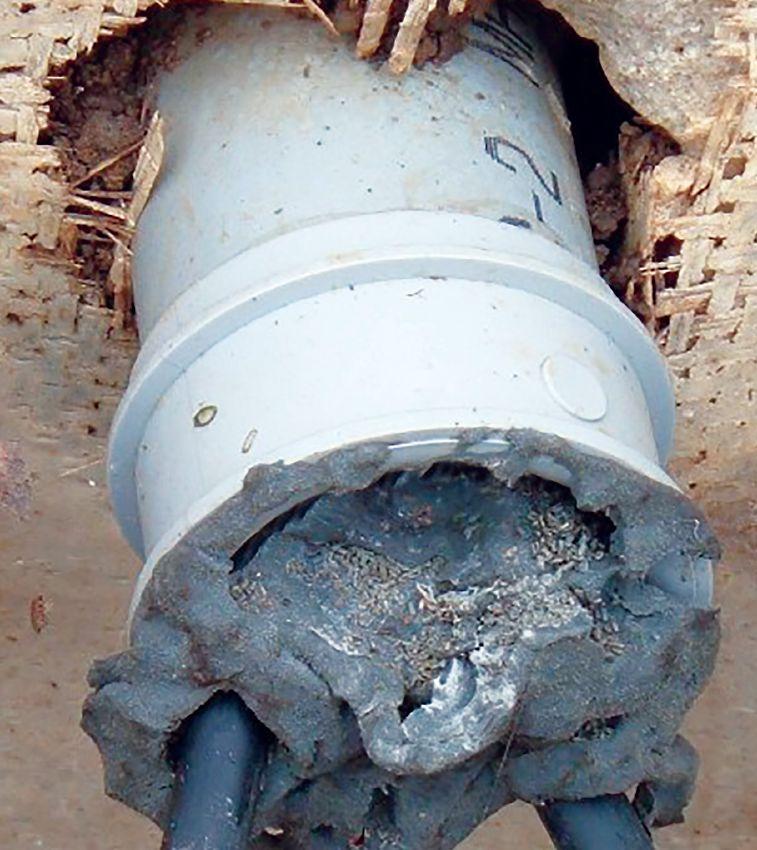
1:
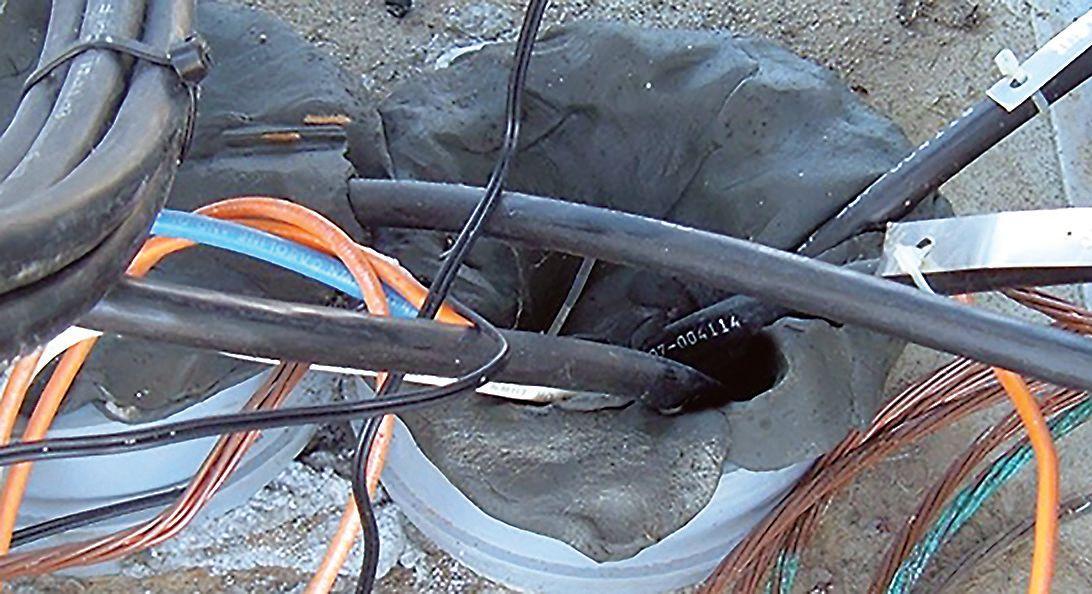
duct putty attempting to seal a conduit with electrical wires coming out. Putty also tends to settle under the crushing weight of cables, opening gaps above the cables. Wire movement causes yet more gaps (Figure 2).
suitable for a purpose other than the one for which it is designed or marketed. In the case of duct putty, the UL mark is generally for sealing junction boxes, not conduit entrances containing electrical or communications cables.
D espite this, duct putty is often recommended for—and marketed as—a conduit sealant,
and is frequently used as such. Specifiers and engineers should understand that this is problematic for reliable cable installations because duct putty fails as a long-term sealant solution.
The mechanisms of seal failure
Application is one cause of failure.
FIGURE
Sagging
Putty comes with no instructions on how much to use or how to properly seal a conduit. It is very sticky and hard to manipulate. Even a rudimentary seal is difficult to craft. Too often, initial installation results in no seal at all.
Even with adequate installation, when duct putty’s volatile content evaporates, it causes shrinkage that results in gaps. The shrinking sealant pulls away from conduit walls and/or cable jackets, opening a pathway for water, gas, dirt, insects, snakes, rodents, fire ants, etc. Sometimes the shrinkage results in cracks in the body of the seal itself which, again, breaks the seal and allows the ingress of water, gas, and other contaminants.
Another problem is that while the volatile content is still present, the putty is essentially a thick liquid. While it may move very slowly, putty does flow under the force of gravity. This slow flow manifests itself in sagging over time, which is another way for the material to separate from the top of the conduit wall and break seal integrity (Figure 1).
Duct putty performance
The development of gaps and cracks over time is only part of the problem. Another serious consideration is the performance of an otherwise intact duct putty seal that has not yet sagged or cracked. Here the question becomes: how good is a duct putty seal?
T hat question leads to still others. How strong is the bond between the putty and conduit wall or cable jacket? How much water head will a duct putty seal hold? How many psi of gas pressure will it resist? The answer to these last two very important questions, unfortunately, is not much (Figure 2).
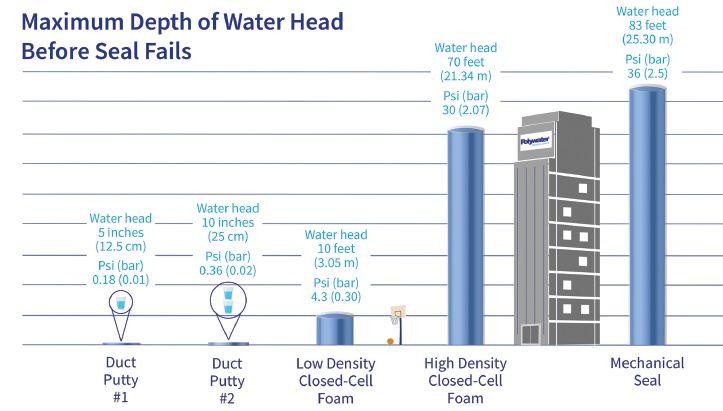
To test seal performance, a 1-in. (25-mm) plug of putty was fitted into a 2-in. (50-mm) PVC conduit. A column of water was then poured over the top of the seal, increasing by 1 in. (25 mm) per day until the seal failed.
Two different duct putties were tested and their results are seen in Figure 3.
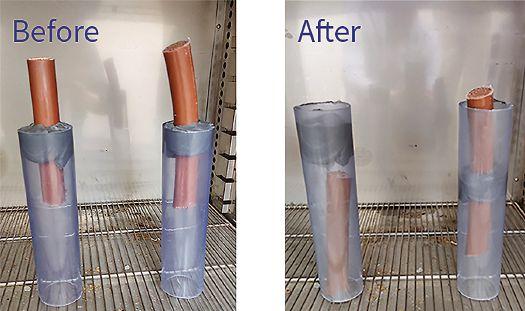
Then, the duct putty seals underwent accelerated aging for two weeks at 212 F (100 C). Figure 4 shows the Before and After images of this test. Note that the After image shows both putties having sagged or shrunk, and neither could support the short piece of cable in the duct.
As evident in the After image, neither duct putty could hold water once they started to sag or shrink. When combined with the
shrinking and sagging factors, the performance numbers for duct putty seals—which start out relatively weak to begin with—tend to only go in one direction over time—down. This should be of significant concern to engineers.
You may see the UL mark and believe this duct putty has been tested for performance, but this is not the true situation. UL-classified duct seals are typically classified under the surface burning characteristics of general use tapes. They have been tested for fire spread and smoke development as
FIGURE 2: Duct putty seals are often temporary, at best.
FIGURE 3: An infographic showing the different levels of water head that can be sealed by various sealants.
PERSONALITIES
From left: Jordi Trisan, WG19 convenor; George Anders; Roberto Gaspari, WG19 convenor. Source: IEC TC20 WG19.
At the last meeting of the IEC TC20 WG19, Dr. George Anders was acknowledged for his dedication over the years: “It is quite remarkable that George volunteered his time and was able to attend every WG19 meeting in-person for the last 39 years,” said Roberto Gaspari, meeting convenor. The scope of International Electrotechnical Commission (IEC) Technical Committee (TC) 20 is “Electric cables”. WG19 focuses on “Current rating and short-circuit limits of cables”.
part of a surface burning mark. There are no pass/fail criteria, nor any kind of seal testing as part of this classification.
What is at risk? What’s a solution?
When water flows into a conduit through a failed seal, what is at risk? Is it more than just the cable (which is obviously expensive enough)? What else is downstream that can be damaged?
Analysis of the true cost of a cable and conduit installation should extend through the expected lifetime of the system itself, including estimated expenses for repair and replacement. The cost of premature cable failure, compromised electrical apparatus, damaged telecom equipment, ruined carpets and flooring, and even stained drywall as a result of failed duct seals should weigh heavily in this analysis.
Consider, too, the potential cost of service outages. Is there any legal liability for any resulting damage?
The next step is to assess the source of the threat. When seals fail, will the potential damage be caused by worst-case rainfall, ocean surge, noxious gas buildup, animal infestation, etc.? Can those threats be quantified? How much water head or gas pressure must be resisted for realistic integrity?
The solution is to analyze the risks and engineer the system. This includes specifying performance-based sealing materials. Don’t allow the entire system to be threatened by something many view as merely an inconsequential matter: sealing the conduit with a cheap and handy putty.
Ultimately, the solution is to specify sealing products that meet performance parameters appropriate for the installation, such as closed-cell foams or mechanical seals. Sealants should be sourced from reputable manufacturers offering products developed, tested, and rated specifically for conduits.
Such seals are engineered for robust performance and long-term integrity. That attention to detail and quality could pay dividends at countless cable installations worldwide.
Chris Jonnes is an electrical industry veteran, with 50 years of employment with American Polywater. He has held numerous leadership roles with the company over the years, including vice-president, chief financial officer, and chief operating officer. He currently serves as corporate treasurer, board member, employee stock ownership plan trustee, and marketing committee contributor.
North American marketing/buying group for construction and industrial supplies—AD—has confirmed its 2023 board of directors, which includes several Canadians. François Deschênes, president & CEO of Deschênes Group Inc., is a newly elected director. Deschênes has also been chair of AD Plumbing & Heating [Canada], and of the buying group Canaplus LP. The remaining Canadian members of the 2023 AD LLC board are: Steve Drummond, president, Source Atlantic; and Tim Horsman, president & CEO, E.B. Horsman & Son
Manitoba Building Trades has welcomed Tanya Palson to the position of executive director. Palson has worked for MBT for several years in a variety of roles, says the organization, and played a crucial role in the design, development, and opening of the Manitoba Building Trades Institute (MBTI). “Our members have helped build this province and I am honoured to play a role in ensuring that continues,” said Palson.
In anticipation of the imminent and future retirements of Richard Solonenko (CFO, EVP Operations) and Carmen Stewart (CMO, EVP Sales), respectively, Gerrie Electric Wholesale Ltd. has added several members to its executive team.
Jonathan Kwant (right) has been appointed executive vice-president, eCommerce, Marketing, and Vendor Strategy. Joanna Kwant (centre) has been appointed executive vice-president, Sales, and Taylor Gerrie (left) has been appointed executive vice-president, Operations. Heather and Elaine Gerrie will continue in their roles as co-presidents and CEOs. “The Gerrie family is committed to a long-term future focused on growth and expansion,” says the distributor.
We’re limited by space here, but have plenty of room online! Learn more about these individuals by visiting EBMag.com. Click “News”, then click “Personalities”.
FIGURE 4: Before and after images of the duct putty after the 100 C test.
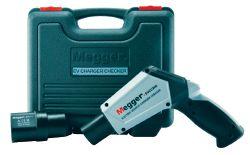
Megger
EVCC300
for Level 1 and 2 EV chargers
Source: Megger
The EVCC300 is used for checking the safety and operation of Level 1/2 electric vehicle chargers, performing a variety of safety assessments, such as checking for hazardous voltages, confirming ground connection, ensuring any exposed metalwork is properly grounded, and timing the device’s tripping speed. The unit can also check whether nuisance tripping is likely to occur, but connects only to SAE J1772 Type 1 and Type 2 charger connectors (megger.com).
Lapp expands Skintop Mini family
Source: Lapp
Lapp North America’s extended Skintop Mini range includes 2-mm to 7-mm diameter glands, allowing system designers to achieve secure seals for their small-diameter cables while reducing cable density in their networked devices. The range of mini glands boasts low height for high-density packing, nickel-plated brass construction, a temperature range of -60 C to over 200 C, and IP68 protection for harsh environments (lappnorthamerica.com).
Katrick windpower panels
Source: Katrick Technologies Ltd.
Katrick Technologies has designed a panel system for harnessing windpower that “uses a wider range of wind frequencies and speeds than traditional turbines”. The panels use individually acting aerofoils to capture kinetic energy and convert it to electricity, with the potential to generate 22,000-kWh of electricity annually per panel. Because of their size, the company says these panels are straightforward to install, and can be deployed “on any scale due to their modular design and rapid deployment” (katricktechnologies.com).
ServMan Mobile 2.0 for contractors
Source: WorkWave
WorkWave’s ServMan Mobile is a mobile app (Android and iOS) for electrical, mechanical, and plumbing contractors. With version 2.0, technicians and teammates have common tasks and integrated workflows at hand: receiving, completing or creating work orders; collecting payments; providing quotes in the field; adding time and material tracking to orders; attaching images for proof of service, and more (workwave.com)
Juno QC housing for shallow ceilings
Source: Acuity Brands
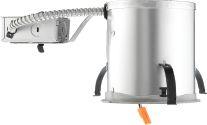
The Juno quick-connect housing offers a “lowest-cost of entry for a recessed LED downlight solution using legacy-style housings that pair with LED retrofit trims” for both new construction and remodel applications. Available in 4-in., 5-in. and 6-in. sizes, the housing’s compact design allows for easy handling while installing into shallow ceiling areas where plenum space is limited. The housing is rated for direct contact with insulation (acuitybrands.ca).
Rockford prevents accidental machine restart
Source: Rockford Systems LLC
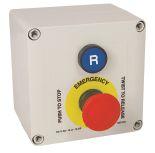
Sensing-Saf-Start automatically disconnects power to machinery to prevent it from restarting after power has been restored. The machine will only restart after the operator presses the Reset button. Sensing-Saf-Start is designed for quick, simple retrofit, helping bring older machines “into alignment with current safety regulations and standards” (rockfordsystems.com).
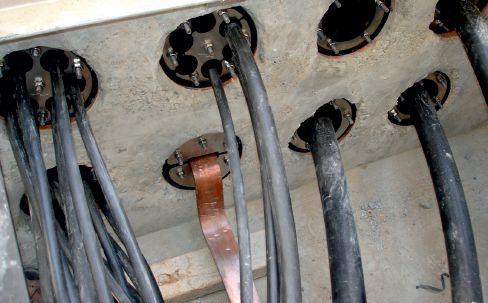
• Simple installation for new or installed cables/pipes • Unique stainless steel, split design, single-piece construction • Holds 36 PSI of water head pressure and gas tight • Trusted CSA listed and meets CEC Codes
conundrum
RAY YOUSEF
Ray is a code engineer with Ontario’s Electrical Safety Authority
TACKLE THE CODE CONUNDRUM... IF YOU DARE!
Welcome to the newest round of questions that test your knowledge of the CE Code-Part I. Answers will appear in the Summer 2023 edition of Electrical Business Magazine, and online at EBMag.com under Features.
QUESTION 1
When a PV recombiner is more than 7.5 metres from the inverter, the disconnect:
a) Shall be rated to interrupt the load
b) Shall be installed within 2 metres of the recombiner
c) May be integral with the recombiner
d) All of the above
e) Is not required
QUESTION 2
The ampacity of a communication cable marked “-LP” is determined by:
a) Table 60
b) The ampacity marked on the cable
c) A qualified person
d) Any of the above
QUESTION 3
Raceways that are less than 2 metres above grade and subject to mechanical damage shall:
a) Be of rigid steel type
b) Protected by location
c) Protected by steel guards (min. 10 MSG), secured in place
d) Any of the above
ANSWERS
Electrical Business, April 2023 ed.
Q-1: When a two-conductor NMS cable is used for a switch loop, does the CE Code require you to tape the white wire with Black tape at the switch, if the connections are made so that the actual Black wire is the return conductor from the switch to the outlet?
b) No. Rule 4-030(2).
Q-2: All space within 6 metres horizontally in any direction from dip tanks and their drain boards, with the space extending to a height of 1 m above the dip tank and drain board, is considered:
a) Zone 1. Rule 20-302.
Q-3: Conductors in the high-voltage circuits of X-ray equipment shall be of the ___ type.
c) Shockproof. Rule 52-004(3)
products and solutions
CSL Lighting wall wash optic system
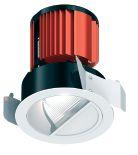
Source: CSL Lighting CSL’s Acrobat wall wash optic system is the latest addition to its Acrobat downlight line. The system works to prevent light distribution to unintended areas by placing all of the light output onto the target. The installation process is improved, says CSL, as it “easily pops into any standard Acrobat trim” and converts into a wall wash trim, offering end users the ability to retrofit the wall wash fixture after installation (csllighting.com).
installation, says the company, while toting spools is made easier with the ergonomic Easy-Lift handle. Nexans has also added metre markings to the cable to account for every metre of cable installed (nexanscanadex.ca).
Altivar soft starter ATS480 for Canada
Canadex 2.0 residential NMD90 cables
Source: Nexans
Nexans has upgraded its line of Canadex cables with the launch of the 2.0 line of NMD90 cables, which is designed to accelerate the installation process. Instaglide technology allows for fast and efficient
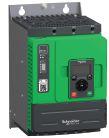
Source: Schneider Electric Schneider Electric’s ATS480 is available for use in applications such as compressors, conveyors, pumps and fans, and centrifugal machines. It can support processes and infrastructure across several industries. Integrating the ATS480 in EcoStruxure apps and software for automation and power simplifies architecture selection, design, and execution (se.com).
How did YOU do?
3 Seasoned journeyman
2 Need refresher training 1 Apprentice 0 Just here for fun!
We’re limited by space here, but have plenty of room online! Check out more products and solutions at EBMag.com, under “Products”.
ADVERTISER INDEX
DAN BERESFORD AND JOHN F. WIESEL
Materials, labour and associated risks
As an electrical contractor, you need to bid projects to win work and grow your company. But should you bid on every project that comes your way?
Doing a takeoff, completing the estimate and submitting the bid according to the specs, drawings, and bid documents takes time. As such, you want to be reasonably sure of a potential payoff before you invest your time in the process... but how can you be reasonably sure?
When evaluating whether to bid or not to bid, consider the following:
1. WHEN IS THE BID DUE?
Do you have enough time to review the entire bid package and complete a proper takeoff? Rushed, sloppy takeoffs will come back to bite you.
2. IS THE BID PACKAGE COMPLETE?
Are the drawings missing any information, and are the specs clear? If not, you will need to request more information to complete the bid properly (see also Point #1).
3. CAN YOU DO THE WORK?
Consider whether you are you able to finance the project. Also, will you have the manpower and supervision required for the job when the job requires them? The job’s planned timeline may simply not work with your current workload and schedule.
Are there additional documents that are required for bid submittal, such as bid bonds, consent of surety, extra liability insurance, WCB documents, etc.? If yes, are you able to secure everything that is required and still submit a proper bid in the time allotted (see also Point #1)?
4. WHO IS THE CLIENT?
Past experiences with a client should help you decide whether to bid. You will sleep a lot better at night when you prioritize clients who pay promptly over those you always have to chase for payments and holdback. In case you have not worked with this client before, what kind of reputation do they have? Find out.
5. WHO IS YOUR COMPETITION?
Take a look at the bidding landscape and try to determine how many others are bidding on the same opportunity. From that lot, do you see competitors who are hungrier than you... do you see any or many low-ballers? If so, you may be better off to just walk away and focus your efforts on bids where you are reasonably sure of a potential payoff.
6.
TIES THAT BIND
Is the project connected to specific manufacturers, sales agents or distributors, with existing or specified products? If so, do you have a good relationship with them? More import-
antly, does your competition have a better relationship with them? When your supply chain relationships are weak on a particular project, your bid submission will pale in comparison to your competitors’ bids.
7. NEED AND WANTS
Wouldn’t it be wonderful if we only ever had to bid on the work we wanted rather than needed? The reality is that we may have to bid on work so that we can keep our crew employed, or to keep cash flowing through the company. But there are also times we choose to bid because we want to work with a particular client, and hope to establish a long-term prosperous relationship with them.
There may be other factors that influence your decision whether to bid on a project. Never forget that you are in business to generate profit and grow your company; failing to consider the factors above may very well cost you both.
John F. Wiesel is the president of Suderman Estimating Systems Inc., and has been estimating and teaching estimating since the early 1980s. Dan Beresford served as an electrician in the Canadian Navy, then worked in various roles in the electrical sector before joining Suderman.
Requirements for irrigation systems CODE
DAVID PILON
Irrigation equipment and systems are frequently used along our waterways by nearby farming and agriculture businesses, and we are seeing more of them pop up across the province.
This increase has prompted Technical Safety Authority, Saskatchewan to double its efforts when informing dealers, farmers, contractors, manufacturers, etc., about the requirements for these systems.
The types of irrigation installations vary by manufacturer and by need: some are placed permanently into a well-like structure along the bank of the waterway; others are installed on carts and wheeled into the water and connected as required; still others are situated on float assemblies that keep the pump close to the surface.
Typically, irrigation pumps and equipment are manufactured to operate at 480 V. As such, this higher-voltage equipment poses a potential safety hazard to the public when it is installed in or on public or private waterways.
When irrigation season is over, the pumps are generally removed from waterways and often stored where they were used; meaning, the cables are exposed to animals, weather, and other sources of wear and tear—including the process of installing and removing them.
First and foremost, irrigation systems in Saskatchewan must be maintained by licensed electrical contractors, who are able to identify and correct any potential safety hazards.
Because they are located on public waterways, and they exceed 150V volts-toground, CE Code–Part I, Rule 26-956(2) requires that a request be submitted every year to the chief electrical inspector for a deviation to allow those systems to be reintroduced into a body of water.
This request ensures the systems are being maintained by a licensed electrical contractor to reduce the possibility of a hazard in or on the water, and that any necessary repairs are being completed prior to installation.
I n Saskatchewan, we require that
Typically, irrigation pumps and equipment are manufactured to operate at 480 V.
plans be submitted for all new installations. This helps ensure the contractor/ designer/manufacturer has considered things such as the motor FLA (full load amps), equipment ratings and approvals, cable sizing, and voltage drop.
Depending on the size of the installation, we may also require a pre-energization inspection to ensure all issues have been effectively addressed prior to system activation.
Approval markings on the irrigation equipment must meet the requirements of Rule 2-024, but this has not always been the case for some equipment coming into Canada. (Now at the mercy of the manufacturer, owners and contractors can only cross their fingers and hope for an expedient approval so they can install the equipment on time.)
All irrigation pumps installed in or on the water must be GFCI-protected. This is performed in the controllers and ensures the pumps can function without creating a hazard.
Pumps installed in or on the water must be isolated from the public and
marked with a buoy. Those buoys, meantime, must meet Transport Canada’s Navigable Waters Act as well as the “Private Buoy Regulations” (tinyurl.com/y7a2up6c).
When they are susceptible to damage from people or animals, pump controllers and cables installed on the shore must be protected by fencing or other acceptable means. Again, this helps reduce hazards around irrigation sites, especially for swimmers and boaters.
We’ve seen fishermen go out onto floating irrigation structures (or tie their boats to them) without realizing the potential for injury—not just from the electrical hazards, but potentially from the pump intakes as well.
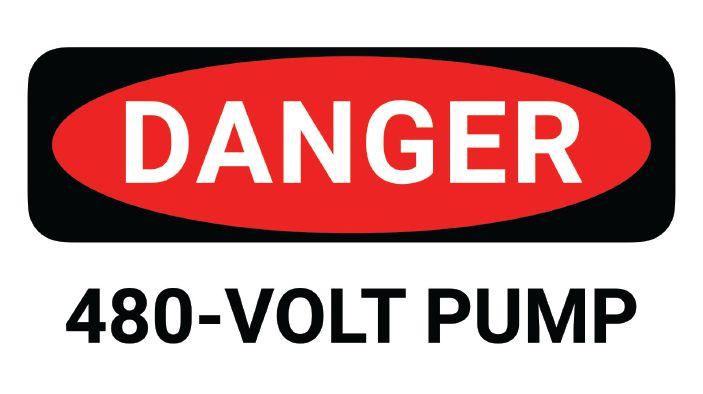
This is why we require a sign reading “DANGER 480-VOLT PUMP” that is clearly visible from both land and water. It should be located at the pump and the controller structure facing the water, and at any access point to platforms.
As always, consult your authority having jurisdiction for more specific interpretations.
David Pilon is manager, Electrical Inspections, at Technical Safety Authority, Saskatchewan (TSASK). He also serves as vice-chair of the Canadian Certified Electrical Inspector (CCEI) committee of the International Association of Electrical Inspectors (IAEI), Canadian Section. He can be reached at david.pilon@tsask.ca.