Did you know 2019 marks the 55th year of Electrical Business? By the time you’re reading these words, you’ve likely already have noticed this long-running magazine has gone through some changes for the new year.
That’s right, the format of Electrical Business has shifted away from an oversized tabloid and adopted more standard magazine dimensions. We know this will make it easier to pick up and browse through without the pages drooping at their edges and corners, but we hope it will also make for easier reading through a simplified layout. While we’ll continue to pack the magazine chock full of industry news and valuable information, we don’t want it too feel too crowded or busy. Your reading time is valuable to us and we want to deliver as enjoyable an experience as possible.
Some columns and articles may be a little shorter than those in the past, but again, we expect this will improve your reading experience. We know you are a busy professional and we appreciate the attention you are able to devote to each issue of Electrical Business.
On that note, you’ll also notice a change in our schedule this year. In addition to six regular issues, we will be adding a special Buyers’ Guide this summer. Keep an eye out for it!
Finally, we’ll be featuring a special quiz looking back at the long and storied history of this magazine. Just as the electrical industry itself has gone through many changes over the years, so too has Electrical Business, as this project will illustrate.
I personally invite and welcome your feedback on these and all of the other changes and initiatives to come in these pages.You’ll find my email address below and I hope you’ll reach out to me whenever you have something to say.
Thank you for your continued support. It means everything to us!
New requirements for intrinsically safe circuits
Revisions to the CE Code align with international rules for field wiring circuits in hazardous locations.
LEDs case study: Promenades du Parc
A large-scale installation was completed within one day—and should save 57,000 kWh each year.
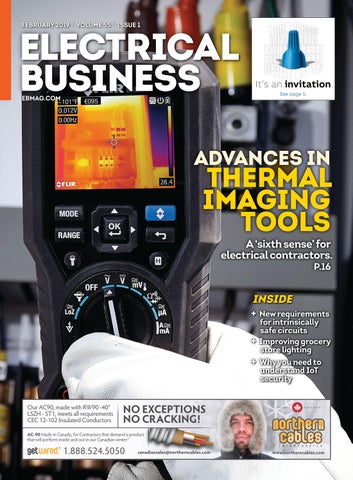
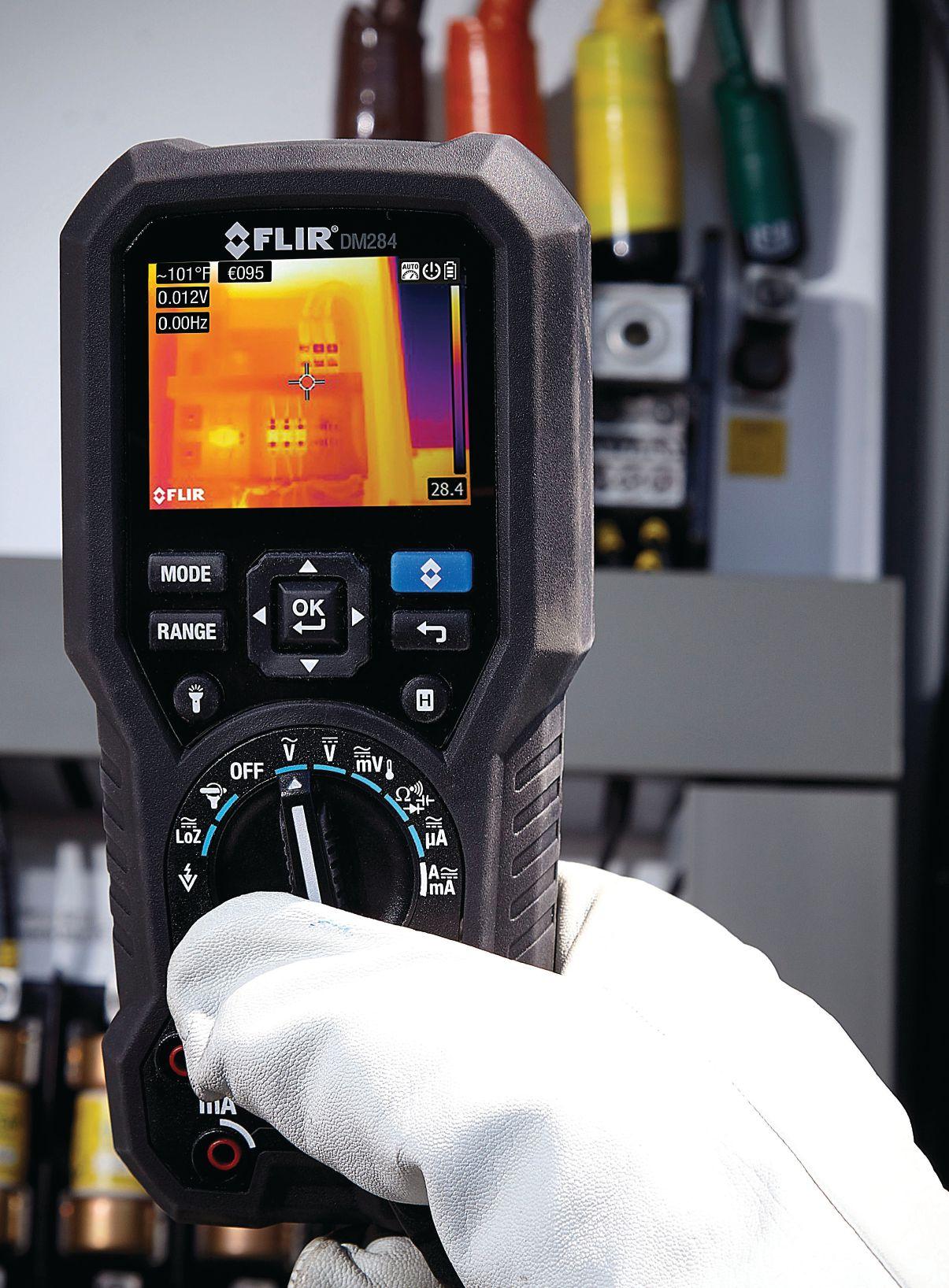
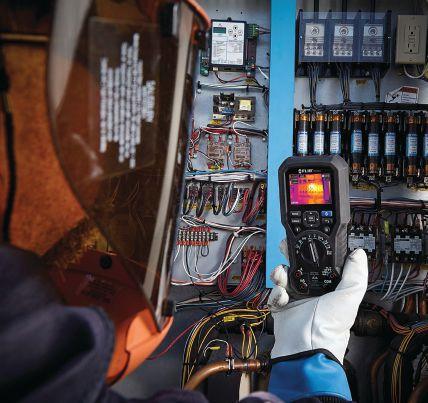
Advances in infrared tools
Smaller, more convenient thermal imaging devices developed for the electrical industry can also support greater wireless connectivity.
The importance of IoT security
An electrical contractor’s role could shift dramatically as upgrades are implemented for building control systems.
Retail lighting case study: Buy-Low Foods
With more efficient lighting, a new store in Langdon, Alta., is set to save $8,745 in annual maintenance costs.
Continuous improvement in hazard prevention
Ensuring effective electrical safety comes down to engaged leadership and technical awareness.
Lumca to help replace Montreal’s outdoor lights with LEDs
Lumca (lumca.com), an outdoor lighting firm based in Quebec City, has won the lion’s share of a tender for a $28-million project to replace Montreal’s decorative light fixtures with LEDs.
Having been awarded eight out of the nine lots for which its products were eligible, Lumca will produce and delver 60% of the 36,000 fixtures that need to be replaced, using its modular Concept and Ovaali luminaire brands and devoting an entire new production line to the project. Its contract is reportedly worth more than $15.5 million.
The conversion process began in September 2018 and is expected to take three years to cover the entire metropolitan area.
“This is another exciting chapter in our partnership,” says Dennis Dion (pictured), co-president and head of sales and marketing for Lumca, which already has 30,000 luminaires installed in Montreal. “This contract is a confirmation of the city’s satisfaction with and trust in our brand.”
O’Neil Electric switches partnership from Schneider to Siemens
O’Neil Electric Supply (oneilelectric. com) selected Siemens (siemens.com) as its new power distribution equipment partner to serve electrical contractors in the Greater Toronto Area (GTA) and across Southern Ontario.
The partnership is expected to help both companies expand their reach with small, medium and large contractor customers. It follows a 27-year partnership between O’Neil and Schneider Electric Canada (schneider-electric.ca), which will collaborate during a transition period to ensure continuity of customer service for existing projects.
Founded in Toronto in 1965, O’Neil is an independent wholesale supplier of electrical products in Ontario and a member of Affiliated Distributors (AD), a buying and marketing group. Siemens, meanwhile, produces power transmission products, industrial drives, software and other systems.
ELECTRICAL BUSINESS is the #1 Canadian resource for electrical contractors, maintenance & engineering professionals, distributors, manufacturers and their agents, and associated stakeholders.
Editor Peter Saunders psaunders@ebmag.com
Associate Publisher/Advertising Sales Anthony Capkun acapkun@ebmag.com
Media Designer Elena Novinskiy enovinskiy@annexbusinessmedia.com
Dennis Dion is co-president and head of sales and marketing for Lumca.
photo courtesy lumca
LEDS CASE STUDY: BUY-LOW FOODS
A new store is expected to save thousands in maintenance costs.
Originally founded in 1966, BuyLow Foods is now the largest food wholesale distributor to independent grocers in Western Canada, serving nearly 1,900 wholesale customers through its Associated Grocers and Van-Whole Produce divisions.
While designing a new store build, with a focus on value, Buy-Low business development co-ordinator Louie Pulice sought lighting solutions to make the location in Langdon, Alta., as cost-efficient as possible, without sacrificing the quality of the shopping experience.
He worked with electrical designer Dan Melchior to develop a lighting plan that would meet Buy-Low’s standards while lowering the store’s operating costs. After conversing with his sales agent, Bryan Lortie of Van-
couver-based CDm2 Lightworks, Melchior developed his lighting design with, primarily, Cree LED lighting products, for which Wesco was the distributor.
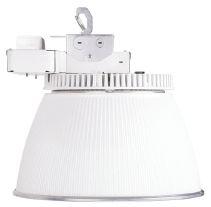
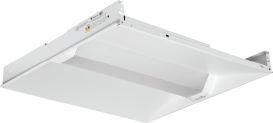
Melchior ended up selecting CS18 LED suspended ambient luminaires for lighting down the store’s aisles and CR24 LED troffers for the deli, bakery and offices. Both products promised 90-plus CRI and consistent colour temperatures. In addition, WS4 surface ambient luminaires were deployed inside the freezers and coolers and Edge LED high-output area luminaires in the parking lot.
With a lighting plan ready, the next step was to present the plan, product samples, photometric data and payback analysis (for three years), comparing traditional technology versus LED technology, to the Buy-Low develop-
A payback analysis was prepared for a three-year period.
ment team. The job got the green light and moved ahead.
“The quality of light is non-intrusive and the diffusers provide a soft, even distribution down the aisles,” says Melchior.
Bringing in an electrician to Buy-Low Foods stores could cost up to $2,000 per visit. With the new lighting, which comes with a 10-year
The new store used CS18 LED suspended ambient luminaires for lighting down the aisles.
warranty, Buy-Low expects to save $8,745 in annual maintenance costs.
“As a designer, it only makes sense—with the rising costs of electricity—to choose products that will save the owners money in the long term,” says Melchior. “This includes the inherent cost savings from the maintenance side, which represents a huge part of their operating costs.”
“When we built the store and opened it up, there were a lot of comments on how comfortable it was,” Pulice adds.
- With files from Cree.
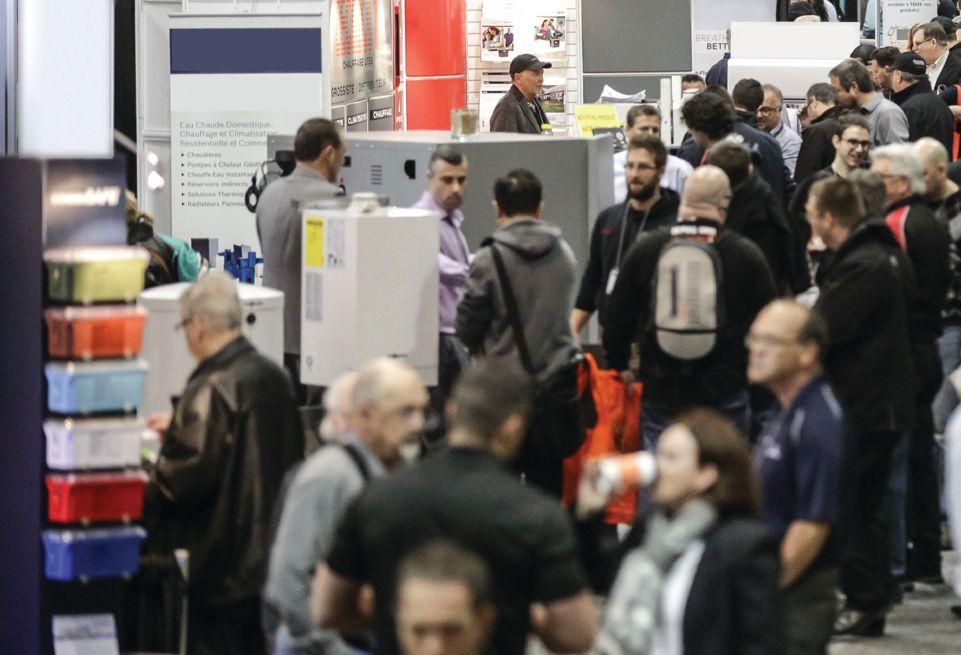
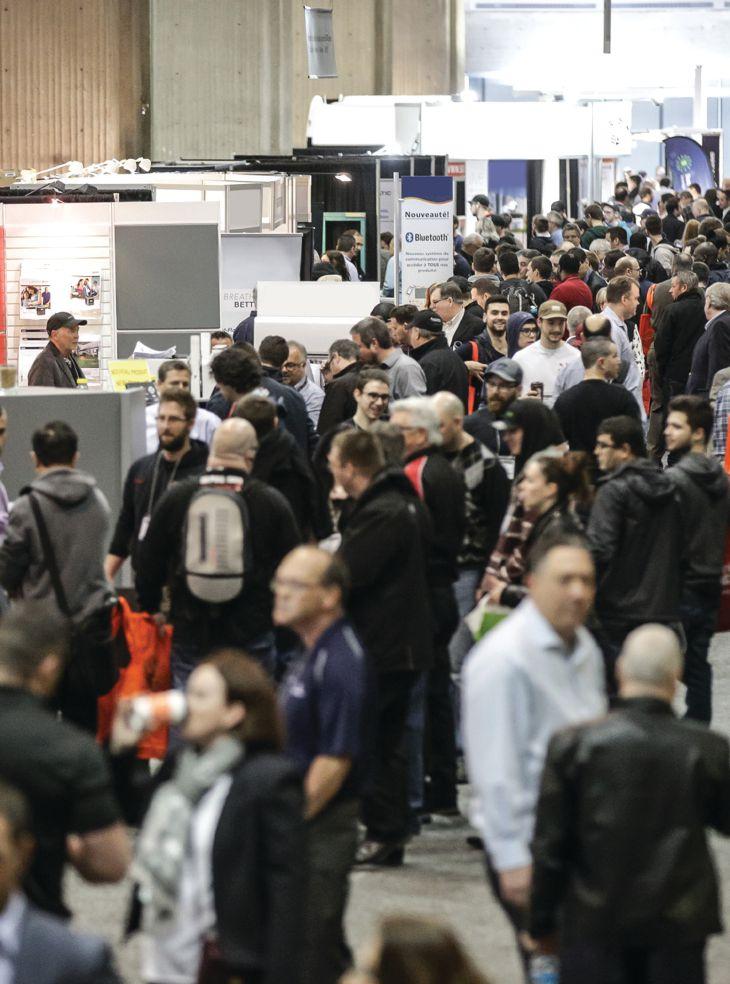
April 24 & 25, 2019
Canada’s largest plumbing, HVACR, hydronics, electrical and lighting expo
• Attend free seminars, many of which will offer continuing education credits
• see more than 400 exhibitors and thousands of products
• Visit the new Product showcase to see innovative energy and water efficient products
Free r egistr Ation up to April 23, 2019
CONTINUOUS IMPROVEMENT IN HAZARD PREVENTION
Ensuring effective electrical safety comes down to engaged leadership and technical awareness.
/ BY ANDREW COCHRAN
‘Continuous improvement’ is a way of life for many businesses today, accepted as a standard approach for enhancing quality, productivity and processes. At the core of continuous improvement are such steps as defining root causes of issues or hazards, planning and executing preventative actions to eliminate them and deploying new technologies and practices to minimize their impact. This approach can be extended to electrical safety—where it is sorely needed.
Ask any executive, operations manager or health and safety professional and they will agree: the first priority in dealing with a potentially negative issue is to prevent it from occuring, whenever possible, while the second priority is to minimize the impact should the negative event occur.
This structured approach is consistent with many safety organizations’ accepted ‘hierarchy of hazard controls’ (see Figure 1) and with the updated language in Canadian Standards Association (CSA) Z462, Workplace Electrical Safety, Annex 0, General Design Requirements 0.2.2, which calls for hazards to be addressed by “reducing the likelihood of exposure,” “reducing the magnitute or severity of exposure” and “enabling the achievement of an electrically safe work condition.”
This is where the requirement for engaged leadership arises. We need to be asking the fundamental question: Have we, as an organization, taken steps to reduce the likelihood of exposure and/or reduce the magnitude of exposure or, rather, have we settled for protection and awareness only?
Understanding the risks
Many industrial companies have taken the approach of conducting an arc flash study or another form of electrical risk assesment, posted the corresponding warning labels, purchased personal protective equipment (PPE) and then stopped at that point. As a result, while the warning labels may inform people about a dangerous situation, no proactive measures are being taken to reduce the likelihood of exposure or to mitigate the magnitude of the hazard.
Engaged leadership can only be ef-
fecive, of course, if there is also technical awareness within the organization, to answer another fundamental question: What can we do to lower the risk and the level of the hazard?
A recent study surveyed consultants, facility managers and maintenance personnel—i.e. the very people engaged leadership would turn to and ask the aforementioned question—about arc flash incidents and how best to minimize their hazards.
The results were cause for concern, at several levels. First, only 50% of respondents correctly identified ground faults as the leading cause of arc flash incidents. Secondly, many suggested warning labels and PPE were the best means to minimize the hazards of arc flashes.
Posting warnings, purchasing and issuing PPE or even conducting awareness training will not in any way reduce the likelihood of an arc flash event nor reduce its magnitude. For those who point out how PPE does reduce the severity of exposure, let’s pause and consider what it means to wear arc rated (AR) clothing; there is a 50% probability of receiving second-degree burns over 50% of your body. Surely we can’t accept this as a safe level of risk!
This is why engaged leadership is not enough on its own. There is also a clear need for technical awareness if we are to achieve an effective electrical safety program and a safe workplace.
Controlling the likelihood of exposure
When designing an electrical grounding system for an industrial operation for voltages of 1,000 V and below, there are three basic choices: ungrounded, solidly grounded or resistance grounded. This calls for a technical decision. Absent ground faults, any of the three options are reliable and safe—but given how ground faults are a reality in any electrical system, the question becomes: Does the grounding system choice affect the likelihood of experiencing an arc flash incident?
The first step, whenever practical, is to de-energize the electric circuit before conducting any work. If doing so is not practical or safe, then consider other options that would reduce the
1. HRG has been used in the automotive industry.
likelihood of an arc flash event occurring in the first place.
As Clause 0.2.4 of Annex 0 in CSA Z462 states, “A great majority of electrical faults are of the phase-to-ground type. High-resistance grounding will insert an impedance in the ground return path and below (at 5 kV nominal or below), leaving insufficient fault
energy and thereby helping reduce the arc flash hazard level.”
This is consistent with the Industrial Power System Grounding Design Handbook, which states 95% of all electrical faults are phase-to-ground faults, and Institute of Electrical and Electronics Engineers (IEEE) 141-1993, Recommended Practice for Electric Power
Figure
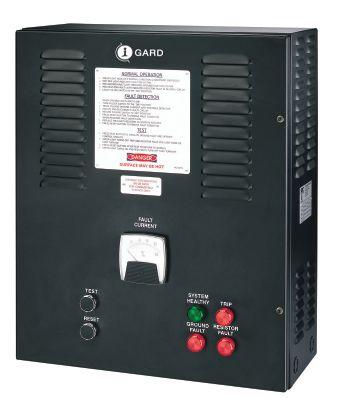
An all-in-one neutral grounding system can combine ground fault protection with a redundant resistor system and a resistor integrity monitoring relay.
Distribution for Industrial Plants, which also in Section 7.2.2 states “there is no arc flash hazard on high-resistance grounded (HRG) systems as there is with solidly grounded systems, since the current is limited to approximately 5 amps.”
Meanwhile, FM Global Standard 5-18, Protection of Electrical Equipment Single Phase and Other Related Faults, states “sustained arcing faults in low-voltage apparatus are often initiated by a single-phase fault to ground, which results in extensive damage to switchgear and motor control centres.”
If we already understand (a) the vast majority—perhaps 95%—of arcing faults start as single-phase-to-ground faults and (b) by using HRG—a technology that has been around for 50 years and used in all manner of industries, from petrochemicals to food processing, from automotive to paper manufacturing to data centres—we can significantly reduce exposure to these hazards, then we may well wonder why HRG is not already the standard practice for grounding all industrial facilities.
As a technology, it is recommended by IEEE, recognized in CSA Z462 and promoted by FM Global, yet it is still not the default option for those making grounding decisions for industrial fa-
cilities. One reason may simply be due to a lack of technical awareness.
An industrial organization that made the conversion from solidly grounded to HRG technology as a means of reducing arc flash risk ended up enjoying the unintended—but certainly welcome—benefit of lower operational costs related to motor repair. In fact, the savings in terms of these costs alone provided payback for the HRG system within the first two years.
All that being said, HRG does not protect against phase-to-phase faults, nor does it lower the incident energy calculation. Additional control steps must still be taken, therefore, to ensure an electrically safe workplace.
Reducing the magnitude of exposure
An arc is developed in milliseconds (ms) and leads to the discharge of enormous amounts of energy. This energy is directly proportional to the square of the short circuit current and the time the arc takes to develop.
So, the damage resulting from the arc depends on (a) the arcing current and (b) time. Of these two factors, time is the most easily controlled and managed.
As a rule of thumb, if the arc burns for 35 ms or less, then there will be no significant damage to people or the switchgear, which can often be returned to use after checking for insulation resistance. If the arc burns for 100 ms, then there could be minor damage to the switchgear, requiring cleaning and possibly some minor repair, and personnel could be at risk of injuries. And if the arc burns for 500 ms, then it may cause catastrophic damage to the equipment, while personnel are likely to suffer serious injuries.
to achieve a total reaction time of 100 ms or less, from detection of the arc to isolation of the circuit.
Arcs produce light at intensity levels in excess of 20,000 lux.This light can be detected by special arc detection optical sensors connected to a relay system. With a typical operating time under 1 ms, this is the fastest arc flash detection technology currently available. The operating time is independent of the fault current magnitude, since any current detector elements are used only to supervise the optical system.
According to Clause 0.2.4 of Annex 0 in CSA Z462, “an arc flash relay typically uses light sensors to detect the light produced by an arc flash event. Once a certain level of light is detected, the relay will issue a trip signal to an upstream overcurrent device.”
With optical arc protection technology installed, the relay operating time is essentially negligible compared to the circuit breaker operating time— and the cost is fairly low, since current transformers are only needed on the main breakers. If we add the circuit breaker operating time to the optical arc detection time, we are well below the goal of 100 ms, regardless of the age and speed of the circuit breaker, and we will have mitigated the damage to a lower and safer level.
Highresistance grounded (HRG) systems have not yet become the default option for industrial facilities, possibly due to a lack of technical awareness.
The goal of arc mitigation technology is to protect personnel and property. To effectively accomplish this, we must first detect the arc and only then cut the flow of current to the arc, as quickly as possible. The target is
Simply changing from standard co-ordination and instantaneous settings on the relay (which have been suggested by some consultants as sufficient) to a protection system that uses optical arc detection will reduce incident energy levels substantially.
So, a workplace where the likelihood of an arc flash is significantly lower—and where the impact of an arc flash can be minimized to very low levels—is possible today, but we need both engaged leadership and technical awareness.
Andrew Cochran is president of I-Gard in Mississauga, Ont., which provides neutral grounding resistors, ground fault protection systems and other electrical safety products. For more information, visit www.i-gard.com.
Join f leet prof essionals from investor-owned electr ic utilities, electr ic cooperatives and electr ical contractors from across t he U.S. and Canada at t he industr yʼs premier educational event f eatur ing:
• Presentations by industr y exper ts, manuf acturers and f leets
• Roundtables where f leet prof essionals and representatives from manuf acturers and ser vice providers share best practices
• A dr ive-t hrough utility equipment demonstration and an exhibition of t he latest equipment and ser vices f or utility f leets
TACKLE THE CODE CONUNDRUM IF YOU DARE!
Answers to this month’s questions in the April 2019 issue of Electrical Business
Compiled by Ray Yousef, code engineer Ontario’s Electrical Safety Authority • esasafe.com
QUESTION 1
Receptacles in CSA configurations 5-15R or 5-20R, installed in buildings under construction:
a) Shall be protected by GFCI Class A.
b) Can be wired by NMSC according to Rules 12-500 to 12-526.
c) Shall be kept entirely separate from lighting branch circuits.
d) All of the above.
QUESTION 2
True or false: the CE Code allows the use of non-metallic sheathed cable in a building of combustible construction. a) True. b) False.
QUESTION 3
For a mobile home, the minimum permitted size of conductor for the power supply cord is:
a) #10 AWG. c) #6 AWG.
b) #8 AWG. d) #4 AWG.
ANSWERS Electrical Business, December 2018
Question 1
Fuses permitted to be used for overcurrent protection, where circuit overload protection is provided by other means, are:
d) A & B: Class C and HRCII-MISC fuses. Rule 14-212, CE Code 2018.
Question 2
Does the CE Code allow two supply services of the same voltage from the same system of any supply authority to enter a building if one will only be used for supplying a fire pump?
a) Yes. Rule 6-102, CE Code 2018.
Question 3
Rigid main contact conductors for an electrical hoist shall be supported so there is an air space of not less than between conductors.
c) 25 mm. Rule 40-012, CE Code 2018.
How did YOU do? 3 • Master Electrician 2 • Journeyman 1 • Apprentice 0 • Bricklayer ?!?
ADVERTISER INDEX
ABB Installation Products 1,5
Association of Equipment
Manufacturers 21
Bridgeport Fittings 9
BRK Canada 31
Electric Utility Fleet
Managers Conference 27
MCEE 23
General Cable introduces new generation of Cat 6A small-diameter cables
General Cable has introduced a new generation of small-diameter GenSPEED 10 Category 6A cable systems. According to the company, the GenSPEED 10 products feature the smallest diameter in the industry at 0.25 in. As such, the cables are lighter and offer increased flexibility, allowing for greater cabling fill capacity, smoother cable routing and easier installation. generalcable.com
Cree’s KBL LED high-bay series reduces glare for “safer, more productive work environment”
industrial-strength performance with up to 150 lm/w and payback in as little as 1.5 years. The KBL series is available in 18,000 and 24,000 nominal lumen output options, with correlated colour temperatures between 3,000 and 5,000 K. The company says the series offers increased productivity and safety by minimizing work stoppages and maintenance to replace lamps and ballasts and is eligible for DLC Premium Certification. cree.com
Lutron adds Vive Integral Fixture Control to IoT platform
MEC Rewards Ltd. 32
Northern Cables Inc 1
Schneider Electric Canada 11
Standard Products Inc. 2
United Wire & Cable 29
TO ADVERTISE Anthony Capkun acapkun@ebmag.com
Cree recently announced the KBL LED high-bay series, suitable for industrial, retail, civic and athletic venues. The company says the high-bay LED reduces glare for a “safer, more productive work environment.” Additionally, Cree says the luminaire is engineered to deliver maximum savings and
Lutron Electronics’ Vive Integral Fixture Control is designed to make lighting fixtures both wireless and ‘smart.’ The product can be used on its own or within the larger Lutron Vive wireless lighting control system. Intended for commercial or government offices and educational facilities, the fixture control technology also works with any Lutron EcoSystem LED driver or third-party DALI driver. The controller also features fixture-level occupancy sensing and daylight harvesting capabilities. It is integrated directly into a luminaire and sent to the job site, pre-installed from the factory. lutron.com
Visit EBMAG.COM for the latest news, stories, products, videos, photo galleries and industry events.
Requirements for installing identified conductors for lighting switches
Section 4 in the CE Code discusses the selection of conductors and their ampacities. In 2018, the scope of this section’s Rule 4-000 was revised to clarify its intent. At the same time, since Section 12 covers conductor installation, some rules were relocated from Section 4 to Section 12 and vice-versa, for the sake of consistency and to support the revised scope of Section 4. These changes are summarized in Chart 1.
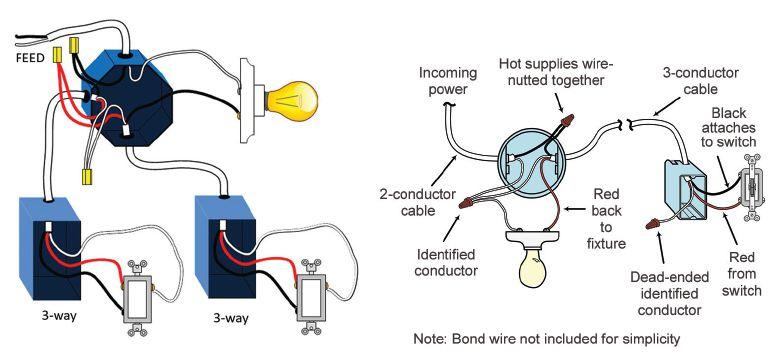
The major change in Section 4 is the new requirement, under Rule 4-022 2), for the installation of an identified (neutral) conductor at each location of a manual or automatic control device for the control of permanently installed luminaires at a branch circuit outlet (as per Figure 1, left side). Such control devices can include general-use switches, motion sensors, photocells, light dimmers or components of an energy or lighting management system.
The provision for a neutral conductor is to complete a circuit path for electronic lighting control devices. For many electronic devices, you must provide a standby power supply at the switch. When a neutral conductor is not installed, the bonding conductor may be used to fulfil its function.
While the current from an electronic control is typically very low (0.5 mA), the installation of many control devices throughout a building can result in an accumulation of excess current on the bonding conductors.
2015 Code 2018 Code Description
Rule 12-2210 Rule 4-004 23), 24), 25)
Rule 12-2260 3) Rule 4-004 26)
Rule 4-008 Rule 12-102 3), 4)
Rule 4-012 Rule 12-402
Rule 4-018 Rule 12-404
Rule 4-020 1), 2), 3) Rule 12-122
Rule 4-040 Rule 12-406 1), 2), 3), 4), 5)
Chart 1: Relocated rules.
Under normal operation, based on CE Code Rule 10-500, there should be no objectionable current flow in a bonding conductor.
Although Rule 4-030 2) permits a neutral conductor to be used in switch loops and not be identified, the requirements of Rule 4-022 2) take precedence, i.e. there shall be an identified conductor at each outlet box for a lighting control device.
In Ontario, if the wiring method to a lighting control switch is a raceway, then the
Ampacity of wires and cables in trays
Ampacity of wires and cables –Table 5A correction factor
Insulated conductors
Use of flexible cords
Flexible cords used in show windows or showcases
Equipment wire
Uses of portable power cable
identified conductor can be omitted if (a) the installed lighting control switch does not require it and (b) the installation not in a dwelling unit. This is similar to the exemptions of the National Electrical Code (NEC).
For three- or four-way switch installations, electrical contractors should be aware the most typical installation method (see Figure 1, right side) is in contradiction with new Rule 4-022 2) requirements. The neutral conductors are used as
‘messengers’ and there is no unused identified conductor in each switch box.
Always consult your AHJ for more specific interpretations.
Tatjana Dinic, P.Eng., is the code engineer at Ontario’s Electrical Safety Authority (ESA), with responsibility for code development and interpretation and for improving harmonization between codes and standards. She is a Professional Engineer with an M. Eng. degree from the University of Toronto (U of T) and a member of CSA CE Code-Part I, Sections 4, 10 and 30. She can be reached at tatjana.dinic@electricalsafety.on.ca.
Figure 1: Incorrect installation (left) and newly required installation (right).
With AD Rewards, customers are rewarded for purchasing participating suppliers’ products from an AD Canada Distributor. You earn one point at any AD Rewards Distributor You may already have points from purchases and not even know it. It’s the best rewards program in the industry. Isn’t it time you started
With AD Rewards, customers are rewarded for purchasing participating suppliers’ products from an AD Canada Distributor. You earn one point for every dollar spent(1) at any AD Rewards Distributor(2) across Canada. You may already have points from purchases and not even know it. It’s the best rewards program in the industry. Isn’t it time you started rewarding yourself today?