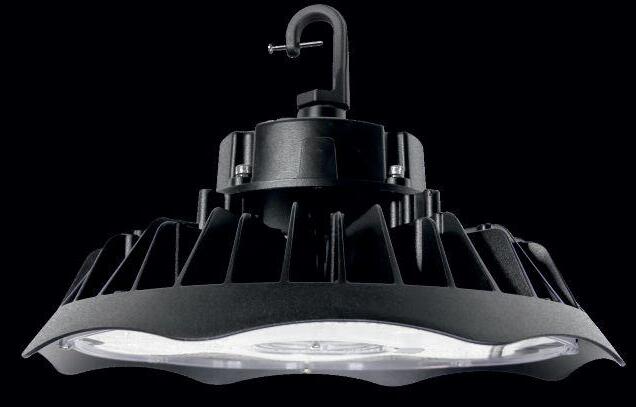
This is my old Ebro EB 1288 Energieanalysator. To the right, an example of the device we use now, which can be placed hundreds of miles away and monitored from the comfort of my office. (Author photo.)
And wouldn’t you know it? Our castle project was on the same line!
By following the bread crumbs, our project took us from an underperforming lighting retrofit and failing customer-owned motors to the utility’s new transformer station where, sure enough, the voltage had been increased.
When I first started in the industry, the common voltages were 110V and 550V. Today you see 127V to over 600V. The utilities do this for a myriad of reasons, but they also boost their income when they increase voltage.
Consider Voltage/Ohms = Amperage
When you increase Voltage, you increase Amperage and, by extension, wattage. And customers are charged by kilowatt-hour (kWh).
And now your client’s equipment is also running faster and hotter... which leads to harmonics (more on that below).
You’re probably wondering how this voltage issue got resolved with the LDC. To that, all I can say is this: it’s funny how, when you’re dealing with a utility issue—and the facts are on your side—those issues tend to magically disappear.
to go for a walk to see what was going on in the neighbourhood. Just down the street from the studio, on the same transformer line, was a welding shop that fired up all of its equipment at— you guessed it—8 am.
The result here was a complete upgrade to the utility’s transformers (and it wouldn’t be the first time for this LDC). As you can imagine, I was not a popular guy with the LDC during that time!
Harmonics and transients
Our equipment also monitors harmonics, which can be generated by a number of things but, generally, are created by discharging capacitors, which create vibrations on the system. A vibration, in an existing magnetic field, generates more electricity.
“It’s funny how, when you’re dealing with a utility issue—and the facts are on your side—those issues tend to magically disappear.”
We were also called out to a recording studio where, every morning at about 8 am, noise was being generated on the discs they were producing.
So, I set an analyzer on the system and came back a week later to check the results. Sure enough, we saw activity on the waveform (we can drill down to a millionth of a second). I decided
(I still have all of my grandfather’s educational materials dating back to 1899 and, even 120 years ago, they knew about harmonics. Back then, they would analyze harmonics with a small wooden box and a series of tone forks.You would insert a certain fork and move the box around the electrical device [motor] to determine which frequency was present. Your applied voltage is high already, and harmonics can increase it beyond acceptable levels.)
A factory we analyzed had equipment dating back to the 1930s. The distribution was made from much heavier steel, the motors employed cast steel (some 1-in. thick or better) for the housing, and the windings were of a much larger gauge wire and thicker shellac. Although these motors consumed
more electricity to operate, those heavy walls absorbed many of the electrical disturbances we see today.
Harmonics are tricky. You can try installing harmonic filters and/or purchasing electrical distribution that is designed for harmonic vibration. Increasing the size of the distribution is also a pretty common remedy.
Transients were a big problem in the 1980s and 1990s. Digital circuits use I/O (On/Off) using a square waveform as instructions for a computerized device. A transient is created when an inductive circuit switches to an Off condition. Electromotive force (EMF) requires counter-EMF (CEMF) to maintain the circuit.
The CEMF acts completely opposite to the EMF, so when the EMF switches to an Off condition, the CEMF spikes. The transient on a simple 4-lamp fluorescent light fixture can be 1500 volts! It can mimic an On condition to a computerized device, causing the system to freeze up and stop operating. (Computers have much better suppression now, but transients can occur.)
The power bar you use for your computer and devices is a typical example of a transient filter and, of course, you can get filters for many different applications. In my day, they used Zener diodes to cap the voltage and prevent it from exceeding a specific level.
Learn. Apply. Repeat. For all these reasons, we have a number of analyzers that we take into the field regularly, and they are far more compact than our original unit (which still sits in my office). We also have thermographic cameras on-hand for additional testing.
Ultimately, all of this speaks to the importance of continuing education and training—as well as investments in good equipment—for the electrical contractor. For us, it has solidified our position as not just a group of wire-pullers, but as true partners and problem-solvers for our customers.
John T.G. Vickery is the CEO of family-owned Vickery Electric, which was established four generations ago in 1923 by John W.T. Vickery. Under John’s leadership, Vickery Electric has taken an “aggressive approach to education”, and has expanded its technical abilities to include Marine Specialization, Network Installation, Fire Alarm Installation and Verification, Electrical Diagnostic Study, and Lightning Suppression Systems.
THE CYBER-SHOW & EXPO FOR CANADIAN ELECTRICAL PROFESSIONALS
The online extravaganza that’s OPEN 24/7 for 3 MONTHS to address your needs for information and product knowledge… whenever you want, from wherever you are! JAN 25 2021 FEB 22 2021 MAR 22 2021
• Explore new REVENUE Streams • LEVEL UP your SKILLS & CAREER
• Check out the LATEST TECH for Productivity or Installation
LIGHTING SALES AND DISTRIBUTION IN TIMES OF PANDEMIC
Covid creates opportunity for reinvention in the supply chain
LUCIE CÔTÉ
The world of sales and distribution for lighting products and electrical equipment has had to face a period of adaptation since the start of the pandemic. As delays and stock shortages are a somewhat common problem in daily business, manufacturers, their agents, distributors, and electrical contractors must tackle things differently to face the challenges in the supply chain’s new reality.
Covid-19
and the distributor’s new role(s)
The role of a distributor is to act as an intermediary between the order from the manufacturer and the material handed over at the counter or delivered to the electrical contractor.
Since the start of the pandemic, distributors have had to put themselves in a “solution” mode to evaluate new ways of doing things that would allow them to face issues related to the delivery of lighting and electrical equipment.
“Coordination, teamwork, project management, logistics, action plans and replacement plans must now be part of the distributor vocabulary,” said
Mathieu Legris. He and Christian Grenier are co-owners of Electrimat, an independent Quebec-based distributor.
The pandemic has made the entire ordering and delivery process increasingly complex.
“As delivery is at the centre of the distribution logistics of lighting products and electrical equipment, close collaboration between the manufacturer and the distributor becomes a key element that allows us to set up new processes to face the constraints disruptions and deadlines,” added Grenier.
Since the start of the pandemic, some customers could receive up to seven different deliveries, from different manufacturers, to account for all the material required for the same order, Legris explained.
“Because the distributor is also responsible for facilitating the work of the electrical contractor, he must come to an agreement with manufacturers that would allow for the receipt of deliveries directly to the distributor’s warehouses,” Legris said. “Once all the material has been received, the distributor can then consolidate the materials and make one complete delivery to customers.”
Since the start of the pandemic, distributors have had to put themselves in a “solutions” mode to evaluate new ways of doing things to face issues related to the delivery of lighting and electrical equipment.
“In our new normal, electrical contractors have an important role in alleviating the burden related to delivery delays.”
The distributor must now team up with the customer and take on the role of a logistics manager in the supply chain. In fact, Legris feels a distributor’s strength in project management is an essential element for contractors to consider when choosing their distributor partner.
“It is also our responsibility to coordinate all stages of the supply chain to make the process as easy as possible for customers,” he added.
Sales of new lighting products in times of pandemic
We can all agree that everyone in the electrical industry must reinvent themselves and approach things differently in all aspects of the supply chain.
Adding to the challenges of delivery times and stock shortages, manufacturer agents have had to face the new reality related to teleworking.
“With the introduction of teleworking and physical distancing, the work of the manufacturer agent must be reviewed from A to Z,” said Marc Laplante, who co-owns manufacturer representative Laplante & Associates with his brother Paul Laplante. “We must show ingenuity to reach our customers, attract their attention and interest them in buying new products. We are facing a major challenge.”
Regular follow-ups are now essential to ensure everyone remains active in this time of uncertainty, Laplante said. “We need to do more ad hoc
follow-ups and be proactive! We must reorient our work strategies toward communicating at a distance. With travel possibilities greatly diminished for most agents, we must—among other things—put in place strategies for sending documentation and samples by mail, conduct Lunch n’ Learns, presentations and meetings virtually, all while using social media more effectively.”
In the lighting industry, some manufacturers have been greatly impacted by the delivery times of certain offshore components.
“This reality leads to stock shortages that could lead to loss of income for both sides of the supply chain,” Laplante noted.
“The raw material supplier who has been delivering the same material for 20 years can no longer
ensure regular or punctual delivery. There is now a reduction in inventory at distributors, causing further complexity in the distribution chain.”
In our new normal, electrical contractors have an important role in alleviating the burden related to delivery delays. “Instead of hanging on to the P/O until the last minute, electrical contractors’ orders will need to be better planned and sent in advance to ensure all materials are received when the contractor is ready to begin work,” Laplante concluded.
Increase customer service to stand out
When combined, all of this means “you have to look for the agent or distributor who will make an offer that will stand out from the others,” said Laplante. “Whether it is for logistics, project management, service, selection, personalized solutions or the most efficient distribution process, it is the one who has adapted to the changes that will have the most chance to emerge unscathed from this crisis.”
“It is often in the midst of a crisis that we really recognize what our people are made of.”
For Legris, the pandemic provides an additional opportunity to highlight the importance of distributor’s role in the supply chain. “The distributor must allow each electrical contractor to find, in one place, all the products he needs, with a complete overall service offering. We have to offer a turnkey service.”
“It is often in the midst of a crisis that we really recognize what our people are made of,” said Legris. “As customer service is a key part of our new normal, it will help solidify existing relationships or provide the opportunity to create new ones.”
Lucie Côté is a bilingual, Montreal-based communications professional who, after 20+ years of working in the corporate and education fields, launched her own consultancy to help organizations with their communications, public relations and marketing needs. Visit lcserviceconseil.com. This article originally appeared in L’industrie électrique magazine, October 2020.
REJIGGING THE PROVINCE’S APPROACH TO TRAINING & CERTIFICATION
Melissa Young speaks on Ontario’s new Skilled Trades Panel / EB STAFF
Back in October, the Ontario government appointed a 5-member Skilled Trades Panel to provide advice and recommendations to the Minister of Labour, Training and Skills Development—Monte McNaughton—on developing “a new approach to training and certification”.
Appointed for a 9-month term, the members are:
• Michael Sherrard, founding member of Sherrard Kuzz LLP
• Jason Ottey, director, Government Relations & Communications, at Laborers’ International Union of North America (LiUNA) Local 183
• Shaun Scott, director, Organizational Development, at Linamar
• Melanie Winter, regional HR director, Cascades, for Western and Central Canada
• Melissa Young, executive director, National Electrical Trade Council (netco.org)
Due to her direct connection with the electrical industry, Electrical Business reached out to Young to get more information on the panel, and what she hopes will be the end result.
I’m glad to see the electrical sector has a seat on the panel. What unique insights will you bring to the table?
YOUNG: With almost 30 years working in apprenticeships in numerous capacities, I believe my national scope is probably one of the strongest insights. However, during my time with the Apprenticeship & Occupational Certification Branch at the Province of New
Melissa
Young, Skilled Trades Panel Member, and executive director, National Electrical Trade Council (netco.org).
Brunswick, I was specifically tasked with working on the modernization of New Brunswick’s apprenticeship system.
Stakeholder engagement was a critical task in achieving consensus and buy-in. In the end, New Brunswick proclaimed a new Act in 2012 that changed the Apprenticeship and Certification Board from an advisory body to an authority body.
Additionally, I spent 30 months as the Atlantic Coordinator for Atlantic Apprenticeship Harmonization. As the first person in this role, I was tasked with establishing consensus among all four Atlantic provinces on very detailed
aspects of the apprenticeship system to form a harmonized approach in several key areas, such as compliance and enforcement, classification of the trades, etc., which are some of the same areas that the Skilled Trades Panel is exploring.
From a national perspective, I presently work with all jurisdictions on apprenticeship issues. With education and training being a jurisdictional responsibility, each province or territory has a uniqueness as to how they best serve their stakeholders.
Where do you hope to see the “new approach” end up with regard to benefits to apprentices and journeypersons, and the public?
YOUNG: I am hopeful that, based on the consultation process, the panel will be able to inform an approach to the skilled trades that will help streamline, simplify, and modernize the apprenticeship and skilled trades system in Ontario.
There does not seem to be a consistent point of contact for apprentices and their employers, which provides challenges for them—especially as apprentices navigate through their apprenticeships.
In addition, the public is generally unaware of the importance of the skilled trades and the impact they have on their safety. Journeypersons really only begin their journey in their trade career upon receiving certification. I believe the Province of Ontario wants to be able to support tradespeople appropriately from the time they begin as apprentices, all the way through to completion as journeypersons and beyond as they progress in their careers.
“WE’RE NOW AT THE END OF THE BEGINNING”
...of our transition to renewable energy
ANTHONY CAPKUN
At the close of summer, I attended a Nexans-hosted media roundtable “Global transition to renewable energy” and, after having been shut out of numerous conferences and tradeshows this year, it felt good to have a “conversation” again with industry experts and hear their global perspectives.
The discussion largely centred on offshore wind farms (though it did stray into other categories), and covered the gamut of government support and utility demand to construction challenges, and differences between offshore wind farms and floating wind farms.
Moderated by Sarah Lockett, the roundtable included:
• Ulrik Stridbaek, VP and head of Regulatory Affairs at Orsted, a renewables developer and operator.
• Ragnhild Katteland, CEO, Nexans Norway and EVP Subsea and Land Systems Business Group.
• John Hill, project director, SSE (formerly Scottish and Southern Energy).
So, what is the difference between offshore wind farms and floating wind farms? After all, both farms are constructed over water (usually an ocean) instead of land.
Offshore wind farms require shallow waters, as they are erected on fixed foundations.
These farms, and the methods for constructing them, are mature technologies. They are built 70-100 km from shore, explained Katteland, so there are no appreciable losses between the point of generation to shore.
And the subsea cables used to connect those farms to consumers are even more mature than the turbines.
Katteland explained their subsea cable technology is essentially unchanged since the 1970s. Of course, there have been incremental improvements over the years, she said, but the technology has been solid for decades.
Besides their predictability, offshore wind turbines have also been doubling in capacity roughly every five years, noted Hill. The next-generation turbines will be 15-MW units, further driving down the cost-per-megawatt.
Hill also said upcoming projects will be located even further out to sea—150 kilometres, in fact. “At that point, you move to HVDC [high-voltage direct current] cables.”
“For the bulk supply of cheap renewable energy, offshore wind is a great idea,” said Stridbaek, “But you need to have the resource (an ocean) and shallow waters. A country like Switzerland is rightly not interested.”
Floating wind farms are not tethered by a fixed foundation, which means they could (in theory) be deployed anywhere in the world’s oceans, but they are primarily of interest to those jurisdictions that lack shallow waters.
“California is an important market for floating wind farms because of their deep waters,” Stridbaek noted.
However, and most importantly, floating wind farms are not yet a mature technology.
“We see offshore floating wind as a
technology 5-10 years out,” said Hill, who thinks that, by then, the technology may become competitive with fixed offshore wind.
The transition
The panelists’ conversation was mainly focused on Europe and the United States, so I asked them about the wind energy market in Canada, and whether our offshore wind energy potential (be it fixed or floating) actually had any potential.
Canada already has a lot of installed onshore windpower, said Stridbaek, approvingly. As for offshore windpower, there have been discussions for both coasts—even the Great Lakes—but nothing major. “Like the Norwegians, Canada is well-positioned because of its generous hydropower, but [offshore wind is] is definitely on the radar.”
Transitioning to an electrified future, and truly reaping the rewards of all these renewable sources in the years to come, means we need a smarter grid, Katteland insisted.
“We need security of supply; resiliency,” she said. “By security of supply, I mean that when you push a button, you have power.”
Against the backdrop of a global transition to renewable energy, Lockett asked the closing question: “Do we have enough electricity?”.
“No, we need to build more,” Stridbaek answered. “We’re now at the end of the beginning.”
SHUTDOWNS, BLOCKADES, PINE BEETLES, TRUCKER SHORTAGES...OH YEAH, AND COVID!
ANTHONY CAPKUN
“As the uncertainties and rapidly changing environment of Covid-19 continue to impact business decisions, supply chain management plays a critical role in the continuity of construction projects.”
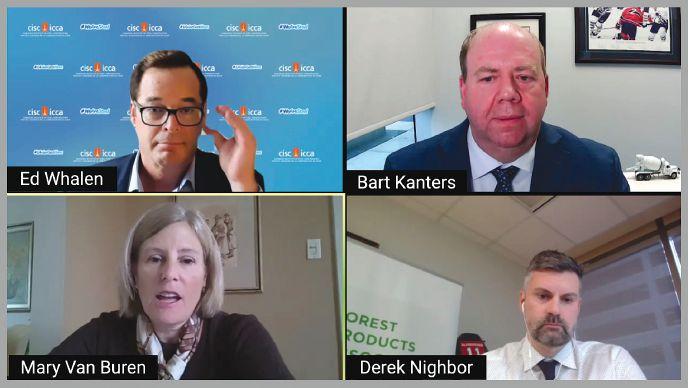
It was against this backdrop that the Canadian Construction Association hosted the webinar “Construction supply chain disruptions in times of uncertainty”.
CCA president Mary Van Buren led her panelists through several discussion points, which essentially covered snapshots in time—mid-March, when the pandemic hit; the summer, when restrictions started lifting; and the current state of affairs—to better understand disruptions or shortages in raw materials (if any) and how they impacted Canada’s construction industry.
Her panelists were:
• Ed Whalen, president & CEO, Canadian Institute of Steel Construction
• Derek Nighbor, president & CEO, Forest Products Association of Canada
• Bart Kanters, president, Ready Mixed Concrete Association of Ontario (Concrete Ontario)
That was then...
Whalen explained that steel is a global commodity, sourced from everywhere, but the bulk of what we use here comes from Canada or the United States.
Unlike the other two panelists, he said Covid never really affected the steel sector with regard to supply, as there is usually several months-worth of product on-hand. Overall, the sector weathered the storm pretty well.
The Canadian forest products industry, on the other hand, was in for a heck of a ride. And this sector was hurting even before the pandemic, dealing with problems like pine beetles decimating our forests, railroad blockades, forest fires, and a serious trucker shortage.
When the pandemic hit in March, “In lumber, we saw order sheets collapse,” said Nighbor. “Big boxes were cancelling orders... there was lots of chaos in the first several weeks.”
Part of that chaos involved uncertainty over shutdowns. Should I close
my mill, or stay open? Am I an essential service?
And then the strangest thing happened... something no one anticipated, said Nighbor, and that was the huge surge in lumber demand as people living under shutdown—stuck at home—started renovating. A lot of us started doing it (I’m one of them), which is what led to the tripling of lumber prices in-store... if you could even find it.
“Concrete is pretty much a locally made product,” said Kanters, so the industry was not really affected by closed borders, but it by no means escaped unscathed.
“March and April are typically a slower time for us,” said Kanters, and that’s usually the time of year when the concrete sector gets in a bunch of maintenance work. But with the shutdowns in March and April, maintenance was not getting done, and money was not coming in.
Like the forest sector, there was uncertainty over shutdowns but, as the shutdowns lifted—especially in Quebec and Ontario—the industry found itself struggling to keep up with demand. “Currently, demand for cement is outstripping supply,” said Kanters.
Concrete typically operates on 24 to 48-hour notice, but now you need to count on at least 1 to 2 weeks for your concrete, and you may not get the full amount. Concrete producers, said Kanters, are trying to balance demand against their strained supply.
On the bright side, he noted the winter months are usually when things slow down for concrete. Kanters is hopeful the sector will be all caught up by then.
Kanters also brought up the supply issue of slag and fly ash in the concrete sector, which is not Covid-specific, but is an impending problem nonetheless.
Fly ash comes from burning coal, and with governments shutting down coal-fired generation across the country, where will the sector get this important ingredient? Slag, on the other hand, comes from steel mills, but changes in steel manufacturing methods have reduced the quantity of available slag (Whalen explained it much better), so yet another problem with a vital raw ingredient.
Much like the concrete sector, Nighbor expects the forest sector will be all caught up by the end of the year.
Continued on page 28
THE CYBER-SHOW & EXPO FOR CANADIAN ELECTRICAL PROFESSIONALS
The online extravaganza that’s OPEN 24/7 for 3 MONTHS to address your needs for information and product knowledge… whenever you want, from wherever you are! JAN 25 2021 FEB 22 2021 MAR 22 2021
• Explore new REVENUE Streams • LEVEL UP your SKILLS & CAREER
• Check out the LATEST TECH for Productivity or Installation
Continued from page 26
This is now...
Van Buren then invited her panelists to share their “asks” of government. What are the needs and wants of their respective sectors?
“There are great opportunities in the construction industry,” Kanters said, which is why he would like to see government support training programs to get people into the sector, especially those whose livelihoods are severely impacted by permanent layoffs in other sectors.
One of the things Nighbor would like to see is better cooperation with the rail lines. (Transportation infrastructure overall seems a real mess in the forest products sector.) Against the backdrop of federal climate action plans, the more rail use and the less truck use, the better.
Because we are a small nation, Nighbor says Canadians “will always be free traders”, but he is hopeful that those early days of the pandemic will inspire us to look at more things we could make here rather than source from elsewhere.
Whalen is concerned about the “trending down” of new projects. He wants the feds to get money flowing to the provinces and get new projects underway.
“Our industry employs a lot of people, but we’re rapidly running out of projects,” he said.
And when it comes to infrastructure spending, Whalen wants to see “consistent infrastructure spending from government” every year, not just during economic emergencies.
Both businesses and workers desire predictability, and when infrastructure spending is predictable, businesses can invest.
Similarly, the young people that the construction industry is so desperate to attract and retain may look more favourably upon the sector if it could promise a reliable paycheque and stable career year after year, not just during economic emergencies.
And, when government does spend on infrastructure during a crisis—with the dual purpose of employing Canadians while stimulating the Canadian economy—Whalen feels there should be a mechanism in place to prevent foreign companies from getting that work.
This puppy is not just for Christmas
Trimble and Boston Dynamics have partnered to integrate a variety of construction data collection technologies with the Spot robot platform. The jointly-developed solution will combine the robot’s autonomous mobility with Trimble’s sensors and field control software to enable automation of repetitive tasks while taking advantage of the robot’s capabilities to navigate dynamic and potentially unsafe environments (bostondynamics.com/spot)
FLIR Si124 acoustic imaging camera
The Si124 senses, displays and records sound waves to produce an acoustic image that can be overlaid—in real time—onto a digital camera image. The one-handed solution weighs all of 980 g, and is effective for verifying the existence of partial discharge (corona, arcing and tracking), or locating compressed air leaks. Built with 124 microphones and a high-definition visible-light camera, the battery-powered FLIR Si124 can detect potential issues up to 100 m away, even in loud industrial environments, and boasts up to 7 hours of continuous use (flir.ca).
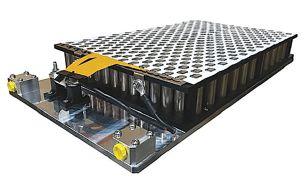
seek to reduce the footprint of their battery assemblies without compromising efficiency or modularity of their power systems. They also desire standardized assemblies that produce a leading $/kW and kWh/kg on a modular and flexible platform (ep-us.mersen.com).
Drilling
overhead? Hilti has a new robot for that
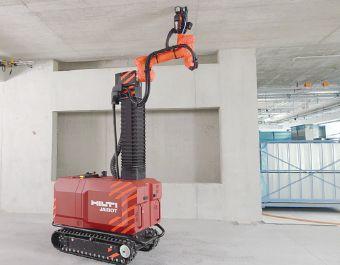
The Jaibot is a semi-automated construction robot designed for mechanical, electrical, plumbing and interior finishing installation work. It is a completely cordless system and can work for up to 8 hours between charges (requires about 4-6 hours to recharge). The Jaibot arrives onsite in a lockable, forklift-friendly container. After setting up the worksite so that Jaibot can “learn” its environment, the robot proceeds to autonomously mark and drill holes according to the digital plan (hilti.com).
Acuity nLight digital time clock
Mersen Infini-Cell for 21700 battery assemblies
Together with F&K Delvotec, Mersen is offering a solution supporting 21700 series battery assembly systems. As e-mobility and battery energy storage applications grow in number and power density, Mersen says designers
Acuity Brands nLight’s digital time clock is a touchscreen device promising a simple solution for time-based control in a lighting zone by eliminating the need for complex
CODE conundrum
RAY YOUSEF
Ray is a code engineer with Ontario’s Electrical Safety Authority networked controllers. The device delivers simple lighting configuration, control and scheduling capabilities for small to medium projects. Key DTC features include: on-screen programming and configuration; scheduling to adjust light levels automatically for energy efficiency; scalable design; out-of-the-box functionality (nlightcontrols.com).
Cooper offering germicidal UV fixtures
Cooper Lighting Solutions—a business unit of Signify—is integrating the latter’s expertise in UV-C lighting to offer germicidal UV light-enabled fixtures that promise rapid, effective disinfection of surfaces and spaces. A non-visible light in the spectrum, UV-C has proved effective in killing bacteria, mould and fungi, and inactivating viruses (cooperlighting.com/guv).
Megger DLRO2 not bothered by long leads
The DLRO2 is a 2A hand-held, digital low-resistance ohmmeter that promises reliable results when using long test leads; it is able to provide up to 1A of test current into 4 Ohms resistance, making the DLRO2 (with its optional cable test reel leads) suitable for applications like testing wind turbines. The DLRO2 is equipped with a “difference meter”, a which allows repetitive measurements to be compared with an initial reference measurement. The tester can display three measurements at once; useful, says Megger, when testing 3-phase equipment (megger.com).
LOF coloured solar panels
LOF Solar Corp. offers a new solution whereby their standard solar cells cells are cut into two equal halves. While the wattage produced per cell is halved, the resistance losses at the cell and module level are reduced to one quarter. The path of the generated current is shortened by dividing the modules, further reducing resistance losses, and promising enhanced output performance (lofsolar.com).
CMP CG Range glands
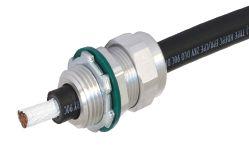
CMP’s latest cable glands in the CG Range are designed to suit unarmoured flexible cable and cord. Manufactured from 6000 series aluminum, they provide corrosion and ingress protection in wet, dry or hazardous environments, and have undergone testing to the latest UL 50E. The cord grip has been developed to cover a range of cables with fewer cable glands to reduce inventory levels. Available in sizes 3/8 in. to 2 in., each product includes an entry thread seal and locknut as standard (cmp-products.com).
TACKLE THE CODE CONUNDRUM IF YOU DARE! Answers to this month’s questions will appear in the February 2021 edition of Electrical Business Magazine.
QUESTION
1
For the demand load calculation for a school, the total demand load for 12 electric vehicle chargers—where each is rated at 8 kW—without an Electric Vehicle Energy Management System is:
a) 96 kW c) 76.8 kW
b) 86.4 kW d) 67.2 kW
QUESTION
2
All space within 6 m horizontally in any direction from dip tanks and their drain boards, with the space extending to a height of 1 m above the dip tanks and drain boards, is considered Zone 2.
a) True b) False
QUESTION 3
When interconnecting a solar PV system with the utility feeder, a means of isolation shall be provided:
a) to isolate utility feeders.
b) to isolate the feeder from the energy source.
c) either A or B is sufficient.
d) to isolate all sources of supply.
ANSWERS
Electrical Business, October 2020 ed.
Question 1
Which of the following is an acceptable location for the installation of HDPE conduit?
d) All of the above. Rules 12-1250, 12-1252.
Question 2
A 75-kVA transformer hanged from a ceiling structure in an office building is required to have a minimum 1 m of working space:
a) only on the sides to provide access to conductor connections. Rule 2-312.
Question 3
Where the DC arc fault protection is not located at the photovoltaic module, mechanical protection is required for PV source circuit conductors installed on or above buildings to protect against rodent damage.
Toget a proper handle on grounding, it is vital to understand basic circuitry, magnetism and system isolation. Let’s start with some laws.
Per Ampere’s Law, current flows in closed loops. The return current may split between numerous available paths, with the amplitude in each inversely proportional to the impedance of the individual path. In addition, unintended currents created by external events (e.g. power faults) can also travel along these same paths (1).
That’s a mouthful, but it helps us understand why we are moving away from re-grounding the neutral of any system after it has already been grounded (single-point grounding).
Let’s now look at magnetism. As current flows through a XFMR’s (transformer’s) primary circuit, it creates a magnetic field that induces a current in a second coil. So the current in the secondary is created by the current in the primary, even though it is not a part of the primary’s closed loop.
This means that the current in the primary cannot flow in the secondary loop, nor can the current from secondary flow in the primary loop.Were we to connect the primary and secondary at one point, they still would not be able to impose themselves on one another.
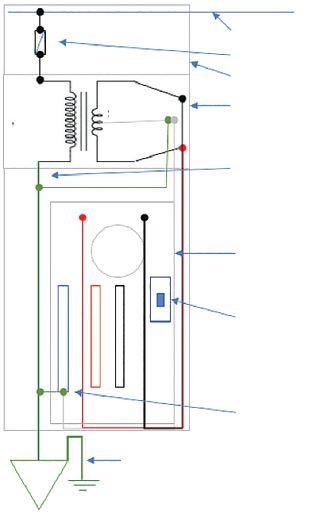
In Figure 1, note the high-voltage earth return has a parallel path through the neutral, which feeds into a farm service centre. Under normal system operation, current will flow from the HV earth return on the neutral through the short bonding jumper, from the cabinet to the grounding conductor.
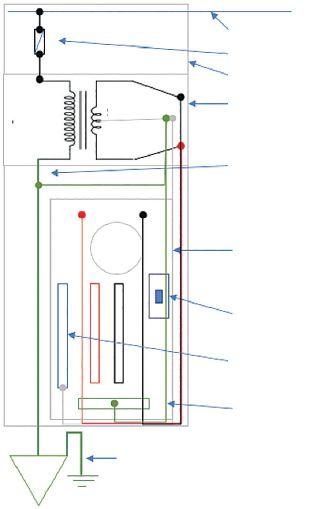
By installing a second conductor from the single-point grounding connection at the XFMR—running independently of the grounding conductor to the cabinet—we remove the parallel path and establish a system without using the LV neutral as an earth return for the HV system. (See Figure 2 for the proposed 4th conductor added by the utility.)
Multiple neutral grounds at a facility are bonded together by the grounding electrode system. When separate “made” electrodes are required, then the earth connection becomes a parallel grounding path. Most of the current flowing in the grounding electrode system will, therefore, stay in the conductors and not flow through the earth (which makes livestock very happy).
When the bonds between portions of the grounding electrode system are inadequate, then the neutral current can overheat poor connections, and even corrode certain metal junctions. Overheating can create a shock hazard and, in some cases, start fires (2). By isolating the neutral from the grounding system and running a 4th conductor, the utility actually increases the safety of the installation. Adding an independent conductor that will be connected to the customer’s grounding system increases the effectiveness of the utility ground, and provides the multiple grounding electrodes upon which the system relies.
References
1. Lock, E. B.-S. (2010). Grounds for Grounding, IEEE. John Wiley & Sons.
2. Lewis, R. M. (1990). Grounding and Shielding in Facilities. John Wiley & Sons. ADVERTISER INDEX
Always consult your AHJ for more specific interpretations
David Pilon is an electrical inspector with SaskPower, the utility’s training co-ordinator for electrical inspectors and vice-chair of the Canadian Certified Electrical Inspector (CCEI) committee of the International Association of Electrical Inspectors (IAEI), Canadian Section. He can be reached at dpilon@saskpower.com.
DAVID PILON
FIGURE
FIGURE
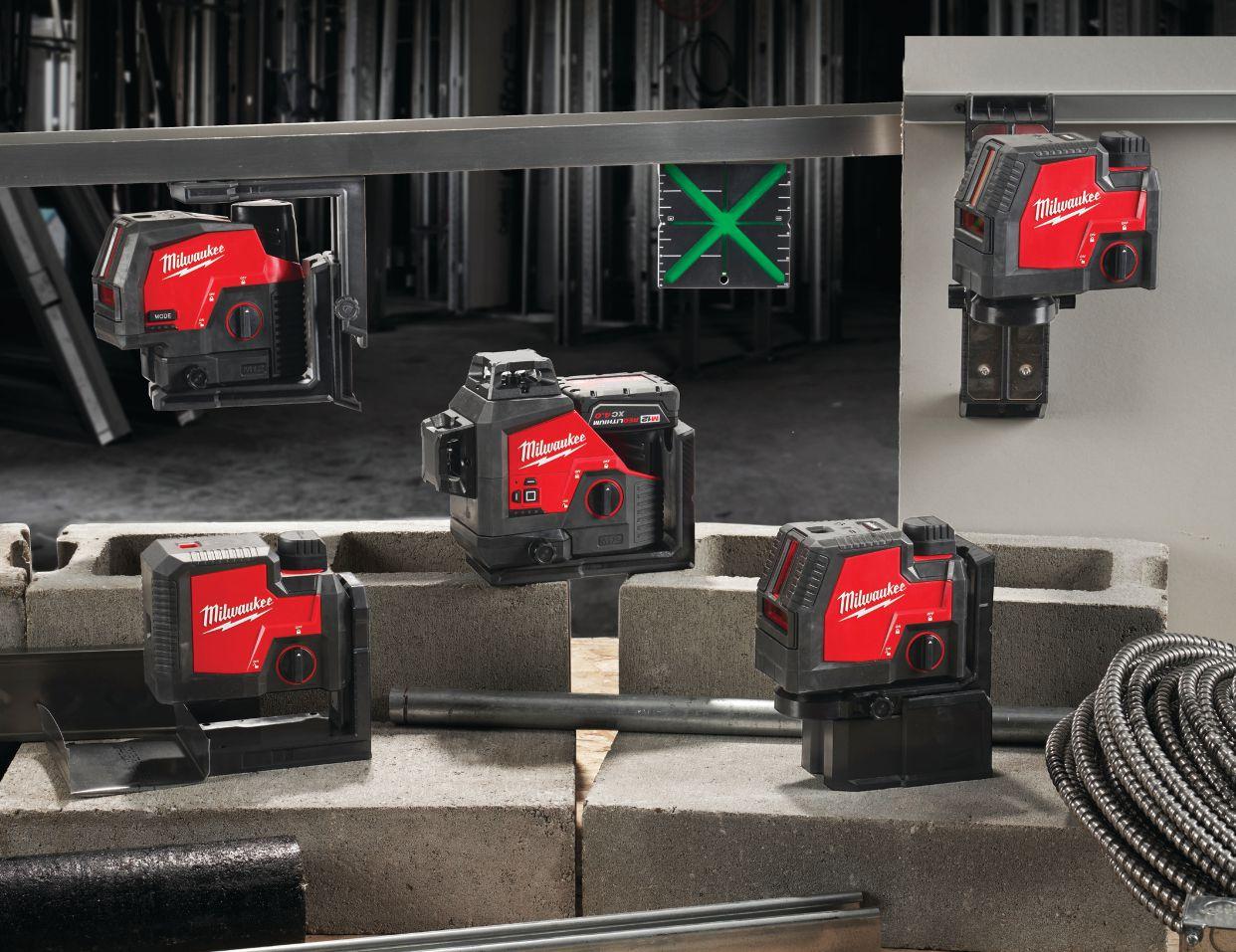
NEW! GREEN LASERS
WE’RE TAKING REWARDS TO THE NEXT LEVEL.
With more ways to earn loyalty points and redeem great prizes, the new and improved AD Rewards program allows you to capitalize on the power of your purchases from AD distributors like never before.
With over 6,000 valuable merchandise and travel rewards, your relationship with your AD distributor has never been more powerful…or lucrative.
Join today at any of these participating AD distributors.