

Integrating lighting with other building systems. P.18
+ Electrical heating cables to thaw winter’s chill
+ Lighting case study: BC Children’s Hospital
+ 2020 work truck preview

Excellent product. Built with the end user in mind. Saves hand fatigue.


These are the best I’ve ever used. I won’t go back.
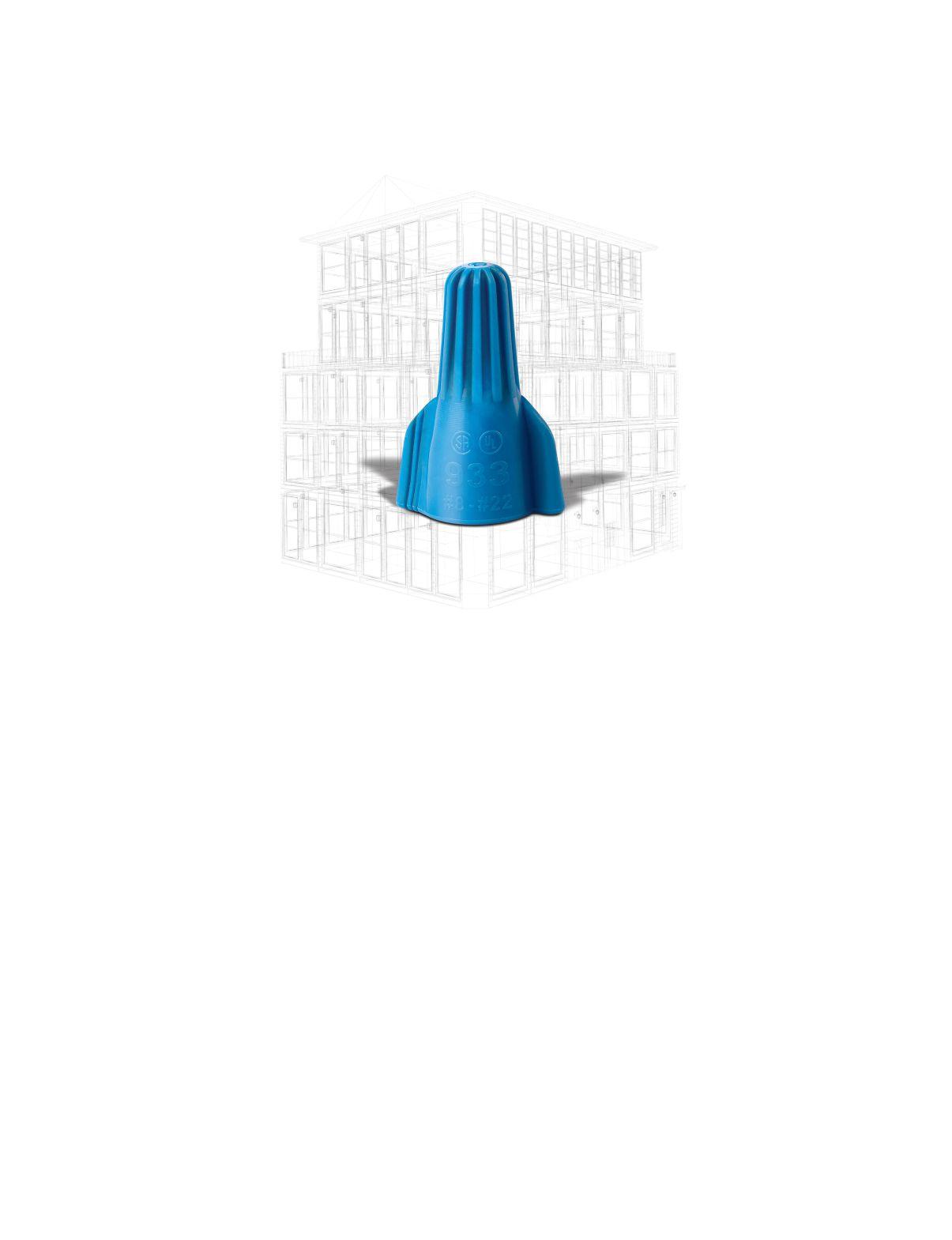
Slim and compact profile allows for more room in tight junction boxes. Easily twists on to wire splices as the inner copper coil is wider.


... une marrette polyvalente
a du mordant.

Fantastic product with wide range, less stock required.
Good grip, great with all different size wires... nice to only use one size marrette for all applications.

These are great! Very easy on the hands. 10/10

Perfect size in a tight device box with a dimmer or occupancy sensor switch. Still big enough to be useful.

Enfin une marrette qui va super bien et qui est facile à manipuler...

I have never used a wire nut that grabs and twists a pair of copper wires like these do. Tough as nails too.


They feel better to install and with the wider mouth makes it easier to attach to the wire splice.

With its versatility I find it offers safety and effectiveness in a broad range from one single14/2 up to five 14/2 wires.

A forensic electrical engineer investigates an issue with 400-amp fuses constantly blowing in a critical data processing centre.
BY PATRICK J. LYNCH, P.ENG.
This data site was experiencing some very peculiar electrical problems. Main power fuses feeding the combined U.P.S. and chiller loads were randomly blowing at all hours of the day and night.
The site was a major critical data processing centre. The data processing electrical load had gradually increased in size over the years, but unfortunately
the supporting U.P.S. systems had not. The U.P.S. system was at 90% capacity with this current electrical load. The U.P.S. battery back-up system was therefore “only good for about 10 minutes” before being completely discharged by this “heavy” electrical load and then the entire data centre load would crash. This site, as electrically designed, had a back-up diesel
generator system to feed the combined U.P.S. and chiller circuits, but here is where the plot thickens.
Every time there was an electrical utility power outage, the generator would start up and the transfer switch would automatically transfer to diesel power to feed these critical loads with no problems each time.
So far, everything seems to be operating as specified – right?
The real problem occurred when the utility power was restored.
The transfer switch then operated and attempted to transfer back to normal/utility power from generator power. At that exact same instant in time, these 600-volt rated-400 Amp time delay fuses randomly blew in the switchboard feeding these combined critical loads. Sometimes it was A-phase or B-phase or C-phase fuses or sometimes it was all three phases. At other times, no fuses blew.
If a fuse blew during transfer, the electrician had a maximum of 10 minutes to replace the fuses and then attempt to re-establish this utility power feed, otherwise the U.P.S. battery system would drain down and the data centre would crash. The electrician had to essentially “babysit” these switchboard fuses 24 hours around the clock until a solution was found – hence the request for electricians who would be able to sleep on the job.
When we arrived at site, there was a bed, TV, fridge, microwave, etc. already set up beside the switchboard for these “sleeping” electricians. This major problem had continued for over six months and no one could figure it out. The 40 dead fuses so far had all been documented and lined up in a failure dated row similar to a row of empty beer bottles. Boxes of new replacement fuses were also close at hand (right beside all the stacked up empty pizza boxes).
The diesel generator group, transfer switch group, U.P.S. and chiller groups had all already been called in and all their systems had checked out okay.
Was it a harmonic resonance problem, or an intermittent out of phase transfer coupled with some type of ran-
dom diesel frequency instability issue?
It could be anything at this point!
At any time of the day or the night, utility power could be lost and the above sequence of events would tragically unfold again. The electricians would have to quickly respond, replace the fuses and attempt to re-establish utility power each time. Sometimes they would have to continually replace these fuses several times during the
Was it a harmonic resonance problem, or an intermittent out of phase transfer coupled with some type of random diesel frequency instability issue? It could be anything at this point!
same event, until they could get these critical circuits to “hold in”.
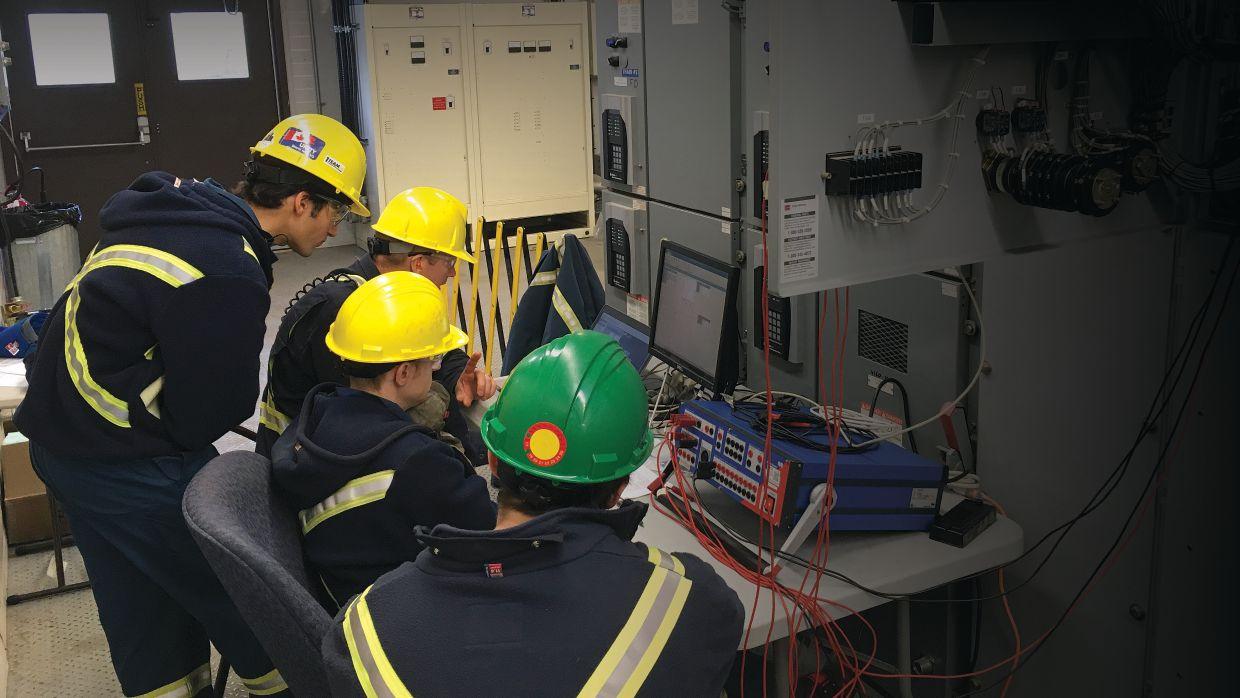
To begin the investigation, we installed our customized high-speed monitoring equipment on all the critical feeders. With the now very reluctant, frustrated electricians and data processing personnel standing by, we then created a utility power outage and automatic power restoration sequence. As expected, a fuse blew. While this
scenario had been occurring again and again for the last six months at this site, the difference was this time, we instantaneously captured and stored all the voltages, currents, harmonics, phase angles, etc. on these critical electrical feeders at the exact same time as this fuse failure.
After analyzing all this captured data, we decided to go one step further and prepared a detailed electrical co-ordination study for this site to confirm our suspicions.
Part of this site had already been electrically designed for future U.P.S. expansion. The 600/480-volt stepdown transformer feeding the existing U.P.S. was therefore much larger in KVA size than what was currently required. Using the transformer nameplate information, including impedance, voltage and KVA values, and plotting this on an electrical time current co-ordination plot revealed the following.
The plotted and predicted transformer inrush time current values exceeded the upstream 400-amp fuse delay clearing times. As a result, the fuses would intermittently blow during transformer re-energization!
This random A/B/C phase fuse blowing factor was also dependent on what part of the voltage waveform electrical power was interrupted and then restored (transformer magnetization
B/H Curve). Different fuse curves from different fuse manufacturers were now also examined as a potential solution.
The final agreed upon solutions were to either replace this U.P.S. stepdown transformer with a lower KVA transformer or rework the main electrical switchboard and install a higher ampacity fusible disconnect switch/ cabling. In this case, the client chose to rework/install this higher ampacity disconnect switch. (approx. time to complete 12 to 14 hours)
If an up-to-date accurate electrical co-ordination study had first been completed, then all these very embarrassing data processing centre reliability issues and this extremely lengthy/ costly problem could have been completely avoided.
All the beds, appliances, etc. have now been removed from the switchboard room and put in storage. There now is however, a regiment of fully trained “sleep and pizza” electricians ready for the next big electrical babysitting job. Stay tuned.
Patrick J. Lynch, P.Eng. has been president of Power Line Systems Engineering since 1986. He graduated from the University of Waterloo in electrical engineering in 1975 and has successfully directed Power Line’s completion of more than 1,100 complex site disturbance investigations around the world. For more information, visit www.powerlinesystems.ca.

After an influx of new products hit the truck market in 2019, this model year is more of a transition year for many brands. BY MARIO CY WINSKI
Once exclusive to heavy duty pick-up trucks and a selection of full-size vans, truck brands are now adding diesel engines to their light duty offerings. While FCA added one to its Ram 1500 a few years ago, it is now introducing a new version on its 2020 truck; General Motors is adding a diesel option to its Chevrolet Silverado and GMC Sierra; and Ford added diesel to the F-150 in 2019.
Safety and technology also take centre stage for 2020, as many brands are adding features not usually seen on pick-up trucks and vans in the past. These include cameras to better see around the vehicle, automatic emergency braking, adaptive cruise control and options to help with towing.
Here, Electrical Business Magazine looks at what is new, updated and available in the pick-up truck and van market for 2020.
Ford has updated the Super Duty for 2020, with engine, capability, design and technology changes. A new engine is added to the line-up, as a 7.3 litre V-8 gasoline engine with 430 horsepower and 475 foot/pounds of torque makes its debut. The 6.7L Power Stroke diesel engine gets an update with 475hp and 1,050 ft/lbs of torque. The standard

engine continues to be a 6.2L gasoline engine. A new 10-speed heavy duty automatic transmission is also added to the Super Duty and features drive modes that include normal, tow/haul, eco, slippery, and deep sand and snow.
The updated diesel engine allows the Super Duty to now offer gooseneck towing of 16,783 kilograms, fifth-wheel towing of 14,742kg, and conventional towing of 10,977kg. Maximum towing numbers are increased for all Super Duty models for 2020 (F-250, F-350, and F-450).
Ford has optimized the front end of the Super Duty to help with cooling, including a new front bumper and air dam. The rear tailgate, taillights, and rear bumper are all updated, along with LED headlights and DRLS on higher trims.
Technology and safety updates include Pro Trailer Backup Assist, which allows the truck’s Trailer Reverse Guidance to be compatible with fifth-wheel and gooseneck trailers. Automatic emergency braking, lane-keeping alert and blind spot monitoring are now standard on XLT trim and above. Other standard features now include FordPass Connect with 4G LTE modem, available wireless charging and Ford Telematics.
Chevrolet Silverado
After being all-new for 2019 model year, the 2020 model gets a new 3.0L turbocharged inline-six diesel engine that offers 277hp and 460 ft/lbs of torque, with maximum towing for four-wheel-drive models of 4,218kg and maximum payload of 848.2kg. A 10-speed automatic transmission is now available on 5.3L V-8 models. Silverado will also receive available
15 camera views and adaptive cruise control with camera.
Colorado

Carrying over into 2020, Chevrolet has announced an all-new Colorado to come for 2021 model year. It will offer updated lower fascia, front skid plates, and centre bars, new logos, embossed tailgate, and unique looks for each trim. The ZR2 model will feature a lettered Chevrolet front fascia.
The Sierra HD features an all-new design that makes it taller, longer, larger and with a longer wheelbase. Redesigned lighting is prominent as headlights, taillights, fog lights, roof marker lights and DRLs are all available in LED. Additionally, the grille is larger and hood scoops are more functional.
In the back, cargo bed volume is improved, 12 corner tie-downs are included, a 120v power outlet is available, cargo bed steps are new and in addition to the current corner steps, and the MultiPro tailgate, which debuted on the Sierra in 2019, is now available on HD models
Technology is also front and centre as GMC’s ProGrade Trailering system is now available on HD models, as is an available 15 camera views. Additional technologies available are an automatic


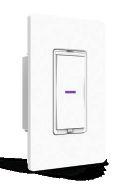
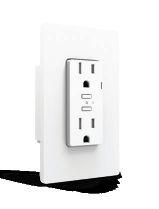

electric parking brake, park grade hold assist, and tow/haul mode that stays on for the next time the vehicle is turned on (up to four hours).
Power wise, Sierra HD now offers a 10-speed automatic transmission on its 6.6L turbocharged diesel engine that outputs 445hp and 910 ft/lbs of torque.
An AT4 off-road version is also added for 2020.
All-new for 2020, the Jeep Gladiator is the newest member of the mid-size pick-up truck market. It has a wheel-
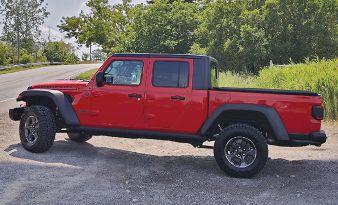
base of 3,487 millimetres, a five-foot cargo box (1,531 millimetres with the tailgate closed), and towing capacity of 1,814kg to 3,469kg (depending on how its equipped).
Power for the Gladiator comes from the Pentastar 3.6L V-6 with 285 hp and 260 ft/lbs of torque mated to an eightspeed automatic transmission or a six-speed manual transmission. A 3.0L diesel engine will also be available and offer 260 hp and 442 ft/lbs of torque, mated to an eight-speed automatic transmission as standard.
The vehicle is available with trailer sway control, the cargo box offers standard cargo lights, dampened tailgate, tie-down loops, and optional spray-in bedliner and roll-up tonneau cover.
Three sizes of FCA’s uConnect system are available: a standard five-inch, a seven-inch or an 8.4-inch screen. The instrument cluster comes with a standard 3.5-inch screen, or an optional seven-inch.
Gladiator is available in Sport, Overland, and Rubicon models.
In 2020, all crew vans now come standard with wood floor with six d-rings; rear window defroster, storage compartment with net in rear doors, and windows in rear doors; satellite radio now available on all models; and all cargo models now offer a full window package.
Sprinter comes outfitted with a V-6 diesel engine that provides 325 ft/ lbs of torque and 188 hp mated to a seven-speed automatic transmission, a four-cylinder gas engine provides 258 ft/lbs of torque and 188hp and is mated to a nine-speed automatic transmission.
Four body types are available (cargo, crew, passenger and cab chassis), two roof heights (standard and high), three wheelbases (144”, 170” and 170”
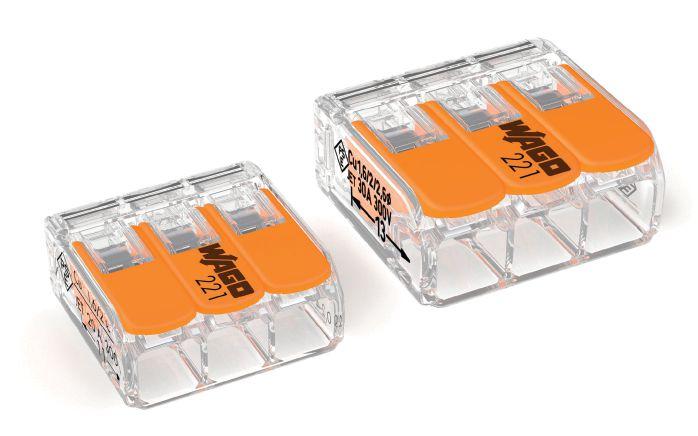
221 Series LEVER-NUTS® Compact Splicing Connectors
• Same tool-free operation as the original, but in a slightly larger package to accommodate up to 10 AWG
• 2-, 3-, and 5-wire versions, just like the original
• 20 - 10 AWG; solid, stranded, flexible, tin-bonded
• 30 A / 600 V; 105 °C operating temperature
Request a sample at www.wago.us/221
EXT), three rear wheel types (single, super single or dual) and standard rear-wheel drive and available 4×4.

For 2020, Nissan has updated the exterior styling of the Titan, which it dubs the Powerful Warrior design. The new design now offers a unique grille for each of its three trim levels, PRO-4X and Platinum grades now offer standard new headlights, LED DRLs and available LED fog lights. The bed now has all-LED lighting with four light sources, while the rear of the Titan now has LED lighting. The exterior changes also include an updated front bumper, fog lights, badging and wheel designs.
On the interior, Titan now offers an available nine-inch touchscreen as part of its integrated command center, which also includes Apple CarPlay, Android Auto and a Wi-Fi router (subscription required). A seven-inch driver information display is also included. With a new NissanConnect on the 2020 Titan, it now has over-theair software updates.
For 2020, Nissan has also updated its 5.6L V-8 engine, which now offers 400 hp and 413 ft/lbs of torque, and is mated to a new nine-speed automatic transmission. Nissan Safety Shield 360 technology is now standard on all Titan models. It offers: automatic emergency braking (with pedestrian detection), blind spot monitoring, rear cross traffic alert, lane departure warning, auto-
matic high beams and rear emergency braking.
The larger Titan XD model shares the updates of the smaller Titan. It will now be offered in a crew cab body with a 6.5-foot bed and four-wheel-drive as the only configuration available in SV, PRO-4X, and Platinum Reserve trims.
Introduced as an all-new model in 2019, for 2020, a diesel engine is added to the lineup. The 3.0L EcoDiesel V-6 engine offers 260 hp and 480 ft/lbs of torque, and has a towing capacity of 5,697 kilograms (12,560lbs). It joins the 3.6L eTorque Pentastar V-6 with 305hp and 269 ft/lbs of torque and the 5.7L HEMI V-8 (with or without eTorque) outputting 395hp and 410 ft/lbs. It now has a safety package with adaptive cruise control, automatic emergency braking, lane departure warning and automatic high beams.
The 2500 also adds lane keeping and adaptive steering as available equipment on all trims. Additionally, trailer tire pressure monitoring and blind spot monitoring (including coverage for trailer) are added, as is an auxiliary camera system that can have two cameras added. Crew cab with eight-foot bed now comes standard with an 187L fuel tank.
Tacoma
The mid-size Tacoma sees incremental changes for 2020, with all models now offering Toyota Connected Services Audio with sevenor eight-inch touchscreen, and Apple CarPlay and Android Auto. Tacoma is
available with a 3.5L V-6 engine with 278hp and 265 ft/lbs of torque, mated to a six-speed automatic transmission, with a sixspeed manual transmission available on several TRD models. Access cab and double cab are available in 4x4 configuration.
Toyota Safety Sense P is standard on all Tacoma models. It offers adaptive cruise control, lane departure warning, automatic high beams and automatic emergency braking (with pedestrian detection).
The Tundra full-size pickup is a carryover for 2020, with Connected Services Audio offered just like with the Tacoma. It also comes standard with Toyota Safety Sense P. Added for 2020 is a Premium trim for TRD Sport and Off-road models. It offers premium audio with a remote and has embedded navigation with destination assist, leather seat cladding and leather-wrapped steering wheel, dual zone automatic climate control, blind spot monitoring with rear cross traffic alert and a spray-in bed liner. Also, for 2020 is standard Smart Key with push button start on TRD Sport/Off Road trims and above.
Mario Cywinski is the editor of Machinery and Equipment MRO magazine. He is a member of the Automobile Journalists Association of Canada (AJAC), a judge for Canadian Truck King Challenge, and has over 15 years of automobile industry experience. He can be reached at mcywinski@mromagazine.com.
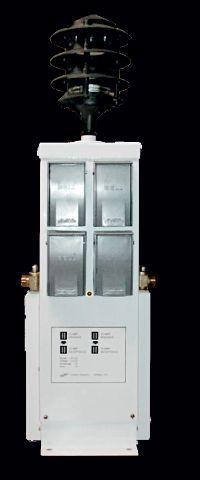
Vickery Electric specializes in providing quick turnaround, fully customizable power posts for numerous applications, including marinas, railyards,

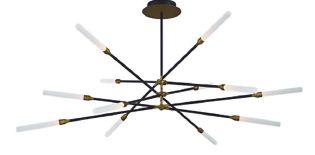
The Houdini series of LED chandeliers, available in three sizes and two finish combinations, feature frosted solid acrylic rod diffusers on dual planar rotatable aluminum bars. The chandeliers are offered in four, six or 12-light models, in brushed nickel or black with aged brass finishes. Featuring a CCT of 3000K and a CRI of 90, the chandeliers operate on 120-227 volt systems and are able to dim with an electronic low voltage dimmer. The chandeliers range from 11 to 31 watts and provide up to 796 lumens, and have an LED lifespan of 36,000 hours. This luminaire meets California Title

BY RAY YOUSEF, CODE ENGINEER
24 requirements and is ETL & cETL damp location listed. waclighting.com/
Lakeland unveils new apparel line for electrical utility professionals
Lakeland Industries, Inc. (Lakeland) has launched a new line of midweight, high-visibility FR/AR apparel for electrical utility professionals. The company says the new line features an athletic fit with high-performance FR attributes, made from breathable stretch fabrics featuring permanent moisture-wicking technology, and come in multi-weight fabrics for layering. Styles include the Eclipse, a lightweight knit 16 cal button-up shirt; the Peak, a waffle-cut 8-ounce ¼ zip or hoodie; the Vertex, an 11-ounce stretch garment; the Pinnacle, Lakeland’s original
12-ounce softshell jacket, featuring water and wind resistance and a touch abrasion-resistant outer shell; the Apex, a lightweight water- and wind-resistant hoodie; and the Summit, a ¼ zip style with 28 cal protection. lakeland.com/

Ontario’s Electrical Safety Authority esasafe.com
TACKLE THE CODE CONUNDRUM IF YOU DARE!
Answers to this month’s questions will appear in the February issue of Electrical Business.
QUESTION 1
A combination Arc Fault Circuit Interrupter provides:
a) Both AFCI and GFCI protection
b) Only protection for series arcing faults
c) Only Protection for parallel arcing faults
d) Protections for both series and parallel arcing faults
QUESTION 2
The integrity of an impedance grounded system shall be monitored, and the system shall have an audible or visual alarm if there is:
a) A ground fault on current carrying conductors
b) A ground fault on the conductors connecting the impedance grounding device to a source
c) A loss of continuity of the impedance grounding circuit
d) All of the above
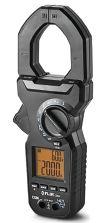
FLIR has launched a new clamp meter designed for high-current measurements on utility and industrial job sites. The CM94 clamp meter is a True-RMS 2000A AC/ DC clamp meter with a 55 mm, oversized jaw opening that can be used on larger conductors and busbars. The product features CAT IV-1000V overvoltage protection, 2-meter drop protection and LoZ and VFD modes.
FLIR.ca/
QUESTION 3
Raceways which are less than 2 m above grade and subject to mechanical damage shall:
a) Be of rigid steel type
b) Protected by location
c) Protected by steel guards, min. 10 MSG, secured in place
d) Any of the above
Answers, October 2019 issue:
QUESTION 1
d) All of the above. Ref: Rule 64-060, CE Code 2018
QUESTION 2
b) The ampacity marked on the cable. Ref: Rule 16-330, CE Code 2018
QUESTION 3
e) Both a) and c). Ref: Rule 18-064, CE Code 2018
How did YOU do?
3 – Seasoned journeyman
2 – Need refresher training
1 – Apprentice
0 – Just here for fun!

DAVID PILON
When designing a station, there are numerous issues which must be addressed at the design stage and carried through to the installation. Some of the questions the authority having jurisdiction (AHJ) may ask include: What is the soil resistivity? What is the possible Ground Rise Potential (GPR) for this location? How will the station be accessed? How will a safe touch and step potential be maintained? How will we alert persons of the possible hazards in and around the site?
As an inspector, we often run into some of these issues which have not been addressed adequately, during or after construction. This can be an expensive time to modify or change the design to meet CE Code requirements. Early questions and follow-up can assist in these concerns being addressed at the design stage, which saves time and money on the ground.
In preparation for the grounding of a High Voltage Station, a determination of the system’s needs must first be reviewed. One question that sometimes catches designers off guard is the request for a GPR study. This may be requested for installations, such as in mining where it is required by the CSA M421 standard, but may be required for other locations as well.
The rules which I have personally found in violation are as follows:
No signage mounted on the gates. While it seems like a good idea when the gates are closed, once the gates swing open, they are no longer visible to per-
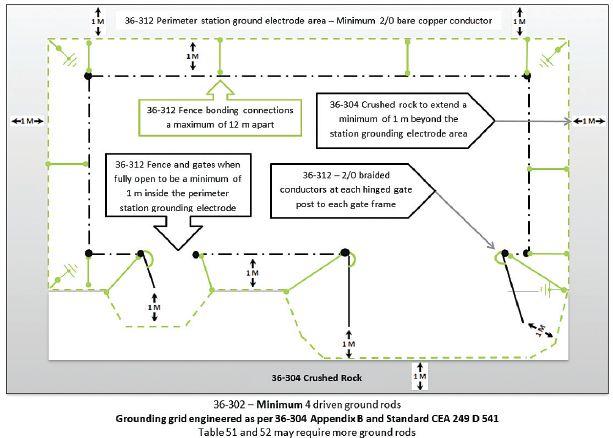
sons passing by. Section 36-006 (1)(e) states that for this reason, signage should be located adjacent to the gate locks, on all access gates, at all outside corners, and at intervals not exceeding 15 m.
Gate direction must be considered. The CE Code states in 26-310 that the gates shall open outward whenever possible. This outward swing also causes designers to miss the requirement of 36-312 which states the fence shall be located at least 1 m inside the station ground electrode area. If the gates, which are a part of the fence, swing outward, then at their outermost point, they must still be 1 m within the grounding electrode area, which means the electrode area must extend beyond just the confines of the fence.
The ground cover must extend far enough. Section 36-304 (5) requires
that where the safety of persons depends on the presence of a ground surface covering layer, it shall extend throughout the station grounding electrode area, as well as 1 m beyond it on all sides. This means that if the grounding electrode area is 1 m beyond the fence, then at a minimum, the ground surface covering layer must be 2 m beyond the fence (shown as grey in the diagram).
The use of standard copper wire 2/0 for the whip to the gate. Section 36312 (3) states that the connection shall be a copper braid or flexible copper conductor. Contractors do not want to go back two years after construction to replace a copper jumper which is now broken because it was not flexible enough.
Be sure to talk to your local AHJ prior to construction starting to be sure you have all of these and any other concerns addressed by the early stages of construction.
Always consult your AHJ for more specific interpretations.
David Pilon is an electrical inspector with SaskPower, the utility’s training co-ordinator for electrical inspectors and vice-chair of the Canadian Certified Electrical Inspector (CCEI) committee of the International Association of Electrical Inspectors (IAEI), Canadian section. He can be reached at dpilon@saskpower.com.

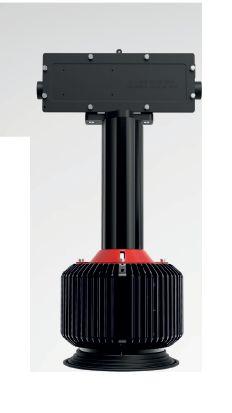
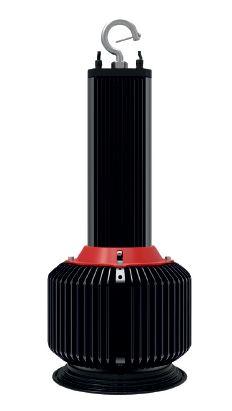
The L1RTP-L is a high temperature LED high bay rated up to 80ºC. The fixture is ideal for industrial applications where intense heat is present. It is also rated IP67 which allows it to be installed in dust and wet locations.
• Ambient temperature -40° C to +80° C
• Black heavy duty anodized aluminum housing with corrosion resistant coating
• Ambient humidity 10% - 90% RH
• 22 500 lm with 150 lm/W efficacy
• 4 000 K and 5 000 K
• 120-277 V and 347 V
• Hook mount, 3/4" NPT junction box mounting or bracket for surface mount.






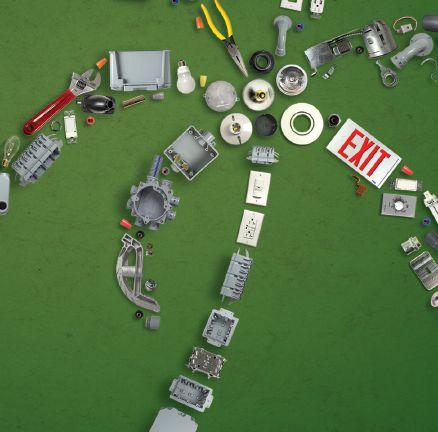


With AD Rewards, you can be rewarded for purchasing participating products from AD Canada Distributors. Earn one point for every dollar spent(1) at any AD Rewards Distributor(2) across Canada. You may already have points and not even know it. It’s the best rewards program in the industry. Isn’t it time you started rewarding yourself?