Genetics: Building a Better turkey Picking what is best By David
Manly
ManaGeMent: Radiate success
By switching to infrared heaters, you could save up to 50 per cent on your fuel costs By
Shawn Conley
18
Mind OveR success: the cost of Hatred By
Pierrette Desrosiers
tecHnOlOGy: innovating with the BiOvator By
Melanie Epp
BaRn ManaGeMent: Managing Moisture Key management factors to control environmental conditions in the brooder house
By Gary Hall and John Menges, Technical Sales Representatives, Hybrid Turkeys
lake Ducks celebrates 100 years
OtHeR POultRy: One Hundred years of Brome lake ducks By André Dumont
GlOBal: Perfecting Poultry Highlights from the 24th World’s Poultry congress By Dr. Peter Hunton
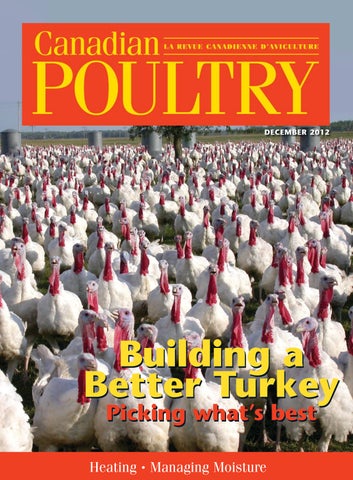
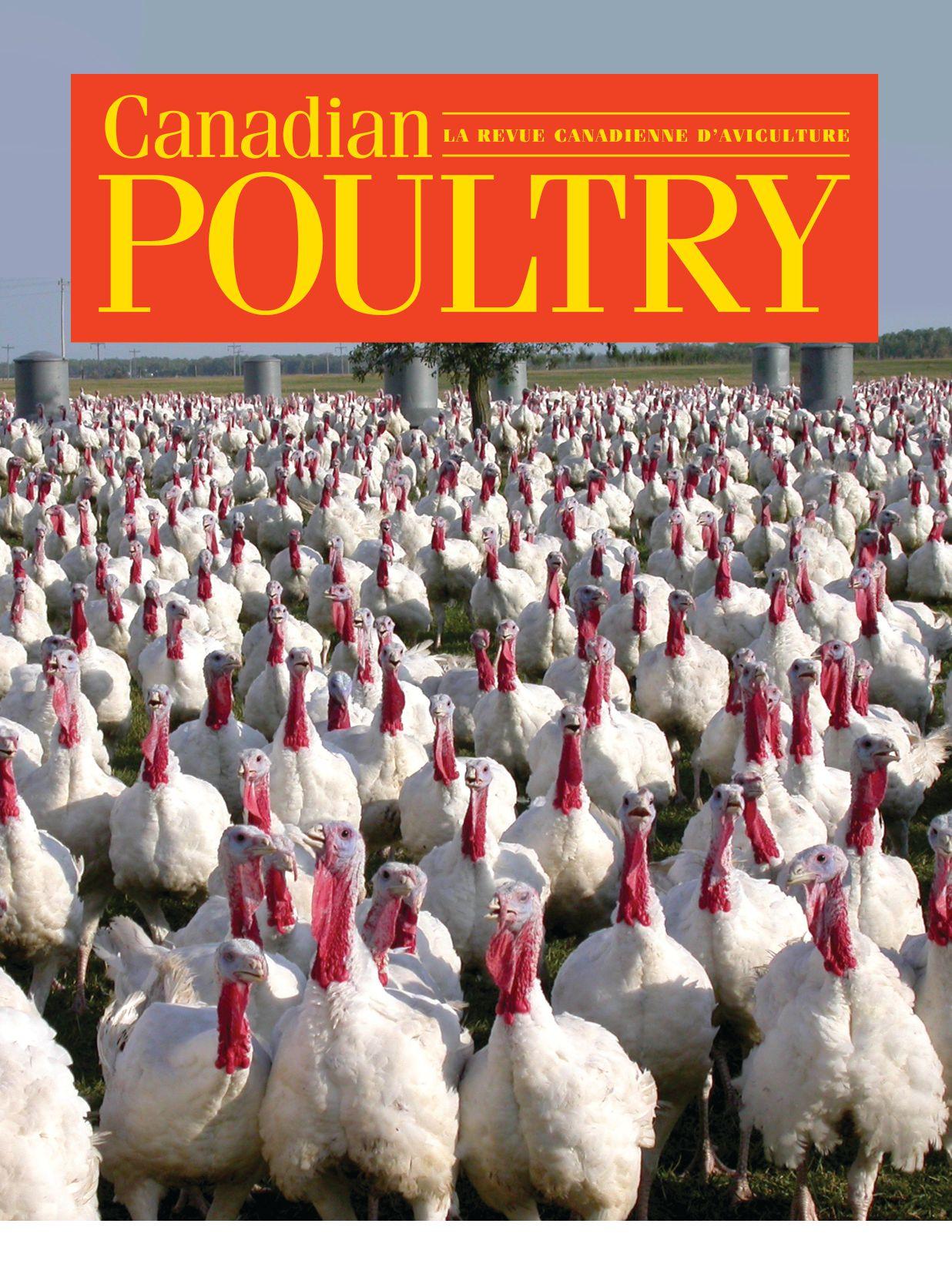
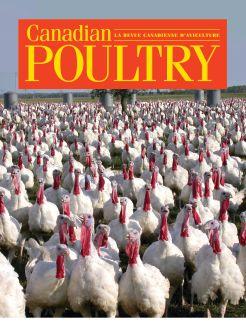
cOveR PHOtO By steve HOfeR, staRlite faRMs, GRand PRize WinneR Of OuR 2012 PHOtO cOntest.
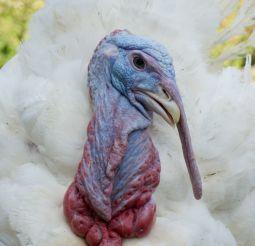
Breeding turkeys
Composting with BIovator
FROM THE EDITOR
By KRIsTy nuDDs
We’re celebrating in 2013
Next year marks the 100th anniversary of Canadian Poultry! to celebrate, we’ve created a special section on our website (www.canadianpoultrymag.com/100th) where we are publishing articles from the past 100 years to provide our readers with our history and the history of the canadian poultry industry.
We started out as the Pigeons, Poultry and Petstock Journal of the West, evolving into Canadian Poultry World, then Canada Poultryman, and now Canadian Poultry throughout our century of publishing, the farmer has always been the focus of this magazine, and we’ve striven to provide the most up-to-date information and to be a useful tool for canadian poultry farmers. this is something we will continue to do for the next 100 years.
looking through our archives has been a fascinating journey of discovery of how the industry has evolved. We’ve published articles on genetic breakthroughs, the discovery of anticoccidials, advances in equipment, the first fast food poultry in canada, advancements in feed technologies and ingredients, the creation of our marketing boards and the adoption of on-
our 2013 calendar
farm food safety. the industry has come a long way and so has the magazine!
Perhaps what has changed the most is the role of the farmer during the last century. in the first half of the century, the poultryman was literally on his own. However, the discovery of anticoccidials allowed for commercial rearing of poultry. since then, science- and industry-related companies and service staff have played increasingly more important roles in assisting the farmer in rearing poultry. Poultry production has become a partnership with other members of the canadian industry acting with the farmer to place, rear and market safe poultry products for the canadian consumer.
We encourage you to visit our 100th anniversary website to read articles from the past and to share your thoughts, comments and stories of your and your family’s involvement in the industry. the website will be updated continually over the next year, so check back often. n
DECEMBER 2012
Vol. 99, No. 12
Editor
Kristy Nudds – knudds@annexweb.com
888-599-2228 ext. 266
Associate Editor
David Manly – dmanly@annexweb.com
Publisher/Sales Manager
Marilyn White – mwhite@annexweb.com
519-429-5193
888-599-2228 ext 237 • fax: 888-404-1129
Sales Assistant
Mary Burnie – mburnie@annexweb.com 519-429-5175 • 888-599-2228 ext 234
Media Designer
Kelli Kramer
Group Publisher
Diane Kleer – dkleer@annexweb.com
President Mike Fredericks – mfredericks@annexweb.com
Mailing Address
P.O. Box 530, 105 Donly Dr. S., Simcoe, ON N3Y 4N5
Publication Mail Agreement #40065710
REtuRN uNDEliVERABlE CANADiAN ADDRESSES tO CiRCulAtiON DEPt., P.O. BOx 530, SiMCOE, ON N3Y 4N5.
e-mail: subscribe@canadianpoultrymag.com.
Printed in Canada iSSN 1703-2911
@CanadianPoultry
in place of our traditional wall calendar, we’ve created a flip calendar in celebration of our 100th anniversary that showcases the winners of our recent photo contest.
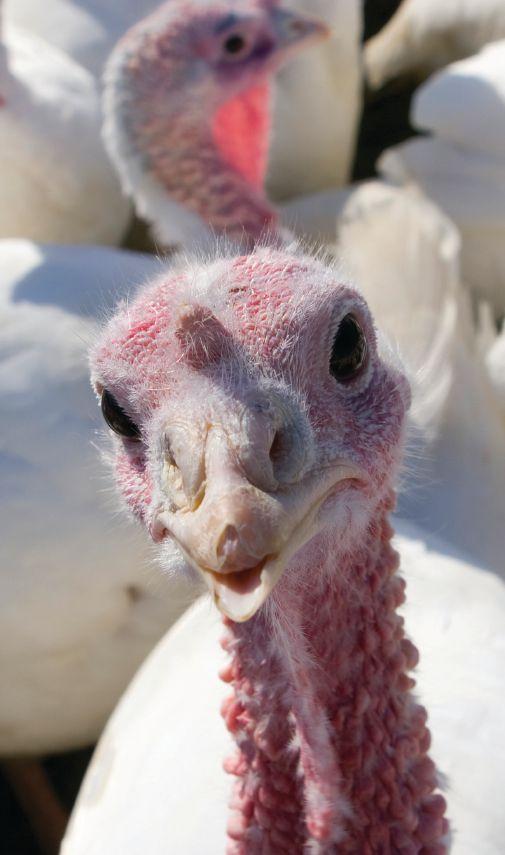
Photos were chosen based on quality, appeal and applicability to the category entered. Our grand prize winner, featured in the month of december (and on this month’s cover), was submitted by steve Hofer of starlite farms. it’s a stunning photograph and we’d like to know how Mr. Hofer got all of the turkeys to look at the camera at the same time! We congratulate all of our winners and we thank all of those who submitted photos. some of the photos not featured in the calendar may be used in upcoming issues, so keep your eyes peeled for any photos you submitted.
Circulation
e-mail: subscribe@canadianpoultrymag.com
Tel: 866-790-6070 ext 201 Fax: 877-624-1940
Mail: P.O. Box 530, Simcoe, ON N3Y 4N5
Subscription Rates
Canada – 1 Year $30.00 per year (with GSt $31.50, with HSt/QSt $33.90)
GSt – #867172652Rt0001
uSA – 1 Year $ 66.00 uSD Foreign – $75.00 per year
Occasionally, Canadian Poultry Magazine will mail information on behalf of industry-related groups whose products and services we believe may be of interest to you. If you prefer not to receive this information, please contact our circulation department in any of the four ways listed above.
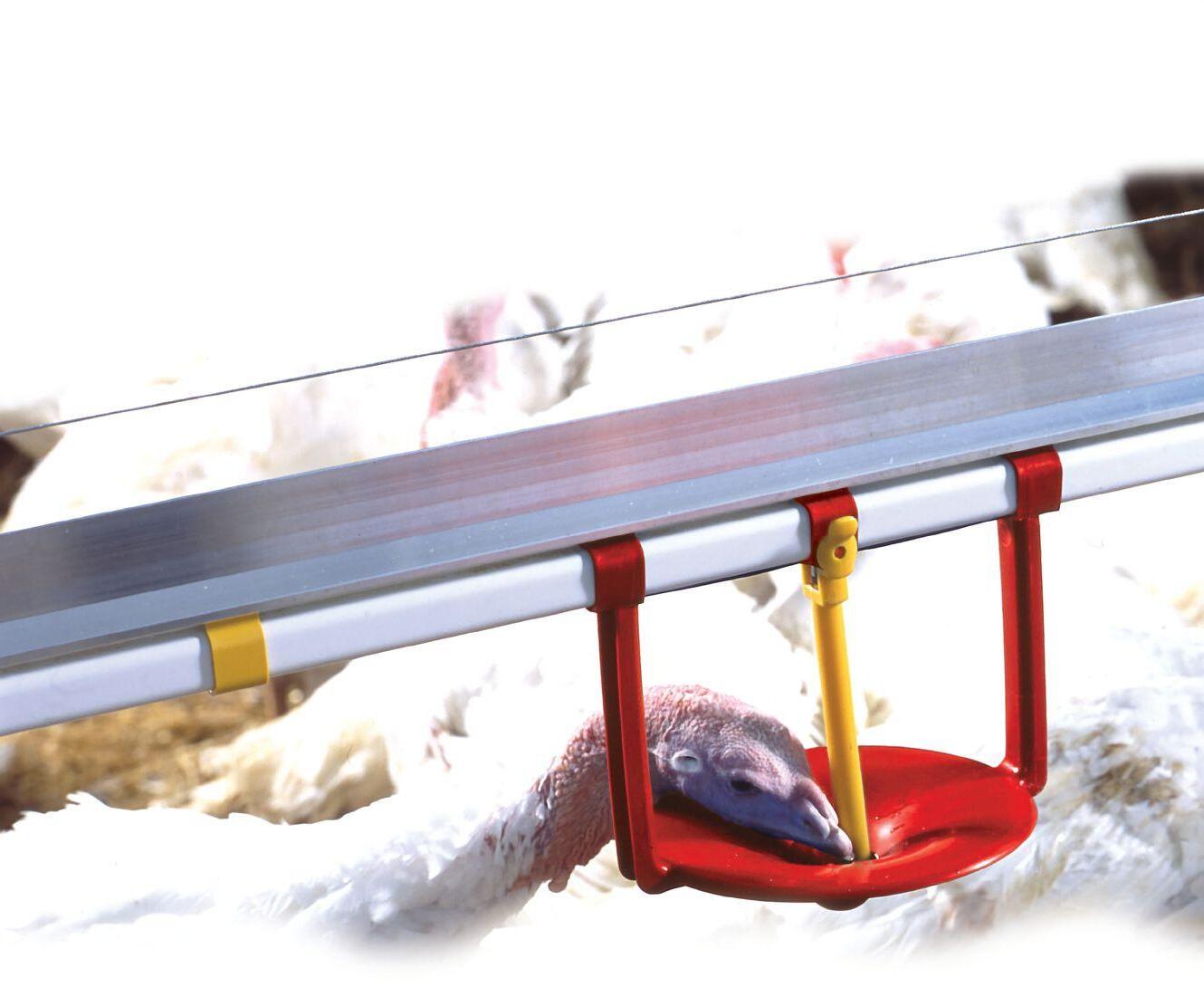
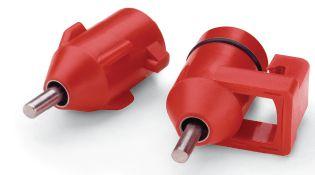
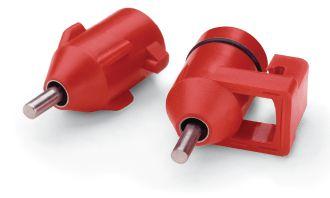
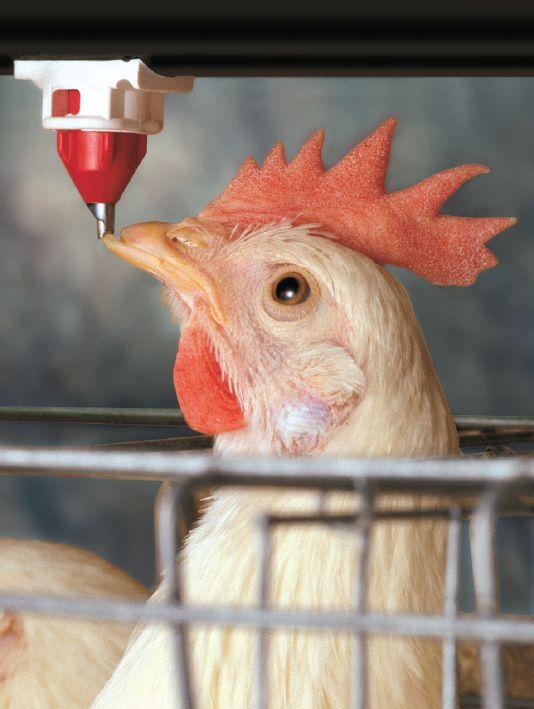
Lubing's EasyLine Nipple Drinking System for turkeys has changed the turkey industry forever. This revolutionary system incorporates a patented pendulum that effectively directs water from the nipple into a self-cleaning drink cup. The low profile cup design allows day-old poults easy access to the water for great starts and has proven to perform with great success delivering water to heavy toms. You too can Live Easy with EasyLine!
Got Lubing? Contact your local Lubing Distributor for more information about EasyLine or visit our website at www.lubingusa.com.
Glass-Pac Canada
St. Jacobs, Ontario
Tel: (519) 664.3811
Fax: (519) 664.3003
Carstairs, Alberta
Tel: (403) 337-3767
Fax: (403) 337-3590
J. Dean Williamson Ltd.
London, Ontario
Tel: (519) 657.5231
Fax: (519) 657.4092
Eliminates routine cleaning
Provides fresher water supply
Improves litter conditions
Enhances air quality
Improves bird health
Les Equipments Avipor
Cowansville, Quebec
Tel: (450) 263.6222
Fax: (450) 263.9021
Specht-Canada Inc.
Stony Plain, Alberta
Tel: (780) 963.4795
Fax: (780) 963.5034
What’s
HATCHING HATCHING
Meat consumption slows
G
lobal meat production rose to 297 million tons in 2011, an increase of 0.8 per cent over 2010 levels, and is projected to reach 302 million tons by the end of 2012, according to research conducted by the Worldwatch institute’s nourishing the Planet project (www.worldwatch.org) for the institute’s vital signs Online service. Record drought in the u.s. Midwest, animal disease outbreaks, and rising prices of livestock feed all contributed to 2011 and 2012’s lower rise in production, wrote authors danielle nierenberg and laura Reynolds.
also bucking a decadeslong trend, meat consumption decreased slightly worldwide in 2011, from 42.5 kilo-
grams per person in 2010 to 42.3 kg. since 1995, however, per capita meat consumption has increased in developing countries 25 per cent, whereas in industrialized countries it increased just 2 per cent. in total, meat consumption worldwide rose 15 per cent overall.
Pork was the most popular meat in 2011, accounting for 37 per cent of both meat production and consumption, at 109 million tons. this was followed closely by poultry meat, with 101 million tons produced. yet pork production decreased 0.8 per cent from 2010, whereas poultry meat production rose 3 per cent, making it likely that poultry will become the most-produced meat in the
next few years.
a breakdown of meat production by geographic region reveals the dramatic shift in centers of production from industrialized to developing countries over the last decade. in 2000, for example, north america led the world in beef production, at 13 million tons, while south america produced 12 million tons and asia, 10 million tons. By 2011, north america had lowered its beef output by 200,000 tons and was overtaken by both south america and asia, which produced 15 million and 17 million tons, respectively.
for more information on the report, please visit www. worldwatch.org.
Masterfeeds and Feed-Rite Merge
MCOMING EvENTs
JanuaRy 2013
January 24-26, 2013
asterfeeds inc. and feedRite (the canadian arm of parent company Ridley inc.) have announced an agreement that will merge their respective commercial livestock and poultry feed and nutrition businesses in canada into a new entity called Masterfeeds lP. the combination of Masterfeeds and Ridley’s canadian feed business will create the second largest feed provider in canada. the new entity will operate, among other things, 22 feed manufac-
Cold Weather Comeback
ICaNaDa oNtaRIo
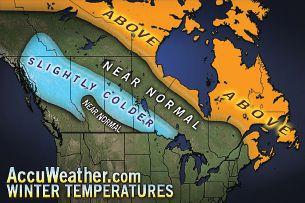
t appears that, after an extremely warm winter last year, cold weather will be making a comeback this year in canada.
according to an accuWeather.com release, the atlantic and Maritime provinces will be the one exception to receiving colder weather, but winter storms won’t leave them alone completely.
Ontario and Quebec should have a return of winter status quo with near-normal temperatures and snow, said the release, but the Prairies will experience slightly colder weather and alberta and British columbia will experience a chilly and drier winter.
“for saint John’s and Halifax, we do expect a fairly stormy winter, especially from January through february, a number of coastal storms, i
turing plants, and employ over 500 people in a business spanning Quebec, Ontario and the Prairie provinces. Masterfeeds lP will be headquartered in london, Ont., and led by current Masterfeeds inc. chief executive officer Rob flack.
“We are excited about bringing the strengths of both companies together as we continue to serve our dealers and customers with dynamic feeding solutions and a larger, more efficient geographic footprint in canada,” said flack. each of Masterfeeds inc. and Ridley inc. will contribute
believe, will be coming up in those areas,” said accuWeather.com expert senior meteorologist Brett anderson. “Once we get into the second half of January and february, i believe we are going to see a stronger storm pattern coming up from the south and also some cold air getting tapped from the north. so, i believe we may be actually seeing above-
essentially all of its canadian feed operating assets in exchange for relative shareholdings in Masterfeeds lP. that transfer is expected to result in no material impact overall to Ridley’s balance sheet, nor is it expected to have any material effect on the structure or other operations of Ridley inc. Both parties expect the merger to result in significant new synergies over time. completion of the merger is expected to take 30-45 days and is subject to the execution of definitive agreements and normal conditions including regulatory approvals.
a forecast of Canadian winter temperatures from accuWeather.com.
normal snow for places such as toronto, Ottawa, Montreal during the heart of the winter,” anderson explained.
Eden valley Plant Begins Processing
sCotIa
Eden valley has completed the retrofit of the former larsen’s pork processing plant at a cost of approximately $40 million into a poultry processing plant for nova scotia and Prince edward island. according to the daily Business Buzz, the project
was announced in april 2011 and will employ 180 staff.
“this is something everybody has been anxiously waiting for,” said alexis Grant, economic development co-ordinator for Berwick and area. “it’s great news to us as far as our tax base for the town… to have a new processing facility running.”
Pacific Agriculture Show, tradex exhibition centre, abbotsford, B.c for more information, visit: www.agricultureshow.net
January 28-31, 2013 International Poultry Exposition (IPE), International Feed Exposition (IFE) and American Meat Institute (AMI) tradeshow, Georgia World congress center, atlanta, Ga. for more information, visit: www.ipe11.org
fEBRuaRy
February 5-7, 2013 Canadian International Farm Show, international centre, Mississauga, Ont. for more information, visit: www.masterpromotions.ca
February 13-15, 2013
Atlantic Poultry Conference, Old Orchard inn, Greenwich, n s for more information, visit: www.atlanticpoultryconference.com
February 25-27, 2013 Pacific Egg & Poultry Association annual convention, intercontinental Hotel, Monterey, calif. for more information, contact debbie Murdock: dmurdock@cgfa.org
MaRCH
March 6-8, 2013
London Farm Show, Western fair district, london, Ont. for more information, visit: http:// www.westernfairdistrict. com
Photo by a ccuWeather.com
HATCHING HATCHING
Canada Officially Joins TPP
Canada has officially joined the trans-Pacific Partnership (tPP) trade talks, which could result in major changes to canadian dairy, egg and poultry farmers.
the countries involved (the united states, australia, chile, Malaysia, new zealand, Peru, singapore, vietnam, Brunei and Mexico) comprise 68 million people and their combined economic output exceeds $20.5 trillion.
However, since a condition of joining the tPP talks was that members had to be able to put all aspects of trade (including supply management in canada) on the table for negotiation, dairy, egg and poultry farmers worry that changes in or complete removal of supply management could happen, despite the government’s assurance. the tPP talks will begin dec. 3-12, 2013, in auckland, new zealand.
Canadian agriculture output Increasing
A
report by the Bank of Montreal says canada’s real agricultural output is on track to increase 7.5 per cent this year, laying fertile ground for the sector’s performance heading into 2013.
david Rinneard, the bank’s national manager of agriculture, calls the rebound impressive and says improved demand, prices and growing conditions have been a clear boon to the industry.
the Bank of Montreal says emerging markets with expanding populations and
incomes are a key growth opportunity for the sector. Producers are also shifting toward higher-return products other than wheat that are of high demand in developed economies.
canadian growers also benefited from a rise in corn and soybean prices caused by a major u.s. drought this summer.
although Ontario suffered from dryness as well, generally canadian growing conditions were much better than they were south of the border.
COMING EvENTs
March 13-14, 2013 Midwest Poultry Federation Convention, saint Paul Rivercentre, saint Paul, Minn. for more information, visit: http:// midwestpoultry.com
March 25-27, 2013 62nd Western Poultry Disease Conference, Holiday inn capitol Plaza, sacramento, ca. for more information, visit: www. cevs.ucdavis.edu/confreg/ index.cfm?confid=598
aPRIL
april 10-11, 2013 London Poultry Show, Progress Building, Western fair district, london, Ont. for more information, visit: www.westernfairdistrict.com
JunE
June 16-18, 2013 CPEPC/CMC Convention, fairmont Banff springs Hotel, Banff, alta. for more information, visit: www. cpepc.ca
June 19-21, 2013 Canada’s Farm Progress Show, the co-Operators centre, Regina, sask. for more information, visit: www.myfarmshow.com
We welcome additions to our Coming Events section. To ensure publication at least one month prior to the event, please send your event information at least eight to 12 weeks in advance to: Canadian Poultry, Annex Business Media, P.O. Box 530, 105 Donly Dr. S., Simcoe, ON N3Y 4N5; e-mail knudds@annexweb.com; or fax 519-429-3094.
“If my daughter was interested in farming, I c ou l d n ’t i m agi ne a bette r li fe for her. I mean, what could be better than farming?”
– Lisa Jenereaux, Nova Scotia
Share the love
Sure, agriculture is challenging. It’s hard work. It’s stressful. There’s so much to do and a lot to learn. But could you imagine yourself doing anything else? Canadian agriculture is full of hard-working, businesssavvy people like you who love what they do, challenges and all; people who see a future in ag and can’t wait to be a part of it.
But for Canadian agriculture to reach its full potential, this has to be better understood by the public and our own industry. The story of Canadian agriculture is one of success, promise, challenge and determination. And the greatest storytellers are the 2.2 million Canadians who live it every day.
Be proud. Champion our industry.
Share your story, hear others and learn more at AgricultureMoreThanEver.ca
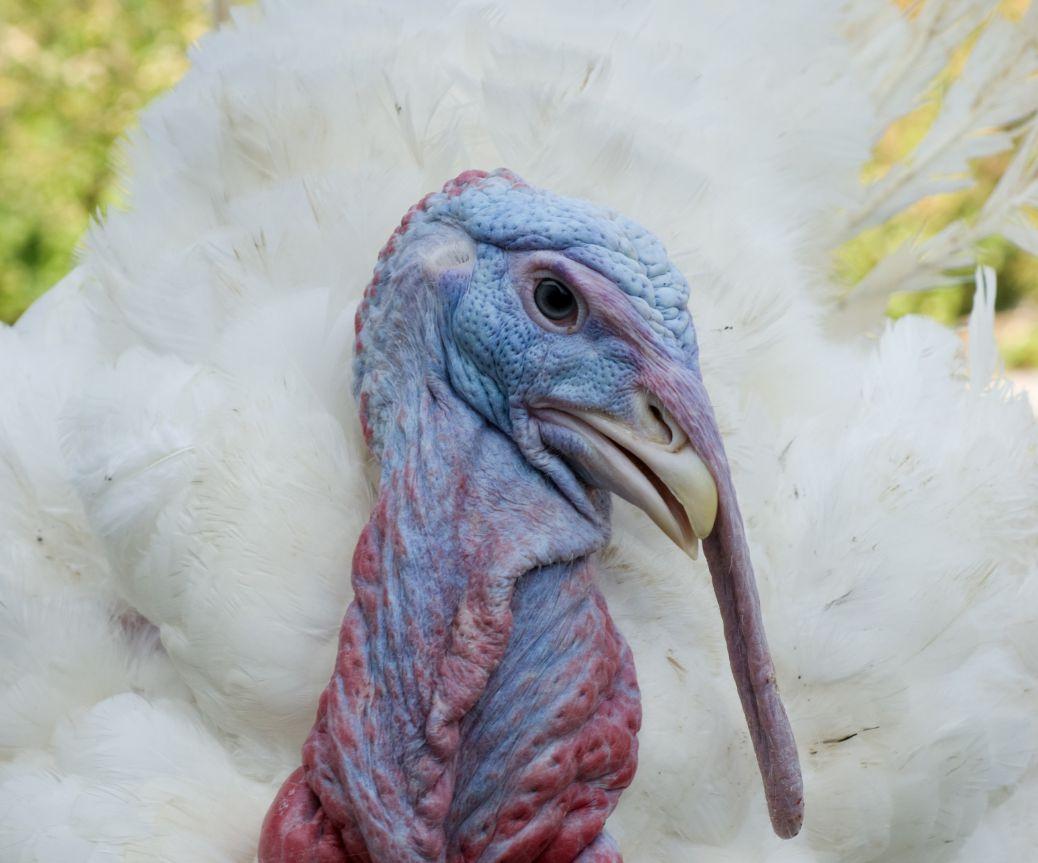
Genetics a Better turkey Picking what is best
by David Manly
although proper farming and biosecurity practices are extremely important, one factor that plays a significant role throughout the turkey’s development cycle often gets overlooked – its genetics.
dr. Ben Wood, a geneticist with Hybrid turkeys who spoke about turkey genetics at the Poultry industry council’s spring symposium on May 8, 2012, says that one of the most important aspects of turkey production is carefully selecting genetic traits to get the most out of each individual bird for the producer. But, it is more complicated than simply breeding two good-looking turkeys together.
although selecting for increasing resistance to deadly pathogens, such as Salmonella or Campylobacter, may sound like an easy choice, Wood says that which traits are selected is ultimately decided by economics, and traits such as breast meat yield, finishing weight and overall meat yield are more economically important in comparison to overall mortality.
IDEnTIfyIng TRaITs
dr. Ben Wood, a geneticist with hybrid turkeys, says that carefully selecting genetic traits can help get the most out of each individual bird for the producer.
“We have to balance what we are selecting for,” he says. “it is quite easy and possible to select for health traits, but the economic return isn’t there. you could select for a lot of resistance, but you will have to give up selecting some other traits.”
By selecting for health traits, Wood explained that other commercial traits (such as meat yield) would not be able to respond as strongly to selection pressure, which would make them less desirable for farmers to grow.
“Producers will need to make a decision on what they are willing to sacrifice for specific traits.”
GENEtICs Is kEy
every trait has a specific heritability (or ability to be managed by artificial selection), which is determined by evaluating the interaction between the genetics of the individual and those of the environment. although some traits, such as varus/valgus deformity and leg strength, have a very high heritability (between 30 and 40 per cent), overall survival is much lower, at about 10 per cent. that means that survival is much more influenced by environment factors than by leg strength.
“survival is difficult to manage because of the low heritability, but it is fairly easy to measure, as what you are measuring is ‘did a bird live to or die at a certain age’ – so the cost of measuring that trait is pretty cheap,” Wood says. “But, if you are talking about a trait like varus/valgus of the legs, it is pretty easy to see, manage and measure. it is also highly heritable, so you can get a change in it pretty quickly.”
the procedure gets more complicated with a metabolic disorder such as td (tibial chondrodysplasia), which requires X-rays and much more invasive methods than noting a turkey’s gait. so, although its heritability is high, it is more difficult to change because of increased manpower and monetary demands.
it comes down to a cost-benefit debate on how much demand there is to change a specific trait and how much money is available to fund such a change.
a perfect example of this is the research to help birds resist pathogens, which Wood says is extremely difficult because of biosecurity concerns once birds are infected. Because those birds would need to be quarantined as a control group, multiple farms with blood relatives of the control flock would need to be utilized and the resulting experiment would be extremely expensive.
Wood adds that university research (not under commercial conditions) has shown that specific resistance can be heritable, but it would be extremely difficult to scale up commercially. therefore, it would be better to select for innate immunity, he says, which is the first line of defence against all pathogens. data has shown that there is a genetic difference between pure line flocks, but further research is needed before changes in breeds are made.
another research area that is showing promise is layer behaviour, which has a significant genetic component. By using a social interaction model, each bird’s reproductive potential is based on its own laying performance and those of its group, or cage mates. the “performance” of the groups was measured by looking at their laying ability and mortality due to pecking (the behaviour researchers were trying to reduce).
“if a single bird’s performance wasn’t that great, but its group mates did well, that meant that it was probably treating its group mates well by not pecking,” Wood explained. in effect, if one bird’s overall laying performance was sub-par, but the overall mortality from pecking in that group was decreased compared to the control, then the breeding value of all the individuals in that group/cage was higher.
However, the reverse can also be true, where one bird does well but the overall group does poorly, with the result being that the overall breeding value for that group would decrease.
therefore, if both groups were compared over successive generations, a change should appear in their genetics for a decrease in pecking that breeders would then be able to select for or against.
takING a ClosER look
the next step of this research, according to Wood, will be a focus on Genome-wide association studies (GWas), which can provide cheaper case-control studies on everything from survivability to pathogen resistance by taking a closer look at precise dna changes.
this is done by taking blood samples from a selection of birds, both control and experimental, and comparing observations with areas of their dna known as single nucleotide polymorphisms or snPs (pronounced “snips”). this results when a single dna nucleotide changes between related individuals, representing, hopefully, a genetic change in a specific trait; thus, this information could have profound effects on breeding programs.
“you’re relying on initial observations to find out the differences at the dna level, but then you can go back and look into any population at all and either select for or against it,” says Wood.
“the next thing is looking at genomic selection and selecting against certain syndromes, as well as behaviours.” n
PRoDuCERs WIll NEED to MakE a DECIsIoN oN What thEy aRE WIllING to saCRIFICE FoR sPECIFIC tRaIts, says BEN WooD, a GENEtICIst WIth hyBRID tuRkEys.
CPRC Update the sources of Research Funding
CPRc has committed more than $2.7 million to poultry research funding over the last decade and the total value of research that cPRc has helped support is in excess of $13 million. While the cPRc does not contribute to all poultry research conducted in canada, it is interesting to look at other research funding sources that have supported cPRcfunded projects. the table below summarizes per cent of funds provided by type of funding source.
Federal government funds are provided by a variety of departments and agencies, including agriculture and agri-food canada (aafc), canadian food inspection agency (cfia), natural sciences and engineering Research council of canada (nseRc) and other agencies that provide research in specific areas such as animal and public health.
Provincial governments funds are generally provided through research-related programs by departments of agriculture or agencies established by provinces to further research and innovation. they frequently work with provincial poultry industry organizations to fund research, a series of collaborations not reflected in the table. the value of funding from universities is not fully reflected in the table because in-kind contributions of staff researchers and technicians and the use of research facilities, including such things as poultry housing and laboratories, is not included in the research totals.
Corporations represent important partners in the canadian poultry research system because they help conduct and support substantial research each year that benefits the canadian poultry value chain. in addition to funds, they provide expertise through in-house research activities and knowledge of issues important to producers. some of the corporations aiding in cPRc co-funded projects are suppliers covering a range of inputs that includes genetics, chicks, animal health products, feed and feed additives. Others process poultry products.
Industry organizations, which include national and provincial organizations that represent poultry producers and other poultry industry stakeholders, are becoming an increasingly important part of the poultry research system. Many industry organizations support significant poultry research activities, including projects and research chairs, as a supplement to cPRc funding.
Governments increasingly look to industry representatives to establish research priorities and work with researchers to ensure that projects reflect the issues that are important to industry. the National Research Strategy for Canada’s Poultry Sector (available at www.cp-rc. ca) provides a comprehensive discussion of industry research priorities and was developed in consultation with industry representative organizations and researchers through conferences and discussion.
industry organizations will review and update the Research strategy on a regular basis to ensure it continues to reflect canadian poultry industry priorities.
Governments are also looking to industry to play a larger role in research funding. the increasing demand for research related to the canadian and global food system creates challenges for industry to invest more funds if research goals are to be met. a common practice of government funding organizations is to make their approval conditional upon industry also committing funds to support the project. this approach helps to ensure that proposed research is important to industry and reflects industry goals.
canadian poultry research depends on a wide variety of stakeholders to ensure that research goals are achieved. the cPRc has been fortunate to co-operate on funding with a wide range of funders including several federal government departments, six provincial governments, eight poultry industry corporations and six provincial poultry organizations. these funding partners are in addition to cPRc’s five Member Organizations representing poultry stakeholders at the national level, which provide significant resources and expertise to cPRc’s support of canadian poultry research.
for more details on these or any other cPRc activities, please contact the canadian Poultry Research council, 350 sparks street, suite 1007, Ottawa, Ontario K1R 7s8, phone: 613-566-5916, fax: 613241-5999, e-mail: info@cp-rc.ca, or visit us at www.cp-rc.ca. n
The membership of the CPRC consists of Chicken Farmers of Canada, Canadian Hatching Egg Producers, Turkey Farmers of Canada, Egg Farmers of Canada, and the Canadian Poultry and Egg Processors’ Council.
Management Radiate success
By switching to infrared heaters, you could save up to 50 per cent on your fuel costs
B Y sHAWN C ONLEY
this month is an ideal time to talk about managing the heating of chicken and turkey barns, although we really should have been thinking about our heating systems before the coldest time of the year was almost at hand. Many of you may already have updated your heating systems to the latest technologies, but there are others who are still using older ceramic heaters or forcedair furnaces. this article will explain some newer concepts in order to clarify and explain the ways new heaters can improve production and reduce costs. We need our heating system to be able to maintain a steady temperature of 90-95 c on the coldest days of the year at the floor level without a lot of variation in buildings where bird brooding will be done. Obviously, we have more flexibility in turkey finisher barns or breeder and egg layer buildings that will only ever have large or adult birds in them, but many of the same concepts will carry over as well.
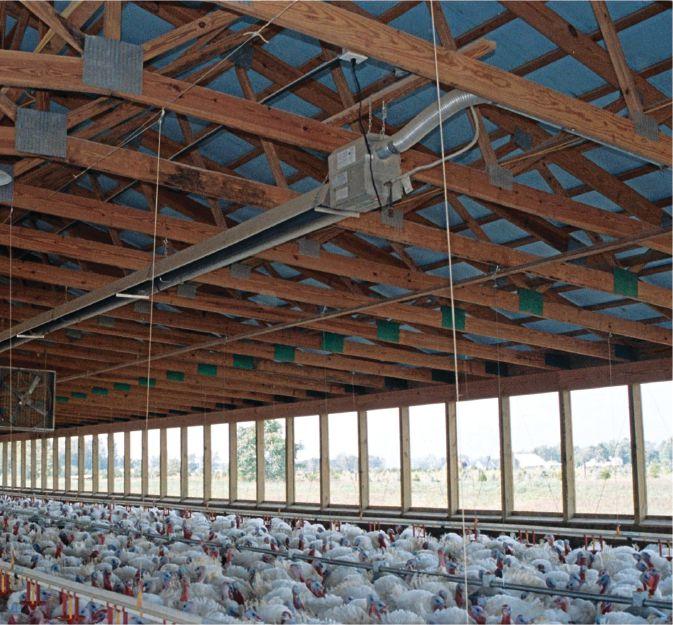
tube heaters work by heating the floor first.
Whatever you do, be sure to get some infrared heaters, and preferably, infrared tube heaters. instead of trying to heat the air and blow it around the building, radiant heaters work by, directly exposing a metal surface to a flame to reach temperatures of up to 1100 f this results in infrared radiation emission, which can
pass through air and only releases heat when absorbed by objects or the floor. a reflector is also installed on the top-side of the tube to send all the infrared radiation toward the floor and away from the ceiling. the effect is exactly the same as if the sun were shining into a vehicle, heating up the interior as the energy is absorbed and released as heat and eventually causing the entire vehicle to rise in temperature. this is a great way to warm a barn because when forced air or other non-radiant methods of heating are used, a large amount of air has to be heated before the
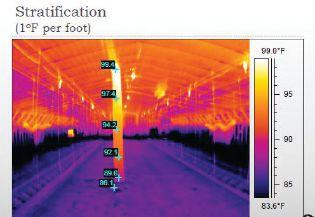
floor of the building begins to be heated. Because hot air rises, the hottest air will always be at the ceiling, and, in turn, the coolest air will always fall to the floor. the end result is that the entire barn needs to be heated before the birds feel any of this heat. not only that, but the exhaust fans will always be pulling the warmer air out, further exasperating the problem. How do infrared tube heaters fix this? Because the heat originates from the floor, with the hottest air at or just above the bird level, set temperatures can be slightly lower as. additionally, the cool
RaDIaNt
infrared
hEatING uP
Photos by Wilf Jackson
Management
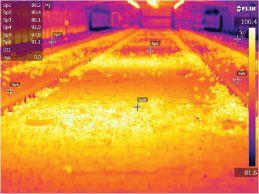
incoming air rolls across the ceiling and descends into the hot air, infusing it with oxygen without causing a measurable temperature drop. utilizing a tube heater will also generate a uniform floor heat signature, even along the length of the heater. in chicken barns, a straight tube heater is usually adequate with only a slight variation in floor temperatures from end to end of about 10-15 f over 40 feet. in a turkey brooding barn, a u-tube should be used because the temperature variation from end to end of the heater can be further reduced to as little as 1-3 f
in general, a 30-foot u-tube application is about the longest that should be installed, as the flame length is not long or intense enough to reach the end of a longer tube. But, there are some newer heater styles, such as bidirectional centrefired units and heaters that use two layer tubes to reduce heat transfer in what would usually be the hottest portion of the tube, and metal baffles to increase heat exposure on the end of the tube that would usually be the coolest.
a steady temperature at bird level isn’t the only benefit, as litter conditions are also improved when using infrared tubes. Because the litter is the first thing being heated by the floor, the moisture evaporates and subsequently improves the quality of the litter, which makes for better birds. another benefit of using infrared tubes over stoves or forced-air heaters is that the oxygen from inside the building is not consumed to produce the flame. freshair intakes are installed, pulling air from the outside of the building or from the attic. the intakes differ from other heaters, which require inside air to be combusted. thus with the infrared tubes, less ventilation is required to keep oxygen levels high.
Cost saVINGs
Here is where the differences really show: fuel savings. according to the website of easy Radiant Works, a canadian infrared heater company: “When conventional forced warm air heaters are replaced with infra-red heaters it is commonplace to achieve fuel savings of 30 per cent - 50 per cent. the new york state inter-
Unlike radiant tube heaters, more traditional systems warm the ceiling first and blow air down.
departmental fuel and energy committee have claimed fuel savings as high as 50 per cent since switching to Radiant tube Heating. fuel savings of greater than 50 per cent are not uncommon.”
that’s a pretty convincing argument to make the change, even without the other benefits: Preheating of the barn can be accomplished in a few hours instead of one to two days; bottom-up heating and settings can be reduced by a degree or two. Just sit down and calculate how much you spent over the last couple of years on gas. How quickly could you pay for new heaters and then start profiting from these savings?
Most companies say that payback can be attained in as little as two to three years on an infrared heater, an item that can typically last up to 20 years. not bad. n
BIBlIoGRaPhy
1. http://www.patioheating.com/ qa.htm, 2012
Shawn Conley is with Weeden Environments in sales and technical service, internationally and in Canada. He manages projects with many U.S. poultry companies and works frequently with researchers in the industry. Management in pharmaceuticals, a degree in cell and molecular biology and some NCAA and professional basketball preceded his six years working in the poultry equipment and feed-additive industry. Being a former Ontario farm kid, his motivation is to help producers build a strong Canadian poultry industry. He can be reached by e-mail at shawnc@weedenenvironments. com or shawn.d.conley@gmail.com.
Photo by Mike Czarick
Mind Over success the Cost of hatred
happy are those who do not harbour grudges or entertain thoughts of vengeance. they have learned how to forgive.
B Y P IERRETTE D E s RO s IER s, MP s , CRHA “
Iwill never forgive her. forgiving her would be letting her win.” this is how Julie justifies harbouring rage and bitterness for her sister-in-law for several years. We are all after the same thing: happiness. yet several studies have shown that harbouring hatred toward someone conflicts with happiness. Happy people do not entertain hatred or vengeance and are people who have learned to forgive.
there may be many reasons to hate, yet equally as many reasons to forgive. some experts affirm that people who hold on to resentments and hatred could decrease their life expectancy by 14 years. in addition, persistent hatred is a contributing factor to depression and chronic stress. it is also associated with the risk of coronary artery disease. Resenting your sister-in-law day in and day out could increase your chance of a heart attack. do you hate her that much?
“i go out to a restaurant for dinner with my husband and she’s all we talk about,” Julie told me. “i even wake up at night thinking about it. i am so tense that i have to see a massage therapist. now, here i am seeing a psychologist.” isn’t it paradoxical? We often invest more energy in people we hate or dislike than in those we like. and the result is a loss of so much time, energy and money. think, for example, of people who pursue court action against someone for years in order to be proven right,
lEaRN to FoRGIVE
some experts affirm that people who hold on to resentments and hatred could decrease their life expectancy by 14 years.
or on principle. But how much do these principles and pride cost?
you can ask yourself the following:
• is it useful to continue to entertain this hatred?
• is it good for my physical and psychological health?
• is it good for the people who are important and close to me to be subjected to my hatred?
• is it useful for my life projects?
• Will this help me attain my life goals?
if you can honestly answer yes to these questions, then continue. if not, why not stop poisoning your existence and that of others around you?
Only you can decide to forgive. you don’t need the other person to agree in order to do this. the responsibility and
the power to choose are entirely yours. in addition to all the benefits for your health and happiness, you could gain a great deal of time. as Julie said to me, “When you wake up at night hating someone because there is not enough time during the day to hate him or her, then it’s time to do something.”
finally, remember that, unless you are calling the person in the middle of the night to tell them you hate them, you will be the only sleepless one. n
Pierrette Desrosiers is a work psychologist, speaker and psychological coach who specializes in helping those working in agriculture. She can be contacted by e-mail at pierrette@pierrettedesrosiers.com, o,r if you would life more information, visit her website, www.pierrettedesrosiers.com.
Remarkably Clean
Virkon
Technology Innovating with the BIovator
the Biovator, which removes unwanted biomaterial from the farm, was created to help with biosecurity
B Y M ELANIE E PP
If you were at this year’s Outdoor farm show, then you may have met Jamie Brock, the BiOvator dealer for e astern c anada. d esigned by the Puritone c orporation in Manitoba to handle in-house mortality of hogs, the BiOvator has been specifically created with biosecurity in mind.
now owned by shawn compton, president of nioex systems inc., the BiOvator has been on the market for eight years. in recent months, its onfarm value has really sparked the interest of all manner of producers, including poultry.
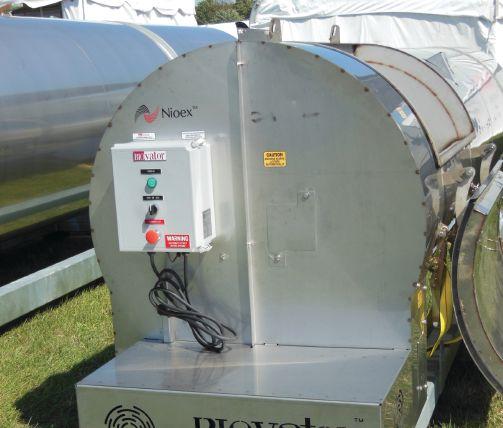
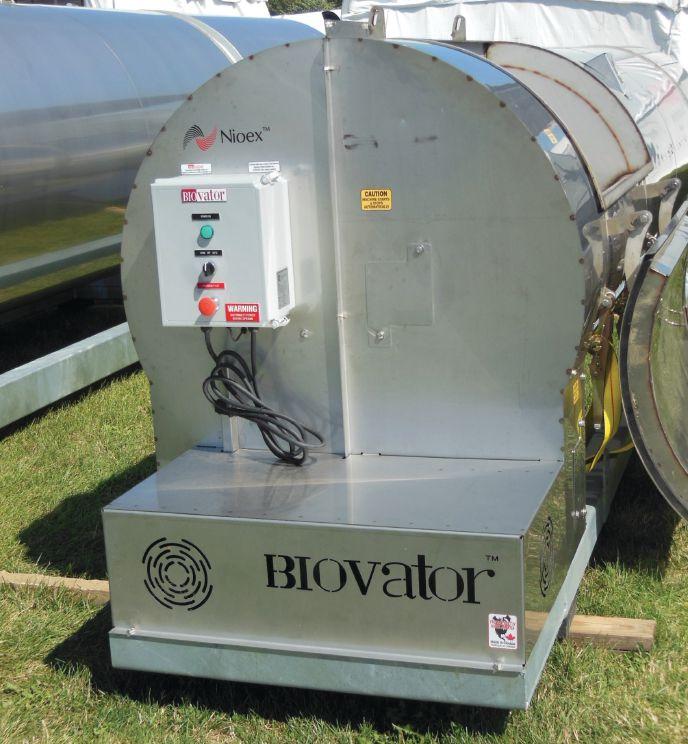
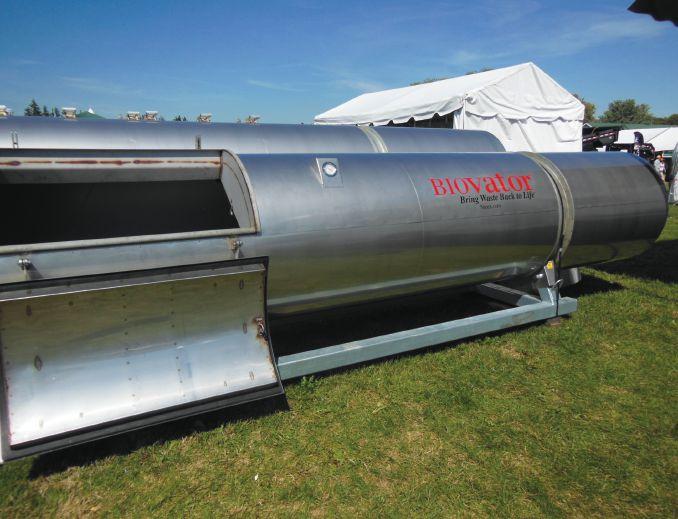
the BiOvator is an in-vessel composter that uses an aerobic process to break down biological material. it has a galvanized steel frame, a stainless steel shell and an epoxy-coated steel drum. the drum is insulated with one and a half inches of polyurethane insulation, which works out to an R-value of 8. it is also protected by a stainless steel skin that allows it to be kept outside. it has a one-horsepower motor and two gearboxes, enabling the entire drum to rotate multiple times, 24 hours per day. On average, most machines rotate anywhere from 0 to 24 times per day, depending on the needs of the farmer, how heavy the mortality is on their farm and the model being used.
although the BiOvator is manufactured
Jamie Brock, eastern canada dealer for Biovator, says the Biovator can compost anywhere from 30 to 500 pounds of stock per day, depending on the model.
in Manitoba, interest in the product is global. there are a few units in north america, but also in argentina, Russia and parts of europe.
in order to operate, says Brock, the composter needs to be filled with a substrate. any type of existing compost will do, but preferably something that can
warm up very quickly, like manure with a mixture of wood shavings or some other carbon-based substance. Once the initial mixture reaches 100 f, you can start adding dead stock and using it on a daily basis.
“it heats up under its own microbial breakdown, so it’s micro-organisms
WastE Not, WaNt Not
building all the heat,” says Brock. “there’s no supplementary heat; it’s just an insulated vessel that has all these microbes feeding on bacteria and that’s what creates heat.”
Brock says the BiOvator can compost anywhere from 30 to 500 pounds of stock per day, depending on the model.
“to make it from the loading zone to the discharge is about 10 days, but as the machine rotates, it allows room for something every day because it’s augering itself down to the discharge end on a slow rotation,” says Brock. “so it’s kind of like a slow-running cement mixer.”
as the BiOvator rotates, a little bit of material is augered out with each rotation, so there’s always new room created for more stock. each model is loaded with both dead stock and biological material, such as wood shavings or carbon product, at a one-to-one volume ratio.
“if you have a wheelbarrow full of dead stock you would have to put a wheel barrow full of carbon product in as well,” says Brock. and the process is ongoing, he notes.
each model comes with at least one temperature gage; the goal is to reach and maintain 130 f. “if we can reach 130 f on a consistent basis,” says Brock, “it kills all known pathogens in the dead
Technology
“the ‘three sixteen’ has just a single door, which is more suitable for small hogs and chicken operations,” says Jamie Brock.
stock. so that’s where the real biosecurity kicks in.”
Without the BiOvator, poultry producers have a number of other disposal options available to them, but none quite as easy. farm pickup costs about $150 per ton, plus a $30 pickup fee. farm pickup also means that the farmer
has to handle the dead stock twice. it first has to be moved from the barn to a freezer, and then from the freezer to the road. With the BiOvator, there is no need for a freezer. you simply load it up as needed.
Other methods of disposal can be tricky as well, especially when it comes
Production using poultry
Mark McColl, a turkey breeder whose family has been in the industry for 64 years, has had a Biovator on site since June. located outside of forest in Plympton-Wyoming, the farm commercially raises 6,000 breeder turkeys, 7,000 replacement birds and 1,500 toms.
“after having this unit for six months it is hard to see how someone can go without,” says mccoll. “having this system when they are in strict biosecurity like we are, being able to get rid of the dead stock and the eggs without having to worry about digging in a manure pile or going to the incinerator or having the rendering truck show up to your farm makes it worth every penny.”
“also knowing that there are no emissions coming from it, no fuel going into it, and the final product being pathogen-free, as well as a useful product for our fields, makes it that much better,” he continues.
John Petropoulos, a poultry farmer in the niagara Peninsula region, agrees. he runs an operation with approximately 20,000
to 24,000 chickens and approximately 12,000 to 15,000 turkeys at a time.
“Before we used an incinerator,” says Petropoulos, “and we had to manage the incinerator more often. You couldn’t put them all in; you had to put them in in different batches. and then once the incinerator was done, ash was a totally nonusable product, so you had to dispose of it any way you could.”
on the other hand, he says, the Biovator produces a usable product. “You can use it on flowerbed and compost piles, or put it in the fields.” even his manure removal guys will take Biovator discharge, whereas they couldn’t put the incineration on manure piles to be taken away.
Petropoulos says that the Biovator has also helped to lower his farm’s operating costs, since he’s not burning natural gas for the incinerator anymore. “i’m thinking in three to four years it’ll have paid for itself, maybe sooner,” says Petropoulos. it is possible, as the Biovator has a recorded lifespan of 25 to 30 years.
Whether a pullet or a mature hen, peak lay performance requires a well developed skeletal frame built with only the strongest bones. Research indicates that bones with the best strength come from diets supplemented with ROVIM IX® HY•D®. Science suggets that ROVIM IX® HY•D® provides birds with all the 25-hydroxyvitamin D3 they need to develop and maintain bones that can withstand the stresses of egg production. In young pullets, stronger bones are necessary for optimal lay persistence which can translate into more eggs. As the hen ages, ROVIM IX® HY•D® will help promote better egg shell quality.
To learn more about how ROVIMIX® HY•D® can strengthen your flock, contact your DSM Nutritional Products Account Manager or go to www.dsm.com or call 1 800 526 0189.
to biosecurity, says Brock. the stock can be taken to a rendering plant, but farmers will have to bring their vehicles onto the property. at a fee of $150 per ton, it’s not much cheaper than the on-farm pickup, and it’s far less secure because you have the risk of walking through a plant where other trucks have been.
Poultry producers do have the option of burial, which is still legal, but burial poses its own set of problems. Buried stock tends to draw unwanted animals, such as coyotes, plus it is not as safe in terms of biosecurity.
some producers choose bunker composting where dead stock is stirred into manure and wood shavings using a tractor. “the pros to that are that it’s reasonably economical,” says Brock. “the cons again are [compromised] biosecurity, because your tractor is handling partially decomposed livestock. so you can contaminate your on-farm tractor
Technology
‘three-sixteen’
‘four-eighteen’
‘four-thirty’ 4
‘four-forty-two’ 4
and it’s running around doing jobs for you on the farm, so that’s a risk.”
“Most of the pros with the BiOvator come down to biosecurity and the daily cost to run it,” Brock continues. “When you look at strictly the energy use of a BiOvator, it’s basically a hundred bucks a year – and that’s all in hydro.”
in the very near future the BiOvator could save producers even more money. nioex is trying to team up with a local company to fix the vessel using solar panels. this would further improve bios-
ecurity, as it would allow the composter to be put in a remote, off-site location.
“there’s a lot of interest in it,” says Brock. “i’ve probably had 10 to 15 per cent of my clients ask about it before they even knew we were doing it and that’s what spurred this on.”
nioex is currently trying to come up with a cost-effective way to make it a suitable option. “i would say in the next 12 months we are working on it to become an option where they can order it with solar,” says Brock. n
the Biovator comes in a variety of sizes to meet every producer’s needs.
Chicken Farmers of Canada is responsible for chicken raised and sold commercially in Canada. We represent our 2,700 farmers, and ensure that the chicken that reaches your table is safe, delicious, and raised to the highest standards.
Barn Management Managing Moisture
Key management factors to control environmental conditions in the brooder house
BY GARY HALL AND JOHN MENGEs TECHNICAL sALEs REPREsENTATIvEs, HYBRID TURkEYs
Wet litter can be one of the most costly environmental conditions that can occur in a turkey barn, from both a financial and a bird comfort/animal welfare standpoint. increased litter moisture negatively impacts air quality and can provide favorable conditions for pathogenic microorganisms to grow. Both of these impact bird health as they reduce feed intake and birds begin to eat litter. the resulting low-grade enteritis also adds to the increase litter moisture pushing it to an unacceptable level. Poor environment and litter conditions invariably exacerbate one another – birds remain “loose”, litter moisture continues to rise, which stresses the birds, reduces their resistance and increases the severity of the enteric problems. the end results can include poor feed conversion and weight gain, flock unevenness, poor carcass quality (including breast blisters and buttons), footpad dermatitis, enteritis and respiratory issues. in addition to the performance issues mentioned, there is also a higher energy cost related to reducing the environmental impact. as managers, we need to understand why this is occurring in order to determine which environmental management techniques would be most appropriate to halt this vicious cycle from spiraling out of control. this article will address some
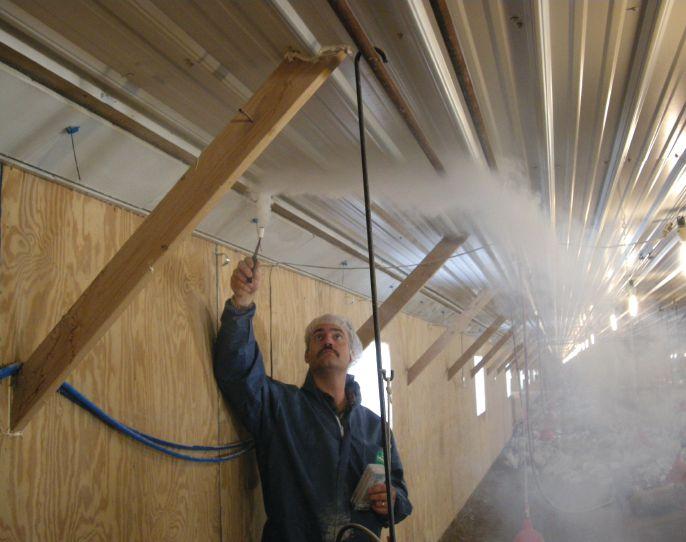
shown here is the use of a smoke generator to evaluate air flow, which in this case is poor, showing cold air dropping directly on to the floor. Proper minimum ventilation allows for mixing of cold air with warm moist air, preventing chilling of the birds and condensation on the floor.
of the key management factors to control environmental conditions, including understanding the digestive process, ventilation (air flow and heat) and litter management.
Effects of ventilation on barn environment and litter conditions
cold weather ventilation is most critical in controlling litter condition and barn environment. typically, ventilation rates are reduced or sacrificed to maintain adequate temperatures to keep birds comfortable. as energy prices increase, the fuel used to keep birds comfortable becomes more critical. this fuel is not limited to the propane typically used in north america, but also includes the feed energy that birds consume. the thermal neutral zone for adult turkeys is between
13 c and 24 c (55 f and 75 f). therefore, when the effective temperature (what the bird feels) is above or below this temperature, feed energy is used to maintain metabolic function rather than body weight. for young turkeys, this zone is more critical and the minimum temperature is increased. not only is whole barn temperature critical in cold weather, but temperature uniformity from end to end and side to side within the barn can mean the difference between birds eating for body weight gain or eating and huddling for survival. therefore, it is critical to maintain proper air flow and temperature throughout the barn during the entire growing cycle.
When it comes to ventilating turkey barns during cold weather, 95 per cent
VENtIlatIoN CRItICal
i ngre D ients
• 1 cup (250 mL) finely chopped blanched almonds, divided
• 3 cups (750 mL) all-purpose flour
• 1½ tsp (7 mL) baking powder
• ½ tsp (2 mL) salt
• ¾ tsp (4 mL) ground nutmeg
• ¼ tsp (1 mL) ground cloves
• 1 cup (250 mL) butter, softened
• 1¼ cups (300 mL) sugar
Feast Day Fruit Cake
• 6 eggs
• 1 cup (250 mL) golden raisins
• ¾ cup (175 mL) each currants, quartered, red candied cherries and chopped candied pineapple
• 1½ cups (375 mL) whole blanched almonds
Glaze:
• 2 tbsp (30 mL) corn syrup
• 2 tbsp (30 mL) water eggs.ab.ca
Directions
Generously grease 10-inch (25 cm) tube pan. Sprinkle sides with 2 tbsp (30 mL) chopped almonds. Combine flour, baking powder, salt, nutmeg and cloves; stir well and set aside.
In bowl, cream together butter and sugar, mixing well. Beat in eggs, one at a time (batter will look slightly curdled). Gradually add dry ingredient mixture; mix well. Fold in remaining chopped almonds, raisins, currants, cherries and pineapple. Pour batter into prepared pan. Arrange whole almonds on top.
Bake in preheated 300°F (150°C) oven for 1 hour and 15 minutes or until baked.
To make glaze: In small saucepan, combine corn syrup and water. Simmer over medium heat for 1 minute. Brush top of hot cake with glaze. Cool in pan for 15 minutes. Remove from pan and cool completely on rack.
Suggestions: Once the fruit cake is completely cooled, wrap it in double thickness of foil and keep in a cool, dry place or in the refrigerator for up to 1 month.
CHICKEN IN (COMPOST OUT )
BIOvator® turns poultry mortalities to compost in as little as two weeks.
BIOvator® is the environmentally-sound and biosecure solution for mortality management. Cost-effective and easy to use, it’s the big steel tube that turns deads into dirt – fast.
In 1938, Big Dutchman was established with the idea of changing the poultry industry by finding better ways of increasing productivity. Seventy five years later, it’s that same pioneering spirit that drives us everyday to develop products that perform for you.
All of Big Dutchman’s products, from our AVECH enrichable/enriched system, to our new cage free solutions, the Gladiator turkey feeder, and our reliable feeding pans, are all designed to deliver a positive effect to your bottom line.
It’s our innovations that help your success. Because as we invent, you thrive.
of the time we are primarily trying to manage barn/litter moisture levels. it is well understood that as litter moisture increases so do the levels of a) ammonia which damages the respiratory tract, b) bacteria such as salmonella and c) leg issues due to footpad dermatitis.
in general, for every 0.45 kg (1 lb) of feed intake, a bird will drink approximately 0.91 kg (2 lbs) of water. Water is added into the environment through bird respiration and fecal output plus heating.
at 2 weeks of age, 47 litres of water are produced per 1,000 male turkeys and dumped into the barn.
at 4 weeks of age, this increases to 188 litres per day and by 6 weeks of age 300 litres per day.
an additional 10 to 18 litres per 1,000 birds is added daily during brooding as a byproduct of propane heating. Most of this moisture must be removed from the barn in order to maintain litter quality and acceptable humidity levels. this is achieved by replacing the warm damp air in the barn with cold dry air from outside the barn, without chilling the birds and wasting fuel.
One of the most efficient methods for removing moisture in poultry barns is through negative pressure/minimum ventilation. exhaust fans and inlets are designed to create a negative pressure in the barn, allowing the moisture to be removed (controlled), while at the same time conserving fuel and using the heat produced by the birds and artificial heat to maximum capacity. Proper minimum ventilation starts with a tight barn with little air leak, so that all air enters the barn through the designed inlets. When this occurs and the correct static pressure (Pascals) can be achieved, then the cold air can mix with the warm moist air concentrated at the ceiling. Remember: warm air from birds and heaters will concentrate at the ceiling as warm air rises and cold air falls.
this accomplishes two goals. first, the cold air does not drop directly on the floor resulting in:
a. birds that are chilled which leads to huddling, missed meals and
More than
VAXXITEK
The effectiveness of a single dose of VAXXITEK HVT + IBD against Marek’s and Gumboro Diseases has been proven in over 66 countries. Our team appreciates your confidence which has helped us build the path of success for VAXXITEK HVT + IBD.
Barn Management
subsequent binge eating
b. condensation on the floor from the cold air, and c. reduction of the amount of heat required to warm the incoming cold air.
second, the warm air at the ceiling tempers the incoming cold air, expand-
ing this air, allowing it to increase its water holding capacity. When air is warmed at 11 c the water holding capacity of the same air volume doubles. so when 28 m3 (1,000 ft3) of air holding approximately 177 m3 (6 oz.) of water is warmed from 4 c to 16 c, the same 28 m3 (1,000 ft3) of air can hold 354 m3 (12
oz.) of water. When air is preheated and expanded to be able to carry moisture, it can then mix with the air near the floor, picking up moisture and removing it through the negative pressure fans. after birds are old enough to produce a significant amount of moisture, humidity levels should be maintained to 60 per cent or less.
1
the litter on the floor acts like a sponge. if ventilation rate and direction of air movement is not adequate to remove the additional moisture added daily, the sponge gets full. this process may take days and can go unnoticed. Once the sponge is full, either though poor digestion, enteritis, poor drinker management, or poor ventilation techniques, the litter is saturated and then cakes. We then see high ammonia condition related to poor air quality, litter burns on footpads, and high humidity levels. Before this occurs, humidity levels can be monitored and maintained to less than 60 per cent, in most cases, and will alert managers when minimum ventilation rates are insufficient to remove excess moisture. there are tables available to be used as a guideline for minimum ventilation capacities, based on bird age, water consumption, and indoor and outdoor temperature and humidity levels (www.poultryventilation.com or www.poultryhouse.com). during warm weather, ventilation to remove moisture is not a problem as temperature is the major concern and ventilation rates are high. litter can be caked due to enteric issues at this time.
Managing additional gases in addition to controlling humidity in turkey barns, carbon dioxide (cO2) and carbon Monoxide (cO) can have profound effects on bird performance, if they are not controlled. according to research by frame (2010), cO levels above 25 ppm and cO2 levels above 2,500 ppm have been proven to increase roundheart and reduce thyroid activity in young turkeys. christensen et al (1995), showed that cO2 levels above 4,000 ppm resulted in altered metabolism, depleted glycogen reserves, and lower blood glucose levels. lower metabolism negatively
impacts feed and water consumption resulting in poor gut health and performance over time. therefore, it is critical to monitor and maintain cO levels to less than 25 ppm and cO2 to less than 2,500 ppm.
Brooder house negative pressure minimum ventilation set-up
• tight test the house
• close curtains and/or inlets
• Make sure all holes are closed around walls, end doors, etc.
• turn minimum fans on. this would equal as close to 1.0 cfm per square foot (18 cmh/m²) as possible.
• static pressure (sP) should be .15-.20” sP (34-50 Pa) if house is tight.
• now begin to open inlets. Keep in mind the minimum inlet opening should be approximately 2-3” (5-8 cm) wide (anything smaller will choke the inlet and not allow air to ‘throw’ correctly).
• approximate total inlet opening should be near 80-85 sq in per 1,000 cfm (515-550 cm² per 1700 cmh fan capacity).
• Open inlets until the sP is .10-.12” (25-30 Pa) for 50’ (15 m) or wider and .08-.10” (20-25 Pa) for less than 50’ (15 m) wide. this will be the minimum number of inlets to be used with the minimum fans.
• the minimum fans will be on timer and the first fans to come on simultaneously by thermostat if the house temperature warms.
• Minimum timer setting will be enough to maintain humidity to less than 60 per cent or carbon dioxide (cO2) levels to less than 2,500 ppm (preferable less than 1,800 ppm within the first 5 days of brooding). typically, one half minute per week of age on a five minute cycle timer (one minute for a 10-minute cycle timer) is sufficient. However, depending on brooder type, temperature and barn tightness, this may not be enough air volume to control the humidity and cO2 parameters mentioned above. if this is the case, then increase the cycle time in 15 second intervals until air quality parameters improve. see the table on page 30. this is an example of a 2,000 m3 brooder barn, using two fans 17,000 cmh each for minimum timer fans. set the thermostat to the minimum fans 1 c (2 f) above the target temperature. any minimum fans should be tied together on a thermostat to keep sP constant. additional thermostat fans will be set 0.5 c (1 f ) above the minimum fan settings to come on as the house warms. for houses with auto inlets, the inlets will open automatically based on increased sP with more fans. for houses with manual inlets, they will have to be opened manually or the curtain lowered manually to reduce sP as more fans come on thermostat. timer fans – additional timer fans may need to be added as birds get older. this should be done only when the minimum fans have reached 4 out of 5-minute cycle. additional inlets
Barn Management
may need to be opened to compensate for increased sP with more fans.
CoNClusIoNs
environmental management of commercial turkeys is certainly a topic that encompasses volumes of information.
turkey production managers need to be able to recognize these issues. ventilation, litter condition, and drinker management are daily tasks that we can control as farm managers. in cold weather, it is critical to maintain humidity levels to less than 60 per cent in order to keep environmental and litter
We see a flock of numbers that connect us. We see the millions of pounds of feed that together, we have worked to save every year with our birds. We see more secure operations, thanks to our industry leading health status. We see the many lasting relationships we have forged in this dynamic industry.
Together, by understanding the numbers, we understand the industry.
Strength in Numbers.
moisture in check. at the same time, if minimum/negative pressure ventilation is done correctly, we can reduce energy use, keep litter dry, and improve air quality. litter and drinker management can assist keeping litter dry and cake free. in north america, animal welfare audits include ammonia levels (typically less than 25 ppm), footpad dermatitis, and litter quality (cake free) as points within the program. Managers must monitor and ensure that ventilation and air quality are consistently good to produce ideal litter quality and stimulate feed intake and good gut health. as turkeys continue to become more efficient and heavier, maintaining dry litter will be increasingly important to improve bird health, maintain good carcass quality, and provide an optimum environment for both performance and turkey well-being. n
REFERENCEs
david d frame, Robert e. Buckner, Gary l. anderson, causes and control of spontaneous cardiomyopathy or Roundheart disease in utah, http:// extension.usu.edu/files/publications/ publication/aG_506.pdf
v l christensen et al., “exposure to excessive carbon dioxide: a Risk factor for early Poult Mortality,” Journal of applied Poultry Research 4:3 (fall 1995): 249-253.
turner, K.a., t.J. applegate, and M.s. lilburn: Poultry sci. 78:1581-1587.
Easy-Opening SPRING-LOCK® Lid
ACCESS PLUS® Hopper Access Door
Chore-Time Rear Roll-out Nest
Layers
Other Poultry one hundred years of Brome lake Ducks
flying their way to your local supermarket
B Y A NDR é D UMONT
lacquered Peking ducks hanging in c hinatown storefronts never go unnoticed, and who would guess that these birds have been raised near a beautiful eastern townships lake for the past 100 years?
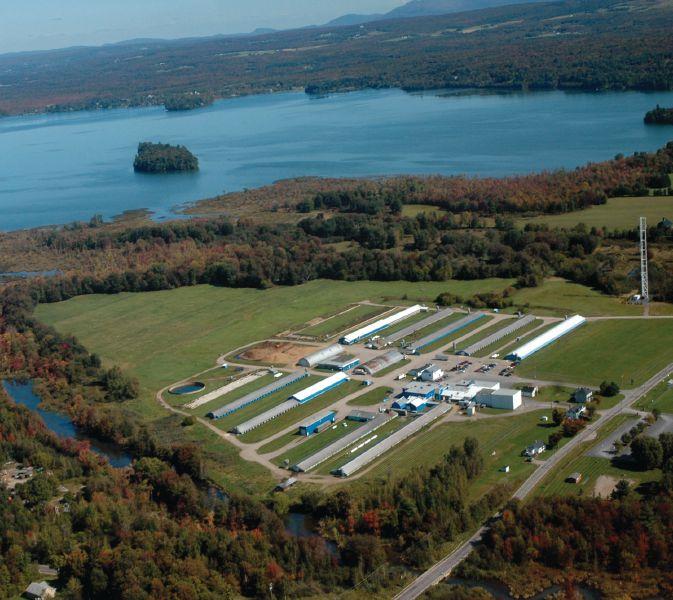
Brome l ake d ucks is celebrating its 100th anniversary and could very well be canada’s oldest farm dedicated entirely to poultry. But today, its brand and products are found far beyond chinatown.
t he story begins in 1912, when american Henry Bates chose the west shore of Brome lake to establish a Peking duck farm, with the new york market in mind. two years later, his son arthur moves the farm to the east side of the lake, where it stands now. to manage this, buildings were hauled over the frozen lake using horses.
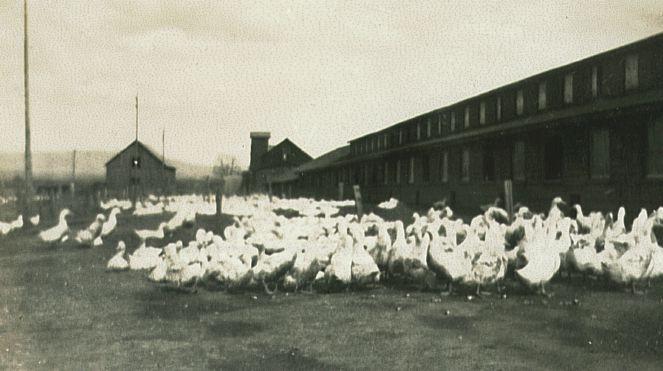
Back then, ducks had access to the lake during the summer, in order to be raised in a ‘’natural’’ way. they swam happily, but the herd’s health and mortality rate seemed to suffer. duck meat was produced primarily for c hinese immigrants, but also for wealthy patrons of steamship lines, transcontinental railways and fine restaurants.
When a rumour spread about a clothing manufacturer eyeing the property as a location for a factory, sen. George B. foster and other wealthy Knowlton summer residents bought the farm together.
i n 1939, the business was taken over by foster’s son and a Montreal
sINCE 1912
Brome lake ducks, located right on the shore of Brome lake in Knowlton, Que., is celebrating its 100th anniversary this year
businessman who wanted to save the area from industrialization and create local employment. in 1965, foster’s son became the only owner and later transferred the farm to his two daughters. from 23,000 ducks in the beginning, Brome lake ducks grew to an annual production of 500,000 by 1990. the following year, the current president and chief operating officer, claude trottier, was hired.
‘’When i arrived, i went to meet our clients. their perception was that our duck was very fat,’’ trottier said. ducks
are migrating birds and it is natural for them to build fat, but trottier added that this fat is much healthier than that of most other animals.
a genetic selection program was launched shortly after, mixing local Peking ducks with others from europe and asia. the goal: more meat, less fat and great taste. With these advancements feed conversion rates and hatching rates also improved. Brome lake ducks gained in quality and clients acknowledged it.
in the mid-1990s, Mario côté, a
t his photo is by
Brome l ake Ducks
Quebec businessman, and Joe Jurgielewicz, a veterinarian and Peking duck farmer from the united states, purchased the business. the new owners wished to develop new products, open new markets and enhance production and transformation facilities, which allowed production to rise to two million ducks.
the farm is now fully integrated. eggs are laid and hatched at the hatchery at the main location in Knowlton and dayold ducklings are sent off in the company’s own trucks to be raised at the Racine farm or on contract with local farmers. they are all sent back to Knowlton to be slaughtered and prepared for sale.
aVIaN Flu
When avian influenza struck British columbia in 2004, export markets were suddenly closed off. ‘’We used to sell a lot to Japan and Mexico,’’ trottier recalls. ‘’We lost 35 per cent of our sales for a case of avian flu 5,000 kilometres away!’’ this ordeal gave a new direction to the farm. ‘’We no
Photo by a ndré Dumont
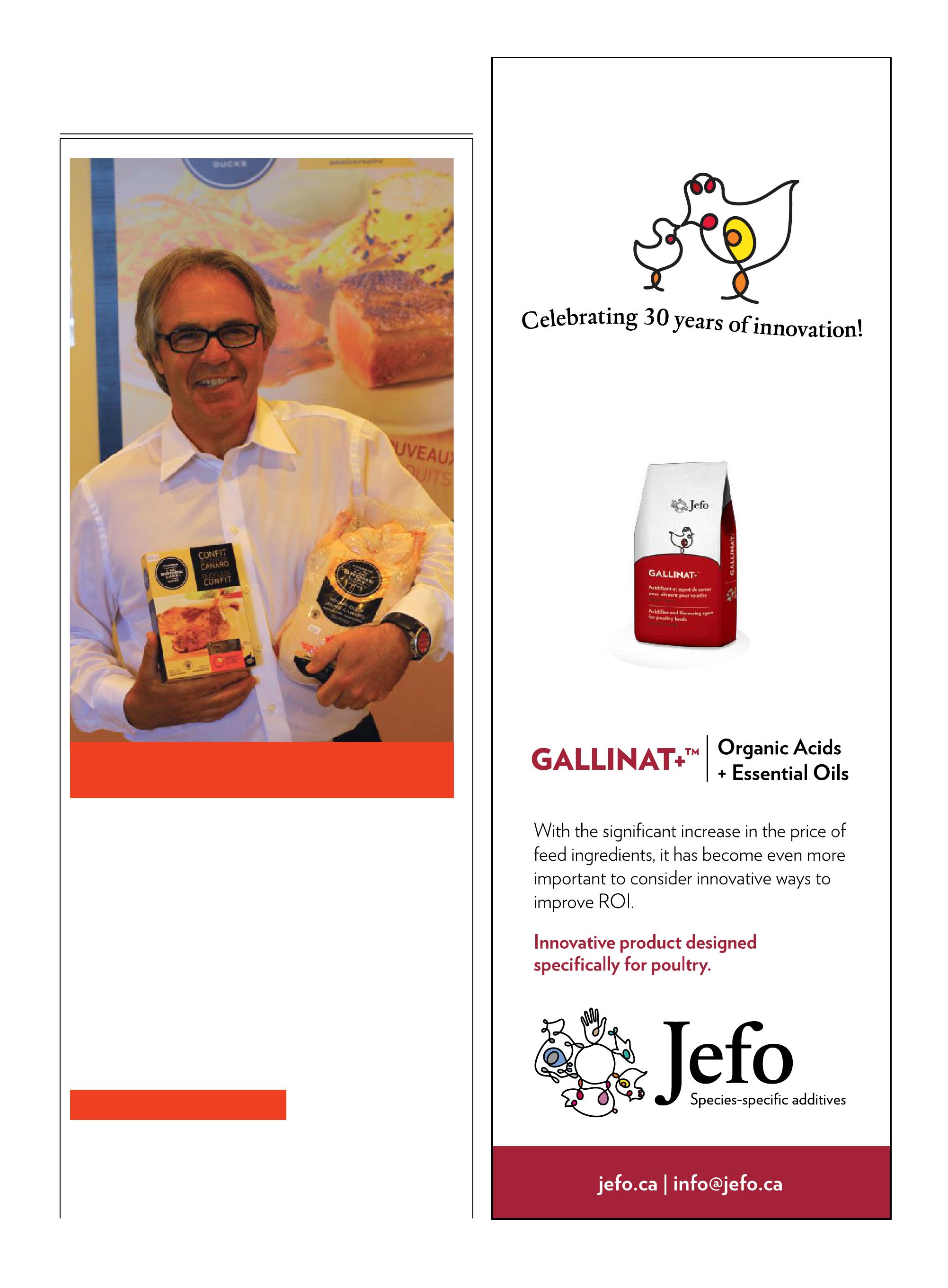
President and chief operating officer of Brome lake ducks, claude trottier.
Other Poultry
longer wanted to depend on situations we couldn’t control. We started to work on our local market, making our product accessible to all,’’ trottier said.
Getting Quebec consumers to know about duck meat and to include it in their diet was the main target of marketing efforts. in-store tasting, promotions, recipes, a website (www.bromelakeducks. com) and more were used to promote new cuts and new ready-to-eat Brome lake ducks products. the campaign was such a success that today, 80 per cent of sales are made in Quebec.
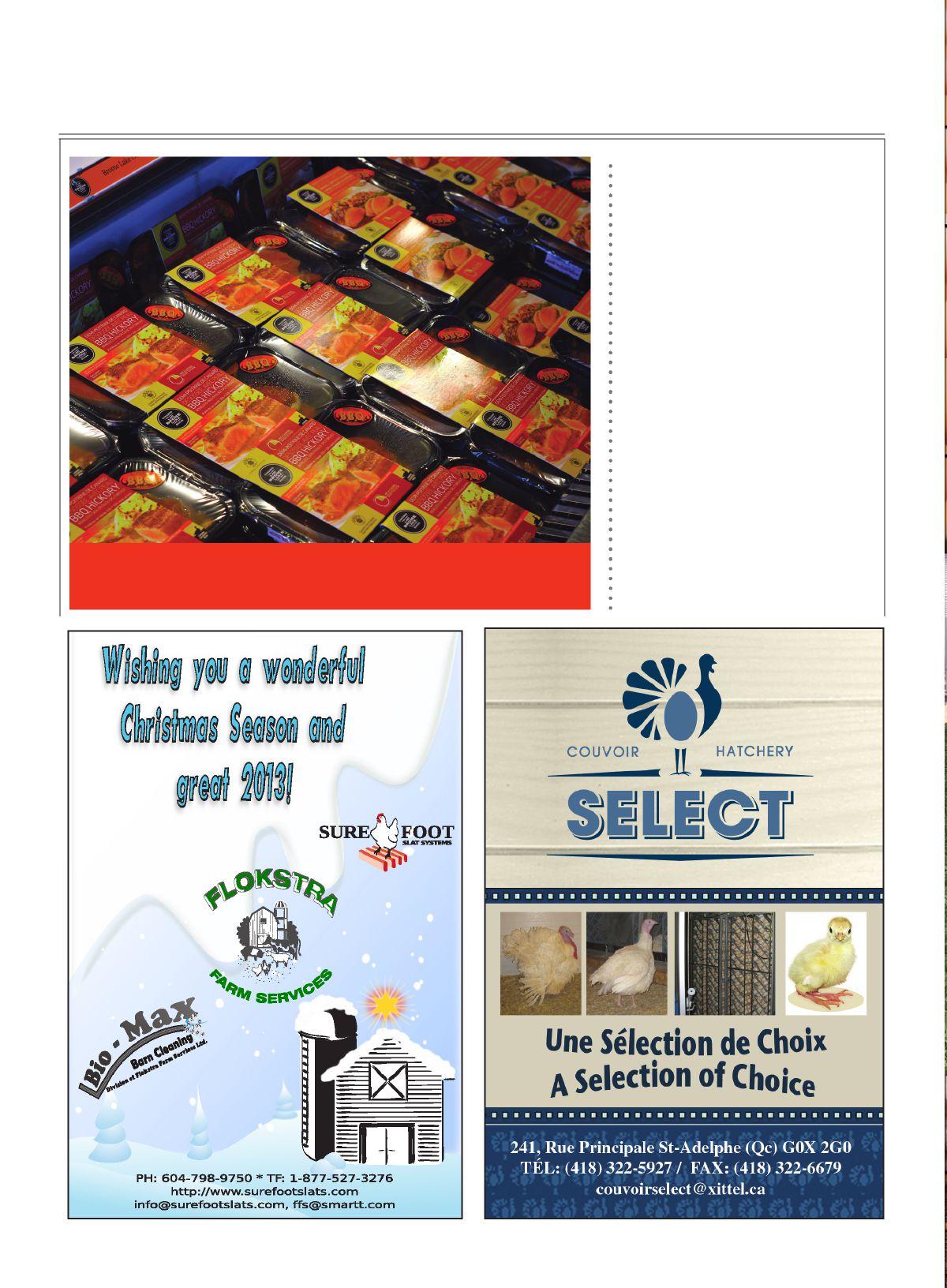
duck legs confit remains a big seller, but the product range now includes sausages, duck roast, pot pie, wing drumettes, patés, magret, bolognese sauce and many others. for the 100th anniversary, two flavours of boneless, skin-on split breast were launched: BBQ Hickory and candied Oranges & 3 Peppers. the full product line is available at
in celebration of its anniversary, Brome lake ducks has released two new products: BBQ hickory and candied oranges & 3 Peppers.
Photo by a ndré Dumont
Other Poultry
the farm store in Knowlton and the company’s store in Montreal, called le canard libéré, espace gourmand. the most popular products can be found in supermarkets all across Quebec and are becoming available in other provinces.
‘’this is an upscale and high-quality product, but the pricing is very reasonable,’’ trottier says. ‘’the price compares to that of lamb, veal or some of the best beef cuts.’’
However, production costs are higher than for other poultry productions. ducks need fresh bedding of wood shavings every day and state-of-the-art ventilation. unlike other poultry sectors, Brome lake ducks is backed by its own research and development, from genetic improvement to slaughterhouse efficiency.
Peking ducks are not force-fed, nor are they used to make foie gras, trottier says. Birds are finished at 42 days, weighing around 3.2 kilograms. the
during the first few decades of operation, ducks had access to the lake.
food conversion rate is at 2.2.
With 200 employees, the production has now reached 2.2 million ducks per year, without the purchase of any quota! However, without supply management, the company is exposed to imports from countries that take advantage of the fact
Telephone: 902-893-6654
Fax: 902-895-6734
that local consumers are now familiar with duck meat.
Over the coming years, Brome lake ducks will keep reinforcing its centuryold brand, in Quebec, and with growing efforts in other provinces such as toronto, calgary and vancouver. n
Photo courtesy Canards du l ac
Brome
Try it for Free.
We’ll send you sample Ziggity Max8 drinkers for your cage system, so you can see improved commercial layer performance and drier pits for yourself!
We’re making this bold offer because we know the revolutionary Max8 works! A completely new drinker, the Max8 was designed exclusively for layers. It has many unique features that help deliver the water volume layers need without over supply. This results in drier pits, preventing harmful ammonia releases which could hurt egg production and diminish the welfare of your birds. It also helps reduce costly insect and rodent problems.
Max8 drinkers are easy to retrofit on your existing cage system. Contact your Ziggity distributor to arrange for your free Max8 drinker samples.
J-Lock Aktive Max8 easily upgrades most brands of watering systems.
Twin Lock Max8 for Ziggity systems.
Global Perfecting Poultry
highlights from the 24th World’s Poultry congress, held
in Brazil
B
Y D R . P ETER H UNTON , FORMER P RE s IDENT, W ORLD ’s P OULTRY sCIENCE Ass OCIATION
salvador, in Bahia state, Brazil, was the venue for the XXiv World’s Poultry congress in august 2012. congresses have been held regularly since the first one in 1921, held in the Hague, the netherlands. canada has hosted the event twice, in 1927 and 2000. this year’s was the second congress held in Brazil, the first being in 1978 in Rio de Janeiro. the World’s Poultry congresses are sponsored by the World’s Poultry science association (WPsa), but are organized locally. the president of this congress was edir nepomucino da silva, who has become president of the WPsa the congress was held in the Bahia convention center in downtown salvador, with the associated exhibition held in the same complex. there were approximately 2,000 delegates in attendance at the congress and over 120 companies at the exhibition. about 25 of those delegates were canadians and the annual meeting of the canada Branch of the World’s Poultry science association was held during the congress.
the association has developed outreach programs to assist developing countries and has, in addition, become closely involved with initiatives to work with village or family poultry in such countries.
PoultRy WElFaRE aND ENVIRoNMENt
as might be expected in today’s environment, welfare occupied an important posi-
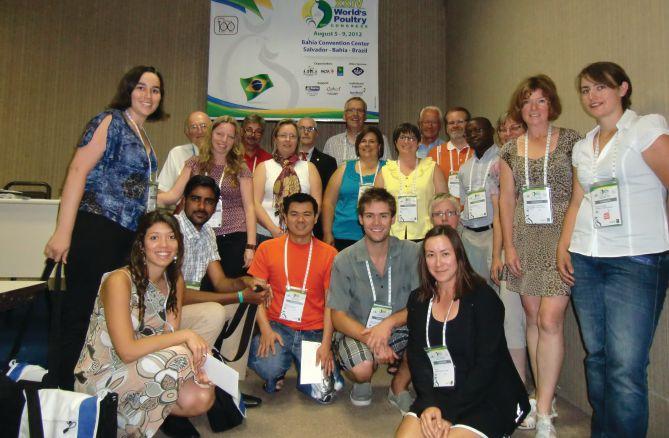
many members of the canadian branch of the World Poultry science association were able to present research and attend the WPc in salvador, Brazil.
tion among the scientific presentations, which was highlighted by Harry Blokhuis from the Humboldt university in Berlin. Blokhuis has been a major contributor to welfare research over the past several decades, and in his paper at the congress, he reviewed much of the previous work on the topic. notably, he introduced the concept of “welfare quality,” one outcome of a major co-operative research project in europe and latin america that began in 2004 and ended in 2010. He raised questions regarding the “prescriptive regulations,” which have been the main way in which countries have addressed the challenges of poultry (and indeed other animals’) welfare. an example (not quoted in the paper, but nevertheless valid) would be the eu furnished cage, which has become mandatory for eu producers since January 2012. Regulations look good to consumers clamouring for them, but are far from perfect for the primary producer. variations
from farm to farm, and country to country, make prescriptive regulations difficult, if not impossible, to implement and to monitor. in addition, regulations hamper farmers in their efforts towards innovation.
Blokhuis, in reviewing the main conclusions of the Welfare Quality report, suggests that the use of “animal based output indicators” may be more effective in the long run, in achieving improved welfare quality. Here auditors making farm assessments consider the following categories and score the farm on a scale of acceptability.
More than 20 other papers, from 10 countries, mostly in europe, also dealt with various aspects of poultry welfare. clearly, training auditors to monitor these criteria, few of which lend themselves to objective measurement, is a major challenge. to help train auditors using these criteria, the ec has published several books, which are available on the Welfare Quality website at www.welfarequalitynetwork.net.
CaNaDIaNs IN BRazIl
Photo courtesy t ennille k nezacek
PoultRy hEalth aND BIosECuRIty
a wide variety of papers were presented dealing with disease diagnosis, treatment and prevention. One of considerable interest was by dr. david swayne of the us southeast Poultry Research laboratory in athens, Ga., dealing with the current worldwide status of avian influenza and the methods used in various countries to deal with outbreaks over the past several decades. Of interest to canadians, who last encountered highly pathogenic avian influenza (HPai) in 2004, are the methods of control and eradication practised. canada’s policy is to depopulate affected and surrounding flocks and thereby eradicate the disease while providing government compensation to affected producers. this has been successful in canada in the few cases of infection that have occurred.
However, where infections become more widespread, and where the process of depopulation is either difficult or impossible, other strategies are required, including vaccination. examples were quoted from Hong Kong, egypt, indonesia and vietnam. in all of these countries (with the possible exception of Hong Kong), there are large numbers of birds kept as family or village poultry that cannot be easily vaccinated. in addition, if no compensation is available, it is difficult to persuade poultry keepers to depopulate apparently healthy birds.
Global
although vaccination alone cannot eradicate HPai, it can be extremely helpful in lowering the level of infection to the point where other methods can be used to accomplish eradication. for vaccination to be effective, a minimum of 60 per cent, and preferably 80 per cent, of at-risk birds must be vaccinated.
othER sECtIoNs
Many presentations took place in the other sections of the congress: nutrition and feed technologies, economics and Marketing,
chicken Breeder and Broiler Production, slaughter and Processing, Genetics and Breeding, food safety, commercial egg Production and Processing, family Poultry Production and Other species.
canadian scientists gave 15 of the approximately 200 oral presentations, plus contributed a variety of posters.
Members of the international Poultry Hall of fame are individuals who contributed to the world’s poultry industry above and beyond the call of duty. they are named and inducted at World’s Poultry congresses. the Hall of fame was started at the 1988 congress when 25 members were named, but at subsequent congresses, only five new members have been inducted.
for 2012, they were Prof. Peter Horn from Hungary, dr. nuhad daghir from lebanon, dr. Ganda lal Jain from india, Prof. egladison João campos from Brazil and dr. Kyoshi shimada from Japan. dr. daghir has a strong connection with canada, having been technical director at shaver Poultry Breeding farms for a period in the 1990s.
canadians previously named to the Hall of fame include don R. clandinin, Robb Gowe, donald McQueen shaver, ian R.
INtERNatIoNal PoultRy hall oF FaME
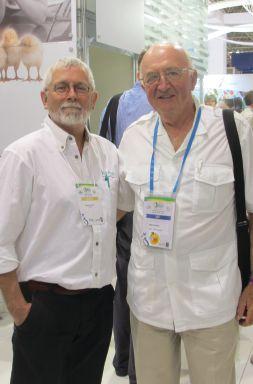
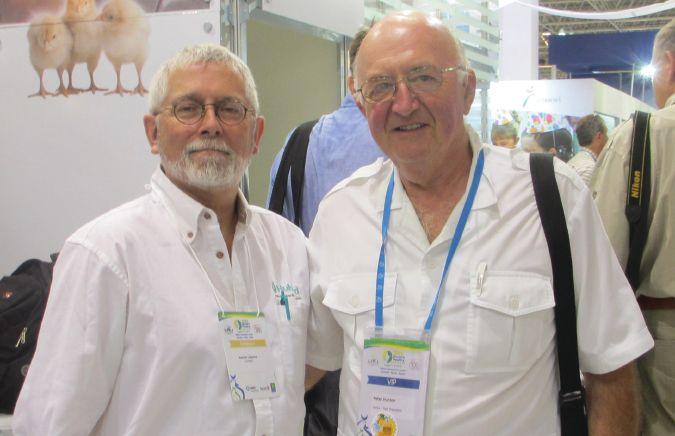
Patricio liberona, left, hubbard s.a.s. (formerly with shaver), and author Peter hunton attended the WPc exhibition.
sibbald, stan J. slinger, John d summers, Roy d. crawford and Peter Hunton.
WPsa hIstoRy aND aWaRDs
the XXiv congress coincided with the 100th anniversary of the founding of the WPsa and one of the plenary sessions consisted of a review of the first 100 years presented by this author. few international organizations have functioned for 100 years, but the WPsa has grown from an initial 19 founding members to over 7,000 today, in more than 80 national branches. the WPsa not only sponsors congresses, but also publishes the World’s Poultry science Journal, a quarterly publication consisting of scientific review papers.
following the financially successful 1992 congress in the netherlands, the dutch Branch of WPsa established awards to individuals or institutions judged to excel in one of the three pillars of the organization: education, Organization and Research. the awards consist of 11,000 euros (approximately $13,400) to be spent on a project connected with the recipient’s field of expertise. Recipients must attend the subsequent congress to report on the project.
the 2012 winner for Research was dr. Jae yong Han, a geneticist from the seoul national university in south Korea. the Poultry cooperative Research centre (cRc) in australia was awarded in the education category, its second win. Representative dr. Mingan choct reported on the development of the PoultryHub website pages dealing with family poultry (www.poultryhub.org).
CoNClusIoNs
the XXiv World’s Poultry congress provided a valuable scientific review of current knowledge in many fields, and pointed to a viable future for poultry science and the poultry industry, in spite of a variety of challenges. the congress represents a unique meeting place where old and new contacts are made, and information exchanged in a comfortable environment. the next congress will take place in Beijing, china, in 2016. n
ALL THINGs CONsIDERED
By JIM KnIsLEy
a story Worth repeating
It wasn’t supposed to happen this way,” is how daryll e. Ray, Blasingame chair, excellence in agricultural Policy, institute of agriculture, university of tennessee, summed up the state of the north american hog industry in a 2009 newsletter. now, three years later, it bears repeating, as the hog industry is in a difficult situation. One of the four largest companies in canada is in receivership – again – and another is bankrupt. Others are pleading for hundreds of millions of dollars in government help to bring short-term stability to the industry.
the causes of this year’s crisis are straightforward: the rise in the value of the canadian dollar versus its u s. counterpart and other currencies, higher corn and soymeal prices due to the u.s. drought and mandatory country of origin labelling by the united states have reduced prices for feeder pigs being exported.
all of this resulted in $40-50 per head losses for producers. and faced with such losses, some producers are trying to staunch the flow of red ink by selling down their herds or liquidating them altogether. this increases the flow of hogs to market at a time when consumer and export demand is softening and the end result is dropping market prices.
as Ray pointed out in his 2009 commentary, this wasn’t supposed to happen. in the 1990s, canada rid itself of the remains of the crow Rate, which subsidized the cost of moving Prairie grain by rail to port. this was, in part, designed to eliminate grain market distortions. “as a result, we ended up with increased hog production because Western canadian farmers saw it as a way to diversify their income sources and increase the value of their grains by feeding them to hogs,” Ray wrote.
south to be raised to market weight and processed. the industry also consolidated. Bigger was definitely seen as better especially by provincial governments that provided a variety of forms of encouragement including financial encouragement. the day of what were known as the “in and outers” was over. these were grain farmers who, when grain was in surplus and low in price, would produce hogs, and this worked because quite often when grain prices were low hog prices were high. that system looked sloppy and incoherent to policy makers, but on the farm it offered a form of financial stability and it worked.
Ray wrote that it was happening in 2009 and warned individuals to “call into question some of the assumptions upon which the industry is built. and in some ways it is less resilient than it was when farmers could switch from grains to meats and back depending on the relative profitability of each item.” “less resilient” is probably an understatement. two-thirds of canadian production is dependent on exports, and when markets are good they can be very, very good. But they are fragile. if Russia, or any other country, decides it should produce more hogs and import less pork, it hurts. if the united states decides it wants country of origin labelling, it hurts. if the canadian dollar rises in value, it hurts.
When you look back at the prospects for the hog industry heading into this year, it really stings
What wasn’t expected was the way the canadian industry evolved. Prairie feed grain production would boom and be more than adequate for an expanded hog herd, but in reality, it didn’t and wasn’t. instead, canola boomed as better varieties of the oilseed were developed, markets grew and prices increased. farmers also developed a preference for corn and soybean meal imported from the u.s.
importing feed from the u s. to raise hogs to market weight seemed to make little sense. so much of the industry specialized in feeder pigs, which were born in canada and then shipped
When drought or other production problems cause grain prices to spike and all you’ve got to earn an income are hogs, it hurts. When herds start liquidating and hog prices fall, it hurts.
When governments tire of looking at the second massive bailout in three years, it hurts.
and when you look back at the prospects for the hog industry heading into this year, it really stings. Record acreage and a bountiful corn crop was predicted for the u.s., grain prices looked as if they would be low, the canadian dollar was sitting under $1 us, and was stable, and canadian hog exports were booming.
But then, as it happens, everything changed.
if you are wondering what this has to do with the canadian poultry industry, the answer, thankfully, is not much. But it is worth noting that in a way – marketwise – chickens are small hogs. if the canadian poultry industry had decided decades ago not to adopt supply management (as the hog industry did) everything now hitting the hog industry would be pummelling poultry. n
Happy Holidays Joyeuses Fêtes
Holiday Cheer Eggnog
6 eggs
1/3 cup liquid honey or sugar
1/8 tsp salt
4 cups 1% milk, divided
1 tbsp vanilla extract
Whisk eggs, honey and salt in large saucepan. Gradually add 2 cups (500 mL) milk. Cook and stir over medium-low heat until mixture coats back of spoon, 12 to 15 minutes. Do not let mixture boil.
Pour into large heatproof bowl; stir in remaining milk and vanilla. Place bowl in ice water, stirring frequently, until mixture is cool, about 15 minutes. Cover and refrigerate for at least 3 hours.
Visit eggs.ca for optional flavourings.
Eggnog des fêtes
6 œufs 1/3 tasse de miel liquide ou de sucre 1/8 c. à thé de sel
4 tasses de lait 1 %, divisé 1 c. à table d’extrait de vanille
Dans une grande casserole, fouetter les œufs, le miel et le sel. Ajouter graduellement 2 tasses (500 ml) de lait. Cuire à feu mi-doux, tout en remuant jusqu’à ce que le mélange enrobe le dos de la cuillère, de 12 à 15 minutes. Éviter de faire bouillir.
Verser dans un grand bol à l’épreuve du feu; incorporer le reste du lait et la vanille. Déposer le bol sur de l’eau glacée et remuer fréquemment jusqu’à ce que la préparation soit froide, environ 15 minutes. Couvrir et réfrigérer au moins 3 heures.
Visitez lesoeufs.ca pour d’autres suggestions d’arômes facultatives.