In this issue, there are several stories that touch on conservation practices: whether it’s minimizing winter runoff or investigating how a closed-loop drainage water recycling system operates. What’s less clear is, if all of these practices are so great for the environment why isn’t there widespread adoption?
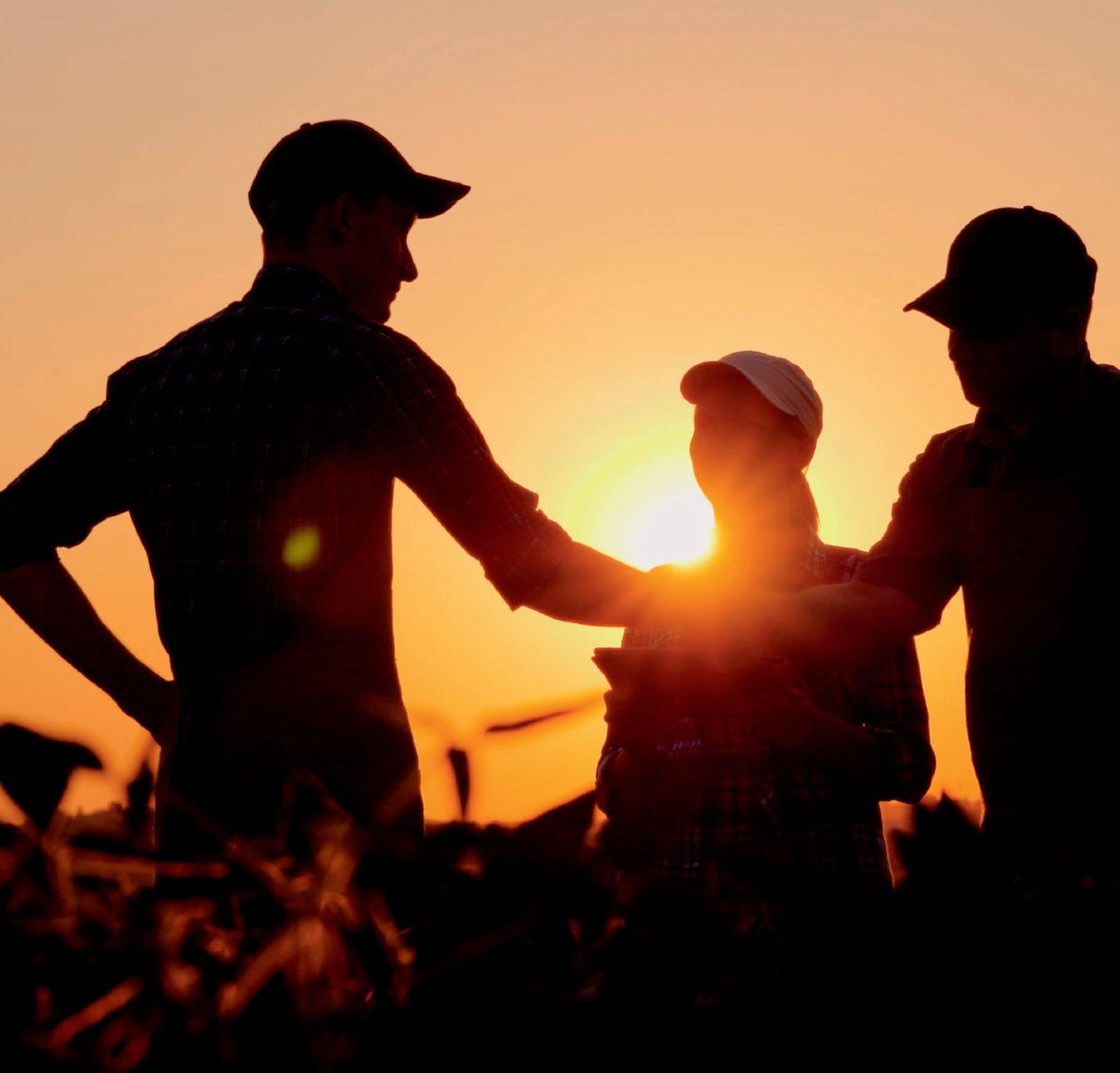
In a 2019 study by Pranay Ranjan, Sarah Church, Kristin Floress and Linda Prokopy featured in the Society & Natural Resources journal, they discuss motivations and barriers for adopting conservation practices in the United States. The researchers found three themes that motivate adoption: farmer characteristics, environmental awareness, and trust in information sources. As contractors, you’ve probably met your fair share of farmers who are early adopters on the cutting edge of environmental practices and have great relationships with local extension staff or conservation groups.
Understanding barriers to adoption on rented farm land can increase conservation practices on land where adoption rate is low.
While having these characteristics might make them more likely to adopt new conservation practices, the study also outlined barriers to adoption. They found farm management, negative perceptions of a conservation practice, perceptions that adoption is a risk, and land tenure, to be barriers to adoption. The last barrier – land tenure – was the focus of another study by Pranay Ranjan, who is based out of Purdue University’s Department of Forestry and Natural Resources. The Purdue University and The Nature Conservancy collaborative study looked at how farm land ownership creates barriers to conservation. The 2018 study, published in the journal Land Use Policy, found that those farming on rented land adopted conservation practices at a lower rate.
Barriers to conservation on rented land boiled down to cash-rent lease terms, rental market dynamics, lack of information, interpersonal barriers, and barriers that pertained to the landowner’s financial motivators. For example, short-term leases
were preferred so that "landowners can renegotiate rent every year as a way to not be stuck with low rents if commodity prices go up."
According to the study, about 39 percent of U.S. farmland is rented, and 80 percent of those acres are owned by non-operating landowners (NOLs), or owners who do not farm the land they own. The researchers focused their interviews in Indiana, Illinois and Iowa. At 40.4 million acres, those three states have the highest proportion of rented farmland and the highest levels of nitrogen loss in the Mississippi River Basin. Understanding the barriers to adoption in NOL-farm operator relationships can lead to strategies that increase conservation practices on land where adoption rate is low.
The first step, the study discovered, was to address the “information deficit.” The researchers didn’t find an information deficit among farmers when it came to promoting conservation practices – farmers are, more often than not, aware of the practices. However, NOLs were a “heterogeneous group” when compared to farmers and it wasn’t clear what their information network was.
Another aspect was the mismatch between the incentives of a one-year lease term and the three to five years it would take to reap benefits from conservation practices. In addition to improving awareness, the paper’s authors recommended addressing lease barriers by creating more flexible lease terms and offering multi-year leases.
Finally, the paper said that conservation science has not focused on human behavior enough. Understanding how humans make decisions and their social processes can be leveraged to develop better strategies to promote the adoption of conservation practices.
Even though we know “drainage pays,” maybe we need to also put focus on understanding human behaviour and making favourable structural changes because cold hard facts only go so far. DC
NEXT ISSUE: Watch for more industry news, research updates and featured guest columns in the May 2021 edition of Drainage Contractor @DrainageContMag @DrainageContractor
DOING THE RIGHT THING.
It doesn’t come easy for everyone. But at Fratco, it’s what has made us a leader in the drainage industry for almost 100 years. From precise manufacturing processes to high-quality products, top-notch customer service and everything in between, we prioritize making things right. Because to us, there’s no other option.
SASKATCHEWAN INVESTS $1 MILLION IN AGRICULTURAL WATER MANAGEMENT RESEARCH
Saskatchewan, a province that is no stranger to the debate between drainage and conservation, is investing in local research that will help shape its drainage policy.
On July 20, Greg Ottenbreit, the Minister Responsible for the Water Security Agency (WSA), announced that WSA is investing $1 million to partner with 10 stakeholder organizations on 11 agricultural water management demonstration projects.
The funding will allow agricultural and environmental communities to test solutions and inform best practices to help farmers and ranchers manage water on their land. The research will look into how to mitigate water quality and
quantity impacts downstream.
“Agricultural water management is extremely important to our economy and the environment, but every region of our province is different,” Ottenbreit said. “We need to listen and learn from, and work with farmers and ranchers on the landscape. These projects will allow stakeholders, WSA and local leaders to better understand how we can solve complex water management issues.”
The $1 million is mainly to help the projects monitor and collect data. The amount is complemented by additional funds from landowners, and there is more funding possible as projects
ZODIAC FABRICS COMPANY REBRANDS AS CARRIFF CANADA
Starting Oct. 5, 2020, Zodiac Fabrics Company rebranded itself to become Carriff Canada.
For the past 18 years, Zodiac Fabrics, based in London, ON, worked in tandem with its North Carolina-based sister company, Carriff Corporation. The companies manufacture and supply their Sock and Drainsleeve brand of pipe envelopes to pipe manufacturers and home centers throughout North America and globally.
Both companies are wholly-owned subsidiaries of Carriff Engineered Fabrics Company. Each of the companies were established in the late 1970s by prior owners and together, were responsible for the introduction of the original SOCK filter to the North American land drainage industry.
progress over the years.
The projects focus on surface drainage, not tile drainage, because it is most suitable for the Saskatchewan landscape. While the research is being done, the regulatory drainage process in the province will not be affected and continue to operate normally.
“To get local science-based solutions to our drainage issues, that’s what the whole thing is about,” added Lyle Stewart, Legislative Secretary to the Minister Responsible for Water Security Agency.
“We don’t have good local information based on the way we farm now,” Stewart explained, adding that farmers nowadays employ tactics such as continuous cropping, cover crops, and variablerate nutrient applications, that help minimize nutrient runoff. Information obtained prior to the popularity of these conservation practices has the potential to be irrelevant, and Stewart said that the province needs up-to-date science on current conditions to make drainage decisions for its future.
When Zodiac Fabrics Company made the decision earlier this year to update its website, it seemed to be the appropriate time to rebrand its Canadian operations.
According to Paul Mutter, vice president of sales and marketing for Carriff Canada, the two companies decided to retain their individual identities and brand recognition when they first merged in 2002.
However, Mutter explains that “Operating the same company with two names has always been awkward from a marketing standpoint. It is our expectation that collectively, we will simply be known in the market as ‘Carriff’ with manufacturing locations in both the United States and in Canada.”
The new website, www.carriff.com, also launched on October 5 to coincide with the name change.
Other than the change in the name and a new logo for the London manufacturing facility, all other aspects of the business remain the same. “Our customers will see very little change in our day to day operations,” Mutter says.
TWO CONSULTING FIRMS PARTNER TO MAKE DRAINAGE AND UTILITY INSTALLS SIMPLER
Two consulting companies that specialize in complementary fields are partnering up to simplify the process of large-scale agricultural drainage and utility projects across the United States.
DIGS Associates, a consulting and engineering firm specializing in watershed drainage, professional engineering, and drainage water management, announced their partnership with Falkore Resource Group, a consultancy providing services in underground utility and drainage installation methods and machinery. The companies have partnered to expand their reach and capabilities within the drainage water remediation industry servicing both agricultural drainage and utility markets.
Within the new partnership, DIGS will consult on what’s best for the watershed, individual farms, and oversee the installation of projects. Falkore will provide machines, repairs, GPS, and on-site support for the contractor who is installing the agricultural drainage or utility project.
Falkore Resource Group connects the correct machinery with the correct practices for agricultural drainage contractors and utilities (wind, solar, and other underground installations). Now, Falkore will also be able to offer contractors DIGS’ engineering services which include drainage design, irrigation design, project facilitation, watershed determination and identification, among others.
The announced partnership would mean that these agricultural drainage or utility projects would have a smoother installation process and be more equitable for all stakeholders.
“There’s a big issue with drainage tile remediation [during a utility project], because what they do is they wait until they hit it, and then they fix it,” Corey Getz, co-founder of DIGS Associates, explained over the phone.
In previous utility projects, utility contractors have hit existing tiles when installing transmission lines, and then it is the agricultural drainage contractors responsibility to remediate for the landowner. The agricultural drainage contractor regularly waits on site for tile to be interrupted or hit, which leads to increased cost and difficult repairs. A more proactive approach can be taken.
DIGS and Falkore will work together on a new procedure where the companies go in before the utility company and make sure all the drainage is upgraded or located prior to an installation.
“When we partner with these [project] contractors, we’re able to identify within a watershed all the tiles that are currently there, give landowners and/or the utility an opportunity to upgrade, and assist and support the contractor through installation,” Getz said.
DIGS is a third-party intermediary which facilitates all aspects of drainage water remediation so that the utility company has one point of contact through the remediation process. The company DIGS takes on the role of contacting landowners or other stakeholders.
'DRAINAGE PAYS’- SUMMARY OF LONG-TERM RESEARCH STUDY
In a five-minute video posted online, Eileen Kladivko, professor of agronomy at Purdue University, provided an executive summary for the Southeast Purdue Agricultural Center’s (SEPAC) long-term drainage study.
The study took place in southeast Indiana for a 35-year period.
The study’s key takeaways showed that installation of tile drainage is a good long-term investment in the field. Drainage improved timeliness of fieldwork by one to 15 days, corn yields, cover crop growth and it enabled other conservation practices to work better.
FIELD WORK TIMELINESS
Kladivko shared that undrained, control plots were delayed by one to 15 days compared to the narrowest drain spacing. Drainage improved the timeliness of field work, and more timely access to a field is a major benefit to most farming operations.
IMPROVING CROP YIELDS
Between 1984 and 2017, corn yields on the drained plots were higher than the control plot. Kladivko showed how the controlled plot averaged 144 bushels per acre (bu/ac), whereas drained fields (of varying spacing) consistently averaged above 160 bu/ac. Improved yields provide economic benefit to farmers.
IMPROVING COVER CROP GROWTH
Kladivko’s research showed that drainage improves cover crop growth and also allows other conservation practices to work more effectively.
Cover crops grown on a tiled field produced about 3,100 pounds (lbs.) of biomass per acre, compared to only about 700 lbs. of biomass per acre on the untiled field. The untiled field was only able to produce a fourth of the biomass amount the tiled field produced.
DRAINAGE’S EFFECT ON WATER FLOW AND QUALITY
The research demonstrated that the closer the drain spacing was, the more water and nitrates were lost in the tile drainflow. However, Kladivko noted that “losing water” is the point of narrower spacing because farmers want to see their fields drained faster. The issue is the loss of nitrogen, which is valuable for plant growth but detrimental to water quality.
Over the duration of the 35-year study, nitrogen practices changed and Kladivko showed how introducing cover crops and switching to a cornsoybean rotation (versus continuous corn) significantly reduced nitrate losses from tiles.
Adjusting accordingly
An update on some recent events in
LICA.
by Bob Clark II, LICA National president
The Land Improvement Contractors of America (LICA) continues to operate on all cylinders during these challenging times. Although we did not have a national summer meeting as planned, that has not slowed LICA down. At the time of writing, we plan to have our national winter meeting on February 9 to 13, 2021 in San Antonio, TX. If things change, we will adjust accordingly.
In recent news, LICA recently updated its website and it’s worth a look. Sandhills Publishing has been a big help with that effort. Sandhills is also a relatively new associate member to the association.
LICA also continued to strengthen its relationships with the Natural Resources Conservation Service (NRCS) with an updated memorandum of understanding (MOU) that will allow the two parties work together with greater effectiveness in the future. LICA also signed another MOU with the National Association of Conservation Districts (NACD) that will allow both groups to work more closely together as well. In addition, LICA is working with the Agricultural Drainage Management Coalition (ADMC) and the United States Department of Agriculture (USDA), at the Undersecretary of Agriculture level, to ensure that conservation drainage best management practices (BMP) can be constructed across the broadest possible rural landscapes to help reach the USDA’s Agriculture Innovation Agenda (AIA). The agenda’s goals, succinctly, are to increase agricultural production by 40 percent while reducing agriculture’s footprint by 50 percent by 2050. A worthy challenge to say the least! Finally, LICA’s History of Farm Drainage book is nearly completed and should have the book published and available for the San Antonio meeting.
In other big news, LICA has hired a new legislative director, Nick Yaksich. Nick replaces John Peterson, who recently retired after long and distinguished partnership with LICA. I hope John and his wife Blanche can find the time in their busy
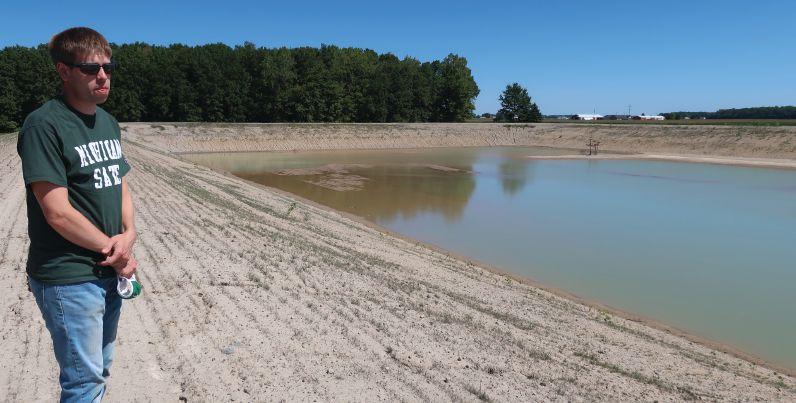
schedules to make it to one of LICA’s summer and or winter meetings and wish them both all the best. LICA and its many state chapters continue to work to help advance the next generation of best management practices. I had the opportunity to recently attend the Michigan LICA field day and witness, firsthand, the next generation of BMP being constructed just a few miles west of Lake Erie in the western Lake Erie Basin. On the site a massive tile-drainage water recycling system was constructed. The practice stores subsurface drainage water in a large pond on site to be used later in the growing season. This practice will improve field productivity and improve water quality outcomes, a win-win. Bigger more consistent yields and improved water quality outcomes can work together for the benefit of all.
A special thanks is deserved by Tom Van Wagner for designing the project in conjunction with all the Michigan LICA members, and help from their associate members, who helped construct the project. One big team effort. It was also my first chance to see the new automated water control structures being installed.
I hope this update finds everyone with plenty of work and your family and friends healthy. Please be safe at work. Keep your distance, wear your masks and wash those hands! DC
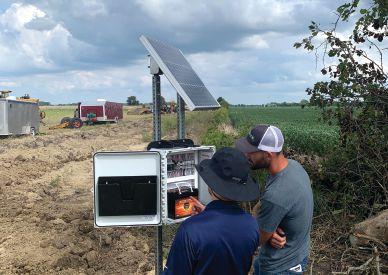
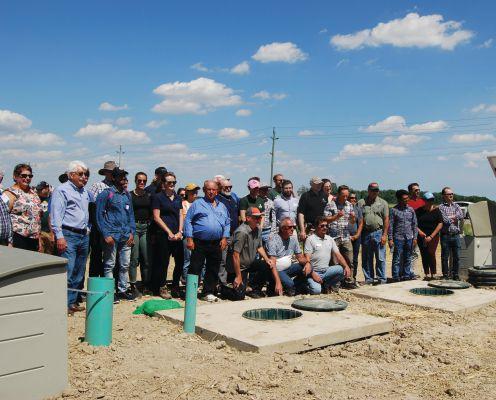
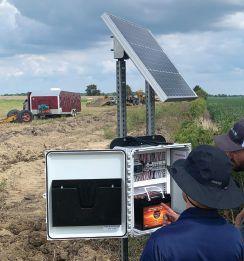
The Michigan LICA field day was a chance to see the new automated water control structures being installed. Photo courtesy of LICA.
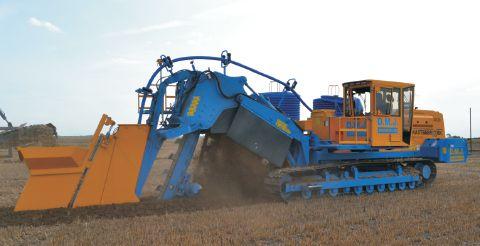
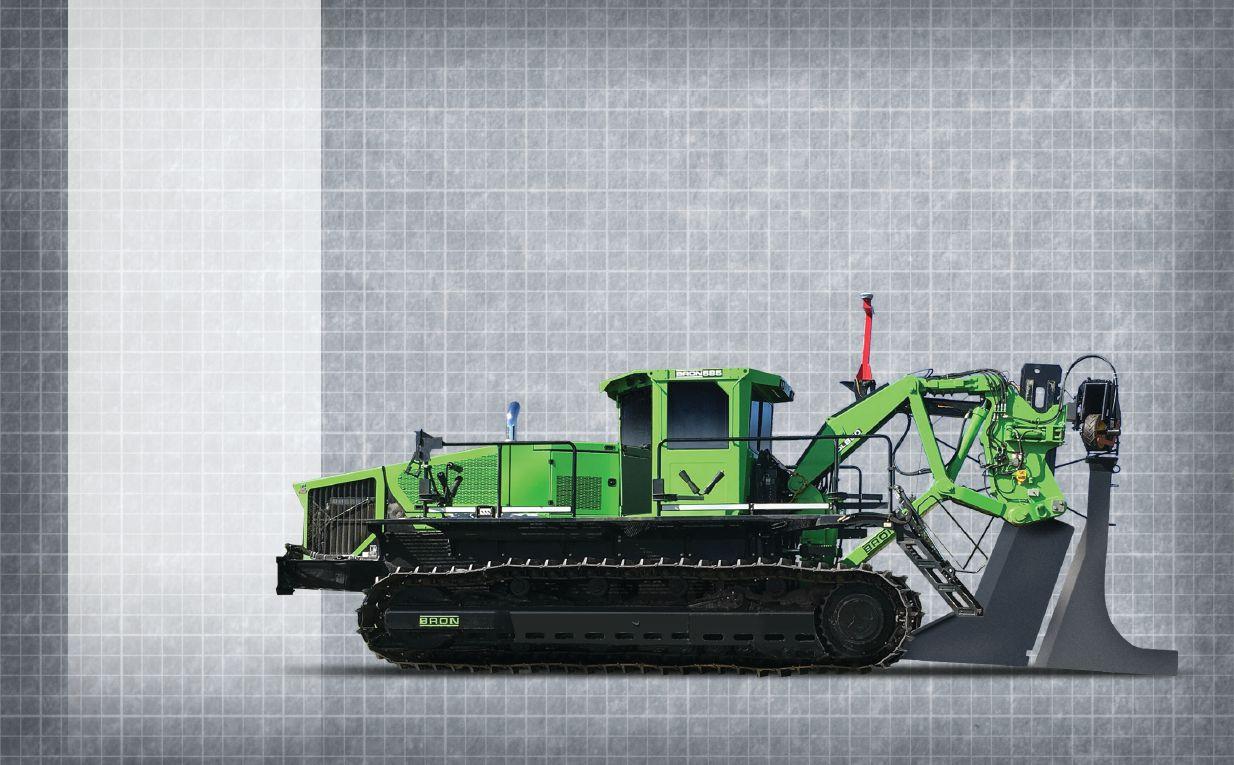
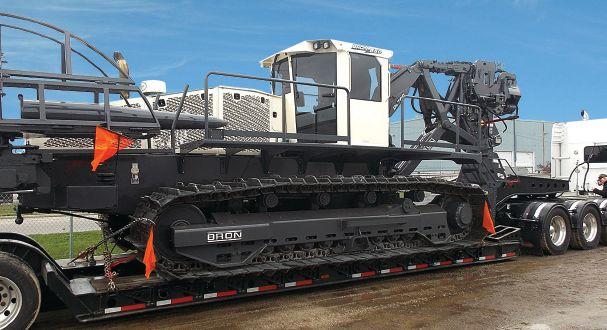
www.rwfbron.com
■ Five Core Cooling System exceeds cooling for Tier 4 engine standards
■ Quieter Reconfigured Cab Interior for Operator comfort
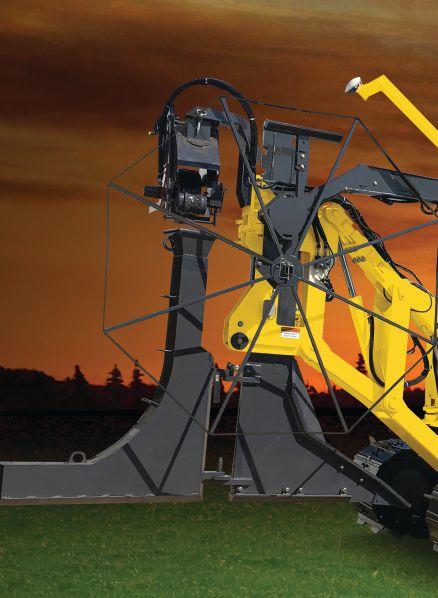
■ Standard DL 850 Drainage Plow increased strength & durability
■ LED Light Package for increased visibility for those long days in the field
■ Improved swing mechanism for the Onboard Reel for smoother reel speeds & consistent torque
■ Optional hydraulic rear step raises out of the way when plowing and lowers when required.
■ Standard oscillating track frames.
■ Fluid Samples for All Fluids
■ 150 Point Machine Inspection
■ Internal Inspection All Drivetrain Components
■ Required Factory Repairs
■ New & Used Equipment Sales
■ Parts & Service all BRON Products
■ Selected All Makes Parts for Construction Equipment
■ Certified Rebuilds on BRON Products
■ Custom Fabrication
■ New Paint
■ Factory Tested
■ New Certified Serial Number Assigned
■ 6 Month Warranty Assigned
■ Repairs on all Drainage Plows & selected Construction Equipment
■ Parts Facility in Marine City Michigan
■ Road Service for all BRON Products & other selected Equipment
■ Parts Facilities in Woodstock ON and Marine City MI.
by STEPHANIE GORDON
NEXT GENERATION
Upgrading drainage through drainage water recycling and water control structures.
What does the next-generation of water management systems look like? That’s exactly the type of question a farm drainage field day in Riga, MI hoped to answer.
The Michigan Land Improvement Contractors Association (LICA) held the farm drainage field day on September 1 and 2.
Adam Cook, president of Soil and Water Management Systems and president of Michigan LICA, shared that the highlight of the event was the installation of drainage tile for a full drainage water recycling system.
“It’s a revolutionary system that recycles all of the water that is drained through drainage tile into a retention pond, and then over the summer we put it back onto the field so there is no water runoff from that field,” Cook says.
He says the closed loop system will limit the nutrient runoff – phosphates and nitrates –that contribute to algal blooms in water bodies.
The drainage water recycling system was designed by Tom Van Wagner with Lenawee Conservation District.
A CLOSER LOOK AT DRAINAGE WATER RECYCLING
Ehsan Ghane, who teaches within the biosystems and agricultural engineering department at Michigan State University (MSU) alongside being a drainage specialist with MSU Extension, goes into further detail about what a drainage water recycling system entails. Drainage water recycling is a fairly new conservation drainage practice, but there are some farmers in Michigan that have these systems.
RIGHT: Pond sizes range. They can be deeper and cover less surface area, or shallower and cover more surface area. Photo courtesy of Ehsan Ghane.
Ghane explains that a drainage water recycling system captures water coming from a subsurface drainage system and stores the water in a reservoir or pond. A sump system is used to push the water from the drainage outlet to the reservoir. The pond is usually located on the edge of a farm.
The size and design of the pond depends on environment. For the Michigan field day, the entire project takes up approximately six acres out of a 98-acre field. Pond sizes range. They can be deeper and cover less surface area, or shallower and cover more surface area. The Evaluating Drainage Water Recycling Decisions tool can be used to compare the irrigation and water quality advantages gained with various sizes of a water storage reservoir.
The stored water then can be used during the growing season to irrigate crops. There are two ways to irrigate with the system: a sub-irrigation system or a center pivot pressurized irrigation system. The field day installation uses the former – a sub-irrigation system to add water back onto the field.
The water that is used on the crops is the same water that left the drainage outlet. There are no extra treatments or filtering, so the pond water contains nitrogen and phosphorus, which provides benefits to the crop.
However, according to a factsheet on TransformingDrainage.org put together by several researchers and extension staff across the Midwest, pesticides applied to the field that drains into the pond could be a concern if the irrigation is applied to a crop not labeled for that product. The factsheet says that this is not likely to be a problem if the water in the pond is drained from one field and recycled back onto the same field, but if several fields drain into the pond, there may be a potential for application to a crop that would be harmed. To answer this question fully, more research is needed.
BENEFITS OF A SYSTEM
Ghane describes two main benefits of a drainage water recycling system. The first is increased crop yield. The closed loop system allows a producer to have a reservoir of water to irrigate during the growing season.
At three Ohio sites over 37 years,
the average corn yield increase in subirrigated fields was 19 percent with a 29 percent increase in dry years. For soybeans, the yield increase was 12 percent overall and 25 percent in dry years.
At a Missouri site, after 14 years of operation, drainage water recycling increased average corn yields by more than 15 percent when compared with subsurface drained soil. Soybean yields were six percent greater than subsurface drainage only. Overall, both research studies concluded that crops respond strongly to drainage as well as irrigation.
“These systems are most beneficial in sandy soils where the water holding capacity of the soil is low,” Ghane adds.
“With climate change, predictions are that there will be extreme weather. If there is a drought during the summer, the water that is stored is going to be very precious during the growing season because it can be used for irrigation,” Ghane says. “It is a way to build resiliency against drought.”
You can view the full factsheet on TransformingDrainage.org, and Ghane
says that the site also has many tools on design and system explanation. There is currently research ongoing that will come up with design procedures for these systems. To install one isn’t difficult, Ghane says, but the research will narrow down optimal sizing.
“The second major benefit is that it improves water quality,” Ghane continues.
The drainage water with soluble nutrients – instead of running downstream into the lake – is stored in the reservoir. This prevents nutrient runoff which has been linked as a contributor to algal blooms.
Some of the associated costs with a drainage water recycling system include pond construction, building the conveyance, pump, irrigation system, and also accounting for the costs associated with taking land out of production (for the farmer) and miscellaneous costs like maintenance and plumbing.
BUSINESS MATTERS
KNOW THE PROBLEM
Calculate which problems deserve your attention and have the most impact on your business.
The cancellation of events due to COVID-19 opened up more space for reading. Recommended by a coworker, I read a book called Upstream: The Quest to Solve Problems Before They Happen by Dan Heath.
The book’s premise is that we tend to react to problems and put out fires, rather than preventing them from occurring in the first place.
Every workplace has fires to put out, including drainage and agriculture. I’d like to share what I learned and tie these takeaways to drainage.
The author suggests that there are three barriers to overcome in preventing problems.
The first barrier is problem blindness . Some problems are small and incremental, but they have a significant impact on your operation because they happen all the time. Other problems are deemed “inevitable” and therefore our motivation to fix them is limited.
The second barrier is a lack of ownership. The issue might impact us, but it is perceived as someone’s else problem to solve. This type of thinking can easily fall into a blame game. For example, you have a scheduling problem for a job site, but it’s the other contractors who are holding you up.
The final barrier is tunnel vision . We are so busy with day-to-day work that we can’t focus on the bigger picture, even though the looming challenges are likely to become our priority at some point.
IDENTIFY YOUR PROBLEMS
My manager uses the phrase “wash it with data” all the time, and I’d like to show you a couple of ways you can use data to overcome your three barriers.
The first is called a Pareto chart, where you track the frequency of problems that occur.
by JACQUI EMPSON LAPORTE
To begin creating a Pareto chart, you can create the categories you need. Problems can fit into weather event, scheduling conflict, equipment breakdown, paperwork error (in permits, invoicing, etc.) or other categories. You can track them however works best for you: a whiteboard, an Excel doc in the office or a notepad in the truck. It’s also important to get feedback from your employees as well –they may see problems that you don’t.
Rather than responding to the “fires” such as the immediate mechanical breakdown, the Pareto chart might point you towards a bigger problem. For example, a piece of equipment that is costing you in downtime or a need to revise a preventative maintenance plan. The data gathered provides valuable insight into cost of production.
While the Pareto chart will help identify the problems occurring most frequently, it doesn’t give you the potential impact on the sustainability of your business. A problem event happening even once might be catastrophic to your business. Another interesting tool is one that combines frequency x impact x predictability.
For example, you make a list of the challenges in your business. Next you can assign a range for each factor – for example 1 (less serious) to 5 (more serious). To calculate the total score, you multiply frequency by impact, then predictability.
In this example, running out of tile or a machine breakdown will interrupt the plans for your day, but the total scores would indicate that addressing accurate invoicing would be the best for the business. If the predictability of invoicing problems is high, and the impact is high, then perhaps you need to look at your processes in managing
estimates, quotes, in field material use, time tracking, and invoicing. The end result might seem like an inaccurate invoice, but the problem actually stems from somewhere along the process from estimate to construction.
If a good employee starts calling in sick more often (frequency), which is abnormal for them (predictability or how well you can foresee the issue happening), then perhaps it’s time to find out what is going on and whether that person needs assistance. That might turn out to be less about the job and more about issues outside of work. If the frequency is high
and predictability is also high, then perhaps it’s time to address attendance in other ways.
Your chart might look completely different, and that’s okay. The important part is the method of trying to focus your effort on the things that will make the most impact on your business. Again, it’s important to involve other employees in your business because they may view the frequency or impact differently than you.
As we head into the quieter months, take time to reflect on your business and which reoccurring problem areas could use an upgrade before next season. DC
Agricultural Drain Systems
READY TO TILE?
Did You Know?
FARM DRAIN TILES, UNDERGROUND UTILITIES AND PIPELINES ARE INSTALLED AT SIMILAR DEPTHS, INCREASING THE RISKS OF ACCIDENTS.
Advanced planning is critical for a safe and successful drain tile project.
Call 811 or visit www.clickbeforeyoudig.com in the planning process to identify the location of underground pipelines. It’s a free service and only takes about three days.
PLANNING Tips
Drain Tile Planning Tips from the Drain Tile Safety Coalition
Don’t take chances, rely on second-hand information or make assumptions regarding the location of underground infrastructure. Place the call to 811 during the planning phase for a safe install.
Request a “Meet Ticket” or “Design Ticket”
You are encouraged to call 811 and request a “Meet Ticket” or a “Design Ticket” when you are starting to plan a drain tile project.
A “Meet Ticket” initiates a meeting request. When you call 811 and request a “Meet Ticket” the One-Call Center in your area notifies pipeline and utility operators with facilities near your project that you are requesting a meeting to discuss project details and determine how their facilities may impact your project.
A “Design Ticket” or “Planning Ticket” initiates a request for maps or other preliminary information regarding the location of underground pipelines and utility lines near your project. When you request a “Design Ticket” or a “Planning Ticket” the One-Call Center will provide a list of pipeline and utility operators with underground facilities near your project.
Individual practices may vary between One-Call Centers and not all One-Call Centers regularly process “Design Tickets” or “Planning Tickets.” When you call 811 during the planning phase, ask the One-Call agent if they can process both a “Meet Ticket” and a “Design Ticket.”
Share Project Details
It is important for you to provide accurate and detailed information regarding the location of your planned drainage project and details regarding the size and scope of the project. Location information can be provided as GPS coordinates. You should also provide details about the tile you plan to install and the depth of installation.
Operators may ask general questions about your project. For example, larger diameter drainage pipe will require different clearance allowances than smaller diameter drainage pipe, and a new installation project will be different from a maintenance or repair project.
About the Drain Tile Safety Coalition
Founded in 2018, the Drain Tile Safety Coalition is a non-profit dedicated to sharing best practices in safety to reduce the number of accidents resulting from drain tile installation on farms. Learn more at www.draintilesafety.org.
CONTRACTOR AT WORK
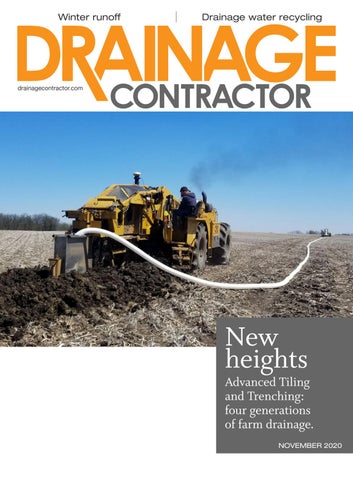
NEW HEIGHTS
Four generations of farm drainage.
If Roy L. Yoder were alive today, he’d be justified in feeling awfully proud. More than seven decades after he started one of Iowa’s first agricultural drainage businesses, three of his great grandchildren are helping lead that same family business to new heights.
by MADELEINE BAERG
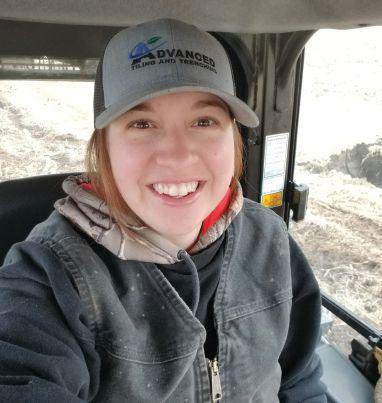
Based out of Wellman, IA, Advanced Tiling and Trenching is owned and operated by siblings
Alyssa, Lincoln and Cameron Yoder, together with support from past-owners (and parents) Shaun and Kristyn Yoder.
Advanced Tiling and Trenching is a fullservice land improvement contractor focused on farm drainage, water management and land conservation. Based out of Wellman, IA, Advanced is owned and operated by siblings Alyssa, Lincoln and Cameron Yoder, together with support from past-owners (and parents) Shaun and Kristyn Yoder.
The family business specializes mostly in shallow-depth, narrow-spaced contour drainage, ideal for the hilly ground and highquality, eastern Iowa soil it services. Advanced offers start-to-finish, project-based custom work, however, the Yoders see their efforts as just one part in a much bigger picture.
“Our priority is whole system management: not just tiling alone but how tiling contributes alongside all the other best practices a farmer is doing,” Alyssa explains. “We want to be part of the farmer’s conversation about best management practices.”
INDUSTRY CHANGES
Drainage has changed significantly since Shaun
joined his own father in the family business in the late 1970s.
“There have been phenomenal improvements over the years,” Shaun says. “We spend a lot of time talking about and thinking about improvements we could make and better ways we could do things.”
First, there’s the obvious installation speed increase. As a 14-year-old, Shaun laid clay tile by hand using a hook. At first, he could lay seven to 10 feet per minute. That soon increased to 20 feet per minute. Today, Advanced is trenching a mile and a quarter per hour, thanks to horsepower increases and other improvements Shaun has made to the SAMSON trenchers he designs, manufactures, and sells.
It’s not just speed that has increased. When Shaun started, their trencher was able to lay up to a 12-inch pipe. Currently, Advanced is completing a project with a 36-inch dual wall pipe, and the trencher still has potential to go bigger. That’s good news for farmers in terms of both flexibility and efficiency.
Patterning has changed too. When Shaun
worked alongside his father, most of their projects involved random tiling. Today, the majority of projects are pattern tiled, using small to large patterns and with much closer spacing than ever before.
Together, these changes translate to more effective drainage, improved land and water conservation and – ultimately –higher returns to producers.
“A lot of the focus used to be on ways tiling made farming easier to do, some of which improved production, some of which didn’t. Now, we’re focused on a whole farm strategy where tiling is used to reduce erosion, increase water quality and, most importantly, put more bushels in the farmer’s bin,” Shaun says.
CONSERVATION CONVERSATIONS
The concept of conservation is much more than a trendy buzz word to the Yoders: it’s a priority they work towards every day.
“Conservation is not a political issue: it’s vital to life and to the future of food production,” Kristyn says. “Conservation is the goal; we’re just the tool.”
While bureaucrats and newly book-trained technicians still accuse drainage of being environmentally problematic, the Yoders believe it is the key to soil and water health.
“A lot of people have been told drainage is bad. In reality, shallow-depth, narrow spaced, contour drainage can reduce nitrates by 30 percent. By limiting erosion, [for example] we have places with 25 percent slope where we’ve eliminated sheet erosion, rill erosion, ephemeral gullies, we can reduce
Schlatter’s Inc.
phosphorus run-off. With proper design and installation, drainage offers huge conservation benefits,” Shaun says.
ACTIVE ADVOCATES
The family isn’t willing to sit back and allow drainage to be criticized or – worse – conservation to be further regulated by legislators unfamiliar with farming realities. As such, the Yoders are committed to investing in industry leadership and advocacy.
When Shaun worked alongside his father, most of their projects involved random tiling. Today, the majority of projects are pattern tiled.
“It’s a new generation of conservation work and there are new government requirements. We try to develop strong relationships with state and federal authorities, our government representatives and other decision makers so we can advocate for the best practices that allow our customers to be successful,” Alyssa says. “If we don’t shape the conversation, someone else will. But, unlike us, they probably haven’t spent a lot of time three, four, five feet below the surface of our area’s soil.”
To that end, Alyssa currently serves as Iowa LICA’s southeast district vice president. It’s a hat she’s particularly proud to wear, given that her great grandfather, Roy L. Yoder, was a founding member of Iowa’s chapter of LICA back in the 1940s. It’s also a hat she suggests others try on.
“I encourage other contractors to participate in their local LICA chapters. You get out of the association what you put into it, and your involvement is important for future conservation contractors. Get to know your fellow contractors and agency leaders.”
A FAMILY BUSINESS
Advanced Tiling and Trenching is a family business through and through. Shaun and Kristyn homeschooled their four children, including them in the business as part of their schooling from young ages. Today, each sibling plays a critical role.
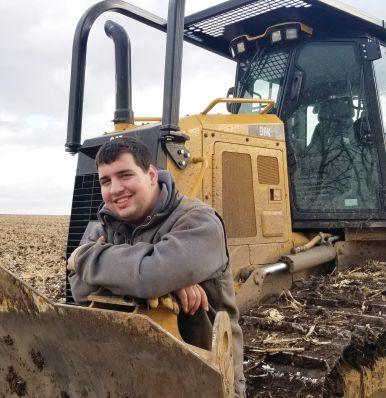
“Each of the kids has a different strength they bring to the business,” Kristyn says. “Cameron is a natural on bulldozers – he has been since he was five and drove an excavator across the field. Lincoln can fix any vehicle on the place and he’s incredible with customer service. Alyssa is gifted on the design side. And [fourth sibling] Mikaela is focused on the medical side: giving us stern warnings for safety and patching us up when necessary. Each person has been able to use their gifts and talents to make our business stronger and better.”
What draws the newest generation to the business? Is it being outside, determining the shape of one’s own day, working together with family, or connecting with farmers?
“Yes, yes and yes. Yes to all of it,” Alyssa says. “Our parents really exemplified to us that work isn’t a bad thing; that it can actually be fun. There are days that are hard: days that your boot gets a hole in it, that it’s 30 F out and you’re freezing. But overall, we all choose to have an attitude of enjoying what we do.”
The Yoders are particularly proud that the business allows them a connection back to older generations of their family and a very long-term perspective on their business.
“We’re still tying into some tile lines that my grandfather and great grandfather put in years ago,” Alyssa shares. “Repeat business is how we’ve stayed in business for so long. It’s not just about today or about one job. It’s about year after year after year.” DC
Know drainage contractors making a difference? They could be featured in a future issue, email us at drainagecontractor@ annexbusinessmedia.com!
•
PLOW & WHEEL TRENCHERS
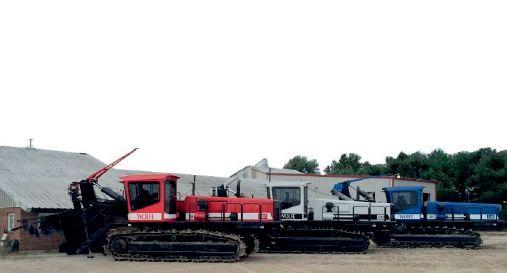
Wolfe Heavy Equipment continues to set the tone for powerful agricultural and commercial trenching equipment. Wolfe’s versatility, superior manufacturing and expert service along with reduced fuel consumption provides increased profitability.
WINTER RUNOFF
Research finds link between agricultural phosphorus runoff and soil type.
Researchers at the University of Waterloo are studying phosphorus and tile drainage in agriculture, and which best practices are most effective for managing surface and subsurface runoff.
by ROBYN ROSTE
Phosphorus is necessary for both plant nutrition and profitable production. However, when the phosphorus particles are carried off the field and into watersheds, it may cause algae blooms, which can eventually harm fish and other aquatic organisms. Therefore, managing phosphorus runoff is essential for environmental protection.
For the past decade, University of Waterloo researchers like Merrin Macrae, a professor with a PhD in hydrology and biogeochemistry, have conducted research on the effects of agricultural fertilizer management on subsurface phosphorus loss in southern Ontario.
“Our research started by looking at where the water and phosphorus were leaving the field and when, and we looked at it in different watersheds,” Macrae says. Their research spanned Ontario, including the Grand River, Thames, Essex and Chatham, and is now expanded into Manitoba.
The University of Waterloo study focuses on
the non-growing months, when the greatest amount of water is running off the field due to snowmelt and heavy rain events. The research findings are showing a higher amount of phosphorus runoff in wintertime, through both surface runoff and tile drains.
“In Ontario we have over three million acres of land that is tile drained, and we also have hundreds and thousands of municipal drains — ditch systems that go through the entire countryside that creates outlets for the tile drainage system,” explains Charlie Lalonde, project manager for the Thames River Phosphorus Reduction Collaborative (TRPRC). These drainage ditch systems deliver water to different rivers, as well as the Great Lakes.
Macrae’s project looks at what can be done to reduce the impact of phosphorus runoff and is accomplished through experimental and observational work. The results will help determine which management practice is the best at reducing the total amount of
LEFT: The Thames River PRC hosted a tour of Louis Roesch’s farm in Chatham-Kent, ON, where the organization was testing a commercial product that absorbs phosphorus from tile water at the edge of a field.
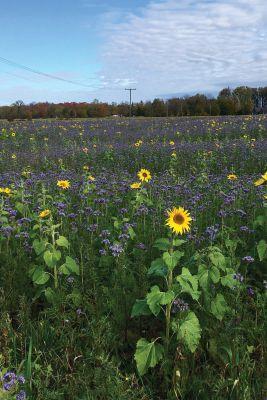
RIGHT: The use of a mixed cover crop soil to improve soil health on an Ontario farm.
Thank you
True to our Prinsco values, we put relationships and people first. This year we’ve seen our customers working harder and longer than ever during some of the busiest tiling seasons on record.
On behalf of our entire Prinsco family, thanks for the important work you do! We’re proud to support your business with relationship focused customer service.
Have a good rest of the season and stay safe out there!
DRAINAGE MANAGEMENT SYSTEMS
DEEP DIVE
The support behind the new conservation practice of drainage water recycling. D
by JESSIKA GUSE
rainage water recycling is here to stay as more research around the new conservation practice continues to pour out.
Support surrounding this next-level water management system is growing — with no signs of slowing down.
“You learn so much about design, installation, and even working directly with landowners to recognize the
value of this type of investment for them,” says Charlie Schafer, president of AgriDrain who’s been in the drainage business since the late ‘70s. Schafer adds that working directly with farmers allows one to see how the farmer views the investment in the long term, and how willing they are to invest into these types of on-farm conservation practices.
These days, a good chunk of farmers are having trouble with expanding their farm due to the cost of land rising at a rapid rate in their areas. Add in the increasing amount of weather variability, and Schafer says more farmers will likely be turning towards drainage water recycling as a way to achieve greater yields without purchasing more land.
Thomas Van Wagner, USDA-ARS staff with Lenawee County Conservation District, echoes Schafer’s thoughts on the cost of land, and says now is the time to get farmers on board. He adds that contractors play a major role in the development of the system because every acre of land is different and with that comes its challenges.
“[Drainage water recycling] is 50 percent science and then it's going to be 50 percent
the art of managing it,” Van Wagner says.
Being one of the developers for the system that was on display recently at the Michigan Land Improvement Contractors of America (LICA) field day, he adds they’re going to learn a lot from it over the next five years. The system will provide more information on management, economics, and the increase in yield.
“I have visions of having a system where you have sensors in the soil, and when the water moisture sensor [goes off] the pump kicks on to start subirrigation. Or, if it gets too wet, and we'd be sensing that automatically, and then the variable pump slows down and tries to match the evapotranspiration of the crop.”
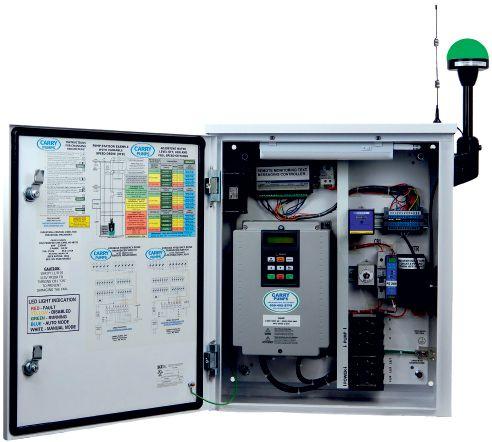
When it comes to tricks for this new trade, Bob Clark II, national president of LICA and Clark Farm Drainage, points to automation. Though it might take time for engineers to create the perfect sensor as mentioned by Van Wagner for example, it’s still being talked about by those at the forefront.
“I do think it's gonna take some time . . . this isn’t going to happen in a year or two, but ultimately, (I believe) in 10
Contractors play a major role in the development of a system because every acre of land is different and with that comes its challenges.
years, because technology gets better all the time,” Clark says.
“A lot of these drainage water recycling systems can already be monitored and controlled remotely, at the farmer’s office on [their] desktop or on [their] laptop in the truck . . . I do believe with the right soil, and all the weather variability the farmer has, why not try to remove the guessing game as much as possible all while you’re improving water quality.”
RESOURCES AT YOUR FINGERTIPS
The great thing about starting something new that’s both innovative and challenging, is that along the way you’ll find other people wanting to help. Ben Reinhart, project manager for TransformingDrainage.org says although the funding for the multi-state project will wrap up in the earlier part of 2021, the site will continue to be live for contractors to use it. One of the many resources found on the site is dubbed EDWRD, which stands for Evaluating Drainage Water Recycling Decisions.
“A lot of times, when you might be approaching a project, you know, one of the initial questions is, ‘well how big of a pond do I need? Or how big of a reservoir do I need?’ and so, EDWRD is a tool that runs a water balance for drained fields, as well as for a reservoir,” Reinhart says. He adds that the calculation estimates the amount of water coming from the field to the pond and it takes into consideration a range of different reservoir sizes that a user would input.
“Once it estimates the amount of water coming in, it can estimate how much water can be stored in that pond and then it goes one step further in terms of when it’s supplying irrigation, how much water is used from the pond, back up onto the field.”
Reinhart says it simulates the flow of water within a drainage water recycling system to get an idea of:
• How much irrigation can I apply?
• How much tile drainage can I capture?
• How much nutrients can I capture and reuse?
Along with other resources found on the site, Reinhart teases there will soon be a full three-part video series that will have an overview of drainage water recycling, going over the wants and needs for site selection, and lastly examining the construction and management portion of creating the system.
Schafer suggests it's tempting for all contractors to “stay status quo and take the path of least resistance” but if contractors as an industry embrace new opportunities, the conservation practice will have less pushback and gain momentum among other states and provinces.
“[If we] try to transform what the old 24/7 gravity flow drainage system used to be, into a new kind of a vibrant water management system and look beyond the field scale on the farm scale, and start to think about watershed scale improvements, [it’s a win for everyone],” Schafer adds. DC
• Lightning Arrestor & Built-In Breaker for Surge Protection
• Additional 24V DC Power Source for Additional Options
• Auto & Manual Operation Switch
PHOTO COURTESY OF CLARK FARM DRAINAGE.
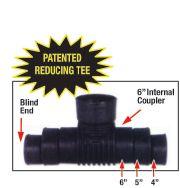
• 8” & 10” riser with patented 8" & 10" combination Tees. Also 6” square & round risers with patented reducing Tee.
• Constructed of heavy-weight, high-density polyethylene.
• Parts highly adjustable & interchangeable with others on the market
• Orifice plate placed at tee level or at ground level.
• Exclusive locking device on each part. • User Friendly-Priced effectively.
• Adaptor available to repair old metal or broken intakes.
Why inventory 2, when 1 serves both!
NEW PRODUCTS
NEW NAME, SAME PRODUCT
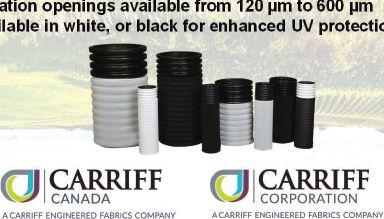
Zodiac Fabrics Company, based in London, ON, rebranded itself to become Carriff Canada.
Carriff Canada and Carriff Corporation are whollyowned subsidiaries of Carriff Engineered Fabrics Company. Each of the companies were established in the late 1970s by prior owners and together, were responsible for the introduction of the original SOCK filter to the North American land drainage industry.
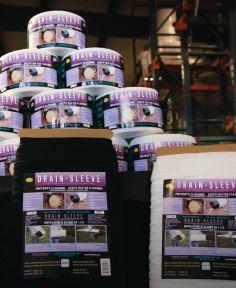
Today, Carriff is a manufacturer of circular-knit geotextile filter envelopes. Working with corrugated HPDE pipe producers and the civil engineering community, Carriff offers a wide range of standard and customized products, providing different filtration characteristics to meet specific soil types. Its Sock and Drain-Sleeve products are available to fit pipes with diameters ranging from 2” (50mm) to 48” (1200mm).
The larger 100’ (30m) packages are available in rolls or are now available with Carriff’s patented Preload product, making installation of larger quantities a snap.
For additional information, contact admin@carriff.com or visit www.carriff.com.
ASTM PUBLISHES NEW TECHNICAL STANDARD FOR FLEXIBLE DUAL-WALL PIPE
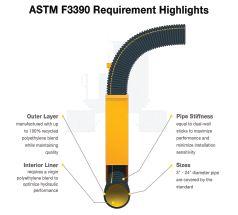
The American Society for Testing and Materials (ASTM) published a new standard specification for flexible dual-wall pipe, ASTMF3390, creating industry-wide consensus regarding requirements and testing methods for the product.
“Until now, flexible dual-wall has been unregulated, causing inconsistencies in the product across different manufacturers. Prinsco invested considerable time and resources to usher this standard through the ASTM process in order to ensure that quality and performance metrics are being met by all.,” explained Jason Ahrenholz, Prinsco director of engineering.
According to the company, ASTM F3390 is a significant step in the advancement of flexible dual-wall pipe for use in land drainage applications, specifically engineered water management systems for regulated government or NRCS projects. It clarifies material requirements for both the inner and outer layer of the pipe in order to ensure performance. It also requires a pipe stiffness equal to that of dual-wall sticks to ensure performance, safety and tolerance for installation conditions.
The ASTM F3390 Standard Specification includes 3” – 24”
diameter pipe intended for non-pressurized gravity flow applications. More information can be found online on the ASTM’s site (astm.org/ Standards/F3390.htm).
WORK IN PROGRESS: SITE-SPECIFIC DECISION-MAKING TOOLS
In the article, Next generation, on page 12 of this issue, Charlie Schafer devulges details about an upcoming project. In the article, Schafer explains that not many people are as familiar with water control systems to be able to recommend them to landowners or assist with managing them once they're installed.
Schafer is a part of a company, Ecosystem Services Exchange, that is currently working on a decision support tool to make the installation process easier. Ecosystem Services Exchange is a technical service provider to the United States Department of Agriculture (USDA) and the company provides USDAcompliant design services for drainage water management and segregation systems, including saturated buffers and bioreactors.
With the decision tool, the hope is that producers will be able to input site specific information and cropping practices to generate a water management system that makes the most sense. The tool
is still in development and the company is working with the University of Illinois.
FRATCO’S PRODUCTION CAPACITY SOARS
Fratco, a manufacturer of corrugated plastic drainage pipe and associated products, announced their production capacity reached new heights with the addition of a second Unicor UC 1800 corrugator to their production line. Unicor’s UC1800 produces corrugated pipe from 18" to 60" inside diameter.
“Investing in an additional Unicor UC1800 corrugator allows Fratco to expand our production capacity to meet ever-increasing demand efficiently,” said Chris Overmyer, president of Fratco. “Having invested in the first North American UC 1800, and now bringing the tenth machine to the United States to meet increased demand, illustrates our vote of confidence in Unicor’s technology.”
Unicor’s equipment partnered with Fratco’s standard of bringing technologically advanced pipe to the marketplace continues to be a mutually beneficial relationship. In addition to the UC1800, Fratco recently purchased the first UC 5XX corrugator, allowing a new level of throughputs and quality in small diameter dualwall pipe. According to Fratco, Unicor’s equipment helps Fratco produce the highest quality large diameter HDPE and PP pipe in the market.
BE SKEPTICAL OF STATISTICS
Making better sense of data.
by JASON DEVEAU
Growers have to interpret data all the time. Agrichemical companies tell them why their products are more effective than their competitors, seed companies tell them why their crops have better yields, and production specialists tell them why spending more time and effort will pay off in the end.
[Editor’s Note: Drainage contractors also have to interpret data all the time – or help growers make sense of their own for drainage decisions. Deveau’s tips are useful if you want to get better at making sense of data.]
To separate fact from fiction, we need to understand a little about descriptive statistics. Statistics are math tools used to describe data, find trends in data against variation, determine if a sample represents a population and to draw conclusions about data. Here are some key points to look for the next time you’re shown a graph or table.
Beware the average! “Average” can mean three different things:
• The arithmetic average is called the mean.
• The data point that occurs the most, the mode.
• The centre of a distribution, the median. They are all averages and are different from one another.
For example, if 10 people earn $50,000 a year and one earns $500,000, the mean income is about $91,000 a year. However, the mode and median are much closer to $50,000. All three are averages, but they paint very different pictures.
For an average to have meaning, you must also know the range or variability of the data. In our example, you should know incomes span from 50 to 500 thousand. Otherwise, the average can mislead you. Don’t trust graphs that do not show you the variability, such as standard error or standard deviation. If you’re able, ask the presenter to tell you the range – if they can’t, be suspicious.
Also look out for chart junk. The best graphs are simple line or bar graphs. Anything with fancy pictures is just distraction. Pies are for eating, not for graphs.
Finally, look out for disclaimers like: “This is not a scientific poll…”; “These results may not be representative of the population”;“…based on a list of those that responded”; and “Data showed a trend but was not statistically significant."
Like any tool, descriptive statistics can be misused (intentionally or unintentionally). Maintain a healthy skepticism and question charts, tables and conclusions where insufficient information is provided. DC
Jason Deveau is an application technology specialist for the Ontario Ministry of Agriculture, Food and Rural Affairs (OMAFRA).
WATER CONTROL SYSTEMS
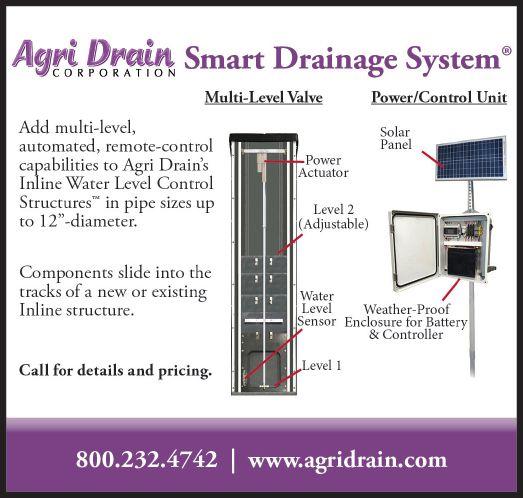
AgriDrain Corp provided water level control structures for the drainage water management and sub-irrigation system too.
Charlie Schafer, president of AgriDrain Corp, explains that this will consisted of manual inline water level control structures, and automatic inline water level control structures with two-way telemetry and automatic remote control. A user will be able to monitor water levels and flow rates remotely.
“So rather than the farmer having to manually add and subtract stop logs, now they can manage these devices remotely on their computer, tablet or smartphone,” Schafer explains.
The water level control structures allow a landowner to determine flow rates and where the water is held within the soil profile during the growing and fallow seasons. The control structures are throughout the system and allow you to hold onto the water or drain it into storage.
Water control structures aim to
maximize yield and minimize negative environmental impact.
“If you think about it, it’s like adjustable depth drainage or variable rate drainage. We call it a ‘smart drainage system,’” Schafer continues.
ADOPTION
Schafer explains that water control structures are not as prevalent now, but they are growing.
“The adoption rate has not been as high as it could be, or should be, because of people’s awareness of the practice and how it works,” Schafer says.
“People are concerned that if you hold water in the tile system, you may actually create pressure and have blowouts or damage the drainage system. But that’s really not the case, because with a perforated drainage system you have the same pressure on the outside of the pipe and you have on the inside,” Schafer explains.
He adds not many people are as familiar with the systems to recommend them to landowners or assist with managing them once installed.
BUSINESS DIRECTORY
“It is a large capital investment. But once people understand how automatic systems can function efficiently, they realize that rather than investing in additional land they can invest a fraction of the cost into their existing land and increase production and reduce risk and get a higher rate of return than they can with just buying additional land.”
For contractors, Schafer says there are resources available to better their knowledge of these systems. Contractors can reach out to the USDA, state university extension staff, the Natural Resources Conservation Service (NRCS), the Agricultural Drainage Management Coalition, a technical service provider, or reach out to Schafer directly through AgriDrain or Ecosystem Services Exchange.
“Contractors are in a wonderful position to advance these technologies and bring on this new generation of manageable drainage systems,” Schafer says, adding that the future brings automation and technology that allows landowners to treat water as a resource they can manage. DC
AD INDEX
Mole drainage
Mole plowing sees a resurgence in the U.K. after some wild weather.
by Rob Burtonshaw
Here in the U.K. mole plowing (ploughing) is back in fashion.
Mole plowing is a secondary drainage technique that aims to link the surface with the primary drainage (or piped drainage) scheme below ground. It is very dependent on soil type and provides effective drainage on heavy clay soil which tends to crack rarely and then only in the height of summer. It would probably do more harm than good on light soils and on soils where pockets or lenses of sandy or gravely material are present. It does not help control the water table, it helps speed up infiltration from the surface.
Mole drainage creates underground tunnels for water, similar to tile drainage but without the pipe. The idea is to pass a bullet on the end of a leg through to soil, creating a void or channel for water to run. When combined with a piped drainage scheme with a permeable backfill, water is able to run down the cracks and fission created by the leg of the mole plow, into the void and then to the permeable fill for before flowing into the pipe.
Ideally the depth of these mole plow voids should be around 600 millimeters (mm) (24 inches) to protect them from surface traffic. They need to be shallow enough not to damage the existing pipework and to pass through the column of permeable backfill laid over the top of the pipe. The bullet which forms the void is followed by an expander, which not only increases the size of the void but consolidates the sides. The void is normally at least 75 mm in diameter and mole channels are normally less than three parts apart. Mole channels should be drawn across any existing drainage preferably at right angles if the fall will allow. Forward speed is also important. Move too fast through the soil and the void will not have time to consolidate, often as little three miles per hour (mph) is considered to be the right speed.
For mole plows to last, the conditions must be correct. Soils need to be damp enough at depth
(a true plasticine), yet dry enough on top to allow cracks and fission to develop and also to give enough traction to pull the mole plow. I have known many people say that heavy rain straight after mole plowing is a problem, because if the voids have not had time to harden the water can gouge the voids causing fatal damage. Normally moles last up to seven years, but there are no hard and fast rules, with stories abound of mole channels lasting more than 20 years.
Studies, admittedly rather old studies, show considerable yield increases when mole plowing is done correctly. So why did it go out of fashion for some landowners? Well for starters, it takes a long time and is often rather a dull job. At a time when the number of staff on a farm has been reducing, a lack of man hours is a problem. The ideal conditions for mole plowing (dry on top, damp below) are normally found in late spring, which is also a time when most farmers’ crops are in the ground in the U.K. Mole plowing also has the capability to make a wet field worse if it is not done correctly or if it is done on the wrong soil type. Moving water from the surface to another area in the soil profile and concentrating that water in one place does not help with drainage, moles only work if connected to a suitable outlet. One messy mistake can put people off mole drainage for life. Why is it back in fashion here? The weather of course. Last autumn and winter were extremely wet and many drainage issues became so bad that farmers could not avoid the problem anymore. To compound matters, the spring was exceptionally dry creating one of the worst harvests in living memory. The new-found popularity of mole plowing is also linked to the continuing focus on soil health and improving yield without expensive inputs. Sometimes innovation is not new ideas, but older ideas repurposed for a different time. And if it gets people thinking about drainage, I’m happy. DC
Rick Gosser
Crawford Drainage ADS Contractor
IN A LEAGUE OF ITS OWN
1 0 2
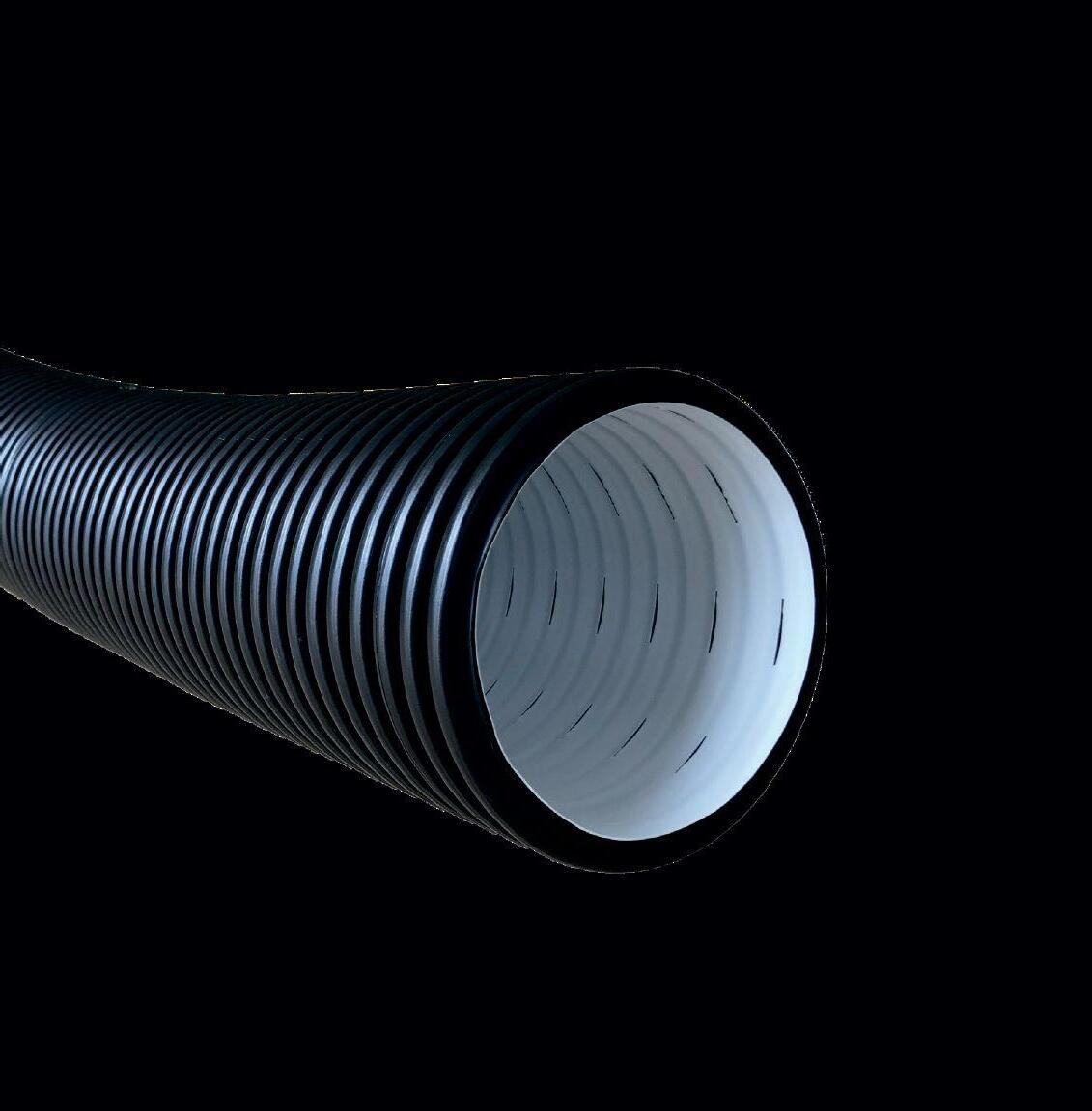
There is a simple reason our competitors won’t publish their flow rating: They can’t beat ours. FlexCorr is the only flexible dual-wall pipe proven to have a Manning’s N-value better than .012. Which makes us wonder... Should we even consider them competition?