I was at the New York Land Improvement Contractors of America’s (LICA) annual convention when I overheard that phrase during a discussion on regulations, and I thought to myself, “Well, that can’t be true.”
That comment spurred the inspiration to uncover what the drainage industry in Alaska was like and if it really was a wild, unregulated land where anyone can dig anywhere.
It’s not.
Without actually being in Alaska, it was hard to know where to start tracking down a drainage contractor. After a couple of calls, I was advised to try Fairbanks or Anchorage, because those areas have more drainage issues. Going into the story, I expected to learn about completely different aspects of land drainage. After speaking with a contractor who installs water management systems in Anchorage, the surprise wasn’t how different the experiences were, but how similar.
Whether it's battling the same challenges or celebrating the same wins, the industry benefits from different perspectives.
During our conversation, it became clear that, despite the geographical distance and obvious changes in climate and conditions, contractors working on land drainage in Anchorage face similar experiences as their peers in the south, including municipal inspections, environmental regulations, unlicensed contractors and landowner conflicts, to name a few. It did not turn out to be the “no rules” Alaska that it was assumed to be. If anything, I was told, environmental issues are “pretty tight” in Alaska because people care a lot about the water and ecology that surrounds them. You can read about it on page 24 and see how the Alaskan experience stacks up to yours.
One thing became clear after conducting several interviews for this issue and speaking with drainage professionals across the country: whether it’s battling the same challenges or
celebrating the same wins, this industry benefits when different perspectives come together.
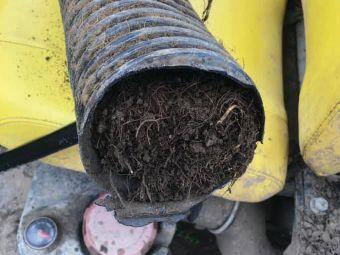
We cover a lot of ground in this issue, and as you’ll see, contractors in all parts of North America and across the pond are looking out for one another. A challenge familiar to many, on page 20, Julienne Isaacs looks at how contractors can stay on top of blockages caused by roots clogging drain tile this season. Jacqui Empson Laporte shares what contractors can do to earn their social license and improve the public image of drainage on page 14.
In a guest contribution on page 28, Chris Unrau from southern Manitoba explains the state of tile drainage as his province tries to clarify a muddy regulatory process. Regulation on drainage isn’t new, and there are many contractors, legislators, and landowners who could share what worked in the past and what hasn’t. As old problems enter new areas, these areas have the most to gain from hearing how the challenges have been dealt with in the past. Whatever surprises this season has in store for you, I hope you take a cue from this issue to venture outside your comfort zone to look for a solution. Advice may come from due north
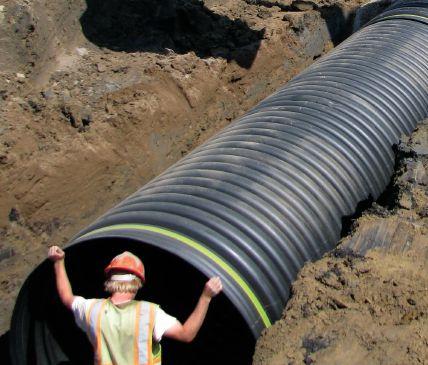
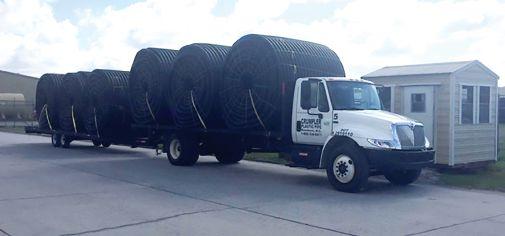
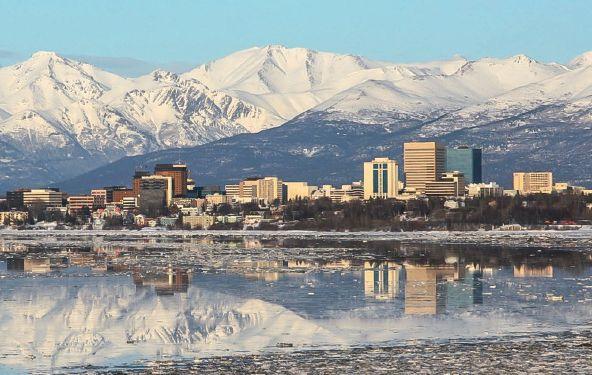
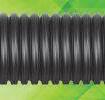
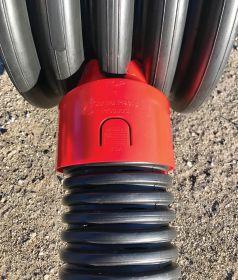
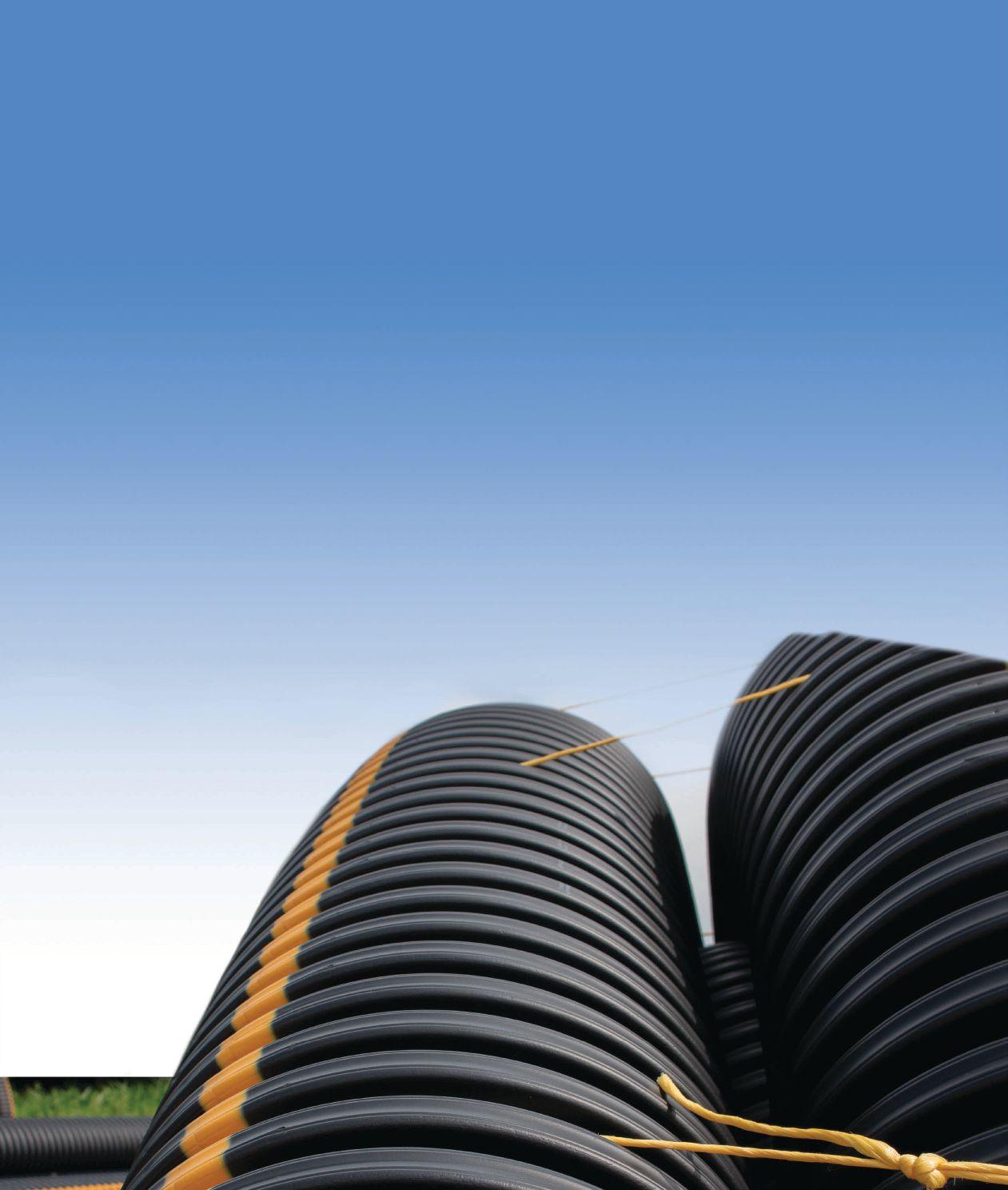
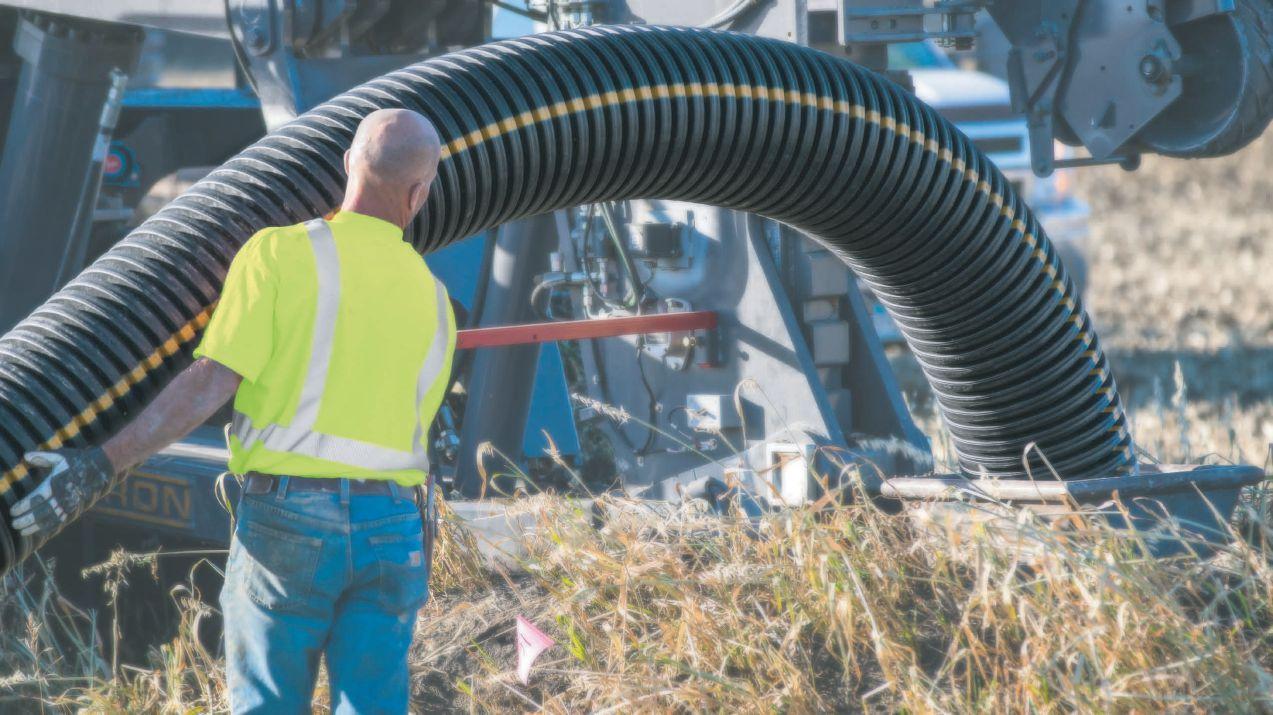
FlexCorr dual-wall pipe installs 2X faster than traditional dual-wall sticks. And with fewer connections, FlexCorr coils allow for easy plow installation, eliminating the need for additional equipment. The advantages of reduced labor and equipment combined with a wide range of potential applications means more opportunity for your business.
GROUP TESTS TECHNOLOGIES TO REDUCE PHOSPHORUS RUNOFF
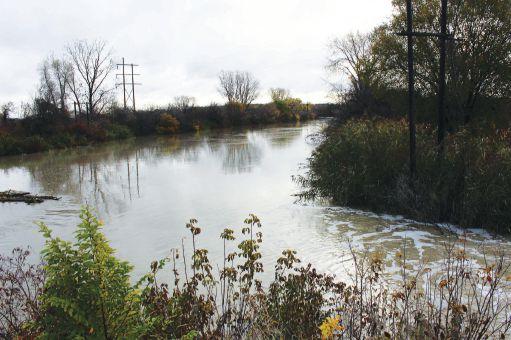
The Thames River Phosphorus Reduction Collaborative (PRC) is dedicated to finding practical, affordable drainage technologies that will help prevent phosphorus from entering the Thames River water system. Phosphorus contributes to the growth of harmful algal blooms in the river and in Lake Erie.
Based in Ontario, the group represents farmers, municipalities, conservation authorities, First Nations, agri-businesses, the drainage sector, and environmental non-governmental organizations. The initiative is administered by the Ontario Federation of Agriculture (OFA) and the Great Lakes and St. Lawrence Cities Initiative (GLSLCI).
Last year, five projects were chosen from 11 proposals and awarded a total of $400,000 to develop and test technologies that intercept and remove phosphorus from agricultural runoff at the edge of farmers’ fields and in the municipal drainage system. The technologies will be tested particularly during the winter and early spring, as well as during significant rain events and snow melts, when scientific studies have shown that phosphorus losses spike.
Testing sites are being set up in several agricultural fields in the Lake Erie Basin and in two municipal facilities near Chatham and London, ON. The testing will continue through the next three years.
“Ultimately, we want to develop solutions for farmers and the drainage sector that are practical, and establish a cost per kilogram of phosphorus removed that is cheaper than the cost at a sewage treatment plant,” explains Charles Lalonde, project manager.
The collaborative will communicate the progress it is making at the demonstration sites and share results with the government, industry and local farmers and residents.
Environment and Climate Change Canada has invested $600,000 in the Collaborative’s efforts. The group has also received nearly $200,000 from the Canadian Agricultural Partnership (the Partnership), a federalprovincial-territorial initiative. The Agricultural Adaptation Council assists in administering the Partnership in Ontario. More than $130,000 in cash and in-kind contributions are also being invested in the project from the OFA, GLSLCI, local OFA chapters, the cities of London and ChathamKent, Bluewater Pipe and Ontario Pork.
The Thames River PRC is a voluntary initiative cited in the CanadaOntario Lake Erie Action Plan aimed at contributing to the commitment made in 2016 between Canada and the U.S. to a 40 per cent reduction in the total and soluble reactive phosphorus entering Lake Erie from the Thames River.
Details of the Collaborative, its work and a full list of steering committee members are at www.thamesriverprc.com, where visitors can sign up for the PRC Update, the group’s newsletter.
– Lois Harris
U.K. LAND DRAINAGE CONTRACTORS MERGE WITH LARGER AG LOBBYING GROUP
The Land Drainage Contractors Association (LDCA) has merged with the National Association of Agricultural Contractors (NAAC) to form a stronger voice for land drainage contractors in the United Kingdom.
Forming a new section of the NAAC, the contractors will reap the benefits of being part of a larger organization, while retaining and consolidating their lobbying power.
Originally part of the NAAC, the LDCA broke away in 1984 but, as the industry has changed, positive agreement was reached to re-unite the sector and go back into the NAAC fold.
Numerous issues are now firmly on the NAAC Land Drainage radar including endorsing the benefits of land drainage to increase crop yields and mitigate flood risk. The sector will be engaging with the Department for Environment, Food and Rural Affairs to ensure that messages are reinforced and the professionalism of the sector is promoted.
On Dec. 12, 2019, at the East of England Arena in Peterborough, England, the NAAC will host their Fit for the Future conference. The conference will drill into new farm and environmental policy, finances, and new machinery.
MAKING PIPE FROM RECYCLED PLASTIC TO REDUCE PLASTIC WASTE
Formed earlier this year, the Alliance to End Plastic Waste comprises multinational members from across the plastics value chain working together to decrease plastic waste. The Alliance has committed $1 billion with the goal of investing $1.5 billion over the next five years to help end plastic waste in the environment.
Of the 30 companies involved in the formation of the Alliance, 12 are Plastics Pipe Institute (PPI) members. PPI, the North American trade association representing all segments of the plastic pipe industry, believes the new initiative will help to solve another significant problem aside from eliminating plastic waste – supplying recycled plastic to use in pipe.
Primarily used for underground stormwater infrastructure management and agricultural drainage projects, some high-density polyethylene (HDPE) pipe can be made using more than 40 percent recycled HDPE resin that was originally used in more common applications. One PPI member reports using more than 400 million pounds a year of recycled material. There’s currently more demand for the recycled material than there is
supply. Finding a second life for plastic could be key to reducing plastic pollution and increasing the supply of recycled HDPE resin for the pipe industry.
"For decades, our members have been capturing the value of discarded plastics by using it to make plastic pipe," Tony Radoszewski, president of PPI, stated in a press release. "Plastic milk bottles and detergent bottles have been recycled and incorporated into agricultural drainage pipe since the 1980s. Today, we are working with research firms and the American Association of Highway Transportation Officials (AASHTO) to produce storm water drainage pipe incorporating postconsumer recycled plastic for use in highway culverts.
"To make one standard 20-foot length of 48-inch diameter HDPE pipe, containing 40 percent recycled HDPE resin, it requires between 1,600 to 2,200 discarded bottles. Most stormwater drainage projects using this type of pipe run in the thousands of feet, sometimes even miles of pipe. This is how the plastic pipe industry uses an enormous number of post-consumer plastic bottles and takes what was formerly
a solid waste issue to good use in beneficial, long-lasting projects. These bottles and containers that originally have a 60-day shelf life are now converted into a product that has a 100-year service life.”
The Alliance's four main goals are projects for collection development, innovation to make recovering plastics easier, education and engagement of the government, businesses and groups, and to clean up major waste sites, such as specific rivers. In addition to these goals, there is what Radoszewski refers to as a “golden opportunity” to turn an increase in recycled waste into more recycled materials that have a second life in the pipe and infrastructure industry.
REFRESHER ON EROSION AND SEDIMENT CONTROL
Over the winter months, drainage contractors across the U.S. were completing erosion and sediment control certification training in order to stay up to date with best environmental practices. Mark Burger, director of Onondaga Soil and Water Conservation District who helped administer a recent training session in Syracuse, NY, shared his top three take-home messages for contractors.
The first was to protect yourself with documentation. Negative impacts on water quality from a lack of erosion and sediment control are regulated, and a failure to implement best environmental practices could result in consequences ranging from fines issued to a project being shut down. Burger advised to keep a rain gauge on the job site and to monitor it daily. In addition, keep a job journal for daily notes about the project, such as the weather that day, what the crews did and what best management practices have been repaired or replaced. Finally, Burger advised using a mobile phone to take before and after photos of the repairs that have been done. Keeping this type of daily documentation can help troubleshoot a problem down the line, or be a resource for an inspector’s trip.
The second key takeaway was to work with inspectors, not against them. “Please remember that [construction inspectors] are just doing their jobs, just as you are,” Burger said. “Please welcome them with open arms and show them what they need to see.”
Finally, Burger touched on the importance of erosion and sediment control in the first place. “We are the stewards of the environment . . . so please continue to do your part to keep the soil on the land, the nutrients in the soil, and get that exposed soil re-vegetated, so that when the big storm hits we’re having nothing but clean water leave our project sites.”
Preserving history
LICA wraps up a two-year research project on the history of farm drainage and its positive impact.
by Mike Cook
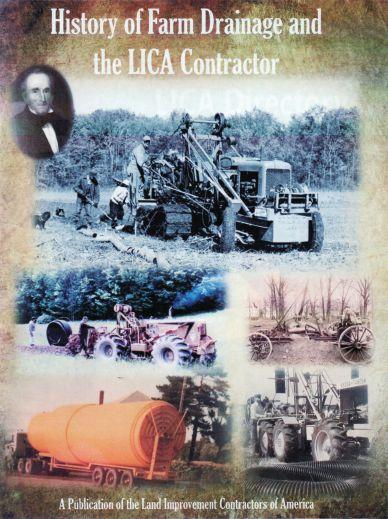
For more than two years, we at National LICA became historians. The association embarked on a project, The History of Farm Drainage and the LICA Contractor , to identify the role LICA members played in developing farm drainage and its positive effects on the world. The more the editorial committee researched, the more it became apparent LICA played a huge role in helping to feed the world.
THE HISTORY OF FARM DRAINAGE MAGAZINE
The two years spent dedicated to the project only represented a fraction of the years of history that was uncovered during the process. It began as a four-page insert in the LICA Contractor magazine and quickly grew to 16 pages, then 32 pages, and finally 86 pages of full color. It contains history, photos, charts, graphs and a unique timeline of events. Unlike anything that has come before it, the publication captures a period of American history.
The two years spent dedicated to the project represent a fraction of the years of history uncovered during the process.
The History of Farm Drainage and the LICA Contractor magazine version was mailed free on Dec. 28, 2018, to all LICA Members, industry leaders, national legislators and educational institutions. It continues to generate a great deal of positive interest from across the country.
THE HISTORY OF FARM DRAINAGE BOOK
The LICA editorial committee continues to receive additional information and has only scratched the surface of all that was accomplished since the drainage began in the United Sates during the mid-1800s. They will now undertake the responsibility to publish the complete collector’s item in a leather-bound book. We welcome any editorial information and photos
that can be added to the book version. This book will be offered at minimal price and we are collecting pre-order reservations with more than 100 copies pre-sold. To reserve your book or to add editorial content please contact National LICA at (630) 548-1984 or by email at nlica@aol.com. DC
Mike Cook is the former president of the Land Improvement Contractors of America and currently sits as chairman of the board. Visit www.licanational.com for more updates from LICA.
Are you part of a local LICA state chapter? Drainage Contractor wants to hear from you! Send your chapter 's news, events, and milestones to drainagecontractor@ annexweb.com, or tweet us @DrainageContMag
MANAGEMENT SYSTEMS
BUFFER BENEFITS
Planting a buffer reduces erosion and nutrient runoff.
With the spotlight on surface runoff, contractors can plant riparian buffers in addition to constructed wetlands to minimize environmental impact.
Research from Oxford County, ON, proves planting trees, grass and shrubs along a stream can help reduce erosion, decrease nutrient loss, increase wildlife and result in cleaner, cooler water. More trees can help convert farmland to be more “carbon-neutral” and protect crops from moderate flooding events.
Naresh Thevathasan, agroforestry specialist at the University of Guelph and co-author of the study, says nutrient loading was significantly reduced over the years after planting riparian buffers along the 5.5-mile stretch of Washington Creek. The team saw a more than 90 percent reduction in nitrates and phosphorus – elements singled out because they contribute directly to the eutrophication and algae bloom seen in Lake Erie.
Riparian buffers mainly address surface runoff, not runoff from tile drains. To benefit from riparian buffers, Thevathasan recommends creating an artificial wet zone for the tile to drain into, and then planting a riparian buffer between the wet zone and a stream. If an artificial wet zone isn’t possible, planting a riparian buffer will still help curb nutrient loading through surface runoff.
The Grand River Conservation Authority, a partner in the project, promotes planting perennial grasses, trees, and shrubs 9.8 feet from the bank, or 19.7 feet from the middle of
the creek. For complete removal of nutrients, Thevathasan recommends 98.4 feet (30 meters) of buffer. “We know that is difficult to achieve because none of the landowners are going to sacrifice 30 meters of land, but my thumb rule is that any buffer is better than no buffer.”
Thevathasan says another misconception is that landowners will lose income if they allow land for buffers, but that’s not the case. The land used for riparian buffers can be used for diversifying income. Landowners can grow mushrooms, berry crops, or use the shade for ginseng; generating an income while, at the same time, contributing to water quality enhancement.
Trees contribute to a significant amount of carbon capture, so planting new trees is the same as removing cars off the road. Farms that plant riparian buffers can reduce their carbon footprint, or even become “carbon neutral.”
“If a landowner has 1,000 acres of land and his annual diesel consumption is 2,000 litres, we can calculate the carbon dioxide he will be emitting from 2,000 litres. If he has that amount of trees on his land, he’s carbon neutral because whatever he’s emitting is absorbed by the trees on his property,” Thevathasan explains.
For moderate flooding, riparian buffers can help prevent water from
by STEPHANIE GORDON
moving into uplands. Scientists from Iowa’s Centre for Global and Regional Environmental Research have found the frequency of extreme precipitation events are increasing, meaning that floods can become more common – a fact only too real for Iowa residents battling historic floods this spring.
“[A riparian buffer] acts the other way around," Thevanthasan says.
"It is also a mechanism to control flooding from getting into the agricultural fields . . . [the buffer] reduces the energy of the water before it can hit the upland,” For drainage contractors, promoting the planting of a riparian buffer shows a commitment to water quality and nutrient runoff reduction.
The USDA National Agroforestry Center has many resources on riparian forest buffers, including a variety of buffer planning tools available online. The AgBufferBuilder is a tool that designs variable width buffers for water quality and helps design buffers with a targeted level of pollutant trapping efficiency. The Buffer$ tool estimates the costs and benefits of buffers compared to traditional cropping systems, including an analysis of what incentive programs are available. All of these tools and more are available online through www.fs.usda.gov/nac/practices/ riparianforestbuffers.shtml. DC
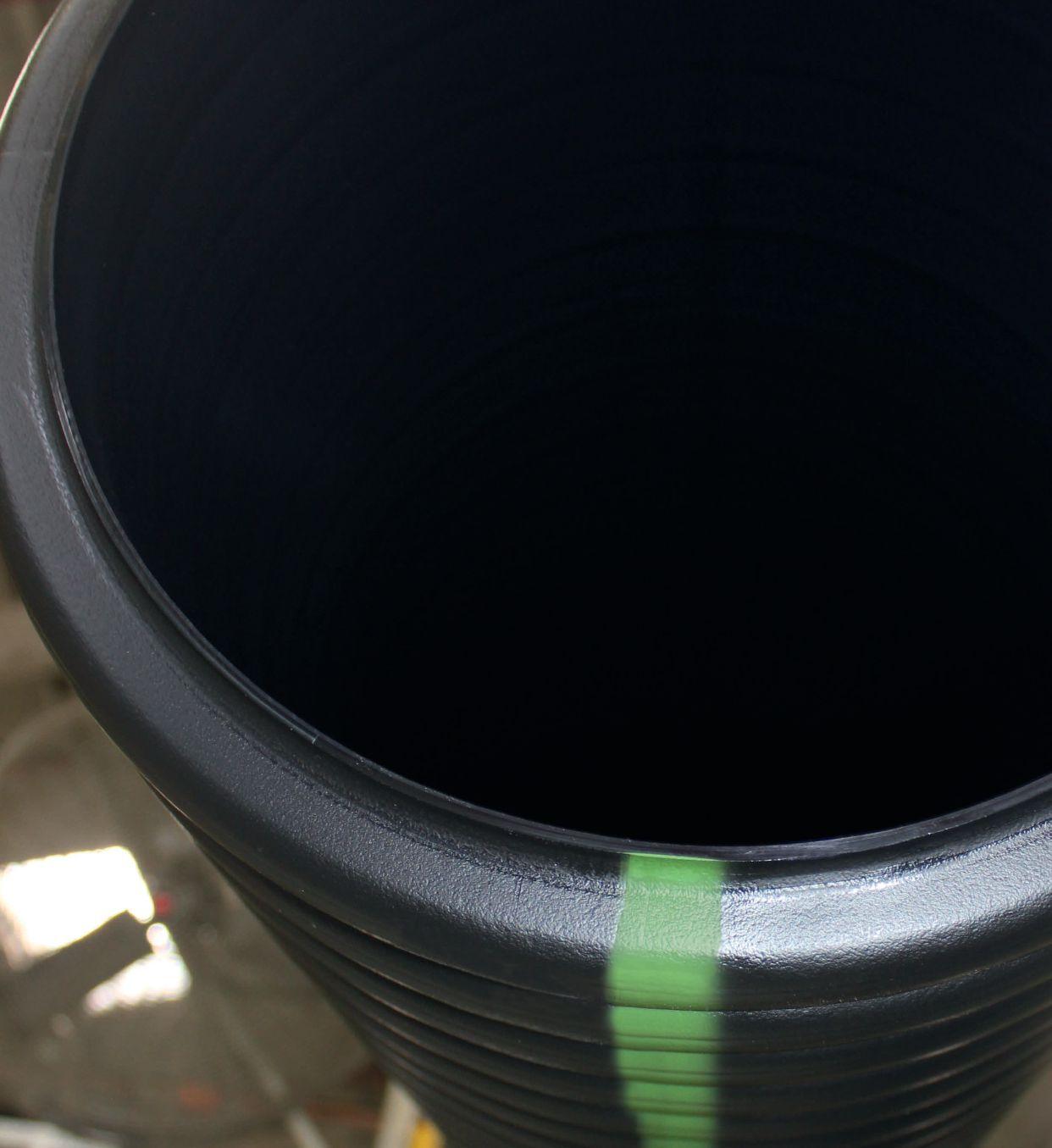
N-12® FLEX
• Leads the industry with more than 17 years of installation performance
• Eliminates the need for an open trench, increasing safety and installation speed
• Requires less labor and equipment, decreasing overhead and operating costs
• Significantly increases quality and efficiency of high water table installations
• Provides higher flow rates and lower risk of obstruction
PLOW & WHEEL TRENCHERS
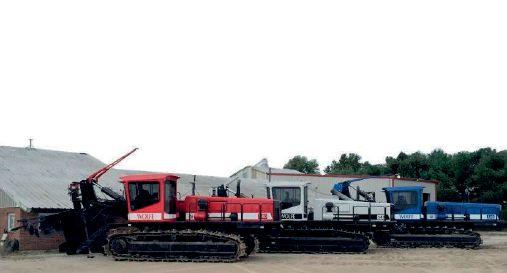
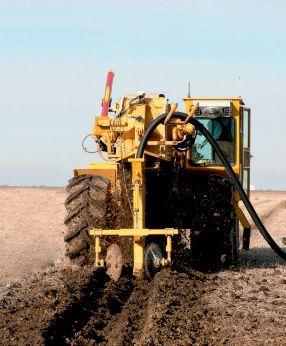
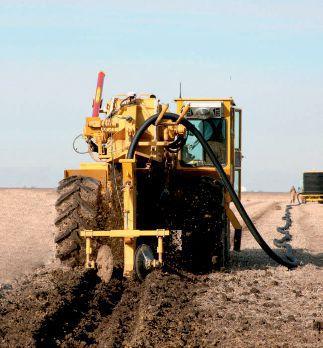
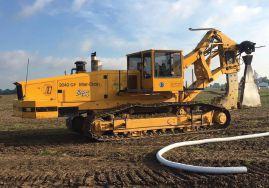
Wolfe Heavy Equipment continues to set the tone for powerful agricultural and commercial trenching equipment. Wolfe’s versatility, superior manufacturing and expert service along with reduced fuel consumption provides increased profitability.
BUSINESS MATTERS
IMPROVING PUBLIC IMAGE
How can contractors engage with their community?
What is the public image of drainage? I asked this question to an audience of drainage contractors when I spoke at the 2019 Land Improvement Contractors of Ontario (LICO) annual conference during my presentation on social license for the drainage industry.
by JACQUI EMPSON LAPORTE
Signs posted next to a job site can help educate the public on the beneficial impacts of a drainage project. Example signs, with the first two (left) being project signs currently used by the Pine River Watershed Initiative Network.
Photo courtesy of PRWIN and Drainage Contractor.
There is not just one public image of drainage. Agricultural clients may have the view that drainage is a practice that is beneficial, or rather, vital for growing crops. Others have suggested we’ve focused too much on drainage and not enough on soil health. Some of the general public understands tile drainage can mitigate the effects of water erosion, while others believe tile drainage is to blame for nutrient loading into water. In 2017, research from the Canadian Centre for Food Integrity indicated only 34 percent of respondents felt Canadian farmers were good stewards of the environment. So where does that leave drainage contractors?
What the public thinks is becoming increasingly important. In an article about social license published in Farm and Food Care Ontario’s booklet, “The Real Dirt on Farming,” Ted Menzies, Canadian politician, said, “Farmer – and industry – must now rely on public trust for their right to operate . . . their social license.”
The article defines social license as “The level of public trust granted to a corporate entity or industry sector by the community at large and its key consumer base. Public trust is the belief that activities are consistent with social expectations and the values of stakeholders, and earned through industry engagement, operating practices, and expressed values.”
Industry tacitly garners public trust by doing what is “right.” The difficulty of social license is that it’s difficult to gain and easy to lose. It constantly changes with societal values and expectations. It involves those who aren’t your target audience, leaving you to work harder to sell the value of your service. You might be the best drainage contactor around but public relations and marketing are a different skill set.
More difficult yet, social license is not an individual action or responsibility – it is industry wide. For those in Ontario, the general public will not likely draw a distinction between a farmer doing their own tile drainage and a licensed contractor who has invested
time and resources into training and licensing. One botched job in your sector can bring you all down. So what do we do? Here are some ideas:
1. Get involved in projects that garner a lot of public attention from non-traditional audiences, like wetland construction projects or community agriculture initiatives. Let people know that the drainage industry is not just “feet of tile installed,” but part of a more complicated erosion control/ water quality/agricultural sustainability initiative.
2. Meet the researchers involved in soil health and water quality at your local educational institution. They are usually looking for partners or sites to help with technical expertise. Show them the value of your experiences in the field.
3. Talk to people about your work. Public speaking may not be your forte, but there are many programs available to gain more experience with presentation skills. Public speaking also allows you to dispel myths about drainage. You don’t have to jump into formal lectures right away; there are many events where the audience gathers in the field or around the equipment. This is familiar territory where you can excel.
4. Recognize opportunities when they arise. Events such as ditch or river clean ups, or those geared towards controlling invasive species, are prime opportunities to meet people concerned about the environment and who are involved in small, but important activities to help. You could organize or
sponsor these events, in return for a chance to talk about the ways that drainage assists in their cause.
5. Consider passive forms of marketing. Those in agriculture will recognize a tile drainage project by the telltale signs and patterns in the soil. The general public, however, may see agricultural productivity at the expense of water quality or habitat loss – or maybe they’ll see nothing at all. Next time you do a project, consider putting up a sign pointing out some of the benefits from the project:
• Will it reduce water erosion?
• Is tile drainage being used in with other best management practices, such as berms?
• Is the drainage paired with another cropping practice, like reduced tillage or cover crops, that the general public wouldn’t know about?
6. These signs also pose an opportunity for brand recognition. Remember that social license is a collective responsibility, not individual. What if contractors got together to promote the professionalism or benefits of all of their projects as a collective? This would also divide the rogues of the industry from those that are innovative and engaged. Remember: there is a story to tell. You can either tell the story and control the messages, or someone will tell it for you. Recognize where the industry is lagging and take steps in your LICO/LICA organization to change it. DC
DRAINAGE MANAGEMENT SYSTEMS
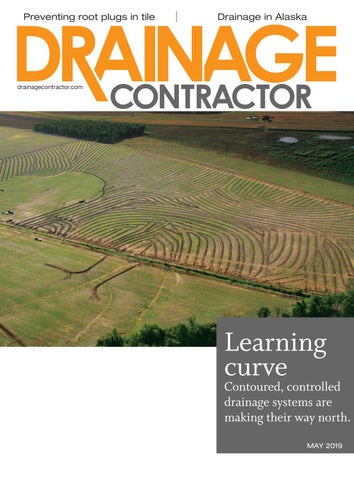
LEARNING CURVE
Experimenting with controlled drainage on a slope.
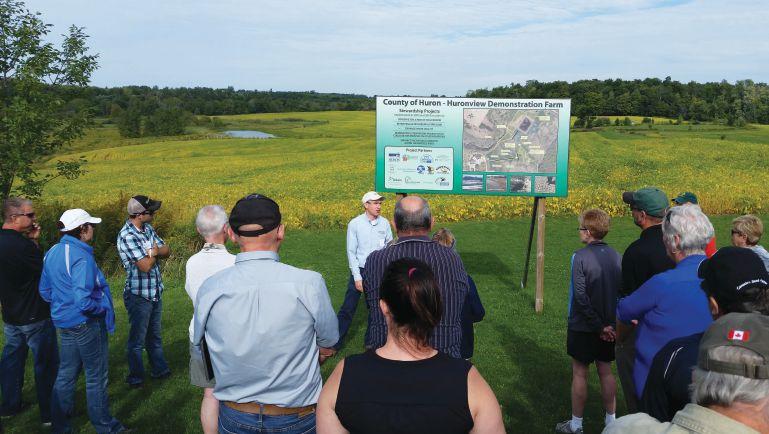
Anew project examining controlled drainage on a slope is set to begin in Huron County, ON, this spring. In June, Huron Soil and Crop Improvement Association (HSCIA) will install a contoured drainage system in a side-by-side trial with conventionally tiled and untiled systems on 47 acres at the Huronview Demonstration Farm near Clinton, ON. Part of the installation will be offered as a demonstration for public viewing.
by JULIENNE ISAACS
Huronview Farm’s 47 acres had been rented out to local farmers for decades when the County began working with HSCIA to rehabilitate the field. Photo courtesy of Mel Luymes.
The contoured system is designed as a controlled drainage system, where water can be backed up in the laterals for use in subsurface irrigation and to control the rate of drainage to prevent scouring damage downstream.
The project is funded primarily by the Canadian Agricultural Partnership and HSCIA with strong support from Huron County, the Land Improvement Contractors Association, Ausable Bayfield Conservation Authority, Ducks Unlimited Canada and other partners.
Mel Luymes is working with HSCIA as the project’s primary contact. She says while controlled drainage can work well for a few Ontario farmers if they are working with flat
fields, it has never been attempted in Ontario on a field with rolling ground, due to the need to run laterals on contour in order to prevent tile blow-outs from the pressure that control gates put on the system.
The Huronview project is designed by and will be installed with the oversight of AGREM, an Illinois-based company that creates contoured, controlled drainage systems.
On the first part of the field, drainage tile laterals will be installed on contour on a 0.1 percent grade with 22 control gates where laterals attach to the main, Luymes explains.
“The hope is that we’re able to control the rate that the water leaves the field,” she says.
DRAINAGE MANAGEMENT SYSTEMS
Water quality and flow rates from the contoured system will be compared with the conventionally tiled system and the untiled area.
On the second, lower part of the field, three contoured terraces will be installed to capture surface runoff on a broad base to allow for cropping. “These are not berms, but a kind of contoured swale that will intercept the water and redirect it on the surface to a grassed waterway and then to a wetland,” she says.
Luymes says that where Ontario producers have been supported with loans for tiling land, American producers took advantage of similar loans for terraced systems and saw good results.
The Huronview Demonstration Farm has been a working farm for more than 100 years. The 47-acre field had been rented out to farmers for decades when the county began working with HSCIA to rehabilitate the field, planting cover crops, a grassed waterway and reducing tillage, among other measures.
The drainage project is the perfect complement to HSCIA’s mission to innovate, research and demonstrate soil and water improvement, Luymes says. “We’re not sure if this will work here Ontario, but someone has to take the leadership to try,” she says.
Matt Williams, owner of Williams Drainage, will spearhead the installation.
“Ontario contractors have known about contoured, controlled drainage for years but everyone had the same mentality – there’s too much slope and too many geographical changes. To make it work on sloping land, you need to install a lot of control structures and gates, whereas on flatter land you need only a couple,” Williams explains. “It’s not just about installation but maintenance throughout the year, because you can’t control these structures remotely yet.”
Williams says the project will answer the most important producer question when it comes to contoured, controlled drainage systems – whether this system would be worth the extra expense.
But it will also answer a lot of other questions for contractors. Williams says there will be a learning curve for his team in terms of installation.
“Because you’re following the contour of the land the machine has to do tight turns, so we’re not sure whether that will exceed the machine’s capabilities,” he says. “If we know there will be a turn that is too much for the machine, we’ll have to design the job accordingly.”
Another question Williams hopes the experiment will answer is whether this system will be more vulnerable to blockages caused by crop roots getting into the drains. “The drains on one of these systems is going in on a flatter grade than conventional, so this could increase the risk of that happening. There’s better chance of water standing in the tile for longer periods and crop roots are looking for that,” he says.
Sediment buildup in the laterals could also be an issue due to the flatter grade, which isn’t “self-cleaning,” Williams says.
“I think there’s demand for this type of system in Ontario – not everywhere, but there are a lot of potential sites where this would be accommodated quite well,” he says. “Ultimately, it comes down to the cost versus the benefit.”
Luymes says the price tag might be higher for contoured, controlled systems, but there are possible paybacks for the environment which could help build the “social license” farmers and drainage contractors need to do their work.
In a conventional system in Ontario, depending on the soil type, laterals are typically installed every 30 feet at
a depth of about 2.5 feet. “But some farmers are seeing that their drainage systems aren’t working anymore, so what they’re doing is splitting tiles and putting laterals between the existing ones,” Luymes says. That will form another part of the project; they’re comparing the rate of drainage from a 15-foot and a 30-foot system, side by side.
This is also an issue of soil health, Luymes says. “We also want to look at the importance of organic matter for infiltration and water holding capacity, as well as soil’s aggregate stability and the channels created by roots and earthworms that create the pore space for drainage. If your soil is compacted, no amount of tiling will work.”
“We’re trying to control drainage with contoured tile a small scale here in Huron County to see if it might work for the future. I know the ship has already sailed and we’ve tiled much of Ontario conventionally, so this research won’t have an immediate impact. It might be a game changer in the long run, however."
“I do think though that terraces might be a good retrofit to a conventional system. Reshaping some contours into a field could help control erosion. I hope we can better understand how wetlands can be part controlling drainage and filtering field runoff in the future.”
The drainage demo day is set for June 15 at the Huronview Farm and details will be posted at Huronview.net. DC
A demonstration day at Huronview Demonstration Farm. Photo courtesy of Mel Luymes.
DRAINAGE MANAGEMENT SYSTEMS
PLUGGED UP: ROOTS IN TILE
Stay on top of blockages this spring and summer.
In the last few years, blocked drain tile has become a major point of discussion for Ontario drainage contractors. But the problem has been around more than a few years.
Back in the 1980s, producers noticed problems with blocked tile when they started growing winter canola, says Peter Johnson, an agronomist and environmental advocate for the Land Improvement Contractors of Ontario (LICO).
“Winter canola fell by the wayside because of blackleg so we quit growing it and the problem for the most part disappeared, but it’s resurfaced in a major way since about 2016,” Johnson says. “But even before that we were getting reports of some plugging in drainage tile.”
Recently, producers have noticed plugged tile particularly when growing wheat, but Johnson says there are confirmed cases of alfalfa, corn and cereal rye plugging tile, as well as cover crops such as daikon radish.
The question is: are particular crops responsible for blocked tile, or is the problem rooted in installation errors and methods?
Researchers at Iowa State University have done studies in side-by-side prairie and crop plots to compare their root growth and impact on drainage tile. In one 2017 study, they sent a camera along tile to compare root growth in a diverse prairie plot containing a mix of forage legumes and native tallgrass to a plot containing corn and soy.
Root penetration into the tile
was minimal in the study and none of the crops caused problems; the only troublemaker was a volunteer cottonwood tree, which sent a surprisingly large root – the size of a pinkie finger – into the tile.
Any blocked tile in a case like this would have to result from installation errors and would not be the fault of the crops being grown. Matthew Helmers, director of the Iowa Nutrient Research Centre and co-author of the 2017 study, says there are no documented commonalities in Iowa with plugged tile. To play it safe, he says, contractors should stay away from putting nonperforated pipe in locations where there might be trees.
COMMON CAUSES
Johnson says there are some important differences between conditions in Iowa and most of Canada. For starters, tile is buried deeper in the United States, typically at about 3.5 to four feet, whereas in Canada it is generally buried at a depth of 2.5 to three feet.
Depth might have some impact, but Iowa farmers also don’t grow as much wheat as Canadian farmers; they grow more corn, soy and native grasses. And just recently, Johnson points out, tile drains in Indiana have been plugged, with the suspected culprit being oats grown as a cover crop after soybean harvest.
by JULIENNE ISAACS
It’s thought that improved wheat varieties are part of the reason why the crop is a common culprit in cases of plugged tile, Johnson says. “We have better genetics and we’re doing everything we can to stimulate wheat yield. Big yields require big root systems. This can cause an issue with tile,” he says.
Another reason is moisture: when the season is dry, water-seeking roots tend to extend deeper than normal, and producers can see plugged tile the following spring.
“When it’s dry through grain fill and we get good wheat yields, the yield has to come from somewhere, so the wheat crop has sent the roots deep to make that yield. If there’s any water in the tile the wheat is going for it,” he says.
For example, after an “incredibly dry” season in 2016, many producers had problems with blocked tile in spring 2017.
While there isn’t any data proving connections between installation methods and blocked tile, there are commonalities, Johnson says.
“We’re starting to do everything we can to prevent any reduction in flow in the tile because it seems that where we get a reduction in flow, we end up with plugs,” he says. “If the tile is installed improperly and you get a grade rise, we’ll see that as a plug point.”
Some installation companies have begun using Ys instead of Ts in tile layout, because Ts will sometimes become plug points, he adds.
Connections have typically been made with inside connectors because they’re effective and easier to use, but inside connectors can also become plug points.
“Again, some installation companies have gone to outside connectors to try to keep the flow constant,” Johnson says.
“At this point in time, the industry is leaning toward monitoring and catching problems earlier. We might move to systems where we can access the tile easier. There are options for clearing plugs without digging them up. We don’t have definite solutions at this point in time.”
POSSIBLE SOLUTIONS
Matt Williams, owner and president of Williams Drainage, says the response to clogged tile is to excavate the drain from the stretch that is blocked, typically an area of about 20 to 30 feet, and replace the tile.
“One of the best solutions is to switch to outside couplers rather than internal couplers. Most of the scenarios we’ve found have been some sort of blockage caused by a deviation in grade, or a T rather than a Y. Anything that allows a spot for water to sit and the roots to clog the tile,” he says.
In Williams’ experience, wheat and cover crops, particularly daikon radish, seem to cause most problems with blocked tile. “These seem to be
stronger crops with better yields – this is a byproduct of that, it seems.”
But Williams is quick to say that the answer is not to stop growing these crops. “I see the advantages to cover crops – they work hand-in-hand with drainage. And I understand the benefits to wheat. If the water can’t get through the soil to the drains there’s no sense having drains,” he says.
Risk of blocked tile seems to be higher with any deviation in grade, and particularly with flatter grades. “We’re using the best technology available but there will always be deviations. Producers need a licensed contractor who will stand behind their work. The biggest thing is for contractors and
farmers to work hand and hand, but there also have to be more studies on crop rotation and drain tile,” he says.
Williams says it’s crucial for contractors to begin documenting the circumstances where they find roots in tile so they can begin to come to a consensus on common causes. Contractors should send this data directly to Johnson, who hopes to compile the information and present it at the 2020 LICO conference.
“In the meantime, if any contractors want to send any ideas or strategies that they’ve tried that [have worked out well], let me know because we want to move forward and reduce this problem,” Johnson adds. DC
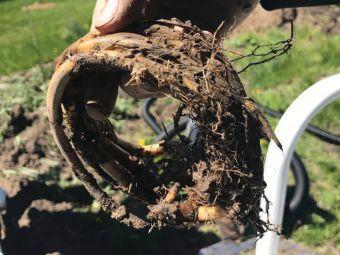
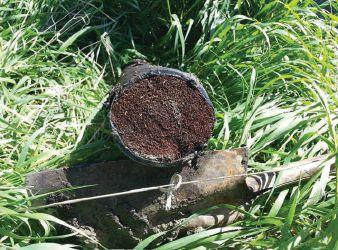
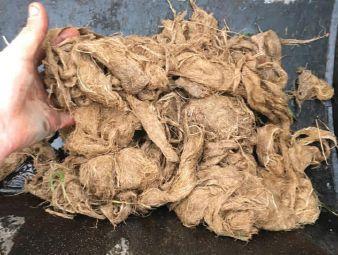
There’s no shortage of evidence of roots plugging tile. Photos courtesy of Keith Jacques, Randy Hoyt, Steven Roy and Bryn Jones.
Each drain tile project is as unique as the land itself. Don’t be surprised by an underground pipeline or utility which could be as shallow as 12” and not in a straight line. Call 811 or visit www.clickbeforeyoudig.com in the planning process to have pipelines marked. It’s a free service and only takes about three days.
CONTRACTOR AT WORK
INTO THE WILD
A look into the working conditions, unique challenges and regulations for drainage
Aby STEPHANIE GORDON
in Alaska.
laska is not likely the first state that comes to mind when thinking about land drainage. While commonplace in the Midwest, agricultural drainage is not a hot topic among Alaska’s drainage industry, but water management is key for the state’s contractors, and for good reason.
Alaska has the greatest surface water resources of any state in the United States, and accounts for 40 percent of the country's surface water outflow, according to Alaska’s Department of Natural Resources. The state receives a lot of rain – approximately 1,050,000 million gallons per day – and its capital city of Juneau rains for almost eight months of the year. In addition, flooding and erosion cause millions of dollars of property damage each year. With excessive rainfall, consistent snowmelt and ice jams causing flooding, Alaska is no stranger to the need for water management systems.
“Drainage is probably one of the most important parts of doing landscapes,” Konstantin (Gus) Gaskov says. Gaskov is the owner of Green Acres Landscaping in Anchorage, AK, where his company has been designing, installing and maintaining landscapes for 25 years. Because of the environmental conditions in Anchorage, Gaskov’s company also dedicates a fair bit of time to installing drainage systems.
Born in Russia, in northeast Siberia, Gaskov and his brother started a landscape company where they first gained their skills. In 1991, Gaskov made the move to the United States and started Green Acres Landscaping in 1993. Nearly parallel on the map, Alaska was a natural fit. “It was a really easy transition. I didn’t have to reinvent the wheel; I went from frozen ground to frozen ground.”
A TYPICAL SEASON
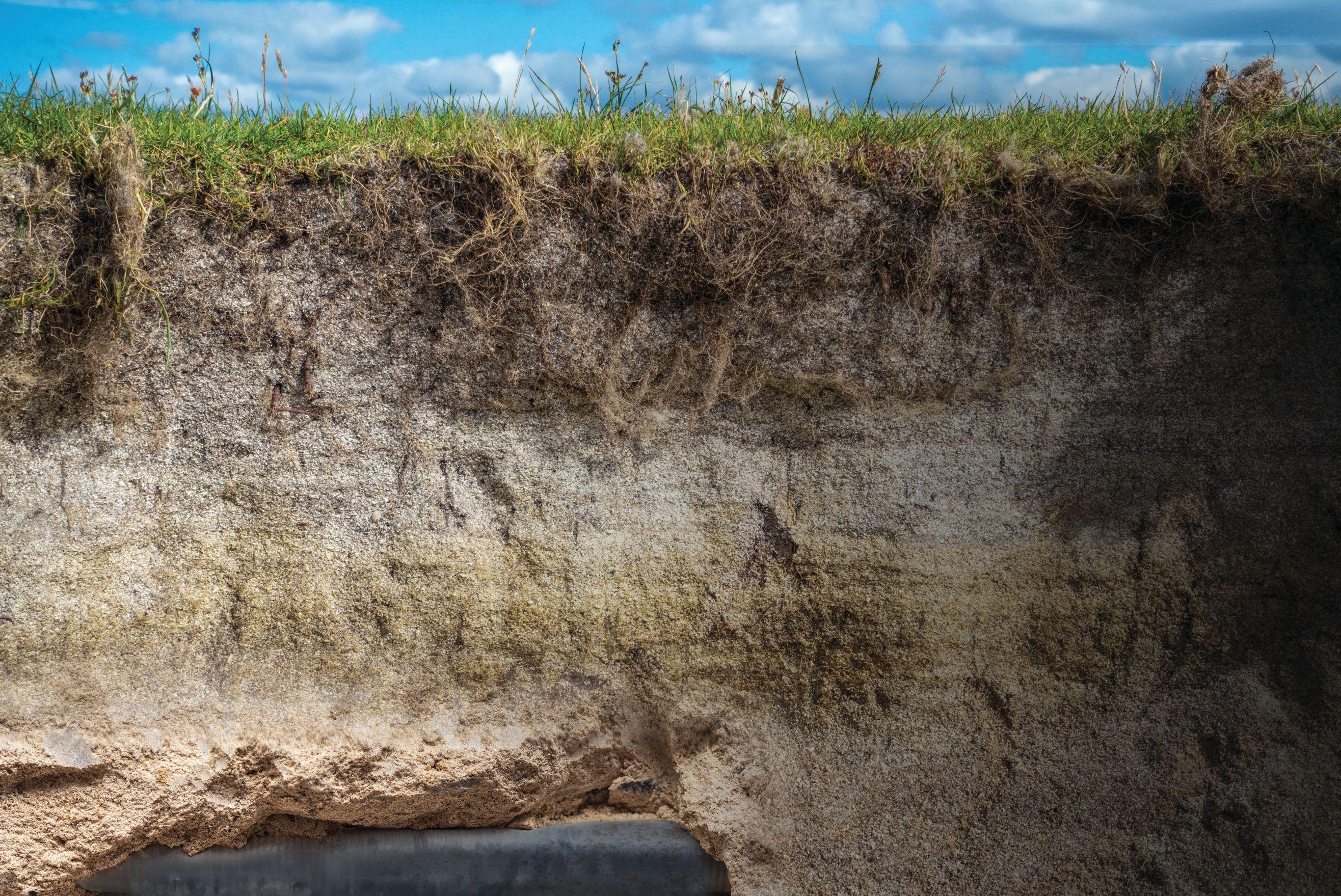
Anchorage is a coastal city, located in the southern region of the Alaska, tucked between
a large inlet and mountains. While not as wet as Juneau, the city’s amount of rainfall is more comparable to Seattle, and spring snowmelt adds to runoff over the landscape. To aggravate the situation even more, Anchorage has a high water table and most of its soils are clay and peat. These types of soil hold water, and with the consistent rain, are always saturated. “Anchorage is six months on, six months off with frost. When [the ground] freezes it expands highly so anything you have on top of that soil or within that soil will be squeezed or pushed,” Gaskov explains.
Like most drainage projects, work is entirely weather dependent, and most of the work gets done during those frost-free months. Projects in Anchorage start when the ground is completely defrosted. The earliest Gaskov remembers starting was the second week of April, but the season typically begins in the first week of May. The summer team for Green Acres increases to five crews, each made up of four people, in addition to an entire trucking division and a core team of three people. The season usually wraps up in the first week of October, but can continue until the first week of November, depending on the temperature. “Once the ground freezes, six inches to one foot below grade, it becomes extremely difficult and expensive to do any kind of excavation so we stop work at that point,” Gaskov says.
Needless to say, weather is an extreme challenge. “Imagine digging in a drainage trench in the clay and peat when it’s pouring rain. And the rain does not let up for a week . . . You can start the project when it’s nice and
CONTRACTOR AT WORK
sunny and 76 F, but by tomorrow, it starts raining and doesn’t stop for 10 days. All the material you’re digging out, especially clay, it’s very runny. And you’re working on the slope of a hill. So all the material gets saturated with water and it’s just mud oozing back into the trench.”
Gaskov explains this is also frustrating for the customer who deals with the project being delayed time and time again because of weather. To work around this, Green Acres Landscaping tries to complete as many drainage projects during June, which is the dry time. In August when it’s starts raining heavy, Gaskov advises customers to wait until next June to avoid issues of contamination into the drainage. “We like to pre-plan several months in advance, pre-book our projects, and go into the job during the dry months,” Gaskov says.
A typical day in June is sunny with temperatures in the upper 70s and 80s, quickly drying the ground. But sometimes, customers can’t wait for drier weather, and while not ideal, working with frozen ground is the only option. “You have to go in, sometimes with the jackhammer, to break through a foot or two feet of frozen ground, just to dig into the trench,” Gaskov says. “Most of the times, even at 10 below, as long as you break through the crust of frost, if it’s not too far into the winter, you can dig to softer soil and can still dig a trench and seal it up with drainable material.”
CERTIFICATION
In Alaska, a contractor needs to be licensed to do drainage work. Contractors apply to be certified as either a general, specialty or mechanical contractor from the state’s Department of Commerce. However, under specialty contractor trades, there is no option to select drainage, making it difficult to narrow down how many drainage contractors are in the state. A contractor can select excavation or landscaping, the latter which includes “water drainage systems, dewatering, and ponds” in its expanded definition.
“Any guy with a small excavator and a Bobcat can call themselves a drainage contractor and anybody can advertise. Because [drainage] is a big issue in Anchorage, it’s a craftable niche in the market, and anybody and everything is trying to get into it and do the work,” Gaskov says.
Gaskov explains that while homeowners can find a less expensive contractor, they end up paying more in the future. “The main thing is make sure that the contractor has enough experience and references, references, references. Making sure that they call and ask past clients of that contractor that he does exactly what's promised.” Gaskov explains it’s easy to skip certain steps, to use the wrong type of materials, to not dig deep or wide enough, or to skip the municipal inspection procedure in an effort to cut costs. “Homeowners will never know the difference, but a contractor knows.”
About 10 percent of Green Acres’ drainage projects are re-doing existing projects, which makes for some uncomfortable meetings where Gaskov explains to a homeowner that their project needs to be redone. This inconsistency among contractors is not an issue unique to the state; even in places where a licensing program for drainage contractors exists, the problem of installing tile without a license still persists.
Because of the environmental conditions in Anchorage, Gaskov’s company also dedicates a fair bit of time to installing drainage systems like french drains and curtain drains. Stock photo.
LEARNING THE TRADE
Gaskov went to college for landscape architecture and through the nature of work in Anchorage, he learned more about excavation and drainage. To build on his knowledge, he attended courses in different states, including some in Alaska. He attended several courses hosted by the U.S. Army Corps of Engineers and recommends them to other contractors. “They’ll have general drainage courses, materials too, depth, width, type of piping, where and how to drain, surface water, and so on . . . most contractors don’t even know that.”
When the Green Acres team sees a drainage problem they haven’t encountered, they’ll bring together fellow team members to brainstorm on site. If a solution still isn’t found, they’ll come up with a couple of solutions and consult an engineer. “Most of the times an engineer will pick one of the solutions, maybe tweak it a bit and sign off on it. That gives us a sense of security that we’re on the right track,” Gaskov says.
All crew leaders for Green Acres are required to take classes, in addition to their previous formal training, to stay up to date. Informal education is just as important. Gaskov finds that experience and troubleshooting through a range of situations gives a contractor a solid knowledge base to work from.
A TYPICAL PROJECT
Anchorage doesn’t have much in terms of agriculture, and though some agricultural communities lie fairly close to the city, they’re located in the valley with fewer drainage issues. Most of Gaskov’s customers are homeowners looking for ways to divert water from damaging their homes.
With little flat land left in Anchorage and a growing population, residential development moved upward to gain more ground. One hillside neighborhood grew to around 1,000 homes over the years. Each new addition was impossible to ignore because of what it meant for the houses below.
“About three to five years after those houses were built, we started getting quite a few calls from that area,” Gaskov
says. During construction, developers disturbed rock when trying to make levelled land for houses. Most of these homes, which sell for between $500,000 and $1,000,000, were being built facing the inlet, with the backs of the houses facing the mountain. Newer construction, 100 yards above an existing home, blasted, drilled and disrupted the hillside, creating cracks for water to flow. Gaskov remembers finding all kinds of little fissures in the ground, which explained why basements were flooding and front yards were resembling swamps. To protect the homes, Gaskov and his team mostly installed curtain drains. The curtain drain prevents any moisture going beyond its particular line of defence, and moves the water around the house to a drain in a designated point.
A typical project like this would see up to a 160-foot sheet of curtain drain installed, wrapping around the back of a house that averages 60 feet wide. A two-foot wide trench is dug to a depth of six to eight feet behind the house. Industrial fabric lines the trench to prevent soil from leaking into the ditch, combined with corrugated or perforated pipe (either one or two six- or eightinch pieces of pipe) to capture and re-direct water. The entire trench then gets filled with drainable (usually sewer) rock.
The lots are located up a hill so only small excavators can be used, meaning a typical house project takes between four and 10 days to complete. Gaskov explains a project like this costs in total between $15,000 and $30,000. The cost includes the approximately $5,000 added for the landscape work to bring
the yard back into shape after a drain is installed.
Regulation in Anchorage states that surface water is the responsibility of the homeowner that the surface belongs to, but underground water is not. If water from one yard drains onto a neighbor’s lot, it’s the original homeowner’s responsibility. But if a homeowner’s basement floods because a fissure opened up during the construction of a new house above the original, there is no way to prove the flooding is caused by the new neighboring build. “We all know, in the industry, that’s exactly what happened, but because it’s underground it becomes the responsibility of the homeowner below,” Gaskov says. “So in other words, it’s just being out of luck.”
OPPORTUNITIES FOR DRAINAGE IN ANCHORAGE
While the nature of work in Alaska is different from the Midwest, similarities emerge that are consistent with drainage contractors in other states. “Nobody worries about drainage until they actually come across the problem,” Gaskov says. Across the world, drainage contractors work behind the scenes until they are needed. And where’s there’s water, drainage follows closely behind – whether it’s a farmer with a flooded field, or a homeowner with a flooded basement. Because of this, Gaskov says there are opportunities for drainage contractors in Anchorage. “Anchorage keeps on growing and it’s growing further up the mountain, so I do not see any ending of drainage issues.” DC
CONTRACTOR AT WORK
WILD, WILD WEST
The history of agricultural drainage in Western Canada.
Editor’s Note: As land prices rise and sporadic weather wreaks havoc, interest for tile drainage bubbles to the surface in Western Canada, only to be slowed by regulation and lack of knowledge. Drainage Contractor asked Chris Unrau, one of the forerunners advocating for drainage and a streamlined regulatory process, to share some history of drainage in Western Canada and where the industry is going.
by CHRIS UNRAU
Almost 150 years ago, my ancestors stepped off a boat on the Red River, near Emerson, MB, Canada, and planted their feet firmly on the black chernozem soil. They were unfamiliar with the local customs, but familiar with the soils, topography, and climate. They came to Canada to practice their craft – farming –, and, having made their way from Holland to Russia, and now Canada, they also continued to hone their water management skills. But the adoption of water management, and specifically tile drainage, didn’t happen immediately.
My career in water management was influenced by a series of extreme excess moisture periods in the early 90s. When I graduated from agricultural college, the drought of the late ’80s was still fresh in my mind, but there had been a significant shift in the local climate from very dry to very wet. Early on in my first job on a large commercial potato farm, I was tasked to “figure out what this tile thing is” that we heard our neighbors in Ontario were doing. What we quickly found out was that they had been doing it there since before we broke the sod here.
At the time, we had heard about some small amounts of tile drainage being installed in Manitoba in the late ’70s, but it had been poorly received. Our understanding was that it had all been installed very deep (around five to six inches), and only in very random patterns. Our research discovered that years of experience in Ontario and the Great Lakes states
had determined that, for tile drainage to work successfully, it needed to be installed shallower and in a pattern system. For Manitoba producers in the early ’90s, this was a shift in thinking. Barely 15 years earlier, land would have sold for half of the cost of what we were proposing to install tile drainage. Most people couldn’t grasp that logic. But our losses from excess moisture continued to mount.
The Prairie Farm Rehabilitation Administration, a department of the Canadian federal government, did much of the analysis and groundwork that helped us figure out a starting point for how tile drainage could fit into our cropping systems. The leadership and vision of people like Bruce Shewfelt, who became their director of irrigation and drainage, was instrumental in getting this new-to-us technology ready for field-scale adoption. Our initial focus
RIGHT: Unlike the American Midwest, tile drainage is uncommon in Western Canada.
was on potato production, but we soon found out that more crops could benefit. More than that, the benefits were truly revolutionizing to our cropping system, our rural economy, and the health and well-being of farm families.
The initial reason for adopting a more intensive water management approach was to avoid or mitigate the devastating losses we had experienced. Some work had already been done on surface water management – after all, much of southern Manitoba had previously been swamp and marsh. Decades of minor surface drainage work had been supplanted by some ambitious projects in the ’60s and ’70s, much of it for flood mitigation. But in a more intensive cropping system, surface drainage wasn’t enough. Farming the western edge of the Red River Valley, our soils were predominantly very fine sand and silt over lacustrine clay. Frequent rainfall events were just too much for the poor internal drainage of our fertile black soils. The water table was just stacking up on top of the clay.
The initial pattern tile work in southern Manitoba began and continued to focus on potato production for the better part of the ’90s. “A luxury only potato farmers can afford,” was the common sentiment. “Why spend that much money on tile when I can just buy more land?” was another prevailing thought. But as farmers gained experience with tile, it began to grow in popularity. Continued wet years, together with good crops, some good commodity prices, and a boom in land prices worked together to make tile drainage a more widely accepted practice. But the rise of tile, in some ways, became an uphill battle.
In the very early days of the tile drainage boom in the 2000s, water management happened without much concern. It was such an unknown practice that most jurisdictions just didn’t know what to do with it. But as with any new technology or practice, with growing acceptance and usage comes the opportunity to find out where it works and also where it doesn’t.
Much of the geology of our province is complicated –underground aquifers, sand channels, and artesian pressure created some projects that didn’t stop flowing, resulting in continuously wet ditches and frozen culverts in winter. Concerned neighbors raised their ire with regulators, municipal councils reacted to their perceived liability, and provincial regulators grappled with how to keep agriculture and conservationists in balance. The combination of something unknown and rapid growth in any industry usually results in the same knee jerk regulations.
Much of the red tape the drainage industry has experienced here is simply incomprehensible in other jurisdictions around the world. We live and do business in a province where tile projects require several levels of approval; municipal and provincial regulators, and in some cases neighbors, are allowed to veto projects. Individual jurisdictions are allowed to create their own bylaws, without scientific basis. All of this happens next door to Ontario, a province where subsurface drainage is encouraged, recommended, and viewed as a backbone to agricultural production and rural economic stability. However, Manitoba’s provincial government recently made changes to the Water Rights Act, following consultations with stakeholders to consider the merits and impact of water management, and new regulations aimed at streamlining and clarifying are forthcoming.
In 2006 I had the opportunity to leave the farm I had been working with and start my own drainage company. We started with one plow and a dream: to own our own business and help farmers manage water. Our business model was built on some simple core values: providing comprehensive water management solutions to farmers, making the process as easy as possible for them, and absolute quality. Our efforts have been well received by the agricultural community, and we are grateful for the clients, relationships, and growth we have realized. We now employ around 15 people year-round and continue to work at finding quality solutions to water management challenges for our clients. Half of our staff works entirely on regulatory-related issues: planning, design, reporting, and administration. Despite the challenges that new growth has brought, tile drainage continues to be slowly adopted as a normal cropping practice in southern Manitoba and further into the western Canadian Prairies. Most of the early adopters are very near completion of their farms, and as more mainstream producers try the practice, it continues to be normalized. Our industry continues to struggle against the feared unknown, with education being the primary restriction to adoption by regulators. The culture of drainage that has existed for hundreds of years in other parts of the world continues to evolve in Western Canada. DC Chris Unrau is owner and CEO of Precision Land Solutions, a Manitoba-based company specializing in surface and tile drainage, 30 minutes away from the North Dakota border.
DRAINAGE MANAGEMENT SYSTEMS
OF SOILS AND PLOWS
Back to the basics of soil mechanics.
It’s been 40 years, but the theory hasn’t altered. What has changed is the advancement in drainage technology and a machine’s capacity to install drainage pipe. A new generation of business owners and machine operators bring new ideas, but the fundamentals remain.
CRITICAL DEPTH EXPLAINED
by GORDON SPOOR
foreword by PETER
DARBISHIRE
In the late 1970s, I enlisted the help of an expert to explain soil mechanics theory and practice as they apply to drainage contractors. Gordon Spoor was head of soil mechanics at Silsoe College, near Bedford, U.K. He penned several articles about soils and presented this knowledge to contractors who attended the Drainage Contractor Workshop in Indianapolis in the 1978-80 period.
At the time, one issue was in certain conditions, trenchless drainage plows could cause smearing of trench walls at and above drain depth. As a result, trenchless drainage was banned in parts of the Netherlands, where research was conducted on the problem. This was, incidentally, also used by some trencher manufacturers as a reason that other contractors should not consider trenchless machines.
This article, originally published in the 1977 winter edition of Drainage Contractor, explains how although smearing can be a problem, it can be managed with proper attention to soil conditions and the design of the plow point. Plow designs at the time tended to have a V-shaped frontal profile, with a 45-degree leading edge, rather than one that was flat and of shallower angle.
One of the objectives in pipe installation is to bed the pipe well and surround it with permeable material. The backfill should be relatively loose and the walls of the slot or trench should be fissured and loosened rather than compacted. Whether the slot wall is fissured or compacted depends upon how the trenchless plow moves the soil under the prevailing conditions.
The plow can disturb the soil in two ways, depending on its working depth and the soil conditions. A four-inch wide plow working relatively shallow (28 to 30 inches), in dry conditions will disturb the soil, as shown in Figure 1. Soil is broken loose right from the base of the trench, heaving forwards and upwards, and falling back around the pipe as the plow moves on. This type of disturbance creates cracks and fissures without compaction.
The same plow working at a much greater depth (5.5 feet) in the same dry soil will tend to move the soil as shown in Figure 2. Disturbance near the surface will be similar to
FIG. 1 Soil disturbance caused by trenchless plow working relatively shallow (28 in.)
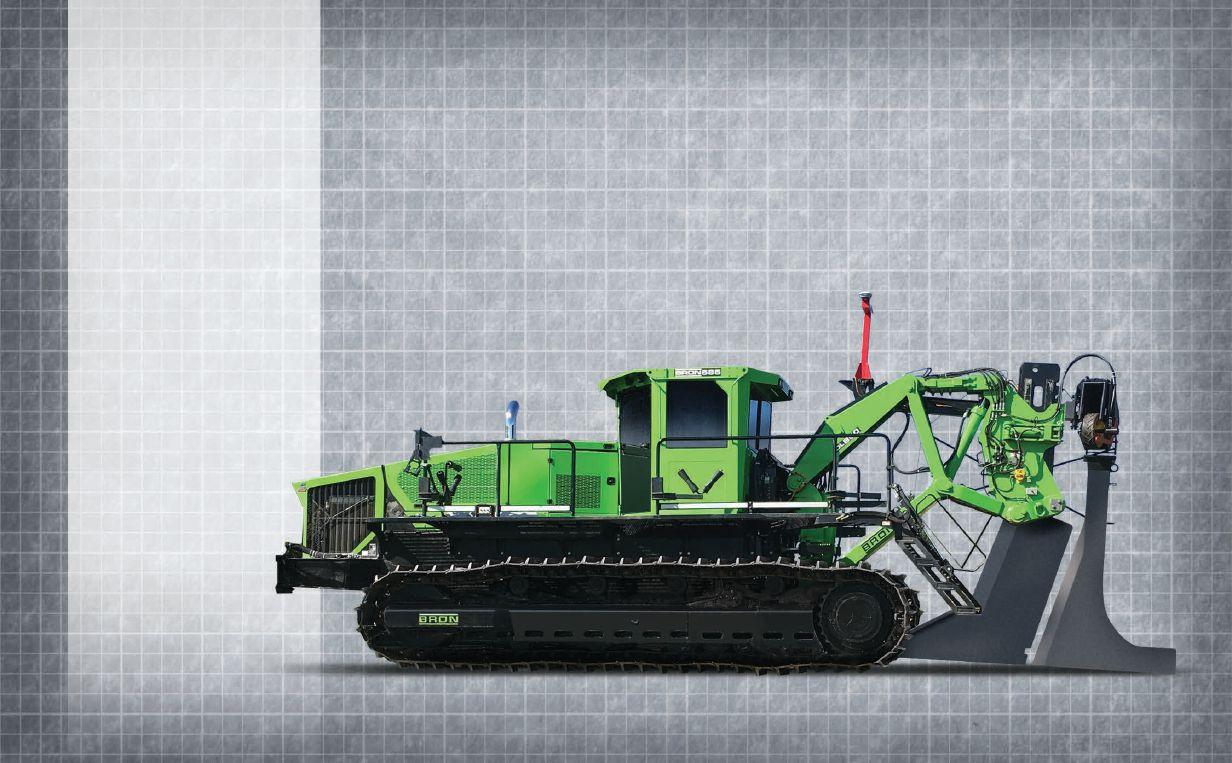
www.rwfbron.com
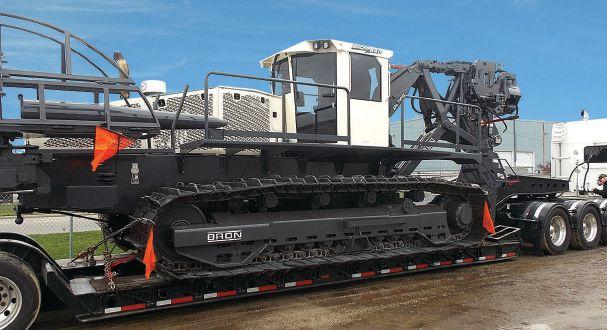
■ Five Core Cooling System exceeds cooling for Tier 4 engine standards
■ Quieter Reconfigured Cab Interior for Operator comfort
■ Standard DL 850 Drainage Plow increased strength & durability
■ LED Light Package for increased visibility for those long days in the field
■ Improved swing mechanism for the Onboard Reel for smoother reel speeds & consistent torque
■ Optional hydraulic rear step raises out of the way when plowing and lowers when required.
■ Standard oscillating track frames.
■ Fluid Samples for All Fluids
■ 150 Point Machine Inspection
■ Internal Inspection All Drivetrain Components
■ Required Factory Repairs
■ New & Used Equipment Sales
■ Parts & Service all BRON Products
■ Selected All Makes Parts for Construction Equipment
■ Certified Rebuilds on BRON Products
■ Custom Fabrication
■ New Paint
■ Factory Tested
■ New Certified Serial Number Assigned
■ 6 Month Warranty Assigned
■ Repairs on all Drainage Plows & selected Construction Equipment
■ Parts Facility in Marine City Michigan
■ Road Service for all BRON Products & other selected Equipment
■ Parts Facilities in Woodstock ON and Marine City MI.
DRAINAGE MANAGEMENT
Side Elevation
controls allow the pump to increase/ decrease speed as the water level rises & falls inside the
Direction of Travel
ft.)
that in Figure 1, but at depth, in the vicinity of the pipe, the soil is compressed sideways and this results in compaction and result in a reduction of soil permeability.
Between these two extremes of working depth there is a certain depth, termed the critical depth, where the transition between one type of disturbance and the other occurs. This critical depth represents the maximum working depth of the plow if compaction around the pipe is to be avoided.
The position of the critical depth depends on these factors: forward inclination of the plow point and leading edge: a shallower angle is better; width of the plow point: a wider the plow point, the deeper the critical depth; soil moisture content; and soil density.
The soil conditions near the working depth and in the surface layers have the greatest influence on the position of the critical depth for a given plow. How wet, loose and soft a soil is at working depth will increase the chance of causing compaction and smearing. Also, the drier, denser and stronger the surface soil is, and particularly if the soil is moist at working depth, the shallower the critical depth will be. In this case, the surface layers are preventing the lower layers from heaving upwards, so sideways compaction occurs.
PRACTICAL THINKING
It would be useful to predict the position of the critical depth before starting the job. However, the number of variables involved make this impracticable. The only satisfactory way to determine the critical depth is to excavate a trench across the line of pull and observe the soil disturbance.
Here are some practical figures to use: when working in uniform, compact dry seedbed producing conditions, the critical depth will be at a depth approximately 15 times the width of the plow point/leading edge (for a four-inch plow, the critical depth is about five feet). As the surface layers become very dry and strong or the soil at depth becomes moister, the critical depth will reduce to 10 times plow point/leading edge width (about 40 inches) or less. As the soil becomes wetter and more plastic, the critical depth becomes shallower.
There are two changes that can be made to deepen the critical depth: either the plow point and leading edge can be made wider, or the surface layers above the proposed
Critical Depth
Plow
FIG. 2 Soil disturbance caused by trenchless plow working relatively deep (5½
Rear Elevation
line can be loosened by chiselling the soil or pre-ripping at partial depth before the pipe is installed to grade. This should be done to a depth of between eight and 16 inches to disturb the surface soil in an area, with an approximate width of 1.5 times the pipe depth. Pre-ripping will also reduce the pulling force required for the pipe installation pass, perhaps by as much as half. This might be done on the return pass from one line to the next.
If the top soil is frozen, fracturing the frozen layer would certainly relieve any surcharge on the lower layers allowing them to fail upwards more readily. Any benefit would depend on how and where the frozen layer cracks ahead of the advancing plow. If the leading share of the plow is well under the frozen soil before it cracks, and if the crack is only ahead of the share, cracking a wider surface width beforehand would be of significant benefit in relieving the surcharge.
Increasing plow point width and surface loosening will not lower the critical depth below working depth under all soil conditions. This is particularly the case with firm plastic soil conditions at a depth where compaction and smearing can have a very serious effect on drain performance. Wherever possible, pipe laying should not be carried out under these conditions. Even so, there have been reports of working well below critical depth in very soft, loose saturated clays, with little evidence of structure damage, smear or compaction at depth. The reason for this would be due to the high moisture content, the soil particles would be too widely spaced to form a significant smeared layer. In such a situation, it would be important that the first soil to fall onto the pipe is dry, well-structured surface soil, rather than the wet soil from depth. This situation would certainly be one for opening up a trench across the line of pull to check the resulting soil disturbance before starting work.
It is impossible to predict the position of the critical depth for all soil conditions, but it is important to recognize that its position can have a serious impact on the success or failure of a drainage system installed with trenchless machinery. Casual observation of surface soil heave is not a good indicator of what is happening at depth. It is well worth examining the disturbance produced by excavating a cross section and modifying techniques to minimize deep compaction and smearing. DC
Editor’s note: The original material for this article is courtesy of retired soil scientist Gordon Spoor. Peter Darbishire, editor of Drainage Contractor from 1976 to 2008, provided the foreward.
NEW PRODUCTS
FLEX TAP TEE MAKING CONNECTIONS EASIER
The four-inch Flex Tap Tee, a product collaboration between Central Plastic Products Inc. and Fratco, is a new tap tee option for drainage systems.
The patent pending push-to-lock design allows drain tile installers to make connections in half the time and with less effort. The tap automatically compresses the ridge line when pushed forward into the connection hole and fully secures itself inside the dual wall or single wall main with one easy motion.
DITCH DOCTOR MULTIPURPOSE DRAINAGE ATTACHMENT
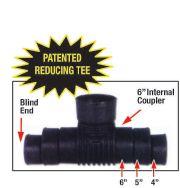
• 8” & 10” riser with patented 8" & 10" combination Tees. Also 6” square & round risers with patented reducing Tee.
• Constructed of heavy-weight, high-density polyethylene.
• Parts highly adjustable & interchangeable with others on the market
• Orifice plate placed at tee level or at ground level.
• Exclusive locking device on each part. • User Friendly-Priced effectively.
• Adaptor available to repair old metal or broken intakes.
The design of the Flex Tap includes a series of tabs forming a contoured flexible ridge line that is tapered to the front so the installer can ‘push-to-lock’ the tap into the hole with one motion. The motion automatically compresses the ridge and secures the tap tee inside the dual wall or single wall main.
The Flex Tap comes in a long neck that fits 10-inch,12-inch, and 15-inch main sizes single wall and dual wall. A short neck version that fits six- or eight-inch main sizes will be available in the fall. Video demonstrations of the product are posted online at www.flextaps.com.
Ditch Doctor now offers a pump scroll case for pumping liquids and slurry material. The attachment can turn an excavator into a version of an 8-inch pump. Users can control its position and depth with precision of an excavator. This new attachment is available alongside other detachable scroll cases that can be swapped for different tools, allowing the same excavator to do other functions. This includes an optional wet scroll case that can work in up to three inches of water, and a dry scroll case that can work in semi-wet to dry conditions.
For the full range of attachments, more information can be found online, at www.ditchdoctor.ca.
FECON INTRODUCES NEW POWER PACK FOR LARGER EXCAVATORS
Fecon introduces the Tier-4 compliant BHP270 Power Pack for larger
excavators (over 20 ton). This independent power source provides additional hydraulic horsepower to operate attachments like the Bull Hog mulching head without hydraulic flow from the host machine.
While excavators of this size typically provide 45 to 60 gallons per minute (gpm), the BHP270 delivers up to 109 gpm of hydraulic flow for maximum power on the jobsite. This new fuelefficient upgrade delivers a flatter torque curve for constant 270 HP output from 2,000 to 2,400 rpm, yet uses jut 7.7 gph at Duty Cycle.
The Power Management microcontroller channels all power to the brush cutter, and there is no power loss due to accessories. This also improves engine response/ recovery and sustained peak grinding power. New After Treatment (AT) components are located inside the “dome” on the roof, keeping AT heat separated from the engine bay. A larger fuel tank holds 91.5 gallons.
Other new design elements include a new firewall inside the engine compartment to keep airflow from the engine side separate from hydraulic side. All hydraulic components are now on the left side of the fire wall. Airflow direction on the engine is reversed from previous version, with intake on right rear door and exhaust out of right side door.
A Rexroth 145cc hydraulic
pump produces maximum pressure of 5800 psi and hydraulic flow of 109 gpm. There is a new cab control panel with keyless start for more convenience and safety. The new display is brighter and easier to read. A new light alerts operator to tilt angle limits exceeded. An increased frame depth allows the addition of a stiffening cross tube to reduce vibration. For more information, visit Fecon online at www.fecon.com.
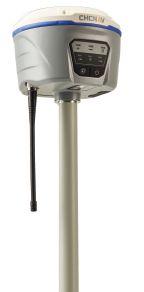
CHC NAVIGATION INTRODUCES I50 GNSS
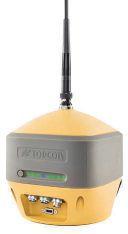
CHC Navigation announced the availability of its new i50 GNSS receiver, an allin-one, cost-effective and easy-to-use GNSS RTK solution. GNSS RTK refers realtime kinematic, a satellite navigation technique that provides position data derived from satellite-based positioning systems (GNSS or global navigation satellite systems).
Bundled with CHC HCE320 Android controller and CHC LandStar 7 field data collection software, the i50 GNSS receiver provides a solution for topographic and construction positioning tasks in land surveying, small and medium size construction projects and precision GIS data collection. DC
To stay up to date on New Products, check out www.drainagecontractor.com/new-products.
INDUSTRY NEWS
SUMMER SCHOOL
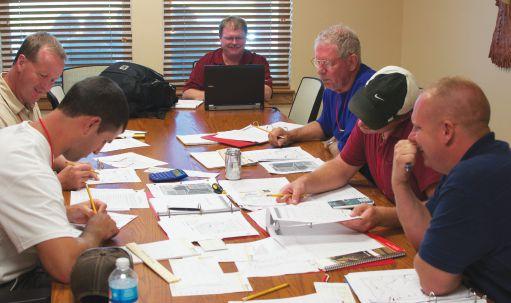
Iowa Drainage School has been educating contractors on proper planning and design for over a decade. The school is held annually with the purpose of training stakeholders in subsurface drainage.
From the very beginning, this has been a three-day school with each day including a combination of handson training, lecture and discussion, and problem solving using in-field examples.
A 2016 survey of present and past participants showed the Iowa Drainage School has helped participants increase the scope of their work either with increase in clients, service area, hiring of employees, and/or with the purchase of additional equipment.
As long as the need to upgrade, retrofit, or install new drainage systems exist, Iowa Drainage School continues to educate contractors on the concepts of sub-surface drainage. In 2019, the Iowa Drainage School will be held from Aug. 20-22 at the Borlaug Learning Center in Nashua, Iowa, at the Northeast Research Farm of Iowa State University.
This year, the school will focus on the fundamentals of drainage design, including understanding soils, obtaining an accurate survey with GPS and lasers, and drainage pipe size and spacing design. It will also cover contractor opportunities with water quality practice construction and installation including controlled drainage and water table management, sub-irrigation. Other aspects of the job, such as legal considerations, planning with safety and different installation techniques and equipment, will be explored too.
The core instructor team is comprised of Dr. Matt Helmers, Dr. Kapil Arora, Kristina Tebockhorst, Brian Dougherty, and Dr. Chris Hay. Participant registration is scheduled to open in early June 2019. – Dr. Kapil Arora
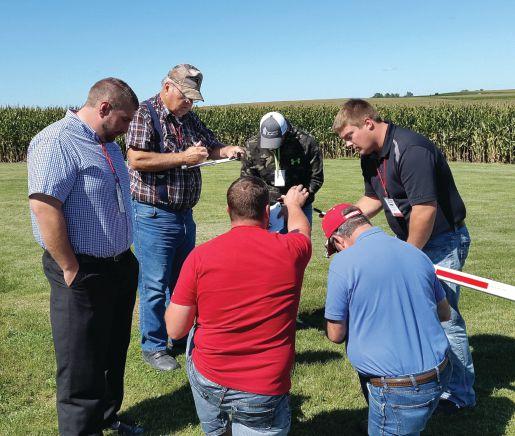
Participants work in groups to fine-tune their skills in planning, designing, and installing subsurface drainage systems. Photos courtesy of Kapil Arora.
The three-day school includes a combination of hands-on training, lecture and discussion, and problem solving using in-field examples.
Bringing it home
Welcoming a stronger agricultural drainage lobbying group for post-Brexit times.
by Rob Burtonshaw
We all have our vices and I’m no different, although perhaps I’m slightly duller than most: one of my vices has always been history. You may not consider an eagerness to learn about the past to be a problem, and I would argue is it not, however my wife and children are beginning to view it as one. We have a lot of history here in the U.K., and plenty of historic places to visit (which my family tolerates as I force-feed them yet another free lecture about why this place is important).
It is not just my home life that is influenced by this but work too. The history of land drainage is long and often relevant to us as contractors because hardly a week will go by without us connecting to or repairing an existing drain. It is rare for us to drain a field that our forefathers have not already tried to do drain, often many decades, if not centuries, before.
Millions of miles of pipe have been installed on our small island through the years. I like the idea that I’m part of a tried-and-tested process that has been part of the fabric of agriculture for many years. Despite great advances in how pipe is put in the ground, the core theory and principles of the industry remain unchanged. The drainage industry has been through many ups and downs, some brought about due to government policy, others by world markets, but it has always survived and often thrived. Ultimately, humans have always needed food and making food production more efficient has proven to be a robust business to be in.
This is certainly a comfort in this hectic and confused time in Westminster. I doubt anyone reading this will be keen to hear my views on the current state of politics in the U.K., and to be frank, like most others I speak to, I’m bored, tired and frustrated with the endless Brexit saga. Whatever happens, change will occur in British agriculture.
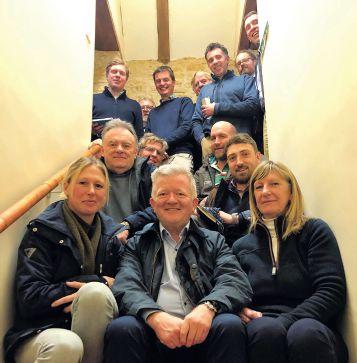
With that change comes opportunity and risk, so the re-formation of the drainage section
and a reduction in subsidies that are not directly tied to improvements in measurable environment outcomes. Leaving aside the details and jargon, we may not be able to influence anything right away, but at least we have a way of trying. DC