Trimble has added four new partners in North America and Europe to its Vantage distribution network – a global network of independent partners that provide growers, advisors, retailers, co-ops and local original equipment manufacturer dealers with precision agriculture expertise.
The new partners in the Vantage network include:
• Vantage South Atlantic, a new authorized reseller based in Warsaw, NC. Vantage South Atlantic will provide Trimble total farm solutions throughout Virginia, North Carolina and the eastern part of Tennessee.
• Vantage Manitoba, established from Trimble’s authorized reseller in Canada, AgWest Ltd. Located outside of Winnipeg, MB, Vantage
Manitoba will provide Trimble total farm solutions throughout the province.
• Vantage ES, established from Trimble’s authorized reseller in Germany and Austria, geo-konzept GmbH. Vantage ES’s central office is located in Adelschlag, Germany, and will offer Trimble total farm solutions throughout the eastern and southern states of Germany and the whole of Austria.
• Vantage Northwest Germany, established from Agrometius BV, Trimble’s authorized reseller in the Benelux region. Based in LippetalHerzfeld, Vantage Northwest Germany focuses on Trimble total farm solutions for growers, contractors and crop advisors
LICA NAMES CONTRACTOR AND ENTREPRENEUR OF THE YEAR AT ANNUAL CONVENTION
throughout the German states of North Rhine-Westphalia, SchleswigHolstein, Lower Saxony, Bremen and Hamburg.
Vantage partners complete extensive training to install, set up and support the entire Trimble precision agriculture portfolio from planning through reporting.
The Trimble agriculture portfolio has evolved from guidance and flow and application control systems to now include advanced solutions for irrigation and water management, agronomy coaching, plant health monitoring, soil analysis, variable rate application, and desktop and cloudbased management.
For additional information about Vantage, visit vantage-ag.com.
AGPS IS NOW POWERED BY XMC
XMC Machine Control is a partnership of Mike Cook’s Soil and Water Management Systems, Pulsar Mechatronics and other machine control dealers to bring contractors a combined 100 years of machine control expertise. XMC will continue to operate in the agriculture and construction markets.
The XMC partnership's combined expertise allows the company to custom-build solutions for niche markets, listen to customers and create specific targeted solutions. There will be no more general use construction or adapted ag systems that are not specifically built to fit a job. Product interfaces will be modernized to make systems more efficient for the operator.
XMC will support AMW customers and AGPS customers. XMC prompts customers looking for expert support to team up with experts so they are the first to know of product updates. For more information, use the contact page found at agpsinc.com.
All past presidents standing at the Caterpillar Awards.
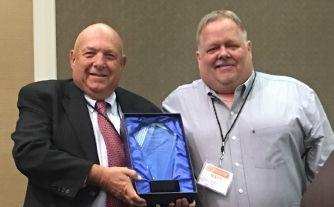
Entrepreneur of the Year: John Weatherhead (left) and winner Matt Palmer.
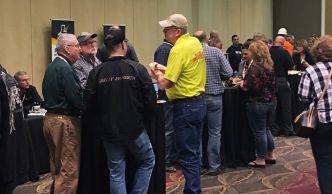
The crowd at the associate’s night.
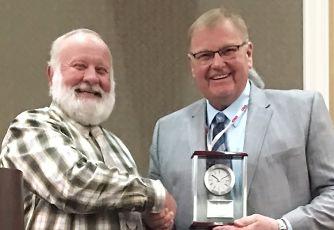
Contractor of the Year: Steve Gerten (left) and winner Lee Bunting.
David Rule (right) passing his president’s pin to Brad McArdle
RESEARCH SHOWS BENEFITS TO ON-FARM WATER STORAGE
Mississippi State University researchers Juan PérezGutiérrez, Joel Paz and Mary Love Tagert examined the seasonal water quality changes in an on-farm water storage (OFWS) system implemented on a farm within the headwater region of the Porter Bayou watershed north of Indianola, MS.
According to their research, published recently in the journal Agricultural Water Management, the soils surrounding the monitored system were comprised of several soil types, namely types of silty clay loam, silt loam and clay. The soils were exposed during the dormant season and a soybean-corn crop rotation was managed with conventional and non-tillage practices during the growing season for the monitoring/sampling period (February/March 2012 to December 2014). Typically, nitrogen was applied during early spring, while phosphorus was applied during the fall.
Water sampling occurred at four different points: at the inlet, at the tailwater recovery ditch, at the outlet and at the pond. The collected data were grouped into four seasons and then analyzed.
Significant water quality changes were observed in the OFWS system by season and nutrient species. The results give evidence of significant seasonal water quality changes among the different points monitored throughout the OFWS, and more importantly, highlight downstream nutrient reduction. The study showed a 54 percent and 50 percent reduction in nitrate nitrogen (NO3-N) concentration
DMWW LAWSUIT DISMISSED
by Kristine A. Tidgren
A federal court has dismissed the lawsuit filed against the drainage districts in three northwest Iowa counties by the Board of Water Works Trustees for the City of Des Moines (DMWW). The court was required to dismiss the lawsuit after finding that, even if DMWW proved an injury, the drainage districts would have no ability to remedy it. In other words, they were not the proper defendants for this lawsuit.
Iowa law was clear from the beginning. The Supreme Court had long held that a drainage district is “merely an area of land, not an entity subject to a judgment for tort damages.”
As we explained when the lawsuit was filed: “[This law] recogni[zes] that the sole purpose and function of the drainage district is to facilitate the construction and maintenance of a unified drainage tile system. The trustees have no authority to act outside of their narrow responsibilities of creating and maintaining what is in most places a 100-year-old system.” DMWW acknowledged the law, but argued it was outdated. DMWW asserted this was a “new day” and the court should apply a “new rule of liability and responsibility for drainage districts concerning pollution.” DMWW argued “implied immunity has survived through repetition rather than critical
in the tailwater recovery (TWR) ditch during winter and spring, respectively.
When comparing median concentrations over seasons, the results showed the pond’s removal efficiency for NO3-N was more than 77 percent during summer. A 60 percent reduction in nitrogen-ammonia (NH3-N) concentration was measured in the TWR ditch during spring, whereas NH3-N removal percentages of 53 percent were observed from winter to spring and 58 percent from spring to summer in the pond.
Orthophosphate (ortho-P) concentrations in the ditch were reduced by 49 percent at the TWR ditch and 26 percent at the outlet during autumn, as measured from the inlet. During winter, the ortho-P concentration was reduced by 65 percent from the TWR ditch to the outlet. The in-pond ortho-P concentration removal efficiency was observed to be approximately 70 percent from winter to spring and remained stable through the other seasons.
Total phosphorus (P) in the ditch, as measured from the TWR ditch to the outlet, was reduced by 31 percent and 10 percent during winter and spring, respectively. From winter to spring, the in-pond total P concentration was reduced by 28 percent and from spring to summer by 55 percent.
The results of this study indicate downstream nutrient reduction can vary with season, with significant reductions possible during spring. This variation is of special interest when targeting the effect of nutrient runoff from agricultural fields into the Gulf of Mexico, as the dead zone is mainly observed during spring.
analysis.” The Iowa Supreme Court disagreed, ruling in January that Iowa drainage districts are immune from claims for damages or injunctive relief.
The Iowa Supreme Court was answering certified questions related to the tort claims DMWW filed against the districts, but the federal court found this ruling also applied to the Clean Water Act claims – even if DMWW were to prevail in its Clean Water Act claims, the districts would have no legal ability to remedy the alleged injuries. If the party against whom a suit is brought cannot provide a remedy, a federal court has no jurisdiction to hear it, so the federal court dismissed the tort and the Clean Water Act claims.
The federal court also found no merit to DMWW’s claims that its constitutional rights were violated. The court ruled the immunity Iowa law affords to drainage districts does not violate the equal protection clause or the due process clause of the United States constitution. Finally, the court agreed with the Iowa Supreme Court’s analysis of DMWW’s takings claim, noting “a public entity such as DMWW cannot assert a fifth amendment takings claim against another political subdivision of the state.” the entire action was dismissed on March 17.
Kristine A. Tidgren is the staff attorney at Iowa State University's Center for Agricultural Law and Taxation.
New year, new opportunities
An evolving team means seeking new opportunities to collaborate.
by Bob Clark II
Ispeak for everyone at the Land Improvement Contractors of America (LICA) when I wish the industry a happy and successful end to their spring work season. As a drainage contractor myself for nearly 30 years, I know all too well that spring can be a challenging time for anyone in the construction field. You’ve been waiting all winter for the weather to break just long enough to start consistently delivering projects, yet you find yourself and your team constantly battling the rain. Keeping your people safe when it is wet and keeping your customers happy when it’s difficult to control your schedule requires constant focus and attention. If there are any readers who are not members of LICA or the Land Improvement Contractors of Ontario (LICO), please reach out. Our organizations are great for networking with others who face common challenges, and for connecting with industry experts on topics ranging from safety to environmental research to business management.
Over the winter, LICA held its national winter meeting in Las Vegas in the days leading up to the largest construction expo in the world: CONEXPO 2017. In addition to hosting our winter meeting, we also had a booth at the convention. This was a great opportunity for us to bring in new members from across the land improvement industry. The booth was in an excellent location and featured a new look. We had a large space with massive posters, professional lighting, furniture and greeters to help our contractor members cope with all the interest from passersby. The booth was a strong symbol of our world-class benefits and membership.
Although a lot has happened since the last issue of Drainage Contractor was published late last fall, some things remain constant. LICA continues to collaborate with like-minded associations, organizations, and universities
to promote and develop the next generation of best management practices in agriculture and construction.
With a new administration in Washington, DC, comes new priorities and policies. In my opinion, the push for redefining waters of the United States (WOTUS) in relation to the Clean Water Act seems to be waning for now.
As water quality and scarcity concerns grow across the planet, the challenges and opportunities for improvements on both issues continue to drive our collaboration and outreach efforts. Whether it’s advances in new technology or the continuing evolution of new products and services, the growing need for expanded collaboration is always a primary driver for LICA’s focus on moving forward.
One of LICA’s newest efforts is a collaboration of many parties. It’s called the Residential Septic Protection Plan and was officially rolled out on April 1. It can be used on new or existing septic systems. The program, in a nutshell, is a win-win-win. It’s a win for the homeowner who, for a minimal annual fee, gets on-site septic services and/or repairs, with coverage up to $10,000. It’s also a win for local LICA contractors who are exclusively authorized to make repairs on the warrantied systems. Finally, it’s a win for LICA’s local state chapters, which should anticipate new membership due to interest in participating in the program.
LICA’s leadership team is always evolving and is full of top-notch contractor-leaders from across the United States. Our future looks as bright as ever, and I think there are more opportunities to expand our network. I think our LICO friends in Canada would be a great fit. Both associations have similar memberships and we often share the same concerns and interests and deal with many of the same issues. Maybe we can collaborate more in the future? DC
NUTRIENT LOSS IN ILLINOIS
How drainage contractors can help.
Since 2011, the majority of corn producers in Illinois have followed the recommended maximum return to nitrogen (MRN) application guidelines. More than half of all farmers are either knowledgeable or very knowledgeable about the “4R” strategy (right nutrient source at the right rate, in the right place and at the right time).
by JULIENNE ISAACS
But 43 percent of those producers have no knowledge of denitrifying bioreactors or how they can function to improve water quality. Only 55 percent claim knowledge of drainage water management.
These are some of the results of the Illinois Nutrient Loss Reduction Strategy (NLRS) Practice Implementation Survey, released by the United States Department of Agriculture’s National Agricultural Statistics Service (NASS) in collaboration with the Illinois Nutrient Research and Education Council, Illinois Farm Bureau, and Illinois Extension this past December – and they reveal some key opportunities for drainage contractors in the state.
“There are a lot of good contractors who are engaged with conservation drainage practices and interested in learning more,” says Laura Christianson, an assistant professor of water quality at the University of Illinois. “But there are a lot of guys installing tile on the fly and they may not know about some of these new practices.”
“Honestly, if you’re a contractor and you understand them, that’s a marketable opportunity.”
Illinois’ NLRS survey was intended to measure in-field and edge-of-field practices conducted by Illinois farmers as they relate to nutrient loss reduction.
According to Mark Schleusener, state
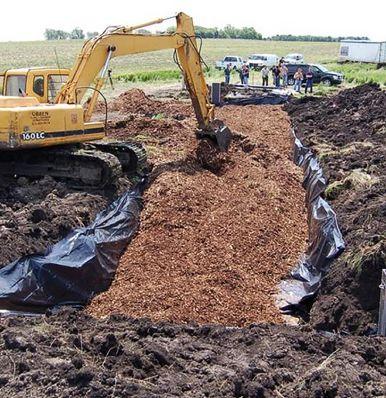
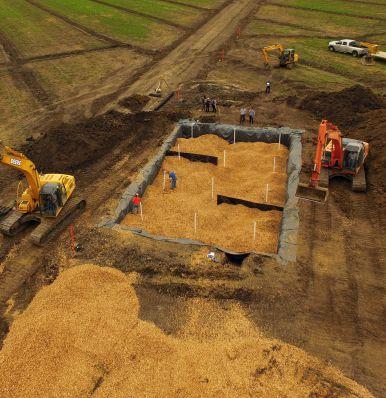
LEFT: A denitrifying bioreactor being installed in Iowa in 2009. Photo courtesy of Iowa Soybean Association.
RIGHT: A research woodchip bioreactor is installed to remove nitrate from a tile drainage system at a farm in Illinois. Photo courtesy of N.D. Bowman.
statistician with the United States Department of Agriculture, the NLRS is a plan primarily formulated by the Illinois Department of Agriculture and other groups to deal with the fact that nitrogen and phosphorous don’t stay in the state’s soils. “They pass out through leaching and soil erosion, getting into the lakes, streams and rivers, and then down the Mississippi to the Gulf of Mexico,” he says.
The Environmental Protection Agency has tasked 12 states with reducing runoff from agricultural fields and urban areas via state-developed plans tailored to local conditions and farming practices.
Schleusener, with assistance from Christianson, helped develop the survey, which was distributed in July 2016 to measure producers’ progress between 2011 and 2015.
Though the response rate isn’t public, Schleusener says the most significant survey results did, in fact, reveal improvements. “Some of the things producers are doing voluntarily are helping to reduce nutrient losses,” he says.
OPPORTUNITIES FOR DRAINAGE CONTRACTORS
But it’s the areas in which Illinois producers have room to grow – edge-of-field practices such as building constructed wetlands and installing denitrifying wood chip bioreactors – where contractors can help drive further progress, Christianson says.
Other states, like Iowa, have officially approved more practices, such as drainage water management, shallow drainage and saturated buffers, but Illinois is still collecting data on how well these practices perform in the state. Until Christianson’s
research team and other researchers in the state can feel confident recommending further drainage practices, constructed wetlands and bioreactors remain the only two, beyond tile installation, that contractors are involved in in the state.
“In Illinois, we do have some folks putting in bioreactors and constructed wetlands, but there is a huge opportunity to do more,” she says. “On our survey, there were so few bioreactors reported that they couldn’t report results. Forty-three percent of the respondents had no knowledge of a bioreactor, so it’s a big opportunity for education.”
Drainage contractors who familiarize themselves with bioreactors and how to install them will be ahead of the curve when nutrient loss starts coming under the gun in the state, she says.
The same goes for constructed wetlands, which require skilled earthwork to incorporate them into the landscape.
But Christianson sees another opportunity for drainage contractors. Controlled drainage may not be a recommended practice in Illinois right now, but Christianson’s research team is seriously evaluating it for future inclusion.
“One of the challenges I’ve come across is that it seems as though there are a lot of crop advisors, farmers and contractors who feel they are doing drainage water management, but in reality there are very, very few acres where it’s being done in Illinois,” she says.
She pegs this to widespread misconceptions about how drainage water management actually works.
“If you have tile drains you might think that you’re managing
ENVIRONMENT
for treating nitrate in agricultural tile drainage.
courtesy
Iowa State University Extension.
drainage water, but the practice involves having control structures, and not just having the structures, but managing them,” she says. “There are educational opportunities there.”
Producers can be leery of adopting edge-of-field practices as opposed to in-field practices that have other production or yield benefits, but Christianson says not enough producers and contractors are aware that there can also be yield benefits to retaining drainage water via control structures.
Drainage contractors are a “prime audience” for Christianson’s research, she says, and contractors are increasingly at the table when it comes to discussions about Illinois’ nutrient strategy.
“We have loud agriculture voices in Illinois that are very politically connected in terms of our nutrient strategy, but more and more I’m seeing Illinois Land Improvement Contractors Association members coming to those meetings too to really engage,” she says. “They’re saying, ‘We have contractors out there that want to do the right thing’.”
The more contractors know about the options available to producers for nutrient loss reduction, the more ably they can work with producers to meet future targets and lead Illinois water management into the years to come. DC
BIOREACTORS AND CONSTRUCTED WETLANDS
Tile drainage systems can sometimes accelerate or increase nutrient runoff from agricultural areas, but bioreactors and constructed wetlands can help.
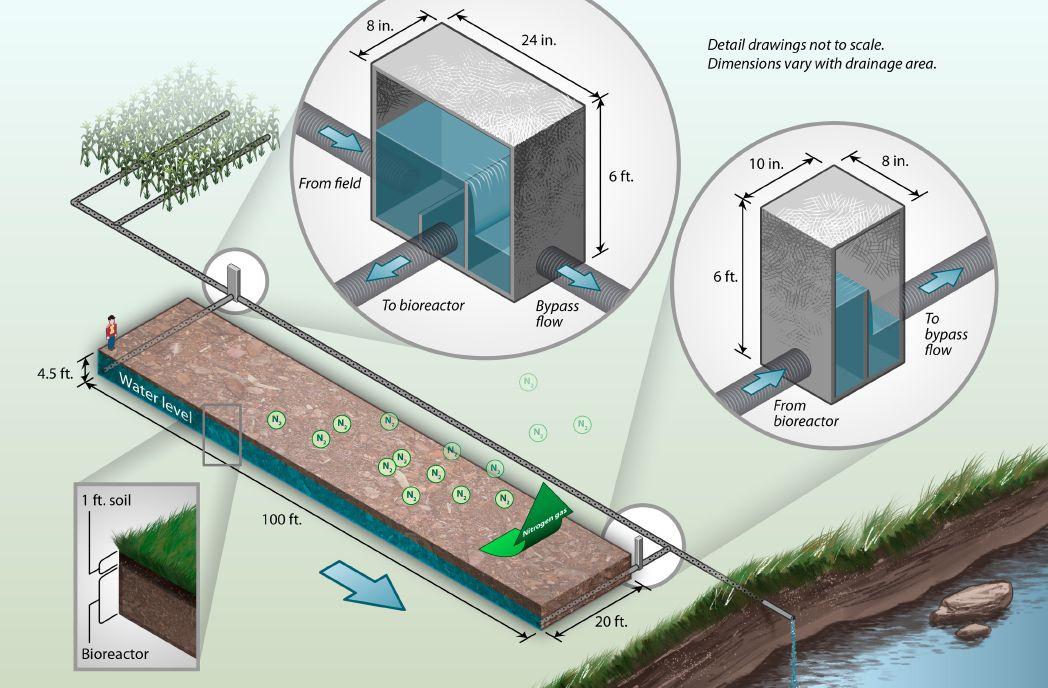
Wood chip bioreactors are trenches filled with wood chips, through which tile water is allowed to flow before entering nearby bodies of water. Soil bacteria colonize the wood chips and break down nitrates in the water, minimizing nutrient runoff. Wood chips need replacement every seven to 10 years, but bioreactor structures last for up to 20 years.
Information on designing and constructing bioreactors can be found at engineering.purdue.edu/ watersheds/conservationdrainage/bioreactors.html.
Constructed wetlands are artificial wetlands that can treat or filter agricultural wastewater yearround via natural processes, before runoff reaches wider watersheds. In contrast with restored wetlands, constructed wetlands are installed in areas that may or may not have been wetlands in the past.
Information on siting, designing and building constructed wetlands can be found on the Environmental Protection Agency’s website at epa. gov/wetlands/constructed-wetlands.
Schematic of a typical denitrifying wood chip bioreactor
Image
of
by JANNEN BELBECK
AN EYE ON THE FUTURE
Knowledge is power for Morreim Drainage.
Mark Morreim, president of Morreim Drainage Inc., has always been involved with farming. He was driving tractors by the time he was 12, raised livestock, and eventually started working for a family-owned company that farmed, sold seed corn and had a commercial fertilizer and custom chemical service.
Morreim was the only full-time employee at the father-and-son business and wore a lot of hats: mechanic, operator and salesman – a “do it all” type of employee.
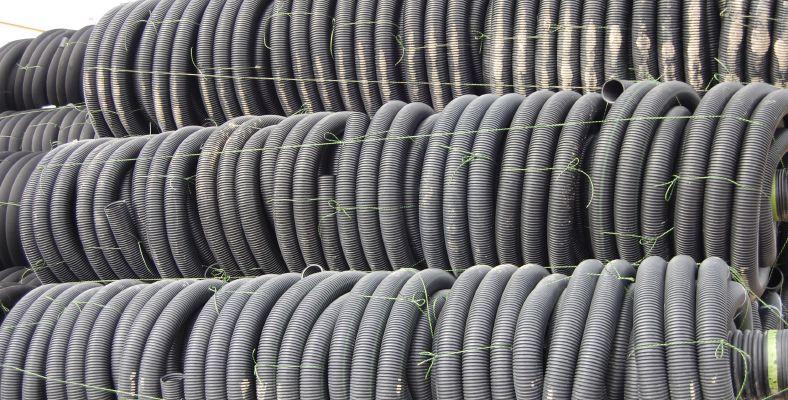
After leaving the chemical application company to help out his dad with his family business in 1990, Morreim ended up moving back and purchasing the home and land in Albert Lea, MN, where Morreim Drainage is based. The location is 15 acres and houses a shop, office, home, several outbuildings and a large area for storing drain tile and equipment. Most of the company’s tile gets delivered to the yard and is transported to a job site by Morriem and his employees. With the ability to store 300,000 feet of maxi rolls, the company also sells tile and fittings out of the yard to customers.
Morreim’s parents, Sharon and Phil, started Morreim Drainage Ltd. in 1969; Sharon was president of the company until she passed away in 2011. Mark is now the president and Phil is the vice-president. Though his father still owns the majority of the company, they will soon start transitioning the business over so Morreim owns it outright. Phil is still actively involved at 82 years young.
“My father has a great deal of knowledge and experience with drainage, having been a former Soil Conservation Service employee. I rely on his help from time to time,” Morreim says.
While farm drainage is the main business, the company also does some on-site septic systems and road boring. With a total of seven employees (including his father and wife,
RIGHT: Mark Morreim, president of Morreim Drainage Inc.
Cheryl, who is the secretary, treasurer, bookkeeper and tax expert), there are usually five employees out on the fields during the busy season. They use a 1965 D9 with a Zor plow for tiling, and after a refurbishment a couple of years ago, Morreim is expecting the machine to run for another four or five years. After operating the plow for close to 23 years, Morreim is now doing the surveying and design work day to day.
While the tile plow may be an older model, Morreim is thinking ahead when it comes to technology and new drainage models. He attends as many seminars and workshops as he can to keep up with the issues facing drainage contractors. Morriem is also trained in controlled drainage and ensures he’s always up to date with new technology. GPS has saved his men a lot of time, especially when it comes to locating old tile.
“I would have to estimate that after we switched over to GPS and once we got used to using it, it probably increased our productivity [by] 30 to 40 percent,” Morreim says. “It made it a lot nicer when you locate tile – you don’t have to go back and find them again because they’re already located with the GPS. [It] saves a lot of repeat work.”
Although there are no plans for the company to use drones, Morreim says this technology has its merits too, especially with the amount of rain Minnesota has seen recently. “With all the rain events we’ve had, we’ve had quite a few ditches that need attention and that would be a really useful tool to be able to analyze what’s going on in our drainage systems and find the problem areas a lot quicker than going out on foot and trying to find them.”
WORKING WITH THE FARMERS
Having been a farmer himself, Morreim has seen both sides of the coin, which has helped him operate the familyowned business since the beginning.
Since Morreim typically doesn’t venture far for jobs (he says he sticks within about 30 miles of the shop), he’s used to seeing customers at events or at the hardware store. Customer service is key, Morreim says, and it’s important to be ethical as a small business.
“If you make a mistake or things go wrong, you have to deal with that in a
Perhaps all of this involvement was one of the reasons Morreim was named contractor of the year both in Minnesota as well as nationally in 2016.
respectful way,” Morreim says. “You can’t just walk away and say, ‘It’s not my problem.’ I think a lot of it is honesty and taking care of your customers.”
Part of taking care of customers is listening to what your customers have to say, Morreim says. However, there are a lot of variations in soil composition and land topography where he is based – part of the “prairie pothole region.”
Sometimes farmers want something specific but it’s always up to the drainage contractor to suggest what will work best in a given situation.
“One of the techniques my dad taught me was to meet with the farmer and find out where the problems were at, what the farmer wanted done,” Morreim says. “He would say, ‘Well, this is what I think would work,’ and [if the farmers disagreed] he would say, ‘Well, the reason why I’m doing it this way is because…’ and then list whatever reasons – the terrain, or the way the water runs and slopes.”
Morreim says that a lot of the time, simply explaining the reasons why they’ve chosen a specific plan helps the farmers realize it’s what’s best for their situation.
“I’ve been taught you don’t push people, but sometimes you might have to pull them a little bit.”
In the end, Morreim is happy that tiling a field brings a huge benefit to a farmer’s income and to the workability of the fields.
“I have great pride in watching a healthy crop flourish in a field that we improved with water management skills,” Morreim says. “I have never had a customer regret tiling a field – they nearly always comment they should have done more and done it sooner.”
CONSERVATION EFFORTS
While drainage is imperative to farming and its economic survival in Minnesota, Morreim says it’s up to the contractors and farmers to be proactive in their water resource use. This is why he’s always attending seminars and workshops to keep up on the issues at hand.
Morreim also serves as a volunteer on the Drainage Work Group (DWG), which represents Minnesota Land Improvement Contractors of America (LICA). The DWG was organized in 2006 by the legislature as an advisory group for recommending changes and improvements to Minnesota drainage laws. Other members of the DWG include the United States Department of Agriculture, the Minnesota Pollution Control Agency, as well as various environmental groups, farm groups, legislators and attorneys.
“As a drainage contractor and former farmer, I’m interested in what is involved in the laws that apply to water and water use,” Morreim says. “We need to be on top of it and knowledgeable on it so that if there is a problem, we can try and address it and find a solution for it.”
Perhaps all of this involvement was one of the reasons Morreim was named contractor of the year both in Minnesota as well as nationally in 2016.
Morreim is also a member of the Agriculture Drainage Management Coalition – a multi-state group developing controlled drainage methods for the improvement of water resources. They sponsor training and certification classes to become a technical service provider through the Natural Resources Conservation Service.
“Like they always say, if you don’t get involved and don’t voice your opinion then you'd better not complain about the outcome because if you’re not involved, you can’t be a part of the solution,” Morreim says.
Staying involved with the farmers, the community and what’s going on in the industry allows Morreim to keep on top of the issues at hand and, in turn, educate.
“Being in agriculture is all about trust and relationships. My father taught me honesty and responsibility and it is the only way to succeed in business. We have countless repeat customers that rely on…our experience [with the] issues to help them.” DC
DRAINAGE MANAGEMENT
MANAGING FLOWS
Multi-purpose drainage management best practices.
We see the impact of phosphorus and nitrogen losses to waterways every summer in bodies of water like the Gulf of Mexico and Lake Erie. Although other environmental elements and human inputs are factors, the runoff from farmers’ fields has always been viewed as the primary culprit.
by JANNEN BELBECK
However, farmers need fertilizer to facilitate crop growth and they also need adequate drainage for healthier plants. Multi-purpose drainage management plans serve as a way to reduce nutrient runoff and mitigate the issues these bodies of water experience every summer.
Chuck Brandel, senior civil engineer with ISG, in Mankato, MN, outlines some of the key components of these systems and the potential implications for drainage contractors.
Can you explain what a multi-purpose drainage management (MDM) plan is?
A multi-purpose drainage management plan is a plan that looks at an agricultural drainage watershed and identifies the best areas where best management practices (BMPs) can be
implemented. So [ISG] looks at both the public infrastructure (public ditches, public tile) and then the farmers' or landowners' land and where we can implement BMPs on the land to either treat or store runoff.
We look at three different types of control measures, or BMPs: preventative, control and treatment. Preventative are those that can [be implemented] on-field (tillage management, cover crops, nutrient management). Control measures are ways to slow down or control the water (controlled drainage, alternative inlets or alternative side inlets) and treatment measures are ways to treat the water (wetlands, storage ponds).
Any time you slow down the water and store it, if you have some native plants or deeprooted plants, or any area where you can hold
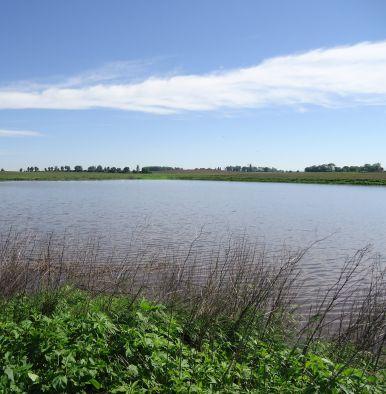
LEFT: Blue Earth County Ditch No. 57 “Klein Pond.” Holding capacity of 26 acre-feet treating approximately 2,000 acres of agricultural and urban runoff. Photos courtesy of ISG.
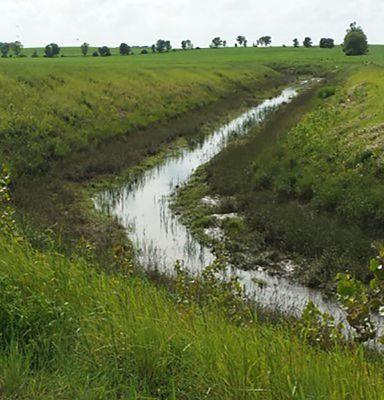
RIGHT: The first twostage ditch built on a public ditch system in Minnesota in 2011: Blue Earth County Ditch No. 57.
DRAINAGE MANAGEMENT
the water and drop sediment out, you’re taking nutrients out of the water because they are either getting taken up by the plants or settling out in the bottom of a basin and not running downstream.
On the ag landscape we’ve been targeting phosphorus and nitrogen. Phosphorus we’ve been treating with storage ponds and wetlands; nitrogen we’ve been using wood chip bioreactors and saturated buffers.
How important are the farmers or landowners in the process of implementing MDM?
In Minnesota the drainage law for any public drainage system was changed in 2014. [It] stated that any project must consider an MDM. It doesn’t say you [have to] implement it but you need to consider it – look at the options, look at the cost. So, for any public drainage system, it’s a requirement that we do an MDM plan but not implement it.
Farmers need to make money but at the same time, they need to be conscious of what’s happening downstream of them. Some of these BMPs can actually save them money over time if we can keep soil on the landscape [and] keep it out of ditches that need to be maintained or cleaned.
The other thing that we’ve looked at is systems that have a very poor, undersized tile system and if we sacrifice one area [where] we can store some water, we can downsize the rest of the area but then not worry about having any negative effects downstream. Minnesota law requires that we look at the outlet – it needs to be adequate before any changes to a public drainage system are completed. Landowners or farmers can improve drainage in your watershed even if you have a poor outlet.
What’s the role of a drainage contractor with regards to these MDM plans? Do they play a role?
Definitely. A lot of the practices that I do are on the large public system, but there are a lot of practices that can be done on private landowners’ properties. And the drainage contractors are the ones that really manage those properties from a drainage perspective for the landowners. I see a future for drainage contractors to
be installing many of these. [Nationally], with the NRCS [Natural Resources Conservation Service] and some of their projects, contractors can become technical service providers (TSPs) and do some of the design and layout.
Can these BMPs be considered a onesize-fits-all approach to MDM?
The preventative measures somewhat are. The tillage management, nutrient management, crop rotations, cover crops – those things can be done on a variety of fields; the other ones, not so much. Controlled drainage you have to have a large, very flat area where you can control a lot of water elevation. Two-stage ditches require a certain size watershed and you need certain slopes to be able to maintain a narrow channel. Storage areas or wetlands: if your watershed is dead flat, there might not be a spot where you can store water because you’ll flood everybody. So there’s not a one-size fits all; that’s why we look at the whole watershed. Identify all the ideas, show them to the landowners and we pick the ones that we think can be the most easily implemented.
Right now we’re doing a lot of what we call WASCOBs or water sediment control basins. They are side inlets on the sides of ditches that temporarily hold water. There’s funding for those, they don’t take any more land if you are implementing a buffer or have a buffer, which is state law now. And there’s funding available for them – we’re getting 75 percent cost share in many areas.
I guess there are certain control measures that are more attractive to landowners and to contractors. What’s the feedback you’ve gotten as far as what people are doing?
Side inlets are probably the most popular choice right now from a numbers standpoint. We’ve also used some in-channel storage with a rate control weir. Rate control we’ve done a couple of different ways. One is we put a weir in the channel where we have a ditch that has an area that is deeper than it needs to be. In one example, the end of the ditch system had a steeper slope than the rest and all of the tile coming
into the ditch was six feet from the bottom. We put in a concrete wall with an 18-inch opening in an area that had probably a 12-foot wide bottom. This allows the water to build up about five feet and then it can spill over this weir. That way we don’t back up any tiles or put any undue pressure on these tiles. We do this part of the ditch for a temporary storage area. That’s been very popular because we don’t take extra land to store water. The WASCOBs or side inlets temporarily store some water in the field but we design them to drain down in 48 hours or less, so we can maintain whatever crop is growing. Storage has been, I’d say, [moderately popular] since it takes up land. Wetlands are at the bottom because they take up a lot of land, but we are seeing an increase in the need or demand for wetlands, so that may change.
You mentioned funding previously. Do landowners in Minnesota see any other benefits as well? Do they get compensated for any of these BMPs? Yes, if storage or wetlands are implemented, landowners will get compensated for land that is taken out of production. Buffers: if it’s part of a public ditch system, landowners can get compensated for the land that the buffer takes up. In some cases some of the WASCOBs that we put in are replacing private side inlets that have deteriorated, so by getting cost share, that can reduce costs, so that’s a benefit to the landowner. We have [also] seen landowners can get compensated for their time to manage a controlled drainage system. Landowners also see the benefit of soil kept on their property and not in the ditch system, which they have to pay to clean out.
With regards to the drainage improvement process, can you explain some of the differences between the repairs and improvements that would need to happen?
A repair is fixing a system to what it was originally designed for, so a repair is much easier to get through, but it does not change any depth or change any capacity in the system. A lot of the tile lines that we see were put in a
hundred years ago [and are now] very shallow. Plus, if we have any lighter soils that they’ve gone through, we’ve seen subsidence of those soils where they’ve actually shrunk. We’ve had tiles that were three, four feet in the ground that now have a foot of cover. Subsidence – that goes along with if there’s been any erosion. They’re really not able to function as they were designed and equipment and frost damages them. When we run into that scenario, it forces an improvement because an improvement can gain depth and capacity. The difference with the improvement is that when you start increasing capacity you need to look at if your outlet is adequate. If your outlet is not adequate, then you need to look at some BMPs to control flow – either enough storage or other types of treatment.
What rules or regulations should contractors be aware of, both generally and within the state of Minnesota, with regards to implementing MDM systems? Generally, if it's a [Waters of the United States] (we call it a public water here in Minnesota) you’ve got an Army Corps permit you’ve got to review and see if you qualify for that. In Minnesota we have the buffer law that’s now in effect so if a contractor is working in an area and he disturbs a buffer, he has to make sure that he puts that back, or if there is no buffer, he should be talking with that landowner to get that in place to be in compliance. The buffers are required 16.5 feet on all public ditches and 50 feet on public waters and need to be in place by November of 2018.
What other changes do you see for contractors nationally? For example,
could they be on the hook to file more paperwork?
Yes. Depending if we do get stricter rules on water quality, they could have added permits that they need [in order to] to ensure the project was installed. From a permitting standpoint, it depends on the condition of your watershed. If you’re a special water or a public water, then you’re required [to have Department of Natural Resources] and Army Corps permits. If you’re not and you’re a public ditch system, then you require drainage authority approval.
“The other way I can see contractors being affected is that they will need to understand how these new practices work and how to install them.”
Improvements do require a MPCA [Minnesota Pollution Control Agency] construction storm water permit. If you have any public roads that you’re crossing, you have to get permits from whoever the road authority is, whether that’s the state or more on the local level.
But there is potential there could be more permits, especially if treatment is required. You’ll have to prove what type of treatment you’re doing and how much water you’re storing or how much [of the] nutrients you are holding back. We haven’t run into that yet in the ag
landscape.
Some of the NRCS practices require a TSP or an engineer to sign off on them, so they may need to get either certified as a TSP or work with an engineer to design the system. If funding is being used for some projects, there’s extra paperwork to get the funding, [either] completed by the landowner or contractor. The other way I can see contractors being affected is that they will need to understand how these new practices work and how to install them.
I’m sure there are some contractors that might not be happy to see any changes, but ultimately it’s for a big benefit in the long run.
Yes, an environmental benefit, correct. What we try to do is find the solutions that are still cost-effective, especially when you’re looking at a large watershed. To upsize a system, there’s a cost to do that, but potentially we’ve had systems where we can do some improvements, add some storage, and it may be less expensive than what potential repairs can be.
I look at each project as an opportunity. It’s an opportunity to do something in a different way than we did 100 years ago or 50 years ago or even 20 years ago.
A hundred years ago many areas were tiled and these systems were put in place, but they are falling apart now. There’s a lot of work to be done because of the age of the infrastructure. DC
Editor’s note: This interview has been edited and condensed.
ISG assists regional and national private clients as well as state and local governments in creative planning, land development, engineering, and architecture solutions.
Introducing The Newly Designed BRON 150 DRAINAGE PLOW
Compact and Powerful.
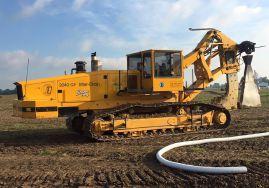
Don’t let the size fool you! This 225HP, 37,500 LB machine is small but mighty and has the capability to tackle all sizes of jobs, while making transportation a breeze. With BRON’s top of the line machine features and the absolute best customer service and after purchase parts department in the industry, you can rest easy knowing that you and your BRON 150 are well always well taken care of.
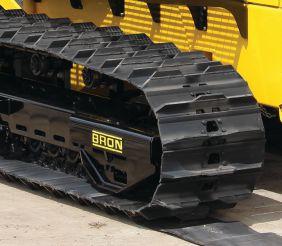
The BRON 150 comes equipped with our BRON 375 Double Link Plow. It is well balanced and powerful with capabilities of plowing up to 5ft deep in certain conditions and terrain, and is the perfect machine for running laterals. Each track pivots independently allowing for continuous surface contact, resulting in maximum traction. With its compact size and low weight category, the BRON 150 allows for easy transporting- even in regulated or restricted areas as compared to other manufacturers equipment offerings.
Hydrostatic drives are powered by a CAT C 7.1 Tier 3 Engine for pulling power that is both strong and efficient. Managed by the PLUS 1 Machine
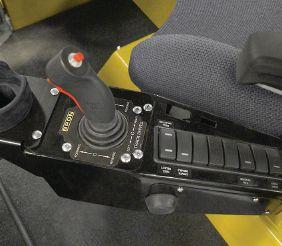
Control System, the engine power characteristics are matched to hydrostatic demand for optimum pulling power while the redesigned Operators Station has entry from both sides with climate control for all seasons. Plow controls are seat mounted on a high-back swivel seat to eliminate operator fatigue inside a comfortable ROPS/FOPS cab. The new electronic system improves performance by synchronizing the drive components with the engine, allowing impeccable performance potential.
There are numerous add-on options for the BRON 150, from various sizes to custom chutes and more. The On-Board Reel carries a roll of tile on the machine when travelling and plowing in wet and muddy conditions, eliminating ruts that occur when using a stringer tractor and wagon. Adding a Tile Puller provides consistent draw of tile from the Reel. The Manual Grease Bank provides a safe and easier way to add grease to your pin points for both plow and axles. Add a left or right side step, which bolt on to assist the operator on and off the unit. Ice Picks for added traction are welded to existing single bar grousers. These options and much more are available to you when you purchase a BRON 150 Drainage Plow.
Experience power and performance in a small, compact package and yield amazing results. If you already own a BRON Product, you know the name to be continuously synonymous of ground breaking technology.
For more information on the New BRON 150 or any of our other product lines, please call the office number listed below and request to speak to our Sales Department.
Utilizing phosphorus removal technology
An update on the Thames River phosphorus reduction project.
by Nicola Crawhall, Great Lakes and St. Lawrence Cities Initiative
Ayear after a plan to tackle residual phosphorus loss from farmland into the Thames River was developed, the Thames River Phosphorus Reduction Collaborative (TRPRC) is being put into action in Ontario. This is thanks to a grant from the Agricultural Adaptation Council through federal-provincialterritorial Growing Forward 2 funding programs, with matching contributions from participating organizations.
The great strength of the TRPRC is the participating partners. A collaborative steering committee has been set up, chaired by OFA vicepresident Mark Reusser and Chatham-Kent mayor Randy Hope. Membership includes the OFA and its Middlesex, Essex, Kent and Lambton federations, the Great Lakes and St. Lawrence Cities Initiative, Grain Farmers of Ontario and its zone delegates, Ontario Pork, Ontario Fruit and Vegetable Growers’ Association, Ontario Agribusiness Association, Chippewas of the Thames First Nation, Upper Thames and Lower Thames Conservation Authorities, the city of London, the Chatham-Kent municipality, Land Improvement Contractors of Ontario, Drainage Superintendents Association of Ontario, Drainage Engineers Committee, Fresh Water Alliance, Bluewater Pipe Inc., and a number of federal and provincial government observers.
The TRPRC's objective is to spread best practices and the best information available on water management and treatment options to remove phosphorus before it ends up in our waterways.
While the TRPRC is focused on water management and drainage, it is meant to complement and be integrated with other initiatives, including the 4-R Nutrient Stewardship program, as well as erosion control and soil health measures that help keep phosphorus in the field.
The TRPRC has already made good progress in defining how phosphorus can be captured. A literature review on existing phosphorus-removal technologies was recently completed by BluMetric
Environmental Inc. The study identifies three great challenges we must face. First, most phosphorus is lost during big storms and snow melt, and climate change will only make matters worse. Ontario research found that in 2011, over 90 percent of annual phosphorus runoff was lost from study fields in just three storms. The second challenge is that the most problematic type of phosphorus is soluble, which drives algal bloom growth. It is harder to retain on the land during big storms because it does not settle out of suspension and bind to soil particulates like particulate phosphorous does. Lastly, existing phosphorus removal technologies are designed for controlled flow conditions, not high velocity storms. The TRPRC is dedicated to finding solutions to these challenges through a combination of measures to retain more water on the land and phosphorus removal technologies.
The BluMetric study identifies a number of technologies that can help, from spreading gypsum with liquid manure on fields to filtering runoff over a “sorbing” material, like calcium, aluminum or iron. Different technologies tested at various points in the drainage system (infield, in surface drainage, end of tile or ditch filter) have shown varying levels of effectiveness, from 22 to 55 percent soluble phosphorus removal. However, there is still the question of controlled flow to ensure it doesn’t bypass treatment in large storm events.
The next critical step in the project is building a business case to provide financial and technical support to farmers and landowners who adopt water management and treatment practices. The TRPRC will reach out to farmers, landowners, drainage professionals and others later this year to hear their views on the proposed approach and learn how they keep phosphorus on the land. Companies will be invited to demonstrate the effectiveness of their technologies in capturing phosphorus on field or in the drainage system. Updates will be made at drainage, agricultural and municipal conferences throughout the year. DC
by BEN REINHART
WATER FOR TOMORROW
Advancing drainage water recycling systems.
Few things can make or break a cropping season like flood and drought. These two water-related events are at the core of many drainage and irrigation decisions.
Crop indemnity claims in Minnesota exceeded $160 million dollars following the 2012 drought. More recently, excessively wet periods in 2015 and 2016 affected Minnesota farmers, accounting for more than 50 percent of all crop damage claims made in the state. On the flipside, a “million dollar rain” could come in July or August, providing just enough water at just the right time to generate a bumper crop.
This type of variability in Mother Nature’s water supply is not just a Midwestern thing either. On the East Coast, drought and excess rainfall each accounted for nearly $90 million dollars in crop damage in the same year (2015) in North Carolina. Despite the state being in a relatively wet part of the country, often receiving more than 50 inches of rainfall per year, it was the driest state in the nation in
2007. This led 85 of the 100 counties in the state to declare for natural disaster relief due to the drought and resulting crop damage. Both Minnesota and North Carolina are among the 10 most agriculturally productive states in the country and with similar trends being seen during extreme weather patterns in other heavy-hitter states like Iowa, Illinois, and Indiana, drainage and irrigation systems are being looked at as important tools for farmers to manage the risk associated with too much or too little water.
An integrated system of drainage plus irrigation, called drainage water recycling, is being evaluated across the Midwest and elsewhere as a strategy for managing seasonal variations in water availability. Drainage water recycling is a practice that utilizes drainage systems to route surface and subsurface
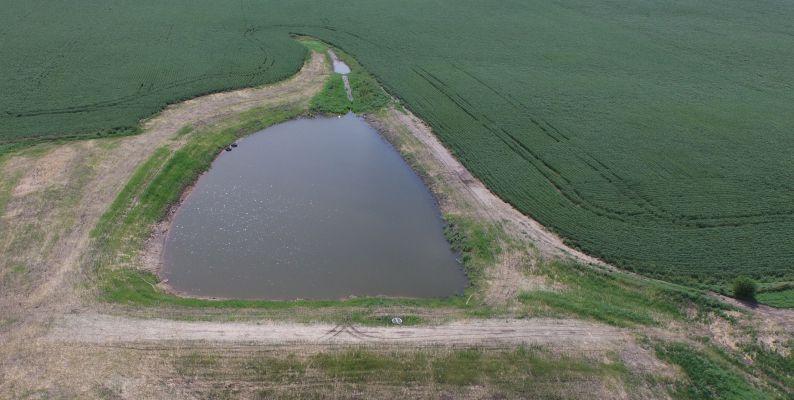
RIGHT: This constructed reservoir is used to store surface runoff and subsurface tile drainage water for irrigation use in southwest Minnesota – a practice referred to as drainage water recycling.
Photo courtesy of Jeff Strock.
drainage water from the field, which is usually in excess during the early months of the year, to an on-farm pond or reservoir where it can be temporarily stored. Later in the summer, when water is often in high demand and rainfall alone is not sufficient to meet crop needs, drainage water that was previously stored in the reservoir can be applied to the field in the form of supplemental irrigation.
In the Midwest, installed drainage water recycling systems have shown the potential for crop yield benefits. Average corn yields managed under a controlled drainage plus sub-irrigation system increased grain yield by 19 percent in Ohio and more than 15 percent in Missouri.
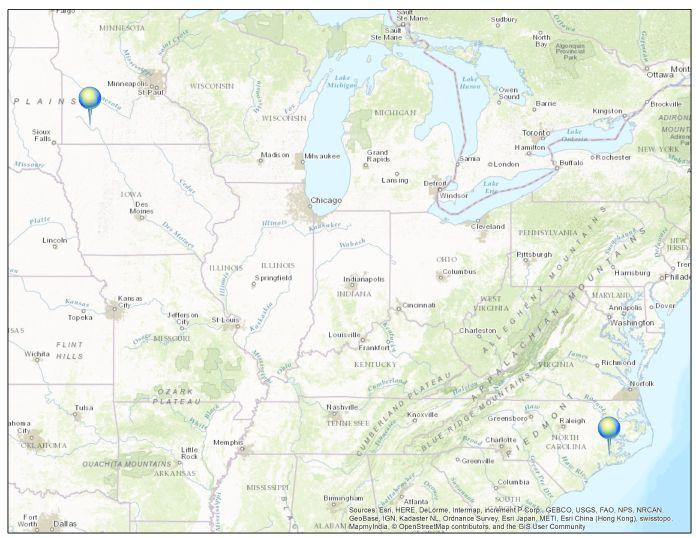
Researchers in Minnesota and North Carolina have installed new experimental sites that will evaluate the performance of drainage water recycling systems in these locations. Insights from these studies will be added to a growing pool of information to better understand how drainage water recycling best fits in the landscape and where the practice can be used to support continued highlevel crop production in the face of variable weather patterns and a drive for more sustainable farming practices.
MINNESOTA
Jeff Strock, a professor at the University of Minnesota, has been working with Brian Hicks of Nettiewyynnt Farms on drainage and agronomic studies in southwest Minnesota for 11 years. “I’ve worked with Brian for a number of years and we have been talking about something like this for a while. Given the amount of relief on-site, it seemed like there was the potential for an embankment pond to store water,” Strock says.
The site consists of a 1.2-acre reservoir capable of storing about five million gallons of water being supplied from drain tile in an adjacent field, as well as some upslope surface runoff. The total irrigated area of the research plots is about 4.5 acres. Following this study, the plan is to provide supplemental irrigation to approximately 50 to 80 acres on the farm. This works out to about 0.2 to 0.3 acre-feet of storage per acre of irrigated area. “Bigger is often better in this case, but it will ultimately
come down to project costs. If you can afford to build more water storage, then this should give you some added safety during those really bad drought years,” Strock says.
The plots will include replicates of three separate treatments in a corn and soybean rotation along with a nondrained control plot. Treatments will include a conventional drainage plot that simulates subsurface tile drainage on an 80-foot spacing, controlled drainage plus sub-irrigation simulated on a 20-foot spacing, and on-surface drip irrigation where tapes will be placed on every other row. The tile drainage system within the research plots was installed at a depth of three feet. “This is shallower than what we would normally install at, but given a little bit heavier soil and the fact that we will be sub-irrigating through the tile lines, Brian and I decided to go shallow,” Strock explains.
Water from the pond will be delivered back on to the field using a pump on a floating platform, powered by a mobile solar panel array. Strock says, “For the sub-irrigation, water will be pumped directly to the water control structures installed at the tile outlet of those treatments. For drip irrigation, we are pumping water to a 6,000-gallon storage tank, which is then used to pressurize the drip irrigation lines.”
“We’re excited to see how the system
will respond given drier conditions. While 2015 and 2016 were relatively wet, we did see some positive crop response on another of our research sites, which uses the drip irrigation, but we expect some bigger gains whenever we get some of those hot and dry summer conditions.”
NORTH CAROLINA
Drainage and irrigation have long been a focus for researchers at North Carolina State University (NC State). Some of the earliest studies on controlled drainage and sub-irrigation systems were carried out in eastern North Carolina.
Mohamed Youssef, a professor at NC State, explains, “This research site has an existing surface drainage channel, which is capable of storing drainage water for us. It’s fairly wide near the outlet, about 75 feet, and it seemed like a good fit for us to conduct a study on drainage water recycling.” The surface area of the pond is 1.3 acres and it stores approximately three million gallons of water. The pond will receive subsurface and surface drainage from the research field, as well as water from a contributing forested area upstream of the experimental site. With the irrigated field area measuring just over 28 acres, this will supply about four inches of supplemental irrigation per acre. The researchers expect the pond will be filled two or three times
This map shows the locations of new drainage water recycling experimental sites in Minnesota and North Carolina.
DRAINAGE MANAGEMENT
during the growing season, which would provide anywhere from eight to 12 inches of supplemental irrigation. Even a few inches of irrigation water to alleviate drought stresses during the summer months could make a big difference in crop yield. At another irrigation research site in eastern North Carolina, just two inches of supplemental irrigation in July 2016 resulted in a 20 percent increase in corn yield compared to nonirrigated treatments.
The drainage channel, which will be used for drainage water storage, runs through the middle of the 56-acre research field. The right half of the field will be drained with shallow surface ditches, roughly 18 to 24 inches deep, which will route surface runoff to the drainage channel during heavy storm events. Drainage water recycling will be implemented on the left half of the field, which will be drained using similar shallow surface ditches and subsurface tile drains installed at a four-foot depth and 60-foot spacing. A riser on one end of the treatment area will allow researchers to pump water from the pond into the subsurface tile system. “By operating a custom- designed water control structure at the outlet, we can switch between subsurface drainage and sub-irrigation modes as needed,” Youssef says.
FUTURE RESEARCH
In Minnesota, researchers will be measuring drain flow into and out of the tile system on an hourly basis. Water quality and
soil water content measurements will also be collected on a weekly schedule.
Strock says, “When we compare these water measurements with crop growth and yield, we will be able to evaluate the impact of drainage and irrigation on corn and soybean systems in a heavier Midwestern soil, and in a climate that is inherently a little wetter, where irrigation hasn’t commonly been implemented,” Strock says. “Collectively, with other research being done in the Midwest region, we can gain a better understanding of the practice of drainage water recycling and where it makes the most sense.”
For Youssef, the practice of drainage water recycling is an interesting prospect for future water quality efforts, as well as for crop production. “The location of our research site – only a few miles from the mouth of the Pamlico River – emphasizes the potential water quality benefits of the practice. In a sense, we are turning harmful nutrient-enriched water into a valuable resource. Our setup will allow us to collect data at different points in the system...inflow and outflow for the pond and drainage systems. Measuring the amount of water moving through these points in the system, as well as the concentration of nutrients and sediment, gives us a more complete picture of how these systems work in improving water management and water quality in agriculture,” Youssef says. “The economic and environmental impacts of these systems are likely going to be tightly linked to annual weather patterns. Understanding how drainage water recycling responds to wet, dry and moderate years will help us determine how this practice fits into the larger agricultural landscape. We want to make agriculture more resilient to weather extremes. This will result in more stable and productive long-term agriculture and could do so in a way that protects the values held by society for environmental priorities such as water quality.”
Managing the risks associated with too much or too little water will continue to be at the forefront of many drainage and irrigation decisions being made by farmers. This new research on the practice of drainage water recycling will provide new insights for managing our water resources in tile-drained landscapes.
For additional work being done on water storage in the Midwest, visit transformingdrainage.org. DC
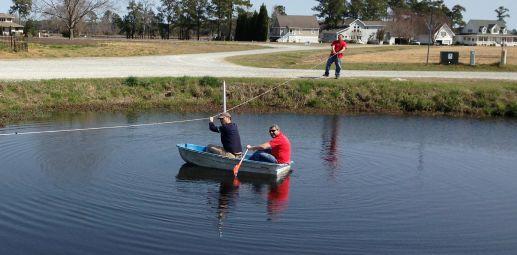
Measuring the depth profile and stage of a drainage water storage pond in North Carolina. From left to right: Shiying Tan, Mohamed Youssef and Chad Poole, North Carolina State University. Photo courtesy of Mohamed Youssef.
THE RIGHT METHODS
Improving crop profits with tile depth and spacing.
At last fall’s International Drainage Symposium in Minneapolis, scientists with Agriculture and Agri-Food Canada (AAFC) presented a study on soil fertility, water quality and its relationship with tile depth and spacing.
by TRUDY KELLY FORSYTHE
The project offers significant optimism about the ability to minimize nitrate and phosphorus losses while managing water in intensive agricultural operations.
Chin Tan, a water management research scientist with AAFC, and Tiequan Zhang, a soil fertility and water quality research scientist also with AAFC, designed and authored the study.
COMPARING TILE DEPTHS AND SPACINGS
In general, soil drainage enhances crop yields on poorly drained land and helps reduce yearto-year variability in crop yields.
“The design of the tile drainage is to remove excess surface water as quickly as possible when there is excess rainfall over and above the storage capacity of soils during early spring,
late autumn and winter,” Tan says. “Good soil drainage is essential to the proper management of wet, fertile soil to be used for agricultural production. Proper management of drainage also plays a major role in improving the water quality from agricultural land.”
The study took place over a four-year period and compared two different tile drain depths and spacings for regular free drainage (RFD) and controlled drainage/sub-irrigation (CDS) systems in a corn and soybean rotation. The theory, based on previous reports that reduced tile spacing led to an increase in tile drainage volume, was that subsurface tile spacing and depth affected the efficacy of tile drainage practices.
According to Zhang, a direct correlation between decreased tile drainage volume and
RIGHT: Tile drainage generally enhances crop yields on poorly drained land and helps reduce year-to-year variability in yields.
decreased tile depth was also observed in eastern Illinois fields under corn and soybean rotation. This was supported by field studies in both central Ohio and Nova Scotia, which indicated annual nitrate losses for shallow drain depth were reduced by 38 to 40 percent compared to losses for the deeper drain depth.
EVALUATING COMMON PRACTICES
The first objective of the study was to evaluate two common tile drain spacings – 4.2 meters (13.8 feet) versus 7.5 meters (24.6 feet) apart at a similar tile drain depth of 0.65 meters (2.1 feet) – and their impact on surface and sub-surface tile nitrate and phosphorus losses. The second objective was to evaluate two different tile drain depths – 0.65 meters versus 0.85 meters (2.8 feet) using an average tile spacing of 4.2 meters – and their impact on surface and sub-surface tile nitrate and phosphorus losses.
The conclusion was clear. “There are optimal combinations of tile drain depth and spacing that can reduce total drain
discharge and nutrient losses (surface and sub-surface) while avoiding large reductions in crop yields,” Zhang says.
IMPORTANT WORK
It’s critically important to reduce the loading of lakes and rivers with the runoff of farm nutrients, which have led to increased concerns about water quality issues. Additionally, for farmers, runoff literally ends up washing away their crop nutrients.
“It is our obligation to develop new technologies that enable farmers to grow crops in a profitable, as well as environmentally sustainable, manner,” Tan says. “Optimized tile spacing and depth must be determined, although it is notable that the optimums can vary, depending on the soil type and climate conditions.”
Tan adds there was also another reason to conduct the study. “It is related to the efficacy of a new technology: closedloop controlled drainage with sub-irrigation that we developed in the past,” he explains. “With more and more frequent
High Production Digging From H & S Company, Inc.
MANAGEMENT
incidence of drought during the growing season and excessive rainfall during the non-growing season, there have been increasing demands for best management practices that enable farming to adapt for climate change.
“The closed-loop water recycling system can be used to subirrigate crops during drought-stress periods by using the field surface and sub-surface runoff water stored in reservoir.”
There were still concerns, however, that the 7.5-meter tile spacing was too wide for crop root zones to make use of the sub-irrigation water using this type of technology. Additionally, the shallow tile depth of 0.65 meters appeared to limit the amount of water stored in the soil profile.
“Fine-tuning the tile space and depth were necessary to maximize the performance efficiency of this new technology,” Zhang says.
RESULTS
The study found that for RFD systems, an increase in tile spacing from 4.2 meters to 7.5 meters increased total combined surface and sub-surface drain water discharges by 10 percent but reduced total nitrate loss by 28 percent. When the tile drain depth was increased from 0.65 to 0.85 meters, the result was increasing total combined surface and sub-surface drain water discharges and nitrate loss by 58 and 39 percent, respectively.
In the RFD system, it was also evident that decreasing tile drain depth reduced dissolved reactive phosphorus (DRP) and
total phosphorus (TP) losses. There appeared to be a greater effect from tile depth than spacing on both DRP and TP losses.
“Under the RFD system, tile drain depth affected tile drain water discharge and nitrate and phosphorus losses more than tile drain spacing,” Tan says.
For the CDS system, an increase in tile spacing from 4.2 to 7.5 meters increased the total combined surface and subsurface drain water discharge by 20 percent but reduced total nitrate loss by 109 percent. When the tile drain depth was increased from 0.65 to 0.85 meters, it resulted in increasing total combined surface and sub-surface drain water discharges by 59 percent, but at similar total nitrate losses.
“Under both RFD and CDS systems, decreasing tile drain depth could be highly effective for reducing excess nitrate and phosphorus loading from agricultural fields entering the lakes under our soil and climate conditions, if drainage needs for agricultural production are satisfied,” Zhang says. “In addition, we have also found that CDS enhanced reduction of soil phosphorus loss, if combined with cover crops.”
Both scientists indicate tile drain depth and spacing could affect crop yields: Measured yields for shallow drains in the Ohio study were reduced by eight percent from 35 percent compared to the deeper drain depth. It’s also worth noting that shallow drain depth requires a closer drain spacing, which can increase drainage costs for farmers.
Studies have found a direct correlation between decreased tile drainage volume and decreased tile depth in corn and soybeans.
NEXT STEPS
The next step is to look at how drainage density can impact nutrient losses, specifically nitrogen and phosphorus, from agricultural lands. Tan says this may differ depending on weather, soil, cultural and crop factors and drainage density (such as tile depth and spacing).
“It is recommended that various field studies – under a wide range of soils, crops and climatological conditions – be conducted to determine the effect of tile drain depth and spacing on nutrient losses and crop production from agricultural drained lands,” he says.
The study could have important implications for drainage contractors. Tile drainage has been recognized as a major pathway for phosphorus loss. This additional research could provide new formulas for contractors laying tile. The end
result could be improved water and nutrient management on millions of hectares of agricultural lands in North America.
However, the scientists say one important piece of research is missing, namely the effect of tile space and depth on pesticides and carbon movement and the losses from soil to water.
“This piece of work is very important in view of water quality effects, although it may not be economically meaningful,” Tan says. “Research on drainage design optimization, like space and depth fine-tuning, is [challenging] and very costly in general because of expensive monitoring and analyses of water quality parameters.”
But, he concludes, considering the significant value of adapting to climate change and ensuring crop production is sustainable, it is worthy of enhancement. DC
“The Best In Earth”
NEW PRODUCTS
FARM DRAINAGE APPS FOR ANDROID
Schlatter’s Inc. recently released IWM Locate Lite and IWM Locate Pro – two apps for Android-based devices.
The apps use the GPS position of a smartphone or tablet to locate tile lines in the field. IWM Locate has the ability to load line features in Trimble drainage planned and drainage completed formats, ArcView shapefile formats, as well as Google Earth KML file format. Once the line features are loaded, the user can locate the lines using the internal GPS receiver or a compatible external bluetooth GPS receiver. IWM Locate also uses an Internet connection to automatically load background images using Google Earth imagery.
The pro version of the app gives the user the ability to touch a line and display attribute information such as tile length, size, name and outlet depth, where available.
IWM Locate Lite and Pro are now available for download from Google Play.
For more information, visit schlattersinc.com.
775DT TRENCHER FROM TESMEC
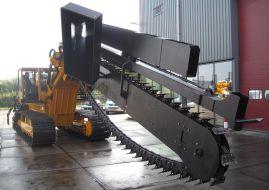
Tesmec has engineered a series of trenchers and surface miners for use in many fundamental agricultural applications, such as installing agricultural drainage by excavating trenches with controlled slopes and constructing irrigation networks through a grid of trenches.
The 775DT is the first “light” Tesmec chainsaw trencher specifically developed for dirt excavation and drainage works. It’s a lightweight and robust machine offering transportability, productivity and reliability, plus low ground pressure, high floating capability, and a user-friendly TrenchTronic 3.1 electronic control system, making operation easier and less dependent on operator skill.
A bucket wheel version of the 775DT is also available, offering even more
productivity in terms of yards per hour with the same tractor, powered by a 225 horsepower CAT engine.
For more information, visit tesmec.com.
TRIMBLE LAUNCHES VERTICALPOINT RTK SYSTEM
Trimble has launched a world-first, patent-pending VerticalPoint RTK system for grade control in agriculture. The system provides enhanced vertical accuracy and stability of standard single-baseline RTK systems, reducing downtime.
When vertical accuracy inconsistencies occur, contractors must wait until the vertical signal is once again accurate to re-start leveling. VerticalPoint RTK significantly reduces vertical design errors in leveling and land forming projects, which occur due to inconsistent vertical GPS signals resulting from atmospheric interference. With VerticalPoint RTK, contractors can experience an approximate 25 percent increase in overall uptime. Currently the industry experiences about 75 percent uptime; however, with VerticalPoint RTK uptime can increase to approximately 95 percent. In addition, this increase in uptime occurs even in the most challenging environments and at any time of year.
VerticalPoint RTK is currently available in North America and Australia as an unlock on the Trimble FmX integrated and TMX-
2050 displays and works in combination with the Trimble FieldLevel II system, which streamlines the surveying, designing and leveling steps required for land leveling projects.
For more information, visit trimble.com/agriculture/ verticalpoint-rtk.
PRECISION LAND SOLUTIONS LAUNCHES V-PLOW
Precision Land Solutions, of Winkler, MB, recently launched its version of the V-plow. This method of installation uses a V-shaped shank rather than the traditional single leg. Pipe is fed down one side of the V, and as a result, soil is lifted and lowered back down in place rather than being ripped up and out of the trench. V-plows are commonplace and are the generally accepted installation practice in Europe, known among farmers for their low disturbance method of tile installation. Fields are easily trafficable after install without any trench closing.
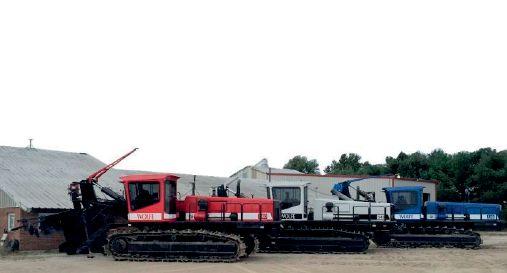
Precision has been testing their prototype for the last two seasons and the method has shown key advantages to some customers, who are now requesting only V-plow style installation. Since launching the prototype, Precision now offers custom built V-plows to fit both Bron and Wolfe traction units. The plow is capable of installing four-inch and six-inch pipe up to six feet deep. For more information, visit plsinc.ca.
On May 9, 1942, Farm Services Ltd. was given a certification of incorporation under the 1929 Companies Act – this was the date the company was founded.
Seventy-five years ago a local miller and a local forester decided to start a business offering contracting services to local farmers. At the time, Britain was fighting a rearguard action in the Second World War and domestic life had been greatly disrupted. The incorporation certification demonstrates this: it was signed in Llandudno, a small town in northwest Wales, rather than in London, as many parts of the British civil service were evacuated there for the duration of the war. I can only imagine the difficulties in finding staff and machinery in a time of war and rationing. Nevertheless, the company survived and expanded. Once the war was over, the company found a new service that eventually became its sole focus: land drainage.
My grandfather joined the company as general manager in 1957 and started the association between Farm Services and my family, which continues to this day. My father joined the company in 1982 and I joined in 2001. Over the years, my father and grandfather built up a shareholding and now our family owns nearly all of the company.
I’m sure this story sounds familiar. The vast majority of drainage companies are family-owned and they are normally passed on from father to son (sometimes daughters are involved too). This is a great strength – after all, the business has a succession plan and the continuity offered is a considerable advantage. In addition, the business is always more than just a job when it’s a family business. The commitment to the cause shown by family members is often extremely high. This commitment and willingness to go the extra mile are massive advantages and can make the difference between a failing company and a successful one. Nor should the marketing advantages be overlooked. I know from my own experience that everyone loves a story that starts with “As my grandfather told me...” or “I found the drain my grandfather installed and it was
running clear as a bell.”
However, there are problems that come with a family business, too. Emotions can often run high in families and I’m sure many of you know of family members who do not speak to one another. There can also be problems when work is brought home or when family members involved in the business become too domineering. The older generation often struggles to let go, whilst younger family members want more and more influence. I suspect the isolating effect of working for only one company can be the biggest problem. Of the few drainage courses that exist in Europe, none would suggest that they qualified an individual to be a drainage contractor upon completion. The only way to learn is by learning from a contractor, and while the situation may not be as bad in North America, it is not too dissimilar. My father and my grandfather taught me, and I doubt I could have had a better education, but like my father, all of my knowledge comes from one source. That source might be an excellent one, but it can stifle progress. When asked “why are you doing it this way,” many, if not most will answer, “that’s the way we have always done it,” or “that way works for us.” This may be true, but without questioning how we are presently doing something, it is not possible to improve. I have tried to make a conscious effort to address this issue, both by talking to as many contractors as I can and by completing a Nuffield Scholarship, yet I suspect that I still do not push change and innovation as much as I should.
I’m convinced it is only by adapting and being willing to accept new ideas that the company will survive for another 75 years. I feel a weight of responsibility for the company; it has a long history and I feel that I’m a guardian of that past. I need to respect the foundations of the company and understand what has made it successful in the past, but this must add to how I run the company rather than dictate it. To truly respect that tradition, I believe that I need to change with the times and not stand still whilst the world moves on. DC
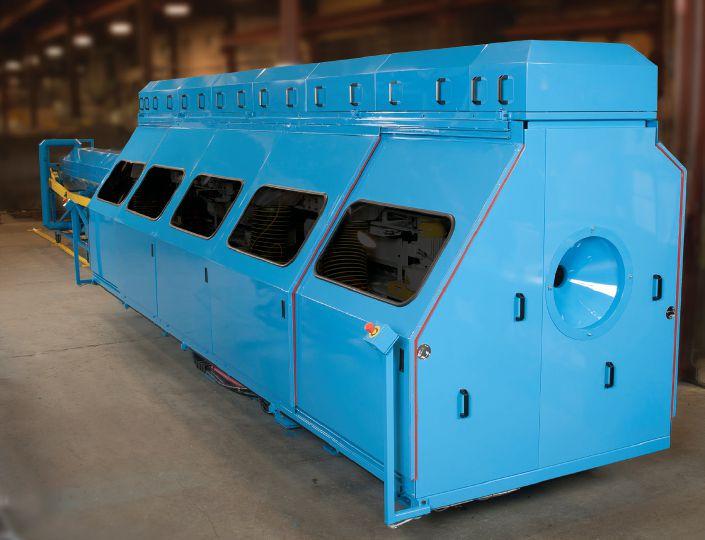
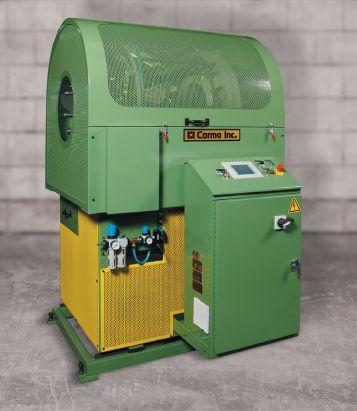
Since 1973, Corma Inc. has continuously innovated to meet the evolving demands of our customers. For example, our 630-12 and 830-12 High Speed Corrugators combined with our HSC Series 2 Adjustable Perforators will produce high quality 4" single wall HDPE pipes at high output rates up to 2,300 lbs/hr and 115' per minute. To learn how we can make a positive impact on your business, please contact: 830-12 Corrugator 2" (50 mm) I.D. to 12" (300 mm) O.D.
A cent y of drainage inn ati
We pioneered virgin pipe production over 50 years ago. Today, we still o er the most durable 100% virgin pipe on the planet. The durability of dual wall meets the simple installation of flexible pipe. Lay Smooth-Corr pipe easier than ever before.