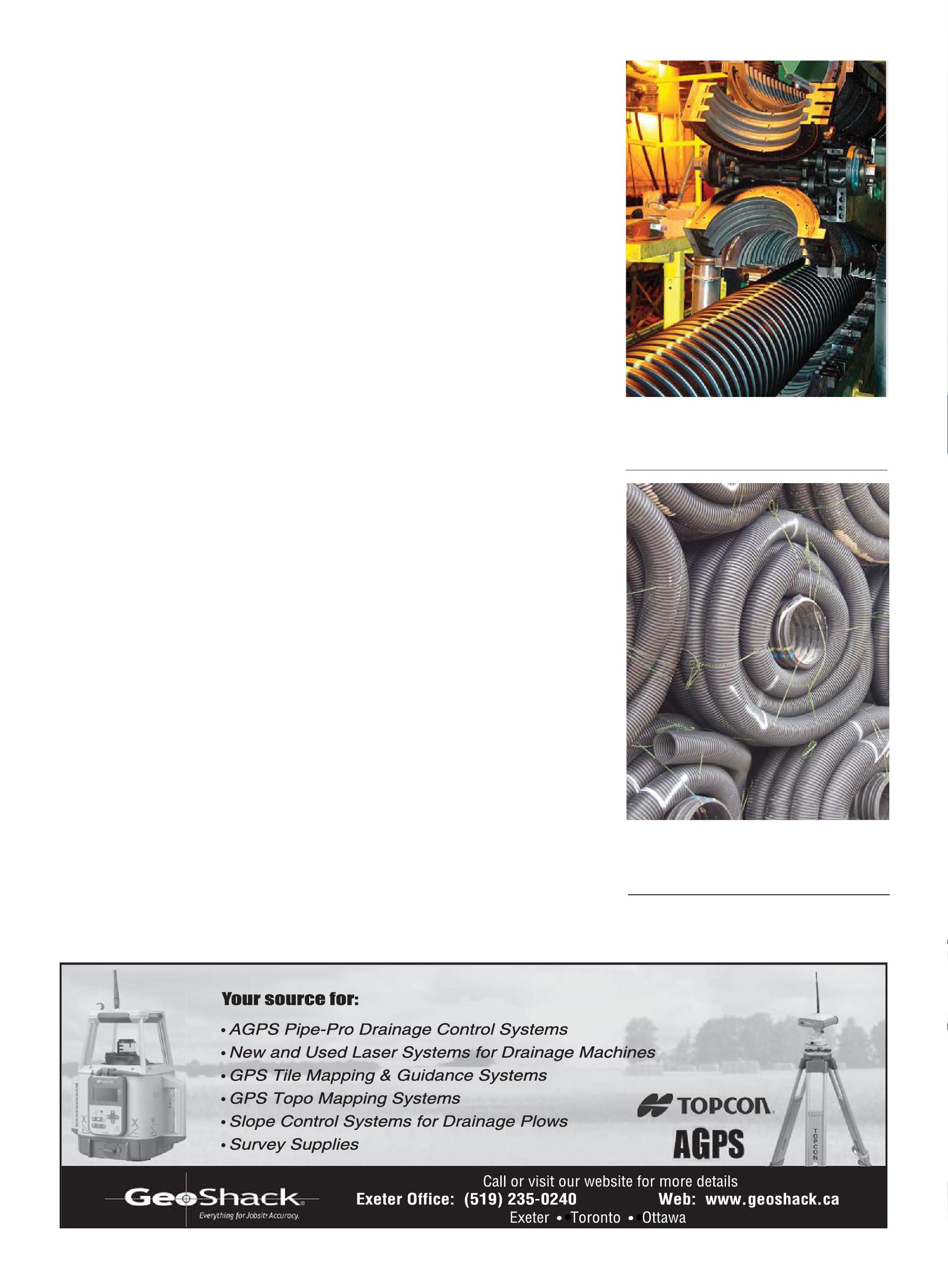
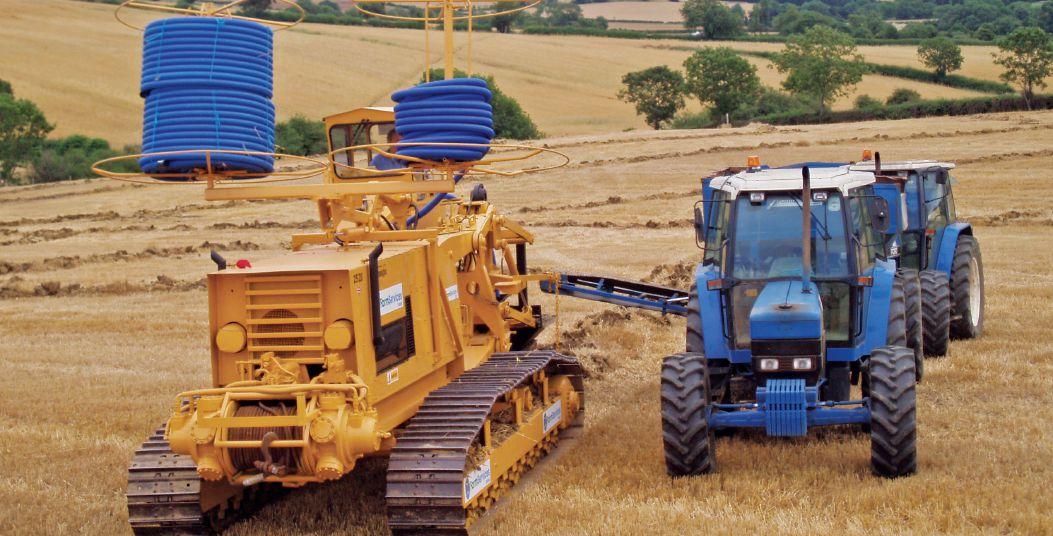
a behind-the-scenes look at how drainage tile is made.
by ste FaN ie Cr
O leY
As a drainage or land improvement contractor, you know the general ins and outs of installing pipe. But did you ever wonder what it takes to make the giant coils of tile you receive? It’s not often you get a behind-thescenes look at how pipe is made, from start to finish. Drainage Contractor took a tour of ADS Pipe’s Heidelberg, Ont., plant, to get a handson look at what it takes to turn raw materials into coils of drainage pipe.
The three lines of the Heidelberg plant mainly run agricultural and commercial pipe. High-density polyethylene material is set at a let-down ratio to ensure the formula meets
quality standards.
“Based on specifications, we look to meet standard ASTMF405 for our four- to eight-inch single-wall pipe,” says Nathaniel Johnston, quality manager. “Ten-, 12- and 15-inch pipe meet the ASTMF2648 standard.”
Each provincial or state association also has its own set of quality specifications, and pipe is made to meet the necessary regulations. Once the material is mixed to the desired standard, it enters the extruder where it flows through the machine and is melted down. From there, it enters a diehead, where it begins to be formed.
Continued on page 16
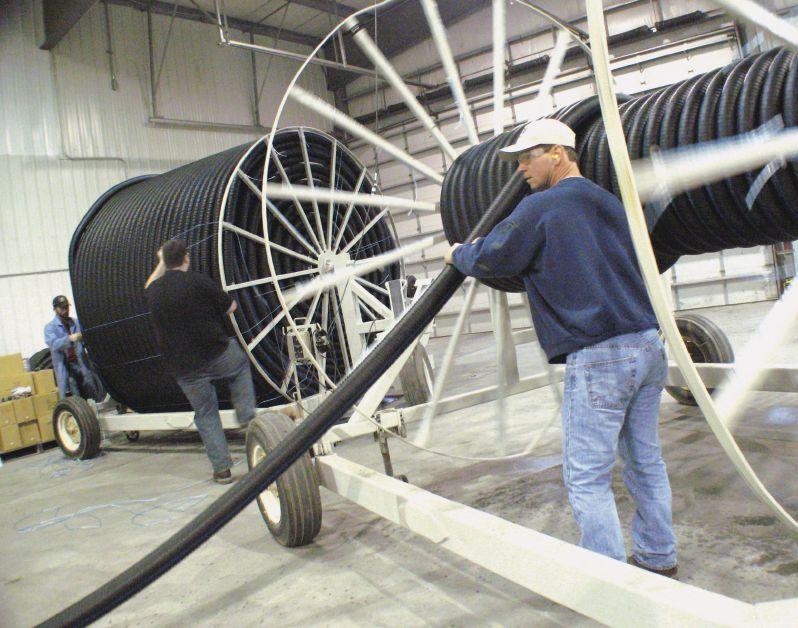
Four-inch pipe is coiled up into a maxi before it enters the yard for delivery. Photo courtesy ads Pipe.
Continuing su CC ess
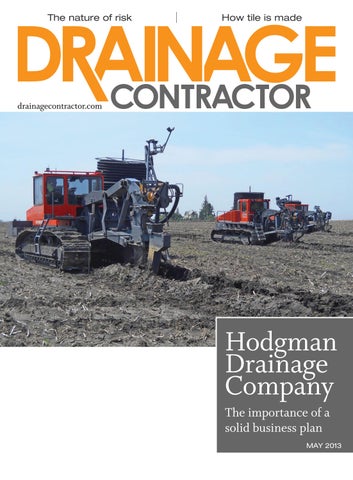
hodgman drainage knows the importance of a solid plan.
by tree Na Hei N
there are few business stories out there where the importance of solid planning is as evident as it is in the story of h odgman d rainage of Claremont, m inn. wise plans and careful management by members of this family-owned business have allowed the company – even during very difficult times – to maintain its position and prosper.
Hodgman Drainage Company was established in 1982 by Don Hodgman with the help of his son Scott. Shortly after, Don’s other son Dan joined the operation.
In 1994, the company was incorporated, which changed the ownership structure to include Scott and Dan as owners. By 2003, Don was ready to retire from the business and Scott and Dan continued day-to-day operations. Throughout the past 30 years, the company has grown and changed not only in
size of workforce, which averages about 30 employees year-round, but also in areas of expertise.
“Initially the focus of operations revolved around farm drainage, but has since grown to encompass earthmoving, site preparations, aggregates and municipal sewer and water projects,” notes Dan. “Farm drainage, however, remains the main focus.” The first tile machine the Hodgmans used was a sevenfoot Zor plow mounted on a Steiger Tiger
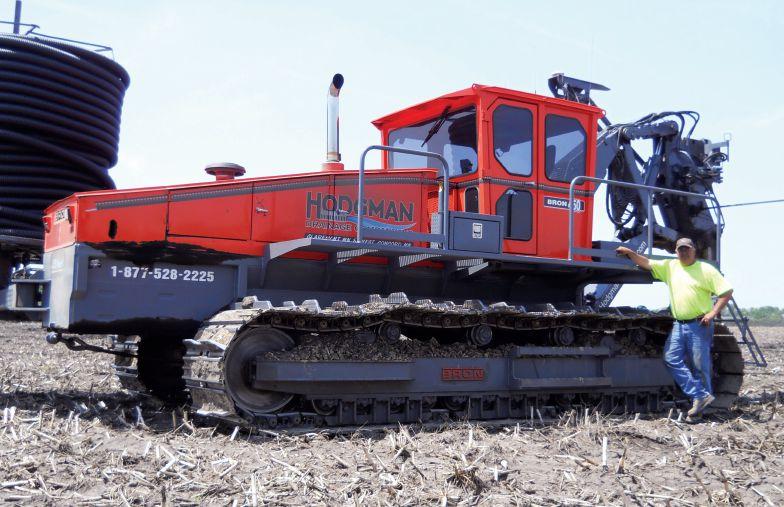
Frank Hodgman Jr., cousin of scott and dan Hodgman, with an rWF Bron drainage plow. Photos courtesy Hodgman drainage.
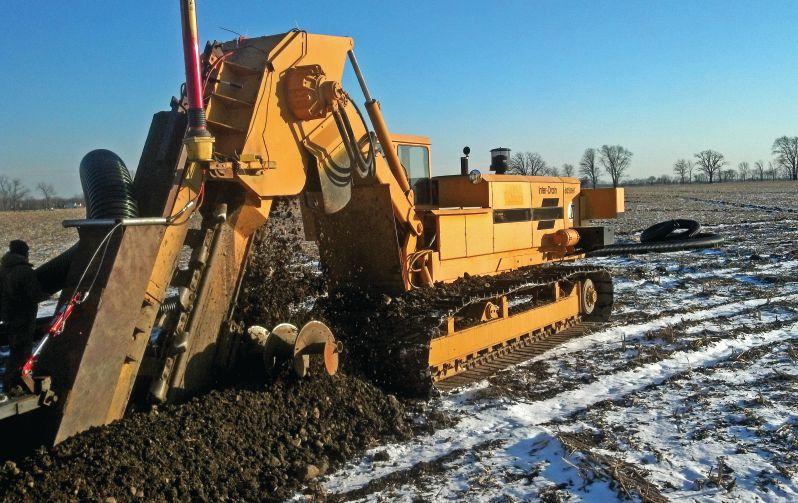
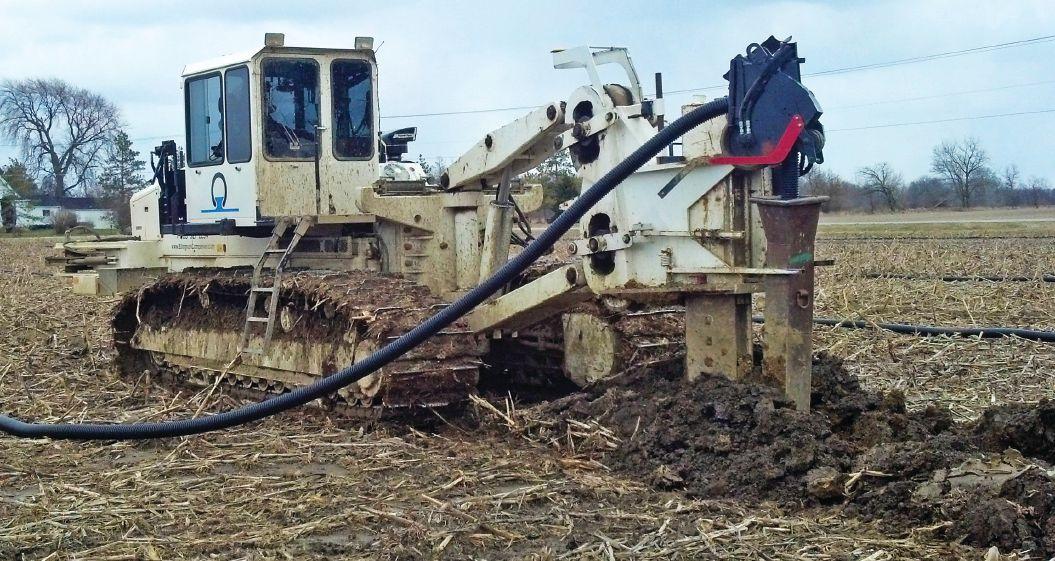
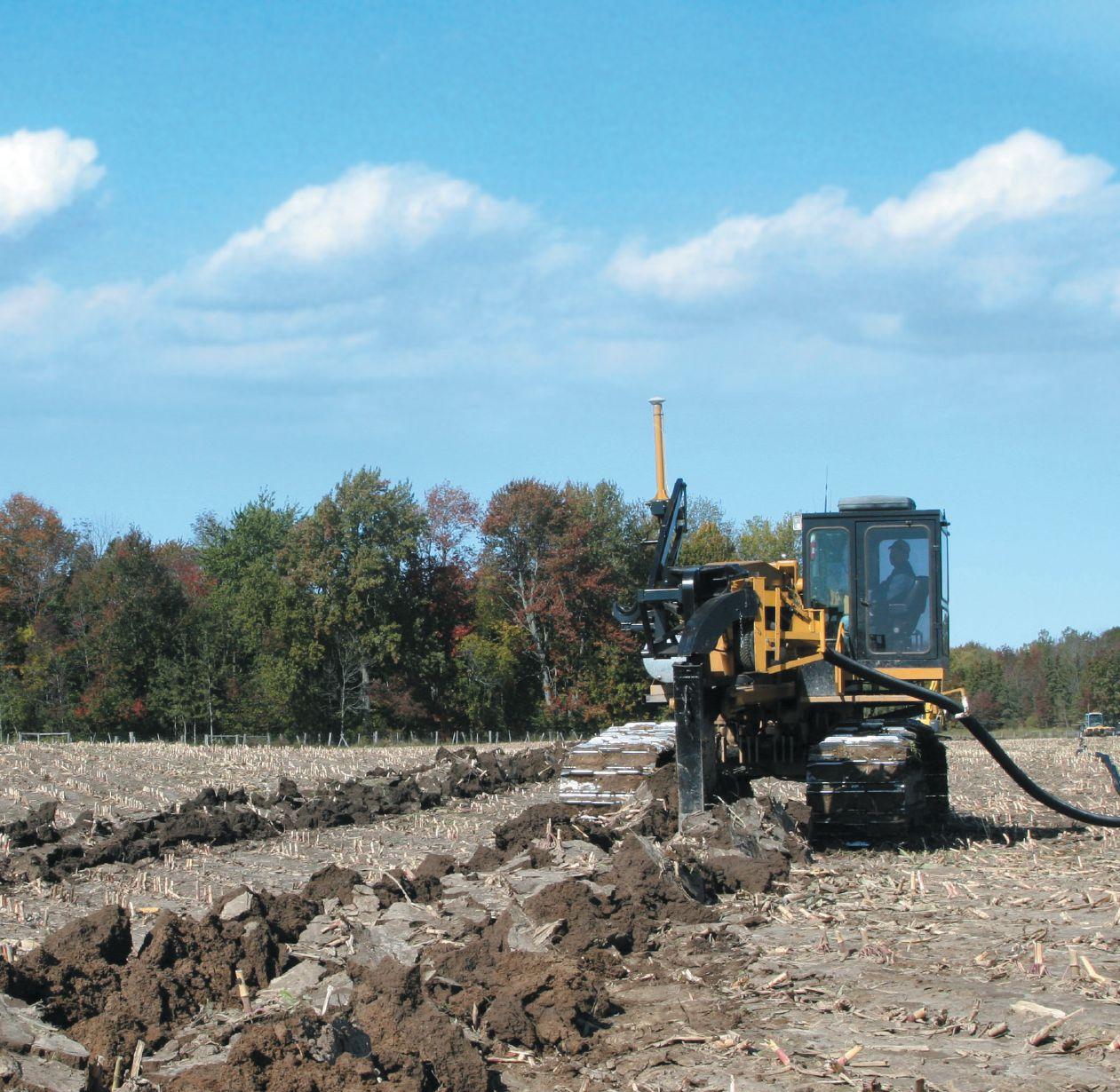
four-wheel drive tractor. “We then went to mounting Zor plows on D-8 Caterpillar crawlers,” Dan remembers. “Since 2002, we’ve used self-contained drainage plows made by Interdrain and Bron.” The self-contained plows they now employ incorporate the use of GPS technology, which Dan says allows for precise, accurate and efficient grade control of tile installation. “The yield monitors for crops that farmers use today also guide us in identifying issues and pinpointing trouble areas on farms,” he says. “All this improved technology enables us to design drainage systems to custom fit each farmer’s needs and provide specific mapping for future reference.”
In 2003, as Don retired, Scott and Dan began the buyout process of Don’s stocks. With the death of Scott Hodgman in November 2012 in a tragic automobile accident, another buyout process began, which will result in Dan becoming the sole owner of the corporation.
Exp E rt h E lp
“Fortunately, through the wise direction of our consultants [at a company formerly called AgStar and now called Lookout Ridge], a buy-sell agreement was put in place in 2003,” notes Dan. “At the time, we had no thoughts of actually having to exercise the agreement, but it has provided a fortunate road map for the future of this company in a time of sorrow.” Through the transition, the company is accessing help from a circle of knowledgeable experts in the areas of insurance (RJF, a Marsh & McLennan agency), business consulting (GROW, the family business advisors), financial consulting (Lookout Ridge and CliftonLarsonAllen), and a variety of legal experts.
The agreement is a plan for moving forward that has allowed the firm to maintain stability and allowed all involved to have certainty that the company would survive. “This has been very important for our customers and our employees,” Dan says. “Though Scott’s role in the company can never be duplicated, our employees have instinctively stepped up to fill the gap left by Scott’s death. We cannot be more proud or pleased with our people, several of whom have been here with us
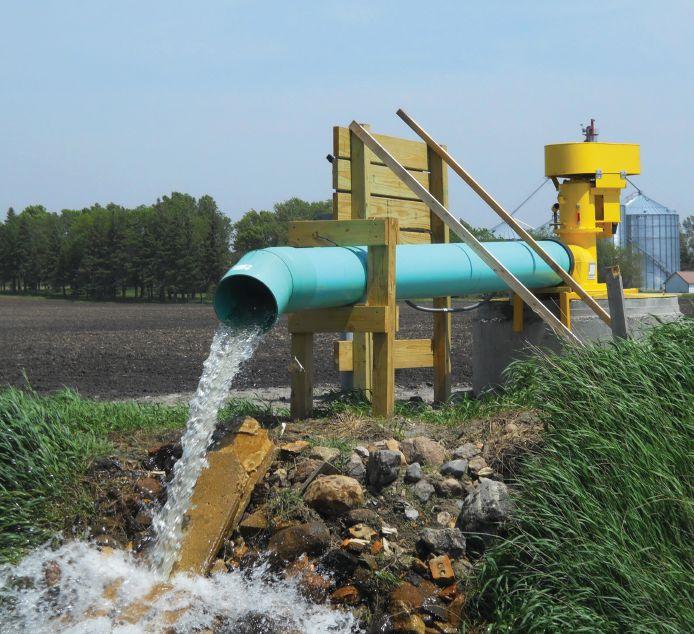
a farm of approximtely 160 acres is drained into this lift station pump in southeast minnesota, which was installed because the farm lacked an adequate gravity flow outlet.
Crews reviewing drainage maps and plans of drainage system to be installed.
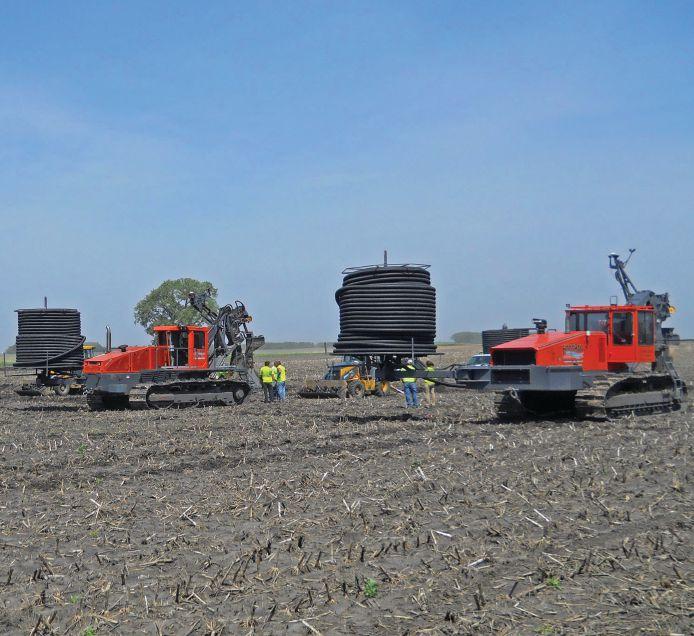
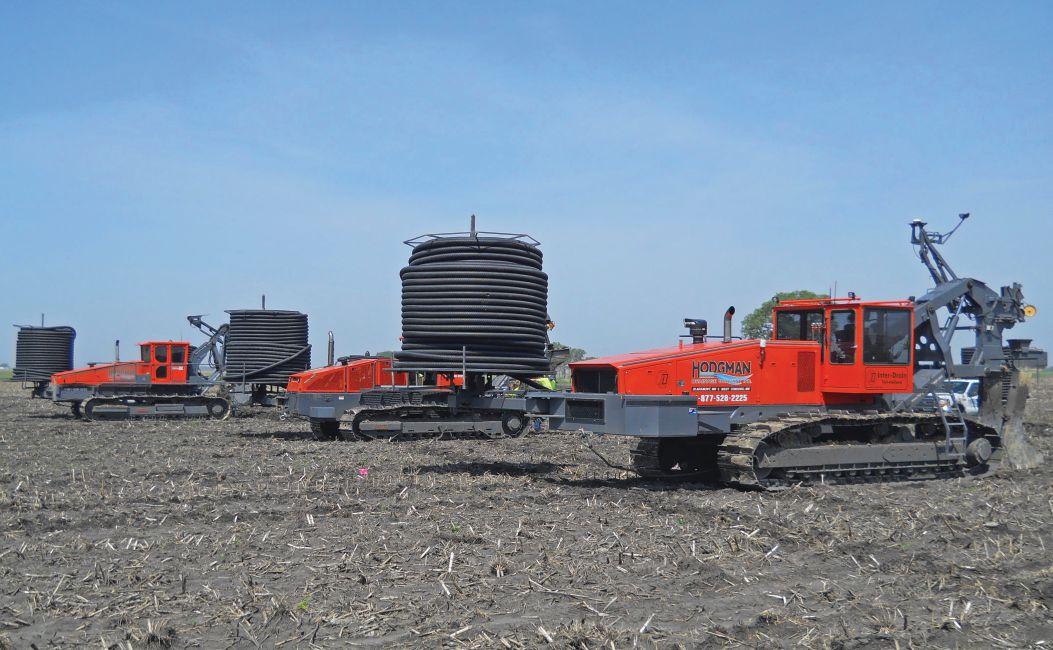
Hodgman completed this large drainage project of approximately 220 acres in one day with one interdrain 2050 g P drainage plow and two rWF Bron 450 drainage plows.
for 15 years or more.”
Dan considers each employee a critical component to the company, each one making their own unique contribution to the big picture. To reach the goals of quality jobs and satisfied customers, everyone fulfills their roles and works together. Several family members are employed at HDC, including a cousin, three nephews, one niece, one of Dan’s sons, and Dan’s wife, Lori. “The dynamics of family businesses can be challenging but also extremely rewarding, because we are in this together and we succeed or fail together,” Dan says. “The nonfamily employees of HDC are equally as important, and we could not have the success we’ve experienced without our quality, committed people. Having been in business for more than 30 years, we’ve experienced great technological changes, regulatory and other changes, yet thankfully several of our employees, family and non-family, have made a good share of the journey with us.”
Dan notes that during the time since Scott’s death, the employees have not wavered in their commitment to Hodgman Drainage and its future
success. “For that, we are truly grateful,” he says, “and we are anxious and excited to turn the page in the history of Hodgman Drainage towards new opportunities and growth.”
N E w i N v E stm ENts
Hodgman Drainage is now looking forward to the delivery of two 2013 Interdrain 2050 GP self-contained tile plows, which were purchased through Northland Trenching in Waseca, Minn. “We’re making this purchase because we need to stay current with new technology and equipment in our industry,” says Dan. “We chose Northland Trenching because they are well known for great customer service. We’ve had excellent experiences with them and with Interdrain as well.” With the purchase of these plows, the company’s team will accomplish faster, more efficient installation, better accuracy of installation, and better dependability in keeping up with demands for pattern tiling to improve cropland and increase yields.
“As we move forward, Hodgman Drainage will continue to be innovative and employ cutting-edge technology
in all our operational areas,” says Dan. “To be competitive, you have to stay current and that’s what we strive for in order to bring value to our customers and to provide opportunities for our employees.”
Along with staying current in technology and education, the company will also be breaking ground sometime this year for a new shop and office complex between Claremont and Dodge Center, Minn. “Our plans are to build a 110-foot by 160-foot shop with additional space for an office,” Dan notes. “This plan was in the works prior to the automobile accident and it will move forward to allow for a better working environment for our employees and customers.
“We are committed to growing the business and capturing new opportunities,” Dan adds. “With this additional, updated space, we hope to meet the challenges ahead and find continuing success in the world of agriculture.” dC
For more contractor news, visit the contractor at Work page at www.drainagecontractor.com.
Company on the move
As we head into 2013 at full steam, our focus at Wolfe Heavy Equipment is on the future. We will continue to deliver on the needs of our loyal customers, continue to grow our brand and provide more and improved options, features and streamlined processes. In 2012 we launched our new website and introduced our new logo. The new face of Wolfe reflects a refreshing new strategy for our brand which is focused on helping you to deliver at a higher level of performance. As we move forward in 2013, investment in technologies and designs to help achieve operational efficiencies will continue to be our priority.
In June of 2012, we moved into our new 48,000 square foot, state-of-the-art manufacturing facility in Strathroy, Ontario. This move marked the start of a new and exciting phase for Wolfe. We expanded our operations to meet the increasing needs and demands of our clients, as well as to enhance the effectiveness and productivity of our manufacturing operations. All with the goal of improving the overall customer experience in mind.
At Wolfe, we don’t stand still and we don’t watch the world pass us by. We believe that change is good and that there is always room for improvements. With all the advancements that we have done in our Manufacturing, Operations and Quality Control, it was time for us to take a look at our machines themselves and how we could give them a little “facelift” so to speak.
Our objective with all of the design changes was to keep things simple, easy to use and maintain, and incorporate readily available parts for easier field repair.
These enhancements bring additional capabilities, comfort, accuracy and safety to our machines. Our focus, as is always the case, is to enable our customers to increase their bottom line without sacrificing quality or performance.
For the latest Wolfe product news, information and updates go to WolfeEquipment.com or facebook.com/WolfeHeavyEquipment
The new Wolfe Heavy Equipment facility has six overhead cranes (the old facility contained only one). More overhead cranes enables us to produce multiple machines simultaneously, at different stages. Allowing for a much more efficient manufacturing process and decrease in machine delivery times.
In our new facility, welding is completely separate from the assembly process. This ensures that the assembly of the machines is completed in a cleaner environment, which is essential in reducing the possibility of debris getting into the hydraulic systems and engines.
Painting is now completed prior to assembly, guaranteeing that the hoses and wires are not painted. This provides a much higher quality and more durable paint job on the machines.
Overall improved quality assurance systems have been put into place. These quality checks help eliminate the possibility of items being missed and promote the highest quality machine possible.
“Stand still and you will watch the world pass you by.”
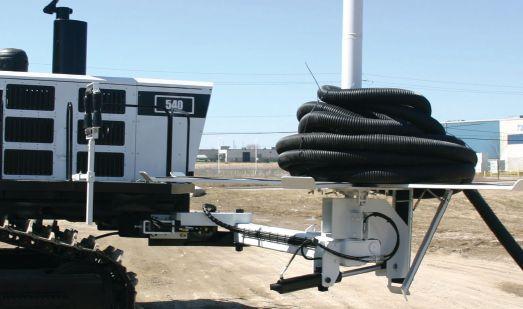
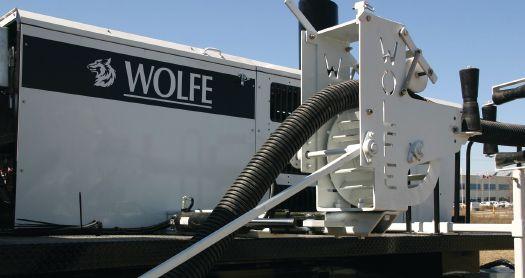
New, compact Tile Reel design keeps an even arm speed throughout the complete swing and incorporates readily available parts for easier field repair.
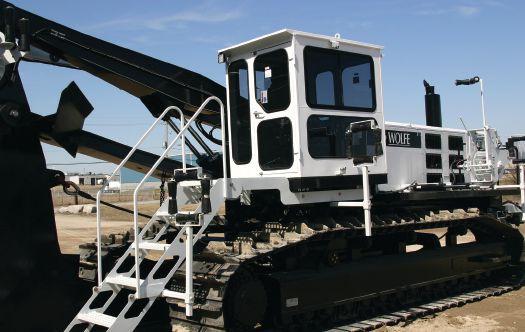
The Wolfe 540 Drainage Plow with redesigned back step and Air Ride Cab
The Tile Puller features a heavy design
Tile Puller
PIPE PRIMER
Continued from page 8
The pipe continues to flow through into a corrugator, the piece of equipment that holds a clamshell mold to complete the pipe’s formation. “That machine comes in various sizes and molds, and the mold can be changed to fit whatever size is needed, depending on what the customer has ordered,” explains Brad Billings, plant manager.
After it exits the corrugator, the pipe goes through a cooling process (water is used at ADS, but air cooling is also common at other manufacturers).
Depending on the customer’s order, a perforation process is next. Water is wicked off and the pipe is perforated at the customer’s request. “If someone calls and says they want solid pipe, we would skip that piece of machinery,” explains Johnston. There are different perforators for different applications: fine slots for sandy applications, muck, for swampy areas, or regular perforation for standard applications. “Different markets require different perforations, and certain perforations are accepted more in different regions,” explains Jamie Turvey, Ontario agricultural sales representative at ADS.
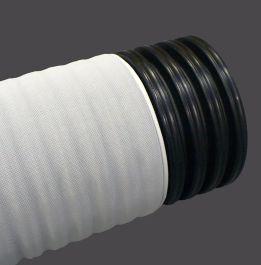
After the perforator, the pipe continues down the line through a puller to keep it moving, before it enters the packaging stage. If necessary, the pipe will go through a sock machine. “If a farmer found his land was sandy in a test hole, he’ll order a sock so the sand doesn’t get into the pipe,” explains Billings. In the packaging stage, if there are any flaws noticed in the
pipe, the linesman will cut out the imperfection and fit it with a coupler.
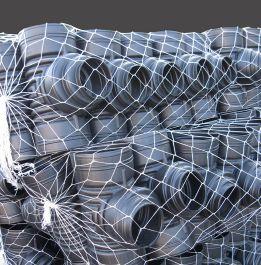
At this point, the pipe is packaged into large maxi-coils or smaller sizes at customer preference, and transferred to the yard to fulfill the customer’s order.
The process itself is straightforward, but lots of time is spent on the line on quality control, ensuring pipe is manufactured to meet certain standards. “Even the raw materials are tested to make sure the specification sheet provided by the vendor matches up with the plant’s testing,” Johnston says. At ADS, samples are taken every hour and are recorded in a database and on a sample board. Measurements of each aspect of the pipe are taken, and pipe is subjected to several tests to ensure its durability, including a TUP or impact test to ensure the pipe doesn’t break or crack when it’s subjected to pressure, and a freezer test to ensure the pipe can stand freezing temperatures. Random samples are also sent to ADS’s quality lab in Ohio to ensure the information in the local plant’s database correlates with the lab’s test results.
“Some of this pipe made today might not be used until July,” says Turvey. “There’s a database that tells us what we produced, when and where it was produced, for future reference if needed.”
By the time the tile reaches the customer to fulfill its purpose, the drainage pipe has – quite literally – been put through the ringer to make sure it’s fit for the job. DC
For more exclusive interviews, visit www.drainagecontractor.com
Formed pipe makes its way through a large-diameter corrugator. Photo courtesy ADS Pipe.
Maxi coils in the yard before being sent to their final destination. Photo by Stefanie Croley.
sC hol A rly tr Avels
drainage research leaves nuffield scholar positive.
rby JeaN i N e mOYer
ob Burtonshaw, a third-generation drainage contractor, has dedicated the past year to the study of land drainage. his passion
the business came naturally, but his pursuit to learn
niques, find innovative technologies and talk to
is what makes him stand apart.
Burtonshaw is committed to studying land drainage and its role in farming’s future. In 2012, he was named one of approximately 75 Nuffield scholars worldwide. He is the first Nuffield scholar to focus solely on land drainage, and the award provides his travel funds for one year to bring new ideas back to Britain’s farmers and drainage industry.
Burtonshaw shared his learning experiences and preliminary outcomes with Drainage Contractor magazine in our November 2012 issue. His final research and conclusions will be presented to the Nuffield Annual Conference in November 2013. Until then, he continues to travel – talking to farmers, equipment manufacturers, researchers, and contractors – about what he knows best: land and field
drainage.
for
new tech-
industry professionals
DC: What is the land drainage industry like in your area (United Kingdom)?
RB: Agricultural land drainage in the U.K. has been shaped by the introduction and removal of government grants. After the Second World War, British policy focused on increasing agriculture production, and drainage was subject to grants, encouraging farmers to drain their land and increase yields. However, during the 1980s, the British government changed its policy and the grants were removed, but not before farmers invested heavily in land drainage, taking advantage of the grants while they were still available. Since then, very few hectares of land have been drained in the U.K. Farmers in our area experienced one of the
rob Burtonshaw, left, toured drainage projects in iowa with Kevin shimp of Port industries. Photo courtesy rob Burtonshaw.
wettest years on record this past year, exposing many old drainage problems – and the need to drain fields could not be clearer. It’s no surprise many farmers are keen to talk about drainage now. With the under-investment of drainage in the U.K. for the past 30 years, there is opportunity for industry expansion and I hope to use the Nuffield Farming Scholarship to improve our own drainage company, while promoting the importance and effectiveness of drainage.
DC: How did you determine where to travel and whom to meet?
RB: I started by asking people here in the U.K. for names and contacts of people they knew abroad. From these initial contacts I sent out inquires, asking to visit, and for recommendations of others I should meet. And then things just snowballed, and I had difficulty narrowing down the people to visit and fitting them into my travel schedule.
I was eager to travel to Canada and the U.S., where drainage research is more common. I tried to meet as many people as possible – including more than 60 contractors, eight machinery manufacturers, seven universities, six pipe manufacturers, countless farmers and representatives of local governments.
I have stacked up a lot of miles throughout my travels. And while some machinery salesmen may have travelled farther, my travels have been unique
because I’ve talked to people in every aspect of the industry – from farmers to researchers, and fellow scholars to contractors like myself. I’ve traveled to Canada, the United States and the Netherlands. I also took the time to visit with industry representatives in the U.K., because the last thing I wanted was to travel halfway across the world only to be told about someone from home.
DC: What have you learned so far?
RB: The most important lesson so far is that enthusiasm is vital to any business. It can be difficult when a breakdown occurs or something goes wrong, but being positive and trying to drive the job and your company forward is what’s most important. Each place I visited had its own strengths and weaknesses. For example, nearly all the drainage crews in Ontario seem to be slick and work very efficiently, the trencher was never still for very long. I also noticed many American contractors seemed willing to embrace technology and use it whenever possible.
I have a long list of ideas I’d like to apply to our own drainage company at home. It ranges from small things like using a pipe cutting “spade” used by most contractors in North America to alterations to our own machinery. GPS grade control is another idea I hope to take back home.
DC: Were you surprised by any of your
observations or outcomes?
RB: I found that only by speaking to farmers, the end users of drainage, was it possible to gain a complete understanding of the entire drainage market in the areas I visited. Similarly, one of the advantages to meeting pipe and machinery manufacturers was to learn about their perspective of the whole industry. As contractors, we often work with our heads down and forget about the bigger industry picture.
It was encouraging to meet fellow contractors who were very welcoming and open. This allowed me to gain an understanding of how they ran their companies and provided me a unique opportunity to learn from them, watching how others do the same job I do. I’ve often joked that my mission has been to take everyone’s best idea and copy them.
DC: Did you learn anything about yourself along the way?
RB: I feel very comfortable about my topic and area of research, and while most of my previous knowledge came from my father and grandfather, I now feel like I have a more rounded education and that I have seen more than most. And I’m more comfortable speaking in public now, already having spoken at a number of events about my research and the importance of drainage.
DC: What have you learned from fellow international Nuffield scholars?
a mastenbroek 25-20 drainage plough works on a scheme in Warwickshire, installing 60-millimetre diameter laterals.
RB: It’s almost impossible not to learn something when meeting a Nuffield scholar. Nuffield carefully chooses people with opinions and a willingness to express them. To be a Nuffield scholar you have to be involved with food production, so the expertise ranges across the farming industry. I have likely learned more about farming by talking to fellow scholars than from visiting thousands of farms each year, because when a drainage contractor visits a farm, the conversation focuses mainly on drainage rather than farming. A number of scholars in recent years have focused on soils, exploring subjects such as how to increase organic matter through cover crops or how to reduce compaction. While neither of these directly relate to drainage, drainage is all about soils – and the more information I can learn about soils the better.
DC: What do you predict to be the next big step in technology for land drainage?
RB: I suspect most contractors would agree GPS grade control will be the future, and for many this technology is already the present. There will come a time when laser graded machines will no longer exist, though I’m not sure if that will be five, 10 or 20 years away.
Satellite images are also likely to play a larger role in this industry because, like many others, I already use Google Earth regularly. The resolution of these images is improving and there may come a time in the near future when we will be able use them to conduct level surveys.
DC: What are your conclusions on the role of land drainage as it relates to the future of agriculture?
RB: While my studies aren’t complete yet, I’m convinced drainage is underappreciated and that we, as an industry, need to be more active in promoting its benefits. Buried a meter below the ground, it’s easy for farmers to forget about, or overlook the work drains actually do.
If predictions about world populations are correct, we are going to have to feed many more people, and we can only do this by becoming more efficient because we can’t produce more land. I’m also convinced that, despite vast improvements that can and probably will be made in the developing world, much of the grains will be produced in the most fertile and advanced areas. Drainage is
a proven technology that can be installed almost immediately, and the resulting yield increases are significant. I can’t see how yields can be increased to the necessary level without drainage.
Farmers will still be draining land in 50 or 100 years from now . . . as long as we grow crops, we’ll be draining land. Here in the U.K., many fields still rely on drains that were installed in the 19th century. These drains have provided great service, but nothing lasts forever and many systems are starting to fail. Land drainage will continue
because, after all, drains don’t last forever. There is a moral duty to use the land as efficiently as possible, especially as pressure on the land increases. I can only see the amount of drained land increasing.
Editor’s note: this interview has been edited and condensed. DC
For more on Burtonshaw’s travels, visit the Contractor
www.fratco.com/drainage-done-right
Planning Ahead
Who will service your customers when you retire?
by Peter Darbishire
Ihave lost count of the number of times I have said this, but I recently found a new reason to say, “Your closest competitor is not the next contractor down the road from your operation.”
The first time I used this line of reasoning was sometime around 1978, at the Drainage Contractor Workshop in Indianapolis, to illustrate that the biggest competitive threat to contractors was the sales-savvy machinery dealer who would persuade the farmer to buy new iron rather than spend his money more wisely by investing in tile drainage.
Now I say it for another reason. Maybe that contractor down the road is, in fact, your ticket to a healthy retirement. How is this?
Let’s start with some perspective. There are fewer contractors around now than there were 10, 20 or 30 years ago. They are, in many regions, installing as much or more pipe with fewer machines than they did previously. They have more productive equipment, better technology and crews who have been coached and fine-tuned towards productivity as a daily goal. What’s more, they are likely providing their customers with better quality installations.
Now, let’s now look at your customers. They are farming more acres than before, they have more sophisticated equipment than before and they know better than ever how to make money producing their crops. They have the wondrous GPS-based yield monitor that tells them what we’ve been saying all along: tile drainage pays. And, if they are worth their salt, they will soon be thinking, “Joe the contractor must be thinking about retirement soon. When he quits, who’s going to install tile on my farm?” If his contractor has not started his retirement plan, to pass along the business to his son or daughter, other family member, key man, or whoever, he will begin thinking, “I’ll have to look for another or buy my own piece of expensive iron.” Let’s not kid ourselves here: I’ve heard some farmers
have already started doing this!
For these reasons and more, contractors need to think about their own short- and long-term futures and the impact their decisions will have on the industry at large. If future demand for tile drainage work cannot be met by contractor capacity, other less-qualified operators will fill the void. Contractors need to have a plan and need to work their plan.
I spoke recently on this topic to the Land Improvement Contractors of Ontario. Many of them have already passed the stage of handing on their businesses, but some have not. I suspect the situation is no different in the United States and other parts of the world. My message was: determine now that this has to be done. Then, get expert financial advice to make the transfer as seamless as possible and to reduce your tax exposure the best way you can. Meanwhile, make the financial burden on those who are taking over as low as possible. At the Ontario meeting, a local financial advisor, Ken Farrow, of Farrow Financial Service, based at Belmont, Ont., offered some tips in this regard. We presented several scenarios to represent typical contracting operations at the LICO conference. Farrow offered some advice to fit each of these scenarios, and advised seeking expert assistance from financial advisors and tax planning consultants. case study no. 1
Father and two sons (or sons-in-law): two drainage machines and crews, 3.5 million annual footage.
Have already begun shared ownership transfer
Have been expanding the business base (more than tile drainage)
Want to expand further, exploring options case study no. 2
Father, no second-generation that wants to take over: one drainage machine and crew,
Continued on page 32
c ONTRAcTOR AT WORK
fArmer to C ontrACtor
necessity led to innovation for slemmons excavating.
For many farmers, there’s no question what lowering the water table on land with drainage issues can do to improve crop yield. the challenge is finding a contractor with the experience and access to specialized tools to implement a successful subsurface drainage project to help improve the land’s productivity. For Frank s lemmons, this meant purchasing his own equipment to do it himself.
by tONY KrYzaNOWs Ki
When the crops come off, slemmons excavating starts its busy season, working in both Ohio and further south in places like mississippi. Photo courtesy slemmons excavating.
Slemmons Excavating was established with a single Speicher 600 wheel trencher in the 1960s by Frank Slemmons, essentially as a complementary service to his farming operation, after recognizing that his own land required a drainage system. His son, Seth, purchased the wheel trencher and the business about 10 years ago, after he spent four years operating equipment for another construction contractor once he finished high school. Since then, Seth, his wife and company co-owner,
Korie, and his brother, Aaron, have taken the business to a new level. The business started with only the brothers operating the equipment; they now have 10 employees. The business took a major leap forward in 2008 when they purchased a tile plow from a retired contractor, which helped them expand their geographical reach. The relationship they established with that contractor continues to this day and is something they consider a vital part of their business. They have also
Chesterville 1-800-449-2806
Comber 1-800-265-1447
Orangeville 1-800-265-2446
Forest 1-800-265-1447
Walkerton 519-392-6929
Dresden 519-683-6231
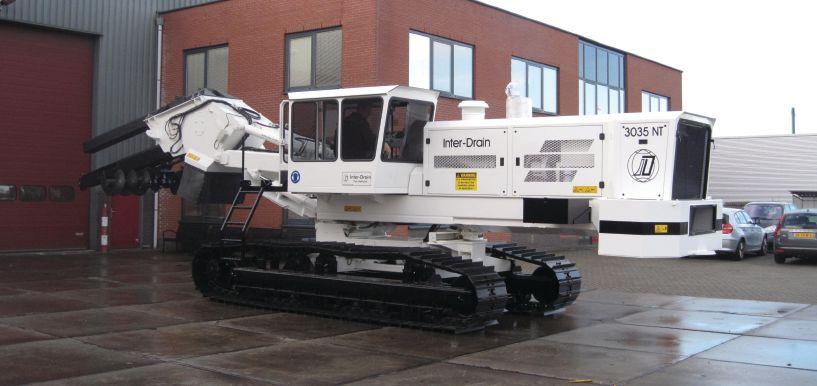
continuously upgraded the company’s fleet, adding several pieces of purposebuilt equipment over the years. At present, their fleet consists of four John Deere backhoes, two Caterpillar tracked skid loaders, a Caterpillar D5 dozer, a newer Speicher wheel trencher, two newer Inter-Drain self-propelled drainage plows and an Inter-Drain 6050 chain trencher to install large, main, smooth flow drainage pipes up to 15 inches in diameter. The smaller drainage plows are used to install smaller, lateral pipes which tie into the main drainage lines. The perforated and corrugated plastic lateral pipes are buried about three feet into the ground in a carefully
designed grid pattern and typically spaced about 40 feet apart. Between 900 and 1,100 feet of lateral pipes are typically installed per acre.
p roj E cts a N d p roc E ss E s
About 90 percent of the company’s work consists of subsurface drainage projects for agricultural clients that vary in size from produce farmers working on smaller land parcels to larger farms of up to 10,000 acres. Projects range in size from five to 500 acres. In addition to constructing subsurface drainage projects for agricultural customers, Slemmons Excavating and Drainage offers waterway and
wetlands construction commercial site prep, pond construction, and general excavating.
Over the past decade, the company has introduced advanced tools, such as GPS topographical mapping and customized drainage plans, to offer more precision to their customers.
The first step is to meet with a customer, identify the parcel of land, and then find out what the farmer’s drainage objectives are for that parcel. Given their experience with subsurface drainage, the company can at this point offer technical advice on how the farmer can best achieve his objectives. Once that has been established, the
Carry Mfg_7x2.25 10/15/04 4:44 PM Page 1
HAVING TROUBLE KEEPING YOUR FIELDS DRY?
Is your tile outlet below the ditch level? Is the ditch too shallow to allow proper drainage?
Maybe it’s time to look at a Drainage Pump. A drainage pump can keep your field drier than draining it naturally. With a drainage pump YOU can CONTROL how low or how high to keep the water table in your field.
For more information,contact your local Tile Contractor or Call Carry Pumps direct at: 1-800-492-2779 www.carrymfg.com
Our Stainless Steel Submersible drainage pumps are just right for the job. Pumps are available in a variety of horsepowers to suit your field application. Carry Pumps are available from 1/2 HP to 10 HP in single or three phase power,208,230 or 460 Volts,with pump capacity from 50 to 1450 GPM with 2 to 25 feet of lift.
slemmons excavating will lay 900 to 1100 feet of lateral drainage pipes per acre to lower the water table and improve the productivity of farm land. Photo courtesy slemmons excavating.
A Few Key Features:
• 350 HP Cummins QSM11 Engine
• Cab with Heat and Air
• Power Shift Transmission
• 7’ Dual Hydrostat Drive, Tapered Digging Wheel
• Self-Leveling Wheel Up to 8 Degrees Left or Right • Digging Wheel Pivot
Iowa: Mid America Trenchers Toll Free: 866-376-7453 Alt: 641-344-0640
New Videos on our Website at www.wheeledtrenchers.com
• Service • Parts sales@wheeledtrenchers.com Farm Drainage • Pipeline • Construction • Wind Farm
Buckeye 9200 Magnum
Buckeye 7200 Magnum
company puts its tools to work.
“We start all our projects with our own survey and design,” says Seth. “We use GPS to produce a complete topographical map of the farm. We take thousands of elevation readings across a field to generate a drainage plan to fit each farm separately . . . we do a 50-foot grid all across that land we are looking to drain.”
Seth adds that having a wellengineered plan before burying any pipe is critical, and that the GPS topographical mapping and drainage plan have been excellent tools to help ensure that they don’t undersize their outlets and mains for the area to be drained.
“We really try hard to use the technology to get it right the first time,” he says.
The third step is to secure an outlet for the area being drained, and that may involve finding an existing outlet or creating a new one. If there is an existing ditch, it is necessary to ensure that it is a good outlet for the drainage system. They often must make
adjustments to work with the existing infrastructure or lack of infrastructure to meet drainage plan objectives.
“A lot of times we are limited by the existing outlets that are there, so it’s a challenge sometimes to work with neighboring landowners and get the ditches to the point where we have a good outlet, or to gain access to replace the existing mains,” says Seth. The final step is to put the design on paper, present it to the customer with an estimated cost, and wait for a decision.
Once a project gets underway, two challenges must often be faced: the weather (which doesn’t always co-operate), and minimizing soil compaction on the jobsite.
“We try to keep our traffic more or less where we are going to lay our new pipes so that we don’t create compaction on parts of the farm that aren’t going to be disturbed,” Seth says of the latter.
LOCATION, LOCATION, LOCATION
While the company works for customers primarily within an 80-mile
radius of West Liberty, Ohio (about 45 minutes northwest of Columbus), last year, they took their equipment on a road trip to Mississippi. This was largely because there is growing demand for subsurface drainage work in that area, Seth says, but it also extends their business season by a couple of months. Their busiest time of year is when the crops are off the field, which, in Ohio, is from September to May. Because crops come off sooner in southern states, Slemmons Excavating is taking advantage of this business opportunity.
Seth says the drainage infrastructure is quite different farther south than it is in Ohio. “In Mississippi, there’s very little subsurface drainage, so there aren’t all of the old mains and ditches in place to do a good job to drain each farm,” he says. “So we are working towards getting those outlets established there.” DC
For more drainage company profiles, visit the Contractor at Work page at www.drainagecontractor.com
Tesmec USA’s
NEW 775DT Drain Tile Trencher
Water Management Systems for Pros
Our powerful Water Management products make going from design to jobsite with RTK-GPS a snap!
Designed with the convenience of the touchscreen in mind, AGPS’s intuitive interface is inte easy to learn and use t an !
AGPS offers many great entry-level Water Management products that can be upgraded to Pro level later! o
ile ile nstallation nsttaallllalatitioon io that is th t s asy and a asy sy and an ccurate ccuraratte te
ile e esign that is es essigign thhat t is is ast and a ast t a recise recisise and orming o ormin in that t oves ovvees s ess irt rt
grereaeatatltlalaakekesessinintteer-r-d-drdrarain.co aininn.coom Distribuutor for OH, INN, IL, NY, MI & QC
Rust S Sales, Innc st Saaleleses, s, Inc 800-4478-78001 80000-0-4-4747878-8-7780 8 801 wwww.rustsalles.com wwwww.rurusustststsa coaleleses. m om Distribuutor for ND, SDD, MN, MB B & SK Soil and Water Management oil il
Marttronic Enginneeering artrtrtroonnic
NEW pRODU cTS
c ollE ct topographic data yE ar-rou N d
Wolfe 540 Super Plow
Wolfe
Wolfe’s
Super Plow
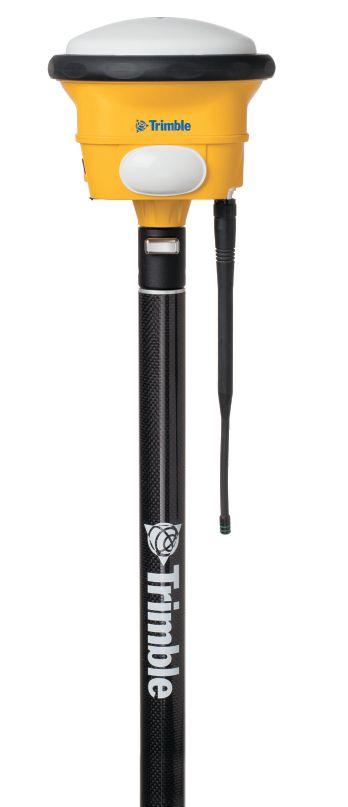
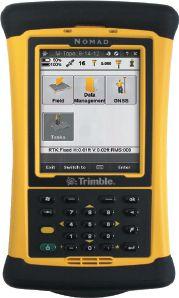
The WM-Topo system is the latest addition to Trimble’s water management product lineup. The WM-Topo survey system is a portable topographic data collection solution for water management for year-round use in a variety of environments. The survey system includes a Trimble Nomad handheld computer and a pole-mounted GNSS receiver. The company says the system can be carried into areas not easily accessed by a tractor or truck-mounted equipment such as ditches and steep terrain, muddy fields, and fields with mature crop cover. The system can be used as an alternative, or to supplement, survey work previously conducted on the FmX integrated display.
The TrimbleWM-Topo system can also be used to calculate the grade between two given points in a field in order to determine the existing slope or check the grade accuracy of newly installed pipe.
www.trimble.com/agriculture
w
olf
E 540 plows 240
f EE t p E r mi N utE
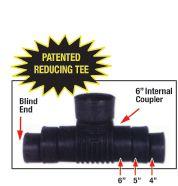
combination Tees.
Also 6” square & round risers with patented reducing Tee.
• Constructed of heavy-weight, high-density polyethylene.
• Parts highly adjustable & interchangeable with others on the market
• Orifice plate placed at tee level or at ground level.
• Exclusive locking device on each part. • User Friendly-Priced effectively.
Incorporated in the machine control is the Plus 1 System, providing all hydraulic and engine functions. Both the engine radiator and hydraulic cooler have automatic reversing fans to blow out trash. The 540 Super Parallel Link Plow can be equipped with a GPS system that controls depth and tooth attitude to hold very tight grade tolerances. The GPS attitude control allows contractors to plow through unstable soils and carry the tooth on grade. A & E Construction Supply co-manufactures with Wolfe Heavy Equipment the Wolfe Man wheel trenchers and distributes Eager Beaver trailers to assist customers with their machine hauling needs. www.a-econstsupply.com
i N cr E as E yi E lds with watE r g atE
The Water Gate is a floatactivated head pressure valve. It maintains a one-foot increase in water elevation between the downstream and upstream sides of the valve.
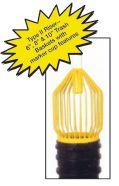
• Adaptor available to repair old metal or broken intakes.
The new Wolfe 540 Super Plow features a 540 Cat engine with 160,000-pound final drives. It plows 240 feet per minute in low speed and roads at a speed of more than four miles per hour. The long tooth plows over 7 feet deep. The Super Plow comes with a standard 18-foot track length or an optional 20-foot track length. The cab is heated and air conditioned with air ride.
The Water Gate operates in either free-flow or managedflow mode. The managed-flow mode is activated by backing water up into the valve. This is accomplished by installing a Water Level Control Structure (WLCS) in the tile main at the lowest point of the drainage system that you wish to manipulate or control. Locate the first Water Gate one foot in elevation upstream from the WLCS.
Water Gates can be used in series, locating additional units at one-foot elevation intervals. www.agridrain.com
h avila N d E xpa N ds product li NE
Haviland Drainage Products has recently introduced a number of new products to complement its existing product line. Several different styles of end plugs in threeinch, four-inch and six-inch sizes and internal couplers from two inches up to 12 inches are available. Additionally, Haviland now manufactures rigid-style end caps in 12- and 15-inch sizes, a 12-by-10-inch reducer and 12-inch and 15inch plastic drain grates. Dual wall pipe in a mini stick option (approximately 10 inches) is available for safety purposes. In addition to these products, Haviland also manufactures single wall pipe, dual wall pipe and CMP in a variety of sizes. www.haviland-drainage.com
N E w fu N ctio N s add E d to h omburg d rai N c lE a NE rs
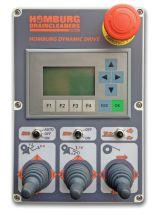
Homburg Holland says its Homburg Drain Cleaners feature a water pressure as low as 10 to 12 bar. The HPE hose is pushed into the drain so that the specially designed spray head can do its work, cleaning the drain and removing fouling. The company has also introduced the automated Dynamic Drive unit. The term Dynamic Drive encompasses a series of new functions that have been added to Homburg Holland’s automatic drain cleaners, including obstacle protection, proportional control, traction and distance
control and auto stop. www. homburg-holland.com
i mprov E grad E accuracy with E g2 from l atE c
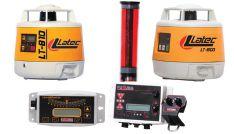
The EG2 EconoGrade Laser Grade Control System from Latec features 360-degree receiver technology. The EG2 is designed to improve grade accuracy and interfaces with any valve driven utility, including proportional time, proportional current and proportional flow valves with integrated electronics and can also control electric actuators. www.latec.on.ca
agps adds NE w softwar E f E atur E s
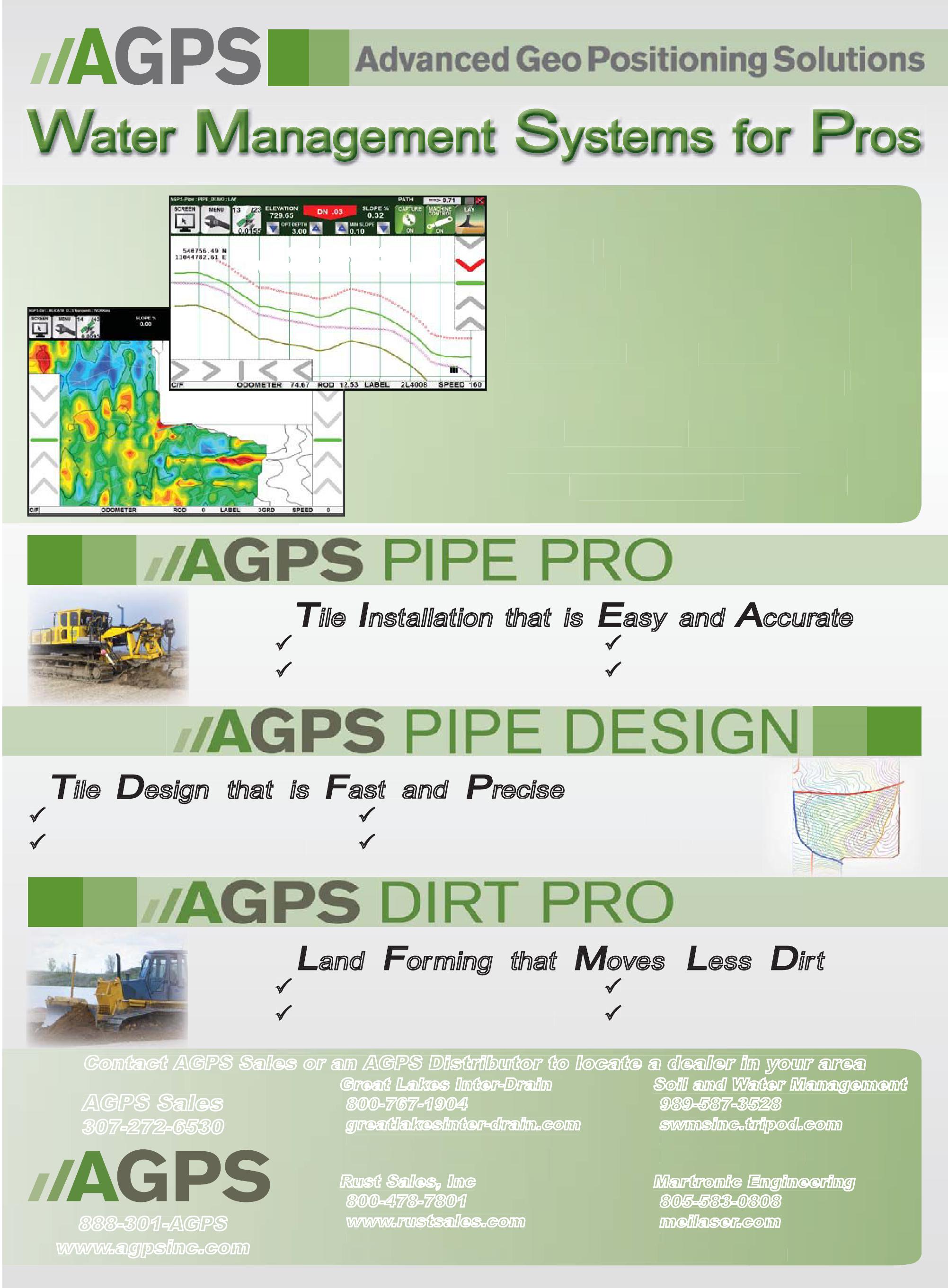
Advanced Geo Positioning Solutions, Inc. (AGPS) has added a new feature to its Pipe Pro water management software: automatic steering (Autosteer) for self-contained tile plows. Notable features include dual-GPS input for accurate machine heading and accuracy up to +/- 0.1 feet. Autosteer allows steering to any LAY/PTL path selected in the program, including grid lines, designed drawings and offset paths. AGPS has also added Pipe Design, for use in conjunction with its drainage software solutions. With Pipe Design, users can draw mains with designed depth (including profile view), draw a group of laterals within a watershed boundary or other break lines, and export to AGPS Pipe software for automatic blade control in the field. www.agpsinc.com
Link 25 for farm tractors up to 200 HP
Link 50 for farm tractors up to 500 HP - available 2014
Link 75 recommended for D6 to D7 crawler dozers
Link 175 recommended for D7 to D8 crawler dozers
Link 250 recommended for D8 to D9 crawler dozers
BUSINESS
PlaNNIN g ah EaD
Continued from page 22
1.5 million annual footage.
Option: key man wants to take over
Consideration: buy new equipment, share costs with key man wanting in
Option: sell out to neighboring contractor who is looking for growth
Consideration: operate until the machinery wears out, then close down
Consideration: buy new equipment, share these costs with nearby contractor as part of business transfer
Can you “get along” with the other guy during the phase-out?
c ase study no. 3
Two brothers own the business, one wants to retire (or exit). One son wants to get in: one drainage machine and crew, 2.5 million annual footage. Father wants to treat both his sons equally, perhaps also a daughter who does not want to enter the business.
Each contractor has a territory within which his business is generated. Going back to that Indianapolis workshop, we presented how to do this. On a regional map, draw a circle around your home base to encompass your customers. This is your trading area. Now draw a circle around the trading area of your nearest neighboring contractor and the next one, and so on. Some of these will overlap, (perhaps more than you’d like!). If you close down your business, which one of these will take over your territory? Perhaps your best retirement bet would be to approach one of them, who might have children already coming into the business, so
that you can phase out while letting them phase into your area. They might buy out your equipment and pay you an honorarium as you ease out. They might need some of your financial stability to help finance this, but you may stand to gain from this too. The trick here is to think outside the box when looking for a solution. If you harbor ill feelings toward the one fellow who is the most likely to make a success of this because he’s been a tough competitor for so long, maybe it’s time to start the healing process.
Most successful strategies are those that have been well planned and executed over a reasonable time frame. Succession plans are no different. At the end of the day, ask yourself what it is you want to leave behind. Do you want to retire with financial security? Do you want your customers to think you have done your best to ensure they continue to get the type of service you built your livelihood on? If the answers to these questions are yes, then begin planning now, if you have not already. Envision the situation that fits your operation. Then, begin a plan with your own financial advisor. Once you have your plan started, you can explain to your customers that you have secured the future of your service to them and now you can reap the rewards throughout your retirement. dC
Back in the late 1800s, investors averse to large risk held a major portion of their wealth in railroad bonds. Everyone agreed it was the safest place to keep your money to earn a modest but dependable return. But many people followed this practice without understanding the risks involved. The unforeseen emerging importance of the automobile resulted in the bankruptcy of so many railroads. Overdependence on conventional wisdom and following the crowd is only one of myriad risks facing investors.
Nowadays, there are many more risks that are not necessarily market related. Many of today’s investment dangers are difficult to detect and manage. In the business of managing your wealth, investment behavior can be driven by career risk. At some levels of the investment business, there is a tension between protecting clients’ money and protecting your job. Driving this tension are the monthly sales quotas that many firms expect to be met by their sales force and the pressure not to be wrong on your own. We have all heard advisors say, “Well, everybody lost money last year.” To prevent being wrong all alone, many advisors watch what others are doing and flock for safety. The resulting herding action drives prices above or below fair value.
Hidden fees – When purchasing mutual funds or segregated funds from an advisor, there are several ways he or she may be paid. You, the purchaser, ultimately fund all of these fees and commissions. If you don’t know what questions to ask or are not prepared to read lengthy documents, you may never be aware of the money that actually changes hands as the result of your transactions. In addition, the annual embedded fee charged by the fund company can run as high as three percent or more, before any returns get into your pocket.
regulatory bodies – You may never know if your advisor has been found guilty of breaking the rules as set down by the body that licenses him or her (for example, MFDA for mutual fund salespeople or IIROC for brokers). This is worth looking into. Results of an investigation will be posted on the regulatory body’s website; however, victims of wrongdoing and other clients are not normally notified. Before agreeing to work with any advisor, do your homework and visit the relevant website.
third-party verification of prices – Where do your statements originate? Are they produced on your advisor’s letterhead in his or her office? Is the information on the statement independently verified? As your first line of basic safety, insist that your money be held at an independent custodian from whom you can obtain clear reporting and disclosure on a timely basis.
Fiduciary duty – A fiduciary duty is the highest standard of care in equity or law. A fiduciary must act at all times for the sole benefit and interest of the client. The fiduciary can make a profit, by consent, but he must not put his personal interests in front of his duty of care. It is appropriate for you as a client to ask your advisor if he or she has a legal fiduciary duty to you. If not, ask if you can have a fiduciary pledge signed. It is a contractual commitment that helps ensure that your advisor can’t profit at your expense. dC
darryl Cailes is executive vice-president at enriched investing incorporated. He can be reached at dcailes@enrichedinvesting.com
this document is for information only and should not be construed as an offer, or a solicitation of an offer, to buy a security or investment service. Before making an investment, prospective investors should review offering documents that summarize the objectives, fees, expenses and associated risks.
DRAINAGE WATER MANAGEMENT EVOLVED
The Trimble® WM-Drain ™ farm drainage solution streamlines the survey, analysis, design, installation, and mapping steps of surface and subsurface drainage making your drainage water management jobs more efficient than ever before. And now you have another option for collecting topographic survey data to be used with the WM-Drain solution. The new WM-Topo ™ survey system can be taken by hand into hard-to-reach areas such as ditches, muddy fields, and fields with mature crop cover.
For more information, visit www.trimble.com/agriculture or see your dealer.