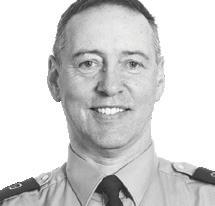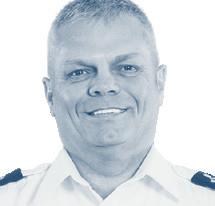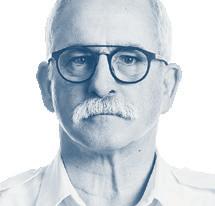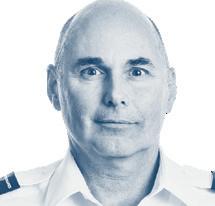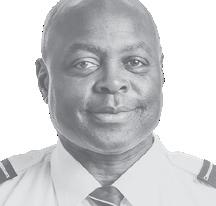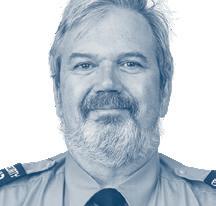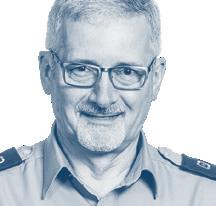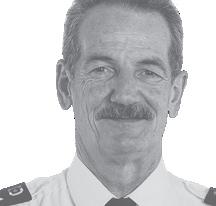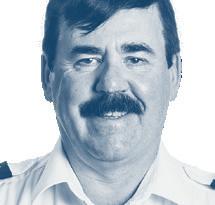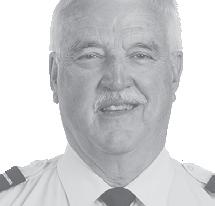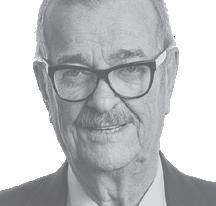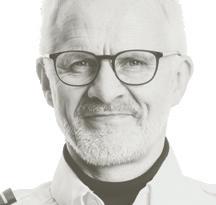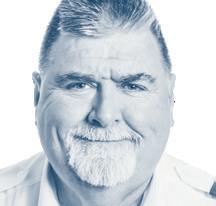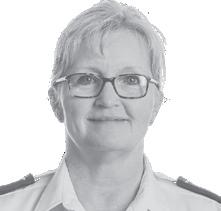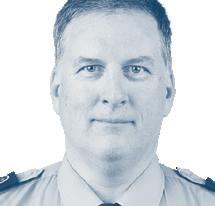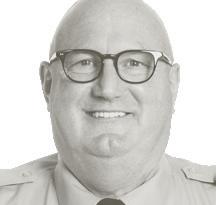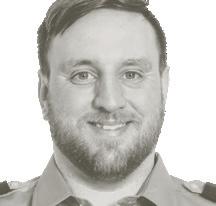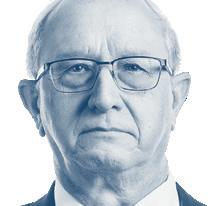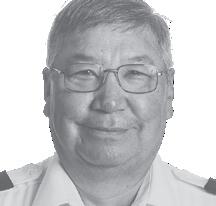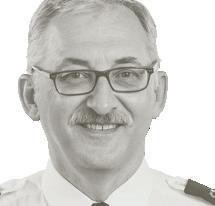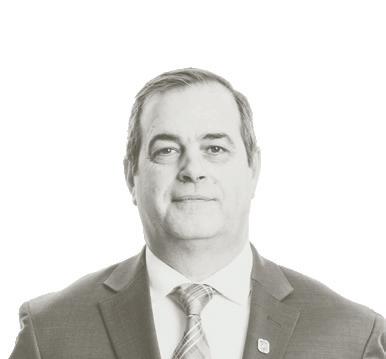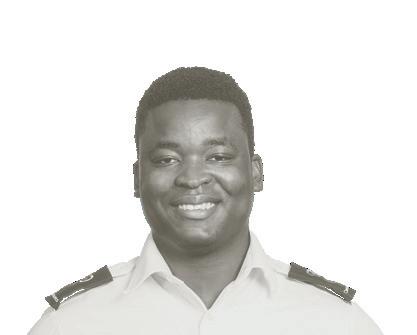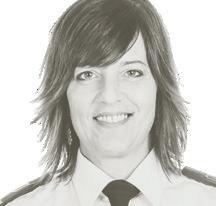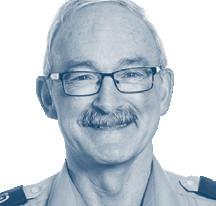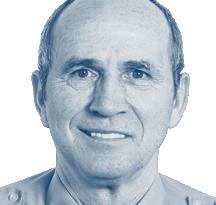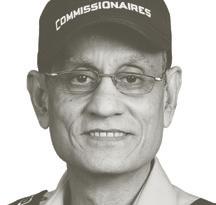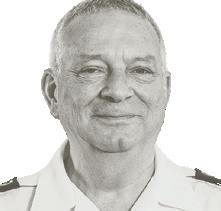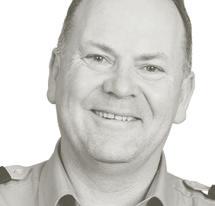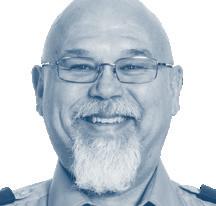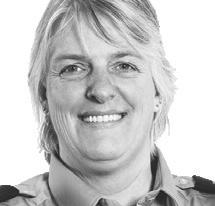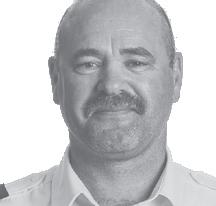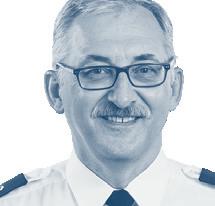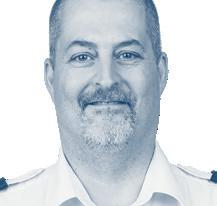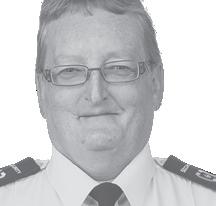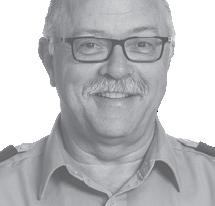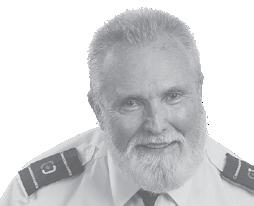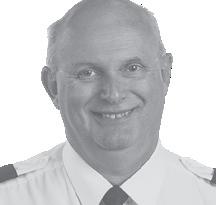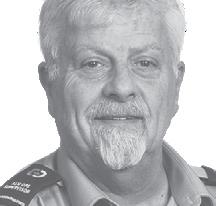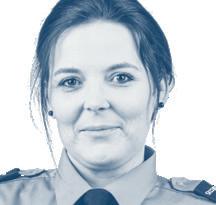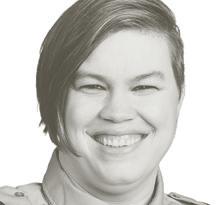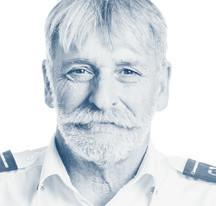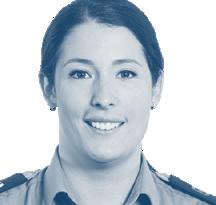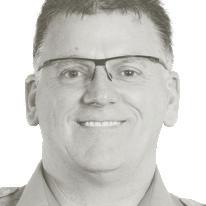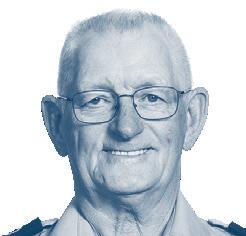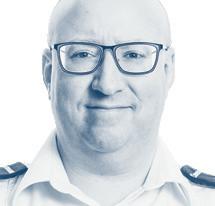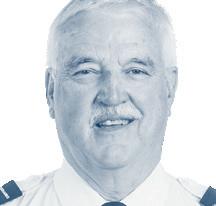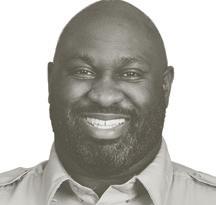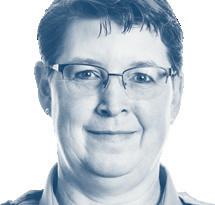



This year’s Top 10 Under 40 winners reflect on their first experiences in the security industry and tell us how their motivations and responsibilities have changed over time


By Neil Sutton
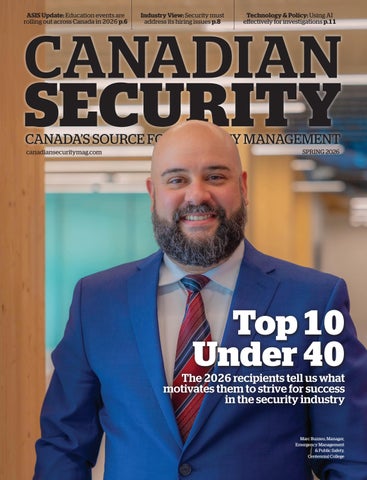
This year’s Top 10 Under 40 winners reflect on their first experiences in the security industry and tell us how their motivations and responsibilities have changed over time
By Neil Sutton
I’ve been working in media for several decades and in that time, I’ve probably learned as much from my younger colleagues as I have from the more seasoned professionals I’ve worked with.
While there is no substitute for field experience, regardless of the profession, there is also something to be said for new approaches and fresh perspectives. Newcomers to an industry often bring the most up-to-date standards in education and a familiarity with new technology.
I’ve heard similar experiences from mentors who work with young security professionals. The appeal of mentorship is not only the satisfaction that comes from sharing wisdom and encouraging professional growth — mentors also tend to learn a lot from their mentees, which is part of what makes these relationships so valuable and fulfilling.
Year after year, I see this level of passion and engagement among Canadian Security’s Top 10 Under 40 recipients. In this issue, we meet the 2026 winners, who tell us how they first got involved in the industry and how their engagement has changed over time.
They also share some of their accomplishments, as well as the skills and talents they have ac-
quired that help them reach new heights. You can read their stories on page 16 and check out the Canadian Security website (www. canadiansecuritymag.com) for some bonus content.
The other main feature article in this issue addresses the use of artificial intelligence to support security investigations.
“While there is no substitute for field experience, there is something to be said for new approaches and fresh perspectives.”
Anyone who’s worked in the industry for a while will have noticed the impact that AI is having on security equipment, technology and procedures.
S ince AI came onto the scene, I have also noted some best practices that are beginning to emerge. The first (and this is reflected in the article) is that while AI is an incredibly powerful tool, its current limitations must be acknowledged and respected.
AI can accomplish tasks in seconds that would take a human hours, or may not be possible at all. But that doesn’t mean it should be entirely trusted or allowed to implement a decision without human verification.
The “human-in-the-loop” approach to AI is one that the security industry seems to generally agree upon. Arguably, it’s an essential precaution when it comes to security, with its dual mandate of prevention and protection.
As much as AI is changing security, it’s beginning to change my world too. Five or 10 years ago, I never would have expected AI to play any kind of significant role in the work that I do, but I am increasingly using it as a research tool to prepare for articles and events.
We also recently deployed an AI module on our website which summarizes long articles and provides bullet points of the major takeaways.
It’s important to note here that this feature doesn’t replace the article, which is displayed in full, but is a companion piece that can be useful for a quick review.
Like most people, I am still learning how to use AI effectively I will always rely on the interviewing and writing skills I’ve honed over my career, but it’s nice to know there’s a new skill I can work on as I continue on my own professional journey. | CS
Spring 2026 Vol. 48, No. 1 canadiansecuritymag.com
READER SERVICE
Print and digital subscription inquiries or changes, please contact
Shawn Arul, Audience Development Manager
Tel: (416) 510-5181 Fax: (416) 510-6875
Email: sarul@annexbusinessmedia.com
Mail: 111 Gordon Baker Rd., Suite 400, Toronto, ON M2H 3R1
EDITOR
Neil Sutton nsutton@annexbusinessmedia.com
GROUP PUBLISHER
Adam Szpakowski aszpakowski@annexbusinessmedia.com
BRAND SALES MANAGER
Trish Sutton tsutton@annexbusinessmedia.com
MEDIA DESIGNER
Graham Jeffrey
ACCOUNT COORDINATOR Kim Rossiter krossiter@annexbusinessmedia.com
CEO Scott Jamieson sjamieson@annexbusinessmedia.com
Printed in Canada
I.S.S.N. 0709-3403
Publication Mail Agreement #40065710
SUBSCRIPTION RATES
Canada: 1 Year $45.61 + Taxes; U.S.A. (payable in CAD dollars): 1 Year $101.31; International (payable in CAD dollars): 1 Year $116.69
EDITORIAL AND SALES OFFICE
111 Gordon Baker Rd, Suite 400, Toronto, ON M2H 3R1 (416) 442-5600 • Fax (416) 442-2230 canadiansecuritymag.com
Canadian Security is published two times per year by Annex Business Media.
Annex Privacy Officer Privacy@annexbusinessmedia.com Tel: 800-668-2384
Canadian Security is the key publication for professional security management in Canada, providing balanced editorial on issues relevant to end users across all industry sectors. Editorial content may, at times, be viewed as controversial but at all times serves to inform and educate readers on topics relevant to their individual and collective growth and interests.
The contents of Canadian Security are copyright by ©2026 Annex Publishing & Printing Inc. and may not be reproduced in whole or part without written consent. Annex Business Media disclaims any warranty as to the accuracy, completeness or currency of the contents of this publication and disclaims all liability in respect of the results of any action taken or not taken in reliance upon information in this publication
EDITORIAL ADVISORY BOARD
Martin Deslauriers: Providis Services Conseils
Agnes Pienio-Ganthier: Amazon Canada
Ken Doige: ESRM Solutions
Roxanne Krause: CN Tower
Danielle Weddepohl: George Brown
College
Rowan Hamilton: Commissionaires
Great Lakes








East
Laval, QC



April 29, 2026 Central Toronto, ON October 21-22, 2026
June 3, 2026
By Brian Ison
Founded in 1955, ASIS International (www.asisonline.org) is a global community of security practitioners, each of whom has a role in the protection of assets: people, property and information.
With over 2,000 members across Canada, ASIS is represented by 10 chapters (www. asiscanada.ca) located across the country. Each chapter is led by an elected board of directors who, along with other chapter volunteers, bring educational and networking opportunities to both members and non-members in their respective regions.
For 2026, we have some chapter chairs returning, as well as some who are new to the role (see below).
Brent Baumann, PSP, CPP, will continue to provide support to the Canadian chapters on the Chapters Committee of the North American Regional Board of Directors.
Joining Brent this year is Brian Ison, CPP, former chapter chair of the Canadian Pacific Chapter. Noting other volunteers representing Canada beyond the regional level: Jason Caissie, CPP, PCI, PSP, and Ter Govang, CPP, who serve on the North American Regional Board of Directors Nominating Committee, Marti Katsiaras, PSP, and Susan E. Munn, CPP, who serve on the North American Regional Board of Directors, and Mark Folmer, CPP, PSP, who serves on the ASIS Global Board of Directors.
Those fortunate enough to have had the opportunity to attend the annual Global
Atlantic Canada #202
Quebec #196
Ottawa #140
Toronto #193
Southwestern Ontario #241
Manitoba #198
Saskatchewan #275
Calgary / Southern Alberta #162
Edmonton / Northern Alberta #156
Canadian Pacific #190
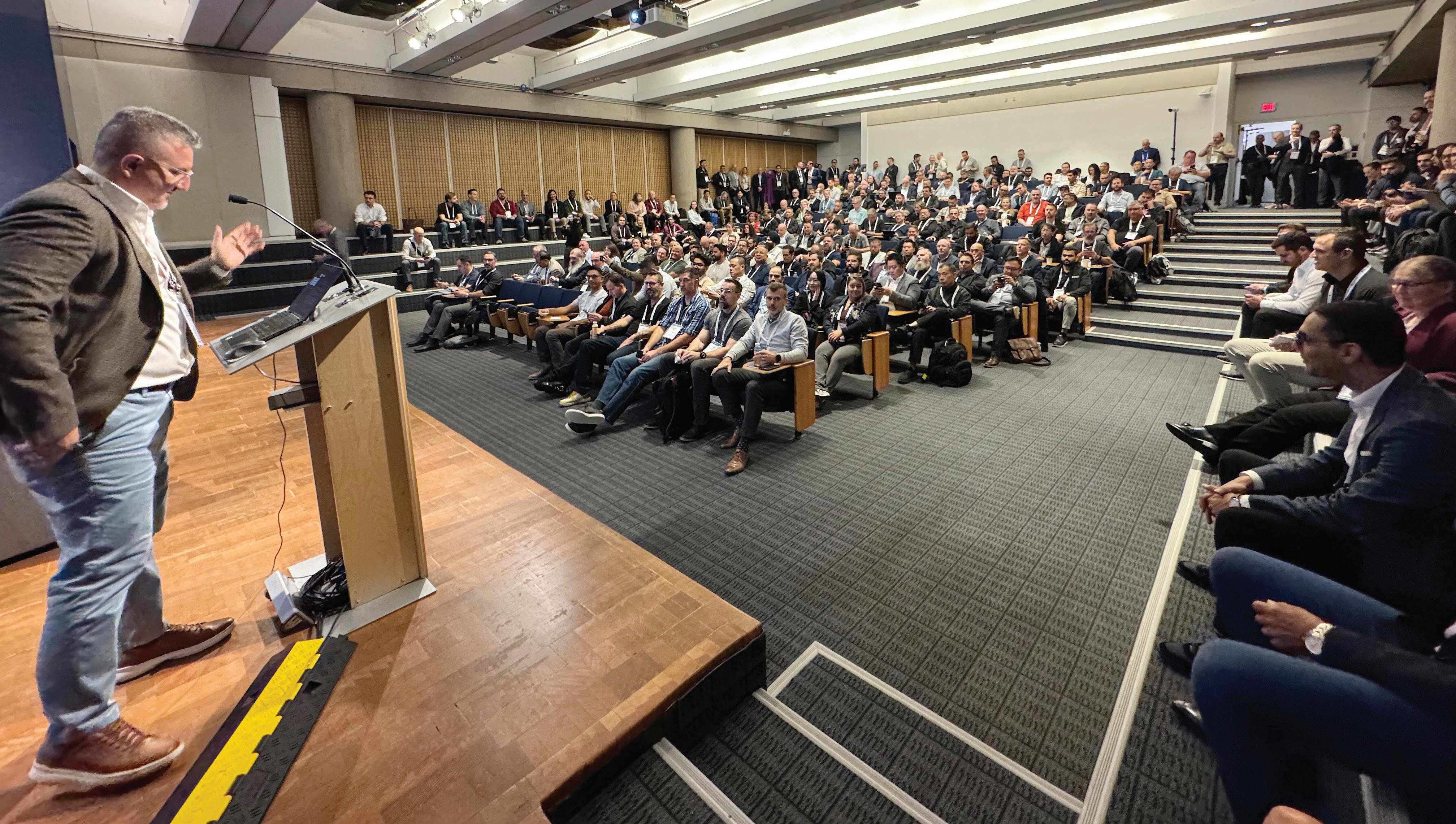
Security Exchange (GSX) conference held in New Orleans last year would have had the (free!) opportunity to attend Canada Night.
Hosted by ASIS Canada and made possible by our valued sponsors, Canada Night is arguably the most consistently accessible social event at GSX and a fantastic opportunity to network with security professionals from across the country.
Closer to home, some of our chapters host annual events that security professionals can look forward to each year.
The Toronto Chapter’s Best Practices Seminar, now in its 31st year, is scheduled for May 21. Some chapters also run an annual golf tournament either on their own
Michael Lawrie
Ann-Marie Oliveira
Scott Bailey
Jason Kloss
Scott Runnals
Kim Gregorashuk
Doug Bailey
Matt Vallis, CPP
Richard LaForge, CPP
Roy Hachache
or in co-operation with the Canadian Security Association (CANASA).
Additionally, the Canadian Pacific Chapter will be presenting the fourth annual Securing the Future conference on Oct. 14, with the event returning to Toronto for its second year on Sept. 23. The event will make its debut in Calgary on May 5 with a Montreal date likely to follow.
With attendance offered to all security professionals (whether or not they are ASIS members), Securing the Future is a full-day conference where attendees can hear thought leaders discuss current security trends in the regions where the conferences are held, as well as their perspectives on the future direction of security.
By bringing learning opportunities to security practitioners who may not be able to attend the annual GSX conference or similar events, these nonprofit conferences help practitioners strengthen their skills and perform more effectively in their roles.
In close partnership with other security groups and associations and with chapters across Canada regularly hosting networking events, golf tournaments, lunch and learns, and other learning opportunities throughout the year, we look forward to seeing you at an ASIS event in 2026. | CS
PwC Canada’s recently published “Trust in AI” report identifies a “readiness gap” between strategic ambitions and operational governance when it comes to Canadian businesses’ adoption of artificial intelligence.
W hile organizations recognize the importance of AI, many of them are operating in a “dangerous comfort zone” that exists in partial implementation of the technology.

The report states that, without governance structures and lifecycle controls, “AI risks can become fragmented.”
According to the report, 72 per cent of organizations name responsible AI a top priority, yet 36 per cent still have no dedicated governance function to manage risks.
PwC lists several recommendations for Canadian businesses, including:
• Elevate responsible AI to the C-suite and board
• Know what AI you have
• Move beyond partial implementation
• Close the skills gap
“Establishing strong AI governance is about
building trust with customers and partners while future-proofing the business. Trust isn’t a constraint on innovation; it is the condition that makes innovation possible at scale. Organizations that can demonstrate trustworthy AI can differentiate themselves and build a competitive advantage, regardless of how the regulatory landscape evolves,” said Jordan Prokopy, national data trust & privacy practice leader, PwC Canada, in a statement.
In addition, 71 per cent of leaders anticipate positive financial outcomes from trustworthy AI, viewing it as a value driver rather than a cost centre.
The “Trust in AI” report is available from the PwC website. | CS
The Ontario government announced it is investing $5 million through the Community Emergency Preparedness Grant (CEPG) to help local communities build up their emergency response capabilities.
The province said it is awarding up to $50,000 to 115 recipients to purchase emergency preparedness supplies, equipment and services.
“Our government is strengthening the readiness of local communities and organizations to better prepare for any type of emergency,” said Jill Dunlop, Minister of Emergency Preparedness and Response, in a statement. “Whether it’s modernizing an emergency operations centre, like here in the Town of Halton Hills, or investing in a generator to power a warming
centre during a winter storm, these investments help to protect communities across Ontario.”
The Town of Halton Hills, where the m inister delivered her remarks, is receiving $30,428 to modernize its emergency operations centre with an audio-visual conferencing solution, portable tables and chairs, and additional equipment. The funding will also be used for training purposes.
The grant program, which launched in 2023, supports small and medium-sized municipalities, First Nations communities and other institutions. Recipients are selected through a competitive review process. In the third round of funding, other recipients purchased equipment such as water purification systems, chainsaws and emergency shelters | CS
APRIL 15, 2026
Focus On Guarding Toronto, Ont. www.focusonguarding.com
APRIL 29, 2026
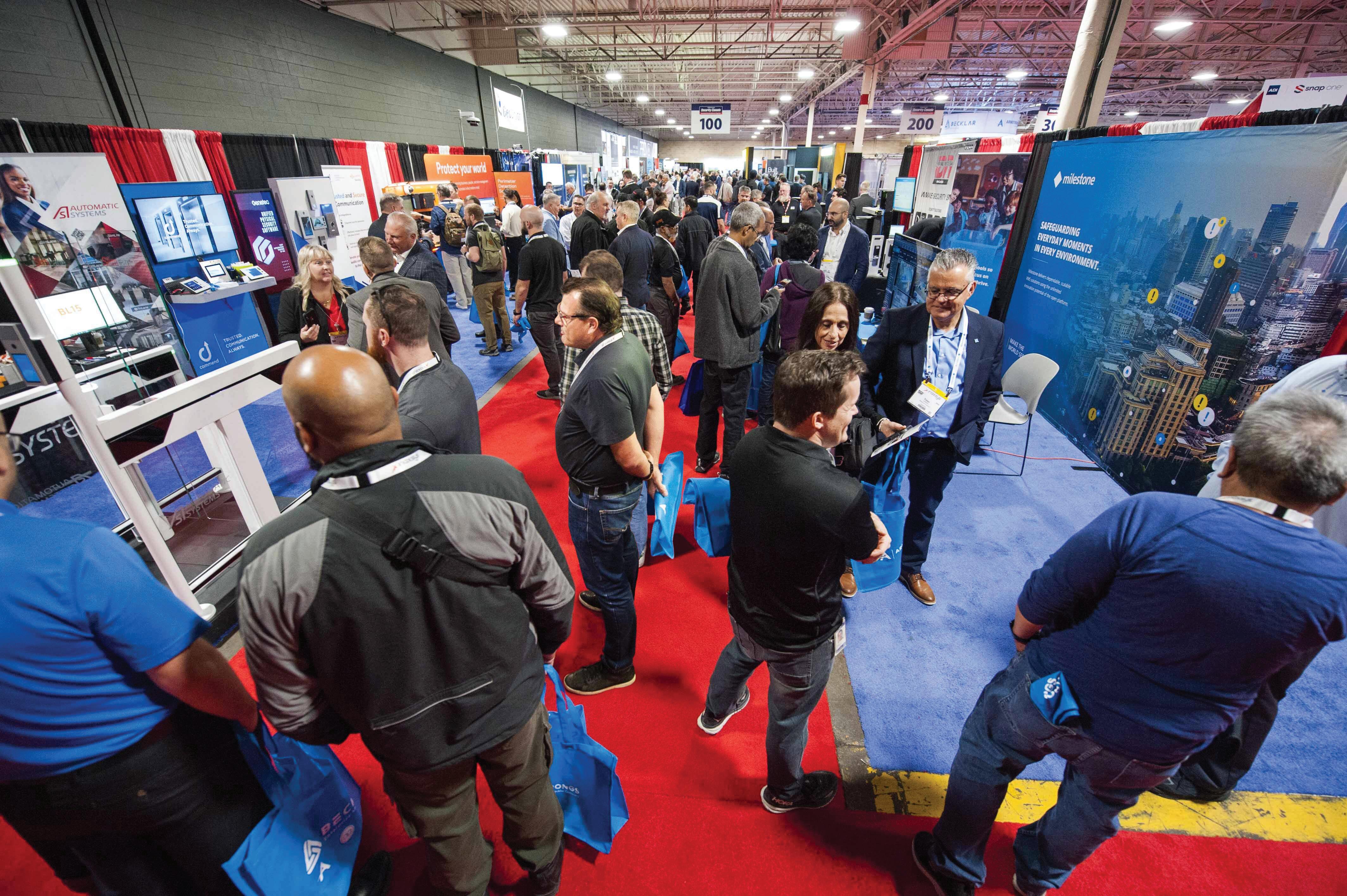
Security Canada East Laval, Que. www.securitycanada.com
MAY 4-7, 2026
OACUSA Spring Conference Pickering, Ont. www.oacusa.ca
MAY 21, 2026
ASIS Toronto Best Practices Toronto, Ont. www.asistoronto.org
JUNE 3, 2026
Security Canada West Richmond, B.C. www.securitycanada.com
JUNE 15-16, 2026
Security LeadHER Minneapolis, Minn. www.securityleadher.org
JUNE 25-28, 2026
IACLEA Annual Conference & Expo Orlando, Fla. www.iaclea.org
JUNE 27-30, 2026
BOMA International Conference & Expo Long Beach, Calif. www.boma.org
SEPTEMBER 14-16, 2026 GSX Atlanta, Ga. www.gsx.org
OCTOBER 21-22, 2026
Security Canada Central Toronto, Ont. www.securitycanada.com
OCTOBER 24, 2026
Emergency Services Career Expo Calgary, Alta. www.emergencyservicesexpo.ca
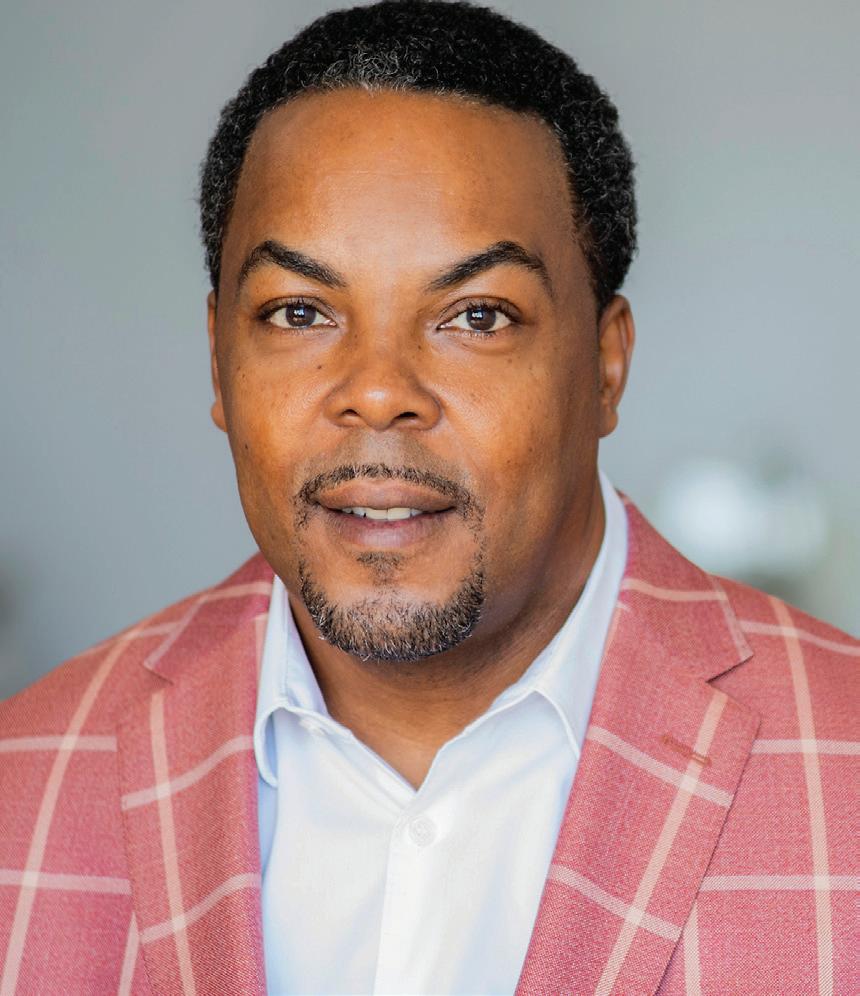
By Winston Stewart
For years, frontline hiring in security could be treated as a constant operational challenge. It was difficult, but manageable. Today, that is no longer true.
The pipeline for recruiting and keeping security guards has become more fragile, less predictable, and more expensive to maintain. In my view, this is not a temporary staffing headache. It is a structural issue that demands a more honest response from our industry. We need to stop treating recruitment as a stand-alone function and start treating it as a business risk tied directly to service quality, client trust and public safety.
Immigration policy is part of that story, but it isn’t the whole story. Canada has tightened the international student stream in a way that matters to employers who rely on part-time and flexible labour. Recent rule changes have also added new permit requirements for many students and changed post-graduation work permit eligibility.
Why does that matter to security? Because international students have often helped fill the hardest parts of the schedule: evenings, weekends, nights, and short notice callouts. But the concern is not that student work disappears. The main issue is that it becomes harder to rely on that stream as a stable source of labour.
Blaming immigration policy alone would let the industry off too easily. Even in a softer labour market, employers still have to make the job worth taking and worth keeping.
Statistics Canada reported 547,800 job vacancies across the economy in the fourth quarter of 2024, down

sharply from the 2022 peak. In occupations requiring a high school diploma or less, there were 2.4 unemployed people for every vacancy in that quarter. That tells me the challenge is not only the number of available workers. It is also job quality, fit, scheduling, training and management.
“We need to stop treating recruitment as a standalone function and start treating it as a business risk.”
The security industry has to confront a difficult truth. We often expect frontline personnel to deliver excellent judgement, calm communication, strong report writing, customer service, de-escalation tactics, and site-specific decision making, often for compensation that competes with lower responsibility service roles.
In Ontario, the median hourly wage for security guards and related occupations was $20 in 2023 and 2024, according to Job Bank. That may be workable in some markets, but in pricey urban centres, it narrows the hiring pool quickly, especially for candidates with the professionalism and reliability clients now expect.
This is why the hiring pipeline must
be looked at from end to end. Recruitment starts with posted wages and job ads, but it does not end there. Candidates judge an employer by how quickly they hear back, how clear the role is, how efficient the screening process feels, and whether the first supervisor they meet appears competent and prepared. We lose people long before day one when hiring is slow, communication is vague, or the real schedule turns out to be different from what was sold in the interview.
Retention is even more important. Canada’s occupational projections show 41,600 job openings for security guards and related roles from 2024 to 2033, or about 4,160 a year, with most openings driven by replacement demand rather than new job creation. In other words, the problem is not only creating new jobs. If the majority of hiring is replacing people who leave, then the strongest recruiting strategy is reducing preventable exits in the first place.
That points to several opportunities. First, we need better schedule design.
Too many sites are still built around the assumption that someone will always pick up the least desirable hours. That assumption is weaker now. Second, we need to strengthen frontline supervision. People do not stay because of a slogan; they stay when the site is organized, the expectations are fair, and support is available when a shift goes sideways. Third, we need to show a credible path forward. Security professionals are far more likely to stay when they can see movement into mobile, concierge, control centre, field supervision, training or account management roles.
The industry should also be careful not to answer a hiring problem by lowering standards. That is a false economy. A vacancy is costly, but the wrong hire can be worse. An uncovered post affects the whole building, slows response times, hurts the tenant experience, and pulls others into work that is
not theirs. A poorly selected guard can create the same outcome while still appearing to solve the staffing problem on paper.
There is another opportunity here for clients and service providers to work together more realistically.
Frontline staffing conditions have changed. Organizations who still expect perfect continuity, premium talent, and bargain pricing at the same time are ignoring the labour market in front of them. Security service providers, for their part, need to be candid about what drives absenteeism, turnover and overtime. Better conversations about scheduling models, post orders, technology support, and relief coverage will do more for long term stability than another round of reactive recruiting.
My position is simple. The hiring pipeline has narrowed, and immigration policy is certainly one reason why. But the deeper issue is that our industry can no longer rely on old assumptions about labour supply. We have to build a pipeline that is wider at the top, faster in the middle, and stronger at the point of retention. That means paying closer attention to compensation, supervision, training, flexibility and career progression.
The companies that adjust will keep sites covered. The ones that don’t will keep calling the same staffing problem a mystery.
In security, coverage is never just about filling hours. It is about maintaining confidence in the people standing at the front line. That is why hiring is no longer just an HR function. It is an operational priority, a client service issue, and, perhaps most importantly, a test of leadership. | CS
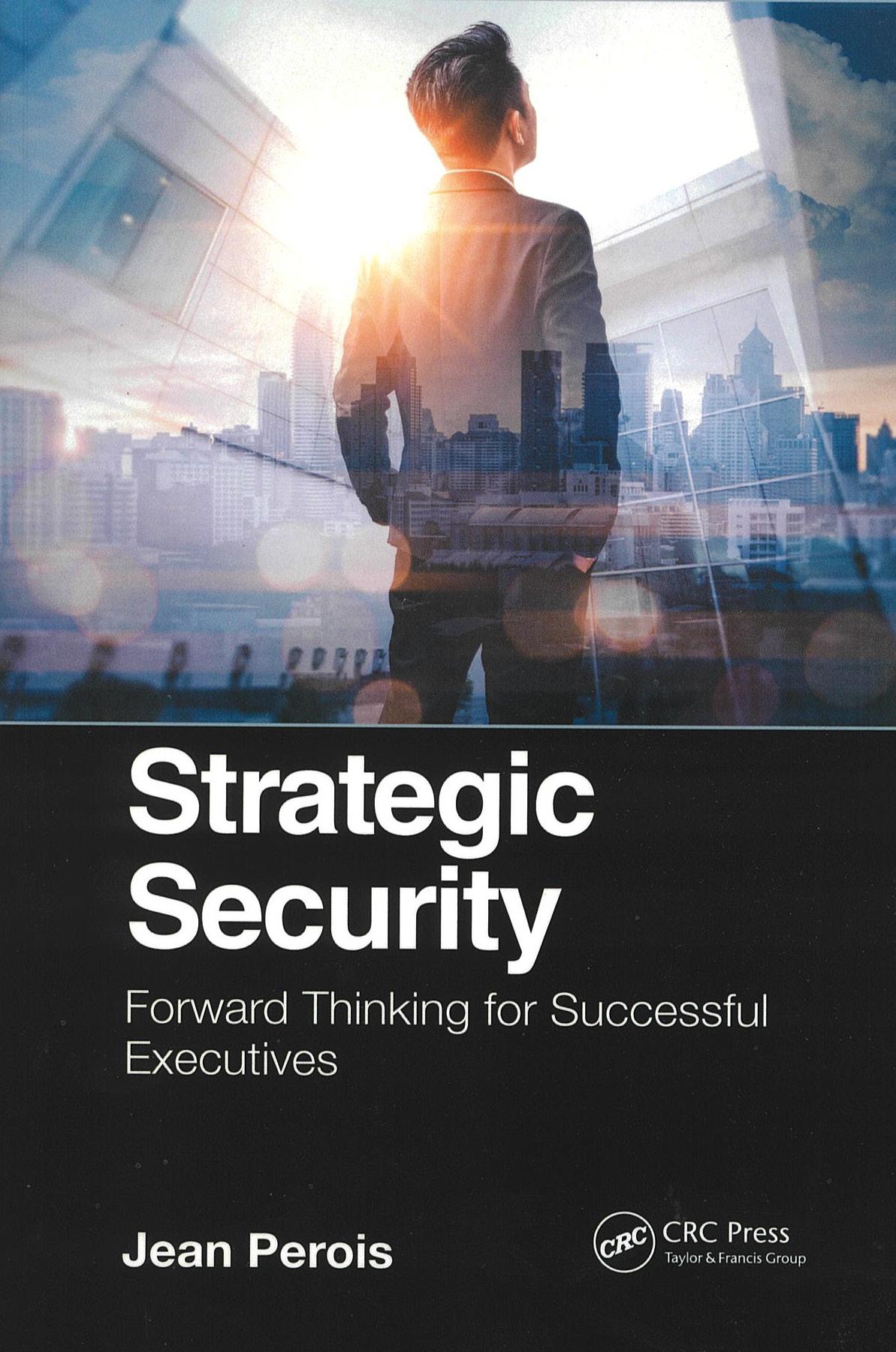

Strategic Security will help security managers, and those aspiring to the position, to think strategically about their job, the culture of their workplace, and the nature of security planning and implementation. Security professionals tend to focus on the immediate (the urgent) rather than the important and essential—too often serving as “firefighters” rather than strategists. This book will help professionals consider their roles, and structure their tasks through a strategic approach without neglecting their career objectives.

By Tim McCreight
Tim
McCreight is the CEO and founder of TaleCraft Security (www.talecraftsecurity.com).
When I wrote my previous column for Canadian Security, I said we’re taking a different approach and looking down the road at the intersection of risk and resilience.
In the short period of time since that was published, we’ve seen more dramatic shifts facing our global landscape.
The sheer volume of change is staggering and can start to weigh on security professionals.
It’s difficult to remain current on new technology, recently released malware, or the impacts of world events on our supply chain. Now bring all three (and potentially more) into one space and add a regional conflict, immediate impacts on global oil prices, and additional uncertainty in trade relationships and military alliances.
Our organizations need us to be on top of these risks, and many more. It means we need to become brutally efficient in how we observe an issue, orient ourselves in the environment, decide upon a path, and then act. For those who have heard of the OODA Loop (Observe, Orient, Decide, Act), we’ve found a way to link incident response to Enterprise Security Risk Management (ESRM) — with the introduction of the OODA Loop as our decision-making framework.
The OODA Loop was first introduced as a way to describe how agility and speed can overcome power in aerial combat.
U.S. Air Force Colonel John Boyd used OODA Loops to describe how American pilots achieved an advantage in aerial combat missions in Korea against a superior fighter aircraft. The OODA Loop has been embraced outside of military strategy, including litigation, business,

law enforcement, and cybersecurity/ cyber warfare. I appreciate the value it brings to security professionals who have followed the tenets of ESRM and must now make decisions to reduce risk impacts facing their organizations.
breach. It’s th e ability to quickly observe the situation, orient to the risk, decide what path to take, and then act against the risk.
“The success of using any framework begins with understanding its foundation.”
The success of using any framework begins with understanding its foundation and basic requirements. It means we must have a strong understanding of our business goals and objectives, and what assets must be in place every day to be successful. Once we know what our assets are, we can begin assessing risks against the assets in a collaborative manner.
That leads us to developing mitigation strategies and engaging stakeholders and SMEs to ensure those strategies are fit for purpose inside an organization, but can still be presented in business language to security executives for their review and endorsement.
Where OODA Loops come into the picture is when we’re called upon to make in-the-moment decisions in response to a realized risk — such as in security operations centres, conducting a patrol, or investigating a potential cyber or OT
Many of us have been doing this for years — we just didn’t know it. It’s because we’ve spent so much time understanding our business, our assets, the potential risks we’re facing, and the strategies to reduce those risks that make us efficient in our decision process. Remember in the ESRM model, incident response, continuous improvement and postmortem reviews are activities that we become masters of.
Using the OODA Loop provides an opportunity to continually mature our approach to responding to events. It gives us structure, feedback and the chance to reduce the time required to decide and act by practice and repetition. But we first must have our foundational knowledge in place.
I’ve been studying OODA Loops, ESRM and their integration for a while now and I’m convinced they belong together. Once we identify risks, we may be called upon to react if they occur. Becoming more agile in our response can only benefit our organizations and ourselves. | CS

How security departments can optimize investigations using AI and why they should still be cautious of its limitations
By Andrew Snook
Artificial Intelligence has had an impact on almost every industry, and security is no exception.
When it comes to using AI to assist with investigations, the technology offers great advantages for tackling duties that have traditionally been extremely time-consuming, improving workflow processes for security professionals. This is especially true for efficiently sorting through massive amounts of data.
“When you’re doing an investigation and you rely on that data, whether it’s camera images or access card logs, it takes a long time to sift through and find exactly what you’re looking for. AI can do a lot of that heavy lifting, assuming that it’s been set up properly for you,” says Andrew Robinson, manager of corporate security, systems and technology, corporate real estate management, City of Toronto.
It’s important to note that security companies are not necessarily removing human
“AI can do a lot of that heavy lifting, assuming it’s been set up properly.”
— Andrew Robinson, City of Toronto
agency by using AI tools; they’re accelerating their employees’ decision-making processes, reducing some operational tasks from hours to minutes.
“I’ve been on customer sites where they describe the situation in a theme park, for example, where there were four people looking at videos and it took them three hours to find one pickup truck that they were looking for,” explains Laurent Villeneuve, senior manager of PMM and IMM at Genetec. “Whereas, what we’re getting now from end users using new AI-powered technology, they’re going to do the same thing, but in a few minutes. It’s
really about the speed of identifying something and then connecting that to other events.”
AI can be used for analyzing video clips and offering quick summaries about what it’s seeing. However, it is important to note that human verification is vital for this to work effectively to avoid errors and hallucinations. With the majority of the heavy-lifting being performed by AI for this type of work, investigators will have more time to focus on the other details of their cases.
“Video has always been very powerful to verify what’s happening. They use it as

ground truth data for investigative purposes,” says Quang Trinh, business development manager for platform technology AI cloud data for Axis Communications.
“ The fact that these AI models can analyze the video, spit out a summary, and then optimize it over time, I think operators and law enforcement officials are going to see much easier ways of processing caseloads,” says Trinh, who is also a member of the Security Industry Association’s AI advisory board and chair of ASIS International’s Emerging Technology Community Steering Committee.
Over the past few years, AI has become good at identifying and detecting people and vehicles on video. “It’s not about running an investigation with AI on two cameras. It’s about running it on many sites, potentially thousands of cameras. That’s really when it starts to be powerful,” Villeneuve says. “If you have one camera, you know where to look, you know the time, you could quickly find it with other ways. But if you’re looking at so many devices that you’re not sure where to look, it’s a needle in a haystack, and this is where AI comes in.”
With the technology evolving incredibly quickly, there are also a wide variety of vendors available. One of the challenges for security professionals is trying to make sure they understand what platforms they can
trust, how to validate that, and what vendors to choose.
“I think that’s going to be one of the biggest challenges,” Trinh says. “As vendors are adding AI architectures and technologies into their solutions and their tech stack, are they transparent about what they’re doing and what they’re adding? How does that impact the outcome?”
Knowing how to select the right vendors for an operation can be a daunting activity for people making purchasing decisions who are less familiar with AI technologies. For this reason, a lot of companies are trying to put together tools so that customers can better understand what they need in order to get their desired results.
Trinh suggests that companies in any field, security or otherwise, first take the time to understand the business outcomes they are looking to achieve before jumping into AI purchases so they have better clarity for their objectives.
“Now that you identified what that workflow looks like for that particular outcome, then you start to look at, ‘Where do I use AI at the technology stack to make it more efficient?’” he says.
Trinh says the top vendors will provide the best tools and the best information around how to utilize those tools, because the customers are eventually going to have the power to develop whatever they want.
“I think that’s the exciting part,” he says. “The days of security vendors telling you,
‘You need this analytic to do this,’ that’s probably going to go away to where the customer now has the ability to decide.”
As the technology evolves, employees need to be trained on how to engineer the best prompts to use AI systems effectively. Robinson believes it will come to a point where security professionals will prompt AI to pull information from video systems and access control systems and have it produce all the information they’re looking for — but only if the prompts are constructed effectively.
“If you don’t know how to build those prompts properly, that’s where it’s garbage in, garbage out,” he says. “Security companies should start investing in some staff properly learning how to use AI to their advantage.”
One of the main concerns when using AI in incident response is if AI goes too far in its decision-making, or if an operator becomes too reliant on the technology.
“You can’t take the information you receive from those systems for granted. You really need the human in the loop, which is a key concept here. So, it needs to be built around humans using systems, and then people need to be accountable for that as well,” Villeneuve says.
If security professionals rely too heavily on AI, it can also lead to a reduction in situational awareness.
“ You’re going to become a bit numb to everything that’s happening in front of you,” Villeneuve says. “It should be augmenting the user. It should never be a replacement for the user, so it needs a bit of nuance and context and even ethical consideration.”
Robinson says AI should be regarded as a helpful assistant to help sift through data, and then it’s up to the investigator to use that information, not as fact, but as a means to point them in the right direction.
W hen security professionals are reviewing reports generated by AI, they should go through a layered validation process to ensure the reports are accurate. This means that when you find something,
“It’s a needle in a haystack … this is where AI comes in.”
— Laurent Villeneuve, Genetec
this information should be correlated from other sensors and sources as well, Villeneuve explains.
“I find an individual that tailgated some employee in a restricted area. Now I can cross-check that with an access control report and a credential event. Once I’m confident that I do have an intrusion, a breach in a certain building, now I can move to the second step, which is finding someone looking similar to that individual. So now I’m back to AI telling me, hey, these nine shots of individuals look similar to your initial suspect. Now I’m going to correlate that with geolocation of those cameras,” he says.
Many companies are busy drafting their own ethical stances related to AI use in the workplace.
“ Whether they do it or not, they know that their employees are going to start to use these tools, and you have to be careful about company information. So, a lot of companies already are working with their HR department,” Trinh says.
Trinh recommends putting together an advisory board to consult with the executive management team on ethical stances and how to use AI tools.
“Not only is it about putting an ethical stance on how employees are utilizing the
AI tools that they’re going to be exposed to, whether it’s publicly exposed tools or company tools that we’re going to invest in ourselves, they need to know what is the proper process if you’re going to deal with analyzi ng company information,” Trinh says.
“ We want to do it with an AI tool that we’ve invested in, and we vetted ourselves that is safe that you can use, versus putting it in a public model that could be potentially harmful to what we’re doing.”
If, for example, a company creates a policy to guide employees on the appropriate use of thumb drives, they can similarly create policies regarding AI, says Trinh.
“A lot of companies I talk to, I tell them to build their AI policies around data policies,” Trinh says. “There’s a lot of very good data policies and privacy policies around data right now that you can use as a foundation for how you want to apply uses of AI, internally and externally.”
Security used to be about presence. Today, it’s about insight. As risk becomes more complex and operations more distributed, many organizations are discovering that fragmented security—different providers, disconnected systems, siloed data—no longer works. That reality is driving a shift toward integrated security solutions, an approach designed to simplify security while improving outcomes. To understand what that means in practice, we spoke with Floria Chiu, Director of Integrated Security Solutions at ECAM Canada, a GardaWorld company.
What are integrated security solutions, and why are organizations moving in this direction?
Traditionally, organizations build security incrementally, often through different vendors. A guard contract here, cameras added there, and perhaps a consultant brought in when an issue arises. Over time, that fragmented approach creates silos, inefficiencies, and blind spots—both operationally and financially.
Integrated security is about stepping back and looking at the entire risk ecosystem, not just individual components. Our approach helps organizations modernize their security programs by deliberately aligning people, technology, and intelligence under one accountability model.
Rather than treating technology as a standalone add-on, we embed technology directly into the operating strategy. By integrating ECAM’s advanced video surveillance, AI, and Canadian-engineered mobile surveillance units with the scale and expertise of GardaWorld Security, Canada’s leading security provider, we are able to redesign coverage models, redeploy guards to higher value functions, and create more proactive layers of protection.
The outcome isn’t simply “more technology.” It’s a smarter allocation of security spend, fewer hand-offs between providers, clearer governance, and measurable improvements in prevention and response. For clients, that translates into reduced complexity, improved visibility across sites, and a security program designed to evolve, not just react.
Technology plays a big role in modern integrated security solutions. What’s actually changed?
What changed is that surveillance is no longer passive. Rather, it’s becoming intelligent and operationally integrated. ECAM’s AI models are trained on large volumes of human-verified,
real-world security events. That means systems are learning to recognize behaviour patterns—not just movement—and can differentiate between routine activity and indicators of elevated risk.
With advanced object and behavioural detection, ECAM’s AI can identify high-risk patterns such as prolonged loitering and boundary crossing in real time, often before an incident escalates. For theft and intrusion scenarios, the system evaluates context: movement, posture, timing, and location rather than simply triggering on motion. But intelligence alone isn’t enough. Human verification remains critical. By layering trained operators into the response loop, we ensure alerts are validated, contextualized, and actionable. The goal isn’t more alarms; it’s reducing false positives, enabling early intervention and supporting smarter response.
Ultimately, the shift is from reactive monitoring to predictive deterrence. Technology becomes the first layer of awareness, and people become more strategic in how they intervene.
Many organizations assume advanced AI requires replacing their entire camera system. Is that true?
Not at all, and that assumption often delays modernization. One advantage of our integrated security solutions approach is that we start with what the client already has. In many cases, we take over and enhance existing camera infrastructure rather than replacing it. Advanced cloud-based processing enhances how footage is analyzed, sharpening detection capability and overall performance without adding physical cameras, unnecessary hardware or placing additional strain on their networks.
It’s not about ripping and replacing. It’s about optimizing assets, extending lifecycle value, and layering intelligence onto the existing environment. Modernization should feel deliberate and strategic, not disruptive.
“Modern security isn’t just about adding more technology—it’s about embedding intelligence into the operating model, so risk is managed proactively, not reactively.”
Floria Chiu, ECAM Canada

Across Canada, our integrated security solutions—powered by ECAM’s advanced technology and GardaWorld Security’s field expertise—deliver earlier visibility and faster, more informed response.
Learn more at ecam.com/integrated
This year’s Top 10 Under 40 winners reflect on their first experiences in the security industry and tell us how their motivations and responsibilities have changed over time

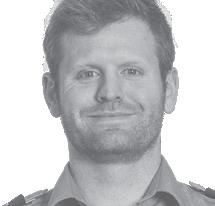
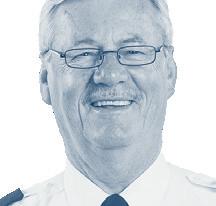
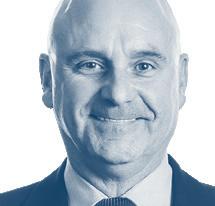
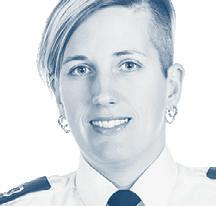
For the eighth annual Canadian Security Top 10 Under 40, a new generation of security leaders describe their earliest experiences, current roles and proudest moments. They also tell us about the skills and talents that help them achieve their security goals. Please join us in congratulating the 2026 winners as they share their stories and offer some inspirational words of wisdom.
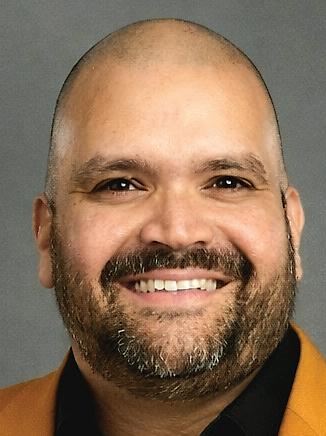
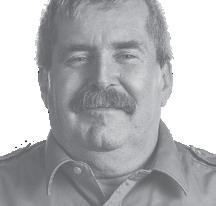
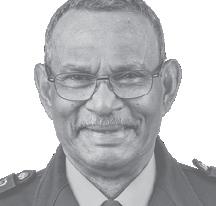
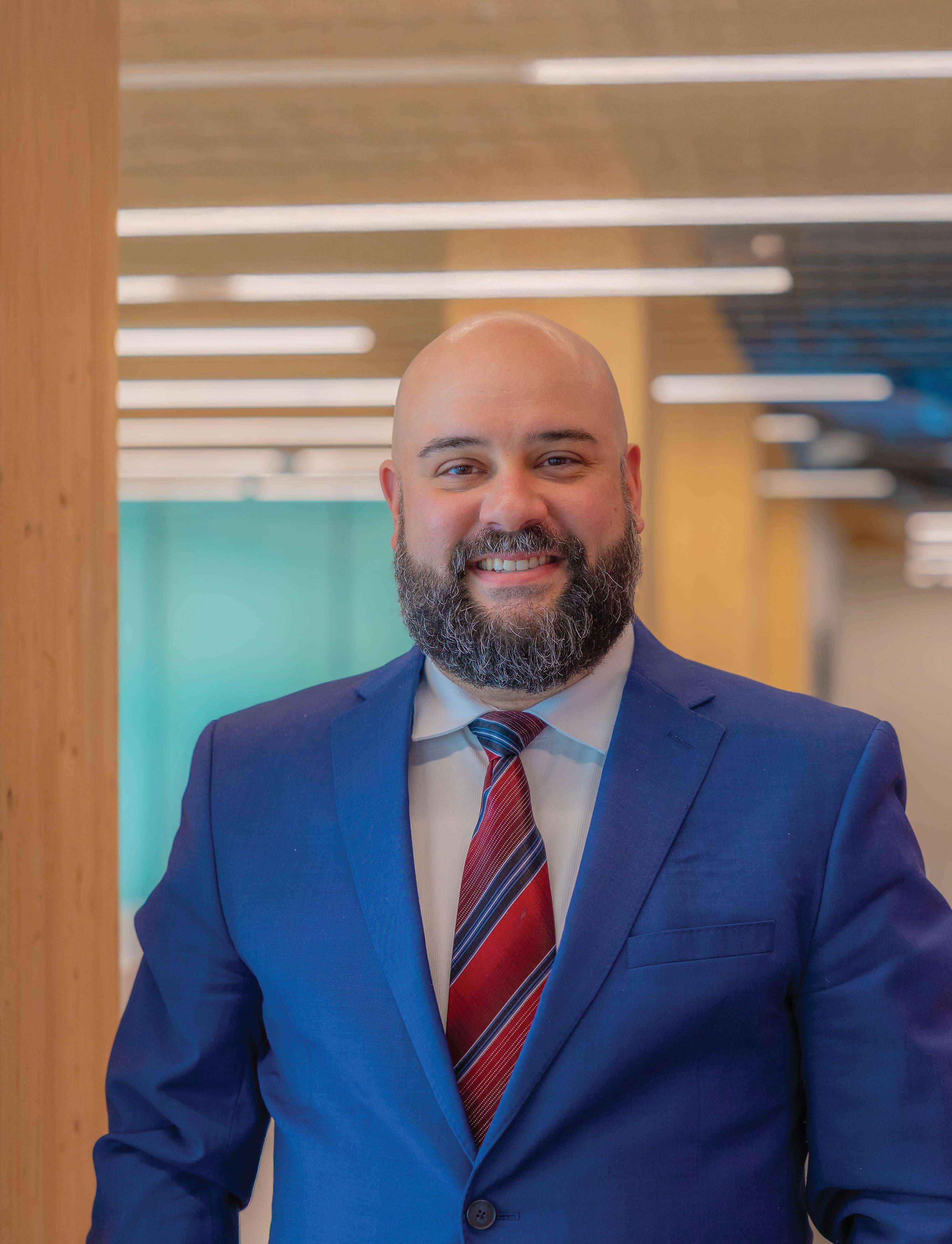
ALI FAHAD Director of National Operations and Key Accounts Management, GardaWorld, 38
How did you first get involved in the security field and how has your motivation evolved over time?
I entered the security field almost by accident — a part-time role nearly two decades ago while I was in school — but it became a career once I recognized the impact security has on people, organizations and communities. My progression has been shaped by increasing responsibility, evolving from frontline operations to leading a security operations centre and ultimately supporting strategic businesses at a national level.
Over time, my motivation shifted from doing the job well to building systems that scale — streamlining processes, strengthening operational discipline, and applying standards-driven performance management to improve consistency and outcomes. I became particularly drawn to the intersection of private security and public safety, where prevention and collaboration are as critical as response.
Today, what drives me is simple: raise the
standard — every day, operationally, professionally, and in the communities we serve.
Please describe your current professional role and the types of challenges/opportunities you encounter.
In my current role, I lead strategic national alliances and provide executive level operational oversight across complex, high visibility security environments. Accountable for performance, resilience, national integrations and strategies, the core challenge can be scale: delivering consistent outcomes across regions amid evolving risk and expectations.
T he opportunity lies in converting complexity into clarity — building standardized, performance-driven operating models that enable decisive action when it matters most.
Beyond my corporate role, I lead at the intersection of community safety and public trust. As chair of Crime Stoppers of Hamilton and a board member of the International Society of Crime Prevention Practitioners, I collaborate with law enforcement and industry leaders locally and globally to advance effective, scalable crime prevention strategies — where aligned partnerships deliver the greatest security impact.
What achievement are you most proud of in your career so far?
I have been fortunate to contribute to the work at GardaWorld that has materially strengthened how security operations are delivered at scale and how risk is managed in complex, high visibility environments. This has included leading national integrations and converting operational complexity into clear, disciplined operating models that drive performance. By emphasizing process driven execution, standardized procedures, and performance management, I’ve helped reduce variability in service delivery and elevate decision-making during critical events. Ultimately, this work reflects a sustained commitment to raising the standard of execution — because meeting expectations is the baseline; raising the standard is the responsibility.
Outside of traditional security training and education, is there a skill or talent you have acquired that has helped you become a better security professional?
Beyond traditional security training, the skill that has mattered most is learning to think like both an operator and a business leader — bringing structure, discipline, and execution to complex problems. By applying agile thinking, business acumen and strong process discipline, I drive consistency across teams and regions and translate security intent into clear priorities, accountable execution and measurable results.
The strongest security leaders balance expertise with adaptability, and I work every day to maintain that edge.

How did you first get involved in the security field and how has your motivation evolved over time?
While studying in the police and investigations program at Grant MacEwan University, I entered the security field with a placement with Zellers loss prevention. After graduating, I started my security and loss prevention journey working with Sears Canada. Over time, my motivation shifted to opportunities to learn more and develop my skills with increased interaction with industry peers. I was motivated to train and develop the skills of those who reported to me, while also keen to learn insights and perspectives from my counterparts and my direct reports.
Please describe your current professional role and the types of challenges/opportunities you encounter.
At Sobeys, I work as a loss prevention manager supporting a region in Alberta which includes several different banners and business models. I am responsible for all types of loss prevention support, including external and internal investigations, physical security design with construction support, daily store support, and collaboration with other business stakeholders to comprehensively support the financial success of the stores. Of course, we must also manage and nurture our vendor partnerships and constantly build trust relationships to deliver quality support within service level expectations and department standards. Most importantly, I am part of a team that leverages each others strengths to deliver an optimal support service.
What achievement are you most proud of in your career so far?
An achievement that I am most proud of would be when I was working as the asset protection manager at Nordstrom Rack — partnering and working with the other department managers and their staff, developing a culture of loss prevention through great customer service and operational excellence,
which led to an impactful decrease in shrink. This could not have been done without the support and dedication of the team that I worked with.
Outside of traditional security training and education, is there a skill or talent you have acquired that has helped you become a better security professional?
I am a great listener, and take the time to unpack business priorities, department goals and the challenges we undertake within my team. By listening well I allow myself time to think through and understand how I can draw on my skills or the strengths of others around me to seek the best answers for the needs of the business.
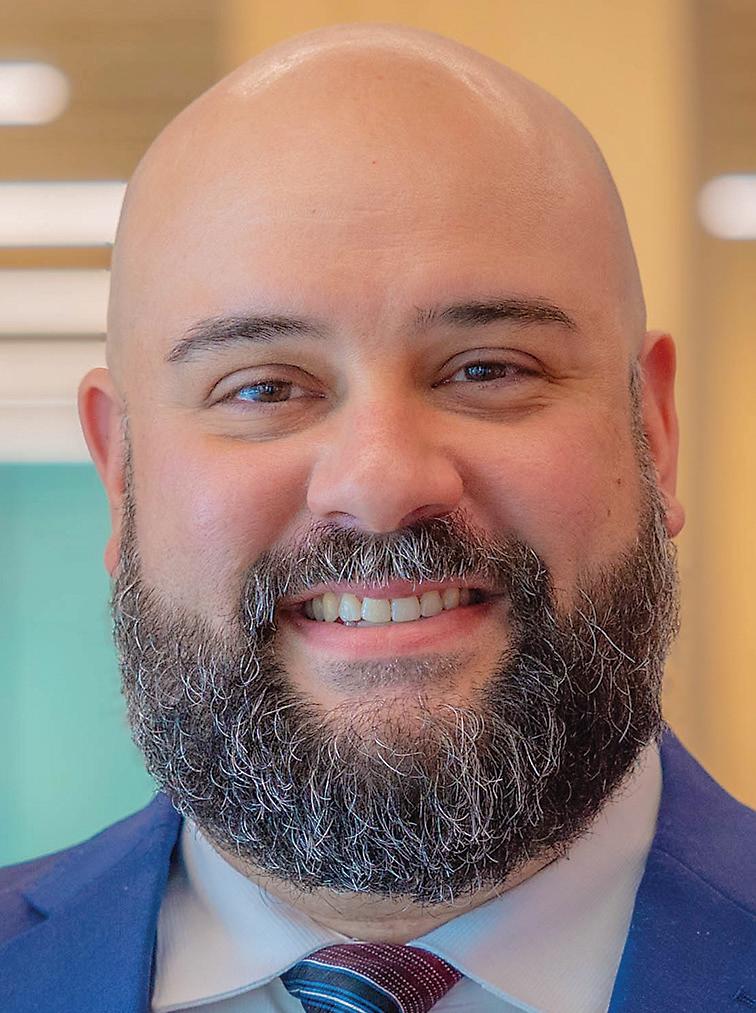
MARC BUZZEO
Manager, Emergency Management and Public Safety, Centennial College, 39
How did you first get involved in the security field and how has your motivation evolved over time?
I entered the security industry as a casual guard in the health-care sector. I worked with wonderful people who have gone on to do great things in the industry. This has motivated me to show how security professionals become a part of their organization, delivering on goals such as patient care and student graduation.
From the beginning of my time in uniform to now administering departmental planning and strategy, my motivation has remained clear. The organizations and people we support deserve the utmost integrity, respect and trust from security professionals.
Please describe your current professional role and the types of challenges/opportunities you encounter.
At Centennial College, I oversee the emergency management, public safety, business continuity, campus security and technology portfolios. In addition to that, I am also one of the appointed college incident managers. In the post-secondary sector, we see some of the same challenges you might see in any large community. The concerns we are called
upon to address are increasingly complex — from food and housing insecurities to the impact on physical and mental well-being and social gaps in how people interact with one another. This has required a shift in how we respond, adding trauma-informed approaches, alternate dispute resolutions and alternative ways of thinking.
What achievement are you most proud of in your career so far?
The achievement I am most proud of is supporting and watching the team members I have managed attain their career aspirations. I have had many mentors in my life and I want to ensure I give back as a mentor myself.
Building up people is why I enjoy this industry and those working in it. There are success stories everywhere.
of traditional security training and education, is there a skill or talent you have acquired that has helped you become a better security professional?
A goal was given me when I first started in security by my team leader. The challenge was to get a staff member to stop saying “hey security” when they required help and to build enough rapport that they use my name when calling for assistance or just during general patrols.
This challenge has always stayed with me as I look to advance my leadership within the industry. Integrity, humility and empathy have been a part of my connection to the spaces I have worked in and relationships I have built. I believe this helps to balance the line I walk between keeping an environment of safety and a campus that is welcoming to all.

Consultant, Physical Security Risk & Governance, CIBC, 25
How did you first get involved in the security field and how has your motivation evolved over time?
I first got involved in security a year ago while applying for internships during my third year of university. After attending a networking
event at CIBC, I learned about a variety of careers in the field. Corporate security immediately caught my attention because I had never heard of it before, and the idea of protecting people, assets and reputation intrigued me. What began as a summer internship quickly became a transformative experience. My first project involved leading a data migration initiative, where I applied the technology skills I developed in university to protect sensitive information. Since transitioning from my internship to a full-time professional role, I’ve built on that foundation by leading innovation initiatives and modernizing existing processes with technology and automation.
Please describe your current professional role and the types of challenges/opportunities you encounter.
As a consultant, I conduct third-party risk assessments. This involves evaluating potential risks and determining if further review or safeguards are necessary. One key challenge is understanding what services each vendor provides and tailoring our review accordingly, since risks vary across industries. To address this, I am developing a third-party risk assessment tool that generates tailored due-diligence checklists based on past assessments, findings, and remediations to help reviewers make more informed decisions.
What achievement are you most proud of in your career so far?
Being recognized as a Top 10 Under 40 is something I am incredibly proud of, especially because I entered the security industry as a newcomer. I had to quickly adapt to a corporate environment, learn the inner workings of a new organization, and build credibility so that my peers could trust and rely on my work. To get here, I’ve learned the value of maintaining a student mindset. In my new role, I continue to approach challenges with curiosity and look at problems from different perspectives. Being recognized early on in my career shows that you don’t need all the answers when you start.
What truly matters is staying curious, teachable, and surrounding yourself with people who support your growth.
Outside of traditional security training and education, is there a skill or talent you have acquired that has helped you become a better security professional?
My background in acting has been surprisingly helpful in my role. Acting requires adaptability and quick thinking, which helps me respond effectively to unexpected requests and situations where information may be limited. It has taught me to think on my toes, adapt my communication style to different audiences, and present findings in an engaging way.
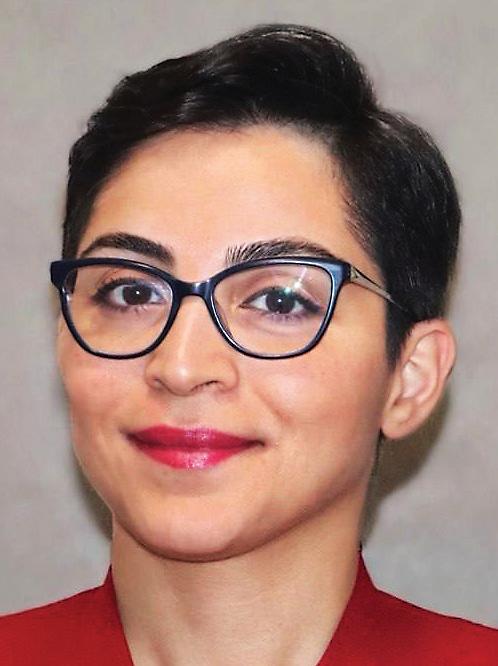
Cyber Security Specialist, Bell Canada, 39
How did you first get involved in the security field and how has your motivation evolved over time?
In cybersecurity school I discovered that my personal mission — helping people — perfectly aligned with this field. I found that protecting digital lives is a powerful way to serve others. Initially, my drive came from the internal satisfaction of solving complex technical puzzles. However, as the landscape evolves with AI, my motivation has matured. While defence is becoming more complicated, I am committed to staying on the “human side.” My goal now is to grow alongside the community, ensuring that as technology advances, our focus remains on protecting and empowering the people behind the screens.
Please describe your current professional role and the types of challenges/opportunities you encounter.
I serve as part of an incident response
team, working closely with operations to deploy and integrate automation and AI solutions. A primary challenge I navigate is the significant mindset shift required in this era; the rapid pace of technology often triggers “AI FOMO” and mental resistance. However, I see a massive opportunity to reframe AI as a “stress reliever.” By automating repetitive, high-pressure administrative tasks, we can alleviate the burnout and anxiety inherent in human nature. This allows our team to reclaim their time, shifting from exhausting manual work toward high-value, creative innovation.
What achievement are you most proud of in your career so far?
My proudest achievement is being an active part of the cybersecurity community and serving as a mentor for women entering the field. While technical milestones are rewarding, being recognized by various organizations has provided me with a vital platform to raise my voice. I am most proud of using this influence to advocate for two critical pillars: the ethical integration of AI and the prioritization of mental health in tech. Leveraging my visibility to empower others and challenge the industry to be more human-centric is the most fulfilling aspect of my professional journey.
Outside of traditional security training and education, is there a skill or talent you have acquired that has helped you become a better security professional?
The most vital skill I have refined is advanced critical thinking. In an era when humans serve as supervisors to AI systems, our ability to exercise independent judgement is more critical than ever. We must constantly validate AI decisions while remaining hyper-aware of “hallucinations” and inherent algorithmic bias. Developing the discernment to know exactly when a leader should override an automated result is a nuanced, non-technical talent. This human oversight ensures that while we leverage AI for speed, we never sacrifice the accuracy and ethical responsibility required to truly secure an organization
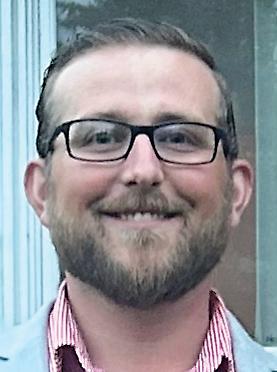
President, Ridgeback Security, 35
How did you first get involved in the security field and how has your motivation evolved over time?
My entry into the security field began when I joined the Military Police Reserves in 2008. What started as a part-time commitment quickly grew into a large part of my life. I deployed to Afghanistan after my first year of university at 19, and completed my Close Protection Operator Course in 2024. In 2019, I was asked to assist a company in conducting a threat risk assessment for a First Nations community. That is what started my entry into the private security sector, and in 2021 Ridgeback Security was formed. Over time, my motivation has shifted to
developing people, communicating the importance of physical security and raising industry standards.
Please describe your current professional role and the types of challenges/opportunities you encounter.
I currently serve as the Company Sergeant Major of 30 Military Police Company, while also leading Ridgeback Security. As president, I’m focused on our growth and finding qualified people to deliver services. At the same time, I’m constantly refining how we deliver our services, while ensuring we are keeping up to date with the ever-changing landscape today.
The biggest challenges I encounter revolve around changing threat landscapes, especially in Atlantic Canada — organizations are struggling to keep pace with the intersection of physical security and organizational cul-
ture. But those challenges are opportunities. Whether it’s modernizing training, developing practical tools, or enhancing physical safety through risk assessments, I see tremendous potential to elevate the profession through collaboration and modern thinking. We have recently partnered with Turtle Island Technology to create Carapace Security Consulting. As a First Nation-owned company, Carapace delivers both physical and cyber security services under one roof.
The achievement I’m most proud of is the positive, meaningful impact our work has on people and organizations. Helping an organization become safer and more resilient because of our work is what stays with me. We are also about to launch our proprietary safety and security app, which has been a long-term project.
Outside of traditional security training and education, is there a skill or talent you have acquired that has helped you become a better security professional?
I would have to say becoming a qualified Close Protection Operator with the CAF. The course teaches you how to solve problems quickly and effectively. The focus on attention to detail and situational awareness has been invaluable to me.

Manager,
Safety and Security, Human Resource Services, Edmonton Public Library, 38
How did you first get involved in the security field and how has your motivation evolved over time?
My path into the security field began through my work in occupational health and safety. While legislation and industry best practices provide an essential foundation, I have always been most interested in what comes next: how standards are translated into programs and practices that function effectively in real environments and meet the needs of the people within them. That perspective naturally led me to public libraries. Much of the security field has traditionally focused on compliance and enforcement. Public libraries, however, are powerful examples of what sociologists describe as a “third space,” places outside of home and work where everyone is welcome. In these environments, safety and security cannot be separated from how people are treated or how welcome they feel, for both the public we serve and the staff who work there. The challenge is navigating that complexity — creating spaces that are safe while remaining inclusive, compassionate and accessible.
Please describe your current professional role and the types of challenges/opportunities you encounter.
My role includes developing safety systems,
overseeing security operations and working closely with staff and community partners to respond to complex situations across a large urban library system. Libraries serve people with widely different experiences, expectations and needs. My work focuses on managing risk in ways that align with the library’s mission and values, while keeping the human element at the centre.
What achievement are you most proud of in your career so far?
One achievement I am particularly proud of is helping to advance how safety and security are understood within a public library context. As libraries respond to evolving community needs, our approaches must evolve as well. I’ve worked to build systems, training, and partnerships that support staff in responding to difficult situations safely, while also maintaining professionalism and empathy.
Outside of traditional security training and education, is there a skill or talent you have acquired that has helped you become a better security professional?
In public libraries, maintaining safety requires more than rules or enforcement. It requires relationships and a shared understanding that everyone plays a role in upholding expectations for behaviour. I believe effective security relies less on fear-based authority and more on referent power, built through trust, credibility and mutual respect. Ultimately, security is not just about managing risk; it is about creating conditions where people feel safe enough to participate, connect and belong.
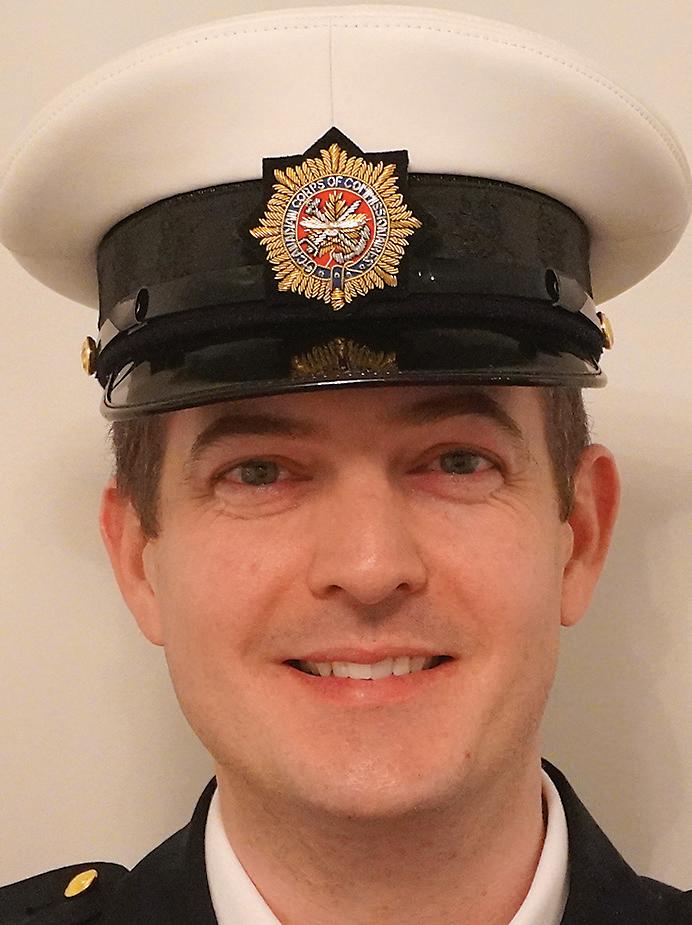
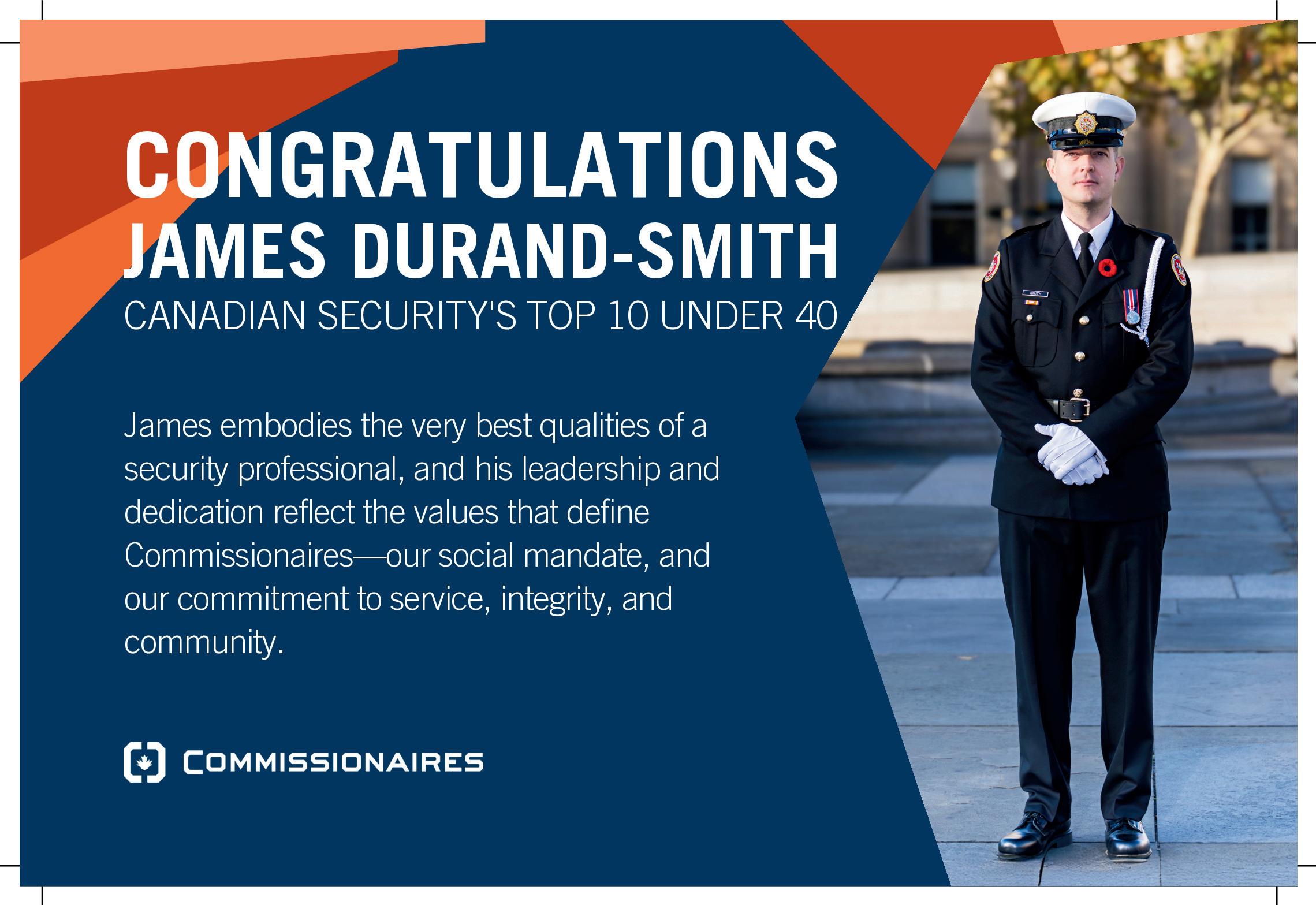
JAMES DURANDSMITH
Commissionaire, Commissionaires Great Lakes, 35
How did you first get involved in the security field and how has your motivation evolved over time?
I joined Commissionaires Great Lakes when
I was 20 and a student at the University of Toronto. I was a reservist with the Canadian Armed Forces looking for a career that would have some of the same elements as the military. Commissionaires provided a similar ethos and camaraderie, as many of its employees are veterans or reservists. Over time, I’ve learned that a career in security can take you to places you might not expect.
Please describe your current professional role and the types of challenges/opportunities you encounter.
I’m a member of the security team at the Federal Court of Canada in Toronto, and my day is never the same there. Our primary role is courtroom screening but we also travel across the province and country with judges, setting up and operating ad hoc courtrooms and screening areas inside hotels, universities and conference centres. We interact with the public, judges, counsel, media and federal employees daily. Awareness and tact go a long way in this environment.
What achievement are you most proud of in your career so far?
My proudest achievement is having been selected to march in the 2025 Remembrance Day parade in the United Kingdom with a contingent of Commissionaires from across Canada.
Outside of traditional security training and education, is there a skill or talent you have acquired that has helped you become a better security professional?
The abilities that have helped me the most — not just in my career, but my personal life as well — are compassion and empathy. Whether addressing a colleague, a judge, a member of the public, a supervisor or a person in distress, the outcome of that interaction is always better when you approach it from a position of understanding and compassion.
This ability has helped me avert dangerous situations and de-escalate emotionally charged interactions, which is the best outcome a guard can hope for.
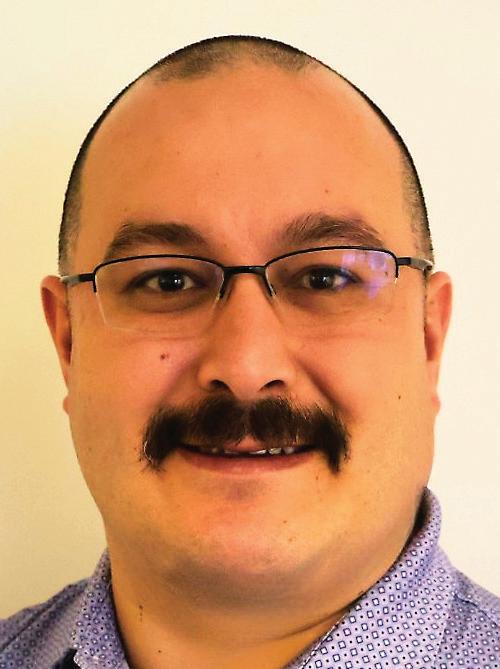
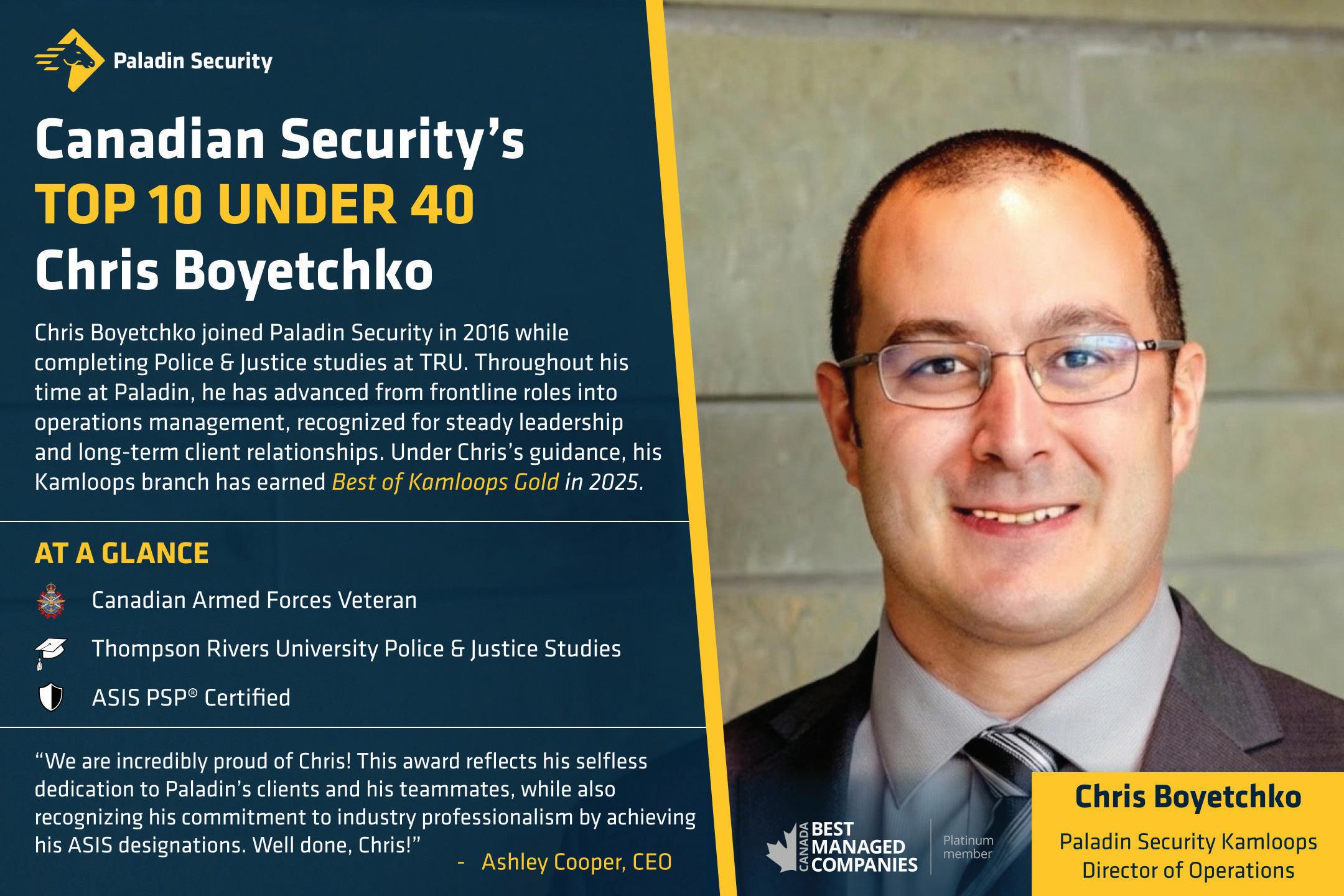
Branch Operations Manager, Paladin Security, 39
How did you first get involved in the security field and how has your motivation evolved over time?
I first became involved in the security field somewhat unexpectedly. After leaving the Canadian Armed Forces, I was attending university and working in electronics sales. One day, our loss prevention officer asked for my assistance with a theft in progress. That incident resulted in the arrest of two individuals and ultimately assisted the RCMP in recovering stolen property from multiple retailers.
Shortly after, I was invited to join the loss prevention team part-time — an experience that not only allowed me to connect with other security professionals and expand my expertise, but also launched my career.
Early on, my motivation was rooted in action, problem-solving and quick response. Over time, it evolved into something deeper: building teams, developing people and strengthening the role security plays in public safety and organizational success.
Please describe your current professional role and the types of challenges/opportunities you encounter.
I serve as a branch operations manager based in Kamloops, B.C., overseeing security operations across approximately 60,000 square kilometres. The geography alone presents unique logistical challenges. Many of the communities we support are rural and remote. One of the most important parts of my role is helping newer professionals understand the scale and responsibility that comes with protecting people and assets in such a vast region.
What achievement are you most proud of in your career so far?
I ’m particularly proud of earning my Physical Security Professional (PSP) desig-
nation. Achieving the PSP strengthened my technical knowledge and gave me greater confidence at the executive and strategic level. I am currently preparing to write the Certified Protection Professional (CPP) exam this spring
Outside of traditional security training and education, is there a skill or talent you have acquired that has helped you become a better security professional?
Coaching youth minor hockey has significantly shaped my leadership style. Developing practice plans, adapting to individual strengths, and motivating young athletes ha s helped me refine my approach to communication.
It allowed me to soften the rigidity of my military background while maintaining high standards and accountability. That balance has made me a more effective and approachable leader in the security profession.
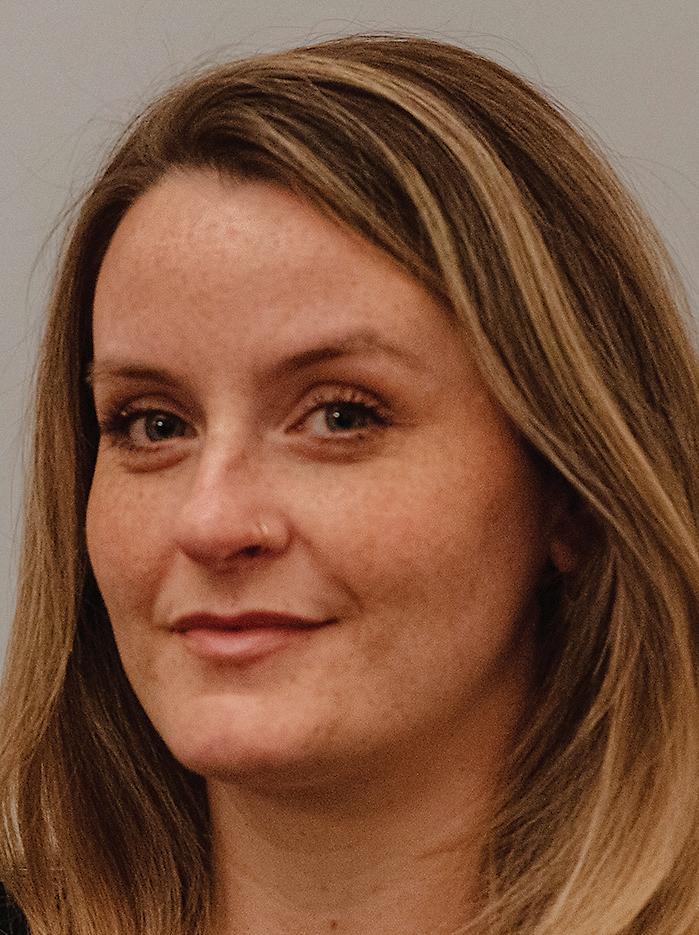
JESSICA HUGHES Manager,
Security Operations, Trillium Health Partners, 37
How did you first get involved in the security field and how has your motivation evolved over time?
I first entered the security industry to gain frontline experience in support of my long-standing goal of becoming a police officer. I was drawn to roles focused on public safety and making a meaningful impact. Early in my career, I had the opportunity to learn from experienced professionals who took the time to mentor and guide me, emphasizing the importance of situational awareness, communication and sound decision-making. O ver time, that exposure shifted my perspective. What began as a stepping-stone evolved into genuine appreciation for the profession and the critical role security teams play in prevention, risk mitigation and public safety outcomes.
Please describe your current professional role and the types of challenges/ opportunities you encounter.
My work focuses on supporting security operations across multiple hospital sites at Trillium Health Partners, with an emphasis on leading teams, strengthening day-to-day operations, and enhancing the use of physical security systems and technology.
This involves working closely with both leadership and frontline staff to ensure a consistent, responsive and people-centred approach to safety, where both staff and patients feel supported.
One of the achievements I am most proud of is the opportunity to contribute to building and supporting a strong, professional security team that demonstrates growth in both capability and compassion. Through ongoing training, mentorship and shared experiences, frontline staff continue to develop not only their technical skills but also their ability to approach situations with empathy, professionalism and sound judgement. Seeing that translate into more positive, respectful interactions in real situations and safer outcomes for staff, patients and visitors has been especially meaningful.
It has also been rewarding to see many individuals take that foundation and continue on to successful careers in law enforcement.
of traditional security training and education, is there a skill or talent you have acquired that has helped you become a better security professional?
One of the most valuable skills I have developed is emotional intelligence. The ability to approach situations with empathy, build rapport and understand what someone may be experiencing has been critical in effectively de-escalating situations. These skills have been developed over time through experience and by learning from others, and it continues to play an important role in how I support both my team and the individuals we interact with daily. | CS
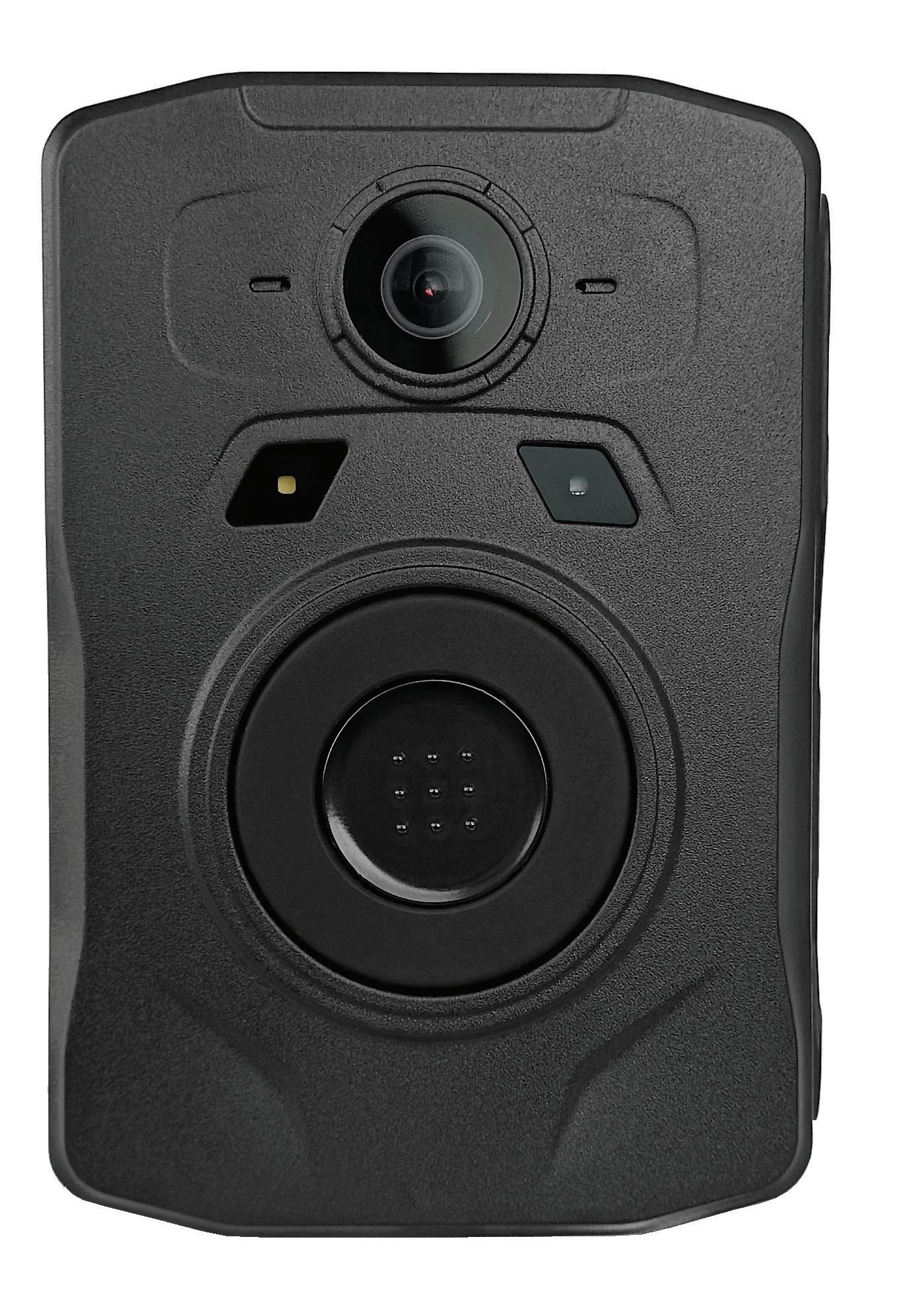
IONODES announced the release of the PERCEPT BC200 body camera, providing connected video technology for frontline workers, security professionals, and law enforcement. Built on an open-platform architecture, the PERCEPT BC200 combines a redesigned form factor with advanced IoT capabilities, real-time streaming, and video analytics through partners. The PERCEPT BC200 provides video quality with advanced low-light sensitivity and a 180° diagonal field of view. The BC200 is enhanced with integrated sensor support including motion detection, elevation tracking via a barometric pressure sensor, and external Bluetooth-enabled sensors. Its hardware platform meets TAA and NDAA compliance standards and is designed, engineered and assembled in North America. www.ionodes.com
Oncam
Hakimo
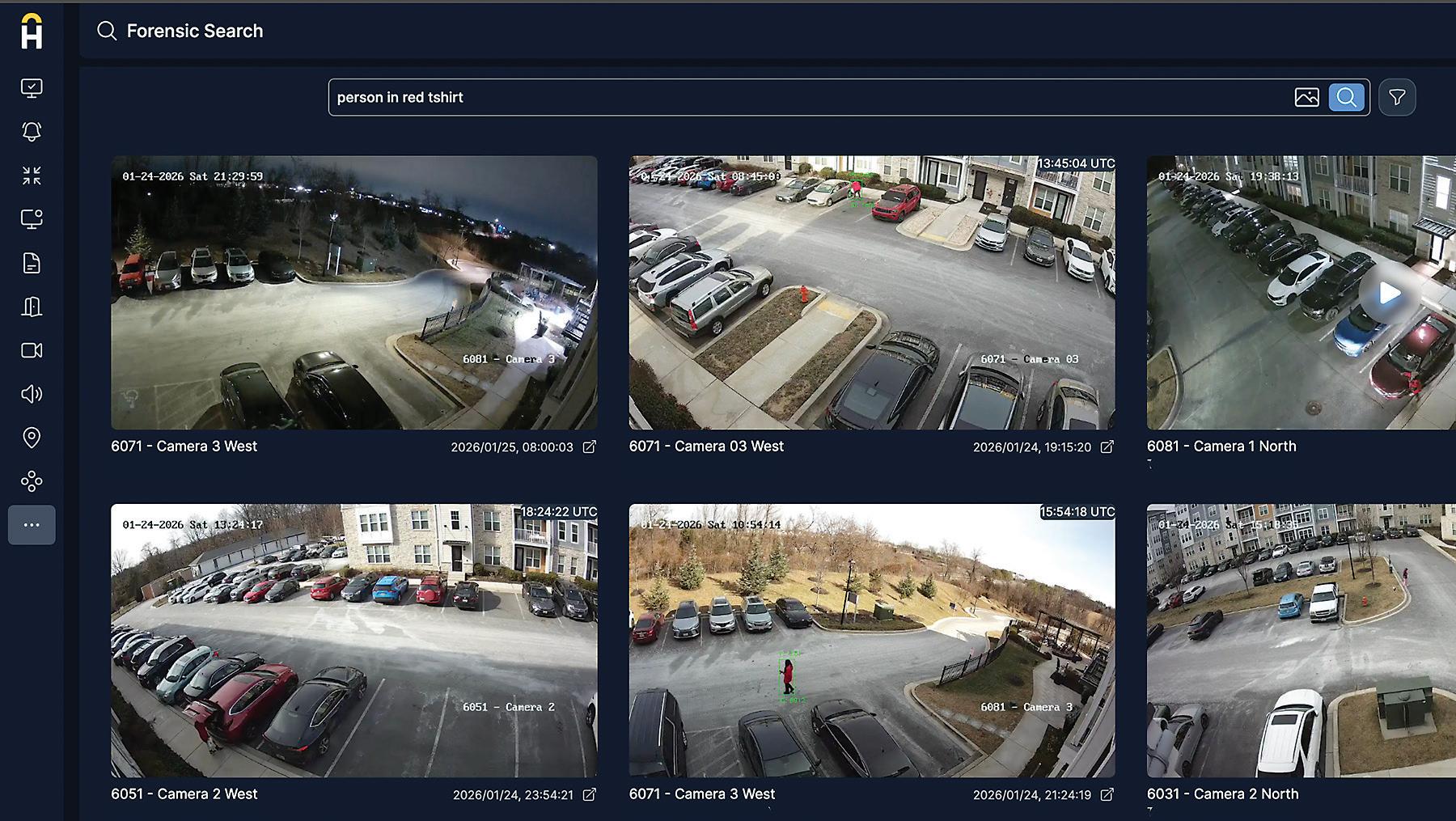
Forensic Search is a new capability that allows security teams to search and investigate video footage using natural language without the need of server infrastructure. With Forensic Search, users can type queries like “person in a red shirt,” “person opening car door,” or “red car in parking lot,” and retrieve relevant moments from hours or days of recorded footage in seconds. The feature also includes filters for camera, location, and time range. hakimo.ai
Opticom Tech
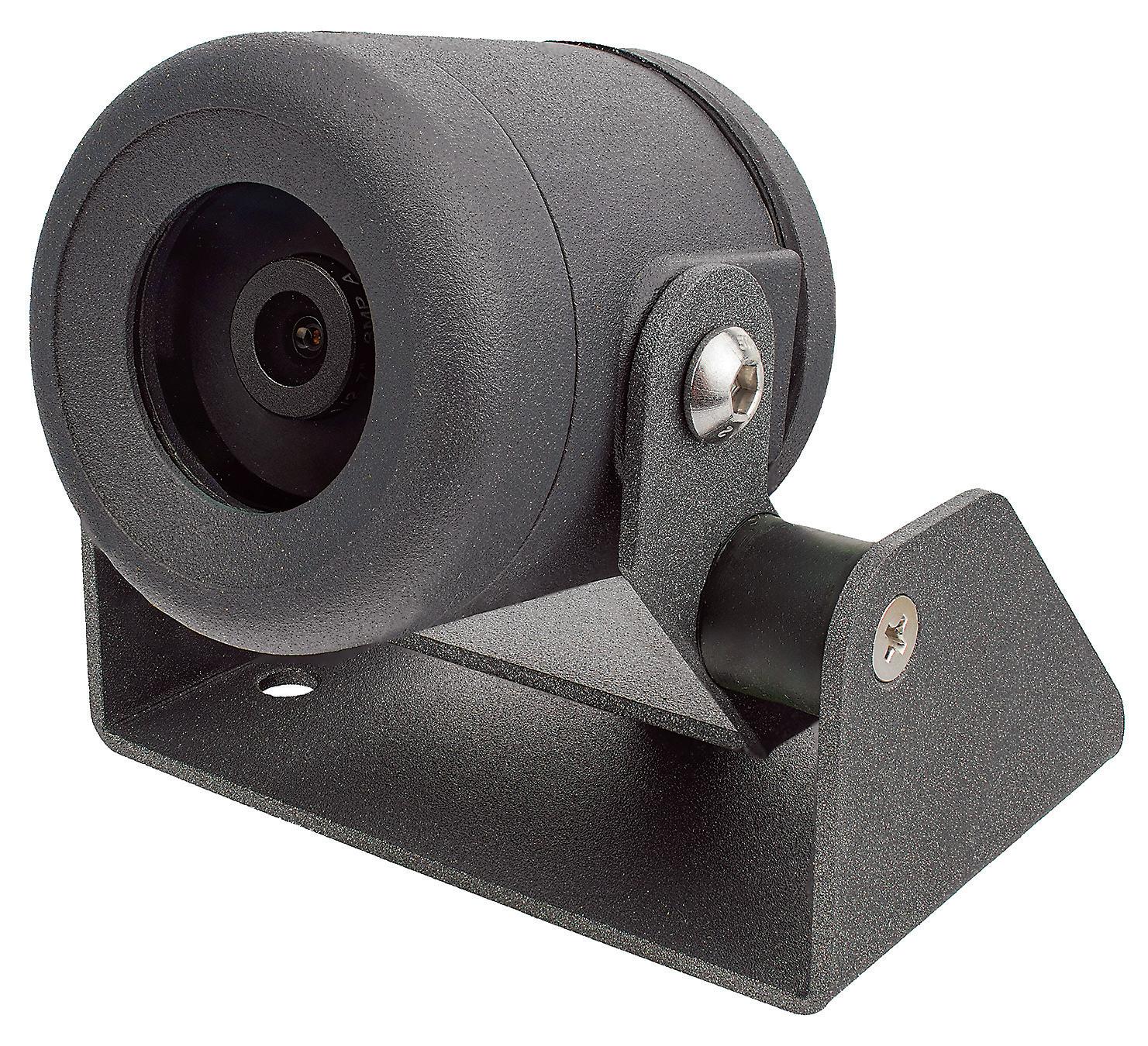
Opticom Tech announced the release of its updated CC02 industrial camera with a more rugged anodized coating, built-in vibration mount and lens options. The new anodized coating provides increased resistance to corrosion and wear. A built-in vibration mount now comes standard, simplifying installation and improving image stability in high-vibration settings. The made-in-the-USA CC02 camera is now available to order through Opticom Tech or its distributors. www.opticomtech.com
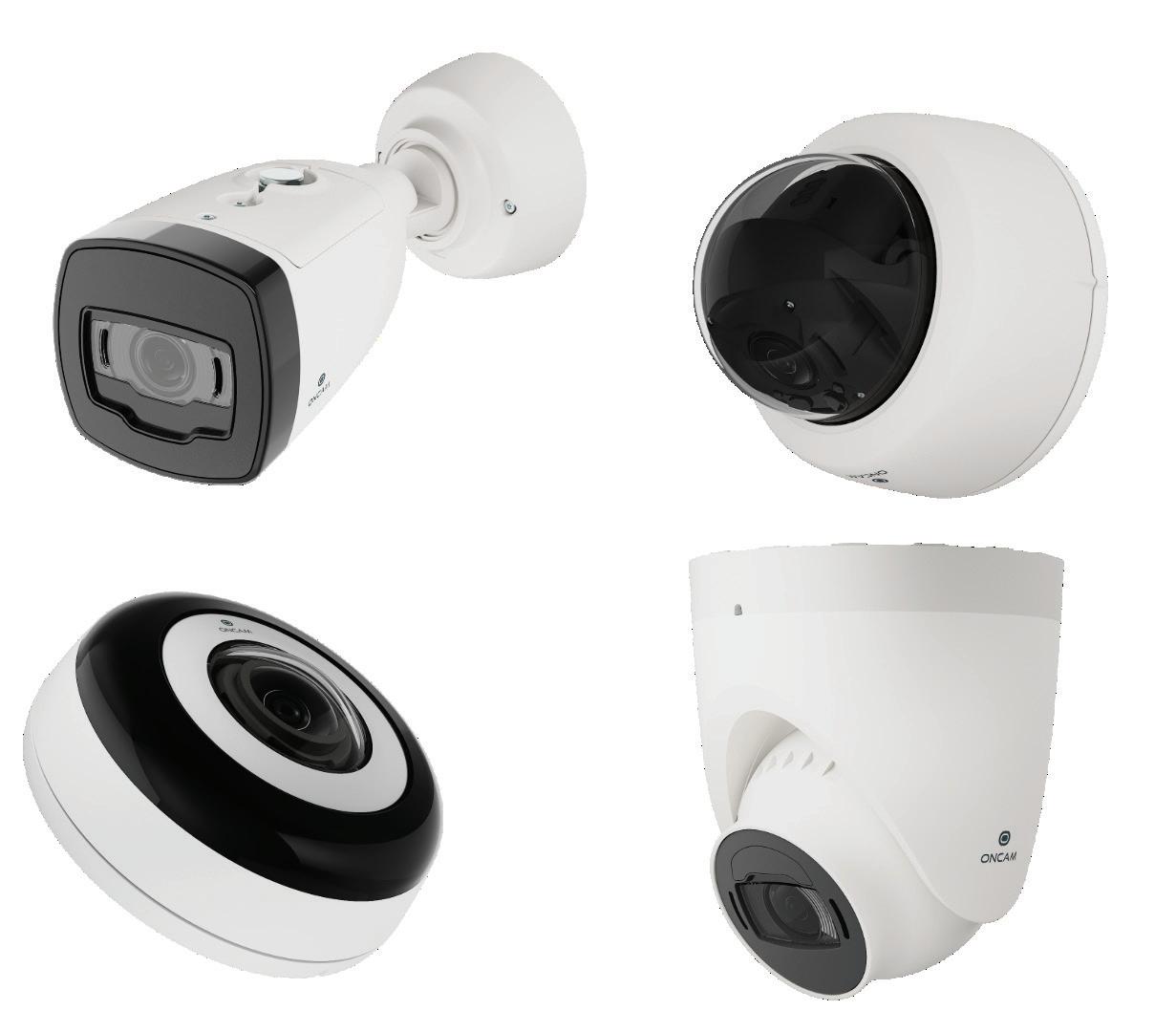
Built by Oncam’s engineering teams, the platform brings together AI-enabled cameras, intelligent IoT devices, and cloud-integrated video management software. The system is designed to break down barriers to cloud adoption while maintaining openness and interoperability, according to Oncam. At the heart of the roadmap is Oncam Core, a unified web and mobile platform. Built on open standards and fully ONVIF-compliant, it also integrates with third-party cameras. Oncam’s next-generation camera family, including bullet, dome, turret, and panoramic form factors, is being engineered for plug-and-play direct-to-cloud deployment. www.oncam.net
Wavestore
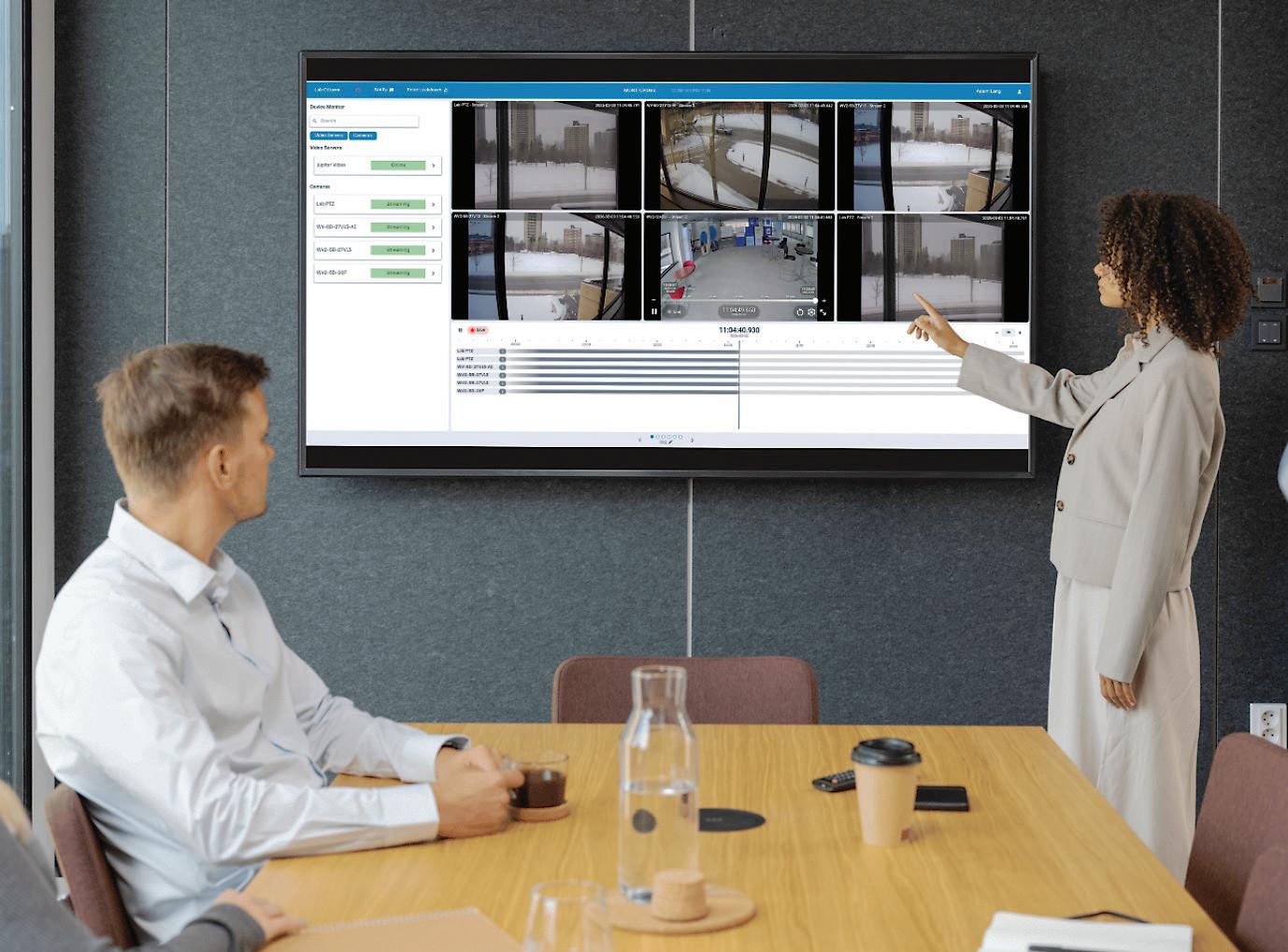
WaveFusion is a unified physical security management solution that the company says fuses video surveillance, access control, intrusion and loT devices into a cloud-first, open API platform. WaveFusion manages video footage, handles access control events and draws upon and controls analytics from any modern browser or mobile device, states the company. Features include: a cloud-native, AWS-powered access control foundation with intelligent automation and alerts; live maps and floorplans; integrated video intelligence and forensics, with recording, playback and analytics.. Created on HID/ Mercury controller architecture, it includes options for on-premises, encrypted video servers. www.wavestore.com