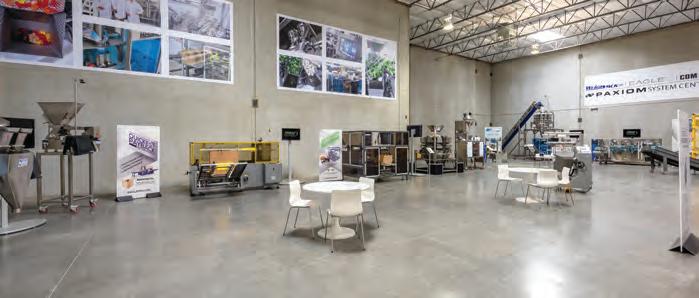
PAXIOM’s Xperience Centers™ are four strategically-located demonstration centers, housing a variety of machinery for the sole purpose of allowing you to see, touch and operate our equipment... even with your own product.
Hundreds of buyers have already been through our doors, making PAXIOM’s re-invention of the sales process the talk of the industry.
Ready for a better, more personalized buying experience? Call and schedule a visit today. Skeptics welcome.

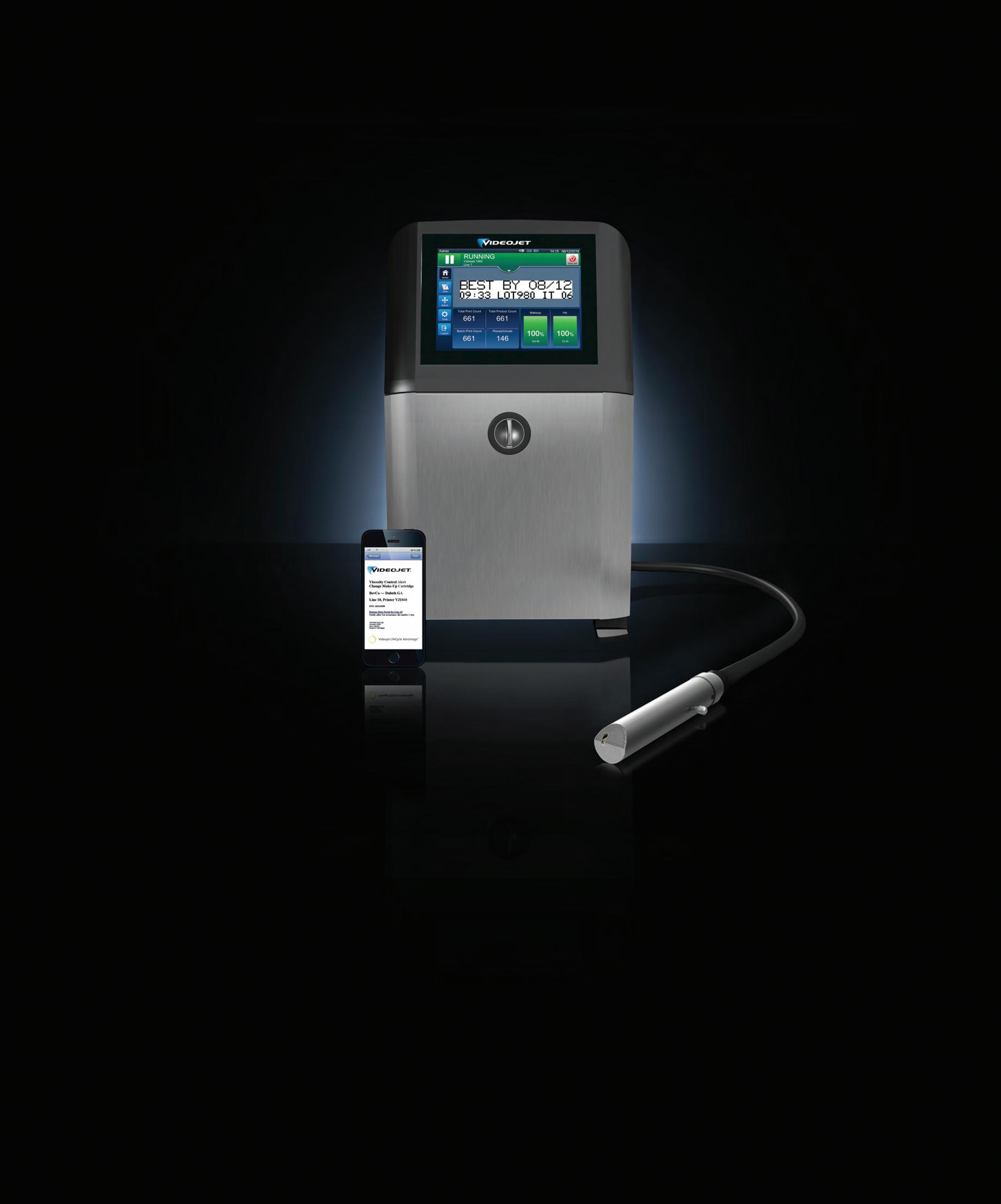
new Videojet 1860 Continuous Inkjet Printer
1. True predictability
Industry-first ink build-up sensor provides true predictability and warnings of possibly degrading print quality, even before a fault occurs.




True remote services*
Multiple access options (Ethernet™, WiFi) and secure VPN communication meet highest standards in the industry as part of VideojetConnect™ Remote Service, and help to improve machine uptime and customer experience.
* Subject to availability in your country
True IP rating
Optional IP66 rating for entire cabinet and hygienic design following industry guidelines; easier integration with slanted printhead design.
True scalability
Workflow modules help to customize the printer to perform the exact need required. It is easy to adapt the printer with new capabilities and functionalities, and to meet growing demands.




SENIOR PUBLISHER
Stephen Dean • (416) 510-5198
SDean@canadianpackaging.com
EDITOR
George Guidoni • (416) 510-5227
GGuidoni@canadianpackaging.com
FEATURES EDITOR
Andrew Joseph • (416) 510-5228
AJoseph@canadianpackaging.com
MEDIA DESIGNER
Brooke Shaw • (519) 428-3471 bshaw@annexweb.com
ACCOUNT COORDINATOR
Barb Comer • (888) 599-2228 ext 210 bcomer@annexweb.com
CIRCULATION MANAGER
Anita Madden • (416) 442-5600 x3596 AMadden@@annexbusinessmedia.com
VICE PRESIDENT
Tim Dimopoulos • tdimopoulos@annexbusinessmedia.com
COO
Ted Markle • tmarkle@annexbusinessmedia.com
PRESIDENT & CEO Mike Fredericks
ANNEX BUSINESS MEDIA
111 Gordon Baker Rd., Suite 400, Toronto, ON M2H 3R1; Tel: 416-442-5600.
PRINTED IN CANADA
ISSN 008-4654 (PRINT), ISSN 1929-6592 (ONLINE)
PUBLICATIONS MAIL AGREEMENT NO. 40065710
CIRCULATION
e-mail: rthava@annexbusinessmedia.com
Tel: 416-442-5600 ext. 3555
Fax: 416-510-6875 or 416-442-2191
Mail: 111 Gordon Baker Rd., Suite 400, Toronto, ON M2H 3R1
SUBSCRIPTION PRICE PER YEAR (INCLUDING ANNUAL BUYERS’ GUIDE): Canada $77.00 per year, USA $135.00 US per year, Outside Canada $153.50 US per year, Single Copy Canada $10.00, Outside Canada $27.10.
From time to time Canadian Packaging will mail information on behalf of industry-related groups whose products and services we believe may be of interest to you. If you prefer not to receive this information, please contact our circulation department in any of the four ways listed above.
ANNEX PRIVACY OFFICER Privacy@annexbusinessmedia.com
Phone: 800-668-2374
DISCLAIMER: No part of


Sonow that we have had about a year-and-a-half to try to come to grips with it, it seems fair to say that the only predictable thing about the current White House administration is its uncanny unpredictability, whereby no existing agreement or policy is immune from one-sided revisionism.
As the recent diplomatic maelstrom over the proposed punitive tariffs on steel and aluminum export to the U.S. demonstrates, predicting the future of the NAFTA (North American Free Trade Agreement) deal uniting the U.S., Canada and Mexico into a well-integrated trinational trading block is nowadays a largely rhetorical exercise in futility. So one can only hope that some of the considerable recent efforts on both sides of the border to enhance the movement of goods between Canada and the U.S., specifically food products, will not fall by the wayside.
While there’s a world of difference between legislating food safety into the existing trade framework and achieving it, there is a lot to be said for the viability of some proactive ideas put forth during the so-called NAFTA 2.0 talks held in Ottawa in 2017, which resulted on mutually endorsed proposal for a “joint risk assessment organization” that would:
• Assess and prevent emerging food-borne threats (microbiological, chemical and physical, including, where relevant, those linked to animal and plant health);
• Recommend food safety risk thresholds for pathogens, chemical residues, allergens, etc.;
• Approve food safety interventions, technologies and analytical test methods;
• Va lidate food safety best practices at all levels of
food production, processing, distribution and preparation;
• Share and interpret food safety testing and surveillance data gathered across North America and globally;
• Ex amine emerging risks, establish relationships between prevalence and levels of contamination and update risk assessment models accordingly;
• Bu ild harmonized systems for traceability of meat, poultry and other food products throughout the supply chain, from origin to consumer.
The truth is that here are many more similarities to be found in our Canada’s Safe Food for Canadians Act, adopted in 2012, and the Food Safety Modernization Act (FSMA), legislated in the U.S. in 2011, than any significant differences that could potential serve to disrupt the existing trade flows in food-and-beverage products.
That’s why the Canadian Food Inspection Agency (CFIA) and Health Canada signed an agreement with the U.S. Food and Drug Administration (FDA) in 2016 recognizing each other’s food safety systems as comparable.
And while comparable does not mean identical, it’s a sound starting point for making real progress on food safety.
With both countries ostensibly committed to the principle that the biggest job governments have is to serve their people, discarding all the joint hardearned advances on food safety to date would be a highly regrettable disservice to the North American public at large, any way you care to spin it.
George Guidoni, Editor

12 FASTEST WEIGH FORWARD
Multihead weighers measure up to salad producer’s rapid volume growth.
13 TRADING PLACES
A preview to next month’s CPMA Annual Convention and Trade Show in Vancouver.
20 WE ARE FAMILY By Andrew Joseph
A venerable produce farmer enhances its packaging line operations with cutting-edge stretch film wrapping machinery.
23 FLYING HIGH AGAIN By Andrew Joseph
A British Columbia poultry processor spreading its wings with high-performance thermoform packaging machinery.
28 WAY UP THE GROWTH CURVE By George Guidoni Fas t-growing flexible packaging products powerhouse enjoys a sweet homecoming with latest strategic acquisition.
36 TIME WELL SPENT
Our preview of the upcoming SIAL Canada 2018 food industry showcase in Montreal.
39 MUTIPLE ADVANTAGES

A multitasking metal detector delivers a perfect production recipe.
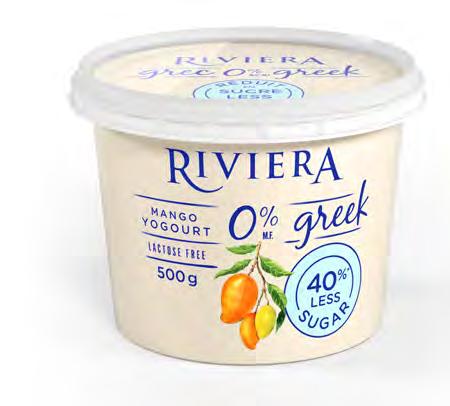
If moderation is key to enjoying sweeter things in life without regret, then the new Riviera line of sugar-reduced, fat-free, lactose-free Greek yogurts from innovative Quebec-based dairy producer Maison Riviera is an inspired masterclass of tasteful restraint, packaging included.
Produced and packaged at the company’s dairy processing plant in Sorel-Tracy, Que., the new Riviera Greek 0% M.F. (milk fat) products— available in seven flavors and three packaging sizes—boasts a remarkably short ingredient list, without any artificial sweetening agents, food additives or sweeteners.
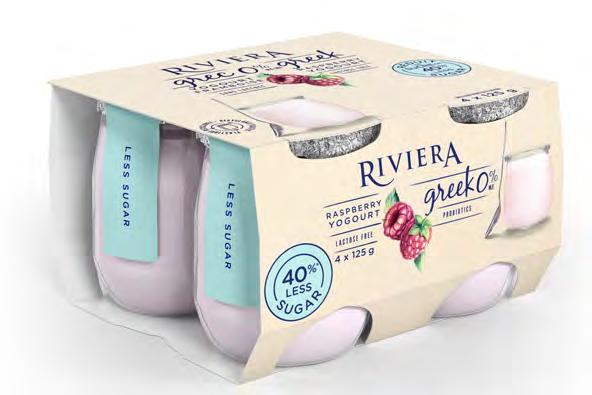
Made with fresh skim milk with zero milk fat, each 125-gram serving of the tasty product contains only 80 calories, while delivering healthy portions of both calcium and protein.
“We are constantly striving to lead the field in food trends,” explains Maison Riviera’s general director Martin Valiquette.
“Our latest product introduction continues our previous innovations with the goal of offering a simple, natural product with 40 per cent less sugar than traditional fat-free Greek yogurts.
“In doing so, we are addressing the urgent need to reduce sugar consumption, a genuine health scourge in our country,” says Valiquette, citing an average 45-day shelf-life for the new products
Packaged in fully-recyclable 500- and 750-gram plastic tubs, as well as in four-packs of singleserve 125-gram plastic cups, the new products also feature simple, clean and elegant branding graphics—expertly designed by Montreal-based studio Caroline Reumont Design Inc.—that also resist the current industry trend of splashing multiple colors and busy images all over the primary packaging.
Retailing across Canada from Quebec to the West Coast by leading grocery chains and independent retailers, the new Riviera Greek 0% M.F. are offered in seven different and intriguing flavor varieties that include raspberry, mango, banana, orchard fruit, caramel, vanilla and plain.
To create the new product, Riviera selected ripe fruits and then left them to macerate for a significant length of time to draw out the natural sugar, Valiquette explains, thus avoiding the need to add stevia or other artificial sweeteners.

“We are excited to have succeeded in this groundbreaking undertaking,” says Nicolas David, Maison Riviera’s director of quality and R&D.
“We take great pride in having created a 0 per cent M.F. natural product and lowered its sugar content by 40 per cent while still offering a pleasant round mouthfeel with a light, pleasant and fruity taste,” David states.
“This is an important first in the Canadian dairy sector, marking the start of a collective revolution in the agrifood community.”
Catherine Lefebvre, a well-known Quebecbased nutritionist and author, agrees: “Ultimately, the goal is not to eliminate sugar from our diet, but it is time to reconsider our recipes and learn to appreciate food’s true taste.
“It is to Maison Riviera’s credit that it has positioned itself as a leader in this important movement for Canadians’ health,” Lefebvre states.
“Let us hope that this encourages producers of the major sources of free sugars found in our diet to do likewise as soon as possible.”






















































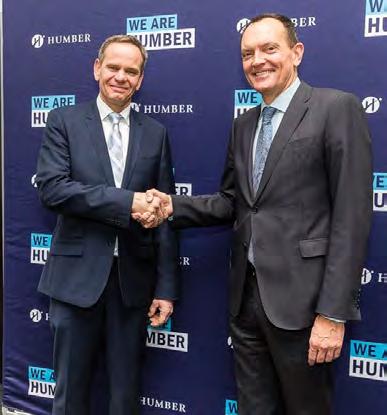
nToronto-based Humber College Institute of Technology & Advanced Learning has entered into a five-year partnership agreement with Festo Didactic Inc., a joint effort designed to address the skills gap between industry needs and educational programming in Canada. Under the agreement, Humber College will become the exclusive postsecondary education partner to offer Festo’s proprietary training courses in the Greater Toronto Area, focusing on providing students and employees of advanced manufacturing companies with hands-on training to learn the Industry 4.0 skills necessary to succeed in an evolving economy, with subjects including clean technology, renewable energy, robotics and transforming traditional factories into ‘smart’ ones using the Internet of Things (IoT) and cloud computing. “Festo’s collaboration will strengthen Humber’s track record of providing leading advanced manufacturing and mechatronics education to our students and the community,” says Humber College president Dr. Chris Whitaker. “This partnership shows the importance of industry partners working with students on emerging technologies,” adds Whitaker, citing the planned installation of a first Cyber Physical Factory in English Canada at the school’s Barrett Centre for Technology In-

We supply the latest Eagle PI X-ray technology to your site, operated by our certified Plan Automation Product Inspection technicians.
Our technology & support services will quickly help you inspect and reclaim your nished goods
INSPECT YOUR FINISHED GOODS, CASE OR PRIMARY PACKAGE:
• Food & Beverage
• Meat & Poultry
• Cosmetics & Pharmaceutical
• Consumer goods
• Industrial
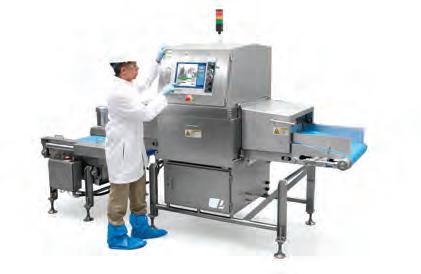
We also sell new equipment and offer lease to own or long term rentals.



novation.
According to Festo, a leading global industrial automation supplier headquartered in Germany, the Barrett Centre for Technology Innovation facility will provide a comprehensive and expandable model to enable companies to research and engage in industrial simulations using cutting-edge technology to support production, logistics and quality assurance.
“Festo Didactic values Humber’s vision for the future of technology and innovation, and we’re excited to partner with the college to provide the opportunity for students to learn the skills and gain practical experience that today’s employers demand,” says Festo Didactic’s chief executive officer Thomas Lichtenberger. “Bringing us together with other industry partners, we look forward to a collaboration that leads to a world class automation and learning systems center at Humber.”
In addition to training, professional development and certification initiatives, the partnership will focus on fostering innovation and education through a science, technology, engineering and mathematics (STEM) outreach program to engage Ontario youth.
The agreement also provides Humber students with internship opportunities in automation and manufacturing at Festo’s headquarters in Germany, as well as employment pathways to positions at Festo’s Customer Interaction Center in Toronto.

nThe Anthem Toronto package design services unit of the Chicagoheadquartered brand development and deployment services group SGK has recently picked up the Silver Award in the 2017 Pentawards Worldwide Packaging Design Competition, one of three Pentawards won by SGK’s Anthem Worldwide and Equator Design subsidiaries. Selected in recognition of the vibrant Kellogg’s Corn Flakes Special Edition cereal box designed to commemorate the Chinese Year of the Rooster last year, “This honor acknow-
ledges packaging design excellence as an opportunity to claim greater brand advantage on the retail shelf to drive top-line growth,” says Anthem’s vice-president of brand development for the Americas region Jaworski. “It is a testament to the power of design to connect brands with consumers through packaging to drive brand desirability, engagement and overall brand performance.”
nCorrugated packaging products and machinery supplier Somic America Inc. says it is near completion of the move of its North American headquarters to a newlyleased location in Eagan, an affluent suburb of Minneapolis, Minn. Boasting over 13,000 square feet of space to accommodate expanded warehousing and functions, and
office operations, the new location will also feature a state-of-the-art equipment showroom, according to vice-president of sales Peter Fox. “With our sales and customer base expanding, we simply outgrew the current space [in Bensenville, Ill.] and the new location resolves that issue, while opening the door to many new opportunities,” says Fox, citing the building’s proximity to Minneapolis-Saint Paul International Airport, interstate access, major corporate offices, and the Minnesota Vikings practice complex.

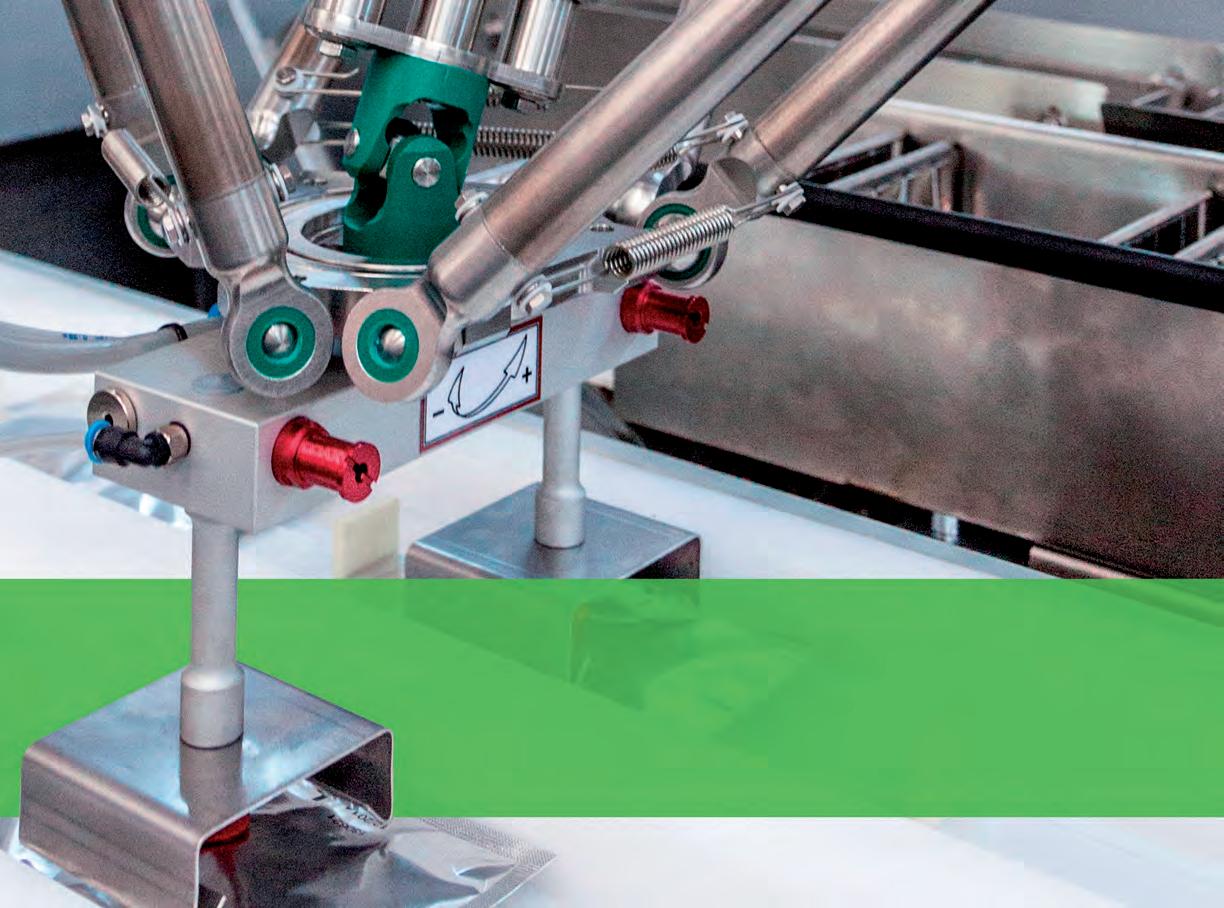
Faster on the market with your machines. Very easily.
Schneider Electric‘s PacDrive 3 system delivers 50% more power and now syncs up to 130 servo axes including robot axes with new controllers. From now on, automate a large number of your machines with just one technology and thus get to the market faster. Made possible by the motion control solution PacDrive 3 from Schneider Electric.
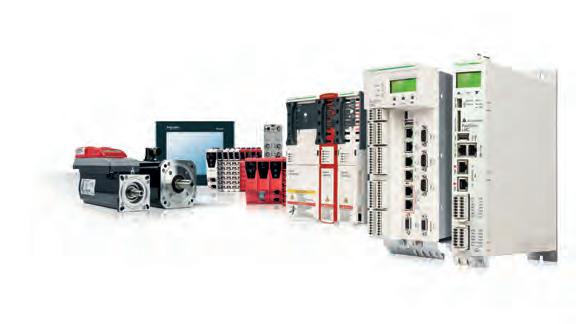

Designed to significantly increase the productivity of critical machine tools, the new IndraDyn S series MS2N synchronous servomotors from Bosch Rexroth Canada are designed to improve the consistency of path velocity and thus the processing quality, thanks to significantly reduced torque ripple. According to the company using the IndraDyn S series MS2N servomotor in conjunction with the Rexroth IndraDrive control units enables machine intelligence to reach all the way up to the motor in networked environments using MS2N motors as a data source for all the measurements, saturation and temperature data, which are automatically processed by IndraDrive controllers. Bosch Rexroth Canada
The new model HL9200 high-speed inline palletizer from Columbia Machine, Inc. incorporates new variable lane position technology with Columbia’s proven soft turn case handling and two configurable layer tables to provide accurate and stable layer forming. Allowing the operator to create new patterns or to optimize existing patterns, the operator-friendly





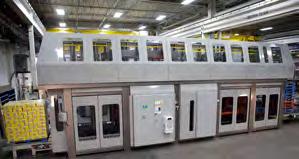
system is designed to deliver robust around-the-clock performance at throughput speeds of up to 200 cases per minute, depending on pattern, while its advanced Category 3 safety system includes fullyintegrated upper and lower guarding complete with viewing panels and multiple access doors—utilizing a trapped key door access system for enhanced safety and operational efficiency. Standard features include Smart Squeeze technology, multicolored light stack to show machine status at a glance, advanced diagnostics, and I/O status screens for communication of the machine’s status to the operator.
Columbia Machine, Inc.

The 700 series robotic palletizers from A-B-C Packaging Machine Corporation are designed to deliver the flexibility of manual palletizing with reduced costs and liability by automatically accumulating and stacking cases, trays, bags or shrinkwrapped multipacks in multiple configurations and pallet loads, according to


the company. Standard systems include a high payload robot and matching product handling devices for single or dual infeed and pallet building, product transport and staging conveyors, high-visibility guarding, Allen-Bradley controls and user-friendly programming for product requirements and for seamless transition to new products or packs, along with a broad variety of end-of-arm tools are available to accommodate virtually all product types.
A-B-C Packaging Machine Corporation
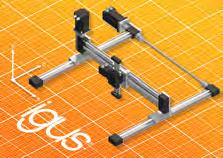
Suitable for a wider range of applications from pick-and-place to medical device assembly, the new drylin E linear robot from igus, Inc. is a compact, self-lubricating and maintenance-free robotic solution featuring up to 2.5-kilogram payload and speeds of up to 0.5 meters per second, according to the company. With all the sliding elements made from high-performance plastic to ensure lubrication-free operation, the drylin E robot features ZLW toothed belt axes and drylin GRW gear rack axis to ensure consistent accuracy and cost-effective automation of many manual tasks at a highly attractive price-point. igus, Inc.

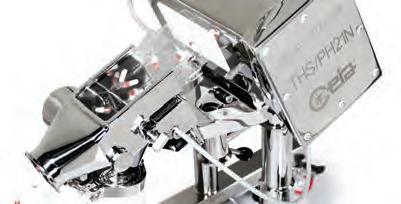

Heat and Control offers a complete line of metal detectors, checkweighers and X-ray inspection systems for pharmaceutical products from the leading manufacturers: Ishida and CEIA.
CEIA Metal Detection
The world’s largest manufacturer of metal detectors, with over 90,000 units installed. CEIA PH21-Series pharmaceutical metal detectors deliver unparalleled accuracy and sensitivity to all metals and provide high throughput rates for pills, tablets, and capsules. In addition, CEIA offers a complete range of solutions for packaged and non-packaged tablets, powders, liquids and other products; with all solutions including FDA 21CFR compliance.
Ishida X-ray Inspection
Find foreign objects including metal, glass, bone, plastic, hard rubber, shell and stones. Or detect product defects like cracks, voids, missing items and improper weights.
Ishida Checkweighers
Verify product weight, count, or missing items with DACS checkweighers. User-friendly controls include advanced data collection and management features.
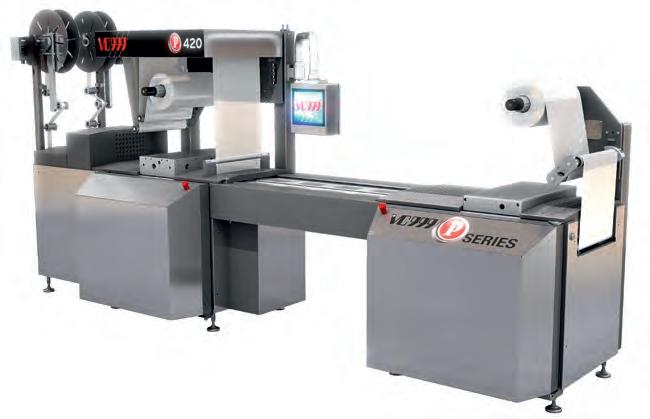
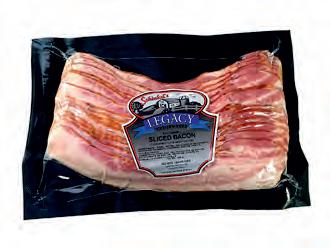
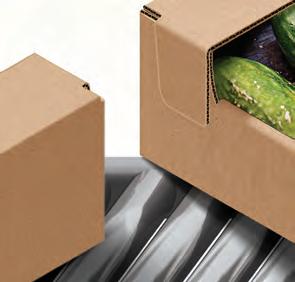
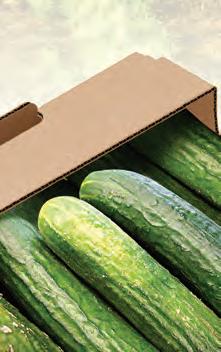
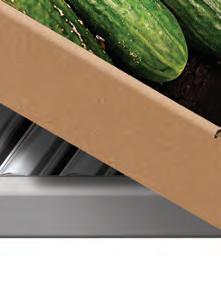
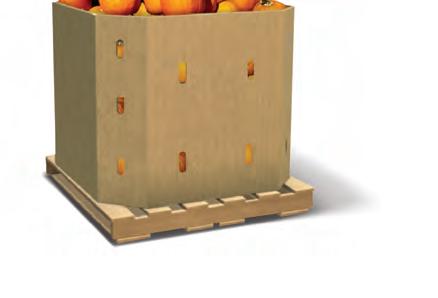
WestRock knows you have a need for innovative technology to solve your business issues.
Whether you’re looking for a produce container, a shipper/display box with a retail-ready, high-impact shelf presence, or other innovative corrugated solution, we help you manage costs, reduce labor pressures and improve your environmental impact.
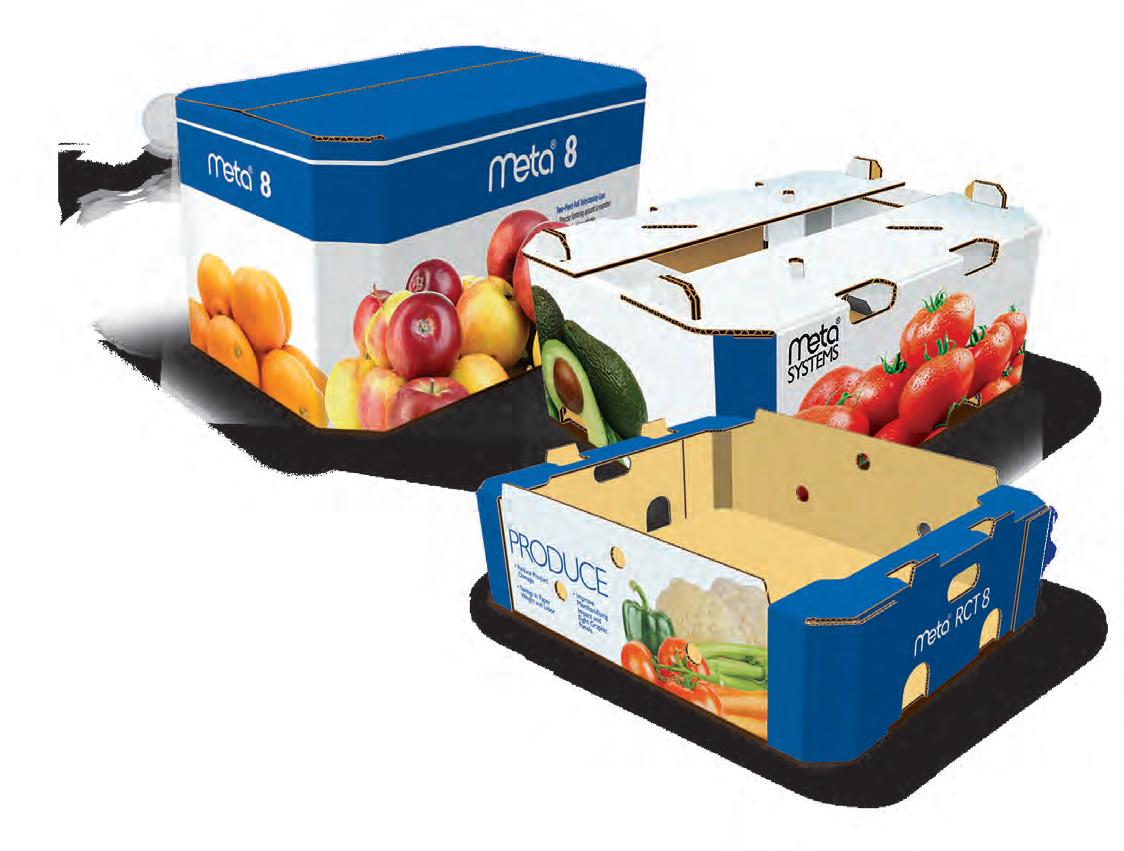
Come talk to us in Booth 618 at CPMA and discover how we are building better boxes to facilitate efficiencies throughout your supply chain.
The Coca-Cola Company has seen the future, and it has no room in it for packaging waste.
According to the global beverage giant’s ambitious new World Without Waste strategy unveiled in late January, the Atlanta, Ga.headquartered company plans to collect and recycle the equivalent of every bottle and can it sells by 2030.
“The world has a packaging problem and, like all companies, we have a responsibility to help solve it,” says The Coca-Cola Company’s president and chief executive officer James Quincey.
“Through our World Without Waste vision, we are investing in our planet and our packaging to help make this problem a thing of the past.”
As part of this strategy, Coca-Cola plans to perform multiyear investments into making all of its packaging 100-percent recyclable globally.
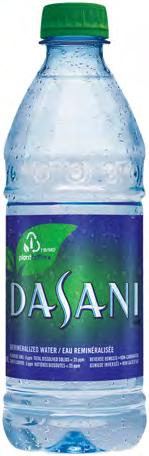
While the company says that the majority of its packaging is already recyclable, it will aim to make all of its bottles with at least 50-percent recycled content, which it says will “set a new global standard for beverage packaging.”
Working with its bottling partners, Coca-Cola also plans to expand its collection efforts across the industry—including the collection of bottles and cans from other companies—as well as work with local communities, supplier, customers and consumes to address issues like packaging litter and marine debris.
At the same time, Coca-Cola is promising to make more eco-friendly bottles by boosting recycled content, by developing plant-based resins, or by

Titan™ chain offers the ultimate in extended wear-life.
When it comes to critical applications, reliability is everything. But not just any chain can withstand the nonstop stress of high speeds and harsh conditions.
That’s why Tsubaki designed its Titan chain to deliver superior durability in challenging environments. Specially coated pins, solid lube groove bushings* and a patented ring-coining process increase fatigue strength while minimizing wear.
The result is a significantly longer wear-life, even in extreme environments.
So go on, hold your chain to a higher standard — the Titan gold standard.
To learn more, call 800.263.7088 or visit tsubaki.ca
*Lube groove bushings available in sizes 80–140.



reducing the amount of plastic in each container.
“Bottles and cans shouldn’t harm our planet, and a litter-free world is possible,” Quincey says. “Companies like ours must be leaders.
“Consumers around the world care about our planet, and they want and expect companies to take action,” he adds.
“That’s exactly what we’re going to do, and we invite others to join us on this critical journey.”
According to Coca-Cola, the strengthened focus on packaging will complement the company’s other noteworthy sustainability milestones to date, including becoming in 2016 first Fortune 500 company to return to nature an estimated 100 per cent of the water used in the production of its drinks that year.
Notably, this feat was achieved five years ahead of the company’s original target date, according to Ron Soreaneau, vice-president of public affairs and communications at Coca-Cola Ltd. in Toronto.
As Soreneau relates, Coca-Cola has already made a number of big strides in packaging sustainability in Canada, “But we recognize that we still have a lot left to do.”
To that end, Coca-Cola is constantly working on developing new, modern packaging solutions for the Canadian market, as well as organizing park clean-up events and educating communities around the country about recycling.
“In partnership with governments and communities, Coca-Cola Canada already helps to recover over 70 per cent of bottles and cans in communities across the country,” Soreneau points out.
“In addition, we divert an average of 97 per cent of the waste generated by our facilities from landfill.”
Since the 2009 lunch of the company’s PlantBottle packaging in Canada—the first-ever fully recyclable plastic bottle made using up to 30-percent plant resin (sugar cane)— Coca-Cola Canada has sold more than one billion beverages packaged in PlantBottle containers, including bottled water and other non-carbonated drinks brands.
According to the company, this initiative alone has saved an equivalent of over 8,500 tonnes of carbon-dioxide emissions in Canada each year.
A new waterborne moisture barrier coating developed by the St. Paul, Minn.-based Cortec Corporation can give many paper manufacturers the green edge they need to create non-toxic, effective, environmentallyfriendly paper and corrugated-board alternatives to wax and polyethylene papers.
According to the company, specializing in corrosion control technologies for packaging, metalworking, electronics and other industries, applying its EcoShield barrier coating onto their kraft paper, recycled paper and linerboard, enables manufacturers to produce fully-recyclable and repulpable paper and boxes that resist moisture, oil and grease.
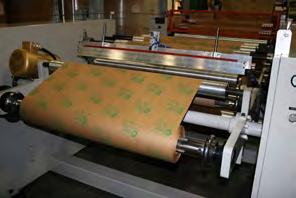
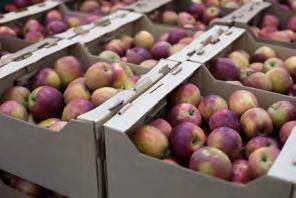
While polyethylene and wax coatings have long been used to seal porous paper, corrugated boxes, and sheets to provide an effective moisture barrier and/ or moisture-vapor barrier to these substrates, the resulting paper product has morphed into an outsized environmental problem because it cannot be recycled through normal channels.
In contrast, papers or linerboard coated with EcoShield Barrier remain fully recyclable and repulpable, according to Cortec, while achieving a very low moisture vapor transmission rate (MVTR) compared to polycoated or waxed paper, with outstanding oil and grease resistance.
Moreover, the application of EcoShield Barrier Coating is also claimed to enhance a paper’s physical properties such as burst, tear, and tensile strength; elongation, folding endurance, coefficient of friction, and smoothness, and it can be applied by most common paper roll coaters, including gravure, flex, air-knife, reverse-roll, etc.













If two heads are better than one, just consider when you have nine of them working towards the same common packaging goal with unerring precision, accuracy and reliability.
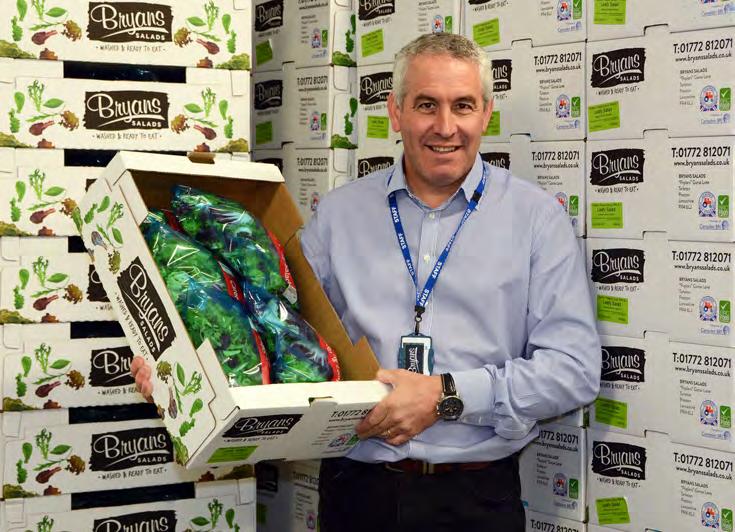
It has certainly proved a winning combination for the U.K.-based specialty salads producer Bryans Salads Ltd.
Operating in Preston, Lancashire, for 30 years, the company employs over 40 full-time staff at a vast production facility equipped with state-of-the-art washing, mixing and bagging machinery—all housed in a temperature-controlled environment.
Growing a large proportion of its different lettuce varieties and vegetables grown all year round both out in the fields and in large temperature-controlled greenhouses, the progressive company provides employment for up to 100 people during the busy harvesting season—providing a big boost to the local economy— in addition to sourcing some select products locally from neighboring farms to complement its popular salad products.
With the bulk of its raw product grown within a one-mile radius of the Bryans Salads processing plant, the company always strives to keep pesticide and fertilizer use to a minimum to protect the environment, while ensuring that all its products meet the highest safety standards and customer expectations.
According to the company’s chief operating officer, a recent infusion of advanced Ishida weighing technology has played a key role sustaining the company’s remarkable growth since 2009, with its annual turnover increasing nearly tenfold from £3.8 million ($6.8 million) to about £30 million ($54 million) today.
It has quickly matured into a well-respected supplier of pre-packed salads and vegetables to both the retail and foodservice sector.
With most orders received one day prior for next-day delivery, a fast and reliable weighing and packing operation is essential to success, according to chief operating officer Jon Bragg.
“When we first started our own processing and packing, we initially selected a different weigher,” Bragg concedes, “but it wasn’t long before we realized the error of our ways.”
To remedy the situation, Bryan Salads teamed up with packaging line equipment experts Heat and Control, Inc. a globally-operating supplier of highquality food processing and packaging equipment that includes the Ishida weighing systems, among many others.
Headquartered in Hayward, Ca., the company operates eight manufacturing facilities, eight test centers and over 30 offices worldwide—including Heat and Control Canada Inc. in Cambridge, Ont.—to provide customers with comprehensive testing, design, engineering, manufacturing, installation commissioning and user-training services, along with after-sales support and spare parts
Today, the Bryans Salad plant operates a total of nine Ishida multihead weighers—including three from the company’s latest state-of-the-art RV series—weighing a wide variety of salad products which are packed into bags or salad bowls with exceptional accuracy, speed and reliability, Bragg relates.
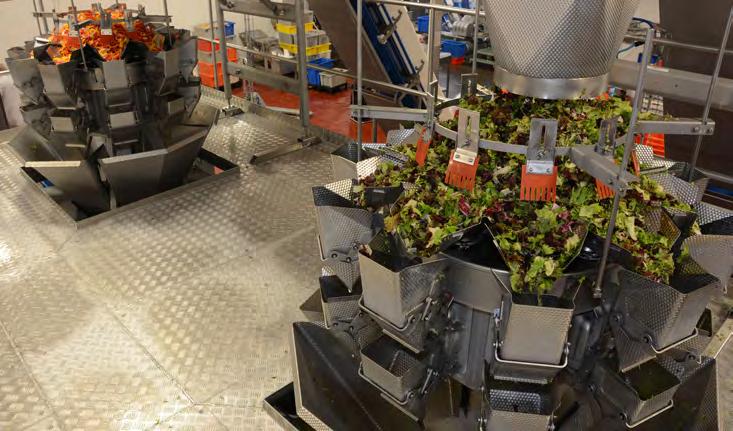
“In our experience, Ishida makes the best multihead wieghers out there, so if you are going to buy one, you owe it to yourself to choose an Ishida system,” says Bragg.
“Selecting Ishida over the competition is a bit like choosing a Porsche in preference to a Ford model vehicle,” he adds.
In operation, the Ishida weighers handle a wide variety of pack sizes—ranging from 90 to 250 grams for retail 250 grams to one kilogram for foodservice—with accuracy of within two grams on a typical 100-gram pack of mixed leaves.
While the varying packing speeds are dependent on the capability of the bagmaker and the nature of the product—with the heavier items naturally falling into the bags quicker—the average speeds hover at about 40 packs per minute.
As Bragg explains, there are four Ishida weighers operating across two salad bowl-packing lines.
On each line, one weigher is dedicated to a base leaf mix and the other weigher to a topping, such as mixed peppers.
A dipping funnel beneath the weighers first empties the leaf mix, after which the bowl moves forward to accept the topping.
With the weighers typically operating more than 12 hours every day of the week, Bragg cites their reliability and ease-of-use a key performance attributes, along with their accuracy and speed.
“The Ishidas are literally plug-and-play,” Bragg extols.
“You switch them on and they continue to operate consistently and reliably, so we experience minimal downtime,” he explains.
“And the touchscreen control terminal means the set-up and operation are very simple to perform.”
With the weighers subjected to a deep and thorough cleandown at the end of each shift, its waterproof construction and removable parts enable fast and hygienic cleaning, Brag points out.
“The Ishida weighers have proved an excellent long-term investment for Bryans Salad,” Bragg concludes.
“The best evidence of their longevity is the fact that after being cleaned, our 2009 models look just as good as the more recent additions.”
Bringing politics to the dinner table is generally not a good idea under normal circumstances. But with the fate of the NAFTA (North American Free Trade Agreement) deal between the U.S., Canada and Mexico suddenly hanging in precarious balance, these are not normal times for Canada’s $10-billion fresh produce industry that supports an estimated 145,000 full-time jobs across the country.
For the venerable industry trade group Canadian Produce Marketing Association (CPMA) in Ottawa, the current climate of anxiety about continued trade with our giant neighbor to the south is a subject that is bound to dominate the agenda and discussion at next month’s 2018 CPMA Annual Convention & Trade Show in Vancouver, B.C.
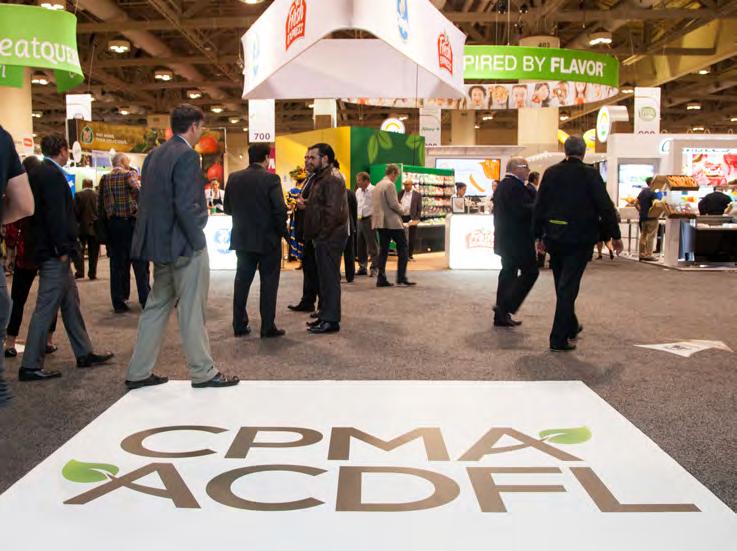
Organized under the buoyant theme of Live Healthy: Eat Fresh, the event’s 93rd annual edition—running April 24-26, 2018, at the Vancouver Convention Centre—is shaping up to be a monumental occasion on many levels.
Notably, it will mark the first time in CPMA’s colorful history that the association’s chairmanship this year has been handed over to a non-Canadian.

wholesale, foodservice, and retail segments from all over Canada.
Currently serving as senior vice-president of fresh sales at Duda Farm Fresh Foods Inc. of Oviedo, Fla., Rick Alcocer is a life-long fresh produce industry professional who has been an active participant in CPMA’s activities for nearly two decades, developing profound understanding for the many challenges facing Canada’s fresh produce industry in coming years.
Recently, Alcocer took time to talk to Canadian Packaging to discuss some of the industry issues demanding quick action and resolution for the continued well-being for both the Canadian and the North American fresh produce sectors at large.
Could you please reflect on comment on the significance of being named the first non-Canadian CPMA chair, along with the impotence of the Canadian markets for companies like Duda Farm Fresh Foods?
I believe that naming a non-Canadian to this position shows the progressive nature of CPMA’s diverse membership and their acknowledgement of the global interdependence of the fresh produce industry.
On a personal level, it is an honor to be elected to chair this incredible organization and to work with some of the best and brightest people in the industry.
My understanding of the Canadian marketplace and the rules/regulations that encompass it has been taken to a much deeper level.
I have been a director on the CPMA Board for the past 18 years, originally joining as an employee of Tanimura & Antle and then Duda Farm Fresh Foods.
Forming both business and personal relationships with influential members of top companies representing the retail, foodservice, and wholesale sectors of Canada has certainly had a positive influence on our potential of increasing our overall sales to Canada.
The Canadian marketplace plays an important role in many customer portfolios held by U.S.-based growers and shippers. Depending upon the growing location and season, Canada can represent from 10 to 25 per cent of a shipper’s production for many different fresh produce items.
What can you tell about the upcoming CPMA Annual Convention & Trade Show in Vancouver next month?
The CPMA Annual Convention & Trade Show allows companies to showcase their product line and services to the many segments that make up the Canadian produce industry.
The participants who stroll down the aisles represent potential customers from the
It’s an excellent venue to showcase a newly created concept in product or packaging, as it receives immediate feedback from the many participants.
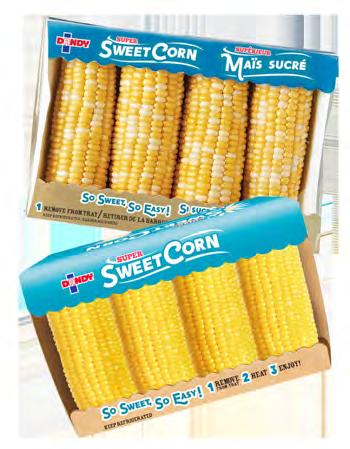
This year our company is highlighting a sweet corn tray-pack concept featuring a tray that is made from recyclable material that can be recycled again after use.
The distinct corners and edges of the tray allow the product to be stacked without the corn pressing against the corn above or below it.
Other merchandising benefits include seasonal packaging and menus, high product visibility, and call-outs to non-GMO and Grown in USA product attributes.
We’ve got so many great learning and networking opportunities at this show, that there really is a little something for everyone.With over 260 companies exhibiting, the trade show truly encompasses the entire supply chain.
What are some of the themes and areas of focus that the CPMA will be keen to address at this year’s event?
The past year has been tumultuous for our industry, as we’ve been constantly bombarded with market “disruptors.”
Whether they be technology, trade, food safety, public perception, or innovation, learning how to mitigate these disruptors is central to our 2018 conference program.
Our keynote presentations cover innovation and GMO—two topics that are certainly front-of-mind at the moment—and will complement each other. I think that these sessions will give some great insight into how the industry needs to respond and adapt to these issues.
The other component of our show that participants love is the social events. We offer multiple opportunities to reconnect and grow business in a more casual environment.
Expanding on our networking offerings, we’ll be offering our first Fresh Drinks for Young Professionals reception, offering an opportunity for those new to the industry to connect and build relationships with industry leaders.
We’ll also be offering a Women in Produce networking reception to celebrate women’s impact on the fresh produce industry. We’re also thrilled to have Canadian rock-

educational strategies.

How is the fresh produce industry faring in terms of product innovation and responding to the consumers’ evolving tastes and expectations?
Our industry’s efficiency and innovation are primarily driven by the perishability of our products. The combination of fresh and perishable forces our sector to be competitive, productive, and innovative.
In Canada, consumers consistently list price and quality as the top two influencers on produce purchasing decisions. Therefore, growers need to produce the bestquality produce they can, while the supply chain needs to develop highly innovative systems and efficiencies to reduce cost and meet the public demand while ensuring freshness.
The produce industry supply chain had an estimated economic impact of $15.7 billion in real GDP (Gross Domestic Product) in 2016, and it continues to grow.
How financially healthy and viable is the industry at this moment?
The fruit-and-vegetable wholesaling industry in Canada experienced moderate revenue growth over the five years to 2017—primarily as a result of increasing food prices over this period.
While the price increases for fruit and vegetable allowed industry operators to take in more revenue, they also had to contend with a rise in purchasing costs.
Moreover, despite declining per-capita consumption of fruits and vegetables, downstream demand from supermarkets and grocery stores, restaurants, hotels and motels, and specialty food stores have all increased—driving industry revenue growth.
According to recent market research from business intelligence firm IBISWorld, revenues for fresh fruits and vegetable are expected to increase between 2017 and 2022 in response to better economic conditions, healthy eating trends and rising food prices.
Based on these factors, our industry is healthy and growing, driving many new innovations in packaging ensuring a longer product shelf-life and encouraging more consumption through convenience.
What are the most important current issues dominating the industry’s agenda right now?
Trade is top of mind for everyone in the produce sector, especially in light of NAFTA (North American Free Trade Agreement), CPTPP (Comprehensive and Progressive Agreement for Trans-Pacific Partnership) and the development of free trade-agreements with China and India. Competitiveness on a global level hinges on the effective negotiation of fair and equitable free-trade agreements.
Agreements that remove tariffs and address non-tariff trade irritants are essential to ensure our members are able to grow, pack and ship products domestically and globally.
The global market has become more local, as Canadians continue to expand their tastes beyond traditional produce items and into exotic varieties.
As a result, food safety and traceability will play a big role insofar as accommodating the growing imports of produce into Canada.
Later this year, Canada’s is expected to introduce new food safety regulations which will allow Canadians to keep pace with advances in science and technology, the emergence of highly integrated food supply chains, and changing consumer preferences.
The regulations have consolidated 13 food commodity-based regulations including those that address labeling, importation, licensing, growing, packing and tracing.
This modernization effort, the most sweeping in recent history, can cause significant challenges if not implemented properly, but our sector is well-positioned to address the changes—thanks in no small part to CPMA’s work and
What is CPMA doing to educate consumers further on the health and nutritional benefits of increased fresh produce consumption?
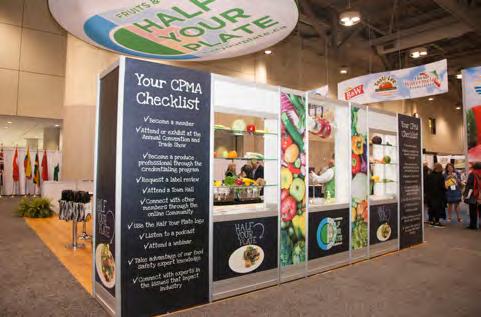
With health-and-wellness continuing to be a point of keen interest to Canadian consumers, CPMA remains very active in promoting the healthy eating trend links to the benefit of our sector through our Half Your Plate educational program’s four simple messages:
• It’s easy to do for the whole family, requiring very simple skills to prepare.
• It’s healthy and tasty, as fruit and veggies both taste great.
• It is affordable year-round with the right knowledge and preparation skills.
• It’s a vital part of a balanced diet and lifestyle.

Describe the general market conditions for Canadian companies in this business?
Consolidation in Canada has created a very competitive retail market, which is very price-sensitive.
This price-driven environment is an area that puts strain on all parts of the supply chain and, over time, could have detrimental impacts to the end-consumer, as well as access to new products and continued packaging innovation.
Describe the importance of the packaging function for companies in your sector?
Over the past six years we have seen significant developments in produce packaging. These changes have helped reduce losses in shipping, maintain freshness and quality for
longer periods, address overall quality by allowing for longer durations of time within a controlled atmosphere package, and improve efficiencies by moving volume through the use of effective master containers and shipping containers.
Our (Duda Farm’s) newest sweet corn tray-pack concept utilizes a tray that is made from recyclable material that can be recycled again after use. The distinct corners and edges of the tray allow the product to be stacked without the corn pressing against the corn above or below it, making it less susceptible to damage during transportation and while being merchandised on the retail shelf.
This allows the consumer to enjoys fresh tasty produce that has not been handled directly, therefore reducing the potential for contamination.
put your customers and company at risk
By increasing access to X-ray technology and reducing the complexity, JBT is simplifying contaminant and product defect detection and improving food safety. Our proven X-ray detection solutions are helping processors around the globe avoid recalls – Let’s get to work.
Detect stainless steel, glass, bone and stone
Eliminate uninspected “dead zones” in packaged product for 100% inspection every time
Reduce false product rejection with fast and reliable QNX software
Inspect raw, packaged and bulk flow products
Accommodate products in foil packaging
Many applications to improve product safety and quality
Maximize availability with simple to replace components
Easy to adjust and maintain detection performance
Remote support available through JBT’s best-in-class IoT platform
We’re with you, right down the line. ™
With this said, the produce departments must maintain a healthy balance between being able to provide shelf stable-product in a package, as well as the bulk items that also meets the necessary atmosphere and freshness requirements that the public expects.
What are some of the most significant packaging and/or labeling trends that you have witnessed in your industry in recent years?
Branding and convenience have blossomed impressively over the last six years.
The market has succeeded in providing consumers with a clean and clear view of the product while still providing a “general merchandising brand feel” to the package—something we see firsthand with the success of top seal packaging.
Consumer convenience is fundamental to our industry moving forward, as evidenced by many new value-added products looking to leverage packaging options to remain competitive.
How do you explain the longevity and success of your association (CPMA) to date? It is very simple: We listen, we adjust and we deliver.
The CPMA’s success in representing this industry for 93 years is linked directly to being able to offer our members many unparalleled opportunities to expand their business in Canada—be it through our continuing education programs; mitigating industry issues through government relations; or offering networking opportunities at a diverse range of events.
Responding to industry requests, earlier this year we launched the Canadian Food Safety Fund (CFSF) to support Canadian-focused research and education in the areas of pathogens, regulatory changes and best practices, so that our members can stay at the forefront of food safety in Canada.
The CFSF is intended to help facilitate and disseminate the important work, current and future, occurring in the produce industry.
As such, this fund will support vital, Canadian-focused food safety research; develop educational programs and key information on existing and emerging human pathogens related to produce; and increase government outreach to address food safety issues across North America. Food safety is important to the whole supply chain and can impact all our businesses, which is why the CPMA has made food safety a priority to support members and address the opportunities and challenges we all face.
To register for the 93rd Annual Convention and Trade Show of the Canadian Produce Marketing Association, please go to: www.convention.cpma.ca
B.C. blueberry grower and packer uses WeighPack Systems equipment to automate lines to berry good efficiency
BY ANDREW JOSEPH, FEATURES EDITOR
PHOTOS BY DAVID BUZZARD
If it seems as though the province of British Columbia is blessed with a plethora natural resources, rest assured you are not imagining things.
Among its forestry and fishing capabilities, the province is also Canada’s leader in the production of cultivated blueberries.
According to a 2016 report from Agriculture and Agri-Food Canada, the Great White North is the world’s second-largest producer and third-largest exporter of cultivated (highbush) blueberries, and the leader in the production of wild (lowbush) blueberries.
In Canada, blueberries are commercially grown in both wild and cultivated formats, with British Columbia producing about 96 percent of the country’s cultivated blueberries.
A recent push in Canadian consumers looking for healthier foods—blueberries may reduce the risk of cardiovascular disease, diabetes, neurological decline—has propelled the production of cultivated blueberries from 53,000 metric tons in 2013 to 72,500 metric tons in 2015.
Some 57-million pounds of cultivated blueberries were exported from Canada, with British Columbia exporting 55-million pounds all by itself, with fresh products largely going to the U.S., Chile and Japan, while frozen berries went to the U.S. Japan and Australia.
For Richmond, B.C.-based Wingreen International Trading (Canada) Ltd.—a company with only 12 full-time employees—the production and processing of blueberries was initiated by a love-at-first-taste meeting.
Although only incorporated in 2015, Wingreen’s story begins a year or so earlier with the chance encounter of founder Belina Zhao attending a B&B (bed and breakfast) that offered personal warmth from the Gill family who ran the establishment, and a generous offering of succulent local area fresh fruit.
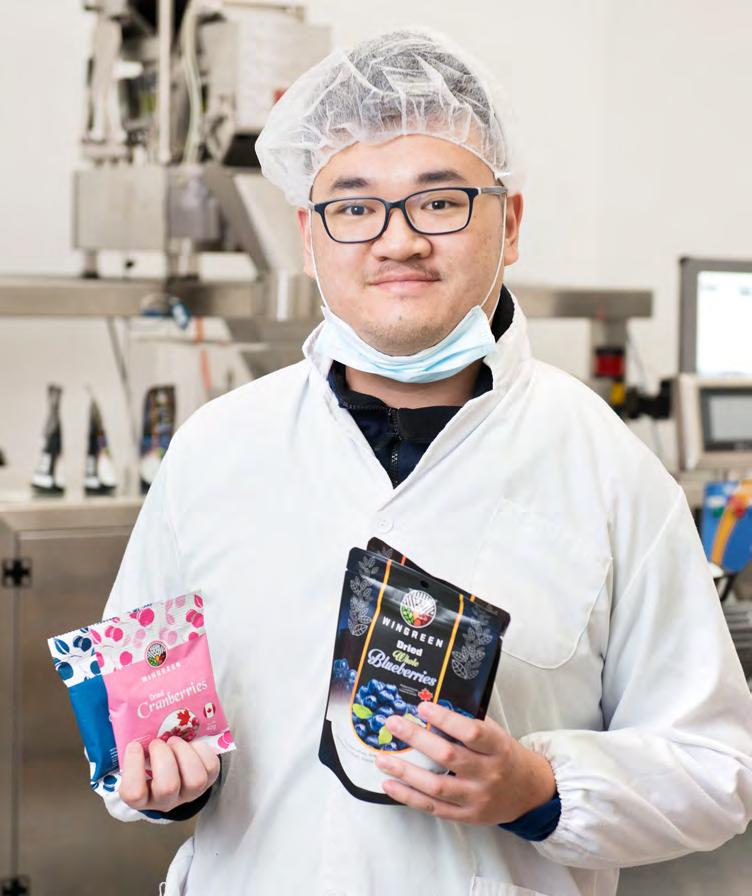
According to Zhao, the Gill family stated that, “you haven’t tasted the true flavors of blueberries until you’ve tried one from B.C.”
That first taste carried Zhao forward to become part of the local community and a grower of B.C. blueberries.
Blueberries, a member of the Ericaceae family, have been part of the human diet for thousands of years, and pack numerous health benefits.
Containing lots of the blue pigment anthocyanins, studies show that regular consumption of it helps reduce the risk of cardiovascular disease, diabetes, neurological decline and possibly aid in weight management.
Wingreen’s business covers the whole range of blueberry: fresh; dried, and; frozen.
“Wingreen is one of the first growers/exporters to get fresh blueberries into several Asian markets, including China,” Wingreen product manager Xiafan Li told Canadian Packaging during a recent interview.
That said, the majority of Wingreen’s business output revolves around dried blueberries during the off-season, with over 90 percent of its sales derived from dried fruits, including cranberries, sold outside of Canada.
The company is currently only a Provincial business, but Li says the company is working on getting its Federal facility license soon.
Li says Wingreen’s production skews towards approximately 60 percent dried fruit, 30 percent fresh, with the remaining 10 percent frozen.
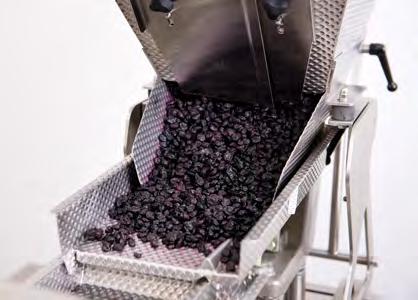
“Of that dried line production, 60 percent is for cranberries, with the remaining 40 percent for blueberries,” mentions Li.
“While the majority of the blueberries we sell come from local area farms here in British Columbia, our cranberries are shipped from farms mostly in Quebec, and when necessary, the United States.”
During the harvest time, when blueberries are available as fresh, Li says it grows and ships its berries to a local packer.
“Some of those fresh berries are sold under our Wingreen brand label—mostly for export,” notes Li, “while the remainder is sold under third-party labels.
“During the off-season, we pack and sell dried fruits under own label, but will provide private label opportunities for our customers interested in marketing dried fruits,” says Li, adding that peak blueberry season in B.C. is between June-September, during which Wingreen will contract more workers and extend its daily hours by an additional three to six hours to ensure it is able to keep up with demand.
Li says that while Wingreen would prefer to control the source of its own blueberry crop—planting two varieties on its own 15 acres (650,000 square feet) of farm—the sheer volume of demand for blueberries means it has to supplement its berries from outside farms.
“In order to provide blueberries across the whole season and beat the market price, we will pick up blueberries from other growers, packers and suppliers,” relates Li.
Under the Wingreen label, the company offers Dried Cranberries, Dried Whole Blueberries, Frozen Whole Blueberries in 128-gram resealable stand-up pouches, and 40-gram pillow bags of Dried Whole Blueberries and Dried Cranberries.There’s also a 125gram clamshell pack of fresh Wingreen Blueberries
Wingreen also has five different low-fat breakfast cereals under its banner in 450gram paperboard boxes: muesli-based 5 Grains, Nuts & Berries, and 25% Fruits & Nuts; and granola-based Honey & Almond, and Raisin & Almond
“Wingreen did not enter the cereal category simply as a means to use more of our fruit, rather we saw it as an opportunity to explore the concept of granola and mueslis as cereal bases—a relatively new idea that we felt we could gear towards our targeted markets,” notes Li.
“Starting in and around 2016, we found ourselves a manufacturer in Ontario whose granola product tasted fantastic and who followed strict QC (quality control) processes, and had them perform private-label cereal manufacturing on our behalf,” he continues.
Li told Canadian Packaging of a new product—Dried Blueberries For Kids—that is still in the developmental stage, but conceptually will be available in 20-gram flexpacks
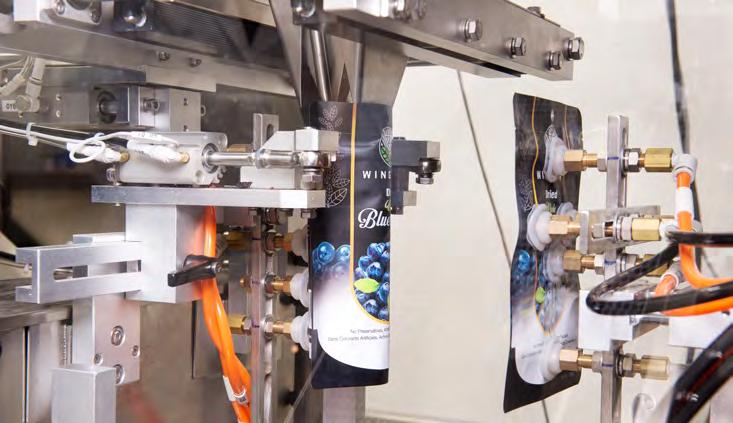
as a snack-on-the-go product in the near future.
According to Li, the farm is CanadaGap-certified, while the dried fruit packing facility is currently in the process of being audited by SGS Canada (a global leader in inspection, verification, testing and certification) for HACCP (Hazard Analysis and Critical Control Points) certification.
Within Wingreen’s premises, it houses a 3,000-square-foot dried blueberry packaging facility with three packing lines, one each of: fully-automated; semi-automated; and manual.
“The fully-automated line runs regular bags and pouches; the semi-automated line works with small bags or smaller-run production for customers requiring a more costeffective solution; while the hand-packed line was designed for special order or large bulk products,” Li extols.
“We understand that every customer has their unique needs,” he continues, “so we try our best to provide more options to satisfy their package and packing requirements.”
After receiving frozen fruits—cranberries and blueberries—from local packers, cane sugar is infused into the fruit until a specific brix level (a mineral/sugar ratio) is achieved.
A gentle drying technique is then used to dry the fruits before they are lightly sprayed with sunflower oil to give them a shine.
The fruits are then re-packed, run through a metal detection system and manually inspected before being hand palletized and shipped.
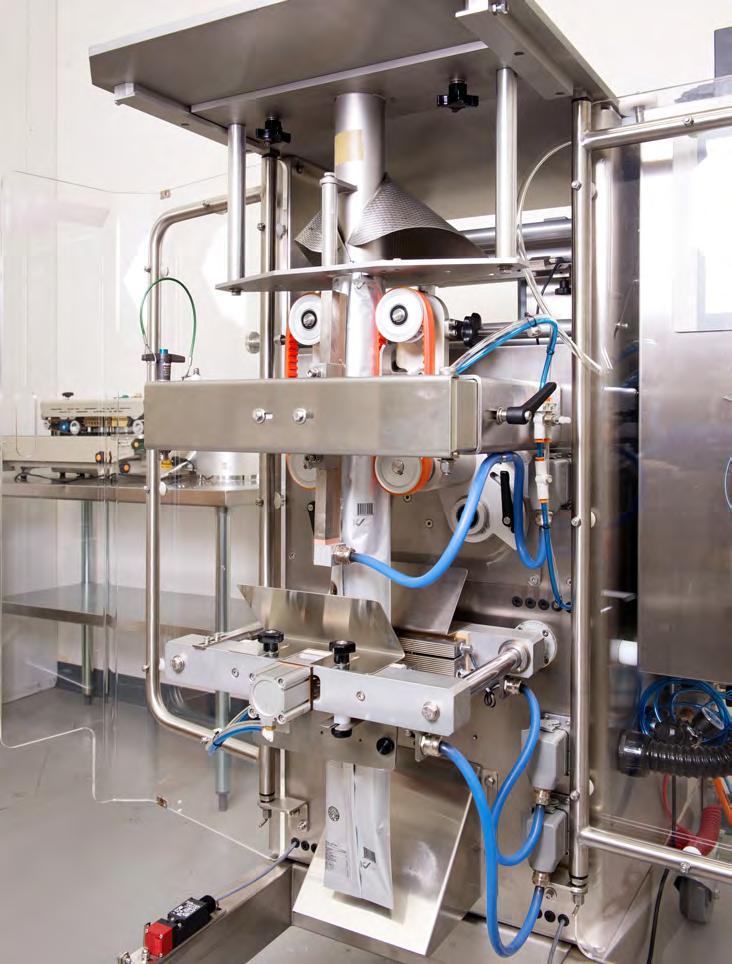
Helping the company with its packing are a trio of high-tech machines manufactured by WeighPack Systems and sold by Paxiom Group. Paxiom Group is the sales division for leading packaging machinery manufacturers WeighPack Systems, Eagle Packaging Machinery, CombiScale, and SleekWrapper
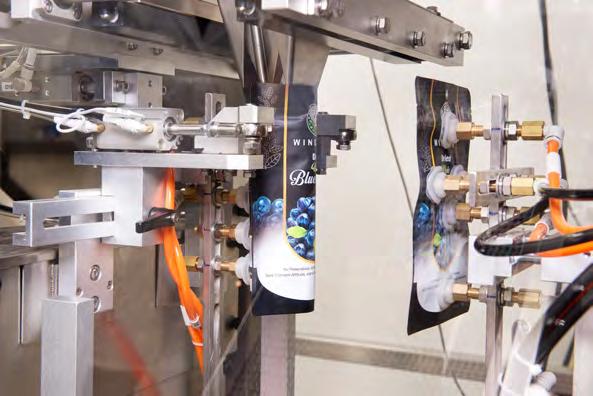
The berries are dropped down through a PrimoLinear V-5 linear net-weigher, a modular designed piece of equipment that comes with a single-lane scale, but as a business grows and higher packaging speeds are required, additional lanes can be added, up to a total of four lanes.
The PrimoLinear V-5 comes with a tilting hopper that doesn’t require time-consuming changeovers when running multiple applications. Its tool-less removable contact parts and standardized components also help reduce maintenance costs.
The V5’s vibrator assembly is spring-mounted, allowing the vibration to produce a faster and more accurate product flow.
The weigher utilizes the 360 Operating Software, a key component of WeighPack System’s offerings, providing up-to-the-minute reporting on production line efficiency, and offering complete remote operation if needed.
The software is easily configurable to send data and interface with ERP/MRP, and is seamless in its use with any Microsoft software, like Outlook, Excel, Word and Explorer
The 360 system also possesses reporting tools that include: event logging and archiving of production results, uptime and downtime, yield analysis, and unit cost.
And, should Wingreen need it, there’s also free on-line support that allows the operator and technicians to provide real-time support while eliminating production delay and its associated negative costs.
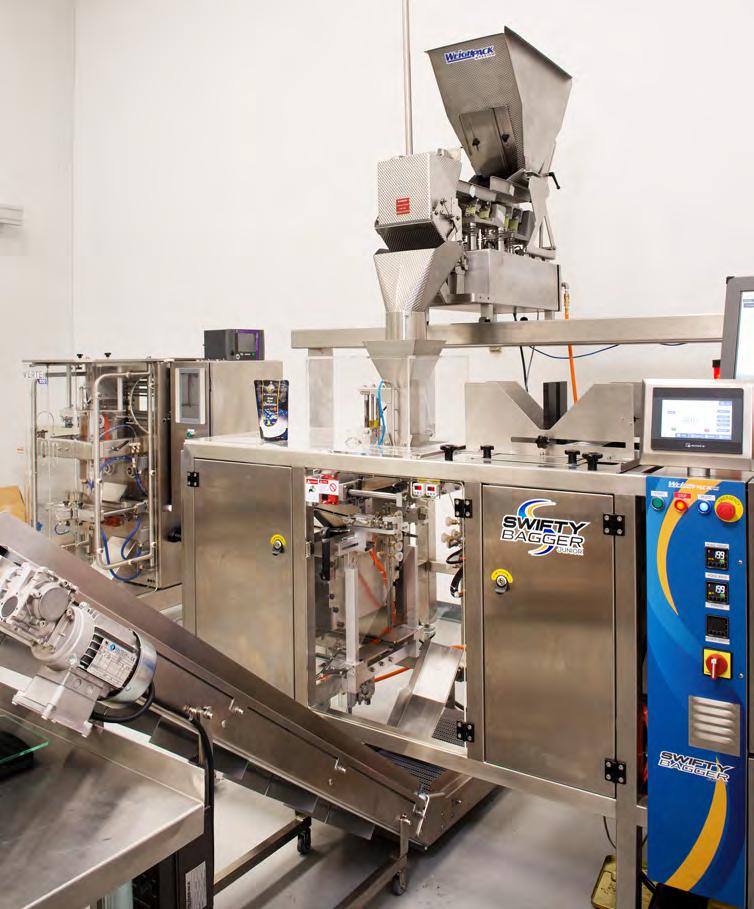
Wingreen also purchased a Swifty Bagger Jr. and a VerTek 800—two bagging systems designed and manufactured by WeighPack Systems, each of which offer Wingreen completely different styles of bagging quality and efficiency.
WeighPack calls its Swifty Bagger Jr. a compact and affordable bagging solution, automatically opening up to receive dropped down product to fill, and then seal pre-made laminated pouches in a multitude of styles, such as pillow, doy and quad bags.
Standard features on the Swifty include an automatic bag feeding magazine, a robust stainless steel frame, and an easy-to-use Omron PLC (programmable logic controller) and touchscreen operation.
“We use both the Swifty Jr. and the VerTek 800 for dried fruits packaging,” relates Li, adding that “the Swifty Bagger Jr. is used for bagging products in regular sized pouches, while the VerTek 800 is used for smaller bags.”
The Swifty Bagger Jr. was purchased by Wingreen in late 2016, and is operated at a speed of 10 to 12 packs per minute depending on actual product packaging requirements.
“Before we automated our facility with the addition of the WeighPack machines, we wanted something that could help us reduce labor costs which in turn could provide savings we could pass on to our customers, making us more attractive at store level,” explains Li.
“We like the compact footprint of the Swifty Bagger Jr.,” continues Li. “Along with it being very easy to set up for new packaging types, our operators find it simple to use, and just as importantly, easy for us to clean and easy to service when the WeighPack technicians come in.”
Li says that when it comes to cleaning the machine—very important when dealing with the fruits—employees simply open up the clear lexan doors in the front, and are provided with complete access to all of the bag-filling components, allowing them to do an effective single-person clean-up within minutes.
Features of the Swifty Jr. Bagger include:
• an Omron PLC;
• an Omron PID temperature controller;
• color touchscreen for fast and easy operation;
• quick bag-loading station with vacuum mechanism, and;
• a “no bag-no fill” sensor to help avoid product waste.
The Swifty can easily handle bag widths of 130mm to 280mm, and bag lengths of 130mm to 380mm, and can fill bags with a zipper closure, though they must be preopened by the bag supplier.
In Early 2017,Wingreen also purchased a VerTek 800 vertical form-fill-seal bagger.
“After the success we had with the Swifty Jr. Bagger, we had no qualms in going back to Paxiom to purchase our second WeighPack Systems bagging machine,” exclaims Li.
“While we did have the initial growing pains with the Swifty Bagger Jr. after it was installed due to our then-unfamiliarity with the technology, what impressed us was WeighPack’s response, having their technician come in quickly to take care of us. We felt like we mattered to them,” Li notes. “Their customer service was critical in our determination to purchase the second WeighPack system.”
He says that Wingreen typically runs the VerTek 800 at speeds of 12 to 16 packs per minute depending on bag size, and likes that it is able to produce multiple pouch types, such as stick packs, pillows, and gusseted pouches.
The machine is made of a very robust, single-piece 304 stainless steel frame, with a design that places all of the machine’s parts at the front, providing workers with excellent production line visibility and accessibility for maintenance.
According to WeighPack, the VerTek 800 (and up-market VerTek 1200) come with easy-to-remove pull belts and jaw assembly for machine maintenance, along with a tool-less removable former.
The bagger can also form-fill and seal multiple substrates such as laminated, metalized or polyethylene materials, and like the Swifty Bagger, the VerTek 800 also possesses a compact design.
According to WeighPack, when it comes to the actual bag forming, the VerTek’s pneumatic film roll shaft holds the film core concentric to the shaft as a means to reduce vibration which helps prevent the film from wrinkling at high speeds.
Additional features include:
• an Omron PLC;
• a 10.4-inch color touchscreen;
• quick disconnect sealing jaws and heating elements;
• SMC pneumatics;
• HMI integrated temperature control
• side access panel for maintenance;
• an integrated encoder for bag length control;
• bag deflator—sponge, and;
• memory-based storage menu of operating functions.
Says Li: “Thanks to the WeighPack machinery, our company’s productivity levels have gone through the roof.
“They have helped make as a more competitive company.”
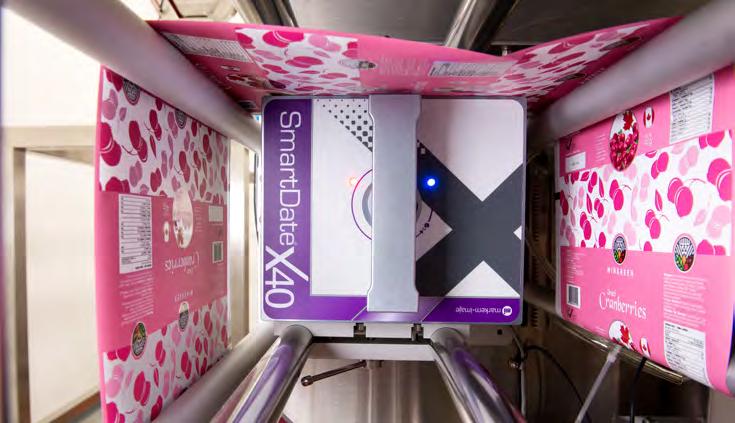
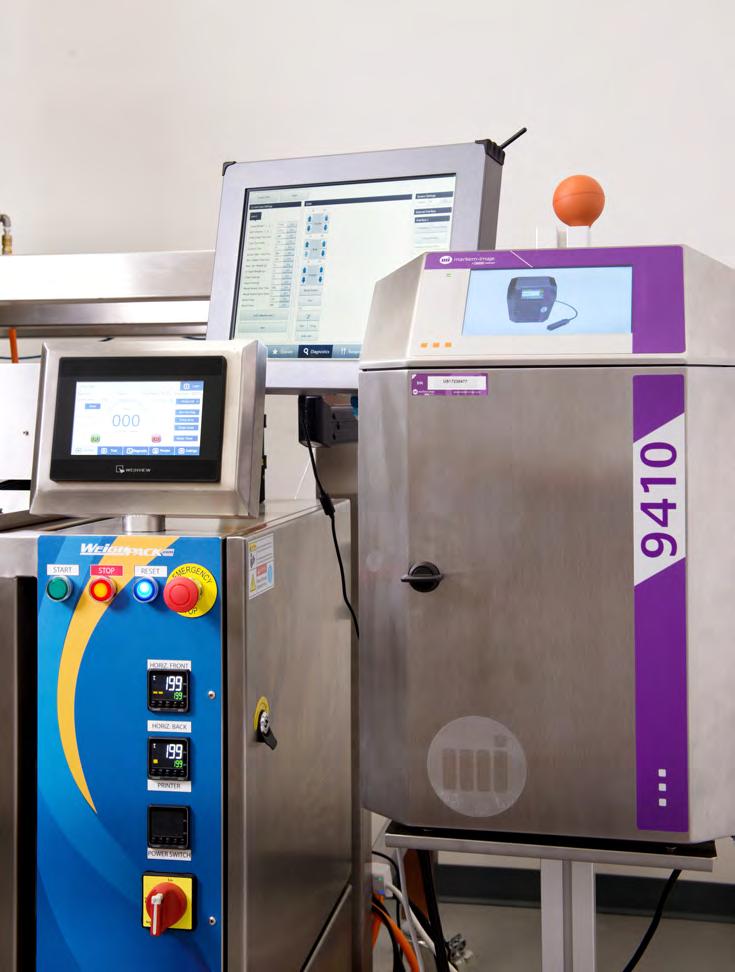
Other equipment utilized by Wingreen includes a Markem-Imaje 9410 smallcharacter inkjet coder to apply best-before dates on the Swifty Bagger Jr., and a SmartDate X40 thermal transfer coding solution in the VerTek 800. Its supplier of corrugated cartoning is Ideon Packaging of Richmond, B.C., with bags supplied by Vancouver’s Taipak Enterprises Ltd.
“Purchasing the WeighPack System machines from Paxiom has been a great help to Wingreen,” says Li. “The automation we have achieved has certainly aided us with cost savings, but both the Swifty and the VerTek have helped us provide private label packing of dried fruits, something we could not have previously accomplished with such efficiency.”
Continues Li: “We also love the service responsibility from WeighPack. Their technicians and service people have been very responsive to our questions, or in help us improving our productivity—we always get a response from them the first time we ask.
“While it is true that our customers love the delicate flavor of fruits from our farm, it is equally true that they love the look and feel of our product packaging.
“And that’s something we have achieved thanks to the efforts of WeighPack Systems.”
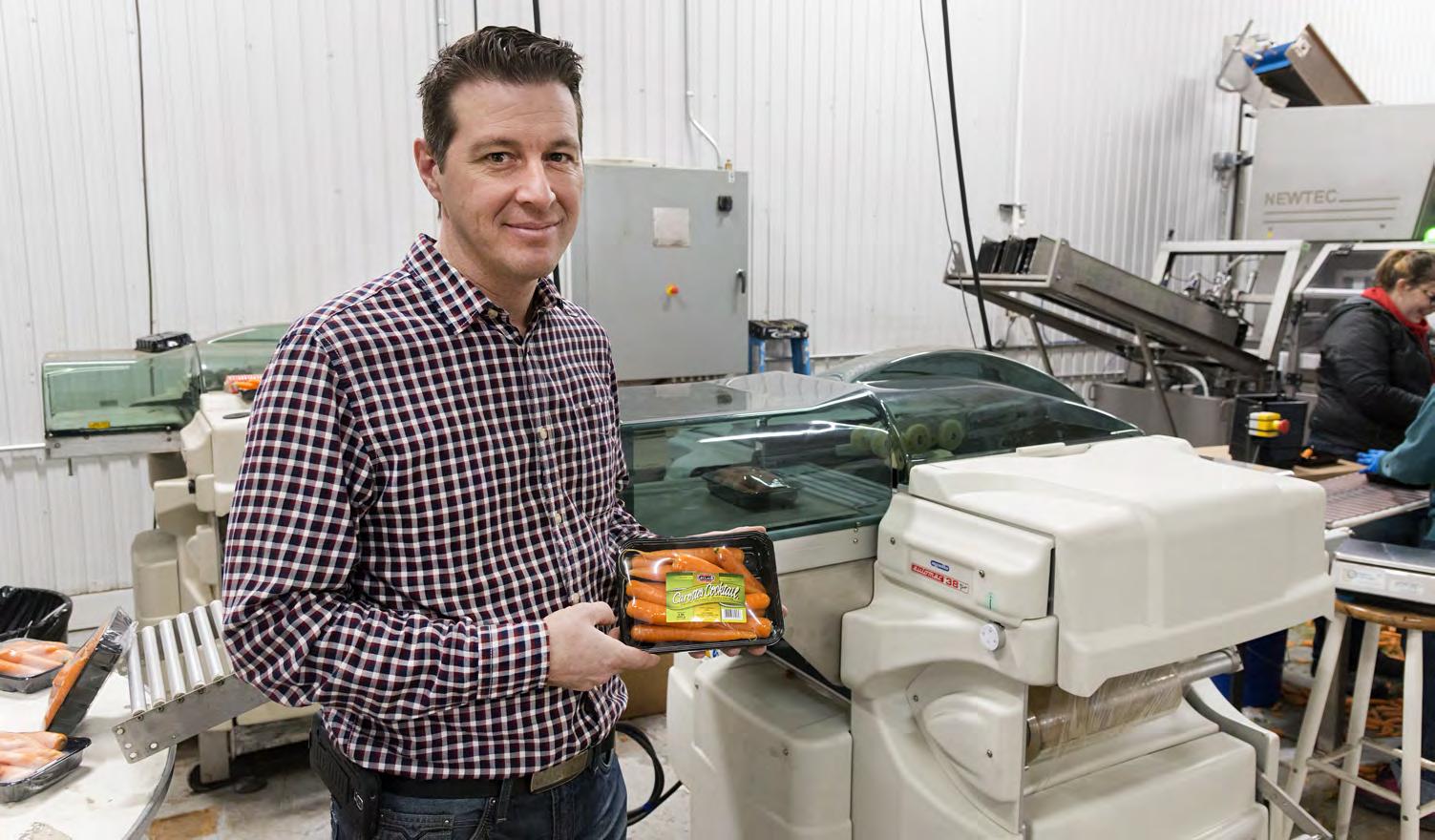
Quebec produce farm utilizes the stretch film wrapping prowess of Reiser equipment to create product shelf appeal and a longer shelf life
BY ANDREW JOSEPH, FEATURES EDITOR
PHOTOS BY: PIERRE LONGTIN
When it comes to farming, no one would dare assume it is a cushy job.
Nowadays, most farmers of vegetable produce are those born and raised in the profession with farms passing down from parent to scion.
With the original family farm started up in the mid-1800s in Sherrington, Que. about 50 kilometers south of Montreal, Les Fermes Leclair et Frères ltée (Leclair Brothers Farm) was started in 1970 by three brothers—André, Ernest and Maurice Leclair.
The family business involves the diversity of being a fresh vegetable grower, harvester and processor, sowing over 700 acres and planting some 450 million seeds annually, employing about 100 people in the field and inside the packaging facility.
“We do 450 acres of radishes 70 acres of Nantes carrots, 50 acres of bunch carrots (literally produce bunched together via a rubber band or other similar fashion), 100 acres of green onion, and 35 acres of beets,” Les Fermes Leclair et Frères vice-president Jocelyn Leclair told Canadian Packaging during a recent interview.
The radishes are the most important revenue stream for the farm, with all of its products except for the shallots/green onions sold via its own Famille Leclair brand.
“The cost is too high to tag bundles of green onions with our label, but the onions can be recognized by our purple bands,” mentions Leclair.
“On top of packaging our own brand of produce, we will also pack for other brands upon demand from brokers looking to export to the Ontario market,” he continues.
In charge of field production and mechanical maintenance, Leclair says that the peak harvest time on the farm is between June and October,“with up to 70 percent of the acreage of radishes and all Nantes carrots harvested by machine, with the remainder bunched by hand.”
Because the farm does not utilize greenhouse growing, Leclair says that after its own veggies are harvested, they deal with farms in Florida for radishes, and specifically with a singular farm in Georgia that provides Nantes carrots just for them.
Leclair says that when his father and two uncles began to farm the family land in earnest as a business after the death of their father in 1970, they started with
a relatively small patch, but with quite a few different vegetables.
Over the next decade, the company increased its acreage, and even the number of vegetables it produced. But with the onset of the 1980s, they decided to concentrate on growing their market share by sowing just two vegetables: cello radishes (radishes packaged in cellophane or plastic packs or pouches) and mini carrots, at the time providing product to retail
upgrading its
grocery chains such as Steinberg.
“The company bought land in 1990 to increase acreage, and a couple of years later began sowing yellow onions,” says Leclair. “But when my uncles decided to retire in 1995, my sisters and I decided to join the family business with our father Maurice.”
Soon after the family was acutely aware that the market was in the process of changing to one that wanted more bunch vegetables.
Les Fermes Leclair et Frères began to produce bunched carrots and bunched beets and by 2010 they began to introduce Nantes carrots to Loblaws
“Since that time we have been working to develop the market with different promotions,” he continues. “Its worked quite well by allowing us to increase our volumes, which is also why we have to ensure we keep reinvesting our energies and capital back into the company to have the best production line equipment available for our workers.”
Although one of the sisters left the company, it is still run by: Jocelyn Leclair; his sister Diane who is in charge of sales, the workers on the production line and financing: as well as their father and president Maurice, whom Leclair describes as being in charge of maintenance on the packaging line and development or modification of the process line.
At Les Fermes Leclair et Frères, Leclair says the production line process is a relatively simple affair.
“For bunching of vegetables, we have three different types of washing machines.
“We place the radishes into a hopper, add a mix of air and water for a prewash,” he continues. “After that our workers place the bunched radishes onto a conveyor taking it to a washing machine for further cleaning before it is packed in corrugated boxes. We then store them in a vacuum cooler to better provide a longer shelf life.”
Workers place bunches of green onions onto a conveyor where a machine cuts and washes the product with water jets—the carrots and beets use the same line.
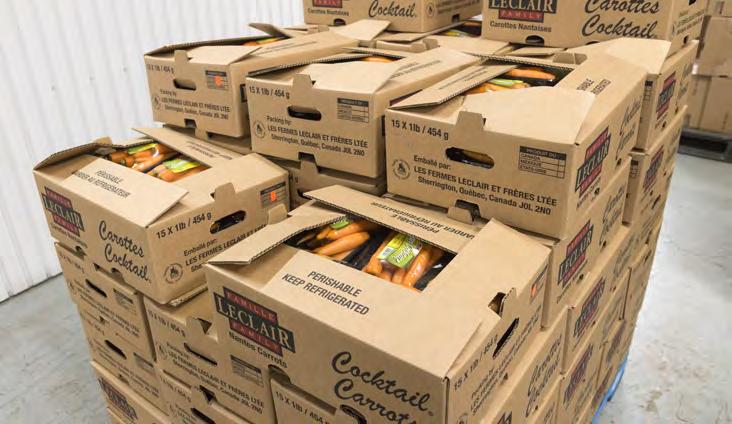
Green onions, carrots and beets are packed into corrugated cartons and have ice added in for preservation.

For cello radishes and Nantes carrots, after harvesting by machine, its leaves are removed in the field.
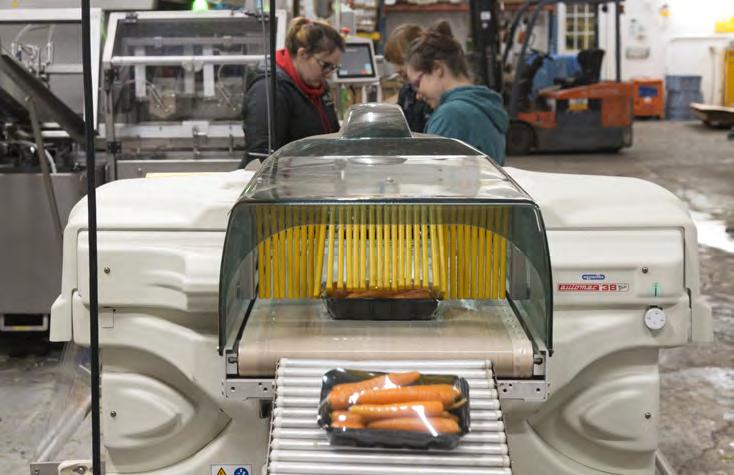
workers manually place the carrots into a
a clear
the
“Inside our facility, we wash and grade the carrots and radishes by diameter and pack in different packaging according to need,” explains Leclair.
He says that for the radishes, they have four older Triangle Package Machinery vertical form-fill-seal baggers consisting of models L55PK and L6PK and two zip applicators from REC-PRO to pack produce in one-pound zip lock.
For the Nantes carrots, the company recently finished an upgrade to the line.
“When we began in Nantes carrots we found a used machinery to wrap, and last year we decided to increase our production per hour,” mentions Leclair.“We bought a new nine-head scale Newtec 4009B1 model weigher with a tray filler and Fabbri wrap machine. With this investment we figure we will double our productivity.”
In 2010, Les Fermes Leclair et Frères purchased three used Italian-made Fabbri Group wrapping machines from a supermarket.
“Later when we decided to invest in a new wrapper machine, we were already quite aware of the quality and the reliability of the brand, and it’s why it was quite an easy decision to re-up with a new Fabbri in 2017,” Leclair extols.
Nowadays, the Fabbri brand is distributed and serviced by Reiser, that has since 1959 been a leading supplier of processing, portioning and packaging equipment and solutions to the food industry. A U.S.-headquartered company with a division in the U.K, it operates Reiser Canada from Burlington, Ont.
The new Fabbri Model 38 is a compact and versatile automatic machine that, along with creating an excellent stretchfilm wrapping pack, Reiser says each part of the machine has been designed to be in compliance with the most stringent regulations on operator safety, even possessing a rounded safety guard that eliminates accidental impact during operator movement.
“Before our line upgrade, we were running between 12 to 15 cycles per minute,” says Leclair.“But with the Newtec weighing machine and the new Fabbri Model 38 that we use just for Nantes carrots, we can run up to 30 cycles per minute.”
The company uses the Model 38 to stretchfilm wrap the Nantes carrots on plastic or Styrofoam trays.
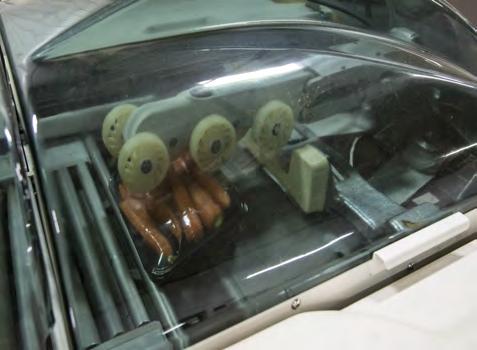
The Fabbri Model 38 is an overwrap machine that wraps plastic film over a product placed atop a tray.
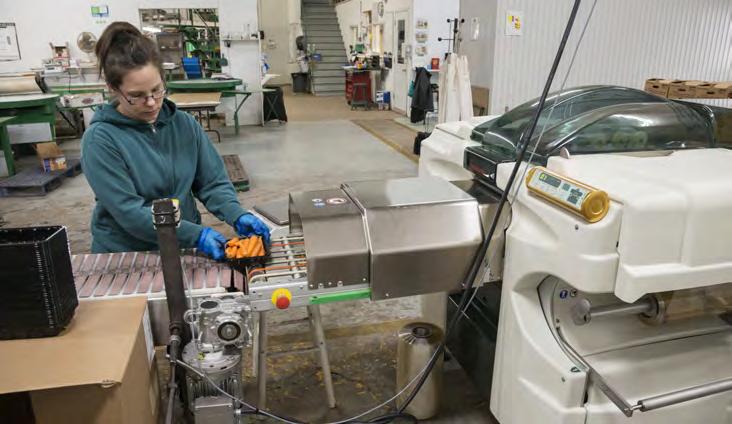
“It’s really quite simple to use,” Leclair explains. “You can configure a large sized tray with different stretching and then fill the machine with the tray you want to wrap.
“Should there ever be a jam, there are safety switches that are triggered when you open a door, plus an emergency stop that will allow our workers to safely unblock it.”
The robust Model 38 is made of stainless steel, aluminum and plastic, and is considered by Reiser to be particularly suitable for medium-sized packing centers, supermarkets and hypermarkets.
The machine is also configurable in five different ways, allowing it to respond to the diverse needs of the packing company.
FootHillAD-CANPACKGING.pdf 1 28/02/2018 11:56:20 AM



“One of the impressive features of this Model 38 is that it always has two reels in motion allowing for complete automatic wrapping, but it also means that if there is a need to replace the film, production doesn’t need to stop, though that depends on the tray, too,” Leclair muses.
Reiser notes that the operator has the option of running the Model 38 at two differing speeds choosing that presents them with the ability to produce the best packaging possible owing to different products having differing centers of gravity.
Also because the packages are sealed on the tray’s underside, the sealing belt has been designed to optimize sealability without the possibility of overheating and weakening the tray








itself.
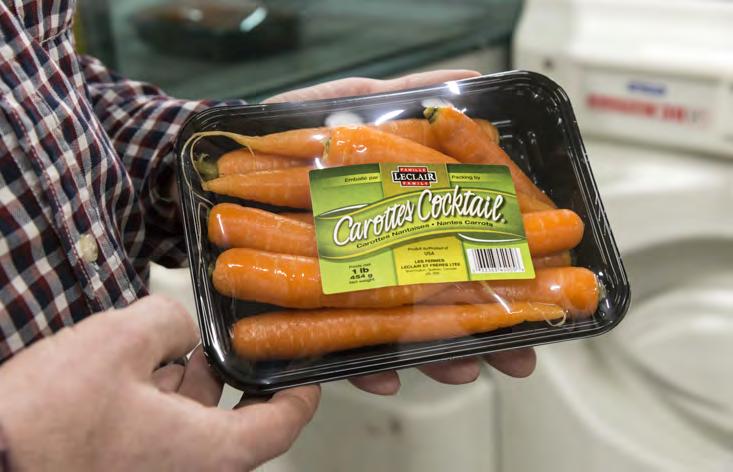
Leclair says that approximately 70 percent of all the produce packed at their facility is for product under their own brand, Cocktail, which was first introduced by Les Fermes Leclair et Frères at the end of the 1970s when the farm began to pack produce in film, utilizing it then for radishes and mini carrots.
The brand was shelved in 2006 when they stopped producing mini carrots, ushering in the Famille Leclair brand, but reintroduced it when they began to produce and pack the Nantes carrots a few years later.
Les Fermes Leclair et Frères maintains a rigorous farm safety and traceability program, says Leclair, noting that it is a member of the Prisme Consortium that is involved in crop screening and monitoring in an effort to reduce pesticide use and to examine its impact on the environment.
“We are also involved in a few research projects examining pesticide reduction and fertilization, and are testing new cultivars and new growing techniques,” Leclair mentions, explaining that a cultivar is a plant variety produced by selective breeding.
The farm is one of the first in Canada to use sterile flies on its green onion growing area. Releasing the fly is meant to minimize the use of insecticide to control the destructive onion maggot.
“Les Fermes Leclair et Frères has achieved a satisfying level of success, but of course with success comes the pride in having it continue and grow,” says Leclair.
“We have achieved store-level success with the Nantes carrots packed by the Fabbri Model 38 from Reiser,” he continues. “Not only does the vegetable look good in the packaging, but the shelf-life it achieves is decent, too.
“Surrounding ourselves with excellent automation with even better employees is key to our continued growth,” sums up Leclair.
“It has allowed us to be recognized within the industry and by the consumer for the quality of our products, which is something we hope we can take forward as we continue to successfully grow.”

B.C. poultry farmer and processor goes through the highs and lows to once again emerge as a Canadian success story
BY ANDREW JOSEPH, FEATURES EDITOR
PHOTOS BY: JOHANNE RENE
Despite appearances as a plucky poultry business, one B.C. farm and processor with a convoluted history that stretches back nearly a century, has not only survived the ups and downs of economy and nature, but has maintained a never-say-quit attitude throughout it all that has seen it become a good-ole Canadian success story.
Fraser Valley Specialty Poultry of Chilliwack, B.C. is part of the Twin Maple Group of Companies operated by the Falk family, whose origins involved leaving the U.S.S.R. during the early part of the 20th century to avoid religious persecution.
The five-generation family farm is nowadays owned by Ken and Iris Falk and Ron and Jan Born, and provides poultry mainly for the large Asian ethnic population in the greater Vancouver area, and for a number of white-table-cloth restaurants throughout the region.
“If you have ever visited Vancouver’s Chinatown and seen those delectable barbecued ducks displayed in their storefront windows,” general manager Joe Falk, son to Iris and Ken, told Canadian Packaging, “you have seen our products.”
Fraser Valley Specialty Poultry currently annually processes some 800,000 ducks; 1.35 million chickens for the Asian markets; 2,000 turkeys; 25,000 geese; 60,000 squab; and 120,000 organic chickens.
“We are the leader of specialty poultry products, specifically on ducks, holding an estimated 75 percent share in B.C.,” relates Falk. “As well, we are the largest single grower in Canada of Asian-style Taiwanese chicken.”
Falk notes that the company’s processing facility is provincially licensed, but has a close relationship with a Federally-registered establishment in Abbotsford that processes its products that move it out of the province.
The Falk family currently owns and operates breeding and growing poultry farms and distribution facil-
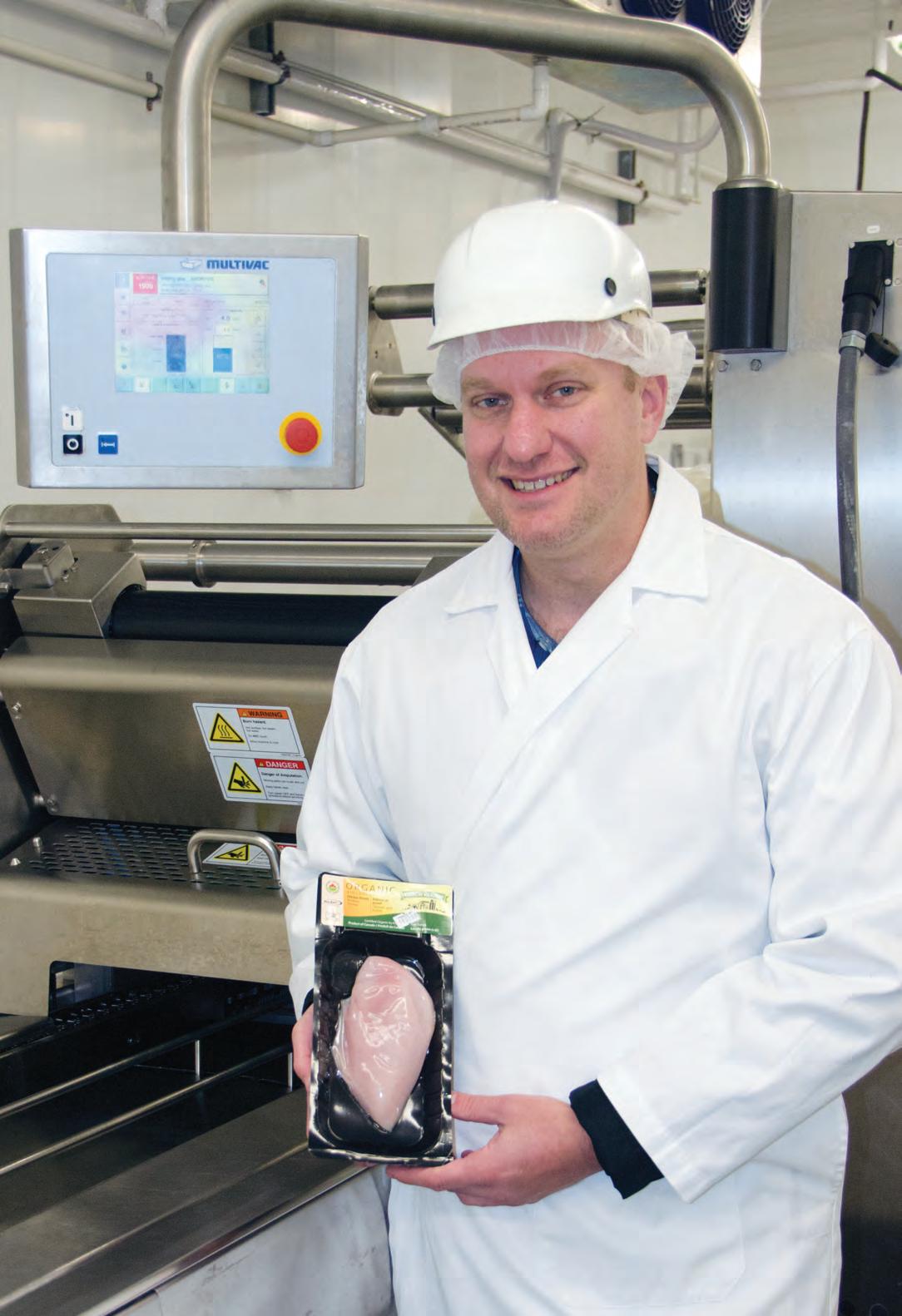
ity, and a 10,000-square-foot processing plant, has 150 employees and 25 contracted family farms that supply them with product—a stark contrast to the Falk family that had to sell all of their possessions before arriving in Canada in 1926 as part of the large exodus of Mennonite Colonies from the Soviet Union.
Led by Henry and Margaret Falk, the family arrived in Halifax, before quickly departing on another epic journey across the country for Abbotsford, B.C. to begin anew as Canadian farmers.
While the family had previously been involved in grain farming in the Ukraine and Siberia, they decided to try their hand at dairy farming and broiler chicken farming on land the family still owns. A hard worker and looking for ways to supplement his small farm operations, Henry started his own construction company
and a lumberyard alongside the farming operations.
Eldest son Abe eventually grew to take the lead in the businesses, growing each exponentially, as he and his brothers then became involved in raspberry farming quickly becoming the largest raspberry farmer in North America becoming the first farm to test berry harvesting machines.
In the 1960s, the family purchased land in the Peace region of Northern B.C. to farm grain, hay, grass seeds and hogs, continuing this side of the business until the late 1980s.
It was in 1973 that Falk Brothers Industries was born—a construction company that became a million-dollar outfit involved in the agriculture, commercial and industrial sectors.
Not ever content to have all its eggs in one basket,
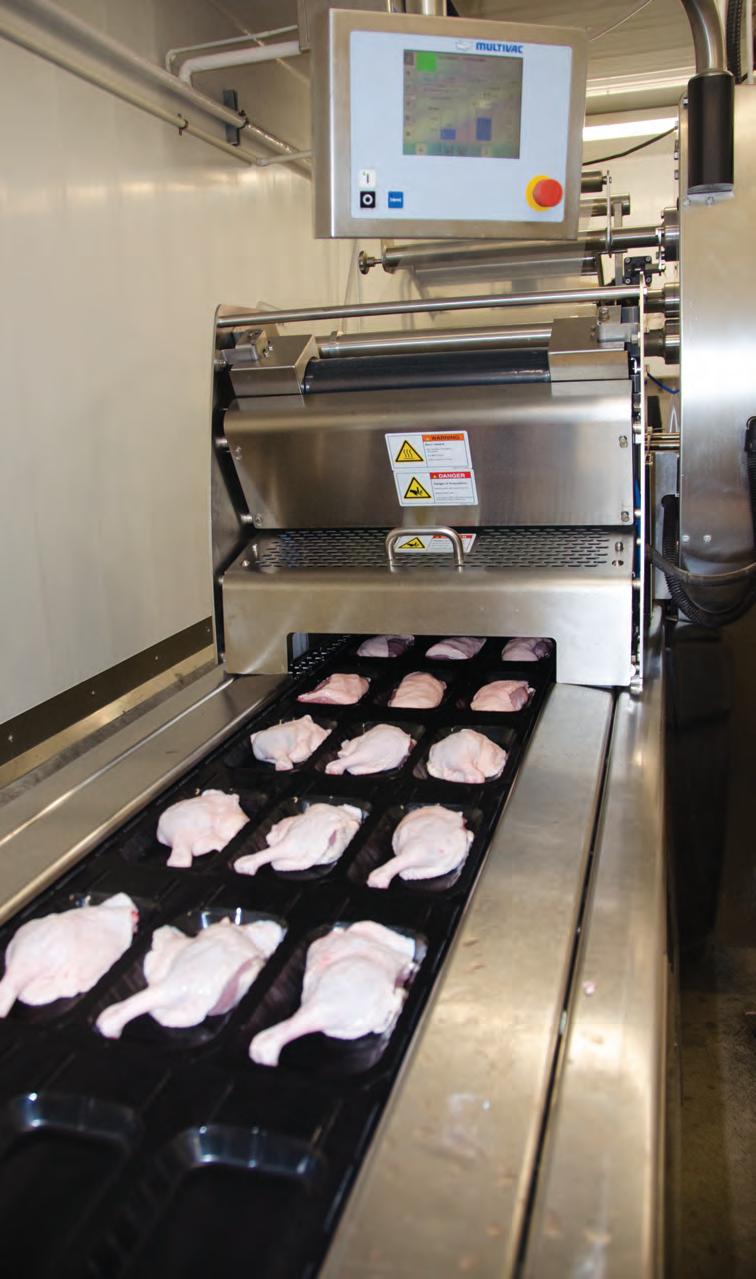
the family purchased a layer chicken farm in 1974.
“On our home farm, there were two small maple trees, and my grandparents parents, Abe and Jessie decided to name their new farm after these maple trees,” explains Falk. “And that’s how Twin Maple Produce Ltd. was born.”
With all its business ventures seemingly doing well, the family business suffered a bankruptcy in 1985 brought on by massive interest rate hikes, low hog prices, and a number of businesses defaulting on payments owed for construction projects.
But, that never-say-quit attitude that their parents espoused after leaving Europe was brought to the forefront again, this time at least being able to hold onto their layer farming operation thanks to succession planning prior to the financial plunge.
At this time Ken Falk, son to Abe and Jessie, took on the leadership roll of the family business with Ken, brother-in-law Ron, and several cousins banding together to form Cousins Construction
Abe, while still only in his late 40s, was looking for new opportunities and started up Twin Maple Marketing, which continues to this day to distribute various building products such as Reflectix insulation and wood floor vents.
Along with the construction and distribution businesses, the family continued with farming the layer chickens.
“In 1988, one of the customers for the construction company decided he wanted to sell his business—Fraser Valley Duck & Goose, started by Peter Zilian in the early 1970s,” explains Falk.
The business was primarily a duck growing and processing operation serving the local BC Asian population as the primary fresh duck supplier, and was purchased and is now run by Twin Maple Produce
“I became engaged in the operation of Fraser Valley,” explains Falk. “I worked my way from the ground on up, getting practical experience in all departments: hatchery; breeder farm; growing farm; processing plant; distribution; and sales and marketing, building the business into a large force within Canada.”
And then disaster struck in the form of the 2004 Avian Influenza, essentially causing the elimination of the valuable and unique genetic strain of bird that had been initially developed by Zilian.
While Fraser Valley Duck and Goose struggled over the next five years, other competitors overtook the company’s markets.
“But our family isn’t one to throw in the towel in the face of adversity,” says Falk. “As such, we decided it would be prudent to diversify our product lines to reduce risk and serve the market with a full line of specialty poultry products.”
Fraser Valley Duck and Goose began to grow some Asian style chicken in 2002.
Falk says that while the company’s initial numbers were small at roughly 500 birds per week, between 2005 and 2010, the growth was massive.
Fraser Valley Duck and Goose purchased smaller poultry farms to better in crease its provincial mandated quota, and worked closely with the British Columbia Chicken Marketing Board through this regulation as the demand for the poultry product exceeded the supply.
“During this time period, the ownership decided that the current name Fraser Valley Duck and Goose was no longer representative of the farm,” recalls Falk, explaining that they decided to change the name to Fraser Valley Specialty Poultry.
“We now work closely with 25 family farms supplying quality specialty poultry products, Asian Taiwan chicken, squab, turkey, Organic chicken, ducks and geese.”
Today Fraser Valley Specialty Poultry’s products can be found throughout B.C., though its Asian chicken product line is available across Canada and throughout the West Coast of the U.S.
As Falk says “Through all the difficult times and good, it’s just like our company’s vision states: Our family loves to farm and produce good food.”
Falk notes that over the past few years, the demand for retail packaged poultry parts and pieces has been on the rise.
“Primarily, the company had been supplying whole birds to the market place to this point,” says Falk, adding that as a means to provide a quality package to keep up with its quality poultry meats, the company began exploring various types of packaging machines, until being exposed to Multifresh and its skin pack European technology.
The MultiFresh packaging utilizes the innovative MultiFresh technology from Multivac, a leading global provider of packaging solutions for food, life science and healthcare products as well as industrial items. Headquartered in Germany, the company has offices across the planet.
The MultiFresh packaging consists of a rigid tray and a flexible upper web, which surrounds the product free of tension, and is entirely sealed by the lower web.
Installed at Fraser Valley Specialty Poultry in June of 2017, the Multivac R 175 MF (MultiFresh) thermoformer and Multivac materials produces the exquisite MultiFresh vacuum skin packaging that Falk says has helped bring its products to a
new level of eye appeal on the retail shelf.
“The film is like a second skin for the product,” observes Falk. “The product stands out from the package and presents extremely well.
“Consumers can visually see the product better this way when compared to other styles of packaging use,” he continues.
While the R 175 MF can be used for vacuum skin, it can optionally be used for MAP (modified atmosphere packaging) and vacuum packaging.
Multivac says the MultiFresh aspect is mainly utilized by packers involved in high-end product in the meat, and meat product, fish and seafood, poultry, convenience food, cheese, and pastry segments.
The MultiFresh packaging is rather robust, as there is virtually no way anyone can poke a finger through this skin pack.
“Light handy, and easy to store, our MultiFresh products are a very convenient package for display, and for storage in the refrigerator,” comments Falk. “MultiFresh is the new frontier of meat packaging, and we are proud to offer this state-of-the-art packaging technology to our valued Fraser Valley Specialty Poultry customers.”
The R 175 MF at Fraser Valley runs up to between six to eight cycles per minute depending on the vario used. For the mold and vario size they are currently using, it can do 18 packs per minute—three trays per cycle.
Falk is certainly impressed with the Multivac R 175 MF thermoformer. “It has increased our efficiency,” he notes. “The speed of the machine is far more efficient than what we were utilizing previously.
“We manually load each pocket by hand, but once that is achieved, the easy-to-operate machine takes over and has helped us in crease our overall food safety,” Falk reveals, adding that along with the superior retail presentation of the product, he is also equally proud of the increase in shelf life for fresh product.
Despite the rave reviews proffered by Falk, he says that like with anything new, the initial response wasn’t always positive.
“Some of our retailers rebuffed the new packaging option we provided them,” says Falk, “Either they didn’t want something new on their shelf, were afraid of change or simply didn’t need the hassle.
“But we were ready to educate the retailer who in turn could educate the consumer so that each could better understand the benefits of the package,” retorts Falk.
“Every week as the demand increases and as our volumes rose, more and more retailers came on board with the skin pack.”
While Fraser Valley Specialty Poultry has 450 SKUs (stock-keeping units) and serves the retail, wholesale and foodservice sectors with many various types of packaging as required by the markets, it also has two of its own brands: Fraser Valley which serves the Asian markets; and Yarrow Meadow, a relatively new brand that that has become well known in high-end restaurants and wineries.
“About 99 percent of what we process is for our brands, with chicken representing about 50 percent of our business and duck 35 percent,” Falk recalls.
“We have developed several innovative types of product that have become very popular,” explains Falk, “specifically duck sausage, duck pepperoni and smoked duck breast—we can’t keep these products on the shelves.”
While those duck products are currently under its
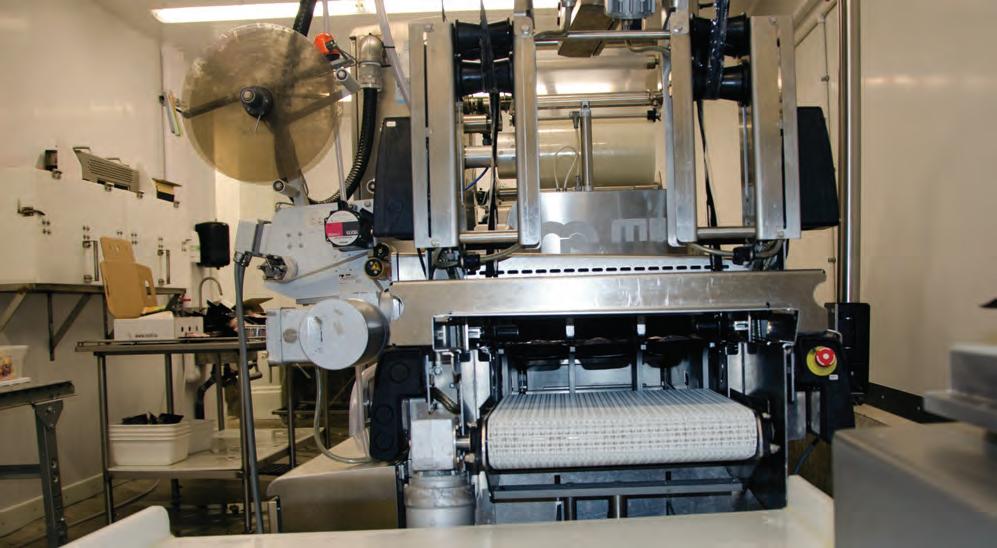
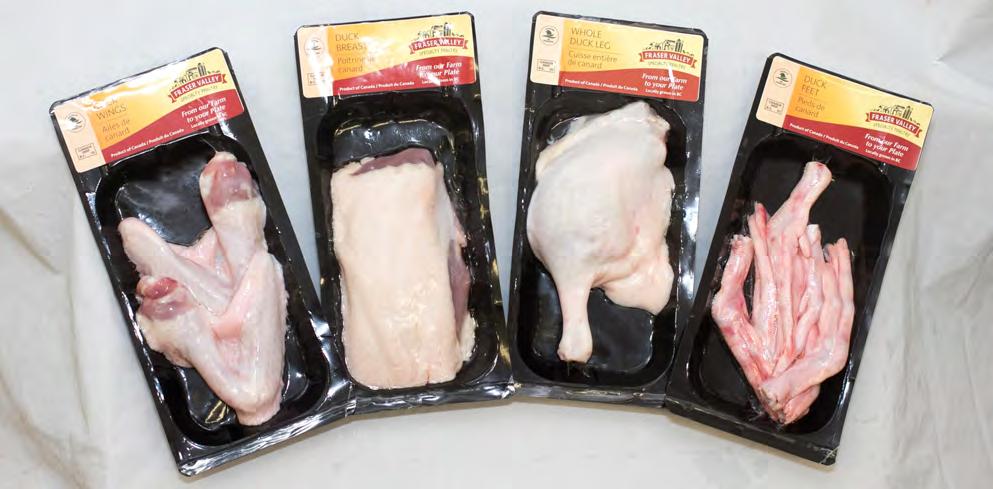
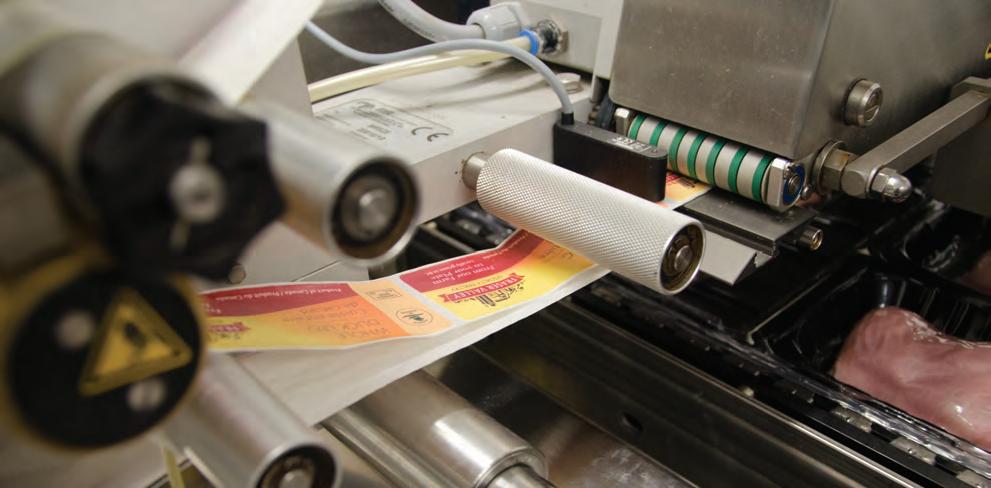
Fraser Valley brand, the company’s Yarrow Meadow brand which includes the organic chicken and duck parts, continues to sell well, available at Choices Markets, Fraser Valley Meats, Two Rivers Meats, Fraser Valley Farm store in Yarrow, as well as through many other retailers throughout the greater Vancouver area.
After the poultry arrives at the facility in trailers, they are manually off-loaded and hung on a line to be humanely slaughtered. Sent through a bleed tunnel, a scald tank, feather plucking, the waterfowl—not the chicken, turkey or squab—next travel through a hot wax tank, are then wax chilled, followed
by a wax stripping to ensure removal of the pin feathers.
Next comes the evisceration room where the oil gland, feet and viscera are removed (the head and or neck may also be removed, depending on product type and SKU) and the bird is prepped for inspection where any bird deemed unfit for consumption is condemned by the government inspector.
Falk says the birds are then sorted by size, with some going for whole bird packing, and others for the cut up line.
“The birds are then placed into tanks for chilling,” Falk says, noting that chilling is a combination of water, ice and air. “It can take upwards of 30 minutes for the birds to be properly chilled to a temperature of less than 4C
Increase your output and minimize downtime with one single source.
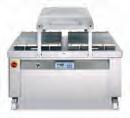
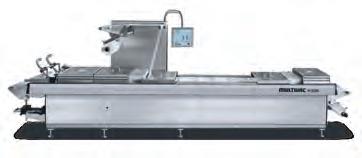
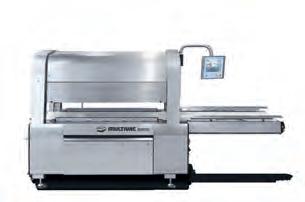
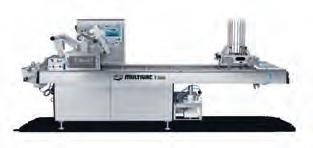
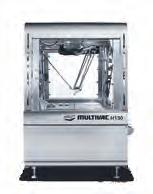
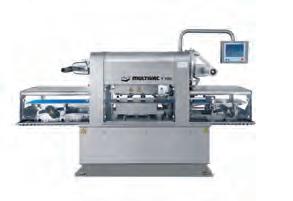
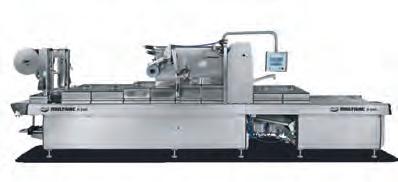
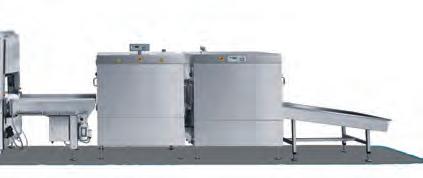
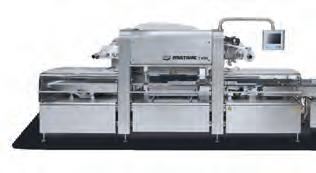
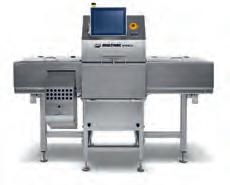
before we send them to be cut up or packaged.”
After packing, they are sized and placed into large corrugated cases that are then rolled along a conveyor to a scale. A scale operator enters the SKU, and then a barcoded label is printed and applied to each side of the case.
“We have developed our own software for handling our SKUs, and our own barcoding system that we fully integrated into the ERP (enterprise resource planning) system we use called Syspro,” Falk explains. “Traceability is crucial to our food safety program.”
After palletizing, it is placed in refrigeration, or for freezing, or to a waiting truck for delivery to customers.
He says they are quite interested in growing the Yarrow Meadow brand for retail distribution, which is why it purchased the Multivac packaging machine.
“Being a multi-species plant is difficult as far as automation is concerned, as there is no equipment one could purchase that could handle all of the various species that go through the plant,” Falk acknowledges, explaining why much of its line and processes are manual.
“However, we have put in the Multivac skin pack packaging line, which we have found to be an excellent example of automation that works equally well for both chicken and duck parts,” extolls Falk.
Next up for the poultry company is the automation of the front end of the processing line by adding a new crate handling system that the chickens and ducks arrive in. The new system will automatically unload the crates onto a conveyor system that Falk says will improve animal welfare as well as create a better workflow for facility staff.
“We are constantly trying to evaluate and deliver to the market a better product,” Falk explains.
“Claims are becoming very important,” he continues, “things such as RWA (raised without antibiotics), GMO (genetically modified organism), organic, animal welfare and more—and still we have to maintain a price point that is realistic. It’s a constant challenge.”
Summing up, Falk notes: “We are going to be launching a new RWA chicken program in May of 2018, which will join our duck and organic chicken programs.
“While we have learned in this family to never count one’s chickens before they are hatched, we believe that the steps we have taken to diversify along with creating a superior taste experience for consumers, will have Fraser Valley Specialty Poultry continue its upward growth.”
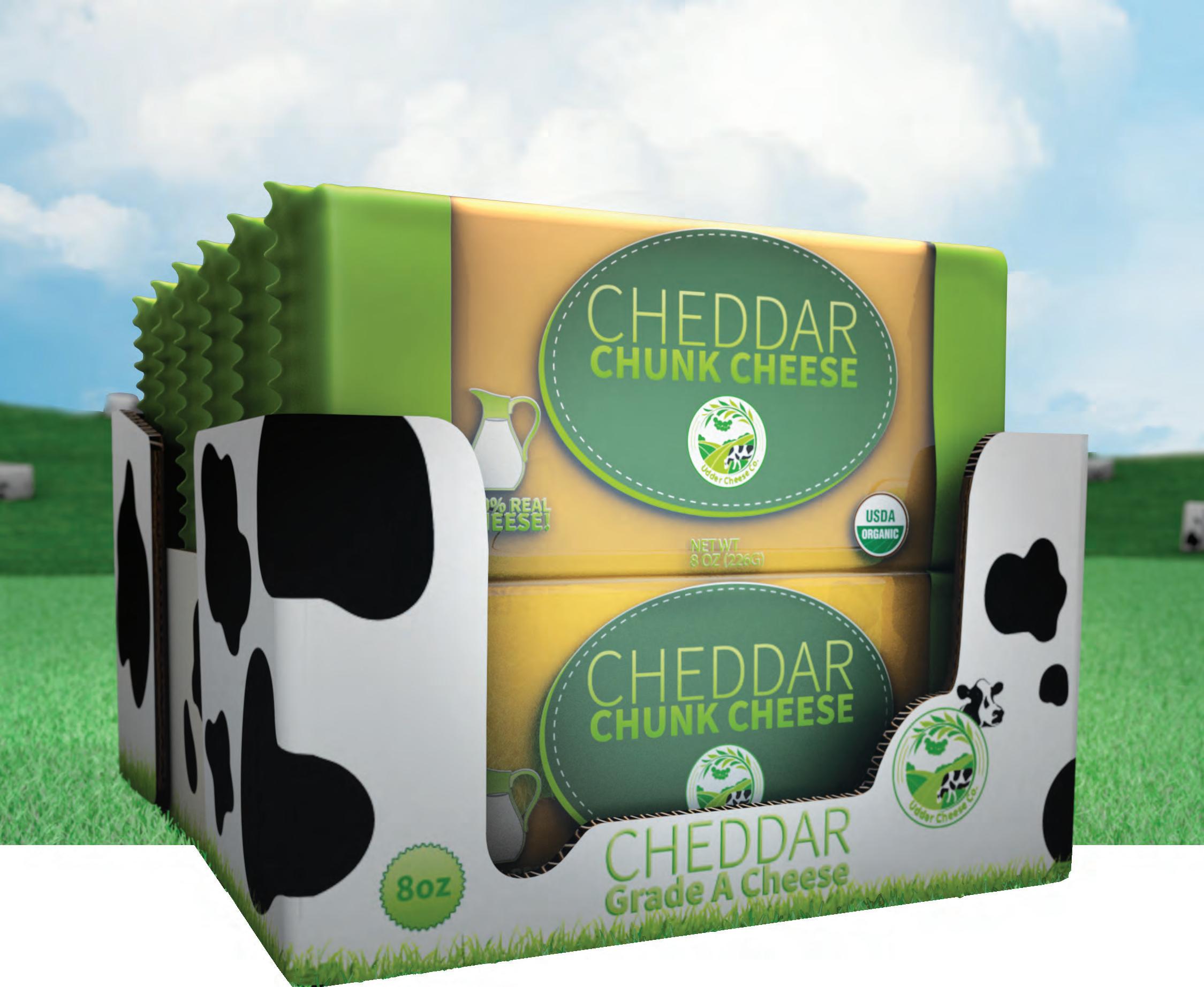


Feisty flexible packaging converter ready to strut its stuff on bigger stage with proud legacy of continuous process improvement and product innovation
BY GEORGE GUIDONI, EDITOR
PHOTOS BY PIERRE LONGTIN
Sometimes you get an offer that you just can’t refuse—for all the good reasons. And while they took their time to say yes, Flexipak Industries Inc. founder Charles Boustany and his son Karl clearly saw many good things coming their way upon being first approached by TC Transcontinental Packaging to join its growing roster of ambitious and progressive flexible package converting companies nearly two years ago.
“We never actually put ourselves up for sale because Flexipak was a very successful family-owned company with double-digit growth and good profitability, but it came down to making a choice of how fast and how far
we wanted to grow the business,” recalls Karl Boustany, now serving as general manager of the recently renamed Transcontinental Flexipak in Montreal.
“Growing with 50 people is a very different proposition from growing with 900-plus people employed by TC Transcontinental Packaging at its multiple locations,” Boustany says, “but what really made it all work was the chemistry of the two companies’ similar corporate cultures.
“Because TC Transcontinental places such a high value on family, friendship, relationships and respect, we felt that this was an ideal opportunity to let our employees grow and succeed in this business both personally and professionally,” Boustany told Canadian Packaging in a recent interview.
With both companies also being headquartered in

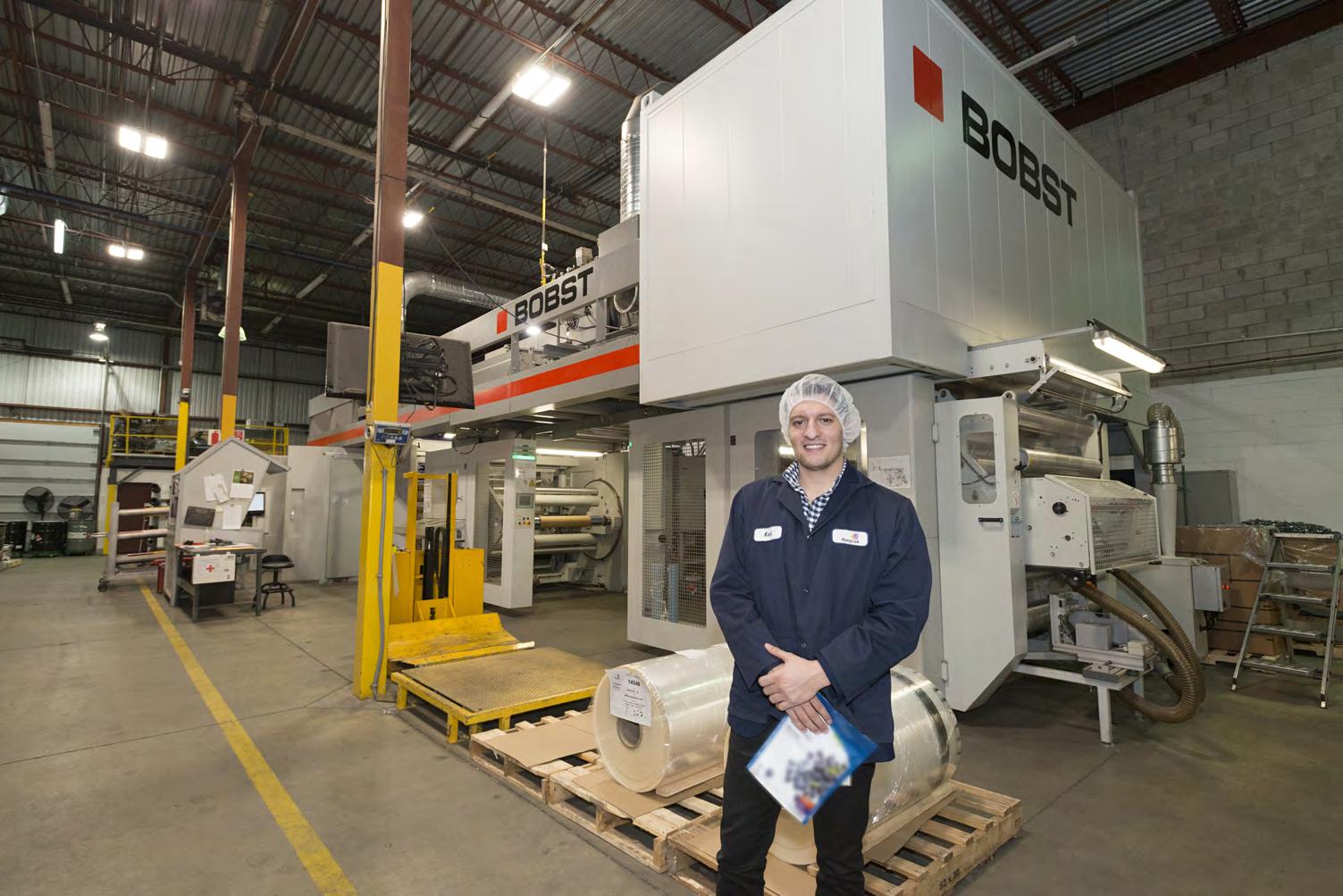
Montreal, the reasons to join the fast-growing TC Transcontinental Packaging division vastly outweighed any potential second-guessing, according to Boustany.
“I felt that it was ultimately the best decision for Flexipak,” says Boustany, adding he has not had any inkling of regret since formally signing off on the acquisition, along with his dad, in the fall of 2017.
“It has been an absolutely positive experience so far,” says Boustany, adding that joining the TC Transcontinental Packaging team—well on-track to reaching its self-defined goal of becoming a North American leader in flexible packaging—is a perfectly fitting way to mark Flexipak’s 20-year anniversary milestone this year.
For its part, the senior management of TC Transcontinental is equally en-
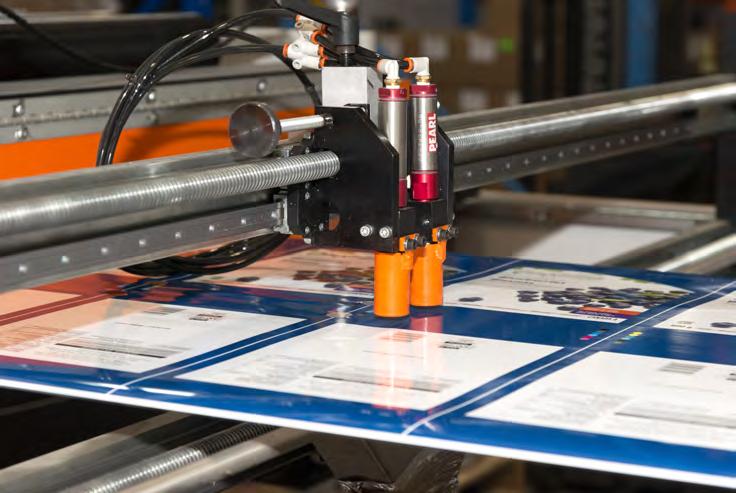
thused about acquiring an important new strategic asset right in the company’s hometown.
While it is not TC Transcontinental biggest acquisition to date, it certainly adds a lot of momentum and patriotic creed to the company’s ongoing expansion that so far also comprises the purchases and successful integrations of Clinton, Mo.-based Capri Packaging in 2014; Brooklyn, N.Y.-based Ultra Flex in 2015; Lenexa, KS.-based Robbie Manufacturing in 2016; and Flexstar Packaging Inc. of Richmond, B.C. in fall 2016.
As noted by parent company TC Transcontinental’s president and chief executive officer Francois Olivier, “This transaction extends our footprint to eastern Canada by adding a Montreal-based facility equipped with a state-of-the-art platform, and it gives us an opportunity to further develop our existing busi-
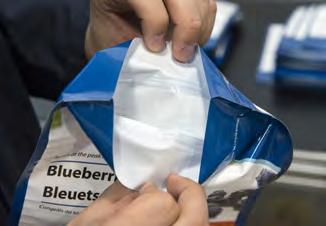
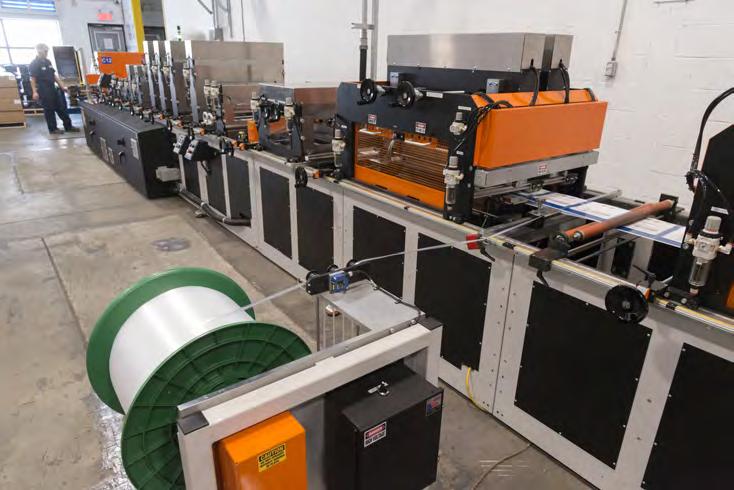
ness relationships with leading retailers in the country.
“Driven by belief in outstanding customer service and innovation, Flexipak has a strong family culture that will naturally blend with ours,” Olivier states.
“We are truly delighted to welcome Flexipak’s employees to TC Transcontinental and look forward to growing our flexible packaging business with them.”

Echoing the sentiment, Boustany says TC Transcontinental’s interest and plaudits are a gratifying validation of all the hard work and dedication poured into Flexipak over the years by his father Charles, himself, and the company’s exceptionally loyal staff.
“You could say that I was virtually ‘born’ into this flexible packaging industry,” the 33-year-old Karl Boustany chuckles, recalling the many summers spent at the company’s plant during his school years learning as much as he could about the business.
After earning a trilingual Bachelor of Commerce degree from HEC Montréal (business school of the University of Montreal) in his twenties, Boustany says he was genuinely excited about the opportunity to leverage his university education and acquired knowledge to help make Flexipak a stronger and more influential player in the notoriously competitive flexible packaging business.
As Boustany relates, the Flexipak plant had undergone four building expansions since opening up for business in 1998 to accommodate the growing volumes, which are now pushing the 40,000-square-foot facility to the limits of its manufacturing capacity.
Nowadays processing around 15 million pounds of various plastic stock per year, the Flexipak plant typically runs up to two 10hour shifts per day, five days a week, to turn out a diverse array of high-quality flexible packaging products ranging from stand-up and three-side-seal pouches to wicket and heavy-duty bags to printed and nonprinted rollstock film.
Serving a growing range of industries including food-and-beverage, pet-food, horticultural and nutraceutical sectors, among others, “Our packaging products can be found across North America, including Mexico,”


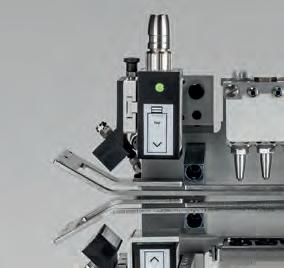










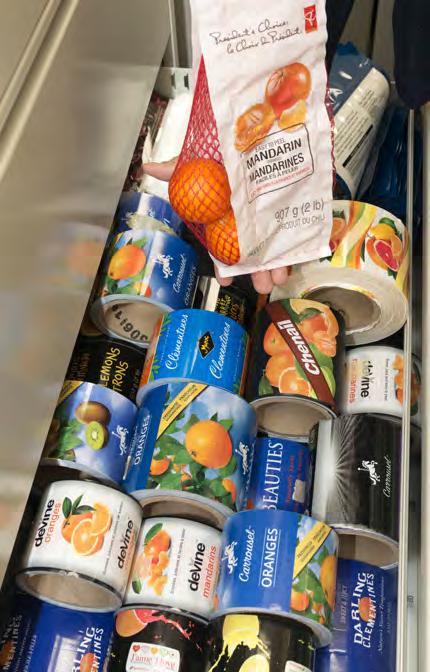
Boustany proclaims.
Along with supplying packaging for many leading national CPG (consumer packaged goods) brands, Flexipak also enjoys a strong presence in the private-label retail markets, says Boustany.
The plant manages all its print output with a single state-of-the-art central impression flexographic press—namely the model 20SIX CI manufactured in Germany by the Swiss converting equipment powerhouse Bobst
Capable of running speeds of up to 400 meters per minute, the eight-color press can handle all the common substrates used for flexible packaging, while handling all run lengths with equal efficiency.
“We actually used to have more printing presses at the plant,” Boustany relates, “but with the mindset of achieving operational excellency, coupled with state-of-the-art printing technology, we were able to divest ourselves of the older presses.”
Boustany reiterates that regardless of how modern or high-tech machines are, meaningful results are achieved by measuring.
“Like the old adage says, ‘What gets measured gets done,’ so yes, we measure everything.”
Over the years, Flexipak built a solid team of dedicated individuals who worked tirelessly to bring the industry’s best practices to the floor with rigor and discipline.
That, in turn, enabled the plant to drive out many inefficiencies with a manufacturing process geared specifically towards smaller-run production.
With that mindset, Flexipak allowed the management team in place to flourish and implement industry best practices, while remaining nimble and budget-conscious.
An example of running this tight ship is when, operations director Alex Grota insists on having daily meetings with the entire Operational Team, QC (quality control) and Customer Service staff to make sure that everything gets measured and interpreted, so that any detected problems are resolved immediately or addressed with a clear plan to remedy them—enabling for quality products to be expedited on time.
Nothing is left to chance, with every pending item closed after being carefully reviewed.
As Boustany points out, “If you are good at smalland medium-run printing, you are pretty much guaranteed to be good at managing long runs, but if you’re only good at managing large runs, you will find it very hard to succeed with smaller runs.
“We deliberately decided to focus on small-run production early on because we could see the market moving in the direction of rapid SKU (stockkeeping unit) proliferation by brand-owners, which required us to become a very flexible and agile operator, with an emphasis on very quick changeovers.”
Currently executing an average of six to seven product changeovers on the press per shift, according to Boustany, Flexipak press operators have all been extensively cross-trained to optimize all of the press’s performance attributes—often completing changeovers as quickly as 30 minutes.
“This is a core competence that we are specially proud of,” says Boustany, likening the plant’s changeover routine to a Formula One pit crew getting its race driver back onto the track in the quickest possible manner.
“We have experienced double-digit growth in
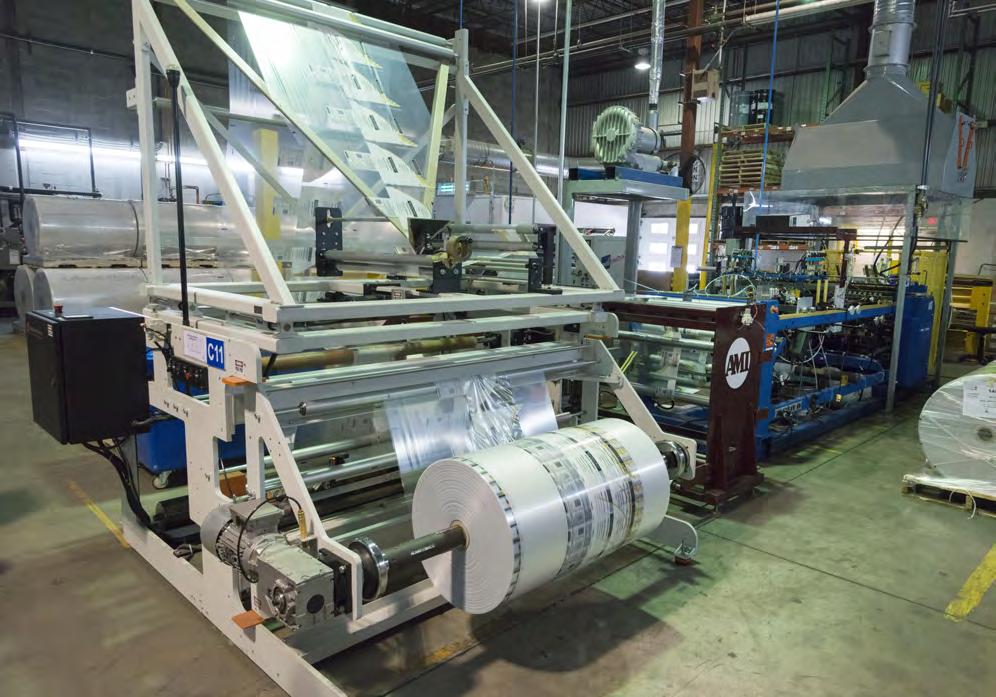
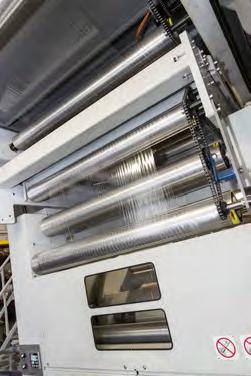
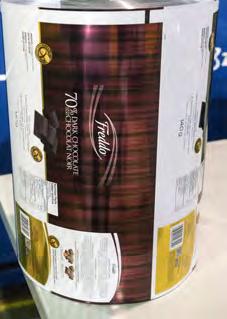
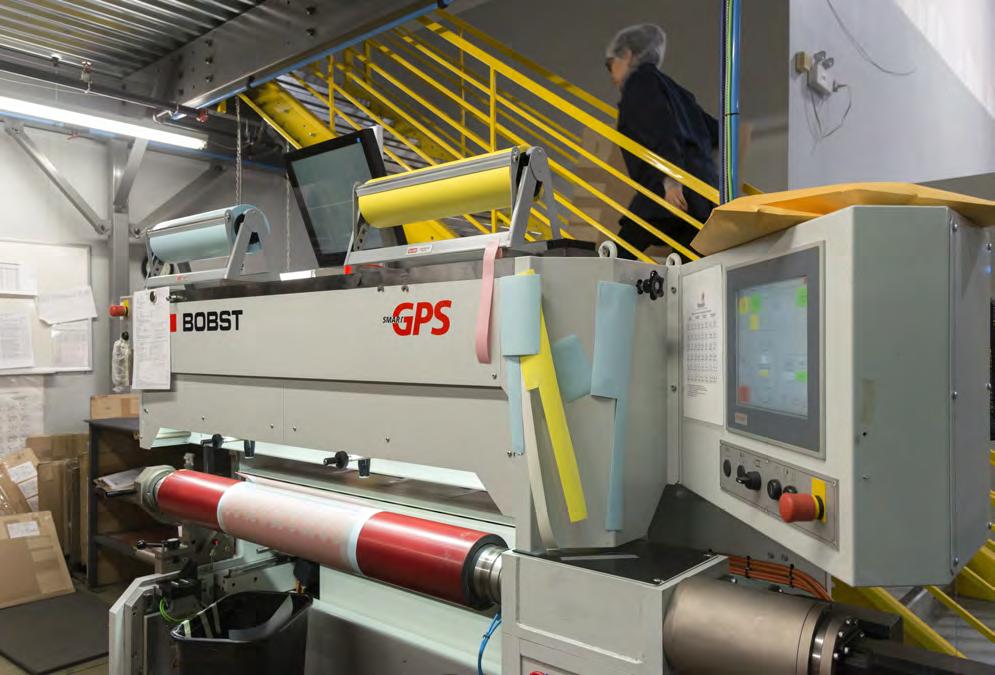
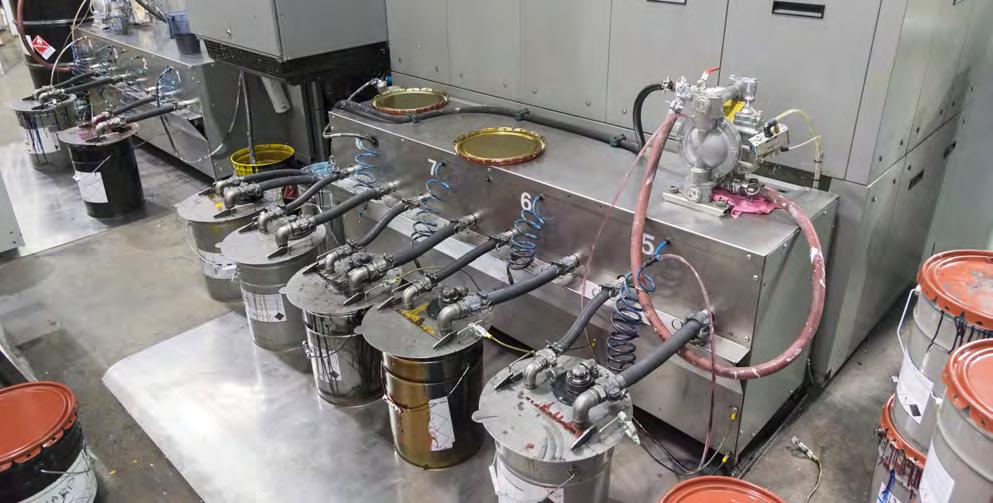
our revenues in the past five years,” he proclaims. Boustany says the company also made a major investment in operator skill-training because he believes after all that regardless of the business, it’s all about the people.
A truly unique and breakthrough technology at the time of the purchase, the digital off-press smartGPS impression and registration setting system integrated into the press was designed to inform press operators of all the required print adjustments and impression parameters in advance of loading the job onto the press, thereby allowing the press to be accelerated to production speed right after the first kiss contact.
set-up process in the press whilst the machine is running, smartGPS does the job off-line at the plate mounting stage to deliver the necessary set-up parameters whilst the machine is idle.
The result is a dramatic reduction of waste—from substrates and inks/solvents used during the set-up, to the energy used to run the press—and exceptionally fast changeovers, according to Bobst.
RossIN650TraysealerAd_Produce_2015March_CP_Layout 1 2/17/18 11:15 AM Page 1
Unlike the traditional manual adjustment techniques and automatic optical-based systems that perform the
Moreover, smartGPS also serves as a highly reliable quality control instrument for printing hardware and plate mounting because all new sleeves or intermediate bridging sleeves/mandrels, as well as the anilox, can be precisely measured for diameter, length (end to end), and TIR (concentricity) on the same plate mounting ma-
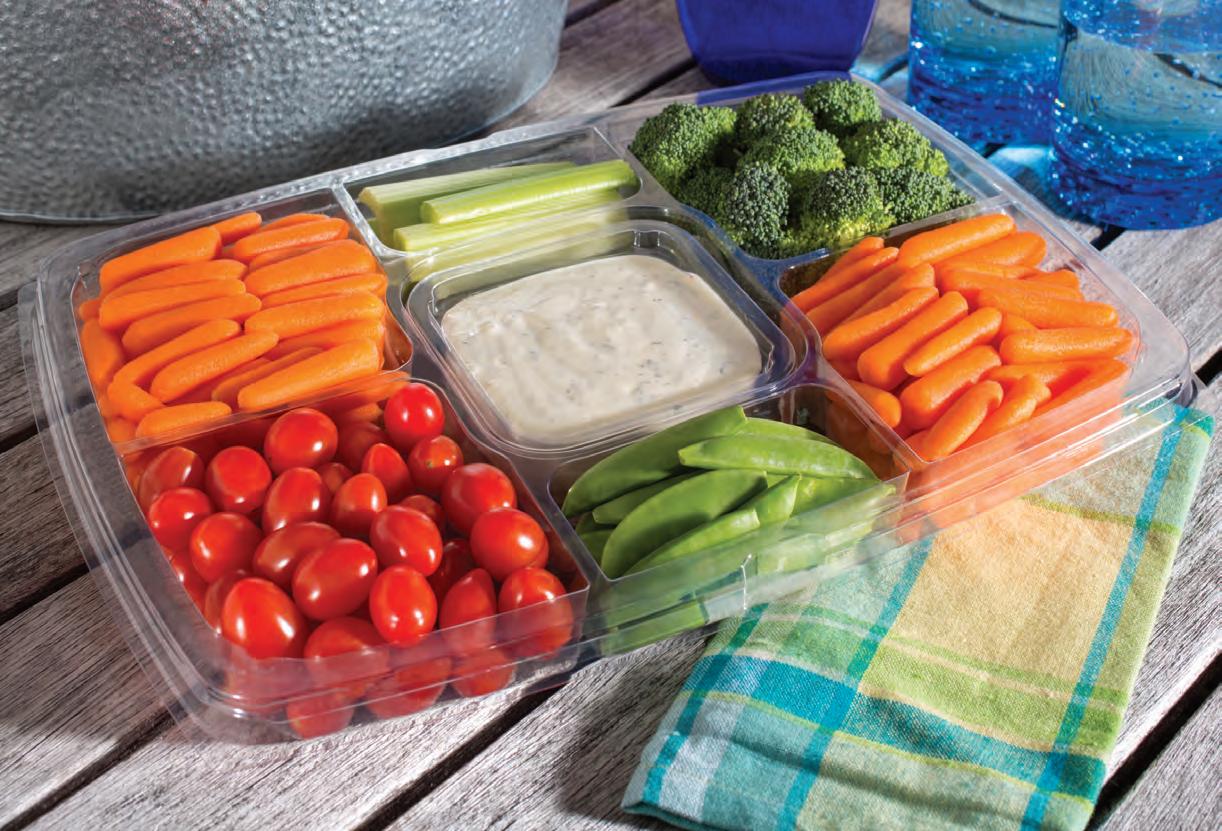
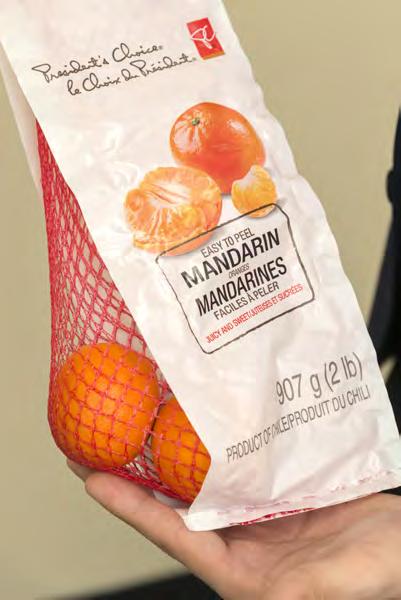

chine.
Best of all, the system works on any substrate—including metalized films—and any substrate thickness or type, such as corrugated linerboard.
“We have been able to get our ink consumptions requirements down to a science,” says Boustany, citing over 20-percent costsavings in ink purchases since going live with smartGPS, despite the growing volumes.
“We now buy only the exact amount of ink required to do the job,.
For all that, Boustany estimates that Flexipak is currently at 55-percent capacity— meaning that it still has plenty of room to help the plant grow its business further.
A lot of that growth will be driven by Transcontinental Flexipak’s keen focus on new product development and innovation, according to Boustany.


Nothing keeps your product fresher than MAP packaging produced on a Ross IN inline tray sealer.
n Produces MAP packages using preformed trays of almost any size or shape –easily packages your entire product line.
n Consistently produces packages with reliable, high-quality seals that extend shelf-life.
n Fast, highly flexible, and extremely easy to operate.
n Innovative tool/storage cart allows rapid, tool-less changeovers between tray sizes in 10 minutes or less.
n Stainless steel washdown construction and IP67 components.
n Compact footprint allows it to fit into tight areas.
n Test the Ross IN for yourself. Contact us to set up
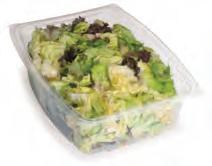
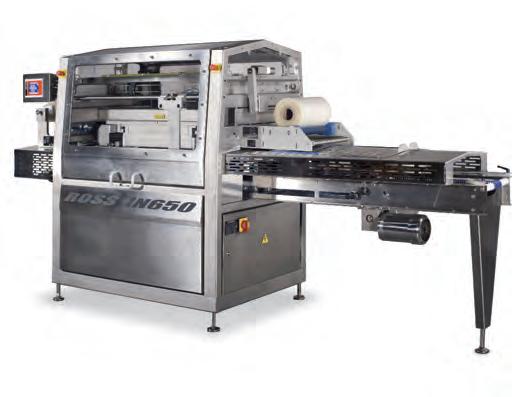
In addition, Boustany says the company is also looking to capitalize on the emerging hot trend of SPS (spouted stand-up pouches) for an ever-growing variety of food and beverage products.
“We are strongly focused on producing high-value-added niche products for our customers,” he says, “because that is where the future market growth lies both for us and TC Transcontinental Packaging.”
Says Boustany: “I am very encouraged by the fact that TC Transcontinental acquired us because we are both dynamic, secondgeneration businesses run by very dedicated individuals who have worked tirelessly to build a successful and highly efficient packaging enterprise that will add real value to their organization.
“We are certainly not the first or the only packaging company that they looked at to extend their market reach in Eastern Canada,” he concludes, “so their decision to partner with us says a lot about all the good things we have done over the years to get to this point.
“I am really looking forward to getting bigger, better and even more successful in the coming years in light of their genuine commitment to help us become the best that we can be in our chosen markets.”

























We are continuously working towards more efficient products that support greater sustainability. A good example is our new TopTrac™ curve design that combines optimum performance with a better use of resources and a low Total Cost of Ownership.
To help manufacturers improve product safety, achieve compliance, and protect their brands in an easier, more cost-efficient way, Eagle Product Inspection is launching the EPX100 X-Ray system for the inspection of packaged food products and goods.
“Our experts designed this system as a mainstream tool that is safe, simple and smart for small and mid-sized operators, as well as global companies who want to standardize their detection solutions across a variety of products,” says the company’s strategic business unit manager Kyle Thomas.
“At a critical control point of the process, the EPX100 can be deployed quickly, efficiently and easily and in a cost-effective way as manufacturers safeguard their products and brands.”
From a food safety standpoint, the EPX100 utilizes Eagle’s advanced X-Ray technology to detect and automatically reject potential contaminants including glass shards, metal fragments, mineral stones, some plastic and rubber compounds, and calcified bones.
Designed with operator-friendliness and low maintenance requirement in mind, the system inspects products in cartons, plastic containers and pouches, among other formats.
Distributed in Canada by PLAN Automation , the system allows users easy access to all regular or daily functions from the operator side of the ma -
The new Profile Advantage metal detector from Mettler-Toledo incorporates a revolutionary breakthrough in metal detection sensitivity to reduce false rejects, according to the company.
Called multisimultaneous frequency technology, it enables the Profile Advantage to deliver unrivalled levels of detection sensitivity to maximize detection and ensure end-user’s brand protection.
The cutting-edged multisimultaneous frequency technology analyzes product signal data captured across a wide spectrum of frequencies simultaneously and to process the company’s proprietary software algorithm in real time—which results in 30- to 50-percent higher sensitivity levels than competing technologies.
In addition, the system’s proprietary Product Signal Suppression technology virtually eliminates the
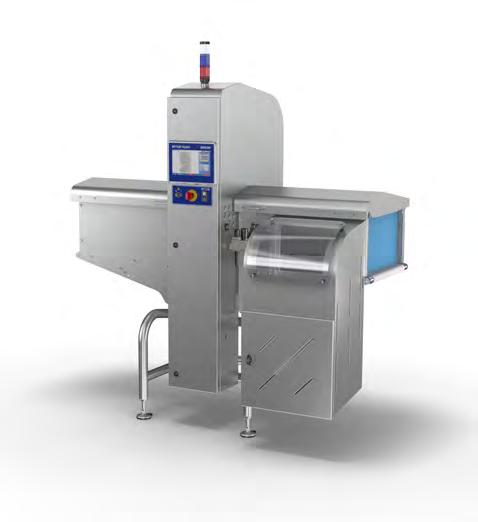
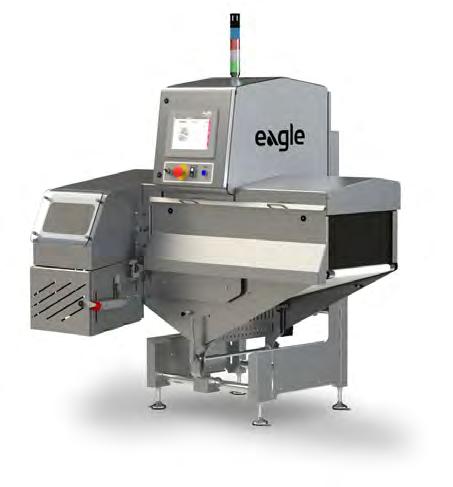
chine.
Featureing adjustable power settings—an important consideration for companies who produce a variety of SKUs (stock-keeping units), the system’s low-energy X-Ray environment helps manufacturers minimize energy use and cost, according to Eagle, while the company’s proprietary new SimulTask 5 image processing software (Eagle’s latest software advancement) provides greater operational visibility with an intuitive interface.
PLAN Automation
incidence of false triggering by suppressing the active and unwanted product signals often produced by the so-call ‘Product Effect,’ whereby signals are produced by the products themselves—particularly high-moisture products and products that change temperature during the production cycle.
This significantly benefits the user in terms of both lower running costs and a dramatic reduction in product waste.
According to Mettler-Toledo, this new technology makes the Profile Advantage an extremely valuable inspection tool for meat and poultry that contain a high degree of moisture and baked goods that contain moisture that change temperature as they move through production––conditions that triggers false rejects in conventional metal detectors.
By suppressing those false signals, the Profile Advantage inspects products at full sensitivity—ensuring more effective inspection, maximizing product safety and protecting your company’s brand image.
The Profile Advantage metal detectors also incorporate advanced Condition Monitoring technology that assesses the performance and operation of key detector components and circuitry.
This is used to alert operators of any adverse trends or changes in performance that can potentially cause system downtime—giving them advanced warning before a problem occurs.
When fitted with Mettler-Toledo’s optional Due Diligence Enhancement Software Package , the Profile Advantage system can provide an even higher level of system integrity that delivers total system performance and ensures the highest level of metal detection.
Mettler-Toledo
With product recalls on the rise and consumers growing significantly more safety-conscious, protecting customers, brand and business has never been more crucial for food product manufacturers.
In 2016 alone, there were 764 food industry recalls in the U.S.— each costing an average of $30100 million in product waste and sales losses.
With product recalls ranking in the top five consumer reasons for a damaged corporate reputation, retailers are fittingly demanding heightened food safety measures and new compliance standards as a result of the Food Safety Modernization Act ( FSMA ), with food processors of all sizes needing a new tool to keep their product safe for the market and profitable for their business.
Enter the JBT XVision X-Ray detection system from JBT ( John Bean Technologies ) Corporation
Backed by years of secondary and further processing knowledge, the technical experts at JBT have long recognized the need for improved food safety technology to replace the older metal detection technology.
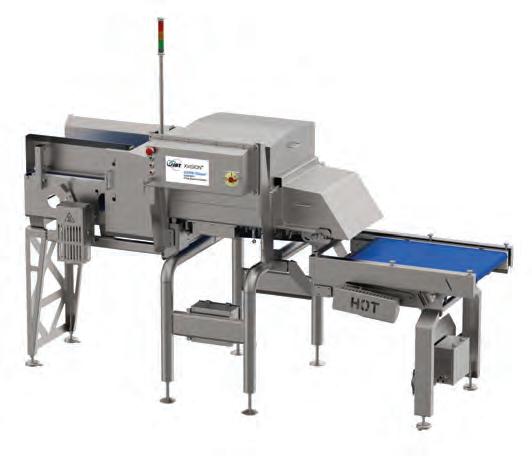
Not only does JBT XVision X-Ray detection meet consumer safety and retailer demands, it also plays an integral role in completing Hazard Analysis and Risk-Based Preventative Controls (HARPC) plans and compliance with FSMA by enabling users to:
• Detect a broader range of foreign matter;
• Have the flexibility of upstream or downstream X-Ray detection equipment placement;
• Detect foreign matter regardless of sensitive product states or conductivity properties;
• Identify foreign matter through foil packaging as well as a wide range of raw and packaged product;
• Eliminate uninspected “dead zones” in packaged product;
• Reduce f alse product rejection with fast and reliable QNX software;
• Be supported through JBT’s best-in-class iOPS Process Automation platform.
By increasing access to X-Ray technology and reducing the complexity of training and maintenance, JBT’s X-Ray solutions offer a cost-effective means to help processors around the globe avoid recalls and keep their customers safe.
JBT Corporation
The new IQ4 Metal Detector Search Head from Loma Systems offers improved sensitivity compared to previous models and a plethora of exciting industry first features purposely designed to deliver optimum production efficiencies.
Using its 50 years of experience in developing advanced metal detection technology, Loma has developed the new IQ4 series to meet customers’ common inspection challenges and provide major design, performance, usability, quality and flexibility benefits, while ensuring low lifetime cost of ownership and meeting the company’s ‘Designed to Survive’ criteria.
The IQ4 technology has enabled Loma to introduce true Variable Frequency operating between 31-882 kHz, allowing the metal detector to automatically select the correct operating frequency. According to Loma, changes in products or packaging that require an alteration in frequency will no longer require costly and inconvenient operator intervention.
In addition, Variable Frequency allows processors to easily run different pack sizes and shapes while benefiting from improved stability and sensitivity.
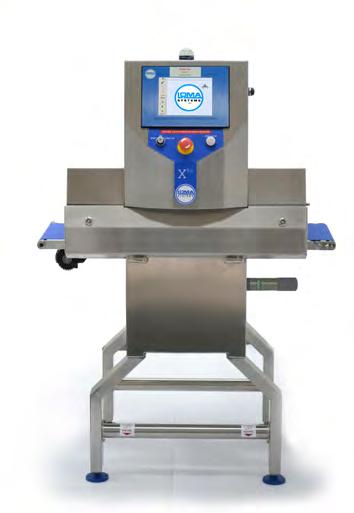
With built-in capacity to learn the characteristics and variable frequency settings for up to 100 different products, the IQ4 metal detector is standard with a seven-inch color touchscreen with a modernized and more intuitive interface—designed to simplify operation, deliver instant clarity to inspection status, and provide straight forward access to a host of advanced functionality features.
The IQ4 metal detector search heads feature a ‘beyond’ IP69K rating as standard for ultimate robustness and it makes them capable of withstanding the often-harsh conditions found within food processing plants.
The rating applies to the entire unit including the distinctive blue liner, brushed stainless steel case and touch screen—without the need for protective covers.
With a newly expanded Auto Learn functionality significantly reducing set-up time and providing a more optimum sensitivity set up, the IQ4 metal detector is ready to use, virtually straight out of box, ensuring more uptime and reduces the need for time-consuming product set-up by engineers.
LOMA SYSTEMS
The new Interceptor metal detector recently launched by the Toronto-based Fortress Technology Inc. is quickly taking wet food inspection to a whole new level of sensitivity, according to the company.
Conquering the long-standing challenge of ‘product effect’ caused by moisture and minerals, the Interceptor is specifically designed to inspect conductive applications, including meat, poultry and seafood, cheese, desserts, ready meals, bakery items and fortified cereals, while helping to eliminate false rejects.
This revolutionary operation facilitates an improvement in detection capabilities of up to 100 per cent with stainless steel, especially when inspecting traditionally difficult “wet” products or using metalized film during processing. In real terms, halving the test sample sphere size to 0.5-mm equates to picking up a wire length contaminant of 25-mm in size.
Rather than tuning into specific frequencies, the Interceptor cuts out background interference caused by product effect—tackling the issue of false positive readings in wet and conductive products that lead to high product rejects.
By splitting and simultaneously analyzing the lowfrequency and high-frequency signal, the Interceptor can clearly differentiate between the signal generated by the product as a result of moisture or mineral content—such as the salt in bacon—and any metal contaminant.
The result is a more reliable and accurate reading regardless of size, shape and orientation of metal particles, according to Fortress.
The Interceptor units can be deployed in different locations on the production and packing line, including apertures customized to a given conveyor, pipeline configurations for pumped product applications— such as sausage meat—or gravity systems for powders. For enhanced ease of use, the Interceptor is designed
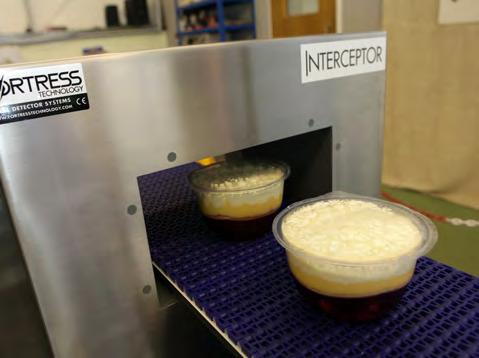
to learn, and recalls the signature of any given product with just one pass, with the integrated FM Software, bringing a predictive element to the analysis of signals from the metal detector.
Customers can choose either Wi-Fi or Ethernet connections for easy and accurate data collection, while the additions of optional Halo automatic testing can virtual eliminate the risk of human error inherent in manual testing of the system.
Being IP69K-rated, the Interceptor range is resistant to water ingress and dust—ensuring long-term reliability and performance in heavy processing and wash-down environments found in many bakeries, meat and seafood plants.
Moving ever closer to the performance of X-Ray but at a much lower capital investment, the Interceptor also reliably detects the range of ferrous and nonferrous metals, including aluminum.
For bulk meat cuts or cheese products, where variations in density pose a challenge to X-Ray, the Interceptor is the only sure option for the detection of metal contaminants, according to Fortress. Fortress Technology Inc.
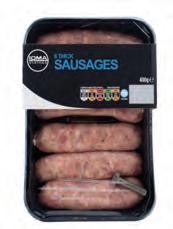
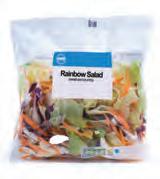


Time flies fast when you’re having fun, and the food industry has certainly had its share of good times in Canada since inaugural edition of the SIAL Canada trade show back in 2001.
Nowadays alternating between Montreal and Toronto, the annual event is headed back to Montreal for its 15th edition at the city’s state-of-the-art Palais des Congrès fairgrounds, May 2-4, 2018, aiming to replicate the show’s resounding success last year.
Last held at Toronto’s Enercare Centre in April of 2017, the three-day event—branded as the SIAL international food show for North America—boasted a record number of exhibitors, according to the show’s organizers Comexposium, along with a 32-percent increase in the number of professional visitors.
All in all, more than 16,500 visitors from all over Canada and 60 other countries made their way through the aisles of the 2017 edition.
Returning to Montreal, SIAL Canada is asserting itself as the only show in North America to have adapted to shifting industry trends and the evolution of consumers’ needs—as evidenced by the show’s “Sold Out” status three months in advance of the opening day.
Running concurrently with the SET Canada show for the equipment, technology, packaging and supply chain sectors of the food business, SIAL Canada is genuinely a ‘must-attend’ event for the retail, food service, and food processing industries.
As per the show’s popular tradition of putting the spotlight on a chosen country of honor, the exhibits from Spain will be of special note to the show’s visitors, according to show organizers.
“Over the last several years, economic ties between Spain and Canada have considerably increased, demonstrating a tremendous growth potential between the two countries,” explains SIAL Canada publicist Sophia Scaletta.
“These two economies possess natural synergies in a number of sectors, including agrifood,” Scaletta points out.
“Canada and Spain are also both part of the CETA (Canada-European Union Comprehensive Econom-
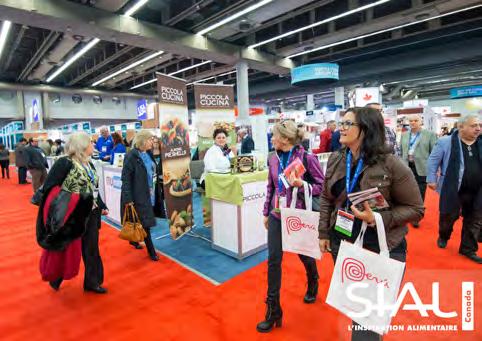

ic and Trade Agreement), which provides key entry points into each of their large regional markets, serving to galvanize economic growth, innovation, and the kind of competition needed for sound economic health.”
Following the success of the first edition of the American Buyers Program in Montreal in 2016, SIAL Canada 2018 will offer U.S. buyers and importers a unique meeting platform and a special experience as part of the show in partnership with the AFI (Association of Food Industries)—a leading industry organization representing American importers and retailers.
The highly anticipated program has been subject of such interest that starting with the 2018 edition, it will welcome buyers from all over the world—including France, Japan, the United Arab Emirates and many others.
First making its Canadian debut in 2001, SIAL Canada is part of the global SIAL network of trade shows that also includes SIAL Paris, SIAL China, ExpoVinis Brasil, SIAL Middle East, SIAL InterFOOD Jakarta, and SIAL ASEAN Manila
Between them, the SIAL shows bring together over 14,000 exhibitors and 330,000 visitors from more than 200 countries.
To highlight this international orientation, the SIAL Innovation competition—said to be the only international contest with a presence in the four corners of the world—will showcase 10 finalists and hand out three Grand Prizes that will allow the winners to travel

around the world with all SIAL shows, including the all-new SIAL (Food India inspired by SIAL) taking place in New Delhi, Sept. 16-18, 2018.
All of the 10 finalists, including the Grand Prize winners, will be featured at the special SIAL Innovation space located at the heart of the show to provide show visitors looking for innovative products with fresh ideas and inspiration for their own product offerings.
With more than 500 Canadian businesses represented and a strong contingent of provincial partners on hand yet again this year—including Aliments du Québec, the Conseil de la transformation alimentaire du Québec, and Export Group, among many others—SIAL Canada has become the central showcase platform for all that Canada has to offer, from each of the country’s provinces.
For the first time at SIAL, an Atlantic Pavilion will showcase all the Maritime provinces through many increasingly innovative products, such as raw and organic juices, vegan ice cream, healthy energy drinks, and insect-based products.
Other key show attractions will include:
• La Cuisine by SIAL Studio, featuring renowned chefs and foodservice personalities providing culinary product demonstrations from Canada and abroad, while others will take part in a series of interviews on key issues in the industry. Journalists, foodies and bloggers are invited to attend and engage with industry professionals who have made their mark at a time when the sector is witnessing profound changes.
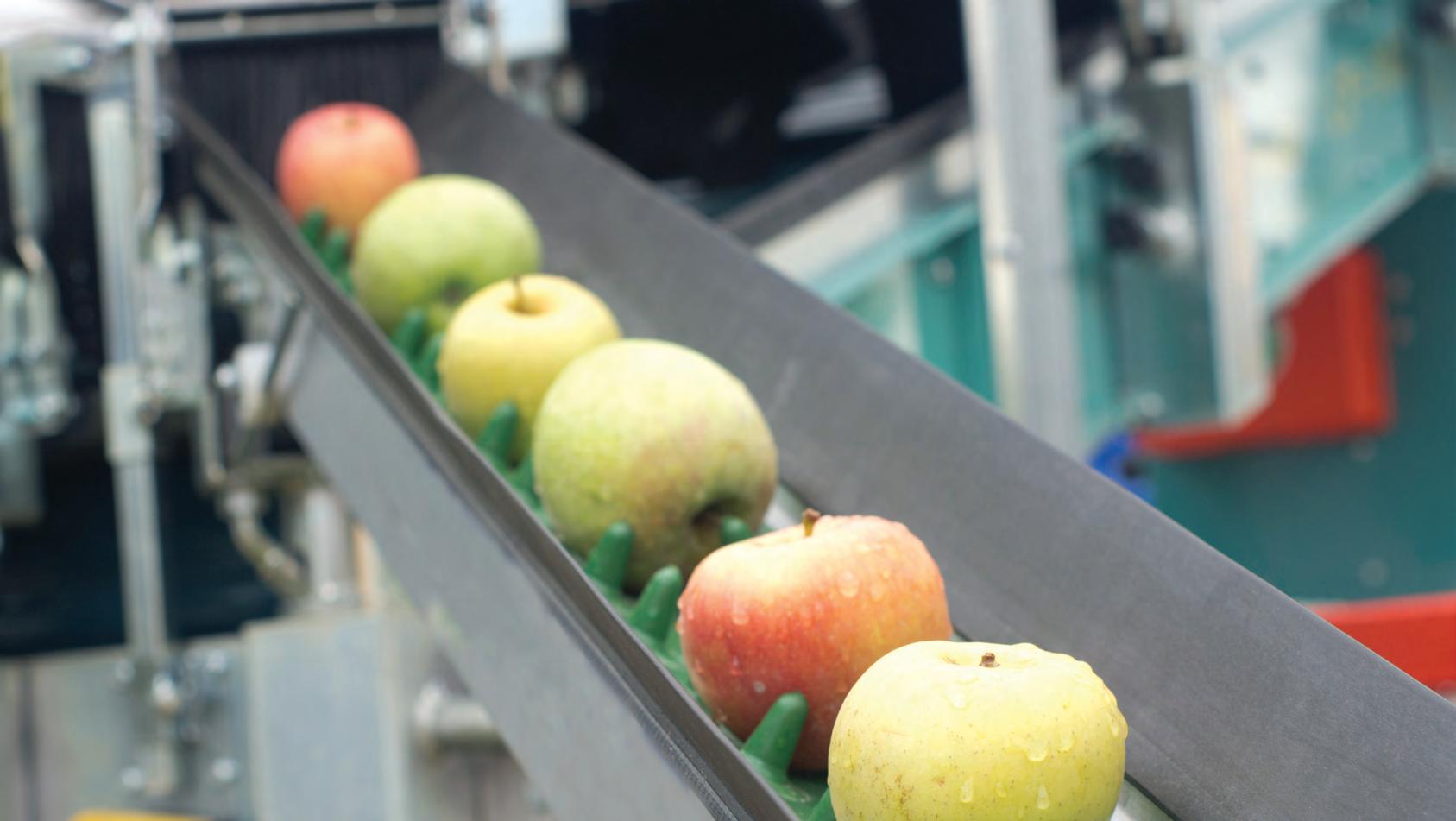

COMMODITY HEDGING1
INTEREST RATE HEDGING1

• SIAL Food Hub
• Where and how will we eat in 2030? A panel of industry experts will attempt to answer this critical question. With the gap between grocery stores and restaurants narrowing, novel concepts related to “grocerant,” home delivery, drive-throughs and other channels offering fresh, restaurant-quality food are attracting more and more of the younger generation, to the point that they are sometimes foregoing conventional restaurants. The panel speakers will examine this trend in fine detail by re-evaluating, analyzing and providing a picture of the future, with the sole goal of helping industry actors better prepare for these changes.
the organic and well-being section; cheeses; microbrewery beers; and one other for drinks, which will host the new Inspire Drink networking event.
• SoSIAL Commitment program to encourage show visitors to initiate efforts to reduce waste by and taking part in knowledge and skill-sharing activities with future generations—all with the aim of fostering a sustainable society.
• As par t of this program, SIAL Canada will provide a $5-donation to Moisson Montréal, Canada’s largest food bank, for each entrance ticket purchased.
Canadian Packaging, 200 x 273 mm, ErgoBloc L, CC-en31-AZ178 03/18
• New Sections focusing on food service and ready-to-eat;


















• Inter national Opportunities. In keeping with changes among the Canadian population and consumers’ growing demand for ethnic and specialty products, SIAL Canada 2018 will feature five new countries will be bringing their

















products to Canada, including Germany, England, Belgium, Egypt and Ukraine.
• On-Site Conference Sessions. Structured to cover all the current trends and innovations in the Canadian food industry, the show will host a network of experts with varied backgrounds to provide the most essential information on industry issue, unfolding tend, innovation, market drivers and opportunities, and trends in purchasing behaviors, including:
2, 2018)
• Local and Inter national Food Product Innovation: Bounty for Society and the Senses (all three days);
• The Legalization of Cannabis and its Impact on the Canadian Food Industry;
• Battle of the Proteins: Animal vs. Plant
• The Role of Pr ivate Brands in Canada: Retailers and Manufacturers’ Perspectives;
• When Digital Makes its Way into a Transport Company;
• The Basic Ingredient for Effective Crisis Management in the Agrifood Industry: Being Prepared;


















• Killer Business Models;


• The Future of Food-to-Go: What We Can Learn from Global Innovators;









3, 2018)
• Think Big: How to Connect with Canadian Trading Partners;
• The Quebec Agrifood policy: Uniting Forces for the Industry and Consumers;

















• The State of the Industry: A Closer Look at How the Grocery Landscape will Look Like in a Few Years;




















• An Overview of Global Consumer Trends and the Details of Canadian Results;
• Anti-Counterfeiting in Packaging;



• Beverage Trends;














• Building Trust and Transparency in the Age of Changing Consumer Demands;
• Getting to Know your Canadian Organic Market;
• SIAL FOOD HUB: The merging of the grocery and food service industries by 2030;
• Innovating Simplicity: Bar Designs and Mixology;
• Tea Beverage Trends and Profitability;





4, 2018)
• Blockchain: A Key Food Technology;







• Food Market Outlook to 2025: How to Prepare;
• Selling Organic Abroad;
• Design in food packaging


To register for the SIAL Canada 2018 show and conference, please go to: www.sialcanada.com


Ametal detection system positioned at the end of a packaging conveyor line may not seem like an obvious spot for unlocking substantial costsavings at a busy food plant, but not all metal detection systems are created equal.
For Toronto-based industrial metal detector manufacturer Fortress Technology Inc., offering its food industry clients a cost-effective means of detecting and removing tiny metal particles from the final product has been a key core competence since the company was founded in 1996.
Renowned in the industry for their speed, accuracy and simple operation, Fortress-made systems are used widely across a growing range of global food industry sectors, including bakery, meats, ready meals, dairy, confectionery, fresh foods and frozen foods—with thousands of successful installations across the globe.
Nowadays operating as a truly global enterprise providing worldwide market coverage from its manufacturing facilities in Canada, U.K. and Brazil, the privatelyowned company’s technical competence and expertise is aptly matched by its Never Obsolete Commitment philosophy that makes sure all its new technology is developed to be backwards compatible, i.e. accessible without having to purchase an entirely new system.
But for those applications that do require a new systems installation, the company’s expertise in custom-manufacturing metal detectors to match its customers’ exact needs, application and specifications while ensuring optimal performance is second to none.
It was, in fact, one of those custom jobs that recently prompted Fortress to design a game-changing multiaperture, multilane metal detector range that can greatly assist food manufacturers of all types to reduce factory footprint, investment and ongoing operating costs.
Already installed in two-, four- and five-lane configurations at several food factories around the globe, the design enables just one multiaperture system to perform high-accuracy, high-speed metal detection, with potential to improve the system’s TCO (total cost-of-ownership) by up to 65 per cent, depending on application.
Featuring a single metal detector mounted across multiple food packaging and processing conveyor lines, the new Fortress unit is uniquely divided into individual apertures to set a new industry standard for performance, according to the company.
Since each aperture is smaller, the machine has the ability to detect metal fragments as small as 0.8-mm ferrous, 0.8 mm nonferrous and 1.2-mm stainless-steel, regardless of the number of lanes travelling through the unit.
In addition, the smaller aperture copes better with orientation and product effect.
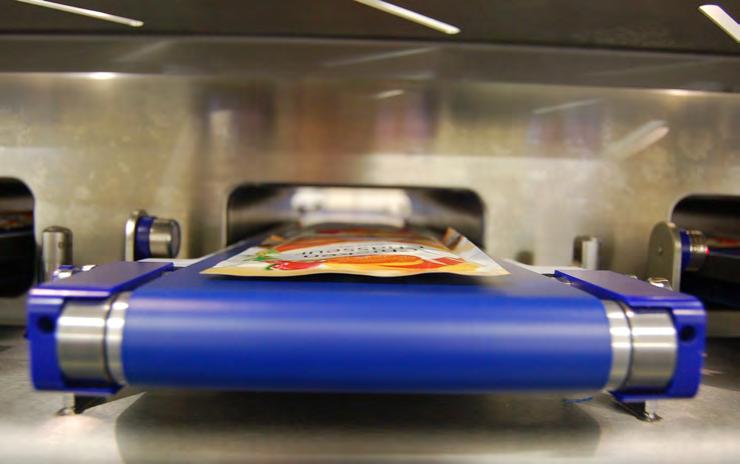
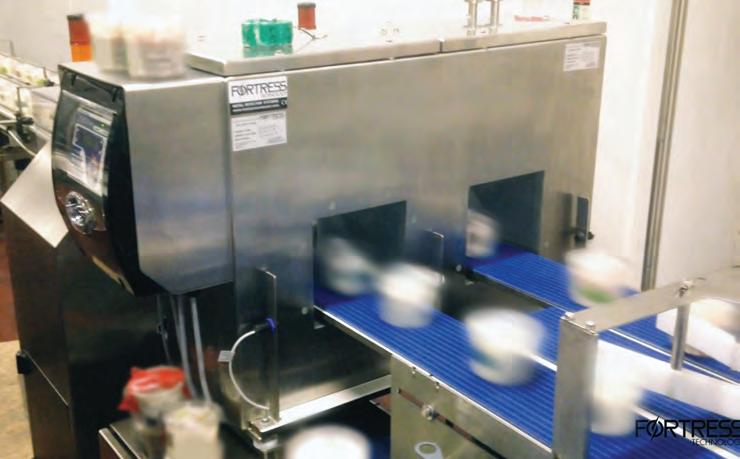
Consolidating this multi-aperture technology into one unit spanning multiple lanes, as opposed to individual metal detectors, also cuts the equipment footprint by over 50 per cent and optimizes factory floorspace.
The unit also sharpens operational efficiencies, reducing initial investment costs for food processors and packers by up to 40 per cent—compared to purchasing individual metal detectors for each line.
With just one system to maintain and manage, a five-lane multiaperture unit can improve total cost-of ownership (TCO) by over 65 per cent longer term, considering reduced maintenance and parts requirements.
Meat burgers, chilled salads, personal care products, and spices are among the applications already benefiting from Fortress’ multiaperture, multilane technology.
Many of today’s food factories are working around legacy equipment and have severe space limitations—making compact design an increasingly important consideration for new capital investment.
Until now, high-speed packing operations had limited multilane contaminant detection options.
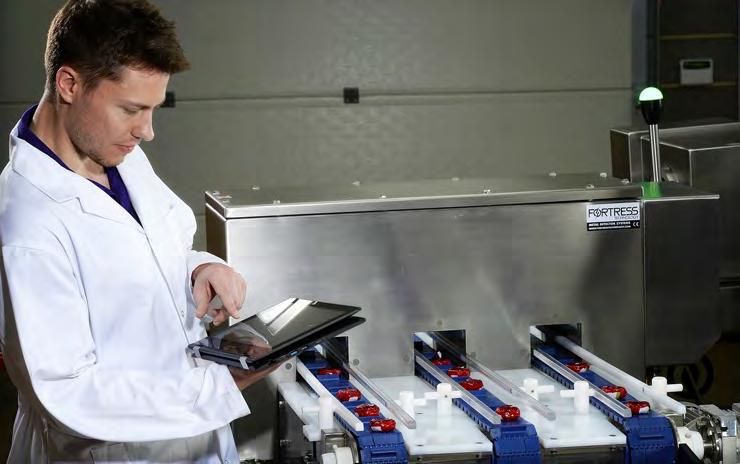
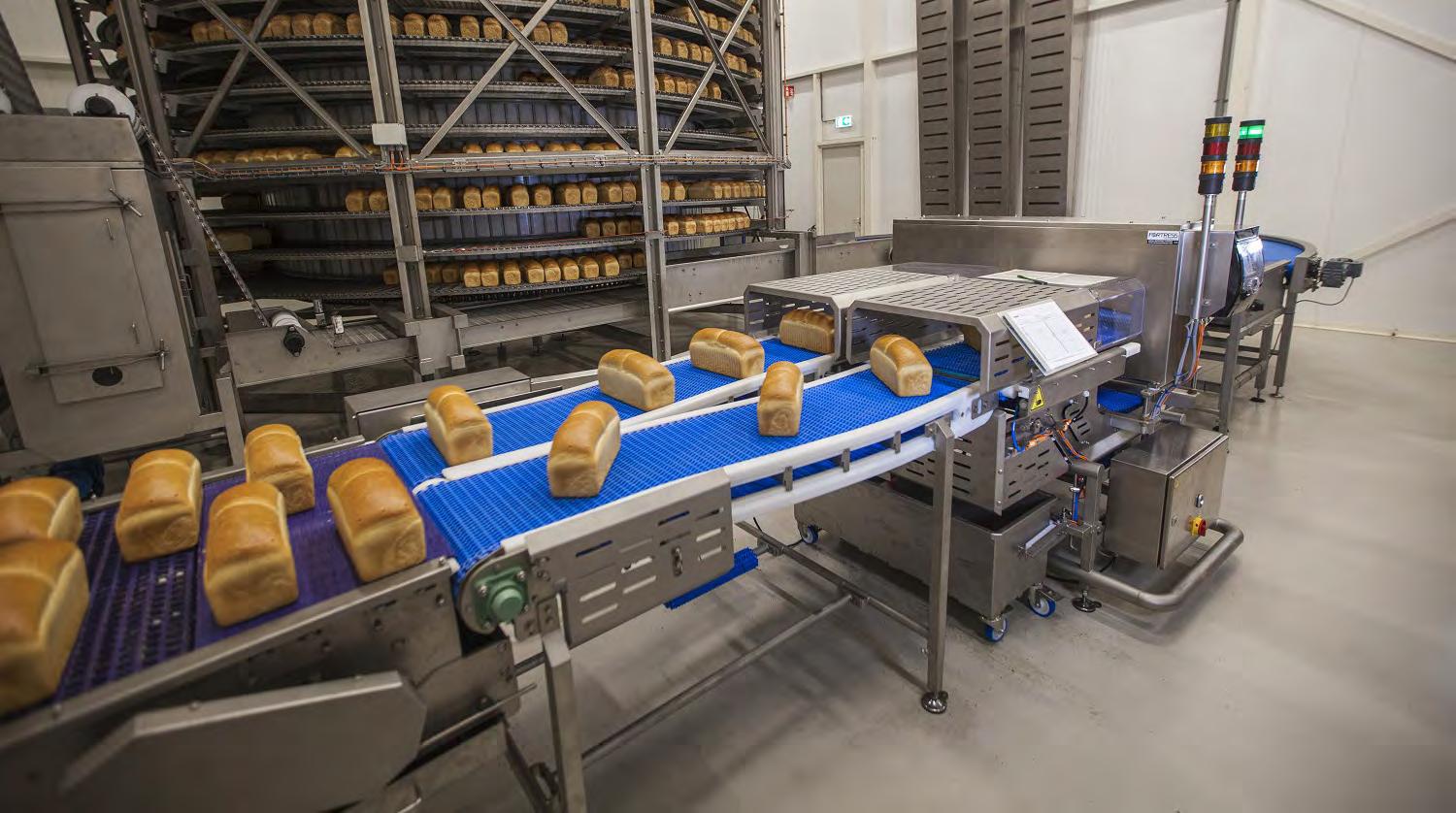
As one option, they could try to channel multiple lanes through a much larger single metal detector aperture, but that comes at a significant trade-off in terms of sensitivity levels.
Having a larger aperture when looking for metal contaminants in multiple products and dealing with multiple signals simply makes it less sensitive.
In addition, any reject system used in this set-up will remove an entire line of product across all the lanes being checked—ultimately resulting in higher volumes of false rejects and creating unnecessary waste.
In comparison, the Fortress multi-aperture system only inspects and rejects contaminated products from the individual conveyor, which in a five-lane system can reduce false product rejects by 400 per cent.
The other alternative—inserting individual metal detectors between each conveyor—is a costlier investment
option, both in terms of the initial outlay and in maintenance costs over the lifetime of each machine. It also doubles the system’s footprint, even when the metal detectors are staggered.
With the Fortress unit, a single control panel manages all lanes—streamlining operator access and enabling production managers to select and view data by individual lane, as well as analyze comparative lane data side-by-side.
To increase production efficiency, each lane is programmed to run independently from each other.Thereby, if one lane stops working or requires maintenance, the remaining lanes continue to run as normal—therefore minimizing process interruption.
When measured over five conveyors, food factories can save up to 50 per cent of the space required by individual metal detectors, around 17 per cent of the installation cost, and up to 65 per cent of the total cost of ownership.
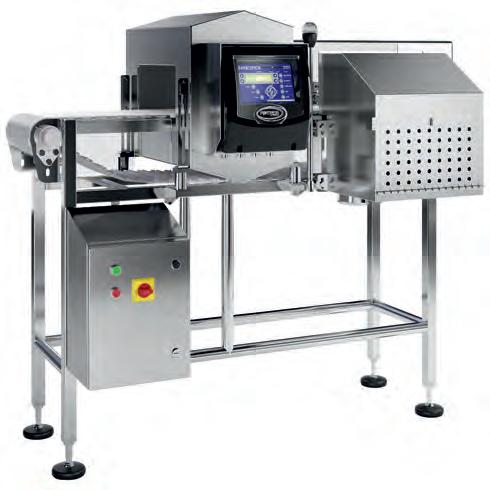

One of Europe’s largest bakeries was the most recent customer to install a Fortress multiaperture unit.
Rather than having one metal detector head spanning two lanes, Borgesius wanted to be able to measure if there was a metal contaminant issue in the individual line.
Logistically, having two metal detectors would not have been feasible, as it would have prohibited the bakery from running two conveyors so closely together.
Not prepared to compromise on metal detection sensitivity, the Dutch bakery requested a minimum of 1.8-mm ferrous, 2.8-mm nonferrous and 4.0-mm stainless-steel detection capability, which the individual Fortress apertures easily accomplish.
Because each aperture on this unit measures just 200-mm in height and 450-mm-wide, the bread loaves pass right through the center point of the metal detector.
This means the inspection system can cope better with orientation and product effect.
The ability to separate rejected product was a decisive factor for the Amsterdam-based factory. If there’s an issue on one line, the production team can now quickly identify and address it, which helps to reduce product waste and false rejects.
Commenting on the installation, Borgesius plant manager Willy Boneschansker says: “The twin-lane metal detection technology enables us to maintain our European reputation for the highest quality bread and continue meeting the stringent retailer Codes of Practice.
“To keep pace with the growing number of supermarket and convenience store orders, we need an efficient automated inspection process,” Boneschansker adds.
“The twin-aperture metal detector from Fortress is integral to this effort and has proven reliable and easy to operate.”
As another world first, Fortress has also applied the technology to create a customized “ferrous-only” five-lane multiaperture metal detector.
This totally unique application, deemed an engineering triumph, was customised to inspect foil spice packs and integrated with a five-lane checkweigher.
It comprises a transport mechanism that automatically separates metal contaminant rejects from weight rejects and places them in accessible BRC (British Retail Consortium)approved lockable bins.
While several food inspection companies have attempted to design a multilane system of this kind, Fortress Technology has been the first to succeed.
By challenging the status quo, the company has generated a truly innovative system that marks the end of food factories compromising on any performance criteria, including TCO, space optimization, and metal detection sensitivity.






nWells Fargo & Company, a leading international banking and financial services holding company headquartered in San Francisco, has announced that it has donated more than US$286.5 million invested in communities across the U.S. last year—benefitting more than 14,500 different non-profit organizations. In addition to corporate donations, Wells Fargo’s team members volunteered a record two million hours in 2017, valued at US$48 million, including 183,528 hours of service on 3,679 nonprofit boards supporting community revitalization and resiliency, home ownership, small business, food insecurity, and other global challenges. During the company’s annual employee giving campaign, more than 65,300 team members pledged $85 million in 2017 to 40,000 non-profits. As a result, United Way Worldwide named the company’s workplace-giving campaign No. 1 in the U.S. for the ninth consecutive year. In an official statement last month, the company also reaffirmed its previously-announced a 40-percent increase in corporate philanthropy for 2018—targeting $400 million. Starting in 2019, the company intends to reach a goal of investing two per cent percent of its after-tax profits in corporate philanthropy. “We couldn’t be more proud of our Wells Fargo team members who, year after year, exhibit selfless commitment to strengthening the communities we serve and enriching the lives of others,” said Wells Fargo president Timothy Sloan.
nMontreal-headquartered Transcontinental Inc. has completed the acquisition of Multifilm Packaging Corporation, a flexible packaging supplier located in Elgin, Ill., employing over 70 people. The company specializes in producing packaging for high-end candy and chocolate products distributed in North America, and specializes in piece-wraps and high-barrier laminates for the confectionery, snacks and dry foods markets. Notably, Multifilm offers an integrated manufacturing process and distinguishes itself through its expertise in cast film extrusion,










metallization and demetallization, as well as aluminum foil printing, according to Transcontinental. “This acquisition is aligned with our growth strategy for the packaging division and presents tremendous opportunities,” says TC Transcontinental president and chief executive officer François Olivier.
nLeonard Green & Partners, a prominent private equity investment firm headquartered in Los Angles, Ca., has reached a definitive agreement to acquire ProMach, Inc., a leading diversified packaging equipment and technologies group of companies, from AEA Investors for an undisclosed amount. “ProMach has built an outstanding business model and has a proven track record of doing exactly what they say they’re going to do, through multiple ownership cycles,” says Leonard Green & Partners partner Chris McCollum. “Our investment philosophy is to partner with market-leading companies with multiple ways to grow, backed by best-in-class management teams, [and] ProMach exemplifies this in a nearly unrivaled way in the packaging machinery space.” Founded in 1998, ProMach’s product brands—including Allpax, Edson, Greydon, Orion, Ossid, Shuttleworth, Texwrap and Wexxar, among others— operate across the entire packaging spectrum to provide solutions for nearly every application, including integration and engineering services for complete integrated packaging lines.
nRefresco, a leading independent bottler of beverages for major retailers and national brands headquartered in Rotterdam, The Netherlands, has completed the acquisition of Cott’s bottling activities in North America and the U.K, doubling its global production volume capacity to approximately 12 billion liters annually. Now operating 59 facilities in 12 countries, and employing over 9,500 people, “Refresco will now have a strengthened contract manufacturing exposure with unique geographical



























spread for branded beverage companies,” says chief executive officer Hans Roelofs. “With its increased scale, Refresco will have greater opportunities to invest in innovation to further optimize our business and achieve profitable growth,” says Roelofs, citing its “significant value creation potential through scale benefits in raw material and packaging procurement.”
nDowners Grove, Ill.-headquartered industrial equipment group Duravant LLC has reached a definitive agreement to acquire Key Technology, Inc., a prominent manufacturer of digital sorting, inspection, conveying and processing equipment based in Walla Walla, Wash., for an estimated US$175 million. Also operating manufacturing facilities in The Netherlands, Belgium, Australia and Mexico, Key Technology is a well-established supplier of advanced automation systems for the global food processing industry and other end markets, with a strong competence in intelligent optical inspection and digital sorting systems, along with vibratory conveyors. “Key Technology’s culture of customercentric innovation and their ability to successfully launch new technology platforms has been a driving force behind their impressive growth,” says Duravant president and chief executive officer Mike Kachmer. “Our two organizations share the same unwavering commitment to solving complex challenges for our customers through innovation.”
The open remote I/O system o ers maximum flexibility for the adaptation of existing system environments with head modules for PROFINET/PROFIsafe, Ethernet/IP and CIP Safety. A simple substitution of the head module allows the communication within di erent networks. Wide ranges of safe and standard I/O modules are available.




March 20-23
Cologne, Germany: Anuga FoodTec 2018, international food and beverage technologies exhibition by Koelnmesse GmbH. At Cologne Exhibition Center. To register, go to: www.anugafoodtec.com
March 28-29
Shanghai, China: ADF (Aerosol & Dispensing Forum) & PCD (Packaging of Perfume Cosmetics & Design) Shanghai 2018. Both by Easyfairs Group. At Shanghai Convention & Exhibition Center. Metropolitan Pavilion. To register, go to: www.easyfairs.com
April 4-5
Atlanta, Ga.: Industrial Pack, industrial, transit and pro-
tective packaging exhibition by Artexis Easyfairs. At the Cobb Galeria Center. To register, go to: www.easyfairs.com
April 9-12
Atlanta, Ga.: MODEX 2018 , supply chain technologies exhibition by MHI. At Georgia World Congress Center. To register, go to: www.modexshow.com
April 11
Toronto: The Future of Retail, breakfast event by PPEC (Paper and Paperboard Packaging Environmental Council). At the Islington Golf Club. For more information visit: www.ppec-paper.com/breakfast-at-the-club
April 16-18
Philadelphia, Pa: PACK EXPO East, packaging and processing technologies show by PMMI, The Association for Packaging and Processing Technologies. At Pennsylvania Convention Center. To register, go to: www.packexpoeast.com
April 17-18
Green Bay, Wis.: Converters Expo, package converting technologies exhibition by BNP Media. At Lambeau Field Atrium. To register, go to: www.convertersexpo.com
April 18-20
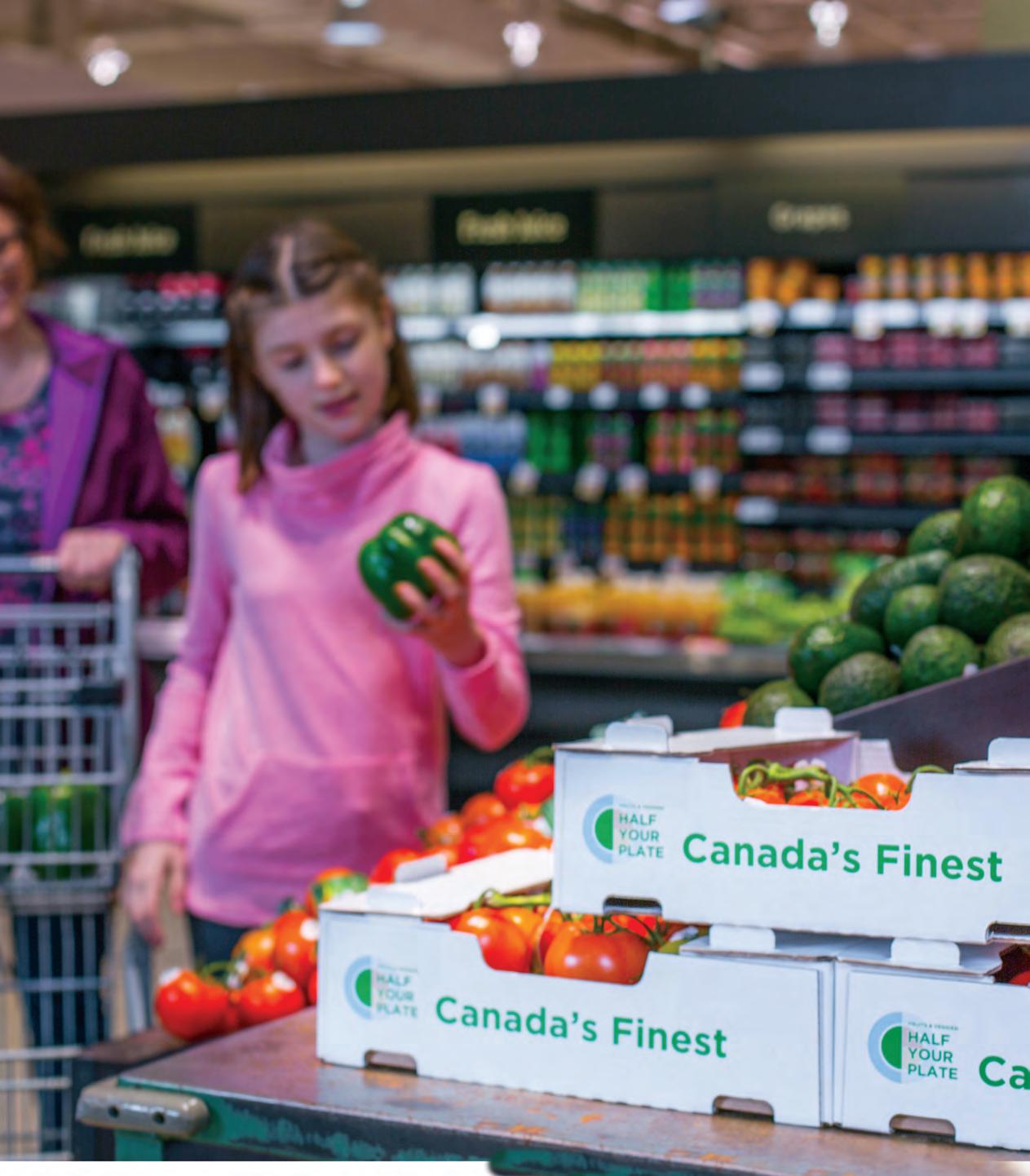

Atlanta, Ga.: AWA International Sleeve Label Conference & Exhibition 2018 , by AWA (Alexander Watson Associates). At Crowne Plaza Atlanta. To register, go to: www.awa-bv.com/events
April 24-25
Guadalajara, Mexico: Label Summit Latin America, by Labelexpo Global Series. At Expo Guadalajara. To register, go to: www.labelsummit.com/mexico
April 24-26
Vancouver: Live Healthy: Eat Fresh CPMA 2018 , annual convention and trade show of the Canadian Produce Marketing Association. At Vancouver Convention Centre. To register, contact Jennifer Oakley of CPMA at (613) 226-4187, ext. 218; or via email joakley@cpma.com
April 24-27
Shanghai, China: CHINAPLAS 2018, international trade fair for the plastics industries by Adsale Exhibition Services Ltd. At the National Exhibition and Convention Center. To register, go to: www.ChinaplasOnline.com
May 1-2
Toronto: Partners in Prevention 2018, occupational health and safety conference and trade show by Workplace Safety & Prevention Services (WSPS). At The International Centre. Contact WSPS Customer Care Department at 1 (877) 494-9777; or via email conference@wsps.ca
May 2-4
Montreal: SIAL Canada, international food show for North America by Comexposium. Jointly with the SET Canada food industry equipment and technologies exhibition. At the Palais des Congrès, Montréal.To register, go to: www.sialcanada.com
May 7-8
Indianapolis, Ind.: INFOFLEX 2018, package printing and converting exhibition by the Flexographic Technical Association. Concurrently with the Forum 2018 conference. To register, go to: www.flexography.org

n U.S.-based Power Transmission Distributors Association (PTDA) has elected Jim Williams, vice-president of corporate purchasing and supplier relations at Motion Industries, Inc. of Birmingham, Ala., as the group’s 2018 president.
n Somic America, Inc., Eagan, Minn.based manufacturer of automatic case-packing and cartoning equipment for secondary and retail-ready packaging applications, has appointed Luke Gardner as customer support manager, and LeahNé Thiele as administrative services manager.
n Dayton, Ohio-based industrial robotics manufacturer Yaskawa Motoman has appointed David Troeter as vice-president of customer satisfaction.



n Reston, Va.-headquartered industry group PMMI, The Association for Packaging and Processing Technologies, has appointed Bryan Griffen as director of industry services.
for dairy and beverage industries headquartered in Oslo, Norway, has announced the appointment of Thomas Körmendi as the company’s new president and chief executive officer, effective April 1, 2018.
n Coveris, Chicago-headquartered supplier of rigid plastic packaging products to global foots, pharmaceutical and personal care industries, has appointed Jakob Mosser as chief executive officer.
n Atlanta, Ga.-headquartered corrugated packaging products group WestRock Company has appointed James Armstrong as vice-president of investor relations.
n Paperboard packaging products group Graphic Packaging International, LLC of Atlanta, Ga., has appointed Mike Farrell as senior vice-president of supply chain operations, and Spencer Maurer as senior vicepresident of the company’s Americas Foodservice business unit.
n TricorBraun, St. Louis, Mo.-headquartered manufacturer and designer of rigid plastic packaging products for consumer markets, has named Becky Giessel as the company’s vice-president of human resources and chief people officer, and Amy Bonder as vice-president of strategic markets.
n Hayssen Flexible Systems, Duncan, S.C.based Barry-Wehmiller subsidiary specializing in the manufacture of flexible packaging machinery for food and snack industry applications, has appointed Douglas McGraw as president.
n Davis-Standard, LLC, Pawcatuck, Conn.based manufacturer of plastic extrusion and converting machinery, has appointed Erin Tiedemann as process engineer.


n Brewerton, N.Y.-based end-of-line packaging machinery manufacturer Schneider Packaging Equipment Co. Inc. has appointed Greg Masingill as executive vice-president.
n A + F Automation, Medford, N.J.-based manufacturer of automated end-of-line packaging machinery, has appointed Eric Verkuylen as service manager.


MAY 2 TO 4,

n Elopak Group, globally-operating supplier of aseptic packaging technologies
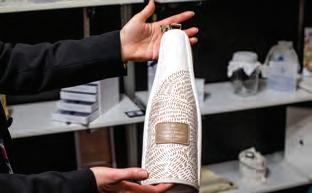
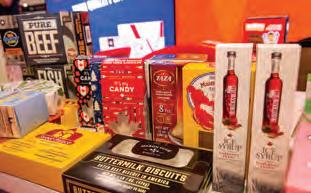
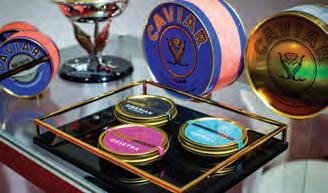



At first glance, this box of made-in-Portugal Sardinhas de Chocolate (Chocolate Sardines) Sardines from MySugar, Lda could fool anyone. Featuring a cartoonish drawing of a woman carrying a platter of fish on her head—framed in the vibrant red, green and gold-colored outlines borrowed from Portugal’s national flag, the eye-catching box also boasts a deftly-depicted cutout at the top end mimicking a partially-opened can lid to reveal three life-like silvery fish-heads peeking out of the can. With a montage of yellow fish scales filling in the background of the front panel, most people will instinctively assume they are in fact looking at a can of sardines—one of the country’s most poplar seafood staples—especially when reinforced with a tactile rough finish of the crinkled surface intended to imitate fish skin and scales. While it’s a very witty attempt to project the country’s long-enduring passion for seafood in general, and sardines in particular, one has to wonder if it’s almost too clever for its own good by unintentionally putting off the more impatient chocolate lovers with all this abundance of fish imagery, along with the longing stare of the make-believe fish-heads’ eyeballs. That said, those who get the joke would certainly appreciate the delicious sardine-shaped chocolate treats packed inside the box, along with the design’s charming sense of humor.

Long before mail and courier services introduced pre-printed, self-sealing boxes and bags, mail-delivered parcels used to look very much like this bar of soap produced by Castelbel S.A. in Castêlo da Maia, Portugal. Packaged in brown paper wrapping that instantly takes the shopper into a bygone era, the 200-gram Lemon & Basil Fragance Soap Bar pays playful homage to snailmail’s glory days through cunning attention to packaging detail. The address space has the fragrance name, contents, company name and weight printed in a retro font once found on many manual typewriters, while the faux postage stamps in the top-right coroner display the soap’s botanical ingredients in their natural state, with the product weight subbing in for the cost of the stamp in both metric and imperial units. Images of two classic Republic Française postage stamps are positioned at a slight angle to the left of the front panel, with faithfully replicated postmarks and a trilingual Par Avion sticker completing the remarkable throwback design. As a final flourish, the red-white-and-blue twisted string knotted up strategically between the two French stamp images pays a glorieux tribute to the product’s distinctly Francophile inspiration. A brilliant way of making everything old look new again!
the Burbank, Ca.-based Dick Van Patten’s Natural Balance Pet Foods founded by the well-known, prolific Hollywood actor Dick Van Patten. Probably best remembered as a family patriarch in the 1970s hit series Eight is Enough, Van Patten was a deeply committed animal welfare advocate who is credited with founding the National Guide Dog Month back in 2008, among his other notable endeavors. Curiously, there is not a single image of a dog to be found anywhere on the package. Instead, you get a lovely vista view of a green forest surrounding a majestic snow-covered mountain in the center of the roll on the front, and a wealth of useful product information and preparation instructions on the back, along with a feeding guide per dog size and tips on dog training and rewards. Tellingly, the product is pricier per gram than real liverwurst made for human consumption.
Grabbing a cold brew has a whole new meaning to it thanks to the creative minds at the Toronto-based Station Cold Brew Coffee Company. If packaging their flagship black unsweetened brewed coffee in the retro 375-ml vintage stubby glass bottles with a twist-top beer cap was not enough, then putting their Nitro New Orleans style coffee into a vintage craft-beer can speaks volumes about the company’s uncanny knack for effective product differentiation on the store-shelves.

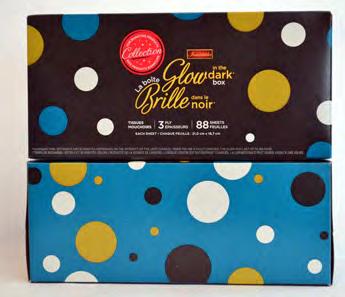
One would thank that something as simple as a box of paper tissues hardly warrants the inclusion of product instructions, but the Glow in the Dark Box of tissues of the Irresistibles store brand of grocery giant Metro is not you ordinary tissue box. Produced in Canada by the WestRock Company, the box is decorated with various-sized blue, black, gold and white polka dots that not only look attractive on their own, but also activate the white dots to literally glow in the dark thanks to an application of special luminescent ink that, depending on the intensity of the light source, cause the white dots to charge up in five to 30 minutes—maintaining the glow for up to an hour. As far as bright packaging ideas go, this one has all the angles covered in spades.


Looking at the liverwurst-inspired package of Dick Van Patten’s Natural Balance Dog Food Rolls brings to mind a slew of comical possibilities about a midnight fridge raid going wrong. Thankfully, the bright blue color used for the plastic casing of the one-pound roll is rarely used for foods meant for human consumption, which shoud alleviate the risk of possible confusion. That said, the high-quality ingredients containing duck and turkey meat—accented with cranberries and apples—clearly suggest that this is no ordinary dog food. Not containing any corn, soy, wheat, sodium nitrate, or artificial flavors and colors found in most conventional mass-produced pet foods, the product is made by
Global food safety standards contribute to the well-being of your consumers while strengthening the reputation of your business Knowing and implementing standards builds a framework for continually improving production quality processes and demonstrates a commitment to safety.
In our new white paper, ‘Achieving Global Certification in Food Safety and Quality’, we aim to help you meet your regulatory compliance obligations and determine the best fit for your business.
Download your complimentary white paper today by visiting www.mt.com/pi-bc172a