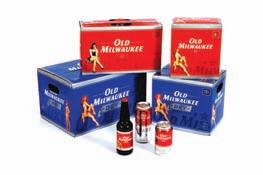
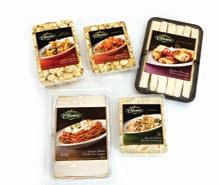
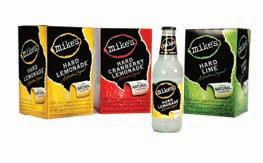
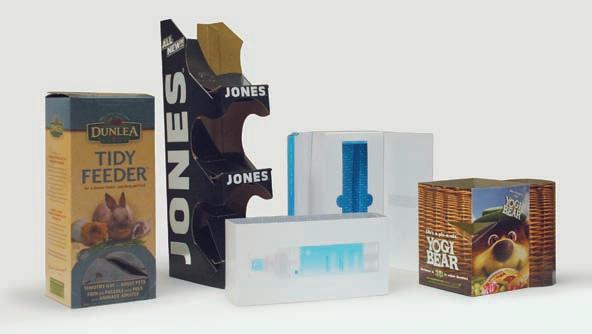
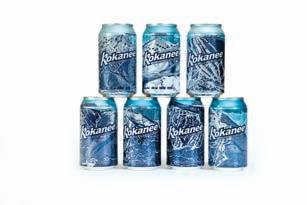
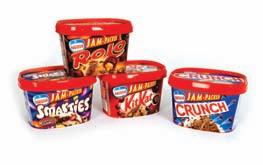
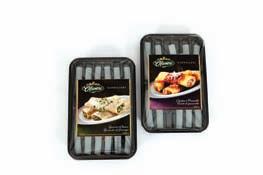
Atlantic Packaging bring the innovation to you! Service TMDriven!
Entrust us with your business and let
Innovation & Design Centres, two state of the art Graphic centres, backed up by a fully equipped testing facility, we are available to help develop new and unique methods for your corrugated packaging.
Atlantic Packaging offers the largest number of facilities and innovation experts to respond to your needs. With 4
a novel way to package your product, a better way to protect your items, a new method to market your product, or simply a new way of doing things, we can help you develop ideas and solutions.
Whether it is a unique labour savings idea,
to ndfi that creative idea that will help you attain your packaging goals.
upside down... inside out... backwards... forwards... and every which way in order
At Atlantic Packaging we like to turn things
Sometimes you have to turn things completely upside down to ndfi that one magical, innovative idea that can make the difference in your packaging!
JUNE 2011 VOLUME 64, NO. 6
EDITOR
George Guidoni • (416) 442-5600 x3209
GGuidoni@canadianpackaging.com
EDITORIAL DIRECTOR
Lisa Wichmann • (416) 442-5600 x5101 LWichmann@canadianmanufacturing.com
FEATURES EDITOR
Andrew Joseph • (416) 442-5600 x3210
AJoseph@canadianpackaging.com
ART DIRECTOR
Stewart Thomas • (416) 442-5600 x3212
SThomas@bizinfogroup.ca
SENIOR PUBLISHER
Stephen Dean • (416) 510-5198
SDean@canadianpackaging.com
ADVERTISING SALES
Munira Khan • (416) 510-5199
MKhan@canadianpackaging.com
PRODUCTION MANAGER
Kim Collins • (416) 510-6779 KCollins@bizinfogroup.ca
Vice-President of Canadian Publishing • Alex Papanou President of Business Information Group • Bruce Creighton
HOW TO REACH US:
Canadian Packaging, established 1947, is
(416) 442-5600; Fax (416)
EDITORIAL AND ADVERTISING OFFICES: 80 Valleybrook Drive, North York, ON, M3B 2S9; Tel: (416) 442-5600; Fax (416) 510-5140.
SUBSCRIBER SERVICES: To subscribe, renew your subscription or to change your address or information, contact us at 1-866-236-0608 (English), or 1-866-236-2125 (French)
SUBSCRIPTION PRICE PER YEAR (INCLUDING ANNUAL BUYERS’ GUIDE): Canada $72.00 per year, Outside Canada $117.00 US per year, Single Copy Canada $10.00, Outside Canada $27.10. Canadian Packaging is published 11 times per year except for occasional combined, expanded or premium issues, which count as two subscription issues.
DISCLAIMER: This publication is for informational purposes only. The content and “expert” advice presented are not intended as a substitute for informed professional engineering advice. You should not act on information contained in this publication without seeking speci c advice from quali ed engineering professionals. Canadian Packaging accepts no responsibility or liability for claims made for any product or service reported or advertised in this issue. Canadian Packaging receives unsolicited materials, (including letters to the editor, press releases, promotional items and images) from time to time. Canadian Packaging, its af liates and assignees may use, reproduce, publish, re-publish, distribute, store and archive such unsolicited submissions in whole or in part in any form or medium whatsoever, without compensation of any sort.
PRIVACY NOTICE: From time to time we make our subscription list available to select companies and organizations whose product or service may interest you. If you do not wish your contact information to be made available, please contact us via one of the following methods: Phone: 1-800-668-2374 Fax: 416-442-2191
Email: privacyof cer@businessinformationgroup.ca
Mail to: Privacy Of ce, 80 Valleybrook Drive, North York, ON M3B 2S9
PRINTED IN CANADA
PUBLICATIONS MAIL AGREEMENT NO. 40069240, ISSN 0008-4654
We acknowledge the nancial support of the Government of Canada through the Canada Periodical Fund (CPF) for our publishing activities. Canadian Packaging is indexed in the Canadian Magazine Index by Micromedia Limited. Back copies are available in microform from Macromedia Ltd., 158 Pearl St., Toronto, ON M5H 1L3
SAME BUT DIFFERENT
For many of our faithful long-time readers in the packaging field, change has long been one of the more constant features of their professional lives. Not necessarily always embraced with open arms, perhaps, but always out there lurking in the shadows and waiting for its chance to upset the existing status quo
Which in many ways goes with the territory. Changing packaging trends, changing technologies, changing tastes and preferences et al, have all been an inescapable part of the packaging industry’s ongoing evolution and advancement, and resisting that irresistible force of transformation just because it may seem inconvenient or threatening is rarely a good way to dealing with it. Fear of the unknown may be a natural human instinct, but it’s not one of human nature’s most commendable traits.
But it certainly helps, of course, when the change in question has positives written all over it, which is why we at Canadian Packaging are excited about starting a new chapter in the publication’s proud 63-year history under the ownership of the fast-growing, highly entrepreneurial, all-proudCanadian business information publishing group Glacier Media Inc.
For those of you sharp enough to have noticed the conspicuous absence of the Rogers Communications Inc.’s trademark logo on this page and elsewhere, let us assure you that we had not simply fallen asleep at the wrong time during the production of this current issue. The simple truth of the matter is that several weeks ago Canadian Packaging —along with several other sister industrial publications like Food in Canada, Canadian Plant, Hardware Merchandising and other well-known titles—were sold by Rogers to Glacier in multipackage deal that, in the process, has made the Vancouverheadquartered, publicly-traded company Canada’s leading publisher of B2B trade magazines.
Nothing personal, you see, strictly business. And a wonderful piece of business by Glacier, we dare say, based on the simple fact that our new owner totally gets what the B2B publishing business is all about— especially in the industrial and manufacturing arena. With annual revenues of $240 million and growing steadily, the company is in fact a living proof that the increasingly widespread notion that “Print is Dead” is based on some deeply flawed logic.
While there is no denying that Internet and online publishing have had a major impact on the fortunes of most major North American newspapers—many of them going all-digital and some simply vanishing into thin air—applying the same reasoning to the B2B magazine industry is an oversimplification at best, and just plain disrespectful to the multitude of professions these magazines serve at worst.
While the Internet is all fine and dandy in many très cool ways (please do check out our own www.canadianpackaging.com from time to time between issues), we suspect that a majority of our regular readers don’t have the luxury (or misfortune) of spending the larger part of their workdays in front of computer screens— à la financial advisors, accountants and other office types—surfing the web to obtain the most relevant information they need to conduct their day-to-day business.
More likely than not, you’ll find them beating the pavement of busy production facilities turning out CPG (consumer packaged goods) and other countless products making sure that they are being packaged in the most efficient, consumer-friendly and sustainable ways possible for their demanding customers and the general public.
And for as long as these unsung heroes of the CPG industry keep honoring us on a monthly basis by flipping through the pages of our magazine, rest assured that we will not rest in our efforts to keep giving them the information they want, when they want it, for as long as they want it. At the end of the day, some things are just naturally better left unchanged.
12 BY GRAND DESIGN By George Guidoni Packaging designers embracing Internet age technological marvels to give CPG brands greater marketplace impact.
41 NEW LEASE ON LIFE By Andrew Joseph Packaging line integrator making a habit of giving used equipment a second chance at earning its keep.
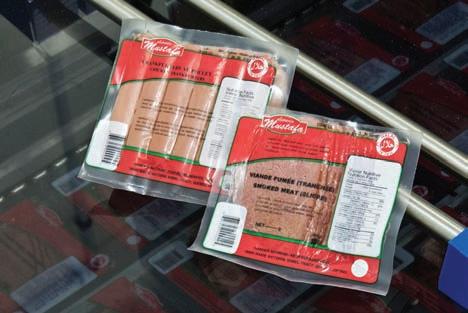
43 MEAT OF THE MATTER By Andrew Joseph Quebec meat processor carving itself a lucrative market niche with cutting-edge packaging technologies.
45 COMING CLEAN By Andrew Joseph Paper packaging manufacturers accept the need for common language to maintain meaningful sustainability progress.
THE WINNING TOUCH
The best-of-the best in Canadian packaging is featured in a special report saluting all the winners of the 2011 PAC Leadership Awards competition, beginning opposite of page 14.
TACTILE UPGRADES FOR HEINEKEN PACKAGING
Being one of the world’s most universally recognized and loved brands requires profound understanding of the different markets where that product is sold, as venerable Dutch brewer has shown in flying colors with last month’s Canadian launch of the new, streamlined visual and packaging identity for its famed flagship today selling in 176 countries worldwide.
Conceived as a sensory approach to brand marketing, the updated contemporary design extends through all key elements of the beer’s iconic identity to ensure a consistent look that is recognizable worldwide, according to Mark van Iterson, global manager for the team in The Netherlands.
“The Heineken drinker really appreciates the details,” states van Iterson. “We have looked at each and every packaging element to ensure our
WATER BOTTLER STAYS ON COURSE WITH RECYCLING
Canada’s leading water bottler Canada (NWC)
Mountains to provide a strong visual reminder to consumers of Montclair’s unique Quebec heritage dating back to 1918, when it was founded by former Montreal Canadiens hockey team and Montreal Alouettes football franchise owner Leo Dandurand.
These days bottled at NWC’s production facilities in Puslinch, Ont., and Hope, B.C., the brand first started using recycled PET (polyethylene ter-
BLOWING THE WHISTLE ON SUMMER FUN
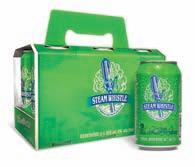
With the arrival of summer signalling the start of another round of annual “beer wars” in the Canadian marketplace, Toronto-based microbrewer Steam Whistle Brewing has thrown the gauntlet with the impending launch of its first-ever six-pack of 355-ml cans of the company’s flagship Steam Whistle Pilsner brand—expected to hit The Beer Store outlets in Ontario and independent Alberta liquor stores just in time for the upcoming Canada Day (July 1) long weekend.
The company says the recent purchase and installation of a new case-erecting machine—manufactured by Fresno, Ca.-based packaging equipment builder Kodiak Cartoners —has enabled it to offer the convenient new packaging format, responding to an overall Canadian market shift that has seen canned beer account for a 36.6-percent share of all domestic beer sales in 2010, compared to 24 per cent only five years earlier.
“There are some interesting regional differences we
considered when developing this new package offering,” says Steam Whistle director of marketing Jamie Humphries. “For example, residents of Alberta had a 63.4-purchasing preference for canned beer last year, so we’ll be shipping these western drinkers our canned six-packs right away.”
Even in Ontario, where bottles still account for 62.5 per cent of all beers sales in the province, summer months traditionally see a notable increase in the sales of canned beer, according to Humphries.
Designed by the brewer’s inhouse art director Elton Clemente and pre-glued and printed by Cascades Boxboard Inc. in Toronto, the attractive new can carriers feature a sturdy carrying handle and end panels to provide enhanced stability to the pack, while also offering consumers a fun “peep-show look at the fun, energetic cans contained within,” Humphries adds.
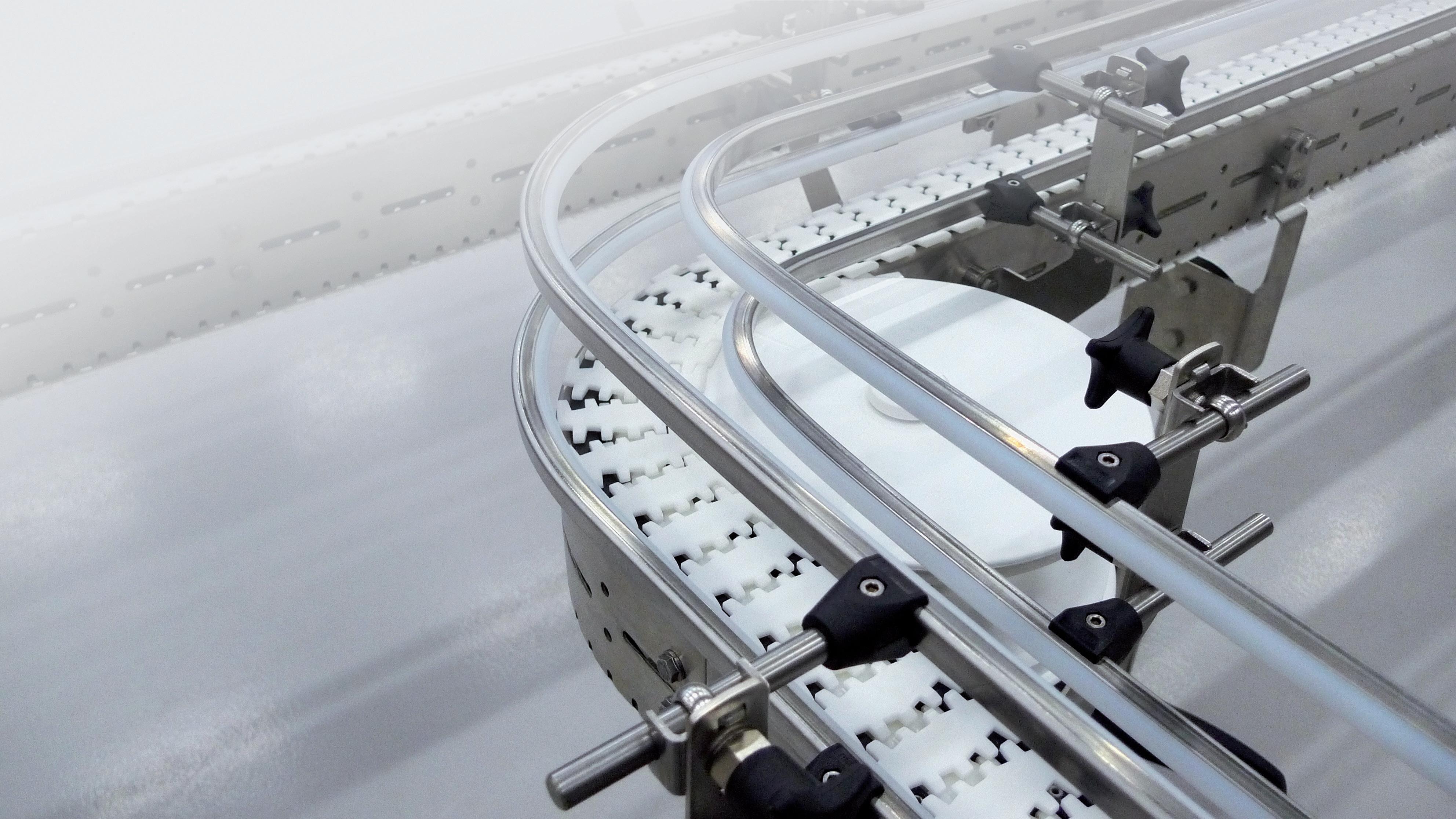
Our new generation of stainless steel conveyors are robust, modular and clean. Delivering high throughput, flexibility and gentle product handling that will boost your production efficiency.
And with over 700 employees worldwide and operations in more than 60 countries, you’re never far away from a FlexLink office. Contact us today at info.ca@flexlink.com or give us a call at +1-888-748-8677.
FIRST GLANCE
DOWN THE STRETCH
TRICK OF THE TAIL
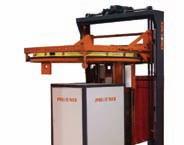
The new model PRRA-2100 stretchwrapping system from Phoenix Innotech Inc. incorporates innovative rotary-ring technology to enable high-speed warping operation while delivering exceptional film savings, compared to conventional rotary arm or turntable methods, by eliminating wasted revolutions of film necessitated by the traditional fixed-position clamping mechanisms stationed at the conveyor level—instead utilizing a flexible film clamp and tail treatment system that actually travels with the film carriage to executed the wraps, according to the company. Rotating at speeds of over 40- rpm (revolutions per minute), such operation enables the PRRA-2100 stretchwrapper to reduce the wrap cycle-time dramatically to wrap more pallets with the same wrapping speed, while also taking up to 25-pecent less floorspace than the competing rotary-arm systems, as well as delivering average film savings of tens of thousands of dollars, according to Phoenix.
Phoenix Innotech Inc.
GET A GRIP!
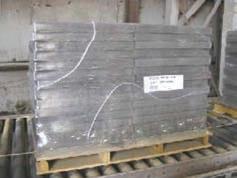
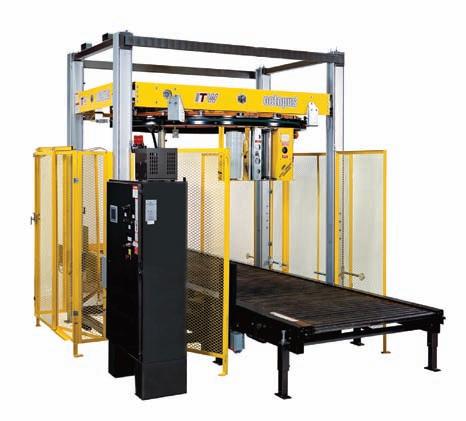
The new Tail Tucker mechanism from ITW Muller —distributed by Advance Shipping Supplies as an enhancement to the manufacturer’s Octopus line of stretchwrapping machines—works by literally tucking the film tail behind the last two full webs of film, whereby the 20-inch web of film is formed into a rope during the last half-revolution of the wrapping cycle. As the ring frame moves to the top of the load, it pulls the rope behind the last two full webs of film and is released after it reaches the top—ensuring that there are no loose film tails left behind on the stretchwrapped pallets to pose any risk of their loads becoming unraveled due to adverse handling, film quality or storage conditions. According to the company, the film roping device can also be programmed to add ropes at specific points on a load or to simply narrow the web at specific points in the wrap-cycle to add strength and stability to unstable loads.
401
Advance Shipping Supplies
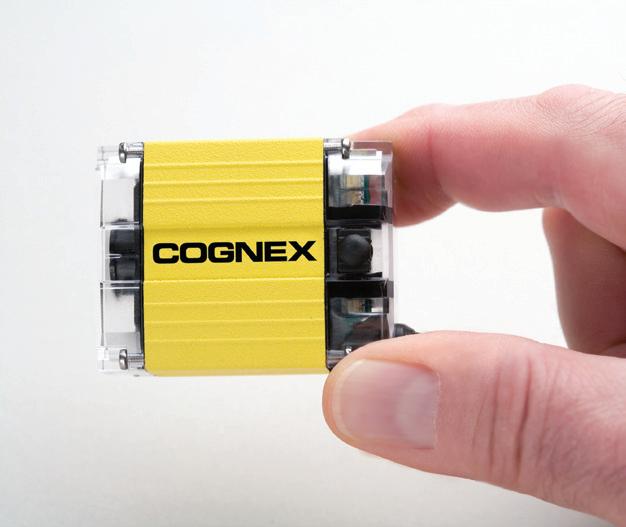
AS EASY AS A-B-C
404
An easy read, an easy choice
With Cognex, every read is an easy read.
Patented IDMax® technology allows Cognex readers to successfully read codes that other readers cannot. Regardless of code quality, size, marking method or material, we can read it!
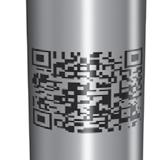
1DMaxTM is our best-in-class reading tool optimized for omnidirectional barcode reading and can handle extreme variations to achieve unsurpassed read rates. Cognex 2DMaxTM technology helped trigger the adoption of 2D Data Matrix and QR coding in many industries.
Combined with the best performing hardware available, in both handheld and fixed reader formats, any code can be read quickly and reliably.
Which makes using Cognex an easy choice.
To find out more, download the “10 Reasons to Choose Image-based ID Readers” guide from www.wecanreadit.com
The new IRB 760 palletizing robot from ABB Robotics —designed for highoutput, full-layer palletizing applications in beverage, chemicals, building materials and other challenging industrial environments— is a high-performance, fouraxis robot boasting high payload capacity of up to 450 kilograms and a reach of 3.2 meters, with its high-inertia wrist design enabling it to rotate heavy and large products at extremely high speeds, according to the company. The new robot is fully compatible with the company’s three newly-launched FlexGripper end-of-arm tools—including a heavy-duty claw for high-speed bag palletizing, a vacuum gripper for light and medium weight cases, and a clamp gripper for handling heavy cases—to ensure maximum operational flexibility.
ABB Robotics - North America
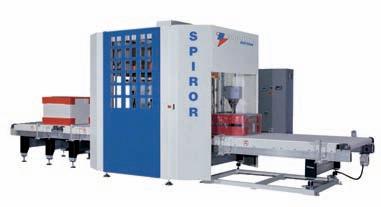
DOUBLE THE SPIN
402
Designed for reliable automatic wrapping of a broad range of products, the automatic rotating ring horizontal stretchwrapping range of machines manufactured by Robopac and distributed in Canada by Jean Cartier Packaging Inc. is now available in a Double Roll (DB) version to allow operators achieve extremely high working speeds for wrapping with stretch film,
as well two film spools that significantly increase the wrapping velocity and the machine’s film autonomy—making it especially well-suited for demanding tasks such as ensuring optimal protection and consolidation of aluminum steel and plastic extrusions, a broad range of wood products, rugs, carpets, motors, lamps other hard-to-wrap product loads.
Jean Cartier Packaging Inc. 403
The new Model 101 case-packer from A-B-C Packaging Machine Corporation designed specifically for packagers running multiple bottle sizes and pack format across a broad range of liquid packaging applications—is a quick-changeover machine that can reduce changeover-related downtime by up to 30 per cent, according to the company. Outfitted with complete gripper assemblies for accommodating practically all common pack/bottle patterns, the case-packer eliminates the need for time-consuming gripper adjustment and boasts a simplified guide rail placement with sliding and locking handles to facilitate very quick adjustment to any new operational specification.
A-B-C Packaging Machine Corporation 405
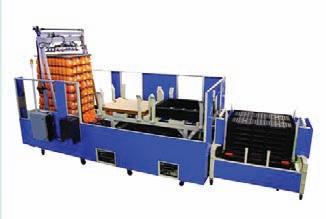
MULTI-HANDY DESIGN
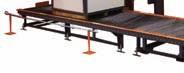
The new Multipak Palletizer packaging system from Proco Machinery Inc. features an automatic pallet feed magazine to store and feed the pallets onto a pallet conveyor, which efficiently moves pallets in and out of the system, an automatic slipsheet magazine for storing slips-sheets and placing them in between each pallet layer, and automatic top-frame magazine that stores top frames and places them on top of the finished pallet. Designed primarily for plastic container manufacturing and blowmolding operations, the Multipak Palletizer boasts a modular construction and operates as either a semi-automatic system or in fully-automatic mode at line speeds up to 150 bottles per minute. Outfitted with heavy-duty castor wheels to allow for the system to be easily moved from one line to another, its rectangular shape enables it to fit in most blowmolding lines without occupying machine space, while accommodating half-cube or full-cube pallet sizes up to 105-inches-high.
Proco Machinery Inc.
406
All Wrapped Up
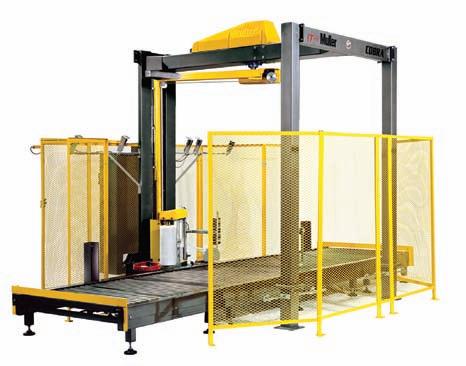
Want to compete with the “big guys”? At Advance, qualified consultants recommend automatic and efficient stretchwrap systems for your packaging needs. We have in-depth experience with a range of automated systems offered by ITW Muller.
• Wraps up to 35 loads per hour
• Heavy duty construction
• Pre-stretches film up to 300%
• Installs over existing conveyor or can be provided with conveyor
• Positive, non-slip V-belt rotation
• Allen-Bradley PLC control And More Features…
• Wraps up to 45 loads per hour
• Patented ``tail tuck˝ film tail containment
• Programmable roping device
• Proven design for the block and paver industry
• Allen-Bradley PLC control And More Features…
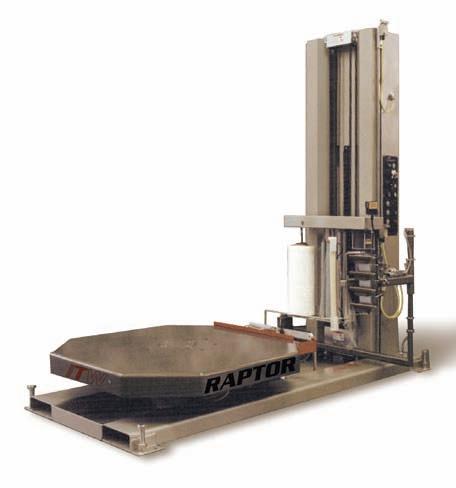
• Wraps up to 45 loads per hour
• Heavy duty construction
• Pre-stretches film up to 300%
• Ring and pinion drive
• Allen-Bradley PLC control And More Features...
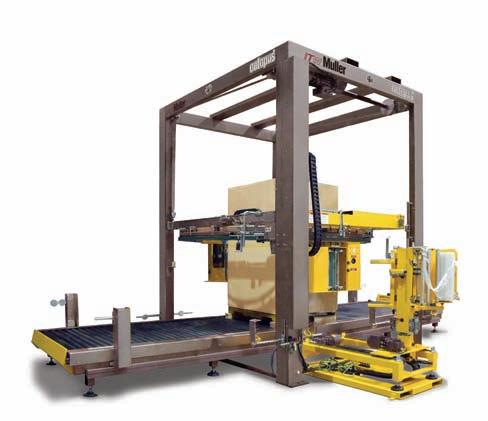
808 Twin
• Wraps up to 150 loads per hour for extremely high throughput
• 25% less film usage than other wrapping machines
• Comprehensive diagnostic touch screen simplifies troubleshooting And More Features…
Cobra 1525CN
Octopus 303BP
Raptor 1525CN
Octopus
ECO-PACK NOW
PACKAGING SUSTAINABILITY REMAINS A TOUGH SELL FOR BRAND-OWNERS
Achieving meaningful packaging sustainability may be an increasingly popular notion and objective among the leading CPG (consumer packaged goods) companies and their packaging suppliers, but there must be better collaboration between all the different industry stakeholders to help make sustainable packaging an affordable reality, according to a new report from the Wilmington, Del.-based plastics manufacturing giant DuPont Packaging & Industrial Polymers
While the DuPont study—based on extensive interviews with over 500 senior packaging professionals conducted around the globe this past spring—identifies sustainability as the biggest challenge currently facing the world’s packaging community, widely-shared concerns over
cost and performance of sustainable packaging products still present a formidable roadblock to greater commercialization of greener packaging alternatives worldwide.
While over 40 per cent of survey participants cited sustainability as the packaging industry’s “toughest” challenge, 33 per cent of respondents named cost as the major factor, according to DuPont, indicating an urgent need to reconcile the gap between using more sustainable solutions and keeping the cost of packaged foods and other consumer staples at affordable levels.
“Sustainable, cost-effective solutions that reduce packaging’s environmental footprint are a top goal across geographies,” says DuPont Packaging & Industrial Polymers president William Harvey.
“This is especially true in the food-and-beverage industry, where consumer demand for products supporting health and wellness goes hand-in-hand with a demand for more sustainable solutions.”
Among survey respondents who say their companies are working on sustainable packaging solutions, 65 per cent say their efforts are focused on design for recyclability or use of recycled content; 57 per cent are focused on weight reduction; 41 per cent rely on renewable or bio-based materials; and 25 per cent say they are focused on using more compostable materials.
“These survey results confirm that there are many pathways to improving packaging sustainability,” states Harvey.
“It starts with close collaboration throughout the value chain to spark innovation,” adds Harvey, noting that DuPont was one of the world’s first companies to have publicly established environmental goals some 20 years ago.
Since then, relates Harvey, DuPont has significantly broadened its sustainability commitments beyond internal footprint reduction to include marketdriven targets for both revenue and R&D (research-and-development) investment—tying those goals directly to business growth and the development of safer and environmentally improved new products for key global markets.
Some of the more notable sustainable packaging products launched by DuPont in recent years include:
• Fusabond resins—modified polymers that help bond dissimilar polymers to facilitate recycling;
• High-performance Surlyn ionomers —engineered to help reduce the total amount of materials used to make packaging structures;
• Biomax Strong range of modifiers—developed to enable biobased PLA (polylactic acid) products gain more widespread use by enhancing performance attributes that have limited its acceptance to date.
• Biomax PTT (polytrimethyl terephthalate) resins—boasting up to 35-percent renewable content —for replacing petroleum-based polyesters.
In addition, DuPont Packaging & Industrial Polymers manufactures an extensive mix of adhesive, barrier, peelable lidding and sealant resins, while maintaining a globally-networked development team to work with customers on packaging programs that help protect the product and the environment, improve shelf appeal and convenience, and reduce costs in the food, cosmetics, medical products and other consumer goods and industrial packaging industries.
PEPSI MAKES GREEN SWITCH IN FOODSERVICE BIZ
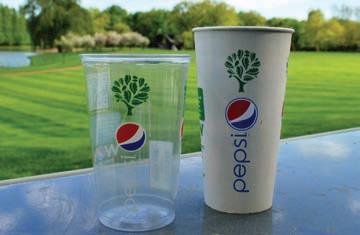
Global soft-drink giant PepsiCo, Inc. has taken another major step in its green evolution last month with the launch of five new types of recyclable and compostable drinking cups for use at U.S.-based fast-food restaurants and other foodservice operations selling the company’s main beverage brands.
Distributed across the U.S. through the company-owned and independent bottler distribution systems, the new range of five different fountain cups comprises fully-recyclable clear plastic cups—including an rPET (recycled polyethylene terephthalate) cup containing 20-percent post-consumer recycled content—as well as compostable paper cups and waxed cups made with plant-based materials sourced from sustainably managed forests.
According to the Purchase, N.Y.headquartered company, having such a broad mix of cup choices will enable foodservice operators like restaurants, stadiums, theme parks, colleges and universities to select the best-suited option for their facilities based on the local availability of recycling and composting disposal programs.
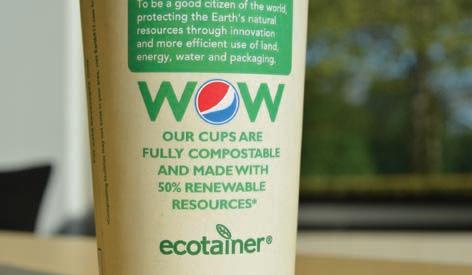
“The new cups are an advancement in technology, but also in the way we communicate,” says PepsiCo Foodservice chief marketing officer Margery Schelling, citing the use of engaging green imagery on Pepsi -branded cups and inclusion of messages like “Wow, Our Cups are Fully Recyclable,” to encourage consumers to do their part for the environment.
“Customers are increasingly asking for environmental products that match changing needs, expectations and lifestyles,” states Schelling.
“We want consumers to enjoy their favorite fountain beverages and feel good about the environmental impact of their purchases,” she says, adding the cups will also encourage consumers to visit the www.Earth911.com website to find online information on how to properly dispose of materials in their local communities.
Says Earth911 president Corey Lambrecht: “It’s no longer enough to tell people to simply recycle— you also have to show them how and where.”
According to recent market research conducted by PepsiCo,
young U.S. college and university students have emerged as the most active and vocal demographic demanding more eco-friendly beverage packaging, with 60 per cent of surveyed genXers and Millenials willing to pay slightly more for recycled beverage packaging that’s better for the environment.
The national U.S. rollout of eco-friendlier cups follows several other high-profile sustainable packaging initiatives implemented by PepsiCo in the last couple of years, including:
• The development of the world’s first fully-recyclable bottle made from bio-based raw materials;
• The launch of the reNEWabottle container, made from 100-percent post-consumer recycled plastic, for the company’s Naked Juice brand drinks;
• The launch of Eco-Fina bottle for the company’s Aquafina line brand of bottled water, claimed to be the lightest bottle of its size among U.S. bottled water brands;
• Launching the Dream Machine recycling program in the U.S. to provide greater access to onthe-go recycling receptacles across the country.
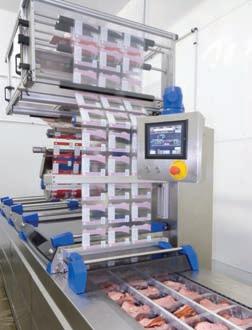
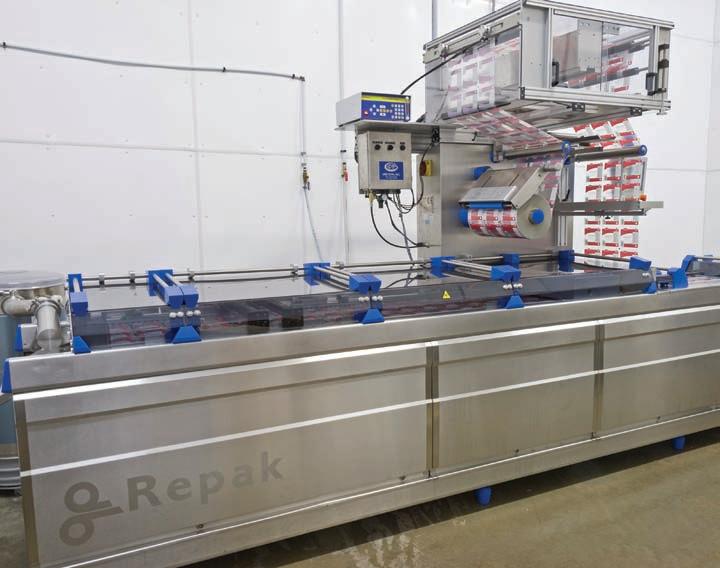
Repak horizontal form-fill-seal packaging machines from Reiser offer the best sealing integrity in the industry. Only Repak machines are constructed with two 4-point lifting stations, which can generate up to five metric tons of closing pressure for reliable sealing and more uniform forming. No matter how complicated your package, Repak will produce it perfectly. For more information, contact Reiser today at (905) 631-6611
BY GRAND DESIGN
Contemporary package design embracing new Internet age trappings to get the product message across to the masses
BY GEORGE GUIDONI, EDITOR
As a multifaceted discipline embracing science, art and technology in more or less equal measures, contemporary package design often demands that a successful end result and execution must be more than just the sum of its parts by the time a finished package product hits the retail shelf to face the ultimate test of consumer acceptance.
As most successful CPG (consumer packaged goods) brand-owners and manufacturers have learned some time ago, package design and development have become such a deeply integral part of overall new product development process, that failure to come up with a package that engages consumers on a higher level than simply protect their product, keep it fresh longer, or make it easier to open is really not an option in today’s hypercompetitive, globalized retail marketplace.
Yet capturing and communicating that elusive packaging ‘Wow Factor’ from the store-shelf right into the shopping cart and on to the cash register is in many ways getting be a more challenging feat to pull off with today’s vastly better-informed, technologically-savvy North American consumers whose influence and opinion now extend far beyond the actual store level, thanks to the rise of social media and many other empowering online tools to help guide their decision-making.
“In today’s marketing environment, many leading CPGs and retailers are reinventing their brand strategy, packaging and design to be more relevant to today’s new consumers,” says Anne Dean, managing director of the Toronto office of international branding and package design consultants Anthem Worldwide of Mississauga, Ont.
“Seeking to connect, they are challenged like never before to generate compelling and consistent brand experiences between the consumer and the brand at home, on the go, in the store, and on the shelf,” Dean told Canadian Packaging in a recent interview.
“Consumers vote with their wallets, so creating a compelling brand experience on the shelf through
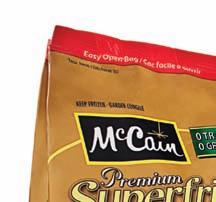
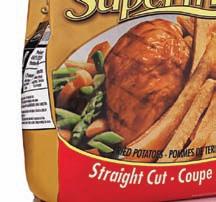
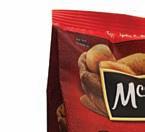
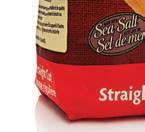
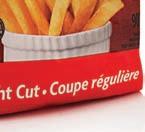
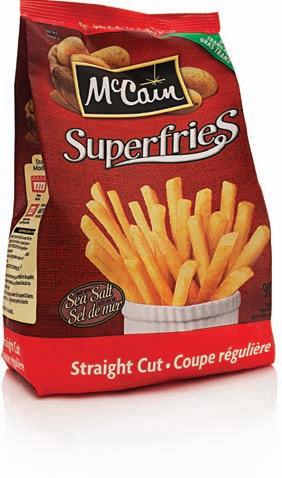
winning packaging for McCain’s Superfries product line features exo-printed, matte- nished nine-color stand-up bags that are laminated to maintain optimal rigidity for the most effective display behind the freezer windows, while also preventing unsightly ink scuf ng.
package design is key,” Dean explains.
“This is the crucial decision-making axis where brands compete to make it into the shopping cart, and compelling package design is what you need to create a breakthrough at the shelf level to turn shoppers into buyers,” states Dean.
“With all the technologies available at the consumers’ fingertips to check and compare pricing while shopping online or at the shelf, the world of pricing is going to change,” says Dean, which will increase the importance of effective package design as a key marketing and product development strategy.
As Anthem Worldwide (Toronto) creative director Gary Oakley explains: “Today there are more tools than ever to get close to your consumers and develop an intimate understanding of them.
“Using store shopper cards to track purchases, online tools and social media, you can follow consumers to understand their path to purchase,” relates Oakley.
Trigger-Happy
“You can understand what triggers their purchase journey and understand what touchpoints are influencing them along the way.”
One of the more such notable tools being enthusiastically embraced by a growing number of brandowners are the so-called QR (quick-response) two-dimensional barcodes that can be easily scanned by consumers right on the spot with their smart-phone devices—instantly providing them with extended product or company information.
According to John Herzig, president of the Richmond Hill, Ont.-based barcode technologies integrator Barcode Graphics, Inc., the swift adaptation of QR barcodes in North America, following the technology’s rapid consumer acceptance in Japan, signals the opening of an exciting and profound new chapter in the overall evolution of auto ID (automatic identification) technologies—at last putting all the implicit benefits of the technology directly into the shopper’s hands. Herzig explains: “The story of bar-
code technology 10 years ago was all about how retailers were using the technology to minimize warehouse space, turn over inventories, process transactions quickly and accurately, and respond to demand more nimbly.
“Now the focus has shifted to social media and finding ways to engage in a real dialogue with the consumer,” Herzig points out.
“The QR barcodes can send consumers armed with a smart-phone to a CPG’s website, which seems to be the most obvious use of the technology at this point,” he explains, “and websites can be designed accordingly to provide additional material that is more detailed than what could physically fit on small package real estate.
“Because there is no shortage of space in cyberspace,” Herzig states, “this idea of ‘extended packaging’ is naturally catching on very quickly with the CPGs.
“But the age of social media involves far more then traveling to websites,” Herzig asserts. “If the CPGs really want to promote their brands to consumers, why stop there?
“Why not turn that consumer into a champion of the brand among their cohort?
“The next big uses of the QR code on packaging will probably involve allowing consumers to reach their friends with the CPG’s message,” Herzig asserts, “as CPGs start to understand that other features of the rich smart-phone platform can also be activated by QR code.”
Herzig says it will not be long before CPG brandowners and manufacturers start using QRs to activate smart-phone functions such as e-mailing, SMS texting, web browsing, and mobile video right on the product package as a means to build and maintain greater brand loyalty among consumers.
As Herzig points out: “Contests are often run in this manner, whereby packaging can now allow consumers to ‘text’ to participate by using a QR code encoding an SMS number, while e-mail can be put on packaging to allow the consumer to subscribe to a newsletter that might include recipes, coupons and other material, or you can use YouTube videos to show TV ads for the packaged product.”
Due to the absence of universal standards for QR barcodes, there are still some technical issues such as size of both the codes and the “cells” comprising them, Herzig allows, as well as using the proper error correction levels—often resulting in the codes being made larger than necessary to do the job.
Designed by the Toronto of ce of Anthem Worldwide, the new award-
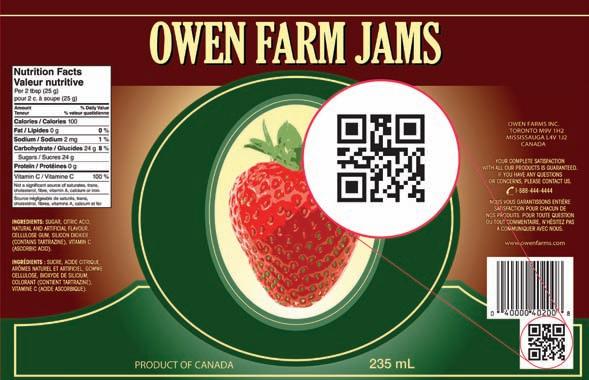
Created by Barcode Graphics, the QR code embedded into this jam product label is an integral part of the so-called ‘extended packaging’ design strategy that is being quickly embraced by North American CPGs for effective brand-building by providing consumers with extra product and company information online.
“The biggest mistake people make is trying to encode a great deal of URL information into a QR code, when by using a ‘shortened’ code and redirecting it through the ‘cloud,’ the code could be made tiny in comparison,” he explains.
But as package designers become more comfortable with incorporating the technology into the overall design structure, says Herzig, QR codes are bound to become as ubiquitous as their linear barcode cousins.
“I believe that the QR code and other twodimensional codes can be used by package producers during package development and for managing quality assurance during prepress and printing,” he states.
“One day there may well even be a compact color QR code, or Datamatrix code, on all packaging to allow the consumer to access coupons, recipes, contests, events, subscribe to newsletters, voice concerns, or be alerted to recalls simply by scanning the code.
“The advent of the smart mobile device has put not only powerful computing capabilities at consumers’ disposal, but also immediate browser access to the Internet,” Herzig sums up.
Free and Easy
“These two developments have led to free and easy consumer access to one- and two-dimensional barcode scanning, and that in turn has allowed barcoded physical items to be linked to the Internet by mobile devices.”
While some large multinational CPGs prefer to keep their packaging design and development processes in-house for competitive, proprietary and other reasons, many are far more willing today to secure the services of third-party package design agencies and specialists to do the job for them—often right at the early stages of new product development.
“The strongest design firms have evolved into branding agencies, which work as brand-building partners with the CPG marketers,” relates Ron Davis, president of the Davis package design agency and chief executive officer of its parent company Glenn Davis Group, also comprising leading Canadian design houses Bridgemark and B2 Retail Solutions
“In some cases, they have been able to displace some of the advertising agencies’ influence with brand-builders on the client side,” confides Davis.
“In the past, design firms who had always created the brand and packaging design were not respected like the ad agencies who created temporary advertising for the brand, with media spending vastly outweighing the design spending,” he recalls.
“But our CPG clients are smarter than that now,” he states.
“We work with our clients on their brand strategy and thereby share responsibility for driving the bottom-line business performance of their brands,” Davis points out. “Our clients put a lot of value on that today.
“The forward-thinking manufacturers are wise about investing appropriately on the primary com-
munication to the consumer, which is the package,” Davis asserts.
“This is what the consumer must actually select in the store, take home, experience and want to purchase again.”
PACKAGE DESIGN
Davis and Anthem’s Ann Dean both agree that growing public and market demands for more sustainable packaging solutions is paving the way for closer collaboration between CPG brandowners and their package design suppliers than ever before.
Says Dean: “For brands to push the envelope on sustainability in materials, they need a partner who understands how those materials work as a structure, on the press, on the shelf and in the environment.
“In the world of brands, the most effective sustainability begins at the strategic stage—up to two-thirds of a package’s material requirements are determined early, in the strategic and creative phases,” she adds. “Engaging the right service providers who can build sustainable materials and processes into the brand’s life-cycle is key.
“Collaboration is compelling for brands, as the integration of services and technologies across the brand life-cycle and across geographies continues to gain momentum,” Dean reasons.
Leading Canadian juice produce Sun-Rype credits the eye-catching packaging, designed by the Toronto of ce of Anthem Worldwide, for driving brisk sales of its new line of not-from-concentrate juices packaged in custom-shaped, 1.36-liter plastic containers supplied by Graham Packaging.
Anthem Worldwide has enjoyed a long collaborative relationship with Sun-Rype products, having recently redesigned the company’s logo for all of its packaged products, including these boxes and pouches of fruit bars and snacks.
“This collaboration has multiple benefits for the client: faster to-market time, superior finished materials, transparent resource savings of all kinds, and more compelling and consistent brand experiences for shoppers.”
Adds Davis: “Sustainable packaging is still a relatively young movement, impacting some categories more than others, and it is quite challenging for CPG manufacturers who want to improve their impact on the environment but often find that alternatives are complex, and that there are not a lot of easy answers.
“Incremental improvements are the real opportunities in many cases, but they come with price tags for manufacturing adjustments, which can mean less at-shelf presence in the case of packaging rightsizing,” Davis relates.
“I think the real opportunities for branding and design agencies exist in identifying strategies for communicating on smaller packages; revisiting the current communication; and creating and using visual, symbolic and mnemonic cues that communicate sustainability messaging for the consumers.”
Anthem’s Gary Oakley notes that the growing emphasis on sustainability has also had the side effect of helping make simplicity a packaging virtue in today’s retail environment.
“With more and more demands on consumers’ time and attention, consumers have discovered that ‘less’ can in fact be more,” Oakley explains.
“Both the CPGs and retailers are benefiting from their increased understanding of consumers’ needs and, in turn, consumers are responding to minimal
design and a simpler shopper experience.
“In this light, packaging remains the critical consumer touchpoint, with compelling package design used to tell compelling brand stories to command power at the shelf level.”
Echoes Davis: “Ten years ago, it was all about creating vibrant, noisy packages to catch attention with the so-called ‘wow factor’ and standing out on the shelf.
“That is still relevant today, but you can really go too far with any good idea,” Davis cautions.
“The big guy in the loud beach shirt may stand out, but do you really want to take him home? Is that really the experience you’re looking for and is that the experience which relates to you specifically?”
Launching Pad
Over the last year, Anthem helped two leading Canadian CPG manufacturers—frozen foods giant McCain Foods Canada of Florenceville, N.B., and the Kelowna, B.C.-based juice producer Sun-Rype Products Ltd.—execute important package design projects as part of new product launches, as well as one packaging upgrade as part of a rebranding and product line extension of an existing popular product family.
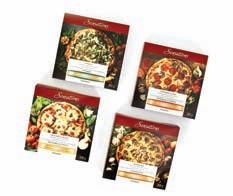
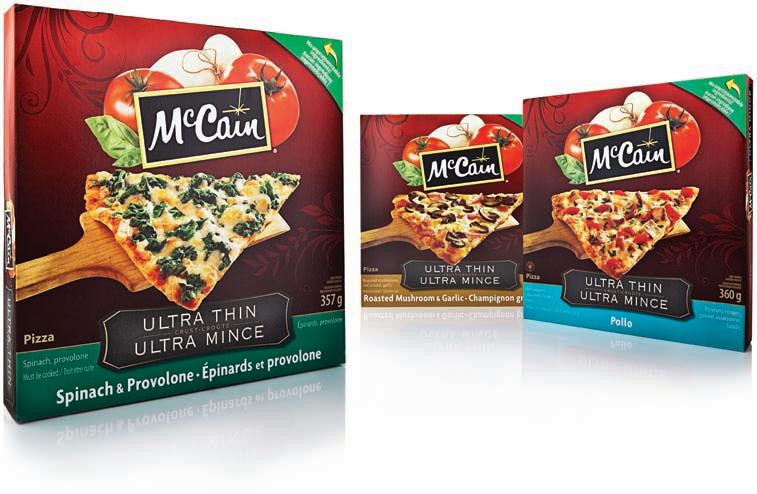
In case of McCain’s newly-launched Ultra Thin Crust frozen pizza products—targeting women as the main demographic—Anthem was brought into the process in April of 2010, recalls brand manager Kelly Switzer, with the finished product hitting Canadian retail shelves in the fall of that year to rave consumer feedback.
Switzer recalls: “We wanted the packaging to align with our Rising and Thin Crust pizza so that consumers could easily identify it as a trusted McCain product.
“But we also wanted to use elements that helped Ultra Thin Crust stand apart from our other pizzas in order to attract our target consumers—women who love ultra thin, crispy-crust pizza.”
With Anthem designing the package and taking charge of the photoshoot to create exciting new product graphics, Anthem’s parent company Schawk, Inc. chipped in with prepress experts from its Toronto office to enhance the colors and to work with the chosen packaging substrates.
The end product was a lithographically-printed, six-color carton made from 100-percent recycled fibers (60-percent post-consumer) with hi-gloss varnish, using special color mix and screen to obtain excellent background effect, according to Switzer.
“This new pizza has an ultra thin, crispy crust that is highlighted in our focal food photography centered on the front of the face panel,” Switzer explains.
Continues on page 14
Photos courtesy of Anthem, Davis and Barcode Graphics
PACKAGE DESIGN
BY GRAND DESIGN
Continued from page 13
“The packaging also transitions from the traditional McCain red color to a deeper burgundy to differentiate it from our pizzas more targeted to families, and giving it an air of sophistication.
“The stylized background provides a touch of femininity and again helps Ultra Thin Crust to stand apart from our Rising and Thin Crust pizza lines,” he notes.
“Like our Rising and Thin Crust pizzas, the back of the packaging highlights our simple, wholesome ingredients and lays them out in a clear manner, easily allowing consumers to see what is in their pizza,” says Switzer, while also complimenting Warwick, Que.-based packaging converter Ling Industries for the high quality of its six-color offset lithographic process used to bring “sophisticated product photography” and imagery to life with all the intended distinctive nuances.
“While the Ultra Thin Crust pizza is clearly a McCain product, the darker color scheme and stylized, feminine touches help to differentiate it as a more gourmet, upscale pizza,” says Switzer.
“The darker packaging was stylized to add gourmet, sophisticated visual cues,” Switzer adds, “and it also features an enlarged McCain logo so that it is very visible on shelf.”
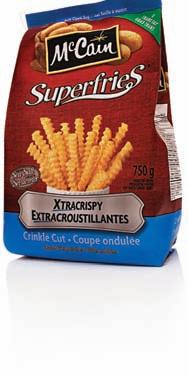
In the case of a comprehensive package redesign of the company’s flagship Superfries brand of frozen French Fries, the project was carried out as part of a larger repositioning of the company’s potato products into the McCain It’s All Good product range, which primarily uses real ingredients most consumers will find in their kitchens, according to McCain Foods director of marketing Mike O’Brien.
“And in cases where we needed to use unfamiliar ingredients, we would explain what they are and why we use them,” O’Brien relates. “We wanted to update our packaging to help reflect this product
evolution and signal this change to our consumers and customers.”
Explaining that the rebranded Superfries products are aimed at “time-strapped moms who are looking for convenient side dishes that they can feel good about serving to their families,” McCain selected to go with flexo-printed, ninecolor stand-up bags to achieve maximum shelf presence.
“The bags also feature some special coatings to obtain burlap effect for the background, and they are matte-finished to avoid any glare in freezer windows,” explains McCain Foods director of packaging Louis St. Amand. “The material is also laminated to improve the rigidity for display and to prevent ink scuffing.”
St. Amand relates: “On the packaging, the potatoes behind the logo help emphasize the ‘real ingredients,’ while the simplicity of the product shot emphasizes the real and simple ingredients.
“When looking at the other display panels, we clearly called out the relevant consumer claims— like Trans Fat-Free and Low in Saturated Fat—on the reverse so that mom can see them,” he adds.
“We also leveraged the recipe card image for listing the ingredients like speciallyselected potatoes, canola oil and sea salt to emphasize that the product is made using real and simple ingredients, like you would use if you were making it yourself from scratch,” St. Amand states.
As with the Thin Crust Pizza project, the startto-finish involvement by Anthem and Schawk was a key ingredient in the successful on-time and onbudget execution, according to St. Amand.
“We could not have done it without their expertise,” he remarks, “and of course we cannot forget the printers’ role in all this, since we had over 70 different SKUs (stock-keeping units) to print—all for the same launch date, to be supported by TV ads.
Graham Packaging, and utilizing full-body shrinksleeve labels supplied by the U.S.based Walle Corporation
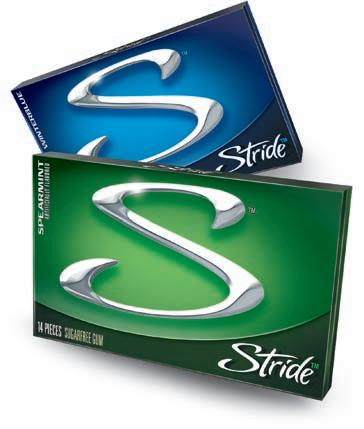
Designed to convey simplicity, the new Stride brand packaging developed by Glenn Davis Group has enabled the brand to become the bestselling gum in the U.S. within six weeks of the new packaging’s launch.
“We have always taken package design very seriously at SunRype, and having worked with Anthem on other projects in the past, we are very happy in the professional way in which they act as our brand stewards,” says Grant, adding the new product launch also involved the introduction of an updated new Sun-Rype logo design on the new products.
With the whole project taking about four months from concept to execution, Grant says she was “delighted” with the final result and the “very warm feedback we have received from our consumers complimenting the new packaging.”
Says Grant: “Anthem was very good at communicating to consumers that this was in fact a new Sun-Rype product, with product imagery on the label perfectly capturing the feeling of freshness, abundance and authenticity that we wanted to convey with the new labels.”
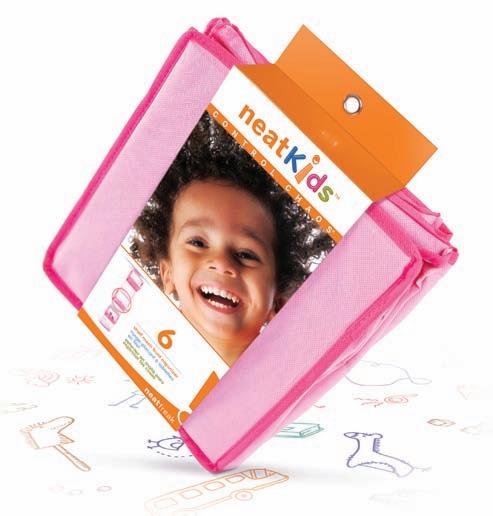
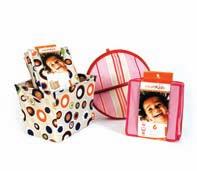
Manufactured by Neatfreak Group Inc., this award-winning package designed and developed by Bridgemark is conceived to appeal to young moms by depicting a happy, smiling child to resonate with moms as a happy, kid-friendly product that also allows them to view all the package contents with a quick onceover.
“It was technically challenging to print in flexo and to use matte oriented polypropylene material that tends to wash down colors, which in turn required us to bump colors to achieve the best results on the printing press,” St. Amand recalls.
“While we kept the lamination, we did reduce the amount of oriented polypropylene we used—achieving easier access for consumers to the contents, while also continuing with our package reduction efforts.”
For Sun-Rype group marketing manager Barb Grant, using Anthem’s design expertise and Shawk’s pre-media competence were also key contributors to the successful recent launch of the company’s three new juice products— Coastal Cranberry, Blueberry Harvest and Summer Berry —in 1.36-liter, custom-designed rectangular PET (polyethylene terephthalate) containers manufactured by
Utilizing an advanced, high-definition flexographic printing process, the new labels have generated “high shelf impact and effective product distinction among the three new products,” says Grant, “while carefully maintaining the brand continuity that has already made Sun-Rype the leading juice producer in Western Canada.
“The fact that it was all achieved in a very quick time-frame and under a lot of technically challenging requirements validates our company’s faith in the ability of our trusted package design partners to help us achieve our marketing goals and objectives.”
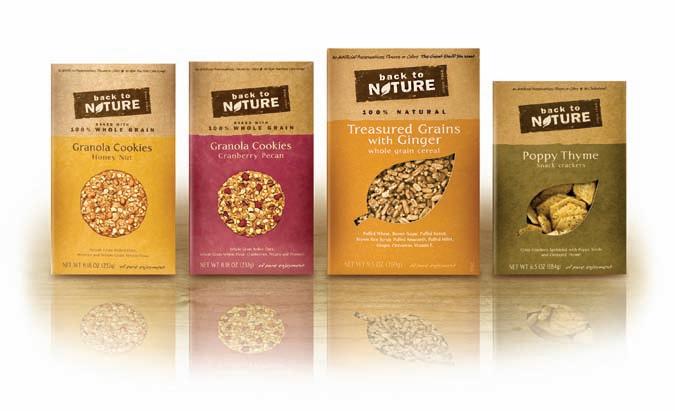
Produced by leading food manufacturer Kraft Canada, the company’s Back to Nature product line utilizes subdued and understated colors on its packaging, created by Glenn Davis Group, to convey the sense of authenticity and wholesomeness as key selling points.
Developed by Anthem Worldwide’s Toronto of ce, the award-winning packaging design for McCain’s new Ultra Thin frozen pizzas features sophisticated product photography and imagery to differentiate the new brand as an upscale, gourmet-quality product line.
June 21, 2011
PAC Leadership Award Leader Among Leaders
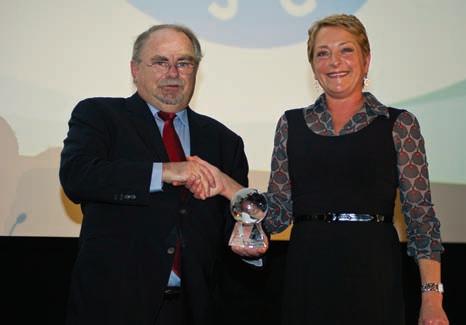
The inaugural PAC Leadership Award went to Molson Canada for outstanding achievement in several aspects of packaging success.
PAC Packaging Competition
Best of show
• Canadian Packaging Consumers’ Voice Award
• PAC Packaging Award
Sustainable Packaging Competition
Best of show
• Walmart Canada Sustainable Packaging Award
• PAC Sustainable Packaging Award
makers of beautiful, pure, sustainable glass packaging
Céline Cousteau, Ocean Advocate, Environmentalist
People love glass, and for good reason. Chefs know it protects flavor and freshness. Moms know glass is healthy, safe food packaging. Environmentalists know it’s 100% recyclable, forever. And CEOs know glass says quality. Honest, pure, iconic glass. What’s not to love?
CEO of Bundaberg Brewed Drinks
Chef Geir Skeie, Bocuse d’Or World Champion
Stefano Agostini, Chairman and CEO of Sanpellegrino S.p.A.
Edson Auricchio, CEO of OLÉ Foods
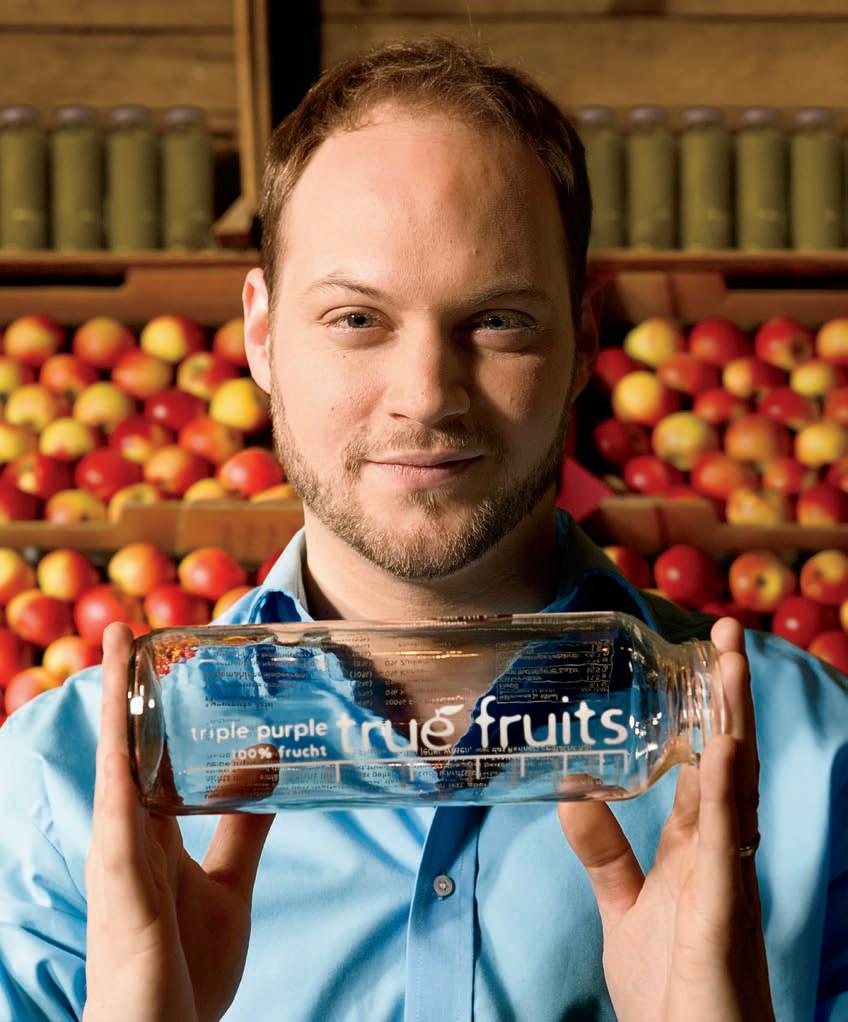
Nic Lecloux, Co-Founder of true fruits
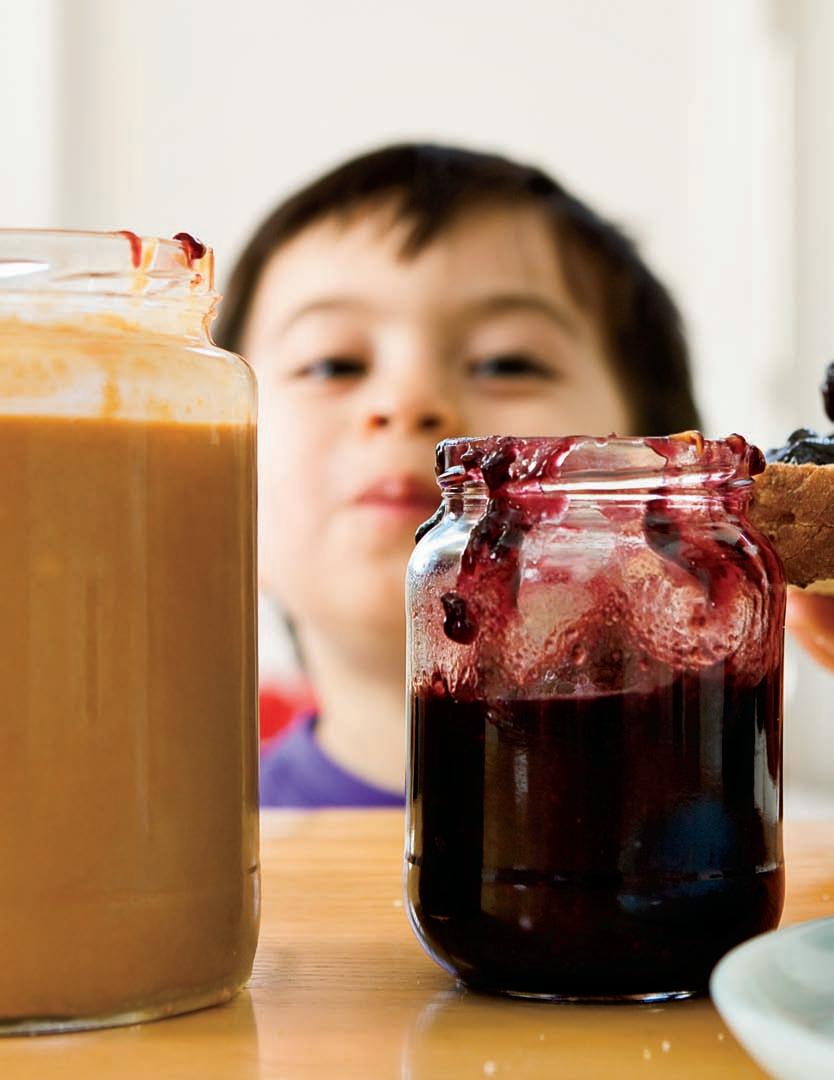
Linus, age 2
Brand Your Packaging Green
Innovative Product of the Year
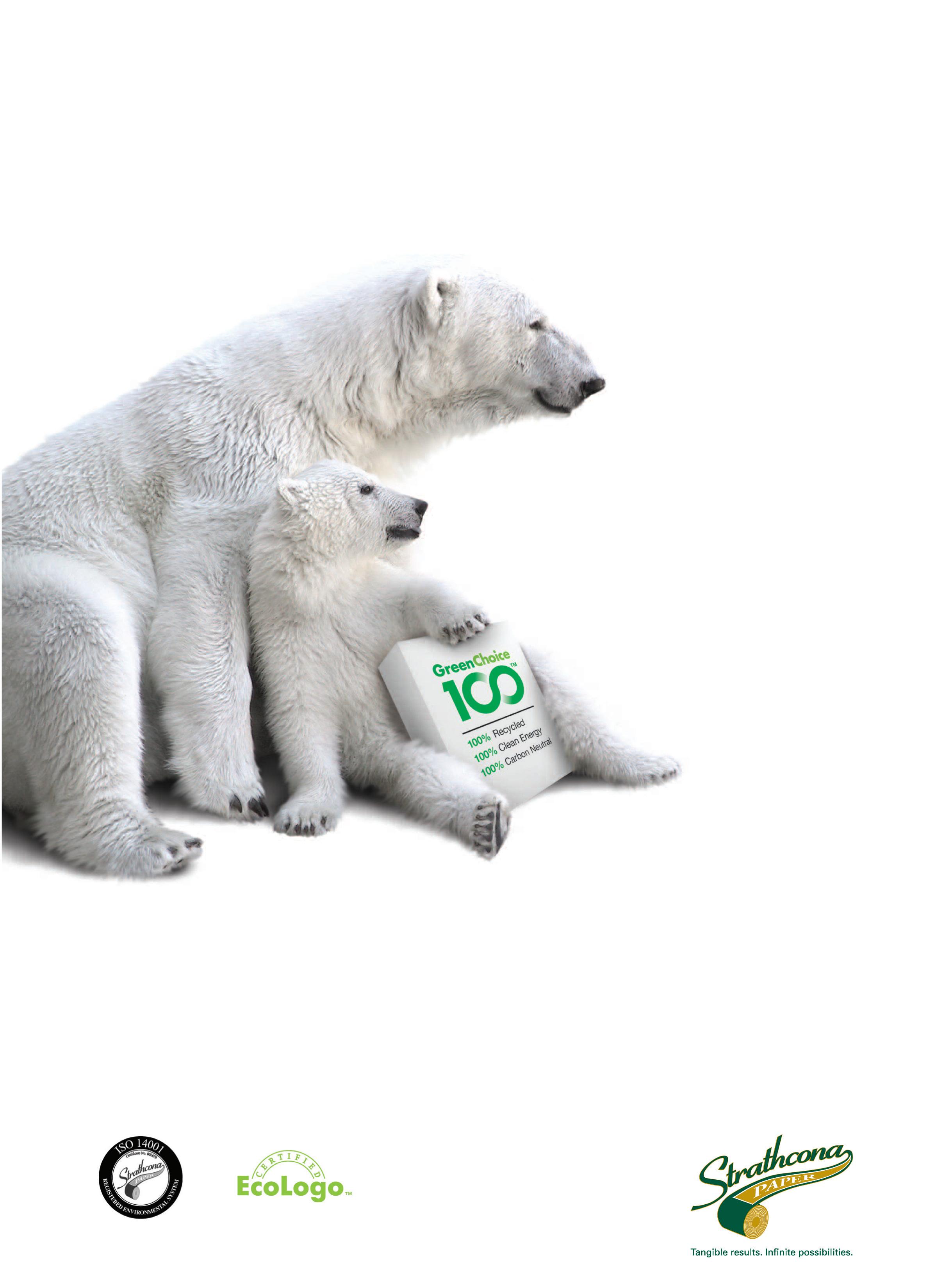
GreenChoice 100, the most eco-friendly paperboard in North America
GreenChoice 100 is manufactured by Strathcona Paper, North America’s only clay-coated recycled paperboard mill with three environmental certifications — ISO 14001, EcoLogo and FSC.
What makes GreenChoice 100 the best choice?
• Made from 100% recycled fibres
• 100% recyclable
• 100% of the energy used to manufacture GreenChoice 100 is offset with clean, renewable energy
• 100% of CO2 emissions are returned to the environment
• Superior strength makes GreenChoice 100 an ideal substrate to reduce caliper and use less board
1 Concorde Gate, Suite 607
Toronto ON M3C 3N6
416.490.7860
pacinfo@pac.ca www.pac.ca
PAC NATIONAL BOARD OF DIRECTORS
Chairman Robert Cockerill, President, Schawk Toronto
Immediate Past Chairman
Henry De Ruiter, President & CEO, RW Packaging Ltd.
First Vice-Chairman
Bruce Smith, Director of Global Packaging, Molson Coors Brewing Company
Second Vice-Chairman
Louis St. Amand, Director, Packaging Research & Design, McCain Foods
James D. Downham, President & CEO, PAC - The Packaging Association
Directors at Large
Ross Bell, General Manager, Ontario, Smurfit-MBI
Dave Boles, President, Atlantic Packaging Products Ltd.
James Davidson, Operations Manager, Layfield Vision Packaging
Linda McGregor, President, b2 Retail Solutions
Jeffrey Fitzpatrick-Stilwell, Manager, Sustainability & Government Relations, McDonald’s Restaurants of Canada Limited
Bruce Hartfelder, President, Harlund Industries Ltd.
Michael Hill, Director of Sales, Bemis Co. Inc.
Rachael Hopkins, Value Chain Marketing Manager, Packaging Business Sustainability, Dow Chemical
Christine Jones-Harris, Co-CEO, Jones Packaging Inc.
Allen Kirkpatrick, General Sales Manager, Central Canada Region, Norampac (Div of Cascades Inc.)
Richard Pileski, Sales Manager Hood Packaging Corporation
Kim Rapagna, Sustainability Manager, Kraft Canada Inc.
Denis Vachon, Sales Manager, O-I
Anthony Watanabe, CEO, Innovolve Group
John Wilson, Business Manager, Imaging Technologies, E.I. duPont Canada Company
I am proud to report that the biennial PAC Leadership Awards competition continues to attract some of the most innovative and sustainable packaging entries from across North America’s packaging community.
This year we received over 220 submissions in the competition’s two main categories: the PAC Packaging Competition, celebrating innovation, branding, graphic design and technical achievement; and the PAC Sustainable Packaging Competition, recognizing environmental sustainability leadership.
Over 60 dedicated industry experts selflessly gave up their Saturday with scorecards in hand — diligently grading every package submitted to the competition. In many ways, they are the unsung heroes of our competition. For their part, our fifteen sustainability judges performed their packager evaluations online as a show of commitment to the sustainability movement and its noble objectives. I wish to extend my gratitude to all participating judges for their participation in this long-running PAC competition, as well as ensuring that all the entries received objective and expert scoring and evaluation.
I also wish to recognize the committee members, under the leadership of Michael Hill, for their enduring commitment to overseeing such a dynamic competition and for bringing the fun and energetic awards gala to life. Each member of the committee has invested a great deal of their time into advancing the cause and well-being of the packaging industry, and PAC is grateful for their respective contributions.
Once again, PAC – The Packaging Association has collaborated with Walmart Canada Corp. to showcase the sustainable packaging movement. We are proud to be partnered with this corporate leader of environmental sustainability, who is also sponsoring its own Best of Show Award in this year’s competition. We hope that you will join us and Walmart for the Walmart Sustainable Packaging Conference V on June 22, 2011. Launched five years ago, this unique special event has emerged as one of the most important and well-attended annual industry forums for the packaging community.
We would also like to extend our thanks to the Canadian Packaging magazine—our long-standing media partner and sponsor of the competition’s Consumer’s Voice Award —for its continued support to both the PAC community and the packaging industry at large.
This year we are presenting a total of five Best of Show Awards , including:
• PAC Leadership Award. Presented to the “Leader among Leaders” as selected from both the Packaging and/or Sustainable Packaging submissions.
• Consumer’s Voice Award. As selected from the PAC Packaging Competition submissions by a panel of judges comprised of regular editorial contributors to the Canadian Packaging magazine.
• PAC Competition Award. Selected from the PAC Packaging Competition submissions.
• PAC Sustainable Packaging Award. Selected from the Sustainable Packaging submissions.
Please accept our sincere congratulations to all the 2011 competition winners, as well as our deep and heartfelt thanks and appreciation for all your outstanding contributions to our industry. Drop by the PAC booth to see all the package submissions and get a close up of the winners.
Sincerely,
James D. Downham,
President & CEO, PAC-The Packaging Association
2011 PAC Leadership Awards – Competition and Gala Committee
Special thanks go to the competition committee and the over 60 judges who contributed their personal time to the selection process.
Jim Downham, President, CEO, PAC - The Packaging Association
Michael Hill, Chairman, Director of Sales, Bemis Co. Inc.
Kevin Collins, President, Rayment & Collins Ltd.
Rick DePelsmaeker, Corporate Account Manager, Rock-Tenn Company
Aubrey Ferguson, President, Bridgemark
Garrick Ing, Vice-Presdent, Sustainability, Innovolve Group
Packaging you can feel good about.
For 50 years, Farnell Packaging Limited has manufactured and distributed leading edge flexible packaging materials.
Farnell recently obtained the highest GOLD SEAL Status HACCP/PAC Secure Compliance Audit, and meets the stringent standards of the Canadian Food Inspection Agency, Health Canada, AgriFoods Canada and the CODEX Alimentarius Commission of the World Trade Organization.
Farnell will help you satisfy your customers’ food safety and sustainability objectives. That’s something everyone can feel good about.
2011 PAC Packaging Competition Awards
2011 PAC PACKAGING COMPETITION WINNERS BY CATEGORY
iQ uses a unique, environmentally advantageous packaging system that features small, patented REFill™ (Reduced Environmental Footprint) cartridges that contain concentrated cleaning solutions. Potentially revolutionary. 80% packaging reduction, lower cost providing potential consumer price reduction. 70% carbon reduction. 97% retail space savings. Major reductions in material use (70%) energy use (58%) water emissions and 93% improvement in shipping efficiency. Requires consumer behaviour change/acceptance.
WALMART CANADA SUSTAINABLE PACKAGING AWARD
Dasani PlantBottle Coca-Cola Canada
LEADER AMONG LEADERS: PAC LEADERSHIP AWARD
THE PAC LEADERSHIP AWARD GOES TO ALIMENTS ULTIMA INC. FOR OUTSTANDING ACHIEVEMENT IN SEVERAL ASPECTS OF PACKAGING SUCCESS.
PlantBottle™ is a PET plastic package made with up to 30 percent of its material derived from plant based waste material and is fully recyclable.PlantBottle™ is The Coca-Cola Company’s first step towards achieving a longer term vision of delivering every beverage in 100% renewable and recyclable material. PlantBottle™ addresses consumers’ attitudes and behaviours around sustainability, including lifestyle changes, view of corporate responsibility and a desire for environmentally friendly packaging.
WINNER OF TWO GOLD AND ONE SILVER AND THE CANADIAN PACKAGING CONSUMERS VOICE AWARDS
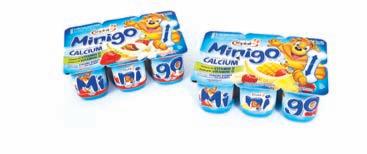
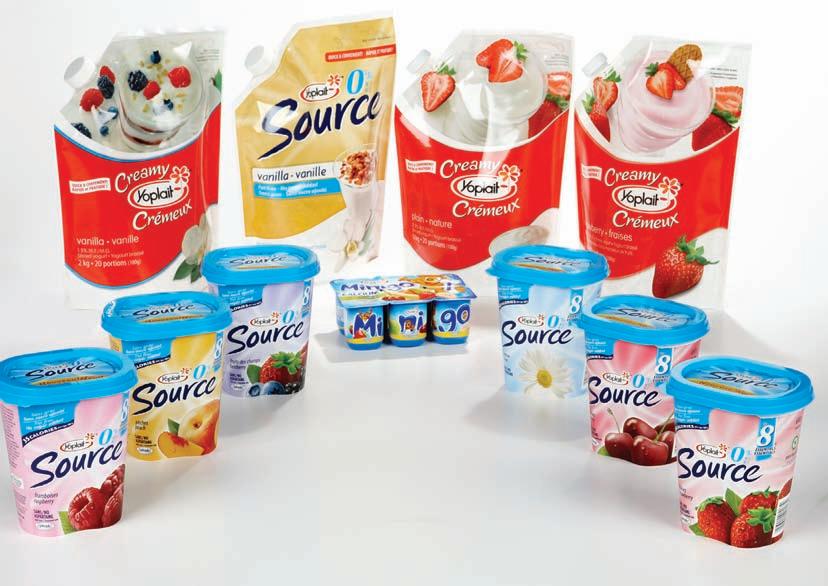
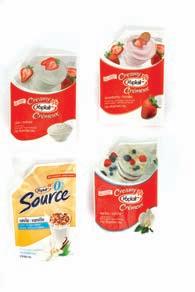
The multipack offering of 6 x 60 g. cups of yogurts is designed for display in the supermarket dairy cooler either on the shelf or in the well. The overall lidding design utilizes all 6 cups to present the vibrant illustration and colours to attract the attention of a child.
Yoplait Source: Forthought Design Inc. Rigid & Semi-Rigid Category Gold Award Winner
The soft background image of rays is synonymous with the energy, radiance and well being positioning brand. A rainbow of colours is for the backgrounds to heighten multitude of varieties. The fruit flavour images heighten appetite appeal and communicate the flavours at a glance.
Of Show
ALIMENTS
ULTIMA INC. AND THEIR SUPPLIERS ENTERED PACKAGES INTO THE 2011 PAC
LEADERSHIP
AWARDS BEARING THEIR BRAND NAMES AND ARE RECOGNIZED FOR THEIR:
• Exceptional technical reproduction and innovative levels for graphics and structure
• Robust brand identity and package integrity
• Leadership in flexible packaging and rigid packaging categories
Inc. Categorythe sun’s energy, positioning of the used heighten the fruit and appetite
Yoplait Source & Yoplait Creamy: Forthought Design Inc. & Excel-Pac
Flexible Category - Gold Award Winner
This is an innovative high performance triply laminated structure that has been specifically designed for yogurt application. The pouch has a very high puncture resistance, mechanical properties as well as seal strength. The structural design of this unique pouch assures that it will pass the eye drop test. The high opacity white of its sealant structure will protect the packaged product from the light, 100%. The spout used in the package will provide the consumer with a resuable package.
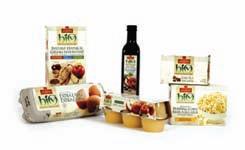
PAC PACKAGING AWARD
Ontario’s Own Watt International Inc.
A comprehensive, 100% local, delicious, year-round offering of 100% Ontario foods - the very best that Ontario has to offer, from the Greenbelt to north of 60. Positioned as a socially and environmentally conscious quality brand. The brand inspires an emotional connection with consumers through powerful photography, deliver on the value promised and create customer loyalty. Because the food was all locally grown and produced we chose to name the brand Ontario’s Own to catch consumers attention on shelf as a local product. We designed the packaging to convey a theme of food carefully grown, picked, preserved and delivered in traditional ways- from the farmers hands to yours.
CANADIAN PACKAGING CONSUMERS’ VOICE AWARD
Yoplait Source & Yoplait Creamy Forthought Design Inc. & Excel-Pac
The format is new to the yogurt category in Canada, and has many end benefits in shipping, storage usage and recyclability. The squeeze format bag pouch allows for safe handling, easier use and no product waste.
5. Brand name: Redpath
Entering company: Davis
Customer: Redpath Sugar
Graphic designer: Davis
Structural designer: Redpath Sugar
Pre-press: Ropak
Canada
Printer: Genpak LP
SILVER WINNERS
1. Brand name: Black Diamond Funcheez
Entering company: Parmalat Canada
Graphic designer: Hunter Straker
Pre-press/Printer: Optium Inc.
Printer: Bemis
Flexible Packaging
2. Brand name: Chips Ahoy!
Entering company: Davis
Customer: Kraft Canada Inc.
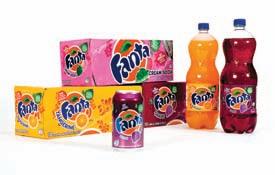
6. Brand name: Fanta
Entering company: DW+Partners Inc.
Customer: Coca-Cola Ltd.
Graphic Designer: (Global Visual Identity System): Office: Jason Schulte Design / (Adaptation into Canada): DW+Partners Inc.
In the label printing industry, good business means being cost-efficient at every step in the process. Companies that are continually looking for ways to streamline their operations, work smarter and add real value to their customers’ bottom line will consistently lead the way.
One of Canada’s largest label printing companies, Metro Label has always made it a priority to deliver cost savings for our clients.
We go to great lengths to develop new innovative processes for more efficient workflow and client responsiveness. We invest in the latest technological capabilities to make production faster and leaner. We build work environments that function smarter and make better use of energy. All of which results in savings that we can share with our customers.
Our clients know we value their business and that we do whatever it takes to keep it. And at Metro Label, delivering more value for their label printing dollar is all part of the service.
2. Brand name: Great Value Trash Bags Entering company: El-En Packaging Company Ltd.
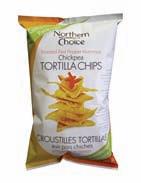
3. Brand name: Condillo Northern Choice Chips Compostable Packages Entering company: Genpak Film: Innovia Films Inc.
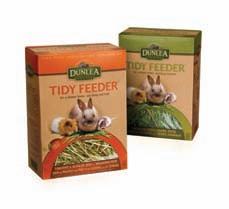
4. Brand name: Tidy Feeder Entering company: Bridgemark Printer: Jones Packaging Inc.
BRONZE WINNER
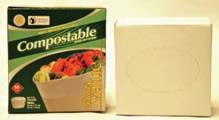
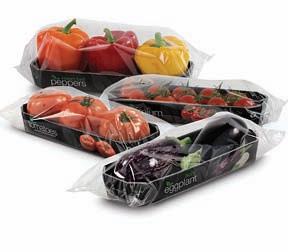
1. Brand name: ECO Trays with recipes Entering company: Clifford Produce
BRANDED PACKAGE MADE OR SOLD ANYWHERE IN NORTH AMERICA
GOLD WINNERS
1. Brand name: Dasani PlantBottle
Entering company: Coca-Cola Canada
2. Brand name: iQ REFILL™ Technology Cleaners
Entering company: Planet People
Graphic designer: Overflow Design
Project & Marketing
Lead: Planet People
SILVER WINNER
1. Brand name: Tetra Recart Entering company: Tetra Pak
BRONZE WINNERS
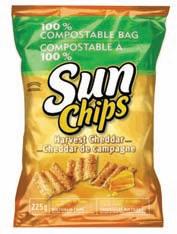
1. Brand name: SunChips World’s First Compostable Snack Chip Bag in a Recycled & Reused Secondary Cardboard Carton
Entering company: Pepsico Foods Canada
Packaging Manufacturer: Bryce Corporation
Secondary Packaging
Manufacturer:
Atlantic Packaging
Products Ltd.
Secondary Packaging
Manufacturer:
Crown Packaging
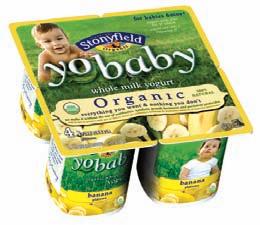
2. Brand name: Stonyfield Farm plant-based PLA multi-pack yogurt cup
Entering company: Stonyfield Farm
PLA rollstock supplier: Clear Lam
Packaging, Inc.
Advancements to existing machinery: Arcil
YOUNG AT HEART
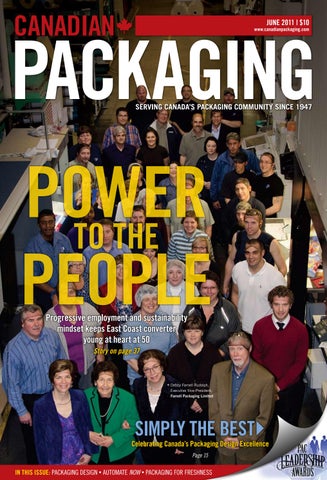
Nova Scotia exible packaging manufacturer passes half-century mark with youthful exuberance and re ned technical competence
ANDREW JOSEPH, FEATURES EDITOR
PHOTOS BY JOHN TENWOLDE
For many people turning 50 years of age, the event can be met with some trepidation for the future, but for one integrated converter located in Dartmouth. N.S., the anniversary is a very auspicious occasion.
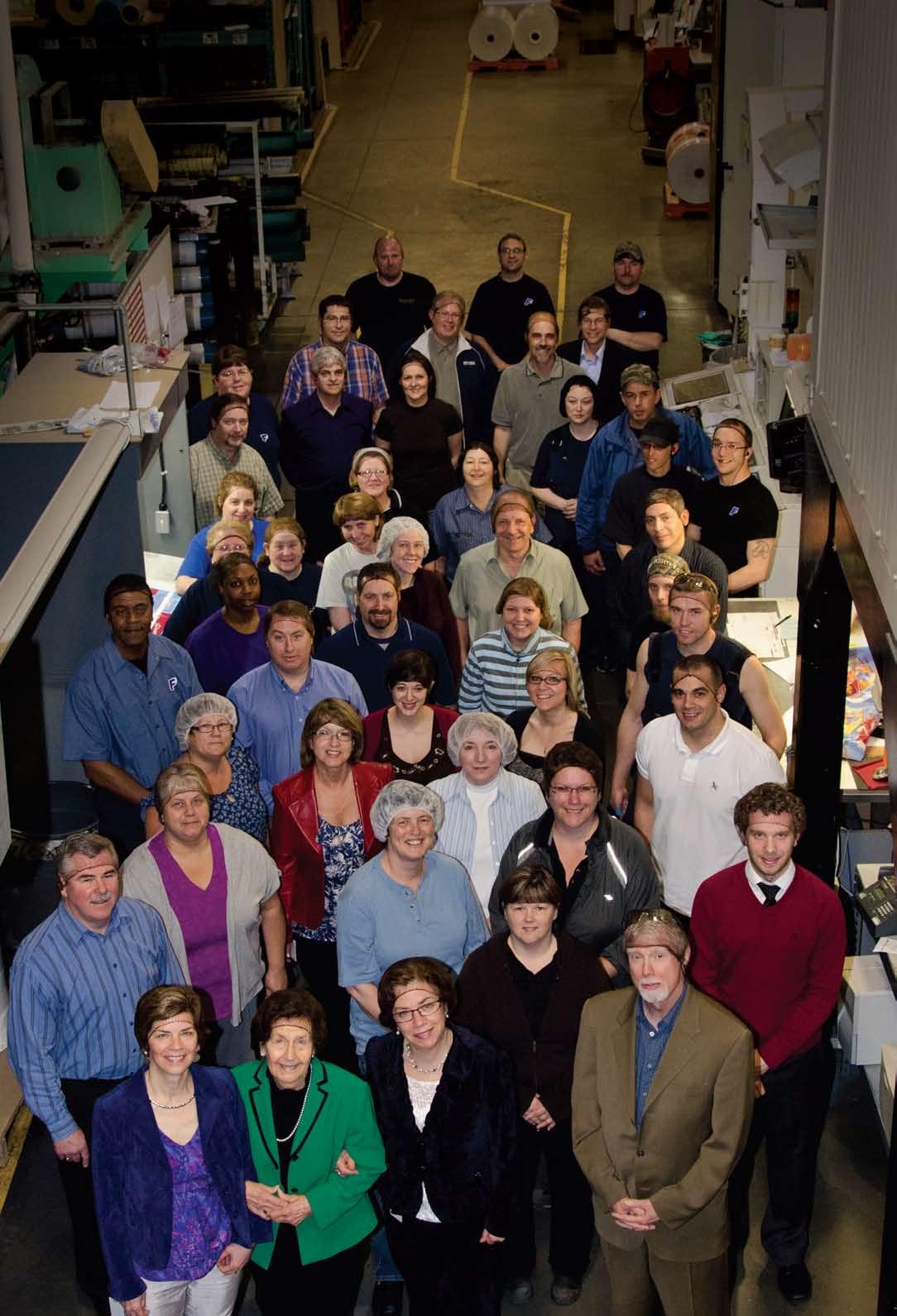
In the case of Farnell Packaging Limited, a company that has always sought to do the right thing for its customers, its 160 employees and the environment, being around for a half-century and garnering tens of millions in annual sales is a testament to those ideals.
“Being a totally integrated converter, from film extrusion through printing and finished rollstock and bagmaking, means we are our own customer for our films,” explains David Stanfield, Farnell’s vice-president of sales and marketing. “In other words, we experience our quality throughout the printing and converting, prior to the customer ever receiving the end product in many cases.”
Owned and operated by the Farnell family, the company has been highly successful in marketing its high-quality, innovative flexible packaging solutions across Canada, the eastern seaboard of the U.S., and as far west as the Dakotas and Washington State for customers involved in industries such as baked goods, seafood, fruit and produce, frozen foods, and personal-care products like tissues and diapers.
In 1961, Don Farnell was a rising star within the grocery division of Canada Packers in the Maritimes region, when he was chosen to take on product development opportunities at the company’s head office in Toronto.
“But after a short stay in Toronto, the lure of the Atlantic caused a change of course,” relates Debby Farnell Rudolph, the company’s executive vicepresident and the company founder’s daughter.
“He and my mother, Amy, decided to return to Nova Scotia and established Farnell Agencies Limited, a small distribution company selling a
wide range of products, many of which fell into the flexible packaging category.”
The Farnells quickly discovered that there were many niche markets it was unable to serve through distribution alone, so in the mid-1960s it began its first foray into the manufacturing and converting world by purchasing a used Japanese Taiyo plastic bag-forming machine. That purchase ultimately helped the company establish itself as a converter when it successfully launched its Big Boy brand of pound polyester bag products.
By the mid-1980s, now known by its current moniker, Farnell Packaging had become a fullyintegrated operation, extruding, printing and converting polyethylene (PE) plastic films into finished
products like bags, rollstock and sheets to service the ever-growing food industry.
“We have been producing linear low-density polyethylene (LLDPE) since installing our first blown film extrusion line in 1985,” says Farnell Rudolph. “Since then, we have continued to experiment with materials and structures to improve our products and develop superior materials for our customers’ applications.
Nowadays operating out of a modern 80,000square-foot facility, Farnell Packaging has remained on the packaging industry’s leading edge, boasting many innovative solutions, such as its award-winning sustainable packaging consisting of a compostable film and its introduction of LLDPE film technology.
Says Farnell Rudolph: “Recently we began partnering with suppliers and training resources to complete a department-wide retraining program that will provide our operators with the tools to maintain our high level of expertise.”
The company’s product portfolio boasts the Olympic brand films, which have been optimized for use on high-speed form-fill-seal machinery; Opaltone digital print imaging technology that digitally mixes CMYK and RGB process inks to create more colors from less ink; remote proofing services and powerful web-based press approval tools—all with the goal of providing customers with cost, time and environmental footprint savings.
“We also have our PRO2010 blends of film, which have been optimized to increase the shelf-life for various types of produce,” Farnell
Continues on page 38
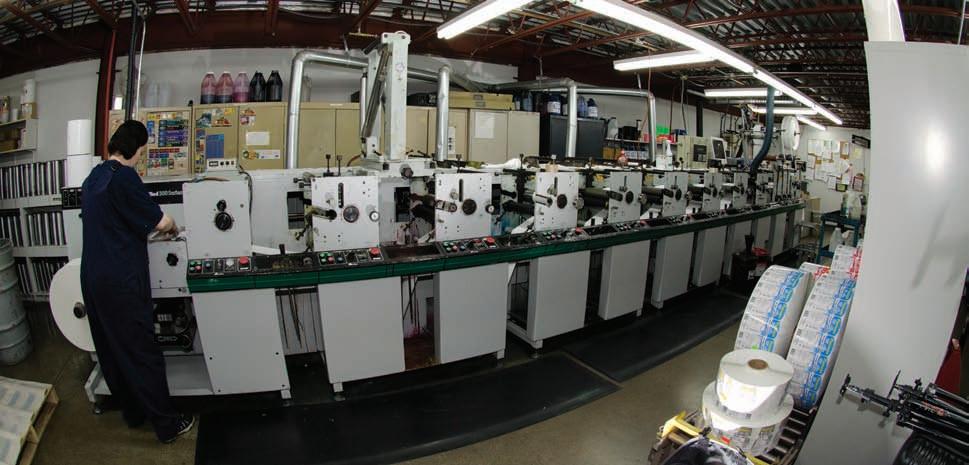
A Farnell Packaging employee sets up an eight-color narrow web label press.
(from left) Three generations of the Farnell Packaging family: Joel Rudolph, human resources associate; Debby Farnell Rudolph, executive vice-president; Amy Farnell, co-founder and president; and Judy Farnell, director of human resources.
Continued from page 37
Rudolph told Canadian Packaging during a recent interview.
“Our technology team has spent the past year working on replacement materials for higher-priced, nonrecyclable materials; developing materials to better protect the contents; coming up with process changes to increase output on our film lines; and developing materials and processes to downgauge film and bags in many different applications.”
Because it is passionate about its customer’s needs, the company has moved towards a more systematic approach to food safety, which is always a hot topic for suppliers to that industry.
To that end, Farnell has updated its globallyrecognized ISO 9001:2008 quality management system and the HACCP (Hazard Analysis Critical Control Points) -certification for packaging materials food safety.
Today Farnell is one of the few companies in Canada to have achieved the PAC-Packaging Association’s PACSecure certification. Based on HACCP, PACSecure addresses biological, chemical and physical hazards via up-front inspections and actions, rather than only looking at the end product.
“Each of these security certifications speaks directly to our role as a leading flexible packaging film product supplier,” notes Stanfield. “Each certification has been a wonderful report card, giving our customers an assurance of quality and of continuing supply and safety.”
Earlier in 2011, Farnell Packaging released its fullyrecyclable Lobster Lite sheet that effectively replaces the nonrecyclable mesh product previously used by the lobster industry to package lobster tails.
“The Lobster Lite sheets enable companies to pack 1,400 lobster tails per case, compared to the previous 350 per case using the mesh product,” says Farnell Rudolph. “Not only do the Lobster Lite sheets utilize less material and less handling to manufacture, but they are 100-percent recyclable.
“And if that’s not enough, there is also a 40-percent savings on material cost, 75-percent savings on volume and thus 75-percent savings on freight, and I haven’t even mentioned handling or disposal savings.”
Nowadays, the Farnell Packaging operation is kept up-to-date with technologically superior blown film and converting systems, with monolayer and co-extrusion lines supplied by Macro Engineering and Technology Inc. and
Brampton Engineering Inc.
Quality and recycling components within Farnell’s extrusion department come from Gamma Machinery Inc., Erema, P rocess Controls and Instrumentation, Kündig Control Systems and Cooper Machine and Tool Co.
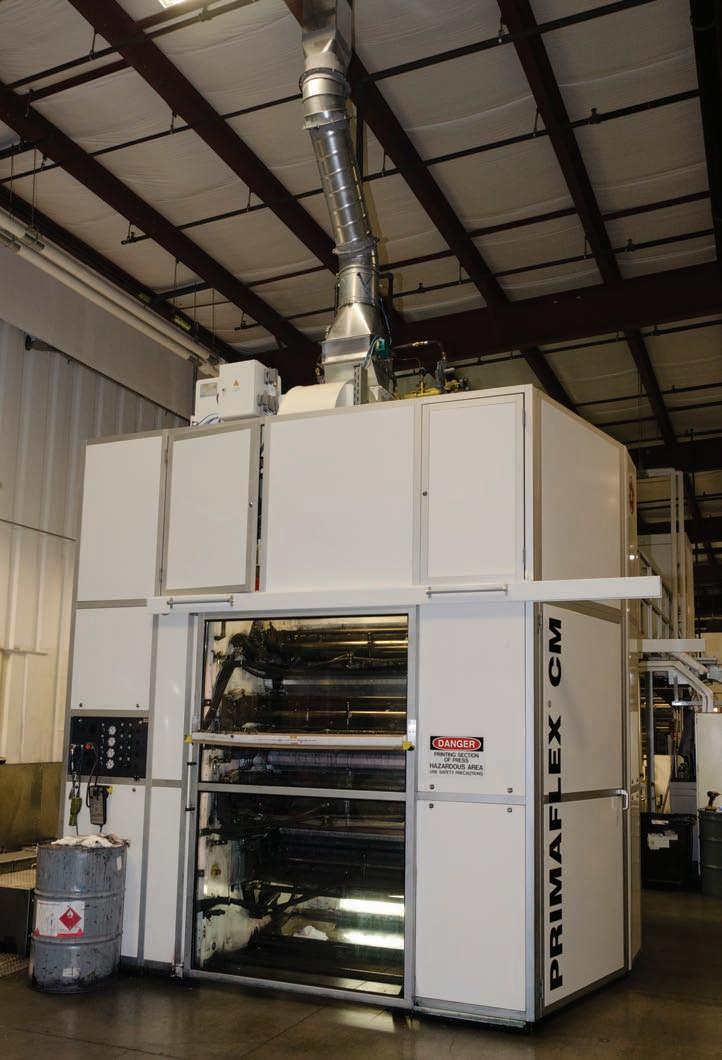
The plant’s printing department is kept busy daily with its wide-web and narrow-web printing presses, including the cutting-edge eightcolor, 52-inch PRIMAFLEX CM flexographic printing press manufactured by Windmoeller & Hoelscher Corporation (W&H), a renowned German manufacturer with a North American subsidiary in Lincoln, R.I.
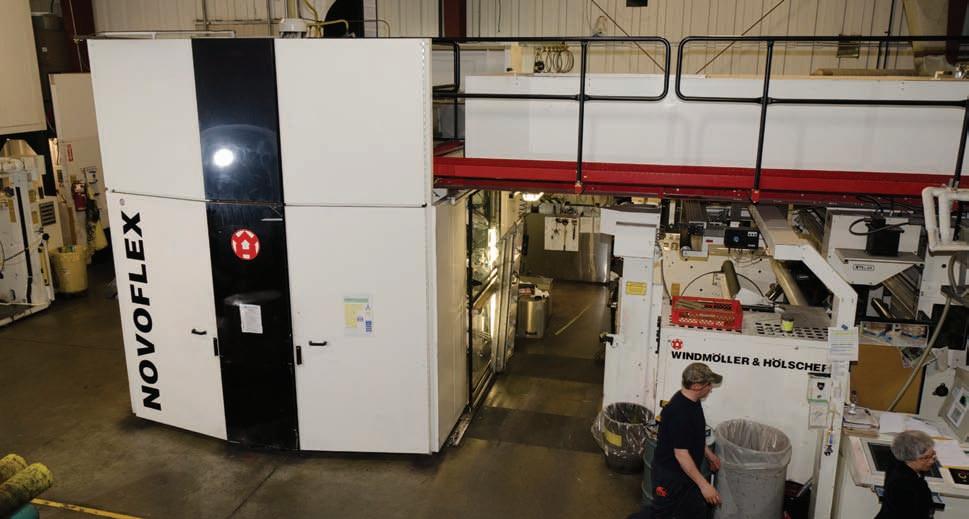
Farnell Packaging also utilizes a second W&H eight-color, 52-inch NOVOFLEX press, which in combination with the PRIMAFLEX has helped the company become an industry printing leader using the advanced Opaltone printing technology.
By recently adding an ink dispenser from Novaflow Systems Inc., Farnell Packaging can create ink colors with a greater consistency than ever before, and has signigicantly reduced its ink inventory by 20 per cent.
The company is also very interested in maintaining environmental sustainability as a prime objective, always integrating the way it does business with progressive environmental initiatives.
While Farnell Packaging’s environmental initiatives started inconspiciously enough when it began separating office waste and recycling in the late 1970s, the company established an in-house Green Team in 2008 to focus on environmental sustainable business practices within the facility, process, materials, transportation and reducing, reusing and recycling materials.
The Farnell Green Team has also facilitated the retrofitting of lighting in the facility by replacing metal halide fixtures with
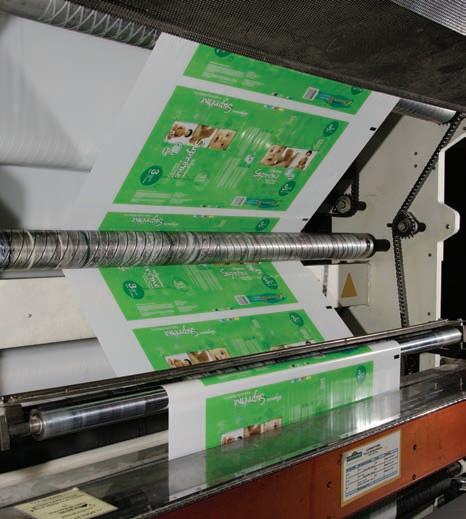
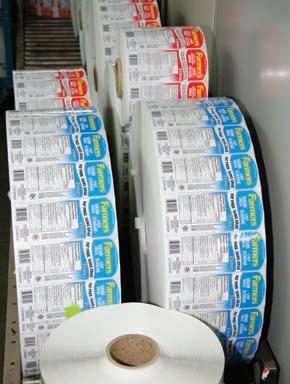
At its Dartmouth Facility, Farnell converts lm extrusion through printing rollstock for a plethora of customers throughout Canada and the U.S., while also printing a broad range of product labels.
high-output fluorescent fixtures while installing occupancy lighting in all washrooms, the main boardroom and the employee locker room, with the warehouse an ongoing current project.
“Included in our recycling program are a wide range of materials used in our manufacturing processes and daily activities that range from cardboard cores, strapping, inks, corrugated cardboard, pails, solvents, reclaim scrap and PE film to office materials, ink cartridges and compostable organics,” reveals Stanfield. “We are proud to note that we reuse and recycle 99 per cent of our clean, corrugated cardboard, with only the remainder heading to the landfill.”
Another sustainable initiative was derived from its flexographic printing process. In the past, doublesided mounting tape was applied to the printing plate on the cylindrical sleeves, and once the plate was removed, the foam adhesive material would be sent to the landfill.
But according to Stanfield, the company’s purchasing department sourced a sleeve that incorporated a sticky backing that can be rejuvenated and used from job to job, which eliminates this material from going off to the landfill.
At this time, some 30 per cent of the sleeves have been converted to the new Twinlock sleeve, which has helped divert 2,400 pounds of the foam adhesive waste per year.
Says Stanfield: “Our goal is to continue replacing the older sleeves with the Twinlock sleeve to allow for a more efficient procedure.”
Stanfield also cites another innovative change in the printing department’s procedural operations.
“We moved from packing tape used to protect the sleeves to a waste polyethylene film that is slit to the size of packing tape. It can be recycled instead of having to be thrown out into the landfill, as had been the practice for packing tape.”
Farnell Rudolph explains that the reduction of materials and use of energy has always been a priority for the company since the days her father began the business, and is keen that the rest of society seems to have caught on as well. As such, the company continues to work with its customer base to downgauge film and to reduce the amount of ink used during printing.
“Polyethylene film has a high weight-to-strength ratio, which allows us to provide products with maximum protection while using the minimum amount of material,” states Farnell Rudolph. “This A SUSTAINABLE
An overvier of the eight-color, 52-inch NOVOFLEX press manufactured by Windmoeller & Hoelscher.
has resulted in a reduction of material usage and a significant reduction in transportation costs due to lighter weights of product. It’s something we and our customers share in to achieve significant environmental and financial savings.”
In 2009, Farnell Packaging began an energy recovery and air quality initiative to save on energy, while improving its internal and external air quality.
Its Smog Hog Precipitator system charges particles in the air to allow specialized equipment to remove the particles. When the air is cleaned, warm air is redistributed back into the facility.
“Including installation, this $100,000-project will see a return-on-investment in four or five years, but that’s not really the point,” notes Farnell Rudolph.
“Another benefit of this system is a drop in negative pressure within the facility, which allows the converting department’s exhaust hood equipment to work more efficiently.
“We’ve already seen savings of 40 per cent in natural-gas radiant heaters and 40-percent savings for our oil-fired furnaces.”
Both Farnell Rudolph and Stanfield agree that merely providing responsible packaging is not just about utilizing less material. It is also about food safety—protecting food from spoilage and damage, resulting in waste.
Says Stanfield: “Plastic food packaging provides an intelligent solution to food wastage in every country where it is used to preserve freshness, and it has contributed significantly to food sustainability because of the extended shelf-life.
“We have responded to the customers’ need for sustainable packaging solutions that do not compromise food safety, and our ISO quality program and PACSecure certification are shining examples of that.”
Farnell also recently added the audited BNQ (Bureau de normalization du Quebec) certification for customers doing business within the Province of Quebec.
Having recently launched the fifth generation of its award-winning compostable film product, it was granted use of the Biodegradable Film Product Institute logo, certifying that its compostable film products are designed to break down completely into water and carbon-dioxide as per
Left: Farnell utilizes the services of a Brampton Engineering blowmolding system to convert lm.
Below: The eight-color, 52-inch PRIMAFLEX CM exographic printing press from Windmoeller & Hoelscher Corp. has helped it become a leadedr in both wide and narrow web printing.
ASTM (American Society for Testing and Materials) standards.
Says Farnell Rudolph: “While Farnell is immensely proud to be celebrating our 50th anniversary, it is still bittersweet for us, as we lost out co-founder and my father Don, who passed away in February of 2010.
“But as we enter our next half-century of business, we recognize that all of our success and accomplishments—which now span three generations—have been built on the vision of our founders,” she concludes.
“We have taken on the legacy of Amy and Don Farnell, and their commitment to a strong environmental ethic and that is our challenge: to continue to inspire others to reach higher and to achieve more; to maintain a reputation of world-class excellence in our industry; and to continue to be a proud Nova Scotia employer and Canadian company.”
For More Information:
MOVIGEAR
Movigear® is distinguished by its high level of system efficiency, a significant factor in reducing energy costs. The integration and coordination of all the drive components lead to a long service life and system availability. Movigear® is an intelligent system with its own control concept. Its high-quality networking helps reduce startup time and supports monitoring and maintenance tasks. When combined with a functional user software, drive tasks can be solved as quickly and easily as possible.
MOVITRAC ® LTE B
The range of functions provided by MOVITRAC® LTE B is particularly well adapted to less complicated applications. Its user-friendly design makes integration quick and easy, it also meets the high quality requirements of everyday requirements. The Movitrac® LTE B is also available in IP55/NEMA 12k making it suitable for special ambient conditions. These frequency inverters operate reliably and flexibly even when exposed to dust or water.
PSC
Planetary servo gear units
The low backlash PSC planetary servo gear units are designed for torque classes from 30 to 305 Nm. They are designed to offer the greatest possible flexibility and ROI, as not every application demands machines designed for maximum performance. These planetary servo gear units are the basis for versatile, dynamic, and above all cost optimized drive solutions.
MOVITRAC ® LTX
Simple, fast and diverse: as part of the Smart Servo Package, SEW-Eurodrive offers the new Movitrac® LTX servo inverter for universal use. It stands out with advantages such as ease of operation, short startup times as well as optimized costs. Available in two sizes and covers a power range from 750W to 505 kW. The Movitrac® LTX is particularly suitable for use in applications such as secondary packaging, handling, and logistics.
Our Drive Solution Pyramid.
The demands on material handling systems today have never been more wide ranging or more challenging. That’s why SEW-Eurodrive offers drive solutions for every kind of industry application. From the simple to the sophisticated, our pyramid of solutions allow you to control costs and limit complexity by giving you the ability to tailor our products to the exact intelligence and performance specs you require. Reducing energy consumption is also an important imperative today for the modern production line. Just ask Coca-Cola, who achieved a sensational 75% reduction in energy consumption by incorporating 40 of SEW-Eurodrives’s revolutionary decentralized MOVIGEAR® units in a recent overhaul of a European bottling plant transport line.
VFDs: RELIABLE, COMPACT & VERSATILE
SERVO PACKAGE: SIMPLE, FAST & DIVERSE
ANDREW JOSEPH, FEATURES EDITOR
PHOTOS BY PIERRE LONGTIN
‘Everything old is new again’, may well be the perfect mantra for one of North America’s largest suppliers of refurbished packaging equipment, specializing in the cosmetics, pharmaceutical, food and automation industries.
But lest you believe that PharmaCos Machinery Inc. is merely a purveyor of old, junky equipment—think again. Located in SaintLaurent, Que., the company offers new and refurbished efficient packaging equipment that can be customized for customers turnkey solutions, and all at an affordable price.
Situated in a 50,000-square foot facility—40 per cent for inventory; 40 per cent for fabrication; 10 per cent administration; five per cent for its own machine shop; and five per cent for its new and used machine and parts store—PharmaCos and its 35 employees typically manage some 150 projects a year throughout North, South and Central America, while also selling parts and equipment to customers all over the world.
“We sell all kinds of new and used packaging equipment,” Roman Strozynski, company president, founder and owner told Canadian Packaging during a recent interview. “We have $2-million of machinery in inventory, and a dedicated staff that knows how to work with short lead-times.
“Along with offering new and used parts and components, we also provide line relocation services, robotic integration, complete conveying systems and integration, and fabrication of change parts and spare parts.”
The company also offers packaging solutions, start-up and training, tips for set-ups, machinery logic programming improvements—including AutoCad electrical plan updates—mechanical engineering tools, optimization solutions for production flow, line layout design and the purchase of equipment from clients.
Prior to starting PharmaCos, Strozynski worked 15 years with a large cosmetics company, when he first wondered about the need that was never fulfilled by anyone in the market: namely offering completely refurbished equipment with a fast, efficient service.
“Having worked in the production side of the business, I wanted to form a company that catered to the real needs of the customer, rather than as a representative of a given equipment fabricator,” recalls Strozynski.
Opening its doors in 1998, Strozynski says that thanks to many years of hard work and word-of-
AUTOMATE NOW
NEW LEASE ON LIFE
Turnkey packaging line solutions integrator gives refurbished equipment a second chance for productive existence
mouth advertising, PharmaCos has become well-respected in the industry as a leading supplier of refurbished equipment.
“My staff continued to learn on the job, as the jobs requested of us became more and more complex, modifying more and more equipment to specifically suit the needs of individual clients,” exclaims Strozynski.
As the company continued to expand, so did the need to hire more qualified staff who were knowledgeable about equipment specifically designed for the cosmetics and pharmaceutical industries.
“Nowadays, we purchase equipment from clients, or take it in exchange or as partial credit for other projects,” says Strozynski. “We also offer a network for customers to sell their equipment, as we are always in contact with companies that need certain pieces of machinery.
“I would estimate that 80 per cent of our business dealings involves the purchase and complete refurbishment—mechanically and electrically—of packaging machinery.
Some of PharmaCos’ customers include: L’Oréal Canada, L’Oréal Mexico and L’Oreal USA; Groupe Parima Inc.; E-Z-Em/Bracco Imaging Canada; Gojo Industries; Draxis
Pharma; Confab Laboratories Inc., Choisy Laboratorie, Contractor Pharmaceuticals and the Royal Canadian Mint
One of PharmaCos’ bigger innovative accomplishments was when it was asked by the Royal Canadian Mint to develop a fully-automatic robotic line to produce the world’s first worldwide color printing application using an inkjet printing system, equippped with a vision and tracking system to apply color inks to Canadian coinage.
The innovative system was used for the 2006 Breast Cancer Awareness coin, the 2010 quarters celebrating the Vancouver Winter Olympics, and the 2004 coin that was the world’s first colored circulation coin paying homage to Canadians soldiers who died in the service of the nation.
While PharmaCos does sell a lot of fillers, label-
Testing a workcell using Fanuc Robotics LR Mate 200ic robots integrated for fast and ef cient material handling applications.
From left: PharmaCos Machinery’s Sebastian Strozynski, project coordonator; Stephane Hamelin, technical service director; Alex Asfour, application engineer; Roman Strozynski, president; Sylvain Gauthier, technological development director; Martin Lespereance, purchasing and logistic manager.
The St. Laurent, Que.-based PharmaCos Machinery is a hub for Noth American companies looking for refurbished equipment to upgrade their packaging lines.
AUTOMATE NOW
ers, palletizers, cartoners, conveyors, case-packers, turntables, PLC s (programmable logic controllers), HMI (human-machine interfaces) and provides robotic integration along with selling and setting up complete packaging lines, it also markets a comprehensive range of elevators, unscramblers, bottle cleaners, cappers, retorquers, case erectors, tanks, heat tunnels, tapers and more through its website. With such a wide variety of equipment, PharmaCos does not try and push one product over another, but examines each and every single project
as its own entity, deserving of its own solution.
“For many years, PharmaCos did not want to be associated with any particular OEM (original equipment manufacturer), as we wanted to assure our customers and ourselves that everything we offered fit the customer and not the OEM,” says Strozynski.
“But now that our company has grown into its own, and we have the respect of the packaging equipment industry, we felt it was time to develop a few pertinent partnerships with a few companies that did not directly relate to our core machinery offerings.”
To that extent, the company has chosen to partner up with ABB Robotics and with FlexLink Systems Canada Inc., a leading supplier of conveyor system solutions. The company also has close business ties with such firms as IWK Packaging Machinery, Laetus GmbH , Marchesni Group/Neri S.P.A., Romaco Group, IMA North America, Pester USA , Multipack , Aesus Systems/HERMA , Kalix , Cermex , Norden Machinery and Bosch Packaging Technology
Strozynski. “Because of the diversity of the products we offer, as well as the services we provide, the recession did not affect us much.
“In fact, any change in economic fortune only really affects what type of business we do for clients.”
When the North American economy is good, according to Strozynski, PharmaCos receives more orders for special projects, development, upgrades, new line installations and equipment relocation. But when the economy turns sour, it sells more as-is machinery, change parts and spare parts, as well as refurbished equipment.
Because FlexLink was and is our biggest supplier of equipment, we acknowledged that each party could mutually benefit from the other with what we could jointly offer the industry,” proclaims Strozynski.
“It’s now been four years since we’ve become partners, and it’s been an added value that we can add their excellent products and solutions in our projects.
“Also, with the robotics applications becoming a more needed scenario in a production line, we need the FlexLink conveyor logistic solutions. And for FlexLink, it’s always good to have someone who knows how to handle a conveyor project that is more than just about conveyors.”
PharmaCos also offers robot system integration with Fanuc Robotics products and prefers to sell industrial electronics from the better-known companies with excellent reputations, includRockwell Automation, Omron Canada Inc., and Siemens Canada Ltd.
During the recent recession, when many packaging equipment companies were tightening their collective belt to weather the storm, PharamCos was actually doing quite well because there were many opportunities for it to purchase used equipment at better prices.
“Obviously, during any economic downturn there are companies that struggle and fail, affording us the opportunity to purchase their equipment,” divulges
“During the tougher times in our industry, we are always hoping that more and more companies will listen to and accept our proposal of refurbished machines as a more viable option,” affirms Stozynski. “Not only does the customer receive a competitive product, there’s also the added benefit of a reduced cost, compared to a new machine.”
Strozynski says that when PharmaCos purchases a used piece of machinery, it literally tears it apart, rebuilds it from scratch, and upgrades all the major components such as the PLC, HMI and wiring of the electrical panel. The company’s one-year warranty, complete with customer support, is merely icing on the cake.
“Our philosophy has always been not to make the biggest deal possible, but rather to provide our clients with exactly what they need in order to develop a long-term relationship,” sums up Strozynski.
“When PharmCos first opened its doors, it was always with the dedication to bring a second life to old equipment and parts, and now that the world is definitely more dedicated to sustainability, with recycling practiced by the business sector, we are definitely proud of our place in the industry and how we help contribute to a greener society.”
A cluster of Festo pneumatics powered by a Busch Vacuum Pump and Systems’ oil-free Seco pressure pump.
A 2000 Series print and apply labeling system from Markem Imaje being refurbished by PharmaCos.
MEAT OF THE MATTER
Quebec meat processor uses advanced packaging technologies to carve up a bigger slice of the market
ANDREW
JOSEPH, FEATURES EDITOR PHOTOS BY PIERRE LONGTIN
Going horizontal with a new form-fill-seal packaging machine is working wonders for a Quebec company that has seen some spectacular vertical growth in sales and overall quality of its product in recent years.
Located in Sorel-Tracy, Que., Viandes Cèdre is a federal meat processing plant specializing in halal cold-cuts and deboned chicken products to service a plethora of Mediterranean restaurants, butcher shops, correctional service facilities and hotels throughout the provinces of Quebec and Ontario, while seriously looking into opening a satellite business in the Middle East.
“We only package halal beef and chicken meats,” owner and president Hussein Hoballah told Canadian Packaging in a recent interview. “It’s a tough business to be in because we have to maintain a delicate balance between halal—ensuring that the meats we produce conform to Islamic dietary guidelines—quality and, of course, pricing.”
Hoballah explains that while his company is always very strict in procuring and processing 100-percent hand-slaughtered halal chicken and beef, he notes that not all companies involved in this niche market
are as respectful of the halal principles.
PACKAGING FOR FRESHNESS
“For us, being known as a halal processor— and a well-respected one within the Muslim community—is a key factor determining how we go about our day-today business,” he states. “We respect the dietary traditions of the Islamic community because we are a part of it.”
The Lebanon native first began producing halal cold-cut meats in 1990, when he noticed a decided lack of availability of such meats in his new hometown of Montreal, Hoballah recalls.
“When I first got into this business, I was just a procurer of halal meats, utilizing the services of meat-processing plants in the area, such as Roma Foods and Quebec Smoked Meat,” says Hoballah. It wasn’t until 2005 when he was able to save enough money to purchase a 5,000-square-foot facility and some new packaging equipment to ensure strict procedural protocol from the slaughter to processing, and to the actual finished packaging of the product.
“To celebrate the new business, I added the French word for cedar tree into the company name,” says Hoballah.
The Repak RE20 comes with an S 107 thermal-transfer printer manufactured by Greydon, to apply variable product information such as ingredients, nutritional facts, product name, lot number, best-before dates, Canada legend and permit number onto every package. (Inset ) The easy-to-use operator interface enables Viandes Cèdre employees to use the Reiser Repak RE20 to seal in product freshness with Duropac’s EVOH-based lms.
“Similar to the maple leaf on our Canadian flag, the cedar tree is the symbol of Lebanon, and its placement on the flag implies immortality and steadiness, which is what I want for my company. Viandes, of course, means ‘meats’ in French.”
Employing 13 people, Viandes Cèdre managed to exceed $6 million in revenues in 2010.
Marketed under the brand name Mustafa, 40 per cent of the company’s business is derived from the packaging of cold-cut products such as chicken and beef sausages, four different kinds of mortadella—regular, spicy, with olives or with pistachio—salami, pepperoni, smoked meat and smoked chicken breast.
The other 60 per cent
is dedicated to its Taybat brand of deboned chicken, separated into various cuts like drumsticks, breasts, legs and even a boneless whole bird.
“We have had many requests from different companies asking us to co-pack for them, but unfortunately at this time we are not ready to do so, though we may soon start doing it on a trial basis for one or two companies,” reveals Hoballah.
As an HACCP (Hazard Analysis Critical Control Points) -certified facility, Hoballah has put together a well-trained team of employees that adhere to strict standards for sanitary conditions and halal guidelines, while using the highest-quality meat products and raw materials, recipes and cooking methods to ensure a consistent quality end product.
The company currently operates two packaging lines: one for its cooked product and one for its raw products.
When Viandes Cèdre recently wanted to upgrade its cooked packaging line, it chose a Repak RE20 horizontal form-fill-seal (F/F/S) machine, distributed in Canada by Reiser (Canada) Co.
“We purchased the RE20 in early 2011,” says Hoballah. “We chose Reiser because of its industry-wide reputation for quality machinery and for their excellent post-sales service abilities—which we realized first-hand through a previous purchase of another Reiser machine, a Supervac.”
Hoballah says that prior to the company’s purchase of the Repak RE20, it used simple pre-printed bags to package its products.
“But since switching to the RE20, our products have achieved a much more pleasing visual appearance, providing a longer shelf-life simply by producing a better seal.”
Reiser’s RE20 machines—designed for meats, dairy, fresh, fresh-cut produce and convenience foods—can be used to create vacuum or MAP (modified atmosphere packaging) packages using a variety of different film types.
Like Reiser’s larger-capacity RE25 and RE30 models, the RE20 machine features a stainless-steel frame design, robust die-lift technology, and an operatorfriendly HMI (human-machine interface).
“It’s a very nice machine,” extols Hoballah. “It is indeed very easy for our operators to use, thanks to the touchscreen that is simple to manipulate, and
Continues on page 44
Viandes Cèdre owner and president Hussein Hoballah holds up samples of his Mustafa brand halal cold-cuts packaged by his new Repak RE20 horizontal F/F/S machine.
PACKAGING FOR FRESHNESS
indeed very easy for our operators to use, thanks to the touchscreen that is simple to manipulate, and the clean-up aspects of it are fantastic.
“We love its modular design that does not allow the accumulation of water or cleaners,” reveals Hoballah, while also praising the machine’s quickchangeover capabilities.
“It’s very important for us,” he says. “Not only does it provide us with confidence that we are packaging our product in a clean environment, it helps assure our customers and consumers of purchasing products with a longer shelf-life.”
The RE20 utilizes a rapid air-forming method whereby the distribution of film is maximized in critical areas like corners, allowing Viandes Cèdre to use a thinner forming film.
Purchasing its film from Duropac, Viandes Cèdre runs its RE20 with a top film consisting of an easy-to-peel oriented nylon laminated with EVOH (ethylene vinyl alcohol), while the bottom film is a nylon mix with a EVOH poly.
The addition of the EVOH allows for better management of the oxygen barrier—a very important factor in ensuring a longer shelf-life, Hoballah explains.
Affixed to the RE20 is a Greydon Inc. S 107 thermal-transfer printer, which the company uses to apply everything but the brand name, including ingredients, nutritional facts, product name, lot number, expiration date, Canada legend and its permit number.
“It’s a very efficient coder that we use quite extensively on our packaging,” says Hoballah. “There’s no smudging: it’s clean and easy to read. We and our customers are very happy that Reiser uses them on the RE20.”
For its sliced cooked products, the plant employs a model A 500 automatic slicing machine supplied by Bizerba Canada Inc., boasting a touchscreen terminal for storing a vast number of slicing programs.
“We can also program the number of slices and shingle distance, as well as the number of portions and the distance between portions,” exclaims Hoballah, adding the machine can reach speeds of up to 250 slices per minute.
“We can also set the desired thickness levels and the deposit pattern—stacking or shingling. It’s been a wonderful, hardworking machine that is also in full compliance with our expected levels of hygiene and safety.”
To package raw products like its deboned chicken, Viandes Cèdre uses an A-200 modified atmosphere packaging (MAP) machine manufactured by CVP Systems, Inc.
“While we are still a small operation, we do have large aspirations and are constantly upgrading our efficiency and production levels with better equipment,” states Hoballah.
“We don’t have to worry about the quality of our product so much, except to ensure that it is maintained, because we always use fresh Canadian beef and chicken in combination with our Mediterranean recipes,” Hoballah adds.
“And while it may seem to the casual observer that we run a simple operation, I can assure you that it is not,” he concludes. “The only simple thing about our operation is our tasty products, and in that sense being simple is just simply being good.”
The robust, stainless-steel Bizerba A 500 automatic slicer easily processes symmetrical and irregular meat slices.
The Mustafa Hala brand Chicken Frankfurters and Sliced Smoked Meat are examples of how the Reiser Repak RE20 has helped the company achieve a better-looking package with longer product shelf-life.
COMING CLEAN
Seminar examines problems of the global paper and paperboard industry working to create more truthful sustainable packaging options
ANDREW JOSEPH, FEATURES EDITOR
The paper and paperboard packaging industry has an image and messaging problem, one that the Paper & Paperboard Packaging Environmental Council (PPEC) says is confusing the public, its customers, and the industry itself.
The problem is greenwashing, which PPEC describes as a deceptive attempt to present one’s products or self as more environmentally-friendly than they really are.
The well-attended recent Cutting Through The Greenwash III seminar at the Mississauga Convention Centre, organized by PPEC, provided a vibrant discussion on the self-perceived problems within the industry in an effort to literally separate green fact from greenwashed fiction.
“I think we, as an industry, have a problem with our messaging, and our competition loves it and exploits it for all it’s worth,” said PPEC executive director John Mullinder.
every single piece of fiber is coming from, but in practice that can’t be done, so a closed-loop scenario is the best solution at the moment.
“The closed-loop is allowable, but you have to make sure people understand that is what you did,” said Schmidt. “If you are making assumptions, you have to make excellent assumptions, and you have to be able to back it up and clarify what you did to avoid any problems.”
“I’m going to argue that we need to get a handle on this and get our message out while cleaning out our own greenwash— whether it’s deliberate or otherwise.
Mullinder admitted to the audience that the industry suffers from the perception that it is a ‘tree-killer’, and that those who kill trees are considered evil.
“Rather than bringing the trees into it, why not say we are rightsizing? Or reducing costs by removing unnecessary layers or flaps? Or creating more efficient product-to-package ratios? Or are reducing waste? These are far more positive things to say, and they accurately reflect what we are actually doing,” Mullinder asserted.
Offering advice on how to avoid greenwashing within the industry, the event introduced Dwight Schmidt, president of the Fibre Box Association (FBA) and executive director of Corrugated Packaging Alliance (CPA), who discussed the life-cycle assessment work of a corrugated product and what he considers to be ‘the good, the bad and the ugly’ of life-cycle analysis (LCA).
Schmidt says that for any LCA on corrugated to be considered beyond reproach, the scope and boundaries of the study must be clearly defined, ensuring that accurate facts are present for what was included as well as what was not.
“Transparency is a must,” said Schmidt. “But you can’t just be out there talking, you have to say, ‘Here’s what we have’.”
He noted that expert reviewers are key to any such study in order to add integrity and to avoid the possibility of being accused of greenwashing.
He says that if a study was done perfectly, one would know the inputs from every country and would know where
Laura Rowell, director of sustainable packaging for MeadWestvaco Corporation (MWV), renowned for her expertise on global environmental performance requirements and activities associated with packaging standards and regulations, offered the audience an uneasy truth about most LCAs, as MWV did one on one of its own packaging lines.
“We’re still finding errors, and these errors don’t benefit us. They are errors that make us look worse—that we missed this, we missed this and we missed that.”
She noted that despite the best intentions of her company, greenwashing was still a possibility. Rowell notes that it continues to be an exasperating situation—especially after all of financial expenses, time and effort put forth by those involved. It’s why she feels the ongoing GPP (Global Packaging Project) will be a big help to the global industry.
“The GPP initiatives are being pushed forward by retailers and brand-owners who feel that we can act more quickly and with more positive results than the government can. But it is quite challenging, as they look at how we do what we do; how we measure what we do; and how we talk about what we do.”
The underlying concept of the GPP is the development of common definitions and metrics used and communicated in compliance with applicable international standard, she explained.
Concerns for the GPP, according to Rowell, include the projects hit-and-miss alignment with globally-recognized standards and measurements; material waste metrics including raw material manufacturing waste; recycled content metrics including a discussion relating to upcycling of materials like glass, steel and aluminum and downcycling for paperboard and plastic; and too many LCA metrics.
Rowell notes that a third version of the GPP document, to be released this summer, will tackle these concerns.
The PPEC seminar also provided a panel of retailers and brand-owners to discuss sustainability and environmental issues, featuring Mario
Bellizzi, senior director of environment and sustainability at Sobey’s Inc., Catherine McVitty, manager of North American corporate responsibility programs at Unilever Canada, and Jeffery Fitzpatrick-Stilwell, manager of sustainability and government relations for McDonald’s Restaurants of Canada Limited
Fielding the topic of what each looks for when it comes to the procurement of paper packaging materials, Bellizzi explained that Sobey’s prefers to look for recycled content, while McVitty said that Unilever likes to focus its efforts on sustainable packaging. For his part, Fitzpatrick-Stilwell noted that McDonald’s has now utilized fiber products as far as it can, and is now looking towards utilizing recycled materials.
“We look at recycled content whenever we can. Obviously we can’t do that for products like cosmetics or chocolate, so virgin material is used. Plus we look at sourcing locally when that is possible,” explained Bellizzi. “In the future, we will be using LCAs to helps us make the best decisions for us in this regard.”
Added McVitty: “Unilever has committed to sourcing all of its paper packaging from recycled material or sustainable sources by 2020, and we’re looking for FSC (Forest Stewardship Council) certification with full chain-of-custody from our suppliers.”
When it comes to scorecards, FitzpatrickStilwell said that McDonald’s has its own environmental scorecard it mainly uses for its food suppliers, and an internal scorecard for its packaging suppliers.
“Scorecards are effective as long as they are specific to your company. If it’s too generic, it doesn’t identify your own keys. You need something specific in order to be effective,” he said. According to Bellizzi, scorecards have an image problem all of their own.
“I think the word ‘scorecard’ automatically generates a negative image,” he said. “I think that the issue we have to come to terms with, is that we in the industry—I mean we in the retailing business—are looking at decision-making tools to help us make sustainable environmentally-correct choices.
Regarding LCAs, McVitty noted that while Unilever does have the resources to create its own LCA’s, not everyone has those resources.
“So what if you need is a more commonly accepted tool, but is it accepted by everyone? Is it useful if it has been simplified?
“If the environmental claims are all based on the LCA, and it’s not accepted by everyone, it’s greenwashing,” McVitty summed up.
Catherine McVitty, Manager of North American Corporate Responsibility Programs, Unilever Canada
Mario Bellizzi, Senior Director of Environment and Sustainability, Sobey’s Inc.
John Mullinder, Executive Director, PPEC
NOTES & QUOTES
President of The GLOBE Foundation John Wiebe left) presenting the Best Green Product Award to Margot White, vice-president of the GolinHarris Vancouver of ce, who accepted the award on Tetra Pak’s behalf in recognition of the company’s groundbreaking Tetra Recart retortable aseptic package (inset) for semi-liquid foods.
Aseptic packaging and processing technologies supplier Tetra Pak Canada Inc. of Richmond Hill, Ont., has been selected as winner of the Best Green Consumer Product award of the 2011 GLOBE Awards competition of Vancouver-based environmental consultancy The GLOBE Foundation in recognition of the significant environmental sustainability benefits of Tetra Pak’s innovative retortable carton packaging system—a new paperboard packaging solution for semi-liquid food products such as vegetables, soups, tomatoes, beans and pet-food.
“Tetra Recart embodies the innovation that Tetra Pak brings to the marketplace,” says Tetra Pak marketing manager Mary Therese Williams, adding the company is actively identifying and evaluating ways to impact and invest in sustainable end-of-life management solutions for its cartons, which are made primarily from paper and can be recycled into other paper products such as paper tissue. “It brings sav-
ings and efficiencies to manufacturers and retailers and is meaningful and responsive to our industry and to consumers,” adds Williams, noting that Tetra Recart packaging’s lightweight construction and no refrigeration requirements facilitates additional carbon-footprint reductions in transportation, storage and across the supply chain.
ABB Robotics announces new Western Canada Territory Sales Manager
ABB Robotics invests in the growing market for flexible automation in Western Canada.
ABB Robotics, a leading supplier of industrial robots, announces the appointment of Stephen Frank to the position of Territory Sales Manager for Western Canada.
Based out of the company’s office in Burnaby BC, Frank will be responsible for selling and supporting ABB’s extensive offer for robots and drives to meet the growing demand for flexible automation in British Columbia and Alberta. Frank will work closely with ABB’s network of robot integrators to be able to offer complete automation solutions for the local manufacturing industry with particular focus on the packaging and metal fabrication industries.
Since graduating from Robotics and Automation at BCIT, Stephen has over a period of 20+ years developed and applied power conversion technologies and automation controls to OEM, light manufacturing, and heavy industry. He enjoys the industrial and education environment with a passion for technology and its potential.
stephen.a.frank@ca.abb.com
Marty Rudman, Vice President Creative
Davis, a leading North American branding and design agency located in the Greater Toronto Area, is pleased to announce the appointment of Marty Rudman as Vice President Creative.
“Talent attracts talent and we’re thrilled to have attracted Marty to our creative team” says President Ron Davis. “We are continually increasing our bandwidth in order to exceed clients’ expectations while keeping pace with our growth. Our business has expanded so that 50% of our overall work is for North American or American markets. With the addition of Chris Plewes in 2010, joining Mark Roberts who has been leading our creative team for ten years, our ability to build powerful brands for our outstanding clients in Canada and the USA keeps on growing.”
Marty comes to Davis directly from his role as Creative Director, Pigeon Branding + Design. Prior to this, Marty’s experience includes co-founding the highly successful Dollery Rudman Freibauer in the position of Principal/Creative Director for over 18 years. With a career that has spanned 30 years of strategy-led and award-winning design, Marty has a long and proven track record of creating innovative brand building solutions for many of North America’s largest consumer goods companies.
Waste recycling specialists TerraCycle, Inc. of Trenton, N.J., says it has collected over one million used drink pouches across Canada through its nationally-operating Drink Pouch Brigades program involving over 2,700 schools, and various not-for-profit and community groups. The successful program, operated jointly with leading food-and-beverage manufacturer Kraft Canada Inc., has already enabled TerraCycle to contribute over $20,000 to various school and community projects by donating two cents to local groups for every used wrapper or pouch collected by program volunteers and returned to TerraCycle, which are then used to be “upcycled” into various consumer products ranging from pencil cases and tote bags to storage containers and park benches. According to the company, headed by Toronto native Tom Szaky, the new eco-friendly products made from recycled plastic pouches will begin to be retailed at The Home Depot, Walmart and Whole Foods Market stores across Canada within the next six to 12 months.
Tool Changers
• Increase the flexibility of your robots by adding the ability to use more than one end-effector in an application.
• Production line tooling changed in seconds for maximum flexibility.
• Change tools in seconds for maintenance and repair.
• Increase operator safety by changing tools automatically.
• Million-cycle tested for reliability.
Busch Vacuum Technics, the Canadian subsidiary of German vacuum pump technologies manufacturer Dr.-Ing. K. Busch GmbH, has just celebrated its 25th anniversary at a special commemorative ceremony (see picture) featuring a host of international dignitaries, including three of the company’s five major shareholders who flew in from Germany to take part in the event, along with presidents of the multinational’s other subsidiaries in Germany, Switzerland, U.K, The Netherlands, Mexico and the U.S., as well as Switzerland’s counsel general Claude Duvoisin. Today serving as a distribution center, service facility and a design-and-assembly center, the Boisbriand, Que.-based Canadian headquarters is often listed as one of Busch’s top-performing facilities worldwide, according to Busch Vacuum president Paul Wieser, enjoying a nearly 90-percent market share for vacuum pumps in the Canadian food industry. Along with sales offices in Mississauga, Ont., Calgary and Vancouver, the company employs a total of 55 people across Canada, with at least one-third of them fully-accredited specialized engineers.
A park bench and a duffel bag made by TerraCycle from recycled drink pouches collected across Canada by students and community volunteers.
June 21-23
Toronto: PACKEX Toronto, national packaging technologies exhibition by Canon Communication LLC. Concurrently with the Plast-ex national plastics technologies exhibition, ATX (Automation Technology Expo) Canada, Design & Manufacturing Canada, PTX/PBS (Process Technology/ Power Bulk Solids) Canada and Green Manufacturing Expo Canada. All at the Toronto Congress Centre.register, go to: www.packextoronto.com
June 21-14
Mexico City, Mexico: Expo Pack Mexico 2011, packaging technologies and materials exhibition for Latin America by the Packaging Machinery Manufacturers Institute (PMMI). At Centro Benamex. Contact PMMI at (703) 243-8555; or go to: www.expopack.com.mx
June 22
Toronto: Walmart Sustainable Packaging Conference V, by Walmart Canada. and PAC-The Packaging Association. Concurrently with PACKEX Toronto at the Toronto Congress Centre. Contact Lindsey Ogle at (416) 490-7860, ext. 218.
July 26-27
Rosemont, Ill.: 2011 Sustainability Summit, by the Adesive and Selant Council, Inc. (ASC). At Hyatt Regency O’Hare. To register, go to: www.ascouncil.org
Aug. 31 - Sept. 3
Bangkok, Thailand: Pack Print International 2011, international packaging and printing exhibition for Asia by Messe Düsseldorf Asia. Contact Messe Düsseldorf North America at (312) 781-5180; or go to: www.mdna.com
Sept. 12-14
Atlanta, Ga.: Plastics Caps & Closures North America, conference and exhibition by Plastics News. At Westin Atlanta Airport. To register, go to: www.plasticscapsandclosures.com/us
Sept. 15-18
Istanbul, Turkey: Eurasia Packaging 2011, international packaging industry trade fair by TUAP Fairs Inc. At TUYAP Fair, Convention and Congress Center. To register, go to: www.packagingfair.com
Sept. 19-23
Halifax, N.S.: Conference on Canadian Stewardship (CCS), biennial national environmental stewardship and waste management conference. To register, go to: www.canadianstewardhship.com
Sept. 26-28
Las Vegas, Nev.: PACK EXPO Las Vegas, international packaging technologies exhibition and conference by the Packaging Machinery Manufacturers Institute (PMMI). At Las Vegas Convention Center. Contact PMMI at (703) 243-8555; or go to: www.packexpo.com
ADVERTISERS’ INDEX
CHECKOUT SARAH HARPER
PACKAGING WORTH THE PAPER TO PRINT ON
Entering a store that sells office supplies is not a frequent occurrence in my life. Because I make every effort to keep my home life as separate as possible from my office existence, printing off anything at home is a rare event indeed. I like things clean and tidy, so I tend to equate just about anything to do with paper as intolerable clutter that must be eliminated at earliest opportunity. But as I was filing my taxes a few weeks ago, my general disdain for loose paper caught up with me in a rather odd way. Just as I tried to get a printout of my tax calculations for future records, I realized that the ink in my seldom-used printer had dried up over the year of inactivity—prompting me to drive to the nearest office supplies outlet to pick up a new ink cartridge for my printer. While I’m not much of a paper person, I do have a very healthy zest and appetite for shopping in general, so instead of just grabbing the cartridge and running off, I made it a point to cruise each and every store aisle, just as I would do in any grocery or other retail store where I find myself. As I wondered around the store, it was impossible not to notice how some of the products were packaged, covering the full range of packaging competence from thoughtful efficiency to wasteful excessiveness and just about everything in between.
box to let consumers know if the box has already been opened or tampered with in any other way. For someone who does not do a lot of printing at home, these boxes are a perfect packaging solution—allowing you to store the product neatly back in a drawer without any worries about dog-earing, wrinkling and other potential product damage until the next print job comes along. In fact, I’d be willing to pay an extra premium if the regular white printer paper was packaged this way: it would actually save me a little money considering how many sheets I had to throw away over time precisely because of accidental product damage while in extended storage.
plastic peg tab on the back of it
the tabs themselves at the
While premium products often require premium presentation on the shelf, that hardly excuses Eastman Kodak Company from excessively overpackaging the 100-sheet bundles of its madein-Germany Kodak Photo Paper brand. While the primary paperboard box provides a perfect package for such a product in itself, with nice graphics to boot, the extra layer of shrinkwrarp plastic film clinging all around the box seems like a waste of time in terms of consumer convenience and product protection, not to mention the implicit disregard for the whole larger notion of packaging sustainability. Ditto for the plastic peg tab on the back of the package, which was not actually merchandised on a pegboard at this particular location. Why put it there if it’s not needed? It certainly doesn’t seem unreasonable to expect retailers to attach the tabs themselves at the location if they wanted to merchandise the product on a peg board, no? Maybe the fact that this product comes with a limited one-year warranty has something to do with all the packaging excess, but I’m sure there must be a better and simpler way to get the job done.
In contrast, The Business Depot, Ltd. strikes a perfect packaging balance for its 100-pack bundles of Staples brand postcards—using a similar resealable paperboard box without the plastic wrapping and tabs, letting a simple sticker sealing the
the elastic perfectly tensioned to do its job, while the cover’s inside pockets—perfect for storing business cards etc.—is a nice value-added packaging bonus that really makes this notebook a very noteworthy improvement over much of its competition.
aged—utilizing an ultra-thin layer of shrinkwrap
For its part, Avery Dennison Canada Inc. has also done a nice job of keeping its Easy Peel Clear Mailing Labels mailing labels in good condition by using a sturdy, fully-recyclable paperboard envelope—with a triangular peg-hole near the top—to protect the product contents, while also using the envelope’s back panel to display, illustrate and convey all the relevant product information and usage directions in clear, jargon-free manner that will put all first-time users at full ease when purchasing this very handy, easyto-store kit.
From my personal experience, it seems that suppliers of notebooks put far too much faith in the retailers’ ability to keep their products in pristine condition on the dusty department store-shelves, protected by no more than a simple paper cover sheet, if that. A quick browse through the various notebooks offered at this location only confirmed my suspicion that many of them were sporting damaged covers, dog-eared pages and other signs of varying degrees of deterioration that prompt a shopper to look hard and low on the shelves to find a new notebook of acceptable quality and presentation. So full marks, then, to the Charlotte, N.C.-based Charlotte Pad and Paper for addressing this quality gap, however minor to some, by cleverly utilizing an elastic closure to hold all the pages together and protect all the inside pages from damage from delivery right through merchandising and on to the actual purchase. The brightly-colored, extra-thick cover of the company’s Studio C Ideal Book does a nice job of keeping
It’s really uncanny how much difference a packaging presentation can make for one very similar, if not identical, paper product such as a signature mat—a popular standby at weddings and other memorable special occasions. Produced by Wilton Industries Inc., the Wilton Autograph Mat is so poorly packaged—utilizing an ultra-thin layer of shrinkwrap film that does nothing to prevent accidental bending and scratching—that the shopper has to go through a whole pile of them on the shelf before finding one with few enough imperfections to make it barely acceptable for use as an attractive keepsake. One would think that any product deemed to be worthy enough of a “special occasion” status would make at least a half-hearted attempt at preserving the product’s integrity, but that hardly seem to be the case here. Conversely, the 4x6 Signature Mat from Malden International Design is an inspired example of how such a product ought to be packaged—pre-framed in an openfaced box, with corner paperboard padding helping ensure tidy presentation right up to the big signoffs and, ultimately, an elegant presentation of my family memories on the wall for all to admire and reminisce. Well done Malden; Wilton take note!
To pursue that “same but different” theme a little further, MeadWestvaco Corporation offers two variations on its Mead Ruled Index Cards —with a 100-pack of loose cards held together by a tight layer of shrinkwrap film, and a 50-pack sprialbound notebook-style design that allows the preperforated cards to be easily torn out of the bundle once they have served their purpose. While the second version is far more preferable for a neatness freak like yours truly, MeadWestvaco deserves to be commended for offering consumers the choice and flexibility of having more than one option available, as well as for helping me actually quantify the price of tidiness. Sixty cents more for half as many cards may seem a little steep to some, but in this corner, it’s a fair price for keeping thing neat and organized, with all the priceless peace of mind that comes with it.
Sarah Harper is a pricing and promotions manager at a leading national supermarket chain living in Milton, Ont.
Packaging. Processing. Powerful.
Every Possible Solution Across the Line
Precisely integrated production has a powerful impact on your bottom line. PACK EXPO Las Vegas brings together the most innovative packaging and processing solutions just for you. Find all of the latest technologies to raise efficiency and safety to new levels—for great results.
1,600 exhibitors. 25,000 professionals. North America’s #1 industry event. Register Today! www.packexpo.com