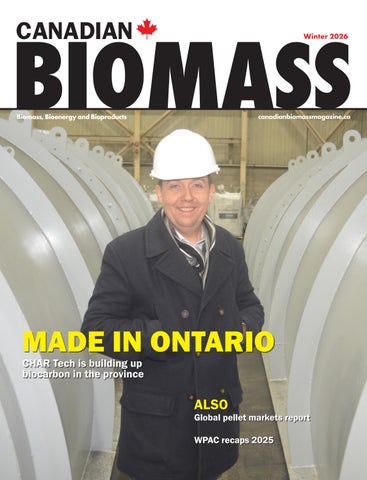
With the closures of the majority of Ontario’s pulp and paper mills, finding new homes for the residuals from sawmills and other wood products plants is paramount to the survival of the sector. At the same time, steel producers are looking for ways to decarbonize their processes. One could argue it is the perfect storm for the rise of companies such as CHAR Technologies.
Wood Pellet Association of Canada executive director Gordon Murray offers a look back at the past year focused on policies and progress related to Canada’s wood pellets sector.
14 Global pellet markets
FutureMetrics president William Strauss reviews several key metrics showing the history and the current status of the wood pellet markets while also looking to the future.
20 Maintaining grinders and chippers
When it comes to maintaining grinders and chippers, it all comes down to adhering to a proper maintenance schedule.
22 Rebuilding the sector
Biofuel Development Opportunity (BDO) Zone Initiative chairman Jordan Solomon and Advanced Biofuels Canada president Fred Ghatala discuss how biomanufacturing and investment-ready BDO Zones can remake Canada’s forest economy.
Pellet power
New opportunity opens up for pellet market in New Brunswick
By Andrew Snook
Canada’s wood pellet producers are always on the lookout for new opportunities to expand their footprints in the global marketplace. While Japan, the U.K., and the EU continue to offer significant opportunities to producers, the announcement of a new project closer to home could offer the greatest opportunity for a company willing to take on some additional risk.
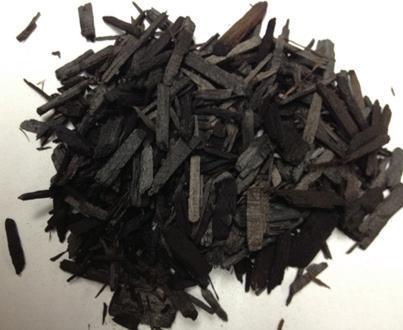
The Province of New Brunswick’s primary electricity provider, NB Power, is currently working on a project that could create the largest market in the country for torrefied (black) pellets. This project is part of a larger initiative by Canada to phase-out coal-fired electricity by 2030 and reach a net-zero energy supply by 2035. The Belledune Clean Fuel Project involves the replacement of coal with black pellets at the 467-MW Belledune Generation Station located in the village of Belledune, N.B. In March 2024, NB Power began introducing “advanced pellets” into the boiler to test the feasibility of the pellets as a fuel source. Twice during the testing phase, the generating station was able to operate on 100 per cent advanced wood pellets.
tion ranges in the hundreds of thousands of tonnes, but this opportunity does not come without significant risk to local producers considering scaling up their operations to supply what would be the largest global consumer of black pellets.
While Canada doesn’t currently have a large-scale supplier of black pellets, changing regulations in the U.K. over the next four years will mean that some Canadian producers will need to pivot and find a new home for their pellets, explained Gordon Murray, executive director of the Wood Pellet Association of Canada, in a recent conversation.
“With the pressure of three to four million tonnes disappearing from the U.K. over the next four years, we’ve got to find another home for Canadian pellets. This project in New Brunswick has huge potential to get one of the biggest power stations off coal,” he said, adding that it significantly reduces greenhouse gas emissions while supporting economic development in the province.
Volume 26 No. 1
Reader Service Print and digital subscription inquiries or changes, please contact Angelita Potal, Customer Service Ph: (416) 510-5113 Fax: (416) 510-6875 Email: apotal@annexbusinessmedia.com Mail: 111 Gordon Baker Rd., Suite 400 Toronto, ON M2H 3R1
Editor - Andrew Snook Ph: (416) 510-6801 asnook@annexbusinessmedia.com
Contributors - Gordon Murray, William Strauss, Jordan Solomon, Fred Ghatala
Group Publisher - Anne Beswick Ph: (416) 510-5248 Mobile: 416-277-8428 abeswick@annexbusinessmedia.com
Western Sales Manager - Tim Shaddick twshaddick@gmail.com Ph: (604) 264-1158 Fax: (604) 264-1367
Audience Development Manager - Layla Samel Ph: 416-510-5187 lsamel@annexbusinessmedia.com
Media Designer - Jaime Ratcliffe
CEO - Scott Jamieson
Canadian Biomass is published four times a year: Winter, Spring, Summer and Fall. Published by Annex Business Media.
Publication Mail Agreement # 40065710
Printed in Canada ISSN 2290-3097
Subscription Rates: Canada - 1 Yr $60.47; 2 Yr $108.20 (Canadian prices do not include applicable taxes) USA – 1 Yr $128.89 CDN; Foreign – 1 Yr $146.39 CDN
NB Power further advanced its research in November 2024 with another test to help calculate the capital cost for the conversion project. The analysis has been ongoing since that time and NB Power stated on its website that a final investment decision is expected sometime in February 2026.
The number of pellets that would be required annually to feed the generating sta-
Local producers could potentially retool their plants to feed the Belledune Generation Station and have supply contracts in place for several years, giving them time to identify additional markets for their black pellets.
As the world continues to decarbonize its energy supply, Canada has an opportunity to lead the way in converting generating stations from coal to black pellets with Belledune building the foundation on which producers can create new homes for advanced pellets around the globe. •
THE PROVINCE OF B.C.’S “PATH TO 45” QUESTIONED AT TLA CONVENTION
During the Truck Loggers Association’s Convention & Trade Show in Vancouver, one of the discussions focused on B.C.’s fibre supply and the province’s “Path to 45” forestry initiative, which targets an actual harvest of 45 million cubic metres from public lands.
The panel session included a presentation by James Girvan, associate for Industrial Forestry Service Ltd., who discussed this mandate in detail, and the progress that has been made towards this goal since its announcement in early 2025. Girvan has a 45-year career in professional forestry as an industry analyst working in consulting, pulp and paper, fibre management, commercial banking, and is a former executive director of the TLA.
He says the reality is that the industry has harvested significantly less in recent years with an actual harvest of 37.6 million cubic metres in 2025, down from 38.4 million cubic metres in 2024. These actual harvest numbers are far lower than the approximately 65 million cubic metres that were harvested annually between 2009 to 2018. While managing the mountain pine beetle outbreak was partially responsible for the spike in actual harvest during that time period, new policy was put into place around 2018 that has had a major impact, Girvan says.
“Since then, we’ve seen that steady decline down to the volume that we’ve seen harvested in the last year,” he says.
While the combination of U.S. duties and tariffs and a weak U.S. homebuilding market are hurting demand for B.C.-produced softwood lumber and other wood products, forest policies and issues with permitting are also having a major impact on logging contractors’ abilities to harvest throughout the province. The recent announcements of mill closures in B.C. have only worsened the situation by lowering the industry’s overall capacity. Girvan said that if we assume the entire industry runs at 95 per cent, including all types of wood products plants and log exports, the industry’s capacity in B.C. would be about 40.5 million cubic metres.
“That’s the capacity of the industry
to use logs, because of all the industry that’s already left. The mill closures we’ve seen, and again, most recently, after the Crofton closure. So from this perspective, achievement of a 45-million cubic metre Crown harvest, together with that 7 million of private [cubic metre harvest], should be more than enough to allow every single mill in the province to run at full capacity, as long as there’s market share and market demand for their products,” he said.
While there are many challenging factors in play for B.C.’s forest products sector to achieve the province’s mandated target of 45 million cubic metres, the root cause of the issues plaguing the
industry are the many forestry policy changes put in place since 2018, Girvan told the crowd.
He ended his presentation predicting that it will be a long time coming before the industry in the province can reach the target of 45 million cubic metres due to the policy issues affecting capacity, as well as mill closures, and a lack of a business climate that is needed to bring back investment back to the sector.
“Like they say in AA, you have to acknowledge the problem in order to start recovery, and I just have not seen that evidence from the government we have today when it comes to the forest industry,” he told the crowd.
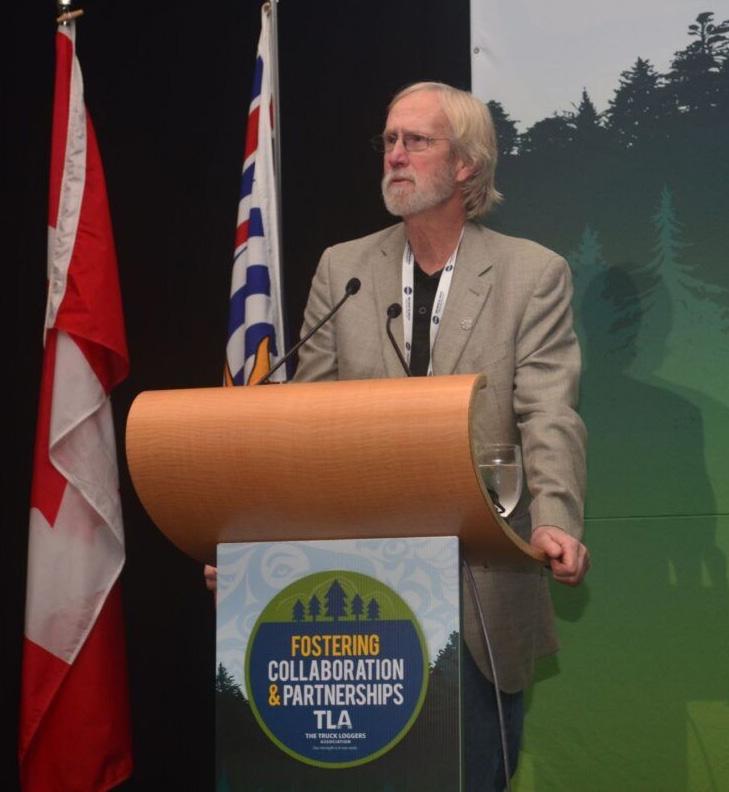
James Girvan discusses the Province of B.C.’s “Path to 45” mandate during the Truck Loggers Association’s Annual Convention & Trade Show in Vancouver. Photo: Andrew Snook.
BRAZIL IN THE SPOTLIGHT AT THE SCALING UP BIO CONFERENCE
The 10th annual edition of the Scaling Up Conference showcased the Brazilian bioeconomy during the two-day event hosted at the Fairmont Château Laurier in Ottawa.
Themed “Accelerating Deep Decarbonization,” the conference kicked off with an opening speech from Carlos Alberto Franco França, Brazil’s ambassador to Canada.
As the largest producer of ethanol outside of the U.S., Brazil has long been active in the biofuels sector. The country launched its national ethanol program in 1975 in response to the oil crisis of the 1970s.
“It was not merely an energy policy. It was a statement of intent. Brazil chose to reduce dependence on imported fossil fuels to a homegrown renewable alternative ethanol from sugar cane, and in doing so, we laid the foundations for one of the most successful low-carbon transitions in the developing world,” França told the crowd.
The vision to become a global producer of renewable fuels matured in the early 2000s when Brazilian car drivers now had the option of choosing between gasoline and ethanol, consolidating Brazil’s energy economy and creating the world’s largest market for biofuels.
“What began as an emergency response became a pillar of my national identity,” França said, adding that the move towards biofuels brought together energy security, climate action and rural development in Brazil. “Such legacy continues to guide us as we pursue a new cycle of innovation in the bioeconomy – one that integrates energy, agriculture, biodiversity, and industrial policy into a coherent vision for the 21st century.”
In 2024, Brazil produced over 37 billion litres of ethanol, accounting for nearly 20 per cent of global biofuel output. Sugarcane remains a key feedstock for Brazil in its production of biofuels, bioelectricity, biogas, bioplastics and biochemicals. Sugarcane accounts for approximately 17 per cent of Brazil’s total energy supply and more than one-third of its renewables supply.
“Few countries have achieved that level of integration,” França told the crowd.
Corn as a feedstock for ethanol production has also grown in popularity in the country. It now represents 20 per cent of the national production, which França said illustrates how Brazilian agriculture has become a platform for circular innovation.
“For instance, each ton of corn produces 450 litres of ethanol and over 200 kilograms of protein-rich animal feed,” he said, stating that biofuels production can complement food security instead of the two being in competition with each other.
As biofuels production grew over the years, França pointed out that more than 98 per cent of sugarcane expansion over the past 20 to 25 years has occurred on already degraded pastures, far from sensitive biomes such as the Amazon Rainforest.
In addition to ethanol production, Brazilian companies are investing heavily in second generation and advanced biofuels, transforming agriculture residues such as sugarcane bagasse into
cellulosic ethanol and biogas, and using palm oil to produce green diesel and sustainable aviation fuel.
França pointed to federal law enacted in October 2024 that supported the growth of Brazil’s biofuels sector, providing a robust regulatory framework that supports the production of green diesel, sustainable aviation fuels, bio-methane and biogas.
“It incentivizes research and development in carbon capture, bio-hydrogen and waste valorization,” he said. “Together, vision, practices and policies form a convenient space of incentives, which connects carbon markets, fiscal instruments and certification schemes to create a predictable environment for investment and innovation.”
França said that Brazil’s early success in ethanol and biodiesel has allowed the country to expand into a “full-scale bio-industrial revolution.” Companies are currently developing bio-based chemicals, bioplastics, biofertilizers, pharmaceuticals and forest-derived products, all while reducing waste.
“The synergy where one industry feeds another exemplifies Brazil’s capacity for circular innovation and resource efficiency,” França said.
He added that Brazil’s successes in bioenergy are not confined within its national borders. Since the 2000s, Brazil has shared its biofuels experience through technical cooperation with over 30 countries, with a focus on Africa and Latin America. Brazil is also a founding member of the Global Biofuels Alliance that was launched during 2023 G20 Summit in New Delhi, India.
During the COP30 Leaders’ Summit in Brazil, the country announced the Belém 4X Pledge on Sustainable Fuels, which is a commitment to quadruple production and use of sustainable fuels by 2035. Nineteen countries have already signed on to this commitment, including Canada.
“This initiative is a practical roadmap for scaling up biofuels, biogas and synthetic fuels worldwide, especially in developing regions where the solutions are affordable, available and inclusive,” França said.
Carlos Alberto Franco França, Ambassador of Brazil to Canada.
CANADIAN LIQUID FUELS
During the Scaling Up Bio Conference, Fred Ghatala, president of Advanced Biofuels Canada, offered attendees an update on the state of liquid clean fuels in Canada.
Advanced Biofuels Canada promotes the production and use of advanced biofuels in Canada by expanding market access, creating a policy environment that is conducive for investment and collaborating broadly to decarbonize transportation and enhance energy security by increasing renewable content blends in gas, diesel, and jet fuel, while removing fuels and heating oil. The organization’s 30-plus member companies represent the production of 45 billion litres of global renewable fuel production.
Ghatala shared data from the Biofuels in Canada 2025 report, created by Navius Research, which is in its tenth year of reporting.
“It finally gives us a decade looking at clean fuel production and growth and use, and emission reductions and taxation. Lots and lots of details for us to look at,” Ghatala said.
The report data stated that the renewable fuels market is experiencing continuous growth and that Canada is now a 6-billion litre market.
“Bioethanol has increased about 1.45x even as total use of blended gasoline has gone down over the period. Renewables and diesel have gone up by 10x, and that includes biodiesel and renewable diesel and a bit of co-processed fuel over that same period, even while total blended diesel use declines,” Ghatala told the crowd.
He also presented the blending levels and where the volumes of
renewables are occurring in the different types of fuel. In the past year, 10 per cent of renewables were in gasoline; about seven per cent of renewables were in diesel.
“Last year alone, biomass-based diesel consumption went up nine per cent to almost 1.5 billion litres per year. Ethanol increased six per cent to 4.2 billion litres per year,” he said.
Renewable fuels in Canada are approximately a 60-40 split between gas and diesel with consumption varying significantly across the provinces. Ontario is the largest consumer of bioethanol; while British Columbia is the largest consumer of biomass-based diesel at over 1 billion litres.
The use of renewable fuels within the gasoline pool are currently above the minimum mandated volumes driven by consumption in Ontario, Quebec and B.C. Ghatala said that is partially due to Ontario and Quebec moving to 15-per-cent renewables in gasoline by 2030; and British Columbia, which is about 10-per-cent renewables in gasoline, and will soon be selling E15 (15-per-cent American-made ethanol) in the province, as it is in Ontario and Quebec. On the renewable distillate side, British Columbia is currently over 30-percent renewable diesel.
“Thirty is a pretty big number in Canada. If I go to a conference in California and say, ‘We’re at 30 per cent,” they’d say, ‘Oh, that’s really cute, we’re at 80 per cent.’ But it’s a big deal,” Ghatala said.
The larger adoption of renewable diesel in B.C. is entirely policy driven, he explained. The province has also put Canada’s first low-carbon jet fuel obligation into place.
“In 2024 alone, there was nearly one-per-cent SAF (sustainable aviation fuel) being used in the YVR jet fuel supply chain. We expect that’s continued in 2025 and will continue as the policy takes more effect. British Columbia’s approach to jet [fuel] is a volumetric requirement that starts at one per cent in 2028 and grows to three in 2030; and there’s a carbon intensity reduction of 10 per cent that starts in 2026. So, a lot of that is pre-mandate, pre-CI reduction requirement,” Ghatala explained.
The current status of the Canadian clean fuel supply chain for liquid renewable fuels is over 2 billion litres of bioethanol production, which equates to roughly five per cent of Canada’s gasoline pool. The country also has capacity of approximately 2.5 billion litres of renewable diesel production; 500 million litres of biodiesel capacity; and a small amount of co-processing; which Ghatala said is likely growing as additional refineries continue to co-process.
The current capacity-to-use ratio is about 50 per cent for ethanol produced in Canada, meaning the industry produces about half of the country’s demand. However, when biodiesel and renewable diesel production are included, the country is oversupply for the current level of its policies, Ghatala noted.
“So, there’s a significant opportunity for provinces. Especially provinces that have renewable diesel production in them, or have recent canola crush capacity in them, to look at expanding the minimum volume requirements to ensure that there’s a market for those fuels that isn’t at risk by foreign trade, distortion and turbulence,” he said.
2025 recap
Quietly strengthening Canada’s pellet sector
By Gordon Murray, Executive Director, Wood Pellet Association of Canada
Every year brings its mix of challenges and opportunities for Canada’s wood pellet sector. What determines our momentum is not the circumstances we face, but whether we continue to show up, work together, and move the file forward. Looking back at 2025, progress across markets, safety,
research and policy reflected consistent, collective effort – not individual achievement.
INTERNATIONAL INITIATIVES
The 2025–26 WPAC Business Plan identifies Japan as a top priority, and the year’s activities reflected that di-
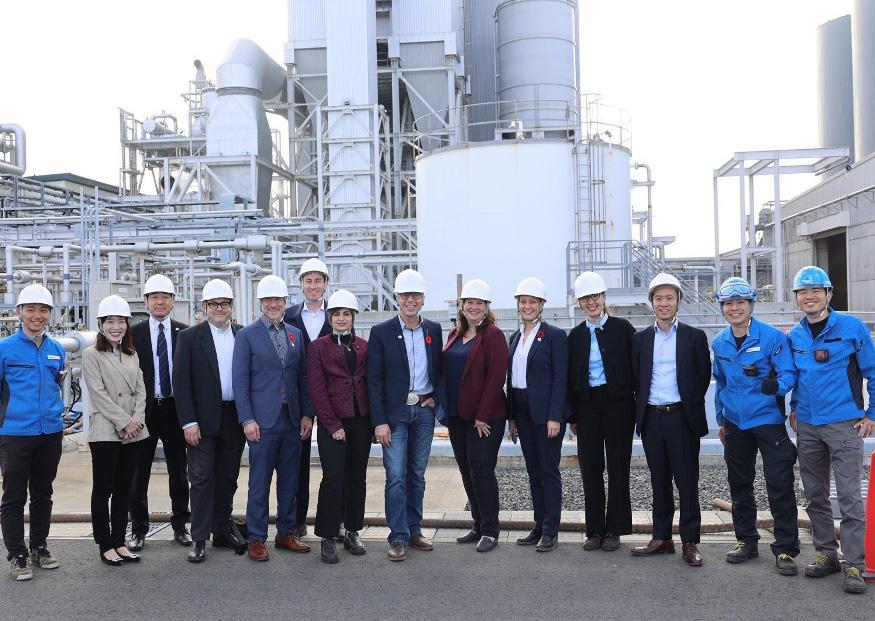
rection. One of the clearest examples of our progress, and a fitting image for this column, comes from our 2025 mission to Japan. The photograph included here shows WPAC representatives alongside senior officials from Alberta’s Ministry of Forestry and Parks, including Minister Todd Loewen and Deputy Minister
Canadian delegates, including WPAC and Alberta’s Ministry of Forestry and Parks, visiting the Omaezaki Biomass Power Station as part of a 2025 mission to strengthen pellet market ties in Japan.
“If successful, Belledune would provide a practical blueprint for future coal-to-biomass transitions and create new opportunities...”
Ronda Goulden, together with Japanese utility partners at the Omaezaki Biomass Power Station. It captures a simple truth about this past year: progress happens when we build and maintain real relationships. Japan remains one of the most important long-term markets for Canadian pellets, and in 2025, we reinforced that relationship at every level.
Throughout the year, our team had multiple touchpoints with Japanese stakeholders: outreach and meetings in May, participation in ISO/TC 238 working groups and workshops in Tokyo in October, and the joint mission to Japan with Alberta and British Columbia in November. These engagements helped reinforce Canada’s position as a reliable, sustainable pellet supplier at a time when Japan is placing greater emphasis on biomass sustainability requirements.
Our international efforts extended to Europe as well. WPAC supported a joint safety workshop in Copenhagen with FutureMetrics and Ørsted, continued our involvement in Renewable Energy Directive (RED III) and European Union Deforestation Regulation (EUDR) discussions, and maintained our seat on the European Pellet Council. These activities help ensure Canadian producers remain aligned with evolving European standards—something members consistently identify as essential for confidence in long-term market access.
WORK HERE AT HOME
Domestically, one of the most significant files of the year was our collaboration with NB Power on the possible conversion of the Belledune Generating Station in New Brunswick from coal to thermally treated pellets. This is a large, first-of-its-kind project in Canada, and its success depends on more than the power-station conversion alone. Much
of the capital risk sits upstream with pellet producers, who would need to convert existing facilities to produce black pellets at a commercial scale. Throughout 2025, WPAC and NB Power worked closely to define what a viable supply chain could look like—including fuel requirements, production capacity and the scale of investment required to build and sustain a long-term pellet supply.
This included developing a coordinated message for governments on the project’s economic and clean-power value, outlining the need for federal capital support and risk-sharing tools, and identifying how Investment Tax Credits and federal financing programs could reduce upfront costs enough to make large-scale investment feasible. These are early steps, but they are essential ones. If successful, Belledune would provide a practical blueprint for future coal-to-biomass transitions and create new opportunities for pellet producers in Atlantic Canada and beyond.
SAFETY: A STEADY DRUM
Safety continued to move forward as well. The Rotary Drum Dryer Working Group completed its work; Process Safety Management implementation advanced; and attention to mental health and musculoskeletal injury prevention grew. The WPAC Safety Committee continued to engage the industry through articles, webinars and the Safety Hero program. These efforts rarely make headlines, but they remain foundational to our long-term credibility and performance.
CONNECTION TO BROADER FOREST ECONOMY
The year also underscored how closely our sector is tied to the broader forest economy. Fibre availability remained a major challenge in British Colum -
bia, shaping the operating realities for sawmills, pellet producers and transportation partners. WPAC continued to communicate these pressures through updates and field tours with First Nations partners. The Business Plan reflects this ongoing need to articulate upstream constraints and their impacts across the supply chain.
RESEARCH CONTRIBUTIONS
Our research efforts also continued, though at a measured pace. WPAC worked with the University of British Columbia’s Biomass and Bioenergy Research Group on early-stage exploration of near-infrared spectroscopy as a potential tool to support pellet quality. In 2025, most of our effort focused on preparing and submitting several funding applications to advance this work, along with hosting a webinar to share preliminary insights with members. Progress was incremental, but these steps helped maintain technical awareness and position the sector for future research when external funding becomes available.
SHARED COMMITMENT
Across markets, safety, research, advocacy and communication, the theme is consistent: progress depends on collective commitment. WPAC’s ability to support the sector comes from member engagement, shared priorities and the understanding that a coordinated industry voice is essential.
As we enter 2026, I’m grateful for the confidence members continue to place in WPAC and for the trust that allows us to carry out this work on their behalf. This is not an easy moment for the forest sector, but the steadiness shown in 2025 demonstrates that practical, focused effort can still deliver meaningful results.
If you’re already a member, thank you. If you’re watching the sector from the outside, I encourage you to join us. Membership support is vital to sustaining this work, and we remain open to producers, suppliers and all those who benefit from a strong and prosperous Canadian wood pellet sector. •
Made in Ontario
CHAR Tech is building up biocarbon
By Andrew Snook
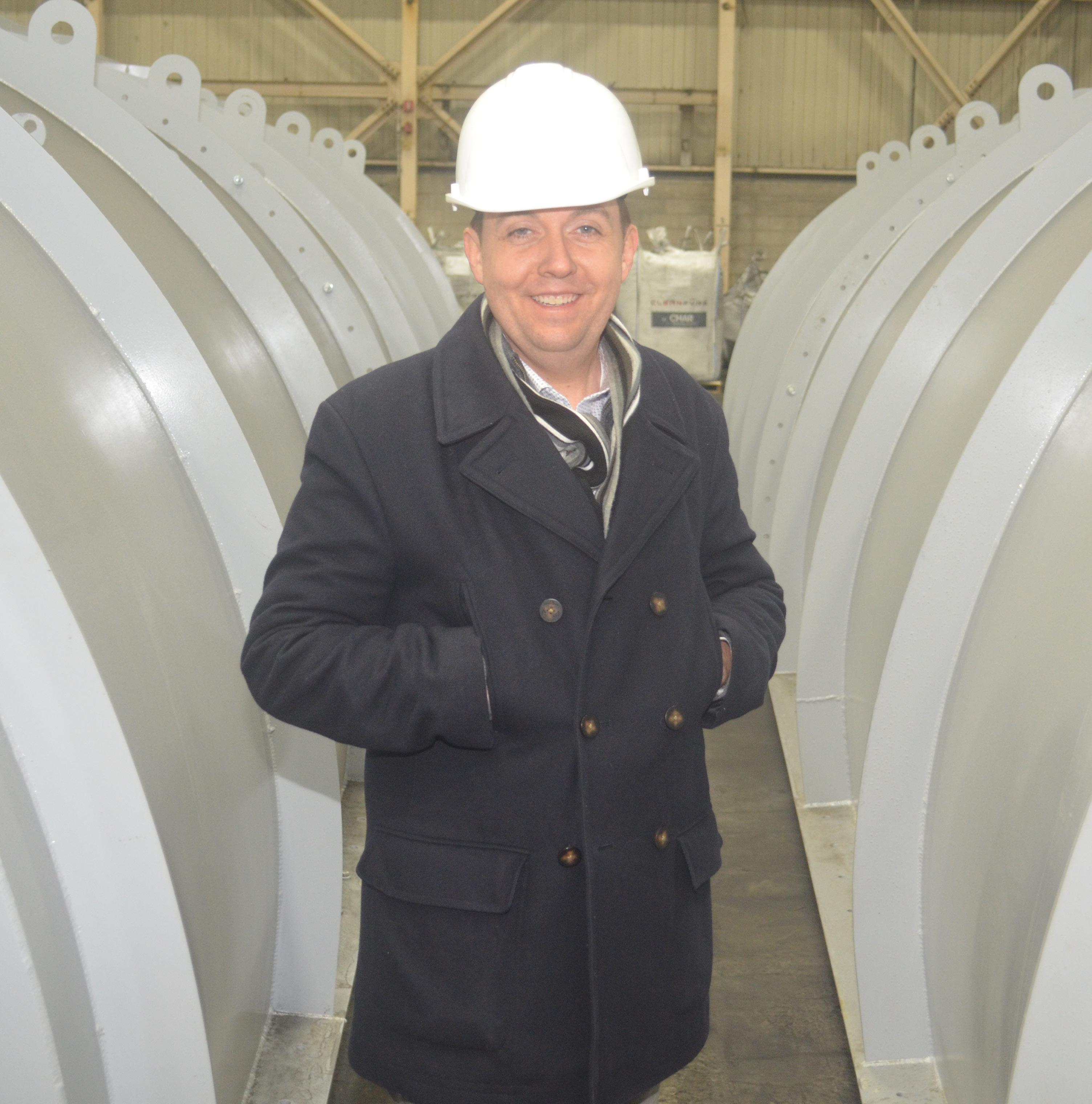
Ontario has a waste wood problem. With the closures of the majority of the province’s pulp and paper plants over the past 20 years, finding new homes for the residuals from sawmills and other wood products plants is paramount to the survival of the sector in Ontario. At the same time, steel producers are looking for ways to decarbonize their processes. One could argue it is the perfect storm for successful rise of companies such as CHAR Technologies (CHAR Tech), a Thorold, Ont.-based producer of biocarbon.
The company’s journey began as a graduate studies project being researched by Andrew White, CEO of CHAR Tech, when he was completing his master’s degree at the University of Toronto in 2010.
“We were looking at making different types of activated carbons using a high-temperature pyrolysis process,” White recalls. “As I completed my master’s in 2010, we started to build out the activated carbon business. We connected with the steel industry through an industry association, and they said, ‘Hey, we’ve got a huge demand for these biocarbon materials to offset metallurgical coal,’ and that presented a really interesting opportunity for us.”
By 2016, White and his team were performing trials and tests to make agglomerated biocarbons and found that the pyrolysis gas they were generating out of wood waste was a good precursor to producing renewable natural gas (RNG).
“When you look at the makeup of wood, it’s rough numbers, it’s 20 per cent fixed carbon, 70-plus per cent volatile matter, and that volatile matter is driven off in the pyrolysis process. We’re
left with the fixed carbon that makes the pellets,” White explains.
During this production process, 70 per cent of the gas produced is lost. In most pyrolysis applications, companies typically burn that gas off and generate heat to run a kiln. However, the production process can be adapted so only 30 to 40 per cent of that gas is needed to operate the kiln. This creates opportunity for generate another revenue stream.
“You’re left with about 60 to 70 per cent that you can sell as a product. That’s where we started to really go down that path, because it really helps the economics and the bankability of a project to have two outputs and not be wasting 70 per cent of your input,” White says.
BIOCARBON PELLET PROCESS
The biocarbon pellet pilot-scale production process starts with the unloading of biochar (the raw output from the pyrolysis process) from a super sack at a known weight and moisture content into the infeed system. From there, the operator can calculate how much binder they’re going to need and how much more moisture they may need to add to mix.
“For the binders, we’ll give it about a 10- to 15-minute dry mix, and then we’ll add our water in, give it another 10- to 15-minute mix,” explains Andrew Thompson, lead plant operator.
From there, a slide gate is opened, and the biochar mix is transferred via conveyor belt into a hopper bin. The mix then gets transferred with the help of
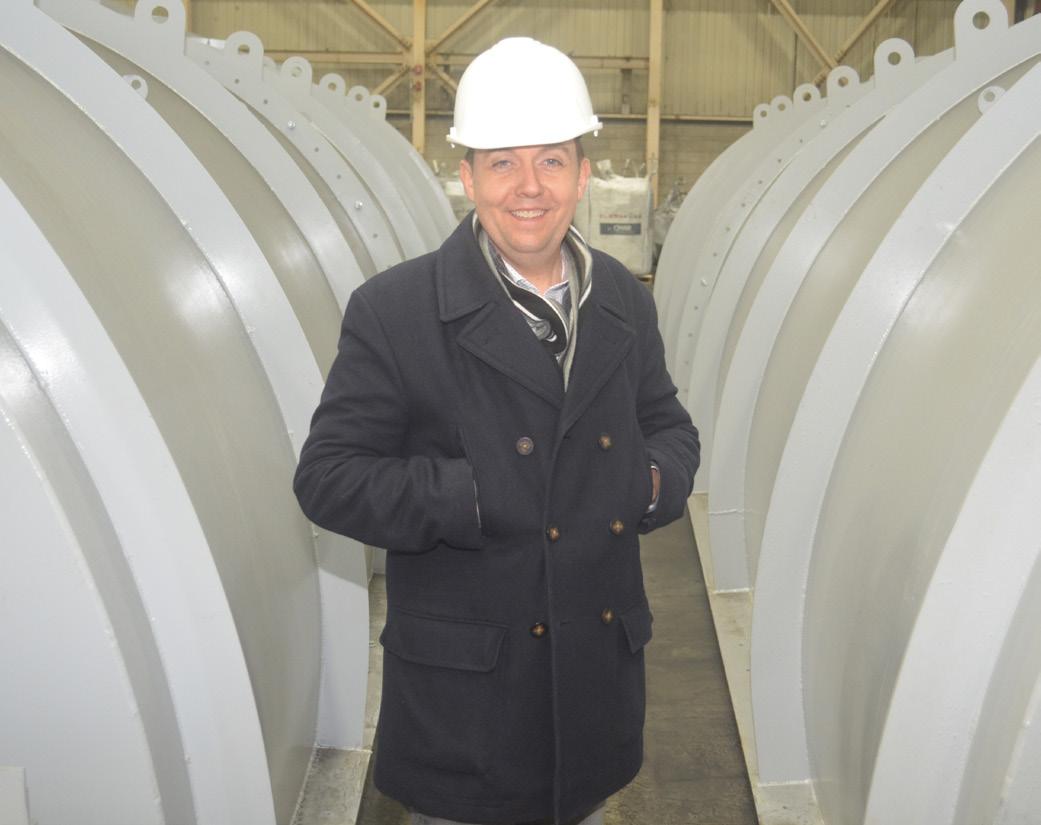
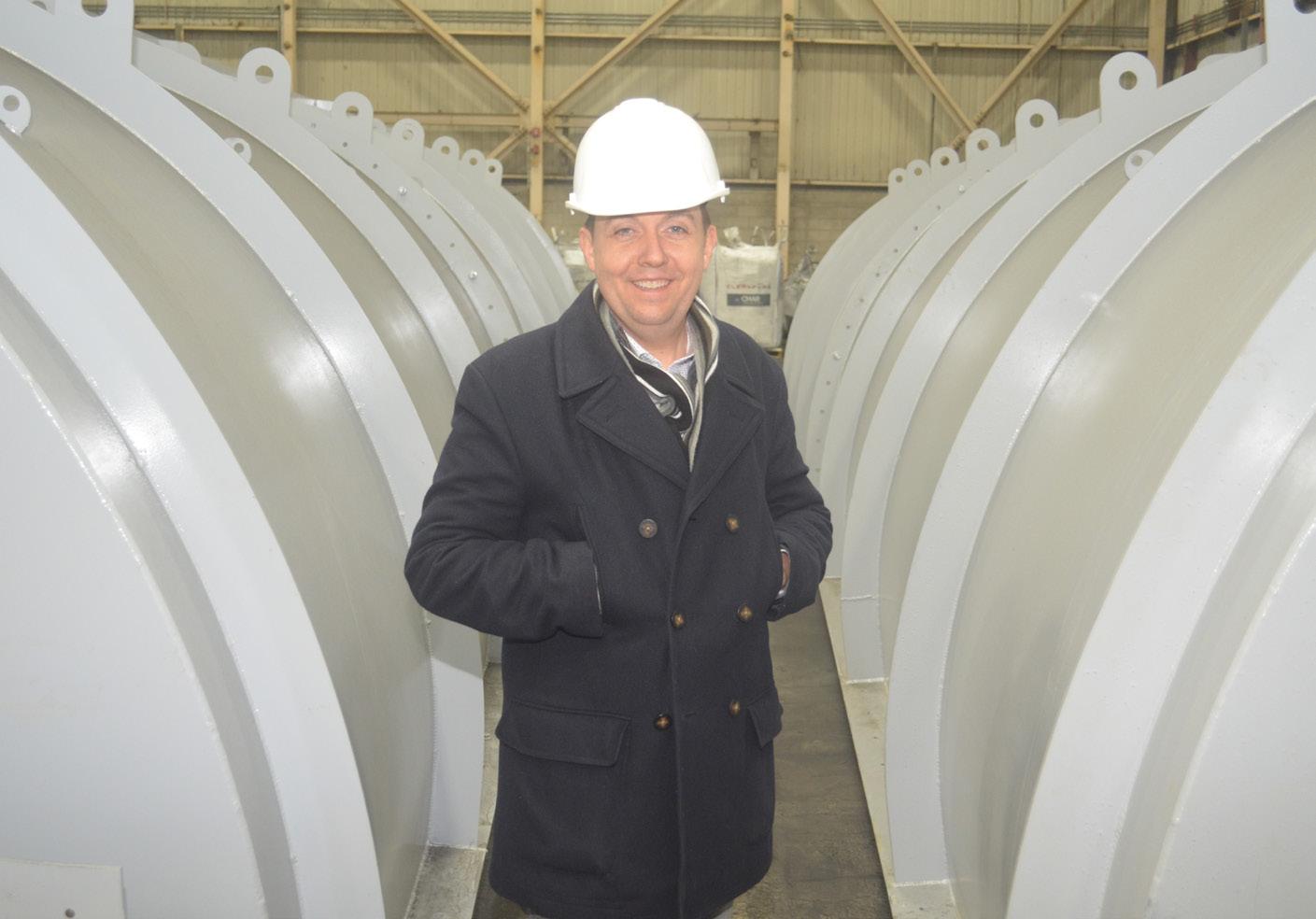
CHAR Technologies CEO Andrew White is leading the process for the commissioning of the company’s Thorold Renewable Energy Facility in Thorold, Ont. Photos: Andrew Snook.
an auger into the pelletizer, where it is compressed into pellets and cut down to the required length. The pellets are then transferred via a vibrating table into the oven.
“The vibration helps us spread it out, so instead of just having one channel come down, we can spread it out and utilize the full width of the belt,” Thompson says.
The pellets are baked between 10 to 12 minutes and are then conveyed to a bucket elevator, which transfers the pellets to a rotary screener that separates the right-sized pellets and transfers them into a super sack for shipping.
GOVERNMENT ASSISTANCE
CHAR Tech recently received additional assistance to help grow its operations in Ontario thanks to $2.25 million in funding courtesy of the Government of Ontario’s Forest Biomass Program. The funding will help the company scale up its biocarbon commercial pellet operations, which is produced from sawmill residuals and other underutilized wood.
The funding will go towards assisting the company with improving its biocarbon storage and transport durability required to meet the needs of ArcelorMittal Dofasco and other industrial steelmaking operations.
“Once this facility is complete, what we’re doing here is converting about 75,000 green metric tonnes a year of woody biomass into renewable natural gas and biocarbon,” says White. “I would just like to thank again the Ontario government for its support to accelerate CHAR Tech’s work in advancing biocarbon pellet production for steelmaking and for other metallurgical applications.”
Once fully operational, CHAR Tech’s commercial operations have the potential to be a home for some of the residuals being produced by Ontario’s forest products producers, which have been challenged to find homes for these byproducts with the closing of pulp and paper mills across the province. The importance of finding new homes for these residuals is not lost on Ontario Forest Industries Association (OFIA) president
Ian Dunn, who was in attendance for the funding announcement.
“It’s imperative. We’re standing in a former pulp and paper plant today, and in 2005, there were 16 of these types of facilities across the province of Ontario. Today, there are three that are operating. We’ve seen a huge amount of consolidation in the pulp paper sector,” Dunn says. “In 2005, those facilities consumed 18 million cubic metres. So, just the pulp and paper sector 20 years ago consumed more fibre than the entire forest products industry does today in Ontario – that includes sawmills, engineered wood products and panels. If we want to grow the industry, the biggest bottleneck right now is an outlet for the residuals produced by solid wood producers. That’s why facilities like this are so important, and it’s not just the residuals, it’s also the material in the forests. We have worldclass sawmills in the province, but they require a certain type of tree, a certain quality of tree, and we need to find markets and homes for all different types of species of quality. So, we’re really supportive of the Province’s Forest Biomass Fund, which has acted as a really effec-
tive incubator for projects like this, and we hope to see a lot more projects.”
The $2.25-million funding announcement was made by Associate Minister of Forestry and Forest Products Kevin Holland.
“CHAR Tech is a forest sector success story providing good jobs that make this community stronger, developing renewable fuels that can lower emissions and helping our industry maximize the value of wood by putting more forest biomass to work,” Holland told the crowd during the funding announcement. “That investment through our Forest Sector Investment Innovation Program helped upgrade operations and enhance CHAR Tech’s contributions to protecting Ontario’s forest economy. The forest sector is a vital pillar of our province, generating over $21 billion in revenue and supporting more than 128,000 jobs. These jobs keep families rooted, support local businesses and strengthen communities all across the province.”
The additional $2.2-million investment by the province will support six existing jobs and create four new jobs at the company, which is in the process of
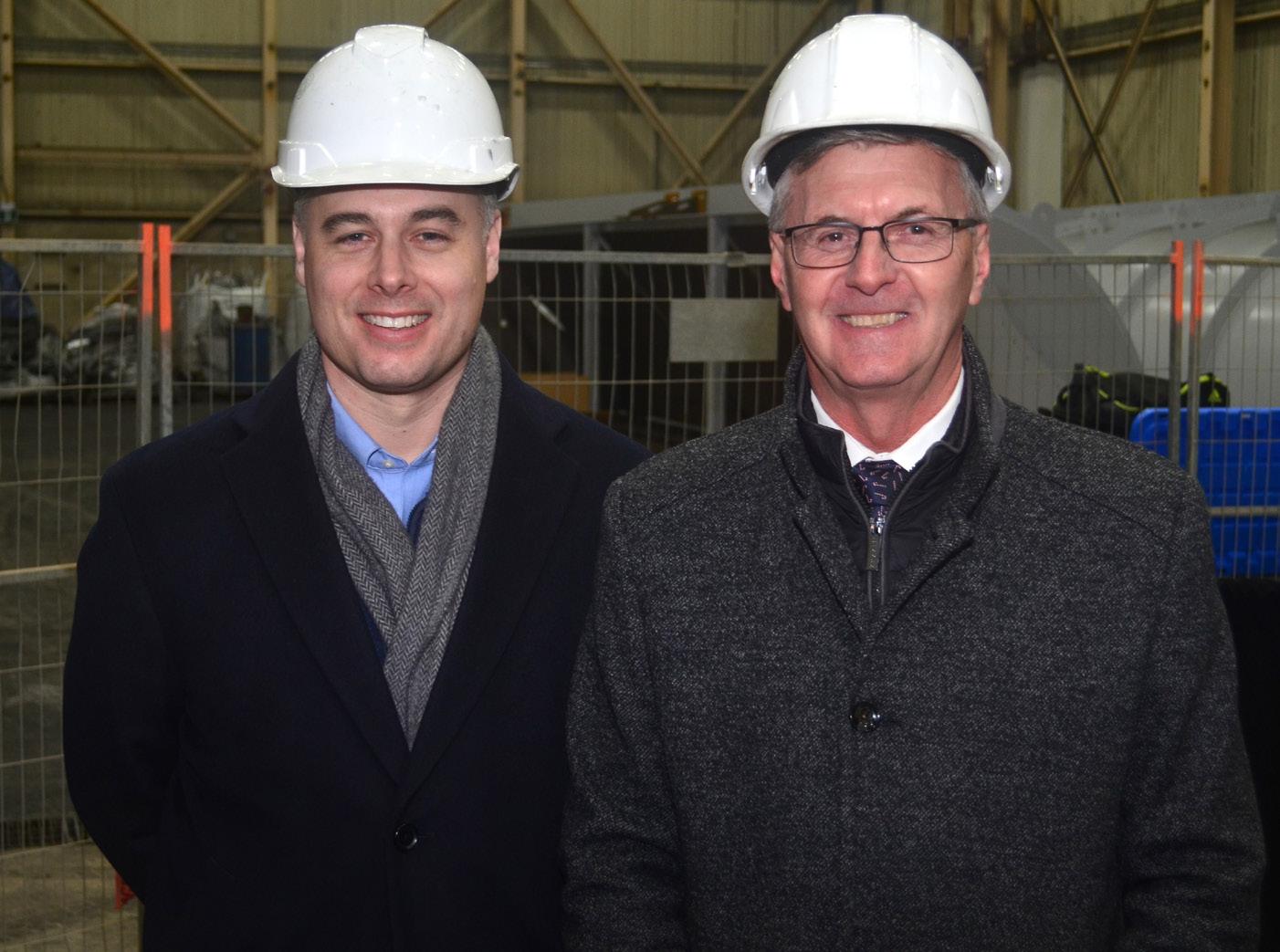
Ontario Forest Industries Association president Ian Dunn alongside Ontario’s Associate Minister of Forestry and Forest Products Kevin Holland at CHAR Tech’s plant in Thorold.
COMMISSIONING COMMENCES
In late January, commissioning commenced at the company’s Thorold Renewable Energy Facility. CHAR Tech is targeting a Phase 1 biocarbon production run-rate of 5,000 tonnes per year by the end of first quarter of 2026. The biocarbon will be consumed by steelmakers and other metallurgical facilities, including locally by ArcelorMittal Dofasco, to reduce its fossil carbon emissions in the steelmaking process.
The commissioning of the facility is being performed in stages, starting with bringing feedstock receiving, handling, and preparation systems online in order to support stable material flow ahead of commissioning of the commercial HTP kiln. As the commissioning processes progress, production volumes are expected to rise.
“Commissioning is where operating performance, throughput, and product quality are established,” says Andrew White, CEO of CHAR Tech. “We are bringing systems online in sequence, beginning with feedstock handling and moving into kiln operations, with the goal of reaching stable, saleable, production as efficiently as possible.”
expanding its biocarbon production.
Also on hand for the funding announcement was City of Thorold Mayor Terry Ugulini, who discussed the Thorold Multimodal Hub, the 600-plus acre industrial complex where CHAR Tech operates its biocarbon plant, which was once home to a paper mill. The town was once home to a Resolute Forest Products newsprint mill that was shut down in 2017; and a Georgia-Pacific paper mill shut down in 2014, that was later demol-
ished in 2017.
“It was a sad time in 2017, but now I look back, and you see, sometimes things happen for a reason. Well, that reason today is showing because we have 32 businesses and growing on the three properties, and the future is bright,” Ugulini said. “The city of Thorold has a long history in the pulp and paper industry… to see this facility become repurposed and thriving bodes well for the future.”
“Once this facility is complete, what we’re doing here is converting about 75,000 green metric tonnes a year of woody biomass into renewable natural gas and biocarbon.”
After Phase 1 is completed, the company will begin Phase 2 of the construction process. This includes the installation of a second HTP kiln to double biocarbon production capacity; the addition of methanation equipment to upgrade synthetic gas into renewable natural gas (RNG); and construction of an onsite RNG pipeline injection point.
The Thorold Renewable Energy Facility is structured as a limited partnership with the BMI Group, in which CHAR Tech has 50-per-cent ownership. CHAR Tech is targeting RNG production to commence by Q1 2027.
EXPANSION PLANS
To date, the Province of Ontario has invested $6.4 million into CHAR Tech to assist it in scaling up its operations. Companies like this one are in demand not only for the products they produce, but also for the feed stock they accept. With a huge need to find homes for
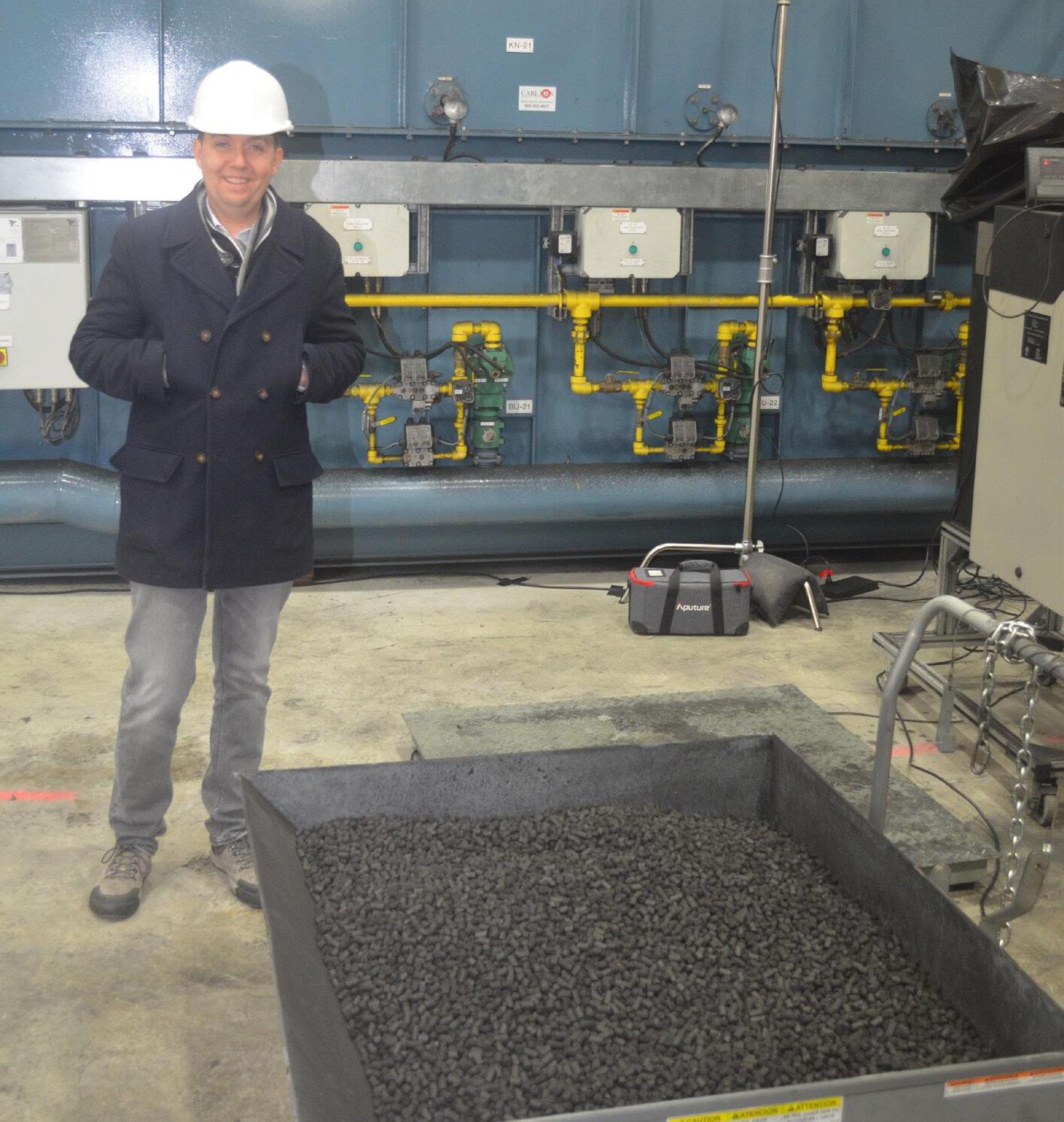
CHAR Technologies CEO Andrew White shows off some of the company’s biocarbon pellets.
forest residuals in northern Ontario, CHAR Tech is developing a second renewable energy site north of Thunder Bay working with Lake Nipigon Forest Management Inc., a forest management co-operative comprised of four local First Nation Communities: Red Rock Indian Band; Biinjitiwabik Zaaging Anishnabek; Bingwi Neyaashi Anishinaabek; and Animbiigoo Zaagi’igan Anishinaabek.
“They have a lot of residual material they need to find a home for, and they’re connected into the biomass and residual supply chain,” White says. “As some of these materials become available or need to find homes, the nice thing about a pyrolysis process is now that we have so much experience running different biomass, if we switched from pulp chips to forest residual grounds, we could test what that material is. We can adjust the operating conditions and parameters to ensure we make quality products.”
One of the other benefits of using CHAR Tech’s pyrolysis process is that it is flexible when it comes to moisture content.
“Obviously, the more moisture, the more energy we self-consume, so we want to dry it out and manage that appropriately.” White says. “Obviously, we can’t take things like legacy bark that are really wet, full of ash and kind of degraded. But things like fresh bark work actually reasonably well, as long as you get the material handling figured out.”
The key to a successful expansion of the Thorold and Lake Nipigon production sites will be not building the plants to be too large, White says.
“I think that’s one of the factors that can lead to failure in biomass processing. We’ve seen plants that are we’re going to take two million tons a year of fibre, and that’s all the fibre available. What happens if there’s supply chain challenges and then your plant shuts down? You
can’t do that. So, we’re keeping our sizes reasonable,” White says.
CHAR Tech is building out its plants in a modular fashion starting with two processing lines in Thorold and four processing lines in Lake Nipigon.
“That allows a bit more of a dynamic reponse to supply chain. Because of our size, we’re not really taking so much of the supply that I think that’ll be an issue. But if it ever was, you can shut down a line and still operate and still make product and manage. I think it’s all supply chain management, feedstock management, and not scaling to the point that you’ve achieved the ultimate economy of scale for capital, but you’re really challenged on keeping the beast fed. That’s really the approach we’re taking.”
The company is expecting construction of the full commercial scale plant in Lake Nipigon to commence in the summer of 2026 with a targeted production 30,000 tonnes of biocarbon annually. •
Global pellet markets
Strong historical growth with significant changes coming
By William Strauss, president, FutureMetrics
This article will review several key metrics showing the history and the current status of the wood pellet markets. The article will also look to the future. The analysis will focus on the power generating sector and on emerging uses for upgraded densified bioresource derived products and how that supports the large-scale production of those products and international trade in those products.
While the use of wood pellets for heating is a major sector (about 20 million tonnes of the nearly 50 million tonnes of estimated demand in 2025), the supply of pellet fuel for the heating markets tends to come from regional producers. Those producers typically put most of their production from the pellet mill into small bags or into local bulk pellet delivery trucks to supply owners of pellet stoves and boilers. So-called “heating” pellets, with a few exceptions, are typically not transported in bulk on ships.
As with all internationally traded commodities (ignoring trade distortions such as tariffs), pellets that meet specifications are produced in large quantities by the most efficient and lowest cost producers and shipped to the buyers. For the so-called “industrial” pellet markets for which the pellet fuel is a coal replacement in power generation, currently most of the nearly 30 million tonnes per year of current demand is moved via ships.
HISTORY TO THE PRESENT
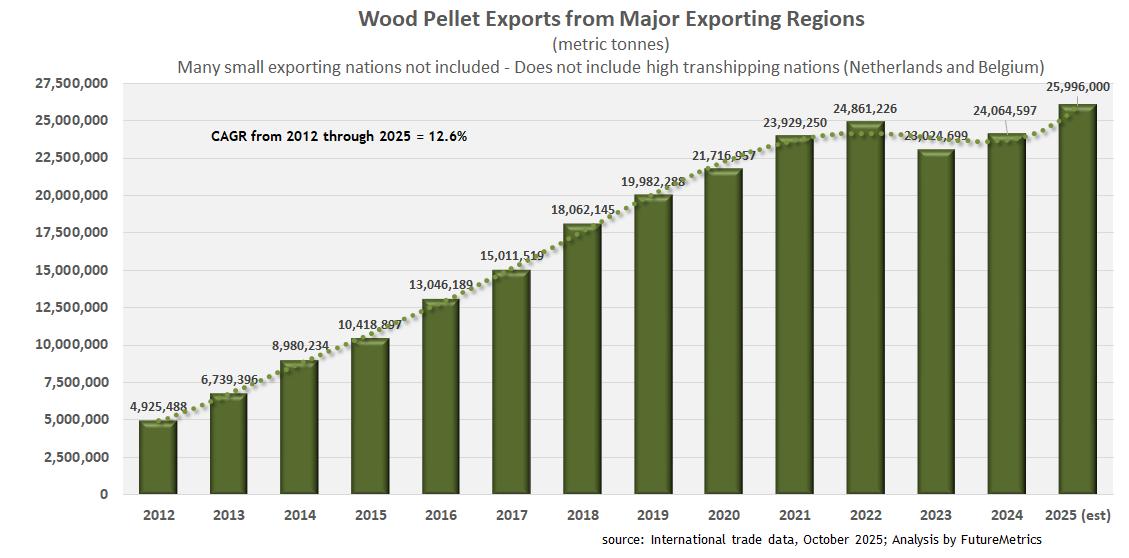
The industrial pellet sector grew at a compound annual growth rate (CAGR) of 15.9 per cent from 2012 through 2022. The year 2023 saw a major drop in exports in part due to the complex effects on all commodity markets as a result of the Russo-Ukrainian
War. But the markets have rebounded. As Figure 1 shows, estimated trade in 20251 will surpass the previous 2022 peak.
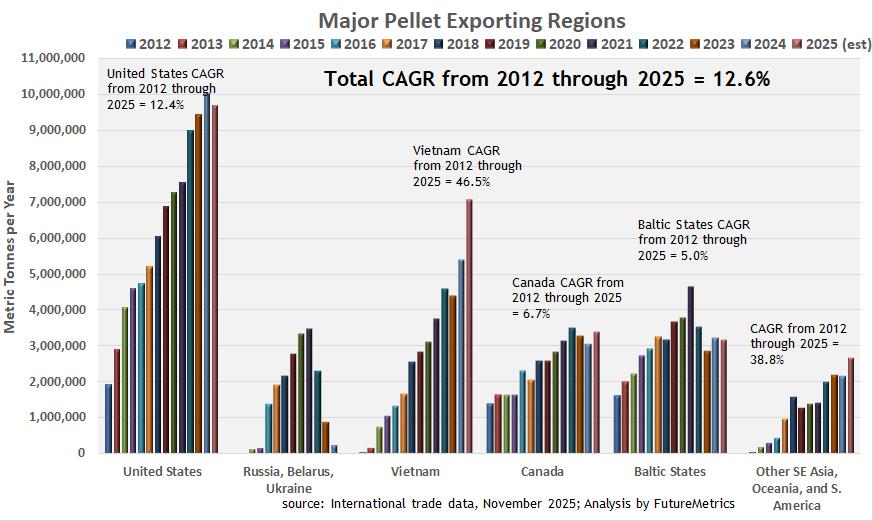
The major exporting regions that are supplying the international markets are shown in Figure 2.
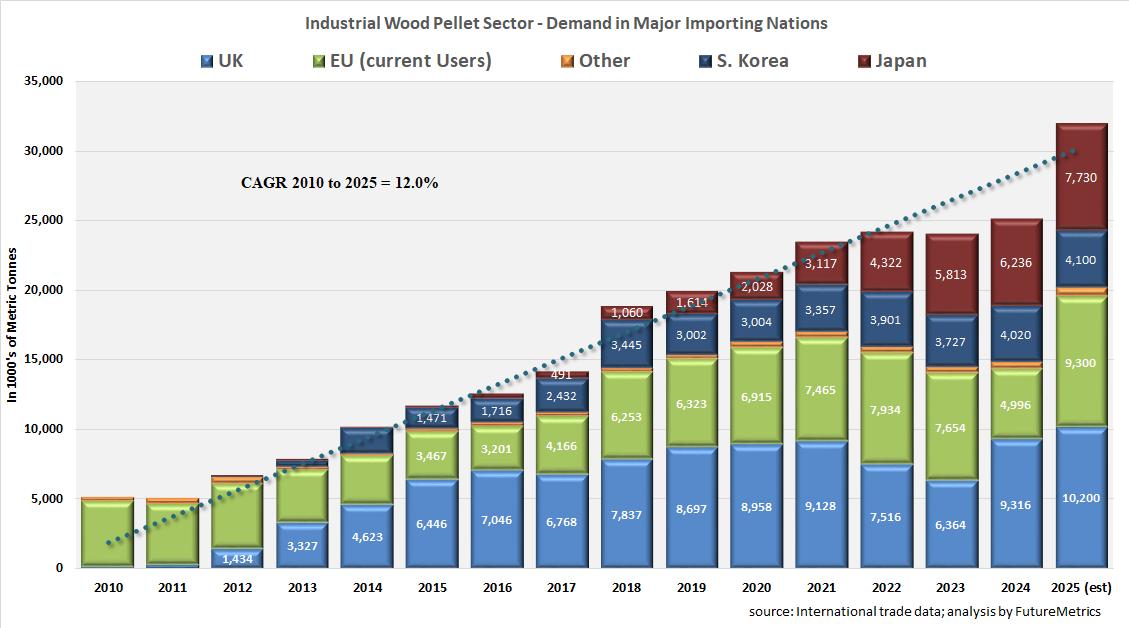
The growth in demand has been primarily from four sources: western Europe, England, Japan, and South Korea (see Figure
3).
As Figure 2 shows, supply growth in the industrial pellet sector has been dominated by the United States.
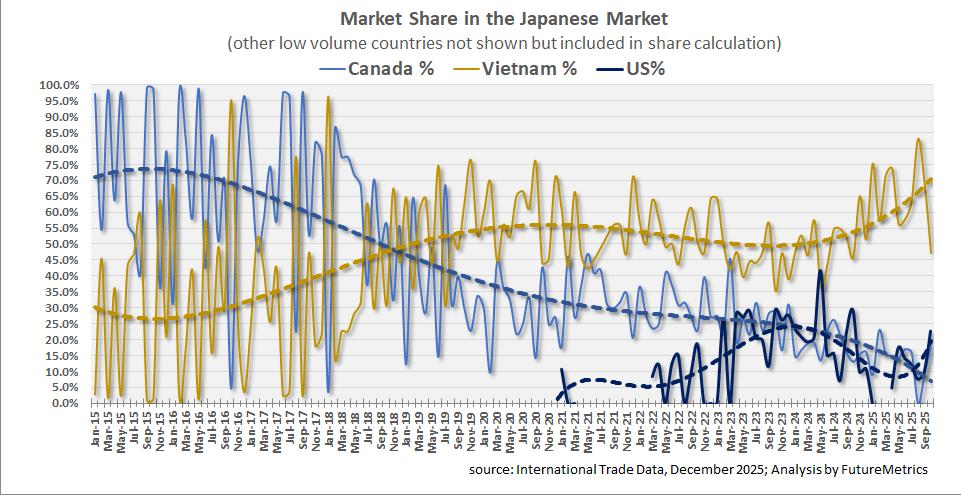
However, as in shown in the Japanese market share chart (see the Japan market share chart Figure 4), Vietnam’s rapid growth, shown in Figure 2, has made it the dominate producer for supplying the Japa-
Figure 1 - Wood Pellet Exports from Major Exporting Regions
Figure 2: Major pellet exporting regions
nese market.
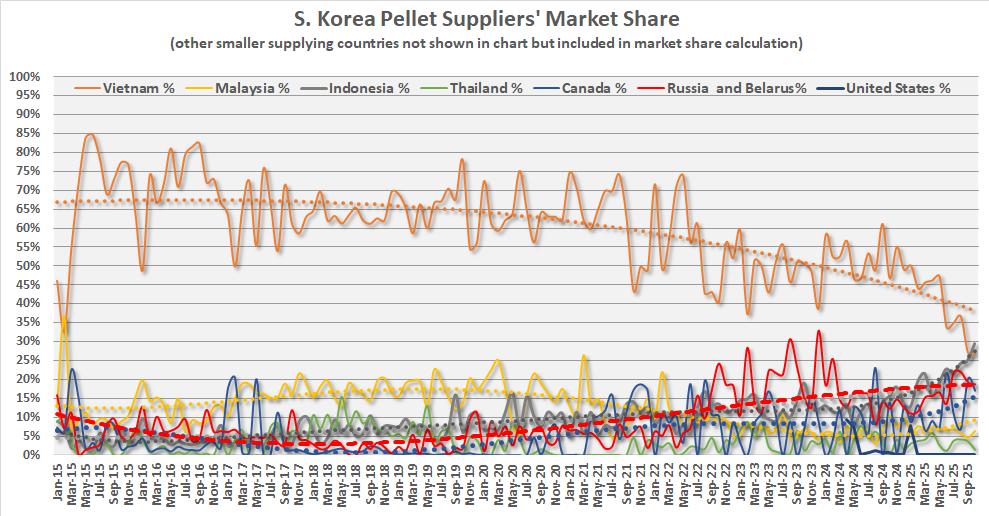
South Korea has a diverse set of suppliers. Vietnam’s early dominance has been eroded by increasing imports from Malaysia, Russia, and Canada (see South Korea market share chart Figure 5).
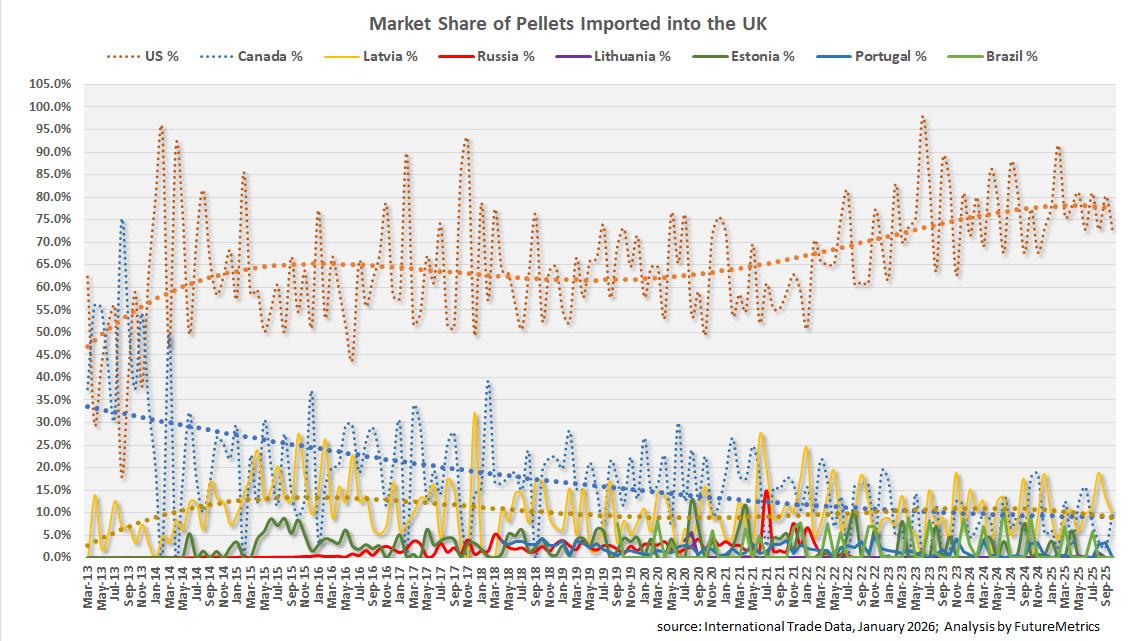
The U.S. is by far the dominant supplier to the U.K. (see U.K. market share chart Figure 6). Because of this dominance, as is discussed below, changes in the U.K.’s policies in early 2027 will create significant challenges for U.S. producers.
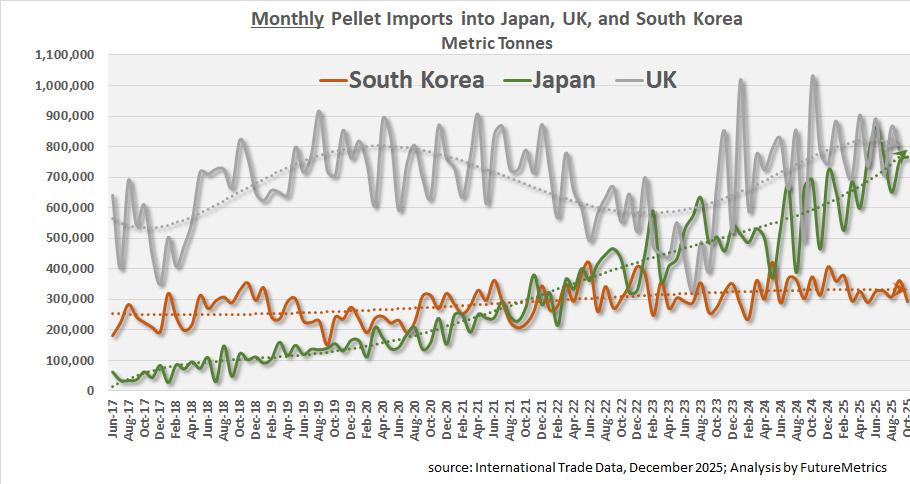
In terms of total import tonnages, the U.K. has been dominant. However, a combination of a demand shock in the U.K. (discussed below) and continued steady growth in Japan’s industrial pellet
fuel imports suggest that by 2027 Japan will be the leading importer of pellet fuel. See Figure 7, which shows monthly import tonnages for Japan, the U.K., and South Korea.
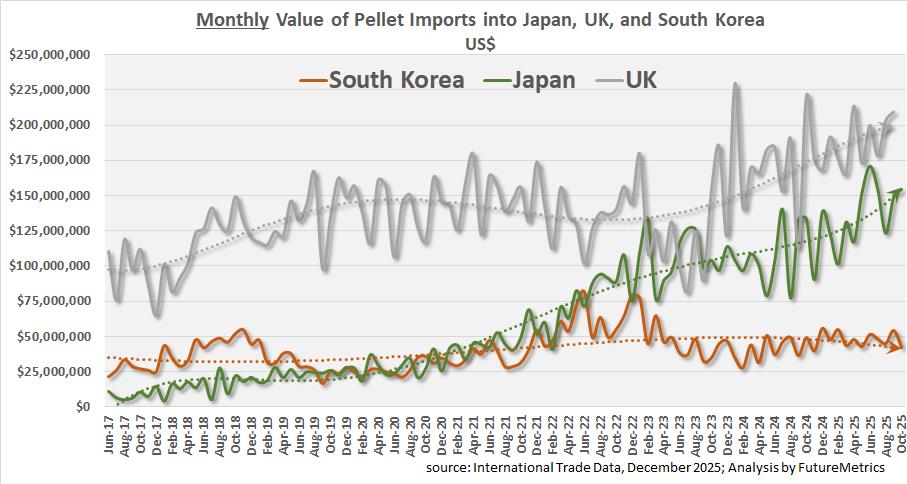
The next two charts compare pricing information for Japan, the U.K., and South Korea. Figure 8 shows the monthly value of pellet fuel imported into each country. Figure 9 simply takes the trade data on tonnages and aggregate value and divides value by tonnes to derive the estimated market share weighted values of the price per tonne of pellets delivered from the ship.
Figure 9 also shows the price variability over the time span of the chart. Most of South Korea’s offtake deals are short term (typically one year or less) so S. Korea’s pellet pricing is more ex-
Figure 3: Historical growth in industrial wood pellet demand from major importing nations.
Figure 4 - Market Shares of Japanese Pellet Imports
posed to spot market fluctuations. A large majority of the pellets imported into the U.K. and Japan are under longer-term contracts. There are a number of likely factors that made the price spike in 2022 higher in the U.K. than in Japan including a significant reduction in U.K. imports in 2022 and 2023 (see Figure 3), a higher proportion of spot trades into the U.K. market than into Japan, and a more muted impact on spot prices in the Asian region than in western Europe and the U.K. during that period.
WHAT IS AHEAD?
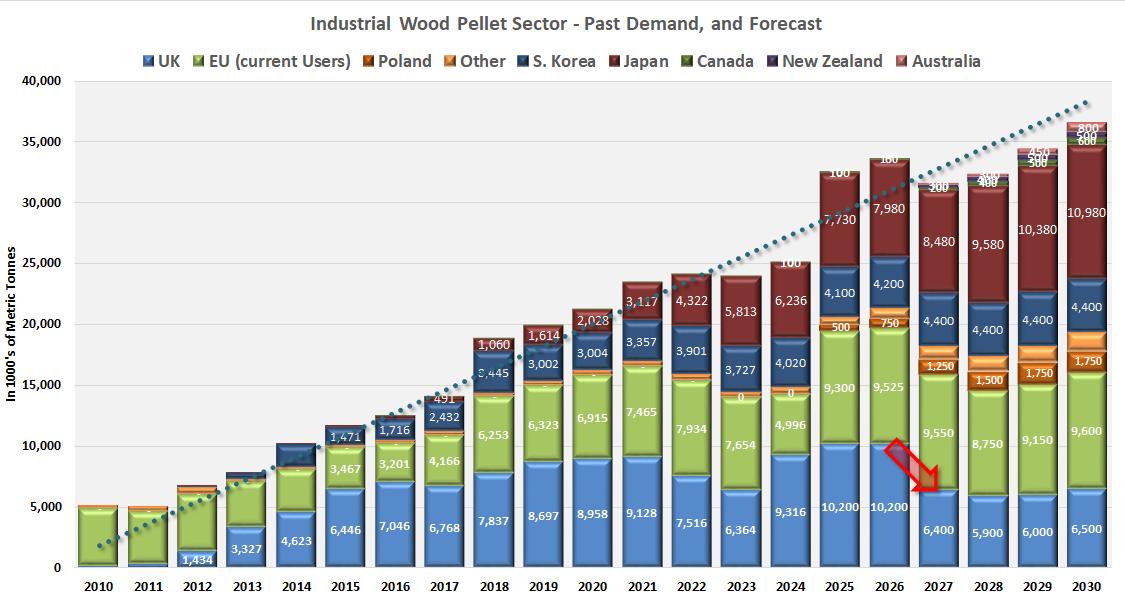
In the near term, future demand change in the sector will be dominated positively by growth in the Japanese markets, but strongly negatively dominated by changes in the U.K. support policy in early 2027.
The major drop in demand in 2027 is due to the implementation of the U.K.’s so-called Bridge Policy in April 2027. The policy is similar to the current “contract for difference” (CfD) scheme except that the major U.K. generators are limited in how much power they can generate per year and still receive the CfD support.
In 2025, the Drax power station in the U.K. will generate about 14 to 16 terawatt-hours (TWh) from 100-per-cent pellet fuel. The Bridge Policy will limit Drax to 6 TWh’s; less than half of current output. In other words, there is massive looming demand shock just over a year away.
Figure 10: Industrial pellet demand with forecast to 2030.
North American pellet exporters, who are supplying over 80 per cent of the U.K.’s imports, will face a very challenging period. In the short and medium terms, there will be significant oversupply.
If not for expected continued growth in the Japanese market, the aggregate decrease in demand post-U.K. Bridge Policy implementation would be greater. However, most of Japan’s expected growth will be supplied from the rapid growth in export markets in Vietnam, Malaysia, and Indonesia. Japan’s growth in demand will not significantly help North American producers.
DON’T JUMP OUT OF A WINDOW YET! In the longer-term, it is very likely that
Figure 5: Market shares of South Korean imports.
Figure 6: Market shares of U.K. imports.
Figure 7: Compare South Korea, Japan, U.K. - imports per month.
U.K. demand will not only rebound but will surpass current levels. The U.K. Bridge Policy is intended to keep the big stations viable with power sales support until they can get their bioenergy carbon capture and storage (BECCS) projects into production and produce significant revenue from CCS. That is expected in the early 2030’s. Once BECCS is fully operational, the U.K. generators will not need the CfD support and will have every incentive to consume as many pellets as they can to maximize revenue from CO2 sequestration. The looming demand shock is probably temporary.
Another likely emerging market for industrial pellets is Poland. It is possible that Polish demand for pellet fuel could be significant in 2028 and beyond. FutureMetrics has a white paper and dashboard on this topic at its website.
There is also the potential for some datacentres to contract with power stations that use pellet fuel to replace coal for carbon beneficial power. Datacentres essentially need baseload power. Wind and solar generation with energy storage can satisfy some of the demand. But only utility scale stations that have converted from coal to pellet fuel can produce 24x7 most of the time. This solution can be deployed immediately by existing stations (such as the aforementioned Drax station in the U.K.) and with relatively low cost and modification downtime by stations still using coal. See a recent FutureMetrics presentation on this topic HERE.
There are two major coal station conversions underway that will use 100-per-cent pellet fuel. The New Brunswick Power station in Belledune, N.B., and the Genesis Huntly station in New Zealand will require a combine annual supply of over one million tonnes. Both stations are so-called seasonal peaking plants. For example, the NB Power Belledune station only needs to produce electricity in the colder winter months.
Both conversions are based on “black” pellets. Black pellets are made with the steam-explosion (SE) process or via torrefaction. Both technological solutions produce an advanced upgraded solid fuel that more closely resembles the fuel they are
replacing: coal.
Fuel pellets for power generation that can be stored in the existing coal yard and exposed to rain and snow open the potential for low-capacity factor “peaking” plants to replace coal without the need for expensive dry storage domes or silos. This
benefit alone can make the use of black pellets the optimal solution if the avoided dry storage costs are accounted for.
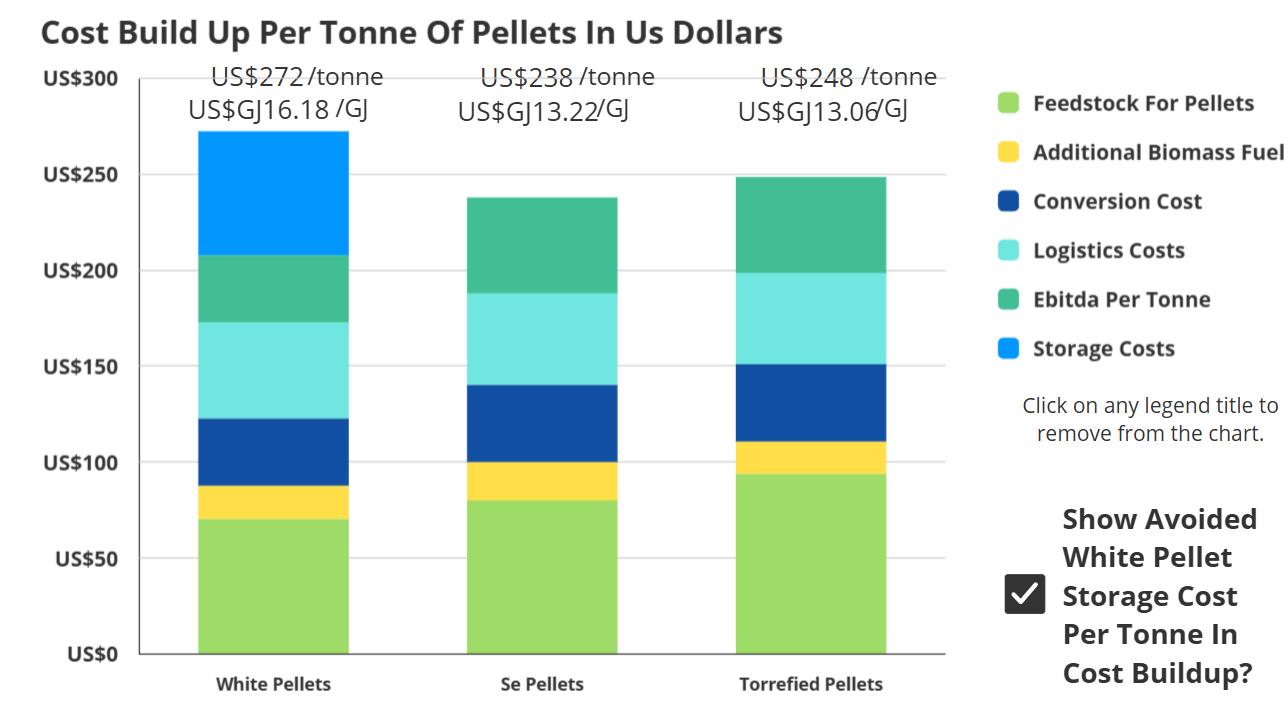
Figure 11 shows the buildup of costs to produce and deliver white, SE, and torrefied pellet fuels. Figure 11 is a screenshot of a dashboard that is free to use on the
Combustible Dust Specialists
Allied brings 49 years experience to help you meet current NFPA Standards with: system design/documentation, spark detection, isolation, grounding, PLC, venting, blast path management, clean-up systems and duct audits — CWB certified and member SMACNA.
Sawmill – Biomass – Boardplants – Pulp & Paper – Power Generation – Mining 52 years of Industrial Air Systems www.alliedblower.com ◆ Phone: 800-576-3611 Surrey,BC ◆ Vernon,BC
Figure 8: Compare South Korea, Japan, U.K. – U.S. dollar value per month.
Figure 9 - Compare South Korea, Japan, U.K. – FutureMetrics estimated CIF prices in U.S. dollars - per month
“Beyond fuel pellets, the use of bioresource derived, highcarbon content materials in metallurgy is an emerging source of demand.”
10: Industrial pellet demand with forecast to 2030.
FutureMetrics website Figure 11 shows that given the dashboard’s default set of inputs, including a station capacity factor of 20 per cent (the equivalent of 2.4 months per year), and adding in the amortized cost of building storage silos to keep the white pellets dry, both types of black pellet are lower cost than white pellets. The key metric is the cost per delivered gigajoule (GJ)
of energy in the fuel.
Beyond fuel pellets, the use of bioresource derived, high-carbon content materials in metallurgy is an emerging source of demand. Biogenic carbon replacing geologic carbon in the steel making process has the potential to create a significant demand for pellet factories at the front end of that supply chain.
There will be growing markets for both torrefied and steam-exploded pellets.
Detailed discussions of black pellet for fuel and for high-carbon content applications are in the recently published FutureMetrics research report on the “Thermal Treatment of Biomass.” The table of contents is available at: www.futuremetrics. info/FutureMetrics/TOC/TOC.pdf.
Figure
CONCLUSION
The use of sustainably sourced biomass for producing coal replacement solid fuel has been the foundation for the rapid growth in the industrial pellet fuel markets over the past 15 years.
But, as FutureMetrics has stated in the past, this is a transitional solution in the goal to decarbonize the generation of electricity. Over the next few decades, we expect that increasingly larger and better energy storage capacity that can buffer intermittent and variable supply from solar and wind will gradually lower the need for on-demand thermal generation. There will always be a need for on-demand generation for occasional long-tail occurrences, but increasingly, some of those stations will be on standby and remain ready to bring capacity online when needed.
As noted above (with a link to a recent white paper and dashboard), Poland is organizing a capacity market that also incentivizes lower CO2 emissions. That model is supportive of future demand, and given the likelihood of low-capacity factors, may also support the use of water-resistant pellet fuels.
If the costs of carbon dioxide pollution are properly priced, and BECCS is supported more broadly, as noted above in the discussion about Drax, then pulverized coal power stations modified to use pellet fuel that include BECCS can be thought of as negative carbon pumps that are permanent-
ly removing CO2 from the atmosphere with a byproduct of affordable baseload electricity. They can only use sustainably sourced pellet fuel to accomplish that win-win outcome.
BECCS is an optimal solution for multiple objectives! The potential for future demand from BECCS projects depends on the price put on CO2 pollution and is only bounded by the limits to the sustainable production of biomass derived coal replacement fuel.
The process of turning a constantly varying input into a homogeneous output is the foundation of converting biomass into upgraded densified end products. Looking beyond coal replacement fuel, properly produced biomass-based products can, for example, help to decarbonize the steel making sector, and they can provide a non-variable input to refineries converting cellulosic biomass into liquid fuel replacements.
So, the future has real potential.
But for a few years after the U.K. Bridge Policy demand shock that is not too far away, there are likely to be some existing fuel pellet producers that will face a challenging period.
Strategically aware producers, developers, utilities, trading houses, and trade associations should be ahead of the markets and should be building the basis for future demand as the traditional baseload white pellet model transitions over the next several decades.
Figure 11: Cost build up for pellet fuels.
Maintaining grinders and chippers
Tips for reducing downtime
By Andrew Snook
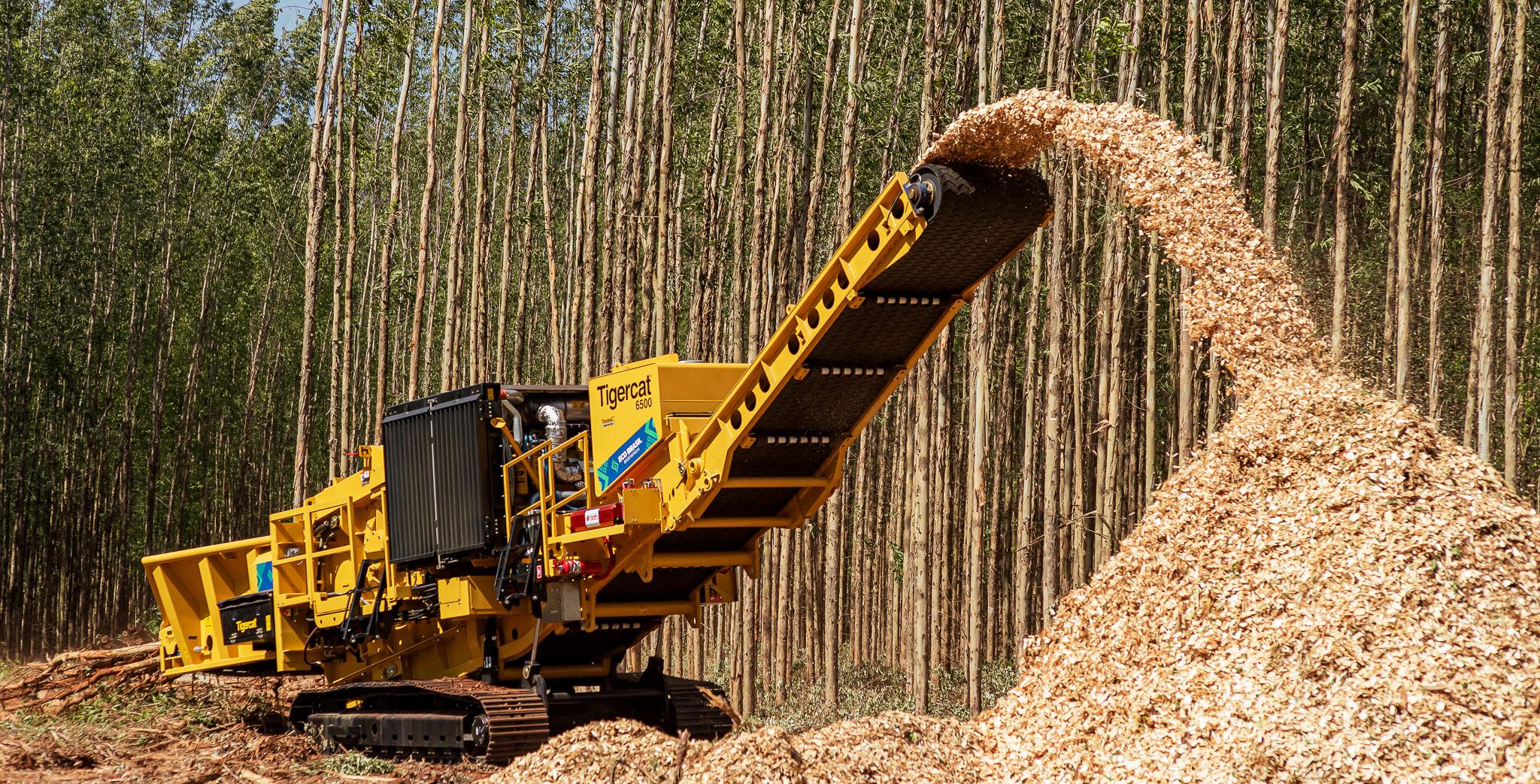
When it comes to maintaining grinders and chippers, it all comes down to adhering to a proper maintenance schedule.
“Every day you want to inspect your grinders. You’re going to inspect the hammer tips, the grate liners, the anvil. I think most have rotor wear blocks on both sides of the rotor to keep it centered. You want to make sure they’re not worn. Also, tracks, undercarriage and the discharge belt,” says Chris McMillan, marketing technical writer for Tigercat Industries. “That’s along with your usual daily maintenance items like your oil level, air intake, checking for any leaks, fuel, water, stuff like that.”
Tigercat also recommends listening to
the noise on the rotor bearings while it’s running to make sure that everything is well lubricated and the feed chain tension is properly adjusted. The feed chain and the discharge belt have adjustable blocks like bolts on both ends.
“Our operator’s manual specifies the amount of droop in the chain. You just want to make sure those are properly tensioned,” McMillan says.
Tigercat recommends checking the drive belt every 40 hours.
“Once a week we suggest that you check the tensioning in the belts, make sure they haven’t stretched and make sure they’re properly aligned with the sheaves. And of course, any conveyor components on the in-
feed and the outfeed. You want to make sure that the belt and chain are running smoothly; all the rollers are rolling properly; and make sure everything is cleared,” McMillan says. When greasing components, it is important to review the operator’s manual.
“We’ve got a greasing schedule. You want to make sure that everything is greased properly, and go by the manual to keep everything running smooth,” McMillan says.
For portable chippers, maintenance routines are very similar with a few modifications.
“You’re going to inspect the knives, the grates and the anvils,” McMillan says. “Everything else is the same as the grinders. For
The most common reasons for chippers and grinders requiring unscheduled repairs that Tigercat experiences are a lack of lubrication and improper material processing. Photo: Tigercat Industries.
belt tensioning, we supply a belt tensioner where you can test the tension on the belt and then adjust it.”
COMMON MISTAKES
The most common reasons for chippers and grinders requiring unscheduled repairs that Tigercat experiences are a lack of lubrication and improper material processing.
“Make sure you’re not running stuff through that you shouldn’t be,” McMillans says. “We have metal protection systems, but that’s the last resort before you ruin your machine. You don’t want to be running anything through and having to change hammers in the middle of a job. So, you want to make sure that you’re only running through what you’re supposed to be running through there.”
FIRE PREVENTION AND SAFETY
Frontline Machinery, national dealer for Terex’s CBI equipment, offers the following fire prevention and safety tips in its article, “Maintenance Tips for Prolonging the Lifespan of Grinders and Disc Chippers,” which is published on the company’s website:
Daily cleaning routine:
• Clean the entire unit daily with air and water after completing work to
prevent fires. Inspect and replace worn hydraulic hoses daily, especially around hot areas.
Equipment operation:
• Ensure all employees know how to use a fire extinguisher.
• Always have a fire extinguisher or water readily available during machine operation.
• Establish a proper maintenance program to prevent fires and maintain machine functionality.
Electrical and mechanical checks:
• Regularly check electrical wires, battery cables, and connections for wear and tightness.
• Inspect for loose mechanical connections that may cause arcs leading to fires.
• Avoid grinding metal objects in equipment to prevent high temperatures that can start a fire.
Bearing and rotating elements:
• Ensure all bearings are functioning and lubricated according to the maintenance schedule.
• Prevent friction heat by ensuring no rotating elements rub against metal surfaces.
Transportation safety:
• Check brake temperatures during equipment transportation to prevent critical temperatures.
• Ensure proper adjustment and cleanliness of the V-belt drive for the Hog.
Fire extinguisher maintenance:
• Regularly check and maintain the fire extinguisher in accordance with local safety regulations.
• Train workers in its proper use and maintenance, as CBI is not responsible for its upkeep. •
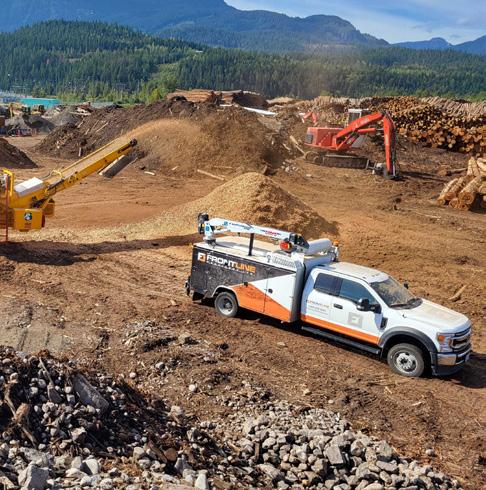
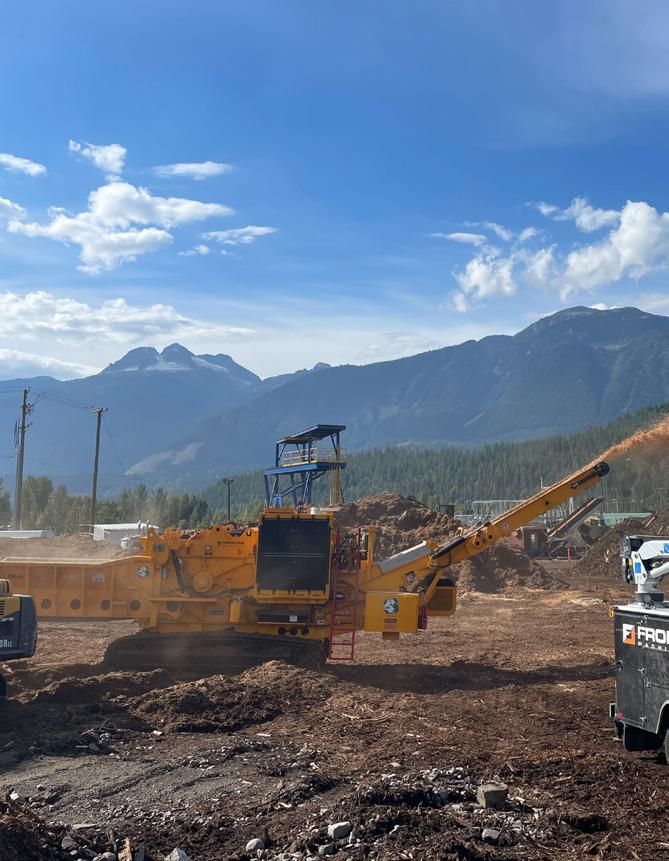
Frontline Machinery recommends cleaning the entire unit daily with air and water after completing work to prevent fires. Photos: Frontline Machinery.
Rebuilding the sector
How biomanufacturing and investment-ready BDO Zones can remake Canada’s forest economy
By Fred Ghatala and Jordan Solomon
Canada’s forest industry is being dismantled in plain sight. Over the past year, trade uncertainty and U.S. tariffs have erased thousands of forestry jobs and billions of dollars in economic value. Mills have closed. Communities that depend on forestry have been destabilized. Investment has stalled.
This is not a cyclical downturn. It is a structural failure.
For decades, Canada built its forest economy around a single export market and a narrow set of commodity products. That strategy has now been exposed as dangerously fragile. Our closest trading partner has proven unreliable, and the cost of overdependence is being paid by rural workers and regions across the country.
Canada does not have a forestry problem. We have a market diversification problem.
Ironically, today’s global uncertainty has created a once-in-a-generation opportunity. Policy volatility in the U.S. has global manufacturers reassessing where to invest. Capital is mobile, and companies across the biofuels, biopower, renewable chemicals, and advanced materials sectors are actively looking for stable jurisdictions in which to build new production facilities. Canada can and should be at the top of that list— but we need to build the foundational infrastructure to make this happen.
Other countries have already shown what investing in enabling infrastructure looks like. Finland is pursuing a national strategy to double the value of its forest sector without harvesting more wood by shifting away from commodity exports and toward advanced wood products, renewable chemicals, and bio-based fuels. Companies such as Metsä Group, Stora Enso, UPM, and Neste transformed legacy pulp and paper assets into globally competitive platforms for renewable diesel, sustainable aviation fuel, biomaterials, and engineered wood. Finland built the infrastructure required to catalyze rapid development of new markets—and it’s working.
Canada has the same raw material advantage, industrial know-how, and access to deep capital markets. What it lacks is the foundational infrastructure required to deliver the market diversification our forest economy now desperately needs.
One of the most overlooked pieces of industrial infrastruc-
ture is investment-grade data and intelligence. Nationally consistent, credible, standardized datasets on forest biomass resource availability, infrastructure capacity, workforce readiness, and permitting pathways give developers and investors around the world the clarity to quickly identify the optimal locations across the country to build new biomanufacturing plants at lower risk—especially former mill sites. When that clarity exists,
Jordan Solomon discusses BDO Zones during the 2025 Scaling Up Bio Conference in Ottawa.
Photo: Andrew Snook.
biomanufacturing projects move faster—from site selection to financing to construction—allowing Canada to catalyze and accelerate the development of new plants that turn wood fibre into higher-value products that can be used domestically and exported globally.
Fortunately, this kind of investment-grade intelligence is already being produced through CSA standards-based designations called Biofuel Development Opportunity (BDO) Zones. BDO Zones function as market-facing infrastructure—translating data on feedstock, sites, infrastructure, and permitting into investment signals that accelerate project development. This approach has been associated with billions of dollars in announced new biomanufacturing projects in North America, such as the recent $845-million plant announcement by Provectus Biofuels in the Vegreville, Alberta, BDO Zone.
The benefits are tangible. A single large biofuels facility can generate hundreds to thousands of construction and permanent operating jobs, often in regions hit hardest by pulp mill closures. Independent research examining biomanufacturing projects announced in BDO Zones shows these facilities can generate hundreds of millions of dollars annually in total economic impact across rural economies.
Putting project-ready BDO Zone data in the hands of Canada’s global investment teams would markedly improve their ability to drive new investment into the country.
Canada already has a strong, capable global trade and investment network through Invest in Canada and the Trade Commissioner Service. What is missing is a standardized, site-level intelligence layer that allows these teams to respond quickly and confidently when global firms explore biomanufacturing investments. BDO Zone data can provide that foundation—acting as a force multiplier—enabling them to do their work more effectively and attracting billions of dollars in new plants producing biofuels, renewable chemicals, and biomaterials from Canadian wood.
The federal government’s new Canadian Forest Sector Transformation Task Force opens a critical window to address structural weaknesses in Canada’s forest economy. By enabling market diversification for forest products and reducing dependence on the United States, BDO Zones merit consideration as part of this work.
Canada did not choose this crisis. But it can choose how it responds.
We can continue reacting to closures, trade shocks, and lost investment — or we can build the data and execution infrastructure that allows new markets to form, new plants to be built, and new value to be captured at home. That choice will determine whether this moment is remembered as another missed opportunity, or as the turning point for Canada’s forest economy. •
TSI BUILDS MACHINERY
Dryer and Torrefaction systems including Heat Energy and Pollution Control equipment in one integrated solution for plants from 50,000 tons/year to 500,000 + tons/year.