

by Morley Lymburner
It is time we used human nature and modern technology to encourage errant citizens to pay their debts to society... voluntarily.
A misunderstanding from years gone by, with a tragic outcome, underscores my point. I saw a car blow a traffic light on a wide right turn while on patrol one warm summer evening. Since I had the green and was almost on top of him, I activated my roof lights. Immediately the car accelerated rapidly. Traffic was minimal so I radioed the dispatcher about the chase about to commence. As I gave my location, I was surprised to see the vehicle go out of control and slam sideways into a sturdy hydro pole.
I searched the very nervous driver, handcuffed him and, after noting that he only had minor scrapes and wasn’t otherwise impaired, asked why he had bolted. He explained there were warrants out for his arrest for unpaid fines and he was probably under suspension. I checked my computer, discovering there wasn’t and he wasn’t. The driver stared at me in disbelief. After a few self denigrating expletives, he explained he had been moving frequently, thinking he was wanted for careless driving and driving without insurance. A friend told him he would have to do time, as the fines would be too huge and he would be under a driving suspension.
I checked later and found all charges had been withdrawn on lack of evidence more than a year earlier because neither my errant motorist nor any witnesses showed up for trial. My offender had been looking over his shoulder to keep ahead of a phantom law man, believing he would be thrown in jail if stopped. It was this perceived fear that caused him to take off. Unfortunately for him, my charges did stick. Fortunately, he decided to face the consequences this time.
This man’s dilemma came to mind last October when I read a remark Vancouver police chief Jim Chu made to a business group. “We need some national leadership... people should not be able to evade justice just by leaving the jurisdiction that
they were charged in,” he told them.
Chu’s innovative solution – police would use donated Air Miles to send scofflaws back to where they came from, where local police could deal with them. Although this methodology is unique, the concept has dogged the justice system ever since a national railroad joined Canada’s two coasts.
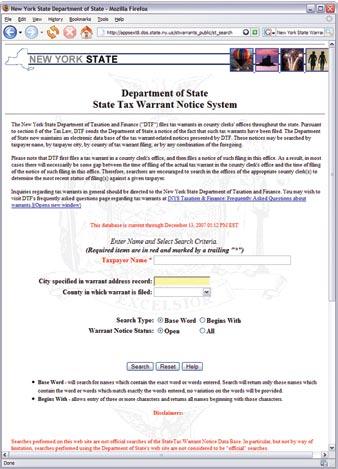
I wondered about that motorist from many years ago. What if he could check for his own outstanding fines on the Internet? If all outstanding fines and warrants were treated for what they really are – public information – offenders, the public and police would all benefit. In fact, given the embarrassment and other related repercussions, that outstanding list would be comparatively short.
We live in a truly remarkable age, one where we can travel almost anywhere in a matter of hours, instead of months or years, and communicate with almost anyone anywhere in a matter
of milliseconds – but when we are dealing with people who owe a debt to society, the entire infrastructure fails us by design.
Mixing our archaic justice system with modern technology is like mixing oil with water. It was carved out of the middle of a previous millennium and is supported by people with a vested interest in keeping it that way. Slow, stodgy, out of tune and archaic, it is supposed to mete out justice in a timely fashion but is built upon a mountain of bureaucrats who think they know what is good for us.
All warrants from all jurisdictions should be on the Internet for everyone to see and search. There should not be any expectation of privacy for anyone who owes a debt to any level of government, since it is a burden that must be carried by all of us. Furthermore, unpaid debts grow and exceed the value of the original debt if not settled within a reasonable time. An increasingly heavy burden on the offender.
Making this information available to all –employers, neighbours and friends – can help pressure the violator or debtor to pay up and face the music. This is not a debt to a private company; it’s a debt which requires taxpayers to hire clerks, police, inspectors and supervisors who must be housed in publicly funded buildings which store mountains of documents, computers, databases and other equipment.
Every day a parking ticket goes unpaid or a warrant is outstanding, there are overhead costs to maintain them. These are not ‘soft costs’ but hard, cold cash costs, which comes out of your pocket and mine. A scofflaw has no right to run up a tab. We all have a right and personal interest to know who the cops are looking for, and to help find them. In reality the one who is on the run has a benefit as well. They have a chance to clear their file and not have to look over their shoulders.



by Lisa Brown
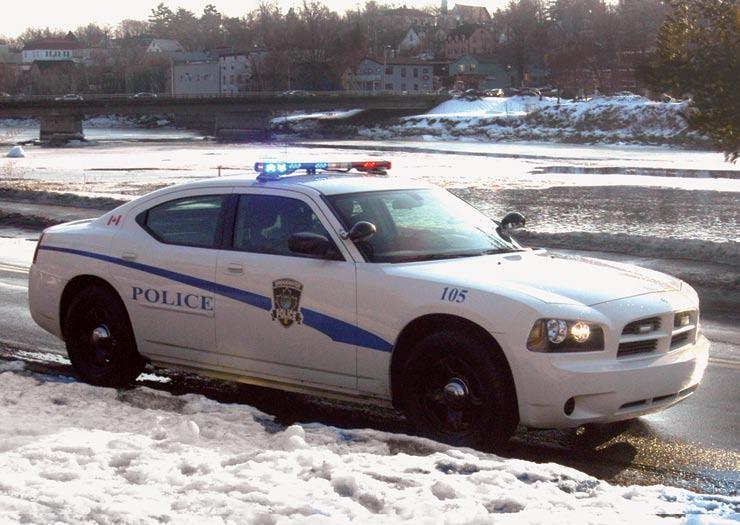
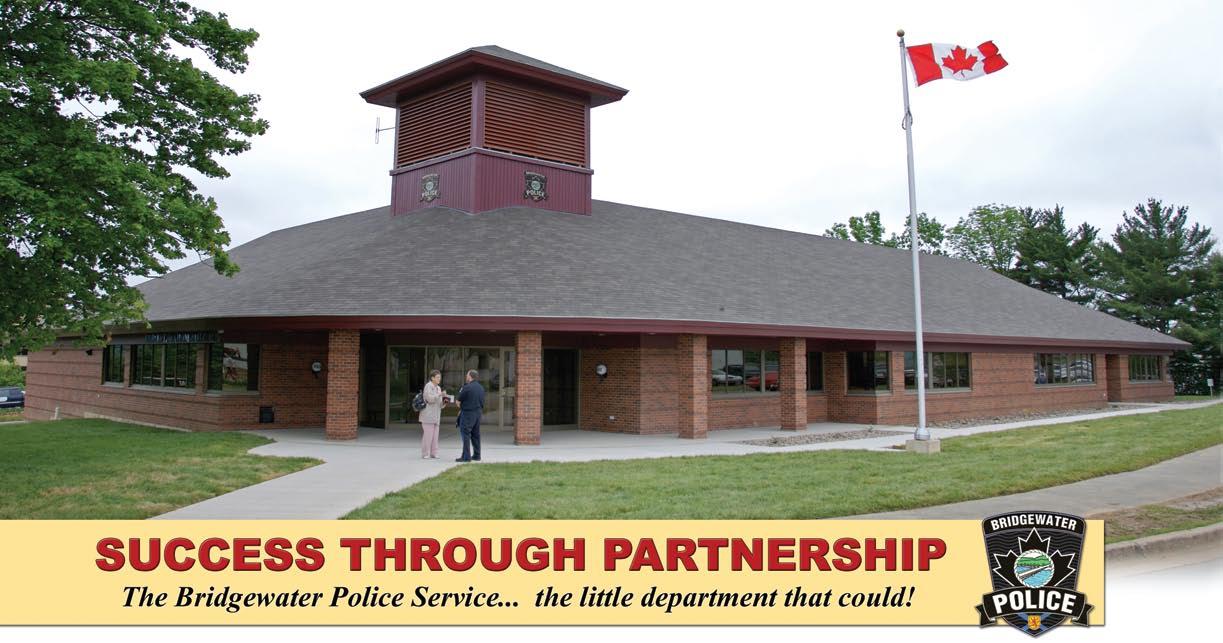
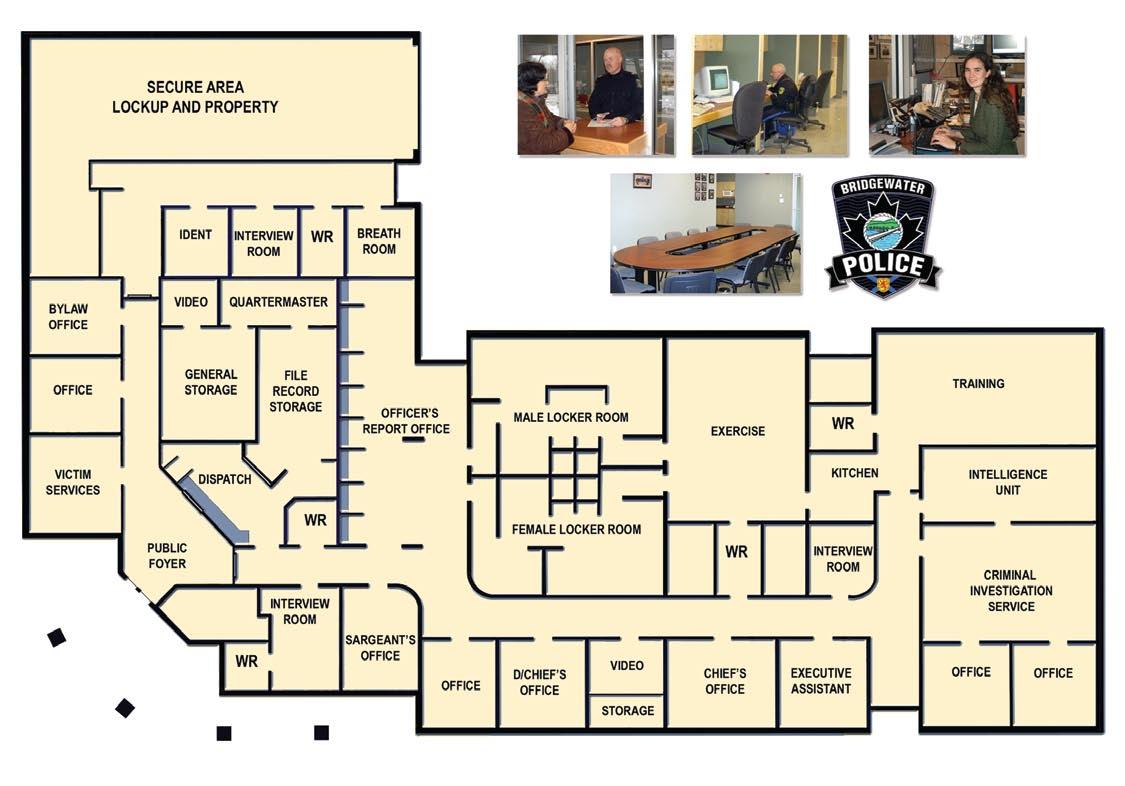
With 20 sworn officers serving a population of just over 8,000 residents on Nova Scotia’s South Shore, Bridgewater’s municipal police force recently moved into a new 9,960-squarefoot station. Re-branded, it offers citizens an array of innovative programs more typically found in larger urban centres.
Crime, which has never been particularly high, dropped by eight per cent in the past year. It is perhaps not surprising that a January, 2007 survey found the majority of citizens are pretty happy with their police force.
Bridgewater is a growing town known as the “Main Street of the South Shore.” An hour’s drive from the province’s capital, it is the commercial centre of the region, offering a combination of tree-lined streets and services appealing to many.
The town’s police force began with Bridgewater’s incorporation in 1899. The chief was also the “sanitary inspector and truant officer,” working with a budget of $600.
Today, the town’s 22nd chief of police has a budget of $2.2 million, however finances remain tight. When Chief Brent Crowhurst stepped into the job in 2002, he knew he’d face a struggle to move the force from the town hall basement it had occupied for decades to a modern facility.
He accomplished that task this past spring, also dropping department from the name – it’s now the Bridgewater Police Service (BPS), more fitting to its role in the community. A new crest is emblazoned on the new station, new uniforms and new vehicles, but the force hasn’t forgotten its roots.
The station is named the Shirlen L. Seamone Building, in honour of the previous serving chief who died of cancer in 2002.
The BPS is understandably proud of its new station, which has generated a new vitality
among members.
“Our position always had been that we need to focus on the evidence gathering first, creature comfort and attractiveness second,” Crowhurst says. “In other words, we had to ensure absolute control of any exhibits and, more particularly, any evidence gathered by virtue of interrogation or interviews was the highest priority.”
For example, impaired driving suspects are digitally recorded from the time they arrive on station property until they eventually depart. The DVD becomes part of the court brief, showing how the suspect was processed from start to finish. The only exception occurs when a suspect consults counsel in a sound-proof booth, when the video continues without audio.
The booth is an interesting feature of the new facility. A person in custody is placed in the concrete cubicle, which has a glass door, allowing them privacy while an officer can continue to monitor their safety. A light outside the door indicates the phone is engaged. If the person attempts a second call, the officer is notified, eliminating any opportunity to contact an accomplice.
The interrogation rooms are equipped with two cameras. The picture-in-picture format allows investigators to capture all movement in the room while also focusing on facial expressions, so an investigator monitoring the interview can pick up on visual cues.
The station is also equipped with a community meeting room with an outside entrance, which can be secured from the operational areas of the building. Other agencies and partners are encouraged to use the facility, but the room can also house up to 10 officers with laptops and phones during a major investigation.
The overall design of the building includes three wings. Patrol officers and dispatch are in one area with the sally port, evidence rooms,
interrogation rooms and breathalyser rooms. Administration is in another wing, with a third suite of offices for plainclothes investigators.
While Bridgewater currently has 23 sworn officers, through partnerships with the province and the RCMP, 27 officers work out of the station. The local criminal intelligence service includes one seconded Bridgewater officer and one member of the RCMP, funded by the Nova Scotia government. A four-person integrated street crime enforcement unit, also funded by the province, includes one Bridgewater officer and three RCMP members.
The province also funds an integrated traffic unit comprised of four RCMP members, one member of BPS and a Kentville Police Service officer. This new unit is designed to attack impaired driving throughout the southern region of Nova Scotia. The force’s two GIS officers also work out of that end of the building, making a total complement of eight plainclothes investigators.
“In the last five years, there’s been much more emphasis on integration and partnerships,” Crowhurst says, “We can’t do it alone, but by partnering we can provide a much better level of service to the citizens of the Town of Bridgewater.”
For example, two years ago BPS entered into a formal contract with the RCMP to house all of its prisoners. Both agencies benefit since it now allows for full-time, scheduled guards.
Another example is a school safety resource officer, a program which began in 2006 with the co-operation of the region’s school board. A constable works full time in the town’s three schools, focusing on everything from escape plans to DARE.
The police service also partnered with service organizations in the community to create a Heartsafe program. Groups bought defibrillators for each patrol unit and all officers are trained to use the devices.
Three members were recognized in 2006 for saving the life of an elderly woman involved in a collision after suffering a heart attack.
“Because the officers and the equipment were on scene literally in a minute or so, the fact that they were able to deploy the defibrillator has been recognized as saving her life. She’s alive and well today and we’re very proud of the fact that that would not have been the outcome otherwise,” the chief says.
Crowhurst also partnered with the Halifax Regional Police Service in 2006 to try to solve a workforce retention problem. In the past decade, more than a dozen young constables have come and gone from Bridgewater, finding employment with larger police agencies.
In an effort to attract new personnel who would remain with the town, Bridgewater Police advertised for a local recruit in the fall of 2006, offering to pay for training and wages while the newcomer learned the ropes. In exchange, the cadet had to agree to work for the town for five years and pay back the price of the training from his salary. The successful applicant joined the force in October after graduating at the top of his class.
“Our success, if we’re having success, has been a direct result of identifying the need, making sure we identify how we’re going to fill that need and seeking funding from anybody else that will help us,” the chief says.
In addition to routine patrols, the service also stays in touch with the community it serves through regular foot and bike patrols. A civilian domestic violence co-ordinator and community

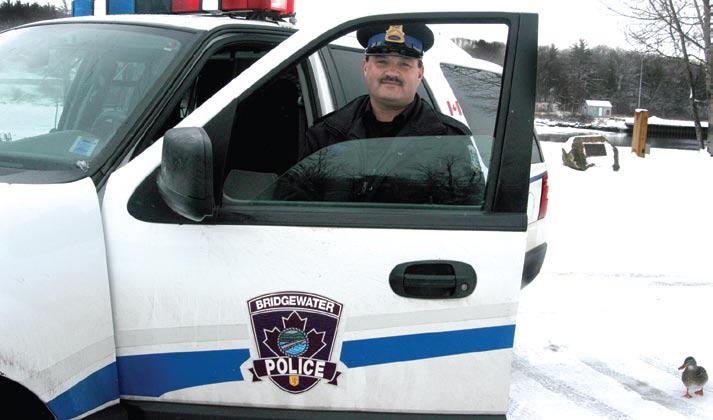

liaison employee works on crime prevention and community partnerships.
The police service even has access to a tracking dog. An auxiliary constable has an RCMP-certified search animal – a Czechoslovakian Shepherd named Reba – which searches for articles and trails suspects. It’s the third search dog Aux/Cst Creig Veinot has trained to assist the force. The previous two were bloodhounds.
Bridgewater is also on top of technology with video-equipped Tasers for each patrol officer. That allows the service to reproduce the circumstances and scene every time a Taser is used, ensuring the device was used appropriately and providing an accurate depiction for the court in any contested cases.
Overall, the police service is doing things right. Three Bridgewater officers, Cst. Ralph Brekker, Daniel MacPhee, and Jerome
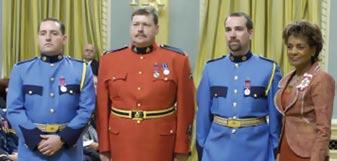
Richard, along with RCMP Cst. Gregory Keeler, received Medals of Bravery from the Governor General in October, 2006.
They risked their lives to protect citizens from a gunman in June 2003. After a day-long manhunt, the officers followed the suspect’s SUV into a gravel pit near an apartment complex, on a residential street on the outskirts of town. With no protection in the open area and people nearby, they returned fire until an RCMP emergency response team surrounded the pit a short time later and fatally shot the gunman.
It was a proud moment for Crowhurst.
“They literally were pinned down and chose to stay there rather than leave the area,” he says. “They acted exactly as you would hope they would.”
Lisa Brown is an assistant editor with Lighthouse Publishing in Bridgewater. She can be reached at 902 543-2457.

Bridgewater is nestled in the LaHave River Valley. Tree covered slopes and fertile drumlin hills made this an ideal location for settlements to grow and prosper.
It is located at the head of navigation at the first point where a bridge was erected to cross the river. It is deduced that the community got its name from being the place where the water was bridged.
At least five bridges have spanned the LaHave at Bridgewater, the first bridge, reportedly, having been built around 1825. In 1845, a draw
bridge was constructed, and even though there were shipyards up river from the bridge, its is alleged that the bridge was never raised.
In 1869, the bridge was replaced with another wooden bridge. Late in 1891, the first iron bridge was constructed along the north end of the wooden bridge. Although repaired in 1971, when ice took out the east end section, this bridge “built to last 100 years” is still in use.
Vetern’s Memorial Bridge, a concrete structure, was also constructed up river from the “old bridge” in 1983.

Brent Crowhurst has a handful of badges mounted in plastic cases in his office. The funny thing is they’re all his.
Bridgewater’s top cop has had so many positions in his policing career that there’s a joke around the Nova Scotia police community that he can’t hold a job.
Crowhurst first joined the RCMP in 1966, serving five years in uniform in Nova Scotia before moving to the major crimes unit in Halifax. After three years there, he taught at Depot in Regina for three years.
Next, he spent eight years in drug enforcement in Nova Scotia before serving as a detachment commander at posts along the province’s South Shore.
In 1992, Sgt. Crowhurst retired from the RCMP to become Lunenburg’s police chief, a position that eventually expanded to also cover nearby Mahone Bay.
When the RCMP took over contracts to provide coverage for the two towns in 2002, the chief returned to the national force as the sergeant in charge of the Chester detachment for about 18 months.
The position of Bridgewater police chief became available in 2002 after the death of serving chief Shirlen Seamone. Crowhurst retired again to take on that responsibility.
“I still thoroughly enjoy the challenge of managing a small police unit. It’s still a very positive experience,” Crowhurst says.
“I’m happy to be in a position where such positive feedback occurs primarily as a result of the successes of partnerships and integration.”



The doli incapax defence, “the incapacity to do wrong,” was developed under English common law. A child under the age of seven was deemed incapable of committing a criminal act. This same immunity from prosecution was extended to children aged seven to thirteen inclusive, but the presumption of incapacity could be rebutted by establishing that the child had sufficient intelligence and experience to know the nature and consequences of the conduct and to appreciate that it was wrong. Thus, while the doli incapax defence afforded certain protections to children, it could not be applied in every case. As a final result, children who were convicted faced the same penalties as did adult offenders, including hanging and incarceration in prisons for adults.
Because of the nature of the developing society in early Canada, an unusually high percentage of children were at risk for delinquency. Up to the turn of the nineteenth century and even into the early years of the twentieth century, large numbers of orphaned, neglected or abused children could be found in many communities. An immediate cause for this situation was the means of travel on which the country’s growth depended. Before the advent of steamships, the sailing-time from Europe was about two and a half months. The long voyage, overcrowded ships and disease all took a heavy toll, and many children who had embarked with their parents arrived in the new world as orphans. One shipload of 100 colonists coming from France in the midseventeenth century lost 33 of their number during the voyage and shortly after their arrival. A ship that landed in Halifax in 1752 had eight orphans on board whose parents had died during the voyage; additional deaths — no doubt all due to shipboard ailments — soon increased this number to fourteen.
Another source for children at risk was the special social conditions of every military garrison to be found at every major settlement. In a 1761 report, Jonathan Belcher, the Acting Governor of Nova Scotia, made a special note of the number of children who had been deserted by their parents due to the great concourse of dissolute abandoned women, the regular followers of the Camp, Army and Navy. As settlement progressed, the number of children at risk only worsened because of public health and social problems. For example, between 1832 and 1834 a single agency cared for 535 orphans in the town of
York, which later became Toronto. Soon after, in the greatest public health crisis in Canada’s history, the Irish famine immigration brought fresh waves of orphaned children during the mid-1840s. The ranks of the Irish immigrants were decimated by typhus, and one estimate suggested that the epidemic had left 500–600 orphans in Montreal alone.
Significant numbers of young people immigrated to Canada on their own or were sent by agencies or the criminal courts. New France attracted the younger sons of well-todo French families. They were sometimes troublesome youths who had been sent over to carve out a career in Canada. For a long time, the colonies were also the dumping grounds for society’s unwanted members, ranging from criminals to poor and abandoned children. The inhabitants of slums, jails, poorhouses and orphanages were often shipped to the colonies, frequently as indentured servants. A 1684 report from Quebec tells of 60 indentured servants who had been sent from France that year; the oldest was 16, and most were between 12 and 15 years old. The export of children continued into the early years of the twentieth century. For example, between 1873 and 1903 over 95,000 children came to Canada under the sponsorship of British child immigration agencies.
There was thus a very wide pool of children at risk, since the youth population as a whole was large, and orphaned, neglected and abandoned children were plentiful across the country. Unfortunately, surviving court records are not sufficiently detailed to permit a formal assessment of contemporary rates of delinquency. Nevertheless, there is no question that youth crime was common and ranged widely from petty theft and vandalism to murder. Throughout the history of New France, young people broke the law. However, the general level of delinquency appears to be low, and documented crimes consist primarily of vandalism, petty theft, acts of immorality, the breaking of local ordinances, the abandonment of indentured service contracts, brawling and swearing. But there were also isolated incidents of more serious crimes. For example, in 1672 a 13-year-old girl helped her parents murder her husband. She had married the man when she was 12, against her will. When he turned out to be a heavy drinker and violent, she persuaded her parents to help her get rid of him.
Abortion and infanticide were also re-
garded as serious offences and, on occasion, were committed by teenage servant girls. Servants who became pregnant were frequently dismissed and had great difficulty in finding either re-employment or a husband. The pressure was therefore great to have an abortion rather than bear social stigma and economic hardship.
Possibly the most widespread source of juvenile delinquency in the eighteenth and early nineteenth centuries was to be found in the fur trade, which often engaged teenage boys. The business was a lucrative one, and offered many farm boys an easy opportunity to supplement their regular livelihood. A feature of the fur trade was the use of liquor as a medium of exchange with the natives. Apart from its use as currency in fair payment for goods, liquor was often used to separate the natives from their furs without compensation. The volatile combination of fierce competition for furs together with the generous consumption of liquor created a situation wherein theft, assault, brawls and murder were common features. Consequently, teenage boys often became involved in the harsh dealing to which the fur trade regularly exposed them.
The patterns of delinquency early established in New France were replicated in English Canada as settlement spread. Most juvenile crime was petty in nature but interspersed with some serious offences. For example, most of the 300 young people put in prison in New Brunswick over the period 1846–1857 were convicted of drunkenness, theft and vagrancy. The High Bailiff’s report for Toronto for the months of February to December 1847 listed 39 convictions of teenage boys. Their crimes included larceny, assault, trespass and disorderly conduct. A similar pattern can be seen in the records from Halifax’s Rockhead Prison for the period from April to December 1860. The 53 young people incarcerated during that period were convicted of crimes such as assault, being drunk and disorderly, vagrancy, larceny and vandalism. On occasion, however, young people showed they were capable of serious crime. In 1843 Grace Marks, a 16-year-old servant girl working on a farm outside Toronto, helped a male servant murder the housekeeper and their employer. In 1849 an 11-year-old adopted boy living on a farm in the County of Peterborough hacked his 5-year-old adopted sister to death with a hoe because he was jealous of the attention paid to

the little girl by the adoptive parents. By the late 1860s, juvenile delinquency had long since taken on certain distinguishing characteristics. Much of the crime was minor in nature; it was manifested in urban more than in rural areas; and boys committed crime in larger numbers than girls. The one common denominator among many young offenders was parental neglect. In any large community young boys and girls were to be found loitering around the streets, idle, neglected and undisciplined. Many children suffered from a lack of proper diet, malnutrition, unsanitary living conditions, drunken and dissolute parents and inadequate or no medical care. Parental neglect also contributed to such personal and social problems as truancy, lack of interest in schooling, mental and emotional difficulties, and crime.
As befits a country founded by immigrants, the treatment of delinquent children in early Canada was based upon the attitudes, customs and laws that prevailed in the mother countries of France and England, subject to modification under the special circumstances and realities of a pioneer society. In both the old countries and the new colonies, childhood
was considered to be a very short step on a direct path to adulthood. Throughout the seventeenth and eighteenth centuries, childhood ended at a young age. Life in general was harsh for everyone, and little effort was made to make it easier for children. Children were expected to accept the difficulties of life very early on, and to take on the responsibilities of adults as soon as possible. They were in fact considered as little adults. The brutality of the parents was paralleled by the brutality of the state. In eighteenth century England, according to law and custom, the child was held to be adult if above the age of seven, and therefore responsible for his crimes. Up to 1780, the penalty in England for over two hundred offences was death by hanging, and many children were hanged for trivial offences. There are, in fact, instances recorded of two children younger than seven being executed. In Canada, children were subject to the ever-pressing physical demands of a primitive and struggling society. They were expected to share the burden of survival. Part of their importance was that they provided hands for the many tasks necessary simply to subsist. Consequently, the behaviour of children was governed by
adult standards. This view applied in matters of crime. The prevailing attitude held that a juvenile delinquent was simply a miniature criminal. Accordingly, the punishments that English courts prescribed for children seem excessively harsh by any modern standard. For example, in one session in London’s Old Bailey court in February 1814, five children — one eight years old, one nine, one eleven and two twelve — were sentenced to death for burglary and stealing a pair of shoes.
These and other old-world beliefs and attitudes, together with the laws they gave rise to, were carried to the new world by the immigrants. It is therefore no surprise to find that strict standards governed many aspects of children’s lives. These were the standards not only of the law but also the church. The Roman Catholic Church was a highly influential body in New France. Its precepts regulated sexual practices, dress, language and many other aspects of life for both young and old. The church even influenced the law, which took up matters of morality and formally prohibited a variety of offences, such as swearing.
NEXT MONTH:
Tough Justice - The treatment of delinquents

by Scott Villers
Known mainly as the subject of a brief but bloody 1982 war between Britain and Argentina, the Falkland Islands have been a British Dependant Territory since 1833. Most of its 3,000 residents are descendents of British settlers and live in Stanley, the capital city; smaller settlements are isolated but now connected by a series of all weather tracks and roads.
Consisting of two main islands (east and west) and 776 smaller islands, the colony has a total land mass of 4,700 square miles. Protected by a large British military garrison since the war, it’s governed by English statute law and local ordinances. The main source of income is sheep farming and revenue from foreign fleets, who pay to fish in the waters around the islands.
who had just arrived to take up his duties, was deported.
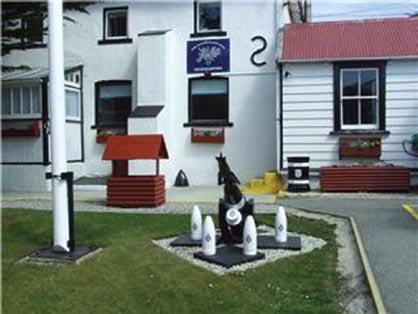

The Royal Falkland Islands Police face many of the same challenges encountered by Canadian police operating in rural and isolated communities. The force was established by the island’s first governor, British Army Lt Richard Moody, who was appointed in 1841. The Falklands had gained a reputation for being a lawless place and was a port of call for sealers, pirates and criminals of every description.
The colonial secretary of the day instructed Moody to “turn your attention, immediately upon your arrival, to the means of administering law and justice within the colony. You will inform the inhabitants of the Falkland Islands by proclamation that the law of England is in force within the islands.”
Moody made several attempts to carry out that order but the force wasn’t begun until November of 1846 with the appointment of a chief constable and jailer/night constable. It investigated the island’s first recorded homicide in 1854 – the murder of a 19 year old labourer – and soon made an arrest. The process didn’t take long – the accused was found guilty and hanged just three weeks after the offence!
One of the force’s more unusual duties was keeping an eye out for Canadian seal poachers. An officer was dispatched to an outlying island between 1921 and 1926 to keep watch. Seal oil and skins were a valuable source of revenue at the time.
The force expanded to seven officers by the beginning of the 20th century and remained at this strength until 1987. The first female officer was appointed in 1976 and her son signed up in 1978, resulting in the first mother and son team.
The Argentine military invaded the Falklands on April 2, 1982 and restricted police operations. Chief Police Officer Ronnie Lamb,
A few days later he broadcast a message over the BBC World Service asking the Argentines to check on a prisoner jailed at the Stanley police station, fearing he had been forgotten during the confusion of battle; fortunately for the prisoner, he had been released shortly after the occupation began.
Argentine military police took over the main police station in Stanley, but didn’t have long to enjoy their new digs. The station was severely damaged in June by a guided missile fired by a Royal Navy helicopter.
Falklands police faced a chaotic situation following the short war. Their main station was damaged and officers were dispersed around the islands. A four officer team from the London Metropolitan Police assisted with the rebuilding. Members were rotated every six months and later included officers from police services in England and Wales. This assistance continued through the end of 1985.
The force increased its strength to 12 officers in 1987, allowing the return to 24 hour service. Queen Elizabeth granted it the “Royal” prefix in 1992, recognizing its 146 years of loyal service and the professional standards achieved since the Argentine occupation.
The Royal Falkland Islands Police currently has one chief police officer (holding the rank of superintendent), one inspector (overall operations manager), three sergeants (detective, operations manager and training manager), nine general patrol officers, three civilian staff (prison officer, licensing clerk and senior clerk) and ten reserve constables (called up and paid when required).
Specialist services include criminal and crime scene investigation and firearms officers. The force still operates out of its Stanley headquarters building, which dates back to 1873; a new building, complete with an attached prison, is planned.
The force operates primarily in the Stanley area. Officers can drive to calls in East Falklands settlements or use the local government air service or military helicopters to answer calls. The force also is responsible for policing, on request, the outlying Islands of South Georgia and South Sandwich, which are both dependencies of the Falklands.
Probationary constables undergo four weeks of basic training in house, preceded and followed by several months of on the job training. Specialist training is carried out in the UK through the Devon and Cornwall Constabulary and includes crime scene investigator, criminal investigation and firearms instructor courses.
There were 270 crimes on the Falklands in 2005 and the force had an 84 per cent clearance rate. The last recorded homicide was in 1987.
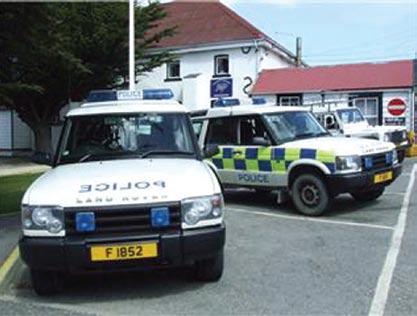
The force uses four Land Rovers, which carry officers around Port Stanley and out to the ‘camps’ across rural dirt and gravel roads. Just as in the UK, officers are normally unarmed, equipped only with expandable batons and rigid handcuffs. Eight officers are trained on firearms and can deal with threats to police and public safety by armed suspects. The force follows the UK manual of guidance on firearms use.
Current firearms include the CZ75 9mm pistol, HK MP 5 9mm carbine and Remington 870 shotgun. The force also has the X26 Taser.
The Royal Falklands Islands Police have faced many challenges over the past 25 years, including rebuilding the service after the war and expanding during this period of upheaval. Its future is secure, due in no small part to the professionalism of its members, who have served the people of the Falklands well for the past 161 years.
Scott Villers is a constable with the Toronto Police Service. He thanks Royal Falklands Islands Police Acting Chief Len McGill and Sgt Tom Whistler for their assistance with this article.
by Elvin Klassen
Vancouver searched far and wide for candidates to succeed former chief constable Jamie Graham after he announced his retirement last February.
“The exhaustive search spanned the country and came down to three internal candidates,” says Vancouver mayor Sam Sullivan. “Chief Graham cultivated an incredible group of talented people at the VPD.”
Then deputy chief Jim Chu was the police board’s unanimous choice, says Sullivan. “He has high credentials, an international reputation and he is highly regarded at city hall.”
Chu took over the top job in August as the 30th chief constable of the Vancouver Police Department (VPD), and the first of Asian descent.

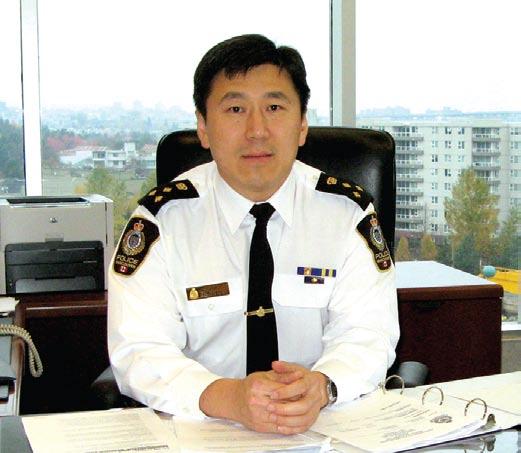
The VPD’s 1,325 sworn officers, including 85 with the provincial integrated forces, strive to serve “beyond the call.” Heading the force was a real honour, Graham says.
“Over a 40-year policing career carrying a shield and a firearm, nothing has made me more proud than my last five years as chief of this great police department. It has been my honour to serve and lead the civilians and officers of the VPD in their efforts to keep the citizens of our community safe. That has been, and always will be, our mission.
“I have held the office in trust until the new chief takes over. I know Jim Chu will leave a great legacy.”
Chu’s family moved to Canada in 1962 when he was three, arriving before the big wave of immigration in the mid-1970s. The eldest son of immigrants from Shanghai, he was one of four children to grow up in a tough, multi-cultural east-side neighbourhood. His father repaired business machines.
Chu began his policing career in May 1979, one year after completing high school. Noteworthy assignments included patrol, school liaison and planning and research. He was promoted to corporal in 1989 and detective in 1990, working in general investigations and the robbery squad.
He became a sergeant in 1991 and took charge of the recruiting unit in 1996, where he wrote the VPD applicant guide, restructured the outreach programs and swearing-in ceremonies and developed the department’s first website.
He was promoted to inspector in 1997, working first as a duty officer before becoming project manager and managing the VPD transition to the E-Comm radio system, new dispatch facility, PRIME-BC Records Management system and new mobile computing and data access platform.
Chu was named commander of patrol district four in 2001 and promoted to deputy chief constable in 2003, commanding the support

services division and overseeing the restructuring of the finance section. He also had responsibility for the human resources and information technology sections.
In his role with the CACP informatics committee, he helped develop and implement the national police information portal system, linking operational police records systems across the country.
Chu looks back with great fondness to his years as a detective handling very involved cases, and credits the many issues and challenges faced in his five years as a patrol sergeant with teaching him how to work with and manage people. He didn’t want to leave patrol but was told he was needed in recruiting.
Chu is well respected at Vancouver city hall for getting police finances in order after high overtime bills and overruns caused major concern. He downplays the significance of being the first Asian-born chief, saying it’s a bigger deal to the local immigrant community than it is to him.
“I have been in Canada for 45 years in a multicultural environment and always felt that first I am a Canadian, second a police officer and third a police officer of Asian origin.”
Chu, 48, met his wife Vicki on the job. She retired from the VPD after 29 years and understands the job, Chu says, adding he sometimes uses her as a sounding board. Father-in-law Tom Markham was also a Vancouver Police officer. The couple has four children.
Chu holds a bachelor of business administration degree from Simon Fraser University and an MBA from the University of British Columbia. He was awarded an Order of Merit of the Police Forces last May.
His book, Law enforcement information technology: A managerial, operational and practitioner guide, is a comprehensive guide to the many complexities and hurdles associated with information technology systems. Chu has also been a featured speaker at police and technology conferences and seminars throughout North America, Europe and the Middle East.
Like most Canadian police forces, the VPD faces a major recruiting challenge. It needs to hire 100 officers over the next year alone and is working on innovative strategies to attract recruits, including a partnership with the University of British Columbia and a foray into Second Life (Internet-based virtual world). It is also adding an interactive mini application to its recruiting website which instantly tells a candidate whether they have what it takes to be one of Vancouver’s finest.
It used to be standing room only at VPD recruiting information sessions. Now parents
are encouraged to bring their 16 and 17 year olds to learn about the VPD. Chu says the sessions are important tools to introduce potential recruits to the challenges and rewards of a policing career, resulting in higher quality applicants.
A recent poll indicated that more than half of Greater Vancouver area residents favour the amalgamation of the more than a dozen local police jurisdictions. Chu says a core city like Vancouver experiences many challenges.
“We have an inordinate amount of the regions’ problems in our city because citizens from the whole metropolitan area tend to come to party in Vancouver and yet the cost sharing from taxes is not equal. All the protests happen here and we carry the Downtown Eastside (an area rife with addiction, mentally ill and social problems) so we plan to talk to the province to see if there are any funding strategies with which they can help us to promote equalization of policing.
“There are some policing jurisdictions in the region that deliver a “no call is too small” service while Vancouver has the highest emergency call response times among large cities in the country. Vancouver is next to Victoria in per capita policing costs and these cities remain the only core cities in Canada without a regional policing structure.” Chu said.
Area police have already began working together, he says, reaching out to reassure the public that safety is their number one priority. More than 20 police chiefs and commanding officers representing Metro Vancouver police forces recently announced the formation of the Integrated Gang Violence Suppression Team as proof they are united in fighting gang violence. The new unit includes 31 VPD officers and 14 from other police forces, including the RCMP, along with 15 support staff.
The team’s mandate is to aggressively check known gang members at their homes, vehicles and known hangouts such as nightclubs, restaurants and gyms. The aim is to stop gang-related shootings and the proliferation of guns on city streets and neighbourhoods, region-wide.
Headed by Vancouver Police Gang Crime Unit Insp Dean Robinson, the team will span the Lower Mainland. “We’re looking at taking all of the streets away from them,” Robinson says.
“We plan on being where they’re going to be, so I think the public needs to be reassured and should be grateful that we’re out there now and we’re applying this.”
Chu says there were only a dozen gun cases a year when he began his career and officers talked about those cases for weeks. Now there’s a gun incident almost every other day and that translates into violence on the streets.
Interdiction teams are another successful strategy to combat crime, Chu says. Officers visit bars at night and, with advanced permission, remove gang members. These specially trained officers target members known to carry firearms, arresting those who refuse to leave when asked under the Liquor Act.
The VPD is also developing some effect-
ive anti-gang education for youth, including a video to show that a gangsters lifestyle is not all glamour and glory.
Chu has received considerable publicity from his ‘Home for the Holidays’ plan to provide a one-way ticket home for criminals. He says that there is a problem in Canada when someone commits a crime, promises to appear in court but then skips town. The jurisdiction issues an arrest warrant but the person evades the charges by migrating, often from east to west.
Chu admits his plan is partly a way to draw public attention to the problem but maintains he’s serious about doing something about the dangerous offenders walking Vancouver streets. It’s cheaper to fly them back to face charges in their home area than to investigate the crimes they commit in Vancouver, he points out. Local businesses have supported the plan, Chu says, and it has also captured the federal government’s attention.
The VPD is gearing up to help ensure the 2010 Olympics are secure. Chu is part of a law enforcement steering committee. The RCMP has the primary responsibility for games security.
“We will put in whatever resources and strategies are necessary to ensure that the games are safe,” Chu says. “We are reading world events to make security appropriate without overdoing it. The Olympics will be the biggest challenge that the VPD has ever faced.
“Several planners are now in place and a deputy chief will spend about 80 per cent of his time on this phase. Another concern is that many officers want to be around for the Olympics and then will retire. We have a 2011 and we need to be ready for that as well.”
The VPD released its 2006 annual report as a four-page insert in the Vancouver Sun. “We feel the community has a right to know whether they are safe and what we are doing to keep them safe,” Chu explains.
Among the report’s statistics – property crime continues to be a major issue, though the department is on track to achieving its 2004 goal of a 20 per cent reduction. Auto theft also continues to be a problem, which the VPD is combatting with its successful bait car program and other initiatives.
Chu credits Graham as an inspiration, coach, mentor and great friend. “I will do my best to maintain the high morale that he has built in this organization and to continue building on the many other successes he has achieved. Due to Chief Graham’s leadership, we are wellpositioned for even greater success in the future and I’m looking forward to a smooth transition and to further our vision of being Canada’s leader in policing, providing safety for all...
“I have been here since I was 19 years old and I take a lot of pride in this organization. There are so many wonderful dedicated people that work here. It is truly an honour to be chief of the Vancouver Police Department.”
Elvin Klassen is Blue Line Magazine’s West Coast Correspondent. He may be reached by Email to Elvin@ BlueLine.ca

by Bianca Lauria-Horner M.D. and Sarah Brooks Ph.D.
A police officer and one bystander were hospitalized tonight after a confrontation with an emotionally disturbed man escalated into violence…
Tonight a family mourns the loss of their son, David, who was shot dead earlier today by police. David had recently been diagnosed with schizophrenia…
Although most encounters are resolved without injuries, news stories such as the above fictional examples are, unfortunately, not rare. Health Canada estimates that 20 per cent of Canadians will experience mental illness during their lifetime and the remaining 80 per cent are likely to be exposed through a family member, friend or colleague. 1
Between seven and 15 per cent of police contacts are with mentally ill people 2 and this figure is increasing. Most police officers encounter at least one mentally ill person per month 3, 4 and some encounter as many as one per shift. 4 Encounters with people who could be described as ‘emotionally disturbed’ (due to factors such as a pre-existing or emerging mental health disorder, extreme situational stress, substance abuse, etc.) are likely to become considerably more frequent.
A first responder has minimal time to assess and react to a situation. “Although there are dangers and unpredictability of police encounters with emotionally disturbed persons (EDPs), they can be significantly reduced by training,” 6 notes criminology professor and former New York City police officer James J. Fyfe, Ph.D. Fyfe has served as an expert witness at more than 40 trials involving police shootings of suspects with a mental illness. 5 Mistakes made in these cases occurred in the first 90 seconds of the encounter, he suggests, stressing that “the first response is critical.” 5
Poor outcomes are often attributed to the difficulty first-line officers face in correctly interpreting the causes and/or intentions behind a person’s abnormal behaviour. Some police tactics developed for dealing with unlawful conduct may be ineffective or even backfire when used with EDPs. Individuals in crisis often experience a distorted sense of reality and may be incapable of understanding the simplest commands. Officers can interpret this as a threat or the person being uncooperative, leading to the victimization of the suspect or innocent bystanders.
In encounters where an EDP is killed, first responders often live with guilt for several months or years following the incident (victimization of the first responder). Even when injuries and deaths are avoided, the difficulty of determining the causes and knowing how best

to manage EDPs’ behaviours often result in unnecessary and unwarranted ‘criminalization.’
The need for specialized training to recognize and manage EDPs was acknowledged by the Standing Committee on Justice and Human Rights when it reviewed the mental disorders provision of the Criminal Code. 6 It recommended that federal, provincial and territorial justice ministers ensure that mental health education programs are developed for law enforcement personnel and other members of the legal/justice system.
Discussions between members of the Nova Scotia Department of Justice and Dalhousie University Department of Psychiatry (DUDOP) in 2002 also indicated a need for such training, as little or no formal training was readily available in the province.
DUDOP responded by establishing a steering committee of four mental health experts and nine law enforcement agency representatives. It developed a pilot workshop to improve the way first responders recognize, categorize and manage EDPs. Member input was also used to develop an educational workbook that was used in the pilot workshop.
The workshop structure includes pre- and post-workshop knowledge assessments, focus group discussions, lectures from experts, a video, question periods, discussion of case studies and a workshop satisfaction questionnaire. East Coast Forensic Hospital (ECFH) clinical and forensic psychologist Dr. Brad Kelln and clinical and forensic psychiatrist Dr Scott Theriault lectured and led case discussions. The course was supplemental to an officer’s primary training and not intended to supersede standard operating procedures.
The workbook covered several topics, including:
1. A description of mental illness.
2. A summary of the Diagnostic & Statistical Manual of Mental Disorders, which physicians and mental health professionals use to diagnose mental health conditions.
3. A summary of Nova Scotia’s Involuntary Psychiatric Treatment Act (Bill 203).
4. A simple but useful approach to determining which of three broad types of behaviours an EDP best fits, which helps an officer select the appropriate response strategies and avoid tactics likely to be ineffective and/or have a detrimental impact. A first responder’s role is not to identify or diagnose mental illness, it was strongly felt, but rather to use their strong observation skills to categorize EDPs according to the presenting behaviours. The categories are:
R – Reality impaired (schizophrenia, acute mania) A – Antisocial, argumentative, abuser (substance abusers, personality disorders) S –Suicidal/depressed.
Details of what to watch and listen for, how to interpret this information, suggested general approach strategies and a list of “dos and “don’ts” for managing people from each category were provided.
5. Active listening – to increase mutual understanding and thereby strengthen communications between officers and EDPs.
6. Risk of suicide.
7. Signs indicative of increased risk of violence towards officers/bystanders.
To help retain the new information, participants were given a two-page ‘pocket reference’ guide which included the categories of EDP and response strategies, and a CD with video scenarios of the three EDP categories. Referring to these tools as soon as possible after an encounter encouraged self-assessment and improvement.

Three workshops were held across Nova Scotia. Officers from all provincial RCMP detachments were invited and 38 attended. All completed identical knowledge tests before and after the workshop. They were also mailed three monthly ‘incident report’ questionnaires and asked to record specific details of EDP encounters.
Satisfaction questionnaire: Participants indicated they were satisfied that the workshop met its objectives, which they rated as “very important, very relevant,” and indicated their comfort levels in interacting with EDPs after the workshop were “much improved.”
Knowledge tests: These consisted of two sections, the first containing 16 true or false statements referring to ways of recognizing, distinguishing or appropriately responding to different categories of EDP. The second had 20 statements referring to a possible action that firstline officers might take when dealing with a particular type of EDP. Participants were required to indicate whether they thought the proposed action would likely be ‘helpful,’ ‘detrimental’ (or they could chose ‘unsure’).
The average (mean) pre-workshop accuracy rate for the first section was 74 per cent – a reasonably high level of knowledge/understanding. Nevertheless, the post-workshop score increased to 85 per cent, a statistically significant improvement. The average pre-workshop accuracy rate for the second section was 65 per cent, which increased to 84 per cent on the post-test. The workshop significantly improved participants’ ability to recognize/categorize and select appropriate means of interacting with EDPs, at least ‘on paper.’
Post workshop ‘incident report’ questionnaire: These provided some evidence of actual ‘on the job’ changes in recognition, categorization and interaction with EDPs. Participants were asked to describe and categorize the encounter and describe the specific actions they took.
Forty questionnaires (combining across the three post-workshop time-points) were com-
pleted and returned. Based on their descriptions of behaviour, respondents categorized all EDPs appropriately.
Forty three per cent of respondents indicated they had encountered one or more of these EDPs. Questions designed to objectively assess whether an officer’s actual efforts/actions were appropriate indicated the response was correct in all but one respect – maintaining continuous eye contact with the EDP. This was taught as not always being helpful and potentially detrimental, yet was still attempted by most respondents.
The respondents all adopted the key R strategy of not playing along with or actively using an EDPs’ irrational beliefs (only one in three indicated they felt that reinforcing delusions were detrimental in the pre-workshop test). Eighty one per cent indicated that their response strategies changed after the workshop and 94 per cent judged their post-workshop interventions to have been helpful (versus detrimental or unsure).
Fifty eight per cent of respondents encountered one of more of these EDPs and most indicated they took appropriate actions/ efforts (except for maintaining eye contact). One key strategy – not trying to gain trust/ favours by agreeing to a person’s demands – was answered poorly in the pre-workshop test but understood and implemented by all incident report respondents. Fifty two per cent said they changed their tactics after the workshop and 79 per cent judged their tactics to have been helpful.
Twenty five per cent of respondents encountered one or more of these EDPs. Assessment of actual efforts/actions revealed that all except one of the key response strategies were well implemented. However, 56 per cent

spent time discussing practical solutions to the EDP’s life problems, which the workshop taught was unhelpful. Forty three per cent said they had changed their tactics after the workshop and 89 per cent judged their intervention to have been helpful.
The de-escalation strategies learned were judged helpful in 24 encounters and not helpful in one. This enabled us to analyze the conditions where these strategies were considered feasible and potentially beneficial and the outcomes when they were used. The strategies were considered helpful in 13 of 14 encounters with delusional (Category R) EDPs, who collectively had initial compliance levels ranging from compliant (rare) to verbally non-compliant/passive resistive (common). Half were aggressive. The 14th EDP was Tazered before most strategies could be implemented because he attempted to assault an officer. No force was ultimately needed with more than half the EDPs and empty hands techniques and/or handcuffing were sufficient with the others.
De-escalation strategies were implemented and considered helpful by respondents with 15 aggressive/highly agitated (Category A) EDPs who were verbally and/or physically non-compliant. Substance abuse was a factor in a third of these cases. Ultimately, no force was needed in a third of cases. One EDP was pepper sprayed and subsequently a baton was used. In the other cases, empty hands techniques and/or handcuffing was sufficient.
The strategies were implemented with six suicidal (Category S) EDPs, who collectively had a wide range of initial compliance levels. One EDP did kill himself but was possibly prevented from killing others, the respondent noted. The other incidents were resolved harmlessly without using force.
Forty five per cent of officers filling out the incident reports used the pocket reference guide at one or more encounters and 18 per cent used the CD.
All participants positively valued the workshop and it was highly valued by many. It achieved immediate, statistically significant improvement in participant ability to recognize/categorize and appropriately interact with EDPs on paper, which was evidenced by changed practices on the job. Respondents’ reports of specific tactics used/avoided indicated good adherence to most of the workshop guidelines, however the results suggested some participants misunderstood, did not retain or selectively ignored/rejected some specific advice about managing EDPs.
A significant number of participants appeared to consider the pocket reference guide useful and deemed de-escalation training to have been ‘helpful,’ indicating that workshop strategies were potentially feasible and beneficial when EDP behaviour ranged from co-operative to active resistive. The numbers of respondents who reported details of Category R, A and S encounters was relatively small, due partly to few occurrences in the time-frame and the general problem of low response rates to mailed surveys.
It would be unwise to assume that the incident report respondents are a truly representative sample of the participants. Nevertheless,
it is fair to say that the workshop provided useful information and tools on recognizing and managing EDPs and that some participants actually implemented this new knowledge, skills and resources on the job. These findings should help improve future workshops.
This project was supported by: Community Mobilization Program, Public Safety and Emergency Preparedness Canada; Janssen Ortho Pharmaceuticals; Schizophrenia Society of Nova Scotia; Dalhousie University Department of Psychiatry; Delta Hotels; Department of Justice; Truro PS; Cape Breton Regional Police (CBRP); Bridgewater PS (BPS); Police and Victim Services Division, Department of Justice; Amherst PS; RCMP; and Halifax Regional Police (HRP).
The authors especially thank the following people for their involvement: Sheriff Andrew MacDonald and David Horner, Sheriff Services, Department of Justice; Truro D/Chief Dave McNeil; CBRP S/Sgt Paul Joeb; BPS Chief Brent Crowhurst; George Lahey, Police and Victim Services Division, Department of Justice; NSCPA President and Amherst PS Chief Charles Rushton; RCMP Cst. Gerry LaPierre, Criminal Operations “H” Division; HRP S/Sgt. Robin McNeil, Human Resources. Dr. Brad Kelln and Dr Scott Theriault, ECFH, Debbie Phillips, emergency triage nurse, DUDOP; Susan Hare, project manager, mobile crisis intervention team, DUDOP; Colleen Cash, project manager, international health office, DUDOP.
References
1. A report on mental illnesses in Canada, Health Canada, October 2002, p. 3.
2. Police response to emotionally disturbed persons: Analyzing new models of police interactions with the mental health system (National Institute of Justice, 1996) by Henry Stedman, Ph.D., Joseph Morrisey, Ph.D, Martha Williams Deane, M.A. and Randy Borum, Psy.D.
3. What do police officers want from the mental health system? Hospital and community psychiatry, 41 pp 663-665 (Gillig, P. M., Dumaine, M.. Stammer, J. W., Hillard, J. R. 1990)
4. Data from focus group discussion conducted with six participants with many years experience working as first-line responders in the Nova Scotia justice system (Dalhousie University Department of Psychiatry, 2002). Details available on request.
5. Web MD, When cops confront mental illness, Policing mental illness by Kathy Bunch, April 23, 2001; Rights for all, chapter three, Police brutality - A pattern of abuse (refer to endnote 16, p. 8).
6. Policing the emotionally disturbed, James J. Fyfe, Ph.D., Am. Acad. Psychiatry Law 28:345-7, 2000 pp. 346-47.
7. Report of the Standing Committee on Justice and Human Rights (June 2002).
Bianca Lauria-Horner, M.D., Assistant Professor, Department of Psychiatry, Dalhousie University, directed the project. She can be reached at hornerb@dal.ca or 902-473-5593. Sarah Brooks Ph.D can be contacted at sarah.brooks@sympatico.ca .
Section 1
Group A (Antisocial, argumentative, abusers) can be characterized by the individual being self-centered, narcissistic, and rarely taking responsibility for self or situation.
True False
Section 2
Suppose you encountered someone demonstrating bizarre, irrational beliefs (e.g. “I am Jesus;” “Aliens are trying to catch me;” “My thoughts are being controlled by the TV/radio,” etc). Below are listed some possible actions that a first-line responder might take. Please indicate whether you think each action would likely be helpful [calming, risk reducing] or detrimental [exacerbating] in dealing with this kind of person or, if applicable, please respond “unsure:”
Make an effort to maintain steady eye-contact: Helpful Detrimental Unsure
Spend time trying to dissuade the person of their irrational beliefs: Helpful Detrimental Unsure
Inform the person ahead of time what you are going to do and why: Helpful Detrimental Unsure
‘Play along with’ or actively make use of their irrational beliefs: Helpful Detrimental Unsure
Post-workshop incident report questionnaire.
Regarding your encounter with someone demonstrating bizarre, irrational beliefs and/or hallucinations. (e.g. “I am Jesus;” “Aliens are trying to catch me;” “My thoughts are being controlled by the TV/radio,” “I hear voices,”

Prepared by the CACP HR Police/Mental Health Subcommittee
The following guidelines are intended to provide a starting point for police programs and services related to the mental health system and people with mental illnesses. They are not meant to be prescriptive but rather informative, intended to help police services set up systems to use when encountering suspects, offenders, victims and others who require assistance and also appear to be experiencing a mental illness.
In Canada, as in many western countries, interactions between people with mental illnesses (PMI) and the criminal justice system are increasing. For instance, the number of offenders with mental disorders entering the federal correctional system has increased significantly in recent years.
While it is hard to estimate how much time and money police organizations spend on serving people with mental illnesses, there is no doubt that it is significant. Police are often the starting point of interactions between PMI and the criminal justice system and have been described as “de facto mental health providers” and “the frontline extension of the mental health system.”
While it is generally thought that this increase is simply a result of deinstitutionalization, it is actually a reflection of a variety of factors and trends, including:
• fewer psychiatric hospitals, hospital beds and the concomitant deinstitutionalization;
• improved treatment for psychiatric disorders, resulting in less need for hospitalization;
• increased emphasis on individual rights and freedoms;
• changes in mental health laws;
• increased societal concern with public safety.
While much of the police organizational focus on mental illness in the community has been on crisis response, there are many other situations where police interact with PMI, including:
• apprehensions and other powers of police
under mental health acts;
• arrests in which the accused appears to be mentally ill;
• minor disturbances in which a person appears to be mentally ill;
• situations in which a PMI is the victim of crime or threatens others;
• circumstances in which the public or families of PMI ask for help;
• non-criminal or non-offence situations in which police become aware that someone who has a mental illness appears to be at risk or in need of assistance;
• suicide interventions;
• situations in which a PMI provokes a reaction from police to harm or to kill them;
• circumstances in which police become instrumental social support contacts for PMI, providing practical assistance and support to people in need.
There is no one-size-fits-all method for police organizations to provide appropriate service to this important segment of our population. Given the variety of needs, sizes of police services and geographical factors, the organization and scope of programs for PMI will vary, but there are common denominators.
Whereas some agencies might have teams

or units specifically devoted to the task, others may only have one designated person or no formal program, expecting all officers to share the responsibility. In an ideal world each organization would have a structure to ensure that PMIs are dealt with compassionately and humanely, with attention to both their rights and best interests, ensuring not only their safety but that of officers and the public.
The following guidelines provide such a structure, identifying general principles which any police organization or detachment can implement regardless of size or location. The manner in which they are operationalized will, of course, depend upon the unique culture of the community served, but the principles remain the same.
The term ‘person with a mental illness’ is used to denote anyone whose behaviour at the time in question appears to be influenced by the presence of significant mental distress or illness. The person may be experiencing a persistent and severe illness such as schizophrenia or a transitory period of distress with temporary symptoms that may be expected to abate, as with an acute anxiety problem.
For the purpose of these guidelines, the essential factor is that, at the time of the police interaction, the person’s mental state is impaired to the extent that the way they respond to their environment is negatively affected. Also, the term “police organization” refers to a police department, service or detachment – and should be taken to reflect the level of the organization at which local initiatives and policies/decisions are made.
Each police organization should foster a culture in which mental illness is viewed as a disability, not a moral failure, in which PMI are treated with the same respect and attention to their rights as other members of our society.
It is incumbent on police leaders to set an appropriate tone by modelling non-derogatory language, actively combating stigma and ensuring the assignment of police personnel to mental health-related positions in the organization is considered carefully.
Each police organization should identify one or more persons as responsible for issues related to people in the community with mental illnesses. The number, role and involvement of these officers will vary depending upon the size of the service or detachment.
In large organizations, this responsibility might fall to an entire office or group of people, while smaller agencies might have
just one person who may also have other responsibilities. This may simply be a ‘go to’ person so that outside organizations have a place to start – or they may have significant responsibility for developing programs, policy and/or service delivery.
In any case, the person should be recognized internally and externally as the contact for PMI related issues. At a minimum, they will be the ‘public face’ of the police organization in this context and will serve as the contact both internally and externally.
This position should have a clearly identifiable title that reflects its responsibility and a defined scope of practice. Ideally, the person will be a member of appropriate community or national organizations which provide information and support to others in similar positions (such as the CACP HR police/mental health subcommittee).
Rationale: Police organizations are complex organizations, frequently puzzling to outsiders. While a variety of members in a variety of assignments will deal with individual incidents, a mental health agency, for example, should not have to guess whether to speak to someone in major crimes, community policing, operations or ‘the desk.’
While agencies often maintain that the duty officer or shift commander is the most appropriate person to deal with, this can easily lead to inconsistency, lost information and lack of leadership on developing policy because of the diffusion of responsibility.
Conversely, it may appear to outsiders that a small organization may have no one to deal with issues such as those involving a PMI – when it actually is the job of every officer. Whether the service is large or small, the public needs to know that someone is looking after these issues – and who they are.
Principle 2
Each police organization should identify and develop a relationship with a primary contact person within the local mental health system.
Ideally, this contact will act as the liaison between police and the system in general and provide links to other agencies. In communities where the mental health system is undeveloped or fragmented, it may be necessary to develop individual contacts with a variety of mental health services.
Rationale: Like police organizations, mental health agencies employ a wide range of people in many functions who may have unclear names and overlapping mandates. Personnel may not offer consistent information, be aware of precedents or be attuned to the unique needs of outside groups. An identified contact person allows not only for the development of consistent practice and the identification of recurring issues, but might also decrease the amount of time spent sorting out issues related to individual cases.
Principle 3
Each police organization should have an identified contact person in the emergency services department of any and all hospitals
with which they do regular business.
This may be the person, or one of the persons, identified in Principle 2.
Rationale: Interactions with emergency rooms (ER) probably cause more frustration and consternation among police officers than any other PMI related interaction. The very nature of ER work makes on-the-spot-resolution of disagreements between police and hospital staff almost impossible and often ill-advised.
Individual disagreements may well reflect systemic issues better dealt with outside of the context of a situation with a specific PMI. The presence of a pre-existing contact and a relationship with a member of the ER or hospital staff increases the likelihood that systemic issues can be addressed and resolved.
Each police organization should ensure that its first responders/patrol staff have the appropriate basic level of knowledge and skill to deal with a PMI.
Standard training should include:
• understanding and identifying mental illnesses;
• how to communicate with PMI;
• how to use defusing and de-escalation techniques;
• how to assess suicidality;
• how to assess risk and danger;
• issues related to stigma;
• the role of the family with PMI;
• how to access mental health services;
• the Mental Health Act (MHA);

• issues related to the use of force with PMI.
Rationale: Police officers come into their jobs with widely varying levels of knowledge and experience about mental illness. Thus, it is likely that a variety of learning mediums may be appropriate including, but not limited to, formal training sessions, self-directed learning, college and university courses and job sharing with mental health personnel.
It may be neither appropriate nor feasible to mandate a particular course or number of training hours training for each officer. While this may be a strategy that a police organization chooses to employ, the principle is that the organization should have a method of assessing the knowledge and competence of its personnel working in this area and educate them as appropriate.
One responsibility of the assigned police mental health officer described in Principle 1, for example, might be to assess the organization’s learning needs and develop appropriate training initiatives. Alternatively, this might fall to the training officer/unit.
Each police service should ensure that specialized assignment officers likely to regularly encounter PMI – such as negotiators, victim services, tactical team members and co-ordinators for Section 810s and other high risk discharges from the correctional systems – have sufficient education and training to understand and work with them.
Rationale: It is easy to assume that most interactions with PMI will occur in the context of crises or MHA apprehensions but this is not usually the case. It is also important not to assume that officers have had specialized training at the police academy or college. While this has tended to be the case in recent years, senior officers in specialized positions may not have had the benefit of such training.
Principle 6
Each police organization should have a clearly defined policy and procedure by which personnel can access mental health expertise on a case-by-case basis.
There are a variety of ways to realize this principle. The service may have a subset of specially trained officers serving as a resource or consultants to other officers, a mobile
response team or a co-response team that includes mental health professionals. There may simply be a contact person or agency to phone when necessary, or an agreed-upon sequential response arrangement whereby police ‘hand off’ a PMI after attending to danger and criminal issues. The intent is to have readily available mental health expertise on a case-by-case basis to assist with the ‘clinical’ management of the situation and to connect the PMI with services as necessary.
Rationale: It is unrealistic to expect all police officers to develop the level of knowledge and skill needed to deal with all PMI interactions. There will inevitably be times when they need specially trained police officers or mental health professionals to help sort out issues related to suicidality, appropriate case disposition and communication.
Police officers need to know that certain agencies can be contacted and mental health expertise accessed when appropriate. In remote areas, this contact may take place by telephone rather than in person but first responders need to know it is available when required. Likely, this will involve developing memoranda of agreement with appropriate agencies. These are best made at a policy level because trying to obtain such advice and guidance in the face of a crisis is generally unworkable and may have liability implications.
Police organizations should ensure that all support personnel who may be involved with PMI, including victim services and dispatchers, have enough knowledge and understanding of mental illness to carry out their jobs. For dispatch personnel and those taking calls, that means knowing what questions to ask and recognizing the signs that mental illness may be a factor.
Ideally, responding officers should know in advance when a call might involve a PMI, allowing them to use appropriate internal and external resources. In many cases, properly trained dispatch can garner this essential information. Police leaders also need to be assured that those conducting follow ups are sensitive to these issues and able to provide appropriate support and information about available resources.
Rationale: While there often isn’t enough information to conclude that a person is men-

tally ill, in many cases it WILL be apparent or there may be behaviours or other indications to suggest it. Call takers need to have a basic awareness of the indicators and symptoms of mental illness and other information that might be useful when alerting first responders about the nature of a call. Those expected to provide support and services after an event need to be aware of the special needs of PMI.
Each police service should have a directory or other printed material available with descriptive and contact information for area mental health agencies – for employees, as well as PMI and their families.
While some situations involving PMI result in arrest or apprehension under the MHA, many will involve more informal resolutions such as directing PMI and/or their family to a local mental health, housing and/or social assistance agencies. First responders should, therefore, have a written list or pamphlet, both for their own usage and to be given to PMI and their families.
Rationale: Social service agencies are often not well co-ordinated and the needs of PMI may be diverse and complicated, so it is unrealistic to expect first responders to know about all agencies or to be able to locate and evaluate this information on a case-by-case basis. A general guide to the local resources and contact persons is expedient and will save time. The people in Principle 2 might develop this list or it could be handled by victim services.
Each police organization should participate in a regional liaison committee made up of members of the mental health and criminal justice systems.
While specific links with mental health system members are, of course, essential, they are not enough. Police organizations should be part of the larger continuum of human service and other agencies addressing the issues of PMI who become involved with the criminal justice system. That requires co-ordination and planning at the community level.
Co-ordinating committees typically involve not only police organizations and mental health agencies but also representatives from the Crown, courts, defence bar, social services, other health care agencies and ambulance services. Co-ordinating committees may provide contacts to help deal with specific situations but, more importantly, can develop policy and identify local service needs. In rural areas, such a group could meet – by necessity – through teleconferencing.
Rationale: Issues related to the criminalization of PMI are not unique to police services; they are attributable to a complex series of interactions between many community partners, social trends and legislation. Police have a critical role to play in developing and implementing approaches to this broad issue and participating in analyzing local needs and establishing service agreements.
Liaison committees can also provide a forum for follow-ups and debriefings after

difficult interactions, developing crisis plans for PMI who police frequently encounter.
Each police organization should establish a data collection system reflecting the nature, quantity and outcome of PMI interactions, ensuring the information is used only within the appropriate context and not normally released in conjunction with “police record checks” or similar documentation.
Estimates of the time police spend with PMI and the type of interaction are just that – estimates. We have few data that describe their nature and extent; a comprehensive collection system will identify and track this.
Rationale: The majority of record management systems do not provide a sufficient base for monitoring this type of information, so there is a need for leadership in developing appropriate standards and processes. Data provide a way of tracking what the problem is, the resources currently used and future requirements, whether policy/procedure changes are working and identifying the changes needed and highlighting unmet service needs.
Only by recording systematically, over time, can these questions be addressed and solutions developed. Such tracking and data collection sends a clear message about what is important and whether an organization seeks change or improvement. It is an essential planning and evaluation tool.
However, in keeping with the principles and laws of privacy and human rights, information NOT associated with criminal activity – such as records of mental health act apprehensions – should not normally be included in ‘police record checks’ or similar documentation provided for employment, education or volunteer work. Only in the most extreme circumstances where such records demonstrate a clear danger should this information be released.
Each police organization should have a central location where general information about mental illness, local resources and legislation can be easily accessed.
This might be a binder, box or library, under the auspices of the designated mental health officer, that first responders can readily access.
Rationale: Information about services and trends changes quickly and it is unrealistic to expect all first responders to have access to timely in-service education on these issues. However, officers will usually take advantage of readily available information when a problem situation arises. A small ‘library’ or reference area provides this on an as needed basis and also creates an atmosphere that encourages continuous learning. (This principle does not refer to information about specific people known to police but rather general information and resources.)
Formal policies, procedures and memoranda of understanding should be in place to support the work of mental health officers (as described in Principle 1), interactions with mental health personnel, hospitals and agencies (Principles 2, 3 and 9) and the collection and release of such data (Principle 10).
Rationale: While informal arrangements often work very well in many jurisdictions, they leave the police service vulnerable to police or mental health agency personnel changes, or in the worst case scenario, untoward events. Formal policies provide a level of structure, consistency and safety that benefit all concerned.
As indicated in the central tenet at the beginning of this document, police leaders have a key role to play in ensuring PWI are treated respectfully and pro-actively.
The single most significant common denominator shared among communities that have successfully improved the criminal justice and mental health system’s response to people with mental illness is that each started with some degree of co-operation between at least two key stakeholders – one from the criminal justice system and the other from the mental health system – Consensus Project report, p. 14 (www.consensusproject.org).
Visit www.pmhl.ca to learn more.


by Sue Collings
It’s 3 AM Saturday morning and you’re at the scene of a single vehicle accident. The car struck a tree and the driver’s side airbag deployed but there’s no sign of the driver or passengers. You run the plate, discover the registered owner lives nearby and head to his home, only to be told he’s been home all night. The car must have been stolen from the driveway while he slept.
You have your doubts. The owner doesn’t appear to have been recently awoken, you can smell alcohol on his breath and he has what looks like fresh cuts and scrapes on his face. He admits to having had a few drinks before going to bed and says a fall in the bathroom earlier that day caused the cuts. His spouse confirms her husband was home all evening.
Every instinct tells you that the owner and his wife are lying but how can you prove it? You’ve got limited time and resources to conduct the thorough investigation required to prove your theory. A good start may be to call the owner’s insurance company.
Most major Canadian insurers have inhouse investigators who look into suspicious insurance claims. Many are former police officers who transferred their skills to the private sector. These trained individuals not
only have the ability to thoroughly investigate such a claim, they have the time, resources and legislation behind them.
Of course, an insurance company cannot investigate a claimant or take a statement under the instruction of a police officer with the sole intent of providing it to the officer for their investigation. Officers can only report their suspicions to the company and nothing more – but should the investigation reveal a crime, police can be given the insurance file for the intent of having criminal charges laid. The end result may ultimately be the same.
Insurance investigators have a vast array of tools. The most important in Ontario is the Ontario Auto Policy. An insurance policy is essentially a contract between the company and policy holder and both parties must abide by its terms and conditions for it to be effective. Failure to comply may lead to the ultimate denial of a policyholder’s claim.
A suspect may refuse to give police a statement but is obligated under insurance legislation to co-operate if he/she intends to submit a claim for damages or a loss. Section 6(4) of the Ontario Auto Policy, Statutory Conditions states:
The insured shall submit to an examination under oath and shall provide for examination at such reasonable place and time as is
designated by the insurer or its representative all documents in the insured’s possession or control that relates to the matter in question and the insured shall permit extracts and copies thereof to be made.
The auto policy also allows insurance companies to “inspect the automobile and its equipment at all reasonable times.” These are two tremendous tools that provide the foundation for any successful investigation.
So how might an insurance investigator handle such a claim as described above? Every company is different and there are no industry standards on how an investigation will be conducted. Some may have restrictions limiting certain investigative techniques where others may use every tool at their disposal, but bottom line there are several options available.
One of the first priorities will be to find the vehicle and ensure it’s in a secure location and that any evidence is protected. It may be taken to a shop or storage area to protect it from the elements. The investigator will want to check it for lock damage, broken glass (indicating a break-in) or tampering with the ignition. This will also give them a chance to check inside for evidence of a theft or the owner’s whereabouts that night – a receipt or matchbook, for example.
The vehicle itself may offer key physical

evidence that will either support or refute the claimant’s version of events. An important element will be the reported theft from the driveway. Since it was involved in an accident, it had to be stolen either with or without a key.
The investigator will spend considerable time with the owner going over the number of keys and their current whereabouts. If he still has all of the keys, then the investigation will focus on how the vehicle was stolen in the first place, or if that theory is even possible.
Insurance investigators regularly use court certified lock experts, who can determine if a vehicle was driven with or without a key. In some of the newer models, they can use transponder records to ascertain the key last used to operate the vehicle. This evidence may help prove that the owner or someone he knows was driving the vehicle at the time of the accident, if he still has the matching key.
Often people who stage the theft of their vehicle will damage the ignition to make it appear it was tampered with. Lock experts can easily determine if such damage is merely cosmetic or may actually have started the vehicle. Their expertise may also extend to vehicles burned after a theft.
The insurance investigator will want to photograph the insured’s facial cuts and scrapes. If they were caused by contact with an airbag or windshield, it’s possible DNA was left where contact was made. An investigator may choose to secure the airbags or windshield section, under the direction of a DNA lab, to secure a profile of the driver at the time of the accident. The owner will then be asked to provide a DNA sample to rule themselves out as a suspect.
Insurance companies or their investigators cannot demand samples from customers or deny a claim on the mere refusal of such a request – but the owner’s co-operation would be deemed an act of good faith and speed the claim investigation process. A refusal would likely enhance the investigator’s suspicions and encourage further investigation.
The polygraph is another option. Most insurers use it toward the end of their investigation and only after discrepancies in a claim arise. Again, it will be offered to clear the individual of any involvement in the loss – most companies will offer to pay the entire claim should the individual pass. The claim cannot be denied simply because of a failure but it would raise another red flag and encourage further investigation.
It’s not uncommon for an insured to offer to take a polygraph test to clear their name. For example, several years ago an insurance company deemed a house fire suspicious. Realizing they were suspects, the owners offered to submit to a test to clear their name but the company refused. The homeowners, through their lawyer, arranged their own test, which indicated they had no involvement in destroying their home. The results became instrumental in the court’s criticism of the insurance company, which had refused to acknowledge the results.
As in criminal proceedings, polygraph results are not admissible but any information gleaned during the interview phase may be used. Polygraph experts used by the insur-
ance industry have impeccable reputations with police agencies across the country. Their interviewing techniques quite often result in a claim being withdrawn before the test is even administered.
If the vehicle owner was driving the night of the accident, the question then becomes how did he get home? He may have simply walked if the accident was close enough to his house, but otherwise he either had to hitch a ride or someone must have picked him up.
The investigator may acquire a release form allowing access to the owner’s cell phone records for the night in question. They would not only reveal any calls made but even the area where they were made. Placing an insured near the scene of the crime through cell site sectoring has resulted in many successful insurance investigations.
The insurance investigator will also conduct all of the necessary background searches, not only on the vehicle owner but anyone else who may be a suspect. An insurance history may reveal prior claims which might be useful. A driver’s abstract may reveal a history of drinking and driving convictions. A media search could uncover past indiscretions or insight into the driver’s activities that night. If the accident occurred near a major highway, the vehicle and driver may have been recorded on traffic cameras. The insurance industry has tremendous resources available and knows how to access them quickly.
Everyone involved will have to be interviewed, including the wife and investigating police officer. Neighbours may be asked if they saw or heard anything that evening to sup-
port or refute the owner’s statement. Friends, employers or coworkers may also have useful information.
The insurance investigator will review all of the evidence presented and determine if the claim should be paid. Mere suspicion is not enough for denial and the case file must withstand scrutiny. Depending on the strength of the case, the investigator may return to the police to have the owner criminally charged.
The insurance industry has one additional tool that most law enforcement officials are not aware of. Section 447(2) of Ontario’s insurance act states that any person who directly or indirectly furnishes false or misleading information to obtain payment for goods or services is guilty of an offence. The penalty is a fine of up to $100,000 for the first offence and up to $200,000 for the second offence.
Law enforcement need to recognize the service insurance investigators offer and open the lines of communication. It could be a winwin situation for both parties.
Sue Collings is a former Toronto police officer who has worked as an insurance investigator for the past 12 years. Sue will teach a one-half day course at the Blue Line Trade Show April 29th.


by Danette Dooley
It’s not unusual for the Royal Newfoundland Constabulary (RNC) to receive boxes and bags filled with clothing to keep poor people warm in the weeks leading up to Christmas. It’s all part of the force’s Warm Hands/Warm Hearts project.
A generous gift last year was special, however. Someone dropped off a large green garbage bag at police headquarters in St. John’s filled with one-of-a-kind hand-made gifts destined to become treasured keepsakes for more than two dozen children.
The unknown benefactor not only handknit 25 teddy-bear type dolls but also made shoe bags for each; no two bags or dolls are exactly alike and all have eyes, noses and mouths made of brown wool and sport tiny knitted scarves.
Some dolls are pink and white, others blue and green, yellow and red and every colour in between. The care, thought and tenderness put into the project touched both novice and veteran officer alike.
“The individual who did this obviously put a lot of time into it,” said RNC supervisor Sgt. Rick Thorne. “She was good enough to come in and pass the bag over to our front desk officers. She didn’t want to give her name or get any credit for it. That will tell you a little about what such a big heart she has,” Thorne

observed last year, placing one of the dolls back into its special cloth bag.
Cst. Charity Dodd, a street patrol officer who graduated recently from the RNC cadet training program, was also touched by the generosity of this stranger.
“This is so thoughtful,” she said, peeking inside several bags. “Whoever made these had to be thinking of all the families where there are children who probably won’t be getting much

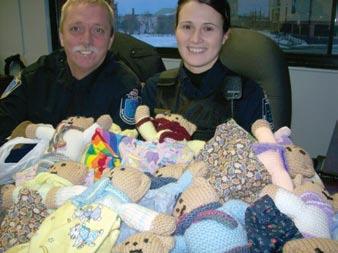
RNC Sgt. Rick Thorne and Const. Charity Dodd say a generous stranger who made these tiny teddy bears for less fortunate children embodied the true true meaning of Christmas
for Christmas. The fact that they don’t want any credit for it makes it that much more special.”
The RNC partners with the community each year on Warm Hands/Warm Hearts to ensure the less fortunate can stay warm. The brainchild of Carol Anne Farrell of Marystown, Newfoundland, the project has been overseen through the years by RNC Sgt. Paula Buckle.
The knitted goods come from all over the province. It began with women knitting only mitts but has evolved to now include vests, mittens, scarves and hats. One woman even takes the time to pin a beautiful broach into one of the scarves she knits.
Some of the knitted goods are donated by churches and other community groups, while other people take it upon themselves to send in or drop off their own donations. As supervisors, Buckle and Thorne work with officers on street patrol to ensure the donations get to those who need them the most.
It’s a project that has taken on its own identity and doesn’t require advertising. Just like the magic of Christmas, the knitted goods begin showing up at the police station well before the cold weather sets in.
“We know the people who spend a lot of time on the streets very well,” Thorne said, “and they are so appreciative when we stop our police vehicle and offer them some socks or mitts. They look forward to us coming by every year.”
With needy children everywhere, the tiny teddies dropped off in St. John’s could very well find their soul mates in many nooks and crannies of the province, warming the hearts of many small children.
“We will have no problem finding a home for any of these little bears,” Thorne said. “We’re just so happy to be able to help get them into some tiny hands,” he added.
Danette Dooley can be reached at dooley@blueline.ca
by Allison Klein, Washington Post
With his lights and sirens blaring, D.C. police officer Lou Schneider raced to an emergency call, past dozens of startled onlookers standing on the crowded streets of Washington, DC.
The ground beneath Schneider’s patrol car literally was quivering.
“You know when this is coming up behind you,” said Schneider, one of a few dozen D.C. officers who are using the department’s newest sirens – the ones that people can feel as well as hear.
“It vibrates everything,” he said.
Meet the Rumbler.
The high-tech blaster is being used along with the traditional siren. It is aimed at grabbing people’s attention and getting them to make room for officers responding to emergencies, helping police navigate through traffic faster and safer. People can feel it from about 200 feet away.
D.C. police have 49 cars equipped with the Rumblers, spread across the city. The Rumbler is part of a lights-and-sirens package the department is phasing in over several years as it gets new cars and retires old ones. In about four years, all of the department’s 767 marked patrol cars will likely have them.
With a pair of high-output woofers and an amplifier, the Rumbler is not louder than a regular siren. It gets its message across with low-frequency sound waves that shake everything, including rear-view mirrors.
The Rumbler is meant to be used judiciously, in situations where motorists should pull over to make way for the police. It is timed to turn off automatically after 10 seconds. Still, police officials said, some people might be startled when they first experience it. And it remains to be seen if the public will view all that shaking as a helpful warning or just a nuisance.
“Once they see what it’s attached to, they’ll be all right,” Assistant Police Chief Diane Groomes said. “They’ll get used it.”
The city is buying the Rumblers at the behest of Chief Cathy L. Lanier, who said she wanted officers to have the newest technology, especially if it improves safety. She said officers at times have had trouble getting traffic to clear.
“People can’t say they didn’t hear the siren, because with these, they feel it,” Lanier said.
The sirens cost about $350 a car; the technology was developed by Illinois-based Federal Signal Corp. and is being used or tested in a handful of cities, including Alexandria and New York. Other customers include police in Plymouth Township and Reading, in Pennsylvania, and Tequesta and Plantation, in Florida, said Federal sales and marketing VP Tom Morgan.
Morgan said the Rumbler was developed after police departments complained that,
increasingly, motorists weren’t responding to traditional lights and sirens.
“The basic idea is we become more insulated in our vehicles with stereos, iPods and telephones,” Morgan said. “We thought it would be helpful if there was something else along with the traditional siren that would reach a different level of awareness.”
People are certainly taking notice in DC. Being near it is like standing next to a car that is blaring bass-heavy music.
“I heard it, but I didn’t know what it was,” said Sandra Seegars, a neighborhood activist who recently got the full Rumbler experience. “It makes you pay attention, like, ‘What’s wrong with that car?’ ”
Police said the Rumbler has been working well and believe that it will be helpful for the deaf and hard-of-hearing. “Vibrating sirens is an interesting idea, and it could benefit all drivers, not just deaf drivers,” agreed Erin Casler, a spokeswoman for Gallaudet University.

by Brian Ward
As an emotional brotherhood, policing is among the tightest in the professional work world – but when it comes down to the every day business of managing what we do for a living, the family is often dysfunctional.
Commenting during his findings on the Bernardo case, Mr. Justice Archie Campbell stated: “There were times during the separate investigations of the Scarborough rapes and the St. Catharine’s rapes and murders that the different police forces might as well have been operating in different countries...
“The work of the most dedicated, skilful and highly motivated investigators and supervisors and forensic scientists can be defeated by the lack of effective case management systems and the lack of systems to ensure communication and co-operation among law enforcement agencies.”
No communication
In a nutshell, police just didn’t talk to each other. How many criminals slipped through the cracks because they roamed across Canada rather than concentrating their efforts in one geographic area?
The Police Information Portal (PIP), a Canada-wide program of information sharing among law enforcement agencies slated to be

completed by the end of this year, is intended to dramatically expand the way police do business.
Police officers share an innate curiosity and services actively encourage members to download a variety of information into their records management systems (RMS), but for decades, this inside information wasn’t shared.
As technology improved, so did the market

for entrepreneurs to develop better RMS programs for law enforcement. Information technology vendors came up with solutions for their police clients. One system was called the Law Enforcement Information Portal (LEIP) but it was unique to a single company, Versaterm.
The CACP and RCMP identified this problem and proposed in 2005 that a single records query tool be established to connect the patchwork of systems operated by Versaterm and others, including Niche, Enterpol, Sunguard, Module d’information policière and Toronto Police Service’s eCOPS.
The system, now recognized as both LEIP and PIP, began at the direction of the CACP and is administered by the RCMP’s National Integrated Interagency Information System (N-III). Many jurisdictions across Canada have already benefited.
“Disappearing in another jurisdiction is pretty appealing for those who disregard the law, notes RCMP C/Supt Tom Bennett, OIC of Nova Scotia criminal operations.
“PIP eliminates this option by providing information and intelligence that spans the country. There’s literally nowhere left to hide.”
With the addition of a nationwide records query tool as a supplement to CPIC, front line officers have a much wider range of information from which to query. Public and officer safety is the primary concern of both CPIC and PIP but PIP allows an officer the added ability to query a suspect in previously unavailable areas, including:
• General occurrences
• Tickets(summonses)
• Suspect checks made in the streets
• Flagged records
• Mug shots
By doing a separate inquiry on the PIP or LEIP components of their own RMS, investigating officers can obtain a broader profile of a suspect’s activities.
More than 500,000 queries were made on PIP in July 2007 alone, RCMP C/Supt Ray Lamb noted last year in a presentation to the CACP. Success stories have come in from across the country.
• Information shared by Vancouver Police and queried by Ottawa Police played an integral role in the identification of a suspect in a double homicide case.
• London Police obtained a PIP hit on a licence plate check that led to charges of credit card fraud relating to the registered owner. Further investigation provided valuable information into gang activity.
• Vancouver Police used PIP to delve into active sex crime-related cases, resulting in a suspect arrest. Previous solicitation charges laid by Toronto Police on another offender were also uncovered, and a low risk sex offender’s status was reassessed based on similar crimes reported in another jurisdiction.
There are now 33 Canadian law enforcement agencies representing more than 31 per cent of sworn police officers fully participating in PIP, according to Lamb, including large services such as Vancouver, Victoria, various BC RCMP detachments, London, Toronto, Peel Region, Durham Region, Ottawa, Windsor and Halifax.
Smaller services include Central Saanich, West Vancouver, Nelson, Service de Police de Gatineau, the Greater Vancouver Transportation Authority Police and municipal New Brunswick services.
Lamb strongly advises PIP practitioners to exercise care when acting on results received from an inquiry, noting the N-III team suggests CPIC should be used first to establish officer safety. During an investigation, checking facts on CPIC can provide a starting point, with PIP acting as a source of less filtered occurrence information that can provide leads and possible links between information.
They also encourage investigating officers to “drill down” into information received through PIP. Since it’s the product of an individual police service’s records management process, the team stresses it is incumbent on investigators to double check the source and accuracy with the originating agency.
“We’ve also quickly recognized that with this new resource comes a new level of responsibility,” says Eldon Amoroso, senior director of support services for the London Police Service.
“As a contributor to PIP, we need to ensure
that the information we provide is accurate and complete enough to help other agencies make quick and effective investigative decisions and solve crime. As police agencies participating in a national system, we need to demonstrate that we are responsibly managing our records to ensure the highest level of accuracy and completeness.”
E-mail pip@rcmp-grc.gc.ca for more information about the portal.
by Brian Ward
North Bay Ontario’s Canadore College is adding a one year post-graduate police foundations program dealing exclusively with forensic identification.
The crime scene investigation (CSI) course is an extensive version of the scenes of crime officer program already in place with many police services. Approved by the college’s board of governors, the program is scheduled to begin in September, says professor Mike Lahaie.
“As a former cop, I know how difficult my first few years were negotiating a crime scene. Our CSI grads, in many ways, will be better prepared for something serious than some of the training officers we have out there,” he told Blue Line
The program is open to police foundations program graduates with a minimum grade point average of 3.75. The curriculum has been designed in co-operation with a forensic identification officer. Students will divide their time between the laboratory and classroom.
Lahaie is confident his students will be ahead of the rest of the field when applying for public or private

law enforcement jobs. Students hired by a police service who intend to pursue a career in forensic identification will still have to meet standards set by their employers, he acknowledges.
Topics to be covered in the course include photography, fingerprints, latent impression techniques, hair and fibre evidence, forensic pathology, odontology, entomology and DNA collection.
“We also put in a very detailed course on the powers of search that goes way beyond anything I teach in my criminal code and statutes classes,” he adds.
Since the change in Ontario’s high school system, students have been entering post secondary institutions at an earlier age. Graduating younger means they are unable to apply for a law enforcement position.
“I’m of the opinion… that a PFP/CSI graduate will be just as marketable, if not more so, to a police service than a criminology university graduate,” Lahaie emphasizes.
For more information, contact Lahaie at mike.lahaie@ canadore.on.ca or call 705 474-7601x 5630.


by Kelly Keith
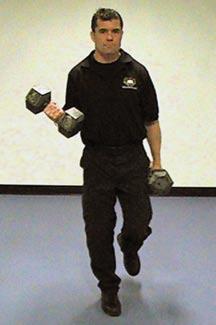
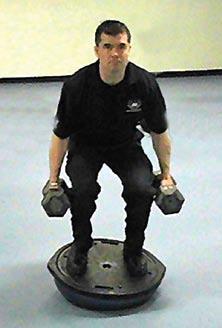

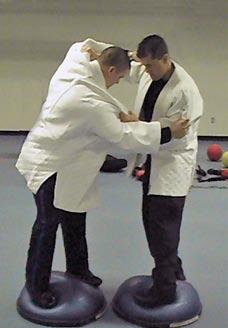
Balance is defined as the ability to maintain the centre of mass over a base of support and is sometimes referred to as the relationship between the ears and the hips. Your body’s centre of gravity is an inch or two above or below your navel.
Balance is important to a police officer because if we lose our balance when attacked, we are likely to be in a ground fight. Being on the ground does NOT mean losing, but it has some disadvantages:
• More susceptibility to injury;
• Psychological/physical disadvantage for officer and advantage for suspect;
• Increased danger from multiple attackers;
• Chance of being disarmed increases;
• Extremely exhausting for officer;
• Harder for officer to use striking techniques and intermediate weapons;
• Officer cannot immediately disengage from subject.

Most police trainers train officers to fight to their feet or, if they can manage it, fight from the ground to get the suspect into handcuffing position. The three most common ways to wind up on the ground are being pushed, pulled or tackled.
All officers should know what to do once on the ground, however if we understand and train on ‘balance,’ we may not have to deal with the situation in the first place!
An officer is very stable when their feet are slightly wider than shoulder width and apart in a traditional ‘interview and/or combat stance.’ Real confrontations are dynamic and an officer is likely to be in a position where his/her balance is displaced. Balance is a key component of winning any confrontation; an unbalanced position greatly compromises your ability to generate power of any sort.
The best way to train your balance is by training ‘off balance:’
• Simply making our base of support smaller (standing on one foot or having feet close together) challenges our balance. A great way to increase balance and stimulate muscle fibres which are generally not stimulated is to stand on one foot while exercising. For example, do two sets of dumbbell curls on both feet; stand on one foot for the third set, switching to the opposite foot after the first five. You can do this with almost any exercise where you are standing, including presses, side raises, tricep pushdowns, etc.
• Use balance training tools such as bosu balls, balance boards or bongo boards. Try doing squats while attempting to maintain your balance (I do not recommend squats on physio balls as a fall can easily mean a torn ACL – always consider whether the risk is worth the benefit). You do not have to give up power or strength training; simply add another fitness component – balance – to your training. A side benefit – it will give you more strength and power in an unstable environment,
which is exactly what you may need in a dynamic fight.
• Sight has a great deal to do with balance. Your postural sway will increase 20-70 per cent simply by closing your eyes and standing up, so stress your balance by doing activities such as safe standing stretches, easy slow kicks to a bag or any standing exercise with dumbbells with your eyes shut.
• Do dynamic balance training such as rag doll drills, where each person has a good quality Judo Gi on. Stand within arm reach and grab onto the collars. DO NOT try to torque your partner down to the ground, as this may cause injury; simply try to displace their balance while they try to displace yours. Once balance is displaced – one foot is off the ground, for example – start again. This is enhanced by taking the interview stance to do these drills, making the training more specific to your job!
• Your CORE strength (Butt and Gut) is of the utmost importance in keeping balance and should be used during all balance training. Medicine and physio balls are great for dynamic and functional core strength exercises.
• Using physio balls for dumbbell chest presses instead of a flat secure bench is a great way to address functional strength and balance (use light weights and/or a spotter first). Think about the benefits of adding balance-challenging exercises into every routine!
Begin varying your routine to address balance and you will see great results in balance and strength. Vary your base of support (feet) and use your imagination (safely) to work with these principles.
An Atlantic Police Academy inspector and 19 year policing veteran, Kelly Keith teaches physical fitness, officer safety, use of force and firearms. A Jiu-Jitsu instructor (second degree black belt and bronze medalist), he has also studied wrestling, boxing, Tae Kwon Do and Judo. He can be reached at 902 888-6417.
by Danette Dooley
Prevention can only occur when we understand the problem and commit ourselves to sharing this information with others in the community – from the Burin Peninsula, Newfoundland Voice Against Violence website.
Thanks to the provincial government’s Violence Prevention Initiative, Newfoundland and Labrador now has ten regional co-ordinating committees actively working to address the issue in both rural and urban areas.
The key to their success is close association with RCMP detachments throughout the province. Officers work with committee members to ensure the appropriate messages reach residents.
“We have a number of stakeholders on our committee, including RCMP Sgt. Wayne Edgecombe,” says Paula Mallay, co-ordinator of the non-profit Burin Peninsula committee, which works to reduce and prevent violence in the region.
“He is very active in what we are doing. He attends our meetings and has a valuable input in (our) activities.”
The RCMP’s help is invaluable in addressing issues, Mallay says, because it has access to crucial information, including areas where violence-related calls originate. “They can help us go about not only finding out more about what the issues are that these communities are dealing with, but also in providing support to those who need it.”
Youth violence and bullying are among the issues identified in several area communities, she says.
“With that information, we developed a presentation that took us into the schools. We’ve done ten sessions at Marystown Central High School and we’ve talked to the students about their role as bystanders in helping and preventing violence.”
The committee’s close working relationship with the RCMP made it much easier to reach students, she notes, adding the force also played an integral role in launching the committee’s website. It contains a variety of information on family violence, partner abuse, dating violence, abuse of older adults, child abuse and bullying and youth violence.
“In order to prevent violence, people have to understand what violence is. Our website provides information on what violence is and where you can get help,” says Mallay.
The RCMP and other committee members were a great help in coming up with the information outlined on the site and other initiatives, she says.
“Besides the website, we’ve put together a two-page article to help parents know how they can recognize bullying and what they can do about it. Sgt. Edgecombe provided me with information on things such as intimidation, harassment and assault and what can be done if a youth is doing these acts.”
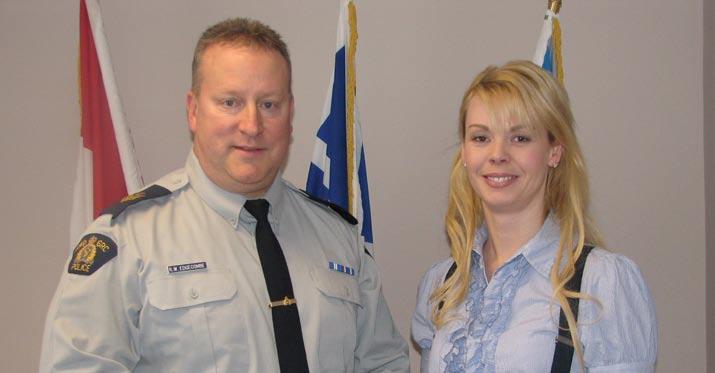
Edgecombe says area police officers are enthusiastic about the district’s participation in the initiative. “We give advice on the law and we’ve helped the committee prepare some information for the newspaper. We’re in the schools and we’re educating the children on bullying and other forms of family violence.”
The province’s Violence Prevention Initiative helps police officers get the word out that violence will not be tolerated, he adds. “Education, awareness and prevention about family violence is a priority for all RCMP
divisions in this province.”
Police officers play an important role in preventing violence, says Mallay, and are genuinely concerned about its social implications and effects on the community.
“The RCMP on the Burin Peninsula is very busy but they make a point of getting out our meetings and finding out what we are doing. That’s very commendable on their part.”
Visit www.bpvav.com for more information on the Burin Peninsula Voice Against Violence initiative. Contact Danette Dooley at dooley@blueline.ca

by Kelly Ross
The theft of jewellery and precious metals from all sources is increasing in the United States and, while there are no Canadian figures, the situation is similar here. It’s hardly surprising. With just about five per cent of the world’s population, North America buys half of the world’s $60 billion (U.S.) annual diamond jewellery production. This means virtually every resident is a potential target for criminals looking to acquire diamonds and like commodities (DALC) such as gemstones and precious metals.
FBI statistics show thefts have increased dramatically since the turn of the century to just over a billion dollars a year, second only to automobiles. While these numbers are disturbing, the recovery rate is even more so. Police recover 60 per cent of stolen automobile but only five per cent of jewellery and precious metals – the lowest recovery rate of all commodities. This is because they are so easily concealed, difficult to identify, can be melted or re-cut and are liquid cash-like commodities that can be disposed of within hours of being stolen.
Criminals seek items easy to hide and remove, available, valuable, enjoyable, disposable and that the public craves – and DALC fit this bill. Research shows thieves like items they can hide easily. Bulky items like electronics are not only harder to move and stash, they are often only “hot” – highly sought after – for a relatively short period of time before becoming obsolete or passe.
Desktop computers were big in the late 1990s, for example; then laptops and more recently iPods caught the public’s fancy, however DALC has remained hot and the value of diamonds has continued to increase over time.
Criminals reveal in interviews that jewellery is one of the most commonly stolen items in residential break and enters. It’s also the item most often reported to police and claimed as an insurance loss. One study showed 70 per cent of criminals incarcerated for residential break and enters had traded stolen property for drugs or sold the items for cash they used to buy drugs. When DALC wasn’t traded for drugs, it was often sold to jewellers or pawn shops, which put it back into the legitimate jewellery market.
The RCMP has already taken steps to address the re-insertion points for jewellery in Alberta. The Alberta Jewellery Industry Crime Watch – www.AJICW. ca – keeps the industry informed about stolen DALC in circulation and criminals they should watch for. It aims to protect jewellers from unknowingly purchasing stolen jewellery, identify those trying to sell the stolen property and increase recovery rates. Agencies outside Alberta investigating substantial thefts have also found the crime watch and website useful.
they believe are likely to have high value items. Most go in alone and spend just two to 10 minutes inside, according to research – just long enough for a cursory search for items that can be quickly stolen. With so little time, thieves usually go straight to the master bedroom to search for jewellery – there’s not enough time to search the entire house.
People buy jewellery as young adults and, as creatures of habit, often continue to store it in their bedroom – often on the nightstand or in the closet, regardless of its value. Criminals regularly target residences

There is an opportunity to reduce losses by making DALC less available and/or more difficult to remove. This can be accomplished through a process as simple as an awareness campaign showing people

what they can do to protect their jewellery from criminals – like hiding it somewhere other than the master bedroom. Going one step further and storing items in a residential fixed safe or safety deposit box would be even better.
Police could deliver this message at public forums and through websites, public announcements, news releases, client contact and pamphlets. The insurance industry can insert pamphlets into mailings and policies. Jewellers could also hand out pamphlets and advise customers on proper storage.
Pursuing a crime prevention initiative focused on reducing residential losses of jewellery may have several tangible and intangible benefits. The nexus between jewellery theft and the illegal drug trade beyond the street level criminal is illustrated in several documents/studies. Reducing jewellery thefts may help disrupt the criminal use of drugs and trafficking.
Jewellery used to launder money or held as wealth presents difficulties beyond that of the average proceeds of crime investigation. The low North American DALC recovery rate means some $950 million dollars worth of illicit product is stored as proceeds of crime, laundered through re-insertion into the legitimate market or otherwise retained and used for criminal activities every year.
Reducing losses reduces the amount of illicit jewellery available to criminals.
Above the obvious value to law enforcement, a plan to reduce losses is beneficial on other fronts. Diamonds stolen in residential break-ins are claimed on insurance policies more than twice as often as the next most common item. The rate of residential break and enter in Canada is approximately 518 per 100,000 population. Based on Alberta’s present population of 3,375,763, it could experience about 17,500 break-ins per year, a tremendous draw on police resources.
While the number and value of claims made is elusive, it could be several tens of millions of dollars, based on figures from other areas. Even if insurance claims are made in only half of the events, a crime prevention program could produce substantial cost benefits.
Perhaps more importantly, personal jewellery can be difficult to replace and often has a sentimental value beyond other items. Stemming the losses of heirloom and cherished items of jewellery carries a value to the public that supersedes dollars and cents.
RCMP Cst Kelly Ross is a gemologist and expert on the criminal use of diamonds and jewellery with 10 years experience as a diamond and jewellery importer/wholesaler. His book, The fifth C: The criminal use of diamonds was scheduled to be released last month.





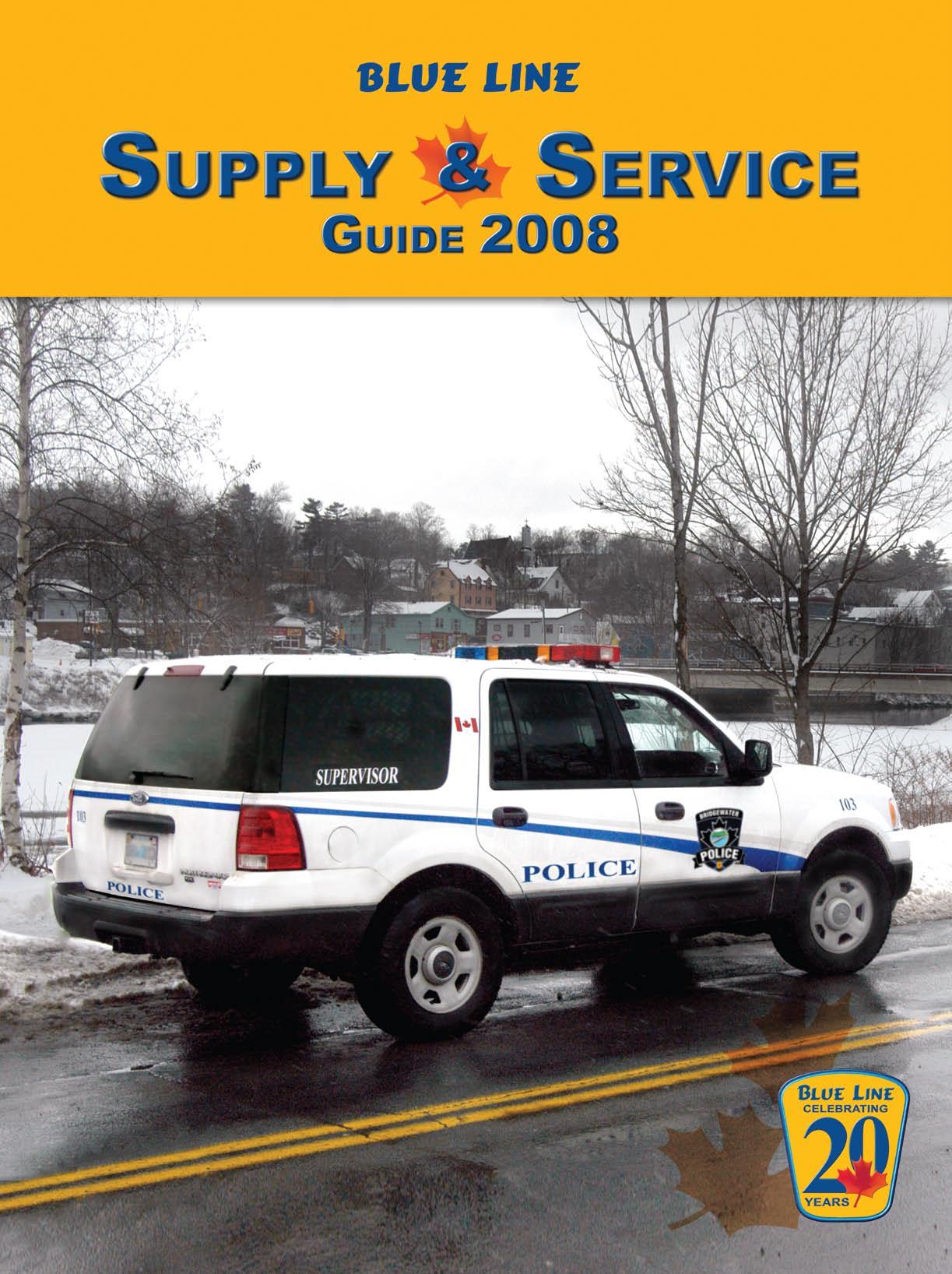

Access Control
Accident Reconstruction
Computer - Software
Accreditation
Addiction Treatment
Alarm Devices
Security
Alcohol Detection Devices
Ammunition
Range Supplies
Ammunition Disposal
Architecture & Engineering
Police Facilities
Armoured Car Service
Asset Tracking
Associations
ATM Service
Audio/Video Aids
Training Courses & Services
Automated Finger Printing
Forensic Services
Awards, Badges, Pins
Emblems & Decals
Jewelry
Pens
Promotional Items
Batons
Weapons - Non-lethal
Bicycles & Supplies
Binoculars & Telescopes
Night Vision Equipment
Surveillance
Body Armour
Tactical Team Equipment
Bomb Disposal
Hazardous Material Handling
Hazmat Equipment
Boots, Shoes & Footwear
Footwear
General Police Supply
Breathing Apparatus
Bullet Traps
Cameras
Photography
Security - Perimeter Control
Surveillance
Video - Mobile & Surveillance
Cases, Duty Bags, Storage
General Police Supply
CCTV, Film
Surveillance
Cigars & Accessories
Clothing & Outerwear
General Police Supply
Uniforms & Accessories
Collision Reporting Centres
Communications - Base Stations
Computer - Dispatching
Communications - Consultant
Communications - Hand-Held
Communications - Mobile
Compliance Services
Computer - Accessories
Computer - Dispatching
Communications-Base Stations
Computer - Forensics
Computer - Hardware
Computer - Laptops
Computer - Records Mgmt
Computer - Software
Computer - Storage Devices
Computer - Training
Conflict Resolution
Cooling Vests
Counterfeit & Detections/Fraud
Crime Scene Reconstruction
Data Collection
Data Mining, Data Recovery
Defensive Tactics Training
Schools & Institutions
Defibrillators
Digital Video
Cameras
Display Trailers
Distance Education
DNA Testing Services
Dog Training & Supplies
Emblems & Decals
Awards, Badges & Pins
Uniforms & Accessories
Vehicles - Accessories
EMS Software
E-Services
Evidence Notebooks
Memo Books
Evidence/Exhibit Storage
Exercise Equipment & Clothing
Eye, Ear & Skin Protection
Gloves
Hazardous Material Handling
Range Supplies
Fabric Manufacturer
Financial Planning/Insurance
Firearms - Simulation Training
Video - Training
Weapons - Non-lethal
Firearms - Training
Firearms - Training Equipment
Firearms - Training Facility
Fleet Graphics
Vehicles - Accessories
Forensic Accounting
Forensic Aids & Investigations
Investigative Support Services
Forensic Services & Equipment
Form Holders
General Police Supply
GPS & Mapping
Vehicle Tracking Equipment
Gloves
Hazardous Material Handling
General Police Supply
Graffiti Eradication
Hats & Head Protection
Hazardous Material Handling
Bomb Disposal
Eye, Ear & Skin Protection
General Police Supply
Gloves
Safety & Rescue Equipment
Hazmat Equipment
Helicopters & Equipment
Holsters & Accessories
General Police Supply
Weapons - Accessories
HR Consulting & Support
ID Holders
Inert Explosive Devices
Investigative Support Services
Forensic Aids & Investigations
Jewelry
Awards, Badges, Pins
Promotional Items
Key Control
Laser Rangefinders
Legal Services
Licence Plate Recognition
Lights - Portable
Loading & Unloading Stations
Marine Electronics
Marine - Rigid Hull Inflatables
Memo Books
Evidence Notebooks
Motorcycles & Supplies
Vehicles - Off Road
Narcotics Equipment & Drug Tests
Forensic Services & Equipment
Needs Assessment
Night Vision Equipment
Cameras
Office Equipment & Supply
Paging
Pens
Awards, Badges, Pins
Promotional Items
Photo Identification
Photo Imaging
Photography
Cameras
CCTV, Film
Forensic Services & Equipment
Video - Mobile & Surveillance
Surveillance
Promotional Items
Awards, Badges, Pins
Jewelry
Pens
Protective Services
Publishers, Books, Printing
Training Courses & Services
Radar & Speed Equipment
Range Supplies
Ammunition
General Police Supply
Real Estate, Relocation
Records Management
Recruitment & Selection
Restraining Devices
Riflescopes
Robots
Safety & Rescue Equipment
Hazardous Material Handling
Schools & Institutions
Defensive Tactics Training
Security - Consulting & Systems
Security - Identification
Security - Penal Institutions
Security - Perimeter
Photography Surveillance
Video - Mobile & Surveillance
Security - Training
Sirens & Emergency Lighting
General Police Supply
Vehicles - Accessories
Surveillance
Binoculars & Telescopes
Cameras
CCTV, Film
Security - Perimeter
Video - Mobile & Surveillance
Switches & Control Systems
Systems Integration & Support
Tactical Team Equipment
Body Armour
General Police Supply
Telemetry Equipment
Telescoping Masts & Antenna
Thermal Imaging
Ticket Holders
Training Courses & Services
Audio/Video Aids
Publishers, Books, Printing
Trauma Scene Cleaning
Uniforms & Accessories
Clothing & Outerwear
Emblems
General Police Supply
Holsters & Accessories
Vacations
Vehicles - Accessories
Fleet Graphics
Sirens & Emergency Lighting
Vehicles - Baiting
Vehicles - Lightbars
Vehicles - Off Road
Helicopters
Motorcycles & Supplies
Vehicles - Restoration
Vehicles - Specialty
Vehicles - Tracking Equipment
GPS & Mapping
Vessels - Accessories
Video - Mobile & Surveillance
Security - Perimeter
Surveillance Photography
Video - Training
VIP Protection
Voice Logging Systems
Weapons - Accessories
Holsters & Accessories
Weapons - Maintenance
Weapons - Non-lethal
Batons
Firearms - Simulation Training
Weapons - Security
Weapons - Training
Wireless Communications
Access Control
Ahearn and Soper Inc
Cogent Systems
Datacard Group
Deister Electronic
Accident
Reconstruction
Prairie Geomatics Ltd
Accreditation
Schulich Executive Education Centre
Alcohol Detection Devices
DAVTECH Analytical Services (Canada)
Draeger Safety Canada
Mega-Tech
Ammunition
Remington Arms Co Inc
Tetragon Tasse
Wolverine Supplies
Architecture & Engineering
CS&P Inc
Parkin Architects
Rebanks Pepper Littlewood Architects
Stantec Architecture Ltd
Asset Management System
Groupe Techna
Asset Tracking
Ahearn and Soper Inc
Deister Electronic
Telus
Associations
Int’l Association for Property & Evidence
Pride In Service
Audio/Video Aids
Bock Optronics
Securesearch Inc
WatchGuard Video
Automated
Fingerprinting

Cross Match Technologies Inc
Awards, Badges, Pins
Off Duty OPP Shop
Polar Pin
Strath Craft Ltd
Bicycles & Supplies
Alpine Joe Sportswear Ltd
Binoculars & Telescopes
Current Corporation
Kindermann Canada Inc
Body Armour
Current Corporation
DuPont Canada Inc
Gordon Contract
Law Enforcement Training & Supplies
MD Charlton Company Ltd

Pacific Safety Products
Teijin Twaron
Bomb Disposal
ITS Canada Inc
Securesearch Inc
Boots, Shoes & Footwear
5.11 Tactical
911 Supply
Gordon Contract
Law Enforcement Training & Supplies
Original Shoe Co.
SEALS Action Gear
STC Footwear
The Shoe Network
Breathing Apparatus
Draeger Safety Canada
Ferno Canada
Mine Safety Appliances Company
MSA Canada
CCTV, Film
Global Traffic Group Ltd
ITS Canada Inc
Panasonic Canada Inc
Precision Camera Inc
Battery Buyer
Bock Optronics
Digital Ally Inc
Federal Signal Corporation
Global Traffic Group Ltd
Henry’s Cameras
Pentax Canada
Precision Camera Inc
WatchGuard Video
Winsted Group Inc
Cases, Duty Bags, Storage
911 Supply
Gunnebo Security

Henry’s Cameras
Impact Cases
Kirkpatrick’s Ltd
Pacific Safety Products
Pelican Products Canada Inc
Prairie Geomatics Ltd
UK Products Canada Inc
Cigars & Accessories
Constable Cigar Inc
Citation Issuance
Groupe Techna
Clothing & Outerwear
5.11 Tactical
911 Supply
Alpine Joe Sportswear Ltd
Drop Zone Tactical
DuPont Canada Inc
Gordon Contract
Ingo Global Inc
Integral Designs
Law Enforcement Training & Supplies
Off Duty OPP Shop
OLEYLAND Inc.
Original Shoe Co.
Pacific Safety Products
Pride In Service
SEALS Action Gear
Starfield-Lion
Tetragon Tasse
The Shoe Network
Collision Reporting Centres
Accident Support Services International
Communications - Base Stations
EADS Secure Networks Canada
CommunicationsConsultant
Dataradio
Dick Buss & Associates LLC
EADS Secure Networks Canada
CommunicationsHandheld
CanCom Sales Inc
Peltor Communications
Telus
Versaterm
xwave Technologies
CommunicationsMobile
Battery Buyer
Dataradio
Digital Ally Inc
EADS Secure Networks Canada
ITRONIX
Motorola
Telus
Versaterm
xwave Technologies
Compliance Services
Digital Boundary Group
Computer - Accessories
Prairie Geomatics Ltd
Computer - Dispatching
Cartel Communication Sytems
Motorola
Versaterm
Computer - Forensics
Cogent Systems
Cross Match Technologies Inc
Computer - Hardware ITRONIX
Computer - Laptops
Battery Buyer
ITRONIX
Mega-Tech
Motorola

Computer - Records / Management
Accident Support Services International Versaterm
Computer - Software
Accident Support Services International
Canada Law Book
Cogent Systems
Firetide
Motorola
WatchGuard Video
Whitmore & Hobbs Security Inc
Computer - Training
Canadian Police Knowledge Network
Digital Boundary Group
Data Collection
Cartel Communication Sytems
Datacard Group
Data Mining, Data Recovery
Accident Support Services International
Digital Boundary Group

Defibrillators
Philips Medical Systems
Zoll Canada
Digital Imaging
Henry’s Cameras
Skana Imaging Solutions
WatchGuard Video
Display Trailers
DAVTECH Analytical Services (Canada)
Decatur Electronics
Distance Education
Athabasca University - Criminal Justice
British Columbia Institute of Technology
Canadian Police Knowledge Network

Lakeland College School of Business
Mount Royal College
Niagara University
Royal Roads University
University of Guelph, On-Line MA
University of Guelph-Humber
Virtual Marine Technology Inc
Dog Training & Supplies
Securesearch Inc
Door Security
Glass Protection Solutions
E-Services
Canadian Police Knowledge Network
TrueCheck
EMS Software
Ferno Canada
Emblems & Decals
Artcal Graphics & Screen Printing Inc
Polar Pin
Evidence Notebooks
Triform Business Systems
Exercise Equipment & Clothing
MD Charlton Company Ltd
Eye, Ear & Skin Protection
Aearo Canada
AJ Stone Company Ltd
Best Glove
Bushnell Outdoor Accessories
CanCom Sales Inc
KM & Associates
Peltor Communications
R Nicholls Distributors Inc
SEALS Action Gear
Strategic Ops Group
Fabric Manufacturer
DuPont Canada Inc
Firearms - Simulation Training
Canadian Academy of Practical Shooting
Lamperd Less Lethal
Firearms - Training
Lamperd Less Lethal Remington Arms Co Inc
Firearms - Training Equipment
Canadian Academy of Practical Shooting
Colt Canada
Mancom Manufacturing Incorporated
Firearms - Training Facility
Lamperd Less Lethal Reaction Target Systems
Fleet Graphics
Artcal Graphics & Screen Printing Inc
Forensic Aids & Investigations
Seneca College
Forensic Services & Equipment
Cross Match Technologies Inc
Molecular World
Form Holders
Triform Business Systems
GPS / Mapping
Dataradio

Telus
Versaterm
Winsted Group Inc
xwave Technologies
General Police Supply
5.11 Tactical
911 Supply
APS Distributors Ltd
Battery Buyer
Digital Ally Inc
Gordon Contract
Ingo Global Inc
INOVA / Emissive Energy Corp
Kirkpatrick’s Ltd
Off Duty OPP Shop
Pride In Service
R Nicholls Distributors Inc
SEALS Action Gear
Gloves
911 Supply
Best Glove
Drop Zone Tactical
Ferno Canada
OLEYLAND Inc
HR Consulting & Support
Canadian Process Serving Inc
Schulich Executive Education Centre
TrueCheck
Hats & Head Protection
5.11 Tactical
MSA Canada
Hazmat Equipment
AJ Stone Company Ltd
Draeger Safety Canada
MSA Canada
Peltor Communications
Science Applications Int’l Corp (SAIC)

TWB Designs
Hazmat Handling
Aearo Canada
Ferno Canada
KM & Associates
Primex Security Systems
Holsters & Accessories
911 Supply
APS Distributors Ltd
Law Enforcement Training & Supplies
R Nicholls Distributors Inc
SEALS Action Gear
ID Holders
Datacard Group
Kirkpatrick’s Ltd
Inert Explosive Devices

Investigative Support Services
TrueCheck
Jewelry
Off Duty OPP Shop
Polar Pin

Strath Craft Ltd
Key Control
Deister Electronic
Laser Rangefinders
DAVTECH Analytical Services (Canada)
Kindermann Canada Inc
Wolverine Supplies
Legal Services
PrePaid Legal Services Canada
License Plate
Recognition
Global Traffic Group Ltd
Mega-Tech
Lights - Portable
911 Supply
INOVA / Emissive Energy Corp
Pelican Products Canada Inc
PQI Canada Ltd
Traffic Safety Management
Whitmore & Hobbs Security Inc
Marine Electronics
Infrared Technologies Canada
Memo Books

Motorcycles & Supplies
Copeland Engineering Inc
Deeley Harley-Davidson Canada
Federal Signal Corporation
Whelen Engineering
Narcotics Equipment / Drug Tests
DAVTECH Analytical Services (Canada)
Needs Assessment
PrePaid Legal Services Canada
Rebanks Pepper Littlewood Architects
Night Vision Equipment
Bock Optronics
Current Corporation
Infrared Technologies Canada
Kindermann Canada Inc
Wolverine Supplies
Office Equipment & Supply
Battery Buyer
Dick Buss & Associates LLC
Panasonic Canada Inc

Groupe Techna
Matte Industries
Photo Identification
Ahearn and Soper Inc
Datacard Group
Photo Imaging
Global Traffic Group Ltd
Henry’s Cameras
Pentax Canada
Skana Imaging Solutions
Photography
Digital Ally Inc
Henry’s Cameras
Kindermann Canada Inc
Pentax Canada
Promotional Items
Artcal Graphics & Screen Printing Inc
Constable Cigar Inc
Off Duty OPP Shop
Pride In Service
Strath Craft Ltd
HSS International


Radar & Speed Equipment
DAVTECH Analytical Services (Canada)
Decatur Electronics
Global Traffic Group Ltd
Mega-Tech
Range Supplies
Bushnell Outdoor Accessories
Reaction Target Systems
Remington Arms Co Inc
Records Management
Accident Support Services International
Groupe Techna
Recruitment & Selection
TrueCheck
Restraining Devices
Peerless Handcuff
Current Corporation
Kindermann Canada Inc
L3 EOTech
Wolverine Supplies
Safety & Rescue Equipment
AJ Stone Company Ltd
CanCom Sales Inc
CVDS Inc
Draeger Safety Canada
Drop Zone Tactical
INOVA / Emissive Energy Corp
Integral Designs
MD Charlton Company Ltd
Meal Kit Supply Canada
MSA Canada
Pelican Products Canada Inc
Science Applications Int’l Corp (SAIC)
Traffic Safety Management
TWB Designs
Schools / Institutions
Athabasca University - Criminal Justice
British Columbia Institute of Technology
Dalhousie U’ty College of Continuing Ed
Durham College Applied Arts & Tech
Lakeland College School of Business
Mount Royal College
Niagara University
Osgoode Prof’l Development York U
Royal Roads University
Schulich Executive Education Centre

University of Guelph On-Line MA
University of Guelph-Humber
Security - Consulting & Systems
Digital Boundary Group
Gunnebo Security
Primex Security Systems
Rebanks Pepper Littlewood Architects
Security - Identification
Ahearn and Soper Inc
Cogent Systems
Cross Match Technologies Inc
Datacard Group
Security - Penal Institutions
Deister Electronic
Security - Perimeter
Infrared Technolgoies Canada
Precision Camera Inc
Security - Training
Schulich Executive Education Centre
Seneca College
Security Products
Glass Protection Solutions
Precision Camera Inc
Simulation TrainingMarine
Virtual Marine Technology Inc
Sirens & Emergency Lighting
AJ Stone Company Ltd
Code 3
Masterack / Crown
Mega-Tech
Sterlmar Equipment
Whelen Engineering
Small Craft Training
Virtual Marine Technology Inc
Surveillance
Bock Optronics
Cross Match Technologies Inc

Infrared Technologies Canada
INOVA / Emissive Energy Corp
ITS Canada Inc
Primex Security Systems
Winsted Group Inc
Switches and Control Systems
Copeland Engineering Inc
Daniels Electronics Ltd
PQI Canada Ltd
Whelen Engineering
Systems Integration / Support
Dick Buss & Associates LLC
xwave Technologies
Tactical Team Equipment
5.11 Tactical
Aearo Canada
APS Distributors Ltd
Bushnell Outdoor Accessories
CanCom Sales Inc
Colt Canada
HSS International
INOVA / Emissive Energy Corp
Integral Designs
ITS Canada Inc
MSA Canada
Peltor Communications
Primex Security Systems
R Nicholls Distributors Inc

Starfield-Lion
Steelite Tactical Gear
Tetragon Tasse
TWB Designs
Whitmore & Hobbs Security Inc
Thermal Imaging
AJ Stone Company Ltd
Current Corporation
E.D. Bullard Co
Infrared Technologies Canada
MD Charlton Company Ltd
Winsted Group Inc
Best Glove
Blue Line Magazine
Canadian Academy of Practical Shooting
Canadian Police Knowledge Network
Colt Canada
Dalhousie U’ty College of Continuing Ed
Durham College Applied Arts &Tech
HSS International
Lakeland College School of Business
Primex Security Systems
Schulich Executive Education Centre
Securesearch Inc
Seneca College
University of Guelph MA
Virtual Marine Technology Inc
Uniforms & Accessories
911 Supply
Alpine Joe Sportswear Ltd
APS Distributors Ltd
Drop Zone Tactical
Gordon Contract
Ingo Global Inc
Integral Designs
Law Enforcement Training & Supplies
MD Charlton Company Ltd
Peerless Handcuff
R Nicholls Distributtors Inc
Starfield-Lion
The Shoe Network
William Scully Ltd
Vehicles - Accessories
Artcal Graphics & Screen Printing Inc
Copeland Engineering Inc
Decatur Electronics
Federal Signal Corporation
Masterack / Crown

Whelen Engineering
Vehicles - Lightbars
Code 3
Federal Signal Corporation
Masterack / Crown
Mega-Tech
Sterlmar Equipment
Whelen Engineering
Whitmore & Hobbs Security Inc
Vehicles - Off Road
DaimlerChrysler Canada
Masterack / Crown
Vehicles - Restoration
DaimlerChrysler Canada
Vehicles - Specialty
DaimlerChrysler Canada
Deeley Harley-Davidson Canada
Ferno Canada
Masterack / Crown
Vehicles - Tracking Equipment
DaimlerChrysler Canada
Vessels - Accessories
Artcal Graphics & Screen Printing Inc
Vessels - Simulation Training
Virtual Marine Technology Inc
Video - Mobile & Surveillance
Cruisercam
Decatur Electronics
Digital Ally Inc
ITS Canada Inc
Mega-Tech
WatchGuard Video
Whitmore & Hobbs Security Inc
Winsted Group Inc
Video - Training
John E Reid & Associates
Kinwood Multi-Media Inc
Seneca College
Voice Logging Systems
Cartel Communication Systems
CVDS Inc
Weapons - Accessories
Bushnell Outdoor Accessories
Kirkpatrick’s Ltd
L3 EOTech
Tetragon Tasse
Wolverine Supplies
Weapons - Non-Lethal
APS Distributors Ltd
Defense Aerosols
Lamperd Less Lethal
Weapons - Training
Canadian Academy of Practical Shooting
Colt Canada
Lamperd Less Lethal
Weather Monitoring
Prairie Geomatics Ltd
Window Films
Glass Protection Solutions
Wireless Communications
Aearo Canada
Cartel Communication Sytems
Daniels Electronics Ltd
Dataradio
Firetide
ITRONIX
Peltor Communications
Telus
xwave Technologies


See advertiser index page 70 and BlueLinks at www.blueline.ca
5.11 Tactical 4300 Spyres Way Modesto CA 95356 209-527-4511
911 Supply
4327A Manhattan Road SE Calgary AB T2G 4B1 403-287-1911
A
Accident Support Services International 111 Toryork Drive Toronto ON M9L 1X9 416-734-3301
Aearo Canada
6889 Rexwood Road Units 8 & 9 Mississauga ON L4V 1R2 905-795-0700
Ahearn and Soper Inc 100 Woodbine Downs Blvd Toronto ON M9W 5S6 416-675-3999
AJ Stone Company Ltd 141 Bentworth Ave Toronto ON M6A 1P6 800-205-3473
Alpine Joe Sportswear Ltd 1859 Franklin St Vancouver BC V5L 1P9 604-251-3843
APS Distributors Ltd 99 Rocky Lake Dr Unit 11 Bedford NS B4A 2T3 902-835-1819
Artcal Graphics & Screen Printing Inc 779 Industrial Road London ON N5V 3N5 519-453-6010
Athabasca UniversityCriminal Justice Program
301 - 22 Sir Winston Churchill Ave St Albert AB T8N 1B4 780-459-1144
B
Battery Buyer
PO Box 954
Buckhorn ON K0L1J0 705-657-2749
Best Glove
507 - 1 Knowlton Road Knowlton QC J0E 1V0 450-242-2036
Blue Line Magazine
12A 4981 Hwy 7 E Ste 254 Markham ON L3R 1N1 905-640-3048
Bock Optronics 14 Steinway Blvd Unit 7 Toronto ON M9W 6M6 416-674-2804
British Columbia Institute of Technology 3700 Willingdon Ave Burnaby BC V5G 3H2 604-432-8547
Bushnell Outdoor Accessories
25A East Pearce St Richmond Hill ON L4B 2M9 905-771-2980
CCanada Law Book
240 Edward Street Aurora ON L4G 3S9 905-841-6472
Canadian Academy of Practical Shooting (CAPS)
CP 246 Pierrefonds QC H9H 4K9 866-559-8591
Canadian Police Knowledge Network PO Box 8162 STN T Ottawa ON K1G 3H7 866-357-2756
Canadian Process Serving 605 -175 Hunter Street East Hamilton ON L8N 4E7 800-465-7378
CanCom Sales Inc 1889 Birkshire Woods Lane Orillia ON L3V 6H2 705-326-5677
Cartel Communication Systems 9415-202nd Street Langley BC V1M 4B5 604-888-9711
Code 3 10986 North Warson Road St Louis MO 63114-2029 314-426-2700
Cogent Systems 209 Fair Oaks Avenue South Pasadena CA 91030 626-463-6000
Colt Canada 1036 Wilson Ave Kitchener ON N2C 1J3 519-893-6840
Constable Cigar Inc
362208 Con 8 RR 2
Grand Valley ON L0N 1G0 519-928-2487
Copeland Engineering Inc PO Box 120036 Chula Vista CA 91912-3136
619-575-4600
Cross Match Technologies 3950 RCA Blvd Ste 5001 Palm Beach Gardens FL 33410 561-622-1650
Cruisercam
13 Riverview Place SE Redcliff AB T0J 2P0 403-548-3020
CS&P Architects 2345 Yonge St Suite 200 Toronto ON M4P 2E5 416-482-5002
Current Corporation 2933 Murray Street Port Moody BC V3H 1X3 604-461-5555
CVDS Inc 117 Brunswick Blvd Pointe-Claire QC H9R 5N2 514-426-7879
DDaimlerChrysler Canada
6500 Mississauga Road Mississauga ON L5N 1A9 800-463-3600
Dalhousie U’ty College
Continuing Ed 1535 Dresden Row Suite 201 Halifax NS B3J 3T1 902-494-6930
Daniels Electronics Ltd 43 Erie Street Victoria BC V8V 1P8 250-382-8268
Datacard Group 11111 Bren Road Minnetonka MN 55343 952-988-2358
Dataradio
5500 Royalmount Ave Ste 200 Montreal QC H4P 1H7 514-737-0020
DAVTECH Analytical Services (Canada) Inc 133 Walgreen Road Ottawa ON L0A 1L0 613-831-6009
Decatur Electronics 715 Bright Street Decatur IL 62522 217-428-4315
Deeley Harley-Davidson Canada 830 Edgeley Blvd Concord ON L4K 4X1 905-660-3500
Defense Aerosols PO Box 33020 Victoria BC V9B 6K3 250-474-4526
Deister Electronic 1099 Kingston Road Ste 212 Pickering ON L1V 1B5 905-837-5666
Dick Buss & Associates LLC PO Box 225 Mineral Point WI 53565 608-987-2100
Digital Ally Inc 7311 W 130th Street Ste 170 Overland Park KS 66213 800-440-4947
Digital Boundary Group 4096 Meadowbrook Drive Ste 128 London ON N6L 1G4 519-652-6898
Draeger Safety Canada 7555 Danbro Crescent Mississauga ON L5N 6P9 905-821-8988
Drop Zone Tactical 8007 Argyll Road Edmonton AB T6C 4A9 780-431-5700
DuPont Canada Inc PO Box 2200 STN Streetsville Mississauga ON L5M 2H3 905-821-5858
Durham College Applied Arts & Technology 2000 Simcoe St N Oshawa ON L1H 7L7 905-721-2000
E
E.D. Bullard Co 1898 Safety Way Cynthiana KY 41031-9303 877-285-5273
EADS Secure Networks Canada
14845 - 6 Yonge St Ste 384 Aurora ON L4G 6H8 866-977-3237 F
Federal Signal Corporation 2645 Federal Signal Drive University Park IL 60466 708-534-3400
Ferno Canada 755 The Queensway E Ste 12 Mississauga ON L4Y 4C5 905-615-0909
Firetide 16795 Lark Avenue Ste 200 Los Gatos CA 95032 408-355-7263
G
Glass Protection Solutions
80 Carlauren Rd Unit 14 Woodbridge ON L4L 7Z5 416-548-4737
Global Traffic Group Ltd 104 - 4 Columbia Ave W Devon AB T9G 1Y6 780-914-9720
Gordon Contract 303 Norfinch Drive Toronto ON M3N1Y7 416-840-5525
Groupe Techna
150 - 400 Boul Henri Bourassa E Montreal QC H3L 1C4 514-953-9898
Gunnebo Security 9 Van der Graaf Court Brampton ON L6T 5E5 905-827-8401
HHardigg Canada
360 boul du Seminaire N Unit 20 Sint-Jean-sur-Richelieu QC J3B 5L1 450-348-2753
Henry’s Cameras 119 Church St Toronto ON M5C 2G5 416-868-0872
I
Impact Cases Inc 85 Torbay Markham ON L3R 1G7 905 470-7888
Infrared Technologies Canada
3440 Bridgeway Street Vancouver BC V5K 1B6 604-294-3944
Ingo Global Inc 57 Schaefer St Waterloo ON N2L 4C4 519-884-8180
INOVA / Emissive Energy Corp 135 Circuit Drive North Kingstown RI 02852 401-294-2030
Int’l Association for Property & Evidence 903 North San Fernando Blvd Suite 4 Burbank CA 91504-4327 818-846-2926
Integral Designs
5516 - 3rd Street SE Calgary AB T2J 0P1 403-640-1445
ITRONIX
12825 East Mirabeau Parkway Spokane Valley WA 99216 509-624-6600
ITS Canada Inc
109 Portage Trail Whitby ON L1N 9N4 905-665-9921
J
John E Reid & Associates 209 W Jackson Blvd Suite 400 Chicago IL 60606 312-583-0700
K
Kindermann Canada Inc 3 - 361 Steelcase Road West Markham ON L3R 3V8 905-940-9262
Kinwood Multi-Media Inc
2835 Argentia Rd Unit 3 Mississauga ON L5N 8G6 905-812-9663
Kirkpatrick’s Ltd 2600 John St Unit 122 Markham ON L3R 3W3 905-475-2206
KM & Associates PO Box 1771 Brighton ON K0K 1H0 613-475-5298
L
L3 EOTech
3600 Green Court Ste 400 Ann Arbor MI 48105-1570 734-741-8868
Lakeland College School of Business 5707 - 47th Ave W Vermilion AB T9X 1K5 800-661-6490
Lamperd Less Lethal 1200 Michener
Sarnia ON N7T 7H8 866-358-8024
Law Enforcement Training & Supplies
48 Talbot Street East
Aylmer ON N5H 1H4
888-424-4496 M
Mancom Manufacturing Inc 1335 Osprey Drive
Ancaster ON L9G 4V5
905-304-6141
Masterack / Crown Unit 2 - 2775 Coventry Road Oakville ON L6H 5V9
866-402-6838
Matte Industries 4 Fortecon Drive Unit 1A Gormley ON L0H 1G0 888-772-2350
M D Charlton Company Ltd 6825 Veyaness Road Victoria BC V8M 2A7 250-652-5266
Meal Kit Supply Canada 162 Guelph St Suite 233 Georgetown ON L7G 5X7 877-833-1418
Mega-Tech 6909 76 Avenue Edmonton AB T6B 0A9 800-700-7937
Molecular World 1 South Cumberland St Thunder Bay ON P7B 2T1 807-344-7666
Motorola 1301 E Algonquin Rd Schaumburg IL 60196 800-367-2346
Mount Royal College 4825 Mount Royal Gate SW Calgary AB T3E 6K6 403-440-6875
MSA Canada 2800 Skymark Ave Suite 33 Mississauga ON L4W 5A6 800-672-2222
N
Niagara University PO Box 1920 Niagara University NY 14109 716-286-8655
O
Off Duty OPP Shop
777 Memorial Ave Orillia ON L3V 7V3 705-329-6280
OLEYLAND Inc 345 Ingersoll Street Ingersoll ON N5C 3V7 519-485-1975
Original Shoe Company 247 Armstrong Ave Unit 10 Georgetown ON L7G 4X6 905 873 7030
Osgoode Prof’l Development York U 1 Dundas St W 26th Flr Toronto ON M5G 1Z3 416-597-9729
Pacific Safety Products 2821 Fenwick Rd Kelowna BC V1X 5E4 888-777-2767
PageNet of Canada 1 - 1685 Tech Ave Mississauga ON L4W 0A7 905 614-3111
Panasonic Canada Inc 5770 Ambler Drive Mississauga ON L4W 2T3 905-624-5010
Parkin Architects 1 Valleybrook Drive Toronto ON M3B 2S7 416-467-8000
Peerless Handcuff 95 State St Springfield MA 1103 413-732-2156
Pelican Products Canada Inc 16652 117 th Ave Edmonton AB T5M 3W2 780-481-6076
Peltor Communications 45 Looker Drive Barrie ON L4N 7V3 705-252-1928
Pentax Canada 1770 Argentia Rd Mississauga ON L5N 3S7 905-286-5598
Philips Medical Systems 281 Hillmount Rd Markham ON L6C 2S3 800-291-6743
Polar Pin 1 Birchwood Place Canmore AB T1W 1P9 877-765-2734
PQI Canada Ltd 45 Dalkeith Drive Brantford ON N3P 1M1 519-758-1421
Prairie Geomatics Ltd PO Box 141 5 Bison Hills Rd Minnedosa MB R0J 1E0 888-444-0302
Precision Camera Inc 181 Carlaw Ave Toronto ON M4M 2S1 416-461-3411
PrePaid Legal Services Canada 262 Villaire Ave Windsor ON N8S 2J2 519-251-9625
Pride In Service 1459 Fleming Court Oshawa ON L1J 8B1 800-535-9735
Primex Security Systems 5460 Canotek Rd Unit 112 Ottawa ON K1J 9H2 613-238-3970
RR Nicholls Distributors Inc
2475 rue de la Province Longueuil QC V3W 0R8 888-442-9215
Reaction Target Systems Po Box 36 Stittsville ON K2A 1A2 613 8201
Rebanks Pepper Littlewood
Architects
1491 Yonge Street Suite 402 Toronto ON M4T 1Z4 416-964-7163
Remington Arms Co Inc
870 Remington Drive PO Box 700 Madison NC 27025-0700 336-548-8558
Royal Roads University
2005 Sooke Rd Victoria BC V9B 4B3 250-391-2600
Schulich School of Business York U’ty 4700 Keele Street Toronto ON M3J 1P3 416-736-5079
Science Applications Int’l Corp (SAIC) 6108 Edwards Blvd Mississauga ON L5T 2V7 905-670-7071
SEALS Action Gear
4542 Manilla Rd SE Calgary AB T2G 4B7 403-723-0222
Second Chance Body
Armor Inc
7915 Cameron St PO Box 578 Central Lake MI 49622-0578 800-253-7090
Securesearch Inc
3500 Pharmacy Avenue Unit 4 Scarborough ON M1W 2T6 416-492-5349
Seneca College 13990 Dufferin Street
King City ON L7B 1B3 416-491-5050
Skana Imaging Solutions
12 - 1595 Cliveden Ave Delta BC V3M 6M2 604-540-9121
Stantec Architecture Ltd
100 - 401 Wellington St West Toronto ON M5V 1E7 416-596-6666
Starfield-Lion
1020 Lawrence Ave West Ste 200 Toronto ON M9R 3L3 800-473-5553
STC Footwear
341 Sheldon Dr Unit D Cambridge ON N1T 1B1 888-999-7201
Steelite Tactical Gear
3016 Bur Oak Ave Markham ON L6B 1E3 416-371-4317
Sterlmar Equipment 216 Grills Road Belleville ON K8N 4Z5 800-965-4347
Strategic Ops Group 151 Savage Dr Cambridge ON N1T 1S6 519-740-8443
Strath Craft Ltd
620 Newbold St London ON N6E 2T6 519-686-1891
TTeijin Twaron 801-F Blacklawn Rd Conyers GA 30012 770-929-0781
Telus
200 Consilium Place Ste 1600 Scarborough ON M1H 3J3 416-279-3403
Tetragon Tasse 2378 Dunwin Dr Mississauga ON L5L 1J9 905-828-9803
The Shoe Network 140 Milner Ave Unit 16 Scarborough ON M1S 3R3 877-321-5252
Thomson Carswell
Publishing 2075 Kennedy Road Scarborough ON M1T 3V4 416-609-8000
Thomson Nelson Learning 1120 Birchmount Road Scarborough ON M1K 5G4 416-752-9100
Traffic Safety Management Box 626 Madoc ON K0K 2K0 613-473-4490
Triform Business Systems 2075 Kennedy Rd Toronto ON M1T 3V4 416-606-8000
TrueCheck
1550 Bedford Hwy Ste 500 Bedford NS B4A 1E6 866-839-3671
TWB Designs 762 Book Rd W Ancaster ON L9G 3L1 905-977-9899
UUK Products Canada Inc 16652 -117 Ave Edmonton AB T5M 3W2 780-484-2350
University of Guelph On-Line MA
150 Research Park Suite 205 Guelph ON N1H 4T2 888-622-2474
University of GuelphHumber 207 Humber College Blvd Toronto ON M9W 5L7 416-798-1331 V
Versaterm 2300 Carling Ave Ottawa ON K2B 7G1 613-820-0311
Virtual Marine Technology PO Box 8282 St. John’s NL A1B 3N4 709-738-6306
W
WatchGuard Video 3001 Summit Avenue Plano TX 75074 972-423-9777
Whelen Engineering 400 Morobel Drive Milton ON L9T 4N6 905-878-8457
Whitmore & Hobbs Security Inc 107 Shawglen Way SW Calgary AB T2Y 1Y9 403-585-5102
William Scully Ltd 2090 Moreau Montreal QC H1W 2M3 514-527-9333
Windows to Technology Ltd 150 Sidney St Ste 200 Belleville ON K8P 5E2 800 964 8810
Winsted Group Inc 6436 Hwy 89 East Alliston ON L9R 1V2 705-435-2242
Wolverine Supplies Box 729 Virden MB R0M 2C0 204-748-2454
X
xwave Technologies 65 Iber Road Stittsville ON K2S 1E7 613-831-0888
Z
Zoll Canada 1750 Sismet Road Unit 1 Mississauga ON L4W 1Z7 866-442-1011

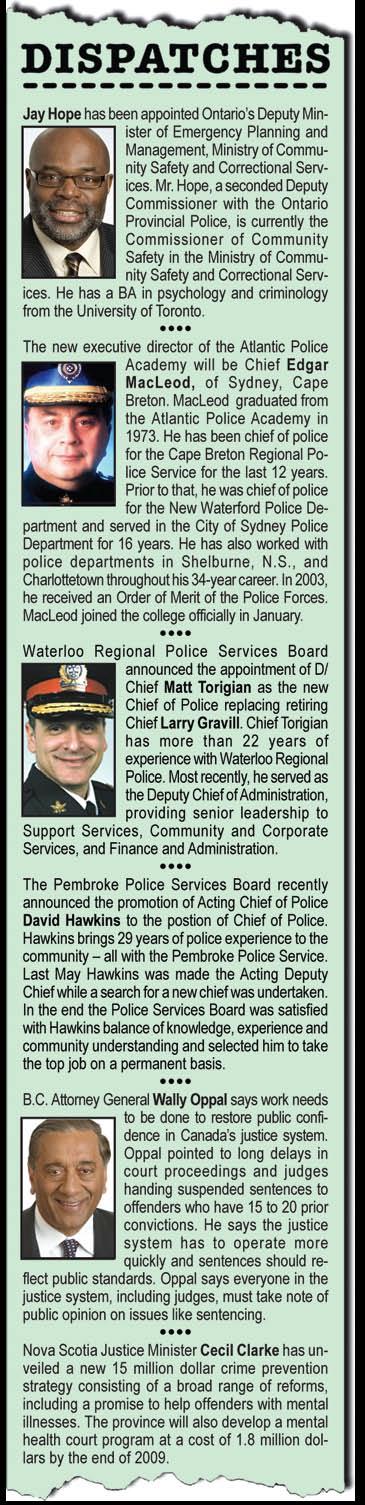

by Tom Rataj
Many facets of police work rely on conducting surveillance on individuals and groups engaged in illegal activities. This can be as simple as a uniform officer watching from a discreet location or as complex as an undercover surveillance team, equipped with all sorts of gadgets, conducting a covert operation.
Until recently, many of the tools of the undercover trade were available only to law enforcement or government agencies and well-financed private security firms. Thanks to dramatic price drops and technological improvements, consumers can now readily buy surveillance equipment with capabilities formerly available only to spy and government agencies. Universally affordable and available cell phones have removed limits on communications and mobility and the pervasiveness of the Internet allows easy and quick exchange of information and data.

This hasn’t gone unnoticed by criminals and criminal organizations, who use these tools to conduct counter-surveillance on police and each other.
Wireless communication is perhaps the single most significant improvement in counter-surveillance technology. Cell phones are everywhere and can be used around the world. New phones are cheap or free with a plan, and airtime is affordable. Data and Internet access, while still relatively expensive, can be used on most phones, allowing for unprecedented access to information.
Pay-as-you-go phones offer complete anonymity, since they and airtime can be bought for cash, without producing any identification. As an added bonus, most phones offer at least a digital still camera and better models include video camera capabilities. These phones can send and receive images and video to other phones through the cellular network or through the Internet, allowing criminals to record undercover officers, police operations and facilities.
Photos can be saved and later printed or posted on popular sharing sites such as flickr. com. Video can be shared on popular video sites such as youtube.com .
This process can greatly impact police operational integrity and officer safety. To see the real impact, search for police videos online; you will find a surprising number showing police in action, often while making “difficult” arrests.
The Mike network, operated by Telus Mobility, can easily be used for counter-surveillance or other criminal operations. Mike cell phones have a private two-way radio feature which allows two or more people to talk in a group in the same manner as police talk on their radio systems.
Family radio service (FRS) and general mobile radio service (GMRS) radios are increasingly popular and affordable ways for two or more users to communicate in a simple press-to-talk (PTT), ‘walkie-talkie’ manner. They operate in unlicensed, ultra high-frequency (UHF) radio bands.
The latest generation dual technology FRS/GMRS radios offer multi-channels and a rated range of up to 40 km (under optimal conditions) for under $100 a pair. They have huge potential as a counter-surveillance tool and their popularity allow criminals to use them without necessarily raising any concerns. FRS/GMRS radio communications are not private and can be monitored by anyone with a similar radio.
Radio scanners capable of receiving police communications are easy to obtain and start in the $250 range. Since many Canadian and US police radios are still unencrypted analogue systems, a scanner can monitor all police activity, again posing some potentially serious issues for police operations and officer safety. As more police agencies move to encrypted digital radio systems, this should become less of an issue.
Criminal-owned cell phones can hold a wealth of important intelligence information or evidence about their activities but are not necessarily secure against outside remote
tampering, even after they’re in police hands. Software and services can be used to remotely erase or retrieve their data.
One of the greatest revolutions in surveillance, for both the good and bad guys, is digital imaging. The rapid price drops and massive increases in resolution seen in just the past two or three years now make digital still and video cameras readily affordable to just about anyone.
Numerous makes and models of digital single lens reflex (D-SLR) cameras are available for $1,000 or less, complete with powerful 75-300mm zoom lenses. Most feature image stabilization, allowing users to take crisp, clear images from great distances. Point-and-shoot digital cameras are also widely available and offer many advanced D-SLR features in a smaller and simpler package. Most resemble small D-SLRs and feature powerful 15x optical zoom lenses for around $500. Some have basic image stabilization.
Many higher-end cars and SUV’s now have built-in video cameras to help the driver see what’s behind when backing up. Aftermarket versions are also available. Both can usually be easily connected to a recording system (with audio), allowing individuals to watch and record what police or anyone else is doing behind their vehicle. For countersurveillance use, an individual can easily park an camera-equipped vehicle across the street from officers and, undetected, record potentially valuable information about police operations or movements.
Most consumer-grade video cameras offer powerful zoom lenses and great image quality for only a few hundred dollars. Slightly more expensive hard-drive based cameras have more powerful optical zoom lenses (25x) and record upwards of 40 hours on lowest quality mode and 15 hours in DVD quality. They work well in low light and most offer very capable still camera features.
Discreetly set up in a vehicle parked across the street from a police station, the cameras can be left unattended for days to record all the routine comings and goings. Connected to a wireless transmitter, they could provide a live feed to a criminal wishing to target an individual officer.
A huge source of information on just about everything for police and criminals, in-
cluding a wide variety of counter-surveillance techniques. Far-flung individuals readily share their “intelligence” about what police or individual officers are up to. To truly understand its impact, simply type your own name into a popular search engine such as Google and watch the results pour in.
Telephone directories for almost every place with phone service are available on the Internet, so anyone with their name listed can be readily located. Most directory sites allow reverse phone number searches to find an address, while other search sites provide information on neighbours. Most sites also offer some type of street mapping feature to show precisely where an address is located.
Google Maps and MapQuest also offer street guides, often including digital satellite imagery and hybrid maps that transpose roads over the satellite imagery. To see how powerful this is, search your home address or the local police station.
While the satellite imagery is often not up-to-date, it certainly shows the exact property layout of a target address. After just a few minutes of Internet surfing, any individual can obtain a lot of information about an officer and his or her home or place of work.

Police are increasingly using GPS to locate and attend calls, track the position of police vehicles for officer safety and more efficiently dispatch officers. GPS devices can also track suspects.
While not explicitly marketed as a way to conduct counter-surveillance, Anytrack.com offers anyone with Internet access (including on a cell phone or other mobile device) – and a valid credit card – a GPS tracking device easily hidden in a vehicle or clothing. They provide live, real-time location information. One model is about the size of a pager, sells for $229 and could very effectively keep tabs on any subject, including an undercover police officer or criminal acquaintance suspected of being a confidential informant.
GPS jamming devices are also available on the Internet. The most basic simply plug in to a vehicle’s 12 volt power outlet and broadcast a jamming signal to a range of around four metres, effectively putting tracking devices out of commission. An individual who suspects they are being tracked by police could use one to easily defeat police GPS equipment.
While some of the science and technology featured on the various CSI crime dramas takes considerable artistic license, the shows are fairly decent basic training courses in in-
vestigative techniques and forensic science.
There have been numerous news stories over the past several years about the show’s effect on the general public’s understanding and expectations about what forensic investigators can and cannot do. Criminals are also taking notice, modifying their behaviour to avoid leaving a forensically identifiable trail and defeating common police investigative and surveillance techniques.
Virtually every kind of spy technology and equipment is as close as your computer, available from a wide range of Internet based retailers. Retail spy shops in many large cities offer specialized equipment for all types of counter-surveillance, much of it far beyond ordinary consumer-grade technologies, including pin-hole cameras, electronic bug detectors, cell phone signal jammers and other “Bondesque” spy toys.
Just as law enforcement has become more sophisticated and leveraged various techniques and technologies to increase effectiveness and efficiencies, so too has the criminal element. With a little creative thinking and the cash to buy a few items, anyone can effectively conduct surveillance or countersurveillance on or against police.
Tom Rataj is Blue Line Magazine’s technology editor and can be reached at technews@blueline.ca.


by Lisa Hoffe
It was her early research on children’s storytelling and how kids talk about real life events that lead psychologist and Memorial University research professor Carole Peterson to ponder the credibility of children’s memory.
“Traditionally children have been considered very poor witnesses in court. Textbooks up to 1990 said that no child under the age of seven should be allowed in court because they couldn’t tell the difference between fact and fantasy – so essentially, children had no voice and they couldn’t tell their stories.”
There was a widespread belief at the time that children involved in an emotionally distressful event couldn’t possibly talk about it with any kind of accuracy. “If they were really upset and crying during the incident, then aren’t they going to make up things?,” Peterson wondered. “Won’t fantasy get mixed in?”
Her inquiry led to a quest to find an ethical way to interview such children as a way to document the accuracy of their memory.
She looked to incidents within her own family for the answer. “My own son had broken his arm when he was three, got lacerated when he was eight and had to be stitched up. A lot of times children are extremely upset by these events, yet these things happen on a regular basis with children.”
She knew that more stories like this happen every day in the waiting room at the Janeway Children’s Hospital Emergency in St. John’s, the treatment centre for every child within a 100 kilometre radius of the capital city. That’s why every summer since 1993 she has posted a member of her team of student research assistants in the Janeway emergency room to wait for preschool aged children with these kinds of injuries to arrive.
“We approach the child’s parent or guardian and explain the research to the family, but we don’t interview them at the hospital because everybody’s upset… the child and the parents. Instead we ask for permission to call them in a couple of days, then go to their homes and interview both the child and the parent or guardian.”
The researcher gives the family reading material about the study before following up a few days later by phone. “By the time we contact the family and explain in much more detail over the phone, they’ve had a chance to read the information and we can answer any questions they have. About 80 per cent of families grant their permission and allow us to come to their home and interview the child about the incident. The co-operation we’ve had has been excellent.”
Mindful of ethical concerns around the interviewing of distressed children, Peterson only questions those children in non-threatening accidents, not ongoing illnesses. “The nature of incidents range from burns, broken bones, trauma accidents requiring stitching to

dog attacks or dog bites. The most common incidents are lacerations or bone fractures.”
Researchers also interview the adult witnesses. “That is our gold standard of what happened” says Peterson. “The adult witnesses occasionally make a mistake, but for the most part, when we have multiple adult witnesses we very seldom found them disagreeing about the incident.”
A member of Peterson’s team talks to the child immediately after the event, then again in six months or one, two, even five years later. Each time the child’s recall of the incident is compared with the record kept from adult witnesses.
Carole Peterson says she was astonished at what we found. Though the children might have missed some of what happened, they were able to provide the main events of the incident with 90 per cent accuracy. Even five years later, their accuracy rates were 80 to 85 per cent.
“I’m astonished at the accuracy, even though the child is extremely upset. A lot of children were telling us what colour the facecloth was that was used to clean the blood from the injury.”
Children aged two and a half years of age also had ‘reasonable’ memories. Two and five years after their distressful event, their recall was 70 per cent accurate.
Even those under two were recruited for the study, however the majority were found to not remember the incident. Those that did generally amalgamated it with pieces of other events.
“Five years later, these children believed that what they were saying was an accurate
account of what happened to them, but in fact there were pieces that were accurate but there were lots of things that had been brought in from other events.”
As a consequence, Peterson doesn’t have confidence in their accounts. “Two and half year olds forget. It’s also difficult to interview a two year old. They’re very busy. They’re hopping around the room. Children above two and a half were more co-operative in an interview situation.”
Peterson is quick to point out that her research study deals with children who are properly questioned. “If they are well questioned, the accuracy is surprising,” she says, stressing the importance of framing questions properly. Her research assistants required training for the task, and it’s important for people who interview children to keep that in mind.
“People tend to think ‘yes’ or ‘no’ questions are simple questions for a preschooler. However, children will agree with you because they’re trying to be helpful. So if you ask a question like “Is the sky purple?” they would often agree. Many of the questions asked by police officers are often ‘yes’ or ‘no’ questions. We found these are the wrong kind of questions for young children.”
According to Peterson’s study, children are really vulnerable to poor questioning. Instead of asking leading or coercive questions, she uses questions that start with ‘wh’: What happened? Who was there? What happened next?
The most accurate recall children have is called ‘free recall’, which can be tapped by
asking ‘tell me what happened’.
“Older kids can give you very extensive answers. Younger children are not as good at free recall. It’s better to ask preschoolers supplemental questions such as “Where were you? Who was there when it happened? What was the first thing that happened? What did you do then? Who was the first person that came to you? What were you doing? Where did you go? Where did they take you?
One of a kind research
Peterson says her work is helping give children a voice. “Judges used to caution juries about how children were inherently problematic witnesses because they don’t know the difference between lying and telling the truth.”
In eastern Newfoundland, a number of circumstances combine to make Peterson’s work on childhood memory the only research of this kind in the world.
Jay Hope has been appointed Ontario’s Deputy Minister of Emergency Planning and Management, Ministry of Community Safety and Correctional Services. Mr. Hope, a seconded Deputy Commissioner with the Ontario Provincial Police, is currently the Commissioner of Community Safety in the Ministry of Community Safety and Correctional Services. He has a BA in psychology and criminology from the University of Toronto. ••••
Now, as a consequence of her research, the Canadian Supreme Court ruled in 1989 and again in 1993 that judges cannot warn juries about the credibility of children’s testimony. “Essentially, the jury has to come to its own judgment about the child’s testimony.”
The head of Interpol and South Africa’s police chief, Jackie Selebi, stepped down from both jobs over corruption charges. Prosecutors said they intended to charge him with bribery and defeating the ends of justice over his “generally corrupt relationship” with a convicted drug trafficker on trial for murder.

Every single child within a 100 kilometre radius of St. John’s goes to the same place for medical treatment, regardless of economic circumstances or socio-economic status. It is a large enough population to sample, yet every child is directed to one place.
“I’ve had a number of colleagues in the U.S. who have tried to replicate this kind of research, yet the kind of medical treatment in the U.S. depends very much on the child’s socio-economic status. To correct that in the research means covering many different medical centres at the same time, which is very difficult to do.”
The new executive director of the Atlantic Police Academy will be Chief Edgar MacLeod, of Sydney, Cape Breton. MacLeod graduated from the Atlantic Police Academy in 1973. He has been chief of police for the Cape Breton Regional Police Service for the last 12 years. Prior to that, he was chief of police for the New Waterford Police Department and served in the City of Sydney Police Department for 16 years. He has also worked with police departments in Shelburne, N.S., and Charlottetown throughout his 34-year career. In 2003, he received an Order of Merit of the Police Forces. MacLeod joined the college officially in January.
Peterson says she meets colleagues at conferences who are constantly amazed that she is able to do this research. “I’ve been very fortunate with regard to the set of circumstances here at Memorial and in St. John’s. I’m told that over and over in conferences.”
Waterloo Regional Police Services Board announced the appointment of D/ Chief Matt Torigian as the new Chief of Police replacing retiring Chief Larry Gravill. Chief Torigian has more than 22 years of experience with Waterloo Regional Police. Most recently, he served as the Deputy Chief of Administration, providing senior leadership to Support Services, Community and Corporate Services, and Finance and Administration.
The Pembroke Police Services Board recently announced the promotion of Acting Chief of Police David Hawkins to the postion of Chief of Police. Hawkins brings 29 years of police experience to the community – all with the Pembroke Police Service. Last May Hawkins was made the Acting Deputy Chief while a search for a new chief was undertaken. In the end the Police Services Board was satisfied with Hawkins balance of knowledge, experience and community understanding and selected him to take the top job on a permanent basis.
B.C. Attorney General Wally Oppal says work needs to be done to restore public confidence in Canada’s justice system. Oppal pointed to long delays in court proceedings and judges handing suspended sentences to offenders who have 15 to 20 prior convictions. He says the justice system has to operate more quickly and sentences should reflect public standards. Oppal says everyone in the justice system, including judges, must take note of public opinion on issues like sentencing.
Nova Scotia Justice Minister Cecil Clarke has unveiled a new 15 million dollar crime prevention strategy consisting of a broad range of reforms, including a promise to help offenders with mental illnesses. The province will also develop a mental health court program at a cost of 1.8 million dollars by the end of 2009.
Her research is also becoming widely known among police agencies. “I’ve been contacted by police departments from Tel Aviv to Tokyo. A member of the RCMP called me about the possible accuracy of interviewing a child who was abused at the age of 29 months and came forward three years later. Our data says yes, the child can be a very credible witness.”
Peterson says her team has interviewed about 500 children since 1993 and the research continues today with follow up interviews seven years after a Janeway visit. The results each time confirm her findings on believability.
“Children can be good witnesses. If they are well questioned, with good interviewing techniques, children are credible. They are reliable. We should believe them.”
Dr. Carole Peterson can be reached at carole@mun.ca or 709 737-7682. Former CBC reporter Lisa Hoffe now works for RCMP media relations. She has written for the RCMP Gazette and currently works with the intelligence analysis section in Burnaby. She can be reached at lisa. hoffe@rcmp-grc.gc.ca

Selebi told the international police agency he was stepping down “in the best interests of Interpol and out of respect for the global law enforcement community” amid further revelations about the charges he is to face.
Interpol secretary general Ronald Noble praised Selebi’s work and said the allegations had “nothing to do with his position as president.” Noble added that “corruption is one of the most serious offences that any police official can be accused of.”
Selebi is accused of accepting at least 1.2m rand ($180,000 CDN) from Glen Agliotti, a convicted drug trafficker awaiting trial accused of murdering a corrupt mining magnate. In return he is alleged to have protected narcotics shipments and passed Agliotti confidential intelligence reports about his trafficking operations and information about the Kebble murder inquiry.
Court papers show payments allegedly made to Selebi through a front company were listed as “cash cop” and “cash chief.” Despite Selebi’s denials of a close relationship with Agliotti, the papers show he made 223 mobile phone calls to Agliotti over a three-year period, with as many as three calls a week last year.
Selebi has vigorously denied the accusations against him.


by Jay C. Hope
February is Black History month, and I find myself reflecting on the significant historical contributions of minority populations and their emergency management and disaster response needs.
Approximately half of all people living in Toronto were born outside of Canada, according to recent Statistics Canada information, and other Canadian cities are also becoming increasingly diverse. There are some 1.5 million people in Ontario alone with visible or non-visible disabilities and/or special needs – about one in every eight Ontarians.
Newcomers to Canada and those with disabilities/special needs present challenges for emergency responders. For example, they faced considerable challenges during Hurricane Katrina; it was more difficult for them to evacuate and vital medical interventions or medications they require on a daily basis were not available.
Closer to home, the blackout of 2003 demonstrated that the failure of critical infrastructure can also pose major challenges for those with disabilities/special needs. People living on the upper floors of multi-story dwellings were left without water and basic sanitation and the failure of elevators left them stranded, with little assistance. Had the
blackout continued, situations such as this would have been one of the greatest risks to life and safety.
Another powerful example of the emergency response challenge posed by our diverse society is the Amsterdam air disaster of 1992. An El Al Boeing 747 cargo jet crashed directly into a neighbourhood with large numbers of new residents. Issues such as language barriers and distrust of authorities posed significant challenges to responders attempting to assist the injured and later trying to determine the number of missing and deceased individuals. We must look closely at our organizations and develop strategies to deal with changing immigration patterns, an aging population and other factors. It is important to ingrain goals and activities in our organizational culture

and direction to ensure diversity issues are not lost among other priorities. Diversity is not a a task to be completed before moving on to something else, but rather a key consideration in all of our activities.
I am very proud that diversity is now one of six core values of Emergency Management Ontario (EMO) and an integral part of our strategic plan, but this is just a start – the tougher work is bringing this commitment to life, often through activities that make a substantial difference.
I know that many agencies are making excellent progress on diversity issues and would love to hear of your successes and ideas. Here are three initiatives my office has worked on recently to help ensure our diverse population has access to vital emergency preparedness information:
• A new guide provides specific emergency preparedness information for people with disabilities/special needs and those who may help them in times of crisis. We highlighted the guide on Dec. 3, the International Day of People with Disabilities, at a forum of public, private and NGO partners looking at ways to better respond to their emergency needs. We heard directly from people with disabilities, including Ontario Lieutenant Governor David Onley. I learned

a great deal and recommend the guide to anyone in policing or security. It can be downloaded in seven languages at www.ontario.ca/emo or ordered in bulk from EMO.
• We’ve made strong efforts to engage multicultural media outlets, identifying the languages they broadcast in, which languages staff speak and whether they’re willing to discuss emergency preparedness messages on air. A variety of segments will be shown over the next months. We have also specifically invited members of the ethnic print media to our outreach events and announcements. This has resulted in some very nice stories highlighting the importance of emergency preparedness for new Canadians.
• We are closely looking at our hiring practices. One of the biggest obstacles we’ve faced in becoming a more representative organization is poor awareness of community safety employment opportunities. We’ve begun much more assertive and targeted external advertising of all open positions, running postings in the largest newspapers, websites and in the most-read ethnic newspapers. Information sessions ensure that prospective candidates clearly understand the nature of the work and hiring criteria, which was examined to make sure it doesn’t assume that skills or experience can only be learned or obtained in a certain way – in other words, we switched our focus more strongly toward behavioural competencies and demonstrated ability. This approach has greatly broadened the diversity and quality of candidates applying for positions and the EMO staff. On a personal note, I was appointed deputy minister of emergency planning and management on Jan.7. This new portfolio reflects the importance of emergency preparedness for all Ontarians.
While the new position brings many new responsibilities and challenges, most of my former areas of responsibility remain, including my legislated role as commissioner of emergency management. New duties include an expanded role in ensuring the continuity of government services during a crisis and an increased profile within government.
I look forward to this new role and feel very fortunate to maintain my dual status as a sworn police officer on secondment from the Ontario Provincial Police. I will continue to keep you updated on emergency management developments through this column and appreciate your positive feedback and ideas to date.
Jay Hope can be reached at jay.hope@ontario.ca
February 21, 2008
Pandemic Planning Seminar university of Toronto Scarborough Conference for administrators and front-line personnel, focusing on the current Pandemic Influenza threat and its affect on business and social climate. Participants have the opportunity to implement strategies through viral threat scenarios. Instructor: Dr. Kirsty Duncan, Associate Professor, U of T. Registration: Stan O’Brien 416-208-4860 or pandemicseminar@utsc. utoronto.ca
april 29 & 30, 2008 blue Line Trade Show & Courses
Markham On
The 12 th annual trade show for law enforcement personnel from across Canada to view and purchase
a wide spectrum of products and services in the law enforcement industry. Show admission is free by pre-registration.
Stay effective in your job. Enhance your professional skills and knowledge by taking a Blue Line course. Day 1, Choose from:
• Covert Assignment Training
• Terrorism vs Canada
• Detecting Deception by Verbal Analysis
• Ontario Gang Investigators
Day 2, Choose from:
• Search Warrant Preparation
• Crime Scene Management
• DNA: Evidentiary Uses & Misuses
• Managing the Pandemic
• In-Depth World of Insurance Investigations
Registration and information at www.blueline.ca


by Mark Giles
My December article on workplace bullying generated some interesting email responses: a former OPP officer thanking me for “stepping up to the plate;” an anonymous message, which included a clearly abusive electronic rant sent by the head of a large law enforcement organization to a subordinate manager; and a former work colleague suggesting that claims of bullying are sometimes merely an excuse used by employees looking to avoid criticism or unwanted direction.
“I think that sometimes when a boss is critical of an employee’s work, or tries to guide an employee in the direction that the company should be heading, that employees sometimes ‘hide’ under the guise of ‘bullying’,” she said.
Although workplace bullying is a reality, the term can be misused. Sometimes a supervisor needs to be critical and some individuals do appear to claim they’re being bullied to avoid dealing with tough issues or even those that should be part of their daily routine.
Recently, Blue Line’s publisher called a fire department in southern Ontario looking for information that is normally made public. The department’s community relations officer would not release the information and,
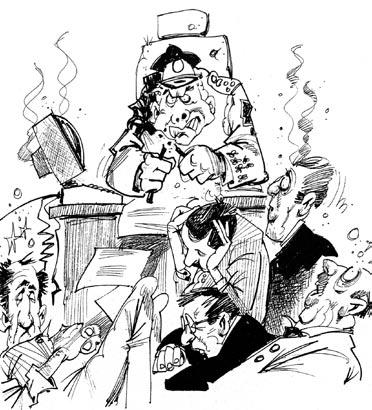
when pushed, came back with what seemed an inappropriate response.
“I’m beginning to feel bullied,” she said, hinting that he should perhaps back off from his expectation that she release the information he was seeking. It was probably an example of what my former colleague was suggesting – an employee hiding under the guise of ‘bullying’.

So where do performance expectations or persistence during a disagreement become bullying – surely we don’t want high performers or those simply pushing for information to be labelled that way? How does one distinguish between high expectations, or arguing for results, and the workplace bully?
In the Canadian Government Executive (May, 2007): “Weeding out Noxious Behaviour”, the writer reviews a recently published book, “The No Asshole Rule” by Robert I. Sutton (Warner Business Books), in which the author “proposes two tests for spotting the malicious species”. The first asks whether, “after talking to the person, does the ‘target’ feel oppressed, humiliated, de-energized or belittled by that person?” The second test is: “Does the alleged asshole aim his or her venom at people who are less powerful, rather than those who are more powerful?”
The first test speaks for itself, and the second may explain why bullies are still promoted. Their superiors are probably not aware of the way these individuals treat their subordinates.
The review indicates that Sutton distinguishes between the occasional bully – he admits to acting this way at times and so do I – and the “certified assholes who display a persistent pattern of such noxious behaviour.” He argues against hiring them and for throwing out those who get into your organization, but says the biggest problem is that our society tolerates them if they are otherwise successful.
I’ll add that bullies rarely seem to apologize, and when they do, they’re usually right back at their typical behaviour within hours or days at most. And some bullies appear to have a ‘target audience’ – a former OPP officer says her boss seemed to go after women – while others are ‘equal-opportunity’ bullies.
This former OPP officer wrote to me recently, indicating that her former sergeant had a target audience and has since been promoted several times (now a superintendent), despite his alleged bullying.
“I was a victim of bullying on the OPP and was forced to quit. Every year since I quit, I hear from women that have worked for him and have been subject to the same discriminating acts, but they are too afraid because of his rank,” she said. “I am glad that someone has stepped up to the plate to once again make people aware that this should not be tolerated.”
Was this boss just tough or was he a bully? In addition to applying the two tests laid out by Sutton, an observer can also look at other factors. Have other people had similar experiences with this individual? A pattern of similar toxic behaviour with others increases the likelihood that an ‘accused’ is in fact a bully, rather than just a tough boss with high expectations.
Allegations gain further credibility when there’s a record – such as tapes of conversa-
tions, notes or e-mails. The anonymous e-mail sent to me recently leaves little doubt as to the abusive nature of the individual in question. If other e-mails like this exist, he should probably be classified as a bully.
Most bosses are reasonable people and many are terrific. I’ve been fortunate to have some great bosses over the years, but I’ve also experienced a couple of bullies – one who was extremely abusive. Another employee with me at the time provided his opinion of the situation.
“This is not a healthy work environment,” he said. “I wish that someone could have spoken with you before you accepted this post.”
After the now former head of human resources apologized for not warning me about this workplace bully, I realized the importance of trying to avoid such toxic work environments. In a recent Forbes Magazine article: “Who’s Interviewing Who”, Tara Weiss admits it can be difficult to get an accurate impression of how a potential superior will act on a daily basis.
“No matter how much of a jerk they are, managers can put on a good impression during an interview,” said one employee interviewed for her article.
Weiss advises doing your homework by talking with former and current employees, and asking some basic questions – such as what happened to the person previously in the position. Another indicator, according to Mary Lyons, a director with the hu -
man resources consulting firm PRTM: “Is the job interview more of a conversation where the boss describes your potential role in the company and then allows you to discuss your skills, or is it an inquisition with questions being thrown at you? If it seems like the interviewer is interested in power instead of your questions, that’s a warning sign.”
The word is spreading about abusive bosses and the issue is grabbing attention in national and international magazines
– Maclean’s, the Canadian Government Executive , and Forbes Magazine for a start – and is likely to gain further momentum as awareness of the problem increases. With awareness comes action and hopefully more employees looking ahead to avoid finding themselves in abusive situations.
Let’s not dilute the strength of the term “workplace bully” to include the tough boss with high expectations or others simply pushing for information they’re probably entitled to. Instead, let’s reserve it for deserving individuals who make life miserable for those serving under and around them. In doing so, the true bullies will be identified, more people will refuse to work for them and, hopefully, their superiors will recognize the problem and do something about it.
Mark Giles is Blue Line’s correspondent for public and media relations, military and international issues. He is also a senior communications analyst for defence and foreign affairs at the Privy Council Office in Ottawa. Contact him at giles@blueline.ca

Nov 29 2007
NEW WESTMINSTER, B.C. - Court sheriffs on the hunt for jurors recently in New Westminster, B.C., corralled more than 30 unsuspecting people, bringing them in from the street and in front of a judge.
The sheriffs were forced to resort to the unusual procedure last week when the jury pool was depleted - the result of what some say is a rise in the number of claims the Insurance Corp. of British Columbia is taking to court.
Tom Collins, a court services spokesman, said the search for jurors on the street only happens once every couple of years. “It’s very rare.’’
Collins said 16 people were found at noon that day, three of whom were selected for jury duty. Later in the afternoon, another 17 people were rounded up.
Personal injury lawyer Wes Mussio was in court that day. “They went out to the New Westminster street, down on Columbia Street, started walking through the shops, and asking people, ‘Are you a Canadian citizen?’ They say, ‘Yes.’ ‘Are you a B.C. resident?’ ‘Yes.’ ‘Are you over 19?’ ‘Yes,’ ‘’ he said.
“There were people that were (in) retail, so they were taking the clerks,’’ adding that people had no choice because refusing can land you in contempt of court.
(Globe and Mail)


“None are shown wanting of courage”

With the recent victory in the campaign to get Cobourg Police Constable Chris Garrett nominated for the Police Cross of Valour, we must not overlook another battle to honour a deserving police officer for his service to his country and community.
On November 13, 2004, RCMP Auxiliary Constable Glen Evely was killed in a motor vehicle collision when responding to a call about a drunk driver in Vernon, British Columbia. After a short high-speed chase, the suspect failed to stop for a red light and slammed into the police cruiser containing Evely. A/Cst. Evely was pronounced dead at the scene. Cst. F. Grenier, who was driving, was hospitalized with serious injuries.
Auxiliary officers, although uniformed, are considered civilian members and are unpaid volunteers. Here was a man who wasn’t doing this job for money or other financial considerations; he was doing it to serve his community. Glen didn’t need to be on duty that night. He was on his time off from his regular job and could have been at home with his family, but he chose to serve his community and paid a heavy price for it.
Normaly when a law enforcement officer dies in the line of duty, they are honoured by the Canadian Police and Peace Officers (CP & PO) Memorial by including their name at the national monument on Parliament Hill. On the last Sunday in September each year, a parade and ceremony is held in Ottawa, officially dedicating the names of all officers who have lost their lives in the line of duty.
Occasionally historical research uncovers other eligible peace officers from past years (usually decades old deaths) who were overlooked.
Despite losing his life in the line of duty, Aux. Cst. Glenn Evely has been denied inclusion on the national Canadian Police and Peace Officer’s Memorial wall.
The eligibility requirements listed on the CP & PO Memorial Association website lists the following requirements:
“The deceased must have been a sworn paid, full time peace officer in Canada serving as a regular member or employee of a federal, provincial, municipal law enforcement agency or service and died as a result of an external influence.
(For greater clarity, this criteria does not include private agencies, auxiliary personnel or other volunteers.)”
This policy fails to take into consideration that when on duty, all Auxiliary and Reserve Constables are considered “Sworn Peace Officers.” For instance, Section 52 (4) of the Police Service Act of Ontario specifically states: “An auxiliary member of a police force has the authority of a police officer if he or she is accompanied or supervised by a police officer
and is authorized to perform police duties by the chief of police.”
Clearly this Memorial Association policy is arbitrary and misguided.
In conclusion, I wish to draw your attention to three Auxiliary/Reserve Constables who have been included on the memorial wall in the past. (Taken directly from the Canadian Association of Chiefs of Police website - www.cacp. ca/english/memoriam/english/default.htm):
Auxiliary Constable J.E. Sam Balmer Royal Canadian Mounted Police - B.C.
“On Aug. 29/92 Cst. Hrehirchuk & Aux. Cst. Balmer responded to a complaint of domestic dispute. Three weeks earlier to this complaint a similar complaint was lodge where firearms were used. While traveling to this complaint and attempting to pass a vehicle, Cst. Hrehirchuk lost control of his vehicle and hit head-on with another northbound vehicle. Aux. Cst. Balmer was killed instantly. Cst. Hrehirchuk was trapped and injured.”
Auxiliary Constable Frederick A. Abel Royal Canadian Mounted Police
On April 4, 1996, “Aux. Cst. Abel was working at the Lethbridge detachment with Cpl. Bud Johanson when they received a call of a suspected impaired driver in a pick up truck. On their way to investigate this, their car collided with the truck which was driving on the wrong side of the road. Both officers and the passengers of the truck were killed.”
Inspector (Reserve) Arthur S. Trentham, Vancouver Police
“On September 16, 1963, at approximately 8:05 pm, Reserve Inspector Trentham was standing in the centre of the Windermere and Hastings intersection directing traffic. He was dressed in a regulation police uniform, wearing a reflective safety belt and carrying a red lensed flashlight. He had just turned east on Hastings Street when he was struck by an eastbound vehicle on Hastings Street. Reserve Inspector Trentham was flung into the air and came down on the left side of the hood and fender. He was carried a short distance and then rolled off the car onto the road. He was pronounced dead on arrival at the hospital. The vehicle fled the scene and the driver turned himself in to police later that evening and was charged with impaired driving and hit and run.”
I fail to see why Auxiliary Constable Glen Evely falls short of the sacrifices made by any and all of the officers listed on the memorial.
Cst.
Bruce Forsyth Durham, ON
In 1992 I started holding a service in Thunder Bay to coincide with the Annual Memorial Service in Ottawa.
I knew that most of our officers would never get the opportunity to attend the service
in the nation’s capital.
This year will mark our 17th service. In looking over the program for our 14th service I noted that we did list, among the many names, (ten that year) Aux. Constable Glen Evely, Royal Canadian Mounted Police. I also noticed that in 2001 we included a Special Constable, Timothy J. Nicholson. I know that our Auxiliary and Special Constables are front line people too, and are, like the rest of our sworn officers, at risk of losing their lives while performing their duties.
I certainly encourage others to go online to www.surreyauxiliary.org/petition and get that roll up to 2000 names.
The Rev’d Michael Dunnill, Chaplain, Thunder Bay Police Service
I am impressed...
I have just been given a few recent copies of your magazine and, frankly, I am impressed with the variety and quality of the articles. Kindly sign me up for a two year subscription.
Judge Brian Saunderson Provincial Court of British Columbia
I would like to thank you very much for running the tribute to Barry Shane in your January issue of Blue Line. It was beautifully done and gave wonderful recognition to a man who had spent so many years in our industry. His friends and family greatly appreciate your kindness in publishing the tribute.
You are doing a tremendous job with Blue Line Magazine, and without it, our industry would certainly not have the image developed over the years. It is not only a great place to advertise, but also a source to learn so much about what is going on with featured articles and editorials. Keep up the great work and continue to be a strong voice for our industry.
Brian J. Gregory
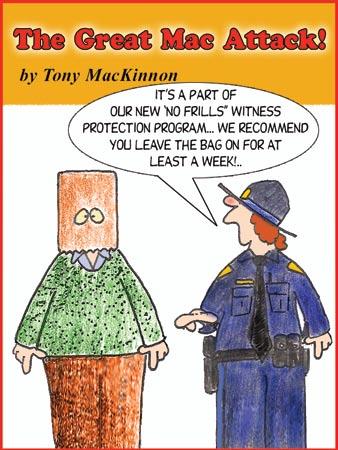
KITCHENER, Ont. - Two alleged house thieves who knew they were busted decided they might as well enjoy themselves after a botched robbery.
Police in Kitchener, Ont., were called to a Saturday night break-in at a townhouse. At the back of the home, officers say they spotted a stepladder leading to a broken window.
As the thieves started walking out the front of the house, they were confronted by one of the officers. Police say the men then sprinted back inside and slammed the door.
Surrounded, and with a trip to jail looking inevitable, police say the two men, ages 48 and 53, decided to help themselves to the home owner’s liquor.
Staff Sgt. Kevin Thaler says they started drinking when they saw they were trapped and “were pretty inebriated by time we got them out.’’
WEST VANCOUVER, B.C. - A trio of drug trafficking suspects tried to dial their way out of trouble after a roadside bust in West Vancouver, B.C.
Police say the three Vancouver men were detained when officers detected a strong marijuana odour coming out of their vehicle during a traffic stop.
While the officers spoke with one suspect outside the vehicle, West Vancouver police received a 911 call with a male voice reporting a robbery in progress at a local bank.
The area was quickly contained by other officers and the report was confirmed to be false.
Police continued the drug investigation and seized more than 11 kilograms of marijuana from the vehicle, then arrested the suspects on charges of possession of a controlled substance.
Officers later determined the 911 call came from a cellphone found on one of the suspects, and now the men - aged 31, 29, and 17 - are facing additional charges of mischief.
SURREY, B.C. - The next time you go to a drive-thru fast food restaurant in Surrey, B.C., it may be a Mountie who asks “You want fries with that?’’
In a new twist on efforts to catch impaired drivers, the RCMP is stationing officers inside the drive-thru section of fast food restaurants late at night, with the officers looking for signs that patrons in their cars may be drunk.
If an officer hears slurred speech or smells stale liquor, he can warn another Mountie who stops the vehicle as it drives away.
Sgt. Roger Morrow says since the program began late last year, police have made several impaired driving arrests and issued 215 suspensions.
He says the merchants who are cooperating with police find the program very entertaining. •••
NEW YORK - It was a close call for one driver using a GPS satellite navigation system.
Officials in upstate New York report
the computer consultant was following the gizmo’s directions a little too closely, and drove right in front of a train.
Metro-North railroad spokesman Dan Brucker says the man got out of his car just in time.
It had gotten stuck on the tracks, when the passenger trained slammed into it going 96 kilometres an hour.
The GPS device had told the man to take a right turn, which he did, right into the path of the speeding train.
Officials say no one was hurt.

‘Prosper warning’ not necessary if waiver unequivocal
by Mike Novakowski
An accused who made a clear and unequivocal waiver of his right to counsel wasn’t entitled to a ‘Prosper warning,’ the Saskatchewan Court of Appeal has held.
In R. v. Basko, 2007 SKCA 111, the accused was detained during a routine traffic stop and displayed signs of impairment. Upon being advised of his right to retain counsel at the scene, Basko responded that he knew of his right to a lawyer and would love to talk to one. He was taken to the police station and booked.
Shortly after arriving, he asked to speak to legal aid. The officer dialled the number twice but it was busy each time. After a short interval, he tried a third time. Basko heard the busy signal and told the officer, “I know what they are going to tell me, so I’ll call one tomorrow.”
The officer spent five minutes on the telephone attempting to contact a legal aid lawyer on Basko’s behalf before asking him if he would like to try a different lawyer. “No, let’s get it over,” Basko responded, referring to giving samples, which were then taken. Basko was subsequently charged with impaired and over 80mg%.
At trial in Saskatchewan Provincial Court the judge found Bakso’s right to counsel under
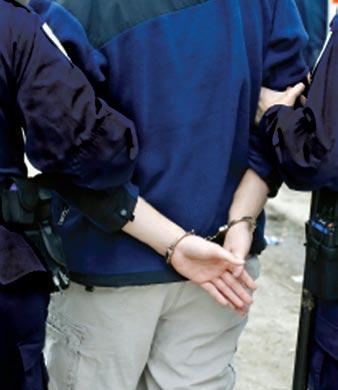
s.10(b) of the Charter had been breached. In his view, police did not take the opportunity, as required, to give him additional information. This is referred to as the ‘Prosper warning’ and is required when the detainee has previously asserted the right to counsel and indicates they have changed their mind and no longer want that advice.
Police are required to tell the detainee of their right to a reasonable opportunity to contact a lawyer and of the police obligation during this

time to refrain from having them participate in any process that would incriminate thim. As a result, the breathalyzer certificate was excluded as evidence under s.24(2)

The Crown appealed to the Saskatchewan Court of Queen’s Bench. The appeal judge ruled, in part, that the Crown had proved that when Basko changed his mind and decided not to obtain legal advice, he gave a clear and unequivocal waiver. The evidence showed Basko chose not to wait for the telephone line to be available nor to telephone a private lawyer.
There was no need for the officer to provide the ‘Propser warning,’ therefore there was no breach of s.10(b) and the certificate of analysis was admissible at trial. The case was remitted back to provincial court for continuation.
The accused appealed to the Saskatchewan Court of Appeal. Justice Wilkinson, writing the court’s decision, first explained the ‘Prosper warning:’
The obligation to administer the (Prosper) warning arises if a detained person initially asserts his or her right to counsel and is duly diligent in exercising it, (having been afforded a reasonable opportunity to exercise it), but has a change of mind and no longer wants to consult counsel.
In such cases, according to the Supreme Court of Canada’s decision in R. v. Prosper… (1994) 3 S.C.R. 236 …, in a jurisdiction where a duty counsel service does exist but is unavailable at the precise time of detention, s. 10(b) does impose on the police an obligation to “hold off” attempts to elicit incriminatory evidence from the detainee until he or she has had a reasonable opportunity to reach counsel.
From that flows an additional informational obligation (the Prosper warning) to “tell the detainee of (a) his or her right to a reasonable opportunity to contact a lawyer and (b) the obligation on the part of the police during this time not to take any statements or require the detainee to participate in any potentially incriminating process until he or she has had that reasonable opportunity.”
The Prosper warning ensures that a detainee who wants to waive the right to counsel will know what is being given up. The burden of establishing waiver, which must be unequivocal, voluntary and free of compulsion, either direct or indirect, is upon the Crown (paras. 2-3).
The Prosper proposition did not apply because Basko’s waiver was in “decidedly unequivocal terms.” He simply changed his mind about consulting counsel and was afforded a reasonable opportunity to contact someone other than legal aid. He refused in no uncertain terms, saying “No, let’s get it over with.”
He clearly terminated his efforts and indicated a readiness to proceed to the next step. The trial judge failed to consider waiver in his analysis and therefore erred. The accused’s appeal was dismissed and the matter remitted back to provincial court to continue with the trial.
by Mike Novakowski
Disregarding the Sophonow Inquiry’s photo line-up recommendations will not necessarily render identification evidence inadmissible.
In R. v. Doyle, 2007 BCCA 587, a police detective investigating a robbery organized a photo line-up to show the victim. She arranged a group of six photographs, including one of Doyle, selected from part of a larger group depicting persons somewhat similar in appearance to Doyle.
A different detective showed the victim the photos, and instructed the victim using a written sheet translated into Chinese. The instructions noted that any person suspected might or might not be in the line-up, she wasn’t obliged to select anyone and the photographs shown to her might or might not be current. The victim picked out Doyle without hesitation, but wasn’t told whether he was a suspect.
At trial in British Columbia Provincial Court the judge admitted the photo line-up evidence, even though the procedures police used did not comply with the recommendations made by the Inquiry into the Wrongful Conviction of Thomas Sophonow. The judge explained her decision this way:
The line-up appears to me to be a fair test of the recollection of a witness as to the appearance of a suspect, in the sense that it contains six photographs of persons who are very similar in their looks and without any glaring dissimilarities. That the line-up process wasn’t in accordance with the recommendations of the Sophonow Inquiry, as has been made an issue by (the accused’s lawyer), is to my mind neither here nor there.
With great respect to those who think otherwise, those recommendations are not legal prerequisites for reliance on a line-up, or on line-up evidence by a trier of fact. The line-up here was fair and the process by which it was shown to (the victim) discounted any chance that her identification might be tainted by the investigating officers.
Doyle was convicted of robbery based in part on the photo line-up identification. He appealed to the BC Court of Appeal, arguing that the trial judge erred in attaching any weight to the witness’ identification evidence from the photo line-up because it wasn’t administered in accordance with the Sophonow Inquiry. This in turn tainted the in court (docket) identification and little if any reliance should have been placed on it. Doyle suggested there were a number of flaws with the photo line-up that didn’t comply with the recommendations:
• It wasn’t videotaped;
• The line-up contained only six photographs, not the recommended minimum of 10;
• The officer showing the line-up was aware that the suspect’s photo was included.
Because of these variations from recommended practice, Doyle submitted the judge should have placed no reliance on the victim’s identification.
The court dismissed Doyle’s arguments. Photo line-ups not conducted fully in accord with the procedures outlined in the Sophonow Inquiry are not ipso facto excluded as evidence. Failure to follow them will not necessarily result in the exclusion of photo line-up identification nor subsequent in-court identification. The Sophonow recommendations, although sound, sensible and well considered, are only recommendations that do not have the force of law.
Justice Hall, on behalf of the unanimous court, wrote:
The recommendations arising from the Sophonow Inquiry are not to be viewed as binding legal dictates. The admissibility and weight of lineup identification evidence will fall to be assessed in individual cases having regard to all the circumstances. The governing consideration must always be whether identification procedures have been fairly conducted by investigators...
I am in respectful agreement with (the) comments of the learned trial judge. In my opinion, this line up was, in its constitution and conduct, a satisfactory procedure and I consider that there was no unfairness occasioned to the appellant by the police procedures utilized in this case. Of course, cases will vary infinitely in their facts and it will always be for the trier of fact to assess in the individual case the strength or weakness of the identification evidence.
Here the judge properly instructed herself concerning eyewitness identification and found she could place reliance on the identification of the appellant made by (the victim). In the circumstances of this case, the judge was entitled to give due weight to the identification evidence (paras. 13-15).
Doyle’s appeal was dismissed.
The Sophonow Inquiry’s recommendations on photo pack line-ups:
• The photo pack should contain at least 10 subjects;
• The photos should resemble as closely as possible the eyewitnesses’ description. If that is not possible, the photos should be as close as possible to the suspect;
• Everything should be recorded on video or audiotape, from the time that the officer meets the witness, before the photographs are shown, through until the completion of the interview. Once again, it is essential that an officer who does not know who the suspect is and who is not involved in the investigation conducts the photo pack line-up;
• Before the showing of the photo pack, the officer conducting the line-up should confirm that he does not know who the suspect is or whether his photo is contained in the line-up. In addition, before showing the photo pack to a witness, the officer should advise the witness that it is just as important to clear the innocent as it is to identify the suspect. The photo pack should be presented by the officer to each witness separately;
• The photo pack must be presented sequentially and not as a package;
• In addition to the videotape or, as a minimum alternative, the audiotape, there should be a form provided for setting out in writing and for signature the comments of both the officer conducting the line-up and the witness. All comments of each witness must be noted and recorded verbatim and signed by the witness;
• Police officers should not speak to eyewitnesses after the line-ups regarding their identification or inability to identify anyone. This can only cast suspicion on any identification made and raise concerns that it was reinforced;
• The interviews of eyewitnesses and the line-up may be conducted by the same force as that investigating the crime, provided that the officers dealing with the eyewitnesses are not involved in the investigation and do not know the suspect or whether his photo forms part of the line-up. If this were done and the other recommendations complied with, that would provide adequate protection of the process.
(Source: www.gov.mb.ca/justice/publications/ sophonow/recommendations/english.html)

by Mike Novakowski
The Criminal Code’s digital number recorder (DNR) provisions are reasonable even though they can be issued on less than reasonable belief, Quebec’s top court has ruled.
In R. v. Cody, 2007 QCCA 1276, a Quebec judge and jury tried Cody on a charge of importing cocaine. Some of the evidence against him included information obtained from 17 DNR warrants issued during the investigation. Cody argued that the Code’s DNR provisions authorize search and seizure on reasonable suspicion only, thereby failing to meet the minimum constitutional requirement of reasonable belief – a breach of s.8 of the Charter that cannot be saved by s.1.
The trial judge dismissed the accused’s challenge, found the DNR warrants did not offend s.8 and allowed the evidence. Cody was convicted and appealed to the Quebec Court of Appeal arguing, in part, that the trial judge erred by holding s.492.2 of the Code did not violate s.8 The Code section allows police to obtain a DNR warrant on the basis of “reasonable grounds to suspect” rather than the more stringent standard of “reasonable grounds to believe”.
A DNR is activated when the subscriber’s telephone is taken ‘off the hook.’ Electronic impulses it emits are recorded on a computer printout tape, disclosing the telephone number dialled. It does not record whether the telephone called was answered nor the fact or substance
of the conversation, if any, which then ensues. When an incoming call is made to the monitored phone, the DNR records only that the monitored telephone is off hook when answered and the length of time it is in that position.
The Crown conceded that there was an expectation of privacy in the information obtained but argued that it was reduced since, unlike wiretaps, actual conversations were not recorded. It contended that a reduced standard, that of reasonable suspicion to obtain judicial authorization for a DNR warrant, was therefore compatible with the reduced privacy expectation.
Justice Hilton, writing the court’s opinion, ruled that reasonable suspicion was an appropriate basis for issuing a DNR warrant. In R. v. Wise the majority of the Canadian Supreme Court held that the unauthorized installation of an electronic tracking device on a car constituted an unreasonable search inconsistent with s.8, as did the subsequent monitoring of the vehicle, since it invaded a domain where one had a reasonable expectation of privacy.
Nevertheless, the court found that the intrusion was minimal since there was a reduced expectation of privacy within a car and the unsophisticated nature of the device used, as well as its inaccuracy, amounted to nothing more than a rudimentary extension of physical surveillance. In suggesting that legislative measures were in order, the majority noted that the tracking device was a less intrusive means

of surveillance than electronic audio or video surveillance, thus a lower standard such as a “solid ground” for suspicion was a valid basis for obtaining authorization to install and use such a monitoring device.
Parliament responded by introducing s.492.1, which contemplates the issuance of tracking warrants based on the standard of “reasonable grounds to suspect,” and also adopted the DNR provisions (s.492.2). Hilton found it difficult to conclude that Parliament acted unconstitutionally when it adopted the legislation, responding at least partially to clear direction on a related subject from Canada’s highest court.
Citing various cases, the Quebec Court of Appeal recognized that the criterion for issuing warrants, such as reasonable grounds to believe, can vary with the context and level of the privacy expectation in the circumstances. More than one interpretation will satisfy s. 8 concerns. Rather than being inflexible, the reasonableness standard fluctuates with the context.
S.8 does not require that each and every search and seizure be done only on the basis of the existence of reasonable grounds, thus the reasonableness of a search and the surrounding standards of belief must be assessed in the context of each case. Since individuals have different expectations of privacy in different contexts and in different kinds of information and documents, it follows that the standard of review of what is “reasonable” in a given context must be flexible if it is to be realistic and meaningful, Hilton stated:
The very fact that judicial authorization is required to obtain a DNR warrant, however, means that section 8 of the Canadian Charter is engaged. Nevertheless, the context in which such warrants are sought does not necessarily require that there be “reasonable and probable grounds” for their issuance. It is an exaggeration to assimilate the information of a telephone number and the duration that a telephone is off the hook with anything that can reasonably be considered so “private” so as to require the highest standard of protection of section 8 of the Canadian Charter, especially when the information does not indicate which person is using the telephone, whether there was a conversation and if so, with whom the conversation is taking place, as well as its details…
I also agree with the trial judge that the indication of a target telephone being used to call another number, or the duration of an incoming call, is more akin to information that could be obtained by physical surveillance, such as if a targeted person was seen driving a car to a specific address and entering the premises, or whether someone came and entered the premises occupied by someone under surveillance, although such physical surveillance does not require prior judicial authorization.
When considered in the context of the potential utility of the information that can be obtained by DNR warrants and the immediacy with which the information can advance criminal investigations, or rule out someone as a suspect, I have no hesitation in concluding that (the accused’s) constitutional challenge fails (paras. 25-26).
Cody’s appeal was dismissed.
by Mike Novakowski
An investigative stop made three kilometres away from an attempted theft and almost an hour after it was reported was not arbitrary.
In R. v. Ingle, 2007 BCCA 445, a woman called police shortly after midnight to report an attempted theft her husband had witnessed about 10 minutes earlier from the back yard of their rural home.
The report was that two white males, 16 to 17 years old, one wearing a white T-shirt, had taken a large tool box from a pick-up truck, dropped it and then fled south in the direction of the nearby elementary school. Officers responded to the report by setting up containment in the area, hoping to intercept the two suspects.
About 35 minutes after the report was received, an officer parked his patrol car at an intersection more than 1.5 km away from the residence. His primary responsibility was monitoring the intersection, northwest of the residence where the theft was reported, to locate the two suspects. Another officer monitored the next intersection to the east.
The officer did not stop any of the vehicles passing on the main highway, a through road running east-west. At about 1 am he saw a northbound van approach – the first northbound vehicle he saw. When it passed, the officer saw two occupants who appeared to be male.
He made a U-turn, followed the van for about 1.5 kilometres, determined that the vehicle had not been reported stolen and then pulled it over, just short of one hour after the attempted theft had been observed.
As the officer approached to speak with the driver, he noticed a strong odour of marijuana; upon reaching the van he noticed a number of large orange garbage bags in the cargo area. Ingle was asked for the vehicle registration and his driver’s licence.
When backup arrived, the occupants were asked to get out, told of the marijuana odour coming from their vehicle, frisk-searched for weapons, handcuffed and placed in patrol vehicles. During an initial search the officer opened some of the bags and found they contained freshly cut marijuana. He then formally arrested Ingle for possession and possession for the purpose of trafficking and informed him of his s.10 Charter rights. About 37.5 kgs. of marijuana was subsequently seized from the van.
At trial in British Columbia Supreme Court the officer testified that he arrested Ingle because he believed there was fresh marijuana in the vehicle. He said he was very familiar with the odour, having investigated over 150 marijuana grow operations during his11 years as a police officer.
The trial judge concluded that stopping the van was a valid investigative detention
and did not breach s.9 of the Charter. She found the officer’s decision was reasonably necessary on an objective view of the totality of the circumstances. It was the only vehicle he saw coming up the road in a semi-rural area near where the offence had been reported, and he believed the two occupants were male. The judge continued:
Although (the officer) did not have much information about the alleged suspects, he stopped the van for the purpose of determining whether its occupants were the theft suspects the police were looking for. He wasn’t stopping all vehicles proceeding east/west, but decided to stop the van proceeding away from
the area of the reported theft, based on his observations.
His decision to do so was strengthened by the fact that the van contained two individuals who he believed to be white males, who he regarded as engaging in what he called the “thousand-yard stare,” and therefore not wanting interaction with the police. Although I appreciate that this stop was based on little actual information about those alleged theft suspects, I cannot ignore all the circumstances that I consider to be relevant, including the layout of the roads in the immediate area of the reported theft and the fact that Bradner Road was a thoroughfare that bounded the

semi-rural area of the alleged theft to the west, the time of night and the fact that the officer had not seen any other vehicles coming up the road since assuming his surveillance.
These circumstances strengthened his decision to stop the vehicle. The rural nature of the area increased the likelihood that the theft suspects would resort to using a vehicle to leave the area. It was a logical place to “set up containment of the area,” to use the words of the officer, and his views were shared by other police officers as there was another officer stationed nearby to the east.
I also note that had the officer not immediately noted the overpowering smell of fresh marijuana coming from the van, he would have queried the presence of the individuals in the area and, upon concluding they were not involved in the reported theft, sent them on their way. His initial investigative detention of the accused’s van was extremely fleeting, to say the least, given that he was, upon approaching it, assailed by the overpowering odour of marijuana as he described.
Since the stop was lawful, the officer’s observations of the odour and large orange garbage bags in the cargo area of the van immediately behind the driver provided reasonable grounds to arrest Ingle. He was convicted of possessing marijuana for the purpose of trafficking.
Ingle appealed his conviction to the BC Court of Appeal. He argued, in part, that it
wasn’t reasonable (objectively or subjectively) for the officer to believe a clear nexus existed between the van’s two adult occupants and the attempted theft. The two teenagers were reported to have fled the scene on foot, in the opposite direction, 40 minutes earlier and more than three kilometres away from the stop.
He further contended that the marijuana odour and presence of garbage bags did not provide grounds to arrest. The Crown, on the other hand, submitted that the stop wasn’t arbitrary or based on a mere whim or hunch considering the timing, location and context of the reported crime. Rather, the circumstances on a whole gave rise to a reasonable suspicion to justify the roadside stop for investigative purposes
“Whether an investigative detention infringes s.9 of the Charter generally turns on the specific facts about the circumstances surrounding the detention,” Justice Rowles reasoned, writing the judgment for the entire court.
Ingle argued a number of “objective facts” that he contended could not support the officer’s subjective or objective basis to connect him with the reported offence:
• He was traveling by van northbound from the scene, whereas the suspects were reported to be on foot and fleeing southbound;
• His age did not match that of the suspects and he was detained 40 minutes after the at-

tempted theft three kilometres from the scene;
• He was driving on a major road and was first noticed stopped at a red light at a major intersection where at least three to five cars had already gone through, reflecting normal traffic for that time;
• The city, while rural, has a population of 122,000, with more than 250,000 in the immediate area; and the only matching information was that the suspects were two white males and the van occupants were “felt” to be white males.
The accused’s facts did not match all of the facts found by the trial judge, nor the inferences she drew from them. For example, the area was rural and only two roads joined the highway in the area of the theft, one of which the officer was containing. The time of night was also significant, as was the fact the van was the only vehicle driven from the containment area. The trial judge did not err in concluding the stop was lawful.
The arrest was also lawful. The officer testified that he smelled fresh marijuana coming from the van and saw garbage bags in its cargo area. These observations, along with his extensive experience in investigating marijuana cases, provided the necessary reasonable grounds for arrest, and the vehicle search was an incident to arrest.
Ingle’s appeal was dismissed and his conviction upheld.


April 29: 0900-1600 Fee: $225 + GST


This one-day course is a comprehensive examination of the essential skills pre-requisite to effective covert operations. The training regimen includes: Understanding undercover objectives; Identifying operational responsibilities and duties; Covert operations checklist; Counter surveillance techniques; Close quarters combat techniques.
Instructor: Detective Steve Walton (retired) was a member of the Calgary Police Service for twenty five years. For the last ten years of his career Steve was attached to the Drug Unit and was responsible for managing a drug undercover street team and high level drug investigations. Steve has supervised more than 120 undercover drug operations, 220 surveillances related to drug enforcement, and 780 undercover drug transactions. He is the author of the First Response Guide to Street Drugs books.
April 29: 0900:1600 Fee: $225 + GST

This one-day course is an examination of terrorism and the information an officer needs for effective policing in the midst of this threat. The course will include: An introduction to terrorism including types and infrastructure; How terrorism will change the way police officers do their jobs; Understanding the importance of intelligence and information; Evolution of terrorism.
Instructor: Marc Sand, CEO of V.I.P. Protection has a B.A. degree in Law and PhD. in Psychology. He has training in a wide array of commando, martial arts and other special operations disciplines. He is a guest lecturer on terrorism at St. Clair College in Chatham, Mohawk College campuses in Brantford and Hamilton. He has been a guest lecturer with several police services in Canada as well as the American Society of Industrial Security.
April 29: 0900-1600 Fee: $225 + GST

This one-day course will examine how you can detect a liar every time by analyzing their verbal responses. Liars are frequently caught through their own verbal mistakes. You will learn: Five key words that liars use in their speech; Three words that tell you a liar has left something out; One thing liars always do on paper or in person, and how to turn it around on them; How to look at a statement and know deception is taking place; Two key phrases that signal a liar is skipping over critical or sensitive information.
Instructor: S/Sgt Gord MacKinnon (retired) with thirty years in law enforcement, has experience in a multitude of areas including criminal investigation, underwater search and recovery, fraud investigation and, Intelligence. Gord is an acclaimed lecturer in the techniques of investigative interviewing and is author of the book Investigative Interviewing.
April 29: 0900-1600 Fee: $225 + GST

The impact of street gangs has reached into every facet of law enforcement. From policing and courts to corrections and immigration, the activities of gang members require law enforcement professionals to be current and knowledgeable in order to maintain their personal safety and the safety of the communities they serve.
The Ontario Gang Investigators Association (ONGIA) will be presenting information to attendees that will contribute to the participants’ ability to know the activities of gang and gang members and effectively interact with them, regardless of their current gang knowledge

by Mike Novakowski
A “designated” border officer must give a demand for breath samples for it to be lawful, the New Brunswick Court of Appeal has held.
In R. v. Thibeault, 2007 NBCA 67, a customs officer working at a border crossing searched the accused’s vehicle. After finding an alcoholic beverage and smelling alcohol on his breath, he ordered Thibeault to provide a breath sample for screening. The motorist blew into an ASD four times before providing a suitable sample, and a positive reading resulted.
Samples for a breathalyzer analysis were demanded and local police called. They took two breath samples and an analysis showed Thibeault’s blood alcohol level exceeded the legal limit. A qualified technician’s certificate setting out the results was admitted into evidence and was the sole item of proof showing the accused’s blood alcohol level exceeded the legal limit. He was charged with over 80mg%. At trial in New Brunswick Provincial Court the border officer testified he was a customs officer and, consequently, a “peace officer” for the purposes of the Criminal Code. He did not, however, claim to be a “designated” customs officer under s.163.4(1) of the Customs Act, nor did the Crown attempt to establish that he was.
The judge found the border officer was a peace officer under s.254 of the Code, even if he wasn’t a designated customs officer. The certificate of analysis was admissible and Thibeault was convicted.
An appeal to the New Brunswick Court of Queen’s Bench was unsuccessful so he appealed to the provincial appeal court. In a unanimous judgment, it found the lower courts erred in interpreting the definition of a “peace officer” found in s.2 of the Code.
A customs officer is a “peace officer” under the Code when performing any duty in the administration of the Customs Act. However, ss.163.4 and 163.5 of the Customs Act were added in 1998 to “confer upon ‘designated’ officers certain duties and powers which the Customs Act did not attribute to regular officers,” stated Justice Drapeau:
(Section) 163.5(2) provides that an officer designated under s. 163.4(1) has, in performing the normal duties of a customs officer at a customs office, the powers of a “peace officer” under section 254 of the Criminal Code. Section 163.5(2) also provides that a designated officer “may, on demanding samples… require that the person accompany the officer, or a peace officer referred to in paragraph (c) of the definition of “peace officer” in section 2 of (the Criminal Code), for
the purpose of taking the samples.”
If customs officers who have not been designated under s.163.4 had the powers of a “peace officer” under s. 254 to demand that a person provide breath samples for screening purposes, s.163.5(2) of the Customs Act would be completely redundant (paras. 17-18).
A certificate of analysis is admissible as proof if the Crown establishes that the breath samples were provided pursuant to a valid demand under s.254(3) made by a “peace officer” upon reasonable and probable grounds. Only designated customs officers are peace officers for the purpose of s.254, having the power to make such a demand. This also applies to ASD demands under s.254(2)
Since the Crown did not establish that the customs officer was a designated officer, Thibeault’s breath samples were not provided pursuant to a valid demand. The officer’s statement that he was a customs officer did not presumptively make him a peace officer for the purpose of giving breath demands. The certificate of analysis was inadmissible. Thibeault’s appeal was allowed and an acquittal entered.
Visit www.blueline.ca/resources/caselaw for complete cases. You can email Mike Novakowski at caselaw@ blueline.ca

April 30: 0900-1600 Fee: $225 + GST


This one-day course is an invaluable resource for any investigator. Participants will learn the proper way to draft a warrant while avoiding the various hurdles placed in the way. You will learn: Theory and case law; Types of warrants; How to write a “charter proof” warrant; Exceptions when you don’t need a warrant; Telewarrants, and more.
Instructor: A/Sgt Wayne van der Laan (retired) has 20 years experience in law enforcement that includes service in Criminal Investigation Unit, Public Order Unit, Break and Enter Unit and Auto Squad. Wayne holds a Bachelor of Commerce and a Masters Degree from the University of Guelph.
April 30: 0900-1200 Fee: $125 + GST
This half-day course will look at crime scenes; Crime Scene management and, Handling of evidence for front line officers.
April 30: 1300-1500 Fee: $125 + GST

Both of Brian Ward courses may be combined for a fee of $225.
This half-day course will examine the history of DNA; A discussion of the national DNA databank and, The importance of Scene preservation for DNA management.
Instructor: Brian Ward retired from policing in 2006 in the rank of Staff Sergeant. His career included 20 years with the Toronto Police Forensic Identification Service. He is forensic technology editor for Blue Line Magazine, teaches at Humber College and Durham College and provides private forensic consulting services.
April 30: 0900-1600 Fee: $225 + GST

This one-day conference examines the latest facts used by the medical community to articulate its Pandemic Influenza Doctrine. Then will consider how these facts are analyzed by government ministries and businesses as they prepare for an outbreak; including considerations that police services must take as they develop their plans, and the challenges faced as the Ministry of Attorney General attempts to ensure the orderly performance of the courts. The conference closes with a presentation of the best practices and innovations being developed and applied by emergency management professional.
Moderator: Jay Hope, Ontario’s Commissioner of Emergency Management, is a distinguished police veteran with a career in public service and community safety spanning almost 30 years. Appointed as the OPP’s Deputy Commissioner, Strategic Services, in November 2004, he was responsible for developing the OPP’s strategic vision, including Aboriginal and First Nations policing, and media and corporate relations, policy, municipal policing contracts and training.
April 30: 0900-1200 Fee: $125 + GST

This one-half day course will include: Use of experts such as engineers, reconstructionists, ploygraph, DNA, forensic accountants, locksmiths; Use of such experts in arson, auto theft, break & enters and auto accidents; Summary of insurance legislation and how it aids in the investigative process; Police access to insurance investigation file.
Instructor: Sue Collings is a former Toronto Police Officer who has worked for the past 12 years as an insurance investigator. Sue is currently the president of the Canadian Association of Special Investigations Units.
Course Registration includes free admission to the Blue Line Trade Show and a one year subscription to Blue Line Magazine. april 29-30, 2008 at Le Parc Conference Centre, 8432 Leslie St., Markham, Ontario register by Phone: 905 640 3048

by Christine Jackson

Upon seeing his vision for a new police training model take shape, John Arnold stepped down as president of the Canadian Police Knowledge Network (CPKN).
“CPKN has no equal in the world today,” Arnold told the board of directors. “It is an all-inclusive opportunity for Canadian police services to participate and learn from one another and I’m very proud to have played an integral role in its success. Now, with more than 25 online courses created for police by police, it is time to move on.”
As chief scientist of the Canadian Police Research Centre, Arnold was a driving force behind policelearn.com, the concept that evolved into CPKN. In those early days of 2001, he helped Canadian police recognize the potential of e-learning. The idea earned the attention
and early support of the CACP.
Arnold helped assemble representatives from NRC/CPRC, various police colleges and major police services in 2003 to build a vision and strategic plan for this new learning model. By the following year, the foundation for CPKN was firmly in place.
Arnold has served as president of CPKN since 2004, working with the board, advisory board and other key people to fine tune the model and build support. While earning the respect and recognition of his colleagues and associates, he helped propel CPKN to its current status.
“We applaud John’s vision and commitment,” says Sandy Sweet, COO of CPKN. “His 30+ years of experience… has opened doors for CPKN. While the journey from concept to reality has had its challenges, John’s insight and determination have been key to moving CPKN forward.”
Arnold will continue to work in the police technology research field, building on opportunities that benefit all police.
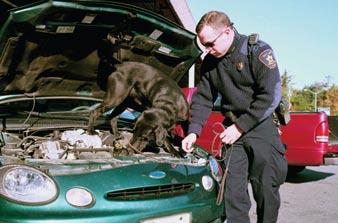
WINDSOR, Ont. - The Canada Border Services Agency seized more drugs at the Windsor-Detroit border in 2007 than in the last six years combined.
The agency seized 456 kilograms of cocaine alone in the Windsor area, most of that at the Ambassador Bridge. Agency spokesman Danny Yen says two seizures just in November netted 20 kilograms of suspected cocaine and 529 suspected tablets of ecstasy. Border services officers also seized 60 kilograms of cocaine in December.
Yen credits “good old-fashioned work’’ by officers doing examinations, help from drugsniffing dogs and an X-ray system.
(The Canadian Press)


by Robert Lunney
Wanted on criminal charges in Germany, Karlheinz Schreiber was in custody in Toronto pending deportation when the House ethics committee summoned him for questioning on the Airbus affair and his allegations against a former prime minister.
Police took him to Ottawa and escorted him from the detention centre to the House of Commons for appearances and to his Ottawa home to retrieve documents. Schreiber’s clothing was in disarray and he was photographed more than once in handcuffs and leg shackles, suggestive of the commonly observed ‘perp walks’ of charged or convicted persons. On at least one occasion, he wasn’t wearing a belt and lost his trousers in full public view.
To most viewers, I am sure, there seemed little likelihood that the diminutive Schreiber could elude his much larger police escorts or harm himself or anyone else, even if he so wished, which is absurd. The actions of his escorting officers conveyed all appearance of being strictly ‘in policy’ at all times, but the Commons committee concluded that police performance failed to meet the expectations of Canadians in preserving Schreiber’s dignity in public.
Ethics committee chair, MP Paul Szabo, read this statement at the opening of the Dec. 4 hearing: Let me begin, Mr. Schreiber, by letting you know that we have received a very, very large

number of faxes and e-mails from Canadians all across the country. They were expressing their disgust at the failure of the responsible policing authorities to ensure your personal dignity while being in handcuffs when led to your Ottawa residence to access your documents.
This unacceptable incident was also exploited by some, as you know, who also subjected you to ridicule and mockery. This matter was internationally reported and in our view, the committee’s view, the shaming of one Canadian has shamed all Canadians. The committee members sincerely regret that this indignity occurred and we strongly… encourage those who are responsible (to) take all necessary steps to ensure that such a spectacle will never happen again
In the days following, media and public attention was drawn to a multiplicity of issues raised during Schreiber’s testimony and the apology was relegated to a footnote.

Despite being cloaked in parliamentary language, it was a stinging rebuke of the custodial handling of this individual. We can infer from the unanimity of the committee and the volume of public protest that people overwhelmingly objected to this undignified public display.
What lessons can we learn from this storm of public criticism? It would be wrong to pin the blame solely on the agency involved, for the same thing could have occurred in many other jurisdictions; policies and practices are now relatively uniform across the country. In the same vein, dismissal with an ‘Oops, we better do something different next time’ response seems to miss the point. A more thoughtful appraisal is in order.
The principles of democratic policing have their foundation in the common law and are increasingly influenced by internationally recognized principles of human rights, including respect for and observance of the principles of legality, proportionality and subsidiarity.
Legality means adherence to laws and to the spirit of the law. Proportionality requires persons exercising lawful authority to use their powers judiciously, in proportion to the circumstances and threat to the public and themselves. Subsidiarity is the quality of carrying out a lawful duty with the least possible degree of intrusion or damage to persons or property.
For at least the past two decades front line police have been increasingly pressured to observe ever more detailed policies and procedures influenced by judicial decision, enacted in provincial legislation or devised by chiefs. In every case this is justified by good intentions to install a uniform policy judged to be a best practice and to prevent errors or malpractice.
Changes are often introduced to respond to some perceived systemic failure. There is growing evidence that strict observance of binding authorities can produce results similar to the Schreiber incident, where it seems apparent that compliance with policy took priority over observing the principle of proportionality.
Perhaps the lesson to be learned is that police policy and training should be influenced in a more penetrating way by the basic principles of human rights. Regulations should not be so tightly enforced as to interfere with the responsibility of supervisors and commanders to make decisions based on what is appropriate and right under the circumstances. We need to restore recognition and respect for discretionary decision making.
The flip side to this proposition is that officers exercising discretion must justify exceptions to policy, and managers are responsible for exercising sound and reasonable judgment in calling them to account. Policing is an activity fraught with risk – physical, moral and intellectual. Using common sense and making principled judgments should be a normal part of the job.