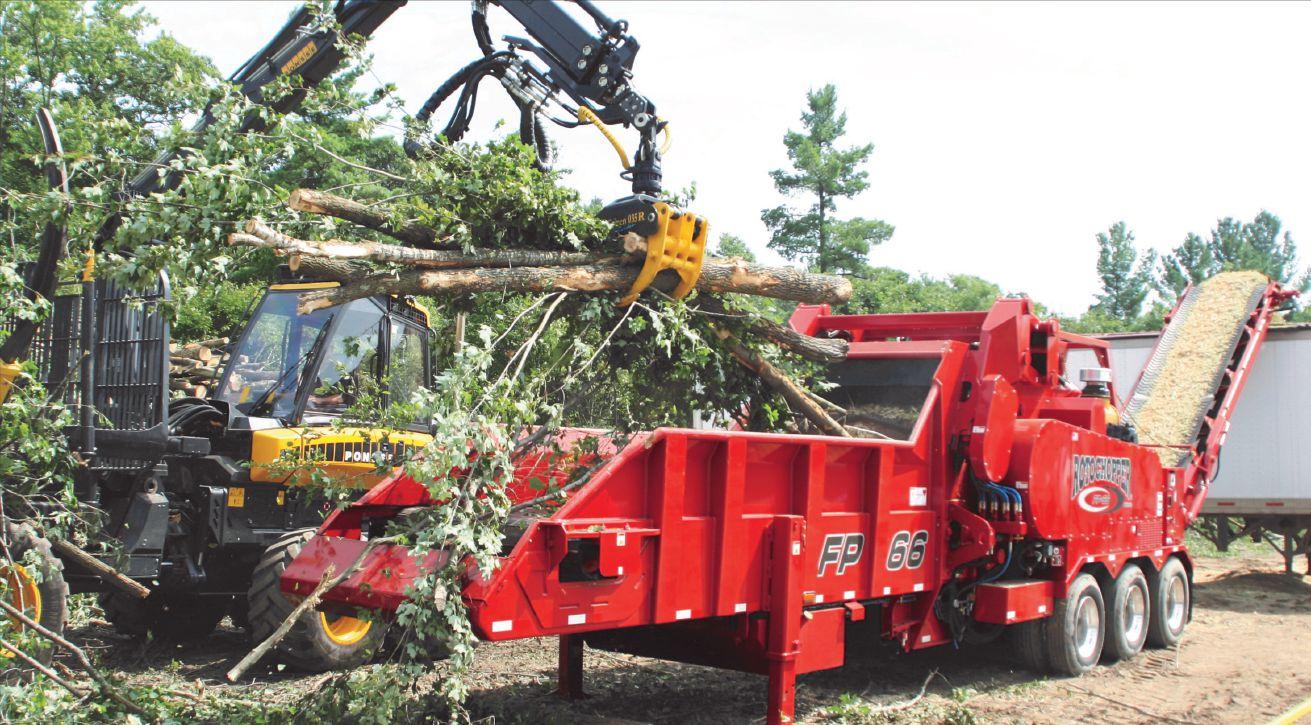
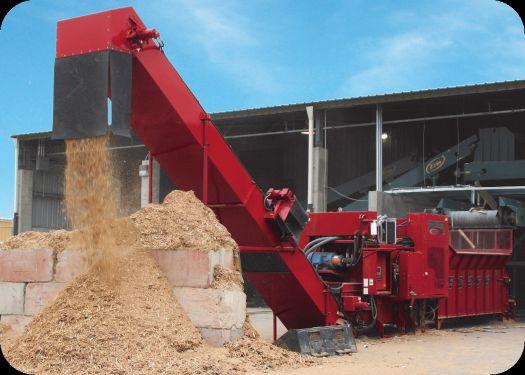
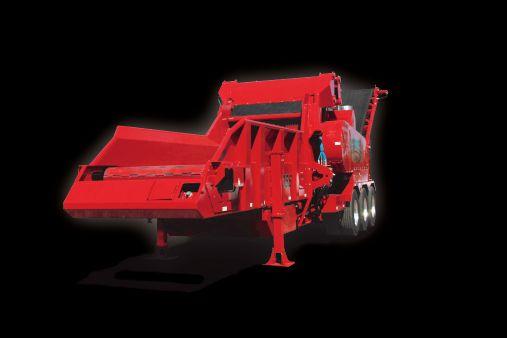
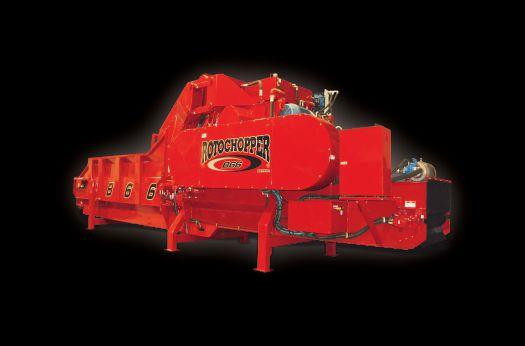
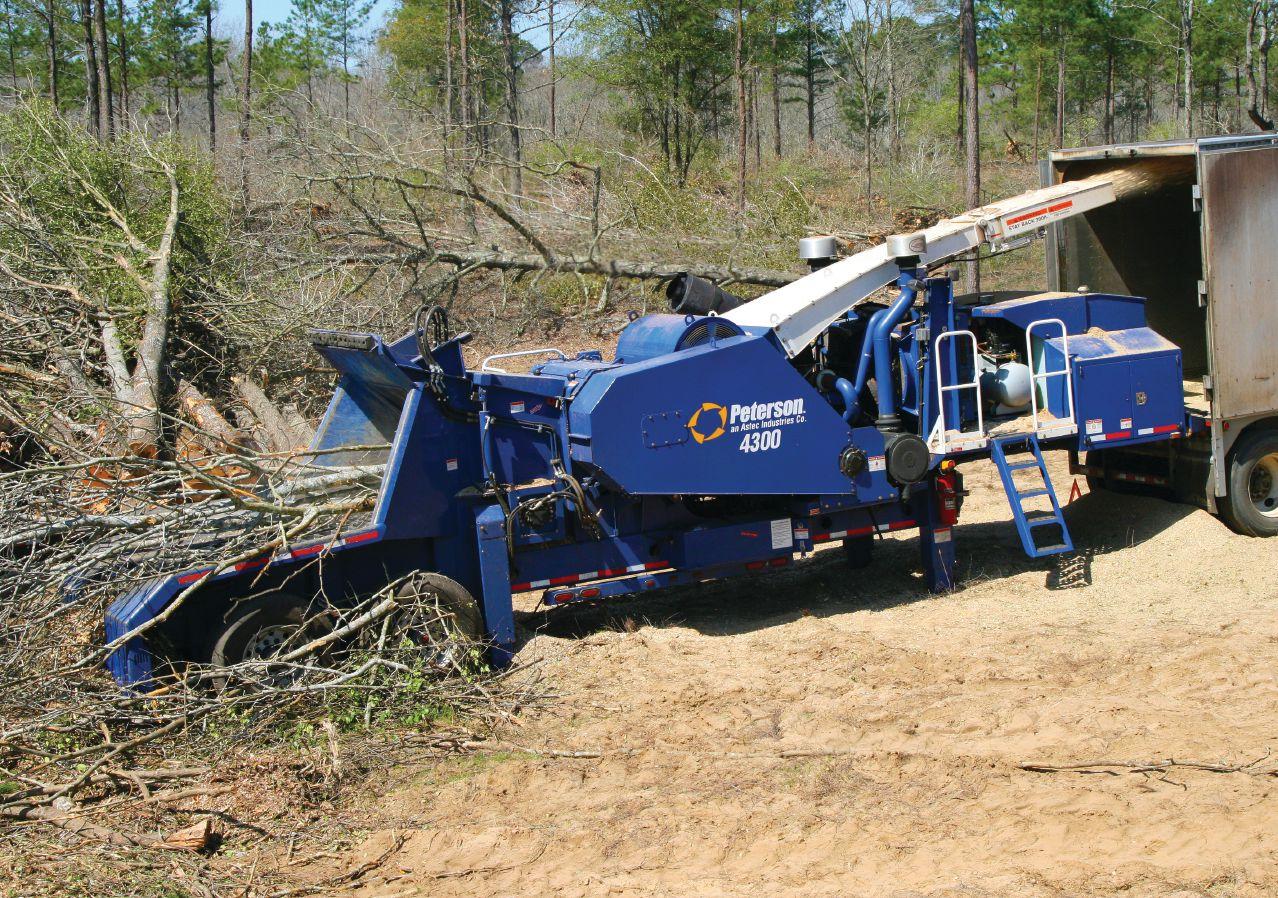
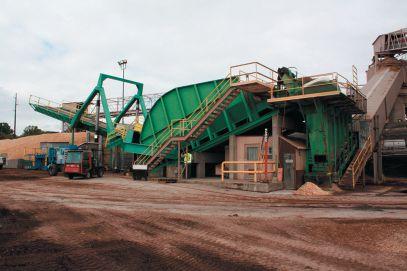
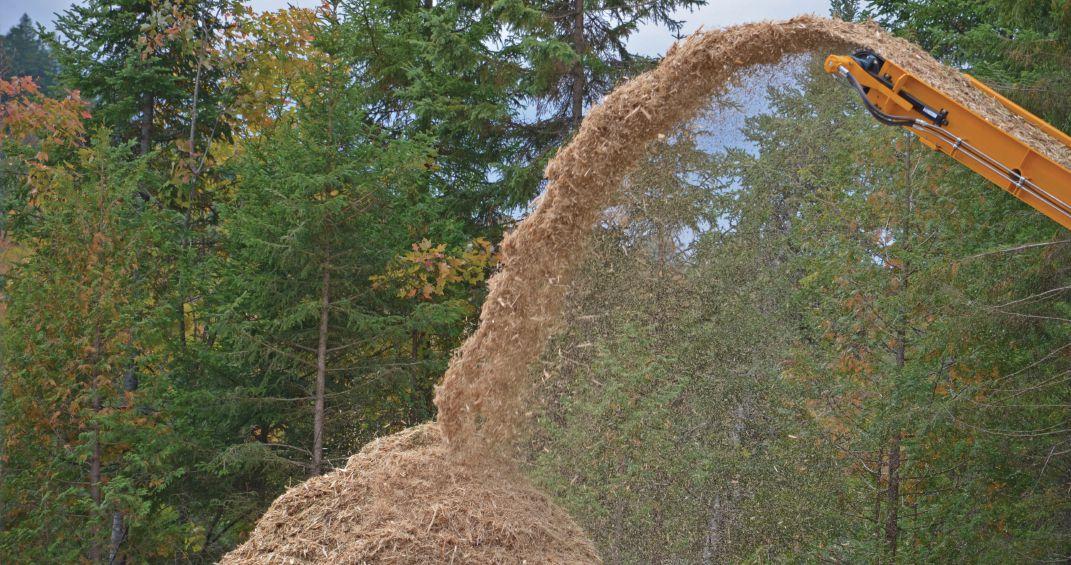
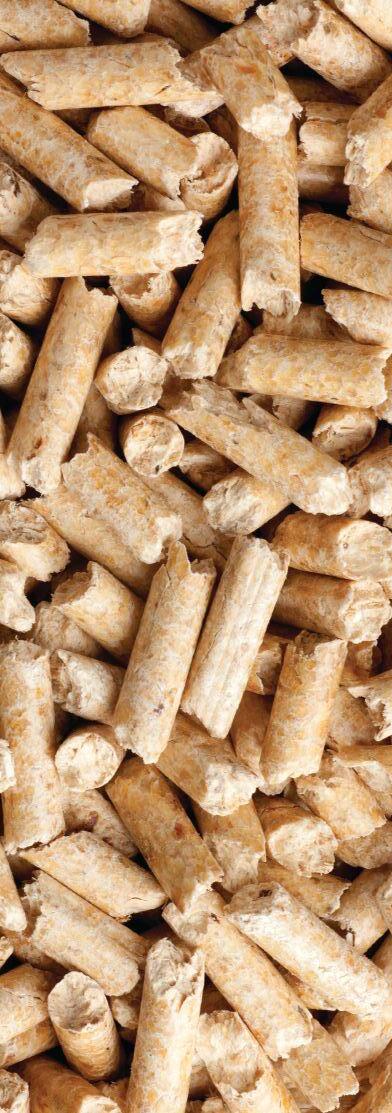
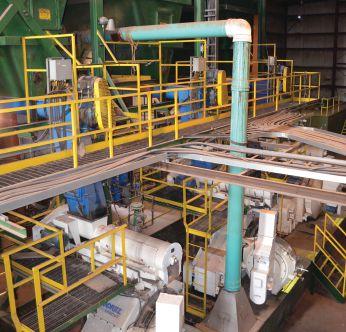
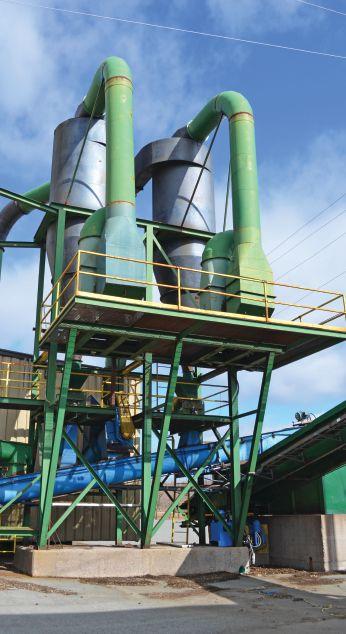
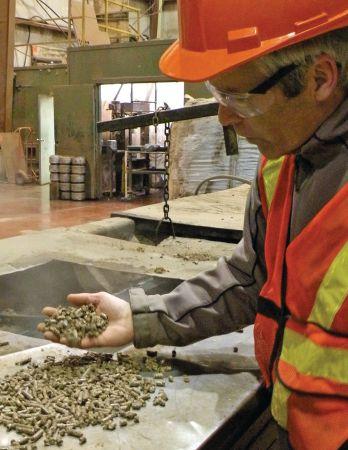
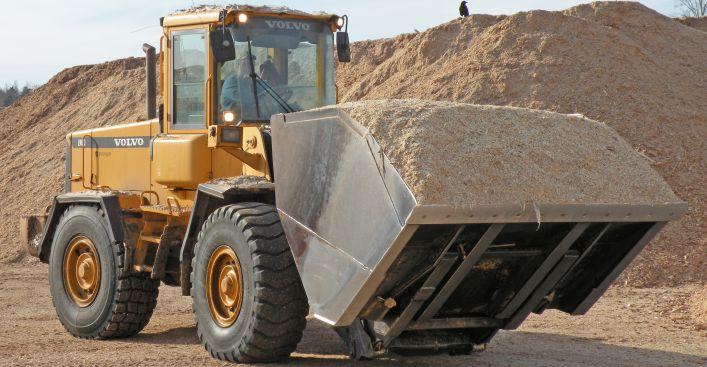
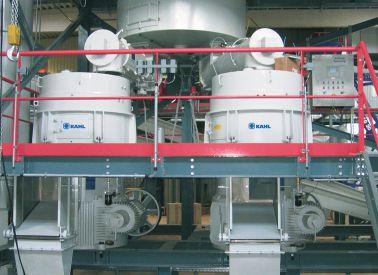
Which Rotochopper grinder is right for your wood fiber processing needs? Visit us online or give us a call to learn more.
Rotochopper wood grinders offer unmatched versatility and particle size control, so you get high quality biomass fuel from a wide range of raw materials.
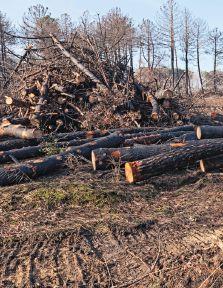
Whole trees
Sorted C & D
Pallets & crates
Forestry slash
Railroad ties
Wood chips
Slabwood
And thanks to exclusive features designed to maximize efficiency and uptime, you get the results you need at the lowest cost per ton.
CANADIAN BIOMASS
16 Exporting Wood Pellets
Transportation partners help wood pellet producers in Eastern Canada move their products across Canada and around the world.
18 Canada’s Pellet Heat Market
Our exclusive infographic provides information about the possibilities for the expansion of the pellet heat market in Canada.
20 The Importance of Paying Off Debt
Nature Québec explores how the use of forest biomass energy can help pay off the province’s carbon debt.
24 2013 Pellet Gear Guide
Our annual Pellet Gear Guide provides you with information about the major manufacturers and suppliers providing equipment for the Canadian wood pellet industry.
30 Norsask Powers Up
The Meadow Lake, Sask. sawmill discovers the financial and community benefits of making use of its own biomass sources.
Producing Canadian Ethanol
How soon will Canada meet production expectations?
The current need for an increase to our national ethanol production has been clearly demonstrated. According to a report from the U.S. Renewable Fuels Association, of the 2.1-2.2 billion litres of ethanol needed in Canada to meet the 5 per cent fuel blend requirements as implemented by the federal government, approximately 893 million litres came from south of the border.
That 893 million litres of imported ethanol must now be the primary target for the growth of the industry in Canada. The producers of ethanol in this country, as well as government officials, should see it as a realistic target for the industry’s growth and work to come up with a strategy to meet it within a reasonable amount of time.
There are, however, a few variables that must seriously be considered in that process. First of all, which is the best to develop in order to offset the nearly 900 million litres needed in this country: further growth of the corn ethanol market or production of cellulosic ethanol from municipal waste? Both corn and municipal waste are proving to be excellent sources of ethanol production in Canada, but both come with significant questions like feedstock sources, initial investment costs, and getting the local community to both understand and accept the facility in their own backyard.
The waste-to-biofuel group may have the edge on feedstock. Waste facilities continue to be an issue in communities across Canada, highlighted by Toronto’s debacle of having its garbage shipped to the United States. Taking that same garbage through a largescale waste-to-ethanol facility could be a profitable venture for someone able to invest
the capital resources necessary to make it work. In the case of corn, not all regions are able to produce the crop, but it has provided new opportunities for farmers who have struggled with crop production or have needed to make the transition to something new (for example, the decline in tobacco production in southern Ontario).
But the fact of the matter remains that, in a country seeing significant growth in the bioeconomy, facilities like Enerkem’s waste-to-energy project in Edmonton and the IGPC facility in Aylmer, Ont., have provided strong examples of how both types of ethanol production can be done to offset the current ethanol trade deficit with the United States.
So what comes next? Clearly, there needs to be interest from potential investors looking for a new way to profit from the green economy. We also need a continued push by the industry to educate government officials in each province of both the national demand and the environmental offsets of the production of corn or cellulosic ethanol.
As Canada’s leaders in the bioeconomy and renewable fuels industries continue to emerge, it will be fascinating to watch how they are able to work with government and industry partners to both shrink our ethanol deficit and look for new ways to use this green technology in both residential and commercial applications.
Andrew Macklin, Associate Editor amacklin@annexweb.com
Occasionally, Canadian Biomass magazine will mail information on behalf of industryrelated groups whose products and services we believe may be of interest to you. If you prefer not to receive this information, please contact our circulation department in any of the four ways listed above.
Researchers are evaluating the biomass potential of woody crops and are taking a closer look at what black locust might have to offer the biomass industry. The team, from the Energy Biosciences Institute (EBI) at the University of Illinois, found that black locust (Robinia pseudoacacia) showed a higher yield and a faster harvest time than other woody plant species that they evaluated. Currently
the black locust can only be used for direct combustion but if it becomes a major crop, researchers say that work could begin on the process of how to break it down.
The EBI is working on how to get the sugars out of plants and how to turn those to alcohols. The research team will present its findings at the EBI Feedstock Symposium program in August.
protein from streams of forest industry
Researchers from Processum Biorefinery Initiative have tested a large-scale production trial of “single cell protein,” which can be used in fish feed, with Domsjo Mills and Sekab at the SP Biorefinery Demo Plant in Sweden. The test – part of a European research project –confirmed that the plant is suitable for developing different biorefinery products by converting single cell protein from residual streams found in the forest industry. It can be used instead of fishmeal in fish feed, which researchers say is beneficial to the environment because methods of producing fishmeal today are an environmental threat. During the trial, researchers looked closely at how well the plant was suited for aerobe fermentation processes using filamentous fungi, which grew on a stream from the Domsjo Mills. They harvested the fungi, dried them and ground them to a powder, making it possible to use as an ingredient in fish feed. A project partner in Iceland is currently completing a trial feeding Tilapia fish with feed containing the new protein.
Biotecanada and Biotalent canada partnership
BIOTECanada and BioTalent Canada have signed an agreement so they can help Canada’s bioeconomy continue to grow and provide a solid foundation for the industry and the people who work within it. This new alliance gives all BIOTECanada’s member’s new services and access to BioTalent Canada’s human resource products, including the country’s only national, bilingual biotechnology job board, “The PetriDishtm”. The two companies hope to keep the Canadian biotech sector competitive in the industry.
Canada’s long history of biotech research and innovation has positioned it as a leader,” said Andrew Casey, president and CEO BIOTECanada. “Yet, Canada and its biotech sector must continue to be as competitive as possible to successfully compete for this global opportunity.
greenhouse heated from landfill gas fuelled chp plant
Demers Greenhouses, a tomato plant in Quebec, is being heated with heat produced by an eight-megawatt landfill gas fuelled CHP plant. European Power Systems (EPS) commissioned the heat recovery system being used after Demers Greenhouses owner Jacques Demers learned of the opportunity to take advantage of this unique heating method, which has already provided the greenhouse more than 10,000 megawatt-hours of energy. The contract to implement the cogeneration system was awarded to EPS in August of 2011 and came online in fall of 2012.
The Climate Change and Emissions Corporation (CCEMC) is funding three new projects through its Biological Greenhouse Gas Management Program. The projects have a combined value of more than $1 million, and the CCEMC is committing more than $880,000 in support. The Biological Greenhouse Gas Management Program is managed by Alberta Innovates Bio Solutions and the projects include, optimizing small methane biofilters for controlling low volume point-source emissions, creating a new type of biochar to support water remediation in the oil sands and a program that will help Alberta farmers implement offset projects while improving sustainability practices. Each project supports Alberta’s efforts to reduce greenhouse gas emissions using biological approaches.
Prince Edward Island has approved contracts to install biomass heating systems in 13 buildings across the province in an effort to reduce its reliance on expensive and environmentally harmful fossil fuels. The contracts are for 20-year terms. The contracted companies – Company 8230773 Ltd. and Wood4Heating Canada – are responsible for the design, construction and operation of the units and will be installing the systems in hospitals, schools, nursing facilities, and other public buildings over the next three years. Biomass heating will save P.E.I. roughly $120,000 in costs each year and the contracts will have a combined economic impact of more than $500,000 annually.
Biomass to heat 13 B uildings in
Making Pellets a Priority
TImproving fibre security and affordability for B.C.’s wood pellet industry.
By Gordon Murray
he Southeast U.S. recently passed British Columbia to become the world’s largest wood pellet exporting region. Russian production is also growing rapidly. Unless the fibre supply situation improves for B.C.’s pellet producers, the province will soon slip into third place behind Russia and possibly even fourth place behind the Baltic countries.
The problem is that despite endless talk, the B.C. government, in its role as landlord over the province’s public forests, has not provided any meaningful way for pellet producers to obtain fibre supply security. Moreover, B.C.’s primary forest tenure holders – the large lumber manufacturers who control the majority of provincial forests – simply dictate the terms
In the past two years, fibre costs have doubled for B.C. pellet producers, and despite millions of tonnes of harvest residues still being burned in B.C. by the lumber industry, pellet producers often struggle to obtain access to those residues.
and conditions by which pellet producers may purchase sawdust and harvest residues. No negotiating is involved.
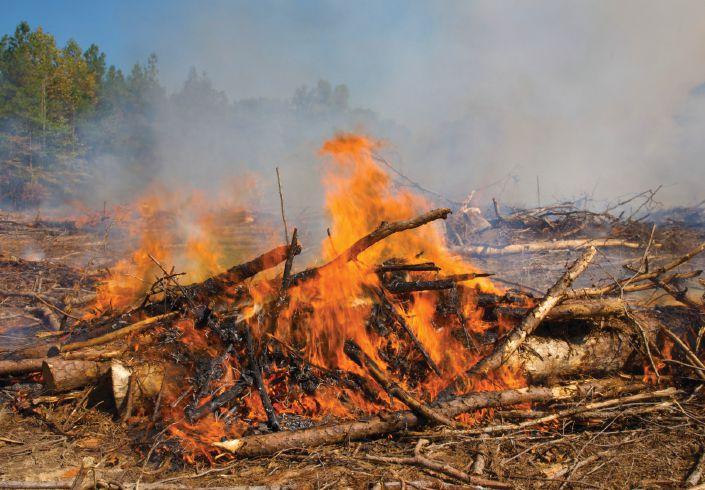
In the past two years, fibre costs have doubled for B.C. pellet producers, and despite millions of tonnes of harvest residues still being burned in B.C. by the lumber industry, pellet producers often struggle to obtain access to those residues. British Columbia’s leading lumber manufacturers boast about being responsible stewards of public forests, yet if B.C. pellet producers are not able to pay the price they demand for leftover logging waste, the lumber producers will simply burn such residues, putting pellet industry jobs up in smoke as the B.C. government stands by and watches.
In 1995 the B.C. government introduced regulations requiring sawmill waste-wood beehive burners to close as an initiative to reduce air pollution. At that time there was no commercial
use for wood waste and most sawmill operators were unable to comply with the regulations. They repeatedly asked the B.C. government to delay enforcement of the new regulations until they could find an economic solution – threatening sawmill closures and job loss if the government would not agree.
In the late 1990s a few entrepreneurs – notably the Swaan brothers, the Johnston brothers, and the owners of L&M/ Nechako Lumber – began using sawmill wood waste to make pellets for a small domestic market. This market quickly became oversupplied and pellet operators turned to the larger and rapidly expanding European power utility electricity generation market, with the first shipment of wood pellets being exported to Sweden in 1998. From 1998 to 2011, B.C.’s wood pellet industry grew to 13 plants and B.C. temporarily became the largest pellet-exporting region in the world. British Columbia’s lumber manufacturers were able to close their beehive burners and found a new source of much-needed revenue for wood waste during the recent lumber industry economic crisis. The B.C. government recognized the importance of the wood pellet industry in its 2008 BC Bioenergy Strategy, which stated that “the Province will promote wood pellet production and facilitate market development opportunities within the Province and around the world.”
fiBre supply issues faced By B.c. pellet producers
For the past hundred years, the B.C. government has used forest tenure as a policy instrument to encourage development of both the pulp and sawmill sectors. The province issued timber tenures to industry as an incentive for capital investment and employment, a strategy that has resulted in a substantial primary forest industry. Also, the government recognized that the forest-harvesting sector required security and created a regulation requiring major tenure holders to enter long-term contracts with logging contractors. Such contracts enabled loggers to justify large expenditures for equipment and thus the forestharvesting sector was developed. As landlord over B.C.’s public forests, the government now urgently needs to take a similarly active role to enable pellet producers to obtain the same degree of fibre security that has enabled the pulp, sawmill, and harvesting sectors to develop. The pellet sector has invested some $500 million in B.C. without any fibre security. This situation can’t continue.
The wood pellet sector’s primary customers are large power utilities. Presently, several of these utilities – particularly in the U.K. – are holding back on investment decisions that would
greatly expand our markets, due to regulatory and fibre supply uncertainty. It is frustrating for B.C.’s pellet producers to be unable to demonstrate to their customers that they have long-term fibre security.
To date the B.C. government has taken a hands-off approach with the pellet sector. This simply isn’t good enough. The government’s policy direction has been to leave it to the wood pellet sector to develop “business to business relationships” with primary tenure holders to obtain fibre. The government rationalizes that is a “free market approach” when in fact it is anything but. It is not a free market when the government has created a situation where the large lumber producers who control the majority of B.C.’s public forests have the power to simply dictate terms and conditions to pellet manufacturers and where they can refuse to enter long-term fibre supply contracts with pellet producers for material that the lumber producers would otherwise burn.
The government has given primary tenure holders the right to harvest public forest, but allows them to pick and choose whatever timber they wish to take. Then they can simply burn the rest if they choose, without any requirement to ensure that the bioenergy industry has the maximum opportunity to utilize the leftovers. There are no consequences to a primary tenure holder who simply
chooses to burn post-harvest logging residuals along with the associated pellet industry jobs. What is particularly galling is that this deliberate wasting of fibre is being decided by B.C.’s professional foresters, who are supposed to have an ethical obligation to the public to maximize the benefits received from public forests.
The B.C. government introduced the fibre licence to cut as a half-hearted tenure solution for the bioenergy sector. This tenure is ineffective. It is merely a small-scale, short-term salvage tenure. The fibre licence to cut puts the onus on the licence applicant (i.e., pellet producer) to prove that a primary tenure holder is unco-operative. If pursued, this would create a potential adversarial relationship that would eliminate any chance of a productive working arrangement and would only worsen the fibre supply situation for pellet producers.
The government and the primary forest industry (pulp and sawmill sectors) have jointly created a Bio-economy Transition Committee to plan the future of the forest bioeconomy. Unbelievably, the pellet sector is excluded from this committee. As I have been unable to find any public record of proceedings of this committee, it leads to the appearance of a secret group where the participants conspire to keep new entrants out and to make sure that the
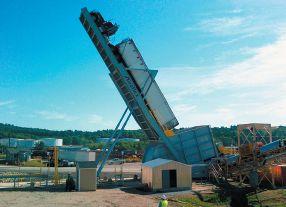
Pellet producers continuously struggle for wood despite sights like this all across B.C.
Boiler Feed Systems
Ruggedly built and dependable pneumatic and mechanical boiler fuel feed systems by Jeffrey Rader®, a brand of TerraSource™ Global, combine the best of our storage, reclaim, conveying, and feeding equipment.
We work closely with our customers to ensure that our designs meet the storage, metering, and feed rate requirements of the boiler, whether it’s feeding 100% biomass or co-firing biomass with coal.
pulp and sawmill sectors maintain their monopoly over B.C.’s public forests.
s olutions
As the landlord and custodian over B.C.’s public forests, the B.C. government needs to take an active role to help solve the pellet industry’s difficulty in obtaining a secure supply of affordable fibre to ensure that our sector reaches its potential. The time for promises and rhetoric has passed. The following would help:
1. Recognizing that the business-to-business approach to obtaining fibre is inadequate and that it is necessary to become actively engaged in helping the pellet sector to obtain access to a long-term supply of affordable fibre.
2. Mirroring a similar style of commitment provided to the harvesting sector by requiring that tenure holders enter into long-term replaceable contracts with wood pellet producers for a component of their sawmill residuals.
3. Including the wood pellet sector alongside the primary forest industry on the Bio-economy Transformation Council and any other committees that have the mandate of developing fibre access strategies and policy.
4. Implementing a carbon tax on slash burning that creates an incentive for major tenure holders to make slash piles available to wood pellet producers and eliminates the opportunity for tenure holders to burn material without consequences. Slash burning should only be allowed to occur if all other options to use the slash have been exhausted, and the requirement should be for the primary tenure holder to prove that burning is the only viable option to eliminate harvest residues.
5. Making available to the pellet sector timber that has a true economic value – not just the marginal economic stands that are currently envisioned for the sector. This would enable pellet producers to bargain on an equal footing with primary tenure holders by trading access to sawlogs for sawmill and/or forest residuals.
The wood pellet sector has a proven record of accomplishment over the past 15 years. While second- and third-generation biofuels are sexy and exciting, they have not yet been proven to be viable. We are not asking that new technologies be abandoned. We are merely asking that the wood pellet sector be given at least the same priority – so that we may begin to regain some of the ground that we have lost to our U.S. and Russian competition.
Gordon Murray is executive director of the Wood Pellet Association of Canada. He encourages all those who want to support and benefit from the growth of the Canadian wood pellet industry to join. Gordon welcomes all comments and can be contacted by telephone at 250-837-8821 or by e-mail at gord@pellet.org.
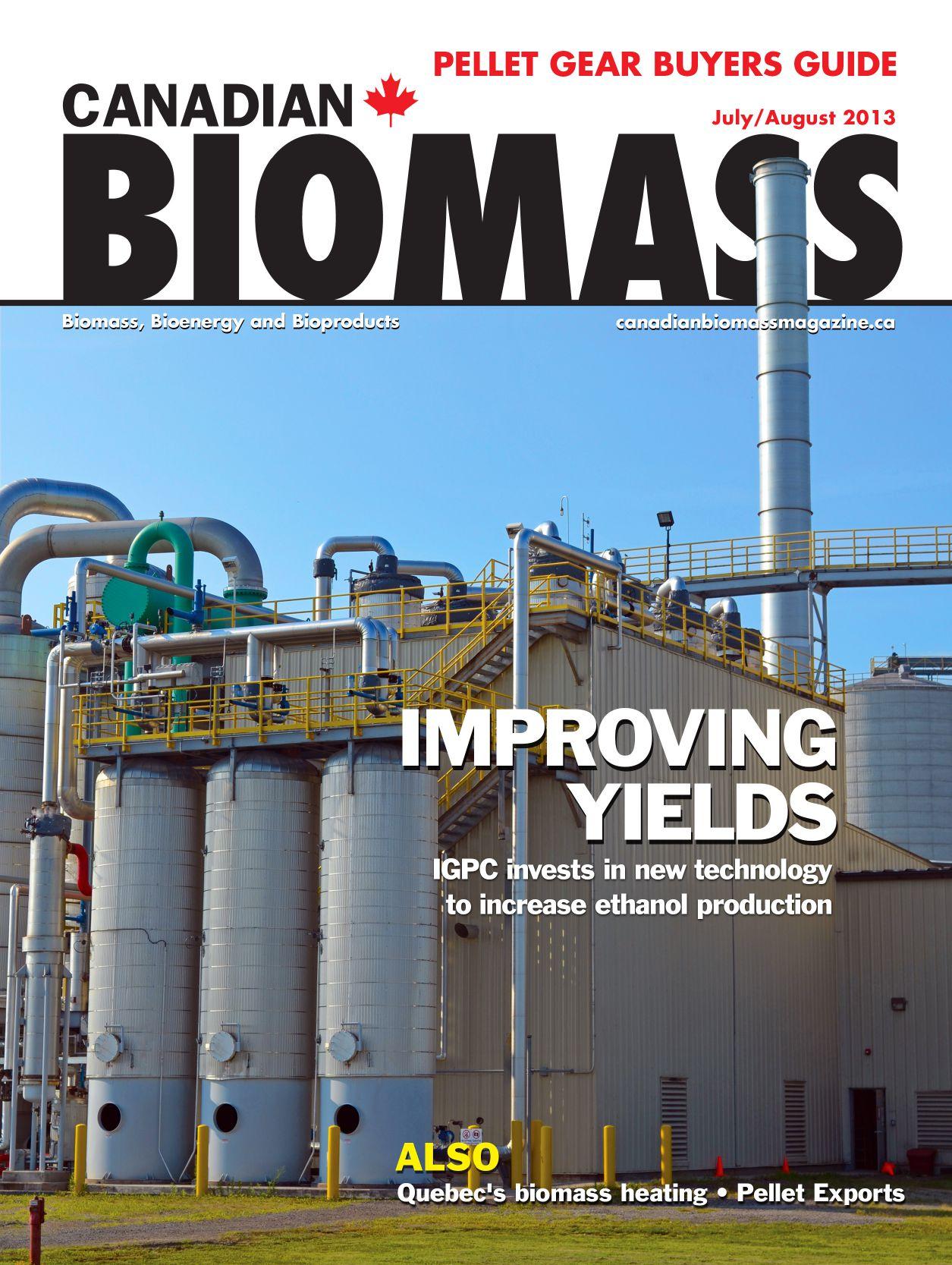
Improving Ethanol Yields
Aylmer, Ont.-based ethanol plant discovers how to get more out of corn.
By Andrew Macklin
WHENpennies become the difference between a hearty profit and a devastating loss, any investment that can be made to gain an extra financial advantage is worth considering.
Seeing both the short-term and long-term benefits of adding new technology, for the health of its bottom line, has led the Integrated Grain Producers Co-operative to make significant investments in its Aylmer, Ont., ethanol production facility.
In less than 15 years, the IGPC facility has grown from little more than a pipe dream to one of the largest agricultural co-operatives in Ontario, and one of the largest ethanol production facilities in the country.
The idea was born when a group of farmers met and discussed their collective intention to start an ethanol facility somewhere in southern Ontario. The government of the day was offering incentives for starting a facility of this kind, and the farmers decided to move ahead with their new initiative. At conception, that group was just a handful of regional farmers. Today, that group has grown to somewhere in the range of 850-900 members.
The first stumbling block was finding a suitable location within the region to construct an ethanol production facility. The first proposed location was in Brantford, Ont., approximately 100 kilometres southwest of Toronto. When that location didn’t work out, Steve Peters, who was the MPP for the riding of Elgin-Middlesex-London where Aylmer is located, invited the IGPC group to the Aylmer Industrial Park. It turned out to be the perfect location for the newest ethanol plant.
“We’re in the heart of the corn belt,” says Jim Grey, CEO of IGPC Ethanol Inc. “We’ve got great access to both rail and Highway 401. We’re also quite close to our co-product market, the DDG [dried distillers grains] market, and we’re not very far from our ethanol market. So as fate and luck would have it, we’ve ended up in a really good spot.”
Finding the needed finances for the project would prove to be even more complex. Over a five-year period beginning with the conceptualization of the project, the group worked to secure the different financial partners that would need to come on board in order to provide all elements of the financial model. Once local financial resources were tapped, including investments from the farming community, multiple levels of government were engaged to provide money from a variety of available grant programs.
“While this was going on, they began to look at opportunities to raise
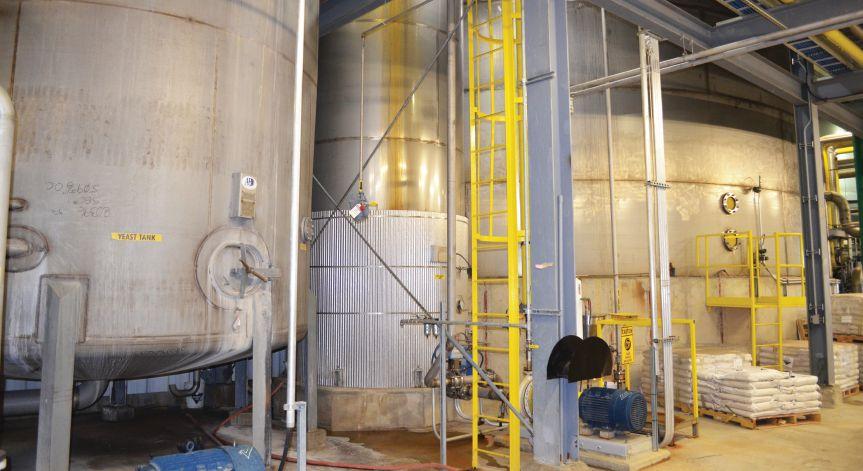
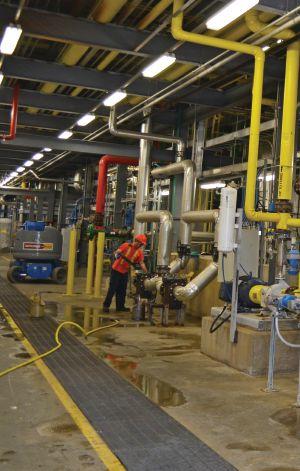
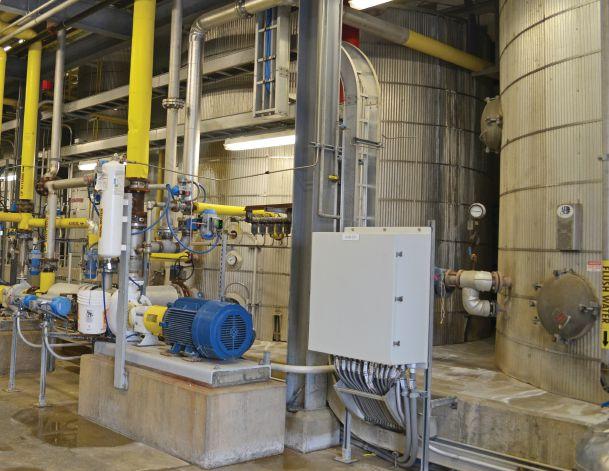
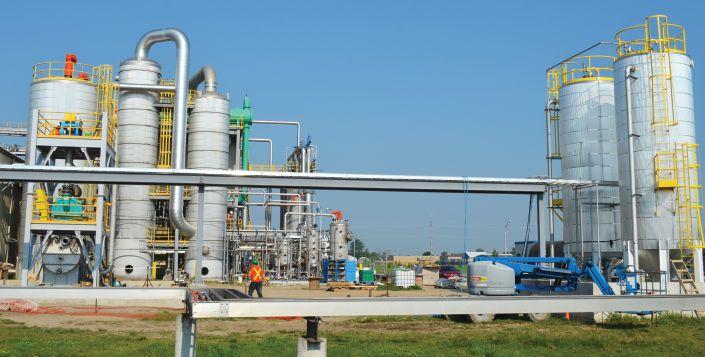
LEFT MAIN: The addition of the corn oil extraction system, seen here during construction, will provide oil to help in the creation of biodiesel.
LEFT TO RIGHT: SMT allows for more starch to be made available to the yeast during the fermentation process, increasing the ethanol yield from the corn. The Selective Milling Technology is added to the front end of ethanol production, making more starch available by a more thorough shearing of the grain.
The Process of Making Ethanol
debt,” explains Grey. “We (IGPC) ended up with a banking syndicate led, at that time, by Societe General. So over that period of time, the group raised roughly $58 million in equity and approximately $65 million of debt financing. This allowed them to enter the various contribution agreements with the various levels of government to facilitate the construction.”
involving the right partners
It was important in the early stages of the development of the IGPC ethanol facility to ensure that the right partners were added to the project. The right
partners to help buy, sell and market for IGPC would contribute greatly to the success or failure of the facility. It was also made clear by government officials that, certain offtake agreements needed to be in place before funding would be secured, including the debt financing contracts.
Eco-Energy Inc. and Furst McNess were brought on board early in the process. Tennessee-based Eco-Energy Inc. was well respected for its ability to secure solid price points for the ethanol, and they signed an official offtake agreement with IGPC to market the facility’s ethanol production and find buyers. Those buyers now represent three of the biggest gasoline companies in Canada: Imperial Oil, Suncor and Shell. Furst McNess, whose Canadian head office is located in nearby Ingersoll, Ont., came on board to market and sell the ethanol byproduct, with an established customer base for dried distillers grains in Ontario.
The banks also insisted IGPC secure a steady supply of corn, ensuring that the co-operative would be able to meet its production targets. In order to make sure that the supply of corn would meet its demand, IGPC signed an agreement with Cargill.
“Especially in the early days when we were a bit of an unknown commodity in the market, it helped our credibility to have Cargill working with us to purchase our corn,” says Grey.
With a location and finances secured, the construction of the facility commenced in July of 2007. Using technology from ICM Inc., one of the most respected ethanol technology companies in the world, NAC (North American Construction Inc.) of Morriston, Ont. was hired to construct the plant.
The staff at IGPC has been successful at keeping the plant running efficiently since it came online in the fall of 2008. The ICM plant uses between 400,000 and 420,000 tonnes of corn per year, or an average of 35,000 tonnes per month. That volume of corn produces approximately 175 million litres of ethanol on an annual basis. That volume also produces an additional 170,000 tonnes of DDGS and WDS each year.
making significant upgrades
There are two additions being made to the IGPC facility this summer thanks to technology provided by ICM: Selective Milling Technology (SMT) and corn oil extraction technology.
Selective Milling Technology will allow IGPC to grind the same amount of corn but make more ethanol. According to ICM: “SMT provides more thorough shearing of the ground grain particles, making
more starch available for conversion to sugars. Starch that is not made available to yeast can pass through fermentation untouched, exiting the plant as lost potential in distillers’ grain. These residual starches are not only lost ethanol, potential, they also add increased load on downstream equipment such as centrifuges and dryers.”
The additional ethanol yield created by the addition of the SMT system is targeted at 2-3 per cent, which in the case of the IGPC plant’s current production, should result in an increase of 3.5-5.25 million litres in ethanol yield.
“You must squeeze as much ethanol as you can out of every kernel of corn,” says Grey. “You have to keep driving for efficiencies because this really is a business of pennies; you have to run your plants in that way.”
Adding corn oil extraction technology provides another salable product that can be produced as part of the ethanol extraction process. The ICM Advanced Oil Separation System is built to provide maximum recovery of bio-oil from emulsion concentrate after the centrifugal phase of separation.
“Corn oil extraction allows us to take the oil out of the corn,” says Grey. “We have signed a Letter of Intent with a biodiesel manufacturer and they will be taking all of our oil to fill out some of their feedstock requirements to make biodiesel.” The Letter of Intent has been signed with Biox, a Hamilton, Ont.-based company, which currently produces approximately 67 million litres of biodiesel per year.
Looking ahead, IGPC continues to seek ways to improve the efficiency of its plant. Management continues to consult with ICM about emerging technologies to help improve yield. As far as expansion is concerned, there is no plan at this point, however, that could change if national demand for ethanol increases.
“Canada is in a reasonably good balance right now when it comes to the production of ethanol,” says Grey. “There is a certain amount of U.S. product coming in to Canada, but it heads into areas like Western Canada, which, obviously, does not have a lot of corn growing.”
The demand for ethanol production could increase though if the mandate for ethanol as a gasoline additive ever increases. Currently, nearly 900 million litres of the approximately 2.1-2.2 billion litres of
ethanol needed for Canadian consumption comes from south of the border. But should the mandate increase, the demand for Canadian will rise substantially.
“Will we ever see the mandate increase? Certainly, from an industry perspective, we’d like to see that happen at some point in time,” explains Grey. “But to do that, areas like the GTA would have to blend
at over the 10 per cent level just because of the logistics of this country. That poses some infrastructure difficulties, but as an industry, we’d be silly not to continue to push for greater inclusion rates.
supporting Export Goals
Eastern Canada wood pellet produces are encouraged by logistics possibilities.
By Carroll McCormick
This July, Eastern Canadian wood pellet producers flocked to the first ever workshop organized to discuss the export logistics challenges they face. They learned that co-operating to provide high-volume shipments is critical for greasing the supply chain. Players such as CN, Canfornav and ports from Montreal to Halifax, told the participants they want their business.
Nearly 100 participants attended the Eastern Canadian Pellet Logistics Workshop, organized by the Quebec Wood Export Bureau (QWEB) and the Wood Pellet Association of Canada (WPAC). The topic was how to make the logistics of transporting wood pellets, particularly to the European Union market, more attractive to shippers.
Participants first got a reminder of how things are done in Western Canada. Gordon Murray, executive di -
rector, WPAC, referred to a spirit of cooperation among western producers. The leadership of the big producers, comingling and economies of scale help account for 1.6 million tonnes of wood pellets being shipped out of Port Metro Vancouver in 2012.
Participants learned that they too could become big exporters if they organize to reduce the cost of transportation by providing attractive volumes to shippers, and by offering high-volume, long-term contracts to European Union customers.
Jean-François Arsenault, principal, CPCS, presented findings from a study that the QWEB and WPAC commissioned. CPCS was tasked with analyzing the transport chain for exporting wood pellets from Eastern Canada, and identifying barriers to implementing an efficient, optimized supply chain.
Air System Experts
In brief, the study concluded that the market is there for Eastern Canadian producers to export nearly all of their current annual production. The challenge, however, is to determine how to increase volumes and thereby decrease freight rates.
The European Union market consumed 19 million tonnes of wood pellets in 2012, and has a forecasted annual growth of 10 per cent. “There are huge opportunities, for example, 15-20 per cent annual growth in Italy,” Murray noted.
Matthew Griffin, commercial manager, Drax, which owns and operates a 4,000-megawatt power station in North Yorkshire, England, stated, “We believe that Eastern Canada has the potential to be as big as Western Canada, but what has been holding us back is a fragmented supply, which raises our costs.”
The CPCS study calculated that moving wood pellets by rail is almost always less expensive than by truck. That said, Arsenault pointed out that the majority of producers have no access to rail spurs and they would likely have to buy or lease rail cars. Arsenault touched on other issues too, such as the
possibility of short sea shipping to move pellets to coastal ports and the need for a dedicated dockside pellet terminal.
Speaking of ships, Knud Jensen, executive vice-president, Canfornav, offered a graphic example of the economy of scale.
“Comingling cargo is in its infancy, but it would help in getting rates down. The freight difference between a 40,000-tonne load and a 30,000-tonne load will be 15-25 per cent.” He added, “We will look at freight rates much differently on a long-term strategy than on the spot-market.”
Uri Szyk, market manager, sales and marketing, industrial products, CN, took the podium to remind listeners that CN was ready to help producers move their pellets to market. CN is interested in exploring capital investment opportunities, including building track infrastructure.
Representatives from four ports –Montreal, Trois Rivières, Belledune and Halifax – presented their credentials for moving wood pellets and their connections to other transportation modes. The Port of Trois Rivières, for example, is in expansion mode. “We are open to suggestions to smaller producers getting together and opening a wood pellet terminal,” noted Matthieu Gauthier, the port’s business development co-ordinator.
Patrick Bohan, manager, business development, Port of Halifax, noted that its grain elevator is used to handling wood pellets. “This is not at the concept stage. It is real and operating 24/7/365.”
Rayburn Doucett, president and CEO, Belledune Port Authority, said, “We are shipping over 100,000 tonnes a year of pellets. We have a terminal dedicated to wood pellets. We can put our product into Europe as cheap or cheaper than any other port.”
Antonio Boemi, vice-president, growth and development, Port of Montreal, said this about the vessels that call at the port: “Vessels do full unload and load [here]. This leads to more balanced trade and better costs.”
Rentech, whose business includes supplying wood pellets to Drax and Ontario Power Generation, spoke of issues ranging from plants to ports, including a deal with Quebec Stevedor-
ing to build handling equipment and 75,000 tonnes of pellet storage space by 2014 at the Port of Quebec, exclusively for Rentech. Rentech extended this offer: “… we are able to consolidate volume and provide a conduit for other producers to the export marketplace.”
Perhaps, suggested Bruce Lisle in a conversation with Canadian Biomass , “Rentech could be a comingling leader.”
Pierre-Olivier Morency, manager, wood pellets, QWEB, and director,
market access and promotion, WPAC, told Canadian Biomass , “Strong interest was demonstrated during the membersonly session to work together and develop solutions. I think that WPAC is setting a strong mandate to go forward with a logistics project in Eastern Canada.”
For more on pellets, visit www.canadianbiomassmagazine.ca
Maximum production. Low operating cost. The Bühler RWPR-900 is the ideal pellet mill for your biomass applications. The RWPR was designed with massive roll bearings to withstand the extreme pressures of biomass pelleting. To ensure ease of operation the pellet mill is equipped with a simple V-belt drive system with minimal moving parts. This top of the line pellet mill provides an effective and effi cient pelleting solution. For more information please visit www.buhlergroup.com.
Maximum Production. Flexible controls optimize process
Low operating costs. Rollers, dies and other wear parts are designed for maximum performance and longevity to increase uptime and profi tability.
Safe operation. A combined overload shear pin and belt slip monitor protect the pellet mill from overloads or foreign material entering the die.
Sto k ing the Home Fires
Canada’s Pellet Heat Market
British Columbia
Alberta Saskatchewan
Manitoba
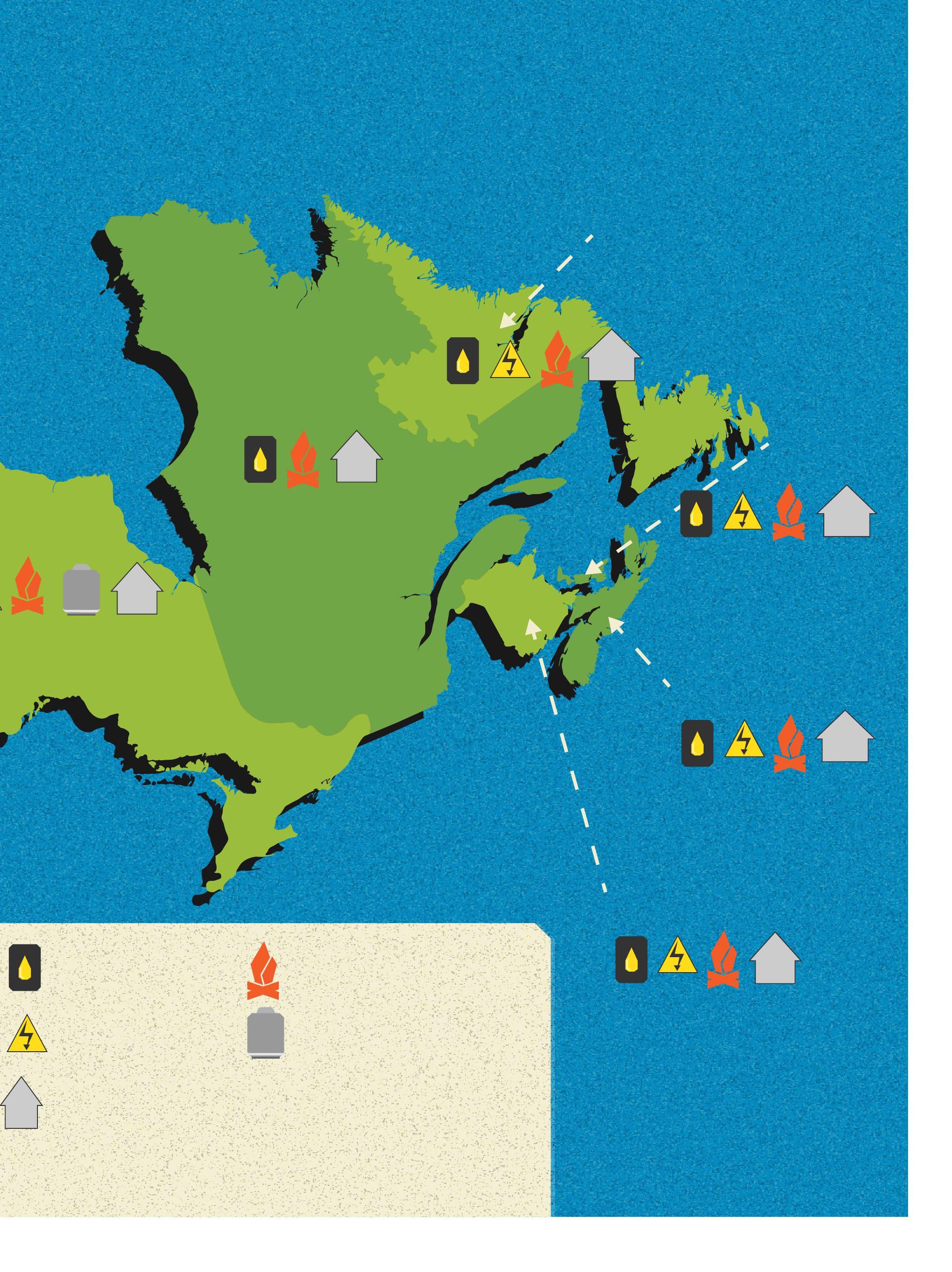
Well over 90 per cent of Canadian pellets are exported to heat and light homes in Europe or the US. To look at the potential for using more of those pellets to heat homes and water here in U.S. Canadian Biomass magazine dug out statistics on what Canadians are currently using to heat their homes and water – electricity, oil, natural gas, propane, and wood. The mix differs by province, as do the relative costs of each fuel.
We then determined what fuels wood pellets could compete against on price alone for each province. For example, pellets are price competitive with oil, electricity, firewood and propane in Ontario, but not with electric heating in Quebec, British Columbia and Manitoba. They are not competitive with natural gas in any region.
That gave us the number of possible households in each province where pellets could offer a cheaper heat alternative, which varies from 9% in British Columbia to 100% in Nova Scotia and Newfoundland. That and the average heat load per household in each region gave us the total possible pellet market in each province. We then assumed that converting just five percent of those clients would be a worthy but achievable objective, and based on that came up with the realistic market in each province, broken into tonnes of pellets, revenue, and jobs created.
It’s art as much as science. For example, the totals do not include possible pellet consumption for commercial use or power generation, so the true domestic market is many times this size. Job creation assumes a ready supply of residues, so where harvesting, collecting and grinding are required, those numbers would increase. Still, there is a worthy market development project out there for the right players.
Paying off Carbon Debt
Exploring how biomass fuels can help the climate challenge in Quebec.
By Amélie St-Laurent Samuel
Muchhas been said about the benefits of using forest biomass energy as an alternative to fossil fuels. There is no shortage of arguments in support of the new energy sectors forming around this resource: job creation and growth, economic diversification of communities, independence from oil, mitigation of climate change, and lower costs for users. However, several stakeholders are now raising questions about the impacts of biomass energy and about our actual capacity to achieve all of its benefits.
Based on the notion that all energy sources have an inevitable impact on the natural environment where they are deployed, processes must systematically be put in place to ensure projects are executed in the most harmonious and sustainable way possible. Research, especially that provided by field studies, helps document their impacts and define best practices likely to reduce or eliminate them. But if this research is to be useful, those involved closely with the proj-
ects must embrace and implement these environmental frameworks.
In Quebec, the forest biomass heating sector is still in its infancy. A multitude of stakeholders – equipment manufacturers, consultants, raw materials suppliers, economic development organizations, researchers, environmentalists, etc. – are still working to solidify its foundations. This burgeoning sector has thus developed into a complex web involving several different players, a reality that can cause confusion for municipalities and organizations who hope to invest in forest biomass-based heat production projects. Furthermore, in the absence of an official advocate, environmental issues run the risk of falling through the cracks. In this context, one question remains unanswered: how can we give proper emphasis to these challenges?
the winning conditions
The actual impact of forest biomass energy as a means to mitigate climate change is still
a hot topic in the public arena. And yet, the scientific community generally agrees on the “winning conditions” that must be in place in order to ensure that forest bioenergy is produced in a way that maximizes the reduction of greenhouse gas (GHG) emissions.
You may not be aware that forest biomass combustion produces more CO2 emissions per energy unit than fossil fuels. For this reason, biomass energy production results in an initial surplus of GHG emissions, a “carbon debt,” when compared with conventional fuels. Fortunately, the biological processes involved in the carbon cycle contribute to repaying this temporary debt. The carbon cycle of fossil fuels, which extends over millions of years, is much longer than the cycle of biomass. Since biomass relies on the natural growth and decomposition of trees, its cycle extends over a few decades only. With time, carbon sequestration by trees compensates for additional emissions related to the use of biomass and generates permanent, cumulative environmental benefits.
So why worry about this “carbon debt”?
It is important to stress that CO2, as soon as it is released in the atmosphere, has appreciable effects on climate. In turn, climate impacts natural habitats, population health and well-being, infrastructures, and economic activities – on multiple levels. Consequently, a long repayment period can make it harder to achieve short- and medium-term emission targets set by the different levels of government.
We must therefore favour a quick repayment of this “carbon debt.” This relies on three main factors, namely: 1) the energy conversion method used; 2) the type of fossil fuel replaced by biomass; and 3) the source of forest biomass.
a project and its challenges
Beyond each of the “winning conditions,” it is by combining them within a concrete project that we can fulfil the potential of biomass as a tool to mitigate climate change. Therefore, all aspects must be considered during the planning process. The challenge we face is to make knowledge and technical means available and accessible, and to encourage communication between the various stakeholders.
The key is to develop and distribute knowledge transfer tools. First, biomass project managers and users have to be aware of the consequences that their procurement decisions have on climate. They must be able to demand factors of production that reflect their objectives (sources associated with a small carbon debt), while operating within their budget. Furthermore, biomass suppliers must be able to meet their clients’ demands (quantity and quality of resources), at an acceptable cost of production. To do this, they must notably be able to rely on more efficient harvesting, processing and
Carbon r epayment Fa C tors
FOSSIL FUELS REPLACED
ENERGY CONVERSION METHOD
Waste (construction, renovation and demolition; transformation; forest harvesting and management)
transport processes, as well as stable demand. As the sector gains traction, loggers can achieve new means of supplying biomass with characteristics that meet the climate challenge, in keeping with the support capacity of ecosystems.
Effective communication between each
Parts of large-diameter trees (stumps, non-commercial logs) Live standing trees (from virgin forests) or live planted trees (from converted mature forests)
link of the supply chain is also key. Indeed, if they are to integrate each of the “winning conditions” at the root of their project planning, biomass users must clearly express their commitment to mitigating climate change. For example, by further integrating the various steps of the transportation
process, notably by examining the moisture level of the biomass to be transported or by planning a temporary storage facility, needs can be decreased in a way that reduces GHG emissions. Efforts must also be made to communicate with the public in order to gain support for projects that truly contribute to mitigating climate change. This reality highlights the importance for biomass users of surrounding themselves with professionals who won’t hesitate to present them with a variety of options in order to adequately meet their needs and their goals, economically, socially and environmentally. These professionals will also keep them from working in silos.
seizing the opportunity
This type of reflection applies to all the sustainable development challenges faced by the biomass energy production sector. For example, health-related air quality management and biodiversity protection both rely on identifying best practices based on science. These best practices must be applied to each project. Of course, this requires additional efforts in the planning and communication stage. We must nevertheless seize the benefits offered by biomass as an alternative to fossil fuels: the opportunity to build projects that differentiate themselves with a small ecological footprint and that truly benefit communities.
Amélie St-Laurent Samuel is a forest/biomass project manager at Nature Québec (amelie.stlaurent-samuel@naturequebec.org), where she is responsible for the “Biomasse forestiére et climat : communautés en action” project. This project, financed in part par the Fonds d’action québécois pour le développement durable, provides a free support service to organizations who wish to convert their fossil fuel heating systems to forest biomass-based systems.
Forest-based biomass provides a better life-cycle fuel solution than using fossil fuels.
November 18 – 20, 2013
Vancouver Marriot Pinnacle Hotel
Vancouver, BC
North American wood pellet exports to Europe are up over 70% in the third quarter of 2012 and continued projected growth in this industry is forecasted from coast to coast.
The WPAC AGM & Conference gives you the insight and the connections for growth in the Canadian and export markets.
The key Canadian Biomass Event of the year! Expert, comprehensive insight on the following topics;
• The Canadian Pellet Industry from Coast to Coast
• Sustainability in a Canadian Context
• Fibre Sourcing
• Transportation and Logistics
• Power Markets
• Heat Markets
• Wood Pellet Workshop and much more
Sponsored By
Media Sponsor
Pellet Gear B UYE rs G UIDE 2013
Welcome to the Canadian Biomass Pellet Gear Buyers Guide.
Designed for readers interested in developing or updating a wood pellet manufacturing facility, this guide is a handy reference tool of the major manufacturers and service providers for this industry in Canada. From fibre to pellet, the listing is a comprehensive source for equipment involved in the pelletizing process.
The Canadian Biomass Pellet Gear
Buyers Guide is organized into two sections. The first section is an alphabetical listing of companies that provide the relevant products or services for each of the following categories: dryers, pneumatic conveying, hammermills, pellet mills, screens and coolers, fire/spark detection and suppression technology, bagging and palletizing, dies and rolls, quality
control equipment and services, and building contractors and engineering firms. The second section is an alphabetical listing of all the companies, with contact information for each.
The Pellet Gear Guide is also available as a digital resource on the Canadian Biomass website. Look for a link on our homepage, www.canadianbiomassmagazine.com
DRYERS
Altentech
Amandus Kahl
Andritz
Anhydro
Baker-Rullman
Bruks Rockwood
Buhler Aeroglide
Büttner
Certified Labs
Dieffenbacher
Earth Care Products
Energy Unlimited
GEA Barr-Rosin
Jiansu Yongli
Kesco
M-E-C Company
Münch-Edelstahl
Muyang
Saimatec Engineering
Silvana Import Trading
Solagen
Stela
Swiss Combi
Thompson
PNEUMATIC CONVEYING
Allied Blower
Amandus Kahl
Baum Pneumatics
Buhler
Certified Labs
Clarke’s Industries
Concept-Air
Jeffrey Rader
Kesco
Koger Air Corporation
M-E-C Company
Rodrigue Métal
Silvana Import Trading
Walinga
HAMMERMILLS
Amandus Kahl
Andritz
Bliss Industries
Bruks Rockwood
Brunette Industries
Buhler
Buskirk Engineering
Certified Labs
Comact
CPM
Dieffenbacher
Jiangsu Yongli
Kesco
La Meccanica
M-E-C Company
Münch-Edelstahl
Muyang
Schutte-Buffalo Hammermill
Silvana Import Trading
West Salem
PELLET MILLS
Agico Group
Amandus Kahl
Andritz
Bliss Industries
BTI
Buhler
Buskirk Engineering
Certified Labs
Comact
CPM
Dieffenbacher
Jiangsu Yongli
Kesco
La Meccanica
Münch-Edelstahl
Pellet Systems International
Pelleting Technology
Nederland
Silvana Import Trading
ZCME
SCREENS & COOLERS
Amandus Kahl
Andritz
Baum Pneumatics
Bliss Industries
BM&M Screening Solutions
Bruks Rockwood
Brunette Industries
Buhler
Buskirk Engineering
Certified Labs
Comact
CPM
Dieffenbacher
Jeffrey Rader
Kesco
La Meccanica
Law-Marot
M-E-C Company
Münch-Edelstahl
Pelleting Technology
Nederland
Silvana Import Trading West Salem
Rhinoflex flexible pre-insulated piping has taken over the market for 4" and smaller pre-insulated pipe.It is a high quality product that has the lowest installed cost of any pre-insulated pipe.There are more than 300 miles of flexible pre-insulated pipe installed in the U.S.with more than 3,000 miles installed worldwide over the last 25 years!
Rovanco s Rhinoflex pre-insulated flexible piping is manufactured with either a PEX or Polyethylene (PE) carrier pipe and comes in the longest continuous lengths available in the marketplace.These long lengths result in few or no underground joints.This saves you up to 60% in labor costs — yielding a total installed savings of 25 to 40%!
Rovanco s Thousands of Miles of experience coupled with the tens of thousands of successful piping systems Rovanco has installed worldwide,assures you will get the correct product for your specific piping systems.
Contact Rovanco for a quote. The high price of copper has made Rhinoflex even more competitive.
Contact: CHAD GODEAUX,Product Specialist Rhinoflex Pre-Insulated Piping Systems Phone:(815) 741-6700 Fax:(815) 741-4229
E-Mail:chad@rovanco.com
Rovanco Piping Systems 20535 S.E.Frontage Rd. Joliet,IL 60431
CATEGORIES
FIRE/SPARK DETECTION & SUPPRESSION
Allied Blower
Amandus Kahl
Clarke’s Industries
Concept-Air
CV Technology
F.E. Moran
Fenwal Explosion Protection Systems
Fike
Firefly
Flamex
Grecon
Hansentek
Kesco
M-E-C Company
Rodrigue Métal
Silvana Import Trading
BAGGING & PALLETIZING
Amandus Kahl
Buhler
Bulldog Bag
Certified Labs
Creative Packaging Inc.
Hamer
Möllers North America Inc.
Premier Tech
Primary Packaging
Rethceif Packaging
Silvana Import Trading
Trinity Packaging
DIES & ROLLS
Amandus Kahl
Buhler
Certified Labs
Comact
CPM
Dorssers
La Meccanica
Münch-Edelstahl
Silvana Import Trading
Zhangjiakou Hong Xing Machinery
QUALITY CONTROL EQUIPMENT & SERVICES
Amandus Kahl
Buhler
Domosystem
Electromatic Equipment
Grecon
Kesco
Münch-Edelstahl
Timber Products Inspection
Twin Ports Testing
Silvana Import Trading
ENGINEERING & CONSTRUCTION SERVICES
Andritz
Buhler
Buskirk Engineering Comact
DelTech
Dieffenbacher
Earth Care Products
Energy Unlimited
Kesco
Pellet Systems International Process and Storage Solutions
TWIN PORTS TESTING INC. www.twinportstesting.com 715-392-7114
WALINGA www.walinga.com 519-824-8520
WEST SALEM MACHINERY CO. www.westsalem.com 800-722-3530
ZHANGJIAKOU HONG xING MACHINERY CO. LTD. www.hongxing.en.alibaba.com 86-313-4872140
Processing Systems for Bioenergy
Liberating Untapped Energy
Norsask Powers Up
Meadow Lake sawmill looks to its biomass for revenue diversification and to meet community needs.
By Scott Jamieson
In addition to ramping up its Norsask Forest Products lumber operation in northwestern Saskatchewan, Meadow Lake Tribal Council (MLTC) is also expanding its bioenergy portfolio. MLTC is 100 per cent owned by nine First Nations communities around Meadow Lake, and holds a diverse array of companies, including forestry, aviation and trucking. The bulk of its holdings are somehow tied to the province’s forest sector, with its recent foray into bioenergy serving as another example of that.
“We have a very synergistic approach to our forest business,” explains Trevor Reid, vice president and COO of MLTC Industrial Investments Limited Partnership. “We like to see all the streams connected, and all with revenue attached to get the most from the resource. Adding the energy component is a logical next step.”
p ellet p rojects
The first of these projects has been an R&D scale pellet plant and marketing arm. Located adjacent to the Norsask sawmill and feeding off dry planer shavings, the current plant can make up to 1 ton/hr. As Reid explains, the objectives are different than Canada’s mainstream export-driven pellet industry.
“The goal was to produce enough pellets to develop and feed five local pilot heating projects, arranged either through our subsidiaries or our communities that are dependent on oil or propane. The pellets we make currently feed the new planer mill building, Westwind Aviation’s hangar in Saskatoon, MLTC Northern Trucking’s shop, a school in Big Island Lake First Nation, and four houses in Canoe Lake Cree Nation.”
With over half of MLTC’s communities dependent on oil or propane, the vision is to take a residual from the forest operations, convert it to a fuel, and act as a utility that can provide turnkey, renewable heat at a savings to the end user.
The mill has a varied stream of residuals to feed the bioenergy projects, and is working with area mills to top up the supply.
“We are challenged logistically from a pellet export perspective, but at the same time we see a real need among our communities for an alternative fuel. Rather than treating pellets like a commodity, we’ll offer total heating packages that we’ll supply with our pellets.”
The company has been collecting data for the past 18 months, and feels comfortable now ramping up production to consume the full mill shavings output. That will amount to 40 to 50 tons per shift, for about 35 tons of pellets per shift.
r esidual p ower
Part of the reason for a slight delay in expanding the pellet project has been a welcome distraction in trying to get a massive 40 MW power generation project going (36 MW net). The $210 million project ($160 million for construction costs) has been in the works for almost three years, and when we spoke with Reid in late June, the final steps were being taken to secure debt financing and an engineering, procurement and construction (EPC) turnkey contractor had been selected. Reid was anticipating foundation work to start in the fall.
One of the main drivers for the project sits just a few hundred meters from the Norsask sawmill, in the form of one of Canada’s few remaining teepee burners.
“It’s an obvious opportunity to turn a liability into revenue, and completes the whole business model. Also Saskatchewan has seen tremendous growth in recent years, and expects more. Sask Power is reaching out via the First Nations Power Authority for some significant extra generating capacity, and we see a role in that.”
With its own integrated forestry operation, MLTC avoids the fuel risk that many other proposed bioenergy projects can get bogged down in.
“The sawmill provides 50 to 60 per cent of the needs of the proposed plant. Our preference is to get the rest in the form of residuals from other plants, but regardless we have the fibre from harvest residuals and other supplies.We’ve had an independent fuel study done, and we have a secure supply.” All of the power generated would be sold direct to the grid.
The upgraded planer mill is heated by a pellet burner, seen to the right with the pellet hopper.
WELTEC BIOPOWER MULTIMIX SYSTEM
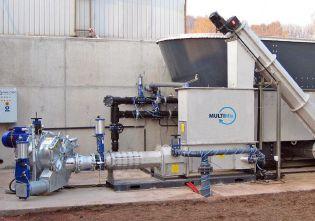
With Weltec Biopower’s MultiMix, fibrous and sticky input materials like grass silage, solid manure, vegetable waste and more are comminuted, increasing their surface so that it is suitable for bacteria. It also separates foreign matters like rocks or metals and decreases the wear and tear on the entire system and build-up occurring in the fermenter and pipelines. The mashing process is supported by a screw system, which roughens the fibres at the same time.
VERMEER BIOfUEL ChIP dRUM
Vermeer’s new chip drum is made specifically for biofuel production and is designed for the Tier 4i HG6000 and HG6000TX horizontal grinder. The chip drum allows the grinder to produce a consistent sized chip necessary for many applications like biofuel chip production. With the chip drum, operators can add or remove spacers to achieve the desired chip size, and screws have replaced the need for Babbitt on the drum’s knives.
BandIT’S XP-SERIES BEaST RECYCLERS and hORIzOnTaL gRIndERS
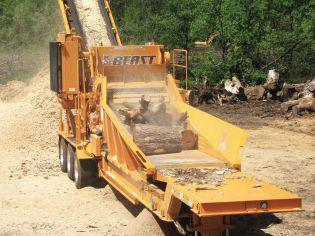
Bandit Industries’ new models of Beast Recyclers and grinders represent extra power, performance and production and offer a new “Big Mouth” option that increases the height of the opening into the mill. Models 2680XP, 3680XP and 4680XP feature angled front infeeds with larger infeed drive chains and a new rail system on the return side of the infeed replaces the roller system, reducing load on the tail shaft. New teeth styles that are put under a strengthening process are available for the recyclers and most are available in a two-inch width, allowing operators to run a 30-tooth setup. A trap door allows for cleaning in the auger area, while the auger itself is redesigned and simpler to change than previous models.
October 2-3, 2013 • All-Energy Canada 2013 Toronto, Ont. www.all-energy.com/canada
October 8-10, 2013 • CanBio AGM 2013 Gatineau, Que. www.canbio.ca
November 18-20, 2013 • WPAC AGM and Conference Vancouver, B.C. www.pellet.org
June 3-5, 2014 • World Bioenergy 2014 Jönköping, Sweden www.elmia.se/en/worldbioenergy
June 11-13, 2014 •
International Bioenergy Conference & Expo 2014 Prince George, B.C. www.bioenergyconference.org
June 11-13, 2014 • International Bioenergy Conference & Expo 2014 Prince George, B.C. www.bioenergyconference.org
Attendees have the opportunity to tour local district heating plants during conference tours at World Bioenergy 2014, June 3-5, 2014 in Sweden .
AD INDEX
US Piping Manufacturer
Looking for a Canada-based Rep to sell high-quality, custom Piping Systems.
If you sell Boilers, Water Heaters, Controls for Hot Water Systems, Pumps, Heat Transfer equipment or Piping Components, please contact us if you would like to add to your product line. ROV_CanadaRep_Ad.qxd 6/20/13 9:27 AM Page 1
BA company’s response to tragedy can make or break its business.
By Cameron McAlpine
etween January and April 2012, the province of B.C. was hit with a double shot of tragedy. In the space of three months two sawmills exploded and burned to the ground, killing four workers and injuring 42 more.
By now, most people involved in the wood processing industries will be familiar with the story. On January 20, 2012, the Babine Forest Products sawmill in Burns Lake suffered a catastrophic explosion and fire that razed the mill, leaving two dead and another 20 injured. Three months later, on April 23, an eerily similar explosion levelled the Lakeland Mills sawmill in Prince George, taking the lives of two more workers and injuring 22.
ration of the crisis event and public scrutiny are reduced, reputational impacts are minimized, social licence to operate is maintained, and bottom line impacts are mitigated.
So what do you do when tragedy strikes? A preplanned, co-ordinated strategy is a must in responding to the overwhelming demand for answers from all quarters: government, regulators, the media, employees and others. Whether you have a plan or not, there are some key steps to follow.
First of all: don’t panic. Start by assembling a team. This should include senior management and emergency response personnel. Establish lines of communications to each of your key stakeholders. Designate a spokesperson and other key points of contact.
The fact is, organizations with well thought-out communications strategies fare better in the face of crises.
Companies involved in resource industries all face the prospect of an event similar to the experiences in B.C. Pellet manufacturers, like lumber producers, operate in an environment where the byproducts of the manufacturing process create potentially explosive consequences.
Considerable attention has been paid to the issue in the past 18 months by government, regulators and industry. But there has been a vacuum in the area of crisis response and risk mitigation that companies have been slow to react to.
The fact is, organizations with wellthought-out communications strategies fare better in the face of crises. The du-
Next you need to assess the situation. Find out what happened, where it happened and when, who was involved, and, most importantly, what you are doing about it. Determine a communications strategy to ensure people are getting the information they need when they need it.
If you allow an information vacuum to develop, people will fill it with rumour and speculation. It’s important to get in front of the media as soon as possible. Stick to the facts. Don’t speculate, and certainly don’t lie. Commit to openness and transparency. Acknowledge the negative, but emphasize the positive things you are doing.
Ensure you are monitoring and responding to news reports about the inci-
dent. Speculation and inaccuracies on the part of the media can quickly get out of control. Ensure misinformation is corrected swiftly and publicly. You’ll also need to collect information for the legal record.
Think people first in everything you communicate. Your employees and their families are your most important stakeholders. Speak to them directly. Provide as much information as you can as soon as you can. Seek and accept feedback. Acknowledge the impacts, express empathy and ensure you are supporting those who need it most: those impacted by the tragedy. Expect anger, blame and insults, but don’t take it personally.
Throughout the process, don’t forget to keep your local elected officials, community leaders and support services informed. They will be the ones who have your back as the crisis grinds on, so they need to know you are doing everything you can to mitigate the impacts on their community and its citizens.
Crises end; issues don’t. Tragedies like these take seconds to occur. But the fallout will go on for months or years. So you need to be prepared to continue to respond proactively to reassure all of your stakeholders that you are responding appropriately to the incident at hand, while doing everything possible to avoid anything like it ever happening again.
Tragedies such as the Babine and Lakeland explosions are first and foremost about the health and safety of the workers and the companies’ assets. But it is also important to note that the way the company responds to the crisis, and the way it communicates that response, can have important consequences on its business going forward.
Cam McAlpine is the president of PRMedia Strategic Communications. He managed the crisis communications response to the Lakeland Mills tragedy. He can be reached at cmcalpine@prmedia.ca.
Turn biomass into megawatts
Don’t lose the megawatts trapped in your waste wood. Install our Organic Rankine Cycle (ORC) biomass system to convert logging and mill residues or insect-affected wood – virtually any highorganic-content waste – into clean, renewable electricity. ORC units generating 1 to 10MW can be easily integrated into your process. Find out how to turn biomass into megawatts, reduce your carbon footprint and bring savings to your bottom line. Visit www.pwps.com or call 1-866-PowerALL (1-866-769-3725) to learn more.
NEW XP SERIES NOW AVAILABLE!
NEW: XP-Series Beast Recyclers. With over 35 specific enhancements and add-ons in eight different categories, the new XP-Series Beast® Recyclers deliver Xtra Power, Xtra Performance, Xtra Production and Xtra Profit to any operation. Enhanced infeeds, new teeth options, stronger hydraulics and more horsepower are just a few of the features that make the Model 1680XP, Model 2680XP, Model 3680XP and Model 4680XP the best horizontal grinders on the market. When it comes to the grind, don’t get left behind. Call or email sales@banditchippers.com for more information.