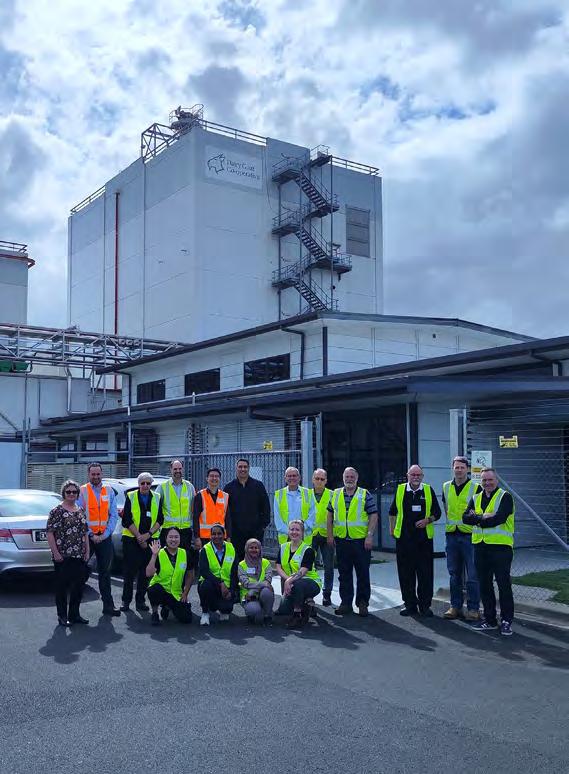
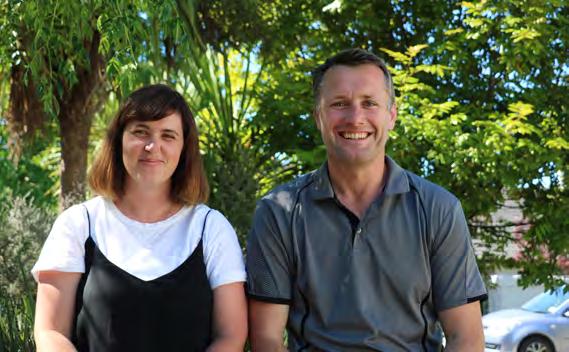
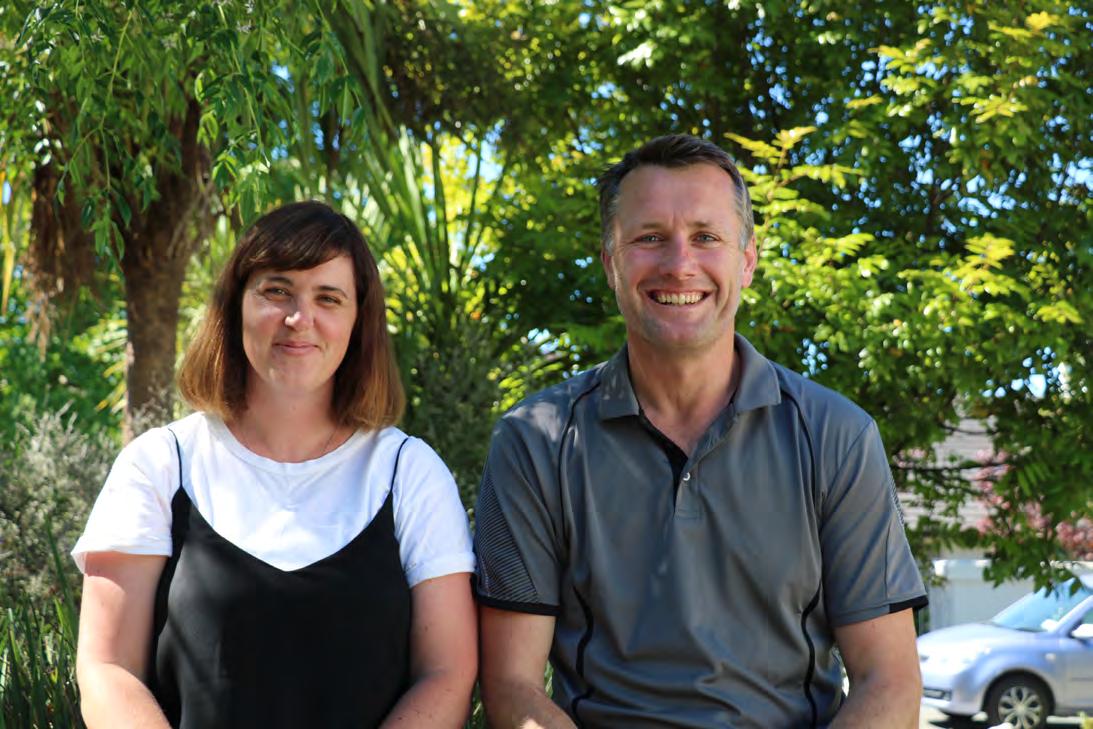
Thomas Do and Alejandra Acevedo-Fani, Riddet Institute (Massey University), Gert-Jan Moggré and Scott Knowles, Bioeconomy Science Institute.
Key insights from NZFGC conference
Discovering New Zealand-first packaging at Foodtech Packtech 2025
Nerida Kelton FAIP, Executive Director-AIP, Vice President Sustainability & Save Food - WPO Contacts
Foodcom www.foodcom.nz
FoodNZ is distributed online to all members of the New Zealand Institute of Food Science and Technology. An online edition is shared internationally. Visit www.foodnz.co.nz to subscribe.
No part of this publication may be reproduced or copied in any form by any means (graphic, electronic, or mechanical, including photocopying, recording, taping information retrieval systems, or otherwise) without the written permission of NZIFST. The views expressed in this journal are those of the writers and do not necessarily represent the view of or NZIFST.
Editor Julie North Foodcom foodnzeditor@nzifst.org.nz
John D Brooks, Vincent Arbuckle, Raewyn Bleakley, John Lawson, Nerida Kelton
Published by NZIFST
Notice to
Contributors
When submitting editorial for Food New Zealand please observe the following, Editorial to be submitted as plain text files, NO FORMATTING please. Images should be sent as high resolution .jpg or .tiff files. Do not embed images in word documents, send separate files. Any images smaller than 500 kb may not be printed as the clarity of the print may be compromised.
Advertisers
Material specification sheet and rate card on website, www.foodnz.co.nz
Executive Manager, Wendy Bayliss
PO Box 44322
Pt Chevalier
Auckland 1022
New Zealand
Phone: 022 549 8483
Email: wendy@nzifst.org.nz
Website: www.nzifst.org.nz
Networking – connecting with your peers
Regular information about your industry
Recognition through awards, scholarships, travel grants www.nzifst.org.nz/join/
Recognising the leaders in the fight against antimicrobial resistance
Vincent Arbuckle, Deputy Director General, NZ Food Safety
Safe hands? Rethinking disposable gloves in food production
Professor John D Brooks, FNZIFST
Extended Producer Responsibility to deliver circular solutions for packaging
Lyn Mayes, KSM, Mad World Ltd
Trans-Tasman effort to understand monster algal bloom in South Australia
From the NZ Food Safety Science & Research Centre (NZFSSRC, aka the Centre)
KŌRERO
Early-career insights from Gabrielle Lobo
Lauren Sheridan, Editor, Food New Zealand, with insights from Gabrielle Lobo
• Workstream update
• NZIFST Conference 2026
• Meet a member: Q&A with Craig Houston
• Branch news
Flavour imagery: how healthy eating is shaped by our thoughts
Gabriel Giller, University of Otago
We remember: Paul Stephen Tocker FNZIFST 1953–2025
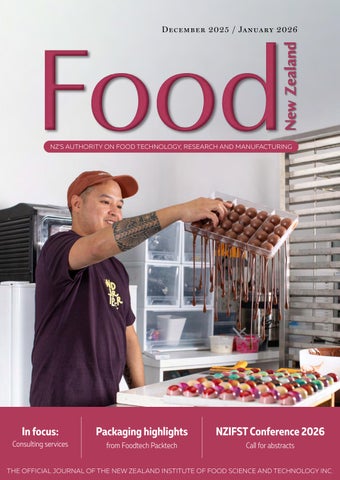
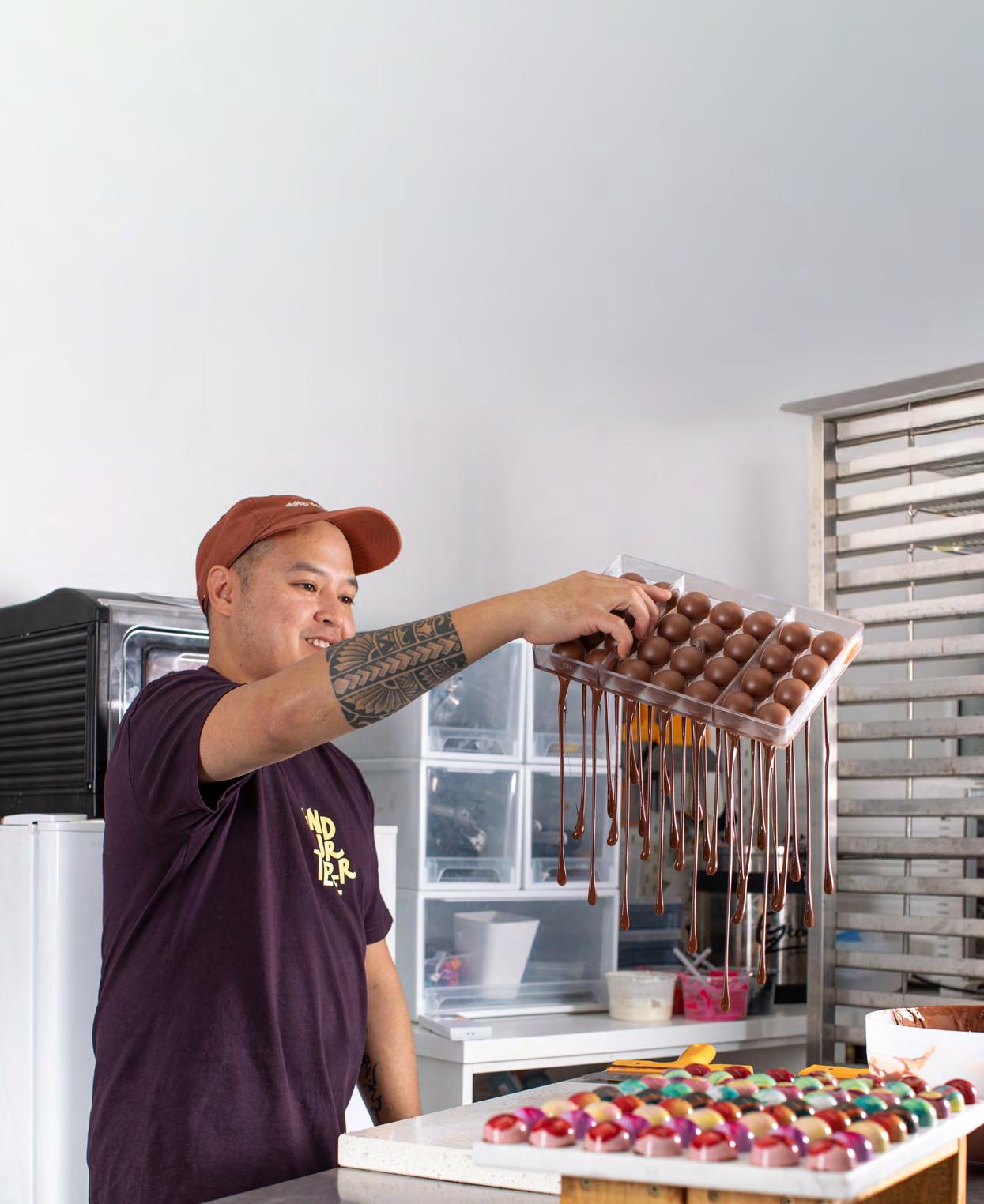
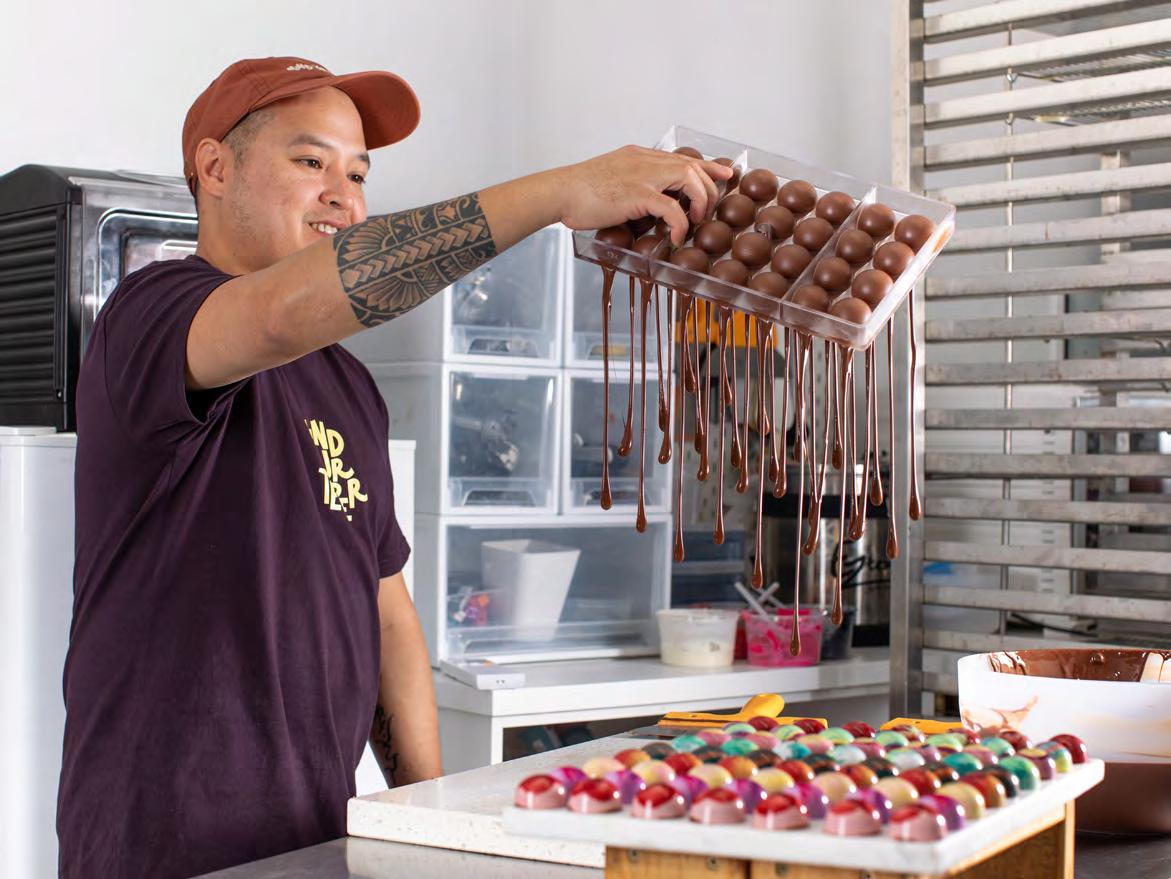
What a dynamic shot of Mind Your Temper chocolatier and owner Nel Vicenico in action with his award-winning bonbons. Read more about Nel in the NZIFST branch updates on page 48. Image credit: Mind Your Temper
FEBRUARY/MARCH 2026
edition of FoodNZ magazine
Features:
• In focus: Laboratory consumables and equipment, rapid analysis technologies and instrumentation
• NZIFST Conference 2026 update
• News from AIP, plus all our regular features
Editorial and advertising deadline: 13 January 2026
Publication date: 1 February 2026
It’s a privilege to be back writing the Editor’s note for the December issue of Food New Zealand, the final edition for 2025. I escaped overseas for three months during winter, and I’ve returned with a fresh view of our food sector.
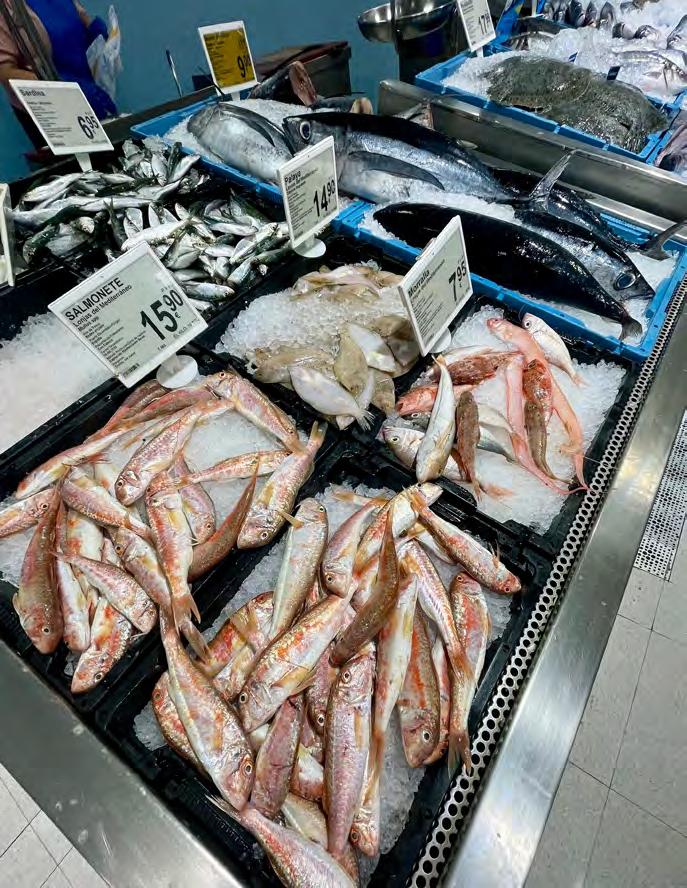
Across the UK and Europe, the scale and abundance are extraordinary; there’s a delicious vibrancy to the food experience that is impossible to ignore. Standing at a bustling Spanish fish counter or wandering the aisles of a UK supermarket reconnected me with the food traditions I grew up with and reminded me how strongly food reflects culture. What truly surprised me, though, was discovering how much I now value the pared-back nature of our retail shelves: lighter packaging, fewer categories, less SKU variation and, overall, more restraint — all things that both surprised and frustrated me when I first arrived in Aotearoa over a decade ago.
As guest author Lyn Mayes highlights in her article on page 34, many overseas markets are more advanced in their regulatory frameworks and circularity systems, and from what I saw, they need to be. The sheer volume of unnecessary soft-plastic packaging was striking and felt, in many ways, like a reflection of culture, a clear contrast to here.
Travel certainly has a way of sharpening your focus.
As always, it’s been a pleasure liaising with our regular contributors, guest authors, and wider network to bring this issue together. This magazine reflects the generosity within our community, and the willingness of individuals and organisations to share their insights, research and stories. Thank you to everyone who contributed — it’s a joy to connect with you all.
In preparing this issue, I was fortunate to catch up with two NZIFST members for special features. Recent award winner and rising talent Gabrielle Lobo was full of energy and enthusiasm as she shared the five key learnings from her early career; and Craig Houston, NZIFST’s newest Elected Officer, who, with a little more experience under his belt, shared his insights for our Meet a Member feature. Two inspiring kōrero that remind us why the Institute and the industry’s strengths lie in our people, and that no matter what stage we’re at in our career, there’s much to be learned from each other.
You’ll also find thoughtful pieces exploring the innovation showcased at this year’s Foodtech Packtech conference, and a deep dive into the hidden risks of disposable glove use in food production. Alongside these are research pieces, award celebrations and updates from the Institute’s branches and committees.
I hope you find as much inspiration amongst these pages as I have whilst collating, editing and writing them. Whether you learn a new tidbit of information, something sparks you into action, or you simply feel more connected to the wider NZIFST community, thank you for being here. And as we head into the summer season, I hope you make time to rest and recharge. We’ll be back with the next issue in February 2026, ready for another year of insights, innovation and meaningful kōrero.
In the meantime, we love to hear from you; feedback, ideas or future contributions are always welcome.
Lauren Sheridan Food New Zealand Editorial Team foodnzeditor@nzifst.org.nz
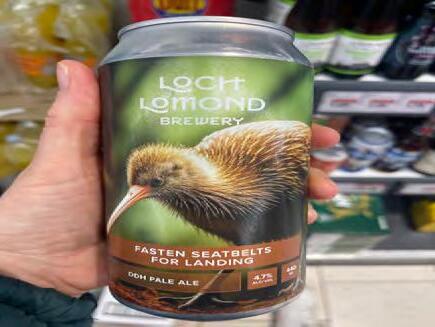
A perfect little crossover of my two worlds - Scottish roots and my chosen home of Aotearoa, spotted on a supermarket shelf in the UK
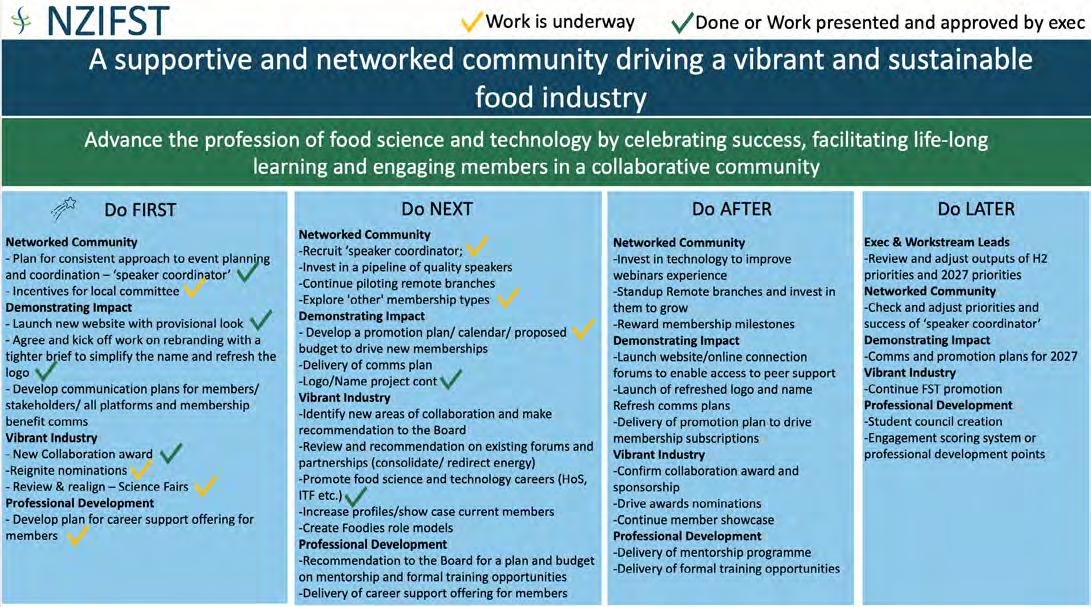
As this year comes to an end, I feel a deep sense of humility, gratitude, and optimism when I look back on what we have achieved together as a 60-year-old Institute. A heartfelt thank you goes to our local committees – the true backbone of NZIFST – and to every person who has put their hand up to organise an event, host a meeting, speak at a session, or welcome a new member. At our core, we are a community of volunteers, and NZIFST simply would not exist without your generosity of time, energy, and passion.
NZIFST has a rich history and an immense legacy, and like any living organisation, we have to keep evolving to stay relevant and vibrant. Change is not optional: it is essential if we are to thrive for the next 60 years and beyond. That message has come through clearly from you, our members, through surveys, conversations, and feedback across the country. You have asked us to take a hard look at who we are, what we offer, and how we remain genuinely valuable to you – and that is exactly what the strategic revision work has set out to do.
The first goal was simple but critical: stem the decline in membership and restore confidence in the Institute. I am very pleased to say we have turned that corner. By refocusing on relevant content, better-targeted events, and a renewed emphasis on member needs, we are now seeing membership stabilise and begin to grow again, including among students and young professionals. We have also taken practical steps, such as revising the cost structure for Graduate membership to ease the transition from Student to Graduate, making it easier for young people to stay with us as they move into industry and academia.
At the heart of your feedback was one clear, paramount desire: networking and connection. Members told us they want spaces to meet people, to talk with like-minded colleagues from across the food sector, to share ideas, compare challenges, and hear what is happening beyond their own workplace. That desire for connection is about much more than socialising; it underpins both personal and professional growth, strengthening our food manufacturing sector and our academic community at the same time. This year we have worked hard to make those connections easier –through technical seminars, informal gatherings over a glass of wine, and hybrid events where people can join from right across the country. We have had a remarkable number of events across Aotearoa in 2025 – 39 in total – from Otago to Auckland and everywhere in between, with some branches hosting the largest attendances we have ever seen. Branches have run in-person sessions, coffee and walk events, factory tours, onlineonly events, and increasingly successful hybrid meetings where people can meet face-to-face in local hubs while others join remotely. There has also been important progress on remote branches, so that members who live away from the main centres still have a meaningful NZIFST “home” and can take part in events and discussions without needing to travel long distances. Our national Partners and Event Coordinator role will soon further support branches by helping source relevant speakers and venues and streamlining event organisation, easing the load on our local volunteers and lifting the consistency and quality of our programme.
The strategic revision work has been a true labour of love, drawing on many hours from a dedicated group of members. It has already delivered visible changes in how we support students and graduates, how we structure events, and how we think about member value and engagement. A key part of this, which many of you will have seen recently, is the branding and “Demonstrating Value” workstream. The branding work now underway is very deliberately a refresh, not a rejection. We hold enormous respect and affection for the history of NZIFST, and that history will always remain part of who we are. What we are doing is looking at how best to present ourselves so that our outward face matches our purpose, our energy, and our aspirations as they are today. The follow-up survey is now out, and early indications on engagement are very encouraging.
By 2026, drawing on your survey responses and further member input, we expect to introduce a refreshed brand that you have helped shape – one that honours our past and supports our future. It will sit alongside another highlight for next year: our conference in Auckland with its fitting theme of “Growth”, capturing both the trajectory of our Institute and the wider food sector.
What makes me most optimistic in all of this is seeing the breadth and diversity of people stepping forward. Our Institute is in very safe hands. We have students joining and stepping into committee roles, early-career professionals volunteering and bringing new ideas, and long-standing members continuing to share their wisdom and experience. That blend of fresh energy and seasoned insight is exactly what we need as we grow into the future together.
At the heart of our existence is one simple truth: NZIFST is by our members, for our members. Our purpose is to be of real value to you – to help you answer your own “why” for being part of this Institute. If we can continue to support your professional journey, connect you with others, amplify your impact in the food sector, and give you a real sense of belonging to a wider community, then we are meeting our aspirations.
Thank you, sincerely, to every one of you who has contributed in any way this year – whether through the strategic revision work, on a branch committee, at conference, in mentoring a student, or simply by turning up, engaging, and being part of the conversation. Together we have laid the foundations for a refreshed, more resilient, more connected NZIFST. I am incredibly proud of what we have achieved in 2025 and genuinely excited for what lies ahead.
On behalf of the Board and Executive, thank you again, warmest wishes for a restful break and a vibrant, growth-filled 2026.
This is your Institute.
Bob Olayo MNZIFST NZIFST President
Newsbites
National and
global
news and items of interest that have caught our attention at Food New Zealand.
Peter Gordon announced as Head
Judge for 2026 Outstanding Food Producer Awards
The Outstanding Food Producer Awards will celebrate their 10th anniversary in 2026 with internationally renowned chef
Peter Gordon stepping into the role of Head Judge. A longtime advocate for New Zealand ingredients and a judge for the past three years, Gordon succeeds Lauraine Jacobs, who has led the panel since the Awards began in 2017.
The 2026 Awards introduce several updates, including an extended entry period and judging moved to early March. Reflecting category growth, Dairy-Free products will be assessed independently for the first time, while the Free-From category continues to recognise products created for specific dietary needs.
The Awards now attract more than 400 entries annually, with Outstanding Food Producer Award medals widely recognised as a marker of quality for New Zealand food producers.
GS1 New Zealand requests international standards be used in digital labelling trial
GS1 New Zealand is requesting that the proposed trial of digital labelling for food announced by the Ministers of Finance and Food Safety in November, aligns with accepted global standards for digital labelling, recognise that global experience shows that key information (e.g. ingredients, allergens) must be present on the physical product (even where there is a digital label, ie. not just on a retail shelf edge), and that the benefits of digital labelling for New Zealand exports are considered.
Consumers expect clear, accessible information at the point of purchase, while brand owners seek better ways to connect with customers. Digital labelling can deliver both, but only if implemented consistently and scannable directly from the product using GS1 QR Codes with Digital Links.
“Digital labelling should enable products to ‘beep’ at checkout and ‘scan’ on a consumer’s phone for detailed information,” says Dr Peter Stevens, CEO of GS1 New Zealand. “Best practice places digital labels on products, not just on shelves.”
Stevens adds: “The trial should also desirably explore benefits for Kiwi exporters. Digital labelling helps brands meet international requirements and share their story globally.”
NZ Made Week highlights local manufacturing strengths
As retailers braced for the usual influx of imported Black Friday deals, the Buy NZ Made campaign encouraged New Zealanders to refocus on the products, services and manufacturing capability at home. Running from 17–23 November, NZ Made Week highlighted the value local producers contribute to economic resilience, skilled employment and regional supply chains.
The campaign also showcased strengths common across New Zealand’s food and beverage sector — from ethical sourcing and loweremissions distribution to trusted quality standards and transparent manufacturing.A key message highights that every dollar spent on NZ-made goods circulates back into local communities, supporting innovation and long-term capability across the country’s productive industries.
Nektium unveils Smartek technologies for improved botanical ingredient performance
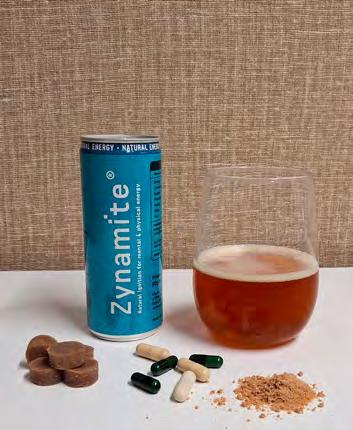
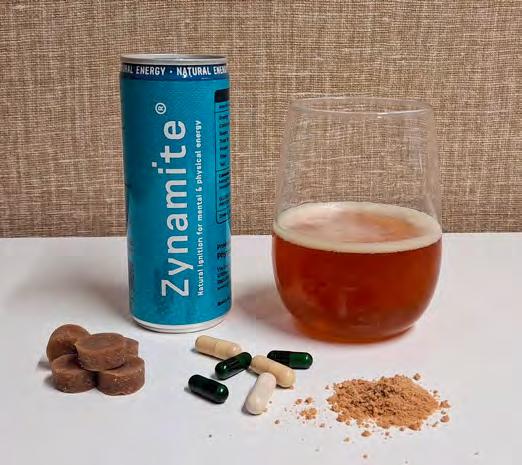
Nektium has introduced Smartek by Nektium™, a suite of proprietary delivery technologies designed to enhance the stability, efficacy and formulation versatility of botanical extracts. Developed in-house, the platform uses tailored combinations of technologies such as multi-stage microencapsulation, matrix inclusion systems and controlled ionisation to protect key bioactives and improve their functional performance in finished products.
The approach aims to support lower-dose efficacy, extended shelf life and improved sensory neutrality, helping manufacturers develop new formats such as functional beverages and gummies. Smartek has already been applied within Nektium’s portfolio, including Vanizem® for mood and sleep support and Zynamite® S, a fully water-soluble nootropic formulation.
The launch comes amid increasing scrutiny of quality assurance in the botanical-supplements sector, with Smartek positioned to strengthen ingredient consistency and traceability.
Smartek applications. Image credit: Nektium
CLOTH SAMPLE TESTING
Trusted by our customers since 1984, we are pleased to be able to offer STEC Cloth Sample Testing to add to the broad suite of tests already on offer here.
We pride ourselves on our ability to meet industry leading turnaround times across all sectors, delivering accurate results on time.
STEC CLOTH TESTING
Preferred technique of the US FSIS
Faster, safer, more efficient sampling
Faster product clearance
Talk to one of our helpful team to find out more. 0508 HILL LABS | 0508 44 555 22
Global recognition for Riddet Institute dairy scientists
Two Riddet Institute scientists have been honoured by the International Dairy Federation (IDF) for their contributions to advancing sustainable dairy science. Professor Jeremy Hill received the IDF Award for 2025, the federation’s highest individual honour, recognising his long-standing leadership in dairy innovation. Dr Andrew Fletcher was also acknowledged, with the IDF Action Team on Life Cycle Assessment, which he co-led, receiving the IDF Prize of Excellence for its work supporting environmental transparency in the dairy sector. Both scientists are part of the Institute’s Sustainable Nutrition Initiative (SNi®), reflecting New Zealand’s strong role in global dairy research and its commitment to evidence-based, sustainable food-system solutions.
Read the full story on the Riddet Institute website.
MPI launches new support hub for innovative food & fibre exporters
The Ministry for Primary Industries (MPI) has launched a new online hub to help exporters of innovative food and fibre products build strong support networks and take new ideas to market. The page brings together key organisations, technical advisers, and funding pathways to support businesses at every stage — from early-concept development to scaling for export.
The resource also outlines MPI programmes that may be available to help innovators navigate regulatory requirements and access capability building, market insights, or co-funding opportunities.
For those working in product development, manufacturing or research, this is a useful starting point for identifying support partners and accelerating export readiness.
Explore the page here.
Massey University launches Food Innovation Youth Summit
Recognising the importance of cultivating New Zealand’s next generation of food-tech talent, Massey University is hosting the inaugural Food Innovation Youth Summit 2026. This three-day, two-night residential programme is designed to inspire senior secondary students and strengthen the future of Aotearoa’s foodinnovation ecosystem.
Held in January 2026 on Massey’s Manawatū campus, the summit invites Year 12 and 13 students to explore food technology through hands-on workshops, sensory labs, factory tours and design challenges focused on real-world food solutions. Supported by FoodHQ, bursaries are available, with subsidised pricing also reducing the total cost to the student.
More information and applications are available via Massey University.
Real-world insights at the 2025 NZFSSRC Listeria Workshop
A strong turnout of industry and science professionals gathered at Lincoln University for the 2025 Listeria Workshop, hosted by the New Zealand Food Safety Science & Research Centre (NZFSSRC). Led by Professor Stephen On, the annual event again highlighted the value of bringing researchers and manufacturers together to tackle Listeria monocytogenes — a persistent and costly challenge across New Zealand’s food sectors.
NZFSSRC Chief Scientist Distinguished Professor Phil Bremer opened with a concise “Microbiology 101” refresher, followed by Hannah Mills-Beale (AsureQuality) who broke down testing, interpretation and practical response strategies.
Industry case studies provided on-the-ground insight, including contributions from New Zealand King Salmon, Zespri, and Farmland Foods, each sharing real-world learnings from managing Listeria.
Afternoon sessions covered operational controls, hygienic design, and emerging research, including WGS developments and alternative control technologies.
The workshop closed with open discussion and networking, reinforcing the importance of collaboration to strengthen New Zealand’s food safety systems.
Dr Andrew Fletcher and Professor Jeremy Hill, Riddet Institute
NZ Health Survey shows continued decline in hazardous drinking
The latest New Zealand Health Survey reports sustained declines in hazardous and heavy episodic drinking, with five out of six New Zealanders (83.4% ) drinking responsibly. Adult hazardous drinking has fallen from 21.3% in 2020 to 16.6% in 2025, with reductions seen across genders and age groups. Youth drinking has also decreased significantly over the past decade.
The release notes a marked rise in low and no-alcohol beverage consumption, with Curia research showing 55% of respondents choosing low-alcohol options in the past year, up from 40% in 2020. Motivations include wellbeing, calorie reduction, and mindful consumption trends. These shifts point to an evolving alcohol landscape where moderation, low-ABV innovation and alternative formats continue to gain ground. Together with changing consumer expectations around wellbeing and calorie-conscious choices, these trends are reshaping opportunities for beverage formulation, sensory design and product development across the wider food and drink sector.
Government sharpens focus on Innovation, Technology & Science
MBIE has highlighted Innovation, Technology and Science as a core pillar in its Going for Growth strategy, emphasising the role that new ideas, knowledge and technology play in strengthening New Zealand’s economy. The programme focuses on improving commercialisation pathways, lifting business investment in innovation, and strengthening connections between research organisations and industry.
For sectors such as food and beverage manufacturing, processing, and food technology, this signals increasing government support for activities that apply research to real-world challenges — whether improving production systems, adopting new tools, or developing higher-value products. The ongoing reforms to the science, innovation and technology system are also intended to make it easier for businesses to access expertise and collaborate on new solutions.
These shifts aim to lift productivity, generate higher-value jobs, and create more diverse growth opportunities across New Zealand’s primary and manufacturing industries.
Explore the latest update on the MBIE website.
Glyphosate MRL increase rejected following public submissions
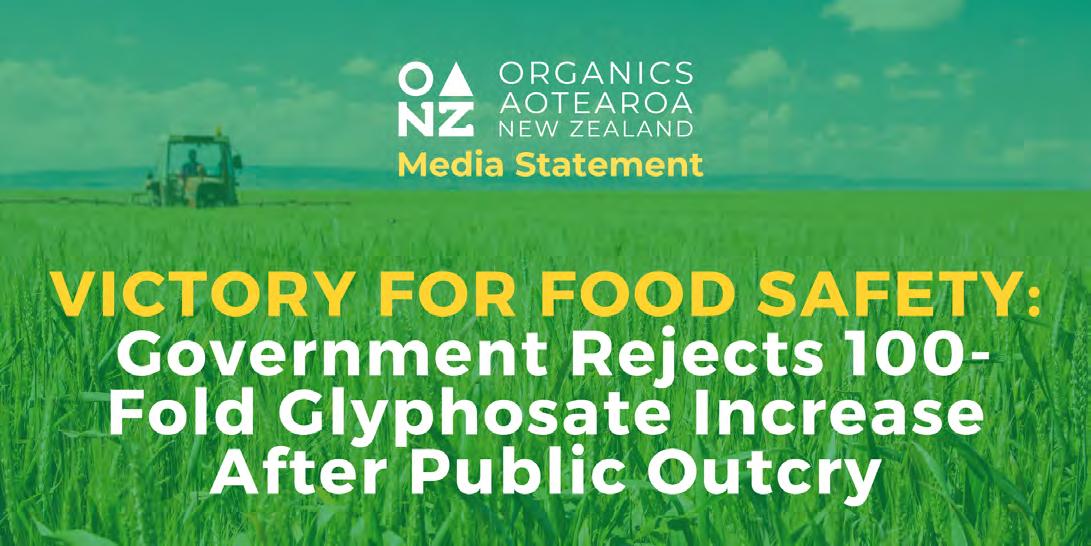
New Zealand Food Safety (NZFS) has confirmed it will not proceed with a proposed 100-fold increase to the maximum residue limit (MRL) for glyphosate in wheat, barley, and oats, following more than 3,100 public submissions. The MRL will remain at 0.1 mg/kg, and NZFS has introduced new restrictions on glyphosate use, including a ban on preharvest applications for grains intended for human consumption.
Organic Aotearoa New Zealand (OANZ) has welcomed the decision, noting that it reduces the risk of residue drift and supports certification
integrity in sectors where glyphosate is prohibited. For food producers and processors, the change aligns New Zealand’s regulatory settings with evolving international expectations around residue management and may help strengthen market confidence, particularly in export channels where tolerance levels are tightening.
NZFS stated the decision reflects both public concern and the shift toward more sustainable on-farm practices. Further work is expected as producers adjust management strategies under the updated rules.
20th NZOZ Sensory & Consumer Science Symposium – February 2026
The 20th NZOZ Sensory and Consumer Science Symposium will be held in Melbourne from 10–12 February 2026, bringing together sensory and consumer-science professionals from Australia, New Zealand and beyond. Hosted by AIFST, this year’s theme — “Explore the Experience” — highlights how multisensory product design shapes consumer perception and behaviour.
Keynote speaker Professor Liesbeth Zandstra (Wageningen University / Unilever) will explore the link between sensory cues and healthier food choices. Hands-on workshops will offer fresh perspectives on sensory evaluation through lenses such as curation, specialty coffee, and culinary nutrition.
The symposium provides an opportunity to connect with regional peers, hear emerging research, and deepen expertise in an evolving field. Registration is open until 31 January 2026, and a discount code is available to members via the NZIFST website.
New IFT report highlights state of food-science education
The Feeding Tomorrow Fund of the Institute of Food Technologists (IFT), the US-based global professional body for food scientists, has released a new report assessing the current state of foodscience education. The “Academic Knowledge Base” survey draws on data from food-science programmes across the globe, examining enrolment trends, student motivations and emerging career interests.
Findings indicate a downward trend in students entering foodscience degrees, alongside a shift toward broader STEM pathways. The report also highlights the need for stronger integration between education, research and industry to sustain a skilled global workforce capable of meeting future food-system challenges.
More detail is available via IFT.
AI research maps new pathways for sustainable future foods
A new scientific preprint outlines AI for Food as an emerging discipline with the potential to transform sustainable food innovation. The authors describe how artificial intelligence could link molecular composition to functional performance, support ingredient and formulation design, enhance fermentation and production, and predict texture and sensory outcomes. Early applications show promise in areas such as protein performance modelling and flavour-mapping, offering new tools for accelerating the development of sustainable food systems.
The paper also highlights significant challenges, including limited standardised datasets, cultural and nutritional diversity, and low consumer confidence in AI-designed foods. To advance the field, the authors propose three priorities: treating food as a programmable biomaterial, building self-driving laboratories for automated discovery, and developing reasoning models that integrate sustainability and human health.
The work, authored by an international team of researchers, is detailed in a recent open-access preprint shared on the arXiv research platform.
Updated guidelines released for fresh produce food safety
The Fresh Produce Safety Centre (FPSC) has released the revised Fundamental Guidelines for Fresh Produce Food Safety – Version 5 (2025), providing an updated, science-based framework to support risk management across the fresh produce supply chain in Australia and New Zealand. The new edition includes expanded guidance on water quality and microbial testing, updated visuals and decision trees, and two new chapters covering Food Safety Culture and Managing Critical Incidents & Recalls.
FPSC has also introduced Quick Guides—one-page, practical summaries designed for day-to-day use by growers and post-harvest teams.
Developed through scientific review and industry consultation, the updated resources reflect current evidence, regulatory alignment and good practice. The full guidelines and Quick Guides are freely available through the Fresh Produce Safety Centre website.
Fresh Product Safety Centre Guidelines
Breakthrough dairy innovation takes top honours at New Zealand Food Awards
The 2025 New Zealand Food Awards gala, held in Palmerston North in mid-October, celebrated the sector’s leading innovations. Fonterra’s Easy Bakery Cream took out the Supreme Award, recognised for its breakthrough low-fat, full-dairy whipping cream.
The product also won the Ingredient/Food Service Award, and the team behind its development—Hemang Bhatt, Leena Kishor and Maria Ferrua—were named Food Technologists/Developers of the Year. Their recognition highlights the depth of science, engineering and crossfunctional collaboration that underpinned the formulation.
IFIC survey tracks shifts in consumer attitudes toward food production
New findings from the 2025 International Food Information Council (IFIC) Food & Health Survey show continued global interest in food provenance and production practices. Among U.S. respondents, 59% say it is important to know where their food comes from—up from 51% in 2017—with similar proportions placing value on consistent local availability and environmentally sustainable production.
The survey also reports evolving perceptions of biotechnology in food production, with unfavourable views rising since 2016 despite fewer consumers reporting a lack of understanding. Interest in production-related label claims—such as “natural,” “no hormones,” “locally grown,” and “organic”—also remains high.
While U.S.-based, these trends reflect broader international expectations around transparency, production methods and sustainability; signals that continue to shape how food manufacturers communicate value, verify claims and design future products.
Judges described the achievement as a “remarkable scientific feat”, noting the challenge of delivering full whipping performance at just 30% fat using a patented formulation based on New Zealand pasture-fed milk.
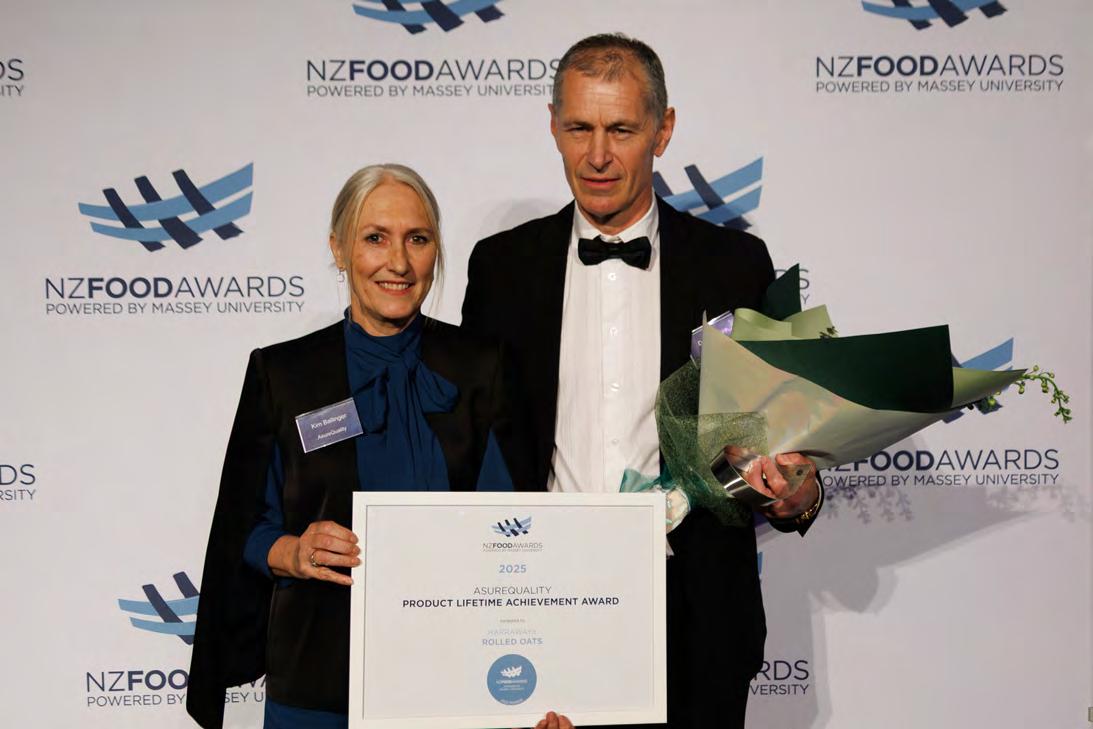
To round out the evening, Harraways Rolled Oats received the Product Lifetime Achievement Award, while Aoraki Salmon collected two category wins for innovation in chilled and smoked seafood.
Read the full awards feature on page 14.
WFF 2025: global commitment to science, solidarity & investment
The 2025 edition of the World Food Forum (WFF), held at the Food and Agriculture Organization of the United Nations (FAO) headquarters in Rome, concluded with a renewed global commitment to transform agrifood systems through solidarity, science and investment.
Under the theme “Hand in Hand for Better Foods and a Better Future”, the Forum assembled more than 16,500 in-person participants and 60,000 online from nearly 200 countries and showcased investment opportunities totalling US$17.2 billion targeting 160 million beneficiaries.
The event reinforced a global shift toward science-driven collaboration, innovation and targeted investment to support more resilient agrifood systems.
Fonterra team at the NZ Food Awards Gala
Success: Less salt in our daily bread
Without us noticing, our daily bread has become healthier.
Over the past two decades the Heart Foundation has supported bread manufacturers to gradually reduce the salt in our bread, delivering a big win for the heart health of New Zealanders.
Since 2007, targets have been developed in partnership with bread companies and, as a result, salt levels (indicated by sodium levels) have gradually reduced. Today, a standard white sliced loaf contains around 25% less salt than it once did.
The secret? “A long-standing relationship with food companies that has focused on changes to low cost, leading selling, staple foods,” says Heart Foundation Head of Food and Nutrition, Dave Monro, who is the coauthor of a newly published paper in the Nutrients journal.
The Nutrients paper reveals that over the past 20 years, the biggest sodium reductions were in white bread where the average sodium content dropped from 517mg per 100g in 2003 to 389mg per 100g in 2023, representing a 25% reduction. Among white breads from brands available in both 2003 and 2023, the average sodium content decreased by 31%.
The research focussed on packaged, supermarket loaf breads, which are common, staple items in many Kiwis’ trolleys. The average sodium level for the top 20 breads by sales volume in 2023 was 382mg/100g indicating that companies had reduced sodium levels in the highest selling products.
“These findings show that the reduction has been done without people picking up a change or affecting sales for the companies.”
“This is consistent with research that demonstrates when sodium levels are reduced gradually by 10 – 20%, consumers don’t detect the change and there is good consumer acceptance,” Dave says.
He says New Zealanders haven’t noticed the reductions, yet the benefits are huge - lower salt intake helps reduce high blood pressure, a condition affecting a million New Zealanders and a major risk for heart disease.
The paper, co-authored by Professor Rachael McLean from the University of Otago, highlights the success of the Food Reformulation Programme and the success in reducing the sodium in bread sold on supermarket shelves.
Rachael says New Zealanders currently consume 70% more than the recommended daily intake of salt and three-quarters of the salt Kiwis consume comes from processed foods.
Bread is the leading source of salt in the diet and is considered a lowcost staple food for many New Zealanders. Changes in this category therefore have the potential for a significant impact on public health.
“These small, behind-the-scenes changes in everyday foods, like bread, can make a huge difference,” she says.
Dave says the Heart Foundation will continue to explore where further reductions can be made in the bread category and also continue to support reformulation in other food categories.
The voluntary programme currently has over 50 targets set across more than 40 food categories. The first sugar reduction targets were introduced in 2016 and are also showing positive impact.
Government funding has ensured a long-standing programme of work where trust has been built with companies and targets can be continually revised and monitored.
Reformulation of processed foods remains only one aspect to salt reduction; however it remains an important one that can deliver big changes over time.
A copy of the Nutrients paper is here
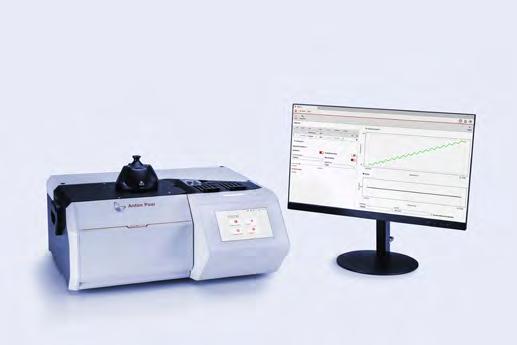
Julia
DSC simplifies polymer analysis with fast, automated, and precise thermal characterisation
Anton Paar’s new Julia DSC differential scanning calorimeter is designed for efficient and accurate thermal analysis in the polymer industry.
With its intuitive software, rapid setup, and advanced cooling options, Julia DSC helps users gain deeper insight into polymer properties while improving productivity and reducing complexity.
Built to meet the evolving needs of polymer laboratories, the Anton Paar’s new differential scanning calorimeter series offer precise, automated thermal analysis with minimal downtime and long-term flexibility.
Key Features:
• Analyse glass transition temperature, melting, crystallisation, and OIT/OOT with ease
• -35°C with Peltier cooling – no external chiller needed
• Save time between measurements with cooling from 300°C to 25°C in just 7 minutes!
• Step-by-step workflows and guided calibration
• 70-position autosampler and QC mode for fast throughput
FAO and WHO call for experts and data on omics in microbiological risk assessment
FAO and WHO have issued an international call for experts and data to support upcoming work by the Joint FAO/WHO Expert Meeting on Microbial Risk Assessment (JEMRA) on the use of omics-based technologies in microbiological risk assessment.
JEMRA is seeking specialists in genomics, metagenomics, transcriptomics, proteomics and metabolomics to help evaluate how these tools can strengthen pathogen detection, outbreak investigations, surveillance, process monitoring and risk assessment models. Governments, industry, laboratories and researchers are also invited to share data on existing applications of molecular methods in food safety programmes, including regulatory monitoring, environmental testing and outbreak response.
The initiative reflects the rapid integration of omics into modern microbiology and the growing need to harmonise how such data informs Codex guidance and global food safety decision-making.
For New Zealand’s analytical labs, consultants, auditors and food safety practitioners, this call highlights increasing international momentum toward incorporating molecular datasets and advanced characterisation technologies into risk-assessment frameworks.
This opportunity offers New Zealand scientists, laboratories and consultants a valuable opportunity to contribute local expertise to an international evidence base shaping future food-safety standards. Deadline for submissions
Expert nominations (CV and submission forms) are open and close on 19 December 2025.
Data submissions close on 19 January 2026.
Full details, eligibility criteria and submission processes are available through the FAO and WHO JEMRA portals.
Celebrating innovation: highlights from the 2025 New Zealand Food Awards
Showcasing excellence, ingenuity, and the science behind New Zealand’s standout food and beverage products
The 2025 New Zealand Food Awards once again highlighted the depth of innovation, technical skill, and creative problem-solving that define Aotearoa’s food and beverage sector.
Now in its 39th year, the awards programme — owned and operated by Te Kunenga ki Pūrehuroa Massey University with support from partners including Woolworths, New Zealand Food Safety, Cuisine Magazine, AsureQuality, FoodHQ and the New Zealand Food Innovation Network (NZFIN) — remains a cornerstone of the sector, recognising excellence, innovation, and commercial impact.
Every great product has food science at the core Many of this year’s winning products represent a blend of formulation science, process engineering, sensory optimisation, stability design, packaging development, safety, and regulatory considerations. Collectively, they reflect the work of hundreds of scientists, technologists, engineers, QA specialists and product development teams across Aotearoa.
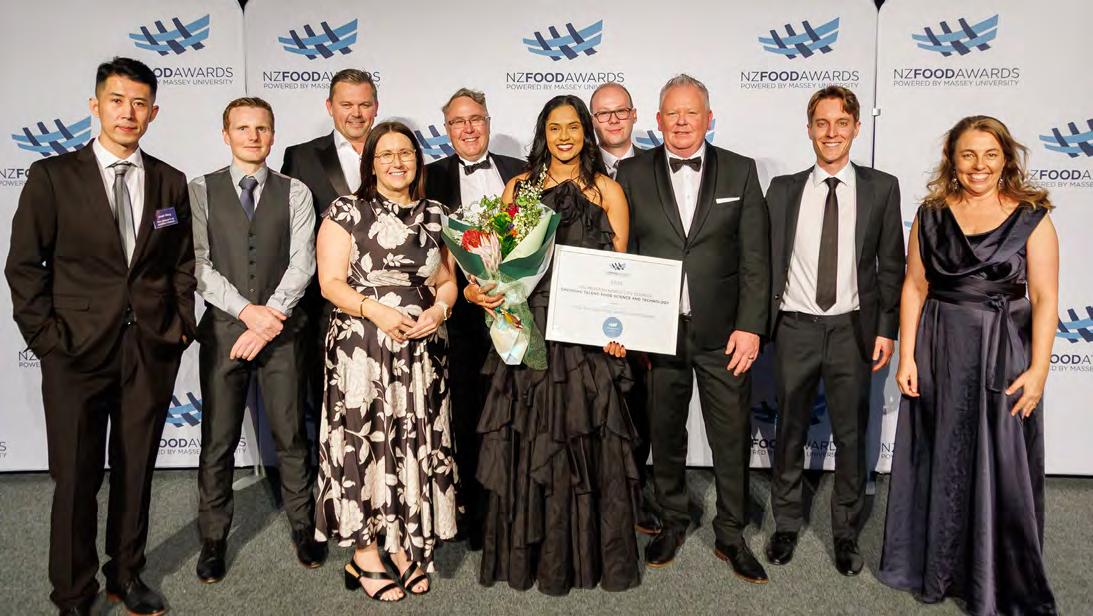
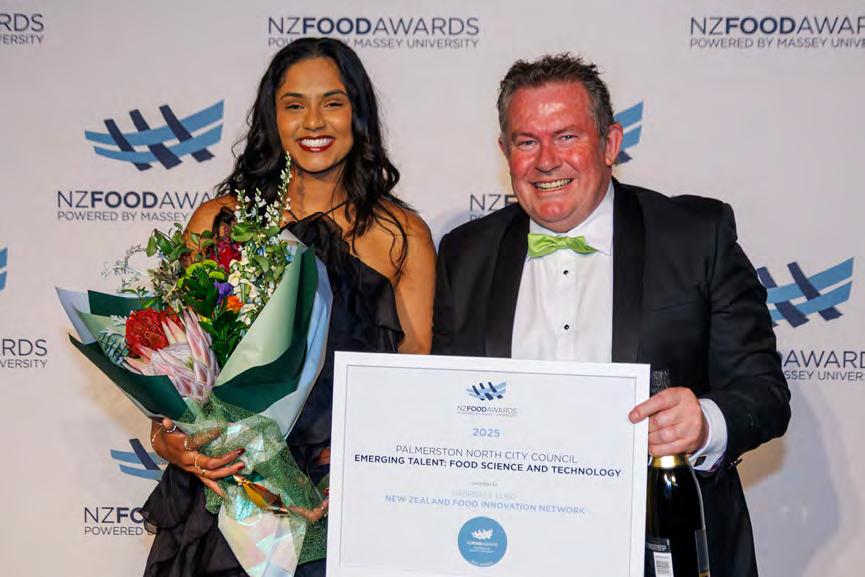
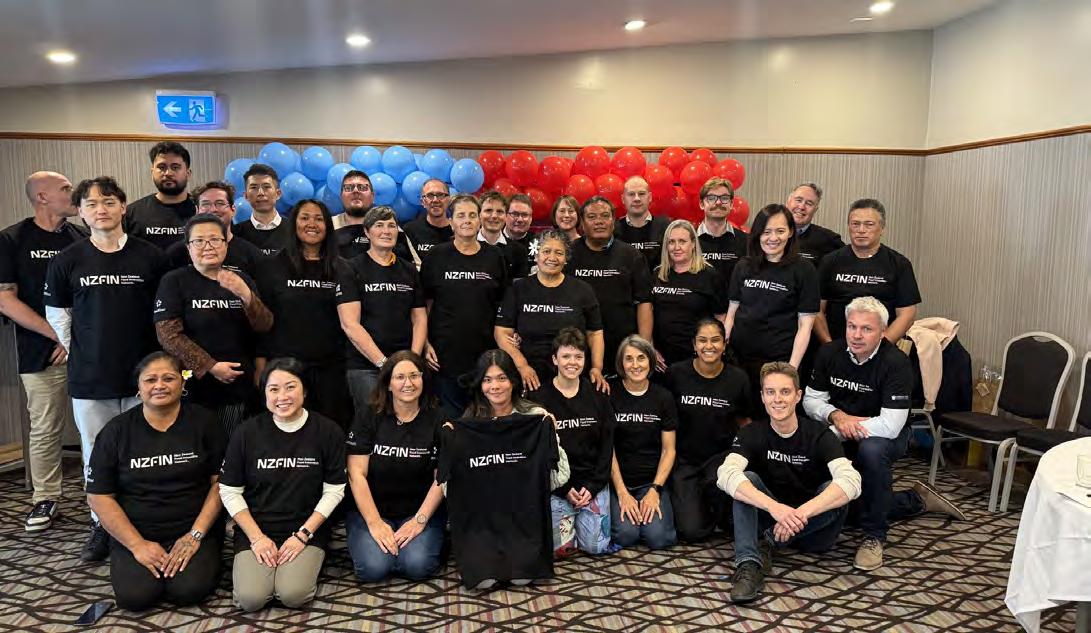
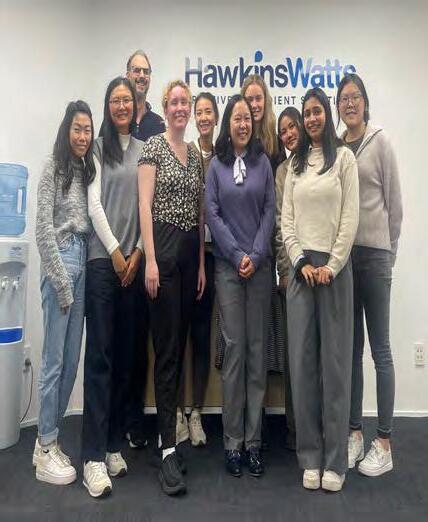
Gabrielle Lobo, recipient of the Emerging Talent Award, pictured with her colleagues at NZFIN
Supreme Award: Fonterra’s Easy Bakery Cream
A technical leap in dairy formulation
Fonterra’s Easy Bakery Cream took out both the Supreme Award and the Ingredient/Food Service Award — a significant achievement in dairy innovation. Creating a full-dairy whipping cream at just 30% fat, without compromising structure, flavour, or performance, is something dairy technologists have wrestled with globally for years.
Developed for the rapidly growing mid-tier bakery market in China, the cream needed to be stable, consistent, and reliable under varied conditions. The final formulation came together in a fast six-month sprint from concept to commercialisation — but only after nearly a decade of foundational research, pilot trials, and engineering refinement.
Its patented formulation, supported by the quality of New Zealand’s pasture-fed milk, has already attracted international attention.
“Reducing fat without losing whipping functionality is notoriously difficult. This team has achieved it using 100% New Zealand milk and clever formulation science.”
— Nikki
Middleditch, Judging Convenor
“These winners show the breadth of innovation happening across New Zealand — from dairy breakthroughs to plant-based beverages and high-value seafood.”
— Professor Ray Geor, Massey University
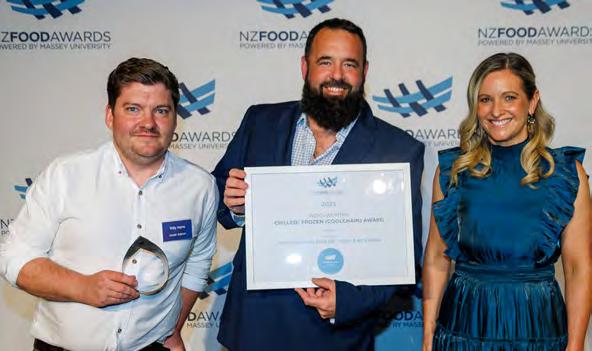
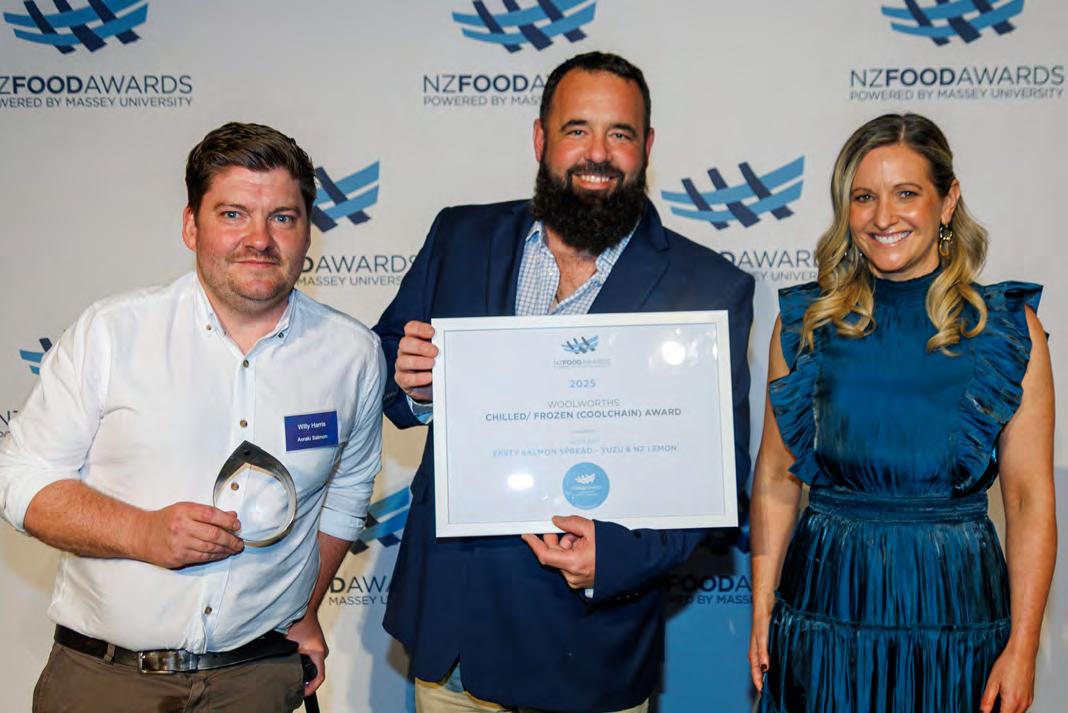
Representatives from Aoraki Salmon, including Willy Harris and Ian Tukurua. The company received two awards, including in the chilled/frozen category and the Primary Sector Award.
NZIFST members making an impact
Gabrielle Lobo, New Zealand Food Innovation Network — Emerging Talent Award
Recognised for her leadership, innovation support, and contribution to New Zealand’s food and beverage sector.
Judging Panel Statement
In awarding her the Emerging Talent Award, the judging panel said:
“Gabrielle is a rising star making a real impact on New Zealand’s food and beverage industry. In just a short time with the New Zealand Food Innovation Network, she has supported startups and major companies alike to innovate, commercialise and scale. With her strong work ethic, positive attitude and ability to embrace challenges, Gabrielle is a standout example of the next generation of industry leaders.”
Advancing technical excellence across the sector
Across every category, this year’s winners showed strong scientific capability, creative formulation, and clever engineering. A few standouts include:
A hazelnut coating that adheres evenly to an extruded base requires fine control of viscosity and coating behaviour — their tailored hazelnut butter delivered uniformity and flavour.
The use of inulin provides both fibre enhancement and improved mouthfeel — a smart response to growing consumer demand.
Primary Sector Innovation: Aoraki Salmon
Seafood science and flavour innovation
Aoraki Salmon secured two major awards:
• Chilled/Frozen Award — Zesty Salmon Spread (Yuzu & Lemon)
A clever use of what was once a by-product stream, transformed into a flavour-forward chilled product with a six-week shelf life.
• Primary Product Sector Award — Blackcurrant with Kamahi Honey, Cold Smoked
Achieving a stable, vibrant cold-smoked product without heat treatment required careful balancing of anthocyanins, pH, vitamin C, and smoke profile. The result is genuinely unique in the market.
Richard Archer FNZIFST, Massey University, and NZIFST Past President
Gabrielle Lobo, NZFIN, pictured with Grant Smith, Palmerston North Mayor
Kim Ballinger, AsureQuality and Dan Mackay representing Harraways Oats, recipient of the Product Lifetime Achievement Award
A staple since 1867, Harraways was recognised for its longstanding contribution to Kiwi households and its commitment to New Zealandgrown grains. The award reflects operational excellence, regional partnerships, and a legacy of quality.
A year defined by technical excellence
This year’s winners highlight the creativity, technical depth, and innovation shaping New Zealand’s food sector. From formulation breakthroughs to advances in processing and ingredient engineering, the Awards reinforce the essential role of food science and technology in shaping what ends up on consumers’ plates. ■
Category Winners
• The Kutai Guy – Smoked Mussels Natural — Artisan Award
• Hemang Bhatt, Leena Kishor & Maria Ferrua (Fonterra) — Food Technologist/Developer of the Year Award
• Fonterra – Easy Bakery Cream — Supreme Award
In focus: Consulting services
This content has been gathered from organisations and individuals who provide valuable consulting services to our food industry. Including a range of training, evaluation and verification services, new product development, food safety, quality and regulatory advice and consultancy.
Shelf-life testing – the WHAT, HOW and WHY: a practical perspective
WHY
We all expect the food we select from the shelf to be safe and identical in taste, texture, colour, and aroma every time we buy it. We rarely consider safety - food safety is a given. Our choices are instead based on personal preference, nostalgia, or previous experience, relying on the product’s consistency to earn repeat purchases. Shelf-life testing is what gives manufacturers the confidence to guarantee this consistency - ensuring products remain safe and high quality from production to consumer.
WHAT and HOW
Quality Auditing Specialists
Quality Auditing Specialists Ltd (QAS) offers a range of evaluation and verification services to food and wine industries nationwide.
Not every product is the same, and neither should every study be. Testing should be tailored to the unique makeup and risk profile of each product. Shelf-life assessment starts by understanding which factors lead to end of shelf life or acceptability such as texture, flavour, oxidation, colour change or microbial growth. For new or novel items, an initial pre-evaluation can highlight which factors are most important, often requiring some early testing before a detailed quote or procedure is confirmed.
Best practice for studies is to be conducted using commercially produced and packaged products to ensure the results accurately reflect real-world performance. Trials simulate a range of stresses: temperature fluctuations, humidity, light, and packaging atmosphere. Real-time studies mirror actual storage conditions across the intended shelf life. Accelerated testing uses elevated stresses to gain early insights into spoilage and quality loss, supporting precise best before claims.
Evaluation involves both scientific and sensory measuresmicrobial, physical, and consumer panel testing - so product changes are fully understood. Results are compiled in clear, actionable reports, with straightforward recommendations on safe shelf life and quality improvements.
Services like those from Mätt Solutions (with Formula Foods), deliver these insights with clarity and depth, supporting New Zealand manufacturers to meet regulatory, market, and customer expectations—locally and globally. The result: trusted products, fewer risks, and repeatable consumer satisfaction.
Maree Haddon leads a team of practical, efficient and objective evaluators and verifiers who offer consistency of interpretation of standards for Multi-Sites, Custom, My Food Plan, Template Food Control Plans, National Programmes, Importers and WSMPs.
All evaluators/verifiers have a strong background relating to manufacturing, food service, horticulture, retail, storage and transport and are fully qualified to fulfil all your requirements.
Our team will work with your business to ensure you are meeting your Food Act or Wine Act compliance requirements while endeavouring to keep the process practical and simple.
We offer consultancy services through the sister company Quality Systems Specialists (QSS), that include food safety, HACCP, training and internal audits. We can assist with labels to ensure you meet the Food Standards Code.
QSS can develop and deliver training packages to suit your company’s needs. The training can be undertaken virtually or at your place of business. QSS have developed online webinars focusing on allergens, labelling (including PEAL), managing traceability, verification & corrective actions, recalls, self-reviews and self-checks, micro testing and shelf life. These can be either one-on-one or in a team session.
We regularly receive excellent feedback from our clients, including this which was received recently -
“We get the feeling that they genuinely care for us as a company and want to help us keep improving - rather than coming in to audit waving a big stick which has happened with other companies in years past. They are constructive with their feedback and help us navigate the changes to our industry as they arise. Thank you to QAS, we couldn’t recommend their services highly enough.”
Produco
Produco provides expert food safety, quality, and regulatory compliance advice and consultancy services to dairy and food manufacturers throughout New Zealand and Australia.
We have extensive experience across all regulatory aspects, ensuring your products are compliant with regulatory requirements across dairy, food and beverage, honey, meat, petfood, seafood, transport and logistics sectors.
We create and implement risk management programmes and worldclass quality management systems to ensure the safe manufacture of food and dairy products.
We have extensive experience with exporting, via compliance with OMARs, ICRs, China and GACC registrations.
Food safety culture
We have been working with clients to strengthen their food safety culture. Sessions are tailored specifically to your business, with company strategy, values and KPIs factored into how your food safety and quality (FSQ) culture is influenced across your organisation.
Key elements of a thriving food safety culture:
• Leadership Commitment: When food safety is prioritised in decision-making, teams follow suit
• Clear Communication: Training, open discussions, and feedback
Supporting clients to achieve and maintain GFSI compliance with SQFI, BRCGS, and FSSC 22000 standards.
Our Services include:
• Gap Assessments: conducting detailed gap analyses against SQFI, BRCGS, and FSSC 22000 requirements. This identifies areas where existing processes fall short and recommending targeted improvements
• Documentation Guidance: developing, reviewing, and maintaining documentation required for certification
• Staff Training: food safety principles, specific standard requirements, and how to implement them in day-to-day operations
• Internal Audits: to verify compliance before third-party certification audits, helping organisations proactively address non-conformities
• Continuous Improvement strategies: establishing robust monitoring and review processes
Scene from a Produco session
Lowry Food Consulting Ltd.
Having the opportunity to contribute meaningful support and productive outcomes to the food industry, after five decades of food safety, hygienic design, and hygiene services delivery at the coal face, is incredibly rewarding and stimulating. With such a diverse exposure to all sectors of food manufacturing, it is wonderful to be able to help others with their challenges and opportunities, utilising my experience and expertise in microbiological problem solving. And the good thing is that I continue to learn and add to that experience chest with every project I am involved with. Of special enjoyment over the past few weeks has been the opportunity to deliver 10 full days of training in microbiology and hygienic design to enthusiastic recipients – quality learning time is hard to come by. Check out my consultant services and expertise, David Lowry, Managing Director & Principle Scientist, Lowry Food Consulting Ltd.
Beverage and Food Gurus
Beverage and Food Gurus (BFG) launched in 2021 to provide end-toend technical solutions for the beverage, food, and pet-food sectors. The company’s principals—Sam Borgfeldt, Sarah Walter, and John Evans, are food technologists with more than 65 years’ combined experience, supported by a multi-disciplinary product development team.
Based in a fully equipped product development laboratory in Mt Eden, Auckland, BFG delivers regulatory and labelling compliance, shelf-life and sensory analysis, and bench-to-production product development. The team works independently with reputable ingredient suppliers, executing to brief on time and on budget.
BFG also upskills industry teams through Jumpstart, a practical training series run with the New Zealand Food Innovation Network, and extends this capability with an exciting new event, Innovation Degustation. This is a curated, technically led tasting of 30+ new non-alcoholic beverages. Designed for founders, senior R&D, innovation leads, and marketers, the one-day program distils global beverage trends—protein/GLP-1, hydration, nootropics, and 0% alcohol— and allows attendees to taste and get hands-on experience of the latest beverages from overseas. BFG works with companies of all sizes, from start-ups to multinationals, partnering closely to move ideas from insight to shelf with speed and rigour.
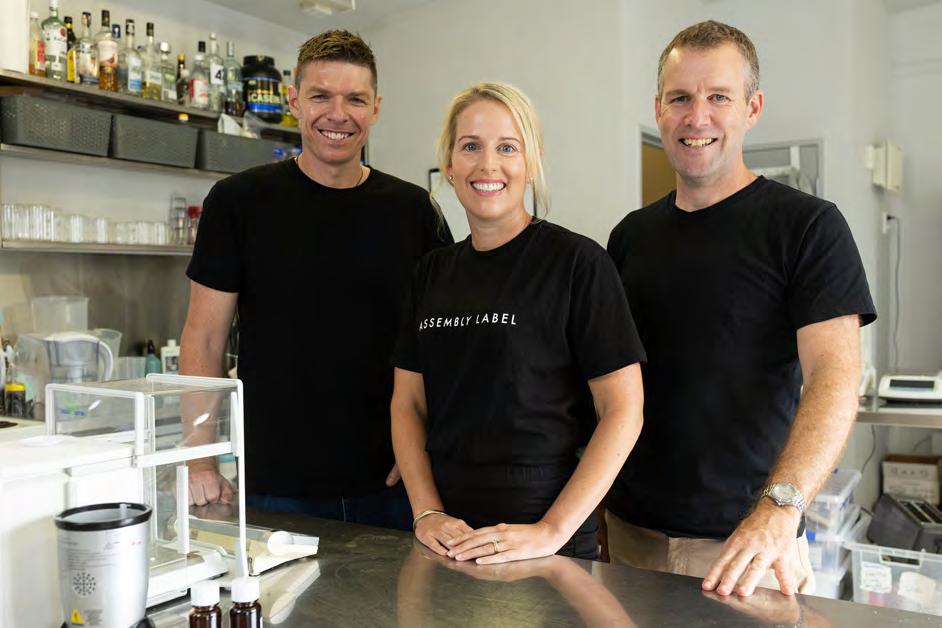
Sam Borgfeldt, Sarah Walter and John Evans, the BFG team
Finding functionality in plant-based ingredients
A mechanistic approach to better performance
Thomas Do1, Alejandra Acevedo-Fani1, Gert-Jan Moggré2 and Scott Knowles2
Riddet
Institute (Massey University)1, Bioeconomy Science Institute2
In this second article of a series, another project team from the Plant-Based Food Ingredients Research Programme discusses the science behind ingredients functionality. This five-year MBIE and industry-supported programme is validating new models of food processing as a way to produce nutritious, sustainable, high-performing ingredients from local crops.
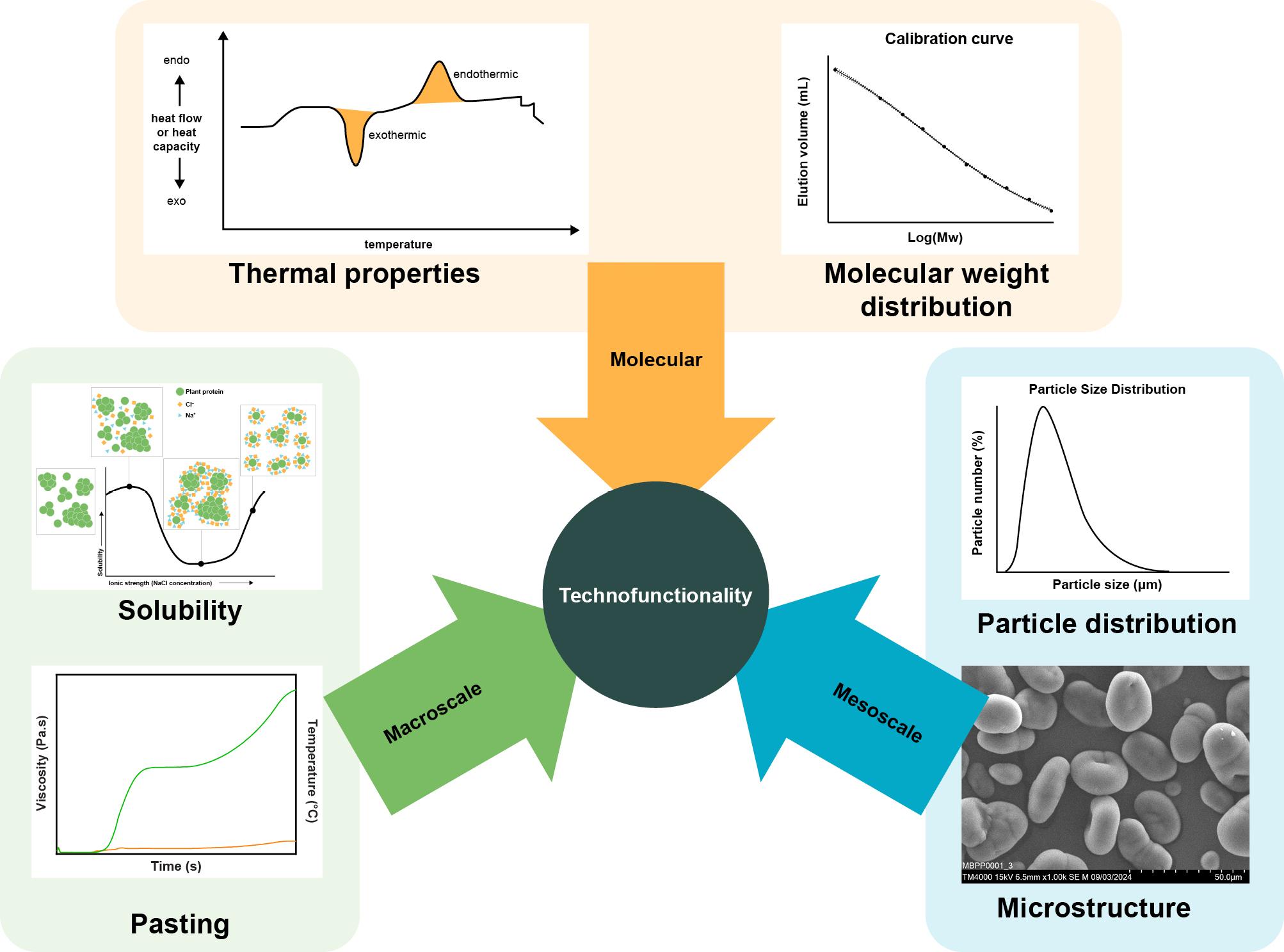
Figure 1. A graphic representation of the multi-length approach for analysing techno-functionality. This targets microstructure features, physical properties and techno-functional property measures chosen to represent properties that sit along different length and time scales.
The focus is on peas, oats and hempseed as exemplar plants for their protein value, suitability to New Zealand conditions, and relevance to global food systems. They represent pulses, cereals, and oilseeds, and offer a broad basis for studying mechanisms that could be extrapolated to other crops in those categories.
The programme is organised around three objectives:
1. Mathematical modelling of sustainable process design
2. Deep understanding of ingredient composition, microstructure, functionality, and interactions in food systems
3. ‘Omics analytical methods that enable interpretation of the metabolic effects of experimental ingredients.
Together, these will deliver a new way to retain and improve the functionalities of plant materials, particularly proteins.
Determining functionality of semi-refined plant-based ingredients
The techno-functional performance of ingredients is a central concern for food formulation and product development. Ingredients derived from plants are typically utilised as concentrates or isolates, the latter being more purified. Protein isolates are highly regarded to confer gelling, emulsifying, foaming and other properties for food manufacturing. Starch and fibre isolates can increase viscosity in hot and cold processes, which contribute to the development of different product textures.
However, purification comes with significant costs. We are interested in processing schemes that could yield semi-refined ingredients. These retain more of the plants’ natural structure for healthier food applications and have potential advantages for multifunctionality. Their complex composition can simultaneously deliver diverse taste and textures in food products.
Empirical methods to determine ingredient performance are well established for the relatively simple matrices of isolates. They are less accurate when ingredients have multiple components that can
interact synergistically or antagonistically. Data interpretation becomes challenging and requires a more in-depth approach to analysis.
A useful tactic is to look at the concentrates and isolates already in the food industry. Commercial products provide an opportunity to understand what underlies differences in observed functionality, to validate analytical methods, and to create a series of benchmarks for comparing the lessrefined ingredients developed in our programme. The learnings will inform further research and support the predictive modelling that is being designed in programme Objective 1.
Appreciating functionality across multiple length scales
To this end, we have collected a library of commercial pea and oat ingredients and developed a toolbox of analytical techniques to investigate the materials across multiple length scales (Figure 1). These provide correlated insights into ingredients at the molecular, meso and macroscale that together describe what drives ingredient functionality in foods.
Case study of peas
Peas are well established in the marketplace with multiple providers supplying high purity isolates of protein, starch, and fibre. Many have been extensively processed to suit specific food applications such as beverages and sauces. Less-refined materials such as concentrates of starch or protein are also offered but have smaller market share.
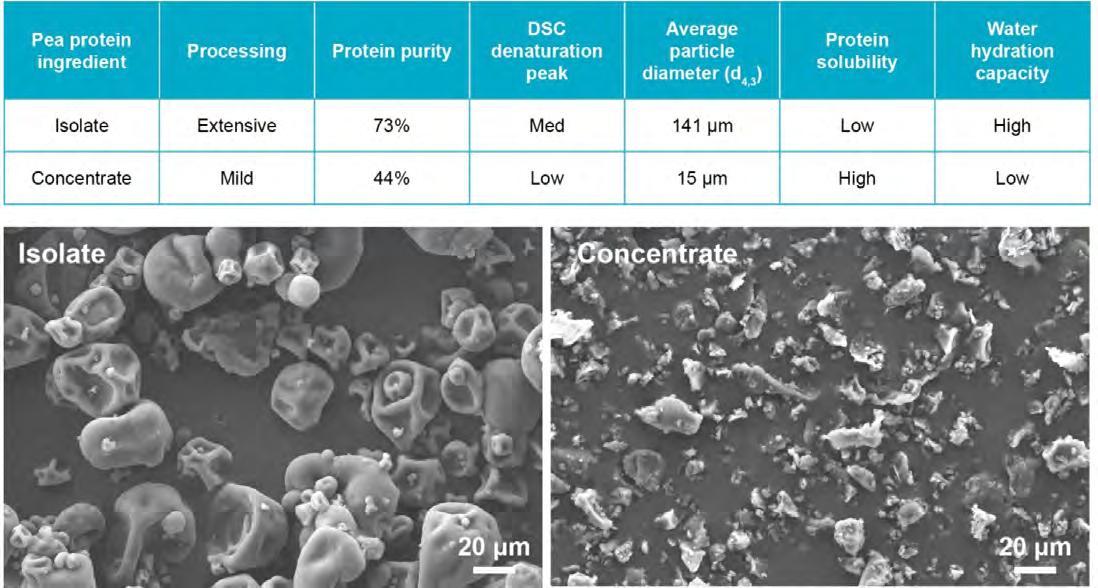
Figure 2 shows examples of pea products from our commercial library that are lightly processed by low impact methods of dry fractionation or extensively by methods of wet fractionation. Results from the analyses toolbox inform key differences between the materials.
Although sourced from the same plant crop, processing has created two distinct pea ingredients. The differing structures are apparent. The collapsed spheres of protein material in the isolate are a consequence of spray drying. Fine milling of the concentrate exposed the pea seed’s intrinsic components such as its protein bodies, intact starch granules, and fibre particles.
Figure 2. Commercial isolate and concentrate fractions from peas are compared for several physico-chemical properties, basic technofunctionality and scanning electron microscopy of their microstructure. DSC: Differential scanning calorimetry.
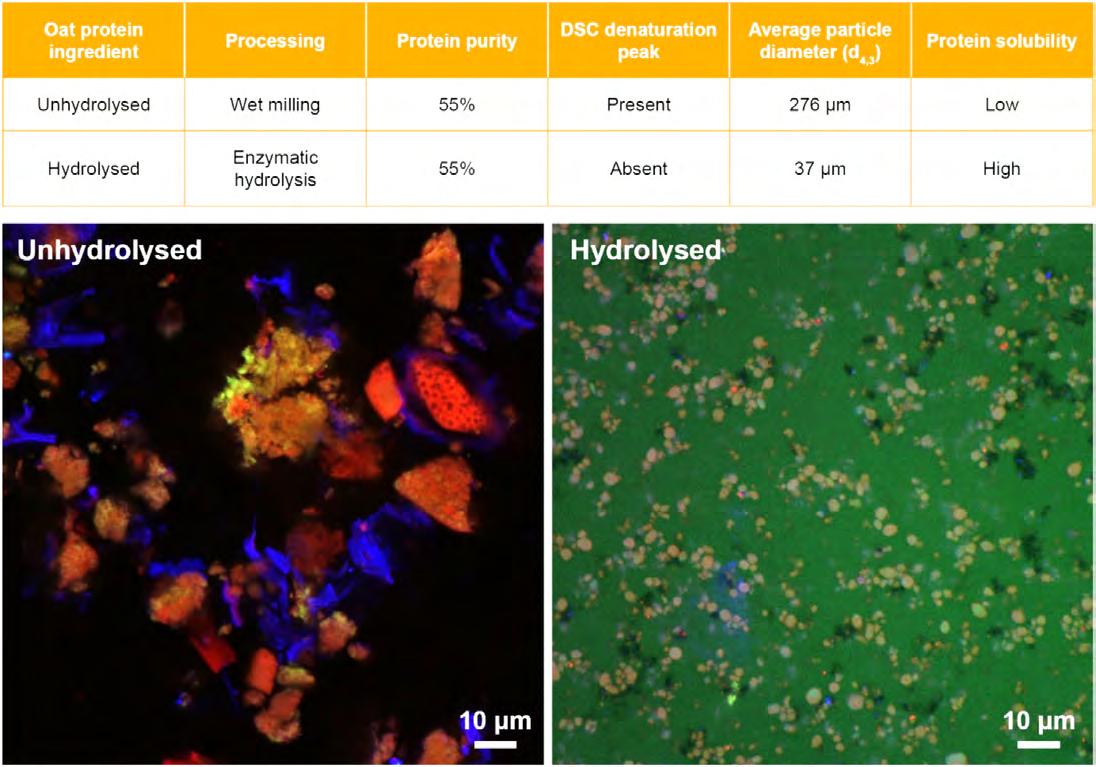
3. Commercial concentrate fractions from oats are compared for physico-chemical properties, basic techno-functionality and confocal laser scanning microscopy of their microstructure. Protein is shown in red-green, starch in green, and cell wall in blue. DSC: Differential scanning calorimetry.
DSC analysis reveals molecular-level protein structure based on a material’s phase transition responses to subtle heating. Both pea fractions showed peaks in their denaturation endotherm curve between 80-110°C, which indicate the presence of intact pea storage proteins. The reduced magnitude of the peak for the isolate suggested partially modified (i.e. damaged) protein structure.
Subsequent techno-functionality assays helped us understand how these physical differences influence performance in food. For instance, the isolate had high water hydration capacity – essential for moisture retention and soft textures. The concentrate had lower water hydration capacity but higher protein solubility, a combination that is important for beverages.
These findings show that less refined ingredients can have desirable functionality, especially if we can bring out the other functional components such as starch and fibre to maximise their potential.
Case study of oats
The commercial oat ingredients in our library are primarily protein-rich flours and concentrates, with protein ranging from 31% to 55%. They are all produced using resource-intensive wet fractionation methods, which highlights a gap in the market for semi-refined oat ingredients produced by dry methods.
Figure 3 shows two examples from the library that have similar protein content of ~55% yet have striking differences in solubility across a pH range of 3–8. Since solubility plays a key role in techno-functionality, these contrasting characteristics raise an important question: what drives such differences, if not protein content?
In DSC analysis of the hydrolysed oat product, the denaturation peak that reflects intact proteins was absent. This confirms that enzymatic action broke down the oat proteins into smaller, soluble polypeptides and amino acids. In contrast, the unhydrolysed product showed a clear denaturation peak at 110°C, indicating native oat globulins. So, despite retaining protein nativity, this ingredient’s very poor solubility suggests factors other than the degree of denaturation are at play. Confocal microscopy provided further insights into the ingredients’ microstructure. Hydrolysis generated individual granules and small clusters of granules, free from cellular entrapment, with average particle diameter d4,3 of ~37 µm. This contrasts with the unhydrolysed ingredient, where large cellular and tissue structures (~276 µm) were observed. They are likely a consequence of inefficient breakdown of oat grains during milling and wet fractionation. They can trap proteins within the cellular matrix and hinder solubility.
Conclusion
In this objective of the research programme, we have validated a suite of techniques to describe and quantify ingredient functionalities relevant to food manufacturing. We are finding that commercial products derived from various crop processing methods can be clearly differentiated. They exhibit a surprisingly wide range of properties despite similarities in composition labelling. Our research continues with developing novel and sustainable designs for processing peas, oats and hempseed, generating fractions that can become complex multifunctional ingredients, and optimising for composition, microstructure, and functionality interactions in prototype food systems. ■
Figure
Key insights from NZFGC conference
Raewyn Bleakley, Chief Executive, New Zealand Food & Grocery Council
Our 2025 NZFGC Annual Conference at Te Pae Christchurch was a real showcase of the very best of our food, drink, and grocery sector. Among the conference speaker highlights themselves that are of interest for food technologists, was a strong focus on food and the future of product traceability and food safety.
Deputy Director Vincent Arbuckle from MPI New Zealand Food Safety also delivered a compelling session on the importance of our food safety regulation and why it remains a cornerstone of New Zealand’s reputation and market access. His address emphasised proactive risk management and industry-wide collaboration to meet rising consumer expectations and global regulatory requirements. Food safety is not just a regulatory obligation but a shared responsibility across the supply chain, requiring collaboration and continuous improvement. Vincent highlighted MPI’s commitment to working with industry to maintain high standards while adapting to global pressures and consumer expectations. Our joint food regulatory system with Australia is amongst the best in the world and admired globally as a great example of harmonisation.
“The shift to 2D QR barcodes is a transformative step that will improve product traceability, transparency, and recall efficiency across the industry.”
Building on this collaborative thinking, Peter Stevens from GS1 New Zealand talked about the 2027 commitment to 2D QR barcodes, a transformative step for product traceability and data integrity. These next-generation barcodes will enable greater product information, enable faster recalls, and improve transparency - transforming how manufacturers, retailers, and regulators manage safety and transparency. The discussion highlighted how technology and standards work handin-hand to protect consumers and streamline operations. For New Zealand businesses, adopting 2D QR barcodes, it’s a strategic move positioning them to be forefront globally and ahead of the curve.
As global supply chains become more complex, food safety, data integrity and regulatory harmonisation are essential for New Zealand to maintain our leadership status in providing safe, suitable, high-quality food to the world.
Vincent Arbuckle, Deputy Director NZ Food Safety, Conference
Celebrating 100 ‘Sweet’ years with Queen Anne
Prior to the NZFGC conference, Sarah Adams, Managing Director of Queen Anne, kindly hosted our Health and Regulatory Working Group meeting and treated us to a factory tour.
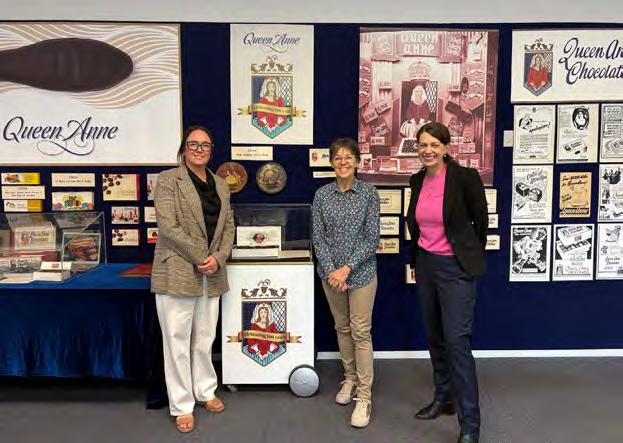
Watching the Queen Anne team hand making chocolates to the original recipes from the 1920s was an absolute treat. Who knew it takes three days to make one mini chocolate fish? A fine example of good things do take time! This year marks the 100th anniversary of this iconic New Zealand indulgence brand, so their factory shop houses a fascinating commemorative expo including newspaper adverts from WWII apologising for the lack of supply due to wartime rationing, and a beautifully preserved full box of 50-year-old chocolates. ■
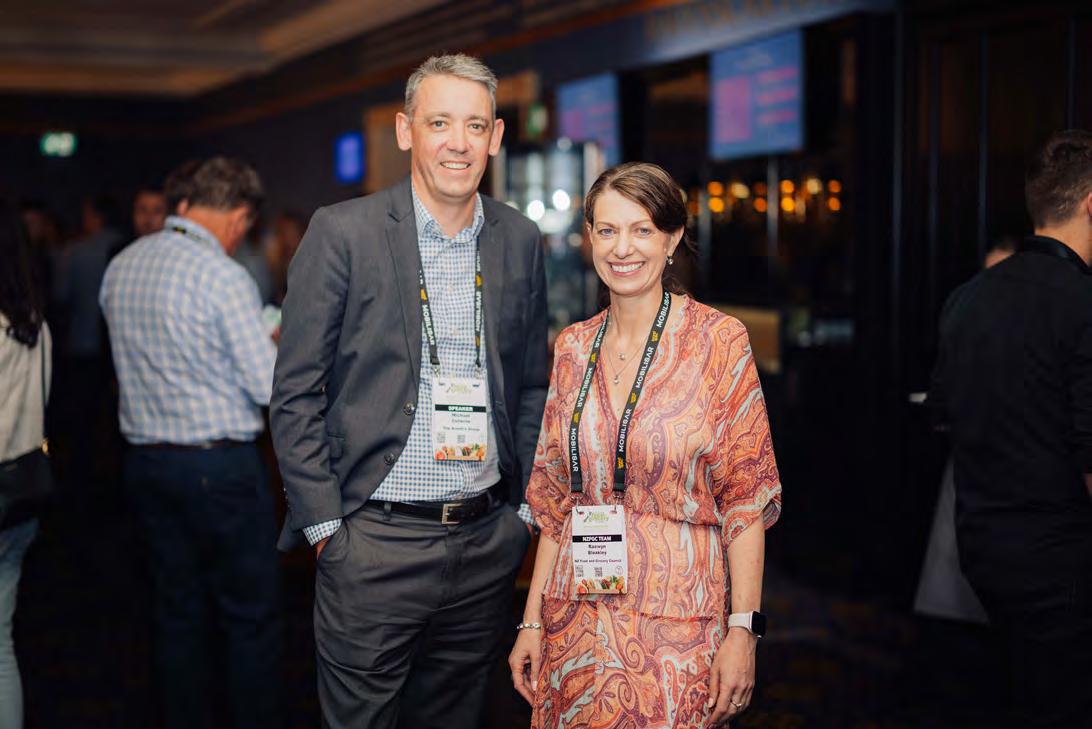
NZFGC Chair Mike Cullerne and NZFGC CE Raewyn Bleakley at the Nielsen IQ Welcome Event & Shared Horizons launch at the Royal Issac Theatre
Sarah Adams, Ashley Wilson and Raewyn Bleakley in front of the commemorative expo at Queen Anne
Discovering New Zealand-first packaging at Foodtech Packtech 2025
Nerida Kelton FAIP, Executive Director AIP, Vice President Sustainability & Save Food WPO
Roaming the halls of a tradeshow is always one of my favourite things to do as you get the opportunity to see what is new and innovative in the world of packaging.
I recently attended the biennial Foodtech Packtech tradeshow in Auckland, New Zealand, which was sold-out, and saw participation from 240 exhibitors.
Wandering the halls I not only discovered some standout packs but soon realised that many of the solutions were either made by local small businesses in New Zealand, or in Australia especially for Aotearoa. It was refreshing to see custom-made solutions designed for the New Zealand markets.
New Zealand’s first 100% recycled content pallet wrap: Rewrapt
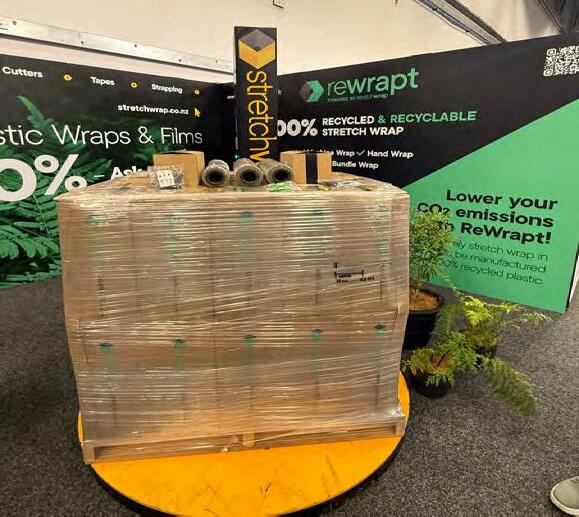
New Zealand-owned business Stretchwrap launched the new Rewrapt 100% recycled content pallet wrap at Foodtech Packtech.
Rewrapt is the first pallet wrap in New Zealand to incorporate recycled content and also maintain high-stretch and strong puncture resistance so that the goods are not compromised. By incorporating recycled content, Rewrapt enables customers to lower their environmental footprint and reduce the amount of single-use plastic wrap used in their facilities. Winning the People’s Choice Award at the inaugural Sustainability Spotlight Awards held at Foodtech Packtech 2025, Rewrapt is a more sustainable solution for the New Zealand market.
Award-winning packaging, engineered in New Zealand: Forward Plastics
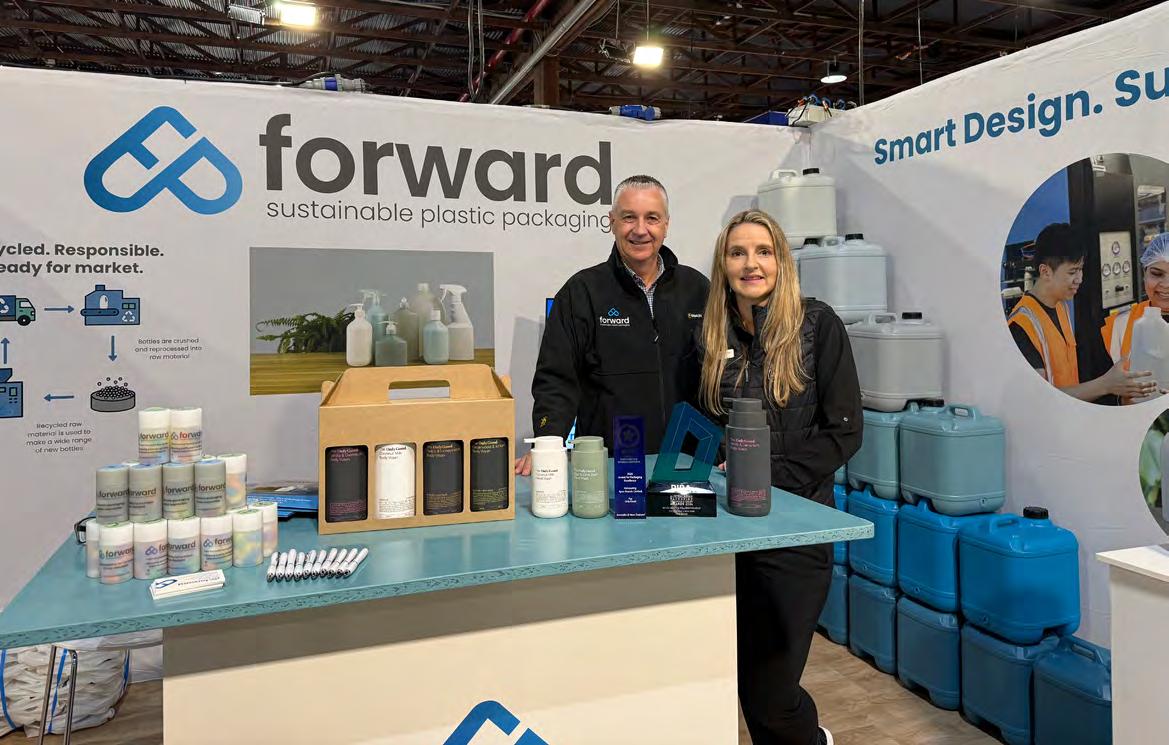
Sometimes when you walk down an aisle something will grab your attention and make you stop. Usually for me it is a robot, or a moving machine or a really cool packaging format. In this instance it was two gorgeous trophies: an Australasian Packaging Innovation & Design (PIDA) trophy and an equally attractive, blue WorldStar Packaging Award trophy. The trophies were on the Forward Plastics stand, as they were the business behind the material that formulated the only WorldStar award winning pack for 2025 in New Zealand for Apex Brands Only Good range of personal care products.
Forward Plastics worked with the team at Apex Brands to create a recyclable, refillable and reusable bottle that is made with a blend of sugar cane and recyclable plastic that has been domestically sourced in New Zealand.
Rewrapt, New Zealand’s first 100% recycled content pallet wrap by Stechwrap
Nerida at the Forward Plastics stand with Sales and Marketing Manager Dean Hewetson
Bottle design, material and finish were carefully considered utilising a range of different HDPE options, such as sugar cane HDPE and recycled HDPE across all products.
I spent some time on the stand also looking at some of the other sustainable solutions that are offered by Forward Plastics, and I was really excited to see the creativity and innovation from so many small businesses in New Zealand.
Forward Plastics is a New Zealand-owned company based in Auckland and since 2018 the business has repurposed over 1.2 million kilograms of New Zealand kerbside recycled milk bottles into high-quality packaging.
They are experts in recycled and bio-based plastics, post-consumer recycled HDPE and PP, and renewable bio-resins and they will work with your business, just like they did with Apex Brands to create Awardwinning sustainable packaging.
“Walking the halls showed just how much innovation and world-class sustainable packaging is being created by New Zealand’s small businesses.”
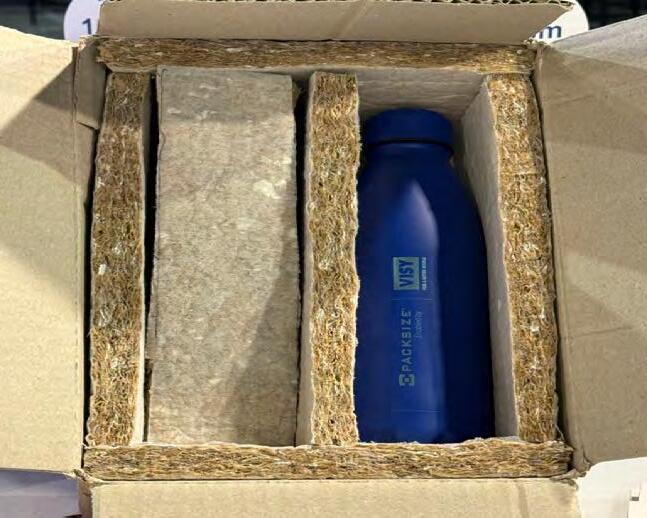
The innovative, fibre-based, thermal-insulated and shockprotectant packaging, produced by Australian company Visycell
Fibre-based thermal insulator and shock protectant: Visycell
I had heard about Visycell previously, but I had never seen a sample in real life. Visycell is an Australian-designed fibre-based thermal insulated, shock protectant pack that eliminates the need to use expanded polystyrene (EPS) boxes ever again. What makes this pack stand out for me is that it is a kerbside recyclable solution, using recycled content and has been designed to withstand harsh cold chain environments in our region.
Interestingly, a Lifecycle Assessment (LCA) was undertaken on Visycell comparatively against a traditional EPS carton. Visycell offers a lower environmental impact across greenhouse gas emissions, lower water usage, and less burden on the aquatic environment should it be littered or end up in the waterways.
Suitable for wet environments the solution comes in a wide range of thicknesses making it flexible and adaptable to suit anything from fresh produce to seafood, wine to pharmaceutical, personal care to meat. Visycell ticks all the boxes for e-commerce and home-delivery.
New Zealand kerbside compliant paper rewind solution: ADM Packaging & Detpak
I always love visiting Detpak stands to see what new fibre-based, suitable solution they have for fresh produce and the samples I saw did not disappoint. I was especially interested in the Perfection Fresh fibrebased, kerbside recyclable punnets for tomatoes and strawberries.
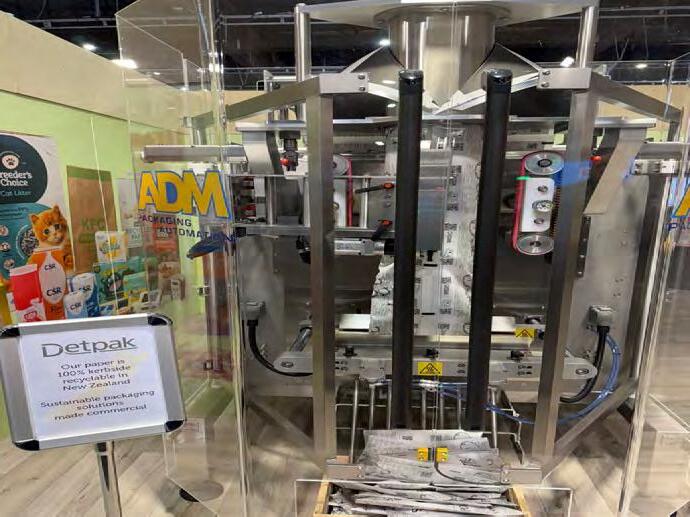
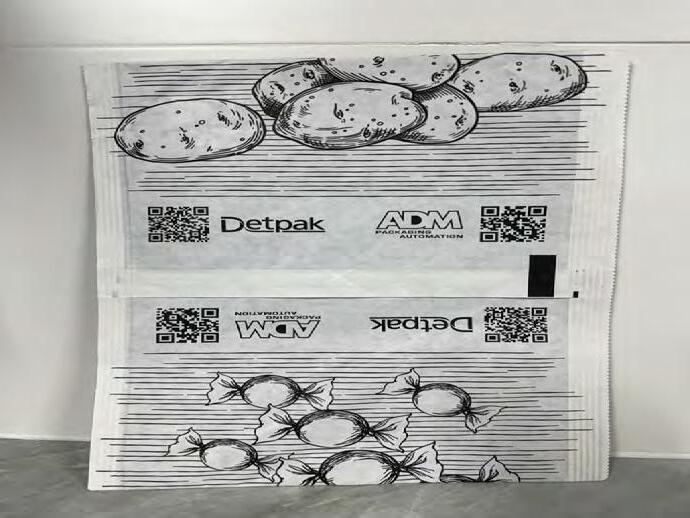
The standout solution on the Detpak stand was a moving piece of equipment by ADM Packaging, that had a kerbside recyclable fibrebased potato bag being showcased in real-time.
Officially launched for the first-time at Foodtech Packtech 2025, Detpak introduced a commercially viable paper rewind solution that is 100% New Zealand Kerbside Compliant. The new paper rewind solution is ideally suited for products that do not require extended shelf life, or where the contents are already pre-packaged, including fresh produce such as potatoes, carrots, and onions, as well as confectionery items like wrapped sweets, crisps, and biscuit multipacks.
The Detpak & ADM solution really stood out to me because it showed how the kerbside recyclable fibre-based potato packaging intersects with the ADM system to offer more sustainable systems-approached solutions. The new solution has also been designed to eliminate the need for any barrier or lining to achieve heat sealability.
The intuitive packaging system not only streamlines adoption and implementation for any company looking for a more sustainable kerbside recyclable alternative to say traditional potato packaging, but for fresh produce and confectionary.
Walking the Foodtech Packtech halls was a great opportunity to see what is happening in New Zealand and I have to say there were a lot of exceptional packs that should be entered in the Australasian Packaging Innovation & Design (PIDA) awards for the 2026 round. I would love to see more New Zealand companies, and people entering the PIDA awards as they deserve the recognition for all their hard work.
For more information on the Only Good win at the WorldStar Packaging Awards, read Nerida’s LinkedIn post here. ■
ADM Packaging automation in action
Detpak's kerbside recyclable fibre-based potato bag
Recognising the leaders in the fight against antimicrobial resistance
Vincent Arbuckle, Deputy Director General, New Zealand Food Safety
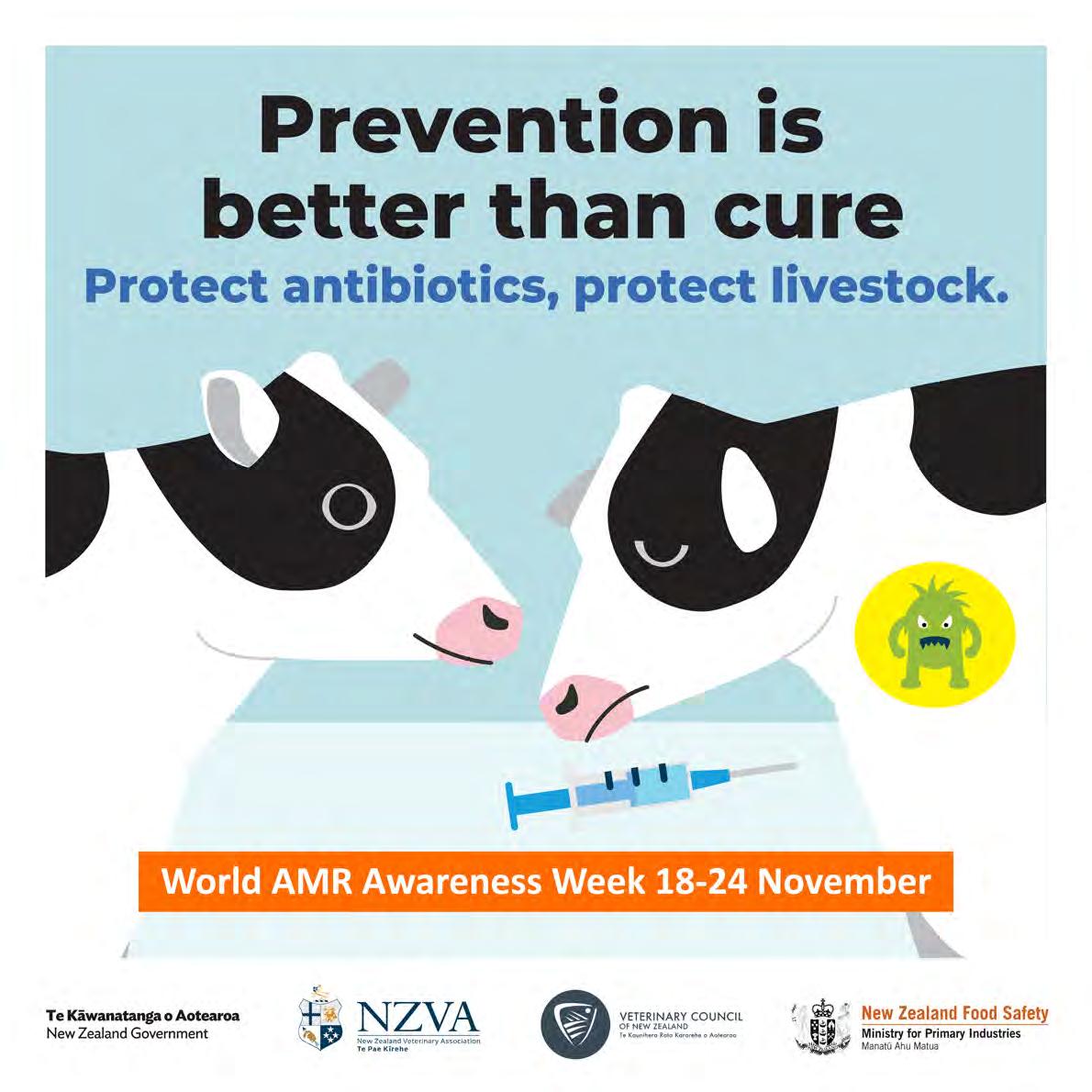
18-24 November marked World Antimicrobial Resistance Awareness Week (WAAW) 2025. An annual and global campaign, WAAW is celebrated to improve awareness and understanding of Antimicrobial Resistance (AMR). AMR remains one of the top global public health and development threats. In 2019, nearly 5 million human deaths worldwide were associated with bacterial AMR.
AMR is when microorganisms, such as bacteria, viruses, or fungi, are no longer inhibited or killed by medicines that were previously effective against it. This resistance makes infections harder to treat and increases the risk of disease spreading, illness or death. As these pathogens become more widespread, the impacts extend beyond health, and pose serious risks to economic prosperity, food security and the resilience of our primary sector.
AMR is a complex problem that must be addressed through coordinated approaches across the human health, food production, animal and environmental sectors.
The AMR Award recognises commitment to reducing AMR To address AMR and reduce its impact in New Zealand, the Ministry for Primary Industries (MPI) and Ministry of Health jointly developed the New Zealand AMR Action Plan. As a business unit within MPI, New Zealand Food Safety (NZFS) works towards the goals of the Action Plan, including strengthening AMR surveillance systems, reviewing the regulatory controls for antimicrobials, and educating to promote stewardship of antimicrobials used in plants and animals.
NZFS has also established the annual AMR Award, which recognises and celebrates individuals, teams, or organisations directly working to minimise AMR risks in New Zealand. The Award reflects the WAAW 2025 theme: ‘Act now: protect our present, secure our future,’ because it celebrates how today’s proactive efforts can safeguard the effectiveness of antimicrobials for the future. Nominations were open to anyone working with or within the animal health or plant health sectors in New Zealand and whose work aimed to reduce AMR including, spreading awareness about AMR, developing novel approaches to infection prevention and control, or finding ways to reduce antimicrobial use. The 2025 AMR Award went to Taranaki Veterinary Centre for their outstanding work in AMR awareness and antimicrobial stewardship.
Their efforts include achieving a 99.4% reduction in antimicrobial active ingredient sold, encouraging farmers to use on-farm mastitis testing machines to test every case of mastitis before treatment, and investing substantially in motivational change training to help them better educate farmers about prudent antibiotic use. Taranaki Veterinary Centre’s work exemplifies the actions that are instrumental to reducing the harm of AMR.
The fight against AMR continues beyond World Antimicrobial Resistance Awareness Week
The incidence of AMR is on the rise globally while the development of new antimicrobials is slowing. AMR is not a distant challenge; it is a current issue that is already impacting our systems.
Although WAAW 2025 has concluded for this year, the need for action continues. There are many ways to contribute such as:
• spreading awareness about the risks of AMR and the importance of responsible antimicrobial use;
• staying informed about AMR and its impact on your sector; or
• celebrating an individual, team or organisation by nominating them for the AMR Award.
Whether you’re involved in the food industry, animal health or agricultural sector, your involvement can help drive further change. Prioritising action on AMR is key to building a healthy, safe, and thriving future.
You can learn more about AMR below:
• Controlling and preventing antimicrobial resistance
• The AMR Award
• Antimicrobial resistance ■
Safe hands? Rethinking disposable gloves in food production
John Brooks' view of the food world through the lens of a microbiologist.
Professor John D Brooks, FNZIFST
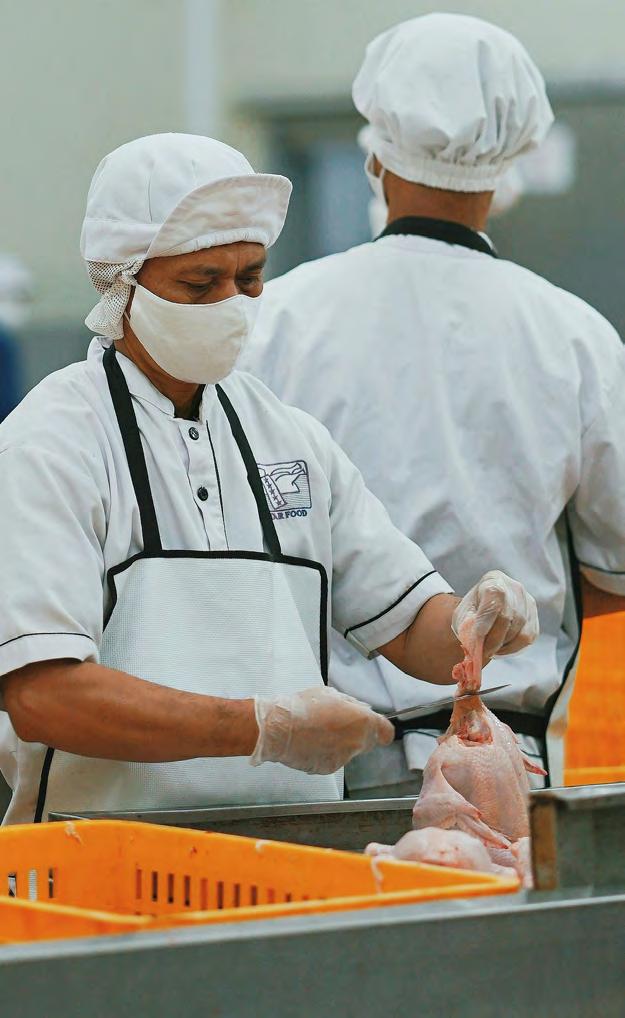
A recent industry alert regarding the safety of disposable gloves used in food production prompted a deeper look into their manufacturing, risks, and real-world performance.
The global glove landscape
Many of these glove types have been used since the COVID-19 epidemic, and it was suggested that lower-quality gloves from Southeast Asia and China are being dumped onto the international market. While most food workers wear gloves, they are also used by police, ambulances, border guards, and engineers.
I found a vast literature on disposable gloves, their manufacture, and potential risks in both the food and medical areas. During the COVID epidemic, there was increased focus on personal protective equipment (PPE) performance, availability, supply chain instability, and labour shortages. There are many evidence-based reports of microbial contamination and toxicity related to the manufacturing process.
What’s really in a glove?
The manufacturing of various types of gloves is complex, and there are many disposable gloves with different applications. Not all are suitable for food use. Unsafe ingredients can introduce chemical contaminants,
posing risks to food and glove users. Hand hygiene is crucial for food handlers to manage safe food production, but damaged skin can degrade hand hygiene.
Latex, vinyl, and nitrile gloves are made using a dipping process with over a dozen sub-processes. The process consumes a large amount of water, and glove manufacturing plants are often located on polluted waterways in Southeast Asia.
Contamination concerns: what the research highlights
A five-year study by B.S Michaels of the B. Michaels Group found over 250 viable microbial species on new and unused U.S. glove imports, including human faecal indicators and foodborne pathogens, including enterotoxigenic strains of Bacillus cereus and B. anthracis, along with the presence of Listeria monocytogenes, Clostridium difficile, Staphylococcus aureus, Pseudomonas aeruginosa, and Streptococcus pneumoniae on half of the gloves. Heat-sealed plastic film gloves are simpler to make
than latex, vinyl, and nitrile gloves. However, they are only useful for a short time. Polyethylene or TPE gloves are made by stamping and sealing sheet stock with heat. Dipped gloves require polymer blends of latex, nitrile, vinyl, or polychloroprene, or mixtures thereof with process ingredients.
The study emphasised that the use of gloves in food applications can reduce, amplify, or transfer risks depending on how and under what circumstances they are used. Sweat build-up, punctures, and leaks can introduce hazards to food and handlers. Some glove types fail within minutes of use, with failure rates varying between 0-3% and 61% depending on material. Some studies estimate that 50-90% of all glove perforations during use go unnoticed. Research on glove use shows a tendency of food workers to wear the same pair of gloves for extended periods, and complacency might account for the apparent failure of gloves to reduce or prevent bacterial contamination. Gloves should be changed after two hours, with a maximum wearing time of four hours. When I strongly suggested this in one factory producing bagged salads, I was told that I didn’t understand the economics of commercial food production. The results further suggest that glove use could be counterproductive because workers might wash their hands less frequently when gloved.
Gloves vs clean hands: a long-standing debate
Many years ago, when I first started teaching food microbiology, O.P Snyder used to write regularly about the hazards associated with handling food with bare hands or with gloves. He argued that the use of clean hands was less hazardous than unchanged gloves. There is some support for this view in the literature, but the critical words here are "clean hands”. New Zealand law does not require gloves to be worn but does require that ready-to-eat food be prepared and served without bare-hand contact.
Gloves are meant to protect the product and the worker. If the gloves are torn or punctured, worn without being changed or sanitised, and the worker’s hands are not washed before donning, then risk is amplified rather than reduced. It is known, for example, that artificial nails are linked to poor handwashing practices and more glove tears. In gloves that trap heat and moisture, the potential exists to liquefy nail contamination and release it when punctured. This brings up the importance of maintaining the glove barrier.
A complex market with mixed performance
There are now more than 200 different types, considering material composition, thickness differences, internal treatments, powder types, modulus of elasticity, and exterior coatings. Powdered disposable gloves are generally not recommended for food processing owing to the risk of powder particles contaminating food and surfaces. The vast selection of glove types on the market today was also driven in part by sensitivity problems with natural rubber latex in the medical field and the glove industry’s response to find suitable alternatives. Allergic contact dermatitis represents 90% of all occupational skin disease cases in the U.S. Polyurethane does not require additives, relying on polymer structure only. As a result, no authenticated reports of irritation or sensitisation related to polyurethane Lycra have been found.
"The use of gloves in food applications can reduce, amplify, or transfer risks depending on how and under what circumstances they are used."
The bottom line
Ultimately, gloves are only as safe as the practices behind them. Proper selection, handling, and hygiene remain essential to reducing rather than increasing risk. As food safety expert Carl Custer emphasises, “Proper training in glove usage is essential.” ■
Extended Producer Responsibility to deliver circular solutions for packaging
Lyn Mayes, KSM, Mad World Ltd
The role of packaging
Packaging plays a crucial role in protecting and preserving products. For food, it ensures that shelf life is maintained throughout the supply chain, while for consumer goods, packaging helps prevent damage during transportation and handling. Effective packaging is designed not only to minimise waste but also to ensure that its environmental impact is outweighed by the benefits it provides.
Plastic packaging: benefits and challenges
Plastic is often chosen for packaging due to its durability, lightweight nature, and versatility. These properties help maintain product freshness and reduce contamination. However, recycling plastic, especially soft plastics, remains a significant challenge. All packaging materials come with environmental impacts, and while consumers are enthusiastic about compostable packaging, it contaminates recycling streams. Without separate collection and delivery to appropriate composting facilities, compostable packaging typically ends up in landfill.
Designing for circularity – global design and local delivery
Good packaging is designed with circularity in mind. This means creating packaging that protects and preserves products, and that is easy to recover, reuse, or recycle at the end of its life. However, systems for collecting, sorting, and recycling packaging vary widely across the world. A significant portion of packaging used in New Zealand arrives with imported consumer goods or is supplied as a raw material to local manufacturers. Consequently, global innovation and packaging trends influence the types of packaging disposed of by New Zealand households.
Extended Producer Responsibility (EPR) schemes
Extended Producer Responsibility (EPR) schemes have operated worldwide for more than thirty years. According to the OECD, there are over 400 EPR systems, with around 17% focused on packaging (Source: 2015 Extended Producer Responsibility). The EPR framework assigns responsibility to producers—brand owners who select packaging—to pay for the end-of-life management of packaging. Under the “producer pays” principle, fees are assessed based on the recyclability of packaging materials, varying by material type, so that recycling costs are allocated to companies based on how much they place on the market. Fees raised are used to cover the net costs of collecting, sorting, and recycling packaging materials.
Learning from global models
As part of the project team led by The Packaging Forum and the New Zealand Food & Grocery Council co-designing a Plastic Packaging Product Stewardship (PPPS) scheme for New Zealand, we studied leading global models for guidance. In recent years, I have had the opportunity whilst visiting family to meet with scheme managers at Fost Plus in Belgium, Repak in Ireland, and Valpak and Ecosurety in the UK and Recycle BC in Vancouver.
“It is now time for New Zealand to establish the regulatory framework for EPR and implement the system changes necessary to achieve a circular economy.”
Belgium is recognised by The Extended Producer Responsibility Alliance (EXPRA) as a leader in sorting and recycling household waste. Fost Plus, the Producer Responsibility Organisation (PRO), operates an efficient system with investment in collection, advanced sortation and reprocessing infrastructure, backed by long-term contracts. In 2018, Belgium introduced modulated fees (Green Dot rates) based on recyclability, recalculated annually. These rates range from €49 per tonne for aluminium, to €4419 per tonne for plastics that are difficult to recycle. Belgium has introduced five new sorting centres and five recycling facilities, strengthening its position as a European recycling hub.
UK
Ireland, which is similar in size to New Zealand, established Repak in 1997 to help businesses comply with packaging recycling laws. Producer fees are determined by material type and annual sorting and recycling costs, with payments to collectors and recyclers based on material quality.
In British Columbia, Canada, Recycle BC operates as the PRO for a province with 5 million people and 2 million households, spanning an area four times larger than New Zealand. Recycle BC's approach highlights the importance of marketing and communications to inform and educate households.
These global schemes demonstrate that achieving system change, building infrastructure, and engaging consumers for successful recycling requires time and is only possible with mandatory EPR.
Delivering circularity in New Zealand
In 2018, many brands and organisations in New Zealand made a voluntary commitment—the New Zealand Plastic Packaging Declaration—to ensure that 100% of their plastic packaging would be reusable, recyclable, or compostable by 2025. Despite the passing of this deadline, most companies have not been able to meet these targets.
Europe introduced the Packaging and Packaging Waste Regulation (PPWR) in February 2025, mandating that by 2030, all packaging must be recyclable and economically viable for recycling, with further targets for reuse and recycled content. New Zealand companies exporting to Europe will have to comply with these regulations and participate in relevant EPR schemes.
It is now time for New Zealand to establish the regulatory framework for EPR and implement the system changes necessary to achieve a circular economy. ■
Lyn Mayes founded Mad World in 2001, one of New Zealand's first boutique sustainability consultancies. She works with The Packaging Forum, The New Zealand Food & Grocery Council, and consults for the Glen Neal Group. Lyn is former Chair of the Auckland Conservation Board, Vice President of Weightlifting NZ, an independent member of the Association of Metal Recyclers Board and a Trustee of Be a Tidy Kiwi. Lyn was awarded a Kings Service Medal for Services to Conservation in the 2025 New Years Honours.
The views expressed in this article reflect her own and Mad World’s position.
Source separation at kerbside
Lyn Mayes, Gareth Morton of Flexcollect UK, and Mark Penny, Commercial Manager at J&B Recycling, at the J&B Recycling facility in the
learning how kerbside collection works in the Newcastle region
Trans-Tasman effort to understand monster algal bloom in South Australia
A massive algal bloom covering around 20,000 square kilometres and stretching along a third of the South Australian coast, is worrying everyone including Prime Minister Anthony Albanese, who has been down there to see it firsthand. There’s nothing unusual about algal blooms but this one is unusually persistent and harmful and has closed commercial fishing and shellfish harvesting over a wide area nearly all year now. The toxic algae have killed an estimated 10 million marine animals, from sharks and stingrays all the way down the food chain. They wash up on the beaches to locals’ dismay. Wind and surf generate discoloured foam on shore and breaking water, keeping swimmers, surfers and tourists away, with further economic consequences.
The federal and state governments have jointly allocated $131 million to manage what the South Australian Premier has classified a national disaster. The ABC called it an “underwater bush fire”. The money includes compensation for lost income and $17 million for research into algal species.
Identifying the culprit behind the toxicity
The microalgal species concerned is a dinoflagellate from the genus Karenia. It is a single eukaryotic cell with two “flippers” (flagella) that enable it to swim independently. They are essentially tiny plants that float near the sea surface and use the same photosynthetic process as land plants to generate energy. Some species within the Karenia genus produce toxins, the most well-known being brevetoxins. Brevetoxins can accumulate in filter-feeding shellfish and when consumed by humans cause neurotoxic shellfish poisoning. To our knowledge there have been no reports of illness from consumption of seafood contaminated with brevetoxins in South Australia. The authorities acted quickly to close shellfish aquaculture areas impacted by the bloom. Other good news is that the famously delicious Coffin Bay oysters are so far unaffected. Breaking waves hurl aerosolised toxins into the air. Breathing them in causes irritation in eyes and airways, as New Zealand marine toxin specialist Tim Harwood, from Cawthron Institute in Nelson (Tim is deputy director of the NZ Food Safety Science & Research Centre) found when he visited Adelaide to observe the phenomenon and meet scientists there.
There are several species of Karenia. The question was, which one/s are present in the South Australia bloom? It was undoubtedly a mixed species Karenia bloom, with the initial assumption that Karenia mikimotoi, a known harmful algal bloom species, was the dominant species. The conundrum was, what else is present as K. mikimotoi does not produce brevetoxins. The only well described species that produces brevetoxins is Karenia brevis, which is prevalent in the Gulf of Mexico, and has not been detected in southern waters.
Trans-Tasman collaboration
Cawthron Institute’s expertise in the analysis of brevetoxins in shellfish was sought by the Australians early on as their laboratories did not have accredited testing for this toxin class. Cawthron has been analysing samples for brevetoxins for some months. If levels exceeded the regulatory limit then the call was made to close the shellfish growing area and for it to remain shut until levels dropped below the limit for several consecutive weeks.
Tim and Cawthron colleague Kirsty Smith (Science Group Manager) have worked with a wider team of researchers to ultimately identify the brevetoxin-producer in the bloom as Karenia cristata. They have characterised the particular brevetoxins that it makes and found it clearly different to K. brevis
In collegial Anzac spirit, Cawthron are now helping the Australians set up their own laboratory to test for brevetoxins, which is currently going
Kirsty Smith, Group Science Manager, and Tim Harwood, marine toxin expert and deputy director of NZFSSRC, both from Cawthron Institute, have worked with a wider team of researchers to identify the species
through the demanding National Association of Testing Authorities NATA accreditation process. Method performance is rigorously assessed, including comparing results with those generated by Cawthron’s accredited test method. The abbreviated timeline and desire to transfer the method as soon as possible means it’s a “testing time” in more ways than one, says Tim.
Implications for New Zealand
How likely are such long-lasting harmful blooms here? “It’s always possible,” says Tim. “The emergence of K. cristata in southern waters is definitely a concern for us, too. We have experienced several Karenia blooms over the past few decades, including a brevetoxin event in 1993 that kicked off New Zealand’s marine biotoxin monitoring programme. But this toxin hasn’t been detected here since.”
In 2023 a toxic algal bloom closed commercial and recreational fishing up a long stretch of the New Zealand North Island East Coast. And blooms have curtailed shellfish harvests more than once in the Marlborough region. MPI-NZ Food Safety have recently (in October) warned the public of the presence of Paralytic Shellfish Poison (PSP) in shellfish from the North-west coast of the North Island (from Taranaki to Kāwhia). PSP is dangerous and can land you in hospital, or worse.
The South Australia event underlines the foresight of the New Zealand government’s long and consistent investment in seafood safety science. Tim says, “Our monitoring and management of regulated shellfish
“To our knowledge there have been no reports of illness from consumption of seafood contaminated with brevetoxins in South Australia.”
toxins are second to none.” Tim heads the Seafood Safety Research Platform and leads the Centre’s Seafood Taskforce.
Australian media have interviewed Tim and Kirsty several times now, wanting to know more about Karenia blooms, brevetoxins, and how New Zealand makes sure its seafood is same to consume.
Says Tim, “While we acknowledge the devastating impact this South Australian event is having, we are very happy to have been able to help and use the knowledge and capability we have developed here in New Zealand over a long period. I’m sure if the boot was on the other foot that they would do the same for us.” ■
Early-career insights from Gabrielle Lobo
Lauren Sheridan, Editor, Food New Zealand, with insights from Gabrielle Lobo
Gabrielle Lobo, recent recipient of the Emerging Talent: Food Science and Technology Award at the 2025 NZ Food Awards, reflects on the fast pace of her formative years and shares her top five career insights.
Those at the start of their career often bring a fresh perspective and a curious mind. That’s certainly true for Gabrielle Lobo. When gathering Gabrielle’s reflections, I’m struck by her positive energy and open approach. A Massey University graduate and now the North Island Business Development Manager for NZFIN, she is both refreshing and reassuring in equal measure. It’s clear her first years in industry have been rich in learning, challenges, and many opportunities that she has wholeheartedly embraced.
Read on for Gabrielle’s five standout lessons — each offering a glimpse into the experiences and mindset that have shaped her early success.
1. Commercialisation is just as crucial as great science
One of the first things Gabrielle realised was the importance of commercial thinking alongside technical skill. Science and innovation matter, but without a clear customer need and a viable market path, even the best ideas struggle to land. That shift from is this a great product? to does this solve a real need? became an early mindset change. She also learned quickly that things move at pace and speed matters: if you’re not first to shelf, you’re already behind.
“Without a clear customer need and a viable market path, even the best ideas struggle to land.”
The entire NZFIN team, including Gabrielle
2. Scale-up changes everything
Coming from a product development background, Gabrielle expected to focus largely on formulation. Instead, working closely with engineers broadened her understanding of process design and scale-up. With New Zealand’s limited contract manufacturing options, scalability is a critical factor from day one. Each project reinforced the same lesson: design for scale early, or risk hitting limitations later.
3. Back yourself, even when surrounded by experts
Like many new graduates, Gabrielle entered a world filled with deeply experienced professionals. Trusting her own knowledge while staying open and curious became one of her biggest areas of growth. Mentors have played a key supportive role, giving her a safe space to ask questions, build confidence and learn how to balance self-belief with ongoing development.
Gabrielle (pictured far right) at the 2025 NZIFST Conference with NZFIN colleagues (l–r) John Morgan, Jane Petrie and Alex Nicole
4. Stay curious and say yes to opportunities
A theme that stood out in Gabrielle’s reflections was the value of openness. From industry events to speaking engagements, consistently saying yes has helped her build her network quickly and broaden her exposure across the sector. Curiosity also drives much of her progress — constantly asking why, what’s next and how something could be improved.
5. Trust your gut and don’t fear the pivot
Early-career decisions rarely come with certainty as it’s all very much an unknown when starting out. Gabrielle’s approach is simple: trust your instincts, make the call and learn from whatever follows. Choosing NZFIN, without a fully mapped-out long-term plan, became one of the best decisions she has made and has set her on a path to success.
The moment when everything clicked into place
Receiving the Emerging Talent Award was a defining moment for Gabrielle. It validated the hard work she had invested so far and affirmed that she was on the right path. She hadn’t expected recognition so soon, which made it even more meaningful — a reminder that the effort she’s put in is already making an impact, and that this is only the beginning.
Her Motivation
Gabrielle is energised by the dynamic nature of her work, supporting a wide variety of clients, solving problems, celebrating progress and being part of the innovation that happens each day at NZFIN. As she describes it, it’s a place “where the magic happens,” and being part of that magic is what drives her forward.
“Challenge the boundaries of our industry and make it happen.”
Advice from Gabrielle
“Challenge the boundaries of our industry and make it happen.”
A bold sentiment from someone already making her mark — and wise advice for any of us, no matter what stage we are at in our careers. ■
Gabrielle receiving the Emerging Talent Award at the 2025 NZ Food Awards Gala
Workstream update
Tēnā koutou katoa e te whānau o te NZIFST,
The four workstreams are progressing steadily toward meeting the 2026 objectives established by the NZIFST Board. Below is a summary of recent activities undertaken by each team since the previous update.
Esraa El Shall, NZIFST Immediate Past President
Networked Community Workstream: Goal –Stop membership decline by 2026
Following Executive Committee approval for establishing a new Coordinator role, the team is finalising the Position Description and will soon commence recruitment in collaboration with Lawson Williams Recruitment. Additionally, the team has submitted a proposal to the Board to offer discounted renewal rates for students prior to their year-end completion of studies, recognising the importance of retaining student members as vital contributors to the future of food science and technology. Various strategies to enhance membership are also under review, with recommendations to be presented to the Executive Committee in the coming months.
Vibrant Food Industry Workstream: Goal –Increase awards nominations by 20% by 2026
Efforts have been focused on securing sponsorship for the new Industry Research Collaboration Award, now approaching completion. The team’s paper promoting food science and technology as a career was approved by the Executive Committee, supporting sponsorship of a House of Science kit to assess outreach effectiveness. The forthcoming priority is to present recommendations for supporting Science Fairs, and to continue strategic planning aimed at increasing award nominations leading up to 2026.
Regular communications regarding a potential name change for the NZIFST have continued, including webinars designed to inform members and collect feedback. Finalist names are currently being voted on; members are encouraged to participate in the selection process or choose to retain the current name. Subsequent actions include making post-survey recommendations concerning the name change and briefing designers to update NZIFST marketing materials.
"Communications regarding a potential name change for the NZIFST have continued, including webinars designed to inform members and collect feedback."
Professional Development (PD) Workstream: Goal – Increase attendance at PD events by 10% by 2026
The Professional Development workstream has grown in recent months. Marcus and his team are actively mapping opportunities for professional development collaborations, particularly in mentoring programmes, and will provide recommendations to the Executive Committee in due course. The team is also working to establish a baseline for professional development–tagged events to inform strategies for achieving a 10% increase in attendance by the end of 2026.
For more information on what other activities are underway, refer to the table on the opposite page.
If you would like to be involved in any of the workstreams or have any questions or comments, please get in touch!
Ngā mihi, Esraa El Shall
Immediate Past President
NZIFST Conference 2026
Progress to date
With seven months before our 2026 Conference, I am pleased to report on the Committee’s progress.
We have identified and pencilled in an outstanding group of knowledgeable and engaging speakers for our plenary sessions. They will share their expertise with the brief to inform and inspire us to continue to support the growth of our food industry, for the benefit of all Kiwis.
As our list of potential plenary speakers exceeded our customary number of slots we have made a radical change to the final day of the event.
Day 3: Thursday – Plenaries
Day 3, Thursday, will be a full plenary programme. Session I speakers will describe and explore the tools available to our industry for supporting growth and development. They will look at facilities such as NZFIN and research organisations. We are also planning a paper that reminds us all that it’s the people who make it happen: facilities for training, accreditation and support.
Session J: Inspirational presentations, success case studies, adopting new AI technology to support growth.
We will promote our confirmed plenary speakers in the Feb/Mar issue of FoodNZ.
There is still lots of time to submit your abstracts for Concurrent Session presentations but it’s a good idea to start planning now.
Call for abstracts/proffered papers
The Conference Committee is inviting potential speakers to submit abstracts as follows:
• Presenting an Oral Paper
• Entry in the 3 Minute Pitch Competition (Post-grad student members)
• Entry in the Poster Competition (Student members)
The QR code will take you to the NZIFST Conference Abstract portal. We have included a list of possible topic areas that you can cover. This list does not exclude any potential topics, but leads you towards a possible focus for your paper.
Anne Scott, 2026 NZIFST Conference Committee Chair
Q&A with Craig Houston
Introducing Craig Houston — a long-standing professional member of NZIFST who was made a Fellow in 2024 and has recently joined the Committee as an Elected Officer. Craig is part of the Canterbury-Westland branch, and is looking forward to contributing his time, expertise and energy back into the organisation.
Craig brings deep experience in food production and ancillary services, with a career spanning quality control, food safety and NPD project management. He has been with ANZCO Foods for more than a decade and is currently the Blood Products Manager, based in Christchurch — a role that sees him overseeing the safe collection, processing and commercial development of blood-derived ingredients used across food, pharmaceutical and agricultural markets.
What sparked your interest in food science and technology?
I have always thought “people have got to eat” so the food industry will be a stable employer. So, I started in the meat industry after leaving school. This made me realise that I needed further study to make the best of my opportunities. My working career has evolved around making things better, faster and more efficiently. That philosophy has worked out well.
What achievements are you most proud of?
Apart from family, being recognised as a Fellow of NZIFST is right up there. It is always special to be acknowledged by your peers. The NZIFST community is vital to keep this industry thriving.
What major changes have you witnessed during your career, and how have they shaped your work?
Automation never ceases to amaze me. The things that used to require a lot of people, are now being done by machines. Please note, working in the meat industry, there have not been so many changes.
Also, companies have changed from a family-type environment, treating the staff well, to a profit-driven model that is not as friendly. This has made it more difficult for many to make ends meet. Work patterns have also changed, and weekends are just another day.
Mentorship is often a key part of professional growth. Were there any mentors who made a significant impact on your path?
Mentorship sits with “stickability” and lifelong learning as the three legs of the stool helping someone keep balance in their career/life. In my experience, mentorship can take many forms – guidance, advice, freedom to operate. And often the most important lessons are learned from things that didn’t go so well.
What advice would you give young food science and technology professionals starting out today?
Your academic training is not a golden ticket. Adaptability, attitude and application are invaluable. Be open to change or you could be left behind. Don’t forget to enjoy the ride, chances are you will be working for 40+ years and if you don’t enjoy what you are doing, what is the point. ■
Branch news
Updates from around Aotearoa New Zealand
Catch up on the latest happenings from our national branches — from recent events and speaker sessions to prizegivings and member gatherings, this section showcases the vibrant activity and community spirit across our network.
waikato
Otago-Southland
Careers in Food evening
The 2025 Careers in Food evening held on 11 September at the University of Otago, hosted by the Otago-Southland Branch of NZIFST in collaboration with the Department of Food Science, was a huge success! The evening brought together over 120 future food science graduates and industry representatives to share career opportunities and provide insight into getting that first job. Guest Keynote Speaker Bill Pridham, Operations Manager at Barker’s Fruit Processors in Geraldine, spoke of his global career journey that began as a University of Otago
Food Science Graduate. Two recent Otago Food Science graduates, Brianna Robertson, Product Development Coordinator at Silver Fern Farms in Dunedin, and Jimmy Cahayadi, Process Change Technologist at Danone in Balclutha, also presented and offered valuable advice on landing that first job after graduation, as well as insights into navigating the transition from study to work.
The evening continued with a relaxed networking session where students had the opportunity to connect one-on-one with industry representatives from Barker's, Danone, Fisher & Paykel, Fonterra, New Zealand Food Innovation Network (NZFIN), NZIFST and Silver Fern Farms. Staff from the Department of Food Science and the Career Development Centre at the University of Otago were on hand to discuss postgraduate opportunities and offer guidance on preparing for the job search after graduation. And as we all know, a food event must have… food! A special thank you to ANZCO Foods for assistance with burger patties, Goodman Fielder for donating burger buns, and the dedicated students from the University of Otago Food Science and Agriculture Student Association (FASA) for food preparations. We extend our sincere thanks to all who supported this event and to those who continue to support and inspire the next generation of food industry professionals.
FED talk
The Otago-Southland Branch also had their turn hosting a FED talk in the month of October. This was a hybrid seminar by Melbournebased Professor Neil Mann, on the Societal Role of Meat and the Dublin Declaration as part of the Patricia Coleman Public Lecture. Professor Mann expressed his viewpoints on the role of meat in the diet from anthropological, agricultural and nutritional perspectives. Conveying the importance of eating meat in evolution in the context of a balanced diet, dating back to early Hominids, such as Australopithecus afarensis “Lucy”.
Dr Karen Lusk & Brigitte Klimek
A well-attended careers event
Professor Neil Mann on
Waikato & Bay of Plenty
Dairy Goat Co-operative factory tour
Members of the NZIFST Waikato & Bay of Plenty Branch, joined by colleagues from the Auckland Branch, enjoyed an insightful visit to Dairy Goat Co-operative’s world-class facility on 16 October 2025. The tour offered a glimpse into the co-operative’s fully integrated operation — from milk collection and processing through to spray drying, blending, can forming, and distribution — all within a purpose-built site dedicated to producing “gently made” formula.
Dairy Goat Co-operative has long been a pioneer in the goat milk infant formula category, earning international recognition from the European
Food Safety Authority (EFSA) for demonstrating the suitability of goat milk protein for both infant and follow-on formula. This milestone reflects years of rigorous scientific research and a strong commitment to quality.
The visit was both informative and inspiring, highlighting how science, technology, and collaboration continue to drive excellence in New Zealand’s dairy sector. Special thanks go to Lee Phillips and the Dairy Goat team for their generous hospitality, and to David Platts from the NZIFST Waikato & Bay of Plenty Committee for coordinating the event.
Marcus Loi
Waikato Branch tour of Dairy Goat Co-operative. Left to right (front): Hwui Eun Jung, Chathurika Samarakoon, Aishath Naila, Anna Maliutina. Left to right (back): Fran Adamski, Waldo Andersen, David Platts, Clinton Meharry, Marcus Loi, Ipu Hapi, Owen Young, Lee Phillips, Richard Gray, Colin Pitt, Geoff Duncan, Andrew Chadwick
Canterbury-Westland
Student Evening
Our second Canterbury-Westland Branch Student Evening for 2025 was held on 23 September with another good turnout of students to hear our speakers and for networking afterwards.
The evening started with a presentation by Sam O’Hagen, winner of the Food Science section of the recent School Science competition with his project “Nuts About Baking”. He explained how he investigated the use of trough solids from walnut processing in baking applications. He measured fat and protein levels, and assessed texture, flavour, aroma and colour in both bread and biscuits. Both Sam’s passion for his waste reduction subject and his systematic work were impressive. It was a great presentation to a large audience.
Five food industry specialists from a cross section of backgrounds then followed, with overviews of their career paths and advice for those starting out.
• Dr Luca Serventi – Science Manager at Plant & Food Research
• Rebecca Dodson – Quality & Compliance Co-ordinator at Original Foods
• Dr Anil Kaw – GM at Westland Milk Products
• Ronel Arnold – Program Manager at SGS NZ (Health & Nutrition)
• Louise Reddiford – Talent Acquisition Manager at Tegel Foods
Common themes were - a career path is rarely straight or as one expected at the start; redundancy/periods of unemployment are not unusual but can be turned into a positive, variety of employment in terms of roles, industries and location is typical and valuable so be flexible; networking and being involved in professional groups is strongly recommended. The evening wrapped up with networking and nibbles. As at previous student evenings, we ran overtime due to the high level of interest from students to talk with food industry representatives.
Thanks to all our speakers for their time and being happy to share their experiences, good and not so good.
Ronel Arnold, SGS NZ - Health & Nutrition, sharing her career path at the Lincoln University student evening
Mind Your Temper factory visit
Mind Your Temper, owner and chocolatier, Nel Vicencio hosted 12 Canterbury-Westland branch members at his Burnside site in midOctober. Nel began his career as a baker. In his birth country of the Philippines, dairy is not a traditional ingredient and cakes are typically lighter and egg-based, than rich and buttery, but Nel learnt about dairy ingredients and chocolate when his then Swiss manager wanted to expand the bakery’s range into chocolate goods. Now Nel has chosen to make plant-based chocolates, using coconut cream for a point of difference.
Nel talked to us about the technical aspects of chocolate, especially the
tempering process of course, and the additional challenges that a plantbased range brings. Much trial and error was involved in getting the right textures and flavours for his luxurious bonbon range and other chocolate delights. Nel mostly choses familiar flavours to appeal to the Kiwi palate but has also developed some Asian inspired flavours (including miso caramel) and would like to introduce more of these. He has found that selling at local markets is a great way to get customer feedback on flavours. Running evening classes with a focus on fun with flavours rather than the technical aspects of chocolate making, has proven popular and provides more feedback.
Nel Vicencio of Mind Your Temper, with Rex Johnston, NZIFST Canterbury-Westland Branch Chair
Nel’s hard work has paid off with multiple New Zealand awards in the last few years, the most recent being the Best Bonbon and Supreme Champion awards for his Black Forest Bonbon at the 2024 Outstanding Food Producer Awards.
We then discussed other aspects of the business including packaging, shelf-life, marketing, branding, staffing, and the rising cost of
ingredients. Nel has chosen a factory location close to the airport with exporting in mind, but he does not want to get too large. For Nel it is important to have well-trained staff and consistent quality.
Our visit ended with a very enjoyable tasting session including the delicious Black Forest Bonbon. Thank you to Nel for hosting us and being very open in answering our questions.
Margot Richards
Mind Your Temper Chocolatier, Nel Vicencio. Image credit: Mind Your Temper
Auckland
The Auckland Branch has had a very successful 2025, with plans to have an even better 2026! A special thank you to our many guests this year, to our Branch members for participating and supporting us with our events, and to our fantastic committee for their hard work and dedication.
Committee Members for 2025/26 include Neala Hart (Chair), Supriya Sally (Vice-Chair), Rebecca Fok (Secretary), Sarah Leakey, Julia Ling, Violet Xu, Joanne Kelly-Tuckey, Christine Jian, Ella Zwagerman, Rhiannon Hudson, Eyka Susanto (UOA Student Rep) and John Kyalondawa (AUT Student Rep).
FED Talk - Ultra Processed Foods
We were pleased to host our recent FED Talk on Ultra-Processed Foods (UPFs) on 17 September. This was presented by Dr Emma Beckett, and we are delighted to share that the session was a great success. Dr Beckett delivered a clear, thoughtful and evidence-based discussion on how UPFs are defined and understood, both within the scientific community and in broader public conversation.
The presentation was highly engaging and encouraged attendees to reflect on their own assumptions and approaches to communication. It was wonderful to see such active participation and constructive discussion among members.
We would like to thank Dr Beckett and all who attended, contributing to a thought-provoking and valuable event. We look forward to continuing to host conversations that connect science, industry and the community across Aotearoa’s food sector.
Tip Top Factory Tour
The Tip Top Factory Tour was held on 8 October. We tailored this tour to be more technical than the one available to the general public. Attendees were split into two groups - one went on the factory tour while the other attended a presentation from Tip Top’s Innovation Project Manager, Rebecca Lock.
The factory tour was incredibly engaging and informative. We got an inside look at the different production lines, manufacturing areas, and the laboratory. It was fascinating to see the lines in action and gain a better understanding of how our favourite ice creams are made.
Meanwhile, Rebecca delivered an insightful “ice cream talk,” covering the science and technology behind ice cream making. She also shared how the innovation team operates, what a typical day looks like, and some of their challenges and fun stories. The session wrapped up with a lively Q&A.
To finish off the event, members had the chance to connect and network over delicious ice cream and afternoon tea. It was a fun, inspiring, and interactive experience. So, a huge thank you to Rebecca and her team for hosting us and making this event possible!
Violet Xu & Christine Jian
Auckland Branch Committee.
Attendees enjoying the personalised Tip Top factory tour
Central
It’s cheese, but not as we know it.
In October, Central Branch hosted a hybrid FED talk. Both online and in-person audiences were able to gain valuable insights into the China cheese market from Craig Honore. Craig has an extensive 45-year background in the New Zealand cheese industry and has played a pivotal role in driving cheese innovation. He is a long-serving member of the Central Branch Committee and currently serves as its Chair.
During his presentation, Craig delivered a comprehensive analysis of cheese consumption trends in China, Korea, and Japan, emphasising the distinctive market dynamics and opportunities present in each country. The Chinese cheese market, although still in its developmental stages, is characterised by innovative products designed to suit local preferences. Items such as cheese lollipops, panda-themed cheese with seaweed, cheese croissants, and tea macchiato topped with cheese
foam are capturing consumer interest. Of course, western food initially sparked this interest with pizza and hamburgers popular choices featuring mozzarella cheese and cheese slices on hamburgers. Despite obstacles including economic uncertainty, distribution challenges, and affordability issues in lower-tier cities, the outlook for cheese in China remains optimistic. Anticipated growth in the foodservice and bakery sectors is expected, with companies like Milkground at the forefront of innovation.
Craig’s presentation was lively, filled with amusement, and inspired people to want to visit these countries and experience the cheese featured in Craig's pictures. What a way to learn about the cheesy business — his talk was absolutely brie-lliant!
Craig Honore, Central Branch Chair, talking all things cheese
Martia Alico, MNZIFST
Flavour imagery: how healthy eating is shaped by our thoughts
Exploring how sensory mental imagery shapes cravings, eating behaviour, and health outcomes.
Gabriel Giller, University of Otago
Why is it so hard to eat healthy? We know that eating healthy food is important for health and well-being, yet fast food and obesity have become an epidemic in the modern world (Chiavaroli et al., 2019). The solution to eating healthy food is simpler than we think. To start eating healthy, we should start thinking healthy. Our minds are capable of amazing things. They absorb and process information, make decisions, and regulate us in ways we aren’t even aware of. Among its many talents, one of its most notable abilities is to ‘see’… without looking. The ‘mind’s eye’ refers to the human brain’s ability to conjure objects in our mind without outside help, a mental image (Bourlon et al., 2010). These mental images help us to plan building layouts, choose paths, and avoid stubbing our toes in the night. Mental imagery training programmes have been shown to effectively produce developments in sports-specific motor skills across multiple studies (Lindsay et al., 2021), imagining movements can make us better at them. Moreover, mental imagery is important for planning, creating and designing.
The hidden power of mental imagery
However, mental imagery’s applications extend beyond spatial and motor skills. Fardo et al. (2015) investigated the impact of mental images on pain regulation. The results showed that the mental image affected pain regulation, and more importantly, the type of image altered the direction of regulation. When participants imagined a glove covering their forearm, they felt less pain. Contrastingly, when imagining a lesion in their forearm, they felt more pain. The study's results showed mental images can interact with and alter our nervous system’s reaction to pain. What is important is that both these pieces of research show a level of mental control over internal experience. Specific vivid visualisations can create profound effects on the human body.
Seeing with our minds: more than visual imagery
Some among us are better at generating a mental image and some are worse, with some people being unable to do it at all (McKelvie, 1995).
Spiller and Jansari (2008) investigated these individual differences in mental imagery. The study explored the impact of mental imagery on internal experience, specifically looking at whether an internal visual could produce a synaesthetic experience. Synaesthesia is a phenomenon where stimulation of one sense causes involuntary perceptions in other senses (Cytowic & Eagleman, 2009). The most common example is synaesthetics seeing colours when they hear music. Spiller and Jansari (2008) sought to use mental imagery to produce synaesthetic experiences in participants. This would show that mental imagery is similar to sensory stimulation and help to investigate how mental imagery differs between individuals. The study found that participants with synaesthesia subjectively reported mental image-induced synaesthetic experiences when imagining letters. This was supported by participants with synaesthesia being faster in an imagery task than
matched controls. The key finding was that this performance and subject reports were not uniform. Participants with synaesthesia reported varying levels of vividness, with some experiencing no synaesthesia at all. These differences in results seem tied to the vividness of mental imagery participants produced.
When taste and smell take over
Most research on mental imagery has focused on seeing with our mind. Examples include visualising a task to improve on it or picturing images to produce internal effects. However, humans can create a mental image for all their senses (Croijmans et al., 2020). For instance, you can hear a song that’s not playing or imagine a smell from the past. Emerging research explores the underexplored applications of taste and olfactory mental images on our food behaviour and health. Jáuregui-Lobera et al. (2012) found a clear link between mental images and state food craving. Notably, it was not the visual aspect noted by participants, but instead, participants of the study often claimed they could smell or taste their craving. These thoughts of smells and tastes are key triggers for cravings and are stronger for sweet foods like chocolate. While this relationship showed mental imagery had a clear impact on state food craving, it did not investigate trait food craving, which has a much closer relationship with eating disorders (Taylor, 2019).
Turning Imagery Into Solutions
New research is diving deeper into role of mental imagery in shaping food-related behaviours. Peng et al. (2025) investigated the relationship between trait food craving and mental imagery. This study used Psi-Q with an additional food dimension, Food Craving Inventory, Spontaneous Use of Imagery Scale, and Food Craving QuestionnaireTrait to explore sensory imagery’s correlation with BMI and trait food craving. The study found that Smell, Taste, Food, Sensation, and Feel Psi-Q vividness scores had a weak correlation with trait food craving. Additionally, the study found an indirect relationship between BMI and spontaneous visual imagery. These findings are key to showing the important relationship of flavour imagery with BMI and food cravings. The findings suggest flavour imagery induces food cravings, driving eating behaviour. Kemps and Tiggemann (2015) built on this, reviewing how interference with mental images might be used to offset cravings. They concluded that our strongest food cravings can be curbed using modality-specific cognitive tasks. In essence, this means using the specific sense for something else is the best solution against cravings. One might banish the mental smell of fresh pie with a strong floral perfume or abate the mental image of a well-decorated cake with the flashy visuals of a psychedelic rock song. Any task that will otherwise occupy the senses will help to break the mental image and dissipate the craving. An area of interest for this research is applying it to health outcomes, most notably, obesity.
References
• Babin, L. A., & Burns, A. C. (1997). Effects of print ad pictures and copy containing instructions to imagine on mental imagery that mediates attitudes. Journal of Advertising, 26(3), 33–44. https://doi. org/10.1080/00913367.1997.10673527
"These thoughts of smells and tastes are key triggers for cravings and are stronger for sweet foods like chocolate."
Imagery, craving, and the obesity connection
One-third of children in New Zealand are obese (Chiavaroli et al., 2019; De Castro Teresa, 2024). This disproportionately affects at-risk groups and has a huge economic burden on New Zealand. Research has shown that increased salience of food-related stimuli is a key driver of food cravings in obese individuals (Devoto et al., 2023). People who are obese are more aware of food and food triggers. This likely leads to them generating a mental image, which induces food cravings. These food cravings drive behaviour in the form of poor dietary choices and overeating. While available coping mechanisms and other eating behaviours can also impact obesity, it is clear that mental image plays an important role. Breaking the cascade that leads to obesogenic behaviour is critical to curbing obesity in New Zealand. In this regard, mental image strategies could provide a pathway forward as a cognitive treatment for the greater food cravings of the obese.
Designing healthier food choices through imagery
Mental images can also be applied well beyond public health. Through these same frameworks, we can make healthy food products more appealing to the masses. Babin and Burns (1997) found that advertising and branding with a clear product image stimulated the visual imagery process. These more concrete and vivid mental images of the product drove more favourable attitudes towards the product. Including specific instructions to “imagine” in advertising also drove the use of mental imagery in participants and similarly boosted attitudes. The study shows that enhancing mental imagery in advertising with a clear picture of the product and using wording like “imagine” and “picture” leads to more positive attitudes towards the product. This methodology can enhance consumer attitudes and promote healthier food choices while maintaining the nourishing qualities of nutritious but less desirable foods. ■
This article was awarded third prize in the NZIFST Undergraduate Writing Competition 2025. The annual competition is open to undergraduate food science and food technology students who are invited to write on any technical subject or latest development in the food science and technology field that may be important to the consumer.
• Bourlon, C., Oliviero, B., Wattiez, N., Pouget, P., & Bartolomeo, P. (2010). Visual mental imagery: What the head’s eye tells the mind’s eye. Brain Research, 1367, 287–297. https://doi.org/10.1016/j. brainres.2010.10.039
• Chiavaroli, V., Gibbins, J. D., Cutfield, W. S., & Derraik, J. G. B. (2019). Childhood obesity in New Zealand. World Journal of Pediatrics, 15(4), 322–331. https://doi.org/10.1007/s12519-019-00261-3
• Croijmans, I., Speed, L. J., Arshamian, A., & Majid, A. (2020). Expertise shapes multimodal imagery for wine. Cognitive Science, 44(5). https://doi.org/10.1111/cogs.12842
• Cytowic, R. E., & Eagleman, D. (2009). Wednesday is Indigo Blue: Discovering the Brain of Synesthesia. MIT Press.
• De Castro Teresa, G. (2024, October 1). Aotearoa New Zealand: The alarming rates of childhood obesity, the unhealthiness of food environments and the lack of national data on children’s diet quality. https://researchspace.auckland.ac.nz/items/20ec0f91-8113-4312a97f-a4802536c9dd
• Devoto, F., Ferrulli, A., Banfi, G., Luzi, L., Zapparoli, L., & Paulesu, E. (2023). How images of food become cravingly salient in obesity. Obesity, 31(9), 2294–2303. https://doi.org/10.1002/oby.23834
• Fardo, F., Allen, M., Jegindø, E. E., Angrilli, A., & Roepstorff, A. (2015). Neurocognitive evidence for mental imagery-driven hypoalgesic and hyperalgesic pain regulation. NeuroImage, 120, 350–361. https://doi.org/10.1016/j.neuroimage.2015.07.008
• Jáuregui-Lobera, I., Bolaños-Ríos, P., Valero, E., & Ruiz Prieto, I. (2012). Induction of food craving experience; the role of mental imagery, dietary restraint, mood and coping strategies. Nutrición Hospitalaria, 27(6), 1928-1935.
• Kemps, E., & Tiggemann, M. (2015). A role for mental imagery in the experience and reduction of food cravings. Frontiers in Psychiatry, 5 https://doi.org/10.3389/fpsyt.2014.00193
• Lindsay, R. S., Larkin, P., Kittel, A., & Spittle, M. (2021). Mental imagery training programs for developing sport-specific motor skills: a systematic review and meta-analysis. Physical Education and Sport Pedagogy, 28(4), 444–465. https://doi.org/10.1080/17408989.2 021.1991297
• McKelvie, S. J. (1995). The VVIQ as a psychometric test of individual differences in visual imagery vividness: A critical quantitative review and plea for direction. Journal of Mental Imagery, 19(3-4), 1–106.
• Peng, M., McCormack, J., Abeywickrema, S., Wang, Q. J., Roberts, R., & Spence, C. (2025). Craving What You Imagine: How Sensory Mental Imagery Relates to Trait Food Craving and BMI. http://dx.doi. org/10.2139/ssrn.5103858
• Spiller, M. J., & Jansari, A. S. (2008). Mental imagery and synaesthesia: Is synaesthesia from internally-generated stimuli possible? Cognition, 109(1), 143–151. https://doi.org/10.1016/j.cognition.2008.08.007
• Taylor, M. (2019). A review of food craving measures. Eating Behaviors, 32, 101–110. https://doi.org/10.1016/j.eatbeh.2019.01.005
We remember: Paul Stephen Tocker FNZIFST
26 November 1953 – 4 September 2025
The New Zealand food science and technology community mourns the passing of Paul Stephen Tocker, who died at his home in Dunback on 4 September 2025. A highly respected figure across the sector, Paul will be remembered for his steady leadership, scientific insight, and deep humanity — qualities that shaped a career spanning more than four decades.
A long and valued relationship with NZIFST
Paul joined NZIFST in 1977, beginning what would become a lifelong association with the Institute. He was named a Fellow in 2006, and in recognition of his long-standing membership, was awarded Life Membership in 2022.
A career defined by leadership, integrity, and service
Paul’s professional journey was broad and influential. After graduating from Massey University with a degree in food engineering, he began his career in the dairy industry, progressing through technical, operational, and management roles. Paul was Site Manager at the New Zealand Co-operative Dairy Company at Waitoa in the 1980s and early 1990s, followed by time spent as Chief Executive of Tasman Bay Milk Products in Nelson. Colleagues from this period recall his steady guidance during plant upgrades and organisational change — a leader who combined clarity of thinking with genuine interest in the people around him. Paul later moved into research and innovation leadership, taking on senior roles with Crop & Food Research (later Plant & Food Research). He served in several capacities, including general manager, research services executive, and ultimately a senior executive role where he helped steer the organisation’s strategy and partnerships during the early 2000s.
During his time at Crop & Food Research, Paul played an integral role in supporting the organisation through the aftermath of the 2003 aircraft tragedy, which claimed the lives of several staff. Paul was instrumental in guiding the organisation through its response and recovery. Those who worked with him recall his calm, structured leadership at a time when staff were grieving and the organisation was facing unprecedented upheaval. His ability to balance compassion with clear decision-making left a lasting imprint on many who lived through that period alongside him.
In the mid-2000s Paul broadened his career further, joining PGG Wrightson in a senior technology management role and later leading Checkmate Solutions, a consultancy he co-founded. He also contributed to the development of new food and health products, including work in the prebiotics sector, horticultural innovation, and commercial science ventures. His career reflected both depth and versatility — science, strategy, people, and practicality woven together with trademark steadiness.
Respected by peers
Across every role, Paul was regarded as a thoughtful and deeply respected leader. Chris Dunn MNZIFST, remembers him as someone whose friendliness and warm manner made an immediate impression. He was astute, quietly observant, and the kind of person whose integrity was felt more than spoken.
Craig Honore FNZIFST, who worked alongside Paul at Waitoa, describes him as a leader who motivated through trust rather than authority. Paul supported significant developments at the site with clarity and encouragement, and despite being responsible for a large and busy operation, always made time for conversations about both work and family. It was this mix of professionalism and genuine care that stayed
with colleagues long after their time working together.
These reflections — steady, supportive, people-centred — echo across the many teams and organisations Paul contributed to.
A legacy of impact
Paul’s influence on New Zealand’s food and science landscape is measured not just in the organisations he led, but in the people he supported and the culture he helped shape. He believed in science that served industry and communities, and in leadership that lifted others. His long involvement with NZIFST reflected these values: connection, contribution, and a commitment to strengthening the wider sector.
In remembrance
While Paul’s professional achievements were significant, it is the memory of his character that endures most strongly: kind, intelligent, understated, and unwaveringly genuine. His sudden passing is a profound loss to everyone who had the privilege of knowing and working alongside him, and to the food science and technology community in general.
Paul is remembered with great love by his wife and soulmate Anne. Our deepest condolences go to Anne and to Paul’s wider family. He will be remembered with great respect and deep affection. ■
Paul was an excellent horseman who never used extreme methods when training the family horses. His quote in the image above reflects the same collaborative and respectful approach he brought to managing people.
New members
NZIFST welcomes the following new members.
New standard members
Nick Hay, Sensient Technologies, Regulatory Specialist
Shuming Ke, Fonterra, Principal Technologist
Moestijanto Moestijanto, NZIDT, Lead Technical Auditor
EXECUTIVE MANAGER Wendy Bayliss PO Box 44322, Pt Chevalier
A uckland 1022
Ne w Zealand
Phone: 02 2 549 8483, Email: w endy@nzifst.org.nz
PRESIDENT Bob Olayo bob@matt.nz
VICE PRESIDENT Hamish Conway Hamish.Conway@goodmanfielder.co.nz
TREASURER Stephanie Sisson sisson0@icloud.com
New student members
Lincoln University: Jiaqi Jin, Manuel Jose, Vicky Kamau, Tony Liu, Kintan Pradita Putri. University of Auckland: Lakshika Liyanage, Vikashini Subramani, Mong Wu. AUT: Rimpal Patel.
Professional development programmes
Networking at regular branch meetings, seminars and the Annual Conference As a member of NZIFST you will benefit from and gain
Information through ‘Food New Zealand’, ‘Nibbles’ and our website
Recognition through awards, scholarships and travel grants