the SPECTRUM


GOP Candidate Royce White discusses his goals for the future
Yoni Zacks | Co-Editor-in-Chief
Editors’ note: Spectrum is currently working to schedule an interview with Senator Klobuchar.
Amidst a crowded opening day of the State Fair filled with torrential rain and the usual crowds, Royce White stayed for his interview with The Minnesota Star Tribune and campaigned at his booth throughout the remainder of the day.
White, a former NBA player and Minnesota Mr. Basketball, is the GOP-endorsed candidate in the race against Sen. Amy Klobuchar. White’s endorsements include Rep. Matt Gaetz, MyPillow CEO Mike Lindell, and Moms for America Minnesota. However, the Republican Jewish Coalition endorsed his primary opponent, Joe Fraser, in response to White being “an eager promoter of antisemitic conspiracy theories and an avid defender of egregious antisemites.” Klobuchar, running to become the firstever four-term senator from
Minnesota, has received endorsements from the DFL, Women Winning, EMILY’s List, and former Congresswoman Gabby Giffords.
White has some big plans for high schoolers:
“You gotta do an audit of the media you’re consuming. You gotta do an audit of the things that you’re learning. You gotta put that stuff on trial. You gotta ask yourself, what you know, what the motivation is behind what you’re being taught? What, what interest does it serve?”
White remarked in an exclusive interview with The Spectrum, “I’m going to try and penetrate the…mainstream divide of narrative, and the mainstream media… has tried to divide Americans into these cultural entities, which I’m not saying are unimportant or insignificant.” Instead, White wants high schoolers to focus on “the way the money works, and the time of the money to these revenues, the foreign policy of the military industrial complex.”
One of White’s goals is to change the culture around “forever wars,” which he
defined during his interview with the Star Tribune as the wars abroad since 2003. To “not take the special interest money of the people who pay for forever wars,” White, as confirmed by campaign finance filings, has received no campaign money from Political Action Committees (PACs), with all of his money coming from small dollar donations. The vast majority of candidates for nationwide elections accept donations from PACs.
White has spent $157,000 of his 2022 House campaign money on personal expenses, according to a complaint filed by the Campaign Legal Center. The complaint specified that $100,000 of the funds have been withdrawn without public knowledge of where the money goes. The money has, according to the complaint, gone to strip clubs, resorts, jewelry, and many other non-campaign expenses.
White’s other strategy for spreading awareness is to “speak the truth” about the Forever Wars and the border crisis. “[The next generation] needs to under-
stand… your teachers, even at your high school, not all of them, but a lot of these teachers, were educated at universities where there is a status quo of academic political thought that has covered for the military industrial complex, or, let’s say it’s warped the narrative about the military industrial complex to a degree where most kids [in high school] aren’t even really interested in the math.”
White isn’t just speaking theoretically. He saw this in action when he led Black Lives Matter protests in 2020. “As soon as I marched young people to the Federal Reserve, everybody’s looking at me like, What is this? What am I looking at? What is this building? This is the most important building in the state of Minnesota. The most exclusive building in the state of Minnesota is the Minneapolis Federal Reserve. This is where monetary policy is set. This is where inflation is created. This is where the decision is made to print money to support Forever Wars,” he recalled.
| Staff Writer
The Community Judiciary Board (CJB) election represents a peaceful and intentional transition of power. CJB is widely recognized by students as their community representative in disciplinary hearings and plays a critical role in maintaining academic integrity and upholding Blake’s community values. CJB is responsible for hearing cases involving student misconduct— typically significant cases where a pattern of behavior has been identified— and collaborates with administrators to identify a fair and ethical solution.
CJB advisor Sarah Warren explains that “[the] response [is a] really important experience for students who have made a choice that is not in line with our community values to be held accountable not just by adults but by their peers.”
Like most judiciary committees, the CJB strongly values consistency between cases. Prior to hearing cases, new CJB members attend several training sessions, where students are encouraged to ask concise, standardized questions to

establish a clear foundation for each case. Documentation provided to students before their hearing helps them set expectations for their trial and prepare their defense. Many students are asked questions about their impact on the community or what they have learned as a reflective opportunity beforehand. CJB’s extensive knowledge of the Blake Family Handbook also promotes equitable and uniform decision-making.
Despite the students presumed lack of authority, their opinions are highly revered by administrators. When asked about student voting, Warren shares, “I would say, by and large, the administration accepts the recommendation given to them. I think there’s a lot of respect for the process.”
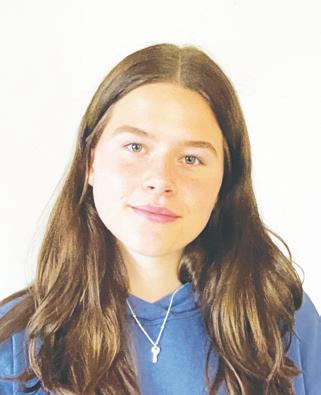
The Blake disciplinary committee consists of three faculty members, Warren, and eight students. “The student voice weighs pretty heavily,” Warren claims. David Zalk, Mackenzie Mcllmail, and Kirstin Holm are the faculty for the CJB, while the students elected are Camila Pardo ‘27 and Drew Cheng ‘27, Charlee Jones ‘26, Chizo Nwokocha ‘25 and Romare Onishi ‘25. “I hope I don’t see too many people,” Nwokocha said. Regardless of their authoritative role, CJB always strongly considers the students’ interests.

New rules: useful or unnecessary?
Dillon Kaiser | Staff Writer
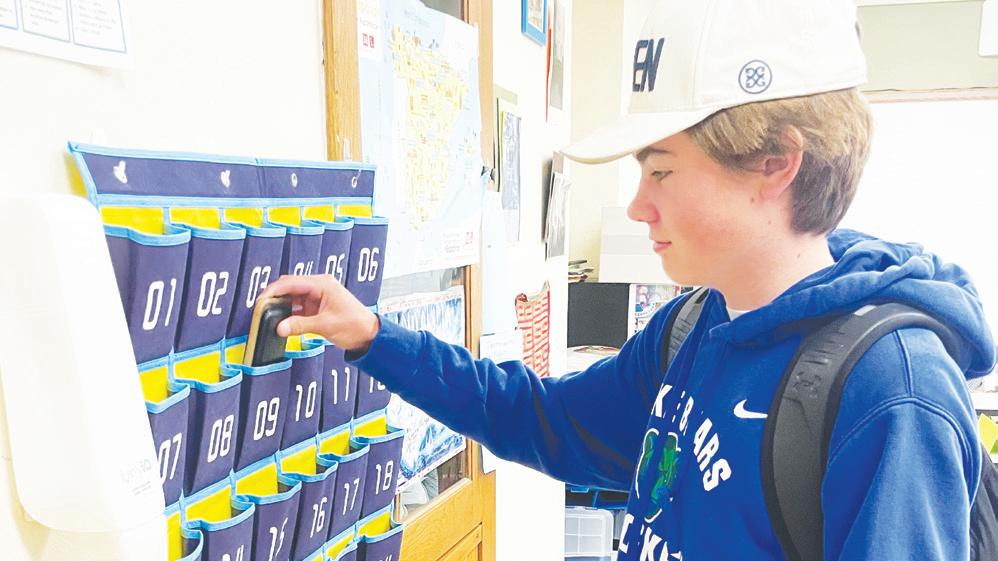
Anew phone policy was introduced to the students shortly before returning for the new school year. The email that every student received read: “Use of electronic devices of any kind in classrooms or study halls
is not allowed. Students will be required to store their cell phone in a provided location for the duration of each class unless the use is explicitly permitted by the teacher during that class meeting.”
Many students dislike the new phone policy, while others think phone cubbies are a good idea. Samson Skibell ‘26 says “phone cubbies help students focus
on their studies and limit the overall problem with cheating.” Limiting the ability to use phones during class could benefit productivity and prevent academic dishonesty.
However, some students believe they are being punished for the actions of others. Charlie Moore ‘25, argues that phone cubbies “are unnecessary and punish every student for actions
only some students make. Not everyone is always on their phone, and instead only some.”
Laura Rodríguez-Duran added her opinion, commenting that “[phone cubbies are] a wonderful addition to our class routine.”
Although the school’s new policy is relatively new, students and teachers already have mixed opinions on the phone cubbies.
The Blake School 511 Kenwood Pkwy
Issue II September 27, 2024
Co-Editors-in-Chief:
Gabriella Marmet | Yoni Zacks
Managing Editors:
Steven Cao | Camila Pardo
Page Editors:
Tarun Gopalakrishnan
Rayan Nasir
Faith Zhao
Ben Aviles
Evie Chow
Lilah Johnson
Business Manager: Sam Tomczik
Adviser: Anna Reid
PUZZLE MASTER: Charlie Dean
STAFF WRITERS:
Anna Tao, Charlee Jones, Izzie Miller, Dillon Kaiser, Caitlin Strauss, Eva Gleason
COLUMNIST: Ethan Klaiman
BECOME A STAFF MEMBER:
Contribute to the paper three times consecutively to be promoted to a staff writer!
JOIN SPECTRUM:
Spectrum meets in Room 351 during both lunches every Tuesday. Please come if you are interested in writing, drawing, designing, podcasting or taking pictures for the newspaper.
LETTERS TO THE EDITOR: Disagree with something that’s in the paper? Have an opinion you want to share? Like to draw editorial cartoons? Take a stand and speak out. E-mail letters or editorial cartoons to spectrum@blakeschool. org or deliver them to room 351. Please limit letters to 400 words.
MISSION STATEMENT:
The primary purpose of the Blake School Spectrum is to report news and to explain its meaning and significance to our readers and the community. We hope to inform, entertain and provide a school forum for the unrestricted exchange of ideas and opinions.
STYLE STATEMENT:
Spectrum uses Associated Press (AP) Style as of the February 2020 issue.
Leo Mithun ‘28 and Alex Mithun ‘27 enter the east doors at 8:15 a.m.
Confusion, anger enters with newly implemented rules
Yoni Zacks |
Co-Editor-in-Chief
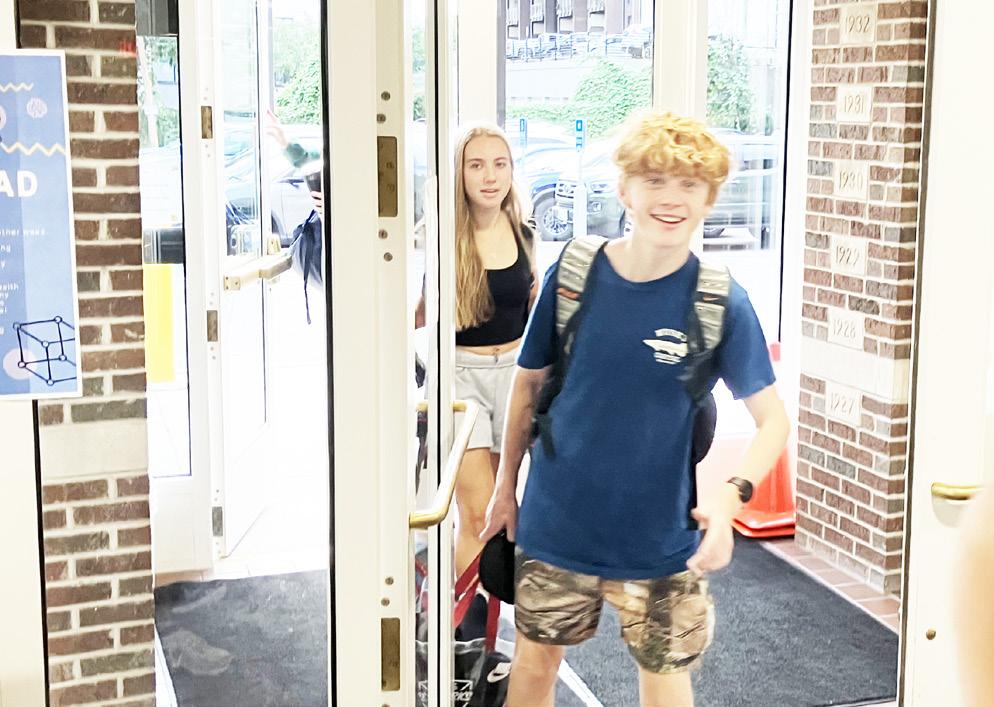
Imagine this: You’re running late to class because of traffic. You rush to the east entrance door, only to find it locked. You look at your watch: 8:51, it reads. Devastated, you realize you have to walk around the building, making yourself even later to school. This isn’t just a hypothetical. For students such as Romare Onishi ‘25, this situation has become a reality. “It’s kind of inconvenient... I don’t mind going through the front really, but I think in the winter, it’ll be a drag,” Onishi said. As soon as the announcement was made to the entire community in the
JNA, the lighthearted tone of a deans’ assembly transformed into confusion and frustration. A few weeks later, students are still confused. “I don’t understand it…people are just going to walk in through the [Kenwood doors] instead,” James Thornton ‘25 said.
Sabina Peterson Rajalingam ‘25 echoed Thornton’s statements: “I feel like it’s not really necessary, and it’s kind of annoying [to go] out and go get something and come back in.”
Alan Hodder ‘25 questioned the reasoning. “Why can’t I go through the [east door]? Why is everyone near the [east door], everyone comes in through the [east door], who have off-campus privileges, but we’re not allowed to go back in through the [east door]?”
However, not all students share that frustration. Fuzz Aafedt ‘25 believes that
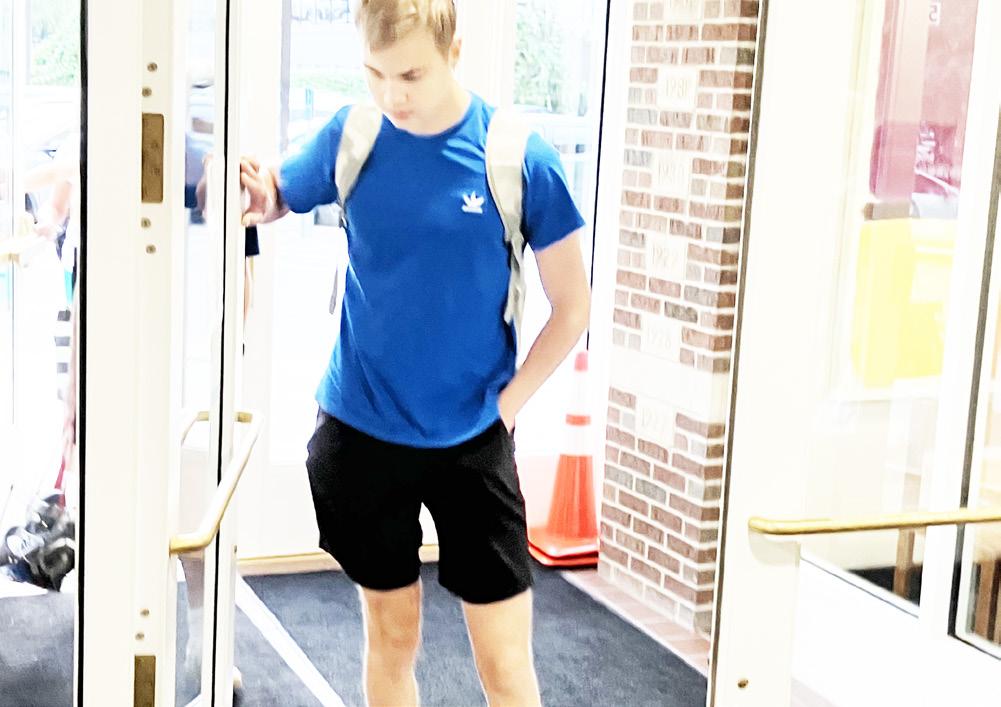
locking the east door is “the right call.” While it has been a struggle with construction, Aafedt thinks that “it keeps the students honest, having to actually get to school on time… it obviously sucks having to wake up earlier in the morning, but I think, I think it’ll be something that we all get used to pretty quickly,” he continued.
Assistant Director Sarah Warren revealed that these changes had been considered for a while. “[Locking the East Door] was a conversation that [former Upper School Director [Joe] Ruggiero and I started with Gene Palauskas last year, but I believe the final decision was made by [Maren] Anderson at the start of this year,” Warren said. Anderson stated that the final decision was made by a committee including her, Warren, the deans, and the security staff.
Isabella Valdesolo | Contributing Writer
Ben Aviles
Warren said that locking the door is an attempt to mitigate the sign-in problems that have recently plagued the Upper School: “Last year, we had quite a few issues with students not signing in or signing out, and that issue seemed to be particular to the east door. Some of that was about staffing, like if a security guard was walking around the building rather than sitting right at that door…that skyrocketed the number of people who wouldn’t sign in and sign out.”
Anderson added that the issues were related to the perception of freedom students have, but also included, “If we start seeing students responding better to the sign in sign out policy, [reopening that door is] something we can consider,” Anderson added.
Read the full article online at blakespectrum.org
Staff ensure building functions easily, efficiently
Camila Pardo | Managing Editor
“Ithink a custodian is someone who takes care of the building and maintains it,” said Aditi Gandhi ‘27 when asked what a custodian means to her. More often than not, people don’t think twice about when items that were broken the day before miraculously are fixed the next day. Students walk into the brightly illuminated school without thinking twice. Teachers step through the
gaping doors of the Upper School without thinking twice. Students and faculty walk on the freshly cleaned floors. Without. Thinking. Twice. So, who exactly is in charge of maintaining the school? The custodians.
Jason Gronlund , the Upper School’s Interim Maintenance Lead, discussed his role at the school. “So, being the lead maintenance guy...kind of means that I oversee the whole building: projects, anywhere as from say if a teacher puts in something that is broken, I have to go to the room and fix it.”
“It’s all the little things that you don’t even think about like trash duty, just
all the handyman stuff between the kitchen, all the hallways, alarms, stuff like that,” Gronlund said. Though their work often goes unnoticed, custodians’ work is imperative to keeping the campus clean, organized, and safe.
Gronlund works from Monday through Friday from 6:00 a.m. to 2:30 p.m. His morning consists of “walking around, opening up all the buildings, unlocking doors, turning on lights, checking alarm panels, making sure everything is set for the morning.”
The school works off of a request system meaning that when extra maintenance is required, the teacher or
faculty member will send a request via email to have it taken care of.
Aside from ensuring that the building is being well kept and maintained, custodians also ensure certain events occurring within the building are flowing with ease.
Gronlund illustrates, “Other than [repairing], it’s just setting up for different events... cleaning them up, [and] just trying to keep the building running as best as possible.”
Despite lacking knowledge of who custodians are, their work is extremely important and is arguably the face of the school’s success.
Questions of Biden photo exclusion squashed
Lilah Johnson | Page Editor
Reporting by Gabriella Marmet
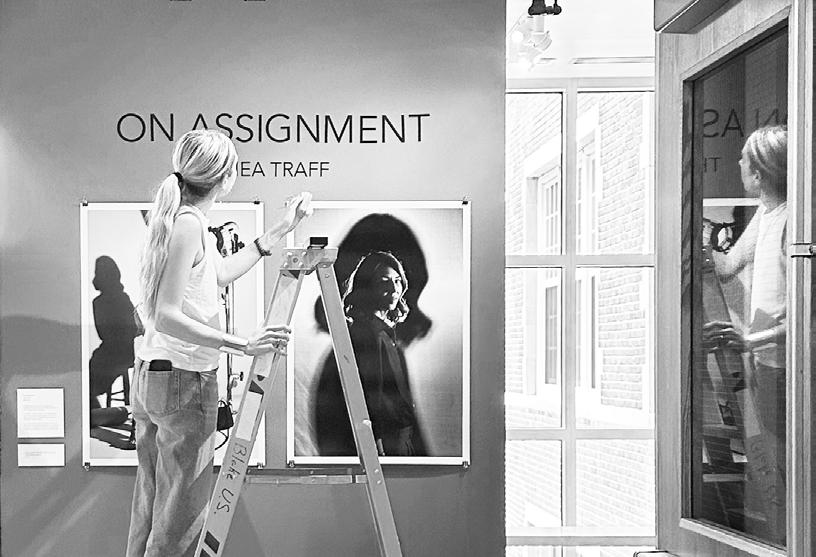
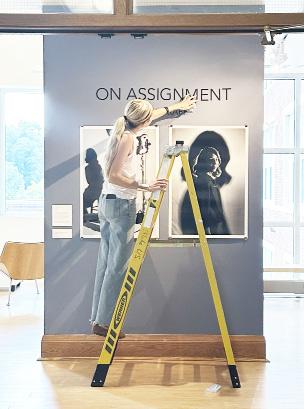
Featured Bennett Gallery artist Thea Traff ‘09 has photographed many celebrities, including Post Malone, the Rolling Stones, Jessica Chastain, and Billy Joel. All these photographs hang in the Bennett Gallery this fall, but one notable person she’s photographed isn’t featured: President Joe Biden. Rumors circulated that the photo of Biden was withheld for political reasons, but that rumor has been debunked. Bennett Gallery curation team member Margaux Henderson

‘25 clarified, “That was actually more of an aesthetic reason than any political reason.”
For this show, the committee gave Traff input on what photos she wanted to include. Henderson shared, “This show it was more her decision because she’s the artist, and it’s her show.” As for the supposed controversy, Henderson said, “When
we’re hanging artwork, we don’t really care about the background of it, because art is art…The main reason was because everyone else she photographed in the gallery were either scientists or artists, and we just felt that the portrait was kind of out of place in the gallery… [it had nothing to do with] the election or anything.” Traff was given the
opportunity to photograph Biden in the Oval Office in March for the New Yorker. She had 20 hours to get on a plane to get to the White House for the photoshoot. She photographed Biden as he conducted an interview, which is a very different photography style than she typically does. The photo, along with many others, is available on her website (theatraff.com).
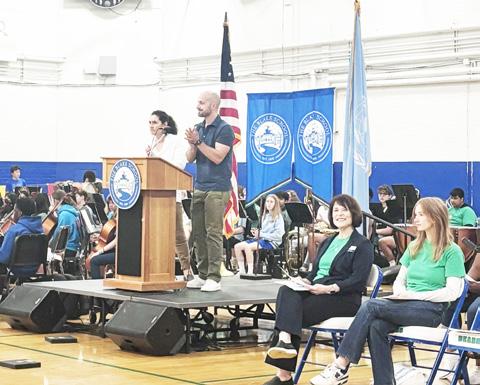
Every year since 2005, Convocation and Legacy Day have allowed the school’s community to gather together to mark the beginning of a new school year and engage in community activities. This year, new students and faculty were welcomed to the traditions, and others reconnected with peers. The energy was high with an annual banner parade, motivated by cheers from the large audience. The Upper School band and orchestra led the school in singing the Alma Mater before speeches were given by Head of School Anne Stavney and Student Body President Zellie Olson ‘25 Performances by Middle and Upper School choirs followed before Legacy Day groups reunited to welcome new students and younger kids to Legacy Day traditions. In all, Convocation was jampacked with fun activities and time spent together as a community.
However, it’s equally important to acknowledge the purpose of the event and why it’s a fundamental day in the school year. Lisa Sackreiter , Director of Community Service and a member of the Convocation planning team, believes the event is beneficial to the community as it enables us to “remember that we are one school”. The day gives us a chance “to have opportunities to get to know each other across those grade levels.”
Aanya Pandey ‘25 noted that Convocation is “a nice way to feel a part of the community” and is a “nostalgic and fun community event that they[students] look forward to.” For Pandey, a highlight of the morning was the “close relationships with the people in my [her] group, including getting to know the lower schoolers and their hobbies.”
New members of the community were introduced to Convocation for the first time. Milo Richard ‘28 a new student, described his first Legacy Day as “exciting and overwhelming because there were a lot of people there, and I don’t know a lot of people.” Richard commented that he “feel[s] like I’m[he’s] a part of something special with Convocation.”
Rayan Nasir | Page Editor
Dillon Kaiser | Staff Writer
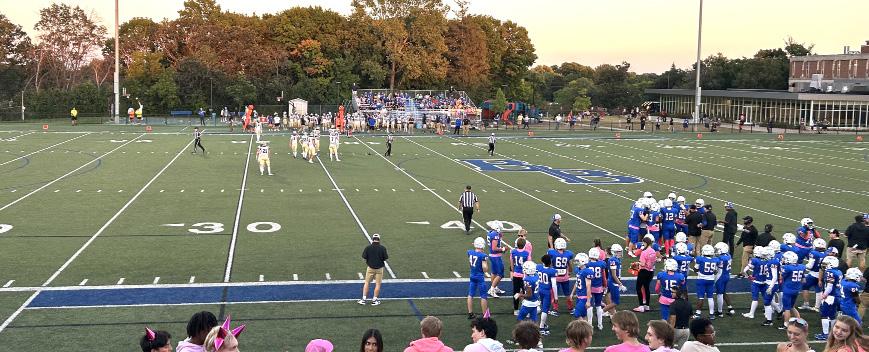
The SMB Wolfpack (St. Paul Academy, Minnehaha Academy, The Blake School) has had their ups and downs these past few seasons, but are still playing strong. The Wolfpack has had success in the past, with extremely long win streaks and a state championship title in 2018. Now, the team looks to reignite the success they once had and become a
winning team.
So far this season, the team has been playing hard and strong, though their record may not reflect this. Bart Glover ‘26, a tight end, offensive and defensive lineman, said, “The effort is there and I think a lot more so than previous years…it’s looking optimistic.”
The lack of wins have been tough for the team, especially mentally. It’s taken a toll on team morale, but the team is trying their best to push through.
Jack Ulland ‘26, a tight
end and linebacker, commented, “The team culture has been getting better.” The team’s camaraderie has been extremely beneficial for players throughout the program.
Glover said, “I love that dynamic and I think that that’s really helpful for adversities like this that we are facing.”
Nick Russeth ‘27, the team’s starting quarterback, said, “The team chemistry is unexplainable in my eyes. Everyone knows everyone and it’s such a good environment.
To make it grow we have been doing team bonding activities every weekend.”
“This season, more so than any other…the environment was totally different, we’ve worked hard as a program. This year there’s been so much stress on putting it all out there.” Glover added. High student attendance encourages the players to give it their all.
Russeth adds, “The support from our peers can make a drastic difference especially if the stands are getting loud and the other
team can’t hear the play calls, it can also just affect the overall vibe of the whole team knowing their friends are watching from the stands.” Something they’re working towards is better communication, both on and off the field. Glover said, “We’re becoming a more vocal team… if there’s something wrong personally or with a player on the field.”
Injuries have been holding the team back. Russeth explained this further by saying, “the most challenging moment of the season
so far is the injuries we have faced losing out top guys, we have overcome it with the new guys and younger guys stepping up and doing their jobs.” With the team chemistry being extremely high, the players have learned to lean on each other to stay motivated. Russeth, Glover, and Ulland all said that if you’re feeling nervous to start playing football, you shouldn’t be. The team would benefit from more players and the players and coaches are all extremely welcoming to all.
Players strive to create new legacy
Faith Zhao | Page Editor
Fiveseniors graduated from the Girls’ Tennis team last season (Amelia Bush ‘24, Daphne Dresner ‘24, Sophie Herron ‘24, Eloise Walsh ‘24, Nana Vang ‘24). The Class of 2024 played a crucial role in solidifying the BGT program. What comes next?
Reminiscing on the seniors’ legacy, Rhea Farhan ‘27 explained how, “the team is built off of what the seniors did,” who created an, “open environment where you can be yourself and not be judged.”
While this has been a bittersweet transition, Michelle Pham ‘27 disclosed that it’s the end of an era and the beginning of a new journey. “I think it’s just time to let go…we’re all starting to adapt. And I think over the summer, we’ve all gotten better.”
Building off of the environment that the se-
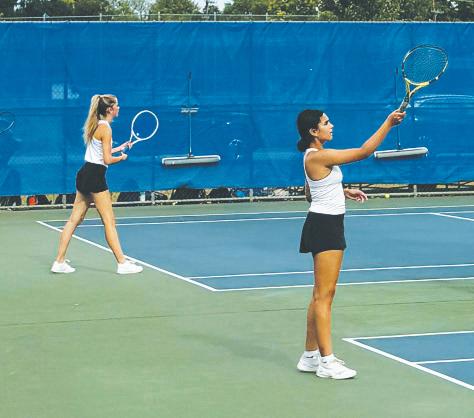
niors created through team dinners and bonding experiences, the team strives to move forward while still carrying their legacy.
The defending state champions in Class A, the young team strives to reach state again for a chance to defend their title.
“I think we’ll definitely get there because we’re a good team,” stated Farhan. The team has the tools and experience they need to further themselves in the postseason. However,
this starts with honoring the things that made this team so successful last year, while creating their own pathways.
Though she emphasized how she felt “something was missing,” Pham added that it was a “good opportunity” for this team to start stepping up into new roles and create their own legacy. Luckily, the program has a strong foundation and legacy built by the Class of 2024 that will only continue to grow.
This month’s mystery athlete article can be found online, at blakespectrum.org. Check out the article online to guess who this athlete is!
Strong chemistry brings #2 ranking
Tarun Gopalakrishnan | Page Editor
TheBoys’ soccer team is off to a phenomenal start in their 2024 campaign. The team only has one loss and is currently ranked #2 in Class AA.
Attacker Max Vezmar ‘26, who’s been on the team since his freshman year, believes the team’s experience is a big factor in their success. “It’s been generally the same group of people for about three years now and I think that really helps us.” The group has been able to bond over the years and “the chemistry is definitely there… it helps us on and off the pitch,” said Vezmar. Defender Charlie Moore ‘25 agreed with his teammate, adding, “Everyone is close with each other on and off the field. This translates to playing well on and off the field.”
Even though the team has been together for a few seasons, the atmosphere of the current team is definitely different compared to previous years.
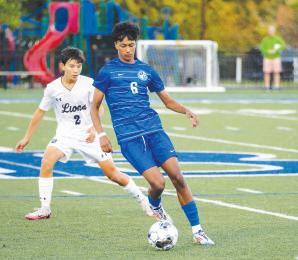
Vezmar emphasized this point, stating, “we have a sense of belief that we can go far this year and I don’t know if it’s always been there… this year feels like it’s the one.” The team has high aspirations this year as they seek to win the state championship at US Bank Stadium. “I definitely would back us to go all the way,” added Vezmar. “We’ve got the experience, the work ethic, the belief, and talent to push and go far.” With impressive wins against top ranked teams like Mahtomedi and HillMurray under their belt,
the team has proven that they have the experience and ability to go far. The team has accredited lots of its success to two-time senior captain Charlie Silvestri ‘25 Moore said, “[Silvestri] is a good leader on and off the field. He sets team activities every week [and] he leads by example on the field.”
Ultimately, this season, the last for many of the players, is shaping up to have a successful outcome. BBS is playing and working harder than ever, and they’re ready for what lies ahead.
Thea Traff ‘09 traces success back to time at Blake
Gabriella Marmet | Co-Editor-In-Chief
“Beingable to connect with new people is something I feel even more passionately than the photography itself,” said Traff. She has met many different people, including famous dancers, singers, actors, and scientists.
In September through late October, the Bennett Gallery will host the photographic artwork of Traff, who has worked for famous magazines like “The New Yorker” and “TIME Magazine.” Her current job, based in New York, is the “Editorial Photographer,” where she works for both magazines and newspapers.
Traff receives her photo invitations from the photo producers of the magazine or newspaper department, and they ask her to shoot photos of the interviewee on a certain day and time. Her photoshoots typically last one to two hours, depending
“[Bob Teslow] taught me so much about black and white photography, and at that time it was still the darkroom in the basement.”
on whether or not the subject is enjoying their time and wants to continue.
Outside of New York, Traff has been called to photograph in Hawaii, Chile, and Paris featuring elements of the world impacted by climate change.
Her career in photography emerged from her father who first placed a camera in her hand, as well as photo and printmaking teacher, Bob Teslow. As an “enormous influence,” Teslow taught Traff the techniques involved in photographing black and white images.
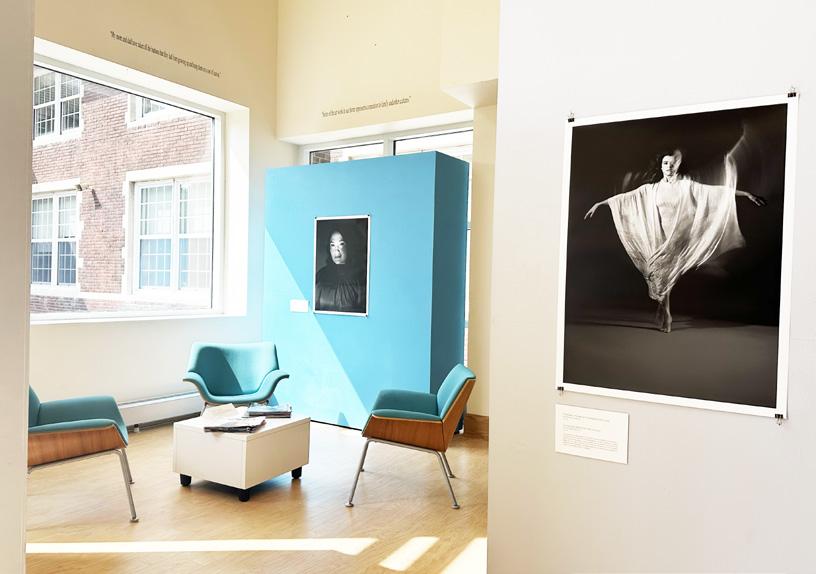
Her gallery, mostly comprised of images in black and white, reflects the grand influence Teslow held on her career. One of the gallery walls holds a singular photograph of Jessica Chastain, grabbing the eye of any viewer due to being the only colored image of the entire exhibit.
Traff’s career began as a photo editor for the New Yorker Magazine. She explained how without working in this social and mentor-heavy space, she would not have received the same fundamental techniques for photographing. “The New Yorker” and TIME Magazine were “really wonderful,” said Traff, “And I very much attribute any kind of information that I have now for photography to my years spent working in the magazines; working at those two magazines. My job at those two magazines entailed just hiring photographers and spending eight to twelve hours a day sifting through other people’s photography and working.”
Each individual photoshoot expresses the different personalities of all of the artists. While some of the images’ subjects pose in a more serious and

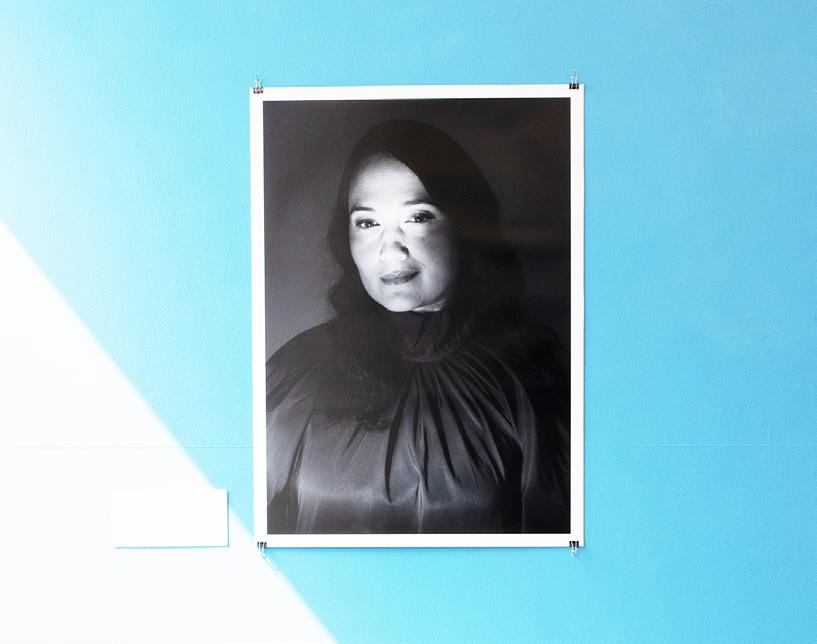
modern manner, such as Sofia Coppola, other artists took the liberties to have fun with their photo shoots; The Rolling Stones were able to express their personality through movement and smiling. Traff specifically noted Rachel Weiss, Post Malone, and Mick Jaggers’ photoshoots being some of her favorite experiences as a photographer.
On top of these subjects being beloved celebrities, she appreciated the way the subjects were creative, willing to take her suggestions, and someone who was easy to talk to. Traff mentioned during the Rachel Weiss shoot, “I really leaned into my creative direction in a way that is very rare, because as a subject, you’re really really wishing a lot of control to the photographer and on having them control your image that’s going to be seen by millions of people.”
When approaching certain photoshoots, Traff remains unclear on if the person she meets will be easy to talk to and photograph, but Mick Jagger specifically stood out, and not merely because she was a lifelong fan. He craved Traff’s advice on selections of clothing to wear, and played Afrobeats music in the background to dance around as part of the photoshoot.
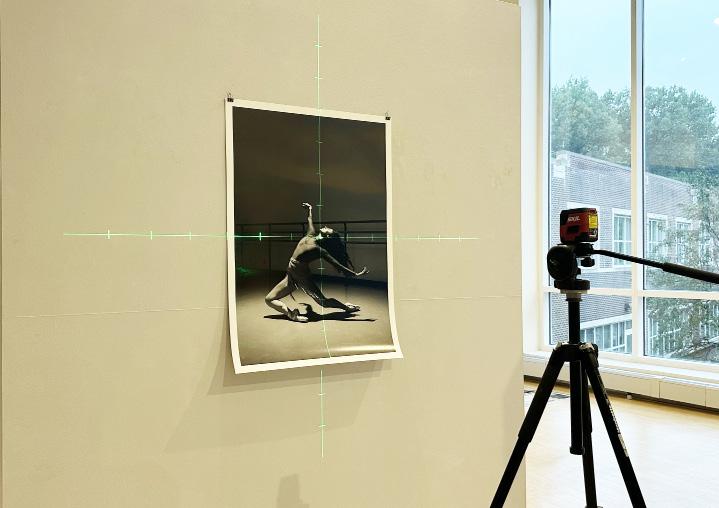
Each subject stood in a position that brought an aspect of their emotions and identity into the image. Many of the singers were photographed mid-song, the dancers hit positions of various moves, and the actors stood confidently in their images. Traff’s deep love of shooting dancers comes from their movement quality and emotions that are easily expressed throughout the image.



Gustavo and Kate Romero have set out on a mission unlike any other. They look to galvanize Mexican food into a new understanding in two different ways.
The first of these paradigms is centered around corn. They created a restaurant named “Oro by Nixta,” which has corn as the centerpiece. Kate Romero explained this sentiment by saying, “[Corn is] no longer something that’s just a filler. It can be the star of a dish.” Gustavo Romero describes the role of corn in his Mexican heritage, saying, “If you take the maiz from Mexico, then you strip like a huge part of our identity and our culture.” Corn has been a part of the culture since the time of the Aztecs; as Gustavo Romero said, “We [Aztecs] moved away chasing animals to hunt, but we always brought corn with us… we would start all the diets with corn.” However, the corn that they are using is not the typical sweet corn so frequently
of the corn that grows in this area is not good for consumption… because some of this generically modified corn, they need certain [terrible] chemicals to be able to grow... They [varieties of corn] are actually banned in a lot of countries.”
In light of this, they use corn native to the Americas, which has systematically been destroyed in the USA. Gustavo Romero believes, “By exposing people to this type of corn.. [we] protect it [corn]. The more we use it, the more we make people aware of what we have. And the more people use it, and the more people understand it.”
The second part of their mission to galvanize Mexican food is to redefine the old, tired, and beaten stereotype of Mexican food. Gustavo Romero describes, “I think the idea that they [America] has about Mexican food was very wrong. Thinking it was supposed to be cheap
and that it’s supposed to be kind of like a second-class kind of food.”
Kate Romero jumped in quickly with an anecdote, saying, “We still get people here who’ll say I’ll have a side of rice and beans. And I’m like, well, that’s not on the menu, you know? And those things, although they are consumed there, they’re also like a filler. So that’s not what we want people to have here.” They look to channel an authentic experience of Mexican food through a redefinition of corn and a change to the classic menu, which takes Mexican food out of a “second class,” and firmly affirms it as an equal to any other cuisine. This restaurant has flourished into a renowned restaurant locally and is breaking onto the national scene, with Bon Appétit naming it one of the best new restaurants in 2024 and Nixta by Oro being nominated for a James Beard Award in 2023.
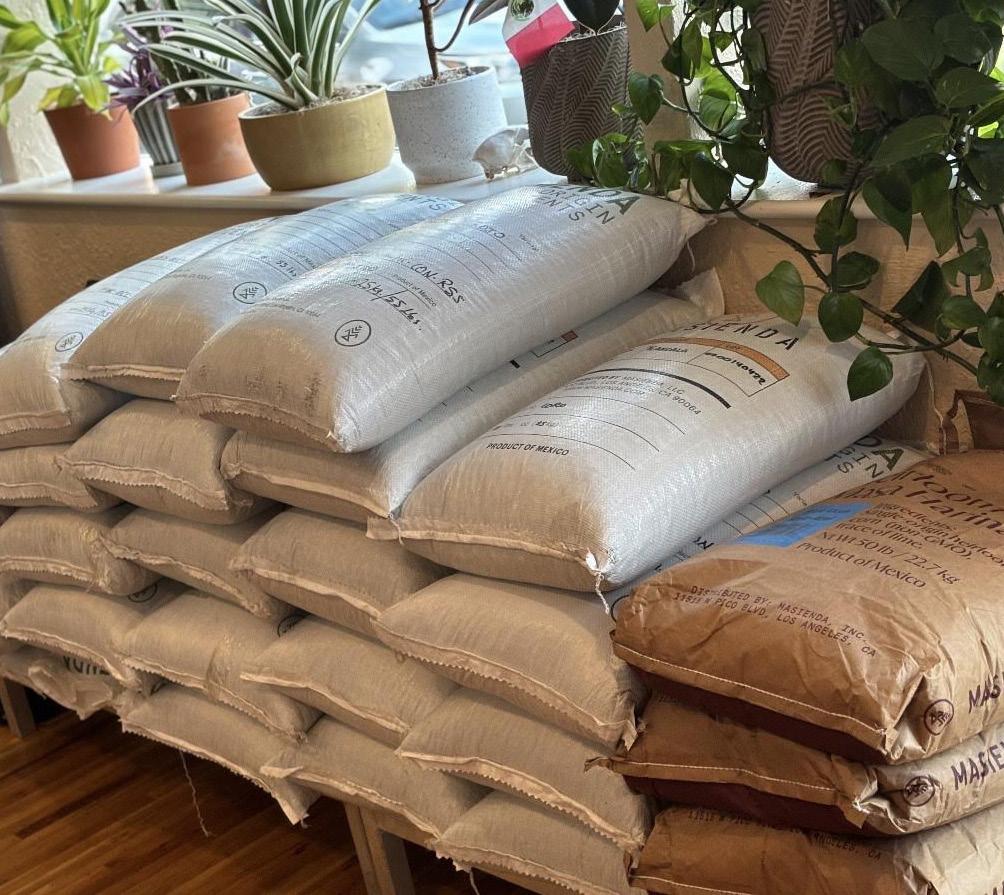

Uponreading these reviews, I decided to review the food myself at my home on a clear evening during sunset in September. The co-owners suggested that I try their pollo con mole, chochoyotes mofongo, and tamales.
The first dish I tried were the tamales, which were notably more hefty and dense than your typical tamal. To be completely honest, I have never been one for a tamal. I’ve tried and tried, but I simply cannot love them. So, unfortunately, I was least impressed by these, mainly because of my personal biases.

On to the surprise delight of the meal. Originating from Veracruz, Mexico, the chochoyotes are these little balls of heaven. They were made out of a plantain-based fried masa, which added a sweet joy to the dish,
along with the bacon jam that sat underneath. These two ingredients combined truly brought surprising happiness to my taste buds, as I had never heard of this dish before.
Finally, a dish that was nothing more than and nothing less than perfection. The pollo con mole was by far and away the best dish of the night. This was the dish that I took my last bite of, just so that I could have that complex chocolatey goodness left on my tongue as a reminder. They called the dish “pollo con mole,” but this really needs to be called “mole con pollo,” as the mole truly dominated the scene on this dish, and the chicken was but a background actor. The complexity of this mole is hard to grasp for a mere mortal like me.
There were so many flavors, all working together to sing this one collective song without contradictions.
Despite the variety of flavors, none of them impeded upon the others but rather built upon the previous flavor, bringing along the best of the old flavor and adding a delightful twist. On top of this, the chicken stupendously played the role of a supporting actor, creating a canvas for the mole to paint on.
With the flavors nothing but a fond memory now, I yearn to go back. I want more of the food from these two people who started from unlikely beginnings to revolutionists in a redefinition of Mexican food.
As Kate Romero said, “I think the idea that people have about Mexican food was very wrong. Thinking it is supposed to be cheap. and it’s supposed to be kind of like a secondclass kind of food.” I implore you, the reader, to take up the “gospel of corn” and experience this delicious redefinition of a genre of food.
ed
Ben Aviles | Page Editor
Let’s talk for a moment about voting. As a collective community, the vast majority of us cannot vote, but that is not the point of this article. So often, we focus on the national presidential race, Kamala Harris this, Donald Trump that. But, can you name the woman who may take over as Minnesota Governor (the Lieutenant Governor) if Harris gets elected? Does Peggy Flanagan ring a bell? Currently, she is the highest-ranking Native woman in the United States, yet I doubt that few of us know who she is, and much less can name any of the initiatives that she has been a part of, despite her being from Saint Louis Park, not even five miles away from the Upper School.
All I ask for is a moment’s stop in the madness of the lack of attentiveness. The Minnesota Legislature passed 155 bills, while the United States legislature passed a total of 78 bills. That is, very nearly, two bills the Minnesota Legislature passed for every bill that the United States Legislature passed. The 155 bills passed by the Minnesota Legislature are filled with laws that can directly affect many aspects of our lives. Yet, can you name me your Minnesota Senate representative?
Yes, Civic engagement is excellent, but we, as Minnesotans, will not decide the national election. What we, as Minnesotans, can affect is our local politics. We have the power to change the community around us in order to create a community we see fit. There are massive numbers of local races this November, including many state senators and state house representatives. There are enormous amounts of district judge elections (many running unopposed, a grievance of its own), school board elections, and city council elections all throughout the Twin Cities. To not participate in and understand these elections is not only an injustice to ourselves but to our wider communities. This is meant to be a democratic republic, but if we lose sight of local civic participation, we risk the democratic part of that system.
Evie Chow | Page Editor

As fall rolls around, Trader Joes’ fan favorites have started to hit the shelves again. I consider myself to be a diehard Trader Joe’s fan, and I was super excited to be able to taste test just a few of many fall-themed foods and beverages. From new to returning items, you’ll want to try some of these before they sell out!

The first item I tried was the Apple Cider Donuts. I personally love apple cider donuts, and I’m pleased to say that these did not disappoint. They had that classic old-fashioned donut look covered in cinnamon sugar, and I found the apple flavor not too artificial or sweet. While these were good at room temperature, they were phenomenal after being warmed up for around 20 seconds. This gets a 10/10 from me, and I highly recommend these to any sweet treat lover this fall season!

Another item I tried was the Honeycrisp Apple Granola, an item I found slightly underwhelming. Although the apple pieces had a nice balance of both sweet and tartness, the rest of granola was lacking some flavor for me. As someone who likes to snack on granola, I’m not sure I would eat this alone again. However, after being paired with some plain greek yogurt, my rating went up because I thought it gave the yogurt a nice subtle aftertaste. I give this item a 6.5/10.

The next item I tried was definitely my least favorite- the Pumpkin Butter. The first thing I noticed was that it had the texture of applesauce and/or baby food, which instantly threw me off. However, I tried to keep an open mind and I spread it on an English muffin. Unfortunately, for me, the taste was just as bad as the texture- it had an overwhelming amount of spices which overpowered the pumpkin flavor. As I couldn’t even finish the whole thing, I rate this a 1/10.

Moving on to another pumpkin item, I was eager to try the Pumpkin Waffles. I was impressed with how little time these took to heat up, but upon trying them, I found the flavor a little bland. They kind of just tasted like regular waffles to me. However, for whatever reason, adding maple syrup to these enhanced the pumpkin flavor immensely. This brought my rating up to a 7.5/10.

classic fall beverage- Trader Joes’ Spiced Cider. I went into this with high hopes, but unfortunately, this cider didn’t cut it for me. My initial thoughts were that it tasted heavily of watered down apple juice, but the aftertaste had an overwhelming amount of spices. Although I’m not the biggest fan of apple cider, this was definitely a bit of a let down for me, and I give this a 3/10.
Ultimately, although some items fell short for me, I will defnitely be returning to Trader Joe’s as soon as I can to try even more fall-themed items before they’re off the shelves. Be sure to visit your local Trader Joe’s to check out this selection while it lasts!
Soccer and food making headlines
Caitlin Strauss | Staff Writer
Asthe school year begins, the leaves start to change color, the air gets colder, and Halloween decorations appear in stores, all reminders that fall is quickly approaching. Fall sports is a favorite activity for Blake students during the month of October:
Simone Templeton ‘28 explains that she enjoys playing soccer because it’s her “favorite sport.”
James Lewis ‘26 adds that his “favorite thing to do during October is play soccer. It’s so nice out, and if you wear a hat and gloves you won’t
Izzie Miller | Staff Writer
What is your favorite season? Many people would say summer, filled with long days of sunshine and joyful hangouts with friends. Now, we must leave those days behind as we transition back into 5-day school weeks. As the chilly autumn season approaches, many of us are still looking forward to all the fun activities the change of weather brings, even though we must leave. Whether with friends, family, or by yourself, there’s so many ac-
be too cold.”
Even though students enjoy outdoor activities during the month of October, the delicious fall food is another reason
baking things like cookies, pumpkin pie, and banana bread.” In addition to the food, traditional fall drinks are a well-loved aspect of fall:

why so many love the season so much. Juliette Zucco-Newhall ‘27 talks about her favorite foods during October, explaining that she “love[s]
tivities around Minnesota that makes fall a season to look forward to. Many looking for activities
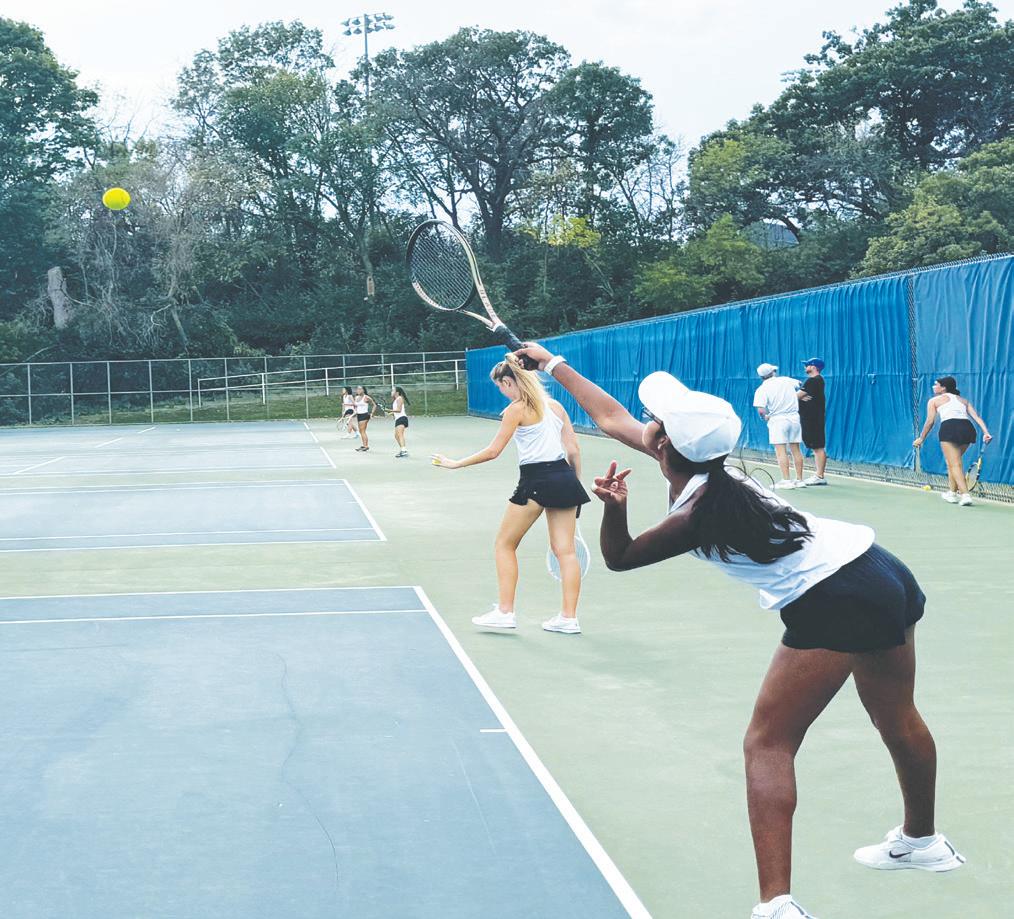
Fall sports are currently in full swing. The Blake Girls’ Tennis team, led by captains Regan Brass ‘25, Svara Arimilli ‘26, and Fatemeh Vang ‘27, just had a recent big win against SPA on September 19th, continuing their winning streak. Over on the turf field, Blake Girls’ Soccer celebrates their 6-0 win over the Minnehaha Redhawks on September 17th.
If you’re looking for more indoor activities, a more unique approach to carving pumpkins is paint-
Greta Guider ‘27 comments, “I love drinking apple cider because it’s just really good.”
For some, the best aspect of fall is their
ing them. Using sources on the web like Pinterest, you can search for ideas and concept art that people have painted in the past. Not only do you get to make the annual trip to a pumpkin patch, you get to explore a new way of customization!
Another fun idea is a fall movie or TV show marathon. Whether you’re into spooky, comedy, horror, or another genre, there are so many fall-themed movies to enjoy. Two of my favorites are the 1989 film Dead Poet Society and the coming of age classic Little Women. Share with a friend what your favorite fall activities are!
traditions each year with family and friends.
James Thornton ‘25 notes that his family “carves pumpkins together every year,” and Bethany Winter, the new librarian, adds that her family carves pumpkins together, too: “Grandparents come over and carve pumpkins with the kids, and it’s such a fun afternoon.” Winter also explains that she enjoys “going to the apple orchard” with her family and “spending the whole day there together.”
Madeleine Hou ‘26 says with a smile that in addition to continuing to go trick-or-treating with her friends on Halloween, one of her traditions during the fall
is to “go to apple orchards” since “it’s basically free apples.” Hou also explains that she makes her own costume each year, which is another aspect of fall that she enjoys. Oliver Engel ‘27 adds that one of his favorite Halloweens was when he made his own “airplane costume, which was really fun.”
There are many fun activities to do this fall, and the Blake community shares their closing thoughts on the season: Engel recommends that everyone should “try something new” this fall, and Winter suggests that we should all “just put on a sweater and go outside to enjoy the fall weather this year.”
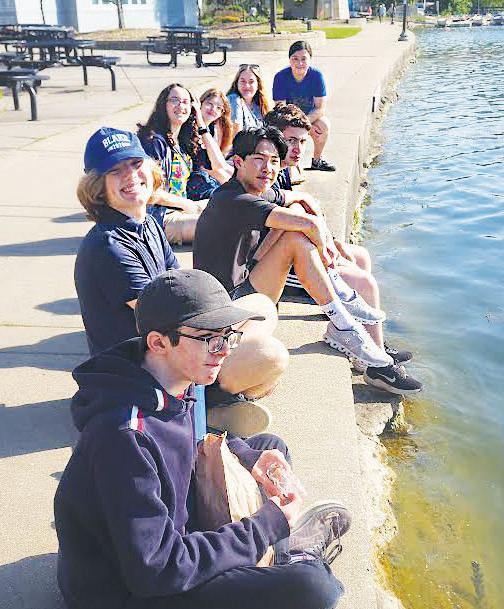
Many students have been affected by the abrupt change made by the security staff this year: locking the east doors five minutes after class starts each day. This change was made to encourage students to sign in when they enter the building, something that many students have neglected to do for as long as the sign in system has been in place.
However, many students are still not signing in and instead just coming in through the Kenwood doors, where nobody will see if students sign in. We as a Spectrum Staff believe that although students should be signing in and out every time they enter and exit the building, locking the doors was not the way to promote this.
The change was also made with no warning— students did not have time to prepare for this change to be made. It also makes leaving campus more difficult for seniors, because the east doors are the ones closest to the parking lot.
A common problem for students this year has been the increase in traffic, both on the freeway and simply entering the student parking lot. There has been an increase in construction, leading to bigger backups on main roads and there have been long lines almost every day trying to enter the parking lot.
Students are still trying to get back into the routine of school and figure out what time they need to leave in order to make it to school on time. We recommend taking back roads and finding alternative routes, as well as parking in the Kenwood neighborhood if it makes more sense for getting to school on time.
The Spectrum Staff believe that it is important to collaborate with the security staff to figure out a solution to this problem.
The security staff and administration have stated that they are open to student feedback on this project, so students must voice their concerns while also being open to other ideas to help incentivize signing in.
Anna Tao | Staff Writer
Another year, another adjustment towards Legacy Day. In the last few years, we’ve seen a major annual shift in the Convocation/Legacy Day tradition. The events were previously a singular day where groups would spend extended time together to bond and make significant changes.
Legacy Day once consisted of speeches, service, and bonding as one day in September; however, after COVID hit, Legacy Day faced some major changes. As Blake returned to learning in person, Legacy Day moved to April instead of September. The next year, Legacy Day was split into two half-days.
We now have the newest implementation: school after Convocation. In every Blake student’s experience, no year of Convocation/
Legacy has had the same policies since COVID. Whether you are new to the practice completely or attended Blake since Pre-K, not one person has recently experienced a consistent Legacy Day program, raising the primary question: is Legacy Day still a tradition?
With new-fangled additions to this cher-
the group, I was excitedly nervous to interact with both older and Highcroft kids. I distinctly remember the long trek with my high school buddies to the ice arena to pack food. We would play, eat lunch together, sit and talk— just enjoy the age differences between each other.
While not neces-
Not one person has recently experienced a consistent Legacy Day Program.
ished and unique Blake practice, the once-routine tradition is morphing into something unfamiliar.
In my experience, I can’t help but feel slightly cheated out of an experience I have desired since third grade. The impact of spending an extended period—beyond a half day—with older kids still sits with me. Even now, I vividly remember walking from the gym at Convocation to desperately trying to find my group number.
As I walked towards
sarily a universal Blake experience, Legacy Day provides an opportunity to form formative inter-grade relationships regardless of grade level. Unfortunately, the major experimentation with the schedule in these past years has arguably hindered these experiences.
I don’t inherently mind changing the traditions of Legacy Day—in fact, I believe many welcome new additions. For example, even younger ELC kids are now paired with 9th graders; a mu-
tually positive experience. Even schedule change isn’t necessarily a problem either; however, the issue lies in the shortened bonding time established in a halfday and the additional required school afterward. Jojo Arlowe ‘25 corroborates this, furthering that “everyone was excited last year when we had that half day and then just go out, maybe hang out with some friends.”
Arlowe notes that the half-day wasn’t necessarily disliked initially, as it provided some free time for students. She also states that “it was still nice to have that hour and a half break, but for some people, I know it was a little short… which caused people to come back to class a little unfocused.”
Arlowe brings up a notable point: students may come back unfocused after spending time with both high-energy kids and with friends. Even if a half day itself is not unwelcome by the majority of the student population, the idea of school after Convocation is not favored.
New rules are overcorrection
Charlee Jones | Staff Writer
This year, the school has introduced an updated cell phone policy which requires students to place their phone in a phone hotel or “photel” for the duration of class.
The aim of the policy is to separate students from their phones during class in order to remove distraction and encourage engagement. However, the flaws in this policy prevent students from reaping any of its alleged benefits and instead turn the photel into nothing more than another inside complaint among students.
In each of my classes, teachers watch as you enter the room and place your phone in the photel, but this does not stop anybody from avoiding the rules. I have witnessed my peers do anything from avoiding eye contact with the teacher to placing an
old broken phone in the photel instead of their actual one. Now let me be clear, I do not share these experiences to encourage teachers to be more strict with their policy, but I share them in hopes that the administration will realize that this policy is not effective at helping students focus and is instead adding to their already long list of stressors.
ognizes the flaws in the policy, saying,“the people that wouldn’t have their phones anyways do put them in [the photel] but then the kids that would go on their phones anyways just keep it in their pocket because it’s not like the teachers are checking.”

Ihate competition. Yes, I understand that competition is one of the most important cogs in the machine we call modern society, but I hate competition. You can jump higher than me? Sick, good for you, now hop away rabbit. You can run faster than me? Sick, run away now. Competition is a natural thing, and although it is completely justifiable because where would we be now if there was no competition, it irks me to my very core. I find myself often desiring to separate myself from even the thought of competition, making the idea of staying in one place and soaking in your own bodily filth incredibly appealing to me.
and that they have no trust in us. They are putting no responsibility in our hands for our own learning.”
She suggests that if the school is really interested in keeping kids off their phones “they should have individual
“This is the dumbest thing Blake has implemented since objective based learning.”
Students were not given a say in this policy nor notified of it ahead of time, resulting in each of us contemplating how we would change the policy. I, like many others, wish that the policy be treated as a response to student cell phone use, and not the baseline. Many students don’t have a problem with going on their phones and feel that the policy is unnecessarily extreme.
- Kai Capistrant ‘25
hotels so if one kid is always on their phone just take their phone.” She questions: “why do we have to take everybody’s?”
In addition to its flawed execution, the phone policy is detrimental to the relationship between the students and the administration. Guider shared that the policy makes her “feel like [the administration] think that we are lower than adults
Greta Guider ‘27 rec-

Evan Darmawan, Aanika Gadia, Ben Passi | Contributing Writers
Ginger ale and tomato juice are only good on airplanes
Apple isn’t that much better than other technology companies
Roller coasters are overrated
Spooky season should last for two months, specifcally September and November
Spiders are cute
Taylor Swift is an overrated musician, half of her songs sound the same
Pineapple on pizza is delicious
Cereal is a soup
Not only does the policy take away students’ autonomy, but some students find it even harder to focus without their phones. Kai Capistrant ‘25 believes that the phone policy is actually counterproductive, saying, “this is the dumbest thing [the school] has implemented since objective based learning. It does nothing and it distracts people more than it makes them focus because of the fact that they are worried about keeping their phone on them all the time.”
Cole Eckes ‘26 believes that while he personally hasn’t been greatly affected by the policy, “sometimes you do have to use [your phone] in class, if you want to take a picture or something. So I [would suggest] making it not as extreme so you can still use your phone if it’s called for in class and it’s not in a bin on the wall.”
Water has a taste
Celery tastes awful
Snakes are really cute
Barbeque is the best savory sauce
Christmas music should be listened to in summer
Sunday brunch isn’t that good, just expensive and good looking
I think that I can accredit a lot of hatred of competition to our extremely prestigious educational institution. Blake as an entity has not taught us to be competitive, it has taught us how to strive to be our best. The problem with the term “best” is that there isn’t necessarily a fair way to determine what you best looks like. For example, right now I have no way of knowing if this article is the best that it could be. This predicament makes it incredibly easy for one to believe that their best is determined by the best around them, allowing for competition to sprout in the cracks of our shells.
Fortunately for you, this article isn’t going to analyze the best way to dig yourself out of your selfconscious hole but it is more or less going to be a list of the things I hate. You are not cooler for getting less sleep. Stop trying to brag about getting an hour less of sleep than I do. I am sorry that you treat your body poorly and I would love to offer you some caffeine as a reward for your bad decisions. Furthermore, I do not care what your diet is. If you choose to be vegetarian then good for you but please do not keep telling me that you are.





“You