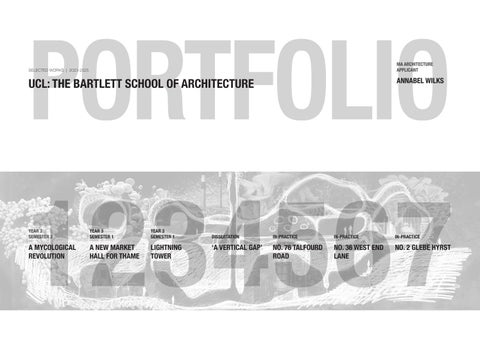
SELECTED WORKS | 2023-2025
PORTFOLIO
Year 3 Semester 2
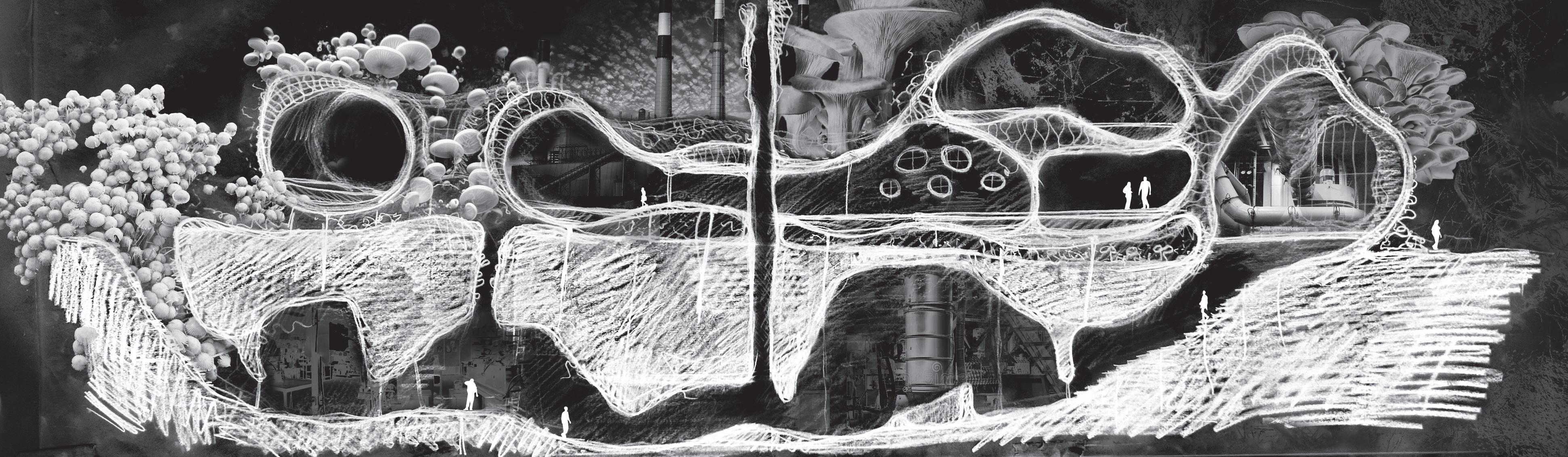
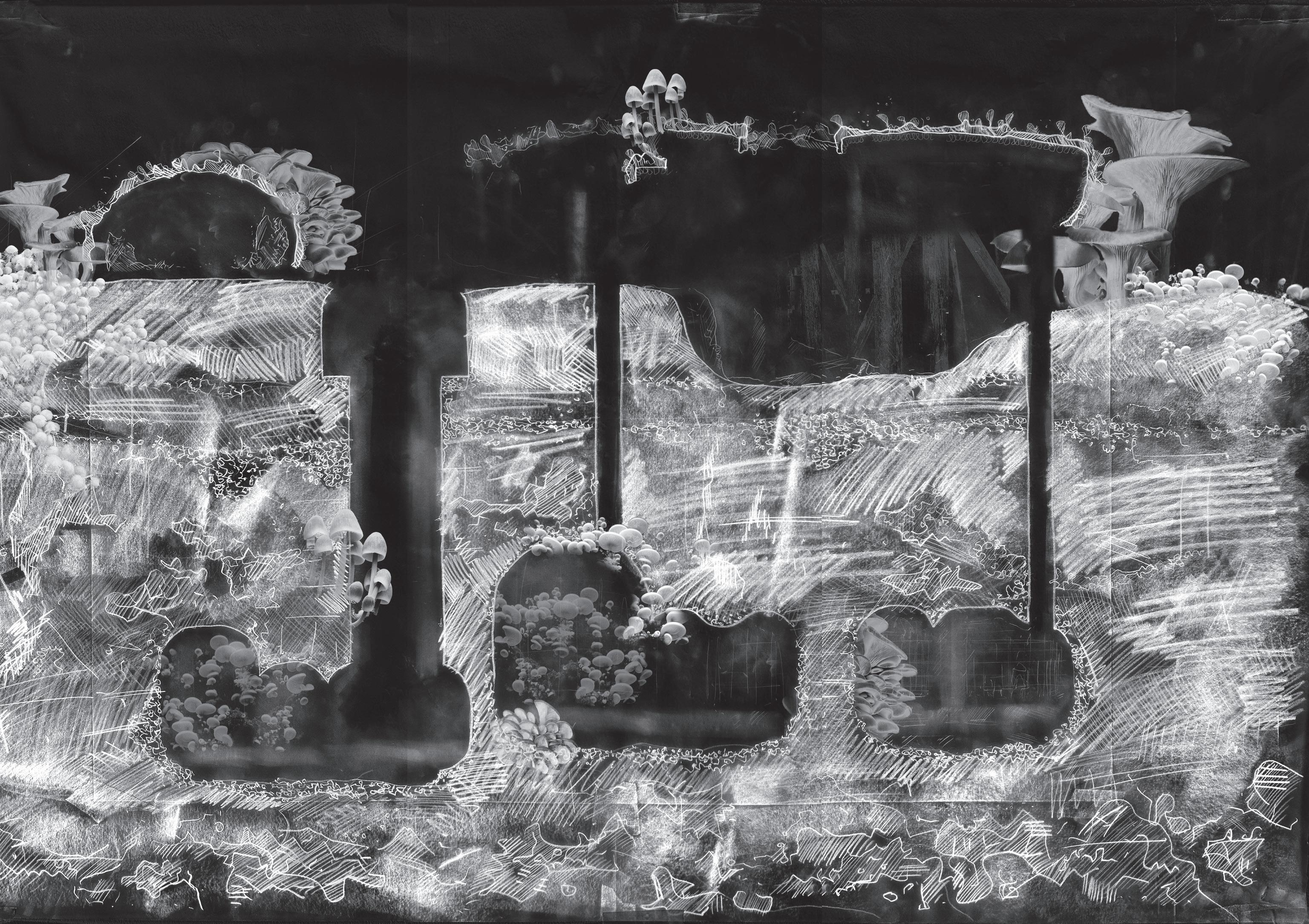
A Mycological Revolution
BRIEF
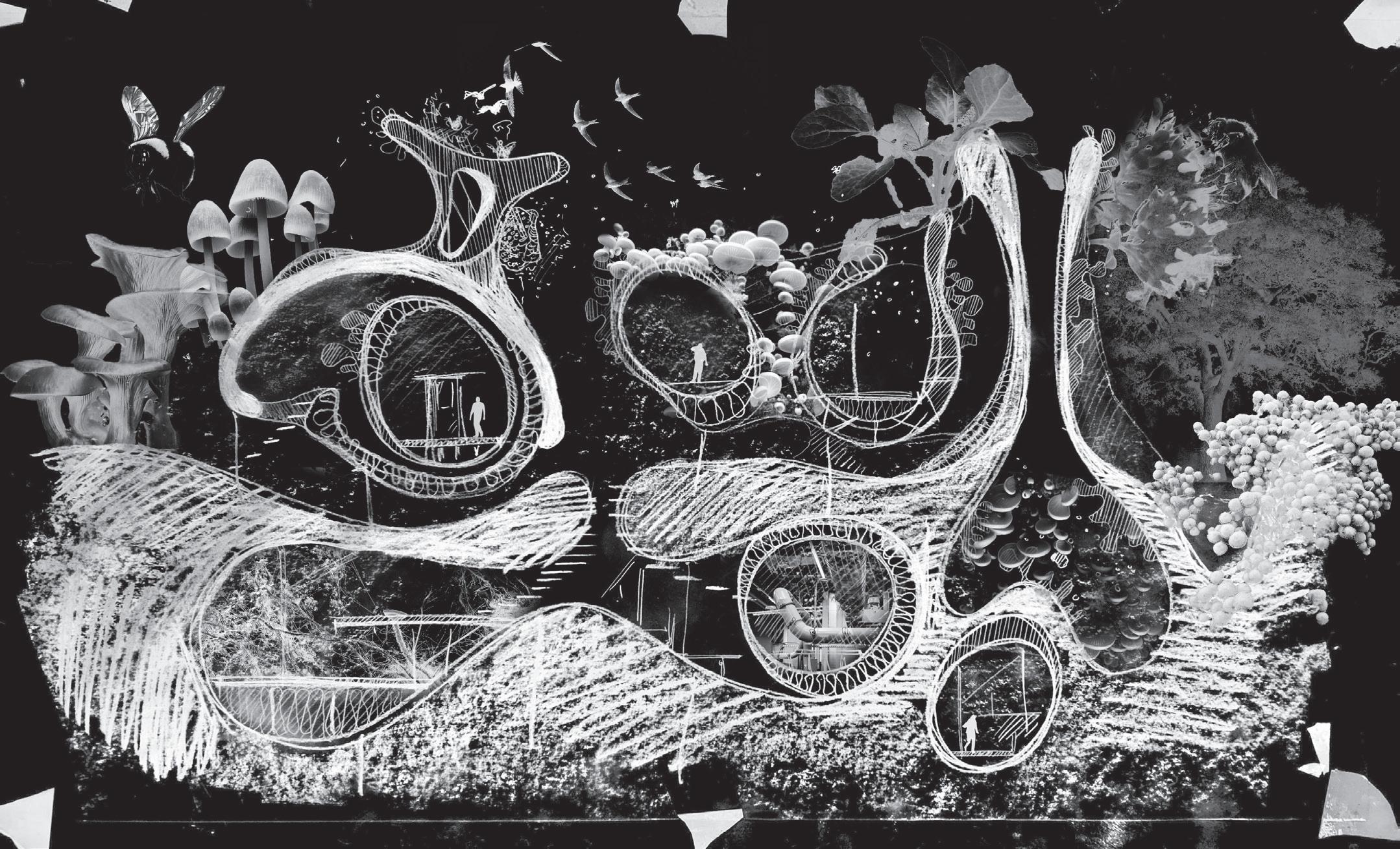
In this project I designed a mycelium growth facility and laboratory for the ‘mycoremediation' of UK brownfield sites.
This Architecture is a futuristic culmination of my ecologically focused design ideas and my proposal encapsulates and exhibits mycelium; its construction, restorative and circular properties, in a building which is designed to both live and decompose, leaving the site ecologically enriched at the end of its life cycle.
STRATEGY + DESIGN APPROACH
The remediation of the site is split into a three stage time line.
1. TOXICITY
2.REMEDIATION
3.ENRICHMENT
Using precedents and ecological research I related my design process to the site through physical model making and sketching.
CONCEPTUAL MODEL MAKING
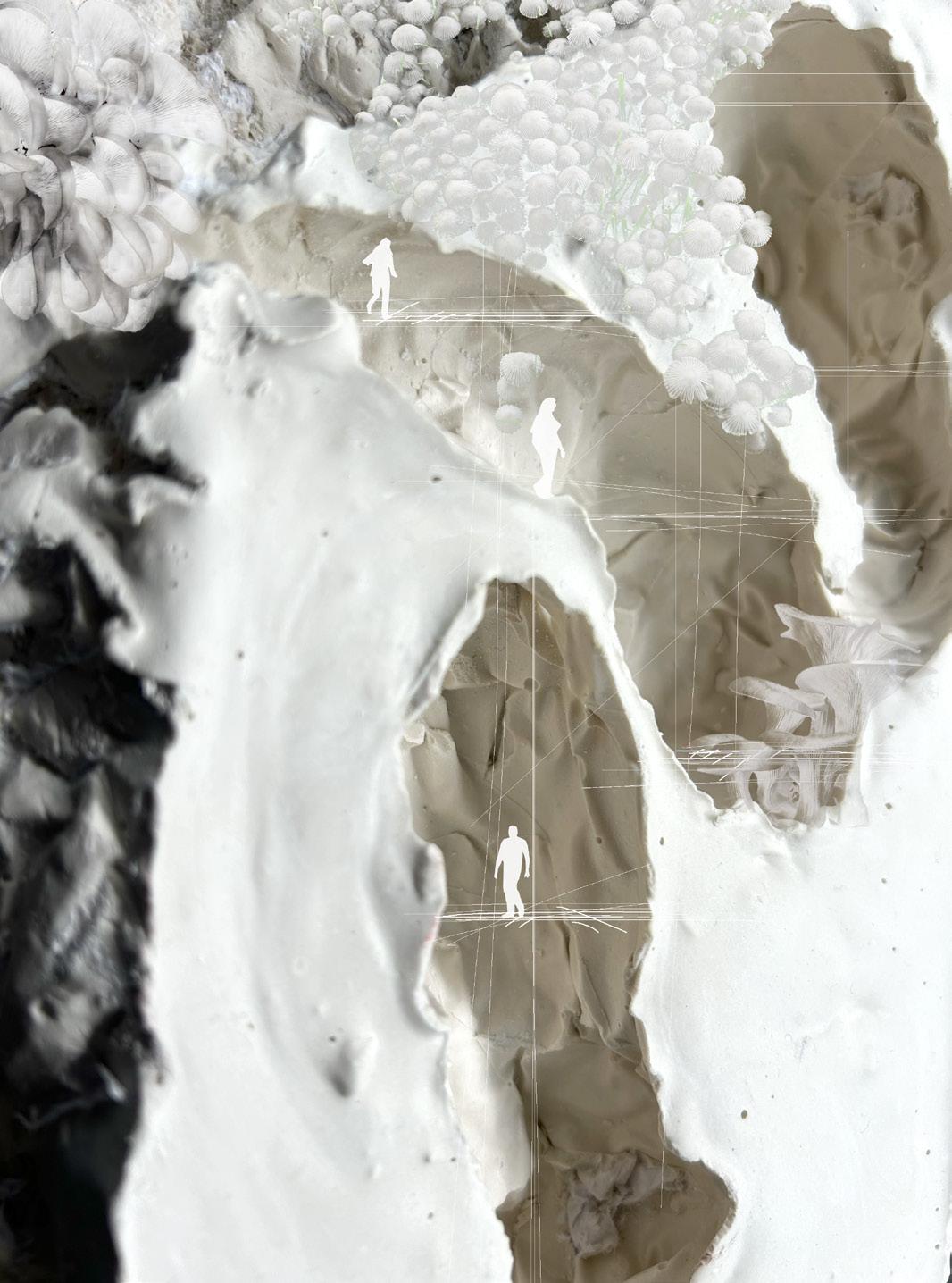
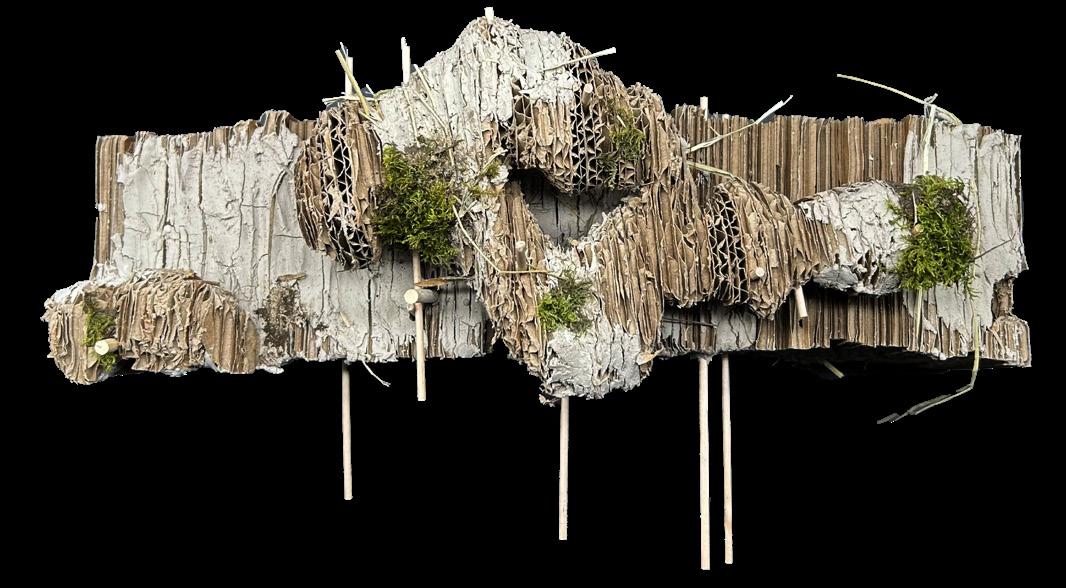
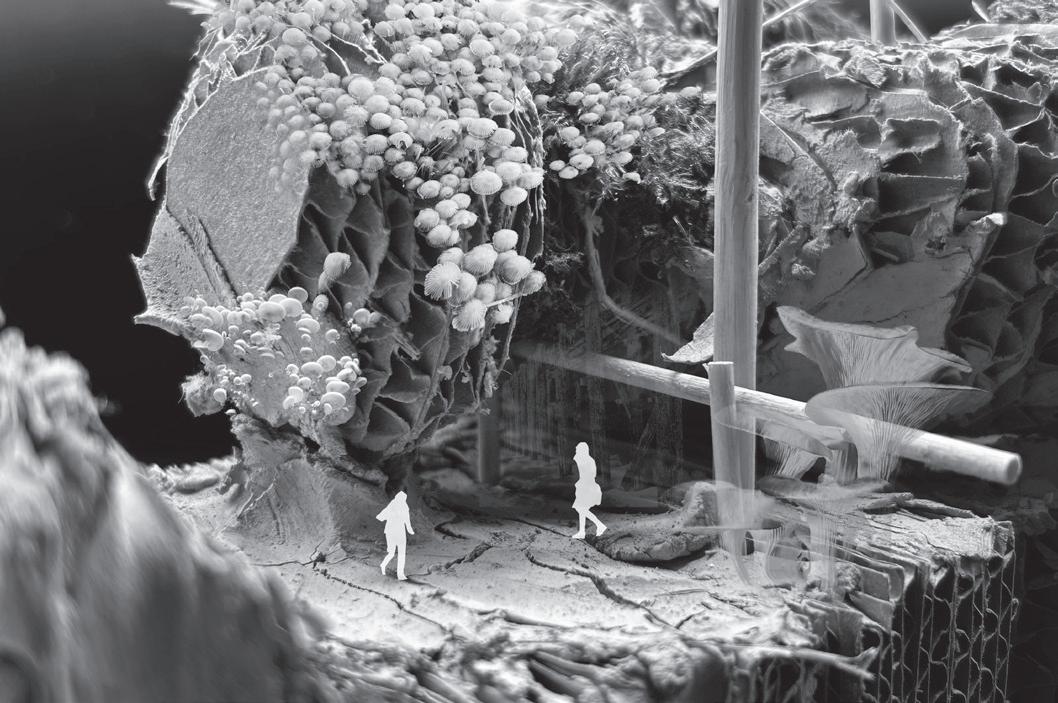
2. ‘An Entropic Return to Nature’ material stakeholders and multi-species thresholds.
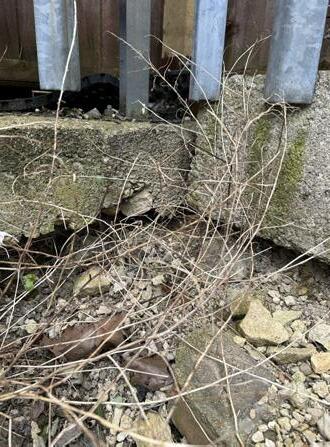
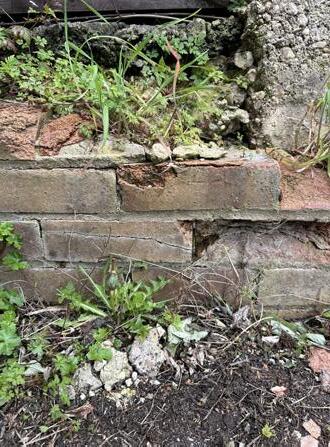
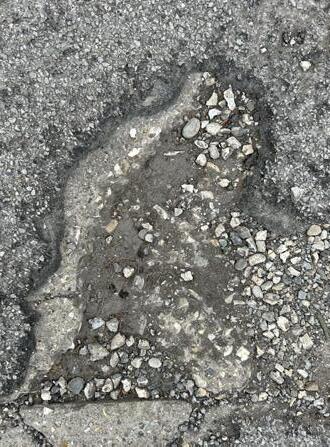
3. Industrial pollution and toxicity on site.
4. ‘Stereotomic Architectural Construction’ conceptual model making @1:200
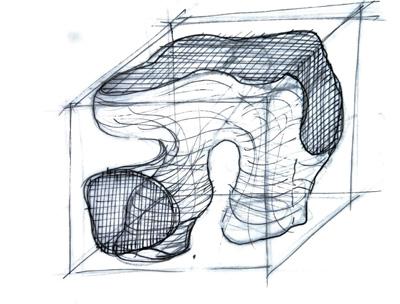
5&6. ‘Multi-Level Exploration into Form’ conceptual model making @1:200.
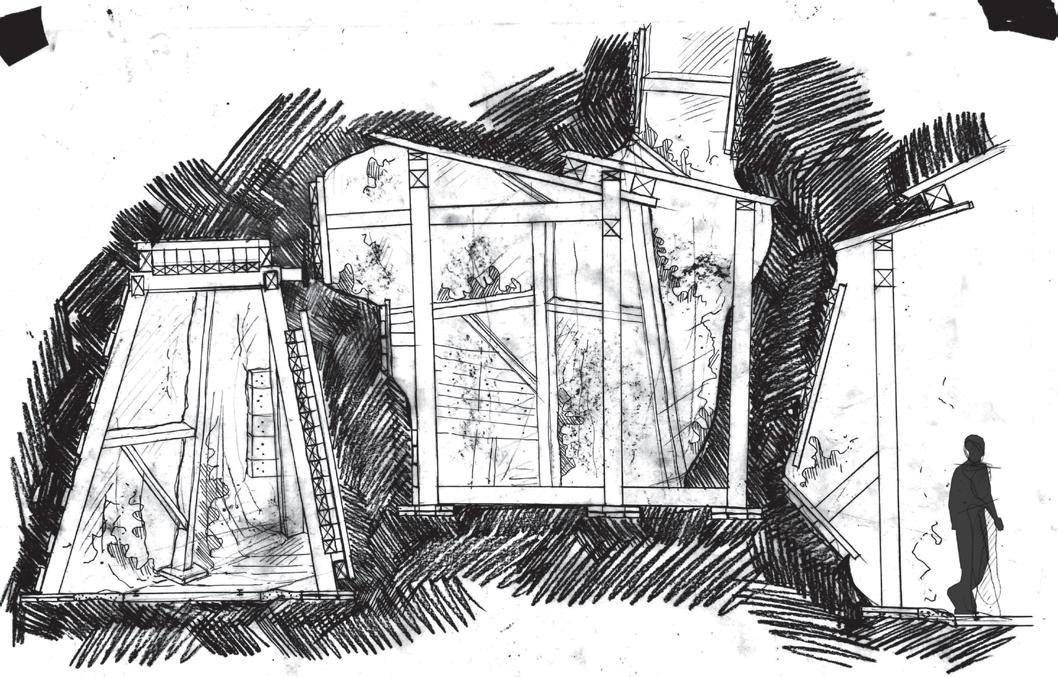
1. Built to Decay North Facing Section A-A 1:50 @A0.
TECHNICAL STUDIES - INVESTIGATING RELATIONSHIPS WITH THE ENVIRONMENT THROUGH MATERIAL, STRUCTURE AND FORM
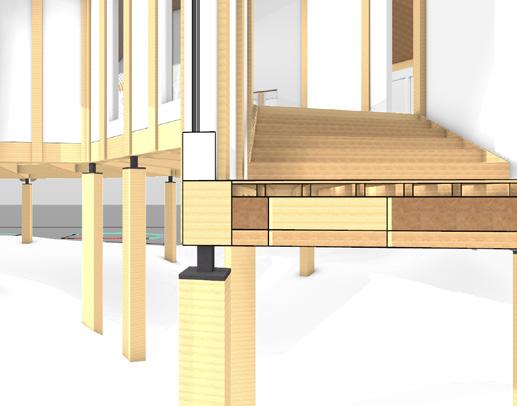
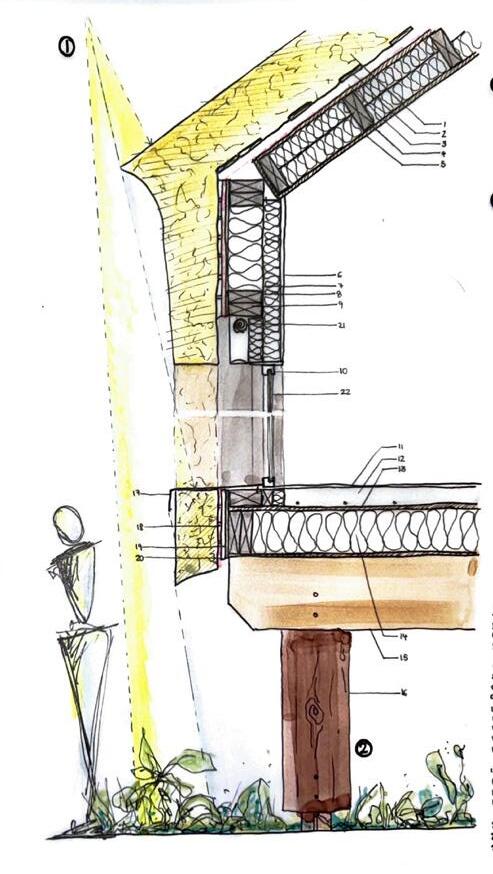
Suspended timber floor system
Encouraged ecological connection and growth with the building
Structural support, connection to ground
Underground spaces with structural reinforcement Earthy, mychorizal cladding: connected to the ground
Mycelium growth on underground exposed earth walls
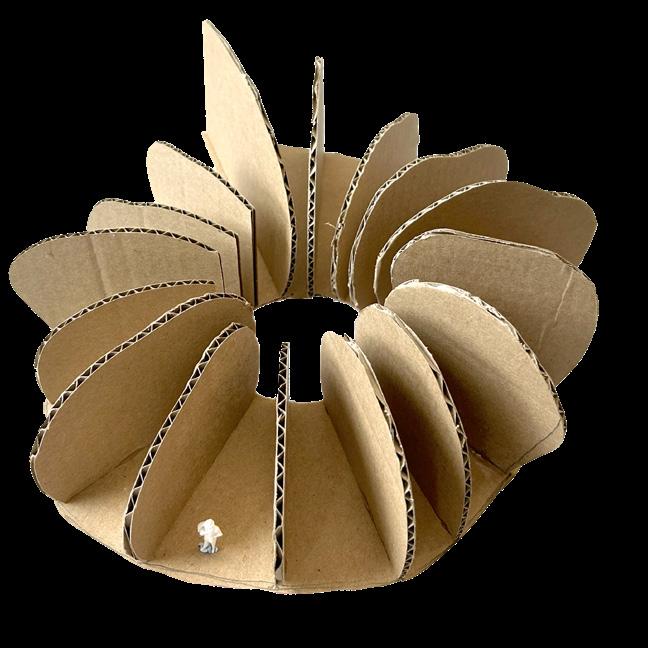
7. ‘Sun on Site’ Hand modelling @1.100.
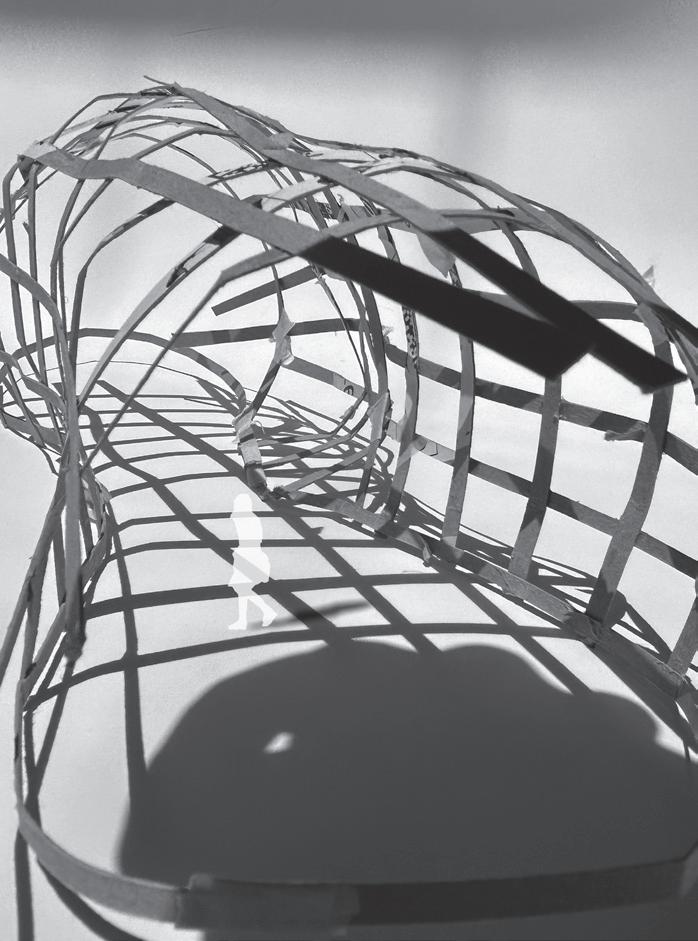
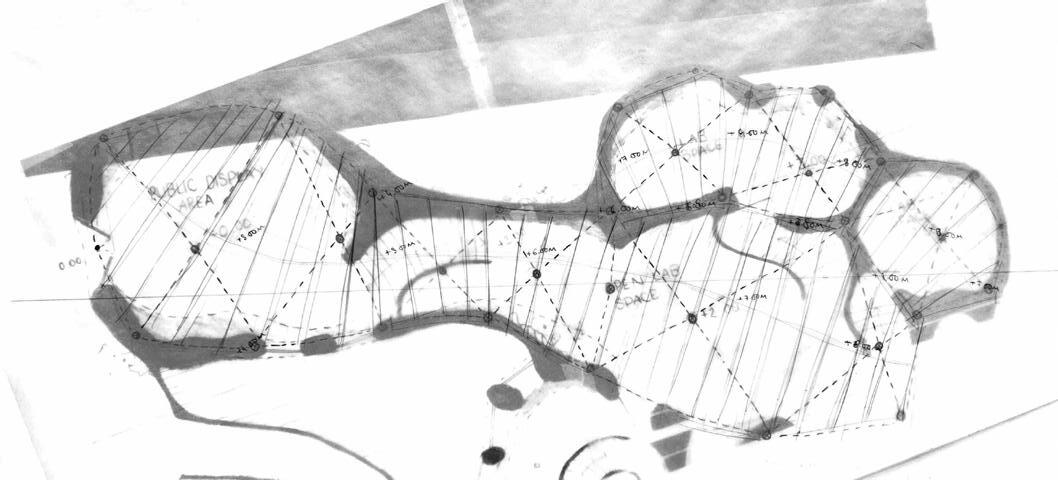
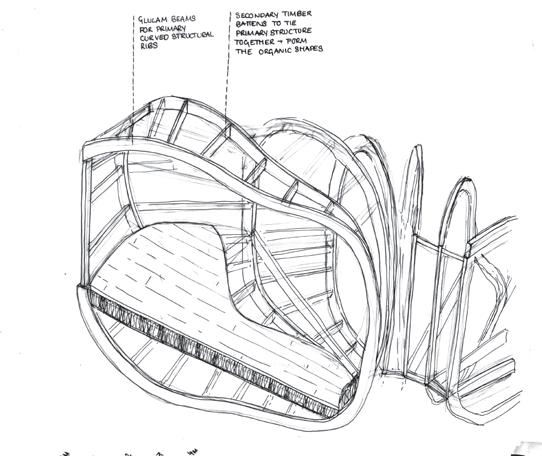
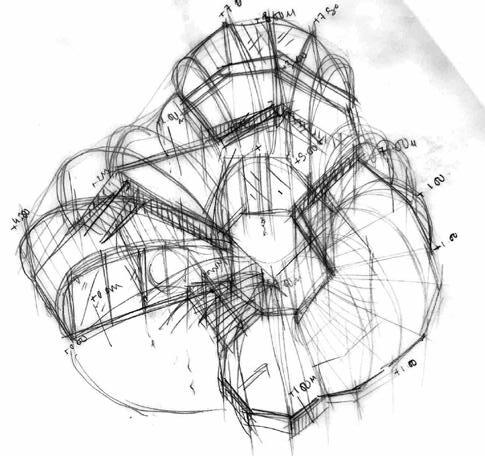
9. Exploring Structural Methods to Achieve Curved Forms
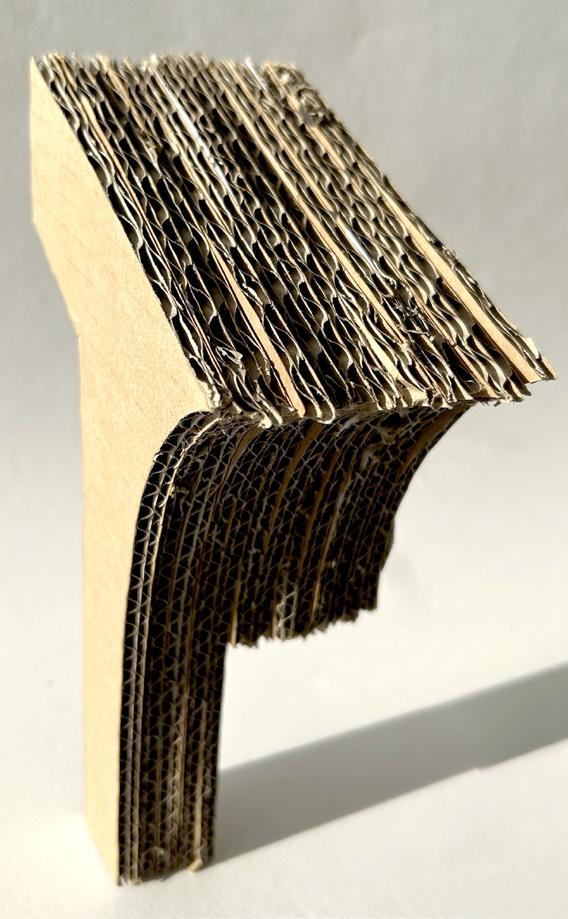
8. ‘Connection to Ground’ Hand modelled technical detail @1.20.
10. Investigating structural methods through sketch.
11. Exploring non-toxic tunnelling methods through underground structural precedents
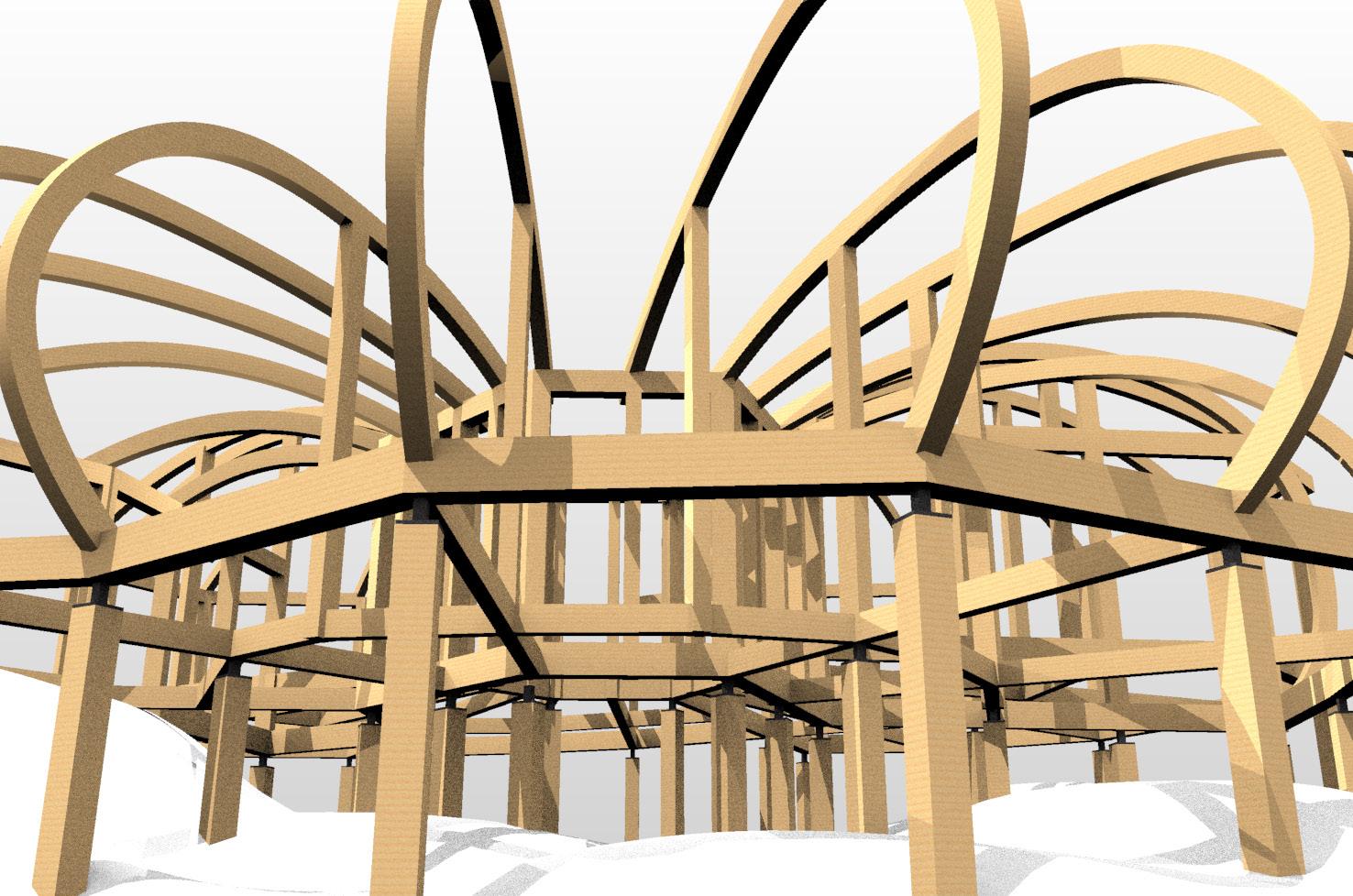
12. 3D modelling curved Glulam structure
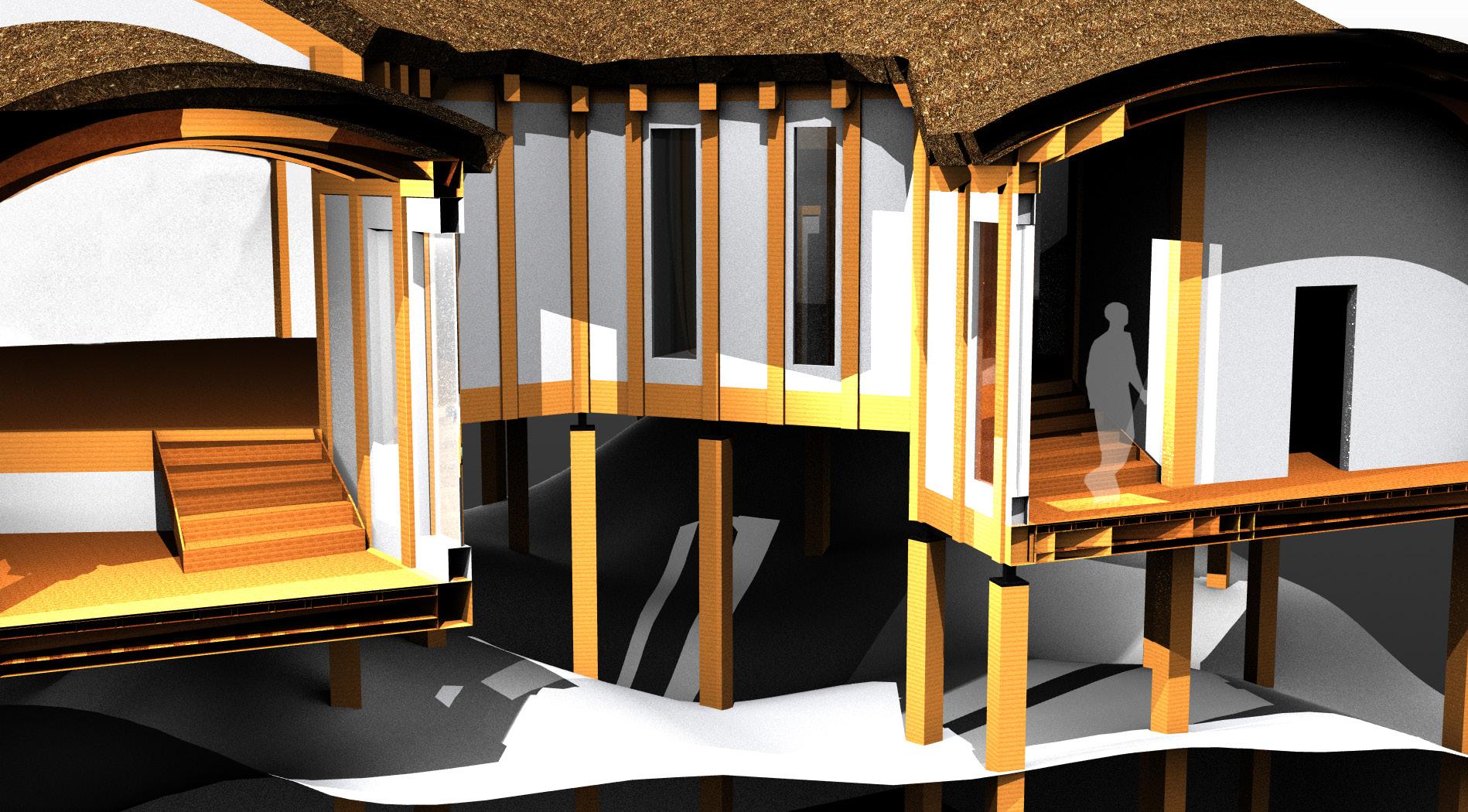
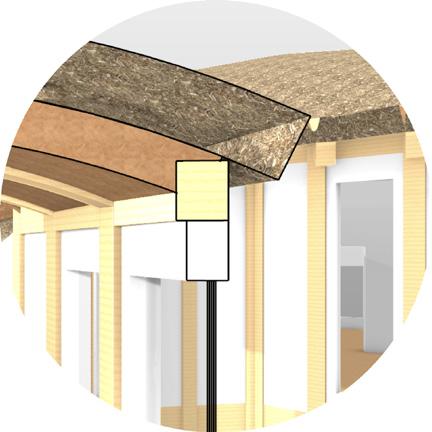
200x300mm Curved Glulam Beams forming a primary structural frame.
200x300mm Load Bearing Glulam Pillars supporting roof beams and holding framing for secondary walls and glazing.
50x250mm Timber Roof Joists acting as secondary cross bracing for the primary frame.
200x300 Timber Floor Joists acting as secondary structural frame and load distribution for pile foundations.
300x400mm Glulam Ring Beam holding primary structural frame and acting as load distribution for pile foundations.
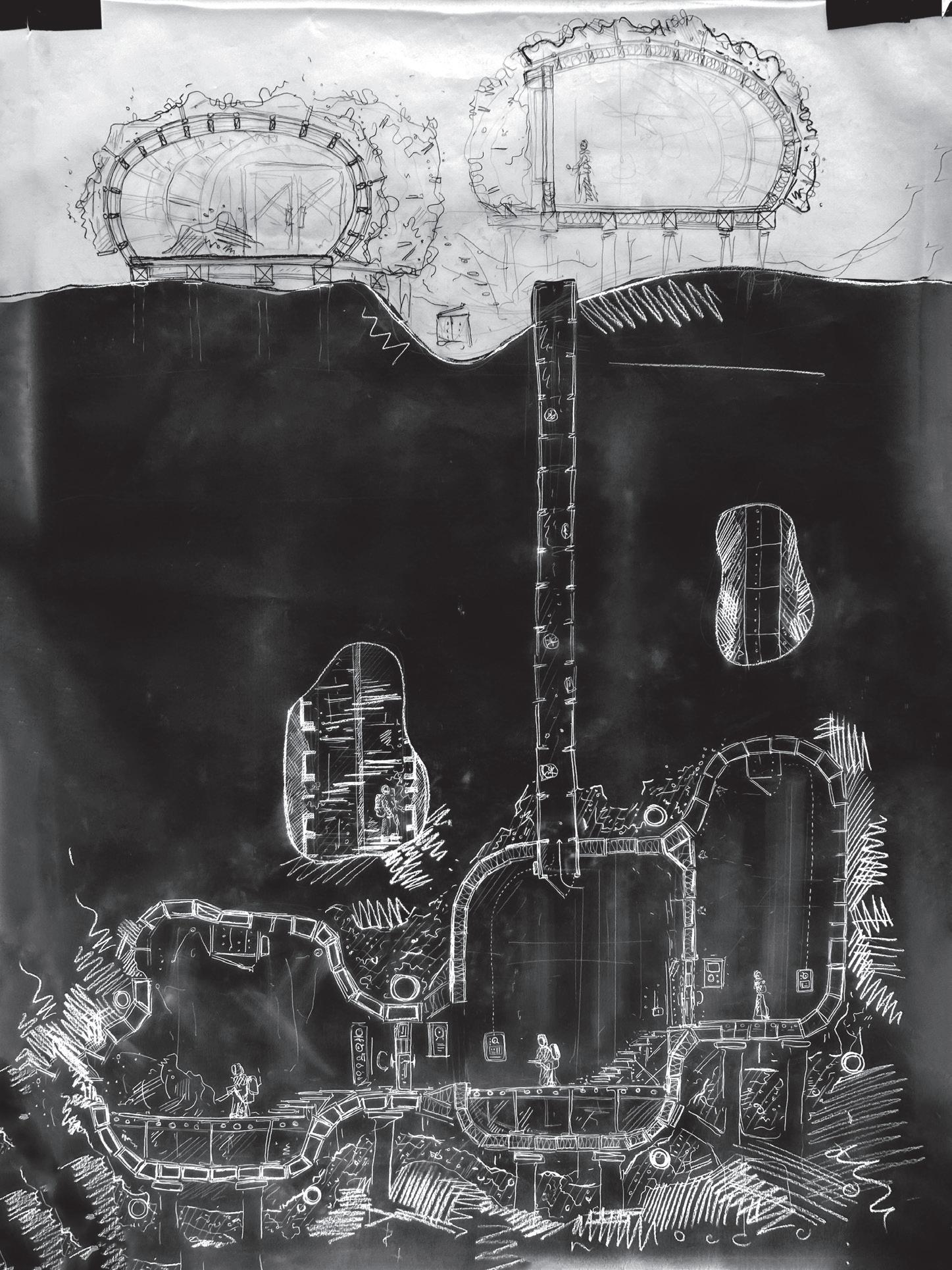
Multi-Species Threshold
A Multi-Species Threshold with no thermal or moisture control, allows the building to live and decay in its life cycle returning to the earth as a environment in which mycelium can thrive.
B Clearly Defined Human Threshold with thermal insulation and a moisture barrier creating a warm, dry space inhabitable by humans.
C Staircase to the underground lined with Cast Iron Wall Panels, often open to the earth behind allowing samples of mycelium to be taken from the different soil strata height.
D Ventilation Chimney with mechanical closing panel cutting off fresh air supply to the underground space in case of Fire. Chimneys fitted with fan systems to keep Airflow to underground spaces regular and 02 levels high.
Defined, Insulated Human Threshold
Non-Insulated Human Threshold
Damp Proof Membrane, Non-Permeable Barrier
15. EXPLORING HUMAN AND NONHUMAN THRESHOLDS, THERMAL CONTROL, MOISTURE CONTROL AND AIR CIRCULATION SYSTEMS.




E Thermally to Non-Thermally Insulated Human Spaces, both feature moisture control through damp proof membranes
F Multi-Species Space, with cast iron panels removable backs, exposing the earth for soil and mycelium samples to be taken. No thermal or damp control requiring precautionary PPE to be Worn
G Airlock Door, creating sealed Thermal and Damp Bridges between human and multi-species thresholds.
H Underground Pile Foundation, with air gap between base of cast iron tunnel panels and earth below. Drainage Systems in place around the walls to keep excess water flowing away from underground spaces.
13. ‘Sustainable Building Materials’ Above ground view.
14. ‘Timber framed structure - mychorizal buildings’ Hand modelled @ 1:50.
16. Cast Iron Structures and Rust:
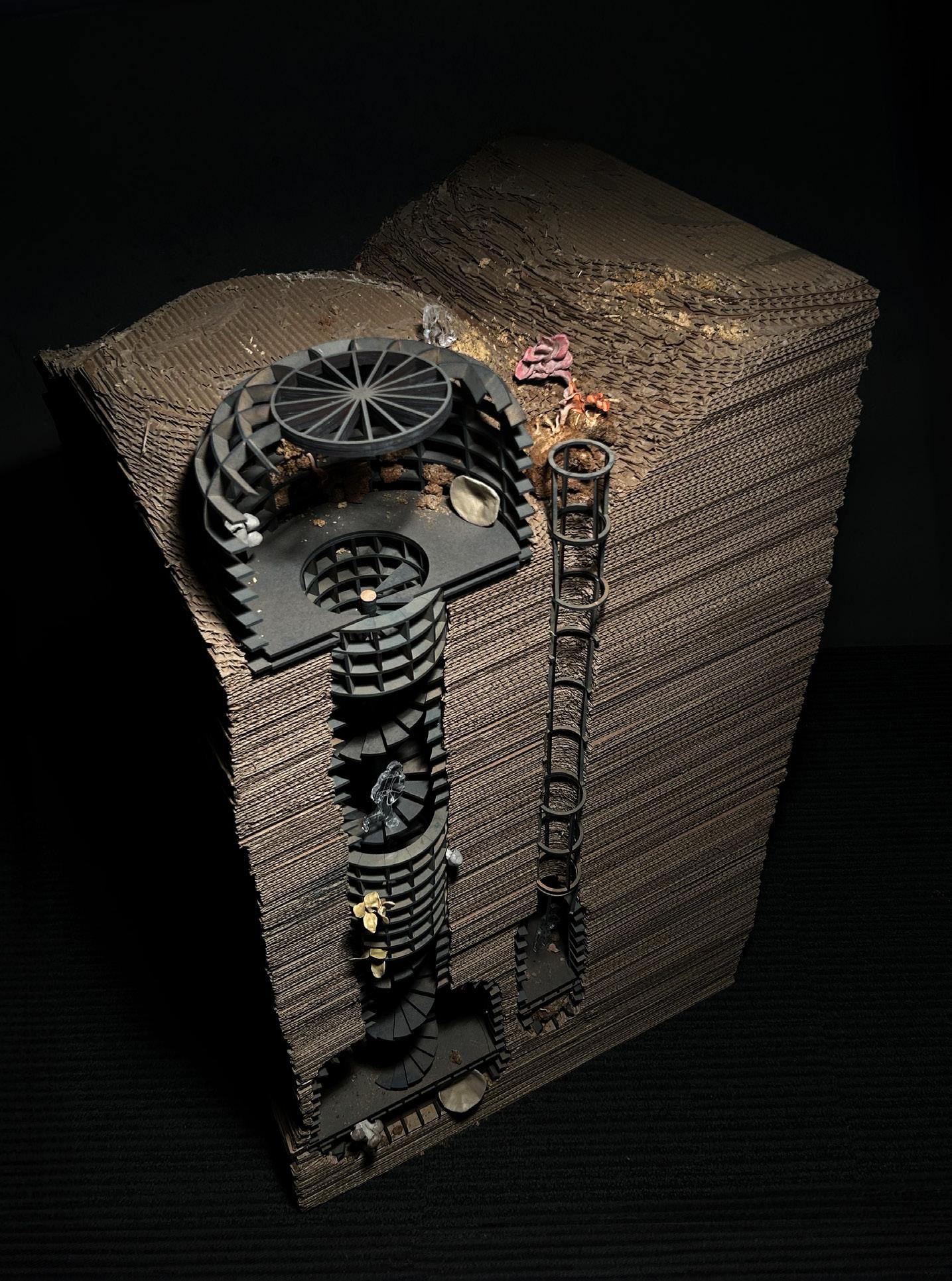
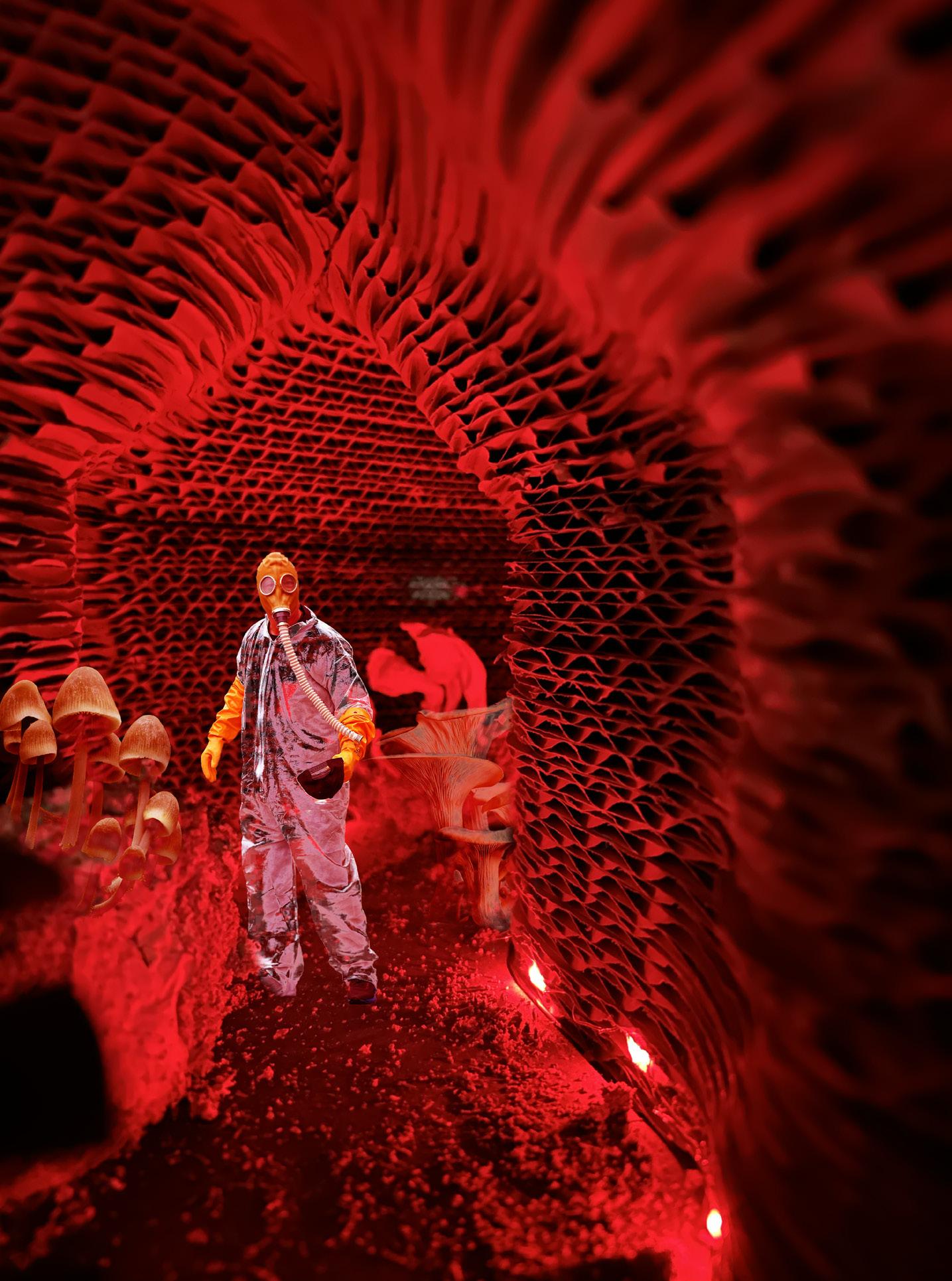
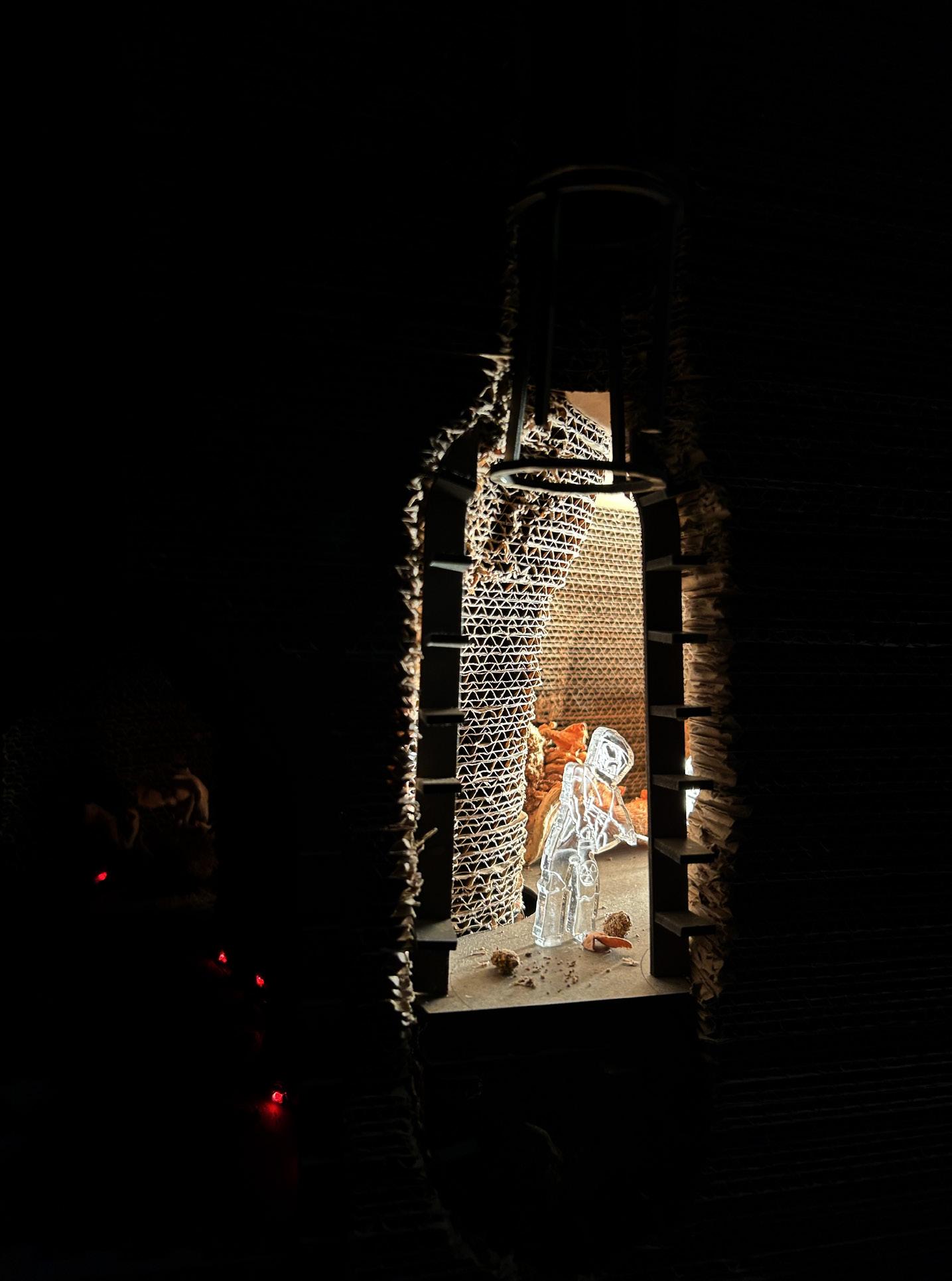
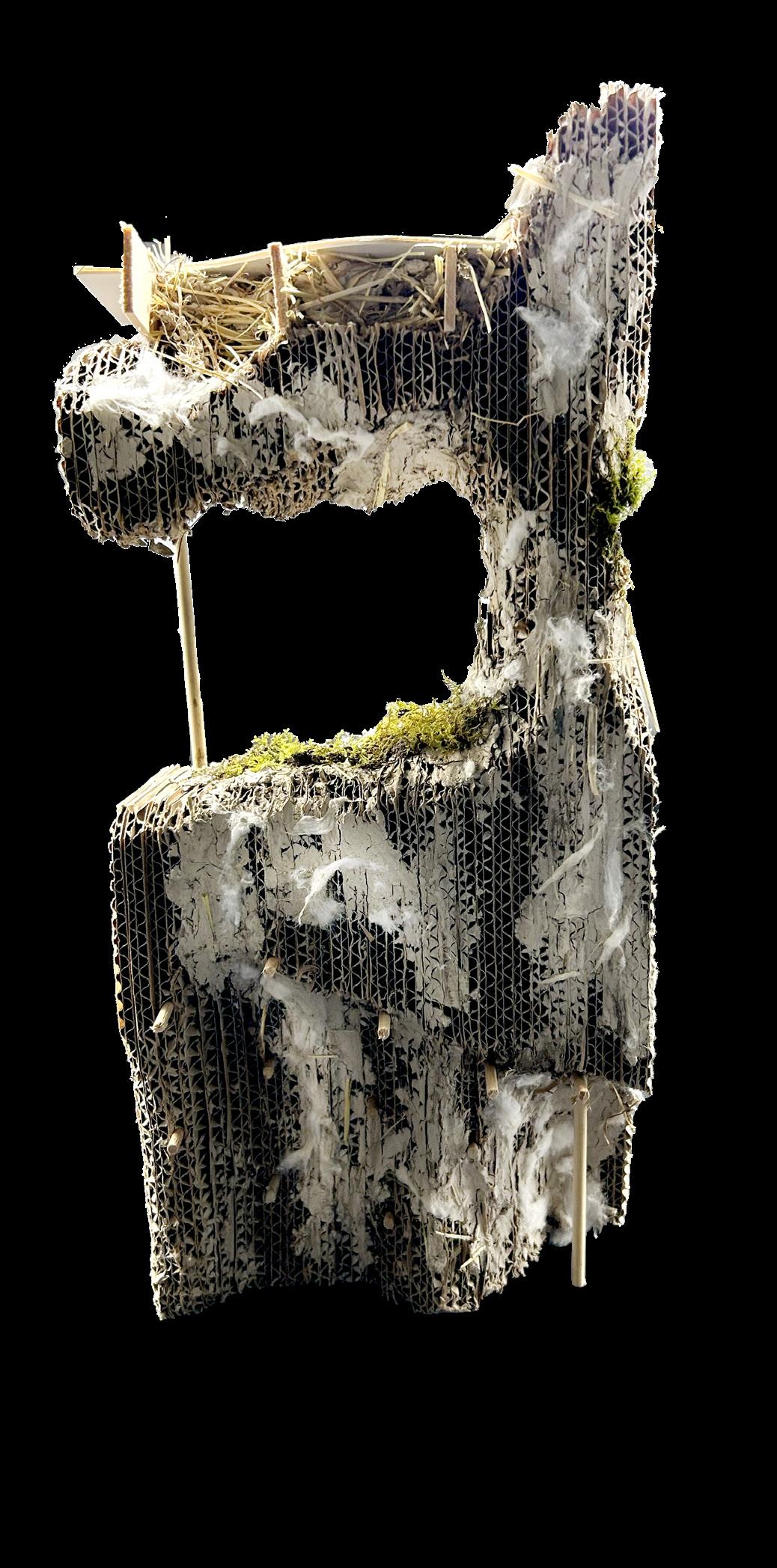
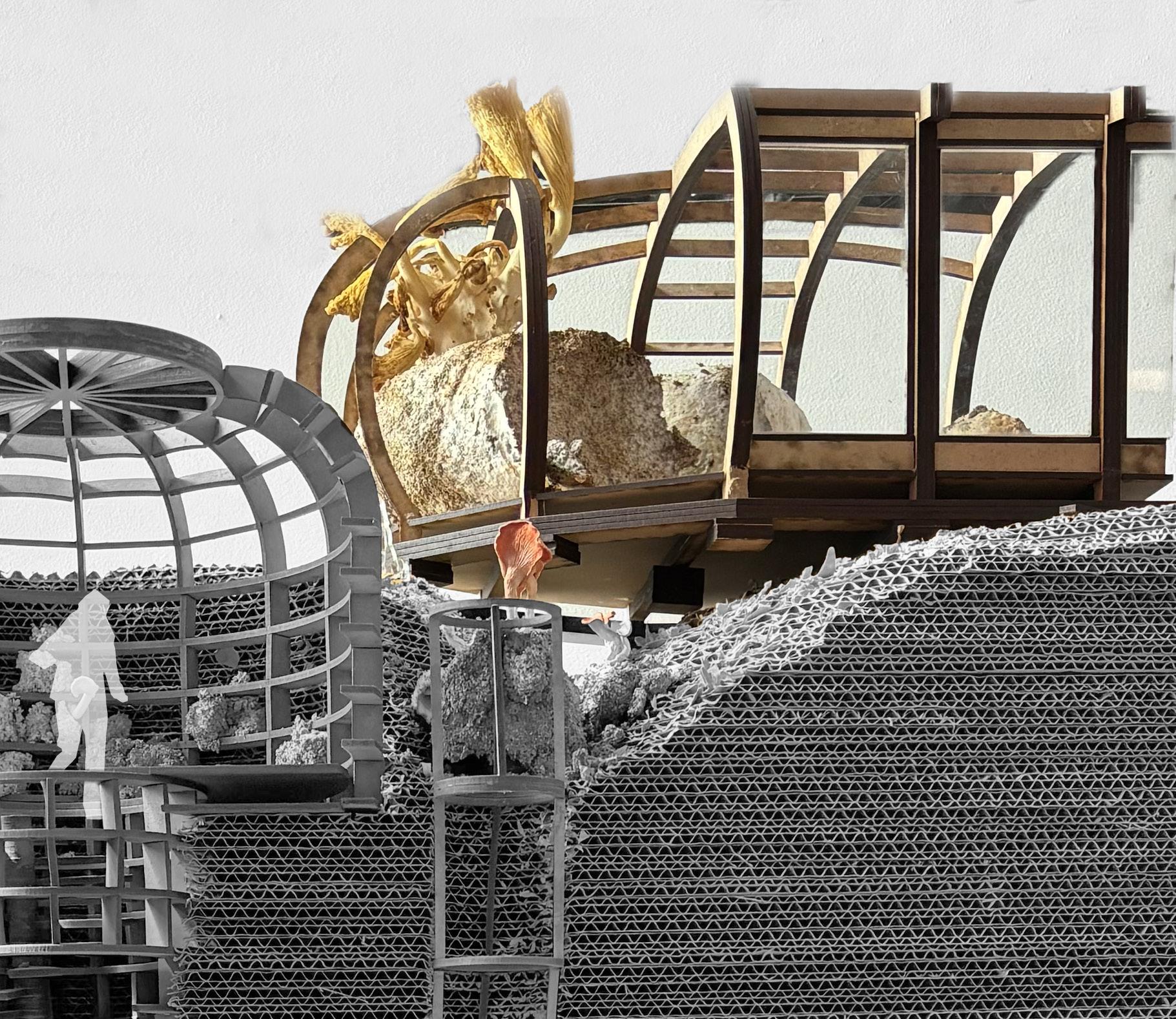
This model was made up of hundreds of layers of cardboard individually marked, cut and stuck together to form the underground earthy ‘voids’ of the laboratory, resulting in a model over 1m tall. I then used my skills in autoCAD and Adobe Illustrator to draw up and subsequently laser cut the individual components of the cast iron structure before joining and fitting these into the cardboard mass.
Alongside the construction of my model I grew mushrooms using live mycelium blocks to create a theatrical, living growing final model to display at my end of year exhibition alongside in my portfolio.
10.’Of the Earth’ 1:25 sectional model.
12. ‘Inside the Growth Chambers’ Internal View.
11. ‘Mychorizal Growth’ Internal View .
6. Above and Below Ground
A New Market Hall for Thame
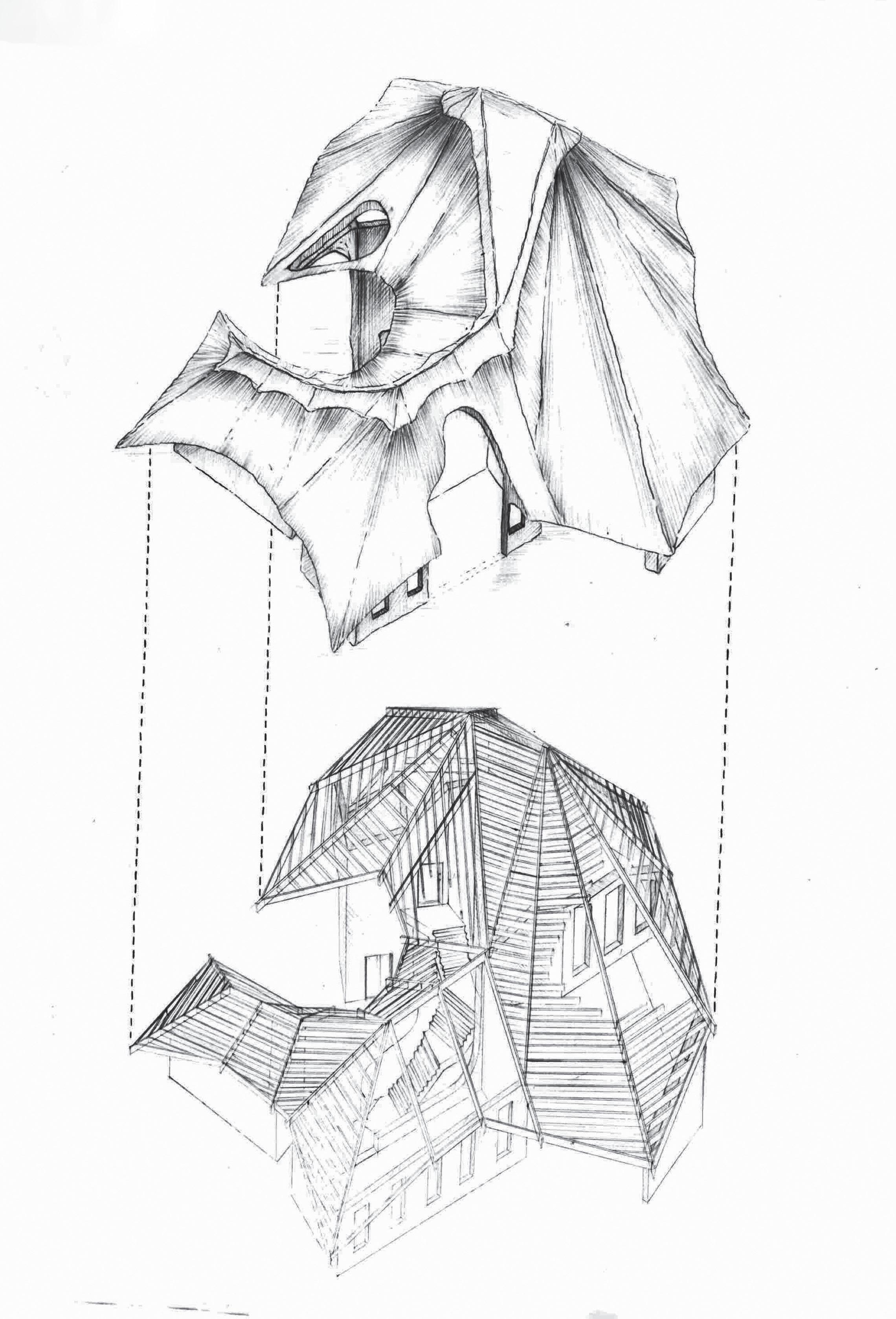
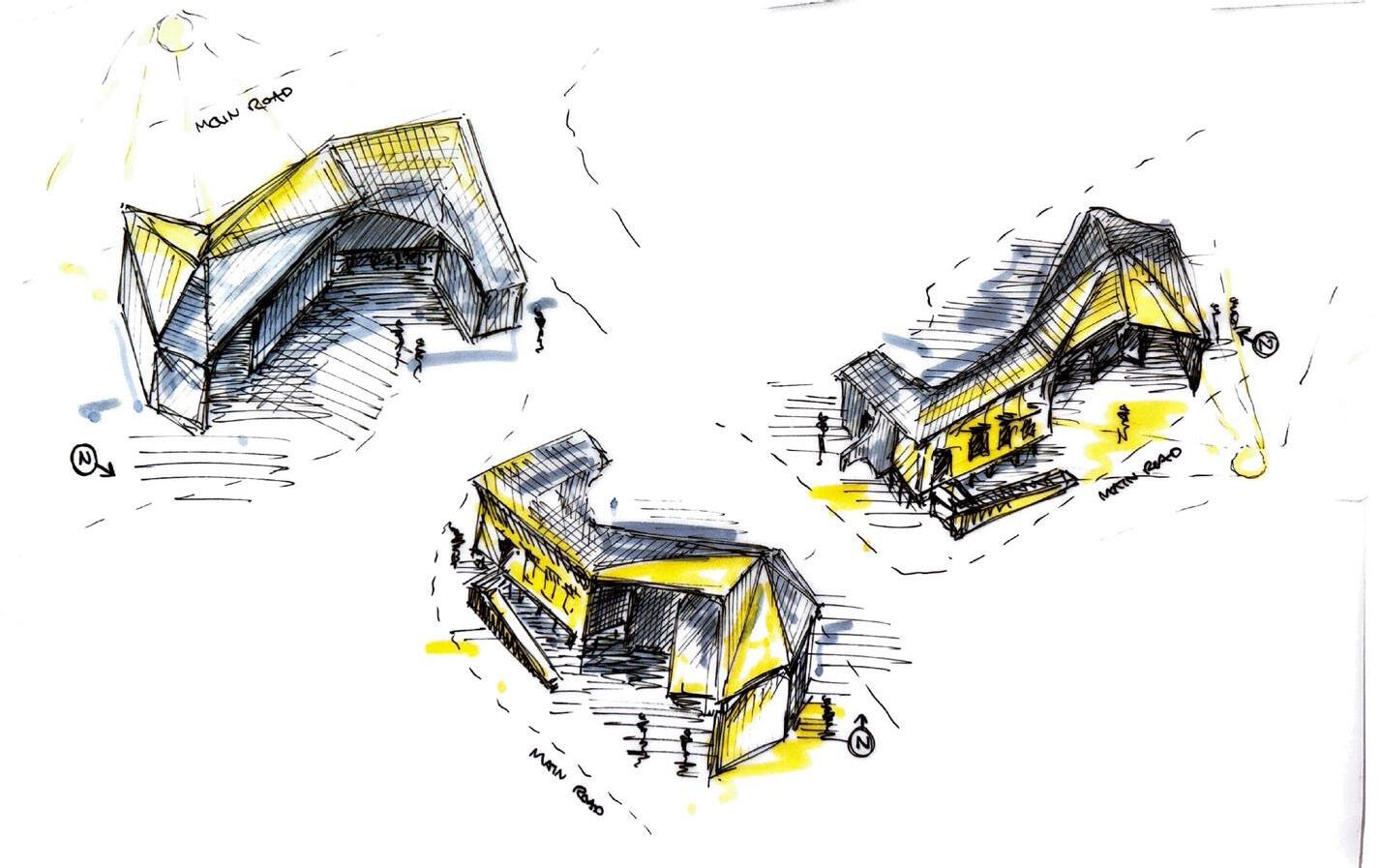
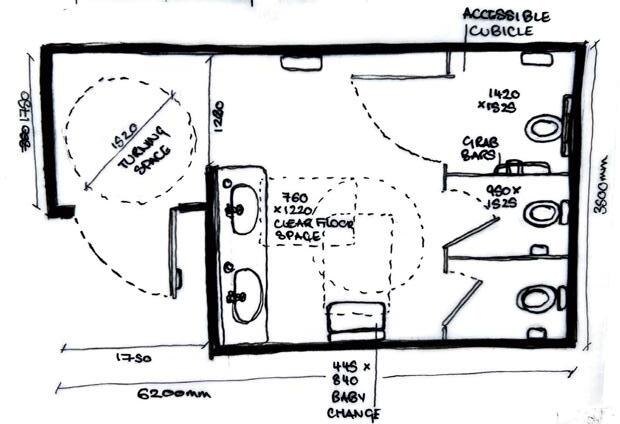
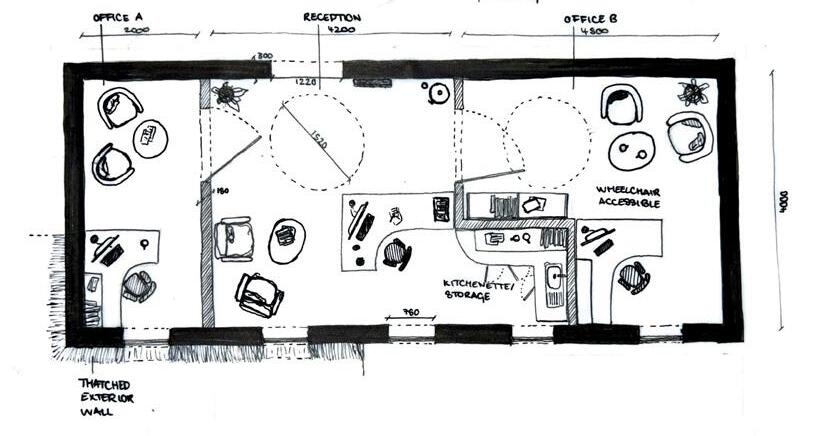
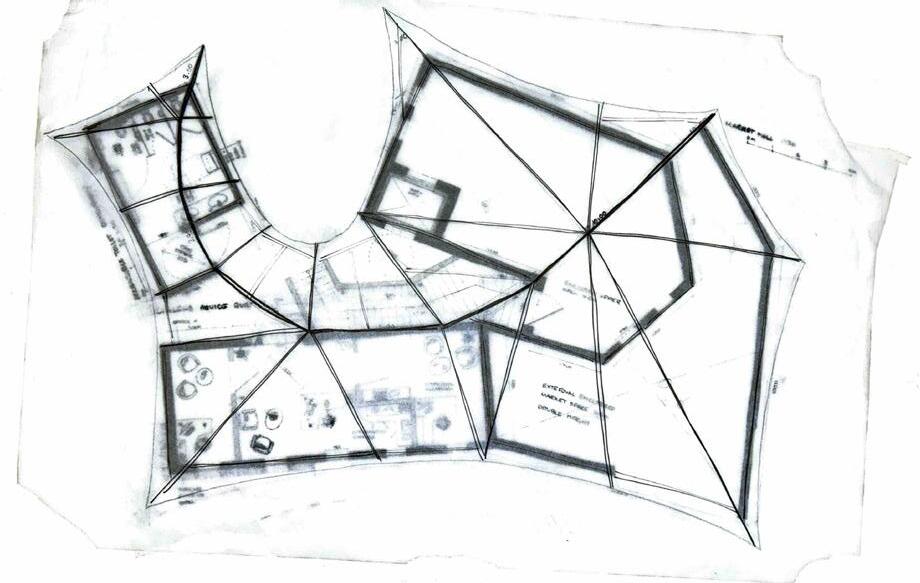
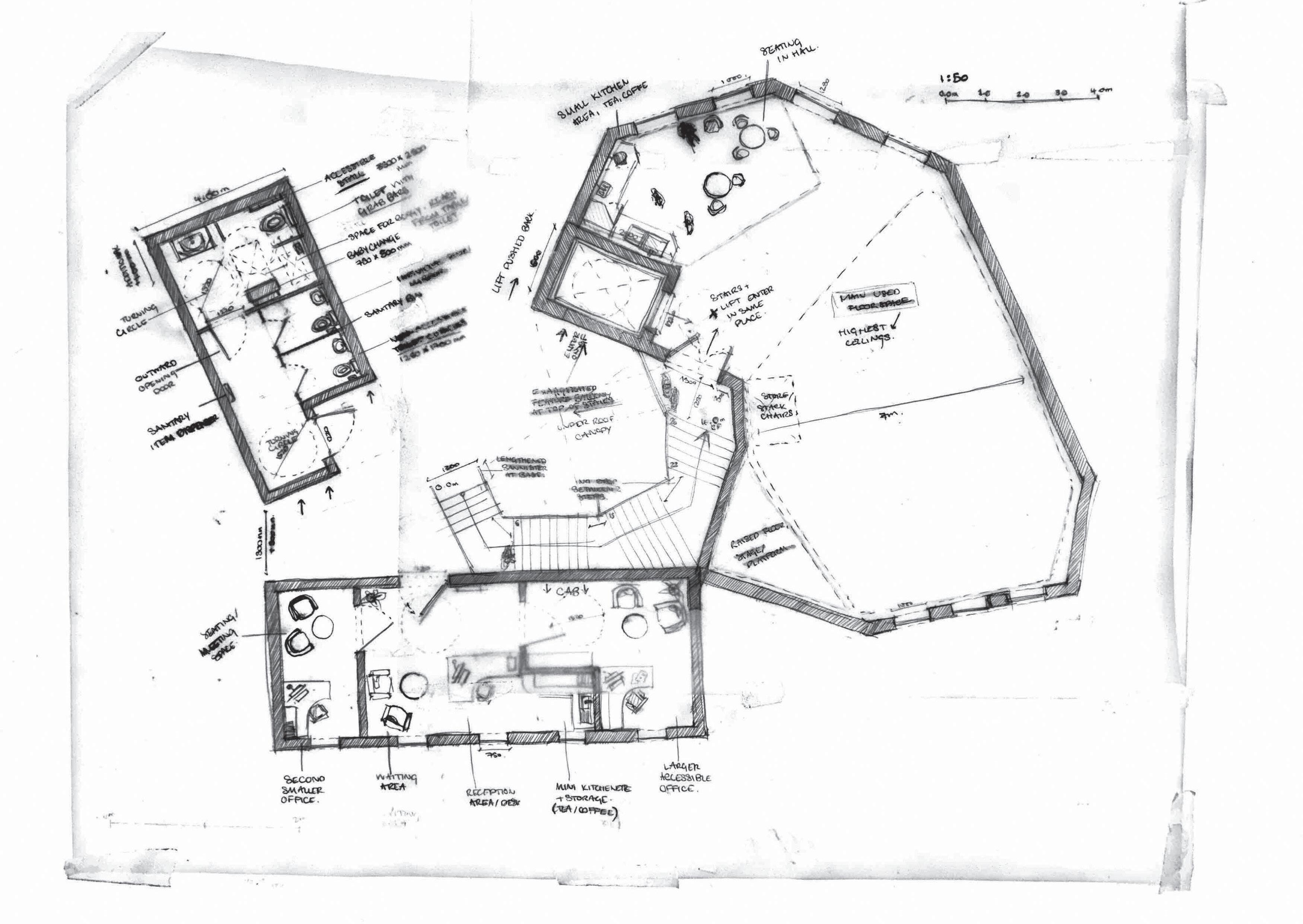
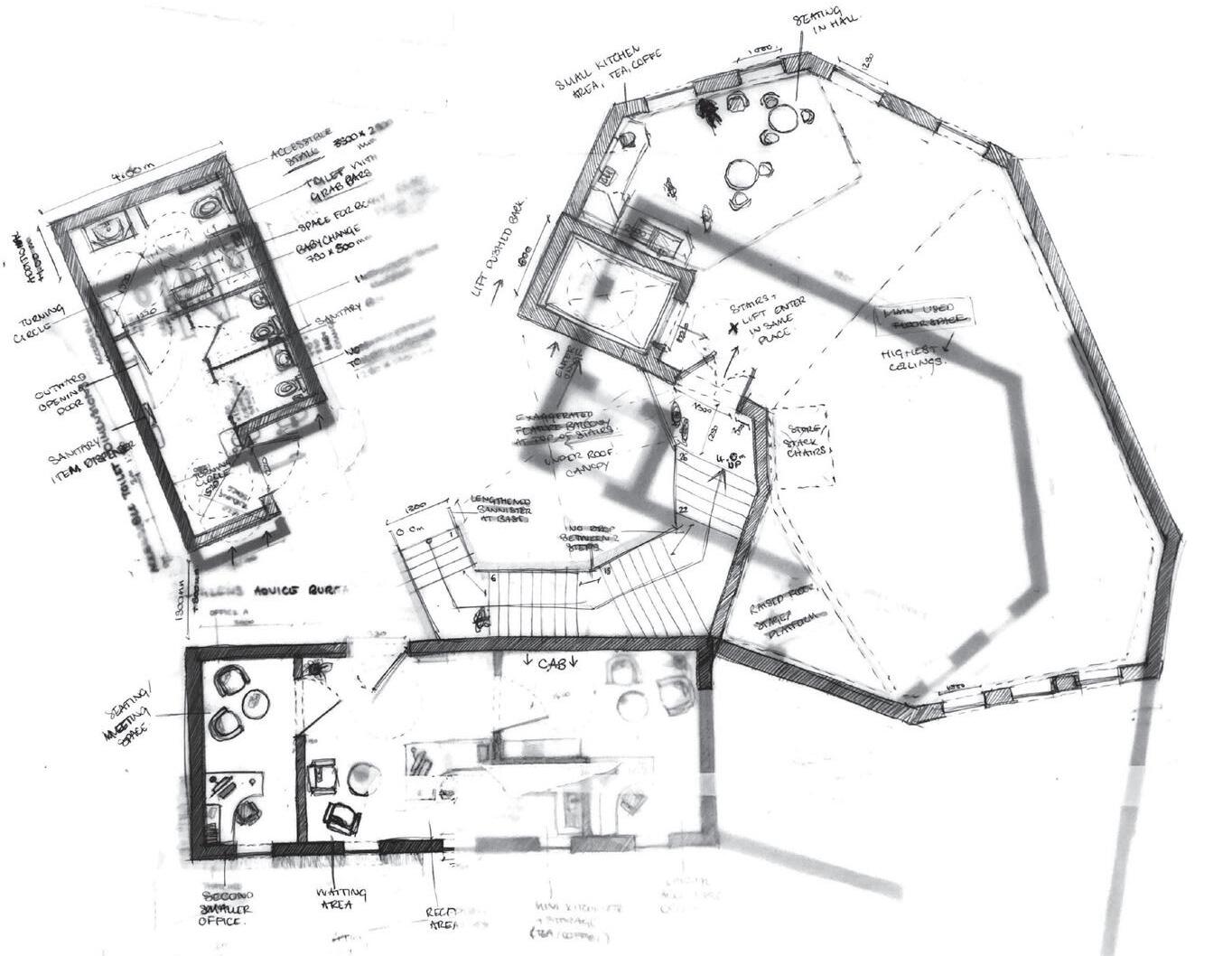
Through the design of public hall, Citizens Advice Bureau and publicly-accessible toilet, I built upon my ongoing project research into civic architect form, the representation of ‘material time’, and applied my studies into mycelium to scale, in context.
This project facilitated my research into designing for ecology, with my market hall connecting an underground network of mycelium to the town of Thame in an environmentally idealistic and futuristic way.
DESIGN PROCESS WORK
This project drew inspiration from bioclimatic architectural precedents which was reflected in the design process of the market-hall with careful consideration of the environment, orientation and ecology on-site.
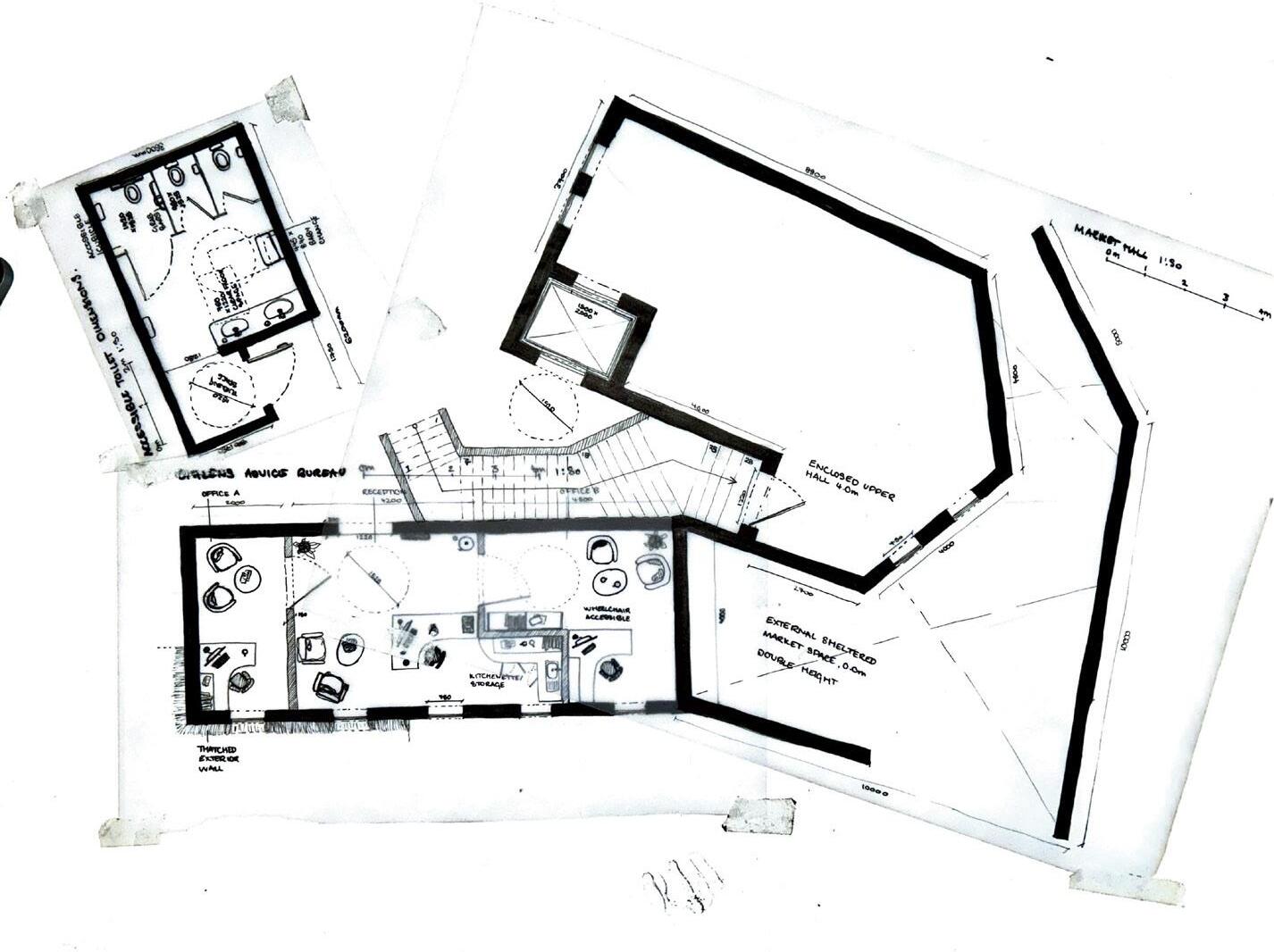
1. Exploded Axonometric 1.50 @A1.
3. Sun Diagram
2. Investigating thatch as bioclimatic strategy
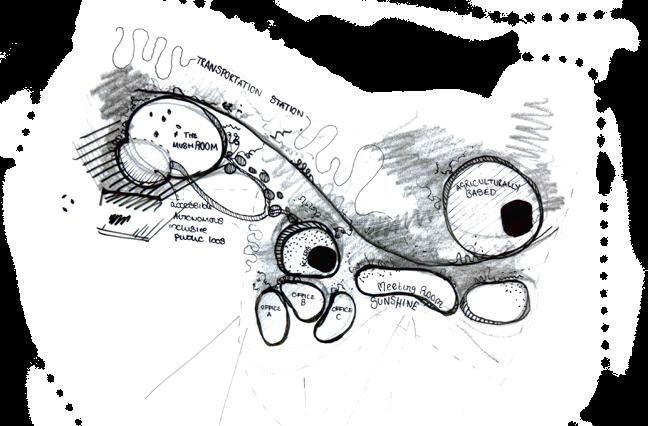
‘Sun on Site’ solar studies. 5. Spatial mapping 6. Mass Modelling
Drafting plans
‘Mapping
the Market Hall Iteration II’
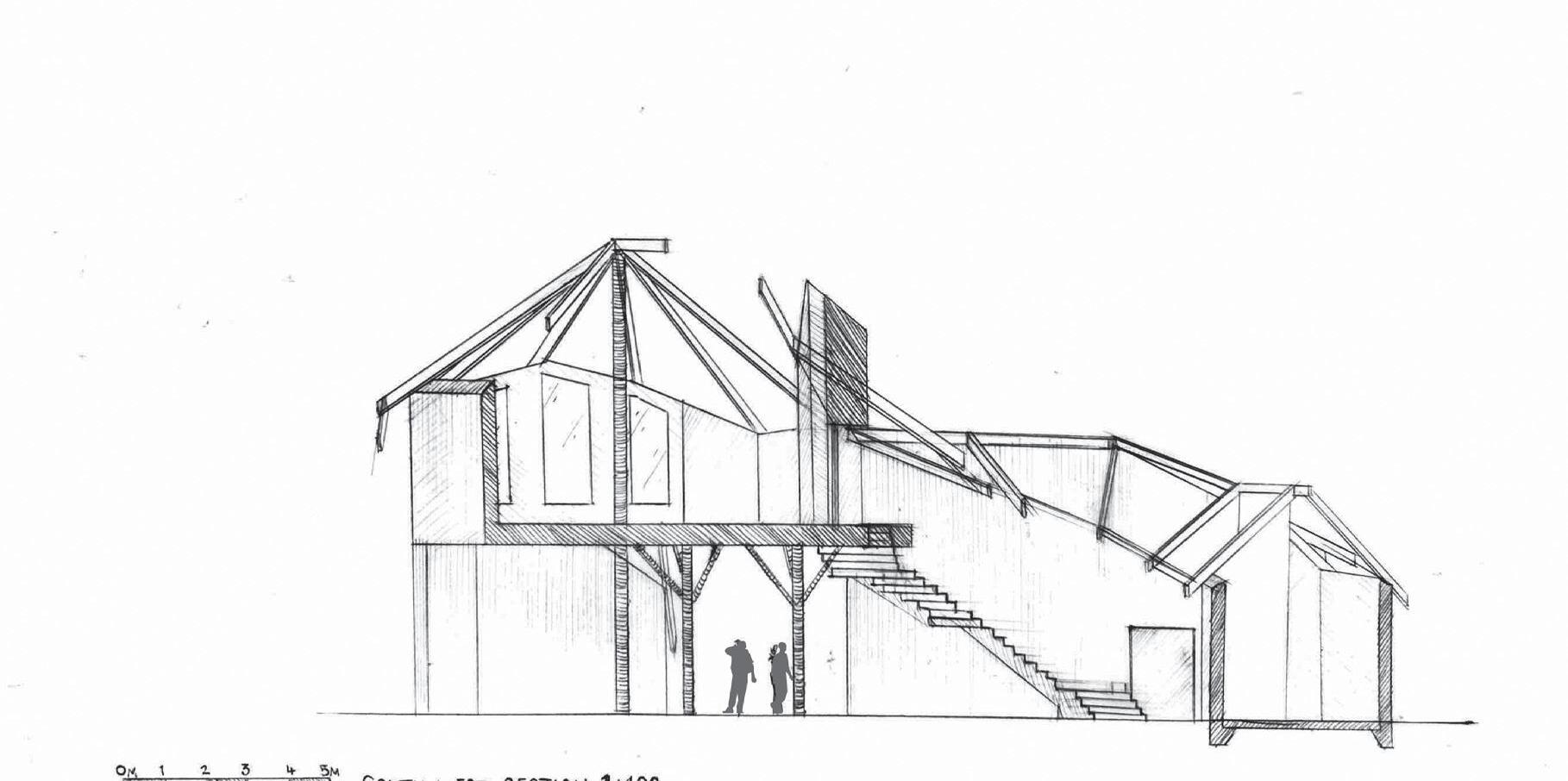
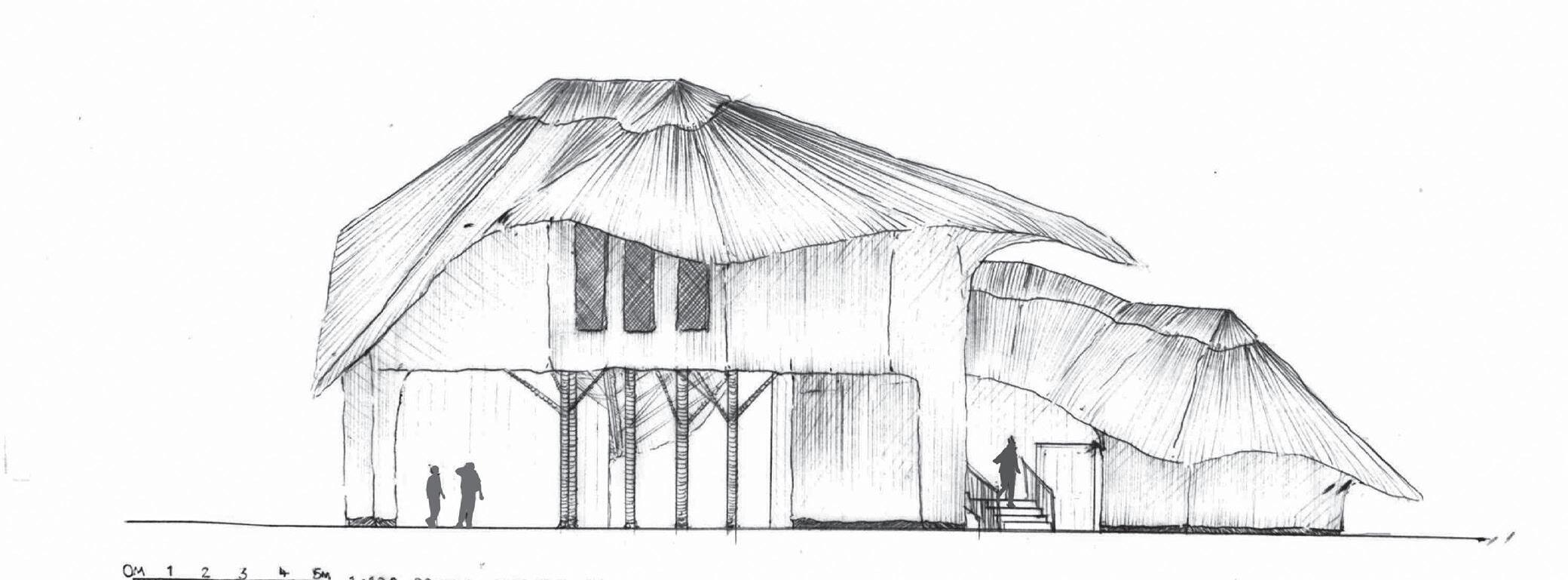
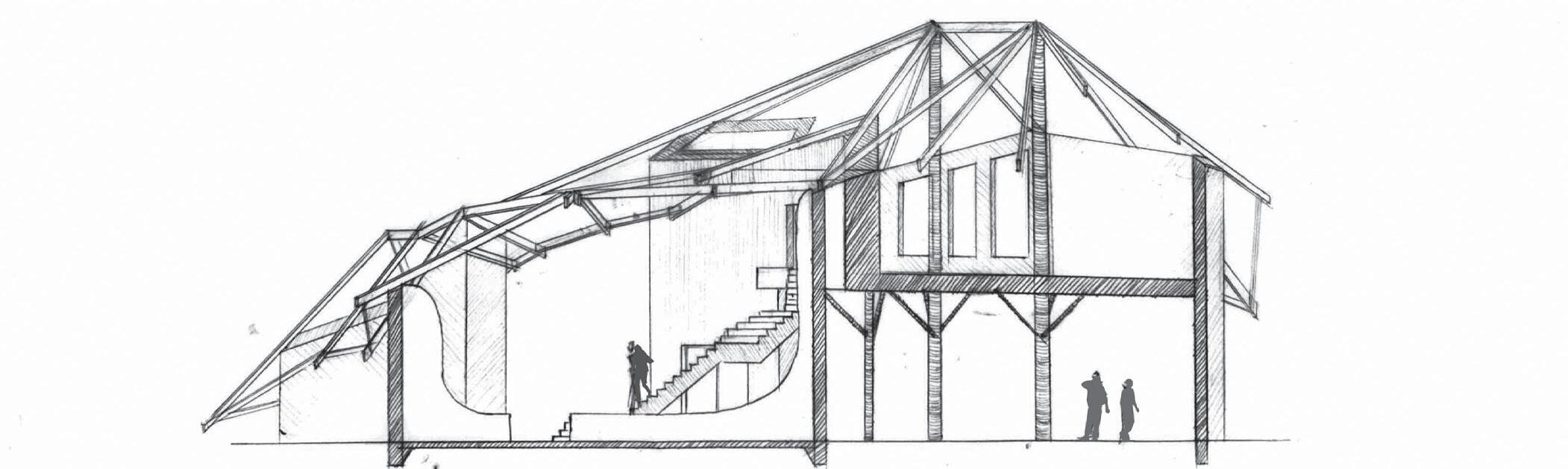
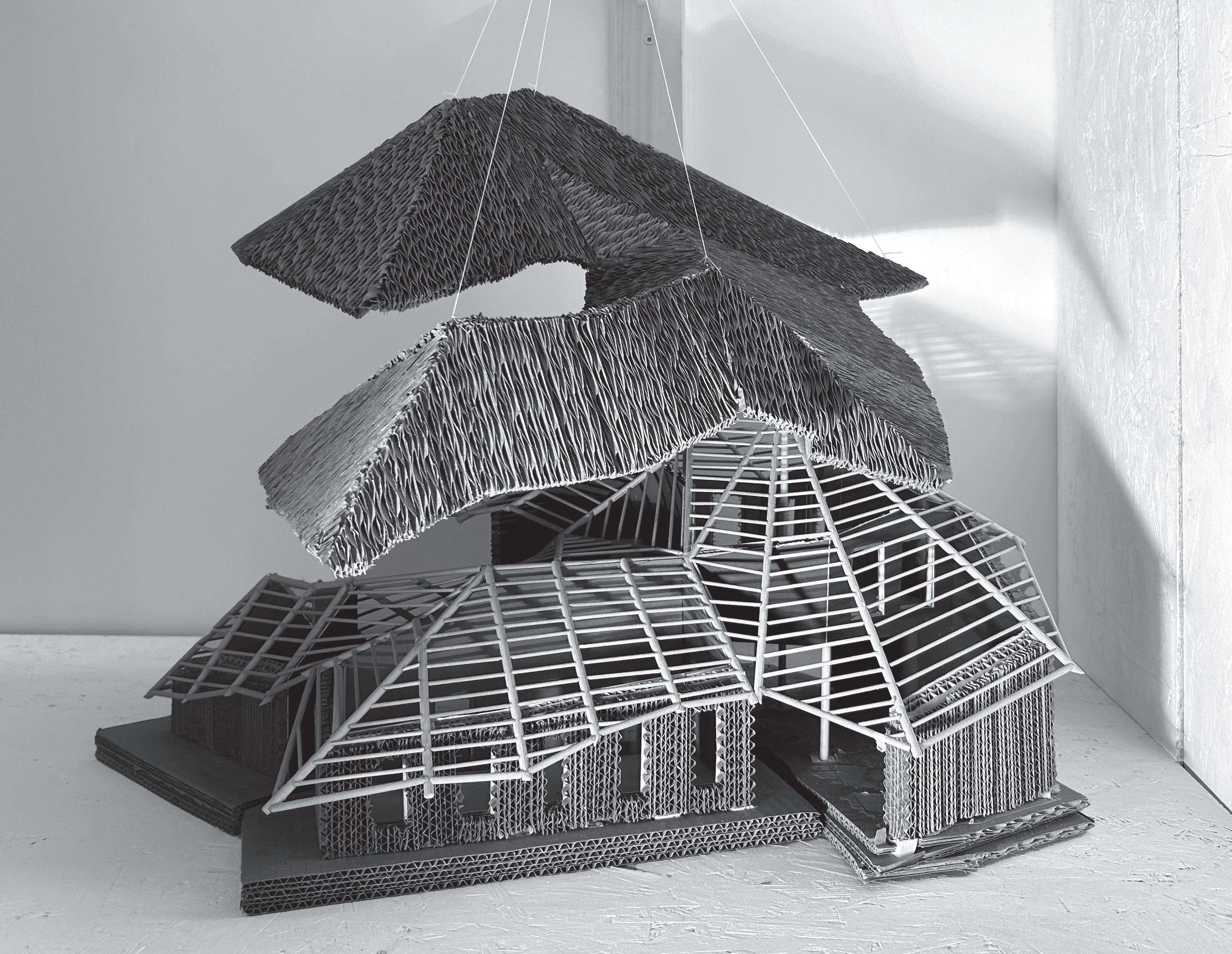
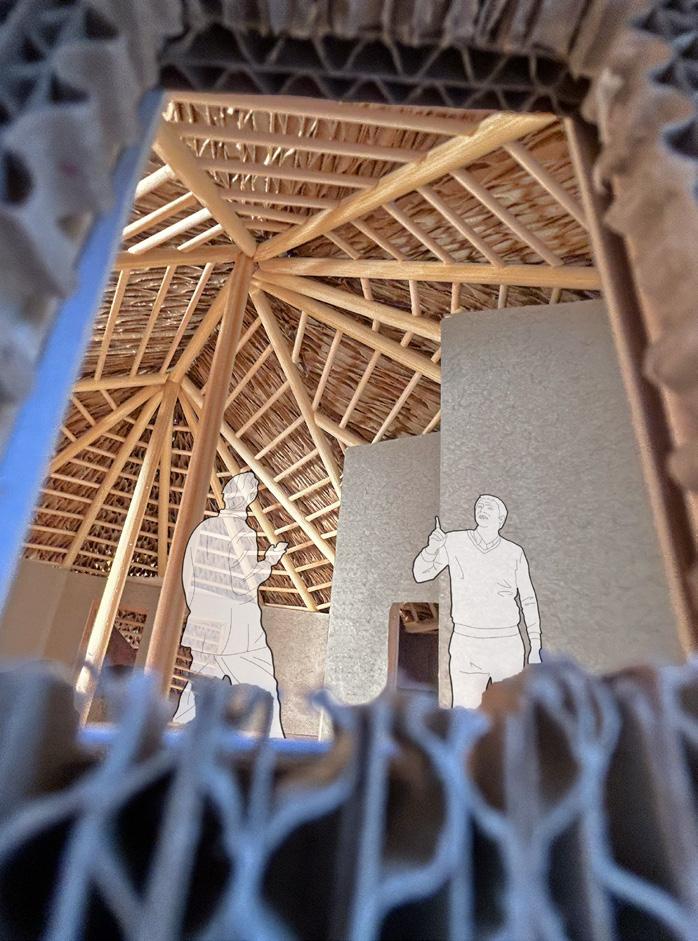
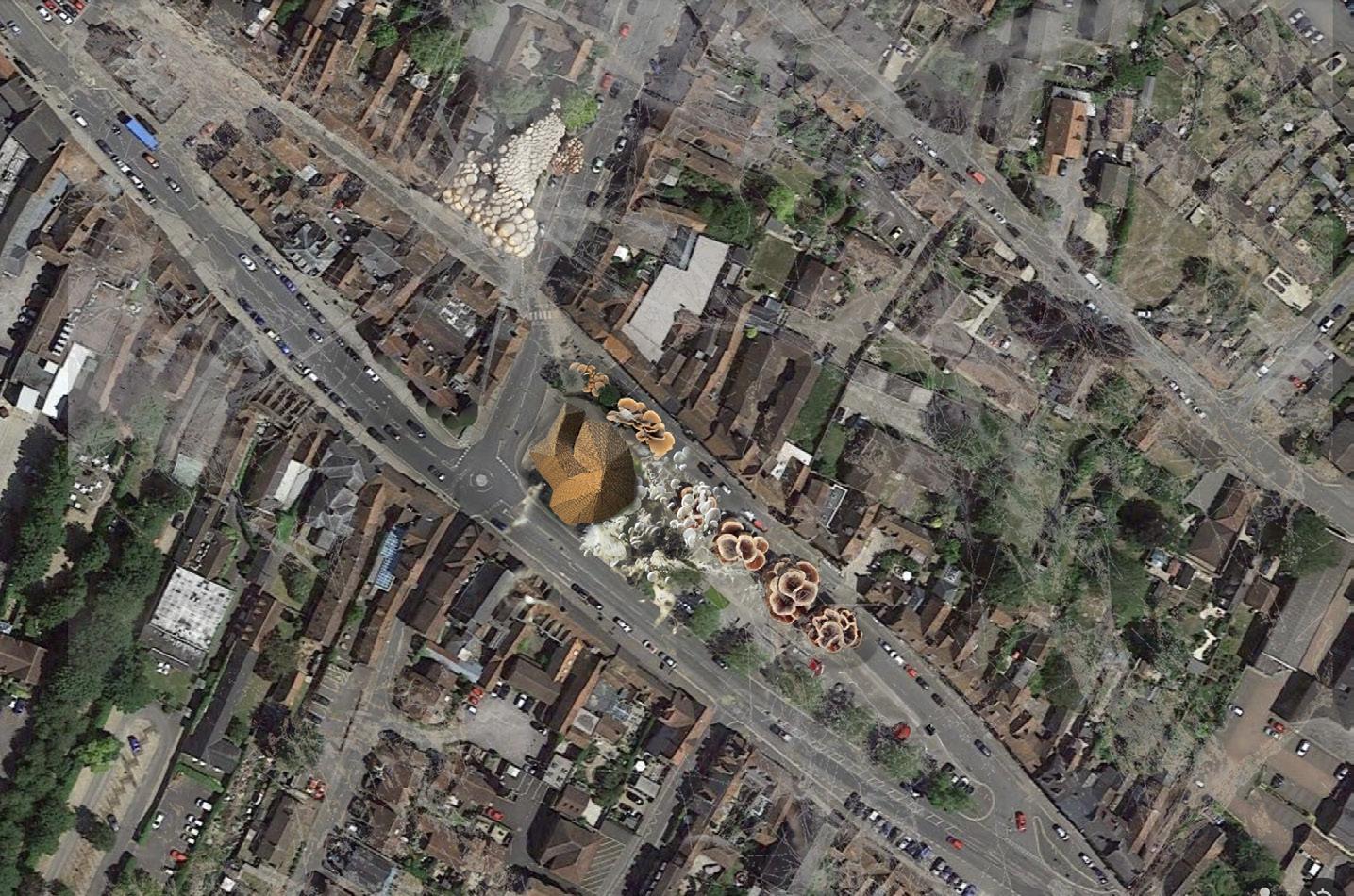
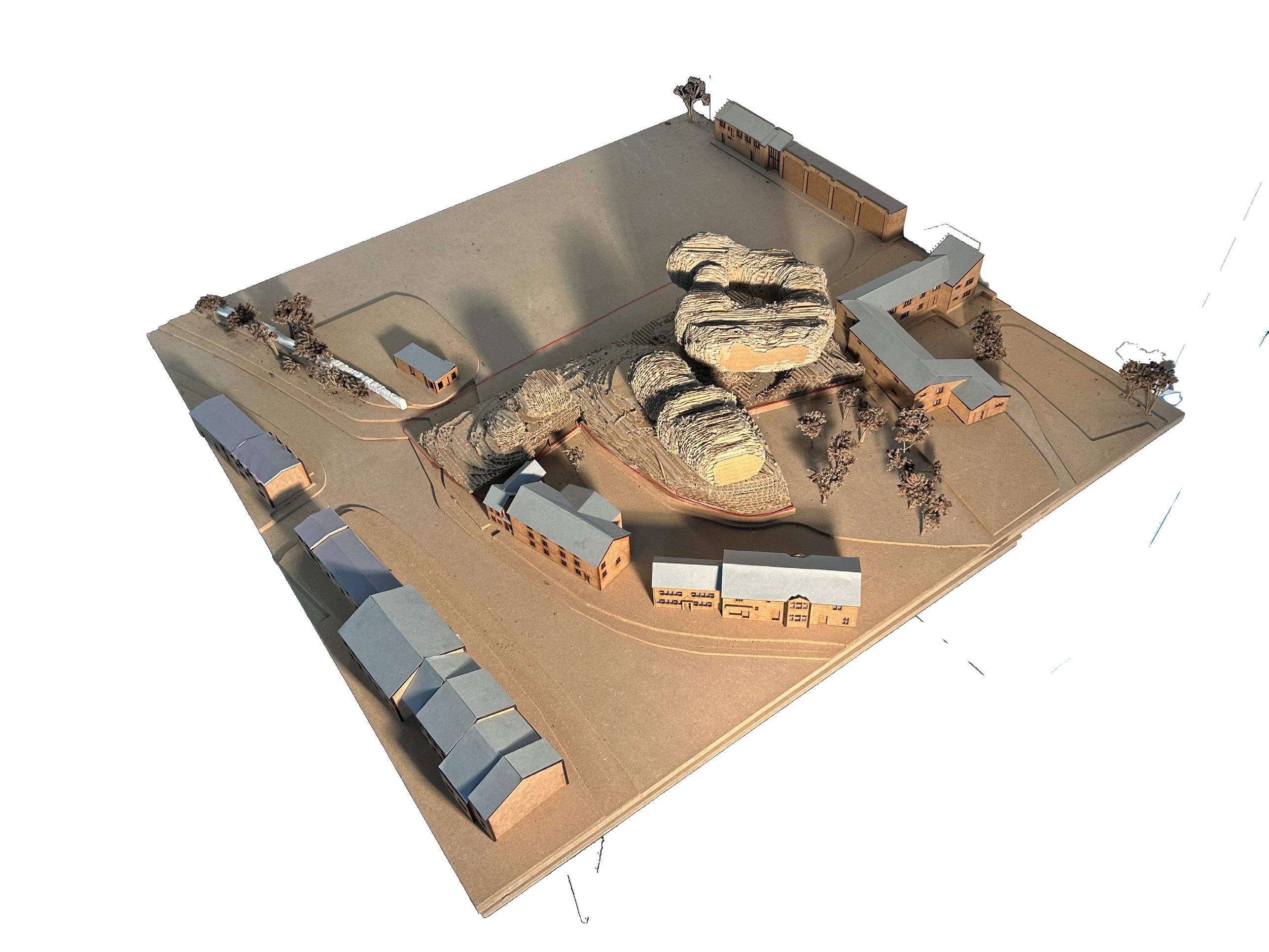
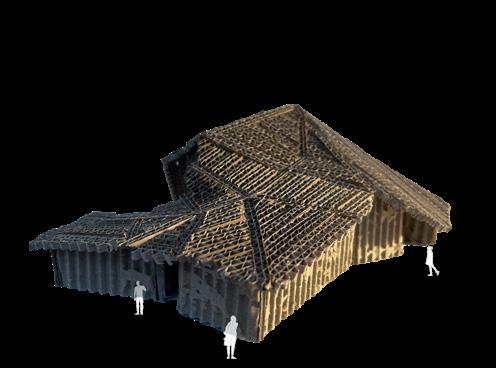
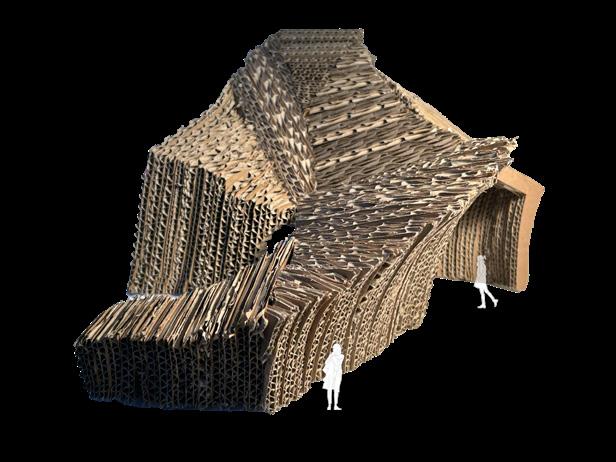
12 & 13. “Mychorizal Market hall’ hand modelled @1.50.
9. ‘South West Section 1:100’ Hand drawn orthographic.
10. ‘South West Elevation 1:100’ Hand drawn orthographic.
11. ‘North East Section 1:100’ Hand drawn orthographic.
14. ‘An Expanding Mychorizal Network from the Centre of Thame’
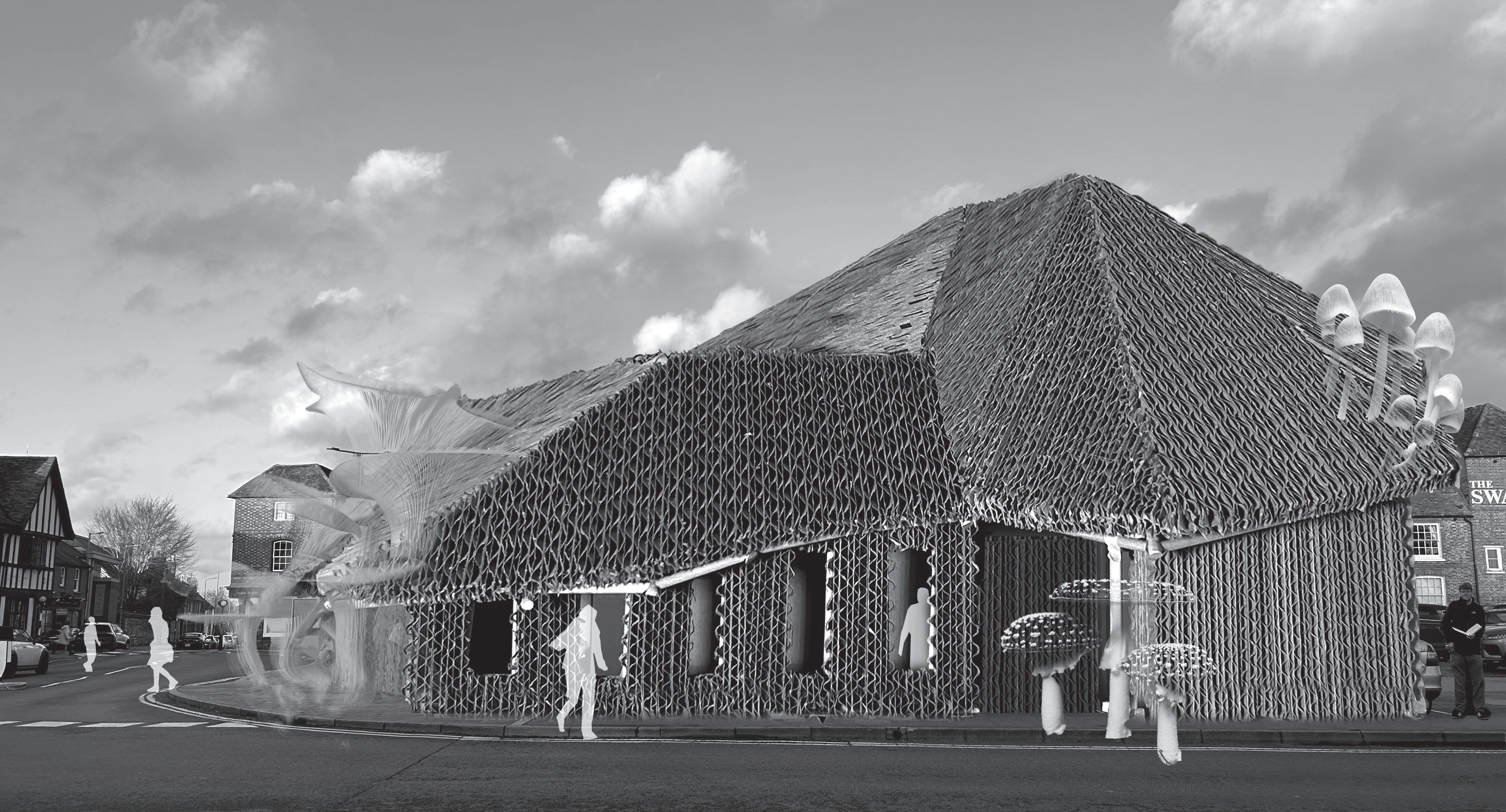
North-East View Modelled @1.50.
3
Year 3 Semester 1
Lightning Tower
‘Lightning Tower’ was a short two week design project developing my material investigations into mycelium, expanding upon my architectural drawing skills, and introducing themes of civic form, plantbased construction and 'material time'.
My output was a lightning tower made from experimental mycelium panels which stimulated the underground mychorizal networks of Thame resulting in a town-wide mushroom ‘bloom’ after a storm.
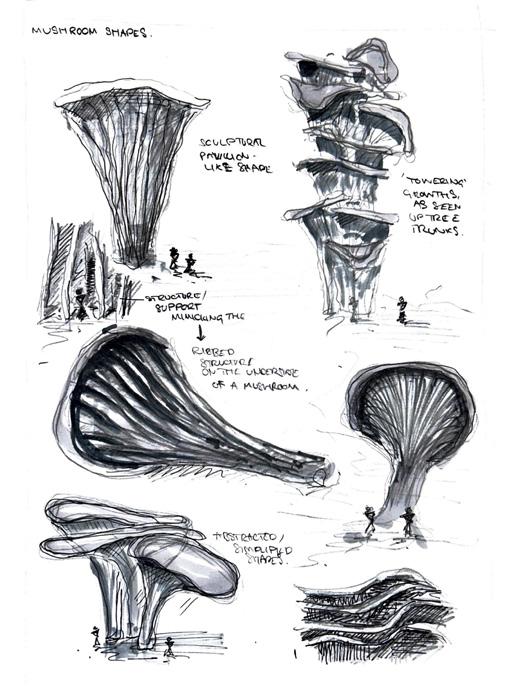
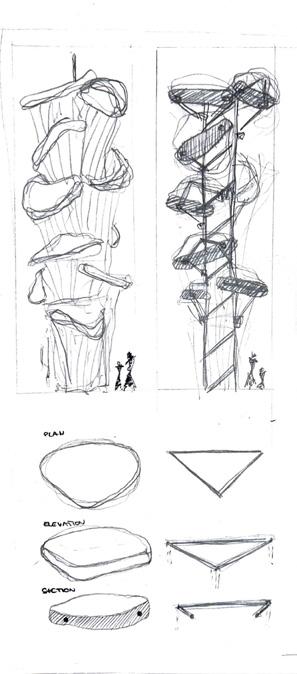
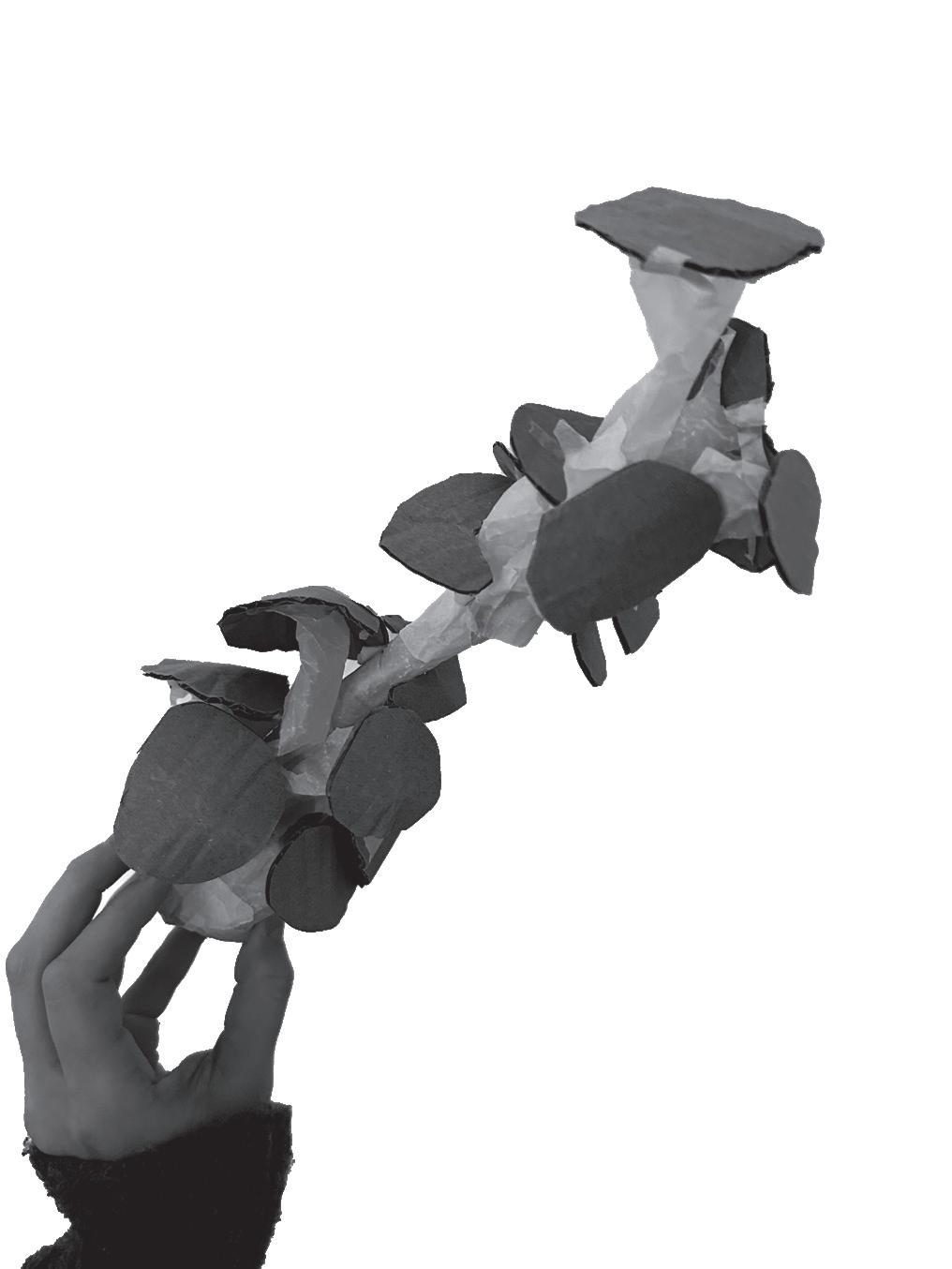
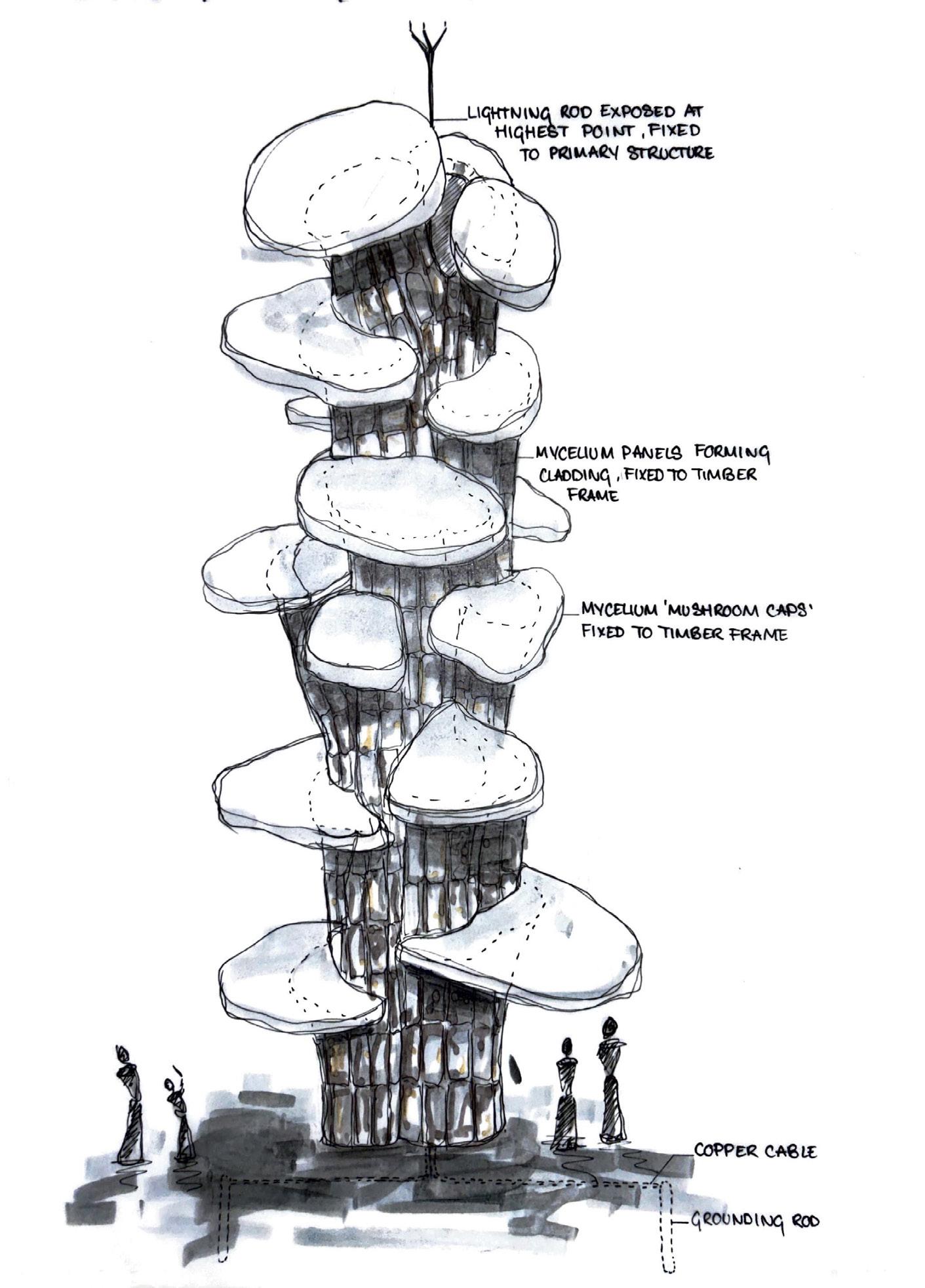
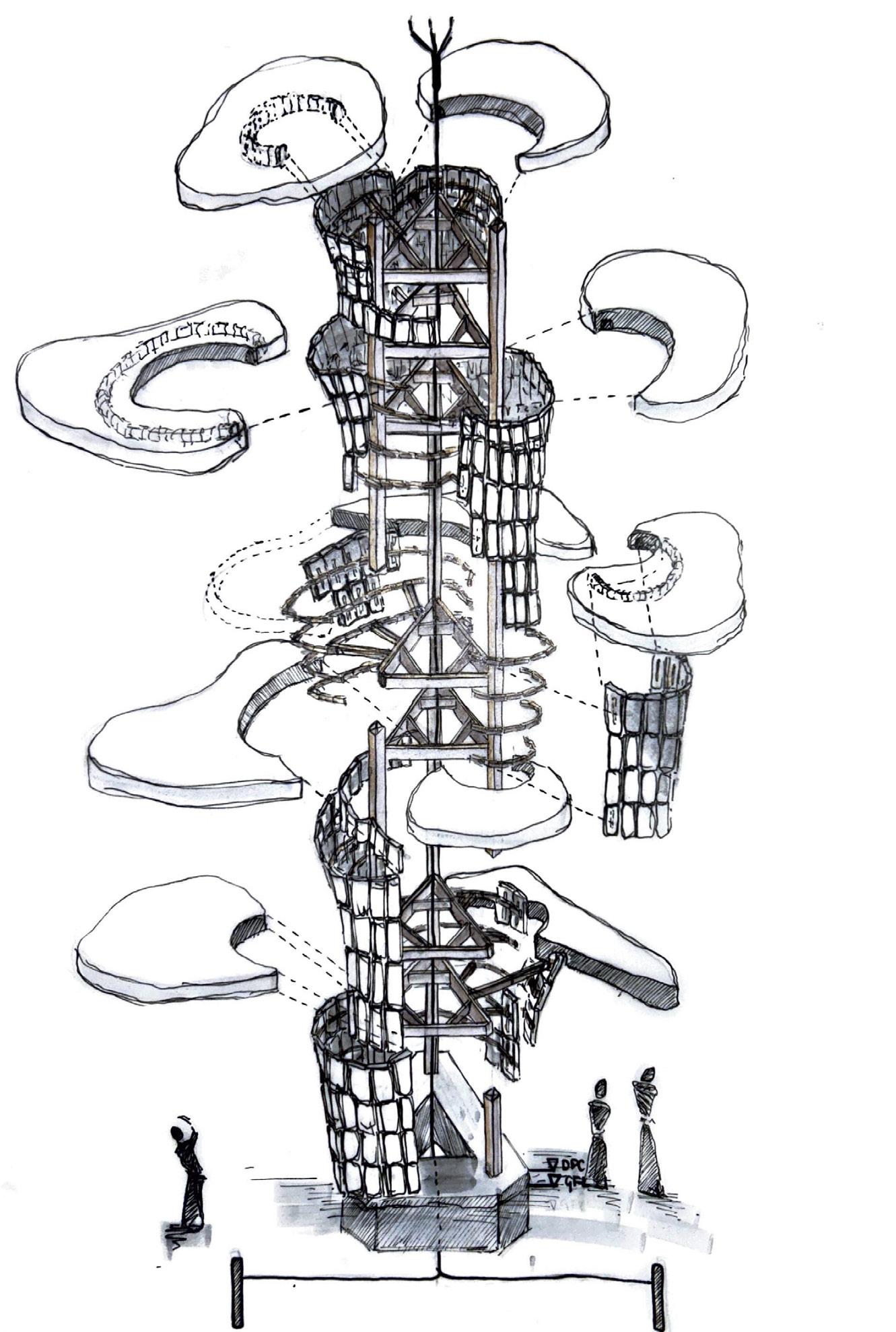

2. Hand drawn views of ‘The Lightning Tower’ @1.50.
1. Design stage process work
3. Town long elevation of the ‘Lightning Strike and Bloom’.
4
Dissertation
‘A Vertical Gap’
Research Question:
How the redesign of urban greening strategies in British urban environments may enable a building to enhance its local ecology.
This dissertation investigates how we can redesign urban greening strategies in British urban environments to enhance the local ecology.
I explore the idea that most current ‘sustainable’ design methods, while seemingly ecologically driven, often prioritize human needs over true ecological value. By anylising literature and undergoing my own case studies, I critique these ‘human centric’ design methods and question how to truly support ecological enhancement.
I propose that underused vertical surfaces present a unique opportunity to host nature within the built environment. I argue for a shift toward ecocentric design, where we allow nature to coexist more freely with our built environment through designing for nature rather than pushing it out of our spaces. This work reflects my belief that through thoughtful design, we can create urban spaces that not only serve humans but also support the broader ecological systems they inhabit.
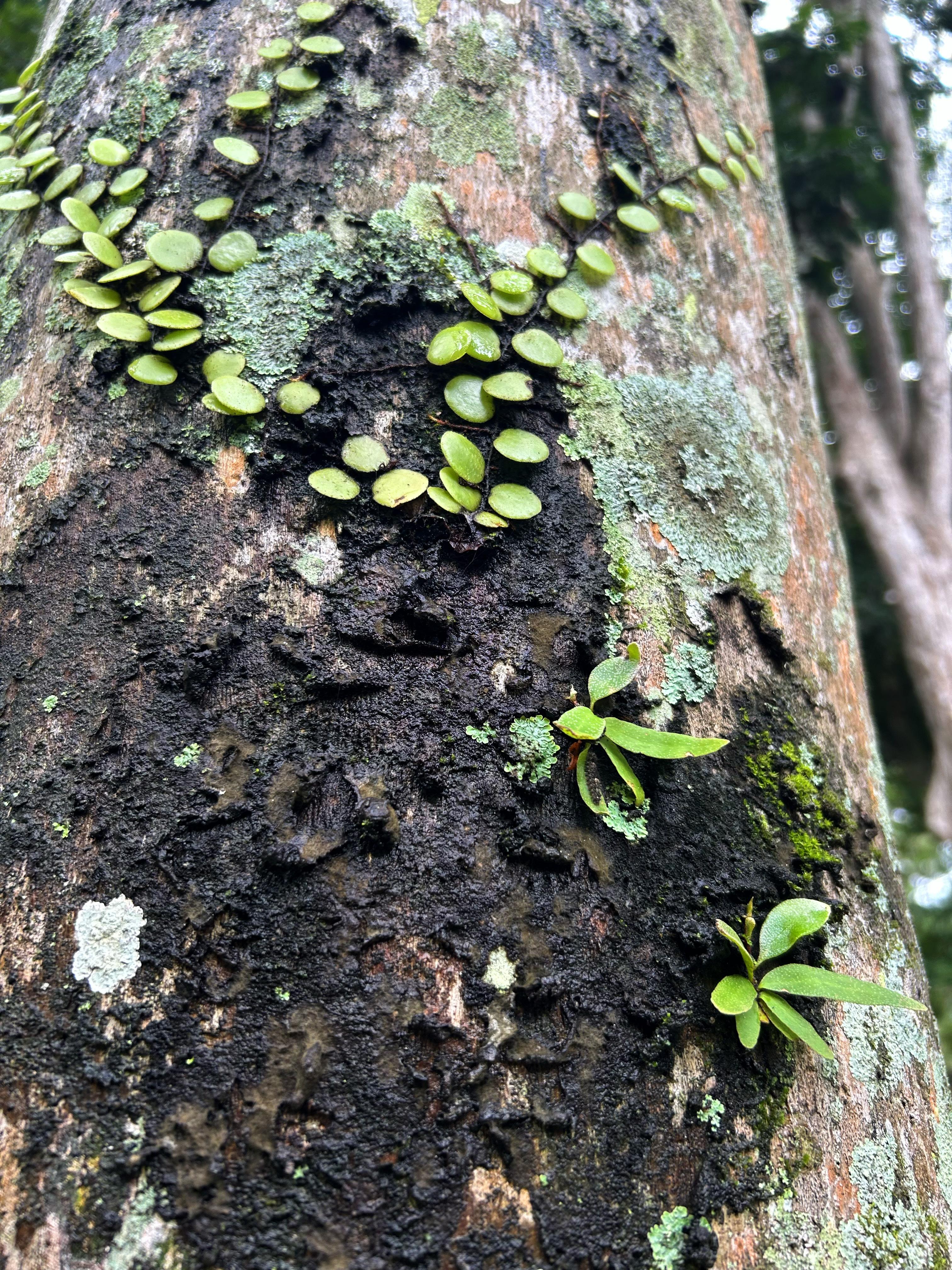
1. ‘Tropical plants on tree trunk, Costa Rica’ taken from my dissertation.
In-Practice
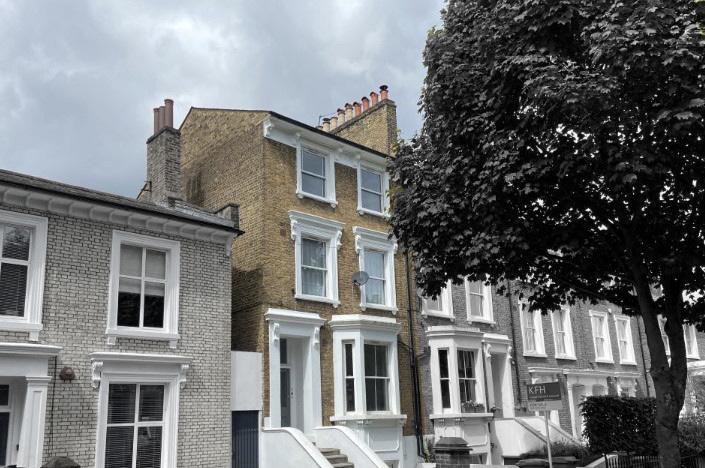
No. 76 Talfourd Road
Overseen by my employer, I have had the opportunity to independently work on this residential project, communicating directly with the client to develop architectural drawings and technical details in AutoCAD from the planning stage onward.
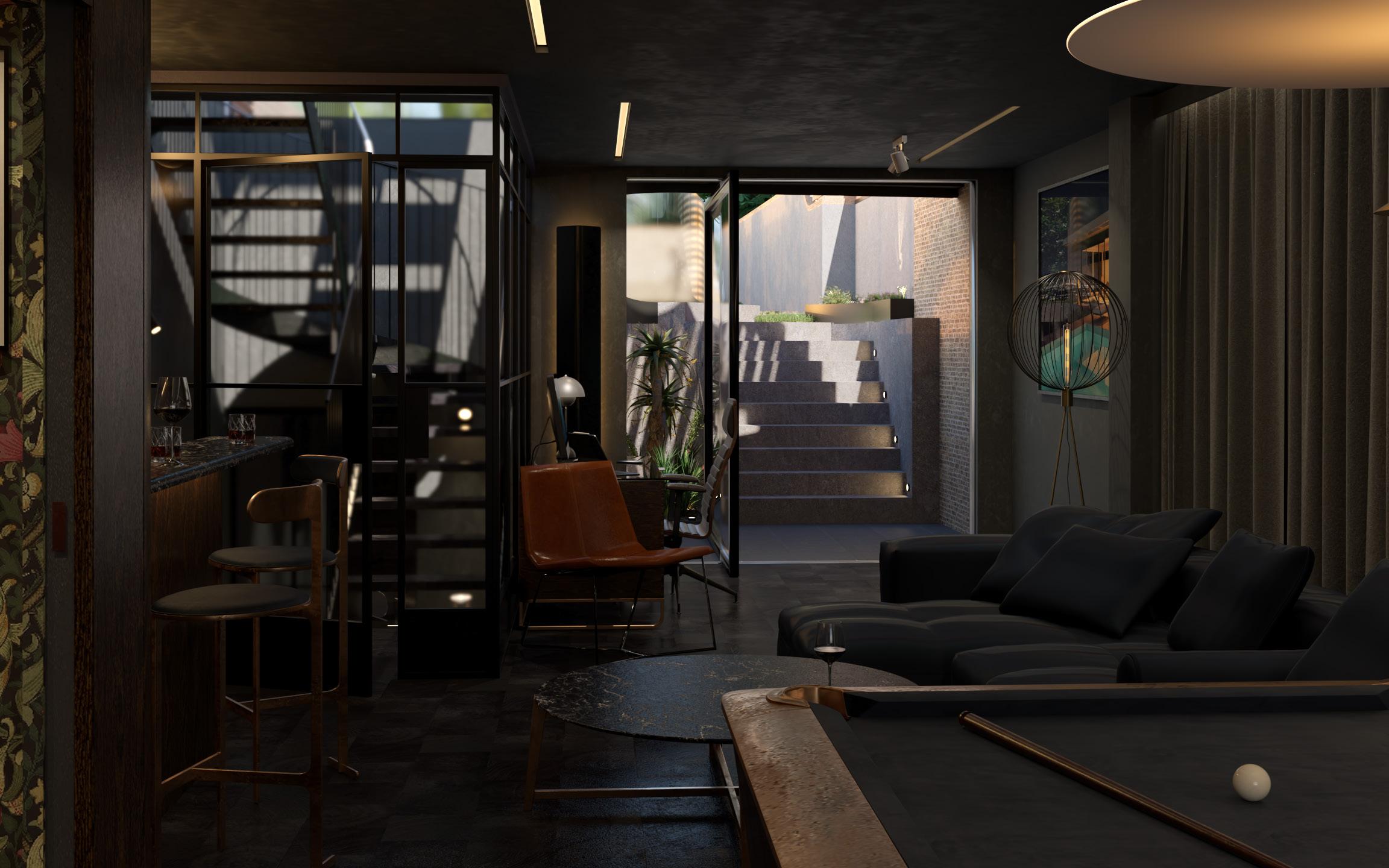
My contribution included preparing spatial layouts, interior detailing, electrical and waste management plans, and producing both hand-drawn and digital three-dimensional visuals. For the lower ground floor in particular, I focused on re-imagining a previously dark and disconnected level into a cohesive entertainment and living space.
The proposal introduces a sunken rear extension with enhanced garden access, improved natural light, and refined materiality that addresses long-standing privacy and circulation issues. These drawings and visualisations formed part of a comprehensive tender package which has now been contracted out, construction is to start early 2026.
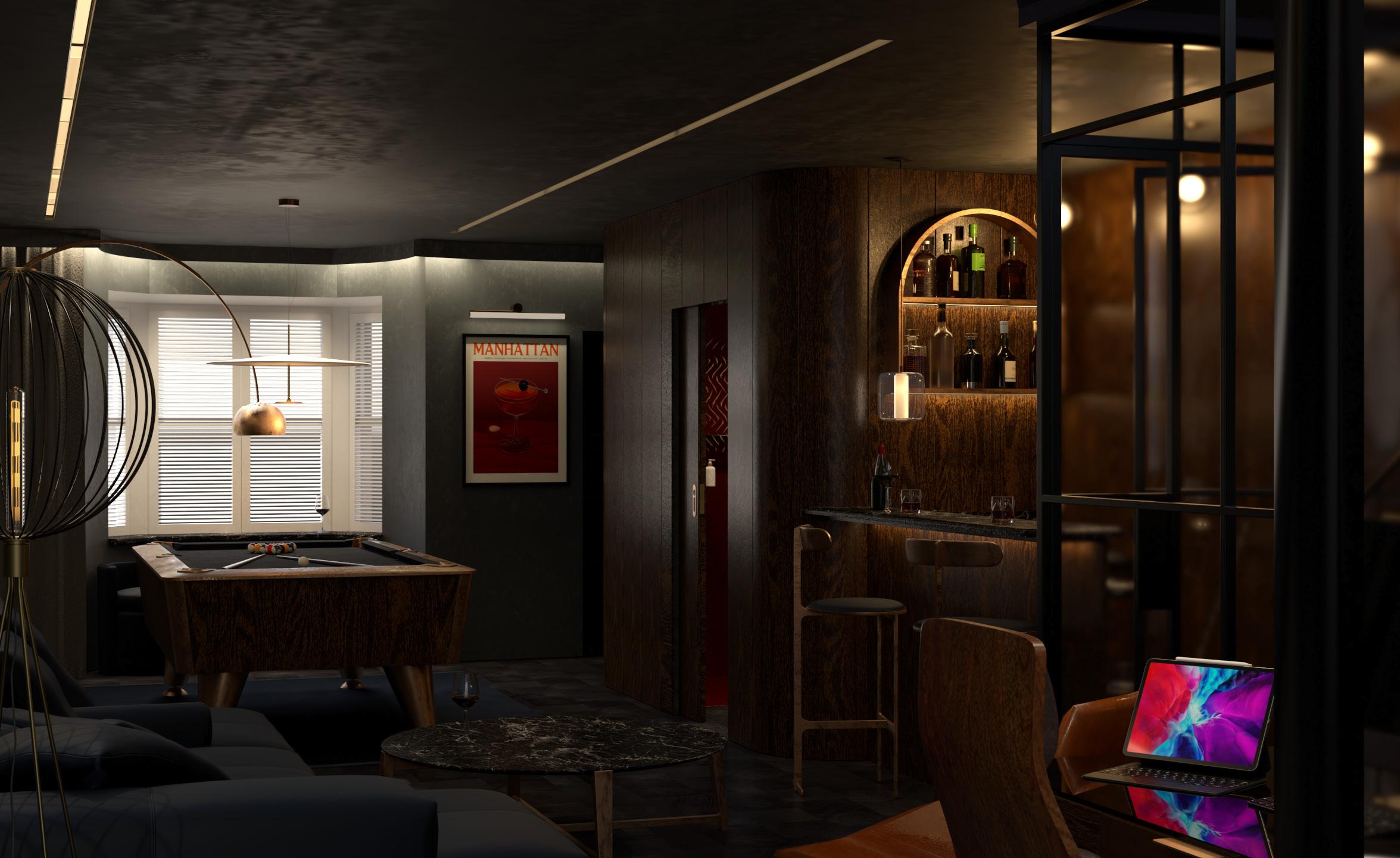
2. ‘LGF Entertainment Room’ Internal View using Rhino + V-Ray.
3. ‘LGF Office and Sunken Patio’ Internal View using Rhino + V-ray.


In-Practice
No. 36 West End Lane
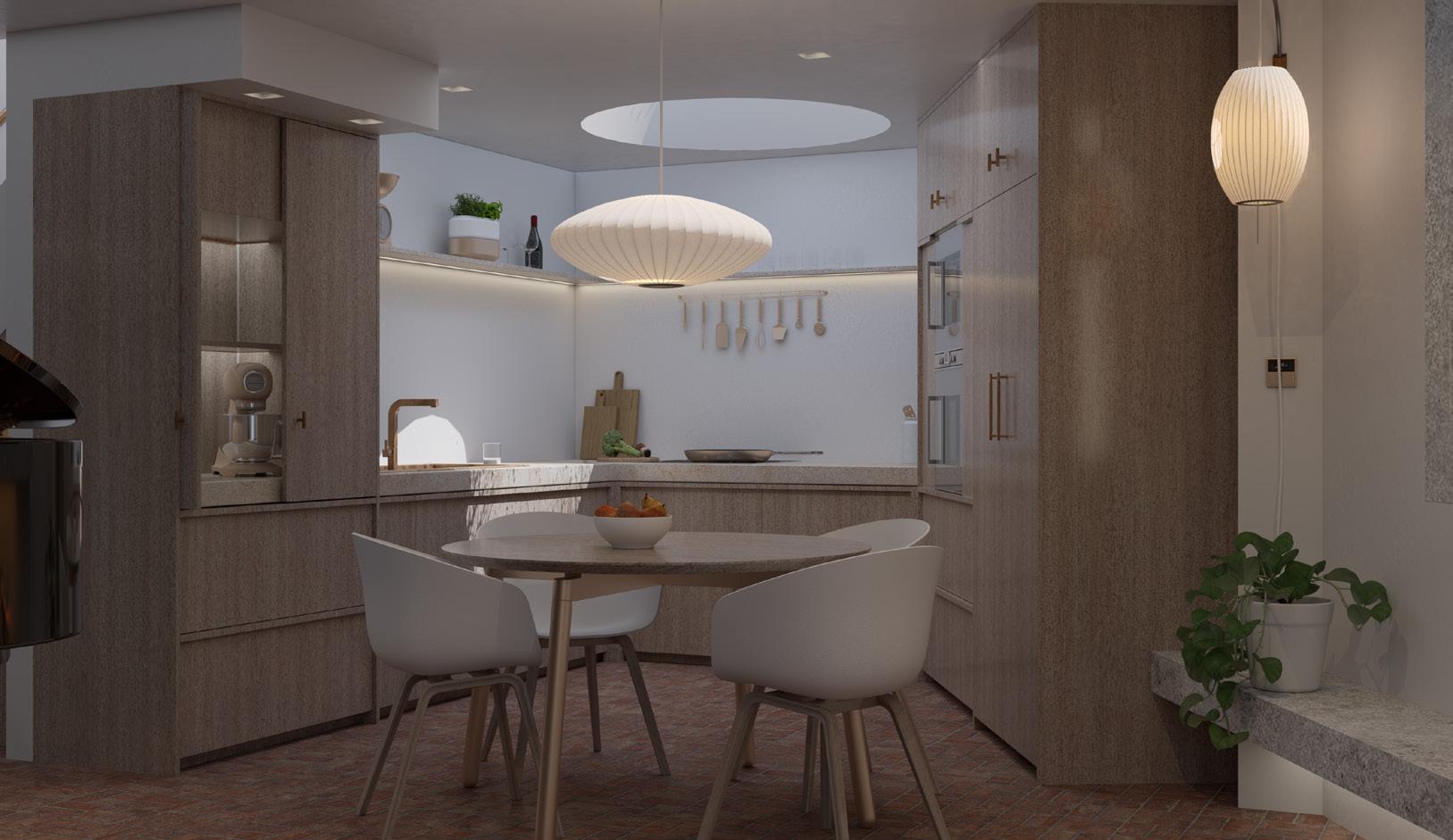
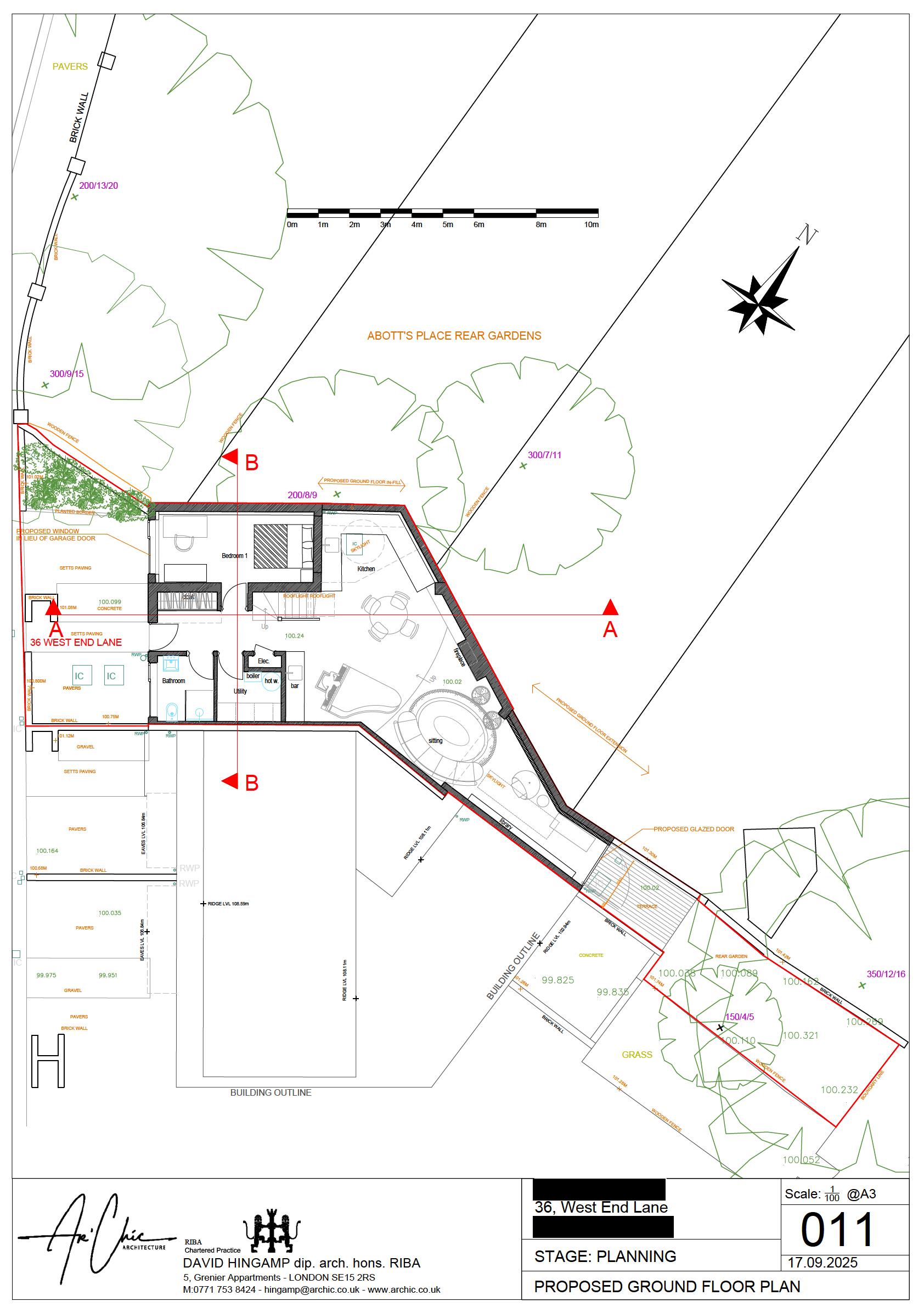
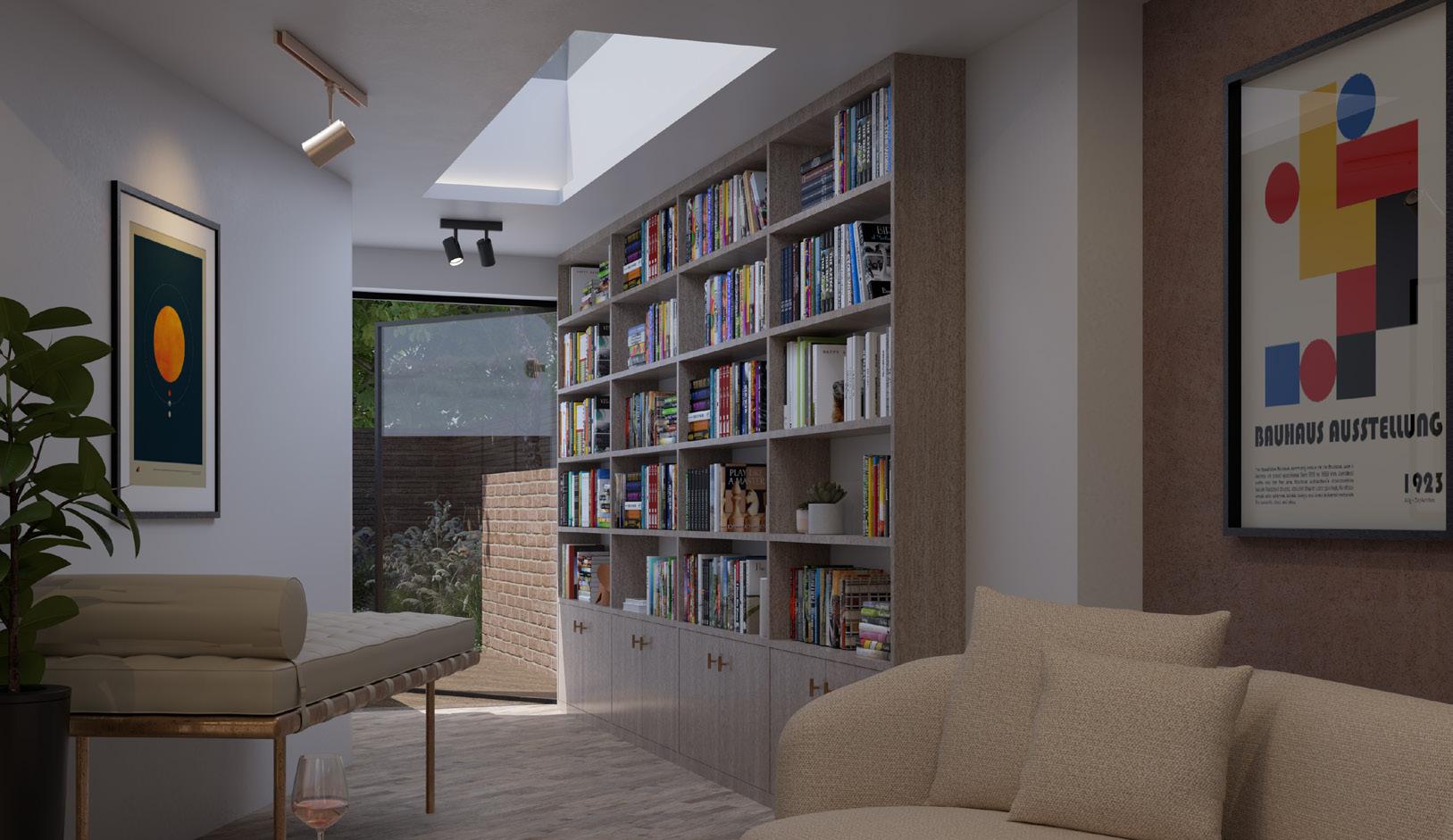
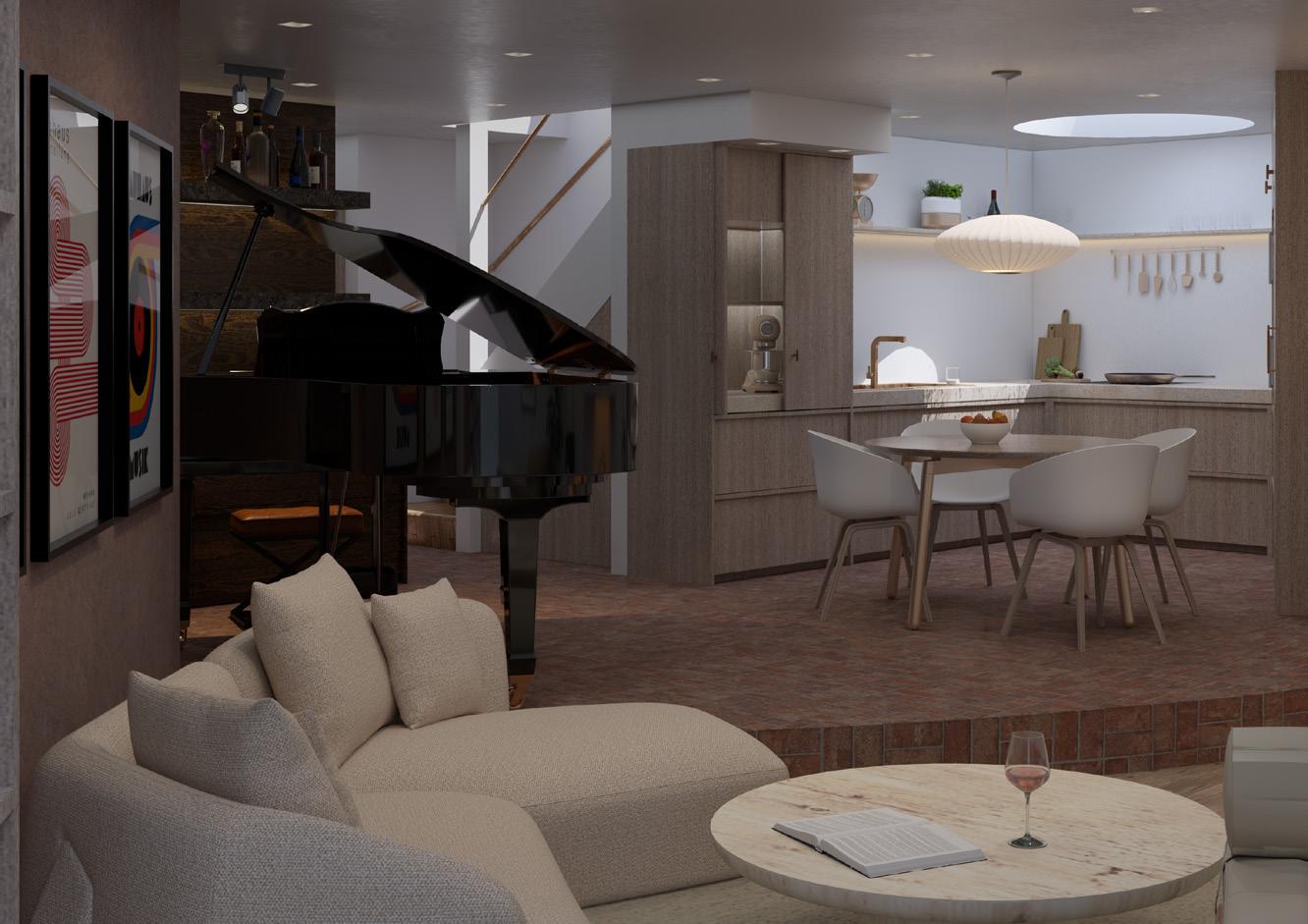
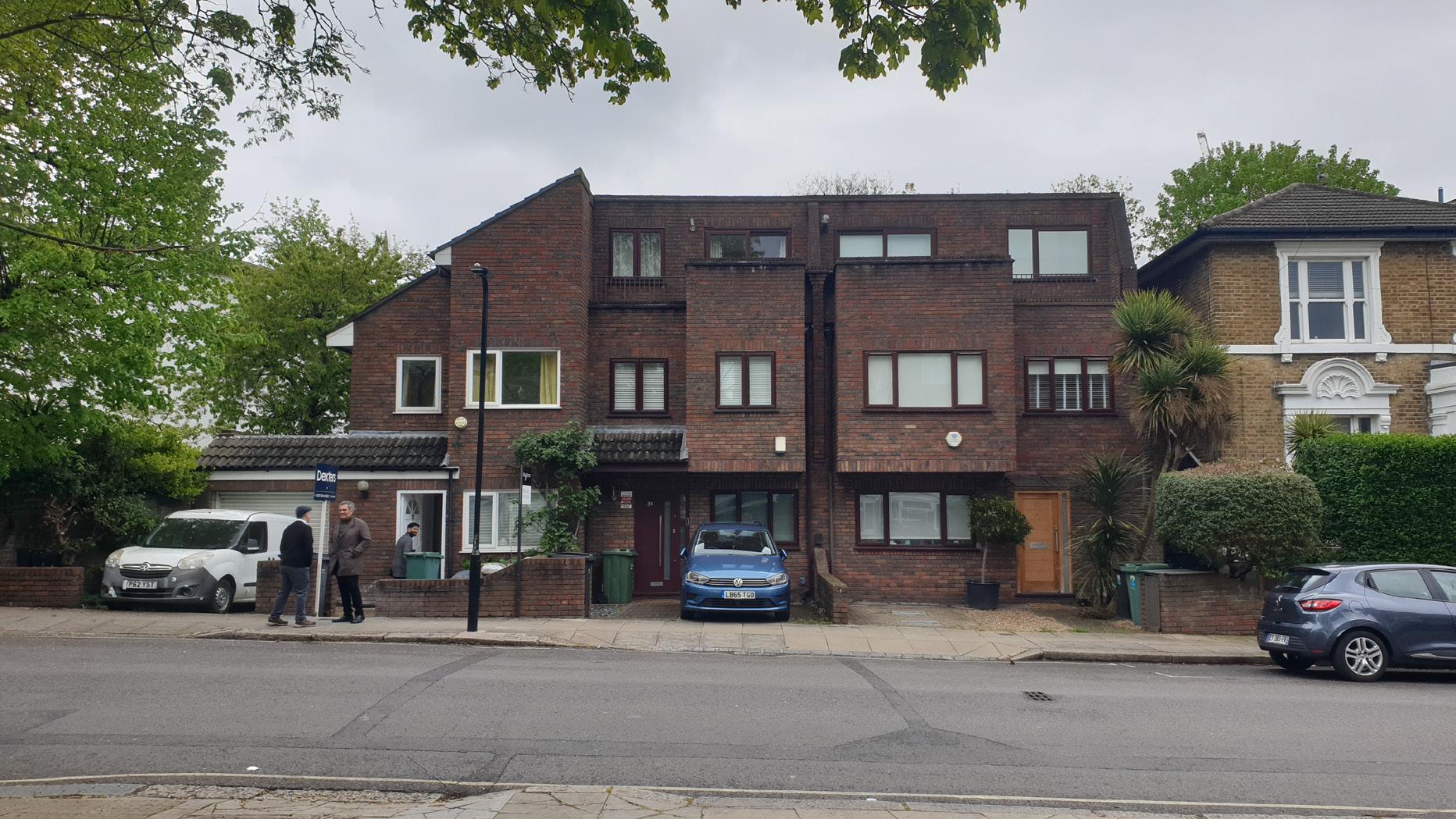
In this project I was given the CAD layouts and asked to produce some 3D visuals to accompany them to be sent to the client. The client is a musician - hence the grand piano which was a non-negotiable - and had recently purchased a 2 storey 1980’s end of terrace house, part of a row of 3 similar houses of the same development phase. The project entails several stages of planning with the first being for a rear extension and a
1. ‘Kitchen’ Internal View using Rhino + V-Ray. 2. ‘Library’ Internal View using Rhino + V-Ray. 3. ‘Living Area’ Internal View using Rhino + V-Ray.
4. 36 West End Lane Street View.
In-Practice
No. 2 Glebe Hyrst
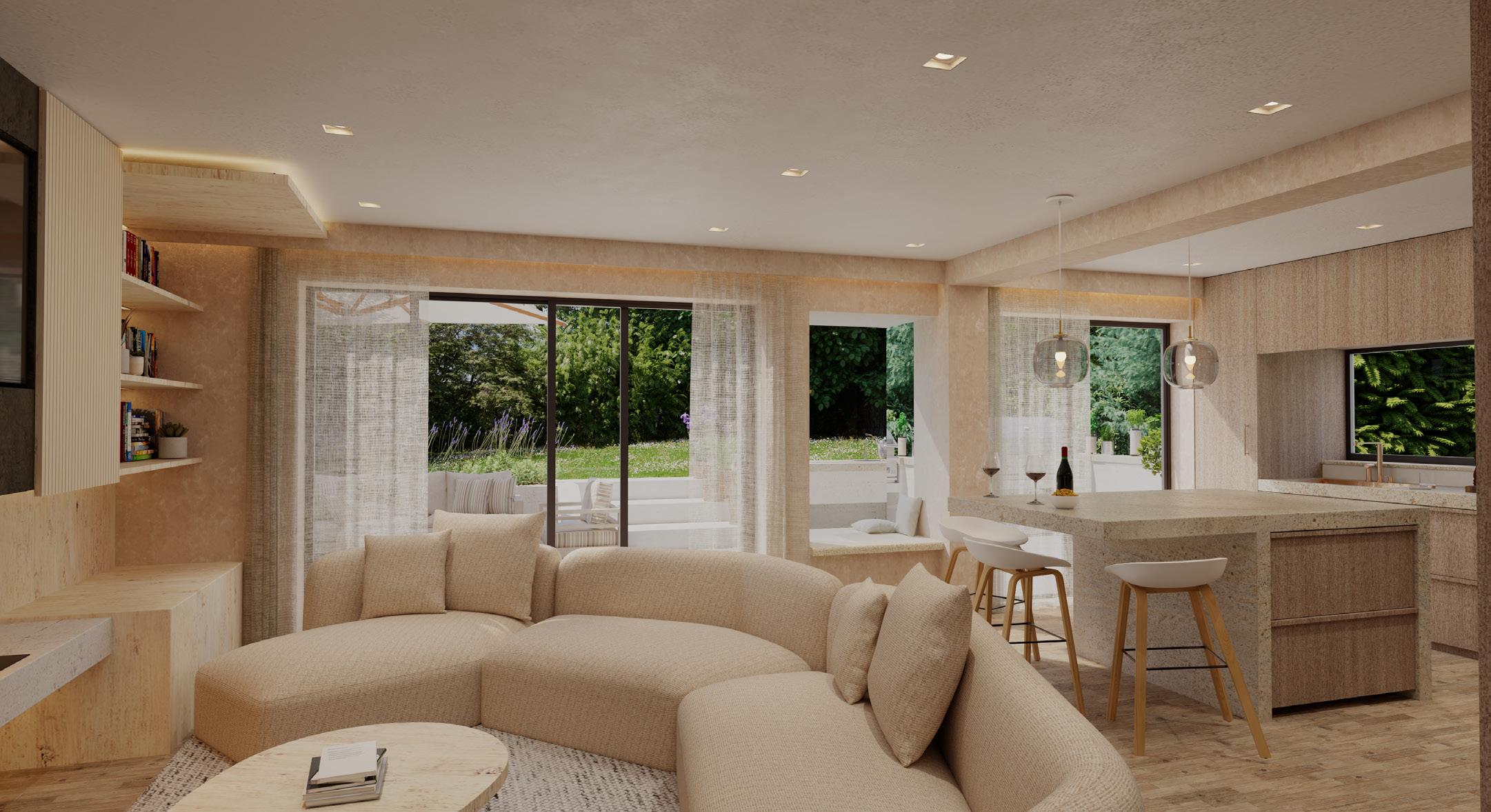
The existing property at 2 Glebe Hyrst is a modern 2000s brick-built five-bedroom detached home. The proposal seeks to carry out internal remodelling, resulting in changes to some external materials and glazed openings. The design introduces contemporary features which enhance environmental performance while maintaining minimal visual or amenity impact on neighbouring properties. I was asked to produce some 3D internal visuals for the clients to accompany the 2D drawings. Using a combination of Rhinoceros and V-ray, I have been able to produce images for our clients that showcase their individual ideas - combining their mood-boards, layouts, textures, materials and finishes.
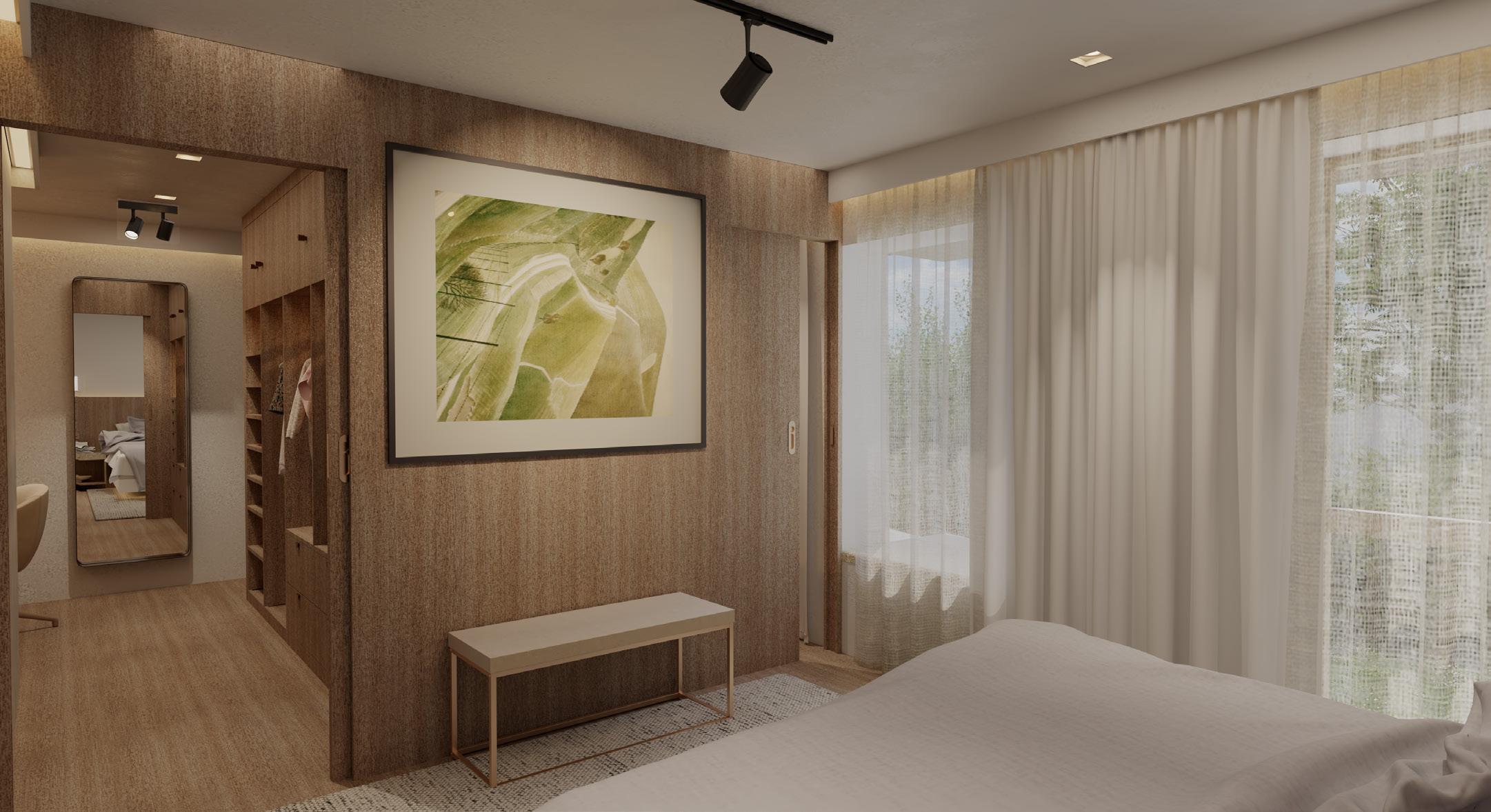
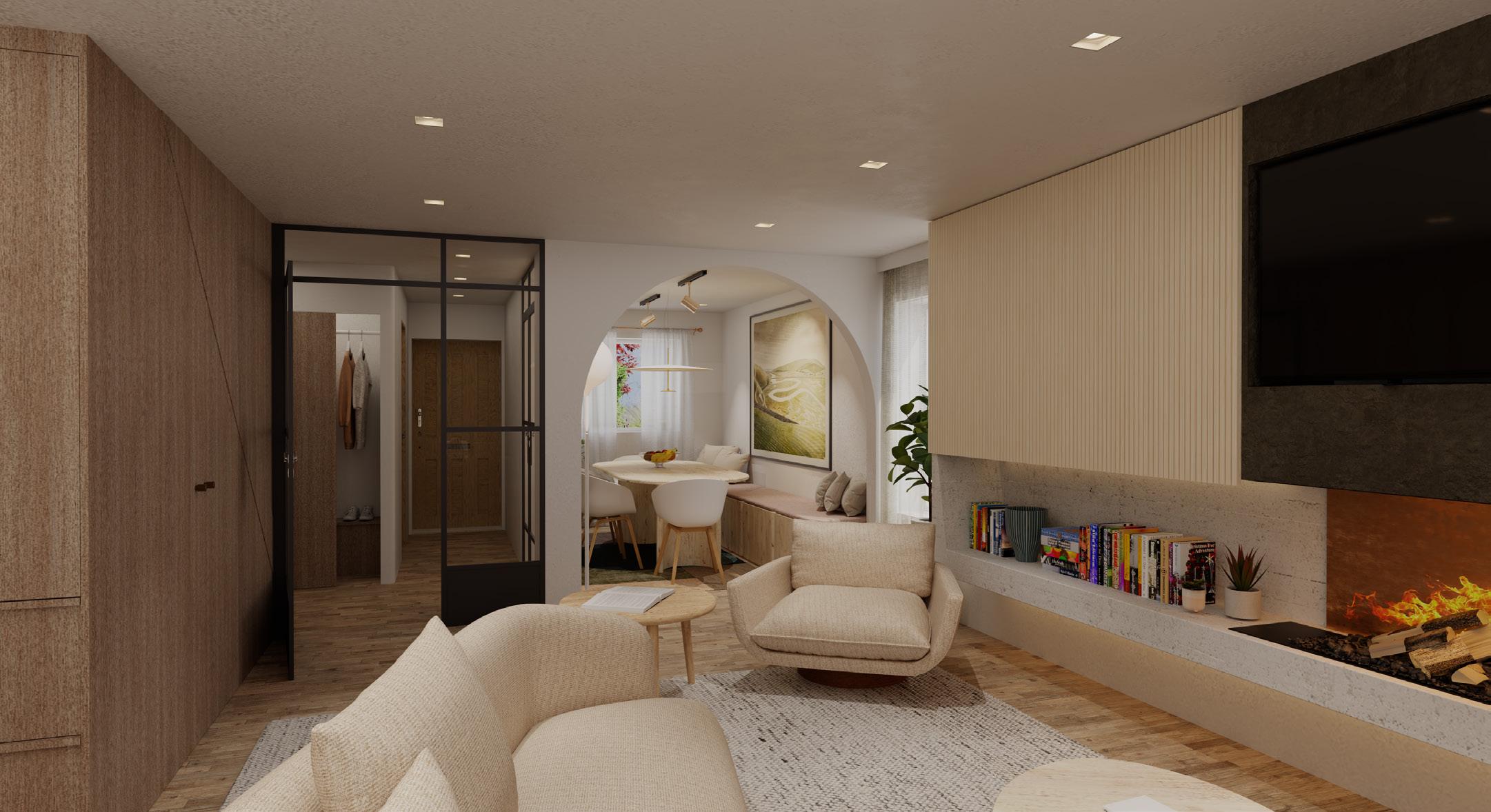
1. ‘1st Floor Master Bedroom + Dressing Room’ Internal View using Rhino + V-ray.
2. ‘GF Living room + Kitchen’ Internal View using Rhino + V-ray.