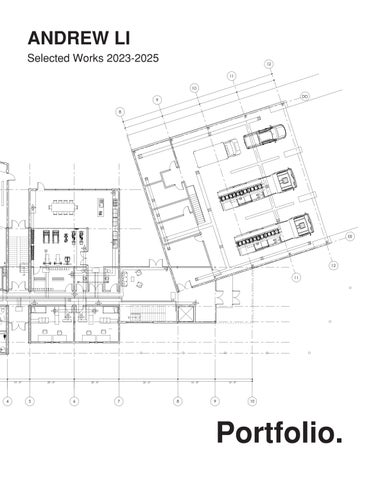
https://issuu com/andrewli42/docs/andrew li portfolio
Design-driven architecture student experienced in civic, cultural, and public projects with a passion for public-engaging, sustainable, and innovative designs to embody and elevate the users Have a strong foundation in BIM workflow, digital media, and professional collaboration across disciplines Seeking architectural intern opportunities for Summer 2026
EDUCATION
Carnegie Mellon University, Bachelor of Architecture May 2027
Human-Computer Interactions Minor
GPA: 3 81
WORK EXPERIENCE
Studio Link Arc, Architectural Intern May 2025 - August 2025
● Assisted in the project closing and documentation phase of a multi-program civic and cultural public center in Shenzhen by producing construction drawings and BIM models to support final coordination and delivery
● Used AutoCAD, Revit, Rhinoceros, and Adobe Suite software to refine project documentation with a multidisciplinary team of project architects, interior designers, landscape architects, and external consultants
● Used Enscape, D5 Render, and Photoshop to produce renders and visualizations of key project intent and design to stakeholders and project partners
● Supported the competition phase of an ICH Center for Liaobu intangible cultural heritage by producing conceptual visualizations of programmatic and massing iterations for presentation and review.
ADDITIONAL EXPERIENCE
T.Y.Lin International, UI/UX Design Intern May 2024 - July 2024
● Contributed to the development of the iKanjian Collaborative Management Platform to provide full-life-cycle management for construction and architectural projects while connecting clients, designers, and contractors.
● Collaborated with front-end and back-end development teams to design and prototype user interface and functionalities tailored to on-site construction scenarios with Axure RP
● Supported the close-out inspection phase of the Science City Development project in Chongqing’s Science Valley, assisted with BIM coordination, on-site construction verification, and compliance review using AutoCAD and Revit
Building Analytics: Life Cycle Assessment (LCA), Thermal Comfort Modeling, Climate Data Interpretation, Therm. Fabrication & Craft: Woodworking, Model-making, Freehand drawing, Oil painting, Laser Cutting, CNC, 3D Printing.
BOSTON PUBLIC LIBRARY FIRE STATION 14
SCHENLEY CULINARY INSTITUTE
RIPARIAN RECLAIMATION
01 Fire Station 14
Praxis III Studio, Fall 2025
Coordinator: Gerard Damini
Instructor: Kristina Fisher
Partner: Tom Shen, Owen Petrucci
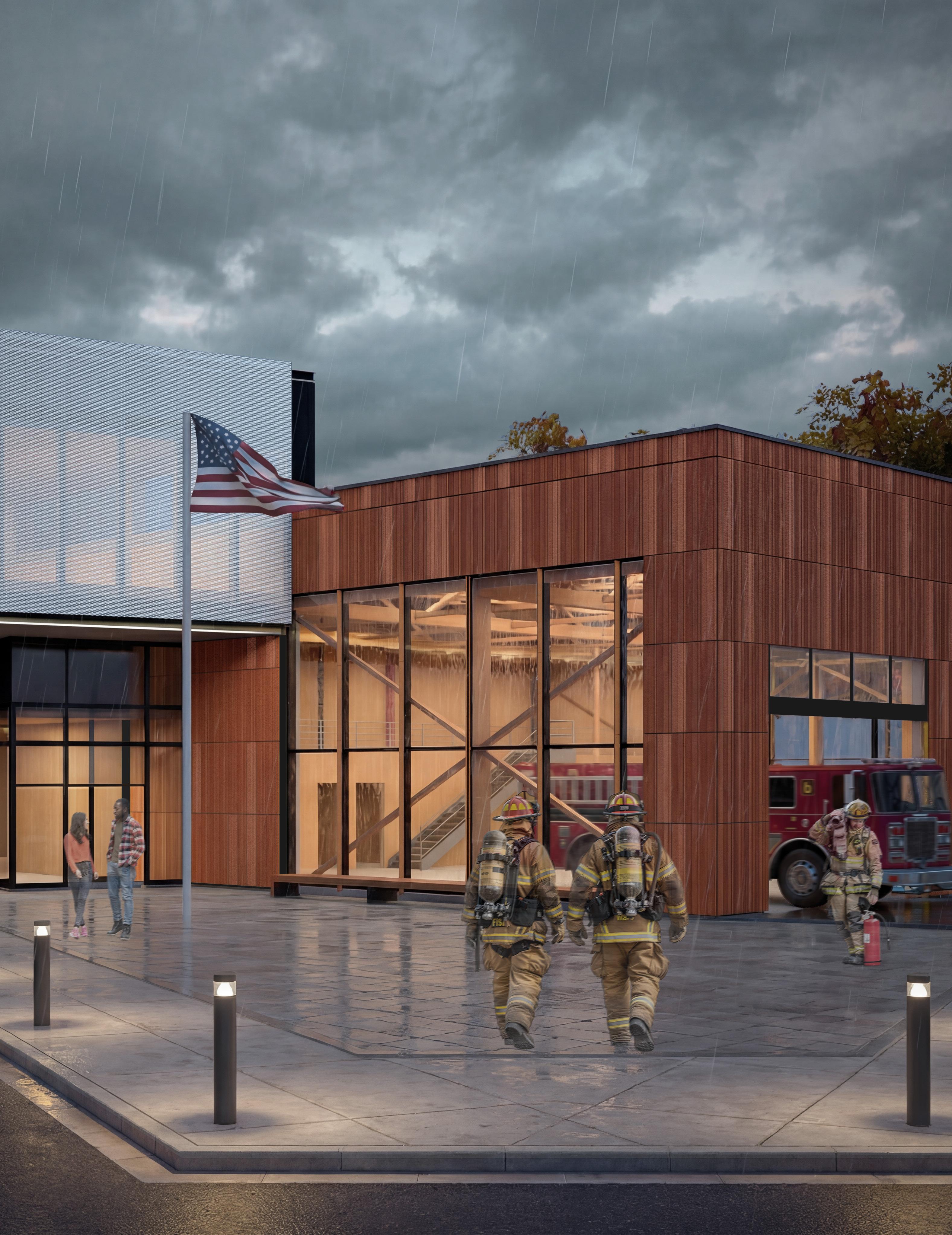
The Pittsburgh Fire Station 4 is located in the denselyresidential south Oakland neighborhood. The site is at the intersection of three main avenues of Oakland: Zulema, Bates, and Boulevard of the Allies, as well as the intersection of the institutional, mixed-use, and residential continents of Oakland.
Thus, the fire station not only fills the neighborhood vacancy for a modernized, well-equipped fire station for the dense surrounding neighborhoods, but also effectively uses the special characteristics of the yet-empty intersection.
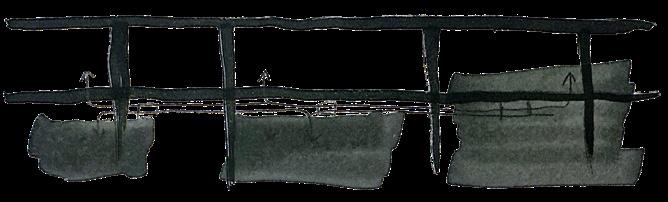
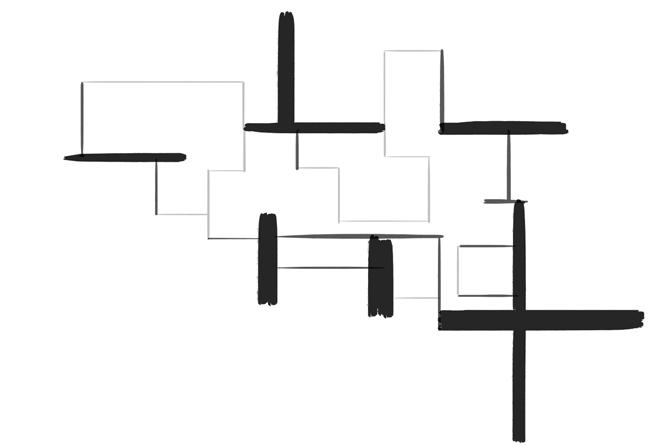
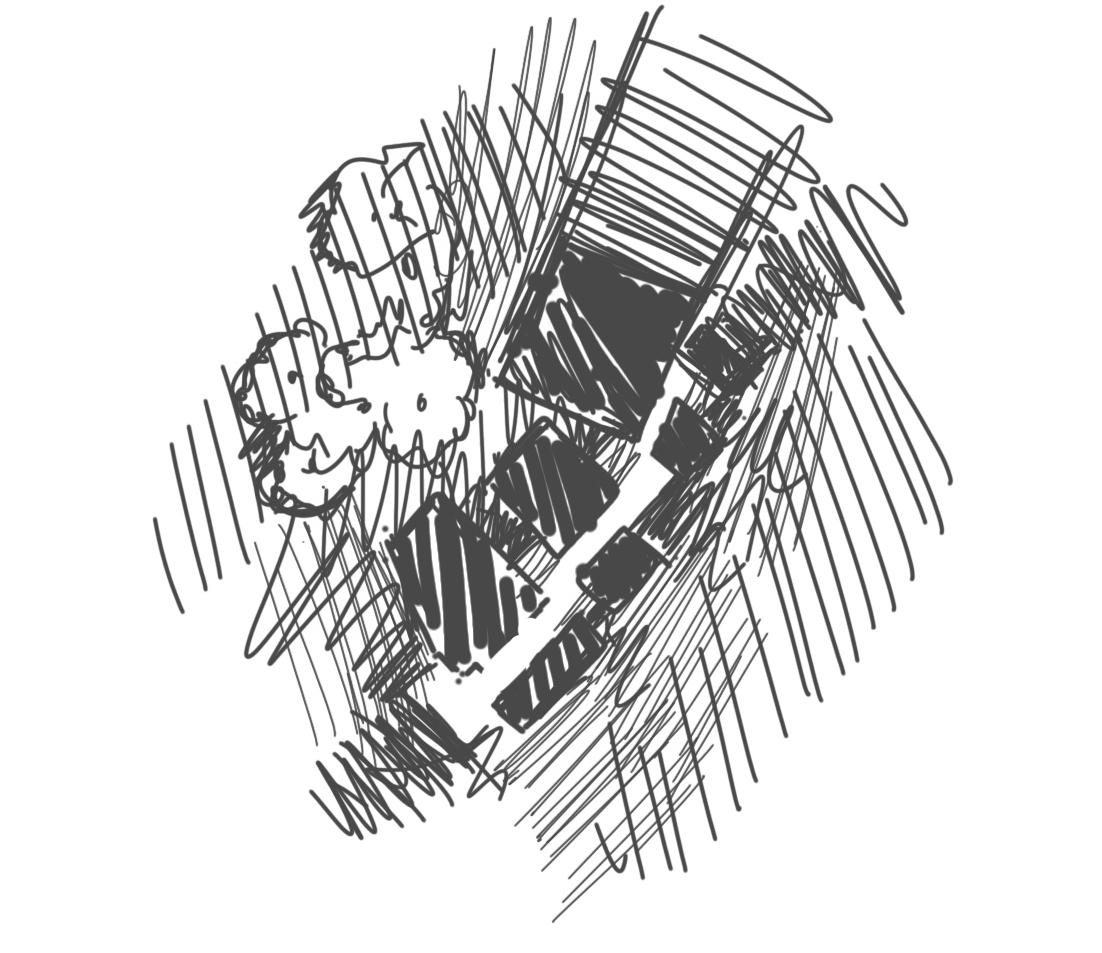
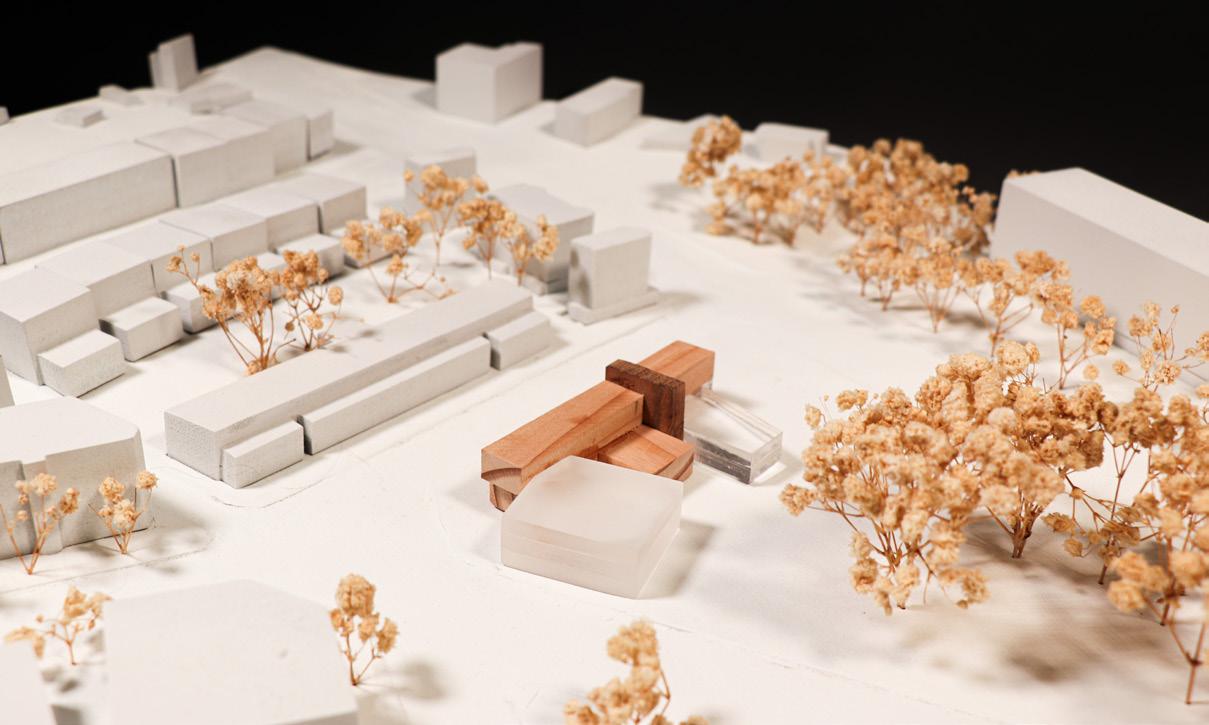
The project centers around a response to the neighborhood and site context and a central idea of a Bar collecting programs as masses
The central bar mass responds to the existing urban street edge defined by the residential houses across the street and functions similarly as the residential and circulatory artery of the station. Then, the bar collects three programs, each of which uniquely intersects and interacts with the bar.
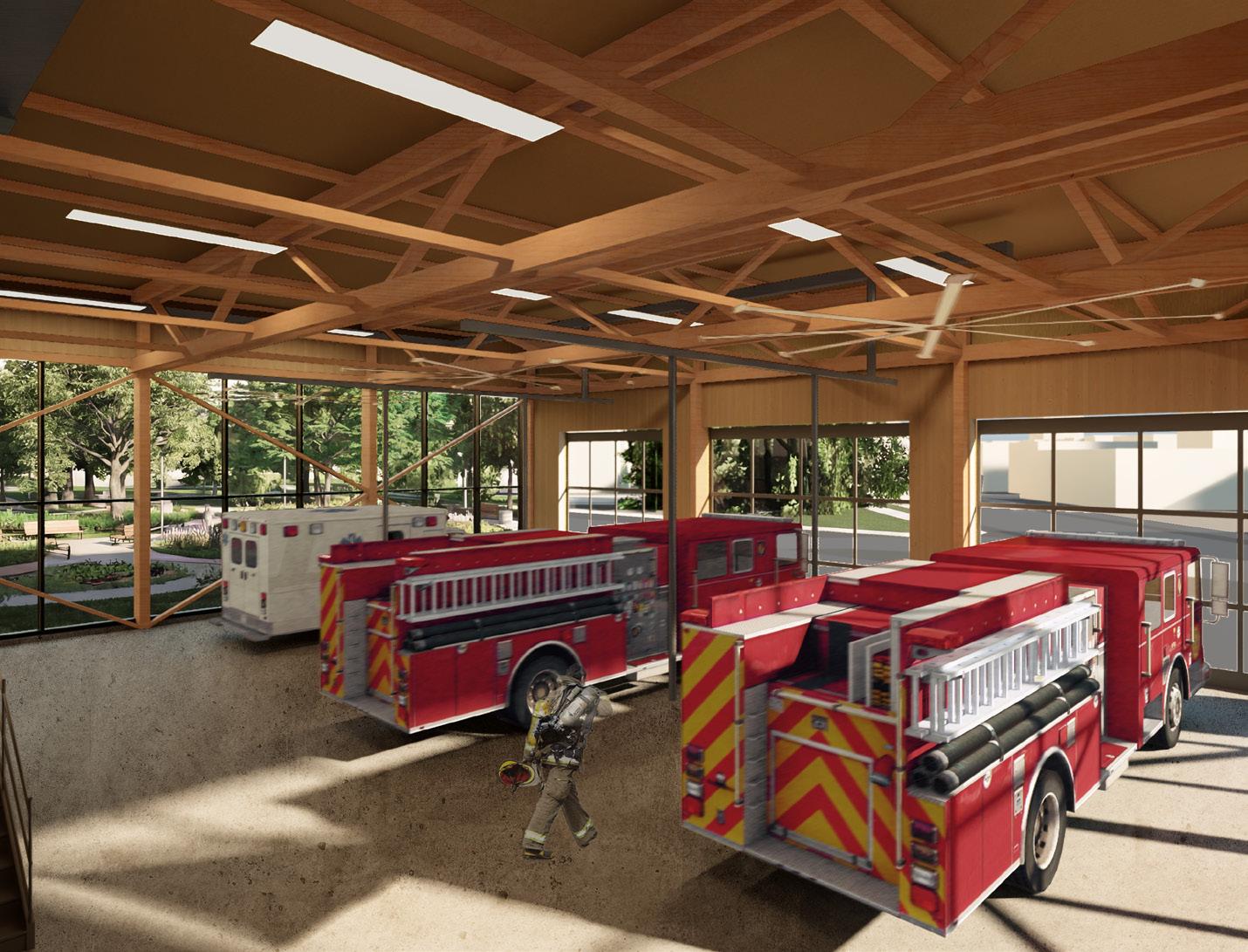
In response to the urban street edge condition, the apparatus bay faces the widdest and most-connected Zuleman street that extends out to the northern institutional heart of Oakland and rotates in parallel to the street edge.
STREET EDGE PARK
ROWHOUSES
RESIDENTAL BAR
Site Context Diagram
COMMERCIAL CORRIDOR
APPARATUS BAY
SUPPORT SPACE (BEANERY + GYM)
TRAINING/COMMUNITY ROOM + OFFICES
STREET EDGE
ROTATE
TAPER
INDUSTRIAL FACILITY
COMMERCIAL (HOTEL + RESTAURANT)
ROWHOUSES
COMMERCIAL (OFFICE)
COMMERCIAL/INSTITUTION CORRIDOR
Parti Diagram
Level 2
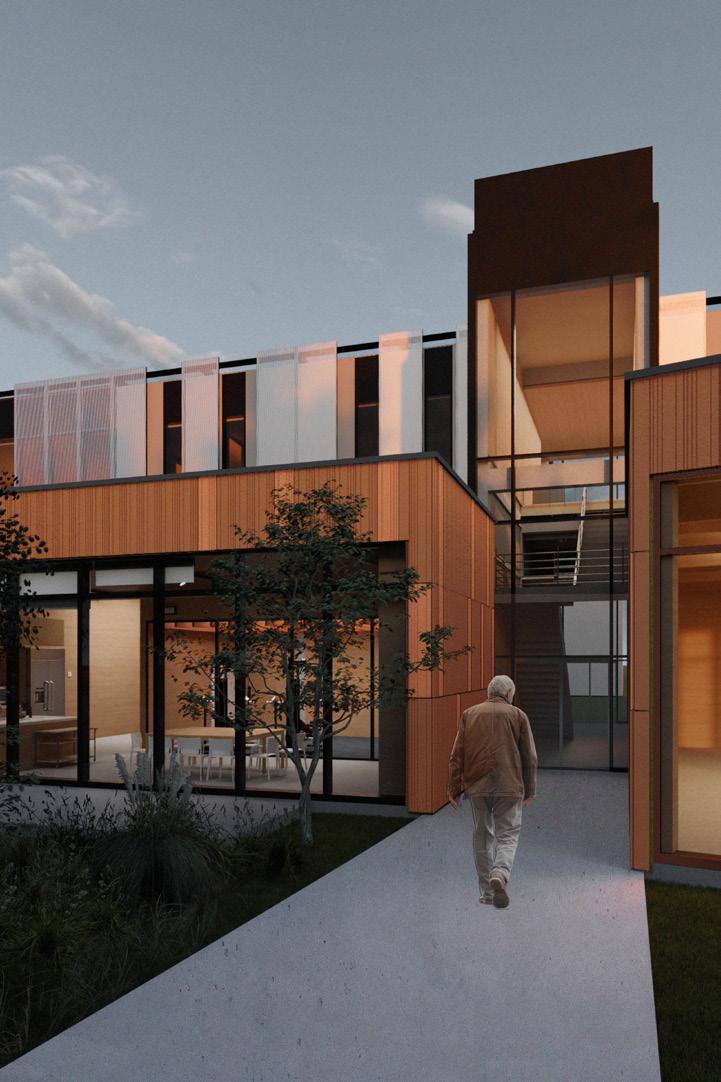
In the middle is the supporting private spaces for the firefighters, and towards the south, a community-facing program also tapered to the southern street, aiming to invite neighborhood communities to engage with the station.
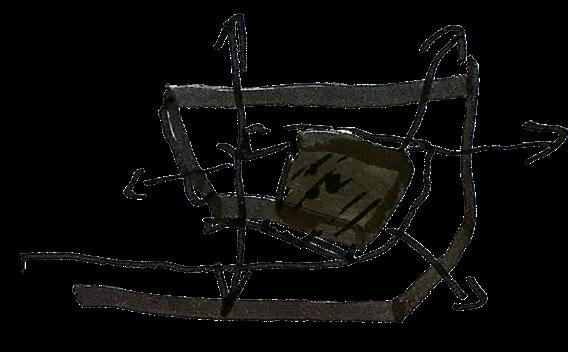
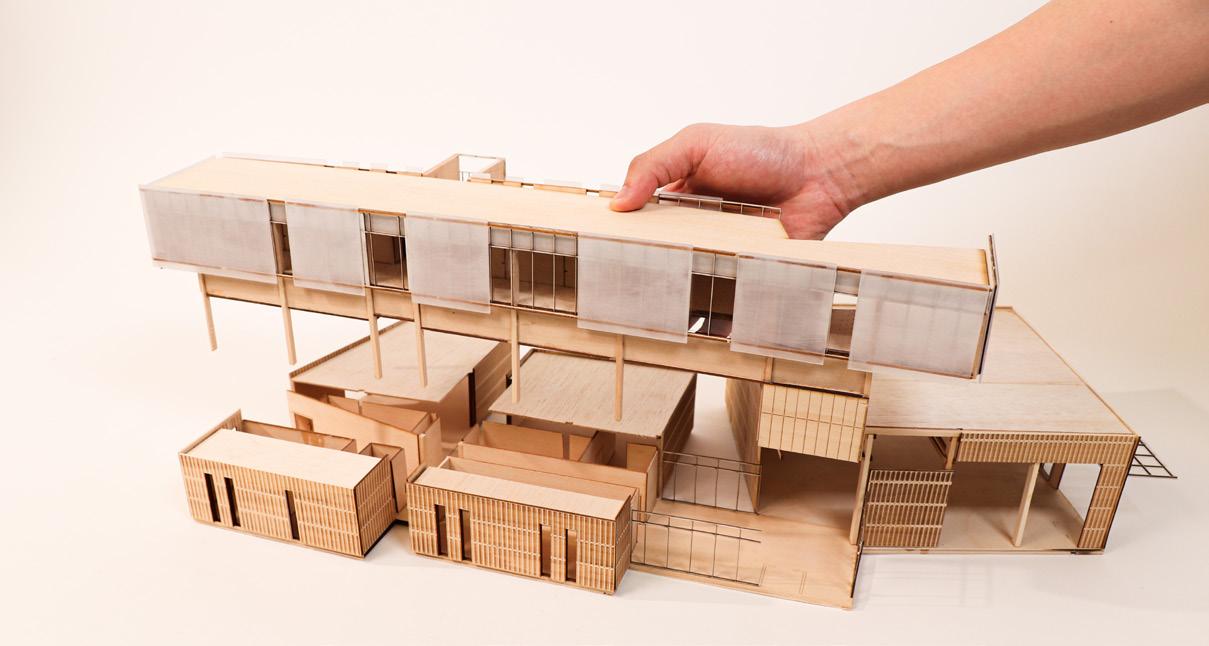
The community module pinches the bar, then the firefighters' module slides under the bar; finally, the apparatus bay bites into the bar.
Together, the three intersection actions define a central press and release of circulation space, where users may travel up and down to reach the different programs.
The duo structural engineering and materiality of the station reflects parti, with the Bar volumn being constructed with steel columns and wide-flanges and the three collected programs being constructed with glulam members.
Structure Diagram
Program Diagram
Long Corss Section
MEP System Plan
Then, on the second floor, the bar fully expresses itself by being lifted, floating above the programs below. This middle mezzanine is how the MEP system is integrated into the building, functioning as the spine that supplies all attached organs horizontally and vertically.
For air, a Dedicated Outdoor Air System (DOAS) is implemented where outdoor fresh air is collected via rooftop units and distributed and circulated via the mezzanine to programs on both floors.
A Variable Refrigerant Flow (VRF) system provides heating and cooling to the building with the DOAS system
HVAC Diagram
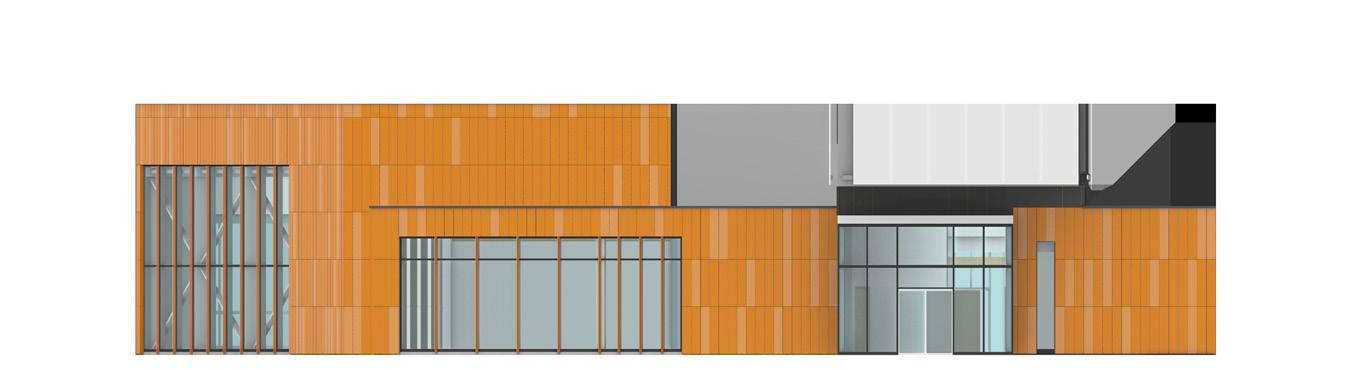
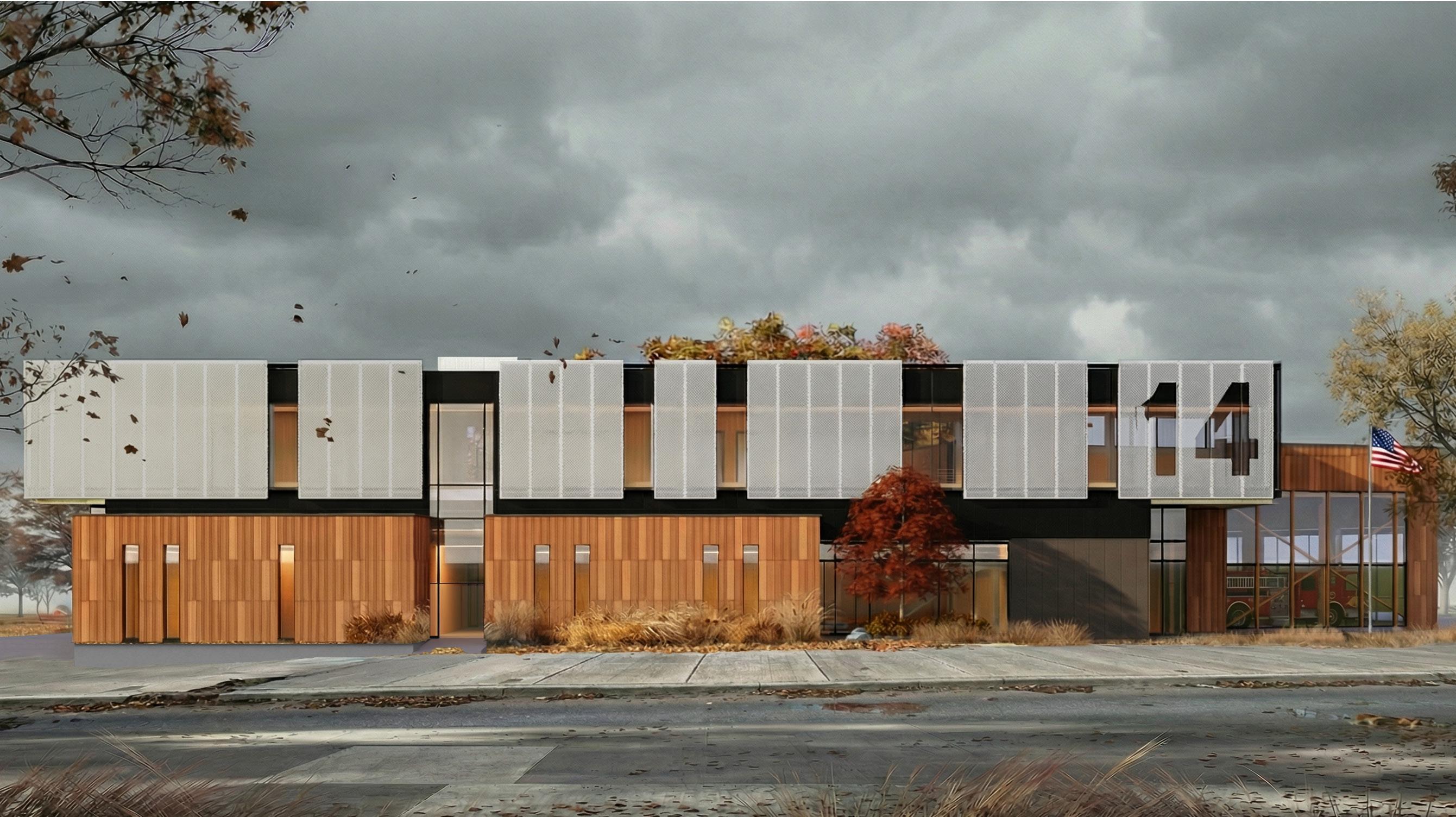
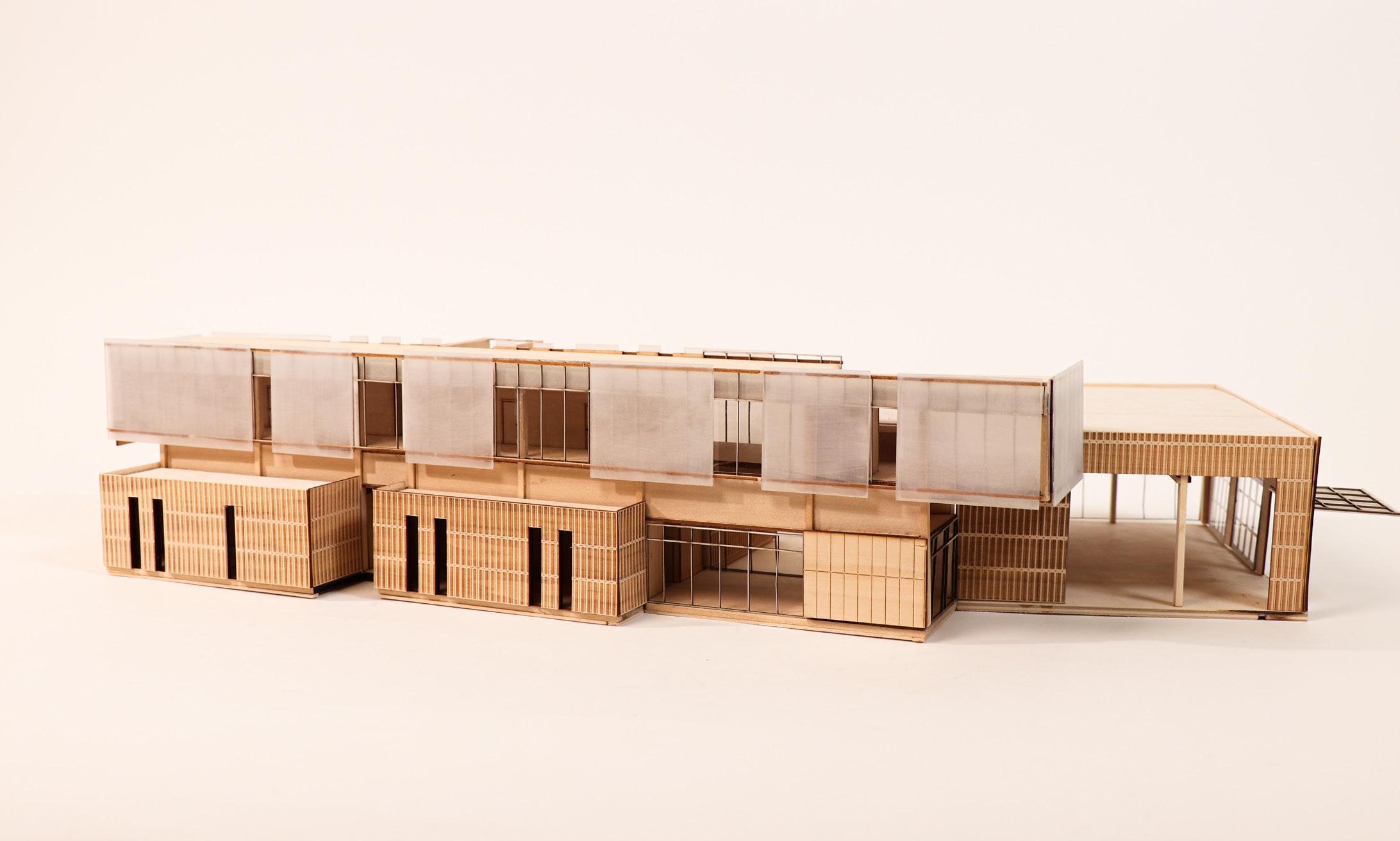
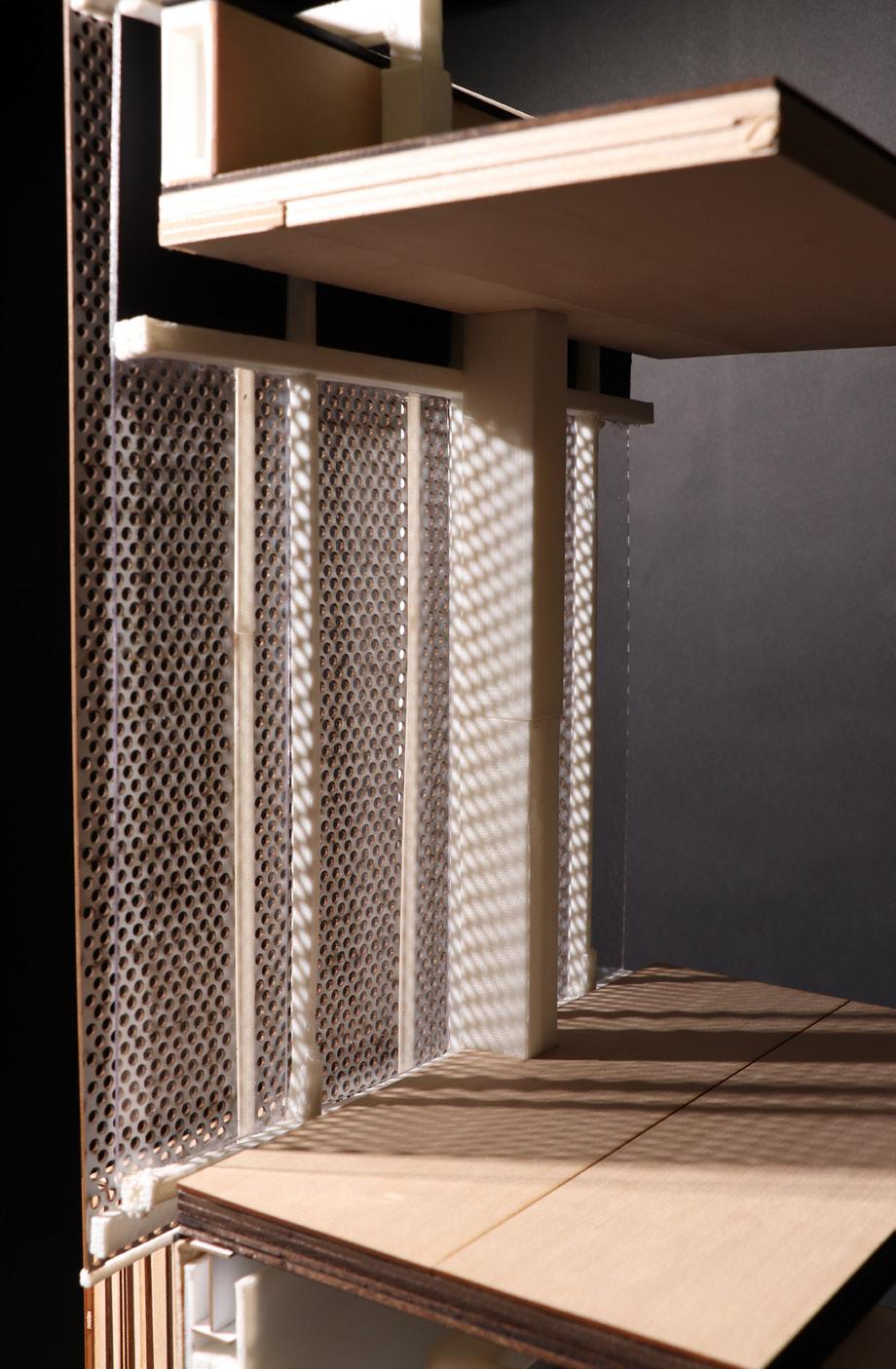
The idea of Bar collecting masses is continued and further emphasized in envelope. Terracotta envelopes the wooden and warmer bottom volumes are terracotta panels in reddish, earthy colors, reflecting the interior program and experience. On the bar, the colder, more steel-like characteristics are reinforced with glazed curtain walls and another layer of perforated steel panels.
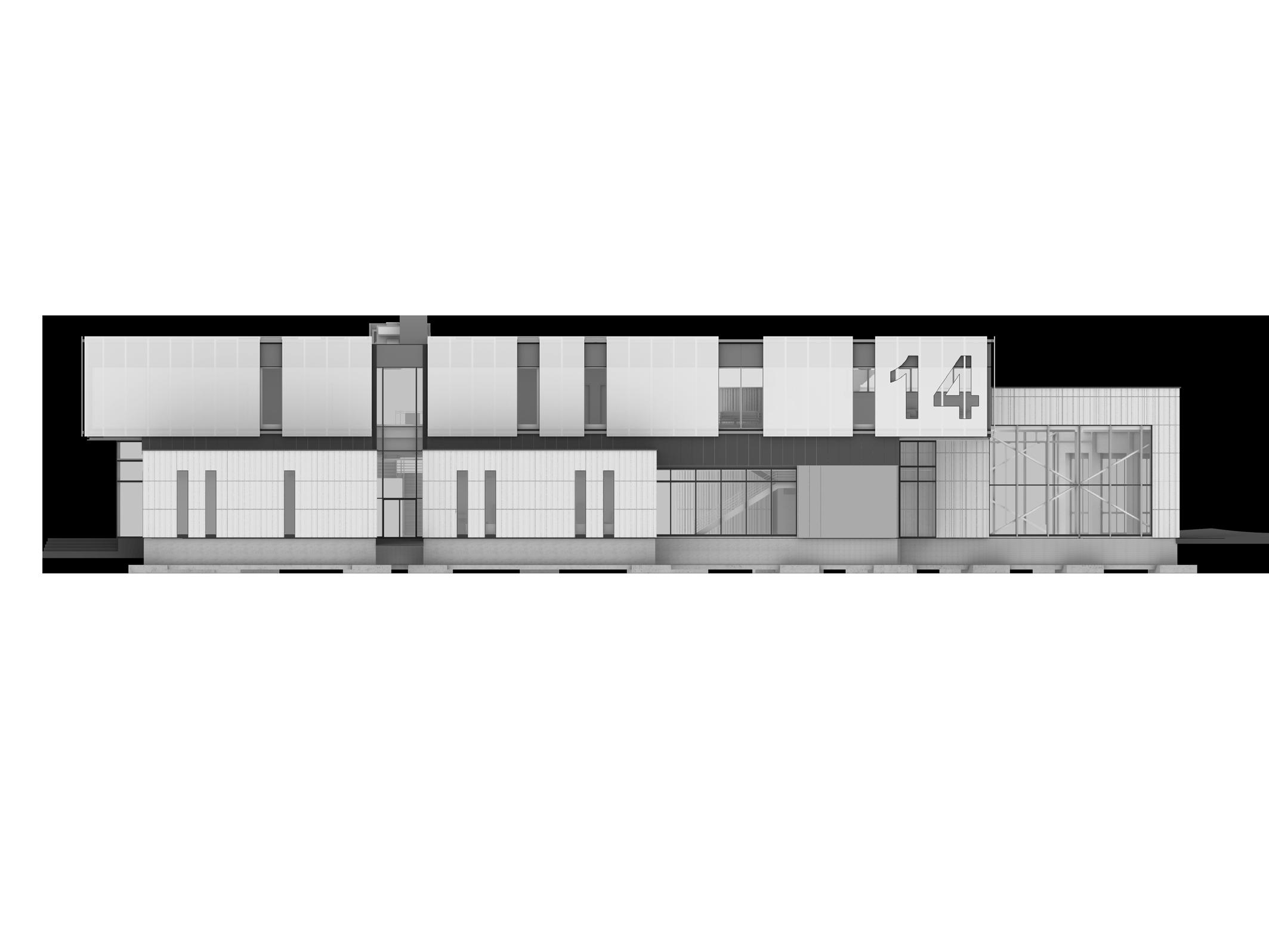
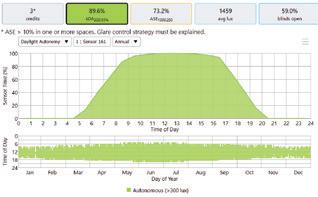
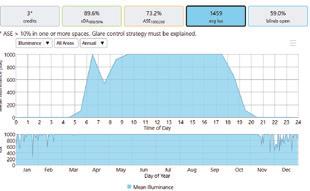
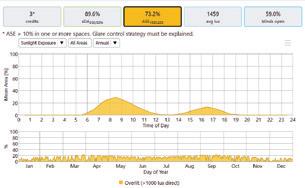
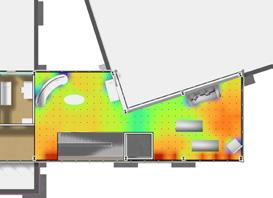
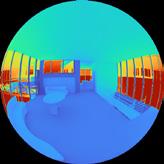
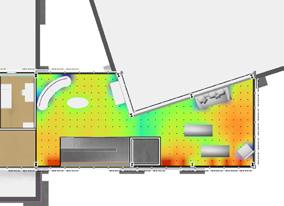
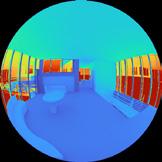
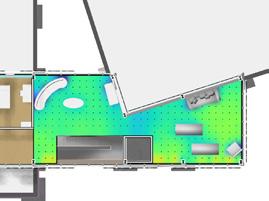
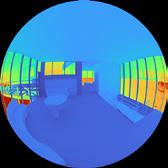
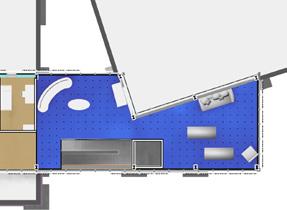
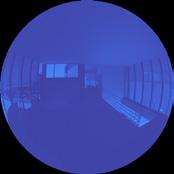
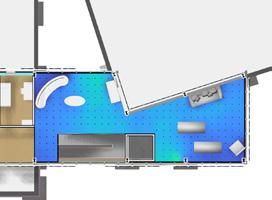
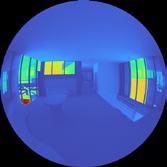
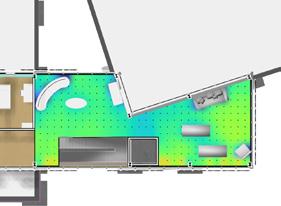
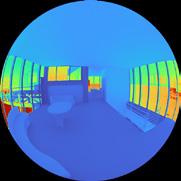
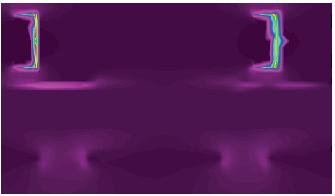
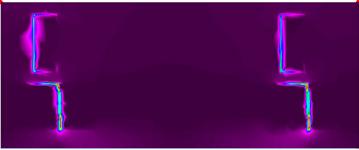
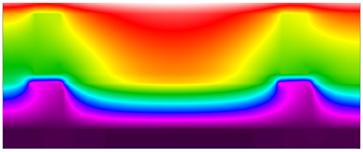
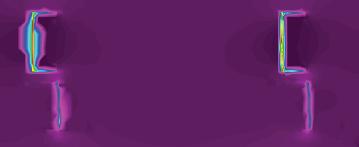
Through ClimateStudio and Therm simulations, iterations on the daylighting effects and thermal performance of the designed facades were performed and optimized.
South Elevation
West Elevation
Terracotta Facade Secton Detail
Facade Render Interior Renders
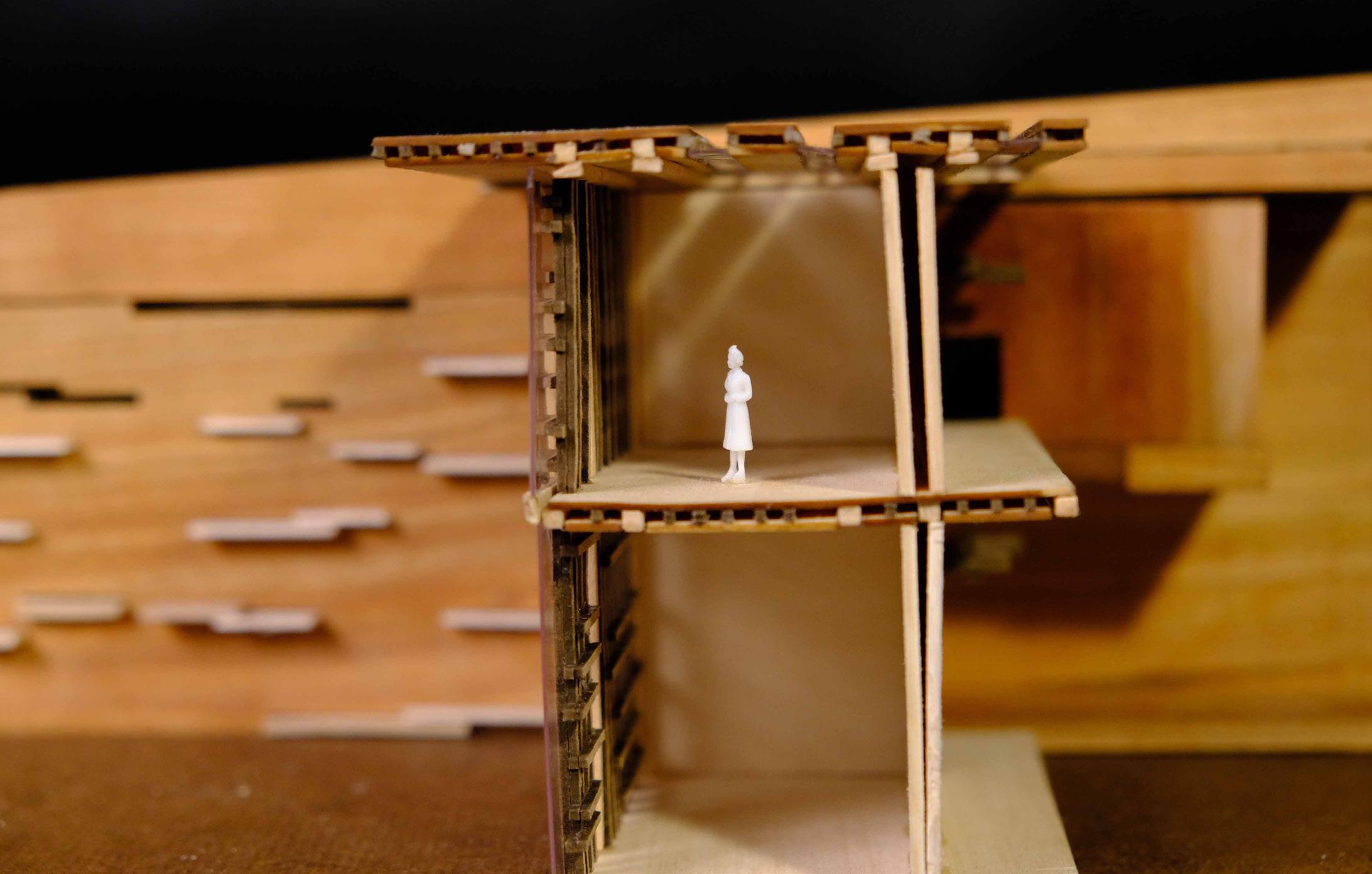
3/4" = '-0" Section Model
/" = '-0" Model
/" = '-0" Site Model
02 Boston Public Library
Praxis II Studio, Spring 2024
Coordinator: Jeremy Ficca
Instructors: Jongwan Kwon
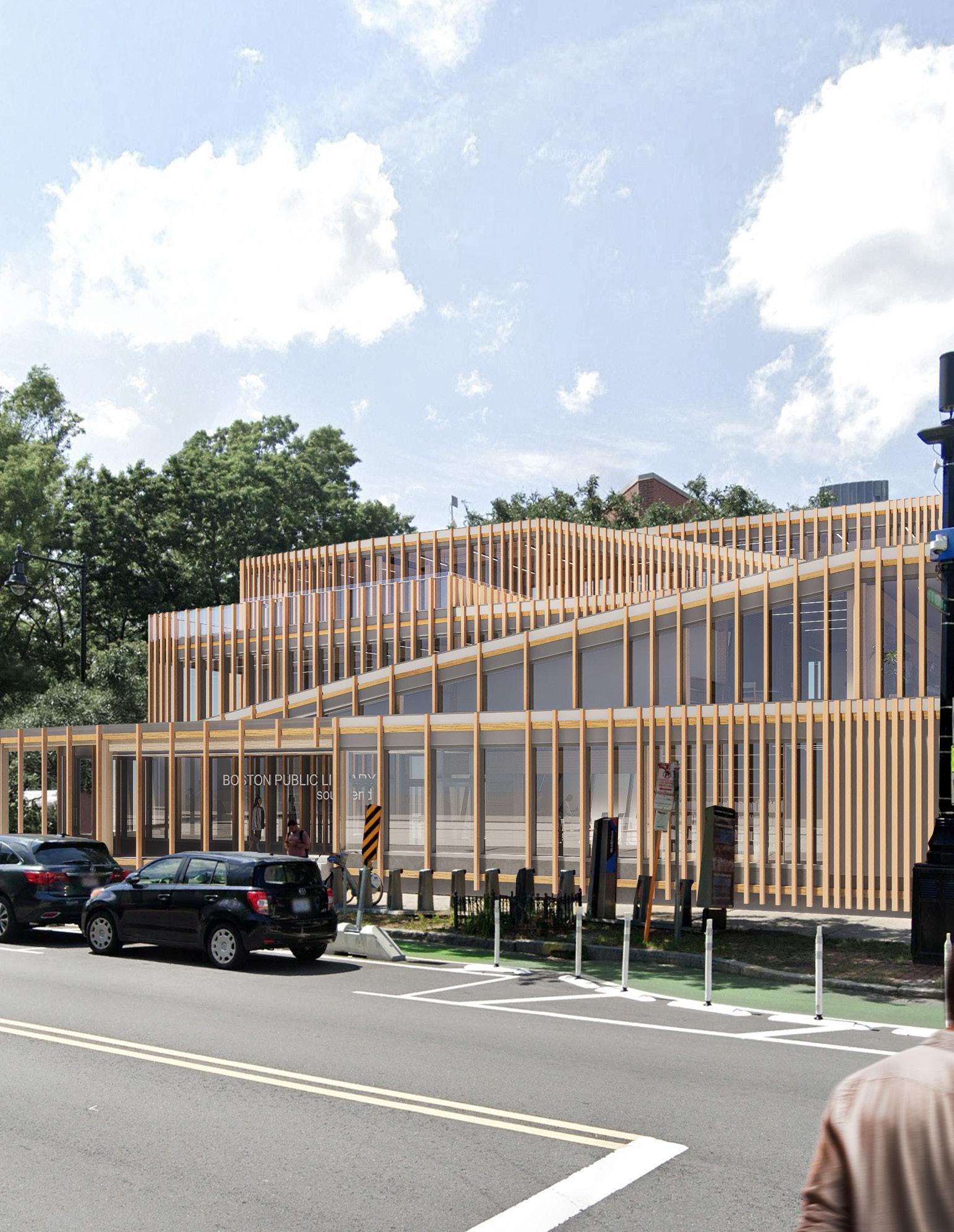
The Boston Public Library South End Branch is located on Tremont Street in the South End neighborhood of Boston. It is a an intersection where the main arteries from downtown Boston and a strong educational precense of the adjacent Northeastern University converges.
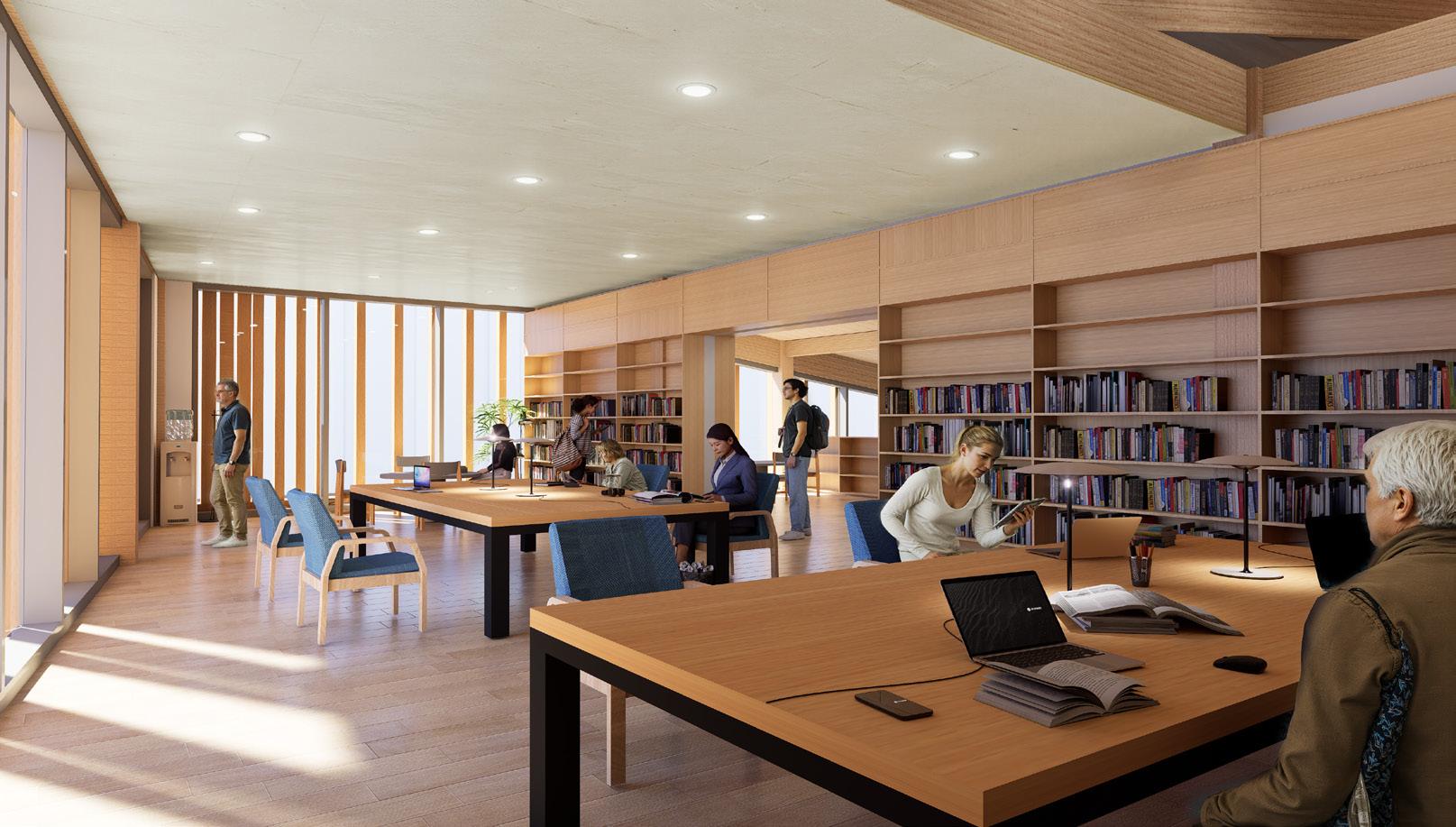
As a crucial public library resource for the dense residential context, the orginal BPL branch is in need of expansion, and this proposal replaces the vacancy with a communityoriented design.
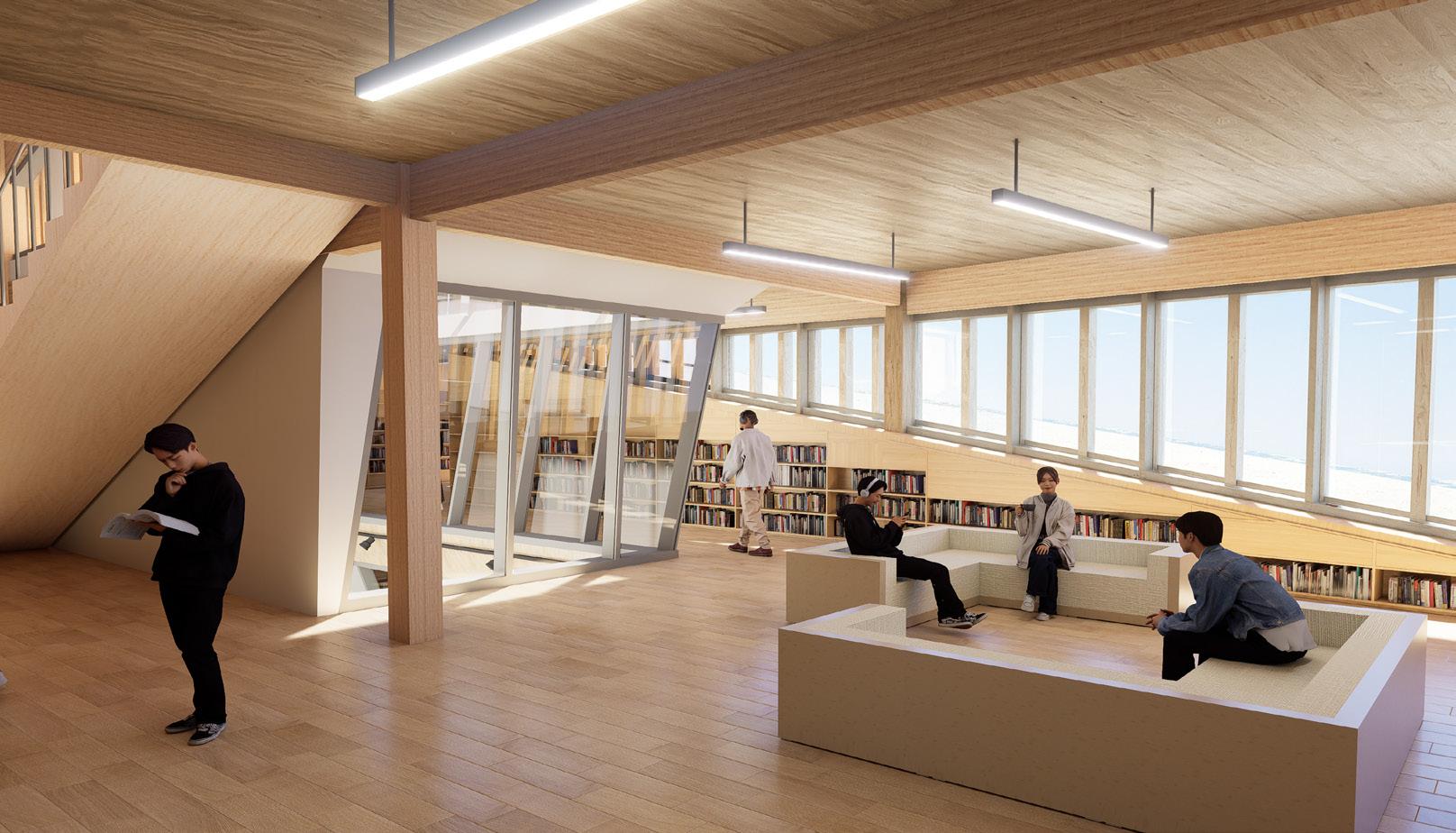
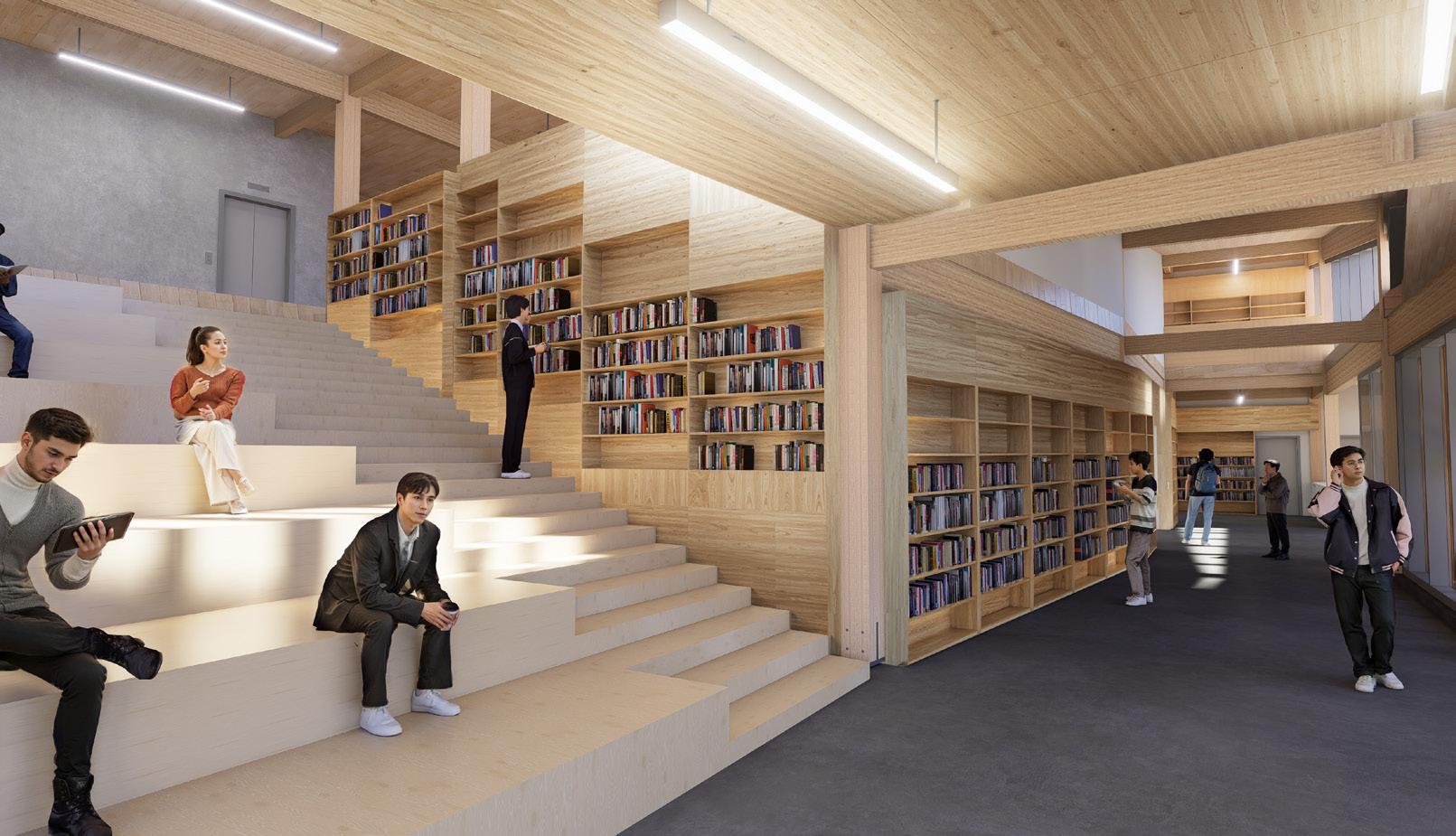
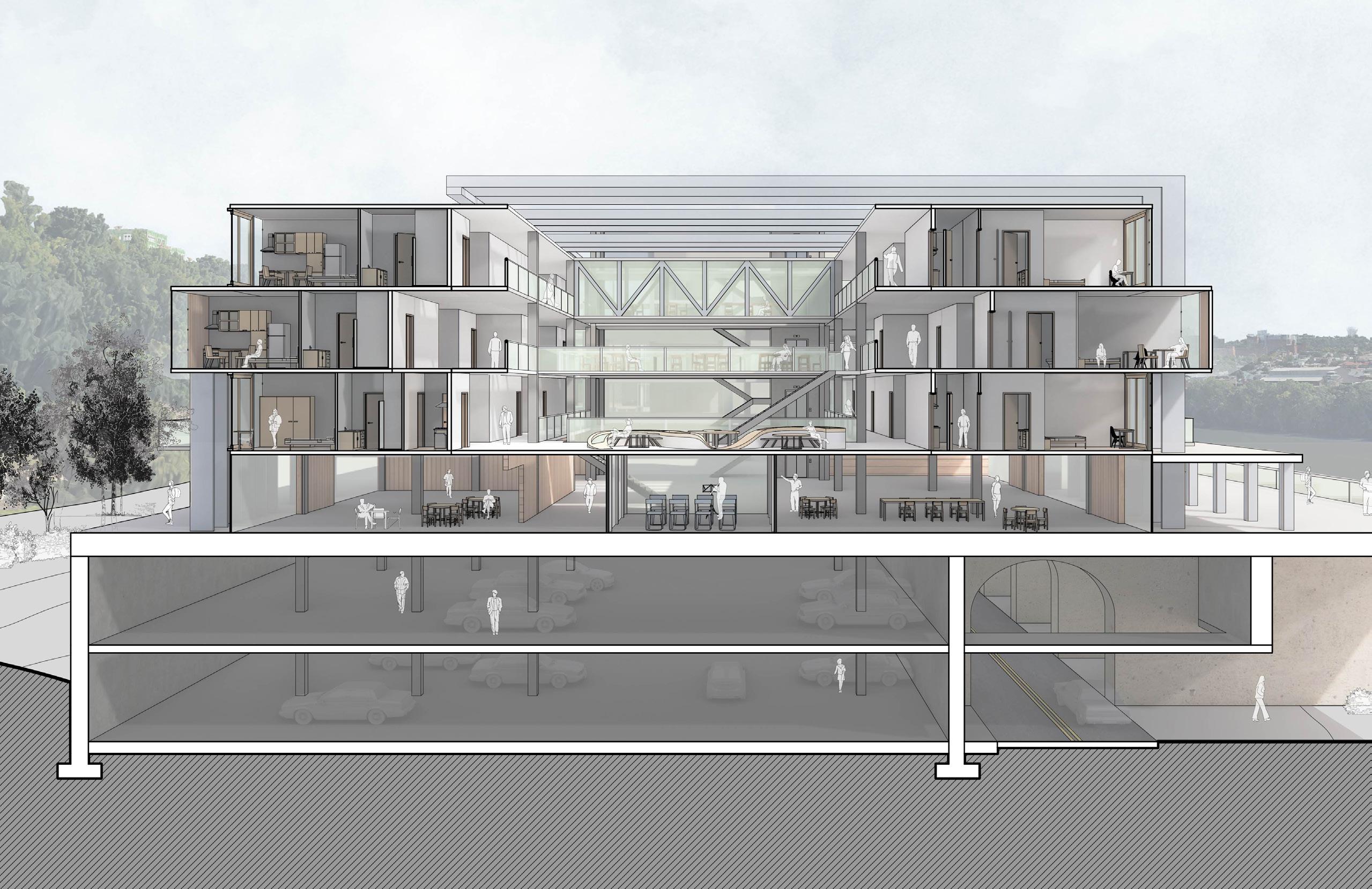
The Light and a Spiraling form are the elements the library developes around, with a central special space for young musicians, functioning as a light well connecting programs across three stories, and spiral walls that form a 'folded encounter' aimed to create a discovery and exploratory experience for the readers.
The two parti---the Folding Spiral and the Light Well--complement and intertwine each other in the interior of the building to sculpt a unique interior experience.
The form of the library derives a central idea of a continuous wall to hold the knowledge that begins to fold in on itself. Like a photographic film that twirls to embed information, the wall of knowledge forms a spiral that begins to hold more books in a limited site.
Concurrently, the wall creates a maze-like existence that allows visitors to suspect the mystery of hidden discoveries that can't be fully seen from the outside, prompting them to explore the layers of the library.
Eventually one would find the special program---a music room for instrumental education for young children. The room penetrates the whole building mass vertically as a two-story-high core that also functions as a light well, bringing light into floor below.
Parti Diagram
Parti Diagram
The receding and sloping of the floor forms creates opportunities for more passive daylighting for the interior. By setting the floor areas back, southwest-facing front receives more light and creates a more breathable urban street edge, bringing natural southern and western light into the corridors, reading spaces, and rooms throughout the library.
The sloping tapers not only function as a continuous gesture to tie the recession together and suggest an upward spiral of the circulation, but they also connect the lighting from the floor above with below by opening a slit that exists for both floors.
Envelope Detail
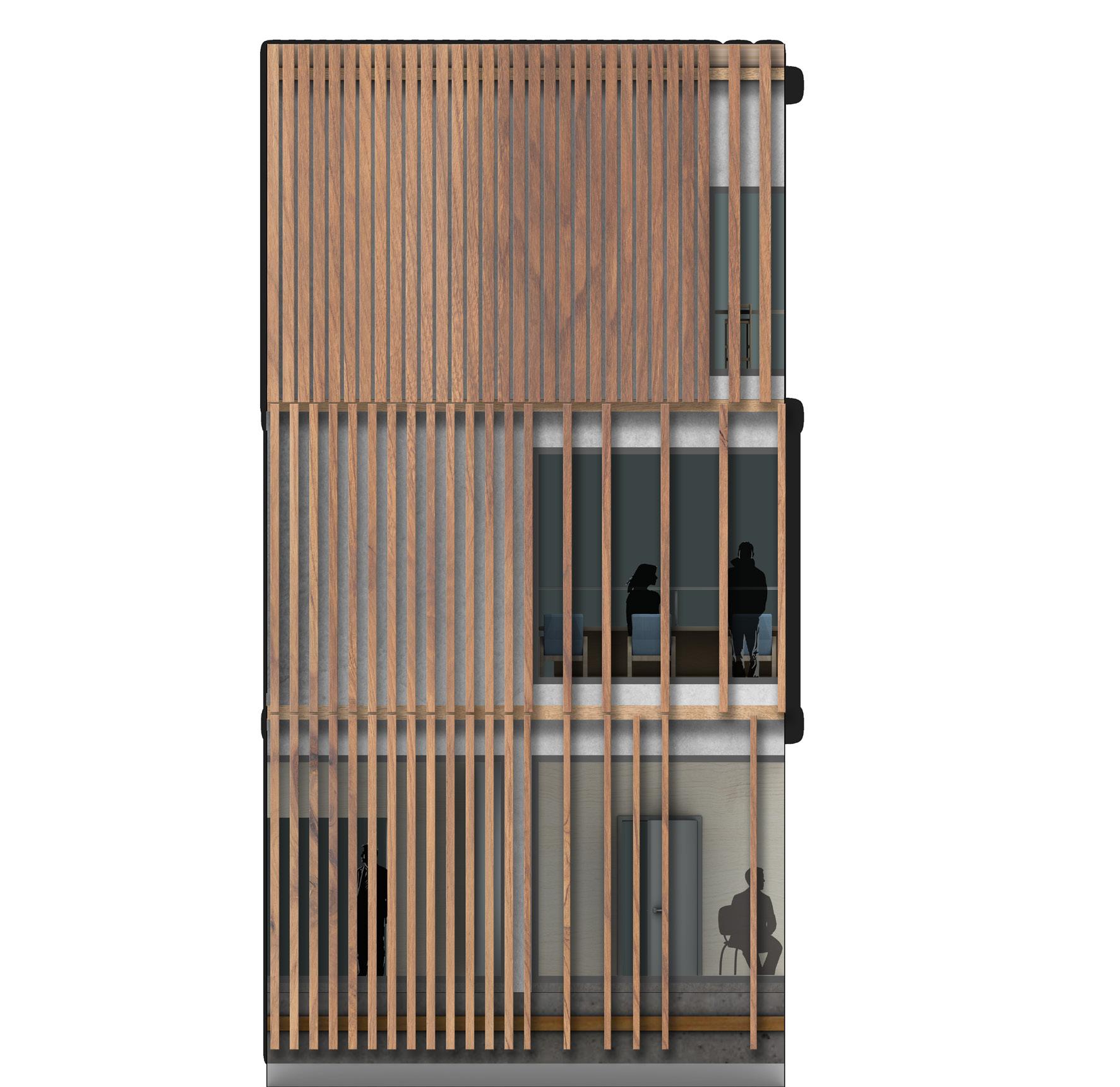
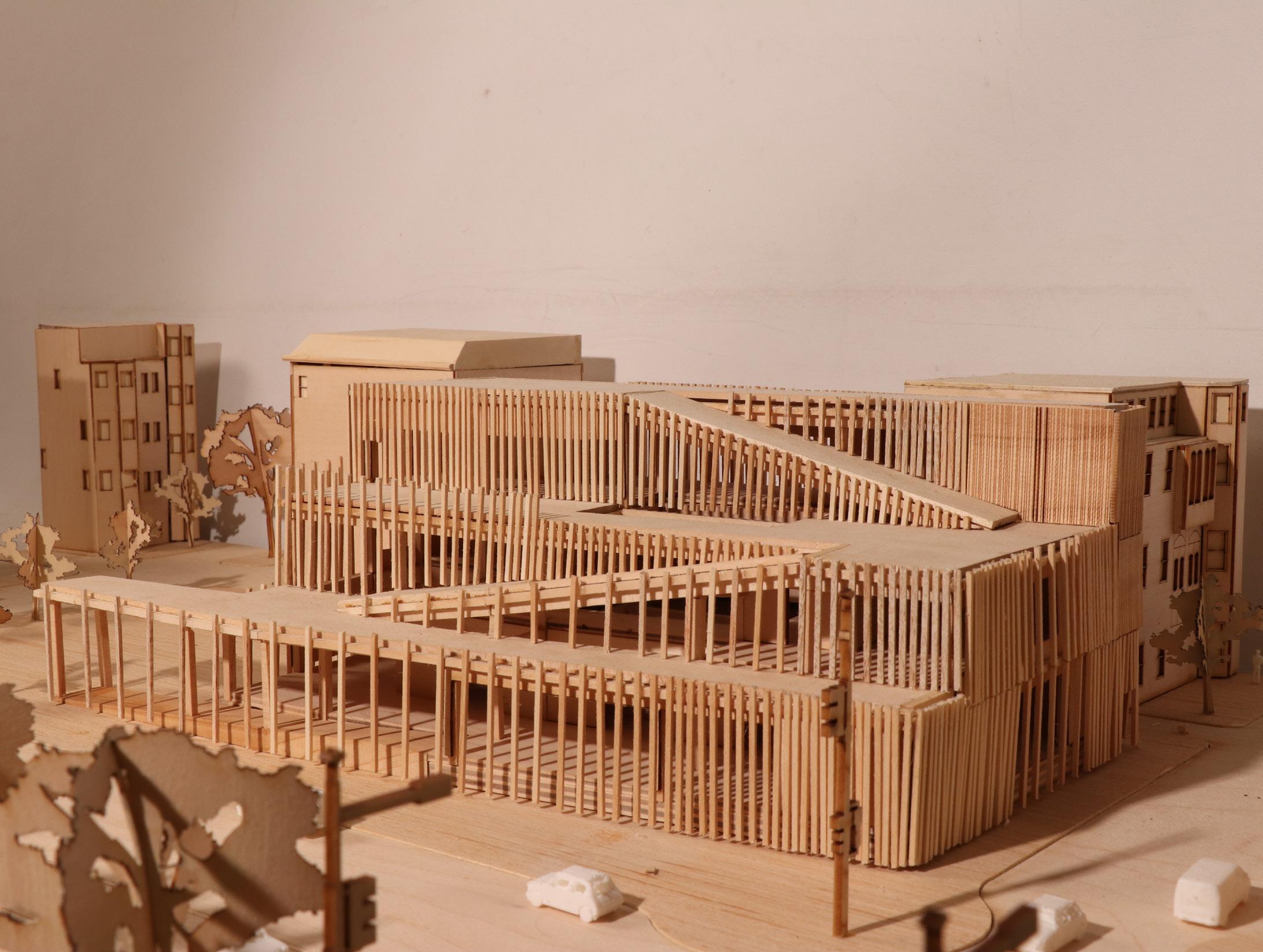
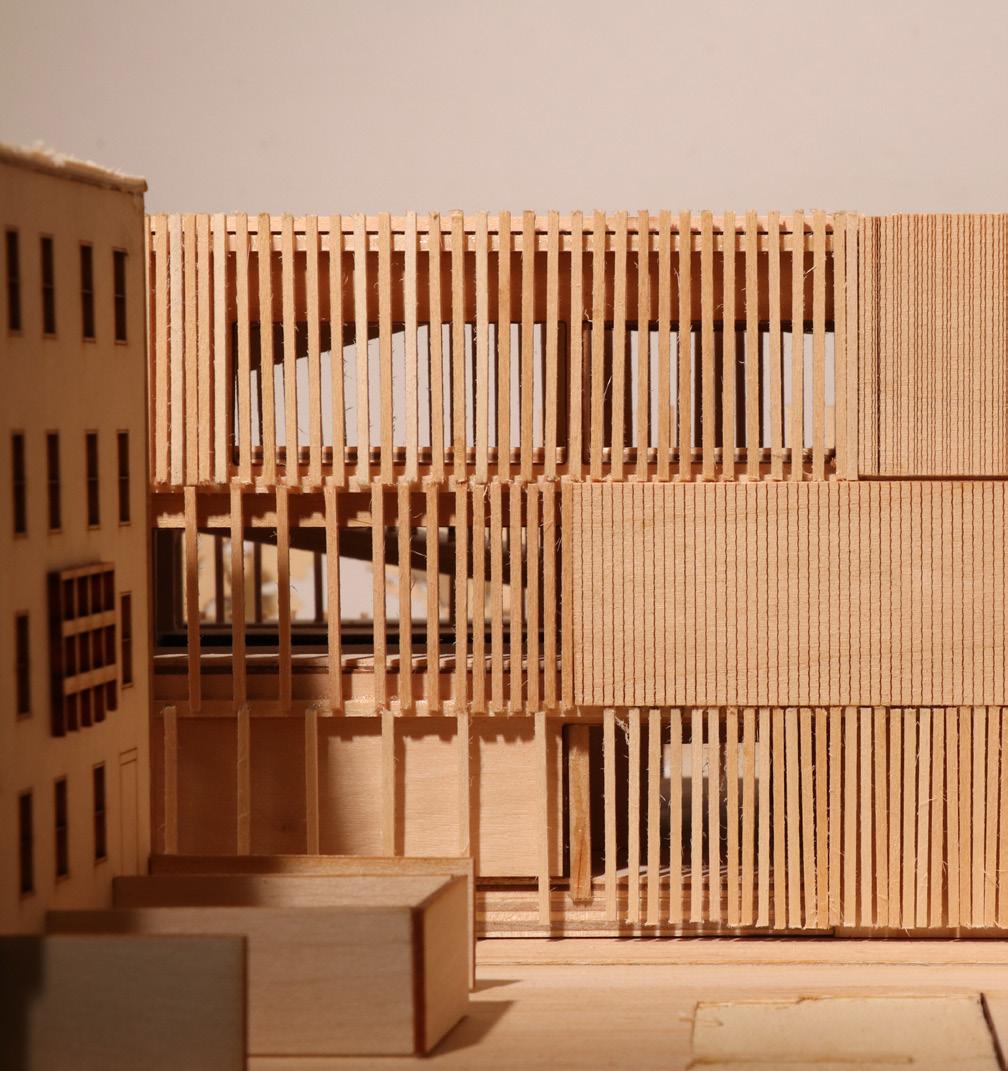
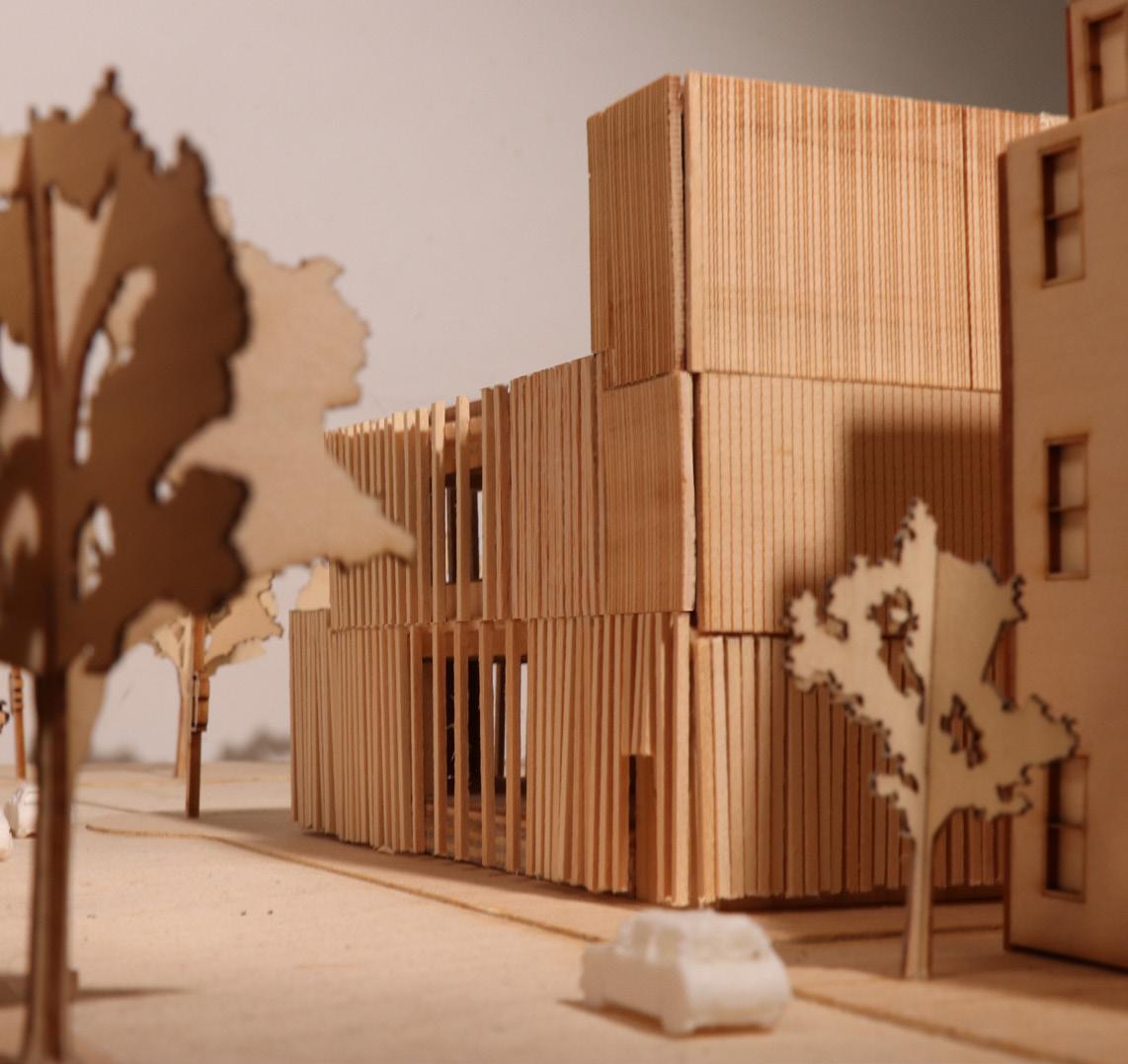
The exterior facade is a cladding system that attaches wooden slats directly to the exterior of the walls and curtain walls.
The wooden slats's spacing varies and changes parametrically in response to and in demonstration of the program they envelope, getting wider as the program becomes more public and narrower to complete closed for private spaces.
Using angled reflective surfaces and a distinct funnel-like volumn mass, the music room recieves, reflectes, and distributes daylight into the inner book stack areas that are becoming too closed and dark due to the nature of the folding action, allowing diffused light into every inner area of the each floor for both higher summer sun and lower winter sun.
Short Cross Section
Long Cross Section
Interior Renders
/" = '-0" Model
03 Schenley Culinary Institute
Field
Poiesis III Studio, Fall 2023
Coordinator: Laura Garofalo
Instructor: Briyanka Bista
Partners: Kiki Kuang, Tian Ming
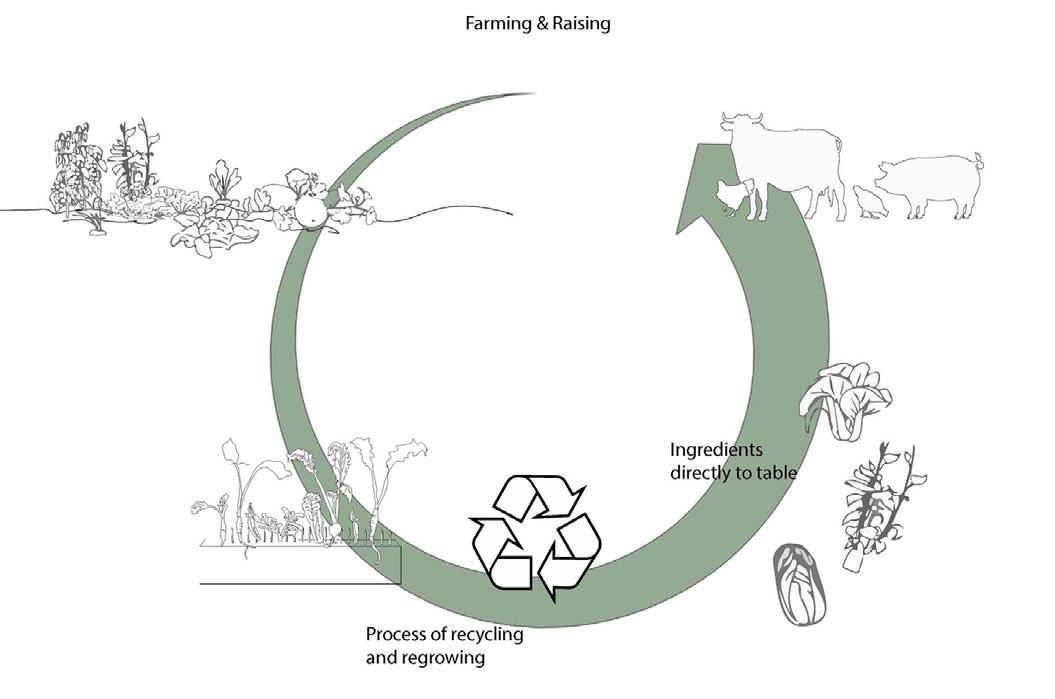
Closing the Loop
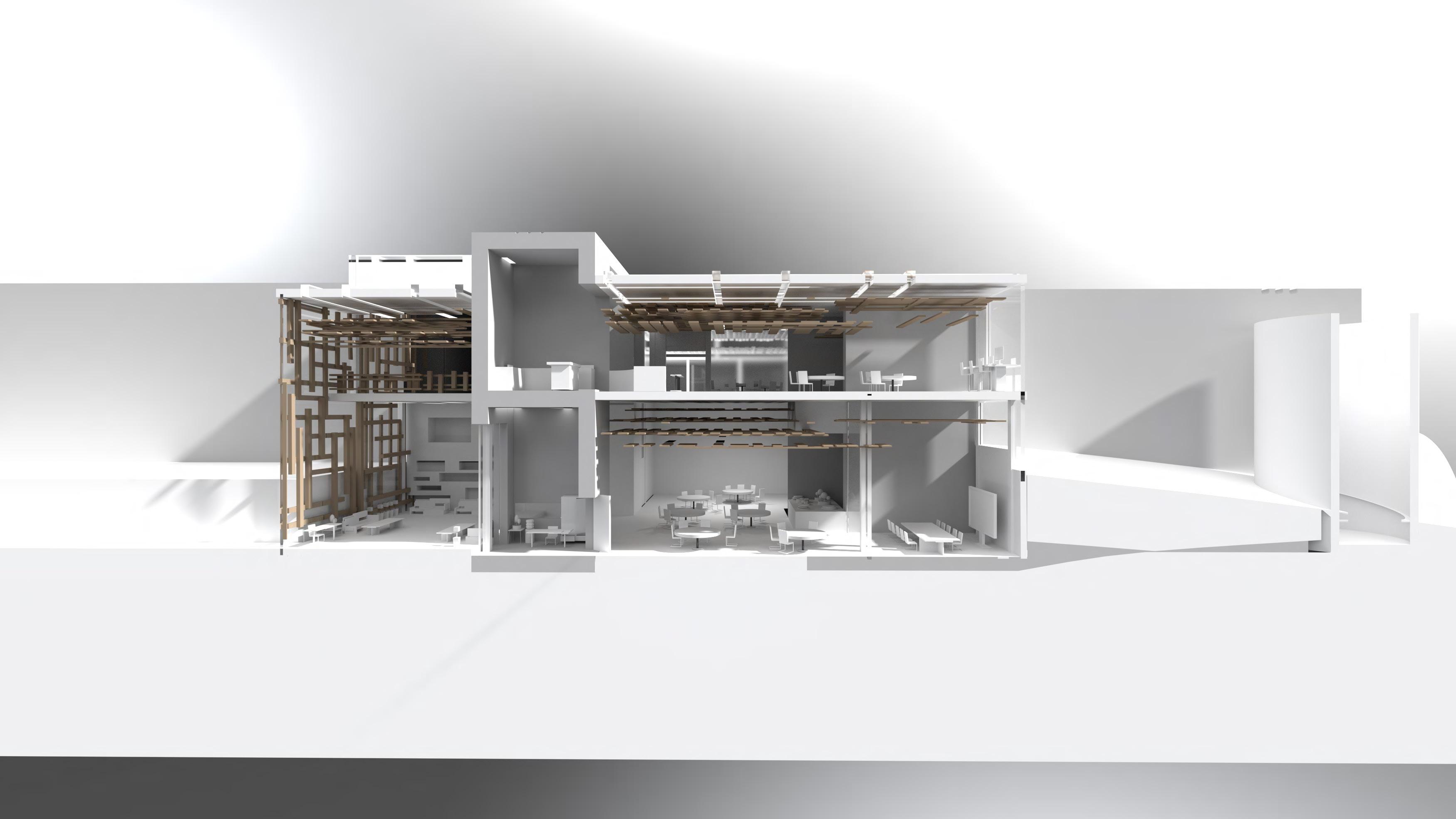
The Schenley culinary institute is situated between Carnegie Mellon University's southern border and Schenley Park. Informed by the culinary ideologies of contemporary chefs and their fields, the institute design is rooted in a process of closing the loop, the ideology which challenges how ingredients are acquired and attempts to use grown ingredients. The loop closes on levels ranging from circulation, program access, and ingredient raising.
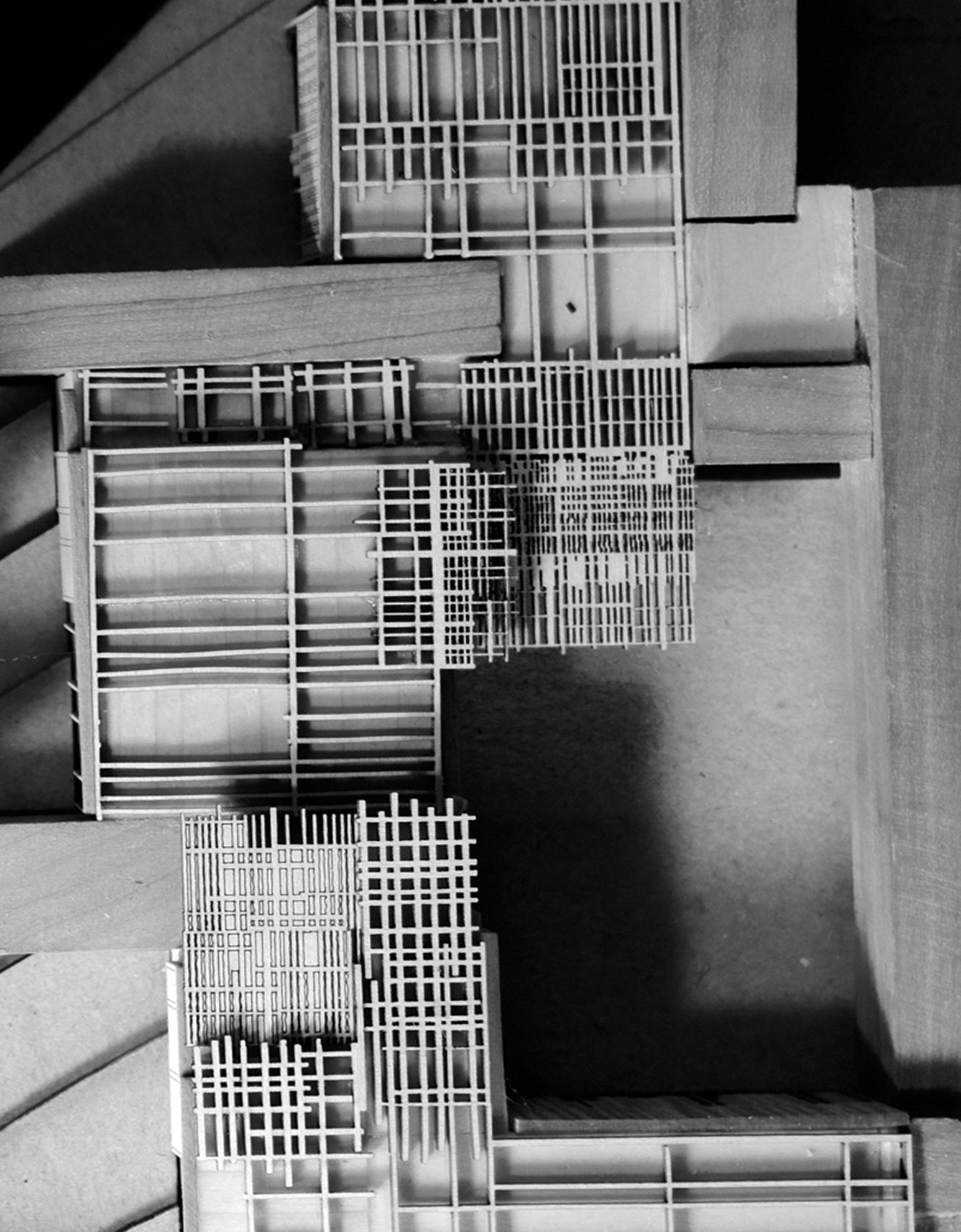
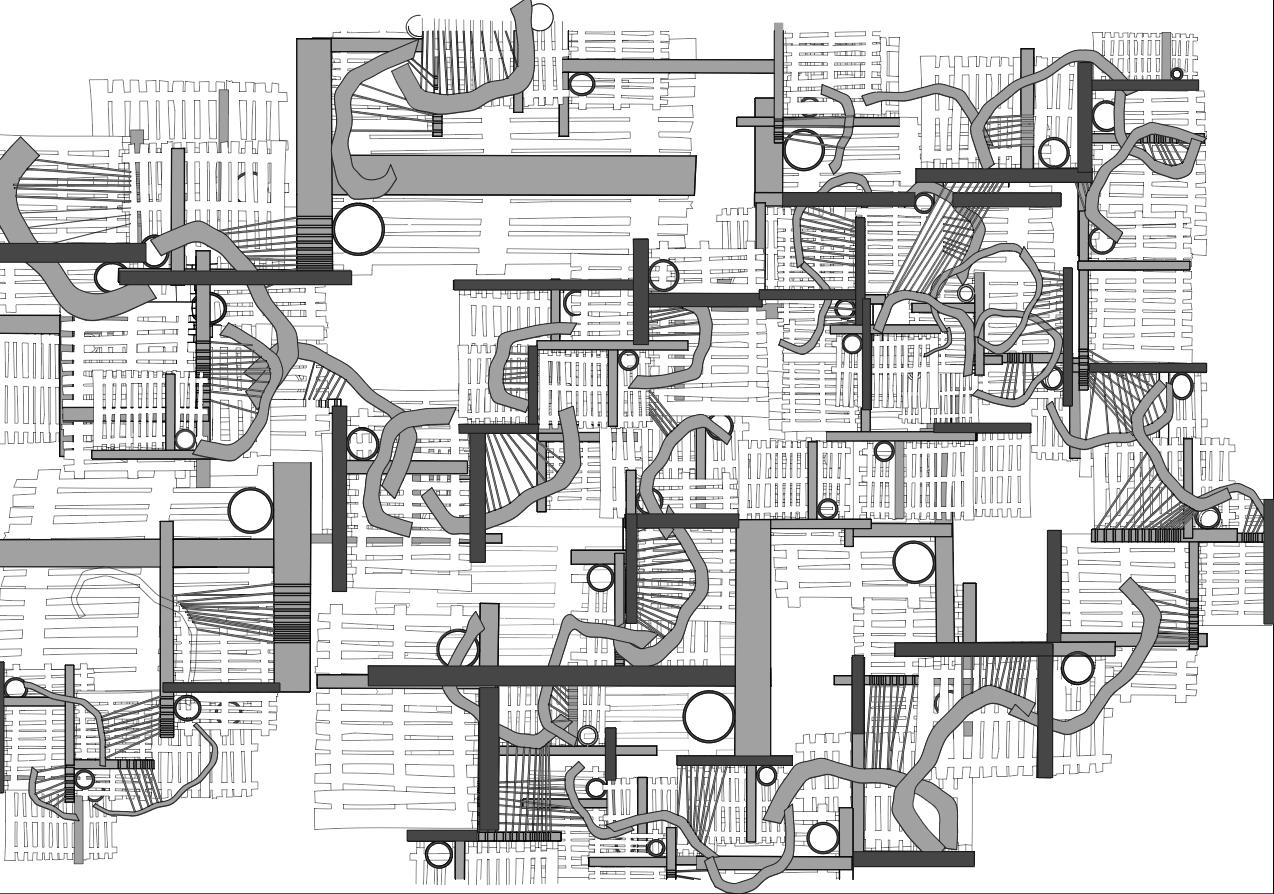
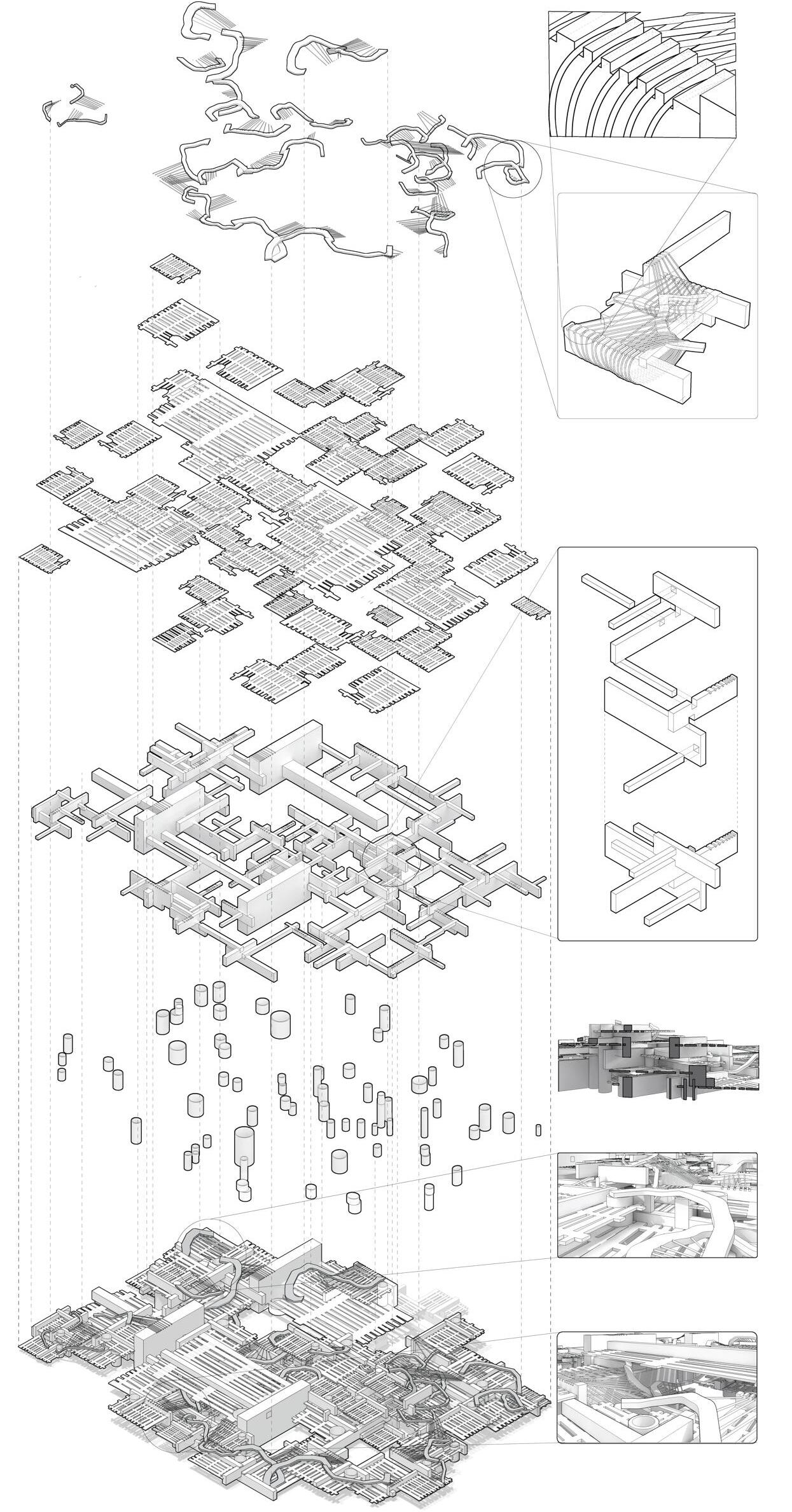
The design adapts and translates the tiered retaining and plank layering language from a generative field drawing exploration made using the elements from Bajau Laut Boat Houses and Matmata Caves as precedents, generating massing and program strategy of stepped, porous culinary programs supported by brick retaining walls.
Generative
Precedent 1:
Precedent 2:
Precedent Study
Field to Form Diagram
Stilt Houses of Sea Nomads, Bajau Laut
Field Exploded Structure Diagram
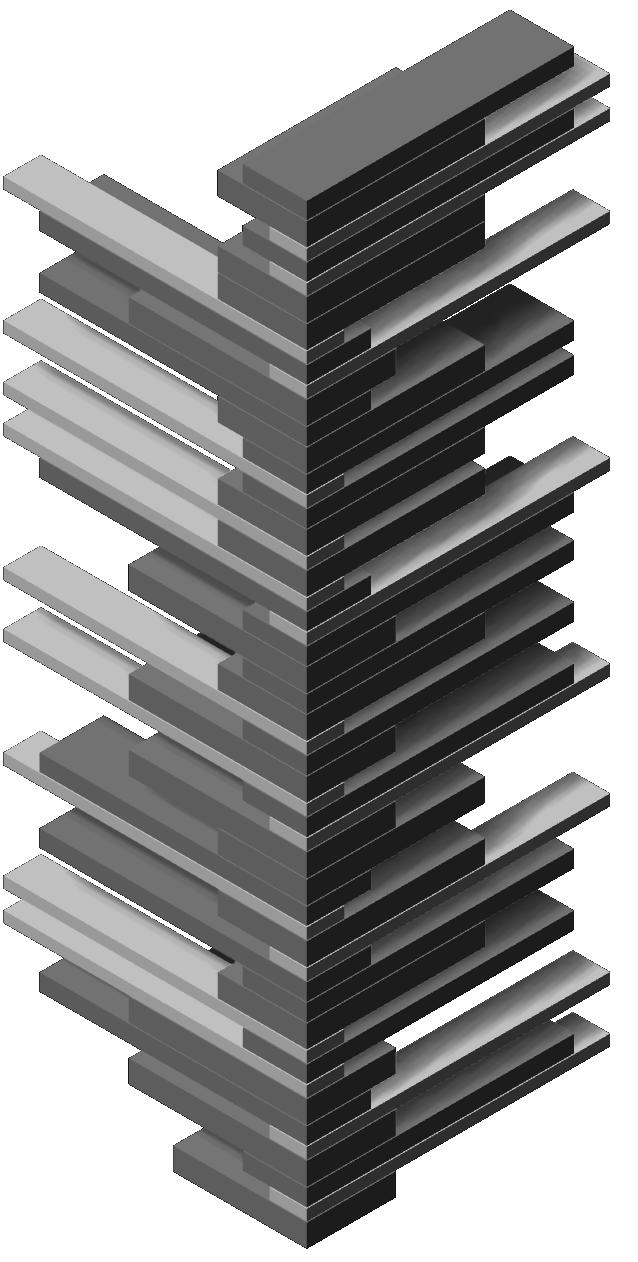
This generative field drawing draws inspiration from the Majau Laut Boat houses' construction technique of layering the floor planks that also allow refracted light through and the concaving and convexing shapes of Matmata Caves.
By scaling and jointing the elements, we created intertwining layers of interior spaces where light refracts and travels through the enclosure held up by heavy retaining walls.
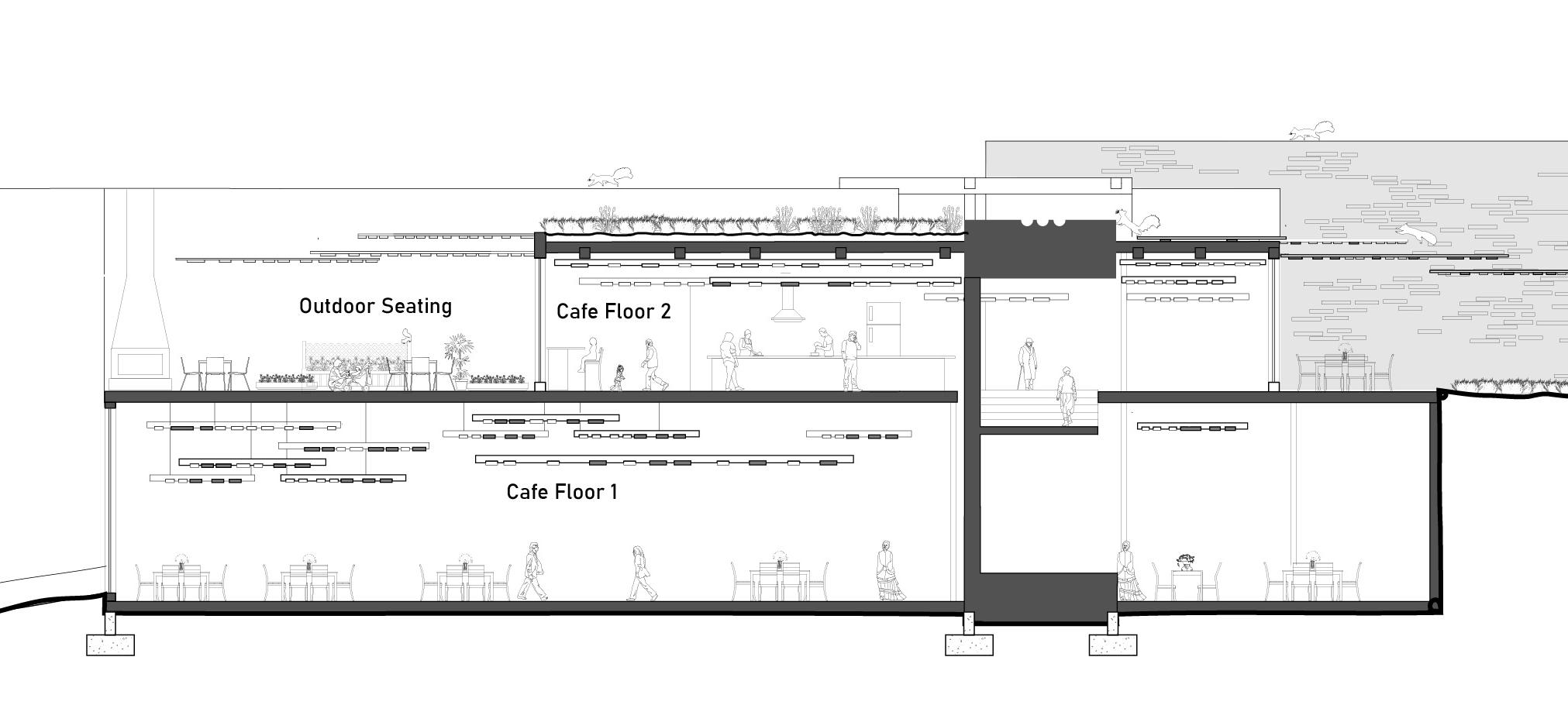
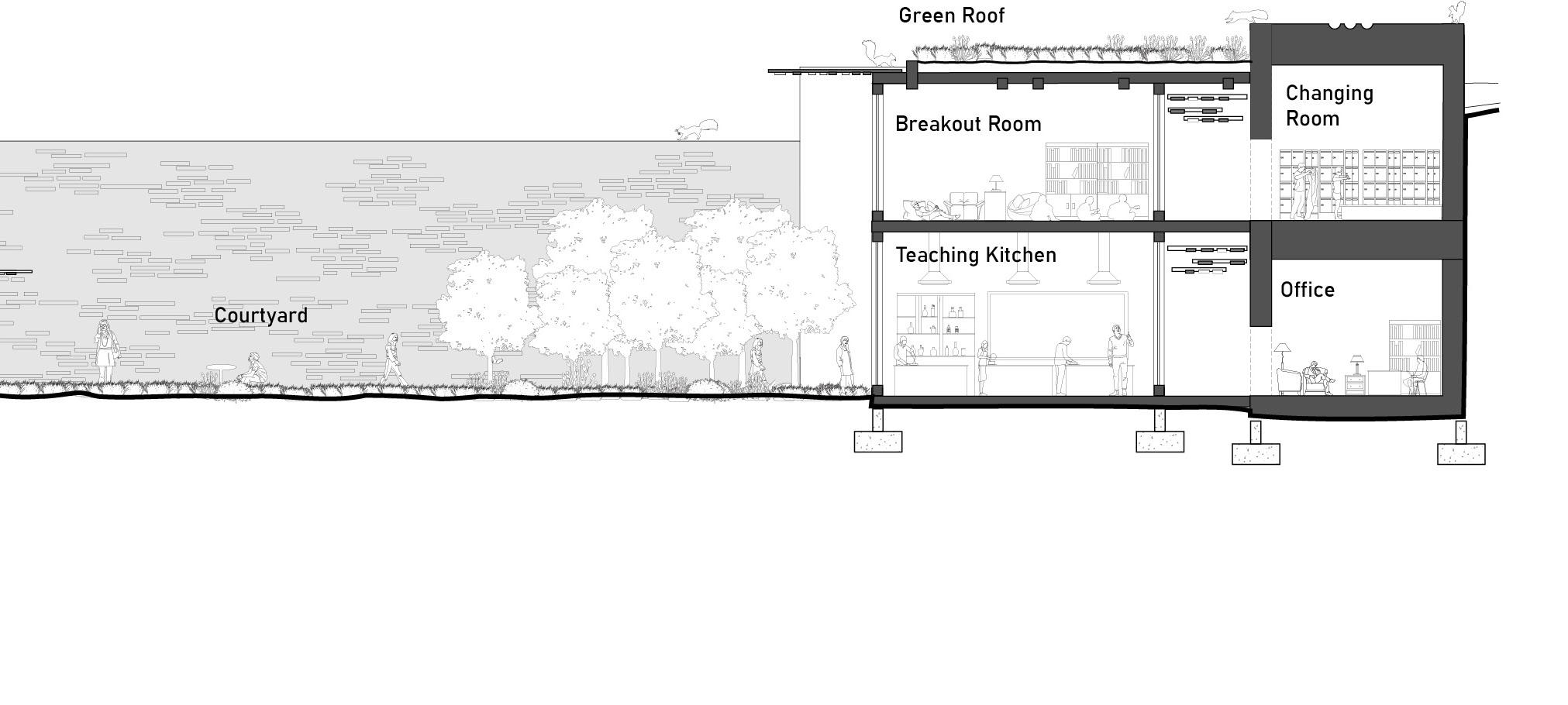
The building creates for the users a connected circulation within the building that extends and travels through not just essential institutional programs such as demonstrating kitchens, student breakout rooms, and teachers' facilities but also public programs geared towards general public access.
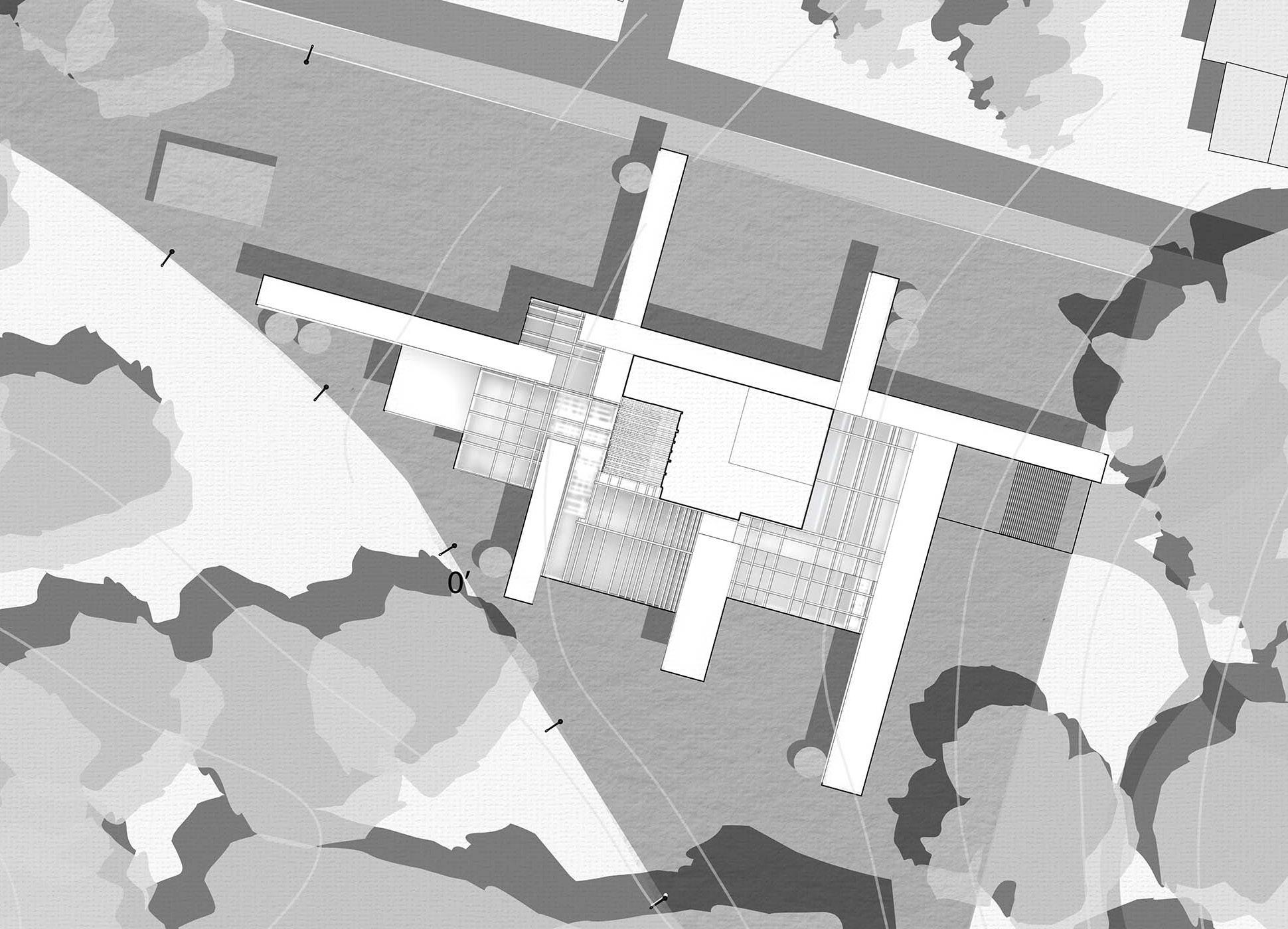
Building Situation Site Plan
The cafes connect directly to the encased central courtyard, creating a dynamic experience of the exterior environment and the interior garden.
The focus on the closed loop extends beyond the programmatic layout and towards material reuse and how both human and animal occupants interact with the building, with recycling existing site conditions such as rain water and vegetation and collaborating with animal forage behaviors.
Ingredient Loop Diagram
Structural/Envelope Detail Diagram
The building system mainly uses wood and stone to create grided facades and lighting strategies, as well as plantable green roofs. The retaining walls are constructed with stone slabs of a set of dimensions, stacked into modular layers to create an appearance of natural formation, inspired by the technique in Therme Vals by Peter Zumthor.
Site Situation Model
Building Details Model
04 Riparian Reclaimation
Praxis I Studio, Fall 2024
Coordinator: Heather Bizon
Instructors: Brad Groff, Jared Abraham
Partner: Tom Shen
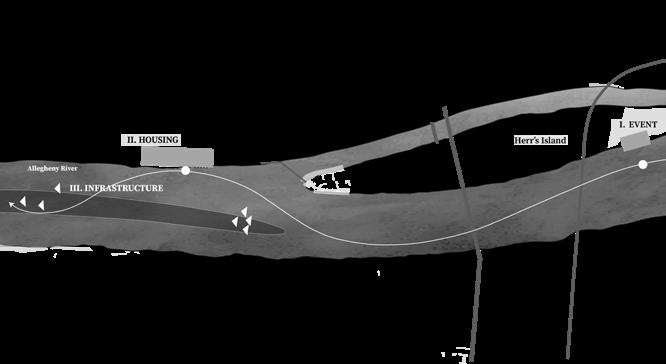
Event, Housing, and Infrastructure
Before the 'City of Steel,' Pittsburgh was the 'Gateway to the West, ' owing its rise to the Ohio, Monongahela, and Allegheny rivers. Running West, the rivers brought industries and culture to the site, enabling the city to grow in steel, glass, and technology. However, the fall of the steel industry left most manufacturing infrastructures in regions like Herr's Island and Strip District abandoned, leaving the city searching for new industries.
This project reimagines the river based on its historic property to enable urban growth as not a barrier between urban areas but an activator and connective corridor for the Pittsburgh urban fabric; this exploration attempts different forms of 'bridging' the banks through event, housing, and infrastructure by introducing nexus points for other forms of travel, including boat, land, and cable car.
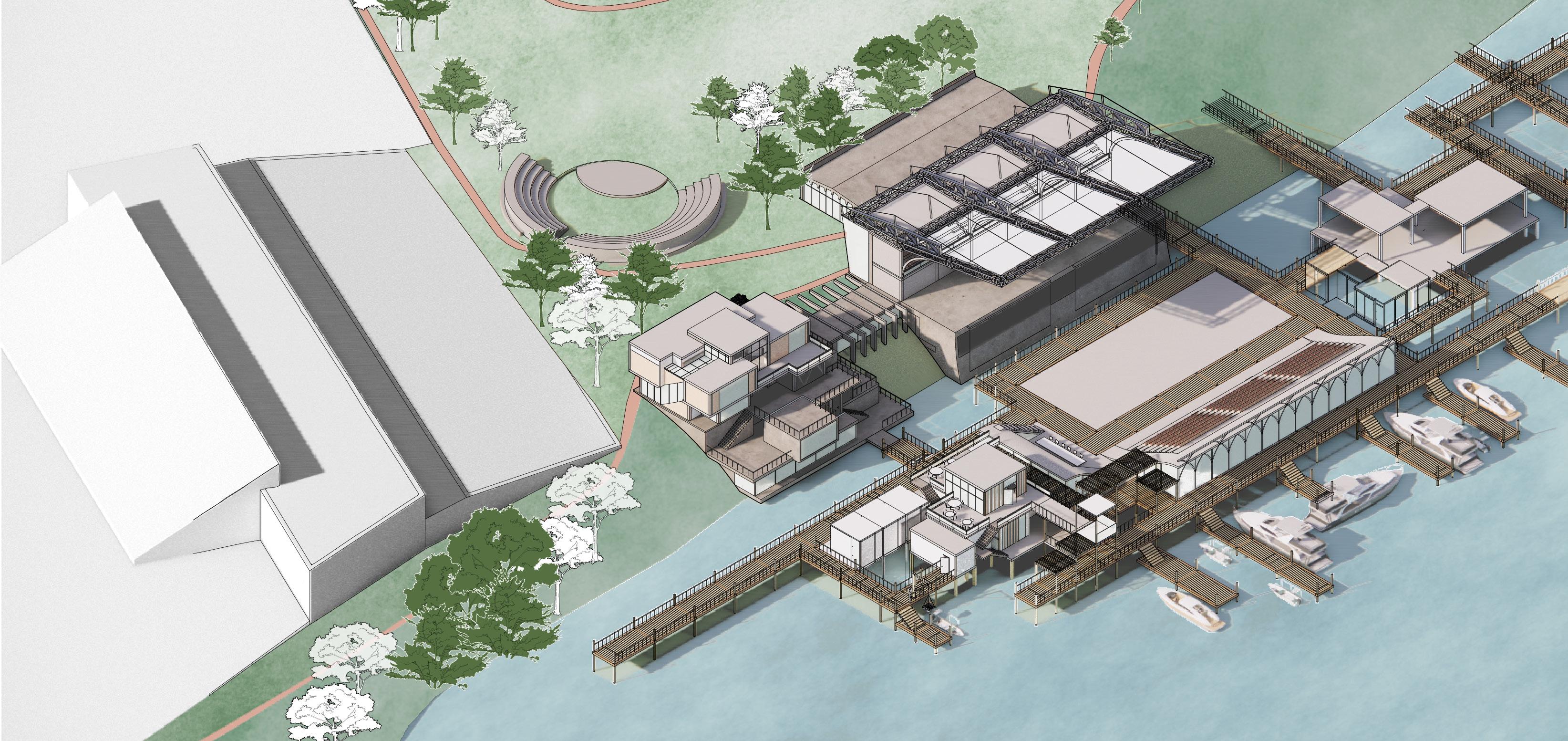
Event
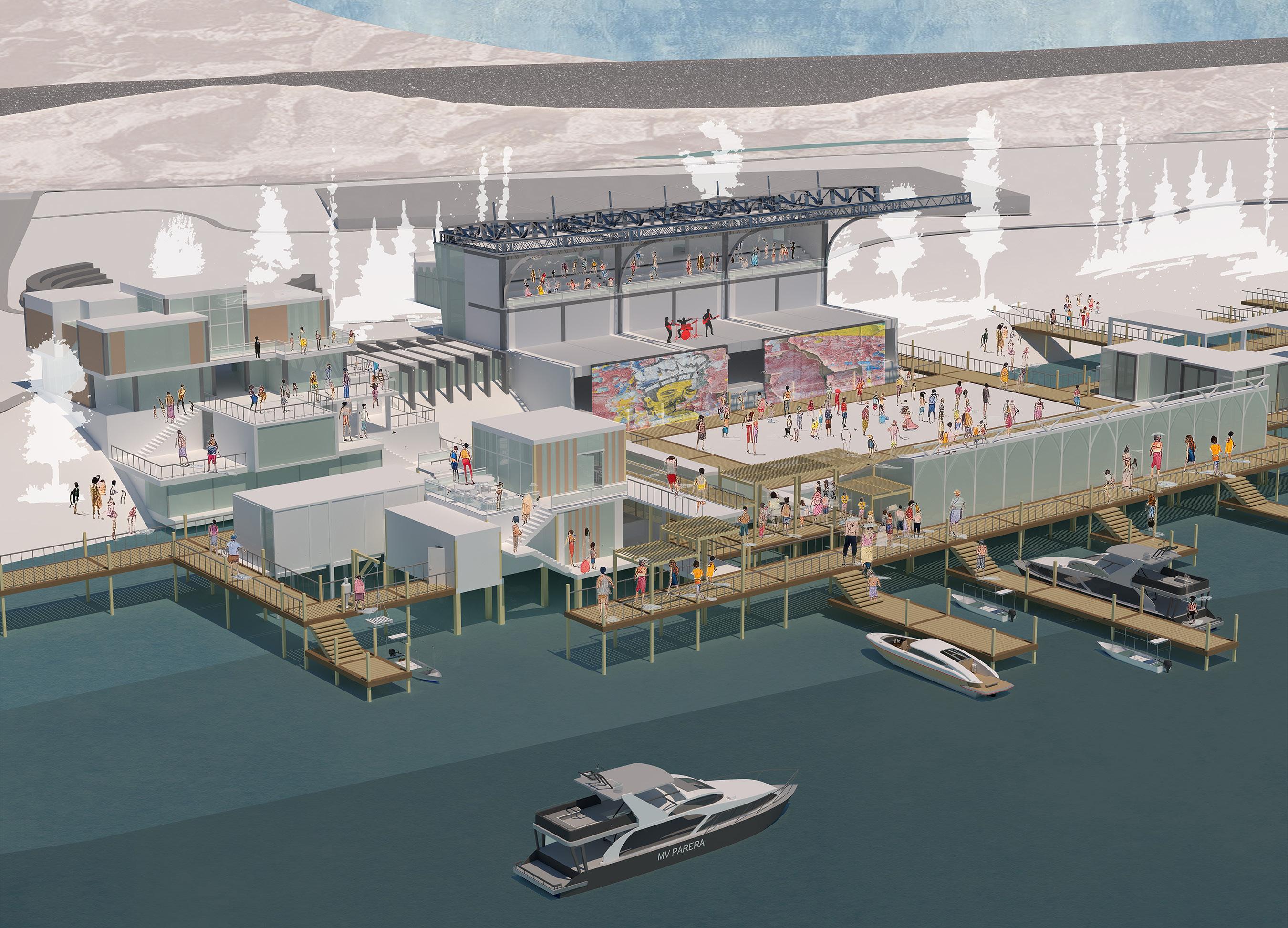
Herr's Island Stage
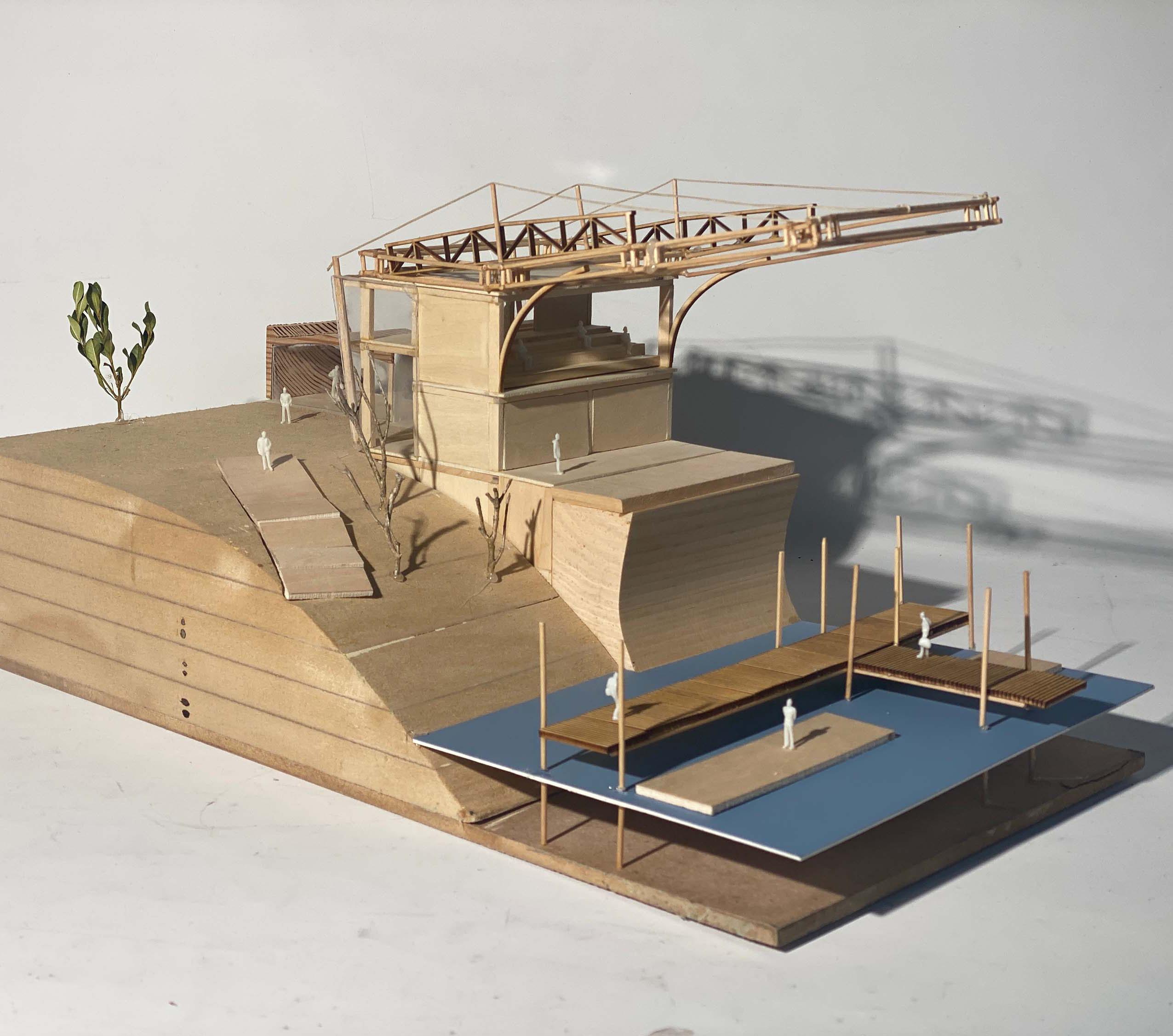
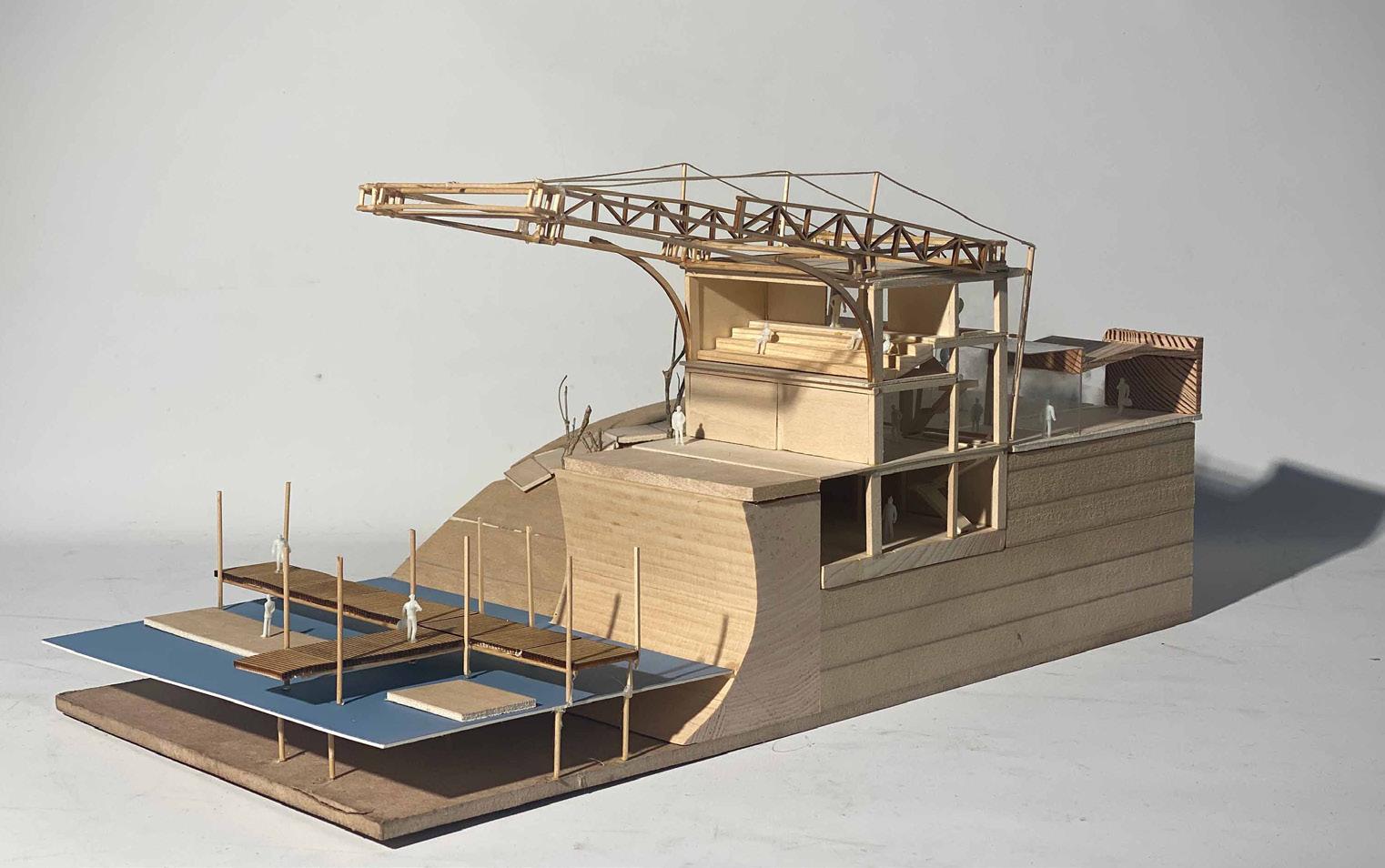
Taking inspiration from the city-wide music event South by Southwest Festival in Austin, Texas, the event stage canopy sites by the river edge of Herr's Island that brings performance and community space with river transportation.
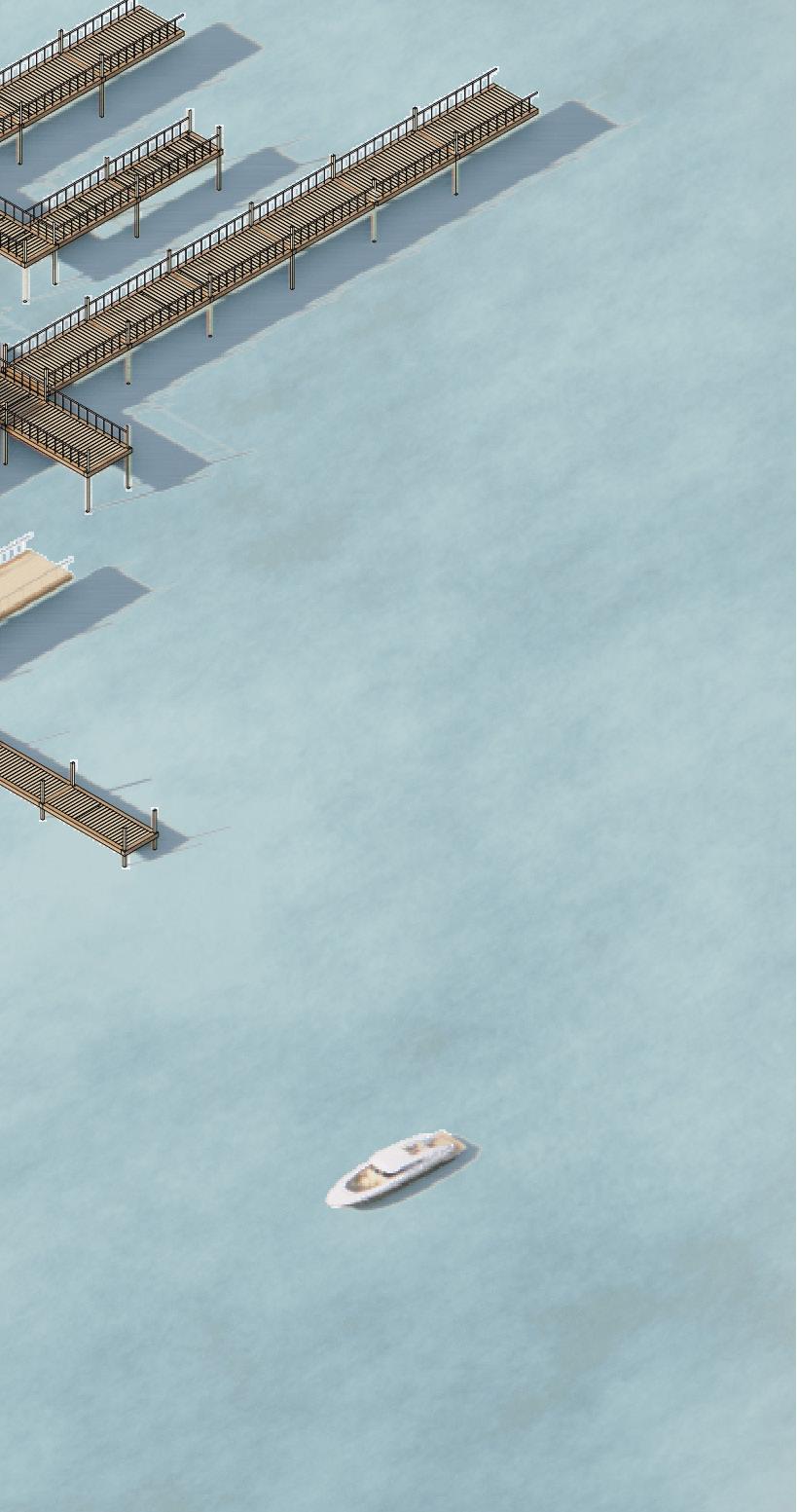
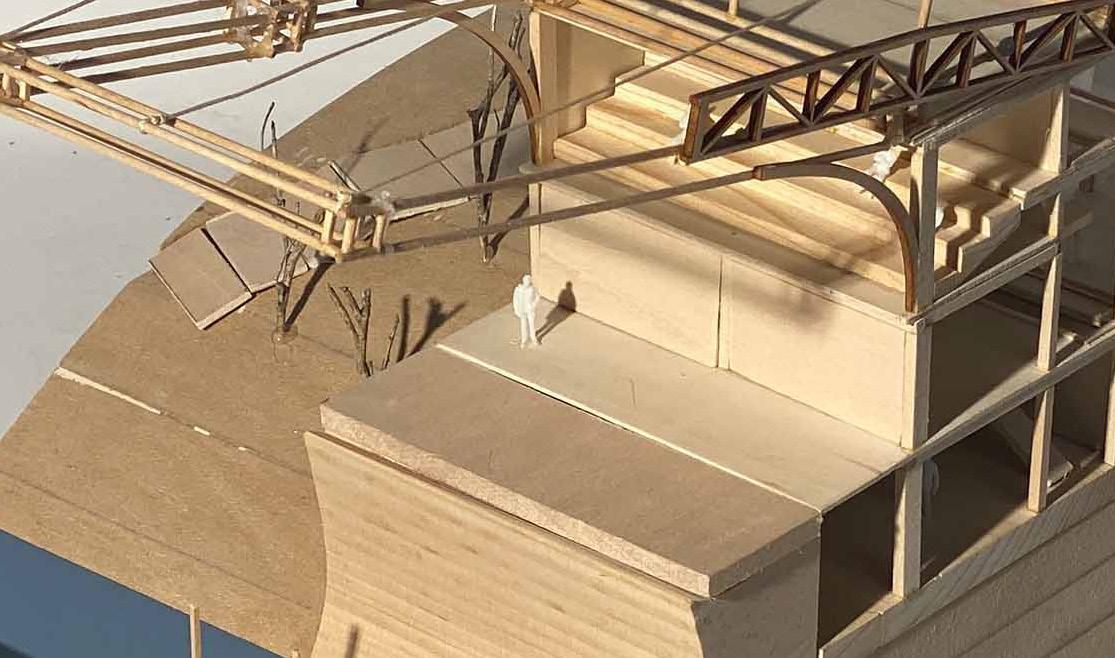
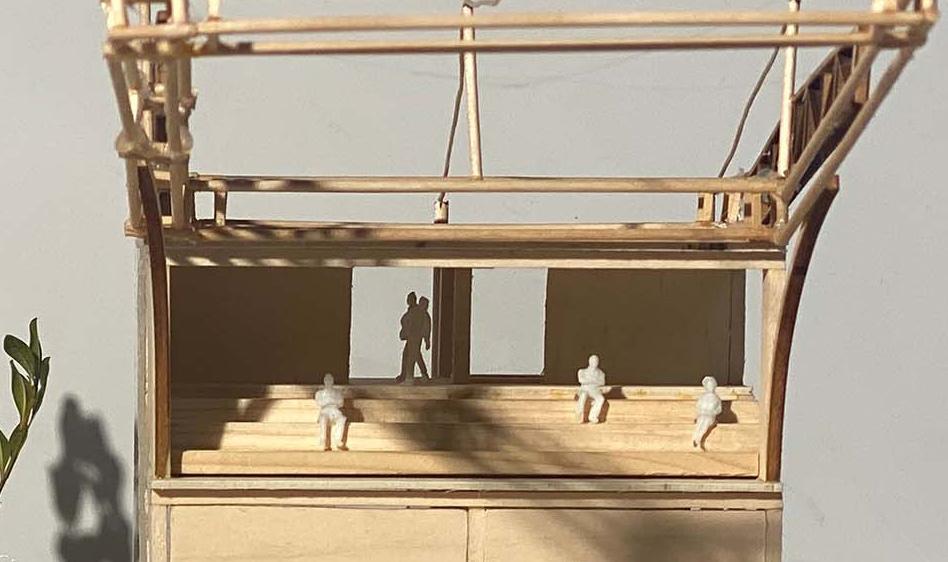
The stage is separated into two sections: the main stage facility with a steel canopy and community center are embedded on land while event attendance sits on waterbased pier platforms, which includes seating, resturants, bars, as well as cosmetic shops.
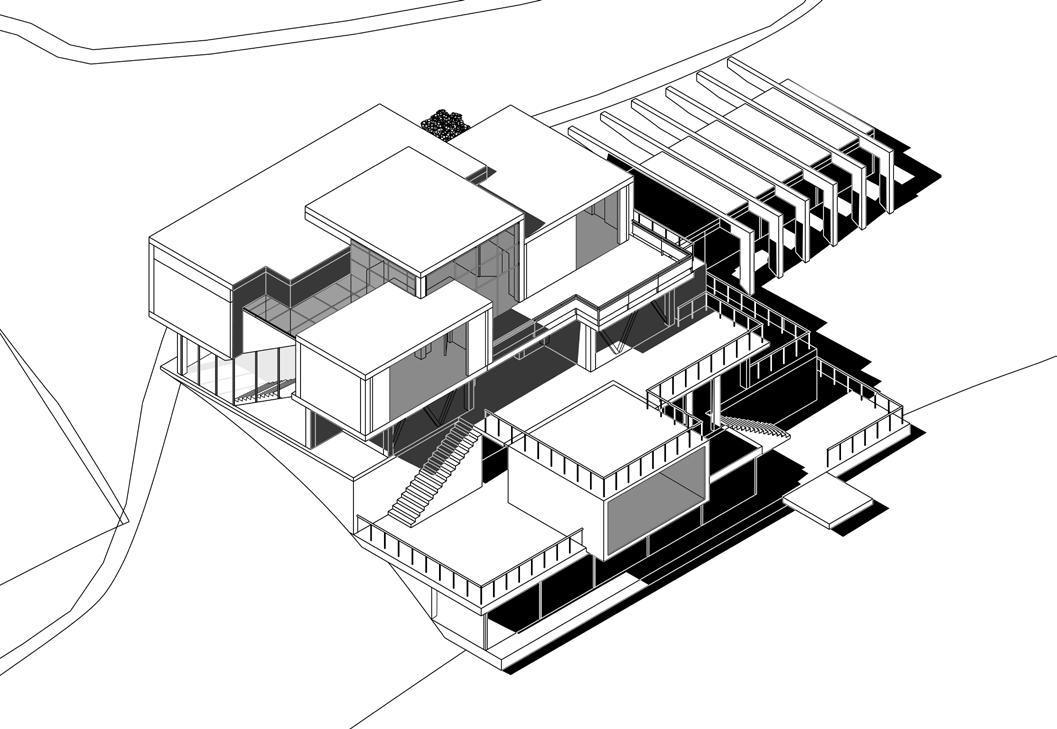
Axonometric View
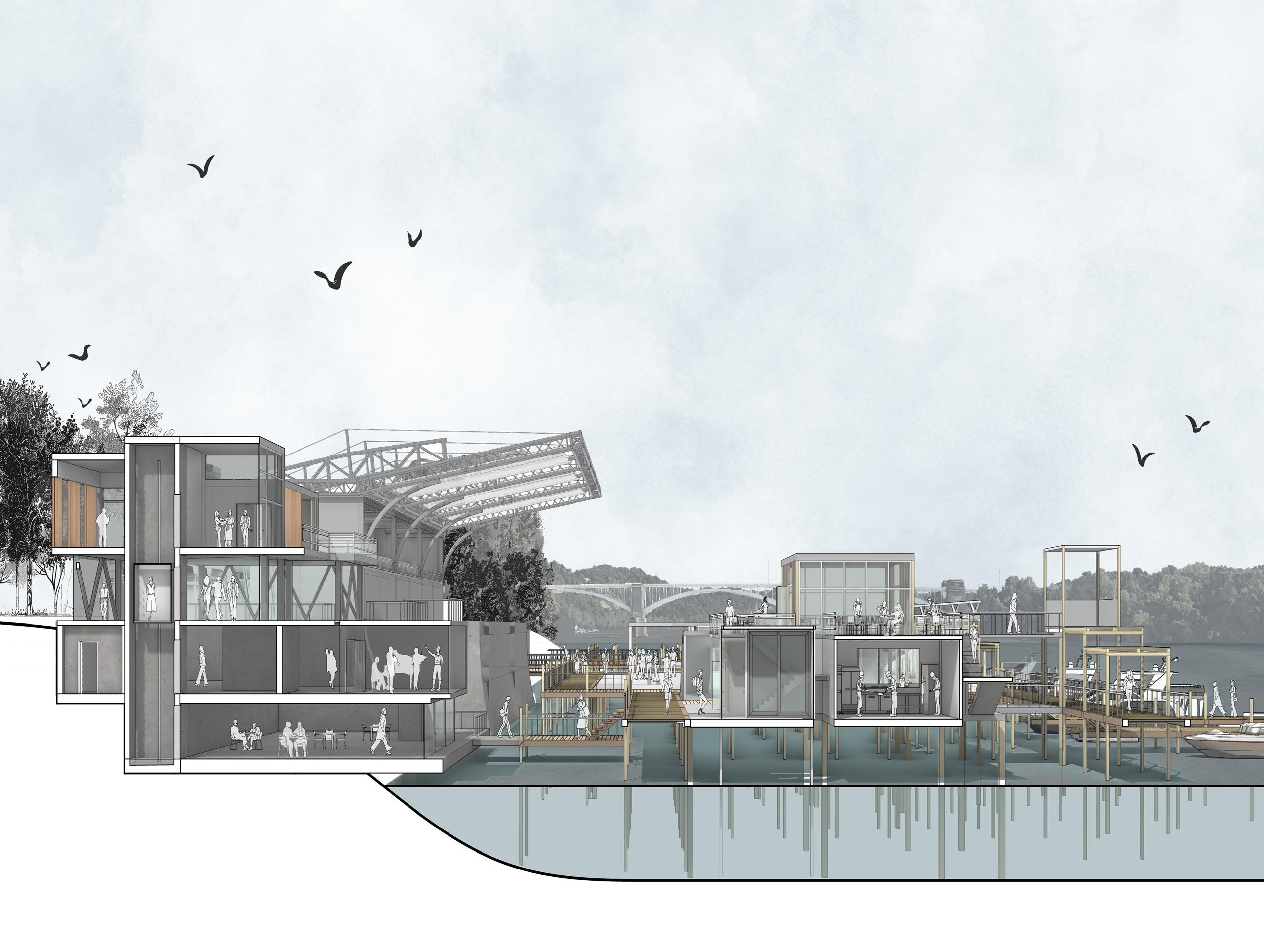
Together, the stage creates a mixed-use gathering space for residents accessible by land and water. The onland stage and community center feature multi-leveled spaces for meeting, artists' practice, and performance, with the stage supporting behind-stage seating. When no event is being held, the stage can become a connected extension of the community center to be used for recreation and gathering.
Building Axonometric
Short Section Perspective
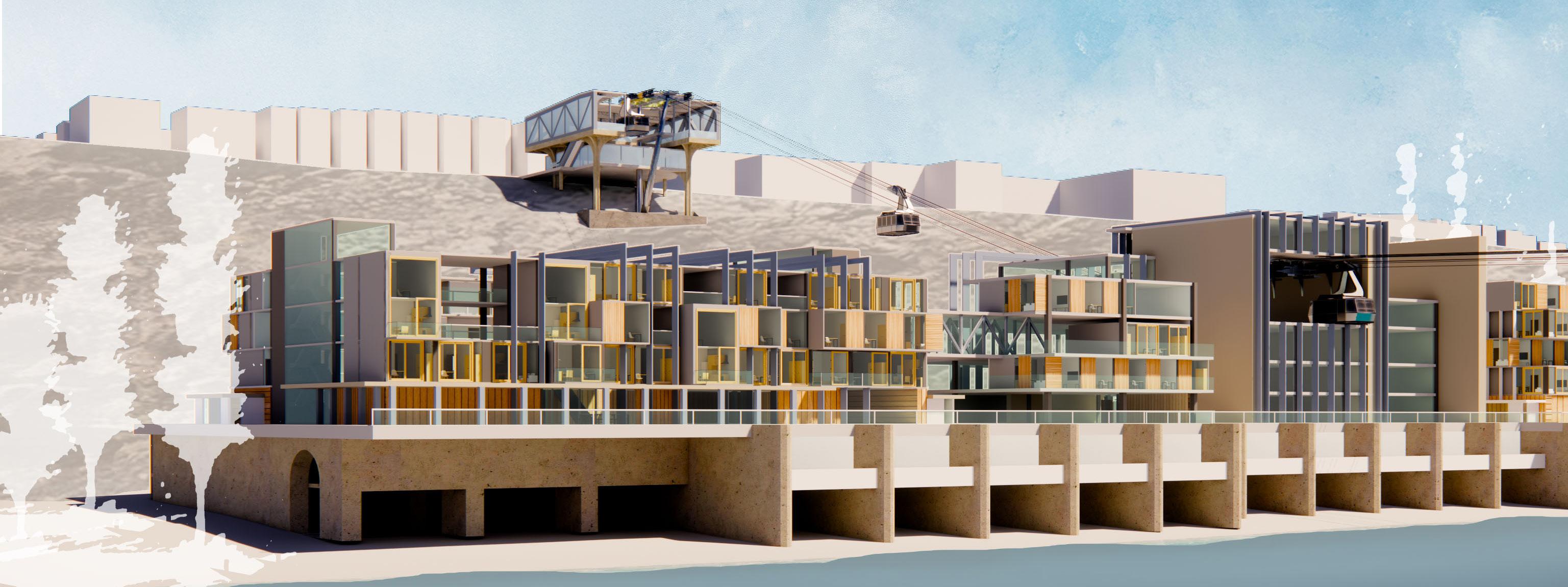
Housing
The Wool Lofts
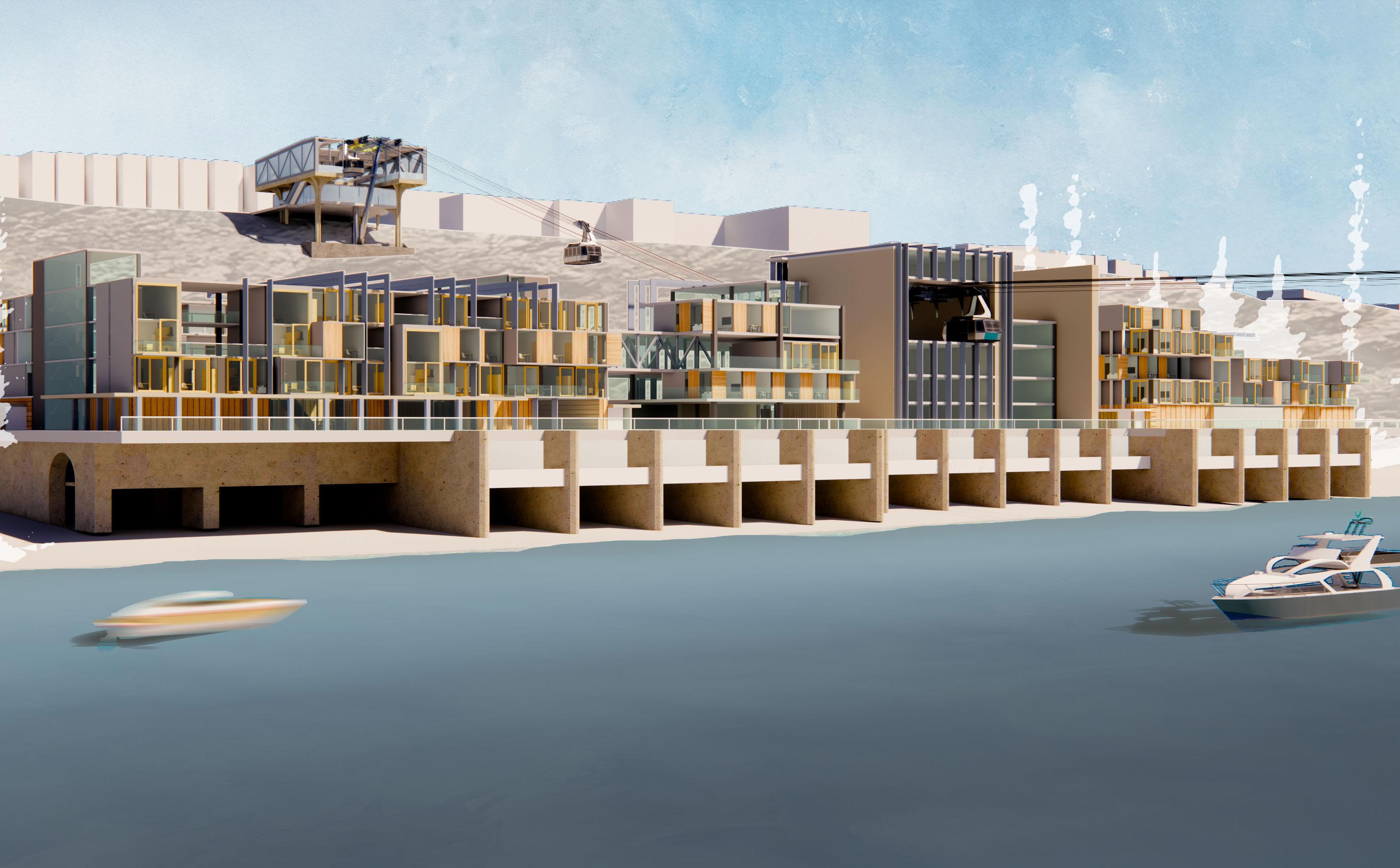
Using the river as a means of travel, locals and event visitors can access the Wools Lofts housing siutated on the previous site of the Pittsburgh Wools Company.
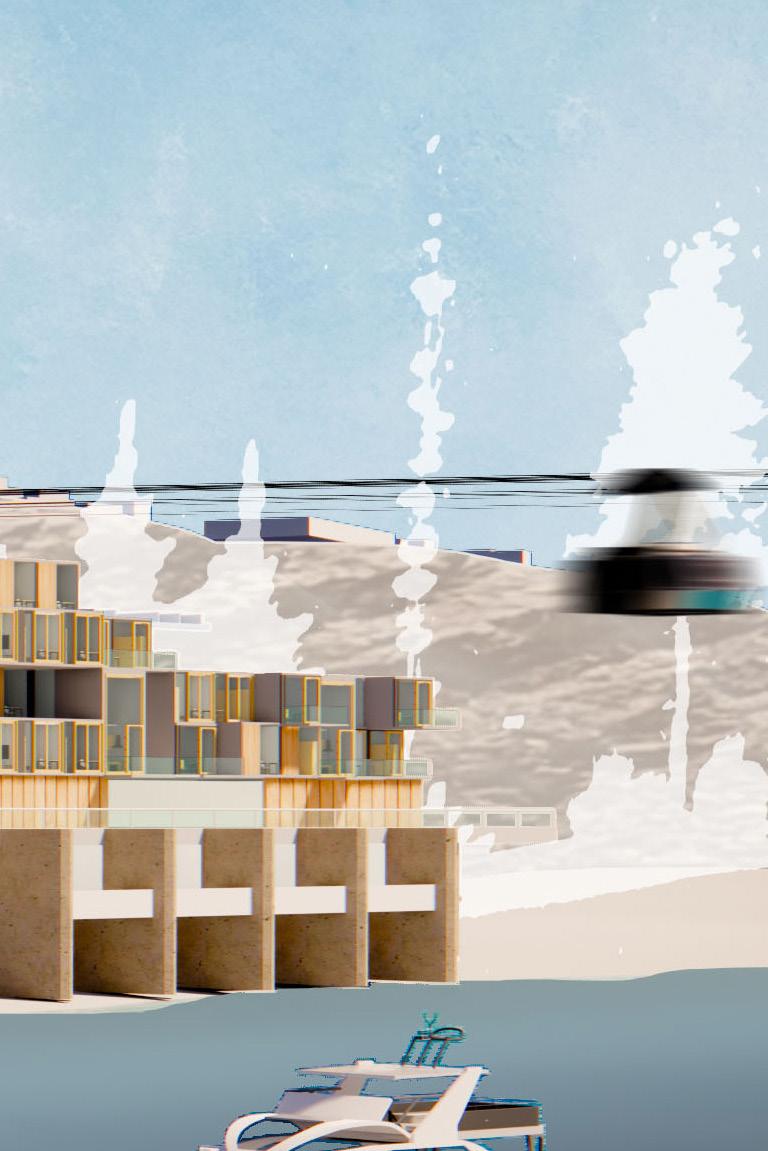
Repurposing the site, the housing aims to not only provide housing but also 'bridge' the areas on opposing sides of the river like Strip District and Troy Hill through river travel and cable cars, generating a nexus corridor that both connects the banks and receives access from the river flow.
Exterior View Unit Floor Plans
The protruding and retracting housing units stack to encase a central courtyard space, creating a conditioned private resting and gathering space accessible to residents on all floors.
The residential opportunity is comprised of a range of housing units, from single studio or two-floored lofts to 2-bed 2-bath units. More options include units with balconies and living rooms.
Short Section Perspective
Axonometric Diagram
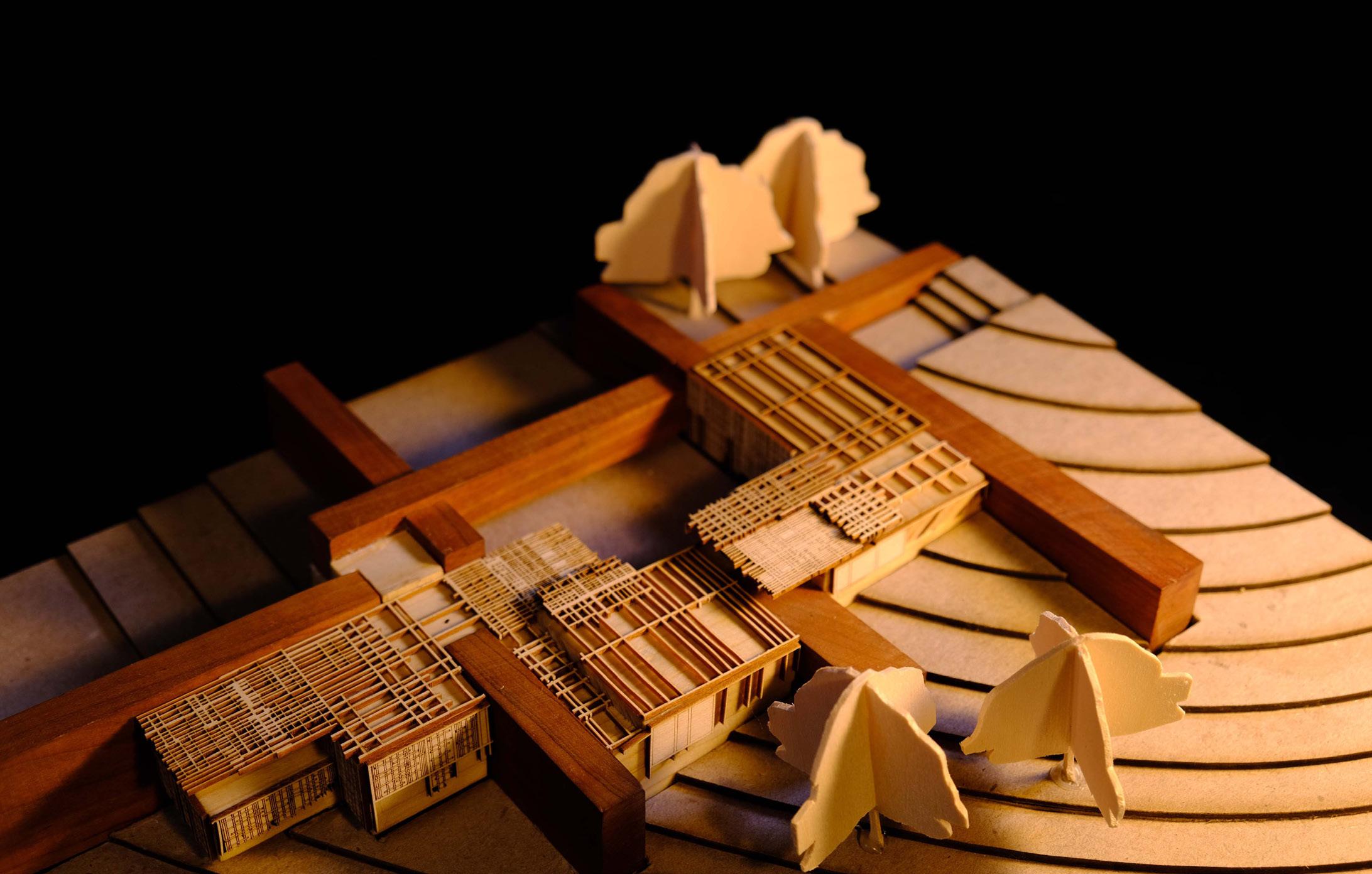
/" = '-0" Site Chunk Model
/" = '-0" Site Chunk Model
05 Sprout Garden
Fundamental Computational Design, Spring 2024
Instructor: Vernelle Noelle
Partners: Leo Wu, Tian Ming, Tom Shen
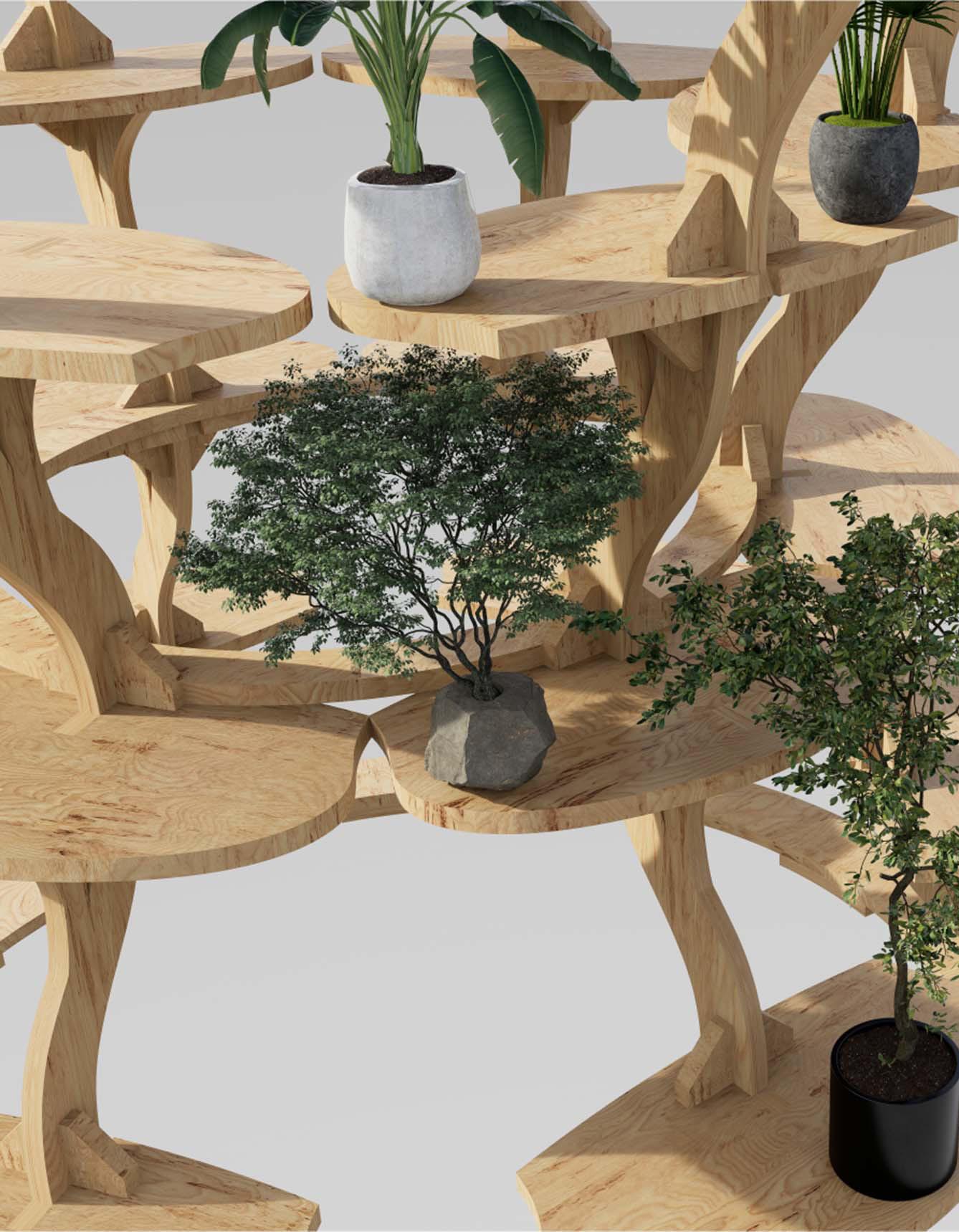
Our intention for the design of the vertical garden is to employ the organic and natural curve. We designed different modules that consist of identical curves by connecting them in the same direction or connecting them after mirroring. Through rotating different modules around a circle, we generate ringed shapes of petals, mimicking the process of sprouting. The modular connections are designed as finger joints to hold different pieces in the vertical direction.
While interlocking the plate, it is not only connected to the vertical curve through the hole but also locks the curves in the horizontal direction, which makes the whole system a self-sustained structure.