






SENSORY PERCEPTION
IWFM Technology SIG members debate sensor investment


















CHANGING OF THE CHAIR
IWFM’s outgoing and incoming chairs on the institute’s future



















VISION FOR VETERANS

The Veterans in FM network is growing at an impressive rate







SENSORY PERCEPTION
IWFM Technology SIG members debate sensor investment
CHANGING OF THE CHAIR
IWFM’s outgoing and incoming chairs on the institute’s future
VISION FOR VETERANS
The Veterans in FM network is growing at an impressive rate



Reflecting on what the evolution of the awards says about progress made by the wider sector













































































































06 Short on skills
Persistent gaps in the labour market blight businesses
08 Adapting to turbulence
Cost pressures are forcing a smarter FM approach
10 Bridging the divide
The public sector could learn from private enterprise










16 All in
Our ‘all things inclusivity’ page, inspired by activity in the sector
18 Shaping FM’s future IWFM’s policy work contributes to positive change
49 Mobility matters
Ensuring accessibility in historic and architecturally sensitive buildings
51 Shaping success
Retail property has much to gain from FM’s involvement, but too few FMs are empowered 10 30 18


20 Impact assessment
What the 25th anniversary of the IWFM Impact Awards tells us about the profession’s growth
30 To chair is to do
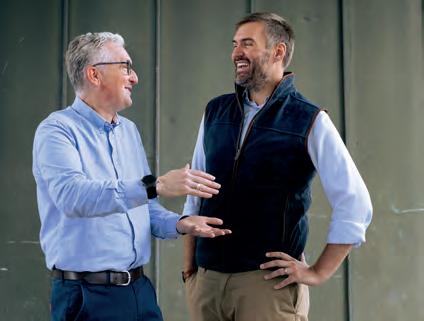
Mutual admiration connects IWFM’s outgoing and incumbent chairs
37 Decarbonisation conundrum
Assessing the risks and shortcomings of using in-house reporting tools and approaches
42 Perspectives
Four FM professionals seek to influence your insight agenda
46 A bit about you
Our regular ‘Behind the job’ Q&As – this time with David Sanderson and Lewis Cannell
Service outcomes often hinge not just on what’s delivered, but on the terms of delivery
53 Yogic calm
Try five postures to help you alleviate stress
55 Sustainable standards
Upcoming developments could affect how your business reports on ESG
56 Enlightened network
How to make lighting a building management tool
57 Testing times
Regular battery discharge testing keeps your emergency lighting reliable when it matters most
61 FM ‘lack of authority’ threatens retail upgrades
Smart buildings need smart minds
FM requires analysts who understand data science and the operational realities of buildings if AI is to address waste, slow response times, and compliance risk, says John Norris, head of innovation at Samsic.
b.link/FacilitateE25-030
Calculating ROI on green assets
The ROI of green investments in clean technologies such as solar panels and heat pumps is changing fast, says Graham Paul, service delivery director at TEAM Energy.
b.link/FacilitateE25-031
Hywel Davies joins government panel
Former technical director of the Chartered Institution of Building Services Engineers, Dr Hywel Davies, has joined the government’s Fundamental Review of Building Regulations Guidance panel.
b.link/FacilitateE25-032
Novus appoints sustainability head Novus Property Solutions has appointed Rebecca Hart head of Sustain to focus on the business’ decarbonisation offering as the business grows its retrofit capabilities.
b.link/FacilitateE25-033
FACILITATE
Rehabilitation lead at Amey Amey has appointed Caprice Roberts as rehabilitation lead to improve prison leaver employment across its operations and supply chain.
b.link/FacilitateE25-034
Tech adoption transforms real estate needs
Strategic location and workplace design are key to banking’s real estate strategy as it aims to adopt digital technologies at scale, according to JLL research.
b.link/FacilitateE25-035
Lack of jobs drives exprisoners to reoffend Research shows 52% of survey respondents imprisoned for a second or subsequent offence were unable to find a job after their first release.
b.link/FacilitateE25-036
Level playing field for solar The government is being urged to remove barriers to installing solar panels on commercial leasehold properties.
b.link/FacilitateE25-037
Facilitate is the magazine and online news content resource of the Institute of Workplace and Facilities Management (IWFM). We inform members and others about the latest thinking around workplace and facilities management. In 2019, we were judged Best Magazine (1032,000 members)
at the Association Excellence Awards, the body which assesses the media brands of trade bodies, membership organisations and associations. In 2023, Facilitate and IWFM were judged to have conducted the best association digital transformation at the same awards, the work
described as ‘a stellar example of how a digital transition driven by deep understanding of the audience’s needs can future fit a professional body’s content strategy. At the same time opening commercial opportunities for new revenue streams’ Got a story? email editorial @ facilitatemagazine.com
Facilitate, incorporating FM World, is the publication of IWFM, the professional body for workplace and facilities management. For information on membership, qualifications and training contact us:
Institute of Workplace and Facilities Management
Suite 15, Thremhall Park, Start Hill, Bishop’s Stortford, Hertfordshire, CM22 7WE, UK
+44 (0)1279 712 620 • admin@iwfm.org.uk • www.iwfm.org.uk
Redactive Publishing Ltd Fora, 9 Dallington Street London EC1V 0LN www.facilitatemagazine.com
EDITOR Martin Read 020 7880 7664 martin.read@facilitatemagazine.com
DEPUTY EDITOR Bradford Keen 020 7880 7615 bradford.keen@facilitatemagazine.com
NEWS DESK 020 7880 7664 newsdesk@facilitatemagazine.com
SUB-EDITOR Deborah Shrewsbury 020 7880 6223 deborah.shrewsbury@redactive.co.uk
SENIOR DESIGNER Joe McAllister 020 7880 2747 joe.mcallister@redactive.co.uk
PICTURE EDITOR Akin Falope 020 7324 2713 akin.falope@redactive.co.uk
CONTENT ASSISTANT Prithvi Pandya 020 7880 6229 prithvi.pandya@redactive.co.uk
SALES — DISPLAY, DIGITAL, EVENTS 020 7880 6206 display@facilitatemagazine.com
SALES — RECRUITMENT 020 7880 6212 recruitment@facilitatemagazine.com
PRODUCTION MANAGER Aysha Miah-Edwards 020 7880 6241 aysha.miah@redactive.co.uk
PUBLISHING DIRECTOR Joanna Marsh 020 7880 8542 joanna.marsh@redactive.co.uk
Subscriptions
IWFM members with Facilitate subscription or delivery queries should call the IWFM’s membership department on +44 (0)1279 712650.
Facilitate is sent to all members of the Institute of Workplace and Facilities Management and is available on subscription to non-members. Annual subscription rates are UK £110, Europe £120 and rest of world £130.
To subscribe call 01580 883844 or email subs@redactive. co.uk – alternatively, you can subscribe online at www.facilitatemagazine.com/about-us/subscribe/
Editorial Advisory Board
Simon Ball, market director at EQUANS UK & Ireland; Rob Greenfield, regional health & safety consultant at Croner; Kate Smith, executive director, consulting at CBRE UK; Liz Kentish, managing director at Kentish and Co; and Simone Fenton-Jarvis, co-founder and director of workplace consultancy The Human-Centric Workplace.
Printed by Warners
Average net circulation 10,977 (July 2022 to June 2023)
Facilitate (Print) ISSN 2752-5171
Recycle your magazine’s plastic wrap – check your local LDPE facilities to find out how.


Twenty-five years may be a literal lifetime for many younger colleagues, but a milestone like the 25th IWFM Impact Awards offers a chance to reflect on how far we’ve come as an institute and as a profession.
It’s a reminder that if you’re a 25-year-old at the start of your career, the pace of change is likely to be more rapid and demanding than at any time in the last quarter of a century.
IWFM has evolved, with our profession shouldering an ever-greater share of the burden in response to sustainability pressures, hybrid working and a dizzying technical revolution.
There is a clear need for WFM leaders to move beyond responsive service provision and into a position of critical, forwardthinking, value-adding strategic influence.
The journey is underway. Our Strategic Leaders Forum, open to members at CIWFM and above, is guiding the direction of travel, and our Level 6 IWFM Strategic Leadership programme is now accepting registrations.
The programme – a first for our industry – will create a generation of WFM leaders capable of driving cultural change through their organisations by adding strategic insight to operational excellence in a changing workplace environment.
Many of those future strategic leaders would not have been born when Anne Hart won the first Facilities Manager of the Year award in 2001, but we will support them throughout their careers. We look forward to congratulating some of them as future winners of the most prestigious awards in our industry.
To be named a finalist of the IWFM Impact Awards is recognition of achievement – congratulations in advance to this year’s winners.

LINDA HAUSMANIS is CEO of the IWFM
One of the problems with support services being provided in multiple custom forms to multiple organisational departments is the effect this variety can have on perceptions of overall service performance. Variations in cleaning, catering, security, front of house and other support services between departments can camouflage a true picture of service performance, obfuscating its total impact and value.
To what extent this fragmentation has contributed to the ‘hidden service’ image of WFM over the years is something to ponder, but as the nights begin to draw in there’s surely much to be gained from another element of organisational performance that varies between departments: energy use.
Here, organisations can more readily calculate the impact of a likely hike in gas or electricity prices by looking at overall headline usage figures. Yes, there is departmental variety in performance here too, but it is easier for a message to reach directors quickly when national media talk is of, for example, a rise in the price of gas; it’s a more tangible, more immediate problem.
We now have the spur of a growing bank of compliance requirements
This is where the potential for WFM professionals to more obviously influence their organisations’ performance comes in. Because while it has not always been clear to those commissioning decarbonisation projects whether the long-term benefit is enough to justify the investment, we now have the spur of a growing bank of compliance requirements as well as more frequent spikes in energy prices. Energy-related projects should be seen as relatively stable low risk investments with positive cost and net zero implications.
A quick word for this edition and its focus on two IWFM activities. There’s a sense of renewal in Andrew Hulbert’s accession to the role of IWFM chair, and that’s as it should be. Equally, though, there’s been plenty of renewal across the institute in the four years that Mark Whittaker was at the helm. I can’t recall
a time reporting on this sector when so much positive evolution has occurred. And this leads me neatly on to the 25 years of IWFM’s Impact Awards, which we assess elsewhere in these pages. It’s important to document the extent to which best practice – at an instutional, strategic and operational level – has evolved so strongly.
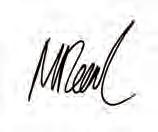
MARTIN READ is the editor of Facilitate magazine
08
Market turbulence is forcing FM service firms to think smarter
T10
The public sector can learn from the private sector, with FMs delivering what is needed
he UK labour market presents a complex and, at times, contradictory picture. On the one hand, a government committed to building a highly skilled economy, and on the other, a decision to cut funding for the very apprenticeships that underpin it.
Against this backdrop, businesses are navigating a cooling job market, struggling with persistent structural inequalities, and grappling with a workforce whose priorities have been shifted by the pandemic.
For FM, which relies on a diverse and skilled workforce, these challenges threaten operational resilience and future prosperity.
The apprenticeship paradox
The government’s decision to axe funding for Level 7 apprenticeships for most learners aged 22 and above, effective from January 2026, has caused dismay across sectors.
While the intention is to redirect investment toward younger people and reduce youth unemployment, many employers consider the move a misstep that will affect the skills pipeline.
The Level 7 apprenticeship, equivalent to a master’s degree, represents the highest level of vocational training and is crucial for developing senior-level talent. For FM, with its increasing sophistication and high-level strategic and technical skills, this cut is a significant blow.
Linda Hausmanis, IWFM’s chief executive, described the move as “less encouraging” and called for courses “made available in response to skills demand... across all levels”.
16
All in – providing a snapshot of various matters related to equity, diversity and inclusion
18
How IWFM’s policy activity boosts the voices of members where it matters most
by Bradford Keen
MARKET
The ONS reveals a drop in job openings of 5.8% between May and July, with 165,000 jobs shed over the last eight months
In a signed letter, more than 600 employers and training providers called on the government to increase the apprenticeships budget to accommodate top-tier training.
The skills paradox is unfolding against a backdrop of a cooling UK jobs market. The latest figures from the Office for National Statistics (ONS) showed a drop in job openings of 5.8% between May and July, with 165,000 jobs shed over the last eight months.
The chill is being felt most acutely in sectors adjacent to frontline FM roles, such as hospitality and retail.
Analysis by Resolution Foundation suggests that the combination of rising employer National Insurance contributions and the National Living Wage has been a shock for employers of frontline workers in cleaning, catering, and security.
Some firms are either not recruiting new workers or are not replacing those who leave, putting additional strain on remaining staff. This deceleration in job growth, while pay growth slows at a lesser rate, creates tension where job security becomes a primary concern for many.
Beneath the surface of a slowing job market lies a more insidious issue: persistent and widening pay gaps, with a profound economic and social burden.
Research by People Like Us and Scope has exposed what they call a crisis of inequality, with “massive public support” for compulsory pay gap disclosure.
● 77% of workers support compulsory disability pay gap disclosure;
● 70% support ethnicity pay gap reporting; and
● 73% want tougher legal requirements for employers to publish pay information and take corrective action.
The suggestion is that these pay gaps are not just shrinking pay packets but driving greater reliance on public services and undermining workplace culture.
Almost half (49%) of workers in the survey above had taken time off in the past year due to stress or anxiety related to pay, finances, or the cost of living. However, the burden is not felt equally.
● Workers from Black (64%), Asian (67%), and mixed (63%) ethnic backgrounds were significantly more likely than their White (44%) counterparts to take time off for these reasons.
● Nearly three-quarters (73%) of disabled workers had taken time off in the past year, compared to 44% of non-disabled workers.”
Another aspect of the skills gap is age related. The UK labour market faces a demographic challenge from an ageing workforce exposed to seismic shifts ranging from AI and net zero. Yet research from the Chartered Institute of Personnel and Development (CIPD) shows that while older workers now make up a growing share of the workforce, they have fewer
TRAINING PERSPECTIVES
Lack of investment risks leaving a significant portion of the workforce behind
opportunities for development.
● Only 47% of over-55s feel their current role offers good skills development, compared with 73% of younger workers.
● The amount spent on workforce training in the UK has fallen by 27% over the last 10 years.
CIPD authors suggest that this lack of investment risks leaving a significant portion of the workforce behind, trapping them in unsuitable roles or pushing them out of the labour market entirely. It makes a call for a “new era of reskilling”, with the argument that the reskilling imperative is “not just an economic necessity – it’s a social contract” – a shift from a reactive to proactive and people-centred strategy that means advocating for government policies that support lifelong learning and skills development and leading by example. What emerges from all of the above is a call for investment in training for all ages; for transparent pay practices, and the embracing of flexible working models to support employee wellbeing.
In addressing these challenges the WFM sector can do its bit to build a more resilient and skilled workforce while creating a fairer, more inclusive and prosperous workplace for everyone.
● Alan Vallance, chief executive of the Institute of Chartered Accountants of England and Wales, warned that the cuts “will profoundly affect the skills pipeline” and could restrict UK economic growth.
● Muyiwa Oki, president of the Royal Institute of British Architects, called
the plans “misguided and a backwards step”, warning of a negative impact on architecture apprenticeships at all levels.
● Dr Anastasia Mylona, technical director at the Chartered Institution of Building Services Engineers, emphasised the need to strengthen
training provision to “address current shortages but also drive long-term innovation and resilience in the built environment”.
● Linda Hausmanis, IWFM chief executive, wanted to see “courses made available in response to skills demand in the economy across all levels”.
FM organisations are facing market cost pressures – from surging property rates bills to soaring maintenance expenses, rising wages, and tighter regulations on flexible working.
Yet, amid the challenges, leading industry voices say the sector has the resilience and agility to adapt.
Andrew Hulbert, vice-chair of Pareto and new IWFM chair, said market data underlines the urgency for change.
Take the latest BCIS All-in Maintenance Cost Indices, which shows maintenance costs are set to rise 19% by the Q1 of 2030, with cleaning costs, largely driven by labour, forecast to jump by 31%.
“The FM sector continues to show strong resilience in the face of economic uncertainty,” Hulbert said.
“While maintenance costs are forecast to rise by 19% by 2030, energy costs are expected to fall by 14%, offering some relief to operational budgets.
“Public housing repair and maintenance is already up by over 13%, signalling renewed investment in key areas. These trends highlight both challenge and opportunity.
“Forward-thinking organisations are using this moment to reframe their strategies and deliver smarter, more efficient models. Innovation, data and supplier collaboration will be central to success. The sector is adjusting well and remains vital to the future performance of the built environment. FM is not just adapting, it has the opportunity to step forward with purpose.”
Dr David Crosthwaite, chief economist at BCIS, said cost pressures are being driven by domestic and international
by Bradford Keen
factors. “Against a backdrop of sluggish UK economic growth, maintenance and cleaning budgets remain under pressure,” he explained.
“Domestically, households and organisations are grappling with high energy costs, wage inflation, changes to National Insurance contributions and thresholds, and wider cost-of-living pressures.
“Internationally, oil prices, currency fluctuations and

global geopolitical tensions are adding further uncertainty.”
While BCIS forecasts falling energy costs from 2026, Crosthwaite cautioned that volatility remains a risk.
“Near-term volatility remains likely, particularly in response to geopolitical events. We’re anticipating a short-term rise in energy costs in 2025, followed by steady declines through the forecast period as wholesale gas prices fall and Europe secures a more stable liquefied natural gas supply.”
The government’s latest remit to the Low Pay Commission (LPC) commits to keeping the National Living Wage (NLW) at or above two-thirds of median earnings, with changes due from April 2026.
The Resolution Foundation noted that, while the government’s language is ambitious, the approach is “steady-as-she-goes” for the adult rate.
Nye Cominetti, principal economist at the think tank, welcomed the increase but noted: “Despite the government’s ambitious language around ‘delivering a genuine living wage’, the new remit for the Low Pay Commission represents a steady-as-she-goes approach to the adult rate, after faster increases in the years preceding 2024.
“This caution is warranted given worrying labour market data, which is thanks in part to the government’s increase in employer National Insurance
Contributions in April.”
Kate Nicholls, chair of UKHospitality, emphasised that pace matters: “The ambition is right, but the timing and pace of increases must be carefully considered in the context of the wider
April 2026 expected NLW: £12.71 (up 4.1%)
Post-2015 fastest rises: Between 2015–2024, NLW grew 32% in real terms vs 9% for average wages
Labour market change: 142,000 employee jobs lost (Oct–May)
INCREASED COSTS
economic environment…
Regrettably, escalating employment costs are already forcing businesses to reduce staff hours and, in some cases, make redundancies… Inflating wages too far, too fast, would be counter-productive.”
Upcoming changes in the Employment Rights Bill will make flexible working the default where practical, a shift that 22% of surveyed HR decision-makers rank as their top implementation challenge.
Claire Hawes, chief people and operations officer at Ciphr, said the real challenge lies in execution: “The data tells us the difficulty now lies less in writing the policy and more in embedding fair and transparent decisionmaking, especially in sectors where presence on-site is the norm… Flexible working is about giving people more autonomy and flexibility over how they work, and should be embraced.”
Hawes added that while the administrative demands will be high – from managing multiple requests to ensuring auditable records – the long-term business gains in retention, engagement, and inclusivity could be significant.
Increased occupancy costs are also hitting FM budgets. Colliers’ analysis shows that Grade A office occupiers in the CBDs of Birmingham, Leeds and Manchester could see rates bills rise sharply from April 2026.
John Webber, head of business rates at Colliers, said: “These rises will be significant – and all point to the increasing burden that business rates bring onto businesses, at a time when they are facing
other rising costs elsewhere. This may curb further investment and expansion.
“Finance directors and CEOs… will need to be budgeting and planning for increased office occupancy costs within their property strategy.”
Welsh hospitality businesses face steep rate rises after being excluded from a lower business rates multiplier set aside for retail.
UKHospitality Cymru warns this could lead to closures, especially for high street pubs, country hotels and city-centre accommodation.
David Chapman, executive director of UKHospitality Cymru, said: “Hospitality must, without a shadow of a doubt, be included in any and every business rates support package, if we are to avoid the sector being taxed out… effectively leading to the gutting of the high street as we know it.”
Challenge and opportunity
The convergence of rising property costs, wage pressures, evolving employment law, and shifting energy prices is forcing FM to rethink operations. Leaders stress the importance of:
● Strategic adaptation –using data and innovation to improve efficiency;
● Policy awareness –factoring wage, tax, and regulatory shifts into financial models; and
● Collaboration – working closely with suppliers and industry bodies to influence supportive legislation. While the pressures are real, FM must first weather the storm. It has the chance to emerge stronger, provided adaptation remains at the forefront of strategy.
The UK economy faces a complex mix of challenges from a stagnant commercial property market to a persistent public sector productivity gap.
An assessment of recent reports from the Royal Institution of Chartered Surveyors (RICS), the International Public Sector Accounting Standards Board (IPSASB), and global accounting firm EY reveals a tale of two sectors: the private, agile and driven by market forces, and the public, often slower to adapt and burdened by legacy issues.
Yet, the lines between these two are increasingly blurred. Shared sustainability goals and collaborative service delivery mean the sectors’ similarities are becoming as important as their differences.
This convergence presents a unique opportunity for FM to bridge the gap, applying private sector innovation to public sector challenges and building a more resilient, pro ductive, and sustainable future for the UK.
A tale of two tiers
The commercial property market, often a bellwether for economic health, is a prime example of the divergence between private and public sector fortunes.
According to RICS, the market is largely “static nationally,” with a notable exception: London. The capital’s outperformance, driven by prime office and retail sites, highlights a growing gap between high-quality, desirable properties and secondary sites struggling with rising vacancies.
This is a direct result of market forces like hybrid working and the growth of online retail, which have reshaped occupier demand. Private sector landlords are responding with more generous incentives to attract tenants, a clear sign of a competitive, market-driven environment.
This split sentiment within the private sector offers a valuable
by Bradford Keen




lesson for the public estate. As Anthony Breach of the Centre for Cities notes, policy must now support the redevelopment of city centres, “prioritising investment in high-quality office space and reducing over-reliance on retail”.
The public sector, with its vast property portfolio, must learn from the private sector’s recognition that quality, adaptability, and pur pose are paramount to maintaining asset value and utility.
Perhaps the clearest example of the public sector learning from its private counterpart is in sustainability reporting. While large corporations have long been required to disclose detailed environmental, social, and governance (ESG) information, the International Public Sector Accounting Standards Board (IPSASB) is only now phasing in its own framework.
This new standard aims to close the gap, bringing public sector entities in line with corporate counterparts. The standard will require public bodies to report on climate-related risks and opportunities, and outcomes of their climate-related public policy programmes.
● Phase 1, own operations – how public s ector entities disclose climate-related risks and opportunities within their own operations, such as energy consumption and waste management.
● Phase 2, public policy programmes – develops a separate standard for entities delivering climate-related policies, ensuring accountability for their outcomes.
This is a significant step, but it presents a major challenge for a sector often lacking the dedicated teams and resources

Amit Verma, sustainability policy manager at the Chartered Institute of Public Finance Accountants, highlights issues in resources, capacity and skills.
Here, the private sector’s experience is invaluable. For years, corporations have invested in expertise and technology required for comprehensive ESG reporting. The public sector can leverage private sector partnerships to overcome capacity issues and streamline reporting. This will be particularly relevant to FM, where compliance will likely
The public sector can leverage private sector partnerships to overcome capacity issues and streamline reporting
● Anthony Breach, director of policy and research, Centre for Cities: “Factors like hybrid
working and the growth of online shopping have fundamentally changed demand for office space and high street activity across the UK.”
● Tarrant Parsons, RICS head of market research and analysis: “Prime
become part of the tender process for services such as cleaning, catering, and waste management.
The most profound divide between the two sectors is in productivity.
A recent report from EY found that if the public sector had kept pace with the private sector between 2019 and 2024, the UK economy would be 3% bigger, an equivalent of £80 billion per year.
The report warns that without action, this shortfall could widen to nearly 5% of total GDP by 2030, representing £170 billion in lost economic output.
The key to closing this gap, according to EY, lies in two core private sector principles:
● Capital investment in modern public assets, including buildings, equipment, and technology, to improve operational efficiency.
● Collaboration and best practice sharing so different public services can learn from each other’s successes, driving cross-government solutions.
According to a National Audit Office report, the cost of poor service across the public sector is approximately £7.3 billion every month – due to the amount of employees’ time spent fixing problems, handling complaints, and dealing with things that went wrong.
The Centre for Economics and Business Research adds that declining productivity could necessitate hiring an estimated 92,000 additional
assets and alternative sectors are poised for modest capital value and rental growth over the year ahead, with a slightly more favourable credit environment lending some support to the outlook.”
public workers by the end of the current parliament just to maintain existing service levels.
FM professionals, with their understanding of real estate, technology, and service delivery, could be effective agents of change.
Optimising the public estate: By applying private sector principles of asset management, FM can modernise the public sector’s real estate portfolio. By implementing smart building technology to reduce energy consumption, adopting flexible space strategies to align with hybrid work models, and prioritising investment in high-quality, low-maintenance infrastructure, the public sector can boost productivity and meet sustainability reporting requirements.
Driving sustainability: FM is at the front line of sustainability efforts. By leveraging private sector innovations in waste management, energy efficiency, and sustainable procurement, FM can ensure public sector organisations surpass new standards, turning a compliance burden into a competitive advantage and boosting ESG credentials.
Fostering collaboration: The FM function is collaborative, bringing together diverse services from cleaning and catering to security and maintenance. FM professionals in the public sector can lead the charge in creating forums for best practice sharing, demonstrating how small changes in one department; for example, a new waste-sorting system or a more efficient maintenance schedule, can have a ripple effect on productivity across the entire organisation.
Poorly designed and maintained workplaces are costing the UK economy £71.4 billion in gross domestic product (GDP) every year, according to research by Mitie.
The study claims that UK employers lose more than £485 million each week due to time wasted because of workplace inefficiencies.
For employers to get the best out of their workforce, they must, the report finds, “put more emphasis on curating and shaping high-performance settings”.
The study shows how UK employees estimate that they lose 68 minutes every week to unproductive tasks; for example, finding a room with good Wi-Fi connection for a meeting, poorly maintained building services such as slow lifts, or a lack of spaces for collaboration. This rises to 74 minutes for full-time workers.
Physical workplace factors are central to how people feel about their employer and whether they are happy to stay, the report suggests. Nine in 10 (89%) workers who are satisfied with their workplace are also satisfied with their employer. This compares with people who are dissatisfied with their workplace environment, of whom less than a quarter (23%) say they are satisfied with their employer.
The survey highlights the relationship between physical workplace factors and job satisfaction, with 51% saying a poorly maintained workplace is a top cause of their job dissatisfaction. Almost nine out of 10 (88%) say a safe working environment

by Facilitate Team

contributes to their satisfaction, while access to the right technology and tools and a comfortable and well-designed office also contribute to job satisfaction for 83% and 75% of the respondents, respectively.
The study finds that employees are less likely to be lured to the office by opportunities to socialise (55%), with 29% saying recreational amenities such as gyms and social breakout areas contribute to their overall satisfaction.
Mark Caskey, managing director of projects at Mitie, said: “Employers have a real opportunity to improve workspaces, so they increase employee
Mitie’s intervention comes as Britain continues to battle with low productivity rates –specifically output per hour worked. Despite pockets of progress, the UK continues to lag behind its peers. In Q1 2025, productivity was estimated to be 0.2% lower than a year ago.
And the latest OECD data has the UK ranked fourth-highest out of the G7 countries in terms of GDP per hour worked, putting the country behind the US, Germany and France.


engagement, actively fuel productivity and drive innovation in a way that benefits the multigenerational workforce.
“Currently, across the UK, there are a number of friction points within office environments that adversely impact employee satisfaction, which directly impacts productivity. But all is not lost –some are within the employer’s control, for example, ensuring that the right spaces for the right tasks are readily available, from collaborative through to quiet spaces, and that any tech is in full working order.”
Previous pre-pandemic analysis drew similar conclusions. In 2018, research by Mace and its then FM arm, Mace Macro, calculated that one in five UK workers had two unproductive hours every week caused by poor office and work environments. Disruptive colleagues, lack of natural light, lack of coffee and tea facilities and noisy offices were just a few factors contributing to the chronic productivity problem facing the UK, it reported.
Post-Covid, we’ve seen plenty of people agreeing with Jitesh Patel, CEO of office design and build firm Peldon Rose, who says a post-Covid world requires office design focused on collaborationenhanced environments that support hybrid teams with wellness features such as quiet zones and biophilic design to enhance employee experience. CONSTRUCTIVE OUTPUT
We’re attending

21st-22nd October 2025

Join us at the IHEEM exhibition to discover how our specialised training programs can support your team. We offer a comprehensive suite of City and Guilds assured courses designed for individuals working amongst healthcare facilities, including vital Authorised Persons (AP) and Competent Persons (CP) training across multiple disciplines.
We understand the importance of seamlessly running essential healthcare services.
Open Day
30th October 2025
You’re Invited!
This isn’t just a training centre; it’s a launchpad for careers. Our facility features bespoke practical facilities, accredited courses, and advanced simulation environments that provide hands-on, real-world training.

Join us and see how we can help you build the skills you need for a successful future.



558,500 558,500
New TUC analysis reveals that 558,500 LGBT+ workers in Great Britain have experienced bullying, harassment or discrimination at work. Nearly 300,000 feel especially at risk owing to their identity. The forthcoming Employment Rights Bill 2025 aims to protect over a million LGBT+ staff, especially from third-party abuse like customers or patients.
Research by BHN Extras suggested that seven in 10 UK workers have complaints about their daily commute, with time wasted (42%) and high costs (28%) topping the list. Despite this, just 25% cycle to work – down from 32% – suggesting missed opportunities for healthier, cheaper alternatives like e-bikes avnd employer support.
7 IN 10
203 2030
Maintenance costs are projected to rise 19% by 2030, with cleaning costs up an even worse 31%, according to BCIS indices. Energy costs are expected to fall 14% over the same period, offering some relief. Industry leaders say smart FM firms are using the current climate to rethink strategies and boost efficiency.
Research by the Resolution Foundation found that around 370,000 Personal Independence Payment claimants will retain an average of £4,500 under revised government plans
The U-turn followed Labour MPs’ backlash against disability benefit cuts. Although welcomed by many, the changes reduce expected net welfare savings by over half, costing billions annually. 66%
WEEK COMMENCING 30 JUNE
1.3 million
NUMBER OF LOW EARNERS TO GAIN STATUTORY SICK PAY
The Employment Rights Bill 2025 will extend sick pay to 1.3 million low earners and introduce day-one parental leave rights. Announced by the government as part of its “Plan for Change,” the roadmap sets a phased rollout, including measures on flexible working, harassment prevention, and union rights, benefiting half of UK workers.
A British Council for Offices report found UK office utilisation settling at 66%, down from the long-standing 80% benchmark The shift reflects the rise in flexible working and calls for a rethink in office design. Midweek peaks dominate, with regional and private sector offices outperforming London and public workplaces in usage.
WEEK COMMENCING 7 JULY
71%
FIRMS CONTINUING 4-DAY WEEKS AFTER TRIALLING THEM
A 4 Day Week Foundation trial (in which 17 UK firms were involved) found that 71% have now decided to continue with a four-day week, citing benefits across wellbeing and productivity. Burnout dropped for 62% of workers, and 41% reported better mental health. One firm doubled revenue, while all reported maintained performance with no loss in pay.
WEEK COMMENCING 14 JULY 124
WORKERS KILLED IN JOBRELATED INCIDENTS
The Health & Safety Executive’s latest figures showed that 124 workers died in work-related incidents in 2024/25. This is a drop of 14 from the previous year, but the figure nevertheless highlights persistent risks. Construction saw the most deaths (35), followed by agriculture (23). Falls from height remain the top cause, accounting for over a quarter of all fatalities.
370,000
WEEK COMMENCING 21 JULY 1 in 10
EMPLOYERS MANDATING MORE OFFICE TIME
More than one in 10 UK employers are set to increase the number of office days workers must attend in a week, despite over a million workers – especially younger staff – quitting jobs in the past year due to a lack of flexibility. The CIPD warns of a growing disconnect, urging policies that balance business needs with employee expectations.
4.9 billion
With the global urban population set to hit 4.9 billion by 2030, cities are facing mounting pressure to cut emissions and boost resilience. Economist Impact research found that retrofitting buildings is now central to achieving these goals – economically, socially and environmentally.
WEEK COMMENCING 28 JULY
£71.4bn
ANNUAL GDP LOST TO POOR WORKPLACE DESIGN
Research conducted by Mitie has put a price on badly designed and maintained workplaces to the UK economy: £71.4 billion in GDP each year. Full-time workers lose 74 minutes weekly to inefficiencies like faulty tech and inadequate spaces. With 89% of satisfied staff linking good environments to employer approval, experts call for smarter, people-focused office planning.
Virgin Media O2 Business found SME directors spend 10 hours a week on work outside their expertise, with 76% saying it’s hurting their mental health. The strain of “wearing multiple hats” is pushing many toward burnout – 96% work outside hours, and 21% haven’t had two days off in six months.
£5.23bn
Real estate firm Colliers predicts businesses in Central London’s prime offices will face £5.23 billion in business rates after the 2026 revaluation. Average bills are set to rise 9%, with Farringdon seeing a 38% jump. Rent hikes driven by tech and creative firm demand are fuelling steep rate increases.
WEEK COMMENCING 4 AUGUST 20%
ESTIMATED SHARE OF UK WASTE ILLEGALLY MANAGED
The Environment Agency’s National Waste Crime Survey found that 20% of all waste may be illegally handled, yet only 27% of crimes are reported. With financial and environmental harm rising, the agency has urged the public for help. The government’s new Circular Economy Strategy aims to tackle waste crime and unlock a £25bn boost by 2035.
WEEK COMMENCING 11 AUGUST
2.8 million
NUMBER OF SMALL FIRMS HIT BY LATE PAYMENTS
A government-backed consultation aims to tackle the late payment crisis affecting 2.8 million small businesses, according to the Federation of Small Businesses. Supported by BESA, the initiative could end retention payments and force large firms to disclose payment practices – potentially reshaping the cash flow lifeline for engineering SMEs nationwide.
30,000
University of Reading scientists found air pollution dropped between 2015 and 2024 – NO2 fell 35%, and PM2.5 by 30%. But with 30,000 UK deaths linked to pollution yearly, dangers persist. The study urged coordinated, multi-pollutant strategies, as improving one pollutant alone could worsen others, such as ozone, which continues to rise.
WEEK COMMENCING 18 AUGUST
142,000
NUMBER OF JOBS LOST AS WAGE CAUTION KICKS IN
Government data showed that 142,000 employee jobs were lost between October 2024 and May 2025, prompting a cautious approach to future minimum wage increases. The Resolution Foundation says the adult rate will rise just 4.1% in 2026—below recent years— due to labour market strain and tax hikes impacting low earners and employers alike.
Here’s where we detail the challenges, chart the progress and celebrate the success of workplace and WFM projects undertaken to ensure inclusive work and workplaces for all. Got something that fits the bill? A project or a person deserving of recognition? Email editorial@ facilitatemagazine.com
INQUOTES
“When inclusion is done right, it’s not a cost – it’s a competitive advantage. Diverse teams mitigate groupthink and make better decisions. But we need to reward potential, not polish.”
Sophie Hulm, CEO of Progress Together
50%
The percentage of disabled professionals who declined job offers due to travel concerns, highlighting how inadequate infrastructure still acts as a barrier to employment.
SOURCE: AMEX GLOBAL BUSINESS TRAVEL 25%
Professionals from working-class or intermediate backgrounds progress up to 25% slower than their more privileged peers
SOURCE: PROGRESS TOGETHER’S 2025 IMPACT REPORT
Firms are taking action to improve equity of progression.
SOURCE: PROGRESS TOGETHER’S 2025 IMPACT REPORT
“Many assume socio-economic background is difficult to measure, but the best single indicator is simply the job a person’s parents did while they were growing up. The same applies to job quality, which can be measured in simple, robust ways. Yet these issues remain invisible to many managers and employees.”
Professor Mark Williams, from the Centre for Research in Equality and Diversity at Queen Mary University of London

“Disability
is not rare. And it is not ‘someone else’s problem’. It is the only minority group anyone can join in an instant through an accident, illness, ageing, or unexpected life event.”
Edmund Asiedu, accessibility policy advisor and ADA coordinator at NYC Department of Transportation
CAUSESFORCONCERN
TheUKSupreme CourtruledinApril that“woman”means biologicalsexunder theEqualityAct2010, affectingsingle-sex spacesandraising concernsfortrans, non-binary,andgender
non-conformingpeople. IWFMsupportsSport England’sAccessible andInclusiveSports Facilitiesguidance,which promotessafe,inclusive, all-gendertoilets.
Professionalsfrom lowersocio-economic backgroundsfacea
“tripledisadvantage”: beinglesslikelythan theirpeerstoenterelite professions;earningless thantheircounterparts andexperiencingpoorer conditions,accordingto astudybyQueenMary UniversityofLondon andtheInstitutefor EmploymentStudies.







WIn times of change, we actively advocate for our members where it matters most, says IWFM’s head of policy and research Andrew Gladstone-Heighton
e have seen a series of key strategies and policy announcements in the last year, from infrastructure and industry to a comprehensive 10-year plan for the NHS. This is intended to set the stage for a period of implementation and growth, and it is here that our profession’s expertise becomes indispensable.
IWFM is focused on ensuring that WFMs are seen as the critical engine driving productivity and resilience across all sectors. A key part of this involves our internal structure.
I met with our Knowledge Insight Group (KIG), a gathering of our special interest group (SIG) chairs, to plan our 2026 outputs. Our focus is clear: deliver tangible, highvalue resources to members, and showcase the value of our sector to the economy.
Our SIGs are the powerhouse of our policy work, and we want to empower them to be more vocal in public affairs. My mission for the next year is to formalise this.
We will be distilling the top three ‘asks’ from each SIG – the most impactful changes they would propose to senior government officials – and using these to drive our advocacy efforts.
Advocating for the profession
Our policy work evolves in response to government action. The unexpected move of the Building Safety Regulator (BSR) from the Health and Safety Executive (HSE) to the Ministry of Housing, Communities and Local Government (MHCLG) is a prime example.
While Building Safety Minister Alex Norris claims this will speed up processes, the potential impact on our sector, particularly around work approvals, concerns us.
The House of Lords Industry and Regulators Committee heard evidence that mirrors the feedback we have received from members – issues such as staff turnover, processing delays, and a lack of consistency.
We are monitoring the government’s Employment Rights Bill 2025 – a cornerstone of the ‘Plan for Change’ –which aims to address low pay and poor working conditions. Many members have raised concerns about its implications, particularly regarding flexible working and day-one employment rights.
If growth is the government’s intention, then it is vital that investment unlocks opportunity across the economy and nation. Against poor growth and tough economic circumstances, the Autumn budget will need to turn the government’s prospects around and grow the economy.
Together with members, we’re shaping a constructive dialogue with the government, recognising that a nuanced approach is essential for modern workplaces. The issue goes to the heart of the skills and staff retention challenges facing our sector.
Also on the agenda
The government’s memorandum of understanding with OpenAI and its prioritisation of Large Language Model based machine learning and data centres highlights a major area for growth.
For our sector, it means we need professionals to manage complex built environments that support this technological shift – alongside mitigating the environmental impact these facilities have on their local environment.
Energy policy is also critical. The Secretary of State for Energy and Climate Change, Ed Miliband, outlined



1. IWFM will assess the Employment Rights Bill 2025 to determine how it will address low pay and poor working conditions.
2. Building Safety Minister Alex Norris claims that moving the BSR from HSE to MHCLG will speed up processes but IWFM is concerned of its potential impact on the sector.
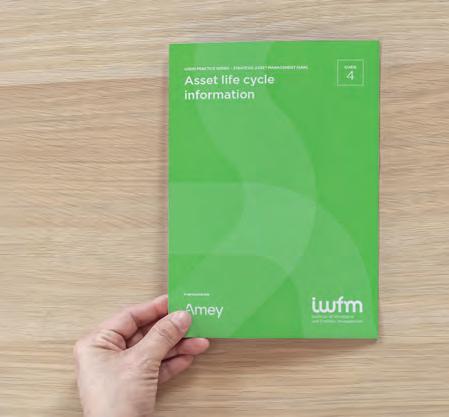
3. IWFM’s five-part series in asset management best practice is proving particularly popular with members, with download figures far exceeding usual metrics.

We’re keen to hear from you about the topics you think we should cover, but this is a two-way street – you can help us by participating in our surveys. We’d like to convince more of you to
take a volunteering role with IWFM. You can make a difference within the profession by involving yourself with our regions, groups or networks – or by putting yourself forward as an awards judge or board member. IWFM thrives through its volunteers and we’re keen for more of you to step forward. As for policy, we welcome your thoughts on our future work so please get in touch at policy@iwfm.org.uk

RESOURCES
● NHS 10-year plan: b.link/FacilitateE25-004
● UK Government’s Plan for Change: b.link/FacilitateE25-005
● UK Climate Resilience Roadmap: b.link/FacilitateE25-006
planned reforms to the UK’s electricity system, focusing on GB Energy and a national pricing model. We will advocate for an approach that reduces costs for consumers and business, and supports green energy solutions.
Finally, we are engaged in a long-term project to improve how our profession is represented in official statistics. The current Standard Occupational Classification (SOC) codes often fragment or misrepresent facilities and workplace management roles.
Our sector is frequently subsumed under ‘business services’, with key roles such as engineers and cleaners classified elsewhere. We are exploring how we can work with the government to ensure our true size and scope are accurately reflected in future datasets. This is about demonstrating our profession’s true value and contribution to the UK economy.
What’s happening as you read this?
We will soon be releasing our 2025 sustainability survey report. Emerging findings show that the threats climate change presents to our workplaces and buildings are more immediate, and possibly quite different, to what we may have previously thought.
With the UK Green Building Council’s roadmap on climate resilience and a summer marked by heatwaves, and water scarcity, the timing is perfect. The results will help focus our efforts on the most pressing issues.
We’re on track to release our Information Management Initiative guidance in Q3, which we are shaping into a practical handbook with a “start small and scale” approach.
Our aim is to help members tackle the fundamentals of data management and leverage the vast amounts of information our sector handles.
Finally, we are drafting IWFM’s formal submission to the Autumn Budget. This is a key opportunity to advocate for our members’ priorities directly to the Treasury. Our emerging focus is on three key areas:
1 Reversing cuts to Level 7 apprenticeship funding;
2 Increasing investment in climate resilience and retrofit for the public estate; and
3 Promoting low-carbon energy production to drive down costs.
IWFM output you should be aware of
Our Asset Management series has been a phenomenal success, with download figures far exceeding our usual metrics. The five-part series, which covers everything from cataloguing assets to long-term sustainability planning, has resonated with members – and we are keen to understand why this format has proven so popular.
We have just published our new guidance on safety management systems in partnership with ARK Workplace Risk. This will be a vital resource for members looking to shape their internal policies and ensure alignment with best practice on risk, safety and compliance.
This is an exciting time for the IWFM as we aim to empower members and elevate our profession. If you have issues you believe we should be addressing, please get in touch. Your voice is our greatest resource.
































































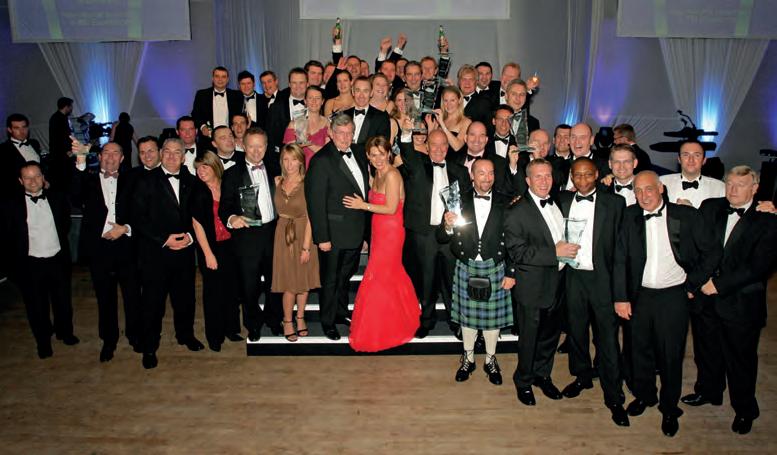
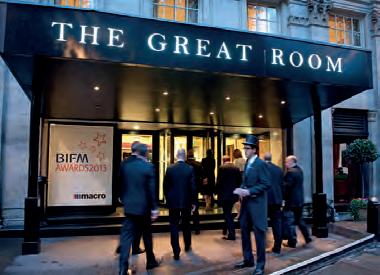
Although its roots are traceable back to the sixties, 2001 saw the first modern IWFM Impact Awards – then BIFM Awards – take place. Ahead of 2025’s winners being announced, Martin Read and Bradford Keen consider how the scheme has evolved over the past quarter century, assessing its contribution to the sector’s wider evolution




































































In 1971, the Institute of Administrative Management introduced the Office of the Year award, the first scheme of its kind. It was this model that David Hogg, chair of BIFM Scotland in the late 1990s, used as the template when he was asked to develop the fledgling BIFM’s own awards scheme. Beyond the revenue generating and social event goals, the wider aims were to help the sector professionalise through an annual demonstration of high achievement, best practice and process improvement.
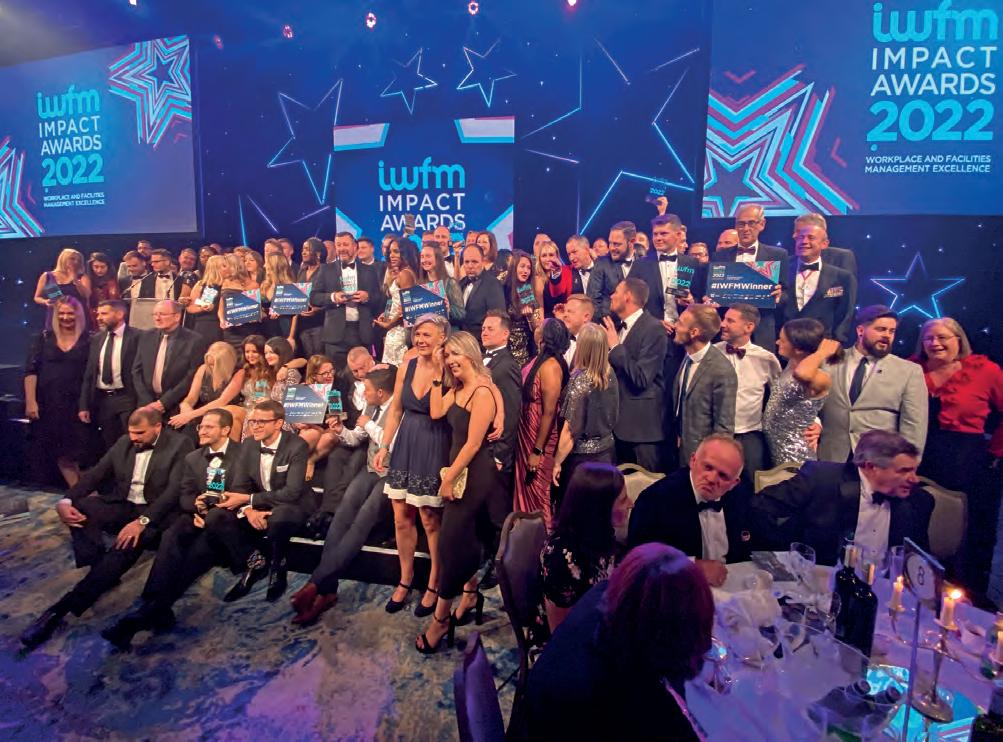
Today’s IWFM Impact Awards attract hundreds of applicants having become the key test of excellence in the facilities services sector.
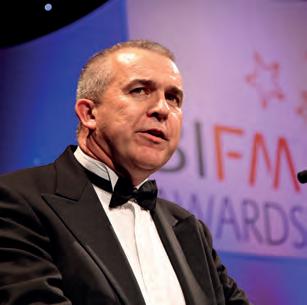
“The awards are seen as a genuinely prestigious and competitive event,” says former chair of judges Oliver Jones. “All of the biggest companies in the market enter, and they see the dinner as a great team-building and networking event.
“It’s a healthy thing for an industry to have a competitive edge and celebrate others’ success. It’s a great poster board for the industry, showcasing how diverse and far-reaching the sector is across big


and small companies, public and private. It’s nice to see something I was so involved in continue to enjoy such positive success.”
Many factors contribute to the awards’ positive standing in 2025, all involving a steady evolution in the scheme’s format.
The process of judging the awards – who is invited, the process they follow – has been transformed since the early days when being a BIFM fellow was a mandatory requirement, and when such fellows judged on more than one category. The original judging process was replicated from the Office of the Year scheme, says David Hogg, but it’s fair to say that it’s evolved considerably since then.
During his tenure as chair of judges, Steve Gladwin saw his task as ensuring the awards were not just inward-looking and self-congratulatory, but played their part in raising FM’s profile externally.
To this end, moves were made to bring in judges from outside of the sector itself yet with an interest in FM’s performance more broadly. Examples include Munish Datta, then head of ‘Plan A’ and facilities management at Marks & Spencer, who brought his expertise to bear on the increasing number of sustainability categories.
A significant shift came when the awards moved to a system of judging in which site visits were downplayed as part of the process in favour of online presentations. While visiting the sites behind project category submissions to evaluate the veracity of claims had its place, the process was a logistically complex proposition with judges’ expenses needing to be met. It was also difficult to ensure that the same judging panel could visit each site.
Today, for those entering the awards, the emphasis on matching the initial submission to the requirements of the awards category has become greater, while online presentations allow judges to bring in specific questions and have them answered. For judges, these online presentations mean more people who may have found site visits taking an inordinate amount of time could now accept invitations to participate – broadening the pool of participating





WINNER’S STORY
FACILITIES MANAGER OF THE YEAR 2003
Now semi-retired, Dave Richards was only the third individual to be crowned facilities manager of the year, working back then as FM for Dalkia on the firm’s Capitol account.
Q: How did winning Facilities Manager of the Year affect your career?
Personally, it supercharged my ambition. Winning an individual award raises your profile quickly within your own business and the wider industry. However, a lot of people took the lazy option and tried to poach me the day after I won, which I think is a bit of a lazy recruitment process. They were also ignoring the fact that success is a team effort.
As a northern guy based in Nottingham, I also felt like I was putting the underdog on the map. Most award ceremonies were very London-centric. It felt like I was helping to break the mould, showing that great FM can happen outside of the London hub.
Q: How has the profession changed since your win?
The biggest change is in the customers. In the early 2000s, most clients were uninformed and not inquisitive about FM. They would buy services, and if they weren’t good, they’d get rid of the supplier. The industry was






summed up by a net promoter score of minus 50 – you only ever heard about things when they went wrong. Now, customers are highly informed and highly inquisitive. The rise of the internet and AI has made information so readily available that innovation is no longer a bonus; it’s expected.
Q: Best practice 2003 vs best practice today?
Regulatory and compliance activities have been driven to a much higher standard. FM as an industry has done a great job of raising awareness of compliance and regulatory activity. Now, C-suite executives are talking about fire regulations and electrical testing at board meetings.
Q: What award category would you like to see?
The focus should be on the core of our industry: great people delivering great service. FM is a people-led business, and most of our work is delivered by front-facing people whether they’re fixing something, cooking great food, or welcoming a visitor. The other area to focus on is technology; our industry needs to continue to demonstrate how we use tech to make systematic changes in how we maintain the built environment.





judges. The policy thus allowed for a greater diversity of thought, as well as reducing the impact of judges becoming ill or unavailable. It also meant greater consistency of judging process.
Over the years the pool of judging talent has been widened, testament to moves made to improve the lot of judges.
“It’s completely different from running a business,” says Jones – who served as chair of judges between 2009 and 2013 – of those who volunteer as judges.
“Volunteers operate on their own time, so you have to run a really rigorous, almost dictatorial process. You have to clearly state when you need their time and exactly how they need to participate if they want to be involved. You can’t leave anything unchoreographed. With 12 to 20 awards where each category may have four to six judges, a lot of different people will be presenting a lot of different views as experts.”
Communication and validation are the focus areas, meaning an initial mass
briefing about the awards and judging philosophy with specific training on the scoring mechanisms and what makes a good candidate for any award.
“We then needed to have experienced judges leading each category who would propose, for my agreement, the criteria and scoring mechanisms relevant to that award category.
“A golden thread was then introduced through one or two experienced judges setting the scoring benchmark ahead of the wider judging exercise. Lastly we needed to ensure impartiality and a scrupulous approach to trying to find the best applicant in each case and to have an auditable route to that conclusion” – a process in place to this day.”
People become judges for a few reasons. They want to raise their own profile, meet other influential people, and see interesting applications,” says Jones. “The last one is often lowest on their
“We needed to ensure impartiality and a scrupulous approach to trying to find the best applicant in each case”

Number of winners across all categories over the awards’ 24 years to date. At some point on 9th October the 350th IWFM Award will be handed out.




13 OCCASIONS
Sodexo, the awards’ most successful FM service provider to date, has been involved in project, team or individual awards on 13 occasions. (Mitie has 12, Carillion 10, ISS UK 9, Pareto FM 6.)
100

The fifth individual winner to walk up on stage in October will become the 100th winner of a people category award in the history of the event

3 TIMES


Martin Pickard is the Awards’ most decorated individual, winning on three occasions: twice for best article in FM journalism; once for lifetime achievement.
24






Times the awards ceremony has been held on a Monday evening. This year, it moves to a Thursday.
25,000
Approximate number of meals served at IWFM Awards ceremonies
226
Number of project category winners to date










WINNER’S STORY



FACILITIES MANAGER OF THE YEAR 2006




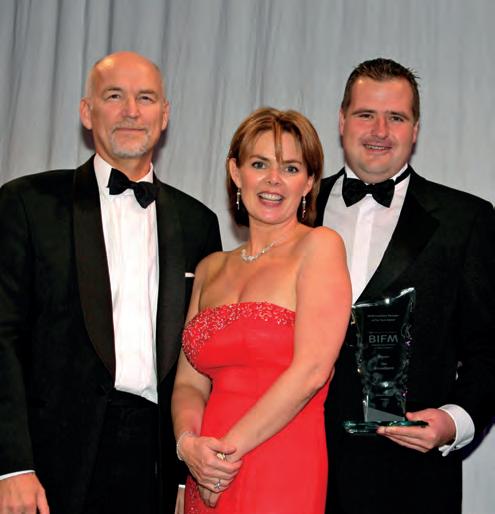






Ian Broadbent has seen the IWFM Awards from both sides of the fence. Facilities Manager of the Year in 2006, he subsequently chaired BIFM from 2010 to 2012. Today he is head of special projects (strategic FM & estate specialist) at Unite Students.
Q: How did winning Facilities Manager of the Year affect your career?
Initially it was a huge boost. I worked for a business that wasn’t an FM company, so the award really raised my profile internally. From managing a few properties, I moved into a global role and took on additional responsibilities like procurement and health and safety. Five or six years after, it was still a great talking point. People would still say, “Wow, you were FM of the year!” It helped affirm what I could bring to a new business.
Q: How has the profession changed since your win?
It has become much more recognised within business. Back then, FM used to beat itself up about where it should report within an organisation and what value it could bring. A few things have helped raise our profile. A greater focus on issues like sustainability and the impact
FMs can have on those issues has brought us to the boardroom table. Covid also shone a light on the workplace and what its future would look like. It’s also helped that we now have a professional qualification framework that businesses recognise.
Q: Best practice 2006 vs best practice today?
Back then, FM was seen as a maintenance function, not a strategic function. Best practice has evolved from being very internally focused on FM to being spread across the entire organisation. Now there’s a real recognition that best practice in FM can feed right through a business.
Q: What award category would you like to see?
The first would be for an individual or team that has successfully embedded FM at the core of a business, using their core FM skills to branch into other areas and add real value. Something like ‘Top FM Influencers’. The second is around youth. We have Newcomer of the Year, but I’d like something that recognises people who go out of their way to encourage FM as a career path. It’s important to have a continuous circle of new talent coming into the industry.
list, so you have to ensure the process is fun and rewarding for them. One thing I think the IWFM did very well was giving proper recognition to the judges on the night of the awards.
A lot of work goes into judging, and it’s all done for nothing, so it’s vital to recognise the real drivers for the people involved and make sure it works for everyone.
Mark Griffiths is in his last year as chair of judges. From 2026, Sarah Hodge will succeed him.
“I’m sure any previous chair of judges will tell you that heading up the process is a whole other kettle of fish,” he says. “You really appreciate the amount of time and energy everyone gives up. This year, for example, we had 50 judges volunteering their time to review over 150 entries on their desktops. We then moved on to round two with 40-minute interviews.
“The diversity of perspectives among the judges is what makes the process so powerful. We always strive to make the group as diverse and reflective of the industry as possible because it maintains the credibility, balance, and fairness of the awards.
“Coordinating all these judges is like herding cats sometimes, but it’s good fun. Everyone is volunteering their time, and their day jobs don’t just stop. People giving up their time to do this


Isolating key words in category titles demonstrates how the sector’s focus has shifted since 2001, with architectural and commercial project success replaced by environmental, social and sustainable imperatives. Note how environmental sustainability




titles have changed with the language over the years and note, too, the near permanent presence of three core WFM demands: deployment of technology, the constant quest for service innovation, and, most crucially of all, customer experience.






is a great reflection of their quality and commitment to the industry.
“I’ve learned that a lot of clarity and consistency is needed when coordinating the judges. When you’re a judge, you focus on one or two categories, and you follow the guidance provided. But when you’re in a chair or deputy chair role, you have to be consistent in your approach, regardless of your personal intuition, to ensure fairness across the board. This consistency helps drive a good understanding of what excellence looks like, which is the main purpose of the awards.
The awards as barometer
“The IWFM awards are a good, oldfashioned industry-benchmarking exercise for a thriving sector,” says Jones. “They have persisted for 25 years because they are credible. I remember when my own companies would enter and win, it was a
huge achievement; you’d set objectives for your team leaders to impress clients and earn this independent recognition.”
Griffiths adds that, while other schemes do a good job in recognising good work, the IWFM Impact Awards reflect the nuances of the workplace and FM – “a crucial, important part of their identity”.
“The depth of the categories, the processes, and the recognition of things like innovation and sustainability make the awards resonate with those who enter and want to see what’s happening in the industry,” Griffiths says. “The awards have
a strong focus on recognising SMEs, who are massive contributors to the quality of work delivered in this industry, and on sustainability, which is a constant driver for our sector. The awards have also evolved to recognise the importance of technology and digital elements, which is a key part of their standing.”
One telling change is in the reason for participation. “I’m assuming the original intent was to celebrate achievement, and it still does that,” says Griffiths,
“The IWFM awards are a good industrybenchmarking exercise for a thriving sector. They have persisted for 25 years because they are credible”
“but now it’s also about driving progress. There’s a lot more talk about collaboration and the social value of our work.”
In the awards’ early years, significant emphasis was put on categories that recognised strong relationships between clients and providers. This focus was a result of broad dissatisfaction within the sector of early outsourcing deals from the 1980s and 1990s which routinely broke down. ‘Partnership working’ between client and provider was seen as a way of moving such relationships forward, while for clients, sustaining a sense of identity when reducing internal headcount and using outsourced services was a key concern – good partnering arrangements met that challenge. Yet this was an entirely client-provider focus, and that has changed.
From buildings to people-first There has been a steady shift in the focus of awards categories and the winning submissions chosen, with the performance of people moving ahead of purely physical property performance. Rewarding best practice in sustainability has evolved too, with a more nuanced focus on both environmental and social sustainability factors.
“The winners that stick in my mind are not those that had cost savings at the fore, they’re the ones that recognised FM’s contribution,” recalls Gladwin. “During the period I was chair, we started seeing more submissions that were strategically





OF THE YEAR 2019

In 2019 Maddie was one of the early winners of the Newcomer of the Year award, entered into the eatery by her employers Mace Macro. Nowdays she is workplace experience director at JLL.
Q: How did winning the award affect your career?

Winning the award was impactful for my career, particularly as I was new to the industry and still finding my feet. It provided a significant confidence boost at a crucial time when I was establishing my professional identity. The recognition increased my visibility within the workplace management community and opened new connections that continue to benefit me to this day.
Q: How has the profession changed since your win?
I’ve observed CRE and property teams gain much greater strategic influence as business partners as well as operational support functions.
FM/workplace roles are now expected to be multiskilled, which has prompted organisations to explore hiring talent from non-traditional industries to bring fresh perspectives.
We’ve seen an influx of new technology and AI solutions on the market, which is exciting to see and will have a huge impact on how we




approach workplace management and decision-making using data-driven real-time analytics and forecasting.
Q: What award category would you like to see introduced (and why?)
A “Future Talent” or “Emerging Professional” category for positions like apprentices, graduates, undergraduates, and interns entering our industry. By recognising and promoting emerging talent, we’d inspire more young professionals from various backgrounds to consider our industry as a viable, rewarding career choice.
Q: Best practice 2019 vs Best practice today?
I’ve witnessed a fundamental shift from building-centric approaches to individual-centric workplace strategies, with an expectation that experience is embedded across all touchpoints and delivered by every workplace role. For many, workplace experience has become a key strategic pillar. We are also noticing a shift in how we measure best practice, with many workplace metrics shifting from SLAs to ELAs (experience level agreements).
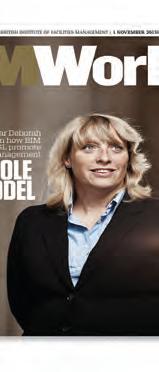










“During the period I was chair, we started seeing more submissions that were strategically aligned rather than just about cost saving”
aligned rather than just about cost saving.”
It is indeed interesting to note a shift in the focus in awards submissions over the years. Pure cost savings used to be up front and centre; now they are just one of several components, with the impact of a project on performance, wellbeing and productivity far more prominent.
A focus on the variety of FM job role has also seen the one-size-fits-all ‘Facilities Manager of the Year’ category added to. For 2025 there will also be an IWFM Leader of the Year, and – for the first time – an Armed Forces Veteran in FM category. Recognising not just the performance but an individual’s origin story is adding a further human touch to the scheme.
Recent years have also seen a move to recognise not just managers but those on the WFM frontline, a theme accelerated by the Covid pandemic. In 2025 we will see a category for ‘everyday excellence’.
“The societal element to the awards is what really matters,” says Griffiths. “The younger demographic of customers is more discerning and informed, and this rubs off on everyone else. When you look at the breadth of organisations and the
quality of their entries in categories like technology, you see the evolution and forward movement of the awards. We’ve moved far beyond the late eighties and early nineties when you’d never have imagined talking about things like ESG. I think societal focus is the best way to describe the awards’ impact now.”
For Jones, it’s the the Workplace Experience Award that captures the widest impact of the FM profession. “I often visit corporate headquarters around the world, and I can tell
within seconds of walking into a building if it’s well-run,” he says. “Design is one thing, but how it’s run is what really matters. So the Workplace Experience Award is a really good benchmark of whether a facility can handle everything, from day-to-day operations to a crisis.
“The facilities management sector is all about making sure the show goes on. Every day should be a special experience for visitors. Staff should be on top form, know their roles, and conduct themselves well. The workplace experience award is a great measure of how a facility successfully brings all these elements together.”
“There are a lot of awards out there, and in my experience, many are influenced by who the sponsors are,” says Jones. “The IWFM Impact Awards are genuinely objective, uninfluenced by sponsors or specific judges and that is very important for obvious credibility reasons”.

2001 Rory McGrath
2002 Jack Dee
2003 Alsitair McGowan
2004 Patrick Kielty
2005 Matthew Pinsent










2006 Adrienne Lawler
2007 Dara O’Briain
2008 Penny Smith
2009 Claudia Winkleman
2010 Mylene Klass
2011 Michael Portillo
2012 Clive Anderson
2013 Giles Brandreth
2014 Hugh Dennis I
2015 Simon Evans
2016 Alexander Armstrong
2017 Stephen Mangan I
2018 Steph McGovern
2019 Hugh Dennis II

For a sector infamous for not being famous, organisers have invited their fair share of familiar faces to helm the awards ceremony over the years. Gaby Logan will become the 22nd individual to host the IWFM Awards ceremony when she takes to the stage on 9 October. Which host most successfully ‘got’ the sector for which they were entertaining? Any answer here is subjective, although both Alexander Armstrong and Stephen Mangan clearly did well enough to be invited twice. Otherwise there was considerable praise at the time for Gyles Brandreth in 2013, with Steph McGovern’s 2018 turn also seen as a strong choice.

It’s perhaps possible to trace a shift in popular culture through the choice of host, although for some it’s their subsequent career trajectories that stand out (Claudia Winkleman, Dara O’Briain…).
2020 (No host, pandemic)
2021 Mark Watson
2022 Zoe Lyons
2023 Sally Phillips
2024 Stephen Mangan II
2025 Gaby Logan
Workplace Experience: Office/Corporate Environment
SPONSORED BY: ARCUS FM
•My Lakeside Platform – Engage, Avison Young UK
•A Secure Welcome Initiative, Bidvest Noonan
•North West Hub, Manchester, CBRE and AtkinsRéalis
•Bringing Pinterest to life; creating a workplace experience that gives everyone the inspiration to create a career they love, Pinterest
•Driving Occupier Experience, Regular Cleaning
•GSK Workplace, Real Estate and Facilities, Sodexo
Workplace Experience: Non-office/ Corporate Environment
•The Hub, AstraZeneca and Sodexo
•Integrated CAFM helps keep saving lives, London Fire Brigade and Bellrock Group
•The Institute of Contemporary Music Performance Queen’s Park Campus, Veale Associates
Positive Climate Action
SPONSORED BY: CEF
•Carbon Reduction Program, Bryan Cave Leighton Paisner
•Sustainable Synergy, Julius Rutherfoord & Co.
•Driving sustainability in Soft FM on the UK Defence Training Estate, Landmarc Support Services
•Biodiverse Sensory Gardens, Mitie & DWP
•Societe Generale and CBRE
•Achieving UN SDG 12.3 of 50% food waste reduction ahead of deadline, Sodexo
•WPS and JLL
Positive Climate Action: Towards Net Zero
SPONSORED BY: WASTE TO WONDER WORLDWIDE
•Glasgow Museum Resource Centre
Decarbonisation Project, CBRE & Glasgow Life
•Zero Carbon Partnership, Equans and Warrington Borough Council
•Tower 42, L&P Group
•Plan Zero - Do, Lead, Deliver, Mitie
•Journey to net zero 2040, Sodexo UK & Ireland
•Pioneering a sustainable future: groundbreaking
Net-Zero partnership, Standard Chartered Bank and JLL
Excellence in Customer Experience
SPONSORED BY: ERIC WRIGHT FM
•Wx Excellence: Transforming Workplace Experience
Through Partnership & Purpose, Diageo and Sodexo
•Supporting Prison Capacity, Gov Facility Services
•Patient Experience programme at John Radcliffe Hospital, Mitie
•Serco Healthcare FM

CONGRATULATIONS TO OUR FANTASTIC SHORTLIST
•EMCIC approach to Change Management, Claremont Group Interiors
•Global Workplace Transformation, Cushman & Wakefield and Sage
•Mobilising Excellence - Harmonising the Phoenix Premises Model, Mitie
•Company merger - changing culture, transforming productivity, YorPower
Social Value
SPONSORED BY: WASTE TO WONDER WORLDWIDE
•Recirculate Project, Equans UK & Ireland
•Purposeful Prisoner Working Programme, Gov Facility Services
•Work Experience Placements in Healthcare, ISS
•Regent’s Place, JPC by Samsic and British Land
•Transforming Communities Through Partnership, Mitie and Essex County Council
•Ready2Work Programme, Mitie Foundation
•Power of partnership - real, lasting social impact, Sodexo and Social Enterprise Kent
Wellbeing
SPONSORED BY: WASTE TO WONDER WORLDWIDE
•Integrated Estate Management
•Mears Men Network, Mears Facilities Management
•Enhanced Psychological Therapy Service, Mitie
•Mental Health Support Programme, Premier Technical Services Group
•GSK Workplace, Real Estate and Facilities, Sodexo
Equity, Diversity and Inclusion Initiative
•ESG Council, BGIS
•People Team - driving disability inclusion in FM, Gov Facility Services
•Your Lived Experience, Skanska UK
•Tomorrow Meets Today
•Sensory Nook, Vico Homes
People Development and Talent Retention
SPONSORED BY: EQUANS
•Integrated Estate Management
•Healthcare Training Academy, ISS
•Civil Service Property Fast Stream, Office of Government Property (Cabinet Office)
•Empowering People, Elevating Performance, Portico
•Healthcare Cleaning Playbook, Serco Healthcare FM
Product or Service Development
•E60+, Amey and Grid Edge
•Redeveloping cleaning for inclusive workplaces: Return to Office Mission, JPC by Samsic and Knight Frank Promise
•Optimising critical hospital assets, Sodexo and Xempla
•The game-changing MPF Portable Fire Extinguisher, Trinity Fire & Security
Technology
SPONSORED BY: JONES FM
•SmartED-i®, GreenED Group
•H2O, HubStar
•GPT Custom Assistant, JLL
•Justice & Immigration CAFM, Serco
•Intellekt, Skanska
Best Client/Provider Collaboration
•Performance Alliance, Dalkia UK and The Instant Group
•Optimising Building Performance, JLL and Skanska
•Paddington Square, Principle Cleaning Services and Knight Frank
Best Multi-Party Collaboration
•Global Workplace Transformation, Cushman & Wakefield and Sage
•Collaborating for family-friendly facilities for the City, Cushman & Wakefield, Exeter City Council, Little Exeter, Guildhall Shopping Centre
•Facilities Management PFI insourcing, King’s College London and Equans
•Breaking Barriers, Building Futures: Cross-Industry Collaboration for Change, Premier Technical Services Group
•Tomorrow Meets Today
Best SME/Start-Up Led Innovation
•Analytics as a Service for the built environment, Datore
•Nserv
•Tomorrow Meets Today
Team of the Year: Public or Third Sector
SPONSORED BY: FUSION21
•North Technical Team - Sustainable FM, Equans UK & Ireland
•Facilities Management Team, Historic England
•West Middlesex University Hospital team, ISS
•HMP Northumberland, Sodexo
•University of Greenwich IFM Team, Sodexo
Team of the Year: Private Sector
SPONSORED BY: PREMIER TECHNICAL SERVICES GROUP
•Customer Experience Team, GPE
•British Land Portfolio Team, JPC by Samsic
•Capital Group Team, Principle Cleaning Services
Headline Sponsor: Sponsored by:

IWFM Newcomer of the Year
SPONSORED BY: 14FORTY
•Cameron Watson-Azmi, City & Essex
•Thomas Maddock, Gower College Swansea
•Euan Read, Robertson Facilities Management
•Ella Gladwin, Thermatic Technical FM
IWFM Manager of the Year
•Hamza Idris, BGIS Global Integrated Solutions
•Anthony Atkinson, CBRE
•Alex Ballintine, Mears Facilities Management
•Pierce McAllorum, Salesforce
•Joanne Pickersgill, Sodexo
IWFM Leader of the Year
•Theresa Bell, Arcus FM
•Paul Ashton, Birkin Cleaning Services
•Jon Admans EngTech MIHEEM MIET, CBRE
•Gaetano D’Altrui, International Trading Services FM
•Adrian Mole, Robertson Facilities Management
•James Nottage, Sodexo
IWFM Armed Forces Veteran in FM
•Michelle Wiggins, Amey
•Eddie Manners, Arcus FM
•Stephen Douglas, JPC by Samsic
•Jamie Hutch MBE CIWFM, Landmarc Support Services
•Neil Davies, Mitie (Defence) International
•Mark Baker, Sodexo
•Joe Lyon, Thermatic Technical
IWFM Everyday Excellence
•David Gillen and Colin McGrath, Bidvest Noonan and Ulster University
•Catherine Moir, CBRE
•Two St. Peter’s Square, CBRE
•Helen Allen, ISS
•Jesus Varela, JPC by Samsic
•Megan Webb, Kier Places
•Christine Bingham, Sodexo
•Calum Wilson, University of Strathclyde
– National Manufacturing Institute Scotland (NMIS)
Join the celebrations and be the first to congratulate the winners

Supported by:


As chair, Mark Whittaker presided over four event-fi lled years for IWFM. Now, his former deputy Andrew Hulbert is stepping up to help the institute reach its new strategy goals. What does this changing of the guard tell us about what members can expect? Martin Read reports
PHOTOGRAPHY: RICHARD LEA HAIR
Any change in key personnel can put a focus on fresh hopes for the new hire ahead of the short shrift given to the achievements of the departed.
Fortunately, that’s not the case in 2025 and the change in tenure for IWFM chair. For one thing, Mark Whittaker’s four years at the helm have seen some of the most consequential change in IWFM’s history. And for another, there’s a huge sense of mutual admiration between incumbent and successor.
Both men were present for the recent IWFM annual general meeting in Manchester, which Mark chaired as his last act in the role. IWFM CEO Linda Hausmanis led the praise for Whittaker’s tenure.

Our box-out details the events of Whittaker’s four years, on top of which you can add significant changes to executive personnel and the bold undertaking of progressive organisational change based on evidential review.
Implementing the recommendations of the Community Review, increasing member engagement, IWFM’s involvement in the government’s first ever FM strategy, a marking of the institute’s 30th anniversary, and network building with veterans and strategic leaders – all were achieved on Whittaker’s watch.
The man himself emphasises the importance of work to improve volunteer engagement and successful efforts to bring financial stability to IWFM’s operations. And he notes the strengthening of IWFM’s executive team during his tenure.
“I came into the role talking about continuity, communication and integrity,” he tells me. “And I think we’ve achieved on all those scores.”
“As well as having the CEO reporting into me, I think the role of the chair is to work
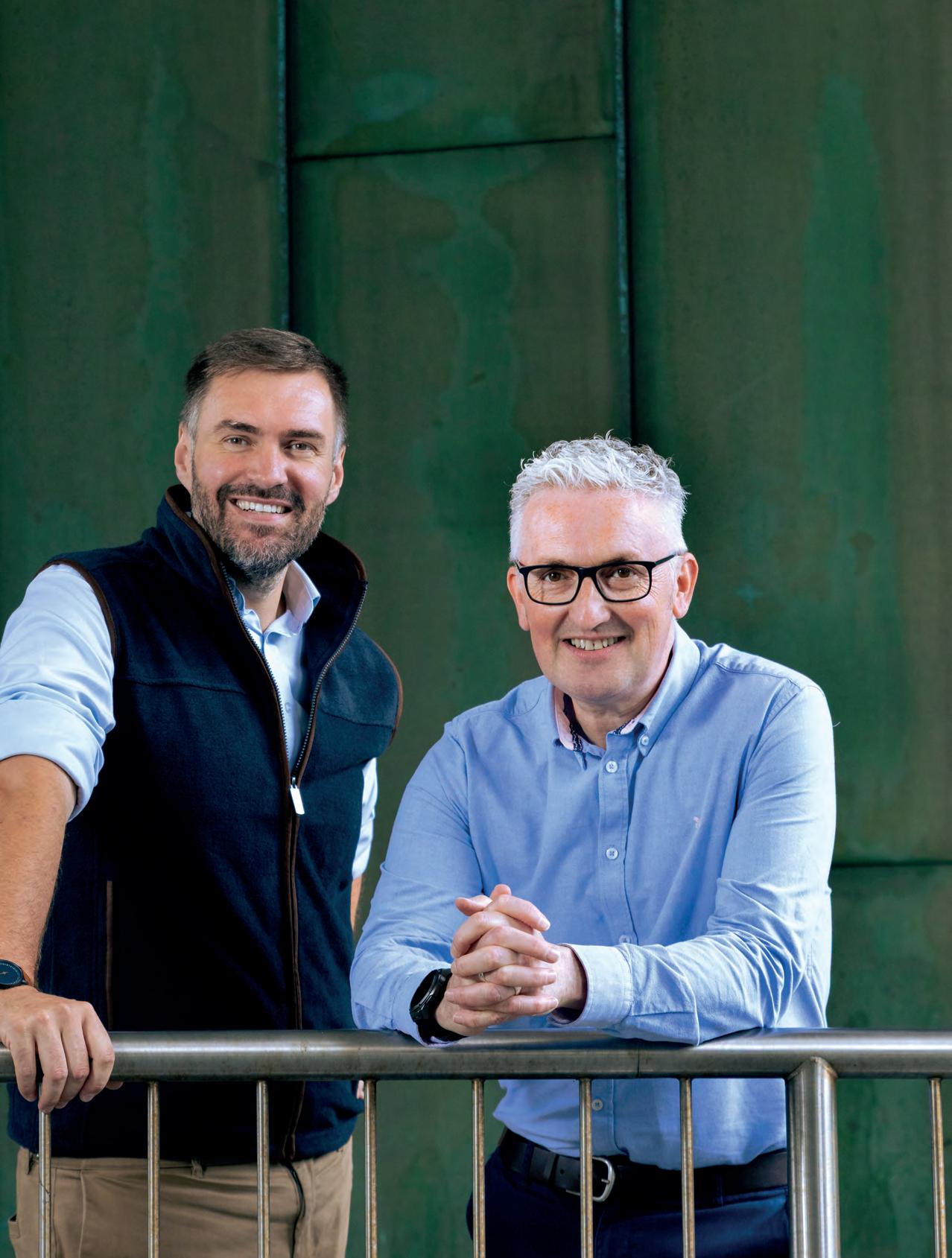
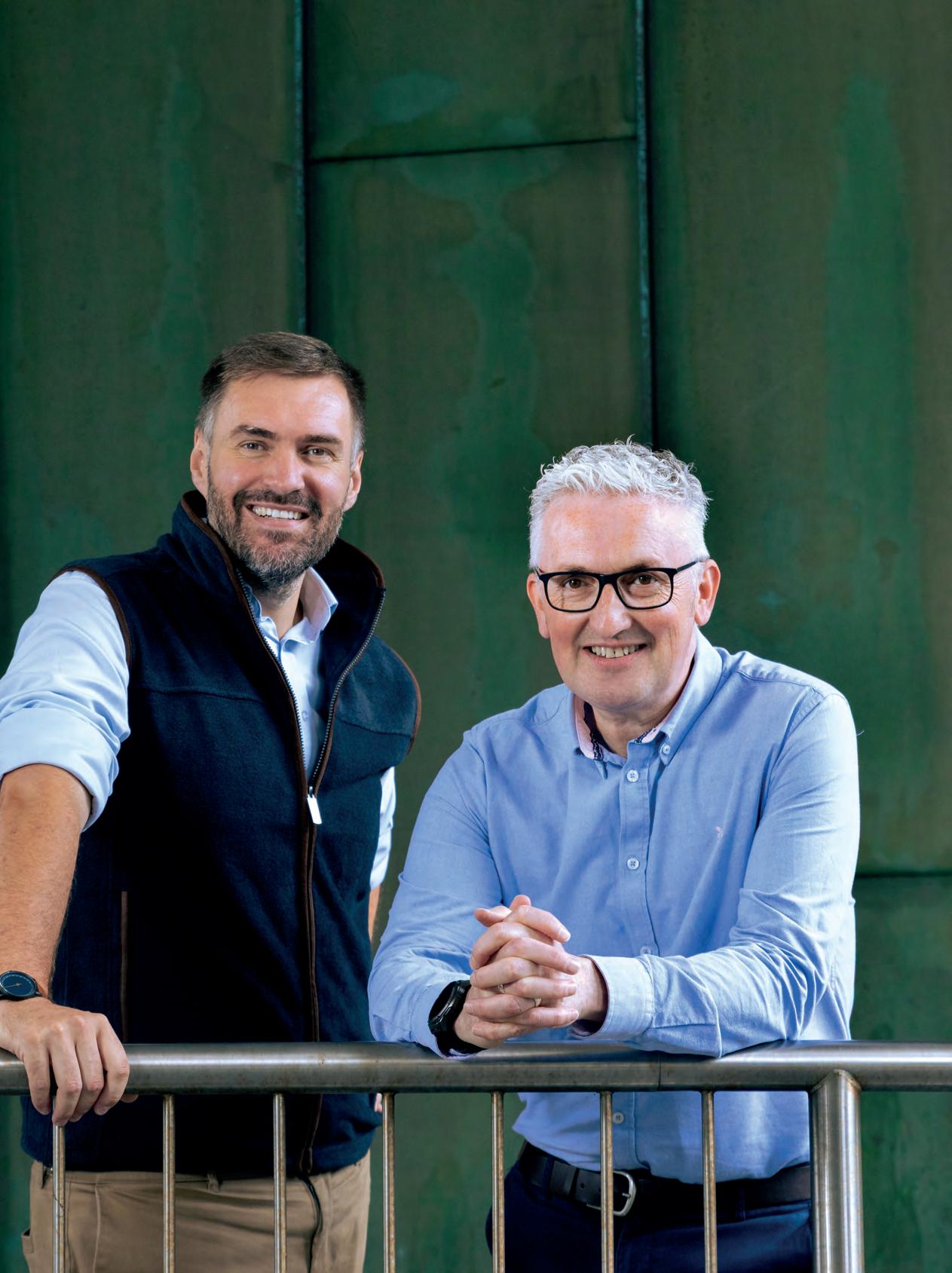
really effectively with the executive team,” he adds. “And that’s what I’ve always tried to do. I’ve always tried to be a very present chair in terms of engaging with them and understanding of it.”
Importantly, “one of the really positive aspects of the last four years has been the development of the executive team”.
In terms of achievements, Whittaker points to “the growing diversity of the membership we’ve been able to represent. It’s truly significant. We’ve had board members with such a range of different backgrounds and knowledge and it’s been really encouraging to see that flourish in the last four years. I know that will progress more with Andrew, for sure”.
And Whittaker is particularly proud of introducing the recommendations of the Communities Review, a process he inherited from his own chair predecessor, Martin Bell. The review focused on how IWFM’s many groups interact with each other and report their work, and how each group interacts with IWFM’s executive. This was a process of ensuring a culture of collaboration between volunteers and formalising it through the institute’s governance procedures. An outside agency, The Modern Professional Body, had been brought in to help support this work when Mark took office in 2021.

It’s difficult to imagine a repeat of the internal and external forces that affected Mark Whittaker’s term of office. Arriving in post during the Covid-19 pandemic, his inbox went on to span the growth of new IWFM networks, the forging of new relationships with government, and IWFM’s 30-year milestone. Indeed, the variety of institute activity overseen by Whittaker during his chairmanship is only matched by the drama of the world events that played out alongside it.
2021-2022
● The immediate postpandemic period sees IWFM continuing to introduce new communication formats.
● Further evolution of the professional standards framework is undertaken.
● A public statement outlines IWFM’s policy, ambition and commitment to improving EDI practices within the institute, its membership, and across the WFM profession.
● Vladimir Putin invades Ukraine.
2022-2023
● IWFM works more closely with the government to help it deliver its first ever FM strategy.
● Recommendations from IWFM’s Communities Review, with its aim to ensure members are included in and contribute towards the institute’s strategy, decision- making and future direction, are implemented.
● IWFM seeks to reimagine how it should operate strategically, ethically and commercially in a post-pandemic world.
● Inflation becomes a significant brake on economic growth.
● HRH Queen Elizabeth II dies.
2023-2024
● Investment priorities of IWFM members’ organisations, particularly in relation to sustainability projects, becomes a key focus.
● The report ‘30 years back; 3 trends for the future’, tracking the profession’s progress and the trends that will affect workplaces for years to come, is published.
● Further external partnerships are developed, including one for a Scope 3 emissions framework to move the profession ‘closer to the heart of the built environment’s
decarbonisation pathway’.
● Coronation of King Charles III.
2024-2025
● IWFM furthers involvement with government departments.
● EDI priorities are embedded into institute activity.
● Launch of IWFM’s Veterans in FM Network to support service veterans into careers in the sector.
● Experiential Route to CIWFM launches to broaden access to certified status by recognising the skills gained through practical experience.
● Launch of IWFM for Organisations to develop more strategic relationships with businesses.
● IWFM posts a return to profitability for the first time in seven years.
● Donald Trump returns to the White House.

“His commercial acumen is brilliant, as is his insight and his energy. He’ll absolutely take people on the journey with him, which, throughout his career, is what his leadership has been all about.”
“From the very start of the chair role and taking on Martin’s [Bell] role within the communities review, it was really important to take those recommendations forward and implement them, and the chair role was a key part of that,” Whittaker explains. “The dual importance of fresh thinking and accountability are key factors.”
Pretiumque et Causa Laboris
“My tenure saw a host of changes, starting with our emergence from the pandemic to the election of a new government,” reflects Whittaker. “In that time we’ve undergone many changes. I strongly believe the institute is now well equipped to seize the opportunities ahead and deliver the most value for our profession.”
Of his successor, he says: “I offer my warm regards and wishes to Andrew. I look forward to seeing the institute’s progress in the time to come.
The prize for which this work is being undertaken? The development of a modern, fleet-of-foot membership organisation responsive to all aspects of its evolving membership and its operating environment. And the cause that this prize supports? The more routine recognition within and without the sector of what WFM is and does through the IWFM’s hard work. ‘The prize and the cause of our labour’, or “Pretiumque et Causa Laboris’, as Whittaker’s favourite football club motto has it.
IWFM’s new chair believes the institute to be at a pivotal moment in its history, pointing to its recent posting of a financial surplus, the first in seven years, as a benchmark event.
Calling his becoming chair ‘one of my greatest honours’, Hulbert’s aims are for IWFM to become more commercially successful, forward-thinking, and inclusive.
“Our industry continues to evolve within an everchanging macro environment” said Hulbert in a manifesto pitch for the role of chair. “To advance as a profession, we need leadership that understands both the commercial realities of FM and the opportunities for modernisation as a professional body.”
His aims are segmented into four areas of development: a commercially sustainable IWFM fit for the future; an engaged membership community; the delivery of a tangible inclusion strategy; and a content creation strategy to engage members and volunteers.
Becoming chair has happened at a good time for Hulbert, who is currently only engaged in commercial activities for one day a week, meaning he assumes the IWFM chair with plenty of time to dedicate to the role.
Regular readers are likely aware of Hulbert’s pedigree. His career in the sector may well be a mere 18 years in length – beginning aged 21 in 2007 with an internship at Rollright Facilities Ltd – but it has been nothing if not eventful since.
An all-too-rare example back in 2007 of an individual choosing a career in FM straight out of education, he was promoted to director level aged 24, Hulbert was one of this magazine’s 2012 cohort of industry ‘rising stars’. He then left to set up his own service provider, with the concept of Pareto FM being to disrupt the market through a focus on team members, customer service, modern technologies, and social value. The strategy succeeded, with Pareto becoming one of the fastest developing FM service firms of the 2010s. By 2022 Pareto was turning over around £30 million on a staff of more than 200. And having acquired private equity backing, it was then sold by its private equity backer, NVM Private Equity, in late 2023.
What’s important is that during this surely all-encompassing period of commercial
development, Hulbert became ever more deeply involved in his volunteering within IWFM. And in doing so, he has developed his own strong ideas about what needs to be done for IWFM to meet its strategy goals.
“I volunteered for genuine reasons at the beginning so I could start to build my network and understand the sector a bit more,” he explains. “And selfishly, I did it because I wanted better job opportunities in the future. I felt that the more people I knew, the better position I would be in when I applied to join the board. And it’s not a given. I’d say this to any person who wants to become a nonexec: it took me three times to get onto the board.”
Hulbert felt “a real sense of achievement” when he was first appointed to the IWFM board, and it was Martin Bell who took me to one side and said, I’d love you to be a deputy chair in the future – let’s start the conversation”.
“Joining as a non-exec director wasn’t in my plans, but I was absolutely delighted and thrilled to be on the board. And what I saw was a board that was really trying to make a difference. Within IWFM people really care at board level and the non-execs are there to add great strategy and colour and growth to what’s happening within that space.
“I enjoyed IWFM board meetings and what the leadership was trying to do,” he says. “I could see there were challenges that we needed to overcome. For example, achieving a surplus this year has been a challenge from the very beginning when I joined the board, and if you speak to any of the exec they’ll tell you that a commercial focus is something I’ve always had. I started to see the improvement and opportunity.”
Back in (the) black
How does the new man expect his chairmanship differ? “Good question. Firstly, I’ve learned a lot from my predecessors, and I will take a lot from how they approached things. Secondly, I’m probably a bit more rough around the edges, but I understand what it takes to genuinely deliver and how hard it can be as an operator within the sector from the service provider side.
“So for me, I want to be in amongst it. I want to listen to what people have to say, good and bad. I want to speak to members and volunteers, and I want to hear the challenges and the opportunities they think are available.
“It’s partly because I’m a man of the people, as they say, that I want to have a chat; and I want to listen. That’s probably the main thing for me. I’ve said in my manifesto that I want to run a selection of round tables. I want to speak to young people, to older people, to people from the marginalised communities we have within FM.
“The other thing for me, which probably comes as no surprise, is that I have a fierce
commercial focus. It’s no accident that we’ve returned to surplus in our latest annual report.”
As for members young and old, Hulbert is keen to encourage the provision of a more immersive IWFM experience for members and volunteers alike. (Mark Whittaker says of this aim: “I think the content strategy side of things will be really interesting. We’ve got to explore new ways that we communicate.”)
Hulbert wants to strengthen the role of non-executive directors and to focus on the measurable value that each board member brings; and he wants this year’s posting of a surplus to be a regular occurrence from hereon.
“There is still a lot further for us to go. What I’ve seen in my 10 years or so, especially around standards of training and the standards of what it means to be a facilities manager – even scoping what a facilities or workplace manager actually means – is that we’ve done a lot but have a lot more to do.
“The whole definition of IWFM Level 2 through to Level 7 has completely transformed what it means to
ANDREW ON MARK
“We’ve had a great relationship in our careers. As chair and deputy, I was the pitbull with the commercials, Mark was the strategic one driving it. I’ve loved supporting him.”

2011 TO 2025
2011-2015 – Volunteers on IWFM’s Rising FMs Committee. 2015-2017 – Sits on IWFM’s Governance Committee.
2015-2020 – Volunteers as the IWFM Impact Awards Lead Judge.
2019 – Achieves Fellow status, the youngest in IWFM history.
2020 – Becomes IWFM Awards Mentor.
2020 – Becomes IWFM non-executive director.
2020 – Begins three years as IWFM deputy chair.
2022 – Winner of IWFM Outstanding Contribution to FM Award.
2023 – Board representative on IWFM’s EDI Committee.
2023 – Participant in IWFM’s Fellow Mentoring Scheme.
be a professional within the sector. And IWFM has been the one at the forefront of that. But we know there are continuing challenges with coming into the sector from education and we know there are opportunities with apprentices coming in, which is such a special route. The qualifications and training
and development of what it means to be a facilities manager, helping to map a career development journey for people, is hugely important.”
The new chair is particularly aware of both the opportunity and threat of the ongoing digital revolution, in terms of its impact on IWFM membership service and on the wider role of WFM professionals.
“How do we harness the data we have within buildings and the wider built environment?,” Hulbert asks. “The service providers and the sustainability aspects and the utilities and everything that comes the FM sector is just so blessed with so much data.
“With the continued digitalisation of all this information, it’s up to us to provide support to WFM professionals about how they can harness that, whether that’s in-house people trying to support their own organisations, or outsourced providers providing service.
“What I’m delighted to hear from our CEO Linda is that the ways in which AI can be deployed is being discussed so freely. I’m really looking to embrace how we can implement AI in ways that will genuinely affect real outcomes.”
Already involved in IWFM’s EDI focus group, the institute’s new chair believes IWFM can “lead the way in modern EDI and ESG initiatives”.
Hulbert’s intention is to secure formal recognition for the EDI Committee within the IWFM’s terms of reference via the Constitution and Ethics Committee; to strengthen the board’s commitment to EDI and ESG by ensuring diversity and deliverability remain at the forefront of the institute’s actions, and to create a ‘clear pathway for diverse leadership’ in future IWFM chair candidates.
Ultimately, in Hulbert IWFM has a talismanic presence and a man with a track record of success to back up his ambitions.
“As a sector, whether people believe we’re strategic or not, we abs olutely are strategically important, not just to organisations, but also to UK PLC because we’re in control of so much of the activity on the sustainability agenda that’s actually happening.
“Facilities management has defined my career,” said Andrew in his pitch for the role, “and my passion for the profession is unparalleled.
“FM transforms organisations, enhances workplaces, promotes EDI, and creates opportunities for people from all backgrounds. I want to use my experience to shape IWFM’s future and leave a lasting legacy.”
















By 2050, the UK must achieve net zero emissions.
Yet as the old chestnut goes, 80% of the buildings that will still be standing then are already built today.
Logically, FMs should be at the coalface of retrofit decisions, balancing regulations, budgets, and occupant expectations.
But with many businesses preferring to control the carbon accounting narrative with in-house tools, questions arise about whether FMs are being empowered to make meaningful change - something IWFM’s own sustainability survey reports continue to address.
Tom Garrigan, executive director at BSRIA, is clear-eyed about what’s required: “Data-led assessment strategies that consider the requirements of every building to inform the decision-making process.”

Garrigan argues that robust decarbonisation starts not with technology but a deep, evidence-based understanding of how buildings actually perform.
Before retrofit works can be planned, physical measurements need combining with occupant experience data to create a true picture of performance.
Key non-invasive techniques include:
● Thermal imaging;
● Airtightness testing;
● Acoustic analysis; and
● Post-occupancy evaluation.
Analysed together, the information from these processes will give an holistic view of where buildings are wasting energy and which particular interventions will have the most impact.
“Assessments should also include input from people who use the building,” adds Garrigan.
Occupant surveys can reveal comfort issues, behavioural



patterns, or operational constraints invisible to the instruments.
● Pinpoints inefficiencies;
● Targets retrofit investment;
● Reduces disruption from unnecessary works; and
● Ensures upgrades match actual building use.
A case in point: BSRIA House Garrigan and his team used the data-first approach at their own headquarters. Using rapid fabric assessments, they established a baseline performance profile and identified high-impact retrofit opportunities, achieving:
● 35% reduction in building airtightness;
● 28% reduction in Scope 1 and 2 emissions; and
● 14% increase in occupant satisfaction.
“Targeted retrofit, based on measurement, assessment and evidence, is more cost-effective”
Regulation: stick or catalyst?
The policy environment is also forcing the issue. The Building Safety Act, the Future Homes and Buildings Standards, and changes to Energy Performance Certificates are raising the bar on compliance.
Garrigan says: “Performance-based decision-making not only helps to future-proof buildings, it provides robust documentation that ensures compliance, consequently reducing future risk and liability issues.”
But compliance is not enough. Garrigan urges a fabric-first approach. Improving insulation, addressing thermal bridging, and sealing leaks minimise energy demand at source. Only then can renewable technologies operate efficiently.
Garrigan also warns against treating retrofit as a single event. “Performance must be managed continuously.”
Cloud-based monitoring systems allow real-time tracking of energy use, comfort levels, and trends, enabling FMs to make fast, data-driven adjustments. This provides ongoing verification of retrofit outcomes and reassurance to investors, regulators and occupants that sustainability promises are being delivered.
While FMs are urged to lead on performance, the way organisations report emissions tells a different story.
A study led by Professor François-Régis Puyou of Emlyon Business School reveals that many businesses prefer to invent and use their own metrics for logging emissions. These in-house tools often focus on avoided emissions rather than the harder task of tackling absolute emissions.
The research, based on 23 interviews and 28 days of observation at one company, found that internal accounting methods can be deployed to present a favourable narrative – even at the expense of transparency.
As the report notes: “Managers may use carbon accounting to reframe impact rather than confront realities,
risking that sustainability reporting legitimises business as usual, and no real efforts to act on cutting emissions.”
Sunil Shah, managing director, Acclaro Advisory said that while in-house reporting tools and approaches are commonplace, “much of the time it is for internal purposes and can be seen through regulatory reports such as the Streamlined Energy and Carbon Reporting (SECR) and tender requirements such as Carbon Reduction Plans (CRP) where partial information has been used.
“The majority of these instances are due to a lack of knowledge around recognised standards such as the GHG Protocol. However, we are increasingly seeing organisations using in-house approaches to demonstrate carbon reductions, carbon neutral status or significant benefits through tender reporting like CRP.
“Unfortunately, this will happen where it leads to benefits – a simple response is to require assurance against a recognised standard to justify claims.”
● Encourages greenwashing;
● Makes it impossible to compare companies fairly;
● Misleads investors, regulators, and the public; and
● Delays transition to a low-carbon economy.
FMs caught in the middle
Studies show that FMs often feel they lack influence over their organisations’ carbon reduction strategies, particularly
● Start with independent, data-led building assessments.
● Engage occupants early to capture user experience.
● Prioritise a fabric-first
when sustainability reporting is controlled at board level. This can undermine the practical, evidence-based improvements FMs are trying to deliver on the ground.
Meanwhile, corporate reporting requirements are expanding. Companies of all sizes are now expected to disclose:
● Energy consumption and carbon footprint;
● Waste and water management;
● Biodiversity impact;
● Employee relations, diversity, and community engagement; and
● Governance structures and risk controls linked to sustainability.
But if emissions accounting is skewed toward maintaining appearances rather than enabling comparison and real progress, the credibility of the whole system is at risk.
Garrigan sees FMs’ role as crucial because they deal with the realities of how buildings perform. Independent testing, impartial verification, and continuous monitoring are the antidote to vague, in-house accounting methods.
“Our research shows construction professionals relying on independent testing, rather than self-certification, report higher confidence in their outcomes,” Garrigan notes.
In fact, 46% of architects and 44% of engineers who used physical measurements reported greater trust in their results.
Garrigan says organisations must enable FMs to manage performance transparently to align corporate sustainability reporting with real-world impact.
FMs are uniquely placed to bring together technical evidence, regulatory compliance, and human experience. Their challenge is not just to manage buildings, but to champion performance accountability at a time when sustainability narratives risk drifting from reality.
If businesses want to meet net zero, they must close the credibility gap in carbon reporting. FMs, equipped with datadriven tools and empowered with greater influence, may be the ones to close it.
retrofit strategy before layering in technology.
● Use continuous monitoring to ensure long-term accountability.
● Push for independent
verification over in-house self-certification.
● Challenge corporate reporting structures that prioritise appearances over action.



We offer integrated, multi-discipline solutions through a single point of contact. Our customers increasingly value simplicity, efficiency and joined-up service – and that is exactly what we deliver.
Whether it is electrical compliance, rope access maintenance, fire systems or water hygiene, we take care of it all – in-house, under one roof and with absolute accountability.
If you need a partner who can handle your entire specialist services requirements, talk to PTSG.
Contact us today for a free, no obligation chat about how we can help you to keep your buildings safe and compliant.


As the ocean’s fastest swimmer, the sailfish embodies speed, agility, and precision - qualities we harness to ensure our equipment reaches you exactly when and where you need it.
With over 200 depots offering rapid delivery and specialist solutions tailored to your projects, we’re the team behind your team, ensuring a smooth and efficient service.
Whether it’s a last-minute request or a complex challenge, just like the sailfish, we deliver with unmatched efficiency and accuracy.

Delivering equipment rental solutions for facilities of all types and sizes. Leave the how to us
42-43
Perspectives by Gordon Mitchell, Hazel Bedson, Mark Griffiths and Wayne Collins
Hey, you, yeah, you – attention, please. Ever heard about attentional ecology?
It’s beginning to circulate in research, psychology, and design fields as a way of understanding how people allocate their attention – not just internally, but in relationship to the environment around them.
Our minds don’t work alone; they’re shaped by physical, sensory, and even temporal surroundings. And who controls all of that in the workplace? It’s you, dear reader. No pressure.
44
Louisa Clarke on the purpose and activities of IWFM’s Veterans in FM Network
As defined by researchers such as Julian Kiverstein and Erik Rietveld in their 2023 paper on embodied cognition, attentional ecology is about how attention is “distributed across a field of affordances” in an environment.
Less academically, your space gives people clues about what to focus on, what to ignore, and when to shift.
Or as workplace-focused journal Work Design Magazine puts it: “Attentional ecology asks us to look at the office

If attention is the currency of modern work, then WFMs need to make sure there are spaces where it can be saved and spent
45
Details of IWFM Academy’s new Level 6 strategic leadership programme
as a living landscape of mental demand and cognitive friction.” Every ping, flickering light, or meeting-zonescreaming-across-from-focusarea is part of that ecology.
Why does it matter?
Cognitive overload is a workplace epidemic, and your facilities – layouts, lighting, acoustic choices – are either curing it or contributing to it.
A 2024 Harvard Business Review piece cites how the average knowledge worker switches tasks every three minutes, and only resumes full focus 23 minutes later. Add poor acoustics and lighting, and visual noise, and you’re creating attention deserts where good work goes to die.
OK, what should I do?
Think of your workplace like a garden. Some areas need to be buzzing (collaboration zones are the pollinators), others need shade (deep work booths), and others need to lie fallow (decompression zones, recovery lounges).
The goal is to design for a full range of attention states: focused, diffuse, reflective, collaborative, and restorative.
Attention restoration theory, coined by Rachel and Stephen Kaplan, shows that exposure to natural stimuli – “soft fascination” – can replenish directed attention. Cue biophilic design, daylight optimisation, and materials that create subtle sensory engagement.
46-47
David Sanderson and Lewis Cannell offer insights into their WFM roles
Want another lever?
Cognitive contrast. That means alternating environmental conditions, such as moving from a quiet, low-lit pod into a sunlit common area to reset the brain. This feels good and supports task-switching and cognitive freshness.
Attentional ecology is particularly important for neurodivergent thinkers, but everyone benefits from better spatial signalling, reduced noise fatigue, and the ability to recover attention throughout the day.
A 2023 paper in the journal Sustainability (published by MDPI) argues that workplaces designed with attentional ecology in mind see higher productivity, lower error rates, and even reduced absenteeism.
Attention is not a resource – it’s a relationship that needs to be shaped, nudged, depleted or replenished by space. You’re curating attentional habitats.
So next time you’re planning a refurbishment, a new wayfinding system, or even where the coffee machine goes, ask yourself: Does this support sustained focus? Does this help someone shift gears cognitively? Or is this just more input in an already overloaded ecosystem? Attentional ecology could help you think and act more meaningfully about how people actually work best. So maybe it’s time to cultivate your attentional garden.

We’ve never had more access to real-time data in FM. Sensors are everywhere – measuring occupancy, air quality, temperature, energy use, and movement. Despite this, many organisations struggle to turn that data into value. Why?
Too often, investment in sensors is driven by the promise of technology rather than a clear operational question.
I’ve seen cases where sensors are deployed as part of a digital transformation plan or ESG strategy, but the ‘why’ gets lost. What decision is the data meant to inform? Who’s accountable for acting on it? If you can’t answer those questions, you’re already behind.
Then there’s the issue of organisational followthrough. Installing sensors is the easy part. Integrating their outputs into operational workflows – that’s where the hard yards begin.
Facilities teams are often left with dashboards full of coloured dots, but no time, mandate or context to interpret them. That disconnect between technology procurement and operational delivery is where most value leaks out.
There’s also a deeper challenge around digital maturity. Sensor tech promises intelligence,
but intelligence isn’t just about data – it’s about judgement, clarity, context and consequence. Without governance, data stewardship and engagement across teams and functions, sensors risk becoming silent witnesses to inefficiency rather than tools of change. And yet, I don’t believe sensor investment is flawed; it’s more about doing it at the right point in a bigger transformation strategy, one where you get the sensors when you are ready and able to use them.
That disconnect between technology procurement and operational delivery is where value leaks out
Sensors as a vital part of modern FM. But we must understand why these tools aren’t always delivering. It’s not a failure of the sensors or the value they can drive. It might be more based on the broader systems and behaviours we’ve built around them.
Mitchell is also co-founder of software and service business Wholus

The potential for sensors, data capture and automation remains sizeable. Even when assets come equipped with builtin sensors, they are not always fully maximised.
Whilst integrations such as BMS and CAFM software are relatively commonplace, in many cases, FMs still lean into PPMs (planned preventative maintenance) rather than DDMs (data-driven, or predictive maintenance).
A DDM strategy can drive substantial savings and more reliable building services. Predicting issues and resolving them before deterioration is central to sustainability commitments, which is rocketing up the agenda for FM.
But the industry’s ‘wait and see’ period is coming to an end, as case studies are becoming more available, demonstrating the cost and energy savings from sensor use.
Maximisation of sensor investment often hinges upon the initial investment
of time, which tends to be more scarce than budget. FMs are less inclined to part with time for sensors when their sites are generally running well. But they are seeing use cases and how their teams can save time in the long run.
As a technology vendor, when it comes to pioneers who are investing in standalone sensors, for example, monitoring occupation or environmental conditions, they tend to reap dividends because of the planning that’s gone on before they approached us.
A business case has been created to show the end goal, what the expected benefit is, and what data they need to achieve it. We’ll work with them to expand the project – we recommend starting small, reviewing results and adding more sensors or functionality in stages until the objective has been achieved.
This phased approach is less daunting than tackling a building full of assets all in one go – and we have seen proven successes in very different sectors.
FMs are less inclined to part with time for sensors when their sites are generally running well

There’s a clear logic behind the rush to embrace smart sensors: data means better decisions, which should mean better outcomes.
But from my experience in FM, the promise of sensor investment is often left unfulfilled – not for lack of ambition or innovation, but due to a more nuanced reality.
Data overload is a real barrier. Organisations underestimate the sheer scale of interpreting and acting upon the stream of information that sensors provide.
Simply deploying sensors is only step one; unless teams are resourced with the expertise and time to extract actionable insights from the data, sensor outputs risk becoming digital ‘wallpaper’ –present, but unheeded.
Then there’s a tendency to focus on the technology, not the end user. Too often, sensors are installed as a box-ticking exercise, prompted by soundbites about the digital workplace, but without an aligned vision of what ‘good’ looks like or how the insights gathered will genuinely change operations or occupant experience.
When FM teams aren’t fully engaged in the planning – or if objectives are ambiguous – potential value is diluted.
Many workspaces juggle older BMS, reactive processes, and fragmented systems. Layering sensors on top without process change rarely delivers the efficiency leap.
Culture can be an Achilles’ heel. Without buy-in from leadership to frontline teams, the insights sensors unlock may be ignored. A lack of communication around purpose and benefits can entrench cynicism when the focus needs to be on collaboration.
Sensor investment that isn’t maximised is rarely due to technology alone. It’s about context: clarity of objectives, operational resourcing, integration, and culture. Getting value from sensors is as much about people and process as technology. Only then will the investment truly deliver on its potential.
When FM teams aren’t fully engaged in planning –or if objectives are ambiguous – value is diluted
HOLISTIC HEADS NEED TO PREVAIL
Sensor tech should be transforming FM – but it’s not. Despite widespread adoption and investment, too many sensor deployments underperform or become liabilities because many organisations still fail to take a holistic approach. We don’t have a technology problem; we have an execution problem. Sensors are often installed without a clear plan, without integration into broader systems, and without the strategic intent required to extract real value – undermining everything sensors are meant to achieve.
Inaccuracy is a persistent issue – stemming from poor calibration, lowquality components, or a lack of certification. Faulty data leads to faulty decisions. What’s the point of monitoring CO2 levels or occupancy if the readings are misleading? Sensor placement is just as critical, and just as frequently mishandled. Real-world factors such as airflow, heat sources, or room usage patterns are ignored, and the result is unreliable data.
Battery life is another factor that can erode your ROI. Sensors marketed with five to 10-year batteries often fail prematurely, and not because they were

oversold, but because they’re misconfigured. Excessive polling rates, for instance, drain batteries fast, adding maintenance overheads and breaking continuity in the data stream.
Even when sensors are properly installed, organisations face another challenge: data without context or actionability. Those lacking resources to perform data analysis may fail to realise the full benefits of their investment.
We don’t have a tech problem; we have an execution problem. Sensors are often installed without a plan
Successful sensor use requires a holistic approach – combining reliable hardware, intelligent design, effective data strategy, and human expertise. Without these, even the most advanced sensors can fail to deliver.
Our ambition is for people no longer to fall into WFM, but to choose the profession deliberately for its many opportunities, says Louisa Clarke
What inspires you about the Veterans in FM Network?
It’s seeing service leavers choose FM, entering the profession with purpose and a clear understanding of where they fit. That shift from “falling into” FM to actively pursuing it is powerful. And it’s working. Our network is growing, driven by people who now see FM as a sector where their skills are needed, recognised and valued.
What are the big industry/ professional issues the Veterans in FM Network aims to solve?
It’s the translation gap. Veterans often don’t know how to ‘speak FM’ and employers don’t always understand military experience. Leadership, resilience, technical expertise, teamwork – veterans bring all of
it. But if a CV doesn’t match FM terminology, brilliant candidates get overlooked. We’re bridging that gap, helping veterans to understand the language of the sector, and helping hiring managers to see the real value behind the uniform.
How is the work being done changing the professional field?
the first time ever – a service-related award category.

More organisations are signing the Armed Forces Covenant and working through the Defence Employer Recognition Scheme, including IWFM. This year alone, we’ve raised funds for Walking with the Wounded, spoken at major industry events, and held standout networking sessions, London Zoo included.
LOUISA CLARKE is chair of IWFM Veterans in FM Network
We’re raising both the profile of FM as a profession and of veterans as an untapped talent pool. From keynote slots, whitepapers and media features to charity events and workshops, we’re loud and proud about what veterans bring.
IWFM has backed us too, with discounted membership and – for
Two years ago, the IWFM Veterans in FM Network didn’t exist, but today, it’s a thriving, growing force, raising the bar for how we attract, support, and retain veterans
In what ways has the Veterans in FM Network evolved since its inception? It’s contagious. We’re seeing more collaboration, more cross-sector support, and more organisations asking to get involved. The committee is made up of a brilliant mix of people from across FM, hard and soft services, consultancy and recruitment.
We’re not just running our own events; we’re supporting others and showing up where it counts. We’re sharing resources, mentoring people and connecting with others.
I want to give a huge thanks to our incredible committee of volunteers who make this possible. We’ve grown from an idea to a national movement in just two years – and we’re only getting started.
Clarke is also director at The Human-Centric Workplace and One Feather Coaching and Consulting.
What? IWFM Impact Awards 2025
When? 9 October 2024, 6. 30pm-midnight
Where? JW Marriott Grosvenor
House London
Who? Entries come from a cross-section of organisations – regardless of size, type and
sector – from across the world. Being a finalist or winner is a true achievement and testament to the great work carried out by the individual, team, project, collaboration or organisation. Why? It’s the industry’s most prestigious event. Each year, our
panel of judges are inspired by the many people and projects that make this profession so powerful. Every entry showcases outstanding best practices and ingenuity to overcome significant challenges facing global economies and communities.
Sustainability, social value, wellbeing and productivity are just a few examples of WFMs’ areas of influence, which underline both its importance and impact on business, the economy and society.
Scan the QR code for a full list of IWFM events.

A new strategic leadership programme is set to change the way workplace and facilities management is perceived
IWFM Academy has launched a new Level 6 strategic leadership programme aimed at aspiring WFM leaders looking to transform how they lead – whether it’s driving a team or influencing outcomes as an individual contributor.
The unique programme is designed to develop the strategic thinking needed to raise the profile of workplace and facilities management. It will equip learners to move the profession beyond dayto-day operations, positioning it as a trusted, value-driving partner at the heart of business strategy.
Through independent study, guided activities and tutor-led workshops, the programme addresses a wide range of disciplines. It will guide learners through the evolving role of technology to sustainability and human-centric design in the built environment.
Leaders who complete the programme will be ready to drive cultural change, inspire teams, influence stakeholders and build a workplace culture that boosts performance and wellbeing.
On successful completion, learners will hold a Level 6 qualification, equivalent to degree level.
The first intake is recruiting now, limited to 15 people who will begin the programme in January 2026.
IWFM’s head of academy Emma Bellingham said: “For too long, we’ve seen that the role of workplace and facilities leaders has been under-recognised, with departments perceived as a cost centre rather than as a vital business pillar. We know that WFM delivers huge value to an organisation and its people, which is why we’ve created a programme to equip WFM leaders with the strategic skills to transform the way our profession is perceived.”
Anyone interested in joining the first intake will need to act quickly – full information and booking at iwfm.org.uk/ leadershipprogramme
Scan the QR code for a full list of IWFM Academy courses.
The unique programme is designed to develop the strategic thinking needed to raise the profile of workplace and facilities management
KEY DATES
17-18 SEPTEMBER –BIRMINGHAM
RWM Resource & Waste Management Expo
Engage in discussions on critical waste and resource management, discover innovative green technologies, and discover solutions to the sector’s pressing challenges in line with principles of the circular economy.
b.link/FacilitateB25-009
30 SEPTEMBER1 OCTOBER – LONDON International Security Expo
Top global security manufacturers and suppliers showcase innovative solutions to help you solve security challenges, while keynote speakers share keen insights into security.
b.link/FacilitateA25-006
7-8 OCTOBER – LONDON
Facilities & Estates Management Live
Content theatres, exhibitors and seminars covering range of topics including ESG, real estate challenges in managing a hybrid workforce and the impact of AI and data technologies on how FM services are managed.
b.link/FacilitateD25-015
14-15 OCTOBER –MANCHESTER
Education Estates
Two day event that offers FMs a chance to join in the national conversation around the future of the UK’s education estate.
b.link/FacilitateB25-021
15-16 OCTOBER – LONDON
Smart Buildings Show
The latest technology in the smart buildings industry to help visitors best decide on how to make their buildings more
economical for owners and more functional for occupiers.
b.link/FacilitateB25-005
16 OCTOBER – LONDON
Future of Work
Innovation Conference
Learn about culture building, change management, the digital workplace, reinvented business models and processes, employee experience and engagement to get your teams fit and ready for the future of work.
b.link/FacilitateC25-005
21-22 OCTOBER –MANCHESTER
Healthcare Estates
Enjoy a comprehensive speaker programme on topics such as startegic planning, governance, compliance and digital innovation, along with a full list of exhibitors and opportunities to network with peers, suppliers and potential clients.
b.link/FacilitateD25-014
23 OCTOBER – LONDON
FM Technology Forum
Specifically organised for senior professionals who are directly responsible for their organisation’s tech requirements, as well as for those who provide the latest products and services within the sector.
b.link/FacilitateA25-005
12 NOVEMBER – LONDON
FM Comedy Night
Enjoy a night of stand-up comedy for a good cause at Leicester Square’s Comedy Store, where 400+ people from the FM industry are entertained by professional comedians with proceeds going to Trailblazers Mentoring, a charity supporting offenders between the ages of 18- 33 to secure employment after prison.
b.link/FacilitateD25-017

What do you do? As an NHS director of estates and facilities, I lead teams providing estates, property and FM services including medical engineering, sterile services and sustainability.
What attracted you to FM, and how did you get into the industry? I fell into it, really. My background is in electrical engineering. In my very early twenties, I was running projects with 100 staff, and found I had an ability to organise, influence and motivate people, and a thirst to learn more, and from that opportunities arose to get involved in different areas of FM.
DAVID SANDERSON is the director of estates at East Lancashire Hospitals



Which “FM/workplace myth” would you most like to put an end to? That FM is a reactive support service; FM has a significant impact on the culture of an organisation when seen as a strategic partner.
How long have you been in your current role? Three years at my current trust, but 15 years within the NHS.
Do you see yourself predominantly as a task or a people manager? In my role in the NHS, you need to be a people manager as the team is key to our success, as every interaction influences our customer (patient) experience, but I also always have an eye on tasks and, importantly, their outcomes.
Would you describe your role as predominantly operational or strategic? This varies from day to day, but I would say 80% strategic, 20% operational as a rule.
environment and how we deliver our services (often friends and family).
What has been your biggest career challenge to date?

The setting up of FM teams, from staffing and training to procedures for two new head office buildings from scratch and moving around 1,000 people into the buildings.
If you could change one thing about the industry, what would it be? Promote the professionalism that we bring to organisations and the strategic impact we can have when involved
What single piece of advice would you give to a young facilities/ workplace manager starting out? Whatever level you are at, take every opportunity to learn something new, shadow others, ask questions, undertake continued professional development, get a mentor… just keep learning.
What was the weirdest day you’ve had in the office? The day the Covid-19 lockdowns started, we were ramping up operations in healthcare, from driving to work on empty roads to trying to get supplies and trying to plan for the unknown.
Early bird or night owl? Early bird, I like to be in the office or online before 6am, using this time to tackle difficult tasks.
What FM job in the world would you love more than anything? It would have to be at BlackpoolFC – my passion outside work.
How many people are there in your FM team, and to whom does the FM team ultimately report? My team is around 700 people, plus our dedicated team of specialist contractors looking after several geographically-spread hospitals and community sites. We ultimately report to the chief operating officer.
My top perk at work is… The staff restaurant – the food is fantastic! Plus working with a group of people who are dedicated to making a difference to our patients through the
Any interesting tales to tell? I once had to deal with an incident where people turned up at an emergency department covered in a white substance, which meant a lockdown.
If I wasn’t in facilities management, I’d probably be… I have a passion for law, so probably property or contract law.
And where would FM be an absolute nightmare? Sites with ageing and failing infrastructure; as it’s hidden, no one understands the potential impact.

Your life outside FM mostly involves… Relaxing, watching football, live music and enjoying time with family and friends and getting out and about riding my Vespa scooter along the North-West coast.

What do you do? I am head of critical solutions at ABM, specialising in data centre cleaning. My focus is on maintaining operational integrity, minimising risk, and ensuring optimal performance through consistent delivery of high-standard, critical services.

What attracted you to FM, and how did you get into the industry?
I started my career on a graduate scheme at Philips, where I spent over six years developing expertise in lighting. That sparked my interest in the built environment, which led me to ABM. I’ve been with the business for over six years now, joining as a business development manager. I progressed to senior business development manager before stepping into my current role in January, where I focus on managing data centre environments.
team that covers operations and sales. On top of that, we have around 30 data centre cleaning operatives covering the UK and EMEA.

My top perk at work is… It’s a cliché, but no two days are the same. One day I’m in Slough, the next I could be in Amsterdam, Denmark or Belgium, meeting clients and exploring opportunities in Europe’s key data centre hubs.
What has been your biggest career challenge to date?
Probably meeting the fast-paced demands of client mobilisations. Tight turnarounds are tough, but thanks to the exceptional team around me, we consistently deliver, turning pressure into performance and possibility.

more diversity. More young talent and improved gender balance, as it’s still very male-dominated. Attracting skilled people into the industry continues to be a real challenge, and it’s something ABM is deeply committed to addressing. Driven by a strong sense of social purpose, ABM partners with local employment agencies whenever we take on new contracts, helping to open up opportunities within the communities we serve and bring fresh talent into the industry.
Any interesting tales to tell? I was once selected as a contestant on the TV show, First Dates! Sadly, the date was cancelled, but who knows, I might apply again one day!
If I wasn’t in facilities management, I’d probably be… A publican or restaurant manager. My brother’s a Michelinstar chef, so we’ve always talked about running a family business together.
Do you see yourself predominantly as a task or a people manager?
As a people manager. Building strong relationships, developing talent, and creating high-performing teams is central to how I lead. Empowering people, supporting their growth, and maintaining clear communication drives success across all tasks and projects, especially in fast-paced, mission-critical environments like data centres.
Would you describe your role as predominantly operational or strategic?
My role covers both. Operationally, I ensure smooth delivery, but my focus is increasingly strategic, driving growth across Europe and into new areas such as the life sciences sector.


How many people are there in your team? I have a team of six in my management



If you could change one thing about the industry, what would it be? From a data centre perspective, I’d like to see

Which “FM/workplace myth” would you most like to put an end to? That it’s a job for the ‘old boys’, it’s not. This industry is evolving fast and welcomes fresh thinking, diversity and new energy to thrive.






What single piece of advice would you give to a young facilities/ workplace manager starting out? Listen carefully and be open to learning. Take advice from your peers and never be afraid to ask questions or make mistakes. We’ve all been there, and those experiences are invaluable. Be proactive, jump in with confidence and embrace challenges. Growth comes from stepping outside your comfort zone.
Early bird or night owl? A night owl.
Your life outside FM mostly involves… Outside of the FM world, you’ll find me watching rugby or playing it. I follow the Northampton Saints closely and am lucky enough to captain my local team. I also love to travel. I recently visited four countries in 14 days, embracing different cultures and new experiences.

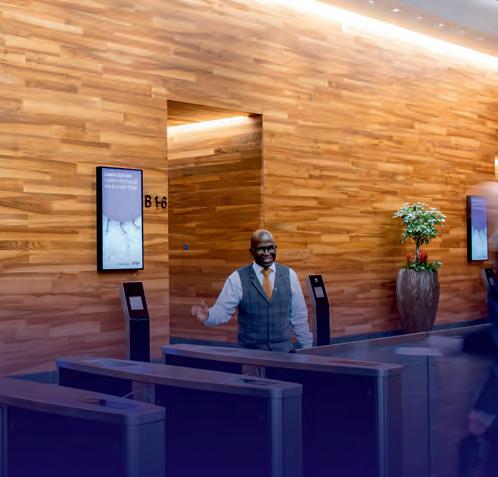

At Bidvest Noonan, we believe in exceeding expectations. By combining the talents and expertise of our exceptional people with advanced technologies, we transform FM solutions and elevate workplace experiences.

We invest in dedicated teams for all our key sectors, ensuring we deliver innovative and sustainable solutions that truly make a difference. Our growing portfolio of industry-leading clients is a testament to our dedication to exceptional service.
Our advanced digital platforms streamline operations, improving efficiency, safety, and performance. With continuous innovation, we elevate your experience and help you achieve your goals.
Handpicked for their talent and passion, comprehensively trained, and expertly managed, our people are dedicated to delivering exceptional results across every sector.

Sustainability and inclusivity are core to our vision. We work tirelessly to reduce our carbon footprint, embrace diversity, and uplift local communities.

50
Enhanced heat transfer systems performance leads to energy and cost savings
51
Reassess your supplier agreements to ensure more strategic delivery models

Historic and architecturally sensitive buildings are often used for work, hospitality, and public service, but retrofitting them for modern use – especially for accessibility – requires creative thinking beyond standard infrastructure upgrades.
When a building is listed or structurally inflexible, permanent changes such as installing a second lift or widening doorways may simply not be viable. Yet, building users – including staff, clients, and visitors – still require safe, equitable access.
The challenge intensifies where there is a single point of vertical access, such as a lone lift. During servicing, outages, or fire drills, anyone with reduced mobility may be stranded or at risk.
This is where innovative,
55
SRS developments could significantly affect how you report on ESG
Keeping historic and architecturally sensitive buildings accessible and future-ready can require creative thinking, as Emma Pe rsey explains
mobility-led solutions are changing the game.
Rather than relying solely on major retrofits, many teams are turning to flexible, mobile solutions that work with a building’s existing footprint. These include technologies such as:
● Powered stair climbers;
● Track-based evacuation systems; and
● Adaptive mobility aids that provide safe, efficient alternatives when lifts are out of action or access routes are compromised.
These mobility-led tools support building users and teams behind the scenes.

EMMA PERSEY, director at The Stair Climbing Company
FMs tell us that these solutions give them confidence because they remove the panic and pressure that comes when someone is stuck or can’t access areas during planned maintenance or emergencies.
Instead of relying on temporary staff workarounds or risky manual handling, building teams can deploy lightweight, portable devices that are easy to store and operate. These tools are not just about compliance, but about fostering resilience and continuity.
When a building has only one lift, a mobile stair climber becomes more than an accessibility aid; it’s part of a contingency plan that safeguards everyone.
The impact isn’t limited to those with long-term mobility needs. Think of a staff member recovering from surgery, or a client with a temporary condition like a broken ankle or asthma flare-up.
Or consider the needs of older visitors attending events in venues with heritage constraints. These real-world situations highlight how smart mobility planning benefits
57
Regular battery discharge testing keeps your emergency lighting reliable
all users, and not just those with visible disabilities.
Awareness remains one of the biggest barriers. Many facilities teams and architects are not familiar with what’s available or assume it’s too specialist or expensive. However, the landscape is shifting.
There’s a perception that these technologies are only for hospitals or care homes, but we’re now seeing them in museums, law offices, private members’ clubs, and even listed government buildings. Anywhere people need to move safely, there’s a use case. And this is where the conversation must evolve, from accessibility as an afterthought to mobility as a strategic enabler. By investing in mobile, adaptable solutions, building stakeholders can:
● Avoid unnecessary structural interventions;
● Reduce liability risks;
● Improve the day-to-day experience for all users; and
● Lay the groundwork for more inclusive, sustainable building management practices – something that’s becoming increasingly important as ESG standards become more central to property operations. Ultimately, making a building accessible doesn’t always mean starting from scratch. It means working smarter, anticipating disruption, and embracing tools that make environments safer and more responsive.
Industrial heat accounts for around two-thirds of industrial energy demand and nearly one-fifth of global energy use, according to the International Energy Agency (IEA).
Improving the performance of heat transfer systems is a direct lever for energy and cost savings. Here’s how to do it.
1
Insulate to minimise heat loss
Uninsulated pipes, flanges, valves and other components can be significant sources of energy waste. Without proper insulation, thermal fluid systems lose heat to the surrounding environment, forcing equipment to work harder and increasing operating temperatures – conditions that accelerate fluid degradation.
Flanges, in particular, are high-risk points because of their potential for heat loss and fluid leakage. To mitigate this, apply highefficiency insulation close to these areas. For critical spots, such as within 600mm of flanges, non-porous sprayed glass insulation is recommended. Standard mineral fibre products can be used beyond this zone.
Valve and strainer jackets are also useful. These removable, form-fitting
ENERGY MANAGEMENT
covers reduce temperature loss at specific points and offer added protection for system components.
2
Use thermal imaging to validate efficiency

DAVE DYER , technical sales engineer at Global Heat Transfer
After installing insulation, infrared thermal imaging can help FMs to confirm its effectiveness. Cameras detect heat retention and loss visually, providing before-and-after comparisons. This data can verify insulation performance and optimise boiler temperatures without overcompensation. It’s a straightforward way to benchmark improvements.
3
Prepare for leaks and spills
FMs must prepare for leaks, particularly from flanges or valves under high pressure. Thermal fluids, while often non-hazardous in bulk, become dangerous when atomised under pressure. Even small leaks can result in spray that presents serious burn or fire hazards.
Spray guards offer an effective containment measure. These wrap-around devices fit over joints and valves to prevent

uncontrolled fluid discharge. Modern versions comply with international standards such as SOLAS and the Model Code of Safe Practice IP15. These standards acknowledge that mist or spray – even from fluids considered lowrisk – can ignite or harm workers. Bunded containment areas should be routinely inspected. Spill kits should be stocked and accessible, and staff trained in proper response procedures.
In thermal fluid systems, expansion tanks accommodate volume changes as fluid heats and cools. Without adequate ventilation, these tanks can overheat, accelerating oxidation and fluid breakdown. A basic safeguard is to vent expansion tanks to a ground-level dump tank, preventing vapours from building up and reducing the risk of fire or environmental contamination. Venting systems should be clearly labelled and located away from water sources and drains.
Inside heater rooms, maintaining airflow is essential. Where possible, install louvre panels on opposite walls or doors for passive ventilation. In enclosed spaces or retrofit situations, use electric fans or ducting systems. Indoor expansion tanks should have at least two metres of clearance to allow proper airflow.
Facilities managers can take important steps to optimise heat transfer performance and reap the many benefits, says Dave Dyer
Regular system audits, fluid sampling, and preventive maintenance extend equipment life and reduce downtime. Programmes that offer structured monitoring help FMs to respond proactively to signs of fluid degradation or system inefficiencies. Improving insulation, managing safety risks, ensuring ventilation, and maintaining equipment contribute individually to energy and cost savings. Together, they form a framework for sustainable operations. For FMs, the task is to apply measurable improvements that reduce energy use and maintain system safety, without unnecessary disruption. By focusing on practical upgrades and routine checks, FMs can build efficient systems to deliver long-term energy, safety and environmental value.
For FM leaders looking to move beyond reactive fixes and toward more strategic delivery models, the key starting point is frequently overlooked: supplier agreements.
Start with the structure
Many FM contracts run for two to three years. In theory, this gives enough time to scope, mobilise, and deliver results. In practice, it rarely works that cleanly. It can take 12-18 months for suppliers to fully embed themselves in complex environments –particularly in large or multi-site portfolios. By the time they’re operationally mature, the contract is nearing its end.
One local authority facilities team faced exactly this issue. Its catering contractor, despite strong credentials, struggled through the first year owing to unclear site-level processes and limited onboarding.
Just as performance stabilised, the contract was back out to tender. Valuable operational knowledge was lost, and staff morale dipped during the transition. Longer-term agreements, with appropriate break clauses, can help retain that hard-earned learning and build consistent service.
2
Build in flexibility and growth
Organisations reorganise.
Budgets change. Yet many supplier contracts are static documents, revisited only when something goes wrong. To avoid this, some FM teams are incorporating structured growth clauses into their contracts that allow for service expansion, technological upgrades, or role evolution over time.
A university estate team built a ‘development track’ into its maintenance contract, allowing for additional services such as sustainability audits or IoT sensor integration if the supplier met milestones – creating a path for improvement without needing to renegotiate from scratch.
In FM, service outcomes often hinge not just on what’s delivered, but on the terms under which it’s delivered, says Tony Houlihan
They used simple red-ambergreen dashboards and required attendance from the supplier’s operational lead and their internal FM team. This kept expectations clear and issues visible. It wasn’t just about scoring performance; it was about spotting patterns and course-correcting early.
Even the best suppliers face challenges: key staff go on leave, vehicles break down, and equipment fails. Without a built-in contingency, minor disruptions can cascade into major problems. In FM, this might mean catering services being reduced due to sickness, or HVAC systems staying offline for days because of a lack of available engineers. One NHS trust tackled this by requiring suppliers to outline detailed continuity plans as part of their bid submission and revisiting those plans annually. These included cross-trained backup staff, shared regional resources, and escalation paths. This approach helped them avoid critical service gaps during high-pressure periods such as winter surges.




Long-term contracts do carry risks, with complacency chief among them. Missed visits, untrained staff, and lagging service levels can creep in when oversight loosens. But these issues often stem from early gaps in performance management rather than from the duration of the agreement itself. A financial services firm introduced quarterly supplier performance reviews: short, structured sessions focused on delivery metrics, exception reports, and upcoming risks.
Supplier relationships don’t start at contract signing; they start during procurement planning. When FM teams work closely with procurement colleagues early on, the agreements tend to be more realistic, better aligned with operational needs, and more resilient over time. Ultimately, good FM delivery starts well before mobilisation. Strong supplier agreements – structured for learning, growth, accountability and resilience – lay the groundwork for success. For property and facilities leaders aiming to future-proof their operations, revisiting how those contracts are built is a smart first step.

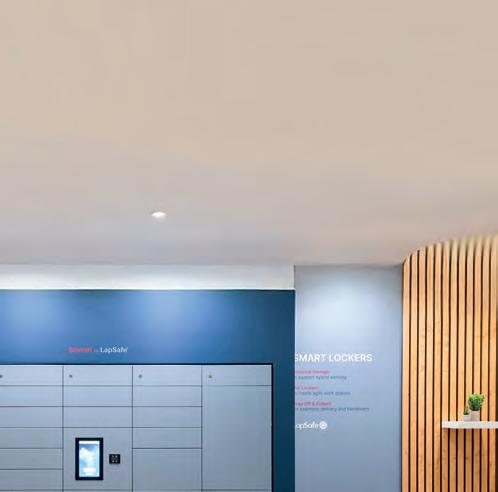






ONARKEN®AI* –
Powered by advanced AI-verification, ONARKEN®AI* streamlines workflows, enhances security, and boosts operational efficiency like never before. Whether you’re loaning devices, managing returns, or facilitating secure drop-off and collection, this cutting-edge solution ensures total control, and an effortless user experience.
• Built-in AI to confirm the correct items are dropped off, loaned, or collected
• AI ensures every return, drop-off, and collection is accurately processed, reducing errors and manual admin work
• Admins can set AI confidence thresholds, access logs, and review flagged cases remotely and in real-time.
• Powered by our unique ONARKEN®AI*, our lockers can seamlessly integrate with your ITSM tools.
ONARKEN®AI*
It’s a fully connected smart locker solution.


Join the next evolution of intelligent storage and automation. Discover how ONARKEN®AI* can transform your operations with unmatched security, efficiency, and innovation. www.lapsafe.com | sales@lapsafe.com | 0800 130 3456
Get in touch today, book a demo or speak to our experts.

Stress affects all of us and, without the right tools or a healthy outlet, it can build up in our bodies and minds, affecting our wellbeing and quality of life.
Mindful movement, focused breathing and awareness create the antidote to stress and anxiety. With regular practice, yoga builds mental resilience, boosts immunity and improves sleep. Here are three poses to soothe your system and ease stress from your busy working days as workplace and facilities managers.
1 Seated Spinal Twist (Ardha Matsyendrasana)
Releases tension in the back and shoulders while improving digestion and reducing stress.
● Sit with legs extended.
● Bend your right knee and place your right foot outside your left thigh.
● Hug your right knee with your left arm.
● Place your right hand behind you for support (you can use a block under your hand).

● Inhale to sit tall, exhale to gently twist to the right.
● Hold for five breaths, then switch sides to balance out the pose.
2 Puppy Pose (Uttana Shishosana)
Soothes the nervous system and releases the shoulders.
● Start on hands and knees.
● Walk your hands forward, keeping your hips above your knees.
● Let your chest melt toward the floor.
● Rest your forehead or chin on the mat or onto a blanket.
● Stay for one or two minutes, breathing slowly down into your belly.
If this is too intense, opt for Child’s Pose (Balasana): bring your big toes together, knees wide, and





sit your hips back toward your heels. Stretch your arms forward and rest your forehead on the mat. Breathe slowly, allowing your back body to soften and release.
3 Reclining
(Supta Baddha Konasana)
This is a restorative pose for total relaxation. Do it before sleep or first thing on waking.
● Lie on your back.
● Bring the soles of the feet together, let the knees fall open.
● Support knees with cushions or blocks if needed.
● Rest your hands on your belly and breathe deeply.
● Stay for three or five minutes with eyes closed.
(Nadi Shodhana)
Clears the mind and creates a sense of balance.
● Sit comfortably in an upright position.
● Use your right thumb to close your right nostril.
● Inhale through the left nostril.
● Close the left nostril with your ring finger, release the right nostril.
● Exhale through the right nostril.
● Inhale through the right nostril.
● Close the right nostril, exhale through the left.
● That is one round. Continue for five to 10 rounds.
(Dirga Pranayama)
Helps you to feel present. Start with your hands resting on your belly and heart to feel grounded.
● Take a few deep breaths and imagine your lower abdomen filling and emptying like a balloon.
● Inhale deeply into the belly.
● Continue the inhale into the ribs.
● Finish the inhale into the chest.
● Exhale slowly in the reverse order: chest, ribs, belly.
● Keep the breath steady and even.
● A full inhalation and exhalation is one round.
● Try for five to 10 rounds, focusing on smooth, flowing breath.
Up to 100% longer lasting, Fewer batteries replacements MORE POWER LESS WASTE

Up to 12 years in storage, In-device leakage protection ** HIGHLY RELIABLE
Plastic-free packaging, Supports responsible forestry RECYCLABLE 100% PACKAGING
Upcoming compliance and best practice developments could affect how your business reports on ESG, says Hannah Dales
Everyone must be aligned, from finance and HR to procurement, to ensure company-wide buy-in.
● Monitor regulatory updates: Keep an eye on announcements from the Department for Business and Trade and the Financial Reporting Council (FRC), and developments from ISSB.
From January 2026, UK businesses may face a significant shift in how they report on environmental, social, and governance (ESG) performance because of the UK Sustainability Reporting Standards (SRS).
SRS are intended to simplify and consolidate frameworks such as the Streamlined Energy and Carbon Reporting (SECR) and Task Force on Climate-related Financial Disclosures (TCFD).
Although we can’t say for certain what meeting the SRS will require, there are steps to take now to get ahead.
The new SRS, developed by the government’s Sustainability Disclosure Technical Advisory Committee, is likely to draw from the International Sustainability Standards Board (ISSB) frameworks,
particularly IFRS S1 and S2. These global standards focus on the disclosure of material sustainability risks and climaterelated financial impacts.
By aligning UK regulation with international benchmarks, SRS will provide consistency across sectors, making it easier for investors, customers, and stakeholders to assess companies’ ESG credentials.
Rather than increasing the reporting burden, the government’s stated intention is to simplify the landscape, by creating a single framework to help organisations report once but meet multiple needs.
Consolidation is likely to include elements of the Companies Act 2006 and Corporate Governance Code relating to ESG disclosures.
The draft standards are due to be consulted on later in 2025,

with implementation possible from January 2026. Depending on the types of sustainability reporting your business already has in place, there may be significant changes in data collection, governance, and assurance processes.
Here’s how to get ahead:
● Embed sustainability in strategy: Use this transition to strengthen your sustainability performance, not just the way you talk about it. By measuring, assessing and reporting on ESG performance, you can ensure improvement and accountability. Improving sustainability across all business operations offers countless benefits that don’t just extend to cutting carbon footprints.
HANNAH DALES head of environment at Churchill Group
● Map current reporting practices: Understand what you’re disclosing across frameworks like SECR, TCFD, GRI, or CDP. Identify overlaps, gaps, and inefficiencies.
● Assess data quality and availability: SRS may require robust, auditable data. Review how you’re gathering information on energy use, emissions, climate risks, and governance.
● Engage internal stakeholders: Sustainability reporting isn’t just the sustainability team’s job.
A sustainability strategy planned and implemented well will lead to reduced energy bills, streamlined working practices, improved staff morale and increased attractiveness to clients with shared values –all of which offer financial and environmental benefits.
SRS should lead to more standardised, rigorous, and accountable sustainability reporting, pushing businesses to prove the effectiveness of their actions. Responsible and successful organisations must be impact-focused, with environmental and social considerations embedded in everything they do.

SUSTAINABILITY
Today’s modern lighting works with building management systems to provide a unified approach to building control, monitoring, asset tracking and energy management, says RussellVanstone
Facilities managers who use modern, connected lighting systems tap into a welcome resource: all of the data they need to improve building use and energy efficiency.
Selecting a platform that uses open protocols enables the lighting control systems to connect with other building systems, reporting and management tools.
Built-in occupancy sensing means lighting can respond quickly to even unanticipated changes in building use. At the same time, maintenance tools make it possible to reduce costs and hours needed to locate, diagnose and action faults.
Lighting controls that include presence detection and
daylight monitoring provide occupancy data to improve load shedding, space use and optimise other building management systems such as heating, ventilation and air conditioning (HVAC).
Where lighting systems include field-based devices such as sensors, scene plates and push-button couplers, further information, such as temperature or humidity, is made available through dashboards so FMs can monitor and adjust as needed.
Using floorplanbased navigation and live dashboards means trends in energy expenditure and faults can be more easily and quickly located by FMs.
Lighting and other sensors can be networked and managed centrally with user interfaces and live dashboards, allowing for remote monitoring.
If a light fails, the system can report the fault and give diagnostic information so engineers know what and where the problem is, allowing them to reduce the time needed on site.

RUSSELL VANSTONE , product manager –connected buildings at Legrand UK &Ireland
The need for physical rewiring is also minimised with a system that supports wired, wireless and hybrid setups as well as commissioning software.
When spaces are repurposed, luminaires and sensors can be reassigned within the software to match new room boundaries, different occupancy patterns, or lighting routines. This enables phased refurbishments and alterations as building needs change.
Modern lighting systems also open up opportunities to carry out preventative maintenance. Comprehensive status reporting, fault logs and remote diagnostics highlight specifically where attention is required before a fault arises. A fully networked lighting platform can supply a headcount of building occupants to inform and adjust HVAC schedules.
Retail and public spaces can use this same headcount data to save energy automatically by reducing lighting at quiet points during the day, such as during lunch hour at a corporate office, to lower the building’s carbon emissions.
Having lighting networked means it can be treated and maintained more like an arm of the IT system and lends itself to remote diagnostics, troubleshooting and commissioning.
Facilities teams can use resources such as floorplan navigation, live status and remote diagnostics, along with integrations such as BACnet, MQTT and REST API to optimise space planning, energy reporting and fault finding.
When implementing advanced lighting platforms, it is important to partner with a provider that can offer the latest in lighting technology combined with excellent service, from the planning stages to long after installation is complete.
We rarely think about emergency lighting until we need it. But in the middle of a power cut or a fire evacuation, these systems become crucial for guiding people to safety.
For facilities managers, the real question isn’t whether emergency lighting is installed, but whether it will actually work when needed. That’s where battery discharge testing with a load bank comes in. It’s an effective way to ensure your emergency lighting is always ready to perform in a real emergency.
Regular battery discharge testing keeps your emergency lighting reliable when it matters most, says Andrew Keith
Whether you manage a school, a shopping centre, or an industrial facility, emergency lighting is a legal requirement – and a critical safety feature. In the UK alone, 241 fatal fires were recorded in the year leading up to September 2024. In many of those cases, safe evacuation depended heavily on effective emergency lighting.

ANDREW KEITH , division director of load bank manufacturer Power Prove
Under the Regulatory Reform (Fire Safety) Order 2005, all emergency routes and exits that require illumination must be fitted with lighting of adequate intensity, designed to operate in the event of a mains failure. British Standards such as BS 5266 and BS EN 50172:2024 back this up, offering a framework for how emergency lighting should be tested and maintained.
Most emergency lighting systems are powered by batteries. These can be built into each light fitting (a ‘self-contained’ or ‘non-maintained’ set-up), or they may draw power from a central battery system.

The latter is often found in larger sites and may also supply power to other safety-critical systems, such as smoke extraction units or fire extinguishers. Either way, when the lights go out, the batteries have to step up.
Maintained systems operate under mains power until it fails. Non-maintained lights kick in only when there’s a power loss. Both rely on batteries that must hold charge, deliver power on demand, and stay operational for up to three hours.
But you won’t know if a battery is reliable until it’s tested under real conditions. That’s why load bank testing is so important.
Load bank testing uses a device to simulate real-world operating conditions. Instead of just checking the voltage or doing a visual inspection, you apply an actual electrical load to the battery. This helps assess how it behaves under pressure. Does it hold charge? Can it deliver power for the required duration? Is it starting to degrade?
Static checks give you a basic snapshot, but they don’t always tell the full story. Discharge testing with a load bank simulates what happens in a real emergency. It gives facilities teams clear evidence that the battery system will work with no guesswork required.
Regular testing – typically every six to 12 months – is strongly recommended, especially for central battery systems. This is even more important when systems are ageing or records are incomplete. A straightforward offline discharge test can be done without affecting day-to-day operations, offering actionable data on the system’s health.
BS 5266-1:2016 advises that batteries in these systems should last at least 10 years at a consistent ambient temperature. But environmental factors, overuse, or poor maintenance can shorten that lifespan. Discharge testing helps catch these issues before they cause real harm.
When lives and legal compliance are on the line, load bank testing ensures your emergency lighting won’t just look good on a checklist, but will actually work when it matters most.

Key takeaways:
Smart auditing and compliance tools are becoming essential infrastructure, digitising traditional tasks and reshaping how FM is delivered, says Francis Lyons, ECAT CEO
● Smart auditing systems help by capturing activity in real time, including verifying that cleaning was completed using near-field communication (NFC) tags, uploading photos of completed tasks and creating a timestamped digital record of site visits.
● These systems affect culture on the ground as audits are no longer seen as punitive and a way to catch errors, but rather a shared record of successes; and
● By digitising reporting, standardising tracking, and linking ser vice frequency to real occupancy patterns, these systems help FM teams to reduce waste, conserve resources, and document improvements.
Read the full article at b.link/ FacilitateE25-001

The Know How learning continues at facilitatemagazine.com. Here is a summary of the key takeaways from a selection of our onlineonly articles
While customers may unknowingly contribute to the waste crime, they ultimately bear the legal responsibility for compliant management, says Alex Trenbath, director at Envirovue
Distracting office noise can be jarring and counterproductive, driving employees away rather than promoting their engagement, says Ben Hancock , managing director of Oscar Acoustics
Key takeaways:
● 47% of employees are struggling to concentrate, 30% are experiencing stress, and 7% have suffered hearing damage from lengthy exposure to excess workplace noise;
● Reverberation is the main cause of disruptive office noise, as sounds bounce off hard surfaces, such as desks, tables, dividers, and walls; and
● Acoustic spray for walls or ceilings absorbs sound energy rather than reflecting it and can be applied to many surfaces, making them suitable for a wide range of work settings and layouts.
Read the full article at b.link/ FacilitateE25-002

Key takeaways:
● In England, an estimated 18% of all waste is illegally managed, amounting to roughly 34 million tonnes a year, costing the economy an estimated £1 billion annually;
● The UK Government and the Environment Agency are introducing mandatory digital waste tracking to track all waste from household to commercial and industrial, and from the creation to its final destination; and
● AI tools help to interpret complex waste movement data, enabling businesses to demand more transparency from waste partners.
Read the full article at b.link/FacilitateE25-003
Upskill with IWFM Academy - the top training provider in workplace and facilities management for individuals and employers
Investing in your own or your team's professional development not only enhances skills but also contributes signi cantly to the success of both your future career and the organisation you work for.
Our courses are delivered by industry experts with years of experience and have been tailored to workplace and facilities management professionals at all levels, from introductory to management and strategic courses.
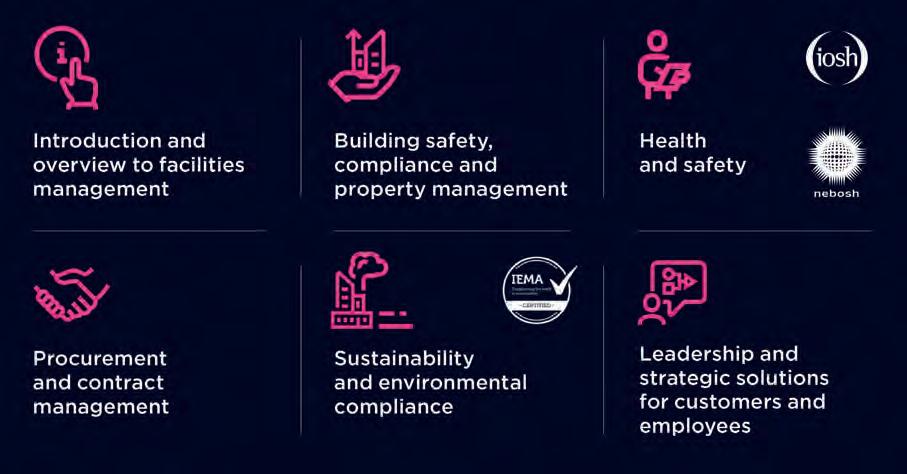
Our training courses are competitively priced, and we offer an exclusive discount for IWFM members.
Take advantage of IWFM’s competence development programmes and build bespoke training solutions to empower your teams and drive excellence in workplace and facilities management.







62
Productivity is down in the public sector – yet council defends four-day work week
63
Specialist FM supplier acquisition activity shows no signs of abating 65
Our digest of the latest contracts, appointments, acquisitions and frameworks
by Herpreet Kaur Grewal
Retailers across the UK are collectively losing more than £146 million a year by failing to upgrade their buildings’ services to meet net zero targets, according to research from Mitsubishi Electric. 500 retail FMs were surveyed to understand the sector’s readiness for net zero.
35% of respondents said that they believed a third of their stores could become ‘stranded assets’ – too costly or impossible to rent due to poor environmental performance.
34% of shops are likely to remain unable to be updated by 2030 net zero targets. despite the financial consequences of not complying with regulations such as MEES.
43% believed net zero is not seen as a priority for their business because the return on investment (ROI) falls in future trading years.
The research also found that many of those responsible for running these estates have little influence over sustainability, with this affecting their ability to act –something IWFM has repeatedly warned of in its sustainability survey reporting.
In the poll, a third of respondents said that they had no control over budgets or decision making for net zero and 42% report that they have had no direction from their seniors, while 21% said net zero was not part of their performance targets.
What the firm calls FM’s ‘lack of authority’ for installing upgrades to one of the UK’s most energy-intensive industries is a serious concern, researchers suggest.
“While FMs recognise that decarbonising estates can boost financial results, strengthen business resilience and improve the shopping experience, many just aren’t being empowered to act.”
“The retail industry has the third largest building footprint in the UK,” said Chris Newman, zero carbon design manager, Mitsubishi Electric Living Environment Systems UK.
“FMs are uniquely positioned to support the delivery of net zero estates in future.”
Mitsubishi Electric warned that regulations such as the Minimum Energy Efficiency Standards (MEES) are expected to tighten over the next five years, with investor expectations on sustainability continuing to rise.
“The longer we leave it, the harder adapting these buildings is going to get,” added Newman.
Businesses occupying prime office property in Central London could be paying £5.23 billion in business rates following the 2026 revaluation, according to real estate firm Colliers. The company analysed rental values in prime (predominantly Grade A) office space over 10,000 square feet in 27 Central London areas to estimate the business rates bills that businesses will face from next April when the new revaluation comes into force. It predicts an average increase of 9% in rates bills across 22 London locations next year, £432 million on top of current liabilities. Only four locations will see a fall, with one – Canary Wharf – where rates are not expected to change. As for other parts of the country…
OFFICE OCCUPATION
Businesses occupying prime Grade A office property in the Central Business Districts (CBDs) of Birmingham, Leeds and Manchester will see “significant rises“ in their business rates bills next April.
Against a backdrop of sluggish UK economic growth, maintenance and cleaning budgets remain under pressure
According to Colliers’s business rates team, and following the government’s 2026 revaluation, estimates show that office occupiers in spaces in Birmingham could see increases of up to 26% in their bills next year, in Manchester, an increase of 25% and in Leeds, perhaps as much as +44%.

By Facilitate Team
Europe’s real estate market is undergoing “a significant transformation, driven by unprecedented growth in data centres, the urgent imperative of decarbonisation and evolving office dynamics”, analysis by a real estate adviser reveals.
JLL’s Global Real Estate Mid-Year Update report provides an assessment of the market’s performance in the first half of the year. It found that Europe is undergoing a data centre boom, wirh EMEA (including Europe) forecasts of 23% capacity growth in 2025.
There is also a considerable decarbonisation and obsolescence risk, wih Europe holding 34% of global office obsolescence risk and thus requiring significant capital expenditure for retrofits. This makes decarbonisation “a critical value-creation driver”, JLL states. In central and Eastern Europe, the market is seeing increased manufacturing demand due to reshoring and lower costs, which is “transforming the industrial landscape”. However, the European supply pipeline
is falling, intensifying competition for assets, driving focus on brownfield sites, and leading to rising renewal rates.
JLL’s report also suggests that the four day and even three day office week is becoming the norm in Europe, which is “pushing corporate real estate towards efficiency and portfolio optimisation”.
As to the market as a whole, the first half of 2025 was more disrupted and less predictable “than anyone anticipated despite our expectations of heightened uncertainty at the start of the year”, the report concludes.
In a separate report, JLL’s Occupancy Planning Benchmark Report has suggested that the primary focus for corporate real estate leaders and office utilisation has increased as organisations tighten policies on hybrid work. A growing number of companies are moving from reactive cost-cutting measures towards more strategic workspace decisions as structured return-to-office policies become more widespread.
The global office utilisation rate is up to 54% from 50% in 2024. Badgeswipe data remaining the predominant utilisation tracking method, with visual observations still widely used. Analysing data collected through these methods is key to a successful space optimisation strategy, the JLL report concludes.
A report by the Centre for Economics and Business Research in May put some figures to the impact of declining productivity across the UK.
“If the recent trend of falling productivity continues, the public sector would need to hire an estimated 92,000 additional workers by the end of the current parliament, just to sustain existing public service levels,” the report suggested.
Current workplace environments are preventing different personality types from succeeding at work, leading to “significant collaboration challenges” and “a drain on productivity, and potential loss of talent”, according to the research.
Meanwhile, South Cambridgeshire District Council has voted to become the first UK council to adopt a four-day week – after “rigorous independent analysis” showed most services got better or were maintained, with “significant improvements” to recruitment and retention. It’s been a politically contentious project, but South Cambridgeshire District Council have been bullish about the results of its trial.
Under South Cambridgeshire four-day week, staff are expected to carry out 100% of their work in around 80% of their contracted hours, without a reduction in pay. All staff will be able to opt in under a ‘productivity policy’. Independent analysis from the universities of Salford, Bradford and Cambridge showed how 21 of the 24 services they monitored have improved or stayed the same since four-day week working began at the council in 2023.
A growing number of companies are moving from reactive cost-cutting measures towards more strategic workspace decisions
A report from market research company DJS Research into residents’ perception and experiences of council-provided services during the period of the four-day week trial showed that they had felt no statistically significant difference in their experience of nine core services, with 45% of residents expressing support for the concept of the four-day week.
by Martin Read
Significant numbers of mergers and acquisitions are continuing to be announced as 2025 shows every indication of being an exceptional year for the activity.
It’s a year in which non-UK providers are making inroads into the UK, too. In August, Apleona acquired Corrigenda, extending Apleona’s expansion in the UK market.
It’s a deal that reflects a wider trend of consolidation within the UK FM sector, as firms seek to scale operations, enhance technical expertise, and meet growing demand for energy-efficient solutions in public and commercial buildings.
Headquartered near Frankfurt, Germany, Apleona provides integrated FM across continental Europe. Corrigenda, based in Fareham, Hampshire, delivers technical and energy management services with a focus on the public sector, education, and local authorities.
acquisition is expected to strengthen Apleona’s technical capabilities in the UK, especially in energy management and digital facility solutions.
There are no announced changes to Corrigenda’s staff or leadership at this stage, but integration efforts are set to focus on service continuity and complementarity across both businesses.
Extending service

We’re also seeing existing UK outsourcers taking on specialist providers. Mitie recently completed its acquisition of fire security and environmental services provider Marlowe plc, a move that Mitie believes makes it the UK’s largest provider of testing, inspection and certification services for fire safety, security systems, water and air hygiene, and asbestos management. Mitie further described the deal as a “strategic milestone in Mitie’s transformation journey to lead the future of highperforming buildings”.
Saltire, a heating services company with operations across Scotland and the West Midlands with around 300 staff – including more than 200 field operatives – provides heating system installation, maintenance contracts and 24/7 support, primarily for houses and apartment buildings.
Daikin’s acquisition is intended to bolster the business’s residential heat pump service capabilities in Scotland, a region identified as having strong growth potential. Industry forecasts suggest demand for heat pumps in Scotland could reach 70,000 units annually by 2028.
Saltire will retain its existing name, with no changes to staff or day-to-day operations.
ACQUISITION
This is Apleona’s third UK acquisition since 2022, aligning with its stated aim of expanding its service offering and regional footprint in key markets. The
We’re seeing a wider consolidation trend in the UK technical FM market as mid-sized regional specialists join national groups
“Increasing legislative requirements, including new fire safety regulations, enhanced security standards and evolving environmental mandates, have increased demand for robust compliance solutions.”
In its annual report, Mitie said that the acquisition of Marlowe would deliver revenue growth and £30 million of cost synergies.
Another wider consolidation trend influencing the UK technical FM market is mid-sized regional specialists joining larger national groups seeking to increase capacity, respond to complex compliance standards, and expand decarbonisation services – see column to the right for two recent examples.
Mecsia has acquired Manchesterbased Ashley & McDonough, providers of compliance, maintenance, and installation services for social housing and local authority sectors. Ashley & McDonough directly employs a team of engineers and support staff and will continue trading under its existing name with no immediate changes to leadership or operational structure.
The acquisition is expected to increase Mecsia’s annual turnover to over £200 million. The deal supports its national growth plans, particularly in the North West. The addition of Ashley & McDonough also broadens the group’s presence in social housing compliance, a growing area of focus for FM providers responding to tightened regulatory requirements and decarbonisation targets.
According to Mecsia, Ashley & McDonough’s existing services and delivery model will remain unchanged.
Contact us today
E engagement@iwfm.org.uk
T +44(0)1279 712 650 iwfm.org.uk


Are you due an IWFM membership upgrade? More importantly, are you selling yourself short?
IWFM’s 2021 Pay and Prospects research found that qualifications increase the likelihood of advancement in organisations (and associated benefits, like increased pay). Our membership grades link directly to qualifications and experience, so if you have the right credentials, make sure you carry the post-nominals you deserve.
If you feel you are ready to step up, please send your CV to engagement@iwfm.org.uk
For more information, log into your IWFM account and click on the ‘Membership’ tab.






















































Our insights and research support the development of our profession and drive meaningful change.
Insight hub




•Good practice guides
•Guidance notes
•Research papers
•Policy















•Webinars
•Content hubs
Want unlimited access? Speak to us about the benefits of being a member.














Contact us today
E @iwfm.org.uk
T +44(0)1279 712 650 iwfm.org.uk/insight
APPOINTMENTS
The latest outsourced business activity across the sector
Mears Group: A new five-year deal worth £230 million that involves carrying out repairs and maintenance to more than 11,000 homes in Milton Keynes, on behalf of Milton Keynes City Council.
ISS: A £10 million, two-year extension to its catering contract with the London Borough of Redbridge Consortium will see the firm continuing services at 32 schools in north-east London.
Harmony Fire: Sheffield City Council has awarded the firm a £11.6 million, two-year-plus contract for a residential fire safety upgrade programme, involving fire-door replacement and remedial works at 1,800 residential homes in the borough.
Equans: A three-year contract extension with Southern Water sees the company continue its delivery of integrated facilities management services across the utility’s 4,000 sites until 2029. Equans was initially appointed in 2021.
Stadium Support Services: A multi-year contract with Wycombe Wanderers Football Club is to see the provider delivering FM and project services across the club’s sites, including Adams Park and Harlington Sports Ground.
GROUP >> SUMMERS-INMAN CONSTRUCTION AND PROPERTY CONSULTANTS LLP
Legends/ASM Global: Under a multi-year agreement, Chelsea Football Club has appointed the firm as its new food and beverage service provider for Stamford Bridge and Kingsmeadow.
Elior UK: The firm’s catering partnership with the SS Great Britain Trust has been renewed with a multimillion-pound contract extension for up to five more years.
Serco: The defence specialist has secured a four-year deal with the UK MoD to supply engineering and maintenance support at Remote Radar Head (RRH) Portreath in Cornwall.
Eric Wright FM: A one-year extension to its hard FM deal with Bridgewater Community Healthcare NHS Foundation Trust will run alongside a new cleaning contract for the same sites – nine community healthcare sites across Warrington, Cheshire.
Stadium Support Services: A renewal of its alliance with Bradford City AFC as the club’s official projects partner will cover the new football season.
Pinnacle Group: The firm has expanded its portfolio with three new contracts covering 342 homes at local authorities in London and the South East.

Andrew Hulbert Chair IWFM

Carly Ersser Workplace services director The Government Property Agency

Chris Middleton Board of directors The Security Institute

Helen Hare President British Council for Offices

Chris Scalia Executive vice-president and chief HR officer Johnson Controls

Katie ClemenceJackson Chief executive officer Net Zero Carbon Buildings Standard Ltd
Valued at up to £30 million over a four-year term, EN:Procure Gen-4 Lifts Framework has 10 contractors signed up. The Sheffield-based not-for-profit social housing regeneration consortium’s framework covers a range of lift types, including passenger, goods and service,
stairs, hoists and wheelchair platform. The works include escalators, moving walkways, inspections and ongoing maintenance services for equipment in residential, public and commercial buildings. The firms are accredited by Lift and Escalator Association (LEIA) or Lifting
Equipment Engineers’ Association (LEEA).
Named contractors:
● ANSA Elevators Ltd
● Classic Lifts Ltd
● E.A. Foulds Ltd
● Jackson Lift Services
● Kone Public Limited Company
● Morris Vermaport Ltd
● Orona Ltd
● RJ Lifts Group Ltd
● Rubax Lifts Ltd
● Sheridan Lifts Ltd
MARCH >> COBRA ENGINEERING
The Leicester-based Bellrock Group has acquired Newcastlebased property adviser Summers-Inman, a UK-wide firm specialising in cost management, project management and building surveying services
MARCH has acquired Wisbech-based Cobra Engineering (UK) Ltd, which specialises in steel fabrication and process pipework, and employs more than 60 staff. It delivers at least 1,200 projects annually.
NG Bailey: The firm reported its highest-ever annual turnover for the year ending 28 February 2025, alongside rising profits and an expanding order book of £1.6 billion. The company posted a turnover of £662 million, up from £600 million last year. Underlying operating profit increased to £15.0 million, compared with £11.2 million in 2024. The business reported net assets
of £141 million (2024: £129 million), including cash and investments totalling £92 million
Johnson Controls: The company reported Q3 fiscal 2025 sales of $6.1 billion (£4.76 billion), marking a 3% year-on-year increase on a reported basis and 6% growth organically The company raised its full-year 2025 outlook and introduced guidance for Q4. Net income from continuing operations stood
at $618 million (£482 million), while adjusted income reached $693 million (£541 million). Orders grew 2% organically compared with the previous year.
Capita: The business reported H1 results showing a 17% in contracts won across the group compared with the first half of last year. It is on track to deliver £250 million of cost savings by December 2025 and deliver positive free cash flow from the end of 2025.

“DON’T BURN YOUR BRIDGES. THE FM & MAINTENANCE INDUSTRY IS NOT HUGE IN THE GRAND SCHEME OF THINGS. YOU NEVER KNOW WHEN YOU’LL BUMP INTO SOMEONE AGAIN.”
RECRUITER CLAUDIO ROJAS WARNS AGAINST LEAVING AN EMPLOYER OR CONTRACTOR ON ANYTHING OTHER THAN GOOD TERMS
“FM is fast, reactive, and full of surprises. It’s not about avoiding mistakes altogether; it’s about how we respond. Don’t shout. Don’t blame the team. Don’t bury it under the carpet. (We will trip over it later.)”
ADAM MASON, DEPUTY DIRECTOR ORGANISATION: UNIVERSITY OF PORTSMOUTH RESPONSIBILITIES: HEALTH AND SAFETY, FACILITIES MANAGEMENT, ADV ISES LEADERS TO OWN THEIR MISTAKES AND LEARN FROM THEM


“We must shout louder about the progress in location-agnostic working. One size does not fit all. Let’s help everyone to find their groove – it doesn’t have to be a fight!”
KRISZTINA FOSTER, WORKPLACE STRATEGIST, REMINDS US THAT PEOPLE DO THEIR BEST WORK IN DIFFERENT WAYS AND PLACES
“Skilled trades are the backbone of this country, but if we price
small fi rms out of training the next generation, who’s left to teach them?”
COMPRESSED AIR SPECIALIST STEPHEN LE BRETON LAMENTS THE EFFECTS THAT HIGH COSTS OF TRAINING AN APPRENTICE, WHICH HE ESTIMATES AT MORE THAN £30,000 A YEAR, HAVE ON SMALL BUSINESSES

“Disabled people are already in your teams, your shops, your audiences, your events. They’re just navigating a world that often assumes they’re not.”
JENNIE BERRY, DISABLED CONTENT CREATOR AND EDUCATOR, STRESSES THAT NOT ALL DISABILITIES ARE VISIBLE

“We’re not wired for constant upheaval. The human brain craves certainty, autonomy and connection. When those disappear under a fog of initiatives and shifting goalposts, people disconnect.”
WORKPLACE CONSULTANT AND AUTHOR SIMONE FENTON-JARVIS SAYS WORKPLACE CHANGE NEEDS TO BE MANAGEABLE
“On holiday, we noticed interesting FM things like how to provide big-capacity waste and recycling facilities without the whiff and mess. And we observed how people preferred to step over the first pane of glass on the airport walkway. Still solid but a bit disconcerting for some. We enjoyed the break and the welcome back, as our Facilitate magazine was waiting on the mat.”
FM DIRECTOR AT HISTORIC ENGLAND, PAULINE SIMKINS DOING WHAT FMS DO – EVEN WHEN ON HOLIDAY
“WE’RE BEGINNING TO SPARK GENUINE INTEREST IN FACILITIES MANAGEMENT AMONG YOUNG PEOPLE – AND IT’S INCREDIBLY REWARDING TO SEE.”
VICKY LORYCH, RISING FMS CHAMPION IN THE SOUTH WEST, SHARES AN UPDATE ON IWFM’S CONTINUED WORK TO ATTRACT THE NEXT GEN, SPECIFICALLY CITING A RECENT SITE TRIP TO JLL

“DEAR WOMEN’S WORKWEAR, PLEASE SEND SAFETY BOOTS WITH BLACK LINING AND LACES SO I CAN SHOW UP LIKE MY PEERS, WHOSE BOOTS ARE CONVENIENTLY NOT BABY BLUE. WE’RE NOT IN PREP ANYMORE, SAFETY IS GENDER-NEUTRAL.”
JULIA STEEL, DIRECTOR, STRATEGIC PROGRAMS AT AUSNET IS NOT HAPPY WITH PINK LINING IN HER WORK BOOTS



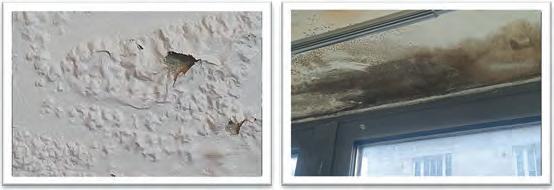
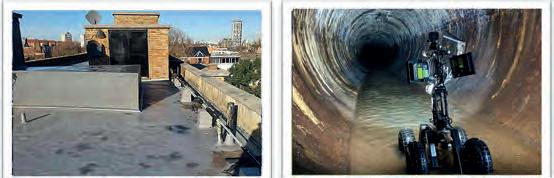



Discover how Tork sustainable hygiene solutions for offices help free up your cleaners’ time, reduce complaints and improve efficiency.