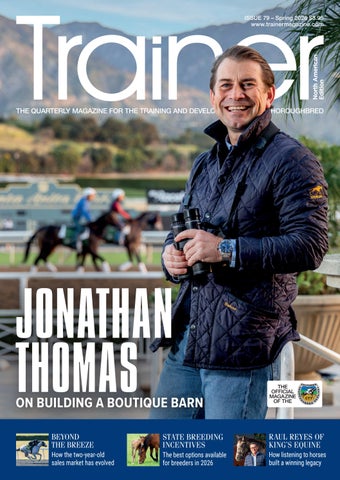

JONATHAN THOMAS
ON BUILDING A BOUTIQUE BARN

BEYOND THE BREEZE
How the two-year-old sales market has evolved
STATE BREEDING INCENTIVES
The best options available for breeders in 2026
THE OFFICIAL MAGAZINE OF THE

RAUL REYES OF KING’S EQUINE
How listening to horses built a winning legacy


GILES ANDERSON PUBLISHER’S OPINION
As we stride into the ‘Year of the Horse’, we acknowledge a period rich with potential but equally fraught with challenges. The enduring spirit of the horse—strong, competitive, and intuitive—serves as our guiding metaphor.
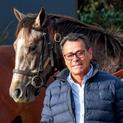
One of the most inspiring narratives in this issue is the profile of Jonathan Thomas, “The Art of Winning Small”. In an industry often dominated by big players, Thomas’ success is a quiet, but powerful, argument for prioritizing quality over quantity. His small, boutique barn produced a phenomenal 28% win rate in stakes races in 2025. This achievement, highlighted by his precision and patience, serves as a potent reminder that skill and individualized attention can outperform scale.
A similar thread of profound horsemanship runs through the story of Raul Reyes of King’s Equine, whose methods stand in stark contrast to modern, metric-driven farm management. Reyes has built a legacy of developing champion Thoroughbreds, through an uncanny ability to “listen” to horses and manage his stock through intuition, devoid of traditional record-keeping tools. His belief that he can “see what they worry about” speaks to a deep, almost lost, art in training and preparation. His approach is a forceful counterpoint to the over-reliance on data, emphasizing that the human-equine connection remains indispensable in unlocking true athletic potential.
Our annual “State Incentive Tables” offer a valuable insight into what opportunities are available to owners, breeders and trainers across North America.
The industry is now somewhat reliant on supplemental income for growth. Take California as an example. The new year brought optimism, with the arrival of “Racing on Demand” terminals at Santa Anita Park - but for the state to then remove them within days.
The struggle over whether these HHR machines are parimutuel wagering or slot machines underscores the ongoing battle to secure reliable, supplementary revenue that can directly feed back into purses and breeder awards.
Before the arrival of the ADW’s and supplemental income, racing’s income survived soley on the ability to get the fan to the track and wager. Jennifer Kelly’s piece, “Back on Track”, highlights the essential role that key racetracks are playing to enhance the live, in-person fan experience. As Alan Balch, the Executive Director of California Thoroughbred Trainers, rightly observes, every dollar wagered on-track is significantly more valuable to the track than off-track handle. The strategies discussed—offer a clear path forward. The sport must prioritize making a day at the races an affordable, entertaining, and customer-focused social experience to cultivate the next generation of core fans. Wherever your racing takes you this spring - good luck!
CONTRIBUTORS
Editorial Director/Publisher & Advertising Sales
Giles Anderson (859) 242-5025
Sub-Editors
Nico Jeeves & Virginia Lisco
Advert Production, Circulation/Website
Nico Jeeves & Virginia Lisco (1 888-218-4430)
Cover Photograph
Dan Birch/Eclipse Sportswire
Trainer Magazine is published by Anderson & Co Publishing Ltd.
Tel: 1 888-218-4430 Fax: 1 888-218-4206 info@trainermagazine.com www.trainermagazine.com
North America
PO Box 13248, Lexington, KY 40583-3248
United Kingdom
Ground Floor Office, 72 Medstead Road, Beech, Hampshire, GU34 4AE
Trainer Magazine is the official magazine of the California Thoroughbred Trainers. It is distributed to all ‘Trainer’ members of the Thoroughbred Horsemen’s Association and all members of the Consignors and Commercial Breeders Association, the Maryland Horse Breeders Association, the Pennsylvania Horse Breeders Association, the Alberta Thoroughbred Owners & Breeders Association and the Virginia Thoroughbred Association.
Alan F. Balch was hired as executive director of the California Thoroughbred Trainers in April 2010. His professional career in racing began at Santa Anita in 1971, where he advanced to senior vice president of marketing and assistant general manager, and was in charge of the Olympic Games Equestrian Events in Los Angeles in 1984. He retired in the early 1990s to become volunteer president of the National Equestrian Federation of the USA, as well as the National Horse Show at Madison Square Garden.
Åsa Beckman is a research-trained equine fascia therapist with a background in biology and behavioural science. A former breeder and trainer of international show jumpers, she now works with fascia-focused therapy for racehorses, combining scientific insight with intuitive, hands-on methods to support performance, recovery, and sensory awareness in equine athletes.
Jackie Bellamy-Zions has served as Equine Guelph’s communications manager since 2010 and has more than 30 years of experience in the horse industry as a coach, trainer, stable manager, competitor, judge, and journalist.
Bill Heller is an Eclipse Award–winning author who published his 27th book, Fred Hooper – The Extraordinary Life of a Thoroughbred Legend. His other biographies include those of Hall of Fame jockeys Ron Turcotte, Randy Romero, and Jose Santos. Bill and his wife, Marianne, live near Gulfstream Park.
Alicia Hughes is an award-winning writer and reporter with more than 20 years of experience. She currently serves as director of communications for Ocala Breeders’ Sales Company and previously served as racing editor for The Blood-Horse and lead turf writer for the Lexington Herald-Leader from 2008 to 2016.
Jennifer S. Kelly is an author and freelance turf writer. Her first two books, Sir Barton and the Making of the Triple Crown and The Foxes of Belair: Gallant Fox, Omaha, and the Quest for the Triple Crown, chronicle the lives and careers of the first three American Triple Crown winners. She also contributes to The Racing Biz, America’s Best Racing, and TwinSpires Edge
Jessica Licausi is a lifelong Delaware native who moved to Kentucky to further her education and pursue her passion for the Thoroughbred industry. She is currently a junior at the University of Kentucky and a Keeneland College Ambassador for the Class of 2025–2026. She also works at Spendthrift Farm, where she cares for mares and foals and assists with yearling preparation during the summer months. She has a deep passion for the Thoroughbred industry and feels honored to be supported by the many people who have believed in her from the beginning of her journey.
Dr. Caroline Loos is an equine nutritionist and head of research at Cavalor. Her work focuses on muscle metabolism, nutrition, and performance optimization in sport horses. She has led multiple studies on protein intake and muscle metabolism in collaboration with the University of Kentucky.
Ken Snyder is a turf writer for Gallop Magazine and a turf and travel-culture writer for Kentucky Monthly His work has also appeared in other publications, including The Blood-Horse. He and his wife, Cassie, reside in Kuttawa, Kentucky.





Trainer Magazine (ISSN 17580293) is published 4 times a year: February, April, July and October by Anderson & Co Publishing and distributed in the USA by Modern Litho | Brown Printing, 6009 Stertzer Road, Jefferson City, MO 65101. Periodicals postage paid at Jefferson City, MO, and additional mailing offices.
POSTMASTER:
Send address changes to Trainer Magazine, Anderson & Co Publishing, PO Box 13248, Lexington, KY 40583-3248.



F E ATURES
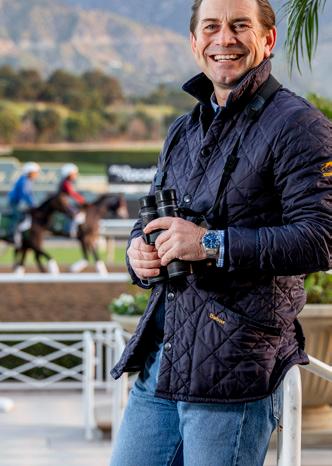
08 Jonathan Thomas – cover profile
Alicia Hughes profiles Jonathan Thomas, whose precision, patience, and focus on quality over quantity place him among racing’s quiet elite.
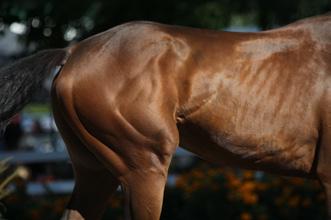
16 Muscle matters
Caroline Loos explains how protein quality, amino acid balance and feeding timing influence muscle development, recovery and performance.
24 Raul Reyes of King’s Equine
Ken Snyder tells how Raul Reyes has built a legacy of champion Thoroughbreds through listening to horses.
32 Beyond the breeze
Jessica Licausi on how innovation, selectivity, and perception have reshaped the two-yearold sales market.
38 A biotensegrity approach
Åsa Beckman examines a holistic perspective on training, development, and durability in young racehorses.
44 2026 state incentives
We present a comprehensive guide to the racing and breeding incentives offered across North America.
64 Martinis, a filly, and life in racing
Ken Snyder on how Denver pub owners Noel and Wendy Hickey found their way into horse racing and breeding.
68 Back on track
Jennifer Kelly examines the strategies racetracks are using to bring fans back on site, from marketing and affordability to entertainment and customer experience.
74 PA-Sired is the way to go
Averie Levanti discusses the benefits of breeding in Pennsylvania.
76 Reduce recurring entrapment colic
Jackie Bellamy-Zions talks to Dr. Nicola Cribb about new research showing how preventative surgery can reduce the risk of recurrent nephrosplenic entrapment colic in horses.
80 Graded stakes winning owners
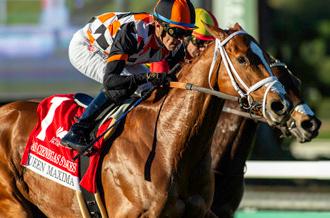
Bill Heller highlights Hans & Ana Maron with So Happy and Margarita Girl, Michele Arthur and Ruben Islas with Queen Maxima, and Alfred ‘Sonny’ Pais and Dr. Vahe Melikyan with Unrivaled Time.
88 Self-made stallions
Alicia Hughes explores how Into Mischief, Candy Ride, and Distorted Humor built their influence from humble beginnings.
REGULARS
06 View from the CTT Alan Balch – Culture Conflict?
94 #Soundbites
Bill Heller asks “What can racing do better in 2026?”
our current digital editions and access back issues of both European and North American Trainer.

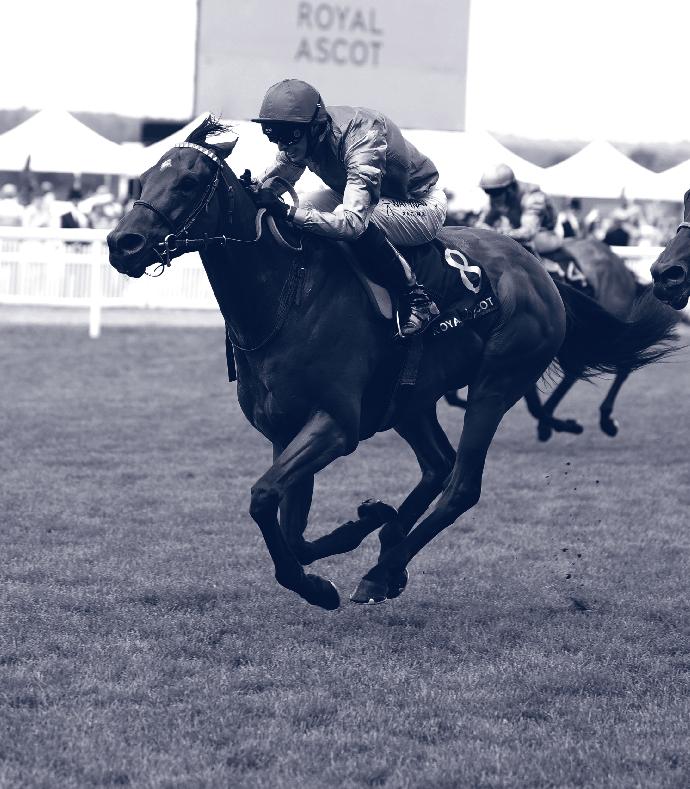
THE QUEEN ANNE STAKES (1m) STRAIGHT | £800,000
THE KING CHARLES III STAKES (5f ) | £700,000
THE ST JAMES’S PALACE STAKES (1m) ROUND | £700,000
THE PRINCE OF WALES’S STAKES (1m 2f ) | £1,000,000
THE GOLD CUP (2m 4f ) | £700,000
THE COMMONWEALTH CUP (6f ) | £700,000
THE CORONATION STAKES (1m) ROUND | £700,000
THE QUEEN ELIZABETH II JUBILEE STAKES (6F) | £1,000,000
For further information contact: Nick Smith, Director of Racing and Public Affairs, Ascot, nick.smith@ascot.com, +44 (0) 7771 791449
Stephen Nagler, USAnominateascot@gmail.com, +858 829 678 Adrian Beaumont IRB, adrian@irbracing.com, +44 (0) 7808 903158
ALAN F. BALCH
CULTURE CONFLICT?
We’ve all been hearing about “culture” for the last ten years or more … “culture wars” politically, for example. But I pricked up my ears when I heard the leaders of the California Horse Racing Board refer to changing the “backstretch culture” at their last meeting.
To begin with, that word originated around “cultivation,” in the agricultural sense. Growing and nurturing. Over the centuries, obviously, it took on many nuances. I remember when “cultured” people were those who appreciated fine art or attended the philharmonic orchestra, or had advanced, sophisticated educations. They had been or were “cultivated,” I suppose, with some worthwhile objectives in mind, I venture to guess. Aristocratic?
And then there are cults, but let’s not go there. Please. Even though all those related words come from the same origins.
My own professional lifespan in racing management and observation is now over half a century. Plenty of time to develop opinions, many fervently held before changing, or evolving, or changing back again. Age supposedly brings wisdom. Artificial Intelligence claims Ernest Hemingway “famously” observed, “The wisdom of old men. They do not grow wise. They grow careful.” So famously that I couldn’t find where he said it. But it seems true to me. In what follows, however, this old man is throwing that out the window.
Our California regulator was taking up the issue, for the zillionth time, of racetrack safety, and the ways and means of protecting our horses. That’s as it should be, because nothing is more
important. If only laws and rules and regulations could do the whole job! Nobody doubts that they can help … but many doubt their overall efficacy. Why else do we keep returning endlessly to their additions and refinements?
It was in this context that we were publicly advised that the training and veterinary culture on the backstretch must continue to change: from treatment to a preference for diagnostics before treatment. Personally, I thought it had always been that way. So, what that really means, I think, is that diagnostic methods have improved magnificently (and expensively) from what they once were, and must all be employed. Before treatment. Any treatment?
I was taught, beginning about 70 years back, that no individual mammal (including horses and humans) is 100% healthy. Mother Nature just doesn’t make them that way. And they’re all at risk of injury. Or worse. Thus, preventive care is born. And so is animal husbandry. Along with veterinary medicine. Checking the feed tub and temperature, and jogging a horse for soundness, start the diagnosis. But in racing, and other equestrian sport, sadly, even a relatively sound horse might perform better if he just feels better! And so were born the infinite variety of lotions and potions, pills and injections. Human health “enhancement” mirrors the equine evolution, does it not? And almost certainly preceded the use of all kinds of “enhancing” in the equine world.
After all, we humans are responsible for what we receive or ingest. Our horses are not. They rely on our integrity. That awareness and commitment, I believe, is what has been changing, and what must
still change more, in our backstretch and training and veterinary culture.
The fundamental culture of American breeding must change, too. That’s even more important, because that’s where horsemanship begins. And it will be enormously difficult, probably far more difficult than changing the behavior of a relative few in the backstretch community who have brought ill repute to their peers.
Breeding more sound, substantial racehorses, it seems to me, rather than breeding for ever more expensive breeding stock, as the circular end in itself, must somehow be incentivized. That’s exceptionally difficult in our increasingly libertarian capitalistic America. The short-term goals of astronomically high prices in the auction ring and for syndicating retiring threeyear-olds is, to put it politely, inconsistent with developing both greater substance in our racehorses and drawing greater public interest in our most important races. Racing success was heretofore supposed to be the proof of breeding.
In the 1970s, the late Frank E. “Jimmy” Kilroe, a Pillar of the Turf, widely admired throughout racing, was telling everyone who would listen what was coming. What we have now. And reminding us all of the importance of box office, which relied on racing’s great equine stars, so many of which he knew firsthand, and which by and large were geldings! According to The Blood-Horse, these were the top: Kelso, Forego, John Henry, Armed, Roman Brother, Fort Marcy, Best Pal, Native Diver, Lava Man, and Ancient Title. Six of the ten were largely responsible for massive crowds attending the Santa Anita Handicap, beginning with Armed in 1947.
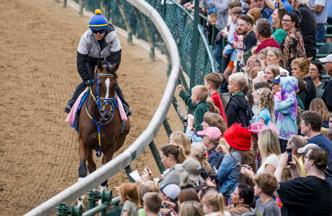
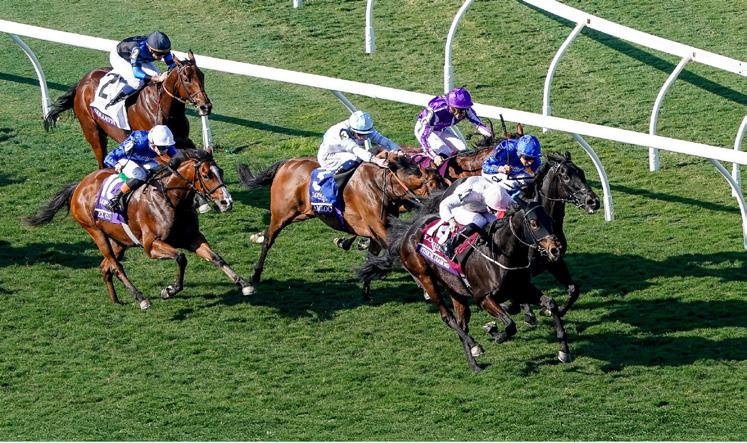
I got to thinking about all this again when thrilling to the Breeders’ Cup Turf just run at Del Mar (pictured). Amazing, exciting race … and look at the result. A parade of great international geldings: Ethical Diamond, Rebel’s Romance, El Cordobes, Amiloc, Californian Gold Phoenix, the filly Minnie Hauk, Redistricting, before we got to the first entire horse, Rebel Red. All Irish or British-bred. In fact, only two of the fourteen starters were bred in the USA. Yes, let’s change the culture … and breed for racing. Not breeding.
PROVEN VALUE & BRIGHT FUTURES
CONNECT
$10,000
2025 MGSW FOREVER AFTER ALL
G1 Winner and 2025 G2 Winner RATTLE N ROLL
SW Chip Honcho - 14pts to the Kentucky Derby
HONOR A. P.
$7,500
2025 G2 Winner MARGIE’S INTENTION
2YO SW ROMEO
THREE SW in December 2025
MORE THAN LOOKS
$10,000
G1 BREEDERS’ CUP MILE WINNER
Defeating 8 International G1Ws
FOUR TRIPLE-DIGIT BEYERS
First Foals in 2026
G1 Saudi Cup Winner, MGSW UNDEFEATED 2YO SW
Dam is 100% producer
First Foals in 2026
THE FACTOR
$5,000
Siring nearly 70% Winners
Highest of all active sires
2025 MGSW ATITLAN
2025 2YO SW RYKA
$7,500
$10,000
2025 GSW TENNESSEE LAMB
2025 2YO SW ONE MORE FREUD
$190,000 2025 Keeneland September Yearling
UNION RAGS
$10,000
2025 GSW & G1P RAGTIME
SIX G1 Winners
MESQUITE - 10pts to the Kentucky Derby
JONATHAN THOMAS THE ART OF WINNING SMALL
HOW FEWER HORSES & SHARPER FOCUS PLACE HIM AMONG RACING’S ELITE
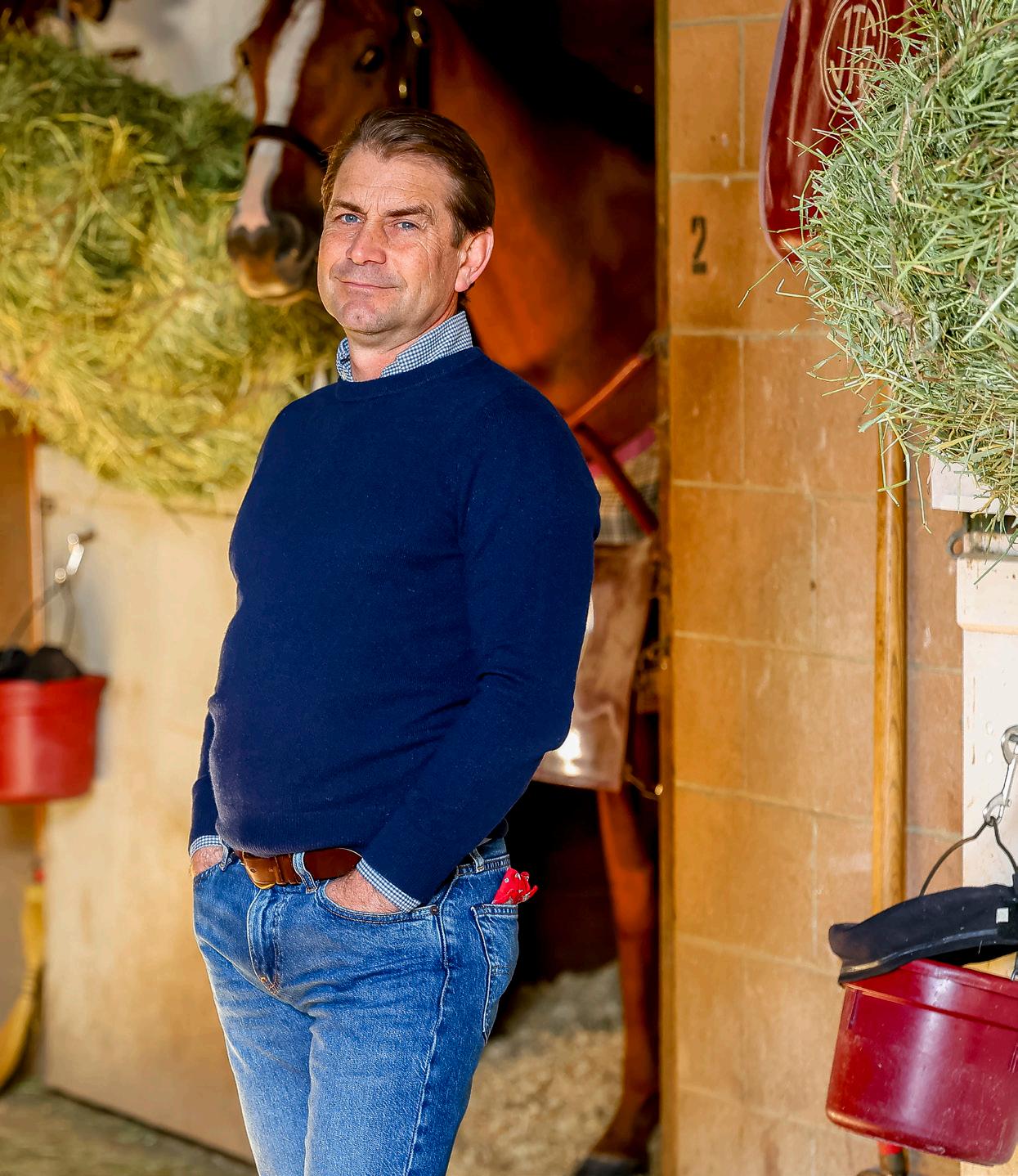
WORDS: ALICIA HUGHES PHOTOGRAPHY: BENOIT PHOTOS, DAN BIRCH, ECLIPSE SPORTSWIRE
THOMAS
It is said that numbers tell a story. And when it comes to the yarns weaved in competitive landscapes, the Thoroughbred industry relies as heavily as any sporting realm on metrics and percentages when it comes to anointing their most successful participants.
As with most narratives, though, context is a key part of interpreting raw data. In the case of trainer Jonathan Thomas, the framing of said figures is a necessity to appreciate the full scope of his professional standing.
Technically, the Grade 1 winning conditioner represents one of the smaller barns across North America with his horse population ranging between 15-25 head over the past season. His overall tallies are often dwarfed by many of his brethren as he has had more than 200 starts in a year just once since going out on his own – compare that with the fact Hall of Famer Steve Asmussen saddled more than 120 runners in the first few weeks of 2026 alone.
When viewed through a frame of reference, however, Thomas looms pretty large whenever he and his protégés arrive on racing’s most prominent stages. From 16 individual starters in stakes races in 2025, 10 individual winners were produced. His six graded stakes victories during that time equaled his careerhigh mark established one year prior and were more than even some Breeders’ Cup winning conditioners were able to boast over that 12-month span.
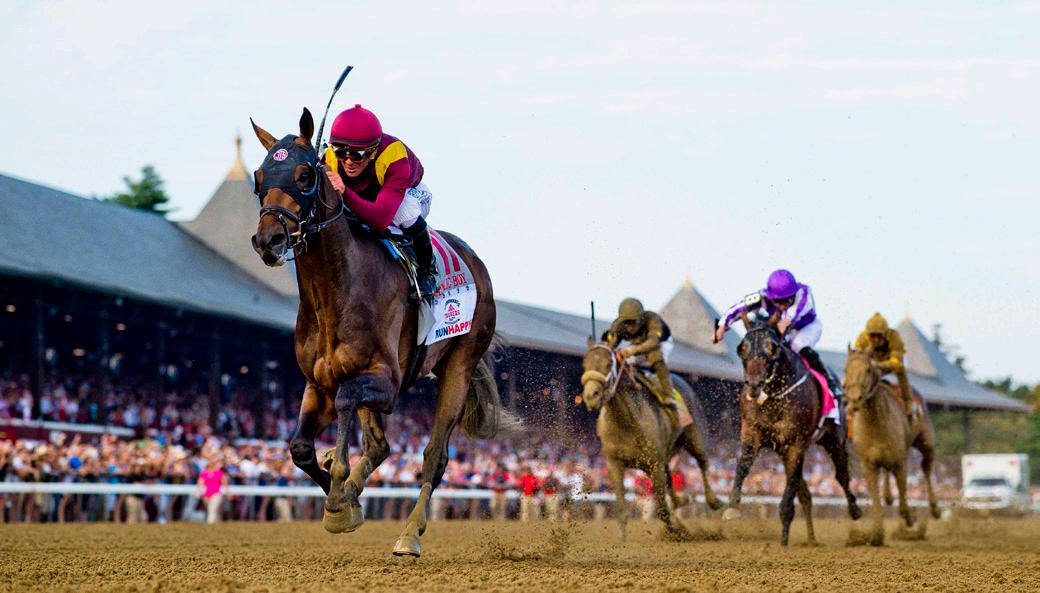
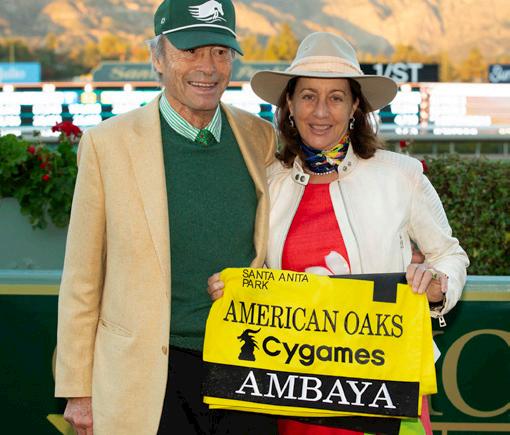
In terms of delivering when it counts, there aren’t many trainers Thomas takes a backseat to as he has won at or above a 20% clip nearly the entirety of his career, including a 28%-win rate in stakes races alone in 2025. As the calendar year came to a close, his barn fittingly uncorked another reminder of that fact when he sent out Augustin Stables’ Ambaya to victory in the Gr. 1 American Oaks on the December 28th card at Santa Anita Park.
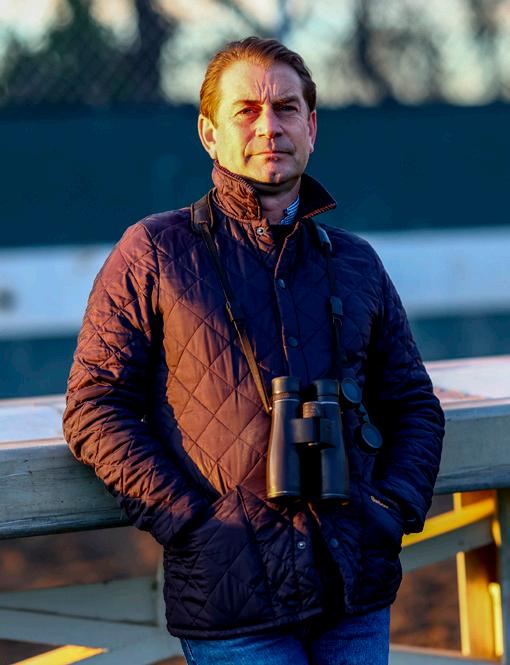
If Thoroughbred racing had pound for pound rankings, there is little doubt Thomas would be in contention for a top spot - which begs the query as to why, when his numbers clearly tell the story of a high-level skillset, the amount of horses in his care continue to deem him one of Thoroughbred racing’s best kept secrets.
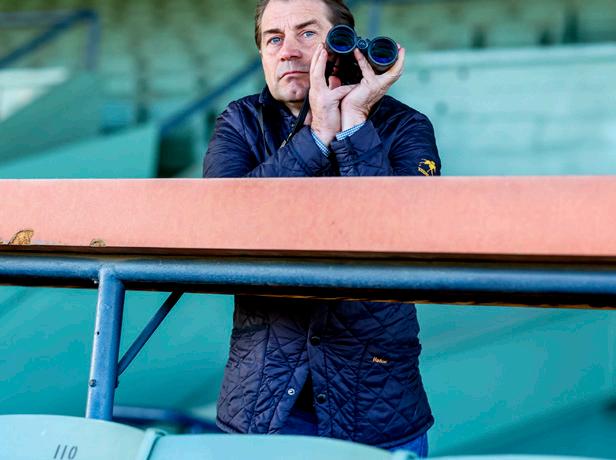
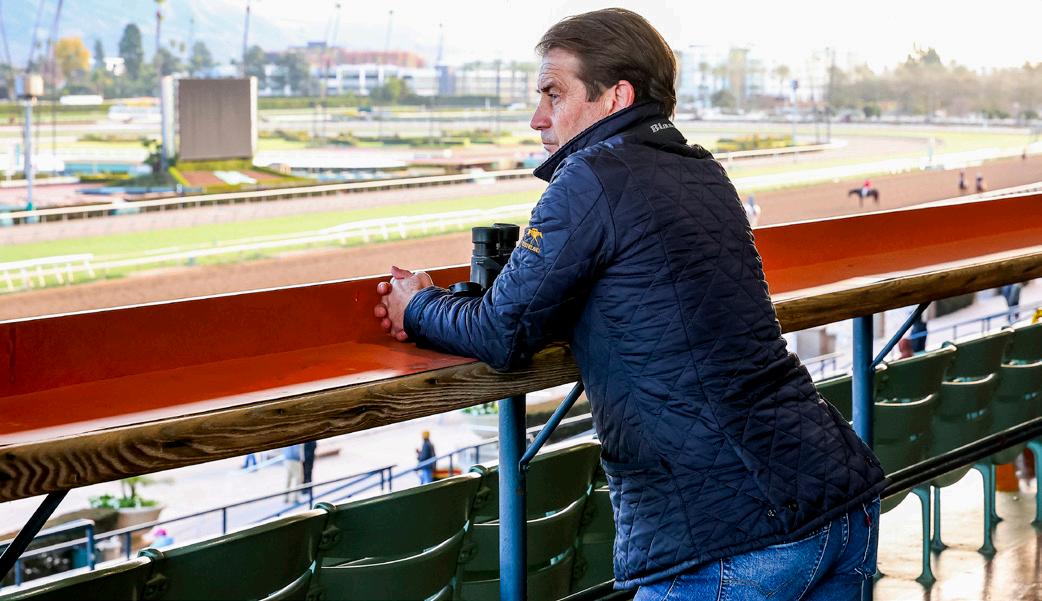
“It’s a good question,” Thomas said during a break in his shopping attempts at the 2026 Keeneland January Horses of All Ages Sale. “We’re always trying to stay a step ahead and add quality to the tilt. I will say I think we’re all better off with quality so if it’s a difference of having 25 quality animals versus 50 or 75 that are struggling...I’d much prefer the lower numbers.
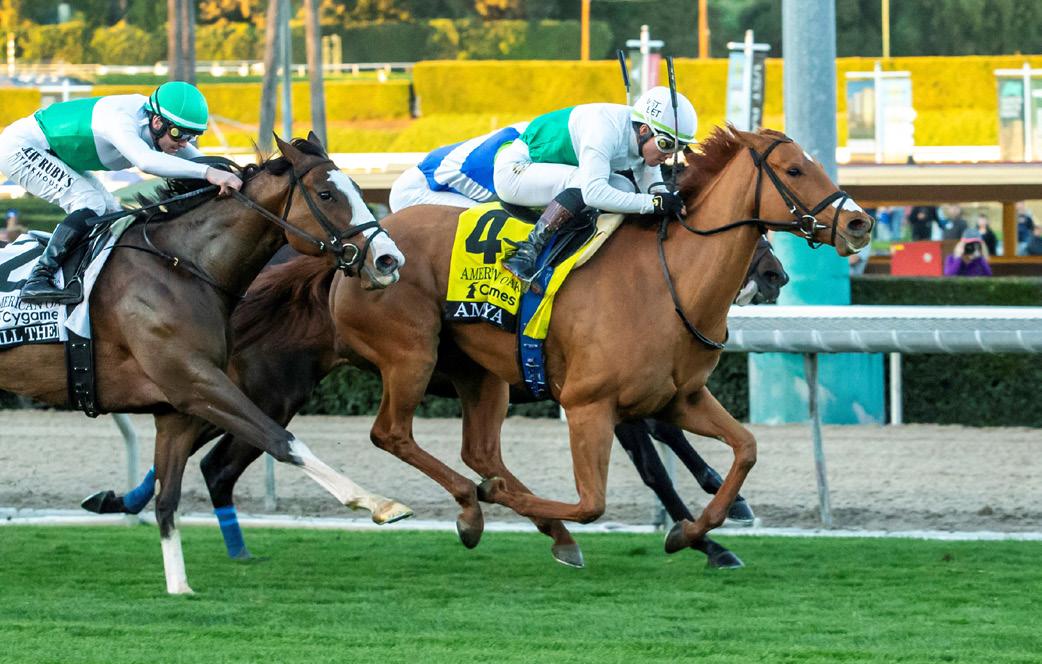
Augustin Stables’ Ambaya and Kazushi Kimura on their way to victory in the 2025 American Oaks at Santa Anita Park.
“I’m happiest when I can be present with the bulk of my animals… so it might be just the way I’ve constructed it through osmosis. But certainly, our doors are open and we’re always welcoming new participants and clients with the hope that we can get our hands on horses that we can play at the high end with.”
Working hands on with bloodstock has been a lifelong objective for Thomas, a native of Virginia whose career path has gone from steeplechase jockey to assistant trainer to the helmsman of his own barn that, while compact in numbers, lacks for little in the way of accolades. That he has been able to make the most of the opportunities which have come his way is little shock to those who have spent time in his thoughtful orbit, especially given that he honed his trade working for the likes of such all-times as Hall of Fame trainer Todd Pletcher and the late Christophe Clement along the way.
He didn’t necessarily target making his living as a trainer while growing up on the famed Rokeby Farm, but Thomas knew his avocation of being around horses would ultimately turn into his vocation. When his career as a steeplechase rider was cut short in 2000 due to a frightening injury that left him having to relearn how to walk, he pivoted his professional path but not his passion.

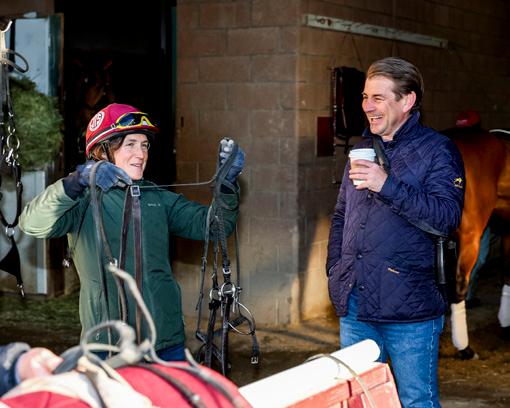
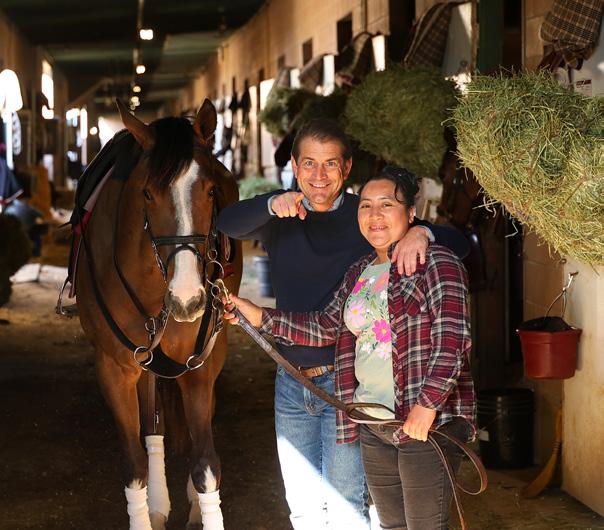
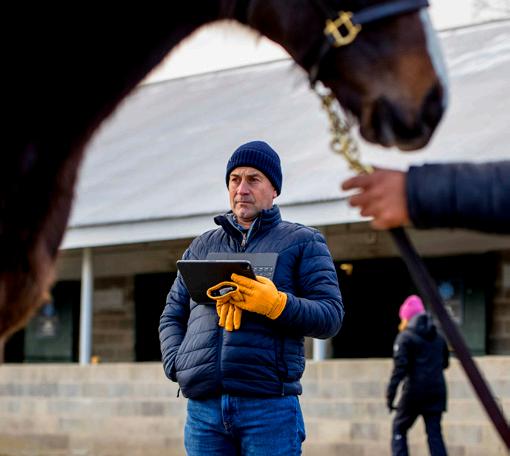
“Working with horses, it’s all I’ve ever done. I’ve never earned a living any other way,” Thomas said. “I don’t know that I was that specific where I was going to be a trainer, but I really enjoy the horses themselves. I felt like if I could work with the right people, the right caliber of horse, I would be happy in a lot of different facets.
“I think because I’ve been around racing since I was little, it was the easiest thing for me to kind of do. But I knew I would never do anything that didn’t involve horses.”
It has been nearly a decade since Thomas formally hung out his own shingle on the nation’s backstretches and featured in his more than 300 career victories are 55 stakes triumphs and counting. His career shift came about a bit fortuitously as Thomas joined John and Leslie Malone’s Bridlewood Farm 2013 as the trainer for the Ocala, Fla.-based operation after spending several years working for the now eight-time Eclipse Award winning Pletcher.

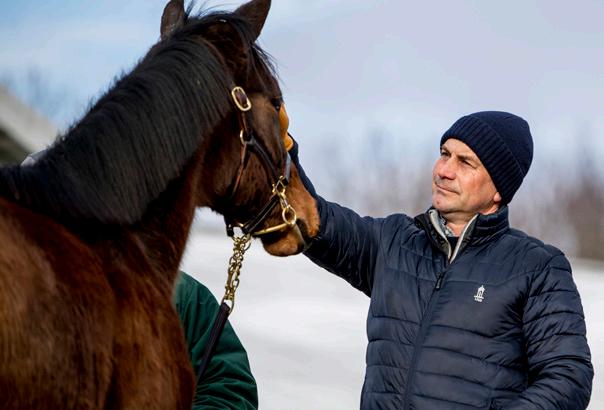
It was a move prompted in large part because of his ability to bring out the best in the horses he is trusted with caring for.
“It came about organically, and, in retrospect, I probably could have done a better job with it because I wasn’t expecting it,” Thomas said of the decision to go out on his own. “I was breaking horses I was running against with horses I was training…so it was kind of odd.”
Praise be
Thomas’ presence at the 2026 Keeneland January Horses of All Ages Sale represented an anniversary of sorts as ten years earlier, he altered his career trajectory by purchasing a bay son of More Than Ready for $170,000 on behalf of owner Robert LaPenta. Though he was working for Bridlewood, he was allowed to take on outside clients, and there was something about the ridgling, later named Catholic Boy, that struck him as he was prepping youngsters on the property.
Two years later, the short yearling Thomas had picked out was dragging him to the mountain top under his own banner. After signaling his quality with multiple graded stakes wins during his juvenile season, Catholic Boy anointed himself one of the most versatile runners of his generation when he annexed the 2018 Travers Stakes (Gr.1) on the heels of taking the Belmont Derby Invitational (Gr.1) on turf one race prior.
| JONATHAN THOMAS |
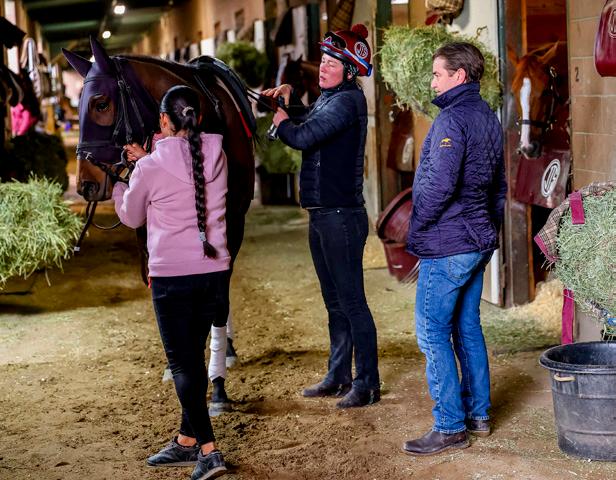
“This is something they should make a movie about,” LaPenta said of Thomas after that Travers triumph. “A trainer who has never won a graded stakes race bought a horse for us. (Catholic Boy) was not considered to be an ‘A’ horse at Bridlewood and Jonathan kept saying ‘There is something about him I like’ and I said ‘Okay, now you’re going to have a chance to prove it’. And he did.”
At the time of Catholic Boy’s Travers victory, Thomas was still breaking horses like future Grade 1 winner Maxfield and was obligated to about 150 yearlings that were coming into Bridlewood. After bringing his freshly minted dual Grade 1 winner back with him to Florida and honing him for a 4-yearold campaign that would produce the sixth graded stakes of his career, Thomas decided to go all in on his solo training career.
“I was actually very happy with what I was doing in Ocala at the time. So, it’s kind of (Catholic Boy’s) fault, really,” Thomas laughed. “I went on a road trip for, it seemed like two years. But even though it was early in my training career I was ready for it, because we handled horses like that all the time with Todd (Pletcher). So, the only difference is it’s your name and your colors and your webbing.”
Catholic Boy and Javier Castellano wins the 2018 Travers Stakes at the Saratoga Race Course.
Thomas at the 2026 Keeneland January Horses of All Ages Sale.
to No. 1 Sires.

Among the many lessons Thomas came to appreciate from his time working with Pletcher was how diligent preparation can help dull the nerves. The unshakable demeanor his former boss is famous for is something Thomas said comes from an inner confidence of knowing the work has been done to the best of its ability and the outcome is out of one’s control.
“Todd was the best person for me ever to work for because he could win six grade ones in a weekend, and he was Todd,” Thomas said. “He just went about his business and did the best he could. It’s like, ‘I’ve done what I can do, so it’s up to the horse now.’ I was very lucky to be around that.”
Though he admits to being a bit more “manic” internally than his champion mentor, Thomas too is one who rarely misses a dot on his checklist, as his high percentages testify to. While his equine head count has waned from its peak of more than 50 horses at one point, quality is an intangible that continues to find him. Perhaps no area is that more evident than in his pairing with the inimitable owner George Strawbridge Jr. whose Augustin Stables has become the backbone of Thomas’ current reality.
True horsemen tend to find each other no matter their proximity, and such is the case with Thomas landing Strawbridge
as his main client. Thomas first came onto Strawbridge’s radar back in his steeplechase days when he rode a couple horses for him, and that relationship grew more roots when Thomas started breaking some of Strawbridge’s equine talent at Bridlewood.
When Thomas went full time into his training career, Strawbridge continued to showcase his faith in his horsemanship by sending the brunt of his bloodstock Thomas’ way. In addition to seeing Ambaya give Thomas his first Grade 1 win since Catholic Boy’s Travers, the pairing has also yielded such success stories as graded stakes winners Mrs. Astor, Will Then, and Truly Quality. Those trio of graded performers in particular were responsible for an especially powerful display at Del Mar in November 2024 when each scored graded victories during a seven-day span.
“He gave me a really big push…and we’ve been very fortunate where every year is getting a little bit better than the next,” Thomas said of Strawbridge. “We’ve done very well together. He has great pedigrees and he’s a horseman, so those horses are bred to race. They are given every opportunity to become the best racehorses. You’re leaning on decades of thought and work and families. A lot of thought has gone into it and we’re the beneficiaries of that.”
George & Julia Strawbridge.
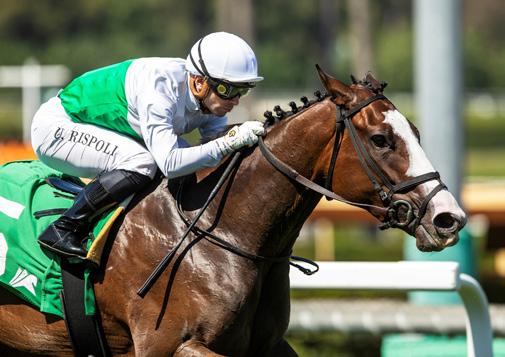
ABOVE: Augustin Stables’ Will Then and jockey Umberto Rispoli win the 2025 running of the China Doll Stakes at Santa Anita Park.
The support of a patient, breed-to-race owner is a unicorn of sorts in today’s current racing landscape, a privilege Thomas doesn’t take for granted. Testing as the ebbs and flows of the industry’s whims can be, he can look back at one of the darkest times of his career to remind himself that he isn’t defined by setbacks.
Rebuilding after a fall
There was a time, Thomas recalls, when if the only thing he did to make money was climb into a saddle each day, he would be content to say he wasn’t working a day in his life. After a fall in 2000 during a steeplechase event left him with a severe spinal injury, all of that got taken away, leaving him at age 19 wondering what kind of future he could make for himself.
“It was a scary time mainly because you’re losing your identity,” Thomas recalled. “[ For] everybody in this business at some level, it’s not a job, it’s a lifestyle. You’re giving yourself a lot of sweat equity and blood equity and emotional equity. I was 19 and doing well and when that got taken away, I was a pretty lost guy for a little while. I didn’t know what I was going to do.”
What he did was lean into what he knew, that when given the proper resources and enough opportunity, he could make himself stand out even against the most accomplished of peers. Since shifting his winter base to California a few years ago, he had made a habit of doing just that as 10 of his last 12 graded wins have come on the West Coast.
In an ideal world, he would love to grow his cliental to at least double its current level, a sustainable but manageable amount that would still allow him to be the hands-on force he desires. Such a boost is something that could also allow him to add some diversity to his barn by gaining some classic-type dirt runners in his program.
“Contrary to what my stats read, I love dirt racing,” he said. “We’ve won a Travers, we’ve won a Remsen. I would really like to figure out how to ramp up the dirt aspect. I’m not saying I’m trying to make my barn more commercial, but I’d like to make it
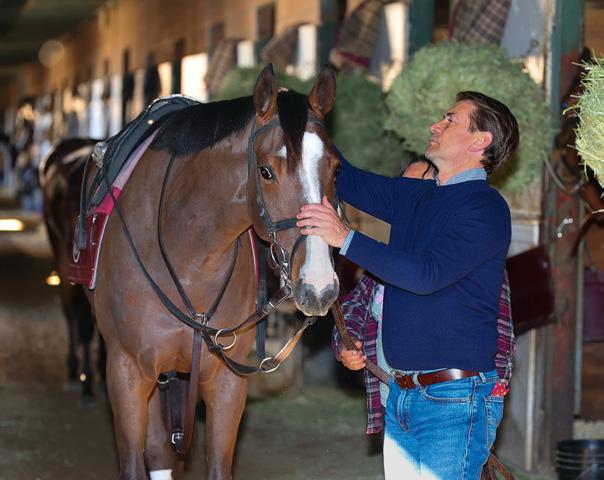
a little more attractive to the bigger entities to where our name is in the hat for some of the bigger horses.”
Though he jokes he is not great at advertising himself, a commonality throughout Thomas’ career is he has been broadcasting the ability of himself and his team for going on a decade.
They may not be as gaudy as some of his comrades, but his numbers do in fact speak for themselves, detailing to all who pay heed that there was a reason he burst onto the scene in such a high-level fashion.
“We love what we do. I’m very picky about my crew but we’ve got an excellent team,” Thomas said. “I’d love to have 50-60 horses, that would be great. But more important than that, it’s about the right client coming in, the right quality coming in so we can continue to try and chip away at the top tier of racing.”

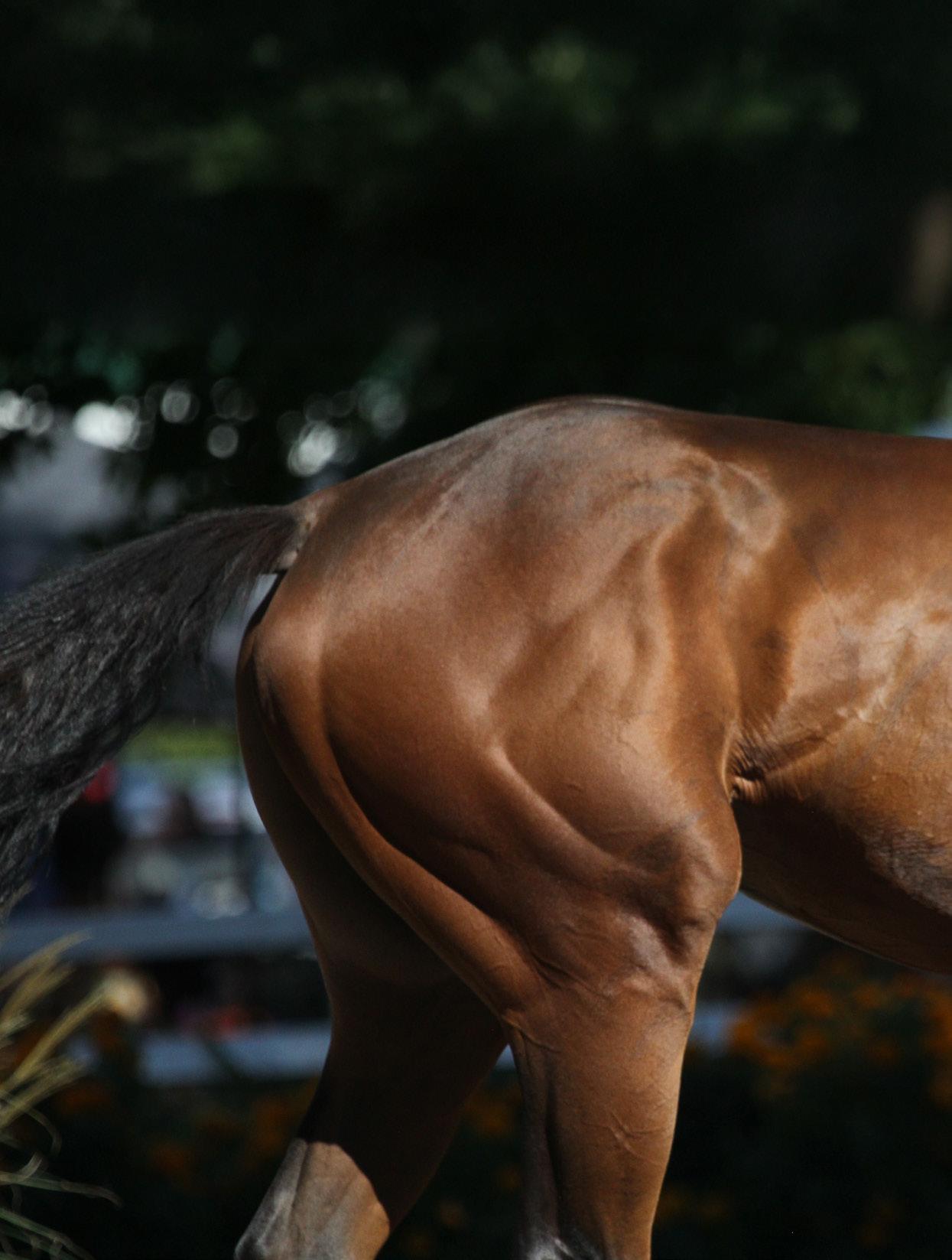
MUSCLEMATTERS
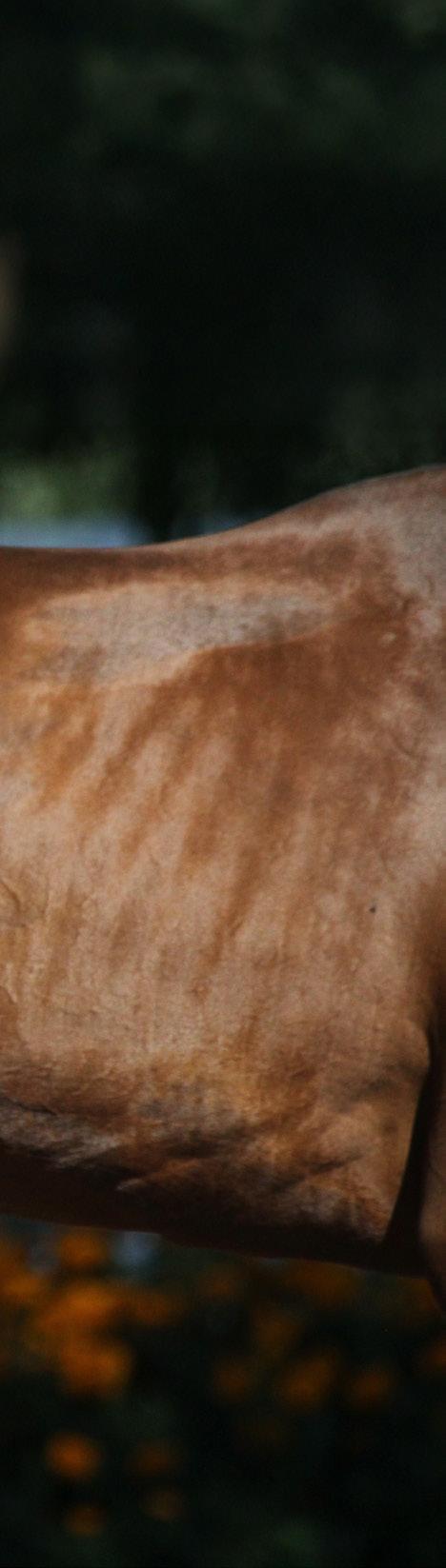
HOW PROTEIN QUALITY DRIVES PERFORMANCE AND RECOVERY IN RACEHORSES
Recent research is reshaping our understanding of equine muscle metabolism – revealing how the quality, timing and composition of dietary protein directly affect muscle synthesis, repair and ultimately, performance.
How much protein does a racehorse really need?
For racehorses, muscle isn’t just about strength – it’s about speed, stride and power. Well-developed, healthy muscles are essential not only for explosive performance on the track but also for injury prevention and long-term soundness. That’s why understanding the mechanisms behind muscle growth is so important.
In a 2020 study conducted at the University of Kentucky, horses were fed graded levels of a high-quality protein supplement. The research investigated how different levels of dietary protein influence the activation of the mTOR signaling pathway – the key mechanism behind muscle protein synthesis. Their findings revealed that mTOR activation peaked at a dose of 0.25g of crude protein per kg of body weight per meal. This equates to approximately 140-150g of crude protein or 220-240g of a typical protein (~ 30-35% CP ) balancer supplement for the average 550-600kg horse. Any intake above that threshold showed no further benefit.
Concluding that there is an optimal dose of high-quality protein per meal to effectively stimulate muscle-building processes. Feeding beyond that level may offer no added benefit, while feeding below it could mean missed gains.
WORDS: DR CAROLINE LOOS
Why not all protein is equal
Muscle is built from amino acids – and not all horse feeds supply these building blocks in equal measure. The effectiveness of dietary protein in stimulating muscle building is dependent on its quality. The quality of a protein source is determined by its amino acid profile and digestibility. The higher the digestibility, the greater the amount of amino acids available for absorption and protein synthesis. In addition, the closer the dietary amino acid profile matches that of muscle, the higher the quality of the protein source. One amino acid in particular stands out when it comes to promoting muscle mass: leucine, which acts both as a building block and as a powerful metabolic switch that initiates muscle protein synthesis through the mTOR pathway.
In a 2022 study, horses were fed meals based on alfalfa protein or a high-quality protein supplement. While both meals contained the same amount of crude protein, plasma levels of
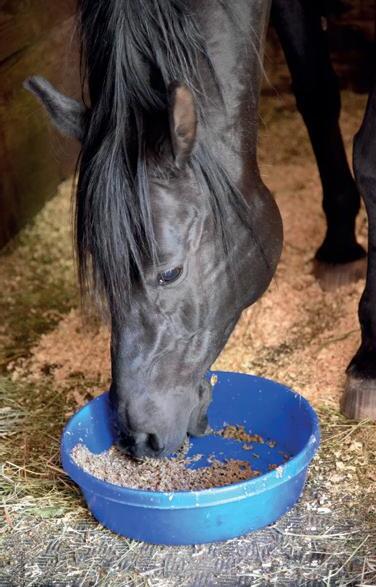
essential amino acids – particularly leucine – rose significantly higher and faster with the protein supplement. This difference in amino acid availability was mirrored in the muscle, with significantly greater activation of mTOR, meaning enhanced stimulation of muscle protein synthetic pathways.
Simply put: two feeds with identical crude protein levels can have vastly different effects on the horse’s body, depending on the type of protein they provide. That’s why evaluating amino acid profiles, and thus the quality of the protein, is more meaningful than comparing the quantity or percentage of crude protein in the feed.
Fig 2: Plasma leucine concentrations after feeding either alfalfa pellets or protein supplement pellets. The supplement reaches ~ 30% higher peak faster. Adapted from Loos et al, 2022.
Protein dose (grams of crude protein/kg body weight)
FIG 2
Fig 1: Muscle mTOR phosphorylation (i.e. activation) in response to different doses of protein intake. Adapted from Loos et al, 2020.


Timing of feeding:
Key in maximizing muscle development
It’s not just what you feed, but also when you feed it. We know that the magnitude of stimulation of muscle synthetic pathways and ultimately net muscle accretion over time may depend on the protein feeding pattern throughout the day. In the same 2022 study in horses, peak activation of muscle-building pathways occurred 90 minutes post-feeding in horses and deactivation of these systems took about 3-5h.
Work in human athletes shows that pulse protein feeding every 3h post-exercise is superior for simulating muscle protein synthesis than smaller frequent meals or large meals separated by 6h. If we cautiously extrapolate this to horses, this suggests that feeding a meal of at least 0.25g CP/kg BW of high-quality protein every 3-4h after an intensive workout, would be more effective for muscle development compared to feeding two larger protein meals morning and evening.
Secondarily, timing of feeding relative to exercise is also key for maximal muscle gains. Muscle fiber recovery is energy-intensive and amino acid-dependent. When amino acid supply is delayed or insufficient – particularly leucine – the repair mechanisms lag and muscle fibers remain vulnerable to damage. It has already been well established in other species that exercise and feeding work synergistically on muscle protein synthesis. Consumption of a small but high-quality meal of protein shortly after exercise results in greater activation of muscle protein synthesis compared to that seen with exercise alone. Furthermore, this feeding strategy will mitigate exercise-induced muscle damage, thereby speeding up recovery.
Racehorses, like many sport horses, are typically fed large, infrequent meals – often disconnected from training sessions. Although more specific research in horses is needed, providing smaller but high-quality protein meals several times a day, with one meal post-exercise, will have a beneficial effect on muscle protein synthesis and recovery.
The ‘Golden Hour’
The takeaway? Protein quality and precise timing of feeding throughout the day could be the missing link in turning training effort into real muscle gain – supporting faster recovery, better adaptation, and sustained performance.
This fits within the broader concept of the “Golden Hour”, the first 60 minutes post-exercise when the body’s recovery mechanisms are highly receptive to nutrients. Combining cooldown routines, rehydration and a high-quality protein meal during this window significantly enhances recovery. Beyond that, muscle recovery continues for up to 72 hours. Ensuring ongoing support through digestible protein, antioxidants and moderate movement during this period prevents stiffness, optimizes adaptation and reduces injury risk.
Strategic nutrition plays a vital role in managing muscle fatigue and optimizing post-exercise recovery. By ensuring rapid availability of key amino acids – especially leucine – trainers may reduce the risk of post-exertional muscle issues while supporting overall performance.
Small meal with high quality protein
Feeding within 2-3 h after training or race
Extra stimulus for muscle protein synthesis (MPS)
FIG 3
Fig 3: A window of anabolic potential. Feeding a small, high quality protein meal after resistance exercise stimulates muscle protein synthesis (MPS) to a greater extent than exercise or feeding alone. Adapted from Churchward-Venne et al, 2012.
ABOVE: Consumption of a small but high-quality meal of protein shortly after exercise results in greater activation of muscle protein synthesis compared to that seen with exercise alone.










Trainer Mag Spring 26.indd 1
1/28/26 8:02 AM
Building blocks for muscle: beyond leucine alone
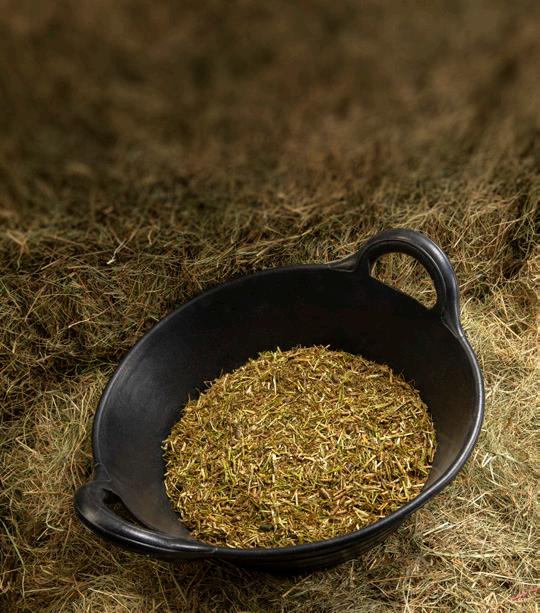
While leucine plays a starring role in triggering muscle synthesis, it does not act alone. Other essential amino acids like lysine, methionine and valine are critical for the actual building of new muscle tissue. Muscle development can only occur when all necessary amino acids are present in sufficient amounts. That’s why feeds or supplements with balanced amino acid profiles outperform generic protein sources in supporting muscle health.
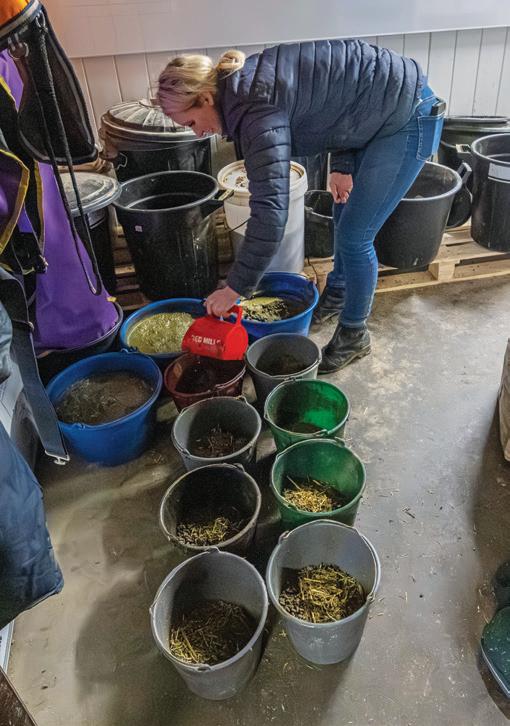
Racehorses are elite athletes. They deserve nutrition that reflects that status. With the right feeding strategy, we can unlock the full potential of training, accelerate recovery and protect horses from common setbacks. The good news? These are changes you can implement immediately. Begin by evaluating your current feeding schedule. Look for opportunities to align post-exercise meals with protein intake and ensure those meals are based on high-quality, digestible proteins.
Practical takeaways for racehorse trainers
• Feed smarter, not just more. Focus on protein quality, not just quantity.
• Use the Golden Hour wisely: apply cool-down routines, hydration and offer a digestible protein-rich recovery feed.
• Choose protein sources rich in leucine and essential amino acids.
• Avoid overfeeding: excess protein cannot be stored and takes a lot of precious energy resources to be broken down – it’s wasting nutrients and potentially stressing metabolism
Feeds or supplements with balanced amino acid profiles outperform generic protein sources in supporting muscle health.
Racehorses are elite athletes. They deserve nutrition that reflects that status. With the right feeding strategy, we can unlock the full potential of training, accelerate recovery and protect horses from common setbacks.
References:
• Loos et al., 2020, , Pathways regulating equine skeletal muscle protein synthesis respond in a dose-dependent manner to graded levels of protein intake Journal of Animal Science, 98(9), p.skaa268 https://doi.org/10.1093/jas/skaa268
• Loos et al., 2022, Differential effect of two dietary protein sources on time course response of muscle anabolic signaling pathways in normal and insulin dysregulated horses. Frontiers in Veterinary Science, 9, p.896220. https://doi.org/10.3389/fvets.2022.896220
• Areta, J.L., Burke, L.M., Ross, M.L., Camera, D.M., West, D.W., Broad, E.M., Jeacocke, N.A., Moore, D.R., Stellingwerff, T., Phillips, S.M. and Hawley, J.A., 2013. Timing and distribution of protein ingestion during prolonged recovery from resistance exercise alters myofibrillar protein synthesis. The Journal of physiology, 591(9), pp.2319-2331.
Churchward-Venne, T.A., Burd, N.A. and Phillips, S.M., 2012. Nutritional regulation of muscle protein synthesis with resistance exercise: strategies to enhance anabolism. Nutrition & metabolism, 9(1), p.40. https://link.springer.com/article/10.1186/1743-7075-9-40
PHOTOGRAPHY: ECLIPSE SPORTSWIRE, GALOPPFOTO.DE, LAURA PALAZZOLO, MAREK RZEWUSKI, PAM MACKENZIE PHOTOS, SHUTTERSTOCK
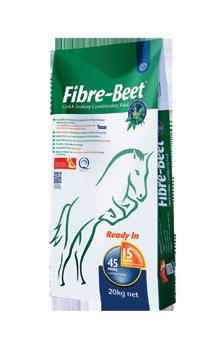
Quick, easy & palatable
British Horse Feeds Cooked Linseed is 100% whole linseed that has been cooked and micronised to provide the highest quality and to optimise digestibility and bioavailability of its nutrients.
High quality protein, with an amino acid profile that supports muscle activity and adds topline
Excellent source of slow release and non-heating energy
High levels of omega-3, omega-6 and omega-9 fatty acids which aids skin and coat condition
Ideal supplementary feed for forage/fibre-based diets
Good source of vitamins and trace elements
Contains natural antioxidants
To find a dealer near you or order online visit: www.emeraldvalleyequine.com or call 888.638.8262
Connect with us! @healthyequine @emeraldvalleynh

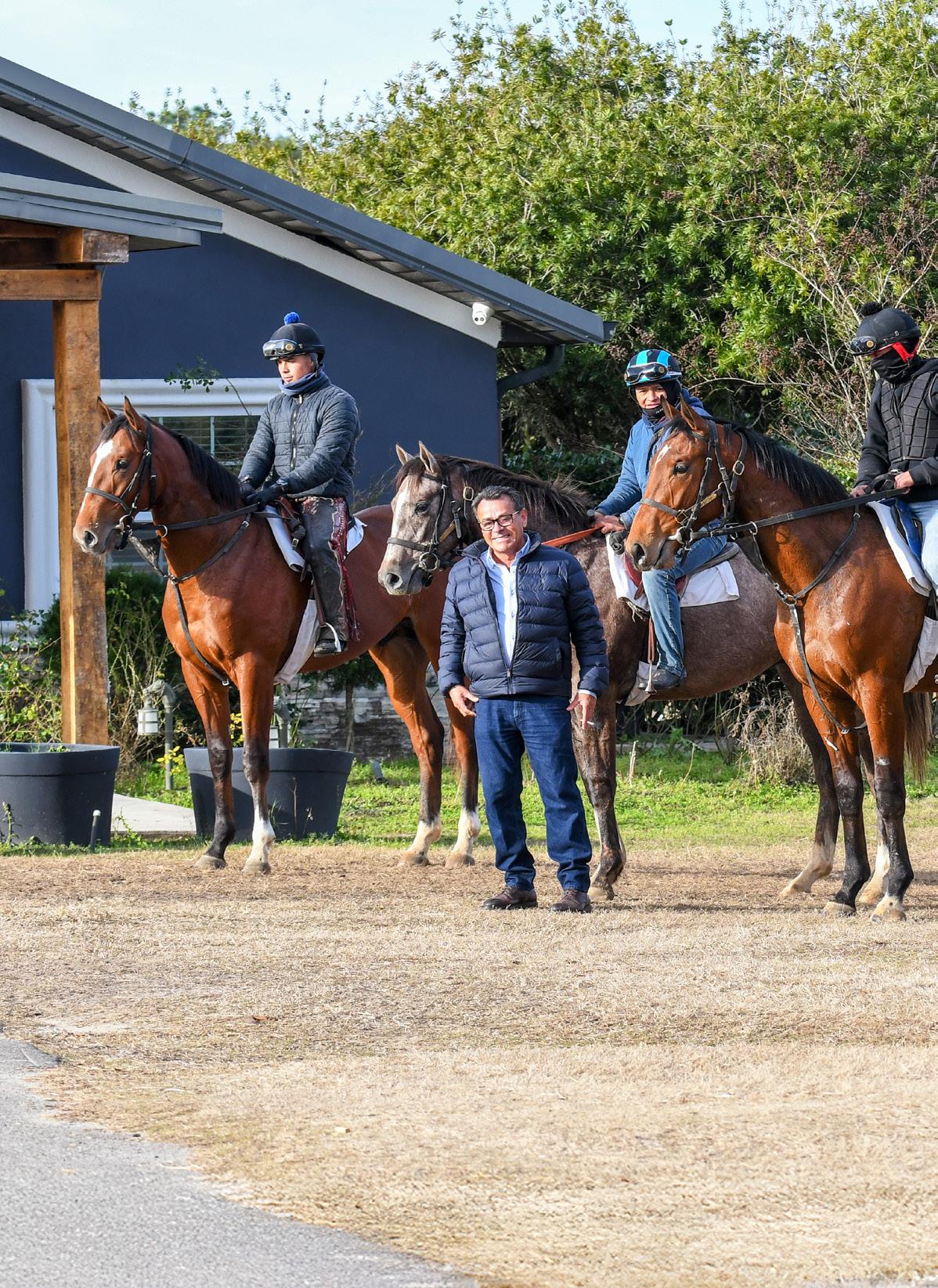
RAUL REYES
HOW LISTENING TO HORSES BUILT A LEGACY OF CHAMPION THOROUGHBREDS
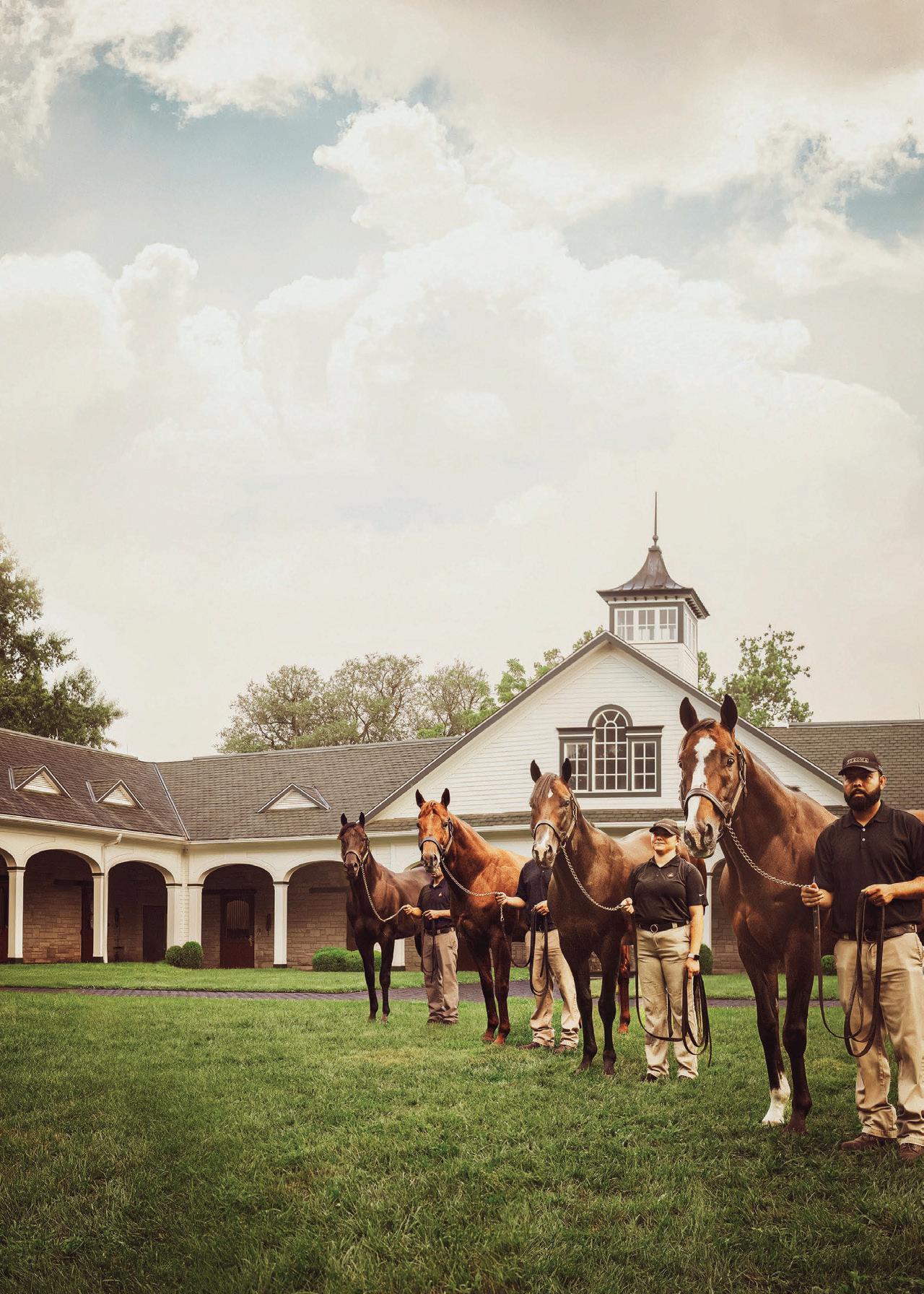
How does a poor kid raised in dusty, broilinghot Tijuana, Mexico come to own two million-dollar farms (not at the same time) in Ocala, Florida and be responsible for the development of horses like; Beholder, Tommy Jo, Letruska, Tamara, Silver Train, Miss Temple City, Stanford, Shancelot and the Eclipse Award winning colt – Ted Noffey?
And perhaps the most mysterious question – how does he do it, without the use of charts or normal record-keeping tools?
His wife of 37 years, Martha, simply says he pays attention and is like a horse whisperer. There is science and then there is art. Put Reyes in the art camp.
Horses can communicate everything – what they listen to, what they look at, what they worry about, according to Reyes. Taken together, Reyes calls it horse talk – a language in which he is apparently fluent.
Seeing and reading what horses communicate with their walk, their gait, their ears, and their own focus is at the heart of developing Thoroughbreds at his farm, King’s Equine, in Ocala, Florida. It is, without question, unique to Reyes. He even pays attention to what draws a horse’s own attention, adding “I see what they worry about.”
His management of the over 140 horses at his farm, not surprisingly, reflects both introspection and intuition with a horse noted and recorded, again not surprisingly, in his head. “The only thing I write down is when one looks bad, very bad.”
In short, it’s all catalogued in Reyes’ memory bank. Traditional methods, according to him, haven’t changed much in the last 100 years. “The good things are pretty similar. They change very little.
“When I look at horses, I don’t look at the good ones. I look for the ones, like in the Bible, the lost sheep. I don’t worry about the ones that are eating, the horses training like champions, and looking good. What am I gonna do for the one not doing well?”
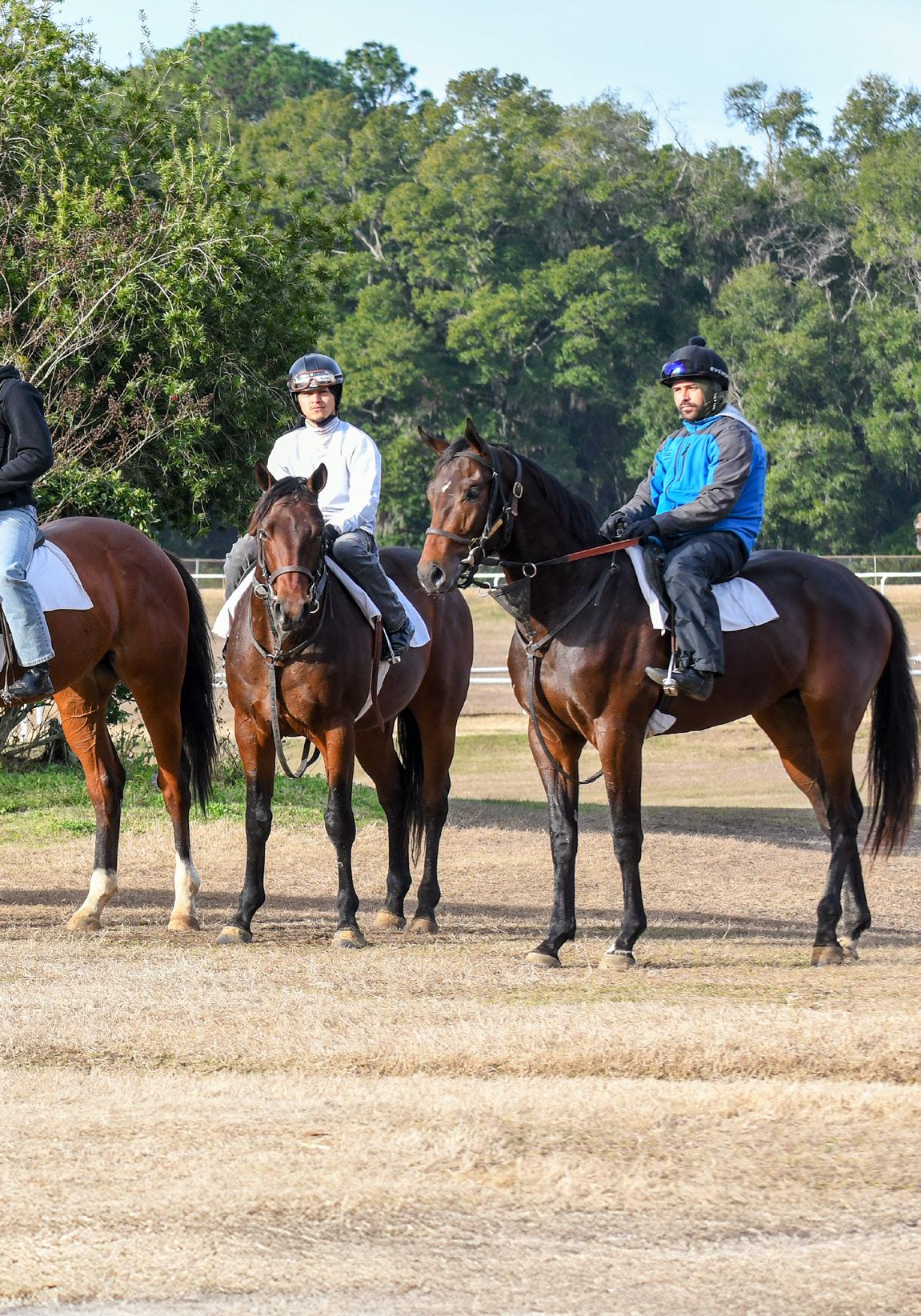
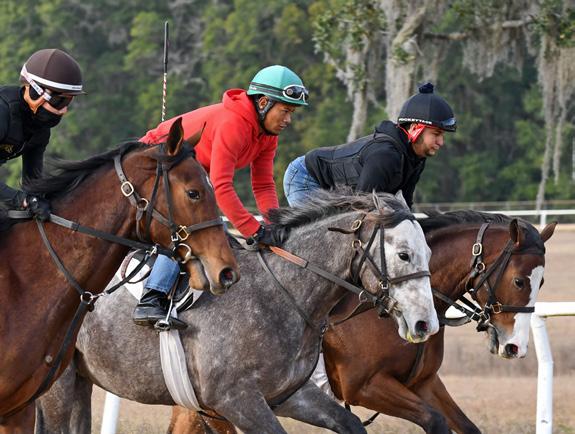

As young as eight or nine years old began hot walking horses at Agua Caliente. At the ripe old age of 13 he took on a role that would make him a jockey: exercise riding. He went from Tijuana to training tracks in Escondido, which is in San Diego County.
He achieved the goal of race riding and rode some in Mexico but mostly in New Mexico. When weight issues became too much for him, he moved to Los Alamitos and Quarter Horses as weight limits were higher than for Thoroughbreds.
There was one problem, though. “There’s no money.”
He hung up his jockey tack at another ripe old age of 20, after retiring, by his recollection “five times.”
Exercise riding had been a natural landing spot for him. It was all he knew, and it supported him for the next 12 years. It would also expose him to more than he could ever hope to know. In that time, he worked for and learned from two titans of the sport, trainers Charlie Wittingham and D. Wayne Lukas.
He learned discipline from Wittingham and may have gotten lessons he still uses in patience to hear what a horse was telling him as a trainer. There is a natural divide between Reyes at a training center working with raw talent to discover and develop and racetrack trainers essentially receiving a finished product from King’s Equine. Reyes is preparing horses for a career and not for a race. That is left up to the racetrack trainers.
Yet, his thinking is beyond teaching a horse how to break from the gate or how to rate to conserve energy. In his approach he assesses where a horse is likely to perform best when it is sent north, helping both trainers and owners in what is best for their horse. “You have to condition a horse depending on the racetrack. You cannot train the same with a horse on a deep track that you do on a fast track.”
Decades of being around horses are behind his uncanny ability to spot talent, ,to develop hidden potential, or to see potential that might be overlooked.
Reyes grew up in the shadows of Agua Caliente just across the Mexican border from San Diego, and he was mesmerized by the races he could see in a short distance from his home. Proximity may have been a saving grace for Reyes, raised by a struggling divorced mom with five other children.
Watching horse races gave him a dream. A poor kid, he saw racing as a way to make money. Jockeying was where he knew the big money, especially for a Hispanic, was in jockeying.
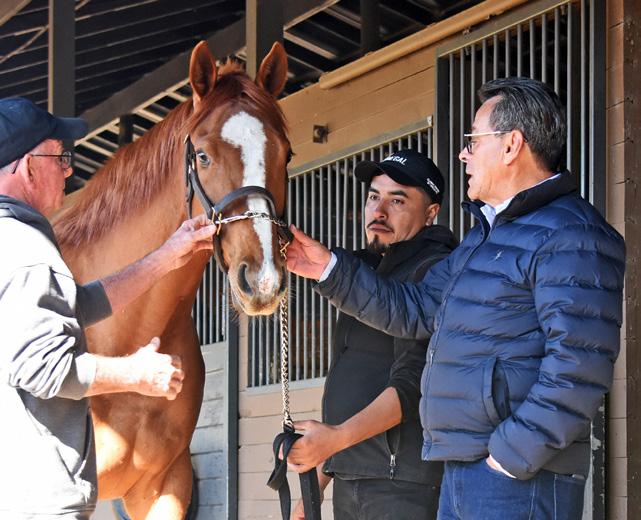
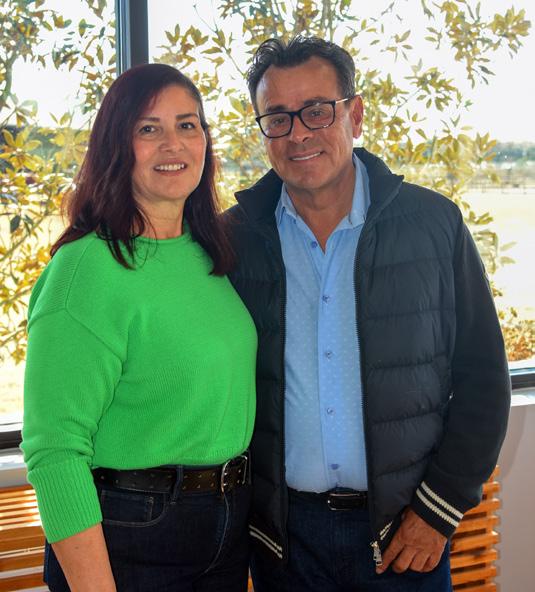
ABOVE: Martha & Raul Reyes at their King’s Equine training facility in Ocala. “Nothing would have been possible without the support of my wife.” – Raul Reyes.

No two trainers could be more dissimilar despite both experiencing amazing, Hall of Fame-worthy success. “Charlie was more ‘long’… take it easy. That’s why Lukas could win more two-year-old races than Charlie.”
Reyes summed up Lukas’s approach in three words: “Let’s be ready.”
He learned from these two men and others, preparing him, as his exercise riding ended, to go forward with a plan that had begun to form in his mind.
“I’ll never forget a barbecue at my house. I was having a couple of beers and I was thinking to myself about horses. And then I drank a couple more beers, and I said to myself, ‘You’re working for others, why don’t you grow for yourself?’”
A downturn in the California economy took Martha and him into a detour into the car business and away from what he loved.
“I got bored. ‘No, this is not my thing. I want to go back to horses.’”
After leaving California and the car business behind, he and Martha went to Miami, where he worked briefly as a jockey agent.
“It’s the worst job in the world. If you really hate somebody, get them a job as a jockey agent.”
A drive to Gainesville, Florida to visit a brother there took him in a completely different direction both that day and for good. He never made it to Gainesville. “Somebody had mentioned Ocala. We didn’t have any idea where Ocala was. It was a foreign country for us, this side of the country. They said you might like it there in Ocala. There are a lot of farms, you know. It’s horse country.”
Martha Reyes finishes the story: “He saw signs on I-75 for Ocala.”
On a whim he took an Ocala exit and discovered farm after farm. One of the first farms he saw staggered him. It was the Tartan Farm stable, which he knew had been the last home for Dr. Fager.
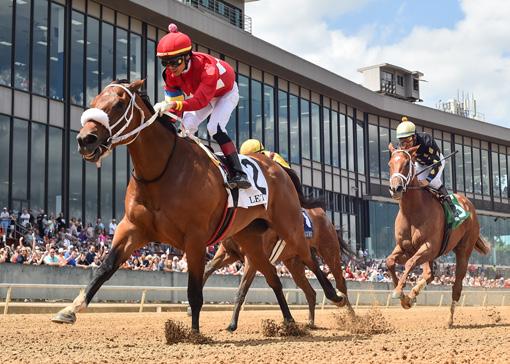
After driving five hours from Miami he found a phone booth to call Martha and tell her, “I’m coming back for you.” He didn’t mean tomorrow after a night’s rest, but right then and another five hours of driving back south.
An experience similar to the one he had at his barbecue happened twice in Ocala.
“When I went there, I asked myself, “Riding? It wasn’t enough for me. I can do way more than that, and realized I knew more about horses than I thought I did.” At the same time, Reyes was surprised at what some trainers were instructing him. He thought, “Wait a minute—that’s not right.”
The tipping point was working for two guys who, on paper, were successful. “I was galloping for a guy that had fifty horses, and for another guy that had forty, and I thought both of them were really bad trainers.” Reyes was baffled at how these trainers got that many horses. “So I said to myself, ‘I should be getting a hundred if these guys are getting forty, fifty horses.’”
Frank Taylor, who owns Taylor Made Farm with his three brothers, had taken note of Reyes when he worked for him at a horse sale in Lexington at Keeneland. “So he sent me a horse.”
Others followed on Taylor’s recommendation. “People who he knew he sent to me [with their horses].”
He and Martha bought a farm in Ocala with their burgeoning business.
“From there, we started getting more horses and having success from different people-- winning races.” That is an understatement. They included King Abdullah of Saudi Arabia including 40 to 50 of his horses. In the wake of the king’s death the late B. Wayne Hughes became a client of Reyes.
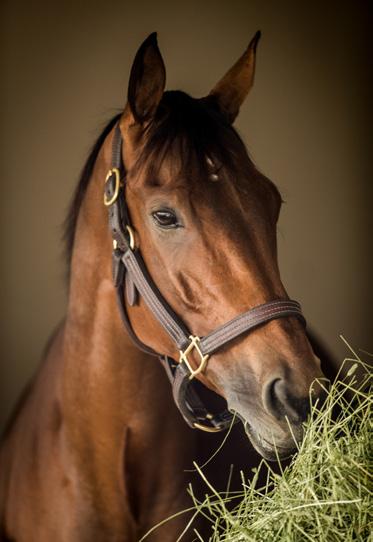
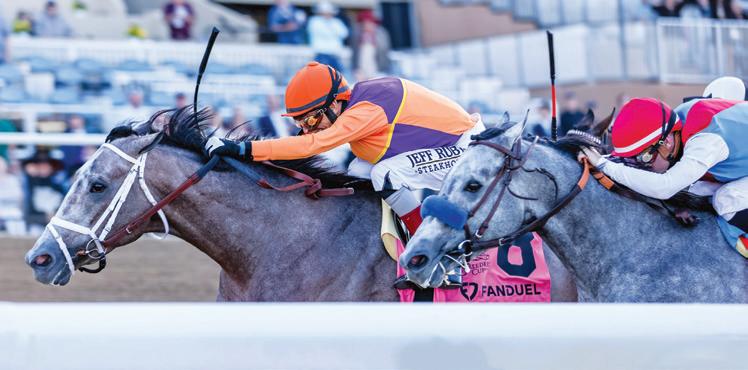
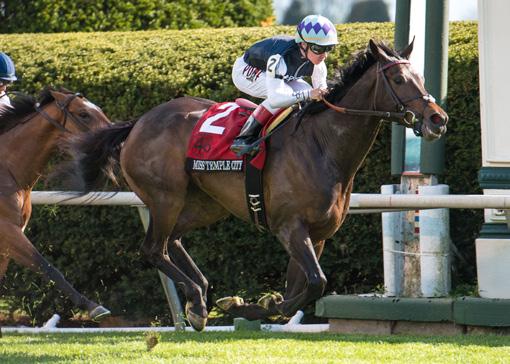
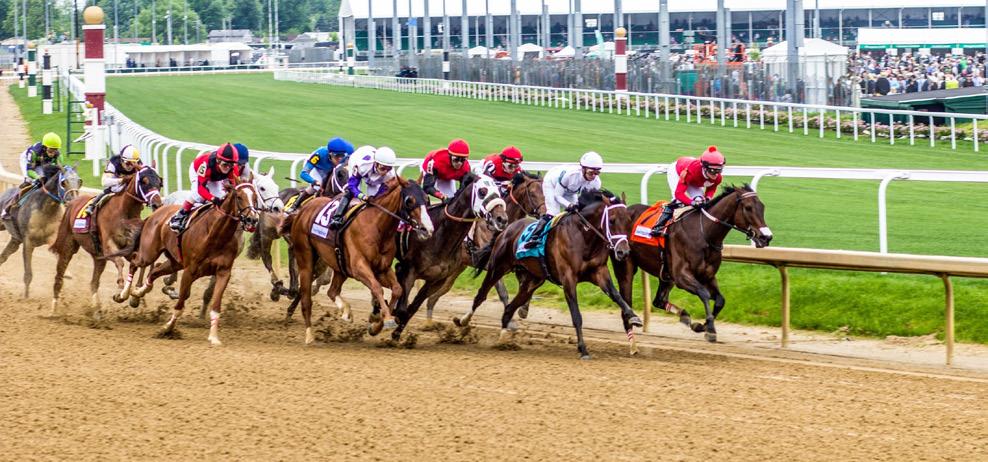
Notable King’s Equine graduates include the 2025 Eclipse Award–winning colt Ted Noffey (above); two-time Apple Blossom Handicap winner Letruska (below); three-time Breeders’ Cup superstar Beholder (left); and three-time Grade 1 winner Miss Temple City (below left).

SPORT QUEENS FRONT & HIND
EC QUEENS FRONT & HIND
EC QUEENS WEDGE FRONT & HIND
RX FRONT & HIND
SPORT XLT HIND
SPORT XLT WEDGE HIND
SPORT LT HIND
EC XLT HIND
EC XLT WEDGE HIND
EC LT HIND
RX XLT HIND








All was not roses and lollipops, however, for them. A dispute with a financial backer of the Reyes farm led to them reaching an agreement with the backer and moving on.
End of story? Not even close. “We just kept training, making money. We bought a horse for $7,500 and I sold him for $375,000.” Beholder netted them a sum that, combined with the pinhook profit, gave the Reyes money for another farm in Ocala.
“We went from sixty-five acres [at the first farm] to one hundred and forty-three.”
Reyes is effusive in his gratitude to his adopted country America. “There’s nobody that gives you chances to make it like here. If you were born a worker in another country, you would have to die as a worker. And there’s a good chance your kids will be workers. You’re never going to be an owner. You’re not going to be the boss. You’re not going to own a plane.”
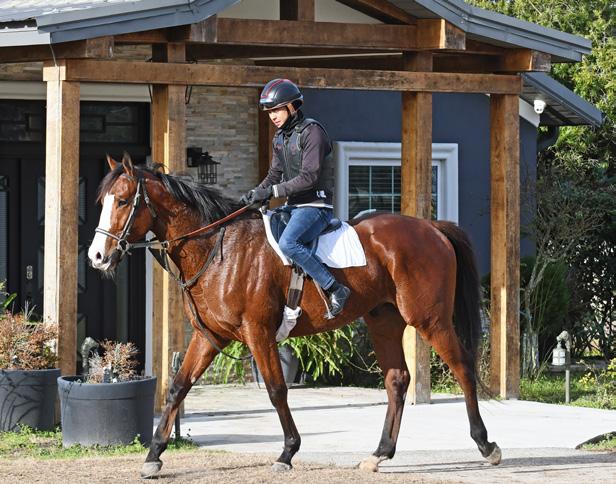
Reyes has a refreshing perspective also on one obstacle put up by some white Americans against Hispanics. “Everybody gets discrimination: fat people, dumb people, ugly people. There’s discrimination against a brown guy with an accent. Nothing is easy. The only way it’s going to be easy is if your dad is a billionaire, and you’re a good-looking human being.”
With one hundred forty horses, King’s Equine is one of those places that might dazzle a young man who has never seen Ocala. Reyes will never stop appreciating and loving his home. If anything, the joy of being around horses has increased over the years. Retirement is not in his thoughts or vocabulary. “If I quit, I die.”
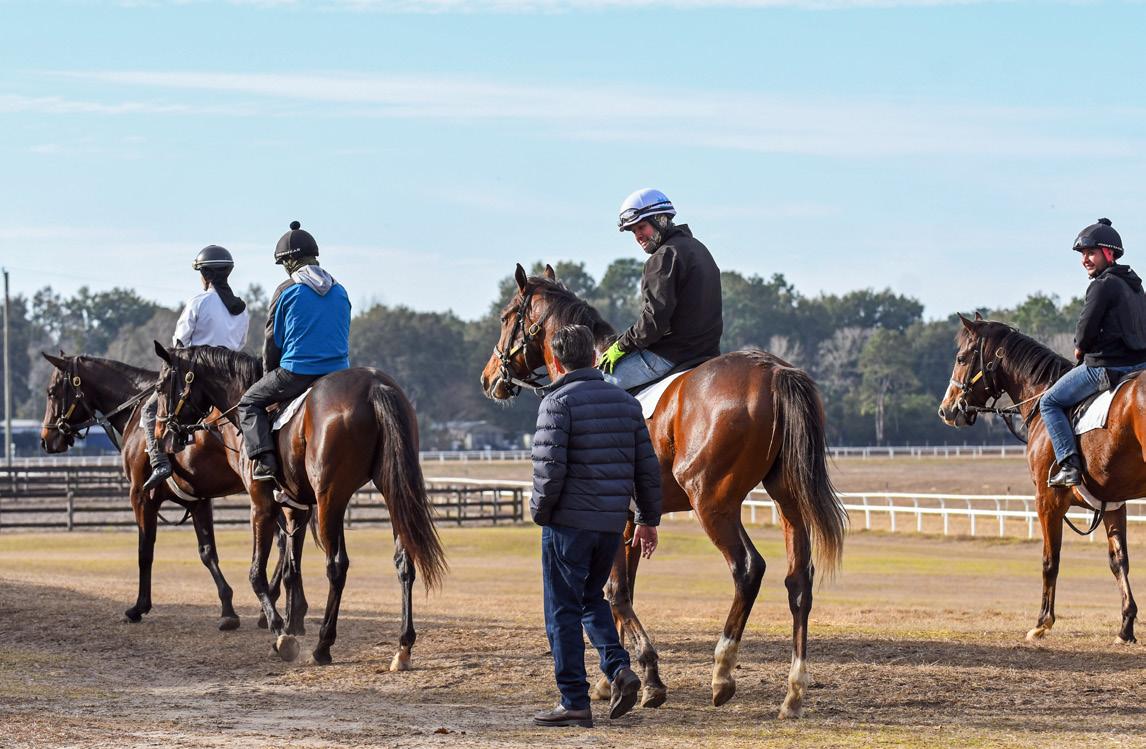
The operation gets its name from the English translation of Reyes. It is “King” and it is fitting.
Raul Reyes would tell you, borrowing from Mel Brooks’s 1981 film, History of the World, Part 1, “It’s good to be the king.”
SCF RACING ST FRONTS & LT HINDS



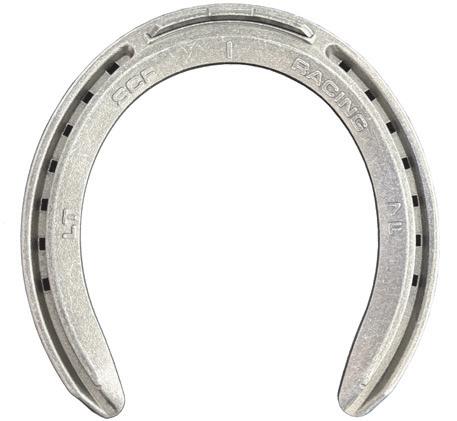
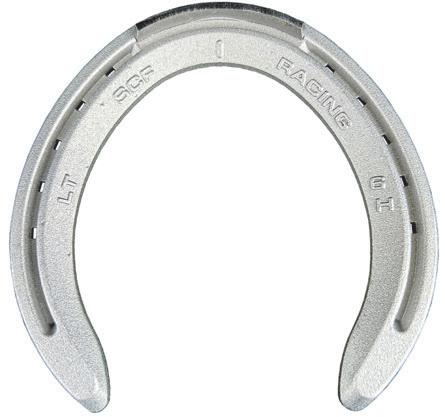

"I love the new SCF Racing LT hinds. Strong clips, easy pattern to fit, & the nails seat perfectly. When I come back 30-40 days nothing has shifted, & everything is still tight."
-Roman Richards, Arkansas
"First time using the LT hinds & I was impressed as they practically fit out of the box & needed less shaping. I'll be using them again."
-Nathan Stayton, Kentucky
"The ST front shoes are designed for performance. The boxed & tapered heels give you confidence to shoe your horses with a full & supportive fit. The ST pattern require less shaping. The nail spacing & crease depth work great with the Capewell 3.5XL nails. The Capewell nails are my go-to nails & provide minimal damage to the hoof wall."
-Dean Balut, California


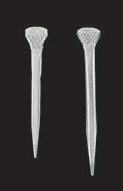
OR 3.5XL RACE NAIL
Scan the QR code to connect with Rob & learn more.

BEYOND THE BREEZE
HOW THE TWO-YEAR-OLD SALES MARKET HAS EVOLVED
The journey of two-year-olds-in-training sales in the United States has been marked by resilience, evolution, and moments that have forever shaped the Thoroughbred sales industry.
January 24th saw the 10th running of the Gr.1 Pegasus World Cup – a race dominated by two 7-year-old entire stablemates in Skippylongstocking and White Abarrio – both graduates of 2021 OBS two-years-old in-training sales. Skippylongstocking sold for just $37,000 and has gone on to bankroll nearly $5.5m in earnings, whilst White Abarrio sold for $3,000 more and now has earnings of just over $7.7m.
This year marks the twentieth anniversary of the sale of The Green Monkey, a remarkable two-year-old-colt who brought an astonishing $16 million at Fasig-Tipton’s Florida Select 2-YearOlds in training sale. His breathtaking 9.8 second breeze over an eighth of a mile captured the attention of the entire industry, and allowed many to see the potential of such great strength within these types of sales.
The appetite for speed paired with balance in a juvenile racehorse did not begin with The Green Monkey. Rather, his sale represented the pinnacle of what consignors and buyers had been striving toward for generations. It offered the perfect snapshot of what can occur when the peak of the market converges with the height of equine athleticism and preparation.

Every individual who lays a hand on these Thoroughbred athletes plays a role in their journey; whether or not their path leads them to the two-year-old sales ring. From the early 1950s to 2026, selling two-year-old racehorses under tack has evolved quite a bit. Changes in market perception have created waves throughout the industry over time, reshaping priorities and redefining success.
The world became more digital, more easily accessible, and everything had a much stronger focus on convenience. Such changes began to spill into the Thoroughbred industry. Increasingly, a more holistic approach is taking center stage, as consignors and sales companies are operating in new ways to keep pace with this ever-changing landscape.
At the center of every single two-year-old-in-training-sale, auction houses play a pivotal role in facilitating the exchange of elite Thoroughbred athletes among the unique players that propel the sport forward. Fasig-Tipton’s Director of Marketing Evan Ferraro offers valuable insight into the evolution and modernization of two-year-old sales. With seventeen years at Fasig-Tipton, Ferraro has witnessed countless success stories and future champions pass through the ring. He states, “The two-year-old sales produce many of the best horses competing today. The horses that can perform at a high level – post a fast time, present well on video, gallop out well, vet well – will sell extremely well (as they should). However, those that miss those marks can fall through the cracks, oftentimes unnecessarily,” for the overall idea on how the market can be viewed in the present. His perspective highlights the tension between opportunity and over-selectivity within the industry. As the market has evolved, so too have the athletes themselves.
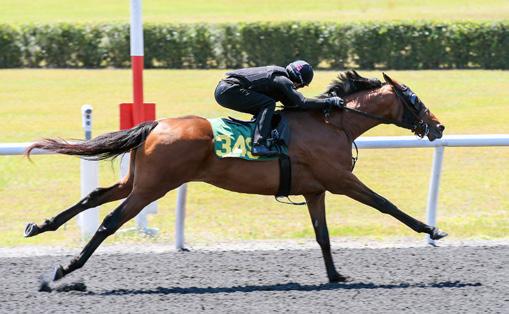
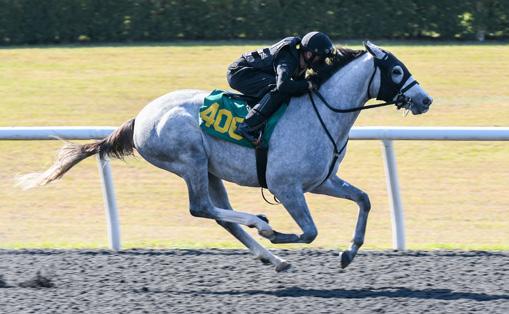
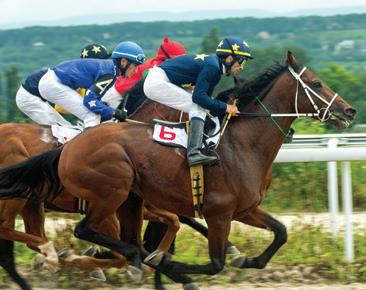
LEFT: 2021 OBS graduate Skippylongstocking captured the 2026 Pegasus World Cup Invitational at Gulfstream Park, defeating the 2025 winner and fellow 2021 OBS graduate, White Abarrio, both trained by Saffie Joseph Jr. ABOVE: Both horses breezing at the 2021 OBS Two-Year-Olds in Training sales.
TWO-YEAR-OLD SALES HAVE BECOME OVERLY FOCUSED ON TIMES. OUR GOAL IS TO TAKE THE FOCUS OFF OF THE TIME, AND BRING BACK MORE IMPORTANCE TO THE WAY A HORSE MOVES.”
Skilled horsemen and pinhookers have adapted to this evolution by sourcing individuals that are capable of competing in an increasingly demanding environment. Ferraro explains,“ Twoyear-old pinhookers are some of the sharpest horsemen around and started spending higher amounts of money to purchase higher quality two-year-olds that can perform at a high level. A more athletic, higher quality horse comes to these sales than did say, 30 years ago.”
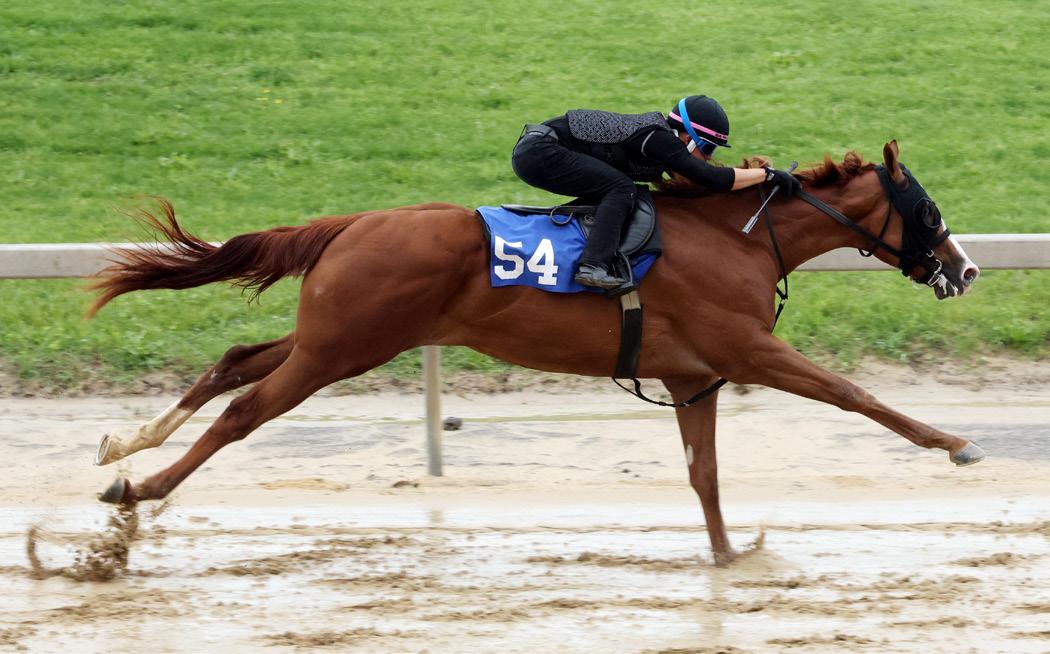
One of the most significant shifts in recent years came with Fasig-Tipton’s decision to remove official breeze times following unfavorable weather at the 2025 Midlantic May Sale. The move represented a departure from the clock-driven system that has been shown to dominate the juvenile market for years. “In our view, two-year-old sales have become overly focused on times. Our goal is to take the focus off of the time, and bring back more importance to the way a horse moves,” Ferraro explains.
A broader evaluation of the equine athlete places a renewed emphasis on physicality, movement, and overall athletic ability, allowing horses to be assessed more holistically rather than through the narrow lens of the stopwatch. Ferraro adds “We also feel that the new format brings physical inspections at the barn back into it more. More horses will get looked at post breeze since they aren’t taken off of lists due to a slower official time. And overall, we hope that this method produces more horses that are ready to go straight to the racetrack and eventually the starting gate.” Therefore, with the completion of this decision, Ferraro states, “In 2025, we experienced an unprecedented amount of rain at the Midlantic May sale and we were forced to give this format an unplanned trial. What we learned is that buyers were able to adapt and identify what they wanted without relying solely on times. This “experiment”, coupled with the success that the untimed horses from 2025 have already achieved on the racetrack, gave us the confidence to move forward with our new format in 2026.”
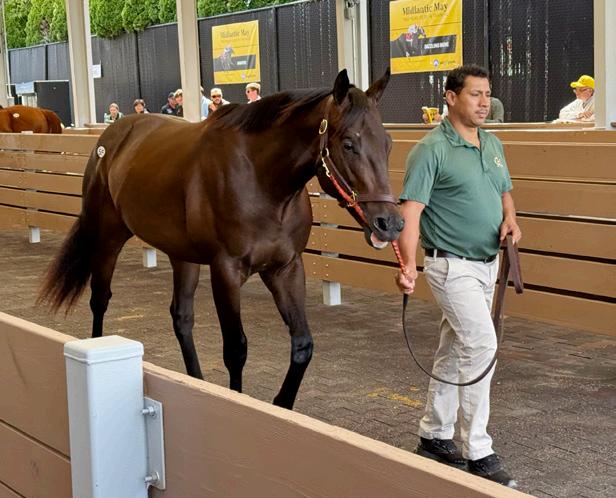
RIGHT: Fasig-Tipton’s removal of official breeze times at the 2025 Midlantic May Sale shifts focus to physicality, movement, and overall athletic ability, allowing horses to be assessed beyond the stopwatch.
Unprecedented rain led to removing breeze times at the Fasig-Tipton 2025 Midlantic May Sale—an experiment already validated by racetrack success.
EVAN FERRARO – FASIG-TIPTON
Raul Reyes
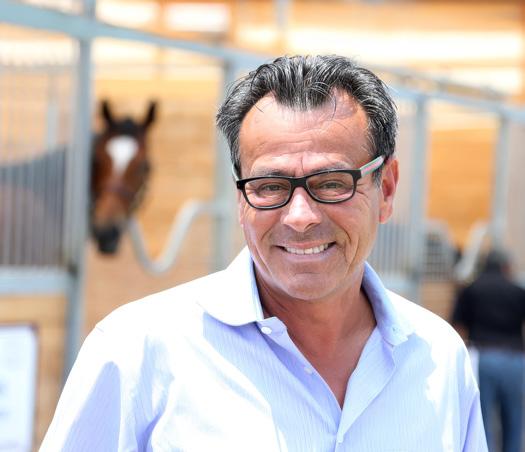
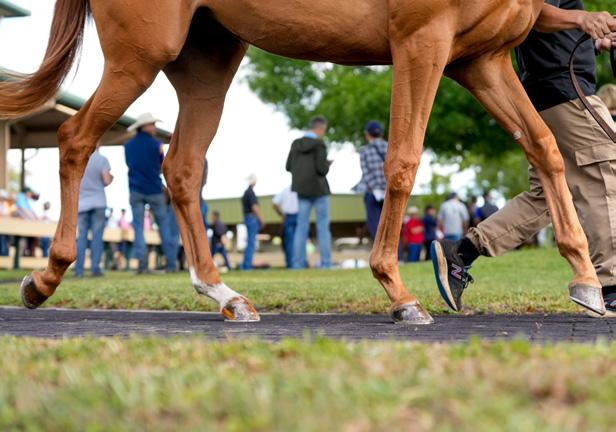
What began as an experiment ultimately became the starting foundation for a new change. As the industry continues to recalibrate its priorities, this shift may signal its return to trusting the trained eye and placing a stronger confidence in horsemanship, intuition, and long term potential.
Many of the enduring success stories within the Thoroughbred industry have one thing in common – dedication. Few represent that principle more than horseman Raul Reyes (profiled on p.24), who offers his personal philosophy and approach within the two-year-old-in-training marketplace. Reyes’s King’s Equine in Ocala, Florida is one of the top consignors when it comes to putting precocious two-year-old s on the market, but also successfully preparing young horses for their careers in racing.
Reyes has always had a personal relationship with hard work and dedication, which are his core values when it comes to his operation. When asked about his “secret ingredient” to success, he simply replies, “You don’t really have to work hard, you just have to dedicate yourself.”
While the market expectations have shifted over time, that foundational belief has remained unchanged. In terms of training and preparing his horses for the sales, Reyes will always emphasize placing the horse first and listening closely to what each individual is physically and mentally prepared to handle. In a market that has increasingly favored speed,
YOU ALWAYS LOOK FOR A HORSE THAT YOU THINK CAN IMPROVE OVER THE NEXT FEW MONTHS; OR THAT HORSE WILL REMIND YOU OF ANOTHER HORSE FROM THE PAST THAT WAS SIMILAR.”
RAUL REYES
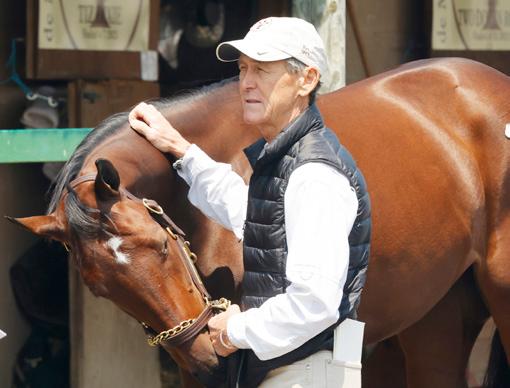
maintaining the right balance is key. “You want to make sure you don’t train a horse for something that it is not ready to do. That is probably one of the most important things that I watch for,” Reyes explains.
As the two-year-old market has grown more precise and more demanding, consignors have been required to adapt. “Buyers were looking for horses to go fast, and we as the sellers would try to accommodate them,” Reyes says. Yet even when responding to such a demand, Reyes maintains an eye toward development rather than immediacy. “You always look for a horse that you think can improve over the next few months; or that horse will remind you of another horse from the past that was similar,” he states.
Looking ahead, Reyes sees continued strength in the two-yearold market. “I think the sales in the last couple of years have been very strong. All of the horses that look like nice horses will always have people that want to buy them - so I think they’re going to get stronger,” he explains. As the market continues to evolve, the skill set of those that operate within it follows in unison.
Another influential voice in the two-year-old market is Nick de Meric of de Meric Sales, a consignor whose operation has helped shape modern juvenile sales as we know it. With over forty years of dedicated horsemanship, de Meric Sales has consistently produced top class horses and has earned a reputation built on adaptability and foresight. Grade 1 graduates
Nick de Meric
such as Knicks Go, Domestic Product, and Practical Joke are among de Meric’s recent successes.
While reflecting on the market toward the earlier years of his journey, de Meric points to several pivotal shifts that reshaped how juvenile Thoroughbreds are prepared and presented.
“We used to breeze our horses almost exclusively in pairs, and pretty much everybody did that. Then Luke McKathan, who was the pioneer of this, started breezing his horses singularly,” he recalls. At the time, this idea was met with skepticism. “We finally realized this was a better way to showcase your horse. For one thing, you didn’t run the risk of exposing a weaker individual – at least not to the same extent. So working horses individually was a big change,” de Meric explains.
As the evolution progressed, so did the distance of the actual breeze itself. Furthermore, de Meric explains, “We always used to work our horses a quarter mile-and then that got shortened to an eighth of a mile, which allowed them to kind of show a much sharper turn of foot because it did not have to be sustained for a quarter mile.” Along with that shift came riders that were becoming highly specialized, sellers refining their programs, and a demand that was increasing for both equine and human athletes capable of operating at the highest possible level. Buyers were willing to go farther and stretch their limits for the horses they desired in return.
Another major transition highlighted by de Meric was the move from two breeze shows to one. “You had to have your horse on the sales grounds for two and a half weeks minimum, usually three weeks. If you missed the first breeze show, meaning you did not step up or perform well, it was really hard to get back on a buyer’s list. Then you were expected to breeze again if you did show up and had a good breeze, so that’s two fast breezes on a young horse in the space of a week. We have dealt with it very well since we scrapped two breeze shows in the last decade or so,” he explains.
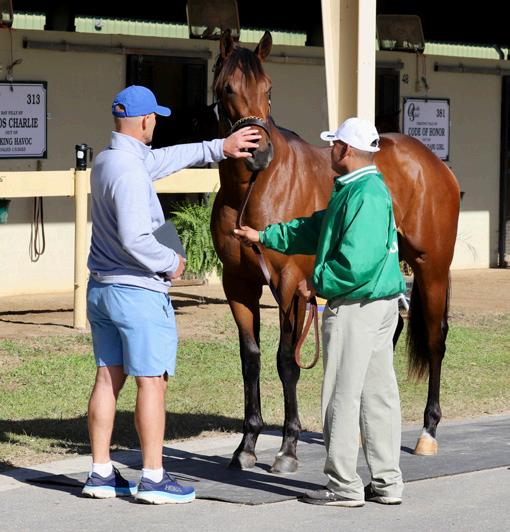
WE’RE LOOKING FOR HORSES THAT LOOK LIKE THEY COULD SHOW SPEED AND THE PEDIGREES TO BACK THAT UP, BUT ALSO GROW INTO A SIGNIFICANT THREE-YEAR-OLD.”
NICK DE MERIC
This change also eased the relentless travel demands that were placed on sellers in a time where horses were expected to remain on sales grounds for extended periods of time while also dealing with the quick turnaround time to attend multiple sales during the year. With more time, flexibility, and focus, the quality and individual profile of horses coming to the market began to shift once again. Lastly, the enhancement of the modern repository was also touched on as a key to shaping the two-year-old market.
Easy access to scopes and X-rays for buyers has completely changed the game not just in two-year-old sales, but in most modern day Thoroughbred sales in general. De Meric comments, “By the time your two-year-old walks into the ring, there aren’t too many secrets about them – they’re kind of out there for God and the whole world to see, and there’s a lot of information circulating about them.” Overall, with the development of modern technology, advanced horsemanship, and better understanding of the Thoroughbred athlete, an idea of the “perfect” two-yearold has changed.
To cap it all, de Meric distills the golden consensus. “As buyers have become more sophisticated, and we as sellers have become better at what we do, now they not only want an elite performance, they want a horse that looks like he’ll train on into a three-year-old, four-year-old, and possibly a classic horse. So we’re looking for horses with more scope, more stretch, but still look like they have the right angles to produce a fast workout. We’re looking for horses that look like they could show speed and the pedigrees to back that up, but also look like they’re gonna grow into a significant three-year-old, because that’s what people are after,” he explains. The adaptability of this industry is remarkable, and it is the unwavering dedication of passionate horsemen that continue to sustain and advance it.
From historic sales prices to evolving philosophies that shape today’s two-year-olds-in-training market, one truth will always remain constant: this industry’s greatest asset is its ability to adapt without losing sight of the horse as a priority.
While striking speed and flashy looks have captured the attention of so many, the modern Thoroughbred marketplace always seems to be reminded of a true balance between performance and longevity. Every athlete’s journey starts with instinct, patience, and innovation of those that lead them. Built on history and progress, the two-year-old market continues to move forward stronger than it ever has.

A BIOTENSEGRITY APPROACH TO YOUNG RACEHORSE DEVELOPMENT

The debate surrounding the appropriate age to commence racehorse training remains a contentious topic. Advocates of traditional biomechanical models argue that training at 18 months is premature, as a horse’s skeletal system does not reach full maturity for several more years. However, skeletal development alone presents a limited perspective. I would like to introduce another perspective from a rising research field. Through the lens of biotensegrity and fascia science, a more comprehensive approach emerges—one that considers the interconnectedness of a horse’s entire physiological system. Well-structured training at a relatively young age can support the holistic development of the racehorse, fostering both physical and psychological adaptability.
From the moment a foal is born, it must quickly adapt to the force of gravity. Passage through the birth canal initiates its structural alignment, and within hours, the foal is standing and moving independently. Foals are born with predominantly fast muscle fibers (2X). The ability to travel up to seven kilometers daily alongside its dam is a testament to the foal’s inherent adaptability. This early exposure to movement and environmental stimuli plays a crucial role in its physiological and neurological development.
Challenging traditional views on skeletal maturity
This article seeks to introduce an alternative perspective on how the horse interacts with gravity, incorporating the principles of biotensegrity and fascia. It is important to note that most research is done on corpses, and the fascia dries out almost immediately after the circulation stops. Traditionally, equine skeletal maturation has been the primary concern regarding the timing of racehorse training. However, a singular focus on bone development overlooks the adaptability of connective tissues and the overall structural integrity of the horse. All young horses, as an adaptation to their environment, are in a critical phase of learning and adaptation—both physically and mentally—which must be accounted for in any training approach.
Veterinary discourse on skeletal maturity presents conflicting perspectives. Veterinarian Chris Rogers asserts that the skeleton of a two-year-old Thoroughbred is sufficiently developed for training, drawing parallels to human child development. Conversely, Dr. Deb Bennett posits that full skeletal maturity does not occur until six to eight years of age regardless of breed. All horses go through almost the same skeletal development phases, although Thoroughbreds are extremely adapted through breeding to grow much quicker. While Bennett’s perspective has been widely accepted, Rogers’ viewpoint aligns with the practical realities of racehorse development, supporting the industry’s traditional training timelines.
Flat racehorses typically begin training at around 18 months of age. At this stage, their skeletal and connective tissues are still developing, as research consistently shows. Cartilage, bones, muscles, and ligaments undergo intensive growth and adaptation. Every experience the young horse encounters contributes to its physiological and neurological development, shaping its ability to perform the tasks expected of a racehorse. Training at a young age offers several advantages, as young horses are highly receptive and adaptable. As explored later in this article, their connective tissues develop in response to the challenges they are exposed to, reinforcing their structural integrity over time.
Racehorse training inherently involves a selection process. Horses that do not meet performance expectations within the first few seasons are often retired from racing by the age of three or four, making way for new yearlings. Those that demonstrate both speed and durability may continue competing well into their later years. Those are often geldings. Mares and stallions that show promise may transition into breeding programs. The rest, if their foundational training has been well structured, can adapt successfully to second careers as riding horses, often becoming ideal partners for young equestrians at the start of their horsemanship journey
Tensegrity principles
Tensegrity (tensional integrity) is a structural principle that explains how forces of tension and compression interact to create stability in a system. Originally coined by architect and engineer Buckminster Fuller, tensegrity has been widely applied in biological systems, including human and equine anatomy.
The role of fascia and biotensegrity in equine development
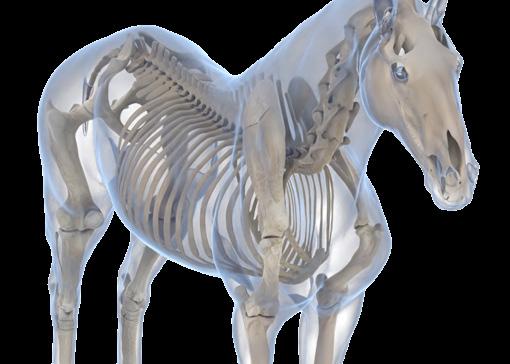
A traditional biomechanical view perceives the horse’s skeleton like a rigid brick wall—if one part weakens, the entire structure becomes vulnerable to collapse. In contrast, a tensegrity-based perspective views the horse as a dynamic suspension bridge, where forces are distributed across an interconnected network of fascia, tendons, and ligaments. In this model, the skeleton is not a rigid load-bearing framework but rather “floats” within the fascial system, allowing for adaptability, resilience, and efficient force distribution.

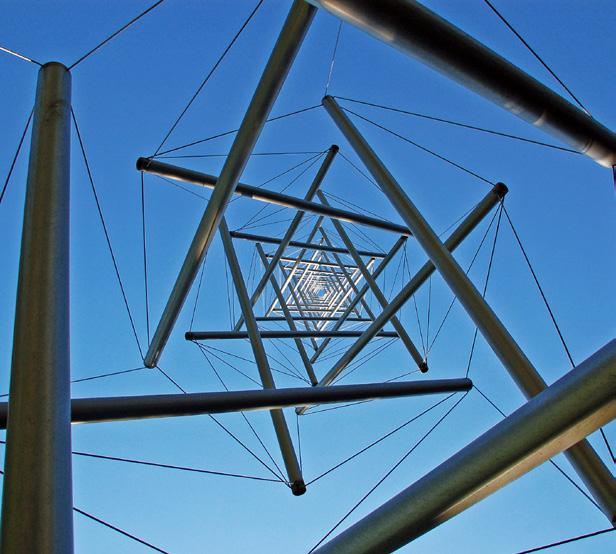
ABOVE: Kenneth Snelson’s Needle Tower II, completed in 1968 is composed of flexible and rigid components arranged according to the idea of ‘tensegrity’.
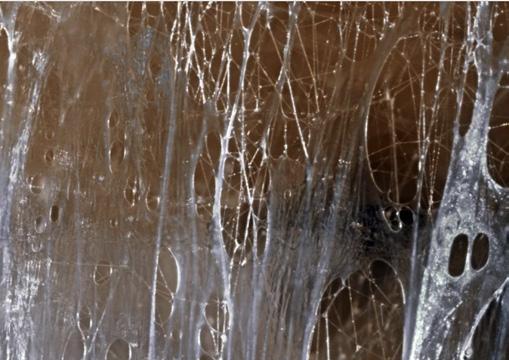
Biotensegrity highlights the balance between tension and compression within the body. In equine anatomy, the skeleton functions as a stabilizing framework, while fascia, tendons, and ligaments manage dynamic forces. Fascia, composed predominantly of collagen, exists in various densities, from loose connective tissue that facilitates muscle glide to the more rigid structures forming tendons and bones. This complex, fluid-filled network plays a crucial role in maintaining stability, distributing forces, and mitigating the impact of training.
Training influences the structural adaptation of connective tissues. Properly executed, it can enhance durability and resilience, reinforcing ligaments and tendons much like steel cables under controlled tension. Understanding the dynamic interplay between muscle, fascia, and skeletal development allows for training methods that optimize long-term soundness and performance.
Fascia
One of the most abundant proteins in the body is collagen, which forms connective tissue in all its various forms—from loose fascia, which separates muscles, to denser collagen structures that align with the direction of force and develop into tendons, ligaments, or bone. One of the key functions of loose fascia is to allow muscles to glide smoothly against one another without friction when one muscle contracts and another stretches.
Loose fascia consists of a collagen network, with its spaces primarily filled with water and hyaluronic acid. It is a highly hydrated structure—young horses are composed of approximately 70% water. Imagine a water-filled balloon, where the skin acts as the boundary between the internal and external environments. During fetal development, collagen structures form first, providing the framework within which the organs develop. Collagen, a semiconductive protein, relies on water to function optimally.
Fascia
All horses follow similar skeletal development phases, but Thoroughbreds are extremely adapted through breeding to grow much quicker.

The water-rich environment surrounding fascia transforms it into an extraordinarily intelligent communication network. Its function is highly responsive to the body’s pH levels, adapting moment by moment to internal conditions. As the central hub for force transfer and energy recycling, fascia provides immediate balance and support—often operating beyond the constraints of the nervous system.
Fascia’s remarkable adaptability is rooted in its multifaceted properties. It is nociceptive, meaning it is capable of detecting pain and harmful stimuli, alerting the body to potential injury or strain. It is also proprioceptive, enabling the body to sense its position and movement in space, which aids in maintaining coordination and balance. Additionally, fascia exhibits thixotropic properties—allowing it to shift between a gel-like state and a fluid-like state depending on movement, which enhances flexibility and responsiveness.
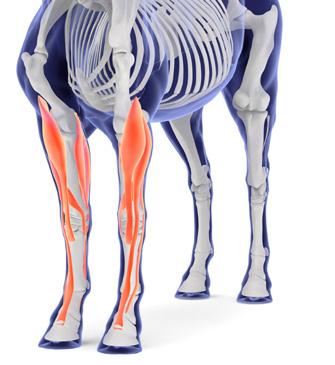
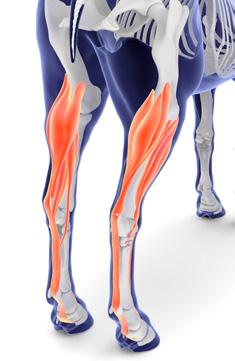
Finally, fascia demonstrates piezoelectric properties, generating electrical charges in response to mechanical stress and playing a crucial role in cellular signaling and tissue remodeling. These combined characteristics enable fascia to dynamically adjust to both mechanical and biochemical stimuli, ensuring optimal function in response to ever-changing internal and external conditions.
Fascia has no clear beginning or end; it distributes pressure and counteracts the force of gravity.
The biotensegrity of equine locomotion and how horses rest while standing
Horses possess a remarkable evolutionary adaptation that allows them to rest while standing, a capability underpinned by the principles of biotensegrity. This structural efficiency is achieved through an intricate network of tendinous and ligamentous locking mechanisms working in harmony with the skeleton.
In the forelimbs, the extensor and flexor tendons engage to stabilize the skeletal structure, minimizing muscular effort. Meanwhile, in the hind limbs, a specialized locking mechanism is activated when the patella (kneecap) is positioned against a flat section on the femur just above the stifle, further contributing to this passive support system.
This adaptation allows horses to conserve energy while remaining poised for rapid movement. In the event of sudden danger, they can instantly transition from rest to flight, ensuring their survival—an essential trait for both wild and athletic performance. The efficiency of this natural support system exemplifies the principles of biotensegrity, where tension and compression forces work in balance to maintain structural integrity with minimal effort.
The head and neck function as critical balancing structures, comprising approximately 10% of the horse’s total body weight. The forelimbs bear roughly 60% of the body’s weight, but true structural support originates from above the elbow joint. The spine, a central element of equine biomechanics, acts as a suspension system. The primary function of the equine spine is to support the internal organs, a role that also enables the horse to carry a rider.
BELOW: Horses possess a remarkable evolutionary adaptation that allows them to rest while standing, this structural efficiency is achieved through an intricate network of tendinous and ligamentous locking mechanisms working in harmony with the skeleton.
Training influences the structural adaptation of connective tissues. Properly executed, it can enhance durability and resilience, reinforcing ligaments and tendons.
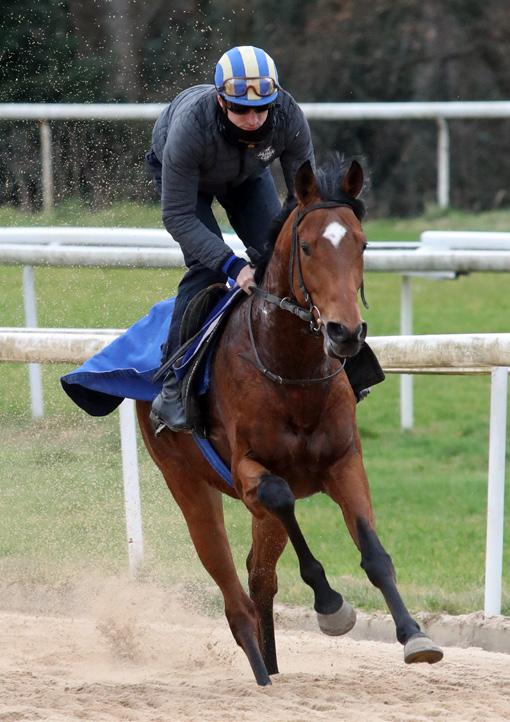
ABOVE: A comprehensive training program should not only focus on the maturation of the horse’s bones but also prioritize the adaptive growth of fascia, ligaments, and muscles.
This structural foundation ensures both stability and balance, allowing for efficient movement and performance under saddle. The propulsion generated by the hind legs is efficiently transferred to the forehand through the back muscles, which are reinforced with robust connective fascia plates, ensuring optimal movement and stability. This structural complexity underscores the need for a training regimen that respects the developmental timing of multiple interrelated systems beyond just the skeletal framework.
Risks and adaptations in young racehorses
While early training offers advantages in developing resilience in young racehorses (they have a high percentage of muscle fiber 2X), it also presents risks. The spinal column, particularly the lumbosacral junction, endures significant forces during high-speed galloping. Without appropriate conditioning, the vulnerability of these structures can lead to pathologies such as kissing spines or pelvic instability. Their growth plates remain open, making them more susceptible to the impact of high-speed forces. Compensatory adaptations to early training stress may manifest as maladaptive changes in connective and skeletal tissues, potentially diminishing long-term performance capabilities.
However, when managed correctly, the high adaptability of collagen structures in young horses allows for positive adaptation. Training introduces controlled tensile and compressive forces,
fostering the development of strong, functional connective tissues. The challenge lies in striking the right balance between stimulus and recovery to optimize long-term soundness and athletic potential.
The value of tacit knowledge in training practices
Experienced trainers have an intuitive understanding of the complex relationships between tissues and biomechanics, a knowledge that is often honed through years of careful observation and practical experience. This tacit expertise is fundamental in shaping training strategies that take into account the horse’s overall development. A comprehensive training program should not only focus on the maturation of the horse’s bones but also prioritize the adaptive growth of fascia, ligaments, and muscles. By doing so, trainers ensure that young racehorses develop in a way that is aligned with their evolving physiological capabilities, promoting balanced growth and minimizing the risk of injury. This holistic approach allows for the optimal performance and longevity of the racehorse, fostering a more sustainable path toward peak athleticism.
Conclusion:
A holistic perspective on racehorse development
The evolution of equine training methodologies has greatly benefited from recent advancements in scientific understanding, offering a more refined approach to racehorse development. By incorporating biotensegrity principles into training programs, a more comprehensive view of the horse’s physical structure and function emerges, shifting the focus from skeletal maturity alone to a broader understanding of the interconnected roles of fascia, connective tissues, and adaptive biomechanics. This shift in perspective allows for the cultivation of healthier, more resilient athletes who can perform at their peak while minimizing the risk of injury.
With equine welfare at the forefront, adopting a holistic approach to racehorse development—one that blends cuttingedge biomechanics, physiological insights, and traditional training wisdom—will pave the way for more sustainable, ethical practices within the industry. Such an approach not only enhances performance in the short term but also ensures the longevity and well-being of racehorses throughout their careers. Ultimately, by embracing this integrated perspective, the racing industry can promote a future in which both performance and welfare are prioritized, leading to a more ethical and effective standard of training.
References:
• Levin, S. (Biotensegrity: www.biotensegrity.com)
• Clayton, H. M. (1991). Conditioning Sport Horses. Sport Horses Publications.
• Adstrup, S. (2021). The Living Wetsuit. Indie Experts, P/L Austrasia.
• Schultz, R. M., Due, T., & Elbrond, V. S. (2021). Equine Myofascial Kinetic Lines
• Bennett, D. (2008). Timing and Rate of Skeletal Maturation in Horses
• Rogers, C. W., Gee, E. K., & Dittmer, K. E. (2021). Growth and Bone Development in Horses
• Ruddock, I. (2023). Equine Anatomy in Layers
• Myers, T. W. (2009). Anatomy Trains (2nd Edition). Churchill Livingstone.
• Diehl, M. (2018). Biotensegrity
• Kuhn, T. S. (1962). The Structure of Scientific Revolutions. University of Chicago Press.
• Tami Elkayam Equine Bodywork – www.equinetensegrity.com.


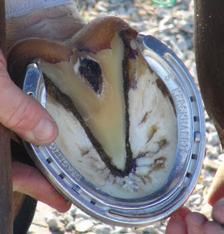
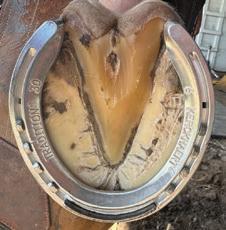


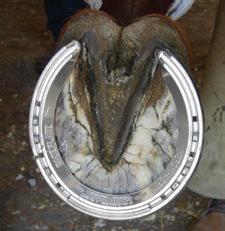


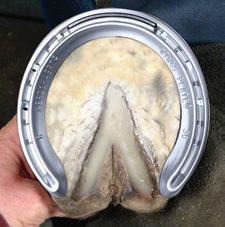
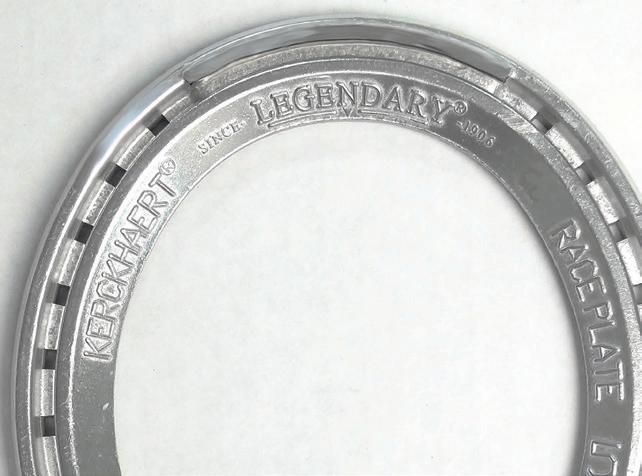
Kerckhaert Legendary Front
Kerckhaert Kings Front
Kerckhaert Tradition TC Hind
Our annual guide outlining the key racing and breeding incentives available to owners and breeders across North America.
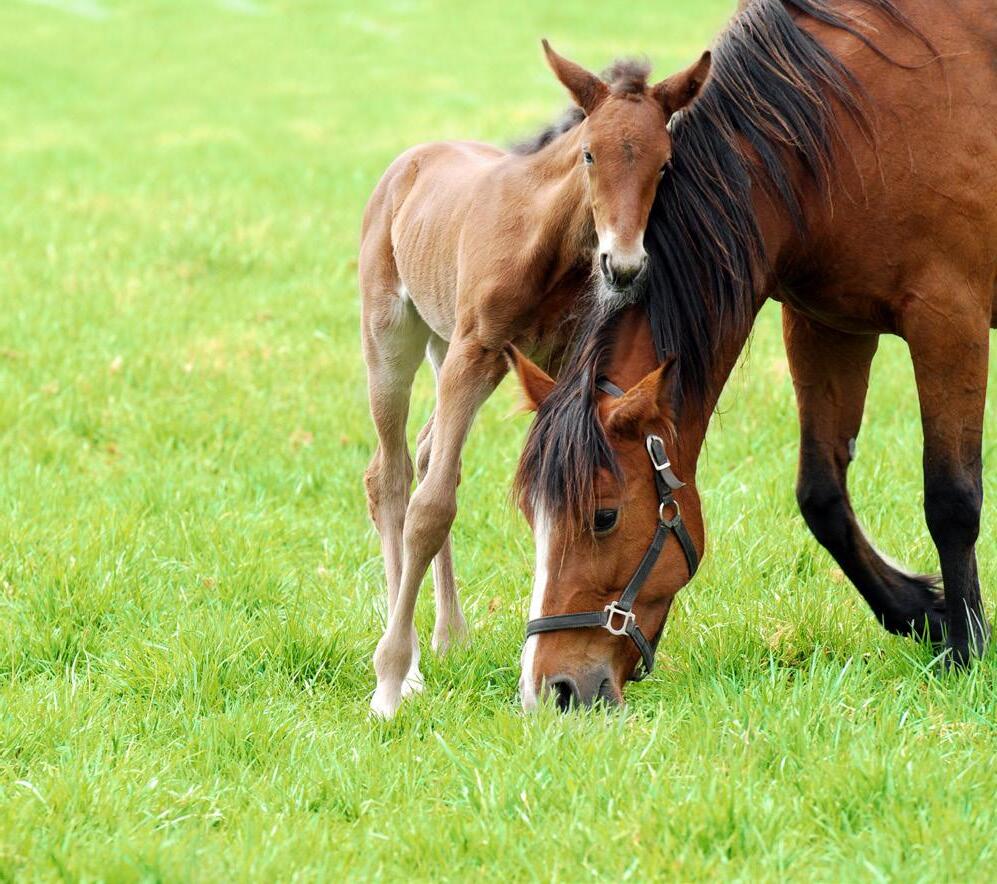
2026 STATE INCENTIVES
The gold rush that we thought might be imminent with 26 “Racing on Demand” terminals at Santa Anita Park on Thursday, January 5, was instead a rush of law enforcement officials rolling them away two days later. Yes, California, the last state holdout for some form of additional revenue, still has not joined other racing states supporting racing (and, in the opinion of many, the 21st century).
One can only imagine what happened to pull the rug out from under The Stronach Group’s long-planned legal strategy and installation of HHR machines. The long and short of it is whether the HHRs are pari-mutuel wagering or are they slot machines.
One can only hope the legal wheels will turn quickly toward a decision to bring back the HHRs and restore the hopes of thousands of Californians who work in the racing industry and depend on those paychecks. The terminals may be gone, but so is any final decision on this issue.
Still to be determined is the future of Gulfstream Park, which may decouple casino slot machines and card rooms from horse racing.
That could take three years, but three years is a long time, and anything can happen. Who knew Florida Governor Ron DeSantis would show up at the Ocala Breeders’ Sales Company to express opposition to the decoupling legislation? If I’m not mistaken, the governor will have to sign decoupling legislation.
At Gulfstream, purses will be increased through funds from the Florida-Bred Incentive Fund (FBIF), and the increases aren’t paltry. Maiden special weight and allowance races will go from $5,000 to $10,000; maiden optional claimers will jump from $43,000 to $50,000; and open stakes purses of $150,000 will be supplemented, courtesy of the FBIF, with $25,000.
To the north, in Maryland, breeder bonuses have been increased to 24% and stallion bonuses increased to 8%, paid for first through third on all overnight and stakes races capped at $100,000.
Percentages for Maryland-sired and Maryland-bred runners foaled in 2023 will increase to 33.6%, payable for first, second, and third-place finishes in all overnight races. This represents a 40% increase over the bonus awarded to non-Maryland-sired Maryland-breds. In addition, the percentage for Marylandsired and Maryland-bred maiden winners will rise to 8% for foals of 2022 and earlier. Sires must be registered to qualify.
Pennsylvania for 2026 advertises 40% breeder awards for PA-sired/PA-breds and 20% for non-PA-sired/PA-breds. Breeders earn awards on all PA races through third-place even when they no longer own the horse. This year, PA-sired/ PA-bred horses won’t have to pay a registration fee for the Stallion Series. They are also automatically registered and eligible to run in the Stallion Series.
Owner awards on non-restricted races vary among Pennsylvania’s three racetracks in 2026. At Parx, bonuses are 40%; Presque Isle Downs – 30%; and Penn National 25%, and awards are for first through third-place finishes. Stallion owners of registered PA stallions will get 10% of purses when PA-sired/PA-bred runner wins, shows or places in PA.
New York-bred overnight races for 2-year-olds on the NYRA circuit will offer purse amounts matching open-company counterparts in 2026 and all NY-bred overnight races in 2027. (a 19% purse increase from 2023). Awards for breeders for NY-sired and non-NY-sired are the same as last year. For NY-sired, it is 40% of purse money earned, 20% for second, and 10% for third, with a $40,000 cap per award. For nonNY-sired, divide those awards figures by two. Open owners’ awards for NY-sired are 20% of purse money with a $20,000 cap. Non-NY-sired awards are also capped at $20,000 this year but pay 10% of purses.
There is good news with the stallion population in New York: registered stallions in the state were 36 for both 2024 and 2025.
In Virginia, breeders earn bonuses for registered Virginiabreds finishing first through third-place in any open race in North America (excluding state-bred and state-sired races). Additionally, bonuses will be earned for a first through third-place finish in all races at Colonial Downs and NSAsanctioned meets.
Breeders of foals born prior to 2024 will earn bonuses for first through third-place finishes in all sanctioned races in North America and NSA-sanctioned meets. All individual awards have a $25,000 cap. Owners of registered Virginiabred foals of 2020 and prior are eligible for up to 25% for winning non-Virginia-restricted races at any racetrack in the Mid-Atlantic region (NY, NJ, PA, DE, MD).
This also includes non-Virginia-restricted wins at sanctioned National Steeplechase Association (NSA) meets in the MidAtlantic region (NY, NJ, PA, DE, MD, VA). The bonus paid will be calculated as a percentage of the lesser of 60% of the published purse on the overnight or the published firstplace purse on the chart. There is a $10,000 cap on each individual award.
Owners of all registered Virginia-bred foals earn a 50% bonus when their Virginia-bred horse finishes first through fourth in an open race at Colonial Downs. The 50% bonus payment will be part of the horse’s purse earnings.

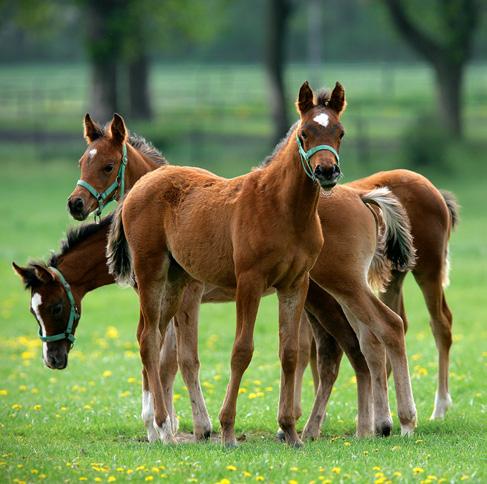
Additionally, there are “Developer Benefits” for any person or entity listed as the owner when a VA-bred makes its first lifetime start. Developers of registered Virginia-bred foals of 2021 and after are eligible for up to a 25% Developer’s Bonus for winning non-Virginia-restricted races at any racetrack in the Mid-Atlantic region (NY, NJ, PA, DE, MD, VA).
This also includes non-Virginia-restricted wins at sanctioned NSA meets in the Mid-Atlantic region (NY, NJ, PA, DE, MD, VA). The bonus paid will be calculated as a percentage of the lesser of 60% of the published purse on the overnight or the published first-place purse on the chart. There is a $10,000 cap on each individual award.
In West Virginia, the WV Thoroughbred Development Fund pays 60% to breeders/raisers, 25% to owners and 15% to sire owners in 2026. A Supplemental Purse Award program also pays breeders, sire owners, and WV resident owners up to 10% of a winning horse’s earnings for that particular race.
Nationally, The Jockey Club has released the list of mares for this year’s Mare Incentive Program. This initiative, a pilot program last year, waives certain registration fees for certain 2027 foals. Last year, 228 mares were bred through the program. The program divides mares into those six- to nineyears-old as of January 1, 2026 and mares 10- to 19-years-old as of January 1, 2026. The total number of eligible mares for 2026 is 22,243, down from last year’s 23,090.
For 2026, The Louisiana Thoroughbred Breeders Association offers breeder awards that are tiered. LA-bred horses sired by a LA-based stallion earn a 25% award for a top-three finish. Out-of-state stallions earn 20%. Awards are capped at $200,000 for each race.
The California Thoroughbred Breeders Association (CTBA) will award a new $1,000 per-foal bonus (up to 25 foals) for mares bred in 2026, waive registration fees for members of the CTBA, and offer $3,000 in transport assistance for in-foal purchased mares bought at public auction outside California (for $20,000+ and under 12 years old), provided the mare is bred to a California stallion.
2026 STATE BREEDING & RACING INCENTIVES

ALBERTA
BREEDERS AWARDS: Total Breeders Breeding Support – C$897,122
Breeders’ Bonus – Breeders of horses of all ages foaled in Alberta placing win, place, and show in all sanctioned races in Alberta having a minimum C$9,000 purse and where entered at or above a minimum C$6,250 Claiming Price. The Bonus will be paid after the conclusion of the Alberta racing season (to be invoiced by the CTHS). Bonuses will not be paid for eligible races that have four (4) or less starters unless it is an open stakes race, the CTHS Sales Stakes, or a stakes race restricted to Alberta-breds. Fund – C$691,495
Breeders of horses of all ages foaled in Alberta placing 1st, 2nd, or 3rd in allowance races with purses over C$40,000 or open stakes races with a purse over C$50,000 across North America will receive a 20% bonus to a maximum payout of C$7,500 per start on the horse’s earnings. The race must have more than four (4) starters. The Bonus will be paid at the end of the Alberta Racing Season. The Bonus is limited to a maximum of C$15,000 per horse in 2025. Any unused funds from this program will be reallocated to the Breeders’ Bonus above. Fund – C$15,627
Foal Incentive Program, Mare Purchase Program, and Yearling Purchase Program. Any unused funds from these programs will be reallocated to the Breeders Bonus. Fund – C$190,000
OWNERS AWARD: Total Owners Breeding Support – C$1,383,122
Owners’ Bonus – Owners of horses of all ages foaled in Alberta placing win, place, and show in all sanctioned races in Alberta having a minimum C$9,000 purse and where entered at or above a minimum C$6,250 Claiming Price (to be invoiced by HBPA).
The Bonus will be paid after the conclusion of the Alberta racing season. Bonuses will not be paid for eligible races that have four (4) or less starters, the CTHS Sales Stakes, Alberta Sires Stakes or races restricted to Alberta-breds. Fund – C$597,495
Owners of horses of all ages foaled in Alberta placing 1st, 2nd, or 3rd in allowance races with purses over C$40,000 or open stakes races with a purse over C$50,000 across North America will receive a 20% bonus to a maximum payout of C$7,500 per start on the horse’s earnings. The race must have more than four (4) starters. The Bonus will be paid at the end of the Alberta Racing Season. The Bonus is limited to a maximum of C$15,000 per horse in 2025. Any unused funds from this program will be reallocated to the Owners’ Bonus. Fund – C$15,627
To fund the purses of Alberta Bred Restricted Races and to be invoiced by HBPA. Any funding not utilized during 2025 will be added to the Owners Bonus. Fund – C$100,000
Alberta Breeders’ Fall Classic purses (The races will carry a minimum purse of C$60,000 with the BIP funding shortfall being contributed through the race nominations and the purse pool) – C$375,000
Alberta Yearling Sales Stakes Races for 2-year-olds and 3 and 4-year-olds – C$160,000
STALLION OWNERS AWARDS: Stallion bonus will be paid proportionately to Stallion owners whose Stallions have eligible Alberta Thoroughbred progeny with earnings of C$10,000 or greater during the calendar year. Stallions must have stood in the Province of Alberta for the entire calendar year of conception for each year’s crop to be eligible. Fund – C$100,000
Alberta Yearling Sales Stakes Races for 2-year-olds and 3 and 4-year-olds – C$160,000
RESTRICTED RACES: Alberta Breeders’ Fall Classic races restricted to Alberta-breds only. Each of the seven races will carry a minimum purse of C$60,000.
OUT-OF-STATE RACE AWARDS: Owners and breeders of Albertabred horses finishing 1st, 2nd, or 3rd in eligible allowance or open stakes races across North America may receive a 20% bonus on the horse’s earnings, to a maximum of C$7,500 per start and C$15,000 per horse in 2026. Races must have a minimum of five starters, and bonuses will be paid at the end of the Alberta racing season, with any unused funds reallocated to the Owners’ Bonus program. Fund – C$31,000
OTHER INFORMATION:
Mare Purchase Program, Foal Incentive Program, and Yearling Purchase Program new for 2026.
2025-2026 Mare Purchase Program: Eligible in-foal Thoroughbred mares purchased at public auctions or digital sales outside Alberta between October 1, 2025 and March 31, 2026 can qualify for up to C$5,000 in reimbursement, with additional bonuses for breeding back to Alberta-based stallions in 2026.
2026 Foal in Alberta Program: Eligible mares that have not had a registered Thoroughbred foal in Alberta in the last three years. Must live-foal in Alberta in 2026 and be bred back to a Thoroughbred stallion standing in Alberta during the 2026 breeding season.
With a cap of 21 mares, eligible breeders can receive C$1,500 upon meeting all program requirements and providing necessary documentation.
2025-2026 Maiden and Open Mare Program: Offers funding of up to C$2,500 for mares bred to Alberta stallions, with a separate payout of C$1,500 for those bred to out-of-province stallions. Eligible mares that have not foaled in 2024 or 2025 can apply, with a maximum of 30 mares being accepted into the program. Yearlings from this program will be eligible for the 2027 Alberta Thoroughbred Sale, with the entry fee covered by CTHS (Alberta).
2026 Two-Year-Old Development Program: Offered by CTHS (Alberta Division) in partnership with Horse Racing Alberta, provides a C$1,500 incentive to owners of Albertabred horses that make their first official two-year-old start in Alberta during the 2026 season. The program supports early development of Alberta-breds and may be limited to the first 35 qualifying starters.
Applications for all foal and mare programs must be submitted by August 1, 2026.
Our sincere appreciation goes to Horse Racing Alberta for funding these incentives through the Thoroughbred Breed Improvement Program.
CONTACT DETAILS: Dawson Guhle / (403) 229-3609 / cthsweb@cthsalta.com / cthsalta.com
ARIZONA
BREEDERS AWARDS: Breeders of certified Arizona-breds receive 10% of the winner’s share of the purse from Arizona race tracks – for each win in an open or restricted race of any class. 1st, 2nd, and 3rd are paid from the Arizona Breeders Fund to certified Arizona-breds and is paid from the ATBA office bi-monthly.
OWNERS AWARD: Owners of a certified Arizona-bred receive 15–25% of the winner’s share of the purse from Arizona race tracks. 1st, 2nd, and 3rd are paid from the Arizona Breeders Fund to certified Arizona-breds and is paid from the ATBA office bi-monthly.
STALLION OWNERS AWARDS: Stallion Awards are paid from ATBA every July 1. It comes from the Arizona Breeders Fund.
RESTRICTED RACES: On a daily basis the commercial race meets in Arizona offer restricted races with higher purses for certified Arizona-breds. During each racing season multiple restricted stakes races are offered for certified Arizona-breds.
CONTACT DETAILS: (602) 942-1310 / info@atba.net / atba.net
ARKANSAS
BREEDERS AWARDS: Breeder Awards are paid annually to the breeder of each properly registered Arkansas-bred Thoroughbred foal calculated on the earnings of 1st through 4th place finishes in North America the previous calendar year.
OWNERS BONUS: Owners receive a bonus if their registered Arkansas-bred finishes in the top three of a non-restricted race at Oaklawn Park, excluding stakes and handicaps. $3,000 for 1st, $2,000 for 2nd, and $1,000 for 3rd place finishes.
STALLION OWNERS AWARDS: Stallion Awards are paid annually to the owner of each properly registered Arkansas Stallion calculated on the earnings of 1st through 4th place finishes in North America of his registered Arkansas-bred progeny the previous calendar year.
RESTRICTED RACES: Restricted races and restricted stakes races are held during Oaklawn’s live meet. There are five stakes races with a purse of $150,000 and one stakes race at $200,000.
OUT-OF-STATE RACE AWARDS: Breeder and Stallion Awards are paid on total earnings of 1st through 4th place finishes in North America.
CONTACT DETAILS: Deana Echols / (501) 624-6328 / atbha@att.net / atbha.com

BRITISH COLUMBIA
The provincial government in BC announced at the end of November 2025 that they would be withdrawing the slot revenue for racing in BC as of the end of January 2026. It is therefore unlikely that there will be racing in BC in 2026.
Hopefully, the situation will change this coming year in BC and racing will resume in 2027.
CONTACT DETAILS: B-J Davidson / (604) 534-0145 ext. 301 / cthsbc@cthsbc.org / cthsbc.org
CALIFORNIA
BREEDERS AWARDS: A monetary award that is paid to the breeder of a registered California-bred Thoroughbred finishing first, second, or third in any race run in California and any graded stakes races conducted within the US. Breeders will receive 75% of the remainder of the total incentive award monies after Owner Awards are paid, with an individual breeder receiving a prorated share of this Breeders Fund. The maximum purse considered earned in any qualifying race within this state shall be $330,000 for a win, $120,000 for a second, and $90,000 for a third-place finish. Breeder Awards are always paid exclusive of nomination, entry, and starting fees.
OWNERS AWARD: A monetary award that is paid to the owner of a registered California-bred Thoroughbred horse that runs in qualifying races in California. Owners can receive at least a 20% bonus for finishing first in an open starter allowance above $15,000 and open non-maiden claiming races with a claiming price of $40,000 or greater in Southern California and $20,000 or greater in Northern California (subject to the return of racing). Owner Awards always are paid exclusive of nomination, entry, and starting fees. They are listed in the racing program and will be distributed at the same time as the purse by the paymaster.
STALLION OWNERS AWARDS: Monetary awards are paid annually to the owners of registered California stallions whose California-conceived or California-bred have won a qualifying race or have finished, first, second, or third in a stakes race in the state or any graded stakes race within the US during the year.
Qualifying races are any non-claiming races, including maiden allowance and starter allowance races, with a purse of at least $15,000, and open non-maiden claiming races with a claiming price of $40,000 or greater in Southern California and $20,000 or greater in Northern California (subject to the return of racing) also qualify. Stallion Awards are exclusive of nomination, entry, and starting fees. Stallions must be registered by Feb. 15 each year to be eligible for Stallion Awards.
2026 STATE BREEDING & RACING INCENTIVES
Stallion owners will receive 25% of the remainder of the total incentive award monies after Owner Awards are paid, with an individual owner of a registered California Stallion (as of Dec. 31) receiving a prorated share of the Stallion fund based on the total qualifying earnings of the get during the year.
The maximum purse considered earned in any qualifying race within this state shall be $330,000 for a win, $120,000 for a second, and $90,000 for a third-place finish. The Stallion must be continuously present in California from Feb. 1 to July 15, inclusive, of the year or any subsequent calendar year in which he stood at stud and fathered the participant in the race. If a sire dies in this state in the year or any subsequent year and stood his last season at stud in this state, or was standing at stud in this state on the date of his death or any subsequent year, he shall thereafter continue to be considered an eligible Thoroughbred Stallion regarding a race participant fathered by him in that season.
The California Thoroughbred Breeders Association (CTBA) will help compile data, but it is the ultimate responsibility of the Stallion owner to advise that official registering agency, on or before Feb. 15 of any year, of any and all purses earned during the preceding year that shall be considered in determining the amount of the Stallion award to which the owner is entitled.
RESTRICTED RACES: Racetracks in California are required by law to offer one race per day that is restricted to Californiabreds. In 2025, that amounted to 370 additional racing opportunities and more than $19.67 million in additional purses for California-breds.
The California legislature has declared its intent that at least 10% of the total stakes purses paid at any race meeting in California be paid on stakes races restricted to registered California-breds. This amounted to almost $3.4 million in 2025 and will grow significantly through the creation of the Golden State Series.
In 2026, California Cup XXXVII will be held at Santa Anita Park on a date to be announced. Part of the funding for California Cup XXXVII will come from the incentive award category, the California-bred Race Fund. 9.5% of the total incentive award monies will be used for this category, with the monies funding the promotion of California-bred races, the supplement of purses for California-bred races, and the creation of new California-bred stakes.
OUT-OF-STATE RACE AWARDS: The breeder of a California-bred Thoroughbred finishing first, second, or third in a graded stakes race outside of California, but within the United States, will be paid a pro-rated share of the breeders fund. The maximum purse considered earned in any race shall be $165,000 for a win, $60,000 for second, and $45,000 for a third-place finish. CTBA will help compile data, but it is the ultimate responsibility of the breeder to advise the official registering agency (CTBA), on or before Feb. 15 of any year, of any and all purses earned during the preceding year in graded stakes races outside of this state by horses bred by the breeder.
The owner of a registered California stallion whose California-conceived or California-bred get finished first, second, or third in a graded stakes outside of California, but within the United States, will be paid a pro-rated share of the Stallion fund with the maximum purse considered earned the same as the breeders above.
CONTACT DETAILS: Dawn Gerber / (626) 445-7800 ext. 237 / dawn1@ctba.com / ctba.com
COLORADO
BREEDERS AWARDS: 60%
OWNERS AWARDS: 30%
STALLION OWNERS AWARDS: 10%
CTBA awards points are based on a point system for annual earnings from first, second, and third place finishes at Bally’s Arapahoe Park – for registered Colorado-bred horses only.
OTHER INFORMATION: In 2024, we paid out $519k in owners / breeders /stallion owners awards. No final allocation has been made yet for 2025 – so our figures are indicative values for 2026.
CONTACT DETAILS: Tonya Griess / (303) 294-0260 / ctba@cotba.com / cotba.com
DELAWARE
BREEDERS AWARDS: 25% Bonus – Certifier Award
OWNERS AWARD: 25% Bonus – Owner Award
RESTRICTED RACES: Two Restricted Handicaps:
• The Peach Blossom – f/m, 3 yo+, 7½f (turf) – $75,000
• The Sussex – 3 yo+, 7½f (turf) – $75,000
Six Delaware Certified Showcase races:
• The First State Dash Stakes – 2 yo, 6f – $125,000
• The Small Wonder Stakes – f, 2 yo, 6f – $125,000
• The Tax Free Shopping Handicap – f/m, 3 yo+, 6f – $125,000
• The New Castle Handicap – 3 yo+, 6f – $125,000
• The Ogletown Handicap – f/m, 3 yo+, 1m 70y – $75,000
• The Lewis Handicap – 3 yo+, 1m 70y (turf) – $75,000
Two open races with additional purse bonuses for DCTP horses that run in the race:
• The George Rosenberger Memorial
• The DTHA Governors Day
OTHER INFORMATION: Unlimited Delaware Certified starts for $45,000 & Up Waiver Maiden Claiming.
CONTACT DETAILS: Vincent Moscarelli / (302) 993-8986 / dctp@dtha.com / DTHA.com
FLORIDA
2026 BREEDERS AWARDS: 15% of the gross purse for FTBOAregistered Florida-breds finishing 1st, 2nd, and 3rd in Florida races. Win – 10% of gross purse, up to $10,000. Place – 3% of gross purse, up to $3,000. Show – 2% of gross purse, up to $2,000.
OWNERS AWARD: $13.5m total Purse Incentives = $7.5m Florida-bred purse incentives + about $6m FOA’s. Includes: Florida Owners’ Awards (FOA): ~$6m added purse money in most overnight races at Tampa Bay and Gulfstream Park, managed by the racetracks and TBHBPA/FHBPA.
Gulfstream Park: $6m Florida-Bred Incentive Fund (FBIF), distribution TBD
Tampa Bay Downs: $1.5M TBD/HBPA/FL Fund. Includes:
• AL, AOC, and MSW races include approx. 40% Floridabred incentives.
• Upper-level CL’s include approx. 20%, mid-level CL’s include 11-16%, and STR/SOC include 14-21%.
• Up to 25% Florida-bred incentives in open stakes.
STALLION OWNERS AWARDS: 15% of gross purse (up to $15,000) for progeny wins in Black-Type stakes at Florida racetracks, paid to owners of stallions registered with FTBOA.
RESTRICTED RACES:
Gulfstream Park – Florida Sire Stakes 2yo series with total purses of $1.0 million, TBD. Gulfstream Park restrictedcondition overnight purses totaled about $5.5 million in 2025.
Tampa Bay Downs – The Florida Cup offers six $110,000 Florida-bred stakes in March.
OUT-OF-STATE RACE AWARDS: FTBOA Florida-bred Export Incentives paid to the listed breeder of registered Florida-breds that win in selected conditions at out-of-state racetracks: Grade 1 – $7,500, Grade 2 or 3 – $5,000, Non-graded stakes – 15% of earnings (up to $4,000), Maiden Special Weight and allowance – 15% of earnings (up to $3,000).
OTHER INFORMATION: Fee-Free Registrations: $0 registration fee on timely FTBOA/FSS registrations for foals of 2025 & 2026.
More than $27m estimated total Florida Breeder, Stallion, Export and Owner incentives top, or tie, all other state-bred programs nationally (excluding KY).
CONTACT DETAILS: Steve Koch / (352) 629-2160 / info@FTBOA.com / FTBOA.com
ILLINOIS
BREEDERS AWARDS: Award is earned when an IL Registered Thoroughbred wins any race in the state of Illinois. The owner’s share of the Breeders Award is 11.5% of the winner’s share of the base purse. The winner’s share of any race in
Illinois is normally 60% of the purse. The base purse is the amount put up by the purse account and does not include any funds added by the Illinois Thoroughbred Breeders Fund, horsemen, Breeders’ Cup, etc.
Open Races – In an open race, the entire Breeders Award (11.5% of the winner’s share of the base purse) goes to the breeder of the winning horse (the winner’s share in an open race may also include part of an owners award, if earned, paid from the purse account).
As an example, we will say that the base purse of an open allowance race is $22,000. The base purse times 60% equals the winner’s share. The winner’s share times 11.5% equals the Breeders Award. Base purse $22,000 x winner’s share (60%) = $13,200 x 11.5% = Award $1,518.
RESTRICTED RACES: In a race restricted to Illinois registered horses, the Breeders Award (11.5% of the winner’s share of the base purse) is divided among the first four place finishers. The distribution is as follows: 60% to the winner, 20% to second place, 15% to third place, and 5% to fourth place.
Again, as an example, we will use an allowance race, this time restricted to Illinois registered horses. The base purse of this race is $20,000. The winner’s share is 60% of the base purse. The Breeders Award is 11.5% of the winner’s share. Base purse $20,000 x winner’s share (60%) = $12,000 x 11.5% = Award $1,380.
The Breeders Award in a restricted race is divided among the first four place finishers using the percentages as follows: Breeders Award $1,380 x 60% to the winner = $828, x 20% to second = $276, x 15% to third = $207, and x 5% to fourth = $69.
CONTACT DETAILS: Janice Ely / (847) 253-3670 / info@itbof.net / itbof.net
INDIANA
BREEDERS AWARDS: The breeder of a registered Indiana-bred that wins any race at Indiana Grand Racing & Casino earns 20% of the gross purse for all stake, allowance and claiming races, except when entered for a claiming price of less than $10,000.
The breeder of a registered Indiana-bred which wins a race in another state, Puerto Rico, or Canada earns 10% of the winner’s share of the purse for any race, except when entered for a claiming price of less than $10,000. Each out-of-state award is capped at $10,000. You are eligible for an out-ofstate award when there is no live Thoroughbred race meet in progress in Indiana (except for stakes saces), and for 2-yearolds winning out of state prior to July 1 of the race meet.
OWNERS AWARD: ITOBA Stallion Season Auction Stakes Races. Owner’s Awards payable to the owner of an Indiana-sired Horse (IHRC registered IN Sire). Finishing 1st, 2nd, or 3rd in the ITOBA Stakes Races for fillies and for colts/geldings.
2026 STATE BREEDING & RACING INCENTIVES
1st place bonus $3,000, 2nd place bonus $1,500, 3rd place bonus $500. Total added bonus money for two races $10K.
STALLION OWNERS AWARDS: The owner or lessee of a registered Indiana Sire whose registered progeny have won any races at Indiana Grand Racing & Casino earns 10% of the gross purse for all stake, allowance and claiming races, except when entered for a claiming price of less than $10,000.
All Breeder and Stallion Awards will be paid directly to the winning breeder or stallion owner from the Indiana Thoroughbred Breed Development Program. Awards will not be paid through the purse account at the track.
RESTRICTED RACES: The Governor’s Handicap, Unreachable Star, First Lady and Lady Foghorn will be contested at $150,000. Two signature handicaps at $150,000 purses and Twenty Handicaps to be contested at $100,000 each..
OUT-OF-STATE RACE AWARDS: The breeder of a registered Indiana-bred that wins a race in another state, Puerto Rico or Canada earns 10% of the winner’s share of the purse for any race, except when entered for a claiming price of less than $10,000. Each out-of-state award is capped at $10,000. You are eligible for an out-of-state award when there is no live Thoroughbred race meet in progress in Indiana (except for stakes races), and for 2-year-olds winning out of state prior to July 1 of the race meet.
CONTACT DETAILS: Jessica Barnes / (317) 233-3119 / jbarnes@hrc.in.gov / www.in.gov/hrc/tb
IOWA
BREEDERS AWARDS: 12% for 1st, 6% for 2nd – 4th.
OWNERS AWARD: 40% supplement for Iowa-bred races. 50% supplement for open races.
STALLION OWNERS AWARDS: Based on the number of Iowabred winners by Iowa stallions.
CONTACT DETAILS: Brandi Jo Fett / (515) 957-3002 / itboa@msn.com / iowathoroughbred.com
KANSAS
2026 BREEDERS AWARDS: TBA
OWNERS AWARD: TBA
STALLION OWNERS AWARDS: TBA
RESTRICTED RACES: TBA
OUT-OF-STATE RACE AWARDS: TBA
OTHER INFORMATION: Eureka Downs will be renovated and opened by fall 2026. Final Awards and Owner Awards will be
coming soon. We will be funded by 1000 HHR machines so expect large purses and breeders awards.
CONTACT DETAILS: Peach Madl / 785-423-1585 / peachmadl@gmail.com / kansasthoroughbred.org
KENTUCKY
BREEDERS AWARDS:
Allowance & Maiden Special Weight Races (USA & Woodbine):
• 10% of the winner’s portion of the purse up to $3,000 per race for winning an ALW or MSW anywhere in the USA or at Woodbine Racetrack.
Non-Graded Stakes Races (USA & Woodbine):
• 10% of the winner’s portion of the purse up to $4,000 per race for winning a non-graded stakes anywhere in the USA or at Woodbine Racetrack.
Grade/Group 2 & Grade/Group 3 (USA, Canada, England, France, or Ireland):
• $5,000/race for winning a Grade 2 or 3 anywhere in the USA or a Group 2 or 3 in Canada, England, France, or Ireland.
Grade/Group 1 (USA, Canada, England, France, Ireland, Dubai World Cup Day, Japan Cup Day, or Hong Kong
International Day):
• $7,500/race for winning a Grade 1 stakes anywhere in the USA, a Group 1 race held in Canada, England, France, or Ireland, or a Group 1 race held on Dubai World Cup Day, Japan Cup Day, or Hong Kong International Day.
Kentucky Oaks or Kentucky Derby:
• $50,000 for winning the Kentucky Oaks or Kentucky Derby. Claiming Component (Kentucky):
• $200,000 allocated to the top 20 claiming horses in Kentucky with the most claiming wins in Kentucky.
OWNERS AWARD: $64,163,000.00 (2025).
OUT-OF-STATE RACE AWARDS: See above.
OTHER INFORMATION: (KBIF) Kentucky Breeders’ Incentive Fund - registerkbif.com (KTDF) Kentucky Thoroughbred Development Fund - kentuckybred.org
CONTACT NAME:
Drew Conners (KBIF) / (859) 246-2040 / Drew.Conners@ky.gov
Jenny McGaughey (KTDF) / (859) 259-1643 / JMcGaughey@kta-ktob.com KHRC.ky.gov / kentuckybred.org
LOUISIANA
BREEDERS AWARDS: 25% Breeders’ Awards paid to accredited Louisiana-breds sired by a Louisiana-based stallion finishing first, second, or third in any race in Louisiana or in any stakes race outside of Louisiana (purse capped at $200,000).
20% Breeders’ Awards paid to accredited Louisiana-breds sired by out of state stallions finishing first, second or third in any race in Louisiana or in any stakes race outside of Louisiana (purse capped at $200,000).
10% Breeders’ Awards paid to foals out of non-resident mares sired by a Louisiana-based stallion finishing first, second, or third in any race in Louisiana.
9% Breeders’ Awards paid to foals out of non-resident mares sired by out of state stallions finishing first, second, or third in any race in Louisiana.
OWNERS AWARD: Louisiana-breds run for higher purses than open horses in Louisiana.
STALLION OWNERS AWARDS: Stallion Awards are paid based on a stallion’s progeny finishing first, second, or third in an allowance, handicap, or stakes race in Louisiana or in a stakes race outside of Louisiana. Stallion awards are paid once a year, usually in the first week of August.
RESTRICTED RACES: Three restricted races must be offered each day, one of which must be a maiden race. If the race fills, it must be used. We also offer 64 restricted stake races.
OUT-OF-STATE RACE AWARDS: World Wide Breeders Awards paid to accredited Louisiana-breds finishing first, second, or third in any race outside of Louisiana on a prorated portion of the $400,000 annual fund set aside for this purpose.
OTHER INFORMATION: Multiple State Bred Days – Louisiana is the only state with more than one State Bred Day. We now have one at each track for a total of four. Louisiana Premier Night in February at Delta Downs, Louisiana Legends Night at Evangeline Downs in conjunction with the Fourth of July weekend, Louisiana Cup Day at Louisiana Downs in August, and Louisiana Champions Day in December at Fair Grounds.
CONTACT DETAILS: Roger A. Heitzmann III / (504) 947-4676 / roger@louisianabred.com / louisianabred.com

MANITOBA
BREEDERS AWARDS: Class 1 - 3 points / Class 2 - 6 points / Class 3 - 9 points (win) 3 points (place) 1.5 points to (show) / Class 4 - 12 points (win) 4 points (place) 2 points (show) / Class 5 Open Stakes - 15 points (win) 5 (place) 2 points (show).
OWNERS AWARD: Purse supplements are paid out on class levels to Manitoba/Saskatchewan-breds for their racing lifetime, must be foaled in Manitoba or Saskatchewan, have Canadian papers, and meet class level criteria.
Class 1: C$600 (win) C$200 (place) C$100 (show)
Class 2: C$1,200 (win) C$400 (place) C$200 (show)
Class 3: C$1,800 (win) C$600 (place) C$300 (show)
Class 4: C$2,400 (win) C$800 (place) C$400(show)
Purse supplements are not paid on: stake races, Manitoba Restricted Claiming Races and Manitoba Restricted Allowance Races.
STALLION OWNERS AWARDS: Class 1 - 1 point. Class 2 - 2 points.
Class 3 - 3 points (win), 1 point (place), 0.5 point (show).
Class 4 - 4 points (win), 2 points (place), 1 point (show).
Class 5 Open Stakes - 5 points (win), 2 points (place), 1 point (show).
OTHER INFORMATION: MB/SK Registered Foal Program –offered in 2024, 2025, and 2026: This program will be offered for foals born in 2026.
MB/SK breeders with in-foal mares that have not foaled in MB/SK in 2024 or 2025 will be eligible for up to C$4,000. The breeder of the resulting foal will be paid C$3,000 upon registration of the MB/SK foal with The Jockey Club and the CTHS National office. Should that same mare produce an MB/SK-bred foal by a stallion registered in the MB/SK program in 2027, the breeder will be eligible for a further C$1,000 when the resulting foal is also registered.
All foals from this program will have their registration certificates assigned to the MB CTHS until the yearlings are either sold through a MB/SK sale or raced at ASD. Horses not entered or sold in a MB/SK sale will have their registration certificates held by the ASD race office until the end of the horses’ two-year-old race meet at ASD. Two-year-olds may ship to other tracks prior to completion of the ASD meet for a stakes race with approval from the race office and ASD. Registration papers must be returned to ASD after the stakes race if the ASD meet is ongoing. Repayment of program funds will release the registration certificates at any time.
Mares must be registered with the MB CTHS office prior to foaling. The deadline for approval to this program is June 1, 2026. Each mare is only eligible once for this program. A maximum of 20 new foals will be accepted into the program. Members may submit more than one mare application to the program, but each individual CTHS member will have priority over any member’s second mare application. Application priority will be based on the date received by the MB CTHS office.
If the program is oversubscribed, the CTHS and MJC will review the program limits at that time.
All applicants must be CTHS full members in good standing to be approved into the program. This program cannot be combined with the CTHS Shipping Incentive Program. The CTHS reserves the right to deny any application it deems not in the best interest of CTHS.
CONTACT DETAILS: Maddy Derksen / (204) 832-1702 / cthsmb@mymts.net / cthsmb.ca





2026 STATE BREEDING & RACING INCENTIVES
MARYLAND
BREEDERS AWARDS: 24% Breeder bonus on earned purses for 1st, 2nd, and 3rd on Maryland stakes races, capped at $100,000, for registered Maryland-breds.
24% Breeder bonus on earned purses for 1st, 2nd, and 3rd on all overnight races for registered Maryland-breds.
8% additional breeder bonus for Maryland-sired Marylandbred maiden winners on earned purses for registered Maryland-breds (stallion must be registered annually with MHBA).
OWNERS AWARD: 15% for top 3 in overnight races.
STALLION OWNERS AWARDS: 8% Stallion Bonus on earned purses for 1st, 2nd, and 3rd on Maryland stakes races, capped at $100,000, for registered Maryland-breds (stallion must be registered annually with MHBA).
8% Stallion Bonus on earned purses for 1st, 2nd, and 3rd on all overnight races for registered Maryland-breds (stallion must be registered annually with MHBA).
Percentages will be evaluated and determined every six-month period by the Maryland Racing Commission.
Beginning with 2-year-olds of 2025, registered Marylandsired Maryland-breds earn 40% higher breeder bonuses than out-of-state sired Maryland-breds.
OTHER INFORMATION: Maryland Million program for eligible Maryland-sired horses.
CONTACT DETAILS: Barrie Reightler / (410) 252-2100 / info@marylandthoroughbred.com / MarylandThoroughbred.com & MarylandMillion.com

MASSACHUSETTS
BREEDERS AWARDS: The breeder of a registered Mass-bred that finishes 1st, 2nd, or 3rd in any licensed pari-mutuel race meetings in any state will receive a 25% breeder award.
OWNERS AWARD: The owner of a registered Mass-bred that finishes 1st, 2nd ,or 3rd in any licensed pari-mutuel race meetings in any state will receive a 30% owner award.
Owner awards of 10% will be granted on the racetrack purse only for horses that finish 1st, 2nd, or 3rd.
Developer Awards (Developer – The owner listed on the racing program for the horse’s first lifetime start) of 20%, Breeder Awards of 25% and Stallion awards of 15% will be granted on the supplemental purse awards and racetrack purses for horses that finish 1st, 2nd or 3rd.
STALLION OWNERS AWARDS: If the horse is by a registered MA stallion, the stallion owner receives a 15% award.
RESTRICTED RACES: There are no scheduled restricted races for Mass-breds at present.
OUT-OF-STATE RACE AWARDS: $10,000 supplemental purse added to whatever race in which a Mass-bred runs anywhere in the US.
OTHER INFORMATION: A supplemental incentive of $10,000 will be in addition to the purse of any unrestricted race in which a Mass-bred horse is entered at a licensed pari-mutuel race meeting authorized by the state racing commission.
This supplemental incentive will be distributed as follows: 60%, 20%, 10%, 5%, 3% and 2% to the first six place finishers. Funds will not be redistributed if more or fewer horses are entered.
To become a Mass-bred, a foal must be born in Massachusetts and to a mare that has been a resident since Oct. 15th the previous year, or be bred back to a resident Massachusetts stallion - Incentive Program (T.I.P.)
To encourage the retraining of Thoroughbreds into other disciplines upon completion of careers in racing or breeding, T.I.P. offers sponsorship for Thoroughbred-only classes and divisions, high point Thoroughbred awards at open horse shows and competitions, a Thoroughbred of the Year Award, and a Young Rider of the Year Award.
CONTACT DETAILS: MTBA@comcast.net / massbreds.com
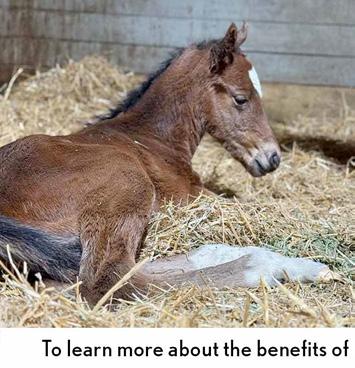

MARYLAND-BRED BREEDER BONUSES ON THE RISE
IN 2026, MARYLAND-BREDS WILL EARN MORE FOR THEIR BREEDERS
PAYING MORE IN 2026:
n Maryland-sired Maryland breds earn 33.6%* breeder bonuses on purses earned for first through third finishes in all overnight races in Maryland. That’s 40% more than out-of-state sired!
n Out of state-sired Maryland-breds earn 24% breeder bonuses on purses earned for first through third finishes in all overnight races in Maryland.
n All Maryland-breds earn 24% breeder bonuses on purses earned for first through third finishes in Maryland stakes races (capped at $100,000)
n MD-sired MD-breds of 2022 or older earn an additional 8% breeder bonus on maiden wins**
n MD stallions earn 8% on purses earned for first through third finishes in all overnight races and stakes races (capped at $100K) in Maryland.
n MD-breds continue to run for 30% more In Maryland, registered Maryland-bred horses are eligible to compete for 30% additional purse earnings in unrestricted overnight races, comprised of a 15% Owner Bonus and a 15% Developer Bonus, as established under the Maryland Thoroughbred Purse Account jointly administered by the MTHA and TMJC.
As of 1/26; subject to change as determined semi-annually by the Maryland Racing Commission. ONLY registered Maryland-breds are eligible for MD Fund bonuses. MD Stallions must be registered with MD Fund program. Bonuses for Maryland Million Day are calculated separately. *Beginning with 2-year-olds of 2025, and stallions must be registered. ** Stallions must be registered.
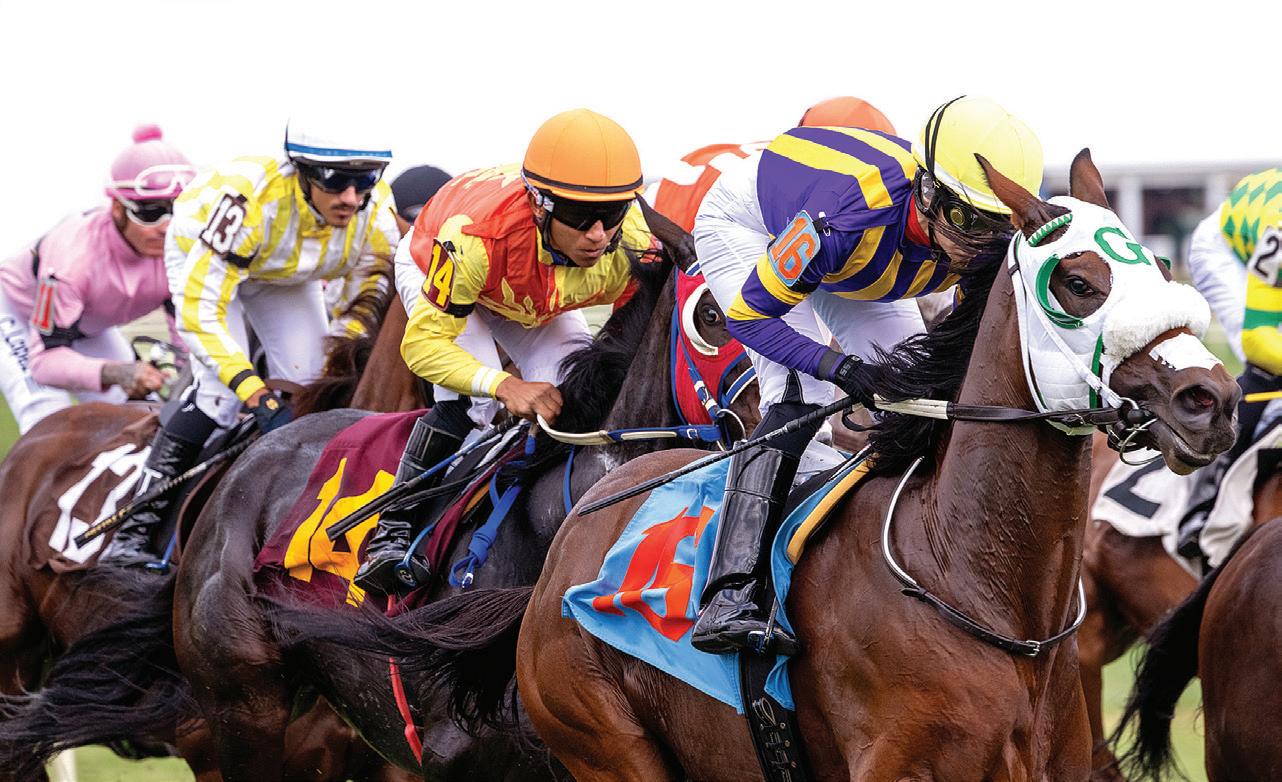
MARYLAND: A foundation of greatness, a bright future ahead
Jim McCue
photo
2026 STATE BREEDING & RACING INCENTIVES
MINNESOTA
2026 BREEDERS AWARDS: The money available from the Breeders Fund for the Thoroughbred breed category shall be divided as follows:
A. 8% shall be set aside and paid to breeders of Minnesotabred horses as Breeders Awards.
B. 20% shall be set aside and paid as Stallion Awards to the owners of the Minnesota-sire at the time of breeding.
The money available from the Thoroughbred Breeders Fund, other than purse supplements earned pursuant to Minnesota Statutes, section 240.135, shall be distributed as follows:
A. “Breeders Awards” shall be paid to the breeder or lessee of a Minnesota-bred horse, as reflected on the Jockey Club physical or digital certificate, that earns purse earnings in any North American pari-mutuel race.
The amount of the award shall be a percentage of the total amount available for all awards. Purse earnings earned in any North American race that is conducted outside of Minnesota during the Minnesota Thoroughbred racing meeting shall not count toward qualified earnings. A horse’s earnings in any single race must not be worth more than the winner’s share of the largest purse offered during the Minnesota Thoroughbred racing meeting.
OWNERS AWARD: Purse supplement awards are paid out to the owners of the Minnesota-bred horses at the same time as the purse earnings.
STALLION OWNERS AWARDS: Awards shall be paid to the owners or lessees of the Minnesota-sire of a Minnesota-bred horse that earns purse earnings in any pari-mutuel race. The amount of the award shall be a percentage of the total amount available for all awards. Purse earnings earned in any North American race outside of Minnesota during the Minnesota Thoroughbred racing meeting shall not count toward qualified earnings. A horse’s earnings in any single race must not be worth more than the winner’s share of the largest purse offered during the Minnesota Thoroughbred racing meeting.
Purse supplements earned shall not count toward qualified earnings in determining Breeders or Stallion Awards.
RESTRICTED RACES: Select Minnesota-bred restricted races will include a purse supplement payment.
OUT-OF-STATE RACE AWARDS: Minnesota-bred horses may earn awards from purses won in any North American pari-mutuel race.
OTHER INFORMATION: The purpose of the Minnesota Breeders’ Fund is to encourage the breeding and racing of high quality horses. Stallion awards promote the introduction of high quality studs standing for the breeding season in Minnesota. The Breeders Fund also provides money for in-state, postsecondary equine research and related education in the form of grants, contracts, or other expenditures.
CONTACT DETAILS: Nicole Boentgen / (952) 496-7950 ext. 4 / nicole.boentgen@state.mn.us / mn.gov/mrc
NEW JERSEY
BREEDERS AWARDS: Awards are paid to registered New Jerseybreds finishing first through fourth in any race run within New Jersey. 35%* of the purse earnings will be paid if the foal is sired by a registered New Jersey stallion. 25%* of the purse earnings will be paid if the foal is sired by an out-of-state stallion or an unregistered New Jersey stallion.
OWNERS AWARD: A 10%* award will be distributed by the TBANJ to the owners of registered New Jersey-bred horses who finish first through fourth in an open company race run within the state. In addition, an owner will receive a 40% bonus for any New Jersey-bred horse that finishes first through third in any open company race run within New Jersey. The 40% bonus has a maximum award of $15,000 per race and is paid by the horsemen’s bookkeeper.
STALLION OWNERS AWARDS: The owner of the stallion must register said stallion each year with the TBANJ. Stallion owners will receive an award equal to 10%* of the amount that the foals of the registered stallion earn while finishing first through fourth in races run within New Jersey.
RESTRICTED RACES: There were 72 restricted races run in 2025 over 58 racing days.
OTHER INFORMATION: *The maximum award for each finish will be determined annually. In 2026, the maximum firstplace award is $8,000, and the maximum award for 2nd, 3rd, and 4th place finishes is $4,000.
CONTACT DETAILS: Michael Campbell / (732) 542-8880 / njbreds@gmail.com / njbreds.com
NEW MEXICO
INCENTIVE AWARD MONIES TO BE DISTRIBUTED BASED UPON RACE CLASS AS FOLLOWS:
Class A: Trials, Futurities, Derbies, Allowances, Handicaps & Stakes
Class B: Maiden & Claiming races of $8,000 and above
Class C: Claiming races below $8,000
Class D: Maiden Claiming races
BREEDERS AWARDS: Total: $1,979,578.30
CLASS FIRST PLACE SECOND PLACE THIRD PLACE
Class A: $2,193.86 $841.40 $321.40
Class B: $1,743.83 $668.81 $255.47
Class C: $900.05 $345.19 $131.86
Class D: $787.54 $302.04 $115.37
OWNERS AWARD: Total: $1,539,663.53
CLASS FIRST PLACE SECOND PLACE THIRD PLACE
Class A: $1,741.74 $672.96 $258.71
Class B: $1,384.45 $534.92 $205.64
Class C: $714.55 $276.09 $106.14
Class D: $625.23 $241.57 $92.87

BUILT FOR SPEED. DESIGNED FOR HEAT.
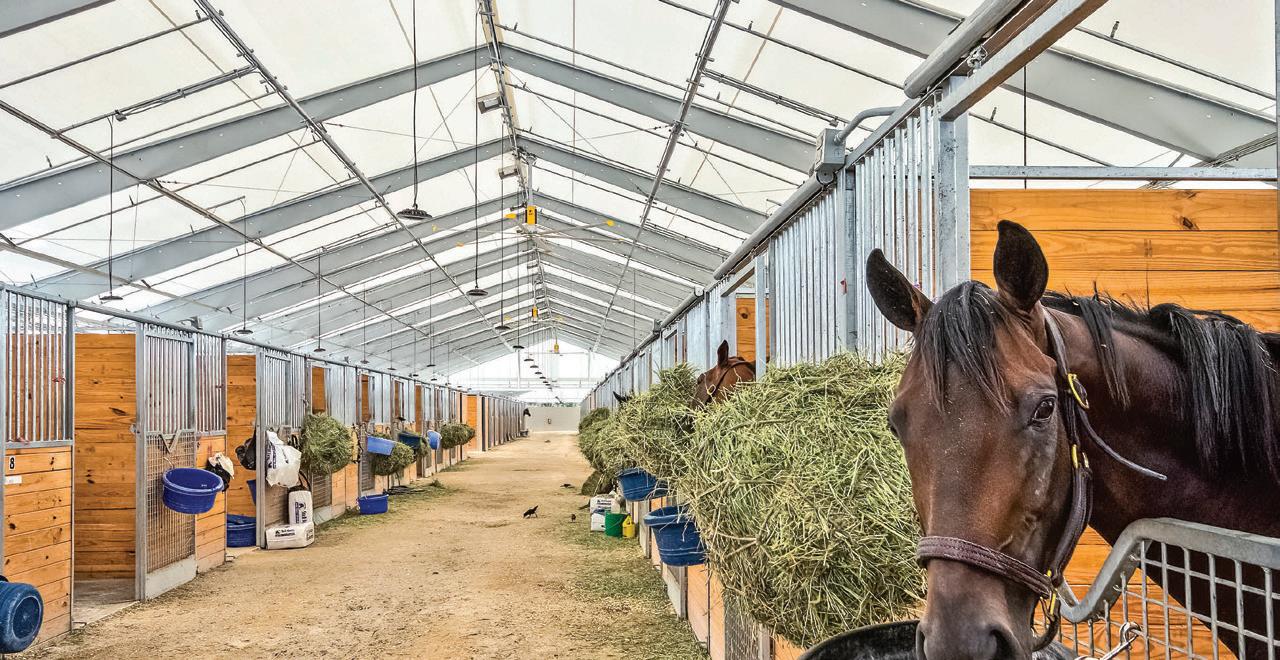
FAST-TRACK CONSTRUCTION
IN-HOUSE ENGINEERING
ENERGY EFFICIENT
EXCLUSIVE FABRIC OPTIONS
PATENTED ATTACHMENT
Legacy Building Solutions designs and manufactures high-performance PVC-clad and fabric structures for elite equine facilities—built for extreme climates, durability, and long-term value. FULLY CUSTOMIZABLE
Racehorses are elite athletes, and their environment should perform at the same level. Legacy Building Solutions’ PVC clad barns are engineered to help manage heat and airflow in high-WBGT conditions—creating a cooler, more comfortable space for training, stabling, and recovery.
A white PVC enclosure reflects solar heat while a ventilation-first design promotes continuous air movement, helping lower the “apparent” temperature felt by horses. The result: improved comfort, better recovery, and consistent performance when conditions matter most.
ABOUT LEGACY BUILDING SOLUTIONS
2026 STATE BREEDING & RACING INCENTIVES
STALLION OWNERS AWARDS: Total: $527,885.97
CLASS FIRST PLACE
Class A: $900.04
Class B: $715.42
Class C: $369.25
Class D: $323.09
RESTRICTED RACES: 3-4 restricted New Mexico-bred races per day that add additional funds to the purses. Year-round racing at five New Mexico racetracks.
A new program started in 2025 for registered Arizona Thoroughbreds to pay a fee with the NMHBA and be eligible to run in New Mexico-bred races. New Mexico-breds are preferred in stakes races.
To be eligible, a registered Arizona-bred must have been sired by a stallion standing in Arizona.
NEW MEXICO-BREDS RUNNING IN OPEN OVERNIGHT RACES:
Any time a New Mexico-bred finishes 1st, 2nd, or 3rd in an open overnight race, they earn additional purse money from the New Mexico Horse Breeders Association.
10% TRACK BREEDER AWARDS: Any time a New Mexico-bred wins a race in the state of New Mexico, the breeder is paid a 10% Track Breeder Award. These awards are usually sent out within a month of when the horse won the race as long as the purse has been cleared by the New Mexico Racing Commission.
CONTACT DETAILS: Mary Barber / (505) 262-0224 / nmhba@nmhorsebreeders.com / nmhorsebreeders.com
NEW YORK
BREEDERS AWARDS:
New York-Sired* Award (Percent of Purse Money Earned):
1st Place: 40% / 2nd Place: 20% / 3rd Place: 10%
Cap per Award: $40,000.
Non-New York-Sired* Award (Percent of Purse Money Earned): 1st Place: 20% / 2nd Place: 10% / 3rd Place: 5%
Cap per Award: $20,000.
OWNERS AWARD: For all open-company races in New York State with a minimum claiming price of $30,000, there are two tiers of Owner Awards:
New York-Sired* Award (Percent of Purse Money Earned):
1st through 3rd Place: 20%
Cap per Award: $20,000.
Non-New York-Sired* Award (Percent of Purse Money Earned): 1st through 3rd Place: 10%
Cap per Award: $20,000.
STALLION OWNERS AWARDS: These awards are paid to owners of registered New York-based (at the time of conception) covering stallions. Please note that only New York-bred progeny of New York-based stallions are eligible to earn Stallion Owner Awards. Stallion Owner Awards have been increased to 10% of purses earned from finishes in 1st through 3rd place. All Stallion Owner Awards are capped at $10,000 per horse, per race.
OTHER INFORMATION: *A New York-sired New York-bred is sired by a registered New York stallion. A non-New York-sired New York-bred is sired by an out-of-state stallion or an unregistered New York stallion. 1,530 foals in 2024. 1,534 foals counted so far in 2025.
CONTACT DETAILS: Tracy Egan / (518) 886-1013 / tegan@nybreds.com / NYBreds.com
Effective January 1, 2026, NYRA will increase purses for 2-year-old New York-bred overnight races to match open-company maiden special weight purses. This initiative will be in effect for 2026 at Aqueduct, Saratoga and the new Belmont Park.
Purse Parity:
2-year-old New York-bred maiden races will offer the same purse money as open-company races.
Increased Purses:
The initiative is expected to raise overall New York-bred overnight purses by 15% compared to 2024 levels.
Qualied Horses:
The program focuses on the 2024 NY-bred foal crop starting their racing careers in 2026.
Further Increases:
By September 2026, coinciding with the reopening of Belmont Park, comprehensive increases for all NY-bred overnight races will be accelerated.
Additional Rewards:
In addition to increased purses, $5,000 bonuses are available for New York-sired, New York-bred winners of maiden special weights and allowance races.
2026 STATE BREEDING & RACING INCENTIVES
OHIO
BREEDERS AWARDS: 2026 Broodmare Awards budget
$4,000,000 – paid to registered broodmare owners of Ohio registered and accredited foals, 15% of winner’s share of the purse, 15% of 2nd-place share of the purse, and 15% of 3rdplace share of the purse.
OWNERS AWARD: For 2026 Ohio has budgeted $613,000 for supplements, $5,123,000.00 for overnights and $1,260,000 for stake races. These are all reflected in the purses.
STALLION OWNERS AWARDS: 2026 Stallion Awards budget
$1,200,000 – paid to registered Ohio stallions of Ohio Accredited foals, 10% of winner’s share of the purse, 10% of 2ndplace share of the purse, and 10% of 3rd-place share of the purse.
RESTRICTED RACES: Yes.
OTHER INFORMATION: In 2026, approximately $12,441,000 is budgeted for breeder awards, stallion awards, the stakes program, and supplemented/overnight purse money.
CONTACT DETAILS: Holly Chandler / (614) 779-0268 / holly.chandler@racing.ohio.gov / racing.ohio.gov
OKLAHOMA
BREEDERS AWARDS: 34% to breeders of accredited Oklahomabred racing stock horses.
OWNERS AWARD: 50% to owners of accredited Oklahoma-bred racing stock horses.
STALLION OWNERS AWARDS: 16% to owners of accredited Oklahoma stallions, plus at the end of the year, the top ten accredited Thoroughbred stallions will be determined and ranked by the amount of the Oklahoma-bred money earned, and those stallions will receive a Stallion Bonus Award.
RESTRICTED RACES: Yes.
CONTACT DETAILS: Danielle Barber / (405) 427-8753 / Dbarber@traoracing.com / ohrc.ok.gov

ONTARIO
BREEDERS AWARDS: More than C$5 million was available in Breeders Awards in 2025, with a cap of C$200,000 per individual breeder of record. The breeder of record eligible to receive Breeders Awards is the individual, partnership, syndicate, or corporation who is the owner of the dam, properly enrolled as an Ontario Resident Broodmare, at the time of foaling. Complete details for 2026 will be available at tip.ontarioracing.com in due course.
OWNERS AWARD: The Ontario Bred Purse Bonus is paid to the owner of registered Ontario-bred horses earning purse
money in open races in Ontario. A registered Ontario-bred is eligible for the Bonus in any open race in Ontario until it has been claimed. Once a horse has been claimed, it is excluded from the Ontario Bred Purse Bonus program for the rest of its racing career. A variety of Ontario-sired bonuses are paid to the owners of registered Ontario-sired horses. Complete details for 2026 will be available at tip.ontarioracing.com in due course.
STALLION OWNERS AWARDS: Stallion Awards are paid to the owner (or lessee) of registered Ontario sires. Complete details for 2026 will be available at tip.ontarioracing.com in due course.
RESTRICTED RACES: Yes.
OUT-OF-STATE RACE AWARDS: Yes.
CONTACT DETAILS: TIP Program Coordinator / (647) 385-8127 / tbprogram@ontarioracing.com / tip.ontarioracing.com
PENNSYLVANIA
BREEDERS AWARDS: 40% PA-Sired PA-Breds, 20% Non-PA-Sired PA-Breds, 1st - 3rd place.
OWNERS AWARD: Up to 40%, 1st - 3rd place, varies by track.
STALLION OWNERS AWARDS: 10%, 1st - 3rd place.
RESTRICTED RACES: 200
OTHER INFORMATION: PA Day at the Races – PARX on July 18.
CONTACT DETAILS: Brian Sanfratello / (610) 444-1050 / info@pabred.com / pabred.com
TEXAS
BREEDERS AWARDS: Breeders receive 40% of available ATB money per Texas meet. Percentage of purse money earned for placing 1st, 2nd, or 3rd in Texas races.
OWNERS AWARD: Owners receive 40% of available ATB money per Texas meet. Percentage of purse money earned for placing 1st, 2nd, or 3rd in Texas races, plus owner bonus for placing 1st, 2nd, or 3rd in Texas open company races.
STALLION OWNERS AWARDS: Stallion owners receive 20% of available ATB money per meet. Percentage of purse money earned for placing 1st, 2nd, or 3rd in Texas races.
RESTRICTED RACES: Yes.
OTHER INFORMATION: Accredited Texas Bred Award money is derived from breakage and 1% of exotic wagers and is paid out by meet. Visit texasthoroughbred.com for forms and more information.
CONTACT DETAILS: Tracy Sheffield / (512) 458-6133 / tracys@texasthoroughbred.com / texasthoroughbred.com

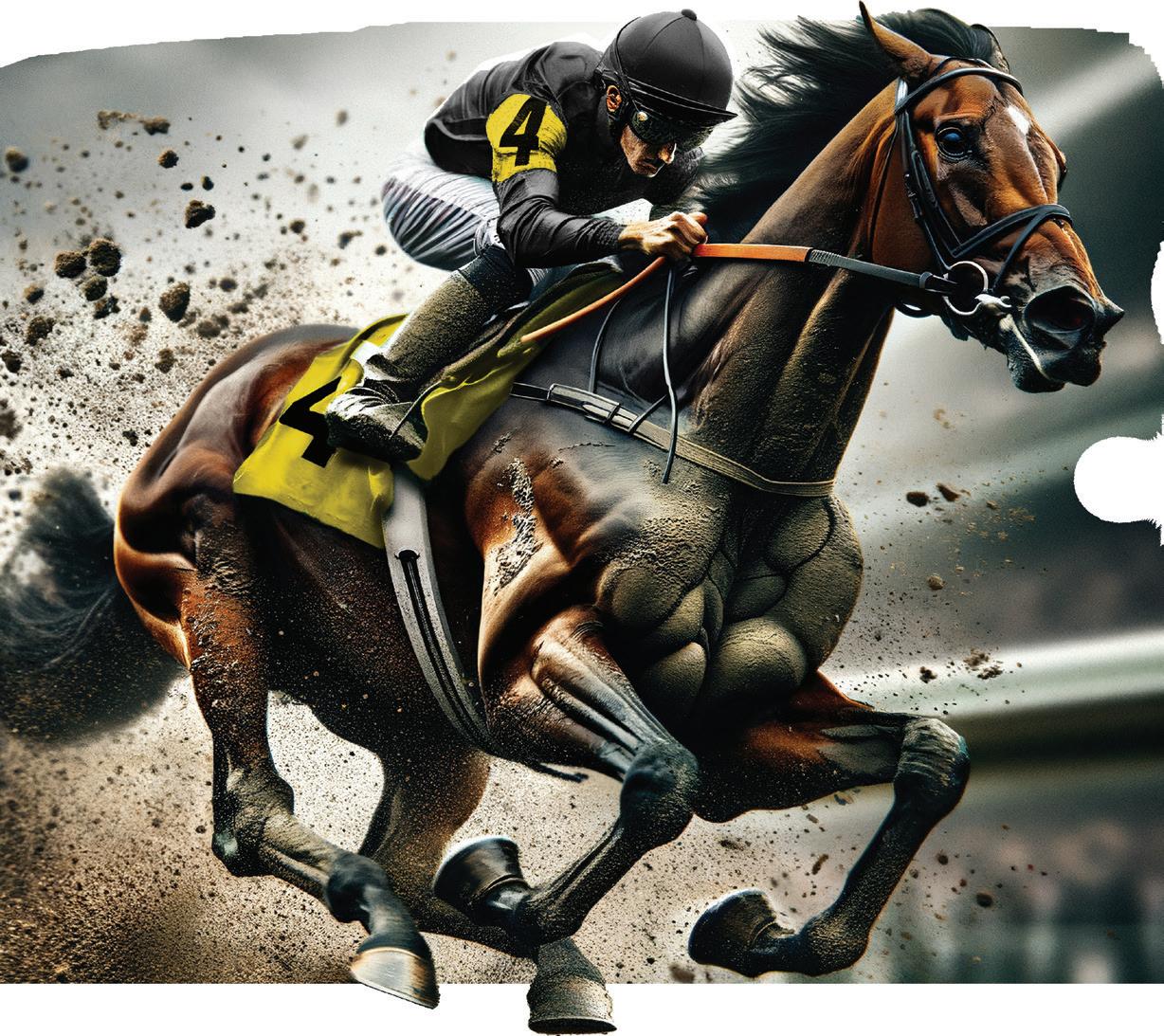

2026 STATE BREEDING & RACING INCENTIVES
VIRGINIA
BREEDERS AWARDS: Virginia Breeders earn awards when their mare’s offspring place 1st–3rd in open races in North America and all races at Colonial Downs.
OWNERS AWARD: Owners of VA-bred and sired horses earn a 50% purse bonus for 1st–4th place finishes in open races at Colonial Downs.
STALLION OWNERS AWARDS: Awards earned when a stallion’s VA-bred offspring places 1st–3rd in open races in North America and all races at Colonial Downs.
RESTRICTED RACES: An average of two VA restricted (includes VA-bred, sired and certified horses) overnight races per day at Colonial Downs. Restricted stakes for VA-bred and sired horses are offered. Restricted stakes for MD-bred and sired AND VA-bred and sired are offered in Maryland and Virginia
OUT-OF-STATE RACE AWARDS: Virginia-bred, sired, and certified developers earn up to a 25% bonus for open race wins in NY, NJ, PA, DE and MD and 10% bonuses on state-bred races. Out of state bonuses are not earned during the Colonial Downs meet.
OTHER INFORMATION: Race days at Colonial Downs expand from 44 to 48 days in 2026. Purses will average near $700,000 per day. VA-bred, sired, and certified developers also earn up to a 25% bonus for wins in open races at Colonial Downs. Please visit vabred.org for all program details.
CONTACT DETAILS: Jill Byrne / (434) 977-3716 / jill.byrne@virginiaequinealliance.com / vabred.org
WASHINGTON
BREEDERS AWARDS: Breeders Awards allocated to recipients. Total Breeders Awards of $179,304.76, paid to 1st through 3rd place.
OWNERS AWARD: Washington-bred 1% Owners’ Bonus Awards. Total Owners’ Bonus Awards of $368,301.44, paid to 1st through 4th place.
RESTRICTED RACES: Emerald Downs is proud to announce the Washington Showcase, a two-day event in August dedicated to celebrating Washington-bred Thoroughbreds.
Additionally, throughout the 51-day racing season, which runs from May 2 to September 7, Emerald Downs will feature one Washington-bred restricted race per day.
CONTACT DETAILS: (253) 288-7878 / maindesk@wtboa.com / washingtonthoroughbred.com

WEST VIRGINIA
BREEDERS AWARDS: 60% to breeders.
Breeder requirements:
1. The breeder of the West Virginia-bred foal is a West Virginia resident.
2. The breeder of the West Virginia-bred foal is not a West Virginia resident, but keeps his or her breeding stock in West Virginia year-round; or
3. The breeder of the West Virginia-bred foal is not a West Virginia resident and does not qualify under subdivision (2) of this subsection, but either the sire of the West Virginia-bred foal is a West Virginia stallion, or the mare is covered only by a West Virginia accredited stallion or stallions before December 31 of the calendar year following the birth of that West Virginia-bred foal.
OWNERS AWARD: 25% to owners.
STALLION OWNERS AWARDS: 15% to sire owners.
RESTRICTED RACES: $800,000 in purse monies are allocated for more than a dozen WV accredited stakes races during the year, including the Robert G. Leavitt Memorial Stakes for 3-year-olds; the Sadie Hawkins Stakes for fillies and mares, 3-year-olds and up; the Frank Gall Memorial Stakes for 3-year-olds and up; and the West Virginia Futurity for 2-year-olds.
The WV Breeders Classics held annually on the 2nd Saturday in October pays out almost $1m in purses for WV-bred and/ or sired horses.
Hollywood Casino at Charles Town Races currently offers f ive races per day that are restricted to accredited WV-bred and/or sired horses.
WV-bred horses can go through their conditions twice, once in restricted WV-bred races, and then again in open races at West Virginia tracks.
Mountaineer offers one race per day that is restricted to accredited WV-bred and/or sired horses.
A minimum of 14 WV stake races per year, including the WV Futurity, are offered for accredited WV-foaled and/or sired horses.
OTHER INFORMATION: Historically, the WVTDF distributes over $4m annually to participants.
The Supplemental Purse Award program also pays breeders, sire owners, and WV resident owners up to 10% of a winning horse’s earnings for that particular race. Claims must be submitted to the WV Racing Commission within 15 days of the purse being awarded. (WV Code 19-23-13)
CONTACT DETAILS: (304) 728-6868 / wvbreeders@gmail.com / wvtba.com

WYOMING
BREEDERS AWARDS: 40% to breeders of accredited Wyomingbred racing stock horses.
OWNERS AWARD: 40% to owners of accredited Wyoming-bred racing stock horses.
STALLION OWNERS AWARDS: 20% to owners of accredited Wyoming stallions standing in the state of Wyoming at time of service to mares producing Wyoming-bred racing stock horses.
OTHER INFORMATION: The Wyoming Gaming Commission grants over 50 live race dates annually to three (3) permittees that host the races throughout the state. Live meet purses are attracting horsemen from all across the country to come race in Wyoming with over $6.7 million being paid to horsemen.
The breeders program has seen dramatic growth with over 710 broodmares and 90 stallions currently, who must permanently reside in the state, and are producing racing offspring to participate in the lucrative state bred program. In 2025, over $9m was awarded to owners, breeders and stallion owners who participated in the Wyoming Breeders Awards Program.
CONTACT DETAILS: Brande Koltiska / (307) 265-4015 / brande.koltiska@wyo.gov / gaming.wyo.gov
The information published has been compiled from either breeder organization websites or directly from breeder organizations in good faith. While every effort has been taken to publish accurate information, we strongly recommend that you check with the individual state / province on the eligibility of your stock for racing or breeding purposes. No responsibility is assumed for errors, omissions or any consequences arising from them.
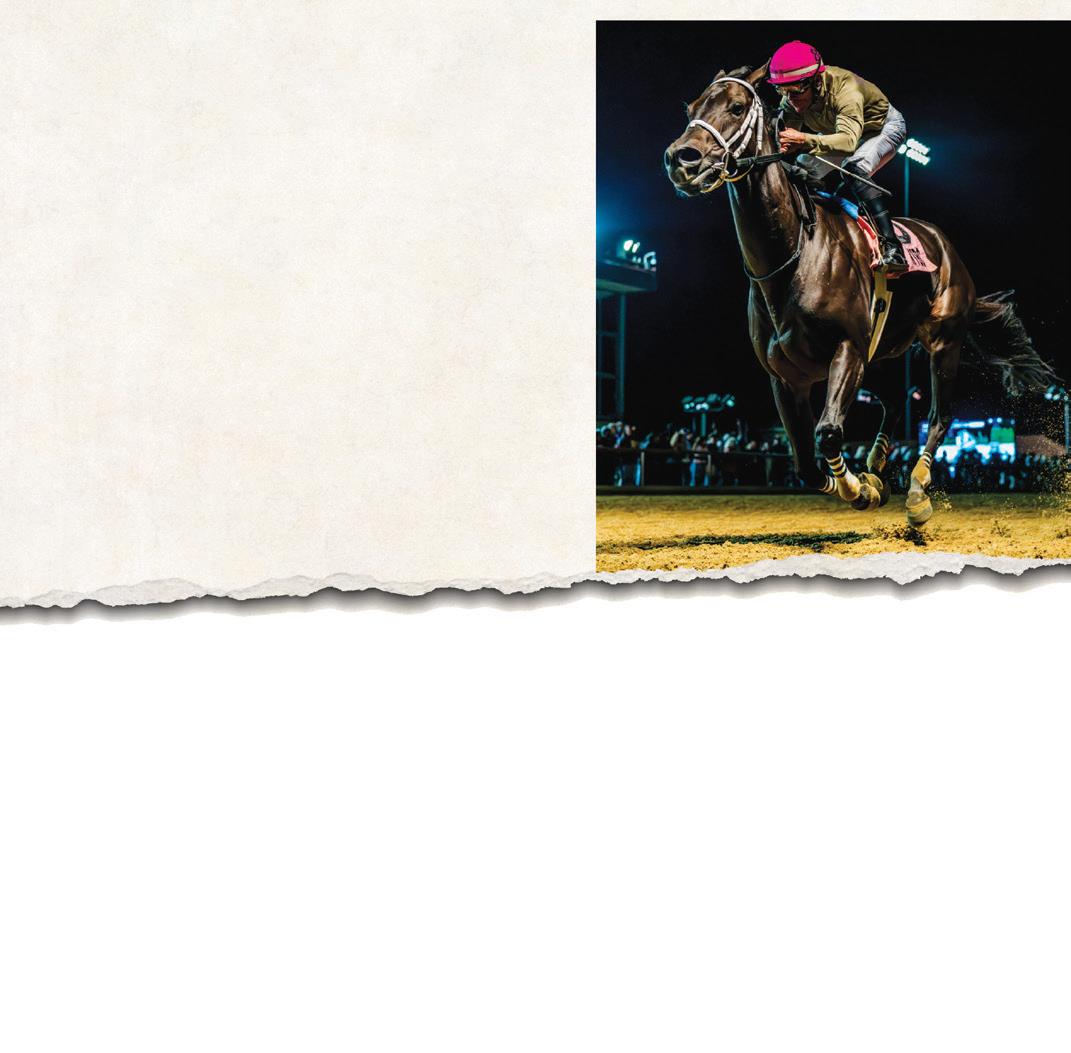
MORE REASONS THAN EVER TO RACE AND BREED IN WV!
WV-Bred Teachintherelease 2025 Horse of the Year
WV Thoroughbred Breeders’ Program continues to provide some of the best benefits in the nation to owners/breeders of WV-accredited and WV-sired horses
• $800,000 annually for Stakes Races Restricted to WV Breds
• 160 days of racing at Charles Town Race Track with at least up to THREE-races Restricted to WV Breds and over 125 days of racing at Mountaineer Race Track with at least TWO-races Restricted to WV Breds
• WV Breds can go through their conditions twice! Once in WV Restricted Races and then again in Open Company at WV Race tracks
• Annual October WV Breeders Classics with $1M in purses
• $1M in Supplemental Awards
• AND WV Breeders awards are earned from first place to last place
NOEL & WENDY HICKEY A FEW MARTINIS, A FILLY, AND A LIFE IN RACING
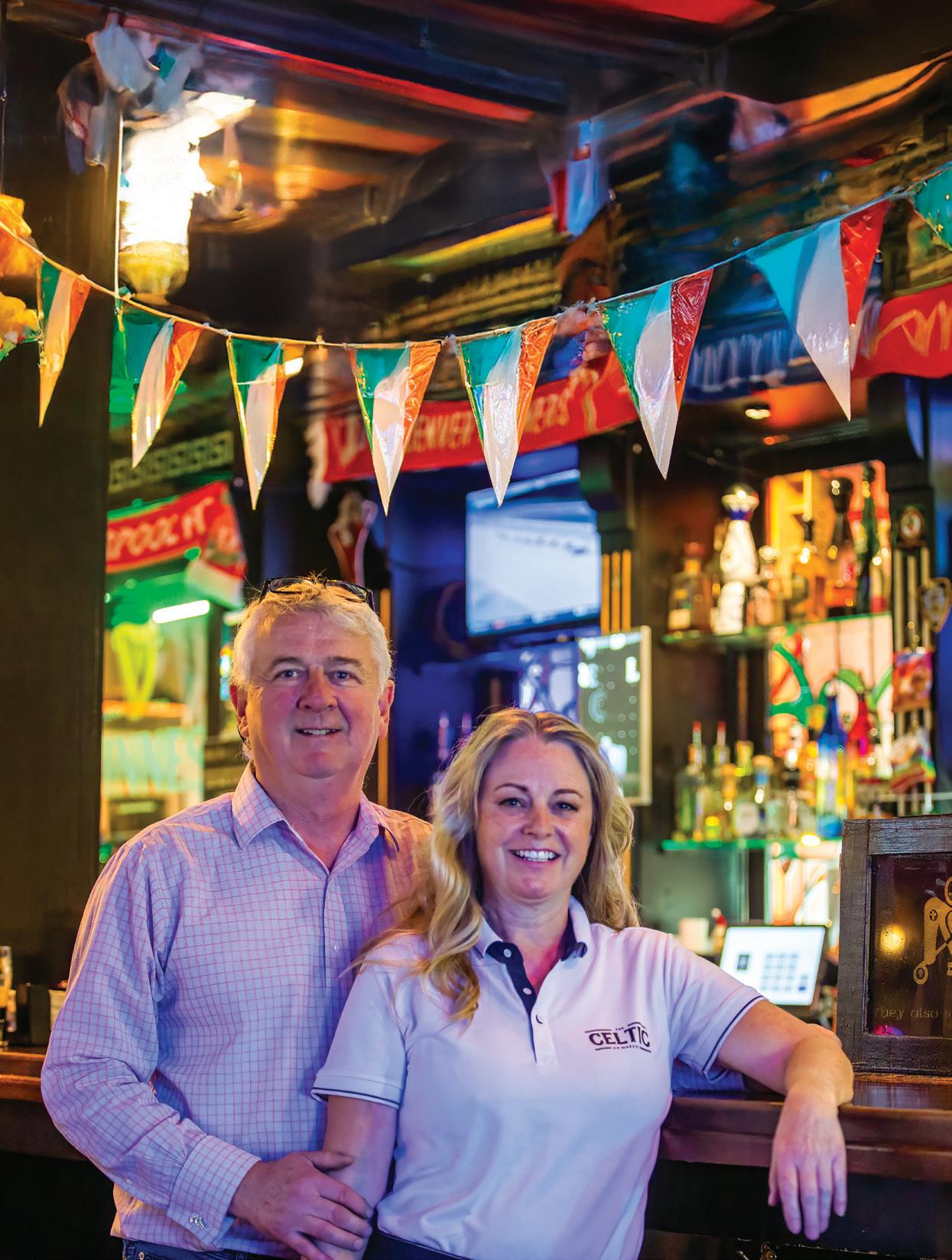

Never leave home without it” from the TV commercial for a credit card is a lesson that was career and life changing for Wendy Hickey, a Welsh emigrant and her husband Noel, also an emigrant but from Ireland. Fortunately, she learned from the mistake made by someone who left home without his checkbook. Worse, he had made the winning bid on a horse at a horse auction in Colorado.
“He had a few martinis,” explained Wendy Hickey. No check, no horse. “So I ended up buying the horse that I hadn’t even looked at” - a yearling filly.
The purchase of the instead of the checkless and feckless bidder was the entry point for Wendy and Noel to get into racing. Their filly raced in Arizona and Colorado for one year before Wendy gave her to a friend.
The single year of racing awakened the proverbial horse gene in both Wendy and Noel. Wendy began putting together partnerships in horses and racing them in Arizona and Arapahoe Park in Aurora, Colorado. That spanned eight years. Inspiration for partnerships came in part from the movie Dream Horse, the story of a small community, ironically in Wales, that came together to own a horse, appropriately named Dream Alliance. The horse won the 2009 Welsh Grand National.
In the last two years, the Hickeys have begun breeding horses, traveling monthly to a farm in Paris, north of Lexington, to check on progress with weanlings, yearlings and broodmares in foal.
The other part that led the Hickeys into breeding was a budding interest and investigation into Thoroughbred pedigrees while racing in Arizona and Colorado. “I started spotting mares that were up and coming on the racetrack and looking at their bloodlines,” said Wendy. I got interested and actually claimed some, brought them to Colorado, and then took them out to Kentucky to breed.”
Currently the Hickeys have seven foals due this spring and this is their second crop sired by Kentucky stallions. The Hickeys will face a decision many breeders have the luxury of making. “Until you see a foal, you don’t know whether you want to race them or sell them.”
Mares will come back to Colorado, Nebraska and Wyoming to foal and take advantage of breeding incentives. Colts and fillies foaled in Colorado will be raced in that state by the Hickeys. Horse breeding, essentially, is agriculture subject to weather like any other crop in the field. Last year, during the breeding season, an ice storm hit the Bluegrass, hampering travel and altering the reproductive cycles for many mares. A percentage of mares do not take on the first breeding and have to come back for subsequent matings. Transportation in bad weather was an issue at times last year and had some effect on this year’s crop of foals. Primarily the result will be more late foals this year.
“Because everyone wants to foal at the beginning of the year, it’s kind of caused a bit of a scramble, because everyone wants to get their mares back and breed again,” said Wendy, referring to second and sometimes third matings with a stallion to produce a foal.
“We had a couple of mares that did take straight away, but not all. There’s wait time involved in a mare coming back into heat and then scheduling with the desired stallion.”
The Hickeys have an advantage over many out-of-state breeders with a location in Paris [KY] which reduces the number of trips back and forth between states. Ironically, Rob Ring, who bred the horse that Wendy Hickey bought at the auction in Colorado, is now their breeder in Kentucky and oversees their operation there. Wendy is the primary decision maker in matings and Ring also has input into stallion choice.
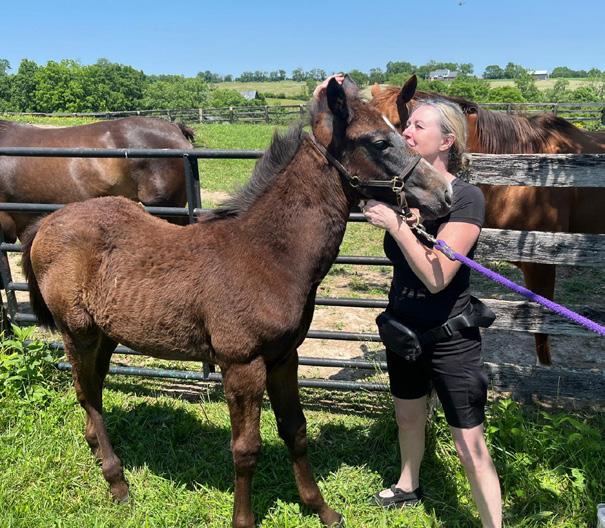
Wendy’s pedigree interests took her to a specific bloodline: Sunday Silence and his progeny. This horse won both the Kentucky Derby and Preakness in 1986. When overlooked by breeders here in the U.S. after retirement, he was sent to Japan where he was the leading sire there a record thirteen times. Progeny has won major races all over the world, and descendants in the U.S. have, in part, restored his reputation as a sire. In 2016, he was the leading broodmare sire in North America. (Read North American Trainer - issue 59 / spring 2021)
Tale of Ekati, whose dam - Silence Beauty - is a daughter of Sunday Silence, was the stallion a Hickey mare was bred to in 2024. The Hickeys brought the foal, a filly, back west to Wyoming. “She’s quite small, but it’s good to have a ‘small’ because Wyoming tracks are pretty snug. You need a small horse to get around the bends.” said Wendy. Another foal was sired by Highly Motivated out of an Irish mare, The Ginger Queen, from the Galileo bloodline. The third foal is by Gift Box, sired by Twirling Candy, winner of $1.1 million in purses including two Gr.2 races and a pair of Gr.1’s, including the Gold Cup at Santa Anita.
“Right now, we have seven horses, three yearlings and four mares,” said Noel Hickey. Among horses expected to foal this year by Mendelssohn, Drain the Clock, Gun Pilot, and Speightstown.
Foaling requirements to qualify as a state-bred in western states vary for the Hickeys. “Wyoming is the trickiest one because the broodmare has to be registered and in the state by the fifteenth of August prior to birth. So if you’ve had a mare that’s had a foal late, you have to move the mare with a foal at her side, but before weaning.”
Fortunately, as with their Paris location, there is a broodmare facility in Laramie, Wyoming for mares in foal and new foals. “Wyoming is really starting to advance now,” said Wendy.
There are quite a few stallions there—Finnegan’s Wake, King Zachary, and Dennis’ Moment. “People are starting to catch on with the breeders’ funds that you can get. They’re trying to encourage people to foal out there and to build the racing program in Wyoming. Nebraska is doing something similar.”
Wendy and one of her foals on the Hickeys’ farm in Paris, Kentucky.
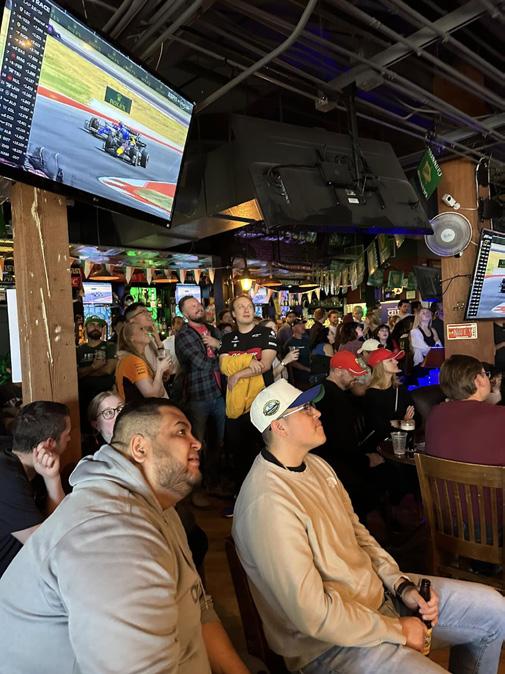
This past year Taylor Made Farm in Nicholasville, Kentucky introduced a “State-Bred Initiative Program” offering free seasons to four stallions at their farm to out-of-state mares who will foal in those states. The program hopes to boost regional breeding outside Kentucky and counter, to some degree, the continuing decline in North American foal crops. The Hickeys are prime prospects for the program.
The Hickeys make their home in Denver and own a combination ‘Irish-Welsh’ pub/off-track betting (OTB) facility - The Celtic on Market.
It was originally called the Celtic Tavern before relocation to 14th and Market Streets in Denver.
The move downtown and opening on St. Patrick’s Day in 2017 was memorable for some nail-biting, last-minute wrangling over a liquor license, rivaling a neck-and-neck battle to the wire between two Thoroughbreds.
After numerous construction delays consuming parts of 2015, all of 2016, and the first three months of 2017, the new Celtic on Market was finally ready to open with all permit issues hurdled…except for liquor.
“We were not allowed to bring any liquor or beer into the restaurant until we had a license.
“We had trucks lined up outside, and so we called the liquor board and said, ‘Could you send someone down to sign off on our liquor license?’” The reply, on the most important day of the year to the Irish and expecting brisk business, was “not until next Tuesday.”
“I said, ‘You don’t understand, it’s Friday and it’s St. Patrick’s Day and we need to open.’” The attitude they got in response was one we’ve
LEFT & BELOW: The Celtic on Market in downtown Denver, home to the Hickeys’ Irish-Welsh pub, Denver’s only OTB, and a hub for racing, football, and F1 fans.
probably all had at one time or another dealing with government officials: “’I’m sorry, sir, it will be next Tuesday’ and they hung up on me!” Hickey said, shaking his head at the memory.
A last-minute call to the chief of staff for Denver’s mayor produced a call back five minutes later from the same liquor board official who had hung up on Noel. Good news delivered coldly: “We’ll be down there in ten minutes.”
“That was three-thirty in the afternoon and at five pm we opened with a full house,” Noel Hickey said.
Nine years later The Celtic on Market will celebrate St. Patrick’s Day and its nine-year anniversary of that opening in the new location.
Today the venue is a center for emigrants from Europe and elsewhere to gather for Premier League matches and other major sporting events around the world like the Melbourne Cup. At the time of writing, the big promotion of the day was Spain’s major soccer match, El Clásico, pitting Barcelona against Real Madrid.
Horse racing is the daily mainstay for Denver horse racing fans and bettors along with out-of-town visitors coming into Denver for Broncos football games.
Noel greets visitors as the front-of-house guy. “I’m that guy that schmoozes people. Wendy does all of the back of the house for the bar, the OTB, and FanDuel.
Fittingly, the two met in an Irish pub in Düsseldorf, Germany that Noel owned 36 years ago. They’ve been married 34 years. “We spend twenty-four hours a day with each other. We’re very lucky in the sense that we work well together,” said Noel.
Ah, there it is the luck of the Irish: a horse that fell into their lap to start the Hickeys in racing; the involvement that sustained and made possible horse breeding in Kentucky; and last but not least, owning Denver’s only OTB. What could be next? Given all that has already happened, the two of them in the winner’s circle of a Triple Crown race wouldn’t be a surprise.

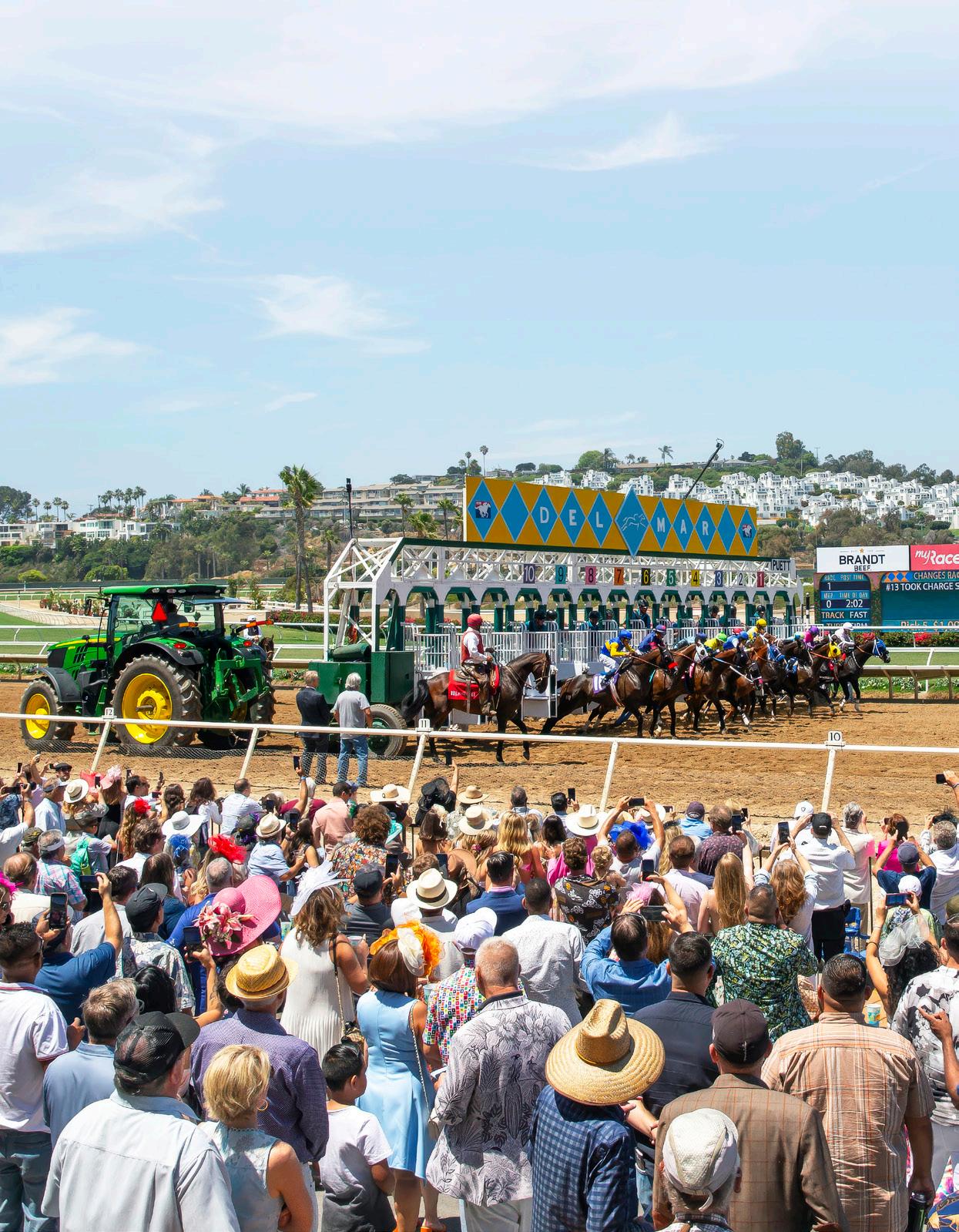
BACK ON TRACK
THE LENGTHS RACETRACKS ARE GOING TO IN ORDER TO ENHANCE THE LIVE, IN-PERSON RACETRACK EXPERIENCE
Stephen Panus, formerly of America’s Best Racing and the National Thoroughbred Racing Association, once said, “A day at the races is a long social event punctuated by sports.”
As the country’s oldest sport, the tradition of gathering to watch horses test their speed and stamina against others—whether over a dirt path scratched out of virgin forest or well-manicured grass thronged by a glittering modern edifice— is as essential to the culture of American life as baseball and barbecue. The settings have evolved, the accoutrements too, but the essence of the experience remains the same: a collection of friends and family eating, drinking, and making merry as they watch sleek Thoroughbreds compete. However, the competition for the discretionary dollar is greater than ever. Within this ever-changing cultural moment, racetracks must be willing to adapt in order to stay competitive and keep a day at the races an attractive option for fans.

As racetracks like Oaklawn Park, Del Mar, and others have seen an uptick in their on-track attendance, taking a look at the practices that have brought both new and core fans back for more reveals potential strategies for growing turnout everywhere.
From its height in the 1950s and 1960s—on-track attendance peaked at 42,839,379 in 1969—racing has seen its share of trackside fans shrink. Competition from other sports, available via television and other access points, as well as the growth in alternate forms of gambling like casinos and lotteries, and the advent of offtrack betting via simulcasting and advanced deposit wagering services (ADWs) have diverted people and their discretionary income away from the ovals. By 2019, on-track numbers for the sport’s big days, like the Kentucky Derby, which averages around 150,000 annually, remained strong, but attendance overall had dropped to 8-10 million. Yet wagering handle has stayed steady, with off-track betting at simulcasting locations and via ADWs bringing in the majority of the sport’s income.
However, for racetracks, encouraging fans to attend (and wager) in person is more profitable overall than other sources. “Every dollar bet at the track is way more valuable to the track than anything away from the track. In fact, the further away you get from the track, the less productive it is for the track,” said Alan Balch, Executive Director of California Thoroughbred Trainers and former Senior Vice President of Marketing at Santa Anita Park.
“With on-track betting, the wagered dollar does not have to be shared with so many other constituencies. The further you get away from the track, the more people are taking their cut along the way.”
Thus, racetracks needed to prioritize attracting fans for a day at the races, but also those who wanted to wager off-track, while also competing with growing options for spending both free time and discretionary income. It was an across-the-board conundrum for all forms of entertainment, not just horse racing. Then 2020 happened.
The COVID-19 pandemic presented a unique challenge for racetracks everywhere: a sport already experiencing a decline in attendance had to adapt to a period where that element of their business was not an option. Would this be temporary, lasting only days or weeks, or would this stretch on for months and potentially have long-term deleterious effects?
With even its core supporters unable to be on track, the emphasis shifted even more to the convenience of wagering at home. While teaching fans, from the casual to the committed, to bet on their phones or their computers sustained them through the uncertainties of the pandemic, that shift also presented another set of challenges when the world was able to welcome fans back to the in-person experience once again: how to bring back the social experience of a day at the races in a post-COVID economy, where previous methods of outreach have given way to new ones as people shift how they prioritize and consume entertainment.
Not only is racing competing with the National Football League, Major League Baseball, the National Basketball Association, the National Hockey League, Major League Soccer, and their offshoots for in-person attendance, but also for media time. Fans can watch most of those sports on broadcast television on a regular basis, especially if professional sports teams are local to them, but their exposure to racing on major networks is limited to the three Triple Crown races and the Breeders’ Cup.
Del Mar Racetrack
With cable or other paid services, fans can see racing via Fox Sports or FanDuel. Streaming services increase access even more, but they also require a recurring subscription. Social media can play a role in attracting viewers, but a user’s algorithm is going to target their interests, making it more challenging for racetracks to reach newer customers if they have not already indicated interest in racing. For racing to compete, it requires racetracks to buy in to what fans expect to a degree they may not have in previous eras.
“If you’re going to try to motivate people to attend something, you have to have all the cylinders in the marketing engine working together. And that requires real investment, money investment, people investment, and experience investment,” Balch observed.
“Any place where there’s racing is a very competitive environment because there’s a lot of entities competing for attention. And you can’t compete for attention if you don’t invest in it.”
For Churchill Downs, which has properties in both major metropolitan areas and more rural settings, the competition for network time requires flexibility in a cutthroat sports media landscape. “Quite honestly, it’s difficult to make inroads with some of the major sports franchises from my experience. In America, football is king and we have to figure out ways to work around their scheduling,” said Gary Palmisano, Vice President of Racing. “It’s up to the track to find ways to fit events around games.”
With competition for both fans’ attention and dollars evolving, racetracks must stay on top of what works now rather than falling back on past successes. The recent growth at tracks like Oaklawn and Del Mar offers the sport a blueprint for reviving the on-track experience for the sport’s core and bringing in new faces everywhere.
Peruse a sports bucket list and you will find the signature big days of any sport: the Super Bowl, World Series, tennis’s Grand Slams, The Masters, and the Kentucky Derby. Racing has cultivated an enduring audience for the Run for the Roses, but that singular day is built on the hundreds of race cards in between those big days.
Because the on-track experience yields more money for racetracks, both from wagering and from admission, food and beverage, and more, refocusing on the day at the races experience is a necessity for the sport’s long-term health. “I’m a big believer
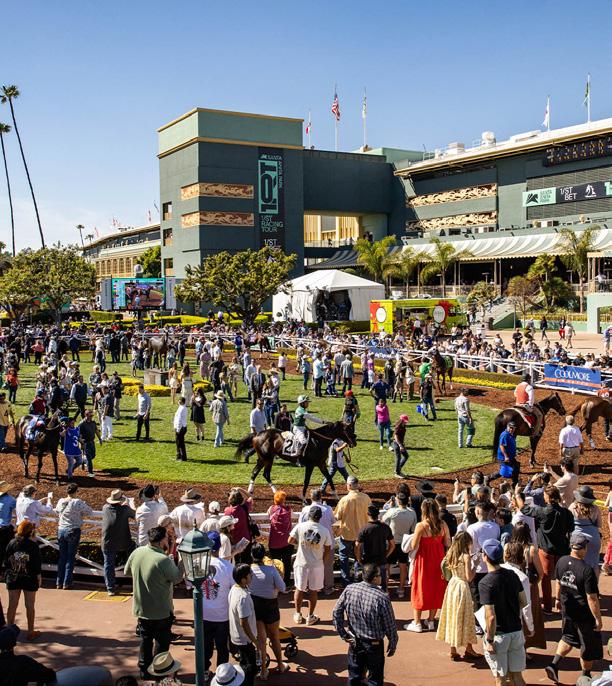
in the live racing experience. ADW and simulcasting are where the super majority of the handle comes from, but if we don’t have live racing, how are we going to create the future fans to do simulcast and ADW and come to our big days?” said Damon Thayer, former Kentucky state senator and senior advisor to the Thoroughbred Racing Initiative.
As the sport’s most recognizable brand, Churchill Downs emphasizes investment in its properties, whether in metro areas like Louisville or New Orleans or more rural locations like New Kent, Virginia, and Florence, Kentucky, as one way to bring fans back for a day at the races. “We work very hard at all of our properties to improve the overall racing experience for fans and the horsemen,” Palmisano shared. “Whether that be from capital projects enhancing the physical plant or strategic initiatives to better the racing product on the track itself. We are constantly innovating and trying to create new experiences whenever we can.”
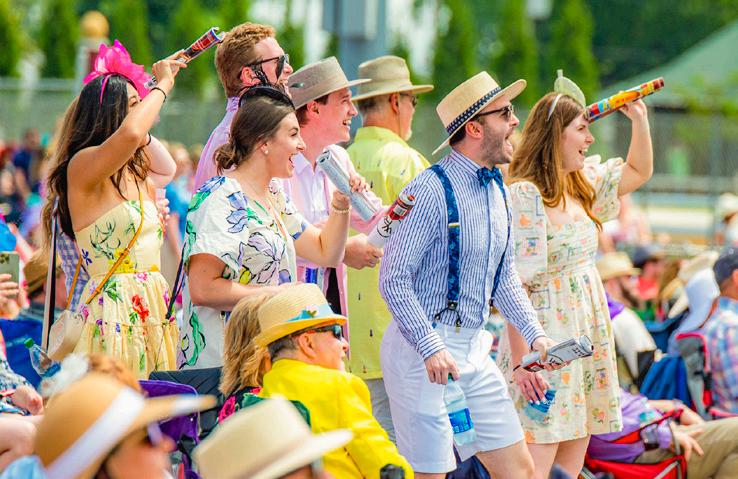
To do that, Churchill Downs Incorporated, the parent company behind its various Standardbred and Thoroughbred properties, will add new events to its traditional calendar in order to extend the opportunities to attract new and core fans: “In 2025 we created a brand-new Kentucky Derby prep race in March at Colonial Downs. Colonial’s racing season is traditionally in July and August, so we had to create an experience from scratch. Over 8,000 people attended and we’re nearly sold out again in 2026.
That’s just one example of our efforts to think outside the box and push ourselves to improve.”
On top of looking for opportunities to add new must-see events, cultivating the experience of a weekday at the races is about “selling the sport of horse racing. It’s not to gouge them with an expensive soda or hot dog,” said Louis Cella, President of Oaklawn Racing
Colonial Downs
Santa Anita
and Casino, “It’s the experiential part of the sport, which is so great. And if you can get them with that, they’ll go all day long.”
In areas like Los Angeles, where the options for entertainment include multiple sports teams, museums, the film and television industry, and more, Santa Anita Park works to hold its own with both its core fans and those new to the sport. “One way we do this is by cultivating and rewarding our core, by rewarding them with gifts, or free play, or special offers for free admission,” said Andrew Arthur, the track’s Senior Director of Marketing. “Our other attraction strategy is to bring new fans into racing, which I’m sure is something that you’re more interested in. And how we do that is we add extra experiences.”
The classic racetrack incorporates a wideranging calendar of events, including corgi races, special food and beverage vendors, and on-track attractions like its annual calendar giveaway on opening day, traditionally the day after Christmas. Additionally, they have wagering ambassadors who interact with newer fans one-on-one, taking them on tours of the track and teaching them about how racing and wagering work.
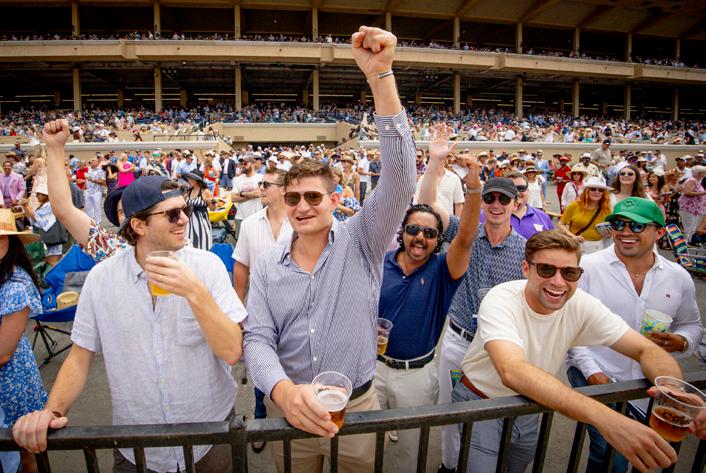
“We focus our marketing around our big days and then have a steady flow of marketing to promote those other smaller events that I talked about. And then our on-track experience, the wager investors, try to convert them into longer fans.” Arthur added. “Once we get those customers, then we start getting them into our email funnels and our texting funnels and doing our best to make an offer to them to come back.”
Located in San Diego, the Pacific Ocean a hop and a skip away, Del Mar faces similar challenges and yet has seen a similar increase in on-track attendance. “There’s so much to do. We have a ton of competition in the area, especially during the summer,” said Erin Bailey, the track’s Vice President of Marketing. “You’ve got the beaches, the Padres, and more. So we firmly believe that we have to have a reason for people to choose us over all those other things.”
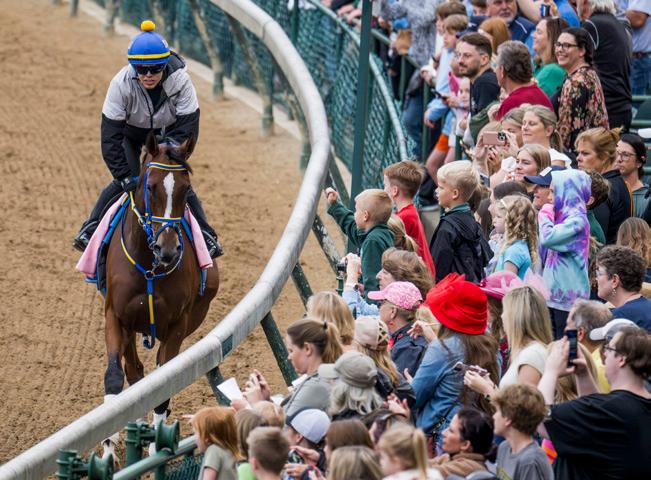
To do that, Del Mar emphasizes affordability and familiarity. “You can get in for $8, and you can bring a picnic, and you don’t even have to buy our food and beverage,” Bailey said. “You can bring in your own food, and you can just post up trackside on the apron or wherever you might want to land. If you want to have a very financially efficient day, you absolutely can.”
Additionally, “we [at Del Mar] really work hard to find these familiar things to bring people to. So on Saturdays, for example, we will have a lifestyle event like a food or wine festival or a trackside bourbon tasting while also watching world-class racing. We use a lot of those types of experiences to bring people out, to get them with something that they already are doing and are used to.”
While Oaklawn Park may not face the same competition for fans, its location inside a national park an hour outside of Little Rock, Arkansas, may not seem like a natural racing destination, but the Cella family’s emphasis on customer service has helped make this century-old racetrack a destination for fans from all over the region. “There is a reason we average over 10,000 people a day, over a 65day meet. And that is because we appreciate and we do everything in our power to help the fan,” said Cella, who is the fourth generation of his family to helm Oaklawn. “The reason that’s so important is you sell them the product of horse racing, and that’s our business, selling the sport of horse racing, not gambling.”
“And when we’re successful at that, guess what? They’re going to come back, they’re going to place two bucks to show on the favorite, they’re going to buy a hot dog, and all the other areas will start being successful.”
Oaklawn does that through incentives like free admission, inexpensive programs, and on-track wagering benefits like their Show Bet Bonus, which rewards fans who place wagers at Oaklawn rather than through an ADW or offtrack betting service. Like Santa Anita, the track also has ambassadors that wander through each day’s crowd, offering answers to any questions fans may have and engaging with the public directly, reinforcing the track’s emphasis on customer service. Additionally, Oaklawn’s approach to concessions underscores its commitment to making the on-track experience an affordable one.
Del Mar Racetrack
Churchill Downs
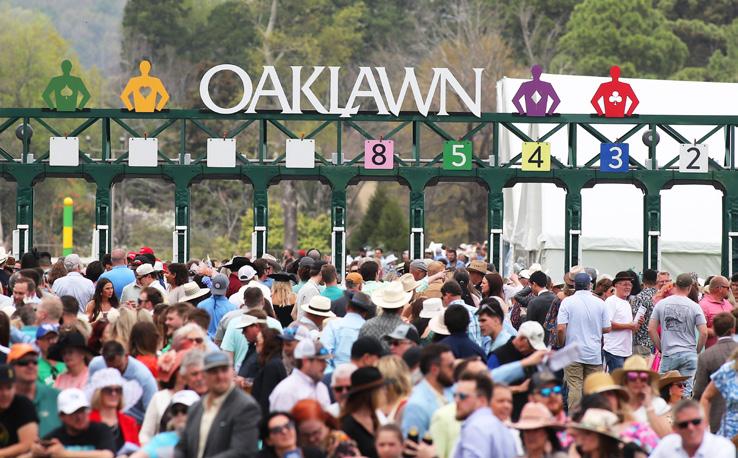
“Fans will never have to buy a $12 beer at Oaklawn. We are proud that it is affordable for families to bring the kids. We own our food and beverage vendors across the entire plant. And because we own it, we do not view food and beverage as a profit center. We view it as breaking even,” Cella said. “If we break even, we can pass those savings on to our fans. So they come over and over and over because they know they’re not going to be nickel and dimed at the concession stand. It’s a very different view of a racetrack, especially on track.”
That affordability is key to bringing fans back for the ontrack experience as Nick Tammaro, Sam Houston’s Player Development Manager and track announcer, emphasizes: “One thing that I think we’re trying to capitalize on, that we could do better, everybody could do better, is that the entertainment dollar right now in this country is spread so thin because everything is so expensive. If we’re able to get people to understand that you could come out and bring your family of four and watch live racing and get a decent seat to do so and feed them for 60 bucks, in an area like Houston, that’s a good deal.”
Compare that cost to other major sports and racing’s advantage as an affordable sporting and social experience stands out. For the same family of four to attend an NFL game, including tickets, parking, and concessions, can cost from $600 to over $2,000. An MLB game could run $150-$300, while an NBA game might cost upwards of $1,000, and an NHL game hovers around $400-$500 on average. Those prices make a day at the races a much more affordable option, but as Balch points out, tracks have to invest in the marketing necessary to share that advantage.
“My opinion, number one, is that the most important thing is for track management and ownership to view marketing as an investment and not an expense. That is the critical component of getting people to come to the track,” he said.
Alongside marketing must come hospitality, including food, beverage, and facilities, the tangibles that help people create the social experience of a day at the races.
“The thing is, the consumer who spends discretionary money on sports and entertainment, they expect a certain level of hospitality when it comes to food and drink and seats and the overall experience,” Thayer observed. “That’s something racetracks are going to have to be cognizant of moving forward,
especially if you’re trying to get 20-somethings and 30-somethings to come to the races. Those kinds of fans have high expectations.”
“The biggest salespeople for any entity, including a racetrack, are satisfied customers,” Balch echoed. “People who go home from a day at the races and tell their neighbors, ‘We just went to the races today. We had a great time out there. God, it’s the most beautiful place. Oh, you’ve never been? Oh, really? Yeah. Let’s go together. I mean, that’s when you get your existing customers to be your sales force.’”
With that in mind, what can racetracks do in the 21st century to bring both new and core fans back for a day at the races?
“I fully subscribe to the idea that if you give people something known, something comfortable, something that they’re used to, and if you put that experience trackside, they want to stay. They want to experience what you have to offer in a day at the races,” Del Mar’s Bailey said. Bring what fans enjoy about their social experiences—good food, comfortable settings, the sports and entertainment they seek out—and then put all of that within the setting of a racetrack, and a day at the races becomes a viable part of a fan’s sporting life. How a particular location can do that will depend on how much their operators are willing to invest in their individual communities. Though racing may be as simple as several horses competing over dirt or grass, a universal pursuit that transcends location and language, getting fans in the door means understanding what works locally and that takes investment.
“I firmly believe that you can’t create a new fan without them experiencing the actual life at the racetrack,” Tammaro said. “I will die on the hill that I’ve never taken anybody to the racetrack, and they haven’t had a good time.”
“Racetracks are fan incubator sites, and not only is it important to attract fans for today and that they have a good time, but also to create the fans of tomorrow,” Thayer observed. “We’re also developing profits for the track operator and building purse money for the horsemen,” both important parts of keeping the sport going.
“We have to admit that most people are not walking out of there having won a bundle of money. But if they’ve had fun, that’s the thing. That’s what we’re selling. We’re selling fun, we’re selling entertainment, we’re selling a social experience that people at all different levels have,” Balch said. “And that’s, again, that’s another great aspect of the racetrack. Going to the races is fun.”
To do that means putting fans, both potential and existing, first. “If you build it, [they] will come,” the voice says in the movie Field of Dreams, and indeed the main character’s efforts are rewarded with a transformative experience, one that endures long past the film’s end. It is a lesson that racing can embrace not simply in the short term, but for years to come, no matter how much the cultural landscape changes: build a familiar and welcoming space, one where people want to congregate, with the elements that make them feel at home, and they will come back again and again.
How each racetrack will achieve that is a conversation the sport must continue to have with not only fans, but also with each other. The question is, how much is the industry willing to do to make that happen?
PA-Sired


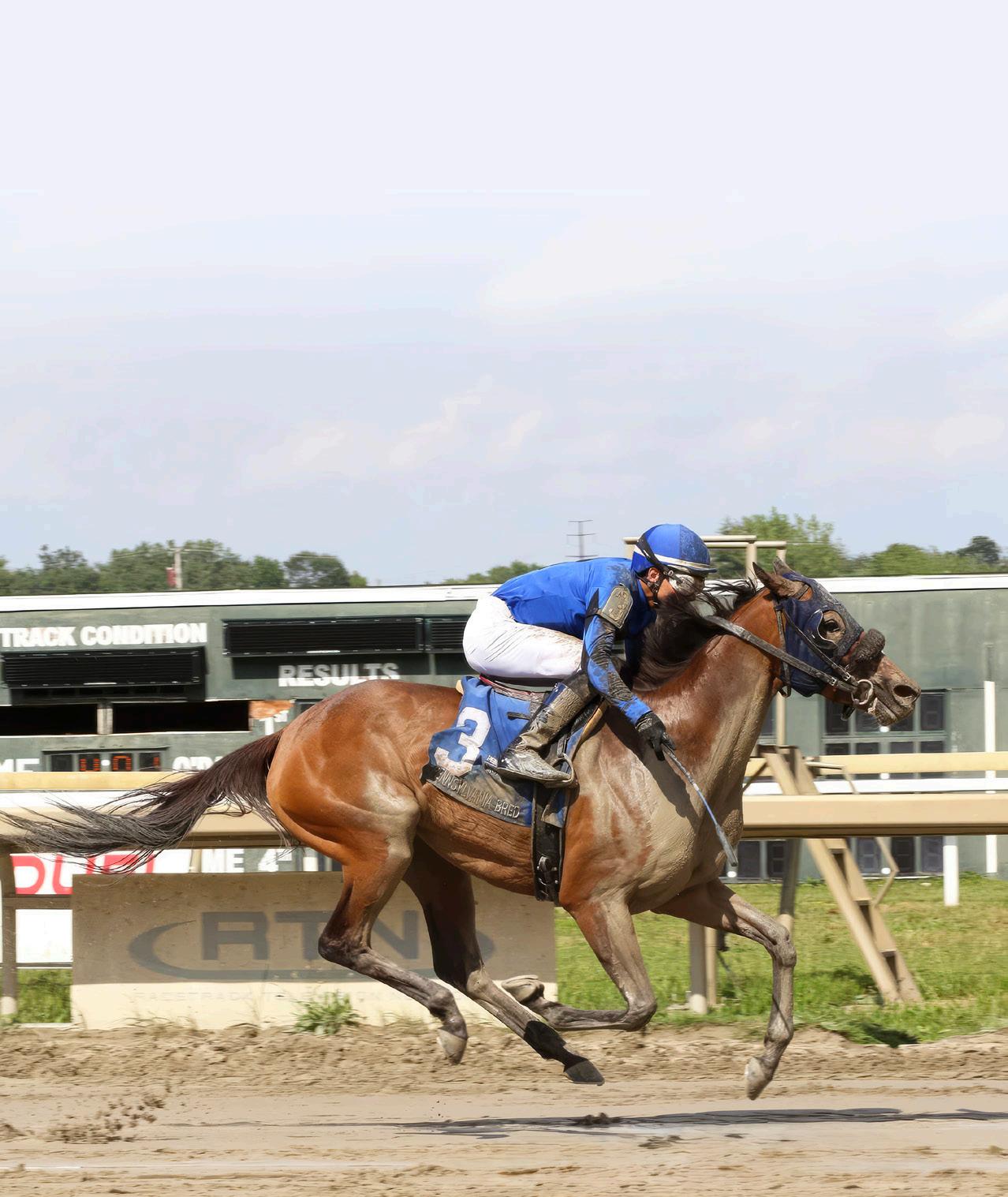
PA-SIRED IS THE WAY TO GO
When breeders make decisions about where to breed a mare, the difference between a PA-Sired PA-Bred and a non-PA-Sired PA-Bred can feel subtle on paper. On the racetrack, however, that decision has very real financial consequences. In Pennsylvania, the numbers make a compelling case that PA-Sired is the way to go.
Pachelbel, with Jorge Vargas Jr. up, wins for the third time in 2025 at Parx Racing, July 2025.
The breeder of a registered PA-Bred receives an award whenever that PA-Bred finishes first, second or third in any pari-mutuel race run in the state. For PA-Breds sired by registered Pennsylvania stallions, the breeder award amounts to 40% of the purse earned. For PA-Breds sired by outof-state stallions, the award is 20%. That single distinction, 40% versus 20%, creates a significant earning gap that compounds over the course of a horse’s career.
Owners benefit as well through Pennsylvania’s Owner Bonus program, which rewards the owners of PA-Breds finishing first, second or third in designated races at Parx Racing, Penn National and Presque Isle Downs. Owner bonuses are a percentage of the purse share, are considered part of a horse’s official earnings and are deposited directly into owners’ accounts when purses are released. Owner bonus percentages vary by track, with Parx Racing currently offering a 40% owner bonus, Presque Isle Downs 30% and Penn National 25%.
To illustrate how quickly the difference adds up, consider a $50,000 maiden special weight race at Parx Racing. A nonPA-Bred winner earns 60% of the purse, or $30,000, which is the full extent of the earnings tied to that victory. A PA-Bred that is not PA-Sired earns the same $30,000 purse share, plus a 40% owner bonus paid by the track, which equals $12,000. In addition, the breeder earns 20% of the purse share with the owner bonus, or $8,400, bringing the total earnings tied to that single win to $50,400.
A PA-Sired PA-Bred earns even more. The owner again earns the same $42,000. But the breeder awards increase to 40% of the purse share, bringing the total to $58,800 for the same $50,000 race. Stallion awards further increase the return for eligible Pennsylvania stallions.
That gap widens over time, particularly for breeders. The breeder of record remains the same no matter who subsequently owns the horse, meaning breeder awards continue for the life of the runner as long as it competes in Pennsylvania. Stallion awards are earned when a registered PA-Bred by a registered Pennsylvania stallion finishes first, second or third in the state and also remain tied to the stallion’s ownership at the time of conception.
HIGHER BREEDER AWARDS, STACKED BONUSES, STALLION INCENTIVES, AND ADDED CONDITION FLEXIBILITY ALL POINT TO THE SAME CONCLUSION: PA-SIRED PAYS.”
Beyond the raw earnings, PA-Breds also enjoy structural advantages within the racing program itself. After breaking a maiden, PA-Breds have access to allowance races restricted to Pennsylvania-Breds. It is important to note that clearing a condition in a restricted PA-Bred allowance does not count toward that same condition in an open allowance. A PA-Bred can win a non-winners of two races condition in a restricted race and still remain eligible for the open non-winners of two allowance, with the same structure applying at the non-winners of three level.
That advantage is illustrated clearly by Pachelbel, a daughter of Hoppertunity, who was standing in Pennsylvania at the time of her conception, making her a PA-Sired PA-Bred. Racing exclusively at Parx Racing in 2025, she benefited from the track’s 40% PA-Bred owner bonus and the full PA-Sired breeder award structure.
Pachelbel won five races during the year, progressing through starter and allowance company. Because the allowance races she won earlier in the season were not restricted to PA-Breds, she later remained eligible for a non-winners of two races other than allowance written exclusively for PA-Breds, giving her an additional opportunity to earn at the same condition level. She also finished second in the $75,000 Disco Chick Stakes, a race restricted to PA-Sired PA-Breds.
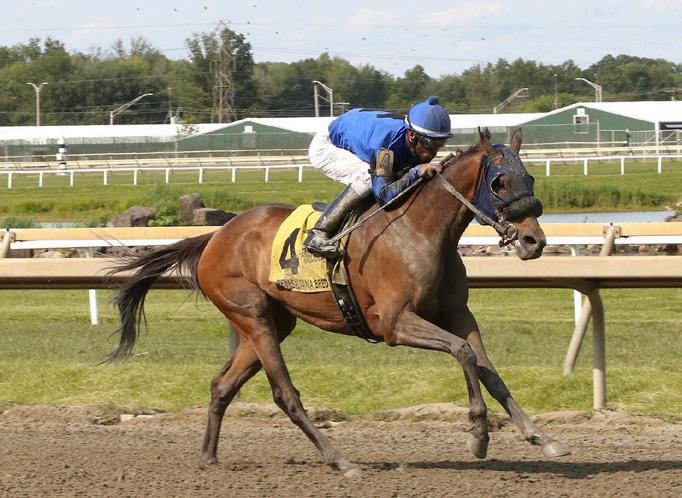
On the racetrack alone, without awards or bonuses, Pachelbel earned $274,170 in 2025. According to the PHBA’s most recent update, her season also generated $105,911.20 in breeder awards, $60,208 in owner bonuses and $26,477.80 in stallion awards. Combined, those incentives added $132,389 in addition to her regular purse earnings, bringing her total 2025 earnings to $406,559 and placing her atop the Pennsylvania Breeding Fund leaderboard.
Had Pachelbel not been PA-bred, her total earnings for the year would fall from $274,170 to $199,112, a difference of $75,058, in addition to forfeiting the $132,389 in additional awards.
When viewed race by race, the difference between PA-Sired and non-PA-Sired may appear incremental. But over the course of a season, and especially over the course of a career, the advantage becomes unmistakable. Higher breeder awards, stacked bonuses, stallion incentives and added condition flexibility all point to the same conclusion. For breeders and owners alike, PASired is the way to go.
Pachelbel, ridden by Kendrick Carmouche, wins at Parx Racing in June 2025.
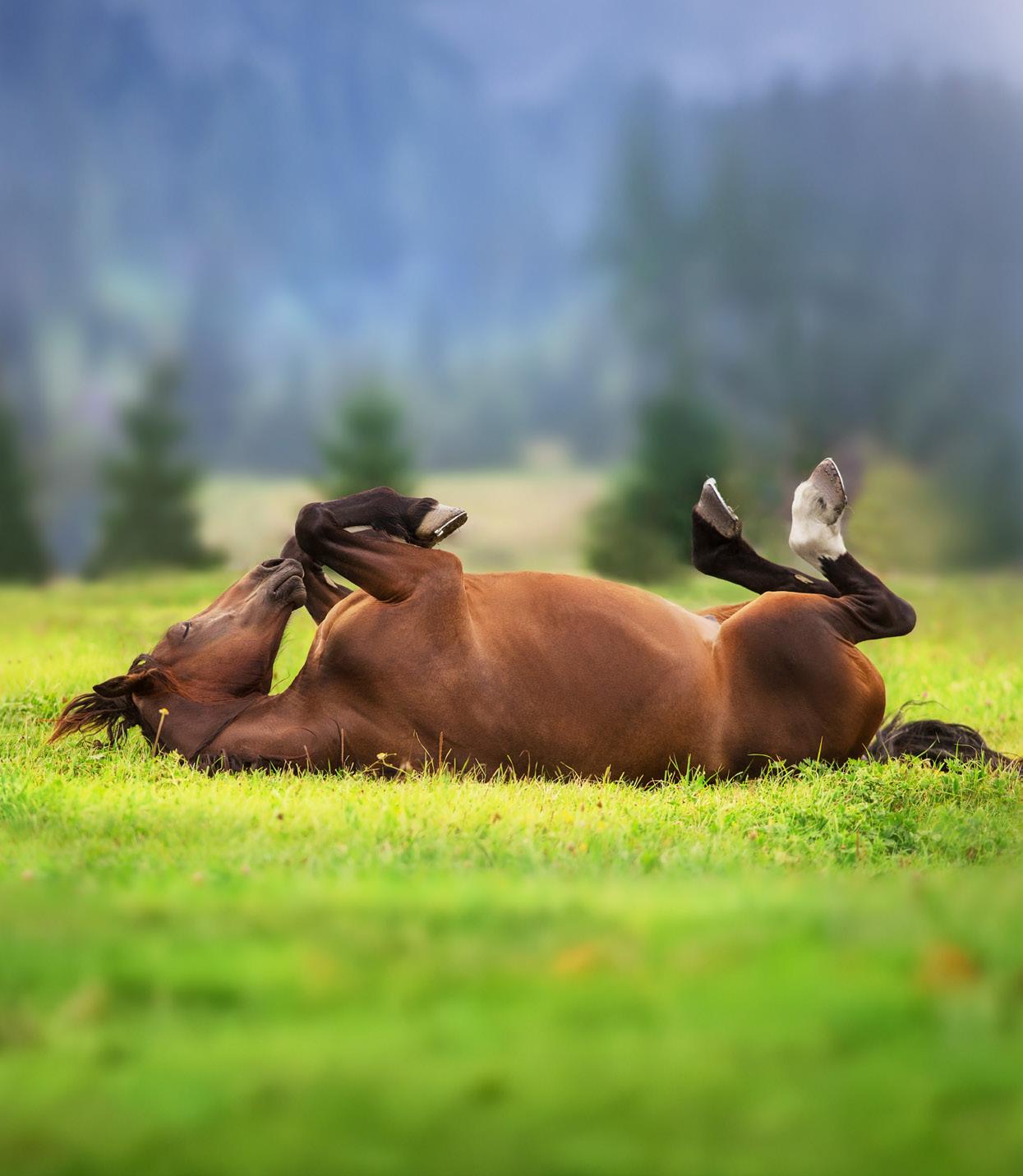
REDUCE RECURRING ENTRAPMENT COLIC STUDY SUPPORTS
PREVENTATIVE SURGERY TO

When a horse suffers nephrosplenic entrapment, a specific type of displacement colic, the risk of it happening again can be elevated. For high-performance horses, that means more than pain and emergency bills; it can disrupt training schedules and competition plans. A preventative surgery called laparoscopic closure of the nephrosplenic space has been widely used for years, but until now, no one knew how long the benefits lasted. Dr. Nicola Cribb, Department of Clinical Studies, Ontario Veterinary College (OVC), discusses new research from a five-year study at the OVC.
What is nephrosplenic entrapment colic?
Nephrosplenic entrapment colic is a condition where a section of the large intestine, usually the large colon, moves into the natural gap between the spleen and the left kidney. That gap is called the nephrosplenic space. Some horses can have a deeper or wider space, and if an excess of gas builds up in the large colon, it can cause displacement and the colon may slip into this trough and become trapped.
The result can be painful abdominal distension, gas accumulation, and obstruction of normal gut movement as well as enlargement of the spleen. If untreated, the condition can become life-threatening.
This type of colic is sometimes referred to as left dorsal displacement. While the colon can wander in different directions within the abdomen, this form involves movement to the left and into the nephrosplenic space, where getting unstuck on its own can be difficult, especially if the spleen becomes enlarged.
Why is it serious?
Nephrosplenic entrapment often requires rapid veterinary intervention. Some horses can be managed medically, but many need surgery to correct the displacement. Horses that have experienced it once can be at higher risk of experiencing it again. That potential for recurrence is why veterinarians began recommending a preventative procedure that closes off the space so the colon cannot fall back into it.
Why a study of the preventative surgery was needed
Preventative laparoscopic closure of the nephrosplenic space was developed around 25 years ago, it has been widely recommended for horses who have suffered left dorsal displacement colic in order to reduce the chances of recurrence, yet important questions remained.
“We have always been in a position where we’ve made an assumption that we’ve closed the space, it’s adhered together and the horse is able to go back to exercise and carry on with the rest of its normal life,” comments Cribb. “But we’ve never really had a good method of assessment after we’ve done the preventative surgery, at which point we could say yes, turn your horse back out to normal exercise and continue as normal.”
Both horse owners and veterinarians wanted to know how long the protection can last. Researchers wondered whether a simple, non-invasive test such as ultrasound could confirm that the space had been effectively closed after surgery and if that closure was able to stand the test of time. Recent literature raised these
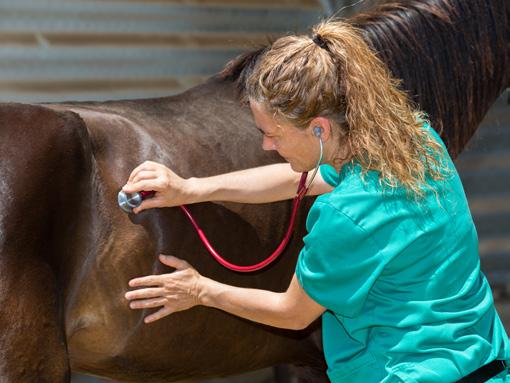
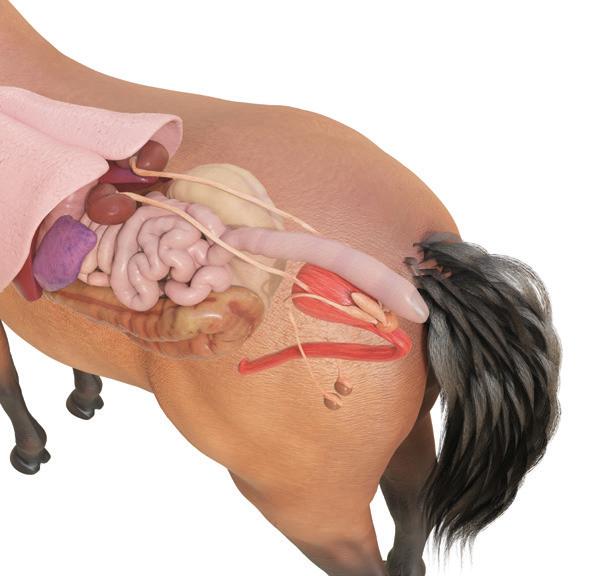
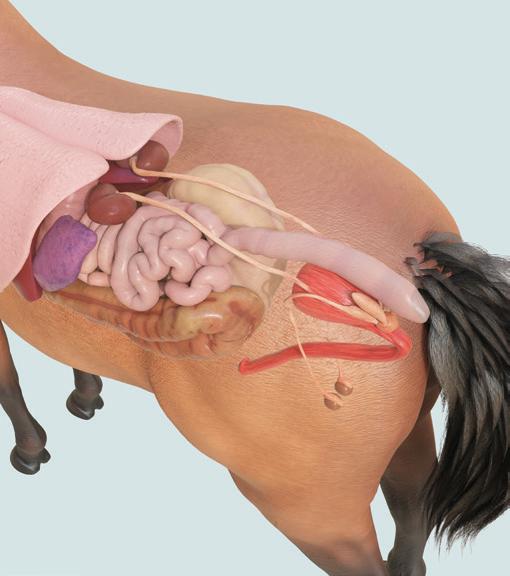
The nephrosplenic space
unknowns, which prompted a team at the Ontario Veterinary College to design a long-term study that would follow horses’ that had undergone the post-surgical procedure to find out how well the adhesions hold up.
Dr. Cribb and her team set out to evaluate the durability of closure over five years, and to compare common follow-up methods, namely rectal palpation and ultrasound, against repeat laparoscopy, the gold-standard way to look directly at the adhesion.
“We were uniquely positioned to revisit horses’ years after their surgery,” noted Dr. Cribb. “Putting the laparoscope back in allowed us to verify whether adhesions were present and robust, then compare that against our imaging and palpation findings. That’s how we could say, with confidence, what really holds up over time.”
When is elective closure considered?
Veterinarians consider laparoscopic closure under several conditions:
• After a confirmed episode of nephrosplenic entrapment.
Horses that have had one episode can be at higher risk for another, which can be costly and dangerous.
• In horses with an anatomical predisposition – a deeper nephrosplenic space or certain conformational traits can make entrapment more likely.
• In high-performance horses. When training and competition schedules can be severely affected by repeat colic events, owners and teams may pursue prevention.
• When the horse is clinically stable and recovered from the initial episode, and the owner understands the risks, costs, and potential benefits.
• When a veterinarian confirms suitability for laparoscopy, including appropriate body condition and an abdomen free from concurrent disease.
• When prevention is chosen over repeated emergency interventions, especially if the recurrence risk can outweigh surgical risk.
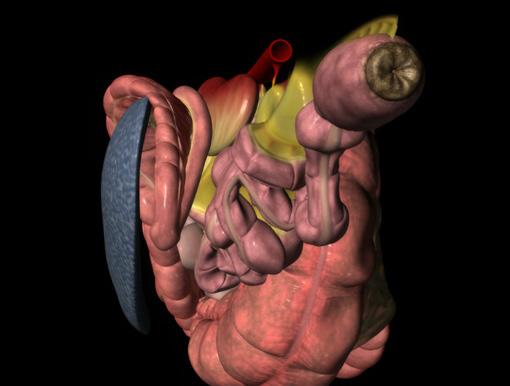
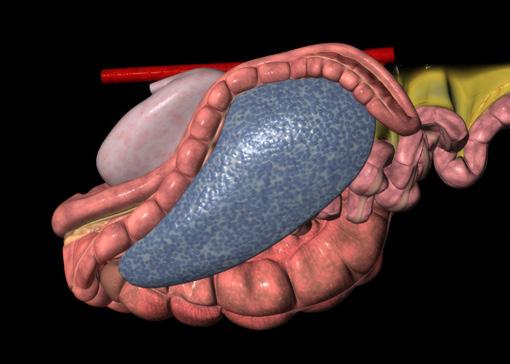
What the OVC study set out to do
The team’s objectives were straightforward and practical:
1. Evaluate the long-term durability of closure, with follow-up at five years after surgery.
2. Assess follow-up tools, asking whether ultrasound and rectal palpation can predict closure quality.
3. Develop a reproducible adhesion scoring system, so results can be compared consistently across cases.
To accomplish this, the researchers needed to look at the adhesion itself and decide how strong and extensive it was. Since there was no equine-specific scoring system, the team created one. This is an important contribution because standardized scoring allows future studies to compare outcomes reliably.
The research team built a reproducible adhesion scoring system drawing on established grading frameworks from human surgery, then adapted it for equine anatomy. The score measured three things: how mature the adhesion was (its fibrous development), how strong it felt, and how much of the nephrosplenic space it covered.
How the study was designed
Twelve horses that had previously undergone laparoscopic closure were included in the OVC study. Each horse had imaging and rectal palpation before surgery, then approximately 30 days after surgery, and again five years later.
LEFT: Entrapment – the left colon has moved into the nephrosplenic space.
At five years, each horse also underwent repeat laparoscopy. This allowed the team to directly inspect the space and judge whether adhesions were present and strong across a meaningful portion of the area between spleen and kidney.
To learn more about what was happening inside the body, the team studied tissue from a few horses and analyzed it for changes over time. They also ran statistical tests to see if anything done during surgery, or measured soon after, could help forecast longterm success.
This approach matters to researchers. Much work has gone into finding the best technique for this surgery, but studies often lack long-term follow-up. This project is notable because it is the first to provide a five-year look, using laparoscopy in order to verify what owners and veterinarians rely on after surgery.
What the research team found
• Strong adhesions can persist for at least five years.
On repeat laparoscopy, most horses had mature, fibrous tissue that kept the space closed. Eight out of ten horses examined had strong adhesions covering most of the nephrosplenic space.
• Rectal palpation can be a useful follow-up tool.
A hands-on examination at four to six weeks after surgery can provide useful information about whether the space feels closed.
• Ultrasound had limitations.
Although ultrasound is non-invasive and widely available, the researchers found that the bowel often interfered with the view of the nephrosplenic space. Measurements changed over time, but those changes did not consistently match what laparoscopy later showed.
“After the initial entrapment is corrected, some horses are simply at higher risk of doing it again,” Cribb explained. “That’s why the preventative technique was developed, to remove the ‘trough’ that invites the colon to fall in. Our long-term look shows most horses keep strong, mature adhesions for years.”
“Ultrasound seemed attractive because it’s non-invasive and accessible,” Crib added. “But in practice, we saw bowel interference and poor correlation with actual adhesion strength. A veterinary rectal exam remains the better indicator at that crucial four to six week mark.”
BELOW: Normal anatomy of the nephrosplenic space.
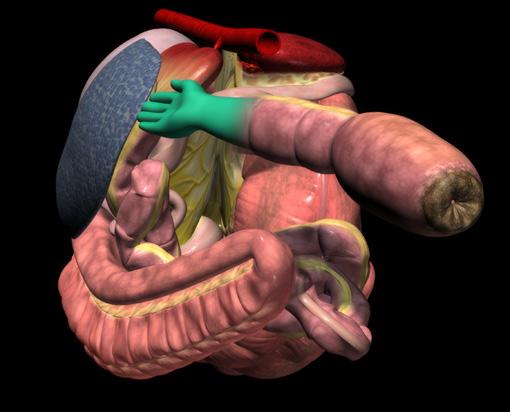
What this means for horse owners and high-performance programs
The study supports proactive decisions after an episode of nephrosplenic entrapment. While every horse is unique, laparoscopic closure can provide long-lasting protection in many cases. Owners, trainers, and barn managers can use these findings to structure conversations with their veterinary team and plan a careful return to work.
Proactive decisions, practical questions:
• Is my horse a good candidate?
Discuss the horse’s history, anatomy, and performance goals.
• What is the timeline?
Consider when elective closure might be scheduled after recovery from initial surgery, and map out a realistic rehabilitation plan.
• What is the follow up plan?
Plan for a rectal exam at four to six weeks. Clarify what signs would prompt additional evaluation.
• Barn management routine.
Work with your vet to reduce sudden feed changes, manage stress from shipping and competition, and support hydration and forage intake.
• How to track progress?
Keep a simple log of feed adjustments, training intensity, travel dates, and any signs of digestive discomfort, then share those notes at follow-ups.
Why this research matters for every horse owner
“It helps us justify the use of this surgery after this type of colic and it helps owners make a decision on whether this is the right choice for their horse,” explained Cribb.
Recurring colic can affect horse welfare and disrupt programs that depend on consistent training. Preventing repeat entrapment of the colon can help keep horses in condition and maintain confidence in planning seasons and competitions. The study’s long-term data gives owners and insurers valuable information when weighing options and assessing risk. It also provides veterinarians with scientific clarity when advising clients on whether preventative surgery for left dorsal displacement can be a suitable choice after an initial episode.
From a research standpoint, this project fills a gap. Much effort has gone into developing and refining techniques to close the nephrosplenic space, yet long-term outcomes can be difficult to capture. This study is notable because it provides five-year follow-up and validates results with repeat laparoscopy, which is considered the most direct way to judge what is happening inside the abdomen. The adapted adhesion scoring system gives future investigators a practical way to compare cases, and it sets the stage to connect scoring with real-world outcomes, such as how long horses remain free of entrapment colic signs.
What comes next?
“Our five year study showed the adhesions can last and their quality in keeping the space closed,” said Dr. Cribb. “We want to go a step further and ask: are these preventing colic signs for this specific type of colic?”
The researchers are interested in larger data sets tracking clinical cases over longer periods to further validate the adhesion scoring system and to see whether stronger scores line up with more time “colic-free”.
PRACTICAL CHECKLIST AFTER AN ENTRAPMENT EPISODE
1. Confirm the diagnosis and discuss prevention. After the horse stabilizes, ask whether laparoscopic closure can be appropriate.
2. Plan the follow-up.
Schedule a rectal exam at four to six weeks.
3. Map the return to work.
Re-introduce exercise gradually. Emphasize forage, hydration, routine and avoid abrupt feed changes as outlined in Equine Guelph’s Colic Risk Rater (see below).
4. When returning to travel and competition. Minimize stressors around shipping. Keep electrolytes and water access consistent, and monitor for changes in manure quality and consistency.
5. Keep records.
Note any colic-like signs, feed changes, and intense training days. Share your log at veterinary check-ins.
6. Educate your team.
Make sure grooms, riders, and barn managers understand early warning signs and the post-op plan.

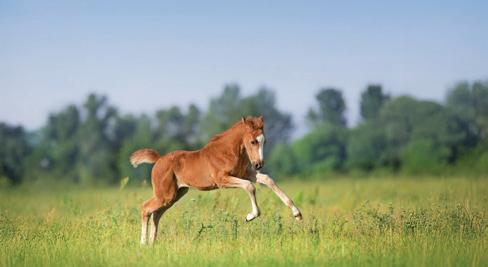
While some cases, like nephrosplenic entrapment, require surgical intervention, the goal of prevention is to avoid costly, life-saving procedures whenever possible. Many colic risks can be reduced through informed management. Education is your best defense.
February is Colic Prevention Month at Equine Guelph, but it’s always a good time to take action to reduce colic risk.
COLIC RISK RATER:
Identify risk factors in your barn and areas for improvement with Equine Guelph’s FREE online tool designed to help you enhance safety, management, and horse health.
GUT HEALTH & COLIC/ULCER PREVENTION SHORT COURSE: FEB 16–27, 2026
Learn from experts in this concise, evidencebased online program for your entire team.
Thoroughbreds can unite owners, even from distant shores, who wind up at the same destination, the winner’s circle following a graded stakes victory. That happened recently for three ownership groups:
The man from Switzerland partnering with an Alabama grocery store owner and a California ranch team to win two Gr.3 stakes on consecutive days at Santa Anita.
A woman from the Netherlands and her spouse from Great Britain combining with a movie director with deep ties to Mexico. They also own a three-year-old colt on the Kentucky Derby Trail.
Preceding them was a native of British Columbia coupled with a doctor from Armenia.
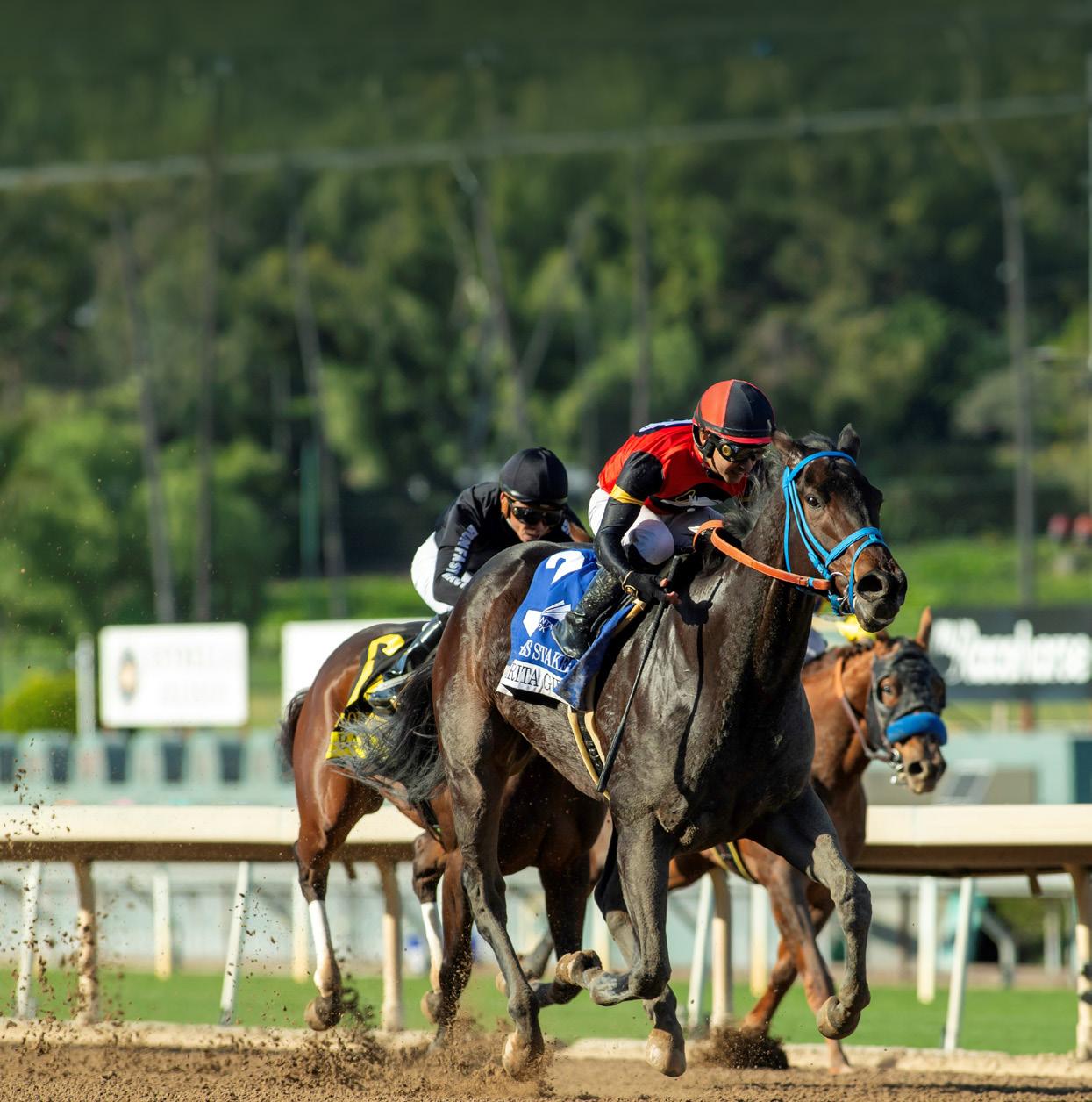
HANS & ANA MARON (SAINTS OR SINNERS)
SO HAPPY & MARGARITA GIRL
Born in Switzerland, Hans Maron was raised in Northern California: “My parents came over in the ‘50s and got married in San Francisco in 1956. I was one of three kids. My mom got a little homesick. We went home and then came back after three years, from ’63 to ’66”.
By then, Maron was hooked on coffee: “I started drinking coffee when I was seven years old.” Later in life, he’d build a multibillion-dollar milk business. His father, Kurt, was a sausage maker: “I did that for seven years right out of high school. That’s when I started coaching. I really wanted to be a basketball coach. It was my first passion, even more than horses.”
Maron was a basketball player and coach in Richmond, while also working at famed Dreyer’s Ice Cream. Founded in 1928 in Oakland, California, the company originated Dreyer’s Grand Ice Cream and Edy’s Grand Ice Cream, named for its founders, William Dreyer and Joseph Edy. Maron served as materials and scheduling manager, optimizing material flow and ensuring timely delivery of resources.
Then he and a partner, Tim Doelman, built an empire in milk. They started Good Cow Company in 1999. That morphed into Fairlife.
Maron ultimately sold his share of the company to Coca-Cola, allowing him to focus on his other lifelong passion, horses.

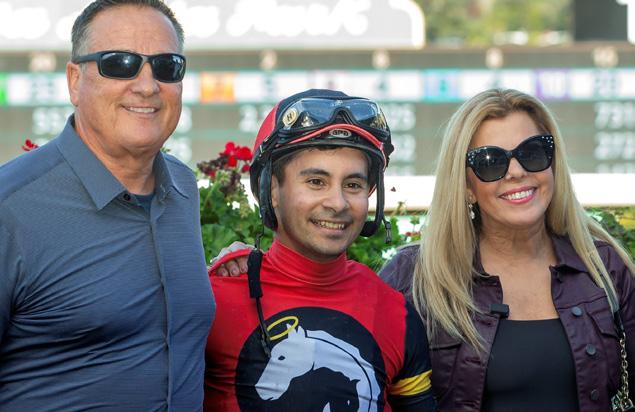
“I started in racing when I was a teenager,” Maron said. “My schoolmate’s parents owned horses at Golden Gate Fields. I was 16. We drove to Bay Meadows. There was a horse named Let M’ Roar. I bet him and he won.”
He was hooked for life.
“It’s always been my passion,” Maron said. “After we had success in business, I wanted to fulfill my dream. I kept at it. I started buying horses in partnerships in 2015.”
His partnership on O Besos led him to the 2021 Kentucky Derby, when the colt, trained by Greg Foley, finished fifth to Medina Spirit, who was subsequently disqualified. That made runner-up Mandaloun the winner and moved O Besos up to fourth.
Then he and Ana decided to go on their own.
Coming up with Saints or Sinners as a stable name was appropriate. “My wife came from a family of nuns and a priest,” Maron said. “Her mom was in the convent and her dad was in a seminary. That was part of her heritage. I was Catholic, but I always loved to gamble and take chances. She didn’t. We tried to come up with something different.”
They did. They were born 10 days apart and lived in the same apartment complex. “I had gone back to school,” Ana said. “On our second date, he said, ‘Do you want to go to the races?’”
She had to think about it: “I grew up in a household that was very simple. You don’t gamble. You don’t do stuff like that. I thought it was a red flag. The funny thing is, when he asked me to go to the races, I remember telling my sister. She said, ‘You have to wear a pretty dress. And a pretty hat.’ I always thought it would be like the Kentucky Derby.”
Not this date. “We went to Golden Gate Fields on a Friday night,” Maron said. “It was $1 beer and hot dog night.”
Their relationship survived and thrived, and Ana noted how focused her husband was on growing his eventual billion-dollar milk company: “When he started Fairlife he was focusing on business. That was his priority.”
He believed in milk: “Milk is good for you. Kids need milk. I’m a firm believer in that. We started the company in 1999.”
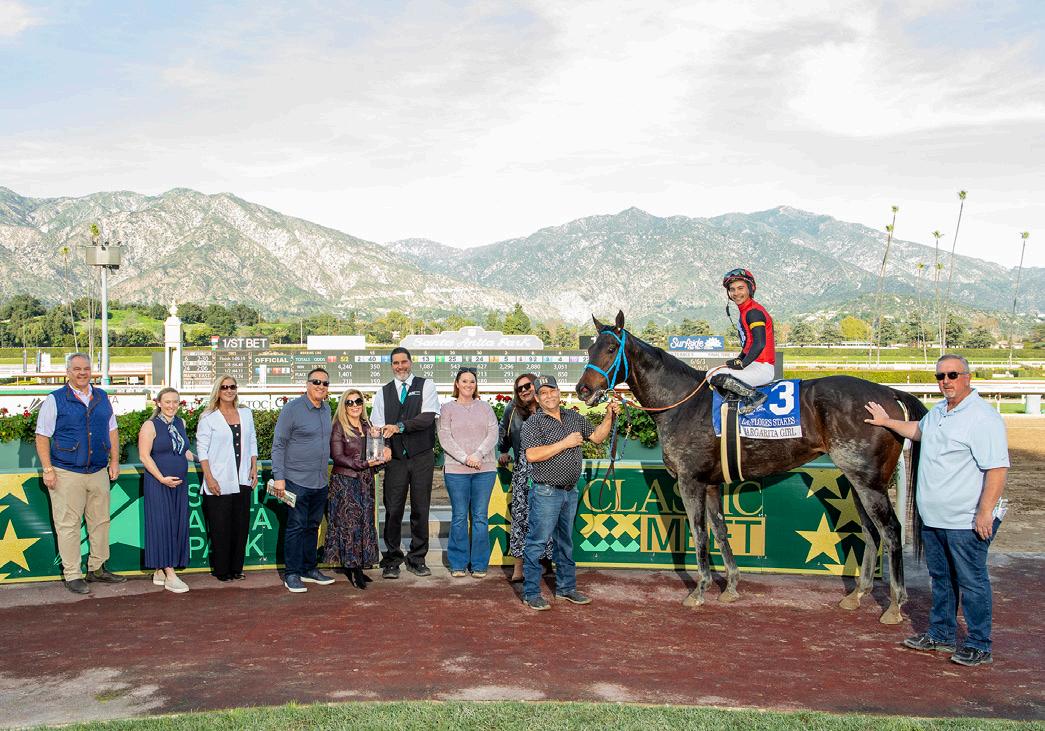
Hans and Ana Maron with jockey Ricardo Gonzalez.
LEFT: Margarita Girl and jockey Ricardo Gonzalez, on their way to victory in the 2026 Las Flores Stakes at Santa Anita Park for trainer Mark Glatt.
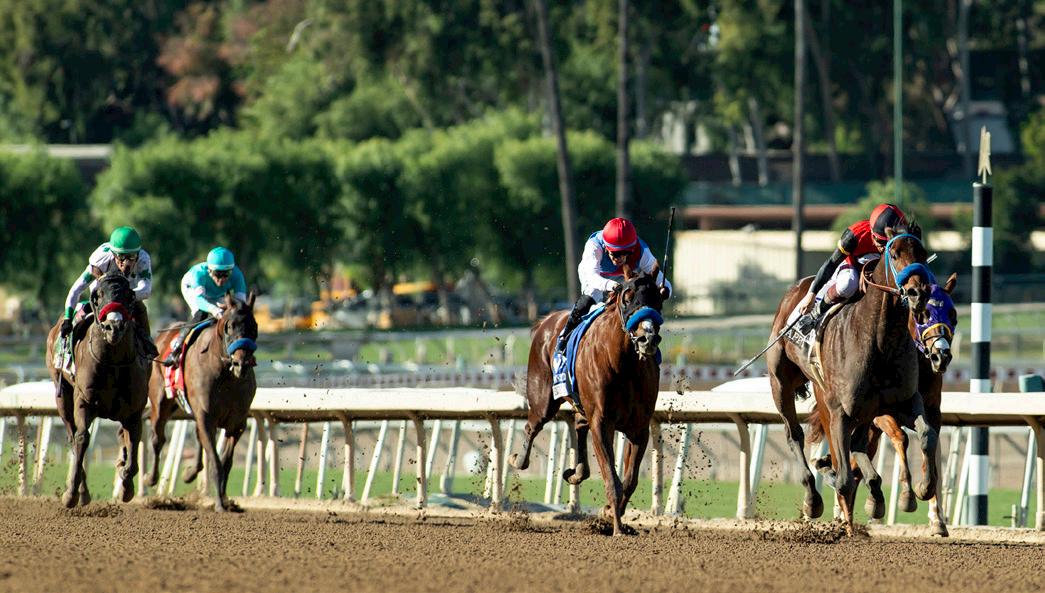
Then they grew the company, working for years to improve their product. “It took us 15 years to create something. We didn’t give up. We just fought on. We used a concept that was pretty new to milk: filtration methodology. It was ultrafiltration which allowed us to create protein and recapture minerals while keeping the exact flavor of milk. We always dreamed big. Our tagline was ‘Believe in better.’ We ran six to eight million pounds a day at our two facilities, one in Arizona and one in Chicago. Then we sold it to Coca-Cola.”
Along the way, Hans and Ana, who now live in Chandler, Arizona, about 20 miles south of Phoenix, raised their two grown children, Sophia and Natalia. “We started bringing them to the races when they were young,” Ana said.
One fateful day, Maron told his wife he’d like to buy one horse. “I agreed,” Ana said. “I said, ‘You’ve done so much for us.’ A month later, he said, ‘You can’t have just one horse.’ My sister called, and I told her we have four horses.”
Then eight. Now more than 60. “He put his blood, sweat and tears into horses,” Ana said. “I just go along for the ride. I am just a supporter. I don’t gamble. Everybody at the track makes fun of me. It’s just not in my blood. I’m more interested in animals. They’re so majestic. And we’ve gotten to know the trainers and the jockeys.”
Maron calls his wife “the brains of the operation.”
On May 30, 2025, they purchased a 127-acre farm in Kentucky they named Trinitas Place. “We bought a farm in Kentucky to grow our broodmare band,” Maron said.
Their race horses couldn’t be doing much better.
On Saturday, January 10 at Santa Anita, their threeyear-old colt So Happy improved his record to two for two by taking the $200,000 Gr.2 San Vicente Stakes for trainer Mark Glatt. Saints or Sinners owns the horse in partnership with Norman Stables, named for Robby Norman, who owns a string of grocery stores in Alabama.
The very next day, Saints or Sinners’ four-year-old filly Margarita Girl, owned in partnership with Rancho Temescal in California, captured the Gr.3 $100,000 Las Flores Stakes. She is also trained by Glatt, as is Watsonville, another Saints or Sinners horse who won an allowance race right after the Las Flores.
“We really had a great weekend - we sure did,” Glatt said. “They truly love their horses. They have recently jumped in with both feet into the deep end of the pool. I think they really enjoy the sport. They really enjoy the camaraderie that comes with the sport. They’re just a delight to train for because they know the horse comes first.”
Even when things go wrong, they remain supportive. “When you pick up the phone to call an owner and tell them their horse needs to have time off or has an issue and those kinds of things, of course, everybody’s always disappointed in those circumstances,” Glatt said. “They’re very accepting of it. It makes what is usually a tough phone call easier when you call them. That’s always appreciated. It’s good to know people like that have some success.”
Enough to fulfill his dreams? “It’s incredible,” Maron said. “The incredible part is you meet people. It’s just a cool game. The horses take us places. People work really hard in this industry, 365 days a year. Life is hard sometimes. I get emotional.”

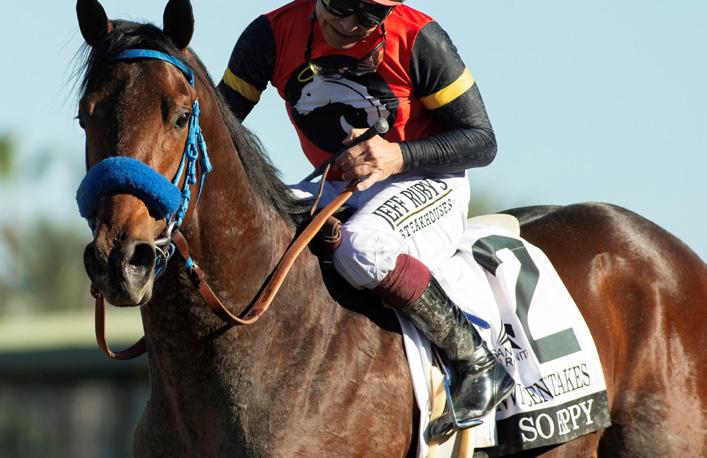
ABOVE & BELOW: So Happy and jockey Mike Smith win the 2026 San Vicente Stakes at Santa Anita Park.




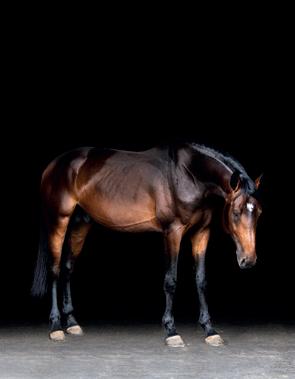
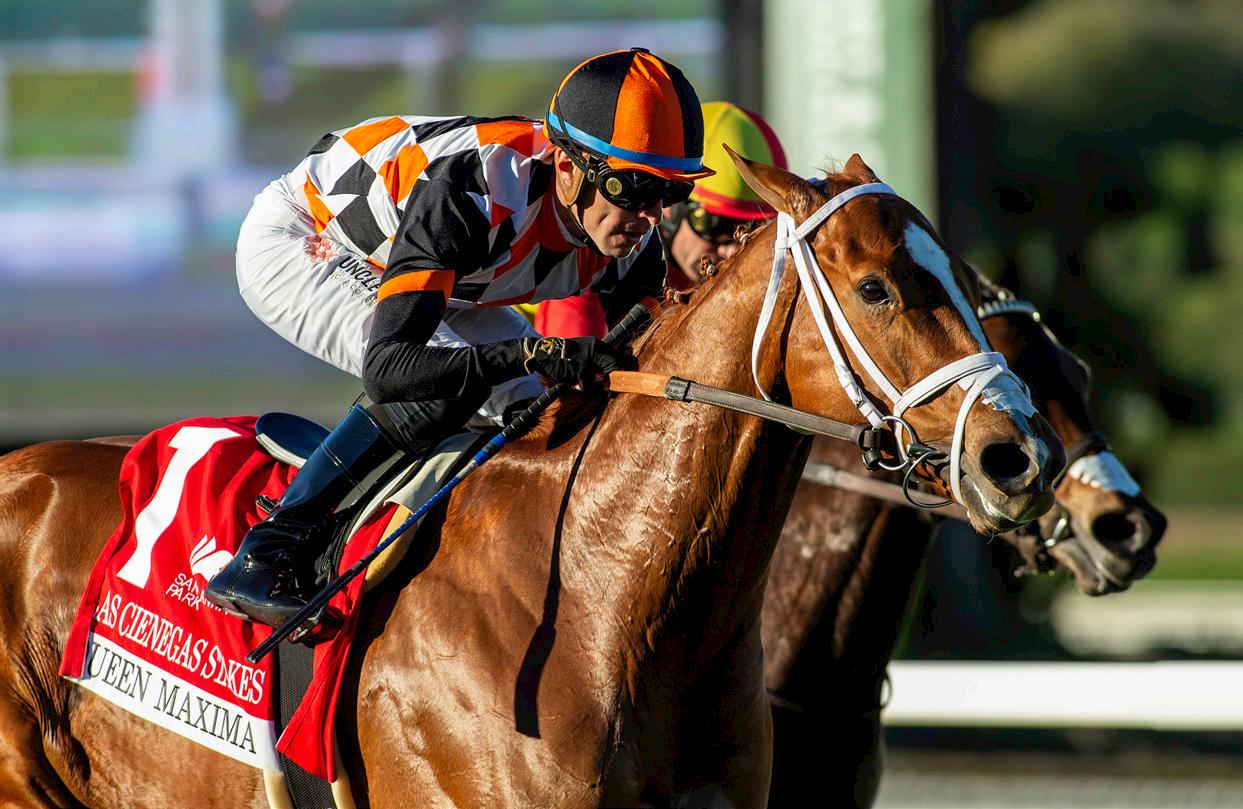
MICHELE ARTHUR (DUTCH GIRL HOLDINGS LLC) & RUBEN ISLAS (IRVING VENTURES LLC) QUEEN MAXIMA
Michele and her husband Jules Arthur, Ruben Islas and former trainer/bloodstock agent Mike Pender have formed a strong collaboration.
Michele was born in San Diego, but spent a year and a half with her family in the Netherlands and visits them annually: “My parents emigrated to the U.S. separately in their 20s. They spoke Dutch to us. We spoke back in English.”
Her Dutch-Indonesian parents met at a San Diego Dutch Club. Her father, Henri Veerman, served in the Dutch navy and was invited to work in local shipyards. He later became a civil servant. She named her stable Dutch Girl Holdings LLC.
She fell deeply in love with horses at a very early age: “Every little girl loves horses. When I was very little, my parents used to take me to an equestrian stable. I had this one horse called Eventide. My whole bedroom was filled with horse statues, every coffee-table-sized horse book ever written and an encyclopedia about horses.”
Her husband, Jules, lived in Great Britain, where his grandparents took him to watch racing. He was raised just 12 miles east of Newmarket. “It’s the home of horse racing,” Jules said. He made a career as a chartered surveyor in real estate. “When I came over here, I started as a commercial real estate
broker. Michele is a horse partner with my real estate partner, Ruben Islas.”
Michele and Jules met on a blind date. “I was introduced by my aunt,” he said. “It was love at first sight 35 years ago. I wanted to marry her. At the end of our blind date, we knew we were destined to be together. That’s a rare occurrence.”
So is his partnership in the real estate business, Logan Capital Advisors, with Ruben Islas, a movie writer, director and producer with deep ties to Mexico.
Islas directed the movie Border Hunters, which aired recently on Netflix and has received tremendous reviews. “My family members are from Guadalajara,” Islas said. “We all had history with horses. That was in Mexico. I grew up very poor in San Diego’s Logan Heights.”
Islas went to Del Mar for the first time when he was 19: “I completely fell in love with the whole vibe. I saw a guy drive up in a Rolls Royce. He had a really well-fitting Navy blazer on him. The guy just looked sharp. When I was in the crowd, I recognized him in the winner’s circle. I said, ‘I want to be that guy.’”
He may be better than that guy. Islas is a founding partner and CEO of Logan Capital Advisors, which has been involved in affordable housing since 1994. He is an expert in taxexempt bond financing and low-income housing tax credits, as evidenced by more than 3,400 low-income apartment units through California, Colorado and New Mexico.
He worked hard to become adept in his two careers: housing and the arts. He graduated from the University of California, San Diego with a degree in Dramatic Literature and also attended Queens College and St. John’s University. He is the founder of Grandave Capital, a production company focused on creating films that highlight Latino stories and perspectives.
Islas and Michele became horse partners in 2018 thanks to a wonderful bit of serendipity by Michele: “I was doing a charity auction for one of my dear friends who had passed. Somebody helped me procure silent auction items. One was to spend time with a trainer on the backstretch. It wasn’t getting the price it should have. I bought it for $500. I thought it would be fun to go behind the scenes. Once you go back there, you realize how wonderfully these horses are taken care of. They’re doing what they love. That was everything to me. I was standing there with my husband and Ruben. I just wanted to be a part of it.”
The trainer they met was Mike Pender.
It changed their lives.
Pender’s training career was in a tailspin. A former schoolteacher with a master’s degree in psychology, Pender had lost his principal owner, B. J. Wright in July 2014: “He had cancer and died. We were just getting started. I bought Jeronimo and Ultimate Eagle for him. When he died, things got ugly. I went through a rough patch.”
Then he lost his trainer’s license and became a bloodstock agent. “When I came out of the fog, they were there,” Pender said. “I called Michele and said, “I want to buy you guys a couple of horses”. She said, “Call Ruben. If he’s interested, I’m interested.”
He was: “I told Michele to have faith in this guy. We put our money together and went shopping.”
Pender recommended Queen Maxima, who is trained by Jeff Mullins. They bought the fiveyear-old mare for $40,000 as a two-year-old and celebrated her three Gr.3 victories in the Monrovia Stakes by 4¼ lengths at Santa Anita, the Unbridled Sydney Stakes by 3½ lengths at Churchill Downs on Kentucky Derby weekend and the Las Ciengas Stakes by a half-length as the 2/5 favorite January 11 back at Santa Anita.
Islas was on hand for her score in the Unbridled Sydney: “I was at Churchill Downs the morning before my horse was going to run on Oaks Day. I ordered an espresso martini. Michele had made these lapel pins. This older gentleman two seats from me, asked, “Do you own Queen Maxima?”
I said, “Yes.” He said, “Son, do you have any idea how lucky you are to be sitting here with a horse running on Oaks Day? I’m going to bet on her.”
Good decision. She won easily at 2/1.
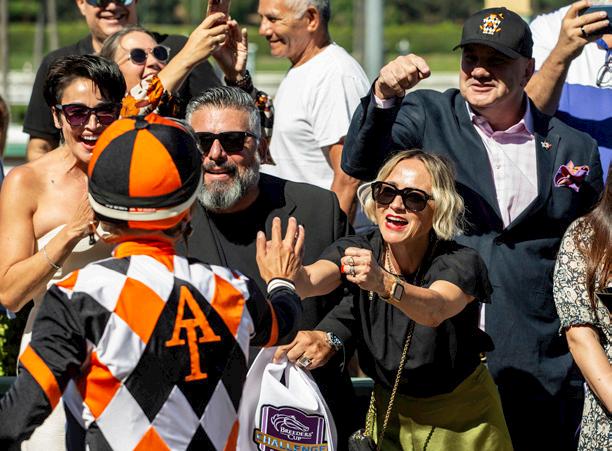
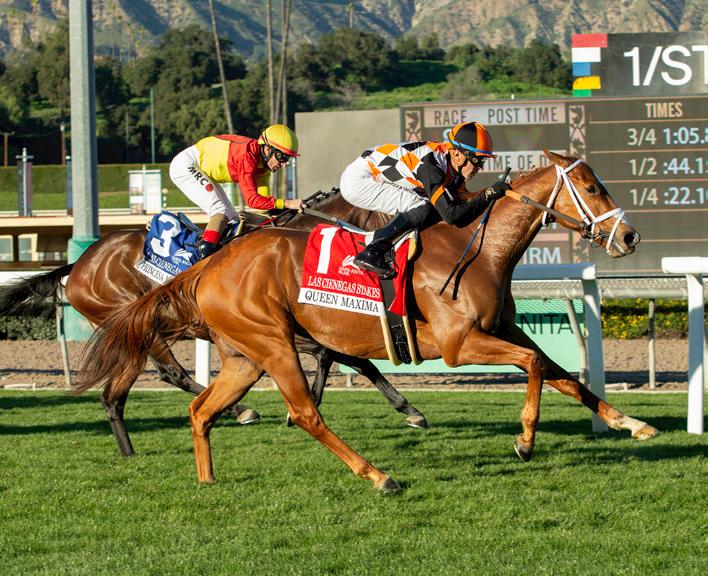
Pender called again and asked, “Can we go up to $300,000?”
Add that to Islas’ latest movie on Netflix and another stakes victory by Queen Maxima in January. “We’re on such a run,” Islas said. “My daughter said to me, Do you know you’re living five or six people’s dreams? It’s just an amazing run.”
It could get even better on the first Saturday in May at Churchill Downs with their three-year-old ridgling Intrepido, a $385,000 two-year-old purchase highly recommended by Pender and also trained by Mullins. “Mike (Pender) called me up,” Islas explained. He said, “I’ve never seen a horse like this.”
After consulting with his partner Michele, they set their limit on Intrepido at $200,000. When the bidding got higher,
Islas said okay, and then he kept saying okay, telling Pender he’d make up the difference. They got the colt for $385,000. “Thank God,” Islas said. That’s because Intrepido captured the Gr.1 American Pharoah Stakes and finished a slow starting fifth in the Gr.1 Breeders’ Cup Juvenile. He is on the Derby Trail.
The Kentucky Derby will be run on May 2. “My birthday is May 5,” Michele said.
Regardless of how Queen Maxima and Intrepido perform this year, the Arthurs have already changed Pender’s life: “I don’t think it’s a reach. I had pretty much written off horse racing for myself. I might have just drifted off into oblivion. They were very instrumental in bringing me back to life.”
ABOVE: Ruben Islas (in all black), Michele Arthur, and husband Jules (in baseball cap), celebrate with jockey Hector Berrios after Intrepido’s victory in the 2025 American Pharoah Stakes at Santa Anita Park.
LEFT & BELOW: Queen Maxima and jockey Juan Hernandez, outruns Princesa Moche and Mirco Demuro to win the 2026 Las Cienegas Stakes at Santa Anita Park.
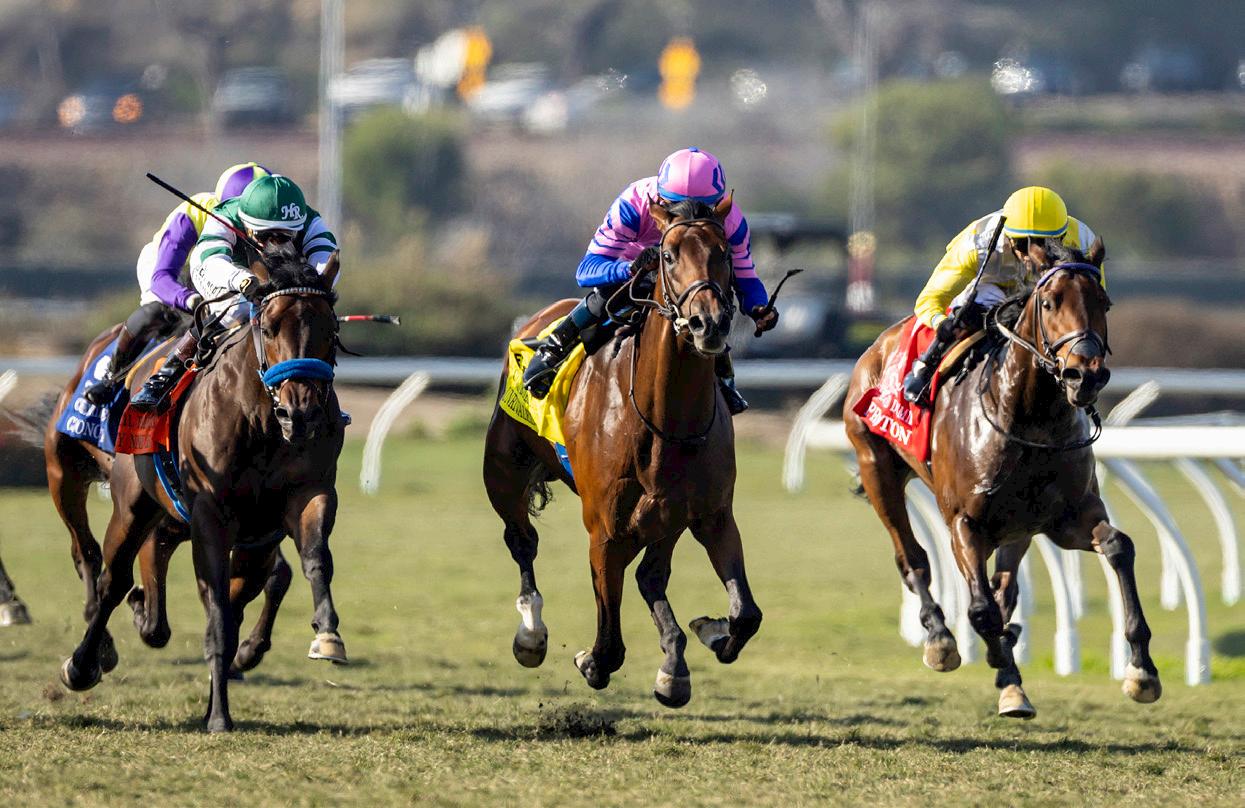
ALFRED ‘SONNY’ PAIS & DR.VAHE MELIKYAN (INNERGY RACING CORP.) UNRIVALED TIME
The constant in Alfred ‘Sonny’ Pais’s life journey from British Columbia to Santa Monica, California, has been horses. Along the way, thanks to volleyball, he became good friends with basketball immortal Wilt Chamberlain and picked up a new horse partner with his physician, Dr. Vahe Melikyan, an Armenian who practices naturopathic medicine and races as Innergy Racing Corp.
Pais and Melikyan’s Unrivaled Time, a Pais homebred named to honor Chamberlain’s winning harness pacer Rival Time decades ago, captured the Gr.3 Cecil B. DeMille Stakes for twoyear-olds on the grass at Del Mar on the final day of November. “I was thinking of his horse when I named him,” Pais said. “I thought it might just bring us luck.”
It did: “It wasn’t my first graded stakes, but it was nice.”
Even better because Unrivaled Time was a homebred.
His family would have loved it.
Pais’ family moved from British Columbia to Santa Monica when he was three years old, then moved back to Canada for a few years.
“My dad had harness horses,” Pais said. “Back in the day, Hollywood Park had night harness racing. I got involved in training horses as a teenager. I think I won a race back in 1973. When Hollywood Park harness racing disintegrated, I switched to Thoroughbreds. Then, I kind of gradually got into the breeding end of it.”
And then some. Pais, who dabbles in real estate and manages an income property in Santa Monica, currently has 35 horses, including a dozen babies. His mare Margot Machance, who produced Unrivaled Time, was a French filly who finished fourth in a Gr.3 and Gr.2 stakes in her second and third starts in the United States. She didn’t race in a stakes race again but finished her career three-for-23 with four seconds and one third and made $137,246.
“A bloodstock agent showed me a video of the horse in France,” Pais said. “I got her for $150,000. She was a tough, little mare who was always nervous and hyper before a race.”
Pais’ best previous horse was his brilliant speedster Brickyard Ride, who raced from 2019 through 2024. “He was an alpha male,” Pais said. “He didn’t like getting passed by any horse. He didn’t even like a horse to walk past him. He was a character.”
Brickyard Ride’s 13 victories from 31 starts included the Gr.2 San Carlos in 2021, and the Gr.3 Kona Gold in 2022 and 2023. With two seconds and six thirds, he earned $925,477.
Pais has a partner in his latest stakes winner Unrivaled Time. And it all came about during a routine medical appointment. “I saw him for an appointment and we started talking about horses,” Pais said.
Melikyan practices naturopathic medicine. He described it as a “hybrid of conventional and alternative medicine. I try to minimize medication as much as possible. I focus on taking you to the next level: wellness.”
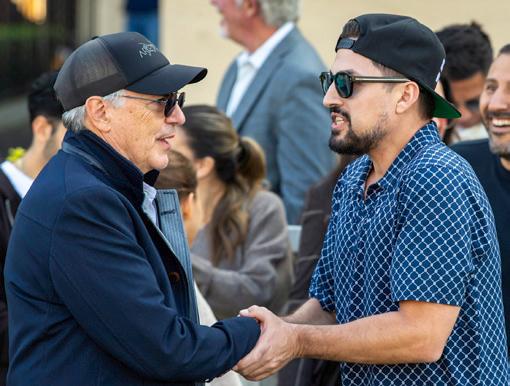
Pais is 72, Melikyan is 41. They quickly became friends.
“Sonny took me to Santa Anita and I fell in love with the horses,” Melikyan said. “I love horses from an energetic perspective. When I come across horses, their energy is at another level. When I’m there, I feel grounded. I’m one with the horse.”
Pais told his new friend he should go to the 2023 Kentucky Derby. He did and his appreciation for Pais rose to a whole new level.
“He asked me if I liked a horse,” Pais said. “I said, Mage.’”
Mage went off at 17/1 and won. “I thought he’d bet a few dollars on him, but he bet $2,000,” Pais said. “I gave him three or four other horses that day. One of them won at 10/1. By that time, he thought I could walk on water.”
He can’t, but he can reflect on the relationship he formed with the late 7-foot-1 Wilt Chamberlain, perhaps the best player who ever walked on a basketball court. “I was best friends with Wilt,” Pais said. “We were tight. We used to play volleyball at the same beach in Santa Monica. He asked me if I wanted to play volleyball. I played volleyball when I was a kid, as a teenager and through my early 20s.”
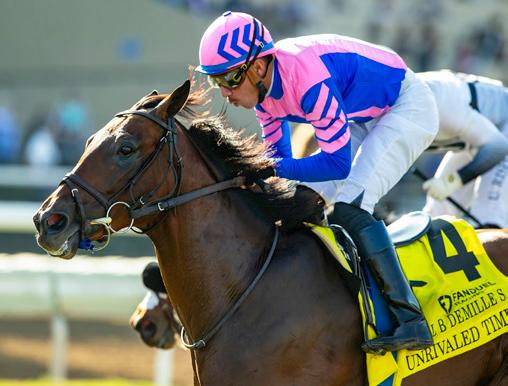
Chamberlain’s historic 100-point night in Hershey, Pennsylvania, has stood for decades as the most points ever scored in a game. He averaged 50 points a game for an entire season and also led the NBA in assists one year.
After Chamberlain retired from basketball in 1973, he began an exceptional volleyball career. He’d play regularly at the Muscle Beach and Sorrento Beach on the Santa Monica Pier. Chamberlain sought out Volleyball Hall of Famer Gene Selznick and quickly improved. He was the owner and a player for the Southern California Bangers in 1975 in the co-ed International Volleyball Association through its short five-year life.
Pais misses him: “We’d talk three or four times a week. I stayed with him for a couple of weeks. His house cost $4 million and was right on top of Mulholland. He had a picture of him and Billy Shoemaker (who was 4-foot-11). I traveled with him to Canada. He liked women’s tennis.”
Undoubtedly, Chamberlain would appreciate Pais’ Thoroughbred success. Pais said, “I’ve finally started figuring it out after 40 years. I always had a good eye for a horse. My gut is usually right.”
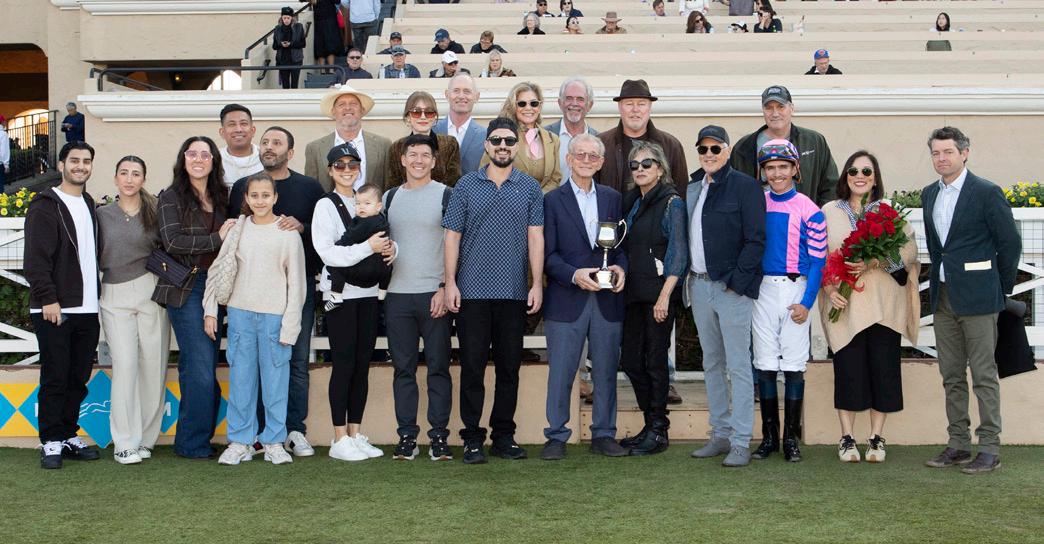
LEFT & RIGHT: Unrivaled Time, with Diego Herrera up, wins the 2025 Cecil B. DeMille Stakes at Del Mar for trainer Leonard Powell and Innergy Racing Corp.
Sonny Pais & Dr.Vahe Melikyan.
Unrivaled Time’s connections celebrate victory in the 2025 Cecil B. DeMille Stakes at Del Mar.
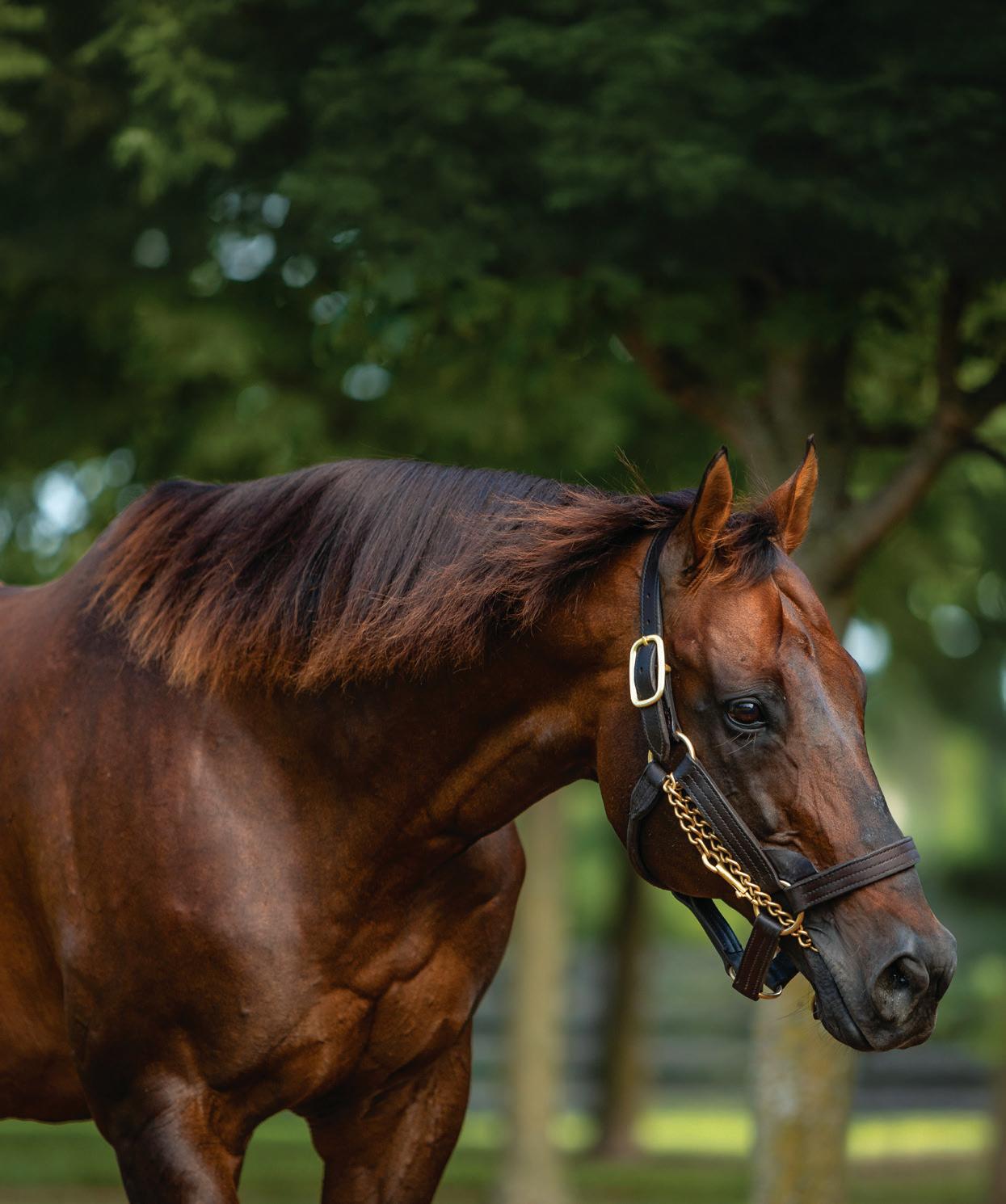
SELF-MADE STALLIONS
Lane’s End stallion, Candy Ride.

HOW TODAY’S “THREE KINGS” FORGED THEIR PATH WITHOUT EARLY SUPPORT TO DOMINATE THE STALLION MARKET
It is standard now for their names to be spoken in tones of reverence and deference, the byproduct of having become synonymous with the highest echelons of achievement in the Thoroughbred marketplace. Though they operate in a space notorious for its fickle nature, their respective legacies have been polished to such a burnish that each is held up as an unwavering standard bearer their brethren will be aiming to reach for years to come.
For seven straight seasons, no stallion in North America has been able to best Spendthrift Farm’s Into Mischief in the race to the top of the general sire list. Similarly, when it comes to producing the next generation of breed-shaping forces in the stud book, Lane’s End’s indefatigable Candy Ride (ARG) currently sits atop that throne. And while the success of his progeny on the track made Distorted Humor as integral a part of WinStar Farm’s foundation as the property’s brick and mortar materials, the recently departed stalwart will be honing bloodlines for generations to come through the influence of his daughters.
A record-setting leading sire. A sire of sires. A champion broodmare sire. Such are the marks of distinction said trio has earned while splashing their impact all over the metrics used to determine the most sought-after members of a stallion roster.
That Into Mischief, Candy Ride, and Distorted Humor will go down as three of the most influential sires of their time is an indisputable chapter of the Thoroughbred industry’s lore. Linked as they are by their respective residencies in rarified air, they also share a remarkable layer of mythology behind their ascents – namely, the fact that the last thing each carried with them into their second careers was the belief they would become hallmarks of commercial breeding success.
“When I first came to work at Spendthrift, (founder B. Wayne) Hughes would always have these sales meetings on a Monday…and he walked in there one day and he goes ‘We are so fortunate. You can’t even believe the advantage we have over all our competition. Do you understand how good we have it compared to all these other poor horse farms here in Kentucky?’,” recalled Mark Toothaker, stallion sales manager for Spendthrift. “And he says ‘You know why? Because they all think they know. And we have figured out that we don’t know nothing. Nobody knows how a stallion is going to do when they start.’
“And he was right.”
There is of course a whole subset of the Thoroughbred industry devoted to countering the above sentiment, from nicks
Spendthrift Farm’s Into Mischief.
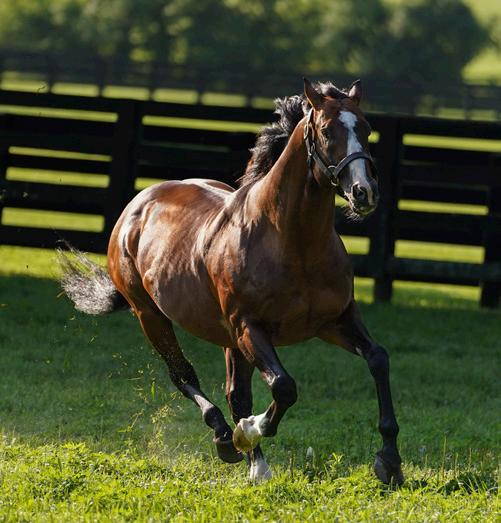
to rating systems to pedigree analysis to conformation experts. For every tool used to try and predict which horses will become sires who yield exceptional talents on the track and beyond, there are intangibles that defy conventional assessment and, hence, have paved the way for one-time Cinderella prospects to morph into the most fashionable lords of the ball.
Though the Thoroughbred breeding ranks have no shortage of stallions who built their reputations from the ground up without the benefit of top-level books at the start of their careers – Storm Cat, Malibu Moon, and Tapit to name a few – the individual journeys of Into Mischief, Candy Ride, and Distorted Humor rank near the top in terms of their level of improbability and permanence.
Before he morphed into the stallion that has sired a recordtying three Kentucky Derby (Gr.1) winners and tied the legendary Bold Ruler with his seventh consecutive general sire title in 2025, Into Mischief had the Spendthrift team battling to get any mares they could his way when he stood his initial season in 2009 for just $12,500.
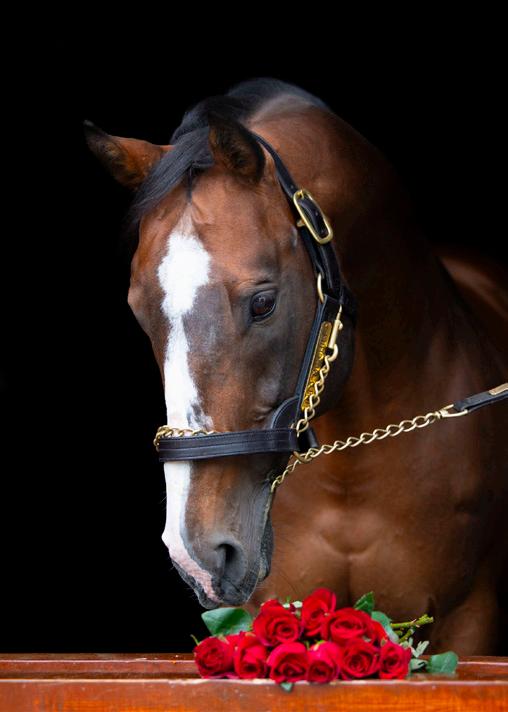
Before he became a perennial top 10 presence himself and the best sire of sires in recent times thanks to his Hall of Fame son Gun Runner, who joins Into Mischief in commanding an advertised stud fee of $250,000 for Three Chimneys Farm, and his Lane’s End heir Twirling Candy, who finished fourth just behind Gun Runner on the general sire list for 2025, Candy Ride stood for $10,000 his first season in 2005 as few would have gambled on a Argentine-bred son of Ride the Rails forever altering the commercial landscape.
When WinStar Farm co-founder Kenny Troutt purchased the former Prestonwood Farm with then partner Bill Casner in February 2000, Distorted Humor was among the four stallions essentially thrown in with the furniture. From standing his first
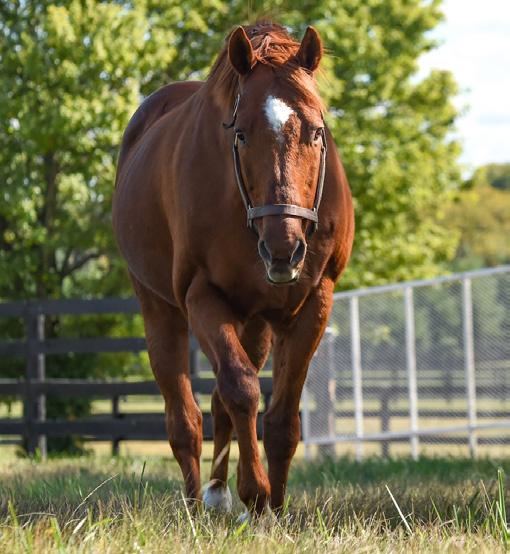
season in 1999 for $10,000, the modest-sized son of Forty Niner would become a giant in the shed, commanding as much as $300,000 at one point and earning the champion freshman sire title in 2002, leading the general sire list in 2011, and being the leading broodmare sire in 2017 – the latter an area where he remains dominant, as evidence by the fact two of his maternal grandsons, Constitution and Practical Joke, finished in the top 10 on the general sire list last year.
While they are each now considered industry royalty, Into Mischief, Candy Ride, and Distorted Humor hold equally crucial roles as beacons for the fact that seemingly blue-collar stallions can end up having an indelible impact on the breed. At a time when the number of stallions and number of mares bred continues to decline in North America, per statistics from The Jockey Club, the adage that a good horse – specifically a great sire – can come from anywhere is worth heeding as stud farms get set for another year of navigating the challenges that comes with getting less commercial stallions the support needed to show their potential, particularly when numbers inevitably drop in their second and third years.
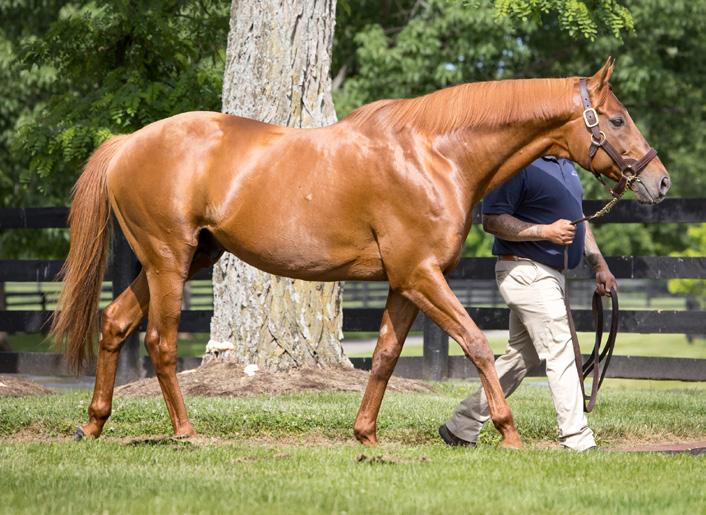
“Absolutely, stallions like Candy Ride are an inspiration, and that’s what concerns me most about these bigger books we are breeding,” said Bill Farish of Lane’s End Farm, which has stood Candy Ride since 2010 after he began his career at Hill ‘n’ Dale. “It is more challenging now both in the sense that those type stallions won’t get enough mares to get a chance, but you’re also up against the commercial nature of things where people are willing to take a shot on a first-year horse, but then the second or third year, they’re kind of on their own, especially in the lower price ranges. That’s going to hurt. But I do think when given a chance, a good stallion is going to make it no matter what level they start at.”
Candy Ride’s Hall of Fame son and superstar sire, Gun Runner.
Distorted Humor
Into Mischief
For a horse to get a chance at stud in Central Kentucky to begin with, a measure of on-track ability usually must be prominent, something the aforementioned self-made trio all brought to the table. Though injury limited their careers to six starts apiece, both Into Mischief and Candy Ride boasted Grade 1 wins on their resume. A top-level victory eluded Distorted Humor during his racing days, but the opinionated chestnut was still a four-time graded stakes winner who set a track record for seven furlongs in taking the 1998 Commonwealth Breeders’ Cup Stakes (Gr.2) at Keeneland.
There were also clues in each of their bloodlines that hinted at their sire potential. As nondescript as Candy Ride’s sire Ride the Rails was, he was a son of Cryptoclearance, himself a son of a Fappiano, who sired more than 40 stakes winners prior to his death. A son of Harlan’s Holiday, Into Mischief is a great grandson of the commercial game-changer that was Storm Cat while Distorted Humor was a grandson of the iconic Mr. Prospector and out of a Danzig mare.
The lens of hindsight may reveal such evidence, but those revelations only came about due to each sire’s uncanny ability to move up even the most modest of bloodlines. What looks distinct now was certainly not something readily apparent to even the most learned pundits in the industry.
“If you turn back the clock and look at his pedigree, his pedigree didn’t look anything like it does today,” Ned Toffey, general manager of Spendthrift, said of Into Mischief. “It was a very different looking page than what it is today and…since that time (when he entered stud) that pedigree has filled in pretty dramatically.”
The Reigning King
The numbers were rough to start with, and they only got tougher from there. After getting just 61 mares his first season at stud, resulting in 46 live foals, Into Mischief’s book came in at 44 mares his second season and 54 in 2011.
To try and give the colt who had showed such brilliance in winning the 2007 CashCall Futurity (Gr.1) any kind of a chance, Hughes and his Spendthrift team came up with the innovation known as their Share the Upside program where breeders are offered a lifetime breeding right should they complete two “stands and nurses” contracts during his first two years at stud.
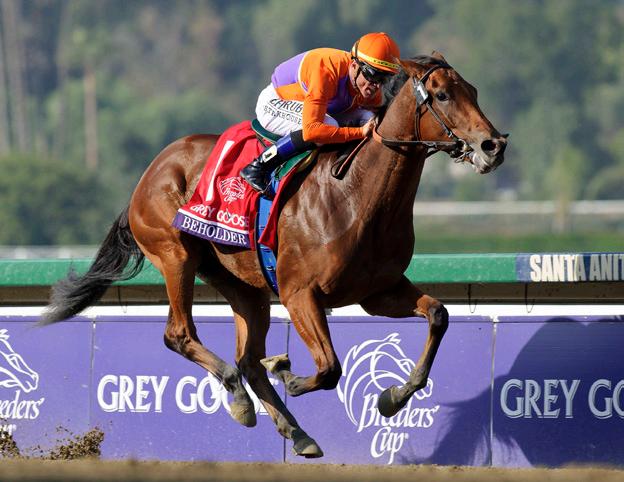
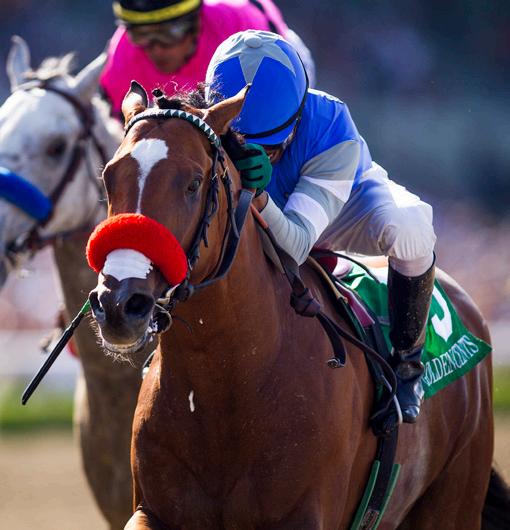
Such thinking beyond the status quo helped provide a pipeline, modest though it was, to keep the bay stallion with something to work with. By 2012, however, with his stud fee having dipped to $7,500, the first glimpse of what would become sire power for the ages flashed before the industry when Into Mischief finished third on the freshman sire list and notched his first graded stakes winner when Goldencents took the Gr.3 Delta Downs Jackpot Stakes that November.
A trademark amongst the rags to riches stallions of modern times is they were able to hit right out of the box despite having decidedly non-commercial books. In 2013, Into Mischief’s remarkable ability to improve his mares became a major talking point when he had a pair of Kentucky Derby starters in Goldencents and Vyjack with the former cementing his spot alongside his sire in the Spendthrift stud barn when he captured the first of what would be back-to-back victories in the Breeders’ Cup Dirt Mile (Gr.1) that November.
At the same time Into Mischief was putting the first touches of greatness on his profile, his pedigree was getting added shine to it as well. In 2012, his half-sister by Henny Hughes – best known to the racing world as Hall of Famer Beholder – captured the Breeders’ Cup Juvenile Fillies (Gr.1) and earned the first of what would be four Eclipse Awards during her storied career.
“For a horse who starts at that level and has limited numbers to come up with two Derby runners is pretty special,” Toffey said of Into Mischief. “The people who really spend time on the numbers in this industry recognized not only that this horse might be really good, but he might really be something special because he was breeding small books, but his percentages were through the roof. Even with the small books, he was doing remarkable things, and no horse is going to be able to maintain those kinds of percentages when the books get much bigger but he’s doing a remarkable job of coming as close to doing that as a horse can.
Goldencents, with Kevin Krigger aboard, wins the 2013 running of the Santa Anita Derby. Goldencents was Into Mischief’s first graded stakes winner when victorious in the Gr. 3 2012 Delta Downs Jackpot Stakes.
LEFT: In 2012, Into Mischief’s pedigree was further elevated when Beholder, his half-sister by Henny Hughes and a four-time Eclipse Award winner, captured the Breeders’ Cup Juvenile Fillies.
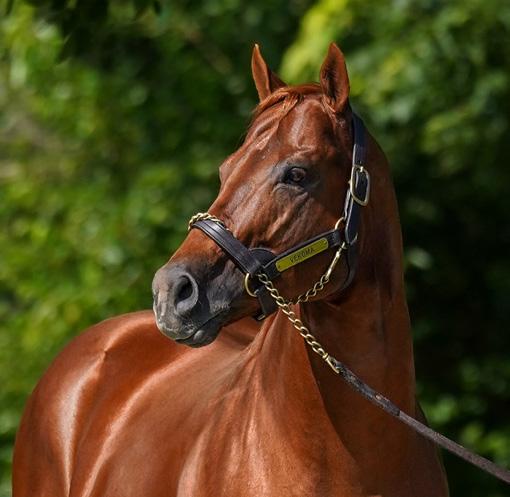
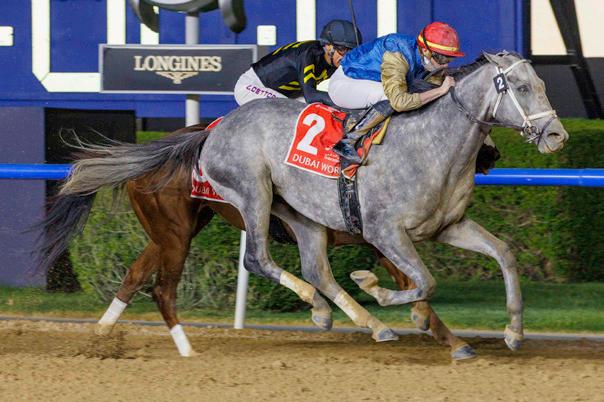
“He has demonstrated his consistency, his brilliance. He can move mares up and he can take the top mares and have the same kind of results.”
Since the moment his first crop nudged the flood gates open, Into Mischief has been relentless in stamping himself all over the record books. In 2024, he became the first stallion to exceed $30 million in progeny earnings for a single year when he finished with more than $34.6 million that season. His three Kentucky Derby winners are tied for most all time by a sire – a stat he could soon own by himself as his unbeaten son, Ted Noffey, was named champion 2-year-old male for 2025. And with his fellow champion son Sovereignty, the newly-minted Horse of the Year, set to return for his 4-year-old season, and another crop of regally bred prospects on the track, it will likely take milestones on top of milestones for another sire to keep him from an unprecedented eighth consecutive general sire crown.
“The thing I hear from all of the vets and all of the breeders out there who breed to him the most is most of (his offspring) have big, really good throats and most of them have really good minds,” Toothaker said. “They have great throats, very good minds, and they can handle the pressure that they’re put under when they are asked to be a racehorse. You know going into it with an Into Mischief that you’re going to get every opportunity to get a horse with a good throat that is going to have a bunch of try in them and is going to stay pretty sound for you.
“It’s just unbelievable where he is now considering where he started,” Toothaker continued. “There are a lot of people who had
things change in their lives because of this horse. I’ve seen all the people who have bred with us who have made lots of money who have been able to go buy tractors and buy a little bit more land because they rode the wave of Into Mischief up the ladder. For our breeders, it’s the biggest thing you want to see. I’m amazed by him just like everyone else.”
One of the few stallions whose achievements have challenged Into Mischief in recent years is Gun Runner, the all-time talent on the track who has produced such champions as Sierra Leone and Echo Zulu while dominating the public auction arena with his seven-figure offspring. Were it not for a freakish former trainee of Ron McAnally, though, one of the most commercially popular sires of the last decade would have never come to fruition.
The Kingmaker
The most accomplished stallion on the current Lane’s End roster is also the most deceiving in terms of looks. Surrounded by specimens like Flightline and Quality Road, Candy Ride doesn’t bowl visitors over with his physical prowess, a fact that has long been true and is even more understandable given his veteran status at the age of 27.
“He’s one of those stallions that when people come and see him it’s really just to admire him and what he’s been able to do,” Farish said. “When you look at him, he’s not the obvious physical. People are looking for a certain type to breed to, and it doesn’t always work that way. He’s a smaller guy with little feet and a huge heart.”
What has been obvious where Candy Ride is concerned is that he has become the primary source of one of the most versatile sire lines currently populating the market today.
After standing his first five seasons at Hill ‘n’ Dale, Candy Ride came to Lane’s End still under the commercial radar, but with a healthy dose of early momentum the team was masterfully able to build upon. A champion in his native Argentina and unbeaten in his six career starts, the bay horse was another who immediately made the careers of the mares coming his way. His first crop would yield four Grade 1 winners in Evita Argentina, Misremembered, Capt. Candyman Can, and El Brujo and, the year he joined the Lane’s End roster, his successor Twirling Candy was making his own mark on the track with a victory in the Gr.1 Malibu Stakes.
Now the sire of eight champions and 20 Grade 1 winners from 19 crops of racing age, including 2025 Dubai World Cup (Gr.1) victor Hit Show, Candy Ride’s fee hit a peak of $100,000 in 2020. The following year, he would begin cementing his uber elite status when Gun Runner established an all-time progeny record for a first-crop sire when he led the freshman sire list. In 2024, another son of Candy Ride in Spendthrift stallion Vekoma, who will command a $100,000 fee for 2026, added to that growing legacy when he too topped the North American firstcrop sire list.
“You ask about intangibles, that’s what you get with Candy Ride. He passes on class, he passes on balance, he passes on that heart and determination,” said Lane’s End farm manager Peter Sheehan. “He has produced great racehorses and in turn produced great stallions. He had a lot of speed and…when you bring a little bit of stamina in with that speed and class, you get what we’re here for in the stallion barn. Candy Ride passes that on to his offspring. We’re very lucky to have a stallion of his importance to the breed…because he is probably the best sire of sires of the last number of years.”
That he has transferred such aptitude onto his offspring, combined with the fact he and his sons are able to get runners
Candy Ride’s, 2025 Dubai World Cup victor Hit Show.
Spendthrift Farm’s stallion Vekoma.
across any distance and surface, no doubt contributed to Candy Ride’s bandwagon filling up beyond capacity. As much as his obscure background caused some breeders pause early in his career, it also was the secret weapon that allowed Candy Ride to cross with a variety of bloodlines.
“No question. When I first started looking at the mares that were being put up to him and looking at our mares, he was open to so many different lines,” Farish said. “It’s amazing that when a stallion is open to so many different lines, obviously the mare pool is much greater and it’s something you don’t always think about. Where another sire might only have two-thirds of the mare base that is eligible to breed to, he had the entire mare base. It was a huge help. He’s just a very unique horse that way.”
Even deep into his 20s, Candy Ride continues to be an allencompassing force, finishing ninth on the general sire list himself in 2025. Such enduring excellence was a commonality he shared with another stallion about eight miles away who also forced commercial breeders to reassess what they thought a pillar of the stud book was made of.
Long Live the King
As breeders entered the WinStar Farm stud barn on January 11 for the first day of its 2026 open house, the stall closest to the tack room with the red and white flowers hung across the front become a vigil for those looking to pay their respects to the powerhouse who had left a gaping hole in the hearts of the staff one day earlier.
The morning prior marked a somber end of an era as Distorted Humor was euthanized at the age of 33 due to infirmities of his advanced years. Lest there was any doubt about the depth of his impact on WinStar, and the breed as a whole, one needed only to look at the set of bay horses residing next to and across from the empty stall to be reminded that the son of Forty Niner will be present at the highest levels of the sport for years to come.
As the broodmare sire of WinStar’s top stallion Constitution and two of the farm’s leading hopes for the future in multiple Grade 1 winners Life Is Good and Patch Adams, the class and precocity that defined every point of call of Distorted Humor’s career is certain to power more generations of top-level runners. His numbers stand as a marvel of commercial achievement – 174
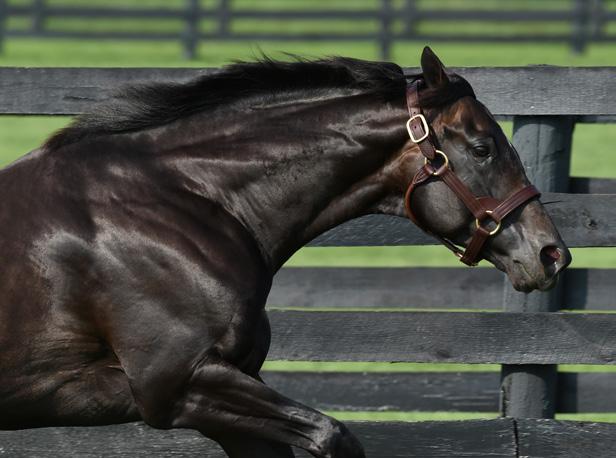
black-type winners, 76 graded stakes winners, and more than $175 million in progeny earnings worldwide at the time of his death. Considering the expectations, or lack thereof, when he entered stud in 1999, his is a career that ranks as one of the more fantastical achievements of modern times.
“I remember when I first started, I was told to tell everyone he is 16 hands. And I did because I was still young…but there was not a day in his life when he was 16 hands,” said WinStar Farm stallion manager Larry McGinnis, who cared for Distorted Humor the way he would a member of his family. “He was 15.3 all day long but there was that stigma of being 16 hands or higher. We had to promote him because he wasn’t popular like those other horses like Tiznow or Speightstown. He wasn’t a hot commodity, so we had to take what we could.”
Having trained Distorted Humor for most of his competitive career, WinStar Farm president, CEO, and racing manager Elliott Walden had seen firsthand both the devastating speed he possessed and the innate will that was housed in that frame. When his runners began hitting the track themselves, the racing community too witnessed the breadth of his ability as his first crop included Grade 1 winner Awesome Humor and, most notably, dual classic winner and champion Funny Cide.
After topping all freshman sires in 2002 and leading North America’s general sire list in 2011, Distorted Humor completed a statistical trifecta when he ranked as the leading broodmare sire in 2017. His daughters have accounted for more than 80 graded stakes winners, including Bubbler, dam of Hall of Famer Arrogate, and Gaudeamus, dam of Hong Kong’s 10-time Group 1 winner and champion Golden Sixty (AUS).
Fittingly enough, one of the most brilliant crosses going today happens to be Into Mischief over Distorted Humor mares, a pairing of bloodlines that has produced the aforementioned Life Is Good and Patch Adams as well as Grade 1 winner Tappan Street, Practical Joke, and champion and new sire Citizen Bull.
“I think a lot of times you do see good sires become good broodmare sires, but it is so interesting how he is so dynamic on both sides of the pedigree,” Walden said of Distorted Humor. “From a pattern standpoint as a broodmare sire, (his cross) with Into Mischief has just been phenomenal. And I think one of the reasons why he (was breeding) until he was 25 is he was a one jump horse every day of his life. He was easy on himself and obviously enjoyed his job, but he came down and did his thing and it was over and then was back eating grass. He made things easy on himself, he didn’t make it hard on himself. That added to his longevity.”
With Distorted Humor’s death, Candy Ride in the twilight of his career, and Into Mischief now into his second decade, there will be torches to be passed in the foreseeable future. Gun Runner continues to go from strength to strength while Taylor Made Farm’s exceptional Not This Time, who finished second on the general sire list in 2025, is another star who has seen his stud fee rise from $15,000 his first year in 2017 to its current lofty level of $250,000, equaling Into Mischief and Gun Runner for the highest fee in North America this year.
As the 2026 breeding season gets underway, the proven stallions and highly regarded members of the first-year crop like Sierra Leone and Citizen Bull will have no shortage of trips to the shed with blue-blooded mates. They are the obvious attention getters in a what-have-you-done-for-me-lately market.
But, as history continues to show, the brightest lights for the future in the commercial landscape might just reside outside of the box.
Taylor Made Farm’s, Not This Time.
# SOUNDBITES
WHAT CAN RACING DO BETTER IN 2026?
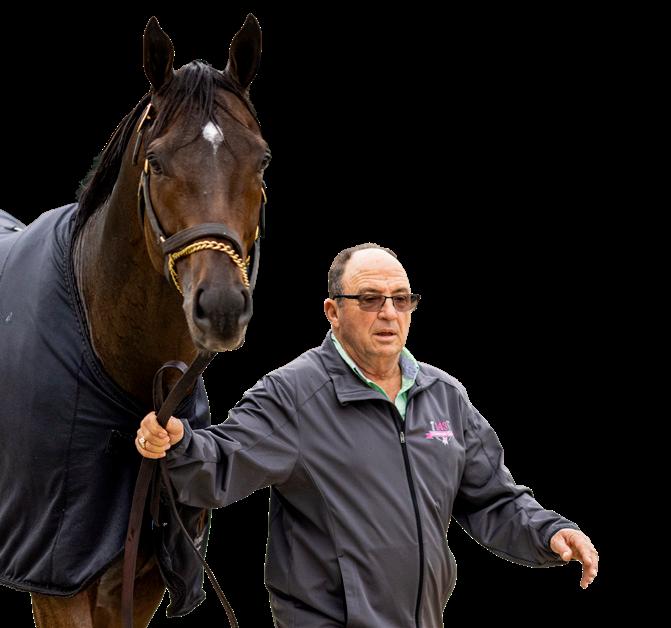
Wayne Catalano
They’re light on horses everywhere. I don’t think they can do anything about it because the foal crop has always been down. With all these rules, it’s hard to get situated with the rules they put up right now. Everybody’s got to get acclimated within and get on the same page.
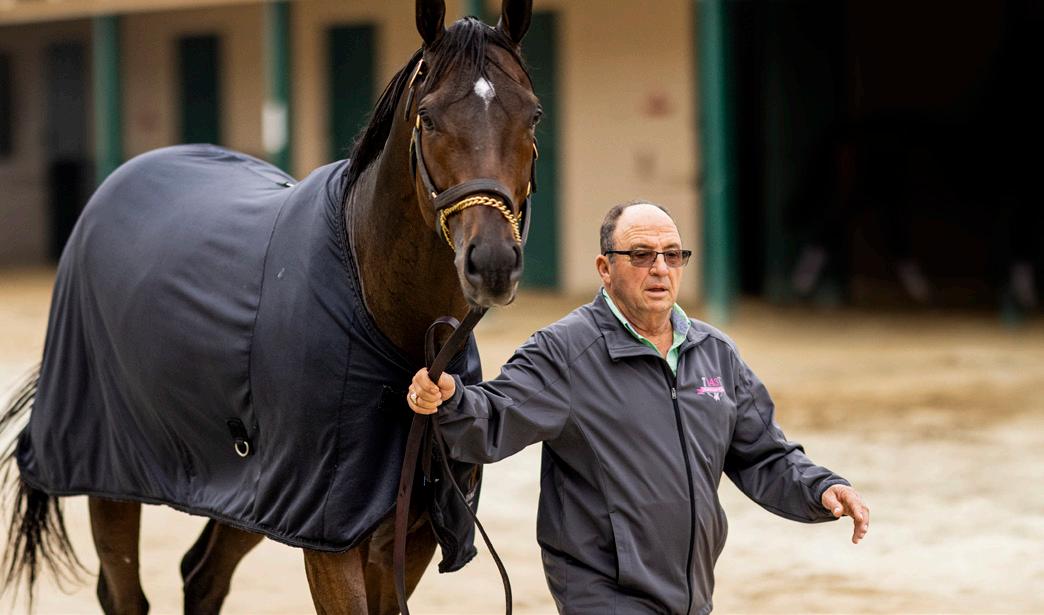
# Joe Sharp
I would say to react to the issues that we’re having in racing based on horsemanship and what is best for the horse and not on how it’s being perceived by the public and by social media. A lot of things are being done based on how they want the public perception to receive it, and it isn’t always what’s best for the horsemen or the horse.

# Eoin Harty
I think we need to – and I think it looks like it’s actually happening –make a bigger push to entice younger generations into the sport. Without rejuvenating our fan base, we’re going to be in big trouble. It looks like there’s some – what do they call them – influencers working on it. I think that’s important.

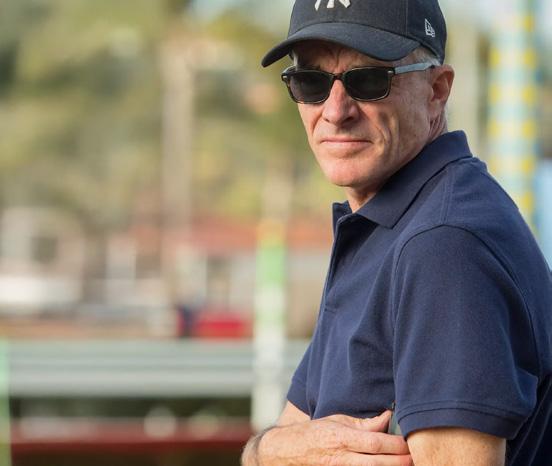


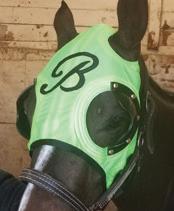






We have got to get purses up so we can get owners a chance to break even or make money. Do something in this game right now because the expenses are just outweighing the cost. The reward is just not there. We’ve got to do better getting fans to the track. I know everybody wants to bet on their phones, but I think the pageantry of Saratoga, Keeneland and Del Mar, those tracks just bring people out. I don’t know the right way to do it. I’m not that smart, but I do believe we need a central organization because we’re all just going in too many different directions and we’re not getting it right.
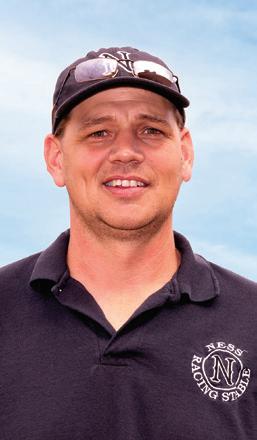
# Ron Ellis
# Jamie Ness
I’ve been training for 25 years and it seems like this question keeps popping up. There is no golden answer. There are two sets of individuals that run our business, the owners and the bettors. Without those two, our jobs are dispensable. I think we have to do a little more at the racetracks, recognizing owners, recognizing bettors. Maybe a little more appreciation. Without them, we’re flipping burgers. Give them something. Give them a great parking spot. Is that a big deal? A free Racing Form. If they feel appreciated, they will come back.
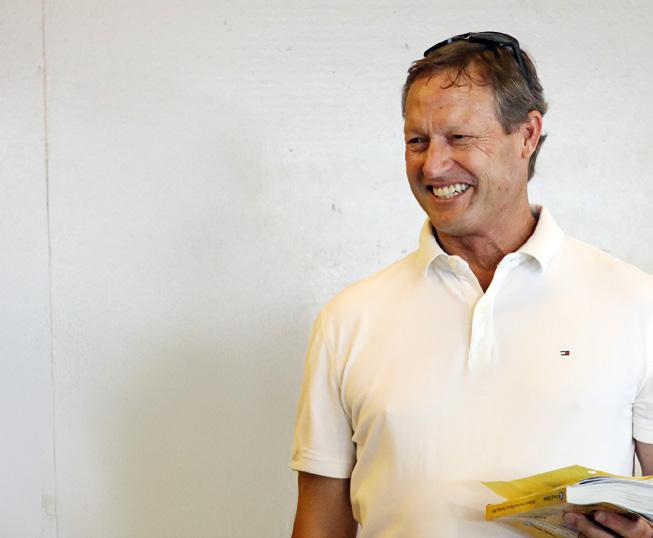
Out here in California, we’ve got so many problems. There have been great strides in horse welfare, but I think there needs to be some easing of the regulating vets. They’re killing the field size here in California. Now, they tried putting in those historic racing machines and two days later, the attorney general had them physically removed. Throughout most of my career, our purses were the highest in the country, and racinos started to come in, and now we’re one of the lowest. It’s really hard to compete. Our level of competition hasn’t dropped at all. But the purses have. That’s really not a very sustainable combination.

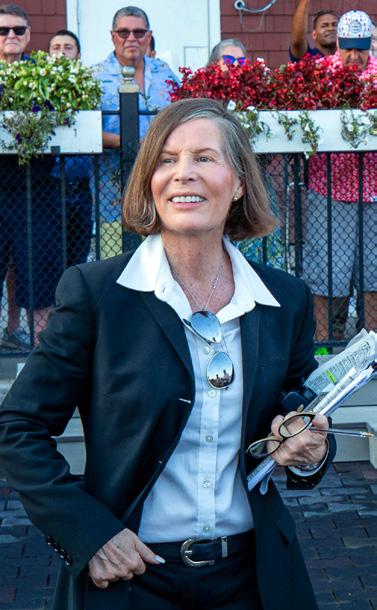
# Linda Rice
Boy, that’s a tough question. Let me think about that. There’s so many. I don’t know where to start. I think that we have to have a more enthusiastic message for racing, not all doom and gloom. You know we’re very passionate about it and we need to share that passion with the public. I’m hoping that the regulatory bodies are kinder and more forgiving to people that find themselves in the crosshairs and have small innocuous mistakes.
VALUE ADDED

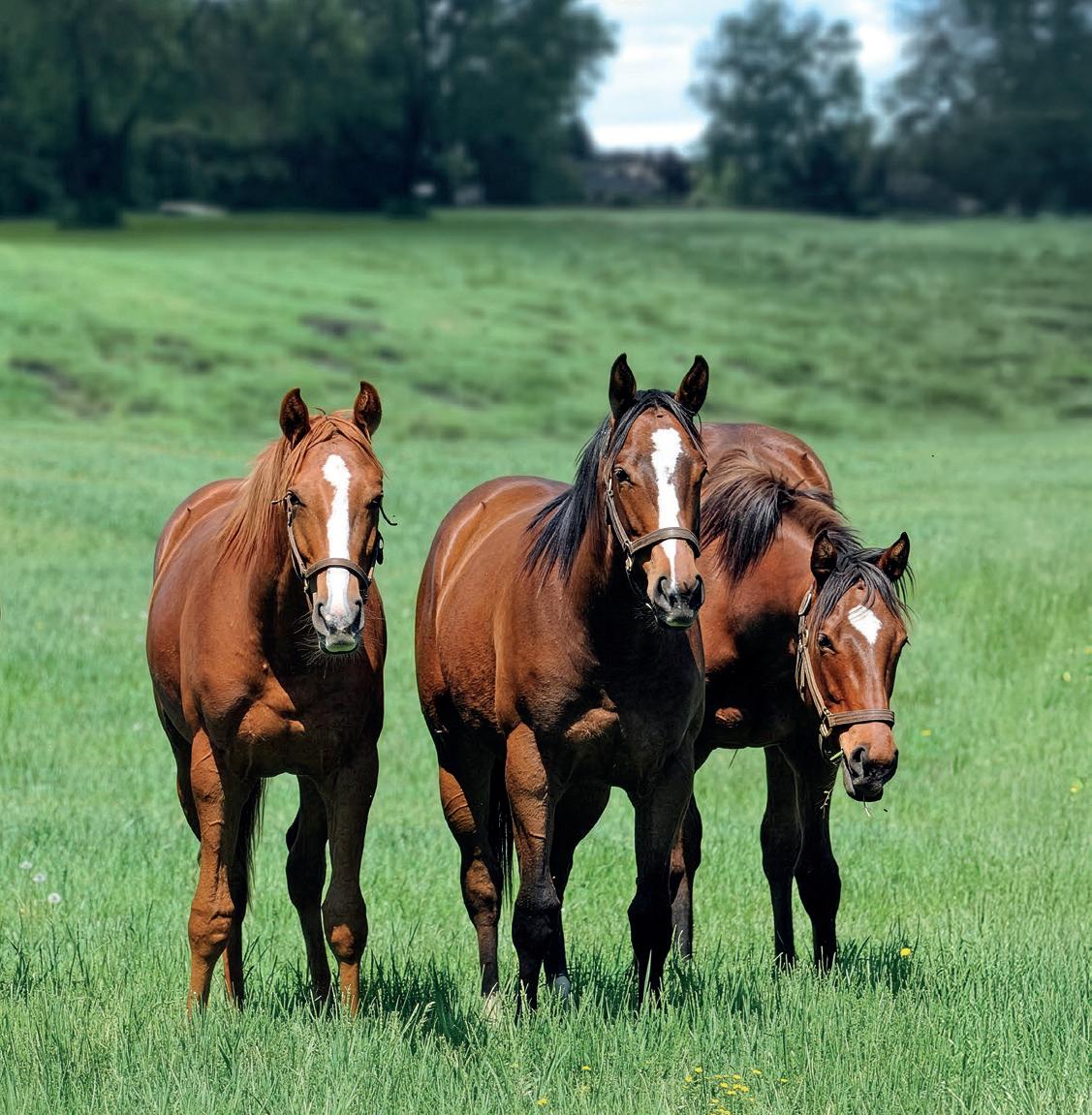
AS A BREEDER OF A VIRGINIA-BRED:
You earn whenever your mare’s offspring finishes first, second or third in open races in North America (excludes state-sired and bred races except at Colonial Downs or NSA-sanctioned meets).
It is the perfect program for commercial breeders because it doesn’t matter who purchases your horse or where it runs, you will realize breeders’ awards. In 2025, Virginia breeders earned a 34% bonus for each first, second or third place finish.
AS AN OWNER OF A VIRGINIA-BRED:
Eligible for lucrative VA restricted races at Colonial ($93,750 maiden race purse) and restricted state bred stakes in VA & MD. You also earn a 50% purse bonus for first- through fourth-place finishes in open races at Colonial Downs.
AS A DEVELOPER OF A VIRGINIA-BRED:
Developers (owner of the horse when it makes its first lifetime start) will earn up to a 25% bonus on open-race and NSA-sanctioned wins in NY, NJ, PA, DE, MD and VA.
Scan the QR code to learn more about the Virginia-bred program, including incentives, awards, and race opportunities, or visit VABRED.ORG to explore the full program details.