YACHT
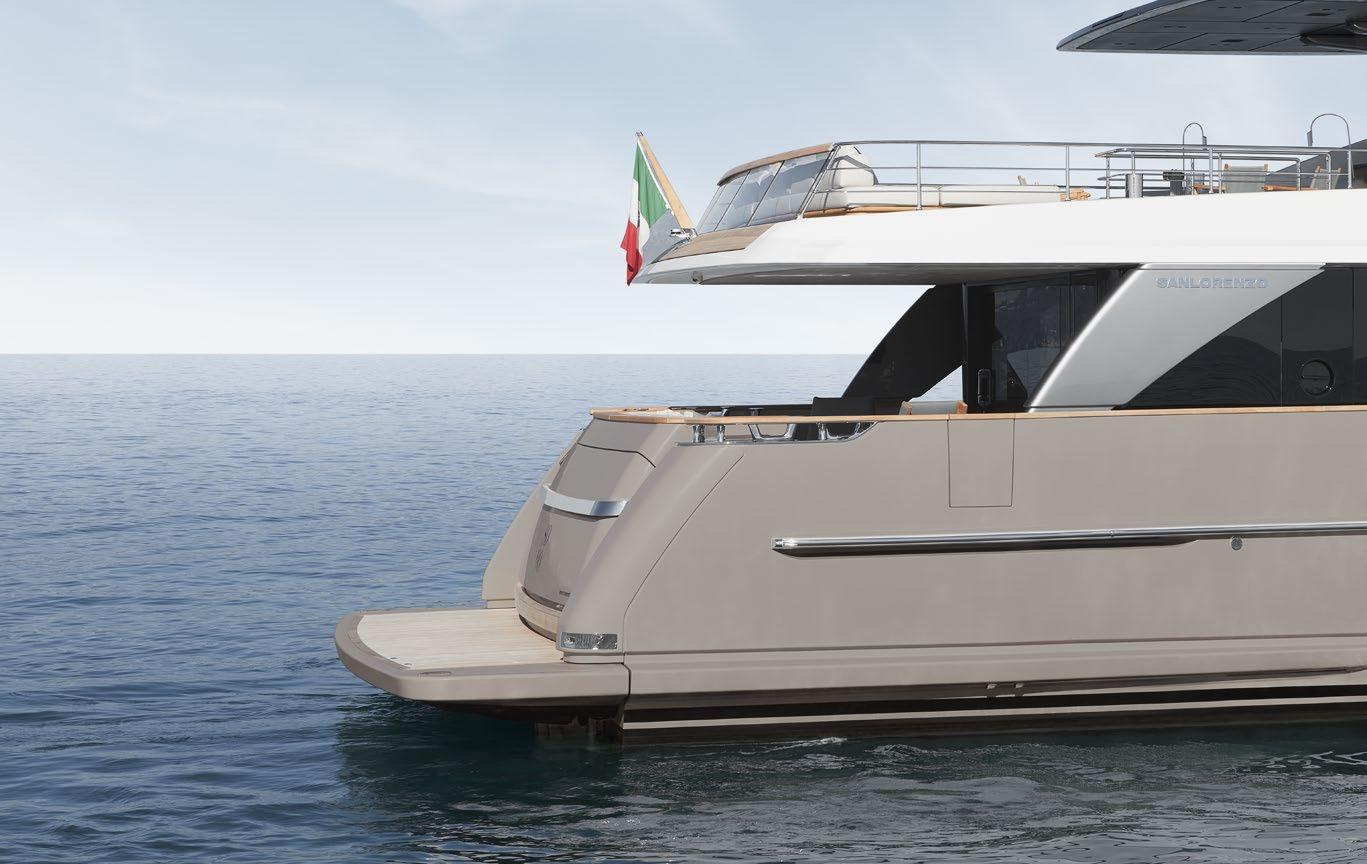
The sea
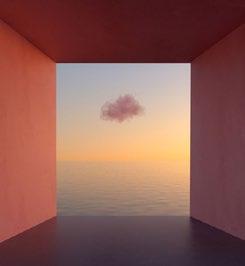
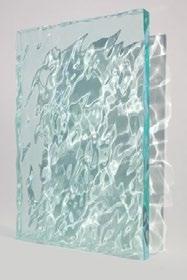
Transformability and flexibility
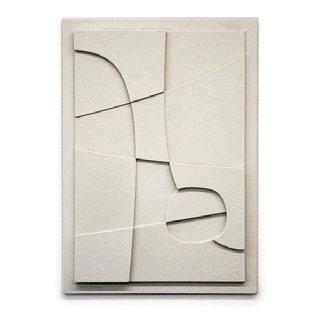
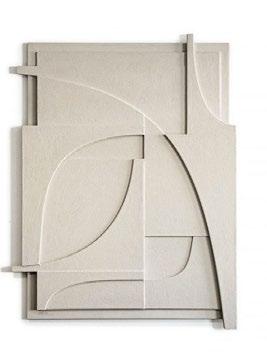
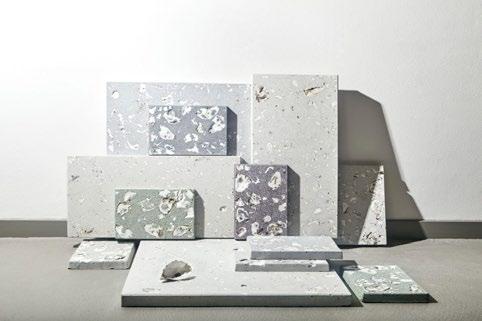

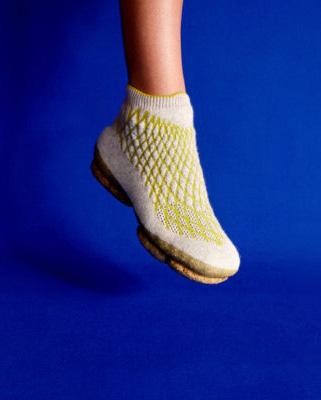
Circular economy and research
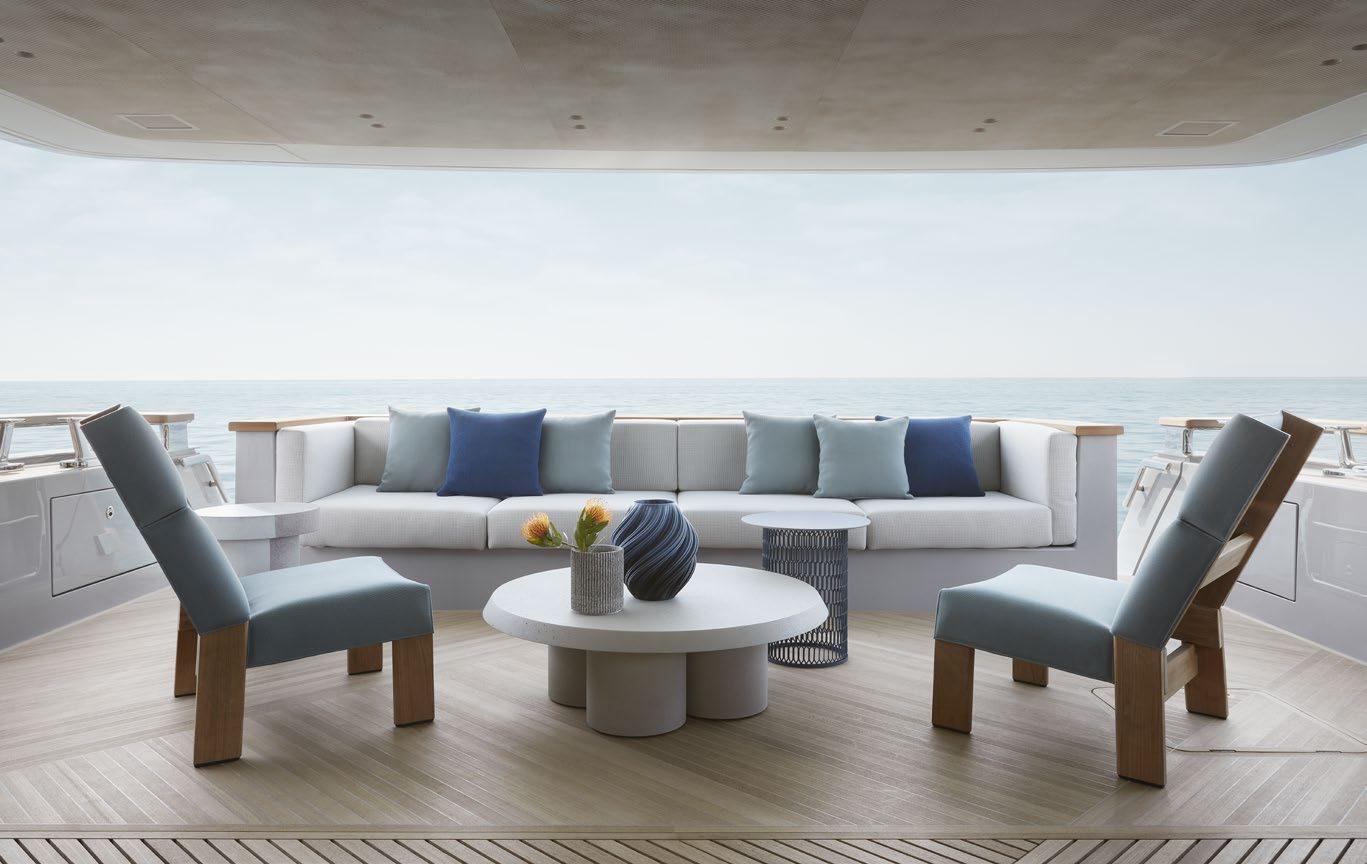
Cockpit – Urquiola
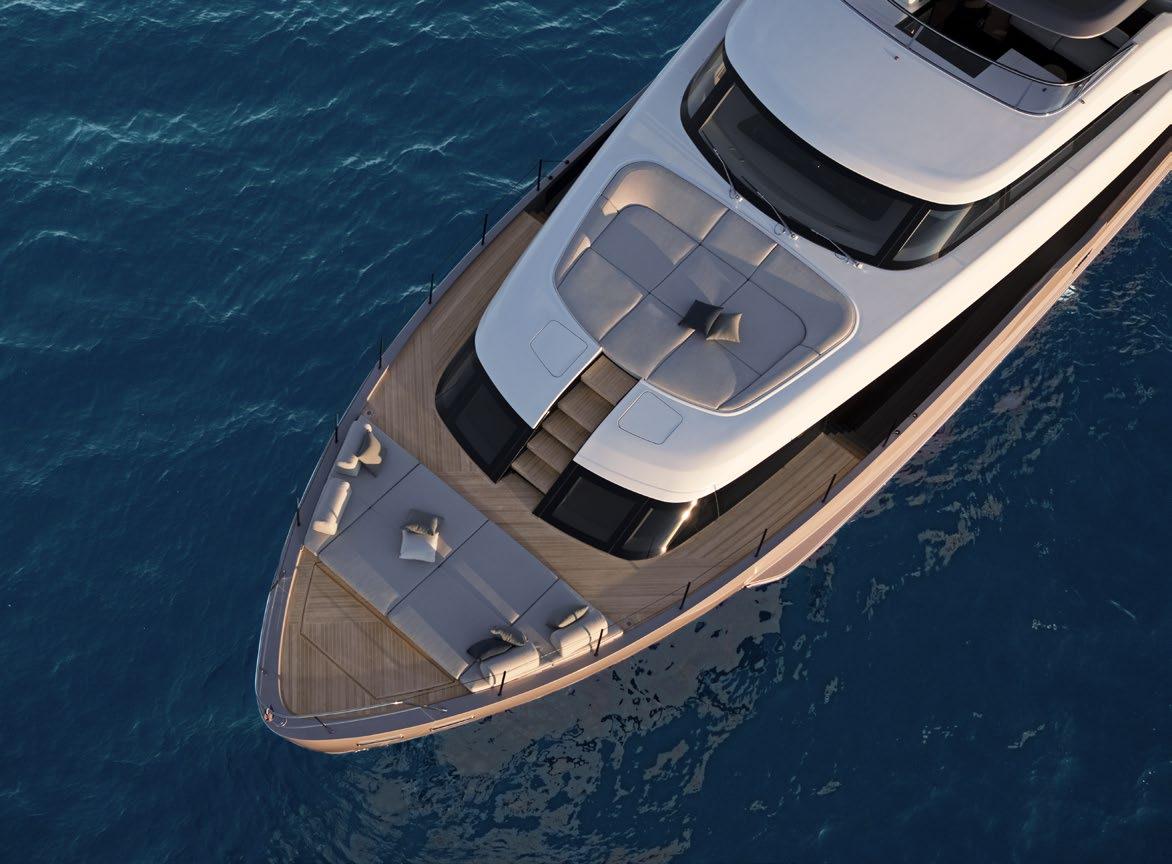
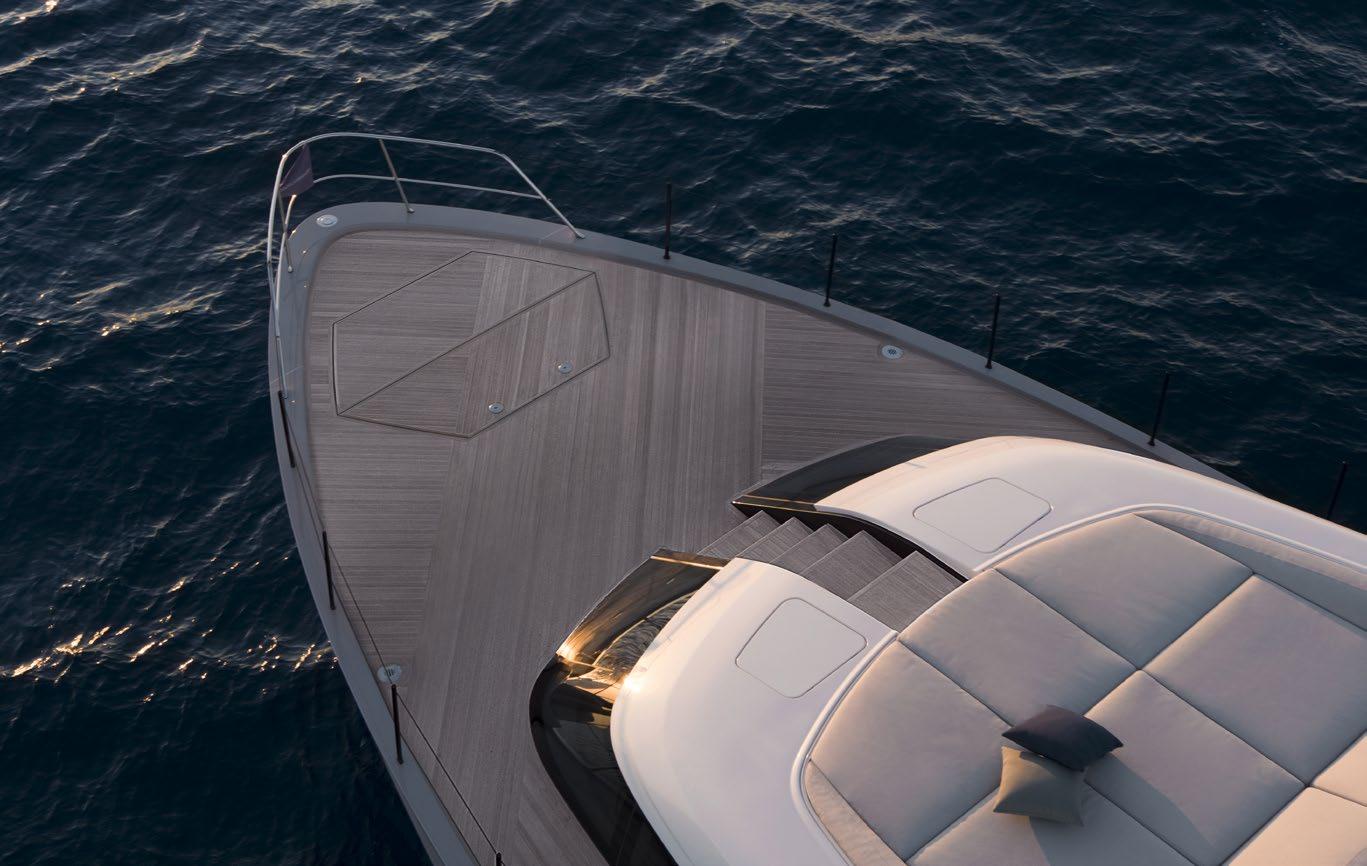
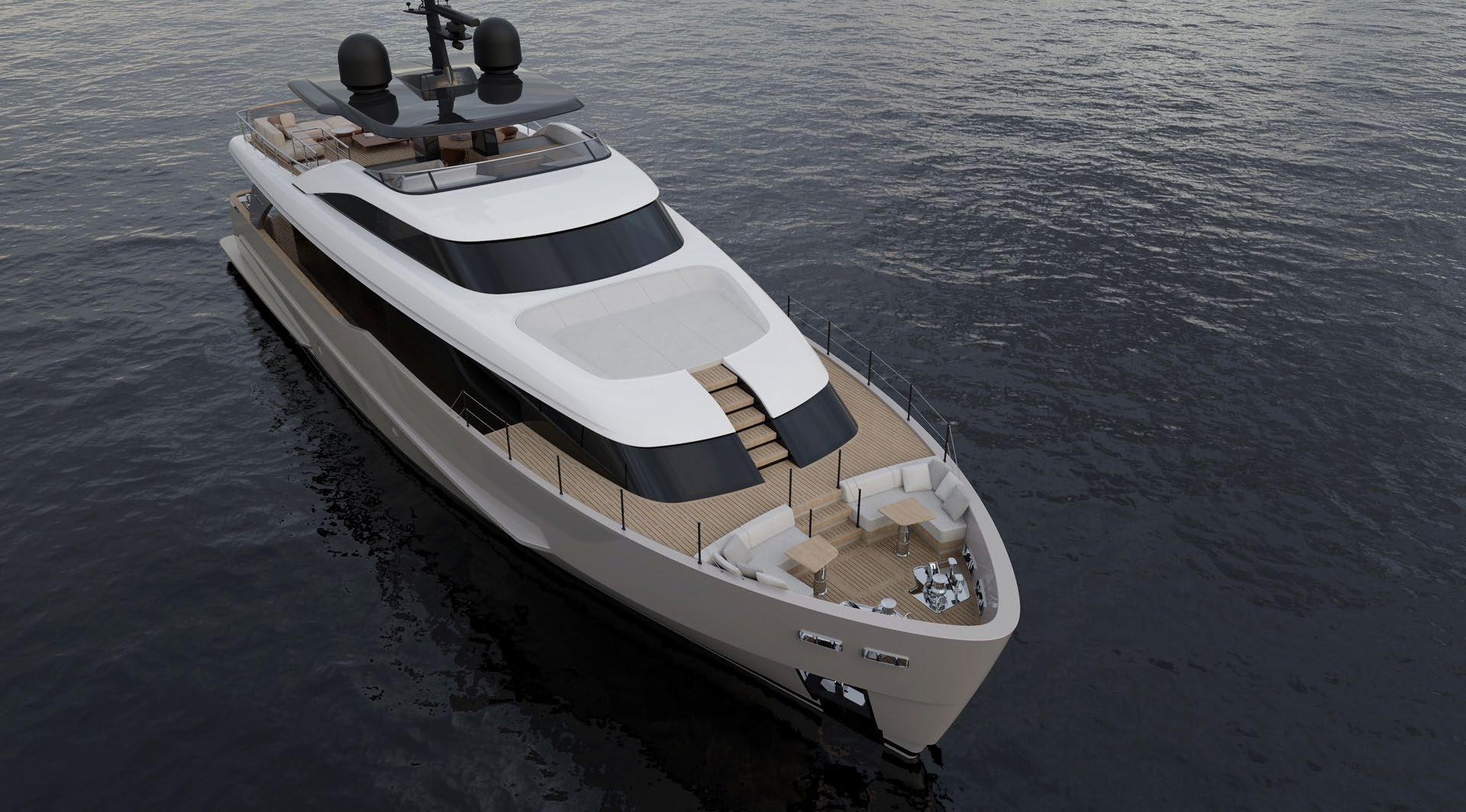
The sea
Transformability and flexibility
A hybrid propulsion project is being developed in partnership with Siemens, which aims to deliver high performance, maximum efficiency of the electric motors and optimisation of the available power generated by lithium batteries. This system allows for navigation in bays and ports whilst respecting the surrounding environment.
The hull has been engineered to improve performance with hybrid propulsion, optimising resistance even at lower speeds, between 6 and 10 knots.
From class A+++ appliances, to the Eco air conditioning system, to the stabilising fins with Eco Mode, every appliance on board is meticulously chosen not only for the highest quality but also for its low consumption. High-performance thermal and acoustic insulation guarantees reduced waste. The selected lighting fixtures are energy efficient, while special stratified glass reduces heat caused by UV rays.
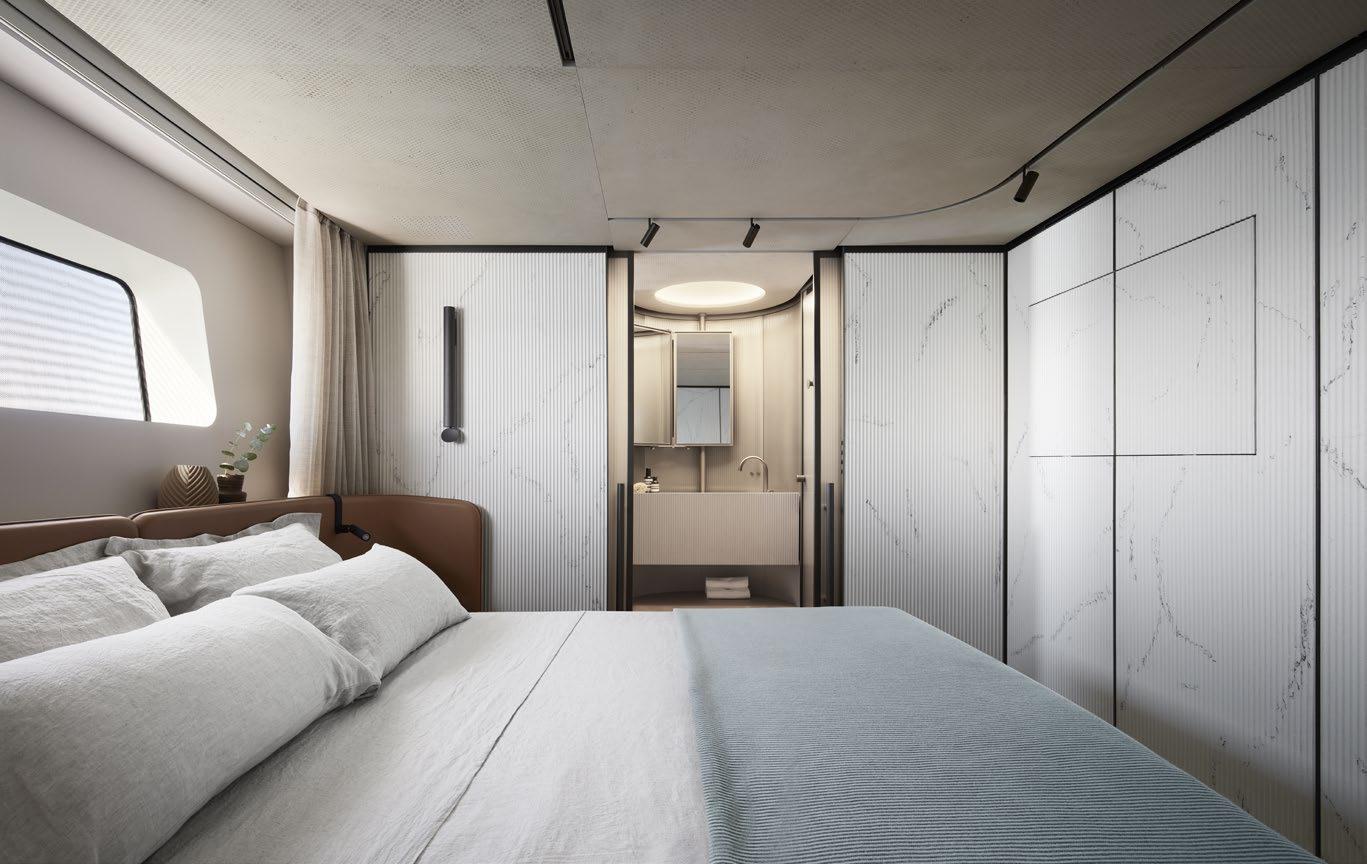
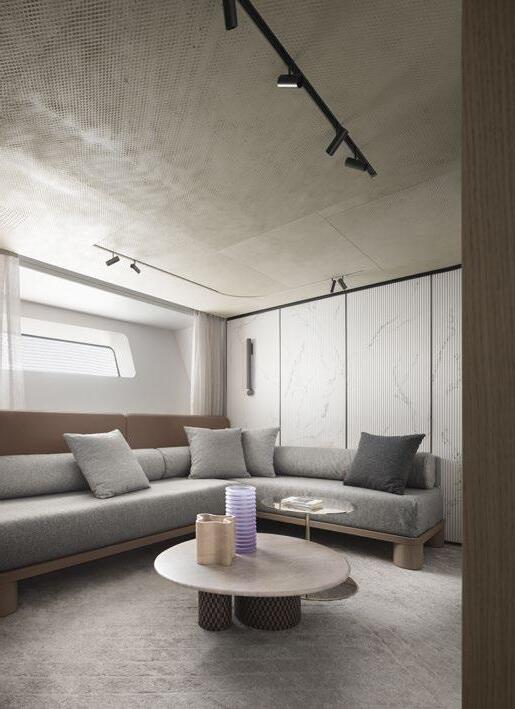
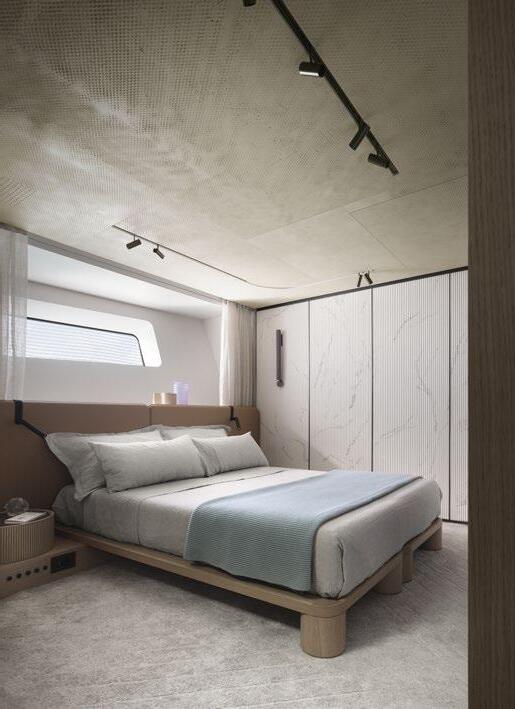
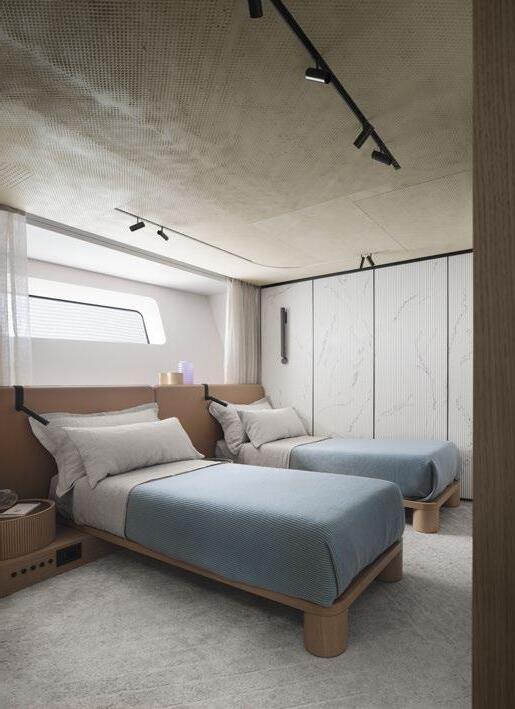
The entire structural design approach considers the use of sustainable, state-ofthe-art materials. In the interior decor too, great care has been taken to use materials of the highest quality and from alternative sources. Materials made from shells and recycled paper may be used, achieving high levels of quality in the upholstery on board. Woods are carefully selected to ensure a lower environmental impact. Bioresins are used for the interior details of the ceilings and furnishings. To protect teak, now at risk of deforestation, we support research into more sustainable and long-lasting alternative materials for use on exterior decks. Recycled nylon textile fibres offer many possibilities. Recycled glass is Bioglass.
Reduction of emissions (NOx, C02 and Hydrocarbons) from the main engines and generators during the most common conditions of use and when emissions are more noticeable.
ZEM (Zero Emission Mode) to access and anchor within protected areas not accessible with combustion engines switched on.
Rapid charging of lithium batteries whilst in navigation (not possible via standard generator).
Improved silence and comfort in maneuvering and low speed navigation.
Reduction in the number of running hours for main engines and generators with consequent extended service life (it’s possible to navigate with just one main engine running and genset switched-off).
System already aligned with principles under study by European Commission “Sustainable and Smart Mobility Strategy 2025-2030”
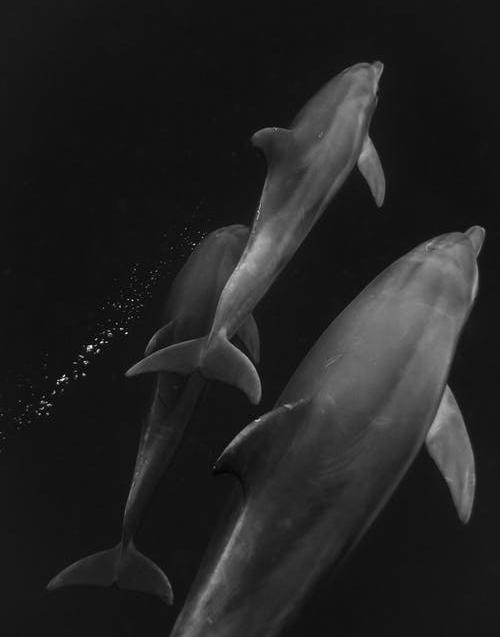
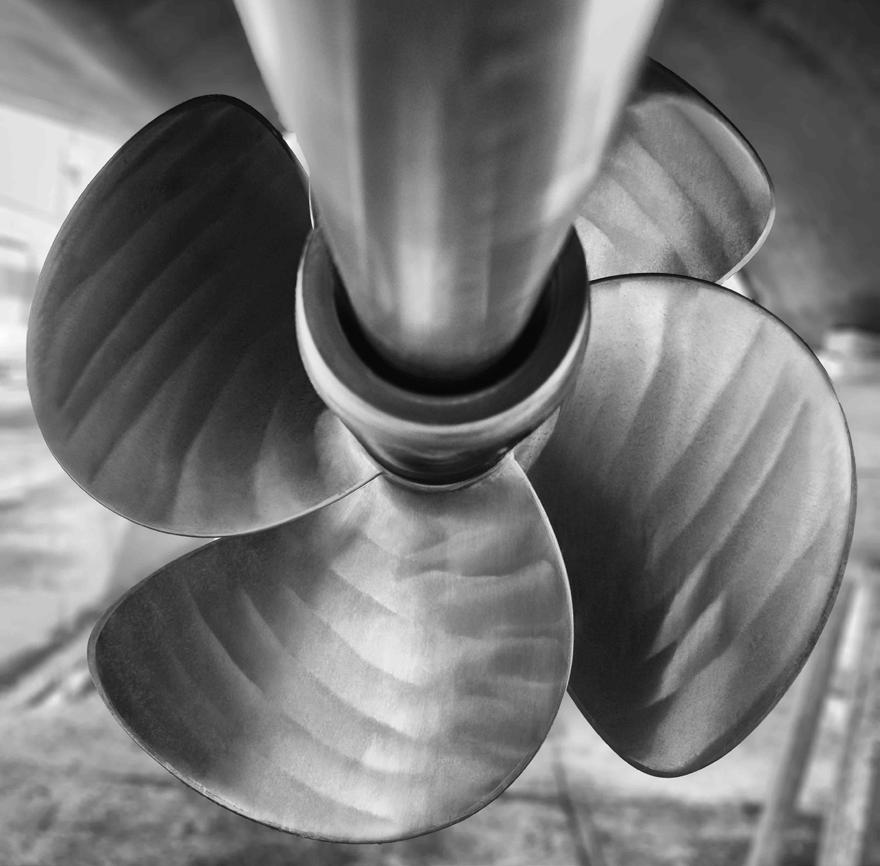
Sense of responsibility for the marine environment combined with new technological development to create a hybrid propulsion package that meets the wishes of even the most demanding shipowners.
Thanks to the experience gained since 2016, Sanlorenzo is now able to offer a truly cleaner, quieter and more fuel-efficient hybrid propulsion, compared to a diesel power configuration.
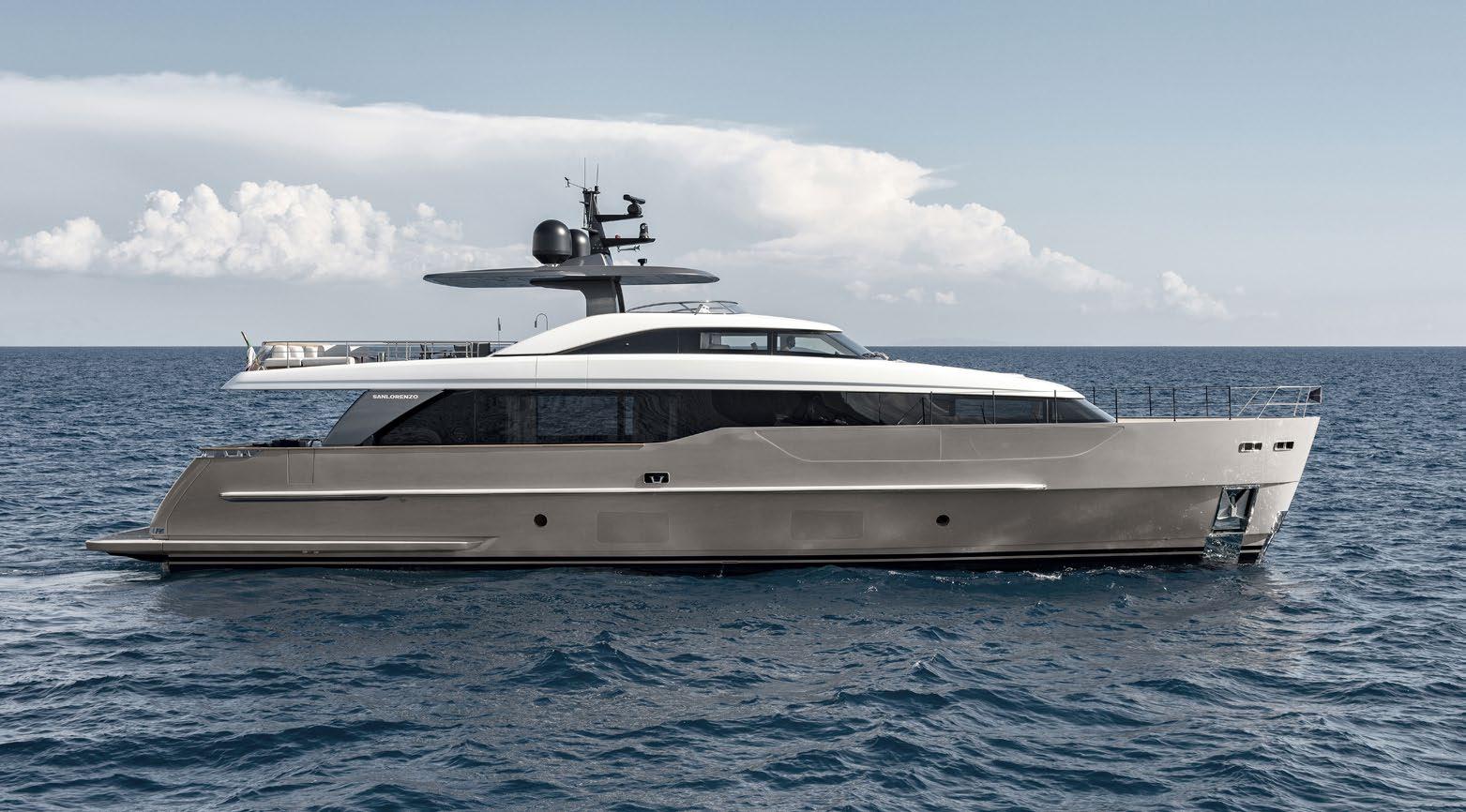
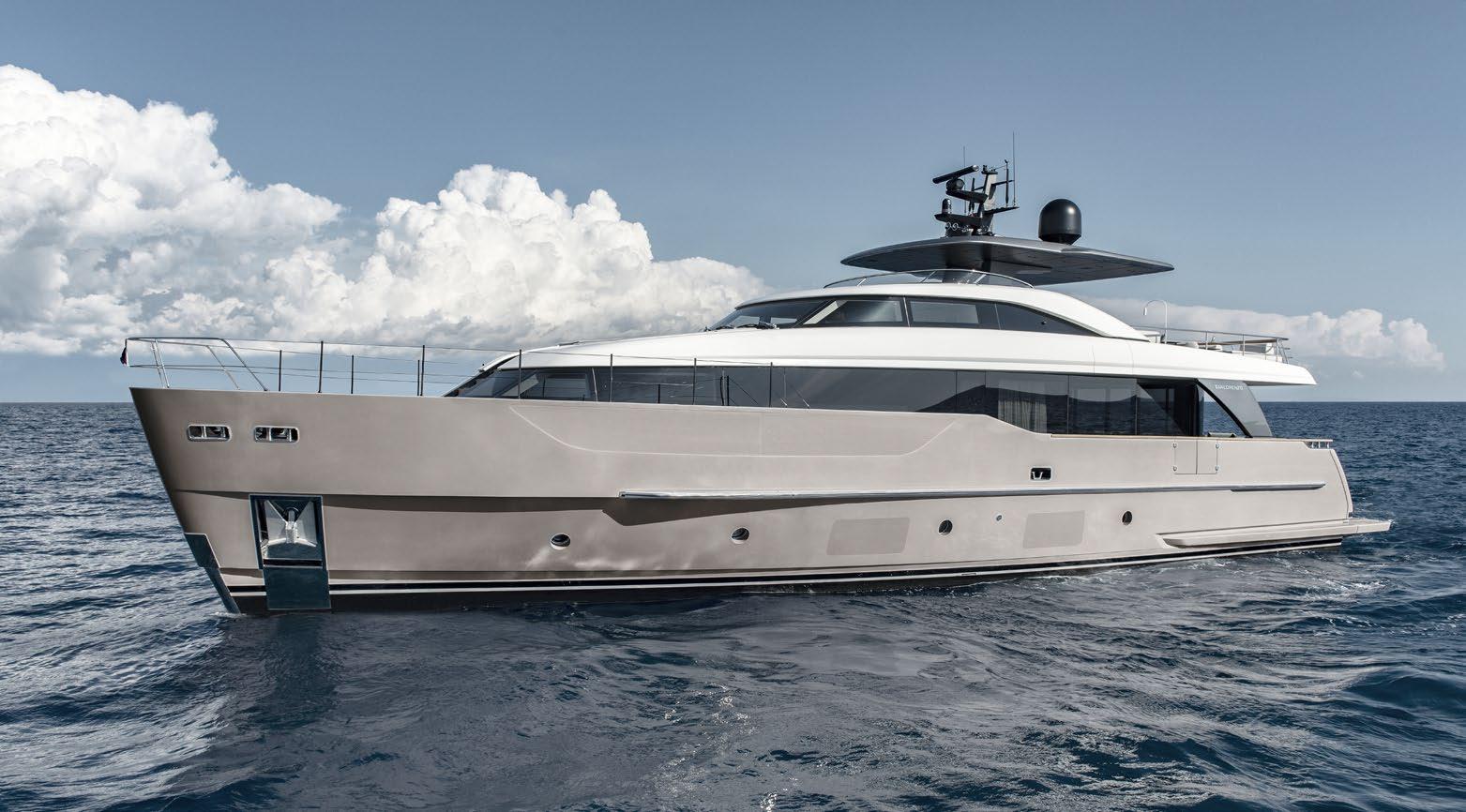
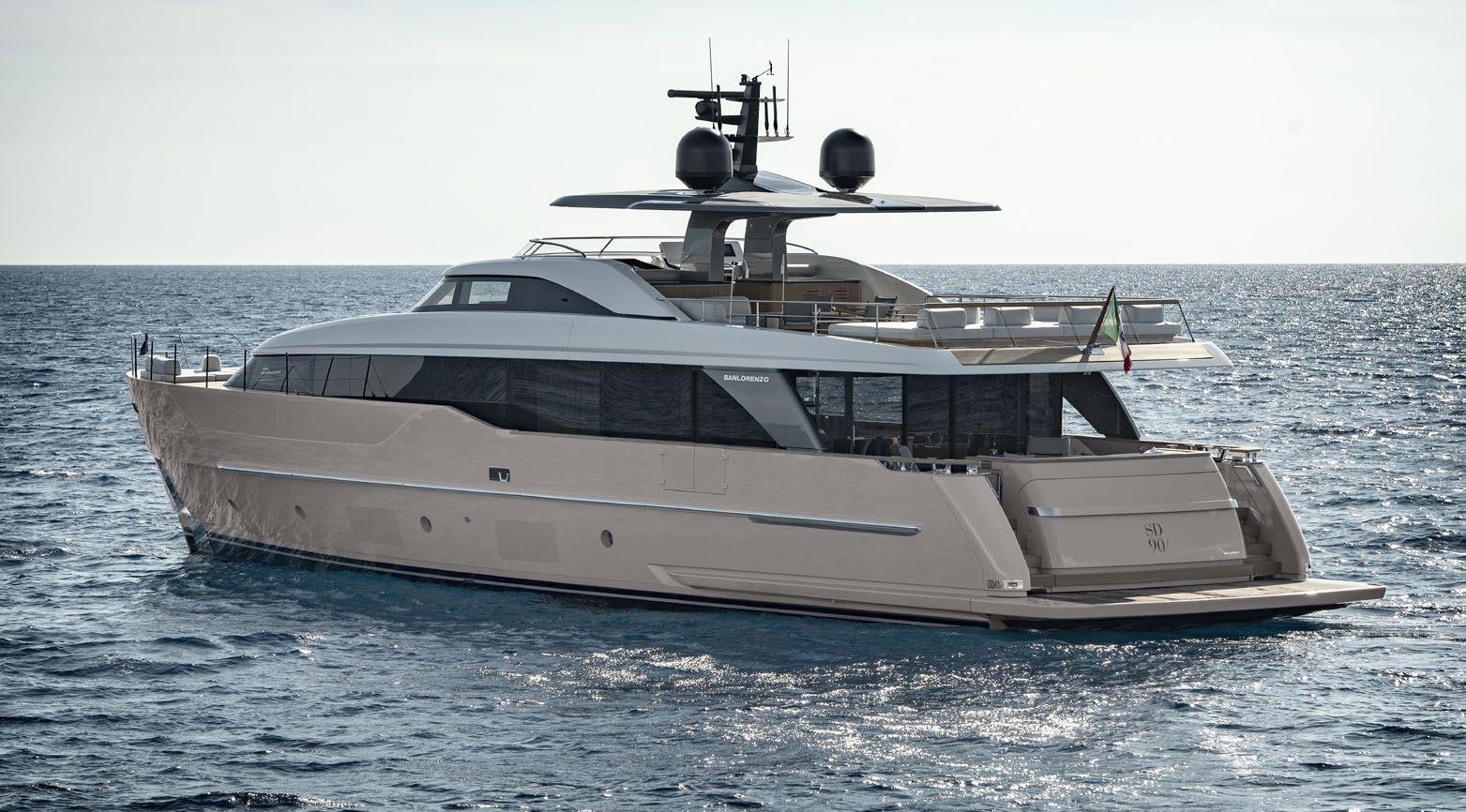
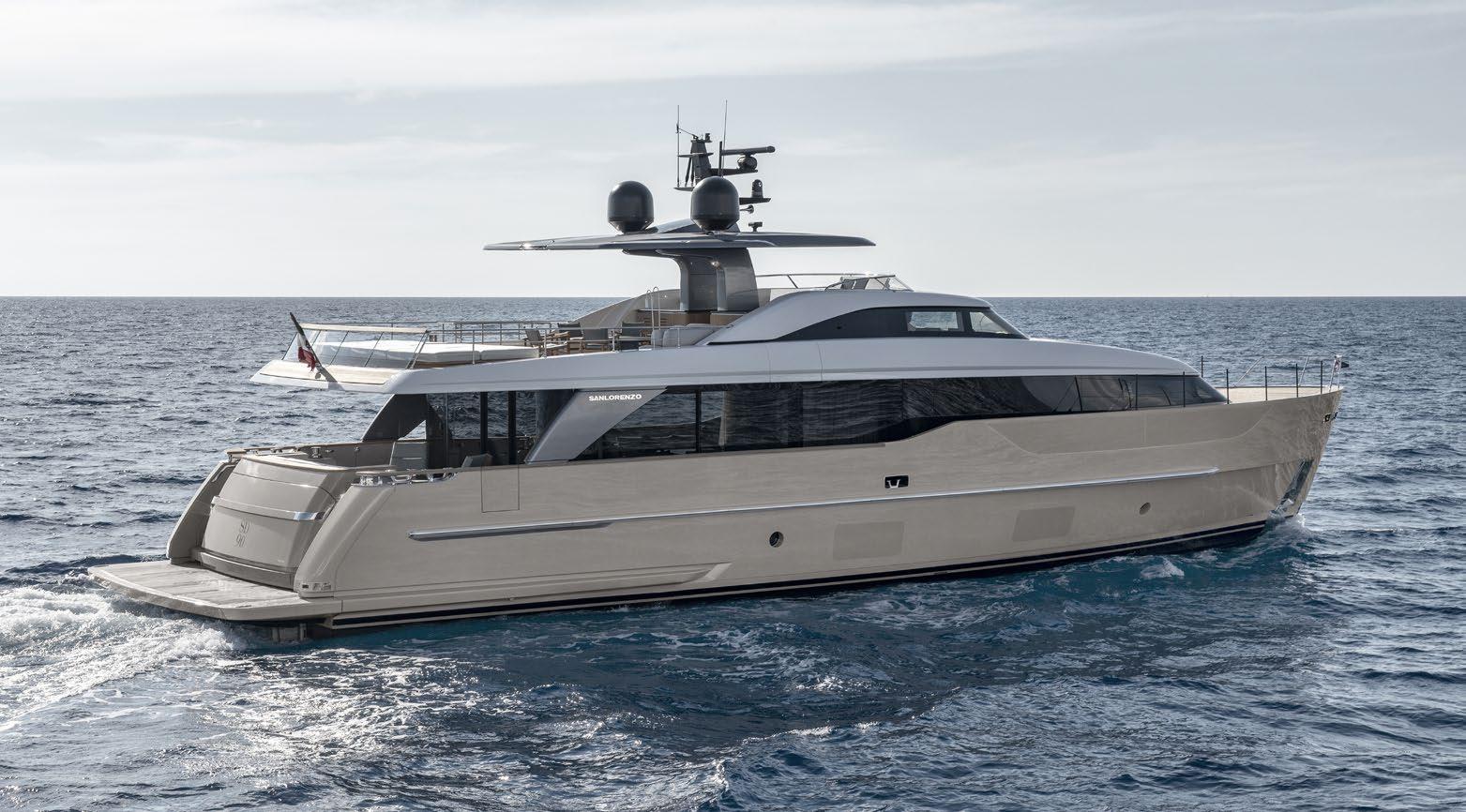
In addition to fully conventional navigation, the SD90S hybrid can be used in four other operating modes depending on priorities.
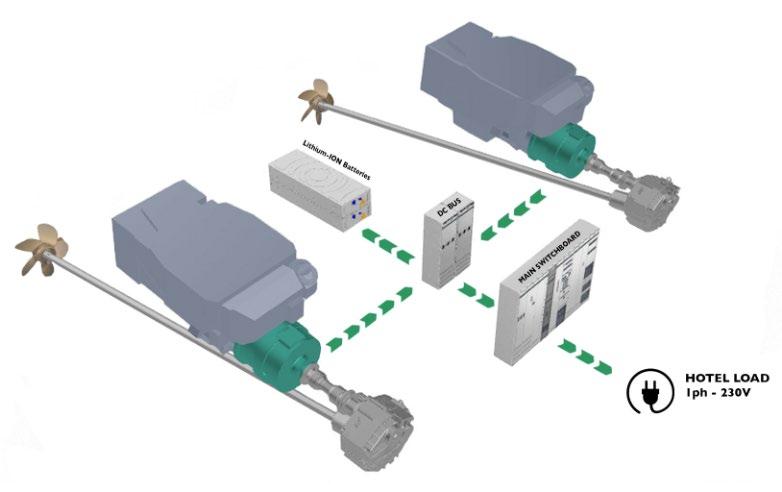
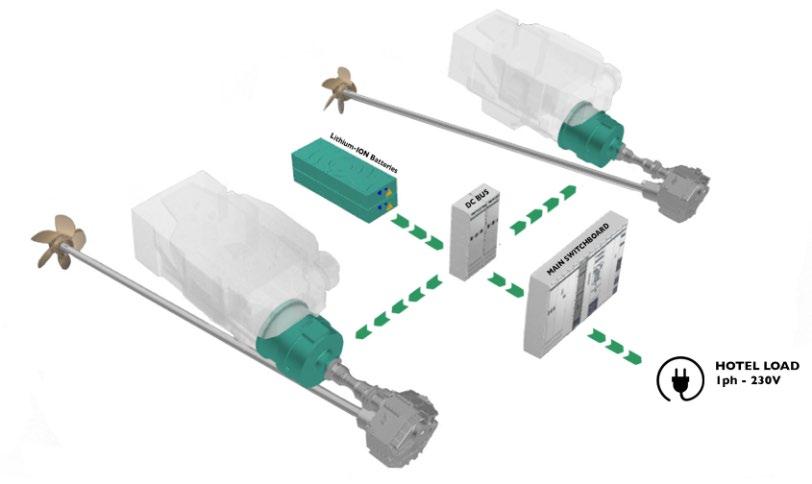
Cruising and recharging mode
This mode differs from a classic diesel propulsion because the generator is turned off. Hotel loads are managed by the e-motors that function as alternators. In addition, batteries can be recharged quickly. (Full recharge in 1 hour starting from 10 to 14kn).
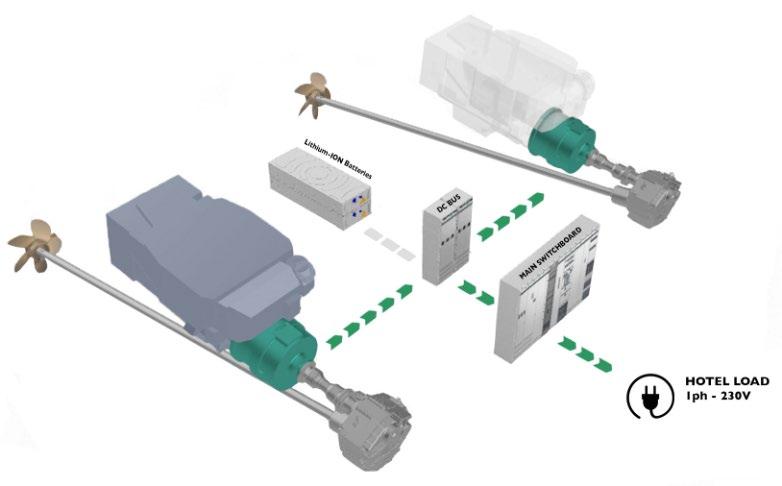
Cross shaft mode
Only one main engine is switched on, to power the two shaft-lines (one directly, the other through the electric motor) up to 9 knots. This mode allows the engine to operate at the point of best efficiency and is suitable for optimising consumption during long transfers with only the crew on board.
The service life of main engines and generators increases because of the lower running hours.
ZEM (Zero Emission Mode) cruising
For limited autonomy it is possible to navigate and/or maneuver with zero emissions: all the internal combustion engines are turned off and then the energy for propulsion and hotel loads is taken from the lithium-ion batteries only.
ZEM (Zero Emission Mode) at anchor
Stop at anchor, even in marine protected areas, with the generator turned off without any source of emissions and noise, but with all the comforts given by the on-board utilities.
Cruising and recharging mode
Main engines ON Generator OFF
E-motors manage hotel load and/or fast recharge the batteries (Full recharge in 1 hour starting from 10 to 14kn)
Cross shaft mode
Main engines: one ON & one OFF Generator OFF
E-motors power one shaft line (up to 9kn) and manage hotel load Batteries damp all peaks
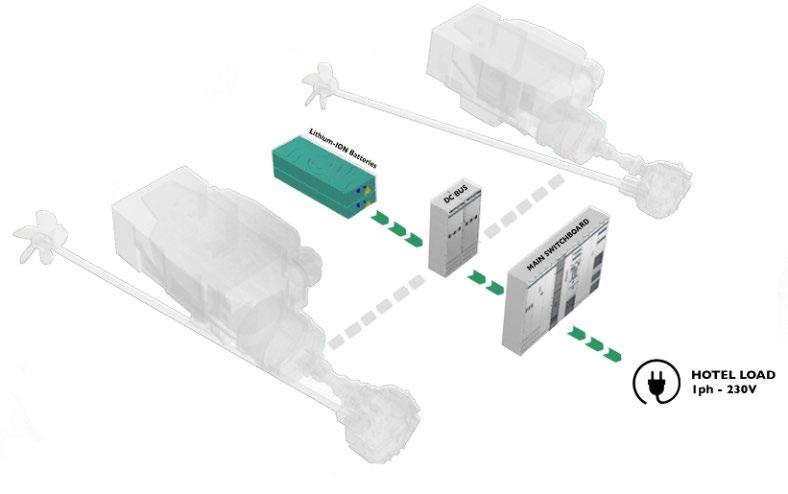
ZEM (Zero Emissions Mode)
Cruising
Main engines OFF Generator OFF
E-motors power the boat (up to 9kn)
Batteries provide all the energy for propulsion and hotel load
(Range up to 2 hours at 5 knots)
ZEM (Zero Emissions Mode)
At Anchor
Main engines OFF
Generator OFF
Batteries provide all the energy for hotel load
(Range up to 8 hours at average load)
Not only the propulsion system, but also all the elements that can help to reduce energy consumption and emissions are at the heart of the project.
For example, the IR filtered glass windows that bring a drastic reduction of electric load coming from the air conditioning.
Furthermore, all the main systems responsible for electrical loads are engineered to reduce energy wastes and all domestic appliances are in A+++ class.
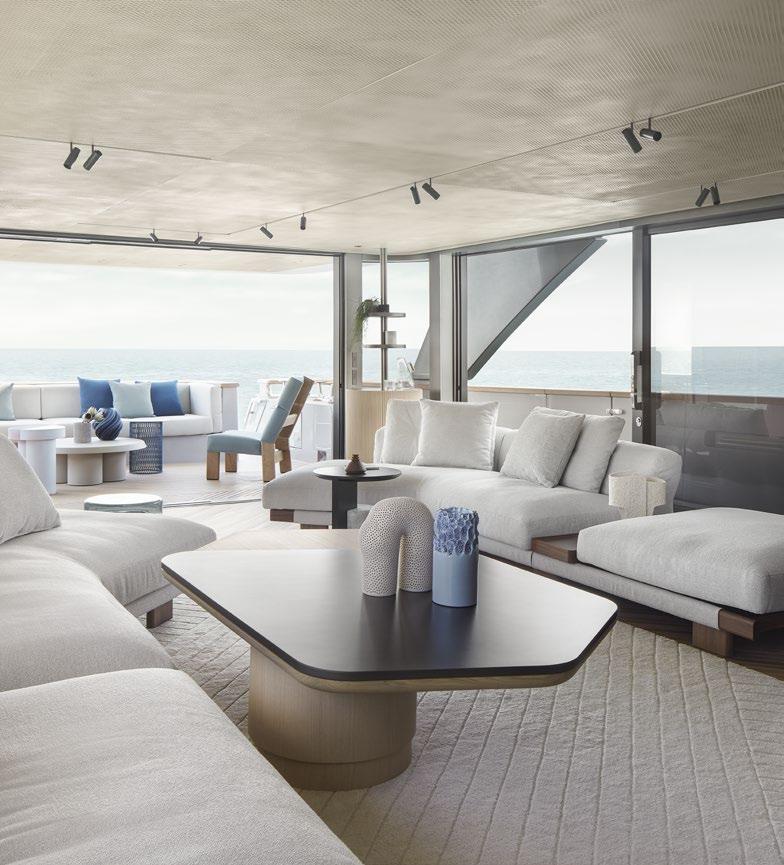
The same attention has been given to the selection of materials. The focus on recycling and the circular economy is a part of the criteria that guides the project.
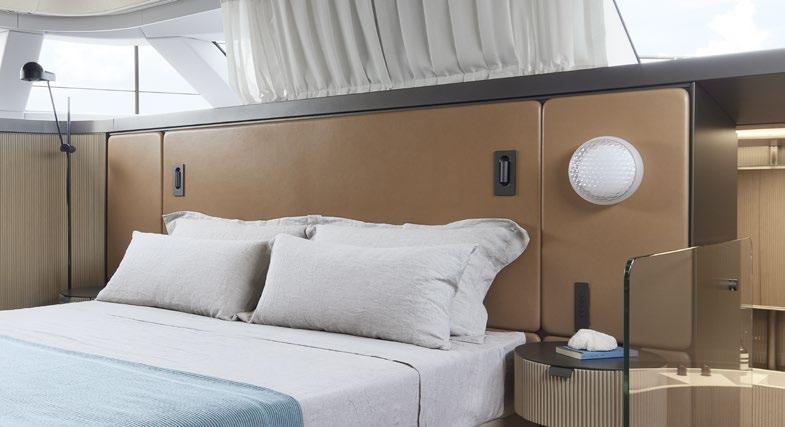
As an option, fabrics made from recycled materials can be chosen for the external furnishings, just as there is the possibility to use Evo leather in the wheelhouse area.
Evo leather is made through a completely ecological tanning thanks to a vegetable concentrate based on an aqueous olive leaf extract as agent (free from metals and any chemically synthetic reactive tanning agents).
For external and internal decks, a sustainable alternative to Burma Teck has been selected after a comprehensive validation test program.





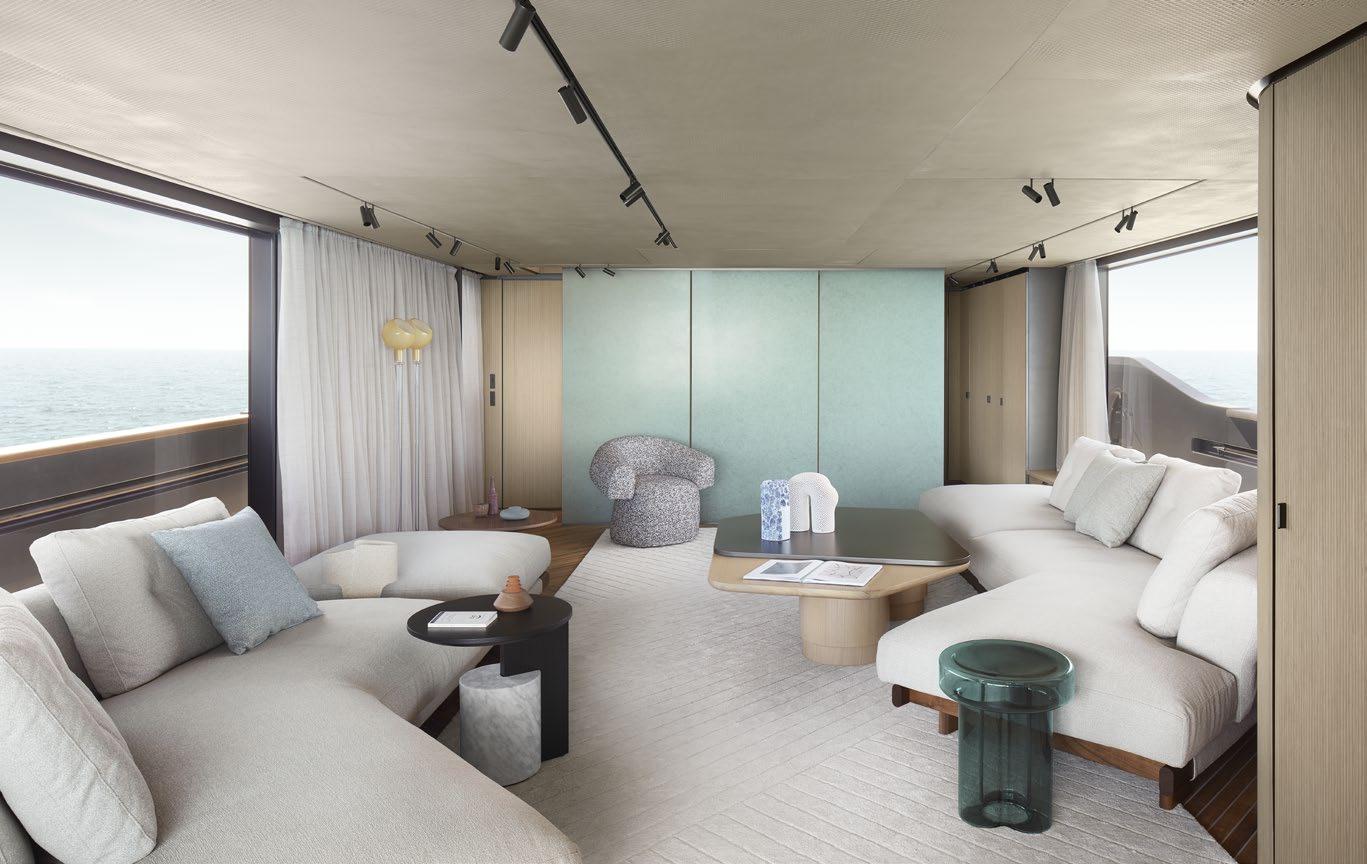
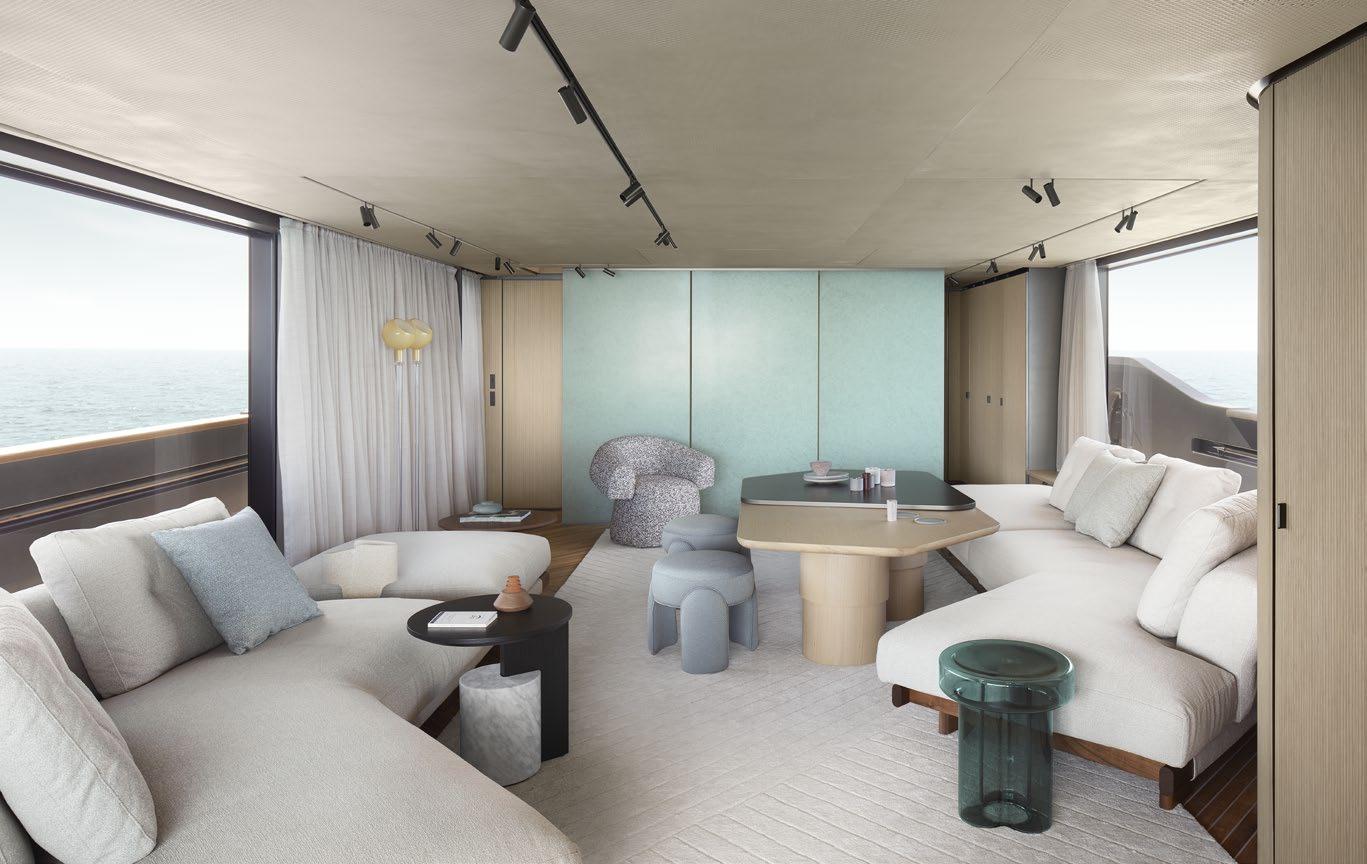
Dining table configuration
VIP/lounge lounge arrangement opt
Length overall
Hull length
Maximum beam
Construction height
Displacement @ half load *
Displacement @ full load
Waterline length @ full load
Draught @ half load
Draught @ full load
Guest accomodation
Crew accomodation
Engine
Power output @ 100% MCR **
Gearbox
Transmission
Propeller Shafts
Gensets
Rudders
Maximum speed (approx) ***
Economical speed (approx) ***
Max range @ economical speed (approx)
Deadrise
A/C power
Fuel capacity
Fresh water capacity
Black & grey water capacity
Tender length
Tender weight
x
x
5 blades NiBrAl "S" class Acquamet 17 or equivalent
1 x 28 kW + 1 x 35 kW
AISI 316 stainless steel a) 14 kn b) 17 kn 10 kn 1200 nm N/A
150000 btu/h
13000 l (tolerance ± 5%)
2000 l (tolerance ± 5%)
1000 l (tolerance ± 5%)
max 4,35 m jet (petrol engine)
max 600 kg
* Displacement data refers to a yacht with standard layout as described in the sales specification
** Main engine performance data and characteristics are derived from the manufacturer’s specification
*** Speed data refer to a yacht with standard layout as described in the sales specification, considering a third of liquid weight, a third of luggage weight (25kg per bed) and 5 crew members (80kg each), and without stabilization system and hardtop.
This brochure shall not be regarded as a contractual offer regarding the sale of yachts from the shipyard to individuals or companies. All the information contained in this brochure, including without limitation any technical or performance data, pictures, and drawings, are mere indications with no contractual value.
This document is based on the information available at the time it is published. In spite of the commitment aimed at guaranteeing maximum possible accuracy, the information contained herein may not cover all the details and any technical-commercial modifications introduced after printing, or may describe features that are not present.