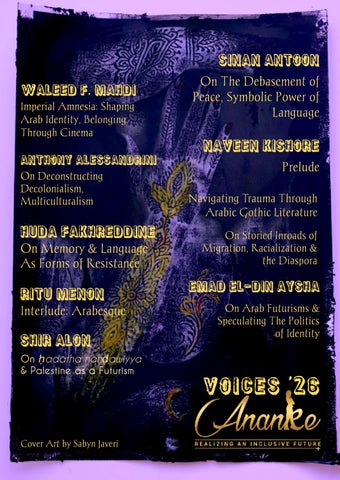
Imperial A mnesia: Shaping A rab Identity, Belonging Through Cinema
Ant hony Al essandr ini
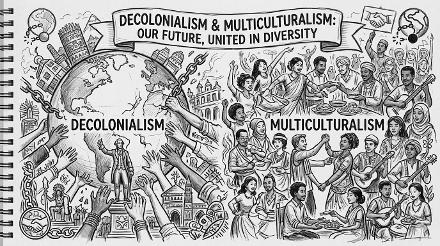
O n D econstructing D ecolonialism, M ulticulturalism
Huda Fakhr eddine
O n M emory & Language
A s Forms of Resistance
Rit u Menon
Interlude: A rabesque
Shir Al on
On ?ad?tha nah?awiyya & Palestine as a Futurism
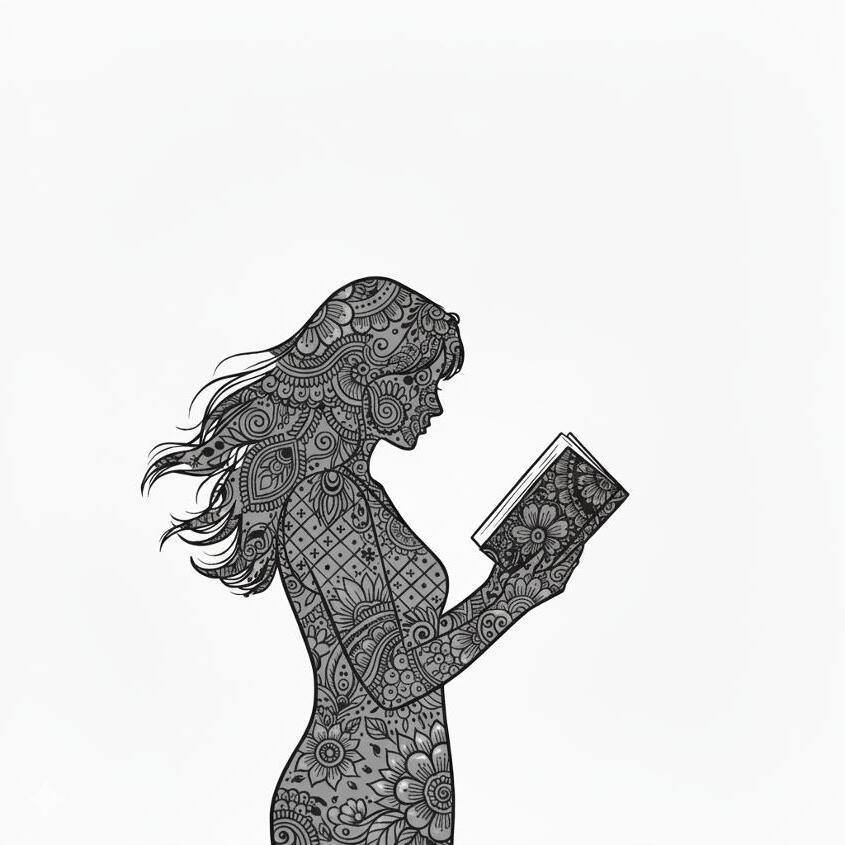
Cover A rt by Sabyn Javeri
Sinan Ant oon
O n The D ebasement of Peace, Symbolic Power of Language
NAv een Kishor e Prelude
N avigating Trauma Through A rabic Gothic Literature
O n Storied Inroads of M igration, Racialization & the D iaspora
Emad El - Din Aysha
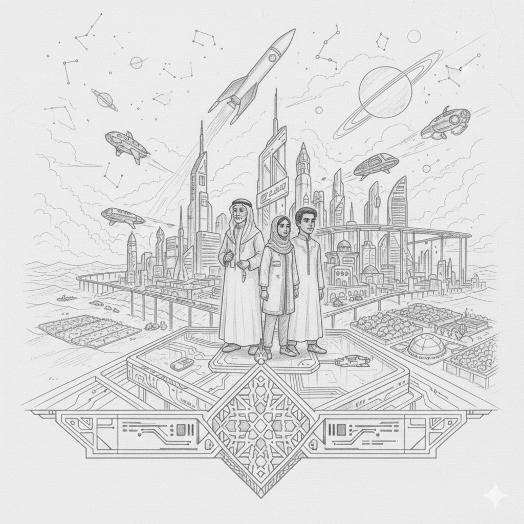
O n A rab Futurisms & Speculating The Politics of Identity
About This Issue
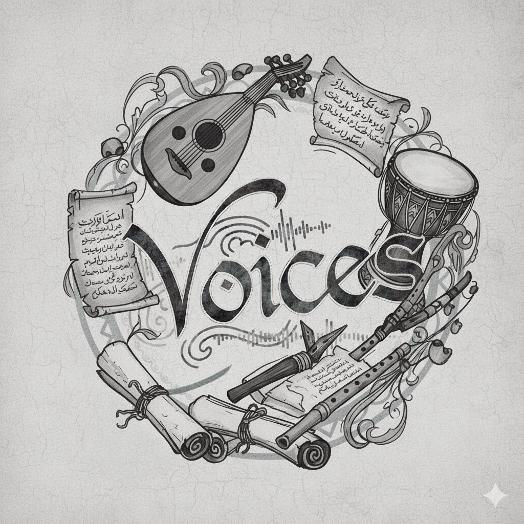
A nanke?s Special Edition: Voices 20 26 aims to put focus on the A rab literary landscape including the diaspora and their footprint in the global publishing eco-system; with a deep dive into the contributions, narratives and impact created by female voices
Countering W estern-centric stereotypes, tropes as well as historical and enduring challenges from patriarchy, lack of autonomy, censorship to conflict and war, women writers have influenced and inspired narratives come what may The journey from the subaltern to the center of literary discourse and production has been as subversive as it has been revolutionary.
This issue aims to celebrate voices, the works and their representations to illuminate the region?s dynamic, diverse and vibrantly complex literary scene
Edited&Designedby Sabin M uzaffar
www.anankemag.com
Socials: @anankemag
Email: media@anankemag.com
What happens when Memory fails in its sworn task to remember? When it no longer feels the marks left behind by the Vast Burning. Nav e e n K i sh o r e
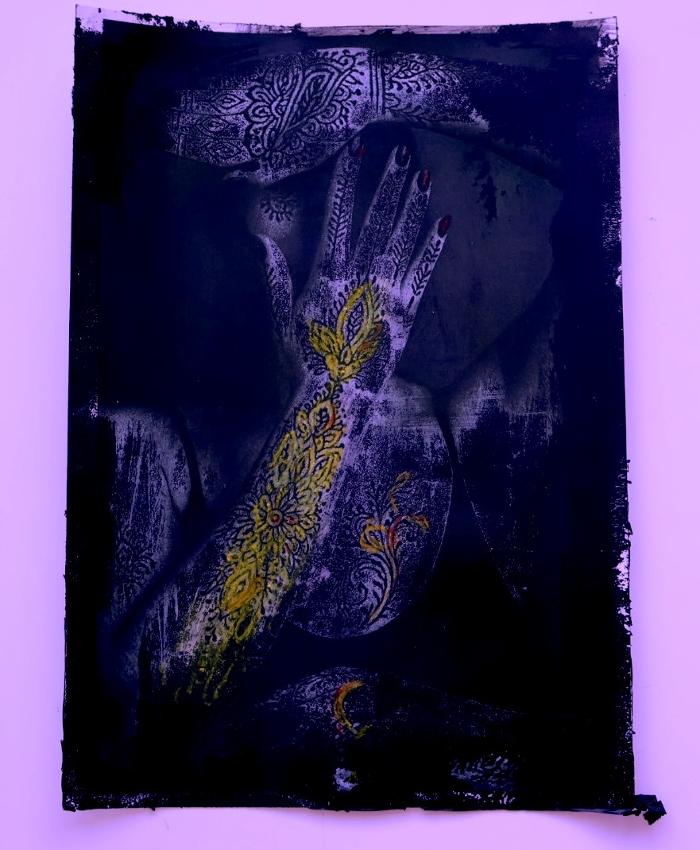
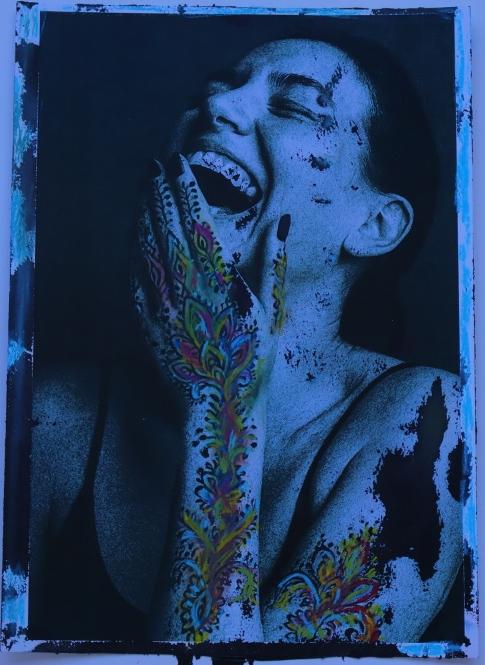
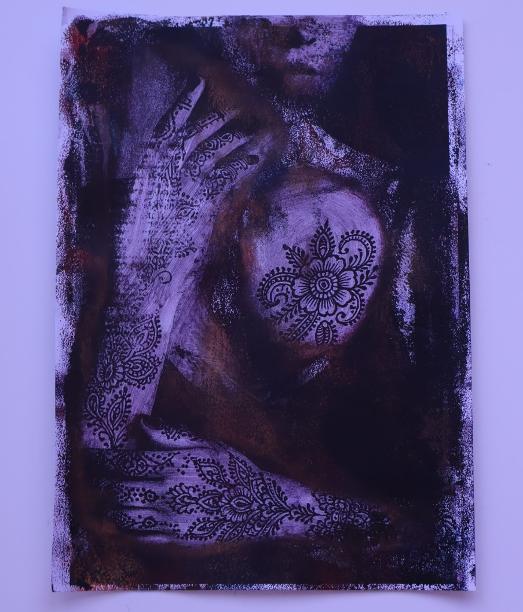
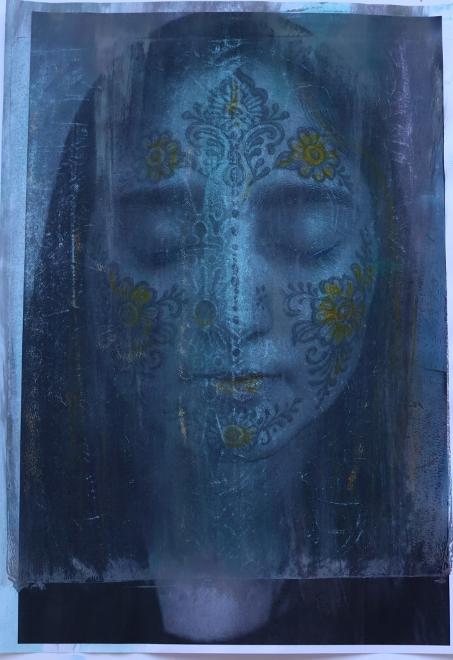
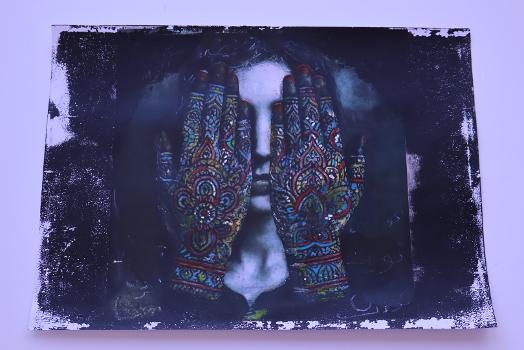
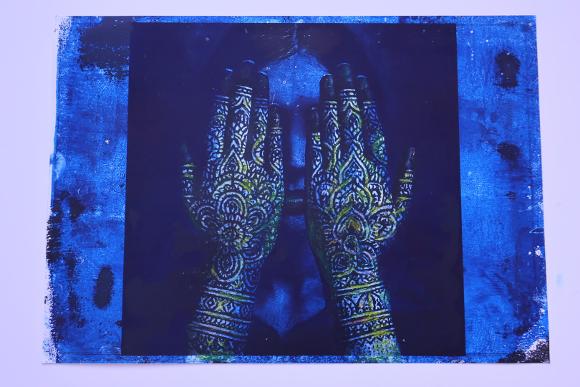
About theCover Art:
The Henna Artist's Tale
The language of henna does not require literacy in Arabic or Urdu or Hindi or Persian or English Its motifs, the paisley,the vine, the geometric lattice, the sunburst, are universally understood
In
theFrame
On the Debasement of Peace, Symbolic Power of Language
Language has always mediated the world and existence for us It has never been neutral. Its symbolic power can always be summoned to dreamof and call for a better world and to save us from the abyss we are falling into.
In
theSpotlight
Unfurling the Contingencies of the Contemporary
The beginning impulse of the founder, Naveen Kishore, was more literary,now transforming more into political Even essential.
Interlude
Palestine has always been a barometer for the world?s moral courage; but today, post October 2023, it has become the gauge for the world?s conscience.
What is survival? What does it mean to continue to exist after everything that defines you, as an individual and as a group, is wiped out? What does it mean to remember and speak in a void?
The decolonization of language involves wresting dominant languages away fromtheir ideological and aesthetic alignments with power
The challenge of imagining decolonized futures has to do with recognizing that the struggle for change will involve transformations in us that we won? t always be able to predict in advance
In theFrame
On Storied Inroads of Migration, Racialization & The Diaspora
In theSpotlight
We?re living in a paradoxical era where information, goods, certain populations can cross borders with unprecedented ease and speed, while increasingly sophisticated mechanisms of mobility control determine who can and cannot move freely
Meditations
On Writing, Breaking Boundaries & Voice
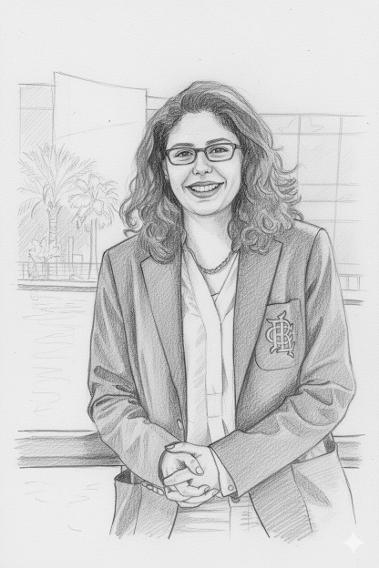
I wrote my creative memoir Head Above Water: Reflections on Illness (2022, NeemTree Press, Feminist Press) to explore what it meant to live with illness as an Arab woman who struggled with definitions of normalcy and very ableist assumptions of femininity
*Including an Excerpt from Confetti & Ashes
Meditations
Navigating Trauma Through Arabic Gothic Literature
I have come to think of Yahya Haqq??s The Lamp of UmmHashem[Qand? l Umm Hashem] and Tayeb Salih?s Season of Migration to the North [Mawsimal-Hijrah ila al-Sham?l] as Arabic Gothic fiction?fiction invested in the tensions between superstition, the supernatural, and modernity as well as fears surrounding authentic Arab identity,hybridity,colonial violence, and moral transgressions
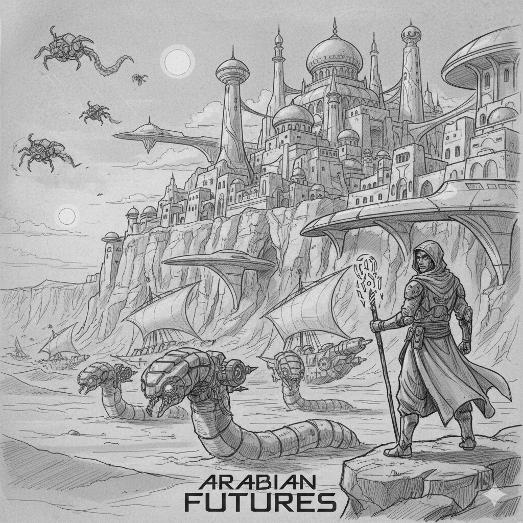
Arab Futurismis a species of non-Western futurismthat sees itself that way,as part of the Global South. Everywhere in the Arab world people, young people, are energetic and agitated and want to leave their mark on things
In Conversation
On Representing the Unrepresentable, Interrogating Power Mechanisms
By blending text and image, the comics mediumoffers a different and engaging way of representing the intensity of lived experiences ? especially when it comes to expressing violence, trauma, and physical and psychological torture
Truth in the Age of Fear
As Orwell predicted, two plus two now equal five and nothing can persuade otherwise The dispersal of truth works to the benefit of power, which, in contrast to truth?s current wishy-washiness, is unequivocal and unapologetic about laying claimto its interests
In Conversation
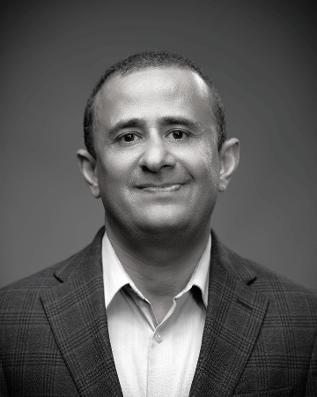
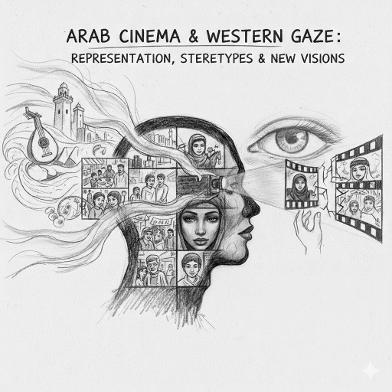
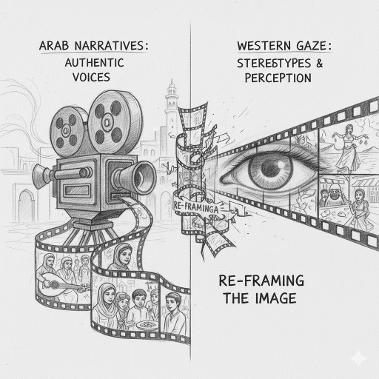
Imperial Amnesia: Shaping Arab Identity, Belonging through Cinema
Meditations
On ?ad?tha nah?awiyya & Palestine as a Futurism
In the Arab world, imperial amnesia appears in the failure of former European colonial powers to reckon with their legacies, and in the ways contemporary forms of political, economic, or military coercion by Western and non?Western powers such as China and Russia are narrated, justified, or selectively forgotten
Revival modernity,Khoury asserts, is experienced as a cultural, social, and political break, for which the solution must be sought from outside by latching oneself to a future that is already known in advance.
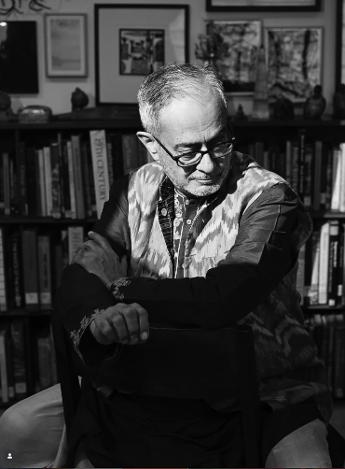
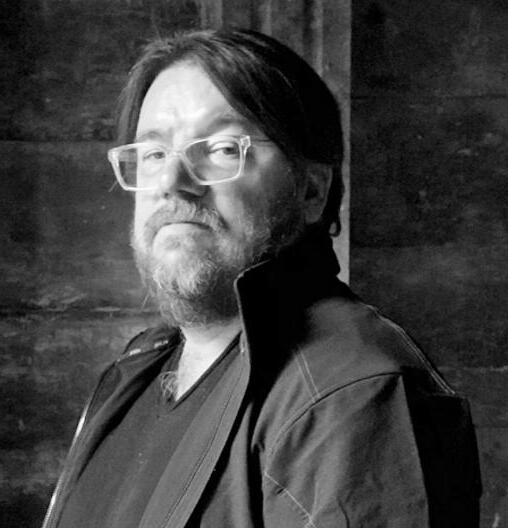
N aveen Kishore is a theater lighting designer, photographer, poet, publisher and founder of Seagull Books which was established in 1982. U nder Kishore?s direction, Seagull has published English translations of more than 50 0 books by major A frican, European, A sian, and Latin A merican writers In 20 0 5, Kishore launched Seagull Books London to reach a wider international readership Six years later, in 20 11, he expanded the organization further, establishing the Seagull School of Publishing with the aim of training the next generation of publishers, editors, and book designers in India For his contribution to publishing, Kishore has been made a Chevalier de l'ordre des A rts et des Lettres (20 14) by the government of France and received the Goethe M edal from the Federal Republic of Germany (20 13) In 20 21, he was recognized by W ords W ithout Borders with the O ttaway A ward for the Promotion of International Literature H e also became the first recipient of Cesare D e M ichelis Prize, awarded by independent Venetian publisher M arsilio Editori?in conjunction with the Ca?Foscari U niversity of Venice for outstanding publishing projects Kishore's works of poetry Knotted Grief and M other M use Q uintet have been published by Speaking Tiger with the former being translated and published in several countries
(Information source: W ords W ithout Borders, W orld Literature Today)
Photo credit: D ebarashi Sarkar
Silence. Language falls silent. The alphabet retreats in no particular order into a ?lackness of light?Give it a name and try again Corner Corners as refuge As shadow As the opposite of light ?Retreats?as in by choice or ?is driven?into a space of utter dark Perhaps both So Language loses its identity It no longer has a presence The meaning is drained out of it The departure of ?sound?The ?audible?of language is choked by this ?new?Absence Absence that disallows articulation Meaning loses out to ?meaning less ness?Abruptly Even with blatant force Force of ?Circumstance?as it un folds An almost immediate ?ab rupture ?A paralysis by choice or by some formof ?command?from?external forcibles?A deportation
Within the silence residesa deeper silence?a thought made audible made borrowing while reading Anne Carson?s Nay Rather on translating that which is untranslatable and other thoughts?One with intent. Equally hidden A place of implied safe ness My use of ?implied?as a word that suggests the tentative The ?almostdoubt?Isany part of our being safe any longer? What if indeed it is A place that is safe. Not compromised. In fact, the opposite. A place of resistance. A hiding place Where language may find refuge A place for recuperation Healing Gathering marshalling one?s defenses Perhaps a springboard fromwhich language has an opportunity to ?bounce back?Regain meaning
Meaninglessness is not the opposite of meaning It isthe ?lack?that swallows light The empowerment of being a ?holder of meaning?is what distinguishes our humanity from other ?ities?Losing language losing voice stripsus of the ?Human?This may be a slow process or one that is accelerated in our world by an act of total destruction by a nation of power towards one without What happens when this enforced ?naked ness? acts as camouflage for a deeper humanity within? What happens to those who through ?grit?and may I dare, ?miracle? , manage to survive the Transport and the Camp?What happensto those who manage to survive the Transport and the Camp? I repeat this for by the time of the Stripping, all faith in the Miracle, has been buried Faith death The Divine that is usually responsible for making miracles happen no longer exists either as or in Belief Grit alone, then A Solitary that survives the Lack We know these Beings that bear their Silences through Agamben?s Auschwitz How will their ?vocabulary,find Voice? Who will translate the voices whose rebirthing is designed for that even deeper silence within?
What happens when Memory fails in its sworn task to remember? When it no longer feels the marks left behind by the Vast Burning. The sensation of being singed by events that defy all that is good in us- NaveenKishore
About t he Cov er ART
The Ar t ist
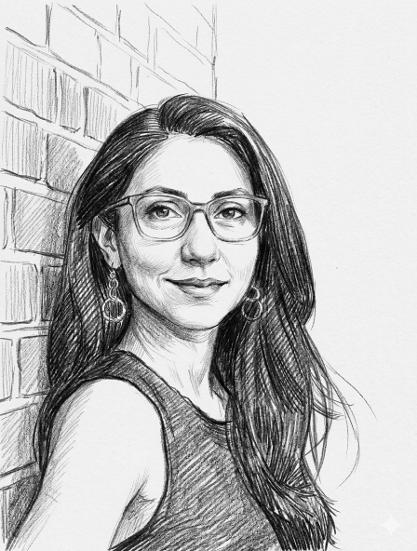
Sabyn Javeri is a writer, translator, scholar and interdisciplinary artist She teaches writing and literature at N YU A bu D habi and Creative W riting at the U niversity of O xford She is the author ofH ijabistanand other works of fiction, has edited feminist anthologies and her work has appeared in international journals and collections H er scholarship spans literary studies, translation and creative practice, with a particular focus on translingualism and the politics of cultural memory D rawing on feminist theory, her research examines how women?s bodies function as sites of archive, inscription and resistance in M uslim-majority contexts. W orking at the intersection of embodied practice and textual production, she explores gendered performance, ritual and movement as forms of knowledge-making beyond the page She is currently developing projects on the regional histories of yoga and its contemporary circulation within Gulf wellness economies, as well as on aesthetic labour and racial capitalism in women?s cultural production in South A sia and the Gulf.
The Pr ocess
M y current interdisciplinary research explores women's bodies as living archives It takes the form of a visual-textual essay because I?ve been thinking about how certain histories cannot be carried by conventional narrative alone. W hen language fractures under the weight of exile, memory, and silence, we need new ways of telling. The work moves between image and text deliberately; the writing is creative rather than academic, and the visual process mirrors the argument I begin by photographing the hennaed body, then transfer the image using a gel plate process onto paper. The transfer is intentionally unstable, the image erodes, fragments, and fails to carry across fully. I then work back into those absences by hand, painting into the gaps rather than restoring the original The process reflects how women?s histories often survive: partially preserved, fractured, and reconstructed through memory and gesture.
TheHennaArtist?sTale
I?mastoryteller,andtellingastorycantake manyforms.Whenwordsarenot enough tocarryahistory,whensyntaxcollapses under theweight of memory,legacy,silence, I turntothebody Toritual Torepetition Tothequiet choreographyof women?s kinship,intimacy,andlaughter.Low voices exchangingqissas,tracingpatternsacross eachother'spalmswithmehendi,oneof the oldest inksusedtotell astory What appears decorativeis,infact,historical.
Let metell youthestoryof henna.
Onwomen?sbodies,hennafunctionsasan archive.It carriesmemorywithout asking permission.It recordslineage,geography, ritual,migration,grief.It stainstemporarily, but whileit remains,it speaksthroughskin Andevenafter it fades,somethinglingersin thefoldsof thehand.
I comefromSouthAsia.I liveinthe Khaleej.Inaregionwherewomen?svoices haveoftenbeen interrupted,legislated, redirected,or softenedintopropriety,the bodyrememberswhat speechcannot convey.Thehennaedpalmbearswitness without testimony
Hennaitself carriesalongandfractured history.Itsplant,Lawsoniainermis,has traveledacrossNorthAfrica,theLevant,the ArabianPeninsula,Persia,andSouthAsia for thousandsof years It predatesmodern nation-states.It predatesour arguments about identity.It cooledthebodyindesert climates,stainedhair andhands,marked ritesof passage,blessedbrides,preparedthe dead Hennaisnot merelyornamental It is an inscriptionwithout literacy.It isaquiet refusal of erasure.Patternspassfromaunt to niece,fromneighbor tobride,without institutional archive,without footnote The knowledgeistactile It survivesingesture Beforepassports,therewerepatterns.
I photographthehennaedbody,first, capturingthesurface.ThenI refusetoleave thephotographintact I transfer it througha gel plateprintingprocessontopaper The imageerodes.It tears.It failstocarryitself fullyacross.Partsdisappear.Facesblur. Lettersfracture
What remainsisnot theoriginal image What remainsisan impression.Andit is withinthat erosion,intheplaceswherethe transfer collapses,that I begintopaint by hand
I donot restorethephotograph.Instead,I work intoitsabsences.
Thisisnot just an artist statement.It isa feminist interventionbecause Hennayieldsitscolor only after beingground against stone, after pressure, after friction, after erasure
Sinan Antoon is a distinguished Iraqi poet, novelist, scholar, and translator whose work captures the complexities of the modern Arab world Raised in Baghdad, he moved to the United States after the 1991 Gulf War, eventually earning a doctorate in Arabic Literature fromHarvard University in 2006.
Antoon is the author of five novels and several poetry collections, including his latest, Postcards fromthe Underworld (2023). His fiction has garnered widespread international acclaim:
- The Corpse Washer:Winner of the 2017 Prix de la Littérature Arabe and the Saif Ghobash Banipal Prize
- The Baghdad Eucharist & The Book of Collateral Damage: Both recognized by the International Prize for Arabic Fiction (the "Arabic Booker").
As a translator, Antoon?s impact is equally profound. His English rendition of Mahmoud Darwish?s In the Presence of Absence won the 2012 National Translation Award, and his translation of IbtisamAzem?s The Book of Disappearance was long-listed for the International Booker Prize 2025
In addition to his literary output, Antoon is a prominent public intellectual. He co-directed the 2004 documentary About Baghdad and is a co-founder and editor of Jadaliyya. His essays and commentary frequently appear in global outlets such as The New York Times,The Guardian, and The Nation
Currently,he serves as an Associate Professor at New York University?s Gallatin School. He can be reached via X (formerly Twitter) at @sinanantoon.
Sinan Ant oon
What istherole,responsibility and impact of awriter?
That would depend on how a writer views the world and how they think of or understand the relationship between writing and the material world Which ideological position they inhabit Writing is an act with consequences What kind of world do our text remember, represent, or imagine? Whose voices and stories do we amplify? Which ones do we un/consciously ignore? Texts employ history and encode truth Truth and beauty
What rolecan translation and languageplay when it comestosubversion:can the translator?svoicechallengeideologiesand dominant narratives? How doworksof translation speak truth topower?
Translation does not take place in an egalitarian world. The borders between languages and cultures (as hard as the latter might be to define) are fluid, but languages don? t interact on equal terms Texts fromthe global south have to cross checkpoints and borders and are subjected to symbolic violence. Sometimes we, translators, thanks to the solidarity and support of sympathetic editors and independent publishers, manage to successfully smuggle texts that challenge ideological assumptions and disrupt reigning narratives. The road is long, but we have to keep keeping on.
How dowriters,poets,translatorschallengeweaponization of languagein thebackdrop of fear,hatred and therefore polarization?
Language has always mediated the world and existence for us. It has never been neutral. Its symbolic power can always be summoned to dreamof and call for a better world and to save us fromthe abyss we are falling into We have to be vigilant and critical and scrutinize the ways in which language is used by those who hold power and who perpetrate violence. The way language was used by those supporting and simultaneously denying the genocide in Gaza is a case in point When legacy media aided the murder of Palestinians There was and is discursive and epistemic violence that must be exposed and condemned. Always.
What ispeace? What is liberty?Istherea distinction?
I?mafraid the word ?peace?has been so debased and disfigures that it has to be flagged. When a war criminal is a member of ?The Peace Board?and I?m speaking of Netanyahu and Trump?s board. When the Nobel prize is given to war criminals. I will answer your question with a question: Peace for whom? For the privileged and for criminals who wear three-piece suits and smile before the cameras after committing crimes or signing collective death certificates for masses of people? That is often what peace means in mainstreamdiscourse. Peace, equality,and justice for all, not for the few And this bears repeating: No justice, no peace
In thebackdrop of hateand fear? which havesadly becomeforces governingtheworld welivein today.Can worksof art,poetry, literaturebethat catalyzingforce that counterspolarization and socio-political dissonancebecause if onelooksclosely ? thecommon thread,acrossnations,isloss,grief and trauma:?theresilienceof the human spirit amidst unimaginable suffering?And thequestion that onearriveson is? istherehope?
Al-Tuhghra?i, a 12th century poet, said:? I console myself with hope and wait for it/How suffocating would life be without it.?There must be hope Yes, works of art can shelter the voices and the agonies of the wounded, but hope needs to be nurtured with action and striving to change the world and fight for justice.
Al - Tuhghr a?i, a 12t h cent ur y poet , said:?I consol e mysel f w it h hope and w ait f or it /How suf f ocat ing w oul d l if e be w it hout it .?Ther e must be hope. Yes, w or ks of ar t can shel t er t he v oices and t he agonies of t he w ounded, but hope needs t o be nur t ur ed w it h act ion and st r iv ing t o change t he w or l d and f ight f or j ust ice.
In oneof your interviews,you remarked:?A worthy literary text ?staysin mourninguntil it is translated?and continuesits afterlifein another language,? Can you expand on that and also,isthisafterlife transcendence?
I was paraphrasing a quote by Walter Benjamin The image struck me when I first read it in Arabic many decades ago A text stays in mourning and waits to be translated into another language. It?s about the potential beauty and generosity of translation and the loss of not being translated There are millions in this world who can only read in their mother tongue and translating a text into a language gives it a new after/life
Can you tell ussomethingabout your latest work? Areyou workingon somethingcurrently?
I recently finished translating my fifth novel fromArabic to English and it is coming out in March (Of Loss and Lavender). It is about two Iraqi refugees fromdifferent classes and generations who leave Iraq to the United States. One is a victimof the brutality of dictatorship in Iraq in the 1990s and upon arriving in the U.Sdecides to sever his bonds with Iraq and pretends to be Puerto Rican. The other left Iraq after the 2003 USoccupation of Iraq and settles in Brooklyn He tries to hold on to his memories, but is struck with dementia
I amcurrently translating selected poems by the Palestinian poet Mahmoud Darwish.
Anythingelseyou would liketoadd?
Thank you for this opportunity "
Language has al w ays mediat ed t he w or l d and exist ence f or us. It has nev er been neut r al . It s symbol ic pow er can al w ays be summoned t o dr eam of and cal l f or a bet t er w or l d and t o sav e us f r om t he abyss w e ar e f al l ing int o.
UnfurlingtheContingenciesof theContemporary
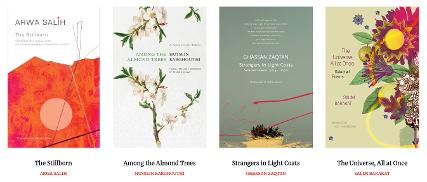
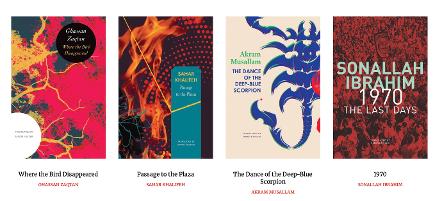
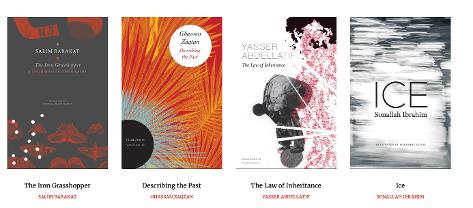
The Ar ab List - Seagul
l Books
Founded in 1982 by Naveen Kishore, Seagull Books began as an independent Indian publishing house dedicated to the arts. Its early catalog focused on serious works regarding theatre, cinema, and visual arts, featuring plays by prominent Indian dramatists, essays from leading artists, and scripts fromiconic filmmakers This foundation in performance and cultural studies established Seagull's reputation for intellectual depth and a commitment to exquisite book design and world-class production standards.
In 2005, the house expanded its horizons through Seagull Books London Limited, transitioning into a global publisher of world literature
in English translation. This shift significantly broadened its scope, incorporating fiction and non-fiction fromacross Africa, Europe, Asia, and Latin America Today,the press boasts a backlist of over 500 titles, spanning a lineage of thought that reaches from20th-century intellectuals like Jean-Paul Sartre and Roland Barthes to contemporary luminaries such as Hélène Cixous, Gayatri Chakravorty Spivak, and Hans Magnus Enzensberger.
Seagull is particularly noted for its "Africa List," which highlights essential voices like Ngugi wa Thiong?o and Maryse Condé, as well as its dedication to bringing lesser-known European authors to the
English-speaking world This editorial bravery has consistently met with international acclaim; the Seagull roster includes Nobel Prize winner Mo Yan and Man Booker International recipient László Krasznahorkai. Notably,following Krasznahorkai?s 2025 Nobel Prize win, Seagull remains the proud publisher of his singular non-fiction work,Destruction and Sorrow Beneath the Heavens
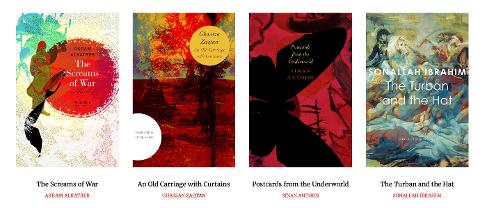
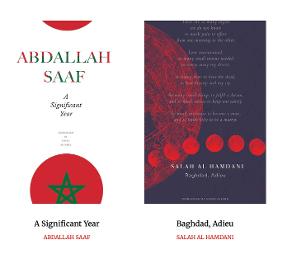
The Arab List serves as a vital gateway for English-language readers, offering an introduction to contemporary voices from across Palestine, Kurdistan, Syria, Iraq, Lebanon, Egypt, and Morocco. Many of these authors are being translated for the first time, including members of the diaspora living in exile or seeking refuge. By spanning genres of fact, fiction, and poetry,the collection aims to stitch together the fragmented religious, ethnic, and secular identities of the modern Arab world
These works prioritize the perspective of the individual?those often silenced or overlooked amidst the chaos of regional conflict. By exploring the complexities of modern life, the Arab List seeks to act as a mirror to our times, providing a profound look at the human experience within the Arabic-speaking world.
One more vital manifestation of publishing, Seagull Books Arab List began as an accident by a scholar colleague of Gayatri Spivak, HosamAbul-ela suggesting an entire list fromthe region on seeing Seagull?s doing Ghasan Zaqtan?s book
In the current circumstances and the way the world is erupting and hurtling down hill the list takes on a significance not imagined The beginning impulse of the founder, Naveen Kishore, was more literary,now transforming more into political Even essential.
Huda Fakhr eddine
O n M e m o r y & L a n g u a g e A s
F o r m s o f R e s i s t a n c e
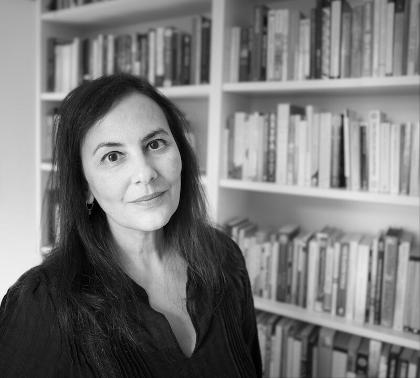
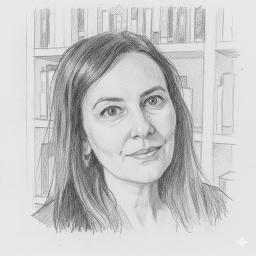
H uda Fakhreddine is a writer, translator, and A ssociate Professor of A rabic Literature at the U niversity of Pennsylvania. H er scholarship explores modernist trends in A rabic poetry and their complex relationship with tradition, specifically how the qa??da serves as a site for negotiating indigenous and foreign influences. She is the author of M etapoesis in the A rabic Tradition (20 15) and The A rabic Prose Poem: Poetic Theory and Practice (20 21), and serves as co-editor of The Routledge H andbook of A rabic Poetry(20 23)
A n accomplished translator, Fakhreddine has co-translated works by Jawdat Fakhreddine and Salim Barakat, with her most recent translations including The U niverse A ll at O nce (20 24) and Lugha Laysat W ahida (20 24). In addition to her creative non-fiction work Zaman Sagh?r Ta?t Shams Th?niya (20 19), she holds several prestigious editorial roles, including co-editor of M iddle Eastern Literatures, editor of the Library of A rabic Literature, and section editor for the Encyclopaedia of Islam.
Doyou think languageand memory aredifferent aspectsof identity? Can they be ethnically cleansed?Can they beformsof subversion?
The one word that comes to mind as I attempt to respond to this question is survival. What is survival? What does it mean to continue to exist after everything that defines you, as an individual and as a group, is wiped out? What does it mean to remember and speak in a void?
Gaza has taught us many lessons as it continues to survive against all odds, at the outer limits of language, at the frontiers of memory Perhaps a word better than subversion is resistance. This is the time to work both memory and language as forms of resistance?and, later, hopefully,as tools to courageously imagine the world anew
I wasreadingyour bioand it said? ?Sheisinterested in theroleof theArabicqa??daasa spacefor negotiatingtheforeign and theindigenous,themodern and thetraditional, and itsrelationship toother poeticformssuch asthefreeversepoem and theprose poem??And thisgot methinking? can weemulatethisnotion tothemad,mad world wearelivingin? Can poetry help usnegotiatetheforeign (otherness)and let us overcomefear? fear of what isnot known tous,what isdifferent? help usfind coherenceand beauty in otherness? And perhapstry tomakesenseof it? try tomake senseof our collectiveand individual humanity? Poetry givesushope? Istherehope, Can therebehope?
Poetry offers us a way to think about the world in ways that by passe the negotiations we are conditioned to accept and adopt in our relationship with truth or beauty but also more importantly with ourselves. But poetry above all resists hackneyed definitions and pontifications like this previous statement of mine. It demands more of itself and us. It perhaps trains us to imagine a world capable of becoming more. Hope and fear are inescapable addictions. Poetry teaches not to compromise despite hope and fear
How can writers,poets,translatorscounter theweaponization of languagein the backdrop of fear and hatred?
With integrity It is ok to be afraid as long as one is not a hypocrite We betray ourselves first when we compromise our integrity. And this moment, the genocide in Gaza, has exposed many of us and shown us our own distortions of expression for the sake of self-preservation on the pettiest of levels When faced with a colossal event that requires our humanity to exercise itself, many of us have failed, failed to exercise their humanity but gained nothing in return.
It is long past time to turn language on itself?to enact, rather than merely theorize, the decolonization and deterritorialization endlessly rehearsed in seminar rooms and relegated to the cramped institutional spaces reserved for ?the others?
Schoolingeven in Eastern societiesconsistsof curriculacontainingtextsfrom English literatureor someother piecesfrom Western literature.From Mahmud Darwish, Dostoevsky,Nawal El Saadawi toNgugi WaThiongo,MahaswetaDevi arenamesonedoesn? t find in academicscenarioseven if therearetranslationsof their worksavailable.Wa Thiongowroteabout how theEnglish languagewasgiven precedenceeven over math in his school ?therulinglanguage.Truetimesarechangingbut doyou feel an overhaul of the academicsystem istheneed of thehour?
You are right to point out that academic institutions or the institutions of academia around the world reflect power. Political, economic, and military hegemony translates into culture dominance We in the ?middle east?are educated through the apparatuses and frameworks of our previous colonizers We grow up learning that a foreign model is the path to education and betterment and that a meaningful relationship without our native languages and traditions is not only unnecessary but might be a liability and weight that holds one back This is why for examples you find generations of young Arab children in the Arab world who don? t speak Arabic We import curricula and methods of education and with themwe import selves and distort ourselves and our children to fit into them But it is useless to talk about overhauling the academic systemnow The genocide in Gaza has left no roomfor reformation All systems are bankrupt and they have all made themselves tools of eradication. How dowegoforward?How dowedecolonizetheeducation system?
Gaza has taught us in the past two years and some of genocide that real education and learning happen outside systems and institutions. The student movement in solidarity with Gaza in the USand around the world allowed a class or two of students a real education. The movement was later squashed and silenced in the vilest and most systematic ways, but still, these students who found the courage to be human beings first and foremost, who found themselves resisting the brainwashing machine when they could see right from wrong with their own eyes, these students owe Gaza their humanity. We can only find a way forward if we can dare to imagine ourselves free.
In an interview you shareyour thoughtsabout theterm MENA (MiddleEast and North Africa)and I am immediately reminded of an interview whereNawal El Saadawi talksabout theterm MiddleEast beingacolonial term that reflectsonly a Eurocentricworld view,definingtheregion relativetoEurope(as"middle"to London),not by itsown identity And perhapsalsotermsliketheGlobal South which can easily beseen asdiscriminatory and ironicsincealmost all thecountries (if not all)stand imperiously becauseof thelivesand blood of thepeoplebelonging totheGlobal South.I would lovetoknow what your thoughtsareon this?What role can translation and languageplay in termsof subversion:can thetranslator?svoice challengeideologiesand dominant narratives?
Activismthrough poetry and its translation is most sincere and most powerful when it commits first to the aesthetic imperative, and only then attends to other purposes and demands Palestinian poetry is not merely poetry for times of crisis I have said this many times before and insist on it
As readers, our responsibility is to hold it to the same aesthetic and poetic standards we apply to all poetry. As readers and translators, our duty is to circulate work that is urgent now and capable of remaining urgent a hundred years fromnow To approach Palestinian literature?or the literature of any oppressed people?solely as an extension or symptomof tragedy is itself another formof injustice: to read it as documentation, as information, or worse still, as a token of sympathy or solidarity,rather than as literature in its fullest and most demanding sense. This is how dominant ideologies and narratives governing the literary traditions of the so-called ?Global South,?the ?Middle East,??MENA,? ?SWANA,?or whatever acronyms are devised to confine cultures to limited and managed categories, are most effectively challenged: by reading these literatures on their own terms.
Tell usabout your latest work? Isthereanythingyou arecurrently workingon?
I amcurrently working on a book tentatively titled:Gaza, Our Oracle Ruin: Arabic Poetry in the Time of Genocide This book project is driven by questions at the very core of our work, not only as scholars of literature but as humanists and human beings: How do we study the poetry of a people as they are being eradicated? What is new and what is old on the timeline of genocide? What is time? And how do we study an entire tradition?here, the Arabic literary tradition?while witnessing the annihilation of its people, their culture, and their memory? Adopting Gaza as a critical lens, a reading tool, a theorizing framework through which we engage in all responsible intellectual work?whether in the humanities or the sciences, this book presents new readings and translations of major stations in the Arabic poetic tradition If we are to safeguard a sliver of dignity and integrity as scholars of Arabic literature, then in this time of genocide, we must be fully committed to the universal human cause of Palestine and its people.
O n the O ptics of Language
What,in your opinion,istheroleand responsibility of thewriter in society, given thecurrent global climate? Doyou believewriters? especially women and subaltern writers? can havean impact?
Writers decide for themselves what kinds of books they want to write and why. Some write to entertain; to formulate a problem; to express political ideas or social aspirations; to experiment with language and form; to share personal stories; or for any number of other reasons. The role of the writer in society is to write what they feel compelled to write, the way they want to Ideally,they should not have to face any restrictions in the process of doing so Unfortunately,we don? t live in an ideal world, and writers face all kinds of obstacles that hinder their efforts to write as they would prefer
I don? t believe the writer has any fixed role to play or overt responsibility to society A writer?s books may illuminate or delight their readers Books can change or expand readers?minds about the world around them. Incidentally,these transformations may turn out to be good for society; but I don? t believe the writer has a given responsibility to society at the outset that they?or their books?must fulfill. I suppose what I?msaying is that a writer?s responsibility is to her writing first, and if fromthat something positive is added to the world, that would be a bonus
Some writing no doubt has an impact, but its effects tend to ripple gradually Which books reverberate socially,culturally,politically,or globally over time depends on many factors, some to do with the quality of the writing itself, others to do with access to global markets. Given that ?global?is a stand in for the Global North, women fromthe Global South, especially subaltern women, may have a harder time generating interest beyond the local or regional If their books get translated to English or if they win an international award, this may attract some ?global?attention, and the ripples may expand On the other hand, and somewhat paradoxically,the book market is more flooded than ever, and for writers to garner attention in this deluge requires endless engagement on social media. I think this has little to do with actual writing and more to do with the image of ?being a writer?It doesn? t do much for the quality of literature or its present and future impact, but it does seemto be where we have arrived, for better or worse.
What roledoeslanguageplay when it comestosubversion in the context of English,asalanguagefreighted with atroubling colonial history,versusArabic,sooften associated in Western media? wrongly,of course? with fear or terror?
As an Arab writer based in the Arab world, who writes in English because it was my first language, this question is something I often consider. As a result of a string of personal and historical accidents, English is my mother tongue The language you are born into, your mother?s first language, often becomes the language you most closely identify with As languages are never neutral, by identifying with English, you end up inadvertently aligned with its cultural values, to say nothing of its social or political ideologies Extricating a colonial language fromthe baggage it is freighted with is a complicated process of demystification for the writer who uses it Anti-colonial and postcolonial writers?including, Amilcar Cabral, Frantz Fanon, Aimé Césaire, Ng?g?wa Thiong?o, Chinua Achebe, Assia Djebar, Edward Said, Homi Bhabha, Gayatri Spivak, among others?have debated the problematics of colonial languages, using the colonial languages themselves (with the exception of Kenyan writer Ng?g? , who chose to abandon English for Gikuyu). In the process, these writers and theorists have laid claimto these colonial languages, which have been a fundamental part of their own histories, and which now belong to them as much as they do to their ?native?users.
To see Arabic as a language of fear and terror is, of course, a completely ridiculous, orientalist, and racist perspective Arabic is a repository of history,literature, culture, and religion for over 400 million people around the globe. It is a rich language with a flexible and inventive grammar and style, which writers and poets fromthe pre-Islamic era onwards have used to create a remarkable literature. Arabic doesn? t need defending.
Part of me wishes I had been born to Arabic, that I could be an Arab writer writing in Arabic: no conflict, easy access to an audience, smooth sailing. Writing in English in an Arabic-speaking region is a struggle I would not have voluntarily chosen for myself. Your audience is restricted; you are beholden to publishing in the USor UK, where interest in Arab writers who are not British or American citizens is limited. But given that English is my first language?and a language I love?I don? t have a choice
Another part of me?the writing part?is grateful English is mine.
How dowedecolonizelanguage?
The decolonization of language involves wresting dominant languages away fromtheir ideological and aesthetic alignments with power Using dominant languages to counter dominant assumptions, conventions, and formulations is one way writers like Edward Said, among other postcolonial theorists, have decolonized Euro-American cultural and political discourses around power and representation.
Creative writers and poets likewise decolonize dominant languages by way of content or form: by challenging colonial or neocolonial expectations, undermining arbitrary limits, and subverting the kinds of judgements that have kept themand their work locked out of the mainstream(read: Western) social and cultural domains As writers decolonize language, social, cultural, and, eventually,political parameters begin to shift This transformation occurs incrementally,but one has only to think of the effect Said?s work has had, way beyond academia, over the course of the last half century to know that it can and does happen. Consider, also, how Rushdie?s experimental explosion of English busted open the gates for postcolonial writers and to the new perspectives, experiences, and stylistics such writers expressed, challenging the dominant imperial order The process of decolonizing language is ongoing, and each generation of writers pushes the limits in their own ways, given the exigencies of their particular contexts
How can writers,poets,and translatorscounter the weaponization of languageagainst thebackdrop of fear and hatred?
The detrimental effects of fear on writing should not be underestimated To write against power, injustice, and the weaponization of language requires courage But in the context of real threats to life, liberty,and family,such courage can quickly drain away. Not every writer will want to risk life and limb?and especially not the lives and limbs of their loved ones?to stand against power and hatred. This is understandable and poses a serious dilemma for writers, especially those who care about freedom.
But writers have always managed to snake around such obstacles by adopting masks, by using their artful skills to hold fast to their ethical positions while maintaining security for themselves and those closest to them. Writers across time and place have used satire, allegory,irony, humor, and other literary devices to evade persecution while sneaking through their critiques of those in power After the initial paralysis induced by fear, most determined writers will find their way forward, doing what they must in the best way they know how. They will walk a tight rope, being true to themselves, even as they mitigate potential threats. Sometimes they will succeed. Other times they will fail, with dire outcomes. Writing always involves risk. Writers decide for themselves how much of it they can tolerate. It?s a shame when these risks are taken beyond the aesthetic into the political realm, as they are today in almost every part of the world.
Tell usabout your latest work? Isthereanything
workingon?
I recently completed a short book called The Age of Despair: Menopause in Fragments, an experimental project that meditates on my recent experience. Menopause is having a moment as Gen X women are going through it, but most of what we see and read is froma Western perspective In the Arab world, menopause is called sin al-y?iss, the age of despair, and I wanted to articulate the experience of menopause from a point of view which takes that into consideration. I?mhoping it will resonate with women fromthis part of the world and beyond, whose experiences don? t necessarily align with the overly confident, affirming images currently saturating the media. Sometimes despair is necessary, even healing.
Over the course of the last few years, I?ve been writing a work of auto-fiction. The process hasn? t been easy,but the risks it has involved?personal and aesthetic?have been immensely gratifying. I?min the thick of the editing process now
Any last words?
Like many,I?ve been pondering the role of AI in creative production, specifically when it comes to literature What makes any sort of art extraordinary is the human component; take that away and you end up with mere content that sells. The specificity of a particular writer?s location, background, the materiality of their history,the accidents of their experience, their special quirks?in short, all the aspects that make them them?fromout of this swirl emerges writing only they could have written Only Rushdie could have written Midnight?sChildren; only Conrad,The Heart of Darkness; only Roy,The God of Small Things. We sense this when we read great literature: writing like a fingerprint, an unforgettable personal style. In contrast, AI?a consolidation and regurgitation of everything that?s already out there?tends to flatten singularity and, by extension, the originality of writing. Under its influence, everything?from popular music and literature to streamed films and television shows?tends toward a boring, redundant sameness
To me, one of the most valuable characteristics of literature?writing it and reading it?is the slowness it necessitates. Writing and reading take time, and the time demanded runs counter to the speed of living in the digital world. AI is characterized by speed, easy and immediate information, not always accurate, at your fingertips Quality literature?and I name quality here though it may ring elitist to some ears, which it shouldn? t because without a degree of discernment, writing is no more than indistinguishable
content?operates on a human scale. It allows for unpopular experiments, pushing limits, even failure, all of which take time. The best literature is often out of joint with its own time (think of the unpublished Kafka), and may only begin to resonate decades after the death of the author in question. The infiltration of AI into the process of writing literature will make it even more difficult for quality literature to surface It may result in slick and rapid output, but it won? t add much, if anything, to the centuries-old reciprocal relationship between literature and humanity. What the attenuation of this vital relationship will mean, we shall see
Questions by Sabin Muzaffar
A r a b
Palestine has always been a barometer for the world?s moral courage; but today,post October 2023, it has become the gauge for the world?s conscience Those who acknowledge the current moral void, as well as those who either deny or rationalise it, unwittingly indicate that Palestine, tragically but uniquely,offers the only possibility for redemption in the world now
In 2010, when I visited Palestine to attend the amazing Palestine Festival of Literature I was struck by yet another aspect of that society?s special difference: its capacity for compassion and humour and civility in the face of daily,relentless oppression; its creativity as a response to decades of Occupation; and, above all, its grace under pressure.
One writer after another at the Festival, demonstrated a remarkably astute and realistic assessment of their situation, and then, an extraordinary skill in communicating it in all its contradictions and
e s q u e
complexities, through prose, poetry,fiction, essay, photographs, films, art, memoir, reportage? An outpouring of creativity born of both struggle and resistance
The poet Najwan Darwish, writes:
Once I tried to sit
On one of the vacant seatsof hope
But the word ?reserved?
Wassquatting there like a hyena.
This is what the writer and human rights lawyer, Raja Shehadeh, says about what it means to imagine a land as ancient as Palestine, without check-posts and high walls and electrified fences:
I lifted my eyes and beheld the wonderful valley created aeons ago as it stretches far and long, north to Lebanon and south to the Red Sea and into Africa, utterly oblivious of the man-made borders that come and go
And Suad Amiry,whose Sharon and My Mother-in-law exposed
the hypocrisy and absurdity and illegality of Israel?s Occupation through wry,witty,irreverent spoofs of the establishment said, ?Ritu, the Israelis they say peace, peace, peace, but what they mean is land, land, land.?
We published three books by Suad over the fifteen years that we have been publishing Arabic writers in a series called Arabesque, that we started after I returned from Palestine in 2010 It seemed only fitting to do so Not only because it was an act of solidarity with the country and its people and their resistance, but also because of the exceptional quality of the writing I read and heard as Palfest travelled fromJerusalemto Nablus, Bethlehem, Hebron and Ramallah.
Then, too, the Indian subcontinent has very old and historic links with the whole of West Asia, fromthe time of the Roman Empire. Trade between India and Europe transitted through the Gulf of Oman on its way to Rome, stopping for close to three months in the Arab peninsula during the monsoons. Merchants continued to travel east fromthe Levant, many choosing to stay for long periods on the west coast of India.
Yet, we remain ignorant of much of the literature produced in Arabic, primarily because it is not available in English translations for a contemporary reader in India The trickle that finds its way to us comes via the West and carries the
imprint of the West?s choices. So, we decided to not only publish whatever we could fromArabic, either in translation or in original English, but also to invite as many writers fromWest Asia as we could to India, and introduce readers here to themand to the richness of their work.
We invited two or three at a time, to begin with?Suad Amiry and Ahdaf Soueif (the Egyptian writer and brilliant organiser of PalFest) and Radwa Ashour, also Egyptian; followed by the Lebanese writer, Hoda Barakat; the Iraqi Haifa Zangana; and Jean Said Mekdashi, sister of Edward Said Needless to say,we also published themall, either singly,or in anthologies For the first time, as far as I?maware, books by Palestinians published in India were sent directly to Jerusalem, to the Educational Book Store, a relationships with themthat has endured?only to be disrupted by Israel?s brutal war on Gaza and, by extension, on the West Bank. Mahmoud Muna of the Educational Bookshop was in India in 2016, together with twelve other Palestinian writers, many of whom we had published in an anthology:Seeking Palestine: New Palestinian Writing on Exile and Home, edited by Penny Johnson & Raja Shehadeh. We called our Colloquium?Palestine in India? , with the Palestinian writers in dialogue with writers and publishers from
India. We don? t often think about how much Indian solidarity with the Palestinian cause means to them, at least until recently,when this current government went into a clinch with the Israeli state The Colloquium was a truly memorable event Mourid and Tamim?s recital of their poems was powerful and brilliant; Susie Abulhawa and Sharif Elmusa were eloquent on exile and memory; Mahmoud Muna also of the Educational Bookshop in Jerusalemspoke about how to run a bookshop that is relevant in a divided city; and Michel Moushabeck, publisher of the only Palestinian press in the U.S., set out the challenges of publishing on Palestine in that country. We launched Suad?s new book,Golda Slept Hereon the last evening; as always she was funny and sharp and politically on target, as she described the take-over of historic Palestine by the Israelis.
Speaking of solidarity,one of the most heartening consequences of Israel?s war against Gaza has been the formation of writers?groups and the coming together of independent publishers across the world, who have taken up Palestine?s cause and remained vocal and consistent in their protest. Publishers4Palestine, a group of close to 400 independent publishers, has steadfastly refused to participate in the Frankfurt Book Fair, in protest against the Fair?s silencing of Palestinian voices and
its support of Israel. WAWOG, Writers Against the War On Gaza, similarly campaigns on behalf of Palestinian writers, disseminates information regarding writers under siege in Gaza, and puts out reports and news that is ignored by mainstreammedia everywhere P4P regularly posts Palestine Book Week, during which participating publishers make books by Palestinians published by them available online, for free, during the week
At our colloquium, Mourid Barghouti, the acclaimed author of the poignant memoir,I Saw Ramallah about his exile from Palestine, recited fromhis poem which ended thus:
I rubbed the leaf of the orange in my hands
AsI had been told to do So that I could smell itsscent
But before my hand could reach my nose
I had lost my home and become a refugee
His son, Tamim, a gifted and reputed poet himself, recited his eloquent long poem?Jerusalem? , with which I end this brief account:
. . . In Jerusalemthe crescent moon curlstight asa foetus curving over itslikenesseson the domes;
over the yearsthey?ve become father and sons.
In Jerusalemthere are buildings whose stonesare quoted fromBible and Quran In Jerusalembeauty isoctagonal and blue, above it, gentle listener,a golden dome that looks, I think, like a convex mirror containing ? look? the sky; playing with it, pulling it close, distributing it ? like aid in a siege ? to the deserving asand when a people after the Friday sermon stretch out their hands, and in Jerusalemthe sky gives herself out among the people protecting and protected; for we would carry her on our shoulders if time were harsh to her moons. . .
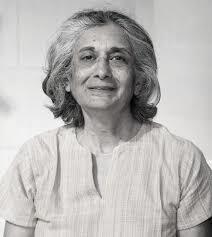
Ritu Menon isafeminist publisher and writer,whoco-founded India?s first feminist press,Kali for Women, in 1984,and set up Women Unlimited (an associateof KfW)in 2003 Shehas been activein thewomen?smovement in Indiaand South Asiafor closeto40 years,and isan activemember of the Paris-based International Allianceof Independent Publishers.
Sheistheauthor of thecritically acclaimed Bordersand Boundaries: Women in India?sPartition;of several edited and co-edited books;and of two widely read biographies:Out of Line:a literary & political biography of Nayantara Sahgal;and ZOHRA! A Biography in Four ActsHer most recent publication is:Indiaon Their Minds:8 Women,8 Ideasof India
Shewasawarded thePadmaShri in 2011
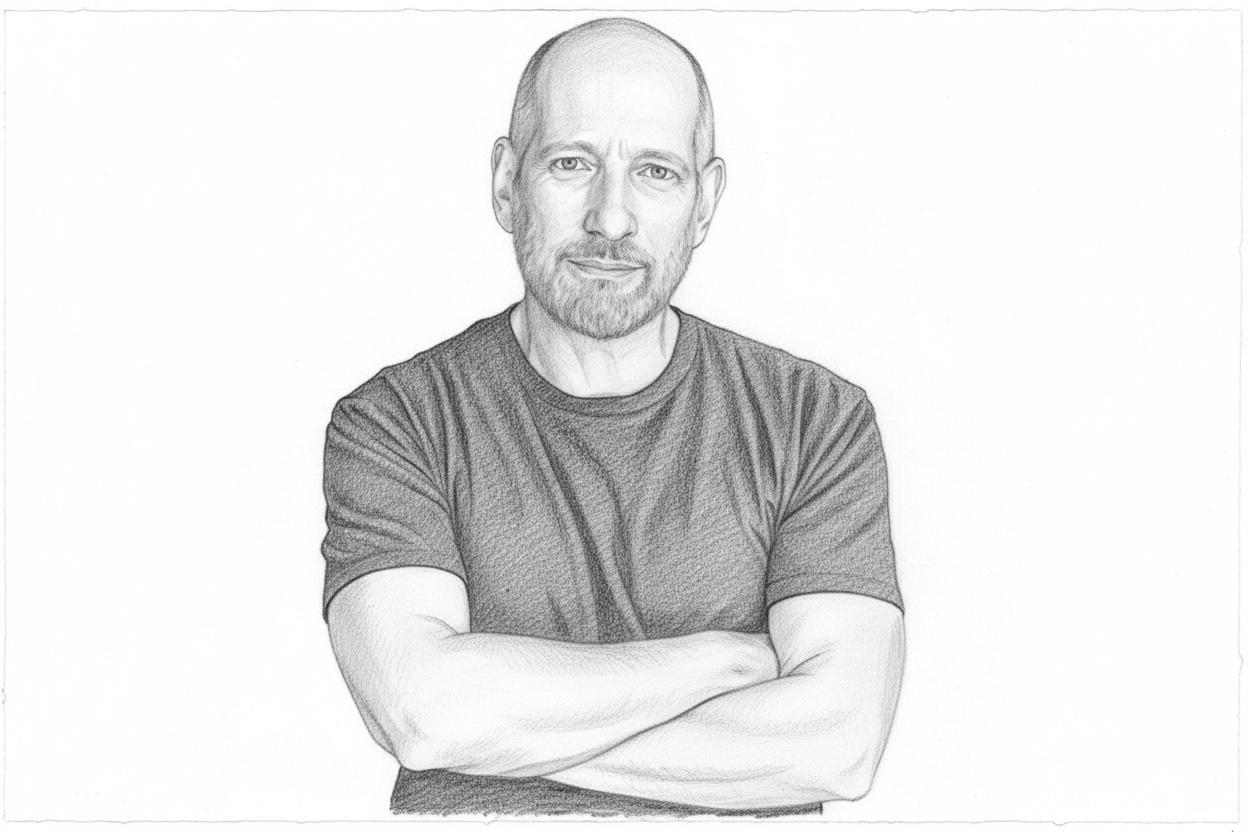
A nthony A lessandrini teaches English at Kingsborough Community College in Brooklyn and M iddle Eastern Studies at the CU N Y Graduate Center, where he is also a member of the Committee on Globalization and Social Change H e is the author of D ecolonize M ulticulturalism and of Frantz Fanon and the Future of Cultural Politics; the editor of Frantz Fanon: Critical Perspectives; and the co-editor of?Resistance Everywhere?: The Gezi Protests and D issident V isions of Turkey. H e has also published a poetry chapbook,Children Imitating Cormorants H e is a Co-Editor of Jadaliyya E-Zine, is on the faculty of the Brooklyn Institute for Social Research, is a co-convener of the International Solidarity A ction Research N etwork, serves as chair of his union?s A cademic Freedom Committee, and is a proud member of CU N Y Faculty and Staff for Justice in Palestine.
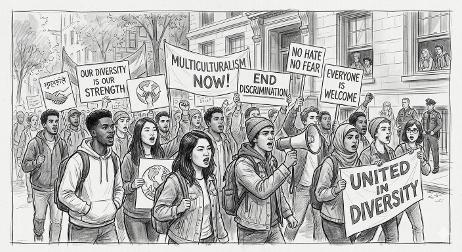
I think your book isessential readingespecially now morethan ever I understand it istoovast asubject but can you explain what decolonizingmulticulturalism is? in thecontext of aglobalized and polarized world welivein today,what it meansespecially when there isan onslaught on subversiveactsin ?say universities?
Thanks for this question! I should maybe say first that I was fortunate to get to write this book for a larger series under the title ?Decolonize That! Handbooks for the Revolutionary Overthrow of Embedded Colonial Ideas,?edited by Bhakti Shringarpure, who now curates the essential Radical Books Collective There?s something tongue-in-cheek about the phrase ?decolonize that!?and one of the goals of the series as a whole is to be approachable for a wide audience and to make some arguments in a manner that allows for more humor than typical academic approaches (which, I have to say,was a real challenge!). The series is also designed to address how the word ?decolonize? has become commodified--think of all the t-shirt slogans like ?decolonize your bookshelf.?But at the same time, the subtitle insists that you can use a humorous approach for work that?s deadly serious, even revolutionary I should probably add that I wrote the book mostly in 2020 and 2021; in today?s context, and especially in the wake of the ongoing US-Israeli genocide, I?m not sure that I would be able to write it, or really anything, using that same tone. A more recent article of mine that was published online by Radical Teacher last year tries to bring some of the arguments I made in the book up to date.
"The short answer to your question is that the multiculturalismthat exists in universities and other institutions today--what I call institutional multiculturalism--is designed to uphold neoliberalismand is actively complicit in colonialism, including the ongoing genocide So the book isn? t an attempt to defend actually-existing multiculturalism(even though, when things like university DEI programs are subject to attacks, we do sometimes find ourselves in the position of defending themwhile also knowing how insufficient they are) But I argue that even the tamest forms of institutional multiculturalismon campuses today only exist due to radical struggles by social movements, particularly student movements that actively allied themselves with the decolonization movements of the 1960s and 1970s. In other words, institutional multiculturalismas we experience it today is the product of two opposing forces: on the one hand, radical student movements, particularly those struggling against racism, settler colonialism, capitalism, patriarchy,and imperialism; on the other hand, the counterinsurgent strategies forged by the state, corporations, and university administrators, which aimed, and still aim, to neutralize the transformative power of these movements. The struggle between those counterforces continues today
Your point about the onslaught on universities, and in particular on their ?subversive? activities, has everything to do with the beautiful and brave resurgence of student
movements in the past decade (although I should add that student movements never went away--they were always fighting, but rarely as visibly as they are today) Here in the U.S., student movements demanding an end to their universities?complicity with genocide and scholasticide in Gaza, getting cops off campus, and more generally fighting for universities to be sites of radical democracy and agents of social justice rather than bastions of capitalismand settler colonialismhave transformed the political landscape in the couple of years since I wrote Decolonize Multiculturalism In turn, these student movements have forced the hand of those who
practice institutional multiculturalism, which has always had an implicit violence at its heart However, the preferred institutional practice has tended to be more like a velvet glove over an iron fist: the goal of many DEI programs (often in spite of the well-intentioned people who work in them) is a sort of performative anti-racismthat (as we see when we follow the history back to the 1960s) is designed to try to offer a palliative to the truly radical demands made by student movements. In other words, DEI has most often been a sort of sham?decolonization?offered by the leaders of universities and other institutions in response to the demand to actually,materially decolonize the university
We?veseen,far toomany university administratorshave been willingtoenforcetheir institutions?complicity with genocidein themost brutal manner,callingthecopson their studentswhen they should bethankingthem for tryingtoget their universitiestodowhat they should be doingright now:facingthismoment of history and standingon thesideof justice.
One of the bitterest ironies is that the Trump Administration is now literally weaponizing civil rights laws?--laws that members of the Civil Rights Movement fought and died for--as a tool to repress students and educators organizing in solidarity with Palestine Title VI laws are being used to repress students and university workers who are fighting against apartheid and genocide--that?s where we are today But it?s not enough to blame Trump, since we would never have reached this point if institutional multiculturalismhadn? t paved the way (in this sense, the Obama and Biden administrations were just as complicit as Trump). And as we?ve seen, far too many university administrators have been willing to enforce their institutions?complicity with genocide in the most brutal manner, calling the cops on their students when they should be thanking themfor trying to get their universities to do what they should be doing right now: facing this moment of history and standing on the side of justice
It seemsthat thepowersthat behavealready created pathwaystoa world of hyper-fascism,with violenceand actsof aggression with impunity deemed toolsof ?liberation?.In such ascenario,doyou think radical transformation can exist? arise? Can anew being(new man? woman)beborn? arise?If globalization isaform of colonization,can onereally imaginepost-colonial futures,in thebackdrop of historical and cultural trauma,based on decolonized humanism? (thinkingout loud here? if weperceivetheterm humanism asaword coined by whitepeopleor thecolonizers).
These are enormous questions and I won? t even pretend that I can begin to answer themadequately! But I? ll try to say a few things that might be of some use. On this, as with so much else, I?ve been deeply influenced by the work of Frantz Fanon--both his writing and his revolutionary life My reading of Fanon is that what he means by ?decolonization?(especially in his final work, Les damnés de la terre) is something that comes after, and is a horizon beyond, what we?ve learned to call the ?post-colonial? : that is, forms of political independence (generally without economic autonomy) for formerly colonized states The whole second half of that book is in essence a prediction, looking ahead to a situation that is still fundamentally determined by the terms of colonialismeven in ?post-colonial?states It?s typical of Fanon?s dialectical analysis: he simultaneously gives us the bad news by accurately predicting how what he calls the ?national bourgeoisie?will be the inheritors of these neocolonial states--he?s very clear on that point--while also giving us the tools to continue the struggle to overcome this state of affairs. In some ways, what I try to write about in Decolonize Multi-culturalismis one very small slice of this larger reality: the sort of shamdecolonization presented by institutional multiculturalismin universities and other institutions that have faced movements aimed at truly decolonizing them, versus the continuing work of decolonization yet to come.
Of course, even that limited sense of our current world as ?post-colonial?in terms of basic political independence hasn? t actually come to pass: Palestine and Kashmir are the most obvious examples where settler colonialismin its most violent formis still rampant So I?mnot saying that there?s anything like a true state of ?post-colonialism,?or even neocolonialism. But even if we were to reach that point, Fanon teaches us that this is a very different state of affairs fromwhat he wants us to think about as the horizon of decolonization, a true formof liberation
"Last year marked the centenary of Fanon?s birth, and it strikes me as both tragic and hopeful that his work remains so relevant today: tragic because we remain so far fromdecolonization and there is still so much work to be done and so much struggle to come; but also hopeful because the legacy of resistance that is also his gift to us remains so strong today
I used to think a lot about ?humanism?in large terms and wrote in my first book about the ways that Fanon and Edward Said and others engaged with the term?s colonial legacy without giving up on the idea of fighting to create a decolonized formof humanism. These days, I tend to think about it in more practical terms, for example the ways that engaging in the day-to-day struggles needed to maintain a political imaginary aimed towards decolonized futures changes those who are engaged in that struggle--in transforming the world (or fighting to do so), we are in turn transformed, in ways that can? t always be imagined or understood in advance For me, the termsolidarity encapsulates that process, although that?s a termthat has also become cheapened and commodified in an era of clicking and sharing But true solidarity has always been about giving oneself over to forms of struggle--including struggles that might not be easily identifiable as one?s ?own?struggles--and remaining open to being changed through a commitment to those struggles.
"I?ve been sitting for a long time with a phrase fromthe opening pages of Les damnés de la terre?I write about this in the first chapter of Decolonize Multiculturalism--where Fanon writes, in one of the knotty,epigrammatic sentences that recur throughout the book: ?At a descriptive level, therefore, any decolonization is a success.?I think there?s a reading of that line?one that I respect and one that?s there in Fanon?that reads this as a statement of bitter irony,marking the danger that decolonization would succeed only at the descriptive level, not in any practical or material way That sense is there and remains a warning throughout Fanon?s work, but I think that sentence also contains a more straightforward meaning that isn? t meant to be ironic: to define the struggle in terms of decolonization, in its truest terms, and to remain true to that description, is to define a horizon that will not allow for anything short of liberation One needs to remain true to that definition and keep struggling towards it, however, and that?s the challenge Fanon continues to present us today
One more Fanonian point: there?s a stunning moment, towards the middle of Les damnés de la terre, where Fanon begins to mark a turning point in the decolonization struggle, when members of the native bourgeoisie make common cause with the colonizer in order to consolidate power for themselves; but, at the same time, there are also those among the colonizers who betray (in the best sense) their given identity in order to join the fight for decolonization. Fanon writes (and here he is indeed being deeply ironic): ?It was all once so simple, with the bad on one side and the good on the other.?It feels like there?s a continuing lesson here: there is always the need to take sides for there to be any sort of meaningful political struggle, but those ?sides?should never be understood as determining the world once and for all, especially when they are linked with identities The other side of Fanon?s bitter lesson--the betrayal of the decolonization struggle by the national bourgeoisie--is the transformation enacted in the course of the struggle itself Fanon writes: ?The species is splitting up before their very eyes? .The scandal really erupts when pioneers of the species change sides, go ?native,?and volunteer to undergo suffering, torture, and death.?For me, moving through the world marked by a set of identities that carry very material privileges (whiteness in particular), one of Fanon?s lessons here finds an echo in Noel Ignatiev?s resounding phrase: treason to whiteness is loyalty to humanity
"So to sumup in response to your original question: I guess the challenge of imagining decolonized futures has to do with recognizing that the struggle for change will involve transformations in us that we won? t always be able to predict in advance I don? t know what that says about the larger theoretical questions about the status of humanism, but it maybe gives us some clue to developing the new forms of political imaginaries needed to help maintain that struggle for the future.
What and how isthe?thelarger potential found in imaginativewritingto help effect transformationsin thepostcolonial political situations"weface today?
Yeah, this is something I?ve been thinking a lot about recently I?mworking on a book now which is primarily about reading Palestinian poetry,particularly poetry by writers fromGaza (including those who have been murdered by Israel), in the wake of the ongoing genocide I?mtrained mostly as a literary and cultural critic, and while my writing and teaching has wandered into all sorts of other disciplines, that?s what I keep coming back to So I?ve been sitting for a very long time with the question of what contributions literary criticismcan make to political liberation It?s obviously not a simple question! I was very inspired by an article that Steven Salaita wrote back in 2024, which asks the question very directly: ?What can a literary critic and college instructor do to help defeat genocide??At the time, I had pretty much stopped writing; partly because I was trying to give as much time as I could to political organizing, but also because it felt that nothing I had to say in the wake of the ongoing genocide in Gaza was really meaningful or necessary.
Salaita?s article, and his willingness to ask very directly whether those of us who teach and write about literature have any contribution to make, therefore touched me really deeply (and was what got me writing again) While he acknowledges that the most obvious answer to his question is ?nothing,?he also challenges us to reverse the proposition, and think about how intellectual work contributes to inequality,?how academic work can be put into the service of genocide ?So that?s one part of the answer: undoing the way that our institutions work, and for those of us who inhabit universities, using both our work and our capacity as organizers (academics tend to be lousy organizers in general, but I?ve learned a tremendous amount fromworking with a few who are terrific at it, especially as part of CUNY?s Faculty and Staff for Justice in Palestine chapter) to insistently oppose our institutions?ongoing complicity with genocide.
It feelslikethere?sacontinuinglesson
here:thereis alwaystheneed totakesidesfor theretobeany sort of meaningful political struggle,but those?sides?should never beunderstood asdeterminingtheworld onceand for all,especially when they arelinked with identities.
But that doesn? t really get at your question of the transformative power of imaginative writing, so I was also very moved by Salaita?s challenge to ?conceptualize the scope and purpose of literary criticism?in a way that better serves liberation. Doing this reminds us of many things. For one thing, there?s the legacy of resistance literature, which has existed everywhere and at every time throughout history It also puts us in touch with the rich lineage of literary critics who see their work as contributing to the project of resistance literature--the termitself is used by Ghassan Kanafani in his book Palestinian Resistance Literature Under Occupation, 1948-1968 (an English translation will be published later this year), and picked up by Barbara Harlow in her own book of the same name. That longer legacy of what we might callresistance criticismincludes Fanon (who is constantly drawing fromliterary texts in his work) and Edward Said and Ng?g?wa Thiong?o and continues today in the work of people like Huda Fakhreddine and Anna Bernard and Jeff Sacks and so many others When I think about my own work as a critic, I think of it as trying to make a small contribution to this larger ongoing project of cultural resistance
I?ve been reading a wonderful new book, Rayya El Zein?s Filling the Head: Listening to Rap in Arabic, where she makes this argument that really complicates and enriches how we ordinarily think about culture and resistance. Against simplified understandings of rap in Arabic as a formof straightforward resistance, she writes about the work of experimental rappers and the forms of listening to their music that her interlocutors keep referring to as ?filling my head.? She reads out of this a particular formof yearning, an ongoing dialogue with listeners that includes the kinds of affect that we ordinarily associate with resistance--anger and outrage--but also responses like disgust and surprise That yearning that El Zein points towards is also a formof political agency,a yearning for ?being hailed otherwise,?oriented towards other political futures that are not yet materialized but that can be imagined. Her book has really helped me to think in a more nuanced way about what we even mean by cultural resistance
One thing I?ve been thinking and writing about for a long time is the political importance of engaging with imaginative writing not just at the level of content, but also at the level of form. Attending to the formof a poem, for example, can stretch the way you see the world. There was a pretty fascinating recent study conducted by Italian researchers froman ?ethical AI?company that was meant to test the ?guardrails?put on artificial intelligence models--how to prevent themfromtelling users how to harmthemselves or others, for example, or keep themfromproducing explicit hate speech. One of the discoveries was that if they wrote a prompt in the formof a poem, it was enough to bypass the guardrails even when the poems contained harmful content. That?s one more lesson in how frightening AI is! But it also suggests something about the nature of poetic form, how it reaches us in ways that other writing and speech doesn?t, how it is able to tell us things differently I?m increasingly interested in what might be called the vatic quality of poetry,the way it suggests things about or points us towards different futures If that?s a kind of work that a poemcan do, then maybe the responsibility of the critic is to work on the work that the poemdoes in the world, to take up some of the imaginative openings that a poemcreates, expand upon themand make them general
It might sound like I?mromanticizing! but I think a little bit of romanticizing in the work of creating revolutionary political imaginaries is never a bad thing In more concrete terms, the book I?m trying to write starts fromthe role of the critic reading Palestinian poetry in a time of genocide Among other things, that means coming to terms with the fact that it would be possible to fill a large anthology with poems published by writers fromGaza during the ongoing genocide--many of themnow available in English translation or originally written in English--even as the genocide continues I?m trying to find a way to be true to the urgency of that task, and the responsibility it entails. Huda Fakhreddine?s ongoing writing about her own work as a critic and translator has been a really precious resource; more recently,Rawad Wehbe?s article?The End of Palestine in English?has offered an important set of cautions about the tendency, among Anglophone readers, to demand that poetry by Palestinian writers (especially writers fromGaza) play an essentially reportorial role--poetry as a formof commentary--rather than paying the necessary attention to its formal qualities, which among other things
link it to the long Arabic poetic tradition (this is a point that Fakhreddine has made as well) ?If our poets are only allowed to speak when they are being massacred,? Wehbe writes, ?then there never really was an interest in their art to begin with.?
Isthefutureworth fightingfor?
Always. I recently had the opportunity to hear my friend and colleague Rania Jawad, who teaches at Birzeit University in Palestine, speak as part of an event on ?Educational Freedomin Palestine.?She talked about the role of education in creating and embodying liberatory futures, and the forces that were bent on trying to destroy, not just the Palestinian educational systemthrough the ongoing U.S.-funded Israeli scholasticide, but also to destroy the very idea of the future She described billboards put up near the university by Israeli settler groups that declared, in Arabic, ?There is no future in Palestine?(accompanied by scenes of destruction fromthe ongoing genocide in Gaza) This shows the viciousness and inhumanity of what we?re up against, the forces that would not just defend but actively celebrate genocide
But colonialism hasalwaysused thisasoneof its weapons--theattempt toimposetheideathat it representstheonly future,that thereisnoalternative. Fanon called thisthe?three-dimensional violence?of colonialism--in addition totheeveryday violencethat is constitutiveof lifeunder colonialism,thereisalso violenceagainst thepast (attemptingtodestroy any tracesof thehistory of thecolonized beforethearrival of thecolonizers)and violenceagainst thefuture (attemptingtoassert that thereisnoalternativetothe colonizer).
But colonialismhas always used this as one of its weapons--the attempt to impose the idea that it represents the only future, that there is no alternative. Fanon called this the ?three-dimensional violence?of colonialism--in addition to the everyday violence that is constitutive of life under colonialism, there is also violence against the past (attempting to destroy any traces of the history of the colonized before the arrival of the colonizers) and violence against the future (attempting to assert that there is no alternative to the colonizer). We see all three of these today in the Zionist settler-colonial project in Palestine (funded and enabled at every step by the United States). But we are also watching that project unraveling I agree with Nasser Abourahme: that project is already finished, a ?future-past,?as he puts it, in the face of Palestinian refusal to disappear That?s what Rania Jawad was also talking about, especially when she talked about her students who continue coming to class each day in defiance of the many,many forms of violence ranged against them: education as both articulating but also creating the liberated future. That?s what we need to keep fighting for, every day
Anythingnew you areworkingon? Or somethingyou find most memorable,subversive?
Maybe I? ll end by mentioning another ongoing project, which is a book on community education, more specifically,about my experience teaching primarily at a community college in Brooklyn for the past two decades. In the US, two-year colleges, which were once referred to as ?junior colleges,?are now most commonly called community colleges. In the popular imagination, they are often looked down upon (although in fact, the majority of students in the U.S. attend or have attended community college students); they are perpetually underfunded and underappreciated and have been the object of countless schemes by government and corporate forces that want to impose neoliberal blueprints on them. One point of origin for the book came fromreading Raymond Williams?definition of ?community?in Keywords, where he says, in essence, that of all the terms used to describe group belonging, ?community?is the only one always used in a positive manner. And I thought, in the US context, there?s one exception to that rule: when you put the word ?community?in front of the word ?college,?the general effect is of something viewed negatively For anyone who believes in the long tradition of community education, that?s a huge problem, and shows us the terrain on which we need to fight to reclaimtrue community education So that, plus my rich experience of teaching at a community college, is what got me going. As always, I take my inspiration, as so many have and do, fromstudents, and in particular fromstudent movements I think that all we can do is to try to keep up with them!
It isnot enough tohateandbelieveinthepast tomakearevolution.
O n Storied Inroads of M igration, Racialization & the D iaspora
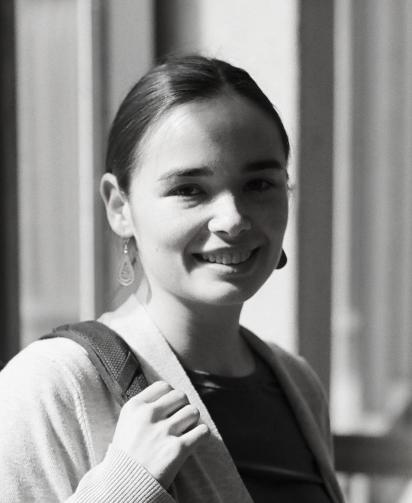
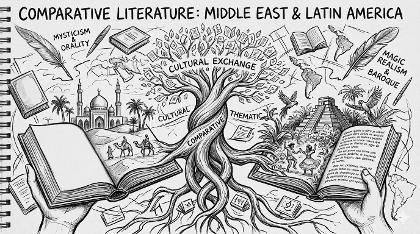
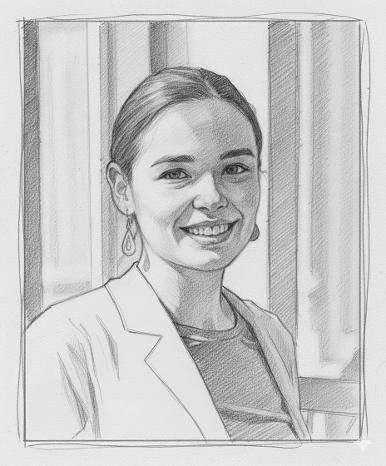
Phoebe Carter joined Kenyon College?s Department of Modern Languages and Literatures faculty in 2024, following the completion of her PhD in Comparative Literature As a scholar and educator, her expertise spans modern Arabic literature, literary and cultural theory,and translation studies. Her academic work is particularly focused on the literature of migration and the historical cultural intersections between the Middle East and Latin America Her current research projectsdelve into the artistic and intellectual responsesof the early Arab transatlantic diaspora. Specifically,she examineshow writersactive between the 1860sand 1930s addressed the historiesof conquest and enslavement within the Americas.
In addition to her scholarly pursuits, Dr. Carter is an active translator of poetry and prose fromboth Arabic and Spanish. Her published contributions to the field include translations of works by Argentine poet Laura Yasan and Syrian poet Rasha Omran Notably,she also translated the Moroccan novelKafka in Tangier, bringing diverse international voices to a broader English-speaking audience
Let?sstart at thebeginning.Your research includesavery interesting notion of theconnection between theMiddleEast and Latin America? amongother areasof interest ?can you tell usabout it?
Sure! My interest in the connection between the Middle East and Latin America started when I was a junior in college, studying abroad in Quito, Ecuador I kept being surprised by how much Lebanese presence I saw there. The first thing I noticed was the restaurants ? I remember one called Fairuz that I used to pass every day ? and I soon learned that two of the country?s former presidents were of Lebanese descent My great grandparents had emigrated fromLebanon to Lowell, Massachusetts, so I?d always been interested in their story but hadn?t, until that point, learned much about the larger history of migration that their story fit into. I was studying Latin American literature in school, and also taking Arabic classes, so realizing that there was this whole history of Arab migration and cultural production in Latin America became a way to bring those interests together. I went on to do a PhD in Comparative Literature, so I approach this history through the lens of literature I?mreally interested in how literature has reflected experiences of migration and travel and cross-cultural encounter, and also how literature itself is a mediumof connection between these two regions.
In your opinion how dowritersand artistsnow translatemigration when compared with theinitial transatlanticmigration especially in thecontext of colonialism,neo-colonialism aswell asliteratureof colonialism?
That?s an interesting question The theme of migration has been really present in Arabic literature since the turn of the twentieth century,when Arabic-speaking people fromgreater Syria (then part of the Ottoman Empire, now modern-day Syria, Lebanon, Palestine, and Jordan), started migrating in large numbers to North and South America, as well as to West Africa and elsewhere And it remains a prevalent theme today Something interesting that has emerged in contemporary Arabic and Anglophone Arab literature recently is a returning, via historical fiction and other forms of storytelling, to this earlier period migration. I?m thinking, for example of Rabee Jaber?s novel Am?rka, which tells the story of a woman who comes to Ellis Island via steamship and eventually ends up in California Or Dima Alzayat?sAlligator and Other Stories,which interrogates the politics of Arab racialization and state violence in the JimCrow South through the incorporation of fiction and archival materials Or Omar Effendum?s musical production Little Syria, which draws on the hakawati tradition to tell the story of New York?s first Syrian neighborhood in Manhattan
Thethemeof migration hasbeen really present in Arabicliteraturesincetheturn of thetwentieth century,when Arabic-speakingpeoplefrom greater Syria(then part of theOttoman Empire, now modern-day Syria,Lebanon,Palestine,and Jordan),started migratingin largenumbersto North and South America,aswell astoWest Africaand elsewhere.And it remainsaprevalent themetoday.
We?ve seen, since the turn of this century,the United States develop new forms of global carceral regimes and mobility restriction. We?re living in a paradoxical era where information, goods, certain populations can cross borders with unprecedented ease and speed, while increasingly sophisticated mechanisms of mobility control determine who can and cannot move freely. Within this context, contemporary writers and artists are excavating an earlier period when many aspects of the current forms of racialization, mobility control and migration policy were first emerging?things like the invention of the modern passport and border control apparatus, and the institution of immigration policies differentiated by ethnicity,race, and religion. By recovering how an earlier generation in transit navigated these systems, these stories of migration and diaspora becomes a powerful means for reflecting on the present.
"
How doesmodern Arabicliterature,arisingfrom within theregion as well asthediaspora,iterateculture?doyou feel thereareany differences?
I love this idea of literature ?iterating culture,?that it carries cultural elements forward while also modifying them, reworking and evolving themwith each iteration It?s such a lovely and succinct way of expressing the relationship between literature and culture ? that literature reflects the world around it (in more or less direct ways) while also acting upon the world.
As for how Arabic literature arising fromwithin the region versus fromthe diaspora iterates culture differently? I think it becomes increasingly difficult to draw a clear distinction between the two, if we ever could I do think there are different kinds of considerations about audience and publication if you?re writing, for example, in English for an American audience ? where an Arab American writer will likely be located within the ?ethnic literature?market ? or for, say,an Arabic publishing house in Cairo. That said, there are so many books where I wouldn? t quite know which camp to place themin?books whose authors live lives spanning multiple continents and languages, books written in Arabic in the Midwest USand published in Cairo, books written in Cairo in English and published in Minnesota, books written in Arabic in Belgiumand published in Germany? And then there are the books who find their main audience in translation, and some which may have been written fromthe beginning with an eye towards translation, or books that are informed by a literary tradition other than the language they are writing in.
I hope this doesn? t come off as me skirting the question (which maybe it sort of is, since I don? t feel like I?ve read widely enough to confidently make any generalizations on this point!), but I do also think it?s interesting and worthwhile to think about how such concepts as ?diaspora?and ?national literature?break down when we start to poke at them
Your published worksincludepoetry translationsof worksby Argentinepoet
LauraYasan and Syrian poet RashaOmran,did you find any strainsof similarities between thetwoin termsof thecountriesthey represent?
Oh, I?mso glad you asked this question! Yasan and Omran?s poetry resonate in such interesting ways They belong to the same generation, both born in the early ?60s, and they both lived alone in major metropolises for much of their adult lives?a parallel that surfaces in their poetry. In both of their work, their cities ? Buenos Aires for Yasan and Cairo for Omran, where she?s lived in exile since 2012 ? play an important role, as do the experiences of living alone and growing older there. Yasan has this incredible book calledla llave marilyn (which I translate as the marilyn hold,since the termin the title refers to a choke hold in wrestling). Taken together, the poems in the collection tell the story of a woman trying, repeatedly,to call a suicide hotline, and not being able to get through. The poetic ?I?keeps thinking of Marilyn Monroe, who died clutching the telephone Marilyn becomes this present-absent figure for the poetic ?I?in her attempts to establish a connection
Omran?s poetry likewise often dialogues with a present absence, or an absent presence She has one collection called A Secret Wife of Absence, and another called The One Who Dwelt in the House Before Me, which I absolutely adore, and which records the traces of her apartment?s former tenant Omran described to me once how, before she knew anything about who this previous tenant was, she kept finding little signs of her presence ? like how she?d removed the peephole fromthe door so that it was just a hole someone could look both in as well as out ? and Omran sensed that this other tenant must also have been a woman who lived there alone, like her, away fromher family and her country As she puts it in one of her poems (in a translation by AbdelrehimYoussef, KimEchlin, and Monica Pereschi):
If I had dwelt inthehousebefore I wouldhavedonethesame I wouldhaverippedout thepeephole soanyonecould lookthrough thedoor tosee my isolation
And indeed, she eventually learns that the woman who dwelt in the house before her was a Greek woman who lived there alone, like her, in exile
Both Yasan and Omran have a talent for infusing the everyday and the domestic ? sweeping the floor, playing hide and seek with your cat, waiting on hold, eating straight fromthe pot because you live alone so why not? ? with a sense of strangeness and haunting But it?s not a malevolent haunting, it?s more an openness to or an awareness of the fact that the spaces we inhabit and the quotidian motions we go through are not ours alone ? we share themwith those who have come before us.
A last word on this question ? we lost Laura Yasan in 2021, which is an immense loss to the world, to poetry,and of the way she brought poetry into the world through her community initiatives. I never met her in person, but we spoke several times over the phone as I was translating marilyn hold. Translating someone?s work is an incredibly intimate act?you are taking someone else?s words and making themyour own, or making them speak through you, and their voice comes to inhabit your own voice So, I suppose what I?mtrying to say is that Laura is my present-absence And I hope people will continue to read her poetry so that she can accompany themas well.
Doyou think readerscan discover their own identity through what isconsidered aforeign language?
Absolutely. There are two different ways I can answer that question: as a translator and as a language teacher As a translator, I am, as you might imagine, a huge proponent for reading literature in translation ? something that I think Americans, in particular, tend to shy away from But having spent most of my life reading, studying, and translating literature not written in English (my first language), I can say that so much of the literature that has most spoken to me ? that has given me that flash of recognition of someone else having finally put into words something I?d felt but never quite had the words for ? was written in a language other than my own. (If you? ll permit me to keep giving reading recommendations, one writer in particular who has resonated with me in this way is Iman Mersal. I recommend everything she?s written, but perhaps most pertinent to this question is her Traces of Enayat,which is about the forgotten Egyptian novelist Enayat al-Zayyat, and Mersal?s own quest to recover the story of a writer who had profoundly influenced her but whose story had been essentially erased from Egyptian literary history)
And as a lifelong student of languages, and now an Arabic professor, I also believe really strongly in the value of learning other languages, not only because it allows you to connect with people and cultures beyond your own language community (though this is probably still the best reason), but also because learning another language provides a different vantage point on your own. Stepping out of your own language allows you to see what is unique and strange about the language you grew up with?what are its particular affordances and what are its limits? What cultural assumptions are embedded in that language?
Areyou workingon somethingcurrently and what worksdo you consider memorable?
In my current research, I?mlooking at writings by Ottoman Arab travelers in the Americas in the late 19th and early 20th century It?s really fascinating to see what they made of places like Mexico, Brazil, Canada and the US at a period when the western hemisphere was still very much a ?new world? froman Ottoman perspective Unlike Europe and Asia, the Americas were not such a well-known entity for the majority of people living in the late Ottoman Empire What has particularly caught my interest in the materials I?ve read (which include travelogues, diaries, newspaper articles, and letters) is how Arabs who traveled to various parts of North and South America reacted to the settler colonial foundations of these ?post-colonial? nations, and the sometimes surprising comparisons they drew to their own experiences in Ottoman regions, which were increasingly facing British and French colonial incursions
therewasan Egyptian princenamed Muhammad Ali Tewfik whotraveled through North Americaby train in 1912 Hekept adaily travel journal of his three-month trip and hehasalot tosay about Native Americansand First Nations? both thestructural oppression they liveunder and their resiliencein the faceof acolonial system that isactively tryingto stamp out their traditionsand languages.And this really resonateswith him asan Egyptian strivingto preserveArab and Islamicculturein thefaceof European imperialism
To give just one example: there was an Egyptian prince named Muhammad Ali Tewfik who traveled through North America by train in 1912 He kept a daily travel journal of his three-month trip and he has a lot to say about Native Americans and First Nations?both the structural oppression they live under and their resilience in the face of a colonial systemthat is actively trying to stamp out their traditions and languages And this really resonates with himas an Egyptian striving to preserve Arab and Islamic culture in the face of European imperialism At the same time, this cross-cultural recognition is complicated by a lot of racialized assumptions about ?civilization?and ?progress,?and he sometimes seems to use Indigenous Americans as a foil against which to demonstrate Egyptians?relative modernity This tension ? between recognition and antagonismacross colonial contexts ? I?ve observed repeatedly in Ottoman Arab accounts of the Americas, and it?s something that I take seriously in my research. I want to leave roomfor the ambivalence and contradiction that often arises in encounters across lines of cultural and linguistic difference Most such encounters are not straightforward instances of what we call ?global South solidarity,?but they?re also not purely antagonistic They?re usually a complicated tangle of recognition and othering, of identification and difference
Anythingyou wish toadd?
Thank you so much for this opportunity to share a bit about my work, and for shining a spotlight on the creative, exciting work that is happening in Arabic literature! Also -- read poetry in translation!
Translation of the Moroccan novel Kafka in Tanger: https://www.barnesandnoble.com/w/kafka-in-tangier-mohammed-said-hjiouij/1143170732
Nawal El Saadawi
Emad El - Din Aysha
O n A rab Futurisms & Speculating The
Politics of Identity
Emad El-Din Aysha is an academic researcher, freelance journalist and translator and sci-fi author, currently residing in Cairo, Egypt He is a British citizen originally,born in the UK in 1974 to a Palestinian father and Egyptian mother He attained his PhD in International Studies at the University of Sheffield in 2001, and has been teaching at English-language institutions in Egypt from2001 to 2015 His interests include science fiction, history,and movie reviewing, and to date he has one published SF anthology (in Arabic) and one English non-fiction work ?Arab and MuslimScience Fiction: Critical Essays(McFarland, 2022). He is a member of both the Egyptian Society for Science Fiction and Egyptian Writers?Union, and was especially proud to represent Egypt, Africa and Arabic speculative fiction at WorldCon 2023, held in China He also promotes Egyptian authors through interviews and translating their works and has contributed to Palestinian SFF .
What aresomeof theinfluencesonecan find in theMiddle Eastern speculativefiction genre?
Oh, two sets of influences primarily,I?d say,taking Egypt as a test case The first is our fantasy and folklore tradition, everything fromThe 1001 Nights to Al-Sira al-Hilaliya ;there?s also Quranic stories with the moral lesson Most of our science fiction, not coincidentally,is borderline with fantasy and myth. Our sci-fi authors love Western fantasy traditions, old and new, whether fairytales or Tolkien, and also Ursula Le Guin, and incorporate it in new and original ways into their works. It feels second nature to themgiven their own Arabic folklore and fantasy borrowings Jinn pop up frequently, whether from1001 Nights or the Quran and are treated as just as real as electrons or viruses or black holes!
The second set of influences comes frompulp fiction, whether Ahmed Khaled Tawfik, Nabil Farouk and Raouf Wasfi (pocketbook novellas in sci-fi, the paranormal and action-adventure stories) or pulp sci-fi from the West, including authors like Michael Moorcock. There?s cheesiness but also action and adventure and morality plays I?ma native speaker of English, born in the UK, so I?ma bit too high brow for my own good, beginning with hard sci-fi (Arthur C Clarke and Isaac Asimov) and social science SF (John Brunner).
How would you analyzethechallengesof aneo-colonial,hyper-fascist, polarized societieswhen it comestotheArab diaspora,migration, gender and religion?
Through cyberpunk! No, literally. There are Palestinian authors, living abroad, who?ve developed their own brand of Arabic cyberpunk ? female authors talking about family,a prominent woman in position of power, honour, preserving the memory of Palestine, etc (See Nadia Afifi) I also know a Lebanese cyberpunk author (without naming names) who deals directly with non-binary issues and transexuality and rejection
There?s also epic fantasy,also helmed by women authors (e g Asmaa Khadry) They?re much better at it than us guys and they have female protagonists with great depth and talk about victimization of women and use magic, and honourable men, as a way out. I?ve discerned a similar pattern with authors, from Iran, also living abroad (See Elise Stephens, Palestinian American, and Armina Salemi, an Iranian in Canada).
Epic fantasy married with space opera is another avenue for woman authors, here in Egypt, splicing it with multicultural themes and cosmopolitanism; like Rasha El Saady and Abeer Abdel Galil Ibrahim. Humans intermarrying with alien races and having mixed religion families!
What isidentity especially in theworld welivein?
Egypt is a very unique country when it comes to science fiction, fantasy and literature and social drama in general. Egyptians are obsessed with national unity, and that includes Muslims and Christians under a single banner but also ancient Egypt with Islamic civilization and identity. Author after author in Egyptian sci-fi history,fromthe very beginning, have been reviving or resurrecting ancient Egyptian civilization in their writings, having chariots-of-the-gods types scenarios or ancient Egypt still existing in a parallel dimension or the ancient Egyptians being so advanced they went into outer space and colonized the stars!
Identity for our speculative fiction writers is polyglot It?s Arab-Islamic, but also very local and particularlistic with ancient Egypt as the big umbrella ? civilization, science, law, philosophy and also monotheism? while very aware of our Third World credentials or Global South identity. India, and increasingly China, have always been our symbols of civilization from Islamic history and pop up in our speculative fiction too As guides and exemplars.
Can and how doesspeculativefiction help navigatethepolitics of identity asareader aswell asawriter?
It makes you proud of yourself and gives you confidence you can build a better future for yourself based on your values, religion and history We no longer have to blindly emulate Western models, while still learning fromthe Other; and that includes learning fromthe East too Upgrading the past We?re very into retro-futurism, exemplified by steampunk but also cyberpunk (See this interview with Ahmed Salah Al-Mahdi)
This has been a long time coming, at least in Egypt?s case Speculative and science fiction in our country has gone through phases fromthe 1950s to the 1990s and is now in a ?cultural authentication?stage, to cited Dr Hosam Elzembely,the founder and director of the Egyptian Society for Science Fiction (ESSF). It?s one of the last remnants of the Arab Spring, literally! SF associations and groups began in Egypt from2011 onwards The ESSF was set up in 2012 SF is downright empowering, especially for the young, whatever their intellectual pedigree Including left-wingers
There?s also the increasing number of girls writing science fiction It?s been vast majority male for the longest time, with a few notable female names. But now girls, the younger generation, are writing SF stories of a romantic and dramatic bent and producing really interesting and stylistically innovative stories. They are still better represented in horror and fantasy,and doing great stuff there too, so I?m sure they?re going to start pressing issues dealing with their position in society and how men need to change, along the way
Istheresomethingyou arecurrently workingon?
In terms of stories I?mtrying to build up a collection of adventures for two hapless heroes, out-of-work Arab spies (one Palestinian, one Mauritanian), to take the sci-spy world by storm. It all began with my very first published short story,set on Mars, with new adventures on earth (and elsewhere) where they often find themselves in the wrong place at the wrong time, and save the day Sheltering some local solution to a global problem, like renewable energy or ecomanagement or combating extremism
I?malso working on a steampunk series, set in ?ancient?Egypt, dealing with challenging questions about the possible utility of elitismwhen it comes to protecting the environment frompollution and resource exhaustion.
How would you defineArab futurism?
Good question. It?s a species of non-Western futurismthat sees itself that way,as part of the Global South. Everywhere in the Arab world people, young people, are energetic and agitated and want to leave their mark on things A German researcher, a woman, told me that once during a joint interview with Dr Hosam Elzembely. She?s met girls, wearing the hijab, who want their own brand of feminism. They want equality and job opportunities and rights, but want to set the tune for themselves and not just mindlessly ape what the West has to offer ? without being hostile to the West and its value as well Arabfuturismis a non-exclusivist or -exclusionist futurism. We want to determine our own future but not tell others how to live their lives, and are eager to learn fromothers ? Westerners included.
As for the specifics of what we?re concerned about, there is ecology ? want to turn the deserts green, live in respect and in thrall of nature ? and want jobs for young people, particularly university degree holders full of energy and ideas who want to use science to make things better But science governed by our religious values and family traditions, so it doesn? t cause pollution or materialism and selfishness. We want to preserve as well as upgrade our identity as Arabs, make our language the language of science again
In thecurrent polarized climateof theworld,how important isit to cultivatenarrativesof Arab Futurism? How important isits relevanceespecially for new generationsof readers?in thecontext of creatingnarrativesfocusingon ecology, (neo)colonialism/imperialism,technology and conflict?
I just answered the question without knowing I did in question 6! Yes, its?veryimportant We?re more aware of global warming in our already hot and arid part of the world As for colonialism, that is a very critical part of Arab futurismI forgot to mention in the previous question We think of ourselves as a single people, Arabs and also the broader Muslimworld, and so the unity of the Arabs into a single entity (like the EU) is paramount and with that the dissolving of borders that we see as artificial and forced on us by Western imperialist powers. We want to do away with that part of the colonial heritage once and for all.
Then there is also Palestine, whether liberating it entirely or at least saving what can be saved. This is an important point, an important transformation. I?d read an MA thesis (in Arabic) once saying that Arab SF authors would always deal with Israel and its colonization of Palestine indirectly in their stories, but for quite some time now Palestine has been popping up as a free and prosperous nation in our sci-fi scenarios even if its tangential to the story I mostly read Egyptian SF in Arabic. Never mind Palestinian SF,science or speculative.
There?s still lots of gloomand doomin Palestinian speculative fiction ? coping with loss and occupation and trying to protect our memory ? as well as satirical stories about collaboration by the Palestinian authorities. But there are positive stories too trying to imagine a free Palestine or how to make Palestine free. (Please see Palestine+100 and even more so Thyme Travellers)
Getting this to an international audience, through translation and also through academic studies on speculative fiction is paramount Imagine how overjoyed I was when Thyme Travellers won the Ignyte Award, and most of our contributors and our editor is a woman, Sonia Sulaiman Another cool publication, fromItaly,is Arabilious I was also so pleasantly surprised to see an academic review of an Egyptian author friend, Ammar Al-Masry,and also Moataz Hassanien?s dystopian novella 2063
Such developments can help change things, unpolarize themyou could say Get Westerners to think outside of their frame of reference and see what other people prioritize and the solutions they think up I?ve tried, repeatedly,to get my stories published on environmentalismand almost always fail. You keep seeing contests saying we want indigenous voices and green fiction but they balk when they actually see it, for real, with a couple of exceptions. (Here?s one notable exception I?mespecially proud of, ?Best Fit?) The point is we can come up with our own solutions, technology and policy solutions ? urban planning and management, renewable and clean energies, etc And when we break through, it causes a riot!
Areyou workingon somethingcurrently? Or any work you would like tohighlight?
Academic or fiction? Both actually! I?ve got some academic articles, still unpublished, on using science fiction and fantasy as a tool of teaching. I used my own experience when I was a university professor using short stories and film clips for assignments (essays, ppts, group projects) or to make a point in class or get a discussion going As for fiction, I write mostly in English but friends have translated stories for me for some new anthologies, one coming out this year, and Iranian friends have done the same for me for my first ever Farsi anthology I think the first of its kind in Farsi in fact, fromArabic science fiction!
Anythingyou would liketosay? Add?
Yes, Sufi science and speculative fiction. The only real mystical science fiction writer in the West, America, was Philip K Dick There is Dorris Lessing thank heavens, I think a convert to Islamor Sufismat least. But there is a growing subgenre here in Arab countries centering on Sufismand mystical experiences and powers In Arab hands it?s hybridizing with other subgenres, like cyberpunk, space opera, time-travel, parallel dimensions and alternate history. Not to mention horror and fantasy!
Here?s a list of names with ?spiritual?overtones: Cyberpunk (Mahmoud Fikry,Abdel Aal Bikheet, Ahmed Salah Al-Mahdi,Faycel Lahmeur); Space Opera (Hosam Elzembely,Ammar Al-Masry, Abeer Abdel Galil Ibrahim,Eman Nabil); Parallel Universes/Alternate Histories/Time-Travel (Yasser Bahjat, Faycel Lahmeur, Mahmoud Fikry,Sandra Serage,Wael and Mahmoud Abdel Raheem,EslamDewan) Oh, not to forget conspiracy theory science and speculative fiction ?Ammar Al-Masry,Eslam Abdel-Rahman,Asmaa El-YamanyandAhmed Farahat; everything fromviruses to vampires to masonic cults to the nuclear or environmental West vs. the Rest apocalypses!
Shahd A lshammari is A ssociate Professor of Literature. She teaches creative writing, poetry, women?s studies. H er area of research is D isability studies and illness narratives H er workH ead A bove W aterwas long-listed for The Barbellion Prize (London, 20 22). She has authored numerous books and the latest isConfetti and A shes: Reflections on W ellness(Yoda Press, 20 26)www.shahdalshammari.com
Readers and publishers still like to think that literary genre is one of the simplest things to define. It is either fiction or nonfiction, novel or memoir, fantasy or fact I wish life was as simple as a library?s catalogue following a strict referencing system. How easy and comfortable that would be, to sift through index cards froma time before everything became digitized, find the book you?re looking for, and walk over to the clearly labeled shelf There would be no roomfor either/or, no room for conjunctions and confusion.
But I have found that writing (and life) refuse to adhere to strict genres of fair and unfair, right and wrong, black and white, and definitely not fact and fiction As a writer of creative nonfiction, I have always taken great joy in constructing memoir while working with the elements of fiction, stylistics of plot and its development, all the while relying heavily on how we both tell and teach a story. Because I amalso a literature professor, I work with narrative and its thematic choices, and I try to think of new ways to teach the same text twice in the same day. I look for alternative ways of telling the same story and try to re-birth every text, even when it is essentially the same story. But its reception changes as the students change and the faces respond or don? t respond. Every re-telling of a
story is its own telling and invention
Given that my definition of genre remains flexible, so does my identity as a writer and an academic I have always occupied more than one space, and I think that most of us do too. There is nothing special in this predicament except that I don? t see it as a predicament I see it as fluidity of text, genre, and narration. The way we explore identity is tied to the stories we tell about ourselves and the stories we continue to re-imagine and re-invent. I live in a body that is both marked as disabled and visibly nondisabled In many ways, because I live with a chronic neurological condition (Multiple Sclerosis), my life has been one of navigating what it means to be alive but unwell, well but hardly alive, and here but also there, occupying the same space as visibly disabled individuals or the nondisabled I have had periods of remission of the disease, in which I began re-exploring what it means to move freely,to re-invent ways to move within my body,and to explore what identities I could claimas I moved from pain to freedomof movement This happened after decades of living with pain and restricted mobility. I wrote my creative memoir Head Above Water: Reflections on Illness (2022, NeemTree Press, Feminist Press) to explore what
it meant to live with illness as an Arab woman who struggled with definitions of normalcy and very ableist assumptions of femininity. This book became the first of its kind, one that bridged the gap between disability, academia, literature, and loss. It was the first memoir fromthe Gulf region about a woman?s journey with disability and was later translated into Chinese, with the Chinese edition published this year. After the book?s success, I began to regain mobility and found a way out of physical pain. I began to play Squash, a sport that I believed was reserved for white, male, and nondisabled elites I did not think there was roomfor me there but I was proven wrong. And as every writer does, I began to think of ways I could write about the journey of movement. Could I write about wellness? Could I write about a body re-birthed? An identity re-invented? How would I do that, while still claiming my identity as a disabled author but also advocating for movement? Would I fall into ableist assumptions? At these junctions, I found myself thinking about the multiple voices that I had within me There was more than one voice that was screaming to be heard. At times, the voice was scary,almost demonically insistent on writing the truth, and also recognizing its desire to lie. There was no
fact or fiction, there was merely storytelling that emerged out of a desire to shape and re-shape my reality within my body.
Confetti and Ashes: Reflectionson Wellness(Yoda Press, 2026) is a speculative memoir that emerges out of a desire to allow for multiplicity to take over my voice and identity as an author In this book, I speak frommultiple positions, and I allow the unconscious to come forward through the creation of an imaginary (or real, depending on your reading) character that challenges, questions, and demands to be heard. The character, Zari, is a djinn spirit, a Qareen, one that inhabits my body and soul, watching over me, observing and commenting. Zari is non-human, so he/she/they (but she for now), falls outside of the boundaries of real/imaginary,fact/fiction, male/female, disabled/non disabled There is nothing about Zari that is confined to a single category or memory She tells and re-tells memories, snapshots throughout time, and tells it through my body, my vision I wonder many times whether all that we claimto see and experience through our bodies is really ours. How do we trust the voices in our head, how do we know they are voices or just one authentic voice that gets buried until it appears through the unconscious? I wanted to cross the line I
wanted to break the boundaries of fiction and nonfiction I wanted to allow for the repression to seep through into my writing and I wanted it to be personified into this character who is never really seen throughout the memoir.
For a publisher to take a chance on a speculative memoir is also a risk How would we categorize this book and market it to audience?s palate? Readers appreciate transparency,at least in genre But a speculative memoir pushes the boundaries to include all that is unseen: ghosts and witches and shadows and the darkness both within and outside of us Who?s to say that only human voices count? And which human voice actually really matters?
To write as an Arab woman author is already to push the boundaries of publishing. To write as an Arab woman writing in English, a language that does not belong to you, is to cross into some forbidden territory. But it is there that all ruptures take place It is there that I must continue to push the boundaries It is precisely due to all the restrictions placed on Arab women authors (and disabled authors) expected to write in a certain genre, deliver a certain stereotype, that I must ask: what about breaking these expectations? Why not re-define what stories are being told and by whom?
Recognizing the scarcity of literature (and memoir) about disability was the first part of the equation. The rest was allowing myself to blend genres and voices, allowing the poetic voice, the academic, the disabled author, and the spiritual voice to merge under one voice.Confetti and Ashes, from its very title, demands that we both celebrate and mourn life It does not pretend to abide to any rules of narrative structure and re-affirms that life is random, and at times cruel, in its plot twists and eventsEven as a memoir, it is not a memoir that claims truth, but rather, pushes outside of the boundaries of truth-telling and accepts multiple truths and lies that we tell ourselves and about ourselves (and that others tell about us)
Confetti and Ashesembraces movement and wellness, but also tells the story of a body (my body) broken into multiple pieces and a memory that is fragmented and yet trying to piece together these pieces. But like collecting confetti fromafter a wonderful party,it is not the easiest of tasks But it is a task that is worthwhile and a long journey towards a life that continues to be re-imagined and re-told
EXCERPT
Confetti and A shes (Yoda Press, South A sia, 20 26)
Esr
a Mir ze Sant esso
O n Representing the U nrepresentable,
Interrogating Power M echanisms
Esra Mirze Santessois a Professor of English at the University of Georgia, specializing in postcolonial theory,human rights narratives, and immigrant literature. After earning her B.A. fromBogazici University and her PhD from the University of Nevada, she has dedicated her research to exploring Muslimidentity and the diasporic experience. She is the author of Disorientation: MuslimIdentity in Contemporary Anglophone Literature (2013) and the award-winning MuslimComics and Warscape Witnessing (2023), which received an honorable mention for the MLA?s Aldo and Jeanne Scaglione Prize. A prolific scholar, her work has appeared in journals such as Postcolonial Text and PMLA?where she published an interview with Nobel laureate Orhan Pamuk?and she has co-edited several volumes on Islamand post-colonialism
Esra?swork bridges the gap between postcolonial theory and the lived realities of the Muslimdiaspora
Doyou feel thereisan appetitefor Arab comicsor graphicnovelsfor adults? not necessarily in theArabiclanguagebut emergingfrom or about theArab world?
Yes, I believe there is significant and growing interest in Arab comics. For some time, I have been reading and studying non-Western comics, and my most recent monograph,MuslimComics and Warscape Witnessing offers an analysis of works fromthe Middle East and South Asia connected via Islam. I essentially use ?MuslimComics? as an umbrella termto consider an oeuvre of comics that highlight Islam?s role in shaping everyday lives of their characters Of course, while such a designation includes Arab comics, the transnational, transethnic scope of the project also takes in a wider group of Muslimcultures?and I amaware of the dangers that arise from conflating race with religion in Arab studies Having said that, there are a number of Arab comics that have found success in the West: Riad Sattouf?sArab of the Future, Hamid Suleiman?s FreedomHospital: A Syrian Story,Sherine Hamdy and Coleman Nye?sLissa: A Story about Medical Promise, Friendship, and Revolution (illustrated by Sarula Bao and Caroline Brewer), among others, have been read and reviewed widely Each of these works tells its own story; collectively,they also fulfill a pedagogical function by educating the Western reader about particular histories and cultures that are often reduced to stereotypes in Western media Implicitly,they also offer a way to contest Islamophobia by normalizing Muslimlife and Muslim communities and showing religious ethics and cultural rituals in a new, human light
Doyou feel thegraphicnovel,comics?thisgenre?opens pathwaystocommentary and consequently subversion? How in your opinion?
By blending text and image, the comics mediumoffers a different and engaging way of representing the intensity of lived experiences?especially when it comes to expressing violence, trauma, and physical and psychological torture The comics scholar Hillary Chute talks about the capacity of comics to ?represent the unrepresentable.?In comics, visuals can take over when language fails. That does not, however, mean that comics artists are simply content to supplement or replace verbal descriptions of pain with visual ones. On the contrary,there is a strong incentive for themto imagine new and more visceral ways in which pain might be illustrated, particularly when realistic visuals might be too intense to bear. For example, a blacked-out panel in Marjane Satrapi?sPersepolisis a way of illustrating inexpressible pain. When young Marji finds herself completely broken about the death of her friend after a bombing, Satrapi conveys the intensity of her emotions with a black void.
In terms of subversion: as my work focuses on the notion of witnessing, I argue that even producing comics itself is sometimes a subversive act. Through these narratives, artists and creators constantly negotiate between artistic vulnerability and political resistance as they respond to challenging, even life-threatening circumstances, bearing witness to the atrocities around them. And even in cases where they are not direct eye-witnesses, they position themselves as surrogates, giving the victims the opportunity to testify to their own stories.
For me, Muslimcomics performa kind of double critique by oscillating between the local and the global: if confronting the real and serious challenges faced within Muslimhomelands marks these graphic narratives as locally subversive, their interrogation of large-scale power mechanisms in general positions themas globally interventionist It is clear that this enthusiasmfor transcultural outreach and inclusivity is not merely an attempt to educate and informthe comics readers around them, or to cultivate a new Western fan-base, but to enter fully and confidently,as equals, into a global political and social debate
What aresomeof theinfluencesonecan find in theMiddleEastern speculativefiction genre?
Recently,I have been thinking about futurismas a new area to explore, especially the intersection between religion and literature in futuristic projections There is a good deal of excellent scholarship on speculative fiction emerging fromthe Middle East, and especially the Gulf region; I hope to expand on this conversation by analyzing the ways in which Islamic rituals and traditions increasingly converge with world-building?especially in Arab nations that present themselves as building new, ?cutting-edge,?and futuristic societies. I am particularly drawn to works that lean on Islamic mores, mythology,and symbolism as they extrapolate on how current challenges facing humanity?whether it be environmental, economic, technological, or political?can be resolved or further exacerbated in various scenarios. With that in mind, I raise a series of interconnected questions: how do Muslimauthors and artists connect their interventionist ambitions with futurist thinking? What new interpretative possibilities can be devised fromassessing Muslimwriting and art through a futurist lens informed by Islamic principles and ethics? What lessons can be learned and adopted fromparallel movements like Afrofuturism? How and why do these authors lean on Islamic mythology (e.g. shape-shifting djinns and cunning ifrit)? These deliberations allow me to meditate on the potential as well as the limitations of Muslimfuturismas an umbrella termthat can accommodate a range of ideological viewpoints and aesthetic ambitions
How doyou seeArab futurism when it comestotheArab literary landscape?how important isit ?especially in thecontext of creatingnarrativesfocusingon ecology,(neo) colonialism/imperialism,technology and conflict?
Arab futurismis one of the several tools that can help us de-center Western dominance in the production and the circulation of speculative works on a global scale With the rise of Arab futurism, it becomes possible to performa type of reading that undoes the binary between religion and secularismas well as orientalismand occidentalism At the same time, I would urge us to look beyond regional structures and ethnic orientations to clear space for overlapping patterns and thematic structures that interest the Muslimummah as a whole In other words, what can be gained fromdeveloping a broader perspective in discussing Islam?s role in building and sustaining a future?I also think there is a more of an activist impetus behind this movement; I am thinking of Ouassima Laabich?s MuslimFutures Alliance in Berlin as an example of a recent effort to imagine ?Muslim-intersectional futures?as part of a decolonial project invested in ?disrupting?meta-narratives about minorities and their contributions to a future world.
How would you analyzethechallengesof aneo-colonial,hyper-fascist,polarized societieswhen it comestotheArab diaspora,migration,gender and religion?
"As a literary critic, my response to political and social challenges directed towards minority groups has been to continue to highlight artistic and literary work that critiques the marginalization, disenfranchisement, and demonization of minorities For example, the French-Algerian artist Kader Attia creates poignant art that brings attention to the treatment of Muslimyouth in France I often show his work, ?Arabesque,?in my postcolonial classes to start a conversation about art as a formof resistance In this particular piece, Attia arranges 248 police truncheons in a geometric pattern as a wall installation that looks like a labyrinth froma distance The repurposing of the truncheons immediately highlights the perpetual cycle of violence?whether it be physical, economical, or psychological?experienced by so many diasporic subjects displaced fromtheir homes of origin and relocated in the post-imperial space. The challenges faced by these artists are obvious: there is a large audience that is hostile to the sorts of messages they are trying to convey,and North-African immigrants in France, like other Muslimdiasporic groups, continue to grapple with marginalization and discrimination as anti-immigrant, anti-Muslimsentiments become louder throughout Europe.
How
Identity is a fluid signifier. But I fear that the more we are engaged with identity politics, the more concretized it becomes and looses its flexibility. For example, even when I speak about Muslimsubjectivity,I present it as an elastic attachment; Muslim, after all, can describe a variety of subject positions on a spectrum?fromsecular to devout to fundamental to radical?not to mention those who use the Muslimlabel as a cultural position rather than a religious one. As someone who works on identity politics, I amwary of the dangers of fetishizing identity If we reduce ourselves to one thing and one thing only,then we miss the opportunity to grow and benefit fromintersectional alliances On the other hand, it is important to feel comfortable with one?s identity: I can think of several instances in literature where marginalized subjects resort to mimicry to fit in with the majority culture Not only do I think of that as a counterproductive strategy,but I also think it leads to self-estrangement and even self-hatred So the key is to balance identity as an ongoing negotiation of values
In connection with thequestion above,isidentity akind of disorientation?Estrangement?
Identity may be the glue that connects people; it can be an obstacle that separates people. Identity may be internalized as a source of pride or a source of shame. What is important is that we neither idealize nor disparage identity in a monolithic way,and understand it as a complex assemblage. Such a view may create disorientation, but I also feel we all experience a series of disorienting experiences throughout our lives. I would like to challenge us to think about these identity crises as a potentially productive awakening and an opportunity for self-fashioning and re-invention
Istheresomethingyou arecurrently workingon?
As I mentioned before, I amnow working on a study of MuslimFuturism. In this project, I engage with a broader, transregional, transnational perspective to meditate on the ways in which intellectual commonalities and aesthetic connections shape new configurations of Muslimidentity in future-oriented narratives and artifacts. Once again, I amwary of the danger of creating a single narrative about the adoption and execution of futurismby writers and artists, who are connected to Islam?regardless of how loose such a connection may be. I use the ?Muslim?label as a common denominator that can unite a range of subjectivities fromvarious locales, political affiliations, and levels of religiosity With this in mind, I conceive of MuslimFuturismas a flexible label, one invested in the idea of a future informed by Islamic ethics and principles?not necessarily to proselytize faith but to recognize its influence in subject-formation?both in Muslimhomelands and in the diaspora.
Anythingyou would liketosay? Add?
Thank you for the opportunity to talk about my work.
Shurouq Ibrahim
As both a voracious reader and a literary scholar, I always find myself drawn to Gothic fiction in particular I amutterly fascinated by the genre?s potential to stir something (discomfort?)in its readers?to activate their thoughts and emotions. To me, the Gothic is a restorative concoction of equal parts critique of injustice (sexism, classism, racism, and colonialism, to name only a few) and representation of trauma (the effects of said socio-political injustices). What exactly is it that unnerves us when we read about another?s most visceral fears and anxieties?about violence buried and ghosts resurrected? Could these also be our fears and anxieties? Could the ghosts of others teach us something? Here, I would enthusiastically shout, Surely! But like any critical thinker, I ask these questions alongside others: Is there a hierarchy to fear? Whose fears do we encounter most? Whose fears count and whose fears don?t?
When I was an undergraduate student of English literature at Birzeit University in the early 2010s, I was introduced to Dicken?s gloomy depictions of utilitarian London, Poe?s meditated use of half-living animals as symbols of abject human immorality,and, of course, the Brontë sisters?ethereal romances, which unearthed a perverse social desire to
domesticate women At the time, I read these authors and believed, like many students and readers today still believe, that the Gothic belonged to this class of writers fromEurope. And while I assumed the ?human? fears these authors emphasized were universal and applicable even to me (a Muslimwoman of Palestinian origins), I amnot sure these authors?even the most feminist and humanist-leaning ones?had folks like me (you? us?) in mind when their pens met parchment.
My intrigue in Gothic literature?who could write it and who could (or should) identify with its messages?would expand to new heights during my graduate studies in England, where the genre?s institutionalization (read: problematic genealogy) would dramatically unfold before me At my small university in the Midlands, I would take a Gothic Studies course with Scott Brewster and Lucie Armitt, two distinguished professors of Gothic literature. The course was quite enjoyable?in the sense that I spent my days reading horror tales under a warm blanket as the dreary British weather did itsthing(not a cliché at all!). But the course was also eye-opening; it would prove foundational to my critical thinking and my scholarly trajectory. It piqued my interest in the genre for an entirely new reason: the canon of European
Gothic literature, a collection of texts deemed worthy of knowing and studying?indeed, texts I appreciated very much?were, in fact,imperial works that centered European fear while often condemning the Eastern Other as the source of this fear Meanwhile, these same texts omitted the fear and trauma Europe produced in others This notion should not have come as a surprise, especially since Edward Said had already informed us in Culture and Imperialismthat the European novel is almost always implicated in coloniality But, as with other things, I suppose, lessons come with time and experience.
On the other hand, I also learned that the Gothic was not strictly the domain of Dickens, Poe, and the Brontë sisters; in fact, its aesthetics were often adopted by postcolonial writers The Gothic, therefore, could be a powerful mode for speaking back to empire?offering access to the fears and traumas of marginalized groups outside of Europe Fromhere, I would shift my reading and my time towards Gothic literature fromAsia, Africa, and Latin America?towards brilliant novels and short fiction fromIndia and the Caribbean. But this was also when I realized that I had yet to encounter any Arabic or Anglophone Arab Gothic literature in my studies, even in modules dedicated to the
postcolonial Gothic Nor had I, in my many years as a student, heard of an Arabic text that was loudly and proudly taught asGothic. But neither had many Gothic studies experts at the time In fact, after completing my master?s degree, I reached out to a literary scholar at a prominent research institution in England to gauge their interest in taking me on as a doctoral student, but they had trouble conceiving of Arabic Gothic literature As someone who grew up listening to terrifying Palestinian folktales and reading stories about the power of djinn and their ability to bring out the very worst in people, I had difficultly metabolizing the thought that the Arabic Gothic was either nonexistent or that it was not legible as a serious topic of study
After several years away from the academy,I would return to researching the Arabic Gothic in 2021 as a doctoral student at The Ohio State University And for five years now, I have been closely studying ?explicitly? Gothic texts, such as Ahmed Saad?w??sFrankenstein in Baghdad [Fr?nkenshtayn f? Baghd?d] (2018) while also re-reading older Arabic literary works through a Gothic lens In this time, I have come to think of Yahya Haqq??sThe Lamp of Umm Hashem[Qand? l UmmHashem] and Tayeb Salih?s Season of Migration to the North [Mawsim al-Hijrah ila al-Sham?l] as
Arabic Gothic fiction?fiction invested in the tensions between superstition, the supernatural, and modernity as well as fears surrounding authentic Arab identity,hybridity,colonial violence, and moral transgressions I have also been re-reading much of Lebanese civil war literature as Gothic. This includes Gh?da Samm?n?s collection of supernatural tales The Square Moon [Al-Qamar al-Murabba? ] (1994) and Han?n al-Shaykh?s classic war novel The Story of Zahra (1986) [Hikayet Zahra]. Both of these texts interrogate the horrors of war through Gothic tropes such as the ghosts (the qar?n) and abject violence.
It is important to state here that I do not mean to impose the European conception of the Gothic onto my readings of these indigenous narratives
While the Arabic Gothic may,at times, be in conversation with the European tradition (such as Saad?w??s novel, which alludes explicitly to Shelley?s monster), it needn? t always do so. As I illuminate in my research, I think of the Arabic Gothic as an Arab-Islamic invention, indigenous in its history,narrative devices, and restorative mission (to highlight Arab suffering and demand reparations from perpetrators of violence). Retelling the horrors of the past (and present) fromhistorically underrepresented perspectives,
the Arabic Gothic shines a light to injustice, boldly shaming its enactors and benefactors (heteropatriarchy,colonialism, authoritarianism, etc.). It also rejects the grotesque racialization and demonizing of the colonized Arab subject, former and current (as is the case in Salih?s novel). The Arabic Gothic is a mode capable of redirecting attention from violence attributed to the victim back to the perpetrator, unraveling perverse justifications for oppressive practices and ideologies. See, for example, Hassan Bl?sim?s acclaimed short story collection The Corpse Exhibition [Ma?rad al-Juthath] (2014) which tackles the terrible causes of Iraqi migration to Europe post-2003 USinvasion.
And I amnot alone in recognizing the significance of the Arabic Gothic In the past decade, there has been a surge in the number of scholarly essays and secondary criticism published on what could be classified as Arabic Gothic literature. HaythamBahoora was one of the first to theorize the Iraqi Gothic as an indictment of USimperialismin his seminal article ?Writing the Dismembered Nation?(2015) Similarly,Roxanne Douglas has produced excellent research on Arabic feminist Gothic writers fromthe Levant in the past few years This notable rise in scholarship on the Arabic Gothic since the beginning of the new millenniumcoincides with
the international success of Arabic and Anglophone Arab fiction that is invested in confronting the brutality of colonialism, authoritarianism, sectarianism, and Western interventionism It also coincides with the increased visibility of Arab fears and Arab trauma in recent years Gothic writings on the Arab Spring, for instance, reveal devastating state-sanctioned violence and national trauma (See the abundance of short stories and novels written by Egyptian author Mansoura Ez-Eld?n since the early 2000s) Similarly,the traumas of the Nakba and the ongoing Israeli occupation of Palestine are continually re-examined through ghost stories and speculative tales
such as those published in the best-selling Comma Press collection Palestine +100 (ed Basma Ghalayini, 2019)
As I continue to research the Arabic Gothic, I look forward to seeing more Arabic Gothic fiction incorporated into syllabi and placed on front shelves at bookstores. Admittedly,it is unsettling to know that growing interest in the Arabic Gothic, in some ways, hinges on violence being inflicted on the Arab subject But this interest is also a testament to the mode?s capacity to activate dis-ease in readers?to compel themto reflect on the causes of violence against Arabs, and perhaps, on their own implication in this violence
Shurouq Ibrahimis a Palestinian American literary scholar She is currently a Ph.D Candidate and University Fellow in the Department of Comparative Studies at The Ohio State University Her research is located at the nexus of cultural trauma, gender, and the supernatural in Arabic and Anglo Arab literature. Ibrahimis also a poet. Her work has appeared in Plain songs,Welter Literary Journal, Barzakh Literary Magazine, and elsewhere
Dr. Waleed F . Mahdi is an associate professor at the University of Oklahoma, where he co-directs the Center for Middle East Studies. He is a scholar of US-Arab cultural politics, with expertise in cultural representation and identity politics. He is the author of Arab Americansin Film: FromHollywood and Egyptian Stereotypesto Self-Representation (Syracuse University Press, 2020). His peer-reviewed work appears in top-tier journals, including American Quarterly, Journal of American Ethnic History, and Journal of Cinema and Media Studies.
What in your opinion isimperial amnesiaand how doesit impact and/or apply totheArab world?
I understand imperial amnesia as a condition through which imperial powers normalize, justify,or obscure their practices of control, resource extraction, and violence, casting them as necessary,rational, or inevitable. In my work, I illustrate this through the United States?direct and indirect involvement in Yemen since 2000, an involvement that I see consistently wrapped in imperial amnesia. Across different administrations, U.S. actions have been framed as essential for securing Yemen, its neighbors, and the broader world.
These actions have included a targeted?killing drone programsince 2002; the undermining of Yemen?s peaceful 2011 uprisings; logistical, intelligence, and political backing for the Saudi?led military coalition since 2015; and direct US military action since 2024 Although the specific justifications and targets have changed over the years, the overarching narrative has remained constant: Yemenis must suspend their sovereignty in exchange for promised security. Instead, Yemenis have been left without sovereignty or security.
Over the course of these years, the United States has not assumed meaningful accountability for the deaths of Yemeni civilians or the devastation of Yemeni society. In this case, violence becomes enveloped in a sense of amnesia that minimizes the historical record and reframes ongoing harmas logical, necessary,or even legal I see this amnesia mirrored in the broader USpublic sphere, where many Americans may not know that Yemen, or its people, exists in any meaningful sense
In the Arab world, imperial amnesia appears in the failure of former European colonial powers to reckon with their legacies, and in the ways contemporary forms of political, economic, or military coercion by Western and non?Western powers such as China and Russia are narrated, justified, or selectively forgotten
From an academicperspective,how doyou think Arab and Arab cultural studiesistransforming?metamorphosing? Evolving? in theWest?
Inquiries into Arab cultural studies have undergone significant transformations since the 1970s, thanks to theoretical and methodological innovations in the broader field of cultural studies A major turning point came with the publication of Edward Said?s Orientalism(1978), which fundamentally reoriented the study of Arab cultures and societies in Western institutions Said argued that dominant Western representations of the Arab world were deeply politicized and embedded within imperialist epistemologies that obscured the complexities of Arab lived experiences. His intervention showed the importance of examining how knowledge is produced and opened the door for scholarly attention to self-representation, privileging primary sources and amplifying Arab voices
By the 1980s, cultural studies?embrace of popular culture as a legitimate site of scholarly inquiry further expanded the field. Researchers began to look beyond canonical literary forms, such as poetry,novel, and drama, to explore a broader range of cultural productions. This shift brought increased attention to cinema, television, music, vernacular artistic expressions, and later, street art and social media, reflecting a growing recognition that these media offer rich insights into everyday Arab life
The 1990s introduced intersectionality as a methodological lens, allowing scholars to analyze Arab cultures at the intersection of class, gender, nation, and religion, and other identity categories. This approach opened the door to more nuanced interpretations of Arab experiences and challenged homogenizing narratives about Arab identity
Since the 2000s, the rise of digital humanities has introduced new tools and methods that enable large-scale analyses previously unimaginable. Computational innovations such as digital archives, mapping technologies, and data mining have expanded the scope of research beyond traditional pathways to understanding cultural meanings across the Arab world.
The field of Arab culture studies has certainly undergone tremendous growth over the past several decades. Scholars continue to innovate, integrating new theories, methods, and sources that reflect the dynamismand complexity central to Arab societies and cultural expressions
If you could giveusabrief look intoyour book Arab Americansin Films? and sharewhat kind of imagehaveArab filmmakerscreated when it comestoArab Americans? or broadly speakingthoseliving in theWest?How doescinematicrepresentations?from aWestern and Arab perspectivesjuxtaposed ?impact or influenceidentity?
My book, Arab Americansin Film: FromHollywood and Egyptian Stereotypesto Self-Representation(2020), examines the representations of Arab Americans across USand Arab cinematic traditions In Hollywood, since the 1970s, Arab American characters have largely been filtered through the lenses of national security and foreign policy,resulting in narrow, fear-based representations By contrast, my survey of Egyptian cinema fromthe 1990s reveals a different dynamic. Egyptian filmmakers generally approach Islamand Arabness with more familiarity and respect Yet their portrayals often rely on a binary model of representations that venerates or vilifies Arab American
characters on the basis of their proximity to Arabness. Characters who critique USforeign policy and uphold Arab cultural values are depicted as principled and heroic Those who embrace USnationalismor distance themselves from Arab traditions are depicted negatively as dollar worshippers or even traitors This binary model restricts Arab Americans to a moral and political litmus test.
In my book, I conclude that both USand Egyptian mainstream filmindustries use Arab American characters less to understand their lived experiences and more to reaffirmnational narratives. Hollywood frames Arabness as a threat to USsecurity,whereas Egyptian cinema uses Arabness as a measure of political loyalty In both contexts, Arab American identity becomes a proxy for geopolitical tensions rather than a site of complex cross-cultural experiences.
In the book, I also show how a different picture emerges when examining Arab American independent films Works such as Amreeka (2009) and Detroit Unleaded(2012) allow nuanced representations of layered lived realities. I see this energy carried forward in recent works such as Hulu?sRamy (2019-2022) and Netflix?s Mo (2022-2025), in which the two Arab American comedians Ramy Youssef and Mo Amer offer self-representations that move beyond the reductive narratives imposed by Hollywood and Egyptian cinema
What isAmerican-ness,hasthisterm changed ?for theworse? Doesit essentially denigrateother cultures?especially consideringAmericaistheland of migrants?
American-ness cannot be reduced to a single narrative. Historically,the termhas carried two competing meanings: one that frames the American experience in narrow, nationalistic, and often exclusionary terms rooted solely within the boundaries of the United States; and another that embraces a broader, hemispheric understanding of the Americas as a shared cultural and historical space The tension between these two narratives was on full display during the Super Bowl LX halftime show on February 8, 2026.
The National Football League selected the Grammy-winning Puerto Rican rapper Bad Bunny to headline the 13-minute show in California, performed primarily in Spanish In response, the conservative grassroots organization Turner Point USA produced an alternative ?All-American Halftime Show.?Pre-recorded in Georgia, the show featured performances in English by Kid Rock, Lee Brice, Brantley Gilbert, and Gabby Barrett, wrapped in overt tributes to God, country,and conservative patriotism. The official halftime performance presented American-ness as a transnational
"identity,celebrated through dozens of flags representing North, Central, and South America. In contrast, the counter-programming advanced a narrower vision of American-ness, one centered on a racialized understanding of the symbolism, culture, and politics of the United States alone Much of the backlash against Bad Bunny cast his
Puerto Rican identity as proof of his supposed ?un-Americanness,?even though Puerto Ricans are UScitizens living in a USterritory. If you are referring to American-ness as conceived in the narrower sense, then yes, the termhas often been used to promote a sense of nationalismthat is at odds with the UShistory as a land of immigrants.
I should add that the racialized rhetoric of xenophobia that has grown within the MAGA movement (Make America Great Again) and expanded into official discourse since President Trump?s 2025 inauguration reflects a specific iteration of this exclusionary tradition. Yet it is important to recognize that such attitudes are not fixed but part of the recurring cycles of openness and restriction that have shaped USimmigration history. A century ago, Congress passed the Johnson-Reed Act in 1924, which imposed discriminatory national-origin quotas that limited migration fromthe Global South Four
decades later, the Hart-Celler Act of 1965 dismantled that system, opening the door to migrants fromacross the world In this sense, American-ness has always been contested, and today?s anti-immigrant sentiment is unlikely to persist without
political, legal, and generational pushback. The United States is complex, pluralistic, and shaped by migration. It cannot be reduced to a single, homogenous cultural ideal Its definition of belonging has shifted before and will continue to evolve as new voices challenge the boundaries of who is considered ?American.?
What isidentity? What isbelonging? In thecontext of cultural displacement especially when it comestolived experiencesof the diaspora?
It is often easier to understand identity through our imagined connections to a community. National identity,for example, is anchored in the symbolismof a homeland, the rituals of allegiance to a flag, the possession of a passport, and the
cultural practices that shape a shared narrative. Yet identity cannot be reduced to nationalismalone. It emerges fromthe interplay of so many particularities, such as class, gender, religion, politics, ability,etc.
In a sense, these particularities overlap and intersect in ways that uniquely shape how individuals understand themselves and how they locate their place in the world. Therefore, identity is inherently individual, and one?s sense of belonging is always filtered through the particularities of their lived experience
In diasporic contexts, this multiplicity takes different forms. The national becomes transnational, and the boundaries of belonging become more contested As someone who has both lived a Yemeni American diasporic life and studied diasporic experience academically,I see diasporic experiences as fluid, as individuals inhabit hyphenated realities Their belonging is constantly constrained by various forms of institutional, social, and political barriers that complicate the ability to fully articulate one?s being.
Diasporic Life produces a multi-layered consciousness of different systems, thoughts, and imaginaries. Diaspora could constitute a third space, a state of in-betweenness, a liminal stage that constantly questions one?s convictions and practices. It is the struggle to attain cultural citizenship, but the inability to attain a full sense of belonging. While maintaining a diasporic life could be riddled with crippling sentiments of nostalgia, it could also be an opportunity to break free fromthe constraints of being tethered to one homeland and its limiting prospects In this sense, identity and belonging within the diaspora are neither fixed nor singular, but are shaped by dynamic processes of movement, memory,and negotiation.
Isthereanythingyou arepresently workingon or one work which ismost memorable?
I amcurrently working on several projects that intersect with many of the questions you have raised My primary project is a monograph that examines competing visual modes of seeing Yemen. On the one hand, I analyze US-securitized ways of seeing, which are framed by violence, counter-terrorism, and imperial amnesia On the other hand, I center Yemeni visual artworks that reveal critical practices of witnessing, grieving, and defying erasure Alongside this, I amco-editing a volume that maps critical directions in the field of Arab American Studies, offering theoretical, historical, and geographic framings that decenter whiteness and emphasize peripheral communities and experiences. My third project involves theorizing Yemeni global displacement since 2014
Each of these projects is memorable in its own way I would say that the most memorable aspect of my current work has been my conversations with Yemeni and Yemeni American artists, entrepreneurs, and advocates, among others. I find their effort to imagine and project new ways of seeing Yemen beyond the reductive narrative of war and insecurity inspiring Despite the challenges they face, a new generation of Yemenis in the diaspora is redefining how Yemen could be understood globally. Bearing witness to this transformation warms my heart.
The1990s introduced intersectionality asa methodological lens,allowing scholarstoanalyze Arab culturesat theintersection of class,gender, nation,and religion,and other identity categories.
Anythingyou wish toadd?
I appreciate the opportunity to share my thoughts with your readers, and I commend your platformfor its commitment to seeking out better understandings of humanity. Much of the Arab world today continues to be haunted by past colonial legacies that somehow imperil one?s imagination. Although Arabs live in a formally post-colonial era, the path toward genuine decoloniality remains fraught with violence and dispossession. To be able to imagine how to break free is the first step. And your platformis all but critical in helping readers indulge in much-needed learnings and imaginings So, thank you!
Shir Alon is an Assistant Professor of Middle Eastern Studies at the University of Minnesota, Twin Cities, whose scholarship sits at the intersection of modern Arabic and Hebrew literatures, postcolonial theory,and the politics of cultural representation. After earning her Ph.D. in Comparative Literature fromUCLA in 2017, she has become a prominent voice in exploring how the "imperial amnesia" of colonial history continues to shape modern identity and artistic expression in the Middle East Her research often interrogates the concept of stasis?moments where time feels suspended or immobile?a theme central to her 2025 book,Static Forms: Writing the Present in the Modern Middle East. A 2024?2026 McKnight Land-Grant Professor, Alon?s work extends beyond the classroom into public-facing essays for the LosAngelesReview of Booksand Granta, where she examines everything from"petrofictions" to the gendering of neoliberal security logics in futuristic fiction.
How hasmodern Arabicand Hebrew literaturetransformed and evolved?
This is a massive question! Literature, like anything else, is constantly transforming, evolving, backtracking, exploring new ground and rediscovering old one In my work as a literary scholar, I try to trace a much more modest question. Have Arabic and Hebrew literatures responded to modernity in similar ways? And if they have, what can these similarities illuminate about Middle Eastern cultures or about modern literature more broadly?
I think that one of the most significant changes in the way people began to think about ?literature?as a cultural category around the turn of the 20th century is the introduction of the idea that literary works should be about, or take place in, the reader?s present I?mrisking huge generalizations here, but when we think about earlier literary genres, fromoral epics to poetic corpuses, the imperative of writing the present, capturing the current (historical or individual) moment, is never a matter of concern. But this changes with the emergence of the novel as a genre on the one hand, and the idea that historical changes necessitate changes or ?developments?in literary form(judging some genres ?outdated?and others ?contemporary?)
Sometimes this shift is called the emergence of realism, but this formulation places the emphasis on questions of verisimilitude and probability. What I aminterested in is how modern literary genres were pressured to articulate the present for their readers, precisely at a moment when the Middle Eastern present was characterized, by Western ideologues as well as by Arab intellectuals, as backwards, ahistorical, or out of step with modernity.
Can you explain what theNahdamovement wasall about and asan academic? how isit perceived and presently received?
The nah?a, a termliterally meaning ?to rise up?but usually glossed as revival or renaissance, was a dispersed cultural, social, and intellectual modernization movement To a large extent, it emerged fromthe sense of wrongly inhabiting the present that I mentioned in the previous section. The Moroccan philosopher Mohammed Abed Al Jabri comments that the European renaissance was named in retrospect, but the Arab nah?awas named while it was ongoing ? it was a self-conscious effort to depart fromone?s present
and introduce new modes of writing, scholarship, and social organization across the Arabic-speaking world (and in conversation with modernizers far beyond it) These debates on modernization saw themselves as both forward looking and backwards looking, arguing that in order to ?awaken?and join the march of history one has to look back to the ?golden age?of Arab and Islamic cultural production And so, while nah?awisor modernizers argued for the need for new forms of writing and distribution, they also championed scholarship of certain textual and grammatical traditions and positioned themas emblematic of Arabic culture or identity
In scholarship, the nah?a is viewed not just as a modernization movement, but as a Westernization movement, shaped by increasing European colonial domination and the cultural tensions it espoused I?mparticularly fond of a termcoined by Lebanese writer Elias Khoury,who in the late 1980s argued that since Arab modernity is a ?revival modernity? [?ad?tha nah?awiyya] it differs significantly fromWestern modernity. Revival modernity,Khoury asserts, is experienced as a cultural, social, and political break, for which the solution must be sought fromoutside by latching oneself to a future that is already known in advance. This pre-modeled future, which Khoury explains is delineated by Western capitalist hegemonic expansion, becomes in itself a kind of memory, replacing a historical-cultural memory that has become a museumartifact For Khoury,this is the fissure into which the Arab writer must insert himself, as a witness to the absent Arab present
Thereisan understandingthat theNahdamovement strengthened acceptanceof theWest even when therewerestark cultural differences? with thecurrent socio-political and cultural climate, doyou think thisisstill thecase? How doyou think theEast and West arepresently influencingthewritten word?
Na?dawi thinkers themselves were increasingly occupied with notions of authenticity versus Westernization and often thought of their work as efforts to combine the authentic-Arab-traditional with the imported-Western-modern ? the collapsing of these categories, which may seemso common it hardly merits comment, is the result of the cultural politics of this period It is no wonder that scholars today often adopt this language in order to analyze the work of late 19th and early 20th century writers, even though Edward Said has taught us a long time ago that both these categories, ?East?and ?West?are reifications, constructions used to justify violent expansion and exploitation The most interesting studies of the nah?a period, to my mind, are those that don? t look at its cultural production simply as the adoption or cooptation of Western culture, but recognize how material conditions ? the integration into globalized capitalism, the emergence of new relationships between sovereigns and population ? shape cultural concerns (for example in the work of Nadia Bou Ali or Peter Hill). All this to say that in this second decade of the twenty first century,in which capital and power are by no means aligned according to an East/West axis, the distinction of East and West seems far too crude to be useful as an analytic category Contemporary literary production is certainly shaped by access to resources, distribution grids, and perhaps most importantly,proximity to English, which are in turn determined by global networks of power and influence. But this is different fromthe essentialist cultural constructs that were ossified in the terms ?East?and ?West?in the beginning of the twentieth century
How doweanalyzelinguisticreformation,which can betermed asarevivalist notion,in termsof linguistichegemony, nationalism vsfascism,post,neocolonialism juxtaposed with decolonizinglanguageand translation?
?Language revivalism?in Arabic and in Hebrew was very often the imposition of a particular elite language or language register on large populations. In both cases it became associated with projects of nation building and nationalism But it had different valences in different times and places, and it is hard to generalize about it In the Eastern Mediterranean under the Ottoman empire, Arabic linguistic reformation was seen as an ecumenical, and at times even liberal project, which forged a common identity for Arab Muslims, Christians, and sometimes also Jews. But this same project was also inevitably elitist, rejecting literary models that incorporated spoken dialects of Arabic in favor of a so called ?pure?and ?eloquent? linguistic register In mid 20thcentury North Africa, on the other hand, Arabic was harnessed as a vessel of anti-colonial
nationalist movements, posited directly against the imperial temptations of French But in the nation states that emerged after colonialism, Arabic simply bulldozed over indigenous languages like Berber or Nubian Hebrew revivalismwas also harnessed to the Zionist settler colonial project and its nationalist ideologies and entailed the abandonment of myriads of Jewish languages deemed insufficiently nationalist and too diasporic, fromYiddish through Ladino to numerous Arabic dialects.
The book I just published,Static Forms: Writing the Present in the Modern Middle East, theorizes the problemof narrating the present within projects of modernization. The project I have been working on since is about the future, mapping how neoliberal models of managing the future ? tools like preemptive policing, financial speculation, risk management, or resilience training ? shaped cultural production across the Middle East. In the past two years, however, with the acceleration of genocidal violence in Gaza, I have found it hard to focus on this project The logics it charts seem very different fromthe blatant celebration of carnage of the current moment. I have been thinking, for example, about how speculative aesthetics, such as Trump?s Gaza riviera fantasy, serve to facilitate warfare, colonization, and authoritarianism At the same time, I think of poetry written in Gaza today,and the very fragile forms it dares to approach futurity as a mode of bearing witness to the present, for example in Nasser Rabah?s devastating ?The War is Over?(translated hereby WiamEl-Tamami). Finally,I?mthinking of largely Anglophone diasporic Palestinian voices who, like Fargo Tbakhi in his series ?PALESTINE ISA FUTURISM,?think of Palestine in the context of a larger global liberation struggle: Palestine as the future in this discourse is both a threat and an intoxicating promise.
These days, there seemto be as many versions of truth as there are people on earth or, at the very least, on social media Truth, like identity,has become more nebulous, ephemeral, and subjective than ever before While we may be experiencing an intensification of this characteristic of truth, in fact, it?s nothing new. Across history and geography, what has constituted truth has varied, depending on perspective and context. Truth has taken the formof religion, philosophy, science, aesthetics, psychology, ethnography,and more
In the early to mid-twentieth century,anti-colonial thinkers and leaders challenged Western colonial constructions of truth, in all its various modalities, used to disguise and legitimate the brute force of empire In the latter half of the same century,poststructuralist theorists in the West, following Nietzsche and Saussure, likewise questioned the neutrality of such truths, arguing in part that truth has always been a function of power. Decolonialist and post-structuralist critiques of the assumed fixity of truth advanced instead the notion of the relativity of truth, sometimes toward a more egalitarian worldview For those who care about justice and
equality,this has been, on the face of it, a good thing. Arguably, however, one unwelcome and inadvertent outcome of these challenges has been the post-truth reality we seemto find ourselves in today?a divided and divisive world in which few seemto agree on what constitutes reality, let alone the truth about that reality
Truth has become a scattered thing, difficult to hold together, seemingly impossible to share. What our senses perceive can be denied outright, as can violent death and mass devastation. We have witnessed this prevarication when it comes to the atrocities committed by Israel in Gaza over the last nineteen months. We experience this with regards to the climate crisis, with annual storms, floods, fires, and record temperatures insufficient to convince many of its urgency. Sensory evidence?to say nothing of the scientific and the factual?are no longer enough As Orwell predicted, two plus two now equal five and nothing can persuade otherwise The dispersal of truth works to the benefit of power, which, in contrast to truth?s current wishy-washiness, is unequivocal and unapologetic about laying claimto its interests
It is easy enough for most of us to identify what French Marxist philosopher Louis Althusser termed the Repressive State Apparatus (or RSA, in the singular) The RSA is one of two modalities of state power Althusser identifies, the other being the Ideological State Apparatuses (or ISAs, in the plural). The RSA comprises the state?s overt and explicit instruments of force: that is to say, government, administration, army, police, courts, and prisons. The RSA functions primarily by way of violence (Lenin143) Globally today,familiar examples of the RSA would include: imprisonment and/or torture by authorities for a Tweet or some other formof expression even mildly critical of the state; the revocation of citizenships without recourse to laws or courts; the disappearance of citizens or residents; the demolition of homes, again without recourse to laws or courts; and, in extreme cases, the obliteration of inhabitants, including children, with indiscriminate carpet bombing or by targeted assassinations. The use of violent repression to secure, preserve, and expand state power, according to Althusser, is not particularly efficient?because of its expense?nor particularly effective?because it is so visibly unjust. Thus is becomes an easy
target against which to resist and fight, which, of course, is not what state power wants.
So, in order to mask its overt, repressive power and secure itself more effectively,the state employs Ideological State Apparatuses (ISAs), which work in more subtle ways to control citizens and residents. ISAs include religious institutions; the family and social structures; the systems of education, legality,politics, and culture; and, most significant today,communications or media networks Whereas the RSA functions primarily through violence, ISAs function primarily by way of ideology,manufacturing consent ISAs are, according to Althusser, more effective because they shape us, coerce us without our even being aware of it, turning us willingly into docile subjects of the state The specific ideology such apparatuses perpetuate is one that consolidates state power, in other words, the power of the ruling class.
According to Althusser, violent, repressive power and ideological power function together to protect capital process. That much hasn? t changed. What has changed is the extent to which the RSA no longer needs to mask
itself by utilizing the ISAs. While this may have always been the case in some parts of the world?where powerful dictatorships didn? t bother hiding their authority?the broadening of the RSA in Western, ostensibly democratic states in recent years seems to indicate a shift. Needless to say,as anti-colonial, anti-racist intellectuals and activists such as Aimé Césaire and Franz Fanon made clear in the middle of the last century,Western colonizing states had no real desire or need to mask their physical force in the occupied colonies themselves, only in the metropolitan centers?that is, London, Paris, Brussels, among others After all, colonized subjects could not?and still cannot?mistake state repression for anything other than what it was and continues to be On the other hand, citizens of the colonizing, occupying powers themselves enjoy the privilege of believing the ISAs, which convince themthat colonial occupation is a civilizing mission, or God?s imperative for his chosen people, or that the colonized are subhuman animals deserving death, or whatever kind of nonsense is most convincing to the majority
Unlike in the recent colonial past,
however, repression today no longer needs to pretend it is anything other than itself, even in Euro-American metropolitan centers. Expensive and explicitly unjust as Althusser understood repression to be, it has become effective nonetheless because of the fear it elicits. As dictators throughout history well understood, it doesn? t take much to spread fear amongst a populace, and widespread fear is perhaps the most effective tool to maintain state power (or, for that matter, any formof power).
SaddamHussein, among others, used fear to great effect, pitting child against parent, neighbor against neighbor, in exactly the way Orwell describes in 1984. I imagine Orwell spinning in his grave to learn that his cautionary tale has been and continues to be used as an instruction manual for the perpetration and perpetuation of ruthless, annihilating power.
I write all this in the context of precisely such fear precipitated by repressive state power For the first time in my life, I amafraid to speak directly,couching my language if not in euphemisms, then in generalizations that will give me plausible deniability if push comes to shove. I do this
knowing that in any context of pure repression, such wily ways rarely result in reprieve This formof power is unforgiving and unremitting, and in the face of it, fear becomes a paralyzing force Fear of this sort is especially effective when it is experienced on behalf of a loved one. We are paralyzed not for our own wellbeing?we are often willing to risk ourselves?but because we fear repressive power will direct itself against those we would easily give our lives to save When in Orwell?s1984, Winston shouts frantically in Room101, ??Do it to Julia! Not me! Julia!??we understand that power has broken himat last by scraping away the last vestige of his humanity: love for another (286)
There have always existed the rare few willing to sacrifice everything to resist unrestrained, unjust power, accepting prison, torture, the potential decimation of the lives of their families, not to mention themselves, for the sake of freedomand justice French essayist Julian Benda, author of the 1928 treatise The Treason of the Intellectuals, considers these figures?clerics, he calls them?to be few and far between. He names Socrates, Jesus, Spinoza, and Renan as examples; we might
include Nelson Mandela and, today,Nael Barghouti or Alaa Abd El-Fattah These are exceptional human beings, and sometimes their exceptional sacrifices change things for the better Other times, tragically,their sacrifices change little if anything at all. It?s the luck of the draw. Most of us, however, and I include myself here, are not clerics or exceptional human beings. We are subject to fear for our loved ones and maybe even for ourselves We may want to retreat, bury our heads in the sand, though we understand that turning away is exactly what repressive power most desires For the rest of us non-clerics, caught in the clutches of paralyzing fear, what might speaking truth to power look like? Before I propose a few tentative thoughts in response to this exigent question, I?d like to revisit a few key points on power, truth, and resistance through the work of Michel Foucault and Edward Said.
Althusser?s was, for the most part, a deterministic model, leaving scant roomfor resistance or escape. His student Foucault?no less concerned than Althusser was with the ways in which bureaucratic institutions produce subjects as docile bodies?was somewhat less
pessimistic about the possibilities of progressive transformation
Perhaps it was his encounter with Palestinian students in Tunis between 1966 and 1968 that shifted Foucault?s thinking In any case, for Foucault, power is never merely repressive; it is always productive. One of the things power produces is truth (that is to say,expedient versions of truth) These truth-effects, in turn, reinforce power, which is never singular or sovereign but diffuse and networked Truth and power are mutually constitutive, mutually beneficial. Thus understood, finding, uncovering, or speaking the truth is not a way out of or against power but, rather, a function of it, one of power?s many techniques.
This makes it seemas though, as for Althusser, there is no way out for Foucault, but, in fact, what Foucault proposes is a transvaluation of the problem itself. As he puts it, ?The problemis not changing people?s consciousnesses?or what?s in their heads?but the political, economic, institutional régime of the production of truth. It?s not a matter of emancipating truth from every systemof power (which would be a chimera, for truth is already power) but of detaching
the power of truth fromthe forms of hegemony,social, economic and cultural, within which it operates at the present time? (133). In our present moment, the hegemonic quality of truth is its diffusion, subjectivity,atomization, heterogeneity. This scattered effect?produced by power?consolidates and reproduces the networked powers of the state, capital process, and the interests of the ruling class (one and the same) Shattered truth facilitates the bludgeoning power of authority over and against everything on earth. How we act in relation to this shattering might initiate a way out or, more precisely,a way to transformpower and our relation to it fromwithin.
Like many of us, I have been rereading Edward Said?s work during these last nineteen months. Said?s work has been more important to me over the course of my life than any other intellectual?s, and during the recent horrors, I have turned to my worn copies of his books?dog-eared, underlined, filled with three decades worth of post-it notes?as to an oracle, searching for clues and signs, for solace and hope. This is, of course, as unfair to Said?s work as
it is to Said the man, gone too soon Said spent his life reading books and the world fromhis singular perspective, and writing about both more eloquently and originally than any other intellectual of his generation His struggle for Palestine?his actions and, especially,his words?continues to effectuate change, especially amongst a younger generation.
I?ve also spent this period trying to access my Palestinian mother-in-law?s reactions from beyond the grave. What would Sihamhave said? What would she have done? She had experienced and witnessed firsthand the kind of devastation we have observed in Gaza since October 2023. My mother-in-law Sihamdedicated her life to preserving and sharing Palestinian history,resistance, and survival through the art of tatreez, or embroidery Like Said, she was stubborn, eloquent, and fearless in the face of obstacles that would bring most people to their knees. I?ve closed my eyes again and again, listening for her voice, intermingled with Said?s words, attempting to figure out for myself the most effective way to proceed despite fear
Said, who was responsible for introducing Foucault to the
American academy by way of his ground-breaking 1978 study, Orientalism, embodied Foucault?s notion of the ?specific intellectual? (Foucault 128-131) According to Foucault, the specific intellectual?in contrast to the ?universal intellectual??does not speak as a ?master of truth and justice?or as a representative of the people (126) Specific intellectuals are specialists with specific expertise and, as such, they can speak, work, and act for or against the network of power within which they function. Said as literary scholar used his specific knowledge of reading and critique, primarily of Western canonical texts, to write in counterpoint, against the grain of that canon and the colonial, imperial, capitalist power-structure it has supported and perpetuated over centuries
Said develops both Foucault?s and Italian Marxist Antonio Gramsci?s understandings of intellectual
practice. First of all, Said?s intellectual ?is an individual endowed with a faculty for representing, embodying, articulating a message, a view, an attitude, philosophy or opinion to, as well as for, a public And this role has an edge to it, and cannot be played without a sense of being someone whose place it is publicly to raise embarrassing questions, to confront orthodoxy and dogma [? ], to be someone who cannot easily be co-opted by governments or corporations, and whose raison d?être is to represent all those people and issues that are routinely forgotten or swept under the rug?
(Representations11). Secondly, Said adds an element of the personal to this definition of intellectual practice What he says about Sartre in this regard could just as well be said about Said himself: ?[N]ot enough stock [is] taken of the image, the signature, the actual intervention and performance, all of which taken together constitute the very lifeblood of every real intellectual. [? ] That is why when we remember an intellectual like Sartre we recall the personal mannerisms, the sense of an important personal
stake, the sheer effort, risk, will to say things about colonialism, or about commitment, or about social conflict that infuriated his opponents and galvanized his friends and perhaps even embarrassed himretrospectively [? ] Far fromdisabling or disqualifying himas an intellectual, these complications give texture and tension to what he said, expose himas a fallible human being, not a dreary and moralistic preacher?(Representations 13-14) Said?s mix of the public and private, the general and the personal, the fearless and the fallible gives his nuanced understanding of intellectual work its unique critical bite.
Taking into account these brief considerations of Althusser, Foucault, Benda, and Said on truth, power, and intellectual resistance, I return again to the pressing question of truth in the age of fear If we accept that truth today is nebulous, divisive, scattered, and that this formof truth is an effect of an equally diffuse formof power?both violently repressive and expansive in reach?then in order to stand a chance, our responses as intellectuals, writers, artists, citizens, residents, in short, as frightened but potentially brave humans
beings in the world, might demand a somewhat less conventional approach
First, consider the value of a sense of humility motored by curiosity in response to the fear generated by power In the age of social media and the immediate access to a global audience it enables, everyone has become an expert, a critic, and too often a troll. This expressed assuredness constitutes a closed system, preventing the kind of fallibility and embarrassment Said identifies as characterizing the effective intellectual, or even just a persuasive voice in the world To be clear, I?mnot talking about false modesty here, known online as the humble brag. In a sea of confident claims and loud proclamations, a genuine acceptance of uncertainty and failure sidesteps any quick and easy co-option or capitalization
Philosopher Costica Bradatan has written eloquently on this in his 2023 study,In Praise of Failure: Four Lessonsin Humility. As he states, ?Only humility [? ] will allow us to grasp what ishappening. When we achieve humility,we will know that we are on the way to recovery,for we will have started extricating ourselves fromthe entanglements of existence?(5)
The humility failure bestows upon us is not an escape fromexistence or reality but, rather, a break fromits current structures, a way to provide, as Bradatan puts it, ?distance between us and the world, and between ourselves and others That distance gives us the distinct feeling that we don? t fit in, that we are out of sync with the world and others, and that there is something amiss?(4). This distance, this being out of sync, not quite fitting in?what Said would call being ?out of place? (World 8)?cracks open a critical space for imagining alternative understandings, responses, visions, and even realities It makes way for something else, something potentially better, without the rush and clutter of current norms, pressures, and expectations To remain open and curious in the midst of fear?itself a kind of failure?is the special gift of humility
Second, consider taking strategic risks. Again, in the wake of legitimate fear, many of us will want to turn away,while some will be motivated to sacrifice everything. A third way might be
to assess carefully how far it is possible for you to go in the way of challenging dominant versions and forms of truth across the terrain of power. No doubt the threshold will be different for each person, but even the smallest risks count froma position of humility. In fact, humility can disguise risk, and seemingly small challenges may be overlooked by power Needless to say,there is always the possibility that the small, muted quality of any strategic risk-taking may result in a failure to effectuate anything at all. Yet, such small risks and failures may accrue and compound, resulting in shifts and ripples that can? t be anticipated in advance, making themharder to suppress.
Third, consider the advantages of stubborn persistence In the face of failure, and with all humility,if we continue to take strategic risks again and again, such persistence may pay off over time. Then again, it may not, but that should not deter us Shifting truth and power in the midst of fear demands time, but time?in the age of digital speed?is the last thing we want
to give it. In fact, time is what we cannot afford in the face of death, destruction, and injustice, but I don? t see any way out of this particular conundrum.
In his 1993 conversation with David Barsamian titled, ?The Pen and the Sword,?Said says about the Palestinian situation, ?Time is our enemy But on the other hand, one of the major achievements of Palestinian struggle in the last twenty years has been that more and more Palestinians are dedicated to remaining on the land?(102). Over three decades ago, Said identified the primary goal of the Israelis as being to kick the Palestinians off their land (103). Never has this objective of ethnic cleansing been more visible to those outside Palestine than it has been since October 2023 Stubborn persistence or steadfastness?what the Palestinians call sumud?is being sorely tested in Gaza and the West Bank. Time is indeed the enemy,and the stakes are as high as they can be Failure, in this case, will result in the vanishing of an Indigenous people fromtheir land. We know this has happened before to Indigenous people the world over, including the Palestinians themselves, and we are witnessing it happening again
before our eyes. To call it by its name again and again, to write about it, to discuss it, to speak of it even in private, unceasingly, might be the best we can do, with outcomes that may be invisible in the present, but which may materialize in the future, though there can be no guarantee Something to consider while inhabiting stubborn persistence: It took Ireland over 700 years to be free
Finally,to the extent you can, forge connection and community Said calls this ?affiliation??that is, the social, political, cultural bonds we choose to forge?in contrast to ?filiation??the bonds we happen to be born into, whether religious, racial, or national (World 20) Often, affiliative connections must resist filiative ones in order to move in the direction of critical, ethical consciousness We have seen this unfold over the course of the last nineteen months, links forming across national, religious, political, social, and economic divides. Social media has been a key conduit of these affiliative
connections; but so too have global demonstrations and activism in real life; newspaper and journal articles, both mainstreamand alternative; along with cultural output of all kinds, fromfilmand music to cookbooks and poetry. But affiliative connections have also been forged privately, behind closed doors, between strangers and friends. Such community offers solace in the face of paralyzing fear, and even without any explicit agenda or goal, connection between members of an affiliative community can generate courage. The kind of courage we need to fail and fail again together toward an alternative future?a future more just and more free for all.
WorksCited
Althusser, Louis Lenin and Philosophy and Other Essays. Translated by Ben Brewster, Monthly Review P,1971
Benda, Julien. The Treason of the Intellectuals Translated by Richard Aldington, Norton, 1969
Bradatan, Costica. In Praise of Failure: Four Lessonsin Humility
Harvard UP,2023
Foucault, Michel. Power/ Knowledge: Selected Interviews and Other Writings1972-1977.
Translated by Colin Gordon, et al, edited by Colin Gordon, Pantheon Books, 1980
Orwell, George.1984. Signet Classics, 1950.
Said, Edward W The Pen and the Sword: Conversationswith David Barsamian. Common Courage P, 1994
--. Representationsof the Intellectual Pantheon Books, 1994
--. The World, the Text, and the Critic. Harvard UP,1983.
Mai Al-Nakib is a writer and academic fromKuwait Her short story collection,The Hidden Light of Objects, published by Bloomsbury and recently reissued by Saqi Books in the UK, won the Edinburgh International Book Festival?s First Book Award in 2014 Her novel, An Unlasting Home, was published by Mariner Books in the USin 2022 and Saqi Books in the UK in 2023 Her short stories, poems, and occasional essays have appeared in, among others, World Literature Today; Rowayat; Blog of the LA Review of Books; After the Pause; The Markaz Review; and the BBC World Service She earned her PhD from Brown University and for twenty years taught English and Comparative Literature at Kuwait University as an associate professor She recently left this position to focus on writing full time. Her research interests include cultural politics in the Middle East; feminism; postcolonial studies; cosmopolitanism; citizenship rights; and ethical practice Her academic essays have appeared in numerous peer-reviewed journals, including Deleuze Studies; Diaspora; Interventions; Signs;and Angelaki She is currently at work on her second novel She lives in Kuwait, but tries to spend as much time as she can in Greece, writing and swimming.