DAVID ALLAN PETERS
DAVID ALLAN PETERS
HOW IT’S MADE
Adam Milner on David Allan Peters
Each morning, David Allan Peters wakes up in Li le Ethiopia, Los Angeles, and instinctively and effortlessly finds or makes a cup of coffee to help acclimate his body to waking life. His studio is within the four single-car garages connected to his apartment, so he heads there almost as soon as waking. It’s in this series of rooms that David Allan Peters creates his work.
Each one of David Allan Peters’ paintings begin as a flat panel made of birch plywood. An especially stable and durable panel face, birch plywood is the industry standard for quality wood painting panels. Baltic birch plywood is imported from Russia, which a supplier brings up as a practical and conceptual concern; world events make him consider the material differently. These panels have been fabricated by Custom Art Services in Los Angeles with the artist’s work in mind, so a reinforced armature supports the weight of the many layers of paint David Allan Peters will apply. The panels are delivered to the studio—this time, it’s a truck of square ones in a range of sizes between twenty-four inches and sixty inches on either side. Once they are primed with gesso, the painting process can begin.
The artist works atop sawhorses and slowly builds the surface, building upwards. He uses acrylic paint, chosen for its relatively fast drying time and its intense saturation of color. This professional-grade acrylic comes from Nova Color, the natural choice of painters since 1965, based nearby in Culver City. Using a high concentration of quality pigments and a premium resin binder, this acrylic will be resistant to light, humidity, and atmospheric pollution, retaining its color and adhesion over time. David Allan Peters works with between twenty and thirty colors of paint in the studio which he mixes in plastic buckets, o en introducing other mediums to alter the transparency, body, or iridescence of the paint. Using brushes, pallet knives, and trowels, he builds layers of paint in varying thickness one on top of the other.
The close proximity of David Allan Peters’ four rooms allow him to stay close to home, working from early morning to night. This constant presence seems important to David Allan Peters, who tries to be there to watch the paint dry. He tells me that he is driven to work by work itself, that he enjoys work, and that he doesn’t like not working. He compares himself to a machine.
“Just keep going, keep working. . .”
An assembly line manufactures an object by mechanically moving it along a series of stations where it gets built. Cars in particular are satisfying to watch get made, even be er to imagine, because eventually, a er so many steps and stages of the car being moved along by other machines, it is finally assembled enough to relinquish the forkli and conveyor belt: relying finally on a fully-charged ba ery it can leave the factory alone. Ideally, the cars would drive out of the main gate of the factory as each is completed, one by one, a constant parade of production, a metronome of productivity, onward and into the dealership in a do ed line. Rather, they are sometimes wrapped up in protective packaging, and usually put onto semi-trucks called car haulers, onto trains, onto boats, et cetera, so their day to drive is delayed, lost in the coordination of scheduled delivery times, and there is no parade.
People have been making paintings around the world for thousands of years, even 50,000 years, out of pigments from the earth mixed with beeswax, oils, or egg yolk, on surfaces like walls, wood, fabric, or cardboard. David Allan Peters makes his paintings in groups, sort of counting them as they are made; They have no titles, and are instead documented sequentially as Untitled #1, Untitled #2, and so on. Each year, the number system restarts, so the first painting finished in January is always Untitled #1, for example.
“How many paintings do you think you’ve made?” “Not enough.”
There is no conveyor belt nor any other automated way to move the work down the line, through the rooms of David Allan Peters; and sometimes no other person to receive the item at the next workstation. It’s o en just the artist moving through these four spaces, working on multiple paintings at a time, each at its own pace. These garages, originally intended for four independent cars, are now used as a unit, le to right, side to side. Because they don’t connect inside, when David Allan Peters moves his work or himself down the line, he just walks outside for a moment and then re-enters the room next door.
Perhaps David Allan Peters used this phrase and it stuck with me: down the line. It invokes that strange and mesmerizing assembly line, the assembly line which his process is not, but which is perhaps in reference to, maybe even in homage to. The important thing, for me, is that when I say down the line, what I really mean is
out and over and back in, out and over and back in, out and over and back in; not a straight line through the rooms, — — —, but this: .
If these garages weren’t the workspaces of David Allan Peters, they might have cars inside, one car each, with just enough room for a driver and passenger to slide alongside the wall to the doorway. Whether the cars stayed inside all day, or if they were coming and going, it would be impossible to work here. But there are no cars in these small garages, so David Allan Peters rents them from his neighbors. Some say the cars have outgrown them, that they had been ge ing slightly larger every year until they couldn’t fit.
In the next room over, a painting is ready to begin the next step of the process. The countless layers of paint have dried, so the artist uses a blade to carefully slice off the globs of excess paint that have accrued around the edges of the panel. Forming the way icicles do, drip by drip, this bulky crust is the residue of each layer of paint extending slightly further than the last, even wrapping around the previous layer ever so slightly. With this bulk removed, the edges of the painting are exposed with a clean slice, revealing the stratified layers of color si ing atop the panel for the first time. The many layers of paint add up to be around an inch thick in some cases, and viewed from the side, this rainbow sediment reads as a kind of index, a color chart collected intuitively from the artist’s daily observations around the neighborhood. The trimmed material, a chunk of multi-colored plastic, is added to a box of other acrylic trimmings to be incorporated into future artworks. The subsequent rooms in the process will produce shavings and dust as well, which will also be collected for sculptural work.
In the third room, a painting’s irregular surface, undulating from the varying levels of paint, is grinded and sanded by the artist’s assistant to a smooth, flat surface. A leaf blower is used to manage dust and detritus. Various layers of paint are emerging, like the alternating bands of an agate.
David Allan Peters has been in these garages for about fourteen years, but long before he was here, before the cars had outgrown the garages, before the artist was born in Cupertino (right before it became Silicon Valley) and before he delighted at seeing the excavation of the monumental Jay Defeo painting The Rose as a student at San Francisco Art Institute, before governments and states and all of it, California began to form itself via the slow collision of three tectonic plates. The place we call California is still forming itself today, transforming materials with pressure, heat, and friction, shi ing and creating new stacks and layers.
Geologically, this place is still very active in the development of features, as fractures and faults continue to form the landscape. Bodies of water long evaporated le in their absence rich mineral deposits. Sections of crust get hoisted up, grabbed down, or squished. Some diagrams of the California geological timeline over millions of years look like the work of David Allan Peters, in their jagged and concentric color coded patches. Sedimentary rock, common throughout southern California, was created by the weathering of preexisting rocks, which are transported by weather or gravity to somewhere where they are deposited, compacted, cemented over time. The surfaces of David Allan Peters also take their shapes as they undergo processes of accumulating and erasing from both above and below.
Assembly lines minimize the motion of the workers, relying on conveyors, fork li s, and cranes to move items around the room. This positions the worker to do a repetitive task without interruption. The four rooms of David Allan Peters also support stationary, repetitive work, but interruptions and pauses are welcome. The artist relies on starts and stops, so he works with all four doors open, perhaps to let the sunlight in, or the air, allowing passersby to chat while paint dries. He o en bikes around the neighborhood.
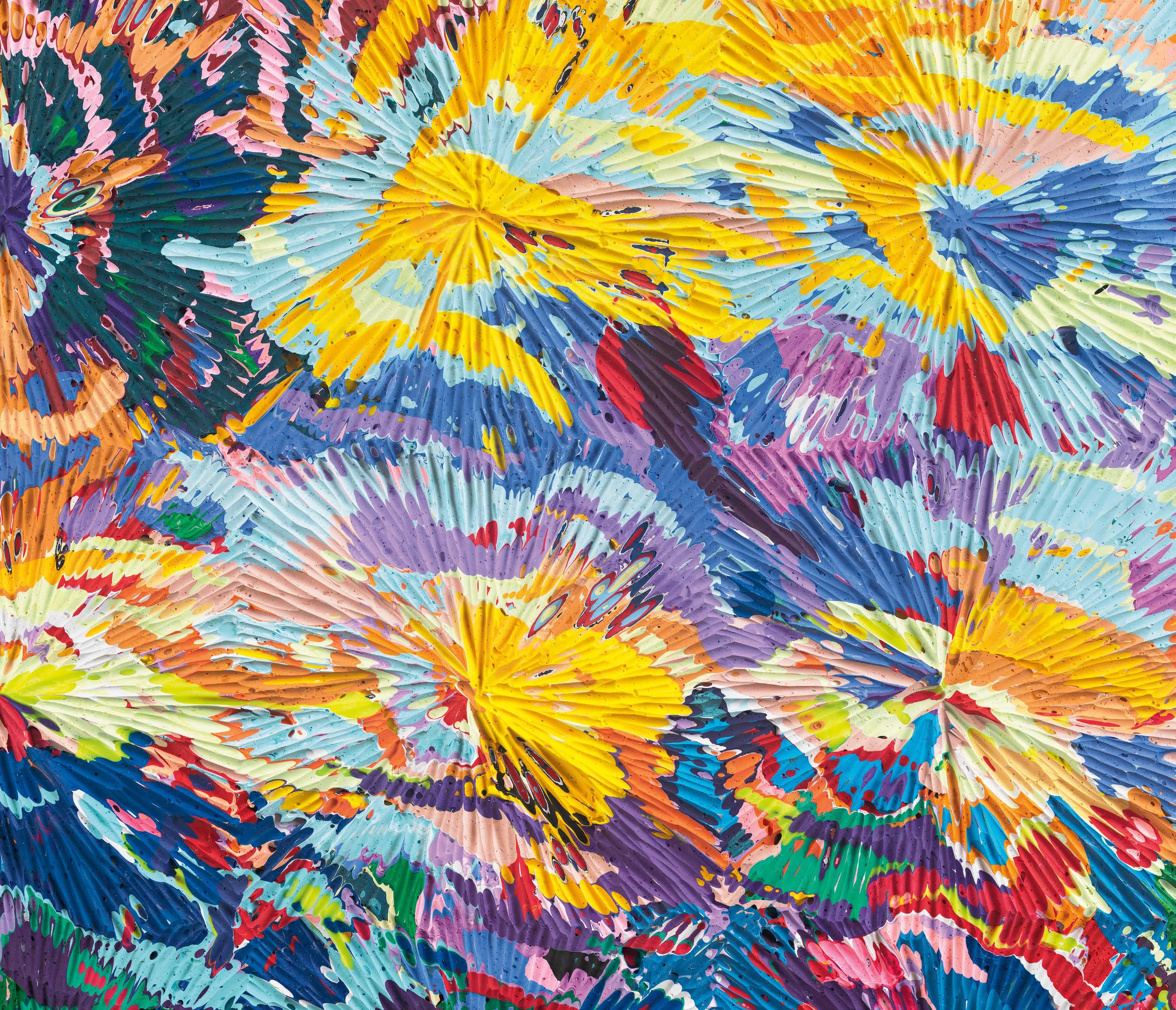
Back in the first room, the artist continues to add layers and layers of paint as they dry. This first room, where the painting happens, contains the longest and slowest process. There is ample work to be considered in the painting of every layer; There is also the waiting. The strata building up on the surface index both painting and drying, work and rest, starts and stops.
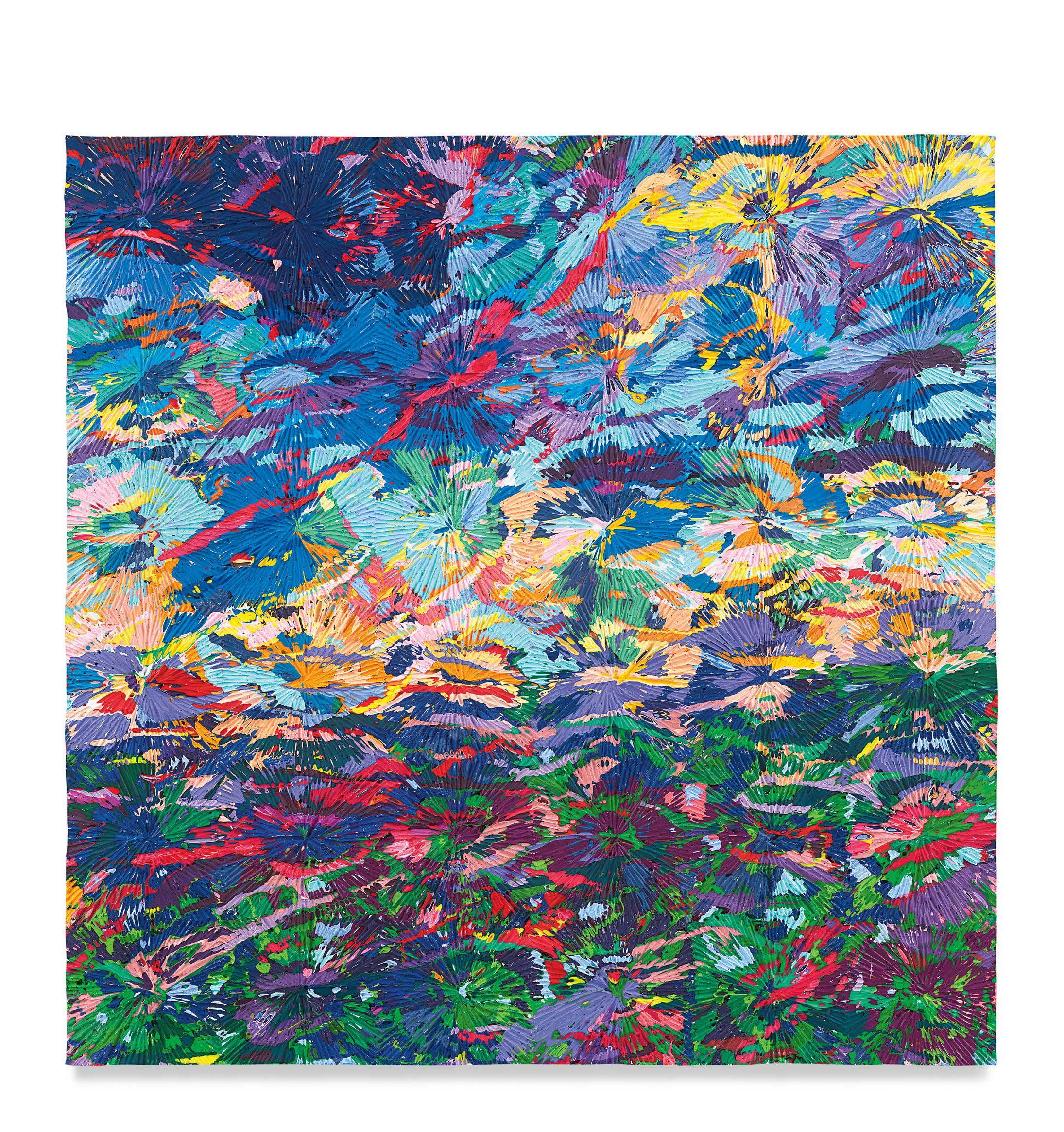
The acrylic paint dries through evaporation. Though it’s watersoluble to begin, once it dries it will be waterproof and permanent. Sometimes a layer of paint covers the entire surface, but sometimes color is plo ed out across the surface in a way that begins to conjure an image. Before they move down the line, the most recent paintings are some kind of landscapes, more representational than recent works, and the uncertainty brings some discomfort for the artist. It’s this personal process that ma ers the most.
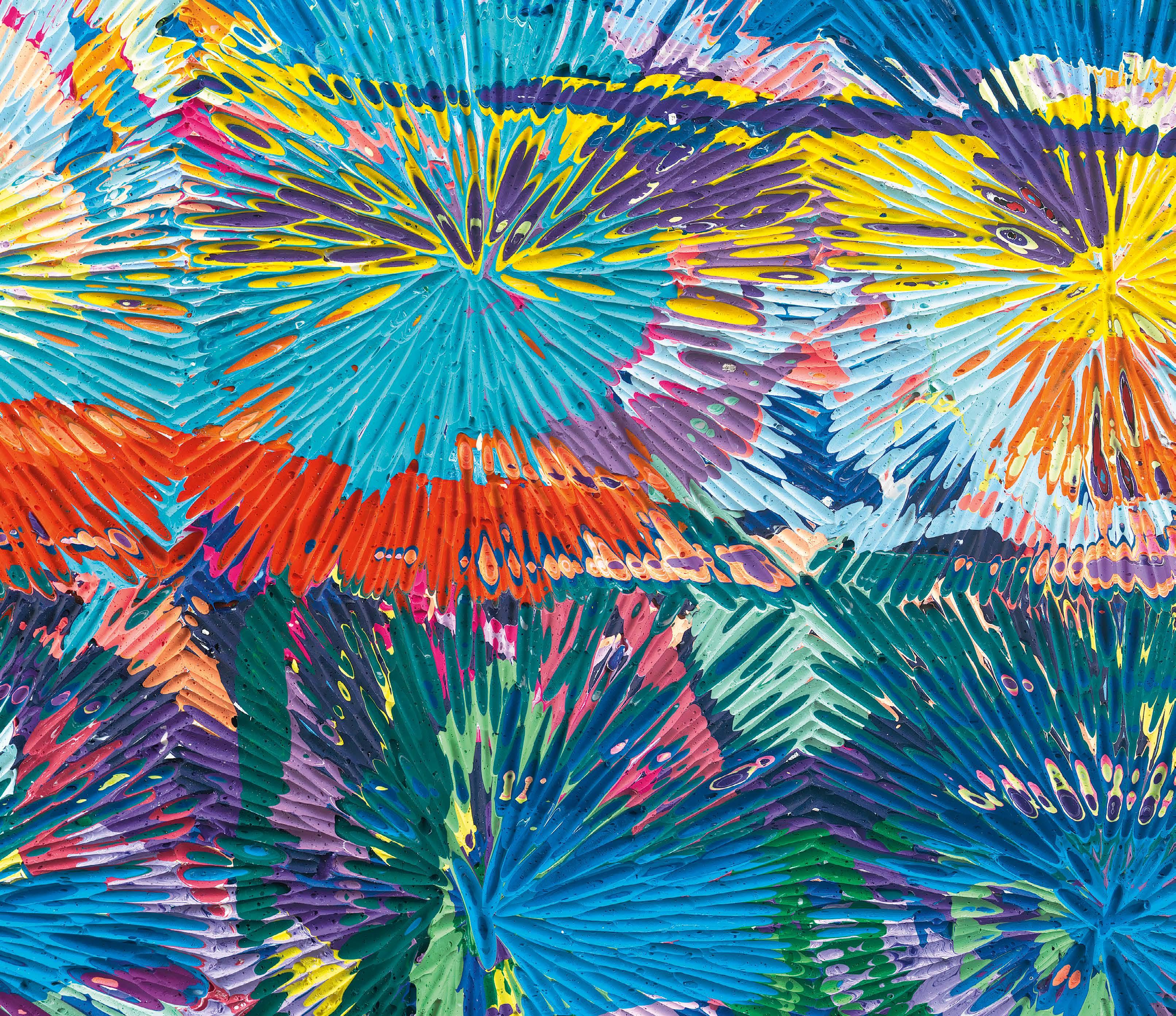
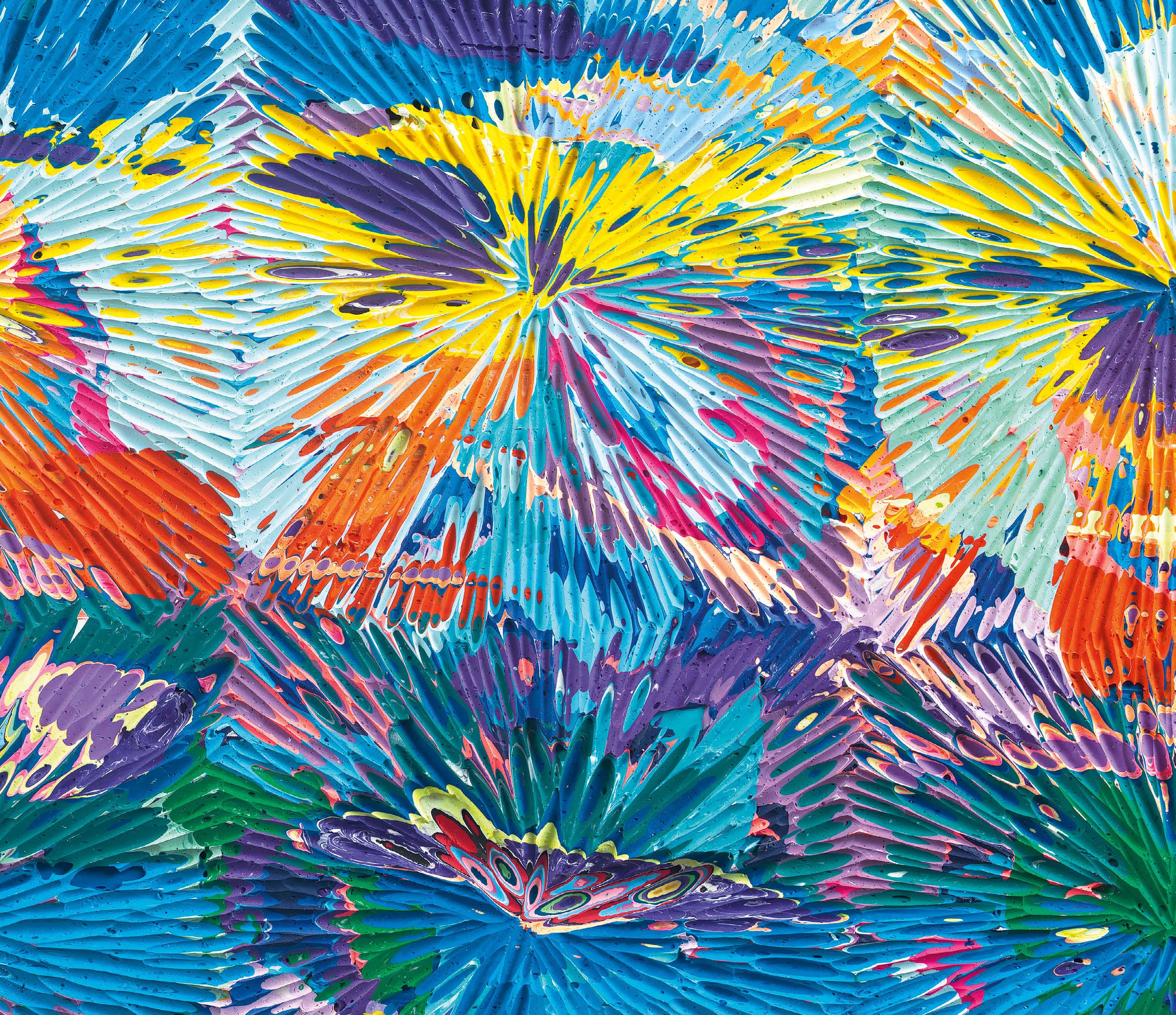
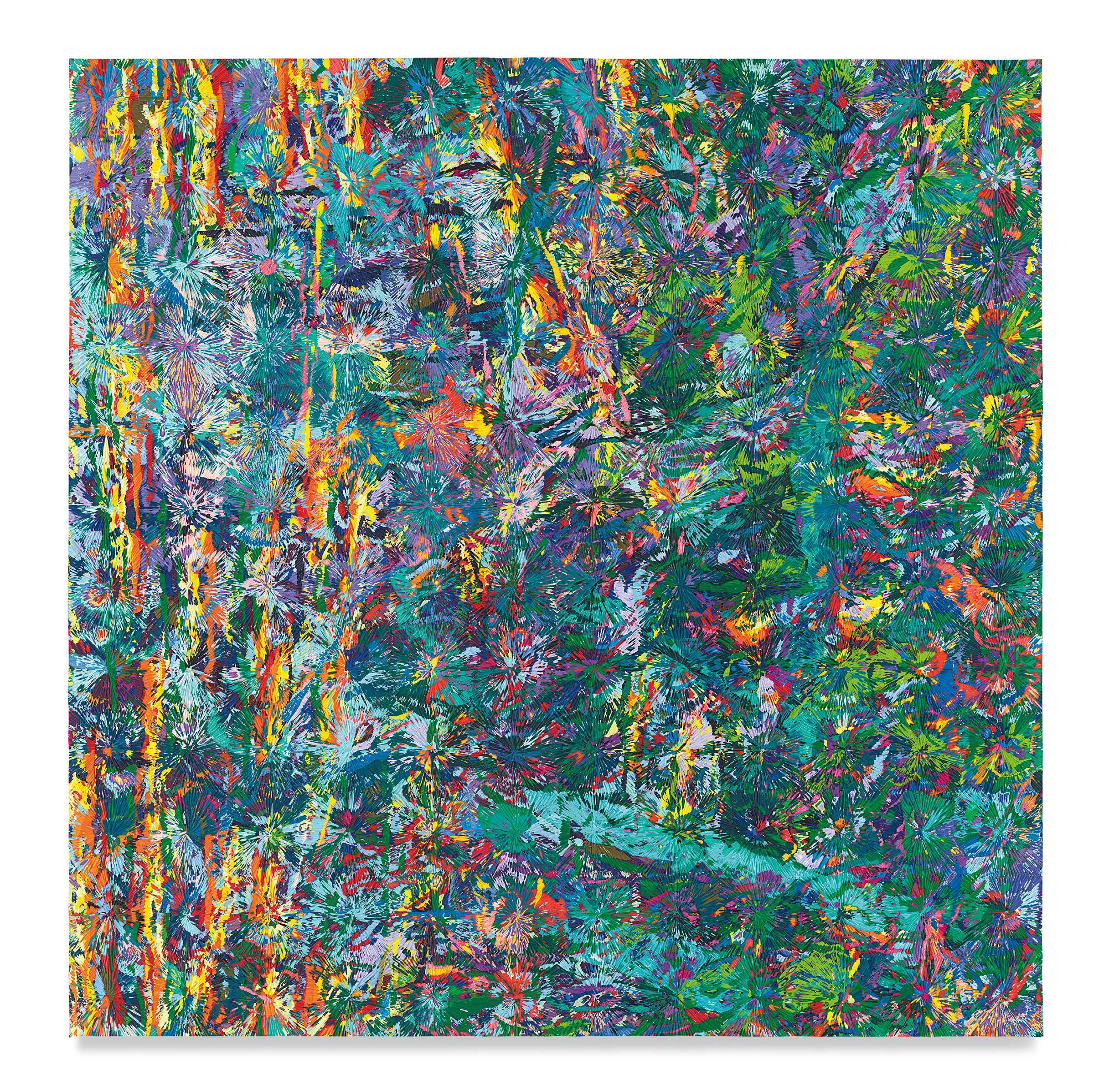
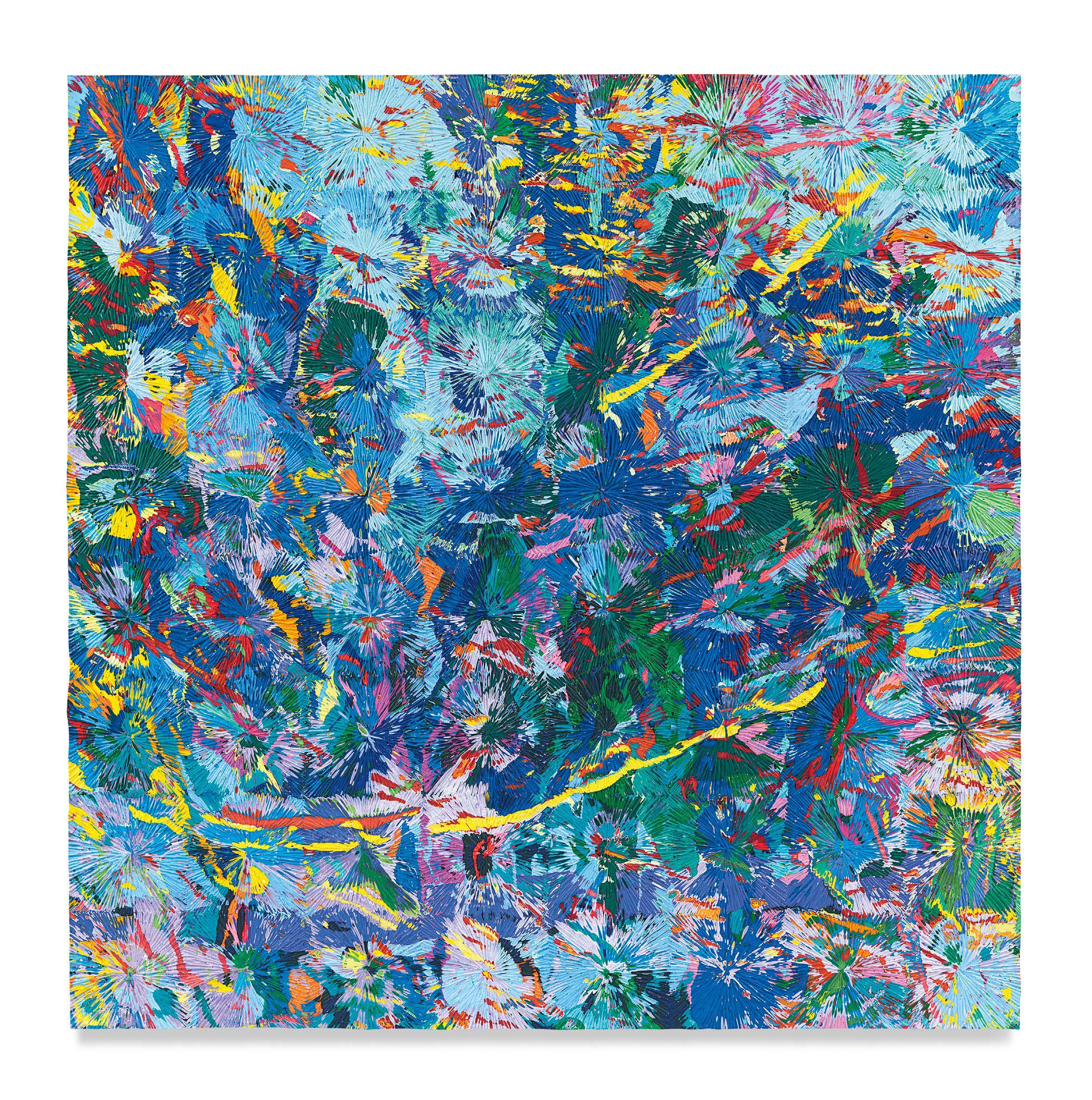
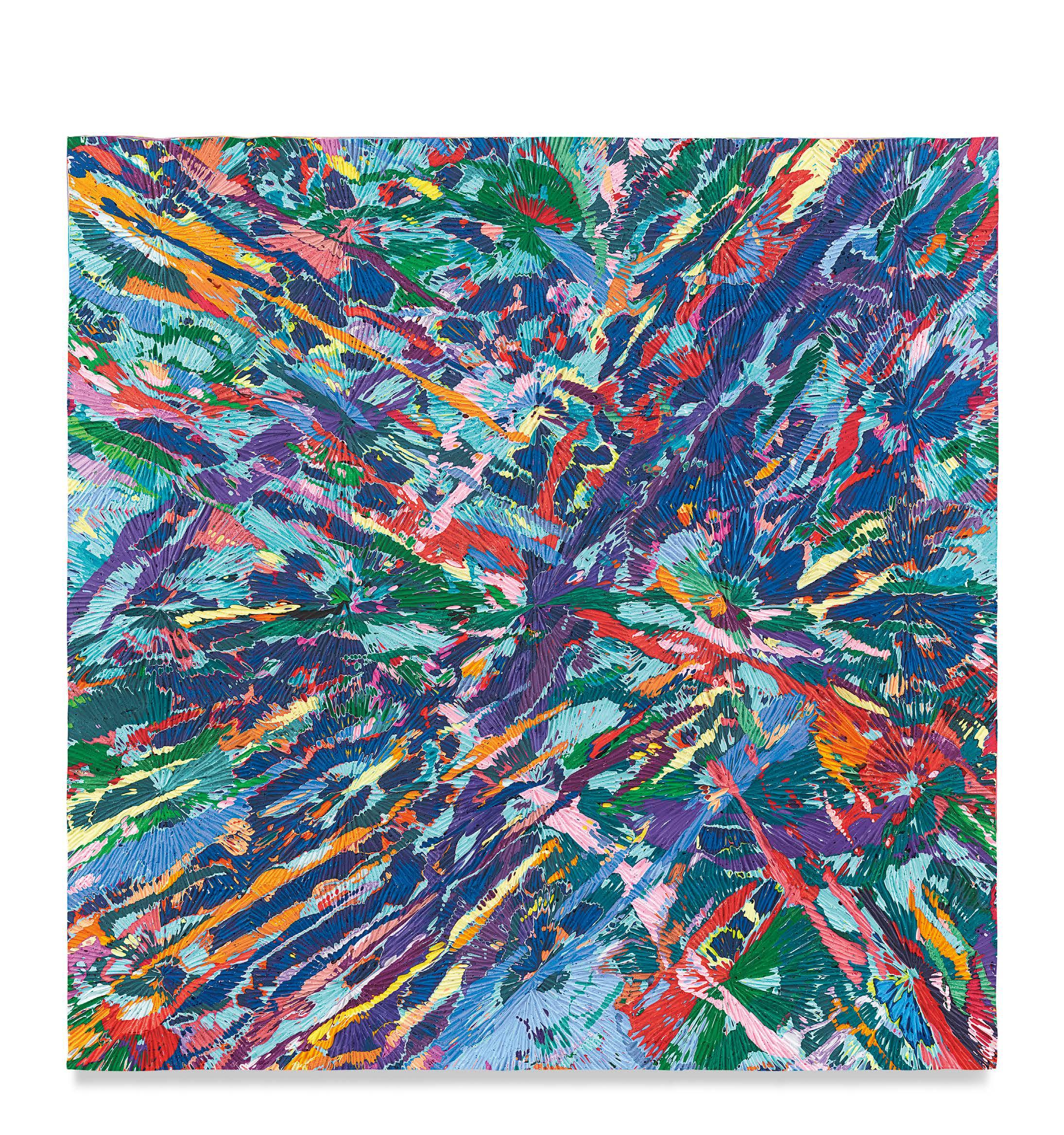
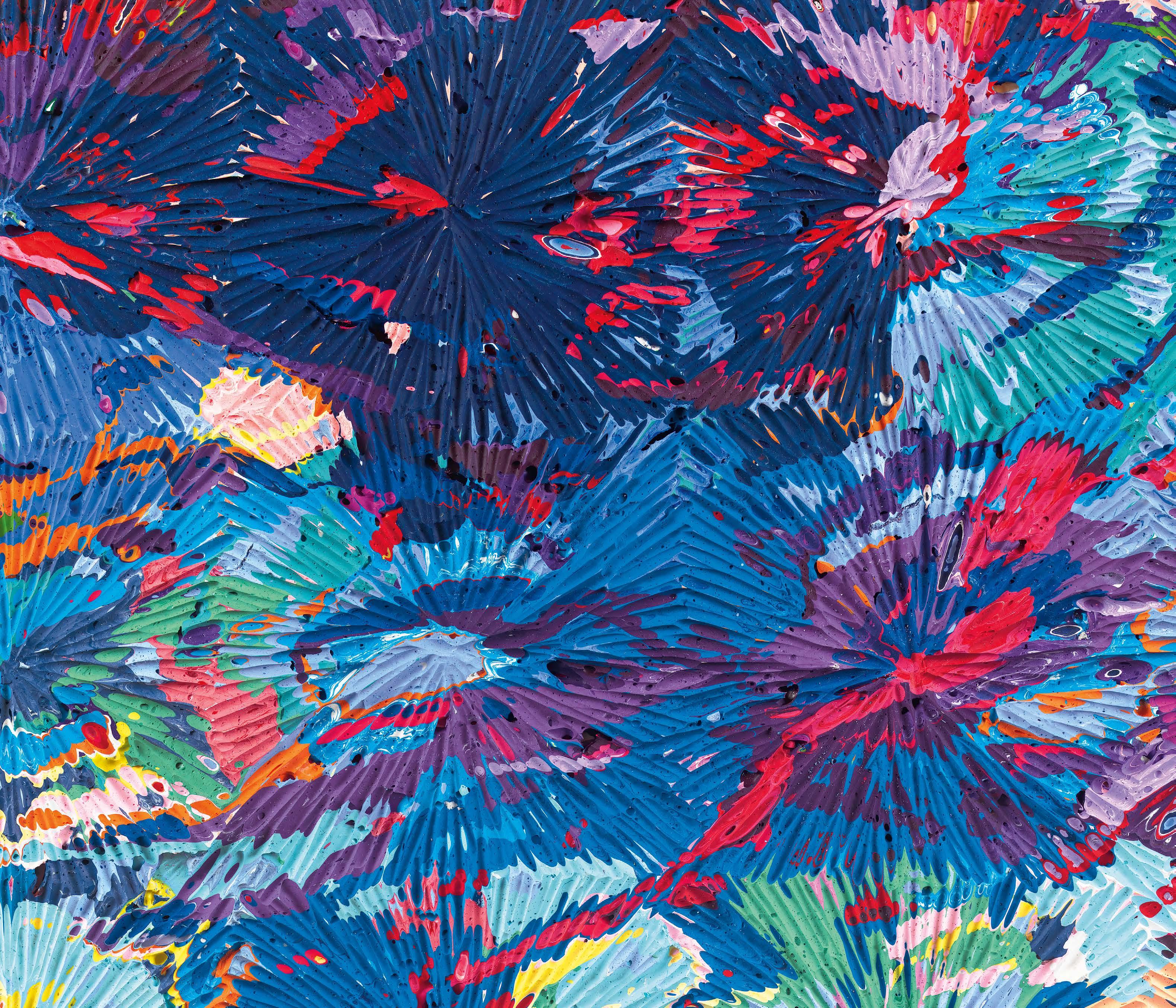
As the sun goes down, David Allan Peters closes up his rooms one by one, shu ing himself inside the fourth room to carve into the night. David Allan Peters uses a small handheld linoleum cu ing tool usually used for printmaking, to rhythmically and repetitively cut out thin sections of the painting. The cu er has a plastic handle designed to fit comfortably in the artist’s hand and a steel, U-shaped blade which will reveal concentric strata of color. How long and deep these cuts are will determine how many layers of color we see,
so this stage requires some balance between determination and trance, focus and flow. The artist draws out a grid to help keep his marks aligned, and then inserts the blade. While the artist cuts, his blade makes the seemingly solid planes of color almost jiggle.
“This world of fire, this world of tension, this world of stress,” a geologist explains online, with the fervor of a prophet. Another geologist explains how faults occur when the land is “pulling itself apart.” The more surprising words used to describe the development of these landscapes over millions of years, though, are the so ones: squeeze, squish, and slip.
In a version of Martin Creed’s performance Words and Music, he asks if we have too many words or not enough. Surely it’s more about how we use them, he suggests, and considers something like a chord in music, but for spoken words. If instruments or choirs can sing three or more notes at once, creating a new kind of layered, complex note, could we do that in our speech with words, he wonders. What changes would be required in my brain and voicebox in order to say the right three words at the same time? To stack them up simultaneously instead of having to choose one at a time, ordering and reordering them to try to give them meaning? David Allan Peters cuts into layers of paint, creating the illusion that the colors are nesting, that they hold each other like rings of a tree. Dozens of colors try to sing out at once.
Virginia Woolf declared paintings “too still, too silent,” but I don’t mind the quiet.
It takes about six months in total for a painting to move down the line of David Allan Peters’ four rooms to completion. The finished work is signed on the back, wrapped up in shipping material, and it leaves the studio and heads down the road, onward to New York City. The artist’s assistant repairs and repaints the studio walls and floors, providing a fresh start for the next body of work, and David Allan Peters begins again.
Adam Milner is an artist and writer based in Brooklyn, New York. Milner has wri en essays for Montez Press, Hyperallergic, The Warhol, The Clyfford Still Museum, and The Photographers’ Gallery in London.
Untitled #1, 2022
Acrylic on panel
60 x 60 inches
152.4 x 152.4 cm
Untitled #2, 2022
Acrylic on panel
48 x 48 inches
121.9 x 121.9 cm
Untitled #3, 2022
Acrylic on panel
30 x 30 inches
76.2 x 76.2 cm
Untitled #4, 2022
Acrylic on panel
30 x 30 inches
76.2 x 76.2 cm
Untitled #5, 2022
Acrylic on panel
36 x 36 inches
91.4 x 91.4 cm
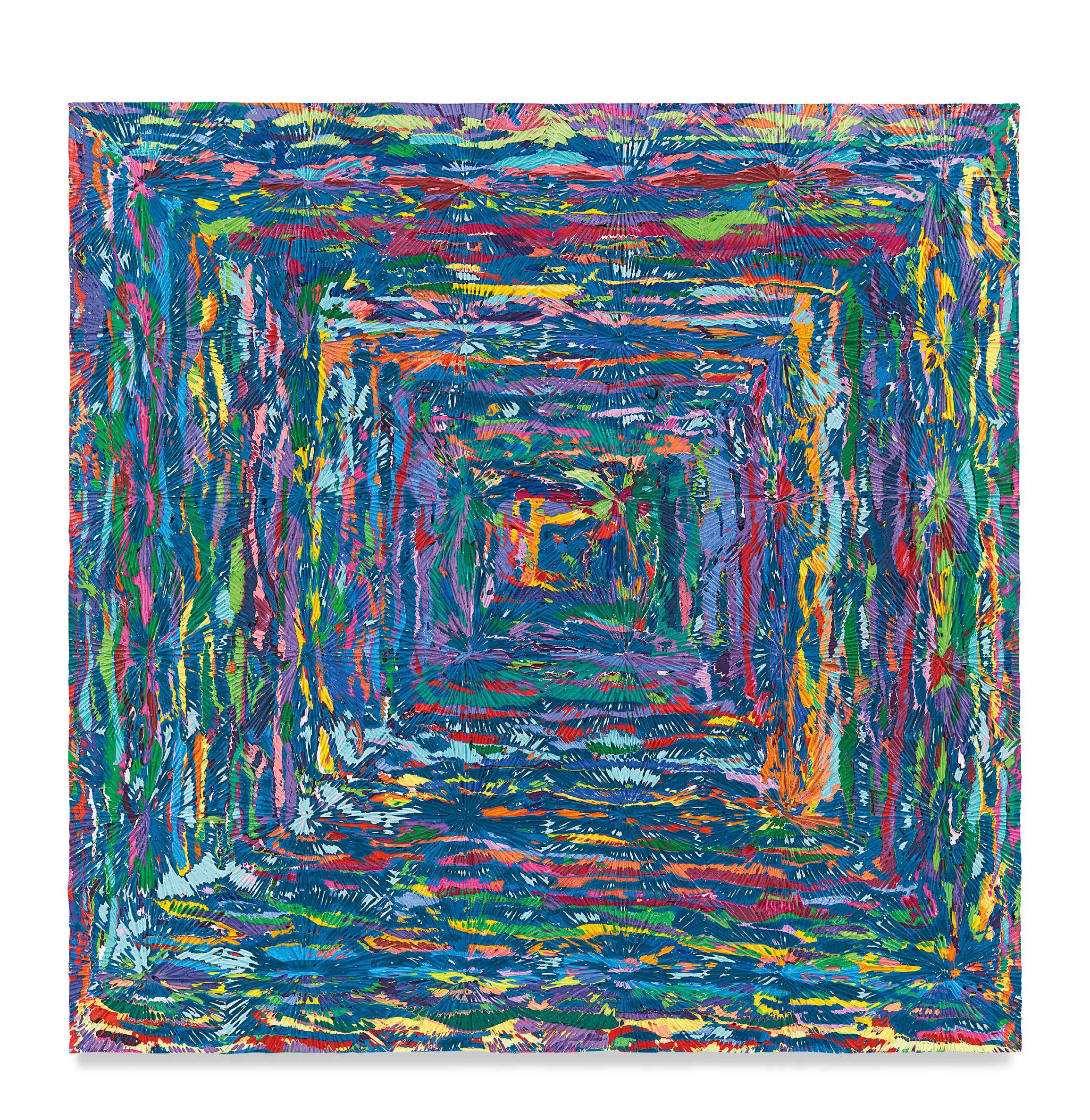
Untitled #6, 2022
Acrylic on panel
36 x 36 inches
91.4 x 91.4 cm
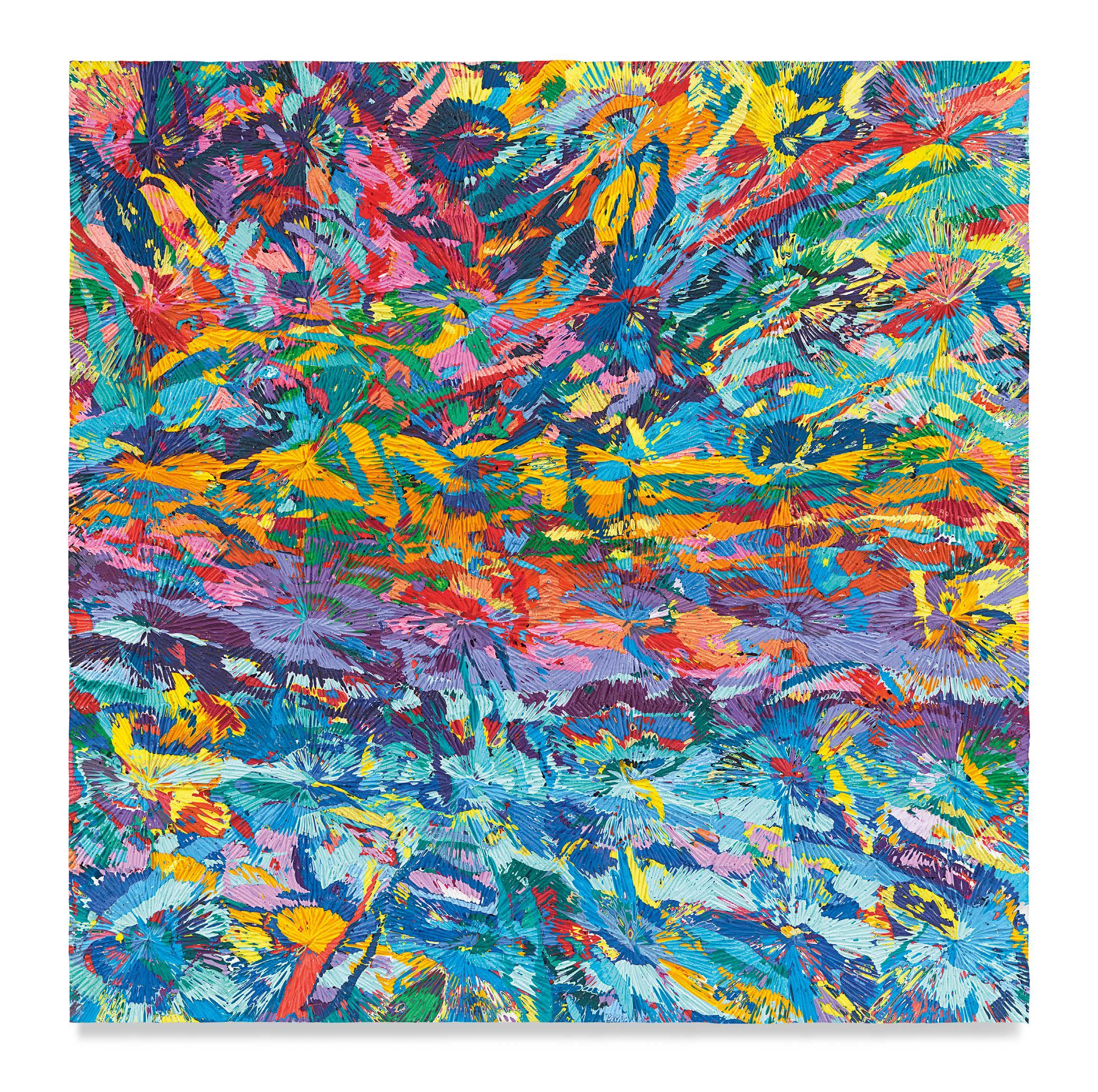
Untitled #7, 2022
Acrylic on panel
24 x 24 inches
61 x 61 cm
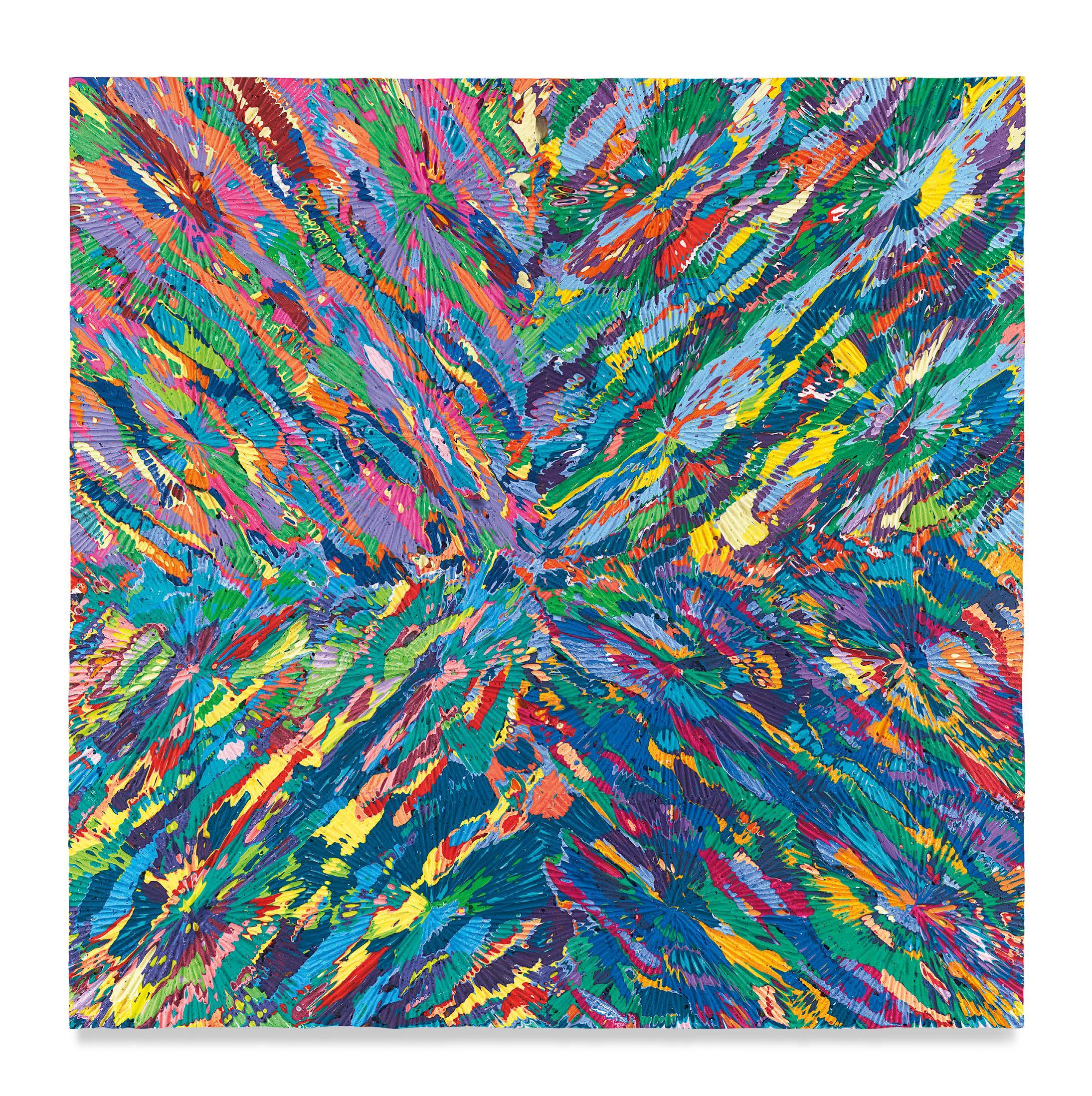
Untitled #8, 2022
Acrylic on panel
30 x 30 inches
76.2 x 76.2 cm
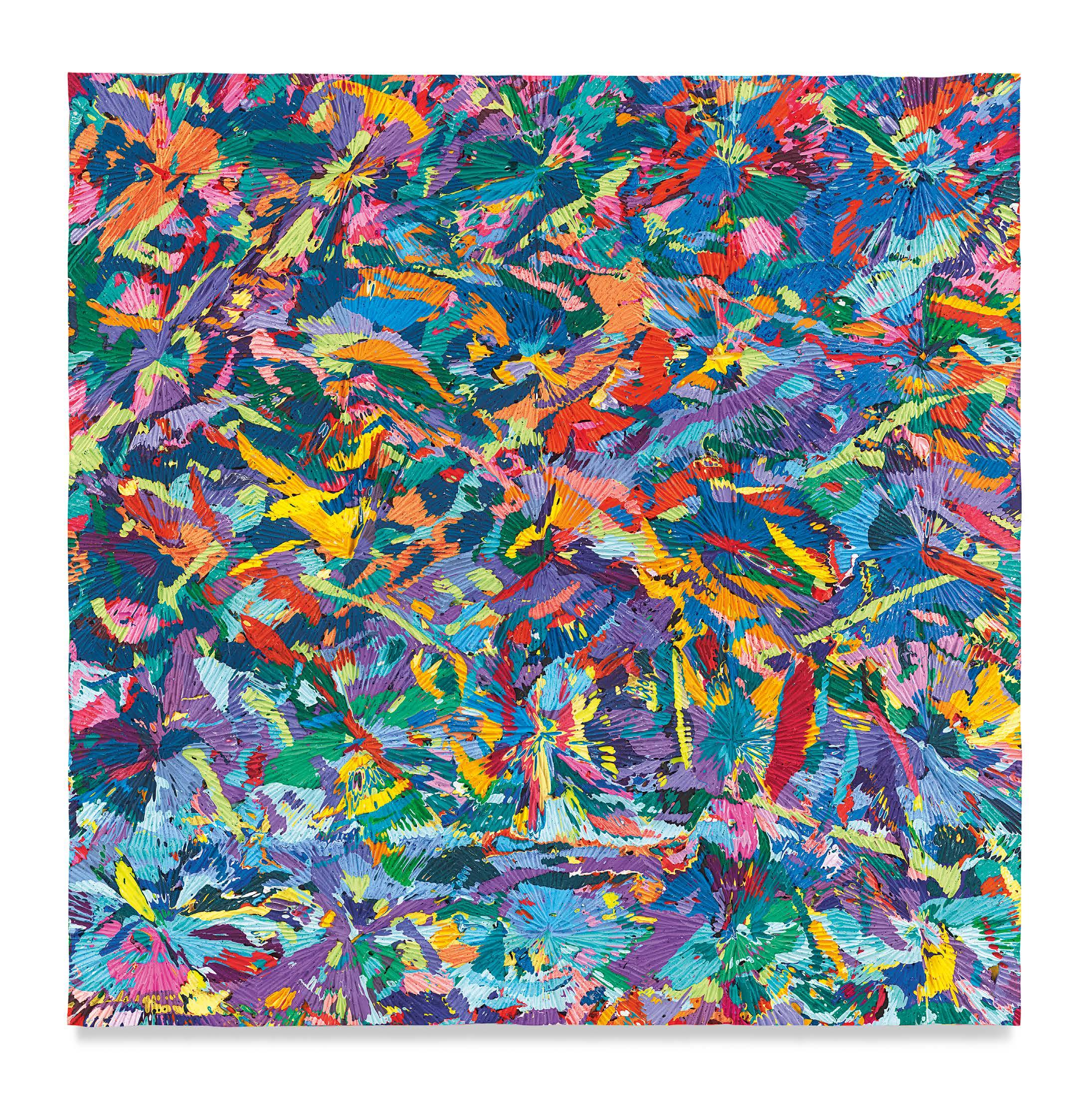
Untitled #9, 2022
Acrylic on panel
48 x 48 inches
121.9 x 121.9 cm
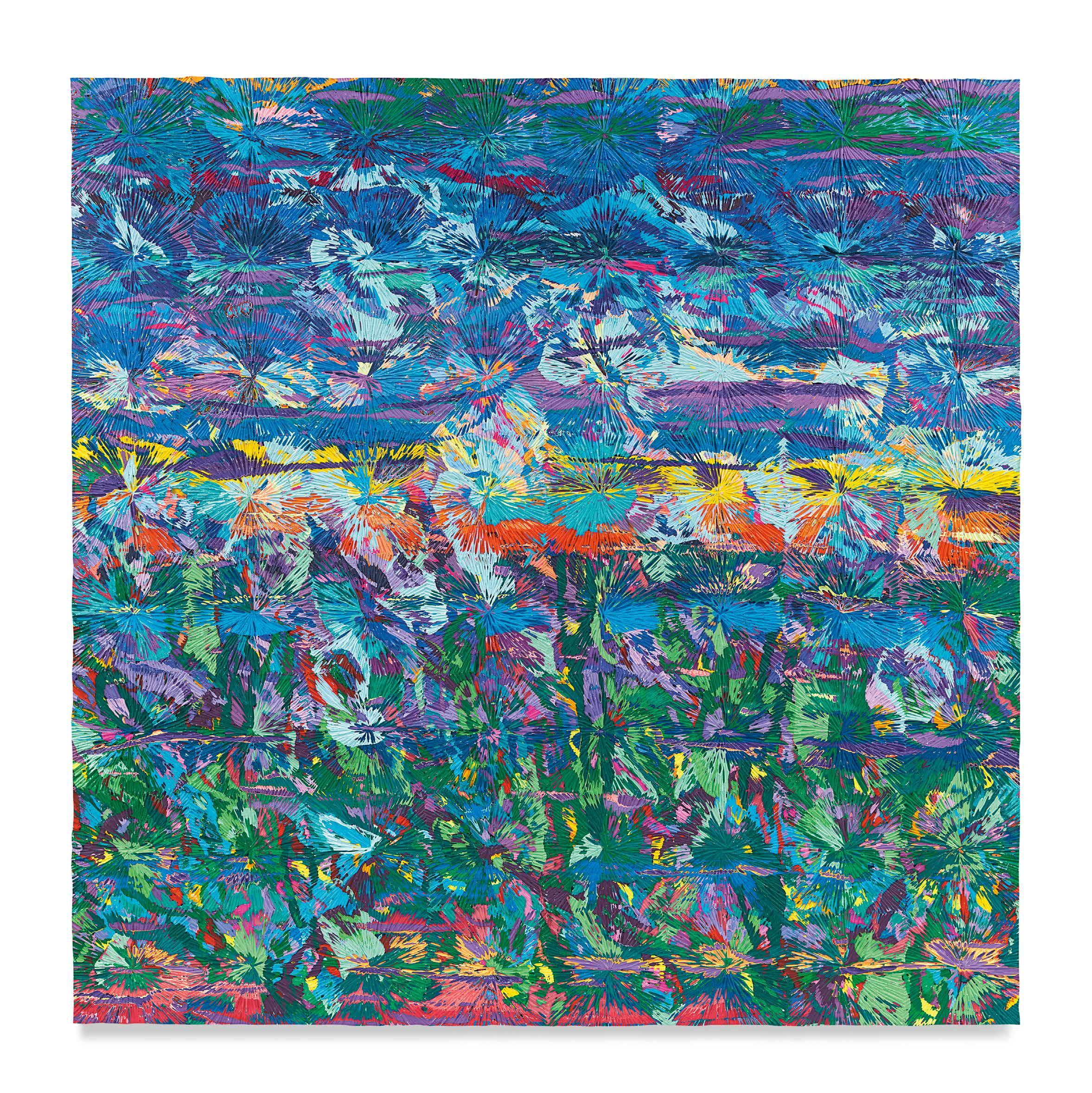
Untitled #10, 2022
Acrylic on panel
36 x 36 inches
91.4 x 91.4 cm
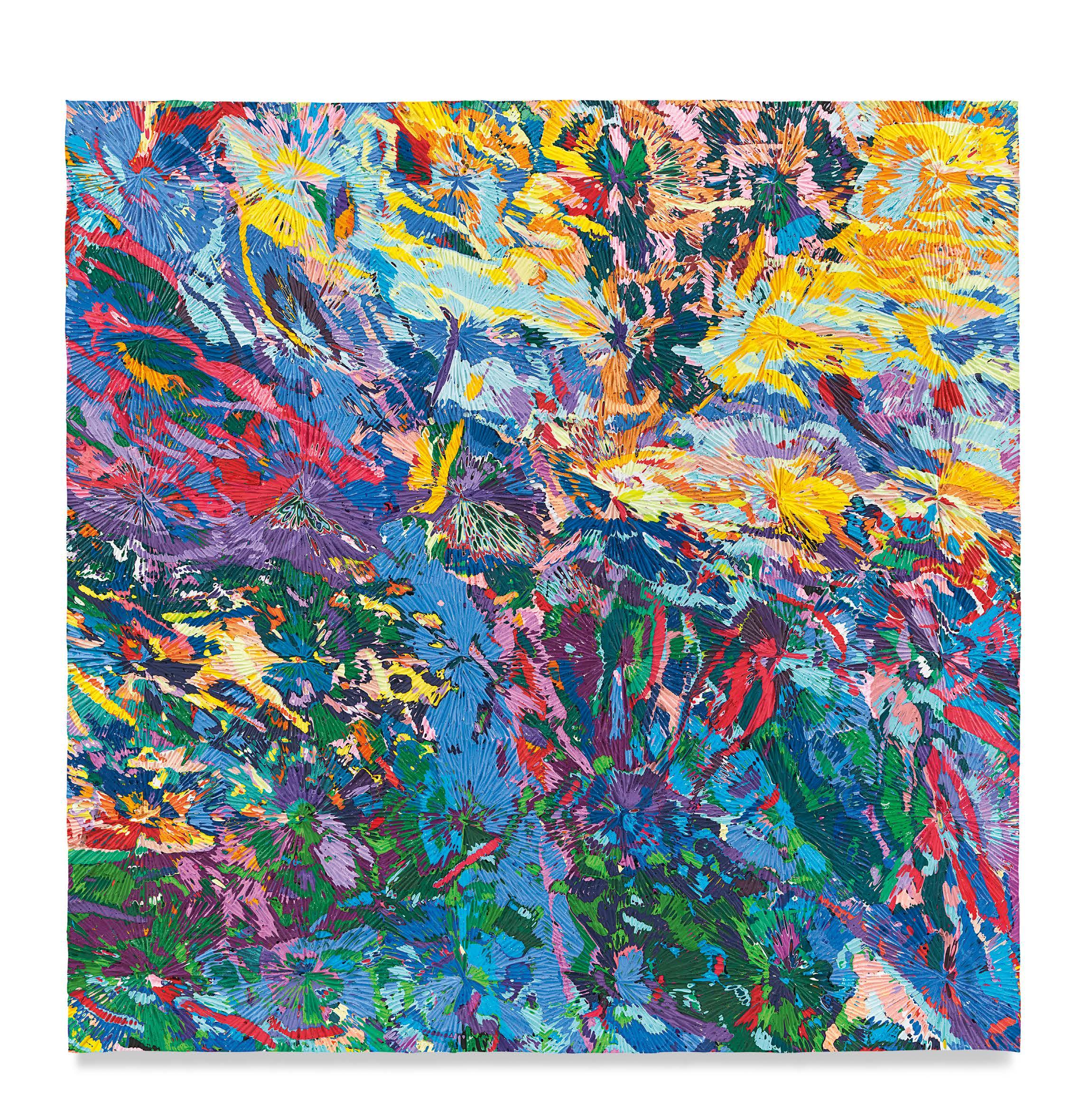
Untitled #11, 2022
Acrylic on panel
30 x 30 inches
76.2 x 76.2 cm
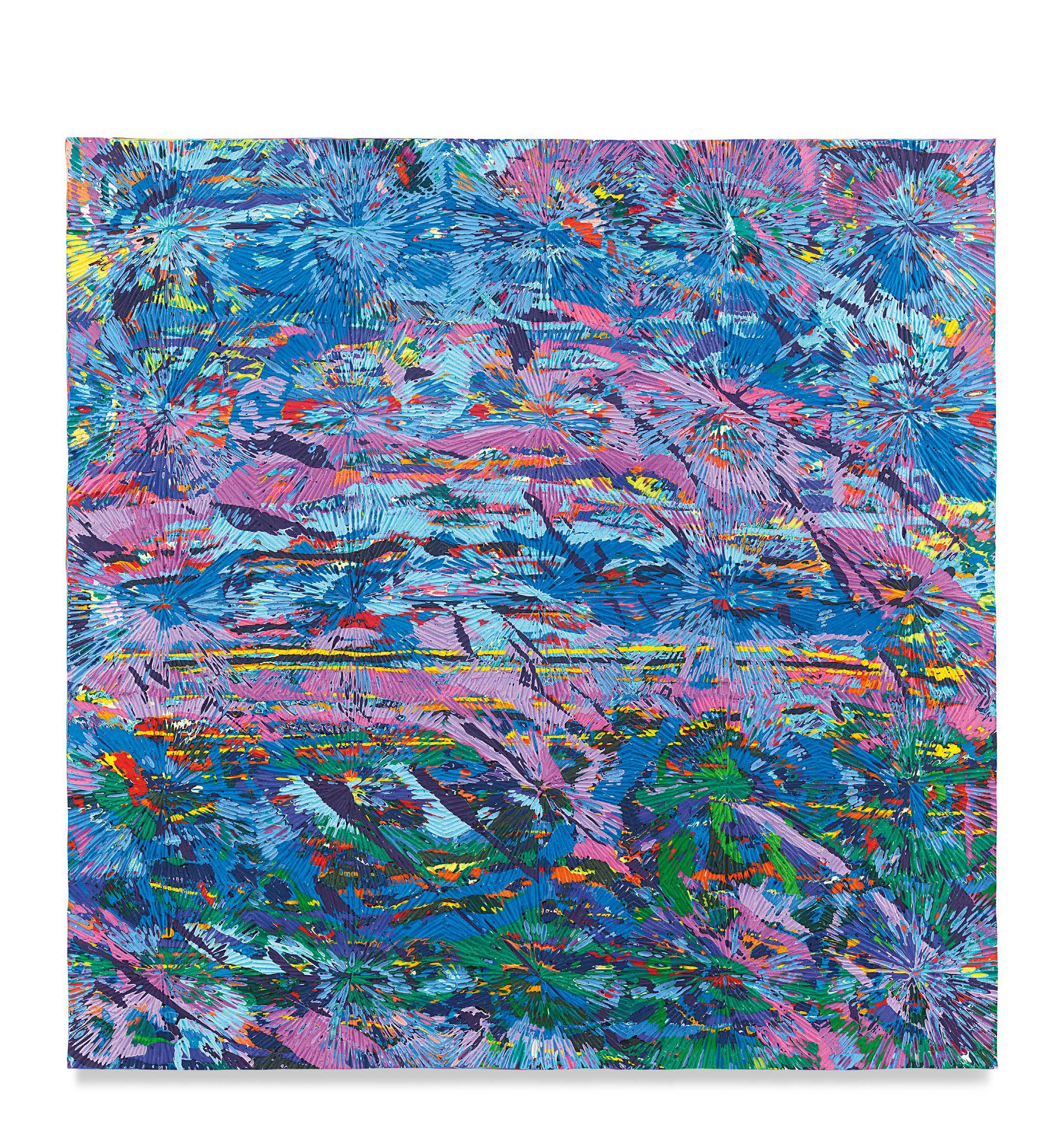
Untitled #30, 2021
Acrylic on panel
48 x 36 inches
121.9 x 91.4 cm
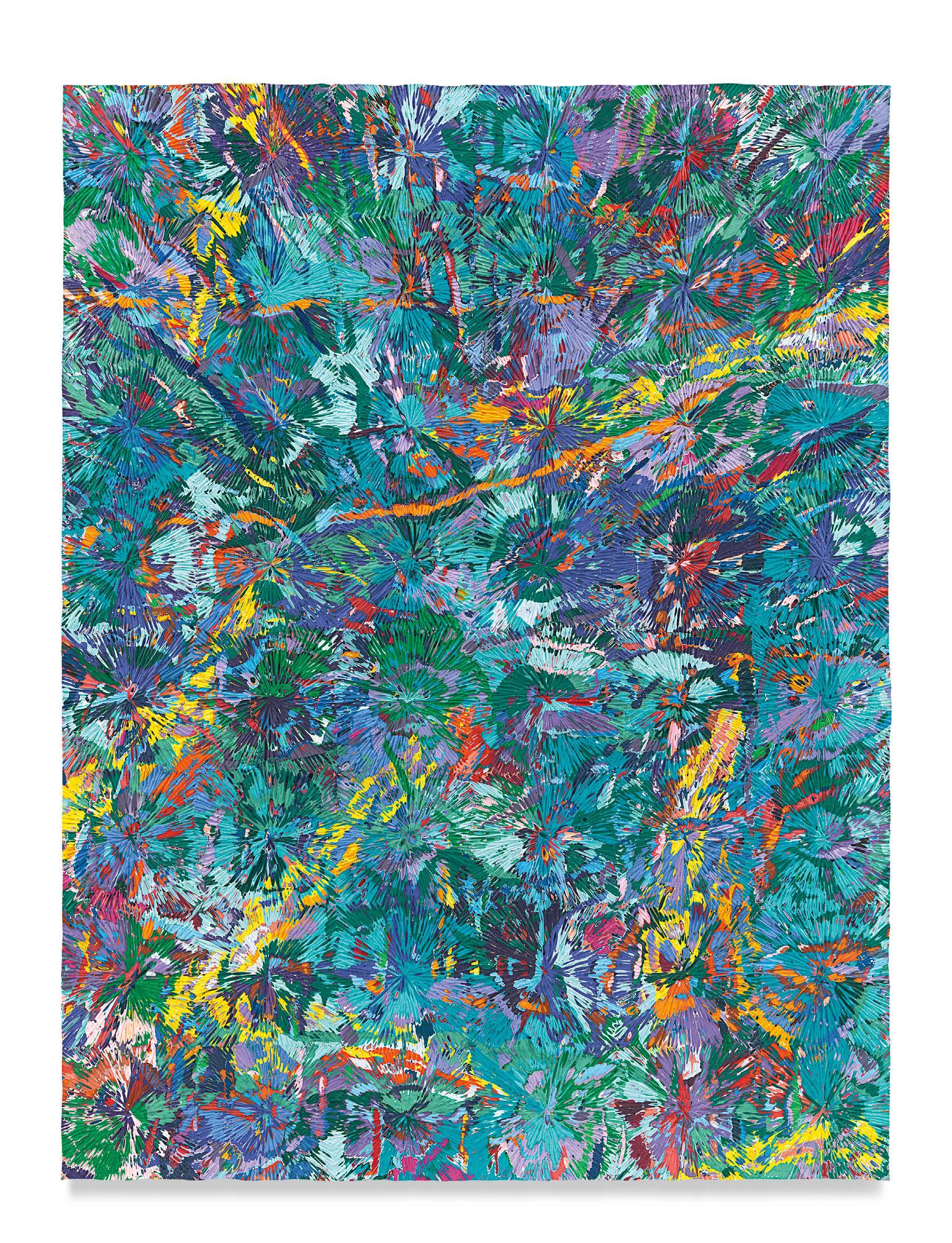
DAVID ALLAN PETERS
Born in Cupertino, CA in 1969
Lives and works in Los Angeles, CA
EDUCATION
2001
MFA, Claremont Graduate University, Claremont, CA
1997
BFA, San Francisco Art Institute, San Francisco, CA
SOLO EXHIBITIONS
2022
Miles McEnery Gallery, New York, NY
2020
Royale Projects, Los Angeles, CA
2019
Museum of Art and History, Lancaster, CA
Miles McEnery Gallery, New York, NY
2017
Royale Projects: Contemporary Art, Los Angeles, CA
2016
Weber Fine Art, Greenwich, CT
Ameringer | McEnery | Yohe, New York, NY
Royale Projects: Contemporary Art, Palm Desert, CA
AKA PDX, Portland, OR
2015
Ameringer | McEnery | Yohe, New York, NY
Royale Projects: Contemporary Art, Palm Desert, CA
2013
Ameringer | McEnery | Yohe, New York, NY
2012
“Super Optic,” Chandra Cerrito Contemporary, Oakland, CA
2011
Royale Projects: Contemporary Art, Palm Desert, CA
“Paintings,” Marc Arranaga Contemporary Art, New York, NY
2009
“Integrity Spiral,” Ruth Bachofner Gallery, Santa Monica, CA
2007
“Dexterous Aura,” Ruth Bachofner Gallery, Santa Monica, CA
2005
“May The Road Rise With You,” Ruth Bachofner Gallery, Santa Monica, CA
2003
Ruth Bachofner Gallery, Santa Monica, CA
2001
“Paintings,” Ruth Bachofner Gallery, Santa Monica, CA
2000
MFA Exhibition, Peggy Phelps Gallery, Claremont, CA
GROUP EXHIBITIONS
2019
“LA Painting,” Museum of Art and History, Lancaster, CA
Laguna Art Museum, Laguna Beach, CA
2018
“Belief in Giants,” Miles McEnery Gallery, New York, NY
2016
“Hello My Name Is... Los Angeles,” Royale Projects: Contemporary Art, Los Angeles, CA
2015
“Transcending Cool,” Royale Projects: Contemporary Art, Palm Desert, CA
2013
“A ermath Post-Minimal Abstraction,” Chandra Cerrito Contemporary, Oakland, CA
“Looking Back at Tomorrow,” Royale Projects: Contemporary Art, Palm Desert, CA
2012
“Fresh,” Museum of Contemporary Art, Los Angeles, CA
“Auction 2012,” Laguna Art Museum, Laguna Beach, CA
“Le ers from Los Angeles,” Jack Rutberg Fine Arts, Los Angeles, CA
“Deep Paint” (curated by Anne Martens and Jayna Zweiman), Hudson | Linc, Los Angeles, CA
2011
“Pale e To Palate,” Laguna Art Museum, Laguna, CA
“Spectrum,” Kellogg Gallery, Cal Poly Pomona, Pomona, CA
2010
“Karl Benjamin: Under the Influence,” Royale Projects: Contemporary Art, Palm Desert, CA
“Stratigraphic,” Chandra Cerrito Contemporary, Oakland, CA
“OUTSIDE THE LINES: Drawing in Contemporary Art,” Royale Projects: Contemporary Art, Palm Desert, CA
2009
“Fresh,” Museum of Contemporary Art, Los Angeles, CA
“Le Petit Objet,” Royale Projects: Contemporary Art, Palm Desert, CA
“Surface Tension,” Chandra Cerrito Contemporary, Oakland, CA
“White,” Ruth Bachofner Gallery, Santa Monica, CA
2008
“Four Abstract Painters,” Ruth Bachofner Gallery, Santa Monica, CA
2006
“Surface,” Landis Art Center Gallery, Riverside, CA
“Firecrackers: Artists to Watch,” Roshambo Gallery, Healdsburg, CA
“Made in California” (curated by Michelle Deziel), Brea Art Gallery, Brea, CA
2004
“The Line Up,” Walter McBean Gallery, San Francisco Art Institute, San Francisco, CA
“Abstract Los Angeles: A Painting Exhibit,” SoHo Myriad, Atlanta, GA
“Process” (curated by Chandra Cerritos), Dorsky Gallery Curatorial Programs, Long Island City, NY
2003
“20th Anniversary Exhibition,” Ruth Bachofner Gallery, Santa Monica, CA
“Sex in Deep Space” (curated by Marc Arranaga and Chip Tom), City Gallery, Los Angeles, CA
“SOULdiers” (curated by Steve Schmidt), SCA Gallery, Pomona, CA
2002
“California Dreaming” (curated by Albano Morandi), Palazzo Martinengo Cesaresco Novarino, Brescia, Italy
“Marking, Change in an Inconstant World” (curated by Marc Arranaga and Chip Tom), The Advocate Gallery, Los Angeles, CA
“Glamour Trip So Soon To Slip” (curated by Suzanne Bybee), Whitman College, Walla Walla, WA
2001
“Cross-pollination” (curated by Susan Joyce and Mery Lynn McCorckle), Holland Tunnel Gallery, New York, NY and Los Angeles Arboretum, Los Angeles, CA
2000
“New American Talent: The 15th Exhibition” (curated by David Pagel), Texas Fine Art Association, Dallas, TX, traveled to The Jones Center for Contemporary Art, Austin, TX; Shore Art Gallery, Abilene Christian University, Abilene, TX; Texarkana Regional Arts and Humanities Council, Texarkana, TX; Buddy Holly Center, Lubbock, TX and Del Rio Council for the Arts, Fire House Gallery, Del Rio, TX
“White,” Huntington Beach Art Center, Huntington Beach, CA
“LA ARTCORE Annual Group Show” (curated by Mat Gleason), Los Angeles, CA
1999
“HOME/WORK,” Factory Studios, Los Angeles, CA
“MFA Exhibition,” College Art Association, Barnsdall Art Park, Los Angeles, CA
AWARDS AND RESIDENCIES
2004
The Chinati Foundation, Marfa, TX
1994
Nora Bartine Memorial Award, De Anza College, Cupertino, CA
SELECT COLLECTIONS
Laguna Art Museum, Laguna Beach, CA
DAVID ALLAN PETERS
9 June – 23 July 2022
Miles McEnery Gallery
520 West 21st Street
New York NY 10011
tel +1 212 445 0051 www.milesmcenery.com
Publication © 2022 Miles McEnery Gallery
All rights reserved Essay © 2022 Adam Milner
Director of Publications
Anastasija Jevtovic, New York, NY
Photography by Christopher Burke Studio, Los Angeles, CA
Color separations by Echelon, Los Angeles, CA
Catalogue designed by McCall Associates, New York, NY
ISBN: 978-1-949327-79-3
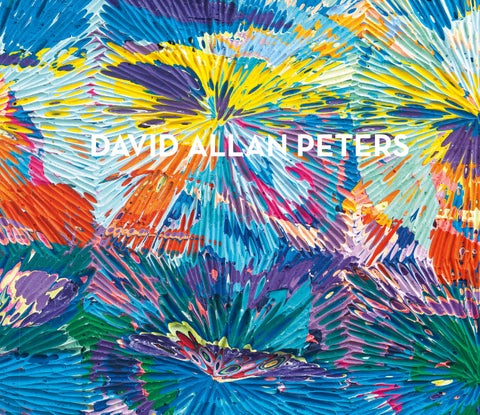
Cover: Untitled #9 (detail), 2022