














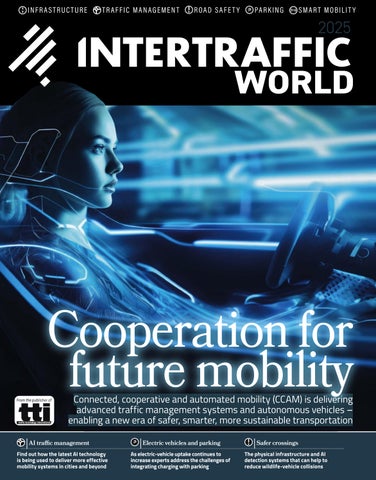


Connected, cooperative and automated mobility (CCAM) is delivering advanced traffic management systems and autonomous vehicles –enabling a new era of safer, smarter, more sustainable transportation
| Electric vehicles and parking



As electric-vehicle uptake continues to increase experts address the challenges of integrating charging with parking | Safer crossings
The physical infrastructure and AI detection systems that can help to reduce wildlife-vehicle collisions
“In Latin America, countries like Chile and Colombia have been pioneers in implementing tolling systems”
Joyce de Winter, director, Intertraffic Worldwide Events
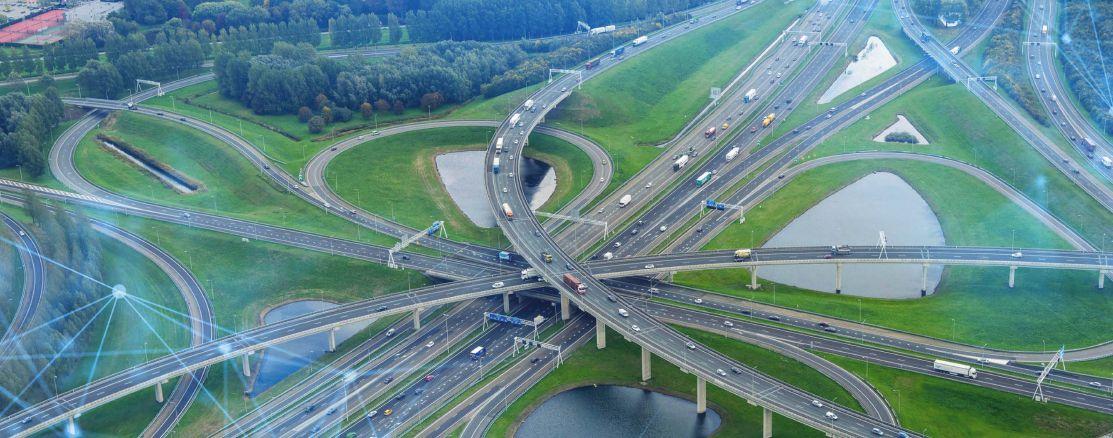
“We believe connectivity can enhance the safety of vehicles which combine their own sensing with information from road operators”
Henk Schuurman, strategic advisor for traffic management and smart mobility, Rijkswaterstaat
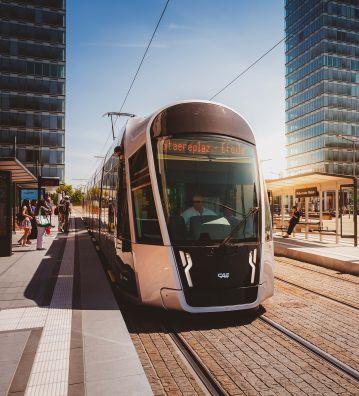
“The tourists and expats think they are in heaven –the only public transport that isn’t free is first class rail travel and services from neighbouring countries”
Christoph Reuter, government advisor, Ministry of Mobility and Public Works, Luxembourg
010 Global reach
With major shows in China and Latin America and preparations underway for Amsterdam in 2026, 2025 is an important year for Intertraffic
012 Family values
As Kapsch TrafficCom’s executive vice president for Latin America, Samuel Kapsch give his expert insight into the region and talks about growing up as part of a traffic engineering dynasty
016 Do autonomous vehicles need connectivity?
While OEMs tout self-driving features that operate autonomously, traffic managers have a more holistic view of the future of transportation
024 Parking charges
As more and more electric vehicles are seen on roads, so parking facilities must evolve to also provide charging
030 The social network
How targeted online advertising and social media campaigns can be used to alert road users to closures and events directly relevant to them
038 New starters
We take a look at the ways in which AI is being used to improve traffic flows and investigate potential new uses for this nascent technology
044 Multimodal Utopia?
Luxembourg City can lay claim to being the smartest in Europe thanks to a network that incentivises multimodality as opposed to penalising car use
052 A nimal crossings
Using both physical infrastructure and AI recognition traffic engineers are building better ways for wildlife to get across roads – improving safety for all road users
058 Smart surveys, smart repairs
Europe’s Omicron project is using drones, robots, digital twins and smart construction techniques to help keep aging infrastructure in good shape
062 Electric avenue
The frontier of electric-vehicle charging is dynamic induction power transfer (DIPT) or in other words, roads that charge vehicles as they drive along them. How close is this technology?
068 A ge of renewal
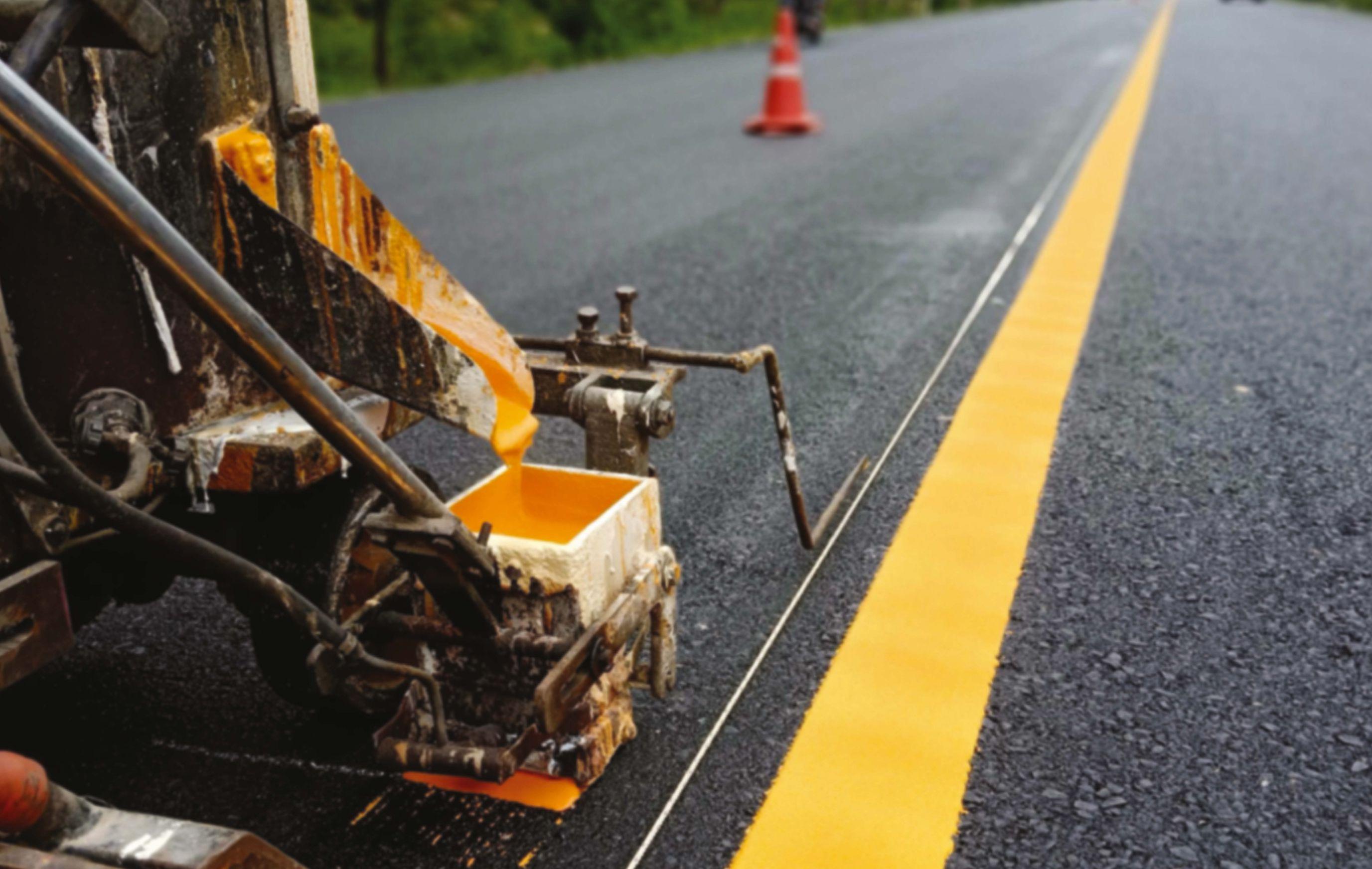
From making lane markings for automated vehicles to managing work zones, modern road networks are using new standards to ensure safety
118 Advertiser directory
Find out more about the technology and services from suppliers featured in this edition
122 Time for action
Michèle Dix of the UK’s National Infrastructure Commission on the challenges ahead for Net Zero by 2050 Infrastructure
074 Signs to a sustainable future
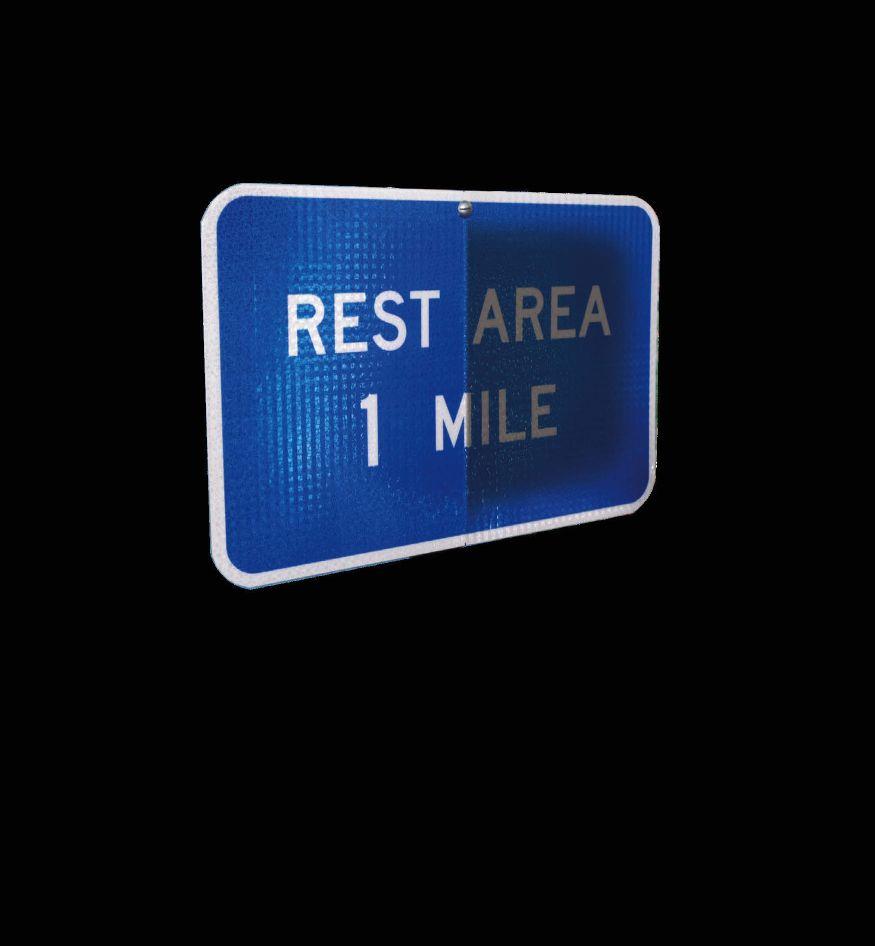
Aaron Means of Avery Dennison reveals some of the advanced techniques being used to create safer, more durable road signs
076 The right direction
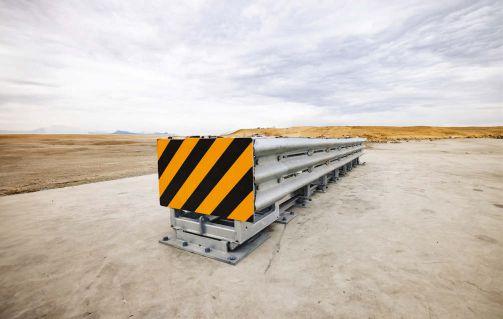
Switching the direction of travel on road lanes can be done with Lindsay Corporation’s Road Zipper barrier
078 Tunnel safety
“The software allows you to create efficiencies in the workflow and reduce time spent on the road. Contractors not only become more efficient and do better work, but they can have their people on the road for less time”
John Moreno, director for the Americas, Highway Software
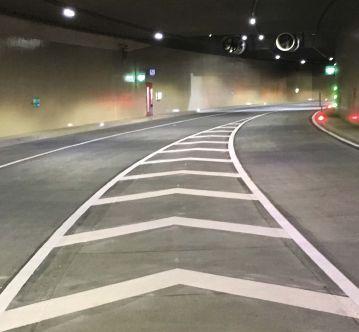
Highly visible markings from 3M enhance safety in tunnels in an efficient and durable way
080 Adaptive traffic management
Wireless installation and extremely low power consumption make Triplesign’s prismatic VMS an versatile traffic management solution
082 Inductive power
Smart road studs from Sernis are easy to install thanks to inductive power technology helping improve safety while reducing operational and maintenance costs
085 High-quality lighting for road signs
SloanLED delivers efficient LED solutions for illuminating signage and improving road safety
086 Operation bridge safety
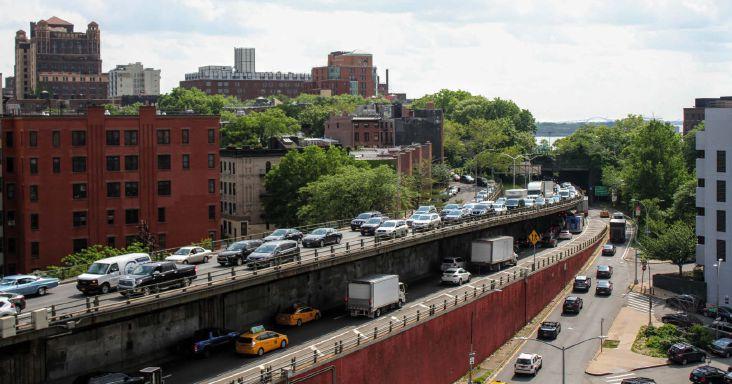
Kistler is protecting a bridge in Brooklyn with directly enforced high-speed weigh-in-motion and structural health monitoring
088 The global infrastructure crisis
Cost-effective solutions from Haenni Instruments are helping to protect roads from the damage caused by overloaded trucks
090 HS-WIM for direct enforcement
Strain Gauge Strip Sensors from Intercomp are providing direct enforcement at highways speeds in locations around the world
092 Sustainable ITS to enhance safety ITS from Alliance Traffic Systems helps to improve safety, with solar power helping to enhance sustainability
094 Managing roadworks
When roads need maintenance Highway Software can provide assistance with maintaining traffic flows
098 Future-proofing tolling operations
Quarterhill’s AI-enhanced ANPR is delivering free-flow tolling solutions with excellent reliability even in harsh weather conditions
100 Beitbridge border success story
ICE Tech has delivered AI automatic vehicle classification and ANPR to control a border in Zimbabwe
101 Intelligent traffic management
GEVAS software is helping to enable connected vehicle systems, even bringing cyclists into the ecosystem via a smartphone app
102 Revolutionising road safety
AI-enhanced enforcement systems from IDEMIA are helping to improve road safety in cities around the world
104 Seamless, smart ticketing
Cutting-edge solutions from Microlog are able to deliver intelligent, cost-effective ticketing for car parks and even handle EV charging fees


Investing in traffic enforcement technologies means investing in saving people’s lives.



106 Street smart
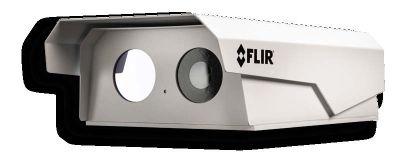
Teledyne FLIR’snew generation of traffic cameras are able to deliver both thermal and visual streams, with embedded AI deep learning for excellent detection even in poor visibility
108 The road ahead
In Germany Kapsch TrafficCom is helping to support the next generation of traffic management with connected vehicle technology on the Autobhan network
112 Eyes on the road
Artificial intelligence is being put to use in technology available from WaterView to identify adverse road weather conditions and pavement defects


C“Our
goal is to optimize road markings so that cameras can
‘see’
lane lines, perceive pedestrian crossing and identify designated bike lanes”
Haral
Mosböck, VP of Road Marking Systems, Swarco and president of the EU Road Federation
114 Connected for the future
Spain’s Grupo ETRA is delivering technology to enable seamless connectivity between vehicles in Europe’s ambitious CCAM framework
116 Are Europe’s roads ready for CCAM?
As automated driving systems become more common Swarco’s Road Marking Systems division is helping to ensure highways are delivering safety now and will continue to do so in the future
Editor: Tom Stone
Associate editor: Helen Norman
Assistant editor: Anjali Sooknanan
Art editor: Andy Bass
Designers: Anna Davie, Louise Green, Julie Welby
Circulation manager: Charley Nash
Publication manager: Julian Bidlake julian.bidlake@markallengroup.com
Chief operating officer: Jon Benson
Chief executive officer: Ben Allen
Chairman: Mark Allen
Part of www.markallengroup.com
Intertra c World, ISSN 2042-7204 (Print), ISSN 2397-5989 (Online), is published annually by MA Aviation & Auto International, Hawley Mill, Hawley Road, Dartford, Kent, DA2 7TJ, UK Tel: +44 (0) 1322 221144
Intertra c World is a partnership with Amsterdam RAI, organizers of the Intertra c events
Amsterdam RAI, PO Box 77777, NL-1070 MS Amsterdam, Netherlands
Tel: +31 20 549 12 12
www.intertra c.com
Subscription records are maintained at MA Business Limited Hawley Mill, Hawley Road, Dartford, Kent, DA2 7TJ, United Kingdom. Air Business Ltd is acting as our mailing agent.
onnected, cooperative and automated mobility (CCAM) provides the inspiration for the cover of this magazine. The illustration might look futuristic but actually depicts a stylised version of a driver who could be found on our roads today, with her hands hovering close to the wheel, but not touching it. Having to be ready to take back control of a vehicle at any moment is one of the key limitations of automated driving systems currently available to the public, but there are no such limitations on the level of cooperation in which we can engage. While vehicle OEMs may be content to roll out ‘self drive’ systems that operate without the need for connectivity, road operators know that connecting vehicles in a cooperative manner is absolutely key to maximising the safety benefits of automation. These subjects are explored in detail across various features in this magazine. On page 16 we take a look at the ongoing efforts to deliver connectivity at scale in support of automated systems; our case study of multimodal systems in Luxembourg (page 44) looks in part at how autonomous systems can be an important component in smart cities; while on page 68 we highlight research being done into road markings to ensure they are at sufficient quality for the reliable functioning of lanekeeping assist technology. CCAM themes are also explored throughout our products and services section from page 74, and particularly by smart mobility suppliers from page 106.
Elsewhere in this magazine we look forward to Intertraffic events in China and Mexico (page 10) in 2025, and you’ll find focus on the Americas in our interview with Samuel Kapsch on page 12, executive VP for Kapsch TrafficCom in Latin America.
Wherever you are in the world, the challenges of creating efficient transportation systems are ever growing. But knowledge exchange – as facilitated by Intertraffic via its events and in this annual publication – is one of the best ways in which we can cooperate to build a better future.
Tom Stone, editor
© MA Business Limited 2025. All rights reserved. No part of Intertra c World may be reproduced, stored in a retrieval system, or transmitted in any form or by any means electronic, mechanical, photocopying, recording, or otherwise without prior written permission of the publishing director. The views expressed do not necessarily represent those of the editor. The presence of advertisements in Intertra c World implies no endorsement of the products or services o ered. Every e ort has been made to ensure the accuracy of statements in this magazine but we cannot accept responsibility for errors or omissions, or for matters arising from clerical or printers’ errors, or an advertiser not completing their contract. We have made every e ort to secure permission to use copyright material.
Where material has been used inadvertently or we have been unable to trace the copyright owner, acknowledgement will be made in a future issue.
Please read our privacy policy by visiting http://privacypolicy. markallengroup.com. This will explain how we process, use and safeguard your data.
Printed in the UK by Pensord, Pontllanfraith, Blackwood, NP12 2YA MOVING ON?
If you change jobs or your company moves to a new location, please contact circulation@markallengroup.com to continue receiving your free copy of Intertraffic World Cover image: stock_adobe.com
Whether your signs are a ected by climate condi ons or vandalism, we have a solu on. Your choice of protec ve overlay film, with Avery Dennison Tra cJet™, can solve the challenge your sign will face.

•Overlay film allows easy cleaning of spray paint, markers, s ckers, and more
•Durability up to 15 years when combined with Tra cJet™
OL-1000 Overlay
Standard Overlay
Standard Overlay
•Overlay film prevents forma on of water droplets that cause dew
•Durability up to 12 years UV and 10 years for an -dew performance

OL-1200 Overlay
Choose the right overlay for your needs.








2025 is an important year for Intertraffic events. Here the organisers give insight into what can be expected in the coming 12 months at its exhibitions across the world
Words | Tom Stone

Following the resounding success of Intertraffic Amsterdam 2024, which drew over 30,000 professionals and 900 exhibitors to RAI Amsterdam, 2025 sees Intertraffic events taking place on opposite sides of the globe, in both China and Latin America.
“Bigger, bolder and even better,” promises Joyce de Winter, director of Intertraffic Worldwide Events, describing the ambitious plans for future shows. This spirit of innovation is evident in the upcoming calendar of events, each tailored to its region, while maintaining Intertraffic’s global vision for smarter, safer, and more sustainable mobility.
The Autonomous Revolution
Intertraffic China 2025, scheduled for 2830 April in Shanghai, is predicted to attract over 10,000 visitors from more than 80 countries. The show will provide insights into China’s rapidly evolving mobility sector, particularly in autonomous vehicles, where the nation is something of a world leader.
“If you look at China’s developments in CCAM (cooperative connected and automated mobility) level 4 for travellers and large and small logistics, they are ahead of the rest of the world,” says de Winter. But while China leads in autonomous

technology, connectivity doesn’t have quite the same focus as in Europe. “Although Europe has a more established and mature connectivity sector, it is still growing rapidly in China,” says de Winter. “There are significant investments in digital infrastructure and smart technologies.”
Visitors to the Shanghai event will have an opportunity to witness these developments up close, with opportunities to visit deployments in the Lin-gang special area near Shanghai.
“Our China event has some very interesting demonstrations and site visits planned, which will showcase autonomous driving, big data, AI, developed by Chinese companies,” says de Winter.
Moving to the Americas, Intertraffic’s next stop will be Mexico City (17-19 June 2025). This event promises to be important for mobility professionals in Latin America, featuring industry leaders such as Liam Pedersen from Nissan and Tom Alkim from MAPtm (Alkim gives his insight into CCAM projects in Europe from page 16).
As the Latin American region battles with increasing traffic congestion it is turning to ITS and tolling to help keep people moving. Over the page you can read our exclusive interview with Samuel Kapsch who heads


10,000

The number of visitors expected at Intertraffic China in Shanghai


up Kapsch TrafficCom in the region, one of the suppliers delivering traffic management, connectivity and road charging systems.
“In Latin America, countries like Chile and Colombia have been pioneers in implementing tolling systems,” says de Winter. “Chile has a large tolling network and has been balancing public acceptance with infrastructure financing goals. Colombia has also seen success with its PPP-driven toll road projects.”
Comparisons can be made in this field with China. “In China, the focus on tolling and distance-based charging is also evident,” continues de Winter. “Huawei, for example, has been leading technological innovations, including systems for tolling and distance-based charging.”
As Intertraffic events travel the world they highlight the different ways in which each region approaches common challenges. “In China, the emphasis is on leveraging AI and smart technologies to enhance traffic management,” says de Winter. “In Mexico, the focus is on smart traffic management solutions and the role of mobility hubs in the future of urban mobility. AI is revolutionizing the freight transport industry in Mexico, leading to fuel savings, increased productivity, and improved road safety and security.”

While China and Mexico are both focused on integrating smart technologies and innovative solutions into their traffic management systems, Europe places a significantly greater emphasis on multimodal mobility (see how Luxembourg has achieved this on page 44), safety, and sustainability – a fact that will be apparent when Intertraffic completes its world tour and arrives back in Amsterdam in 2026.
Intertraffic Amsterdam 2026 will run from 10-13 March. Building on the success of the 2024 event, which featured the largest show floor in its history, the 2026 edition promises to raise the bar even higher. “The content programme will be extended massively, the involvement of trade associations and partners is maximized and visitors can prepare for an event that will surpass their expectations,” says de Winter.
As the mobility sector continues to evolve at an unprecedented pace, Intertraffic events serve as meeting places on the industry’s journey toward a more connected, autonomous, and sustainable future. Whether in Shanghai, Mexico City, or Amsterdam, each show offers a unique window into the future of mobility, shaped by local innovations but united by a global vision for smarter, safer transportation. ■
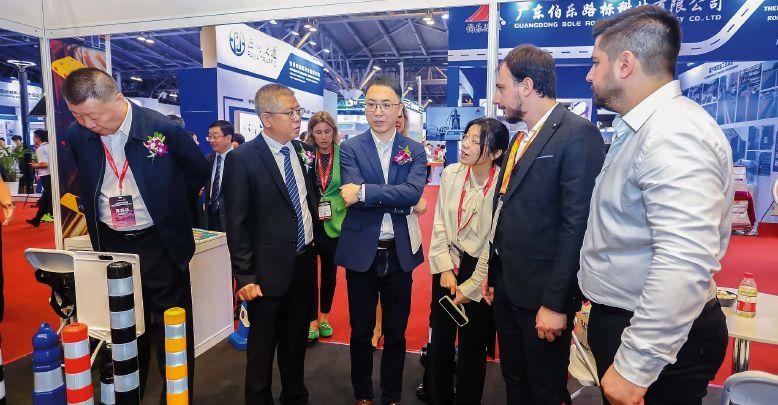
Above: Previous editions of Intertraffic Mexico and Intertraffic China in 2023 and 2024 proved a big draw for road transport innovators

In China, the emphasis is on leveraging artificial intelligence and smart technologies to enhance traffic management
Joyce de Winter, director, Intertraffic Worldwide Events
As the industry looks forward to Intertraffic Americas, Samuel Kapsch, executive vice president for Latin America at Kapsch TrafficCom, delves into his roots in traffic technology, entrance into the family business, the deployment of tolling in the region he oversees, the benefits of promoting diversity in the workplace, and his plans for the future
Words | Jack Roper
Few can claim that traffic technology was woven into the fabric of their childhood so much as Samuel Kapsch. He represents the fifth generation behind the Kapsch family, one of Austria’s largest technology companies, which provides tolling and traffic management systems in over 40 countries worldwide. From an early age, Kapsch knew it was his destiny to join the company which bears his name.
“Growing up in Vienna, the family business was always present,” he recalls. “I remember going to the office with my brother, seeing the meeting rooms and drawing on the whiteboard. For my father’s birthday, we drew our interpretation of a multi-lane free-flow tolling gantry. We were never pushed, but the technology just seemed really cool and interesting.”
A history in traffic technology
Samuel’s father, Georg Kapsch, is CEO of both the Kapsch Group and its largest component, Kapsch TraffiCom. It all started in 1892, when Johann Kapsch founded a precision mechanics workshop in Vienna’s Neubau district, working with telegraph and Morse code technology. Kapsch manufactured its first radio receiver in 1923 and by 1943 was forced to be a major supplier of radio and wireless equipment to the German war effort, with over 3,000 employees. By 1945, many of its assets had been destroyed by allied bombs or seized by soviet troops.
“Our history is one of innovation, crisis and pivoting,” says Kapsch. “We passed through radio and television sets, telecommunications, air traffic control and railroad communications. When the dotcom bubble burst, we had to reinvent ourselves to survive and pivoted towards the tolling business.”
For Kapsch, a family business enables thoughthorizons to be measured not in quarters, but in generations. He believes everyone working for Kapsch should feel like an extended family and share in a sense of the company as a vehicle for good in the world. His younger brother runs his
own real-estate company and assists in some Kapsch Group projects.
“Honestly, I never had doubts,” he says. “I love history and would have liked to do something like that, but I was always clear where I saw myself. I took my first job inside Kapsch at 14 years old, changing tyres in the company garage.”
There followed internships in different departments before, aged 18, he went to study business administration in Spain. Kapsch hardly realized this was the start of more than a decade away from Vienna, which extends to the present day. Once graduated, he moved to Argentina to work for technology consultancy Globant on digital transformation projects.
“Before joining the family company, I needed to experience how other companies work,” he says. “For me, it was important to work in a company where my last name was irrelevant. At Globant, I saw many companies, learned to jump quickly between projects, recognize technological trends and embrace the idea of continuous transformation.”
Eventually, there came the call from his father, offering him the position of executive VP for Latin America. It wasn’t necessarily planned this way, but a leadership vacancy arose and Samuel’s command of Spanish and experience in Argentina made him an obvious fit.
“It wasn’t a pick-and-choose,” says Kapsch. “It was: Look, if you want to come now, this is your opportunity. My father said, You can come now, or at a later stage. There was no pressure. But I said, You know what? I’m in – without really knowing what it meant to accept a leadership position!”
Kapsch TraffiCom is present in 11 countries across a Latin American region extending from Mexico down to Chile and Argentina. Twenty years ago, the company deployed its second-ever multi-lane free-flow tolling system in Chile, where Samuel is based today. It is a vast region characterized by rapid urbanization and infrastructure
Honestly, I never had doubts… I was always clear where I saw myself. I took my first job at Kapsch at 14 years old, changing tyres in the company garage



development, but less advanced than Europe in connected vehicle adoption. Its priorities are markedly different.
“In Europe, we talk a lot about sustainability,” says Kapsch. “But because Latin America has 100,000 road deaths per year, the principal focus is safety. Limited budgets mean that environmental benefits can be a positive byproduct of investments but are not usually the priority.”
There are exceptions: Bogotá has invested heavily in green public transport and Santiago has one of the largest electric bus fleets outside China. Opportunity exists for Kapsch TraffiCom’s traffic management and free-flow tolling technology to reduce transport emissions accounting for some 35% of total CO2 emissions in South America compared with 25% worldwide. But in terms of political will, its solutions are more typically addressed towards safety.
“Multi-lane free-flow tolling means exchanging plazas for gantries, which removes the risk of crashes within the queue, or someone crashing into a plaza,” says Kapsch. “On the ITS side, our ability to integrate thermal cameras and enable early detection of incidents is important in Mexico, where it gets very foggy.”
Across Latin America’s seven largest cities, congestion accounts for $8.6bn in lost productivity each year. Kapsch believes congestion requires a combination of political and technological solutions. The latter could include city tolls to shape driver behaviour and optimised traffic management through centralized signal systems such as Kapsch TraffiCom has implemented in Buenos Aires, Quito, Panama City and will now deliver in Guatemala City.

Our ability to integrate thermal cameras and enable early detection of incidents is important in Mexico, where it gets very foggy
A commitment to diversity Himself proficient in three languages, Kapsch emphasizes the importance of diversity and understanding cultural differences to a company operating in over 40 countries. In Sweden, pre-meeting small talk may take a few seconds, but in Latin America it lasts for 10 minutes or more. He revels in opportunities to experience and value cultural difference.
“We actually recognize four dimensions of diversity,” he says. “We have cultural and gender diversity, which are now standard. But the other two aspects which are really cool to consider are generational diversity – saying that different generations may have different work styles and we
can learn from each other – then we also need to recognise cognitive diversity.”
The value of cognitive diversity is exemplified by Kapsch TraffiCom’s AI Annotation Program. This employs people with autism to label features in photographs used to train the company’s image recognition algorithms, leveraging their exceptional capacity for extended focus and attention to detail. First established in Austria, the initiative has been extended to Chile under Samuel Kapsch’s leadership.
“It gives something back to society and provides jobs to people who may otherwise struggle to find them,” he says. “I wanted to expand the program to Chile because I strongly believe in our corporate responsibility not only for Austria, but everywhere we operate. It makes use of people’s unique skills to create value and has already been hugely productive.”
In Chile the government has stipulated that every new tolling concession should be multi-lane freeflow. Brazil has started transitioning from plazabased tolling to multilane free-flow and Kapsch TraffiCom delivered its first two systems with overhead gantries and back-office systems last year. Beyond multilane free-flow, Kapsch believes satellite-enabled location-based tolling may be the technology’s ideal end-point.
“Location-based tolling means you pay for the distance you actually drive,” he says. “It gives road authorities a lot of variables to play around with. They can charge fees depending on speed, time of day, the type of roads or type of vehicles used and generate a dynamic pricing policy which really fits their needs.”
It may finally progress the discussion of road-user charging, which for years has seemed a great but undeliverable idea. While Kapsch TraffiCom has a satellite tolling project underway in Bulgaria, for Latin America the technology remains some years off.
“Our philosophy is that there’s a learningcurve,” says Kapsch. “We advise countries to go through the tolling evolution, from plaza-based to multi-lane free-flow and only then perhaps to location-based tolling. There are cultural changes around driver behaviour and it’s about showing value at each stage. But the technology exists today and as satellite tolling gains traction, it will become more streamlined and cheaper to install.”
Samuel Kapsch speaks to Intertraffic World from company headquarters in Vienna but he is only visiting and in another week, will return to Chile. It is more than a decade since he left the city of his forefathers as a fresh-faced student bound for Spain, not expecting to call a distant continent home for so long. Yet one day, could his journey come full-circle?
“In a future where I move up in the company, I think it will,” says Kapsch. “On a personal level, I love Latin America. But I also love Vienna, our headquarters are here, and I would look forward to moving back to my hometown.” n
Explore our safety solutions.
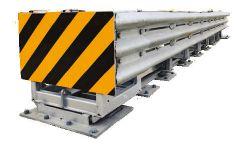
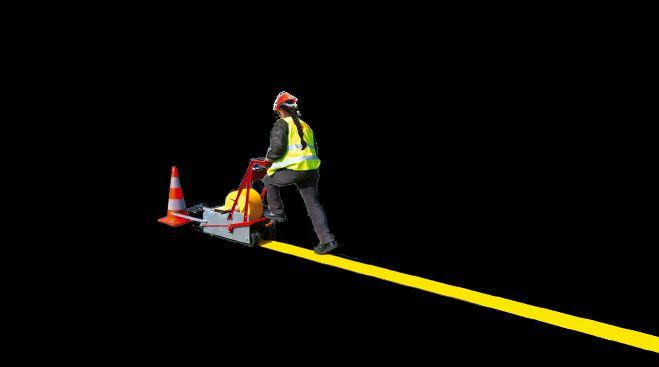
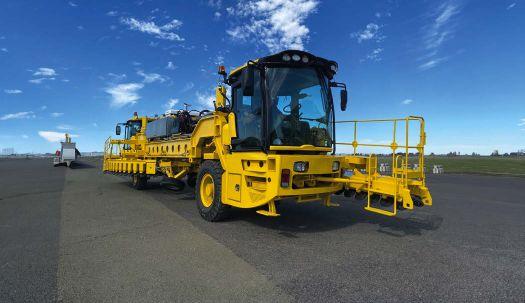
Safer roads start with our latest solutions. Like you, we’re dedicated to keeping the world moving forward—safely, efficiently, and sustainably. Whether we’re helping you reconfigure a roadway with the Road Zipper™, installing lifesaving barriers with our innovative road safety products, or creating new remote technology solutions that save time and money on labor and maintenance, we can make roads safer together.





From Tesla’s Autopilot to robotaxis from Waymo, the latest generation of automated vehicles are increasingly ‘standalone’ with connectivity only used for non-safety critical functions – but proponents of CCAM (cooperative, connected and automated mobility) argue that AVs can only reach their full potential if connectivity is enhanced. Industry experts take a look at the ideal roadmap to the future
Words | Jack Roper


caption caption

Not long into his first trip in a San Francisco robotaxi, Tom Alkim eased back in his seat and reflected on the Cruise vehicle’s reassuring smoothness compared to his Uber ride from the hotel. “Not all taxi drivers are cautious and gentlemanly,” he observes. “Sometimes you’re in a hurry and that’s okay. But when you fear for your life, that’s a different story!”
Alkim works at the intersection of traffic management and automated vehicle (AV) development. Before joining Dutch company MAPtm as a Strategic Advisor, Alkim was policy officer for Connected and Automated Driving at the European Commission Directorate-General for Research and Innovation. Based on personal experience of numerous automated rides, he considers the technology increasingly mature.
“Bringing automated mobility to roads involves four different disciplines,” he says. Enabling technology comes first, followed by a legal framework. “If something works and is allowed, it must be integrated into legacy mobility systems, which is where road operators come in. Finally, we want the public to not just to accept but embrace the technology.”

Road operators must consider how infrastructure will accommodate AVs so mobility systems can reap their projected benefits. To operate safely, an AV must remain within an envelope known as the operational design domain (ODD). Only with real-time awareness of ODD attributes like rainfall, traffic density or changes to physical or digital infrastructure can it know when ODD limits are about to be exceeded.
Roadside information could enhance ODD attribute awareness in AVs otherwise reliant on their own sensors.
“An example of competing information is ambient temperature, which vehicles already collect,” says Alkim. “Providing that beyond the range of sensors could increase the vehicle’s horizon and proactive capabilities. Traffic managers also have complementary information which vehicles cannot sense, such as traffic densities.”
Vehicles at SAE Level 3 automation are expected to hand control to a human before their ODD is exceeded, while Level 4 vehicles must come to a safe stop by a minimum-risk manoeuvre –expediencies both potentially problematic to road safety. Receiving advance notice of an impassable thunderstorm promises more time and better options than first sensing it as it hits the vehicle.

“OEMs are also interested in work-zone information,” says Alkim. “Relying on their own sensors makes sense to enable first deployments. But as vehicle numbers increase, we enter the territory of traffic management and collective optimization.”



Connected and autonomous?
While Dutch national road operator Rijkswaterstaat expects Level 3 AVs on its roads in the coming years, the more complex challenges of Level 4 integration lie beyond its current roadmap. He favours the European idea of connected and cooperative automated mobility (CCAM) versus AVs working in self-reliant isolation.
OEMs are also interested in work-zone information. Relying on their own sensors makes sense to enable first deployments. But as vehicle numbers increase, we enter the territory of traffic management and collective optimization
Tom Alkin, strategic advisor, MAPtm
“We believe in the benefits to society, but want to mitigate the risks,” says Rijkswaterstaat’s strategic advisor for Traffic Management and Smart Mobility, Henk Schuurman. “We believe connectivity can enhance the safety of vehicles which combine their own sensing with information from road operators, such as real-time data about roadworks collected in our C4Safety project.”
In 2020, KPMG rated Dutch roads second in the world for Level 4 AV readiness after Singapore, while an exploratory Rijkswaterstaat study found 72% of its network capable of supporting Level 4 ODDs. But Schuurman is more cautious: “Our highways are well-designed

with high visibility and pavement quality. Only 28% are unsuitable for initial deployment, including tunnels and complex tidal flow-lanes.’
When AVs are deployed at scale the Netherlands expects them to use existing infrastructure, minimizing public investments.
“We invest in digital infrastructure, but consider major adjustments to physical infrastructure unnecessary,” says Schuurman.
The Traffic Management for Connected and Automated Driving (TM4CAD) project explored mechanisms for infrastructure to contribute to the ODD-attribute awareness of automated driving systems. Funded by the Conference of European Road Directors (CEDR), TM4CAD
was led by Henk Schuurman and his former Rijkswaterstaat colleague, Tom Alkim.
“We developed the concept of Distributed ODD-attribute Value Awareness (DOVA),” says Alkim. “DOVA looks at vehicle capabilities as defined by its technology and sensors, the physical and digital infrastructure, then elements beyond our control, like weather or traffic situations. Combining that with the rules of the road determines whether a vehicle is within its ODD and therefore able to drive.”
DOVA provides a useful framework for a dialogue between road operators and vehicle OEMs involved in the Hi-Drive consortium (see Enhancing AV OEM cooperation box)
Hi-Drive is a €60m project with 40 partners across 13 European countries, including vehicle OEMs, automotive suppliers, research institutes and traffic engineers. It aims to eliminate fragmentations in the operational design domains (ODDs) of vehicles at Level 3 (conditional) and Level 4 (high) automation.
“Between origin and destination, your automated drive may be interrupted by roadworks, heavy rain or accidents,” says project coordinator, Aria Etemad. “We’re trying to cover those scenarios to ensure the automated service you paid for will work as expected.”
Other causes of ODD fragmentation include complex traffic, dynamic traffic rules, GNSS occlusions and unusual obstacles. Possible enablers considered by Hi-Drive include cooperative maneuvering, machine learning, remote fleet management and vehicleto-infrastructure (V2I) communication in collaboration with traffic managers.
This 48-month project commenced in July 2021 and has collected data from 400,000km of demonstrations, mostly conducted on public roads. “As with any new system, we first have simulations,” says Etemad. “We then install

software and hardware in cars and ensure the concept works on a test-track before asking for approval to drive on public roads.”
While OEMs mostly conduct road-tests close to their own headquarters, collectively these are spread across Europe. One 2023 Hi-Drive roadshow demonstrated automated driving in Germany’s longest tunnel, the Tunnel Rennsteig, without GNSS coverage.
“We’re collecting scenarios,” says Etemad. “We still use test-tracks for more risky
scenarios with several vehicles. We go step-by-step, like a child who is learning to walk for the first time. From the technical side, it means everything from better sensors to faster computing, then the legal frameworks and admission procedures to put vehicles on the road.”
“Level 4 is complex, because we need other stakeholders like road operators and maybe the telecommunications industry,” he adds. “But we’re here to solve complex problems.”
longest tunnel with no GNSS
Below: Tom Alkim and Henk Schuurman with a Hi-Drive test vehicle
40
initiated by TM4CAD. “But it remains difficult for OEMs to state exactly what information they can use,” says Alkim.
“Usually, OEMs want to build vehicles which can operate independently and don’t want to rely on external information for liability reasons,” he continues. “Let’s say there are trust issues.” Nevertheless, Schuurman believes vehicles must co-operate with infrastructure for the extended visibility needed at higher speeds and sees OEMs starting to buy into this shared vision.
The number of partners involved in Europe’s €60m Hi-Drive AV harmonisation project
to roads because of this information.”
The Hi-Drive ODD defragmentation concept identifies adverse weather, slippery roads and dynamic traffic rules as automated driving challenges which traffic management centres or vehicle-to-infrastructure (V2I) communications could help solve. But Etemad concedes that vehicle OEMs harbour reservations about relying on external information.

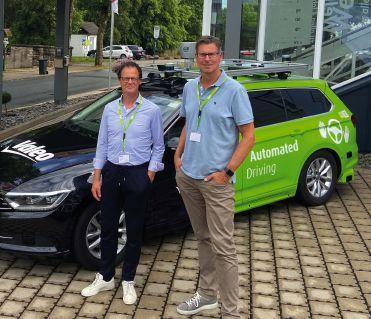
“Information from additional sources can of course make automated driving systems more robust,” says HiDrive project coordinator, Aria Etemad of Volkswagen. “We must discuss solutions for new challenges traffic managers may face, like vehicles performing minimum-risk manoeuvres and potentially blocking the road.” Etemad anticipates a two-way exchange with reciprocal benefits.
“Vehicles which accurately sense the environment can share useful information with traffic managers,” he says. “In Sweden, vehicles of different brands send road condition reports to the road operator, Trafikverket. Last year, Trafikverket applied 30% less salt
“Our business-case says that if we develop a system, it should work everywhere,” he says. “If vehicles depend on a work-zone warning system which is only installed in Germany, we can only sell them in Germany.” A viable continental market for infrastructure-reliant vehicles requires investment from road operators across Europe, besides Europewide standards and harmonized admission procedures which Hi-Drive seeks to advance.
Then comes the question of liability for vehicles relying on roadside information to remain within a safe operational domain. “Our infrastructure friends perhaps need to understand how safety works on our side,” says Etemad. “We have automotive safety and integrity levels (ASIL). The airbags in your car are Level D, meaning they work in 99.99% of cases.”
Just as airbags are held to higher standards than car radios, the reliability required of

Accuracy certified by METAS (the Swiss Federal Institute of Metrology) to standard OIML R134, class F5. Plus: automated tire screening, and precise data when vehicles switch lanes – even at high speeds. Be a triple winner with Kistler’s revolutionary Weigh In Motion platform!

roadside information would depend on its safety-relevance. Etemad believes work-zone information on which AVs depend may require redundant communication systems to underwrite its reliability. “Then comes cybersecurity, which means another level of investment,” he adds.

Our business-case says that if we develop a system, it should work everywhere. If vehicles depend on a work-zone warning system which is only installed in Germany, we can only sell them in Germany
Rijkswaterstaat already makes road and traffic information available to navigation service providers and vehicle OEMs via a national data access point. The European ITS Directive makes open data provision mandatory from 2025, but does not specify the required dataquality. “For automation, data-quality is key,” says Schuurman. “Data to which vehicles react automatically must be of outstanding quality.”
“Saying Maybe there’s an incident ahead is no use to OEMs,” he continues. “Relying on outside information is a very strategic decision and we need to define the quality-levels they need.” The National Access Point Coordination Organisation for Europe (NAPCORE) addresses this with a five-star data-quality rating system.
“Five-star data may be unreasonable to expect all road authorities to provide, but perhaps threestar data is sufficient for initial applications,” says Schuurman. “If only the Netherlands delivers five-star data, OEMs cannot rely on one country. That’s why we collaborate in Europe: to perform together as road authorities.”
Human-machine cooperation
Schuurman recently experienced the BMWMercedes Level 3 automated lane-keeping system
(ALKS), beyond whose ODD limits a human should resume control. Thrusting someone reading a book into a complex driving scenario is assumed to require at least 10 seconds’ notice.
“The 10 seconds is debatable,” says Schuurman. “If you don’t take over, the procedure is stopping in lane, which may create a dangerous obstruction. We’re pushing for a safer stop in the emergency lane and an automatic alert to the traffic control centre, which isn’t mandatory today.”
Level 4 robotaxis or shuttles with no mechanism for human control must perform a minimum-risk stopping manoeuvre when ODD limits are reached. “Potentially, the vehicle says, Hold on, I can’t handle this situation so I’ll just park here! ” says Alkim. “Road managers don’t want that happening on the fast-lane of the highway.”
Etemad notes that minimum-risk manoeuvres are already implemented in Level 2 systems for driving in traffic which ultimately stop if they sense a lack of driver engagement. Optimising the window for human takeover or minimumrisk stopping returns us to the expanded foresight that roadside information could offer.
“Our sensors see about 300m ahead,” says Etemad. “Beyond that field-of-view, accurate information could help us achieve the 10 seconds, or preferably more, needed to hand control to a driver.” Alkim remembers another San Francisco robotaxi drifting into the path of a fire-truck. “We made a wide turn to let it pass, then became a little stuck,” he recalls.
“We reversed then went forward at an intersection, hampered by other vehicles arriving.” It was a moment underlining the avoidable nuisance self-reliant AVs could cause. “The City of San Francisco could say, We’ve had it with your vehicles running into our fire-trucks! ” he says. “One mechanism to prevent that could be mandating the use of roadside information.”
This would shift the terms of a dialogue now in its infancy. “Our two different communities first need to understand each other,” says Etemad. “Then we can find the low-hanging fruit, probably starting with use-cases which are not safety-critical.” ■
Transform your road network with Kapsch TrafficCom.
Experience a connected infrastructure:
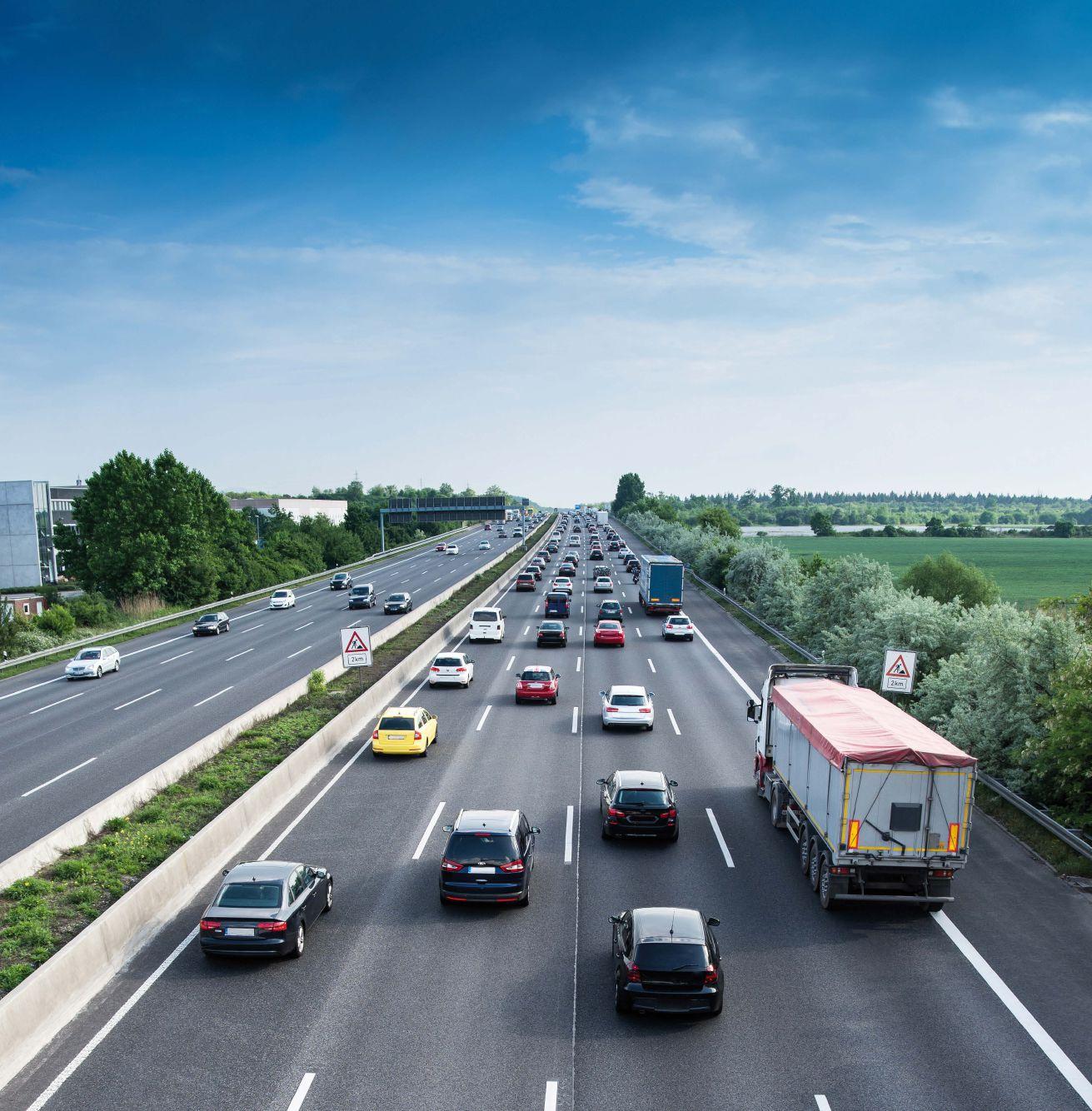
Enhanced Safety
Optimized Traffic Flow
Smarter routing find out more




A revolution is underway in the parking world as humble rectangles of asphalt become not just a place to leave your car, but a place where it can also recharge. What are the challenges that parking operators must now overcome? And will vehicleto-grid (V2G) technology soon be part of the picture?
Words I Tom Stone
Smarter parking and charging solutions require collaboration between parking providers, EV charging companies, OEMs, parking app developers and highway operators
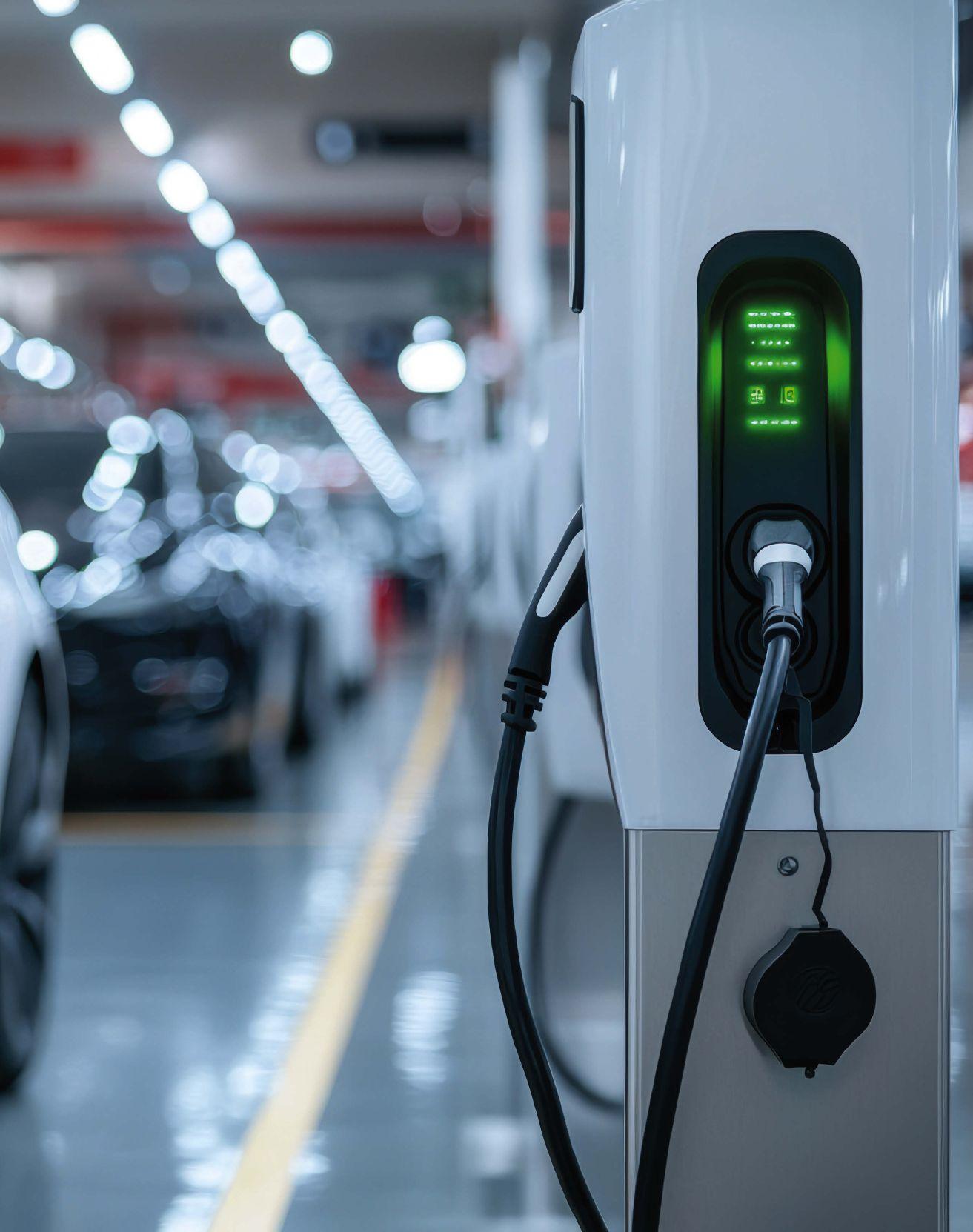
Agood car park has always been one that is convenient, secure and competitively priced but now, as electric vehicles (EVs) continue to surge in popularity, a new service must be added to any premium facility – vehicle charging.
As with any new service, there are new challenges to be overcome for those providing it. Delivering EV charging effectively in a car park isn’t as simple as installing a few charging points, because this expensive infrastructure also needs to be properly managed, so that valuable minutes and hours are not wasted by cars parked in these spaces that are already fully charged – or don’t even need charging in the first place. Here, technology can help.
“Using IoT devices like bay sensors and video analytics, we can collect a wealth of data on utilization and optimize enforcement,” says Scott Gow, chair of the British Parking Association’s (BPA’s) EV Connect,



Using IoT devices like bay sensors and video analytics, we can collect a wealth of data… We can send an alert to the operator when a bay isn’t being used properly. That allows them to act intelligently, rather than just randomly checking cars
Scott Gow, chair, British Parking Association, EV Connect



who has over 30 years of experience in the parking industry and spoke recently at the Highways UK conference in Birmingham. “This technology enables us to respond in real-time when a bay is blocked or not being used for charging.”



Gow believes this targeted approach is crucial. “We can use the back office to send an alert to the operator when a bay isn’t being used properly. That allows them to act intelligently, rather than just randomly checking cars.”





Gow’s thoughts are echoed by Hannah Fuller, director of commercial relationships at Unity5 and chair of the BPA’s Women in Parking Advisory Group. Fuller has been exploring the potential of artificial intelligence (AI) to assist in EV charging enforcement. “We’re working closely with ANPR companies, using AI to identify vehicle types even when the plate is unclear,” she says.


with parking – the question of payment is also key. No EV driver wants to have to navigate a confusing mosaic of apps to park and charge their car, while operators need an efficient, streamlined back office. The integration of parking and charging payments is therefore paramount.








However, while AI may be useful, the use of ANPR cameras for enforcement can be contentious. Even in the UK, where this technology is widely used for traffic enforcement, its admissibility for evidence in parking infractions that occur on private land isn’t clear. “There was a letter in 2014 saying you can’t use ANPR, even if you own the land,” says Gow. “The problem is, it’s never been tested in law, so there’s a lot of ambiguity. It’s a grey area in the UK.”



Signage is also a major challenge. “It’s one of the reasons local authorities avoid implementing new regulations,” says Gow. “They just don’t want to deal with the signage requirements.”


“We need to simplify things like signage, so people know what they’re signing up for,” agrees Fuller. “It’s about how we provide information, so customers understand their choices.”

Optimisation of assets and enforcement aren’t the only challenges of integrating EV charging
“There’s significant revenue involved,” says Fuller. “We need to make sure we’re set up in a way that delivers for both local authorities and customers.”



“We get a lot of complaints about people getting penalty charges after using an EV app,” admits Gow. “Partnering with local authorities on common payment platforms could help avoid that confusion.”

In a world of smart devices push notifications could be one way to optimise the use of charging points. For example, if a car is 90% charged, the rate could increase from €1 to €5 per hour, in order to encourage the driver to move on and free up the spot. Alternatively, drivers who move their car when they get a notification that someone else wants to use that spot could be given future discounts on charging.

Sarah Randall, director of Local Government and Propositions at Agena Group, believes that this ‘carrot’ approach is more effective than the ‘stick’ “People are happier to be nudged in the right direction, rather than facing hard enforcement,” she says.
Ultimately smarter parking and charging solutions are going to require a new level of collaboration between parking providers, EV charging companies, OEMs, app developers and highway operators.
“If we’re not talking to the entirety of our infrastructure, we’re going to miss the mark,” says Fuller. “We need to make


> Automated speed enforcement system
> Lightweight and compact system for everyday use
> Fully automatic calibration in less than 5 minutes
> Very high level of efficiency






























The untapped power potential of new electric vehicles awaiting shipment to dealerships is complemented by a stationary storage unit built from second-life batteries. And the project’s cornerstone innovation lies in its sophisticated hardware – specifically, a new DC-DC converter that overcomes previous limitations in V2G technology.



sure we’re maximizing what we do and tying that into multi-use scenarios.”
As the industry navigates these challenges, the focus remains on creating a seamless, user-friendly experience for EV drivers while optimizing limited charging infrastructure.

Fuller believes that harnessing data and technology is crucial, but must be balanced with clear communication. “It’s about how we surface information, so customers have choice and understanding. That’s going to be a huge benefit.”






Gow is optimistic: “With continued innovation, regulatory evolution, and crosssector cooperation, the future looks brighter than ever – and increasingly intelligent.”
As charging infrastructure for EVs grows, the next possibility on the horizon is harnessing the vehicle-to-grid technology to help with load-balancing across the national grids.

This is now being trialled in Italy, not in public car parks, but using new EVs sitting unused and waiting for shipment in lots owned by Fiat Chrysler Automobiles (FCA)

The DrossOne V2G Parking, fully funded by the EU Emissions Trading System, is the world’s first commercial large-scale centralized vehicle-to-grid (V2G) system. At the heart of the project are 280 bidirectional fast chargers, designed to transform an OEM parking lot into a sophisticated power management hub.
Vehicle-to-grid technology represents a significant opportunity to optimize the operating costs of cars for the benefit of motorists, as well as the concrete possibility of contributing to the sustainability of the power grid



Unlike earlier systems that could only handle identical vehicles, this advancement enables the charging and discharging of various electric vehicles, including high-voltage battery packs from commercial vehicles, trucks, and buses, regardless of their battery state of charge.



This intelligent system creates a single interface with the power grid, streamlining the delivery of essential stability services to Italy’s transmission system operator (TSO).
the delivery of essential stability services to the
Running until 2027, the project aims to deliver 25 MW of ultra-fast reserve services, with the capability to dispatch up to 30.8 MW for ancillary services. This significant capacity offers a clean alternative to traditional thermal plants for grid balancing and flexibility services.


The system’s capabilities extend far beyond basic power storage. The V2G platform is designed to provide a comprehensive suite of grid services, including frequency regulation, voltage regulation, and balancing services. While some services await regulation in the Italian market, the platform will initially focus on ultra-rapid reserve and real-time services, including tertiary reserve, balancing, intra-day trading, and portfolio balancing.


This innovative project represents a significant step forward in grid stabilization technology, demonstrating how parked electric vehicles can contribute to a more sustainable and flexible power grid while creating value from otherwise idle assets.
Gow expands on this, outlining how vehicleto-grid technology could enable even more sophisticated management. “You could get a notification saying someone else wants to use your spot, but they’re getting a discount for charging at that time,” he explains.
“Vehicle-to-grid technology represents a significant opportunity to optimize the operating costs of cars for the benefit of motorists, as well as the concrete possibility of contributing to the sustainability of the power grid,” says Roberto Di Stefano, head of e-Mobility for FCA’s EMEA region. “However, we need a V2G-friendly regulatory environment. The Ministry of Economic Development has laid down criteria… A full regulatory framework is now expected to follow.”


Such projects are pioneering a way forward for EV charging that may one day been seen in public parking facilities – helping not only to meet the needs of EV drivers but also benefit the wider community via smart load-balancing of the grid. The revolution in parking technology that EVs are creating has only just begun. ■

Multi-modal detection and intersection monitoring solutions to help build smarter cities.
Comprehensive solutions to ensure compliance and maintain road safety.
High quality Weigh in Motion (WIM) and video/AI data and analytics for advancing transportation intelligence.
Advanced cloud-based solutions that are intuitive, scalable, and secure for seamless transactions and reliable operations.


Digital social platforms have evolved into more than just ways to share photos and keep in contact with friends –traffic managers are now using them to help inform drivers of road closures and reduce congestion, with the Netherlands being one of the world’s leading nations for innovations in this field
Words | Jack Roper


Social media is changing society rapidly and profoundly, in ways only future historians may fully grasp. For national road operators like Rijkswaterstaat (RWS) in the Netherlands, it offers means to target specific groups with information about road closures in multichannel campaigns run by providers like BUKO, MAPtm, Traffic & More and TripService.
“We enjoy working with those companies because they broaden our range of connection with road users,” says RWS senior advisor for travel and route information, Cindy Geusebroek. “Each service provider has their own way of working, which may suit the needs of a particular project.”
Dutch road projects fund campaigns to inform drivers of disruption from their own dedicated budgets. Typically, these now combine a third-party online campaign along with more traditional radio or newspaper adverts.
Online campaigns target specific groups in geofenced locations pertinent to planned closures. “We know people
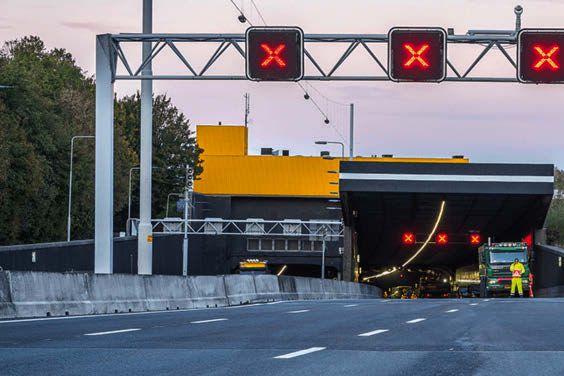
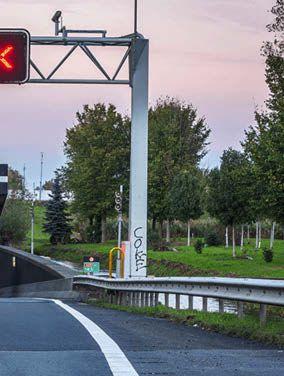
Above: Notifications of planned closures of Heinenoordtunnel in the Netherlands were delivered to the public via a geofenced social media and online advertising campaign
using the route see our message,” says Geusebroek. “A report showing the number of unique users we reached enables us to evaluate the cost per user.”
“Behind every vehicle movement, there’s a person with a telephone,” says MAPtm traffic engineer, Floris Hooft. “That’s why we do traffic management via social media.” Each MAPtm Social Traffic Management campaign begins with a road operator presenting a project whose impact it needs to communicate to a significant number of people.
“We ask ourselves four questions,” says Hooft. “’Who should we reach? Via which platform? At what moment? And with what message?’ We then design a strategy based on the problem.” This combines four essential ‘building-blocks’: geofencing, notifications, navigation and advice.
Targeted campaigns
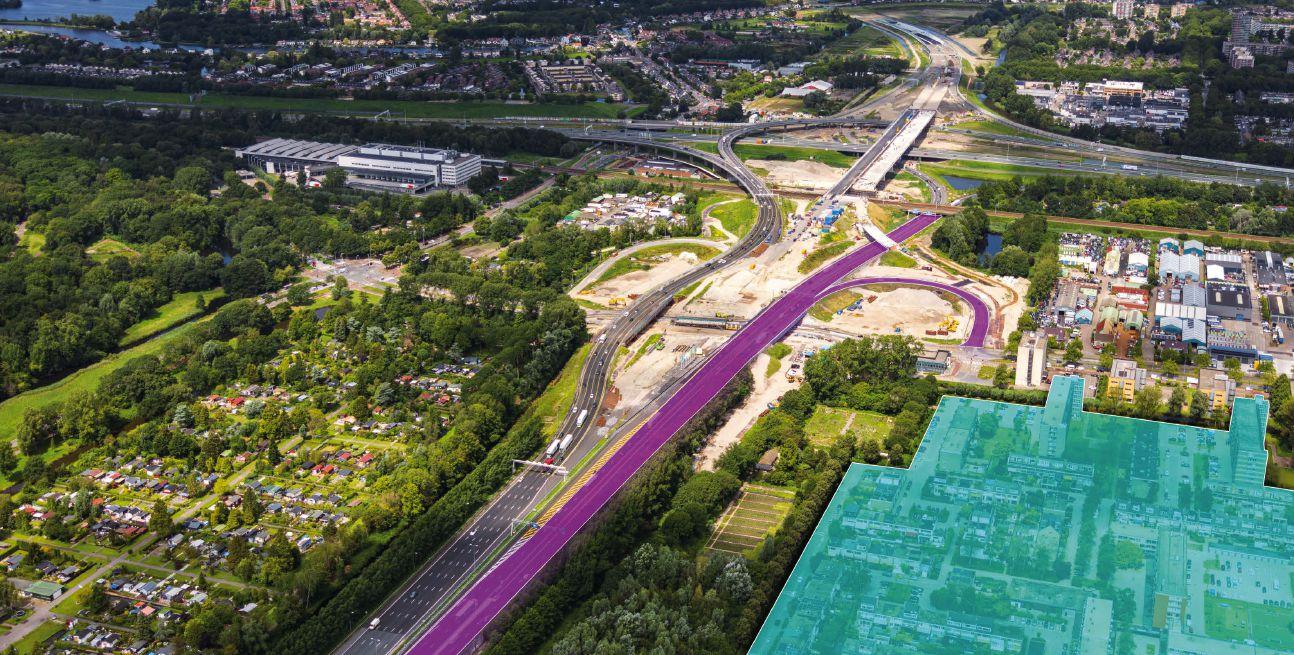
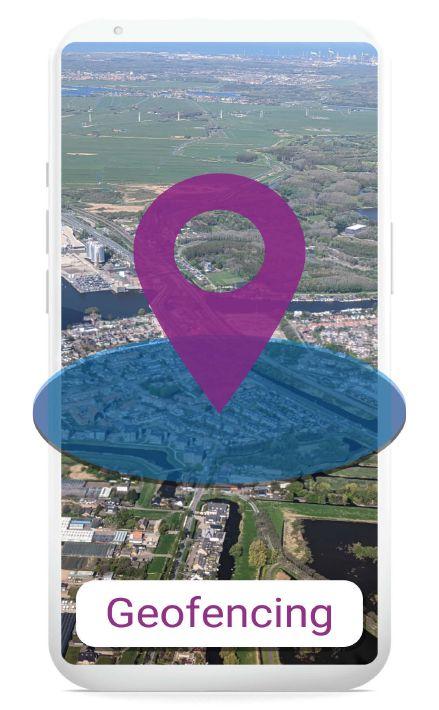
Geofencing targets people in specific locations with social media adverts. If RWS intends closing the road from A to B, for example, MAPtm can target residents in Area A and Area B. In Amsterdam’s
business district, it may reach people via LinkedIn, then use Instagram to address a younger demographic in the city’s fashionable north.
“We can circle a specific radius or zip code so that people see the desired information when scrolling through their feed,” says Hooft. “Often, that prompts them to search on Google, so combining Facebook, Instagram and Google Ads can provide the strongest package.”
Secondly, MAPtm sends WhatsApp notifications to a mailing-list of subscribers. Whereas geofencing casts a wider net to target specific groups, notifications directly target individuals who have actively requested information. While more effective in those cases, it is limited to MAPtm’s signed-up users, restricting its reach.
Smart navigation
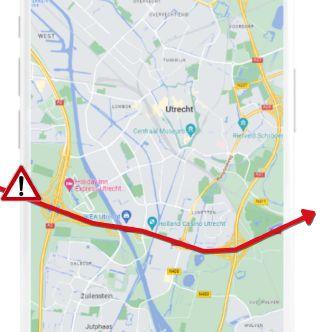
Navigation is Social Traffic Management’s third component. MAPtm can input Rijkswaterstaat roadworks information into the systems of Apple Maps, Google Maps, Here, TomTom and Waze so
that their algorithms divert navigation app users around closures.
“Navigation is really the last resort,” says Hooft. “It reaches people who didn’t see our geofenced advertising or receive pre-trip notifications when they’re actually in their car.”
Pre-trip messaging cannot reach every driver using a specific route. “The challenge is knowing how many of those we do reach will change their travel behavior,” says Geusebroek. “If we reroute people, congestion or incidents may also impact the new route, so updated navigation is vital.”
Answering questions
Hooft’s fourth building-block is travel advice. MAPtm’s Ask&Go service enables users to respond to WhatsApp notifications with questions. “If our notification says, ‘From Friday, your road will be closed’, someone may ask, ‘Can I still use it to come back on Sunday’?’ says Hooft.
MAPtm employs a human to answer these WhatsApp queries and believes its users really
Each day, around 110,000 motorists pass through the Heinenoordtunnel, which conveys the arterial A29 under the watery Oude Maas south of Rotterdam. Opened in 1969, the Heinenoordtunnel underwent comprehensive renovations in 2023 and 2024 and Rijkswaterstaat called on MAPtm to inform the public of associated weekend closures.
MAPtm’s conducted a comprehensive campaign of geofenced social media advertising to target key user groups. These included not only local residents and commuters, but also truck drivers inbound from Antwerp and German holidaymakers dreaming of beaches in Zeeland.
“We reached out to local people in the previous Christmas break, when they would be booking their summer holiday,” says MAPtm’s Floris Hooft. “We encouraged local residents to book holidays during tunnel closures to reduce the traffic hindrance.”
Geofenced advertising ensured that when Germans typed ‘holiday house in Zeeland 2024’ into Google, an advert appeared informing them of tunnel closures.
“Social media is not bound by national borders,” says Hooft. “Because the A29 is the main route between the ports of Antwerp and Rotterdam, we put out Google ads in 10 different languages. We saw the best response to ads in Polish and Hungarian.”
Like any Google advertiser, MAPtm can obtain anonymized data on the demographic makeup of those exposed to its adverts. This confirmed some of its key assumptions, for instance truck drivers being predominantly males in the 45-60 age-bracket.
“Google knows about the people behind your volume,” says Hooft. “Somewhere in your Google history, you probably stated your age and gender. We don’t know anything about individual people – we just see the numbers.”
In total, MAPtm reached 1.2m users across six campaign ‘moments’ associated with specific closures. For context, the population of the Rotterdam municipality is 664,000.
“That astonishing rate of penetration is the result of targeting through-traffic from other European countries as well as travellers and residents in Rotterdam,” says Hooft. “In Japan, only the national road authority is permitted to communicate about roads. But we can do this anywhere you can send road information via social media platforms.”
value human confirmation of their understanding. “We only use a chatbot to answer about 5% of very basic questions,” says Hooft. “Beyond that, the chatbot becomes a little…robotic.”
“Al can provide well-ordered instructions for baking a cake,” Hooft continues. “But it cannot yet grasp a route from A to B on a congested network taking closures into account. A human, however, understands the motives and needs behind a travel question and can suggest options for using other modes, which the City of Amsterdam appreciates.”

Rijkswaterstaat’s Drive MONO campaign unambiguously discourages Dutch drivers from handling devices at the wheel and MAPtm’s Ask&Go service focuses on pre-trip notifications and advice. But insofar as such services could also provide on-trip information, Geusebroek believes their design must preclude this becoming a new source of driver distraction.
MAPtm combines the four elements of Social Traffic Management according to project
Behind every vehicle movement, there’s a person with a telephone. That’s why we do traffic management via social media
Floris Hooft, traffic engineer, MAPtm
demands. Closing a simple junction on a rural road may only require geofenced advertising, while the most complex programs may merit the cost of a dedicated operator with access to traffic cameras fielding WhatsApp queries.

How people communicate is constantly changing. Service providers need to keep up with that, constantly scanning for new possibilities, like TikTok
Cindy Geusebroek, senior advisor for travel and route information, RWS
Rijkswaterstaat publicizes closures on its own social channels and vananaarbeter.nl (‘From A to Better’) website, besides strategically outsourcing online campaigns to providers like MAPtm, BUKO, Traffic & More and TripService.
“Market parties are often more experienced in reaching target groups,” says Geusebroek. “They can make advice specific and personal, which is something we can’t do.” Rapidly evolving online habits provide another challenge. Following a presentation to undergraduates, Hooft reports that everyone present used TikTok and around half were drivers.
Indeed, MAPtm already uses TikTok to target younger cyclists in urban areas. “How people communicate is constantly changing,” says Geusebroek. “Service providers need to keep up with that, constantly scanning for new possibilities, like TikTok.”
Measuring the effect MAPtm’s campaign for the Heinenoordtunnel renovation outside Rotterdam [See Targeted online info for a tunnel closure] reached 1.2m unique users. Considering Rotterdam’s population is only 664,000, this impressive figure reflects cross-border geofenced targeting of groups including truck drivers and German holidaymakers. The number of unique users reached provides the principal metric of success for such campaigns.
“We can say we reached a million people ,” says Geusebroek. “But we can’t say a million people saw our messages and changed their behaviour.” Fundamentally, congestion

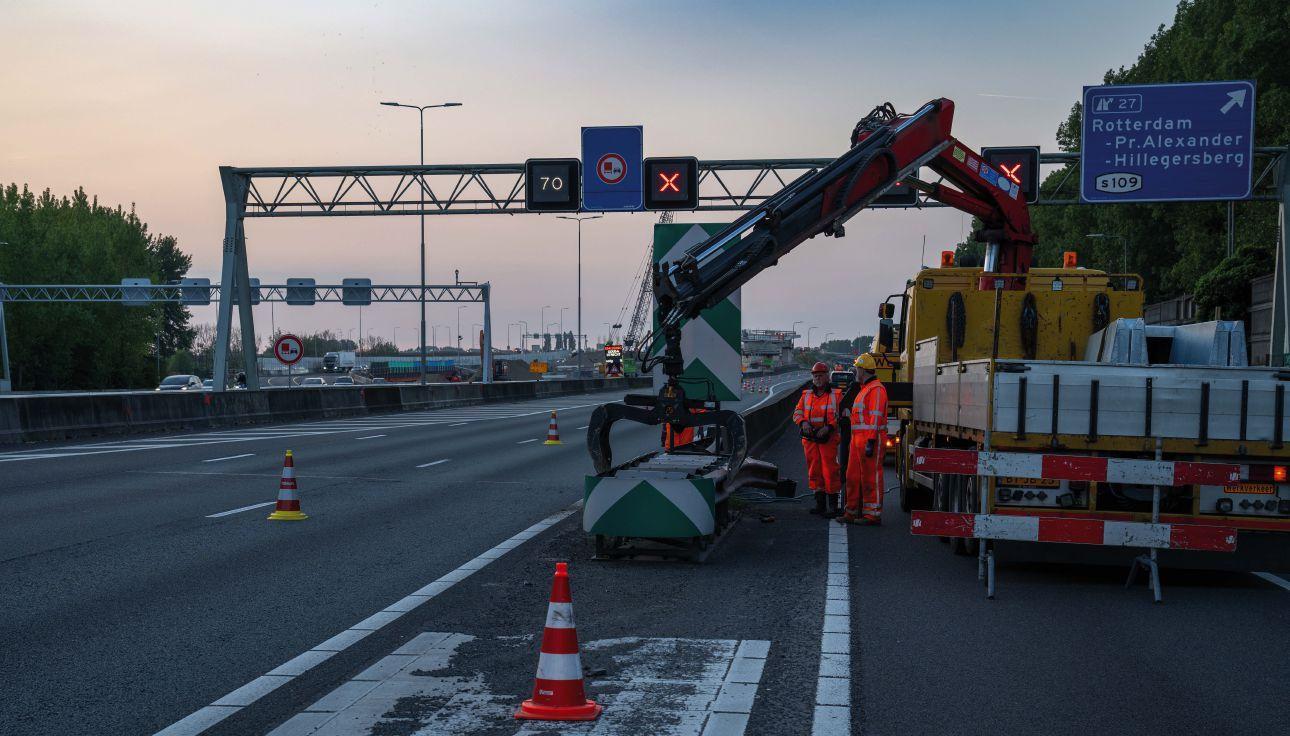



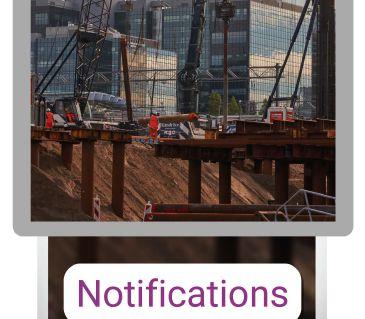

Above and
Push notifications can inform road users of updates to planned works as well as suggested alternative routes
which may have occurred without an online campaign cannot be objectively measured. “Perhaps only a small percentage change their route,” she adds. “But we do know we’ve done everything in our power to inform them.”
MAPtm has conducted A/B testing in Utrecht by measuring traffic output with and without Social Traffic Management across consecutive weekends and saw differences of a few percent. “It’s proven that a 5-10% reduction in traffic can reduce congestion by over 20%,” says Hooft. “For complex projects, we can’t say, ‘look, because of us there’s no traffic jam!’ We can only present the numbers.”


“It’s WhatsApp
“In the end, we provide relevant, factual information approved by road authorities, which most people in the Netherlands still trust,” Hooft continues. Whilst expletive-laden responses to WhatsApp messages about unwelcome road closures are not unusual, conspiracydriven attacks on Rijkswaterstaat remain thankfully rare.

“Sometimes it happens,” says Hooft. “We always check with RWS or the municipality how we should respond. Mostly, the advice in these cases is to just leave it. Otherwise, you’re just feeding a discussion in which there is more than one truth.”
Increasingly, a runaway digital revolution presents social and political consequences which are not straightforwardly good. Despite his vocation, Hooft’s own use of social media is limited. “What started as a public space where everyone had freedom of speech has evolved into something we didn’t expect.”
Over the next decade, maintaining Dutch roads demands a continual programme of roadworks. Geusebroek considers it Rijkswaterstaat’s responsibility to keep the road-using public informed with targeted communication exploiting every possible avenue in an online world.
“Our data has to be good,” she says. “Of course, market parties and navigation providers must also provide good information. We need to work together and in recent years, that cooperation has really taken flight.” ■
Transform cities, highways and tunnels with FLIR Intelligent Transportation Systems
Enhance safety, reduce congestion, and improve traffic flow with FLIR’s cutting-edge technology. The AI-based intelligent solutions provide real-time data and analytics, ensuring efficient and smart transportation management. Upgrade your infrastructure today for a smarter, safer tomorrow!
Ready to revolutionize your city’s transportation? Contact us now!

URBAN ENVIRONMENTS
Thermicam AI and Traficam AI
Advanced traffic monitoring in complex urban environments
Trafibot Dual AI
Enhance Inter-Urban traffic flow and road safety







Words | Tom Stone

What should traffic managers do when then latest addition to their team isn’t a human but an artificially intelligent computer system? The answer, much as it always has, lies in oversight, guidance and ensuring tasks are well suited to skills



From vehicle classification and data analysis to asset management, AI is being widely adopted across road networks

Artificial intelligence (AI) has been assisting with traffic management for a few years now. Before the big buzz that came with the launch of large language models, traffic technology developers were harnessing the technology to spot traffic patterns, predict future pressure points and identify road users.
Now, as in so many areas of life, the use of AI is increasing, however, as the AI gold rush continues, experts urge caution in an over-reliance on systems that can often appear to be more intelligent than they really are. “AI will not be a panacea to immediately overcome all our issues,” says Alistair Gollop, founder of industry knowledge-exchange platform ITS Now.
At Highways UK in Birmingham, Gollop emphasized the need for AI to be used in an “educated and intelligent manner” in order to start achieving solutions for problematic areas, with the abundance of data being generated across the transportation network being both useful and challenging.
“We have more data today than we’ve ever had, and we have data about data and data from devices, and more data about


Trust is such a human word. I trust my colleagues. But is trust the right word with AI? Actually, I think what we should be talking about is confidence in AI
Christopher Kettell, chief technologist, TRL
data, and it’s overwhelming,” says Christopher Kettell, chief technologist at TRL. “And that isn’t something that’s unique to transportation.”
AI can be extremely helpful in sifting through these large amounts of data and making sense of it – differentiating trends from outliers – but Kettell still advocates human oversight: “It’s important that your domain expertise comes in with data,” he says, emphasizing the importance of not just blindly trusting AI, but rather building confidence. “Trust is such a human word. I trust my colleagues. But is trust the right word with AI? Actually, I think what we should be talking about is confidence in AI, however that manifests.”
This sentiment is echoed by Anna Jordan, CEO of Alchera Technologies, who says “AI is a tool that assists with bringing rational thought to the surface. Large language models (LLMs) enhanced with retrieval, augmented generation (RAG) modelling, give foundational building blocks that can start to support better decision making.”
Jordan has an example of the use of AI to support decision making on the M25 motorway: “We’ve been using predictive analytics to understand flow rates of vehicles on the motorway. The purpose being, when you want to go out and do works on the road, you need to be below a certain threshold of flow rate for safety and practical implement implications.”
By using AI to predict when traffic will drop below the required threshold, Jordan’s team was able to condense a 10-night project into just five nights, resulting in “significant cost savings and reduced risk exposure for workers.”
Speaking at the ITS World Congress 2024 in Dubai, Shailen Bhatt of AtkinsRéalis, the former FHWA Administrator, was also optimistic about the potential for AI to assist with improving safety: “I am a firm believer that within our lifetime, we can use technology and artificial intelligence as key tools to achieve our objective: Goal Zero – zero injuries and fatalities worldwide,”.

AI can also help with predictions for asset management, helping to show where infrastructure may be close to failure, before it does, by sifting through data more quickly than humans can. “If we have the data, we can use AI to enhance understanding and therefore to have more confidence in the data,” says Mehran Eskandari Torbaghan, lecturer in Infrastructure Asset Management at the University of Birmingham. “Machine learning will tell you yes, there is a possibility of having a crack there, but then we need to try to understand why that is happening, because the direct or historical data might not be enough to give you a meaningful result. If we have enough data we might be able to spot trends in certain sorts of materials.”
The ways in which data can be enriched are growing too, with camera images from connected cars or even mobile phones potentially useful in understanding asset deterioration.
By harnessing this wealth of data, Torbaghan believes AI can help infrastructure operators better understand the root causes of issues and proactively address them. “Then we can make sure that we are investing our money in the right place,” she says. “Perhaps the drainage system is inappropriate or is badly designed, or the climate is changing giving more severe rainfall events – in that way you can identify the cause of the defect.”
“With digital tools, we can model flood risks and improve evacuation routes, enhancing safety in urban areas during hurricanes and other emergencies,” adds Bhatt. “We are dealing with an infrastructure system primarily designed in the 20th century, facing the challenges of the 21st century climate. The reality of climate change requires us to rethink our infrastructure strategies and invest in smarter, more adaptive systems.”
Above: While they may not look like humanoid robots, AI systems are already analysing traffic

Machine learning will tell you yes, there is a possibility of having a crack in there, but then we need to try to understand why that is happening
Mehran Eskandari Torbaghan, lecturer in Infrastructure Asset Management, University of Birmingham
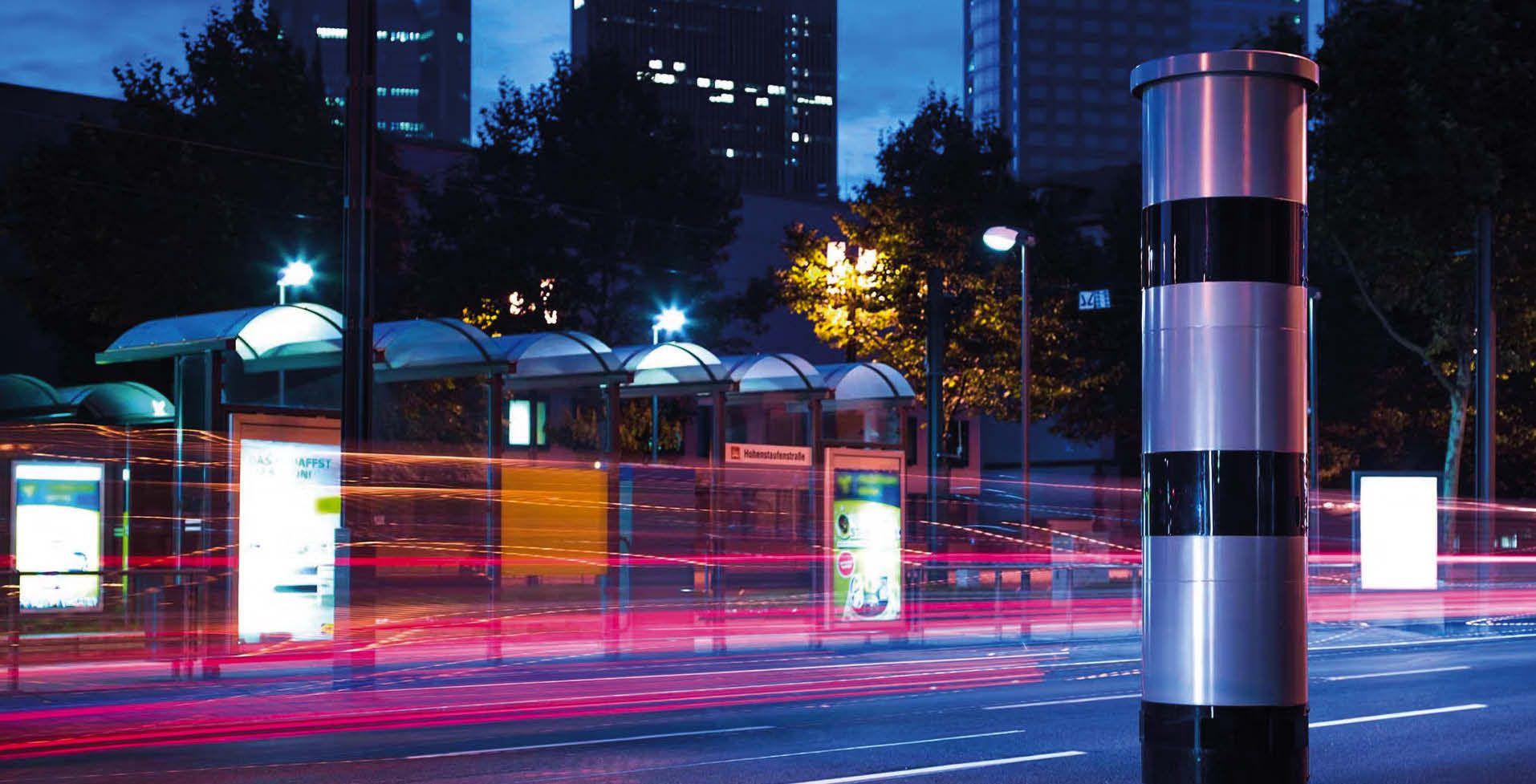
Traffic intersections in urban settings pose significant safety challenges, accounting for nearly 50% of injuries and fatalities among road users. These areas demand careful monitoring due to their complex nature, where multiple traffic streams converge.
Vitronic is one of the technology suppliers that is using AI to help improve safety at intersections and unveiled its latest, innovative AI-powered video monitoring system at Intertraffic Amsterdam 2024.
The technology employs neural networks to differentiate between various road users – from pedestrians to different kinds of vehicles – at

Alchera Bus, can rank the worst junctions on your network by time lost in traffic and therefore cost
Anna Jordan, CEO, Alchera Technologies
intersections. While it is primarily focused on red light violations, the system’s applications also extends into broader traffic management scenarios.
Vitronic is also one of the suppliers offering the new capability of being able to automatically detect drivers using mobile phones illegally. The system processes image data through AI algorithms to identify these infractions without human intervention.
“With AI functionality and analysis we can have edge-based video processing, and we can move away from using lidar and radar, which has a cost benefit for the customer,” says Boris Wager, head of business unit traffic, Vitronic.
Joanna White, research, development and innovation director at England’s National Highways, emphasises the importance of demonstrating to both the public and policymakers how and why AI is being used, in order to demystify it and highlight the benefits.
“Why are we using AI? What benefit is it giving us? What benefit is it giving citizens? How is it helping economic growth?” she asks. “I think being able to demonstrate those things and using AI in the right situations for the right outcomes helps to support government ambitions.”
White points to a current National Highways project using AI to detect mobile phone use and those flouting seat-belt laws behind the wheel, citing it as easy-to-understand use of the technology, and a good example of how AI can assist, but not replace human experts. “While AI is really powerful at detecting those initial images
of potential. We still need a human to make sure that the information is correct,” she says. The importance of transparency and accountability in these AI systems is paramount. “An explainable AI is such an important thing, and it’s still really in its infancy, but it’s so critical,” says Kettell. “It’s about accountability, insight and understanding. If you don’t have those, you don’t have confidence.”
Active involvement from transportation authorities remains crucial. Jordan sees a risk in infrastructure owner-operators becoming more distanced from traffic management as AI systems become more advanced: “With the advent of autonomous vehicles and with Google and Waze routing people left, right and centre without authorities knowing, there’s a real necessity to have more agency understanding your network.”
For public transit networks, Jordan also sees significant potential for AI to help optimize routes and schedules. “We’ve got a product called Alchera Bus, which can rank where the worst junctions on your network are very quickly, by time lost in traffic and therefore economic cost.”
By harnessing the power of AI while prioritizing ethical and responsible deployment, the transportation industry is poised to unlock a new era of efficiency, safety, and sustainability on our roads. Gossop concludes: “By leveraging AI, we can look to tackle issues of skill shortages, improve safety and efficiency, provide environmental and financial benefits, and to make the transition to using other emerging technologies easier to integrate.”
“I have never been somebody who says let’s use technology for the sake of technology,” says Bhatt. “No, let’s use technology as a tool to achieve better for humanity – especially the idea that we can use AI to reduce emissions from our transportation system. That means making our communities more livable, because too many of them are becoming victims of choices we’ve made in the past.” n
Words | Jack Roper



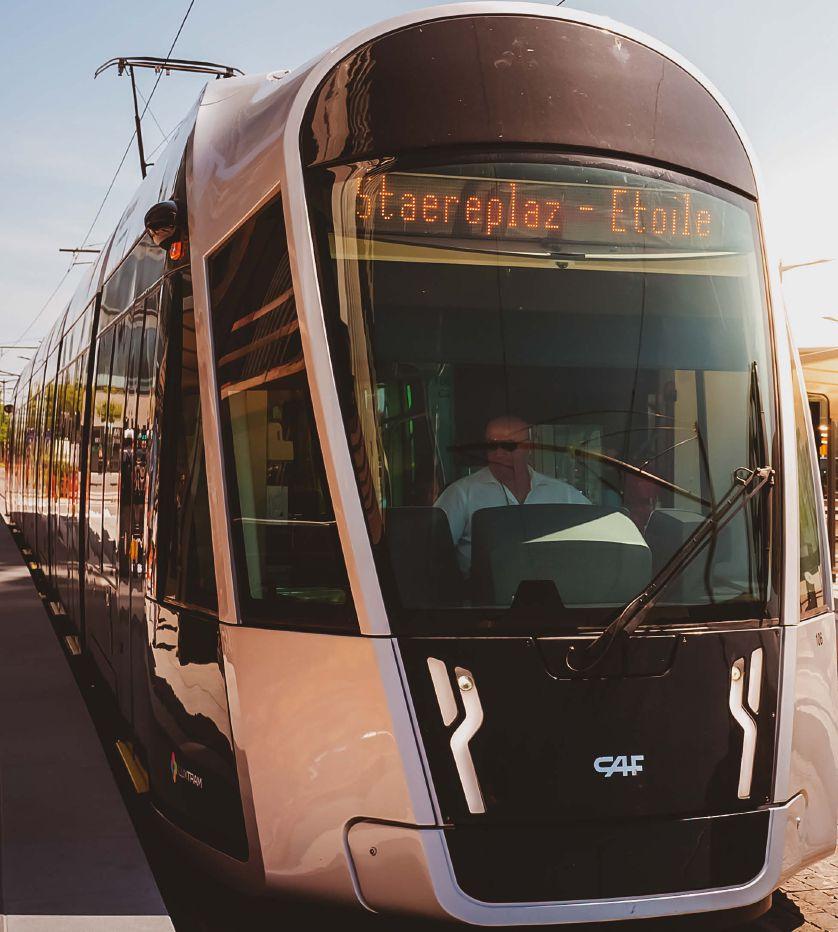
Luxembourg is laying claim to being the most progressive region in Europe when it comes to mobility, by incorporating CCAM (cooperative connected automated mobility) with enhanced cycling infrastructure and free public transit, alongside a policy of never disincentivizing car use. Is it really possible to have it all?

Luxembourg’s mobility policy reflects a country of efficient and consensual governance. This Grand Duchy at the heart of Europe covers just 2,586km 2 (998 square miles) and has about 672,000 inhabitants. Perhaps smaller societies are more manageable and it helps to be the wealthiest nation on Earth by per capita GDP. Nevertheless, Luxembourg is not exempt from mobility challenges.
Having transitioned from steel-industry reliance to become a prosperous financial centre, it must absorb a daily influx of 230,000 commuters from Belgium, France and Germany. In fact, Luxembourg’s world-leading GDP results from a calculation which excludes a crossborder workforce equal to nearly one-third of its resident population.
“Economic attractiveness creates a capacity issue,” says Jean Schiltz, head of smart mobility at Luxembourg’s Ministry of the Economy. “Each year,
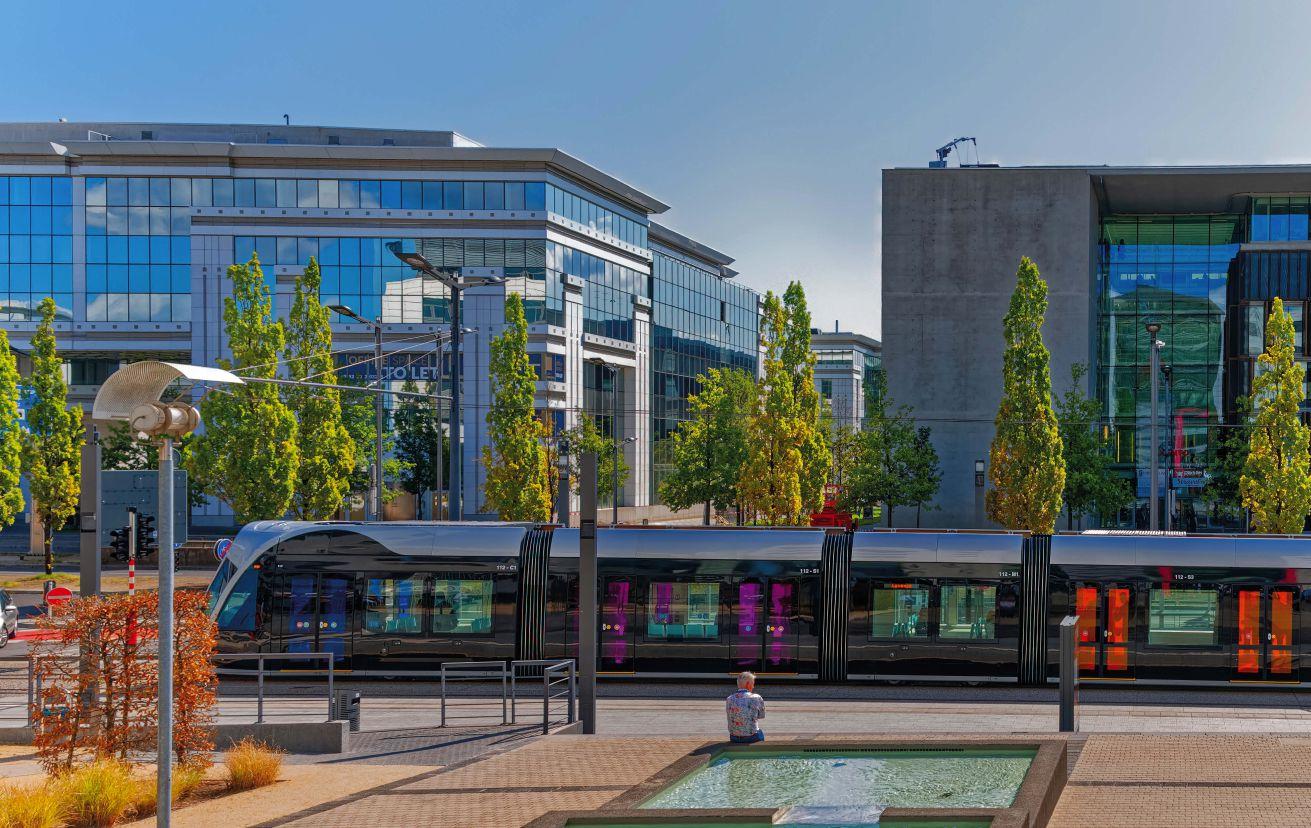
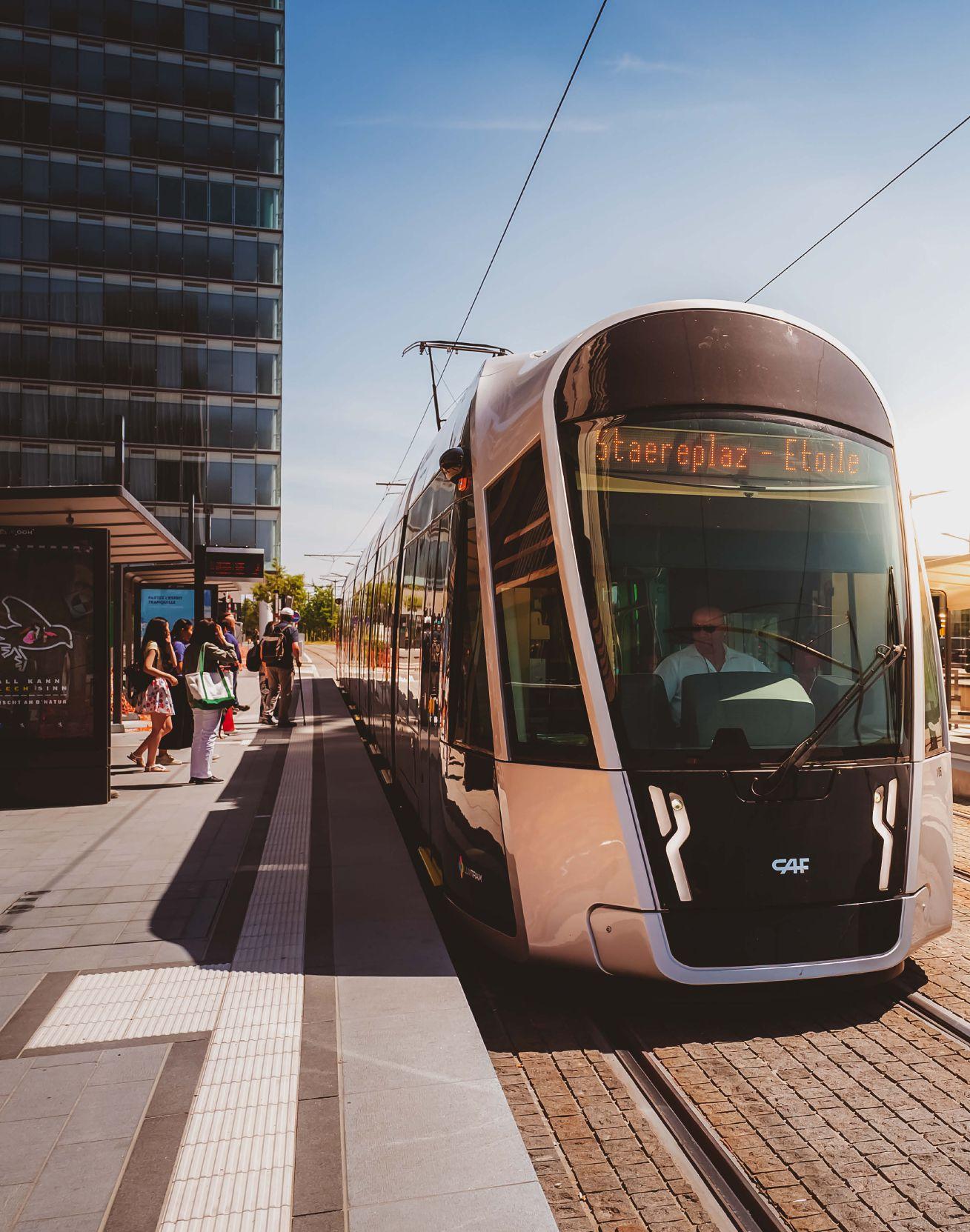
Imagine a world where all public transport is free. Everything: trains, hourly buses to every village, even a new tram line into your favourite city. All aboard - no need to buy a ticket! Now, consider this as no utopian daydream, but the situation today in Luxembourg.
It came about following Luxembourg’s general election in 2018, when two of the three parties which formed the subsequent coalition government campaigned on such a promise. Implemented in 2020, free public transport symbolized a commitment to modal shift in a society of highlyconcentrated car owners.
It was perhaps the only time Luxembourgish transport policy made headlines in the New York Times. Yet financially, it was a small step, since public transport was already 92% statesubsidized, compared (for example) to 58% in Switzerland.
Implementation simply involved the removal of ticket processes. In keeping with the Luxembourgish social model, unions were consulted and redundancies avoided by finding erstwhile ticket collectors new passenger-facing roles.
The policy attracted international attention, but what can Luxembourg’s Ministry of Mobility and Public Works say about its impact on mobility?
“That’s the question we’re always asked,” says First Government Advisor, Christophe Reuter. “The answer is disappointing. It was implemented on 29 February 2020 – the exact day of our first casualty from Covid.”
“Three weeks later, we went into shutdown,” Reuter continues. “Everything came to a standstill, then teleworking created new patterns of behaviour which still persist today. Meanwhile, we continued improving our mobility offer, for instance extending the tram line, which created a jump in passenger numbers. ”
Even if nothing had changed, an absence of reliable pre-2020 passenger-counts would impede comparison, confining the benefits of universal free public transport to the realm of anecdote.
“The tourists and expats think they’re in heaven,” says Reuter. “The only things which aren’t free are first-class rail travel (because it’s a luxury) and the buses and trains we operate in neighbouring countries (for regulatory reasons).”
we need 2% to 4% more transport just to maintain a constant level of mobility in spite of externalities.”
To accommodate the close-to quarter-million commuters who enter Luxembourg each day, (53% from France, 24% from Germany and 23% from Belgium) the government reserves €100m to fund specific projects in a so-called greater region extending 50km beyond its borders. It has invested in French and German rail infrastructure and French park-andride facilities to benefit cross-border workers and better channel their daily influx.
In June 2022, Luxembourg, France and Germany completed a 44-month cooperative, connected and automated mobility (CCAM) pilot entitled 5GCroCo, trialling 5G technologies for CCAM on a cross-border European corridor connecting the cities of Metz (France), Merzig (Germany) and Luxembourg City
5GCroCo demonstrated three use cases for smart mobility: teleoperated driving to increase road safety by allowing remote control of vehicles through 5G connections; generation and distribution of high-definition maps based and the exchange of accurate data among vehicles; and anticipated cooperative collision avoidance solutions to avoid accidents by exchanging real time information among cars at a very low latency.
The trials proved that seamless service continuity on 5G networks can be guaranteed across borders. The service continuity solution implemented in 5GCroCo was achieved through a cross-border (and cross-MNO) handover,
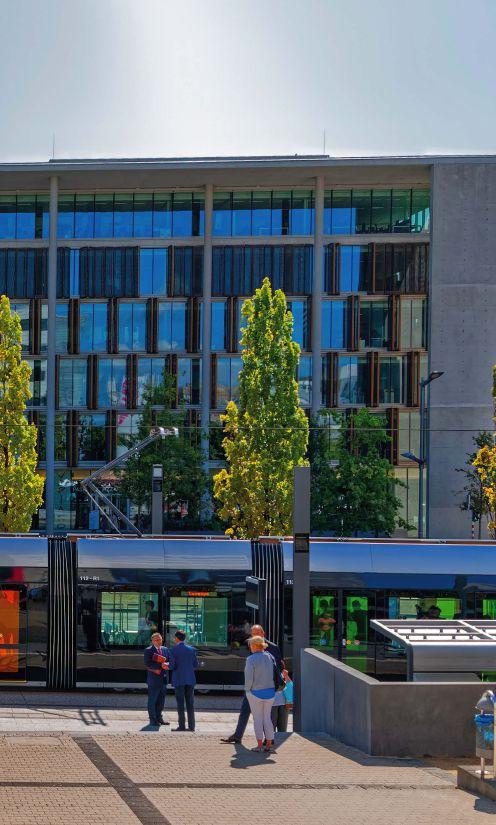


The public support for Luxembourg’s first tram service in 60 years, which opened in 2017 (before implementation 80% were against it)



which results in an almost imperceptible service interruption time of around 120ms – a reduced latency compared to tens of seconds, or even minutes, experienced with current systems.
“We try to be pragmatic in Luxembourg,” says Schiltz. “European Union operations require considerable mobility between Brussels, Strasbourg and Luxembourg. Coordination is needed to ensure fluidifying one section of a corridor doesn’t just create traffic across the border.”

Historically, many Luxembourgers have opposed growth they associate with increased congestion. But sentiment has started to shift thanks to a Plan for National Mobility 2035 (PNM 2035) embracing growth with a comprehensive multimodal strategy.
PNM 2035 won the International Association of Public Transport (UITP) award for the world’s best public transport strategy in 2023. It presents the shift needed to accommodate 40% more journeys in forensic detail, down to specific projects. Given Luxembourg’s five-year electoral cycle, its 15-year ambitions depend on cross-party consensus.
“If every administration stopped the work of its predecessors, nothing would ever advance,” says Christophe Reuter, a first government advisor at the Ministry of Mobility and Public Works (MMTP) which is responsible for PNM 2035. “Therefore, we need a fundamental planning philosophy which finds agreement across the political spectrum.”
Elected in 2023, Luxembourg’s centre-right administration recently committed to the PNM 2035 policy framework of the previous coalition, an example of constructive political transition not found in all democracies.
Beyond its eponymous capital, Luxembourg encompasses smaller towns, considerable rural territory and rolling hills within the northerly Forest of Ardennes. PNM 2035 addresses urban mobility, rural mobility and the transitions between them. But inevitably, congestion becomes most acute along
Above: Since 2020, Luxembourg has incentivized the use of public transport with completely free standard class trips

European Union operations require considerable mobility between Brussels, Strasbourg and Luxembourg. Coordination is needed to ensure fluidifying one section of a corridor doesn’t just create traffic across the border
Jean Schiltz, head of smart mobility, Ministry of the Economy, Luxembourg
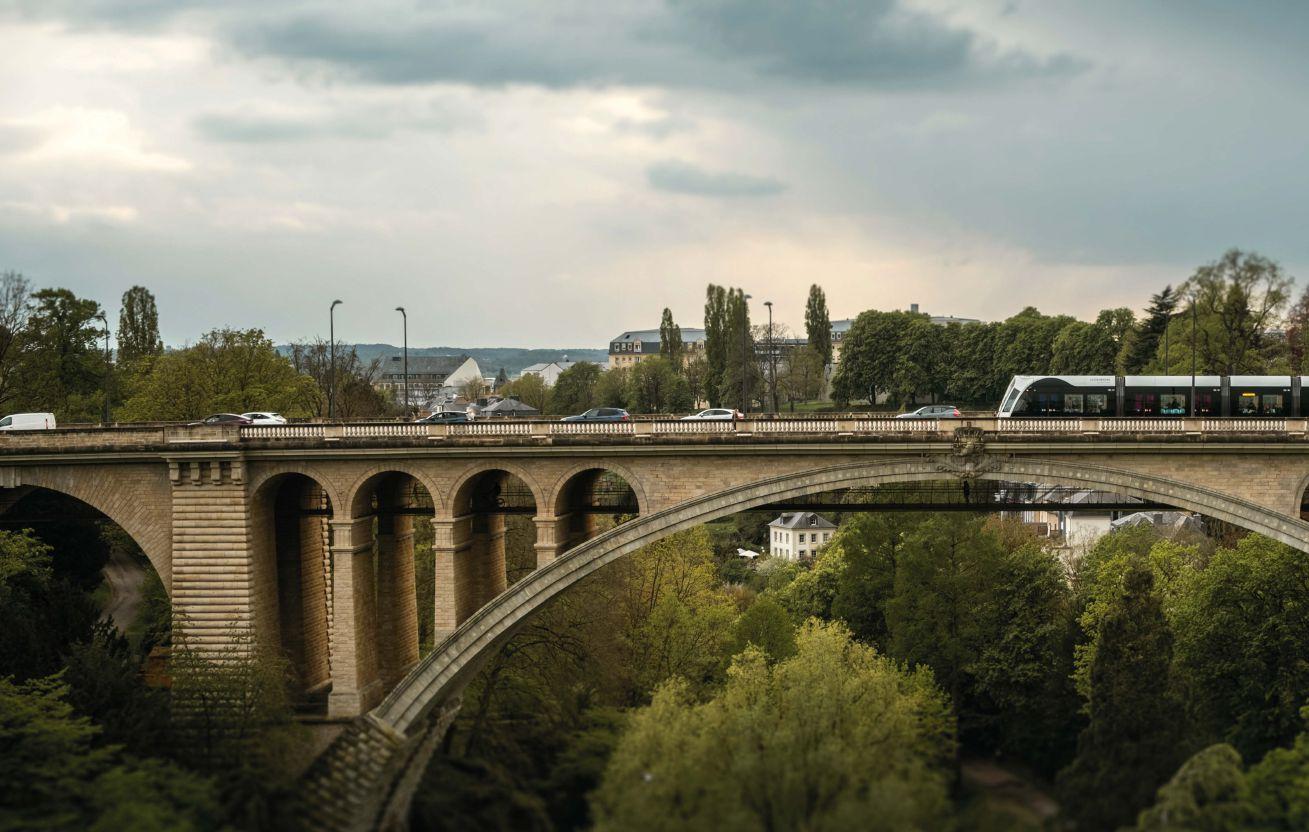
the pressurized arteries of its flourishing metropolis.

The predicted annual growth needed in transport provision in Luxembourg
Luxembourg City sits atop precipitous cliffs which the Pétrusse and Alzette rivers encircle with plunging 70m gorges. The formidable geology which made it a natural fortress during the French Revolutionary Wars means daily commuter traffic must be funneled into the city across bridges and viaducts.
“Our planning looks at those bottlenecks,” says Reuter. “We project the number of people we need to get through them in future. Only then do we choose the right packaging in terms of vehicles.”

While single-occupancy cars represent the least spatially-efficient ‘packaging’, their use is considered a matter of personal choice and never penalized. Policy rather focuses on enabling free citizens to choose better options by making them sufficiently attractive. New park-andride facilities capture incoming flows of commuters, connecting them to shared mobility, public transport or cycling infrastructure into the city. Reuter believes policy centred on people
rather than vehicles provides the route to consensus. “Our strategy doesn’t promote any one mode of transport,” he says. “It focuses on getting the individual from A to B by providing attractive multimodal choices.”
In December 2017, trams were reintroduced after a 60-year absence on the first line of a 16km system set to become Luxembourg City’s highcapacity backbone. Once a controversial project with 80% of citizens opposed, the tramline commanded 95% public support six months after opening and often runs close to capacity.
For Reuter, the success of trams explodes preconceptions of a ‘car culture’. Luxembourg has the highest rate of car ownership in Europe with two cars to every three inhabitants (babies included). Globally, this is equaled only by the Gulf states, providing an ideal context to disprove notions of inherent national predisposition towards particular modes.
“There is no car culture, but only a quality culture,” Reuter contends. “People simply choose
There is no car culture, but only a quality culture. People simply choose the best infrastructure available Christophe Reuter, government advisor, Ministry of Mobility and Public Works (MMTP)

the best infrastructure available. There is no cycling culture in the Netherlands, car culture in the United States or gondola culture in Venice –those are just the best ways of getting around.
“Nobody can blame people for not using dangerous cycling infrastructure, or trains which are always late. But when you provide highquality alternatives, people switch naturally and intuitively, without discussion or remorse.”
Opened in 2022 to connect two districts of Esch-sur-Alzette by overpassing a steelworks, the 1.2km Vëlodukt is the world’s longest cycle bridge outside China. Less spectacular is the cost-efficient and non-disruptive policy of incorporating cycling in every new road project. Eventually, this may create infrastructure cyclists use because it connects every house in Luxembourg, using roads as its template. Luxembourg also encourages public transport use through its headline-grabbing scheme of making every standard class trip not just ticketless, but completely free, since 2020 (for more on this see page 40).
The Ministry of the Economy anticipates Luxembourg’s shift to a less car-centric ‘mobility balance’ attracting innovators to help drive growth. Providing a living lab establishes a domestic knowledge-base to enable mobility transition while offering companies a strategic European foothold.
Autonomous mobility
Volvo electric buses now operate in Luxembourg, which provided a testbed for supporting
In 2022, Luxembourgish rail operator CFL awarded a contract to New Zealand innovator Ohmio for two LIFT autonomous shuttles. Road-tests are underway with CFL expected to operate a passenger service from 2025.
For regulatory reasons, Ohmio’s fullyautonomous, eight-seater shuttles retain a human safety operator who may also reassure nervous passengers. They will follow predefined routes (or ‘virtual rails’) at speeds up to 25km/h, using on-board perception to detect dynamic obstacles including pedestrians.
“Six lidars constantly check the environment for potential obstacles,” says Ohmio’s director for Europe, Robert Sykora. “Our obstacle computer combines that with information received wirelessly from infrastructure, then the vehicle can decide to slow down or stop.”
Ohmio has deployed shuttles to move passengers, employees and crew around private land at Amsterdam Schiphol and New York JFK Airport. Having secured approval to operate on public roads in Luxembourg, it introduced shuttles to their intended service route in Belval, southern Luxembourg in August 2024, initially without passengers aboard.
“It’s a complex route between the railway station and university, with pedestrians
crossing, erratic parking and one signalized intersection,” says Sykora. “We need a way to localize in sections without GNSS reception. Once testing is complete, we should start transporting passengers in early 2025.”
Ohmio has established European headquarters at the Luxembourg Automotive Campus in Bissen and shares workshop premises with automotive supplier IEE. It received support from Luxembourg’s national innovation agency.
“Luxinnovation cares about companies coming to Luxembourg,” says Sykora. “The Ministry of the Economy brings automotive businesses together and makes land available in Bissen. It’s an attractive area with potential partners nearby.”
In theory, conforming to regulations in Luxembourg should enable vehicles to operate across Europe. But while Pony. ai benefits from a pan-European approval process for robotaxis, homologation requirements for M2-class shuttles still vary between countries.
“Member-states are working to define a common process, but have limited experience due to low market penetration,” says Sykora. “We’re applying for homologation in Italy, which looks at what we’ve done in Luxembourg, then has additional questions.”
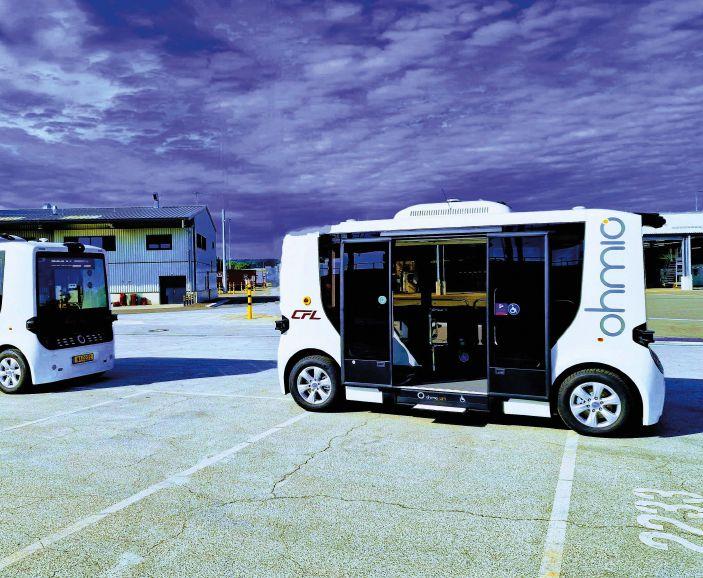
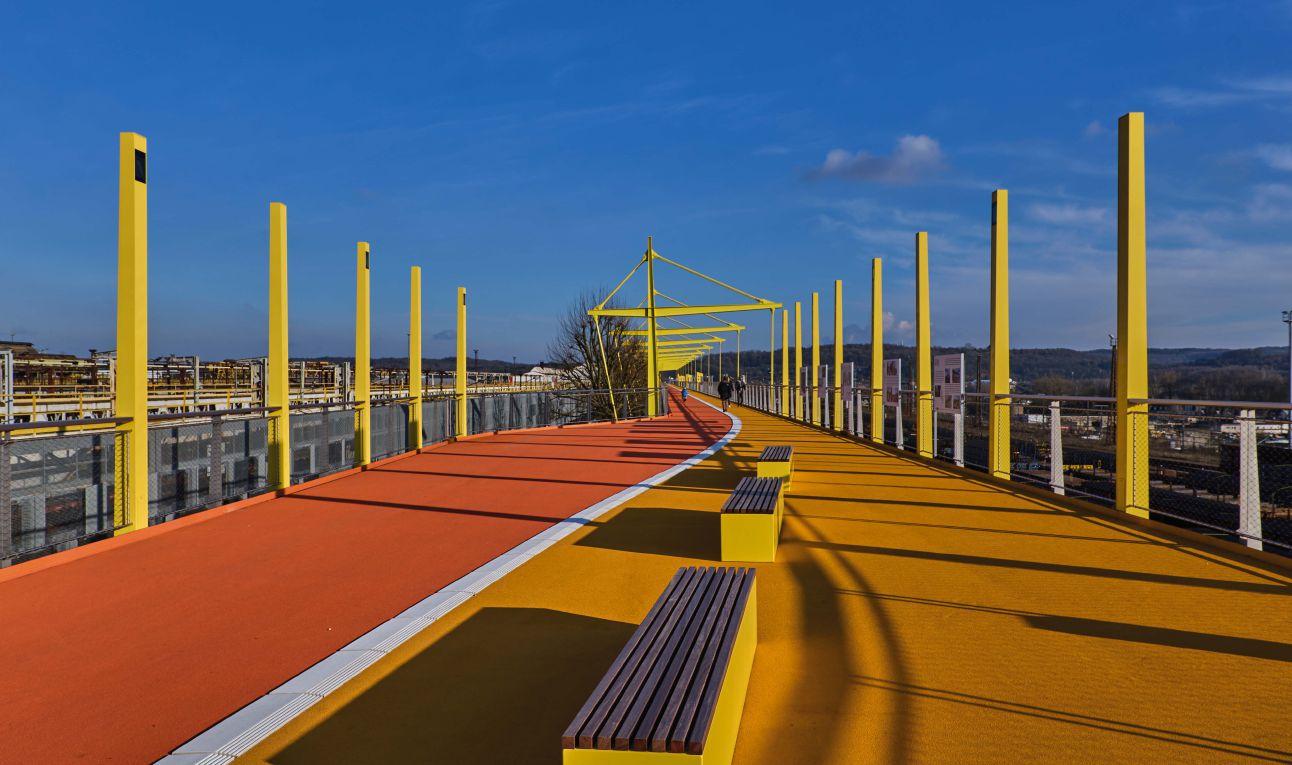
infrastructure and real-world tests. New Zealand operator Ohmio is testing autonomous shuttles as prelude to an operational lastmile solution (see Autonomous Solutions on the previous page). Chinese autonomous taxi firm Pony.ai recently signed a memorandum of understanding with the economic ministry and will establish European headquarters in Luxembourg.
“We consider ourselves a springboard into Europe,” says Schiltz. “We are implementing all the rules defined by European legislation. It means if you can operate here, you will comply with legislation in other member-states.”


A designated economic activity zone not far from the Grand Duke’s palace in Bissen, central Luxembourg aims to incubate the new mobility balance. Already a base for Goodyear and automotive supplier IEE, Bissen’s burgeoning automobility campus is
Luxinnovation cares about companies coming to Luxembourg. The Ministry of the Economy brings automotive businesses together and makes land available in Bissen Robert Sykora, director for Europe, Ohmio
attracting overseas innovators like Ohmio to establish a bridgehead for European operations. Luxembourg will explore potential benefits of automated driving, such as safety and resilience to driver shortages, as European regulatory and technical frameworks continue to mature.
Pony.ai may contribute to understanding how higherspeed applications can be integrated into its network. Luxembourg does not expect automated vehicles to require new physical infrastructure, but is well-equipped to support them digitally thanks to multiyear investment in connectivity.
Yet it remains uncertain how removing drivers from vehicles addresses the essential PNM 2035 goal of moving individuals more efficiently. Further pilots may help to answer some of the as yet unresolved questions. How will automated driving actually make cities more liveable? How will it avoid increasing traffic with the possibility of vehicles returning empty? How will it work where pedestrians realize vehicles are safe to obstruct?
Fortified by nature against invaders, Luxembourg has adapted to 80 years of peace and become a flourishing beacon of European prosperity. Though political and economic tides may subject a social model based on civilized compromise to fresh strain, mobility transition shaped by well-funded and insightful pragmatism reaffirms its capacity to meet the future. n




Wildlife on roads creates a significant hazard in rural areas, to humans and animals alike. Low-tech prevention methods such as overpasses give great results, but they are expensive and can’t cover every scenario. Now AI video-recognition technology is being harnessed to deliver a new safety paradigm –what are the pros and cons?
Words Christopher Court-Dobson




Wildlife-vehicle collisions (WVCs) are a huge problem for rural roads all around the world. The Humane Society estimates that one million wild animals die per day from collisions with road vehicles. If a collision isn’t with a small animal but a larger one, technically ‘megafauna’, the risk to human life becomes significant.
In the USA alone WVCs account for around 200 deaths and 26,000 injuries annually. 1.8 million collisions involving an animal occurred in 2023. Moreover, 12 federally endangered animal species are at major risk from roadways.
The State of Colorado benefits from a US$110 million fund for measures to reduce WVCs, which has been recently added to by the Biden/Harris Infrastructure Investment and Jobs Act’s (IIJA), which set aside $350 million towards Wildlife Crossings Programs nationwide.
The funds are used for fencing, underpasses, overpasses, and wildlife detection systems (WDS), to warn drivers. With legal precedents such as Booth vs Arizona establishing that a state can be sued for failure to prevent WVCs, it is money wisely spent.
In Colorado, a 10-mile stretch of Highway 9 deep in the Rocky Mountains is notorious for black ice, lack of hard shoulder, 65mph speed limits, heavy winter snow, hairpin turns and large deer herds.
“High speeds and deer darting across roads caused a lot of accidents,” says Michelle Cowardin, wildlife movement coordinator at Colorado Parks and Wildlife. This led to a perfect storm of WVCs, with up to 50 such accidents reported each winter and 63 carcasses.
“It’s a sagebrush system – when snow falls in the higher elevations all the megafauna, like deer and elk, get pushed
a

Above: Wildlife bridges, such as this one constructed in Finland, help improve safety by providing a safe way for animals to cross busy roads
Below: Wildlife detection systems (WDS) use cameras or sensors to signal warning signs to approaching drivers when wildlife is present

down. So, the more extreme the winter, the more push they get into this valley,” says Cowardin.
Colorado Department of Transportation (CDOT) was granted $50 million from IIJA, $15 million earmarked for wildlife features including two overpasses, two underpasses, 61 animal escape ramps, 29 guards, and 10.3 miles (16.5km) of 8ft (2.4m) high fence.
The fence prevents wildlife access to the road and its dangers, funnelling animals towards the passes, while the ramps allow escape if they get around the edge of the fenced area.
“Any place that you have a driveway or road intersecting the project area we put in wildlife guards, similar to a cattle grid,” says Cowardin.
In a study by Eco Resolutions the crossings reduced WVCs by 92%, down to approximately two per winter, and no fatalities.
“There were 17 species present, from elk to bear to mountain lion, river otters, bighorn sheep, pronghorn, every species in the landscape was utilizing these structures, so the success of this project solidified the argument for wildlife crossings as a whole,” says Cowardin.
Despite the obvious success of infrastructurebased low-tech methods for diverting wild animals from busy highways, there are scenarios which either reduce their effectiveness, or rule them out completely.
“Now elk I call my problem child,” says Dr Patricia Cramer, an independent researcher undertaking wildlife detection system (WDS) evaluation. “They’re very particular, notorious for
not going through underpasses. So, elk do better with the WDS.”
Wildlife detection systems (WDS) work like a crosswalk for megafauna, with cameras or sensors looking for the presence of target species in an area either side of a road. which then send a signal to light up warning signs for approaching drivers.
The detection system can be any combination of RGB (visible light), active infrared, break-thebeam, radar and thermal, and can rely on either basic algorithms or full AI computer-vision to distinguish between wildlife and other features such as people, vehicles and foliage.
Some of Dr Cramer’s research is currently focused on a new deployment of WDS for CDOT on Highway 13. She began evaluating the project in May 2023 and she will keep reporting observations into 2025.
The WDS system comprises a pole on either side with point-tilt-zoom (PTZ) video cameras for monitoring, infrared cameras which scan over an area either side of the road, and radar which detects movement.
The detection system provides the data, and an algorithm determines whether the movement is a target species, and if so, triggers the driver-warning system of flashing lights and signs on the roadside.
Every species in the landscape was utilising these structures, so the success of this project solidified the argument for wildlife crossings

Fencing and electrified mats along the roadside funnel the animals into the crosswalk area. The mats, however, were only found to be partially effective, with 13% of animals breaching them and ending up on the roadway.
Although the system has helped to improve safety, Cramer has found some problems with the WDS on Highway 13 – particularly in creating false negatives or positives as well as delays in detection and activation of the warning lights.
While the rate of false negatives in Colorado is low, false positives are sometimes over 50%. This is a problem as it is eroding public trust in the system – drivers consciously choose not to alter their driving behaviour when they see a warning because they perceive the system to be inaccurate.
“We’re very concerned about it. I’m astounded to see videos when the animals are on the road with lights flashing, and how long it takes people to slow down and put their brakes on, or swerve,” says Dr Cramer.
CDOT are working on improving the accuracy and there is hope in that, in Preacher Canyon, Arizona, another similar WDS, shows a much better set of results. Here motorists have dropped their speed by an average of 16%, or 9mph, and showed signs of increased alertness through break application in 70% of cases, and overall WVCs are down 92%. This correlates directly with a higher level of accuracy in the system.
“The system detected animals approaching the highway and activated the motorist alert signs 97% of the time, including the initial period where the bugs were being worked out. We are seeing very few false positives,” says Norris Dodd a research biologist at the Arizona Game and Fish Department.
To explain the difference between the two sites there is some indication that radar blind spots on Highway 13 are occurring. Another issue might be the landscape. “In the first two weeks in June the grass grows very tall, and when the wind blows it, it can trigger the cameras,” says Dr Cramer. “When the vegetation gets big and moving it can confuse the radar.”
With the vast leaps in AI computer vision over the last few years, work has begun in applying this
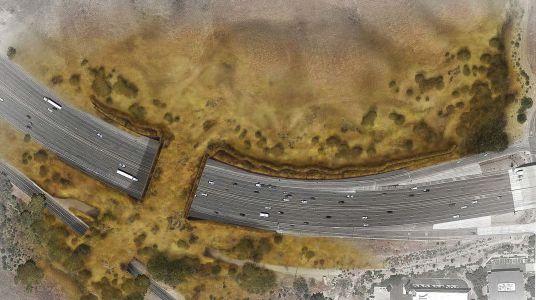
What are the factors that affect the choice of either infrastructure or sensor-based wildlife crossings?
Sometimes the terrain is just unsuitable for building passes, such as when steep slopes abound on either side, traversable for animals, but nowhere where it would make sense to build.
Passes can also be expensive to build, like California’s Annenberg Wildlife Crossing at $92 million. When completed, it will be 50m flank to flank, making it the largest of its kind in the world, as well as the first bridge in the California highway system specifically designed for wildlife.

But, no matter how well designed, wildlife bridges can be prone to mishap –third parties can make physical crossing infrastructure problematic because without land use protections, there’s no guarantee
Below: California’s Wallis Annenberg Wildlife Crossing will be the largest wildlife corridor in the world when it is completed in 2026, helping protect the region’s mountain lions
that structures won’t be built in the zone leading up to the crossing.
“In a recent case a private landowner was not cooperative and could not promise that he would not interfere with the wildlife crossing structures. This limited the options for CDOT, so they chose WDS instead as a kind of experiment.” says Dr Patricia Cramer. By comparison, even a modest WDS can be many hundreds of metres wide at a fraction of the cost, and this ties into concerns abound about large migratory herds not making it through the tight spaces of passes.
Ultimately the pros and cons of each system must be weighed on a case-by-case basis, WDS is less expensive and easier to deploy but its effectiveness relies on the success of altering driver behaviour, with wildlife exposed to oncoming traffic.

technology to WDS, with the aim of bringing down false positives and negatives, and ultimately saving the lives of humans and animals using and crossing busy roads.
Natalia Simanovsky is a former UN Consultant and head of partnerships at CVEDIA, which develops computer vision for WDS. “AI is not a panacea,” she says. “AI provides an incremental value increase on an already existing product. Now, apply that incremental value to saving the life of a family inside a car. That is not incremental, that’s huge.”
Not all detection systems are created equal, because wildlife-vehicle collisions tend to happen under conditions of poor visibility for the driver, but each type of image comes with its own complications. “Of the 1.3 million WVCs annually in the USA, the majority of these accidents occur at night. So, you have a few challenges there,” says Simanovsky.
She stresses that thermal imaging has the potential for high efficacy, but that it may pose greater challenges. “Thermal is the underdog. The
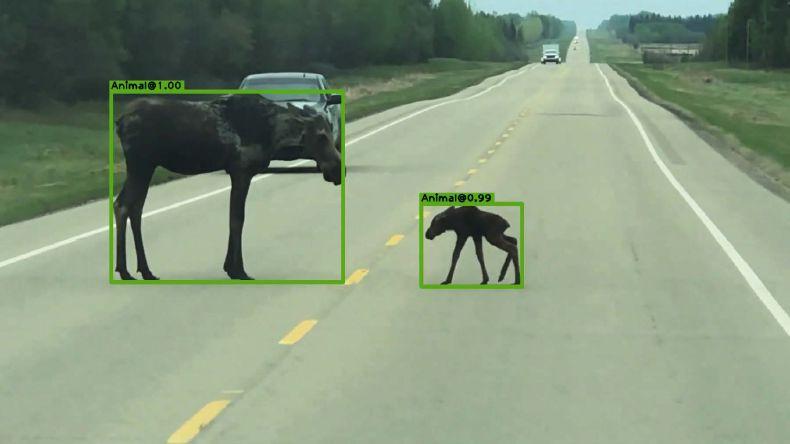
main argument against it, is that it’s incredibly difficult to capture enough training data,” says Simanovsky.
Images of wildlife need to be captured from every angle, with every sort of ambient temperature, with every kind vegetation. While capturing this rich variety of data in real life can be a challenge, here again AI may be useful in helping to fill in the gaps.
“At CVEDIA we have pioneered the use of synthetic data – artificially generated images created using generative AI rather than real life captured data,” says Simanovsky.
Similarly, tech giant NVIDIA has recently been developing platforms like Omniverse and Replicator – digital twin simulation environments that generate copious amounts of synthetic data. Such systems are able to, for example, guess what an elk will look like in a hailstorm, or a deer during a lunar eclipse.
“Platform simulation engines have been huge, both from a technology standpoint, but also from a cost-savings standpoint,” says Simanovsky.
With WDS often reliant on public funding, the prospect of making them more effective under a wider range of conditions while also reducing costs, demands serious consideration.
“The whole premise is making a dumb camera smart. It’s adding a tremendous amount of value to an already existing system without having to rip out and replace that system,” says Simanovsky. n
Of the 1.3 million WVCs annually in the USA, the majority of these accidents occur at night. So, you have a few challenges there
Natalia Simanovsky, head of partnerships, CVEDIA










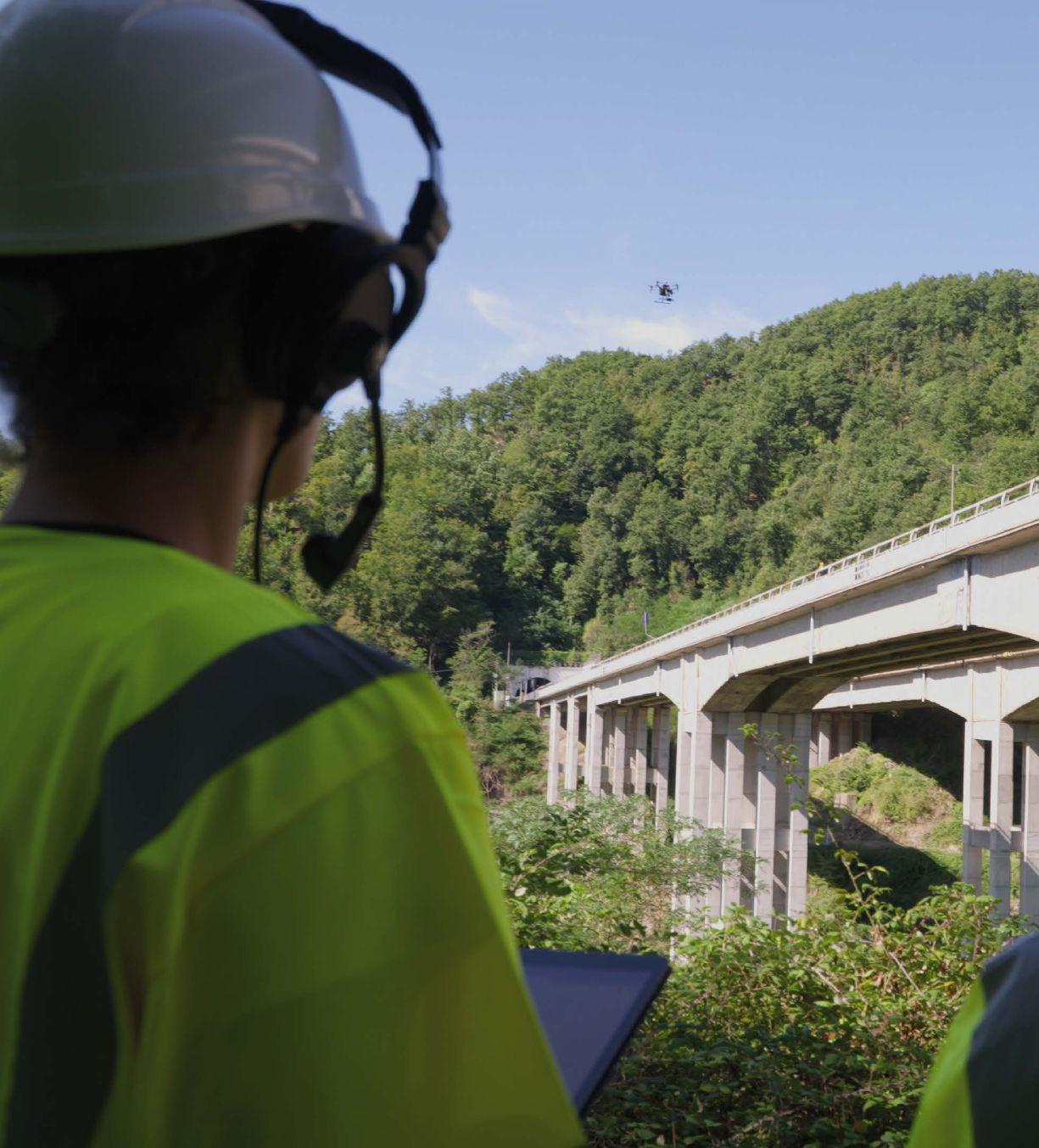
A pan-European project called Omicron is harnessing the power of drones, robot arms and computer modelling to help rebuild worn-out roads more efficiently and with greater safety than ever before
Words | Richard Pallardy




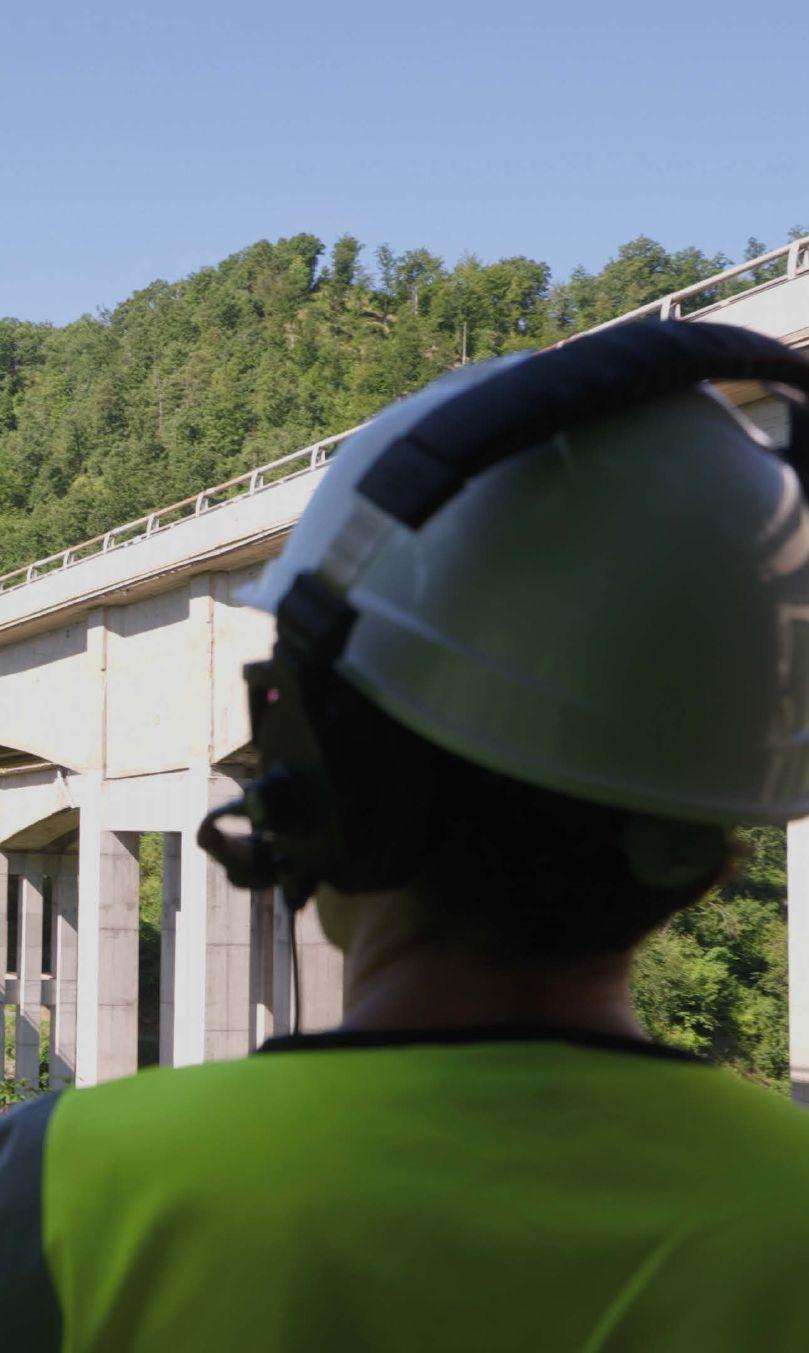
Road maintenance is a dangerous, complex and expensive undertaking. In Europe, it is increasingly necessary. Many of the nearly 75,000km (46,000 miles) of motorway connecting the 27 member states of the EU are in worsening shape. Constructed during the 1960s and 1970s, they were only expected to last around 50 years.


Short-termism is still an issue in other ways too. Cost-first thinking and procurement processes that may be tied to political and budget cycles of a few years can limit the choices that road management authorities make. Funders generally prefer the glamour of new-builds rather than investing in existing infrastructure. Even in the education of engineers, training still focuses on construction of the new rather than maintenance of the old.
And yet, innovation is happening. The Omicron project, a partnership between 16 organisations in seven countries, funded by the EU, aimed to make constructing and maintaining these essenk=tial arteries of transport and commerce easier, safer and more cost-efficient using a suite of digital and robotic tools. Pilot testing on the A1 in Italy and the A-2, A-7 and A-92 in Spain has shown promising results, and the partners hope to scale up the project’s novel technologies to broader application across the EU.
Omicron’s ‘smart construction’ approach has streamlined the process for connecting prefabricated components for bridges. Here digital modelling technology allows for an exact allocation of resources as these components are fitted on site. This modular approach allows for bridges to be retrofitted, with a proven 80% reduction in traffic disruption and 64% fewer people required in danger zones. Some of these components can be reused if the structure is later revised or decommissioned, improving circularity by more than 30%.
But the program is set to have its greatest impact in ‘intelligent maintenance.’ By integrating data gathered using remote surveillance and onsite sensors with a sophisticated platform that deploys state-of-the art artificial intelligence (AI), augmented reality (AR), virtual reality (VR) technology and robotics, Omicron aims to streamline the massive task of getting Europe’s roads into shape.
“These technologies aim to reduce the volume of interventions, maintenance costs and hazardous situations,” says Paula López of Omicron’s coordinating partner Cemosa, a Spanish engineering consultancy.
Workers can then use those images to assess which resources are needed
Inspecting roads to see where maintenance is needed is labour-intensive. Omicron reduces this effort by using drones and other remote sensors to derive a digital picture of what resources will be needed where.
Unmanned aerial vehicles (UAVs) are flown over prospective sites, capturing images at a remarkable level of detail even from significant
The reduction in the time it takes to clean

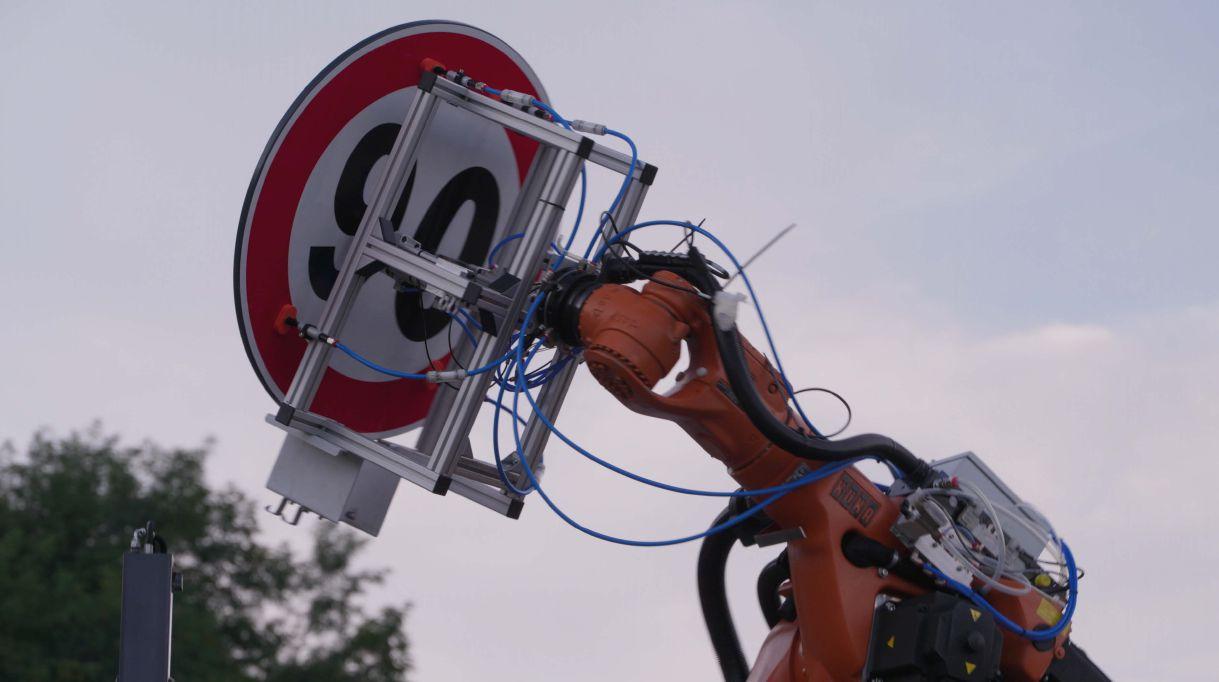
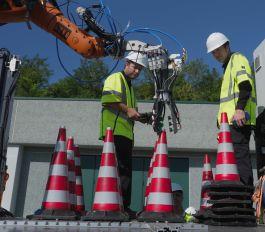

These technologies aim to reduce the volume of interventions, maintenance costs and hazardous situations
Paula López, R&D engineer, Cemosa
distances. These drones can be flown as a small, coordinated fleet or singly over long distances, reducing the need for expensive and hazardous on-foot surveys by around 63%. This also means there’s around 67% less disruption to traffic.
The UAV-captured images are augmented by those from laser scanners, computer vision cameras and near-infrared cameras attached to terrestrial vehicles that move through the area. This vehicle-mounted inspection technology from Omicron is cost-effective compared to alternatives, making such advanced tools accessible to more road operators and thereby potentially revolutionizing road surveying.
All of the landscape features and road assets such as bridges are captured in detail once the two sets of scans are integrated. The UAVs offer a broad view of the surrounding landscape and any challenges that it might present. And the images captured by the terrestrial vehicles offer a closeup view of actual material problems. Models and maps of the infrastructure can be reconstructed in 3D, helping to identify potential maintenance sites.
The data gathered through digital inspection is fed into a set of technologies that allow experts to analyse and use it to allocate resources to fix the issues detected. “We’re using machine learning to predict pavement condition and to empower decision making for smarter
We have designed and developed a versatile robotic platform that is able to perform road maintenance tasks in a safer and more efficient way”
infrastructure management,” says López.
A digital twin of the road network allows engineers to examine any failing infrastructure that will need to be addressed. The level of damage in various areas can then be prioritized, allowing for targeted projects that address the most severe or urgent issues.
The Omicron digital twin incorporates real-time data on traffic and weather patterns, allowing for more refined planning of inspections or maintenance interventions. Uniquely, this twin is easily accessible with a smart phone or any device that can connect to an internet browser, giving users unprecedented flexibility in consulting asset information from any location and without needing extra software.
The twin is augmented by an AI-enabled decision support tool, which helps human users to decide when and where interventions are most prudent and practical.
“We consider four main types of data: infrastructure monitoring data, pavement parameters, traffic data and maintenance data,” says Alicia Consilvio of the Department of Mechanical, Energy, Management and Transportation Engineering at the University of Genoa in Italy, an Omicron partner.
Testing of these tools has demonstrated better than expected results across a number of measures, with significant reductions in maintenance costs (27%), traffic disruptions (14%) and the overall

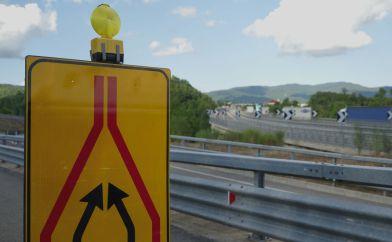
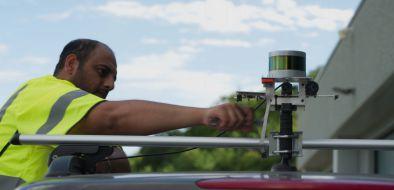
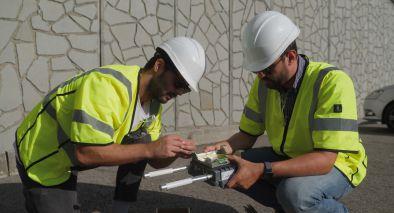
volume of major intervention actions (40%).
Other technologies developed in Omicron include a Virtual Crisis Room that combines a digital twin and decision-support system with real-time communications, which has been demonstrated to aid response to emergency incidents such as tunnel fires or landslides. And a V2X communication platform communicates the state of road projects and expected delays to road users, further managing traffic flow and enhancing safety.
Once actual maintenance projects are initiated, the Omicron project’s tech can assist the workers in conducting the work safely and efficiently. Road maintenance is dangerous work; according to injury and fatality data for road workers in Europe gathered at national level, thousands of workers are injured or killed each year while on work sites.
“We have designed and developed a versatile robotic platform that is able to perform road maintenance tasks in a safer and more efficient way,” says Ander Ansuategi Cobo of another Spanish Omicron partner, engineering technology centre Tekniker. “By enabling operators to control the system from the truck cabin, it eliminates the need for ground personnel in hazardous zones.”
Unlike other robotic solutions under development, Omicron’s modular platform can perform multiple kinds of tasks. These include
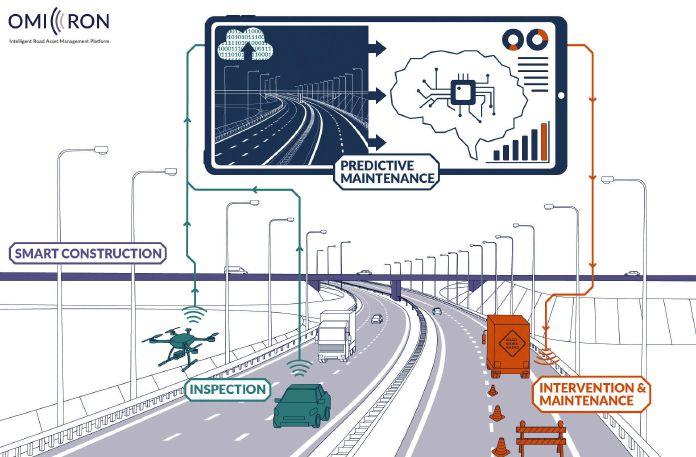
some of the most dangerous road works, such as placing and removing traffic cones, barriers and signage, removing lane markings – which uses lasers – and cleaning traffic signals so that they are more clearly visible to road users.
The robots can even be directed to seal cracks with bituminous mastic. Overall, this approach to these tasks reduces time – almost 90% less in the case of dealing with signals – significantly reduces or eliminates the need for people to be in dangerous, high-risk areas, and is on target to reduce costs. The precise and efficient crack-sealing solution is particularly economically competitive.
The robots’ actions are directed using both VR and AR technology. Depending on the task, the direction can be given remotely or on-site. Tablets or headsets allow workers to visualize the environment in a precise manner and under AI instruction, making their work less subject to human error.
“This tool enables the operator to control the whole process from within a virtual environment from a safe, distant place,” says Themis Anastasiou, a research engineer with Omicron’s Greek partner, the Laboratory for Manufacturing Systems & Automation (LMS) at the University of Patras.
Road workers are thus able to conduct their work out of harm’s way –from an office or from the safety of a vehicle. And because the work is more contained and targeted, traffic disruptions should be reduced by up to 10%.
While the technologies have so far proved successful, the next challenge is to scale up for wider uptake to tackle the EU’s aging road networks. This is where a more progressive mindset and recognition of the longer-term issues among politicians, funding bodies, road authorities, procurement practitioners and even engineering colleges will make the difference to put innovative road intervention technologies
The operator can control the whole process from within a virtual environment from a safe, distant place
Themis Anastasiou, research engineer, Laboratory for Manufacturing Systems & Automation
Above: The data gathered through digital inspection is fed into a set of technologies for experts to analyse and allocate the appropriate resources
Top left: A motorway in Italy where Omicron systems are being tested
Middle left: A lidar scanner is fitted to a vehicle in order to gather 3D data for digital twins
Bottom left: Worker prepare a V2X device used in Omicron to communicate road work status and delays to road users







DIPT is a technology with a heritage.
creating a sustainable ecosystem that cuts our environmental footprint, conserves scarce resources, and paves the way for a cleaner future.”
A fully DIPTenabled smart network could enable lighter, more efficient vehicle designs, with smaller batteries and therefore a lower overall cost in monetary and resource terms.
“Dynamic charging is anticipated to significantly influence the overall transition to electric vehicles by addressing the critical issue of range anxiety. Allowing EVs to charge while in motion could reduce the need for frequent stops and large batteries, making electric vehicles more practical for longer distances and heavy-duty use,” says Perez.




We are focused on getting the standard wireless charging capability installed on vehicles from the factory
Now more commonplace are static charging solutions, of which WiTricity is one of the world’s biggest suppliers. These utilise induction resonance but do not charge while vehicles are in motion and are often installed in taxi ranks, bus stops and private garages. WiTricity have been instrumental in developing the latest SAE J2954 standard for wireless-power-transfer. They’re enthusiastic about the potential of dynamic

Amy Barzdukas, CMO, WiTricity
Visionary Serbian American inventor, Nikola Tesla, conducted experiments into induction resonance power transfer as far back as 1893, amazing audiences by lighting bulbs at distance from the famous Tesla Coil.
Tesla was also developing far-field WPT which would in theory send power to any receiver on earth. He demonstrated power transfer to light bulbs two miles away from the 140m tower he built in Colorado Springs. Induction resonance failed to take off last century for a variety of reasons, financiers unexpectedly pulling the plug being one, and

charging but haven’t taken the plunge yet.
“While WiTricity did some early work in 2017, we are not currently working on dynamic charging,” says WiTricity CMO, Amy Barzdukas.
“We need to walk before we can run. We are focused on getting the standard wireless charging capability installed on vehicles from the factory.”

another being that it was considered to be more profitable to install huge amounts of copper wiring.
Looking to the future J+P Global has pointed out that with increasing electrification necessary to meet Net Zero goals, the world may in future be looking at a supply gap in copper, a fact that may make WPT an increasingly cost-effective option. Today, New Zealand based startup Emrod has partnered with Powerco, and is building Tesla-style line-of-sight induction resonance towers as prototypes, suggesting that the technology in a variety of applications may be making a comeback.
However, many public bodies worldwide have expressed interest in the technology, including England’s National Highways (formerly Highways England). “In 2018, we announced a feasibility study into dynamically charging electric vehicles as they drive along our network,” said a spokesperson. “This study was put on hold due to a similar project underway in France on a similar style road network.”
Electric Motor City
But it’s in Detroit, Michigan where strong progress has been made. Among the forerunners is Justine Johnson, chief mobility officer for the Michigan Economic Development Corporation based in the Office of Future Mobility and Development. “We have the first wireless

EV charging roadway in the nation and that is located in Corktown, 14th street, Detroit,” she says. “This is a true public-private partnership with a number of different entities involved.”
One of those partners is Electreon, which supplied the induction coils embedded in the road. They are one of 60 startups with offices in Detroit Newlab, an innovation hub set-up by Ford and part of a wider regeneration project in the city. “Electreon are responsible for designing, evaluating, iterating, rolling out the technology,” says Johnson. “There are OEM partners like Ford Motor Company, providing the undercarriage receivers. Utilities are a big partner here – DTE Energy are ensuring that the grid can supply the induction coils.”
The DIPT-enabled section is 400 metres long and located in the mobility innovation district and has been operating in pilot stage on the public road since completion last November. “What a lot of people are very excited about is that this new charging experience provides more comfort,” says Johnson. “For consumers who are on the fence about whether they should transition to an EV or not, it

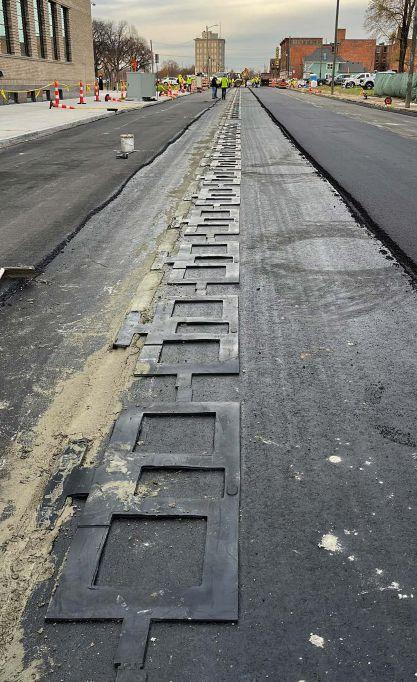
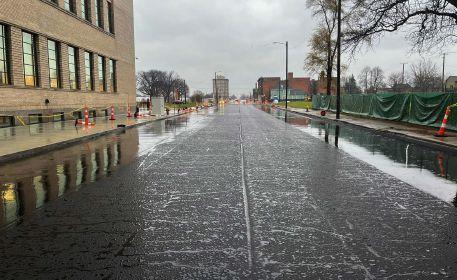







For consumers who are on the fence about transitioning to an EV or not, it makes it an even more attractive proposition
Justine Johnson, CMO, Michigan Economic Development
makes it an even more attractive proposition.”
DIPT is a relatively old technology, the basic research being conducted by visionary electric pioneer, Nikolai Tesla (see previous page). However, its mainstream potential has been bolstered by three main supports in recent years.
The first is the renewed commitment to CO2 reduction and the EV transition overall, which, as more and more drivers adopt EVs makes electric road infrastructure a more viable and useful proposition beyond public transport use cases. The second is the seismic increase in power-transfer efficiency over recent years. The input-output ratio of DIPT used to be 75% but now its competing with plug-in.
“We’ve demonstrated the ability to charge a bus and a Scania truck at speeds of up to 80km/h, achieving charging rates of 180kW with an efficiency of over 90%. This was accomplished over a distance of 80 to 100 meters,” says Perez.
The third pillar is public financing. In particular, the Biden administration’s commitment to advances in cutting edge sustainable tech, broader environmental goals, and economic stimulus spending.
“There has been an abundance of funding from the federal government,” says Johnson. “They put money towards infrastructure to support this type of work and it’s so important. This is also an opportunity for us to bring diverse communities with us on this journey, that they will be able to benefit from this technology, and we want them to be a part of this.”
Around $1.9m of public and $4m of private investment went into Detroit’s electric road.
Electreon can profit from charging-as-a-service (CaaS), whereby they receive a revenue-stream
for vehicles charged, and hence are willing to cover a portion of the cost.
“We are most excited about the powerful business models that wireless EV charging will unlock,” says a spokesperson from WiTricity. “Certainly, wireless EV charging is more convenient, reliable, and accessible than plug-in. Just as Wi-Fi opened new business models for smartphones and new applications, wireless EV charging can do the same.”
But both municipal/public involvement in organisation and financing is likely to be required soon. This means that policy and budgets largely determine whether DIPT goes ahead.
“New highway construction costs including the inductive ERS (electric road system) can range from €6 million to €20 million per kilometre. The ERS is a minor percentage of the total construction cost. Of course, it remains a large one-off investment,” says Perez. These costs will vary wildly between geographical areas. Whether the investment will pay-off for private investors seeking CaaS revenue will depend on a huge variety of factors such as EV uptake, number of EV’s fitted with receivers, energy prices, competition and how much the road user values the comfort and convenience of charging as they drive. “We need to realize that the durability of such ERS system is 20 to 30 years with little maintenance costs involved,” says Perez. “Next to that, the potential cost savings that can be achieved through widespread adoption should be considered. Finally, the ERS becomes a selling tool, it will generate revenue by providing energy to the electric vehicles. On this basis, the business case and ROI can be calculated. Inductive charging allows for direct, full-power charging upon contact and involves fewer mechanical components. Therefore, it is more maintenancefriendly, promising a cost-effective solution in the long run.” This can be especially important for public transport and freight, where lifetime total cost of ownership (TCO) is the bottom line.
“Additional extensive testing on a track with heavy weights successfully validated the charging solution’s robustness under heavy loads, proving its efficacy for heavy-duty applications. These findings underline the potential of dynamic charging technology to cater to various vehicles and conditions, setting the stage for broader application in public and commercial transportation,” says Perez.
Frequent, lighter charging extends the lifetime functionality of the battery, usually the most expensive part of the vehicle to replace. DIPT
Dynamic induction power transfer (DIPT) has promising applications in high-use fleets. For example, electric bus uptime can reach higher levels, allowing for reduced vehicle numbers to supply the same capacity. Bus routes can also be more flexible, as a charging station does not need to be planned in. Taxis can also benefit from DIPT –firms in Gothenburg and Manchester are engaging in pilots with static charging in taxi ranks, which may pave the way towards full DIPT by promoting the use of magnetic resonance receivers. At this stage, preexisting fleets may opt to fit add-on receivers, as is the case with XC40 Recharge SUV taxis provided by Volvo in Cabonline’s Gothenburg trial, where static charging stations are provided by Inductline. In the UK, the NHS is interested in converting its EV ambulances to run on wireless power transfer, saving money and increasing uptime.
lpeeds journey times and a fully-fledged ecosystem would remove the uncertainty of malfunctioning charging stations.
“Imagine heavily used routes for heavy duty fleets, you can start to have a very different dialogue on what your point-to-point looks like on those routes. We can start to think about the economic benefits for consumers, who can freight what they need to on the timeline they’ve identified,” says Justine.
SAE J2954 is the latest standard for wireless charging, ensuring interoperability, safety, comparable to the plug-in SAE J1772 standard. It charges at 3.7kW, 7.7kW and 11kW and has an efficiency of about 85% which compares well to plug-in, though falls short of the 94% achieved by top-standard wired charging.
“The SAE J2954 standard is a great enabler for the adoption of wireless charging for private use. As far as public infrastructure, the one item that is missing is position detection. However, that is close to being ratified,” says a WiTricity spokesperson.

more comfortable, and more convenient. DIPT maximises the capabilities of the electric vehicle and does something that ICE vehicles cannot and will not do; refuel/recharge while in motion without the driver lifting a finger. It’s the kernel of a vision: EV’s will not only compete with the convenience of ICE while bringing down carbon emissions, they can, and will, far surpass that ease of use, to no longer seen as the tricky, range-anxiety inducing alternative, but rather the common sense, streamlined, hassle-free option. That’s the potential. Many OEMs today are approaching with cautious interest. But if these pilots show that the technology is working well, why not skip to the higher stage of development? ■
The evolution of electric vehicle charging infrastructure is a collaborative story
Sergio Perez, e-mobility business development manager, ENRX
All parties have stressed the necessity for co-operation, for networks and alliances. We’re looking at products and infrastructure that require such interdependent confidence and quality communication across a broad range of actors.
“The evolution of electric vehicle charging infrastructure is a collaborative story where success depends on a multifaceted partnership. It’s a tale that sees road owners, energy suppliers, automotive manufacturers, public transportation authorities, and governments coming together to weave a fabric of interconnected systems that can support the dynamic needs of EVs,” says Perez. It’s hard to imagine a technology more seamless,






















Traffic technology is becoming more advanced, but often some of the basic infrastructure it relies upon is wearing out. That’s why, in order to maintain and improve safety levels, it’s important for renewal programmes to be well planned and for nascent technology such as automated driving systems to be fully catered for. We take a look at some of the initiatives underway in roadway renewal in Japan and Singapore
Words | Tom Stone


Well-maintained road markings are important for lane-keeping assisst (LKA) functionality in modern cars

As urban centres across Asia grapple with aging infrastructure and the rapid evolution of vehicle technology, transport authorities are developing innovative solutions to keep their cities moving safely and efficiently. Three pioneering projects from Japan and Singapore demonstrate how careful research, creative problem-solving, and technological upgrading are helping to address these complex challenges.
The rise of driver assistance technologies and autonomous vehicles (AVs) has introduced new complications to road maintenance. At Japan’s National Institute for Land and Infrastructure Management, researcher Toshimasa Nakagawa is investigating how lane keeping assist (LKA) systems interact with lane markings of varying quality.
Nakagawa and his team conducted real-world testing on a test track on which they applied new lane markings and systematically degraded them to achieve target paint levels ranging from 60% to 90%. The markings were installed every 150 meters – equivalent to about five seconds of driving time – allowing for comprehensive testing under various conditions.
The research utilized multiple vehicle models recommended by automotive manufacturers for their strong LKA performance. Testing encompassed 840 different
The lane-keeping operation ratio was extremely low in the rain and at nighttime. It is thought that water on pavements prevented onboard cameras from detecting lane markings during the test drive
Toshimasa Nakagawa, researcher, Japan’s National Institute for Land and Infrastructure Management

Signage has a key role to play in road safety, informing drivers of road layouts, speed limits and hazards ahead. Signs can serve even greater safer functions if they can display variable messages, as is the case with Swarco’s Prism VMS (variable message sign).
This sign recently became the first manufactured in the UK to meet the TOPAS 2517C certification, which establishes safety and reliability requirements for electromechanical VMS, ensuring safety messaging systems to meet the highest of standards for public infrastructure.
Designed to enhance road safety and infrastructure resilience, Swarco’s Prism signs are engineered to maintain consistent performance in challenging conditions. The signs feature advanced safety capabilities including winter weather protection systems and fail-safe operations. Their robust construction and reliability make them particularly valuable for emergency route management, evacuation
guidance, and essential safety messaging. The signs’ low-power design and weatherresistant construction ensure continuous operation even in remote locations or during adverse conditions, supporting infrastructure reliability.
Another manufacturer of prismatic VMS is Triplesign. The company’s engineers are particularly proud of the low energy consumption of their signs, especially when compared to LED VMS. Triplesign VMS require no permanent power supply, operating instead on renewable energy sources. Critically, the signs continue displaying messages even during power outages as no electricity is needed to keep a message visible. In locations where message variations are minimal or where long-term, consistent display is required, rotating signs like Triplesign offer a sustainable alternative, consuming just 0.14Wh
conditions, examining variables including time of day, weather conditions, and driving direction.
The findings revealed crucial insights about LKA system performance. “The LK operation ratio was extremely low in the rain and at nighttime,” says Nakagawa. “It is thought that water on pavements prevented onboard cameras from detecting lane markings in the test drive.”
However, an interesting pattern emerged in nighttime testing. The paint level threshold for consistent LKA operation was more stable at night than during the day, ranging from 76% to 79% compared to the much wider bracket or anywhere between 59% and 77% in daylight. “It was because the brightness in front of vehicle was stabilized by headlights,” says Nakagawa.
While Nakagawa’s research focuses on emerging and future automotive technologies, the Metropolitan Expressway Corporation in Tokyo faces immediate challenges in managing essential maintenance work on its constrained urban highway network, which has led its technician Ayaka Masuda to carry out a study into ways in which the impact of work zones can be reduced.
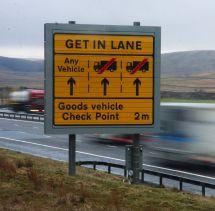

The research is particularly crucial given Tokyo’s unique infrastructure challenges. “The Tokyo Metropolitan Expressway experiences significant traffic congestion and frequent accidents,” says Masuda, who presented her findings at the ITS World Congress in Dubai. “The Expressway has heavy traffic, a complex alignment and only two lanes, which means it is narrow.”
The aging infrastructure demands increasing maintenance, but traditional traffic management approaches can contribute to congestion and accident risks. Masuda’s research examined whether connecting adjacent work zones could provide better outcomes. The research investigated ‘linking’ work zones by closing lanes over a longer stretch than would previously have been done –Masuda’s team called these longer lane-closures, connected traffic regulation (CTR) zones.
The study looked at whether CTR zones could improve safety by reducing the sudden braking events associated with merging traffic and also at whether the overall throughput of the roadway would be affected.
Using advanced simulation and multiple regression analysis, Masuda’s team found CTR reduced sudden deceleration occurrences by 28% on average, with minimal impact on traffic capacity – just 0.3% reduction.
But CTR zones are not suitable in all cases, the work identified some unexpected limitations – if the CTR zones were used in tight curves then the desirable outcomes were switched to negative ones.
“CTR zones reduced traffic capacity and increased the number of sudden deceleration occurrences in section with plane curve radiuses less than 600 meters,” says Masuda. Recommendations have now been issued to the Metropolitan Expressway Corporation to consider the use of CTR in appropriate cases.
In Singapore, the challenges of maintaining and upgrading infrastructure while keeping traffic flowing have led to innovative solutions in tunnel management. Jade Chua, a senior engineer at Singapore’s Land Transport Authority has been leading a significant upgrade of the city state’s Short Tunnel Integrated Traffic Plant and Monitoring System (ST –ITPMS).
“With aging systems, we need to do a technology refresh,” Chua explains. The upgrade offered opportunities to enhance workflows and comply with current cybersecurity standards while ensuring continuous tunnel operations.
The project adopted a hybrid development approach, combining traditional waterfall
Above: Tokyo’s congested highways increasingly require maintenance, which has led to research into more efficient ways to close lanes
CTR zones reduced traffic capacity and increased the number of sudden deceleration occurrences in section with plane curve radiuses less than 600 meters
Ayaka Masuda, technician, Metropolitan Expressway Corporation, Tokyo
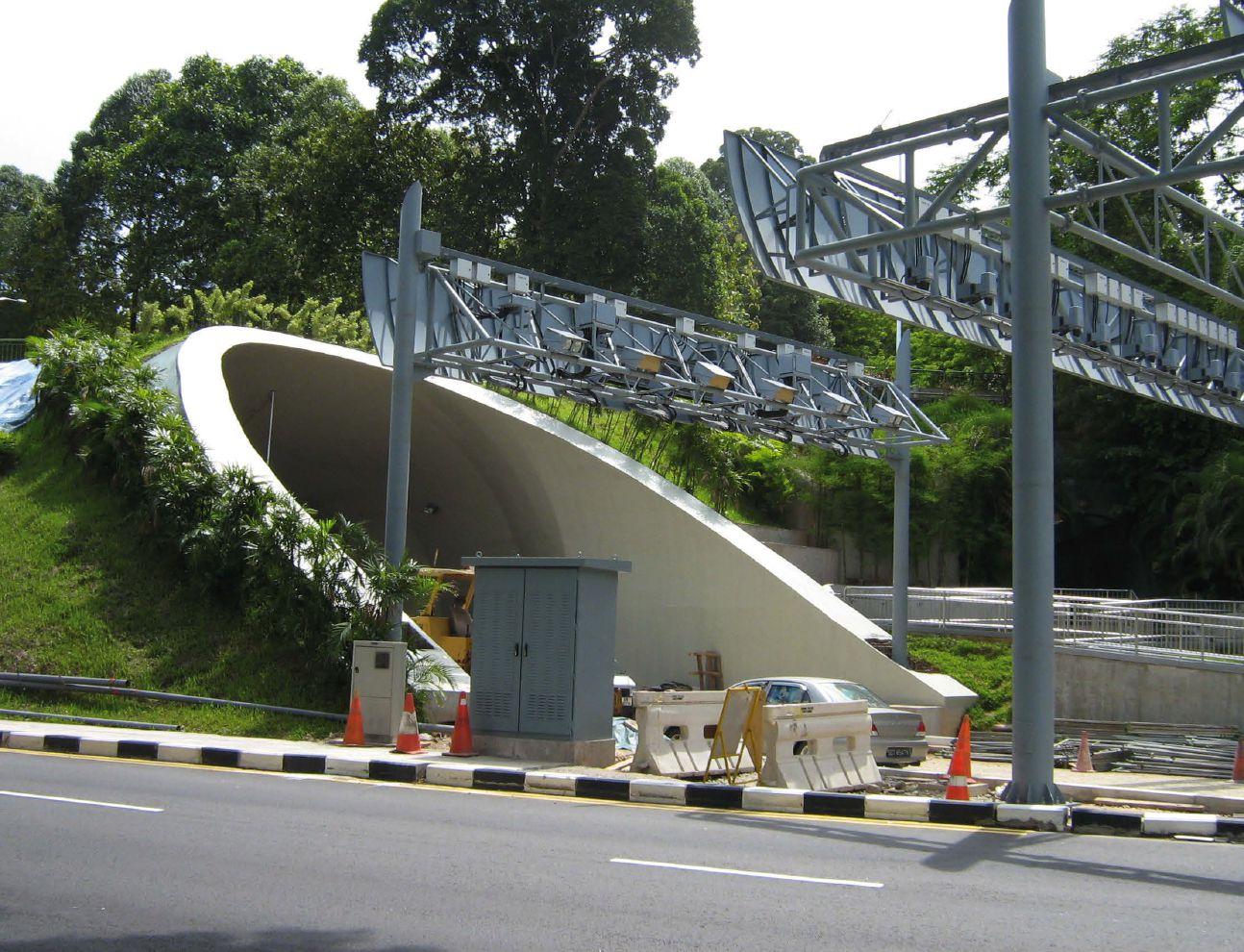


Now we are able to improve traffic flow, help operators to better manage tunnel operations and have smoother traffic for motorists
methodology with agile elements. “We introduced continuous review and iterations,” says Chua. “We did sprint reviews bi-weekly and also observed changes on the ground.”
Implementation had to work around operational constraints. “Because the tunnel is in operation, you can only change the system at night, engineering hours, which means that there is less traffic flow,” says Chua.
The resulting system provides operators with simplified interfaces showing tunnel layout and equipment status at a glance. It supports enhanced safety measures and offers scalability for future tunnel additions to Singapore’s network.
While each project addresses different aspects of urban transport infrastructure, they share common themes of adapting to technological change while maintaining and improving safety.
Nakagawa emphasizes the need for further research, particularly regarding “the relationship between paint level and LKA
operation with various automated driving vehicles” and how irregular wear patterns on actual roads might affect system performance.
Masuda’s work demonstrates how careful analysis can improve maintenance procedures while minimizing crashes and disruption. Her team continues to study optimal operational rules for CTR zones under various conditions.
In Singapore, Chua’s successful system upgrade shows how technological refreshment can be achieved without compromising daily operations. “Now we are actually able to improve traffic flow, help operators to better manage tunnel operations and have smoother traffic for motorists,” she reports.
As cities worldwide face similar challenges of aging infrastructure, increasing maintenance demands, and the integration of new vehicle technologies, these Asian initiatives provide valuable insights into potential solutions. Their work demonstrates that successful urban mobility solutions require careful balance between technological advancement and practical implementation, always keeping safety and efficiency as primary concerns. n





New technologies developed by Avery Dennison are helping to create road signs that are not only easier to make, but are also more durable and deliver higher performance, creating safer roads with fewer emissions. Here one of the company’s printing experts Aaron Means explains more
Words | Avery Dennison
With increasingly utomated vehicles requiring less human control and road operators under pressure to cut carbon emissions, one might assume there would be less demand for the manufacture and deployment of traditional traffic signs.
However, as Aaron Means, senior manager for permanent traffic sheeting and digital printing solutions at Avery Dennison explains, signage remains crucial and is evolving to meet modern demands through innovative technology.
More than a decade ago, Avery Dennison revolutionized the traffic sign industry by introducing their first digital traffic sign printer. The pioneering TrafficJet™ Print System marked a significant step forward, encouraging the adoption of digital printing in an industry traditionally resistant to change. The 2020 launch of TrafficJet™
Right: Avery Dennison’s TrafficJet Pro printer uses UV LED technology instead of solvents
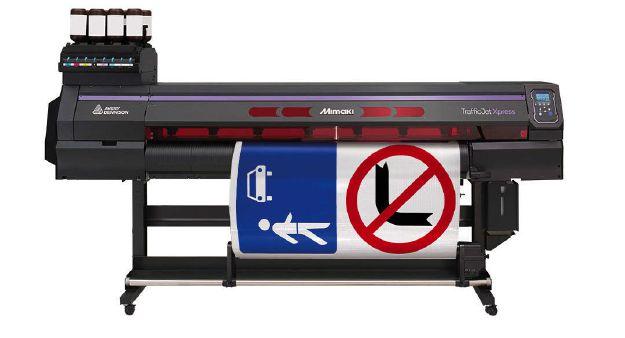
Pro, and it’s UV-LED ink set, provided high-volume sign shops the opportunity to digitally print at speeds previously only achieved by screen printing.
Retroreflectivity is vital for modern signage – Avery Dennison is able to deliver this with its innovative materials, which are now so advanced that they can do away with the need for any additional lighting on signs.
“We have different base sheetings for different reflectivity levels,” says Means. “These are used for different applications, whether it’s a sign on side of the roadway, such as stop signs or speed limits, or a large guide sign above the road where it’s not getting as much light.
“In most cases, you don’t have to light signs anymore. This can save energy and money – lighting is being removed because it’s not necessary anymore. Now the light from the headlights themselves is sufficient to light the sign and make it fully visible and fully legible for all the drivers on the roadway.”
“This was our first UV-LED based printer,” says Means. “It uses inks cured with exposure to UV light, rather than eco-solvent inks that require heat to cure. This gives greater stability and less exposure to VOCs (volatile organic compounds) for the folks running the printers. It also helps with sustainability and your operating costs, as it lowers energy consumption.”
The company’s latest development, TrafficJet™ Xpress, launched in April 2024, exemplifies this evolution. It represents a significant step forward in both sustainability and accessibility for sign manufacturers worldwide. The TrafficJet Xpress was created using Mimaki’s existing UCJV300 and adapts it with dedicated firmware, a special ink set, and bespoke software. “It all tailors the printer to the needs of the traffic space,” says Means. Since the launch of TrafficJet Xpress, Avery Dennison now offers two UV-LED platforms designed
to meet the needs of sign shops, regardless of their size.
The system’s comprehensive approach sets it apart in the market, meaning customers have a single point of contact to turn to for support at any stage of the sign-making process. “We sell the printer, develop the software, manufacture the sheeting and overlays, and even the inks ourselves,” says Means. “Our dedicated service team handles everything, fully managed by Avery Dennison. This streamlines the customer experience—if they have any questions or concerns, they only need to make one call.”
As the industry continues to evolve, workflow efficiency has become a key focus. “Now that print speed is no longer the bottleneck in the sign-making process, we have developed workflow software with PrintFactory, which can further automate the process and greatly speed up job prep. This software can also connect to the orders from a customer’s web shop, and automatically pull and organize the print files needed based on the media required. This can save a sign shop hours in preparation.”
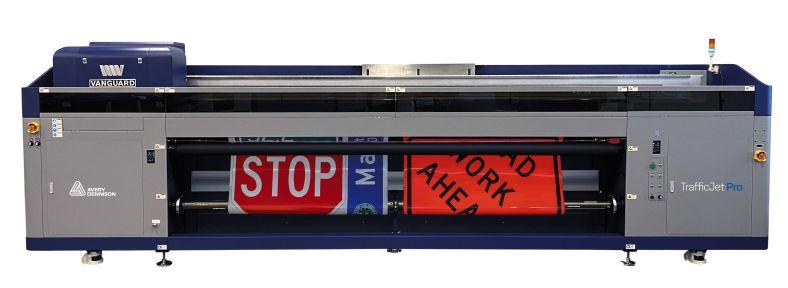
One of the major challenges in road signage is durability, particularly when it comes to maintaining original colour tones in signs as they age. “Most graphics printers are mixing cyan, magenta, yellow and black to create an output colour,” says Means. “The problem is when those weather, the cyan may not fade at the same rate as the magenta, or the yellow, or the black. So, what may start in spec shifts outside the colour box, creating a non-compliant sign.”
15
The number of years Avery Dennison signs are guaranteed for – twice as long as many competitors
To tackle this, Avery Dennison has created an innovative overlay film that can be used on signs in areas accessible on foot. “Our OL-1000 overlay is a graffiti cleanable film that extends the life of the sign. It allows you to easily remove vandalism, such as paint, stickers, or markers –eliminating the need to replace the entire sign.”
Above: The TrafficJet Pro can use spot colours instead of CMYK for enhanced colour durability
Below: Avery Dennison’ antidew film creates noticeable improvement in retroreflectivity
Bottom: Antigraffiti films prevent long-lasting damage to signs
struggle more than humans to make sense of sub-standard signage.
“Signs need to be legible to all types of drivers, autonomous or not. Graffiti is not the only issue that compromises sign legibility and safety.” Legibility of signs can also be temporarily affected by another environmental factor - dew gathering on the sign surface reducing retroreflectivity. Avery Dennison has addressed this problem with another overlay film that can be added to a TrafficJet printed sign. “Our OL-1200 anti-dew film prevents the formation of water droplets. Its high surface energy spreads out water droplets, making them run down the face of the sign rather than accumulate,” says Means.
“With our solution, we use a single channel, called a spot colour - an ink that’s specifically formulated for the different traffic colours. We control the colour performance and consistency through the ink manufacturing process, rather than attempting to do it on the printer by blending different colours together.” This innovation has enabled the company to offer warranties of up to 15 years for their high-end products, compared to the typical five to seven years in the commercial space.
It’s not just environmental factors that can cause a sign to wear out, howevervandals can put an end to sign’s usability in a few seconds with a can of spray paint.
Enhancing the durability of signage helps not only to improve safety for drivers, but also, indirectly for road maintenance crews, who will be required to put themselves in risky situations less often. “Safety is not just seeing the sign,” says means. “It’s also keeping the road crews off the roadway. If we can reduce the amount of sign maintenance needed, we can reduce the time road crews are put in harm’s way.”
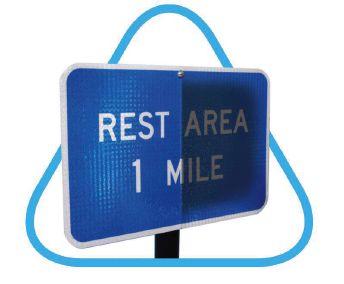
Maintaining the pristine legibility of road signs is actually becoming more vital in a world of automated vehicles because these systems are still supported by roadside infrastructure - many use cameras to read signs, and these will


With humans and autonomous systems alike relying on road signs and a world where fully-automated, fully connected vehicles are still a distant prospect, Means is convinced traditional signage is here to stay for many decades: “For years to come, we’re likely to see a mix of different levels of driving automation on our roads. That’s why we remain focused on developing traffic sign technology that considers the needs of all driver types.”
As developing nations become attuned to the needs to improve road safety and efficiency, demand for road signs and improved production methods is increasing in many regions. “Our TrafficJet Print System offering enables our customers to make signs that do more. They are adding value and safety to their roadways. Today, we have over 800 digital printers installed in every corner of the world.”
Through innovations in materials, printing technology, and workflow solutions, road signage continues to evolve while maintaining its crucial role in transportation infrastructure. As vehicle automation becomes more common and sustainability concerns grow, these advances ensure that road signs will remain both relevant and efficient well into the future.” ■
Our dedicated service team handles everything, fully managed by Avery Dennison. This streamlines the customer experience—if they have any questions or concerns, they only need to make one call
Aaron Means, senior manager for permanent traffic sheeting and digital printing solutions, Avery Dennison
Words I Smita Sharma, senior manager, applications engineering, Road Zipper, Lindsay Corporation
Traffic consolidation in constricted right-of-way (ROW) conduits including bridges, tunnels, critical roadways to business districts and ports, etc. can cause congestion, freight delays, and safety concerns for both commercial and non-commercial traffic. While roadway expansion is likely helpful in improving traffic flow but with directional and temporal congestion, a cheaper and quickly deployable alternative exists. Flexible lane use or a reversible managed lane is an accepted solution in such conditions. However, analysing and summarising the benefits of the different applications can help with innovative future managed lane solutions. This article includes two projects where reversible lane(s) and a moveable median were adopted on existing roadways rather than roadway expansion.
The first project is Operation Brock (OpBrock) on the M20 in the UK, which deployed positively protected contraflow lane(s) for non-commercial traffic heading to the Channel Tunnel and the ports at Dover. The second project is the moveable median on Alex Fraser Bridge in Vancouver, Canada.
Operation Brock, UK
OpBrock on the M20 is a result of a unique lane management need. The
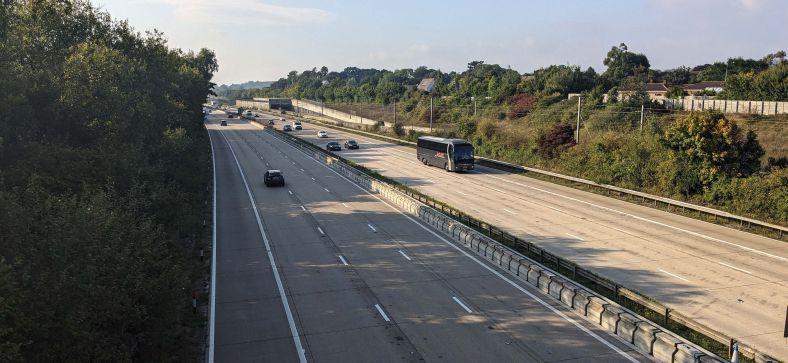
Below left: OpBrock deployment (overnight): The Road Zipper barrier transfer machine transferring the barrier into the roadway for setting up the contraflow lane for noncommercial traffic
Below right: Before and after lane configurations on the Alex Fraser Bridge, Vancouver
objective of the project was to channelise commercial portbound traffic on the port-bound M20 while using flexible lane configuration on the London-bound M20 to create contraflow lane(s) for non-commercial traffic heading to the tunnel or port. The Port of Dover in England is used by more than 15,000 commercial trucks daily to import/ export freight to and from the Port of Calais in France. One of Kent’s main
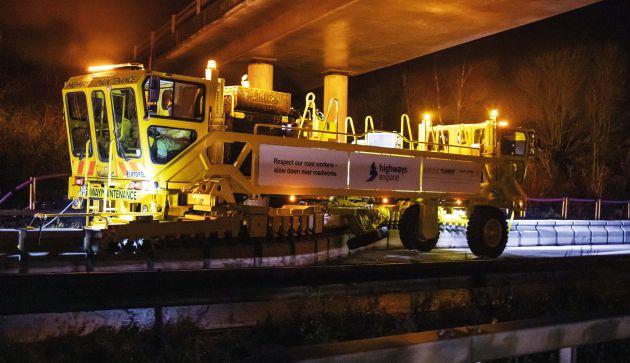
Based upon real time conditions on the M20 and at the port, the moveable barrier system can be quickly adjusted to execute a new traffic lane configuration
motorways, the M20 is the main peripheral route to Europe and about a 25 km (15.5 miles) long segment of the M20 is the main freight corridor for the UK through the port of Dover.
Prior to Brexit, traffic on the M20 was managed through Operation Stack –parking or “stacking” commercial trucks
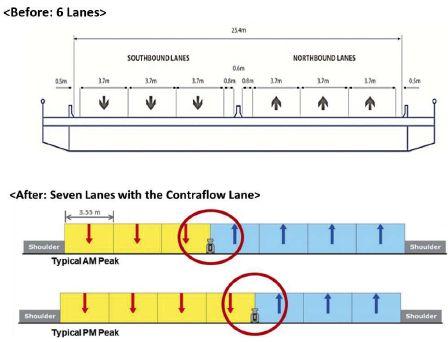

on the M20 when services across the English Channel were disrupted by bad weather, fire, and labour matters, among other things. With Brexit, Operation Stack was not viable because of the extensive deployment time and logistics and commercial traffic requiring, under new regulations, border inspections.
To prepare for new Brexit rules (effective January 1, 2021), Operation Brock, or OpBrock, was instituted on the M20 between London and the Port of Dover. The traffic management solution addressed five main objectives –continued movement of goods and services across the UK during disruptions at the Eurotunnel and/or Port of Dover, optimal use of existing road infrastructure, steady flow of portbound non-commercial traffic on M20 (mobility for all), quick and safe deployment using advanced and conventional techniques, and long-term, sustainable planning.
National Highways’ team (including manufacturing, design, consulting and operational contracting firms) developed plans for two scenarios – one contraflow lane versus two contraflow lanes – based on port and traffic conditions. In 2020, Lindsay’s Road Zipper system was delivered and installed on the M20.
When OpBrock is deployed, the moveable barrier is transferred onto the roadway from the outside shoulder or median. Initially, the barrier was stored on the outside shoulder and in 2024 the cross-sectional storage location changed to the central median after completion of structural and drainage improvements.
The overall OpBrock deployment and removal takes one- to two-nights work while the previously used Operation Stack took 4-6 weeks of M20 disruption.
Based upon real time conditions on the M20 and at the port, the moveable barrier system can be quickly adjusted to execute a new traffic lane configuration.
An easily deployable positively protected contraflow lane(s) solution (moveable barrier system) was adopted for future flexibility and readiness including the option to change the road configuration based upon traffic and port conditions.
The moveable median on the Alex Fraser Bridge (AFB) in Vancouver, Canada helps add a reversible lane on the bridge. The AFB connects Richmond and New Westminster in Greater Vancouver with an average daily traffic of more than 119,000 vehicles. Congestion on the bridge was a severe problem affecting daily commuters and commercial traffic.
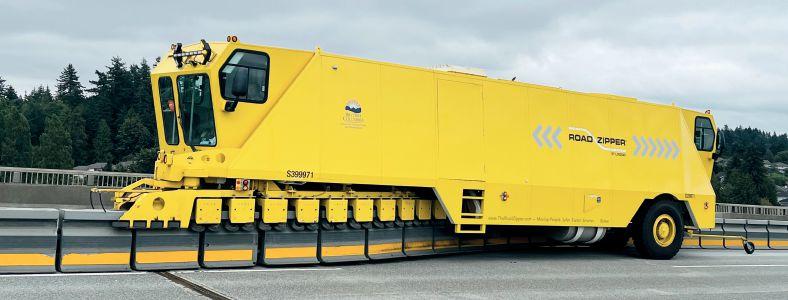
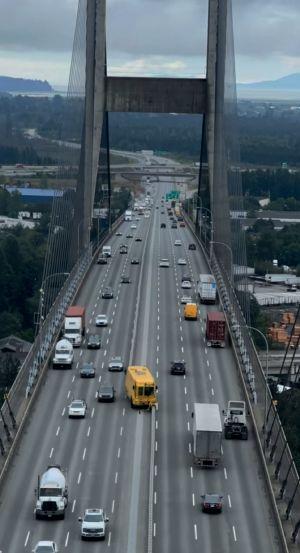
Above: The Road Zipper barrier transfer machine transferring the moveable median barrier to reverse the direction of the travel lane
Left: All travel lanes are open to traffic during lane configuration change using the Road Zipper barrier transfer machine
A short before-and-after study was conducted to estimate the economic effect of the AFB contraflow lane. This study used origin-destination (OD) matrices and traffic volume on road segments operating contraflow lanes from a data vendor and traffic volume on major roads from loop detectors. For evaluating the performance of lane management, this study estimated changes in traffic characteristics (traffic flow, speed, travel time (TT), and volume/capacity ratio (v/c)) and economic effect (changes in vehicle hours travelled and value of travel time).

To ease congestion and increase road capacity in peak hour, a reversible lane was added to the bridge using a crash-tested Road Zipper moveable barrier system in December 2019. Previously, the AFB operated six lanes (as shown on the picture on the left). After adding a reversible lane, the bridge now has seven lanes (by reducing the lane widths and removing the shoulders). The moveable median barrier is laterally transferred by one lane twice a day, providing four lanes for northbound traffic from 4:30am to 11:30am, and four lanes for southbound traffic outside of these hours. The speed limit was reduced from 90km/h (56mph) to 70km/h (43mph) due to reduction in travel lane widths from 3.7m to 3.55m.
31.8%
The percentage decrease in travel time after deploying the Road Zipper moveable median on the Alex Fraser Bridge in Vancouver, Canada
The results showed that the contraflow lane with the moveable median contributed significantly to improving the states of traffic flow on the AFB (traffic flow increased about 7.4%, travel speed increased about 48.3%, travel time decreased about 31.8%, and volume/capacity ratio decreased about 19.3% on average). This study showed that the contraflow lane on the AFB improved traffic flow and generated an economic benefit of US$12.7m per year on the AFB (estimated using the Value of Travel Time). However, there were economic losses in the zones near AFB (US$1.4m) and in the Vancouver area (US$10.7M), resulting in an overall economic benefit of US$1.1m per year.
Strategic traffic management planning along with easy and flexible interventions like positively protected lane management solutions can help avoid gridlock and community outrage while accommodating future travel behaviour, traffic conditions or trip changes. Valuable lessons can be learned from real-world flexible lane management projects to consider both short-term and long-term solution-based approaches that account for changes in travel behaviour and freight pattern. ■
Words
Even though tunnel driving is a common experience for motorists, it still causes stress for many. Visibility is often poor, obstacles are harder to avoid, and the confined space, coupled with an everincreasing number of trucks, adds to the pressure. The situation becomes even more dangerous when traffic in tunnels slows to a crawl. This makes it more important to minimise disruptions to traffic flow, such as those caused by repair work.
The fact is traffic on national and regional roads has been increasing for years. Leading to more frequent maintenance and renewal of road
Below: Thanks to its surface structure, the permanent marking tape Stamark A380 ESD offers optimum reflection and thus increases traffic safety in tunnels
surfaces, including road markings. Traditional markings typically last two to four years, depending on traffic and material. In tunnels, even minor roadwork can cause significant traffic disruptions, jeopardising safety. The confined space makes carrying out work under live traffic conditions extremely difficult or necessitates major restrictions for road users. This often results in regular closures and congestion on critical tunnel routes.
On open national roads, marking work can often be carried out using the hard shoulders, making partial closures
• High wear resistance and long lifespan – significantly fewer traffic disruptions.
• Superior visibility in tunnels thanks to outstanding reflectivity.
• Optimal grip in wet conditions and the presence of dirt and moisture.
• Reduces noise emission up to -0.2dB compared to concrete surface.
• Meets the high standards of driver assistance systems.

• Easy and quick installation.
• High level of worker safety and traffic efficiency when applying such a durable product.
tunnels. Consequently, the need for replacement is significantly reduced, resulting in fewer traffic disruptions, closures, and hazardous tunnel
With easy application, including on warm asphalt, 3M’s tape also enables rapid installation and immediate reopening. Particularly for new tunnel constructions, placing the tape onto the warm, soft asphalt offers the highest efficiency and safety in the application process, as there is no traffic before the tunnel opening. This approach not only reduces the frequency of traffic disruptions but also minimises their duration, making 3M’s Stamark A380 ESD tape an essential component for safe, low-maintenance tunnel operations.
High-quality marking solutions also provide excellent visibility, a crucial factor in tunnels where lighting conditions are challenging. The reflective

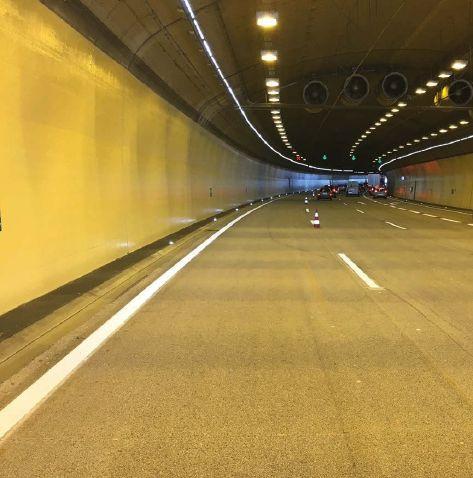
properties of markings are essential, especially in the presence of dirt and moisture, which are often brought into tunnels by vehicles. Wet roads can further compromise visibility.
Thanks to its geometric surface structure, 3M’s durable marking tape offers optimal wet reflectivity, enhancing traffic safety in tunnels. While traditional markings lose their reflective properties after about two years, the 3M Stamark A380 ESD tape maintains consistent visibility for years. Long-term measurements confirm that even at the end of its service life, the tape meets nighttime visibility requirements.
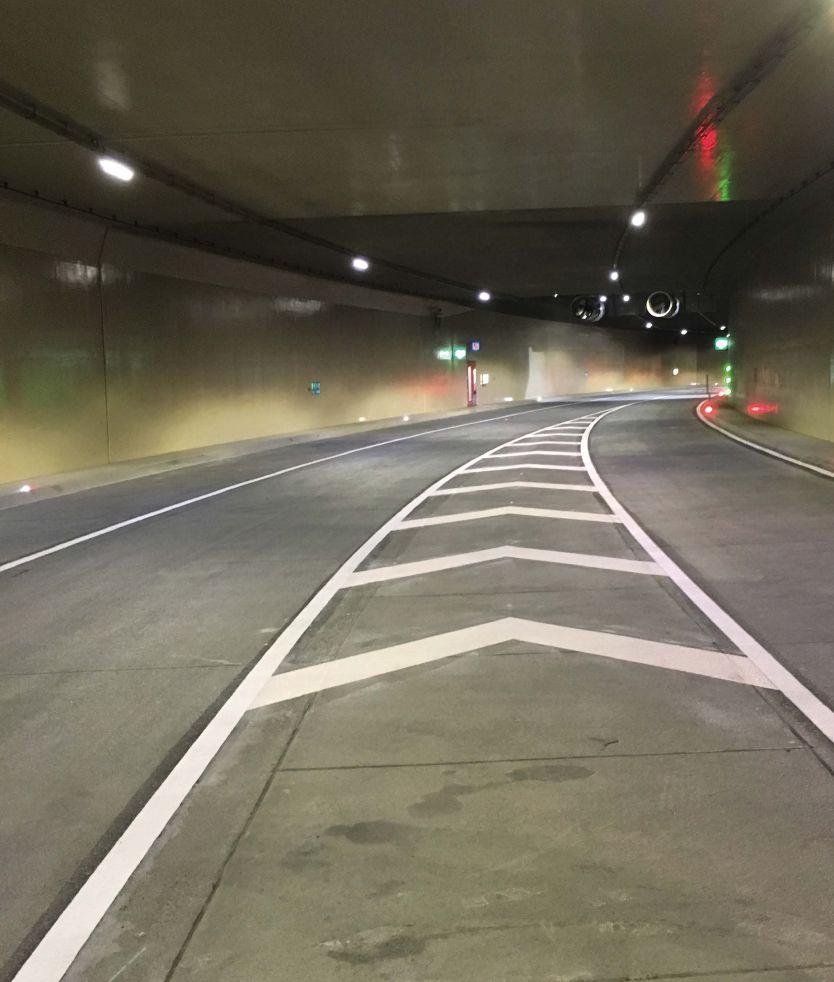
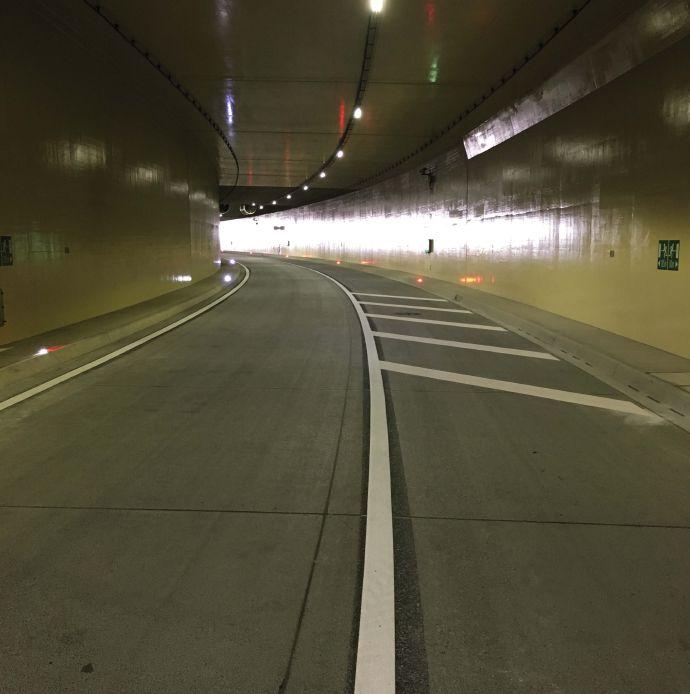
This feature is becoming increasingly important for the future: modern driver assistance systems, such as lane-keeping assistants, rely on cameras to detect markings. For these systems to function reliably, markings must remain clearly
visible under all conditions, including daylight, wet surfaces, and artificial tunnel lighting.
Beyond durability and visibility, marking tapes also play a significant role in reducing noise levels. Tire noise is the main source of sound for modern vehicles, particularly at higher speeds. Crossing lateral road markings can produce particularly loud noise levels. Measurements show that depending on the road surface and marking material, crossing markings can increase noise levels by up to 3.6dB. The 3M tape reduces the tire noise when combined with concrete road surfaces that are often used in tunnels due to long durability. Compared to the concrete surface the tape reduces noise emission up to -0.2dB. ■
High-quality marking solutions also provide excellent visibility, a crucial factor in tunnels where lighting conditions are challenging

Variable message signs, which offer wireless installation and remote control, present a sustainable, cost-effective solution to the rising challenges of traffic management
Words | Karen Koelma, export sales director, Triplesign System
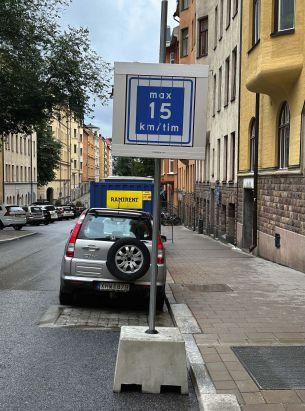
The shift toward sustainable mobility calls for a complete overhaul of current infrastructure. Roads are becoming more congested every year, with various vehicle types like e-bikes, scooters, and even AVs sharing the same space. This increasing complexity, combined with limited space for new infrastructure and the rise in extreme weather conditions, creates a challenging environment for road safety and efficiency.
Due to spatial limitations, different road users now share the same space, increasing the likelihood of accidents, especially at intersections where speed variance is a significant risk factor. Traditional traffic signs, reliant on static information, lack adaptability and cannot respond to real-time traffic changes, which escalates the chance of accidents. Adding extra instructional signs often leads to greater confusion, as there’s a limit to the amount of data drivers can safely process.
Left & right:
The Triplesign pilot project in Stockholm, aimed at enhancing pedestrian safety
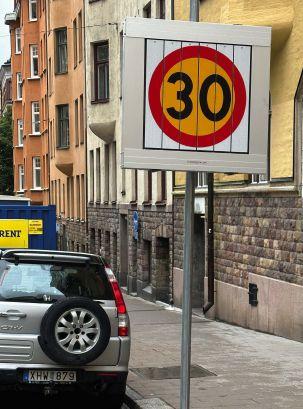
increasingly deployed. However, LED VMS have notable drawbacks. For example, they consume considerable energy, have a relatively short lifespan, and generate substantial waste at the end of their lifecycle. Operating an LED sign wirelessly requires large batteries and solar panels, making it both resourceintensive and costly, especially as battery demand rises and availability decreases over time. Additionally, LED VMS are susceptible to malfunctions, and the reliability of their suppliers has often been inconsistent.
After 20 years, users of Triplesign’s variable message signs can simply slide out the active section of the beam and replace it with a new section for another 20 years of reliable service. The durable frame remains unchanged, minimizing waste
To address these challenges, digital signage – particularly LED variable message signs (VMS) – is being
In locations where message variations are minimal or where consistent, long-term display is required, rotating signs like Triplesign offer a far more sustainable alternative. Triplesign systems are exceptionally energy-efficient, consuming just 0.14Wh. Their wireless installation is simple, they require no maintenance, and their durability is unmatched. Critically, the
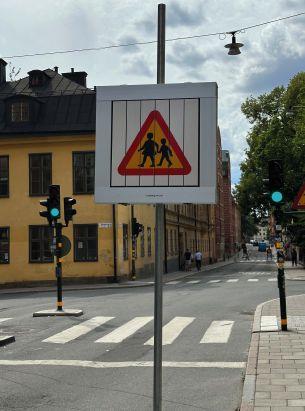
signs continue displaying messages even during power outages, as no electricity is needed to keep a message visible.
The Triplesign is constructed for a more durable world, with the best possible lifecycle technology for reusing materials. The durable, passive components are separated from the active components. The active components are constructed on separated sections inside the durable, anodised aluminium frame.
After the recommended 20 years, users simply slide the section with the active components out of the frame and insert a new one. After this operation, Triplesign recommends an exchange after another 20 years. This lifecycle technology minimises waste and installation work, providing an eco-friendly and costeffective investment.
Medium and large cities especially face the daunting task of maintaining accessibility and safety with constrained budgets. Affordable alternatives, like Triplesign’s energy-efficient VMS, offer dynamic signage that requires no permanent power supply, operating instead on renewable energy sources.
Triplesign signs use low-energy wireless communication and can be controlled
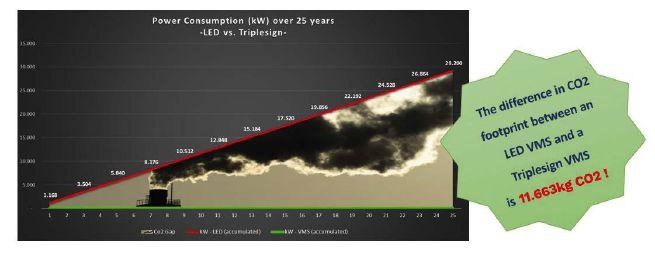
remotely via a back-end portal or through sensor technology. Integration with existing traffic systems is also possible using APIs, allowing real-time responsiveness. A recent example is a pilot project in Stockholm aimed at enhancing pedestrian safety. During peak pedestrian times, the speed limit drops from 30km/h to 15km/h, using camera sensors to adjust based on pedestrian density. Meanwhile, trucks in this area are also geofenced to adhere strictly to speed limits, and initial results show improved traffic flow and safety. Another application is in Belgium, where variable speed zones help reduce accident rates on roads with high
pedestrian and cyclist traffic. Excessive speed remains the leading cause of accidents, especially impacting vulnerable road users. Many municipalities are now adopting Triplesign’s technology to implement variable speed limits. During peak school hours, the speed limit automatically adjusts to 30km/h. The signs’ efficient energy use enables them to run on solar power even in areas with limited sunlight, and real-time updates are possible via wireless back-end control.
Because the signs can function autonomously and be activated by sensor
Left: The green line represents the accumulated power consumption of a Triplesign VMS with a standard wireless connection over 25 years, measured in kWh. The power consumption is 0.14Wh. Over 25 years, the total power consumption can be calculated as follows: 0.14Wh × 24 hours × 365 days × 25 years = 30.6kWh. The red line represents the accumulated power consumption of an LED VMS over the same period. The power consumption for an LED VMS is higher, at 300Wh, assuming the display of a message for eight hours per day
technology, Triplesign’s traffic signs are well-suited for areas prone to flooding. In cases of heavy rainfall, roads can become inundated, often taking time for pumps to clear the excess water. During this period, flooded sections may be impassable, requiring drivers to wait or divert to safer paths. With Triplesign’s system, a flood sensor installed at a critical height can detect rising water levels, instantly activating the signs to warn drivers of the hazard and provide real-time instructions to navigate the affected area safely.
There are numerous other application areas, such as narrow road passages, high winds on bridges, and flexible use of road sections such as opening and closing lanes during rush hours or in road construction areas.
In summary, prism-based variable message signs (VMS) present a sustainable, cost-effective response to the rising challenges of traffic management. Their adaptability supports real-time speed adjustments, which significantly improve safety and reduce energy costs. For local governments, these innovative signs represent an impactful and budgetfriendly investment in creating safer, more sustainable urban spaces. ■







autonomous Triplesign VMS allows authorities to a ord multiple warning points precisely where
A new road stud solution, which harnesses the power of inductive technology, is ushering in a new era for traffic infrastructure and improving safety while reducing maintenance times and operational costs
Words | Fernando Afonso, CEO and engineer, Sernis
In an era where road safety technology continues to evolve rapidly, Sernis is at the forefront of innovation with the introduction of the SR-IND inductive road stud. This cutting-edge technology, part of the new SR-45C and SR-48C road studs, represents a significant leap forward in road safety. The inductive system, along with a new O-ring sealing mechanism, ensures not only performance but also ease of installation and maintenance.
At the heart of the SR-IND is its inductive power transfer system, a technology that transfers energy through electromagnetic fields without the need for physical wiring. This inductive system enables the SR-IND to transmit



Right: The SR-IND inductive road stud
Below: The SR45C road stud for regular traffic zones and areas of poor visibility
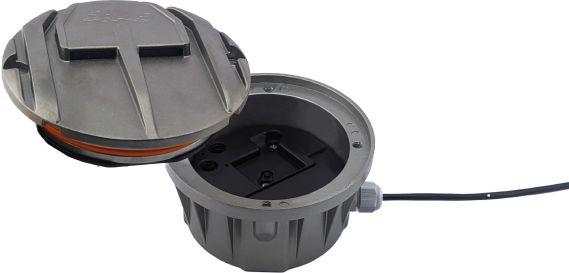
energy between its base and the light module at the top via magnetic coils. The move to inductive power transfer marks a major step forward in road stud technology, as it offers durability and electrical safety. This system drastically reduces the time needed for repair or replacement, allowing maintenance crews to quickly swap out components without handling complex electrical connections. As a result, road closures and disruptions to traffic are minimised, greatly improving operational efficiency.

connections. As a result, road closures and innovation eliminates


both the installation and
One of the defining features of the SR-IND is its “plug and light” concept. This innovation eliminates the need for physical wiring between the road stud’s top section and its base, streamlining both the installation and maintenance processes.

By eliminating the physical connection between the base and the optical/electronic module, the design ensures reliable performance and longevity. This also speeds up technical assistance, as the plug-and-play design allows for quick and easy replacement of units, minimising the need for traffic interventions and contributing to a reduction in the overall carbon footprint associated with road maintenance activities.



The SR-IND’s robust design is built to handle the toughest environments, including those with heavy traffic and extreme weather conditions. With mechanical resistance capable of withstanding up to 120 tons of pressure and an IP68/IK10 rating, the SR-IND is suited for demanding road applications such as highways, tunnels, and regions where snowplows are regularly used. Its durability ensures long-term functionality even in high-stress environments, reducing the frequency of repairs and extending the product’s lifespan. Additionally, the SR-IND offers enhanced functionality through its compatibility with external controllers. These controllers allow for the customisation of the road stud’s performance, including adjusting light intensity or switching between operating modes based on traffic or environmental conditions. This adaptability ensures that the SR-IND can meet the specific


needs of each installation, providing a tailored solution for a wide range of road safety challenges.
The SR-IND offers two configuration options, including unidirectional with the SR-45C and bidirectional with the SR-48C, providing tailored solutions for different road layouts and traffic management systems. This adaptability ensures optimal performance based on the specific requirements of each configuration.
The development of the SR-IND reflects Sernis’ commitment to advancing road safety through innovation. This road stud significantly improves the safety of road users, particularly in critical areas prone to accidents caused by poor visibility or excessive speed, such as pedestrian crossings, highways, and tunnels. The long-distance visibility of the SR-IND, with high-intensity LEDs visible from up to 1km away, further enhances its safety benefits by providing drivers with ample warning of road conditions in low-visibility environments such as fog, rain, or nighttime driving.
While SR-IND’s inductive technology is its headline feature, the integration of the O-ring sealing system into the SR-45C and SR-48C models is equally significant. Traditional road studs rely on silicone-based seals, which,
can perform repairs
Left: By shortening maintenance time, the SR-45C ( pictured ) and SR-48C not only improve efficiency but also enhance road safety
Below: The SR-48C road stud
efficiently, ensuring that roads remain safe and operational with minimal impact on traffic flow.
The SR-IND inductive road stud, along with the SR-45C and SR-48C models, represents a major advancement in road safety technology. By combining inductive energy transfer with an innovative O-ring sealing system, Sernis has developed a road stud that offers durability, reliability, and ease of installation and maintenance. For road authorities, contractors, and traffic safety engineers, the SR-IND offers a practical, cost-effective solution that reduces maintenance times, lowers costs, and enhances overall road safety.
while effective, can be messy and difficult to replace out in the field. The O-ring system eliminates these challenges by forming a tight, durable seal, which ensures ease of maintenance and reliability. This advancement not only improves the reliability of the road stud but also reduces the time and resources required for maintenance. By streamlining the maintenance process, the O-ring system helps road authorities and contractors minimise traffic disruptions caused by road closures. This is particularly important in urban areas where road maintenance can lead to significant congestion and safety risks. With the O-ring system, maintenance crews can perform repairs faster and more








120
The weight in tons the SR-IND inductive road stud can withstand thanks to its robust mechanical resistance
As road infrastructure continues to evolve and traffic volumes increase, the SR-IND provides a scalable solution designed to meet the challenges of modern road safety. With its combination of advanced technology and robust design, the SR-IND sets a new standard for what road studs can achieve, ensuring safer roads for all users. ■
This article is part of the Sernis internationalisation project (identified as COMPETE2030-FEDER-01440000
Incentive System to the Internationalization of SMEs according to Portugal 2030) and is cofunded by the European Structural and Investment Funds (ESIF) from European Union, framed in the Norte 2030.
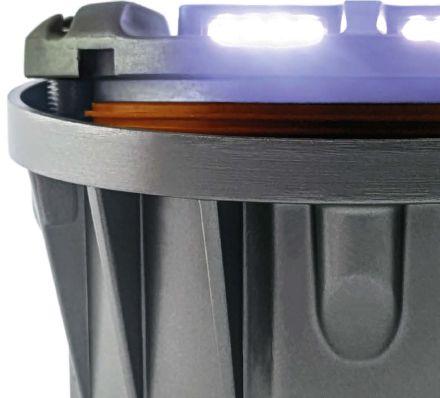

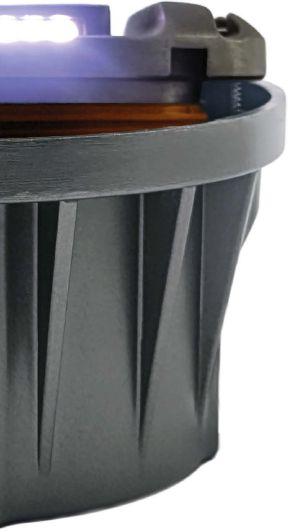
DRIVING TOMORROW: CHINA’S BREAKTHROUGH MOBILITY INNOVATIONS SMART, SAFE, AND SUSTAINABLE MOBILITY FOR ALL




Words | SloanLED
SloanLED was founded in 1957 to design and develop highly reliable lighting products. The company is a pioneer in applied light technology solutions with a vision of enlightening the world. SloanLED’s mission is to deliver innovative application-based light solutions to its customers in the signage, retail, sporting, hospitality, and petroleum markets.
For more than 60 years SloanLED has provided the best LEDs and support, superior technical assistance, and unparalleled customer service. Headquartered in Ventura, California, with a European sales office in the Netherlands, the company is positioned to support multiple market locations and manage cost and manufacturing throughout the world.
Many solutions that SloanLED has developed for the sign industry have found their way in other markets such as
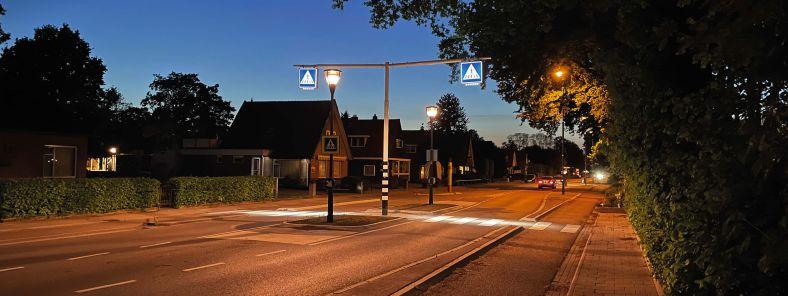
the traffic and mobility sectors. A good example is the Signbox Slim 2, which is used in the majority of the lighted directional sign poles found on the roads in the Netherlands and deployed by the company Brimos. Brimos is well known in the transportation industry and has been
operating successfully in the Netherlands for more than 50 years. In its stateof-the-art facility in Hoogeveen it produces a complete range of traffic solutions for signage, wayfinding, matrix-lighting, sign poles and large constructions, spanning sizes that can even go beyond 40m. ■
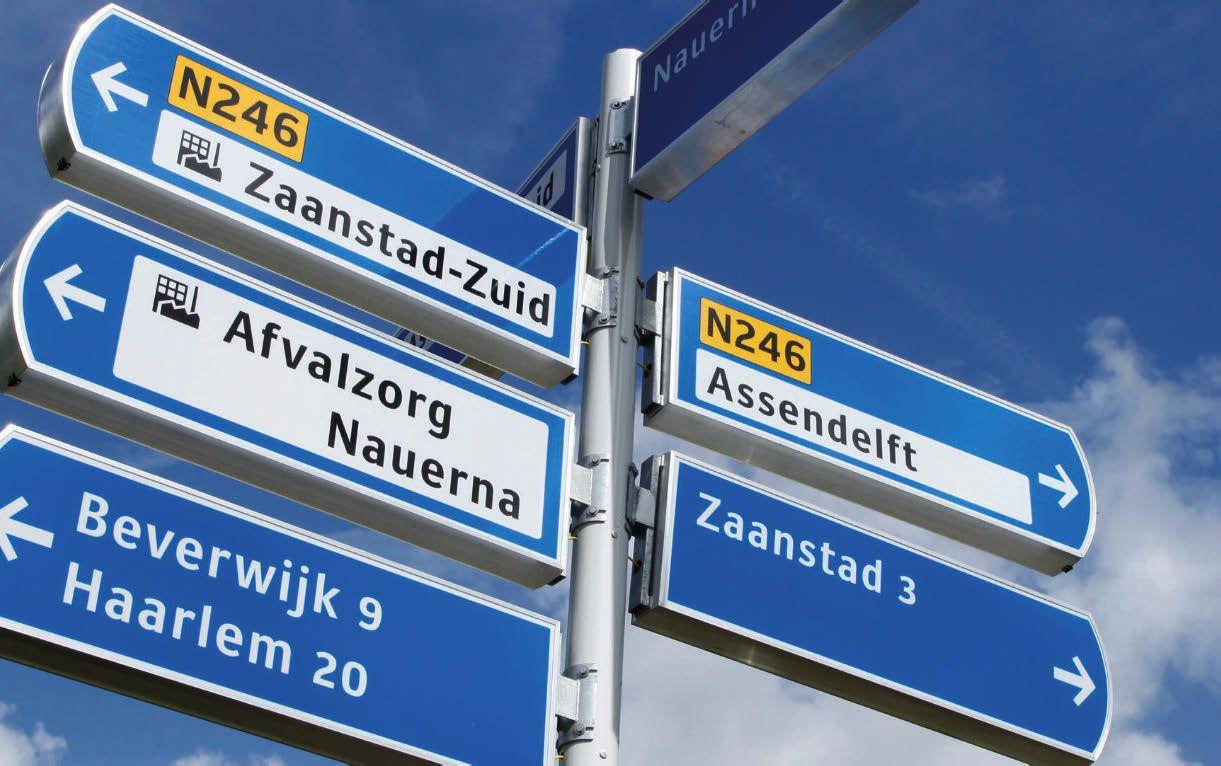

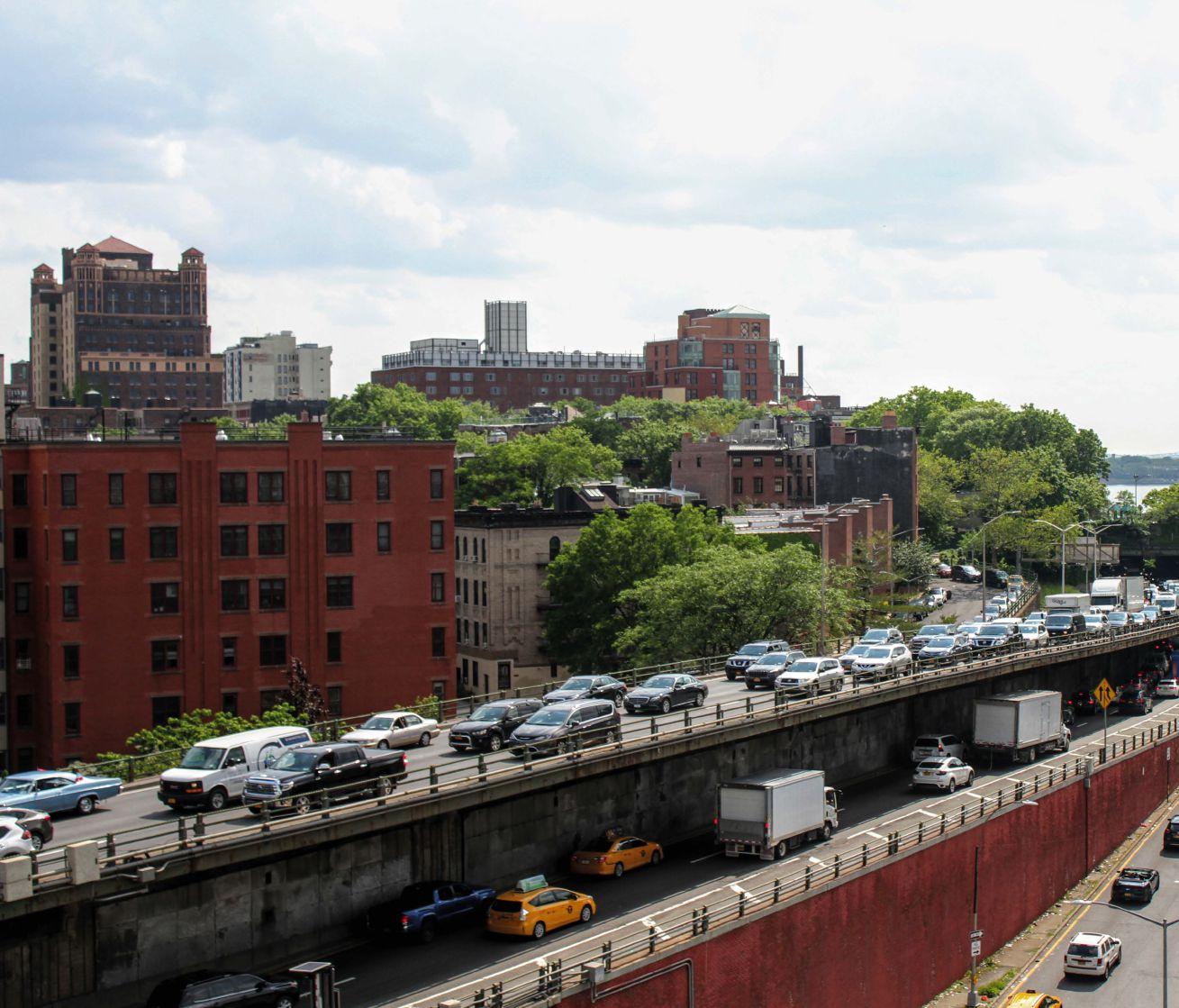

Preventing bridge collapse with advanced structural health monitoring and weigh in motion technologies
Words | Kistler
Over 250,000 bridges in the US are more than 50 years old and 150,000 are already classified as deficient or obsolete. If the damage worsens, authorities may need to close them, causing major traffic disruptions.
Structural health monitoring (SHM) or condition monitoring can help to prevent closure by using advanced measurement technology, such as accelerometers and strain gauges to track movements, vibrations and stress on the bridge structure. These sensors detect damage caused by heavy traffic, wind, and temperature changes, providing early warnings of corrosion or wear and tear, extending bridge lifespan and ensuring increased safety.
Above: The Brooklyn-Queens Expressway (BQE) is now monitored by a structural health system (SHM) and weigh in motion (WIM) solution from Kistler for effective bridge protection

Bridge protection through SHM
To gather essential data, bridge engineers position sensors at key points. Some accelerometers measure vibrations in the concrete piers while others monitor changes in the bridge’s natural frequency, indicating potential damage. Key factors like sensitivity, frequency range, temperature stability, and linearity affect the quality of results. Sensors must therefore provide accurate data in all weather conditions, including snowstorms, heat waves, and downpours. Kistler offers accelerometers with a frequency range of 0Hz to 1500Hz and an operating temperature of -55°C to +125°C for precise data collection.
Measurement results are then stored in the cloud in real-time, allowing
engineers to assess bridge conditions anytime. “Short-term condition monitoring provides bridge owners with insights into structural health and failure probabilities, forming a reliable basis for predictive fund allocation,” says JT Kirkpatrick, head of sales, North America, infrastructure, Kistler. “Longterm monitoring offers continuous data, enabling authorities and bridge owners to plan maintenance and new construction effectively.”
Overloaded vehicles pose a significant challenge for bridges, increasing stress on their structures. As vehicle weights rise, overloaded trucks cause even more strain, and weight restrictions are often

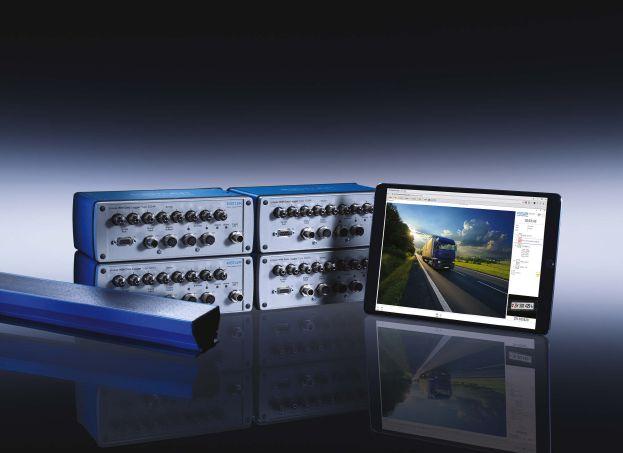
pavement types, requiring only a 45mm installation depth for minimal disruption. Once installed, they measure axle loads and total vehicle weight in milliseconds at speeds up to 120km/h. Bridge owners and engineers receive WIM sensors as stand-alone solutions or as part of a complete system that includes cloud connectivity. This allows for comprehensive data collection on road usage and loads, enabling traffic load analysis to assess life expectancy. Additionally, the system can help prevent overloaded vehicles from accessing bridges and support weight-based tolling.


enforcement program on the Brooklyn Queens Expressway (BQE) to reduce wear on the mid-20th century triple cantilever. A bill signed by Governor Kathy Hochul in July 2023 allows the DOT to issue tickets based solely on WIM data, a first in the United States. The WIM system in use is based on the piezoelectric principle and measures the weight of moving vehicles on the road in real time. Thanks to the piezoelectric quartz WIM sensors the data is extremely accurate (up to 2%), maintenance-free, unaffected by temperature fluctuations and stable over time.
The number of overloaded trucks on the Brooklyn Queens Expressway decreased by 55% during a 90-day warning period before direct enforcement was implemented ignored. Kistler’s weigh in motion (WIM) solutions help Departments of Transportation (DOTs) and bridge owners tackle this issue. In November 2023, the New York City DOT launched the nation’s first automated direct
The quartz crystal of the sensor is extremely robust and can withstand axle loads of 30 tons or more. It shows almost zero deflection and benefits from extremely high natural frequency and excellent linearity over a wide amplitude range.
The lightweight Lineas quartz sensors can be easily integrated into various
Our solution helps improve safety for motorists traveling on our roadways and bridges, whether by redirecting overloaded vehicles, or enabling weight-based tolling or direct enforcement ticketing
JT Kirkpatrick, head of sales, North America, infrastructure, Kistler
bridges from overloaded vehicles and provides accurate traffic data thanks to piezoelectric sensor technology
Below: JT Kirkpatrick, head of sales, North America, infrastructure, Kistler
Before ticketing overloaded trucks on the BQE, the DOT implemented a 90-day warning period. “Once the WIM system was installed, it revealed that one overloaded truck crossed the bridge every minute, many significantly over the limit,” says Kirkpatrick. During this period, the number of overloaded trucks decreased by about 55%. On November 9, the DOT began issuing fines. “The DOT is pleased that fines are lower than expected. It’s not about collecting money but ensuring the safety of those using the bridge,” Kirkpatrick adds.
The combination of WIM and SHM provides bridge engineers with an enhanced solution. Kirkpatrick states, “They can monitor bridge movement, vibration, and deflection while collecting real-time data on total loads and overloaded trucks. This enables accurate calculations of a bridge’s remaining life expectancy, rather than relying solely on standard load assumptions.”

Additionally, it gives bridge owners critical information, such as whether traffic can be safely diverted to one side. In the future, WIM and SHM could be enhanced with third-party technology to provide more detailed data on heavy traffic across states. AI can aggregate and analyse this data, enabling informed traffic management to ensure safety on roads, highways, and bridges. Kistler is collaborating with an AI specialist to integrate these technologies. “Together, we can identify and classify vehicles and assess how overloaded trucks affect infrastructure. In the future, AI combined with cameras could reveal the exact routes of overloaded vehicles and help track uninsured motorists,” concludes Kirkpatrick. ■
Words | Sukaina Osman, Haenni Instruments
Across the globe, road infrastructure is facing unprecedented wear and tear.
One of the primary culprits behind this accelerated deterioration is overloaded vehicles. From highways in the United States to rural roads in Africa, the impact of vehicles exceeding their legal load limits is immense.
The combination of heavier-thanallowed freight and insufficient enforcement mechanisms places extraordinary stress on roadways, bridges, and tunnels. If left unchecked, this trend could significantly shorten the lifespan of existing infrastructure, leading to costly repairs, increased safety risks, and escalating maintenance demands for governments worldwide.
The USA Federal Highway Administration estimates that more than US$170bn is needed annually to improve the conditions of roads. Heavy trucks cause significant damage to roadways, and it’s been found that a truck that exceeds its weight limit by 20% can cause up to 50% more damage to road surfaces.
In the EU, research has shown that 30% of all vehicles on certain highways are overloaded, significantly contributing to the wear on the Trans-European Transport Network (TEN-T). EU research suggests that overloaded trucks can reduce road lifespan by up to 40%, adding billions to infrastructure repair costs.
In developing countries with weaker road infrastructures, the problem is even more pronounced. In Sub-Saharan Africa, overloading is rampant, with studies in Kenya and Tanzania showing that more than 40% of trucks exceed their legal axel weight limits, according to the ALC Monitoring Study. These overloaded trucks degrade roads that are already poorly maintained, making them nearly unusable, affecting both the local economy and access to essential services.

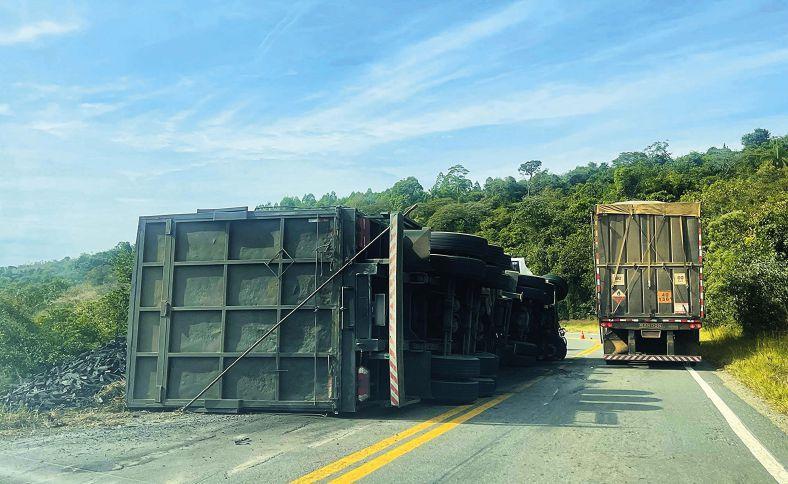
The problem of overloaded vehicles is not limited to one region or nation. It is a global issue that requires international cooperation and effective local strategies for control, but we need to ask ourselves; why do countries such as Japan have considerably fewer overloading issues compared to the likes of the USA or India, for example? One could rightly claim that we should have stricter controls and issue stricter penalties for lawbreakers, but what we need to address are the reasons why companies opt to overload as opposed to upholding legal weight compliance.
future implications of overloading and make compliance more appealing.
Offering incentives to firms who adhere to load regulation can be another effective strategy. Some benefits may include rebates on fuel, tax exemption, or public acknowledgment to those companies that adhere to legal weight limits agreed by governments or trade associations. Such incentives would make it easy for the business to remain within imposed laws and standards and thereby enhance safer practices.
To ensure that the vehicles are loaded efficiently and legally, advanced tools and software can assist companies optimise their load distribution
To address this issue, there is a need to take measures to prevent overloading without relying solely on penalties. The first strategy is to raise awareness about the risks of overloading. Fleet management, commercial drivers, business managers, and the general public can learn more about the hazards to safety, performance, and the environment. Thus, these campaigns should emphasise the
The optimisation of planning associated with logistics becomes paramount to avoid overloading. To ensure that the vehicles are loaded efficiently and legally, advanced tools and software can assist companies optimise their load distribution. With better logistical management, businesses can reduce the temptation to overload and still meet their delivery goals.
Insurance companies can also help by offering attractive incentives to those companies that comply with weight regulations. Carriers that frequently overload their vehicles could be subjected to higher premiums compared to carriers
that comply with the law. This financial incentive would help discourage overloading as part of other risk management strategies.
Haenni, a Swiss-based company, has long been at the forefront of developing solutions to monitor and enforce weight limits for heavy vehicles. By offering advanced portable scales and weighing systems, Haenni enables authorities and logistics companies to detect overloaded trucks with ease and efficiency. These systems provide accurate, reliable data, making it possible for them to enforce weight limits in real-time, thereby minimising road damage and reducing the risk of accidents.
event serves as a platform for industry leaders, policymakers, and researchers to discuss the most pressing challenges and innovations in road safety and infrastructure. This year, a significant focus was placed on the role of technology in tackling global transportation challenges.
40%
The percentage of trucks in Kenya and Tanzania that exceed their legal axle weight limits
Source: Axle Load Control monitoring study, Kenya
In addressing the issue of raising awareness, Haenni recently participated and spoke at the International Road Federation (IRF) World Congress in Istanbul, Turkey in October 2024. The
During the conference, the managing director of Haenni Instruments, Daniel Kneubuehl delivered an informative presentation that emphasised the importance of weight monitoring in safeguarding road infrastructure and promoting sustainability with the use of its portable weighing systems, highlighting how the company’s technology helps governments and organisations globally in curbing overloading issues. As demonstrated during the IRF Congress in Istanbul, Haenni is not only a leader in weighing technology but also a vocal advocate for safer and more sustainable roads. ■
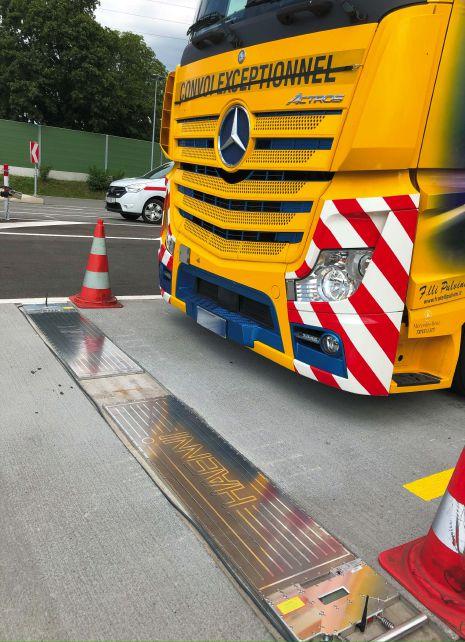

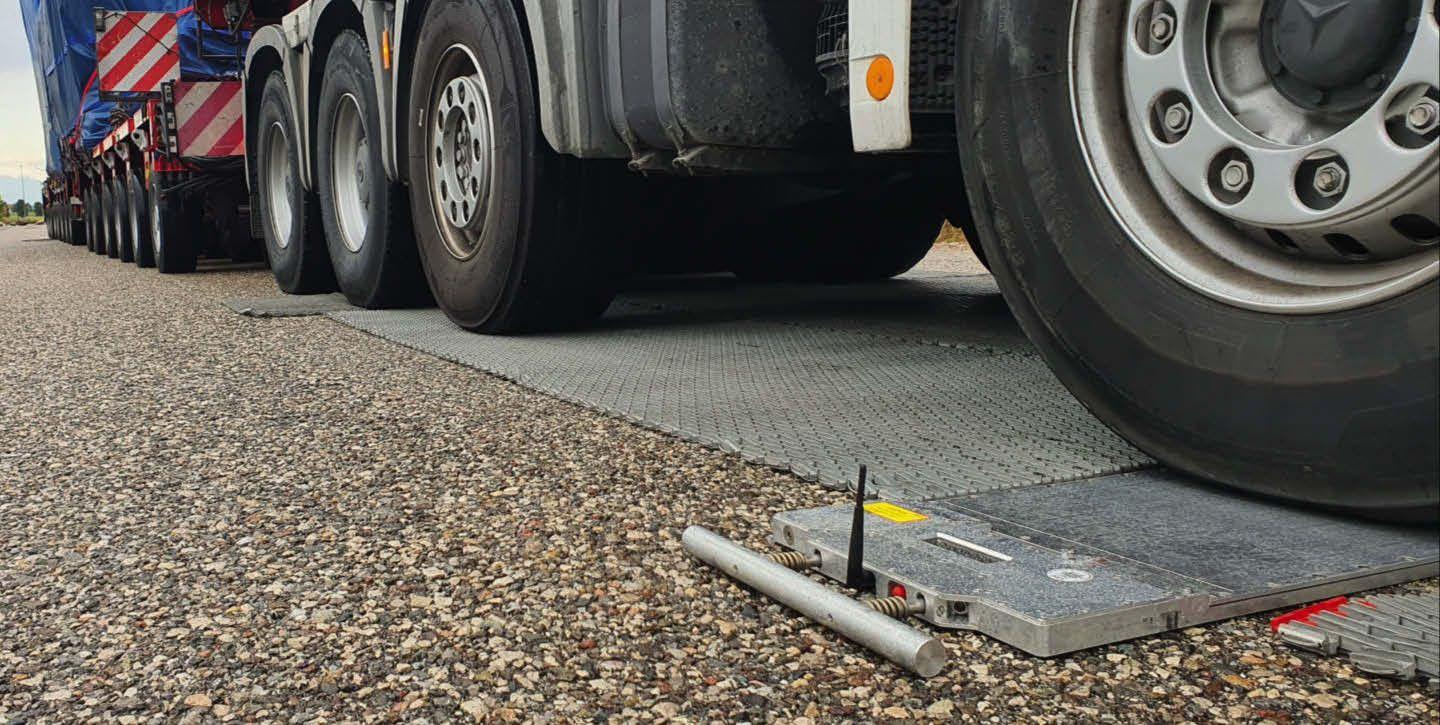



How strain gauge technology for high-speed weigh-in-motion systems is facilitating the shift from pre-selection to direct enforcement while offering long-term performance and lower operational costs
Words | Leonardo Guerson, WIM product manager and application engineer, Intercomp
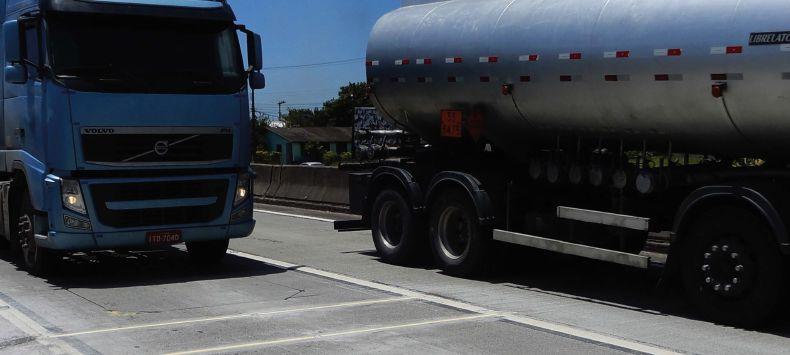
As global freight traffic continues to grow, transportation authorities are increasingly relying on weighin-motion (WIM) systems to monitor and control traffic loads and overloaded vehicles. These systems are crucial for preserving road infrastructure and enhancing road safety. Among these advanced systems, Intercomp’s strain gauge strip sensors have emerged as a leading solution, particularly for highspeed weigh-in-motion (HS-WIM) systems, which enable automatic and uninterrupted vehicle weight monitoring without disrupting traffic flow.
Strain gauge sensors: the backbone of modern HS-WIM systems
Intercomp’s strain gauge strip sensors are OIML-certified, offering unparalleled accuracy, long-term durability, and the ability to maintain calibration over time. This makes them a trusted solution for road owners and system integrators around the world. Strain gauge technology surpasses other sensor types, such as
Above: A HS-WIM system certified for direct enforcement in Brazil reduces infrastructure costs while improving weight compliance strategies
Right: Strain gauge strip sensors in Thailand selected for their reliable calibration stability and consistent performance over time
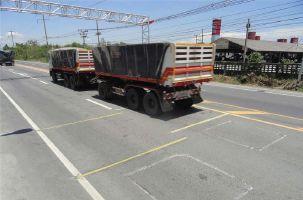
Intercomp’s strain gauge strip sensors. This system achieved 1A certification from Brazil’s National Institute of Metrology, Standardization and Industrial Quality (INMETRO), the highest accuracy standard for direct enforcement. The certification validates the system’s performance at speeds of up to 100km/h using a six-sensor layout, making it the only solution to achieve such high-level accuracy at these speeds with this configuration.
This achievement is significant, because the only other HS-WIM solution to receive 1A certification required an eight-sensor layout and was limited to speeds of 90km/h. Intercomp’s strain gauge technology, meanwhile, not only meets stringent metrological standards but also sets a new benchmark for performance in HS-WIM systems, reinforcing Brazil’s ability to enforce weight limits at high speeds.
32
The number of HS-WIM lanes equipped with Intercomp’s strain gauge strip sensors in Thailand
piezoelectric sensors, in terms of reliability and long-term performance, especially in environments with extreme temperatures and high traffic volumes. Strain gauge sensors are also highly resilient, requiring less maintenance and recalibration, which reduces operational costs. This durability and precision positions Intercomp’s sensors as an essential part of modern HS-WIM installations for vehicle weight monitoring and control.
A notable achievement in the application of strain gauge technology is the advanced HS-WIM solution developed by ITS system integrator Consilux, which incorporates
Kazakhstan is another country where HS-WIM systems using Intercomp’s strain gauge sensors have seen widespread success. The deployment of these systems began in 2013 for preselection purposes, and by 2022, the transition to direct enforcement started to be seriously considered. Today, over 40 lanes equipped with high-accuracy HSWIM systems are operational in Kazakhstan, with strain gauge strip sensors playing a pivotal role.
The SmartWIM system, powered by Intercomp’s strain gauge strip sensors, underwent a rigorous evaluation process by the Kazakhstan Institute of
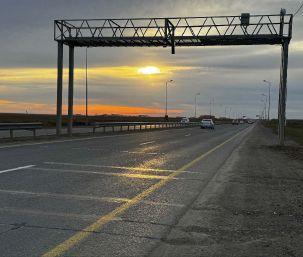
Standardization and Metrology. After extensive testing, the system received certification, verifying its compliance with stringent national standards for vehicle weight measurement. This certification demonstrates the system’s ability to provide accurate and reliable data, which is critical for optimising traffic management and enforcing weight limits without disrupting traffic flow.
In Southeast Asia, the use of strain gauge strip sensors is also driving a transition from pre-selection to direct enforcement. In Thailand, more than 30 lanes of HSWIM systems equipped with strip sensors have been installed for preselection purposes on provincial roads. This success has sparked interest in expanding the country’s existing lowspeed WIM enforcement network to future high-speed WIM systems for direct enforcement, demonstrating the growing recognition of the benefits of strain gauge technology in weight monitoring with HS-WIM systems. Similarly, in Indonesia, the successful application of more than 20 lanes equipped with HS-WIM systems using
strain gauge strip sensors has led to promising developments in standardising HS-WIM technology for direct enforcement. The performance and reliability of these sensors in monitoring and controlling overloaded vehicles are helping shape the future of weight enforcement in the region.
The advantages of strain gauge strip sensors go beyond durability and accuracy. Strain gauge technology offers superior long-term stability and requires fewer recalibrations which lowers operational and maintenance costs. By reducing the need for frequent recalibration, these sensors also minimise downtime, allowing road authorities to focus on efficient traffic management and weight enforcement. Their resilience ensures that HS-WIM systems maintain accuracy over long periods of time, providing consistent, real-time data for traffic control and infrastructure protection.
Intercomp’s strain gauge strip sensors are revolutionising the way vehicle weight is
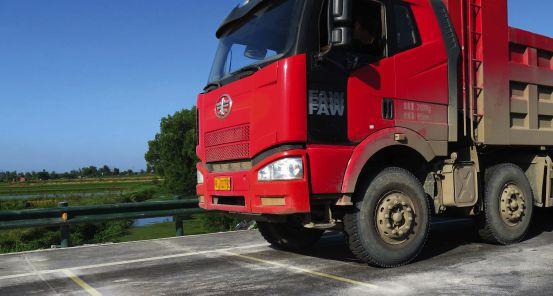
Above: The deployment of strain gauge strip sensors across over 200 lanes in China facilitates the adoption of HS-WIM for tolling and direct enforcement
Below left (opposite): A HSWIM system with high-longevity strain gauge strip sensors supports the expansion of Kazakhstan’s WIM programme
monitored and enforced around the world. From the groundbreaking 1A certification in Brazil to the widespread deployment of high-accuracy systems in Kazakhstan and Southeast Asia, strain gauge technology is setting new standards for performance and reliability in HS-WIM systems.
As countries continue to transition from pre-selection to direct enforcement, Intercomp’s strain gauge technology is proving to be an essential component in achieving accurate and automatic weight enforcement. By adopting these systems, governments and transportation authorities can improve road safety, protect infrastructure, and create more efficient, data-driven transportation networks for the future. ■



Alliance presents its innovative and increasingly sustainable solutions for intelligent transportation systems, traffic management, and tolling
Words | Eisa Shamlan, chairman, Alliance Traffic Systems
Alliance Traffic Systems is committed to providing innovative solutions for intelligent transportation systems (ITS), traffic management, and tolling. Established in the UAE in 2008, the company is dedicated to delivering cutting-edge, interoperable platforms, open road tolling systems, traffic telematics, vehicle communication solutions, and consultancy services. It aims to improve transportation systems and mobility while enhancing sustainability and safety.
The firm’s products and services are designed to be efficient, reliable, and future-oriented, addressing the diverse needs of customers worldwide. Alliance strives to create solutions that benefit people on the move and help solve the modern challenges of urban mobility, making transportation safer and more sustainable.
Alliance’s strong portfolio includes advanced traffic management systems, toll solutions, and traffic telematics to ensure its customers’ needs are met. Over the years, the company has expanded globally, establishing partnerships with international organisations in smart traffic systems, road engineering, and telecommunications. This expansion includes projects in the GCC and Africa, where Alliance’s expertise in smart traffic systems and telecommunications has contributed to the development of essential infrastructure.
The firm’s R&D department has been integral to its success. By providing the necessary tools and fostering innovation, Alliance engineers have developed advanced solutions that address customer needs and market demands. Close coordination between design, technical,
and marketing teams enables Alliance to deliver integrated, high-quality solutions that meet global standards.
As part of its mission to lead the ITS sector, Alliance has committed to setting up advanced industrial facilities in the UAE, aimed at enhancing local production capabilities. These facilities operate according to international best practices, providing the UAE and regional markets with high-quality products at competitive prices. This is especially important for the growing demand for CCTV and traffic monitoring systems critical to improving road safety and traffic management.
Alliance Traffic Systems’ mission is to deliver a safe, reliable, efficient, and socially equitable transportation system that enhances environment and economic vitality
Alliance’s success is driven by a skilled workforce that has continuously demonstrated creativity and innovation in solving complex transportation challenges. The dedication of its team has played a key role in helping Alliance reach new milestones, enabled it to expand and innovate across sectors.
Alliance’s vision includes not just smarter transportation solutions, but also the creation of systems that promote sustainability. The company aims to use existing infrastructure efficiently while reducing the reliance on automobiles and promoting alternatives such as public transit, biking, and walking. Technology plays a key role in overcoming transportation challenges by improving mobility and reducing the environmental impact of traffic.
Sustainability is embedded in all its projects. From utilizing solar energy in
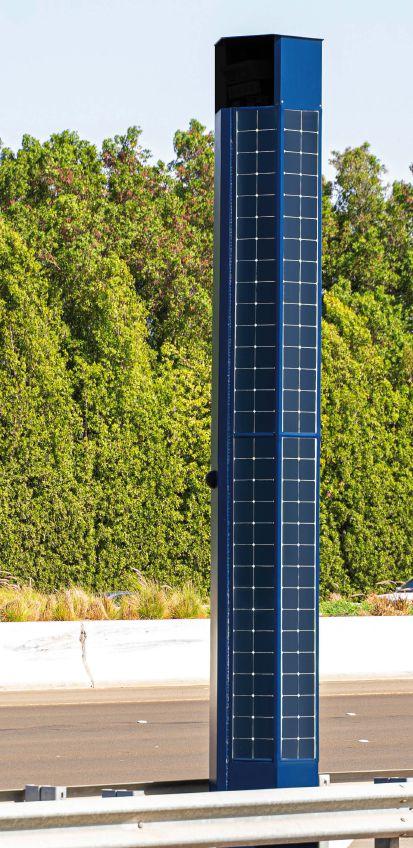
various systems to designing solutions that optimize energy use, Alliance strives to make a lasting impact on the environment. The company aims to create transportation systems that are not only safer but also more sustainable and future-proof.
Alliance’s mission is clear: “To deliver a safe, reliable, efficient, and socially equitable transportation system that enhances environmental sustainability and economic vitality.” This mission guides its work, ensuring it meets diverse customer needs while supporting broader societal goals.
The company’s vision is to be a global leader in providing innovative, sustainable, and integrated transportation solutions. It aims to drive mobility, safety, and environmental stewardship through smarter and more efficient transportation networks that will shape the future of the sector.
Alliance is proud to be at the forefront of innovative solutions that seamlessly combine technology, sustainability, and transportation safety. Its projects, all of which are patented, highlight its
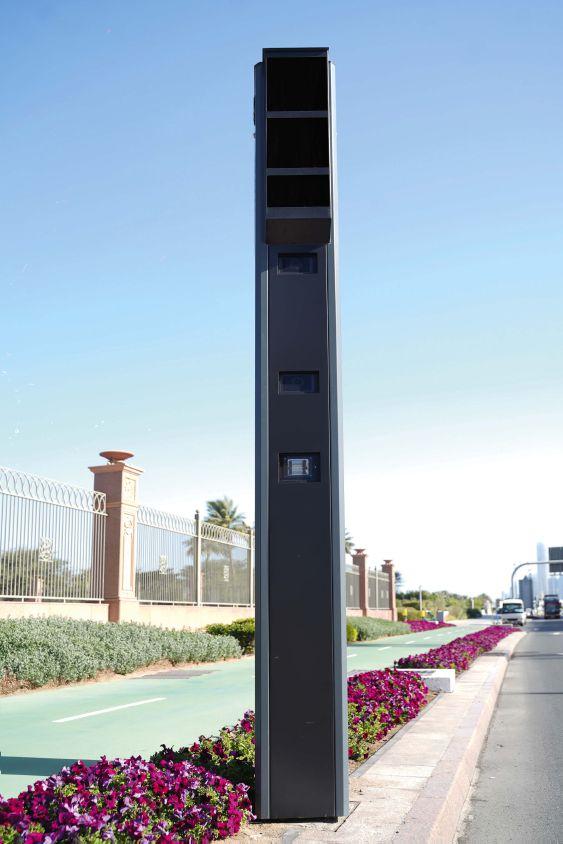
commitment to enhancing transportation networks through cutting-edge systems that improve efficiency and reduce risks. Below are some key projects that demonstrate the company’s ability to lead in the smart transportation sector.
Intelligent Traffic Camera System: Alliance’s patented Intelligent Traffic Camera System is a revolutionary solution designed to reduce accidents and improve traffic safety at intersections. This solar-powered system uses advanced AI algorithms to monitor vehicle behaviour in real-time. It ensures that drivers stop at designated stop lines, detects illegal lane changes, and automatically registers violations. With its multi-lane coverage, it enhances both traffic safety and operational efficiency. By relying on renewable solar power, it offers a sustainable solution that operates independently of traditional energy sources, making it a perfect fit for modern, eco-conscious cities.
Solar Emergency Warning System: The Solar Emergency Warning System, another patented innovation, is designed to warn drivers about road incidents such as accidents or ongoing roadwork. Powered entirely by solar energy, the system activates emergency strobe lights
to alert drivers well in advance. This technology is specifically engineered for reliability in even the harshest weather conditions, ensuring that emergency alerts remain visible in all environments. Additionally, the system offers remote monitoring and control capabilities, which help improve emergency response times and overall traffic management. Its integration with existing infrastructure guarantees seamless coordination, making it a vital tool for safer roadways.
Solar ISER: Alliance’s patented SolarPowered Intelligent Speed Enforcement Radar (Solar ISER)represents a major step forward in traffic enforcement. This system is designed to detect and measure traffic violations such as speeding, tailgating, and other dangerous driving behaviours. Powered by solar energy, the Solar ISER can operate in remote areas where traditional power sources are unavailable, making it a versatile solution for a wide range of environments. Its ability to deliver accurate measurements and operate sustainably ensures that it not only contributes to safer roads but also helps reduce the environmental impact of traffic management systems. These projects exemplify Alliance’s commitment to driving innovation in the transportation sector. By combining





Intelligent Enforcement Radar (Solar ISER); Alliance Traffic System’s smart ITS tower; and the Solar Emergency Warning System
patented technology with sustainability, the firm is leading the way toward smarter, safer, and more efficient transportation networks that benefit both people and the planet.
Overall, Alliance is committed to providing the most innovative solutions in intelligent transportation systems, traffic management, and toll solutions. Since 2008, the company has led the way in offering interoperable platforms, smart traffic systems, and sustainable solutions to meet the challenges of modern transportation. Through strategic partnerships, research and development, and a focus on sustainability, it is shaping the future of transportation. Alliance’s mission to deliver efficient, reliable, and forwardthinking solutions will drive its continued success in creating smarter, safer, and more sustainable transportation systems globally. ■
Alliance’s patented Intelligent Traffic Camera System is a revolutionary solution designed to reduce accidents and improve traffic safety at intersections
Highway Software – a comprehensive project management platform for contractors –is helping to improve roadwork efficiencies while keeping staff safe
Words | Trinity G Francis for Highway Software
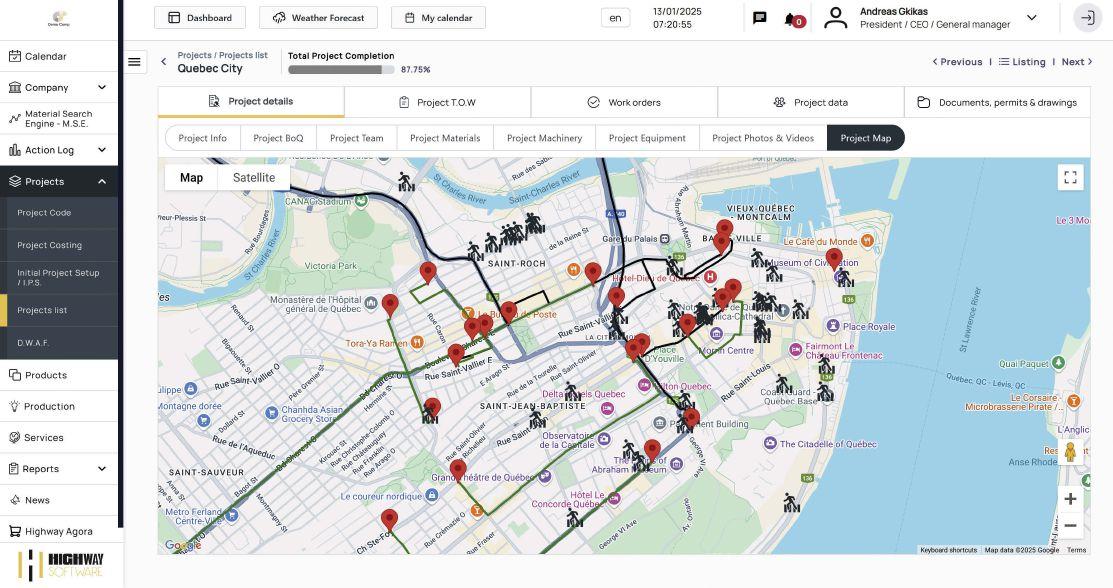
Safety is a consistent theme across the industry regardless of application, country or scenario.
Often the focus is on road user safety, minimising the risk of collision and ensuring infrastructure allows traffic to flow smoothly. To facilitate innovative and essential works across road networks, there is no way to avoid the need for a physical presence of skilled workers to implement new roadways, traffic solutions and line markings.
Despite a significant need for the presence of roadside workers, there is an inherent danger in being exposed to traffic, even with preventative safety measures in place. The safest solution is to minimise the amount of time staff are working on a project. One of the ways to do this is improving efficiencies on site which lead to quicker job completion. After identifying a gap in the market for a comprehensive project management platform for contractors, Andreas Gkikas
Above: Live project map showing scheduled and completed work
developed Highway Software. Using his own contracting business Periallos as a testbed, Gkikas designed the functionality of the platform to address his operational challenges.
Director for the Americas at Highway Software, John Moreno, says, “The software allows you to create efficiencies in the workflow and reduce the time spent on the road. Contractors not only become more efficient and do better work, but they can have their people on the road for less time.
“In the United States there’s a focus on safety. The side benefit to road users is the roads are closed for less time if these projects move more efficiently. The critical human aspect is making sure that people are safe when they’re on the road,” Moreno adds.
The software solution
Highway Software is an all-encompassing solution for pre-contract, contract and
post-contract management. The platform allows firms to enter information on the end-to-end encrypted system detailing personnel, materials and equipment to help contractors generate project costings within Highway Software.
During the contract period, workers and subcontractors use an app to receive information on the job, including which materials and machinery are required. Contractors can use Highway Software as a clocking system to gain visibility over work hours and workers can see their timesheets and expected pay. The site foreman can upload image and video evidence to Highway Software during the job to demonstrate progress to management and clients.
Once a contract is completed, Highway Software generates project performance and management reports which can be used to inform future project quotes. Improved transparency across every stage of the contract is

designed to allow businesses to increase efficiencies and capacity.
Mike Wilson, sales director at Highway Software, says, “Gkikas has built this software to manage the pain points he’s experienced with his own contracting company to make the business operate as efficiently as possible. Thereby, saving money and allowing him to increase business as well as turnover.”
These efficiency increases have enabled Gkikas to spend more time proactively building the company rather than spending time focused on administrative tasks. Discussing the impact implementing the software has had for his company in Greece, Gkikas says, “It’s reduced our work time in the office and we’re able to take on more projects. We have a team of three engineers in the office and we manage to run 40 projects at the same time using Highway Software, while in the past, we could only cope with 10. It also reduces
Above: Calendar showing all scheduled work events
our time on site by around 15%. For us this is all measured in increased turnover at the end of the year.”
Underlining the multiple operational features of the platform, Wilson continues, “We spoke to one company that reckoned that by using this one software, they could do away with seven other software solutions.”

The system is designed to be a company-wide platform with two-way communication between staff on site and office-based managers. Wilson adds, “We want everyone in the company to use the software and have the app on
We spoke to one company that reckoned that by using this one software, they could do away with seven other software asolutions
Mike
Wilson, sales director, Highway Software
their phones. We don’t want people to be left out and not use it.”
A key differentiating feature of Highway Software is its mapping integration which shows where projects are being completed and displays live progress updates. For workers, the map can also be used as route guidance to the exact site location with details on local accommodation if they are based away from home and information about what they need to do on site.
Wilson explains more, “You can see completed work on the map so it’s a real time view of the work that’s been done and the work that’s outstanding. If a client wants to, they can give access to their clients who can see what works are being done.”
This transparency with clients is not only designed to support a strong working relationship between companies
but also to streamline the invoicing and payment process. If a client can view works completed in real time, then invoicing can be expedited when a project or defined phase of the job is finished. The ability to improve efficiencies and complete jobs faster then turns into a motivating factor for quicker payments when the client can receive instant updates rather than waiting for a report at a scheduled time.
Gkikas adds, “We also want to provide transparency on public projects so the client can log in anytime and access details about how the project is progressing.” In the future, the team sees a potential for this data to be integrated with road signage to update road users on projected timelines for project completion.
Above: Set time zones for employee pay, including overtime, different rates, etc.
15%
operating processes that ensure up to date compliance and safety across the business, this level of transparency was unheard of until now.
The percentage by which Periallos’ roadworks on site time has reduced by thanks to the deployment of Highway Software
Moreno says, “From a business perspective, as companies look at exit strategies or ways not to exit, having a system in place that gives you this level of visibility, efficiency and control allows contractors to position themselves in the best light for their desired outcome.” If the goal is to be acquired, implementing Highway Software can make a company an attractive turnkey solution for larger contractors or private equity firms.
areas for improvement or areas where there are extra efficiency gains.
Considering the business generation side, Wilson adds, “It’s critical in highly regulated countries to have this kind of system that documents and records everything. Highway Software can help companies when compiling bids, for example, it gives them a higher quality score, so they have more chance of winning a bid because they have that information available.
“Previously, this kind of information would only be available with really big companies that had the systems in place and project managers to spend tens of thousands of pounds putting together a contract bid. Highway Software will allow smaller companies to compete and put together high-quality bids as well,” he continues.
Highway Software is already being used by companies across Europe, North America and most recently Argentina. The app is also available in several languages which can vary within teams to accommodate different backgrounds and language preferences, under the same account.
For larger companies that run several projects at once, Moreno says, “The branch feature that we have is fairly unique, if not completely unique. It allows you to segment projects, teams and resources into distinct operational units which mirror the company’s organisational structure.
“It also allows you to streamline workflows and internally, within those branches, you can track progress on performance, budgets and all the things upper management wants to see. At the branch level you can assign responsibilities to branch managers, and it allows for sharing physical resources between branches,” Moreno adds.
While Highway Software is a tool to improve every-day operations, the team argues its impact is wide reaching. From winning new business that was previously inaccessible to creating robust
Below: Summary of employee details showing assigned projects, hours worked and salary accrued
For those hoping to pass their business onto the next generation or onto new management, Highway Software brings the company into the 21st century and simplifies any takeover process. Streamlining operations and management into one system makes a business much easier to learn and understand while demonstrating clear
Drawing on his experience from his other role as CEO of GoExporting, a company focused on supporting SMEs to enter or expand into new international markets, Wilson comments, “I’ve probably never come across a product which fits so nicely everywhere that we go. This software is relevant to contracting companies wherever they are in the world.”
Safety, growth and improved efficiency are ubiquitous ambitions for companies across the world. Highway Software is designed to support highway contractors in unlocking these benefits by streamlining their business operations into a single platform. ■






An AI-enabled ANPR toll solution has been designed to redefine the landscape of vehicle identification for free-flow systems, ensuring reliable and accurate data, even in harsh weather conditions
Words | Dan Dobransky, senior director, roadside transformation, Quarterhill
Modern traffic management systems and toll operations support our daily commutes, commercial transportation, and overall mobility in urban and rural landscapes. Maintaining the accuracy and efficiency of these systems is key to reducing congestion, enhancing safety, and ensuring seamless transit experiences for millions.
AI is revolutionising the way these systems work by introducing smart vehicle identification and enforcement mechanisms into the mix. Gone are the days of extensive human license plate review. Today, AI technologies efficiently manage toll compliance, maintaining traffic flow while safeguarding revenues.
With AI-assisted cameras and software, vehicles are automatically identified in seconds as they pass through toll points. License plate numbers are captured, and noncompliant vehicles are flagged for enforcement. This pinpoint accuracy in vehicle identification ensures that drivers can’t slip through the system without paying, making the process fairer for everyone. This intelligent application of AI leads to faster commutes, simplified enforcement, and a modernised approach to managing our roadways.
Below: riteVision’s AI-driven number plate recognition
A KPMG study on toll operators revealed they’re losing an average of US$8m annually due to inefficiencies and outdated technology. Traditional vehicle identification methods often struggle under the myriad challenges presented by diverse weather conditions, plate obfuscation, and the ever-increasing pace of traffic. Quarterhill’s riteVision, an AI-enabled ANPR solution, is designed to mitigate inefficiency and leakage experienced by operators.
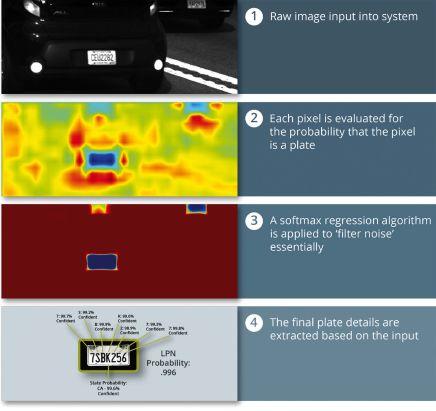
Quarterhill’s riteVision is engineered to redefine the landscape of vehicle identification, leveraging the potent combination of cloud computing, AI, and machine learning. Designed primarily to cater to the nuanced needs of toll collection companies, riteVision promises unparalleled accuracy and performance, ensuring reliable vehicle identification while handling the high volumes toll operators experience during peak traffic periods. It embodies a bestin-class continuous integration/ continuous delivery (CI/CD) process that significantly diminishes the necessity for manual image review to optimise operational efficiency and reduce costs.
Toll facilities handle millions of transactions daily. Implementing scalable AI solutions ensures that systems can manage peak traffic efficiently without compromising accuracy. riteVision is optimised for freeflow toll systems, offering easy integration with existing infrastructures while promising continuous evolution to further refine efficiency and minimise operational expenses. The benefits of

adopting riteVision include a 50% reduction in manual reviews, the elimination of custom coding for stacked characters and temporary plates, and a notable 18% increase in auto-pass rates, all under a fixed pricing model that eases budgeting and financial planning.
One of riteVision’s standout features is its robust handling of snow and lowvisibility conditions. Utilising a multilayered deep learning image processing stack, the solution can distinguish valid plates from obstructed ones, employing infrared imagery to improve contrast and visibility. This technical prowess extends to real-time image filtering, effectively discarding irrelevant data and utilising cloud computing resources with optimal efficiency.
The essence of riteVision’s efficiency lies in its high automation levels and selfcorrecting algorithms. By employing a multi-stage classification system and reinforcement learning, the solution progressively minimises human intervention, learning from previous corrections to enhance future accuracy. This is complemented by error correction and reprocessing features that ensure incorrectly processed images undergo thorough reanalysis, allowing the system to learn from past mistakes and steadily improve its precision.
riteVision was developed in the challenging US context, where one state can issue many plate variants with different colours, fonts, and patterns of characters. riteVision’s ability extends beyond the identification of similar plates to ensure multi-jurisdiction plate
compatibility, a crucial feature for states with high cross-border traffic. While primarily achieved through deep learning algorithms fine-tuned for regional plate variations, when riteVision encounters a plate that cannot be fully read due to occlusion or damage, the system can query vehicle databases for real-time cross-referencing of vehicle registrations.
Quarterhill’s machine learning models are trained with a diverse range of plate formats and are regularly updated to include new formats as they are introduced.

resolution through parallel processing pipelines, ensuring rapid processing and resolution of delayed images. Furthermore, in an era where data privacy and compliance are paramount, riteVision stands out for its adherence to GDPR guidelines. It employs end-to-end encryptions for all processed data and ensures high SLA performance with a 99.5% uptime guarantee. This not only ensures the system’s reliability but also underscores Quarterhill’s commitment to user privacy and data security.
The increase in autopass rates after Quarterhill’s riteVision toll solution has been deployed
With cloud scalability at its core, riteVision is built to automatically adjust resources in response to fluctuating traffic demands, leveraging Kubernetes for container orchestration and ensuring peak performance at all times. The system’s design also emphasises backlog
The future of traffic systems is increasingly intertwined with broader environmental and societal goals, with efficient toll systems playing a critical role in this evolution. By facilitating smoother traffic flows, these systems not only alleviate congestion but also contribute significantly to the reduction of emissions. This synergy between traffic management and environmental objectives enhances public perception and brings us closer to the ideal of smart cities, where technology and urban planning converge for the greater good.
Moreover, the advent of autonomous vehicles and shifting traffic patterns necessitates a forward-thinking approach to toll system functionality. Adopting adaptable, AI-driven systems like riteVision ensures toll operators can stay ahead of these changes, making such innovations not just an evolution but a necessary step towards futureproofing our urban traffic infrastructures. ■
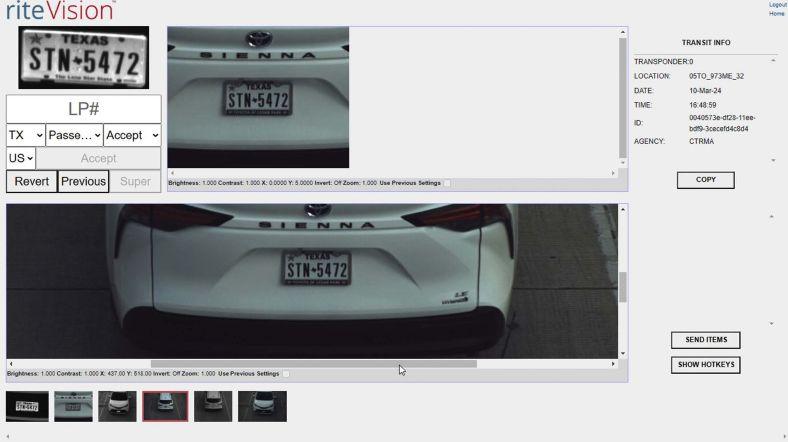

Words | ICE Tech
The Beitbridge border post in Zimbabwe, one of Africa’s busiest land crossings, was notoriously plagued by delays, with crossings taking up to three days. Optimising the border traffic flow by upgrading facilities, infrastructure, and advanced traffic management solutions has reduced vehicle clearance times to an average of three hours.
The Zimborders Consortium led this transformation, appointing EPC contractors to modernise the border crossing and infrastructure services and ICE Tech as the ICT provider to deliver a comprehensive border traffic management solution. ICE Tech’s ICE Borders solution integrates advanced traffic flow control, vehicle identification, and payment collection technologies, creating an efficient and streamlined process for operators and government agencies.
At Beitbridge, ICE Tech’s ICE Borders solution includes AI-driven automatic
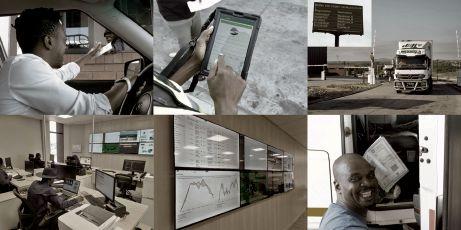
vehicle classification (AVC) and ANPR tools to ensure precise identification and processing in the border and road tolling solutions. The ICE Borders solution includes smart traffic management integration, which minimises human intervention. The system includes automated traffic controls, such as smart booms, real-time queue management, and real-time oversight, which provides live traffic flow visibility and reduces congestion while maintaining

compliance validation and revenue assurance. Digital audit trails and automated payment systems safeguard revenue while ensuring all regulatory processes are met.
The solution is a turnkey system encompassing software and hardware infrastructure, including secure data centres with disaster recovery capabilities. Zimborders’ operators now efficiently manage traffic while ensuring vehicles meet all compliance and payment requirements.
Beitbridge has become a model for modern border management in Africa, improving security, transparency, and operational efficiency. The solution supports regional trade and economic growth along Southern Africa’s key transit routes by minimising delays. Through optimising and digitising government processes, ICE Tech continues to focus on uplifting the citizens’ experience, one digital innovation at a time. ■

ICE Tech exists to improve people’s daily lives by creating a more e cient, fair, and technologically driven system to help governments be er serve their citizens. Powered by ICE Engine, our pioneering software platform, we o er a suite of products that can be implemented as a plug-and-play solution in almost any environment. Our borders solution product, outlined in the above article, showcases the impact of our approach.

Let’s discuss how our product solutions can help you.
sales@icetech.io





















Words | GEVAS software
The transition to sustainable transportation is one of the greatest challenges of the 21st century. In view of climate change, growing cities and increasing demands for mobility, transportation must be made more efficient, environmentally friendly and socially acceptable. A decisive step in this direction is the intelligent management of road traffic and the targeted acceleration of public transport and cycling. The goal is not only to make transportation faster, but also more sustainable in order to reduce CO2 emissions and improve the quality of life in cities.
An outstanding example of a centralbased, intelligent traffic management solution is C-CALL from GEVAS software, which enables real-time communication and coordination between vehicles, traffic signal systems

Above: GEVAS software displays information on traffic light waiting times with a high degree of reliability
and infrastructure. Compared to conventional systems, which often work in isolation and statically, C-CALL offers flexible, data-based and central management of traffic flow.
In an intuitively understandable user interface, essential information, such as the travel progress adapted to a nodeedge model, as well as the requests and prioritizations that have been made, are displayed. Due to the centralized approach, prioritization rules can be adapted and imported at short notice for all influenced traffic lights. The web interface also offers the possibility to analyse the recorded data.
In addition to C-CALL, the traffic light phase assistant trafficpilot, a GLOSA (Green Light Optimal Speed Advisory) service, helps drivers and cyclists to adjust their speed optimally in order to ride the green wave through the city. The smartphone app gives drivers a recommendation regarding the speed at which they should approach the next junction to reach the green traffic light phase. This reduces unnecessary stopand-go situations. ■

Hanau, Köln, München, Stuttgart, Berlin, Bad Salzungen, Saarbrücken, Kassel, Krakau, Linz
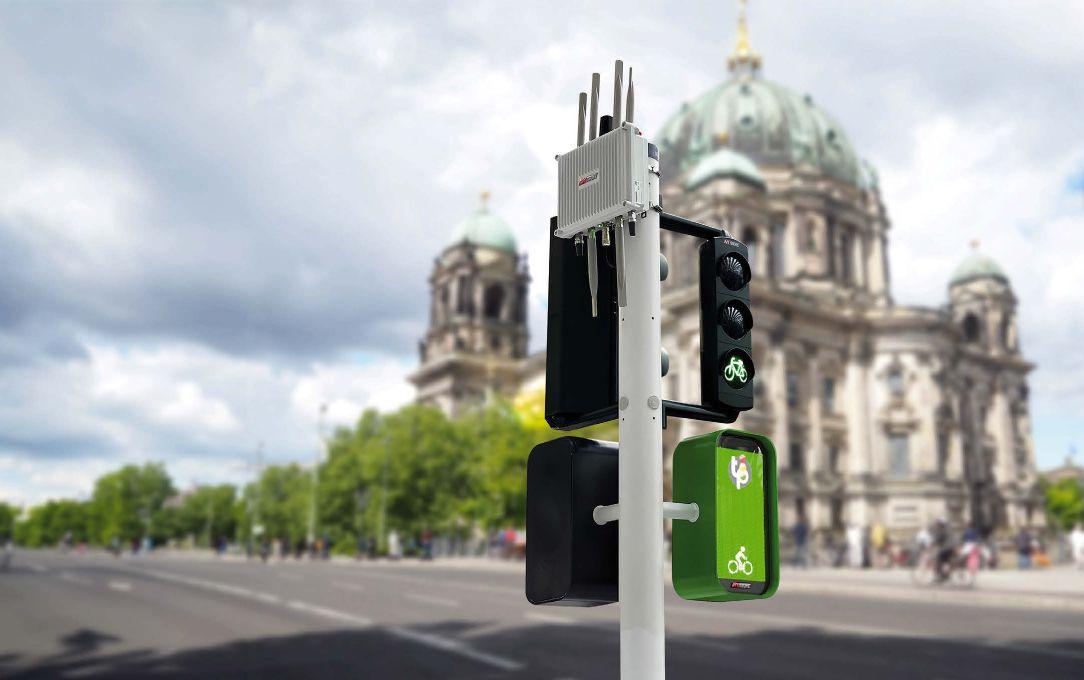











New AI-powered traffic enforcement systems, which leverage the benefits of multiple technologies, are significantly improving road safety for millions of people globally
Words I Erwan Le Floch, senior director – product, presales and partnerships, road safety, IDEMIA Public Security

IDEMIA Public Security (IPS) has been at the forefront of road safety innovation for more than 50 years. Its solutions leverage cutting-edge technologies, particularly video analytics and radar, to revolutionise traffic enforcement. In recent years, the introduction of artificial intelligence (AI) into IPS’s systems has brought about a new era in road safety, with the organisation’s solutions offering unparalleled precision, efficiency, and safety enhancements for road users around the world.
AI in road safety
IPS began integrating AI into its road safety solutions ahead of the curve, setting the company apart from other technology providers. While many were waiting for AI hardware to become widely available and affordable, IPS was already taking the lead. The company initially introduced AI capabilities in its MESTAfusion devices – radar technology that ensures
Above: IDEMIA Public Security’s solutions are helping to create safer cities
50
simultaneous automatic speed and redlight enforcement and offers advanced monitoring of complex violations and trajectories. The business worked primarily on enhancing the quality and reliability of the evidence packages the devices generated. This advancement significantly improved traffic enforcement accuracy by reducing false positives and increasing the reliability of the data used for penalty enforcement.
The number of years IDEMIA Public Security has been at the forefront of road safety innovation
IPS further refined its systems by incorporating dedicated edge processing capabilities into its new speed and red-light monitoring products like MESTAcompact and MESTAmobile. These products now fully utilise AI’s potential, delivering superior detection performance and broader functionality coverage.
MESTAcompact and MESTAmobile are optimised for core traffic enforcement tasks, such as speeding and red-light monitoring, but their AI capabilities
enable them to go much further. They can identify drivers using mobile phones while driving, check if all passengers are wearing seatbelts, and even verify if cyclists are wearing helmets.
AI has truly transformed IPS’s ability to address multiple risk factors at once. By automating these complex tasks, it has been able to enhance road safety while reducing the strain on human resources. The introduction of these AI-driven systems has enabled law enforcement agencies to focus on high-risk areas, ensuring a more efficient, targeted approach to traffic management.
Earlier this year, IPS launched the MESTAcompact Focus Edition, its latest addition to its MESTA series. Equipped with next-generation AI analytics, this device can track vehicles with highframe-rate video technology, allowing it to detect and capture multiple violations in real time, even in complex traffic situations. These capabilities demonstrate IPS’s ongoing commitment to leveraging AI for even safer roads, reducing fatalities, and making sure
that all road users – from drivers to cyclists – are protected.
While some competitors focus on a single technology, IPS’s approach is to use multiple technologies simultaneously to provide a comprehensive and reliable solution. IPS’s road safety solutions are designed to integrate radar, lidar, optics, and video analytics.
Each technology brings unique strengths, and when combined, they create an unmatched level of accuracy and performance. Radar and lidar, for example, are incredibly effective in determining vehicle speed and distance. When paired with AI-enhanced video analytics, they can detect a range of complex infractions, such as tailgating or lane departure, going beyond what any single technology could achieve on its own. This multifaceted approach allows IPS’s solutions to work reliably in a variety of different conditions, from congested urban environments to high-speed highways, ensuring premium traffic enforcement capabilities, regardless of the scenario.
The company’s video analytics –powered by AI – are based on algorithms
so sophisticated they earned top ranking in the US National Institute of Standards and Technology’s tests. These same algorithms are at the core of IPS’s video tracking systems, ensuring they are the most advanced on the market. This pioneering video technology, combined with radar and lidar, makes IPS’s systems the most reliable and effective solutions available.
IPS’s systems are field-proven, having been deployed successfully in some of the most challenging conditions around the

world. From extreme weather environments to high-traffic urban areas, the company’s road safety solutions have been tested and validated, ensuring they meet the highest standards of reliability and effectiveness. IPS’s products also comply with stringent service level agreements, giving partners confidence in the durability and performance of its solutions.
A key component of the company’s success is its ability to foster strong, longterm partnerships. Its long-standing relationships, combined with expertise and top-tier technology, have made IPS a trusted partner for governments and law enforcement agencies around the world. By working closely with these partners, IPS tailors its solutions to meet local needs and challenges. This approach has allowed it to successfully reduce trafficrelated fatalities and improve road safety in a wide range of jurisdictions.
IPS’s commitment to innovation, along with its extensive partnership network, continues to drive mutual success. This has enabled the company to significantly improve road safety for millions of people around the world, help save lives, and prevent accidents on a large, global scale. ■




As urban spaces grow increasingly complex, the demand for intelligent parking solutions has never been more critical. In this exclusive interview, Microlog CCO Johan Norlander reveals how smart technology is reshaping the future of parking management
Words | Microlog

In the dynamic landscape of urban development, efficient parking solutions and management are emerging as crucial components. Amidst this evolution, Microlog sat down with Johan Norlander, chief commercial officer at the company –a Norwegian firm which provides parking services for private and municipal parking operators – to discuss how its parking solutions are responding to industry shifts and improving operations for parking operators.
Understanding urban mobility
Norlander began by sharing his insights on the broader changes in urban mobility: “The parking industry is at a pivotal moment,” he explains.
“Urban areas are densifying, and with this comes the need for smarter solutions that can manage increased vehicular flow without ever sacrificing urban space or user experience. This shift is driving a surge in demand for integrated and efficient parking solutions and management systems.”
Reflecting on how Microlog is addressing these shifting needs,
Above: Microlog’s largest parking kiosk with a card reader, coin selector, coin changer, printer, and QR reader
Below right: The MicroPark Wall – a wall- or column-mounted kiosk that handles both parking and EV charging payments
Norlander discusses the core philosophy of the company’s offerings, which consist of payment solutions for parking operators. “Our aim is to simplify the payment and parking management process, making it as straightforward and stress-free as possible for both drivers and operators. We’re dedicated to creating systems that are user-friendly and integrate into the broader goals of profitable and efficient operations,” he continues.

Key benefits for operators
Highlighting the challenges parking operators face today, such as outdated software systems, frequent operational downtime and equipment repairs, Norlander detailed how Microlog’s suite of software and parking kiosks, such MicroPark, MicroPark Budget, MicroPark Wall, and their access control systems, are tailored to meet these challenges. “Each product is designed to enhance operational efficiency, create
Each product is designed to enhance operational efficiency, create great customer experiences and ease the complexities of managing both transactions and modern parking infrastructures
Johan Norlander, chief commercial officer, Microlog


great customer experiences and ease the complexities of managing both transactions and modern parking infrastructures,” he says.
Delving into the specific benefits for parking operators, Norlander highlights the advantages of each solution:
“MicroPark, our largest payment kiosk, is equipped with features that ensure reliability in high-demand environments, while MicroPark Budget offers essential functionalities at a lower price point. MicroPark Wall is ideal for maximising space in congested urban areas, and it can also handle EV charging payments.”
A pivotal aspect of the company’s solution is Microlog’s web portal, a sophisticated management tool that enhances the functionality of its physical range of products. “ The Microlog portal allows operators to oversee their transactions and operations comprehensively, enabling them to monitor and configure any number of parking kiosks in real-time, at a local or global scale, while giving a complete system for processing all payment activities, tracking each vehicle’s payment history, and storing all transactional data,” Norlander explains.

and QR reader
Industry outlook and Microlog’s future
When asked about the future, Norlander shared his vision for Microlog’s role in the industry: “We’re exploring advanced technologies at the moment. Our goal is to stay at the forefront of the parking industry with efficient problem-solving solutions, while continuously innovating to meet and anticipate the needs of tomorrow,” he explains.
Concluding the conversation, Norlander reflected on the legacy he hopes Microlog will leave. He says:
“We strive to be recognised as innovators who not only meet but drive the industry forward. Our legacy should be that of a catalyst for change, paving the way toward smarter, more efficient, and more profitable parking operations in urban environments.” ■
Our aim is to simplify the payment and parking management process, making it as straightforward and stress-free as possible for both drivers and operators Johan Norlander, chief commercial officer, Microlog




A new multispectral AI-based CCTV traffic solution, which has been developed to improve traffic flow and safety, outperforms non-AI based traffic cameras due to its ability to classify and evaluate events
Words | Benjamin Schiereck, EMEA ITS sales director, Germany, FLIR
What do smart cities need to drive improvements in traffic flow and safety? What technology can facilitate gains of sufficient magnitude to justify the investment? The answer lies in the advance of artificial intelligence (AI). AI-enabled camera technology can manage and analyse vast amounts of traffic data and foster major improvements. A good example is FLIR’s TrafiBot Dual AI, a newly developed multispectral AI camera that provides central control centres with the capability to transform both inter-urban traffic flow and road safety.
By deploying embedded AI, control centres can make automatic incident detection and traffic data collection more reliable and intelligent than ever before. Taking advantage of the latest technological breakthroughs, such as FLIR’s latest AI-enabled camera, means smart cities can keep vehicles, pedestrians and public transport moving safely and effectively. The aim, of course, is steering the future of transportation towards greater connectivity, efficiency, sustainability and safety.
Detecting incidents and capturing traffic data from inter-urban highways, tunnels and bridges is critical if city control centres are to reduce traffic incidents. Traffic incidents not only present the potential for injuries and fatalities, but they can also bring major roadways to a standstill. Teams heading up traffic management need accurate, real-time traffic data to alert first responders, save lives and get vehicles moving again.
The new TrafiBot Dual AI camera from FLIR offers automatic incident detection, data collection and fire detection capabilities using embedded AI deep-learning technology. The camera deploys a trio of proprietary AI models to classify and identify vehicles, objects and vulnerable road users on inter-urban routes via both thermal and visual streams.
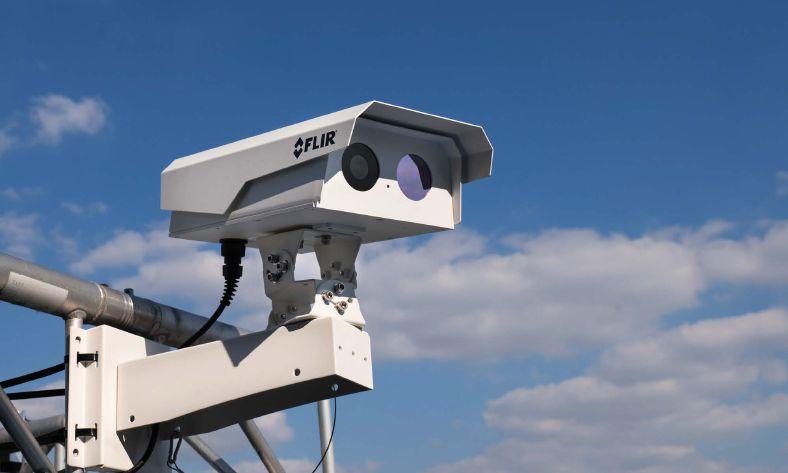
Developed and trained from millions of FLIR images captured globally over the past three decades, one AI model identifies and classifies fallen objects, while the other two classify vehicles, including unusual objects such as e-scooters and vulnerable road users like pedestrians and cyclists. This capability contrasts to alternative market solutions that rely on off-the-shelf datasets and the creation of new datasets to build their respective AI algorithms.
Next-generation FLIR AID (automatic incident detection) algorithms with data classification capabilities allow greater capacity to detect incidents. Moreover, as TrafiBot Dual AI features embedded edge computing analytics on its direct video streams, operators receive a guarantee of accuracy and detection
distance. The technology is also not vulnerable to the potential interruptions associated with centralised AID systems.
What do control centres stand to gain? Benefits include reduced congestion, improved safety and a transportation system with lower environmental impact. Put simply, this multispectral CCTV traffic solution outperforms non-AI based traffic cameras due to its ability to classify and evaluate events.
The use of FLIR’s patented 3D world tracking technology is also significant. Operators can reliably track the movement and driving behaviour of every object within the camera’s field of view, anticipating speed and trajectory even when other vehicles or road
The camera deploys a trio of proprietary AI models to classify and identify vehicles, objects and vulnerable road users on inter-urban routes via both thermal and visual streams
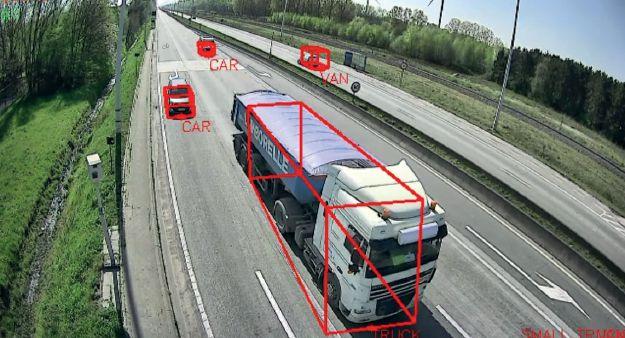
infrastructure obscure targets. Further advantages include the detection of sudden lane changes and wrong-way drivers. Furthermore, TrafiBot Dual AI can also tell the difference between vehicles stopped because of heavy traffic and those that have stalled or come to a halt due to a collision.
Noteworthy is the integral 4K (3840 x 2160) camera that can enhance early fire detection by analysing 14-bit thermal information directly on the camera side without compromising image resolution or data loss due to bandwidth limitations. With 640 × 512 thermal resolution, system operators can see clearly, even in smoke-filled tunnels or poor weather.
For even more benefits, users can integrate TrafiBot Dual AI with FLIR Cascade, a new software product that collects and organises data from the camera. The software sends alerts with a pre- and post-incident time and highresolution video clips of the scene for immediate analysis. Operators can then use their existing video management system or SCADA system to access live footage from the FLIR camera.
Notably, FLIR Cascade features an intelligent incident filtering system to
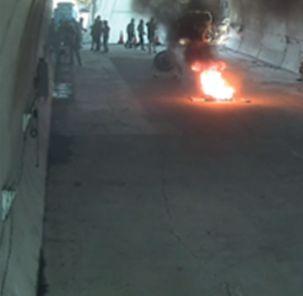
ensure traffic operators only see relevant incidents. It is possible to connect up to 300 FLIR cameras or sensors to a standalone Cascade server.
Alongside new advances, FLIR can offer a broad spread of established inter-urban and urban traffic camera solutions, as well as traffic management software. The integration of thermal imaging technology into the product range has seen rapid progress over the past decade, a move that provides many possibilities, not only for more reliable detection of vehicles, but also vulnerable road users, such as cyclists and pedestrians. In particular, the addition of technology based on deep neural networks makes automatic incident detection and traffic data collection along interurban and urban roadways more reliable and intelligent.
FLIR introduced AI to its urban thermal sensors in 2022. With solutions such as the TrafiCam AI intelligent HD visible sensor, the design not only focuses on easy
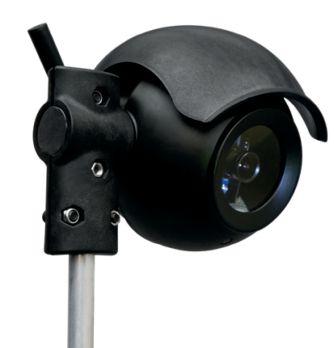
Above: The TrafiCam AI intelligent HD visible sensor monitors traffic in complex urban environments
Above left: TrafiCam AI offers detailed vision and data collection for safer, more efficient cities
Below: Operators can see incidents clearly, even in smoke-filled tunnels or during poor weather conditions
integration and fast installation, but also on attractive aesthetics for use in city centres.
Among other solutions here is the integration of FLIR thermal sensors into traffic lights/signals, a design strategy that supports the ability to detect and classify road users without upsetting the city aesthetic. The solution takes advantage of FLIR’s patented 3D world tracking, which introduces the ability to observe traffic queues and determine how many vehicles are waiting.
The thermal information the TrafiBot Dual AI’s integrated camera can analyse for early fire detection
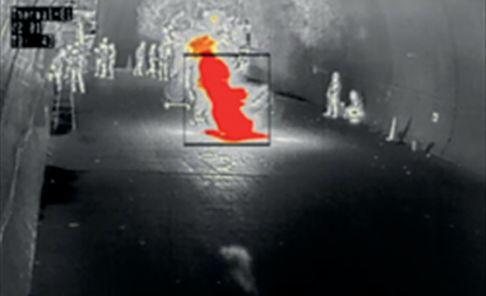
In short, technology for urban applications is advancing from the direct replacement of inductive loops for stop-bar detection at traffic-light intersections, to the most advanced form of traffic data collection. Indeed, the potential exists to track individual vehicles and observe their speed and acceleration. Such capability can serve the new world of V2X, where the central control room can leverage data to influence future traffic and city planning.
In a further step, FLIR is now capable of creating digital twins for communicating with a V2X device via a roadside unit. It is possible to integrate information into the V2X device and send a complete digital twin to vehicles that require information about their surrounding environment, such as the location of nearby vulnerable road users at a specific intersection.
FLIR is excited to showcase these solutions and engage with visitors at the forthcoming Intertraffic World exhibition in Amsterdam (10-13 March 2026). A friendly team of company experts will be available to discuss the optimal camera solutions for existing challenges and new projects. ■
Germany’s national Strategy for Automated and Connected Driving is utilising C-ITS technologies to address today’s mobility challenges while preparing for the future
Words | Kapsch TrafficCom
Cooperative Intelligent Transport Systems (C-ITS) are transforming how we navigate roads, improve traffic safety, and prepare for autonomous driving. While countries worldwide adapt to the demands of modern mobility, Germany is pushing along one of the biggest C-ITS projects in the world. And with its recently-released federal Strategy for Automated and Connected Driving, Germany not only sets ambitious goals but also takes concrete steps to implement connected solutions across its vast motorway network. Meanwhile, similar initiatives are gaining traction globally, with Kapsch TrafficCom playing a central role in deploying practical, real-world solutions.
A national vision for the future of mobility
In December 2024, the German government adopted its national Strategy for Automated and Connected Driving. This strategy marks a pivotal moment for mobility innovation in Europe. By leveraging C-ITS technologies, Germany aims to create a seamless, safe, and efficient transport network that benefits all road users – from drivers to pedestrians. The strategy highlights the importance of connectivity between vehicles and infrastructure to reduce accidents, ease congestion, and lower environmental impact.
Germany’s focus is twofold: enhancing public transport systems, for example with autonomous buses and trams, and optimising road networks through real-time data exchange.
The German Autobahn project: A lighthouse initiative
Germany’s commitment to connected driving is exemplified by its massive deployment of C-ITS technologies on the Autobahn network. This project, spearheaded by Kapsch TrafficCom, covers more than 8,600km of motorways, or two-thirds of the country’s entire Autobahn system. It stands as one of the largest initiatives of its kind worldwide.
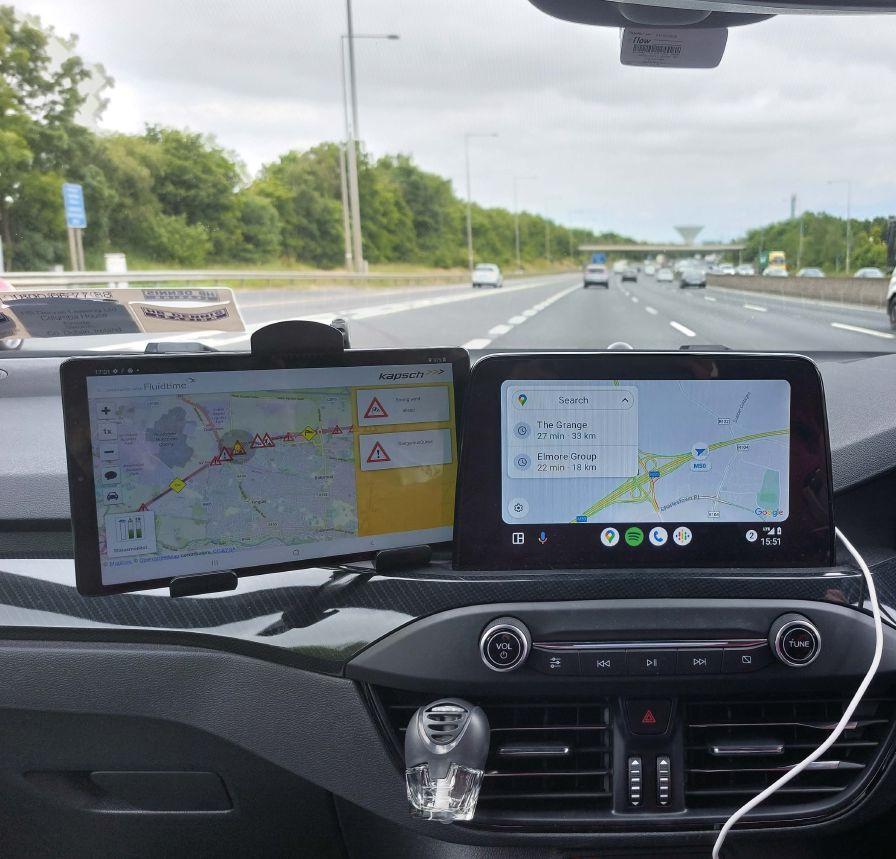
A central component of this project is the use of ITS Roadside Stations (IRS). These stations send real-time warnings to approaching vehicles, such as alerts for roadworks, lane closures, or hazardous conditions. Mobile barrier boards, equipped with C-ITS technology, significantly enhance safety in construction zones – areas particularly prone to accidents. Drivers receive instant notifications directly in their
vehicles, enabling them to adjust their behaviour proactively.
At the heart of this initiative lies the Connected Mobility Control Center (CMCC), which integrates data from IRS and other traffic management systems. The CMCC provides comprehensive insights into road conditions, traffic flow, and potential hazards, for merging real-time data with predictive analytics. That way, German authorities can

8,600km

The distance on Germany’s 13,000km Autobahn network covered by C-ITS Technologies from Kapsch TrafficCom


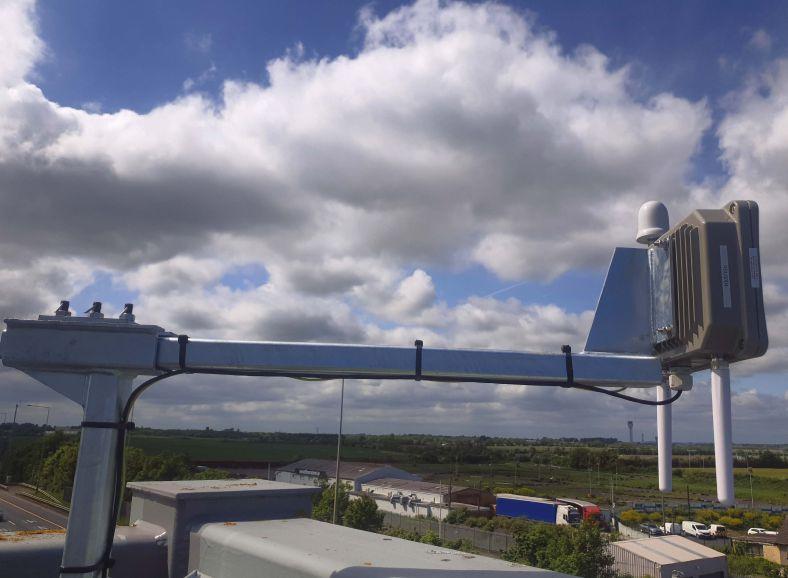
translating pilot experience into tangible benefits for road users and authorities.
In Austria, for example, Kapsch TrafficCom is working with ASFINAG to implement a nationwide C-ITS solution across highways and urban areas. Using C-Roads specifications, the project integrates connected vehicle technologies to enhance road safety with real-time notifications, including warnings about roadworks, traffic jams, and severe weather conditions.
Urban deployments in Salzburg and Vienna, meanwhile, feature advanced systems like green wave driving to reduce congestion and carbon emissions, and smart tram solutions to optimise public transport operations. This initiative lays the foundation for connected automated driving while promoting safety and increased efficiency.
supervise and orchestrate traffic more effectively than ever before.
While Germany plays one of the leading roles, C-ITS projects are being deployed worldwide, showcasing the growing focus of authorities on connected mobility solutions. Kapsch TrafficCom is at the forefront of these deployments,
For TMR in Queensland, Australia, Kapsch TrafficCom’s C-ITS technology enhances safety in roadworks zones. ITS roadside stations, installed at intersections, broadcast signal phase and timing messages to approaching vehicles, improving intersection efficiency and reducing both the risk of accidents and emissions. The project’s success was recognised with the Connected and Automated Vehicle Award at the ITS Australia Awards 2024.
In Northern Spain, the Bizkaia Connected Corridor spans 57km on the A8 highway near Bilbao. This pioneering
project enables real-time communication between vehicles and infrastructure, enhancing safety and traffic reliability. Kapsch TrafficCom’s deployment of Roadside Units (RSUs) and a Connected Mobility Control Center ensures drivers receive critical updates on road conditions, hazards, and congestion.
Ireland’s NIMS initiative integrates C-ITS technology with the nationwide traffic management system on the M50 and M1 motorways in Dublin. As part of the pilot, 1,500 drivers receive real-time notifications about collisions, congestion, and adverse weather conditions, either via C-ITS on-board units or via their personal smartphones. This initiative demonstrates how operational C-ITS can improve road safety and traffic efficiency in real-world settings.
And, in Pinellas County, Florida, Kapsch TrafficCom is addressing pedestrian safety and traffic congestion. The project includes intersection-based video analytics and connected vehicle technology to detect and warn of vulnerable road users. By combining predictive analytics with real-time data, authorities can proactively manage traffic and reduce accidents.
These projects underscore global trends: authorities are increasingly prioritising C-ITS to address pressing mobility challenges while increasing the scale of projects from pilots to operational services. From highways to urban

centres, connected corridors are proving their value in enhancing safety, improving traffic flow, and reducing environmental impact, while laying the groundwork for autonomous driving.
Meanwhile, back in Germany the country’s federal strategy also goes beyond national borders. Recognising the international nature of transport systems, the strategy places a strong emphasis on EU-wide harmonisation of communication standards for connected and autonomous driving. Interoperability is critical: vehicles traveling across countries must seamlessly interact with infrastructure and other vehicles, regardless of location.
Kapsch TrafficCom, a key player in the German project, actively contributes to the development of these harmonised standards. By ensuring reliable communication between different vehicles and infrastructure, Germany is setting the stage for a future where cross-border travel is safer, smarter, and more efficient.
From connected corridors to autonomous driving
The German strategy also paves the way for autonomous driving. C-ITS technology, such as the system being implemented on the Autobahn, serves as a foundational step toward fully autonomous transport systems. These systems use real-time data from roadside sensors, in-vehicle systems, and cloudbased platforms to orchestrate traffic flow and enhance safety.
facilitating communication between vehicles and infrastructure; advanced data platforms – processing and analysing data to provide actionable insights; and machine Learning and AI to predict traffic patterns, detect anomalies, and optimise routes. Germany’s strategy envisions a future where autonomous vehicles coexist seamlessly with conventional traffic. The role of the roadway operator is evolving and will be instrumental in facilitating the evolution, adoption and accessibility of C-ITS and AV services. By investing in C-ITS technologies today, the country is laying the groundwork for this evolution.
The implementation of C-ITS and connected corridors delivers tangible benefits. Real-time hazard warnings,
such as roadworks alerts or pedestrian detections, can enhance safety and reduce the risk of accidents, for example. Dynamic traffic management and predictive analytics optimise routes and minimise congestion to improve traffic flow, and reduced idling and smoother traffic flow lower emissions, contributing to Germany’s sustainability goals. Furthermore, better coordination of traffic signals and priority for public transport vehicles improve urban mobility, and harmonised standards ensure seamless cross-border travel and communication.
Kapsch TrafficCom leads the charge
Germany’s federal strategy for autonomous and connected driving positions the country as a trailblazer in modern mobility. With large-scale projects like the Autobahn initiative, Germany demonstrates how C-ITS technologies can revolutionise road safety, traffic management, and environmental sustainability.
Kapsch TrafficCom’s global projects –from Spain to Australia, Ireland, Austria, and the US – highlight its role as a reliable partner in deploying realworld C-ITS solutions. By prioritising connectivity, harmonising international standards, and integrating cutting-edge technologies, Germany and Kapsch TrafficCom are addressing today’s mobility challenges while preparing for a future where autonomous and connected vehicles are the norm.
As the world watches, the progress of these leading countries serves as a blueprint for others to follow – a clear path toward safer, smarter, and greener transportation systems. ■
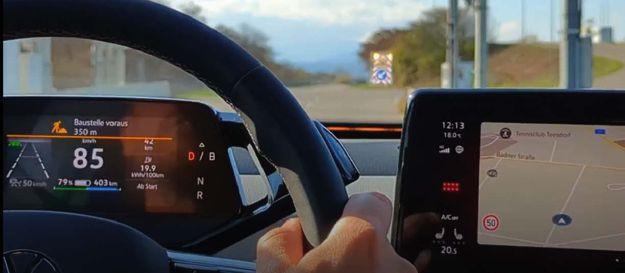
Germany’s commitment to connected driving is exemplified by its massive deployment of C-ITS technologies on the Autobahn network









































Visual AI provides road administrations with a powerful toolset to manage operational continuity, infrastructure safety and environmental monitoring
Words | Paolo Cavagnero, CMO and founder, Waterview
Managing large transport networks involves significant challenges, including the need to collect critical information on infrastructure integrity and evaluating potential risks to the safety of users and operators. In recent years these challenges are exasperated by sudden weather changes.
Cameras, whether installed in fixed locations for road surveillance or mounted on vehicles that periodically travel the roads, are among the most cost-effective and versatile sensors for road infrastructure inspection. When paired with artificial vision software that can automatically analyse large quantities of collected images to extract precise, timely information on multiple categories of events, they define a new paradigm to effectively cope with road infrastructure safety.
WaterView provides two suites of advanced visual AI solutions to help road administrators manage transport networks in a more efficient way. They are camera-agnostic, meaning they can use images captured by any still or moving camera, and they have been designed to be primarily used on the edge. This means that analysis happens directly on the cameras or on local supporting units,
Right: CliCK analytics can be used to detect snow cover on the road pavement
Below: Flooded areas can be promptly detected to prevent cars entering risky areas

such as vehicle computers, thus capturing relevant events when and where they happen, limiting bandwidth occupation and preserving privacy.
notifications with supporting images, time lapse videos or custom schemes, to offer control room operators a complete understanding of what has been detected along the road.
100
The speed (in km/h) up to which TraCK can perform continuous monitoring, capturing live data (62mph)
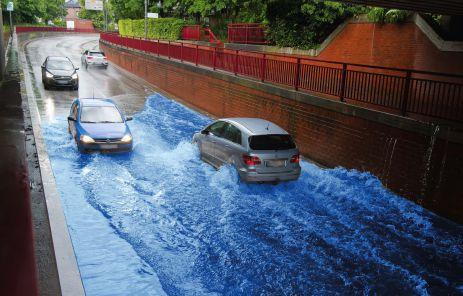
TraCK for infrastructure inspection
TraCK, or the Transport Camera Kit, offers visual AI analytics to monitor road infrastructure integrity, providing valuable data for daily operations and maintenance planning. Utilizing images captured by vehicle cameras, TraCK generates detailed reports on road conditions and asset quality.
TraCK operates both in real-time on connected vehicle computers for immediate analysis and in postprocessing mode to gather additional data after returning to base. On vehicles equipped with cameras and a GPSconnected PC, TraCK can perform continuous monitoring, capturing live data even at speeds up to 100km/h. The system structures and shares this data in JSON formatted messages, complete with GPS coordinates, timestamps, and feature descriptions, making it ready for integration into GIS dashboards and third-party decision-making systems. TraCK also supports coupling
TraCK returns geolocated information on various road infrastructure aspects, such as road sign locations to support compliance checks for their position and form; tunnel conditions to plan cleaning and upkeep routines; vegetation growth to avoid interference with traffic and schedule maintenance interventions; and road pavement to detect surface defects like potholes and cracks.
CliCK, or the Climate Camera Kit, is a suite of visual AI analytics to monitor the weather and its effects on the road, adding a new layer of information to ensure security and safety for drivers.
CliCK analytics work with both outdoor IP CCTVs and vehicle cameras, turning them into active weather and climate sentinels capturing the presence of flooded areas, snow settling, low visibility, heavy precipitations or smoke plumes.
CliCK data is published via MQTT, Kafka or https protocols as telemetry with a one-minute granularity, or in the form of alerts for events over custom
thresholds, making communications with control rooms and third-party decision support systems prompt, easy and straightforward.
CliCK analytics are key to capturing single risky events, but they can also assist with infrastructure maintenance by monitoring long-term environmental impacts on the road. Historical weather data, combined with real-time recurring insights like those provided by TraCK, may help road administrations identify the causes of some infrastructure issues and plan preventative measures. For example, video-based monitoring can track road pavement quality changes over time in areas prone to flooding or snow settling, supporting proactive maintenance or suggesting the design of better drainage systems. This approach enables data-driven planning for repairs or upgrades, helping road authorities extend infrastructure lifespan and reduce unexpected maintenance costs.
A straightforward integration
WaterView analytics are backed by Arco, a proprietary service-oriented software platform allowing them to be used in a wide range of scenarios, from pure edge computing (where the software runs
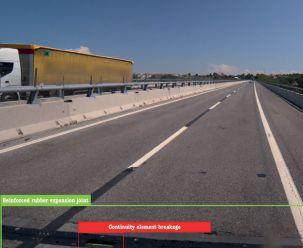
directly on the camera) to cloud deployment, or on physical servers like vehicle PCs or virtual machines. Arco streamlines the integration with the existing IT systems and architectures by offering an image grabber to use any
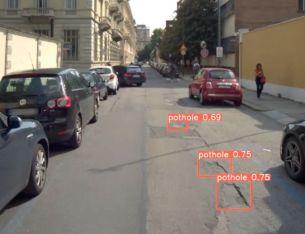
Left: TraCK analytics on vehicle cameras can identify expansion joints and their defects
Below: In urban areas, TraCK provides real time road pavement defects detection

image or video source, diagnostics for installed analytics, tools for remote update and maintenance, MQTT or Kafka based notification engine and a user interface for system configuration.
Arco also provides anonymisation of faces and vehicle license plates in the images passed to TraCK and CliCK analytics, to protect the privacy of road network users and operators especially when images are transmitted to control rooms for data verification.
In conclusion, WaterView offers road administrations a sophisticated AI-based approach to infrastructure and environmental monitoring. By leveraging both real-time and historical data from edge and mobile cameras, TraCK and CliCK enhance the accuracy and immediacy of road condition assessments, facilitating data-driven decision-making that improves operational efficiency, reduces costs, and supports proactive maintenance. ■
CliCK is a suite of visual AI analytics to monitor the weather and its effects on the road, adding a new layer of information to ensure security and safety for drivers










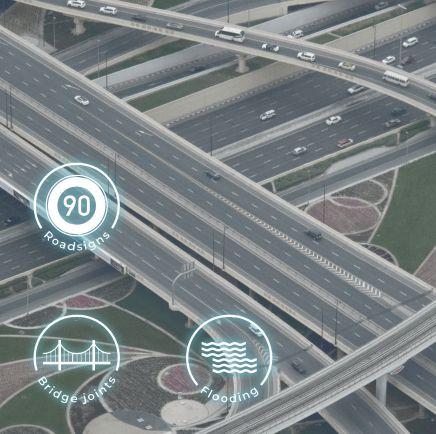















www.waterview.ai
info@waterview.it


A
Words
As cities become smarter and more connected environments, the integration of cooperative, connected, and automated mobility (CCAM) principles becomes vital. Grupo ETRA, a key player in the European mobility market and innovation arena, with initiatives such as PoDIUM and Augmented CCAM, is at the forefront of this transformation.
Through its innovative solutions such as Aurora and others focused on enhancing public transport systems, Grupo ETRA is shaping the future of urban mobility with a sustainable, human-centric approach.
The European Union’s ambitious CCAM framework aims to enable seamless connectivity between vehicles, infrastructure, and users, ensuring safer and more efficient transport systems across the continent. ETRA’s involvement in landmark projects, such as PoDIUM and Augmented CCAM, underscores its commitment to this vision.
PoDIUM identifies and assesses the connectivity and cooperation enablers as key physical and digital infrastructure
Below: The Aurora
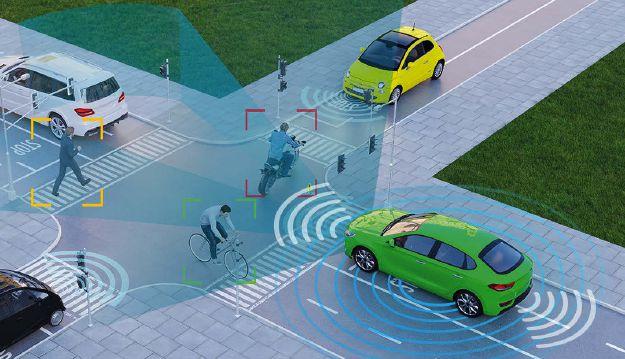
technologies to achieve high levels of automation. ETRA plays a pivotal role by leading one of the urban use cases to be tested in a complex environment in the city of Barcelona, Spain, focusing on infrastructure support for a user-centric, CCAM-enabled traffic management corridor with high priority vehicles and vulnerable road users (VRU).
Meanwhile, Augmented CCAM aims to understand, harmonise and evaluate 11 proposed solutions supporting
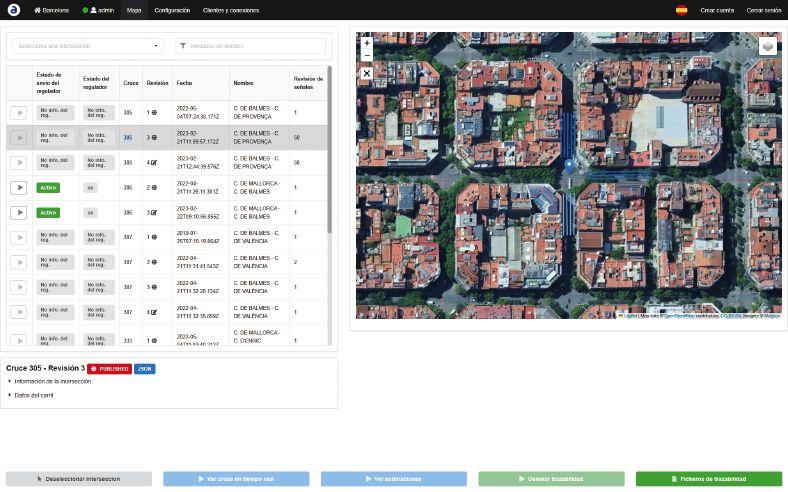
physical, digital and communication infrastructure (PDI) across seven test sites in three European countries, with the objective of enhancing the connected and automated vehicles’ operational design domain (ODD) to enable the large-scale deployment of CCAM. ETRA is leader of the Madrid test site, where it has deployed a total of three PDI support solutions focused on the enhancement of safety and efficiency of the road network.
One of Grupo ETRA’s standout innovations is Aurora, a cloud-based cooperative traffic server. Designed to optimise traffic management and improve public transport operations, Aurora is an example of ETRA’s focus on sustainable, interoperable and connected urban mobility.
Aurora connects traffic signals, vehicles, and city traffic control centres to enable real-time data sharing and decision taking. For public transport, this has the potential to translate into smoother operations, as the system is designed to support priority requests at intersections for buses and trams, reducing delays and enhancing reliability. In this way, Aurora brings all the CCAM benefits to public transport operations, improving the user’s experience and the sustainability of urban mobility.
Unlike traditional traffic management tools, Aurora stands out for its focus on adaptability and interoperability. It enables communications between vehicles and the infrastructure to support advanced traffic management and cooperative vehicle manoeuvring, helping to optimise routes, reduce congestion, improve safety and enhance the overall travel experience.
Safety remains a top priority in urban mobility, especially for VRUs such as pedestrians, cyclists, and individuals with disabilities. ETRA integrates AIpowered recognition systems within its solutions to identify and prioritise these users in traffic scenarios. By leveraging cameras and advanced AI algorithms, these systems detect vulnerable users near crossings or vehicles and warn them if they are at risk of collision to ensure their safety.
The human-centric approach
ETRA’s involvement in CCAM projects and the development of Aurora highlights a broader shift in urban mobility: prioritising sustainability and

human-centric innovation. These systems are not just about technological advancements but also about improving lives by reducing travel times, lowering emissions, and ensuring safer networks. Public transport benefits significantly from this approach. By integrating Aurora with CCAM frameworks, cities can create intelligent, responsive transport networks that cater to the needs of all users. Whether it’s prioritising buses during peak hours or ensuring safe crossings for pedestrians,
Above: Connected urban mobility powered by cuttingedge technology, enabling more efficient traffic management
the system reflects ETRA’s commitment to a holistic mobility ecosystem.
AI’s use in public transport systems
To thrive within a smarter, more connected environment, the embracement of artificial intelligence (AI) by public transport is a must. ETRA is leading the way on this too. For example, the company uses cutting edge AI-based video analysis to provide real time information on bus occupancy, identifying passengers flows and automating, in a privacy-respectful and cost-efficient manner, the generation of OD matrices, helping define the optimal transport offer for specific situations in the city or the development of demand responsive transport (DRT) systems.
Through its leadership in CCAM and its groundbreaking work in public transport systems, Grupo ETRA is helping cities transition from traditional mobility models to smarter, more inclusive and sustainable ones. The journey towards a seamlessly connected and safe urban mobility landscape is well underway, and Grupo ETRA is driving it forward. ■
@grupoetra www.linkedin.com/company/etra





Experts from Swarco’s ITS and Road Marking Systems divisions share their views on what needs to be done to accelerate the rollout of connected, cooperative and autonomous mobility (CCAM) across Europe
Twenty years or so ago it would have been appropriate to ask this question: “Is connected vehicle technology as advanced as we’d like to think it is?” Not that we would have called it “connected vehicle technology,” of course.
In 2024 the question has been completely turned on its head. connected, cooperative and autonomous mobility (CCAM) technology has moved on at an incredible pace over the past few years and the question is now: “Are Europe’s roads ready for CCAM?”
Perfectly placed to provide answers are Steve Penn, Swarco CCAM business owner, and Daniel Lenczowski, Swarco’s Germany-based CCAM sales executive.
“To be perfectly honest, the simple answer is no – or not yet,” says Penn.
“From my perspective, there are a lot of isolated projects and deployments across

The technology is well tested and well prepared so we can start scaling it up using the EU’s significant financial aid
Daniel Lenczowski, CCAM sales executive, Swarco
Europe, but if we look at the support from the European Commission, where central funding comes from, I would say there’s still a huge gap in relation to how that money is invested. Infrastructure is digital and we have a foundation where services can be built on for future technology evolution.”
Billions of Euros have been invested into CCAM projects but, Penn adds, there still seems to be a lot of confusion when it comes to interoperability.
“There’s a difference in countries’ knowledge of what they need to do for the future. We’re heading towards Level 4, even Level 5 autonomous vehicles in the future but there are still several steps we need to climb along the way to get there. I also look for the positives, but this is the reality of what we’re finding as a global player having to make massive investments of our own to keep up with standards.”
Whether Europe’s roads are ready for CCAM or not is not an “easy question to answer in just few a sentences,” halfjokes Lenczowski, “but there’s definitely quite a number of positive things going on right now in Europe in terms of
opportunities. The technology, and that’s both from the infrastructure and the vehicle side, is already there. It’s good enough to support CCAM services and to support the increasing automation levels. From the infrastructure perspective, I think we can also highlight that Swarco has been committed, for at least the past 15 years, to developing, standardizing and creating an open ecosystem for those services to be implemented in the right manner.
“The goal is that you can drive from Portugal to Finland and throughout the journey the services are seamless. So, in that sense, products offered by Swarco assure system safety and interoperability,” adds Lenczowski.
Preparation is key
“It’s all about preparation,” Penn continues. “It’s something that we push internally at Swarco. We build initiatives and campaigns; we do all sorts of things to try and help different countries and authorities and road administrators to understand where the market is going. Preparation for us is the fundamental key thinking right now, because even


countries that are 10 years away from being ready should start planning now. Germany and the UK are good examples. They invest for 10, 15 or even 20 years. On the positive side of things, the roads are a perfect example of how the industry at large, including suppliers, partners, OEMs and the road operators, can be glued together to start speaking the same language and having the same goal.
Lenczowski elucidates: “I think that we are very well set to get started. We can take the examples of Western Europe and start deploying in Central and Eastern European countries, such as new members like Lithuania, Slovakia and the Western Balkans. The technology is well tested and well prepared so we can start scaling it up using the EU’s significant financial aid. We can start deploying the latest technology to solve the problems from the past. The technology is there, so it’s time to stop talking and start doing.”
Harald Mosböck, Swarco’s vice president of Road Marking Systems for Europe and the APMEA regions, and the European Union Road Federation’s current president, takes his turn to answer the “are Europe’s roads ready for
CCAM?” question, focusing on road markings: “I can tell you what’s happening in Europe if we are talking about road markings and automated driving,” he says. “In the autumn of 2019, the European Council decided that Europe must do something and that we should not fall back in comparison with Asia and the US. As part of the third Mobility Package of the European Commission, the council voted for two legislations: one was the general safety regulations, and the other was the road infrastructure safety management directive,” Mosböck continues.
General safety regulations have made it mandatory for every new car sold in the European Union from July 2024 to be equipped with several sensors and safety features, such as emergency lane keeping assistance, and this is where road markings play a leading role. The visibility of road markings becomes more crucial.
“The positive example here is Germany and the national performance requirements for highways,” explains Mosböck. “Germany is probably the only



Preparation for us is the fundamental key thinking right now, because even countries that are 10 years away from being ready should start planning now
Steve Penn, Swarco CCAM business owner
Left: Making roads and road markings consistently readable for modern driver assistance systems is crucial in paving the way towards automated driving
large European country whose performance criteria for lane markings focuses very much on visibility on wet roads in rainy conditions.
“My hope is that road maintenance budgets will be adjusted in line with the inflation rate of the past few years to maintain road infrastructure properly. But if we truly want to support the deployment of cooperative connected and autonomous vehicles then the levels of funding and investment need to be increased,” Mosböck continues.
“The aviation and maritime industries are built upon a global framework of laws and regulations and while there have been attempts to harmonize road network organization and standards, significant differences remain,” he adds. “Our goal is to optimize the role of road markings so that cameras can ‘see’ lane lines, perceive pedestrian crossings and identify designated bike lanes. Consequently, this will help to maximize the value of automated driving technologies, to create a safer, sustainable and more efficient road network.”



Mosböck’s primary concern, however, is that despite the progress being made all over the continent, in terms of roadreadiness, Europe is in danger of losing touch with China and the US. In China thousands of kilometres of roads are in the process of being prepared for fully automated vehicles. “If Europe is to remain competitive in global markets while advancing climate objectives, we cannot fall behind when it comes to automated freight. We need to at least remain on par with the US and China.” ■
Our goal is to optimize the role of road markings so that cameras can ‘see’ lane lines, perceive pedestrian crossings and identify designated bike lanes
Harald Mosböck, vice president of Road Marking Systems for Europe and the APMEA regions, Swarco, and president of the EU Road Federation (ERF)
Find out more about the advertisers in this issue

3M (inside front cover)
The multi-technology group 3M is known as one of the most innovative companies in the world. The basis for its innovative strength is the diverse use of 49 of its own technology platforms. Today, the portfolio includes 60,000 products, each to improve the quality of people’s life.
Contact details:
Tel: +49 171 2211514
Email: jfriedrich@3M.com
Web: www.3M.com
Alliance Traffic Systems (page 35)
Alliance Traffic Systems, founded in 2008, is a market leader in intelligent transportation systems (ITS) and smart traffic enforcement solutions. The firm specialises in traffic management, AI-based safety systems, vehicle communication, and smart solar traffic solutions. The company delivers reliable, efficient, and environmentally conscious solutions. Alliance provides consultancy, training, and future-oriented transportation technologies designed to enhance safety, reduce congestion, and optimise infrastructure. With a focus on customer service and innovation, Alliance works closely with clients in the UAE, Middle East, Affrica and CIS countries to create sustainable, smart transportation systems that improve mobility while minimising environmental impact. The company is committed to shaping the future of transportation through technology and collaboration.
Contact details:
Email: info@alliance.ae
Tel: +971 (2) 444 7677
Web: www.alliance.ae
Avery Dennison (page 7)
Avery Dennison’s reflective technology has been making highways and street safety solutions bright with prismatic signs for nearly 100 years. The company is one of the preferred suppliers to professional sign shops worldwide and services the traffic and safety market with one of the industry’s most comprehensive ranges of reflective sheeting. The pursuit of its vision has aligned its businesses into a focused, customer-driven company that specialises in materials science. Its in-depth pool of expertise and global scale enable it to deliver insights, innovative products, and intelligent solutions to customers all over the world.
Contact details:
Tel: +1 877 214 0909
Email: reflective.orders@averydennison.com
Web: https://reflectives.averydennison.com/en/home.html

GEVAS software (page 101)
GEVAS software has been providing innovative solutions in the field of traffic technology for over 40 years. Under the umbrella of AVT Group, the company has become one of the leading providers of traffic management solutions in Europe. Its offer ranges from traffic engineer workstations to complete traffic management centres with state-of-the-art V2I applications.
Contact details:
Tel: +49 89 255597-0
Email: software@gevas.de
Web: www.gevas.eu / www.trafficpilot.eu


Grupo ETRA (page 115)
Grupo ETRA is a leading technology company specialising in innovative solutions for mobility, energy, security and digital transformation. With a strong focus on smart infrastructure, Grupo ETRA delivers advanced systems for urban mobility, traffic management, renewable energy, and IoT, enhancing quality of life and enabling smarter, more sustainable cities worldwide.
Contact details:
Tel: +34 96 313 40 82
Email: grupoetra@grupoetra.com Web: https://www.grupoetra.com/en/

Haenni Instruments (page 89)
Haenni Instruments, founded in 1974 and based in Switzerland, specialises in portable wheel load scales. Supporting authorities and industries, Haenni enables precise vehicle weight and axle load control. With a strong focus on road safety, road damage prevention, and environmental sustainability, Haenni stands as a trusted leader in weight enforcement solutions.
Contact details:
Tel: +41 31 506 54 10
Email: marcia.otter@haenni-scales.com Web: www.haenni-scales.com

Highway Software (pages 8 and 9)
Highway Software addresses all the operating challenges of companies in the highways sector in a single, efficient ecosystem. At its core it is a reliable project and field management system, but it offers so much more. Control your business, increase efficiency, reduce costs and grow with software developed by contractors for contractors.
Contact details
Email: mike.wilson@highway.software
Tel: +30 210 8015465
Web: highway.software
ICE Tech (page 100)
ICE Tech is a leading software solutions provider specialising in turnkey solutions for border management, transport information systems, road tolling, and law enforcement. With expertise in hardware, software, and data infrastructure, ICE Tech delivers integrated systems that enhance efficiency, revenue assurance, and compliance for governments and improve the citizen’s experience.
Contact Details:
Email: sales@icetech.io Web: www.icetech.io

IDEMIA (page 103)
IDEMIA Public Security, a division of IDEMIA Group, is the premium provider of trusted biometric solutions that revolutionise public security and identity, travel and transport, and access control. The company’s solutions – designed using advanced security features and encryption technologies – enable its clients to build safer and fairer societies where people can live, interact, and move freely.
Contact details:
Tel: +33 01 73 60 20 20
Email: psi.contact@idemia.com Web: www.idemia.com/business/idemia-public-security

Intercomp (page 91)
For more than 45 years, Intercomp has provided superior-quality portable and in-ground weighing systems, along with the highest levels of customer satisfaction, for a wide range of industries. Its static wheel and axle scales and dynamic weigh-in-motion systems are designed with the most innovative technology in the world.
Contact details:
Tel: +1 763 476 2531 (worldwide) / +44 118 932 0578 (UK)
Email: info@intercompcompany.com Web: www.intercompcompany.com


Kapsch TrafficCom (page 23)
Kapsch TrafficCom is a globally renowned provider of transportation solutions for sustainable mobility with successful projects in more than 50 countries. Innovative solutions in the application fields of tolling, tolling services, traffic management and demand management contribute to a healthy world without congestion.
Contact Details:
Tel: +43 664 6281705
Email: Johannes.rogi@kapsch.net (PR manager) Web: www.kapsch.net
Kistler (page 21)
Kistler is the global market leader for dynamic pressure, force, torque, and acceleration measurement technology. The company features more than 20 years of experience in the weigh-in-motion quartz technology. It is based on piezoelectric measurement, which Kistler first applied in its invention of the charge amplifier some 60 years ago. Today, Kistler employs around 2,200 employees at more than 60 locations worldwide.
Contact details:
Tel: +42 1232 272 655
Email: Kristina.Palffy@kistler.com Web: www.kistler.com

Lindsay Corporation (page 15)
Lindsay is a leading global manufacturer and distributor of irrigation and infrastructure equipment. Established in 1955, Lindsay proudly manufactures equipment to keep roads moving safely and sustainably with the Road Zipper System and its full line of road safety products.
Contact details:
Tel: +39 02 90 99 61
Email: info@snoline.com
Web: www.lindsay.com


Microlog (page 105)
Microlog offers innovative parking solutions for operators looking to streamline payments, reduce costs, and enhance customer
experience. With 19 years of expertise across 12 countries, its solutions simplify transactions through intuitive kiosks like MicroPark, MicroPark Budget, and MicroPark Wall. The firm integrates seamlessly with ANPR systems and offers flexible payment options, including PrePay, PostPay, and Honesty Parking. With real-time monitoring, automated alerts, and remote management, Microlog ensures operational efficiency and reduces on-site demands. Microlog is a trusted partner for scalable, reliable parking solutions that drive long-term growth and profitability.
Contact details:
Tel: +47 47 800 200
Email: post@microlog.no
Web: www.microlog.no


27)
Parifex designs innovative transportation systems, and especially speed and red-light running cameras, to improve road safety. The French company’s cutting-edge solutions allow vehicle identification, speed measurement, traffic light detection, automatic numberplate recognition, intelligent counting, etc., using 3D-lidar technology tand AI.
Contact details:
Tel: +33 139 20 80 60
Email: info@parifex.com
Web: www.parifex.com

29)
IRD and ETC have united under the Quarterhill brand to ignite change in the tolling and enforcement industries. The company handles more than two billion toll transactions each year, and enforcement agencies use its commercial vehicle inspection technologies worldwide to prevent weigh station congestion and protect roads from damage by overweight vehicles.
Contact details:
Tel: +1 (214) 615-2326
Email: info@quarterhill.com
Web: www.quarterhill.com/
43)
Sernis is a dynamic Portuguese company that epitomises innovation across road safety. Renowned for R&D prowess and manufacturing excellence, Sernis leads in road safety markets with cutting-edge
products like road studs, flexible bollards, LED traffic signs, VMS and smart systems. A problem-solving and solutions-oriented powerhouse, Sernis is at the forefront of enhancing global road safety through its innovative solutions.
Contact details:
Tel: +351 253 300 440
Email: sernis@sernis.com
Web: www.sernis.com
SloanLED (page 85)
Founded in 1957 to design and develop high-reliability lighting products, SloanLED has grown to the leading supplier of LED solutions for the sign, petrol and mobility industry. SloanLED is part of the Principal Industries company and located in San Angelo USA with A European --headquarter in Zoetermeer, the Netherlands.
Contact details: Web: www.sloanled.eu
Swarco (outside back cover)
Swarco improves quality of life by making the travel experience safer, quicker, more convenient, and environmentally sound. The Austrian traffic technology corporation provides a large range of products, systems, services, and turnkey solutions in road marking, urban and interurban traffic control, parking, public transport, e-mobility, CCAM, and offers an integrated software suite for the liveable city.
Contact details:
Tel: +43-5224-5877-0
Email: office.ag@swarco.com Web: www.swarco.com


Teledyne FLIR (page 37)
Teledyne FLIR designs and manufactures products that enhance perception and awareness. Based on the latest technology advances, the company offers a diversified portfolio of thermal imaging, visible-light imaging, video analytics, measurement and diagnostic, and advanced threat detection systems. These products serve to protect lives and promote efficiency.
Contact details:
Tel: +491715495119
Email: benjamin.schiereck@teledyne.com
Web: www.flir.com/traffic


Triplesign System (page 81)
Triplesign System AB, based in Sweden, specialises in innovative traffic signage. Its patented triangular rotating systems are used for dynamic real time information. As no power is needed for displaying the message the signs have an extremely low power consumption. This makes it the most sustainable system to increase traffic safety and efficiency on roads worldwide.
Contact details:
Tel: +4686267350
Email: info@triplesign.com Web: www.triplesign.com
Vitronic (page 5)
Vitronic’s core competency in the traffic technology sector is to monitor vehicles. With more than 30 years of expertise in traffic technology, Vitronic is the ideal partner for customised solutions on an international scale. For future mobility concepts Vitronic is working on using existing traffic infrastructure to control and optimise traffic flows as well as increasing road safety.
Contact details:
Tel: +49 611 7152 0 Email: sales@vitronic.com Web: www.vitronic.com

WaterView (page 113)
WaterView pushes the limits of computer vision and AI to create actual ‘visual intelligence.’ Its 12-person team is driven by a common passion for solving challenging problems through advanced technologies, resulting in streamlined and efficient processes that provide unprecedented insights on the world around us.
Contact details:
Tel: +39 011 19705998
Email: info@waterview.it Web: www.waterview.ai



Dr Michèle Dix CBE has served the British transport industry for over 45 years, including time as Transport for London’s director of planning, director of congestion charging, and as the director of Crossrail. Now, as a commissioner with the UK’s National Infrastructure Commission, she is looking to help solve some of the biggest challenges facing UK in the future, which are mirrored around the world
Existing roads will be used even more intensively to get the most out of every metre and enhancements will be limited to interventions with the highest value
What does the National Infrastructure Commission do?
It looks long term – 20 to 30 years ahead – and advises the government on what it needs to do to help ensure the UK’s infrastructure promotes sustainable economic growth across all regions of the UK, improving competitiveness and quality of life and supporting climate change resilience and the transition to Net Zero.
Why is it important to plan for Net Zero carbon emissions now?
2050 sounds a long way away, but it isn’t. It’s only 25 years, and getting things done in that time frame is difficult, particularly when you are building new infrastructure. It takes a long time, particularly at the front end of planning and development. I was lucky to see some of the projects I had been working on at the Greater London Council in the 1970s come to fruition in my time 30 to 40 years later at TfL. Good things eventually happen, but we need to make them happen quicker.
There is a vision for roads of the future being clean, green and lean. What does that mean?
They will be clean because they will carry electric passenger vehicles with heavy freight more likely to be carried on vehicles using other sustainable fuels, potentially hydrogen. It will be green because a more joined up spatial approach to planning across transport and other infrastructure sectors will mean natural capital will be better preserved and enhanced, and methods of construction will be greener... and it will be lean, because existing roads will be used even more intensively to get the most out of every metre and enhancements will be limited to interventions with the highest value. Critical to this is encouraging take up of electric vehicles and provision of public charging infrastructure. The government committed to support EV charging roll out for a minimum of 300,000 public charge points by 2030. We are making progress on this, but the national network of public, accessible EV chargers needs to continue to be built out at pace, and the government will have to address any hot spots that the market alone won’t reach, particularly with rapid charging.
What about maintenance and resilience of our existing network?
Much of the existing network will need structural work over coming years, given the age and the increased challenge of making our roads more resilient to the impacts of extreme weather. A growing proportion of the road to budgets will need to be shifted towards maintenance and boosting resilience.
How do we ensure we’re making the right investments in road infrastructure?
Being leaner means being laser focused and only building where it will make a major difference in terms of the economy, it also means sweating our existing assets. This may mean some of our larger towns and cities need to plan so that valuable road space is used in more efficient way – and by that I mean fewer private cars carrying one or two people and more busses and vans.
What are the key National Infrastructure Commission recommendations for the future of transportation?
Our vision is reflected in a multimodal strategy and national infrastructure strategy, creating a pipeline of projects to deliver stability in our network and attract investment. I hope our roads can meet the challenges of Net Zero by 2050 –they will if we can make good decisions fast and get on with them. ■
Michèle Dix spoke at Highways UK in Birmingham















Mark your calendar for Intertraffic events around the globe, the premier gatherings for traffic and mobility professionals worldwide. Whether you’re a visitor seeking cutting-edge solutions or an exhibitor aiming to showcase innovations, Intertraffic offers unparalleled




opportunities to network, learn, and grow your business. Don’t miss the chance to make your mark in achieving smart, safe, and sustainable mobility for all. This is where the future happens! Get in touch with our team on intertraffic@rai.nl or check out www.intertraffic.com.
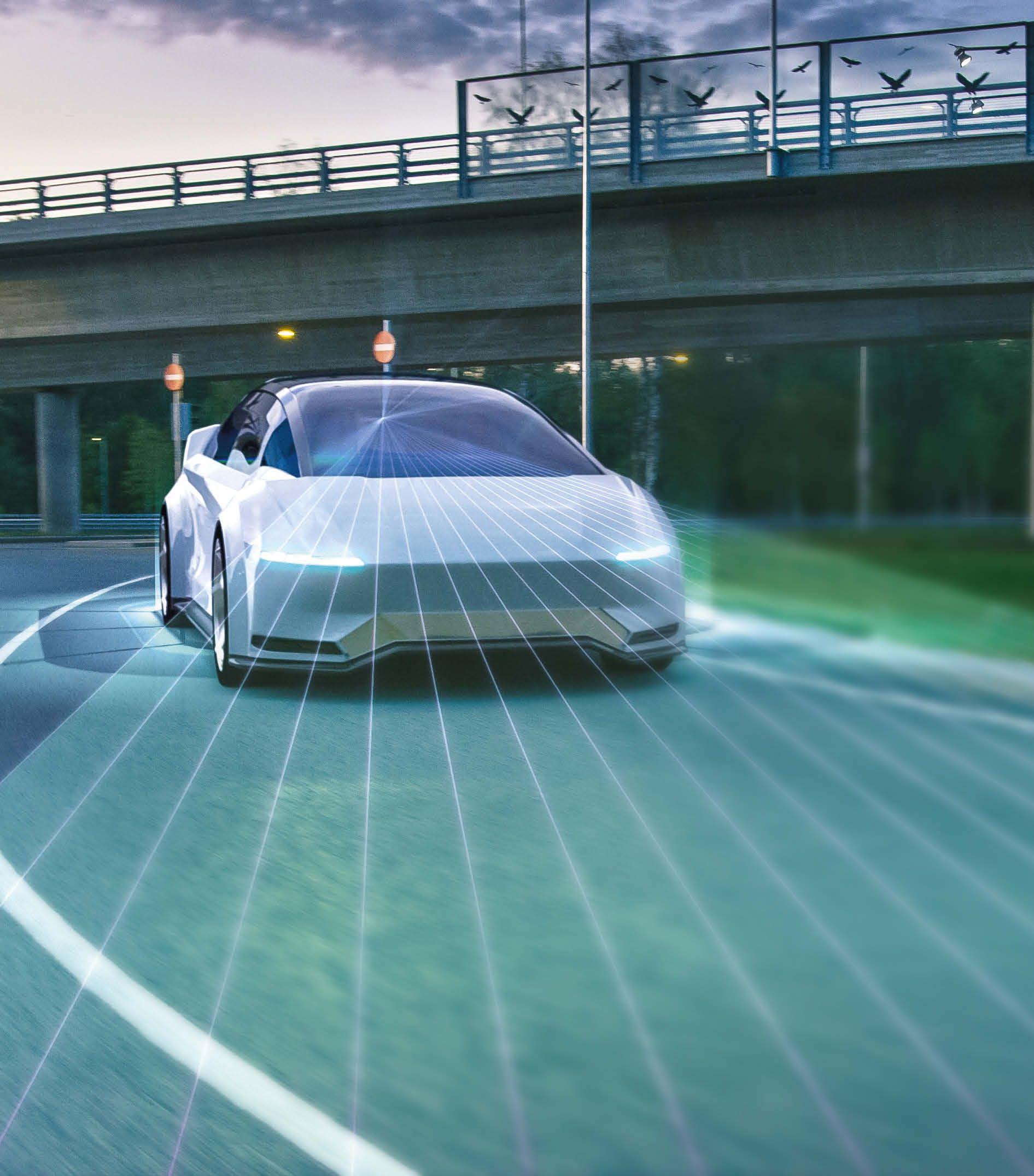
Are our roads ready for the future?
To some extent, we would say. With our solutions linking infrastructure and vehicles, we are helping to close the gap, paving the way towards the future of mobility which becomes connected and interactive. Roads become readable for modern vehicles thanks to our high-performance road markings and our CCAM technologies. We enable applications and services like traffic light forecast and in-vehicle optimal speed advice to ride on the Green Wave, early roadworks warnings, and priority for rescue services and public transport at intersections. Our end-to-end solutions aim to seamlessly integrate automated vehicles into the mobility management loop.
Let’s cooperate to make our roads ready for the future.