TAP NEEDS CHAMPIONS
Join the Prospect Legacy Society
e American Prospect needs champions who believe in an optimistic future for America and the world, and in TAP’s mission to connect progressive policy with viable majority politics.
You can provide enduring nancial support in the form of bequests, stock donations, retirement account distributions and other instruments, many with immediate tax bene ts.
Is this right for you? To learn more about ways to share your wealth with e American Prospect, check out Prospect.org/LegacySociety

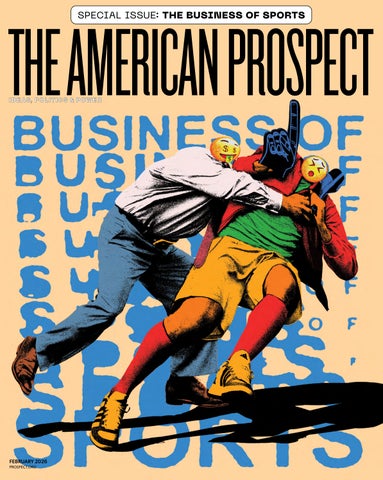
The business of sports looks a lot like the rest of our unequal, excessively financialized economy. BY DAVID DAYEN AND ALEX JACQUEZ
The NFL’s billionaire owners literally can’t lose when it comes to making money. On the field? That’s another matter. BY RODGER SHERMAN
Why it’s harder to be a sports fan BY DAVID DAYEN
World Cup ticket prices are not fair play. BY NIA LAW AND LINDSAY OWENS
States and leagues must face up to the damage from app-based gambling for the next generation of bettors, most of them young men. BY GABRIELLE GURLEY
Steve Gri n got in on the ground floor with the John D. Rockefeller of youth sports. The climb out of the basement taught him that finance and kids’ sports are a toxic mix. BY MAUREEN TKACIK
A look inside the athlete-finance industry, which resembles predatory lending—and worse BY CARTER DOUGHERTY
Colleges want exemptions from antitrust and labor laws, so they can continue to hoard billions in cash from sports and deny the players their rights. So far, they’ve failed. BY KATHERINE VAN DYCK
Superstar athletes are close to American royalty, but they still have to fight like other workers for fair pay. BY HAROLD MEYERSON
Why would tourists come to the 2028 Los Angeles Olympics when Trump is transforming the entire country into a xenophobic danger zone? BY WHITNEY CURRY WIMBISH
There are lots of examples where sports isn’t dictated by oligarch whims at everyone else’s expense. BY DAVID DAYEN, JAMES BARATTA, NAOMI BETHUNE AND EMMA JANSSEN
Root, root, root for the home team, but maybe not this time. BY FRANCESCA FIORENTINI
This is the fourth special issue that we have done in partnership with Groundwork Collaborative, and we couldn’t be happier with the results. Groundwork has soared to the top of the research organizations that track fundamental shifts in our economy, and they consistently recognize trends well ahead of their peers.
In early 2022, just as inflation was starting to percolate, we partnered with Groundwork to explain how our supply chains were made brittle by outsourcing, financialization, monopolization, deregulation, and just-in-time logistics. The following year, we highlighted a hidden obstacle to progressive reform: the subtle biases embedded within the economic models that the government relies on. In 2024, we took on the obscure mechanisms of price-setting, finding once again that rigid economic concepts of supply and demand fail to capture the ways in which power, technology, and opportunity have changed the ways that companies charge for their goods and services.
Now, after a year o!, we have another special issue, which frames the business side of sports as a mirror of the broader challenges in our economic lives. In a way, it’s an agglomeration of the first three special issues, wrapped inside a pastime that’s one of the few common cultural experiences left in our otherwise fragmented society. We think that highlighting problems like financialization, runaway pricing, and the domination of capital over labor can have particular impact when contextualized inside a subject that everyone feels they have a stake in.
I want to thank Lindsay Owens and her team at Groundwork, including Alex Jacquez and Nia Law, whom we worked closely with on this edition, for being such great partners with the Prospect and helping to build a body of work that we think is a lasting engine for policy change. You will see their bylines in this issue.
You also might notice that the magazine looks a little di!erent. Our new layout designer for this issue, Lindsay Ballant, has brought a fresh pair of eyes to our work that has really updated the approach. I think the look and feel complement the text incredibly well. Special thanks also to Cristian Mera for his pathbreaking illustrations throughout the issue.
I hope you enjoy this one! As a lifelong sports fan who has rarely connected that to my working life, I feel like these articles work on multiple levels, both as stories about the financial predations in our unbalanced economy, and as stories about the games we watch and get invested in— and how the fairness and competition at the heart of what happens on the field should be continued o! of it.
We also believe that this topic will be of interest beyond our usual audience, and if you want to help spread the word, each of these stories will be available at prospect.org/sports.
–David Dayen
EXECUTIVE EDITOR DAVID DAYEN
FOUNDING CO - EDITORS
ROBERT KUTTNER, PAUL STARR CO - FOUNDER ROBERT B. REICH
EDITOR AT LARGE HAROLD MEYERSON
EXECUTIVE EDITOR David Dayen
SENIOR EDITORS GABRIELLE GURLEY, RYAN COOPER
FOUNDING CO-EDITORS Robert Kuttner, Paul Starr
CO-FOUNDER Robert B. Reich
MANAGING EDITOR AND DIRECTOR OF EDITORIAL OPERATIONS
EDITOR AT LARGE Harold Meyerson
CAITLIN PENZEYMOOG
SENIOR EDITOR Gabrielle Gurley
ART DIRECTOR LINDSAY BALLANT
MANAGING EDITOR Ryan Cooper
ASSOCIATE EDITOR SUSANNA BEISER
ART DIRECTOR Jandos Rothstein
STAFF WRITER WHITNEY WIMBISH
ASSOCIATE EDITOR Susanna Beiser
STAFF WRITER Hassan Kanu
WRITING FELLOWS EMMA JANSSEN, JAMES BARATTA, NAOMI BETHUNE
WRITING FELLOW Luke Goldstein
INTERNS LOGAN CHAPMAN, NATALIE NOTE, THOMAS RILEY
INTERNS Thomas Balmat, Lia Chien, Gerard Edic, Katie Farthing
CONTRIBUTING EDITORS AUSTIN AHLMAN, MARCIA ANGELL, GABRIEL ARANA, DAVID BACON, JAMELLE BOUIE, JONATHAN COHN, ANN CRITTENDEN, GARRETT EPPS, JEFF FAUX, FRANCESCA FIORENTINI, MICHELLE GOLDBERG, GERSHOM GORENBERG, E.J. GRAFF, JONATHAN GUYER, BOB HERBERT, ARLIE HOCHSCHILD, CHRISTOPHER JENCKS, JOHN B. JUDIS, RANDALL KENNEDY, BOB MOSER, KAREN PAGET, SARAH POSNER, JEDEDIAH PURDY, ROBERT D. PUTNAM, RICHARD ROTHSTEIN, ADELE M. STAN, DEBORAH A. STONE, MAUREEN TKACIK, MICHAEL TOMASKY, PAUL WALDMAN, SAM WANG, WILLIAM JULIUS WILSON, JULIAN ZELIZER
CONTRIBUTING EDITORS Austin Ahlman, Marcia Angell, Gabriel Arana, David Bacon, Jamelle Bouie, Jonathan Cohn, Ann Crittenden, Garrett Epps, Je Faux, Francesca Fiorentini, Michelle Goldberg, Gershom Gorenberg, E.J. Gra , Jonathan Guyer, Bob Herbert, Arlie Hochschild, Christopher Jencks, John B. Judis, Randall Kennedy, Bob Moser, Karen Paget, Sarah Posner, Jedediah Purdy, Robert D. Putnam, Richard Rothstein, Adele M. Stan, Deborah A. Stone, Maureen Tkacik, Michael Tomasky, Paul Waldman, Sam Wang, William Julius Wilson, Matthew Yglesias, Julian Zelizer
PUBLISHER MITCHELL GRUMMON
PUBLISHER Ellen J. Meany
ASSOCIATE PUBLISHER MAX HORTEN OPERATIONS AND MARKETING MANAGER LAUREN PFEIL
PUBLIC RELATIONS SPECIALIST Tisya Mavuram
ADMINISTRATIVE COORDINATOR Lauren Pfeil
BOARD OF DIRECTORS David Dayen, Rebecca Dixon, Shanti Fry, Stanley B. Greenberg, Jacob S. Hacker, Amy Hanauer, Jonathan Hart, Derrick Jackson, Randall Kennedy, Robert Kuttner, Ellen J. Meany, Javier Morillo, Miles Rapoport, Janet Shenk, Adele Simmons, Ganesh Sitaraman, Paul Starr, Michael Stern, Valerie Wilson
BOARD OF DIRECTORS DAN CANTOR, DAVID DAYEN, REBECCA DIXON, SHANTI FRY, STANLEY B. GREENBERG, MITCHELL GRUMMON, JACOB S. HACKER, AMY HANAUER, JONATHAN HART, DERRICK JACKSON, RANDALL KENNEDY, ROBERT KUTTNER, ELI LUBEROFF, LINDSAY OWENS, MILES RAPOPORT, ADELE SIMMONS, GANESH SITARAMAN, PAUL STARR, MICHAEL STERN, VALERIE WILSON
PRINT SUBSCRIPTION RATES $60 (U.S. ONLY) $72 (CANADA AND OTHER INTERNATIONAL)
CUSTOMER SERVICE 202-776-0730 OR info@prospect.org
MEMBERSHIPS prospect.org/membership
REPRINTS prospect.org/permissions
PRINT SUBSCRIPTION RATES $60 (U.S. ONLY) $72 (CANADA AND OTHER INTERNATIONAL) CUSTOMER SERVICE 202-776- 0730 OR INFO@PROSPECT.ORG MEMBERSHIPS PROSPECT.ORG/MEMBERSHIP REPRINTS PROSPECT.ORG/PERMISSIONS
VOL. 37, NO. 1. The American Prospect (ISSN 1049 -7285)
Published bimonthly by American Prospect, Inc., 1225 Eye Street NW, Suite 600, Washington, D.C. 20005. Periodicals postage paid at Washington, D.C., and additional mailing of fices. Copyright ©2026 by American Prospect, Inc. All rights reserved. No part of this periodical may be reproduced without consent. The American Prospect® is a registered trademark of American Prospect, Inc.
POSTMASTER: Please send address changes to American Prospect, 1225 Eye St. NW, Ste. 600, Washington, D.C. 20005. PRINTED IN THE U.S.A.
Vol. 35, No. 3. The American Prospect (ISSN 1049 -7285) Published bimonthly by American Prospect, Inc., 1225 Eye Street NW, Suite 600, Washington, D.C. 20005. Periodicals postage paid at Washington, D.C., and additional mailing offices. Copyright ©2024 by American Prospect, Inc. All rights reserved. No part of this periodical may be reproduced without consent. The American Prospect ® is a registered trademark of American Prospect, Inc. POSTMASTER: Please send address changes to American Prospect, 1225 Eye St. NW, Ste. 600, Washington, D.C. 20005. PRINTED IN THE U.S.A.
Thank You, Reader, for Your Support!
Every digital membership level includes the option to receive our print magazine by mail, or a renewal of your current print subscription. Plus, you’ll have your choice of newsle ers, discounts on Prospect merchandise, access to Prospect events, and much more. Find out more at prospect.org/membership
You may log in to your account to renew, or for a change of address, to give a gi or purchase back issues, or to manage your payments. You will need your account number and zip-code from the label:
ACCOUNT NUMBER ZIP-CODE
EXPIRATION DATE & MEMBER LEVEL, IF APPLICABLE
To renew your subscription by mail, please send your mailing address along with a check or money order for $60 (U.S. only) or $72 (Canada and other international) to: The American Prospect 1225 Eye Street NW, Suite 600, Washington, D.C. 20005 info@prospect.org | 1-202-776-0730
Behind the Bleachers
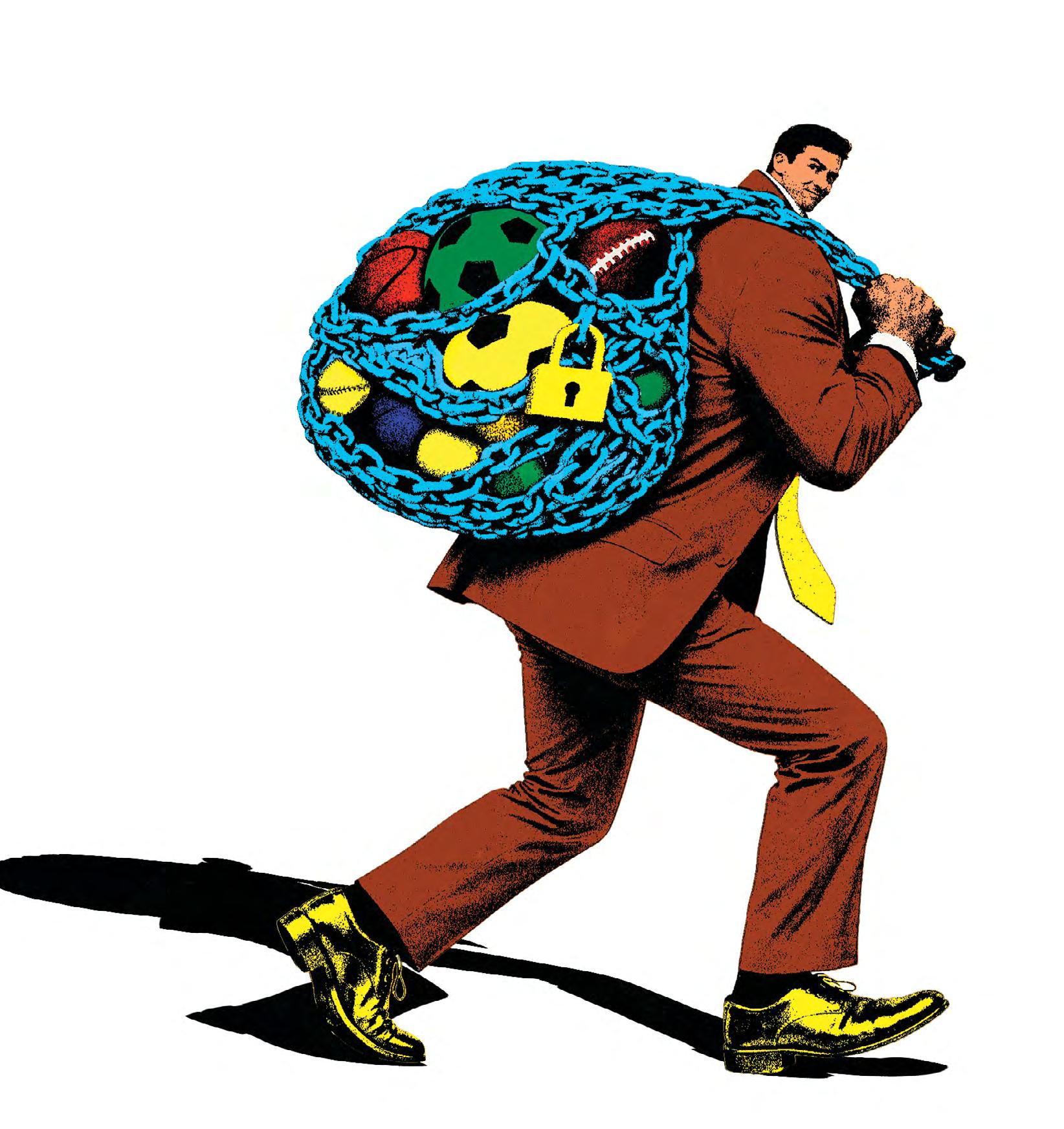
The business of sports looks a lot like the rest of our unequal, excessively fnancialized economy.
BY DAVID DAYEN AND ALEX JACQUEZ
Of the top 20 most-watched television broadcasts in American history, 19 of them are Super Bowls. Last year’s record-setting edition peaked at 135.7 million viewers, only 20 million less than the total number of votes in the 2024 presidential election. Even outside the big game, Americans watch 300 million hours of live sports or shows about sports per day; there are more national sports networks on cable than news networks. To many, sports are more than a pastime, they’re a religion: 21 percent of U.S. adults attend church once a week, but 56 percent watch a sporting event that regularly.
Sports may be the last thing we do together as Americans. It’s the one subject you can bring up at any bar in the country to spur engaged conversation, instead of blank stares or seething anger. We argue about sports without being argumentative; we hate each other’s teams without being hateful; we disagree about players and coaches while being able to point to scoreboards and statistics and common facts.
Sports connects across generations, geography, and cultures. In a society without much to call civic life, sports is what we have left. Why does it generate this kind of pull? Maybe because it encapsulates the ideals we all like to think America stands for.
There’s the spirit of competition, the idea that everyone has a shot when the game starts. We appreciate upsets and underdogs who triumph over long odds. We thrill to see hard work beat out talent that takes itself for granted. And there’s fairness. Player drafts and salary caps are structured to give bad teams and smaller markets a chance to improve and win. Rulebooks are teeming with procedures and regulations. Referees
and umpires watch over the games, and instant replay double-checks their work. Missed calls are remembered for years, and cheaters are branded and defamed; the !9!9 Chicago Black Sox are synonymous with game-# xing more than a century later.
On the #eld, on the court, on the ice, on the pitch, things still work this way. There’s a morality that hangs over sports, something that we, as fans, internalize. The stereotype is that sports fans are meatheads and philistines, but ask them to explain the in #eld $y rule or a lopsided trade and you’ll hear the precision of a scientist. Regardless of how we manage our lives, regardless of the cynicism with which we view the world, when watching sports we become fastidious sticklers for detail and believers in meritocracy.
Yet outside the lines, the business of sports has separated from what we love about the games. As our economy has been de#ned by soaring inequality, the rising cost of living, the suppression of workers, and the # nancialization of everything over the last half-century, those same extractive and exploitative practices have crept their way
onto the #eld of play. It wearies fans, stresses family budgets, shortchanges players, and generates a backlash reminiscent of politics rather than athletics. If America bounces back from this dark period of cronyism and oligarchy, it might actually start with our collective rage against the corruption of sports.
Here’s a case in point.
The state of Kansas, locked in an intense economic development war with neighboring Missouri for decades, just lured the N&L’s Kansas City Chiefs, one of the sport’s elite franchises and winners of three Super Bowls since ()(), across the border to a proposed domed stadium. For this privilege, the Sun $ower State will supply a record $!.8 billion in public funding, plus nearly $! billion in additional money for a mixed-use development that includes team headquarters, a practice facility, retail, housing, and o ce space. Add in the fact that the state will own the stadium, meaning the Chiefs won’t have to pay any property taxes, and Kansas will be devoting over $, billion to move the team (, miles for eight or nine regular-season games per year.
The Chiefs will be responsible for annual rent payments starting at $- million, but that money can be used to hire stadium staff, which the team would have to do anyway. Despite being a tenant, the Chiefs will retain all revenue from tickets, parking, concessions, stadium naming rights, in-stadium sponsorships, and “personal seat licenses,” where fans pay thousands of dollars for the mere right to buy season tickets down the road. Even if the stadium hosts a concert or something other than a football game, the Chiefs get the revenue.
Kansas hopes to recoup its investment through sales taxes within a loosely de#ned “stadium district.” What else does the state get, outside of the psychological bene#t of feeling like a world-class location for bigleague sports? Exactly one suite inside the stadium, though state o cials must pay for their own food.
The main bene#ciary of this deal is one of the wealthiest families in America. Lamar Hunt Sr., the late Chiefs owner whose four children now run the team, tried to corner the silver market with his brothers in the !9-) s, but he made his fortune the oldfashioned way: inheriting oil wealth from his dad H.L., the model for J.R. Ewing of Dallas fame. The family still runs Hunt Oil, and a di .erent Hunt scion founded a key logistics partner to Walmart. Lamar veered into sports, and in addition to the Chiefs, his heirs control a major league soccer team in Dallas and a minority stake in the N/0’s Chicago Bulls. Forbes estimated the family’s total wealth in ()(1 at $(1 8 billion.
It’s perhaps counterintuitive that the Hunt family will install about !),))) fewer seats in their new publicly funded palace than at Arrowhead Stadium, the Chiefs’ longtime home in Missouri. But this is part of a trend of decreasing seating for ordinary fans, and adding more luxury suites, skyboxes, and premium club seating that maximizes revenue. The floor plan of a stadium or arena mirrors America’s legacy of inequality, with the harvesters of great wealth locked away behind glass, and the rabble exposed to the elements and enduring escalating, dynamically priced tickets to watch their heroes.
Welcome to sports in the (!st century.
In 2003, author Michael Lewis pro# led the rise of data and analytics in baseball in his best-seller Moneyball . In a sport that had long relied on the hunches and superstitions of tobacco-chewing scouts, a new generation of young, whip-smart Ivy League grads used complex modeling and exploited market ine ciencies to revolutionize how
IF AMERICA BOUNCES BACK FROM THIS DARK
PERIOD OF CRONYISM AND OLIGARCHY, IT MIGHT START WITH OUR COLLECTIVE
RAGE AGAINST THE CORRUPTION OF SPORTS.
players were evaluated and teams were constructed. The revolution spread: The N/0 , 2L/, and the N&L have all been transformed by advanced analytics.
But the revolution didn’t stop on the #eld.
The same Big Data number crunchers and efficiency experts came for the business side of sports. McKinsey is now a strategic adviser to seven of the ten largest sports leagues in the world, and famously advised the Houston Astros during a run that included two World Series championships and a massive cheating scandal. Boston boasted a “Bain ma #a ,” with alumni steering the Patriots, Red Sox, and Celtics.
They brought with them the cutthroat practices and euphemistic terms honed over decades of gutting companies and fleecing consumers. Revenue management, not attendance or championships, became the hallmark of success for many franchises. Ticket prices have spiked out of control, with airline-style dynamic pricing becoming more of the norm. Team real estate holdings, gambling partnerships, and media licensing deals have become pro#t centers just as important as the product on the #eld.
Today, 20 percent of all billionaires own a controlling stake in a professional
sports franchise, according to a JPMorgan Chase survey. Sports have now become an asset class, where ownership stakes are traded like corporate bonds. A new rule instituted last December allows a single investment #rm to buy stakes in up to eight NBA teams. One private equity #rm, Arctos, owns a piece of the Washington Wizards, Memphis Grizzlies, Philadelphia 76ers, Utah Jazz, Sacramento Kings, and Golden State Warriors. Arctos has a share of teams in every major U.S. men’s league, and investments in Formula 1, nascar, the English Premier League, and more. And it’s about to get bought out by legendary U.S. private equity leviathan kkr.
This #nancialization isn’t limited to marquee sports. Forty-three percent of Minor League Baseball teams have private equity ownership investments, with 18 teams owned by a single # rm, Diamond Baseball Holdings. The big money pots from college sports media deals and newly paid players have attracted an assortment of moneyhungry # nanciers. And youth sports, a $1) billion per year business that in past generations was sustained by nonpro#t sponsorships from the corner hardware store, has become the latest private equity target.
Sports have always been a playground for the rich, but the local tycoons who owned the teams knew enough to make games broadly accessible to expand the fan base. You could listen on the radio or watch on TV for free; the get-in price of attending in person was reasonable. This bred a connection between fans, teams, and their cities, a civic pride that doesn’t show up in many other forms.
Today, the investor-driven mindset collides with the long-standing impulses in sports toward fairness and competition. And people are frustrated. Over 8) percent of Americans surveyed last year believed sporting events are too expensive for them to attend. Meanwhile, the men and women responsible for all the value—the players— struggle for their share of record pro # ts and enormous team valuations. Antitrust
lawsuits by players and their representatives have alleged unlawful market power in the last couple of years in mixed martial arts, N0SC0R , tennis, and even chess.
When some N&L owners openly encouraged one another, according to a secret arbitrator’s report, to reduce long-term contracts and limit guaranteed money, nobody was very surprised. That the N&L urged owners to do so, and that the players’ union assisted in covering it up, shows that this corporate belief system has infected all levels of sports, including its allegedly neutral arbiters.
The profiteering continues outside the stadium. One company called Fanatics describes itself as “the Amazon of sports,” controlling long-term licenses for most major league apparel and merchandise, along with collectibles, trading cards, and even a loyalty program. Fanatics is one of a handful of companies pro#ting from an enormous in $ux in live sports betting, which employs the tactics of surveillance inherent in most tech platforms to addict compulsive gamblers and drive them into ruin.
Even recreational activities are structured to bene#t corporate conglomerates. Two private equity #rms have driven up the cost of skiing, and investment #rms now dominate skateboarding. A company called The Picklr has rolled up practically all pickleball leagues and brands, while closing series B funding at a $69 million valuation.
If this sounds astonishingly similar to the state of American commerce and governance in the year ()(7, keep in mind that the current president once owned a football franchise.
This special issue will provide a tour of the business of sports. We’ll detail the ways average fans are being priced out of the arena, and how parents are struggling to give their kids the Little League experience they had growing up. We’ll look at how leagues have invited gambling apps to manipulate our willpower and take our money, and how this is threatening
the integrity of the game. We’ll examine how big money tempts players into rotten # nancial deals, and how college athletes # nally getting paid has triggered an outcry—from the people who used to reap all the cash.
We’ll study the role of unions in rebalancing the power structure between players and management. And we’ll take stock of the historical money pit associated with hosting international sports spectacles, and how the Trump administration’s brutal immigration enforcement might make that even worse.
It may seem a little odd to longtime readers to have an entire Prospect issue based on sports. But the truth is that sports have always been political, have always been bound up with who has power in America, and have almost always led and not followed our movements for progress.
In !9,7, Jesse Owens’s feats in Berlin put the lie to Hitler’s theories of Aryan superiority; America fought a war to prevent those beliefs from global domination. Jackie Robinson breaking the color barrier in Major League Baseball in !91- was just the most prominent of a number of similar milestones, from Kenny Washington and Woody Strode in the N&L a year earlier to the !977 Texas Western men’s basketball team, the #rst allBlack starting #ve to win the NC00 national championship. As civil rights channeled into Black power, an enduring image of the era is the raised #sts of John Carlos and Tommie Smith on the medal podium at the !978 Olympics in Mexico City.
Other icons enabled progress on the business side of sports, big and small. Marvin Miller’s Major League Baseball Players Association in !977 generated the firstever collective-bargaining agreement in pro sports, giving players long-sought leverage over their # nancial futures. In !9-8, a San Francisco Giants fan named Ron Gordon objected to the windfall pro#ts associated with a # ve-cent upcharge in the price of hot dogs and beer at Candlestick Park, and after a year-long crusade, he got the hot dog markup rescinded.
Across U.S. politics, we see anger at runaway wealth inequality, a soaring cost of living, and struggles to a .ord not just the bare necessities but a little leisure time in reserve. The public approves of unions at the highest level in decades and abhors corruption enabling the rich to get richer without accountability. The moment is ripe for overturning the political and economic establishment, dismantling corporate consolidation, and rebalancing power in America. These causes are rooted in the ideals of fairness and competition that are endemic to playing sports. It’s only natural that fans, players, and people around the game would want the same principles to apply to the business side.
“The public has done a lot to support these leagues,” said Rep. Chris Deluzio (D-:0), a Pittsburgh-area congressman and sports fan who is working on legislation around the financialization of sports. “There’s a lot of civic pride and we want the teams to do well. But the other side of the bargain, they have to treat people fairly, so everyone can be able to enjoy something that’s part of the city and our lives.”
Fans understand the business of sports in ways that do not apply to other industries. They can tell when they’re being screwed, when the ownership class is exploiting their love of the game for profit. Their anger, channeled correctly, can be a vehicle for change. And as our last remaining monoculture, these #ghts around sports can give life to issues that may otherwise recede into the background.
In these pages, you will recognize the same patterns that have infected modern capitalism and the same solutions that can bring them to heel. If the business of sports re$ects how America works today and who it works for, the common fans who make sports so valuable really can signal a way out of our political mess. n
Alex Jacquez is the chief of policy and advocacy at Groundwork Collaborative.
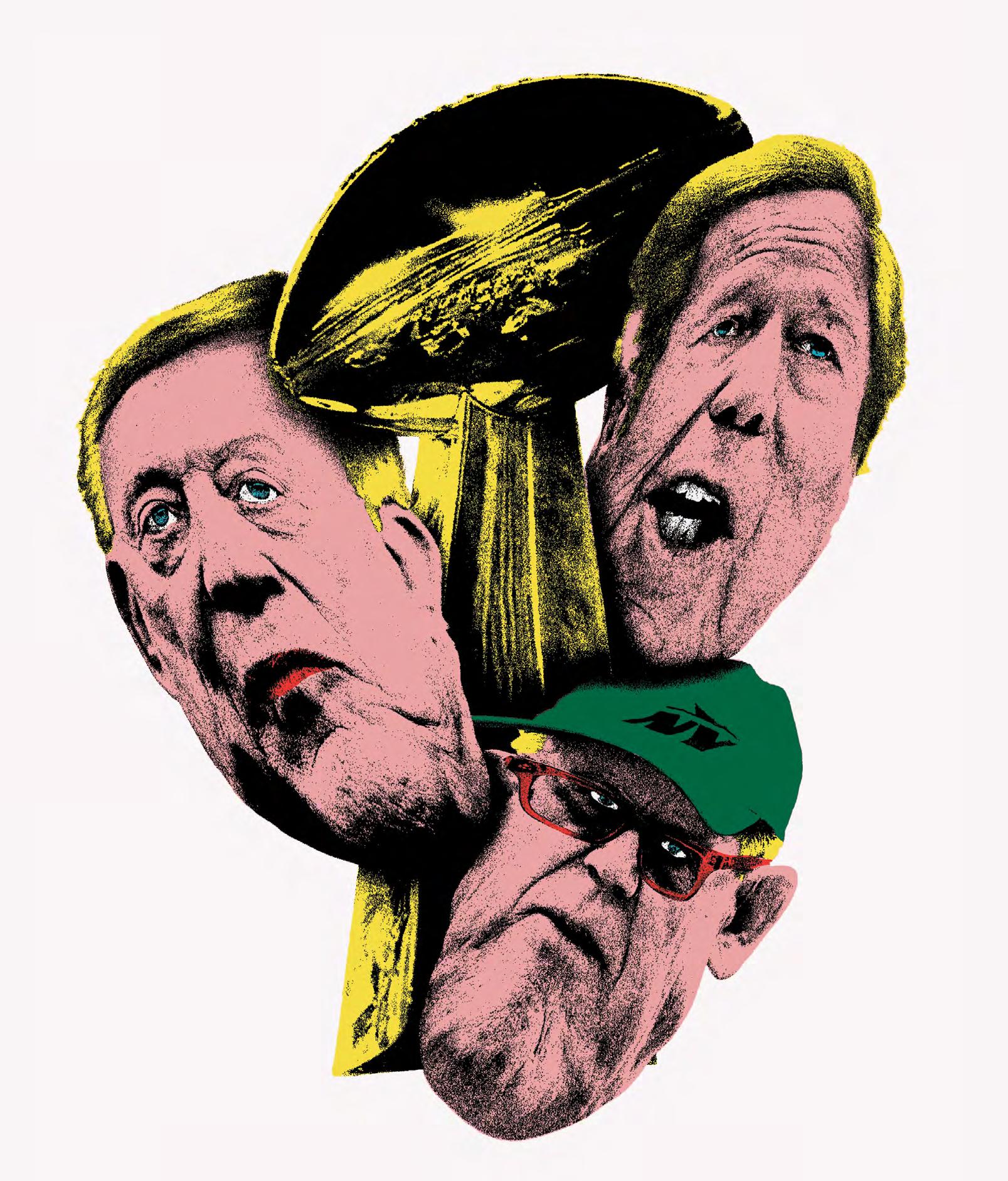
The Permanent Overclass
The NFL’s billionaire owners literally can’t lose when it comes to making money. On the feld? That’s another matter.
BY ROD GER SHERMAN
Football taught me rich people could be stupid.
Even as a kid, I’d seen plenty of movies and TV shows where rich people were greedy, cruel, vain, and unlikable. But stupid ? Obviously, rich people are smart! Otherwise, how did they become rich?
But as any N&L fan knows, some franchises are just always bad. Superstars wilt when traded to these teams; top draft picks fail to live up to their billing. No coach can # x their problems. And when you look under the microscope at these teams, to understand why they never win or get their act together, there’s often a common answer: a billionaire, convinced of his own brilliance, swerving the team into a ditch over and over again.
Trust me. I am a fan of the New York Jets.
The Jets are owned by Woody Johnson, the fourth-generation heir to the Johnson & Johnson pharmaceutical fortune, and Donald Trump’s appointee as ambassador to the United Kingdom in his # rst term due to his staunch # nancial support of Trump’s
()!7 candidacy. (Johnson’s ambassadorship went about as well as the average Jets season.) Fourteen of the ,( N&L teams make the playo. s every year—1, percent of the league—but the Jets have not made it since ()!), even after changing coaches, general managers, and quarterbacks constantly.
In a survey of players conducted by the N&L Players Association, the Jets received an “F” grade for ownership; Johnson responded by calling the surveys “bogus” and hinted they violated the league’s collective-bargaining agreement. Despite having no football background, Johnson has repeatedly inserted himself into team a .airs. In ()(1 , The Athletic reported that Johnson tried to in $uence team personnel decisions based on what his college-aged son, Brick, told him about various players’ ratings in the Madden video game series. (Yes, his son is named “Brick.”)
N&L owners are the closest thing we have in America to medieval kings and queens. This is true on a super #cial level—they sit on thrones up in the luxury boxes and watch
the armies they fund march against each other on a #eld of battle, wearing coats of arms on their chests and helmets—but also on a functional one.
As with kings and queens, N&L owners commission massive public works projects as monuments to themselves. Cowboys owner Jerry Jones—also the team’s general manager, who controversially decided to trade away the team’s best player the week before the season started—considers his crowning achievement to be the monumental stadium popularly known as Jerry World. Besides its size and looming scoreboard, the building’s most famous feature is the way the sun shines through its massive west-facing windows in the afternoon during the months when the Cowboys play games, causing Cowboys players to drop passes in the glare despite playing indoors. It remains unclear whether this was intentional or a billion-dollar oversight; Jones claims it is not a problem because “the world knows where the sun is—you get to know that almost a year in advance.”
As with kings and queens, you just kinda have to sit there while a rambling 8,-yearold makes questionable decisions and says things like the world knows where the sun is going to be almost a year in advance.
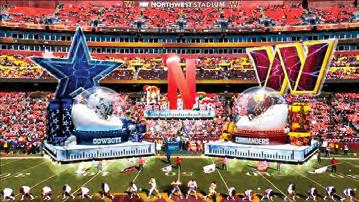
As with kings and queens, N&L owners can force local governments to pay them tribute. Just ask taxpayers in Kansas, who are going to fork over billions to build a new stadium for the Chiefs in what’s being called the most lopsided deal in the history of public stadium funding. The previous most lopsided deal in the history of public stadium funding was just a few months earlier, when the Washington Commanders also got billions of dollars for a new stadium in the nation’s capital. Both the Chiefs’ and Commanders’ fantastically rich owners have enough wealth to build their own palaces, but that hardly matters; only three stadiums in the entire ,(-team league were fully funded by private sources, without some kind of government subsidy.
And while our modern political leaders can be removed by elections—gulp, # ngers crossed!—N&L ownership is hereditary, as with kings and queens, often leading to Shakespearean squabbles over inheritance. In the last decade, we’ve seen ugly, public family feuds after the death of Broncos owner Pat Bowlen (who failed to indicate which of his seven children would get controlling ownership) and during the # nal
years of Saints owner Tom Benson, who cut out his daughter and grandchildren in favor of his third wife, Gayle, leading to his daughter alleging he was mentally incapacitated at the time. There were also sibling disputes among the Chargers and Titans.
Perhaps the most interesting season of NFL Succession came out of Bu .alo. Many thought that Bills ownership would pass from Terry Pegula to his daughter Jessica— one of the top ten women’s tennis players in the world, not only a rare independently successful child of an N&L owner, but surely one who can understand what it takes to be an elite athlete, and therefore a strong candidate to run a team—but after Jessica wrote an article publicly revealing that her mother Kim had suffered brain damage after a ()(( heart attack, she was seemingly cut out of the succession plan. Terry # red Jessica’s husband from an executive position within the Bills organization, and handed equity to her half-sister, Laura, a daughter from Terry’s previous marriage.
This October, after the Jets got o. to an ) - - start, Johnson admitted that he was “obviously not a good owner in terms of winning.” But while “winning” feels somewhat essential in football, it doesn’t always make a huge di .erence for N&L owners. After all, they’ve already won.
Imagine that a local, beloved, awardwinning restaurant in your neighborhood has just been sold to a new owner. Almost instantly, the quality of the food craters dramatically. It’s far worse than it was under the old owners, but also worse than the food at all the local restaurants nearby, even the sketchy place up the street that’s never open and that you think is a Ma # a front. The price of the food skyrockets, and the owner starts charging for stu . that should be free, like tap water and condiments. The owner stops maintaining the restaurant—there’s paint falling from every wall, one time a booth collapses and sends customers tumbling through a wall into the kitchen, there’s an incident where an unknown liquid shoots out of a burst pipe and the restaurant stays open and keeps serving customers. The guy seems to be a straight-up fraudster, and he gets accused of holding onto tips that he was supposed to distribute to his employees. And he’s just an unpleasant guy to be around, as he constantly whines about his restaurant’s bad reviews. And worst of all, the restaurant’s waitresses say they get
sexually harassed regularly by the owner and other employees.
Now imagine that when the guy # nally sells the place, despite years of mismanagement, he’s actually able to # nd a buyer. And for some reason, the buyer pays the highest price anybody has ever paid for any restaurant in the history of the world
The story you just read is the story of the Washington Commanders. When Dan Snyder bought the team for $8)) million in !999, they were one of the most successful franchises in the league, with three Super Bowl wins in the !98) s and early !99) s. Under Snyder, the team had the # fth-worst record in the league, and he was famously cheap and crass. During his tenure, he was investigated by Congress for deceptive business practices and for fostering a culture of sexual harassment. (And I wasn’t just making up random examples—there was an incident where a railing collapsed and sent fans tumbling onto players, and another where possibly sewage squirted onto fans.)
And yet Snyder still was able to sell the team for a $7 billion fee in ()(,. (Yes, six billion dollars.)
Compare that to the franchise fee the N&L charged Tim Mara, a New York bookie and boxing promoter, for the right to found the New York Giants in !9(6: $6)). (Yes, !ve hundred dollars. If you adjust for in $ation, it’s about nine grand, which despite appearances, is less than six billion.)
Early N&L owners were not the wealthiest Americans of their day, but hustlers. The founder of the Steelers, Art Rooney, was not one of Pittsburgh’s many coal or steel barons, but the son of a saloon owner who credited most of his early wealth to a big weekend at the racetrack fueled by a hot tip from Mara—although a ()(( Pittsburgh PostGazette report suggests Rooney’s luck at the track may have been a cover-up for money he made o. various less-than-legal rackets. They needed their teams to win to survive, and were often deeply involved in the actual football product. Bears owner George Halas was also a player and the team’s longtime coach, in part because he didn’t want to pay someone else to do the job.
Most importantly: A hundred years ago, there was actual risk to owning an N&L team. The $edgling league was a regional enterprise scattered in midsized factory towns across the Midwest, like Muncie, Dayton, and Akron. You may notice the N&L
NFL OWNERS ARE THE CLOSEST THING WE HAVE IN AMERICA TO MEDIEVAL
KINGS AND QUEENS.
does not currently have teams in Muncie, Dayton, and Akron. (The only team like this that held on through the decades: the ownerless Green Bay Packers.) Fourteen franchises played in the # rst N&L season in !9(); by !9,), ten of them had folded. Many of the franchises that replaced those folded franchises also folded.
Those risks no longer exist. No N&L franchise has folded since !96(. It’s virtually impossible to imagine any team going bankrupt, or even losing money for a single season. (The Packers, the lone team required to report their annual # nances due to their nonprofit status, did post a pandemic-related operating loss in ()(), but it was the # rst time that had happened in decades; they reported a record $8) million operating gain in ()(1 .)
And the descendants of the hardscrabble hustlers whose teams survived the N&L’s early years are now billionaires. Almost exactly !)) years after Mara bought the team for $6)), in October ()(6, his grandchildren sold a minority stake in the team at a valuation of $!) billion. That’s a (,))),))),))) percent return on investment. Did I leave out a zero? Check my math.
The NFL in 2026 is an unstoppable cultural juggernaut. Football is not just the most popular sport in America—that competition essentially ended when Michael Jordan retired—it’s the nation’s most popular entertainment product, bar none. N/C’s Sunday Night Football broadcast overtook American Idol as the most popular weekly TV series in ()!! and hasn’t looked back. In ()(,, N&L games accounted for 9, of the top !)) most-watched telecasts in America. Last year, that number went down to 81 of the top !)), but only because the expanded playo.s for college football, the N&L’s de facto minor leagues, accounted for another eight.
As a result, the N&L has become an unstoppable # nancial juggernaut. Under the new broadcast deal that started in ()(,, the league makes $!) billion every year in TV deals alone, before any fan buys a ticket, jersey, or hot dog. All in all, the league makes about $(, billion a year, almost triple what the league was making just !6 years ago, and as much as the revenue of the two next-highest-grossing American pro sports leagues, 2L/ and the N/0 , combined
Thus the value of N&L ownership has skyrocketed. The Carolina Panthers were the most expensive franchise of all time
when David Tepper, the founder of a global hedge fund that made its fortune buying distressed stocks during the financial crisis , purchased it for $( . (8 billion in ()!8. That record was broken when the Walton family—yes, that Walton family, the Walmart Walton family—purchased the Broncos for $1 76 billion in ()(( That record was broken when Josh Harris, cofounder of the private equity # rm Apollo Global Management, which a ()(1 lawsuit accused of literally betting on whether senior citizens would die by acquiring life insurance policies on strangers, purchased the Commanders from Snyder for $7 billion in ()(, . CN/C now lists the average value of an N&L franchise at $-.76 billion, which means that the next sale will probably rebreak the record.
This has fundamentally changed who N&L owners are. The great-grandchildren of the original N&L owners may be billionaires, but most of their wealth is tied up in their teams. And their mere billions are pocket change compared to the newer class of N&L owners, who have bought into a behemoth. The people who can a .ord to buy teams in the (!st century are not just rich, but the richest people in America.
The Walton family purchased the Broncos in ()((; the team’s principal owner, Rob Walton, has a net worth approximately #ve times larger than the second-richest owner’s net worth. (Rams owner Stan Kroenke, who purchased his franchise in ()!), is also related to the Waltons by marriage; he’s believed to be the fourth-richest N&L owner.)
There’s a cliquish clash of old money vs. new money in the league. Ken Belson of The New York Times reports that you can literally ID these divides by who sits next to who at league ownership meetings: Almost !)) years on from that fateful horse-racing tip, the Rooneys and the Maras still like to sit together. (Yes, the actress Rooney Mara is a member of both of these families, the great-granddaughter of the two team founders. No, she doesn’t show up to ownership meetings, yet.) While the newer, richer group of owners “are often focused more on maximizing their investments,” Belson writes, the older guard “view their job as that of a trustee.”
You’d think this would represent an existential threat for the mere billionaires, their relatively modest yachts staring down a looming tidal wave of wealth. But the N&L is built to make it hard to convert cash
Masters of Their Domain
Some of the lords and ladies who own our NFL franchises
Rob Walton, Denver Broncos
net worth :
$118 billion
• Eldest son of Walmart co-founder Sam Walton
• Purchased the Broncos for a then-record $4.65 billion in 2022
• Wealthiest owner in the NFL, with a net worth approximately five times that of his nearest competitor
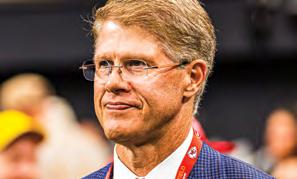
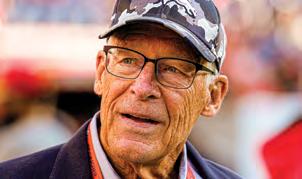
Hunt family, Kansas City Chiefs
net worth ( family ):
$24.8 billion
• Family scion and oilman
H.L. Hunt was the model for J.R. Ewing on Dallas
• Grandson Clark Hunt (pictured) is the CEO of the team
• Late owner Lamar Hunt tried to corner the silver market with his brothers in the 1970s
• In December 2025, received over $3 billion in funding and tax benefits to move the Chiefs
23 miles into a new domed stadium in Kansas
into wins. The league has a strict salary cap, and while owners are free to invest as much as they want on other accessories—the most expensive coaches, nicer practice facilities, etc.—the richest owners can’t simply outspend their opponents, as they can in baseball or European soccer. (In the N/0 , the league’s richest owner, Microsoft founder Steve Ballmer, was recently caught in an embarrassing salary cap circumvention scheme to try to funnel money to his team’s superstars through bogus endorsement deals.)
The league-mandated fairness of the N&L is its secret sauce. The league is not skyrocketing in value and maintaining a chokehold on TV ratings by sheer chance. It is a phenomenally entertaining product, in large part because of rules that prioritize parity and exciting, competitive play. I just spent !8 hours in three days watching the six
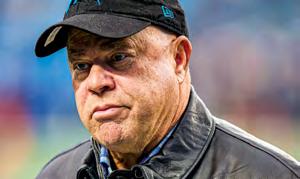
David Tepper, Carolina Panthers net worth :
$23.7 billion
• Founder of hedge fund Appaloosa Management, which made its fortune buying distressed stocks during the financial crisis
• Reportedly once bought his former boss’s mansion just to tear it down
• Panthers have not had a winning season since he bought the team in 2018
• Fined in 2023 for throwing a drink at a fan from his luxury box
games in the #rst round of the N&L’s playo.s; approximately !- of those hours were wildly entertaining, with #ve games decided in the closing minutes. (It is at this point, (,6)) words into this article bashing the N&L’s owners, that I must admit: The N&L is, overall, an extremely well-run league, in part because many of its owners are doing a good job.)
This can be a real shocker to billionaires used to an uneven playing #eld.
In 2018, hedge fund manager David Tepper bought the Carolina Panthers, becoming the richest owner in the league at the time. (He’s been passed, majorly, by the Waltons.) Tepper is, by all accounts, an investing genius. A quote in a glowing ()!) New York magazine pro# le described Tepper as a “golden god” of investing; he is routinely ranked by Institutional Investor on their annual “Rich List” of the highest-
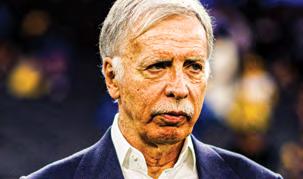
Stan Kroenke, L.A. Rams
net worth : $21.3 billion
• Real estate tycoon who owns teams in six major sports leagues, including the Denver Nuggets (NBA), Colorado Avalanche (NHL), and Arsenal FC (English Premier League)
• Married to Ann Walton, daughter of Walmart co-founder Bud Walton
• Purchased the Rams in 2010
earning hedge fund managers. Tepper has gotten used to using his billions to satisfy his whims; he reportedly once bought his former boss’s mansion just to tear it down, and told New York that “sometimes, if someone is an asshole, like a waiter at a restaurant, I think, I could just buy this place and # re that guy.”
But building a successful N&L team is harder than getting vengeance on a waiter. Tepper has been very hands-on in Panthers management, with exclusively poor results. The team hasn’t had a winning season since he bought the team in ()!8, and has the thirdworst record in the league since his purchase. (Last place, of course: Woody Johnson’s Jets.) Twice, Tepper has hired a coach only to #re them within two seasons. Tepper is believed to be the driving force behind a disastrous trade to take quarterback Bryce Young with the #rst pick in the ()(, draft.
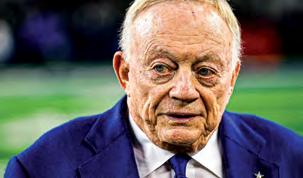
Jerry Jones, Dallas Cowboys
net worth :
$19.6 billion
• Made his fortune primarily through oil and gas investments
• Built AT&T Stadium (known as Jerry World), which has massive west-facing windows that cause light to shine into players’ eyes during the months when the Cowboys play
• Jones has claimed this is not a problem because “we know where the sun is going to be almost a year in advance”
• Also the team’s general manager; traded top star Micah Parsons one week before the start of the 2025 season
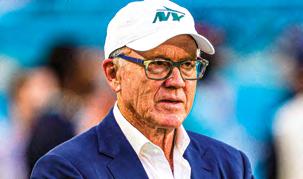
Woody Johnson, New York Jets
net worth ( family ): $16 billion
• Fourth-generation heir to the Johnson & Johnson pharmaceutical fortune
• Ambassador to the United Kingdom, 2017–2021, during Donald Trump’s first term
• Has repeatedly inserted himself into team affairs; the Jets have not made the playoffs since 2010
• Reportedly tried to influence team personnel decisions based on what his college-aged son, Brick, told him about various players’ ratings in the Madden video game series
Tepper’s temper keeps getting the better of him. In ()(,, he was # ned for throwing a drink at a fan from his luxury box; in ()(1 , he stopped into a local restaurant to confront employees about a sign on a marquee making fun of his meddling. It’s “really nice we have an owner who wants to win,” the bar’s owner told The Charlotte Observer. “This is me expressing frustration because, believe it or not, I actually lose more of my income when the Panthers lose than he does.”
An astute observation. Tepper literally doesn’t lose money when the Panthers lose. The runaway # nancial success of the N&L makes it virtually impossible for ownership to lose money. No matter how poorly an owner behaves, or how poorly their team performs, they can’t come close to derailing the machine that gets all the owners paid. But even if Tepper did lose money when
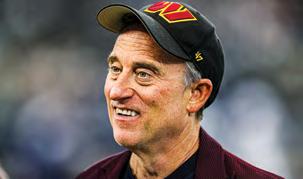
Josh Harris, Washington Commanders
net worth :
$11 billion
• Co-founder of the private equity firm Apollo Global Management, which a 2024 lawsuit accused of betting on whether senior citizens would die by acquiring life insurance policies on strangers
• His new private equity firm 26North has more than $30 billion in assets under management
• In 2025, received $1 billion from the District of Columbia for a new stadium in the city of Washington
• Also owns the Philadelphia 76ers (NBA) and the New Jersey Devils (NHL)
the Panthers lose, it would be a drop in the bucket to the new, mega-rich owners like Tepper. In a recent interview with The New York Times, Tepper compared the tens of millions in pro#t he makes every year from the Panthers to “a T-bill type investment, like Treasuries.” That’s billionaire-speak for “boring chump change.” Tepper and other billionaires like him get into N&L ownership not for the money, but because it o.ers them an opportunity to prove their brilliance at a larger scale, achieving a level of fame and notoriety you simply can’t get from being a C;O or hedge fund manager. They don’t always get what they want. Our society inoculates the wealthy from failure. Their wealth can sway elections and bend the justice system in their favor. But they can’t guarantee their quarterback will pan out or their o.ensive line will dominate the line of scrimmage.
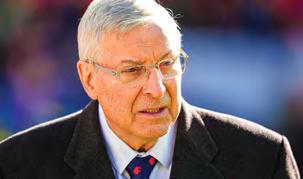
Terry Pegula, Buffalo Bills
net worth : $9.3 billion
• Amassed his fortune through oil and gas fracking
• Sold 10 percent stake in the team to Arctos Partners LP, a private equity firm
• Was initially expected to pass ownership to his daughter Jessica, a top-ten international women’s tennis player
• A er Jessica revealed that her mother suffered brain damage, Terry cut her out of the succession plan and gave equity to her half-sister Laura
Net worth statistics courtesy Forbes’s Real-Time Billionaires List
It’s got to be jarring. The billionaires who own N&L teams have gone through life winning in any number of “serious endeavors”—# nance, technology, energy—only to #nd themselves $ummoxed by something as trivial as football. A game! Guys throwing a ball and hitting each other! But when they have to go head-to-head in a fair competition against others like them, they don’t always win.
It’s a little depressing that our beloved teams are but the playthings of unquali#ed billionaires. But then again, what in our American lives is not dependent on the whims of unquali #ed billionaires? At least with football, we can boo them. n
Rodger Sherman is an independent sportswriter who has covered multiple Super Bowls and zero Jets playo games. He writes Sports!, a newsletter about sports.
Not in Their League
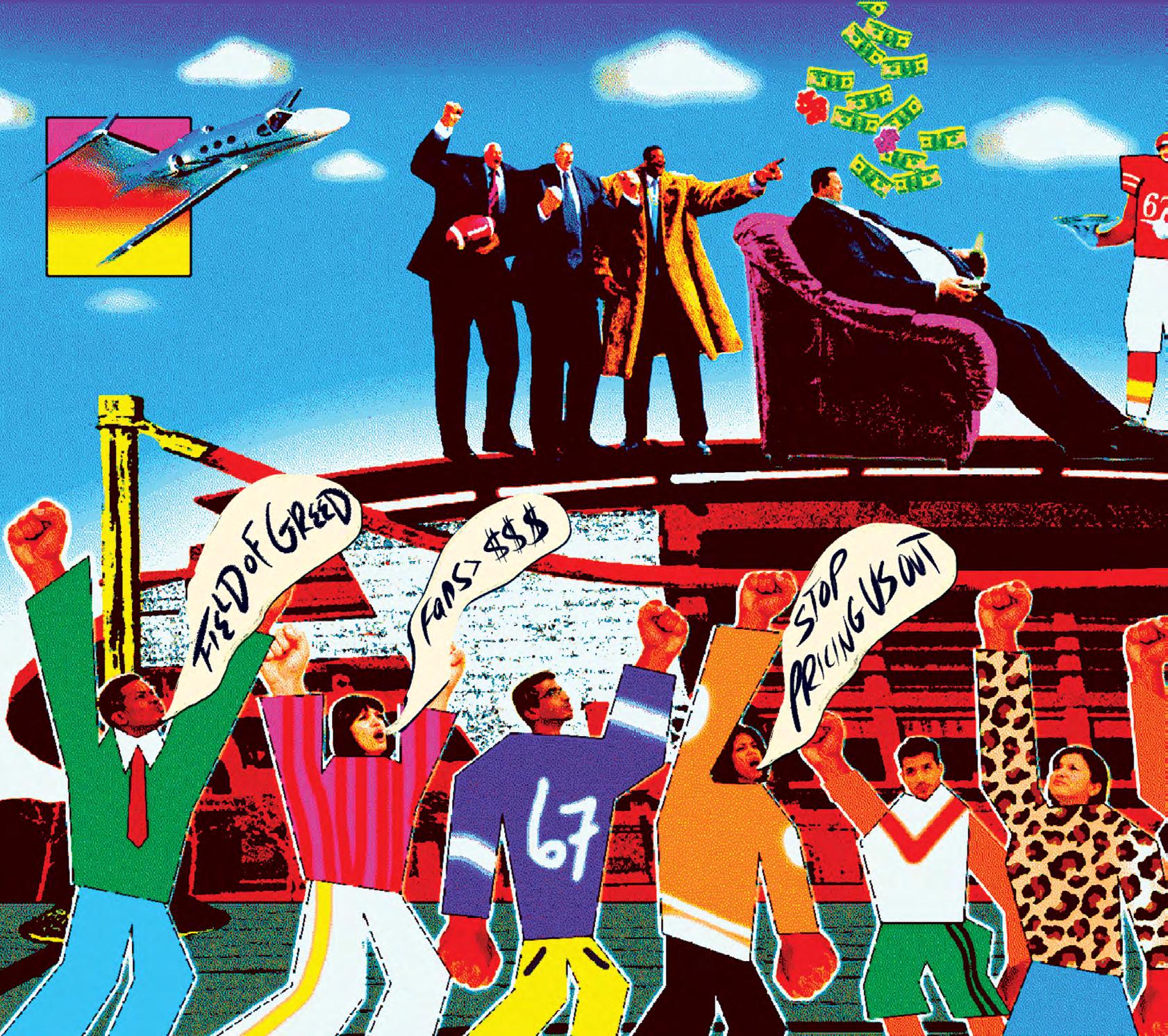
Why it’s harder to be a sports fan
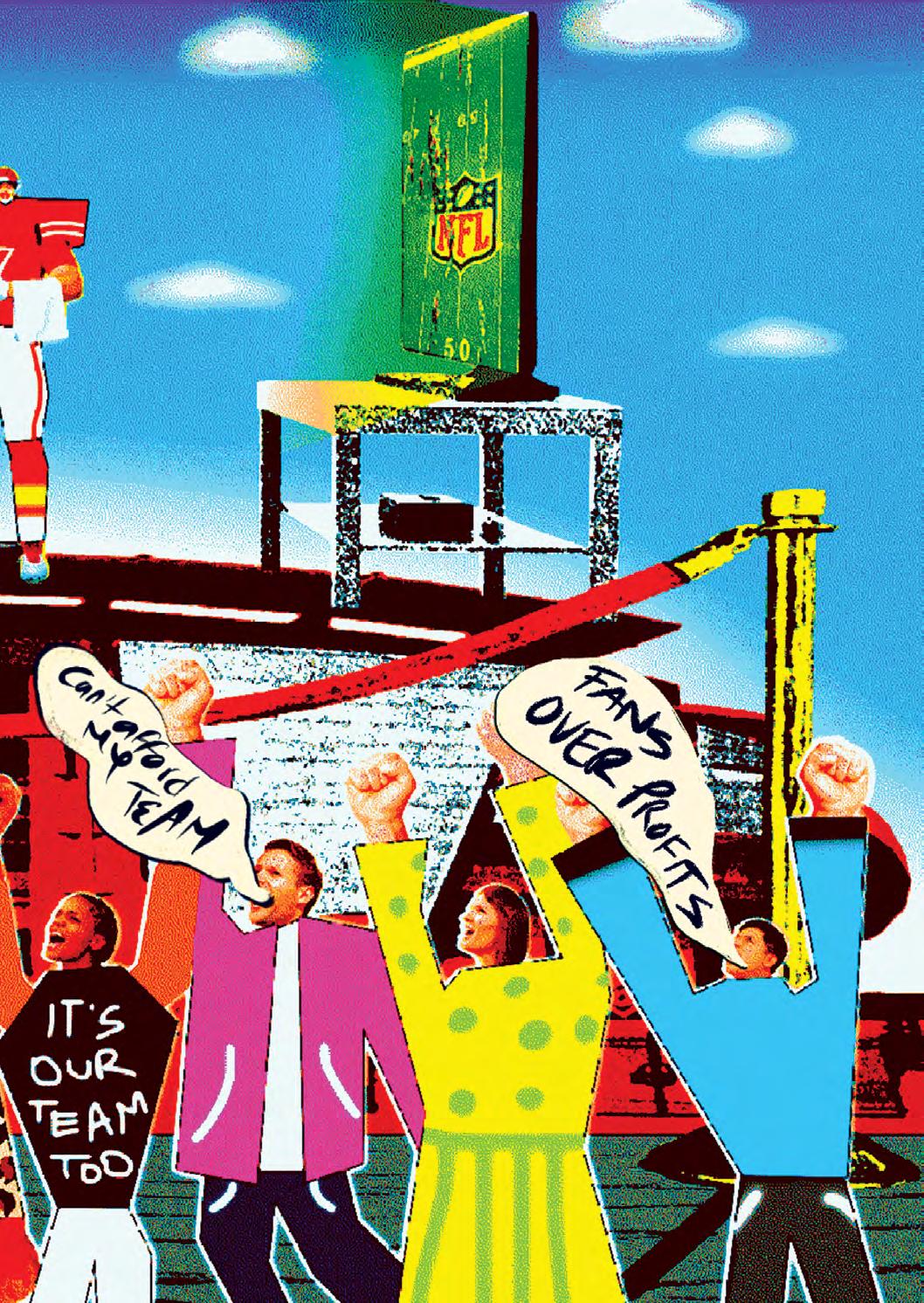
BY DAVID DAYEN
My dad grew up in Philadelphia, and by law is an Eagles fan. In !97), when he was !, years old, a friend from junior high o.ered him a ticket to the N&L Championship Game at Franklin Field on the day after Christmas. It was a box seat in the upper deck on the 6) -yard line, right next to one owned by Grace Kelly’s family. They were the best seats in the house.
In front of 7-,,(6 cheering fans, Chuck Bednarik played every snap, Norm Van Brocklin threw for ()1 yards and a touchdown, and the Eagles beat the Green Bay Packers !- -!, , handing Vince Lombardi the only playoff loss of his career. My dad thought this would be his whole life: touchdowns, victory parades, consistent excellence.
The next time the Eagles won it all, it was ()!8, and he was -). After the game, I called him; it was one of the # rst times I ever heard him cry.
Shortly after that triumph in Super Bowl LII, my dad was at his synagogue, and he met a fellow congregant named Lenny. They were about the same age and grew up near one another. Because this was Philly, the talk turned quickly to the Eagles. Lenny was a season ticket holder for decades; the team even honored him on the #eld once.
His only regret, he said, was not attending the !97) Championship Game. Back then, a friend of Lenny’s used to give him an extra ticket for Eagles games, but they gave away the championship ticket to someone else. My dad asked Lenny where those seats were; he said they were right on the 6) -yard line. Upper deck? Yes. Next to the Kellys? Yes.
My dad laughed. “Lenny, I had your fucking ticket!” They’re now good friends.
What strikes me about this story is that almost nothing about it could happen today. The family with the box seats on the 6) -yard line owned a big scrap metal dealer in the city. With all due respect to scrap metal dealers, that’s not who gets the best seats in the house for football today.
In !97), an N&L Championship Game
ticket ran you $8; adjusted for in $ ation, that’s about $8- 7). Last year, the cheapest seat for the Super Bowl—also won by the Eagles (yes, I inherited the fandom from my dad)—was $,,))). What about the best seats, the luxury skyboxes that weren’t around in !97)? Suite prices at last year’s Super Bowl topped out at $!,96),)))
The N&L championship hasn’t been played in Philadelphia since !97); Super Bowls are held in either warm-weather sites or domed stadiums. (MetLife Stadium in New Jersey hosted once; the teams missed a snowstorm by one day.) The scrap metal magnate and his family would have to travel to Miami or New Orleans or Los Angeles; they couldn’t o.er a spare ticket to a neighborhood kid to watch the home team.
These days, my dad roots for the Eagles from his sectional couch, with top-end sound and hi-def camera angles. That’s an improvement over !97), when television blackout rules were in e .ect and local Eagles fans without a ticket had to drive -6 miles out of town to watch the game. But today’s fans endure an endless parade of commercials that turn the game into a chore. And while the privilege of blowing half a day on a football game remains technically free, the sports people love have been segregated onto numerous streaming channels that can cumulatively cost thousands of dollars a year.
In some ways, it’s never been a better time to be a sports fan. You can wake up on Saturday where I live in Los Angeles and binge on college football from 9:)) in the morning until late into the night. Though I’m over (,()) miles from Ann Arbor, all the games of my alma mater Michigan Wolverines are televised nationally. And I can go online for vast volumes of high-quality statistical analysis, insider information, and even trash talk with fellow fans on social media. I can build large quantities of my life around sports and never lack for action. This grows fan interest, deepens emotional attachment, and helps make sports an unsurpassed phenomenon.
But leagues and owners have learned how to exploit this obsession to maximize pro#ts. They assume rabid fans will su .er the inconveniences, the stratospheric prices, all the slings and arrows, motivated by the eternal hope that their team will end the season on top, and the desire to be there when it happens. And they know that in our grossly unequal society, money can be no object for some. As a result, stadiums and
arenas have become gated communities, with the ultra-wealthy waved inside, and those who can’t a .ord it peeking through the fence hole on TV. They’re # nding ways to charge you for that, too.
As fans continue to be monetized, one question emerges: Will they ever say enough is enough? Will a new generation miss out on the experiences my dad had, the stu . that made him a lifelong sports fan, and drift to other pursuits?
“There is a risk that there will be a generational crisis when the kids on their phones all the time will not be acculturated to inperson participation,” said Paul Campos, a law professor at the University of Colorado and author of A Fan’s Life: The Agony of Victory and the Thrill of Defeat . “There’s nothing natural about being a hardcore sports fan—it’s a learned, self-destructive behavior. If you don’t have the right cultural conditions, it dies.”
The Labor Department began tracking sporting event ticket prices in !999. By ()(), they had more than doubled in cost , while overall in $ation rose roughly 6( percent in that period. After ()(), leagues took advantage of the yearning for community and camaraderie coming out of the pandemic. “There certainly is that sense, a lot of YOLO [you only live once] going on,” said Victor Matheson, who teaches sports economics at the College of the Holy Cross. “People said, ‘The next time I have a chance to see a sporting event I’m going to do it.’”
From October ()(( to October ()(, , sports tickets jumped (6 percent , and continued to rise through March ()(6 before moderating. The average N&L ticket is over $,)); for the most expensive stadium, Lincoln Financial Field in Philadelphia, it’s over $6)). The Los Angeles Dodgers set the cheapest World Series seat last year at nearly $9))
Sports owners are uniquely positioned to exploit post-pandemic longing for community. The biggest N&L stadiums have between -6,))) and 8),))) seats; for indoor sports, it’s around (),))). But that number is falling in real terms. New stadiums contain more premium seating to maximize pro#t per square foot. (Teams often share gate receipts with the league but not luxury box revenue, making the latter much more attractive.) That minimizes total fans through the gates. Matheson told me that there were fewer Major League Baseball
LEAGUES AND OWNERS HAVE LEARNED HOW TO EXPLOIT FAN OBSESSION TO MAXIMIZE PROFITS.
tickets for sale last year than in !991 . With flat or falling supply and rising demand as the population grows, prices will increase. But teams only need to capture a tiny sliver of a community to pack the house, and the wealthiest Americans do much of the spending anyway. That incentivizes price increases well above supply and demand. It may stun the blue-collar fan to learn that their favorite activity is now a luxury good, but that’s the new reality. Owners won’t hear much carping in their social circles; the average net worth of an N/0 franchise owner is $!( billion.
The holy grail is extracting the maximum of what every fan is willing to pay. Variable pricing started in ())9 with the 2L/’s San Francisco Giants, which charged more for games with better opponents or pitching matchups. The rapid shift to online ticketing, which shielded customers from knowing what others paid and delivered real-time demand information, led to widespread adoption.
Dynamic pricing should in theory work both ways, allowing cheaper seats to be sold when demand is low. But teams often close o. upper decks and keep seats unsold to
prevent fans from waiting out lower prices, using scarcity to their advantage. Ticket prices are usually a one-way ratchet.
Owners justify variable pricing by pointing to scalpers and resellers, reasoning that teams should bene#t from a real-time auction instead of StubHub. “The people who do want to keep it for the real fans were #nding out they were selling for $7) and fans were paying $,)) -$1)) anyway,” Matheson noted. “So it’s either me getting $1)) or some bot farm in Russia.” Yet that’s not so clean. Resale site SeatGeek is the “o cial marketplace ” of Major League Baseball, and the New York Yankees have a decadeold partnership with StubHub. Having a hand in both # rst-sale and resale markets maximizes opportunities to raise prices.
The season ticket holder, the sports world’s version of an addict, bears a whole new set of costs. Personal seat licenses (:SLs) give a ticket holder the right to buy a seat, not the seat itself. Prices range across the N&L from $-6) to $6),))). There’s even a :SL resale marketplace :SLs in the lower ring at the San Francisco 19ers’ stadium in Santa Clara can go as high as $16),))) for a ?I: seat. Every new N&L stadium built in the last
two decades has o.set stadium construction costs with :SL s. The idea is that hardcore fans who use the stadium pay to get it built. But invariably, city and state governments also absorb some of the costs, putting ordinary taxpayers with no interest in the games on the hook, too. :SL s just reduce the team’s burden, relieving them from reinvesting pro#ts or borrowing from banks.
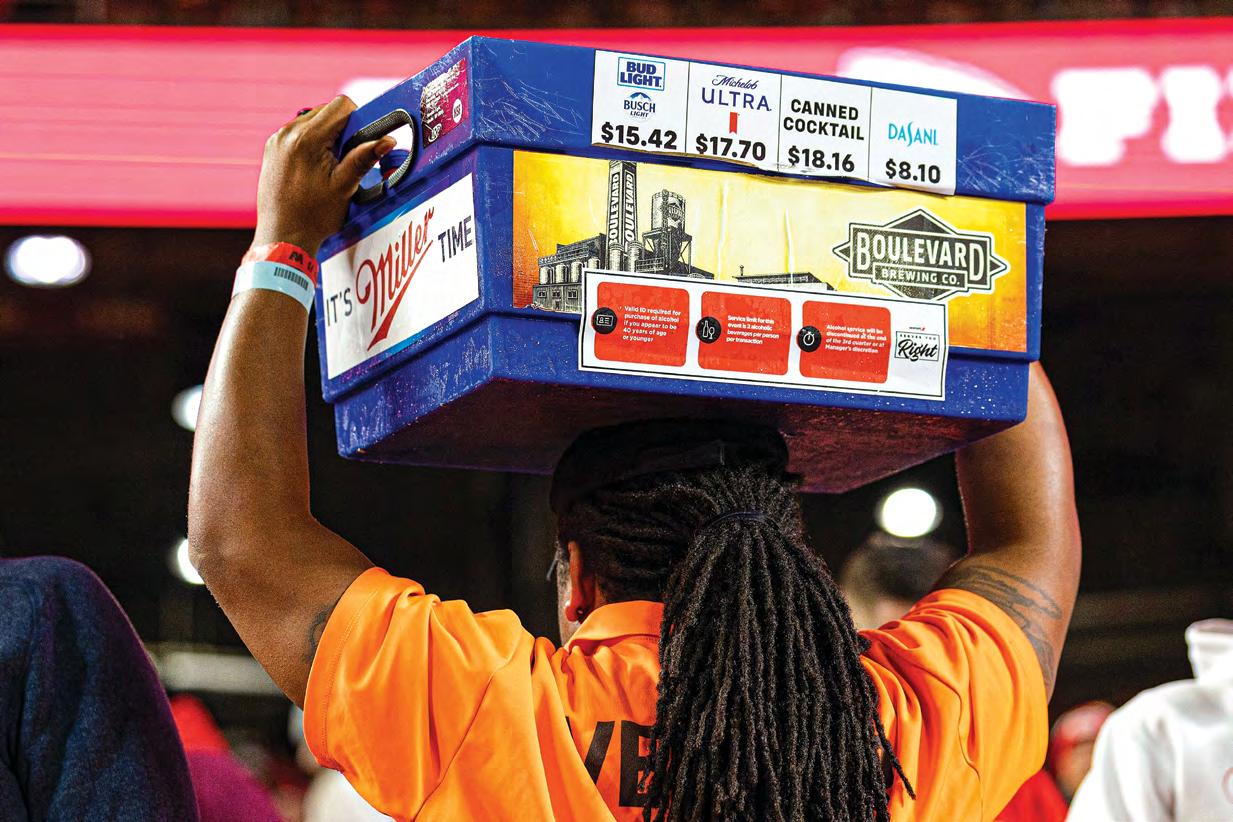
Once fans enter the stadium, the squeeze continues. With no alternatives for food and beverages and souvenirs, the cost of concessions are rising faster than in $ation. Two hot dogs, two drinks, and one piece of memorabilia will set you back $9( 9! at the Las Vegas Raiders’ Allegiant Stadium. At a Washington Nationals game, a “cheap” beer is $!1 .99; some N&L sites charge $!8.6) for a !7-ounce cold one.
As Groundwork Collaborative noted in a paper last March, publicly funded stadiums were supposed to serve a civic purpose, not exist as walled-o. playgrounds for the powerful. That logic no longer applies, and fans are essentially trapped. “In many cases, there’s only one team in your city,” said Brian Shearer, director of competition and regulatory policy at the Vanderbilt Policy
With no alternatives for food and beverages, the cost of concessions at stadiums is rising faster than inflation.
Accelerator, who wrote a separate report on captive pricing at stadiums and other venues last November. “There’s only one Ticketmaster, only one team, and once you get into the stadium only one vendor. It’s cumulative rent-seeking that happens at every step.”
Ticket and concession sales are not the primary pro#t center for sports. Most major leagues garner at least half their revenue from television contracts; for the N&L , it’s nearly two-thirds. In the late !9-)s, the N/0 Finals were on tape delay, and college football limited telecasts to a handful of games. Now, virtually everything is broadcast somewhere, every night of the week . Even as middle-class families are priced out of live attendance, leagues use TV to grow their sports. In both ()(, and ()(6, 97 of the !)) most-watched broadcasts of the year were sporting events.
But below the surface, the cratering economics of television is making watching sports confusing, enervating, and yes, expensive.
Cable television has been dying for years. The Oscars are moving to YouTube.
Streaming is rapidly becoming the primary television platform, and it’s not lost on streaming executives that they need sports to reel in viewers and advertising, which for last year’s Super Bowl cost $8 million for a ,) -second spot .
Spending on sports broadcast rights has risen !(( percent over the past decade. Streamers are bidding them up so astronomically that leagues can’t say no, even if they cut o. some of their audience. “Anytime a new bidder comes into the market they always overpay,” said Doug Creutz, a television industry analyst with TD Cowen. “They lose money on the # rst contract but put themselves on the map as a destination.”
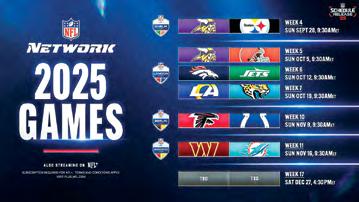
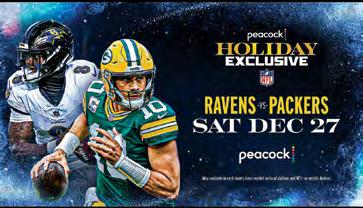
Amazon Prime has Thursday night N&L and the N/0. Apple TV carries Major League Soccer and Formula ! racing. Apple’s baseball package is moving to Peacock , which also airs college and pro basketball, college and pro football, the WN/0 , many Olympic events, and more. (An N&L playo . game that aired exclusively on Peacock in ()(1 generated controversy, but also the largest live streaming audience ever.) Net $ ix has Christmas Day football games, and this year will broadcast 2L/ Opening Day games and the All-Star Game Home Run Derby. Last year, the # rst-ever N&L broadcast on YouTube drew !-., million viewers globally. If you want N&L Sunday Ticket to see every game, you need YouTube TV; N/0 League Pass is now on Amazon
N&L games are now spread across !! different networks, and varying estimates put the annual cost for access between $-6) and $9)). If you want to see games for all four major sports, New York Times commentator Joon Lee estimated that at $(,7,1 a year. And that’s a moving target, because streamers keep raising prices.
Most sports fans don’t enjoy tracking which streaming apps bought which contracts when they want to catch the game. But league executives demonstrably don’t care. When N/0 commissioner Adam Silver was asked about its record $-7 billion media contract that hived o. many games onto Amazon and Peacock, he responded that basketball is “a highlight-based sport,” so fans could always go to TikTok or Instagram to # nd the best plays for free. The implication was clear: The rich get a courtside seat, everyone else gets a highlight reel.
For local fans, regional sports networks (RSNs) aired individual teams’ hockey, baseball, and basketball games, increasing fan
access. But RSNs are distributed through cable, where cord-cutting has thinned out the audience and plummeted ad rates. The economics don’t work anymore. Diamond Sports Group, a division of Sinclair Broadcasting that acquired (! RSNs from Fox in ()!9, declared bankruptcy four years later It rebranded as Main Street Sports, but continues to miss payments and lose cable carriage. All nine 2L/ teams a liated with Main Street terminated their contracts in January. If a last-ditch sale to a British streaming company called D0AN doesn’t materialize, Main Street will likely shut down, leaving dozens of teams without a local broadcast partner.
Some teams, like the NBL’s Arizona Coyotes and N/0’s Phoenix Suns, are returning to free, over-the-air television, replicating the old model of using TV to grow the fan base. But others see pro#t-making opportunities in the RSN implosion by building direct-to-consumer streaming apps. Dallasarea teams use VictoryC; Texas Rangers fans must pay $!)) a year for access. AltitudeC costs $() a month for Denver Nuggets fans. The Y;S app, for New York Yankees, Brooklyn Nets, and New York Liberty games, is $(1 99 a month; Boston sports on N;SN ,7) is $(9 99 a month
Sports bundles like the Hulu C Live TV
NFL games now appear on 11 di$erent networks and streaming channels; access can cost up to $900 a year.
streaming service, a skinny sports bundle from YouTube TV, and a long-rumored sports tie-up between ;S:N and Fox promise a one-stop shop. But none of them o.er what fans already had: access to every available game, in one place, for one price. “I said a while ago that the way forward for media companies was to make the product worse and charge more for it,” Creutz joked. “That’s what happened.”
A related problem is that TV contracts drive everything in sports these days. Campos, who grew up in Michigan, recalled seeing the famous college football !) -!) tie between Michigan and Ohio State in !9-,. The game lasted two hours and () minutes. The average college game now is around three and a half hours. “If you go to Michigan Stadium in November, it’s just oppressive, sitting in the stands with those TV timeouts,” Campos said. “We the longsu .ering in-person fans have to be morti#ed so the plutocrats can make the money machine go brr.”
College football keeps the clock running when players go out of bounds, reducing game action while commercial breaks lengthen. This year’s &I&0 World Cup will add two three-minute “hydration” breaks during halves, building commercials into matches that never had them before. Com-


mercials were inserted into N&L RedZone, a service that whisked viewers around the league for nonstop action, even though it was literally marketed on the promise of “seven hours of commercial-free football.”
Television dictates when teams play as well. To accommodate prime-time doubleheaders, N/0 playoff games sometimes start as late as !):16 p.m. on the East Coast. Michigan State played a conference football game last year at DSC in Los Angeles that started at !! p.m. Eastern time. That’s an artifact of television-driven realignment, which blew up the Pac-!( and put Stanford and Cal Berkeley into the Atlantic Coast Conference. (To clarify, they reside on the Paci#c Coast.) This has upended traditional rivalries and turned unfamiliar matchups into conference games. TV demands also lead to punishing N/0 schedules with numerous back-to-back games, which have been blamed for a signi#cant uptick in injuries . Long seasons provide networks and streamers with more inventory but punish players and exhaust fans.
“Why are we doing this?” Campos said. “It’s Cory Doctorow’s concept of enshitti #cation applied to everything.”
Alarm at higher prices, changing TV schedules, and leagues at odds with their own fans has ascended to the level of politics. “I think it’s harder to be a fan,” said Rep. Chris Deluzio (D-:0). “It’s a major luxury for families, it prices people out. Then add to that games used to be broadcast locally and now you have to piece together streaming subscriptions. So I think it’s a real problem.” Deluzio is getting to work, co-sponsoring legislation that would require an &EC study of captive pricing at stadiums.
Politicians seizing on fan discontent can reach less-engaged voters and apply the lessons of sports exploitation to other topics. The dynamics of corporate capture are all there: Wealthy and well-connected owners get antitrust exemptions for their leagues and taxpayer money to build show palaces for their teams, yet still prioritize the almighty dollar over the public.
After a carriage dispute blacked out regional sports network 2SF in upstate New York and Connecticut, Rep. Pat Ryan of upstate New York and Sen. Chris Murphy of Connecticut introduced the Stop Sports Blackouts Act, requiring customer refunds when fans don’t get the sports they’re paying for. “I think this is an important window
into the broader lens of what’s happening in our economy in America,” Ryan told The Bulwark in November. “We have straightup vertical integration and monopolies in almost all these parts of people’s lives. The service keeps getting shittier, the costs keep going up … and fans in this case or just Americans have no voice and no leverage.”
One of the biggest political interventions into fan unrest involves this summer’s World Cup soccer tournament, to be held in North America. &I&0 , the international governing body, is using dynamic pricing for tickets on its own digital platform, with prices for some seats soaring tens of thousands of dollars above previous tournaments, uncapped resales rising even higher, and no set-asides for local fans. (See sidebar on page ().) &I&0 even earned millions from “right to buy” tokens, a form of a personal seat licenses, before tickets went on sale.
Fans were stunned at the display of greed, especially Europeans who have become accustomed to a .ordable prices to watch soccer. But &I&0 surmised that enough high rollers wouldn’t want to miss the quadrennial spectacle of the world’s most popular sport. That is, until Zohran Mamdani started talking about it.
“Are any working-class New Yorkers actually going to be able to watch the matches?” the New York City mayor asked in a viral video. He made three demands in a petition: end dynamic pricing, restore the cap on resale prices, and set aside !6 percent of all tickets for locals at a discount. He pressed the case on podcasts , noting that the last World Cup in the U.S. o.ered tickets that, adjusted for in $ ation, cost under $()). He decried the billionaire# rst, fans-last mindset.
&I&0 was forced into responding, and capped a small number of “entry tier” tickets for each game at $7), while waiving administrative fees. But the entry tier represents less than ( percent of total tickets on sale, as Mamdani pointed out . It doesn’t seem like the end of the #ght. “The working people of New York City should get to participate in the life of New York City and all the things that make New York a world-class destination,” said Julie Su, former acting U.S. labor secretary and Mamdani’s deputy mayor for economic justice.
What policy options can protect fans? Britain has fully capped reselling tickets above face value, something even Trump supporter Kid Rock has endorsed . Last
ALARM AT HIGHER PRICES, CHANGING TV SCHEDULES, AND LEAGUES AT ODDS WITH THEIR OWN FANS HAS ASCENDED
TO THE LEVEL OF POLITICS.
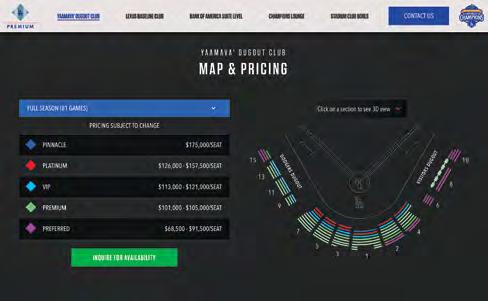
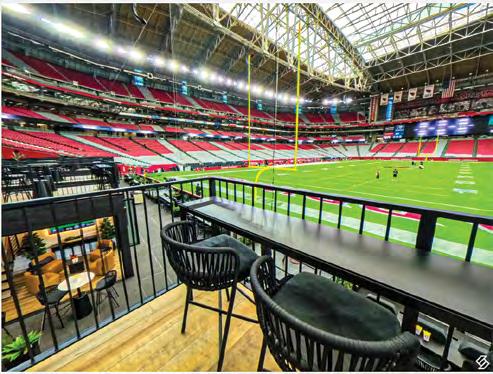
Total seats at stadiums have fallen as more space is taken up by luxury and premium experiences.
June, Maine passed a resale cap limiting price markups to !) percent. If widely adopted, it would make scalping uneconomical and eliminate the excuse teams use to raise ticket prices. “We have a law on the books now,” said Kevin Erickson of the Future of Music Coalition, who has been working on ticketing issues. “I would expect a number of states to introduce price cap bills in ()(7.”
Groundwork has recommended using “street pricing” at all publicly funded arenas, lowering concession prices to what you would pay if you were not a captive audience. Mayor Mamdani has another option in New York: a city law against “unconscionable” business practices that could be applied to stadium pricing.
Teams can be decent to fans without sacri #cing pro#tability. The Atlanta Falcons decided on “Fan First ” concession pricing when it moved into Mercedes-Benz Stadium in ()!-, with hot dogs at $(, a !(-ounce draft beer at $6, and free soda re# lls. The a .ordable options led to an increase in fan spending that year—getting people in the building for cheap eats led to more merchandise sales—as well as high ratings for game day experience. Prices have stayed low ever since, even for major events like the Super Bowl, and other teams have followed the Falcons’ lead. This success recapitulates a basic principle of business that has somehow gotten lost over the years: Delivering good service at an a .ordable price keeps people coming back.
Red Card
World Cup ticket prices are not fair play.
BY NIA LAW AND LINDSAY OWENS
I went to the Rose Bowl Game on New Year’s Day ()(1 , thrust together with Michigan fans I either barely knew or had never met. By the end of the game, we were hugging, high-fiving, and vibing off the energy of a big win. An acquaintance sold me the tickets at face value—about $,6). Lots of Americans would have to swallow hard to manage that. When we price out sports, we lose one of life’s emotional currents, a shared piece of community that used to bridge social and economic divides.
It’s possible that leagues will continue abusing fans. They may continue splitting them into tiers, with the rich afforded the full experience and the rest juggling streaming apps. They may take for granted
As the World Cup takes up temporary residence in American cities this summer, &I&0 has embraced a familiar opportunity: permission to price-gouge. Ticket prices for soccer’s premier tournament have in some cases topped $ 8) , ))) . &I&0 insists its hands are tied, blaming domestic market conditions.
In the United States, those conditions have a name: Live Nation and its subsidiary Ticketmaster, which controls ticketing for roughly 8) percent of the country’s most popular arenas. In the absence of meaningful competition, Ticketmaster uses dynamic pricing and junk fees to ratchet up event prices. In the secondary market, # rms like StubHub and SeatGeek rely on similar tactics. With price-gougers holding a death grip on the market, the vast majority of music artists and sports teams have little choice but to participate in an extractive pricing system.
As the arbiter of its own primary and secondary ticketing marketplace, &I&0 could make
tickets a .ordable if it wanted to. It could reserve seats for loyal supporters. In fact, it has done both before. Instead, &I&0 has chosen to cash in on the market failures endemic to American ticketing, weaponizing scarcity and monopoly control to squeeze every penny from fans chasing a once-in-alifetime experience.
World Cup history makes clear that this was a choice. For the ()(7 tournament, &I&0 has in$ated base ticket prices, introduced its own form of dynamic pricing, and taken a substantial cut of resale transactions. Ticket prices are the highest on record in every category. From ())7 to ()((, the best available tickets to World Cup openers cost between $7)) and $-(6 (adjusted for in $ation). Now they are selling for triple that amount: $( , !-) in Toronto, $( , ,66 in Mexico City, and a whopping $(,-,6 in Los Angeles.
Past World Cups reserved the cheapest tickets for local fans, sometimes for as little as $!! This year, that set-aside was
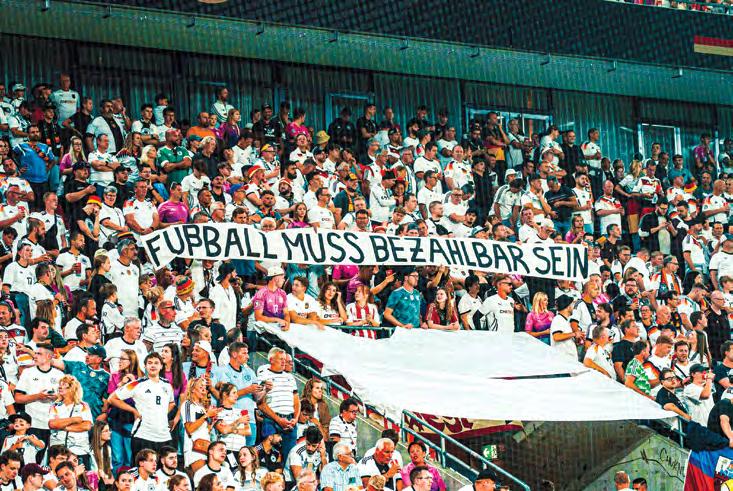
German fans hold a banner saying “Football must be a$ordable” during the UEFA European Qualifiers in September 2025.
that supporters will always stand loyally behind the team.
But they should read up on history.
“If we were having this conversation !)) years ago, you would ask, ‘What are the big three sports in the U.S.?’” said Matheson. “And I would say boxing, horse racing, and baseball.” Horse racing fell o. once new and varied ways to gamble proliferated. But boxing su .ered a largely self-in $ icted wound, Matheson explained. It was the #rst sport to truly embrace pay-per-view (::?) television for its biggest #ghts, either on services like B/O or through closed-circuit events, where fans paid $6) or more to watch.
Even the biggest ::? matches didn’t draw more than 1 .7 million buys, a pro#table sum but not enough to penetrate the national
consciousness. Over time, boxing drifted from free TV because the championships were segregated. Today, the only #ghts you hear about are publicity stunts with rightwing in $uencers. “Without anyone watching, general interest is lost,” said Matheson. “No one’s a boxing fan anymore.”
Other sports may not believe they can drop o. people’s radar screens. “The lords of capital think it’s part of the laws of thermodynamics that !)),))) people show up for Michigan–Ohio State, but it’s not,” said Campos. “Short-term considerations can end up trumping the long-term enterprise.”
Another way of putting the question is: If sports fandom is all about loyalty to a team, what happens when the team isn’t loyal to its fans?
There are some indications of leagues understanding this. Baseball’s greatest innovation of the past few decades is the pitch clock, reducing the downtime in game play. This shortened games by (6 to ,) minutes without taking away any actual action. Television ratings and attendance went way up. The fans were being listened to, and they responded.
Even boxing’s main successor has started to rethink the logic of fan exploitation. The Ultimate Fighting Championship will stop running matches on pay-per-view this year. But the news isn’t all positive: Instead, mixed martial arts will run on ParamountC. The streaming network costs $!, a month, or $8 if you don’t mind ads. n
abandoned. The “most a .ordable” tickets now cost at least three times more than at the last World Cup and were so scant that they sold out before general sales opened. Only after immense public pressure did &I&0 agree to o.er a small number of tickets—just !.7 percent of the total—at $7)
Sky-high prices don’t end at the turnstile. Add soaring hotel rates, rising airfare, and &I&0’s own parking fees, which can run as high as $!-6 per car, per game. &I&0 has chosen to make this World Cup the least accessible in modern history.
&I&0 justifies its pricing regime by pointing to unprecedented demand, claiming that higher prices channel revenue back into the sport rather than to scalpers. But resale abuse is not inevitable. In co-host country Mexico, where resale regulation is stringent and government pressure forced the issue, &I&0 agreed to cap resale prices at face value. In the United States and Canada, it chose not to. As resale prices climb
into the tens of thousands, &I&0 pro#ts handsomely, extracting a !6 percent fee from both buyer and seller.
Demand for this year’s matches has shattered records, surpassing !6) million ticket requests in its most recent sales window. The stadiums will be full, but attendance will skew toward wealth rather than devotion, locking many pas -
sionate supporters outside the stadium gates. This outcome is especially galling as many U.S. host cities use millions of taxpayer dollars to make this tournament possible—even as the very people footing the bill are priced out of attendance. Some will argue that truly devoted fans will find a way to pay. But at a moment when more than two-thirds of voters
say essentials are becoming less affordable and nearly half are drawing down savings just to get by, attending the World Cup is simply out of reach. In Los Angeles, the cheapest tickets to the opener would cost the average local family the equivalent of nearly seven months of 0C0 premiums. For a fan traveling to L.A. from neighboring Nevada, the combined price of parking and the cheapest ticket to a quarter #nal would rival the rent of a studio apartment back home.
By segmenting fans by wealth, a tournament historically de#ned by its unifying power is becoming yet another gated corner of our K-shaped economy. The irony is hard to miss: In chasing maximum revenue, &I&0 risks shrinking the very audience that made the World Cup seemingly priceless. n
Nia Law is a special assistant and research associate at Groundwork Collaborative. Lindsay Owens is the executive director of Groundwork Collaborative.
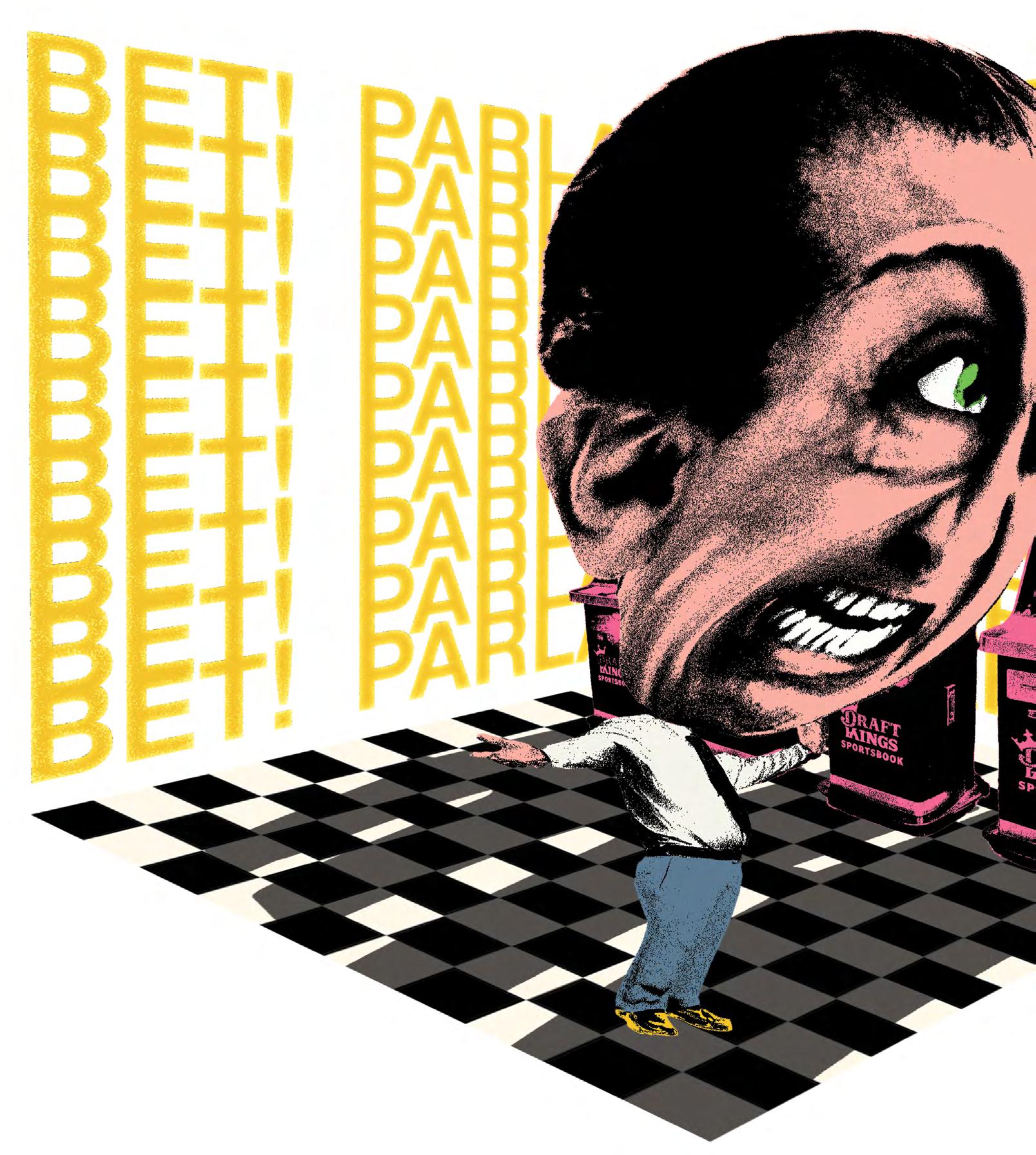
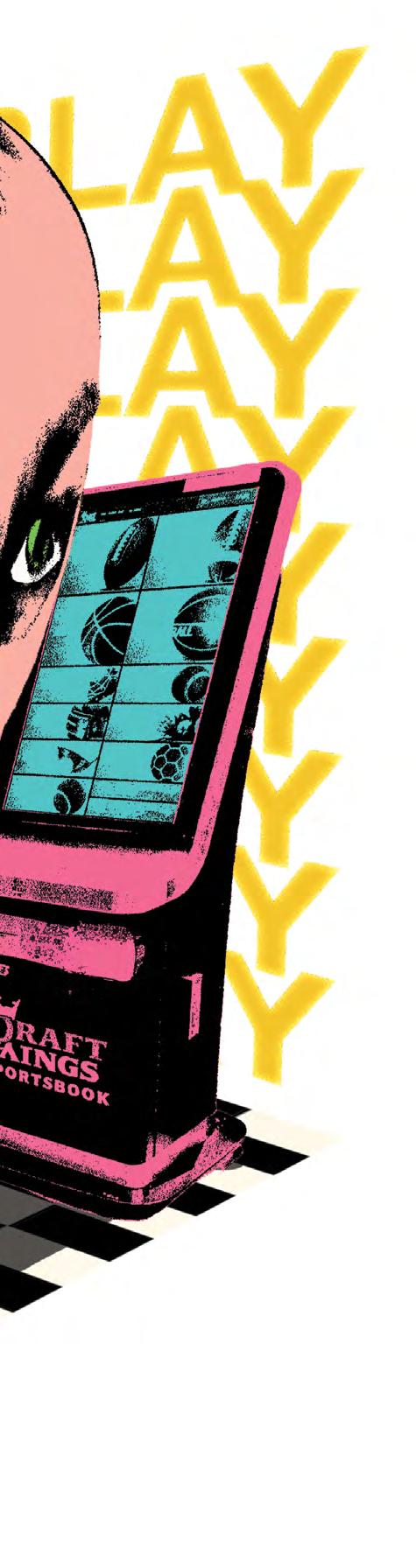
The Scourge of Online Sports Betting
States and leagues must face up to the damage from app-based gambling for the next generation of bettors, most of them young men.
BY G ABRIELLE G URLEY
WASHINGTON – The room checks all the dive-bar boxes: cheap beer and cocktails, big-screen TVs, high-top tables, and one scuzzy restroom. The rain-splattered Liberty Bowl, with Navy battering Cincinnati, is on ;S:N and turned up loud, while the rest of the muted screens feature competing teams of sharp-dressed sportscasters.
There’s nothing worth Instagramming here. The low lighting doesn’t set a mood, but it does help you read the large sports boards near the betting windows across from the bar. The multiple screens list the day’s N&L and N/0 matchups, along with the spreads, the money lines, the over/unders. If this vibe isn’t working, you can head to the self-service betting kiosks next door.
Mostly solo Black and white men of all ages perch at the bar or one of the high-tops, mostly staring and swiping on their phones. One older Asian man studies what could be betting sheets, with a receipt and his phone splayed around him on his table. A Black middle-aged couple arrives, and the man and woman spread out papers and phones.
Caesars Sportsbook at Capital One Arena is an unremarkable destination in Washington, D.C.’s Chinatown. The venue opened several years ago, proclaiming the arrival of
the #rst “state-of-the-art Vegas-style” sportsbook located in a professional U.S. sports operation. It’s one of the area revitalization projects that Ted Leonsis of Monumental Sports & Entertainment launched after he failed to move his teams, the N/0’s Wizards and NBL’s Capitals, to Virginia.
Going downtown to bet on games might seem redundant; even the Caesars Sportsbook website urges bettors to “get the app.” But a report from the Center for Gambling Studies at Rutgers University’s School of Social Work found that sports bettors who frequent “mixed venues,” in both online and physical locales, have higher rates of developing problem gambling. Yet even in this physical space, the gamblers are online, glued to the bets they’re making.
Smartphones have been the catalyst for an explosion of sports gambling, providing always-open portals to separate people from their money. Two companies, FanDuel and DraftKings, control over -) percent of this online market, using sophisticated surveillance and marketing techniques to keep people betting, even when losing eats up money for groceries, utilities, rent, or the mortgage. A small but statistically signi #cant number of bettors generate the pro#ts
that online sportsbooks haul in.
The Supreme Court unleashed this craze in ()!8, ruling in Murphy v. National Collegiate Athletic Association that federal prohibitions against states legalizing sports betting were unconstitutional. Eight years later, 1) states and the District of Columbia have allowed some type of online gambling. The Bureau of Labor Statistics has reported that gambling was the second-highest service-sector industry for FD: growth between ()!9 and ()(1 , behind only software publishing.
According to the American Psychiatric Association, nearly 1) percent of men and () percent of women gamble online daily. Two percent of those bettors gamble more than ten hours a day. Sports bettors have wagered over $7)) billion since ()!8. The National Council on Problem Gambling notes that about (.6 million Americans “meet the criteria” for a severe problem; #ve to eight million more have mild to moderate issues.
As the country’s a .ordability crisis deepens, individuals and entire families can slide into cycles of addiction and debt. Bank of America warned in a November research note that gambling is creating “emerging credit risks” across the economy; an April paper from DCL0 and DSC found that credit scores in states that have adopted online sports betting are down, and bankruptcy rates and auto loan delinquencies are up. Eight U.S. studies found that ! in 6 problem gamblers have tried to commit suicide, the highest rate for any addiction disorder.
Most bettors are men. They’ve gotten younger and younger as sports betting companies gami #ed gambling. Pokémon, the trading card and video game megafranchise, co-opted slot machine and casino imagery in the !99)s, and technology companies latched on, eager to bring in young gamblers to replace the old heads. Public schools see problems with boys, and sports betting stokes some school o cials’ fears of it becoming as ubiquitous as cellphones and as poisonous as social media.
State politicians have largely looked the other way: The attractive tax revenues from the relative handful of bettors reduce the need for broad-based taxes. Conveniently ignored are the profound contradictions between safeguarding the public welfare and the mental health and # nancial problems gambling can exacerbate. “It’s a system of taxation by exploitation, and it’s been an epic public-policy failure,” says Les Bernal,
the national director of Stop Predatory Gambling, a national advocacy group.
Professional sports executives don’t help, wringing their collective hands about the “integrity of the game” while sportsbook ads wallpaper stadiums and arenas, promotions blast during games, and teams seek out television partnerships. These deals end up serving as a dirty-hands backdrop to the inevitable scandals involving players and coaches betting on, it seems, every moment of the game. Many league o cials and state lawmakers refuse to accept that this festering integrity crisis cloaks a spreading publichealth emergency. But a reckoning is coming.
In the United States, sports betting peaks in the fall, when portions of the baseball, football, hockey, and basketball seasons all dovetail. Many fans still watch sports for love of the game, but the love of money is now a major factor, making the # ner points of home-team runners on base with one out in the bottom of the ninth inning of a tie game more interesting for people who usually wouldn’t care.
Online sports bettors are subject to state regulations on college and pro games . Prop bets are wagers on individual or team performances that don’t depend on the game’s outcome. As they watch live games, gamblers can also bet on nearly every aspect of the match. These micro bets aim for a slot machine–like experience, hinging on things like the next home run, pitch, or stolen base. Parlays link multiple wagers together; combining micro bets give the allure of a big win, but rarely pay out.
Bettors can tackle lesser-known or bizarre sports: water polo chessboxing, axe throwing, even pickleball, e-basketball (video game competitions), or table tennis. The last two are too much for Vermont state Rep. Thomas Stevens (D-Waterbury). “It’s frightening that this is available on a phone,” he says.
Stevens has proposed a bill that would end Vermont’s online sports betting, legalized in ()(1 , and the state lottery, launched in !9-8. Three sportsbooks operate in Vermont: DraftKings, FanDuel, and Fanatics. State lawmakers wanted to keep gambling revenues at home, especially since residents tended to drive to casinos to bet (or even parking lots for online gambling) in Canada, New York, New Hampshire, or Massachusetts. “I was hoping to be able to limit the exposure, knowing full well
that human nature is built to work around whatever enforcement mechanisms are in place,” Stevens says.
States have options on sportsbooks provider partners; Oregon has just one, DraftKings, while New Jersey allows more than a dozen to operate. Tax rates on sportsbook revenues are 6) percent or higher in Delaware, Oregon, New Hampshire, New York, Illinois, and Rhode Island, but just in the single digits in Iowa, Michigan, and Nevada.
In most states, excise tax revenues are small, comprising less than !) percent of a state’s budget, and in many cases 6 percent or less. Sin taxes on gambling, alcohol, and marijuana are especially volatile and can often level o. or plummet (as in the case of cigarettes) depending on the market or changes in social attitudes. In the sports betting sector, companies could pass their costs on to bettors in the form of higher odds. Such a shift could drive bettors into grayer areas. “If you can get better odds by betting with the bookie down the street, then maybe you’ll do that instead of participating in the legal market,” says Adam Ho.er, director of excise tax policy studies at the Tax Foundation, a Washington think tank.
But the “legal” market isn’t exactly generous to its customers either. DraftKings uses AI to learn which micro bets will entice users. Apps carpet-bomb promotions for “free” money that cannot be redeemed unless bet multiple times. “There’s been plenty of stories over the last couple of years on the people who do sign up [to bet] and are on losing streaks and get emails from DraftKings bots basically saying, ‘Here’s another $!,)))!’” Stevens says. “That kind of business model that essentially poisons you if you are so addicted; it is something to me that the state should have no interest in from a public-health perspective.”
Vermont’s sports betting revenue goes into its general fund, a Responsible Gaming Special Fund, and industry regulation. In ()(1 , Vermont bettors did well enough that tax revenues were under projections at $7 million, still a healthy sum for a small state. Stevens believes that young men, the targets of all this psychological warfare, think they can handle betting constantly on their phones, but they ignore the ever-present dangers. It’s the same for state o cials, who dismiss the negative impact of gambling because it brings in money they wouldn’t be able to get otherwise. Can Vermont decouple itself from these revenues?
40 PERCENT OF MEN AND 20 PERCENT OF WOMEN GAMBLE ONLINE DAILY. TWO PERCENT OF THESE
AMBLE MORE THAN TEN HOURS A DAY.
“What it really comes down to is we would rather tax, whether it’s by choice or not, with lotteries and gambling,” says Stevens. “That’s the way our culture is, and I don’t see that changing.”
The Puritans condemned gambling. So did the Quakers. But they were outliers in the British colonies. Native American tribes had their own games, and white colonists gambled on horse racing, cock #ghts, and other forms of entertainment. Lotteries were serious business—they helped # nance the American Revolution.
Nevada legalized gambling in !879 , backed o. under political pressure in !9)9, but reinstated it in !9,!, in a bid to stimulate the economy during the Great Depression. Sports betting would follow in !919, as fan interest in professional baseball and football soared. But outside of Las Vegas, gambling on sports was largely under the table.
State lawmakers elsewhere wanted to rake in the kind of dollars that Nevada did, but Congress stepped in to restrain them in !99( with the Professional and Amateur Sports Protection Act, prohibiting sports betting from migrating into new locations.
New Jersey challenged the law and prevailed when the Supreme Court ruled that Congress had overstepped and interfered with state powers under the Tenth Amendment.
At the same time, the sums that state regulators dedicate to problem gambling vary widely across the country. In Vermont, $(6),))) went to the state mental health department for these programs in ()(1; that expenditure doubled last year. Massachusetts devotes millions to problem gambling, but tracking spending, raising awareness about treatment options, and # nding out who bene#ts remains a challenge. At least those funds exist: The District of Columbia zeroed out its budget allocation for similar programs through #scal year ()(8; instead, the city plans to pursue a $,)),))) study.
Few parents consider that their children could be spending money and time on sports betting. But Tony Cattani has been thinking about it quite a bit. For nearly () of his ,) years in education, he has been the principal of Lenape High School, which serves students in Mount Laurel Township, New Jersey. Last July, he was named the ()(6-()(7 National High School Principal of the Year.
Cattani often hears teenagers talking about point spreads, individual players, over/unders, and prop bets during informal classroom conversations and at lunch. “Kids talk about how they were betting on this one player,” Cattani says. “He made this shot, but it was after the buzzer.” Otherwise, he would have won $6). “You hear kids talking about this at !6 to !- years old.”
These bets should be illegal. Sports betting apps ban wagers from anyone under the age of !8. But that can be di cult to enforce since many young people can #nd their way around parental controls and may have bank accounts or credit cards in their names.
Cattani believes that sports betting has the potential to become as big a problem for schools as cellphones, which were banned statewide this year. Adolescents’ brains are not fully developed, so they struggle with constructive decision-making, don’t necessarily understand the consequences of their actions, and focus instead on the perceived reward, he says. “They’re just manipulating it on some account like it’s a video game.”
This next generation of gamblers is the fastest-growing age group. Last year, Virginia unveiled one of the country’s more comprehensive gambling education programs with lessons focused on probability, get-rich-quick myths, and other risks.
Cattani notes that New Jersey has optional gambling education standards that schools can implement as part of their health curriculums, but the time spent on the subject varies. A school can do a short survey, or the deep dives that Lenape High does.
Instruction is crucial, but schools need involved, supportive parents to make real progress. “We can take the phones away. You’re not gambling during the day, but then you go out and as soon as you leave, it’s an open book,” Cattani says, adding, “But we all know people that gamble. They tell me when they hit big, but they don’t tell me that they were down in Atlantic City for the past !( nights losing.”
In families where gambling is an intergenerational experience, young people have been going to racetracks with their parents or grandparents since they were very young. “Sports betting is where alcohol was in the ’ 6)s and cigarettes were in the ’1)s,” says Lia Nower, the director of the Center for Gambling Studies at Rutgers University’s School of Social Work. “In the Mad Men era, everybody had a bar in their o ce, and little kids were given drinks at the family table.” But now, Nower says, “fathers are placing sports bets with their !)- and !!-year-old sons.”
Nower and her team have analyzed every bet placed in New Jersey since ()!1 for online casinos and since ()!8 for sports betting—some (( billion bets. Most sports bets lose; most of those bets are parlays, and most parlays lose. Young men are big fans of micro bets, which FanDuel and DraftKings constantly push. In-game betting represented the majority of all wagers on those two dominant apps in the middle of last year; an estimated $!1 billion in revenues will come by the end of the decade.
“In-game betting is highly based on impulsivity,” Nower says. “You’re betting with changing odds that are algorithm-driven in the heat of the moment. You may be drinking, maybe with peers—it is not a thoughtful way to bet.” These gamblers typically don’t keep track of how much they’re spending, especially when they’re using third-party payments or credit cards, as most do.
The country’s focus has been on college and high school students, yet one of the more stunning elements of the Rutgers research is this: Middle school students are de#nitely at risk. Nower has studied kids who started gambling with their parents at age ten. “Most school counselors aren’t trained to recognize gambling addiction, don’t know the signs to
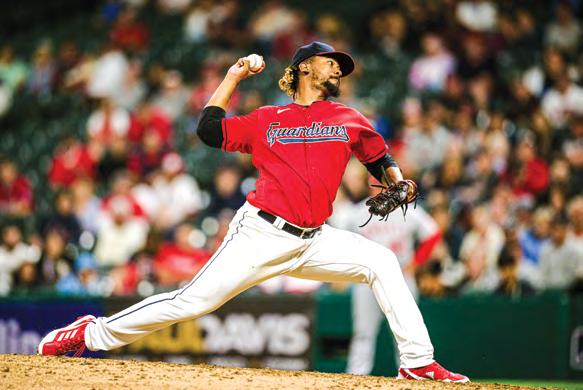
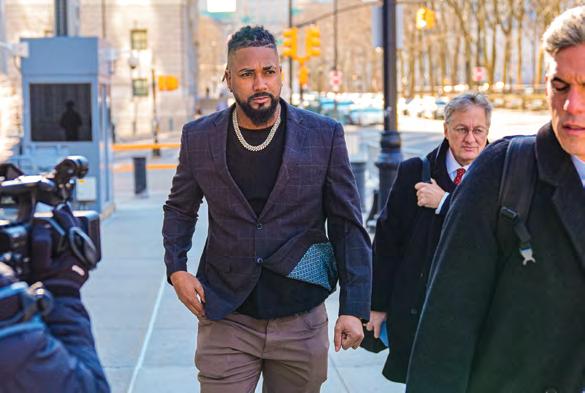
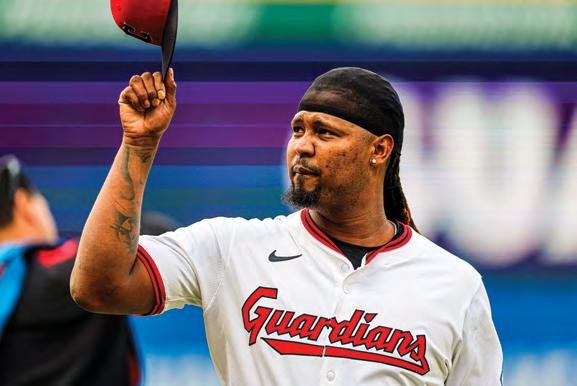
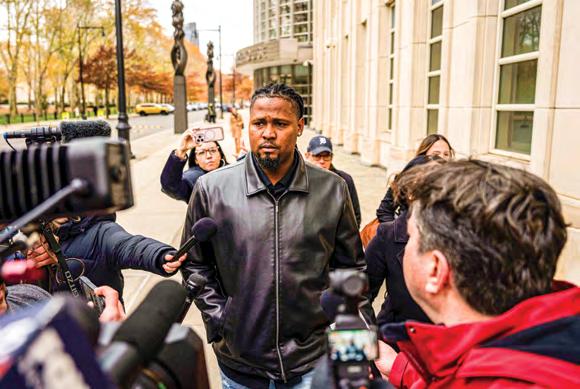
look for, or don’t believe that gambling can be an addiction,” she says.
On a January night at the Ritz-Carlton, the Economic Club of Washington hosted a Baltimore Orioles “insider” panel discussion featuring Hall of Famer and Orioles minority owner Cal Ripken Jr., manager Craig Albernaz, and several team executives. David M. Rubenstein, the Economic Club’s president, co-founder of private equity giant The Carlyle Group, is the owner of the Orioles, and he moderated the evening’s trip down Birdland’s memory lane.
After about an hour of softballs, Rubenstein # nally asked a solid question, about three players’ chances to get into the Baseball Hall of Fame. Pitcher Roger Clemens and out #elder Barry Bonds were both accused of steroid use, and the late infielder Pete Rose bet on baseball as a player-coach with the Cincinnati Reds. He had maintained his innocence for years, only admitting gambling addiction in his autobiography !6 years after he retired.
“Do you expect any of those ever get in the Hall of Fame? You’re on the Hall of Fame board or something, right?” Rubenstein asked. Ripken laughed, “Yes, yes, I am.”
After some nervous laughter, he turned to another panelist and punted, saying, “What would be my answer to that question?”
Betting has been a no-go zone for baseball since the !9!9 Black Sox scandal. Eight players, including superstar Shoeless Joe Jackson, were banned for life for # xing the World Series. But in May, 2L/ Commissioner Rob Manfred removed Jackson, and Pete Rose, from the ineligible list for the Hall, amid pressure from President Trump.
Considering how deeply ensnared the pro leagues are in the architecture of sports betting, team executives publicly wringing their hands about gambling evils and the integrity of the game is premium-level hypocrisy. Sports networks hype the latest odds or the greatest apps nonstop. Dozens of teams have their local games broadcast on the FanDuel Sports Network. N/0 Commissioner Adam Silver wrote an op-ed endorsing legalized sports gambling over a decade ago; FanDuel and DraftKings have been the league’s “o cial sports betting partners” since ()(!. The 2L/ has gone all in with FanDuel and DraftKings partnerships, too.
Rep. Stevens of Vermont has no time for the 2L/. “The integrity of the game thing is one of the biggest bullshit things that’s ever happened to that institution,” he says. “OK, # ne, then have DraftKings build a new hall attached to the Hall of Fame and just let the so-called cheaters get in there.”
With betting available throughout games, scandals followed, and baseball’s latest is in
court. Two Cleveland Guardians pitchers, Luis Ortiz and Emmanuel Clase, have been charged with allegedly conspiring with bettors who made prop bets on the speed and outcome of pitches they threw. The Justice Department’s indictment asserts that the two men “betrayed America’s pastime.” Convictions could land them in prison for up to () years.
Basketball is all fouled up. This past October, Miami Heat guard Terry Rozier and former player Damon Jones were arrested, in part for leaking nonpublic information about injuries to players like LeBron James and Anthony Davis, which gamblers can bet on. Rozier also left a game early so his conspirators could win the “under” on his stats; similar activity got the Toronto Raptors’ Jontay Porter banned for life in ()(1 . Several college basketball players have also been arrested and banned for point-shaving.
Harms to the game don’t end with gambling players. Last year, two 2L/ players and their families received death threats, one from an inebriated bettor angry about losing his bet. Teams have had to boost security measures at games. Players say sports betting is the source of the online abuse; nearly half of all N/0 players surveyed last year said gambling partnerships hurt the sport. Leagues are scrambling to pick up the
Cleveland Guardians pitchers Emmanuel Clase (top) and Luis Ortiz were indicted for conspiring with gamblers who made prop bets on their pitches.
pieces. The 2L/ reached an agreement with most sportsbooks to limit micro bets to $()) and prohibit those bets from parlays. The N/0 moved to limit prop bets and change injury reporting rules; the N&L imposed limits as well. But prop bets are so pro#table that voluntary restrictions are unlikely to make a di .erence.
One moment stands out. An ;S:N segment reported on the N/0 betting scandal, with the host fretting about the impact on sports. But while he was talking, a promo for ;S:N /;E, the company’s gambling app, played on the bottom of the screen. “New players: Bet $!), Get $!)),” the promo promised. The show’s producers got wise to the disconnect and eventually took the promo down.
America’s love afair with gambling has spawned another horror show: prediction markets, which handle bets on whether a future event will occur. Using Polymarket or Kalshi (whose tag line in a now-notorious AI-spawned ad is: “The world’s gone mad, trade it”), bettors can wager on anything from whether Nicolás Maduro would be deposed in Venezuela to the length of a press conference held by Karoline Leavitt, the White House press secretary.
But the main attraction for prediction markets is sports betting. And with Kalshi and Polymarket claiming that they are merely commodities exchanges that o.er “event contracts” on future developments, they can evade existing state gambling regulations and even allow betting in states where online sportsbooks are illegal. Kalshi has argued that it’s only subject to federal regulations under the Commodity Futures Trading Commission (C&EC), a famously light-touch agency.
The argument is absurd. Kalshi and Polymarket have a licensing deal with the NBL . Trading volume on Kalshi for sports last summer, when the N&L and college football seasons began, was $!.8! billion; for everything else, it was $(6) million. The two companies are #guring out parlays and micro bets. The giants of online sportsbooks, sensing competition, are buying up smaller prediction markets. In December, DraftKings launched DraftKings Predictions, and FanDuel joined with derivatives marketplace C2; Group to roll out FanDuel Predicts.
States have pushed back against the prediction markets, which currently are not subject to the levies that sports betting
companies pay. Ho.er, of the Tax Foundation, noted that “it’s only a matter of time until [prediction markets] become regulated under some umbrella that is similar to where sports betting # nds itself.” That’s not the posture prediction market companies are taking, however; Kalshi has said in legal # lings that losing in any one state would lead to the company shutting down sports event contracts on the app permanently.
The time may have run out on Kalshi’s betting disguised as contracts: In mid-January, a Massachusetts superior court judge issued a preliminary injunction blocking state residents from using Kalshi to wager on sports since the #rm doesn’t have a Bay State gaming license, noting that federal law doesn’t “displace traditional state police powers.”
A New Jersey district court had ruled in favor of Kalshi and its assertion that it falls solely under the purview of the C&EC. New Jersey regulators appealed that case, which is now pending in the Third Circuit Court of Appeals, the same court that decided Murphy. Nearly a dozen states have acted to stop prediction market sports betting; Tennessee recently # led a cease and desist with Polymarket and Kalshi that threatened criminal prosecution for o .ering wagers without a license.
In an amicus brief in the New Jersey case, ,1 state attorneys general explain that Kalshi’s argument merely sets a market for contracts between two bettors on opposite sides of an outcome. “This amounts to a distinction without a di.erence,” they write. “Kalshi’s position is indistinguishable from that of a Las Vegas poker room that simply operates as the venue in which willing participants play a card game.”
The attorneys general also described another serious issue: If Kalshi prevails, the gambling age in most states would e.ectively drop. Most states limit gambling to ages (! and older. Kalshi stipulates that it’s open to anyone who’s reached the “age of majority,” otherwise known as the legal age. In nearly every state except Mississippi, Nebraska, and Alabama, the age of majority is !8
With increasing public attention on the harms—last fall, a Pew Research Center poll found that a plurality of Americans believe that legal sports betting is bad for society and sports—there appears to be a faint acknowledgment that something has to change. But the way ahead is unclear.
Eleven states considered sports betting measures last year: None of them advanced. This year, lawmakers in Vermont and Maryland continue the push for bans on online sportsbooks. New York is considering several bills, including one that would stop sportsbooks from putting limits on bettors or banning them entirely because they win too much, a disturbingly common practice. But the lure of tax revenue remains strong Although Congress has careened into irrelevance in most areas of American life, some members have sti .ened their spines on sports betting. This past October, three House committee chairs sent a letter to NC00 President Charlie Baker about a proposal to allow student-athletes and sta . to gamble on pro sports, incredible as that may seem with scandals piling up. Less than three weeks later, a majority of NC00 Division I schools voted to drop the plan. In November, Senate Commerce Committee leaders went after the 2L/ and its “new integrity crisis,” while the House committee took on the N/0’s Silver.
On the legislative front, the S0&; Act (Supporting Affordability and Fairness with Every Bet) proposed by Sen. Richard Blumenthal (D-CE) and Rep. Paul Tonko (D-NY) includes prohibitions on sportsbook ads during live events and the use of AI to track bettors’ gambling habits or create micro bets, and mandates the surgeon general to study sports betting’s public-health consequences. Sen. Brian Schatz (D-BI) has a prop betting proposal in the works.
Nower, the Rutgers researcher, suggests that federal legislation establishing a framework for gambling regulations that is “at a parity with the architecture constructed for substance abuse” would be a start, in addition to establishing # rm playing rules such as whether a player can actually a .ord to gamble.
League o cials and state lawmakers are in too deep with sports betting companies to process that online gambling has gone too far—at least until the courts settle it. Again. Bloviating about the integrity of the game, though, obviously soothes the conscience. But words don’t mean much to the high school principal worrying about students or to the athlete hiring security guards to protect his family. As for the gambler stressing about his losses, he’s one of the millions of people the sportsbooks count on to tune out the debate and head right back to the bar since tonight just might be the night. n
The Roots of the Youth Sports Gold Rush
BY MAUREEN TKACIK
Washington, D.C., has a higher median income than any state in the union, and yet I never really felt destitute until a rainy Sunday morning last May, when I booked my youngest kid’s seventh birthday party at the St. James, a sprawling luxury sports complex about half the size of Reagan National Airport, some !( miles west of the Potomac River. At 8:,) a.m., not only was every space in the parking lot full, but every adjacent square inch of pedestrian walkway and grassy median strip was occupied by Rivians and /2W X ,s. Adjacent the trampolines and the Ninja Warrior course, swarms of parents and grandmothers in $-)) raincoats and $-,))) watches waited to stampede into assigned private rooms for their designated 9) -minute play windows, while sta .ers set up pancake stations and $() -a-head taco bu .ets.
“Oh, it’s no problem, we’re here four nights a week so we’re used to it,” one of my son’s classmate’s dads replied when I apologized for the Darwinian parking situation. “Gymnastics, swimming, ice skating, and lacrosse.” Sounds like a second mortgage payment!, I marveled, as the dad, a small-restaurant owner whose daughter is easily two or three years ahead of her classmates in reading and math, gave the resigned laugh of someone who de# nitely did not have an extra mortgage payment to spare. “It’s not cheap!”
He wasn’t alone. Strolling the hallways afterward, I realized there were hundreds, very likely thousands, of parents who veritably lived at the St. James, tapping away in noise-canceling headphones while their children partook of indoor batting cages and futsal #elds, squash courts and basketball courts, climbing walls and diving boards and multiple NBL -sized hockey rinks with ingeniously designed raised viewing concourses, seemingly designed to feel like ?I: box seating. Someone, I thought to myself, is getting so fucking rich o this place.
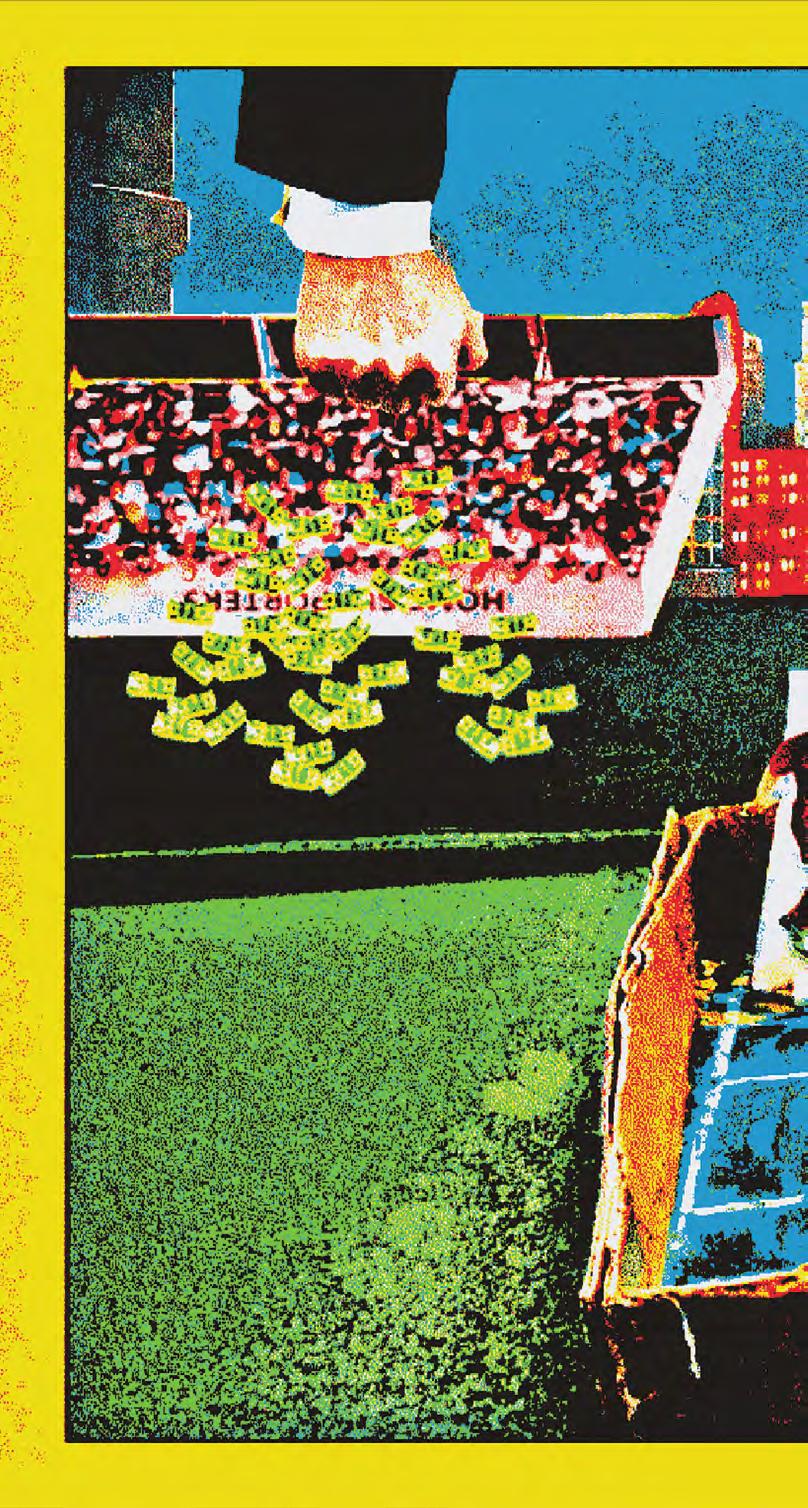
Steve Grifn got in on the ground foor with the John D. Rockefeller of youth sports. The climb out of the basement taught him that fnance and kids’ sports are a toxic mix.
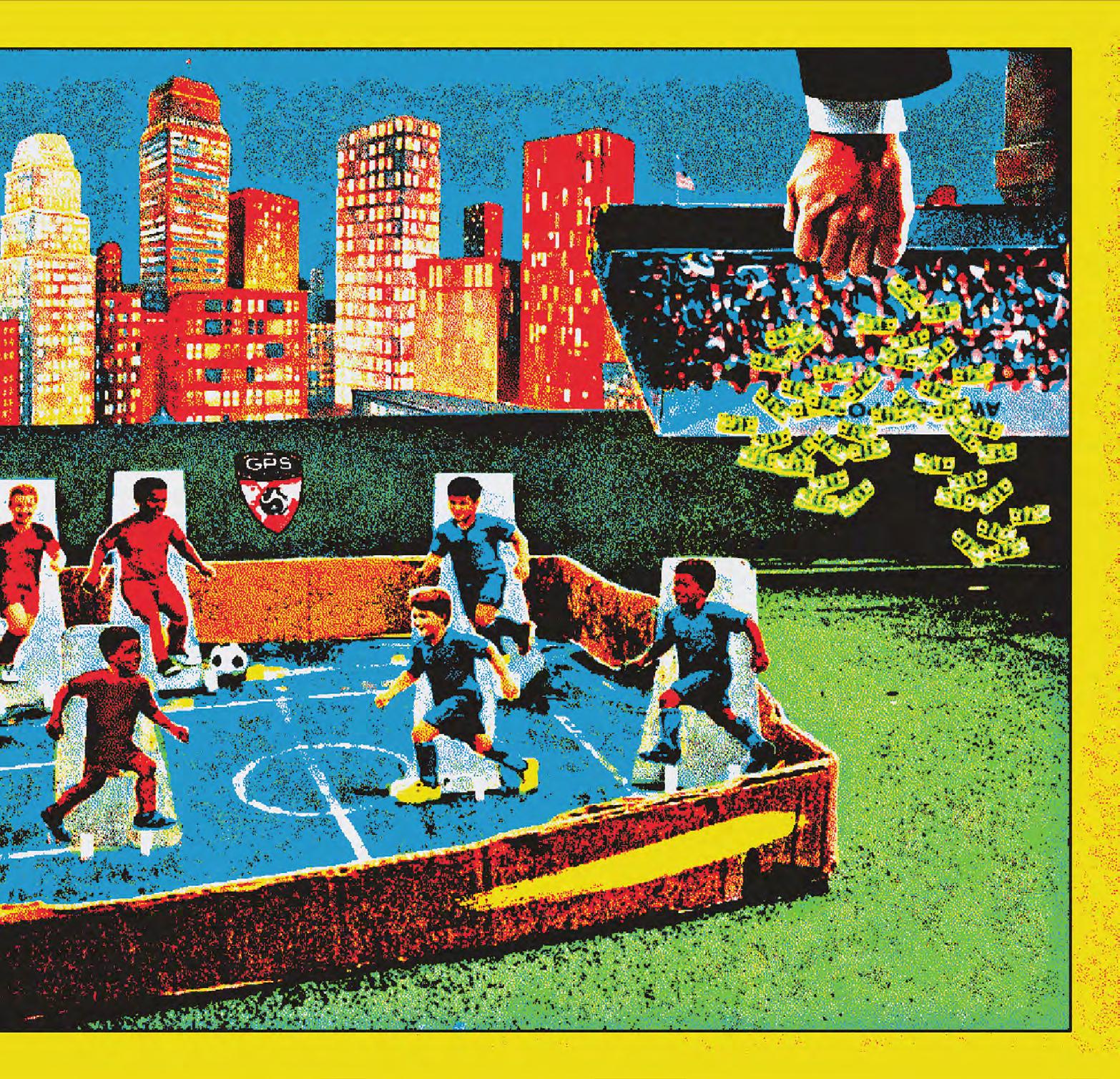
Steve Gri n experienced a similar epiphany nearly !6 years ago, when his !(-year-old son was beginning to display unusual talent for baseball. Somewhat by accident, Gri n is today one of America’s foremost experts on the # nancialization of youth sports, and he shared copious insights into the business practices of the private equity billionaire who bankrolled the St. James, to which I will return. But back in ()!(, he was just one of those naïve middle-aged white guys who dared to wonder if he could somehow avoid becoming Detached Irritable Workaholic Dad and make money doing something fun, something that might even impress his kids.
Griffin, a no-nonsense certified public accountant with an acutely honed bullshit detector and a native New Englander’s hardwired contempt for new-money extravagance, was a consultant who had honed a reputation as “the guy who got the call when something was going wrong at a portfolio company.” Then as now, America was swimming in newly minted billionaires, mostly men who had made so much money managing other people’s money they needed to hire other people to manage their own money. In his telling, he self-deprecatingly described his role as a “# nancial janitor.”
Gri n’s son’s team had missed its chance to go to the Little League World Series in Williamsport. But he got something else: a weeklong youth baseball tournament in Cooperstown, New York, where a man named Lou Presutti had built (( baseball stadiums designed to draw tourists to the nearby 2L/ Hall of Fame. A few days later, someone a liated with an out #t called Perfect Game, who had apparently been watching the games, called Gri n and suggested Gri n’s son come down to Jupiter, Florida, for an invitation-only baseball development program. “My jaw dropped,” Gri n told me. “There were hundreds of golf carts running around this massive sports complex, with college coaches driving from #eld to #eld to #eld to watch the next superstar.” Perfect Game played its tournaments in a stadium that was home to four minor league teams and spring training for the Miami Marlins and the St. Louis Cardinals—meaning Perfect Game did not have to purchase its own stadiums and make big capital expenditures, which appealed to Gri n’s fear of money-hole capital expenditures. “I thought, oh, this is an interesting business.” He invested in Perfect Game, though he
divested his stake a few years later when he got an even more promising opportunity: the chance to join one of the pre-eminent organizations in what would soon become a $1) billion youth sports industry.
The New Hampshire–based company was called Legacy Global Sports. Its charismatic founder/C;O John St. Pierre had a huge presence in two of the most demographically appealing youth sports—soccer and hockey—and an increasing foothold in the even faster-growing sport of lacrosse. On a good day, St. Pierre gave the impression he might be the John D. Rockefeller of youth sports.
Gri n thought this could be the kind of fun, profitable enterprise that could become a real juggernaut. So he invested in Legacy during its next fundraising round in ()!-, which would be led by Je .erson River Capital, the family o ce of Hamilton “Tony” James, the chief operating o cer of the largest private equity # rm on Earth (Blackstone) and one of the best-connected men on Wall Street. Gri n joined the company as executive vice president of strategy, mergers, and acquisitions.
Yet within months, Gri n was suddenly told the company needed cash injections or Legacy might not make payroll. He was dumbfounded: One of the things he’d found most appealing about Legacy was that it owned no real estate or machinery of consequence, and customers paid for tournaments and summer camps well in advance. “The company should have been in a liquid position, but it wasn’t,” he said.
But Legacy’s # nances were nothing like St. Pierre had suggested, as Gri n would later detail in a memoir. For starters, the company had been dramatically overstating its annual revenue on the basis of … vibes. The $!)) million revenue #gure they threw around was profoundly in $ated, in part because some divisions of the company had substituted rosy forecasts and revenues for the real thing, Gri n claims. In reality, revenues were no greater than $66.! million. None of the accounting systems of the dozen or so smaller companies Legacy had gobbled up had been integrated, and most months, Legacy didn’t even provide a full set of # nancial statements. Ultimately, Gri n would determine that “a business that we thought [generated] $8 million or so of ;/IED0 … was really not generating any free cash $ow at all.” All this had gone undetected because prior investors never demanded a formal audit, he said.
“HAND
IN THE COOKIE JAR” SYNDROME HAS LONG BESET YOUTH SPORTS.
Gri n began to work long hours to stop the bleeding. As he recalled in two books on his Legacy Global experience, a “novel” and subsequent follow-up memoir, sometimes he would even work all night. By late November ()!8, the board had # red St. Pierre and installed Gri n as C;O to clean up the mess. This made him one of Legacy’s few employees who stayed in the o ce after business hours, which is how he # rst noticed a woman with bleach-blond hair and aggressive makeup who would sometimes arrive at the office as late as 7:)) and leave after nothing but a cigarette break. He was told she worked in accounts payable, had young children and a messy divorce, and to let it slide.
Within a year, the &/I came knocking at the door.
“Hand in the cookie jar” syndrome has long beset youth sports; most leagues are still tax-exempt nonpro#ts, though that requires far more public disclosure than private equity. Every few weeks, a youth sports league o cial in some county or another is arrested for embezzling from angry parents; in ()!9, a travel baseball team o cial in New Jersey was arrested for robbing a bank to repay $7,6)) he’d stolen from his team. But as money and # nancial expertise has $ooded the sector, the scams have gotten bigger and harder to prosecute. Last fall, USA Today documented a complex scheme uncovered by a volunteer hockey mom whereby Colorado youth hockey authorities were allegedly siphoning money into shell companies owned by the board chairman.
DS0 Hockey eventually pushed the chair -
man and an associate out of their positions; the chairman was later found liable for civil theft, unjust enrichment, conversion, and breach of #duciary duty, though that’s currently under appeal.
Such amateurism is an important part of private equity’s thesis of investment in youth sports properties, Gri n explained on a ()(! podcast appearance. Youth sports was “the Wild West,” Griffin said. “We thought there was an opportunity to come in, invest capital in a business that could serve as a platform across multiple sports, elevate the experiences for the consumer … [build] appropriate back o ce infrastructure to operate the business more e ciently … and simultaneously see a good investment #nancially … but also [better satisfy] a consumer that deserves more value.”
Steve Gri n wrote two books based on his experiences with private equity–backed Legacy Global Sports and Global Premier Soccer.
One model for this is Varsity Brands, a private equity–backed cheerleader-turnedmonopolist that rolled up well over a dozen cheerleading camps and tournaments, uniform and equipment suppliers, and professional associations and sold it to Bain Capital for $( 6 billion. But as the world was just beginning to learn, the Varsity Brands success story was not about efficiencies or economies of scale: The company was in the early stages of a litigation tsunami stemming from alleged blatantly anti-competitive conduct and failure to police coach sexual abuse.
Griffin was also beginning to realize travel sports were not particularly “scalable.” The ratio of “customers” to coaches, referees, and #eld or rink hours is relatively immovable; subsidies, sponsorships, and
apparel discounts are often easier to come by with a tax exemption and volunteer sta . Although “professionalizing” Legacy would prove an eye-opening intellectual journey, it also came at a cost: a lawsuit # led by St. Pierre against Gri n, Je.erson River Capital, and the board that # red him at the end of ()!8 accused the private equity # rm of ballooning overhead by $!8 million from ()!8 to ()!9. (St. Pierre declined to comment for this story, citing the terms of the eventual lawsuit settlement.)
In Gri n’s defense, a seven-#gure chunk of that increased overhead went to the various law # rms and crisis advisories retained to grapple with the fallout of an &/I raid of the Legacy Global soccer division in October ()!9, not long after the board voted to # re St. Pierre. It turned out that the division, which Legacy had acquired via a Bostonbased company called Global Premier Soccer (F:S) in ()!7, had been operating a massive labor tra cking scheme that dated back as far as ()!(, and the Department of Homeland Security # nally moved to shut it down.
F:S was the brainchild of two brothers from Northern Ireland with accents that seemed to grow more exaggerated among bigger crowds. The elder brother, Joe Bradley, had captained the Harvard soccer team and still nursed a bit of a chip on his shoulder from his formative years among the super-elite, but the combination of pedigree and brogue was the perfect balm for parents desperate to enroll their sons and daughters in extracurricular activities that might yield future status dividends.
In the early days, recruiting foreign coaches to run kids’ summer camps that might have been sta .ed by American teenagers was a marketing ploy. As American soccer star Alexi Lalas told The Guardian for a ()!1 story on Bradley’s burgeoning empire: “US soccer is littered with decades of people coming over with little more than an accent to their resume, and using the naivete we’ve had and the inexperience and lack of soccer history and culture to their advantage.” But by that point, the naïveté of the coaches was a bigger problem than the soccer moms: twentysomething soccer fanatics in Barcelona and Belfast could easily be convinced that coaching suburban third graders in Brookline or Cape Cod was the opportunity of a lifetime.
Once in America, the coaches quickly learned that the opportunity was not so
BY 2025, THE ESTIMATED ANNUAL REVENUE OF THE YOUTH SPORTS BUSINESS
HAD DOUBLED FROM ITS PRE-PANDEMIC SIZE TO $40 BILLION.
CONTRACT WITH YOU ” to the embassy, the collusion of at least seven teams, including an indoor franchise then called the Syracuse Silver Knights and two women’s professional teams, the (now-defunct) Boston Breakers and (since-renamed) Sky Blue FC, the latter of which was co-owned by Goldman Sachs veteran Phil Murphy, who had been inaugurated as the governor of New Jersey just ten months before the raid. In reality, the coaches would not scout for the teams at all; they would just fan out across the country to work for F:S . The British coach told the Globe that he was instructed never to tell anyone that they were soccer coaches, even though that was their primary job.
The Breakers alone gave more than -) scouting visas to F:S/Legacy coaches before the team folded in ()!8; Sky Blue applied for at least 1). Gri n found multiple internal Sky Blue emails detailing the scheme to Murphy, who o.ered “good luck” to his team before a ()!7 meeting to discuss the arrangement with an immigration attorney. Murphy, now out of o ce, did not respond to a request for comment. (Murphy did not respond to requests for comment on the allegations.)
glowing. According to allegations in The Guardian and anonymous job sites like Glassdoor, F:S housed them in cramped apartments, forced them to work long hours, and paid them meager wages. Most insidiously, they were enlisted as part of a set of elaborate immigration schemes regarding the nature of their business in the United States.
“There were a lot of very sketchy practices with visas,” one British former Global Premier coach told The Boston Globe. “At the time, you’re not entirely sure it’s aboveboard, but you go with it anyway because you want a job.”
Different visas required different schemes. H- (B visas are for temporary jobs if a company doesn’t have enough U.S. citizens to # ll roles—obviously not the case in youth coaching. But the most brazen lies governed the coveted P-! visa, which entitled coaches to stay up to #ve years, so long as they could convince DBS they were actually being recruited to work as “talent scouts” for professional soccer teams. This required, in addition to a script reminding applicants “ DO NOT TAKE YOUR GPS
Griffin had been diagnosed with early-onset Parkinson’s disease after joining Legacy. When the company finally collapsed amid the CO?ID -!9 shutdowns, his doctor convinced him to start journaling his ordeal, to “transfer the experience from the emotional half of my brain where trauma resides, to the intellectual half where catharsis happens.” For two months, he woke before dawn, brought his laptop to the beach, and typed out everything that had just happened. He changed all the names except those of his wife and children and self-published it as a “novel.” A portion of the proceeds went to the Michael J. Fox Foundation and the Positive Coaching Alliance, a nonpro#t founded in the !99)s to “train” parents to behave less counterproductively during games, which has since broadened its mission to include grappling with the various crises plaguing youth sports.
St. Pierre’s wife sued him pro se for defamation; the case was dismissed. But in increasing volume, former Legacy and F:S employees, customers, coaches, and even coaches’ mothers contacted him, according to his memoir on the topic. One
former coach told him F:S had a doctor who helped them falsify sta . and players’ vaccine records. He also told him that coaches had to pay for the gasoline used in companyowned cars, submit receipts for reimbursement, and would receive only -6 percent of the expense.
One night, Griffin watched the movie Spotlight and realized something: He had read a ()!6 newspaper article about the shutdown of a F:S sleepaway camp in Western Massachusetts following a bad health inspection. Among the infractions, the camp could not supply criminal or sex o.ender background checks. He realized that if coaches had been brought to the country illegally and steps had likely been taken to conceal their roles, it was very unlikely they would have been subjected to background screenings. Gri n looked into it. He found people brought into the country who were never screened, then found several of them had allegedly abused children. A few months later, Christy Holly, a longtime F:S coach, was # red as head coach for the Racing Louisville women’s soccer team following numerous allegations of inviting players to watch game footage with him, then groping them each time they “fucked up.” (The National Women’s Soccer League gave Holly a lifetime ban on coaching; he denied some, but not all, of the claims.)
Gri n kept spreadsheets, timelines, and detailed notes documenting all these new revelations in hopes it would prove useful to the Department of Justice investigation; all that happened was the COO pleaded guilty to conspiracy to commit visa fraud and a single other employee pleaded guilty to destroying records in connection with this investigation.
Meanwhile, the youth sports gold rush continued apace. During the # rst two years of the pandemic, Murry Gunty, a private equity acquaintance of John St. Pierre and boss/owner of one of the three creditors who sued to force Legacy into Chapterliquidation, more than doubled the physical size of his burgeoning mid-Atlantic hockey empire, variously known as Black Bear Sports and Blackstreet Capital Holdings. (In ()(1 , he acquired St. Pierre’s own ice arena in Exeter, New Hampshire, for an undisclosed sum.) A Massachusetts upstart called ,SE;: Sports with funding from the Fertitta family scooped up about a dozen youth sports franchises, including Seacoast United, a regional league associated with
the Bradley brothers. When Legacy folded, ,SE;:’s founder David Geaslen could barely contain his enthusiasm. “I feel bad … for everyone who … will never see their money again,” he told The Boston Globe. “But every single kid who played for a Legacy program is going to be playing for somebody else.”
By ()(6, the estimated annual revenue of the youth sports business had doubled from its pre-pandemic size to $1) billion, despite a modest decline from pre-pandemic participation levels. At the same time, any parent who could still a .ord to shell out a second mortgage payment for travel soccer/taekwondo/speed skating after CO?ID was more determined than ever to do so, because the specter of screen addiction was orders of magnitude more terrifying than the thought of not getting into a respectable college. Family spending on youth sports rose 17 percent from ()!9 to ()(1 , and parents are running GoFundMe campaigns to get their kids to that Little League tournament in Cooperstown.
Thanks to the Legacy debacle, federal investigators began contacting Gri n for help demystifying # nancial frauds, all too many of which have involved youth sports. There was, for starters, a dubious deal to build a $(81 million complex in Mesa, Arizona, called, of all things, “Legacy Sports Park.” A father-son minor league baseball duo had somehow convinced taxpayers to approve nearly $,)) million in municipal bonds for the complex, then failed to generate enough cash to make a single interest payment. The developers claimed to have secured a ten-year lease with Manchester United, an iconic team that was most certainly not going to set down its #rst physical American roots in Mesa, Arizona. Gri n assisted in determining the lease provided to sell investors on the deal was a forgery. The owners pleaded guilty to fraud last year, and the complex was recently sold to a private equity–backed Philadelphia investor named Mike Burke for $(6.6 million, or roughly one-tenth what it cost taxpayersubsidized bond investors to build.
“The thing about fancy sports complexes,” Gri n told the Prospect, “is that they are exactly like stadiums: No matter how successful they are, they never seem to generate enough cash to cover the cost of building and maintaining them.” So the institutions involved in developing or controlling them need to get some sucker—ultimately, you and me—to shoulder that expense. Some,
like Murry Gunty and Mike Burke, buy ice rinks on the cheap from county park authorities and recreation commissions, then torment customers with rent hikes and junk fees, like the up to $6) “streaming service” to which Gunty’s Black Bear Sports required parents (including a U.S. senator) to subscribe if they wanted to view video of their kids’ games, until called on it by The Lever.
This brings us to Todd Boehly, the multibillionaire 20F0 donor and fellow Miamian who co-owns Chelsea FC, the Los Angeles Dodgers, the Los Angeles Lakers, and the awe-inspiring St. James Sports & Wellness Complex, to which I shelled out a grand or so on my kid’s birthday party. Boehly pioneered the fine art of using insurance premiums to fund risky private equity investments at Guggenheim Partners; now he controls a $-1 billion annuity and structured settlement empire called Eldridge Industries that he can leverage to finance boyhood retirement fantasy purchases, only by virtue of the fact that Eldridge has walked up to the line of state insurance regulations. (Boehly did not respond to request for comment.)
There already may be signs not all is # nancially well at the imposing St. James: Another private equity–backed youth sports conglomerate, Total Package Hockey (E:B) Academy, recently sued it for breach of contract and poaching one of its executives to be the “chief academic o cer” of the new online school the complex is now o.ering to child athletes too serious about sports to attend traditional school, a business model that is for some reason all the rage in the youth sports business. A glance at the E:B website promises that student athletes will log in to daily lectures on “De# ning What It Means to Be a Great Teammate” and “The 9 Core E:B Way Principles for Aspiring Elite Student-Athletes” while becoming “holistically connected in the E:B Performance App, a tool that allows for wellness, commitment, and performance to be tangible and measurable,” while also hearing from frequent guest speakers “across a range of disciplines (sports, business, leadership)” and even gaining access to extracurricular activities “such as investment club or public speaking skills development.”
It’s almost enough to make you pine for the days when the purpose of travel sports was supposed to be a college education, or even the joy of the game. n
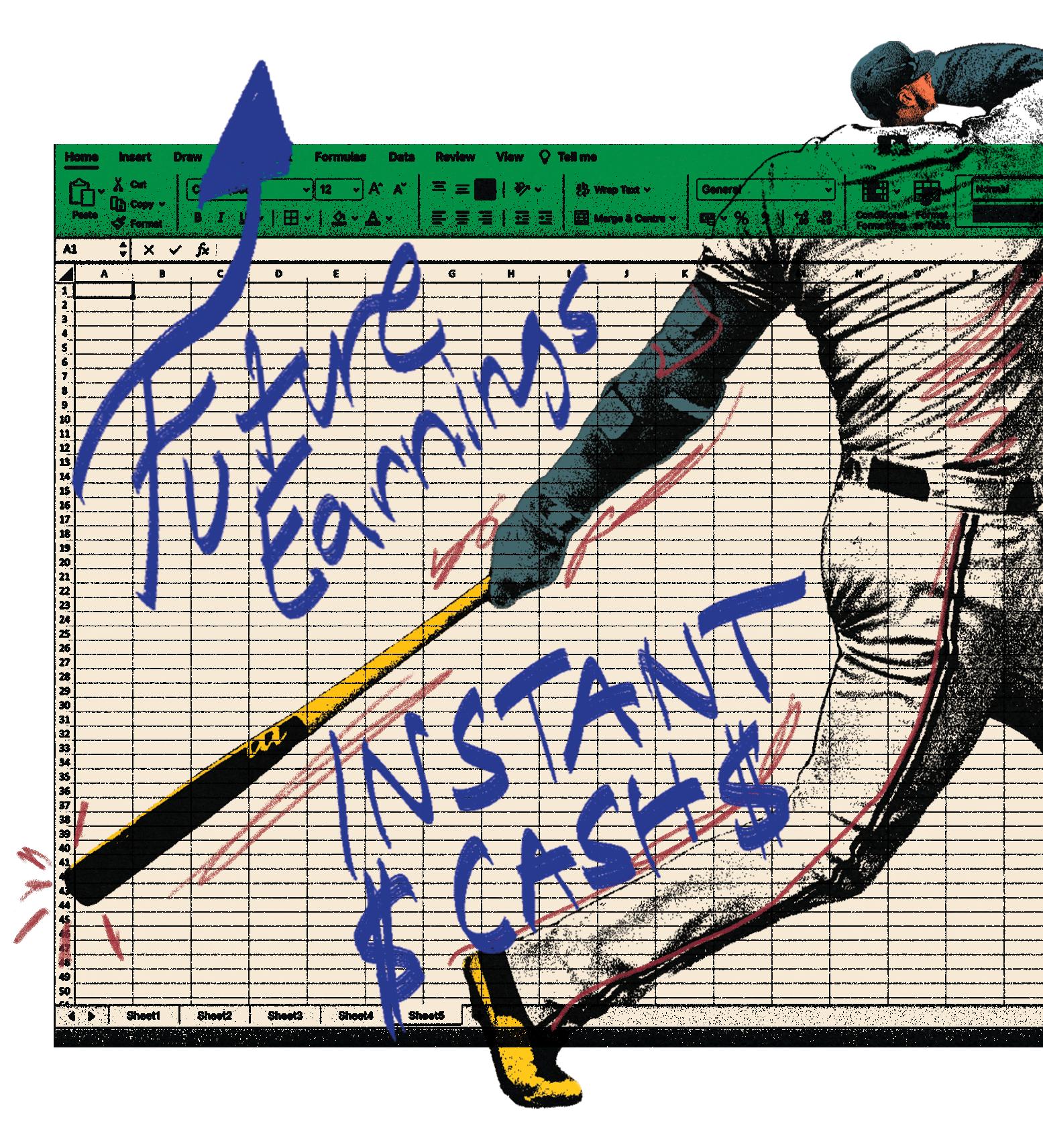
Circling Sharks
BY CARTER DOU GHERTY
If you—a future pro or college star—can wield a fearsome bat, sink a clutch three-pointer without fail, or have the hands to snag the game-winning touchdown pass, pay attention:
We are here to help you turn your future earnings into instant cash, right here and now, with no strings attached!
Just call or email today!
If the preceding sentences sound like a late-night infomercial or the distilled essence of a con, you are not cynical; you are experienced.
What we might call the athlete-# nance industry is exploding against the backdrop of multimillion-dollar professional salaries and the new world of college player payments. The legacy of predatory # nance—payday lending, income-share agreements, class action settlement factoring, multilevel marketing, and crisis-prone mortgages—all echo through what is on o.er to today’s athletes. With many of them Black or brown, even supporters admit there is a whi . of indentured servitude about this new business.
The back end of this new industry, which recruits don’t hear much about during pitches, reeks of avarice and unbridled #nancialization: an ecosystem of opaque private funds shoveling money into nascent # nancial entities in the hope of, in the words of one speculator, “asymmetric risk-reward with downside protection and uncapped upside.” That’s Wall Street-speak for free money—for Wall Street, anyway.
Given the steady encroachment of Wall Street speculators into everything from youth sports to major league franchises over the last decade, the concurrent march of the Masters of the Universe deep into the # nancial lives of individual players should not shock seasoned observers of the business of athletics. But it has.
The only thing really standing between the athletes and these potential scams is the law, and cases moving through the system now threaten to expose con $ icting # nancial interests, greedy college administrators, and racist recruiting practices. Professional athletes, especially the superstars who cash paychecks in the millions, may stand a chance of # nding their way through the thicket intact. Collegiate athletes may # nd the going rougher.
“We have no protections in place,” said Hillary Seiler, founder of Financial Footwork, which trains student-athletes to understand what’s coming at them. “There are not any boundaries to control how this develops. It will be the wild, wild West for years to come.”
The “wild, wild West” is a metaphor that the more wary participants in this business reach for frequently. “Gold rush” is another. Other times, they cut loose with “crazy,” “insane,” or “out of control.” Or they simply sigh in disbelief at what is taking shape.
To Wall Street, athlete pay has nothing to do with justice: It simply creates a more or less predictable revenue stream, like a corporation with a steady income from selling a product or service. Future income morphs into a present payout. To some people, that looks like a loan, and often a usurious one at that. To others, it looks like buying an ownership share (equity) in a person, or at least in the value of their labor, and many of those people are Black or brown. The #rst interpretation is often illegal, or at least subject to legal protections; the second ranges from creepy to downright immoral.
“Right now, people are operating like investment bankers: Don’t break the law, have some legal basis for what you’re doing,” said Andrew Bondarowicz, a New Jersey sports lawyer and adjunct in sports law at Rutgers University. “Is it all ethical? No one cares as long as they are not breaking the law.”
At the professional level, a company called Big League Advantage (/L0) kicked o. the frenzy about a decade ago, when it began paying young players large chunks of money in return for a share of future earnings, technically known as incomeshare agreements. Founded by Michael Schwimer, who had a brief career in Major League Baseball as a relief pitcher, /L0 got o. to an inauspicious start by naming itself Big League Advance, a common synonym for a loan employed by those poster boys of predation, payday lenders. “That’s how big of an idiot I am,” Schwimer once said.
But idiocy is not innumeracy. Schwimer’s strategy involves #nding athletes well before their future value is determined. Sometimes the player’s career doesn’t pan out and /L0 loses money; but when it hits, it hits big.
/L0 raises money from its own investors—mainly rich individuals and some venture #rms like hedge funds—and promises a
TO WALL STREET, ATHLETE PAY CREATES A
MORE OR LESS PREDICTABLE REVENUE STREAM.
circumstances. Schwimer said at one point that most players with whom it contracts are from poor countries in Latin America. (It currently has over -)) players under contract, according to its website.)
One simple question—“Is it illegal?”— hangs over the marquee income-share agreement case before the courts today.
Fernando Tatis Jr. is now a superstar shortstop with the San Diego Padres, a three-time All-Star with two Gold Gloves in six major league seasons. Schwimer signed Tatis to an income-share agreement back in ()!-, when he was !8, still lived in his native Dominican Republic, was barely a minor league player, and was still learning English. “When we did a deal with Fernando Tatis Jr., he wasn’t a top 6) prospect on anybody’s list,” Schwimer told AP.
payout down the line. It currently has about $1)) million, according to documents # led with the Securities and Exchange Commission. One of /L0’s investors told B/O’s Real Sports that Schwimer promised his investors a ,) percent annual return for () years or so. By contrast, the S&P 6)), the benchmark for most investing, historically notches returns in the mid-single digits.
In the telling of /L0 , its secret sauce is not illegality or lack of ethics but simply analytics. Schwimer has assembled a team of data scientists and sports seers—including at one point Paul DePodesta, the inspiration for Jonah Hill’s geeky character in the movie Moneyball—who zero in on players with potential and cut deals before anyone else. More prosaically, /L0 is simply a venture capital # rm, guys with extra cash hoping that getting in early pays o. spectacularly in a few cases, even if other players disappoint.
“For us as a company, it’s really a testament to our modeling capabilities and how well we’ve been able to predict success of minor leaguers,” Schwimer told the Associated Press.
This picture of savvy baseball statisticians harvesting their just rewards darkens signi #cantly upon consideration of exactly which players /L0 targets and under what
The contract was pitched over a dinner, where Schwimer and other /L0 officials described the arrangement as an “investment,” according to a lawsuit Tatis has filed in California to void it. Days later, Tatis agreed to the deal without seeing the contract in advance. An attorney chosen by /L0 explained the contract terms in a twominute phone conversation. Tatis’s agent was not involved in the deal. “The swift timeline, orchestrated by /L0 , exploited his youth, inexperience, and relative lack of #nancial sophistication, all contributing to [Tatis’s] inability to understand the agreement’s true nature,” according to the lawsuit.
In exchange for $( million up front, Tatis agreed to forward !) percent of his after-tax big-league earnings to /L0 .
After the advance contract signing, Tatis emerged as an 2L/ giant, a fearsome hitter whose size (7 feet, , inches, (!- pounds) yields home-run power without inhibiting his base-stealing prowess (he had ,( last year). His nickname: El Niño, after the mighty Paci #c weather pattern.
In ()(! , Tatis signed a !1-year, $,1) million contract with the Padres, a huge investment in a player whose major league debut was just two years prior. At the time, it was the third-largest contract in baseball by dollar value, behind only Mike Trout and Mookie Betts, and the largest contract in Padres history. And /L0 immediately staked their claim to !) percent of it. That’s $,1 million on an initial $( million investment, a massive !,-)) percent return.
“Defendants have built a business model that preys on young, #nancially unsophisti-
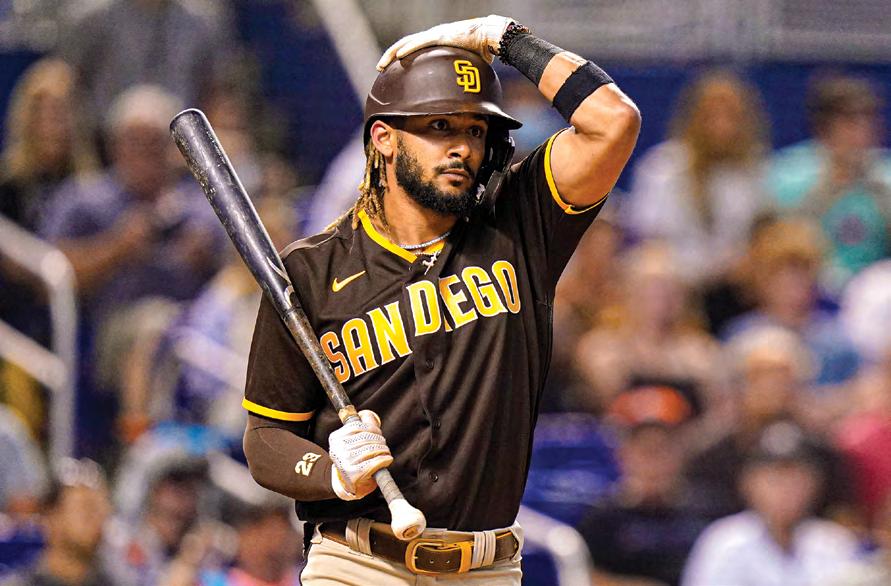
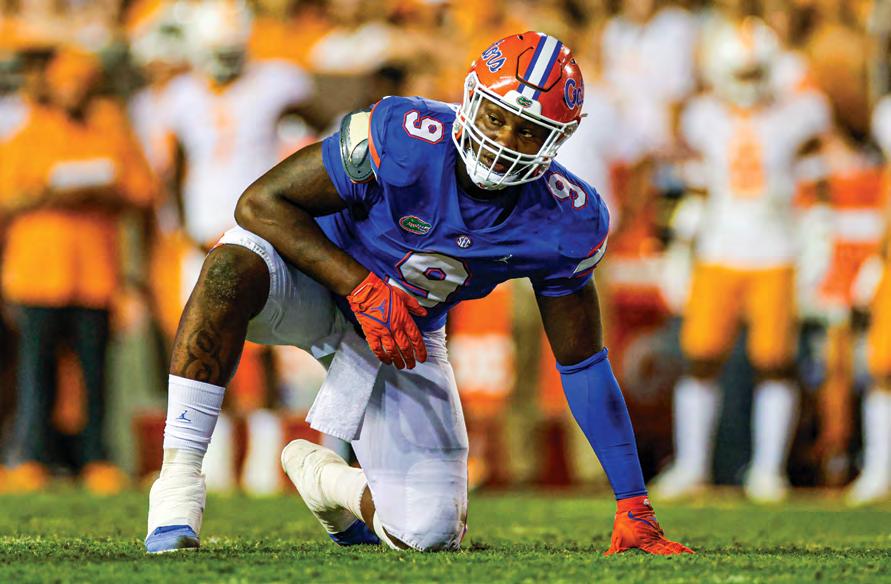
might have seems so distant that they can be exploited into selling that money away,” said Seligman, who is running for Colorado attorney general. “We have to think of these things as loans because, at least, rules on predatory # nancial products would apply.”
/L0’s legal response to the Tatis case has been to follow the lead of # nancial companies nationwide and push the case into arbitration, which the Tatis contract does indeed allow. In September, an arbitrator ordered Tatis to make payments to /L0 , ruling that the contract did not violate California law. But the legal case, # led in state court, is still alive and pending.
Professional sports agents have lined up, in the main, against income-share agreements, with the king of the profession, super-agent Scott Boras, calling them “usurious” and exploitative of players outside the United States. Even experts who might approve of the /L0 model in principle cringe at the thought of a Black or Latino player from a Spanish-speaking country negotiating such a contract under such conditions.
“On its face, exchanging present value for future value doesn’t have to be a problem,” said Marc Edelman, a law professor at the City University of New York and director of sports ethics at its Robert Zicklin Center for Corporate Integrity. “But what is a problem is the relationships being struck up with young baseball players, especially in the Dominican Republic.”
cated athletes, o.ering lump-sum advances in exchange for signi #cant portions of their future earnings,” states the lawsuit, which was # led last June.
Robert Hertzberg, a member of the Tatis legal team and a former Speaker in the California Assembly who helped write many consumer protection laws, argued that the lawsuit has less to do with money, which the star player will have plenty of whatever the outcome, than it does the chance to protect other younger players from falling into the same trap. “I want Tatis to win but I also want to put a stop to these kinds of contracts,” Hertzberg said. “He’s not looking for money, he’s looking for public injunctive relief that stops this kind of abuse.”
The Tatis lawsuit stands or falls on the
question of whether the $( million payment is a loan under California law. If it is, then any loan made by an unlicensed lender like /L0 is invalid. The Golden State, more adept than most at bobbing and weaving as predatory lenders shift tactics, has been very clear on this point. Its consumer protection authorities treat advances paid back through future wages or earnings as loans, according to the Tatis lawsuit. The California legislature even codi#ed this point into law in February ()(6, four months before Tatis #led.
David Seligman, executive director of Towards Justice, which has litigated against income-share agreements, argues that the loan-based framework has served consumer protection well. “People are marginalized in all sorts of ways, and the wealth that they
A separate lawsuit brought by Francisco Mejía, a Dominican catcher who #rst played in the majors for the Cleveland Indians, alleged that /L0 approached him when his mother was sick and the family needed funds for her medical treatment. Mejía later dropped the case and issued an apologetic statement for bringing it in the # rst place. /L0 did not respond to a request for comment about any of the cases against it.
Over time, /L0 could end up a chapter in the story of professional baseball’s endless exploitation of players from the Dominican Republic. This story often features buscones, scouts whose name derives from the Spanish verb buscar (to search), a word from old pirate tales that evokes thievery. These scouts are notorious for shortcuts in training players to impress Major League representatives, including through drug use, and then pocketing a percentage of the signing bonus.
These racial dynamics shadow the intersection of sports and money in much the
San Diego Padres star Fernando Tatis Jr. (top) signed a contract giving 10 percent of his future income to Big League Advantage; defensive lineman Gervon Dexter’s contract gives 15 percent. Both players are suing.
same way that skin color serves to underscore the too-often predatory nature of # nance in the United States, and its history of targeting Black and brown Americans.
Income-share agreements have their roots in the musings of no less than Milton Friedman, the godfather of today’s markets-über-alles economists. In a !966 essay, Friedman lamented the inevitable “irrational public condemnation” of such contracts, due to their similarities with less-savory arrangements like debt peonage, indentured servitude, and the enslavement of Black Americans.
Nonetheless, Friedman’s godlike status among economists drove the idea from footnote into a paper published by the rightwing American Enterprise Institute in ()!1 Around that time, a few startups began o.ering what they called “human capital contracts”—MyRichUncle.com was one goofy name—but quickly faded. A Republican ri . on the 0;I study was to propose federal legislation to pre-empt state laws of the sort Tatis is relying on to break his contract with /L0 , ones that govern interest rates or assignments of future income. That e.ort went nowhere.
Frustrating though it may be to Friedman acolytes, the neoclassical economist’s approach of treating the labor of $esh-andblood human beings no differently than other commodities—ripe for exchange if the price is right—does con $ ict with lived experience. Nowhere is this truism more vivid right now than in collegiate sports, which is nearly #ve years into its historic pivot to pay the athletes who generate billions in revenue.
In ()(!, a landmark antitrust case, NCAA v. Alston , paved the way for athletes receiving income through name, image, and likeness (NIL) deals. Later, schools agreed to directly pay players, but with caps on the total value. And a class action settlement in House v. NCAA in mid-()(6 allocated $(.8 billion for back pay to former NC00 athletes over ten years.
Financiers got involved in the aftermath of those cases as well.
/L0 has dipped its toe into the college game, again advancing up-front cash with the promise of future earnings. Gervon Dexter, a former defensive lineman for the University of Florida, landed a contract with the Chicago Bears for up to $7.-( million after signing a /L0 advance
INCOME-SHARE
AGREEMENTS HAVE THEIR ROOTS
IN THE MUSIN
G
S OF MILTON FRIEDMAN, THE GODFATHER OF TODAY’S MARKETSÜBER-ALLES ECONOMISTS.
by former N/0 star Kendrick Perkins and a Wall Street veteran named Chris Ricciardi. Nilly provides athletes with cash in exchange for a share of the NIL earnings they receive from colleges. The company has said it fronts amounts as high as $()),))) on contracts of up to four years.
Perkins, a hulking former N/0 champion with the Boston Celtics, has a bushy beard and an endearingly blunt mien in defending the company against charges it exploits athletes. After a critical article on ;S:N com, Perkins, an ;S:N contributor himself, took to a podcast to make the case for his new venture. Near the end of the podcast, he said, “I’m not talking about this shit no more.” (Unsurprisingly, Nilly did not respond to requests for comment.)
On the podcast D-Rich TV, Perkins emphasized that if a player gets cut, injured, or otherwise loses access to income, Nilly has no recourse. “They don’t have to pay it back,” he said on the podcast. “If a player doesn’t pan out or gets injured, Nilly does not get paid.” Without knowing the precise terms, it is impossible to calculate the return as if it were a loan; Ricciardi has referenced returns in the “mid-teens.”
agreement for about $1,),))) up front. The advance contract entitled /L0 to !6 percent of Dexter’s future earnings. His lawsuit claims the contract violated Florida’s state law on student NIL rights and attracted support in a state that is typically wide-open for payday lenders. “I consider that a predatory loan,” Chip LaMarca, a Republican member of Florida’s House of Representatives, later told The Washington Post. “It would have violated our legislation when he left the university.”
Other companies, $ush with cash from their own sources, are using /L0 as their inspiration, said Courtney Altemus, founder of Advance, a #rm that is trying to carve out a white-knight role as an unbiased advocate for student-athletes.
“They are mirroring Big League Advance and coming in and saying, ‘Let’s share revenue,’” Altemus, a Wall Street veteran, said. “You’re getting a massive o.er of money at a time of an undeveloped brain, and they are often with families that are poor or living paycheck to paycheck or paycheck to credit card. They’re thinking, ‘I’m getting $6),))) up front, and then money from school, and I don’t have to pay it back.’”
No company has made a bigger splash in this respect than Nilly, a # rm founded
Ricciardi turbocharged Nilly’s war chest with a $()) million investment from a private credit # rm named Harlan Capital, which touts the appeal of free money. “Nilly represents a new chapter in a book that we’ve been writing for a long time: How can we # nd creative ways to monetize intellectual property, especially in emerging areas,” Harlan said.
Professionals who o.er # nancial education report constant overtures from # rms o.ering income-share agreements to steer student-athletes their way. In the parlance of Wall Street, these companies want to raise their deal $ow: to cycle as many young players as they can through their process.
Ricciardi’s track record shows a talent for deal $ow, but less regard for the ethical overtones of his work. Before the ())8 # nancial crisis, Ricciardi helped structure mortgage-backed collateralized debt obligations (CDOs) at Merrill Lynch, a business line that led it straight into the arms of Bank of America to avoid bankruptcy. He later became a CDO manager, an ostensibly independent role that the movie The Big Short portrayed as an exorbitantly paid cutout designed to insulate big banks from charges of self-dealing.
In the intervening years, Ricciardi
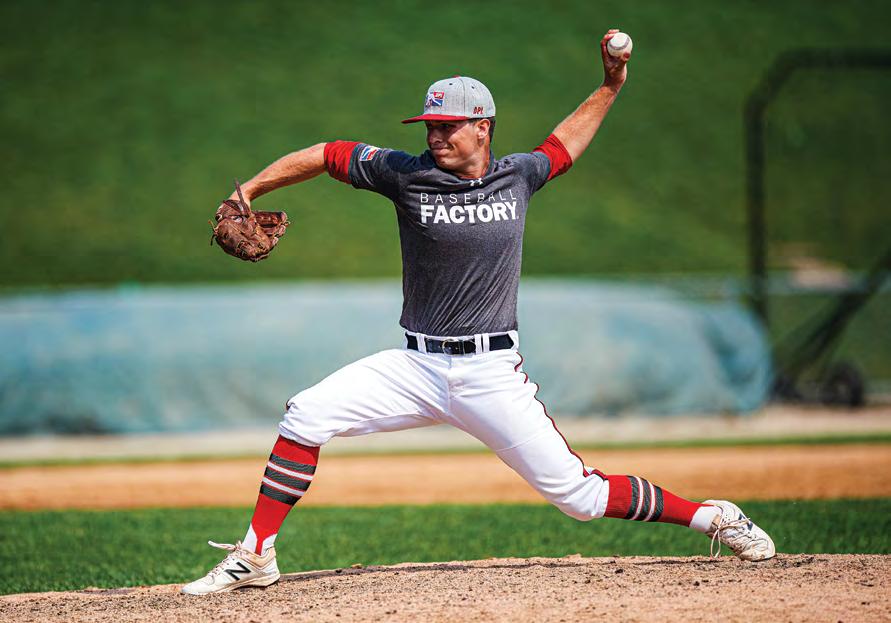
co-founded a company, Edly, that o . ers income-share agreements for nursing students, among other professions. Various companies in this space have generated a snarl of litigation nationwide as state attorneys general and the federal Consumer Financial Protection Bureau alleged the contracts are e.ectively loans and that borrowers enjoy signi #cant protections.
In ()(,, Ricciardi pitched the Department of Education’s ombudsman for federal aid, Bonnie Latreille, on the idea of delaying Pell grants to students so that Edly could swoop in with an income-share agreement that looked an awful lot like a usurious payday loan. “He clearly had no idea who we were,” said Latreille, now a senior fellow at Princeton University’s Debt Collection Lab. “He wanted to get low-income grant recipients in debt sooner.” When Latreille and her colleague peppered him with questions about consumer protections, safeguards on lending discrimination, and other details, Ricciardi ended the meeting.
To be fair to out #ts like Nilly, their business opportunity stems at least in part from a real problem in collegiate sports: the continuing lack of bargaining power that student-athletes face. Perkins argues that Nilly can help players when universities go
back on their promises, like in ()(1 , when the starting quarterback at the University of Nevada, Las Vegas, Matthew Sluka, walked away from the team over a missed $!)),))) NIL payment. “We can’t go after the studentathlete and we won’t go after the studentathlete,” Perkins insisted.
The former student-athletes who are due $(.8 billion may be another matter. That settlement took e .ect in July ()(6 , and now their putative new best friends are settlement factoring companies, which o.er pennies on the dollar against future payouts from class action cases. Some of them even mix in elements of multi-level marketing schemes, in which athletes make money for reeling in their peers. “Then they say to their friends, ‘Hey come with us,’” Altemus said. “And then they get a text from a friend saying, ‘Hey you can get money,’ and the friend is compensated.”
The aggressive marketing to former athletes prompted plainti . lawyers to ask the judge overseeing the House settlement to issue a warning that these companies were “misleading” the former athletes. One attorney who reviewed a contract for such a payment advised against it unless the athlete is desperate for the money.
In truth, collegiate athlete-#nance agreements are a function of the new market that
the NC00 settlements has created. While an improvement on the past where players weren’t paid at all, the markets don’t have the same contours as in professional sports, where norms and rules protect players, above all via their union, something that does not exist at the collegiate level. Professional unions certify agents, negotiate basic contracts, and give players a port of call if there are problems.
“Anytime you crack a cartel you create freer markets, but in the interim stage there’s no denying that less reputable people come in,” Edelman said. “We’ve replaced one exploitative group with another.” And, then as now, the exploitation has a racial skew to it, something athlete advocates begged me to highlight.
Ramogi Huma, executive director of the College Athletes Players Association, does not mince words. Before the House settlement and after, the NC00 “creates a transfer of wealth from predominantly Black basketball players to predominantly White coaches and athletic administrators.”
The same could be said about the entry of Wall Street, whose money skews white, into professional sports, said Luke Fedlam, a partner in sports law at Amundsen Davis. Their playbook is all too clearly a recapitulation of predatory # nancing schemes that have long looked to Black and brown communities as their targets.
“I have talked to so many families, Black and brown, who have people around them trying to exploit or leverage their sons and daughters for their own bene #t,” Fedlam said. “I hope we highlight this issue more and more.”
We’d better. On the frontiers of this new industry stand companies that are ready to slice and dice talent into retail-sized chunks for purchase by anyone with a few bucks and zeal for speculation. Ready to trade athletes on equity markets that are sweaty versions of the N0SD0G or NYS;? Startups like Finlete—“ # nancial athlete,” get it?— have you covered. All that’s left is for online broker Robinhood to partner with them, and the circle of # nancialization will close as we trade pieces of human game-players via its gami#ed app on our smartphones, all while munching peanuts and Cracker Jack at the old ball game. n
Carter Dougherty is senior fellow for antimonopoly and !nance at Demand Progress, an advocacy group and think tank.
Many young baseball players targeted by athletefinance companies come from the Dominican Republic and have little grasp of English.
How Congress Refused to Save the NCAA From Itself
If you watched a minute of college football this fall, you saw the ads. A voiceover darkly warns that, without congressional action, college sports face an existential crisis. NIL is forcing schools to cut women’s sports and Olympic programs. The very fabric of amateur athletics is unraveling. The solution, viewers are told, is the SCOR; Act. It would solve the crisis, though it’s not really explained how.
In reality, the SCOR; Act was a desperate attempt by the National Collegiate Athletic Association (NC00) and its members to clean up their own mess. The solution being peddled would take away the only tools college athletes have to protect their economic rights: the antitrust and labor laws that protect every other working American from corporate consolidation and abuses of power.
The NC00 and its member conferences say that their “educational mission” justi#es special treatment from Congress. But that
Colleges want exemptions from antitrust and labor laws, so they can continue to hoard billions in cash from sports and deny the players their rights. So far, they’ve failed.
BY KATHERINE VAN DYCK
educational mission hasn’t stopped conferences from expanding across the country, forcing college athletes to spend more time in airport terminals than in classrooms. That mission didn’t stop schools from paying football coaches tens of millions while pleading poverty. And it certainly didn’t stop the NC00 from punishing athletes for accepting $,.8, worth of extra pasta while ruling that years of fake classes for DNC athletes fell outside its jurisdiction. Ultimately, the NC00’s hypocrisy became unbearable in Washington. In December, Republican leadership pulled the SCOR; Act from the House $oor, defeated by an unlikely coalition of conservative Republicans who saw it as corporate welfare, progressive Democrats who recognized it as an attack on worker rights, a bipartisan group of state attorneys general defending public institutions, and the Congressional Black Caucus, which refused to help strip protections from predominantly Black
athletes whose labor generates billions in revenue from college football and basketball games. It was a rare legislative victory against the powerful monied interests of college athletics.
But it’s not the end of the story. NC00 executives and university administrators will continue seeking to hoard the money college sports generate, even though fans pack stadiums and arenas to see the players. This relentless drive for cash could lead schools into the waiting arms of private equity, and down a money spiral that would be bad for players and the game.
To understand the score Act, you have to understand how college sports got here. For over a century, the NC00 enforced what it called “amateurism,” a set of rules that restricted the ability to pay college athletes for their labor. The NC00 invented the concept of the “student-athlete” following a !96, ruling by the Colorado Supreme
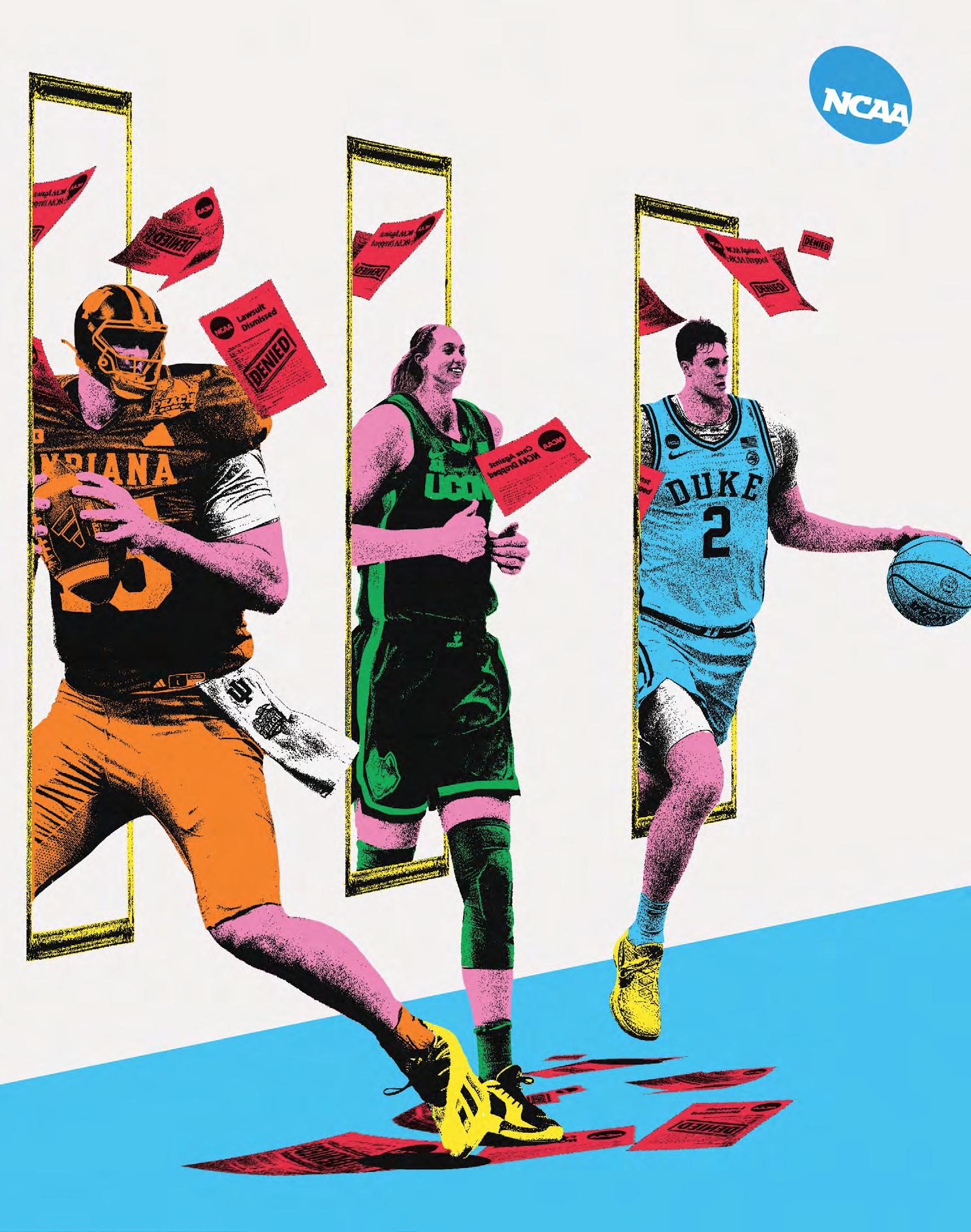
Court in University of Denver v. Nemeth
The Colorado court held that a football player, as both a student and an employee, was owed workers’ compensation for a back injury su .ered at practice. The NC00’s mission became convincing courts otherwise, and the term “student-athlete” was born.
This ploy was a resounding success. Just four years after Nemeth , the same court denied death bene#ts for the widow of a Fort Lewis A&M student who died from a head injury sustained during a football game. Since then, the NC00 has used its invented subclass of nonemployees to tightly control and restrict what college athletes can earn. It restricted scholarships, education-related bene#ts, room and board, and game tickets for families, even as the system grew into a $!9 billion business. It did this as universities built palatial athletic facilities, television networks paid astronomical sums for broadcast rights, and coaches and administrators took in millions. But everything they built was a house of cards.
The Supreme Court shattered the NC00’s caste system in ()(!. Its unanimous decision in NCAA v. Alston found the term “amateurism” unintelligible and refused to grant the NC00 antitrust immunity, # nding its “education-related bene#ts” rules violated the Sherman Act. Justice Brett Kavanaugh, in a scathing concurrence, wrote that “traditions alone cannot justify the NC00’s decision to build a massive money-raising enterprise on the backs of student athletes who are not fairly compensated … The NC00 is not above the law.”
The ruling generated a cascade of change. The NC00 lifted its ban on athletes pro#ting from their names, images, and likenesses (NIL). The Department of Justice secured a consent decree prohibiting enforcement of anti-competitive player transfer rules. A separate class action, House v. NCAA, resulted in a historic settlement for past players, with $( 8 billion in damages. Finally, the NC00 agreed, for the #rst time in its history, to let universities directly pay their athletes. Meanwhile, a host of other lawsuits are challenging NC00 compensation and eligibility rules, restrictions on tennis players’ ability to collect prize money, bans on Canadian junior hockey players, and the Ivy League’s refusal to o.er athletic scholarships at all.
Football fans have seen the results of a truly competitive marketplace on the #eld, something that research con#rms. The College Football Playo. (C&:) this year included
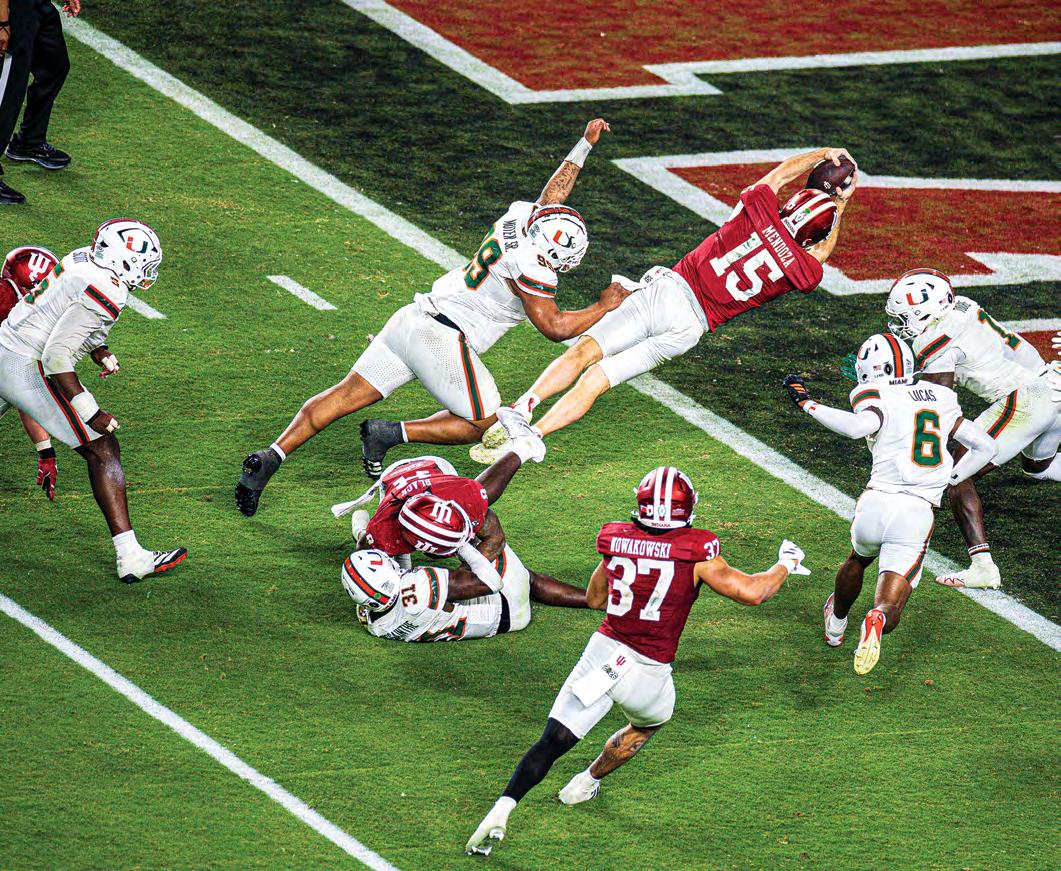
schools that have never come close to an &/S national championship—Texas Tech, James Madison University, and Tulane. And Indiana won the whole thing, earning the school its # rst-ever national championship and beating perennial favorites Alabama and Ohio State along the way. That’s partly because schools can no longer over-recruit high school seniors and stockpile them on a bench for four years. If a player is unhappy today, they can # nd a new school, negotiate NIL and revenue-sharing contracts, and actually play.
It’s not perfect: The “parity” of big college sports like football and basketball is reserved for those schools that can # nd a billionaire benefactor, like Cody Campbell at Texas Tech or Mark Cuban at Indiana. But for the # rst time, college athletes have leverage and the ability to bene#t at least a little from the value of their labor.
The monied interests at the top of the food chain hate this new order, especially having to share a tiny sliver of the revenue with players. NC00 President Charlie Baker, the former Republican governor of Massachusetts, calls it the “Wild West with no rules and no visibility and no accountability.” The NC00 has spent millions of dollars
on lobbyists and made countless trips to Capitol Hill, imploring Congress to give them what a unanimous Supreme Court denied: “immunity from the normal operation of [United States] antitrust laws.” The SCOR; Act, introduced this past July, would have done just that.
The score Act is described as a bill “[t]o protect the name, image, and likeness rights of student athletes and to promote fair competition with respect to intercollegiate athletics.” In reality, it contains one sentence barring the NC00 and its members from “restrict[ing] the ability of a student athlete to enter into a name, image, and likeness agreement.” The rest of the bill consists of exceptions and immunities that swallow the current rules.
Here are just some of the SCOR; Act’s gifts to the NC00 . It prohibits any NIL deals that were not “for a valid business purpose,” a broad and unde# ned term. It requires college athletes to disclose the terms of their NIL deals and allows schools to publish anonymized details. It allows the NC00 to unilaterally create transfer and eligibility rules and recruitment windows for athletes. And it enables the NC00 to dictate which schools
2025 college football champion
Indiana was a perennial doormat until rulings allowing for player compensation created a more competitive marketplace.
can participate in college athletics, including who can move up to lucrative Division I &/S football and gain C&: eligibility.
To fully insulate the NC00 from liability for anti-competitive behavior, none of this rulemaking would be covered by either federal or state antitrust laws, fully reversing the Supreme Court’s decision in Alston. And as icing on the NC00’s cake, the bill declares that college athletes will never be considered employees.
The antitrust exemption is broad, written to apply not only to the NC00 but also to conferences, universities, and anyone else attempting to comply with its mandates (like advertisers, television networks, and talent agents). It is, in no uncertain terms, an enormous and unprecedented gift to a vast, wealthy, and growing industry. It upends all notions of fair competition that have governed the U.S. economy since the Sherman Act was passed in !89)
The Sherman Act exists because Congress understood that concentrated economic power is destructive to both our economy and our democracy. As a result, antitrust exemptions are extraordinarily rare. Most of them correct imbalances of power. For example, antitrust laws do not
apply to agricultural cooperatives, so farmers can better negotiate with larger buyers. They do not apply to unions, so employees can organize and bargain on more equal footing with their employers.
The SCOR; Act exemption does the opposite. It strengthens the NC00 cartel and revokes college athletes’ ability to challenge it.
The absurdity of the SCOR; Act is underscored by the fact that an antitrust exemption is already available to the NC00 . If schools would recognize college athletes as employees, or simply consent to players organizing into unions the way professional athletes in all major American sports leagues do, they could collectively bargain salary caps, limits on NIL collectives, transfer and eligibility rules, scholarship guarantees, health and safety provisions, and all the other terms and conditions of participating in college athletics. The resulting agreement, just like the C/0 s in the professional leagues, would be protected from antitrust challenges by labor exemptions that have existed for over a century.
Perhaps even more important to the schools, the NC00 and athletes could reach agreement on enforceable anti-circumvention rules, like those that exist in the N/0 (the kind that L.A. Clippers owner Steve Ballmer is currently accused of violating). That would prevent billionaire alumni from creating the pay-to-play problems that are plaguing the transfer portal.
But the NC00 is a calcified organization, and it refuses to recognize athletes as employees. It refuses to let them organize. It refuses to negotiate. Instead, the NC00 and its members pleaded to Congress for a nearly unprecedented exemption from antitrust laws that would give them free rein over a multibillion-dollar industry.
It is no surprise that groups as varied as the Tennessee, Florida, Ohio, New York, and D.C. attorneys general; the 0&L- CIO Sports Council and the National Urban League; and even Cody Campbell, the Texas Tech benefactor and a billionaire Trump ally, denounced the bill early on. The SCOR; Act’s demise was predictable and deserved.
On December (, the SCOR; Act barely cleared the procedural vote needed to bring it to the House $oor. Rep. Chip Roy (R-EH), a Freedom Caucus stalwart who took issue with the money grab of conference expansion, labeled the bill a “Band-Aid on a gunshot wound.” Reps. Byron Donalds
THE NCAA’S MONIED INTERESTS HATE HAVING TO SHARE A TINY SLIVER OF THE REVENUE WITH PLAYERS.
(R-&L) and Scott Perry (R-:0) joined him and nearly all Democrats in voting against it. By the next morning, leadership was scrambling to whip support for a full $oor vote. They needed to $ ip more than a dozen Republican holdouts while simultaneously wooing Democrats, particularly members of the Congressional Black Caucus who, concerned about the fate of financially strapped B/CD s, had been targeted as potential crossover votes.
The C/C wasn’t buying. That day, they met with Athletes.org, a group advocating for collective bargaining, and emerged uni #ed in opposition. Then Lane Ki n torpedoed whatever remaining momentum existed. He abandoned his Ole Miss team just before the Rebels’ # rst-ever playo . appearance for a seven-year, $9! million deal with LSD. Brian Kelly, the coach he replaced, was paid another $61 million by LSD to leave. All in all, fired football coaches earned $((8 million in severance during the same months that the NC00 was asking Congress to rescue college sports from poverty. The NC00’s claim of threadbare #nances became impossible to defend.
When the smoke cleared, Rep. Lori Trahan (D-20) succinctly stated that “[t]he
SCOR; Act was pulled from consideration because it simply didn’t have the votes, a clear sign that Members on both sides saw it for what it was: a gift to the NC00 and Power Two conferences [the Big Ten and S;C] at the expense of athletes.” Republican Rep. Michael Baumgartner (R-W0) was even more direct, calling Big Ten Commissioner Tony Petitti a “bullying jackass” and accusing him of “trying to buy votes.”
At the end of the day, the NC00 and its conferences spent over $!6 million on lobbying and got the weight of the White House behind them. They even had bipartisan cosponsors. And they couldn’t get a vote. It was a spectacular failure.
The score Act would have done more than just grant the NC00 antitrust immunity. It would have blessed an entirely new enforcement apparatus that quietly emerged after the House settlement, the College Sports Commission.
The CSC was created by the Power Four conferences—the 0CC, Big Ten, Big !(, and S;C—to police college athletes’ compensation. Its primary tool is an algorithm called NIL Go, developed by accounting firm Deloitte, that reviews every NIL deal over $7)) to determine whether it serves a “valid business purpose” and falls within a “reasonable range of compensation.” If the algorithm $ags the deal, the athlete has four “choices”: renegotiate to a lower amount, abandon the deal, appeal through arbitration, or proceed and risk penalties. Those can include loss of eligibility for athletes and schools, #nes, and reduced transfer portal access.
The CSC is explicitly targeting NIL collectives, the booster-funded entities that have been the primary source of college athlete income since ()(!. This is a classic hub-andspoke conspiracy between the NC00 , the CSC, and the conferences to suppress college athletes’ earnings. Without the antitrust exemption provided by the SCOR; Act, the CSC’s rules, terms, and conditions are a likely violation of the Sherman Act.
The contract that the CSC circulated to schools garnered signi#cant opposition last year from another bipartisan coalition of state attorneys general from Tennessee, Texas, Florida, Ohio, Pennsylvania, Virginia, and New Jersey. The group called it “cartoonishly villainous” and warned that it “obligates institutions to comply with new enforcement, circumvention, and investigatory rules that may con $ ict with [existing
court] injunction[s]—without even telling them what the new rules are.” To date, universities have wisely refused to sign it and appear to be largely ignoring the NC00’s compensation caps too.
But the failure of the SCOR; Act and the CSC does not mean threats to college athletes have passed. Another transformation is under way, with private equity # rms seeking a piece of the $!9 billion pie. Schools eager for a cash infusion are listening.
With revenue sharing in place, schools are paying up to $() 6 million each to their athletes. They also had to contribute to the $(.8 billion House settlement. And there’s the aforementioned $((8 million in severance pay earned by # red coaches in the ()(6 football season alone, along with wildly expensive facilities like ECD ’s new “snow room” and Northwestern’s new $8)) million stadium. Layered on top are serious higher-education funding cuts by the Trump administration. In short, schools and their athletic departments are strapped for cash, albeit largely due to their own profligacy. Instead of balancing their budgets, they are turning to private equity.
The Big Ten spent the fall negotiating a $( 1 billion deal with UC Investments, the University of California’s pension fund. In exchange for the money, UC Investments would receive a !) percent stake in a new for-pro#t entity called Big Ten Enterprises, which would control the conference’s media rights and sponsorship deals. Schools would also extend their media rights contracts through ()17, binding them to the conference for two more decades.
The deal promised immediate cash infusions averaging $!,6 million per school, but the details were troubling. Unlike the Big Ten’s traditional equal revenue sharing, this deal would create a tiered distribution system that favored Ohio State, Michigan, and Penn State over the other !6 universities. The deal process was also remarkably opaque. Trustees at multiple Big Ten schools said they were denied access to key details about the proposal. DSC and Michigan balked, even amid allegations that the Big Ten threatened penalties if they refused to support the plan. Both schools lack permanent presidents and have powerful boards demanding accountability. Michigan regent Jordan Acker went so far as to suggest the Wolverines might consider football independence when the current grant of rights expires in (),7.
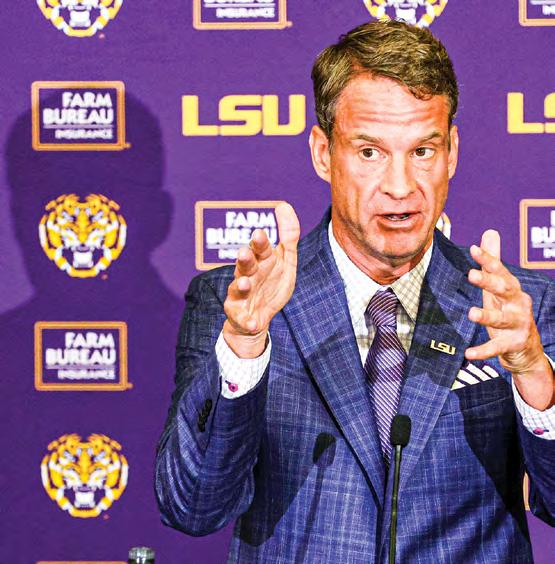
UC Investments eventually paused the deal, saying it would not proceed without “unity” among all !8 member schools. But the appetite for outside investment hasn’t disappeared.
The University of Utah’s board recently approved a proposal to give private equity #rm Otro Capital a minority stake in its new for-pro#t arm, Utah Brands and Entertainment, the # rst deal of its kind in college athletics. Utah’s conference, the Big !(, is in talks with a private equity–backed investment # rm called Collegiate Athletic Solutions for a $6)) million capital infusion that involves future revenue sharing. Another # rm, Elevate, has raised $6)) million to invest in athletic departments, aiming to transform college football into a “premium experience” comparable to F! racing.
Meanwhile, other investors want to create a super league that would put college football’s biggest brands under a single roof, excluding most of the smaller schools currently eligible for the C&:. Given how unhappy big programs like Notre Dame were about being left out of this year’s bracket while Tulane and James Madison got in, the idea may gain traction.
Congress has noticed these dealings and is already taking steps to curb the pro#teering. Sen. Maria Cantwell (D-W0) sent a letter to Big Ten university presidents questioning
Lane Ki n’s $91 million deal with LSU made colleges’ claims of poverty impossible to defend.

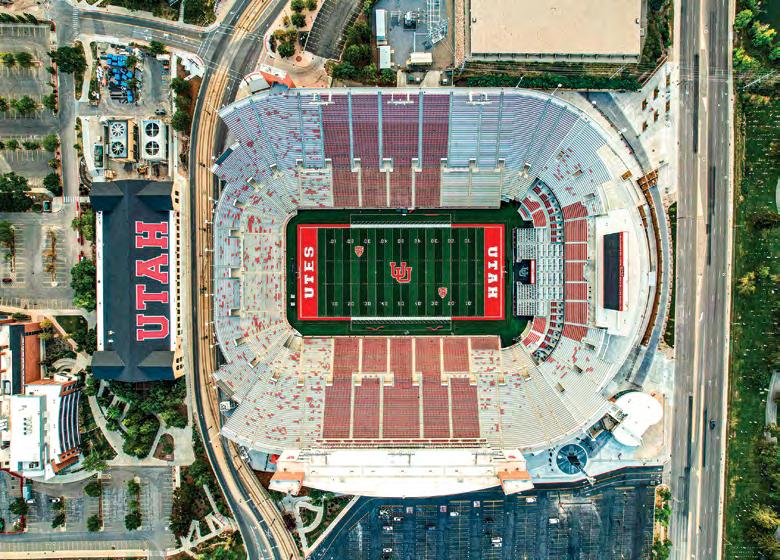
The University of Utah became the first college to partner with private equity in a for-profit athletic deal.
Meanwhile, the courts continue to chip away at remaining restrictions. The Third Circuit followed the Supreme Court by rejecting the NC00’s amateurism principles as justi #cation for ignoring the Fair Labor Standards Act, saying it “refuse[d] to equate a prisoner’s involuntary servitude, as authorized by the Thirteenth Amendment, to ‘the long-standing tradition’ of amateurism in college athletics.” A Sixth Circuit judge questioned the legality of an NC00 rule that limits eligibility years for junior college transfers. And a federal judge in West Virginia found the NC00’s #ve-year eligibility rule anti-competitive and unlawful, though an appeal by the NC00 is pending.
Support for collective bargaining is also growing. Multiple #gures from college sports—including University of North Carolina athletic director Bubba Cunningham, Tennessee athletic director Danny White, former Michigan football coach Jim Harbaugh, and former Auburn basketball coach Bruce Pearl—have publicly supported the idea.
the propriety of the UC Investments deal. Rep. Baumgartner introduced a bill that would outlaw such dealings. And while UC Investments has pushed back on being labeled “private equity” because it manages public pension and endowment funds rather than private money, the distinction may be less meaningful than it appears. In both scenarios, outside investors are seeking returns from assets that have historically been controlled by educational institutions for educational purposes.
More concerning is the potential for private equity # rms to bring the same extractive and cutthroat methods they have used in other industries to college sports. It’s logical to assume that investors want to maximize their pro#ts, and private equity usually does so not by growth but by cost cutting and wealth extraction. That could mean slashing the wages of athletic department sta .; stripping assets like real estate or rehab services away from athletic departments and leasing them back; taking out loans against the newly formed for-pro#t entities to pay investors; and rolling up interests in multiple athletic departments that previously competed with each other for athletes, sta ., and on-the-#eld results. None of this is good for the schools or the athletes. The question is whether anyone will stop the raids before they happen.
The ncaa’s talking points about crisis are not entirely fabricated. College sports face real challenges. Revenue sharing requires money that many schools don’t have. Title IX compliance—which prohibits discrimination on the basis of sex in higher education—in an era of direct payments to athletes is legally hazy. Olympic sports are being cut as athletic budgets strain under new obligations.
But these are problems of the NC00’s own creation, a result of schools’ runaway spending when athletes were used as free labor. For decades, athletic departments built palatial facilities and handed out coaching salaries that would make N&L teams blush. Now that athletes are # nally getting a share, the NC00 and its members refuse to adjust.
The NC00 wants to keep its iron grip on college athletics without curtailing its members’ reckless spending. Thus, the fight on Capitol Hill is not over. Republican leadership has signaled they hope to revisit the issue, and at least five alternative bills, from both sides of the aisle, are circulating. They include proposals for collective bargaining, a return to geographic conference alignments, and salary caps for coaches. Notably, almost nobody is pushing for antitrust exemptions for the NC00 .
In short, the athletes have momentum. Every lawsuit reveals more about how the NC00 has operated and how nakedly the organization has prioritized institutional interests over athlete welfare. Each victory makes the next one more likely. A bill like the SCOR; Act would stop that progress in its tracks.
The SCOR; Act failed because enough members of Congress understood that the NC00’s “educational mission” has always been a cover story. The real mission is control—over athletes’ labor, mobility, and voices, and the revenue that they create. The SCOR; Act was a bailout for a $!9 billion cartel that spent a century exploiting young athletes and now wants protection from the consequences. With Alston , athletes broke up the cartel, using the only legal tool they had to challenge its power: our antitrust laws. Congress, to its credit, has thus far refused to take that tool away. n
Katherine Van Dyck is the founder and principal of KVD Strategies, a legal and policy consulting !rm specializing in antitrust and consumer protection. She is also a senior fellow at the American Economic Liberties Project and UC Berkeley’s Civil Justice Research Initiative. She previously served as an attorney-adviser at the Federal Trade Commission.
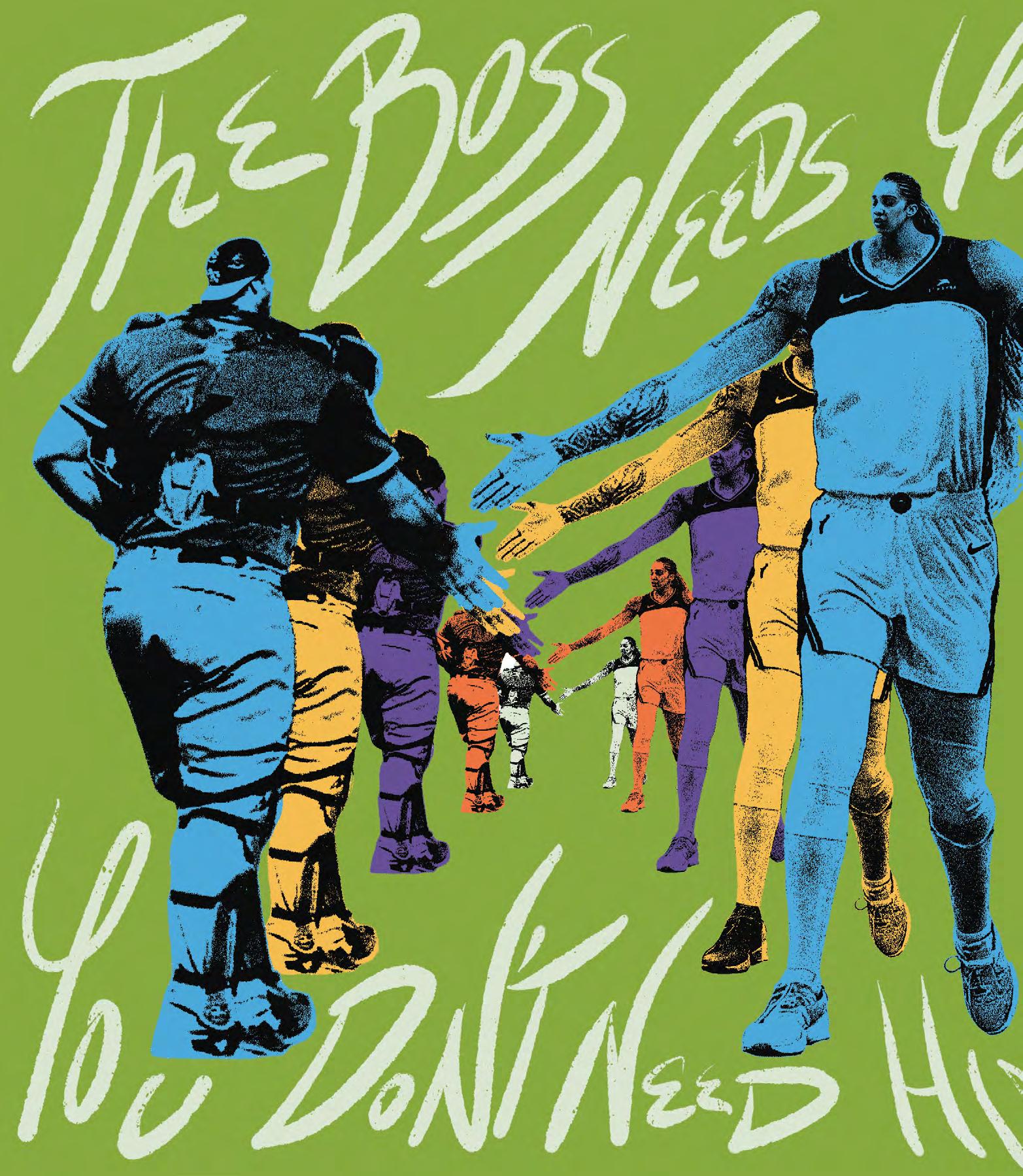
Baselines and Picket Lines
Superstar athletes are close to American royalty, but they still have to fght like other workers for fair pay.
BY HAROLD MEYERSON
In their status as employees, American professional athletes are di.erent from other American workers, and not just because they have more money. They can unionize, and they have. They can collectively bargain contracts, and they have. They can strike, and they have.
To be sure, American workers won all those rights in !9,6, but those rights have been so eroded during the past 6) years that only athletes and an elect set of other employees can still exercise them. Like workers in entertainment production, hospitals, teaching, and other professional occupations, the special skills of athletes mean they can’t readily be replaced. Workers who can be replaced are routinely #red during unionization campaigns, which is a violation of that !9,6 law, but one which incurs no real penalty. That’s one major reason why the rate of private-sector unionization has plummeted from more than one-third to a bare 7 percent in the past -) years, while that of professional athletes in major team sports is e.ectively !)) percent.
Management has certainly tried to replace athletes. During a !98- strike, the N&L used replacement players for three weeks, made up of bouncers, bartenders, and # re#ghters; the then-Washington Redskins used a quarterback who had a work furlough from prison. It was an unsightly display, and both stadium attendance and TV ratings plummeted. The owners settled the strike.
During a baseball strike near the end of the !991 season that stretched into spring training the following year—the only time the World Series was ever canceled since the agreement to hold one between the American and National Leagues in !9)6—the teams’ owners threatened to employ minor leaguers and retirees as strikebreakers. “There ain’t no place in our
game for replacement players,” retorted legendary manager Sparky Anderson, who then was helming the Detroit Tigers. “The only thing I have that will never leave me is integrity.” Tiger owners responded by putting Anderson on involuntary leave.
The inability to replace the best athletes in the world, and their role as the star attraction for any sports fan, gives them leverage to make sure they bene#t from their own labor. At least, most of the time.
Thanks to their collective-bargaining agreements, major league baseball players make roughly 1- percent of total league revenues, N&L players make approximately 18 percent, and NBL and N/0 players make 6) percent.
And then there are the players of the Women’s National Basketball Association.
WN/0 players make a bare 9 percent of league revenues, and their current e.orts to raise that take to ,) percent in a new contract have been rebu.ed by their employers, who have o.ered the players just !6 percent of league and team revenues—a share that will actually decrease during the life of the three-year contract. The current contract expired January 9, and as I write, owners and the Women’s National Basketball Players Association (WN/:0) remain far apart. In December, more than 9) percent of the players voted to authorize a strike if a more equitable settlement isn’t reached.
The WN/0 #ght is a signature one in the history of sports unions, which have always had to struggle to gain their fair share of the enormous profits they generate. In leagues where players turn over every few years and solidarity can be hard to # nd, big victories can be hard to come by. But given the cultural pedestal upon which sports is placed, those victories can reverberate across the entire labor movement. For working people today, all eyes should turn to women’s basketball.
The wnba and its players’ union are not new kids on the block. The league was founded in !99-, and the union in !998. The players are hardly demanding comparable contracts to those in men’s basketball. The women players are merely seeking a rise in their share of the WN/0’s revenues—and even that, to a level well short of the level in the N/0
Today, the average WN/0 yearly salary is roughly $!)(,))), while in the N/0 it’s $!, million, approximately !,) times greater.
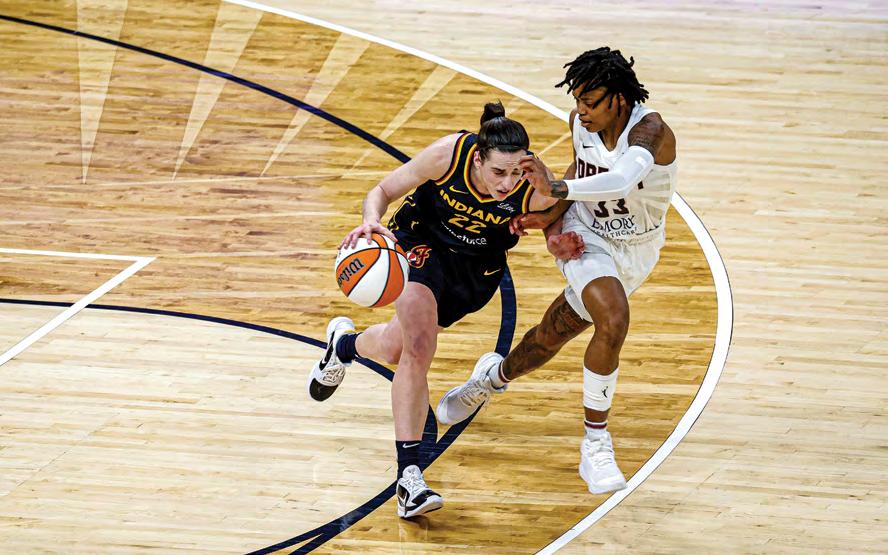
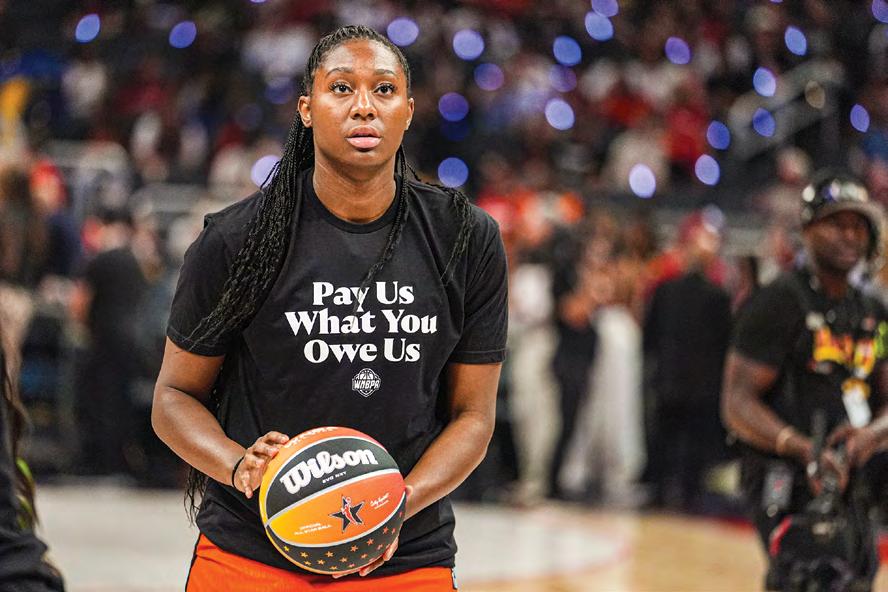
While Steph Curry and LeBron James each have yearly salaries over $6) million, the maximum permissible salary for the WN/0’s highest-paid stars is $(6),))), one twohundredth of their male counterparts’.
Bene#ts are skewed toward men’s basketballers as well. An N/0 player with three years of service gets a lifetime pension, after nine years gets full medical coverage for life, and after ten years that blanket medical coverage extends to his family. The women, by contrast, get no medical insurance after retirement. “Over here they telling vets to pay for a $ ight to All-Star weekend to get checked by a doc in a pop up tent,” Washington Mystics forward Shakira Austin posted on social media in January.
And it’s not as if the WN/0’s fortunes are sagging; quite the contrary. The league has been projected to earn $! billion in ()(6, with steadily rising increases in attendance and viewership thanks in part to the boom triggered by generational superstar Caitlin Clark. Attendance at WN/0 games
increased by !7 percent from ()(( to ()(,, and 18 percent from ()(, to ()(1 . Ticket prices have been soaring as well, with one ticket inventory company reporting that the average cost of a ticket rose from $6) in ()(, to $88 in ()(1. The league’s new media rights deal raises its annual payment from $6) million to $()) million . Indeed, the value of every one of the league’s !, teams increased by more than !)) percent from ()(1 to ()(6, to an aggregate total of $, 6 billion, with San Francisco’s Golden State Valkyries leading the pack with an assessed valuation of $6)) million.
The one and only metric that lags behind this wave of increases is player pay. And the fans watching and tuning in to WN/0 games aren’t doing it to see the league executives.
The meager salaries for WN/0 stars have forced many to get second jobs in the o.season. The most notorious example of this is six-time All-Star Brittney Griner, whose side hustle took her annually to a Russian pro league. Before a $ight to a game in ()((,
WNBA PLAYERS MAKE A BARE
9 PERCENT OF LEAGUE REVENUES, AND THEIR EFFORTS TO RAISE THAT TO 30 PERCENT HAVE BEEN REBUFFED.
Above: Superstar Caitlin Clark has triggered a surge of interest in the WNBA.
Below: Players protested low salaries and benefits at last year’s WNBA All-Star Game.
law enforcement in Moscow found a vape cartridge in her possession with less than a gram of hash oil, something she had been prescribed in the U.S. as a pain reliever. Griner was sentenced to nine years in a Russian prison for this transgression, and was only released when the Biden administration negotiated a prisoner swap for convicted arms smuggler Viktor Bout, known as “The Merchant of Death.” In a very real way, Bout is a free man who continues to trade weapons of war today because the WN/0 doesn’t pay its players satisfactorily.
Despite the sport’s growing popularity and the teams’ skyrocketing revenues and valuations, WN/0 owners haven’t ruled out a lockout of their players if they fail to come to terms, just as the players haven’t ruled out a strike if they can’t get the owners to pay them a fair share of league revenue. At the league’s All-Star Game in Indianapolis last year, all the players took the court wearing T-shirts inscribed with the words “Pay Us What You Owe Us.”
“This is the biggest moment the WN/0 has ever seen, and it’s not something that can be messed up,” Caitlin Clark has said “We’re going to #ght for everything that we deserve.”
Reflecting its demographic composition—young women, roughly -) percent of whom are Black—the union has a history of social justice advocacy and rhetoric not found in the other athlete unions. One paragraph in its mission statement reads: “Through collective bargaining, protest, public service, community engagement and educational programming, we tirelessly challenge the workplace and societal conditions that stand in the way of our vision of what is possible for our lives and the future of basketball. Moving as one, we prevail.”
That history was chie$y on display during the George Floyd protests of ()(). The players dedicated their season to Black women killed by police, such as Breonna Taylor, with uniforms bearing their names. They established social justice councils in which they met with community members to discuss ways to combat racism and sexism. Players for the Atlanta Dream wore T-shirts with the words “Vote Warnock,” referring to Rev. Raphael Warnock, the Democratic Senate candidate who was running (successfully) against 20F0 Republican Sen. Kelly Loeffler, who was the Dream’s coowner. LoeIer had previously complained to the league about players wearing “Black Lives Matter” and “Say Her Name” jerseys, to the point that the league itself suggested she sell the team to new owners more sympatico with the players, which she did after losing the election to Warnock. (She is now heading the Small Business Administration during Trump’s second term.)
Now the players are channeling this militancy into the cause of their own livelihoods. Minnesota Lynx star Napheesa Collier said in September: “We have the best players in the world. We have the best fans in the world. But right now we have the worst leadership in the world.” She confronted WN/0 commissioner Cathy Engelbert, asking why stars like Clark were making so little. Collier reported that Engelbert responded, “Caitlin should be grateful she makes $!7 million o. the court, because without the platform that the WN/0 gives her, she wouldn’t make anything.” (Clark’s Indiana Fever currently has her signed to a four-year, $,,8,))) contract.) Engelbert, when pressed, did not deny the statement.
Some WN/0 players remain hopeful that the owners will come around to embrace the rather modest increases in pay that the union has proposed. If the owners opt to continue to hoard their revenues, however, the players appear determined to strike.
It was just nine years after baseball’s National League was founded in !8-7 that the first American athletes’ union took shape. John Montgomery Ward, who was the Shohei Ohtani of the !88)s as both a star pitcher and hitter, organized the Brotherhood of Professional Baseball Players in !886 . At the time, salaries were abysmal, and the owners actually required players to pay them rent for their uniforms. The players’ chief grievance was the reserve clause, which bound each player to his team with no option to move to another unless his owner sold him to a rival franchise. Nor did owners need their players’ consent for such sales, which almost invariably blindsided the players. The reserve clause would impede players’ freedom of movement for the next 9) years.
In !888, enraged by the owners’ refusal to meet with the union, their blacklisting of union activists, and their stationing of Pinkerton agents to spy on them, Ward opted to create a new league. In the Players League, as it was named, each team was owned and run by a board consisting of four players and four investors. Most of baseball’s stars moved to the new league, which had no reserve clause binding them to a particular team. National League owners termed these defectors socialists, revolutionaries, and terrorists—and even worse, “overpaid.” But the NL owners wooed PL investors with promises of new teams that they could own, and the PL collapsed after the !89) season, taking the Brotherhood down with it. Some small proto-unions popped up in the !9))s, ’ !)s, and ’1)s, but none lasted very long or claimed signi #cant membership.
In !96,—the year that union membership as a share of the overall U.S. workforce peaked—players formed the Major League Baseball Players Association, which exists to this day. The union was born chiefly because some players learned that the pension fund owners had established for them had almost no money in it. But save for its effort to restock the pensions, the 2L/:0 was singularly ineffective for its first dozen years, in large part because the attorneys chosen to run
it were disinclined to take actions that might perturb the owners.
During this time, the closest thing to a labor action was the !977 two-person strike threat from the two leading pitchers on the Los Angeles Dodgers, Don Drysdale and Sandy Koufax (point of personal privilege: my boyhood hero). The Dodgers had won two World Series in the preceding three years despite being a light-hitting team; it was Koufax and Drysdale, the game’s preeminent pitchers, who led them to victory and # lled Dodger Stadium’s seats.
After a string of record-setting seasons, they were seeking substantial raises, though the club had o.ered Drysdale a raise of just $6,))) and Koufax one of $!6,))). Koufax and Drysdale decided to refuse to report to spring training until the club relented. While hardly a mass campaign, this holdout proved to be the only episode in roughly half a century when a threat to withhold labor compelled management to meet their players’ demands.
All this was to change within weeks of the Koufax-Drysdale holdout, when the players hired a new union leader who would change the trajectory of American professional sports.
Marvin Miller was a labor economist, the #rst sports union o cial who’d come up through the labor movement. He’d worked for the War Labor Board during World War II, and then as an economist for the Machinists, the United Auto Workers, and #nally as the chief economist for the United Steelworkers of America, where he was deeply involved in winning record pay and bene#ts for DSW members despite the opposition of the companies. Unlike his predecessors at the 2L/:0, Miller believed that workers—even pitchers and shortstops—had to #ght management for what was rightfully theirs, and he was determined to transform the union into an organization that did just that.
Before Miller arrived, the union was, pathetically, dependent on the owners for its funding. Miller worked a deal with CocaCola to provide funding in return for the use of players’ photos. With that added clout, he got the owners to double the pension fund and sign the # rst collective-bargaining agreement in the history of American sports. In that agreement, minimum yearly pay rose from $7,))) to $!),))), and player grievances, instead of being ruled upon solely by baseball’s commissioner, who represented the owners, were heard instead by
independent arbitrators. Shortly thereafter, those arbitrators were also empowered to rule on salary disputes between players and their clubs.
Within two years of Miller’s arrival, fully 99 percent of the players had voluntarily signed dues checkoffs to the union, recognizing that they finally had a union that worked for them. (I draw much of this history from Major League Rebels , an invaluable study of baseball unionism and player activism by Peter Dreier and Robert Elias.)
In !979, the 2L/:0 pressured the owners to establish a joint commission to study the reserve clause. The union proposed giving players the right to become free agents after three years with a team; the owners $atly rejected it. Later that year, the St. Louis Cardinals traded star out #elder Curt Flood to the Philadelphia Phillies. They chose the wrong man. O . the #eld, Flood had been both a civil rights activist, traveling to Mississippi in the early !97)s to speak at rallies, and a union activist. Flood didn’t want to move to Philadelphia, which he termed “the nation’s northernmost Southern city.” He found more than a trace of the ethos of slavery in baseball’s practice of selling players as property to other teams, without the player’s consent. So, with the union’s backing, Flood refused to go to the Phillies, sitting out the season and # ling a federal lawsuit against the reserve clause. The suit did not prevail when it reached the Supreme Court, but Flood’s actions made the clause vulnerable in the court of public opinion.
At the start of the !9-( season, the players walked out, the # rst strike in the history of U.S. professional sports. At issue, again, was underfunded pensions; the owners quickly realized that they were losing more money in canceled games than they’d have to pay to fund the pensions, so they quickly settled. The following year, the 2L/:0 signed a contract that allowed players with ten years’ experience to veto trades—the # rst crack in the reserve-clause wall.
Then, in !9-6 , Miller advised pitchers Dave McNally and Andy Messersmith to challenge the reserve clause in arbitration, and to the horror of the owners, the arbitrator interpreted it in a way that e.ectively abolished it. As the contract between owners and players was running out in !98! , the owners demanded new language that amounted to a reinstatement of the reserve clause. In return, the players took to the
IT REQUIRES A MILITANT AND EGALITARIAN SPORTS UNION TO FOCUS ON THE MATERIAL INTERESTS OF THE MEDIAN PLAYERS.
picket line on June !(, and didn’t return to the #eld until August !), once the owners had abandoned their e.ort. The following year, Miller retired.
Through constant dialogue with players and an ability to convince them of their own power, as well as his sense of management’s vulnerabilities, Miller transformed the union into a uni#ed and militant organization, and the sport into one whose prosperity was shared with its players. As Miller was later to write in his autobiography: “The di.erence between a ballplayer’s being required to accept whatever a club o.ered him, as had been the case almost from the beginning of professional baseball, and the new system of salary arbitration was like the di.erence between dictatorship and democracy.”
The major leagues in other sports all gradually shed their reserve clauses, more or less, and moved into the era of free agency. Miller was clearly the catalyst for liberating players across the sports landscape from rules that limited their earning potential.
The owners loathed him (and managed to keep him out of baseball’s Hall of Fame until he was # nally voted in, posthumously, in ()!9), but Miller had managed to make professional team sports a lucrative profession not just for its stars but for its journeymen as well.
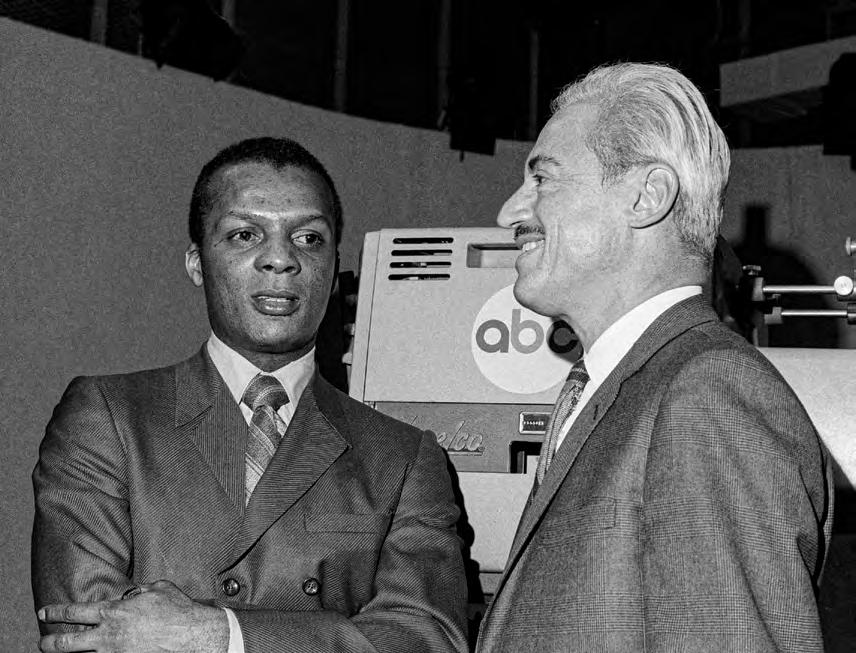
It’s journeymen—and journeywomen— who need unions. The Shohei Ohtanis, LeBron Jameses, and Babe Ruths can craft their own deals. In !9,), as the nation was plunging into the Great Depression with a federal government clueless about how to stop it, Ruth signed a contract with the Yankees for $8),))). When a reporter told him he’d become the # rst athlete to make more money than the president—at the time, Herbert Hoover’s salary was $-6 ,))) —Ruth famously and accurately replied, “I had a better year than he did.”
“A key issue for all unions is solidarity,” one longtime union strategist who is close to sports unions recently told me. In fact, while the average 2L/ salary had risen to over $6 million, boosted by contracts like Ohtani’s for $-)) million over ten years, the median salary was roughly $!.,6 million in ()(6, a clear reduction from previous years. In consequence, the share of 2L/ revenues going to the players has declined over the past half-decade from 6) percent (its level in basketball and hockey) to 1- percent.
“The union is close to Scott Boras,” the union strategist said, referring to the agent for many sports superstars, “and it’s paid less attention to measures that would raise median pay.” The 2L/:0’s current contract with baseball owners expires on December
! of this year, with the expectation of an owner lockout; the main issue is not necessarily the shrinking median income, but the owners’ demand for a salary cap.
The ,) biggest stars in baseball, basketball, or football can set their own contract terms, just like the ,) biggest stars in the Screen Actors Guild. But actors tend to lean left, which isn’t necessarily the norm for the biggest stars in sports. It requires a militant and egalitarian sports union to exhibit true solidarity—that is, to focus on the material interests of the median players.
That’s a tall order. Superstars don’t have to worry about what they will do after retiring, but the average career length of a current 2L/ player is less than three years. For the N&L , it’s a little over three years; for the N/0 , it’s close to #ve; for the WN/0 , three and a half. It’s hard to maintain labor cohesion when so many players are cycling in and out, and those with the greatest longevity are stars who don’t really need the union.
The saga of the N&L Players Association illustrates what can happen absent the kind of leadership that Miller personi #ed. Its former executive director Lloyd Howell was moonlighting as a consultant for private equity # rm The Carlyle Group, which was seeking minority stakes in N&L teams at the time—sadly, not the only instance
in U.S. sports history when union leaders have favored the interests of owners over those of their own members. Howell resigned last July. During his tenure, the N&L:0 agreed to keep secret from players an arbitrator’s report showing that N&L executives encouraged owners to reduce guaranteed contracts in a seeming salary suppression scheme.
The one recent instance in which a sports union did focus on median players—and then some—was the 2L/:0’s incorporation of minor league players into its ranks, and the life-changing contract it helped win for them, about which my colleague Emma Janssen writes in this issue. The chief organizer of that e.ort was attorney Harry Marino, who years ago was a minor league ballplayer in the Diamondbacks’ and Orioles’ farm systems, making a muni#cent $,,,)) a year.
Once the minor league contract was signed and rati #ed in ()(,, Marino began hearing from players in other sports who were considering going union, and he set up an organization, Sports Solidarity, to help them through that process. The group worked with the players in the United Football League (spring football) to build their union and successfully negotiate their # rst contract; quarterbacks sat out training camp until management came to the table. It is currently engaged in a similar e.ort by the players in major league rugby. And it would doubtless seek a role if the National Labor Relations Board ruled that college athletes were really employees and therefore eligible for unionization. (That was the position taken by NLR/ General Counsel Jennifer Abruzzo during Joe Biden’s presidency, though it is emphatically not the position of the Trump appointee who has taken her place.)
“The prevalence of unions in sports,” says Marino, “presents an opportunity for the labor movement. Some sports unions lean in on broader issues, using their platform as a way to educate the public on issues like racial equality and gender equality.” On labor and economic issues, no less than racial and gender issues, Marino says, “a sports union could move the needle for their fans, for workers.”
If there’s a sports union with the potential to do all of that, it’s almost surely the WN/:0 , which makes the current struggle of the women basketball players all the more important, not just for themselves but for a much broader public, too. n
MLBPA leader Marvin Miller and star outfielder Curt Flood fought to end the reserve clause, which tied players to their teams.
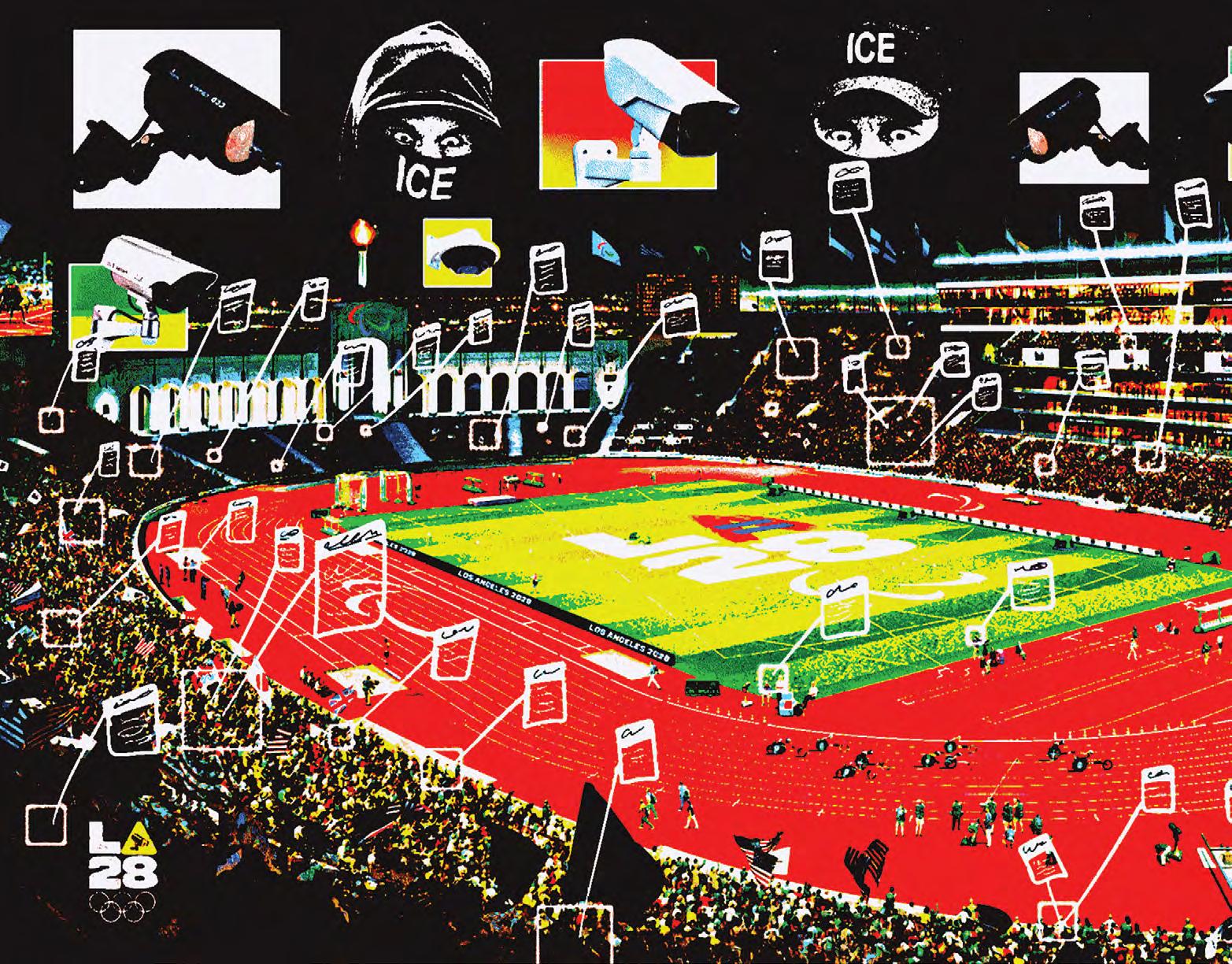
Olympic Spirits on ICE
Why would tourists come to the 2028 Los Angeles Olympics when Trump is transforming the entire country into a xenophobic danger zone?
BY WHITNEY CURRY WIMBISH
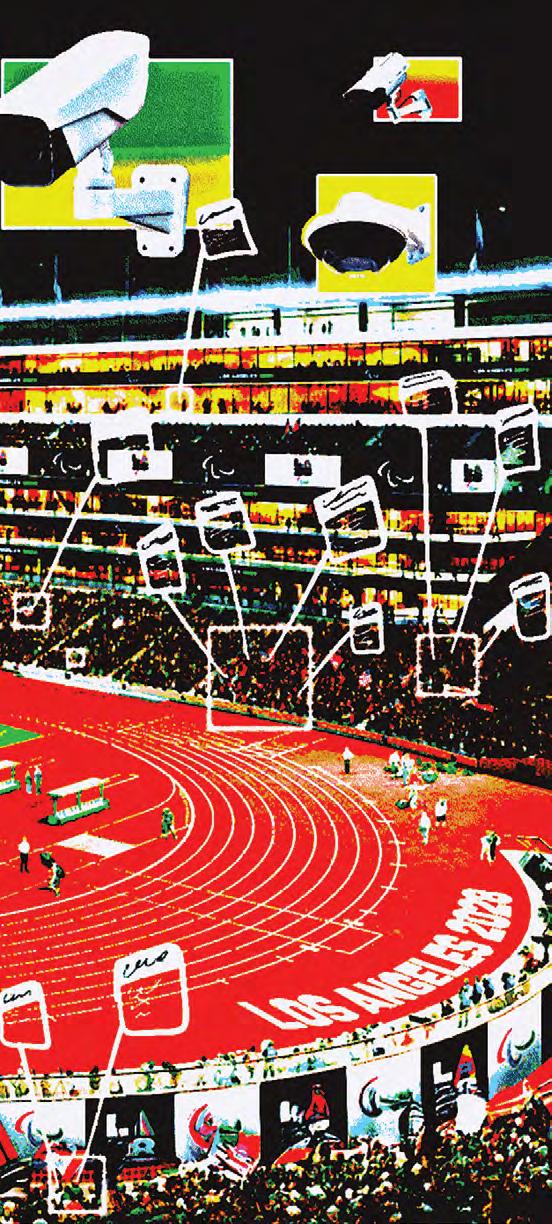
Donald Trump made the United States a bad place to visit the second he got back into o ce.
German citizens Jessica Brösche, (9, and Lucas Siela ., (6, were among the # rst tourists he locked up. Brösche was carrying tattoo equipment when she reached the California-Mexico border last February !8; agents decided she intended to work illegally. Siela . spoke little English, misunderstood a question, and answered it wrong. For those crimes, the U.S. government threw them in San Diego’s Otay Mesa Detention Center. Siela . got out after a couple of weeks, but agents held Brösche for more than a month longer, including stashing her in solitary con # nement for eight days, an experience she likened to “a horror movie.”
Then there was Welsh artist Rebecca Burke, (8, whose “trip of a lifetime across North America” was cut short when she tried to cross into Washington state from Canada. La migra sent her to an immigration camp south of Seattle on February (7, “despite being a tourist with no criminal record,” her dad said.
Agents detained many more sightseers and vacationers, some of whom they forced to strip naked and endure a full-body search before ejecting them. They blocked an Australian 220 coach with a visa to conduct a seminar, holding him temporarily in federal prison. They forced British commentator Sami Hamdi to leave in the middle of a speaking tour because he dared to criticize Israel. They detained Khaby Lame, the world’s most popular TikTok star with !7).8 million followers, because of unspeci #ed “immigration violations.”
More than 78,))) people were in immigration detention as of December ()(6, an all-time high. At least ,( have died in custody. More will be snatched, imprisoned, and murdered in ()(7, with the paramilitary force carrying out the abductions bolstered by $!6) billion in new funding.
This is the environment to which Trump expects foreign visitors and international athletes to come for the ()(8 Summer Olympics, hosted mainly in Los Angeles, with some events in Oklahoma City. Immigration o cials have terrorized residents in both cities all year, in episodes that have left people traumatized and dead. Organizers expect !6 million visitors for the quadrennial spectacle. But Los Angeles residents, activists, and researchers told me they fear for those visitors’ safety, and their own.
“I just see the Olympics as being a target for raids,” said Shirley, a lifelong Angeleno, who spoke on condition of using only her #rst name. “Tourists really don’t know what to look forward to other than the Olympic celebration, and behind it there’s much more going on.”
For all of her ,9 years, Shirley has lived across the street from Exposition Park, where the ((,))) -seat soccer arena, /2O Stadium, will host $ag football and lacrosse. Sporting events and venues were major targets for immigration agents throughout ()(6. They were spotted repeatedly at Dodger Stadium, and an asylum seeker was arrested while taking his children to the Club World Cup soccer # nal in New Jersey last July.
“I’m born here, I’m a citizen, but during the raids, just because of the color of my skin, I was scared to go out,” Shirley said. “If I were a tourist traveling to the U.S., and to L.A. speci #cally, I would think about it twice.”
The threat of immigration roundups could worsen an already dodgy economic bet that cities around the world almost always lose: that economic activity for a couple of weeks can justify the massive infrastructure outlay needed for global competitions like the Olympics. Los Angeles, which hosted the Games just 1( years ago, vowed a “nonew-build” Olympics relying on existing venues. But that is fantasy; officials are spending billions of taxpayers’ money. What if nobody shows up, preventing Los Angeles from recouping this investment?
Olympic Games routinely run over budget and provide scant bene #t to the cities that host them. Accountants last September # nally put the cost for the Paris ()(1 Games at 7.7 billion euros, for example, signi #cantly more than the original 6 9 billion estimate. National auditors claimed that did not represent “budgetary overspending,” according to Le Monde and 0&:, and that taxpayer exposure to the bill was “contained.”
The Olympics routinely fails to draw as much money as o cials say it will. Beijing’s Summer Olympics in ())8 cost $1) billion and brought in just $,.7 billion, for example, while the ()!7 Games in Rio de Janeiro cost more than $() billion and required a $9)) million emergency loan from the Brazilian government weeks before the Opening Ceremony. Tokyo’s ()() Games cost $!, billion
but brought in just $6 8 billion.
Venues constructed for Olympic play routinely lie dormant just months after the athletes go away. Sochi, Russia, which hosted the Winter Olympics in ()!1, quickly became a ghost town, with empty ski lifts, racing tracks, and housing for athletes and the media. It was not the #rst set of Olympic facilities lying in ruins.
The overall picture is misplaced optimism and ruinous debt, with little regard for local communities in the secretive deals between lawmakers and executives. All the bidding war drama between di.erent cities? The hopes of towns to be center stage for the world? “It’s a con,” said Jules Boyko., professor and department chair of political science at Paci#c University in Oregon, who represented the U.S. Olympic soccer team in international competition. “Money almost always drives what the Olympics does.”
Los Angeles is the only Olympics #nancial success in recent memory. The !981 Summer Games, managed by local businessman Peter Ueberroth, generated a $(!6 million operating surplus; Time named Ueberroth Man of the Year for pulling o. such a feat. Yet two years out, there are warning signs that regular Angelenos will not bene#t from the next Games or its infrastructure projects, though they are paying for it and also shouldering the risk of # nancial disaster.
Take the claim of LA (8 , the private group responsible for the Summer Games, that the Olympics will be a “zero-cost” event. The organization, whose chair is Casey Wasserman, grandson of Hollywood legend Lew Wasserman, said it has a “balanced budget” of about $- !6 billion, which it will cover with money generated by the LA (8 Games themselves. But that budgetary #gure is nearly $( billion above the original $6 ., billion bid to cover the event, a ,6 percent increase.
Since they don’t have to build any new infrastructure for venues, the group says, taxpayers won’t be liable for any of the cost. They’re using existing sites like the L.A. Coliseum, the Pasadena Rose Bowl, and Inglewood’s SoFi Stadium and Intuit Dome.
Yet all those claims are exaggerated. Los Angeles is undertaking a massive infrastructure project funded primarily by taxpayers. The city cannot accommodate millions of visitors without a major transit upgrade, so it is racing to complete (8 transportation projects by ()(8, including extending light-rail lines, adding more
buses, and expanding the I-6 freeway. Just nine of those projects are complete. LA (8 isn’t covering the cost; the majority of funding is coming from sales taxes on purchases in Los Angeles County. City o cials have repeatedly begged for $,.( billion from the Trump administration to help with the cost. But it hasn’t materialized yet.
In addition, last October the city council voted unanimously to allow zoning exemptions for any Olympic construction projects, contrasting the claim that no construction will be necessary. That includes a $( 7 billion project to upgrade the L.A. Convention Center, which will host taekwondo, fencing, judo, wrestling, and table tennis. The modernization is being funded through cityapproved bonds, not LA (8, and legislative analysts expect residents to shoulder an $89 million average annual burden for the next ,) years.
The ultimate guarantors of LA (8’s investments are Angelenos. As LAist explained late last year, taxpayers are responsible for the # rst $(-) million of potential LA (8 losses. Statewide taxpayers must pay the next $(-) million. “L.A. City is then liable for … anything and everything after that,” Chris Tyler, communications manager of community group Strategic Actions for a Just Economy (S0J;) and a member of the NOlympics L.A. coalition, an advocacy group protesting the Olympics, told me in an email.
The same is true in Oklahoma City, where taxpayers are ultimately responsible for the $,1 .6 million guarantee that Mayor David Holt signed to protect LA (8. “It’s a check we’re never going to write, but it is a check we have to account for,” Holt told The Oklahoman . The paper noted that the deal “occurred in secret because LA (8 … needed con#dentiality as it worked through the process,” but did not explain why.
Los Angeles has failed to hammer out an “Enhanced City Resources Master Agreement” contract, which it was supposed to do by October !, ()(6. That means there’s no agreement for the cost of Los Angeles Police Department o cers, tra c control, trash removal, paramedics, or any of the other services that will increase for weeks as the Games and the Paralympics, scheduled after the Olympics, proceed. At a December meeting, city o cials discussed whether they would sue LA (8 over those costs and met with legal counsel about it, according to the L.A. Times.
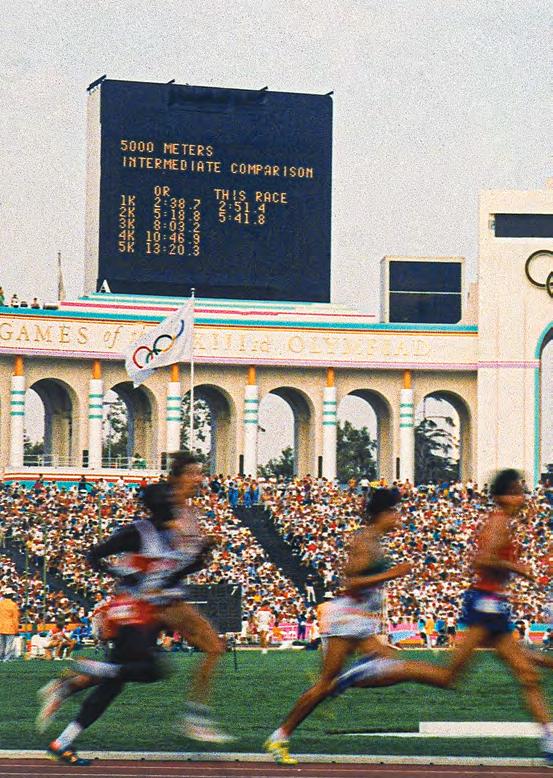
1984 Summer Olympics
After the Los Angeles City Council voted to approve the Olympic Wage Ordinance, increasing hotel and other workers’ hourly minimum wage to $,) by July ()(8, bosses decided that was too generous. Now the increase is on hold until voters decide via a June ()(7 referendum.
And the new transportation hubs and rail lines? What people really need are more and faster buses, community members say. “I’m a transit rider, I don’t own a car. We ride the bus in L.A.,” said David, an organizer with the Los Angeles Tenants Union, who spoke on condition of using his # rst name only. “Build more bus lines. Working-class people would use those buses. The trains are not nearly as utilized, and where they are being constructed is displacing transit riders.”
It’s especially unlikely that locals will use the $ying taxis that LA (8 is planning with Archer Aviation, which in November bought a regional airport about six miles away from L0H , Hawthorne Airport, for $!(7 million in cash to use as the “operational hub” for its L.A. air taxi network and as a “test bed for the AI-powered aviation technologies it is developing.”
But the biggest reason to question L.A.’s ability to repeat the success of !981 is that back then, there wasn’t a massive federallevel immigration dragnet tanking tourism across the country.
The
in Los Angeles, highlighted by gymnast Mary Lou Retton (right), is a rare example of a financially successful Games.
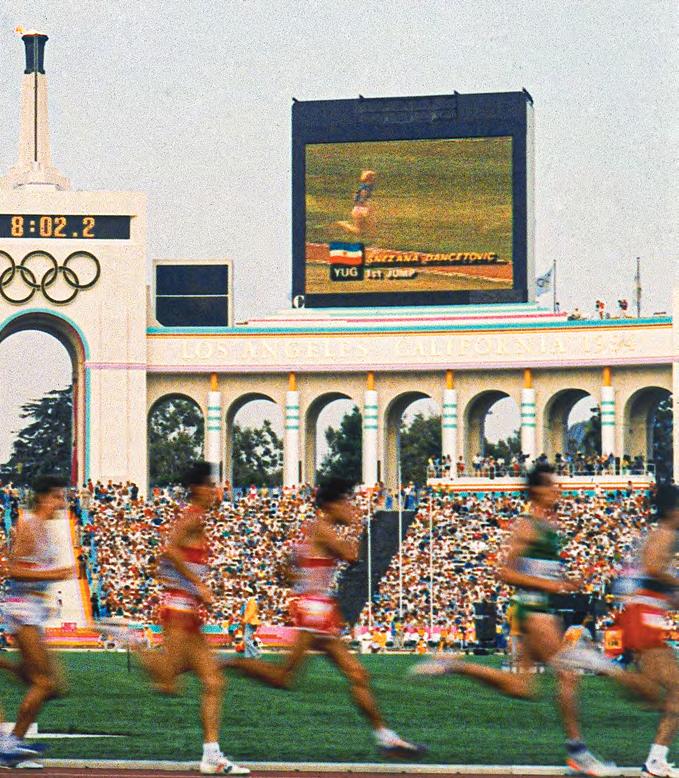
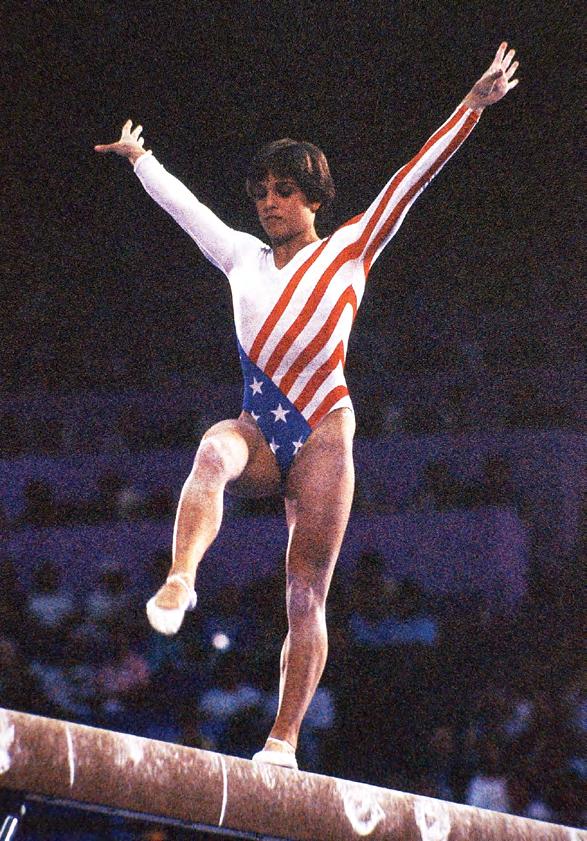
Picture Los Angeles preparing for the Games. There are federal agents, National Guard soldiers, local police by the thousands, and more than a dozen bomb detection dogs helping “scores” of human bomb disposal experts. Picture two paramilitary hostage rescue teams with silencer-equipped machine guns, and “a task force of antiterrorist specialists” sta .ed by intelligence agents. Picture a city with multiple checkpoints for athletes, visitors, and locals alike, locked down so hard that a reporter from Kyodo News Service said it looks “almost like a military base.” You need a plastic card bearing your identity, information, and a magnetic strip to get into events and locations. In fact, security is the “largest in peacetime,” including !)) helicopters that clog the city with omnipresent noise as they watch the whole town from the sky. Agents are watching from the ocean, too, some in a ,99 -foot icebreaker, others in smaller vessels, securing the port.
That was the scene in the summer of !981 Under cover of providing Olympic security, the L0:D stockpiled their arsenal, using federal funds. Before and during the events, the L0:D and the &/I conducted “sweeps” to empty the streets of poor people of color so rich visitors wouldn’t see them, then continued doing so in the months that followed. In February !986, an L0:D SW0E team “used
a military-grade V-!)) tank-like vehicle received from the Olympics and equipped with a !1-foot battering ram” to bust down a door of a suspected drug haven, only to # nd “two women and three children eating ice cream,” with no guns or drugs other than a small stash of weed. Forty-two years later, the L0:D continues to hoard war machines to use against Americans.
“So many people on Flower Drive remember the Olympics in the ’8) s, their sons swept up in those mass arrests,” said David, the South Central organizer, referring to the homes directly across from Exposition Park and to the abuses that came during and after the !981 Games. Those included the notorious Operation Hammer, a brutal !988 raid on two apartment buildings seen as a precursor to the Rodney King beating and the !99( riots.
Now picture all of that and add Trump’s obsession with spectacle, more high-tech weapons and surveillance, and federal agents bent on ethnically cleansing the U.S. People on the ground will be unable to approach any venue by car and will endure surveillance checkpoints. That’s one thing for visitors and another for ordinary residents, “who are going to be subject to the multiple rounds of screening,” said S0J;’s Tyler. “There’s a kind of psychological infrastructure being developed where any and
all mechanisms deemed necessary to the event will be justi #ed and rationalized,” he added. LA (8 has largely hidden the details about their plans from residents; as Tyler put it, “everything is really under tight lock and key.”
Civil rights advocates are warning of more CCE? in the city, drones overhead, and facial recognition everywhere. “We feel the Olympics is a Trojan horse that’s bringing more federal agents, more types of surveillance, and bringing more policing,” David said. He’s already noticed more outdoor cameras and more federal agents roaming everywhere; a local developer who wants to buy up neighborhood homes has taken to $ying a drone over tenant union meetings when they gather outside. “The surveillance is coming from a lot of directions,” he said.
The fact that the success of the Games hinges on getting transportation funds from the Trump administration is disturbing, said David, who feared local o cials could concede to Trump’s wishes as a result, allowing federal immigration agents to raid events and harass and imprison people. Folks in South Central have a name for the ()(8 Games, he said: “Trump’s Olympics.”
Trump has already designated the Games a National Special Security Event, which
puts the Secret Service in charge of security. The Secret Service answers to the Department of Homeland Security, the agency responsible for Trump’s mass deportations. The Big Beautiful Bill contained $! billion in funding for the ()(8 Games, but only for “security, planning, and other costs.” In October, the president o.-handedly suggested moving the Olympics from L.A. if the city was not “prepared properly.” He threatened to deploy the military and the National Guard.
An August executive order established a security task force for the Games; Trump made himself chair of it. “This extraordinary occasion o.ers a powerful opportunity to showcase American strength, pride, and patriotism while welcoming the world to our shores,” the order said. “The Federal Government will lead a uni #ed e .ort to ensure maximum safety, secure borders, and world-class transportation for millions of visitors throughout the ()(8 Summer Olympic and Paralympic Games.”
But at the same time, Trump has barred or restricted visitors from more than three dozen countries whose residents are mostly Black and brown. Under the “Restricting and Limiting the Entry of Foreign Nationals to Protect the Security of the United States” executive order, the administration is fully barring from entry any citizens of Afghanistan, Burkina Faso, Burma, Chad, Republic of the Congo, Equatorial Guinea, Eritrea, Haiti, Iran, Laos, Libya, Mali, Niger, Sierra Leone, Palestine, Somalia, South Sudan, Sudan, Syria, and Yemen. Trump is limiting people from !9 other countries, including banning all tourists, students, and exchange visitors from Angola, Antigua and Barbuda, Benin, Burundi, Côte d’Ivoire, Cuba, Dominica, Gabon, The Gambia, Malawi, Mauritania, Nigeria, Senegal, Tanzania, Togo, Tonga, Turkmenistan, Venezuela, Zambia, and Zimbabwe.
The order contains a special carve-out, exempting “any athlete or member of an athletic team, including the coaches, persons performing a necessary support role, and immediate relatives, traveling for the World Cup, Olympics, or other major sporting event as determined by the Secretary of State.” But that’s impossible to trust, and it’s been proven incorrect by events.
For example, Iran was forced to boycott the scheduling announcement for the ()(7 World Cup, also taking place partially in the U.S., because members of its delega -
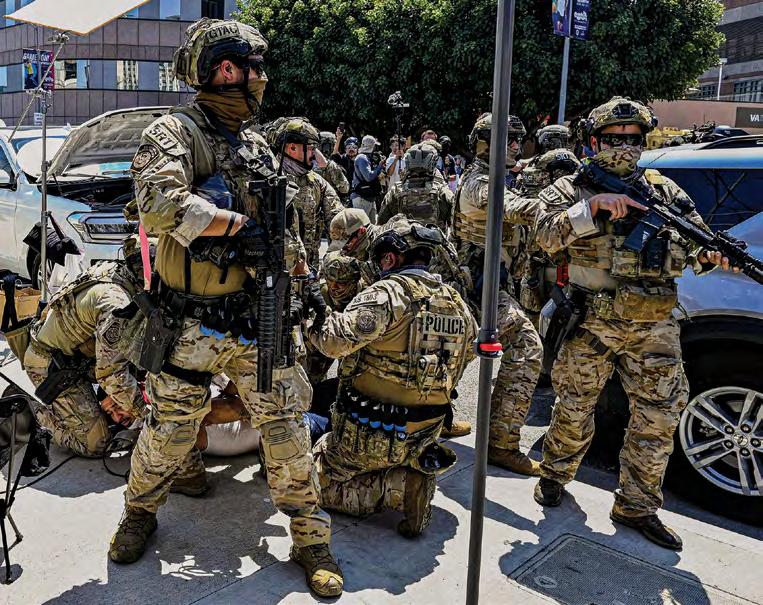

tion could not obtain visas. It was the latest in a series of visa denials for international athletes, including the Cuban women’s volleyball team, the Senegalese women’s basketball team, and a world-class Brazilian table tennis player who took home a silver medal at the recent World Championships. Several IOC members hail from countries under the Trump travel ban, including its leader, Zimbabwe’s five-time Olympian Kirsty Coventry.
More recently, the Trump regime in January denied !1 of Ethiopia’s athletes scheduled to compete in the World Athletics Cross Country Championships, held in Florida, according to LetsRun.Com . The visa rejections knocked the country out of the competition entirely and ended its record-breaking run of medals, starting with the gold in !98(. Trump subsequently said the U.S. would suspend all visas for -6 countries, including Afghanistan, Brazil, Iran, Nigeria, Russia, Somalia, and Thailand, starting January (!. Trump makes major decisions on a whim and based on moment-by-moment events, such as announcing he would “re-examine every single alien” who came to the U.S. from Afghanistan, after a man from that country in November allegedly shot to death two National Guard soldiers in Washington, D.C. “Will this a .ect the amount of people coming to the U.S.?” Boyko. asked. “Absolutely.”
Even countries not blacklisted are warning that Trump’s America isn’t safe to visit, including some of America’s closest allies. A month after agents imprisoned multiple tourists from Germany, that nation issued a travel advisory warning that U.S. border agents have the # nal say on granting entry, even if a tourist has a valid visa or entry waiver. The March !8 advisory stated that “even the slightest irregularity or infraction could result in detention.” Germany subsequently warned travelers in November that “American cities nationwide are facing an increase in violent crime,” and that there is a “continued heightened risk of politically motivated violence.”
The message is: “Don’t come here,” Siela . ’s #ancée, Lennon Tyler, told the Swiss newspaper Tages-Anzeiger. “Especially not if you’re on a tourist visa, and especially not over the Mexican border.”
Milder but still stern warnings have come from the governments of the United Kingdom, Norway, and Canada, among other nations. And these came before the Trump administration’s December announcement that it has proposed a policy change to require tourists seeking entry to hand over all social media activity for the last #ve years; personal and business phone numbers used in the last # ve years; personal and business email addresses used in the last ten years; IP addresses and metadata from electronically submitted photographs;
The threat of immigration roundups and internal unrest could keep tourists away from the 2028 Games.
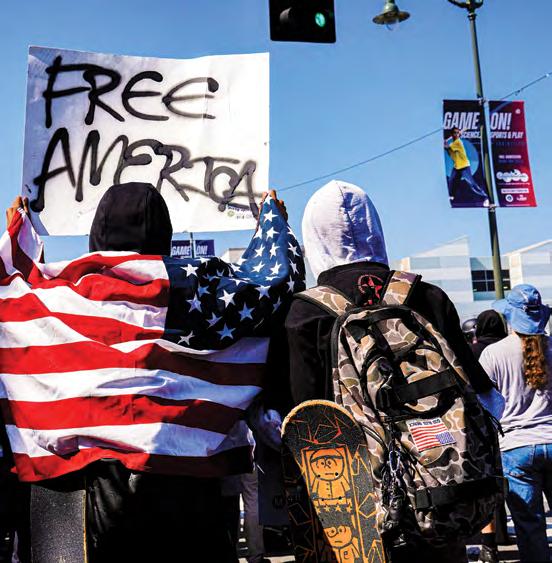
the names, birthdates, places of birth, and addresses of parents, spouses, siblings, and children, plus all their phone numbers for the last #ve years; and the would-be tourist’s face, # ngerprint, iris, and DN0 . Federal o cials proposed the change after revoking the visas of several people who criticized gun rights activist Charlie Kirk after he got shot in the neck and died.
Human rights advocates and members of the European Parliament called the proposed rule “outrageous” and something “even the worst authoritarian states in the world” don’t demand. O cials urged &I&0 to get involved in advance of this summer’s World Cup games. But considering that &I&0 president Gianni Infantino is the president’s fan and ally who showed up at a Gaza cease# re summit and gave Trump a fake peace price last December, any criticism is likely to be muted at best.
The list of requirements for a tourist visa “is a huge disincentive to travel to this country in the # rst place,” Tyler said. He’s skeptical about the projected level of tourism, especially considering that the &I&0 Club World Cup was so poorly attended this past summer.
“The &I&0 World Cup tickets were available for pennies on the dollar because so many people were not wanting to leave their homes, not wanting to subject themselves to these screenings and checkpoints,” Tyler said. The threat will be even bigger
for the Olympics. “I wonder who is going to be here,” he said. “Who is going to take those risks that will be involved in entering this country?”
Ongoing immigration raids have already kept visitors away from Los Angeles. International tourist arrivals to the city fell 8 percent through August ()(6, which meant more than !-),))) fewer people visiting than in ()(1 , according to Visit California. In September, economists doubled the amount the U.S. tourism sector was expected to lose in ()(6. The “staggering” $!( 6 billion loss expected in May has grown to $,) billion.
California o cials estimated at a state Senate hearing last summer that the Olympics will generate $!8 billion in economic activity, create 9),))) full-time equivalent jobs, and bring in $-)) million in state and local tax revenue. But those projections are based on a ()!- study, conducted before Trump’s war on immigrants. A more recent study from the Southern California Association of Governments in December estimated the regional boost in gross domestic product to be between $!, .7 billion and $!-.7 billion. Even that study fails to take seriously the impact of Trump’s immigration terror campaign. It notes that “federal policy changes” will result in “a drop in net foreign immigration in the hundreds of thousands,” but adds that “economic theory suggests that resulting labor shortages will be resolved by markets.” L.A.’s economy, it states, is “resilient.”
“The crackdowns on L.A. and beyond are going to have an enormous e.ect on the spirit of the Olympics in ()(8 and recouping the money being spent on the Games,” Boyko. told me.
If tourists do stay away and Olympic revenues are low, the impact will be felt with budget crises and reduced services for L.A. residents, disproportionately a .ecting the poorest.
International sports fans are already showing they’re willing to do so. In just one day in early January, almost !-,))) people canceled their tickets to attend the ()(7 World Cup taking place this June in the U.S., as well as Canada and Mexico. The mass cancellation, prompted by fears and anger over Trump’s rising fascism, forced &I&0 to schedule an emergency meeting. U.S. social media users are continuing to call for fans to stay away from the tournament, using the hashtag #BoycottWorldCup and urging people to “Embargo the fuck
out of us. Sanction our athletes, our businesses. Do whatever you gotta do, world,” as TicketNews reported
I asked LA (8 detailed questions about the situation, including how it plans to keep people safe during the Olympics; the organization’s expectation for how Trump’s immigration policy will a .ect foreign athletes, fans, and Angelenos; what LA (8 is doing to ensure foreign visitors’ and locals’ safety during the Games, especially regarding interactions with IC;; and the portion of revenue expected from foreign tourists.
A spokesman ignored all those questions and said via email only that the organization “is committed to working with all stakeholders to welcome athletes and visitors from around the world and deliver the safest and greatest Games for Angelenos and beyond.”
For people living in the crosshairs of Trump’s terror campaign, like Shirley, David, and other residents in South Central L.A., it’s ba I ing to imagine anyone would take the risks of their personal liberty to watch a sporting event. By the end of ()(6, Los Angeles was already crawling with federal immigration agents, who between June and December arrested more than !),))) people suspected of violating immigration rules, according to the Department of Homeland Security. The primary factor that appeared to prompt arrests was whether someone looked Latino, which, as Shirley described, applies to citizens and noncitizens alike.
Agents raided car washes, farms, food trucks, Home Depot parking lots, restaurants, and Angelenos’ very homes. In some instances, witnesses said agents “detained all Latino people,” regardless of who they were, snapping up U.S. citizens and people with authorization to be here. Most had no previous criminal history.
“Who would come to this?” David said. “Who would come from Mexico to see the Olympics that’s being celebrated by Trump?” Mexico should boycott the Games, David said. So should all Latin countries and everyone else. “We sympathize with them, the athletes, but this is an infrastructure that is being built, much like the Nazis used, to celebrate a fascist state, to surveil and ethnically cleanse a community,” he added.
“That’s what’s happening in South Central L.A. It’s really hard for us to understand who would come to celebrate this.” n
Making Sports Work
There are lots of examples where sports isn’t dictated by oligarch whims at everyone else’s expense.
BY DAVID DAYEN, JAMES BARATTA, NAOMI BETHUNE AND EMMA JANSSEN
The realities of sports, just like the realities of our politics and our economy, can seem bleak. A small group of oligarchs and vulture funds are dictating the structures of sports for their own beneft, fans struggle to aford their favorite pastimes, and players aren’t getting the value they deserve.
But none of this is etched in stone. Owners can make players and fans their most important stakeholders, and let that drive fnancial success. For that matter, owners don’t have to be wealthy individuals, hunting for a new way to extract cash from people. And players can recognize their collective power to make sure they receive fair treatment. These are not fantastical ideas but real-world examples we can see in sports today. If replicated across the country, sports might just live up to its ideals on the feld by giving fans, communities, and players fair treatment of it.
Bananas for All
You can make the case that the fastestgrowing sport in America is Banana Ball. Three years ago, the Savannah Bananas quit their independent minor league and struck out on their own, barnstorming the country with a cross between a baseball game, a three-ring circus, and a flash mob. The 2$23 U.S. tour drew 5$$,$$$ fans; in 2$25, that number crested 2.2 million, and three million are expected this year. Banana Ball now has six teams in a competitive league, and the 2$26 schedule includes (5 stadiums in )5 states, all of which will almost certainly be sold out.
The secret to the Savannah Bananas’ success is a relentless focus on making the experience entertaining, a!ordable, and fan-friendly. “The phrase Fans First is repeated so many times a day that it lives at the forefront of every thought we have,” said Emily Cole, co-owner of the team with her husband Jesse. “We feel like Banana Ball is for everyone.”
Banana Ball takes traditional baseball rules and puts them through a funhouse mirror. Every inning is a mini-game worth one point, amplifying drama with each at-bat. The ninth inning is a bonus round, where every run is worth a point. Once per game, teams can substitute a “golden batter” to get their best hitter up in a critical situation. Batters can try to steal first base on a wild pitch. If a fan catches a foul ball, the batter is out.
That last one reinforces the priority on fan involvement. Everything is designed to make the game less like baseball’s slow, pastoral stereotype and more like an attentiongrabbing event. Players can’t step out of the batter’s box, and coaches can’t visit the mound for a strategy conference. Bunting is banned because, according to the o cial rules, “bunting sucks.” And a ticking clock limits games to two hours. “We studied our crowds and other baseball crowds for a long time,” Cole said. “There was a mass exiting of fans by the 9 p.m. hour at most traditional baseball games … a time limit became obvious to us as a way to keep fans engaged for the entirety of the event.”
There are other features, including nonstop music, pregame parades, dancing
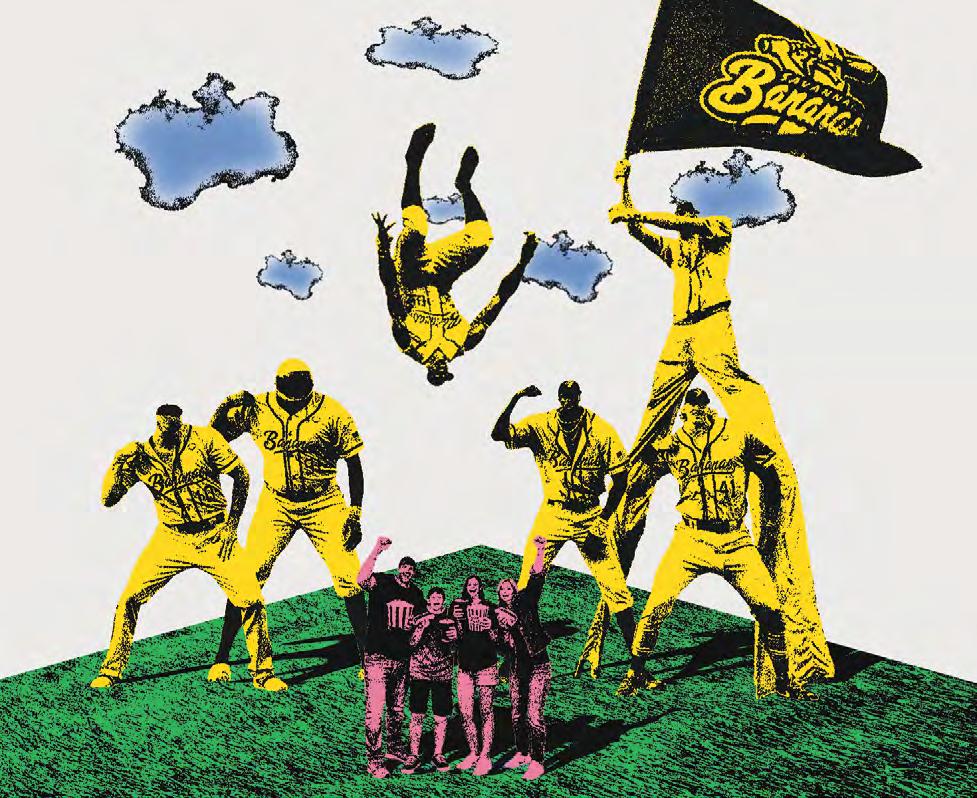
umpires—actually lots of dancing—backflips, behind-the-back catches, pitchers on stilts and things that would make Babe Ruth spin in his grave. But perhaps the most radical parts of Banana Ball are on the business side.
Tickets for Banana Ball are not dynamically priced. They cost $35 in minor league parks and start at $)$ in major league stadiums, and they are not sold on Ticketmaster but on the Bananas’ own ticket platform, which includes no additional fees. The flat rate was cheaper than the average ticket price for every ,-. team in 2$25. The only upsell is a “meet and greet” option for 3$$ fans that includes field access with the players; those go for $/$$ to $/25.
Tickets are distributed through a lottery for every game, instead of escalating pricing to match fans’ willingness to pay. There’s a priority access “K Club” ($59 in 2$25) for tickets and merchandise, but other than that, everyone—rich or poor—has the same chance to see the Bananas play.
Cole told me that “pricing out certain families or people just so we can make more money is the opposite of Fans First.” Fans can buy no more than five tickets, which cuts down on resales, and the Bananas are launching their own secondary market platform, ensuring that unused seats can be transferred
at face value without a markup.
It continues. All online merchandise sales include free shipping. All concessions at the Bananas’ home-field park in Savannah, Georgia, are also free, and all-you-can-eat. This isn’t the case at road games on the tour, which are subject to the whims of the various stadium owners. But Bananas representatives try to improve the fan experience at each stadium they visit.
Instead of selling media rights to a conglomerate for Banana Ball broadcasts, the Bananas produce their own programming and license it to 0123 and Turner Sports, so they can specify how the games are shown. All Banana Ball matchups are simultaneously streamed live and archived at the team’s YouTube channel, again for free. (The games got /6 million views in 2$25.) There are no corporate sponsorships other than a handful for jerseys and equipment. Contrary to major sports leagues, nearly all revenue is derived from ticket sales and merchandising.
The fair-treatment-over-profit mentality extends to the players. The rosters of the Bananas and the league’s other teams have year-round contracts with full health insurance benefits, unlike minor league deals that only pay during the season. Salaries are well above comparable minor league counter-
parts. “They come up with ideas and stay in shape all year, and this is the best way to compensate them for that,” said Cole.
When players and fans are respected and prioritized, it’s no surprise that the business side takes care of itself. The Bananas have a reported three-million-person wait list for tickets, and more than 2/ million social media followers. The organization has an estimated value of half a billion dollars, and unlike nearly
Getting a Share in Green Bay
half the ,-., it turned a profit last year. You can have a successful and relatively humane business in sports, believe it or not, by minimizing frustrations and “always put[ting] yourself in the shoes of your fans,” to use Cole’s words.
Economists may look at that long wait list and call it rationing, arguing that better pricing would be more e cient. But given that scarcity is already built into how many
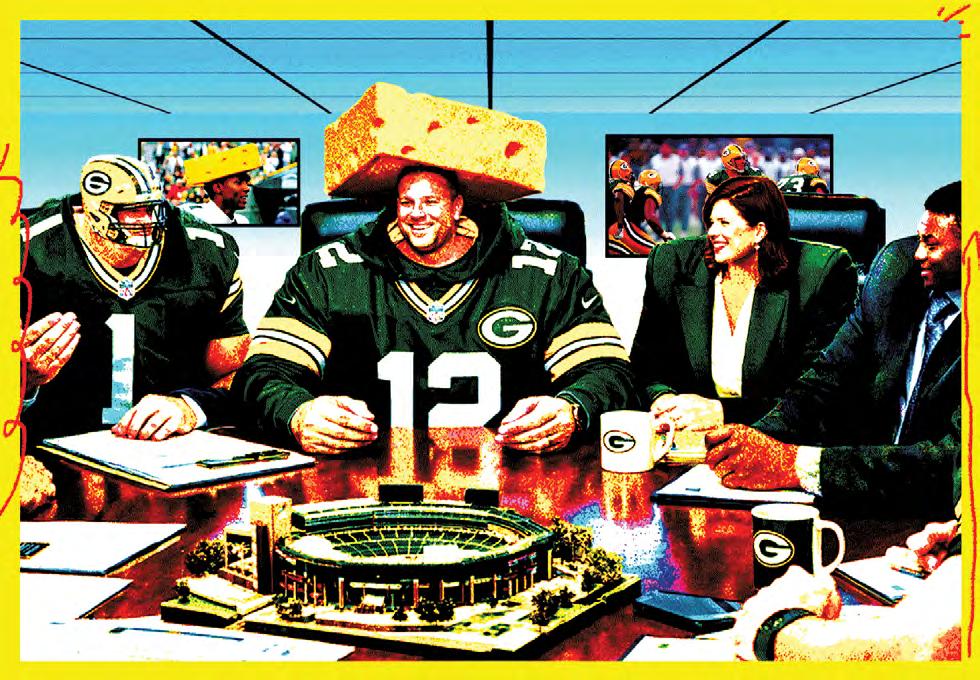
For more than a century, professional sports leagues in the U.S. have been a closed loop. “The model we have in the United States is one where the leagues are monopolies,” said Andrew Zimbalist, a professor emeritus of economics at Smith College. “They restrict the number of teams or the level of output that can be produced, and by doing that, they hope to raise the price, which is the value of the teams.”
This enables teams to threaten relocation to strong-arm local governments for subsidies, forcing taxpayers to foot the bill for stadium improvements and other upgrades. But there is a proven alternative that would eliminate the potential for a subsidy shakedown.
“If you have a model of public ownership, city ownership or municipal ownership, then the city can control this wandering tendency that owners often have,” Zimbalist said.
In the modern era of pro sports, major league executives have throttled public ownership, preferring to run the leagues like old-boy networks with little publicly disclosed financial information. But there is one exception, a relic from football’s ancient past.
Granted an 34- franchise in /92/, the Green Bay Packers are one of America’s first professional football teams. After only a year in operation, the Packers faced significant financial struggles, plunging deeply into debt. Yet community support from its small-
games a traveling team can play in a year, the Bananas put the premium on growing their brand of baseball. “We are focused on long-term fans over short-term profits,” Cole said. “Having smaller margins is a great payo! if it means we are creating fans for life.”
–David Dayen
town Wisconsin home (the current metro area has a population of around 335,$$$) saved the franchise.
A newly formed charter designed Green Bay as a nonprofit organization, empowering the community to own the team. There are over five million stock shares, and no single shareholder is allowed to own more than 2$$,$$$, ensuring that the franchise stays publicly owned. Intermittent sales of Packers stock only happen when help is needed to fund stadium improvements, rather than line the pockets of private owners.
Though the 34- o cially banned public ownership for new teams in /96$, the Packers’ unique governing structure was grandfathered in. As of 2$25, 535,96( Packers fans own shares in the organization and do not receive dividends on their original investments.
Public ownership means that far more information about the team’s finances is made available, showing a well-run franchise. In fiscal year 2$25, the Packers reported an $53 ( million operating profit. And on the metric fans care about—winning—Green Bay is tied for fifth all-time, with four Super Bowl victories.
In addition, public ownership creates an accountability process not available in most of the sports world, where fans have no say over major decisions. Finally, public ownership helps ensure that, despite being located in Green Bay, the smallest market in any of the four major North American sports leagues, the Packers aren’t going anywhere.
Staying put has been made possible through business strategies such as the Packers Preservation Fund, which acts as a rainy-day deposit. “We don’t have a rich owner, so we don’t have anyone who’s got the money to just carry this thing forward if something bad happens to the 34-,” says Rick Chernick, a Green Bay business owner and
a former member of the board. The reserve fund ensures that “if there ever became a situation where they have to come up with a lot of money, they could have something to get them through a year or two.” As of 2$25, $5(9 million has been set aside.
A )5-member board of directors elects a seven-member executive committee that presides over the team’s operations. Board members have significant influence on franchise decision-making, says Chernick. “We’re here to help them run the team properly … to oversee, to advise, to help, to guide and assist in anything that we can.” It’s a relationship that ensures accountability and transparency from leadership, something that is hard to come by on privately owned teams.
Due to their ownership structure, the Packers have more incentive to invest locally, creating economic growth for both the organization and Green Bay. For example, the Titletown District, a mixed-use development near Lambeau Field, where the team plays, was developed by the Packers. Opened in 2$/(, Titletown has shopping, dining, and medical establishments and hosts multiple year-round entertainment activities. TitletownTech, a venture capital firm created out of a partnership between the Packers and Microsoft, also has o ces there.
Driving the Packers’ success is its deep connection to the Green Bay community, and the buy-in fans have by being a shareholder. “The stadium is sold out for life,” says Harvey Kaye, professor emeritus of democracy and justice studies at the University of Wisconsin–Green Bay. He’s also a shareholder. “It’s a waiting list of 3$ years because you can pass the tickets on to your children, but you can’t sell them.”
Packers fans have a collective identity like any other team. Kaye, Chernick, and thousands of other shareholders have a sense of loyalty that transcends generations. Owning a part of a nonprofit sports team is incredibly special, especially in a country with an unequal distribution of wealth, says Craig Coenen, a history professor at Mercer County Community College and a Packers shareholder. “This team is highly successful financially, and it gives back everything they have to the community, which is what it should be. Nobody profits from this more than they should.”
–Naomi Bethune
Diamonds in the Rough
Public ownership is more prevalent in the minor leagues of sports. For example, Rochester Community Baseball is a locally operated nonprofit corporation that has owned the Rochester Red Wings since /95(. The Triple-A Minor League team a liated with the Washington Nationals in 2$2/ While Rochester Community Baseball’s stock is not publicly traded, it is owned by local shareholders.
Rochester businessman Morrie Silver was instrumental in establishing the ownership model after the St. Louis Cardinals, which had owned both the Red Wings team and the stadium, announced plans to sell in the fall of /956. In the months that followed, Silver leveraged his stature as a prominent entrepreneur to organize a stock drive that would later become known as the “(2-Day Miracle.”
“With a lot of friends and a lot of outreach, [he] was able to put this deal together,” said Naomi Silver, Morrie’s daughter and the president and 607 of Rochester Community Baseball. “People really rallied behind it.”
The community raised $)$$,$$$ to prevent the Red Wings from relocating, just shy of the $5$$,$$$ price tag for both
the team and the stadium. Rochester Community Baseball took out loans to cover the remaining costs; Morrie Silver also fronted $25,$$$ of his own money to keep the Red Wings in Rochester.
Nearly seven decades later, the Red Wings continue to command a durable form of civic loyalty in upstate New York. During the 2$2) regular season, the team attracted more than ))5,$$$ fans and recorded its highest singlegame attendance record. Over )3$,$$$ fans attended Red Wings games this past season.
Owning stock in the Red Wings is like owning a piece of history. As the Rochester Democrat & Chronicle observed, the )2,2(5 shares purchased during the (2-Day Miracle are still out there: “In frames hanging in dens, in long-forgotten shoe boxes waiting to be discovered, in certificates issued by the club whenever a stock changes hands, maybe passed down from one generation to the next or in a sale between two strangers.” The Chronicle also reported that as of 2$/6, Red Wings fans owned 33,6$2 shares of common stock, with the remaining shares held by Rochester Community Baseball.
Three hundred and ninety-four miles away, the Columbus Clippers also operate under a community ownership model. But rather than through a nonprofit corporation, the Triple-A team is directly owned by Franklin County, Ohio.
“Franklin is the only county in the country that owns a baseball team and the stadium in
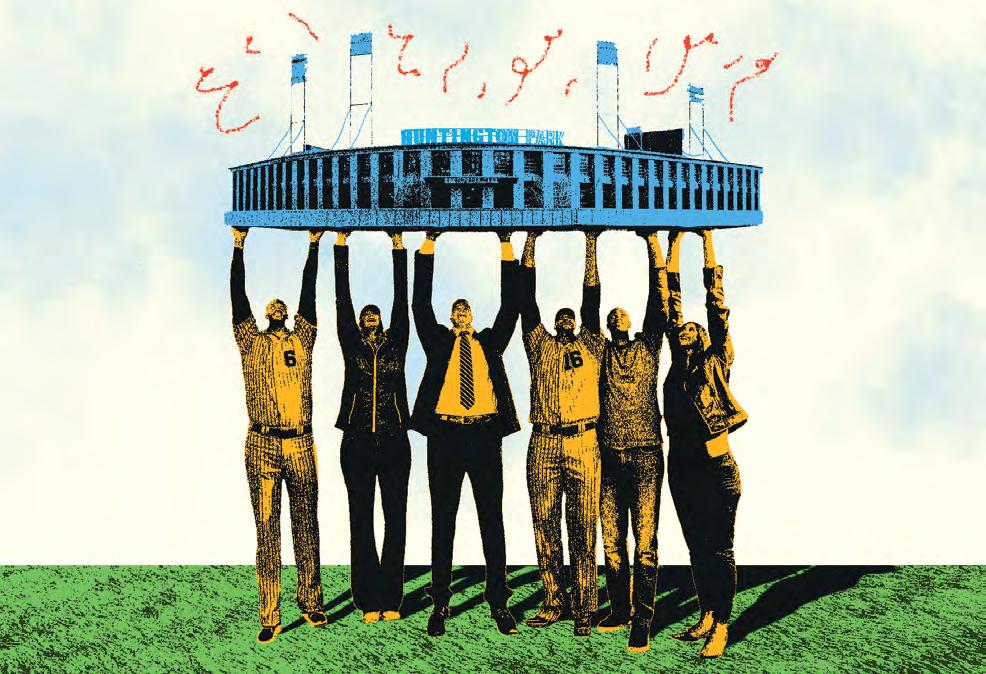
which it plays, having bought the team in the late /9($s for $25,$$$,” said Franklin County Administrator Kenneth N. Wilson. “Today, the team is valued at over $3$ million and generates more than $/) million in annual revenue.”
The Clippers have been a liated with the Cleveland Guardians since relocating from Cooper Stadium to union-built Huntington Park in 2$$9. The team has also maintained a rolling five-year seasonal average of approximately 5$6,$$$ attendees. Heading into the 2$26 season, Wilson expects the Clippers to continue cementing their position as a leader in minor league baseball attendance yet again.
In addition to storied traditions such as “Dime-a-Dog Night,” where fans can purchase a hot dog for ten cents, the cost to see a Clippers game has hardly changed since the team started playing in /9((. Back then, general admission prices were $5 for adults and $2 for youth or senior citizens; general admission is now priced at just $5 for adults and $6 for youth or seniors, well below the rate of annual inflation. Discounts are also available for county employees, local resi-
Striking Out— and Winning
dents, and first responders. “The Columbus Clippers are truly Franklin County’s team because the residents own them, and it’s a community asset with a long history of various benefits, such as family-friendly pricing to see Triple-A baseball,” Wilson told the Prospect
The county’s ownership of Huntington Park is distinct from typical stadium deals, which are often supported by subsidies that do little in the way of economic development and much to protect private profits. According to Wilson, the team’s corporate partnerships, like stadium naming rights given to Huntington Bancshares under a long-term partnership cumulatively valued at $/2 million, all go to Franklin County, which then invests in the nonprofit that runs the team on the county’s behalf.
The Red Wings have a similar model of stadium ownership; Innovative Field is owned by Monroe County, New York. Rochester Community Baseball leases it from the county, and Innovations Solutions purchased the naming rights. But corporate sponsorships are secondary to the Red Wings’ core
model. Ticket and concession sales drive reinvestment in the stadium, while sponsorship dollars are primarily used to enhance the fan experience through promotions and community-focused events. In fact, the Red Wings hold /$$ not-for-profit events over the course of the year at Innovative Field.
“When there’s local ownership, you take a certain pride in that ownership,” Naomi Silver said. “Having people feel a closeness to it, enjoyment from it, means everything in the world to me.”
According to Silver, wealthy individuals and private equity firms that own multiple franchises “may not understand where the shortcomings are, or even where the successes are” of the sports teams they own.
“All I know is where my heart and soul is,” Silver said. “Maybe they feel that they are just as dedicated to the communities that they’re in, but … I’ve always felt a real deep-rooted feeling, and I’m sure a lot of it has to do with the fact that my father put his heart and soul into it.”
–James Baratta
When you make it to the minor leagues and can o cially call yourself a professional baseball player, you are often told how lucky you are. How so many other players would kill to be in your shoes. How you can be replaced at the drop of a hat if you make too much trouble.
Perhaps as a result, for decades, minor league players endured a shocking amount of labor exploitation at the hands of their teams and the league. That changed in 2$23, when players secured a union contract that
guaranteed basic workplace protections, pay raises, and a more secure lifestyle. Their e!ort can serve as a template for other entry-level players as they seek safer, more equitable workplaces.
The labor wins of 2$23 came about, at least in part, because of 6789:. As the country shut down and gate receipts lagged, Major League Baseball (,-.) decided to cancel the minor league season prematurely, even while the majors continued playing. That decision left thousands of players out of a job overnight.
After that, ,-. announced that it would cut )3 minor league teams from a liation. The Appalachian League, with ten teams across the region, had their last a liated season in 2$/9. A number of teams folded soon after, with those remaining becoming collegiate summer teams, ending a tradition that had existed, on and o!, since /9// ,-. argued that the measure was necessary to pay players more and align teams more closely with a liates in the majors. But the cuts not only hurt baseball’s talent pipeline by slashing the number of open roster
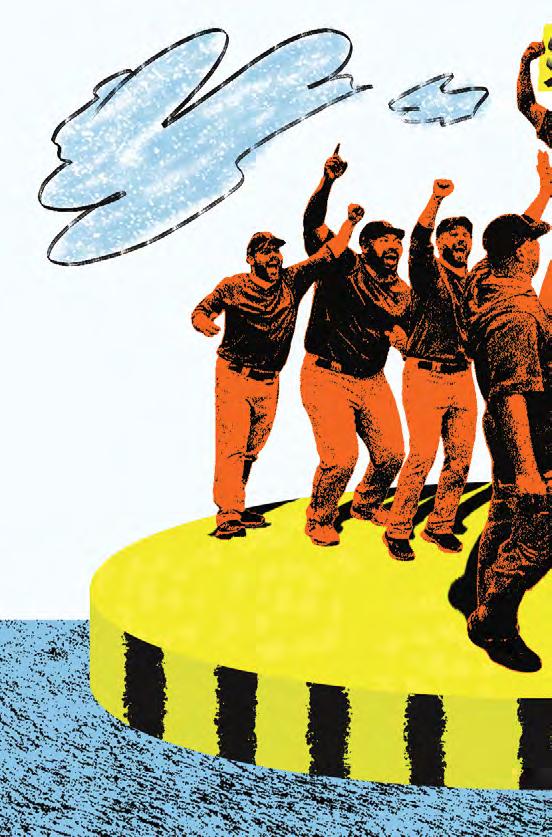
spots; they also took away a source of pride for many small towns and rural areas. Minor league teams are developmental leagues for both players and fans, drawing them into the world of professional baseball. (They also have some of the sport’s best mascots—the now-defunct Rocky Mountain Vibes, which played in Colorado Springs, had a flaming s’more as its logo.)
Even before 6789: hit, minor leaguers were getting restless. In 2$/), three retired players—first baseman and outfielder Aaron Senne, infielder Michael Liberto, and pitcher Oliver Odle—filed a lawsuit against ,-., alleging that the organization had violated the federal Fair Labor Standards Act (4-1;) and state minimum-wage and overtime requirements. The suit was settled in 2$22, with ,-. agreeing to pay $/55 million to some 2),$$$ eligible players.
Before settling, ,-. spent millions lobbying for a law that would get them o! the hook for paying players fairly. In 2$/5, lawmakers inserted the Save America’s Pastime Act into a 2,232-page omnibus bill, insulating ,-. from lawsuits by excluding most players
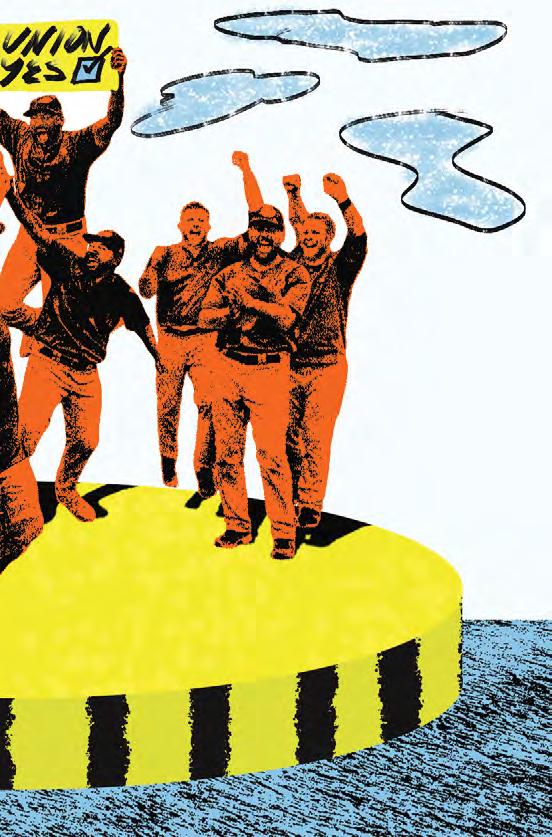
from the protections of the 4-1;, including minimum wages. The bill passed and President Trump signed it into law.
By that time, many minor league players made less than $/2,$$$ a year, all while working 5$ - to 6$ -hour weeks of physically demanding work. In the o!season, some players took backbreaking jobs to scrape by.
“You look at your first paycheck and it’s like $)$$ and you start thinking, how am I going to pay for everything?” said Garrett Broshuis, a former minor league baseball player and lawyer who helped lead the unionization e!ort.
Broshuis traveled with one player who started skipping lunch because he had racked up too much credit card debt. “He literally couldn’t a!ord to live,” he said.
During the season, they weren’t given secure, comfortable housing. Some players lived with host families—local baseball fans who gave players a spare bed to sleep in. While it sounds sweet and nostalgic, it often meant sleeping in an away-at-college kid’s room and waking up to strangers each morning. As 6789: began, the host-family arrangement was scrapped, and teams arranged for hotel rooms. But often, players had to pick up the bill themselves.
The struggles ballplayers faced were amplified for those born outside of the U.S., who make up nearly 3$ percent of the minor leagues. “I started looking around at my Dominican teammates, my Venezuelan teammates,” Broshuis said. “A lot of them came from very little, and out of that paycheck that’s a couple hundred [dollars], they’re trying to save a little money to send back to families counting on them.”
Most international players are Latin American, and come from the Dominican Republic, Venezuela, and Cuba. Many don’t have the stability of citizenship. “They’re still trying to make it into the majors, so they’re going to be reluctant to speak out,” said Peter Dreier, a professor at Occidental College and the author of Major League Rebels: Baseball Battles Over Workers’ Rights and American Empire. Even at the major league level, many Latin American members of the Los Angeles Dodgers remained silent when Immigration and Customs Enforcement (960) used the team’s stadium lot as a staging area. Even though these players have visas, Dreier said, they still feel pressure to avoid taking positions on political issues.
The 6789: crisis opened up space for player conversations about workplace
protections and collective power. A handful of ex-players helped current players navigate this tumultuous period, careful not to mention unionizing outright. But they worked with players to get unemployment benefits and helped them submit complaints about unsafe housing. Those conversations gradually grew into more focused discussions. Players spoke to their teammates, joined Zoom calls, and started seriously considering a union.
Once there was a critical mass, the Major League Baseball Players Association (,-.2;), the ,-. players’ union since /966, backed their e!ort. In 2$23, an o cial vote was held, and minor league players got their union. After negotiations on a first contract, a whopping 99 percent of players who cast a ballot voted to ratify the deal.
The agreement, which covers players until 2$2(, changed the game. Baseline salaries more than doubled for all minor leaguers. Transportation and housing issues were ironed out, ensuring that players would have rides to and from games and a place to sleep at night. Everyone got access to a new )$/(k) plan. Crucially, players also won the right to profit o! of their names, images, and likenesses, opening up new potential revenue streams.
There’s some hope that the success of minor league baseball collective bargaining can serve as a template for other professional athletes who face low pay or unfair treatment. “Success breeds further success,” said Broshuis. The w3.;, whose collectivebargaining agreement has expired amid significant frustration with low pay and a failure to receive an adequate share of overall revenues, is one clear possibility.
Moving forward, Dreier hopes that unionized minor league ballplayers see themselves as members of the broader labor movement—in sports and outside of them. “I’d like to see the Players Association and the players be more outspoken in support of other unions, like saying something in support of the Amazon or Starbucks workers organizing campaigns, or in support of workers on strike,” he suggested. Dreier hopes that if the union steps up its political engagement, players will too, building solidarity across the workforce. –Emma Janssen
PARTINGSHOT
Fantasy Football
Root, root, root for the home team, but maybe not this time.
It was December 2025 when the # rst (and likely only) &I&0 Peace Prize winner gestured to a room of international football fans and remarked, “When you think about it … this is football—there’s no question—we have to come up with another name for the N&L stuff.” Who says our president is cognitively impaired? He understands that if the object of the game is to kick the ball with your foot, it should be called football. Solid work, Mr. Really Good Brain.
A month later, that same &I&0 Peace Prize winner was bombing Venezuela, killing at least -6 people and kidnapping the country’s president and his wife. Strangely, one of my # rst thoughts after this illegal act of military aggression was “I hope the U.S. gets its ass kicked in the World Cup this year.” You know, the one that it’s hosting. A petty wish, I know, and I don’t really mean it. But I also kind of do.
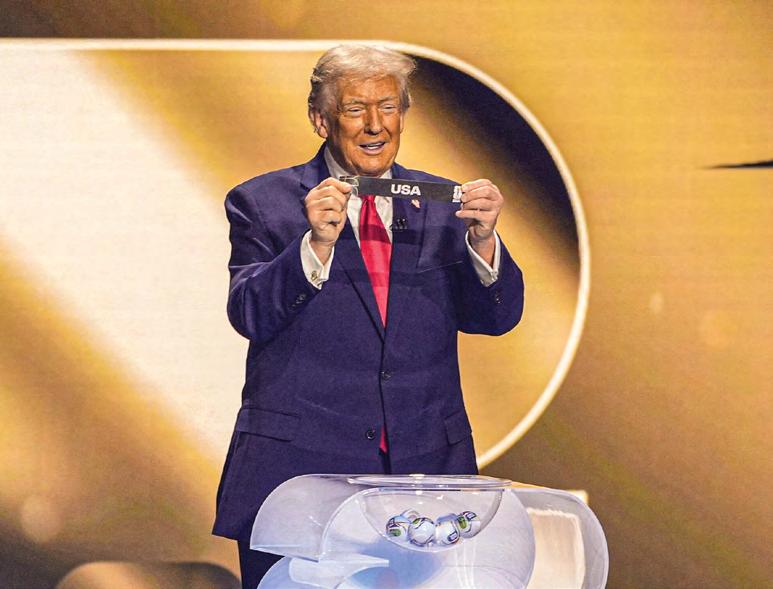
military foe in !987 with the maybe illegal “Hand of God” goal. Whatever, England deserved it after the Falklands War.
Football is the world’s sport. Every country on Earth plays it, and you don’t automatically win by having more #ghter jets than your opponent. It’s a great equalizer, accessible to all regardless of class as it requires little to no fancy equipment. The World Cup has cut great countries down to size and made them swallow their pride, even if it’s just a game. It’s an international playing #eld that’s arguably far fairer than the United Nations.
For decades, geopolitics has played out on the pitch. The tiny country of Uruguay stuck it to its larger neighbor Brazil in the Maracanazo of !96), East Germany and West Germany had it out in !9-1 , and Argentina defeated its former English
When the U.S. plays in the World Cup, it’s actually kind of magical, because for the # rst time we’re not number one. We’re not even two or three. When we make it to the Round of !7, that’s a win. We only started regularly qualifying for the tournament in !99), and in ()!8, the men’s team straight up didn’t qualify at all. (Now of course the U.S. women’s team is a four-time champion in the Women’s World Cup, but thanks to both our feminist progress that gave us funding for it and continued sexism, this gets far less attention.)
The World Cup gives us the rare feeling of being part of the world rather than dominating it. Americans are so unaccustomed to being an underdog that it’s almost exhilarating. I’ve unironically chanted “DS0! DS0!” at World Cup games and could feel pride that I wasn’t cheering for war crimes or trans people being kicked out of the military. The fans who follow and love U.S.
soccer tacitly understand that America’s lack of exceptionalism in the sport makes this harmless nationalism feel like a progressive, internationalist thing to do. After decades of being the world’s precisionguided asshole, we’re just out here being regular guys, missing obvious shots.
Our team isn’t even good enough to attract fair-weather fans. Even our chants seem to acknowledge our lack of prowess. The slogan for this year’s team is “Never Chase Reality,” which sounds like a loser admitting they suck.
Ironically, the U.S. shares its original national pastime— baseball—with Venezuela and Cuba, our supposed socialist enemies whose governments we want to topple and whose immigrants we want to eject. Well, all immigrants except the dozens who play for our sports teams and who, ahem, helped the L.A. Dodgers win the last “World” Series.
Sadly, Venezuela did not qualify for the World Cup this year, ruining this revenge fantasy for us anti-imperialists. I guess there were other things on the country’s minds, like being invaded. So that leaves the other Latin American countries— Colombia, Mexico, Brazil, even Argentina if Milei will allow it—to do the Yankee ass-kicking. Paraguay comes to town on June !(. Go Paraguay! Or what about an outright … boycott?
The ()(7 World Cup might be the only time that the accusation of immigrants coming to our country to destroy us will be true. And I will relish it, while also lamenting that it could push us farther from a sport that draws us closer to the world.
—Francesca Fiorentini
BE A CHAMPION FOR TAP
Did you know you can use your IRA to make donations to the Prospect?
If you’re 70.5 years or older, the Quali ed Charitable Distribution allows you to give up to $100,000 directly from your traditional IRA, exempt from federal income tax, even if you don’t need to itemize. Simply direct your IRA Administrator to distribute the funds to the Prospect. Is this right for you? To learn more about ways to share your wealth with e American Prospect, check out Prospect.org/LegacySociety
Your support will help us make a di erence long into the future

LISTEN! LEFT ANCHOR
Join senior editor Ryan Cooper and Alexi the Greek for grounded, novel, and irreverent perspectives on current events and political theory. Access free episodes and excerpts at Prospect.org/podcasts
Support the Prospect with a POWER level membership for access to ALL episodes Prospect.org/membership
The pessimist complains about the wind; the optimist expects it to change; the realist adjusts the sails.
—WILLIAM ARTHUR WARD