
Pool Operator Primer
The "Pool Operator Handbook" is a concise guide for maintaining swimming pools, covering water chemistry, filtration, and routine maintenance.

Managing swimming pools and spas requires skilled staff due to the investment and hazards involved. Staff must be trained in proper facility and water management, with a certified professional responsible, even when using external services Larger facilities often have inhouse staff, while smaller ones may rely on third-party services. Facilities can range from infant swim instruction to competitive swimming, and can include diving programs, slides, and interactive elements They can be part of communities like condos, apartments, hotels, or campgrounds, with no restrictions on program additions.
Management varies widely. As facilities grow, staff specialization and diversity increase. Understanding systems, operational limits, hazards, and maintenance is crucial, even with third-party services. External services do not absolve facility management from their responsibilities State codes often require that delegated staff responsible for water quality and maintenance be properly trained. The Swimming Pool and Spa Association, Inc offers training programs designed to enhance facility operations, minimize risks, and ensure compliance with government regulations through its Pool Operator (PO) certification.
1. As facilities become larger and more complex, the requirements of the staff become equaly more diverse and specialised.
Pool classifications are regularly reviewed, with some variations in local regulations
Certified Pool/Spa Operators must understand relevant regulations and definitions.
Recreational facilities are categorized as either public or private, with further classifications:
Class A: Pools for competitive events, not public.
Class B: Public recreation pools
Class C: Pools for hotels, motels, apartments, and similar lodgings.
Class D: Specialty pools with unique features like vortex pools.
Class E: Therapy pools above 86°F (30°C).
Class F: Wading pools for children.
Health inspectors focus on the health and safety of pool users. They review operational standards, approve designs, and enforce regulations Initial enforcement starts with design approval and continues with regular inspections using specific certification checklists.
Certified operators follow detailed checklists to maintain optimal conditions, ensuring the facility complies with health standards. Key operational criteria include:
Pool area free of floating material, visible dirt, and algae
Deck with a minimum four-foot clearance
Pool/spa finish intact and in good repair.
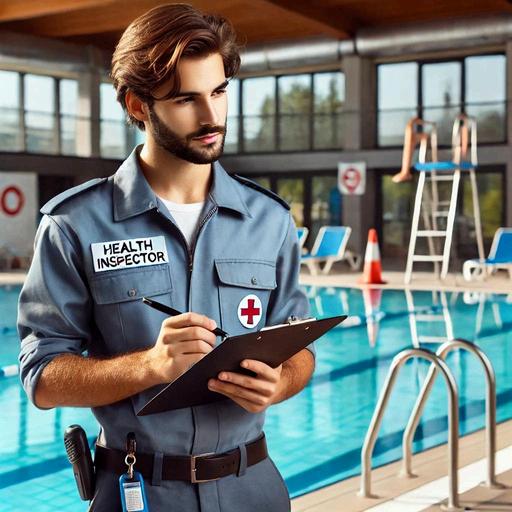
Collaborate with health inspectors to ensure a safe and healthy pool environment.
Health inspectors performing a routine pool safety check.
Depth markings are intact and in proper locations.

Handrails, grab-rails, and ladders are secure.
Gutter drains are covered with a fully intact grate, and no protrusions are present.
Skimmers have an intact weir in place. Deck covers are in place and properly secured
Underwater lights are in a working order and properly in place with no crevices between the niche and light cover.
Diving boards are secure and slipresistant
The shepherd’s hook(s) attached to a 16-foot (4.88 m) non-conductive pole is fully accessible and easily seen. The 18-inch (45 72 cm) diameter lifesaving ring with sufficient rope attached to reach all parts of the pool is fully accessible and easily seen. A floating safety line is in place 2 feet (61 cm) toward the shallow end before the slope break
The required pool/spa rules are posted in the mandatory locations. Sanitary facilities have the appropriate supplies and are properly maintained. There is an approved test kit at the site, capable of testing chlorine or bromine, pH, calcium hardness, and total alkalinity. If necessary, other testing capacity should be available, such as cyanuric acid tests, salt tests, and tests for metals such as copper Cyanuric acid, if used, shall not exceed levels required by the local health code. In many cases the limit is 100 ppm In some cases, lower, higher, or no limits exist, although most codes prohibit the use of cyanuric acid at indoor facilities.
Disinfection feeders are in place and are properly operational. If electrical feed pumps are used, they are electrically interlocked with the circulation pump.
Failuretocomplywiththefollowing itemsmayresultinimmediatepoolor spaclosure:
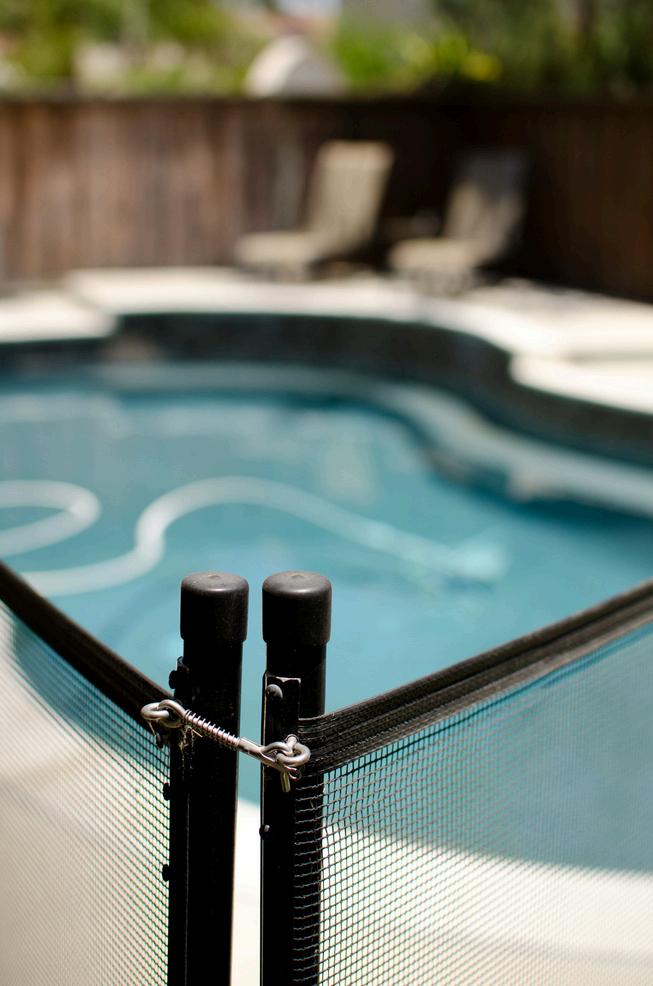
Self-closing, self-latching gates and doors that prevent access to unsupervised children.
Free available chlorine levels should not fall below 1.0 ppm (mg/L). Ideal levels in pools range from 2-4 ppm (mg/L) and in spas should range from 3-4 ppm (mg/L). Total bromine should fall between 4-6 ppm (mg/L) for pools and spas.
The pH shall be between 7 2 and 7 8
The water circulation/filtration system must be operating and circulating water at the proper rate
Pools or spas with single drains must be VGB compliant and have an additional system of protection against entrapment
Water temperature should not exceed 104°F (40°C)
The certified pool operator must always ensure safe water conditions.
A pool operator may have management responsibilities over the facility or staff members. A manager’s primary responsibility is to make sure that the team understands what is expected of them and that they have the tools they need to get their jobs done. Therefore, everyone’s roles and responsibilities need to be defined. For example, some activities involve two, such as backwashing the filter Other activities involve management, such as planning when to backwash a filter. The manager specifies who is responsible for performing each of these tasks Successful managers must continue to develop their communication skills since many of the activities they carry out involve communication.
Management involves:
Planning: Deciding the course of action before the work is started
Organizing: Defining and connecting the work to be done so it can be executed efficiently.
Leading: Encouraging people to take proper action
Controlling: Measuring and regulating all work in progress and evaluating the results.
Many of the manager’s work functions rely on keeping records documenting that these management tasks were, in fact, carried out. See the Keeping Records chapter for more information on this subject.

Planning involves setting and organizing goals to meet the facility’s objectives. This process includes several key activities:
Forecasting: Predicting future conditions and needs
Programming: Setting designated results and outcomes.
Scheduling: Planning action steps and timelines.
Budgeting: Allocating resources effectively
Policy setting: Establishing standing decisions to guide actions.
Developing procedures: Standardizing repetitive work to ensure consistency
Records like chemical usage and patron numbers are important management tools. They help identify new objectives, schedule maintenance, and revise preventative measures.
Organizing ensures that work is assigned and carried out with clear objectives. Good organization prevents conflict and duplication, helping staff understand their roles and responsibilities. Key aspects include:
Defining tasks and responsibilities. Assigning roles to ensure all work is covered
Preventing duplication of efforts.
Ensuring clear communication among team members.
Coordinating activities for smooth operation
Effective organizing enhances operational efficiency and helps in achieving the facility's goals. A well-structured system reduces wasted time and resources, allowing staff to focus on core tasks Clear organization also improves communication and collaboration among team members, leading to a more cohesive workflow. It enables better tracking of progress and ensures that deadlines are met consistently.
The pool/spa facility manager has a significant impact on staff, influencing their ability to take effective actions. A competent manager makes sound decisions, delegates tasks appropriately, and encourages necessary actions within the team This is achieved through effective communication and active participation in the selection and hiring processes. Managers must also exemplify the behavior they wish to see in their staff. Additionally, they should understand the strengths and areas for improvement within their team, providing training as needed. Key areas of leading include:
Making informed decisions
Communicating clearly
Hiring the right people
Developing staff skills
Maintaining detailed records
Proper control requires timely measurement and reporting of performance, comparing actual performance to established standards, and addressing any deviations.
Continuous monitoring ensures that any necessary corrective actions are documented and resolved promptly
The existence of plans, objectives, and organizational documents ensures that all personnel know what needs to be accomplished. Performance tracking and evaluation are essential for maintaining standards. Managers should regularly review performance metrics and document any necessary actions to ensure continuous improvement.
Setting Clear Objectives: Objectives should be specific, measurable, achievable, relevant, and time-bound (SMART)
Monitoring and Evaluation: Regularly review performance metrics and document necessary actions for improvement.
Documenting Procedures: Maintain transparency and accountability with detailed records of activities and incidents.
Implementing Corrective Actions: Address performance issues promptly through additional training, updated procedures, or repairs.
Communication: Maintain open communication channels for feedback and improvement
Staff Training: Ensure continuous staff development through ongoing training and skill-building sessions.
Preventative Maintenance: Schedule regular maintenance checks to minimize equipment downtime and prevent unexpected failures. Develop standardized procedures and guidelines to ensure consistency in operations and quality across all areas of the facility.
"Measure the free chlorine reading using a commercial DPD test kit (specified at 9:00 am, 12:00 noon, 2:00 pm, and 4:00 pm every day) and record the readings in the daily log book. This ensures the proper operation of the pump room and compliance with safety standards "
Aquatic facility management involves ensuring the safety of both the users and the staff. This is achieved through risk management, which includes preventing injuries, managing liabilities, and maintaining facility assets Key factors to consider in risk management are: Negligence Standard of Care Record Keeping
Negligence involves failing to take reasonable care, resulting in potential harm. Standard of care sets the benchmark for expected conduct, and record keeping ensures compliance with safety standards and regulations
Negligence in aquatic facilities can lead to serious injuries or even fatalities. Proper training and adherence to safety protocols are essential to minimize these risks Regular reviews and updates to safety measures are necessary to ensure ongoing compliance and protection for facility users. Failure to maintain equipment, such as lifeguard gear and pool machinery, can significantly increase the risk of accidents. Consistent monitoring and prompt reporting of hazards, such as slippery surfaces or broken tiles, are crucial for preventing incidents Engaging staff in continuous safety education can enhance their ability to respond effectively in emergencies.
The standard of care involves adhering to established safety and operational guidelines to prevent harm Operators must understand and implement these standards consistently to avoid negligence and ensure the safety of all facility users. Regular training sessions and certifications for staff are essential to maintain a high standard of care Clear documentation of safety procedures and incident reports can help track compliance and identify areas for improvement.
Accurate record keeping is vital for demonstrating compliance with safety standards and legal requirements. Records should include detailed logs of maintenance, safety checks, and any incidents, ensuring that the facility meets all necessary regulations and standards. When developing a risk management plan, operators should consider the following key factors: Negligence Standard of Care Record Keeping
Negligence refers to the failure to take reasonable steps to prevent harm The standard of care involves adhering to a consistent level of safety and operational practices, while record keeping ensures compliance and accountability.
Risk management in aquatic facilities is essential for the safety of both users and staff By understanding and implementing effective risk management strategies, operators can minimize potential hazards and ensure a safe environment for everyone. Regular training, adherence to safety standards, and diligent record keeping are crucial components of a successful risk management plan.
A certified individual must oversee the operation of each pool facility to maintain high standards of safety and efficiency. Typically, a third-party service or an external professional ensures the presence of a certified Pool Operator, providing unbiased evaluations of service quality
Pool owners or managers should prioritize safety, making certification crucial not just for compliance but also for the well-being of pool users Certified Pool Operators are knowledgeable about regulations, standards, and common practices, providing essential education for maintaining pool systems. They undergo rigorous training to stay updated with the latest safety protocols and technological advancements in pool management. These operators play a key role in ensuring the safety and proper functioning of the pool, creating a safe and enjoyable environment for all users By having certified professionals on board, pool facilities can significantly enhance their operational standards and provide a better experience for visitors.
In facilities with smaller Class C pools, a single person can manage the upkeep. The maintenance head should occasionally oversee pool operation to ensure everything runs smoothly. The part-time operator should hold a Pool Operator certification and have hands-on experience, allowing them to handle various tasks efficiently
The manager of a small Class C pool must be knowledgeable about pool safety and operations, with a good understanding of maintenance requirements to prevent any potential issues For larger Class C pools, a full-time operator may be necessary due to the increased complexity and usage. These pools might remain open for extended hours, often up to 24 hours a day, requiring constant supervision. To maintain high standards, the department head and any individuals responsible for evaluating and adjusting pool chemistry should also hold Pool Operator certification. This is particularly important during weekends when the pool is crowded, as this is when the risk of incidents is higher.
Class E pools, used for therapy and special purposes, require specialized staff Daily operations are typically managed by a certified Pool Operator technician. This ensures that the facility is maintained by someone with the necessary training.
Class F pools follow the same certification standards as other classifications Ensuring that these pools are managed by certified operators helps maintain safety and hygiene.
Classes A, B, and D pools employ highly trained staff with several management layers. A facility director oversees coordinators, coaches, lifeguards, and supervisors Each level of management ensures the safety and proper supervision of the facility.
Facility descriptions should specify the required certification and training for each role, from maintenance personnel to head lifeguards This ensures that all staff members are well-prepared to handle their responsibilities.
Lifeguards primarily prevent and respond to emergencies, ensuring compliance with safety policies and regulations They inspect the pool, identify unsafe conditions, and report concerns to the appropriate authorities. Their duties include administering first aid and CPR, and conducting water quality tests Professional rescuers often require advanced training in emergency response and aquatic safety. Lifeguards' main duty is surveillance, ensuring swimmer safety and responding promptly to emergencies, especially during peak hours when risks are higher.
Lifeguards also educate swimmers about safety rules and promote adherence to these guidelines Facility owners and managers should never expect lifeguards to double as operators while on duty. If a lifeguard must cease surveillance and no certified replacement is available, the pool should be closed to bathers Response Planning is crucial, and all staff should be trained in emergency procedures to ensure swift action during incidents. Regular emergency drills help reinforce response protocols and keep the team prepared for real-life situations
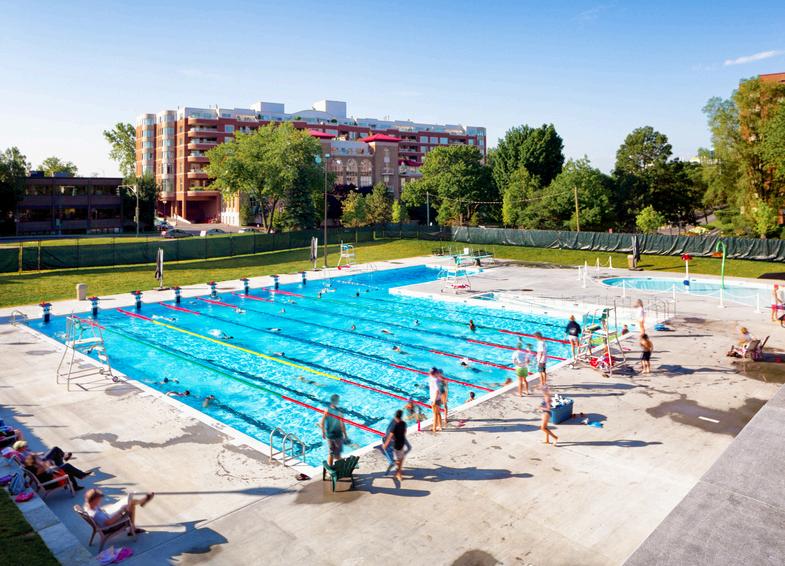
facility is kept clean, with informational signs and safety equipment in place, functional, and easily visible.
have a Pool Operator certification as a minimum training requirement Operators seeking contractor licensure will need pre-licensure certification. Operators servicing residential pools and spas should consider the Certified Service Technician certification, a comprehensive pre-licensure program for pool and spa service professionals. Operators should be familiar with pertinent legislation, regulations, codes of practice, standards of design and operation, and safety protocols It is the operator's responsibility to have a copy of the relevant information on file.
The operator should consult industry publications for current information on facility design, equipment, legislative changes, liability concerns, and management practices. Many publications are free or inexpensive. Operators who are service professionals join servicefocused associations that provide professional benefits and growth opportunities.
The operator has a good understanding of the facility's mechanical system and all its components The pool operator understands how to troubleshoot system components to ensure minimum downtime. Pool operators with certification are responsible for maintaining water quality and are
knowledgeable about providing proper disinfection and water balance. Operators who graduate from the certification program minimize hazards to bathers by understanding proper chemical storage, usage, and handling. The facility will be maintained cleanly with informational signs and safety equipment in place, functional, and easily seen. Risk management is part of the operator's responsibilities, including identifying and evaluating risks and determining strategies to minimize them.
The manager and operator never stop learning, emphasizing continued education and staying up-to-date with industry standards and technology. The pool operator attends training, reads industry publications, and networks with other professionals to share knowledge and experiences, ensuring they are always improving their skills.
The pool operator must be familiar with all aspects of pool operations, including first aid, CPR, lifeguarding, and chemical handling They should also have management skills, which may include budgeting, personnel decisions, record keeping, and equipment procurement. The operator understands the need for proper insurance at all levels, both individual and facility coverage, to ensure comprehensive protection for everyone involved.
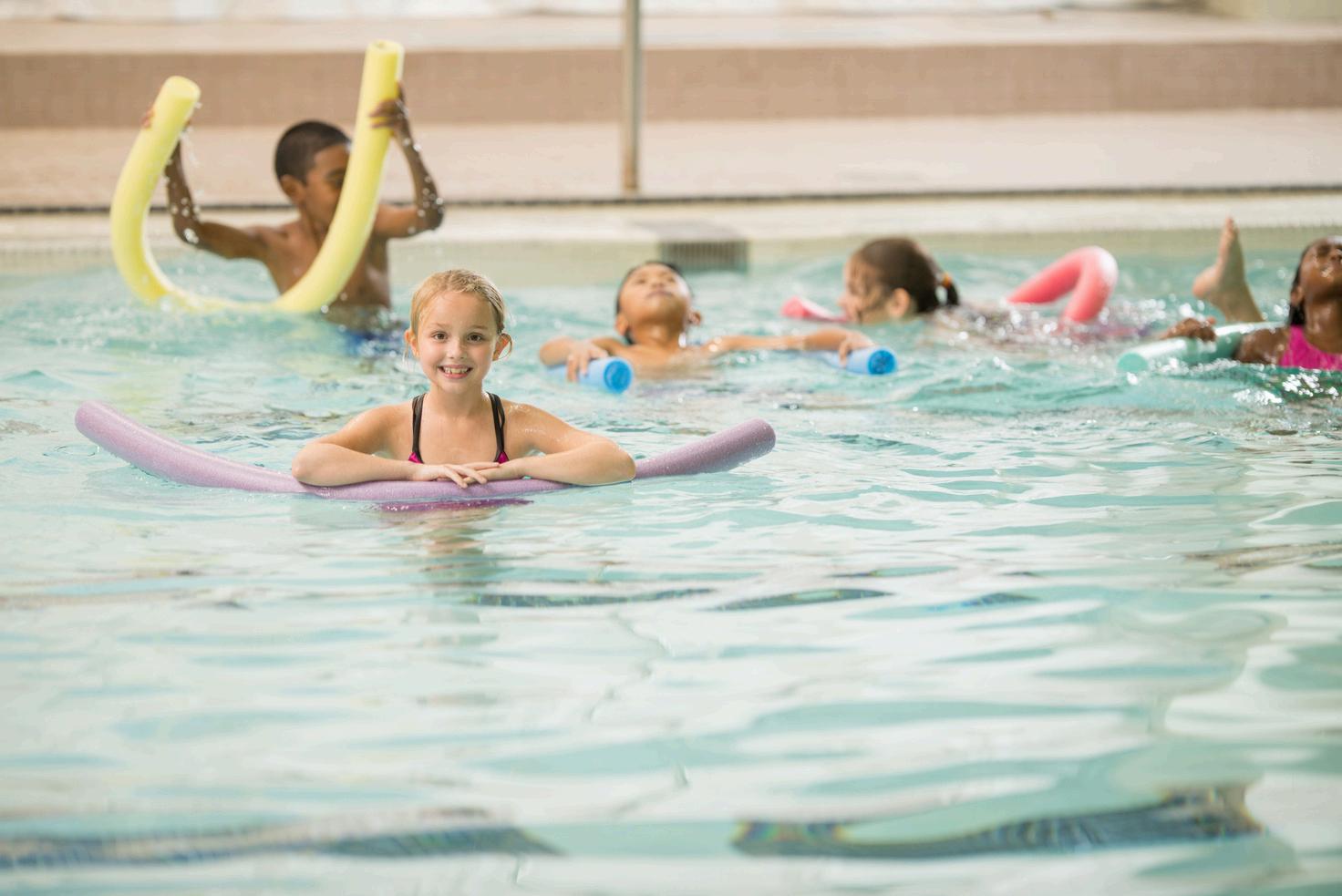
Risk management involves identifying and evaluating hazards and developing strategies to reduce or eliminate the risk of exposure.
A pool operator might be a maintenance person with part-time pool responsibilities. They could also be part of the engineering staff, with full-time pool operations responsibility The pool operator could be a manager without hands-on responsibility or someone with management authority over other operators in staff positions.
The pool operator could be an outside service technician who provides periodic support to a pool. Regardless of the background, all pool operators must meet the required standards of the facility. Whether owner or technician, manager, or lifeguard, the pool operator embodies an Aquatic Facility Professional.
The pool operator might be a lifeguard, providing pool operations management when not surveilling They must ensure that all equipment is in place, functional, and easily seen. This includes ensuring that safety and informational signs are prominently displayed and that all safety equipment is regularly checked and maintained
Risk management is a key part of the pool operator’s responsibilities. They must identify, evaluate, and implement strategies to minimize or eliminate hazards This proactive approach ensures a safe environment for all pool users, with regular assessments and updates to address new risks.
The pool operator’s role is multifaceted, requiring a deep understanding of operational and management aspects This includes daily maintenance, emergency preparedness, and resource allocation. Continuous education and staying updated with industry best practices are crucial Attending workshops, participating in professional organizations, and pursuing advanced certifications help maintain and enhance their expertise
By adhering to these standards, pool operators maintain the safety and efficiency of aquatic facilities. Their commitment ensures the well-being of pool users and enhances the facility's reputation
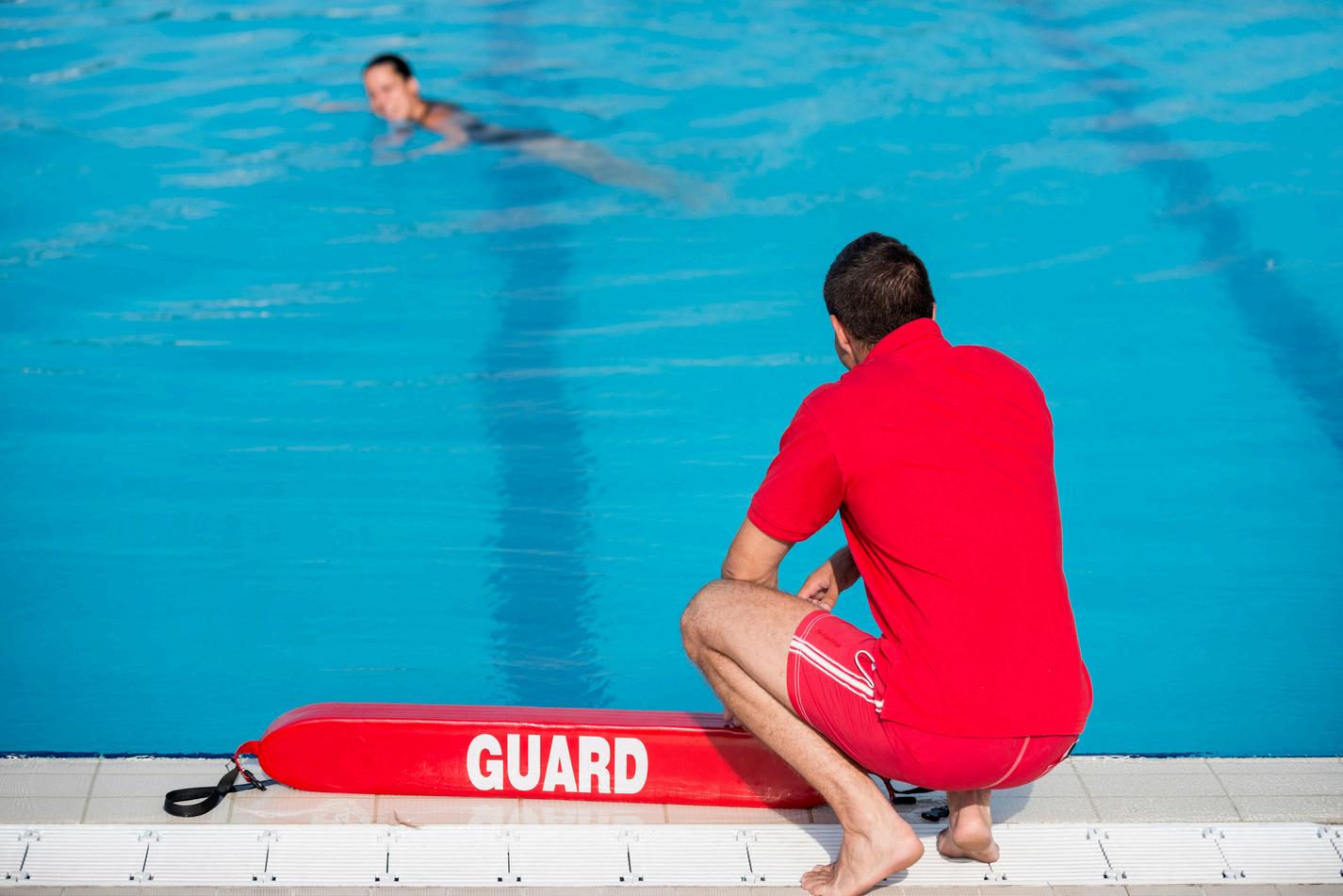
A pool or spa involves multiple trades, including mechanical elements, electricity, water, staff, bathers, and more Due to this complexity, many agencies regulate these facilities to ensure safety. Regulations and guidelines minimize risk, shutdowns, and injuries. An aquaticrelated death or injury can cause significant emotional and financial hardship for a facility and its stakeholders. Management/ownership must ensure staff understands the importance of compliance This chapter reviews mainly U S organizations and some international bodies. Aquatic facilities must understand local regulations and guidelines. These examples illustrate the roles of various agencies
Basic matters for the health, safety, and welfare of public pool or spa users include:
Human and environmental contamination of the water
Facility design and construction
Facility operation and management Hazards include physical situations which could result in fatal or non-fatal drowning, entrapment, or spinal injuries. Hazards could also be microbiological, hydraulic, chemical, or physical
Any of these factors could become a risk to health. For this reason, many different regulations and guidelines for proper pools/spa operations have been developed.
There are several public regulatory agencies at the local level of government in the U S At the federal level there are: Environmental Protection Agency (EPA)
Occupational Safety & Health
Administration (OSHA)
Consumer Product Safety Commission (CPSC)
Department of Transportation (DOT) Department of Justice (DOJ)
Centers for Disease Control & Prevention (CDC)
The CDC is also a U S federal agency; however, its role is advisory and investigative rather than regulatory. Besides regulations, there are also standards that have been developed by various national and international organizations. These standards serve as guidelines. Organizations that create standards and guidelines include: American National Standards Institute (ANSI)
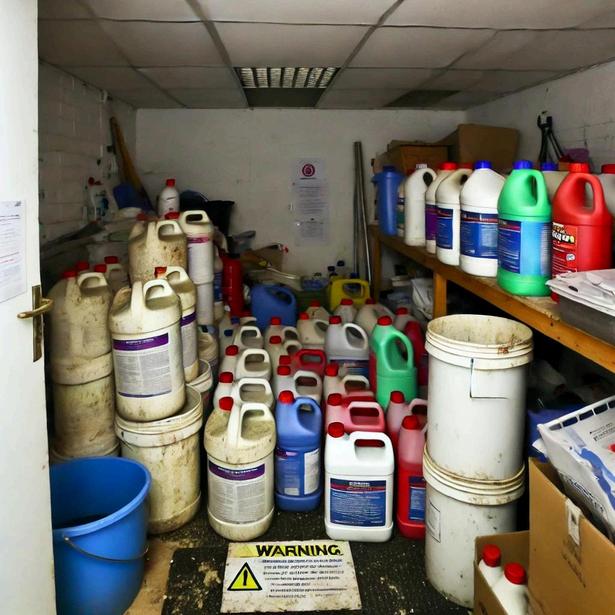
Improper chemical storage could result in fatal chemical reactions
ASTM International (ASTM)
Chlorine Institute (CI)
Council for the Model Aquatic Health Code (CMAHC)
International Code Council (ICC)
NSF International (NSF)
National Fire Protection Agency (NFPA)
Underwriters Laboratories (UL) World Health Organization (WHO) Other organizations, like the YMCA and the American Red Cross, also set standards.
Many states, provinces, counties, and cities have regulations for public and private pools, leading to administrative codes enforced by relevant departments, such as health departments or Bureaus of Recreation. Local laws often cover barriers, accessibility, and hours of operation, and facilities must consider compliance with the Americans with Disabilities Act
The Environmental Protection Agency (EPA)
The U.S. Environmental Protection Agency's mission is to protect human health and safeguard the natural environment The EPA aims to shield Americans from significant health and environmental risks where they live, learn, and work. It achieves this through numerous regulations that guide and affect pool operators, ensuring safe and healthy swimming environments These regulations cover various aspects, including water quality standards, chemical use, and safety protocols, all designed to minimize potential hazards and protect public health The EPA's efforts are crucial in maintaining the overall well-being of communities and preserving the natural environment for future generations.
The EPA controls pesticide registration and labeling under the Federal Insecticide, Fungicide, Rodenticide Act (Title 7, Chapter 6). Pesticides are chemicals used to prevent, destroy, repel, or mitigate pests, including algae, fungi, bacteria, and viruses in aquatic facilities. Most pesticides contain chemicals harmful to people Labels use signal words—Caution, Warning, and Danger to indicate a product's toxicity or safety. Proper storage and handling of these chemicals are essential to minimize health risks for both staff and facility users
Danger is the strongest signal word If a label has the word Danger on it, the operator must be extremely careful handling the product. If it is used the wrong way, medical problems or injury such as blindness or death could occur Danger is also used on products that could explode if they become overheated.
Warning is less strong than Danger, but it still means that the bather could become very ill or badly injured by exposure. Warning is also used to identify products that can easily catch on fire.
Caution shows that the product could be harmful, but less harmful than products with a Danger or Warning signal word Caution is used for products that could cause skin irritation, illness if the fumes are breathed, or trauma if the product contacts the eyes These products require careful handling, including the use of protective gloves and eye protection. Proper ventilation is also crucial when using products labeled with Caution to reduce inhalation risks
Store in original container in areas inaccessible to children Do not reuse empty container Wrap container and put in trash
(DANGER) Corrosive. Causes irreversible eye damage and skin burns. May be fatal if swallowed. Avoid contact with eyes, skin or clothing. Wear safety glasses, rubber gloves and protective clothing. Wash thoroughly with soap and water after handling and before eating, drinking, or using tobacco Remove contaminated clothing and wash clothing before reuse
The signal word on this label is Danger Provided by BioLab, Inc. – A KIK Company
Store in original container in areas inaccessible to children. Do not reuse empty container. Wrap container and put in trash This algaecide is compatible with most chemicals normally used in swimming pool maintenance; however, in concentrated form, this chemical should not be mixed with high concentrations of chlorine DO NOT MIX THIS ALGAECIDE AND CHLORINE TOGETHER IN THE SAME CONTAINER. Each chemical should be handled separately.
DIRECTIONS FOR USE: It is a violation of Federal Law to use this product in a manner inconsistent with its labeling. For initial application when pool water is clear, use one quart per 25,000 gallons of water.
2
1. For maintenance, use one cup per 25,000 gallons of water. Add maintenance dose once a week after the initial treatment.
Labels give instructions for proper use and dosage amounts Provided by BioLab, Inc – A KIK Company.
The Federal Food, Drug, and Cosmetic Act (FFDCA) of 1996 governs the use of chlorine gas in swimming pools (7 U.S.C. Sec 136w-5, "Minimum Requirements for Training of Maintenance Applicators and Service Technicians"). Each state may have additional training requirements for this. To reduce the risks of chlorine's high toxicity, the EPA requires that nonresidential pools use chlorine gas under stricter controls, limiting access to certified applicators. California tracks pesticide illnesses and accidents, which mainly occur in swimming pools and food processing plants Issues arise from inadequate training or maintenance.
Aquatic facility staff and others nearby can be exposed to chlorine gas during leaks.EPA mandates nonresidential swimming pools to switch from General Use to Restricted Use Pesticide for chlorine gas, limiting who can apply it. This change aims to enhance safety by ensuring only trained professionals handle chlorine gas.
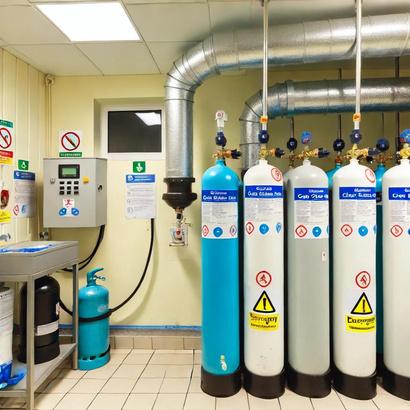
Handling chlorine gas requires proper training Cylinders must be anchored and regulators regularly inspected
The Emergency Planning & Community Right-To-Know Act (EPCRA) was enacted to encourage emergency planning for hazardous chemicals. Aquatic facilities should be aware that SARA Title III requires a comprehensive plan for handling hazardous chemicals Compliance ensures safer chemical storage and usage. Specific chemicals covered under SARA Title III include:
Aluminum sulfate
Ammonium sulfate
Calcium hypochlorite
Chlorine gas
Hydrogen peroxide
Muriatic acid
Sodium bisulfate
Sodium hypochlorite
By adhering to SARA Title III, aquatic facilities can effectively manage chemical risks and enhance overall safety
In some instances, the storage limit for certain chemicals on site may be as low as 100 pounds (45 kg). Facility managers should consult with legal counsel and the facility's insurance provider to ensure the aquatic facility is in compliance, or needs to comply, with SARA Title III.
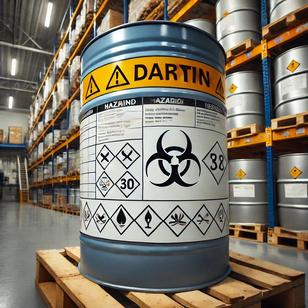
Incompatible chemicals can cause dangerous reactions Emergency response plans are essential
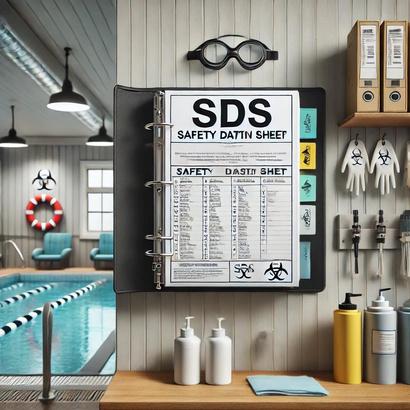
OSHA's mission is to prevent workplace injuries and illnesses and to protect American workers across various industries. With over 32 million workers exposed to hazardous chemicals, OSHA enforces regulations to mitigate these risks Key regulations include the Hazard Communication Program and the provision of Safety Data Sheets (SDS). These critical documents inform workers about the chemical hazards they might encounter, detailing necessary safety measures and handling procedures. Employers are mandated to ensure that SDS are easily accessible to all employees and must retain these documents for 30 years after the chemical has been used. This long-term accessibility helps protect workers and provides valuable information for future safety audits and compliance checks. By maintaining stringent standards and promoting continuous education,
OSHA aims to create a safer and healthier work environment for everyone
The Consumer Product Safety Commission (CPSC) protects the public from unreasonable risks of injury or death associated with consumer products, including pool chemicals. This vital agency oversees the regulation of over 15,000 products, aiming to minimize injuries and fatalities, with a particular focus on protecting children. In recent years, the CPSC has launched initiatives to educate staff about the dangers of chemical exposure and the importance of proper storage practices These efforts include comprehensive training programs, informational resources, and guidelines to ensure that all personnel handling chemicals are well-informed and equipped to maintain a safe environment By promoting awareness and adherence to safety standards, the CPSC strives to reduce accidents and enhance overall consumer safety.
Hazardous substances that may endanger public safety or the environment during transit are regulated by the Department of Transportation (DOT) due to their physical, chemical, or nuclear properties. The DOT provides classifications for these materials, which operators need to be familiar with to adhere to transportation laws
The main categories of hazardous materials according to the DOT are:
Class 1: Explosives
Class 2: Gases (compressed, flammable, poison)
Class 3: Flammable Liquids
Class 4: Flammable Solids
Class 5: Oxidizers and Organic Peroxides
Class 6: Toxic and Infectious Substances
Class 8: Corrosives
Class 9: Miscellaneous Hazardous Materials
Operators must ensure compliance with DOT regulations, particularly when outsourcing transportation to third-party providers. This includes verifying that the third-party carriers are properly licensed and trained in handling hazardous materials
Sample of a Typical SDS (Safety Data Sheet):
Date:July 16, 2024
1.Identification
Product: Sodium Carbonate Anhydrous
Use: Industrial manufacturing, pH adjustment
Supplier: Example Chemical Co , 123 Industrial Way, Anytown, USA
Emergency: (555) 987-6543
2.HazardIdentification
Hazard Class: Eye irritant
Precautions:Avoid eye contact, wear protective gear.
3.First-AidMeasures
Eyes: Rinse with water for 15 minutes, seek medical help if irritation persists.
Skin: Wash off with water, seek help if irritation continues.
Ingestion: Rinse mouth, drink water, do not induce vomiting
4. HandlingandStorage
Handling: Minimize dust, ensure ventilation.
Storage: Keep in cool, dry place in closed containers
5.ExposureControls/PersonalProtection
Ventilation: Use exhaust to reduce dust.
Protection: Safety goggles, gloves.
6.PhysicalandChemicalProperties
Appearance: White powder
Solubility: Soluble in water
7.StabilityandReactivity
Stability: Stable under normal conditions.
8.DisposalConsiderations
Disposal: Dispose of following local regulations
9.TransportInformation
DOT: Not regulated.
10. Regulatory Information
Regulations: Listed in TSCA inventory
This document example outlines safety guidelines for handling a white, watersoluble powder classified as an eye irritant
Precautions include wearing safety goggles and gloves to avoid contact. In case of exposure, rinse eyes or skin with water, and seek medical help if irritation persists The product should be handled with proper ventilation to minimize dust and stored in a cool, dry, sealed container. Disposal must comply with local regulations, and it is not regulated for transportation It is listed in the TSCA inventory.
The DOJ enforces the Americans with Disabilities Act (ADA), ensuring equal opportunity and accessibility for individuals with disabilities in various settings, including public pools
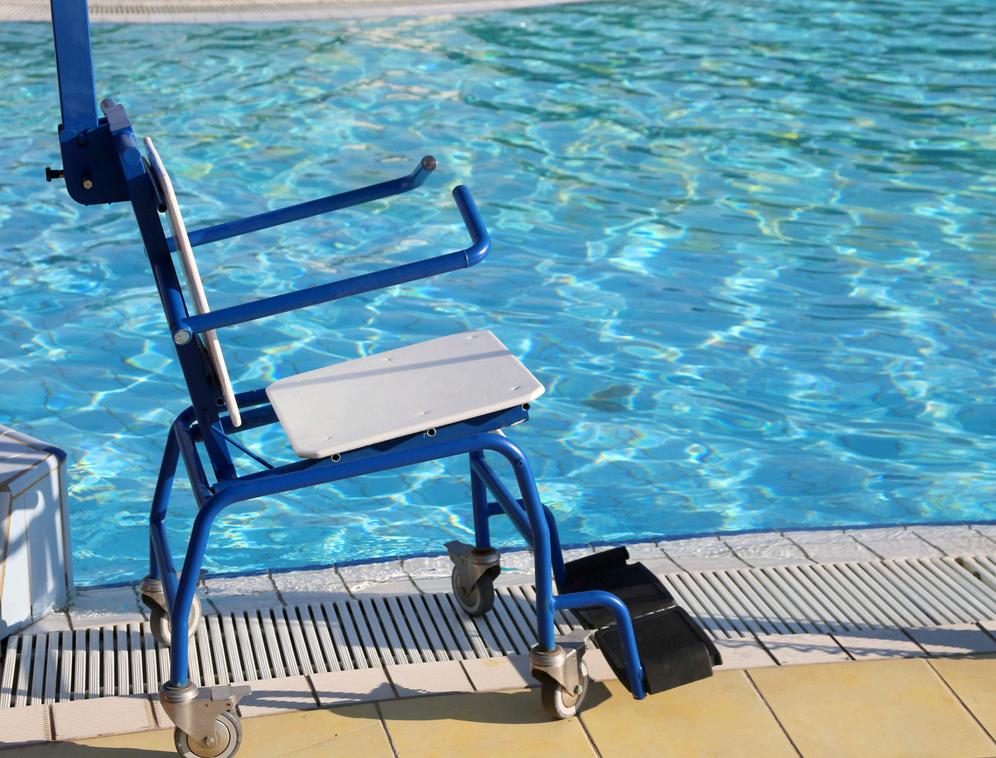
Accessibility Compliance: The DOJ mandates that public pools adhere to specific ADA standards to ensure accessibility for all. This includes requirements such as accessible entry and exit methods (e g , pool lifts, sloped entries), handrails, and clearly marked pool edges to assist those with visual impairments.
Inspections and Enforcement: Public facilities undergo regular DOJ inspections to verify ADA compliance These inspections can lead to recommendations for necessary modifications or penalties for non-compliance. The DOJ also offers a grievance mechanism for reporting noncompliant facilities
Education and Outreach: The DOJ provides educational resources and conducts workshops to inform pool operators and the public about ADA requirements These initiatives aim to enhance understanding of legal obligations and promote widespread compliance and awareness of disability rights.
The CDC plays a key role in promoting safety and preventing illness in public pools through guidelines, research, and public education initiatives.
Water Quality and Disease Prevention: The CDC develops and disseminates guidelines for maintaining the chemical balance of pool water, which is essential for disinfecting pools and preventing the spread of waterborne diseases. They provide protocols for routine water testing and managing chemical levels effectively.
Model Aquatic Health Code (MAHC): The MAHC provides comprehensive, evidencebased guidelines that address pool and spa design, operation, and maintenance. It is a resource for local health departments and pool operators to ensure best practices are followed for safety and health.
Public Health Campaigns: Through the Healthy Swimming program, the CDC educates the public on preventing illness transmission in swimming venues Key messages include showering before swimming and not swimming when sick with diarrhea.
International Code Council (ICC) The ICC has been integral since 1994 in developing global standards for the design, construction, and sustainability of swimming pools, spas, and related facilities to ensure safety, efficiency, and affordability. These guidelines are widely adopted in the U.S. and many global regions. As of the latest update in 2021, the ICC continues to enhance these standards through extensive research and community engagement.
The World Health Organization (WHO) has developed comprehensive Guidelines for Safe Recreational Water Environments, which are designed to safeguard public health in aquatic facilities around the globe The primary aim of these guidelines is to significantly reduce health hazards associated with swimming pools, spas, and similar environments.

Guidelines for Managing Fecal Incidents by the Centers for Disease Control
By establishing rigorous standards for water quality, the WHO seeks to mitigate risks stemming from physical, chemical, and microbial contaminants. These guidelines underscore the critical importance of maintaining optimal water conditions to prevent infections and illnesses that can arise from improperly managed water facilities. The WHO's recommendations focus on a multi-barrier approach that includes proper water filtration, regular monitoring of chemical disinfectant levels, and systematic microbial testing to detect and address pathogens promptly
NSF International is known for its contribution to pool and spa equipment safety through its voluntary standardization program, which is encapsulated in NSF/ANSI Standard 50 This standard is a comprehensive benchmark for evaluating pool and spa equipment, ensuring they meet rigorous public health standards and operational efficiencies
The organization provides a pamphlet that is particularly useful for pool operators, highlighting critical areas of maintenance and safety. This resource offers detailed guidance on several key aspects:
Proper chemical feeding equipment and processes ensure continuous compliance and effective water treatment.
Usage and maintenance of UV and ozone generators to enhance water quality.
Routine inspection protocols for filtration systems, aimed at preventing operational failures and maintaining system integrity
NSF International's pamphlets are a cornerstone resource, aiding operators in maintaining NSF/ANSI Standard 50 compliance
These guidelines not only support operational excellence but also promote a safer swimming environment by ensuring all equipment meets established safety standards

Guidelines for Managing Fecal Incidents by the Centers for Disease Control
The Chlorine Institute (CI) supports the chlorine and chlor-alkali industry by promoting safe and sustainable operational practices It focuses on enhancing public safety and environmental stewardship through various initiatives.
Key Functions and Offerings: Safety and Best Practices: CI provides extensive resources, including guidelines, training materials, and technical publications to promote safety in handling and using chlorine.
Emergency Response: The Institute offers robust support for chlorinerelated emergencies, providing expertise and coordinating with emergency services.
Environmental and Regulatory Engagement: CI works closely with regulatory bodies to advocate for responsible policies that align industry practices with environmental safety standards.
Outreach and Education: Through seminars and workshops, CI educates stakeholders on chlorine safety and emergency preparedness
ASTM International ASTM International sets globally recognized voluntary consensus standards for materials, products, systems, and services used across various industries, including recreational water facilities. These standards form the basis of manufacturing, procurement, and regulatory activities, ensuring quality and safety in pool operations
ASTMPublications:
F2209-03: Standard Specification for Fence/Barrier Safety for Commercial and Multi-Family Residential Use
Outdoor Play Areas
F1346-91: Standard Specification for Safety Covers and Labeling
Requirements for All Covers for Swimming Pools, Spas, and Hot Tubs
F2815-10: Standard Guide for the Safe Use of Fully Automated Swimming Pool, Spa, and Hot Tub Equipment
F2387-04: Standard Specification for Manufactured Safety Vacuum Release Systems (SVRS) for Residential and Commercial Swimming Pools, Spas, and Hot Tubs
F2461-09: Standard Practice for Manufacture, Construction, Operation, and Maintenance of Aquatic Play Equipment
ASTM International offers a range of significant publications, which can be accessed at www.astm.org. These materials are derived from the copyrighted standard.
Underwriters Laboratories (UL) UL, an independent organization, conducts safety and quality testing for diverse products, including pool equipment. Products that meet UL's stringent safety criteria are granted a UL certification, a mark of safety recognized universally. Products and equipment that pass UL's evaluations are listed as UL certified, ensuring their reliability and safety.
National Fire Protection Association (NFPA) NFPA works globally to mitigate fire and other hazards by setting standards and advocating for safety and prevention They focus on guidelines that manage risks like liquid and solid oxidizers and flammable solids. Their NFPA 704 system categorizes chemicals based on their health and instability hazards, informing both the public and emergency services about potential dangers.
The American Red Cross has long been pivotal in enhancing community safety and preparedness, with a significant focus on water safety. They provide comprehensive training in CPR and First Aid, specifically designed to handle aquatic emergencies. Their water safety programs emphasize crucial skills like swimming proficiency and emergency response, aiming to reduce drowning risks and improve safety in aquatic environments
Through educational initiatives and partnerships, the Red Cross reaches out to various community groups, fostering a culture of vigilance and safety around water activities Their commitment extends to advocating for consistent supervision and the use of life-saving devices to further safeguard individuals in water settings. Additionally, they engage in public awareness campaigns that highlight the importance of water safety norms and procedures. By collaborating with local communities, the Red Cross helps to implement effective water safety policies and practices that can save lives Furthermore, they offer specialized training for disaster response teams, enhancing their capabilities to manage water-related emergencies effectively. This training includes advanced rescue techniques and strategies for handling floods and other water crises, ensuring preparedness across a broad spectrum of potential scenarios.

Water Safety USA is committed to improving water safety through education, resource sharing, and public initiatives. These efforts are aimed at increasing awareness of safe water practices among the public. Additionally, the organization actively develops and distributes educational materials that serve as guidelines for safe swimming and water recreation.
Workshops and training sessions are also part of their strategy, providing hands-on learning experiences for individuals of all ages. The goal is to foster a culture of water safety that includes every community and demographic By ensuring access to safety information and resources across diverse populations, Water Safety USA endeavors to reduce water-related incidents and promote a nationwide commitment to water competence.
Member organizations include:
American Academy of Pediatrics
American Red Cross
Boys Scouts of America
Centers for Disease Control & Prevention
National Park Service
National Safe Boating Council
Pool & Hot Tub Alliance
Safe Kids Worldwide
U.S. Coast Guard Product Safety Commission
United States Lifesaving Association
YMCA of the USA
Water Safety USA advocates for critical safety practices to keep your pool safe and enjoyable.
Resource Contact List
Aquatic facilities with specific programming should ensure that their operations meet national and local regulations by utilizing the services of the accredited organizations listed below. The following is a compiled list of information providers for your aquatic facility, listed in alphabetical order to guide you. Visit each organization's website at the provided URLs for more comprehensive details and resources:
American Academy of Pediatrics (AAP)
American Alliance for Health, Physical Education, Recreation, and Dance (AAHPERD)
American Chemistry Council (ACC)
American National Standards Institute (ANSI)
American Red Cross American Swimming Coaches Association (ASCA)
Aquatic Therapy & Rehab Institute (ATRI)
ASTM International (ASTM) Boy Scouts of America (BSA) Centers for Disease Control & Prevention (CDC)
The Chlorine Institute, Inc. Consumer Product Safety Commission (CPSC)
College Swimming Coaches Association of America (CSCAA) Department of Justice (DOJ) Department of Transportation (DOT)
Environmental Protection Agency (EPA)
Federation Internationale de Natation (FINA)
International Academy of Aquatic Art (IAAA)
International Association of Amusement Parks and Attractions (IAAPA)
International Association of Plumbing and Mechanical Officials (IAPMO)
International Code Council (ICC)
Jeff Ellis & Associates
Jewish Community Center Association (JCCA)
National Drowning Prevention Alliance (NDPA)
National Fire Protection Association (NFPA)
National Institute of Standards and Technology (NIST)
National Parks Service (NPS)
National Recreation and Park Association (NRPA)
National Safe Boating Council (NSBC)
National Spa & Pool Foundation (NSPF)
Occupational Health & Safety
Administration (OSHA)
Safe Kids Worldwide (SKW)
U.S. Army Corps of Engineers
U S Coast Guard
U S Consumer Product Safety Commission
U.S. Diving
U.S. Lifesaving Association
U.S. Masters Swimming (USMS)
U S Swim School Association (USSSA)
U.S. Synchronized Swimming (USSS)
U.S. Water Polo
Underwriters Laboratories (UL)
Water Safety USA
Water Safety USA
World Health Organization (WHO)
World Waterpark Association (WWA)
YMCA/YWCA of the USA
A thorough grasp of basic mathematical operations is crucial for anyone managing a swimming facility This includes being adept at volume calculations, chemical dosage estimations, and maintaining appropriate pool dimensions, which are vital for the effective management and operation of a pool Precise calculations ensure the safety and efficacy of the pool for patrons and staff alike. Additionally, accurate record-keeping of chemical levels and adjustments helps in monitoring pool conditions and preventing potential hazards
It is necessary for pool operators to be proficient in basic math skills, as they must routinely calculate chemical dosages and manage water quality parameters Accuracy in these calculations helps maintain the pool's health and safety. Regular tasks include conversions between different measurement units, which are essential for ensuring consistent application of treatment protocols
Example3-1: (Amount Conversion)
You determine from the results of your pool water test that you need to add 42 ounces of soda ash to your pool. How many pounds is this?
Conversion: (Ounces÷16=pounds)
42ounces÷16ounces/pound=2.625 pounds
Example3-2: Distance Conversion
Your pool is 30 metres long and 30 yards wide What are the dimensions in feet?
(Note: 1 metre is actually 3.28084 feet. Rounding to 3.28 is done to simplify the calculations.)
Yardsx3=feet
Metresx3.28=feet
30yardsx3=90feet
30metresx3.28=98.4feet 98feetlongand90feetwide
Example3-1:Metric
You determine from the results of your water test that you need to add 3200 grams of soda ash to your pool. How many kilograms is this?
Conversion:Grams÷1000=kilograms 3200÷1000=3.2kilograms
Example 3-3: Distance Conversion
Your pool is 55 metres long and 35 metres wide What are the dimensions in feet?
Conversion:Metresx3.28=feet
55metresx3.28=180.4feet
35metresx3.28=114.8feet 180feetlongand115feetwide
Example3-3:Metric
Thepoolis50metersinlengthand 30metersinwidth.Keepthe measurementsinmeters.
Example3-4:FilterSurfaceArea
Your D.E. filter has 8 grids measuring 20 inches by 30 inches each. Each grid filters from both sides. What is the filter area?
Conversion: sq.in.÷144sq.in./sq.ft.=sq.ft. 20inchesx30inches=600sq.in. 600sq.in.x2sides=1200sq.in./grid 1200sq.in./gridx8grids=9,600sq.in. 9,600sq.in.÷144sq.in./sq.ft.=66.67 sq.ft.
YourD.E.filterhas10gridsmeasuring 0.6by0.8metreseach.Eachgridfilters frombothsides.Whatisthefilterarea?
0.6mx0.8m=0.48m²
0.48m²x2sides=0.96m²/grid
0.96m²/gridx10grids=9.6m²
You determine from the results of your pool water test that you need to add 24 fluid ounces of muriatic acid to your pool
How many cups is this?
Fluidounces÷8=cups 24fluidounces÷8=3cups
Youdeterminefromtheresultsofyour poolwatertestthatyouneedtoadd750 millilitresofmuriaticacidtoyourpool. Howmanylitresisthis?
Millilitres÷1000=litres
750÷1000=0.75litres
You determine from the results of your pool water test that you need to add 24 fluid ounces of muriatic acid to your pool
How many cups is this?
Fluidounces÷8=cups24fluidounces ÷8=3cups
OuncestoPounds
Ounces ÷ 16 = Pounds
FluidOuncestoGallons
Fluid Ounces ÷ 128 = Gallons
LitrestoGallons
Litres ÷ 3 785 = Gallons
FluidOuncestoCups
Fluid Ounces ÷ 8 = Cups
YardstoFeet
Yards x 3 = Feet
CubicFeettoGallons
Cubic Feet x 7.5 = Gallons
QuartstoGallons
Quarts ÷ 4 = Gallons
PintstoQuarts
Pints ÷ 2 = Quarts
GallonstoPounds
Gallons x 8.33 = Pounds
SquareInchestoSquareFeet
Square Inches ÷ 144 = Square Feet
BritishThermalUnitsvs.TemperatureRise
BTUs = Gallons x 8.33 x °F (Temp Rise)
PoundsperSquareInch(psi)toBar
1 psi = 0.069 Bar
PoundsperSquareInch(psi)toKiloPascals (kPa)
1 psi = 6.89 kPa
GramsorMillilitrestoKilosorLitres
Grams or Millilitres ÷ 1000 = Kilos or Litres
1Micron=1MillionthofaMetre
25 4 microns per 1/1000 inch
MetrestoFeet
Metres x 3 28 = Feet
CubicMetrestoLitres
Cubic Metres x 1000 = Litres
FluidOuncestoMillilitres
Fluid Ounces x 29 57 = Millilitres
PartsperMillionandMilligramsperLitre
1 ppm = 1 mg/L
1ppm=8.33PoundsofChemicalinOne MillionGallonsofWater
Celsius(°C)toFahrenheit(°F)
°F = (9/5 x °C) + 32 Fahrenheit(°F)toCelsius(°C)
°C = (5/9 x (°F - 32)
1PoundperSquareInch(psi)isthepressure createdbyacolumnofwater2.31feethigh
Kilojoulesvs.TemperatureRise
Kilojoules = Litres x 4.18 x °C (Temp. Rise)
BarstoPoundsperSquareInch(psi)
1 Bar = 14.51 psi
KiloPascals(kPa)toPoundsperSquareInch (psi)1kPa=0.145psi
Example3-6:Metric
Youdeterminefromtheresultsofyour poolwatertestthatyouneedtoadd 15,000millilitresofsodiumhypochlorite tobreakpointchlorinateyourpool.How manylitresisthis?
Millilitres÷1000=litres
15,000÷1000=15litres
Understanding the volume (in gallons or litres) of water in any aquatic feature is crucial for the effective management of operating equipment, chemical dosing, and user safety Typically, the design engineer who created the original specifications provides this information on the technical drawings If these specifications are not available, local health officials may have the required technical data The pool operator should always keep a copy of the facility’s technical specifications Design calculations and the actual as-built water volume may differ due to construction variances
Pool floors are rarely perfectly flat Pool walls often have a slight gradient from vertical Walls and floors are typically connected by a radius or blend These variations result in a pool volume that is approximate Therefore, swimming pool volume calculations are considered accurate within a 5% deviation from the actual volume.
To estimate a pool or spa's volume, start by calculating the water’s surface area. The surface area of an aquatic facility is the pool area exposed to the air. This area is also used to determine pool cover sizing, bather load (in some codes), and to calculate water temperature losses. The basic formula for calculating surface area is:
Surface area = length × width
Irregularly shaped pools present a challenge. Figure 3-3 illustrates some common shapes. Other important surface areas include the pool wall and floor (for resurfacing) and the deck (for pool-related activities) Calculating filter area is essential for water quality management Filter surface area is discussed in the Pool & Spa Filtration chapter
Foreverycubicmetreofwaterthereare 1,000literslitresofwater.
ImperialConversions
Foreverycubicfootofwaterthereare 7.5gallonsofwater.
Accurately calculating the surface area of a pool is crucial for various aspects of pool management, from determining water volume to selecting covers and managing bather loads.
Determine the volume of a multi-shaped pool by dividing it into sections and calculating each one separately.
To find the pool volume in gallons, multiply the surface area by the average depth and then by a conversion factor of 7.5. This method requires measurements of length, width, and depth in feet.
Formula:Volume=surfaceareax averagedepthx7.5
The conversion factor of 7 5 is an approximation, as the exact value is 7.48 gallons per cubic foot. In a pool containing 60,000 gallons, this approximation results in a minor error of 160 5 gallons, which is just 0 25% The simplicity of using 7.5 instead of 7.48 outweighs this negligible error. Furthermore, volume calculations are typically rounded up (for example, 49,850 gallons is rounded to 50,000 gallons)
To determine pool volume in litres, use measurements in metres. Multiply the surface area by the average depth in metres. The result is in cubic metres (m³). Multiply this by 1000 to convert to litres, as there are 1000 litres in a cubic metre of water.
Determining the average depth can be challenging. For a simple pool with a constant slope, calculate it as the average of the shallow and deep ends' depths (refer to Figure 3-2)
For more complex shapes, divide the pool into several sections and calculate each section’s volume individually. Sum the volumes of all sections for the total pool volume in gallons See Figure 3-4 for reference.
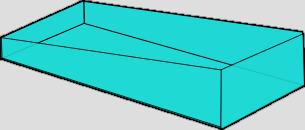
Gallons=areaxaveragedepthx7.5
Averagedepth= (shallowend+deepend)÷2
Averagedepth= (4feet+9feet)÷2Averagedepth= 6.5feet
Gallons=(55feetx26feet)x6.5 feetx75Gallons=70,125gallons
Litres=AreaxAveragedepthx1000
Averagedepth= (shallowend+deepend)÷2
Averagedepth=(1.2metres+3.8 metres)÷2Averagedepth=25 metres
Litres=(16metresx8metres)x25 metresx1000Litres=320,000litres
To estimate the volume of water in a pool or spa in gallons or litres, start by calculating the surface area Then multiply the surface area by the average depth and use the conversion factor of 7 5 for gallons or 1000 for litres For irregularly shaped pools, divide the shape into simpler sections, calculate the volume for each section, and then sum them up In circular pools, R represents the radius
OBLONG
Area=RadiusxRadiusx314-(Lengthx Width)
Gallons=AreaxAverageDepthx75
Litres=AreaxAverageDepthx1000
RECTANGULAR
Area=LengthxWidth
Gallons=AreaxAverageDepthx75
Litres=AreaxAverageDepthx1000
CIRCULAR
Area=RadiusxRadiusx314
Gallons=AreaxAverageDepthx75
Litres=AreaxAverageDepthx1000
OVAL
Area=MajorAxisxMinorAxisx3.14
Gallons=AreaxAverageDepthx75
Litres=AreaxAverageDepthx1000
The volume of a kidney-shaped pool is determined by multiplying the area by the average depth and then by 7.5.

KIDNEY-SHAPED
Area(approximate)=(MajorAxis+Minor Axis)xLengthx0.45
Gallons=AreaxAverageDepthx75
Litres=AreaxAverageDepthx1000
SectionA
Your pool is 60 feet long and 20 feet wide. The shallow end varies in depth from 4 feet to 6 feet deep. The main drain is at a depth of 12 feet, and the deep end wall is 9 feet deep. How many gallons are in your pool?
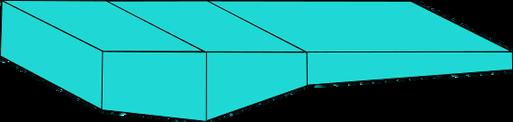
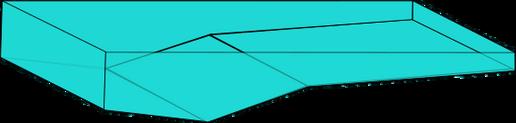
SectionA - Section A is 35 feet long, with a width of 20 feet The depth varies from 4 feet to 6 feet deep.
SectionB - Section B is 15 feet long, with a width of 20 feet. The depth varies from 6 feet to 12 feet deep.
SectionC - Section C is 10 feet long, with a width of 20 feet The depth varies from 12 feet to 9 feet deep
Gallons = area x average depth x 7.5
Area = length x width
Average depth = (4 feet + 6 feet) ÷ 2 = 10 feet ÷ 2 = 5 feet
Gallons = (35 feet x 20 feet) x 5 feet x 7 5
Gallons = 26,250 gallons
SectionB
Gallons = area x average depth x 7.5
Area = length x width
Average depth = (6 feet + 12 feet) ÷ 2
= 18 feet ÷ 2 = 9 feet
Gallons = (15 feet x 20 feet) x 9 feet x 7 5
Gallons = 20,250 gallons
TotalPoolGallonsA+GallonsB+GallonsC
SectionC
Gallons = area x average depth x 7 5
Area = length x width
Average depth = (12 feet + 9 feet) ÷ 2
= 21 feet ÷ 2 = 10.5 feet
Gallons = (10 feet x 20 feet) x 10.5 feet x 7.5
Gallons = 15,750 gallons
Total Pool = 26,250 gal + 20,250 gal + 15,750 gal
Total Pool = 62,250 gallons or rounded off to 62,500 gallons
SectionA
Your pool is 20 meters long and 12 meters wide. The shallow end varies in depth from 1 meter to 1.5 meters. The main drain is at a depth of 2.5 meters, and the deep end wall is 2 meters deep. How many liters are in your pool?
SectionA-is 10 meters long, with a width of 12 meters. The depth varies from 1 meter to 1.5 meters.
SectionB-is 5 meters long, with a width of 12 meters. The depth varies from 1 5 meters to 2 5 meters
SectionC-is 5 meters long, with a width of 12 meters The depth varies from 2.5 meters to 2 meters.
Liters = area x average depth x 1000
Area = length x width
Average depth = (1 meter + 1 5 meters) / 2 = 1 25 meters
Area = 10 meters x 12 meters = 120 square meters
Liters = 120 square meters x 1 25 meters x 1000
Liters = 150,000 liters
SectionB
Liters = area x average depth x 1000
Area = length x width
Average depth = (1 5 meters + 2 5 meters) / 2 = 2 meters
Area = 5 meters x 12 meters = 60 square meters
Liters = 60 square meters x 2 meters x 1000
Liters = 120,000 liters
TotalPoolLitersA+LitersB+LitersC
SectionC
Liters = area x average depth x 1000
Area = length x width
Average depth = (2 5 meters + 2 meters) / 2 = 2 25 meters
Area = 5 meters x 12 meters = 60 square meters
Liters = 60 square meters x 2 25 meters x 1000
Liters = 135,000 liters
Total Pool = 150,000 liters + 120,000 liters + 135,000 liters
Total Pool = 405,000 liters
Use the previous pool for this example. You return to the pool on a Monday and find that the auto-fill failed to operate. Your pool water level is 4 inches too low. Howmanygallonsmustbeadded?
Gallons = area x average depth x 7.5
Area = length x width
Averagedepth1inch = 1 foot ÷ 12 = 0,833
Gallonsfor1inch = (60 feet x 20 feet) x 0,833 feet x 7 5
Gallonsfor1inch=7.497
Gallonsfor4inches = 7.497 gallons x 4 = 2998.8 gallons
Use the previous pool for this example. Your return to the pool and find that the waterlevelis7centimeterstoolow.Howmanylitersmustbeadded?
Liters = area x average depth x 1000
Area = length x width (measured in meters)
Averagedepth(inmeters) = depth / 100
7centimeter = (7÷100) = 0,07
Litersfor7centimeters = 20 metres x 12 metres x 0,07 x 1000
Liters for 7 centimeters = 16.800 litres
Aquatic facilities lose water in a number of ways:
Evaporation
Bather splash-out and drag-out
Plumbing and shell leaks
Planned dilution
For operational and planning purposes, the pool operator needs to understand how much water is lost in one inch of depth. It's the same formula used to calculate the volume for a constant slope pool. The difference is that there is no slope; the depth is constant.
Rather than cover them in the general chapter, they are reviewed in the relevant chapter. For example, the following calculations will be discussed in later chapters:
Chemical dosage: Pool & Spa Water
Issues chapter
Filter area: Pool & Spa Filtration chapter
Turnover rate: Water Circulation chapter
Heater sizing: Heating & Air Circulation chapter
Bather loads: Facility Safety chapter
The pool must first be separated into its component parts. Each part must be calculated and then added back together
Radius(R)=Diameter/2
SectionA
Section A is the top of the spa down to the seat. The depth is 10 inches (0.83 feet) and the diameter is 12 feet.
Area = R X R x 3 14
Area = 6 feet x 6 feet x 3.14 = 113.04 square feet
Gallons = average depth (in feet) x area x 7 5
Gallons = 0 83 feet x 113 04 square feet x 7.5 = 702.65 gallons
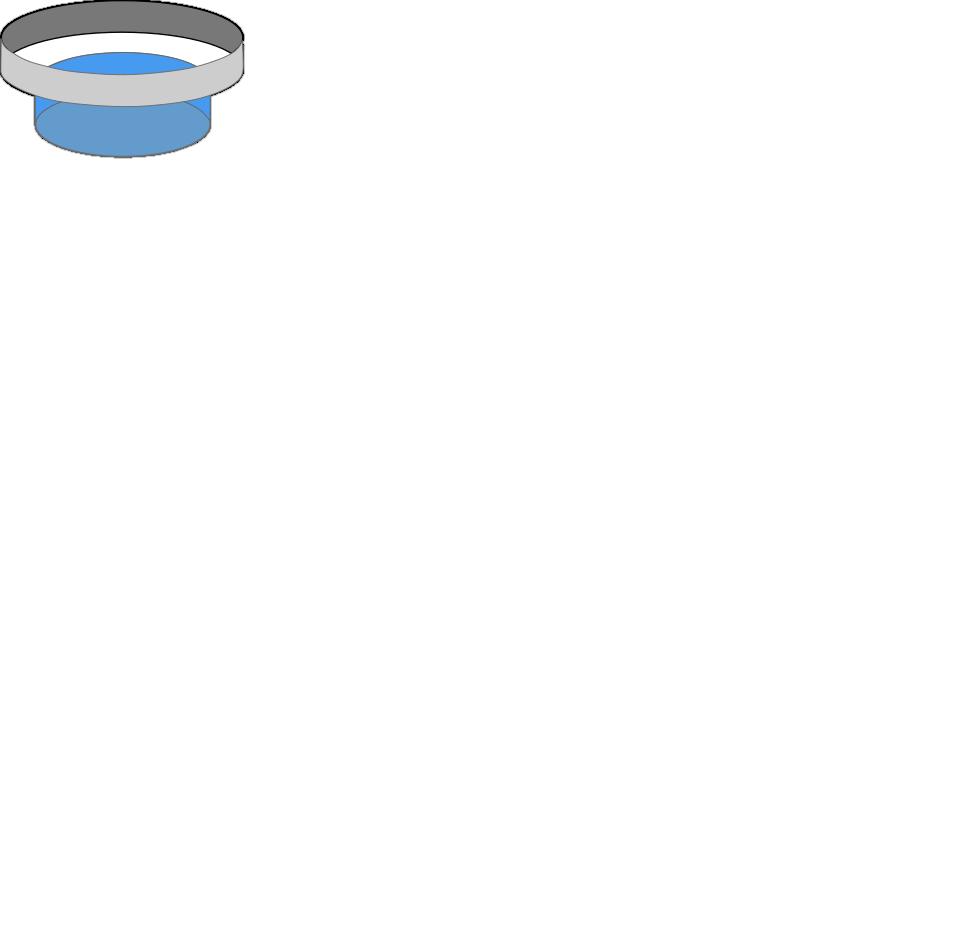
Section B is the foot well of the spa from the seat down to the main floor. The depth is 2 feet and the diameter is 6 feet.
Area = R X R x 3 14
Area = 3 feet x 3 feet x 3.14 = 28.26
square feet
Gallons = average depth (in feet) x area x 7 5
Gallons = 2 feet x 28 26 square feet x 7.5 = 423.90 gallons TotalPool:GallonsA+GallonsB TotalPool = 702.65 gallons + 423.90 gallons
TotalPool = 1,126 55 gallons or rounded off to 1,127 gallons
Calculating Litres in a Multi-Depth Circular Spa
The pool must first be divided into its component parts Each part must be calculated and then added together
Radius(R)=Diameter/2
SectionA
This section is from the top of the spa down to the seat. The depth is 0.5 meters, and the diameter is 3 meters
Area: R x R x 3.14
Area: 1.5m x 1.5m x 3.14 = 7.07 square metres
Litres: Area x average depth x 1000
Litres: 7.07 square metres x 0.5m x 1000 =3,535
Litres =3,535
SectionB
This section is the footwell of the spa, from the seat down to the main floor. The depth is 1 meter, and the diameter is 1 5 meters
Area: R x R x 3.14
Area:0.75 m x 0.75 m x 3.14 =1.77 square metres
Volume:Area x average depth x 1000
Volume: 1.77m2 x 1m x 1000 =1,770
Litres = 1,770litres
TotalPool:Litres +Litres
TotalPool = 3,535 litres + 1,770
TotalPool = 5,305litres
RoundedVolume: 5,300 litres A B
Swimming has long been associated with exercise and health It provides an excellent way to keep fit and has numerous benefits for public health. The confidence and enjoyment people get from swimming lead to a variety of aquatic-related activities. However, water, and sometimes the air above it, can create unhealthy conditions if water quality is not properly managed. Ensuring people don't get sick from ingesting or coming into contact with pool water is a primary reason pools are continually disinfected Disinfectants kill germs that can cause disease, and poor disinfection is a significant concern. Public health departments require pool operators to be trained and certified, demonstrating competency in handling pool water contamination.
The role of a pool operator is critical in minimizing the spread of Recreational Water Illnesses (RWI) Effective pool management involves maintaining water quality standards and keeping thorough records. The Centers for Disease Control and Prevention (CDC) Model Aquatic Health Code (MAHC) provides guidelines to help pool operators maintain safe and healthy water conditions.
Statistics indicate that about a quarter of disease outbreaks in pools are due to improper disinfection or failure to meet required standards. Reports show that many pools are not adequately treated, which highlights the need for bettertrained pool operators.
Health inspections play a crucial role in identifying and addressing issues in pool facilities. Despite regular inspections, many violations are found each year. These include inadequate chlorine levels and poor maintenance practices
Inspections aim to ensure that pools are safe and comply with health codes.
Pool operators must be vigilant about preventing disease transmission. Regular maintenance, proper disinfection, and adherence to health guidelines are essential. Keeping the water clean and safe not only prevents illnesses but also ensures that people can enjoy swimming without health risks
An essential part of health and safety is preventing the spread of diseases through pool water. Properly maintained pools reduce the risk of infections and contribute to public health.
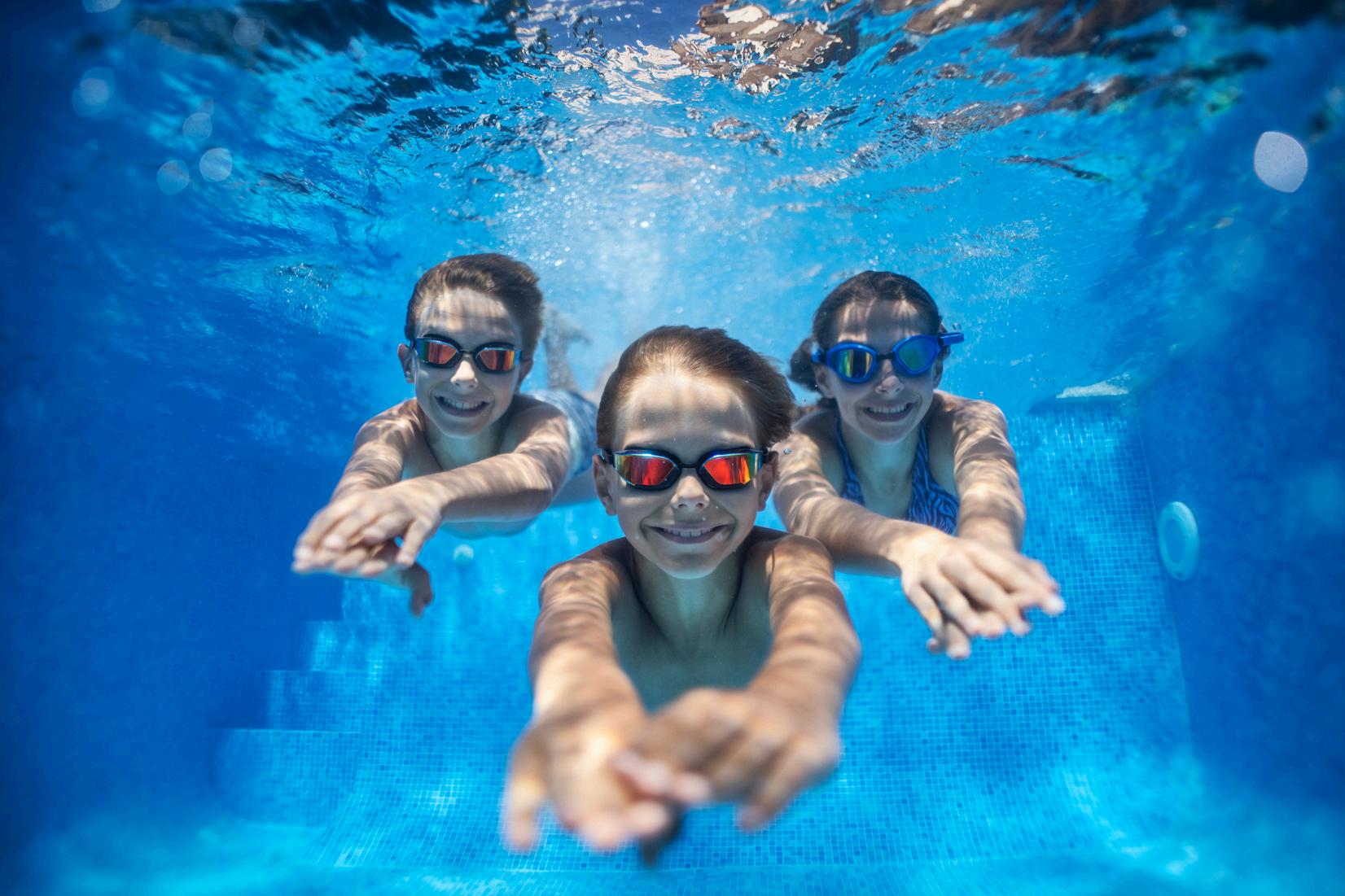
Swimming offers substantial health benefits, including physical fitness and improved self-confidence. However, poorly managed pool environments can lead to health risks Preventing the ingestion of contaminated water is crucial, as pools are regularly treated with disinfectants to eliminate harmful pathogens. Public health authorities and pool operators undergo training and certification, such as the Certified Pool/Spa Operator (CPO) program, to ensure proper pool management. Despite guidelines from the Centers for Disease Control and Prevention (CDC) and the Model Aquatic Health Code (MAHC), many pools fail to comply with safety standards, leading to outbreaks of Recreational Water Illnesses (RWIs). These illnesses, caused by bacteria, viruses, and protozoa, can result in various symptoms, including gastrointestinal issues and skin infections.
Regular inspections and operator education are essential to maintain pool safety. Ensuring adequate disinfectant levels and adherence to health regulations can significantly reduce the risk of RWIs. Promptly addressing equipment malfunctions and pool hazards can further prevent accidents Consistent staff training on emergency protocols helps prepare for any unexpected incidents.

Recreational Water Illnesses (RWIs) are illnesses caused by germs and chemicals found in the water we swim in. These illnesses are spread by swallowing, breathing in mists, or having contact with contaminated water in pools, hot tubs, water playgrounds, lakes, and oceans. Common pathogens causing RWIs include Cryptosporidium, Giardia, Shigella, norovirus, and E. coli. These germs can lead to a variety of symptoms, such as diarrhea, skin rashes, ear pain, cough, congestion, and eye pain.
Gastrointestinal issues, such as diarrhea, are the most frequently reported symptoms and can be severe, especially in vulnerable populations like young children, pregnant women, and those with weakened immune systems. Respiratory infections, eye infections, and skin infections, including hot tub rash and swimmer’s ear, are also common Preventing RWIs involves multiple strategies. Pool operators must maintain proper disinfectant levels and conduct regular water testing Public awareness campaigns emphasize the importance of showering before swimming, not swallowing pool water, and avoiding swimming when experiencing diarrhea. Facilities should ensure that filtration systems are functioning correctly and that the water chemistry is regularly balanced.
Effective management involves not only proper maintenance but also educating swimmers on good hygiene practices and the importance of reporting and managing fecal accidents promptly. With these measures in place, the spread of RWIs can be minimized, ensuring a safer swimming environment for everyone Clear signage about showering before entering the pool and avoiding swimming when ill can reinforce good habits.
Pathogens like Cryptosporidium, Giardia, E. coli O157, and Shigella can cause infections when present in pool water due to fecal contamination These pathogens may enter the water through accidental fecal releases (AFR). People with diarrhea should avoid swimming to prevent spreading these pathogens
Chlorine and other disinfectants do not kill all pathogens instantly. Chlorineresistant organisms have become more prevalent in pools. Proper pool and spa water treatment, along with vigilant hygiene practices, are essential to prevent the spread of these microorganisms.
Protozoa are single-cell organisms transmitted through food and water
Once ingested, they live in the intestines and may cause illness. The most common protozoa in recreational water are Giardia and Cryptosporidium. These organisms can cause severe gastrointestinal symptoms and are resistant to chlorine Cryptosporidium, in particular, can survive in properly chlorinated pools for several days.
Cryptosporidium, often referred to as Crypto, is a chlorine-resistant protozoan parasite that poses significant challenges for pool sanitation This pathogen can survive in properly chlorinated water for up to 10 days, making it particularly problematic. Crypto is one of the most common causes of waterborne illness outbreaks in the United States
When ingested, Crypto causes cryptosporidiosis, which leads to severe gastrointestinal symptoms including diarrhea, stomach cramps, nausea, and vomiting These symptoms can be especially dangerous for young children, pregnant women, and individuals with weakened immune systems. The incubation period for Crypto ranges from 2 to 10 days, and symptoms can last for up to two weeks or longer Preventing the spread of Crypto requires rigorous pool maintenance and hygiene practices. The CDC recommends that individuals diagnosed with Crypto avoid swimming for at least two weeks after symptoms have subsided. This is crucial because Crypto can be shed in feces even after symptoms resolve, continuing to pose a risk of contamination
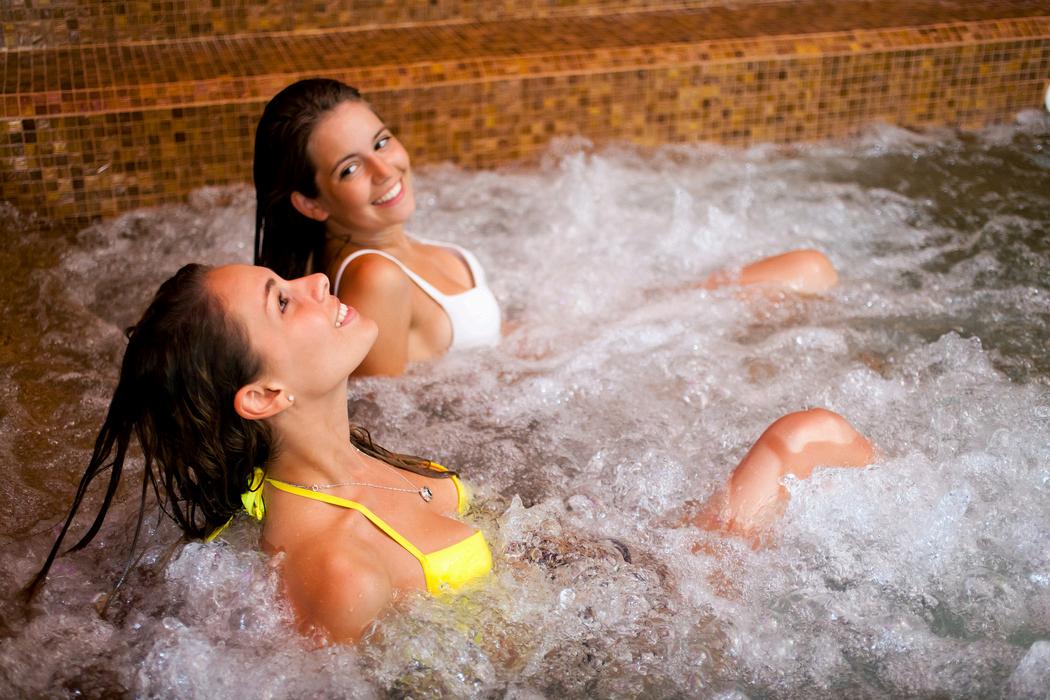
To combat Crypto, pools should ensure effective filtration systems, such as those using ultraviolet light or ozone, which can help inactivate the parasite. Regular monitoring and maintaining higher than usual chlorine levels can also reduce the risk of Crypto outbreaks. Public education campaigns emphasizing the importance of not swimming when experiencing diarrhea and maintaining good hygiene can help prevent the spread of Crypto in swimming environments.
Giardia can survive in chlorine-treated water and is similar to Crypto in terms of symptoms and transmission. Proper filtration and chlorine levels can help control its spread. It can cause prolonged diarrhea, stomach cramps, and nausea. People infected with Giardia should also avoid swimming until cleared by a healthcare provider. Effective treatment and strict personal hygiene can help manage and prevent further spread.
Bacteria are microscopic organisms that can thrive in various environments, including pool water. Bacteria like E. coli O157 and Shigella can cause severe gastrointestinal illness. Maintaining proper chlorine levels and pool cleanliness can prevent bacterial outbreaks. Regular water testing and immediate response to contamination events are critical in managing bacterial threats
Shigella is a bacterium that spreads through fecal contamination and can cause severe gastrointestinal symptoms. It is highly contagious and can be transmitted through ingestion of contaminated water or direct person-toperson contact.
Symptoms include diarrhea, fever, and stomach cramps, which typically develop one to three days after exposure. In some cases, Shigella can lead to more serious health complications such as severe dehydration and hemolytic uremic syndrome, particularly in young children and those with weakened immune systems. To control its spread, pools should be closed and thoroughly cleaned if contamination is suspected Public health education on proper handwashing and hygiene practices can significantly reduce the risk of Shigella outbreaks.
E. coli O157 can cause severe abdominal cramps, diarrhea (often bloody), and vomiting. It is particularly dangerous for young children and the elderly. Proper chlorination and avoiding swimming after AFR incidents are crucial for preventing its spread
Transmission of E coli O157 in swimming pools usually occurs through accidental ingestion of contaminated water. This contamination can happen if someone with the bacteria has a fecal accident in the pool or if improper hygiene practices are followed, such as not showering before entering the pool. Preventing the spread of E. coli O157 involves maintaining proper pool sanitation through adequate chlorination and filtration. Pools must be regularly tested to ensure disinfectant levels are sufficient to kill harmful pathogens. In the event of a fecal incident, immediate and thorough cleaning and disinfection are necessary to prevent an outbreak. Swimmers should be encouraged to shower before entering the pool, avoid swallowing pool water, and refrain from swimming when experiencing diarrhea It's also important to take regular bathroom breaks, especially for young children, to prevent accidents.
Viruses are smaller than bacteria and can only grow inside living cells They don't respond to antibiotics as bacteria do, though some vaccines are available.
Noroviruses cause gastroenteritis, leading to stomach pain and diarrhea, and can spread through infected individuals Symptoms typically appear within 12-48 hours post-exposure and include nausea, vomiting, diarrhea, and stomach cramps. Severe cases may also include fever, chills, headache, muscle aches, and fatigue The illness generally resolves within a few days, but those with compromised immune systems can experience more severe symptoms. Measures to take:
Proper Chlorination: Ensure the pool is properly chlorinated with adequate levels of disinfection to kill norovirus particles Regularly monitor chlorine levels and adjust as necessary Swimmer Education: Educate swimmers to avoid entering the pool if they are ill, especially if they have symptoms of gastroenteritis Post clear signs around the pool area to remind users of this guideline.
Rigorous Cleaning Protocols: Implement rigorous cleaning protocols for areas around the pool, including locker rooms, showers, and restrooms. Use disinfectants that are effective against norovirus.
Adenoviruses can cause respiratory illnesses, gastroenteritis, conjunctivitis, and rashes. These viruses are particularly problematic for immunocompromised individuals, potentially leading to severe complications
Adenoviruses are resilient outside the body and can spread through direct contact, water, or airborne droplets.
Preventive measures:
Maintain Proper Chlorination: Keep the pool water properly chlorinated to inactivate adenoviruses. Regularly test and adjust chlorine levels.
Regular Cleaning: Ensure regular cleaning and disinfection of the pool area, including common surfaces like handrails and poolside furniture.
Health Screening: Encourage users with symptoms of respiratory or gastrointestinal illness to stay out of the pool Consider implementing health screening procedures for frequent users.
Hepatitis A affects the liver and is usually transmitted through feces Symptoms include fever, jaundice, and fatigue, and can last several weeks. It is crucial to maintain high hygiene standards in and around pools to prevent its spread. Prevention strategies: Increase Chlorine Levels: If contamination is suspected, increase chlorine levels to at least 2 ppm to effectively inactivate the hepatitis A virus
Temperature Maintenance: Ensure water temperature is maintained at or above 77°F (25°C), as this can help inactivate the virus.
Public Education: Educate pool users on the importance of not swimming when experiencing symptoms of hepatitis A or other gastrointestinal illnesses. Distribute informational pamphlets and display signs to raise awareness Host regular workshops or informational sessions to discuss safe swimming practices. Utilize social media platforms to reach a broader audience with water safety tips and guidelines
Properplanningandresponseto accidentalfecalreleases(AFRs)arevital tomaintainingpoolsafety.AFRsintroduce harmfulpathogensintothewater,posing healthrisks.Havingadetailedresponse planensuresswiftandeffective contaminationcontrol,minimizingdisease transmissionandallowingforsafe reopening.Thisincludestrainingstaffon procedures,maintainingdisinfectant supplies,andcommunicatingprotocolsto poolusers.BeingpreparedforAFRs protectspublichealthandkeepsthe swimmingenvironmentsafe.
Raisethechlorineleveltoatleast2ppm andmaintainitfor25minutesbefore allowingswimmersbackin.Ensurethe filtrationsystemisoperationaland monitorchlorinelevelsregularlytoensure thecontaminantisfullyneutralized.
Increasechlorinelevelsto20ppm, maintainpHlevels,andensurethe temperatureisatleast77°F(25°C).Keep thepoolclosedforaspecifiedduration basedonchlorineandpHlevelstoensure safety.Thismoreaggressiveresponseis necessarytoaddressthehigherrisk posedbydiarrhealincidents.Regularly testchlorinelevelsduringtheclosureto ensuretheyremaineffective.Document alltestresultsandadjustmentsmade duringthetreatmentperiod.Ensurethat circulationsystemsarerunning continuouslytoevenlydistributethe disinfectant.Oncesafetylevelsare confirmed,communicatereopening detailsclearlytostaffandpoolusers.
EvacuatethePool:Immediatelyhave allswimmersleavethewaterto preventfurthercontaminationand exposure.
1. MaintainFiltration:Ensurethefiltration systemremainsactiveduringthe cleanupprocesstohelpremove contaminantsfromthewater
2. Disinfect:Adjustchlorinelevels accordingtothetypeoffecalincident Forsolidstool,maintain2ppmfor25 minutes Fordiarrhea,maintain20 ppmforalongerperiodtoensure thoroughdisinfection 3
CleanandDispose:Removeasmuch ofthecontaminantaspossibleusing appropriatecleaningtools.Cleanthe affectedareathoroughlyanddispose ofthewastesafelyaccordingtohealth regulations.
Reopen:Onlyreopenthepoolafter ensuringthatdisinfectionlevelsare withinsafelimits.Conductafinal checkofchlorineandpHlevelsbefore allowingswimmersbackin. 5.
Maintainingproperdisinfectantlevelsis essential.Regularlymonitorandadjust chlorinelevelstoensureeffective disinfection.Educateswimmerson hygienepractices,suchasshowering beforeenteringthepoolandavoiding swimmingwhenill.Respondpromptlyto anysignsofcontaminationtominimizethe riskofvirusspread Adheringtothese guidelinesensuresasaferandhealthier swimmingenvironment
For any type of fecal releases, an AFR incident report should be established. Document the date, time, duration, and chlorine and pH levels at the time of the incident. Note any changes in chlorine levels during the response, as well as any chemicals added to maintain levels Record the actions taken to address the event and the total time needed for disinfection. Also, log the time the pool is reopened For any type of fecal releases, an AFR incident report should be established. Document the date, time, duration, and chlorine and pH levels at the time of the incident. Retain all test results conducted during the disinfection process to demonstrate compliance
To disinfect the pool effectively after detecting a pathogen, it's essential to inactivate 99.9% of the pathogen. This is achieved by meeting the Concentration Time (CT) value, which is the product of the free chlorine concentration (C) in ppm (mg/L) and the contact time (T) in minutes.
CT value = C x T
For example, the CT value for Giardia is 45, and for Crypto, it is 15,300, both at about pH 7.5 and 77°F (25°C). If using a different chlorine concentration or inactivation time, ensure the CT values remain consistent
To calculate the time required to disinfect a pool after a diarrheal accident at 15 ppm (mg/L), use:
Time = CT value ÷ concentrationTime = 15,300 ÷ 15 ppm (mg/L) = 1,020 minutes, or 17 hours
Inactivating Crypto at 15 ppm (mg/L) would take 17 hours. Similarly, for Giardia, using the CT inactivation value of 45: Time = 45 ÷ 15 ppm (mg/L) = 3 minutes
GermInactivationTimes(CTValues)for ChlorinatedWater
GermInactivationTime(CTValue)for ChlorinatedWater
1ppm(1mg/L)chlorineatpH7.5and 77°F(25°C)
E.coliO157
Type: Bacterium Time: Less than 1 minute
HepatitisA
Type: Virus Time: About 16 minutes
Giardia
Type: Parasite Time: About 45 minutes
Cryptosporidium
Type: Parasite Time: About 15,300 minutes (10 6 days)
GiardiaInactivationTimeforFormed Incident
ChlorineLevels(ppmormg/L)
1 0 ppm: 45 minutes
2.0 ppm: 25 minutes
3.0 ppm: 19 minutes
CryptoInactivationTimeforDiarrheal Incident
ChlorineLevels(ppmormg/L)
1 0 ppm: 255 hours
10 ppm: 25 5 hours
20 ppm: 12.75 hours
Chlorinated water can inactivate E coli within a minute, Hepatitis A in 16 minutes, and Giardia in 45 minutes, but Cryptosporidium requires up to 10.6 days at 1 ppm.
Recreationalwatercanspreadgerms thatcausediarrhealillnessesandskin rashes,primarilythroughswallowing contaminatedwaterorcontactwith contaminatedskin Chlorinationof poolwaterhelpsreducetheseviral andbacterialcontaminants. Vomitinginthepooloftenoccursdue toingestingtoomuchwaterandis usuallynon-infectious.However,ifthe entirestomachcontentsareexpelled, treattheincidentasyouwoulda formedfecalaccident,followingCDC guidelines.
Severaldiseasescanbetransmitted orcontractedinrecreationalwater environmentsthatarenotrelatedto fecalmatteranddonotcause gastrointestinalillnessbutcanstill leadtootherhealthissues.
Pseudomonasaeruginosaisa commonbacteriafoundinskinrashes andearinfections.Itisfrequently introducedintotheenvironment throughsoil,water,plants,andleaves, andcanbecarriedonskinandhair. Typicalinfectionsincludedermatitis andfolliculitis,whichmanifestassmall redbumpssimilartofleabitesor largerpus-filledblisterslikethose frompoisonivy.Theseinfections commonlyappearinareascoveredby swimwear,suchasthearmpits,groin, andabdomen.
Pseudomonas thrives in warm water, often causing rashes from poorly maintained spas rather than swimming pools. The Spa & Therapy Association recommends lowering water temperatures to 95°F or less to maintain proper water chemistry and control Pseudomonas growth.
Swimmer’s ear, or otitis externa, is an infection of the ear canal caused by Pseudomonas bacteria, leading to sensitivity and inflammation. Symptoms include ear pain, difficulty moving the head, and pus drainage. It is more common in children and young adults, and is typically treated with doctor-prescribed antibiotics.
Legionellosis, also known as Legionnaires’ disease, is a severe pneumonia caused by the Legionella pneumophila bacteria. The bacteria thrive in poorly maintained hot water tanks and spread through inhaling contaminated steam or mist from hot tubs or spray features Legionella pneumophila can cause both Legionnaires’ disease and a milder illness known as Pontiac fever. Symptoms of Legionnaires’ disease appear 2 to 14 days after exposure and include fever, chills, headache, dry cough, muscle aches, and difficulty breathing. Those at higher risk include the elderly, smokers, individuals with lung conditions, and the immunocompromised. Healthy people typically recover with antibiotics.
Contaminated water and pool areas can transmit infections
Legionella pneumophila bacteria cause a milder illness called Pontiac fever. Symptoms include flu-like signs such as fever, headaches, and muscle aches that last for two to five days but do not include pneumonia. Most people recover without treatment. Legionella bacteria are naturally found in water, typically growing in warm, stagnant water like that in hot tubs, cooling towers, water tanks, large plumbing systems, or parts of air conditioning systems in large buildings. They do not thrive in window air conditioners.
Regular maintenance and disinfection are essential to prevent outbreaks Between 2011 and 2012, 33 outbreaks associated with recreational water (both pools and spas) and 26 outbreaks linked to potable water were reported The outbreaks in recreational water resulted in 363 cases of Legionellosis (MMWR 2015;64(24):668-672).
Hypersensitivity Pneumonitis (HP) has been reported in people exposed to indoor environments with hot tubs, spas, or water features Symptoms include breathlessness, cough, fever, and weight loss, which improve after leaving the environment but return on re-exposure. This condition, also known as hot tub lung, involves inflammation of the lungs caused by inhaling contaminated water droplets. HP can develop from exposure to mold, bacteria, or chemicals in the water Diagnosis often involves identifying the environmental exposure and may require imaging tests and lung function tests. Treatment includes avoiding the contaminated environment and using medications to reduce inflammation Maintaining proper ventilation and disinfectant residuals can help prevent HP.
MAC forms biofilm, which contributes to its persistence in various parts of the pool system, including plumbing. Reducing the risk of HP requires consistent use of disinfectants that are effective against biofilm. It's crucial to ensure good ventilation in both indoor and outdoor areas to prevent the buildup of harmful chemicals like chloramines, which can irritate the eyes and respiratory system. Proper ventilation also helps reduce HP symptoms by preventing the accumulation of these irritants
MRSA is a type of Staphylococcus bacteria resistant to methicillin, an antibiotic used to treat staph infections. It is resistant to normal disinfectant levels and can spread through contaminated items like towels, equipment, and surfaces. Preventative measures include proper hygiene and regular cleaning of facilities.
Molluscum contagiosum is a viral infection of the skin, common among children, characterized by painless bumps that usually disappear within a year without treatment. The infection can spread through direct contact with the bumps or contaminated objects Preventative actions include avoiding shared use of towels and equipment and maintaining good personal hygiene. Regularly cleaning and disinfecting shared surfaces can also help reduce the risk of transmission.
Caused by the human papillomavirus (HPV), plantar warts are a skin infection commonly found on the soles of the feet. They spread through contact with contaminated surfaces, often in moist environments. To prevent them, ensure proper cleaning and disinfection of surfaces, especially in communal areas.
Athlete’s foot is a fungal infection that affects the skin between the toes and other parts of the foot, causing itching and redness It spreads through contact with infected surfaces, such as locker room floors. Preventive measures include wearing footwear in communal areas and keeping feet clean and dry
Visitors can also contaminate other areas around pools and spas. Maintaining good hygiene and following rules are crucial to reducing this risk. This includes proper disposal of waste, regular cleaning of facilities, and ensuring that infected individuals avoid communal areas.
A minimum standard of hygiene must be maintained in locker rooms, particularly in shower areas and toilet facilities. Ensuring these areas are clean and well-stocked with necessary supplies can help prevent infections Diaper changing areas should also be clean, stocked, and regularly disinfected to prevent contamination.
Dirty or damaged stations should be replaced promptly. Use diaper-changing stations instead of poolside furniture to prevent contamination. Regularly clean diapers in chlorinated water. Swim diapers are designed to withstand the water and may hold some feces, but their efficacy in preventing leakage is not fully proven. Swim diapers do not replace the need for frequent diaper changes Encourage parents to have their children use the restroom before entering the pool and to check their diapers often during pool use. The use of swim diapers and swim pants can give parents a false sense of security regarding fecal contamination.
The pool bottom should be vacuumed daily or more often if it is visible. The Water Circulation chapter discusses the need for adequate water circulation to eliminate dead spots and stagnant areas.
AAquatic play areas are becoming more popular. These areas often include unique elements such as ropes, padding, and tethered toys, which can harbor harmful microorganisms if not properly maintained It's essential to clean these materials regularly, following the manufacturer’s instructions and using appropriate disinfectants Routine inspections should be conducted to identify any wear or damage that could compromise hygiene. Educating staff on proper cleaning techniques can help ensure these areas remain safe. Additionally, it's important to establish a regular maintenance schedule to prevent buildup of debris or bacteria. Signs reminding users of good hygiene practices, like rinsing off before play, can also reduce contamination risks. Monitoring water quality in these areas should be frequent, as heavy use can lead to rapid changes.
Standing water or puddles in and around the pool area can harbor harmful microorganisms These areas should be cleaned with chlorinated water to prevent contamination. During construction or renovation, floors should be sloped towards drains to avoid water pooling. Pool equipment like kickboards, fins, and toys should be disinfected and dried thoroughly to prevent microorganism growth and biofilm formation.
Contaminated pool decks, walkways, and furniture should be cleaned promptly. Use an EPA-registered disinfectant or a chlorine solution (1 part hypochlorite to 10 parts water). Follow these steps for cleaning:
Block off the area until it is cleaned. Wear rubber gloves. Remove excess material with paper towels or disposable wipes. Apply disinfectant and let it sit for 20 minutes
Wipe up the solution.
Dispose of gloves, towels, and wipes in a biohazard bag.
Clean non-porous surfaces with disinfectant and let them air dry
Ventilate the area to ensure proper drying and prevent the buildup of fumes.
Use a scrub brush for textured surfaces to ensure thorough cleaning Follow up with a water rinse to remove any residual disinfectant and avoid slippery surfaces. Conduct a final visual inspection to confirm cleanliness Dispose of cleaning equipment appropriately to avoid crosscontamination. Make sure to document the cleaning process, including the date, time, and materials used, for recordkeeping and compliance purposes
Good ventilation in aquatic facilities is vital to control air quality and prevent the buildup of harmful chemicals like chloramines. Proper ventilation reduces respiratory and central nervous system irritants. Ensuring good air circulation, particularly in indoor facilities, helps maintain a healthy environment
Air circulation systems should be regularly maintained to ensure optimal performance. Inadequate ventilation can lead to increased humidity levels, promoting mold and mildew growth, which can further degrade air quality and pose health risks. Proper ventilation also helps in maintaining comfortable temperatures, reducing the load on air conditioning systems, and enhancing overall energy efficiency
Inform patrons they should not swim if they have had diarrhea in the last two weeks
Encourage showering with soap before entering the pool.
Parents should ensure children use the restroom before swimming and take regular breaks
Diaper-changing areas should be clean and well-stocked.
Regularly clean and disinfect communal areas
Maintain proper water balance to prevent microorganism growth. Provide signage around the pool area to remind users of hygiene practices and pool rules. Offer swim diapers for young children and require their use in the pool to minimize contamination risks.
Regularly test and adjust chlorine and pH levels to ensure optimal water safety. Educate patrons on the importance of safe swimming behaviors through workshops or informational leaflets
Disinfection by-products (DBPs) form when disinfectants like chlorine react with organic matter in pool water, such as sweat and urine. Common DBPs include chloramines and bromamines, which can cause respiratory issues, skin irritation, and eye discomfort. Long-term exposure may increase the risk of asthma and other chronic conditions. To minimize DBPs:
Encourage pre-swim showers to reduce organic matter.
Maintain optimal pH and chlorine levels
Ensure proper pool water circulation and filtration.
Regularly replace a portion of the pool water.
Utilize effective ventilation systems in indoor pools
Consider advanced treatments like UV and ozone.
Balancing effective disinfection with DBP management is crucial for a safe swimming environment.
Chemicalirritantsinpoolscancause variousissuesforswimmersandstaff. Theseirritantsoftencomefrom disinfectantslikechlorine,whichare essentialforkeepingpoolwatersafebut canleadtosideeffects.Common symptomsofexposuretochemical irritantsincludeskinrashes,eye irritation,andrespiratoryproblemssuch ascoughingorwheezing
Someindividualsaremoresensitiveto thesechemicalsthanothers.For example,peoplewithasthmaorother respiratoryconditionsmayfindtheir symptomsaggravatedbyexposureto
chloramines, a by-product of chlorine that forms when it reacts with organic matter like sweat and urine. Prolonged exposure to high levels of these irritants can lead to more severe health issues, including the potential development of chronic respiratory problems.
Bromineitchisthemostfrequently reportedtypeofchemicalrash.According totheDisinfectionchapter,brominated compoundslikeBCDMHorDBDMHare addedtowater,generatingbromineMost instancesofbromineitchseemtobedue toirritationratherthananallergy,though allergiescanoccur.Forexample,someone withaspecificallergytoBCDMHmight havelingeringsymptomsafterexposure Inothercases,thesymptomspersistafter leavingthewater.Childrenmaybemore sensitiveduetotheirskin'shigher reactivity.
Whentheexactcauseofarashisunclear, it’sessentialtodetermineitdefinitively. Consultingamedicalprofessionalcan provideguidance.Somepeoplearemore pronetobromine-relatedissuesdueto frequentpoolusageReducingbromine useandmaintaininggoodhygienecan help.
Usingdisinfectantscompatiblewiththe materialsinthewatersystemscanalso reduceirritation
THMsarethemostcommonregulated DBPsindrinkingwater.Disinfectants reactwithorganicmatter,creating compoundssuchaschloroform. Thesechemicalscanforminpool waterandposehealthrisks.Research hasshownDBPsinpoolwaterareless studiedthanthoseindrinkingwater, indicatinganeedforfurther investigation.
IntheU.S.andEurope,standardslimit
THM levels to 20 parts per billion (ppb). Pool operators should aim to minimize DBP levels. Strategies include reducing organic material in the water, ensuring proper ventilation, and using alternative disinfection methods like UV or ozone. Educating users on pre-swim hygiene can also help reduce DBP formation.
Organiccontaminants,suchassweat andurine,reactwithdisinfectantsto formirritantslikechloramines.Proper ventilationisessentialtoexpelthese irritantsandmaintainairquality.Good practices,likeshoweringbefore swimmingandmaintainingpool chemistry,helpminimizeexposureto thesechemicals.Regularlyreplacingpart ofthepoolwatercanalsodiluteand removecontaminants
Disinfection minimizes infection transmission and controls algae and other organisms. It destroys disease-causing microorganisms using chemicals like chlorine, bromine, and ozone, which act as oxidizers.
Factors such as water temperature, environmental contaminants, and user contamination influence the disinfection process in pools and spas. Higher waste levels make proper disinfection harder. This chapter provides guidelines on chemical levels, stressing the legal need to follow each chemical’s labeled instructions. The U.S. EPA regulates these chemicals under FIFRA, which mandates proper usage, storage, and disposal Labels provide directions for safe use, concentration, application methods, and treatment frequency. Users must comply with all labeled instructions and relevant laws.
The disinfection process involves controlling bacteria and viruses in water to ensure it is safe for swimming. Disinfectants kill or inactivate microorganisms and oxidize contaminants, aiding in their removal Oxidation is crucial in eliminating pathogens and maintaining sanitary conditions. Disinfectants must maintain a concentration in the water for extended periods (time x residual). The disinfectant residual inactivates or kills pathogens and oxidizes contaminants as they enter the water, protecting bathers from harmful pathogens brought by others. Regular monitoring of disinfectant levels is necessary to ensure they remain effective throughout periods of heavy use It's also important to adjust dosage in response to environmental factors, such as sunlight or temperature, that can impact disinfectant efficacy. Implementing a backup sanitation system, like UV or ozone, can provide an additional layer of protection.
Disinfectantsthatdon'tmaintainresidual concentrationorquicklykillpathogensare consideredsupplementsandmustbeused withaprimarydisinfectant.Common diseasepreventionmethodsinclude disinfectionandfiltration,withnewer systemslikeozone,UV,orchlorinedioxide enhancingwaterquality.Considerthese factorswhenchoosingadisinfectant:
Watertemperature
Bathingloads
Location(indoororoutdoor)
Facilitytype(pool,spa,therapy, waterpark)
Sourcewaterchemistry
Chemicalstorageandsafety
Supervisionandmaintenance Codesandregulations
Impactonwaterclarityandoverall aesthetics
Compatibilitywithexistingfiltration systems
Potentialeffectsonswimmers'skin, eyes,andrespiratoryhealth.
Environmentalimpactandsustainability ofthechosendisinfectantmethod.

Chlorinedisinfectants,releasing hypochlorousacid(HOCl),effectivelykill pathogensandorganicdebris.HOCl maintainsresidualconcentration, inactivatingpathogensoverhoursor dayswithoutsunlightorhighpHChlorine agentsincludesodiumhypochlorite (NaOCl),calciumhypochlorite(Ca(OCl)₂), lithiumhypochlorite(LiOCl),andchlorine gas(Cl₂).Chlorineiscategorizedas:
StabilizedOrganicChlorines:1.
Trichlor(C₃N₃O₃Cl₃)
Dichlor(C₃N₃O₃Cl₂Na)
Non-StabilizedChlorines:2.
Sodiumhypochlorite
Calciumhypochlorite
Lithiumhypochlorite
Whenchlorineisaddedtowater,it produceshypochlorousacid(HOCl)and thehypochloriteion(OCl),whicharethe activedisinfectingagents.Hypochlorous acidismoreeffectivethanthe hypochloriteionAsthepHlevel increases,theconcentrationof hypochlorousaciddecreaseswhilethe concentrationofhypochloriteion increases.
Hypochlorousacid(HOCl)istheactive formofchlorineandisresponsiblefor inactivatingpathogensandorganic matter.Itconstantlydissociatesand reformsfromthehypochloriteion(OCl) andhydrogenion(H⁺)basedonthepH levelTheeffectivenessofHOCl decreasesasthepHincreases,asa higherpHfavorstheformationoftheless effectivehypochloriteion(OCl).
Hypochlorousacid(HOCl)istheactive formofchlorineandtheprimaryagent responsiblefordisinfectioninpoolwater. Itconstantlydissociatesandreforms fromhypochloriteion(OCl)andfree hydrogenions(H+)inthewater,as showninthefollowingequation:
The equilibrium between HOCl and OCl shifts based on pH and temperature, affecting chlorine's effectiveness. Lower pH levels have more HOCl, which is more effective for disinfection, while higher pH levels have more OCl , which is less effective. As temperature increases, the activity of chlorine also increases, which can enhance its disinfection capabilities but may cause faster chlorine dissipation Maintaining a balanced pH is crucial to ensure optimal levels of HOCl for effective pathogen control. Pool operators must regularly monitor both pH and temperature to adjust chlorine dosing accordingly
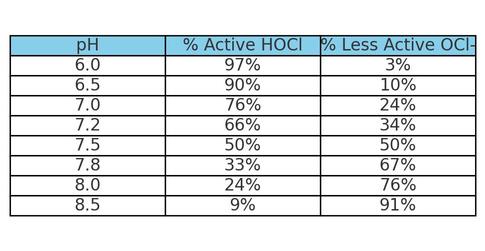
HOCland15ppm(mg/L)OClIf1ppm (mg/L)isconsumed,thefreechlorine woulddropto2ppm(mg/L),1ppmas HOCl,and1ppmasOCl.IfthepHrisesto 7.8andthefreechlorineremainsat2ppm (mg/L),theHOClwouldbe066ppm (mg/L),theOClwouldbe134ppm(mg/L) (0.66+1.34=2.0ppm(mg/L)).Thisshift virtuallyinstantaneously.Forthechlorine’s efficiencyandbathercomforttoremain thewaterpHasdiscussedintheWater Balancechapter
Freechlorine(FC)istheactive chlorineavailablefordisinfection,and itincludeshypochlorousacid(HOCl) andhypochloriteion(OCl).Itis determinedbyDPDtestsdiscussedin theChemicalTestingchapter.
When free chlorine reacts with organic or carbon-containing nitrogen compounds, it forms chloramines:
The recommended chlorine level in pools is 1.0 to 4.0 ppm, with 1.0 ppm being the minimum. Some products suggest higher levels, but regulations often cap it at 5.0 ppm
Both inorganic and organic chloramines show up in a DPD test as combined chlorine. The test measures the total concentration of chloramines, which are less effective than free chlorine at disinfection and can cause irritations and odors.
Disinfectantsaresubstancesusedto inactivateorkillthemajorityofharmful microorganisms,includingbacteria, viruses,andprotozoanparasites Chlorineandbrominearethemost commonlyuseddisinfectantsinpoolsand spas.Thesechemicalsarehighlyreactive andeffectiveagainstpathogensbutmay belesseffectiveagainstspores,cysts, andovaSomepathogens,suchas GiardiaandCryptosporidium,mayrequire additionaltreatmentmethodslikeUVor ozone.
Combined chlorine (CC) forms when free chlorine reacts with ammonia, organic, or nitrogen compounds, resulting in chloramines:
Disinfectantsworkbybreakingdownthe cellwallsofmicroorganismsordisrupting theirmetabolicprocesses.Thisprocessis essentialformaintainingsafeand sanitarywaterconditionsinpoolsand spas.Disinfectantsmustbecarefully managedtomaintainthecorrect concentrationlevels,ensuringeffective pathogencontrolwhileminimizing potentialsideeffectssuchasskinand eyeirritation.Regularmonitoringand adjustmentofdisinfectantlevelsare essentialtoensureconsistentefficacy
Different disinfectants have various properties and effectiveness. Here is a table summarizing the key characteristics of common disinfectants:
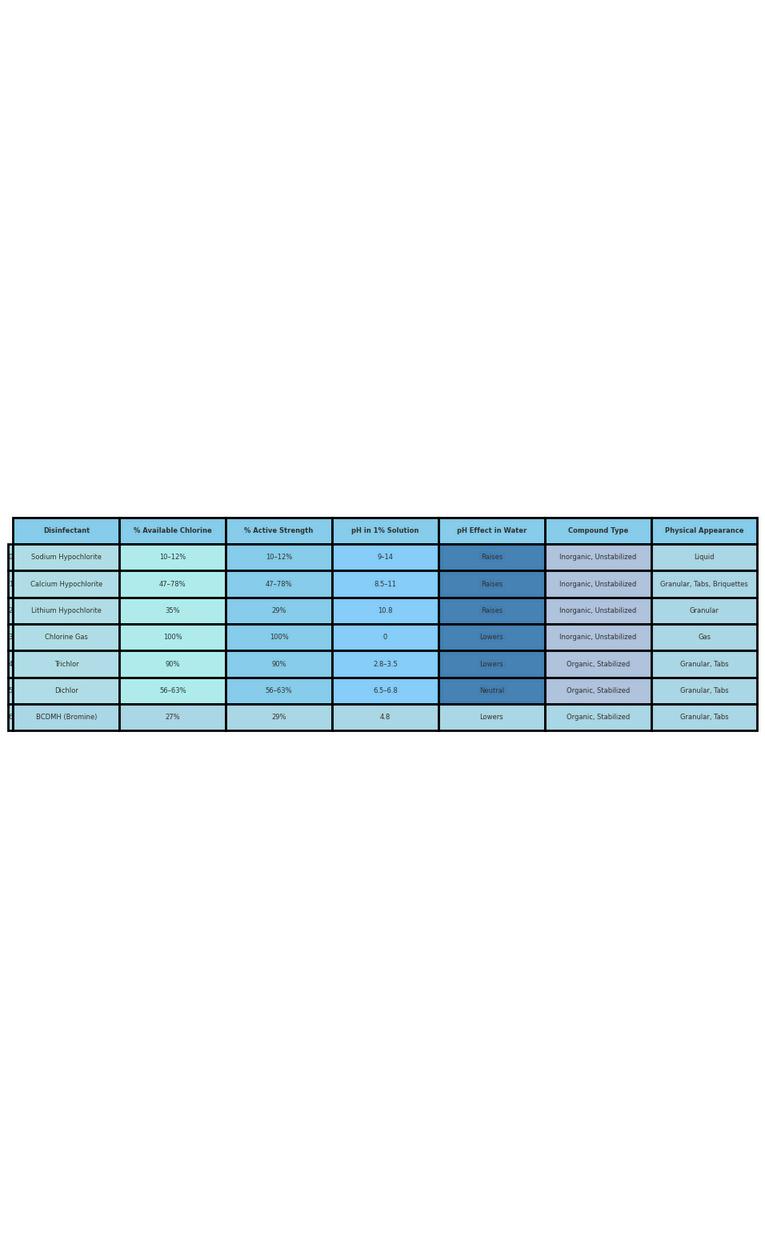
Chlorine dioxide is also effective, but it is not registered for use in the U.S. This container can release 90% as much chlorine as 100 pounds of chlorine gas (Cl₂) could release when dissolved in water. In other words, on a pound-perpound basis, the pool operator has many chemical tools available for the disinfection process.
Chlorine
Understandingthedifferencebetween availablechlorinecontentandactive chlorinepercentageiscrucial.Available ChlorineContent(ACC)measuresthe effectiveamountofchlorine,whileActive ChlorinePercentageindicatesthepurity ofthecompoundForexample,a100poundcontainerofpuretrichlorhasan ACCequalto90%,meaningitcontains90 poundsofeffectivechlorine.This distinctionhelpsinaccuratelydosing chlorinefordisinfection,ensuringoptimal microbialcontrolMisunderstanding thesetermscanleadtounder-or overdosing,reducingeffectivenessor causingpotentialhazards.
Unstabilizeddisinfectantslikechlorine gas,sodiumhypochlorite,andcalcium hypochloritedonotcontainstabilizers andaremoresensitivetopHchanges andUVradiation.Theserequiremore frequentadditiontomaintaineffective levels.
Whenchoosingadisinfectant,consider thetype,effectiveness,andimpacton waterchemistry.Properunderstanding andapplicationensureeffective pathogencontrolandwaterquality maintenance.Regularmonitoringand adjustmentofdisinfectantlevelsare essentialtomaintainasafeand enjoyableswimmingenvironment.It's alsoimportanttoevaluatethe disinfectant'scompatibilitywithother chemicalsinuse,ascertaincombinations canleadtounwantedreactions Assessingthespecificneedsofthepool, suchasswimmerloadandoutdoor exposure,helpsinselectingthemost suitableproduct.
ActiveStrength:10–12%
ACC:10–12%
pH:9–14 – –
Sodium hypochlorite is a widely used liquid chlorine disinfectant in commercial pools due to its convenience and costeffectiveness It’s commonly used with liquid chemical feeders When added to pool or spa water, sodium hypochlorite undergoes the following reaction:
The hypochlorite ion (OCl ) reacts with water, increasing the pH. Sodium hypochlorite’s strength ranges from 10% to 12% ACC with a pH between 9 and 14 The water’s pH must be adjusted with acid to maintain balance. Sodium hypochlorite adds sodium (Na⁺) and chloride (Cl ) ions to the water, increasing total dissolved solids (TDS), which need to be managed to prevent build-up
Stored sodium hypochlorite degrades over time, especially in warm conditions, which reduces its effectiveness. Therefore, it should be kept in cool, dry conditions It’s usually added to pools via positive displacement feeder pumps Manual addition is common in residential pools. The recommended amount for balancing pH involves adding 10 to 16 fluid ounces of muriatic acid for every gallon of sodium hypochlorite
ActiveStrength:47%–78%
ACC:47%–78%
pH:8.5–11(1%solution) – –
Calcium hypochlorite, often referred to as cal-hypo, is available in dry forms like granules, tablets, or briquettes. Its ACC can range from 47% to 78%, making it highly effective for pool disinfection Its reaction in water is:
Cal-hypo is commonly used for superchlorination due to its high ACC and moderate solubility. To prevent bleaching, ensure good circulation and brush any settled granules. Cal-hypo can be used in specific erosion feeders and raises the water’s pH to between 8 5 and 11 When one pound of cal-hypo, with an ACC ranging from 47% to 78%, is dissolved in 10,000 gallons of water, it results in available chlorine levels between 5 6 ppm (mg/L) to 9 4 ppm (mg/L) This range ensures versatility for various pool sizes and types. Proper brushing and circulation when adding cal-hypo prevent surface bleaching and ensure even disinfectant distribution
Cal-hypo, especially in granule or tablet form, is convenient for handling and dosing. However, moisture should be kept out of storage containers to avoid caking and reduced efficacy
ActiveStrength:29%
ACC:35%
pH:10.8(1%solution)
Lithium hypochlorite is a granular form of chlorine, known for its rapid solubility. It reacts in water as follows:
Chlorine gas rapidly lowers the pH of water, necessitating the addition of pH balancers like sodium carbonate or sodium bicarbonate While effective and costefficient, chlorine gas requires careful handling due to its hazardous nature and the special equipment needed.
Chlorine can be produced on-site using a mixture of sodium chloride and water through electrolysis In this process, an electric current is passed through the salt solution, producing chlorine gas. This system is usually permanent and involves treated rare-metal electrodes to provide the necessary electrical energy to the solution.
Lithium hypochlorite is ideal for vinyllined, fiberglass, or painted pools due to its rapid solubility and ease of use. It provides effective disinfection without the risk of bleaching surfaces It is typically used in hard water regions and requires proper storage to maintain its effectiveness.
ChlorineGas(Cl₂)
ActiveStrength:100%
ACC:100%
pH:0(1%solution)
Chlorine gas is a powerful disinfectant with 100% active chlorine strength. Its reaction in water produces hypochlorous acid and hydrochloric acid:
Therearetwobasictypesof chlorinegenerationsystems.The first,calledin-line,produces chlorineutilizingsaltthatis dissolvedinthepoolorspawater. Thesecond,calledthebrine method,usesanoff-linesystemto producechlorinefromasolutionof saltandwater.
In-lineGeneration:Thissystem passesthesaltwaterthrougha devicethatcontainselectrolytic cells.Thesecellsconvertthe sodiumchlorideintofree chlorine.
BrineMethod:Thismethodhasa separatetankcontainingsolid salt.Thesystemmixessaltand waterThesaltwater,orbrine,is thenconvertedintofreechlorine withanelectrochemicalcell.The brinemethodisalsodiscussedin greaterdetailintheChemical Feed&Controlchapter.
Inbothmethods,chlorineis generated,andthechlorineand sodiumhydroxidedissolveintothe waterwhilethehydrogengas escapestotheatmosphere.
CyanuricAcid(CYA),alsoknownas stabilizerorconditioner,isoften addeddirectlyorindirectlyvia stabilizedchlorineproducts.Ithelps protectchlorinefrombeing degradedbyUVlight.WithoutCYA, chlorineisrapidlydestroyedby sunlight,whichcansignificantly reduceitseffectiveness.Maintaining appropriateCYAlevelsinpoolwater helpstoensureaconsistentchlorine residual,reducingtheneedfor frequentchlorineadditions.
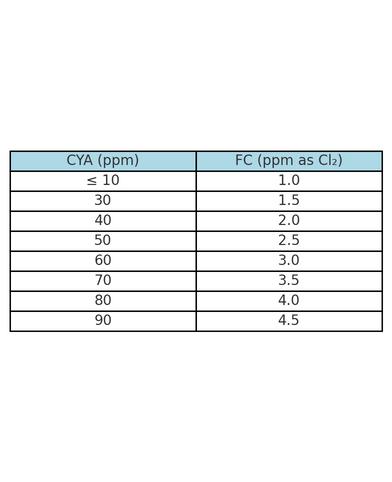
IftheCYAlevelexceeds90ppm,it isrecommendedtopartiallydrain andrefillthepoolwithfreshwater tolowertheconcentration.High levelsofCYAcanreducechlorine's effectiveness,potentiallyleadingto inadequatedisinfection.
Forcyanuricacid(CYA)levels1–15 ppm:
Raisechlorineto20ppmfor28 hours.
Raisechlorineto30ppmfor18 hours.
Raisechlorineto40ppmfor8.5 hours.
IfCYAexceeds15ppm,reduceby partiallydrainingandrefillingbefore hyperchlorination. RefertothePoolWater Contaminationchapterfordetails. CYAstabilizeschlorineagainst sunlight.HighCYAcanincrease algaerisk.ReduceCYAbypartially drainingandrefillingthepool. Dissolvelargegranulesinaseparate tankbeforeadding.Regularlytest CYAlevelstoensuretheyremain withintherecommendedrangefor effectivedisinfection.
There are two main types of stabilized disinfectants used in pool water: trichloroisocyanuric acid (trichlor) and sodium dichloroisocyanurate (dichlor). Both compounds release chlorine gradually, providing a steady supply of disinfectant while also contributing to the CYA levels in the pool These disinfectants help maintain consistent chlorine levels, especially in outdoor pools where sunlight can rapidly degrade chlorine.
Trichlor(C₃N₃O₃Cl₃)
ActiveStrength:99%
ChlorineContent:90%
pH:2.8–3.5
Trichlor is a dry compound available mainly in granular, tablet, and stick forms. It is a highly concentrated form of chlorine with an Available Chlorine Content (ACC) of over 90% and an active strength ranging from 46% to 48%.
To counteract this, an alkaline substance such as sodium bicarbonate (NaHCO₃) or sodium sesquicarbonate (Na₂CO₃·NaHCO₃·2H₂O) should be added:
ActiveStrength:63%
ChlorineContent:57.1%
pHLevel:5.5-6.8(1%solution)
Sodium dichloroisocyanurate (dichlor) is a popular choice among disinfectants due to its stability and high available chlorine content, approximately 63% Dichlor comes in two forms: dihydrate and anhydrous. The anhydrous form is easier to store and handle, with a higher ACC of 65%. However, it must be stored with care due to its hygroscopic nature The dihydrate form, containing around 20% water, is safer for handling but less concentrated with an ACC of 56%. Both forms are effective oxidizing agents. Below are the key reactions for dichlor in water:
Dichlor is a highly soluble salt, often employed to superchlorinate pools with vinyl linings. It is also useful in spas where pH control is necessary. Dichlor can be utilized to superchlorinate pool water while simultaneously increasing the stabilizer level.
One pound (454 grams) of either anhydrous dichlor or dichlor dihydrate in 10,000 gallons (37,843 litres) of water will yield approximately 7.4 ppm (mg/L) or 6.7 ppm (mg/L) of chlorine, respectively This amount will also add about 7 ppm (mg/L) or 6 ppm (mg/L) of stabilizer, respectively, for these products. Manufacturers incorporate inert ingredients into formulated dichlor These products are commonly distributed in residential pool supply locations. .
Bromine compounds, such as hypobromous acid, are gaining popularity as an alternative to chlorine. These compounds release bromine ions in water, providing effective disinfection.
TherelationshipofpHtoactiveHOBr:
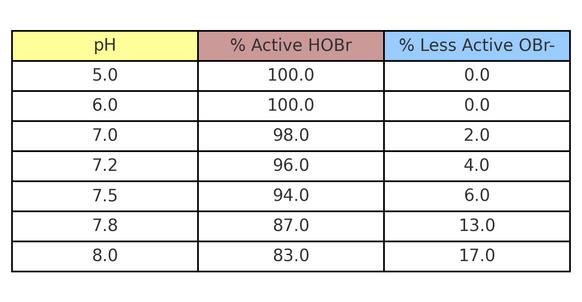
Bromine is less irritating to mucous membranes than chloramines, making it popular in spas. Bromine-releasing agents, while weaker oxidizers than chlorine, are commonly used in pools and spas. They form bromide ions (Br ) which react with oxidizers like HOCl to produce hypobromous acid (HOBr).
Hypobromous acid (HOBr) behaves similarly to hypochlorous acid (HOCl) When bromine-releasing chemicals dissolve in water, they form HOBr, hypobromite ion (OBr ), and hydrogen ions (H⁺). HOBr partially dissociates into H⁺ and OBr
The ratio of HOBr to OBr depends on the water's pH, with both present between pH 6.5 and 9. In the presence of ammonia (NH₃), compounds like monobromamine (NH₂Br), dibromamine (NHBr₂), and nitrogen tribromide (NBr₃) form. Organic amines also create organic bromamines. Bromamines are effective disinfectants, less odoriferous, and less irritating to eyes and skin
HOBr is effective at killing microorganisms and creates an equilibrium with hypobromite ion (OBr ). At pH 7.5, about 94% of bromine is HOBr, and 6% is OBr . HOBr is degraded by sunlight similarly to HOCl, with half destroyed in 60-90 minutes Cyanuric acid does not protect HOBr from UV light After bromine use, bromide remains in the water. Adding a stronger oxidizer or chlorinating agent converts bromide back to HOBr, consuming HOCl Cyanuric acid no longer stabilizes chlorine after bromine use, as HOBr replaces HOCl:
Bromine tablets, such as those containing BCDMH (1-bromo-3-chloro-5,5dimethylhydantoin), are widely used in both pools and spas These tablets are designed to dissolve slowly, releasing a consistent amount of bromine and chlorine into the water. This dual-action release helps maintain a steady level of disinfection while also providing some of the benefits of chlorine, such as oxidation of organic contaminants.
Advantages: BCDMH tablets are less corrosive than pure bromine and easier to handle and store They provide a reliable source of bromine that is less affected by fluctuations in pH compared to chlorine, making them suitable for a variety of water conditions
Usage: These tablets are placed in floating dispensers or bromine feeders that gradually dissolve them into the water, ensuring a continuous supply of disinfectant.
By using bromine, particularly in forms like BCDMH, pool and spa maintenance can achieve effective disinfection with fewer drawbacks related to pH sensitivity and reactivity, offering a safer and more stable alternative to traditional chlorine treatments
Chlorine-based disinfectants have been crucial in public health over the last century. However, no single chemical can fulfill all disinfection needs. Innovations such as bromine disinfection (used for nearly 50 years) and biguanide disinfection (PHMB) have emerged as alternatives. Additionally, physical methods like filtration enhance disinfection effectiveness and water clarity. In the past 20 years, supplemental disinfectant systems have become more common in public and some residential pools and hot tubs. These systems are used alongside primary disinfectants, primarily chlorine Supplemental systems offer unique advantages and improve overall disinfection efficacy. They can help in reducing the amount of chlorine needed, leading to fewer byproducts and less irritation for swimmers Additionally, supplemental systems often target a broader range of pathogens, including chlorine-resistant organisms.
Ozone is a gas consisting of three oxygen atoms and is highly soluble in water As a supplemental oxidizer and disinfectant, ozone doesn't leave a residual in the water and must be generated on-site. It is injected into the water flow, where it dissolves and reacts with contaminants Ozone kills bacteria, viruses, and parasites like Cryptosporidium and Giardia and helps reduce chloramine odors, improving air quality in indoor pools.
Ozone is quickly consumed before the water returns to the pool, necessitating a residual disinfectant to protect bathers. There are three methods for generating ozone, with the injector venturi being the most common. Ozone oxidizes organics, causing particles to aggregate and be removed by filtration, reducing chlorine demand. It can also pretreat the balance tank, providing an additional disinfectant residual:
UV light is a high-energy, low-wavelength light that disinfects water without chemicals. It must be used with a residual disinfectant and is generated on-site UV inactivates bacteria, viruses, and parasites like Cryptosporidium and Giardia by damaging their DNA. The effectiveness of UV depends on the intensity and exposure time of the UV light: UVDose=LampIntensity×Exposure TimeUVDose=LampIntensity×Exposure Time
A recent development combines ozone and UV light to maximize disinfection, water clarity, and removal of pathogens. This system dissolves ozone in the water, which then passes through a UV lamp, creating a powerful oxidation process.
A recent advancement in oxidation combines ozone and UV into one system, creating a sanitation process with maximized disinfection, water clarity, and removal. The AOP system dissolves ozone gas in the water then transfers the ozonated water through a UV lamp, creating a strong oxidation kill path for pathogens and microorganisms
Chlorine dioxide is a selective oxidizer and disinfectant effective against bacteria, algae, viruses, and cysts like Cryptosporidium and Giardia. It is used in Europe and Canada, but not registered as a disinfectant in the U S It reacts with sulfur compounds and amines but not with ammonia. In the U.S., it controls mildew and biofilm in PHMB-treated pools.
PHMB is an organic polymeric disinfectant registered by the U.S. EPA for treating pools and spas. It is used with hydrogen peroxide (H O ), an oxidizer, and quaternary ammonium compound algaecide. PHMB is mainly used in residential applications and must be approved for commercial use by local health departments 2 2
PHMB is incompatible with chlorinereleasing chemicals, copper algaecides, and potassium monopersulfate. Chlorine dioxide (ClO ) can be used with PHMB to control mildew and slime in plumbing. Some systems use ozone as a supplemental oxidizer. Always consult the manufacturer for compatible problem-solving chemicals when using PHMB 2
Maintaining appropriate disinfectant levels is crucial for achieving clear water conditions.
Water is often referred to as the universal solvent, and pool water is no exception. Water with dissolved material becomes aggressive and seeks equilibrium. This can lead to a natural attempt to balance, which might damage surfaces by drawing in minerals. Common materials affected include pool walls and metal parts in pumps, heaters, and plumbing When water reaches equilibrium with the correct mineral balance, it is no longer aggressive. Conversely, water that holds too much dissolved material will try to shed it, causing deposits like calcium carbonate, which can create scale and collect dirt, leading to pool and equipment clogging. Proper testing and maintenance of water chemistry are crucial to prevent scaling and corrosion Using a sequestering agent can help manage excess minerals and reduce scaling risks. Regular brushing of pool surfaces can also prevent buildup before it becomes a major issue. Ensuring a balanced pH and alkalinity is key to keeping water stable and protecting pool infrastructure.
Properly balanced water promotes an optimal disinfection process. It also safeguards pool equipment from chemical corrosion, enhancing the system's efficiency Correctly balanced water offers a more enjoyable swimming experience for users.
Total alkalinity measures water's ability to resist pH changes. It acts as a buffer, stabilizing pH levels The pool's total alkalinity should fall within the range of 7.2 to 7.8 to protect surfaces and ensure efficient disinfection.
The primary contributors to total alkalinity are bicarbonates (HCO₃ ), carbonates (CO₃² ), and hydroxide ions (OH )
In some cases, cyanuric acid significantly affects total alkalinity. High levels of cyanuric acid require an adjustment in the total alkalinity calculation. For pools with high cyanuric acid levels, it is essential to maintain an appropriate total alkalinity to avoid pH fluctuations, known as "pH bounce," which can lead to corrosion, staining, and eye irritation.(Illustration 6-1: Shows the relationship between different chemical forms at various pH levels)
The ideal total alkalinity depends on the source of chlorine used. Generally, the target range is 80 to 120 ppm. High pH disinfectants like sodium hypochlorite require total alkalinity at the lower end of this range, while low pH disinfectants like trichlor require higher total alkalinity. The ideal total alkalinity depends on the source of chlorine used. Generally, the target range is 80 to 120 ppm High pH disinfectants like sodium hypochlorite (liquid chlorine) require total alkalinity at the lower end of this range to prevent scaling and maintain effectiveness. Conversely, low pH disinfectants like trichlor (chlorine tablets) require higher total alkalinity to buffer the acidic nature of the chlorine and avoid rapid pH drops.
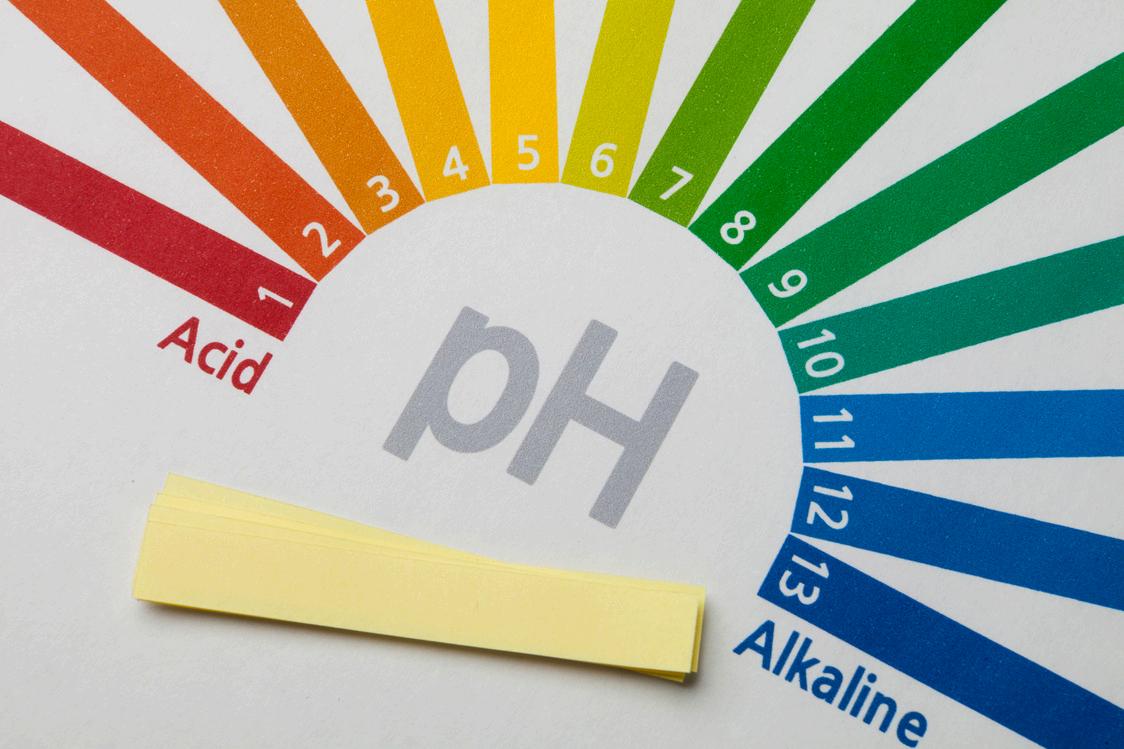
Total alkalinity stabilizes pH, preventing sudden changes in pool water
When total alkalinity is too low, it fails to buffer the pH, causing pH bounce This instability can lead to corrosion, staining, and scaling. To raise low total alkalinity, labels typically recommend adding sodium bicarbonate at a rate of 1.4 pounds per 10,000 gallons (679 g per 40,000 liters) for a 10 ppm increase
High total alkalinity can cause pH lock, making the pH resistant to adjustment and leading to cloudy water due to calcium carbonate. It also poses a risk of scaling on surfaces and equipment. Adjusting high alkalinity typically involves adding acid, like muriatic acid or sodium bisulfate, to bring levels back within the recommended range
80–100ppm(mg/L)forhighpHdisinfectants
100–120ppm(mg/L)forlowpHdisinfectants
60ppm(mg/L
pHBounce
Etchingofpool/spa surface
Stainingofsurfacewalls Heaterfailure
180ppm(mg/L
pHLock
Cloudywater
Roughpool/spasurfaces
Cloggedfilters
Cloggedheaterelements
Reducedcirculation
HighTotal Alkalinity
The term "pH" is derived from the Latin word for "power of hydrogen," and it represents the concentration of hydrogen ions in water pH is a crucial factor in water balance, significantly affecting pool and spa maintenance.
Water is a weak electrolyte, meaning it partially conducts electricity as its molecules dissociate into ions This process of ionization is represented by the pH value, which indicates whether water is acidic, neutral, or alkaline.
As the concentration of hydrogen ions (H⁺) increases, the concentration of hydroxide ions (OH ) decreases, making the solution more acidic. Conversely, when the H⁺ concentration decreases, OH levels rise, making the solution more alkaline or basic
The pH scale is logarithmic, so even a small change in pH represents a significant change in acidity or alkalinity. For instance, a pH of 6 is ten times more acidic than a pH of 7 A neutral pH is 7, and for pools and spas, the ideal pH range is typically between 7 4 and 7.6, which aligns with the slightly alkaline pH of human tears (7.2 to 7.8). Several factors influence the pH of pool or spa water, including:
Waste from bathers
Disinfectant chemicals
Source water quality
Airborne debris
Water balance chemicals
Aeration
Evaporation
Managing pH Levels
Controlling pH is essential to ensure the effectiveness of disinfectants, the longevity of pool equipment, and the comfort of swimmers. To increase pH, a basic substance, such as sodium carbonate (Na₂CO₃),
commonly known as soda ash, is added. Another option is sodium hydroxide (NaOH) or sodium sesquicarbonate (Na₂CO₃ • NaHCO₃ • 2H₂O). These chemicals reduce the concentration of hydrogen ions, thereby raising the pH and making the water more basic. If lowering the pH is necessary, acids or acid salts such as muriatic acid (HCl) or sodium bisulfate (NaHSO₄) are added to the water These substances increase the hydrogen ion concentration, thereby reducing the pH and making the water more acidic.
Maintaining correct total alkalinity is crucial before adjusting pH, as it helps stabilize the pH levels and prevents large fluctuations.
Proper management ensures that the pH remains within the ideal range for safe and comfortable swimming.
Incorrect pH levels can cause several problems:
Low pH can lead to corrosive water, which might etch pool surfaces, corrode metal components, and irritate eyes and skin.
High pH may cause scaling, cloudy water, and decreased effectiveness of chlorine, leading to potential staining and clogged filters. In the case of low pH, adding bases like sodium bicarbonate can neutralize the acidity For high pH, using acids such as muriatic acid will help lower the pH to the desired level.
In summary, proper pH management is critical for maintaining water quality, protecting equipment, and ensuring a pleasant swimming experience. Proper pH management is essential to prevent corrosion or scaling, maintain water quality, protect equipment, and ensure a comfortable swimming experience
Corrosive water
Etching of pool surfaces
Corrosion of metal components
Low pH High pH
Irritation of eyes and skin
Wrinkles in vinyl liners
of pool
The calcium content in water occurs naturally, making it one of the key factors in water chemistry As groundwater interacts with rocks and minerals rich in calcium and magnesium, it dissolves these minerals into the water, contributing to total hardness, which is a combination of calcium and magnesium levels While both calcium hardness and total hardness are related, they serve different roles in water balance.
In pool water, maintaining balanced calcium hardness is important to prevent issues like scaling or corrosive conditions Low calcium hardness makes water more aggressive, potentially leading to the erosion of plaster or metal surfaces. High calcium hardness, on the other hand, can lead to scale formation, cloudiness, and reduced efficiency of the pool's heating system. Calcium hardness in pools and spas is measured as calcium carbonate (CaCO₃) and is typically reported in parts per million (ppm) The recommended range varies depending on the type of pool or spa but generally falls between 150 and 400 ppm.
If calcium levels are too low, pool or spa water becomes increasingly aggressive, which can lead to corrosion of plaster, metal fixtures, and other surfaces. This is especially true when low calcium hardness is combined with low total alkalinity. Such conditions allow the water to dissolve calcium from pool surfaces, leading to rough, pitted surfaces and other forms of damage. Ensuring that calcium hardness remains within the proper range helps protect pool surfaces and equipment
Calcium chloride (CaCl₂) is used to increase calcium hardness. There are two forms: anhydrous (77% strength) and hydrated (100% strength) Predissolve in a bucket before adding to the pool. For anhydrous, use 1.2 pounds per 10,000 gallons to raise hardness by 10 ppm; for hydrated, use 1 pound. Add slowly in the deepest part, and stir gently to avoid boiling and chemical vapor release.
High calcium levels (above 6.5) can cause surface scaling, especially on pool and spa surfaces like plaster or concrete This issue is worsened by hard water, low total alkalinity, or elevated water temperatures. Scaling also affects equipment like heaters and filters, reducing efficiency
Lowering calcium hardness is difficult and often involves draining and replacing water or using a sequestering agent to keep calcium dissolved and prevent scaling. To maintain balance, it's crucial to control both pH and total alkalinity, particularly when calcium hardness exceeds 500 ppm (mg/L).
Temperature is the one water balance factor that is not chemical—it's a physical factor. It only becomes a significant concern under extreme conditions. For example, water temperatures above 104°F (40°C) can have heightened effects on chemical reactions, and temperatures as low as 32°F (0°C) can cause freezing. In such conditions, adjustments to water chemistry may be necessary to maintain balance
For pools and spas operating under normal temperature conditions, temperature is less of a concern. However, in heated pools, the higher temperature can accelerate the rate at which calcium deposits form, contributing to scale buildup Regular monitoring and appropriate chemical adjustments are essential to prevent scaling and ensure the water remains balanced.
Total Dissolved Solids (TDS) measure all substances dissolved in water As TDS increases, water quality and balance may be compromised, leading to reduced water clarity,
decreased sanitizer effectiveness, and potential scaling or corrosion, especially in heated pools or spas.
TDS typically rises due to the addition of chemicals, dirt, and other substances Regular water replacement is necessary to manage TDS and maintain water quality. Disinfectants like sodium hypochlorite contribute to TDS over time. The relevant reactions include:
After hypochlorous acid (HOCl) reacts with contaminants in the water, it leaves behind chloride ions (Cl ) and sodium ions (Na⁺), as shown in the following reaction:
As time passes, other disinfectants add salts and inert materials to the water. Evaporation also raises TDS by leaving dissolved solids behind. Replacement water can introduce more TDS, potentially up to 400 ppm (mg/L)
TDS serves as an indicator of water "age." Higher TDS often signals an increase in organic contaminants, including those from bather waste. This can boost the demand for disinfectants as algae and bacteria growth accelerates Though specific tests for these contaminants are available, they are costly, making TDS a common and practical measure of water quality over time
As TDS levels rise, there’s an increased risk of galvanic corrosion, where dissimilar metals in the system corrode due to electrochemical reactions. For example, a combination of copper
and steel in a pool can lead to surface staining and equipment damage. To avoid these issues, it’s recommended that TDS levels stay below 1,500 ppm.
High TDS, particularly when combined with organic contaminants, can make corrosion worse, accelerating metal deterioration and leading to more extensive damage. Regular water testing and proper chemical balancing are crucial to prevent these corrosive effects and maintain the integrity of the pool system.
High TDS levels can make water cloudy, thick, or even salty, often due to accumulated chemicals and contaminants. Regular water replacement helps manage TDS, particularly in heavily used pools and spas. High TDS can also reduce the effectiveness of disinfectants, leading to potential algae growth and bacterial issues Testing TDS levels periodically ensures they remain within recommended limits.
The Saturation Index (SI) is a valuable tool developed by Dr. Wilfred F. Langelier, a civil engineering professor at the University of California, Berkeley His research on water distribution and the prevention of scale formation led to the development of the "Analytical Control of Anti-Corrosive Water Treatment," which quantifies the corrosion potential of water The index was designed to help predict whether water will deposit calcium carbonate (scale) or remain in a balanced state.
The Langelier Saturation Index (SI) incorporates five key factors: pH, total alkalinity, calcium hardness, temperature, and total dissolved solids. By calculating these factors, the SI helps determine if water is balanced, corrosive, or scaleforming A balanced SI value typically
ranges between -0.3 and +0.5. Negative values indicate corrosive water, while positive values suggest a tendency toward scale formation. Though the Langelier Index has been widely adopted in various industries, including swimming pools and industrial water treatment, it’s essential to periodically recalibrate and validate the factors used, as environmental conditions and local water chemistry may vary The sequence for adjusting chemical values includes pH correction, followed by adjustments to total alkalinity and calcium hardness, ensuring that the SI remains within the optimal range
When cyanuric acid levels in the pool are elevated, they can impact the total alkalinity (TA) reading, making it necessary to apply a correction. For example, if the cyanuric acid (CYA) level is measured at 80 ppm, you need to calculate the correction factor to adjust the total alkalinity The cyanuric acid concentration should be divided by 3 to determine the correction factor. For instance, if the measured total alkalinity is 120 ppm and the CYA level is 80 ppm, the correction calculation would be as follows:
Correction factor: 80 ppm ÷ 3 = 26 7 ppm
Adjusted total alkalinity: 120 ppm26.7 ppm = 93.3 ppm
This corrected TA value should be used when calculating the Saturation Index This ensures that the water remains balanced, avoiding issues like scaling or corrosiveness.
To calculate the Saturation Index (SI), use the factors provided in the reference chart. If the exact measurement isn’t available, round up to the next highest value The pH value from your test is directly entered into the formula. The Saturation Index formula is:
SI=pH+Tf+Cf+Af–TDSf
pH: pH as tested
Tf: Temperature factor
Cf: Calcium hardness factor
Af: Alkalinity factor
TDSf: Total Dissolved Solids factor
If the water is not balanced, adjustments are necessary to bring it back into balance. The typical sequence for adjustments starts with total alkalinity, followed by pH, and then calcium hardness Temperature usually doesn’t need adjustment as it’s often not a controllable factor.
Your pool water test readings are:
pH: 7 5
Temperature: 80°F (26.7°C)
Calcium Hardness: 220 ppm or mg/L
Total Alkalinity: 110 ppm or mg/L
TDS: 2,000 ppm or mg/L
In regions where pools or spas need to be winterized, it’s crucial that all water balance
factors are tested before beginning the winterizing process. If not, severe damage may occur to the pool or spa surfaces and equipment.
Using the Saturation Index formula, the results are:
SI = pH + Tf + Cf + Af - TDSf
SI = 7.5 + 0.6 + 2.0 + 2.1 - 12.2
SI = -0 0
This indicates that the water is balanced but on the verge of being corrosive.
Your pool water test readings are as follows:
pH: 7 6
Temperature: 84°F (28.9°C)
Calcium Hardness: 250 ppm or mg/L
Total Alkalinity: 150 ppm or mg/L
TDS: 2,000 ppm or mg/L
Using the Saturation Index formula, the following results are obtained:
SI = pH + Tf + Cf + Af - TDSf
SI = 7 6 + 0 7 + 2 0 + 2 2 - 12 3
SI = 12.5 - 12.3
SI = +0.2
(The water is balanced)
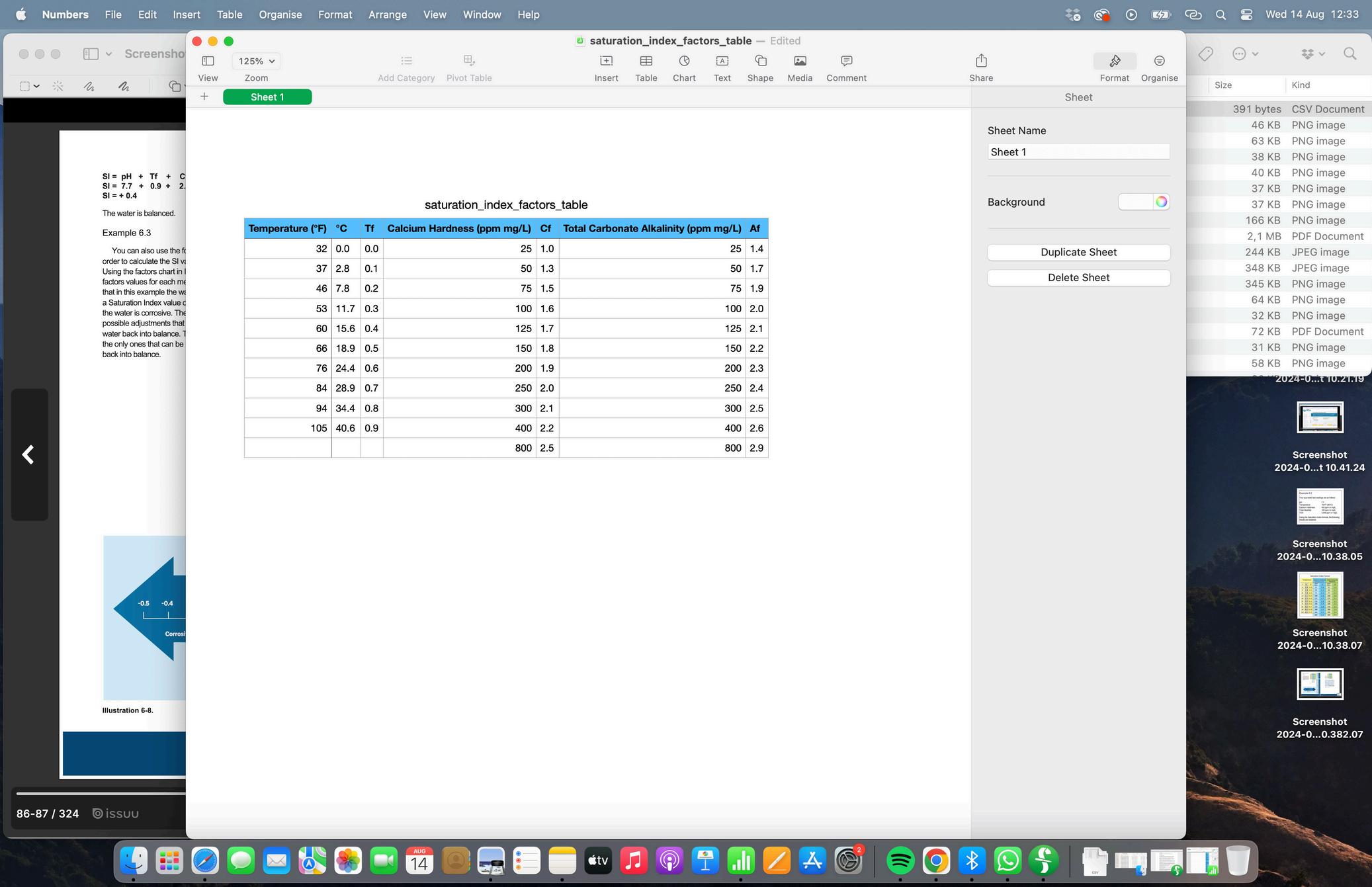
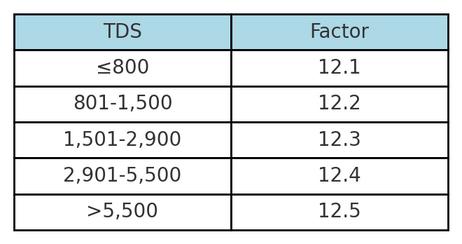
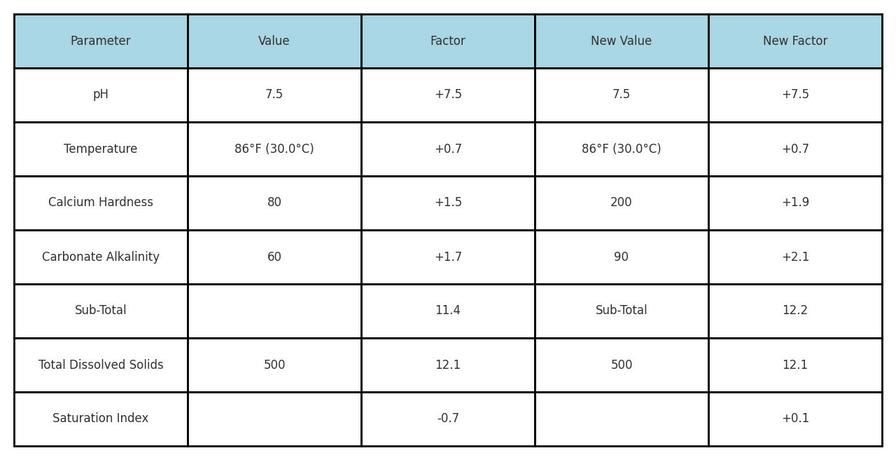
Maintaining clean and safe water in swimming pools and spas is crucial to the operation of these facilities Water quality is influenced by a variety of factors, including environmental contaminants, organic materials like sweat, and chemicals such as fertilizers and weed control agents. Even though many of these sources are external and beyond control, ensuring water quality remains a top priority. This chapter delves into various water quality issues that can arise and offers practical solutions.
To maintain proper water chemistry, specific chemicals often need to be added to the pool or spa regularly The process begins by testing the water and comparing the results to established standards. If adjustments are needed, the correct chemical amount is calculated and applied, followed by retesting to ensure the desired levels are achieved
There are three main methods for adjusting pool and spa chemicals:
Product Label Chemical Dosage: Add the recommended amount as indicated on the product label, typically used for routine maintenance
Calculated Chemical Adjustment: For precise changes, calculate the dosage based on water volume and desired chemical levels, useful for pool openings or after major contamination. Non-Labeled Chemical
Adjustment: For bulk chemicals without specific instructions, use guidelines to determine the correct dosage.
Some labels don't specify a ppm adjustment but offer instructions for adding the chemical based on a specific water volume This method is commonly used for initial treatments or specific water issues, ensuring accurate dosage for your pool size.
When following product label instructions, it’s important to closely adhere to the specified dosage For example, a label might indicate how much chlorine is needed to achieve a specific ppm increase in a given volume of water. Calculations should be made to adjust for the actual volume of water in the pool or spa, ensuring that the correct amount of chemical is added.
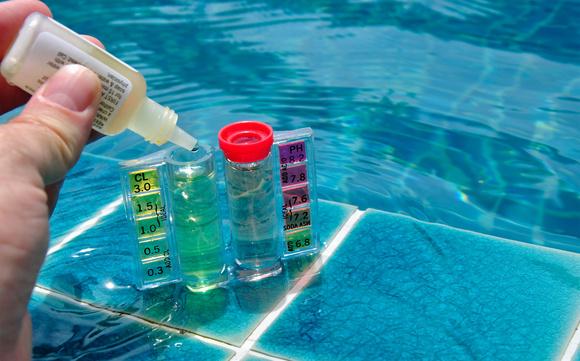
When using bulk chemicals without specific dosing instructions, accurate adjustments can still be made by following a calculated process. This is especially useful for chemicals like calcium chloride Here's how to ensure proper chemical balance:
Determine the required amount: Use a dosage guide to find the correct amount based on your pool size
Calculate pool volume: Divide the total pool volume by 10,000 (or 100,000 for larger pools) for the dosage factor. Adjust for current levels: Subtract the current reading from the target level to find the adjustment needed Apply the dosage: Multiply the required chemical amount by the dosage factor to get the correct adjustment.
You are managing a 120,000-gallon swimming pool. The water test indicates a need to treat for algae. The label advises using 45 fluid ounces per 30,000 gallons of water. How much do you need to add?
You're responsible for a 450,000-litre hotel pool. An issue with algae has been identified, and the label instructs using 2 liters per 100,000 litres of water. What is the required amount?
You have a 60,000-gallon residential pool. After a heavy weekend of use, you notice the chlorine level has dropped below the acceptable range. You decide to raise the chlorine level by 5 ppm. The product label suggests adding 15 ounces per 10,000 gallons to increase chlorine by 2 ppm. How much chemical do you need to add?
You manage a 250,000-litre public swimming pool. After a weekend swim meet, the chlorine levels have decreased and need to be raised by 1.5 mg/L. The product label suggests using 800 grams of the chemical per 100,000 litres to increase chlorine levels by 3 mg/L. How much of the chemical should you add?
Given: Free Available Chlorine = 1.2 ppm (mg/L)
Unknown: How much sodium hypochlorite to add to raise the chlorine level to 3.0 ppm (mg/L)?
In this example, you've selected sodium hypochlorite as your chemical of choice.
Your target chemical adjustment: For instance, if your current chlorine level is 1.2 ppm (mg/L) and you aim to increase it to 3.0 ppm (mg/L), the required change would be 3.0 - 1.2 = 1.8 ppm (mg/L).
Determine the required chemical amount by moving down the columns and dividing the given numbers.
50.000 ÷ 10.000 = 5 1.8 ÷ 1.5 = 1.2
Finally, move across the bottom row and multiply all the values. 10.7 x 5 x 1,2 = 62.2 fl.oz. or 64,2 ÷ 128 = 0,5 gallons
Youaremanaginga50,000gallonpool.Yourcurrent chlorinelevelis1.2ppm, andyouneedtoincreaseit to3.0ppm.Youdecideto usesodiumhypochlorite withaconcentrationof12%. Thedosagetableindicates that12.5fluidouncesare requiredper10,000gallons fora1.5ppmincrease.How muchshouldyouadd?
Given: Free Available Chlorine = 1.5 mg/L (ppm)
Unknown: How much sodium hypochlorite is needed to raise the chlorine level to 3.5 mg/L (ppm)?
Your chemical choice in this example is sodium hypochlorite.
Your actual pool volume: For example, 180,000 liters.
Your target chemical adjustment: For instance, if your current chlorine level is 1.5 ppm (mg/L) and you aim to increase it to 3.5 ppm (mg/L), the required change would be 3.5 - 1.5 = 2.0 ppm (mg/L).
Calculate the required chemical amount by moving down the columns and dividing the given numbers.
180,000 ÷ 48,000 = 4 2.0 ÷ 1.0 = 2
Finally, move across the bottom row and multiply all the values.
330 mL × 4 × 2 = 2,640 mL or 2,640 ÷ 1,000 = 2.64 Liters
Chlorine, a common disinfectant and oxidizer, also helps address various issues in recreational water. Contaminants from bathers and the environment can accumulate, leading to the formation of combined chlorine, or chloramines, when chlorine reacts with nitrogen-containing substances. These chloramines can irritate both water and air, hindering disinfection To measure combined chlorine, a DPD test kit is used. The difference between total chlorine (TC) and free chlorine (FC) gives the combined chlorine (CC) level: CC=TC-FC
Inorganic chloramines, like monochloramine, form when chlorine reacts with ammonia, while organic chloramines arise from reactions with organic contaminants. Monochloramine is prevalent at pH levels between 7 5 and 7 9, but as chlorine levels rise, stronger-smelling compounds like dichloramine and nitrogen trichloride can form, leading to the characteristic "pool smell."
Chloramines form when free chlorine reacts with ammonia (forming inorganic chloramines) or organic contaminants. Though it’s impossible to prevent all chloramine formation, encouraging practices like pre-swim showers can reduce their occurrence.
Severalmethodscanhelplower chloraminelevels:
Water replacement: Replacing contaminated water with fresh water reduces both inorganic and organic chloramines, though this may be limited by water conservation efforts.
Break-point Chlorination: A significant chlorine dose to break down chloramines
Ultraviolet (UV) treatment: UV light helps eliminate chloramines.
Ozone treatment: Ozone effectively oxidizes and removes chloramines.
Potassium monopersulfate: A nonchlorine oxidizer that aids in breaking down chloramines.
Improved air handling: Enhances ventilation to reduce airborne chloramines.
Replacing pool water with fresh potable water is an effective way to manage chloramines. However, this may not always be feasible due to the large water volumes required. Operators should be aware that some municipal water supplies may contain chloramines, which could raise combined chlorine levels in the pool. Always verify the chlorine content in the replacement water and treat it as needed. Regular water replacement can also help maintain overall water quality, ensuring a safer swimming environment.
Using Calcium Hypochlorite, calculate the required chemical dose to reach Breakpoint Chlorination in a 60,000-gallon pool with a Free Chlorine (FC) of 1.8 ppm and a Total Chlorine (TC) of 2.6 ppm:
1.Calculate the amount of Combined Chlorine
Total Chlorine (TC) - Free Chlorine (FC) = Combined Chlorine (CC)
Example: 2.6 ppm - 1.8 ppm = 0.8 ppm
2.Determine the Breakpoint Chlorination (BPC) amount
Breakpoint (BPC) = CC × 10 = 0.8 ppm × 10 = 8.0 ppm
3.Calculate the desired change amount
Desired Change = BPC - FC = 8.0 ppm - 1.8 ppm = 6.2 ppm
Using Calcium Hypochlorite, calculate the desired chemical dose to achieve Breakpoint Chlorination in a 220,000-liter pool with a Free Chlorine (FC) of 1.4 mg/L and a Total Chlorine (TC) of 2.8 mg/L:
Determine the amount of Combined Chlorine
Total Chlorine (TC) - Free Chlorine (FC) = Combined Chlorine (CC)
Example: 2.8 mg/L - 1.4 mg/L = 1.4 mg/L
Calculate the Breakpoint Chlorination (BPC) amount
Breakpoint (BPC) = CC × 10 = 1.4 mg/L × 10 = 14.0 mg/L
Calculate the desired change amount
Desired Change = BPC - FC = 14.0 mg/L - 1.4 mg/L = 12.6 mg/L
Conversion: 466.2 ÷ 1,000 = 0.466 kg, rounded to 0.47 kg.
Many guidelines recommend adding large amounts of free chlorine to reach BPC, a process that involves raising the chlorine level to about ten times the combined chlorine level to oxidize and remove it. BPC effectively reduces inorganic chloramines, but it is less effective against organic chloramines. If an operator adds enough chlorine to reach BPC but still finds combined chlorine, the likely cause is organic chloramines
When sufficient free chlorine is added to water, inorganic chloramines are broken down into nitrogen trichloride, which further breaks down into nitrogen gas To achieve BPC, the free chlorine (FC) in the water must be raised to approximately ten times the combined chlorine (CC) level. Adding chlorine that’s less than the calculated amount might not achieve BPC, potentially leaving some chloramines untreated. Elevated chlorine levels can lead to other issues, like producing harmful byproducts. Some test kits only measure monochloramine, which means achieving BPC based on these tests can leave dichloramine untreated.
A 60,000-gallon pool with an FC of 1.8 ppm, a TC of 2 6 ppm, and a pH of 7 5 requires a chemical adjustment
The goal is to reach BPC using calcium hypochlorite Based on the chemical difference, the chlorine needed is calculated and then applied.
UV systems are effective in breaking down both inorganic and organic chloramines, particularly in indoor pools where air and water quality are essential. These systems use ultraviolet light to disrupt chloramine bonds, reducing odors and irritants. By improving water clarity and air quality, UV systems are increasingly adopted as part of modern pool management strategies, especially in facilities with high usage or enclosed environments.
Ozone systems help reduce chloramines by oxidizing them into simpler compounds. They are particularly useful in indoor pools to manage air quality and reduce strong odors.
Effective air handling is crucial in indoor pools to reduce chloramines in the air, improving comfort and reducing irritants like dichloramine and nitrogen trichloride.
Oxidation, using chlorine, ozone, or UV light, breaks down contaminants in pool water into harmless substances. Proper oxidation ensures clear water, reduces harmful by-products, and enhances water safety
Potassium monopersulfate (2KHSO₅ • KHSO₄ • K₂SO₄), often referred to as monopersulfate, is a solid, granular, nonchlorine oxidizer commonly used in pool and spa maintenance. It is particularly effective in breaking down contaminants and preventing the accumulation of combined chlorine. The typical dosage is one pound (0 45 kg) of monopersulfate for every 10,000 gallons (38,000 liters) of water, based on an active strength of 42.8%. Upon dissolving in water, it reacts rapidly, lowering the water’s pH and aiding in the removal of impurities Some formulations also contain additional ingredients to help neutralize odors or maintain pH balance.
Monopersulfate oxidizes both inorganic and organic contaminants by releasing oxygen, which transforms these substances into less harmful by-products. Unlike chlorine, monopersulfate does not interfere with tests like those using DPD kits, making it advantageous in specific scenarios Additionally, monopersulfate is classified as a Class 1 oxidizer,
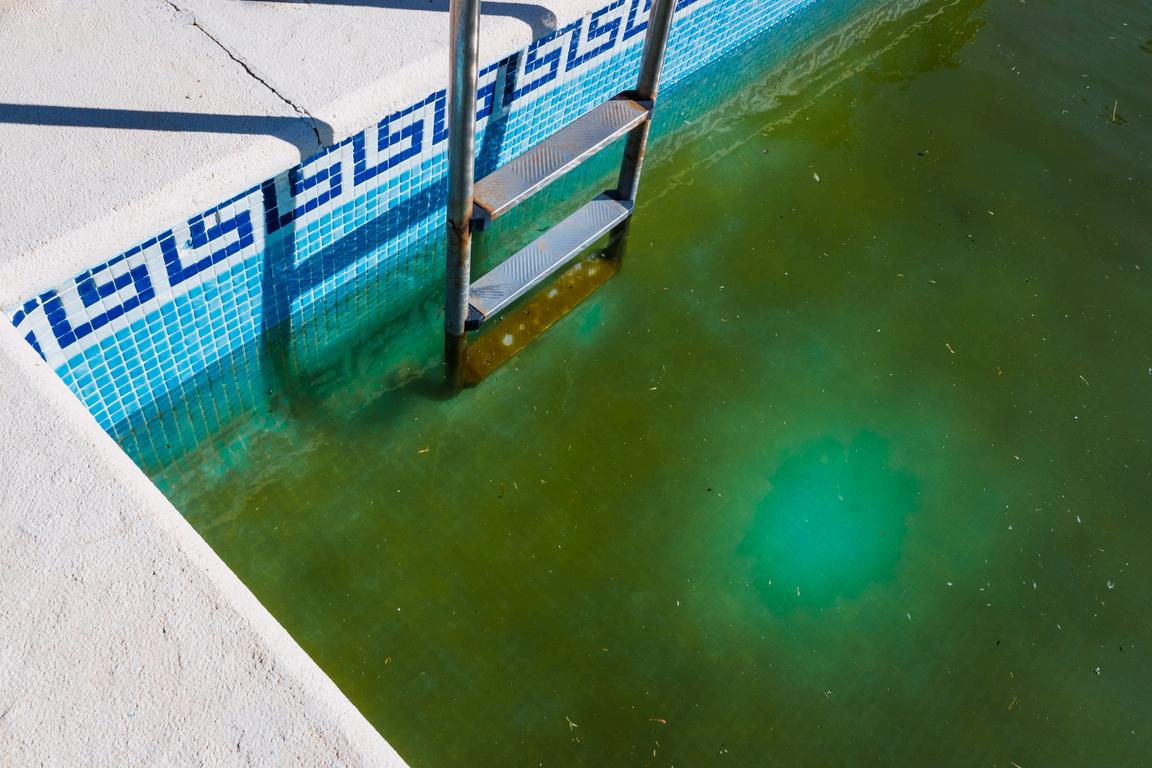
meaning it can increase the flammability of materials it contacts and should be handled with care.
Pool and spa water should be clear with a slight blue tint However, metals like iron or copper can cause the water to appear green, red, brown, or black: Green/Blue-Green Water: Often caused by copper from source water or corroded plumbing High chlorine levels or improper pH can make the water turn green or blue-green. Proper pH management and the use of sequestrants can help prevent this
Red-Brown Water: Usually due to iron or manganese from source water or corroded metal components. Oxidation results in a reddish or brownish tint Treatment involves using sequestrants and filtering out suspended particles after oxidation. Regular monitoring and timely treatment help maintain the water’s natural color and clarity

Green or blue-green water in a pool is often a sign of algae growth or copper contamination. Algae thrive in conditions where chlorine levels are too low or circulation is inadequate, leading to cloudy, discolored water. This can be addressed by performing shock chlorination to kill the algae, followed by regular use of an algaecide to prevent future blooms
Copper ions can enter the water from corroded plumbing, certain algaecides, or even the fill water. When these ions oxidize often due to high chlorine levels or imbalanced pH they can cause the water to turn green or blue-green Treating this involves lowering the pH and adding a sequestrant, which binds the copper and keeps it from causing stains or further discoloration
To prevent these issues, it’s crucial to maintain balanced water chemistry, including appropriate pH, alkalinity, and chlorine levels, and to regularly use preventive products like sequestrants. Regular testing and maintenance help ensure the water remains clear and free from discoloration.
Reddish-brown water is typically caused by iron or manganese, which may come from the water source or the corrosion of metal components within the pool system. This discoloration can be treated by using sequestrants that bind with the metals, followed by filtration to remove the oxidized particles.
Ensuring proper water balance and maintenance of the pool’s circulation system can help prevent this issue from recurring Regularly checking metal levels and addressing any corrosion in pool fixtures or pipes will further minimize metal leaching. If high levels of iron or manganese are found in the source water, pre-filtering may be necessary
Chelating agents and sequestrants are essential tools for managing metal contamination in pool water. These products bind to metals like iron and copper, keeping them dissolved and preventing them from forming stains or scaling on pool surfaces. Regular use of chelating agents helps maintain water clarity and protects pool surfaces from discoloration The chelating or sequestering agent forms a bond with the metal, preventing the metal from depositing onto surfaces. This bond also helps to keep the metal in solution, reducing the likelihood of stains The effectiveness of sequestering agents depends on their formulation, which can combine different agents for better performance Examples include HEDP (hydroxyethylidene diphosphonic acid), EDTA (ethylenediaminetetraacetic acid), and phosphonates. When managing pool water discoloration, it is crucial to first identify the source of stains, which could be metals like iron, copper, or manganese, or from organic material. After identifying the source, appropriate treatment methods should be employed to prevent future stains and to balance the water Alongside the use of chelating agents, maintaining proper water balance (pH, alkalinity, and hardness) is essential to minimize metal reactivity. Elevated pH levels can cause metals to precipitate, increasing the risk of staining Using sequestrants with regular filtration and circulation also aids in preventing metal buildup. In cases of high metal content in the fill water, pre-treatment solutions like metal traps can help reduce metal levels before they enter the pool. Regularly monitor and adjust chemical levels, as even minor imbalances can lead to the reformation of stains or scaling.
Stains on pool surfaces, if untreated, can lead to discoloration that affects the pool's appearance and water quality. Common causes include metals such as iron, copper, and manganese, often stemming from source water contamination or improperly balanced water chemistry Organic stains, caused by debris like leaves and algae, can also contribute to staining.
To effectively remove stains, it is essential to first identify their source and then apply appropriate treatments Preventative measures, such as using sequestering agents and maintaining balanced water chemistry, are crucial to avoid future staining
Scale is a chalky deposit that can form on pool surfaces and equipment, typically caused by calcium carbonate precipitating out of the water. High pH, alkalinity, or calcium hardness levels are common contributors. Scale not only affects the pool's appearance but can also damage equipment and reduce water flow
To manage scale, it is important to keep water chemistry balanced, particularly by monitoring calcium hardness and pH levels.
Treatments such as acid washing or using sequestering agents can help remove existing scale and prevent new deposits from forming.
Cloudy water can result from various issues, including poor filtration, unbalanced water chemistry, or high levels of dissolved solids. Cloudiness is often caused by suspended particles that are too small to be captured by the filter. Environmental factors like rain or wind can introduce additional particles, while bathers contribute organic materials that may react with disinfectants, further clouding the water
To resolve cloudy water, the filtration system should be checked and cleaned regularly. Water chemistry must also be balanced to ensure proper filtration and prevent cloudiness Using water clarifiers can help by aggregating small particles into larger ones, making them easier to filter out.
Clarifiers are products designed to help clear cloudy water by binding together fine particles so they can be more easily filtered out There are two main types of clarifiers: organic water clarifiers and inorganic water clarifiers (flocculants).
These typically consist of synthetic polymers or cationic coagulants that attract negatively charged particles, allowing them to clump together for easier removal Organic clarifiers are particularly effective in a wide range of water conditions, helping to maintain water clarity and sanitation. Inorganic Water Clarifiers (Flocculants)
The most common inorganic clarifier is alum, which works by forming a gelatinous mass that binds small particles together. These larger aggregates can then be filtered out or settled to the bottom of the pool for vacuuming Flocculation usually requires shutting off the pool circulation for a period to allow the particles to settle.
Foam in pools is generally caused by the presence of contaminants such as body oils, lotions, or hair products, which react with disinfectants. Foam can be unsightly and is usually an indication of water quality issues The best approach to reduce foaming is to maintain clean, balanced water and avoid using products that contribute to foam formation. If foam does appear, dilution with fresh water and regular testing can help manage the issue effectively
Algae are microscopic, plant-like organisms that thrive in aquatic environments, and they can quickly become a major issue in swimming pools and spas if not properly managed. Algae spores are introduced into pools by wind, rain, or even contaminated swimwear, and under the right conditions such as warm temperatures, sunlight, and low chlorine levels they can multiply rapidly. There are several types of algae that can affect pools, including green, black, and yellow (mustard) algae. Green algae are the most common and easiest to treat, while black algae are much more resilient, embedding themselves into pool surfaces and requiring more aggressive treatment. Algae not only make the pool water look unappealing by turning it cloudy and green, but they can also create slippery surfaces, increase the demand for chlorine, and clog filtration systems. Additionally, algae growth can lead to staining of pool surfaces, which can be difficult to remove. If left unchecked, algae can even cause damage to pool equipment and surfaces, making regular maintenance crucial. Maintaining consistent chlorine levels, ensuring proper circulation, and regularly brushing the pool surfaces are essential steps in preventing algae growth Algae can also harbor harmful bacteria, making it even more critical to prevent and eliminate any growth promptly to ensure a safe and healthy swimming environment.
Preventing algae from taking hold in a pool or spa is far easier than dealing with an infestation The key to prevention lies in consistent pool maintenance, including regular testing and balancing of water chemistry, ensuring adequate water circulation, and maintaining proper sanitizer levels Pools that are frequently used or located in warm, sunny climates are especially prone to algae growth, making it even more crucial to stay vigilant. In addition to maintaining water balance, the use of algaecides can provide an extra layer of protection Quaternary ammonium compounds (quats) are commonly used for ongoing maintenance, as they are effective against most types of algae and help prevent their growth Polymeric algaecides (polyquats) are also highly effective, offering broad-spectrum control without causing foaming or affecting water clarity. For pools with persistent algae problems, especially with hard-to-treat varieties like black algae, copper-based algaecides may be necessary, though these require careful monitoring to avoid staining. Regular brushing of pool surfaces and vacuuming of debris are also important in preventing algae from gaining a foothold By staying proactive and addressing potential algae problems before they escalate, pool owners can ensure a clean, safe, and visually appealing swimming environment
Algicides are substances used to control or eliminate algae in pools and spas. They work by killing algae and preventing its growth. Different types of algicides are designed to target specific types of algae, and their effectiveness can vary depending on the formulation and application. The use of algicides is an essential part of pool maintenance, especially in preventing the spread of algae in outdoor pools, where environmental factors such as sunlight and wind can encourage algae growth. Algicides are often used in conjunction with other water treatment methods to ensure the water remains clear and safe for swimming
Quaternary ammonium algicides, often called "quats," are one of the most common types of algicides These algicides contain nitrogen and are categorized into four groups. Quats are widely used because they are effective at killing algae by disrupting the algae's cell membranes. They are typically added in small doses to prevent algae growth or in larger doses to eliminate existing algae. However, one downside is that quats can cause foaming if overused, and they do not provide longterm protection against algae reformation.
Polymeric quaternary ammonium algicides are another common type of algicide. They are designed to be effective against a wide range of algae species, including the most stubborn types These algicides have a chemical structure that allows them to attach to the algae cells and break them down. Unlike some other algicides, polymerics are less likely to cause foaming and tend to be more stable, providing longer-lasting protection. They also have a positive charge that attracts them to negatively charged algae particles, making them particularly effective in controlling algae growth
Copper-based algicides are the most widely used metallic algicides. Copper is highly effective at killing algae, particularly the types that are resistant to other treatments Copper-based algicides are available in various forms, including liquid and solid, and are often used in both residential and commercial pools. One challenge with using copper algicides is that they can stain pool surfaces if not used correctly Over time, copper can also build up in the water and cause discoloration, such as a blue-green tint, especially if the water contains high levels of cyanuric acid (CYA). In some cases, high copper levels can even cause hair discoloration
Other types of algicides include those based on ammonium salts, sodium bromide, and potassium tetraborate These are typically used as part of a broader algae control strategy. For example, sodium bromide is often combined with chlorine to enhance its effectiveness, while potassium tetraborate can be used to inhibit algae growth by disrupting the algae's ability to use nutrients in the water. These algicides must be used with care, particularly in pools with high bather loads or where specific water chemistry conditions exist. It's important to follow manufacturer instructions closely to avoid negative side effects and ensure effective algae control.
Phosphate levels in pool water can increase when the water source contains these nutrients or when certain chemicals, like cleaners or sequestering agents, introduce phosphates. Phosphates act as a food source for algae, leading to increased growth Other sources of phosphates include organic debris, like dead insects, leaves, and bird droppings. When algae absorb phosphates, they store them within their cells, allowing for rapid growth when conditions are favorable
Nitrates, another nutrient algae need, can also enter pool water from rain, fertilizers, or decaying organic matter. Unlike phosphates, nitrate levels in the pool are challenging to reduce once they are present. Unfortunately, there isn’t a straightforward method to remove nitrates from pool water. Therefore, it’s crucial to minimize the introduction of these nutrients and maintain proper water chemistry to prevent algae growth
A scum line can develop on the water's surface when contaminants accumulate and adhere to the pool walls. This buildup often occurs where the water meets the air and can be made up of various materials, including oils, lotions, and debris. The scum line appears as a visible ring or streak along the pool’s edge and can be difficult to remove if not addressed promptly. Regularly scrubbing the waterline with a brush can help prevent scum buildup. Additionally, there are special cleaners designed to break down and remove these deposits. It’s essential to address scum lines early, as they can trap more contaminants and become increasingly stubborn to clean over time Using the right cleaning products and maintaining balanced water chemistry are key to keeping the pool free of scum lines.
Biofilm is a protective layer that bacteria create to shield themselves from disinfectants It forms when bacteria attach to surfaces in the pool and begin producing a slimy substance that acts as a barrier. Biofilm can develop on pool walls, filters, and other submerged surfaces Once established, it is resistant to standard disinfection methods, making it challenging to remove.
The Centers for Disease Control and Prevention (CDC) estimates that biofilm is
responsible for a significant number of infections in aquatic environments. Biofilm can harbor harmful bacteria, making it a health risk if not properly managed. Regular brushing of pool surfaces, cleaning of filters, and maintaining proper disinfectant levels can help prevent biofilm formation. However, once biofilm has developed, it may require stronger chemical treatments or specialized cleaning methods to remove it
Enzymes are proteins that speed up chemical reactions in living organisms In pools, enzymes can be used to break down organic contaminants like oils, lotions, and other debris that can cloud the water. These enzymes work by targeting specific contaminants and breaking them down into smaller, more manageable molecules. However, enzymes are sensitive to their environment. Over time, exposure to chemicals like chlorine and algicides can cause enzymes to lose their effectiveness When enzymes degrade, they can no longer break down contaminants, and the leftover proteins can become pollutants themselves.
Properly formulated enzyme products can help maintain clean and clear water, but it’s important to use them according to the manufacturer’s instructions. Research is ongoing to determine the full extent of enzyme effectiveness in different pool environments and how they interact with other chemicals in the water.
Swimming pools and spas are dynamic environments where maintaining the correct chemical balance is essential. Factors like evaporation, bather use, and environmental elements can impact water chemistry, requiring regular testing to ensure safety. Certified professionals must follow local regulations for testing frequency and methods. While many facilities use automated systems for monitoring and adjustments, manual testing remains crucial for accuracy. Testing ensures that chemical adjustments are correct, helping to prevent potential hazards It's important to follow test kit instructions carefully to avoid inaccuracies Comparing results to natural light or reference solutions can improve reliability.
Four main methods are commonly used for pool and spa water testing:
There are four primary methods to test pool and spa water:
Colorimetric: Uses color matching to determine chemical levels, often more accurate with instruments like photometers
2.
1. Titrimetric: Involves adding a reagent to water until a color change indicates chemical concentration.
3
Turbidimetric: Measures the cloudiness of water to assess particles like cyanuric acid.
Thismethodusescolormatchingto determinechemicallevelsinthewater.A sampleismixedwithachemicalreagent, whichcausesacolorchangeproportional totheconcentrationofthetestedchemical. Thecoloristhencomparedtoastandard, eithervisuallyorusingaphotometric devicethatmeasurestheintensityofthe colorchange.
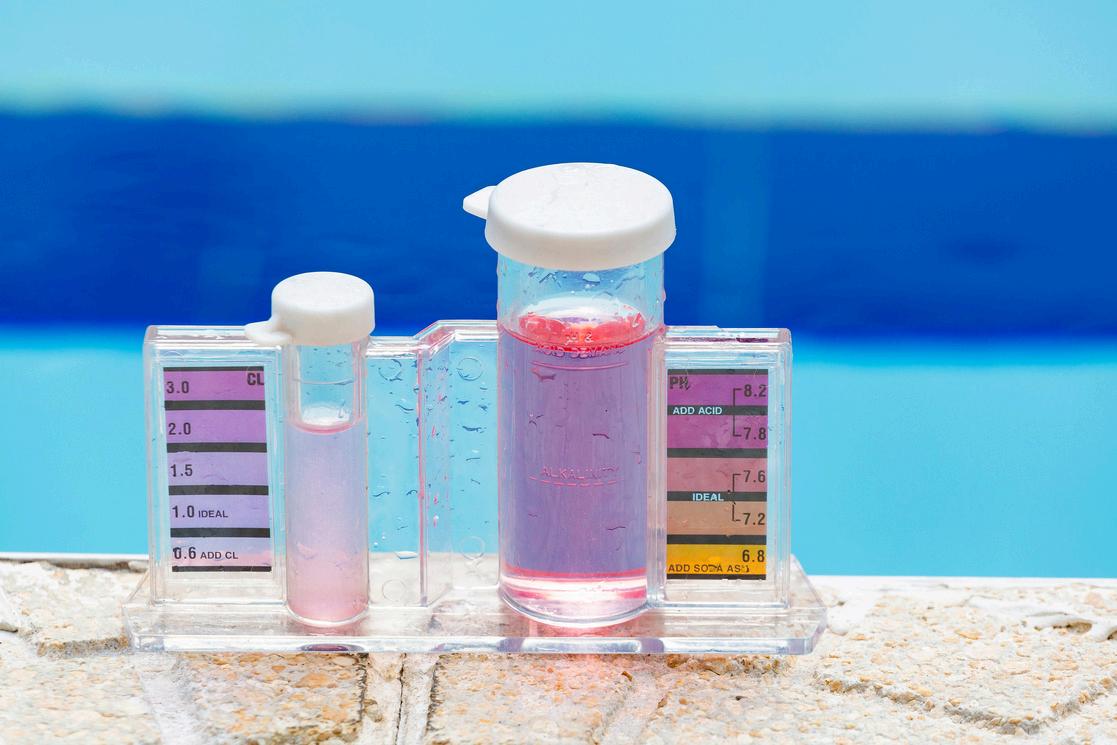
Electronic: Employs devices to measure parameters like total dissolved solids and pH with high precision
4. In summary, pool and spa water testing utilizes various methods colorimetric, titrimetric, turbidimetric, and electronic to accurately assess chemical levels, clarity, and overall water quality.
This method is widely used for various tests, including disinfectant levels, pH, and alkalinity The accuracy of the results can vary depending on the observer's ability to distinguish subtle color differences, making it important to follow the test kit’s instructions carefully. Using consistent lighting conditions when reading test results can also improve accuracy It’s beneficial to compare the color against a white background to reduce interference from surrounding colors. Regularly replacing expired test reagents ensures reliable outcomes Properly storing the test kit in a cool, dry place also helps maintain reagent integrity.
A colorimeter, or photometer, uses light to measure chemical levels more accurately than visual methods. It passes light through the water sample, analyzing how much is absorbed. This method eliminates human error and lighting issues, providing precise readings for all pool and spa parameters, often used to calibrate automated systems.
Dip-and-ReadTestStrips
Test strips are a quick and convenient way to check various water parameters. They are coated with reagents that react with the water to produce a color change, indicating the chemical levels present. After a short time (usually 15-30 seconds), the strip can be compared to a color chart to determine the results These strips are especially useful for routine testing, although they may not be as accurate or reliable for commercial purposes. Some local health authorities may have specific requirements for the use of test strips, so it’s important to ensure they are approved for the intended application.
This method involves adding a reagent to the water until a specific reaction endpoint is reached, as indicated by a color change or other signal It is commonly used to measure total alkalinity, hardness, and other key water parameters. The endpoint is often very precise, requiring careful attention to the testing process. Results can provide highly accurate measurements, which are critical for maintaining water balance and ensuring safe conditions for bathers. For best accuracy, use a highquality reagent and follow the manufacturer's instructions closely Consistent lighting can also help observe color changes more clearly. Regular calibration of testing tools further ensures reliable results over time. Documenting each test result can help track trends and detect issues early
Turbidimetric testing measures the amount of suspended particles in the water by assessing how much light is scattered or absorbed High turbidity can indicate poor water quality, signaling the presence of bacteria, algae, or other contaminants. This test is used to monitor filtration effectiveness and ensure water clarity and safety The test result is determined when the black dot at the base of the vial is no longer visible.
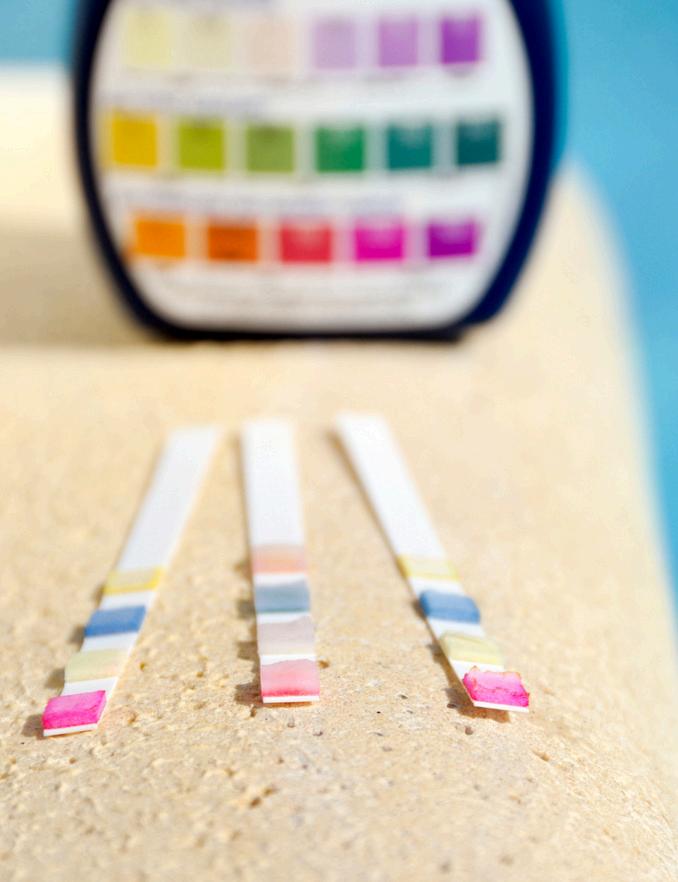
Dip-and-read test strips include a comparison scale on the packaging
Pool and spa water may contain suspended particles that affect clarity. A nephelometer measures water turbidity by determining how much light is scattered by the particles in the water, expressed in Nephelometric Turbidity Units (NTU). Typically, water should not exceed 0.5 NTUs, a standard set by the NSF.
A Secchi disk is often used to measure water clarity. The disk is lowered into the pool until it is no longer visible, and the depth at which it disappears is recorded. This method helps operators determine acceptable water clarity based on local codes and standards Regular monitoring with a Secchi disk can also reveal changes in clarity that may indicate filtration issues or contamination.
Portable, handheld electronic testers are commonly used for various pool and spa water tests, including pH, total dissolved solids, and oxidation-reduction potential. These devices are user-friendly and require regular calibration and maintenance to ensure accuracy
Maintaining proper pool water chemistry is vital for ensuring the health and safety of swimmers. Accurate testing is a key responsibility for certified pool operators, helping to keep the facility in optimal condition Inaccurate testing or mishandling of test reagents can lead to unsafe water conditions and equipment damage. It's important to use chemical reagents that are in good condition and to follow all testing instructions carefully to avoid errors Regularly calibrating electronic testing devices further enhances accuracy and reliability. Documentation of test results provides a record for tracking water quality over time and aids in troubleshooting issues promptly. Consistent training for pool staff ensures everyone is prepared to conduct and interpret tests accurately. Operators should also stay informed of any changes to local health codes to ensure compliance and safety

Waterclaritydiskusedtomeasure waterturbidity
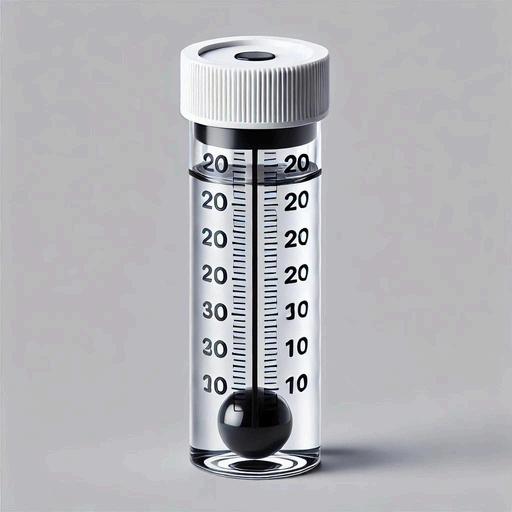
Proper storage and handling of test kits are crucial to maintain the accuracy of your results. Keep test kits away from direct sunlight, heat, and chemical fumes to prevent deterioration of reagents. Liquid reagents, in particular, need extra attention: Replace and tighten all caps after use to avoid contamination. Store the kit at stable temperatures between 36°F and 85°F (2°C and 29°C). Never store the test kit with pool chemicals to avoid crosscontamination. Allow reagents to reach room temperature before use, especially if stored in cooler conditions. Ensure the dropper tip is intact and not cracked before applying the reagent. Use reagents before their expiration date to ensure accuracy Discard any expired reagents, as they can give inaccurate results. Avoid mixing reagents from different test kits or manufacturers, as they may not be compatible and could yield false readings.
Rinse all test kit vials, caps, and cells with fresh water after each use to prevent residue buildup.
To get an accurate sample of pool or spa water, it's important to take the water from a location that represents the overall water condition. Depending on the facility, you might need to collect samples from multiple spots:
Take the sample from a depth of at least 18 inches (45 cm) below the surface, away from any return inlets or jets
Use a clean plastic bottle for sampling Insert it bottom side up to the required depth, then turn it upright to collect the water.
Ensure the sample is the correct volume as specified in the test instructions for accurate readings.
Accurate water testing is crucial for maintaining the safety and cleanliness of pools and spas. Mistakes in the testing process can lead to incorrect data, potentially compromising the water quality It's important to follow the correct procedures to ensure that test results are reliable.
Start by taking a water sample from a depth of at least 18 inches (45 cm), making sure to avoid areas near return inlets. This depth ensures that the sample represents the overall water quality of the pool or spa Use a clean plastic container, turn it upside down to remove air, and then fill it with water. The sample volume must align with the test's requirements to ensure accurate results
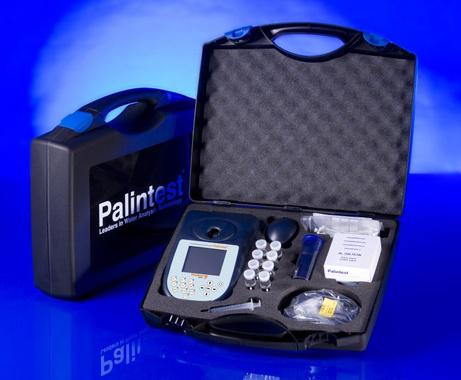
The water sample must be taken in the exact volume specified in the instructions to achieve accurate results. Due to surface tension, water tends to cling to surfaces, forming a curved shape called a meniscus when placed in a test cell. When filling the cell, ensure the bottom of the meniscus aligns with the fill line marked on the cell wall Always fill to the line while holding the cell at eye level
When performing color-based tests, the quality of light is critical. Hold the color comparator at eye level and direct it toward the northern horizon for an accurate color comparison. Avoid using direct sunlight or fluorescent lighting, as these can alter the appearance of the sample and lead to incorrect readings For indoor testing environments, consider using a daylight lamp to simulate natural sunlight and ensure consistent test conditions.
Temperature is a key factor in ensuring the chemical reactions during testing occur correctly. The water sample should be at a temperature between 50°F and 90°F (10°C -
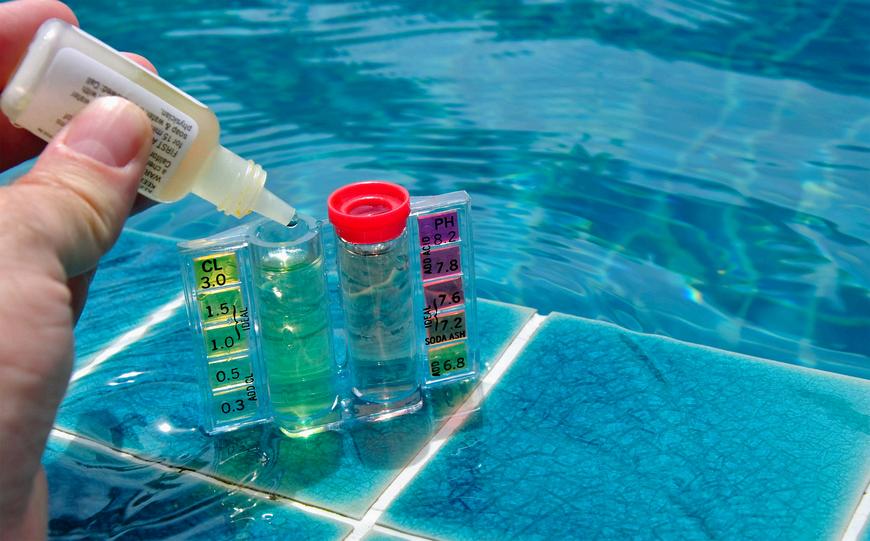
32°C) before testing If the sample is too cold, below 50°F (10°C), chemical reactions may slow down, resulting in inaccurate readings. Allow the sample to warm to room temperature to ensure the chemicals react properly, providing more accurate test results
The size of the reagent drops used in the test can significantly affect the outcome. Always hold the reagent dropper bottle vertically to ensure that each drop is consistent in size. Tilting the dropper can cause variations in drop size, which can lead to errors in the test results, making it crucial to add drops carefully and consistently
Thoroughly mixing the reagents with the water sample is essential for achieving accurate test results After adding each drop of titrant, swirl the sample to ensure even distribution of the chemicals. The endpoint of the titration is reached when the color change stabilizes and no longer reverts. If no further color change occurs, disregard the final drop to avoid inaccuracies, ensuring that the results reflect the true condition of the water.
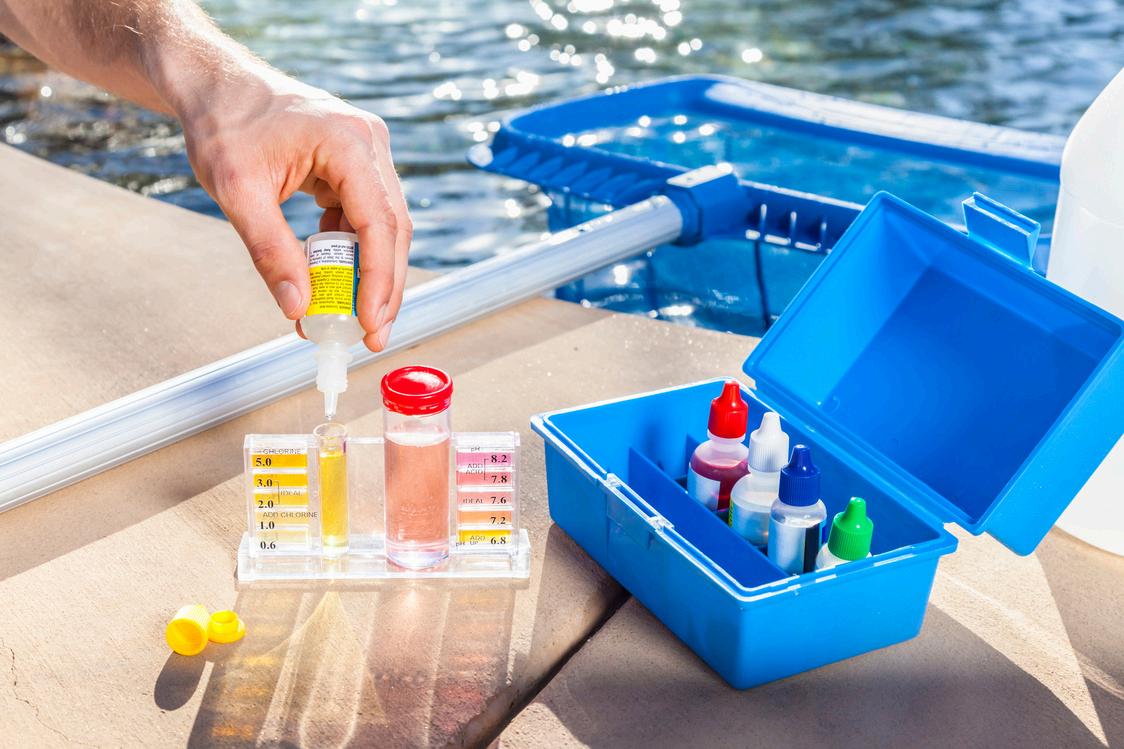
Health codes and laws determine how often pool and spa water must be tested. Operators must meet the minimum testing requirements based on water use and environmental conditions. Heavy bather loads or weather events may require more frequent testing.
Disinfectant and pH levels are critical for the safety and comfort of swimmers. These are the most commonly tested parameters due to their impact on disinfection effectiveness and water balance Sunlight, rain, and bather load can all affect these levels
Testing should be done several times a day when the pool or spa is in use, especially when an automatic system is not in place. Manual testing is often necessary to confirm that the automated system is functioning correctly and to assess overall water quality.
Total alkalinity impacts pH stability and is essential for maintaining water balance
High or low levels can lead to pH fluctuations, scaling, or corrosion. Most health codes recommend testing alkalinity at least weekly, with adjustments made as necessary to maintain proper balance
Calcium hardness affects water balance, particularly in relation to scaling and corrosion Low calcium levels can lead to etching of pool surfaces, while high levels can cause scaling. This should be tested at least monthly, though high calcium source water may require more frequent testing.
Cyanuric acid stabilizes chlorine in outdoor pools, preventing it from breaking down quickly due to sunlight. However, high levels can decrease chlorine effectiveness. If stabilized chlorine is used, CYA levels should be tested weekly.
Cyanuric acid stabilizes chlorine in outdoor pools, preventing it from breaking down quickly due to sunlight. However, high levels can decrease chlorine effectiveness If stabilized chlorine is used, CYA levels should be tested weekly.
Regular testing of nitrates, phosphates, borates, and total dissolved solids (TDS) should be performed as needed. These tests help identify and manage contaminants that could impact water quality. Testing for metals, such as iron and copper, is also important, especially in pools with source water high in metals or after metal-based treatments.
Residual disinfectants like free chlorine, combined chlorine (chloramines), bromine, or biguanide should be tested regularly. Chlorine and bromine are the most common disinfectants, and their levels must be kept within the correct range to ensure water safety. Ozone and ultraviolet light systems are often used alongside chemical disinfectants, but these systems still require regular testing to confirm their effectiveness
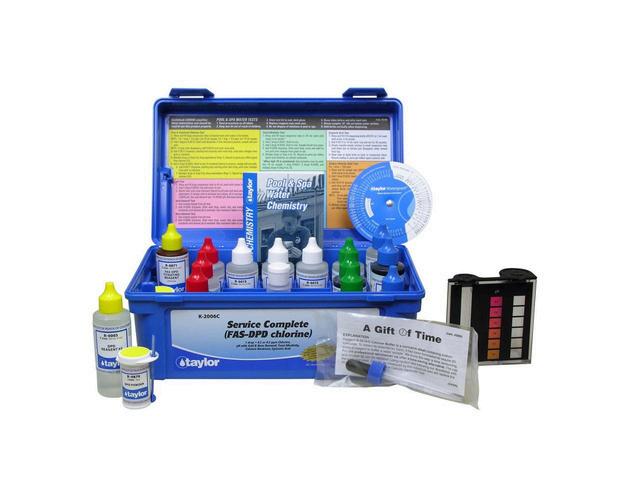
Purpose and Methods of DPD Testing: DPD testing is commonly used to measure chlorine levels both free and total as well as other chemicals like bromine, iodine, ozone, and chlorine dioxide in pool and spa water. This testing is crucial to ensure water safety and compliance with health standards. The three main methods for DPD testing are colorimetric, photometric, and titrimetric, with the colorimetric method being the most widely used due to its simplicity.
ORP testing is an essential component of automated pool management systems, offering a continuous, real-time measure of the water's ability to oxidize contaminants ORP reflects the oxidative strength of disinfectants like chlorine and bromine, providing a general indicator of the pool's sanitation status. While ORP does not measure the specific concentrations of these disinfectants, it is invaluable for monitoring the overall effectiveness of the pool's disinfection process. Factors such as pH, temperature, and the presence of other chemicals can influence ORP readings, which is why many regulatory bodies require ORP to be used in conjunction with DPD testing. This combination ensures that both the general oxidizing power and the precise levels of disinfectants are adequately monitored, helping to maintain optimal water quality and safety
DPD Colorimetric Test Block
The difference between the results from Step 1 and Step 2 provides the combined chlorine level. Accurate measurement is essential, particularly at higher chlorine concentrations, to avoid false readings
CC (Combined Chlorine) = TC (Total Chlorine) - FC (Free Chlorine)
Interpreting Results: This method is particularly valued for its speed and simplicity, allowing pool operators to quickly assess chlorine levels. However, in cases where chlorine concentrations exceed 5.0 ppm, dilution of the sample may be necessary to avoid inaccurate readings Additionally, this method can be adapted to measure bromine levels by applying a conversion factor (typically multiplying the chlorine reading by 2 25)
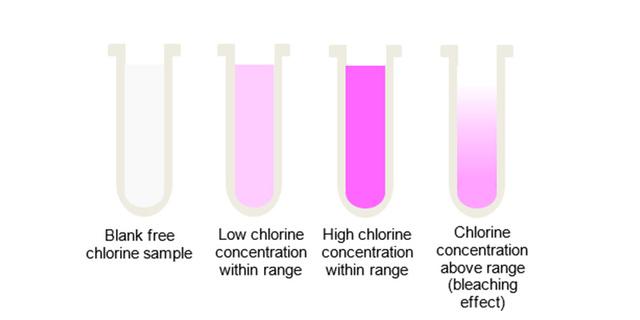
Testing Procedure: Manufacturers supply DPD reagents in various forms liquid, tablet, and powder. The colorimetric test typically follows these steps:
Step 1: Add DPD 1 and DPD 2 to the water sample to test for free chlorine. 1.
2.
Step 2: Introduce DPD 3 to the sample to determine total chlorine levels.
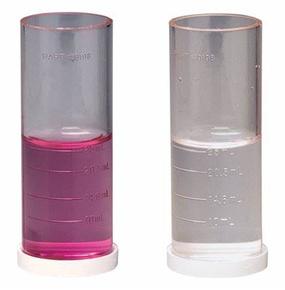
Incorrect DPD reading: if a temporary pink color appears, it indicates a high chlorine level in the sample water
One of the limitations of DPD testing is the potential for false readings, particularly due to bleaching at high chlorine concentrations. When chlorine levels exceed 15 ppm, the DPD reagents may become overwhelmed, leading to a loss of color in the sample. This can result in a false reading of zero chlorine, which could prompt the incorrect addition of more chlorine, potentially leading to hazardous levels.
To mitigate this risk, pool operators should consider the following steps:
Sample Dilution: If high chlorine levels are anticipated, diluting the water sample before testing can bring the concentration into a range where the DPD reagents can work effectively. This step is crucial for ensuring that the test results are accurate and reliable
Careful Monitoring: If the water sample initially turns pink but then quickly fades, this may indicate an excessively high chlorine concentration. In such cases, further dilution and retesting are necessary to obtain a correct reading
The FAS-DPD titration method is often recommended as a more reliable alternative, particularly in situations where high chlorine concentrations are common
Unlike the traditional DPD method, FAS-DPD avoids bleaching by providing a clear and definitive endpoint during the titration process, making it a preferred choice for accurate chlorine measurement
The FAS-DPD titration method is recognized for its precision and reliability, especially in measuring chlorine concentrations across a broad range The process involves several key steps:
Buffer Addition: A buffer powder is first added to the water sample. This buffer reacts with any chlorine present, turning the sample pink. The intensity of the pink color gives an initial indication of the chlorine concentration.
Titration Process: Ferrous ammonium sulfate (FAS) is then added to the sample drop by drop Each drop reduces the pink color until the sample becomes completely clear, which signals that the reaction is complete and that all the chlorine has reacted.
Calculation of Results: The number of drops required to reach the endpoint is counted, and this count is converted into a chlorine concentration value, typically expressed in parts per million (ppm). The FAS-DPD method is accurate enough to measure chlorine levels as low as 0 2 ppm and as high as 20 ppm, making it ideal for both residential and commercial pool environments.
This titration method is particularly valuable for pools with fluctuating chlorine levels, offering a detailed and reliable analysis that helps maintain water quality within the desired parameters.
Photometric testing uses a specific wavelength of light that passes through a water sample. The light that emerges from the sample is then measured electronically, with the amount of light absorbed by the colored sample corresponding to the concentration of the disinfectant in the water. The intensity of the color change is directly displayed on the instrument, providing accurate and reliable results. Additionally, the light source in the photometer is calibrated to minimize any interference from ambient or artificial light, ensuring consistent readings. Photometric testing is especially beneficial for pool operators who have difficulty distinguishing between slight color differences that can occur in traditional colorimetric tests.
By providing a digital readout, this method offers a more precise and user-friendly alternative for managing water chemistry.
ORP (Oxidation-Reduction Potential) sensors are a crucial tool for continuous monitoring of water quality in pools and spas. These sensors measure the water’s ability to oxidize contaminants, which correlates with the effectiveness of the disinfectant present in the water. ORP readings are influenced by several factors, including the type and concentration of disinfectants, pH levels, and the presence of oxidizing agents such as chlorine, bromine, or other chemicals like ozone.
Since most disinfectants act as oxidizers, an increase in ORP indicates higher levels of active disinfectant in the water However, ORP does not directly measure the concentration of specific disinfectants. Instead, it provides an overall indication of the water’s ability to maintain proper sanitation levels ORP probes are commonly integrated into automated chemical feed systems, where they help regulate the amount of disinfectant added to the water. These systems ensure that ORP readings remain within a specified range, maintaining optimal water quality. Handheld ORP meters are also available for spot checks and are useful in verifying the readings of automated systems.
Regular cleaning and maintenance of ORP probes are essential, especially in environments with high bather loads or where cyanuric acid is present, as these conditions can lead to fouling of the probe and reduced accuracy Probes should be calibrated periodically against a known standard to ensure they provide accurate readings.
The second impact on ORP readings occurs when cyanuric acid levels rise This condition leads to fouling of the sensor,
which can result in lower ORP readings even if the actual concentration of disinfectants is sufficient. Therefore, regular maintenance and calibration of ORP sensors are vital for accurate water quality monitoring
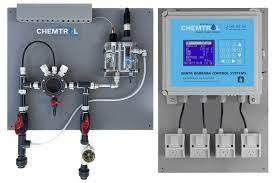
Photometric testing uses a specific wavelength of light that passes through a water sample. The light that emerges from the sample is then measured electronically, with the amount of light absorbed by the colored sample corresponding to the concentration of the disinfectant in the water. The intensity of the color change is directly displayed on the instrument, providing accurate and reliable results. Additionally, the light source in the photometer is calibrated to minimize any interference from ambient or artificial light, ensuring consistent readings. Photometric testing is especially beneficial for pool operators who have difficulty distinguishing between slight color differences that can occur in traditional colorimetric tests. By providing a digital readout, this method offers a more precise and user-friendly alternative for managing water chemistry
The factors that impact water balance include pH, total alkalinity, calcium hardness, temperature, and total dissolved solids. These elements are explored in detail in the Water Balance chapter.
pH measures the acidity or alkalinity of water, using a logarithmic scale where each unit change represents a tenfold difference in acidity or alkalinity. It is crucial to note that pH readings should not be altered by the water’s color or clarity
The typical pH range for pool water is maintained between 7.2 and 7.6. pH is often tested using phenol red, a chemical indicator that changes color based on the water’s pH The indicator is usually yellow at a pH of 6.8, turns orange around 7.6, and is red at 8.4. Variations in pH readings can indicate the need for water treatment. Pools typically operate within a slightly basic pH range, from 7 4 to 7 6 If pH readings fall outside this range, adjustments are necessary. To ensure accuracy, the sample must be clear, and the test should be conducted properly, matching the color change to the comparator standard
Other tools, such as electronic meters, can also be used for pH testing. These devices measure pH directly and provide results to the nearest tenth of a unit. Some photometers can measure both pH and other water parameters simultaneously
Manufacturers have created a simplified method for determining how much acid or base to add to adjust pH. Reagents known as Base Demand Reagent (BDR) and Acid Demand Reagent (ADR) are commonly used in this process
If the pH is higher than desired, ADR is added to the sample drop by drop until the target pH is reached. Conversely, if the pH is too low, BDR is added to raise it The number of drops needed to achieve the
desired pH gives an indication of how much adjustment is needed in the pool. The instructions provided by the chemical manufacturer should be followed to determine the exact amount required
Final pH readings should be taken only after ensuring that any chemicals added have been thoroughly mixed and distributed throughout the pool water This is crucial to avoid inaccurate readings caused by localized concentrations of chemicals. The ideal pH range for pool water is between 7.4 and 7.6, as this range offers the best balance for swimmer comfort, equipment protection, and disinfectant efficiency. If the pH falls outside this range, adjustments are necessary. A pH level below 7.4 may indicate that the water is too acidic, leading to potential corrosion of pool surfaces and discomfort for swimmers On the other hand, a pH above 7.6 suggests that the water is too alkaline, which can cause scaling, cloudy water, and reduced chlorine effectiveness To correct the pH, acids are used to lower the pH, while bases are used to raise it.
Special care must be taken when correcting high pH levels caused by high halogen concentrations, such as chlorine or bromine. High halogen levels can skew pH readings, making them appear artificially high. In such cases, a chlorine or bromine neutralizing agent should be used to reduce the halogen levels before performing the pH test again. Failure to address high halogen levels can lead to persistent issues with achieving accurate pH readings. Additionally, it’s important to note that some test kits may show slight differences in pH results when used with neutralizing agents, so it's essential to follow the manufacturer’s instructions carefully. The influence of chlorine or bromine on the pH test must be neutralized to ensure the reading reflects the true pH of the water Advanced methods, such as using phenol red
in tablet form or incorporating halogenneutralizing agents, can be useful in managing pH levels accurately. These methods help ensure that even in the presence of residual halogen levels, as high as 25 ppm (mg/L), pH readings remain unaffected.
Alkalinity is the water’s ability to resist pH changes. It's a measure of the water's buffering capacity, preventing rapid pH shifts. Total alkalinity accounts for all alkaline substances in the water, while carbonate alkalinity considers only carbonate and bicarbonate ions, which act as buffers
The standard method for measuring total alkalinity is the titration method. This involves adding an acid to a water sample until the alkaline components are neutralized The amount of acid used indicates the total alkalinity level, usually measured in parts per million (ppm). When performing this test, the sample may turn pink or red as the pH indicator reacts with the water. If the sample turns purple, the pH is too high, and a neutralizing reagent should be added before continuing with the alkalinity test. The test result is recorded once the sample changes to the endpoint color, typically a reddish-pink.
High chlorine levels or the presence of other oxidizers can lead to false readings, often showing a reddish-pink color, which suggests a higher alkalinity than is accurate If high chlorine levels are detected, a chlorine-neutralizing agent should be added before retesting. Failure to do so can result in misleadingly high readings and improper water treatment
Calcium hardness measures the amount of calcium dissolved in the water, which is crucial for preventing
corrosion or scaling. The test involves adding a reagent to a water sample that reacts with the calcium ions, typically turning the water blue. If the sample remains pink, additional reagent is needed to complete the reaction.
The first step in the test is to raise the pH by adding a buffer, which prevents interference from metals in the water. A color indicator is then added, and the sample should turn blue if calcium is present. If the sample remains pink, more reagent should be added until a blue color is achieved.
To get an accurate measurement, the sample is titrated with a standard solution until the color changes The result is calculated based on the amount of titrant used, and the calcium hardness is expressed in ppm.
Water temperature affects many aspects of pool chemistry, including pH and calcium hardness. The temperature is usually measured with a thermometer placed directly in the pool water Accurate temperature readings are essential for maintaining proper water balance. Thermometers are placed in various locations around the pool, such as in the skimmer or near the pool's surface, to get an accurate reading. Electronic thermometers can provide quick and precise measurements, but traditional mercury thermometers are no longer recommended due to safety concerns
Total Dissolved Solids (TDS) refer to the total amount of dissolved substances in the water, including minerals, salts, and organic matter. High TDS levels can affect water balance and the effectiveness of sanitizers. Testing for TDS usually involves using a conductivity meter, which measures the water's ability to conduct electricity If TDS levels are too high, they can cause cloudiness and scaling. Lowering TDS
typically involves diluting the water with fresh water. TDS is an important factor in maintaining overall water quality and should be monitored regularly.
When TDS levels are exceptionally high, a sample dilution method may be necessary. This involves diluting the water sample with distilled water to bring the TDS within the measurable range of the testing equipment. The diluted sample is then tested, and the results are multiplied by the dilution factor to obtain the actual TDS level.
When performing a dilution, it's essential to follow a precise ratio. For example, a common dilution ratio might be 1:3, where one part of the original water sample is mixed with three parts distilled water After dilution, the test is conducted as usual, and the result obtained is then multiplied by the dilution factor to determine the actual concentration in the original sample.
When TDS levels are exceptionally high, a sample dilution method may be necessary. This involves diluting the water sample with distilled water to bring the TDS within the measurable range of the testing equipment
The diluted sample is then tested, and the results are multiplied by the dilution factor to obtain the actual TDS level.
When performing a dilution, it's essential to follow a precise ratio For example, a common dilution ratio might be 1:3, where one part of the original water sample is mixed with three parts distilled water. After dilution, the test is conducted as usual, and the result obtained is then multiplied by the dilution factor to determine the actual concentration in the original sample. Dilution can be particularly useful for quantitative tests, where it's important to know the exact concentration of a substance in the water.
For instance, if the water's TDS level is too high to be measured directly, diluting the sample allows for an accurate reading that can be scaled back to reflect the original concentration
This method is also valuable in situations where high levels of a chemical, such as chlorine or bromine, interfere with testing accuracy. By diluting the sample, these interfering substances are reduced, allowing for a more accurate measurement of the target chemical.
It's important to note that dilution is used primarily for quantitative analysis, where a specific numerical result is needed
Qualitative assessments, such as detecting the presence or absence of certain substances, do not typically require dilution and are performed without altering the sample concentration
Various other tests can provide valuable insights for pool operators. Some tests, such as those for cyanuric acid (CYA), are essential for complying with local regulations. Testing for metals like copper and iron is also important for preventing staining and maintaining facility aesthetics. Operators should routinely check for these metals, especially in areas with high metal content in the water, using colorimetric tests, photometers, or dip-and-read test strips. These tests help determine if additional measures, like sequestration or chelation treatments, are necessary. This method is also valuable in situations where high levels of a chemical, such as chlorine or bromine, interfere with testing accuracy By diluting the sample, these interfering substances are reduced, allowing for a more accurate measurement of the target chemical.
It's important to note that dilution is used primarily for quantitative analysis, where a specific numerical result is needed
Qualitative assessments, such as detecting the presence or absence of certain
do not typically require dilution and are performed without altering the sample concentration.
Cyanuric acid, also called a stabilizer or conditioner, is added to pools to help protect chlorine from sunlight breakdown As the CYA level increases, more chlorine remains effective in the water. However, many health departments cap the allowable CYA level at 100 ppm (mg/L), while some may allow less It's crucial to ensure CYA levels stay within regulatory limits. The most common CYA test is a turbidimetric method, which involves adding a reagent to a sample to precipitate CYA, making the water cloudy. The level of cloudiness is then measured against a black dot on the test cell, which helps determine the concentration. If levels exceed 100 ppm, diluting the sample may be necessary for accurate results. Testing for CYA can also be conducted using a photometer or dip-and-read test strips
Testing for metals like iron or copper is important, especially in areas where staining can occur due to metal content in the source water. It is recommended to test both the pool or spa water and the source water to get a comprehensive understanding Testing can be done with colorimetric test kits, photometers, or dip-and-read test strips. The results help guide further action, such as adding sequestrants or chelation agents to control metal levels
Phosphates and nitrates, often found in fertilizers and detergents, can serve as nutrients for algae and bacteria, leading to water quality issues. Phosphates can be tested using colorimetric methods, photometers, or dip-and-read test strips. Nitrate levels are typically checked using colorimetric or photometric tests, with recommended levels kept below 125 ppb. If levels exceed this limit, steps should be taken to lower them.
With the increasing popularity of saltwater chlorination systems, maintaining appropriate salt levels is essential. Testing for salt concentration can be performed using test strips, photometers, or a TDS meter. Sodium chloride test strips provide an easy way to measure salt levels, while more precise measurements can be achieved with a conductivity meter
Standard salt levels range from 200 to 880 ppm, depending on the specific system. Proper testing ensures the chlorinator is functioning efficiently.
PHMB is an alternative sanitizer often used in non-chlorine pool systems It is essential to maintain the correct concentration levels for safety and effectiveness. Test kits designed for PHMB typically use color comparators or photometers, and the frequency of testing varies based on usage weekly for residential pools and more frequent checks for public pools.
Some pool systems use non-halogen oxidizers like potassium monopersulfate or ozone instead of traditional chlorine These systems still require regular testing to ensure adequate oxidation levels. The DPD method commonly measures ozone and other non-halogen oxidizers. Frequent testing ensures that the pool remains safe and free of organic contaminants
Used primarily in non-chlorine systems, hydrogen peroxide serves as a disinfectant and is typically measured using reagent test strips, photometers, or titration methods. Regular testing is essential to maintain proper concentration levels, ensuring effective sanitation without causing damage to pool surfaces or equipment.
Borates are often added to pool water to help stabilize pH and reduce algae growth. Maintaining proper borate levels is crucial for effective pool management The most common test for borates involves using a colorimetric reagent that changes color when it reacts with the water sample. Results are then matched against a standard chart to determine borate concentration
Adding chemicals to pool or spa water can range from manually pouring in a chemical to using automated systems that monitor and adjust the chemical levels continuously. Both methods require following specific safety guidelines to ensure effectiveness and safety
Chemicals should never be mixed directly in the pool or spa water, as this can pose safety risks to bathers and the surrounding area Always read and follow the instructions on chemical labels and use the recommended safety equipment. For commercial pools, chemical feeders must meet public health code standards and provide a consistent and safe chemical output based on the pool size and usage.
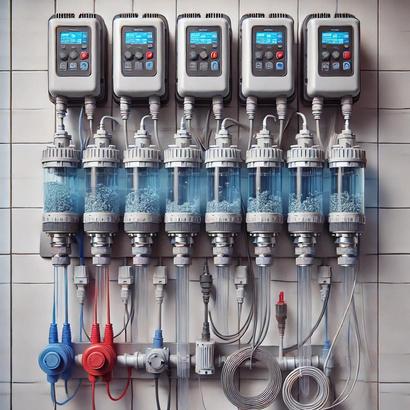
Theoperatorshouldensurethefeederhasbeen testedandcertifiedbyarecognizedorganization
When adding chemicals manually to a pool or spa, it is essential to dilute them in a separate container before application. Pool operators should always read the label instructions to determine the correct dilution and dosage rates. The dosage is usually calculated based on the pool size commonly, 10,000 gallons. The proper
amount of time must be allowed for the chemical to dissolve and distribute evenly throughout the pool
Operators should be cautious of potential hazards when handling chemicals. For example, never mix chemicals directly; always add them to water, not water to chemicals, as adding water to chemicals can cause dangerous reactions. Remember the acronym "AAA": Always Add Acid. Personal protective equipment should always be worn, and Safety Data Sheets (SDS) should be available for reference in case of spills or accidents.
Never mix different chemicals in the same container.
Do not transfer chemicals between containers by mouth.
Dispose of excess chemicals safely; avoid pouring them into sewage systems
Always use clean tools and scoops to handle chemicals, ensuring no crosscontamination.
Store chemicals in their original containers and never remove the caps or lids.
Dispose of chemical spills safely and according to SDS guidelines. Never broadcast chemicals in windy conditions
When diluting chemicals, add the chemical to water, not the other
If the product label directs dilution, follow these steps:
Fill a 5-gallon or 20-liter bucket halfway to three-quarters full with pool or spa water.
Gradually add the chemical to the bucket, stirring continuously
Stir with a plastic or non-reactive material, never use your hands to stir the mixture to avoid chemical burns or reactions. Pour the mixture around the deep end of the pool, following label directions for safety.
Use a plastic scoop for mixing to prevent contamination from other chemicals. Rinse the bucket thoroughly with clean water after use, ensuring all chemical residue is removed.
Some chemicals may be added directly into the pool by spreading them across the water surface. When applying this method, consider the following guidelines:
Avoid adding chemicals when wind conditions are strong, as this can cause them to disperse unpredictably. Restrict access to the facility until all chemicals are completely dissolved and mixed into the water.
Gradually pour the chemical across the water's surface, ensuring an even spread
Hold the container close to the water while pouring, keeping it away from your face and body.
Always wear proper protective gear when handling chemicals, such as gloves, goggles, and protective clothing
Mechanical feeders are devices designed to automatically dispense chemicals into pools and spas, reducing the need for manual dosing These feeders are versatile and can handle various forms of chemicals liquids, gases, or solids each of which demands a specific setup to function effectively. Equipped with sensors and automated controls, these systems monitor pool conditions, such as pH and chlorine levels, and adjust the chemical flow rate accordingly to maintain balanced water chemistry. By ensuring a steady and precise release of chemicals, mechanical feeders help maintain optimal water quality with minimal manual effort. However, they still require regular inspection and maintenance to ensure they are operating correctly, prevent malfunctions, and avoid any potential safety hazards Proper upkeep includes checking for clogs, calibrating dosing rates, and ensuring all components are functioning smoothly.
Liquid chemical feeders introduce a steady stream of liquid chemicals, either dissolved in water or as concentrated solutions This process typically involves a positive displacement pump to move the chemicals through the system and into the pool's circulation line after other equipment like heaters and filters.
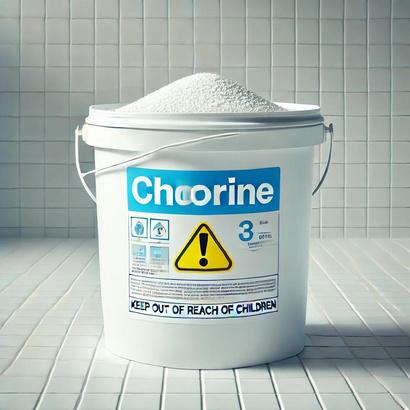
Chemicals must always be stored in their original containers
Operators must always use caution and follow safety guidelines provided in the Safety Data Sheets (SDS) for each chemical to prevent exposure and ensure safe handling. It’s essential to never add water to chemicals but to add chemicals to water to prevent dangerous reactions. Always wear protective gear when handling large quantities of chemicals or when dealing with corrosive or harmful substances. Two common types of positive displacement pumps are peristaltic pumps and diaphragm pumps. Each has a specific method of moving liquid chemicals by altering the flow.
It's crucial to adhere to the manufacturer’s instructions when mixing chemicals with water. Remember: always add chemicals to water, not the other way around, to avoid violent reactions Consult the SDS for any chemical product being handled to ensure all safety measures are in place.
Peristaltic pumps use a roller mechanism driven by a motor to compress a flexible tube, which in turn pushes the chemical fluid through the system. These systems are particularly useful in creating consistent and accurate chemical doses, even in highpressure environments up to 25 psi (172 kPa). However, the flexible tubing in these pumps is a potential weak point that may become worn, leading to leaks or breaks. Thus, regular inspections and replacements of tubing are recommended to prevent downtime and maintain operational efficiency.
Avoid mixing different chemicals in the same pump to prevent dangerous reactions and equipment damage Do not place the pump above the chemical container to avoid siphoning, which can cause spills and damage expensive components. Perform regular maintenance checks to ensure optimal performance and replace any worn parts as needed.
Never use alternating chemicals to clear blocked feed lines, such as muriatic acid followed by sodium hypochlorite (chlorine), as this can produce hazardous chlorine gas
Diaphragm and piston pumps operate using check valves, which regulate fluid movement in and out, preventing backflow A diaphragm pump uses a flexible membrane to draw in chemicals, while a piston pump relies on a mechanical cam to convert circular motion into linear movement. These pumps are reliable for controlling chemical dosage rates and ensuring accurate distribution. The rate of chemical feed depends on the pump's cycle rate or cam setting. Adjustments can be made to control flow by changing stroke length, cycle rate, and spring tension on these pumps Regular checks are needed to ensure they are functioning properly and to adjust for the correct dosing rate.
Liquid vacuum induction feeders and erosion feeders are classified as “flowthrough chemical feeders” under NSF Standard 50. Liquid vacuum induction feeders utilize a venturi effect, where a vacuum pulls liquid chemicals from a storage tank into the water line. This method allows precise control over chemical dosing, making consistent upkeep essential for reliable operation.
Dry chemical feeders dispense solid forms like granules, pucks, or briquettes into the system. These feeders often work by having water flow over the chemicals, gradually dissolving them. The feed rate is managed through a metering valve, and adjustments can be automated based on the chemical levels detected by controllers. Dry feeders are especially useful for slow-dissolving chemicals, providing consistent dosing over time. Regular maintenance is essential to prevent clogging and ensure accurate chemical delivery. This system is commonly used in both residential and commercial pools for efficient, controlled chemical distribution.
Erosion feeders, often referred to as "flowthrough" feeders, are designed to gradually release chemicals like briquettes or granules into pool water as it flows over them This slow dissolution process helps maintain a consistent chemical balance in the water. The rate at which chemicals are added is influenced by three main factors:
Chemical Solubility: Determines how fast the chemical dissolves in water.
Flow Rate: The speed of water moving through the feeder impacts how quickly the chemical is released.
Exposed Surface Area: The more surface area of the chemical exposed to water, the faster it dissolves.
The water temperature passing through the erosion feeder By understanding and controlling these elements, operators can effectively manage chemical levels.
Pressure erosion feeders are installed after the filter and heater in the circulation line, operating under full line pressure If the pump and filter are positioned below the water level, it is vital to have isolation valves on either side of the feeder, ensuring they remain closed before accessing the unit. These feeders use the pressure from the main circulation system to force water through the erosion feeder, dissolving the chemicals directly into the system. To manage the pressure effectively:
A booster pump may be used to inject the concentrated solution back into the system. If backpressure needs to be managed, install a valve downstream of the feeder. Ensure proper flow restrictions are in place to keep the water moving smoothly through the feeder and back into circulation.
Regularly inspect feeder components for wear and corrosion, as high-pressure conditions can cause accelerated degradation over time
These feeders are installed downstream from the pump, using the natural pressure differential between the point where water enters and exits the feeder By installing the feeder slightly below the water level and using the system’s inherent pressure, it ensures smooth chemical flow back into the circulation line. If necessary, add a booster pump to introduce the solution or a bleed valve to maintain the appropriate pressure within the feeder. For best performance, use filtered water as the source for erosion feeders, preventing debris from entering the system and causing blockages or irregular chemical distribution Always ensure the system's internal pressure is managed to prevent equipment damage or operator injury from sudden pressure changes.
Spray erosion feeders function by directing water over calcium hypochlorite tablets or briquettes. They use a venturi or dedicated booster pump to spray water over the tablets, dissolving them into the system Regular cleaning of the spray heads is necessary to avoid calcium buildup, which could impact the efficiency of the feeder.
Chemicals should be injected into the circulation line after the pump, filter, and heater. By doing so, the risk of equipment damage from high chemical concentrations is minimized. Some setups use a pressureto-vacuum system, where water under pressure is converted into a controlled flow through a dedicated feed line, ensuring precise chemical dosing. Make sure the feeder is properly tapped into the circulation line and follow the manufacturer's guidelines for maintenance and operation Regularly inspect connections for leaks to prevent chemical loss and potential damage to surrounding equipment. Calibrate dosing systems periodically to maintain consistent chemical levels
Three types of gas are commonly used in aquatic facilities:
Chlorine gas is used primarily for disinfection. 1.
Carbon dioxide gas helps in pH control by lowering water alkalinity 2.
Ozone is an oxidizer and sanitizer used in advanced systems. 3
Gas feeders are designed to introduce these gases safely into the circulation line The venturi process plays a key role in this, using a specially designed injector that creates a pressure drop as water flows through a narrow section of piping.
Chlorine gas is recognizable by its green color and tendency to settle in low-lying areas due to its density, which is greater than air. It has a noticeable, sharp odor and can be detected at very low concentrations, ranging from 0.2 to 0.4 ppm (or mg/L). While it’s widely used as a disinfectant, exposure to high levels, particularly over 30 ppm (or mg/L), can cause severe health issues such as chest pain, nausea, or even be fatal. Even at lower concentrations, under 3 ppm (or mg/L), chlorine gas is a strong irritant, which can cause discomfort to the eyes, lungs, and upper respiratory system.
Chlorine gas systems should be placed above ground with proper ventilation and clear signage, limiting access to authorized personnel only. Due to the risk of leaks, it's rarely used in pools, and evacuation plans must be in place. Operators need training as per local health department guidelines, and more details can be found through the Chlorine Institute. In addition, regular leak detection checks are essential to ensure safety. Emergency shutoff systems should be installed to quickly stop gas flow if a leak is detected
Chlorine gas is stored in pressurized containers as a liquefied gas. Cylinders must always be stored upright and secured to prevent tipping Common sizes include 100pound and 150-pound cylinders, although larger bulk options are available for larger facilities. Cylinders should always be equipped with pressure relief devices, and any leaks should be handled with extreme caution to prevent gas release. When not in use, cylinders must be capped and stored in compliance with safety standards, which include keeping them in designated storage spaces that are cool and dry
Regular inspection and maintenance of chlorine gas systems are essential, with attention to fittings and valves to prevent leaks. Safety protocols should always be in place to handle any emergency situations, including having appropriate neutralizing agents and emergency response plans.
Carbon dioxide (CO₂) gas feeders are used to adjust pool water pH levels. The CO₂ reacts with water to form carbonic acid, which helps lower the pH and alkalinity without adding chlorides. CO₂ gas systems often use a venturi to inject gas into the water, allowing it to dissolve efficiently. This method provides a safer alternative to traditional acid dosing for pH control.
Ozone is a powerful oxidizer and sanitizer, generated on-site by ozone generators These devices use oxygen to produce ozone gas, which is then injected into the pool water. Ozone is highly effective in killing bacteria and other pathogens but must be used with caution, as excess ozone can be harmful Ozone systems typically have degassing chambers and destruct units to ensure any excess ozone is safely removed from the water before it reaches swimmers. Ozone is effective but should not be used as the sole disinfectant; it works best when combined with other sanitizing methods.
Regular maintenance and monitoring are crucial to ensure the safe operation of ozone systems, including checking generator performance and replacing parts as needed
Ozone generators, especially indoors, need proper ventilation and must be installed above ground by certified technicians to prevent leaks.
Ozone is introduced into pool water via corona discharge or UV generators, with injection points ideally placed downstream of equipment and upstream of disinfectants. Proper placement ensures effective mixing, with higher temperatures aiding solubility.
Ozone is typically injected into a side stream and mixed into the main flow post-heating and pre-disinfection. Careful management of ozone contact prevents equipment corrosion and ensures no residual ozone returns to the pool, avoiding respiratory irritation for bathers.
Store carbon dioxide upright in a ventilated area, as it’s heavy, odorless, and can displace oxygen, posing suffocation risks.
Corona Discharge (CD) systems generate high concentrations of ozone using highvoltage electrical discharges. These systems are known for their efficiency and effectiveness in producing ozone at higher concentrations than ultraviolet (UV) systems, though they are initially more costly and require proper maintenance.
In CD systems, oxygen molecules are energized to split into individual atoms, which then combine with other oxygen molecules to form ozone This ozone is then injected into the pool or spa water, effectively disinfecting it by breaking down organic contaminants. The system must have a safe shutdown mechanism in place, often through a pressure switch, to ensure the generator is off if no water is flowing.
UV-based ozone systems utilize UV light to split oxygen molecules, creating ozone at lower concentrations compared to CD generators This method is more straightforward and less expensive to operate, but it is also less efficient in terms of ozone output.
UV systems generate ozone by exposing oxygen to ultraviolet light, which splits the molecules and recombines them into ozone. This type of system is more common in smaller commercial pools and spas due to its lower output and ease of use.
Ultraviolet (UV) systems employ UV lamps to disinfect water by neutralizing pathogens. As water flows through the UV chamber, it is exposed to intense UV light that inactivates bacteria, viruses, and other harmful microorganisms. These systems are typically used in conjunction with other disinfection methods, such as chlorine or bromine. Water passing through the UV system does not gain any residual disinfectant, so it is essential to maintain additional chemical treatments to ensure continuous sanitation throughout the entire pool. UV treatment typically occurs on each pass of the water through the system, with setup and maintenance tailored to the specific pool's requirements.
Chlorine generators are becoming increasingly popular for residential pools. These systems generate chlorine on-site by converting saltwater through electrolysis into chlorine gas, which is then dissolved into the water This approach reduces the need for transporting and handling chlorine, enhancing safety and convenience.
Chlorine generators must be installed by professionals and regularly maintained to ensure proper operation They can produce chlorine efficiently and are designed to integrate seamlessly with the pool's circulation and filtration systems.
In-line chlorine generators inject chlorine directly into the pool’s circulation line, often through an electrode system that converts saltwater into chlorine gas These systems require periodic checks and adjustments to maintain the correct chlorine levels. Proper setup and ongoing monitoring are essential to ensure consistent pool sanitation. Advice
Ozone should be viewed as a supplementary disinfection method in pools, as it does not provide a residual effect. Additional sanitizers like chlorine or bromine should be used to maintain water quality, ensuring bathers are not exposed to untreated water in the pool or spa.
The free chlorine produced by in-line systems has minimal impact on the overall water chemistry, though it can cause a slight increase in pH. During chlorine generation, traces of hydrogen gas are released and can become trapped if the system shuts down, posing an explosion risk if allowed to accumulate To avoid this, the chlorine generator periodically reverses flow to clear out any built-up gases from the metal plates in the cell.
In-line chlorine generators often adjust their output based on the water’s salt concentration and external conditions like temperature. Some generators can even automatically balance the salt level within the water by adding extra salt if levels drop below the desired range
Brine-tank generators are a common method of producing on-site chlorine, particularly in in-line systems. This method involves dissolving sodium chloride (NaCl) in water at high concentrations, which is then passed through an electrolytic cell to produce chlorine gas. The generated chlorine is then used in concentrations ranging from 4,000 to 8,000 ppm (mg/L). The brine solution, after passing through the cell, is collected in a storage tank and
metered into the pool as needed. By using a storage tank, chlorine levels can be quickly adjusted to accommodate changes in demand, such as increased bather load or fluctuations in environmental conditions This setup ensures a consistent supply of chlorine while reducing the need for external deliveries.
Automated systems allow for precise control of chemical dosing, maintaining optimal water conditions with minimal manual intervention. Chlorine generators in these setups can self-regulate, adjusting the chlorine output based on the pool's needs For enhanced efficiency, some systems integrate sensors that continuously monitor water chemistry and make real-time adjustments.
Modern control systems use electronic controllers paired with chemical-sensing probes to automate the regulation of pool chemistry. These systems are common in commercial pools and are increasingly popular in residential settings for their precision and ease of use They react to realtime changes in water quality, adding chemicals only when needed to maintain optimal conditions. Adjusting chemical feed systems, such as pumps or valves, can be done manually or through an automated system
Radiation from UV lamps can be harmful to the eyes and skin. Equipment that uses UV lamps should be set up to shield users from direct exposure.
Chemical probes and controllers regulate disinfectant dosing by responding to realtime changes in pool chemistry. Automation ensures that chemicals are added only as needed, keeping the water safe and balanced.
Chemical sensors, or probes, are critical components in automated systems, measuring parameters like pH, oxidationreduction potential (ORP), and other chemical levels. These readings guide automated adjustments to maintain proper water quality. Common probes include:
pH Probes: Monitor water acidity or alkalinity.
ORP Probes: Assess the effectiveness of disinfectants by measuring the water’s oxidation potential.
Amperometric Probes: Used for specialized chemical measurements
pH probes consist of a body, electrode, and cable, typically located within 20 feet of the controller They measure water acidity, with temperature compensation features included to ensure accurate readings.
pH probes consist of a body, electrode, and cable, and are typically installed within 20 feet of the controller to maintain accurate signal transmission. They measure the water's acidity or alkalinity, providing realtime data to ensure balanced pool or spa water chemistry Most modern pH probes include temperature compensation features, which automatically adjust readings to account for changes in water temperature, ensuring precise and reliable measurements
ORP probes require routine cleaning to maintain accuracy, as debris and buildup can affect readings. Follow the manufacturer’s cleaning instructions to ensure reliable data and proper chemical adjustment.
Depending on the severity of the buildup, the time required for an ORP probe to return to accurate readings may vary. To ensure optimal performance, periodic
maintenance should be performed as directed by the manufacturer, helping to extend the probe’s lifespan and ensuring reliable measurements. Detailed Maintenance Guidelines Manufacturers usually provide specific instructions in their manuals for the correct upkeep of probes. It's beneficial to display these steps near the probes for quick access. Typically, the procedures include:
Detaching the probes from the flow chamber
Scrub with a soft, clean brush, like a toothbrush, using a mild detergent such as dish soap, or toothpaste if no specific cleaner is recommended by the manufacturer.
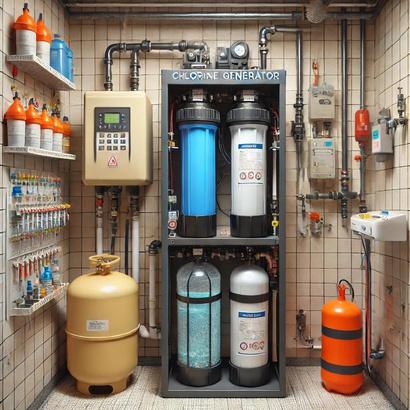
Amperometric probes detect changes in disinfectant levels by monitoring electrical currents from water flow around the electrodes These probes offer a quicker, more linear response to chlorine changes than ORP probes. Membrane protection over the sensing surface helps reduce fouling, enhancing accuracy and longevity. Regular cleaning of the probe membrane is recommended to maintain optimal performance.
To achieve accurate chemical readings, probes must be positioned in areas that reflect the pool's water conditions. Proper placement considerations include:
Downstream Positioning: The probe chamber should be placed after the filter. Unfiltered water can lead to inaccurate readings by making the probes dirty.
Pressure-Side Placement: The probe's water source should always connect to the pressure side of the pump to avoid a vacuum
Upstream from Heater: Place the probe chamber before the heater. Temperature variations can affect chemical readings.
Upstream from Chemical Injection: Ensure the chamber is positioned before any chemicals are added to the water to maintain reliable readings.
Avoid Direct Sunlight: Install the probe chamber away from sunlight to prevent inaccurate measurements
A chemical controller is a computerized system used to manage pool or spa water quality. These controllers can range from basic models, which only adjust pH and disinfectant levels, to advanced systems capable of remote communication, data recording, and controlling multiple water factors across several pools or spas. The simplest controllers do not display the precise pH and ORP values; instead, they have indicator lights that alert the operator if the water's chemical levels fall within the pre-set range. With additional features, these systems become more sophisticated, incorporating digital displays, alarms, and data storage capabilities that remain unaffected by power outages. This allows the system to track
parameters like disinfectant levels, pH readings, circulation pressure, backwash events, and chemical feeding durations. Regardless of whether the system is basic or multifunctional, a critical requirement is that all chemical feed systems, whether manual or automated, must automatically shut down if the circulation to the pool or spa stops In case of a controller malfunction, a fail-safe mode prevents further chemical feeding, which is commonly called an interlock system. Interlocks can be either electrical or mechanical, depending on the system design For example, in an electrical interlock, the chemical controller and feed pumps are wired to the circulation pump's power supply, ensuring that if the pump loses power, the controller and chemical pumps will also cease to function.
Alternatively, a mechanical interlock might use a flow switch to detect whether water is moving through the system If water flow is insufficient, the switch sends a signal to the controller to halt all chemical feeding. These safety mechanisms are vital to maintaining a secure environment in the pool or spa
Operators must never attempt to override an interlock or safety system manually, regardless of the circumstances. Regular testing of interlock systems is essential to ensure they function as intended These systems should be inspected as part of routine maintenance to detect any wear or faults. Documenting each inspection and any maintenance performed helps track the reliability of these critical safety devices. In the event of a failure, all chemical feed operations should be suspended until repairs are completed. Additionally, operators should receive regular training on the importance and operation of these safety features..
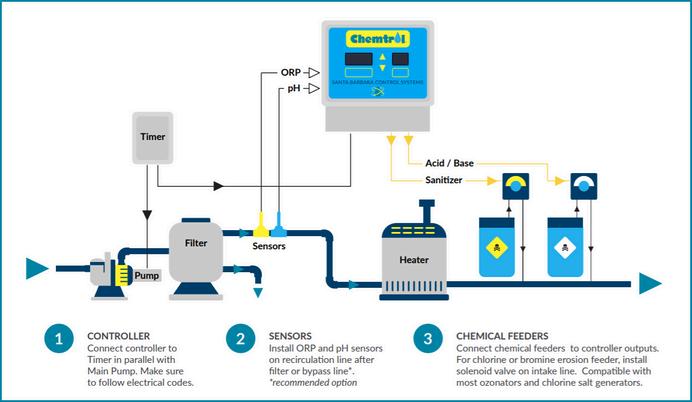
This diagram illustrates the setup of a chemical control and monitoring system for a pool or spa. It shows the configuration of key components, including the controller, sensors, and chemical feeders, to automate and regulate water chemistry.
Basic chemical controllers use a simple on/off approach to manage chemical feed pumps, potentially causing fluctuations in the pool or spa's water chemistry. The water's chemical balance may swing between high and low concentrations
A proportional feed controller adjusts chemical feeds based on how far the probe's readings are from the desired level. The chemical feed is activated for shorter periods when closer to the target or longer when further away, until the set point is reached. This approach minimizes extreme variations.
Controller manufacturers provide various alarm options, such as:
Low chemical reservoir
Overfeed of chemicals
High/Low pH
High/Low disinfectant levels
Minimal flow to probes
These alarms can activate lights, buzzers, horns, or send text alerts. Some controllers are connected to specific software, websites, or smartphone apps to alert remote operators. Advanced controllers allow remote access for pool operators to log in and control the mechanical system. It's vital to have trained personnel onsite to handle issues since sending an alarm without a response plan is ineffective. Even with new technology, human intervention remains essential.
Maintaining swimming pool and spa water quality requires a proper disinfectant level to control recreational water illnesses (RWIs) and pool clarity. For this, water must be kept in constant motion, treated, and filtered The circulation process allows water to move through physical and mechanical systems, with circulation influenced by:
Placement and design of inlets
Pump types and sizes
Pool dimensions and shape
Types of pipes and fittings
Overall construction quality
Other elements, like skimmers, drains, heaters, and gutter systems, also affect water circulation Proper circulation is essential to maintain a consistent surface water condition, especially since the top 12 inches of water often have the highest pollutant levels. Efficient circulation is crucial for maintaining water quality
The central component of a circulation system is the pump, which moves water through pipes and equipment, similar to how the heart circulates blood in the body. Besides moving water, circulation systems perform other critical functions like filtration and chemical treatments, which would otherwise be ineffective Circulation systems are typically of two types: suction or overflow. Suction systems draw water directly from drains or skimmers. Overflow systems collect water that spills over into tanks or balance tanks, where it's treated before being returned to the pool Water is directed to the circulation pump. Effective circulation ensures even distribution of heat, chemicals, and filtration across the pool, maintaining consistent water quality. Regular maintenance of circulation components, such as the pump and valves, is essential for optimal performance.
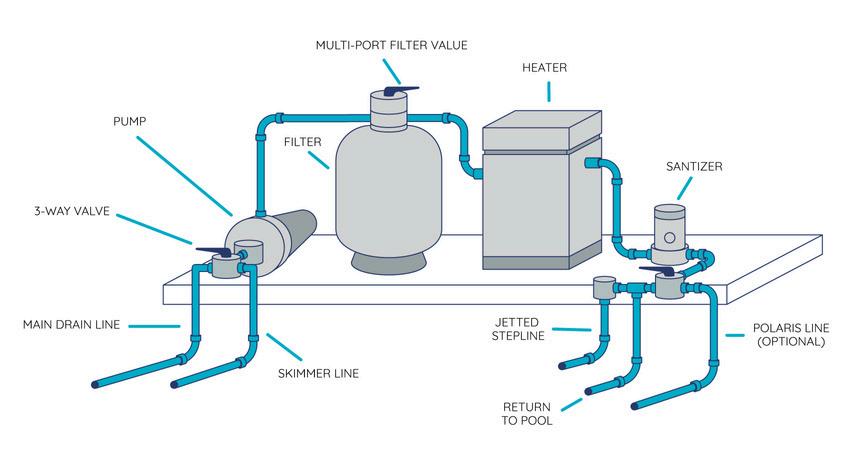
Direct suction circulation systems consist of the pump, filter, piping, valves, inlets, outlets, meters, and gauges.
Commercial pools and spas run their circulation systems continuously, 24 hours a day, 365 days a year, to ensure public safety, even when the pool is not in use. In contrast, residential systems typically operate only a few hours daily during usage periods to save on costs.
Labeling all parts of the circulation system aids operators in understanding the recirculation process Using color codes can also help to distinguish the direction of different plumbing lines, preventing crosscontamination. All equipment within the circulation system should be easily reachable for both maintenance and repairs
The turnover rate measures the time required for a circulation system to move an entire volume of water, in gallons or litres, through the system and back into the pool or basin. This process involves filtering, heating, and chemical treatment before the water returns. Inside the pool, the treated water is mixed with any unfiltered water still present. To maintain cleanliness, multiple turnovers occur within a 24-hour period.
The standard model for one turnover filters 63% of the water volume, leaving 37% unfiltered. A second turnover reduces this unfiltered portion to 14%, and a third to 5%. After four turnovers, only 2% or less
remains unfiltered, meeting public health standards. Different pools, like lap pools, wave pools, or wading pools, have specific turnover requirements.
Different geographic areas may have varying turnover requirements based on size, function, age, and local regulations. The turnover requirement establishes the minimum necessary flow rate for pool operation Below are standard turnover rates:
Swimming pools: 6 hours
Spas: 0.5 hours (30 minutes)
Wading pools: 1-2 hours
Wave pools: 1-4 hours
Residential pools: 6-8 hours (depending on variations)
Turnover Rate (TOR) is calculated using the formula:
Turnover Rate (hr) = Pool Volume ÷ Flow Rate ÷ 60 min/hour
For a 300,000-gallon pool with a flow rate of 900 gpm, the turnover rate is:
TOR = 300,000 ÷ 900 ÷ 60
TOR = 5.56 Hours
For a 500,000-liter pool with a flow rate of 2,500 lpm:
TOR = 500,000 ÷ 2,500 ÷ 60
TOR = 3.33 Hours
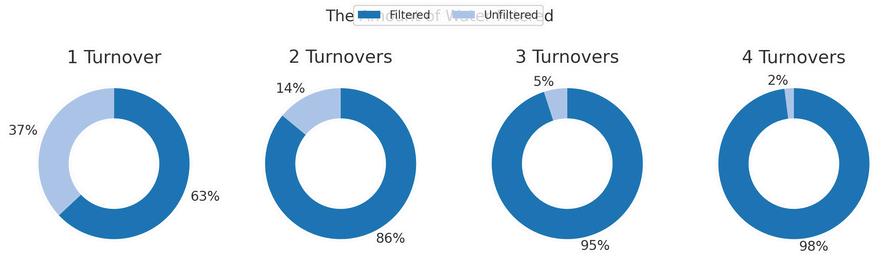
Reference:StephenDem Gage,HarryF Ferguson,C G Gillespie,RichardMesser,E S Tisdale,JackJ Hinman,Jr,andHowardW Green, SwimmingPoolsandOtherPublicBathingPlaces, American JournalofPublicHealth December1926;Volume16:Pages1186-1201
If the pool's volume is given in gallons, the flow rate should be expressed in gallons per minute If the volume is in liters, then the flow rate must be in liters per minute. Flow rate is determined by a flow meter positioned on the return line (pipe), located downstream from all equipment before the water flows back into the pool basin Adequate flow throughout the circulation system is necessary to meet the desired turnover rate. The formula connecting flow rate and turnover rate is:
The necessary flow rate to achieve the operational turnover requirements is called the design flow rate This should be the minimum rate required by the pool's design and relevant health codes. Daily flow rate monitoring is advised to ensure it remains at or above the required levels. Remove blockages or debris that may slow water flow, such as hair and lint in strainers, and perform regular maintenance on the filter and pumps.
During pool operation, water is drawn from the basin to the pump and back again This process can create a suction effect, which might trap bathers, posing a drowning risk. There are five recognized types of entrapment:
Hair entrapment 1
2.
Limb entrapment
Body entrapment 3. Evisceration/disembowelment4. Mechanical entrapment 5.
A system should be designed and maintained to minimize the risk of suction entrapment The first and most crucial measure is to ensure that a VGBA-compliant drain cover is securely in place over every suction outlet.According to the Virginia Graeme Baker Pool & Spa Safety Act (VGBA), anti-entrapment drain covers are mandatory.
In the United States, as of December 20, 2008, all public pools and spas must have compliant drain covers that meet the ASME/ANSI A112.19.8-2007 standard. These covers prevent objects from blocking the drain and disrupting water flow to the circulation system. To further mitigate risk, dual main drains should be used, spaced apart sufficiently to prevent blockage by a single bather Suction force can also be minimized by design, using safety vacuum release systems (SVRS) or other appropriate measures. Anti-entrapment devices should meet specific standards and be used according to local regulations
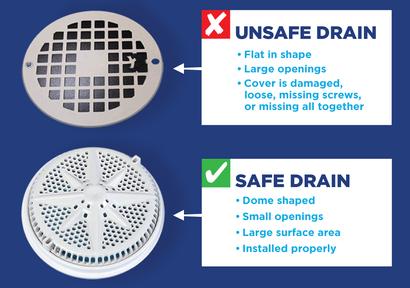
Main drains are typically placed at the pool's deepest point to draw a controlled volume of water into the circulation system. These drains are sized by engineers or architects during the design phase, and no modifications to their size, shape, location, or operation should occur without the approval of local health authorities and a thorough engineering review. Excessively high flow rates through main drains can cause entrapment or even fatalities The design and specifications of main drain covers are governed by strict standards. Drains must be inspected visually every day before the pool is opened to ensure they are intact
If a drain cover is damaged, broken, or missing, the pool must remain closed until repairs are completed.
To reduce the risk of suction entrapment, it's essential to limit the water flow through the main drain. Since the pool's surface generally has the highest concentration of contaminants, water removal should focus more on the surface than on the bottom Flow through a main drain should be minimized to reduce risks.
The pool's surface often contains the highest levels of contaminants, such as windblown debris, algae, and waste from bathers.
These materials tend to float or settle on the surface. The disinfectant concentration is also usually the lowest at the water's surface
The placement of return inlets and methods for removing surface water largely determine circulation patterns. Areas with poor circulation can accumulate debris and promote algae growth, so it is essential to regularly check that inlets are unobstructed and functioning correctly.
Health authorities typically require that surface water removal represents the largest portion of the total circulation. Some regulations may mandate that all water be circulated from the surface, while others accept a standard practice of 75% surface water removal Some codes allow a 50/50 distribution between surface and subsurface removal, while others set no specific requirements. In some cases, regulations might require skimmers or main drains to handle 100% of the flow
Surface water can be removed from the pool along its entire perimeter or from specific points. Perimeter removal often uses gutters, while point removal is achieved using a box-like device known as a skimmer
Gutters are channels designed to use surface tension to remove water from the pool when it is not in use. The water level in the pool basin must be managed carefully to avoid either flooding or depriving the gutters of water, which can lead to poor circulation. During active use, swimmers create waves and motion that push surface water toward the gutters, allowing it to be removed and recirculated.
There are different gutter types. Older pools may feature scum gutters, which are narrow and can either be recessed or partially exposed Due to their limited capacity, these gutters often struggle to achieve a 50% surface circulation rate. Modern pool designs have improved, helping prevent recreational water illnesses (RWIs) through better circulation. Surge gutters efficiently remove large volumes of water, making them ideal for competition pools where wave suppression is needed. These gutters often have removable covers, allowing for easy cleaning. They are designed to handle significant surges in bather numbers by storing substantial amounts of water. Both surge and scum gutters need regular cleaning to prevent the build-up of oils, debris, and biofilm, which can promote algae growth and contamination. Rim flow gutters are usually 1 foot wide with a 2-inch slope from the pool's edge to the back, where the outlet drains are located These gutters lack storage capacity for handling large bather loads and can flood easily, disrupting proper pool circulation. Typically found in recreational pools, rim flow gutters are perimeter gutters with a grating that functions as a skimmer to block large debris from entering the filtration system. Since bathers directly interact with this grating, it must be secured with tamper-proof fasteners
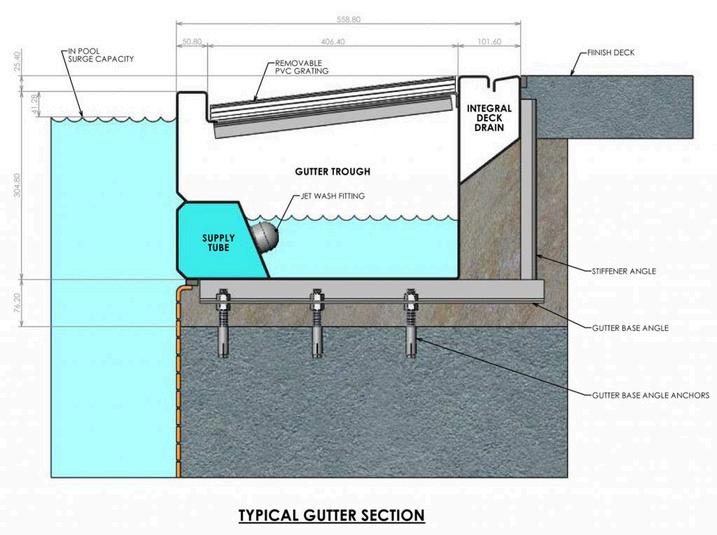
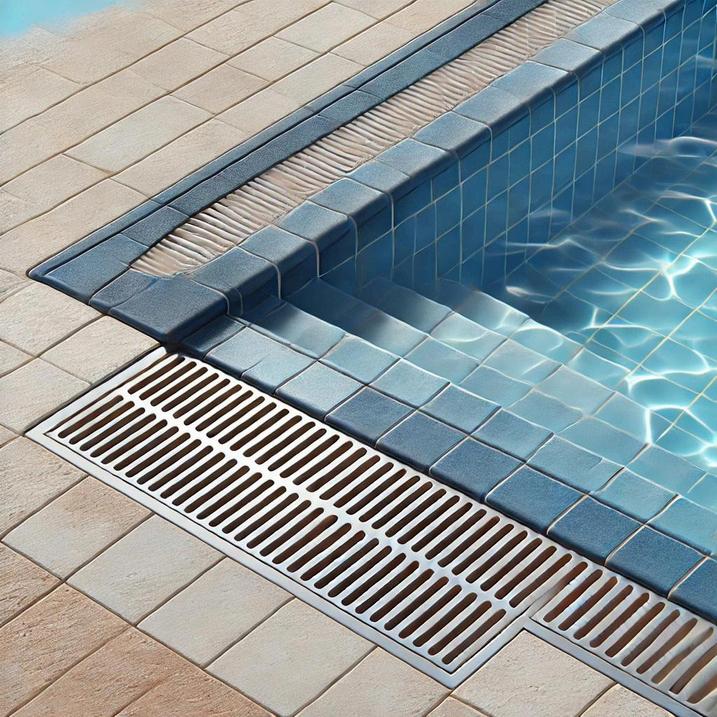
Surface skimmers are box-like openings located along the pool walls at the water's surface. They are strategically positioned around the pool to ensure effective removal of contaminants. Typically made from PVC or similar plastic materials, skimmers are installed flush with the pool wall, aligned with the skimmer faceplate
A floating weir, located at the entrance of the skimmer, automatically adjusts to the pool's water level to optimize skimming efficiency. When the circulation pump operates, it draws water through the skimmer, capturing debris from the water's surface. Within the skimmer housing, a basket traps larger debris, such as leaves, to prevent clogging This basket should be emptied regularly to maintain effective skimming; a blocked basket can significantly reduce the skimmer's efficiency. Some skimmers also feature adjustable weirs that allow for the regulation of surface water draw relative to other areas, providing more comprehensive water circulation. Certain skimmer models include an equalizer line connected to the skimmer
body, with a spring-loaded check valve that is part of this design. This valve ensures that the skimmer can maintain function even if the water level drops below the skimmer opening by activating the equalizer line and allowing water from the pool to flow into the skimmer.
Proper pool maintenance requires regular cleaning of the pool floor, often accomplished using a vacuum system This can be done manually or through a dedicated line attached to the circulation pump. Some pools have a separate, dedicated vacuum line to enhance efficiency If the skimmer serves as the connection point for a vacuum, it may be necessary to adjust the suction valves to ensure optimal cleaning performance. Pools equipped with dedicated vacuum fittings can use either the main circulation pump or a specialized vacuum pump to perform this function. In some cases, adjustments to flow or suction settings might be needed to achieve the desired cleaning results
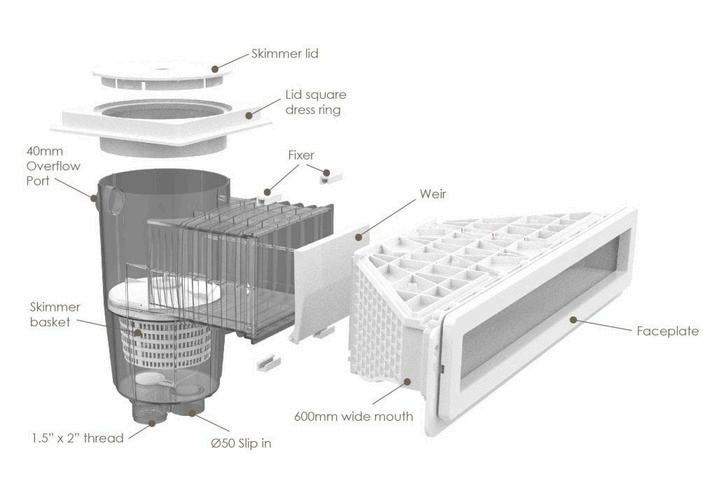
Some wall vacuum outlets are directly connected to the suction or influent side of the pump. If the vacuum line is active while the pool is open to swimmers, it can lead to severe injury or death Therefore, the pool operator must ensure that the vacuum outlet is always securely covered, and the vacuum line is disabled whenever the pool is in use. The covers for vacuum outlets should be spring-loaded and properly installed at all times, with daily checks for damage and functionality. Some regulations specify the required distance in their guidelines
In some areas, collection or balance tanks are often installed on larger swimming pools. In these systems, water is gathered in a tank known as a surge or balance tank These tanks serve to separate the pool from the direct suction of the pump. They are open to the air and must be appropriately sized to maintain an adequate reservoir for pump suction.
A collection tank can also be utilized for other functions, such as stabilizing water levels in rim flow gutter systems and aiding in vacuum filtration. It is generally advised not to introduce chemicals into the collection tank, especially if a vacuum filter is used. The pH and corrosiveness of chemicals may damage circulation components downstream. Adding chemicals to a vacuum filter collection tank could lead to increased filter upkeep and reduce the lifespan of filter parts.Additionally, the presence of chemicals in the balance tank could create inconsistencies in water chemistry, affecting the main pool’s chemical balance Proper maintenance of balance tanks, including routine cleaning and inspection, helps ensure smooth operation of the pool’s circulation system.
The surge or balancing tank is more advanced than a simple collection tank. These tanks hold water displaced by swimmers, ensuring continuous skimming regardless of whether the pool is in use. A commonly accepted estimate for bather displacement is 20 gallons (76 litres) per person. For example, if a pool is designed to hold 180 people, a storage capacity of 3,600 gallons (13,627 litres) would be required. The surge function of these tanks enables water to flow back into the pool as swimmers leave, thereby ensuring efficient skimming and proper pool water circulation
An equalizing line is often installed between the pool and the surge or balancing tank. When the circulation pump is off, the water level in the pool and the tank will equalize due to atmospheric pressure. This equalizing line, featuring an elbow and a vertical pipe section, helps manage the pool's water level. Regardless of whether the pump is running, the water level in the vertical section of the equalizer will match the pool's level.
Devices used to control the pool's water level can range from simple float valves that activate a mechanical autofill valve to advanced probes that send signals to microprocessors. In either case, operators must ensure that the pool water level is maintained no more than ¼ inch (6 mm) above the gutter lip to ensure proper skimming Obstructing or covering the gutters can negatively affect the pool's overall circulation efficiency. Regularly inspecting and cleaning the equalizing line is essential to prevent clogs and maintain proper flow. The accuracy of water level control devices should also be checked frequently to ensure optimal performance.
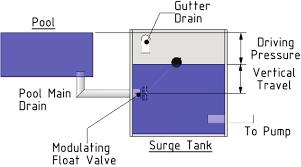
The entry of water into the pump, known as the influent or incoming flow, should always be filtered to remove debris before it reaches the pump. Limitations on flow can happen naturally, such as through leaves and debris, or due to devices like strainers and skimmer baskets Over time, filters can get clogged with oils, hair, and other materials, which lowers water quality and reduces water flow, potentially damaging the pump
Vacuum filters are particularly vulnerable to excessive debris accumulation. As these filters clog, filter elements can be harmed, leading to further restrictions on water flow. This situation can lower the water quality within the pool and increase the need for chemical treatments. Regular inspection and manual cleaning of vacuum filter elements are essential to maintain their functionality and to prevent any water from passing through unfiltered. Neglecting routine filter maintenance may cause strain on the pump, leading to costly repairs or replacements. Moreover, clogged filters can decrease the efficiency of the entire circulation system, resulting in uneven water distribution. Proactive maintenance not only protects the pump but also helps extend the life of all filtration components
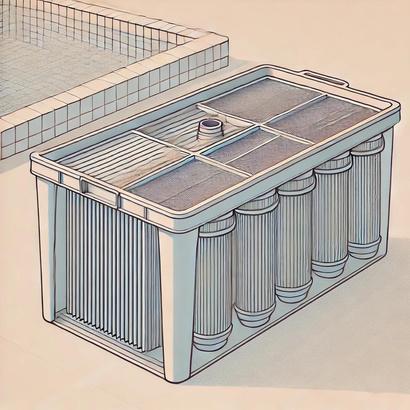
The water flow entering a pump, known as the influent, must remain unrestricted under normal operating conditions. Flow limitations can happen naturally, such as from hair, leaves, and other debris, or when filters, strainers, and skimmer baskets become clogged. This makes the pump work harder to maintain its prime. A vacuum gauge positioned before the pump assists the pool operator in monitoring and assessing how effectively the pump is working on the suction side. The vacuum gauge can be installed on the drain port of the hair and lint basket assembly or the piping just before the pump's inlet It measures negative pressure and displays readings in inches of mercury (in. Hg) or kilopascals (kPa). Pool operators should be aware of the normal vacuum gauge readings for their specific pool system, both when the system is clean and when it begins to accumulate debris. As debris builds up, the vacuum pressure will rise. This is important in determining when to clean a vacuum filter or the hair and lint basket
It's essential to clearly post the upper and lower vacuum limits in the pump room for easy reference. Regular monitoring of these readings is crucial for maintaining proper system function and efficiency.
The pump serves as the core component of the circulation system, driving water through the entire pool system. Swimming pools generally use centrifugal pumps, which feature an impeller that spins on a shaft to create a centrifugal force, moving water efficiently.
There are two primary types of centrifugal pumps. The most common is the self-priming pump, designed to reprime using only the water within the pump housing. This pump type is capable of maintaining its prime, even when substantial air is present in the circulation system. These pumps are typically installed above the pool water level. The second type is the flooded suction pump, which is used when the pump is located below the pool water level. These pumps maintain their prime by leveraging the water already present in the system. Flooded suction pumps generally operate at lower speeds, which contributes to their extended lifespan Each pump consists of several key components:
The volute, or pump housing
The shaft, which extends from the motor
Mechanical shaft seals
A motor adapter and seal plate
The impeller
The volute, sometimes referred to as the diffuser, allows a self-priming pump to manage air and re-prime independently. The shaft connects the motor to the impeller, transferring mechanical motion to drive water through the system. In older pumps, lubricated fiber was commonly used, whereas most modern pumps now employ a mechanical shaft seal that functions without external lubrication and requires no routine adjustments. ome pumps have a dedicated shaft that must be coupled to the motor shaft,
known as frame-mounted pumps. Conversely, close-coupled pumps use the motor’s shaft and depend on the motor's bearings for support.
The impeller moves water by drawing it into its center, or eye, from the pool through the suction line. As it spins, the centrifugal force pushes water outwards into the volute, where the increased flow velocity builds pressure This pressurized water is then sent through the outlet piping back into the pool, ensuring continuous circulation.
Centrifugal pumps, unlike positive displacement pumps, do not discharge a fixed amount of water with each rotation of the impeller. Their performance is influenced by exit pressure, air in the system, and restrictions in the suction line A blocked suction line or trapped air can lead to cavitation, causing significant damage to the pump. Regularly inspecting and clearing any obstructions in the suction line is essential to prevent issues. Additionally, priming the pump properly helps avoid air entrapment, ensuring smooth operation. Monitoring pressure levels at both the inlet and outlet can help identify potential restrictions.
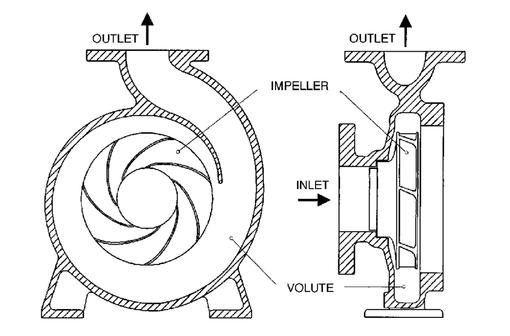
Centrifugal pump
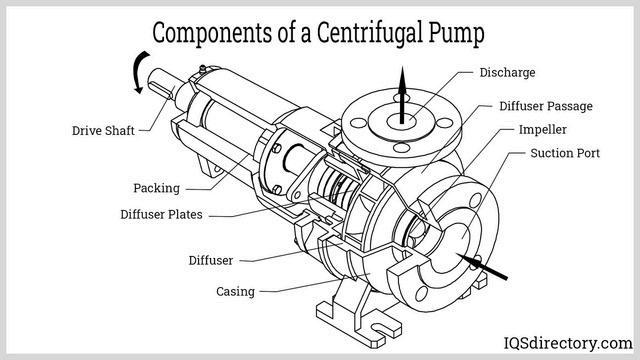
Cavitation happens when the impeller lacks sufficient water, preventing it from maintaining proper discharge flow This causes a distinct sound in the centrifugal pump, which indicates cavitation is occurring. In severe situations, both the pump and the motor may start to vibrate. To diagnose cavitation, the operator should check for these potential issues:
Debris lodged in the skimmer basket
Blockage in the hair and lint strainer
A clogged vacuum filter
A partially closed or obstructed suction line
A throttled valve on the effluent line that is improperly set
A leak in the vacuum side plumbing of the circulation system
Cavitation signals a serious malfunction that requires immediate attention by the operator. If not resolved promptly, cavitation can cause extensive damage to the pump, the motor, or both components A pool cannot be safely used without proper recirculation if the pump is damaged.
An output pressure gauge should be installed on the discharge pipe directly after the circulation pump. This gauge is essential for monitoring the pump's performance, as it provides insights into the overall functioning of the circulation system.
The output pressure, which drives water circulation, is typically measured in pounds per square inch (psi). In countries using the metric system, it is recorded in bar or kilopascals (kPa)
If the pressure reading is too low, it indicates that the pool's required water flow and turnover rates may not be met. Both vacuum and pressure gauges are useful tools to assess the performance of the circulation system, particularly the total dynamic head (TDH). Regular monitoring of these gauges helps detect potential issues early, ensuring efficient operation and preventing pump strain
Total Dynamic Head (TDH) measures the overall resistance to flow within the pool circulation system. All components, such as pipes, fittings, filters, heaters, outlets, inlets, and even the water level in the pool, create resistance to water flow
Calculating the TDH is crucial for appropriately sizing the pump and motor, a task typically handled by the design engineer.
To determine the TDH for any operating system, you can use both pump vacuum and pressure gauges. The vacuum gauge reading is multiplied by 1.133 to find the suction side head, while the pressure gauge reading is multiplied by 2.31 to calculate the pressure side head These two values are then added together to give the actual operating TDH of the system.
Regularly measuring the TDH using a clean filter is essential. Variations in TDH readings over time can indicate that the impeller is wearing out or that the filter media needs replacement Keeping track of these changes is important to ensure the continued efficiency and safety of the pool’s circulation system.
Pump motors in pool and spa settings vary greatly in design and installation. Smaller motors, typically three horsepower or less, are often compact with open designs and feature an extended shaft that directly connects the pump adapter to the housing. Larger motors must adhere to standards set by the National Electrical Manufacturer’s Association (NEMA). Many of these motors are of the frame-mounted type, which requires coupling to the pump Motors installed in pools or spas are generally rated at 115/230 volts for single-phase or 230/460 volts for 3phase AC Motors above five horsepower often operate at 200 volts AC or 230/460 volts AC. The 230/460 volt AC type is becoming obsolete, and operators should be aware of this when considering replacements.
Operators should always consult qualified professionals for servicing or repairing motors. Most motors can handle two voltages, but it is crucial that connections to the motor terminals match the available supply voltage he motor’s nameplate is essential for identifying replacement parts, and this data should be stored in the operator's records. With digital cameras now widely available, it is practical to take a photograph of the nameplate for future reference.This should be carried out when the motor is still fairly new, and the nameplate remains clearly legible, as wear and environmental exposure may make it hard to read over time
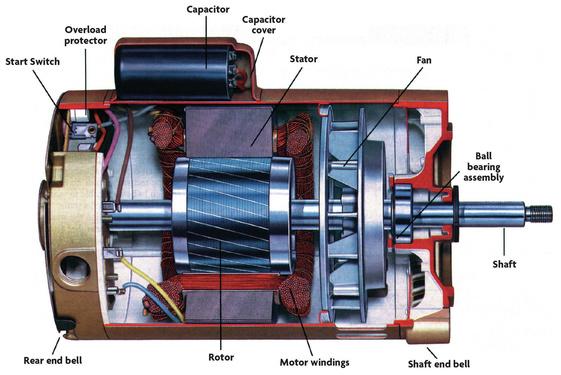
Certain areas have implemented rules mandating the use of more energyefficient motors. For instance, California Energy Commission Title 20 stipulates the use of variable speed motors, known for their higher energy efficiency For example, pool pump motors with a capacity of 1 HP or above must operate at two or more speeds, with a low-speed setting that is no more than half the motor's top rotation speed. Pool pump motor controls are required to support variable speed operation, providing at least two different speeds. The standard operating speed should be the lowest one, with a temporary highspeed override feature limited to a short period not exceeding a normal cycle. Running the motors at a reduced speed during off-hours, such as overnight when the pool is not in use, can result in considerable energy savings Additionally, variable speed motors tend to have a longer lifespan due to reduced strain on the motor at lower speeds. Regular maintenance of these motors is essential to ensure optimal efficiency and performance Some energy rebates may also be available for facilities that upgrade to energy-efficient, variable speed motors. By adhering to these regulations, pool operators not only save on energy costs but also contribute to environmental sustainability.
Valves play a crucial role in regulating the flow of water in pool and spa circulation systems. They are also essential for isolating mechanical components during repairs or maintenance. There are several types of valves commonly used in these systems, including gate valves, ball valves, butterfly valves, multi-port valves, and globe valves. Valves can be operated manually by hand or automatically through electronically controlled automation systems. They help create resistance to flow, which is a necessary part of the design and engineering of the entire mechanical system. Valves can be located on either the suction side or the pressure side of the circulation pump, depending on the specific requirements of the pool or spa system.
Always ensure that all air bleed valves are open and the pump is turned off before adjusting valve positions or removing any clamps or fittings. Ignoring these safety measures could lead to a sudden and violent separation of the equipment, which poses a significant risk of severe injury or even death.
Gate valves are designed to be either fully open or completely closed and should not remain in a halfway position. To shut a gate valve, turn the circular handle (wheel) clockwise, which lowers the gate Leaving a gate valve partially open can cause damage to the valve and reduce flow efficiency. Regularly inspect gate valves for any signs of wear or leaks to ensure reliable operation
Ball valves consist of a housing that encloses a spherical ball with a circular hole through its center. The handle is attached to the ball and allows it to rotate to control flow. Ball valves can regulate flow because they can be fully open, completely closed, or positioned anywhere in between to restrict the flow. When the handle aligns with the piping, the valve is open; when perpendicular, the valve is closed.
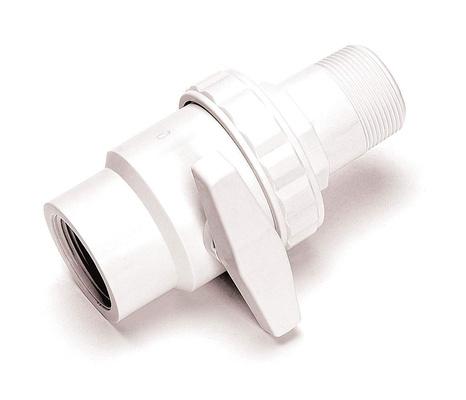
Butterfly valves are utilized in larger and more intricate pool systems, particularly when dealing with bigger pipe sizes. Their operation is similar to ball valves: the valve remains open when the handle is aligned with the piping and closes when the handle is perpendicular The valve disk, referred to as the "butterfly," is connected to the handle and rotates around an axis as the handle turns. These valves offer precise flow control, making them ideal for managing highvolume water systems Because of their design, they have a lower profile and take up less space than other types of valves. Regular maintenance, including cleaning the disk and checking the seals, is essential to prevent leaks and ensure smooth operation.
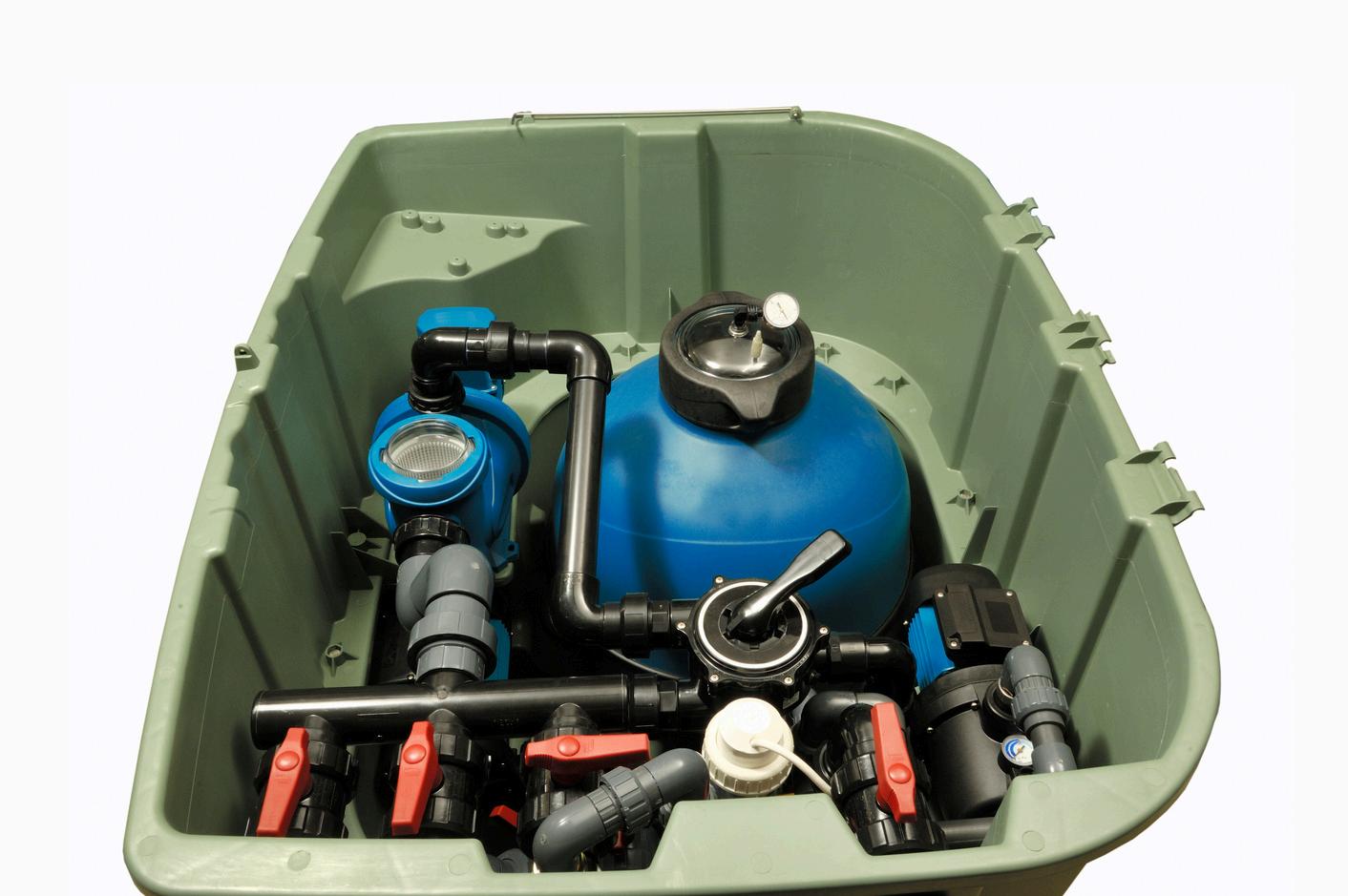
Certain rotary valves offer settings such as bypass, rinse, circulate, and on-off positions.
Multi-port valves are designed to simplify pool systems by reducing the total number of valves required for operation. They allow connections from the pump, filter, and waste lines to be consolidated into a single valve. Multi-port valves are typically used in smaller commercial or residential pools. There are two main types of multi-port valves: slide and rotary. It is crucial to turn off the pump and open the air bleed valves before altering the position of a multi-port valve to ensure safety.
Rotary valves come in various configurations, with some offering basic settings for filtration and backwashing, while others provide more advanced options like bypass, rinse, circulation, and shut-off. The operator must carefully adhere to the manufacturer's instructions when using these valves to ensure proper functionality It is often recommended to include a rinse cycle between backwashing and filtering to minimize the risk of debris getting trapped in the valve mechanism. Not all rotary valves are suitable for every type of operation; they are generally designed for specific media. For instance, a different type of rotary valve may be required for a sand filter compared to a D.E. filter. Regular inspection and maintenance of rotary valves help prevent wear.
Push-pull or slide valves typically feature a large cylindrical body with ports for incoming and outgoing water flow. Inside, a movable shaft with wafers directs the water's path. These valves do not adhere to a universal standard for their operation It is essential always to consult the manufacturer's instructions for safe handling. The pump should always be turned off before changing the valve's position to ensure safety and prevent damage to the equipment
Check valves are typically cylindrical and contain a spring-loaded mechanism that requires a specific pressure to compress the spring, allowing liquid to flow in one direction These valves are designed to prevent backflow by sealing in the opposite direction. An arrow on the outside of the valve indicates the direction of flow. Often, check valves are connected to chemical feeders to ensure that chemicals are directed to the injection point and do not flow back into the reservoir or feeder. This is essential for preventing cross-contamination and protecting equipment from corrosive chemicals Check valves must be installed in the correct orientation for effective operation. Regular inspections help detect any wear on the spring mechanism, which may weaken over time
Pool and spa piping is essential for ensuring efficient circulation and conserving energy in the system
Appropriately sized piping facilitates proper water flow, circulation, and chemical distribution. The pipe diameter and the materials used affect the total dynamic head, a critical hydraulic measure. For example, a 2.5" (65mm) 45degree elbow can have a friction loss of 3.5, whereas a 90-degree elbow might create a friction loss of 5.2. Using a 45degree elbow fitting enhances energy efficiency by reducing resistance Greater resistance leads to a higher Total Dynamic Head (measured in meters of water), with faster water movement causing more friction To assess the efficiency and maximum flow rate of a pipe, it is necessary to calculate the water velocity first.
PVC piping and fittings should be capable of handling the design's operating pressure Circulation piping should meet at least Schedule 40 PVC specifications and conform to ANSI/NSF Standard 14, "Plastics Piping System Components and Related Materials." In certain cases, Schedule 80 PVC, which is thicker, may be recommended due to factors like temperature or UV exposure. The primary consideration, whether for new construction or renovation, is to select the correct pipe size based on the pump’s maximum flow rate (GPM) while accounting for friction loss. Main drains must be installed in compliance with the Virginia Graeme Baker Pool and Spa Safety Act The necessary velocity and maximum flow rate should be computed and indicated on the drain cover. Consideration should also be given to local building codes, which may have additional requirements for pipe materials and installation
All equipment positioned after the pump functions under pressure and must be appropriately designed and operated with this in mind The pool operator should always be mindful of the risks associated with pressurized systems. One common by-product of a centrifugal pump is the air present in the system. This air tends to accumulate at the highest point, often the filter, and is compressible. Any alteration in the hydraulic flow, such as changing a valve's position, may trigger a water-hammer effect, causing the system components to separate or vibrate intensely Before modifying any pressurized component, always turn off the pump and release the air from the system.
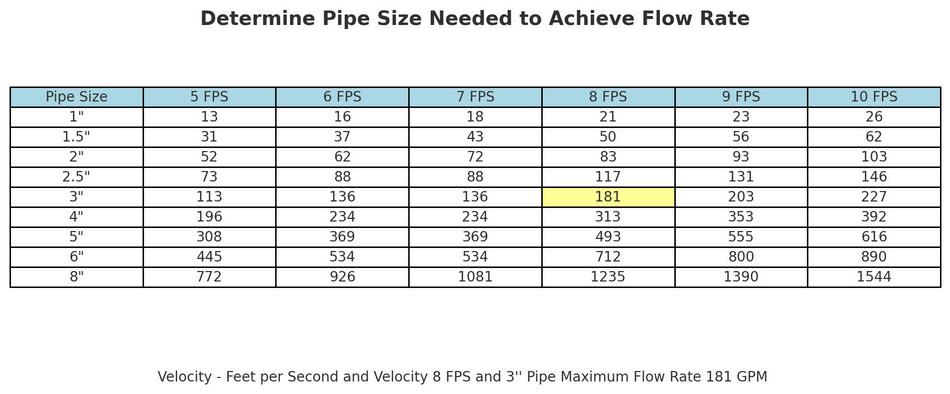
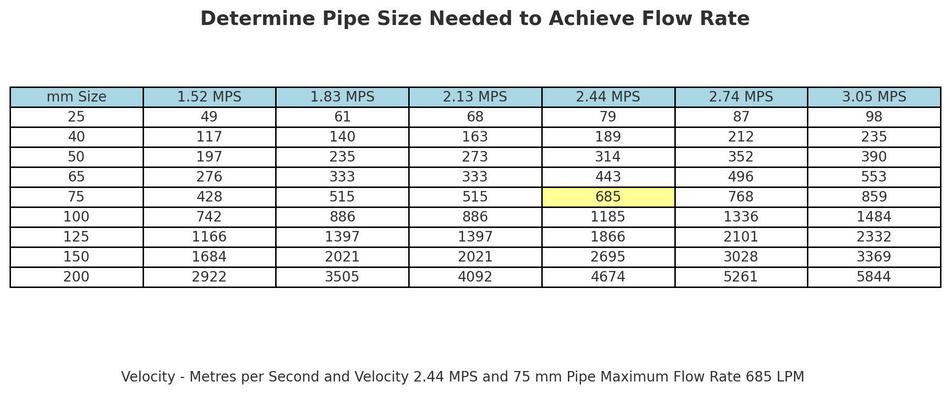
Placing the filter after the pump means that the impeller must handle higher pressure Much of the effort required by the impeller is now focused on the effluent side of the pump. As the filter captures oils and debris, the flow from the pump or the rate of flow decreases, causing the inflow pressure before the filter to rise and the outflow pressure after the filter to drop. The media within pressure filters is highly sensitive to excessive pressure. Over time, the filter media may become damaged or dirty, allowing unfiltered water to pass through. This not only lowers the water quality in the pool but also increases the demand for chemicals To prevent unfiltered water from passing through, it's important to manually inspect the pressure filter media regularly. Excessive buildup in the filter can also strain the pump, leading to premature wear and reduced efficiency.
Separation tanks are designed to collect used Diatomaceous Earth (D.E.) instead of flushing it directly into sewer systems During the backwashing of a vacuum or pressure D.E. filter, the spent media is forced under pressure into the separation tank. A dedicated backwash pump may be used for this purpose These tanks must have a manual method for releasing air or a lid to release pressure slowly and safely. Inside the separation tank, a collection bag separates the used D E from the effluent filter water The water is then drained into the sewer system, while the contents of the bag are transferred to a garbage bag for disposal as solid waste Regular inspection and cleaning of the collection bag are essential to maintain effective separation. Excessive buildup within the bag can restrict flow, reducing the efficiency of the backwashing process.
Pool heating can be achieved using various sources, including electric, natural gas, propane, solar, geothermal, or oil-fired options Regardless of the heat source, there is a hydraulic or friction loss when water moves through the heating device. Before entering the heater, pool or spa water must be filtered to ensure only clean water passes through the inlet fitting. Heater manufacturers typically recommend placing a check valve between the filter and the heater, as well as between the heater and chemical feeders This prevents hot water from backflowing into the filter and causing damage when the circulation pump is off. Similarly, check valves should prevent chemicals from backflowing into the heater, which could result in corrosion or damage to heater elements. In some configurations, the heater piping includes a bypass line and valve. This design allows for controlled circulation of pool water through the heater to manage temperature increases while minimizing water flow through the heater during warmer periods. Always adhere to the heater manufacturer's installation and operating instructions to ensure safe and efficient operation. Routine inspection of check valves and the bypass line is essential to prevent leaks and ensure consistent water flow. Proper insulation of heater piping can also reduce heat loss, improving efficiency and reducing energy costs.
Every pool and spa should be equipped with a device that measures the flow rate of water within the circulation system This device, known as a flow meter, typically displays measurements in gallons or liters per minute. The flow meter must be appropriately sized for the system's design flow rate and should be capable of measuring
from ½ to at least 1½ times the intended flow rate. It is crucial to adhere to the manufacturer’s specifications regarding the required clearances upstream and downstream from the flow meter to ensure accurate readings
Typically, flow meters are installed on the return piping after all other system components but before any chemical injection, as chemicals could potentially damage the flow meter Since turbulence is created when water changes direction, it is essential to follow the manufacturer's guidelines on the minimum straight pipe length required before and after the flow meter's installation.
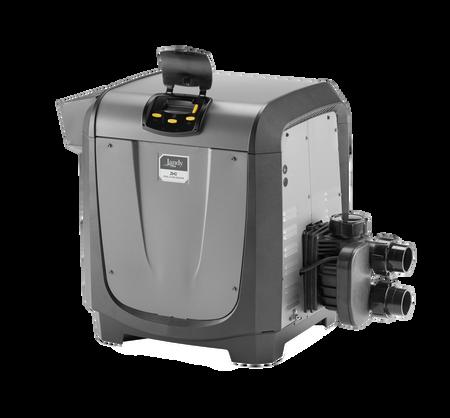
There are many analog and digital flow meters available, each catering to different installation needs and budgets. Regular maintenance is required to ensure that the flow meter continues to provide accurate information.
Flow meters are typically installed on the return piping after all other components of the system, but before any chemical feed is injected.
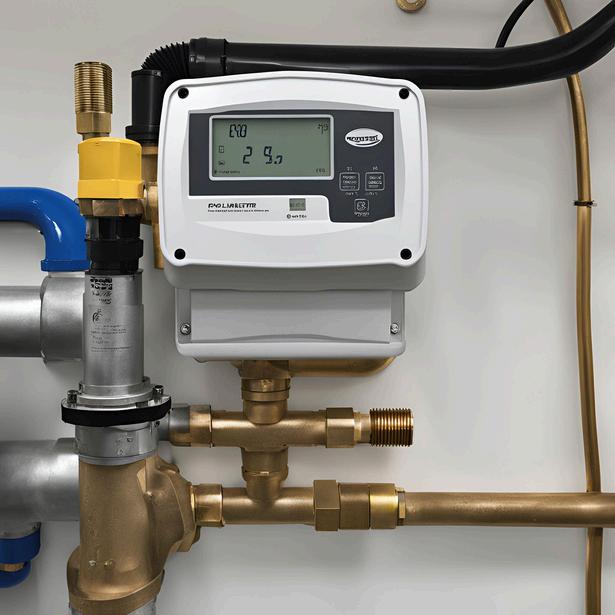
A wide range of automated control systems are available for pool management. These systems can handle tasks like backwashing pool filters, monitoring water chemistry, and feeding chemicals automatically. They help maintain the correct levels of disinfection, pH, pool water levels, temperature, lighting, and even control air blowers.
Chemicals can be added to the circulation system through various methods. One common approach is using positive displacement pumps, which inject chemicals into the return flow after all other mechanical equipment (such as filters and heaters). Erosion feeders are another option, which can be installed either in-line or off-line to the circulation flow Additionally, erosion feeders can also be set up for this purpose.
When water is filtered, treated with chemicals, and its temperature is adjusted, it flows back into the pool. The strategy for placing the return inlets is vital to maintaining effective pool circulation The flow pattern created by these inlets ensures even distribution of chemicals and heated water throughout the pool, reducing areas where water might stagnate.
Return inlets, also called discharge outlets or inlet fittings, can be installed in various locations, such as the pool walls, the floor, or both. Decisions about their placement, number, and type occur during the design phase of the pool facility It is crucial to replace any inlet fittings with items that meet the original design specifications. Wall inlet fittings often resemble an eyeball shape and can be adjusted for flow direction,
while floor inlets may come with rotating faceplates or valves to control output. All floor inlets should be installed flush with the pool floor without extending above it, and designed without sharp edges or protrusions that could harm swimmers. Wall inlets should be set at least 12 inches (30 cm) below the normal water level unless they are in unique locations like steps or benches
The quantity of return inlets usually adheres to codes and regulations, often requiring at least one return inlet per 300 square feet (28 square meters) of pool surface area Other guidelines suggest specific spacing based on the pool's width, with a general rule that inlets should not be more than 20 feet (6 meters) apart.
Special pools, such as therapy pools or spas, often employ a different design, such as an aerated jet return along with standard returns. These returns may be built with venturi tubes or equipped to force air from a blower into the water. The return lines for these spa-type jets operate separately from the primary circulation-filtration and heating systems, and the flow through an aerated jet does not count towards meeting regular requirements
Ensuring proper water circulation in a pool can be challenging due to the clarity of water. During pool construction, renovation, or when faced with water quality issues, it may be necessary to confirm that all fittings are functioning correctly. One common method to check water distribution effectiveness throughout the pool is to conduct a dye test It’s essential to use pool-specific dyes to avoid staining the pool surfaces or fittings.
Before starting the test, maintain the water level no more than ¼ inch (6 mm) above the gutter.
Make sure to establish the proper ratio of surface water draw to main drain removal, adjust the return inlets accordingly, and set the outlet flow to its standard position
Since most pool dyes react with chlorine, use a neutralizer such as sodium thiosulfate or sodium sulfite to deactivate any chlorine present. If ozone or carbon filtration systems are installed, bypass them and adjust the flow rate to simulate normal operation. Common dyes for this test include crystal violet and sodium fluorescein. With the pump turned off, introduce the dye at the standard disinfection injection point, like a skimmer or gutter. Turn on the circulation pump to resume normal flow. Observe the dye as it is distributed, noting the time it takes for uniform color distribution Staff should be strategically positioned around the pool to monitor when the dye emerges from different inlets. Record these observations and use a video camera from an elevated spot for further analysis Once the pool reaches a uniform color, you can resume disinfection. The dye will oxidize, and the pattern of its removal can be used as a secondary circulation test to validate the first For evaluation, uniform color distribution should occur in half a turnover or less. Be sure to document the time taken for full dye distribution, as this information can aid in adjusting the circulation rate if needed. After testing, thoroughly backwash or clean the filters to remove any dye residue. Confirm that the neutralizer has fully deactivated all residual chlorine before conducting the test to ensure accurate results If any adjustments to circulation settings are required, note these for future reference to maintain optimal water quality. Keep a detailed log of each test's conditions, results, and any changes made, as this can help identify trends or recurring issues in pool circulation over time.
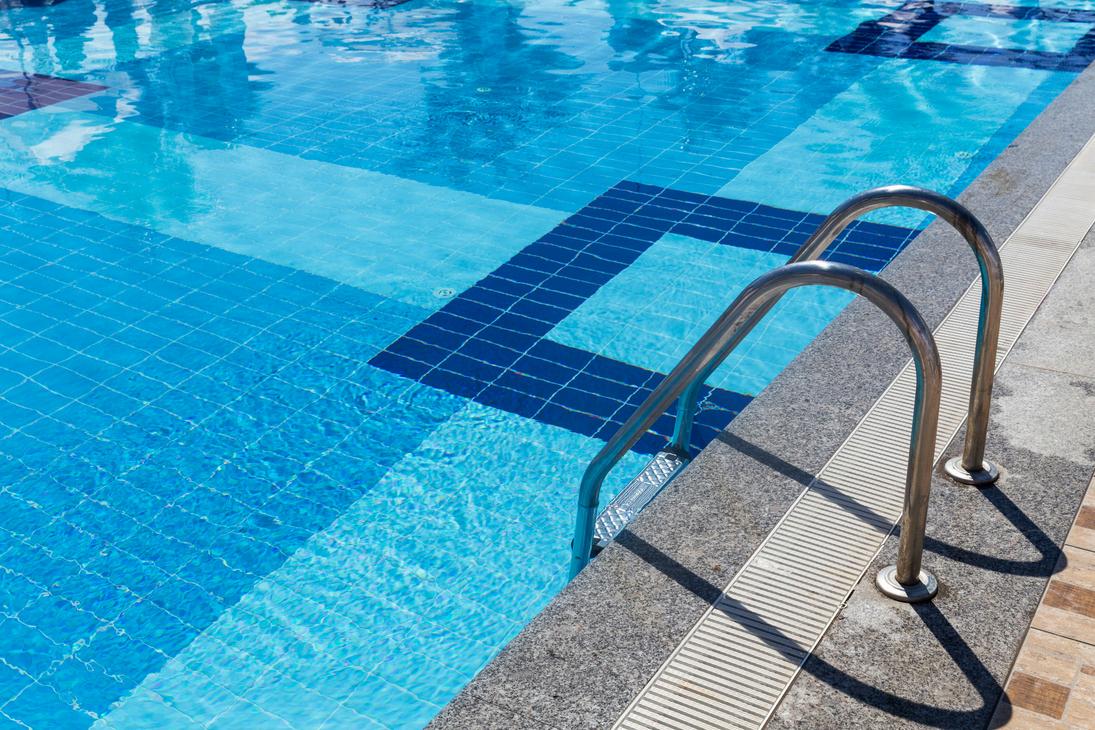
The unique design features of certain pools may necessitate performing a dye test to confirm that water is being evenly distributed throughout all areas of the pool.
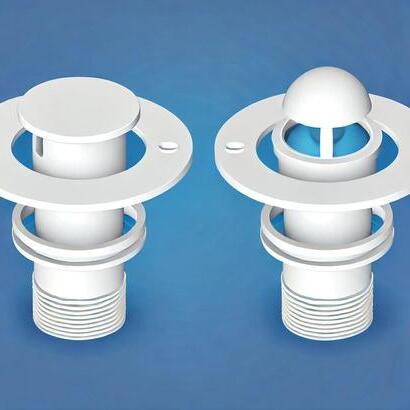
This test should ideally be conducted during non-peak hours to minimize interference from swimmers. Make a note of weather conditions, as wind or rain may affect the dye’s movement in outdoor pools. After the test, carefully monitor chemical levels to ensure they return to normal before reopening the pool. Conduct periodic dye tests as part of regular maintenance to keep circulation systems in top condition.Additionally, document the results of each test, including the time taken for dye dispersion and any adjustments made to flow rates Consistent testing can help identify areas of reduced circulation, which may require further inspection. It’s also beneficial to inform pool staff of test schedules to coordinate pool access and ensure safety
Initial Conditions
Ensure the pool is filled with water.
1. Confirm the filter is operational and the pool water has been filtered. 2. Chlorine level should be neutralized to 0.0 ppm (mg/L). 3. Brief all required personnel and prepare for the test. 4. Check that all inlets are positioned and functional, with outflows set to maintain the required proportional flow. 5. Isolate the filter.
6. Prepare the crystal violet solution (20 grams per 50,000 gallons or 189,271 litres of pool water). Mix the solution in 2 gallons or 8 litres of water, using a 5-gallon or 20-litre bucket.
7. Test Procedure
1. Pour 1 gallon or 4 litres of crystal violet dye solution into the surge tank.
Set D.E. filter to pre-coat mode, sand filter to circulation mode, or remove cartridges from filter housing.
2. Thoroughly mix the solution and notify all personnel to start the test. 3. When ready, begin the test by setting the filter to normal mode.
4. Record the exact time when the dye is first seen in the pool. 5. Observe and take digital images or video of the dye pattern, noting significant movements and times.
6. After 4 minutes, add another half-gallon or 2 litres of dye to the surge tank. After 4 more minutes, add the remaining half-gallon or 2 litres of dye.
8.
7. When the pool water is completely and uniformly dyed, note the end time of the test.
9.
To remove the dye, add sodium hypochlorite to the surge tank. Use 6 quarts or 5.7 litres for every 50,000 gallons or 189,271 litres of pool water. Additional sodium hypochlorite may be required; add up to 4 more quarts (3.78 litres) if needed.
Filtration and circulation are essential processes that ensure water remains clean and clear. Filtration is crucial because it eliminates contaminants that may lead to the growth of bacteria or algae. It also removes particles that can cause the water to appear cloudy. Clear water is vital for lifeguards and swimmers to avoid accidents or spot someone in trouble. It also allows pool operators to confirm that main drains are securely in place, preventing injuries or fatalities from entrapment.
A well-designed and maintained pool filtration and circulation system will evenly dilute and flush all areas of the pool, mechanically removing insoluble matter from the water. These systems ensure the uniform distribution of treated water throughout the pool
The equipment involved includes pumps and filters, and uses gravity, vacuum, and pressure piping. While chemical treatments are generally applied during the filtration cycle, the addition of chemicals is typically considered separate from the filtration and circulation process.
Pool water is physically purified by passing through a filter The filter material, known as the media, may consist of sand, fibrous cartridges, or diatomaceous earth (D.E.). Filtration captures particles within the media’s pores or on its surface, ensuring cleaner water Regular backwashing or cleaning of the filter media is necessary to maintain optimal performance and prevent clogging. In addition, proper sizing of the filter and pump ensures efficient operation, reducing strain on the system.
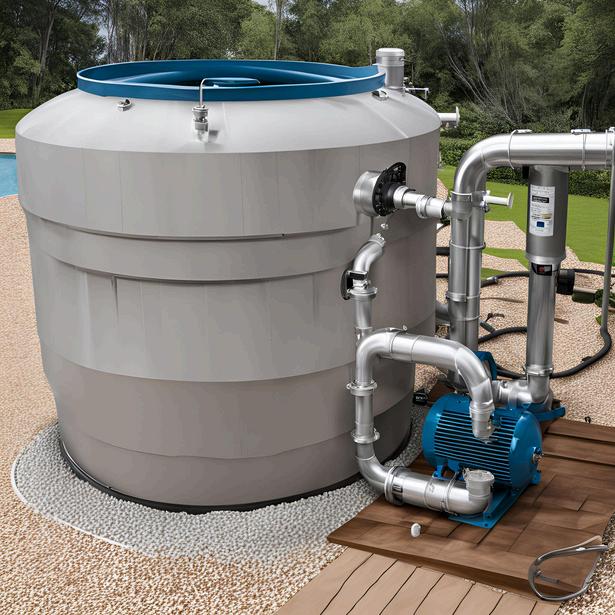
The characteristics of each media type influence the size of particles it can capture. When choosing a media for use, consider factors such as purpose, upkeep requirements, time, and budget.
Sand filtration is the oldest form of pool water filtration, dating back to the earliest pools. The granular media used in sand filters generally includes fine, high-quality silica sand, high-rate sand, or a rapid-rate sand and gravel mix. Rapid-rate sand filters, often reserved for older installations, utilize sand with particle sizes of 0.56 millimeters or smaller, combined with supporting gravel beds. High-rate sand filters use finer, higher-quality sand without gravel. Sand media typically lasts for a long time and is replaced approximately every 5 to 15 years
Cartridge filtration represents a more recent form of filtration. The filter media is made of spun-bonded polyester or treated paper within a cylindrical pleated arrangement.Cartridge filtration is known for filtering particles in the 10-25 micron range.
Cartridge filters provide a compact design with a smaller filter area and footprint compared to a diatomaceous earth filter. Cartridge filters usually need about half the filter area as diatomaceous earth filters do. Filter elements in cartridge filters are often replaceable, and their expected lifespan is around six months. Several commercial cleaning products are available for cartridge filters, which can extend their service life.
Diatomaceous earth (D.E.) filtration is the finest filtration method used in pools and spas This method uses fossilized remains of diatoms or small sea plankton. D.E. filtration captures particles as small as 2 to 6 microns. The D.E. is held in place by a cloth-like grid through which water passes The suspended material in the water gets trapped by the D.E., which creates a layer on the grid. D.E. is considered to be a disposable filter media.
Achieving good water clarity relies on effective filtration, circulation, and chemical treatments It's vital to ensure that swimmers in distress and any pool drain covers are visible. Clarity is a subjective term influenced by individual perception, but it is measured quantitatively by the level of suspended matter within the water Clarity and turbidity have an inverse relationship: as turbidity increases, clarity decreases. Mechanical filtration removes suspended particles from the water, which is facilitated by the circulation system, as detailed in the Water Circulation chapter. Neglecting to remove suspended particles may result in unhealthy water conditions and increase the demand for pool chemicals
Two primary tools, a nephelometer and a turbidimeter, measure water turbidity. The NSF International (NSF) advises that pool water turbidity should not surpass
0.5 Nephelometric Turbidity Units (NTUs) or 0.2 Jackson Turbidity Units (JTUs). However, during peak use, turbidity should not exceed 1.0 NTU, and pool systems should reduce it to 0 5 NTUs within 8 hours of peak usage. Turbidity levels above 0.6 NTUs are visually cloudy, and levels nearing or exceeding 1.0 are usually unacceptable for both swimmers and pool staff Most local regulations align with the NSF standards, capping turbidity at 0.5 NTUs. If a nephelometer or turbidimeter is unavailable, other methods to assess water clarity include:
Ensuring the pool drain is clearly visible from the deck.
Confirming a two-inch disk with black and red quadrants is visible from a depth of 15 feet (4 6 meters) underwater
It's also crucial to inspect that the main drain cover is securely attached and in good condition before opening the pool. Visual checks ensure the pool maintains clear water at all times
TableSalt: 100microns
The effectiveness of filters in removing suspended particles is typically measured in microns. The illustration below uses a grain of table salt, sized at 100 microns, as a benchmark. The sizes of other particles are compared relative to this grain of salt. A micron is equivalent to one millionth of a meter, with roughly 25 microns in 1/1000th of an inch.
HumanHair: 70microns
Rapid-RateSandFilter: 50microns
LimitofHumanVisibility: 40microns
High-RateSandFilter: 25microns
CartridgeFilter: 15microns
RedBloodCell: 8microns
D E Filter: 4microns
Bacteria: 1micron
An important aspect of pool water management is the Filter Media Rate (FMR), which is the rate at which water flows through a filter. The FMR, also known as the filter flow rate or filter factor, is calculated based on the need for adequate circulation specific to the pool's use. Once the pool's design flow rate (FR) is determined, the FMR helps calculate the required minimum filter area. This rate is essential to ensuring that the filter can handle the pool's circulation demands effectively
The FMR for any filter type is defined according to the filter manufacturer's compliance with the NSF International Standard 50, which outlines equipment standards for swimming pools, spas, hot tubs, and other recreational water facilities
Outside of the United States, sand filters are predominantly used. Large or heavily frequented commercial pools typically operate with low filtration rates This includes pools found in schools, hotels, and other commercial facilities, as well as heavily used private pools, which generally employ a medium filtration rate. Meanwhile, high filtration rates are mostly appropriate for private home pools Filtration rates are measured in cubic meters of water per square meter of filter surface area per hour (m³/m²/hr). It is important to note that many sand filters have a maximum filtration rate of 45 m³/m²/hr, and the use of flocculants is common in medium-rate sand filters. To maintain effective filtration, regular backwashing of sand filters is essential to remove trapped debris and prevent clogging
Filter Type
High-Rate Sand
Cartridge
Diatomaceous Earth
Diatomaceous Earth With Slurry
Rapid-Rate Sand
Filter Media Rate
12–20 gpm/ft² 204–813 lpm/m²
0.375 gpm/ft² 15 lpm/m²
2.0 gpm/ft² 81 lpm/m²
2.5 gpm/ft² 102 lpm/m²
3 gpm/ft² 122 lpm/m²
Types of filters and their associated filtering rates
Filtration Rate for Sand Filters (Metric Rates)
Low Rate Filtration
Less than 10 m³/m²/hr
Medium Rate Filtration
11 m³/m²/hr to 30 m³/m²/hr
High Rate Filtration
31 m³/m²/hr to 50 m³/m²/hr
Standards for filtration rates of metric sand filters
The maximum flow rate of the pump must be used to calculate the minimum filter area. The filter area refers to the surface area of the filter media through which the water passes. This area is typically indicated on the filter's data label Manufacturers also provide specifications to match their filters with the appropriate pool size and the desired turnover rate. By selecting the correct filter area for the volume of water that must flow through, the desired turnover rate is achieved, thereby maintaining water quality. If the Filter Media Rate (FMR) is exceeded for any filter type, several problems may arise, such as:
Sand Filters: Dirt can become further embedded in the sand bed, complicating the cleaning process during the backwash cycle
Channeling may occur, causing unfiltered water to flow back into the pool. Regularly monitoring the sand bed for signs of compaction or channeling helps prevent these issues Replacing or rejuvenating the sand periodically can also improve filtration efficiency and extend the filter's lifespan.
Cartridge Filters: Debris such as dirt, minerals, and oils can penetrate deep into the filter element, making it more challenging to clean and causing return flow into the pool Cartridge filters are particularly susceptible to high water velocities compared to sand or D.E. filters. Particles may lodge so deeply within the cartridge that they are not removed during cleaning.
D.E. Filters: Diatomaceous earth (D.E.), along with minerals and oils, can become stuck to the grid cloth, leading to an accumulation that does not get removed during backwashing or cleaning. This accumulation causes increased force whether vacuum or pressure on the grid element, ultimately shortening its lifespan
It is essential to ensure that the flow rate through any filter does not surpass its rated capacity. The filter area should be correctly sized to manage the design flow rate or engineered flow rate, as outlined in the Water Circulation chapter.
There are three key components in this relationship: Filter Area (FA)
Flow Rate (FR)
Filter Media Rate (FMR)
The relationship among these factors is expressed as:
Filter Area = Flow Rate ÷ Filter Media Rate
When using abbreviations, this relationship becomes:
FA = FR ÷ FMR
This formula can also be rearranged and expressed in two other ways:
FMR = FR ÷ FA FR = FA x FMR
The actual flow rate can be monitored by observing the flow meter. Monitoring the flow meter is crucial to ensure that the Filter Media Rate (FMR) is not exceeded. In a vacuum filter system, there is typically a valve, referred to as a throttling valve, positioned just after the pump. This valve can regulate the flow rate and may need adjustments throughout the filter cycle The minimum required flow rate must be known and maintained to meet the turnover rate required by the relevant code.
The flow rate for a metric filter is expressed in cubic meters per hour (m³/hr) The filter's surface area is measured in square meters (m²) Since flow is calculated in litres per minute (lpm), these litres must be converted into cubic meters (m³). The formula for determining the filter size is:
lpm x 60 = litres per hour
Liters ÷ 1,000 = m³
FR (m³) ÷ FMR (m³/m²/hr) = FA (m²)
The pool’s pump has a maximum flow rate of 400 gallons per minute. The D.E. (Diatomaceous Earth) filter system utilizes grids that are each 2.5 feet by 2.5 feet in size To determine the number of grids required, consider that vacuum D.E. grids filter water from both sides. Therefore, a single grid with dimensions of 2.5 feet by 2.5 feet has an area of 6.25 square feet on one side This results in a total of 12 5 square feet when both sides are accounted for.
The FMR (Filter Media Rate) for a vacuum D E filter without a slurry is 2 0 gallons per minute per square foot (gpm/ft²)
FA = FR ÷ FMR
FA = 400 gpm ÷ 2.0 gpm/ft²
FA = 200 ft²
Number of grids = 200 ft² ÷ 12.5 ft²/grid
Number of grids = 16
The Filtration Rate is calculated in cubic meters of water per square meter of filter surface area per hour (m³/m²/hr).
For this pool, a medium-rate sand filter with a capacity of 10 m³/m²/hr is used.
The pool's flow rate (circulation rate) is 85 m³/hr What is the required square meter area of the sand filter?
To find the required filter area (FA):
FA = FR ÷ FMR
FA = 85 m³/hr ÷ 10 m³/m²/hr
FA = 8 5 m²
The pool is equipped with three highrate sand filters, each with a diameter of 5 feet. What is the total filter area of the system? For sand filtration, only the top surface of the sand is considered when calculating the filter area.
Area=R x R x 3.14
Diametre = 5; Diameter ÷ 2 = Radius
Radius = 2.5 ft
Area = 2.5 x 2.5 x 3.14 = 19.625 square feet for one filter
Total filter area = 19 625 ft² x 3 = 59 square feet. (for all three filters)
Metric
The pool has three 2m diameter low-rate sand filters. What is the filter area of the system?
Area = R x R x 3 14
Diameter = 2; Diameter ÷ 2 = Radius
Radius = 1 m
Area = 1 x 1 x 3.14
Area = 3.14 m² for one filter
Total filter area = 3.14 m² x 3
= 10 m² (rounded up)
Using a 12 gpm/ft² FMR, what is the maximum flow rate this system can support?
FR = FA x FMR
FR = 58.875 ft² x 12 gpm/ft² = 706.5 gpm
To find the maximum circulation rate (flow rate) that this system can handle, use a Filter Media Rate (FMR) of 8 cubic meters per square meter per hour (m³/m²/h) for a filter size of 9.42 square meters (m²).
FR = FA x FMR
FR = 9 42 m² x 8 m³/m²/h = 75 36 m³/h
FR (rounded up) = 76 m³/h
Filters are categorized by the type of media they use and their operational mode. The three most common media types are sand, cartridge, and diatomaceous earth (D.E.). The modes indicate whether the filter is on the pressure side or the vacuum side of a pump. Filters, whether sand, cartridge, or D E , can operate under pressure or vacuum conditions
When choosing a filter, it is crucial to remember that not all water loss is necessarily detrimental. Effective water management often involves planned dilution of the pool to help control the accumulation of unwanted substances. Key factors to consider include local weather patterns, water availability, and regulations concerning wastewater discharge
A pressure filter is located downstream of the pump within a closed tank in the water flow. The output head pressure of the pump pushes water through the tank As particles in the water are captured by the filtering media, there is an increase in pressure leading to the filter (influent pressure) and a
corresponding drop in flow. A vacuum filter is positioned before the pump in the water flow, usually in a tank open to the atmosphere. The pump's suction draws water through the media As the media traps pollutants, there is an increased vacuum on the suction side of the pump and a reduction in flow.
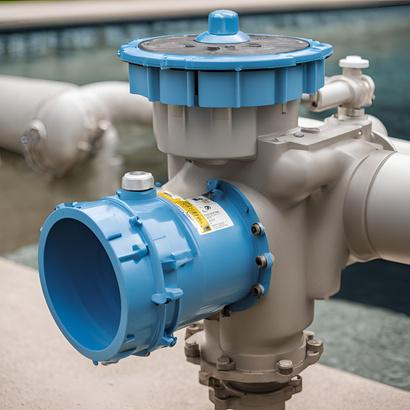
Valves must be clearly labeled, and a valve identification chart should always be readily available for the pool operator's reference.
As previously mentioned, sand filtration is the oldest method of filtration. Sand serves as a long-lasting media, typically requiring replacement every five to fifteen years New sand under a microscope appears with sharp, jagged edges. Over time, the sand particles become rounded, indicating the need for replacement. In ancient Greece and Rome, water was filtered through beds of sand, collected, and then recirculated back into baths using gravity-fed systems.
Modern sand filters function on the principle of moving water from the top of the filter to the bottom As water flows through the sand, suspended pollutants become trapped within the tiny crevices and gaps between sand particles. Debris attaches to the sharp edges of these grains, gradually causing the gaps between them to narrow.
This process captures various suspended pollutants, such as dirt, body waste, and lotions, creating a dense fibrous network within the sand. During the filtration cycle, progressively smaller particles are removed. The tiniest materials are filtered just before the backwash, or cleaning, cycle begins.
There are two primary types of sand filters The older design, known as a rapid-rate sand filter, uses a combination of sand and gravel and filters at a slower rate. A more accurate term for this type would be a sand and gravel filter.
The modern variation, the high-rate sand filter, processes water at a significantly faster rate. This type, developed in the 1950s, uses #20 mesh crystal silica for filtering.
The most frequently used high-rate sand filters are pressure filters, though vacuum high-rate sand filters are also available. These filters are commonly found in recreation pools, competition pools, and large resort pools.
The pressure filter tanks are typically cylindrical, with diameters ranging from 2 to 4 feet (0.61 to 1.22 meters). In larger facilities, such as parks, schools, and competition pools, pressure filters with larger diameters are often utilized. A sand media high-rate sand filter has a standard particle size ranging from 0.35 mm to 0.55 mm. This sand is sometimes called No. 20 sand, and it must be clean, uniform, and meet specific quality standards When the sand bed is prepped correctly, it can screen out particles with a size greater than 20 microns. The filter typically uses several layers of sand and gravel to create an effective filtration barrier The flow rate through the filter is calibrated based on the filtration media size, ensuring optimal water quality.
A remote digital flow meter often monitors system performance, and if the performance falls below preset levels, a backwash sequence is initiated to maintain efficiency.
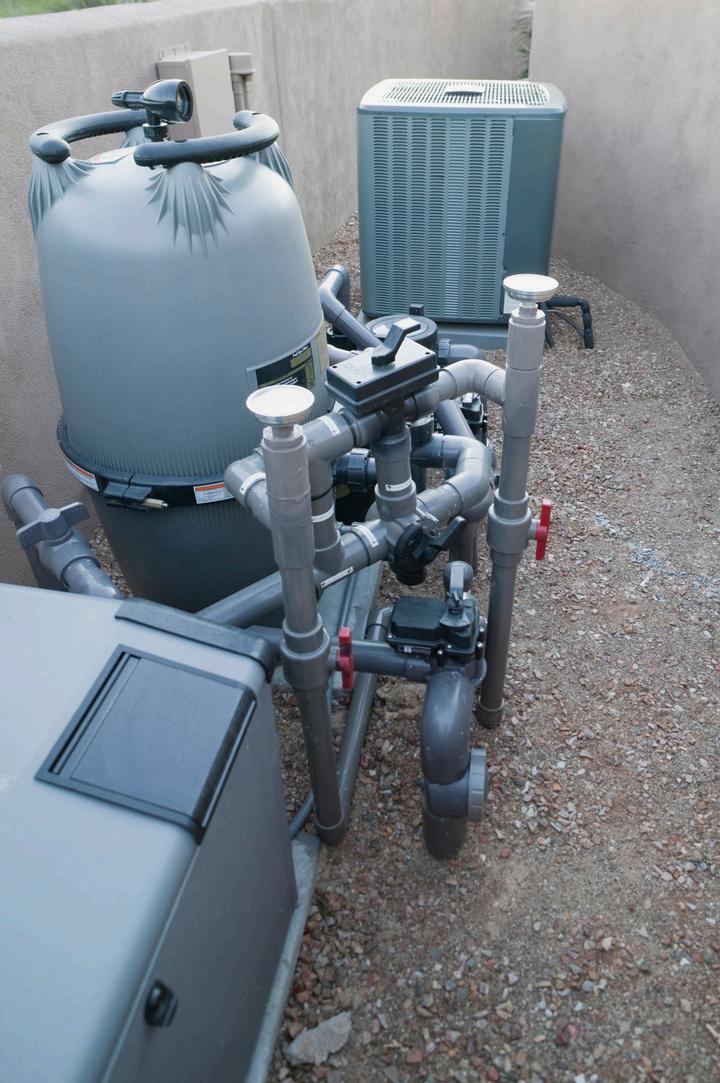
The most frequently used high-rate sand filters are pressure filters, but vacuum versions are also available. These filters are typically found in recreational pools, competition pools, and large resort pools.
Pressure filter tanks are generally cylindrical in shape, with diameters ranging from 2 to 4 feet (0.61 to 1.22 meters) Larger establishments like parks, schools, and competition pools may employ pressure filters with diameters up to 10 feet (3.05 meters). These pressure filters, regardless of size, can be assembled as part of a modular system that incorporates multiple tanks. The sand used in high-rate sand filters generally has particle sizes between 0.018 inches (0.35 mm) and 0.022 inches (0 56 mm) This sand, often referred to as #20 standard silica sand, can pass through a mesh screen with 20 wires per inch (20 mesh) and be retained on a screen with 30 wires per inch (30 mesh). Using the incorrect sand size can lead to poor water quality, with sand particles leaking into the pool or causing filter
malfunctions. Sand filtration typically captures particles in the 25 to 100micron range. Other filtering media, such as crushed glass, garnet, or zeolite, may also be used, although #20 sand remains the most common choice.
Filter tanks or housings are made from a range of materials and come in different configurations, such as single-piece tanks with a removable lid to access internal parts.
Larger vertical tanks are usually constructed from welded steel and include access covers at the top for maintenance As water enters the top of the filter housing, it is spread evenly over the sand bed by a fixture called a baffle or distributor. Beneath the baffle lies an open space that separates it from the sand bed The open space below the baffle is known as the freeboard Freeboard is essential as it allows the sand bed to expand during the backwash process. The freeboard's height is typically specified by the filter manufacturer's engineering guidelines and is usually half the depth of the sand bed. Manufacturers may not specify the freeboard itself but will indicate the correct amount of sand required for the filter model to ensure adequate freeboard is maintained. Insufficient sand could reduce freeboard, while too much sand can cause improper filtration.
Pressure filters function at high pressures. Always ensure that all air bleed valves are opened, and the pump is turned off before adjusting valve positions or removing clamps or fittings. Neglecting these safety procedures may lead to the equipment violently separating, potentially resulting in severe injury or death.
When replacing sand, always ensure that the correct freeboard is maintained. If the freeboard is incorrect, it can lead to longer flushing times during backwashing and uneven redistribution of sand over time.
At the bottom of the filter, below the sand layer, lies the underdrain or laterals assembly. These laterals are designed to permit water flow while retaining the sand particles.
Valves are critical for directing water flow correctly. Smaller filters often use multiport, rotary, or ball valves, or diverter (push/pull) valves, while larger filters generally use butterfly and gate valves
The design flow rate for high-rate sand filters ranges from 12 to 20 gallons per minute per square foot (gpm/ft²), with 15 gpm/ft² being the most common rate. The design rates for both backwashing and filtration are typically similar for high-rate sand filters. These filters primarily clean the top few inches of sand, with the penetration depth depending on the flow rate.
Some manufacturers advise placing a layer of pea gravel at the bottom of the sand filter to enhance filtration and provide ballast during the backwash cycle. For specific guidance and recommendations, consult the manufacturer.
Automated filter operation is also available. Filters equipped with such features may initiate backwashing when performance metrics drop below preset levels A small microprocessor can manage the system. Solenoid valves are activated to regulate water flow, either for each individual filter unit or for the entire system The microprocessor continuously monitors various parameters, including the inflow (influent), outflow (effluent), and overall flow rates to ensure optimal performance
using a digital flow meter. The system continuously monitors performance. If the performance drops below the predetermined thresholds, it will automatically initiate the backwash process.
Backwashing is necessary when the pressure difference between the water entering (influent) and exiting (effluent) the filter reaches 10 to 20 psi (69-138 kPa). This difference is monitored using pressure gauges, which are typically placed on either side of the filter flow pipe in many locations. If there is only one pressure gauge, the filter should be backwashed once the pressure rises by 8 to 10 psi (55-69 kPa) from the initial pressure.
Always adhere to the filter manufacturer's written instructions Generally, the backwash rate matches the flow rate, but to properly agitate the sand, a rate of 15 gpm/ft² is generally required. During backwashing, the flow of water is reversed, moving from the bottom laterals to the top of the filter
As the sand is lifted, it expands and becomes agitated, filling the freeboard space. This process dislodges trapped particles and debris, flushing them out through the distributors to the waste line. In manual systems, the clarity of the backwash wastewater is monitored through a sight glass until the outgoing water appears clear. Once the backwash cycle concludes, the sand is clean and ready to resume its filtration duties. Typically, particles larger than 50 microns are removed during this initial stage of the cycle. With each cycle, the spaces between the sand grains get progressively smaller, reducing the
size of the particles that are filtered out. As the backwashing process continues, the particle size removed from the water becomes progressively smaller. In the final stages of the filter cycle, the smallest particles are trapped, typically around 25 microns or less for highrate sand filters.
Failing to backwash a high-rate sand filter on a regular basis can result in the accumulation of smaller particles, leading to clogged sand voids and compromised filtration.
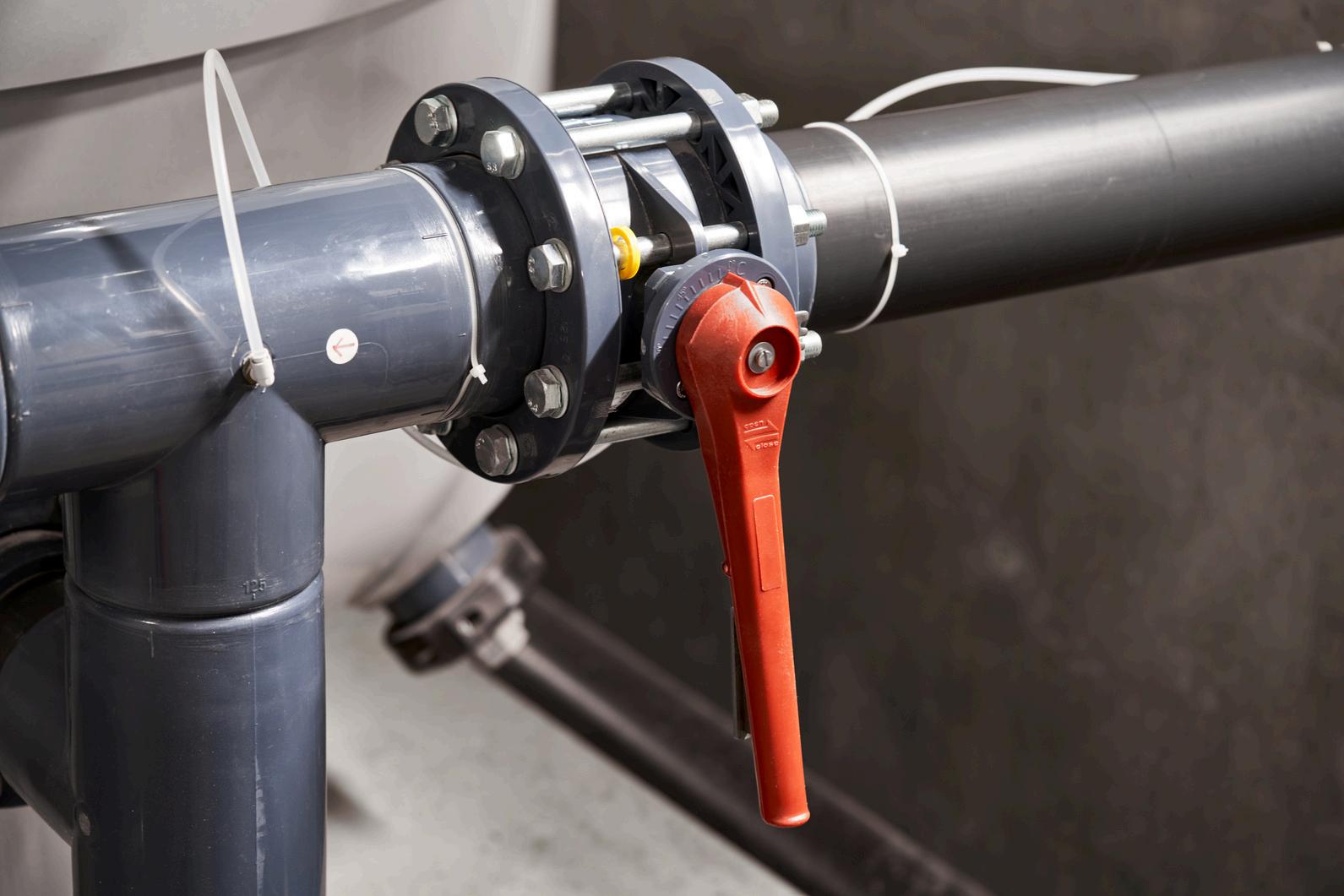
Over time, this can cause a decline in water clarity. To enhance filtration, filter aids or flocculants, such as aluminum sulfate (alum), potassium aluminum sulfate, or poly-aluminum chloride, are sometimes used. These substances can help fill the gaps between sand particles temporarily, leading to improved filtration and higher filter pressures. However, excessive use of these aids can cause the sand to stick together, forming a large mass that impairs filtration. When replacing sand, it is essential to follow the manufacturer's guidelines. For new sand, the finer particles, known as fines, are typically removed during the processing and washing stages. This removal process is
crucial as fines can cause the sand to clump together, leading to the premature formation of mud balls within the filter. Ensuring that the sand is properly prepared and installed can help maintain optimal filtration performance.
Rapid-rate sand filters are composed of large tanks, typically 8 feet (2.44 metres) or more in diameter. These filters were primarily used in large municipal and competitive pools throughout the early 1900s. While they are less common today, some of these filter types are still in use around the world. The term "rapid-rate" originally distinguished these filters from the older gravity or slow-rate filters, which had a Filter Media Rate (FMR) of ½ to 1 gallon per minute per square foot (gpm/ft²). As technology advanced, the FMR for rapid-rate filters was improved to 1.5 to 5 gpm/ft², with 3 gpm/ft² becoming the standard, hence the term "rapidrate."
Rapid-rate filters use a series of sand layers and gravel. The top layer is the finest sand, supported by coarser sand and gravel below. This setup
helps the coarser gravel settle quickly after backwashing, maintaining the stratified layers. Backwash rates typically range from 12 to 15 gpm/ft², achieved by cleaning one filter at a time, utilizing all the system's water flow. A baffle or distributor, freeboard, and bottom laterals are part of these systems. Additionally, a layer of flocculant, such as aluminum sulfate, may be added to the top sand layer to help form a solid layer within the upper few inches of sand.
Advancements in technology have led to the development of various sand filter options, including horizontal modular high-rate sand filters, multi-cell high-rate sand filters, and the use of alternative filter media such as zeolite. Additionally, a new design known as vacuum high-rate has been created, building upon the older gravity sand filter models.
A multi-cell filter is made up of one or more vertical tanks, each containing two or more cells. This design provides increased filtration while occupying less floor space. The piping involved can be quite intricate, and it is essential to always adhere to the manufacturer's guidelines. With a single filter, backwashing is straightforward. However, in larger commercial settings with multiple sand filters, the backwashing process can be more time-consuming, as each filter cell is cleaned individually. Automatic backwash control systems can be utilized to automate the backwashing of multi-cell filters.
These systems use a large, open steel tank that is positioned with the top at ground level. The associated vacuum high-rate equipment package is typically located in a nearby pit, optimizing the energy efficiency of the system. These tanks can reach depths of up to 8 feet (2.44 meters), which can make maintenance more challenging for pool operators. It's important to consider the placement of the vacuum and pressure gauges, as well as the flow meter, for easy monitoring and servicing. There is adequate space above the sand within the tank to facilitate backwashing and manage water level control. Pool water flows into the system by gravity from the main drain and surface gutters.
Zeolite is a highly porous volcanic mineral that effectively removes particles as small as five microns. Manufacturers highlight that activated zeolite can also absorb ammonia from pool water This is crucial since eliminating ammonia helps prevent the formation of chloramines, which can irritate the eyes of swimmers and contribute to unpleasant odors in indoor environments
The primary component of zeolite is clinoptilolite, a mineral with an exceptionally high surface area and a complex three-dimensional structure featuring large internal pores This unique form enables it to chemically trap pollutants through a process called cation exchange. Before using this material, consult both the supplier and the filter manufacturer for specific guidelines
Glass filter media is made from finely crushed recycled glass and offers a sustainable alternative for filtration. It is about 20 percent lighter than conventional filter sand and is produced from 100 percent post-consumer recycled glass. This media captures finer particles down to 15 microns than traditional sand and provides longer filtration cycles This reduces the consumption of labor, chemicals, and water. It is essential to replace glass filter media as frequently as other types to maintain optimal performance.
Cartridge filtration is commonly utilized in swimming pools and, more extensively, in spa water treatment. There are two main types of cartridge filtration. The first type is the depth penetration filter, initially designed for a Filter Media Rate (FMR) ranging from 3 to 8 gpm/ft² (122 - 325 lpm/m²). The modern cartridge filter is a surface type, with an FMR between 0.375 and 1.0 gpm/ft² (15 - 41 lpm/m²). Cartridge filters are classified as replaceable media. Depth penetration filters use fabric cartridges, where synthetic fabric is arranged in a pleated formation around a cylindrical or oval core. Cartridge filtration typically operates under pressure mode, although some systems utilize vacuum mode, similar to vacuum D E systems
One significant advantage of cartridge filtration is its compact size, requiring about half the floor space of a comparable sand or D E system Cartridge filters also do not need backwashing, saving water as the cartridges are cleaned. However, this system does not facilitate the dilution or replacement of dirty water with fresh water
As water containing suspended particles flows through the filter element, debris accumulates on the surface. Over time, more dirt collects, gradually narrowing the passages and trapping smaller particles as the process continues. This accumulation increases the pressure until it reaches 10 psi (70 kPa) above the starting level. Excessive water velocity during filtration can negatively impact cartridge efficiency more than other filter types. If not properly managed, debris can bypass the filter and flow back into the pool or spa, leading to reduced water quality
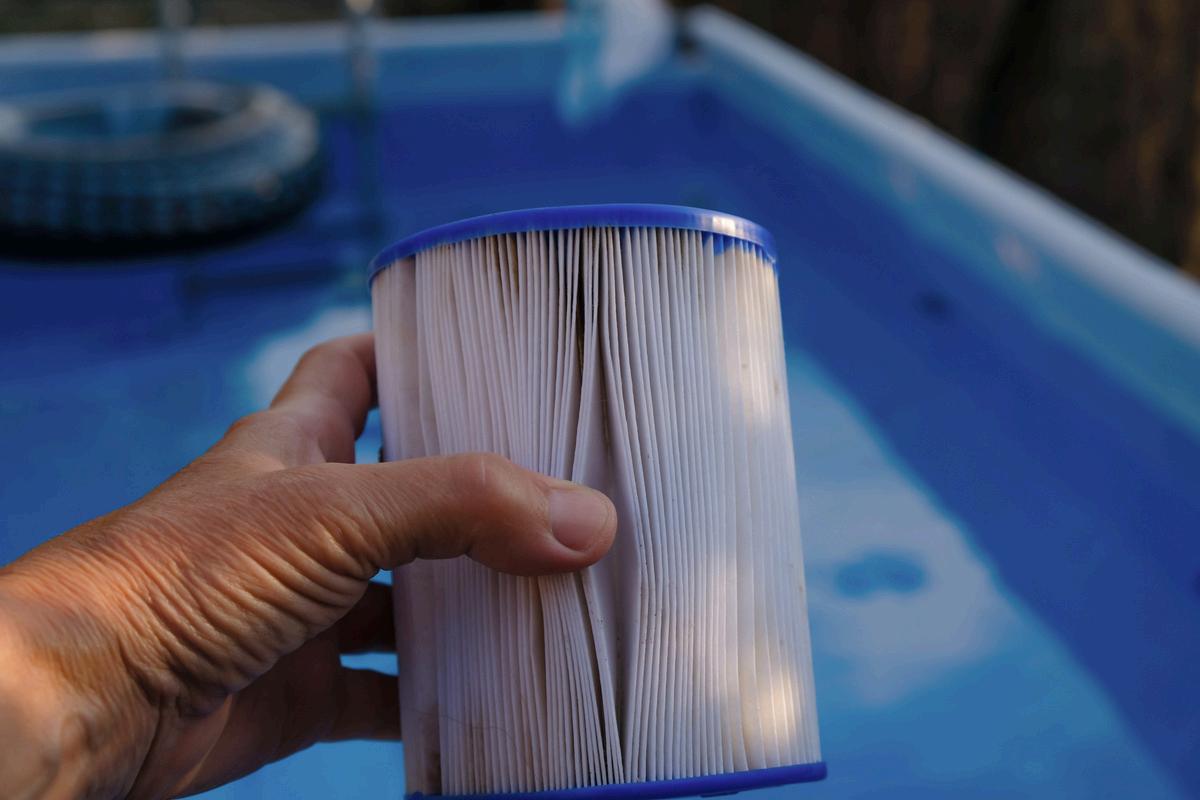
Cartridge filters do not require backwashing; instead, they are removed, rinsed with a hose, and cleaned. Turn off the pump and adhere to the manufacturer’s guidelines. If high water flow or mineral accumulation has occurred, additional cleaning steps should be taken:
Soaking: Immerse the filter element in a professional-grade cleaning solution. Check the label instructions carefully, as different solutions may target oils, greases, or scale deposits The order in which these cleaners are used can impact their effectiveness. Ensure grease removers are applied before any acid-based cleaners to avoid the acid bonding to the filter media.
Rinsing: After thorough soaking, rinse away any mineral deposits with a light acid wash
Replacement: Once cleaned, the filter element should be placed back in the filter tank, and the housing must be properly secured.
This approach ensures the cartridge filter remains functional and efficient, extending its life and maintaining water quality. Before securing the housing, visually check the O-ring for any signs of wear Apply O-ring lubricant as needed, or at least once a month If the O-ring is not maintained, it could lead to water leakage or air entering the filter. To minimize downtime, many operators keep an extra cartridge filter element on hand When one requires cleaning, it can be swapped with a fresh cartridge. In some cases, regulations may mandate the availability of an additional cartridge.
Diatomaceous earth, abbreviated as D.E., is a type of filter media that is disposed of and replaced after every filtration cycle. This replacement process is called pre-coating
D E consists of a white powder derived from the fossilized remains of diatoms, tiny aquatic organisms. It has spongelike properties and can absorb large quantities of water The D E particles form a porous layer on top of one another, creating a very fine screen. This powder is applied to filter elements known as the septum, which is covered with a fine cloth or synthetic fabric. The D E forms a coating, typically 1/16 to 1/8 inch thick (1.6 to 3.2 mm).
The flow of water holds the D.E. in place. If the flow is too weak, the D.E. can detach from the grid. The openings in the D E layer are very small, trapping even fine particles suspended in the water.
D.E. filtration can occur in both pressure and vacuum modes. In pressure mode, the filter is backwashed when the pressure difference between incoming (influent) and outgoing (effluent) water reaches 8 to 10 psi (55-69 kPa) above the initial pressure, reducing the flow rate.
When dealing with D.E. (Diatomaceous Earth) powder, pool operators must exercise utmost caution It's crucial to obtain a Safety Data Sheet from the supplier and become familiar with all safety aspects. D.E. particles are incredibly fine and sharp, and they should not be stored near any operating equipment or other chemicals. The powder can easily become airborne, potentially causing damage to equipment, such as getting into the windings of a pump motor, leading to premature failure
D.E. can also contaminate chemicals and testing kits if they are not stored correctly. Additionally, breathing D.E. dust poses severe health risks The powder contains crystalline silica, which is a known carcinogen and can cause silicosis, a potentially fatal lung disease, if inhaled over time without proper respiratory protection. A D.E. supplier has warned: "Breathing crystalline silica dust in excess of the permissible exposure limit, over a prolonged period, can cause silicosis, a progressive, sometimes fatal lung disease. Crystalline silica has been classified as a known carcinogenic for humans."
By following these precautions and handling guidelines, the pool operator can minimize health hazards and equipment damage associated with D E powder
In a vacuum D.E. (Diatomaceous Earth) system, pool water is drawn by gravity from the main drain and surface areas into an open-to-atmosphere filter tank It's critical to maintain an appropriate Filter Media Rate (FMR) for such systems. If the FMR drops below 1 gpm/ft² (41 lpm/m²), the D.E. may not sufficiently coat the filter grids Conversely, if the FMR exceeds 2 gpm/ft² (81.5 lpm/m²), the D.E. powder and filter debris might become lodged in the fabric, causing blockages. In these cases, adjusting the flow by throttling or restricting the circulation pump may be necessary to keep the flow rate within the correct range.
All vacuum filter systems should be operated using a vacuum gauge, which measures in inches of mercury (Hg) or kilopascals (kPa). A properly maintained filter, freshly coated with D.E. powder, should not display more than 8 inches of mercury (8 in. Hg or 27 kPa). When the pressure increases by 10 in Hg (34 kPa), the filter cycle is considered complete, and the D.E. powder should be replaced. Monitoring the flow meter is also a key aspect of this process to ensure accurate determination
The process of replacing the used diatomaceous earth (D.E.) powder with fresh powder is called pre-coating. To begin, the filter must be drained, and the old D E should be collected and properly discarded The filter tank is isolated from the pool by closing the valves, and the water is removed using an auxiliary pump, which exposes the grids. The pool operator then rinses away any remaining powder on the grids using a hose Once the tank is emptied, it is refilled with pool water by adjusting the control valves. The auxiliary pump is reactivated
to circulate the water within the tank. A new D.E. slurry, created by mixing fresh D.E. powder with water in a bucket, is evenly spread over the filter tank surface As the slurry circulates, the water should show a consistent color, indicating even distribution. The auxiliary pump is turned off once the circulation stabilizes, and the pre-coating is complete
It is critical to use the right amount of new D.E. powder for effective filter operation. If insufficient powder is applied, the fabric weave won’t be adequately covered, allowing oils and debris to block the openings This can cause reduced flow and potential damage. Overuse of powder can cause it to overflow from one grid to another, known as bridging It’s essential to follow the manufacturer’s instructions regarding the amount of D.E. to be used. The normal amounts range from 1 to 1.5 pounds (0.5 - 0.7 kilos) for every 10 square feet (1 square meter) of filter area The commonly accepted value is 1.25 lbs/10 ft² (0.6 kilos/m²).
The dirty water and D.E. should be pumped into a separation tank for proper disposal in compliance with local regulations never dispose of D E in sewers or open bodies of water.
Commercial D.E. filter grids, both for vacuum and pressure systems, should be cleaned manually on a regular schedule, typically every three months of operation. The cleaning process involves the following steps:
Remove the grids from the filter following the manufacturer's guidelines
Spray the grids with water, checking the grid cloth for any tears or other damage.
Soak the elements in a commercial filter cleaner to eliminate any oily residues, then rinse thoroughly.
If needed, immerse the grids in an acidic filter cleaner to remove any calcification or mineral deposits, then rinse again.
Reassemble the filter mechanism once all cleaning steps are completed.
Ensure you consult local regulations regarding the proper disposal of D.E. or perlite materials
There are various substitute materials available for diatomaceous earth (DE) filters One of the most commonly used alternatives is perlite, a substance derived from volcanic rock or glass that contains crystalline silica, a component known to cause lung disease (silicosis). Hence, caution should be exercised when handling this product If using perlite as a replacement for DE powder, apply the same volume as you would for DE. Perlite offers longer filtration runs and can be backwashed but does not cake like DE When using perlite for precoating, add it to a skimmer, ensuring it is soaked first to prevent it from floating. Note that disposal regulations for perlite may be similar to those for DE.
Another effective substitute is cellulose fiber filtration, which is made from wood pulp fiber. These materials are favored because they are biodegradable and can be flushed to waste without needing separation tanks Always consult your filter manufacturer's manual before substituting any product.
Wood fiber material can also coat a cartridge filter, especially in spa operations Use approximately 1 ounce per 25 square feet (28 3 grams per 2 32 square meters) to facilitate easy oil removal. Remember, all materials used for filtration must be approved by the manufacturer
Another effective substitute is cellulose
fiber filtration, which is made from wood pulp fiber. These materials are favored because they are biodegradable and can be flushed to waste without needing separation tanks Always consult your filter manufacturer's manual before substituting any product. Wood fiber material can also coat a cartridge filter, especially in spa operations Use approximately 1 ounce per 25 square feet (28.3 grams per 2.32 square meters) to facilitate easy oil removal. Remember, all materials used for filtration must be approved by the manufacturer
Regenerative filters use diatomaceou earth (D E ) or a synthetic alternative The regeneration process mechanica removes D.E. and debris to enhance efficiency and effectiveness of the filt media. Manufacturers note that the distinctions between regenerative fil and sand filters can be categorized in design, installation, operation, and performance.
One key difference is that while conventional high-rate sand filters us the entire sand bed for filtration, regenerative filters operate by directing water through multiple outlet tubes covered with fabric coated with filter media This approach significantly increases the surface area available for filtration, allowing regenerative filters to occupy a much smaller installation space compared to sand filters.
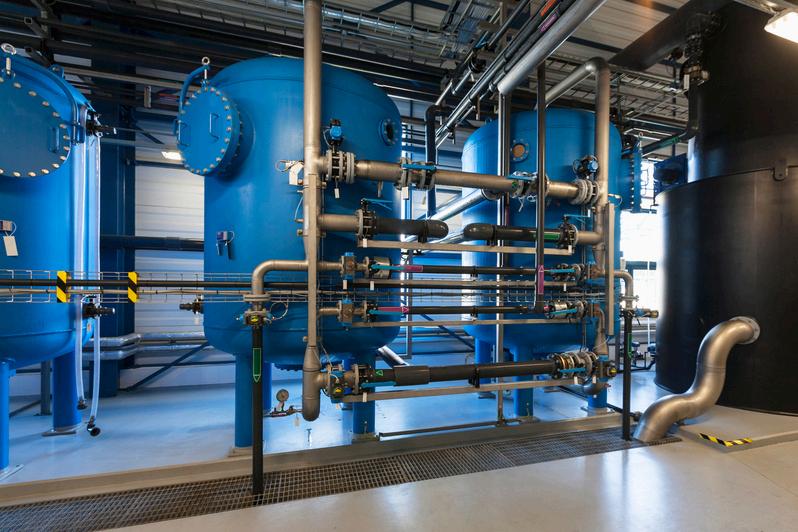
Bumping refers to the regeneration process, which shakes the media to release trapped dirt particles from the leaves it clings to. This step redistributes the filter media, effectively prolonging its lifespan. A key benefit of this regeneration process is that it reduces the amount of water directed to waste, thereby conserving water. Some manufacturers assert that regenerative filters can cut down as much as 90-95% of the wastewater typically generated by sand filter backwashing. Eventually, however, dirt will accumulate in these filters, necessitating the replacement of the media
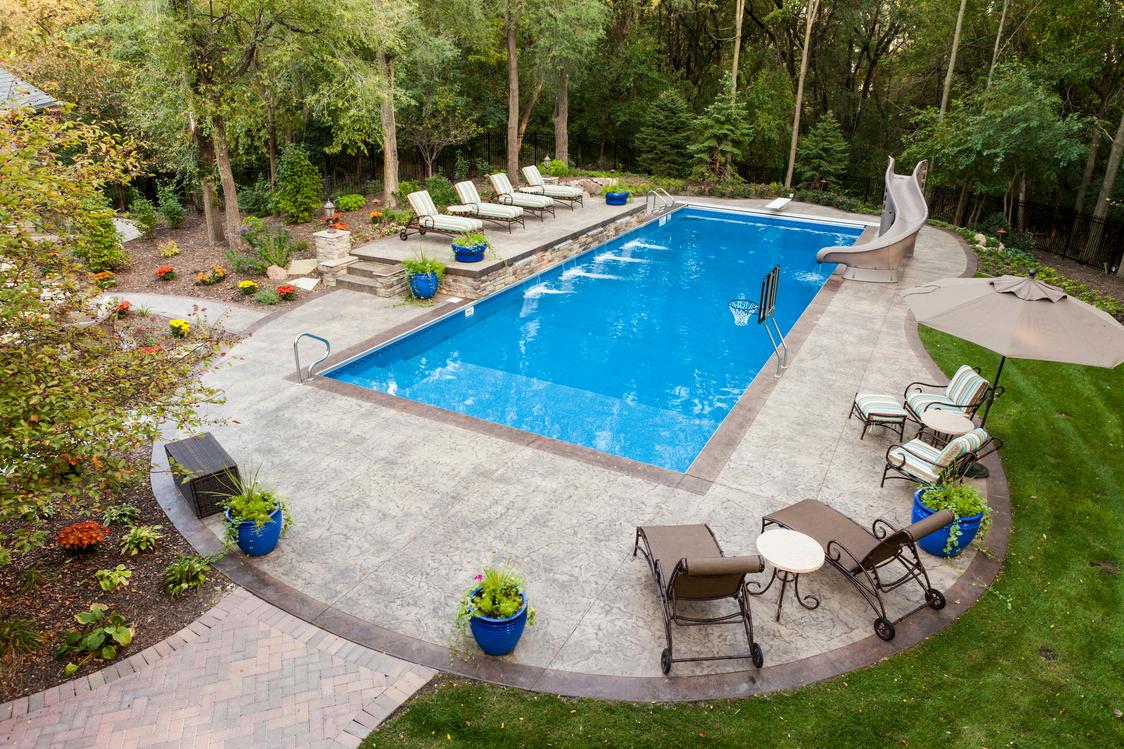
The pool's turnover and flow rates should be thoroughly evaluated in relation to the pool's intended design size.
The size and design of a pool are determined by its intended use and the programs it will support, such as lap swimming, diving, water polo, wading, swim lessons, and water features. The more people and activities a pool will accommodate, the greater the volume of water or the quicker the turnover rate must be to ensure proper sanitation and water quality. Turnover rate is defined by code requirements and anticipated bather loads.
Pools with more intensive use, like spas and wading pools, typically require faster turnover rates compared to larger pools.
The flow rate in the filtration system is set by the required turnover rate, which dictates how quickly the pool's volume must circulate through the system. Essentially, the flow rate ensures the desired turnover rate.
The filter area is based on the pump's output or flow rate, which must, at minimum, satisfy turnover rate standards. It is a function of the Filter Media Rate (FMR) or the filter's water processing capacity
Nothing enhances the experience of using a pool or spa more than having the right water temperature suited to individual comfort and the type of aquatic activity being performed For indoor facilities, it’s also important to control both the temperature and humidity of the surrounding environment to ensure the comfort of staff, visitors, and swimmers The ideal temperature is ultimately determined by the facility itself.
The American Red Cross suggests maintaining a temperature of 78°F (25 6°C) for competitive swimming, though this might be too cold for young children and elderly individuals who may need warmer water, around 80°F (26.7°C) or higher.
Below are the recommended water temperatures for different activities:
82°F (27°C)
90-93°F (32-34°C)
84-89°F (29-32°C)
77-82°F (25-28°C)
104°F (40°C)
The energy level of pool or spa water is directly linked to its temperature. This concept is similar to the balance of a bank account, where continuous deposits and withdrawals cause the balance to fluctuate. In a pool or spa, heat gains and losses occur constantly,
leading to changes in water temperature. When energy is lost, the water cools down, and when energy is added at a faster rate than it is lost, the water warms up To maintain a stable temperature, the energy added must match the energy that is being lost.
Heat loss in a pool or spa primarily occurs through evaporation, convection, and thermal radiation. Conduction, however, does not take place at the water's surface and has a minimal impact on total heat loss Additionally, another significant source of heat loss results from bather load. As the number of bathers increases, so does the volume of water lost due to splash-out and drag-out, which ultimately lowers the pool or spa water temperature When water is lost from the pool or spa, it needs to be replaced with new source water. This source water is typically at a lower temperature than the existing pool or spa water, further contributing to a reduction in water temperature. To minimize heat loss, pool covers are highly effective, as they reduce evaporation and trap radiant heat. Reducing wind exposure around outdoor pools can also help, as wind increases the rate of evaporation. Properly maintained heating systems can offset temperature loss, ensuring consistent warmth. In high-use facilities, frequent monitoring of water temperature is essential to manage fluctuations due to bather load and splash-out. Implementing energy-efficient heating options can also help to maintain desired temperatures while reducing operational costs
Water at the surface is constantly turning into water vapor, which requires energy, a process known as the heat of vaporization The energy needed to change liquid water into vapor is drawn from the remaining water, reducing its heat content and, consequently, its temperature.
Factors such as high wind speed, elevated air temperatures, low relative humidity, and higher water temperatures can increase evaporation rates. As evaporation occurs, the pool operator must replenish the lost water, which further decreases the pool or spa's temperature. Evaporation is responsible for around 50% of all energy losses.
Heat loss or gain is typically measured in British Thermal Units (BTU's) One BTU is the energy required to raise the temperature of one pound of water by 1 degree Fahrenheit. (Metric equivalent: 4.18 kilojoules, which is the energy needed to increase the temperature of 1 litre of water by 1 °C.)
In hot outdoor environments, pool water often overheats. Waterfalls or other features are sometimes used to cool the water, primarily through evaporation and convection.
Convection losses are closely linked to evaporative losses in a pool or spa Convection occurs when heat from the water's surface is transferred to the cooler air above it, much like evaporation. As air moves across the water, it cools it down, similar to how blowing on a hot drink cools it before taking a sip. Convection losses can account for 15% to 25% of total heat loss.
Other common examples of convection loss include feeling chilled when leaving the water as air moves against the skin. The "wind chill factor" further increases this cooling effect, due to the wind blowing against people and increasing heat loss through convection
A warm pool emits heat to the cooler atmosphere above, a process known as thermal radiation. This effect is comparable to feeling the heat from a fireplace across a room These losses become more significant in conditions with no cloud cover, high relative humidity, and when the pool's temperature is relatively elevated. Thermal radiation losses can contribute to about 20% to 30% of the total heat loss from a pool or spa. Installing a pool cover at night or during periods of inactivity can help reduce these heat losses
Conduction refers to the transfer of heat through the structural components of an in-ground pool. Unlike other types of heat loss, conduction does not occur at the surface level. The amount of heat loss that occurs after the pool's structural components reach an equilibrium temperature is minimal, accounting for approximately 5% of the total heat losses. However, pools situated in areas with a high water table will experience a much greater rate of conductive heat loss.
Minimizing wind exposure over a pool's surface can help reduce energy losses due to evaporation and convection. Heating expenses for a pool will be greater if it is exposed to the wind compared to a pool that is protected Using movable planters or windbreaks can help keep a pool warmer during cooler weather. Conversely, allowing wind to flow over the pool during hot weather can aid in cooling the water, which may be beneficial for certain pool activities.
For indoor pools, controlling the relative humidity is essential for the comfort of swimmers and visitors, as well as for preserving the building and its equipment. The air temperature inside should be maintained at 2°F to 4°F (1°C to 2.5°C) above the pool water temperature The relative humidity should ideally be between 40% and 60% to help minimize evaporation. Evaporation affects both indoor and outdoor pools. To reduce evaporation losses, covering the pool or spa surface during periods of non-use is an effective strategy. Proper ventilation is also crucial to control humidity levels and prevent condensation, which can damage building materials.
Using a pool cover significantly reduces heat loss from evaporation, thermal radiation, and convection, which together account for approximately 95% of total heat loss. Depending on the length of the swimming season, pool covers can reduce heating expenses by 50% to 70%. Additionally, covers help prevent debris from entering the pool, reducing the need for chemicals to maintain water quality. There are three main types of pool covers:
Translucent air cell (bubble) covers
Insulating foam wrapped in vinyl
Specialty vinyl with sewn, weighted edges
Most pool covers are removed during daylight hours, which means their heatgain potential is often not fully realized However, on sunny days, a bubble cover can absorb up to 80% of the heat energy striking the surface and transfer it to the water.
Pool covers can be manually deployed or come in semiautomatic or fully automatic versions. Fully automatic covers only need the operator to activate them, while semiautomatic covers require the operator to guide them into place. Liquid solar covers use a mix of alcohol and calcium hydroxide to form a thin, invisible barrier that reduces evaporation by creating a surface tension layer over the water. This type of cover works well with pool sanitizers and is safe for all pool surfaces However, it may not be effective in turbulent water conditions.
Safety covers are designed to act as a barrier to prevent access and must meet ASTM standard F1346-91 (2003) These covers should never be in place while the pool or spa is in use. Other covers designed to prevent debris and maintain water quality should be carefully installed and maintained according to the manufacturer's guidelines
Always remove or secure covers before using the pool or spa to ensure safety and prevent damage.
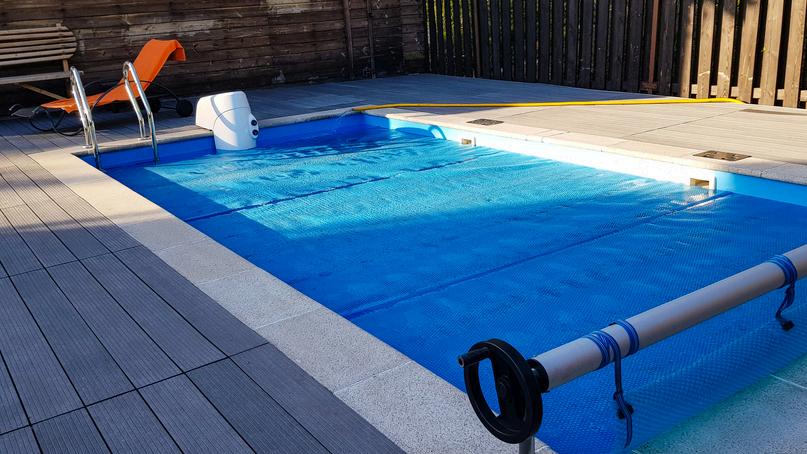
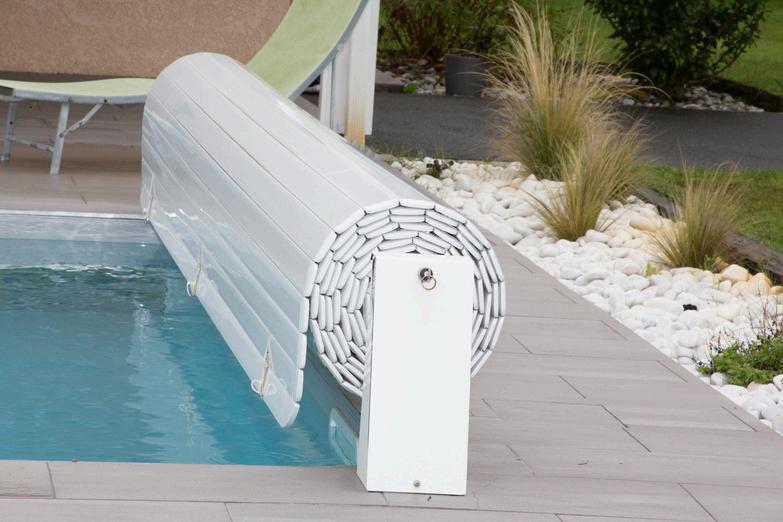
Swimming pools and spas can gain heat through three main methods. The first is direct absorption of natural sunlight by the water itself; approximately 90% of the sunlight reaching the pool surface is absorbed Factors like the time of year, shading, pool location, and design influence how much sunlight is absorbed. The second method is indirect heating, where sunlight absorbed by the pool deck is transferred by conduction to the pool water through the pool's structure. The third method of heat gain comes from artificial sources, such as fossil fuels, electric heaters, heat pumps, heat exchangers, or solar heating systems
Gas and propane oil heaters typically use either natural gas or propane as fuel. Natural gas, being lighter than air, will escape if the burner tray fills with gas without ignition. It has a distinctive odor due to an added substance to help with detection. Propane gas, on the other hand, is heavier than air and also contains an additive for odor If propane fails to ignite, it will accumulate at the bottom of the heater, posing a risk of explosion if suddenly ignited.
There are two common ignition methods for a gas-fired heater: millivolt and electric pilot Millivolt ignition uses a continuously burning pilot light to generate a small amount of electricity using a thermocouple. This electricity controls the circuit, which then opens the main gas valve Electric pilot ignition works by generating an electronic spark to light the pilot, which then ignites the gas in the burner. The burner temperature can reach up to 1,100°F (593°C).
If propane does not ignite, it may pool at the bottom of the heater, posing a danger of explosion. Therefore, pool and spa operators must always adhere to the manufacturer’s safety guidelines. Electronic ignition heaters produce a spark that lights the pilot, subsequently igniting the gas in the burner, similar to millivolt ignited heaters. The control circuit typically uses 25 volts AC. Following proper safety procedures, especially regarding ignition, is critical to prevent accidents or explosions. Regular inspection of ignition systems is essential to ensure reliable operation and prevent gas buildup Proper ventilation around gas heaters also helps disperse any unburned fuel, reducing the risk of accidental ignition. Operators should keep the heater area clear of any combustible materials and regularly monitor for gas odors as an early safety measure
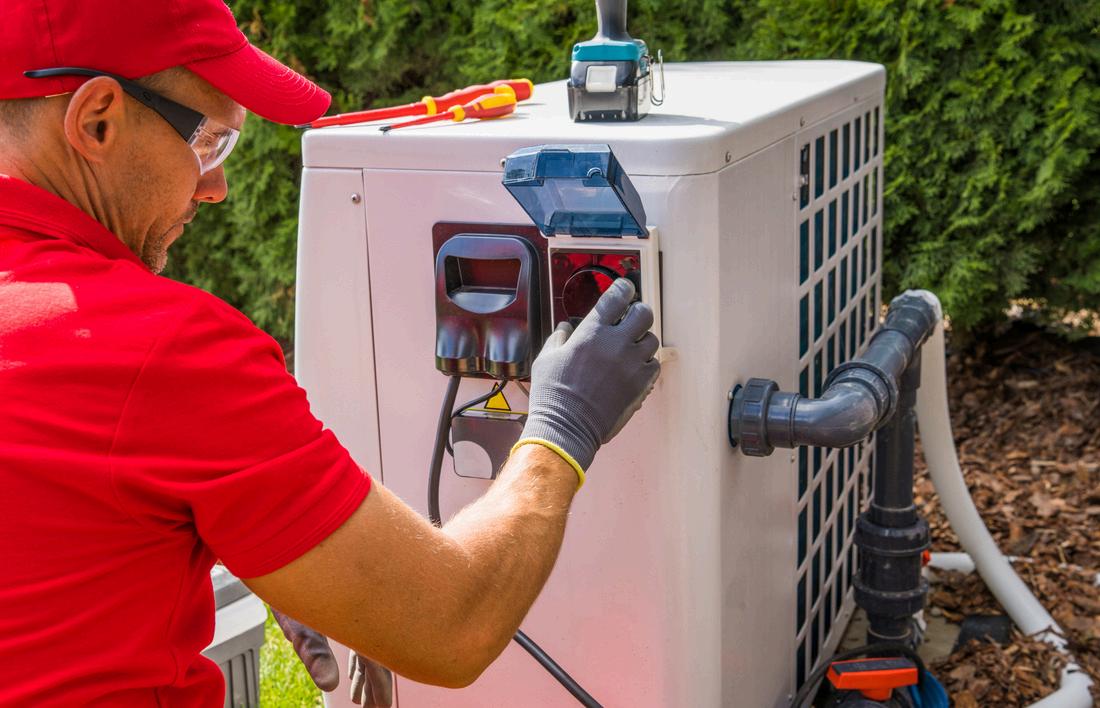
All pool and spa heaters should be installed in a way that prevents unauthorized bathers from accessing the controls.
Electric immersion element heaters are commonly used for spas. These heaters have high operating costs and a slow heatup or recovery time. The heating element consists of an electric coil that is submerged in the water flowing through the unit.
Many large aquatic facilities use heat exchangers to warm their pools In large recreational centers, a heating system for bathroom and shower water is often already present. A bypass line is connected to this hot water system, which intersects with a return line from the swimming pool This arrangement facilitates the exchange of heat between the two lines.
A heat exchanger typically consists of an outer shell containing several smalldiameter tubes Hot water from the facility's hot water or heating system flows through the heat exchanger, circulating around the small tubes. The pool water, which surrounds these tubes, is heated by the hot water passing through the exchanger
A thermostat should be installed to regulate the pool's temperature. When the water in the pool requires heating, a small circulation pump is activated to draw hot water from the building's heating system through the heat exchanger.
Heat pumps work by transferring heat from one location to another, such as extracting heat from the air or water and transferring it to pool water The system operates using a vapor compression cycle, which moves heat from the source (air or water) to the pool or spa water. The primary cost associated with operating a heat pump is the electricity required to power the compressor and pumps.
The heat pump utilizes refrigerant 410A, which does not damage the earth's ozone layer. The liquid refrigerant absorbs energy to evaporate, taking heat from the surrounding air When the vapor condenses, it releases this energy as heat. Initially, the refrigerant's pressure and temperature are reduced by an expansion valve, causing the liquid to evaporate and absorb heat from its surroundings This vapor is then moved to the compressor side, where it is compressed to a highpressure, high-temperature state. The heated vapor then flows through the pool water heat exchanger, where it releases its heat and returns to a liquid state, allowing the cycle to begin again.
The heat available for use includes both the heat absorbed from the air and the electrical energy used to operate the system.
The efficiency of an air-source heat pump relies on the air temperature and humidity. The cooler the air, the less heat the pump can extract and circulate
A more advanced technology for air heat pumps uses scroll compressors. Unlike conventional heat pumps, which rely on a piston and check valves to compress the refrigerant and generate heat, scroll compressors have two rotating scrolls that continuously compress the refrigerant without the need for valves. Although scroll compressors tend to be more expensive, they provide several benefits:
Greater heat output even at lower air temperatures.
Reduced number of moving parts, leading to fewer maintenance issues
Reduced operating noise
Using well-established, highly efficient, and dependable refrigeration technology, the heat pump extracts warmth from the air and transfers it to your swimming pool water
Cool air is expelled from the heat pump unit after heat extraction.
Warm air is drawn over the evaporator coil by the fan, transferring the heat to the water inside the unit.
Cool water enters the unit, where it is warmed before being released into the pool
These heat pump systems utilize aquifers or surface water sources for heating. Unlike air-to-water heat pumps, they function as water-to-water systems and are often called "geosource" heat pumps. The only energy required is electricity to power the compressor and pumps for the source water. Water circulates through a heat exchanger in the heat pump, where heat is extracted. The cooled water is then returned to its source, either through a drain field or a closed-loop system in the ground If an aquifer is the source, the water temperature ranges from 55°F to 75°F (12.8°C to 23.9°C), depending on the location. In a closed-loop system, water is continuously circulated to and from the heat exchange system using a pump.
Geothermal heat pumps are generally more efficient than air-source heat pumps because ground temperatures remain more constant than air temperatures
When evaluating heat pump performance, it's important to steer clear of the term "efficiency," as it can be interpreted in many ways. Instead, the term Coefficient of Performance (COP) is used to describe the relationship between the amount of heat produced and the electrical power consumed. The COP is an indicator of how effective the heat pump is; a higher COP means a more efficient heat pump Typically, a heat pump's COP can vary between three and eight, which is significantly higher than an electric heater, which has a COP of just one
The surface of pool water can be warmed using solar panels, which absorb energy from the sun and then transfer it to the pool. The amount of energy absorbed depends on the size of the solar panels and their orientation to the sun. Typically, panels are positioned to face the equator southwest in the northern hemisphere and northwest in the southern hemisphere with a surface area equal to 50% to 120% of the pool's surface area.
Solar energy should be the initial source of heat added to the pool, with the possibility of using a supplemental system if needed The solar system uses sensors to detect the amount of heat available on the panels. If sufficient heat is present, motorized valves allow water to flow through the panels; otherwise, the system bypasses them, and the water is heated by an auxiliary heater. Thermostats and timers help control the operation of solar panels. When correctly installed and managed, the
system prevents overheating the water. Solar panels can also operate at night during warm months to cool the pool water by radiation.
The open loop system continuously circulates water through the solar panels and back into the pool. In this process, no medium other than water passes through unglazed panels. In a different setup, glazed collectors with heat transfer fluids use a heat exchanger to deliver heat to the pool water. This method is known as the closed loop system.
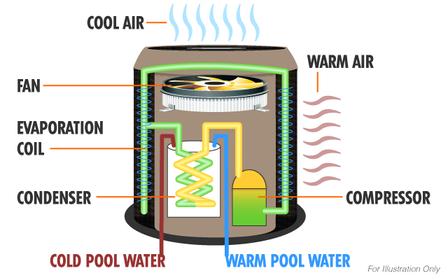
When selecting the correct size of a heating system, the primary focus is on understanding the desired water temperature and the time needed to reach it under typical conditions A heater that is too small will result in a prolonged heating time, while one that is too large will increase installation costs. The criteria for choosing the type and size of a heater differ based on whether it is intended for a pool or a spa. For pools, the main consideration is the heat loss across the water surface, whereas, for spas, the focus is on how quickly the water can reach the desired temperature.
Other factors influencing heater selection include wind, altitude, and pool shading. For every 1,000 feet (300 metres) above sea level, the heater
output requirements rise by 4%. Additionally, the availability of fuel is crucial in selecting a heater. In some areas, natural gas might not be accessible, necessitating the use of propane or fuel oil.
To calculate the appropriate heater size, multiply the number of gallons of water by 8.33 pounds per gallon and the desired temperature increase This yields the number of BTUs needed to initially heat the pool or spa. However, this figure may not accurately reflect the ongoing heating requirements for maintenance purposes For maintenance heating, consider factors such as ambient temperature, wind exposure, and evaporation rate, which can significantly impact energy needs.
To increase the temperature of a 30,000gallon pool by 8 degrees Fahrenheit, you need to determine the total BTUs required.
BTU Calculation:
Formula: BTUs = Gallons × 8.33 × °F temperature rise
Calculation: BTUs = 30,000 gallons × 8.33 × 8
Result: BTUs = 1,999,200
It takes 4 18 kilojoules to heat 1 litre of water by 1 degree Celsius For instance, if you have a pool with 1,000,000 litres and want to raise its temperature from 20°C to 25°C, here's the calculation: Kilojoule Calculation:
Formula: Kilojoules = Litres × 4 18 × °C temperature rise
Calculation: Kilojoules = 1,000,000 × 4 18 × 5
Result: Kilojoules = 20,900,000
Appropriately sized heaters guarantee that the water reaches the desired temperature promptly
The calculated number can either be divided by the desired duration for heating to determine the necessary heater output or divided by the heater's capacity to find out how long a specific model will take to reach the desired temperature
The energy needed to maintain a pool at a set temperature is typically much lower than the initial heating requirements. Factors such as air and water temperature differences, wind conditions, and shade levels must be considered to estimate the ongoing heating needs accurately. In extreme situations, pools without covers may lose up to 50% of their total heat gain. Using pool blankets can reduce these losses to a range of 15% to 25%.
To determine the cost of running a heater, first calculate the number of therms it provides per hour This can be done by dividing the BTUs used per hour by 100,000. Next, multiply the therms per hour by the number of hours the heater operates each day to find the daily consumption. The cost per therm can typically be found on your gas bill
The American National Standards Institute (ANSI) provides guidelines for heater installation in Standard 2223 1 This standard outlines clearance requirements based on the external temperatures of heaters, which can differ depending on the manufacturer. All heaters should be installed at least five feet from the inner wall of a spa unless a permanent barrier such as a fence or wall separates the heater from the spa. Adhering to these guidelines helps prevent overheating of nearby structures and ensures safe operation around combustible materials.
Suppose you have a 4,800-litre spa and want to raise the temperature by 5 degrees Celsius. To determine the energy required, the calculation would be:
4800 litres × 4.18 × 5 = 100,320 kilojoules
There are 3,600 kilojoules in one kilowatt-hour To find out how many kilowatts are required to raise the temperature:
100,320 ÷ 3600 = 27.87 daily kilowatts
If your heater provides an output of 6 kilowatts, then the heater will need to run for:
27.87 ÷ 6 = 4.65 hours
Finally, multiply the 27.87 kilowatts by the cost per kilowatt-hour to determine the total operating cost.
The heater must be placed on a stable, non-combustible base, such as brick or concrete. When using concrete blocks, align them so the cells face the same direction with the ends left open If hollow masonry is used, the pad should be a minimum of four inches high and covered with a 24-gauge piece of sheet metal.
For areas exposed to strong winds, install the heater at least three feet from the nearest wall or construct a wind block to minimize the effect of wind. Position the heater downstream from the pump and filter, away from any automatic chlorinating, brominating, or ozone disinfection devices. If the circulation system is equipped with a timer, a separate low-voltage switch should deactivate the heater before the pump is turned off This circuit, also known as a heater’s fireman switch, is crucial. For millivolt heaters, the distance between the heater and timer should not exceed 30 feet to prevent resistance that could lower millivolts, hindering the gas valve’s reliable operation.
Indoor pools and spas need to maintain relative humidity levels between 40% and 60% This ensures the comfort of bathers and guests and helps manage energy consumption, while also safeguarding the building.
The American Society of Heating, Refrigerating and Air-Conditioning Engineers (ASHRAE) sets ventilation standards for indoor pools, ensuring proper indoor air quality. ASHRAE's Standard 62.1-2016 specifies that pools require 0 48 cubic feet per minute of outdoor air per square foot of pool and deck area (2.4 liters per second per square meter).
Key factors to consider in indoor air circulation design:
Humidity control
Air exhaust and outdoor air ventilation for good air quality
Air duct layout
Evaporation rates
Pool water chemistry
ASHRAE defines acceptable air quality as when no harmful contaminants are present in the air, and when at least 80% of people are satisfied with the air quality.
Fluctuating humidity levels beyond the 40%-60% range increase the risk of bacteria, viruses, fungi, and other contaminants. A relative humidity of 50%-60% is ideal for comfort, while high humidity can damage building materials. High humidity encourages corrosion and mold growth Proper ventilation ensures relative humidity is maintained between 2°F and 4°F (1°C - 2.5°C) above the pool water temperature. It should not exceed 86°F (30°C) to prevent excessive evaporation and discomfort for bathers
Recommended practices include:
Keeping humidity levels at the appropriate range to avoid bathers feeling cold due to evaporative cooling
Managing high humidity to prevent corrosion and discomfort.
Ensuring air velocity near the pool doesn’t exceed 0.4 feet/sec (0.13 m/sec) at 8 feet (2.4 m) above the pool deck to maintain comfort
Proper ventilation, especially in pools treated with chlorine, is essential to prevent corrosive air from being trapped inside the facility. Low-level return vents help extract air near the water surface, and a negative air pressure system helps limit the spread of contaminated air.
Mechanical cooling systems typically require six to eight air changes per hour for therapeutic pools. Indoor pools, or natatoriums, are major energy consumers due to fluctuating seasonal conditions. Managing the facility’s primary heating and cooling systems is essential, which could include fans, motors, pumps, and heat recovery ventilation systems. Without dehumidification, outdoor ventilation systems struggle with humidity levels, leading to mold growth and poor indoor air quality Such systems generally cannot maintain consistent humidity and temperature levels.
The humidity level can change with varying activity in the pool area Aquatic play features, which create turbulent water, also increase humidity. Therefore, the design of the air system must account for fluctuations in humidity due to these features and varying levels of pool use.
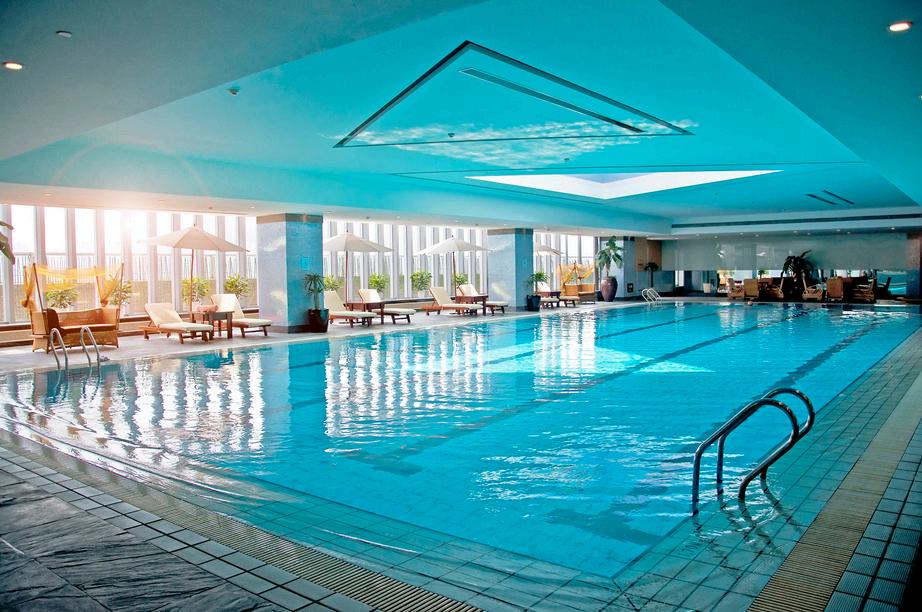
In colder regions, a significant amount of energy is required to heat air exchanged from outside. To avoid wasting the heat from extracted air, installing an air heat exchanger unit can help transfer that heat into the incoming air. These heat recovery systems can lead to considerable energy savings.
Heat recovery ventilation is a system that uses a counter-flow heat exchanger to manage the inbound and outbound airflow. It supplies fresh air while improving indoor air quality and conserving energy by reducing the need for heating or cooling
Heat recovery ventilators (HRVs), as their name implies, recover heat from the exhaust air and transfer it to the fresh air entering the building Various heat exchanger methods are used in air-to-air HRV devices. One of the most common methods for indoor pools is a countercurrent heat exchanger, which can be up to 99% efficient.
Proper ventilation system design and operation are essential for maintaining good air quality in indoor aquatic facilities. Low-level air returns help remove gases evaporating from the water
Spas, hot tubs, and therapy pools are used for relaxation, rehabilitation, and can aid in respiratory and cardiac wellness. The therapeutic use of hot water for relaxation and social interaction has been in practice for over 2,000 years, originating from ancient civilizations like Rome, Japan, and India, and continuing today in places like North America. The soothing environment of warm water provides both mental and physical relaxation, which is difficult to achieve by other means The benefits of hot water therapy were first recognized in Europe as early as the 15th century. Nowadays, these therapeutic properties have contributed to the rising popularity of spas and hot tubs People who frequent these facilities often experience physical ailments, such as arthritis, or they may be taking prescribed medications. However, the use of medications while being immersed in warm water can pose serious risks. This is just one of the many health concerns associated with warm water facilities. Elevated water temperatures combined with high bather loads can result in unsafe and unhealthy conditions.
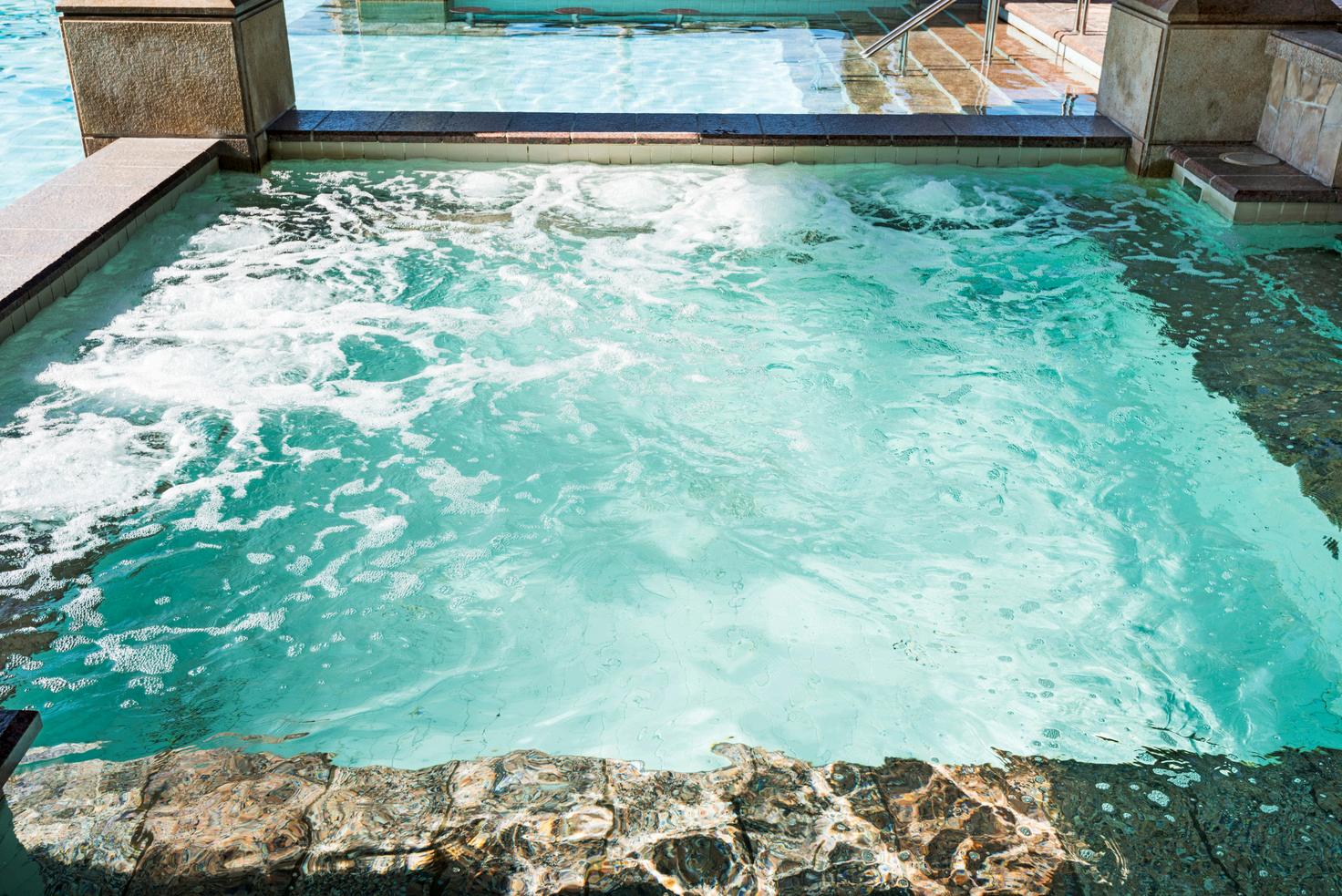
A spa or hot tub is typically a structure with water not deeper than 48 inches (1 22 meters) These structures are made from various materials, including concrete, fiberglass, thermoplastic, or stainless steel. These structures can be made from various materials, including concrete, fiberglass, thermoplastic, or stainless steel. The finishing materials may include acrylic, marcite, exposed aggregate, tile, wood, or marble. The water circulates through two types of jets: circulation jets and therapy jets Circulation jets deliver a high-velocity flow of water, while therapy jets have a separate control for air injection to enhance the therapy experience. There is some confusion regarding the proper terminology for these warm water facilities. Common names include spa pools, swim spas, and therapy pools. The term "Jacuzzi" is often used, though it is a trademark for a specific brand and should not be used as a general term for spas. Historically, the word "spa" referred to natural hot springs and cold immersion baths. Modern spas are designed to combine relaxation with therapeutic benefits, often incorporating features like adjustable jet settings and temperature controls for a customized experience.
Neglecting proper maintenance and ignoring safety guidelines for spas, hot tubs, and therapeutic hot water pools can quickly lead to hazardous and unhealthy conditions.
The term "hot tub" was traditionally used to describe a wooden structure, but today, it has come to refer to a portable spa. Swim spas, which are designed for exercise, combine a spa with a short swimming area. The jets in swim spas create a current for the user to swim against.
In an effort to clarify definitions, the pool and spa industry has recently reviewed terminology for spas and hot tubs. Despite the various names, the key similarity among these facilities is their high temperatures and fast-moving water For the purpose of this section, we will refer to hot tubs, spas, and swim spas simply as "spas."
Additionally, float tanks, also known as flotation tanks, sensory deprivation tanks, or isolation chambers, offer another type of relaxation experience
These tanks contain a solution of magnesium sulfate (Epsom salt) with a specific gravity of 1.23 to 1.3, creating a buoyant, sound-free environment. The water in a float tank is kept at a temperature of approximately 93.5°F (34.1°C), which matches the body’s temperature. As commercial float tanks grow in popularity, there is increasing demand for clear guidelines on their safe use and proper regulation.
A common question for many who use spas is, "How does hot water immersion benefit my health?" As individuals spend time in hot water, they often feel relief from aches, pains, and joint stiffness Blood circulation improves as more blood flows to the affected areas. The body adjusts similarly to how it responds after exercise, resulting in better circulation, easier breathing, and a more positive mood.
There are several key ways hot water immersion supports healing:
Improved Circulation: As muscles warm and the body is submerged, more blood reaches the muscles
Pressure on the Body: When submerged, the body experiences increased pressure, which can help alleviate swelling.
Buoyancy Benefits: Water's buoyancy reduces the pressure on joints, making movement easier for individuals, especially those with arthritis or other joint problems. Warm water therapy helps those suffering from arthritis, knee, hip, or other joint issues by increasing mobility, reducing stiffness, and improving flexibility. The water pressure provides support across the body, allowing for better cardiac function and a reduced resting heart rate. The combination of warmth and pressure also triggers the release of chemicals and hormones, promoting relaxation and an overall improved mood Regular warm water therapy sessions can also aid in reducing chronic pain and enhancing sleep quality, contributing to better overall health.
Never use a spa for therapeutic purposes without first consulting a doctor. A licensed hydrotherapy professional should oversee all sessions. Individuals taking medication must only use hot water facilities with a doctor's approval, and then only under the guidance of a certified hydrotherapist. Hot water sessions should never exceed 15 minutes. Immersions in water at temperatures of 104°F (40°C) or above for more than 15 minutes can result in hyperthermia, a dangerous rise in the body's internal temperature.
Often, therapy centers use alternating hot and cold water immersion. People on heart medication should be warned not to move from hot water immersion directly into a cold pool This type of therapy should always be done under professional supervision. Spa water temperatures are typically maintained between 98–104°F (36.7–40°C). Therapy pools and some spas designed for physical exercise are kept at cooler temperatures.
There are numerous regulations concerning the safe use of hot water facilities, as outlined by various codes. The Consumer Product Safety Commission (CPSC) offers several important safety recommendations for spa use. Although these are initially designed for residential settings, many of these guidelines are equally relevant for commercial applications: Always secure the spa with a locked safety cover when it's not in use. Make sure children are kept away unless under adult supervision.
Ensure the spa is equipped with dual drains and anti-entrapment covers, in line with the Virginia Graeme Baker Pool & Spa Safety Act. Have a professional regularly inspect the spa to confirm it is in safe, working condition Ensure drain covers are not damaged or missing. Conduct these checks throughout the year.
Know the location of the pump's emergency cut-off switch so it can be turned off during emergencies. Be cautious of alcohol consumption while using the spa, as it can increase the risk of drowning. In commercial settings, facilities should post signs warning against using alcohol or medication in the spa.
Maintain the spa’s water temperature at or below 104°F (40°C).
Additionally, it is critical to ensure the following are met for compliance: Maintain an effective disinfectant level to prevent bacterial growth, which accelerates in hot water environments.
Monitor and adjust the spa’s water pH, as hot water can increase the pH, reducing the disinfectant's efficacy in eliminating bacteria.
It is generally recommended to limit spa use to a maximum of 15 minutes
It’s important that rules for spa use are clearly posted at the facility entrance. The primary goal is to ensure the safety of bathers and minimize injury risks Operators should always follow local and state regulations. In cases where specific guidance isn’t provided, the Centers for Disease Control and Prevention (CDC) offers recommendations for appropriate signage.
The CDC advises that spa signs should include the following points: Caution: Pregnant women, the elderly, and individuals with heart conditions, diabetes, or blood pressure concerns should seek medical advice before using the spa. Refrain from using the spa under the influence of alcohol, drugs, or medications that cause drowsiness or affect blood pressure.
Spa temperatures should not exceed 104°F (40°C).
Avoid using the spa alone. Children should not use the spa without supervision
Enter and exit the spa slowly to prevent accidents.
Limit spa sessions to 10–15 minutes, then take a break to cool down before reentering
Extended use can lead to nausea, dizziness, or fainting. Keep fragile objects out of the spa area to prevent accidents. In addition to these recommendations, signs for spa use should also include the maximum allowed bather load. The CDC also recommends that signage near the spa include the location of the nearest telephone and display emergency contact numbers, such as the closest police, fire, ambulance, and hospital services. A notice instructing bathers to shower before using the spa should also be posted
In commercial spas, a 15-minute timer generally controls the hydrotherapy jets and blower. The switch for the jets is usually positioned far enough away that the spa user must exit the water to reactivate it. This design helps the body cool down, reducing the risk of fainting or drowning.
Additionally, an emergency shut-off switch should be installed near the spa to stop circulation and trigger an audible alarm Some local regulations may require that the emergency switch is clearly visible from within the spa. Proper signage around the spa should inform users of safety protocols and the location of the emergency shut-off switch for quick access
Showering with soap while nude helps eliminate bacteria, sweat, oils, suntan lotion, and dirt from the skin, which can quickly reduce the effectiveness of disinfectants in a spa. Sweat and dirt may also introduce bacteria into the water. It is strongly advised that all individuals shower before entering the spa To encourage this, showers should be equipped with hot water and located conveniently near the spa. Local codes and regulations may determine the required proximity of the shower to the spa
Hyperthermia happens when the body's internal temperature rises several degrees above the normal 98 6°F (37°C) Symptoms can include dizziness, fainting, drowsiness, lethargy, and an increase in body temperature. The effects of hyperthermia include:
Losing awareness that one can no longer leave the spa
Inability to recognize how hot the water is
Failure to realize the need to exit the spa
Physical inability to leave the spa
Potential harm to a pregnant woman’s fetus
Unconsciousness, which could result in drowning
In 1987, the Consumer Product Safety Commission (CPSC) introduced temperature control requirements to ensure that spa water never exceeds 104°F (40°C). The smaller the person whether a child or an adult the greater the risk of their core body temperature rising in hot water. Pregnant women or young children should only use a spa after consulting with a doctor.
Local or state codes may restrict spa temperatures to 102°F (38.9°C). Pool operators should always adhere to local regulations.
The Consumer Product Safety Commission (CPSC) has documented several instances where bathers' hair became entangled in the pool or spa suction fittings, leading to fatal accidents where victims were held underwater. These tragic incidents of hair entrapment predominantly occur in spas due to the shallow depth of the water. Other cases highlight the dangers of suction from drain outlets, which has been strong enough to entrap limbs or bodies, leading to injury or drowning.
The Aquatic Safety Compendium provides crucial information in its chapter titled "Suction Entrapment and Hair Entanglement/Entrapment." This report emphasizes that suction entrapment is preventable through the use of appropriate covers or grates, split drains, and by ensuring specified suction, flow rates, and proper maintenance It reinforces the findings from the CPSC that most incidents of entrapment happen in spas. Hair entanglement and body entrapment remain the most common types of accidents in spas. The Facility Safety and Water Circulation chapters offer additional guidelines and
recommendations on how to prevent these types of accidents, ensuring bathers' safety.
A small volume of hot water combined with air circulation creates an ideal environment for bacteria to grow. The higher water temperature in spas speeds up the breakdown of disinfectants like chlorine and bromine, causing them to dissipate faster than in cooler swimming pools. As the disinfectant level decreases, the risk of bacterial growth increases, especially in settings with high bather density Each individual entering the spa introduces bacteria, which poses a higher challenge than in swimming pools.
In comparison, spas contain fewer gallons of water per bather than pools. For example, a spa may hold around 200 gallons (757 litres) per person, whereas a pool has approximately 1,800 gallons (6,814 liters) per person. A spa with six bathers in 1,200 gallons (4,543 litres) equates to the same bather load as 275 people in a 55,000-gallon (208,198 litres) pool. Additionally, since spas are shallow and often outdoors, sunlight destroys more chlorine or bromine than in pools, making it harder to maintain effective disinfectant levels
This chapter examines various aspects of spa operation that demonstrate their unique maintenance challenges. Health departments have introduced regulations requiring automatic control systems to ensure proper monitoring and maintenance of disinfectant levels.
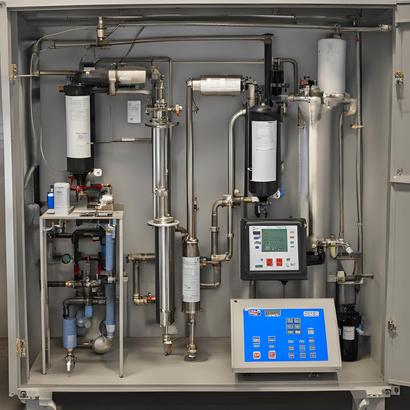
An ORP system is often necessary for spas to regulate chemical control effectively, ensuring proper disinfectant levels are maintained.
These control systems are crucial for maintaining sanitary water conditions while avoiding excessive chemical use. Spas, compared to pools, present more difficulty in keeping balanced water chemistry due to the factors discussed above.
Spa users who are taking medications such as tranquilizers, antihistamines, vasoconstrictors, vasodilators, anticoagulants, and diuretics must obtain permission from their physician before using the facility. Any individual using recreational drugs, including alcohol, should refrain from using the spa while under the influence
Legionnaires’ disease is identified as being caused by the Legionella pneumophila bacteria. The likelihood of contracting Legionnaires’ disease is higher in spa environments than in pools Even though chlorine or bromine quickly eliminate these bacteria, the conditions in a spa are more conducive to bacterial growth. These bacteria can infect the lungs when tiny water droplets or aerosol, produced by the bubbling action of a spa, are inhaled. These aerosol droplets are small enough to remain suspended in the air, where people near or in the spa can breathe them in The bacteria enter the lungs, where they can multiply and lead to pneumonia. While bathers directly in spa water are at increased risk, even individuals close to a spa can be infected by inhaling aerosolized bacteria from inadequately disinfected spa water There have been cases where contaminated spa water, not treated effectively with disinfectants, resulted in infections (MMWR 1994, 43:521)
Dermatitis is an infection that makes the skin itchy and results in a bumpy red rash. The affected area may become sensitive, and pus-filled blisters may develop around the hair follicles. The rash can be more severe under a bather’s swimsuit because the fabric holds the contaminated water in contact with the skin longer Due to its connection with spa use, this rash is often referred to as "hot tub itch" or "hot tub folliculitis." While most rashes clear up within a few days, anyone experiencing a persistent rash should consult a healthcare provider
The cause of dermatitis is contact with water contaminated by the bacteria Pseudomonas aeruginosa (see the Pool Water Contamination chapter) These bacteria are not visible to the naked eye, which is why regular spa water testing is essential. Symptoms typically appear within a few days after exposure to contaminated water. Research on longlasting dermatitis (J Clinical Micro 1988, 1650–1654) highlighted the need for higher disinfectant levels in spas compared to pools. This same bacteria also causes ear infections in bathers. However, since the head and ears are less likely to be submerged in spa water compared to swimming pools, earaches caused by spas are uncommon.
Spas and other hot water facilities use many of the same components as swimming pools These include systems like filter pumps, motors, valves, surface water removal, inlets and outlets, heating systems, circulation piping, and a disinfection system. Additionally, hot water systems may be equipped with:
Hydrotherapy pumps
Hydrotherapy jets
Air blowers
Timers
Emergency shut-off switches
The typical turnover rate for spas, as required by many codes, is no more than 30 minutes. For therapy pools, the standard turnover rate is around four hours, though some hospital or health club pools may have a rate as low as three hours Operators should refer to local codes and regulations to determine the exact turnover requirements. These requirements apply to the main circulation system, excluding hydrotherapy jet circulation Spa circulation systems are generally expected to run 24 hours a day. Continuous circulation allows the water to be filtered, oxidized, and disinfected, ensuring proper recovery after periods of heavy usage To optimize energy use, it may be useful to control the heating and jet systems with a timer, particularly during off-hours.
The chapter on Pool & Spa Filtration provides detailed information on how filters work. Spa filters function similarly to pool filters and can include high-rate sand, cartridge, or diatomaceous earth (D E ) filters
High-rate sand filters are less frequently used in spas due to the high levels of body oils and the potential for scale formation. These factors may cause sand grains to become coated with a clay-like substance, blocking the flow of water When this happens, the sand needs replacement. To maintain filtration efficiency, the sand should be periodically degreased with a commercial cleaner The frequency of this maintenance depends on how much use the spa receives. For environments with heavy usage, such as cruise ships or resorts, guidance from the CDC and the U S Public Health Service (National Center for Environmental Health, Vessel Sanitation Program Operations Manual, 2000)
suggests keeping a spare replacement cartridge on hand. Cartridges should be checked for tears, cracks, or holes weekly, or more often if necessary. Similarly, D E filters and sand filters should be inspected for organic buildup or other damage every month. Additionally, a sample of the sand should be taken to check for excess organic matter The CDC recommends replacing the sand every six months in high-use environments like cruise ships unless earlier replacement is advised by inspection.
An air blower functions as an air pump powered by a motor. It needs to be appropriately sized to meet the hydraulic demands of the piping and air jets The design must prevent water from reaching the blower motor. To achieve this, a check valve or a Hartford loop a piping loop where the highest point is positioned above all circulation components is installed to stop water from coming into contact with the blower system.
Research conducted by the CDC confirms that spas are less likely to maintain adequate disinfectant levels compared to pools. Several reasons contribute to this:
Spas generally have higher ratios of bathers to water.
Aeration in the water impacts pH levels and introduces air contamination
Higher water temperatures increase the release of waste from bathers. Elevated temperatures speed up the depletion of disinfectant chemicals. Increased water temperature also encourages bacterial growth
Government authorities generally mandate higher disinfectant levels for spas. The CDC, chemical producers, most health departments, and voluntary standards all support this due to the quicker chemical reactions in hot water. The ideal free chlorine level is 3.0 to 5.0 ppm (mg/L), with a combined chlorine maximum of 0 5 ppm Bromine levels should be between 4.0 to 6.0 ppm. PHMB (biguanide) should be maintained between 30 and 50 ppm. Bromine tends to be preferred in spas due to its higher efficiency at elevated pH levels Bromamines, byproducts of bromine, cause less irritation than chloramines and are more effective at killing bacteria. With the elevated temperatures, aeration, and high bather loads found in spas, maintaining appropriate disinfectant levels and pH is more challenging. Regular checks of both pH and disinfectant are essential, ideally hourly. Spa operators are encouraged to use automated systems to ensure that these levels are maintained. Spas may also require more frequent and stronger chemical treatments than pools. For example, increased oxidation may be needed to control contaminants, and biofilms in circulation pipes could require high disinfectant levels. For more details, refer to the Disinfection chapter for a comprehensive guide on spa maintenance
The Langelier Saturation Index (SI) applies to hot water facilities similarly to pools More details can be found in the Water Balance chapter. While the ideal ranges for different water parameters are listed below, it is crucial to ensure that the SI is maintained at all times Extra attention is required to ensure the disinfectant remains effective by keeping
the pH within an optimal range. Proper water balance will prevent corrosive water from damaging heating elements and dissolving metals.
Water balance is also key to avoiding scaling conditions that can coat surfaces or heater elements, which may lead to increased energy consumption. Since water balance can fluctuate more rapidly in spas, the use of chemical controllers becomes more advantageous in assisting operators in maintaining proper pH and water balance.
The aeration common in spas and therapy pools leads to the loss of carbon dioxide from the water, which causes the pH to rise and decreases alkalinity. As a result, the pH of hot water tends to increase. Bromine (BCDMH), frequently used to treat spa water, is acidic and can help lower the pH However, when carbon dioxide escapes, the pH can drop quickly. Consequently, the pH of spa water often fluctuates due to these opposing effects.
Generally, pH adjustments are required to lower the pH If manual adjustments are necessary, using muriatic acid may be too harsh for smaller water volumes in spas. A milder alternative is using dry acid (sodium bisulfate) or carbon dioxide injection (see Chemical Feed & Control chapter).
The ideal pH for spas is similar to that of swimming pools, between 7.4 and 7.6. pH levels should not fall below 7.2 or rise above 7 8
The function of alkalinity in a spa is similar to that in a swimming pool; it acts as a buffer to prevent pH changes. The total alkalinity in a hot water system should be monitored daily The recommended alkalinity level should be kept consistent with that of a swimming pool, as outlined in the Water Balance
chapter. Alkalinity is consumed more quickly in spas than in pools because the carbon dioxide is driven off faster from the heated water, especially with air being pumped through Spa operators must be vigilant when alkalinity drops. When alkalinity becomes too low, the pH may fluctuate rapidly, reducing the disinfectant's effectiveness, leading to the formation of scale or the corrosion of surfaces and heating components. If the disinfectant used lowers the pH, maintaining a higher alkalinity level can help balance it out effectively.
As water temperature rises, the ability of calcium to dissolve decreases, making calcium hardness a significant issue in spas. The tendency for calcium to precipitate out of the water can lead to reduced water flow due to clogging in the pipes. This is especially concerning in spas, as they all have heaters, and the higher temperatures in and around the heating elements promote scale formation This buildup reduces the heater's efficiency. To prevent such issues, it is common practice to add a
The elevated water temperature and aeration common in spas cause water to evaporate more rapidly compared to swimming pools
This vapor does not remove minerals or dissolved solids from the water. As the evaporated water is replaced, the concentration of minerals and solids increases
Therapy pools may have temperatures as low as 92°F (33.3°C). Spas and hot tubs typically operate between 98–104°F (36.7–40°C) based on the bathers' needs and preferences Bathers may try to increase the temperature beyond what the spa operator sets. This can be extremely dangerous. Temperature controls in commercial hot water facilities must be secured or made inaccessible to bathers for safety
As hot water is used over time, the concentration of minerals, unoxidized organic matter, and materials that cannot be filtered increases. The total dissolved solids (TDS) in the water must be regularly tested. As TDS levels rise, the disinfectant may become less effective at controlling bacteria and oxidizing contaminants, leading to unattractive and cloudy water High TDS can also lead to galvanic corrosion, making heater elements more vulnerable to the effects of spa water
Inadequate maintenance of pro water balance conditions can lea the formation of scale and a dec in water flow.
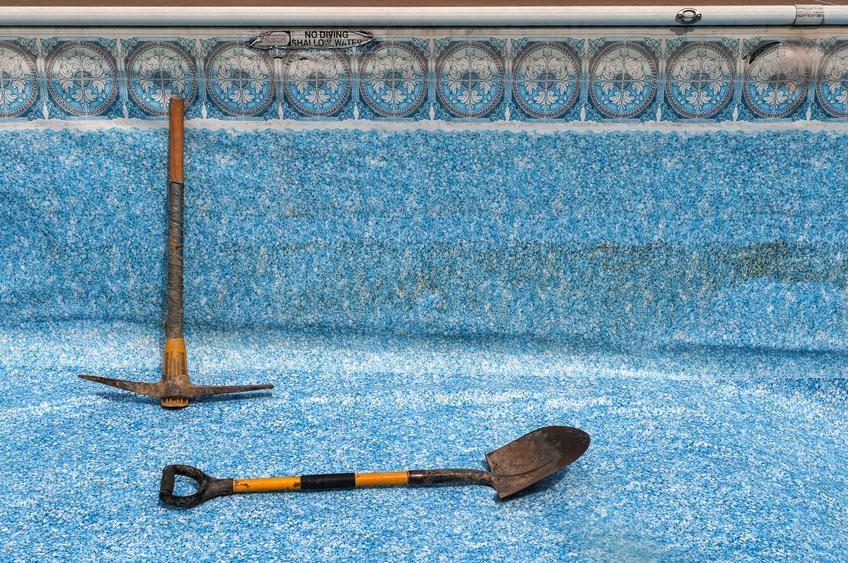
Elevated total dissolved solids, improper water balance, or potentially inadequate bonding of metal components could lead to galvanic corrosion and staining
unsightly stains.
It is generally recommended that TDS levels do not exceed 1,500 ppm (mg/L) above the initial start-up level
While many spas use bromine as a disinfectant, others may use chlorine. In certain situations, chlorinated isocyanurates are used, which release both chlorine and cyanuric acid into the water. Although spas require more disinfectant than pools, the likelihood of cyanuric acid building up to high levels is lower in spas because spa water is replaced more frequently Operators must be familiar with local regulations, as some health departments limit the use of cyanuric acid in spas, particularly indoors. Product labels may not restrict isocyanurates in these applications, so it's important to comply with local codes.
When operating a hot water facility, three additional factors need careful consideration:
The limited volume of water, increasing the risk of chemical overdosing
The occurrence of foaming
The need for complete replacement of the water body
Due to the small water volume in spas, even a slight increase in chemicals can significantly affect the chemical balance. It is important to maintain all chemical parameters within their ideal range, as straying from these can lead to unwanted effects.
The Chemical Testing chapter outlines several testing interferences For instance, when disinfectant levels are too high, pH tests may provide inaccurate results. Free chlorine or bromine tests
can also be affected, with bleaching agents causing false low readings when the actual levels may be dangerously high.
Excessive chemical dosing can have harmful effects. Overdosing disinfectants can result in diminished pathogen control, and the formation of harmful byproducts. High chlorine levels can bleach swimwear and hair Overdosing any water balance chemical can result in corrosion or scaling, reducing the effectiveness of the disinfectant.
Foam on the surface of spa water may develop due to contaminants and inadequate oxidation This foam could pose a potential health risk
Inadequate filter upkeep and poor oxidation can lead to high levels of organic waste in the water Quaternary algicides are frequently used in outdoor spas. The aeration of spa water, containing either high contaminants or specific algicides from hydrotherapy jets, often leads to foaming Defoamers, which are typically silicone-based, can break up and disperse the foam, but they only treat the symptom and not the root issue.
It’s essential to identify and address the cause of foaming Algicides themselves are not a health concern, and using a defoamer is a reasonable solution. However, when foam forms due to the buildup of contaminants from poor oxidation or inadequate filter maintenance, health risks arise. Contaminant buildup can promote
bacterial growth in the water. If heavy use or low levels of disinfectant are causing the foam, the spa should be drained, cleaned, and refilled. In highuse environments like cruise ships, the CDC/U.S. Public Health Service recommend that the water be replaced daily.
While spas are more challenging to maintain than pools, water replacement is easier due to their smaller size. The process starts by draining the water, followed by cleaning, disinfecting, and refilling the spa quickly and costeffectively. Despite the use of disinfectants, clarifiers, and oxidizers, they don’t remove all the contaminants that accumulate over time, so periodic water replacement is a beneficial practice. As TDS (Total Dissolved Solids) levels and nuisance chloramines increase, maintaining water quality becomes harder High contaminant levels reduce the effectiveness of disinfectants and can act as nutrients for bacteria or algae, posing health hazards to bathers.
Spa and therapy pools should be replaced based on user load. The formula for calculating the replacement interval is:
Replacement Interval (days) = Spa Gallons ÷ 3 + Bathers per day or, in metric,
Replacement Interval = Spa Litres ÷ (11.35) ÷ Bathers per day.
An alternative method for scheduling water replacement is to monitor TDS (Total Dissolved Solids) levels The general recommendation is to replace the water if TDS increases by 1,500 ppm (mg/L) above the start-up TDS. When operating a spa or therapy pool, closely observe it for signs like foam, odor, or cloudy water, which indicate the need for replacement. Depending on the
experience of the operator, water replacement may also be scheduled after a specific number of days based on these factors.
To avoid structural damage in areas with a high ground water table, always ensure that the facility is equipped with a hydrostatic relief valve before draining the water.
Water is an unnatural environment for humans, and entering it can pose inherent risks. Activities such as diving, sliding, or participating in water games require a sound understanding of water safety
Many chemicals used to maintain pools and spas are hazardous. Chemical accidents occur through skin or eye contact, inhalation, or accidental ingestion
Some facilities employ lifeguards to prevent and respond to emergencies, while others do not. Regardless, facility owners are responsible for ensuring a safe recreational space Accidents related to water and chemicals are often due to neglecting established safety standards.
The pool operator and facility management must be well-versed in safety protocols and standards to prevent accidents. This section provides general safety guidelines for aquatic facilities. Always consult the specific rules and regulations applicable to your facility
This guide outlines several safety topics that are crucial for aquatic facility operators and managers It also emphasizes that additional training is vital to adhere to regulations. One of the key principles emphasized by aquatic professionals in training staff to prevent drowning and injuries is called the Layers of Protection concept It stresses that every layer of protection plays a vital role because it is impossible to predict which measure will ultimately save a life. Several of these layers of protection will be discussed, beginning with the first layer controlling access to the pool.
Preventing unauthorized access is a key step in avoiding accidents Facilities left unattended after hours pose significant risks, especially when chemical storage areas are not securely locked, potentially leading to dangerous incidents. Each facility should assess its vulnerability to unauthorized entry and establish effective security measures to minimize risks.
For locations requiring lifeguards during open hours, it's essential to restrict access to pools and spas once the facility closes. This is equally important at facilities without lifeguards to prevent unsupervised children or unauthorized individuals from entering and facing potential hazards Regular checks of entry points and security systems can help ensure barriers remain effective. Staff should be trained on proper security protocols to reinforce access control measures
Barriers are meant to deter access but should not be relied upon as the sole protection measure. They are not a substitute for active supervision by a lifeguard, parent, or responsible adult Since aquatic facilities are not open 24/7, barriers play a key role in restricting access during closed hours. Commercial pools and spas should be fully enclosed by a barrier, such as a wall, fence, or other structures, to prevent unauthorized entry and limit accidental foot traffic when the facility is closed. The industry, in collaboration with government bodies, has established guidelines for barriers. The Consumer Product Safety Commission (CPSC) provides recommendations in its publication 362, “Safety Barrier Guidelines For Home Pools,” which is sometimes applied to commercial pools by local authorities to reinforce safety measures.
The barrier height should be at least 48 inches (1,219 mm) above ground level on the side facing away from the pool. The gap between the ground and the bottom of the barrier should be no more than 4 inches (102 mm)
For barriers over grass or natural surfaces, the gap between the ground and the barrier should not exceed 2 inches (51 mm).
Openings in the barrier should prevent a 4-inch (10 cm) sphere from passing through, roughly the size of a child’s head.
Solid barriers, like masonry walls, should have smooth surfaces without indentations or protrusions that could aid climbing.
If a barrier has horizontal and vertical elements, and the distance between horizontal members is less than 45 inches (1,143 mm), then the
horizontal members should be on the pool-facing side to limit climbing. The spacing between vertical members should not exceed 1¾ inches (44 mm).
Decorative cutouts should also maintain a spacing no greater than 1¾ inches (44 mm) in width.
If the horizontal members’ distance is 45 inches (1,143 mm) or more, vertical member spacing can be up to 4 inches (102 mm) For decorative cutouts, the spacing within the cutouts should not exceed 1¾ inches (44 mm).
Maximum mesh size for chain-link fences is 1¼ inch (32 mm) square, with larger mesh possible if slats are fastened at the top or bottom. This should not exceed 1¾ inches (44 mm).
Diagonal members, such as lattice fences, should not exceed openings larger than 1¾ inches (44 mm).
Access gates should be equipped with a locking device, self-closing, and self-latching Gates should open outward, away from the pool. The release mechanism for selflatching devices should be: Located at least 3 inches (76 mm) below the top of the gate Positioned so that no opening greater than ½ inch (13 mm) exists within 18 inches (457 mm) of the release mechanism.
Barriers should not contain footholds, indentations, or horizontal members that allow children to climb.
Barriers should be installed with sufficient space between objects like walls, trees, or other structures to prevent their use for climbing into the pool area.
Fences, gates, or any other type of barrier should never be relied upon as a replacement for active supervision
Another measure to prevent unauthorized access to the pool or spa is a safety cover. These covers must adhere to strict performance standards as established by the American Society for Testing & Materials in ASTM Standard F1346-91 (reapproved 2003), "Performance Specification for Safety Covers and Labeling Requirements for All Covers for Swimming Pools, Spas, and Hot Tubs.
Safety covers are fitted into guides, a track, a rail, or secured to the deck, creating a seamless connection with the surrounding surface to ensure no gaps For pools wider or with a diameter exceeding 8 feet (2.4 m), the cover should support a weight of 485 pounds (220 0 kg) For pools smaller than 8 feet (2 4 m) in width or diameter, the cover should support at least 275 pounds (125 kg).
There should be a method for removing any standing water, such as a pump. All standing water should drain effectively from the cover within 30 minutes of rainfall stopping.
Pools should not be used while a cover is in place.
There is a significant risk of drowning if a bather is allowed to enter the pool with the cover either fully or partially in place. Warning labels in accordance with ASTM standards should be attached to the cover
Safety covers offer an additional level of protection, especially in situations where supervision is lacking.
Alarms can be installed to prevent unauthorized entry onto the deck or into the water itself. On the deck, laser beams or infrared sensors can be connected to radio frequency receivers to activate the alarm system remotely. Within the pool, pressure wave sensors or sonar devices can be permanently installed to detect entry into the water
In more advanced aquatic facilities, underwater digital video systems assist lifeguards by detecting early signs of distress. These systems track bathers' movements, alerting lifeguards to potential danger and helping to initiate rescues faster.
The CPSC published an article titled "An Evaluation of Swimming Pool Alarms" in May 2000, concluding that:
Subsurface pool alarms generally performed better. They were more reliable, consistent, and less prone to false alarms compared to surface alarms.
When a test object was placed into the pool, simulating the weight of a small child, subsurface alarms detected it most reliably.
Subsurface alarms can also be used with solar covers, unlike surface alarms
It is important to note that pool alarms are an added layer of protection, not a substitute for direct supervision. Alarms should be activated immediately when the facility is closed. Pool alarms should never replace the use of an effective barrier or proper supervision.
Swimming pools and spas offer opportunities for individuals and families to cool down, exercise, compete, or simply unwind. While enjoying these activities, it's important to remember the shared responsibility of safety in the water. Ensuring water safety is a duty shared by everyone: individuals, parents, group leaders, friends, lifeguards, facility owners and managers, as well as pool operators.
The World Health Organization (WHO) defines both fatal and non-fatal drowning as "the process of experiencing respiratory impairment due to submersion or immersion in liquid."
The WHO further states that drowning outcomes should be categorized as death, morbidity, or no morbidity.
Morbidity refers to a disease state or symptom. For instance, a person who develops pneumonia or suffers brain damage after a drowning incident would be classified under morbidity. The WHO also suggests discontinuing the use of terms such as wet, dry, active, passive, silent, and secondary drowning, though some organizations may still use these classifications.
Drowning can cause neurological damage. Timely rescue and resuscitation are critical for recovery. Children under five are especially vulnerable Among teenagers and adults, intoxication or the use of sedatives increases the likelihood of drowning. In addition, people who intentionally hyperventilate or hold their breath for extended periods may pass out and be unable to resurface, further elevating their risk.
In children, the absence of adult supervision is a primary factor contributing to drowning. Young children with limited swimming skills are particularly at risk of drowning if they
engage in unsafe behavior or if they get injured in the water.
According to the CDC (www.cdc.gov), drowning is the second most common cause of accidental death for children between the ages of 1 and 14, with motor vehicle accidents being the leading cause. Between 2005 and 2014, an average of 3,536 accidental drowning deaths occurred annually in the United States, equating to about ten deaths per day.
Teaching both children and adults how to swim is a crucial first step in preventing drowning
Approximately 20% of accidental drowning fatalities occurred among children between the ages of 1 and 14. In swimming pools, hot tubs, and spas, various factors contribute to drowning incidents. Strong suction at the outlets of a pool or spa can trap body parts or hair, potentially holding a person’s head underwater and leading to drowning Water clarity also plays a critical role; in murky water, a lifeguard may struggle to spot someone in need of help. Additionally, overcrowded pools can pose similar problems, making it difficult to identify and respond to emergencies Lack of proper fencing or barriers around pools can also lead to accidental access by young children, increasing the risk of drowning Inadequate supervision is another common factor, especially in private or unsupervised facilities.
Educating children and adults on how to swim is a vital step in drowning prevention. Teaching the risks associated with swimming in specific environments is essential to minimize the dangers. Encouraging swimming lessons for all age groups, particularly children, is a beneficial approach. Other key safety measures include:
Ensuring that an adult is always supervising children swimming or playing near water, staying within arm's reach of younger or inexperienced swimmers
Securing pool and spa areas, especially those without lifeguards, by installing isolation fences with self-closing and self-latching gates that are out of children's reach Checking water depth before entering the pool or spa. Avoiding the use of inflatable toys such as noodles, water wings, or inner tubes in place of life jackets or other flotation devices These toys do not provide adequate safety and may give a false sense of security. Refraining from swimming alone or places with no supervision.
Advise children and adults to always swim with a companion. Encourage individuals not to swim in situations that exceed their swimming capabilities.
Lower the risk of drowning by ensuring trained lifeguards are present.
Caution individuals against alcohol or drug consumption before or during swimming activities
Confirm that pool and spa suction outlets (main drains) comply with the Virginia Graeme Baker Pool & Spa Safety Act (VGB Act), have not surpassed their recommended service life, are secure, and are free of damage or discoloration. This Act
is covered further in this chapter. Ensure that staff members are trained in CPR (cardiopulmonary resuscitation) and how to use Automated External Defibrillators (AEDs).
Permit swimming only when the pool's bottom, including the main drain, is clearly visible.
If a person is unable to breathe for over four minutes, it can lead to irreversible brain damage or even death The more prolonged the lack of oxygen, the more severe the consequences. Even submersion for less than a minute has been known to cause fatalities. In cases of active drowning, individuals often remain at the water's surface for under a minute. They may struggle for as little as 20 seconds, or in the case of passive drowning, they might not struggle at all
In life-threatening scenarios, time is crucial. Within the first minute, breathing halts, and the heart may stop shortly after. Brain damage can occur when oxygen deprivation lasts between four to six minutes After ten minutes without oxygen, brain damage is almost certain, and death is likely. It's important to recognize signs of distress early, as many drowning individuals may not cry for help
Distressed bathers know they are in trouble and are typically conscious, but many are unable to cry out. They often remain in a diagonal position, either just beneath or at the water's surface, making ineffective attempts to swim. Without assistance, they might be unable to float, transitioning into a full drowning scenario.
Active drowning victims are often seen with their heads tilted back, faces upward. Their bodies remain vertical or slightly angled in the water. Their facial expressions may look surprised or disoriented, with an open mouth, gasping for air or unable to breathe at all. It’s rare for such individuals to call out for help. Often, they will struggle visibly but may remain largely silent. Eventually, an active drowning victim may shift into a passive drowning state, where they become unconscious. At this point, the body may appear limp or rigid. They could be floating facedown, either near or at the bottom of the pool No motion will be visible except for occasional jerks caused by the brain’s lack of oxygen. Making Swimming Safer
Rules may address various concerns and prohibit activities like:
Consuming food, drugs, or alcoholic beverages
Bringing glass containers into the facility
Allowing more than one person on a waterslide or diving board at a time
Diving or jumping from the deck into the pool area
Using diving boards without sufficient swimming skills
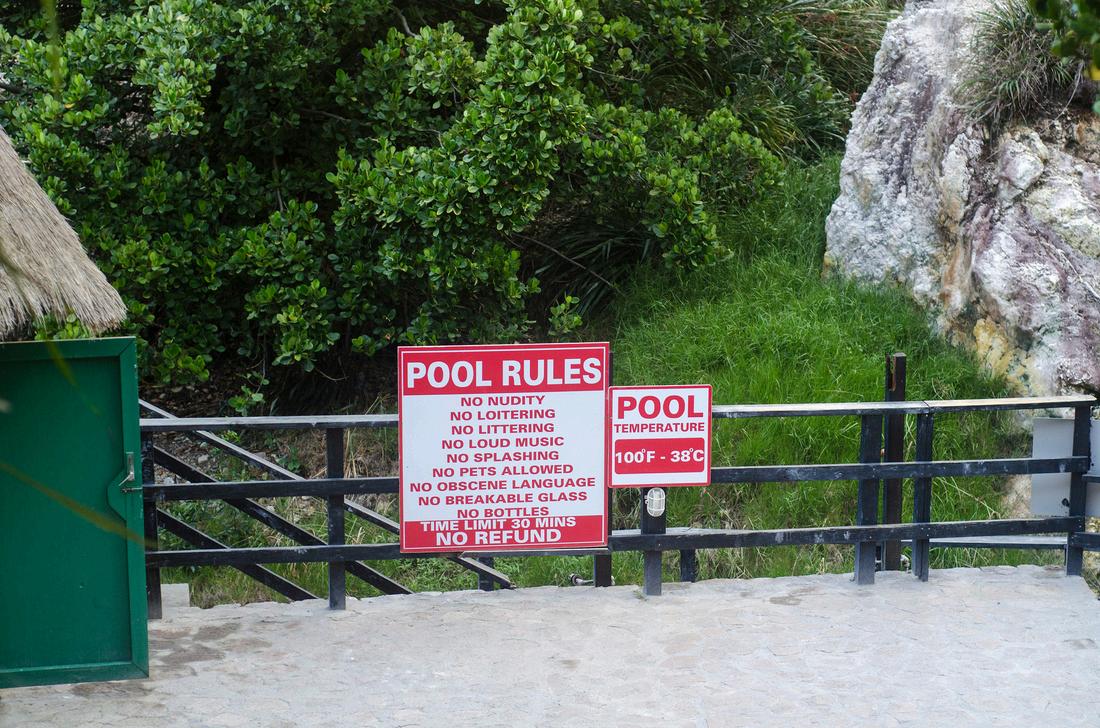
When someone visits an aquatic facility for the first time, their risk for injury is highest. First-time visitors should be informed of all safety regulations before entering the water. No one should swim unsupervised. Children must always be monitored, and should not be left in the care of an older sibling unless that individual is fully responsible and capable within the pool or spa setting. All rules must be enforced. Local regulations typically outline specific minimum requirements, such as bather loads, operating hours, and shower rules. These guidelines are often the minimum, and facilities can add their own rules, as long as they remain fair and non-discriminatory Always remember: Your Pool, Your Rules.
Rules may address various concerns and prohibit activities like:
Consuming food, drugs, or alcoholic beverages
Bringing glass containers into the facility
Allowing more than one person on a waterslide or diving board at a time
Diving or jumping from the deck into the pool area
Using diving boards without sufficient swimming skills
Diving outside designated zones
Throwing objects, like balls or other items
Engaging in running, roughhousing, or shoving
Swimming under the influence of drugs or alcohol
Using electrical appliances like radios or hairdryers near the water
Swimming if you are currently experiencing or have recently had diarrhea
Incontinent bathers swimming without proper swimwear (such as swim pants)
Entering the pool without showering or neglecting to wash hands after using the restroom
Urinating in the pool
Changing diapers in areas outside designated restrooms
Swimming outside of designated zones
Swimming alone without any supervision
Staying in the pool or on the deck during electrical storms
Swimming without the supervision of a lifeguard or other qualified personnel
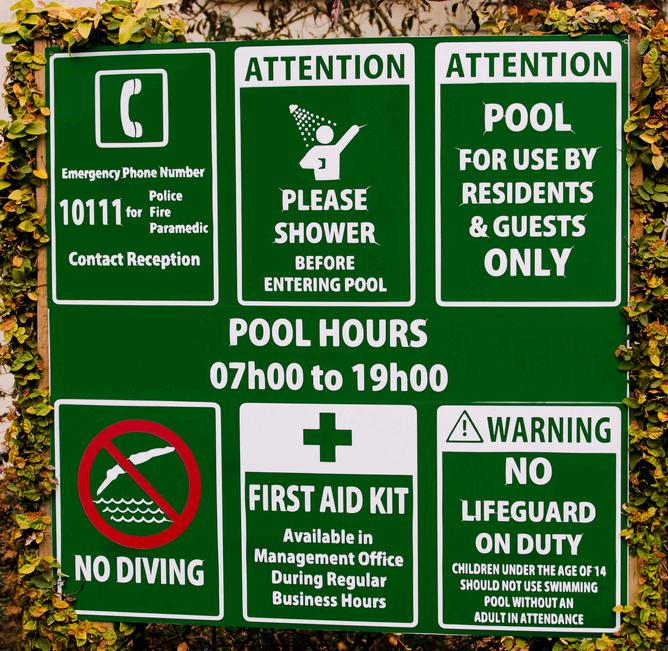
The list of potential rules can be quite extensive, depending on the facility, its usage, and the demographic of its visitors. It's important that the rules are written clearly, and if necessary, provided in multiple languages. One essential rule to enforce is the prohibition of hold-your-breath games or prolonged underwater swimming. This activity, which may seem fun to children, teenagers, and young adults, can quickly lead to dangerous situations or drowning.
Individuals who lack basic swimming skills are at a higher risk, especially when not under supervision. They should not be permitted to sit, stand, or hang onto the safety line unless there is an emergency. This guideline applies to all age groups.
Non-swimmers should stay in areas where the water does not exceed shoulder depth. Deeper areas should only be accessed under instruction and close supervision. A floating safety line, also known as a lifeline, should mark the transition between shallow and deep sections of the pool The exact placement may vary by local codes, but it is generally recommended to be placed between 1 foot (305 mm) and 2 feet (610 mm) toward the shallow end from the transition point Industry guidelines suggest that a wide line be placed at the pool walls and across the floor of the pool at the transition point, typically where the water is 5 feet (1.524 m) deep. In some areas, regulations require the safety line to always be in place, except when the pool is under the supervision of a lifeguard or during swim lessons where a coach is present.
Non-swimmers need attentive supervision. They should be observed to prevent becoming too cold or exhausted, which could be harmful. Weak swimmers often move from shallow to deep water by using the pool wall for support Wearing life vests or other buoyant aids is encouraged for non-swimmers, but this should never replace active supervision.
Diving headfirst into a pool can cause severe head, neck, or back injuries. Even at slow speeds, a diver’s head striking an object can lead to paralysis or death. The chin tucks into the chest upon impact, with the neck and spinal cord enduring forces that can cause severe injury.
For safety, bathers should always enter the pool feet first, especially when they are unfamiliar with the pool’s layout.
Diving headfirst should only be allowed if the pool complies with all safety standards, such as those provided by diving board manufacturers, pool industry guidelines, or organizations like the United States Diving Association, FINA, or the American Red Cross These guidelines align with local codes and regulations.
Areas where diving is prohibited should have clear signage indicating NO DIVING, complying with the ANSI Z535 standard The international no-diving symbol should also be displayed on the deck at intervals defined by local regulations.
Pools with depths of 5 feet (1.524 meters) or less must show the no-diving symbol prominently
If a facility permits diving, water-related activities should halt in the diving area. Diving should only occur in areas designated for this purpose, with lap swimming, recreational water play, or other water activities confined to nondiving areas.
Diving equipment must meet all safety guidelines and be maintained in good condition The equipment should be inspected regularly, and all issues, such as loose fittings or sharp edges, should be repaired immediately.
If diving is allowed at a pool facility, all other waterrelated activities must be halted in the designated diving area
Use diving equipment only under direct supervision of a coach or lifeguard.
Always dive in a straight line from the end of the equipment.
After diving, swim to the closest pool exit without delay.
Inspect the area before diving to ensure it's clear
Only one person should use the equipment at a time.
Avoid multiple bounces. Only the ladder should be used to climb the diving equipment
People without proper training or supervision attempting dives are at significant risk of injury. Novices may overestimate their abilities or be tempted to try complex feats, resulting in accidents
Most injuries resulting from headfirst dives occur in shallow water, typically in depths of less than 5 feet Shallow water dives demand expert skill, and attempting them without proper knowledge carries a significant risk of injury. Materials on safe diving techniques are offered by organizations like the American Red Cross and the YMCA. Pool rules should explicitly forbid running and diving into the pool, and diving across narrow sections of the pool should be prohibited
Jumping into shallow water can be hazardous, potentially causing injuries like broken bones if the pool bottom is struck with enough force.
Jumping into areas with submerged objects, other swimmers, or obstacles can lead to serious injuries. If jumping is permitted, safety rules should be posted, and swimmers should be reminded to jump straight forward from the pool’s edge
For some types of facilities, it may be essential for aquatic personnel to ensure that the rules for using the amenities are enforced to maintain the safety of bathers
Several of the hazards mentioned in the earlier section about diving equipment usage also apply to using slide equipment. Sliding headfirst or diving headfirst is governed by the same physical principles Accidents from standing, diving, or jumping off a slide can result in serious injuries or even paralysis. When a pool slide is present, it is essential to ensure there is sufficient clearance around the slide, both horizontally and vertically, as well as enough water depth in the pool. Specific requirements may vary depending on local codes. It's crucial to adhere to the manufacturer’s guidelines for both installation and operation.
Riders must always slide down feet first.
The American Red Cross recommends sliding in only one safe manner: feet first. Rules at the facility should clearly outline proper slide use, including the following typical guidelines: Only one person is allowed on the slide at a time
Enter, ride, and exit feet first
Move away from the slide quickly after exiting
Glasses should not be worn on the slide
Headfirst sliding, stopping mid-slide, or standing on the slide are prohibited
Keep hands inside the slide
Slide rules should also cover discouraging horseplay. If a facility has a slide that enters water over five feet in depth, non-bathers should not be permitted to use it. Often, height restrictions are in place for children's use. For more detailed guidelines about slides and aquatic play features, refer to the PHTA Aquatic Play Feature online resources and handbook.
Wading pools, being shallow, present a unique risk due to hazardous suction outlets, especially near children. The International Swimming Pool and Spa Code (ISPSC) prohibits the use of suction outlets in new wading pools to avoid entrapment. To ensure safety, compliance with the VGB Act is mandatory. This chapter provides more details on the VGB Act and its role in preventing entrapment. These pools share similar characteristics with spas, leading to maintenance challenges. Due to their shallowness and the fact that they typically have a high bather load, warmer temperatures, and more direct sunlight, they can be more difficult to maintain than larger pools. Therefore, operational guidelines for
spas often apply to wading pools. It’s recommended that wading pools have their own filtration and circulation systems, with automatic controls in place to consistently maintain disinfectant levels. In some jurisdictions, these automatic systems may be a legal requirement, and supplementary disinfection might be necessary. Pool operators should verify the specific regulations in their area. Supervision is particularly crucial, as small children predominantly use wading pools. Parents or guardians should be vigilant because diaper-aged children, who often use these pools, may introduce fecal contaminants. Research presented at the 2008 World Aquatic Health Conference revealed that swim diapers do not fully prevent fecal contamination
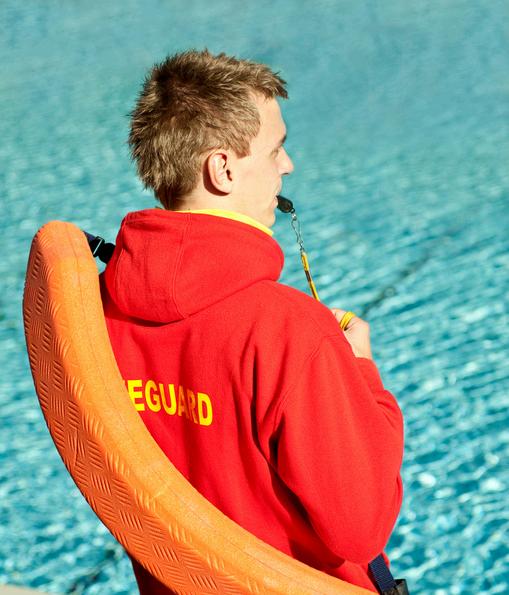
The Consumer Product Safety Commission (CPSC) recorded 23 incidents involving suction entrapment between 2011 and 2015. These included one fatality and 19 injuries. It is likely that more incidents went unreported. From the study, five main causes of entrapment were identified:
Hair Entrapment: This occurs when long hair gets tangled in the suction outlet fitting assembly (SOFA) due to low flow rates. This is more likely if the drain cover is too shallow, allowing the hair to catch.
Limb Entrapment: This happens when broken or missing covers let individuals insert their hands or arms into the pipe, resulting in them becoming stuck Fingers can also get caught in older drain covers.
Body Entrapment: This occurs when a large portion of the body seals over the suction outlet, typically with loose or missing covers, causing the suction force to trap the person. Evisceration/Disembowelment:
This occurs when the buttocks form a seal over an open suction outlet, causing severe injury when the suction force acts on internal organs
Mechanical Entrapment: Items such as necklaces, bathing suit strings, or body piercings can get caught in large openings or gratings
Pool operators are advised to inspect drain covers regularly to reduce hazards.
Prevention is key to avoiding entrapment. Pool operators must ensure protective suction outlet covers are installed and maintained according to standards such as ANSI/APSP/ICC-7-2013 for suction entrapment avoidance. In case of entrapment, activate the emergency cut-off switch, and try to roll the victim off the suction point without pulling them directly upward. Placing an object between the victim and the outlet can help break the seal
Mechanical Entrapment: Items such as necklaces, bathing suit strings, or body piercings can get caught in large openings or gratings.
Pool operators are advised to inspect drain covers regularly to reduce hazards. Prevention is key to avoiding entrapment. Pool operators must ensure protective suction outlet covers are installed and maintained according to standards such as ANSI/APSP/ICC-7-2013
for suction entrapment avoidance. In case of entrapment, activate the emergency cut-off switch, and try to roll the victim off the suction point without pulling them directly upward Placing an object between the victim and the outlet can help break the seal.
The VGBA Act is a federal regulation aimed at improving pool and spa safety in the U.S. Since its enactment, it has been 100% effective in preventing entrapments in compliant facilities. Enacted in December 2007, the act is often referred to as the "P&SS Act" or simply VGBA. Its primary focus is to prevent drowning and address risks related to suction entrapment, fencing, and pool alarms
The law governs suction outlet fittings, not just drain covers. It also regulates pool suction systems, allowing for no drains at all or multiple drains separated to avoid entrapment hazards Public pools failing to meet these requirements must install secondary safety devices, such as Safety Vacuum Release Systems or gravity drainage systems, to avoid creating hazardous vacuum conditions. By December 2008, all pools and spas were required to replace non-compliant drain covers with VGBA-approved ones. These covers must be replaced at the end of their designated service life. The law mandates that all suction outlets comply with ASME/ANSI A112.19.8 (2007) or successor standards like ANSI/APSP16, ensuring compliance through mandatory testing and certification. The VGBA Act requires:
All pools and spas must meet entrapment protection standards. Suction systems must be configured to prevent or mitigate high-vacuum entrapment
Any pool or spa with a single main drain must also use secondary devices, such as:
Safety Vacuum Release System
Suction-Limiting Vent System
Its primary focus is to prevent drowning and address risks related to suction entrapment, fencing, and pool alarms. The law governs suction outlet fittings, not just drain covers. It also regulates pool suction systems, allowing for no drains at all or multiple drains separated to avoid entrapment hazards. Public pools failing to meet these requirements must install secondary safety devices, such as Safety Vacuum Release Systems or gravity drainage systems, to avoid creating hazardous vacuum conditions. By December 2008, all pools and spas were required to replace non-compliant drain covers with VGBA-approved ones. These covers must be replaced at the end of their designated service life. The law mandates that all suction outlets comply with ASME/ANSI A112 19 8 (2007) or successor standards like ANSI/APSP16, ensuring compliance through mandatory testing and certification. The VGBA Act requires:
All pools and spas must meet entrapment protection standards. Suction systems must be configured to prevent or mitigate high-vacuum entrapment.
Any pool or spa with a single main drain must also use secondary devices, such as:
Safety Vacuum Release System
Suction-Limiting Vent System
Gravity Drainage System
Automatic Pump Shut-Off System
Drain Disablement
Other systems certified by the Consumer Product Safety Commission (CPSC)
Covers must be permanently labeled with the maximum flow rate, their installed service life, and the version of the standard they were tested against (e g , ASME/ANSI A112 19 8, VGB 2008, ANSI/APSP-16, or VGBA2017).
Public pools and spas with custombuilt outlets must have a Registered Design Professional keep a certification report on-site, confirming that the outlet complies with VGBA standards. These custom outlets do not need to have permanent markings like massproduced versions but must still meet safety requirements.
To further reduce the risk of the five types of entrapment:
A pool or spa should never be in operation if any vacuum outlet covers are missing or damaged. Certain local codes still require dualdrain systems to minimize the risk of direct suction. These drains should be spaced at least three feet apart, measured from center to center, or positioned on two different planes. Drain covers/SOFAs should be chosen to ensure that the suction system can handle 100% of the system's flow. The ratings for flow systems are calculated as follows:
Single unblockable drain systems: VGB covers must be rated to handle 100% of the system's flow
Multiple unblockable drain systems: The combined flow ratings of all covers must equal at least 100% of the total flow.
Dual blockable drain systems: Each cover must be rated for 100% of the system's flow.
Three or more blockable drain systems: Subtract the flow rating of one cover from the others to ensure the total equals 100% of the system's flow.
If a pump is replaced, manufacturers can recommend one that does not exceed the cover’s rated flow to ensure safety
Suction entrapment hazards can also be reduced through various design criteria. Overflow skimmer/gutter systems that eliminate main drains can also help prevent suction hazards
Older pools and spas built before the VGBA may have single or blockable drain covers. These must be supplemented with compliant systems or devices to meet safety standards
Suction entrapment hazards can also be reduced through various design criteria. Overflow skimmer/gutter systems that eliminate main drains can also help prevent suction hazards
Older pools and spas built before the VGBA may have single or blockable drain covers. These must be supplemented with compliant systems or devices to meet safety standards
These systems, which include one or more VGB Act-compliant devices, are specifically designed to prevent suction entrapment. However, it’s important to note that these systems do not cover all forms of entrapment
They limit the time a person is exposed to full suction, but they are not tested for preventing hair, limb, mechanical, or evisceration hazards. A Safety Vacuum Release System (SVRS) is a device that responds to a full vacuum by stopping and releasing the vacuum within 4.5 seconds after the drain becomes fully blocked. This system must meet specific standards like ASTM F2387, which outlines the technical requirements and testing for such devices. It can be an independent installation or incorporated into the pool’s pump system.
Suction-Limiting Vent Systems are designed with a tamper-resistant vent between the suction outlet and
circulation pump. This vent allows air into the system if the suction outlet is blocked, which releases the vacuum and reduces entrapment risk. These systems must be installed with proper placement to function effectively.
Gravity Drainage Systems use a collector tank placed between the pump and suction outlet. The tank fills with water through gravitational flow and is vented with a tamper-resistant opening to prevent entrapment. Automatic Pump Shut-Off Systems detect suction blockage, turn off the pump, and release the vacuum These systems prevent water pressure from building up that could cause entrapment. They must not have check valves that would obstruct pressure equalization within the system. Other systems that meet or exceed the standards set by the Consumer Product Safety Commission (CPSC) are also viable options for preventing or eliminating suction entrapment hazards in pool drainage systems.
The use of large unblockable grate drain covers or SOFAs significantly reduces the risk of body entrapment. Unblockable drains are designed to be flush with the surface of the pool or spa interior, whereas blockable drains are not permitted to have a flat or flushmounted design. A key difference lies in how the suction system's flow rating is determined: for unblockable drains, it is simply the total of all unblockable drains connected without valves Unlike blockable drains, unblockable drains are exempt from the requirement of being three feet (0.91 meters) apart. In September 2011, the Consumer Product Safety Commission (CPSC) redefined unblockable drains, affecting many public pools that had been retrofitted with unblockable covers. To remain compliant with the VGBA, such
pools were required to incorporate additional systems or devices designed to prevent entrapment, or to modify their systems to meet unblockable drain and sump requirements By now, these facilities should have integrated the necessary safety measures in accordance with the updated guidelines.
For more comprehensive details regarding the Virginia Graeme Baker Pool and Spa Safety Act (VGB Act), visit: https://www poolsafely gov/wpcontent/uploads/2016/04/pssa.pdf
Not all incidents occur in the water itself. The surrounding areas of pools and spas should be equipped with essential safety and rescue tools, alongside visible warning signs, to prevent accidents and aid those who might get injured. Poor deck upkeep or leaving personal items on the deck can lead to slip-and-fall accidents, which could result in individuals falling into the water and facing serious consequences, even death. In the event of an accident, it’s vital that safety and rescue gear is easily accessible. Operators must also take precautions against electrical hazards, proper chemical storage, indoor air quality, and electricity safety. Furthermore, accidents might not only affect bathers. Staff, visitors, and surrounding communities could also face hazards like intense fires, toxic fumes, chemical burns, or debris injuries. Pool operators are responsible for regularly assessing their facilities and creating safety programs to ensure the health and safety of both bathers and employees.
Local regulations may vary regarding the type of safety and rescue equipment required for swimming pools and spas. At a minimum, operators should adhere to the specified local code standards. It’s essential that safety and rescue gear is readily available around the pool. The following items may be stipulated in local codes (with additional requirements for public pools that feature diving boards or slides):
A strong, lightweight, nontelescoping reaching pole of at least 12 feet (3 66 meters) in length Often, poles extend to 16 feet (4 88 meters) and are attached to a body hook or shepherd’s crook with blunt ends. These poles should be made of fiberglass or another material that doesn’t conduct electricity
A United States Coast Guardapproved ring buoy with an outside diameter of 15 to 24 inches (381 to 610 mm). This buoy should have a firmly attached throwing rope with a diameter of ¼ to ⅜ inch (6.35 to 9.5 mm) and a length of at least twothirds the width of the pool.
A rope and lifeline floating at the surface should separate shallow water from deep water, typically placed at a depth of 5 feet (1.5 meters).
At least one rescue tube for every lifeguard on duty Tubes should be attached to a polypropylene line or webbed shoulder strap that allows the rescuer to fasten it around a person or hold it securely. One or more backboards equipped with at least three tie-down straps and a head immobilizer to treat back and neck injuries.
A first aid kit that complies with OSHA standards. This kit must be housed in a durable, waterproof container that is clearly labeled and
easy to access. It should be stocked with disease transmission barriers and cleansing supplies as outlined by OSHA’s guidelines for treatment of wounds or contamination risks As noted in the Pool & Spa Management section, swimming pool and spa facilities come in various sizes and offer a wide range of activities and programs The required safety and rescue equipment differs accordingly. Additional considerations for clearing and aiding victims include:
(AEDs): These devices are simple to use by trained personnel and are effective in treating sudden cardiac arrest (SCA).
Suctioning Devices: Both mechanical and manual suction devices are utilized to clear a victim’s airway. Resuscitators: These devices provide superior pulmonary ventilation compared to mouth-to-mouth resuscitation Supplemental oxygen can also be provided during resuscitation.
Survival Blankets: These are essential for treating hypothermia or shock victims
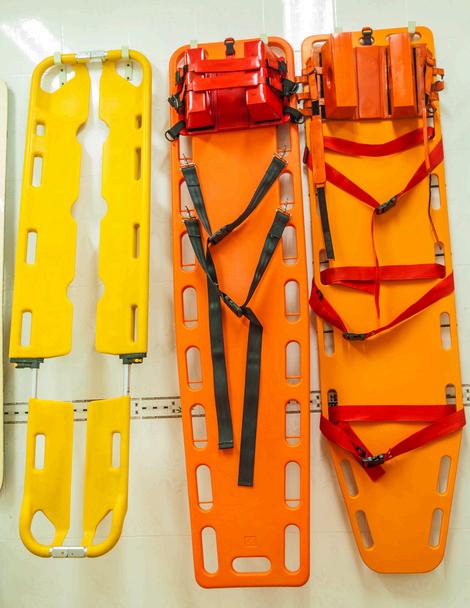
Many regulations require facilities to be equipped with a backboard to effectively address spinal injuries
When professional assistance is required, time becomes a critical factor. Some pool and spa facilities within homeowner associations, condominiums, and apartments remain open beyond the operating hours of administrative offices. If there is no telephone in close proximity, it is essential to install an emergency phone Certain local or state regulations mandate the presence of an emergency telephone within a specified distance from the pool or spa, typically 200 feet (or 61 meters) Moreover, signs near the emergency phone should provide clear dialing instructions, the pool's exact location, the phone number, and additional directions to guide emergency medical service (EMS) personnel
Signage around aquatic facilities serves an important role in communicating vital information. The type, placement, and content of the signs should be thoughtfully selected to ensure their messages are clear and relevant. These signs convey critical safety information, such as appropriate pool or spa use, the hazards present, and guidance on avoiding injuries.
A well-crafted sign can effectively inform visitors of any potential threats to their safety, whether physical or chemical. Signs should not only serve to warn but also promote a change in behavior, encouraging patrons to act more responsibly. Visitors to aquatic facilities are often unaware of certain hazards, so clearly visible signs help mitigate risks However, it's important to note that while signs can educate, they cannot physically prevent accidents.
Signage should highlight hazards, including physical dangers such as shallow water or slippery surfaces, chemical risks related to stored chlorine or cleaning agents, and environmental conditions like lighting or algae. Behavioral hazards, such as rough play or improper diving, should also be clearly outlined.
Local regulations often mandate specific signage, which may include:
A "No Diving" or "Diving Prohibited" sign
A sign detailing pool capacity, operational hours, and prohibited activities.
Warnings regarding pollution of the pool, including rules against urinating or spitting in the water Guidelines for swim diaper use, particularly for those not yet toilettrained
For pools with special features, the following are recommended: For pools with deck slides, signage should state that sliding is not allowed in water less than four feet deep and must be done in a feet-first manner.
Starting blocks should be used only during competitive swimming or training events
Spas must have clearly visible warning signs, with specific details about safe usage.
In some cases, additional signage may be required near diving boards or other high-risk areas to ensure appropriate use and reduce the risk of accidents. These signs should include clear instructions on proper diving techniques and warnings about shallow areas It’s also beneficial to display signs indicating the pool’s depth at regular intervals, especially near entry points. Signs reminding patrons of pool rules, such as no running and no horseplay, can further help prevent injuries.
Depth markings are essential for indicating the water depth in specific areas of the facility. These markings help prevent accidents such as drowning and diving injuries. Many regulations require that depth marking signs are placed visibly. Codes often dictate the size and placement of these markings. For instance, markings might need to be clearly visible on both the pool walls and the surrounding deck area.
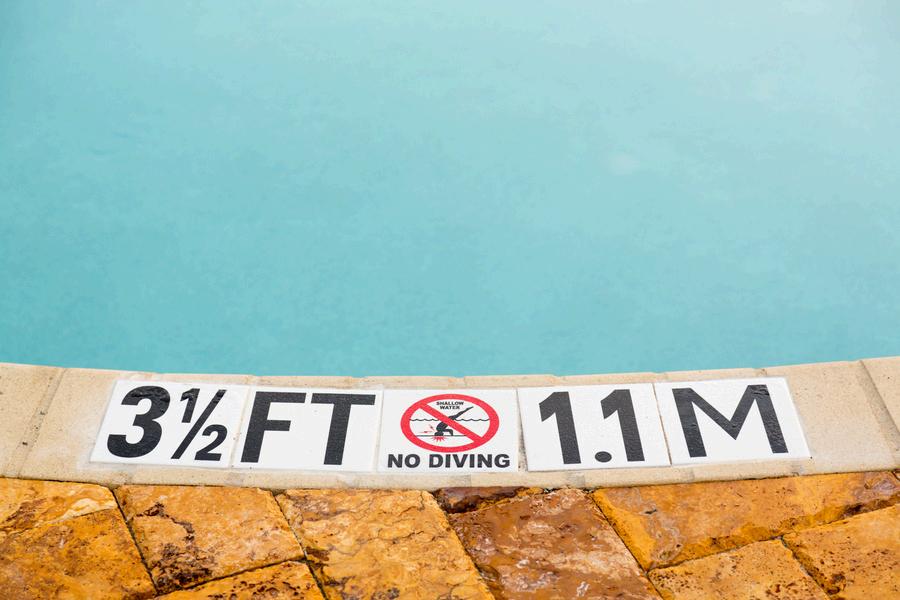
Many regulations mandate the use of depth marking signs. It is often recommended that these markings be displayed in both feet and meters for better clarity
Pool and spa deck areas have three main concerns: deck obstructions, the condition of the deck material, and entrance/exit areas The deck should remain clear of equipment and personal items. Furniture like lounge chairs and tables should be positioned away from the pool’s edge. Often, state or local codes require a clearance of 4 feet around the pool Food and drinks are typically regulated on the pool deck, with glass objects prohibited. Daily checks of the deck are necessary to address standing water or slippery surfaces Damaged deck materials, such as broken tiles, should be identified and repaired immediately. Warning signs like “Wet Floor” should be placed where slipping hazards exist, and running or horseplay on the deck must be discouraged.
Entrances to the deck should be at the shallow end, where hazards are minimal.
All ladders, ramps, handrails, and handholds must be inspected daily to ensure they are secure and in proper working order.
The swimming pool industry has not established a unified policy on when to clear bathers from the pool during electrical storms, particularly concerning indoor facilities.
Local codes may provide specific guidelines. Power outages can occur during storms, which may create unsafe conditions, especially in indoor or evening settings.
When a thunderstorm is approaching, remove all bathers from the pool and deck area If possible, clear the surrounding deck as well. Ensure that bathers and staff stay clear of windows inside the facility, as flying debris can cause injury if windows break.
Avoid showers during storms to prevent water and metal conducting electricity
Do not use corded phones unless there is an emergency. Stay away from grounded objects, including metal fences, pipes, tanks, and rails
Facilities should comply with the National Fire Protection Association's (NFPA) requirements, including following the NFPA 780 “Standard for the Installation of Lightning Protection Systems ” This standard includes recommendations on conducting regular inspections and tests of lightning protection equipment to maintain effectiveness.
Individual behavior during a thunderstorm is critical. Lightning detection systems and early warning protocols can alert bathers of an impending storm, ensuring quick response times The NFPA emphasizes avoiding hazardous areas during thunderstorms, which include both indoor and outdoor pools.

The National Lightning Safety Institute recommends adopting a conservative approach to safety during storms. Facilities should: Monitor detection methods such as weather channels or radios for signs of nearby lightning. Identify and classify SAFE and UNSAFE areas ahead of time.
SAFE areas include the interior of large, permanent buildings.
UNSAFE areas include areas near electrical conductors, metal objects, pool ladders, stanchions, water, and showers.
Suspend activities if lightning strikes within a 6-8 mile radius and move people to safety. Resumption of activities should only occur 30 minutes after the last flash of lightning or thunder, with guards ensuring the area is clear before reopening the pool.
Pool chemicals can become hazardous when a small amount of water contaminates them or when they are improperly mixed. Fires, toxic gas releases, and injuries may result if these chemicals are not stored correctly. Oxidizing agents are
particularly hazardous, with the potential to generate high heat and dangerous gases if handled improperly. Even water exposure or mixing with incompatible materials can trigger a reaction. If these chemicals degrade, they lose stability, leading to greater risk. These chemicals are often packaged in containers designed to release pressure if needed.
Pool chemicals that disinfect, like chlorine or bromine, may release toxic vapors if ignited or contaminated. Chlorine gas from decomposing chemicals can damage packaging and equipment. This makes proper ventilation crucial in storage areas. Chlorine and bromine are classified as oxidizers, which, when combined with heat, oxygen, and fuel, can ignite. It's important to note that oxidizers are dangerous as they release heat and oxygen under certain conditions.
The presence of fuel, typically in packaging, completes the risk factors for oxidation reactions. Examples of pool oxidizers include calcium hypochlorite, sodium dichloro-striazinetrione, and other similar compounds.
Proper ventilation in chemical storage areas is essential. Guidelines from the NFPA for hazardous materials storage should be followed. The code applies to all facilities, covering materials like:
Corrosive solids and liquids
Organic peroxide formulations
Oxidizers (liquid or solid)
Pyrophoric substances
Toxic and highly toxic materials
Unstable/reactive solids and liquids
Water-reactive substances
Moisture
Pool chemicals are generally designed to be added to large amounts of water. However, when a small amount of water or moisture interacts with these chemicals, it can lead to an unwanted reaction that increases temperatures and releases toxic gases. Even minor splashes of water or perspiration on these chemicals can cause dangerous reactions.
Although chemicals are usually stored in plastic bags or drums, accidents have occurred when water has leaked into damaged or improperly sealed containers. The EPA has identified potential water entry sources as: Roof leaks or broken windows allowing rainwater in
Wet floors where chemicals aren’t elevated
Leakage from fire suppression sprinkler systems
Water from hose-downs during area cleanups
Another water source that could impact chemical storage is high humidity in summer months While humidity typically has a slower effect, it can still lead to temperature increases and chlorine gas releases over time. Chlorine gas can be especially corrosive to metals like steel and copper Instances of corroded water pipes or collapsed metal storage shelves, leading to chemical spills, have been reported when moisture exposure wasn’t properly managed To minimize these risks, ensure chemical storage areas are wellventilated and maintained at a stable temperature. Using dehumidifiers can help control moisture levels, especially during humid seasons
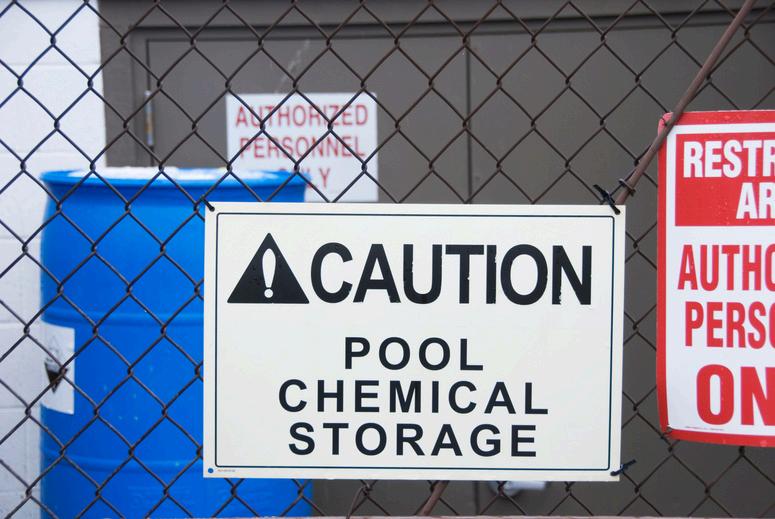
Chemicals must be stored in a way that prevents the containers and packaging from being damaged by water contact, even if the chemicals are stored in drums.
Most pool chemicals are not compatible with one another Whether intentional or accidental, mixing incompatible chemicals can lead to dangerous reactions, potentially generating high temperatures that could ignite flammable materials These mixtures may also release highly toxic and corrosive chlorine gas. Reactions have also been attributed to mixing old, partially decomposed, or new chemicals of the same type. Even unrelated materials, such as items swept from the floor or rags, can cause strong reactions, sometimes resulting in fire. Incidents of improper chemical mixing often occur in the following situations: Tools and equipment that handled one chemical are used for another without proper cleaning. Spilled substances (e.g., from damaged containers or careless handling) or miscellaneous debris on the floor are swept together, causing unwanted reactions.
Containers that were not properly cleaned, leaving small residues of one chemical, are contaminated with dirt, liquids, or solid contaminants For example, if spilled, liquid chemicals like sodium hypochlorite can seep into other containers or cracks in the floor. A spill containment device may be necessary Liquids, due to their
properties, pose greater hazards than solid or granular chemicals and must be handled with care.
The pool operator is responsible for understanding and managing the hazards related to pool chemicals, ensuring they are handled and stored safely. This involves operator training, adherence to management systems with clear written procedures, and ensuring that employees follow the necessary safety measures. Additionally, emergency plans should be in place, in collaboration with local responders, to mitigate potential incidents
Safety Data Sheets (SDS) provide essential guidelines for the storage of chemicals. The Environmental Protection Agency (EPA) outlines recommendations for managing pool chemicals to prevent hazards:
Keep chemicals dry. Designated areas for chemical storage should ensure no water comes into contact with containers. Areas should be monitored for potential water entry, including:
Leaks from roofs, windows, doors
Wall or floor joints
Pipes, hoses, sprinkler systems
Drains
The EPA recommends maintaining pool chemicals in dry conditions. Facilities should implement storage systems that ensure no contact between chemicals and water Preventative actions should focus on potential water entry sources such as:
Roof, windows, or doors
Wall and floor joints
Pipes, hoses, or sprinkler systems
Drains
Pool operators should take steps to prevent water from reaching stored chemicals by:
Properly sealing containers
Repairing damaged packaging
Storing chemicals away from windows and doors
Ensuring floors are sloped towards drains to prevent water accumulation
Storing chemicals on pallets or shelves to prevent contact with floors
Using waterproof coverings on containers
Exercising caution when cleaning floors near chemicals to prevent water contact
Keeping drains functional to prevent water backups
The EPA advises that pool operators avoid mixing incompatible chemicals, which could lead to dangerous reactions. A thorough review of chemical storage areas should be conducted to prevent such incidents. Key points include: Keep incompatible substances separate, avoiding storage of liquids above incompatible solids
Do not mix old chemicals with new, even of the same type.
Only handle one chemical at a time and ensure all residues are removed from tools before handling a new substance
Use designated containers to clean up spilled substances and avoid mixing different materials in the process
Make chemical storage housekeeping a priority. Clutter, flammable materials, and debris should be kept out of the storage area.
For guidance on larger quantities, refer to EPA’s “Safe Storage and Handling of Swimming Pool Chemicals."
The EPA emphasizes the importance of planning for emergency response,
particularly fire incidents involving pool chemicals. Operators should engage with local first responders and their Local Emergency Planning Committee (LEPC) to develop a response plan Pool chemical fires are difficult to extinguish, requiring immediate evacuation and professional fire fighting assistance. EPA recommendations for such emergencies include:
Avoid using dry chemical or halon extinguishers for fires involving chlorine gas, as these can cause explosive reactions.
Large amounts of water should be applied to reduce heat and manage the fire's intensity.
Only trained personnel should be involved in fire suppression using large volumes of water, and care must be taken to avoid environmental damage due to chemical runoff.
Once ignited, chlorinated pool chemicals may continue generating heat until fully extinguished or the chlorine is depleted.
Pool chemicals can cause harm if they come into direct contact with a bather's skin, eyes, or respiratory system Reactions may occur when these chemicals meet perspiration, tears, mucus, and saliva, leading to irritation of the respiratory or digestive system. Injuries can also result from chemical dust that comes into contact with the skin, enters the eyes, is inhaled, or settles on food.
To ensure safety, it is essential to refer to the chemical manufacturer's safety guidelines and the SDS (Safety Data Sheets) for recommended personal protective equipment (PPE) necessary to protect employees. Additionally, sharing SDS information with local emergency responders and the LEPC (Local Emergency Planning Committee) is important
The following protective measures outline safety precautions for normal operations and during emergencies: Ensure that PPE is kept clean, operational, and readily available Basic PPE, including chemical goggles and liquid-impervious gloves and boots, should be worn during chemical handling tasks. For extended tasks, face shields and liquid-impervious aprons or coveralls should be added.
Use a NIOSH-approved air-purifying respirator when handling chemicals that may generate airborne dust or mist OSHA's Respiratory Protection Standard (29 CFR 1910.134) provides guidelines for selecting appropriate equipment.
Develop work practices to minimize dust and accidental contact with chemicals.
Ensure access to safety showers, eye wash stations, and other emergency wash facilities to handle accidental chemical exposure
Post important contact numbers for local emergency services and medical professionals familiar with chemical treatments.
Establish first aid protocols and work closely with medical professionals to ensure quick treatment for accidental exposure. Keep emergency safety equipment separate from pool chemicals
Air circulation in an indoor pool or spa environment is crucial to prevent airborne contaminants. Inadequate circulation can lead to respiratory issues and complaints from both patrons and employees, as well as equipment deterioration. Pollutants tend to move from areas of higher air pressure to areas of lower air pressure. Hence, the indoor pool area should maintain positive air pressure relative to outdoor
areas, preventing pollutants from spreading to locker rooms or chemical storage spaces.
To ensure air quality, it is important to comply with various standards, Key recommendations include: Ensure compliance with ANSI/ASHRAE Standard 62.1-2016, which addresses "Ventilation for Acceptable Indoor Air Quality "
Follow ASHRAE Standard 55-2013, concerning "Thermal Environmental Conditions for Human Occupancy."
Maintain an outside air intake rate of 0 48 cfm (2 4 litres per second) per square foot of the natatorium area. Achieve 6 to 8 complete air changes per hour.
Keep CO2 levels under 0.1%, or 1,000 ppm (mg/L)
Introduce fresh air at a rate between 40% to 100%, depending on factors such as usage, natatorium design, and installed equipment.
The pool area’s air temperature should be kept 2°F to 4°F (1°C to 2°C) warmer than the pool water temperature.
For more detailed guidance, see the Heating & Air Circulation chapter.
Electrical equipment and power sources used in aquatic facilities can present shock risks to staff and bathers. Any electrical devices should be installed, serviced, or replaced only by licensed professionals. Defective equipment, such as those with ground faults or short circuits, poses a significant danger. In aquatic environments, the water, surfaces, and even skin create a path of low resistance, allowing electrical currents from faulty equipment to flow through a bather’s body. One of the most serious threats is malfunctioning underwater lighting
A person could receive an electric shock when in contact with an energized piece
of metal equipment while also touching another metal object at a different electrical potential. For instance, if someone holds a pool ladder with one hand while their foot touches the metallic frame of a malfunctioning underwater light, they could be shocked. Additionally, a faulty underwater light may sustain electrical charges in the water around it, potentially shocking any bather who contacts a grounded object nearby.
Exposure to an electrical shock can cause severe harm to vital organs and potentially lead to a loss of muscle control. This lack of control may prevent someone from releasing the source of the shock. The severity of the shock is determined by the level of current entering the body, the path it follows, and the individual's health and size. Even a current as small as less than one milliampere can cause a slight tingling sensation, which might harm individuals with heart conditions The maximum current a male can tolerate while still releasing an object is around 16 milliamperes, whereas for females, this "let go" threshold is closer to 10 milliamperes Such currents typically do not affect the body’s tissue. A current of 18 milliamperes is potentially fatal for healthy individuals. At this level, chest muscles could contract, leading to a halt in breathing If this current persists, it could result in unconsciousness or even death.
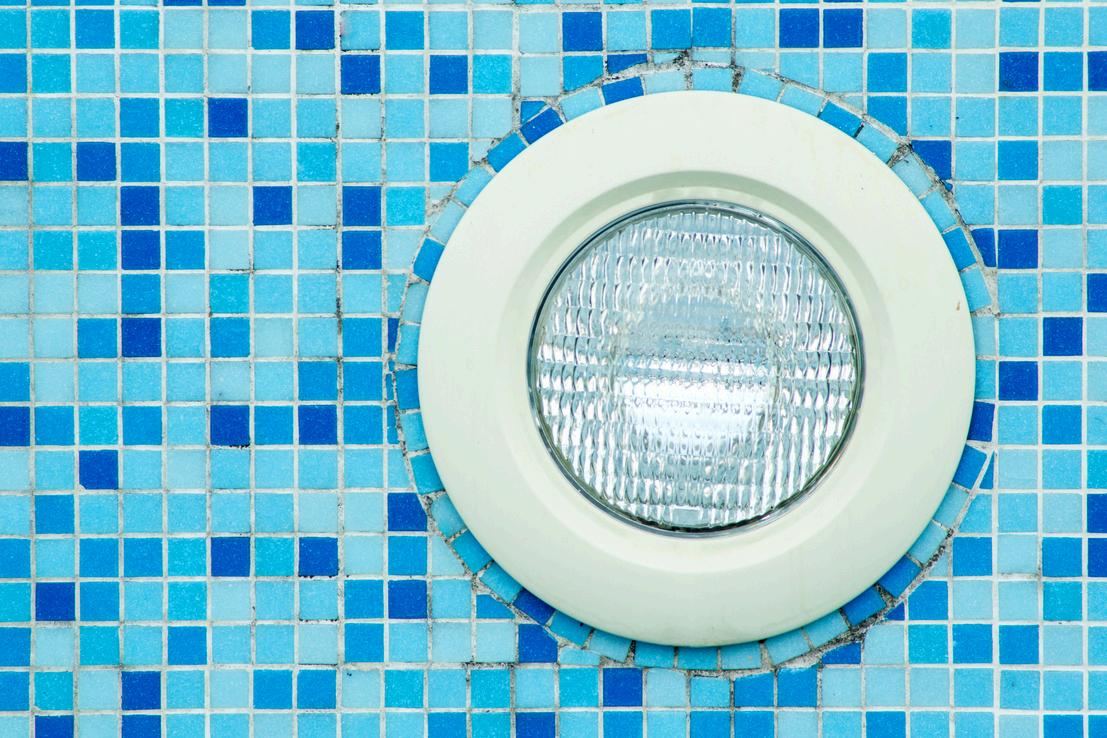
According to the CPSC, 14 deaths were reported due to electrocutions in swimming pools between 2003 and 2014
Similar electrical hazards exist in hot tubs and spas. The following items are potential risks for electrocution in or near the pool:
Underwater lighting
Pool equipment such as pumps, filters, and vacuums
Extension cords and power cords
Electrical outlets or switches
Electrical devices like radios, stereos, or televisions
Overhead power lines
The installation of electrical equipment and wiring in or near swimming pools and spas must follow the National Electric Code (NEC 70), Article 680 Local codes may impose additional requirements for electrical equipment and accessories used around aquatic facilities. There are five key safety elements for aquatic facilities: grounding, bonding, safe distances, ground fault circuit interrupters (GFCIs), and proper warnings, labels, and procedures.
Grounding provides a safe path for fault currents by connecting electrical equipment to the earth at zero voltage. NEC Article 680 specifies that the following must be grounded:
Electrical equipment within 5 feet
(1 5 meters) of pool or spa walls
Electrical equipment involved in pool water circulation
Junction boxes
Transformer enclosures
Circuit boards linked to the pool’s electrical system
Ground Fault Circuit Interrupters (GFCIs)
Wet and dry niche underwater lighting
Panel boards that are not part of the service equipment but provide power to any electrical equipment related to the pool’s water circulation system
Bonding refers to the process of connecting electrical devices to the same ground potential. This ensures that all connected devices share a lowresistance path to the ground via a solid copper wire Essentially, every metal part within touch distance is connected to ground potential. According to NEC Article 680, the following pool or spa components must be bonded:
All metal parts of the pool structure, including the reinforcing metal in the shell and deck.
All metal fittings attached to the pool structure, such as ladders and handrails
Metal parts of equipment associated with the pool’s water circulation system, such as pump motors.
Underwater lighting.
Metal parts of equipment associated with pool covers, including electric motors.
All fixed metal parts, cables, and raceways not separated from the pool by a permanent barrier. If within 5 feet of the pool wall horizontally, they must be bonded.
In some instances, electric pool heaters must also be bonded.
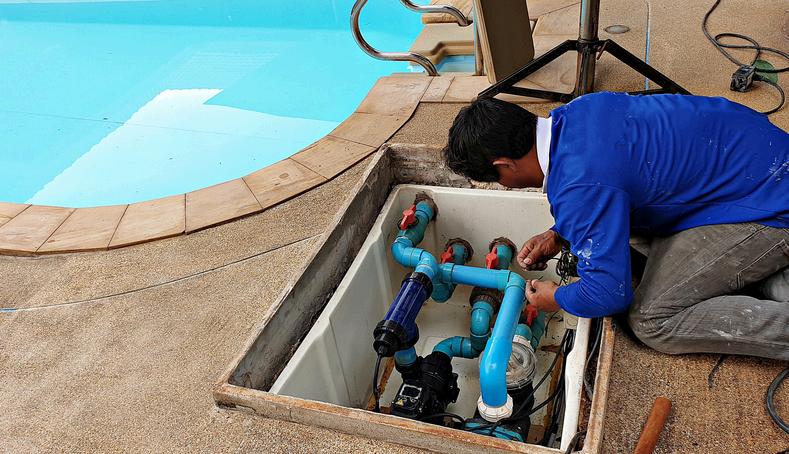
Violating the National Electric Code, NEC 70, through makeshift electrical services can result in fires and severe injuries.
Safe distances for electrical receptacles, lighting fixtures, and similar equipment must be maintained at a minimum of 10 feet (3 meters) from the pool or spa to prevent potential hazards
GFCIs detect a difference between the input and output currents in a circuit. If a discrepancy of 5 milliamperes occurs, the GFCI cuts off the current, protecting individuals from electric shock. GFCIs are crucial, especially for older pools and spas built before 1981. NEC Article 680 mandates that GFCIs must be installed in the following cases:
Underwater lighting fixtures that operate at over 15 volts 15- and 20-ampere receptacles installed at ground level outdoors for easy access
Lighting fixtures and outlets located between 5 and 10 feet (1.5 and 3 meters) from the pool walls
Electrical circuits used in motorized pool covers 125-volt receptacles positioned within 20 feet (6 meters) of the pool wall
To ensure electrical safety around pools and spas, facility owners should develop safety protocols, including warnings, labels, and procedures. Electrical appliances like radios, hair dryers, and sound systems must not be used near the water. Extension cords should be avoided near pools. Electrical systems must be turned off before any servicing of pool equipment
Clear instructions for the use of electrically operated equipment, such as pool vacuums or circulation systems, should be readily available for staff and pool operators.
Insulation acts as the first line of defense against electric shock, but it can wear out or develop cracks over time. Regular inspections are crucial to identify potential hazards. For instance, check for frayed cords on power tools. The CPSC also provides the following recommendations to enhance electrical safety:
Use grounded (3-wire) tools only in grounded outlets. Avoid lifting power tools by their cords
Follow all posted warnings and signs
Ensure that these important pieces of information don't blend into the landscape, becoming overlooked. Refrain from using electrical devices when it's raining
Leave electrical work to qualified electricians and professionals. A little knowledge can be dangerous, especially when dealing with wiring, troubleshooting, or repairing electrical circuits.
Always use a ladder made of wood or fiberglass if you’re working around electricity.
The Lock Out/Tag Out (LOTO) standard, as defined by the Occupational Safety & Health Administration (OSHA) Regulation 29 CFR 1910.147, "The Control of Hazardous Energy," applies to any workers involved in servicing or maintaining equipment where accidental start-up or energy release could result in injury. Employees performing these tasks often need to be licensed. Training is necessary to ensure that employees fully understand the proper methods for applying, using, and removing energy control measures
LOTO involves the physical restriction or limitation of energy to equipment or machinery. This process also includes
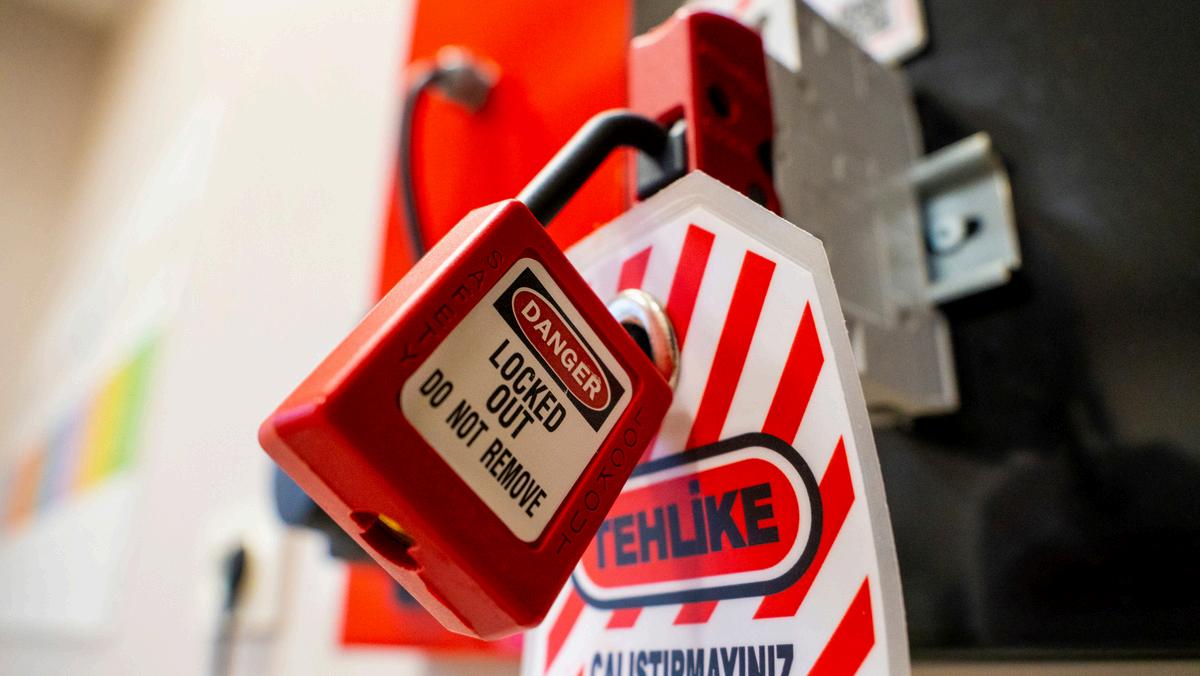
LOTO represents the physical restriction or limitation of hazardous energy sources that supply power to equipment, machinery, or systems.
placing a warning tag on the energyisolating device, noting the authorized individual and date. Equipment or machinery must be fully shut down, and only authorized personnel are permitted to perform repairs or maintenance. Many machines come equipped with an energy isolation device that is used to disconnect the energy source. Common examples of energy control devices include lock-out tools like ball valve or gate valve lockouts, circuit breaker lockouts, plug and wall switch lockouts, and pneumatic lockouts. Ensuring the complete shutdown and secure isolation of all hazardous energy sources, including stored hazardous energy like pressurized water or capacitors, must be accomplished before any work begins.
Exposure to ultraviolet (UV) rays from the sun is the leading environmental factor contributing to skin cancer and a significant factor in causing lip cancer. Shielding yourself from UV exposure is essential, not just for swimmers at aquatic facilities but also for staff members. It's critical to guard against prolonged sun exposure, which can damage the skin regardless of the season or weather.
The most dangerous times for UV exposure are between 10 a m and 4 p.m., with radiation peaking in late
spring and early summer. UV rays, a component of sunlight invisible to the eyes, penetrate deep into the skin and alter the structure of skin cells. Wearing protective clothing, such as wide-brimmed hats, long-sleeved shirts, and pants, helps minimize exposure. For eye protection, wraparound sunglasses offering 100% UVA and UVB protection are best. Lifeguards unable to wear longsleeved garments should apply broadspectrum sunscreen, which shields against UVA and UVB rays, and lip balm with a sun protection factor (SPF) of 15 Sunscreen must be reapplied periodically as directed. Staff should work in shaded areas or use umbrellas to protect themselves when stationed at lifeguard stands
Though limited sun exposure can offer some benefits, excessive exposure leads to premature aging, unwanted changes in skin texture, and serious skin conditions, including melanoma, the most life-threatening skin cancer. UV rays are also linked to cataract formation.
Another hazard of UV rays is their ability to reflect off surfaces, especially water, reaching individuals even in shaded areas. The most effective protection against UV damage to skin and lips is to use sunscreen or wear protective clothing, even when in the shade. For more information on sun safety, visit the CDC website at www.cdc.gov/healthyswimming.
UV rays are also linked to cataract formation.
Another hazard of UV rays is their ability to reflect off surfaces, especially water, reaching individuals even in shaded areas. The most effective protection against UV damage to skin and lips is to use sunscreen or wear protective clothing, even when in the shade.
For more information on sun safety, visit the CDC website at www.cdc.gov/healthyswimming.
There are various formulas and guidelines for determining the maximum bather load for pools or spas Some regulations define circulation flow rates in gallons per minute per bather, while others calculate different maximum bather loads for indoor versus outdoor pools, or for shallow and deep sections The size of the deck surrounding the pool, and special equipment like slides and diving boards, may also be factored in when calculating the bather load. Pool operators should check with local health codes to understand the specific formulas and standards used for the design of their pool or spa.
Bather loads for spas are typically based on one bather per 10 square feet of surface area, or one bather per 3 linear feet of seating area (1:3 ratio). Example: A round spa has a diameter of 14 feet What is the bather load?
Bather load = surface area ÷ 10 ft²/bather
Surface area = 3.14 × r × r
Surface area = 3.14 × 7 × 7 = 154 ft²
Bather load = 154 ft² ÷ 10 ft²/bather
Bather load = 15 bathers
Metric: A spa is 4.2 meters in diameter:
Bather load = surface area ÷ 0.93 m²/user
Surface area = 3.14 × r × r
Surface area = 3.14 × 2.1 × 2.1 = 13.85 m²
Bather load = 13.85 m² ÷ 0.93 m²/user
User load = 15 persons
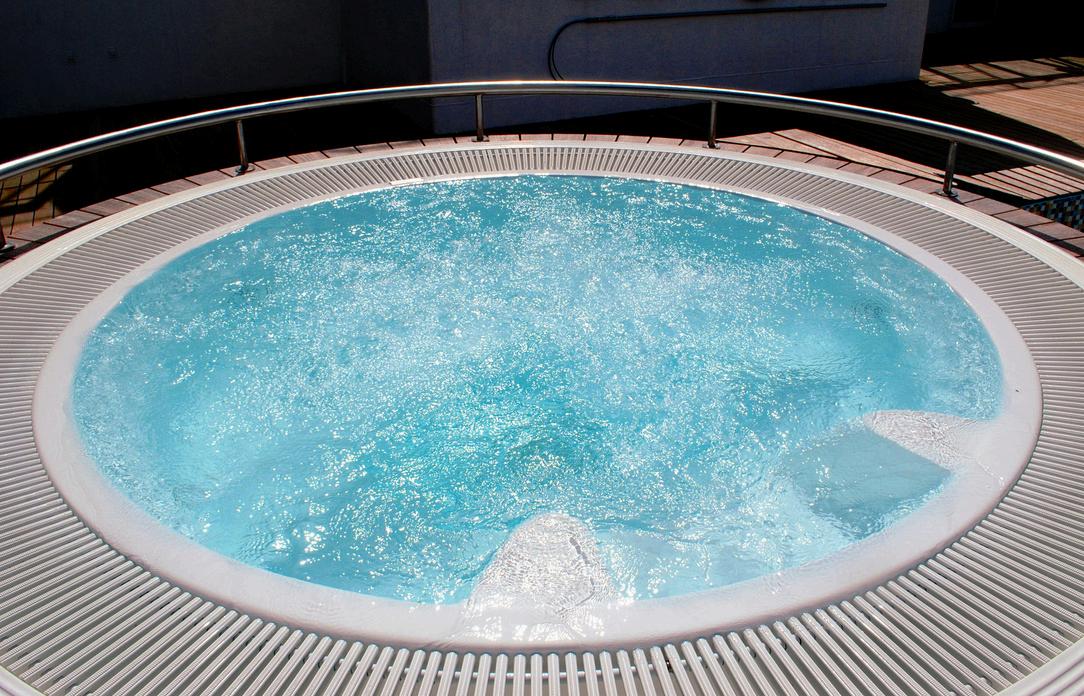
Spa user capacities are typically calculated based on one user per 10 square feet (0.93 square meters) of surface area.
Maintaining accurate records is a critical responsibility that simplifies pool and spa operations Good record-keeping reflects how well the facility operates, helps reduce unnecessary spending, promotes safety for both employees and bathers, and limits the facility’s liability. Records play a key role in every management aspect, especially in protecting the facility and aiding in legal defense, if necessary. They form a key part of the risk management plan. Knowing what records to maintain and how long to keep them is a crucial aspect of a pool operator's duties.
Routine tasks must be performed in all pool operations. Some activities are carried out daily, while others, such as preventive maintenance, are done as required.
As the facility grows, so does the number of records and reports to be managed. Documentation and written procedures ensure successful pool/spa operations and are key to sound management practices.
Emergency response plans (ERPs) are also part of the facility’s records, detailing the actions the staff should take in the event of an emergency. ERPs become more complex with larger facilities and more staff, requiring customization for each facility.
Records at an aquatic facility give management staff a way to assess and manage the facility’s operations. The types of records that should be maintained include, but are not limited to:
Supervisors’ Reports
Incident Reports
Staff Records
Maintenance Logs
Training Reports
Water Chemistry Logs
Bather Load Logs
Daily/Weekly/Monthly Inspection Logs
Maintaining accurate and detailed records of operations is an ongoing but essential task. Keeping proper records is a standard practice in the industry, aiding in the safe and efficient management of the facility. Pool records are essential for evaluating operational costs, such as maintenance materials, hours worked, chemical usage, weather impacts, crowd sizes, and staff hour distribution. Records should contain enough information to allow the facility’s owner or manager to assess performance effectively. These records are also crucial in legal defenses and health department investigations.
In cases of disease outbreaks like E. coli or Cryptosporidium, records (or lack thereof) play a significant role in determining the cause and solution The duration of time records should be kept is often dictated by health departments, legal counsel, or the facility’s insurance provider.
Each aquatic facility should implement a clear process for recording key events related to pool and spa operations. Records should document periodic
inspections, repairs, and corrective actions. They must also include data on chemical usage, pool levels, treatment systems, chemical testing results, water added, and bulk chemical consumption
Records created through services from external agencies, unplanned incidents, and important notes are essential to facility operators. These records provide critical data for budget planning, chemical alternatives, troubleshooting, staff requirements, and equipment replacement planning. Before opening the facility each day, daily inspections and water chemistry logs should be completed as required by local health codes. Typical data includes chlorine levels, pH, total alkalinity, calcium hardness, cyanuric acid, and temperature
Records should be meticulously planned, incorporated into daily routines, kept upto-date, and retained for a reasonable time. Inspections should verify water flow rates, pool levels, water quality, and communication systems
Each record should clearly state the individual responsible and, where possible, the standards and measured outcomes Local codes often mandate daily operational records be maintained and available for inspection. These records are crucial for ensuring compliance with local health officials. Records and reports fulfill several critical roles:
Legal defense in case of lawsuits lacking records can work against the facility and staff.
Compliance with government sanitation and maintenance regulations.
Documentation of injuries, allowing for corrective management action to prevent future incidents.
Access to information on staff training, equipment repairs, procedures, and maintenance actions.
To help the staff achieve goals and improve organizational effectiveness, records play a key role. Proper records also significantly contribute to the business side of managing an aquatic facility. Maintenance logs, opening and closing procedures, inventories, and training schedules are essential for budgeting and financial management. A well-maintained budget enables the facility to operate efficiently and stay financially stable.
Typical sample forms and checklists :
Daily Opening & Closing Tasks List
Daily Pool Chemistry Record
Daily Locker Room Upkeep List
Aquatic Incident Documentation Checklist for Opening Seasonally Checklist for Closing Seasonally
Routine Maintenance Checklist
Guidelines for New Plaster Start-Up
Pool/Spa Review Checklist

The most essential records are those maintained on a daily basis. Pool water chemistry must meet standard requirements before the pool opens each day. All suction drain covers must be in place and intact. Additionally, all safety and rescue equipment must be functional. Water clarity and chemical levels should be appropriate, and the circulation flow must meet turnover requirements.
Often, a manager will create their own daily checklist. Most codes allow customized reports, provided they meet minimum required information It is essential to log the date and time of each check.
The following items can serve as a foundation for any facility’s daily record:
Free chlorine or total bromine
Combined chlorine
pH
Total Alkalinity
Safety equipment functionality
Visual inspection of suction drain covers to ensure they are secure
Barriers preventing unsupervised children from accessing hazardous areas
Flow meter reading
Pressure differential or pump
vacuum
Daily bather count
Water temperature
Air temperature
Water clarity
Filter backwashing
Chemicals added
Incident and injury reports
Skimmer and hair/lint baskets emptied
Deck waste containers emptied
Local bathing codes, regulations, and standard practices, as well as the type of facility, will determine the exact contents of daily operations reports.
Before the facility opens, any unsafe conditions should be identified and addressed. If the issue cannot be fixed immediately, no one should be permitted in the affected area. In these situations, signs, ropes, barriers, or cones might be required. In extreme cases, the facility may need to stay closed until the matter is resolved At closing time, it’s essential that no one remains in the facility. All portable equipment should be put back in its original place, and lights should be turned off or on as needed The facility must be securely closed
The following is a suggested list to check when opening or closing the facility:
Pool and spa inspection checklist is accessible
Pool, restrooms, and changing areas are clear of people
Safety and rescue equipment is available and operational
Suction drain covers are intact and secured
Ladders and handrails are in position and safe
All self-closing and locking gates are working as expected
Lockers and restrooms are clean and fully stocked with amenities
Pools or spa areas are ready and easily accessible
Required deck clearance around pools or spas is maintained
No debris in the pools or spas
All underwater lighting is working properly
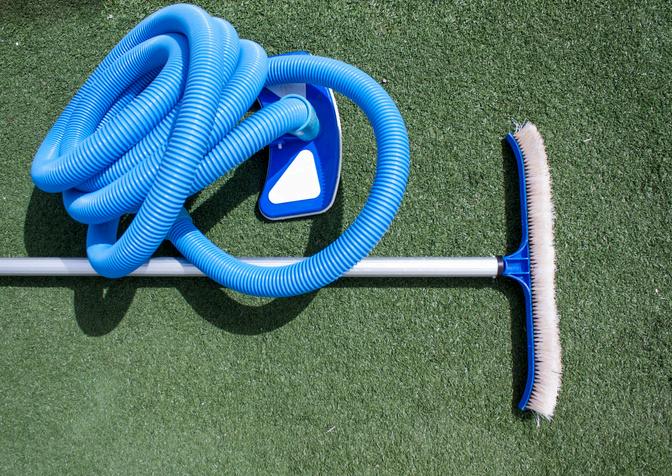
The original documents provided by the facility designer and equipment manufacturer should be included in the facility’s permanent records. These documents contain the essential instructions for both installation and operation. They also cover routine and preventive maintenance, along with parts lists for repairs. It’s important to keep these manuals for as long as the equipment is in use. Manufacturer’s manuals should also be retained if equipment has been disconnected and stored at the facility, in case it needs to be reinstalled. All equipment manuals must be readily available for reference when needed.
Data plates on equipment may fade over time, making it difficult to read important information. To prevent this, it's a good idea to take photos or digital records of the equipment’s data plates. If any equipment needs to be replaced, the specifications on these records will assist with reordering. If a manual is lost, a photo of the data plate can be sent to the manufacturer to request a replacement manual. Many manuals can also be found on the manufacturers’ websites.

.Numerous manufacturers offer online access to their installation and operation manuals.
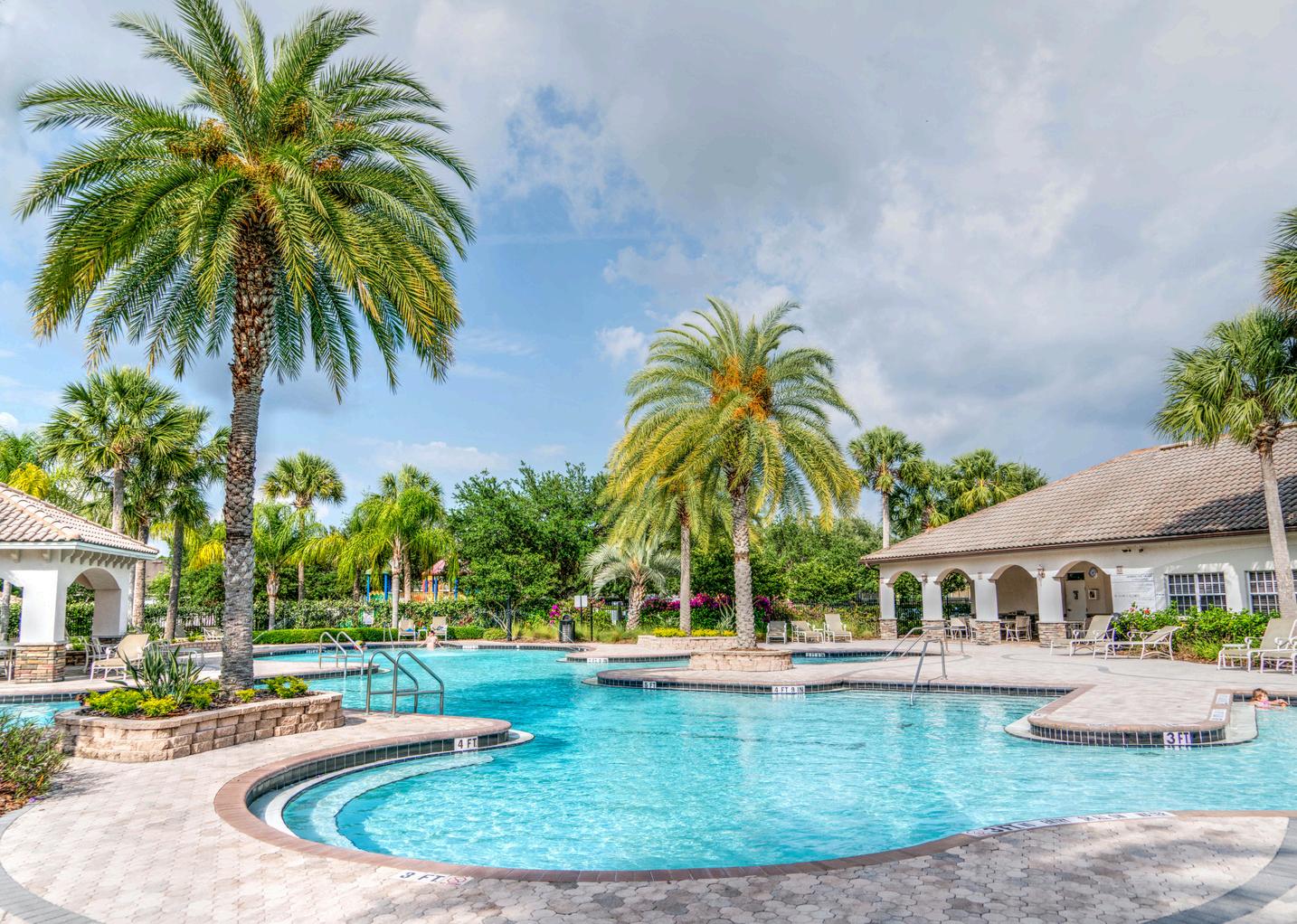
The opening checklist ensures that sufficient clearance is maintained around the pool area. Most state regulations require a minimum of 4 feet of clearance.
Regular maintenance of a pool or spa is typically carried out before the facility opens each day. This helps to prevent any conflicts between the operator and event coordinators. Cleaning the pool bottom is most effective after the pool has been closed for at least two hours Automatic vacuums are usually run overnight, while manual vacuuming takes place in the early morning before opening. The pool should not be used during the vacuuming process for any reason
Tasks such as cleaning decks, locker rooms, showers, and lavatories, as well as rearranging and cleaning deck furniture, can be done after the facility closes or prior to opening However, there should be a plan to ensure that these areas are maintained clean and functional throughout the day. Office and meeting room cleaning can occur while the facility is open Routine maintenance of equipment and handling the delivery of chemicals to the facility may pose some risk. If feasible, these activities should be completed before the facility opens Additionally, all maintenance activities should be clearly scheduled and communicated to staff to avoid disruption. Safety procedures, such as wearing protective gear when handling chemicals, are essential for reducing risks
To prevent or minimize long-term wear and tear on pool or spa equipment and infrastructure, it's crucial to implement a preventive maintenance program This program can be created using information from equipment manuals and input from the facility’s suppliers. Preventive maintenance often requires the pool or spa to be temporarily closed To reduce downtime, it is essential to have trained personnel and the necessary materials and parts readily available.
Preventive maintenance tasks include activities like painting, inventory management, rust removal, deck cleaning, and pump inspections and repairs. While it’s ideal to perform these tasks when the facility is closed, some of them can be safely carried out during slower usage times, provided they do not pose a risk to bathers.
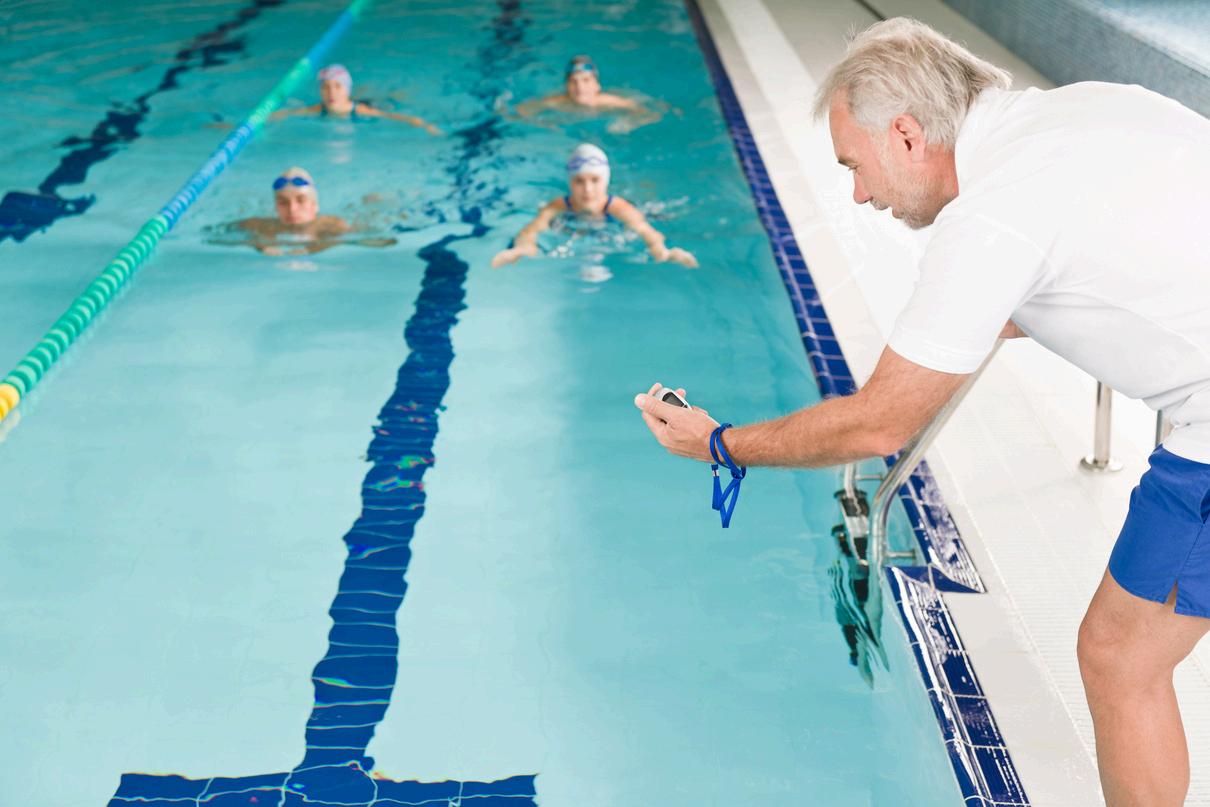
Regular staff meetings should be conducted and documented Discussions should focus on improving staff skills and knowledge, addressing current issues, reviewing operating procedures, sharing upcoming events, and reflecting on lessons learned The aquatic facility can also rely on suppliers for professional support and training.
Each full-time and seasonal employee should have a comprehensive jobrelated training plan. This could include certifications like the Certified Pool/Spa Operator (PO) Certification Course and Certified Pool/Spa Inspector (CPI) training, alongside emergency response, first aid, CPR, and sexual harassment prevention training. All completed training should be recorded in the employee's personnel file.
The Federal Hazard Communication Standard mandates that management keep records of all chemicals used at an aquatic facility. Each chemical must have a Safety Data Sheet (SDS) created by the manufacturer, and these sheets should be easily accessible to all employees It is important to allocate time for every employee to receive training on the SDS and proper handling of hazardous materials. Suppliers should be asked to provide this training. Employees must review the SDS, and sign off confirming they understand and accept the information. The SDS must be posted or easily accessible at the job site for quick reference For more details, refer to the Regulations & Guidelines chapter.
Many regulations require individuals working at an aquatic facility to provide proof of their proficiency Lifeguards and swimming instructors must hold certifications from organizations such as the American Red Cross, YMCA, or other recognized aquatic training agencies. Personnel involved in chemical treatment and routine maintenance at public pools may need to possess PO (Pool Operator) certification. Hazardous material (HAZMAT) training may also be required.
Proficiency records should be maintained as part of an employee's
permanent file. Any certifications achieved should be either posted or stored at the appropriate location. Keeping these records updated is essential since it can be challenging to prove a qualified employee's presence on-site if they later leave for another job, return to school, or relocate. Public health officials and employers can also verify a person's certification as needed
An essential part of ensuring the safety of bathers and staff at an aquatic facility is having a comprehensive Emergency Response Plan (ERP). This plan outlines the procedures that staff should follow in various emergency situations It includes important details such as staff training requirements, the meanings of alarm signals, and the actions and procedures that the facility expects its staff to perform during an emergency
The pool operator may also be involved in the emergency response team. Being prepared to address emergencies is critical in minimizing injuries and providing immediate care to victims The facility must ensure that staff are wellacquainted with the ERP, which provides a detailed guide on how everyone should act during emergencies. Regular practice of the ERP is necessary to ensure that all team members can work together effectively during an emergency.
Developing Emergency Response Plans
The pool operator plays a vital role in creating the Emergency Response Plan (ERP), depending on the facility's size and management structure. Key considerations include:
Types of emergencies: This encompasses water emergencies, sudden illnesses, natural disasters, and facility-related incidents such as fires or chemical accidents.
Facility layout: This should include details about the locations of rescue equipment, exits, telephones, and other essential points.
Available equipment: This includes rescue tools, first aid supplies, and protective gear like gloves
Emergency Medical Services (EMS):
Ensure a communication plan is in place to notify EMS, and consider how EMS will access the facility
Chain of command: This identifies who needs to be contacted in an emergency and determines who will notify family members or parents, if necessary.
Preparing for an emergency requires all staff to be aware of their specific roles and duties. Responsibilities include:
Overseeing the rescue area
Clearing the facility, including the pool or spa
Identifying who the primary rescuer will be
Contacting Emergency Medical Services (EMS)
Managing crowd control
Assigning tasks after the emergency is over
Once an emergency has been handled, certain tasks such as completing reports, inspecting equipment, and replacing damaged items must be completed before reopening the facility. One example of a necessary report is the aquatic incident report,. Emergencies involving serious injuries or fatalities can be highly traumatic for staff. Rescuing a victim, especially when the outcome is unfavorable, may lead staff to feel guilt or responsibility. In such cases,
professional counseling may be required to help staff cope with the stress.
A debriefing session for staff should follow every emergency to evaluate what transpired and determine if corrective measures are necessary to prevent future incidents.
Several factors need to be considered when developing a maintenance system plan for an aquatic facility. These considerations include:
Facility design and type
The number and age of pools and spas
The duration of the operating season
Revenue generation needs
Staff size and capabilities
The mission, goals, and purpose of the sponsoring agency
For example, a small, seasonal outdoor pool operated by a homeowner’s association has different responsibilities compared to an indoor municipal pool with multiple natatoriums. Both types of managers must create systematic methods to ensure their facilities are efficiently operated.
The Pool & Spa Management chapter highlighted the importance of planning, including action steps such as forecasting, scheduling, budgeting, and policy development Implementing a maintenance system plan for any aquatic
facility involves considering all these aspects. The facility operator should also be familiar with any local regulations that impact maintenance operations.
Before developing any maintenance plan, it is essential to define the plan's scope. This is best achieved by obtaining the original engineering drawings used in constructing the facility. A professional engineer would have provided an equipment specification sheet outlining the specific performance criteria for the equipment. These construction drawings should be kept as part of the facility’s permanent records
As mentioned in the Keeping Records chapter, the installation and operation (I/O) manuals that are kept at the facility serve as critical resources when establishing a maintenance plan These documents provide detailed information on installation requirements, operating instructions, troubleshooting, safety precautions, and both routine and preventative maintenance needs
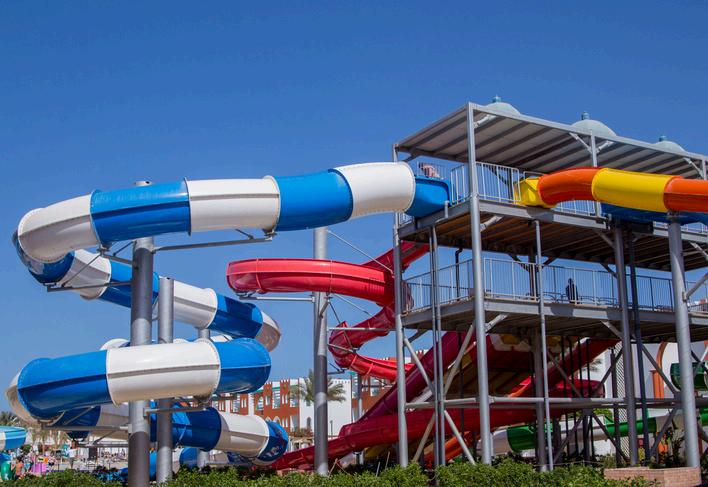
Maintenance can be divided into three main categories: routine (or daily), preventative, and seasonal, which includes start-up and shut-down tasks. These procedures typically encompass inspections, servicing, and the replacement of components. To develop an effective maintenance plan, the pool operator must first determine what equipment or items will be included in the plan. This requires conducting an inventory of all equipment After inventorying, any items that require regular inspection, servicing, or replacement should be organized according to their function. These functions may include deck equipment, pump room items, safety equipment, and office-related materials Certified operators should educate their supervisors on the importance of having a proactive and well-organized maintenance plan This approach is generally more cost-effective than waiting for equipment to fail and require urgent repair or replacement. A calendar should be created, based on the manufacturer's instruction/operation manuals, to outline which maintenance tasks should occur and when they should be performed.
While conducting the inventory, make sure to document the following details for every item:
Equipment name, such as liquid feed pump
Manufacturer
Model number
Cost
Manufacturer’s contact details
Supplier/vendor contact details
Specific maintenance procedures for weekly, quarterly, or annual schedules
Warranty requirements, if applicable
After completing the inventory, the necessary maintenance procedures for each item can then be established.
When conducting an inspection, use all of your senses: touch, smell, sight, and sound Check for vibration or heat Be aware of strange noises. Look for missing or damaged equipment. Listen for unusual sounds like a pump cavitating. Using the information compiled on inventory data forms, create a checklist of mechanical equipment to be inspected daily. Common inspection tasks include verifying:
Securely fasten circulation outlets, including the main drain cover, and ensure the vacuum outlet cover is spring-loaded and in place.
Verify that all lights, timers, and photometric switches are fully operational.
Ensure ladders, handrails, guard chairs, and other deck-related equipment are securely anchored
Check for any signs of deterioration or mold on the ceiling above indoor pools.
Confirm that the flow meter is functioning and providing accurate flow measurements.
Clear the hair and lint strainer of any debris.
Ensure the pump is securely fastened to its mounting and operates without vibrations.
Verify that the vacuum and pressure gauges are in place, functional, and provide accurate measurements
Calibrate all chemical feed systems to ensure proper functioning, and inspect for any chemical leaks or unusual odors.
Confirm that emergency eye-wash and drench showers are fully operational.
Ensure automatic water level control devices are maintaining accurate levels.
Clean filtration media or elements, ensuring no bridging, channeling, or direct water pass-through. The influent and effluent pressure gauges (or vacuum) should be within the normal operational ranges
Confirm all valves are properly tagged and set for any specific water circulation requirements. Keep a valve sequence chart in the filter room for easy reference
Make sure air pressure relief valves on pressurized systems are operational.
Pump and Motor Installation Guidelines
If the circulation motor fails, the facility may have to remain closed until the issue is resolved. The following should be considered for installation and inspection:
If the circulation motor fails, the facility may have to remain closed until the issue is resolved. The following should be considered for installation and inspection:
Place the pump/motor in a clean, dust-free area. Many pump motors are open drip-proof designs that circulate external air for cooling. Air contaminants, such as dust and grass clippings, can clog internal air passages, causing overheating. Verify the system's total dynamic head to determine the system flow rate (see Appendix C-1)
Protect the pump/motor from excess moisture. Avoid hosing down the motor area while running. If there is a flood risk, elevate the pump/motor. Ensure external motor covers do not trap moisture or restrict airflow
Avoid storing or using chemicals near the motor or other hot surfaces. Be aware that a motor that is excessively hot is not always overloaded; check the maximum operating temperature, which for some motors can be 266°F (130°C). When removing pool or jet pump motors for seasonal storage, avoid wrapping them tightly in plastic as temperature changes can cause condensation and negative effects. Higher altitudes require adjustments; thin air impacts cooling ability. If located above 3,300 feet (1,000 meters), use motors with higher horsepower ratings to compensate.
The details covered here represent only a portion of equipment-related daily inspection tasks Depending on the system's complexity and features, additional items may need to be checked. These could include heaters, heat exchangers, blowers, air handling units, vacuum systems, exhaust fans,
system controllers, and extra equipment like ozone generators. Regular equipment inspection is just a component of the broader daily opening and closing procedures for the facility, which are discussed later in this chapter. Not all pieces of equipment need to be inspected daily; some may only require checks on a weekly, monthly, quarterly, or even annual basis The manufacturer's manuals (I/O manuals) offer guidance on this, and the maintenance schedule can be adjusted accordingly.
A visual inspection can identify potential issues, such as improper bonding, before significant damage occurs.
Maintaining equipment can range from simple tasks like adjusting valves occasionally to more complex actions like removing soot that blocks the primary air to gas-fired burners. In simple cases, facility staff may handle the task, while more complex jobs require the expertise of a certified service technician or installer. Regular servicing must follow the recommendations in the equipment I/O manual. For instance, some disinfectant feed devices need monthly lubrication Manufacturers might also recommend cleaning specific components, like the probes on an Oxidation-Reduction
Potential controller, on a set schedule. Many items are essential for proper equipment servicing Here are a few examples:
silicone-based lubricant
Appropriate tools
Safety equipment, including gloves and safety glasses
Replacement parts like gaskets or Orings
Certain equipment components will need to be replaced periodically, similar to how oil and air filters are maintained in automobiles. Below is an example provided by an ozone generator I/O manual, illustrating how a manufacturer may outline a maintenance plan:
Yearly Service:
Replace cooling fan filters
Replace air inlet particulate filter
Replace the Kynar® check valve and rebuild the stainless steel check valve
Remove and clean the glass dielectric in the reaction chamber
Rebuild the solenoid valve on the electrical interlock box
Replace the flange gasket and clean the diffuser in the contact column
Replace the desiccant in the air dryer and indicating chamber
Every three years:
Replace cooling fans
Disassemble and hone the corona discharge reaction chamber
Clean glass dielectrics
Replace O-rings
Every five years:
Replace glass dielectrics
Replace O-rings
This example demonstrates the value of maintaining the I/O manuals and how they can be used effectively for equipment upkeep
Replacing equipment components involves various necessary items, such as:
Safety gear, including gloves and safety glasses
Replacement parts, such as gaskets or O-rings
Components that may need to be ordered from manufacturers or local distributors
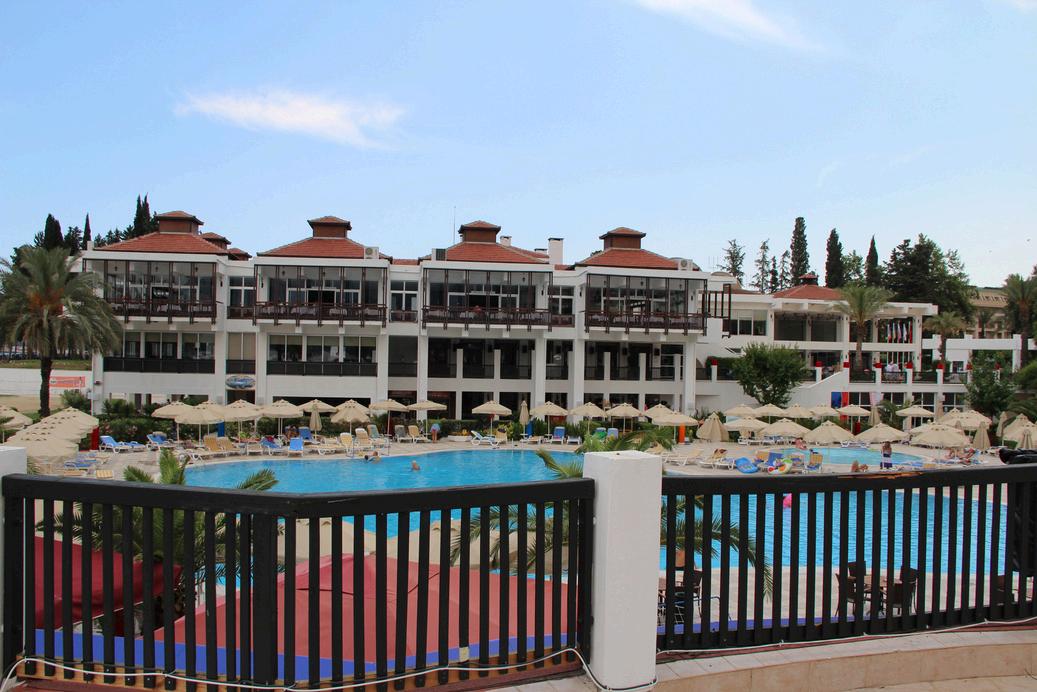
Routine or daily maintenance involves the ongoing tasks performed by the aquatic staff. This process starts and finishes with unlocking and locking the facility, along with managing any security systems Between those steps, the tasks may vary in number depending on the facility's size and complexity. It could be a few tasks or many.
Typically, the first area to be inspected is the pool/spa and its surrounding deck, followed by the pump and filter area The bathhouse and restroom facilities are next, along with the barriers, grounds, and other general areas of the property All of these inspections must be completed before bathers are allowed to enter the facility.
The water quality and clarity must be verified and tested Adjustments to pH levels and disinfectants must be made before the pool or spa opens to bathers.
The main drain cover should be checked to ensure it is securely attached and intact. The pool may need to be vacuumed or brushed before opening. Water levels must be appropriate for effective skimming, as levels too high or too low can hinder this process. Suction openings in gutters and skimmers need to be checked for debris, and any scum accumulation must be cleaned from the waterline. Return inlet fittings and vacuum line covers should be securely in place. All handrails, ladders, diving boards, slides, and other equipment must be properly affixed and in good condition Slides should be checked for weak spots. The deck surrounding the pool should be free of any items, with furniture moved back to ensure at least four feet of clearance, or as required by local regulations. All signs, warnings, and safety equipment must be properly positioned. Waste bins should be emptied, and towel bins placed in their correct locations
The flow meter must be checked, and if required, the filters should be backwashed. Ensure chemical reservoirs are filled, and controller set-points are monitored. Vacuum and pressure gauges must be observed, and the readings recorded. After the pump is turned off, the hair and lint strainer should be cleaned.
It is essential for all pools and spas to be brushed consistently The frequency depends on how much dirt and debris make their way into the water. Brushing helps eliminate debris and biofilm from the walls of pools and spas, making it easier to remove them through circulation The brushes used for debris are typically made of nylon or
polypropylene plastic. For pools or spas with algae buildup, brushing helps loosen the algae, improving the efficiency of disinfectants or algicides Different types of brushes, such as those with stainless steel or plastic bristles, are used based on the surface material plaster or vinyl, respectively. Regular use of a steel brush may cause damage to the pool walls
Debris on the pool bottom not only looks unpleasant but also provides a potential growth area for algae. This debris is removed through suction using a vacuum head, hose, and pole The suction is created by either a separate vacuum pump, a vacuum line connected to the main circulation pump, or a standalone portable vacuum pump and filter Vacuuming is most effective when done after debris has had time to settle, typically at the end of the day. A general guideline is to wait at least two hours after swimmers have left or after debris has settled. It may also be useful to brush the pool before closing and vacuum before reopening. Larger pools can benefit from automated vacuuming systems. Many of these systems are controlled by a wireless remote and timer They are fully automatic and can clean pools with hundreds of thousands of gallons in just a few hours. When these systems are in use, the facility must be closed and secured.
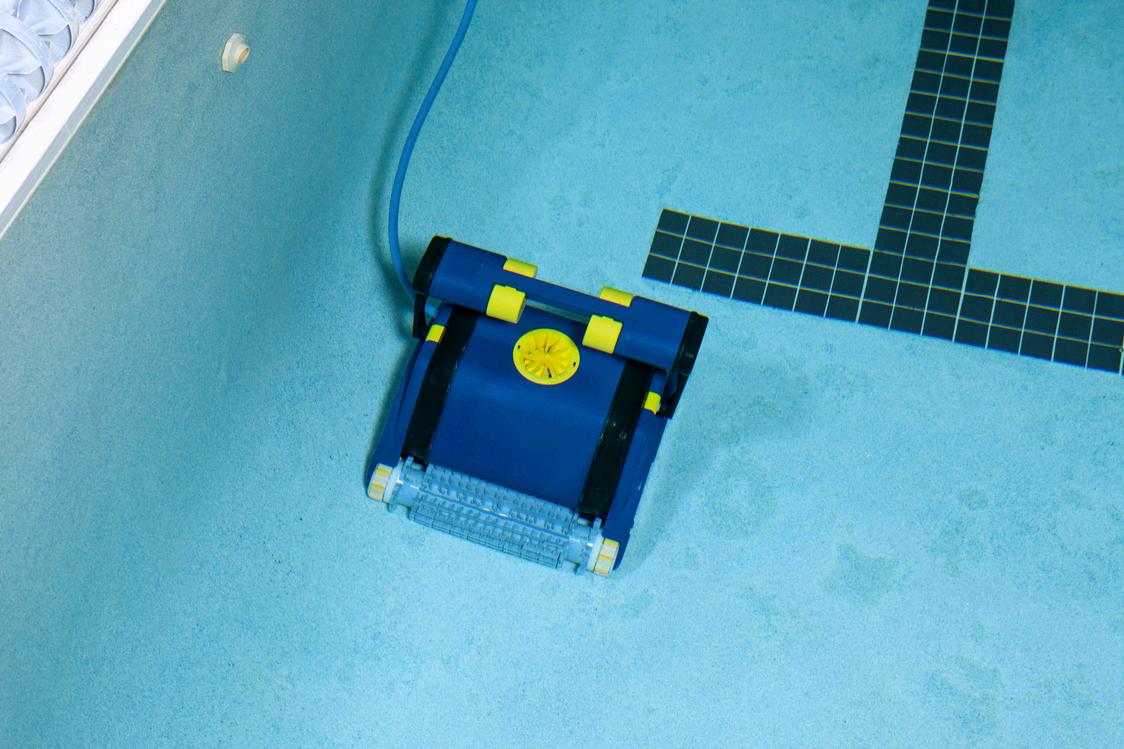
Regular cleaning of the water-line and gutter tile is essential to maintain a sanitary and clean facility. The scum line, a collection of oils and dirt, can be a breeding ground for bacteria. Algae often starts growing between the tiles, particularly in the grout, where oily substances provide nutrients for its growth
Since the tiles typically have a glazed and non-porous finish, it's important to use a non-abrasive cleaner to avoid damaging the glaze. Additionally, the cleaner should be compatible with the pool’s water chemistry, avoiding foaming and the inclusion of phosphates. Many commercial cleaners are available for this purpose on the market.
Preventative maintenance (PM) is crucial to prevent long-term deterioration of both equipment and the facility Some PM tasks need to be performed weekly, while others may be scheduled monthly, quarterly, yearly, or even less frequently. PM requires three essential components: time, materials, and labor The manufacturer’s I/O manual provides specific equipment PM requirements. Facility-specific PM tasks can often be identified through the inspection procedures outlined earlier in this chapter.
Weather plays a significant role in the upkeep of pools and spas in various regions. Some locations may require a complete winterization program, while milder climates might only need partial winterization. Seasonal maintenance plans should be developed with the facility's protection in mind, ensuring an easy start-up for the new season.
An effective winterization plan helps protect the pool structure, mechanical equipment, and surrounding buildings and grounds Such a program will: Mitigate damage from hydrostatic pressure. Protect against rust and wear over time.
Lower the risk of vandalism Include a checklist for dismantling and storing equipment. Ensure proper storage and inventory of equipment.
In some locations, milder climates allow for occasional circulation of water in the pool without fully winterizing. However, in more severe climates, pools may be drained, and the circulation system must be winterized This involves using compressed air to expel water from pipes and applying antifreeze specially designed for pool use to prevent freezing. Always avoid using automotive antifreeze, as it contains harmful chemicals unsuitable for pool systems

Hydrostatic pressure on the pool shell is a concern, especially in areas with high water tables. An empty pool can potentially float out of the ground if the water table rises sufficiently
Rising water applies pressure to the underside of the pool shell, which must be relieved. This is achieved through a hydrostatic relief valve. One or more valves are typically installed at the lowest point of the pool. When groundwater begins to exert pressure on the pool shell, the valve opens, allowing water to flow into the pool. This relieves the upward pressure and prevents the pool from floating out of the ground. In some cases, well points are installed around the pool or spa deck to assist in releasing pressure. These well points are connected to a suction pump that drains the water surrounding the pool shell
Keeping water in the pool during the offseason may reduce damage to the structure. The decision depends on staffing and the ability to check the pool regularly, usually on a weekly basis. Vandalism is also a factor Pool covers help prevent staining, control debris, and allow water retention during the offseason. However, they are not intended to prevent unauthorized access to the pool by people or animals Pool covers are typically secured to the deck with spring-loaded devices, which need periodic inspection to ensure they have not loosened. Tightening these springs will help keep the cover secure and prevent debris from entering the pool along the edges. Certain covers are designed to allow rainwater to drain through, preventing water buildup. Covers that do not drain will require standing water to be removed, as the weight can cause the cover to stretch or loosen, creating a hazard. When treating the pool with chemicals like algicides, operators should check the pool cover’s warranty Low pH or high chlorine levels can damage some covers, potentially voiding warranties. Additionally, local
regulations may require pools to remain covered when full during the offseason.
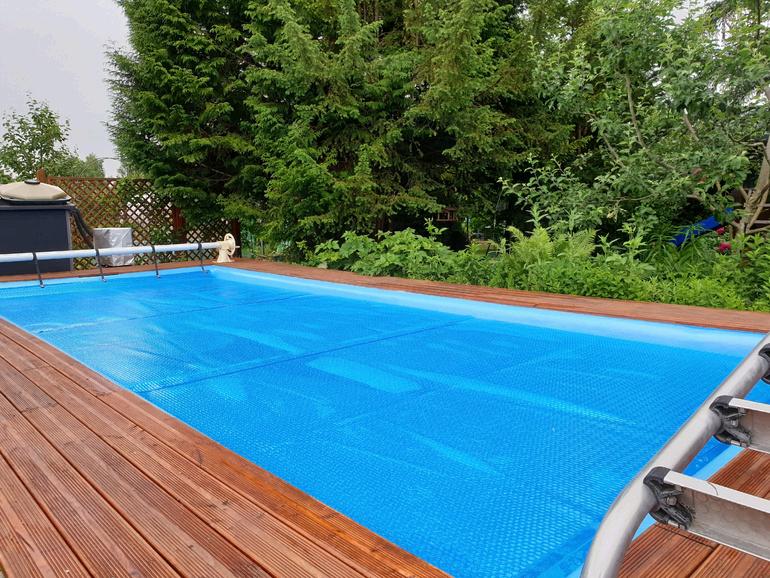
Most winter pool covers are secured to the deck surrounding the pool using a spring-loaded mechanism.
Equipment and materials can suffer damage during the offseason due to rust, cold, moisture, condensation, weather conditions, UV rays, pests, and animal intrusion. These factors, along with normal wear, can shorten the lifespan of a facility and its equipment. For seasonal operations, the operational costs may rival or surpass those of a year-round facility.
In moist, unheated environments, equipment should be lightly brushed or sprayed with an oil-based product or a water-displacement formula. Whenever possible, items should be moved to a warmer storage location If that isn’t an option, the item should be treated, covered, and secured for the winter. Water lines servicing bathhouses, showers, and restrooms must be disconnected and drained. Some lines, due to their design, do not drain fully and need to be blown clear using compressed air or an air storage tank. Small pipes can be cleared using a SCUBA tank, which typically holds 3,000 psi or 200 bar of air Low-pressure regulators are necessary to control the airflow when using SCUBA tanks.
To remove as much water as possible, open and close valves and lines after
blowing out the water, starting from the point closest to the air source. Shower heads and valves should be addressed first, moving to more distant points. Some areas, such as toilets, require manual water removal. Adding non-toxic antifreeze to fixtures prevents remaining water from causing damage. If pipes are dismantled and left open for winter, plugs should be used to stop animals, insects, or debris from entering.
Equipment that requires winterization can generally be classified into two main categories:
Items that need protection from vandalism
Items that must be safeguarded from weather, moisture, and freezing conditions
Whenever possible, outdoor furniture, plumbing, and electrical fixtures should be stored indoors If indoor storage is unavailable, these items should be secured with covers and locked in place using cables or other locking devices. Smaller equipment such as drinking fountains, clocks, speakers, light fixtures, and program or instructional equipment should also be stored and secured indoors to prevent damage or theft. For buildings like pump houses, offices, and staff rooms, special care is required if they lack heating Chlorinators, feeders, boilers, office machinery, and computers must be removed to a warm, secure storage area. If space is limited, equipment should be carefully packed, oiled, and covered for additional protection. Electrical and computer devices should be tightly wrapped in plastic and stored in a locked area. Lastly, before closing the facility, the entire building must be treated for pest
and insect control.
To ensure efficient reassembly, the operator should create a detailed master list of where each item is stored. This list should also include a checklist of steps and parts necessary for reassembly. All hardware associated with each item should be stored in clearly labeled plastic bags. A minimum of three copies of this list and the reassembly instructions should be maintained: one copy with the equipment, one in the pool office, and one offsite to prevent loss due to vandalism, fire, or water damage at the facility
These checklist items are essential to facilitate an easy start-up process in the spring, particularly for seasonal pools that see high staff turnover from season to season
Pool operators should consider methods to prevent property and equipment damage by vandals. Removing attractive nuisances can help reduce the temptation to vandalize. If the facility is less appealing to vandals, there is a reduced chance of injury to individuals attempting to damage property. Cover windows and doors with shutters or plywood to provide protection. Any valuable item, such as televisions, phones, computers, or radios, that may attract a thief or vandal, should either be stored in a locked, secure place or removed from the facility. Regular checks should be done to ensure these storage areas remain secure Additional security measures, such as overhead lighting, alarms, cameras, or time-lapse video recorders, can be implemented to help maintain the security of the facility during the offseason Posting signs to indicate the presence of security cameras and alarms can further deter unauthorized access.
Many health regulations impose few or no requirements for pool maintenance during the offseason. The primary focus during this period is to safeguard the pool from potential damage. Additionally, it's essential to maintain the pool so that it doesn't become a breeding ground for mosquitoes, reducing the risk of diseases such as West Nile or Zika Virus. Chemicals used during the offseason typically prevent algae growth and help oxidize the small organic residues entering the pool. Covering the pool will help accumulate fewer contaminants and debris Lower temperatures in the winter also slow down the growth of microorganisms. Since only rainwater, snow, or domestic water can enter the pool during this time, the demand for chemicals is minimal. Free chlorine, pH, and water balance should still be maintained, though testing may be performed less often, such as weekly. In regions where freezing conditions prevent the use of automatic feeders, chemicals may need to be added manually. Additionally, mechanical equipment should be drained and prepared for winter.
A decision should be made regarding whether to shut off water, electricity, and gas services during the offseason. Local utility companies can help determine the best approach. In some cases, shutting down and restarting utilities may be expensive The costs of shutting down should be weighed against maintaining minimal services throughout the offseason. The pool operator must also ensure that power remains available to run any essential equipment or security systems. Regular monitoring of utility meters can help detect any unexpected usage, which may indicate a leak or malfunction.
Each facility has its own set of procedures for spring start-up. Organizing and scheduling the pool's opening begins during the shutdown phase. Items should be stored in a sequence that makes them easily accessible when needed during the startup process. For example, brooms, cleaning supplies, and tools may need to be accessed before cash registers or program supplies. By carefully closing the facility, the start-up process becomes more streamlined and efficient.
When equipment fails, there's a natural urge to fix the issue quickly to prevent facility closure However, a pool operator should never attempt to handle repairs beyond their qualifications. This principle also applies to other staff members. Any repair or replacement work, especially in critical areas like electrical systems or gas heaters, should be performed only by qualified technicians or contractors who possess the necessary licenses. This is crucial because these tasks involve substantial risks
Each pool and spa facility faces unique operational challenges. Therefore, it’s essential to have a predefined plan in place to address common problems. These action plans or corrective steps should be clearly laminated and posted at relevant locations throughout the facility for quick access during emergencies.
This book offers several troubleshooting tips, particularly concerning waterrelated issues. Make use of the index to quickly locate solutions for specific problems.
The Maintenance Systems chapter stresses the importance of obtaining the manufacturer’s installation and operation (I/O) manual for each piece of equipment in the facility. These manuals are essential as they offer a comprehensive guide to the equipment, including a parts list and troubleshooting steps. Additionally, the Facility Safety chapter outlines critical safety precautions, emphasizing the importance of understanding the Lock Out/Tag Out procedure. This process ensures equipment is completely deenergized while being serviced and prevents someone else from
re-energizing it accidentally during repairs Following local laws, codes, and manufacturer-recommended safety guidelines is vital to ensuring safety during maintenance and repairs.
The details provided in the upcoming troubleshooting section are intended for individuals who possess the proper qualifications, certifications, and the appropriate tools and equipment.
One of the quickest ways to shut down a pool or spa facility is through a pump or motor failure When diagnosing and addressing issues with pumps and motors, operators must only undertake tasks for which they are properly qualified Hiring a certified technician for complex repairs ensures that problems are safely and effectively resolved. Regular maintenance and inspections can help prevent unexpected failures.
If the motor hums or tries to start, follow these steps: Use the correct voltage tester to check the motor line terminals for proper voltage. If the voltage is insufficient, inspect for loose connections, undersized wiring, an overloaded circuit, or any other reason for a voltage drop. Check power sources, breakers, switches, overload circuits, and the reset button Ensure that any timers are functioning correctly.
Inspect the capacitor, particularly for signs of shorting or if it's open Be cautious of capacitors, as they can retain electricity even after the system has been disconnected.
Capacitors should be de-energized by a professional to prevent risk Examine motor windings for shorts or open wires. Rotate the motor shaft by hand to assess its smoothness. If the shaft is tight or does not rotate freely, proceed with the following checks: Ensure the bearings are functioning properly. Look for any evidence that the rotor is hitting the stator Inspect for internal corrosion, cracked end frames, a blocked fan, or any other internal motor obstruction.
Finally, inspect the pump for obstructions, such as debris in the impeller or a bent shaft.
Excess heat is highly damaging to motor function and longevity. Over time, heat breaks down motor insulation, leading to failure The relationship between temperature and motor lifespan is crucial: as the temperature increases, the motor's lifespan diminishes at a faster rate.
A continuously running motor might feel hot to the touch, but this alone does not indicate overheating. Most motors are equipped with thermal overload protection that will shut off the motor when it becomes too hot Once the motor cools, it may automatically restart, but larger motors often need a manual restart after cooling. There are many potential causes for overheating, including:
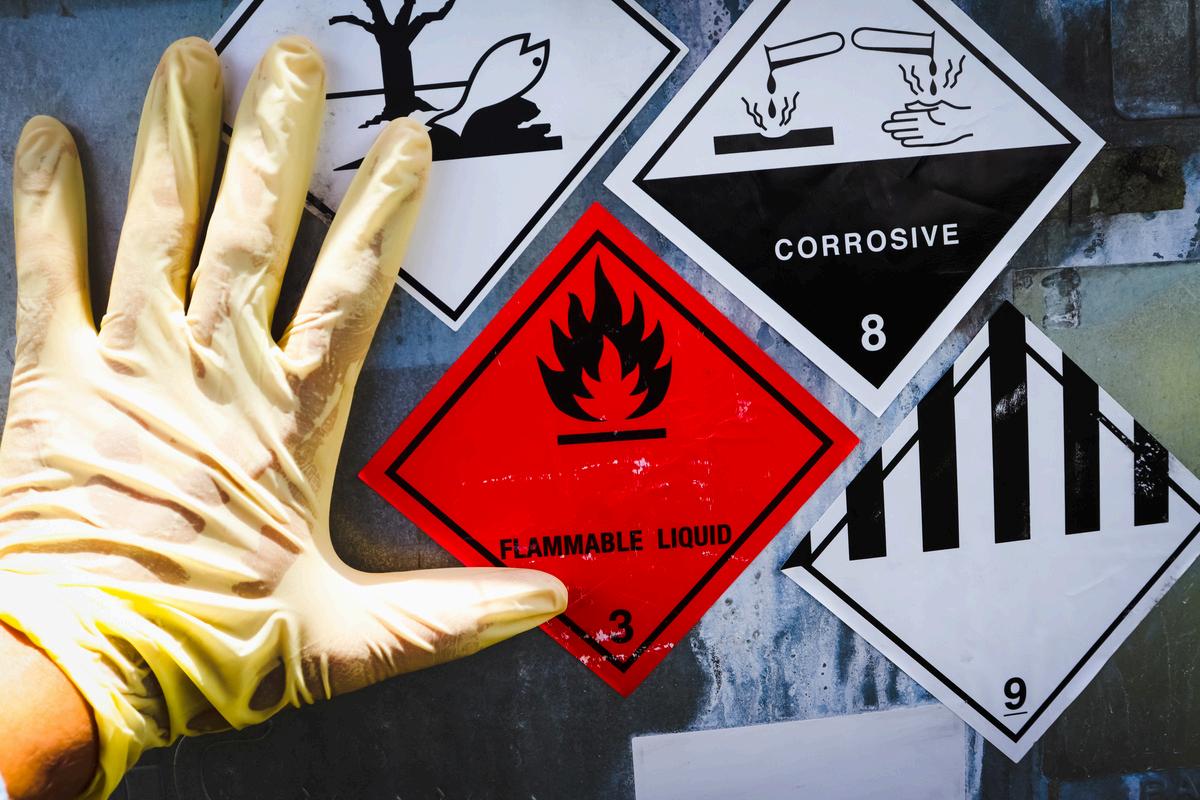
Insufficient power due to undersized or excessively long power wires
Improper wiring that does not meet electrical codes or motor manufacturer specifications. Low voltage at the source or excessive voltage drop caused by undersized wires. Over voltage, which must be corrected by the power supply company.
High ambient temperatures, as pool motors are designed to operate in hotter environments (122°F/50°C) than spa jet pump motors. Lack of adequate fresh air circulation when a motor cover is used, which may trap heat Flooded suction or excessive inlet pressure on the pump, causing the motor to overload. Incorrect motor and impeller pairings, where the impeller loads the motor beyond its rated capacity. A replacement motor must match the original motor’s horsepower and service factor to avoid issues like entrapment or inadequate flow from a smaller motor.

Chemicals that release corrosive fumes and D.E. should always be stored away from motors.
If the motor makes noise, several potential causes could be contributing:
Vibration between the pump base and the surface it rests on, such as concrete, could cause noise. Ensuring the pump is securely mounted can prevent this.
Normal wear and tear may cause noisy bearings. Additionally, if high concentrations of chemicals are fed into the suction side of the pump, it may lead to corrosive damage to the mechanical pump seal, causing leaks and further damage to motor bearings.
Cavitation can occur due to incorrect suction line sizing, leaks in the piping, blockages in the suction line, or low pool water levels, which may also result in noise.
In some disinfection systems, like AOP or Ozone systems, bubbles are a natural occurrence when disinfectant gases are introduced into the return line. However, if bubbles are noticed in systems without such features, the following may be the cause:
A strainer may have a loose cover or a damaged gasket. Check the cover and replace the gasket if needed. The water level in the pool may be too low, causing air to mix with the water through the skimmer. If this is the case, raise the water level.
The skimmer weir, also known as the flapper, might be stuck in the up position, letting air in through the suction line
A leak in the underground suction side piping may be present due to a loose joint, damaged pipes from tree roots, or pests such as termites or ants that chew through flexible piping.
When replacing a pump or motor, ensure you check the total dynamic head (TDH) and calculate the flow rate to meet VGB Act compliance.
A lack of line pressure may be due to a dirty or clogged filter, a blocked return line, or a valve that is either closed or partially closed on the return side. The pump's impeller may be obstructed by debris. Shut off the pump, remove the basket, and inspect the impeller.
The seal might be damaged. For instructions on seal replacement, consult the I/O manual provided by the pump's manufacturer
The handles on most valves are perpendicular to the line when they are closed.
If the pump does not prime, consider checking the following:
Verify that all valves are open after de-winterizing the pool.
A suction leak may exist if the strainer housing lacks sufficient water
There could be a leak at any joint, especially at the first fitting screwed into the strainer housing. The strainer cover might be loose, or the O-ring beneath it could be worn out
The suction pipe may be clogged. Debris might have bypassed the pump basket, potentially damaging the impeller.
The pump may be positioned above the pool water level or too far from the pool, causing a delay in priming.
It is common for pools to lose approximately ¼ inch (6 mm) or more of water within a 24-hour period. Monitoring water loss using a ruler placed on the side of the pool at various times of the year can help gauge expected evaporation If more significant water loss occurs, a leak may be present. Indications of a leak include:
A sudden increase in the water bill
Difficulty in maintaining the chemical balance
Air bubbles in the pool
Loose or cracked tiles
Shifting or cracking in the deck area
Dying plants near the pool due to excess water leakage
A leaking multi-port valve gasket
To confirm a leak, conduct a bucket test. This test should be done during non-use periods with the auto-fill system turned off.
Place a five-gallon (20-liter) bucket on the second pool step and fill it to match the pool’s water level. Use a marker to indicate the water levels inside and outside the bucket. Leave the bucket for 24 hours with the circulation system on. If the water level inside the bucket matches the pool, there’s no leak. If the pool level drops more than the bucket, there is a leak
Repeat the test with the system off to determine if the leak is in the pool structure or the circulation system. For further investigation, professionals can perform more advanced leak detection techniques
Pool water level losses exceeding ¼ inch (6 mm) in a 24-hour period could indicate a leak.
Only qualified personnel should perform troubleshooting on gas-fired heaters:
Never operate the heater if any of its parts have been submerged. Immediately contact a qualified service technician to examine and repair the control system and any gas components that have been underwater.
If the heater overheats or the gas supply does not shut off, immediately turn off the manual gas control valve.
Ensure the top of the heater is clear of any objects. Blocking airflow can damage the heater, void the warranty, or cause a fire.
Be cautious around vent pipes, draft hoods, and the tops of heaters, as these surfaces become extremely hot and can cause severe burns Adding a vent cap can help lower the temperature at the top.
Any issues that could lead to a malfunction in a gas-fired heater must be addressed only by a certified service technician. Always refer to the manufacturer's I/O manual for detailed instructions. Failure to follow these instructions precisely may result in a fire or explosion, leading to property damage, personal injury, or loss of life.
If the heater fails to ignite, review these potential causes:
Is the system switch turned on?
Is the thermostat set to the desired temperature?
Is the pump providing sufficient flow to prevent the low-flow switch from engaging?
Is the gas valve in the correct "on" position?
Is the pilot light on? Is the gas supply valve open? Are all plumbing and filter valves fully open?
If a bypass is installed, ensure it is properly adjusted. If there are sounds of clicking or sparking, but the heater still does not ignite, consult a certified technician
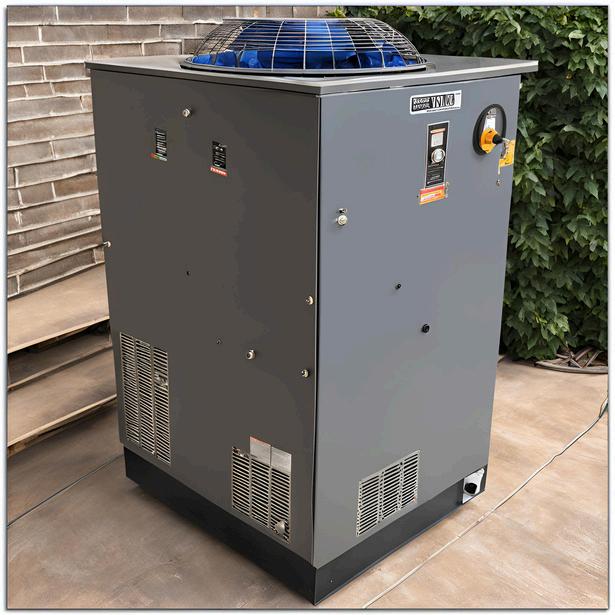
To troubleshoot pilot light issues, consider the following steps: If the pilot light fails to ignite, it might be caused by low gas pressure, insufficient air supply, or improper venting. Ensure the gas supply is turned on; for propane systems, verify that the tank has fuel. Additionally, check for water run-off from the roof or sprinklers that could affect the light. If the pilot light requires frequent relighting, inspect for water run-off from above or sprinklers aimed at the heater, which may be extinguishing the flame. In some cases, a higher exhaust stack may be necessary due to the heater’s location For more complex issues, contact a qualified technician for further assistance.
When troubleshooting low water temperature, consider these factors: The thermostat might be set too low If the heat loss is greater than the heater input, the heater may be insufficient. In cases where the outside air temperatures are too low, using a solar cover can reduce heat loss, assisting an undersized heater If the heater turns on and off before reaching the desired temperature, it may be due to poor water flow. This could be caused by a dirty filter, a closed valve, an external bypass being out of adjustment, reversed water connections, or the pressure switch being incorrectly set. It's also possible that the thermostat is out of calibration or needs replacement Additionally, ensure that the heater’s location is shielded from strong winds, as wind exposure can increase heat loss and reduce heating efficiency
If the heater is leaking water, review the following:
The heat exchanger might be leaking due to corrosion from low pH levels affecting the plumbing lines or the heat exchanger. Alternatively, damage from winter freezing may be the cause. Leaks often appear during spring start-up If the heater only leaks when the burner is lit, condensation may be forming due to the heating of very cold water. Other possible causes include a missing or damaged bypass or excessive water flow through the heater from an oversized pump.
A black or dark exhaust could indicate low gas pressure or poor air supply and venting Check the installation requirements and have a qualified technician evaluate the situation.
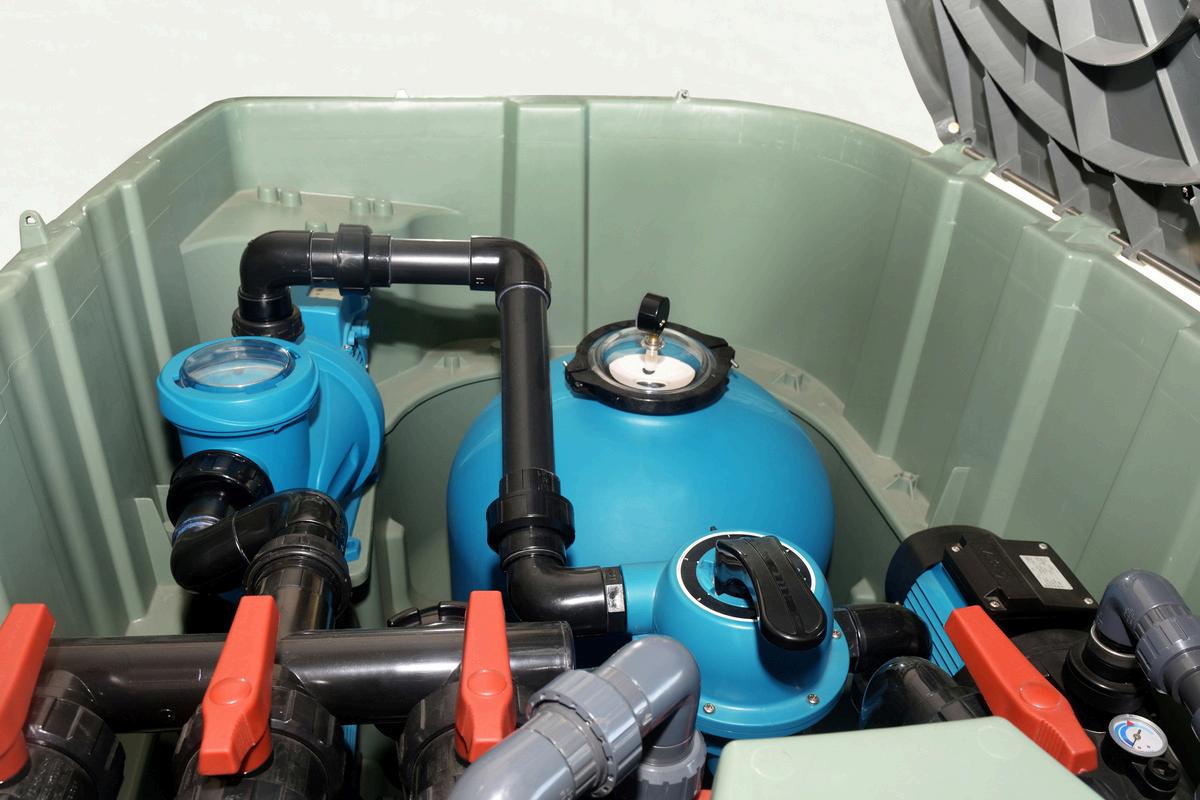
Troubleshooting filters typically does not require dealing with electricity or moving parts, unless the system includes an automatic backwashing feature.
If the heater shows signs of excessive heat damage, such as a warped or buckled finish, the cause could be low gas pressure, a downdraft, improper air supply, or a venting issue In some cases, a high wind stack may be necessary if the heater is installed near a vertical wall
or in a windy location. Contact a qualified service professional to evaluate and resolve the issue.
Copper or Iron Stains in the Pool
Ensure that all chemicals are added to the circulation line after passing through all equipment, especially heaters Disinfectants or an improper chemical balance can damage the protective coatings on heater components, leading to rust. Correct the chemical balance and replace any affected components
When troubleshooting filters, there is no involvement of electricity or moving parts unless an automatic backwashing system is installed However, it may require releasing air pressure in a pressurized system. These precautions are reiterated in the upcoming sections.
If you replace the heater and/or filter, ensure you verify the total dynamic head (TDH) and determine the flow rate to comply with the VGB Act.
Expert assistance is vital to ensure that newly built swimming pools and spas remain current and aren't outdated from the moment they're operational. The continuous introduction of new technologies and construction methods presents numerous options. Whether upgrading an existing aquatic facility or constructing a new one, it’s essential to consult with professionals The initial step for any facility renovation or new construction is to create a wellthought-out plan. This plan’s foundation should focus on the facility’s anticipated usage The user base of pools and spas may evolve as time passes, driven by population changes and shifts in the demographics of age and culture. When planning renovations or new builds, it's crucial to consider how the facility will be used over the next two decades The projected programs for the pool should be aligned with the community's needs. This comparison must be repeated annually, ensuring the facility continues to meet local demand Before initiating any renovation or new project, this assessment is essential.
Although many engineers and architects may hold a Certified Pool & Spa Operator certification, overseeing the construction of a new facility, renovations, or modernizing an existing one is typically outside the pool operator’s responsibilities Such projects are not part of the usual scope of swimming pool or spa operations. However, there are instances where a pool operator may be involved in aspects of planning for renovation, modernization, or even a new facility If so, the operator will manage the facility after construction is complete. It is recommended that the designer or contractor provide comprehensive training to the operator and staff before transferring control. This section outlines factors for pool operators involved in these processes. Before any construction begins, the necessary permits must be secured Most building departments require submission of detailed plans to obtain a permit. In many cases, a professional engineer must certify these plans to ensure compliance with approved engineering standards. The owner or operator must establish clear and defined goals and objectives for the facility. These objectives should consider the demographics of the community the facility will serve Local government resources can help predict potential changes over the next two decades. Any new facility must be designed with future needs in mind, not just current demands Often, a "master plan"
document is developed with input from consultants to aid in achieving these goals.
A facility can range from a simple condominium pool and spa to a complex community park or recreational center featuring interactive water attractions, slides, and competitive swimming or diving areas. In either case, it’s essential to involve a licensed professional engineer for design engineering. Design and renovation decisions are crucial as they impact operators, program managers, and bathers. These designs must focus on minimizing injury risks while creating a pleasant experience for facility users. Over time, every swimming pool or spa will require renovation or modernization. This can range from a simple new pool surface to a complete reconfiguration The circulation and filtration systems may need upgrades, or new disinfection methods could be introduced. Modern amenities such as interactive play zones might be incorporated Whether the renovation is simple or complex, the primary concern should always be potential liabilities and the facility's ability to meet its main objectives. The costs associated with pool renovations often become obstacles to making timely decisions. A damaged pool surface can lead to significant issues like water leaks, algae buildup, or even injury.
For hotels, motels, apartments, and condominiums, a pool or spa in need of renovation can become a management challenge. Other common areas, such as roofs, parking lots, and balconies, typically have funds set aside for renovations, but swimming pools do not always receive the same attention. Modernization can begin as soon as a new pool is put into use By gradually modernizing the pool in small steps, the costs of a significant renovation can be minimized. New pools often lack some features that could lower operating costs, enhance safety, or improve service quality Examples of improvements include installing an automatic pool vacuum system or better storage options for chemicals and equipment. To identify opportunities for modernization, it is recommended to have an external consultant conduct a facility audit every five years. Considerations might include automated chemical controls, chlorine generation, variable speed pumps, or LED lighting, which can all be included in the facility’s annual budget. Other possible upgrades could include relocating safety equipment, installing emergency phones, or other repairs that can be done without downtime. When codes are updated, these changes typically apply to new constructions, not existing facilities, until renovations take place However, even when not required by code, upgrading pools and spas to meet the latest standards is often a wise investment as new regulations and improvements are implemented. This forward-thinking strategy helps distribute the costs of renovations over an extended period, preventing the need for costly, large-scale renovations where multiple upgrades would have to be completed all at once.
A swimming pool or spa facility involves intricate systems including water treatment, circulation, structural elements, environmental factors, and program usage. Every aquatic facility is unique. Any successful renovation or new construction project demands comprehensive knowledge of design, regulatory issues, and program requirements. Typically, the pool owner/operator must make important technical decisions, which often require expertise beyond their background For such cases, it's highly advisable to seek outside professional help. Major projects usually involve consultants, architects, and contractors. Together with the facility owner or manager and staff, these external professionals form the design team. A consultant can help avoid costly design errors that might render a facility obsolete or difficult to operate They can assess the cost-effectiveness of new materials and technologies. Equipment specifications are verified to ensure compliance with operational and program needs The consultant also oversees that the project adheres to all federal, state, and local regulations. Some contractors offer design or engineering services, but it's important to ensure that these professionals are adept in aquatic facility design and construction. The design-build approach, where a contractor manages the entire project, can be efficient, but the owner should carefully evaluate the contractor’s credentials
It’s critical that a contractor has expertise in aquatic facilities to avoid risks associated with poor management or operational mistakes. efore selecting a design-build contractor, ensure that the company has knowledgeable staff capable of understanding the specific needs of the facility and specialized
equipment. Before selecting a designbuild contractor, ensure that the company has knowledgeable staff capable of understanding the specific needs of the facility and specialized equipment.
The pool/spa contractor bears responsibility for material supply, construction, and facility startup They will install equipment as per approved specifications. Selecting the right contractor can significantly impact the success of an aquatic facility. Important considerations include:
Membership in professional and trade organizations
Warranties on design and operations
References related to contract performance, staff training, reliability, and customer service
The contractor’s industry experience Licensing and certification
The percentage of work performed in-house versus subcontracting
Along with evaluating the cost and the intended purpose of the facility, the following information highlights important factors that should be considered during the process of designing, constructing, and renovating a facility.
The materials selected for construction impact both the longevity and function of the facility Some key considerations include:
Materials should be strong, durable, and long-lasting.
The constructed materials must not pose any health risks to bathers or the environment
Pool surfaces should be watertight, slip-resistant, and capable of handling design stresses. Finishes on pool walls should allow clear visibility to ensure objects and surfaces can be seen through the water.
There should be no sharp edges or features that could entangle or injure bathers
Construction tolerances must align with standard practices or relevant codes.
Certain materials, such as mixed metals, may need extra protection, like sacrificial anodes, to prevent galvanic corrosion.
To ensure the safety of bathers, several design elements should be considered: Proper hydraulic design, including features like dual main drains or gravity-fed balancing tanks, can greatly reduce the risk of suction entrapment
Drain covers should meet the standards for preventing entrapment (VGB 2008).
If an over-the-rim spout is part of the design, the location and design must prevent it from becoming a hazard. The design should also consider the proper placement of handholds and the number and location of entry and exit points Improper ladder installation and spacing could lead to entrapment or fatal accidents. Thought should be given to the number and location of lifeguard stations If the facility is used when lifeguards are not present, additional signage may be necessary. For indoor pools, proper lightning protection systems should be installed
Designers must carefully review safety codes and integrate lifesaving equipment into the pool design. The equipment should be highly visible Commonly used items include an accessory pole, which is usually 12 feet (3.66 meters) long, and a throwing rope connected to a ring buoy. The rope should be about 1 5 times longer than the width of the pool, allowing it to be thrown to bathers in distress. In most cases, codes also require first aid kits, emergency phones, signs, and instructions for emergency shut-off switches Proper barriers should be designed to prevent unauthorized access to the pool, thus reducing the risk of drowning or injury. These barriers are vital when a pool lacks continuous supervision It's recommended that barriers do not block the view of the pool, with structures like handholds or horizontal members, which facilitate climbing, discouraged. The space between the pool deck or ground and the bottom of the barrier should be minimal to prevent a child from passing underneath.
Fences should also be designed with spacing to avoid children climbing through, especially when diagonal members, like lattice or chain link fences, are used. The opening formed by the diagonal sections should be small enough to prevent a child's foot from entering Gates for pool enclosures must open away from the pool, be self-closing, and equipped with a self-latching mechanism. The Consumer Product Safety Commission (CPSC) mandates that gates with a latch release mechanism under 54 inches (137 cm) from the ground should have the release at least 3 inches (7.62 cm) below the top of the gate. This design prevents a child from reaching the latch from the outside and opening the gate.
Barriers must be designed to prevent any unauthorized access.
The plumbing system for releasing backwash water and sewer lines handling that water must have adequate capacity Local water districts can provide guidelines on the amount and quality of water that is permissible to discharge into the sewer. Water used to fill or maintain a swimming pool or spa must be potable/drinking water Many codes require that the water distribution system for the pool or spa be safeguarded against backflow and backsiphonage. Therefore, an air gap should be installed to prevent pool or spa water from contaminating the drinking water supply.
When planning, the intended use of the pool must be carefully evaluated If bathers will use the pool at night, appropriate deck lighting and underwater lighting for bathers or security personnel should be included. Water depth should align with the pool's intended use, whether for swimming, wading, diving, activity pools, catch pools, leisure rivers, vortex pools, spas, therapy pools, etc. Consider using controllers, probes, and automatic feeders, especially for pools with high usage or smaller volumes, such as spas and wading pools.
When planning a deck for a pool, several factors should be taken into account. Federal, state, and local regulations often establish the guidelines Here are a few considerations:
Pool decks should be equipped with drains, and the surface should be slightly sloped to guide water into them, preventing standing water It may be helpful to flood the deck during construction to ensure proper drainage.
The surface and elements like copings, markers, ramps, and steps must be slip-resistant to minimize the risk of falls.
Any transitions between the deck and other surfaces should be constructed to avoid creating tripping hazards
Expansion joints should be included in the deck design to limit cracks and allow for slab movement. Maintenance schedules for these joints should be provided by the builder.
Decks should feature access covers that allow for easy access to essential valves.
Hose bibs should be designed to prevent backflow into the potable water system, with water keys provided to avoid tampering. Warning signs and depth markers should be recessed into the deck for visibility and safety
Different geographical areas have specific needs related to climate conditions. In colder regions, the risk of freezing temperatures and potential damage to pipes and surfaces must be taken into account. Conversely, in areas with high water tables, the pool's design may need to include hydrostatic relief valves and sub-surface site wells These systems allow for de-watering or
monitoring to prevent the pool structure from lifting or floating if water inside is drained too low. Additionally, when designing the pool surroundings and incorporating water features, it’s essential to consider the loss or retention of heat, as this can either be a desirable or undesirable characteristic depending on the climate.
Additional equipment is often installed around pools. For instance, if a diving board is included, it is important to follow guidelines from organizations like the Federation Internationale de Natation (FINA), the board manufacturer, and other relevant bodies to ensure the proper water envelope under the board. Similarly, if a slide is to be part of the pool, designers should review guidance documents from the Consumer Product Safety Commission (CPSC).
Dressing facilities and restrooms are essential for any public pool or spa unless easily accessible elsewhere in the facility. Various codes and standards dictate their design, which includes lighting, plumbing, number and location of toilets, sinks, trash receptacles, soap dispensers, shatter-resistant mirrors, and baby-changing stations. The design must also consider shower fixtures, drinking water fountains, partitions, flooring materials, slip resistance, floor slopes, drain placement, and compliance with the Americans with Disabilities Act (ADA).
Depending on the intended use of the facility, additional factors may come into play, such as the inclusion of areas for visitors and spectators In larger facilities, these aspects can be more significant, requiring careful planning. Although eating and drinking within the pool area are typically prohibited, exceptions can be made if the facility is designed appropriately, and only unbreakable containers are used.
Some pools or spas require the interior surface to be replaced every few years, although some claim to last for decades. Most pools or spas, however, need resurfacing every five to eight years. Resurfacing is essential when the pool's condition becomes hazardous to users. Regulations may demand that refinishing occurs if the surfaces cannot be kept safe and sanitary. Operators should consult relevant guidelines.
Most commercial pools have a plaster surface, made from aggregate, cement, and sand, often referred to as gunite Gunite is applied to form the pool shell When the plaster surface is first applied, most of the hydration happens within the first 28 days, during which time it is vulnerable to staining, scaling, and discoloration Brushing and closely monitoring water balance is crucial during this period to prevent deterioration. More information on proper start-up processes for new plaster surfaces is available from the National Plasterers Council or at www.npconline.org.
The Water Balance section provides advice on how to maintain the surface. Properly balanced water preserves the surface by preventing corrosion and the formation of abrasive scales.
Dual handrails may not always comply with ADA requirements.
Pool or spa resurfacing is considered a minor renovation that should be periodically assessed. Certain key items should be evaluated and made part of the resurfacing process. Addressing these elements during resurfacing ensures compliance with current standards. These items include:
Ladder: Detach and reinstall the ladder to ensure its secure placement, preventing entrapment behind it. Typically, a gap between 3 and 6 inches (7.5-15 cm) is required. This includes often replacing or repairing decorative escutcheon plates around ladder mountings. Manufacturer guidelines or local codes specify the ladder height and handhold diameters.
Handrail: Jurisdictional codes often define handrail design and installation, which are securely mounted on the deck and bottom step. Handrails commonly extend laterally from the bottom step and escutcheon plates may need repairs Historically, handrails are 1.90 inches (4.8 cm) in outer diameter (O.D.). New ADA guidelines (ADAA 4.26, 2002) call for a 1.25 to 1.50 inch (3.17 to 3.8 cm) O.D. Consult professionals for appropriate handrail selection.
Steps and Benches: Considerations for step and bench features should be made to ensure they are visible and safe for bathers Bullnose tiles or contrasting dark colors are commonly used for markings, and care must be taken not to degrade their visibility. Horizontal marking tiles should withstand foot traffic and exposure
Slope Break: Pools with varying depths feature slope breaks for transitions from shallow to deeper areas. Safety ropes, markers, and depth indications should be placed prior to slope increases to warn bathers of changing depth.
Safety Line: Installed into recessed anchor cups, safety lines prevent injury. These lines can be removed in certain conditions, such as when lifeguards are present Recessed cups protect passersby from injury.
Depth Markings: Codes regulate the placement and size of depth markers to enhance safety. Permanent slipresistant tiles are often used on horizontal surfaces.
Gutter: When resurfacing, jurisdictional codes may require gutter repairs, especially to ensure drain compliance with new standards
Inlets: Mushroom inlets are replaced with flush-style inlets for improved safety and to reduce bather injuries.
Suction Outlets: Public health regulations focus on suction entrapment prevention through outlet design improvements, including proper grates and drain placement. Compliance with federal laws such as the Pool & Spa Safety Act is mandatory.
Barrier Fence and Gates: Gates and barriers should be reviewed during resurfacing, and this is further discussed under the “Design, Construction, and Renovation Guidelines” section.
Pool Deck: Any resurfacing should involve deck evaluation to address damages, including cracks, trip hazards, and disabled access considerations.
These considerations ensure a safer, more efficient facility after resurfacing.
Before starting any renovation or construction for an aquatic facility, it is important to seek advice from legal counsel regarding compliance with the Americans with Disabilities Act (ADA), as enforced by the Department of Justice (DOJ).
If accessibility is deemed necessary, the ADA Accessibility Guidelines (36 CFR Part 1191) should be observed. A study by the National Center on Accessibility explored methods to provide access for bathers with disabilities. This research confirmed that all pools should have at least one accessible entry and exit, and many believe more than one option should be provided.
Participants emphasized the importance of independently using accessible features While no single method was preferred by everyone, most favored lifts, ramps, stairs, and zero-depth entry. Stairs were favored mainly by those with mobility, while non-ambulatory individuals preferred ramps, zero-depth entry, moveable floors, and lifts.
When planning or renovating a facility, it's essential to consider accessibility options. Regulations often require at least one accessible water entry and exit point for patrons with disabilities. The access point should be positioned on an accessible route. For pools exceeding 300 linear feet (100 meters), additional accessible entry/exit points might be necessary.
If only one accessible entry is provided, it’s typically a pool lift, ramp, or zerodepth entry. For pools with two accessible entry/exit points, each should use a different type of entry Possible entry options include transfer walls, movable floors, steps, ramps, pool lifts, or zero-depth entry. For two accessible entry points, placing them at opposite
ends of the pool is advisable to enhance accessibility.
Pool lifts are valuable features for bathers with disabilities. Designers should collaborate with equipment providers to ensure lifts meet current standards. Lifts must be positioned with ample deck space on all sides, allowing users easy access. The seat should be set at a height above the deck to prevent accidental falls as users enter Typically, seats are positioned 17 inches (43 cm) above the deck, are 19 inches (48 cm) wide, and come with footrests and armrests. They often submerge up to 20 inches (51 cm) below water level Controls are conveniently placed on the front, making them accessible from both the deck and water, with minimal force required to operate them. The lift should support a weight capacity exceeding 300 lb (136 kg).
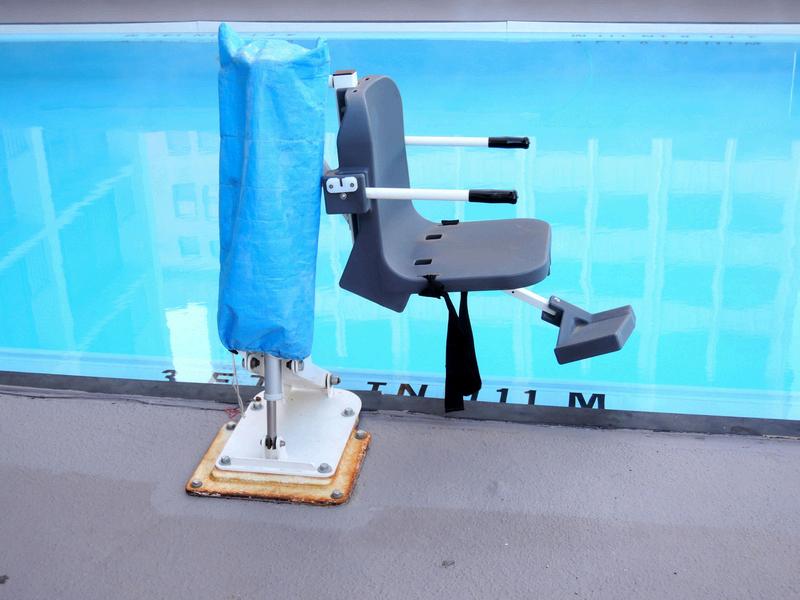
When pool ramps are part of a facility, they must be designed and maintained to accommodate individuals with disabilities The ramp should be firm, stable, and slip-resistant. Moreover, the slope should not be overly steep; typically, for each foot (30 cm) of vertical drop, there should be 12 feet (3 7 meters) of horizontal length (1:12 slope) Risers should be relatively low, generally under 30 inches (76 cm). Underwater landings are usually 24 to 30 inches
(61–76 cm) below the water surface, with dimensions of 60 inches (152 cm) in length and width. Ramps should feature handrails that are correctly spaced and designed to assist users with disabilities
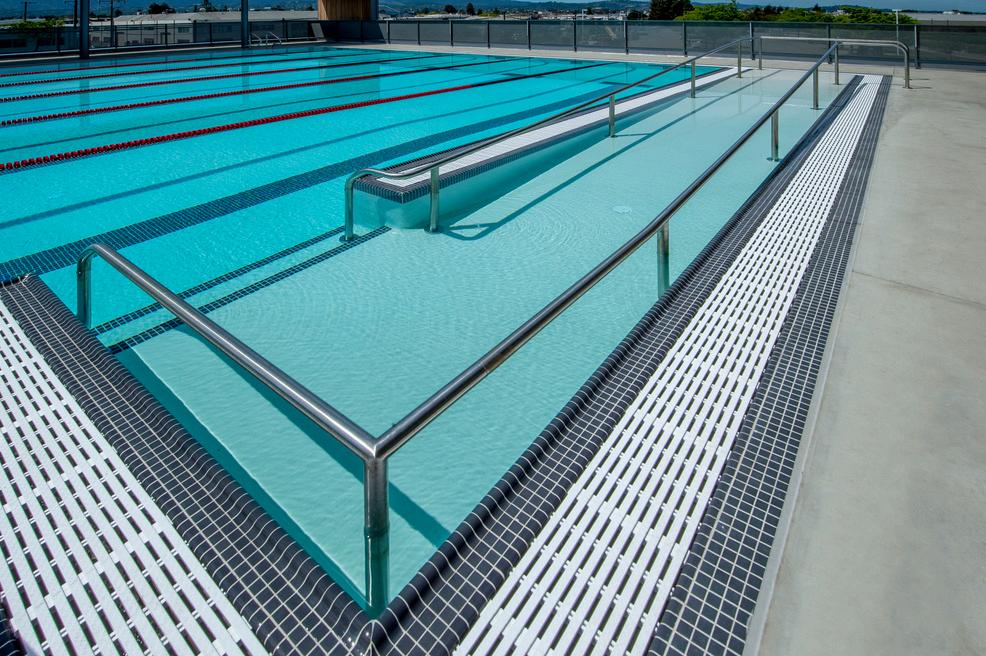
A zero-depth or beach entry provides an accessible option for bathers with disabilities to enter the water. The entry surface must be stable, firm, and slipresistant, maintaining a maximum slope of 1:12 down to a depth of 30 inches (76 cm). The slope's steepness can impact other design elements. For example, ramp guidelines should be considered. It is essential to consult applicable codes to ensure that necessary features like handrails, platforms, and aquatic chairs are included if needed.

A transfer wall provides a way for individuals with disabilities to enter the pool by transferring from their mobility aid to the wall and then into the water Proper design should include sufficient deck space at the transfer wall for ease of access. Typically, transfer walls have a height of 17 inches (43 cm) and a width of 12 to 15 inches (30-38 cm) They should be smooth and free of sharp edges, with appropriate handrails installed.Another accessibility option is a moveable floor, ensuring that the pool edge height does not exceed 0 5 inches (1 3 cm) above the floor to prevent tripping hazards and allow smooth wheelchair movement. A nearby sign should mark changes in depth, and a visible gauge should display the current depth at all times
Transfer steps enable users to enter the pool by moving from a mobility aid to the steps, then descending gradually into the water. The design ensures a firm, non-slip surface with smooth, rounded edges. Deck space adjacent to these steps should be ample. The highest step should be no more than 17 inches (43 cm) above the pool deck, and the risers should measure between 5 to 7 inches (13–18 cm), with a depth of at least 18 inches (46 cm) below the waterline. Each step should be about 12 inches (30 cm) deep and 22 inches (56 cm) wide, with at least one securely mounted handrail In some cases, stairs provide additional access. These stairs must be stable, slipresistant, and uniform in riser and tread dimensions, at least 11 inches (28 cm) wide, and have handrails at different levels above the surface: typically at 36 inches (91 cm) and 21 inches (53 cm). Rails should avoid encroaching into the pool area. For wading pools, spas, or pool areas
that require various entry options, facilities can include transfer walls, ramps, or lifts. If lifeguards are absent, it is recommended to provide emergency notification devices, with their placement clearly marked for accessibility needs.
Some pools have removable devices that aid bathers. When such a device is in use, it should remain in place until all users have exited the pool
These devices need to be readily accessible, well-maintained, and fully operational, including a charged battery if needed. If the device is not installed, having a sign instructing users on how to request its setup can be beneficial
Aquatic Play Features (APFs) represent one of the fastest-growing areas within the aquatic industry APFs are specially designed for entertainment, offering features such as body slides, raft rides, wave pools, and more. These pools are built to provide a distinct experience, requiring a different operational approach compared to traditional swimming pools.
To maximize the enjoyment of these features, APFs often extend further from the pool deck to the water and typically include larger shallow water areas Additionally, APFs are characterized by high-velocity water flows, wave surging, vehicles that transport bathers, and pressurized water sprays. These features create dynamic effects, such as waterfalls, river rides, and more, pushing water upwards for an exhilarating experience. However, managing APFs with the same traditional swimming pool rules can lead to system issues Problems may arise, such as cloudy water, high water replacement costs, increased use of disinfectant or
oxidizing chemicals, and short filter runs. The rise in the number of facilities featuring APFs, particularly waterparks, highlights significant innovation in aquatic recreation While pool operators are not responsible for designing or renovating these features, they must understand their function. This awareness helps operators better contribute to the facility's planning and future operations once construction is completed.
Numerous design considerations are essential for waterparks, including:
Ensuring sanitary water with heavy use
Safety design for wave action pools
Vortex pool design
Barriers to separate children from their guardians
Rules for food and drink in and around water features
Parameters for slides, including height and safety measures
Circulation and turnover for heavyuse pools, lazy rivers, and wave pools
Safety barriers for wave pool areas and waiting lines