



If it feels like you’re surrounded by data in your business, you’re not alone. The real challenge is understanding which numbers are informative and which are just noise. That’s where key performance indicators (KPIs) come in. KPIs can turn business activities into measurable numbers, allowing companies to monitor performance, spot issues, and rally teams around shared goals.
At Willoway Nurseries in Avon, Ohio, KPIs go beyond management tools and have become part of the company’s culture.
“You can’t manage what you don’t measure,” says Emily Showalter, Chief of Human Resources at the family-owned nursery. “KPIs create clarity: the number is the number.”
Willoway has tracked performance metrics for years, but its approach took on new importance as the company adopted openbook management (OBM) roughly a decade ago. With financial and operational data shared company-wide, KPIs help provide context for the staff’s understanding.
“Transparency is something employees want,” Showalter says. “They want to be involved and understand the business and their role in it, and that comes back to numbers.”
KPIs help employees answer a question that is important to them: How am I doing?
While completing tasks may feel productive, the numbers behind that production—the KPIs—offer a concrete measure of success.
Willoway embraces the idea that “everyone has a number,” regardless of job function, explaining that any role within the company can have a number tied to it.
Introducing KPIs to a business isn’t always easy. Measurement can represent change, and change can feel uncomfortable.
In Willoway’s case, they addressed this potential unease by acknowledging that change takes time and repetition.
“You have to explain something multiple times before it is really understood,” Showalter says.
Education is key. Rather than using KPIs as mandates, Willoway focuses on explaining why a metric matters and how it connects to larger business goals.
“We don’t want a ‘because I said so’ culture,” Showalter notes. “We want these numbers to be helpful, so you know if you need help or resources to get the numbers back on track.”
Only when a task is measured can you know for sure that performance is off track. Viewed this way, KPIs become opportunities for change and are not seen as failures.
Willoway’s employees are encouraged to raise notice when KPIs are outside of acceptable ranges to assistance in the form of help and additional resources can be reallocated.
“All of our KPIs ultimately flow up to the big numbers—sales, expenses, profit,” Showalter says. “They give us a forward-looking approach instead of a reactive one—they’re early indicators that something’s coming off track.”
That forward-looking approach is especially critical in horticulture, where companies manage live, perishable products. Metrics like shrink, labor efficiency, and customer satisfaction can signal emerging issues before they become costly problems.
For KPIs to work, they must be visible and discussed within the organization regularly.
“They can’t sit in a binder collecting dust,” Showalter says. “You have to talk about them frequently, even when the news isn’t good.”
That latter point is key, as the team may be able to right the ship.
“We have a whole team of people that are smarter than one person alone,” she explains. “So, for KPIs that are off track, we want to use their input.”
For businesses just getting started, Showalter’s advice is simple: pick a goal, choose a few meaningful metrics tied directly to that goal, and communicate consistently. As the team as Willoway can attest, KPIs are only valuable if you actually use them. Track them, talk about them, and use them, because insight without action is just numbers on a page.
Profitability captures the full picture of the business, rather than sales and expenses alone. Sharing high-level profit data helps employees understand how daily decisions affect the company’s health.
Common measures include payroll as a percentage of sales, payroll relative to inventory on hand, and sales per full-time employee. Labor is a major expense, and efficiency metrics help keep it in check.
For businesses handling live, perishable products, shrink is a critical KPI. Tracking losses helps identify operational or cultural issues before they escalate.
A Net Promoter Score (eNPS) is measured through surveys that ask whether employees would recommend the company as a place to work, providing insight into culture, retention and long-term performance.
Returns, credits, and customer feedback all offer measurable data. Tracking why products are returned or credited gives voice to the customer and highlights areas for improvement.

Public policy includes the laws, regulations, rules, and trade decisions made by federal agencies and Congress that govern how businesses operate. While these decisions are often made in Washington, D.C., their effects are felt on the job and seen on the balance sheet. A change to a temporary labor practice, a new tariff, or a supply chain restriction can quickly disrupt payroll, staffing, or production schedules.
In horticulture, policy decisions touch nearly every part of the business. Wage regulations like the Adverse Effect Wage Rate (AEWR) influence labor costs and seasonal hiring. Trade policy can affect the availability and price of essential business and crop production inputs. Even small regulatory shifts can ripple through production timelines, supply chains, and customer pricing.
The Department of Labor’s October 2 Interim Final Rule on the AEWR (IFR) shows how quickly federal policy can impact horticulture operations. Changes to wage calculations affect labor budgets, workforce planning, and compliance obligations, often with little lead time.
Because these decisions directly affect the bottom line, engagement matters. AmericanHort responded by working with the Department of Labor, the U.S. Department of Agriculture, and the Trump Administration. The team submitted formal comments, coordinated coalition advocacy during the government shutdown, provided legal breakdown through affinity partner JPH Law, and educated members to ensure grower concerns were clearly represented in the policy process.
It’s important to note that while AmericanHort has been awaiting formal guidance from DOL itself, a lawsuit from United Farm Workers challenging the IFR has prevented DOL from releasing any further guidance.
Trade policy can be just as disruptive. Proposed tariffs on Canadian sphagnum peat moss, a critical growing media input, would significantly increase production costs for growers nationwide. AmericanHort led coordinated advocacy with industry partners, submitting multiple letters to
Congress and the Administration to urge tariff exclusions or reduced rates.
The stakes are high: the affected horticultural industry contributes $527 billion annually to the U.S. economy, and with limited domestic peat resources, growers rely heavily on imports, making these policy decisions critical to operational stability and food security.
While individual voices are important, collective industry input carries far more weight. Policymakers rely on real-world business data and grower experiences to shape workable policies. When the horticulture industry speaks together, it can influence outcomes that affect daily operations.
Getting involved does not have to be complicated. Responding to advocacy alerts, sharing your experience, or participating in fly-ins all help ensure policies are shaped with your business in mind. Advocacy is ultimately about safeguarding the industry, your operation, and your ability to grow.
AmericanHort focuses on policies that most directly affect horticulture businesses. These priorities reflect where policy decisions have the greatest impact on daily operations and long-term industry growth.
Advocating for H-2A and H-2B reforms to expand access to legal, reliable workers, manage rising labor costs, and support long-term workforce development.
Supporting timely reauthorization and strong Horticulture, Research, Rural Development, and Crop Insurance provisions critical to grower success.
Championing increased funding for USDA research programs that drive innovation, sustainability, and competitiveness across horticulture.
Pushing for tariff relief, fair trade policies, and improved transportation and port infrastructure to ensure affordable, reliable access to essential inputs and timely product delivery.
Contact the AmericanHort Advocacy & Government Relations Staff



Matt Mika Vice President, Advocacy & Government Affairs
MattM@AmericanHort.org 202-789-8113
Rachel Pick Senior Manager, Advocacy & Government Affairs
RachelP@AmericanHort.org 202-789-8112
Kamron Newberry Regulatory and Trade Policy Coordinator
KamronN@AmericanHort.org 202-789-8114
to our January winner Joanna Hinton
Hinton’s Orchard & Farm Market Hodgenville, KY
In each issue of Connect, we’ll be “hiding” a new small graphic. When you find it, email us at ConnectSeekAndFind@AmericanHort.org, and tell us where you found it.
For this issue, respond by April 3, 2026.


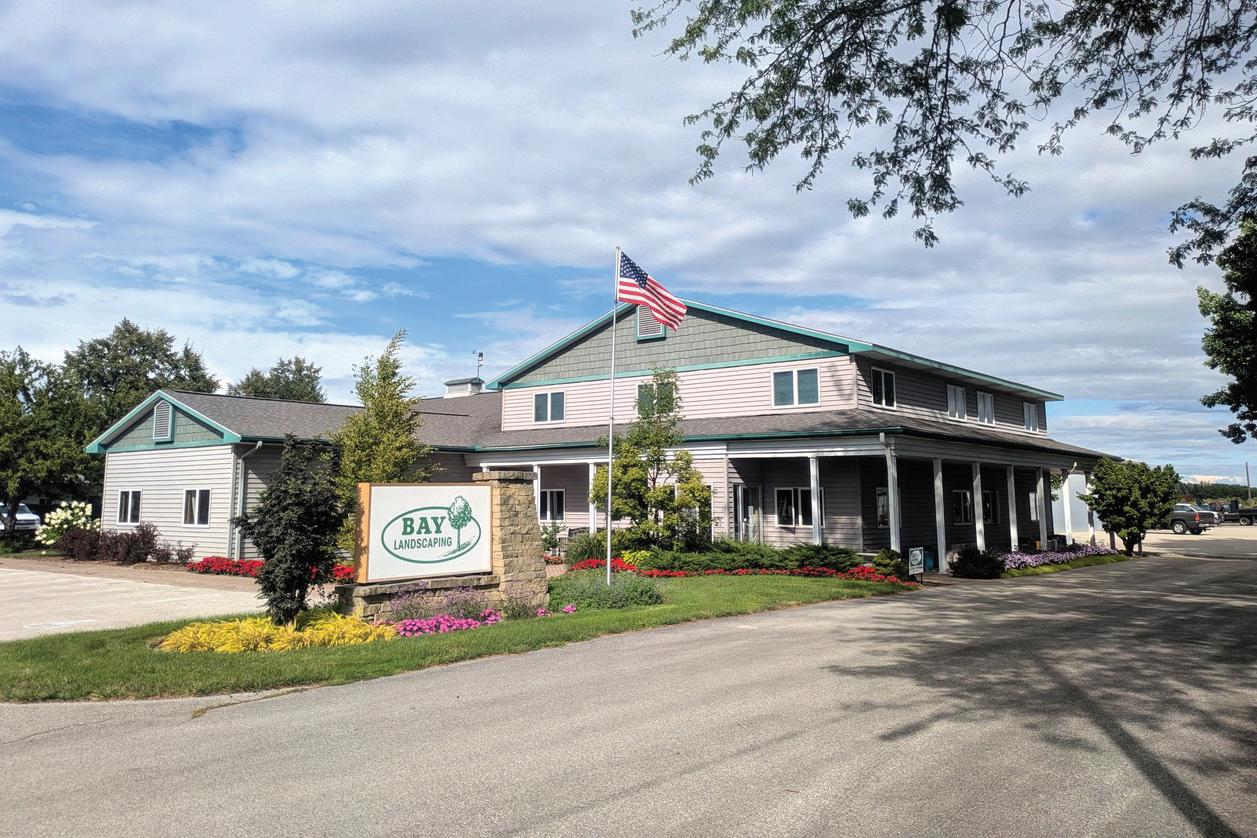
Since 1948, Bay Landscaping has been shaping the landscapes of Michigan’s Great Lakes Bay Region, a community tucked inside the “thumb” of Saginaw Bay. Founded by Dick and Marilyn Somalski family, the company today is more than landscaping alone. The design-build landscape firm also runs a 70-acre nursery producing evergreens, shade and ornamental trees, and shrubs, with a small but growing garden center component.
With projects ranging from retail shrub suggestions to installs in the six-figure range, the entire Bay Landscaping team is dedicated to solving clients’ sitespecific challenges.
A plant lover at heart, Bay’s current owner Jerry Somalski has decades of operating experience to draw on when reflecting on the shifting horticultural industry. In roughly the last decade especially, he’s seen something changing in his landscaping projects: There’s more mulch and stone in landscapes than living plants.
“It seems like our sales have become more hard goods than green goods,” Jerry notes, half-jokingly calling it “going back to the Stone Age.”
His daughter Hannah Somalski adds, “We are first and foremost about plants, trees and shrubs. That’s our bread and butter and what we really care about. Yes, we’ll make
you a gorgeous patio, but we want our plants to shine.”
Bay Landscaping leans into customer education and engagement. The company’s website features articles and Q&A content that have generated inquiries from people in California, Florida, and across the country seeking reliable information, according to Jerry.
They’re also in the midst of a major internal tech and website update, which will keep that educational focus front and center.
“As much as we are a business of selling plants and installing landscapes,” explains Hannah. “We also want to be a resource
and connect people with good information so that they can make informed decisions about their landscape.”
In addition to the website upgrade, the Somalskis are intent on further developing their nursery and retail into a destination.
“We want to be a sanctuary,” says Hannah. “If someone wants to look at plants and sit down and have some coffee somewhere, they can come do that here.”
Currently they host popular make-and-take events such as fall mums and gourds to winter planters, and these bring customers to their doors, despite there being several turns off the main street in town. “These events bring people into the nursery, and they say, ‘Oh, I didn’t know I could shop here.’”
For Jerry and Hannah, being involved in the horticulture industry and learning from peers are central for surviving and thriving in business. The family has long been active in AmericanHort and peer group LANCO.
Jerry believes active participation is essential in industry associations, saying, “In associations such as this you're looking for members that are joiners and participators, because if you're not there at the one or two meetings a year, not only are you missing what we have to give to you, we're missing what you have to give to us.”
That commitment to learning extends beyond associations. Every day is a chance to learn something new that you can contribute to your career. Not letting moss grow under his feet, Jerry is even studying for his arborist designation at 68.
It takes dedication and a whole lot of effort, but Hannah sums up what keeps them going, saying, “At the end of the day, the passion that we feel for the industry is driven by our desire to learn about new plants and new people, to get to know our world better. That drives us to continue to investigate, make connections and enrich the world that we live in.”
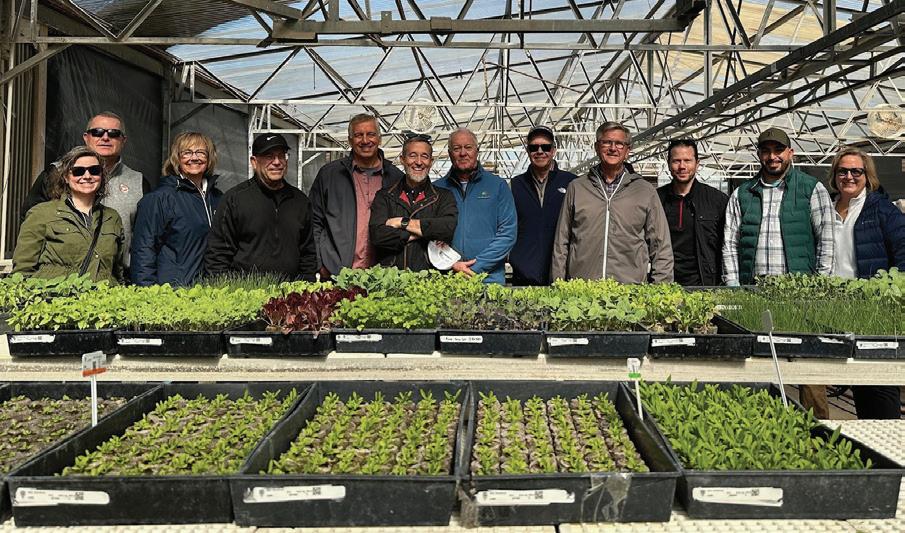
The AmericanHort Board of Directors met outside Tampa, Florida in February for strategic discussions and site visits with Speedling Inc. and Dosatron International
Speedling is a leading North American producer of containerized transplants, supporting growers with innovative propagation and production solutions. Dosatron is a global manufacturer of waterpowered dosing and injection technology, providing precise, electricity-free solutions for nutrient delivery, irrigation, and crop protection across horticulture and agriculture.
Engaging with member companies fosters meaningful dialogue about the future of the green industry and helps ensure AmericanHort continues to support the evolving needs of its members.
Voting is open for the next Board of Directors and 2026–27 officers. The Board helps shape the direction of AmericanHort, and each member and officer is selected by you. By participating in this year’s election, you help ensure the AmericanHort leadership reflects the needs and vision of the industry. Cast your vote by March 27, 2026.
Visit AmericanHort.org/BoardApply or scan the QR code.
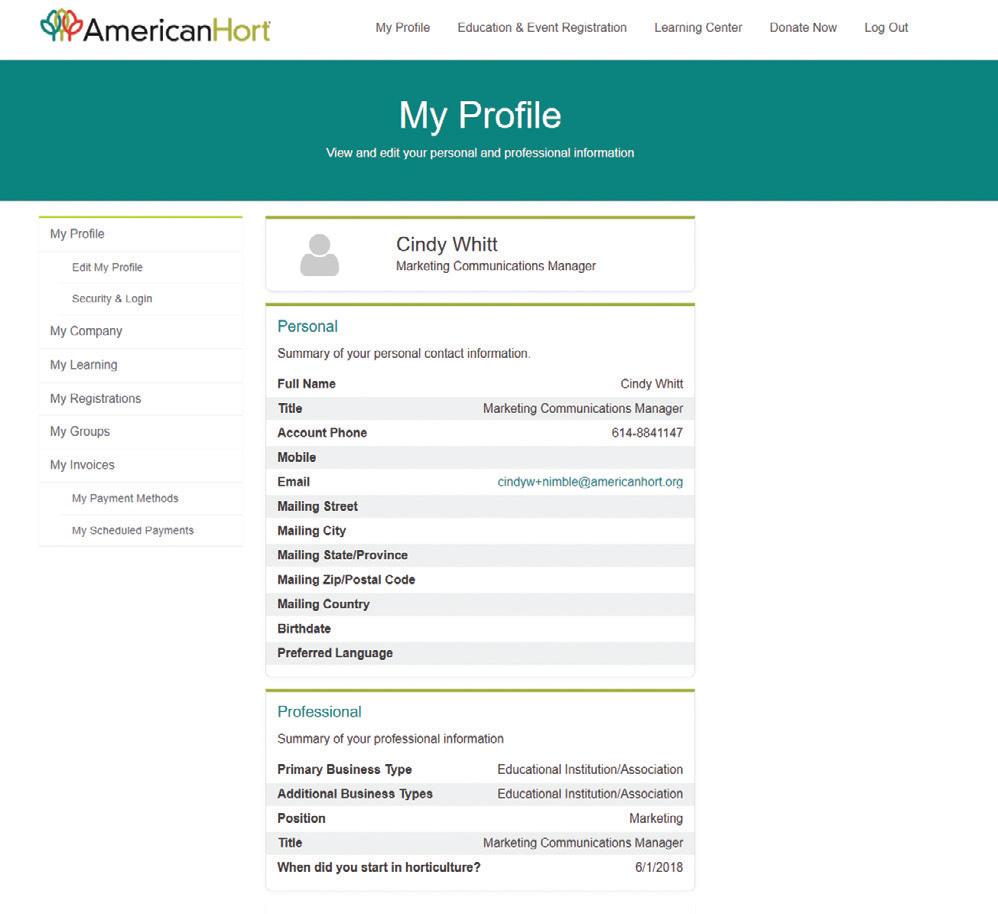
AmericanHort has launched a new membership portal designed to make your team’s experience faster, easier, and more personalized. The updated platform gives each of your team members access to their membership details and benefits, including:
Profile Information
Member details, current registrations, company affiliations
Education & Event Registration Sign up for webinars and events
Learning Center Access View on-demand recordings
Visit Membership.AmericanHort.org to log in, create a new password, and review or update profile information.
• Enter your email as your username
• Select “Forgot password”
• Use the system-generated email link to set your new password
Share these steps with your team so everyone can log in and begin using the new platform.
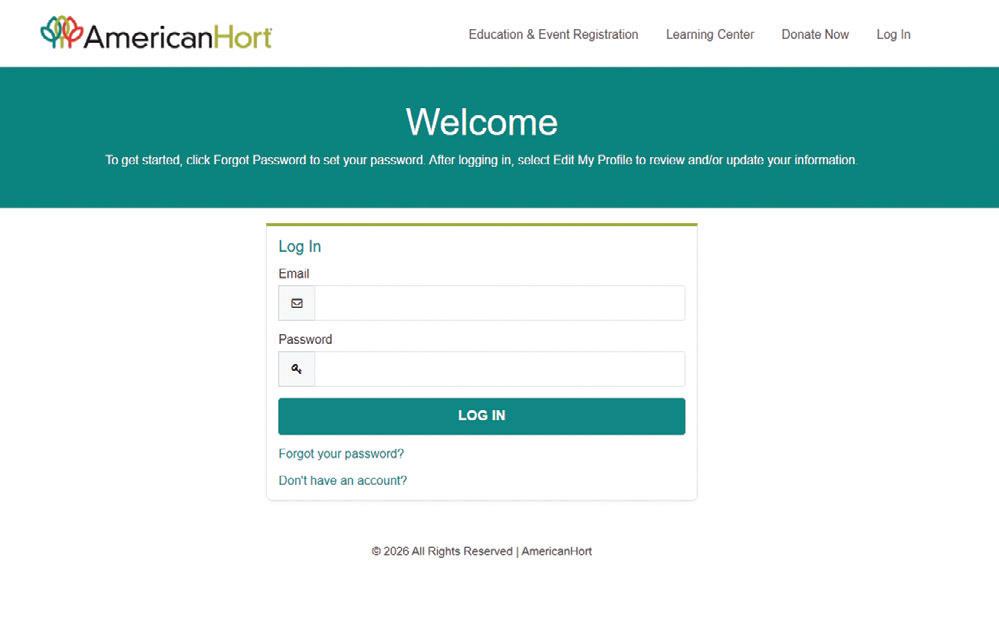
Membership information was transitioned to the new system, so account details, previous registrations, and profile data are already in place. When you log in for the first time, please review your profile to make sure everything looks accurate.
Whitelist AmericanHort to ensure you receive emails from us. If you do not receive the email, look in your spam/ junk folders.
Getting started is easy, but if you have questions about updating your profile, how to manage a company account, storing payment methods, and more, scan the QR code below to visit FAQ page.
You can also email our office at Hello@AmericanHort.org or call (614) 487-1117 if you have specific questions.
Visit AmericanHort.org/SpreadtheWord or scan the QR code to download a PDF of this information to share with staff or post on an office bulletin board.
Sage, the AmericanHort AI-powered assistant, is designed to help members quickly find accurate, relevant information drawn directly from AmericanHort and Horticultural Research Institute (HRI) resources. While Sage uses artificial intelligence similar to tools like ChatGPT, it serves a very different purpose. Understanding that difference is key to using it effectively.
ChatGPT and similar platforms are generalpurpose AI tools trained on a wide range of publicly available information. They are useful for brainstorming and answering broad questions, but they do not represent AmericanHort and may not reflect current programs, member benefits, or upcoming events.
Sage is purpose-built for AmericanHort. It is trained only on approved content from the AmericanHort and HRI websites and operates within defined guardrails. Sage reflects AmericanHort language, priorities, and positions and does not speculate or provide guidance beyond its training. Think of Sage as an extension of AmericanHort digital resources, not a general AI chatbot.
Prompt engineering simply means asking clear, well-structured questions. Since Sage relies on specific, approved content, prompts that include context, such as program names, business type, or area of interest, help Sage provide the most relevant and accurate information.
For example, instead of asking “Tell me about labor,” a stronger prompt would be: “How does AmericanHort support reforms to the H-2A and H-2B visa programs?”
Sage performs best when questions align with AmericanHort services and published content, including advocacy priorities, workforce resources, education programs, certifications, events, and membership benefits.
By asking clear, focused questions, users can make Sage a powerful tool for navigating information and engaging more deeply with AmericanHort.
Access Sage on any page of the website or by visiting AmericanHort.org/Sage or scan the QR code.

specific
Reference programs, issues, or services rather than broad topics
Add context
Include business type (grower, retailer, landscaper) or audience
Use AmericanHort terminology
Familiar terms help Sage locate the right content
Ask for guidance, not just answers
Prompts like “Where can I learn more about…” help direct you to the right resources
Stay within Sage’s scope
Questions aligned with published AmericanHort and HRI content deliver the best results

The Horticultural Research Institute (HRI) helps you tHRIve with a new web-based series featuring key research findings. Here’s what’s coming up:
Weed Control in Propagation: Sanitation, Mulches, and Pre-emergence Herbicides
March 4, 1:00 PM ET
Learn how to prevent weed infestations in propagation with sanitation, mulches, and pre emergence herbicides.
Rosetting Disease Appears in Distinct Regions of a Shrub
Rose Plant
April 8, 1:00 PM ET
Explore how rose rosette virus spreads through shrub roses, why only some canes show symptoms, and how new research informs potential management strategies.
Soilless Substrate Science— Ushering in the Next Generation of Growing Media
May 13, 1:00 PM ET
Discuss new soilless substrate materials, processing innovations, and grower support efforts as the S3 team advances domestically sourced, peat reducing substrates for the next generation.
Visit HRIResearch.org/Thrive to register or scan the QR code.
The Horticultural Research Institute (HRI) announced its 2026 Board of Trustees leadership, new appointments, and governance updates earlier this year. The board guides HRI’s national research efforts, aligns research with industry needs, and supports the industry through education, scholarships, and leadership development. Effective January 2026, Mark Yelanich, PhD, Metrolina Greenhouse, will serve as HRI President, with Ed Tankard, Tankard Nurseries, as President-Elect and Jonathan Berry, J Berry Nursery, as Immediate Past President. Ryan Overdevest, Overdevest Nurseries, joined the Executive Committee, and Matt Foertmeyer, Foertmeyer & Sons Greenhouse, will begin as a new trustee representing Region II.
Read about the full slate of officers and learn more about HRI’s mission and work at HRIResearch.org or scan the QR code.


Daniel Greenwell, a 2017 HortScholar, blends his academic foundation in horticulture with his innate people skills and deep respect for trees in his position as Arborist Representative with Bartlett Tree Experts. Based in Tallahassee, Florida, Daniel works with residential and commercial clients to help both trees and landscapes thrive for the long-term benefit of the community. His experience as a HortScholar keeps him engaged in the industry and appreciating the connections he has made along the way.
Can you describe your current role and the work you’re most passionate about?
As an arborist representative with Bartlett Tree Experts, I work directly with residential and commercial clients to address tree and
Four questions with a 2017 HortScholar
shrub concerns. That may include pruning for clearance near structures, removals when trees are in an irreversible state of decline or pose a higher risk than the client is comfortable with, soil care like prescription fertilization, pest and disease management, and installing structural support or lightning protection systems for valuable trees. Whenever possible, I try to encourage saving trees rather than remove them. Helping clients understand when a tree may not actually pose a major risk—and guiding them toward preservation and preventative care so they can enjoy the many benefits of their trees.
How did you first get into horticulture?
I got my feet wet by doing landscaping jobs in my neighborhood as a teenager to make extra money. I realized pretty quickly that I enjoyed working outdoors and didn’t see myself in an office setting. That led
to a job at an independent retail garden center, where I worked in the tree and shrub department for a couple of years and really fell in love with plants. I’ve also always enjoyed working with people, which carried over into my earlier career as a college educator, and now into working directly with clients.
has being a HortScholar influenced your professional growth?
Being a HortScholar was incredibly impactful in terms of building connections. I formed strong relationships with the other scholars in my cohort and stayed connected with AmericanHort staff and volunteers. Those relationships have continued to influence my career long after the program. I stayed involved with AmericanHort through committees and volunteering, and when I was teaching, I even brought students to volunteer at Cultivate. Giving them the chance to experience the industry, network, and see what horticulture looks like at that scale was especially exciting to me.
How do you see your work contributing to the horticulture industry and your local community?
Both personally and as part of Bartlett Tree Experts, we really strive to operate in a way that’s rooted in science and best management practices. Of course, we’re a business and profitability matters, but it’s never about selling unnecessary services. The goal is to provide care that is effective and rooted in science. In the Tallahassee area, a big focus of our work is extending the lifespan of trees through proactive health care. Trees provide so many benefits—to the environment, to communities, and even to people’s mental well-being—so helping them grow and flourish, remain healthy, and live longer ultimately benefits both individuals and the communities around them. Within the industry I want to make a positive contribution through my commitment to scientific tree care and constantly learning to become a better arborist every day.

Danielle Starkey is a member services professional with a strong background in client support, data management, and relationship building. She recently joined AmericanHort as the Member Information Specialist where she will support members by serving as a knowledgeable and responsive point of contact, helping ensure a positive and efficient experience. Originally from Cleveland, Danielle is an Ohio University alumna holding a Bachelor of Arts in Psychology and Anthropology. She brings a thoughtful, people-center approach to her work and is passionate about helping others through clear communication, reliable service and a strong attention to detail.
Danielle is married and shares her home with Ruby and Ollie, two mixed-breed pups. In her spare time, she enjoys baking and is currently perfecting the art of croissant making. She also enjoys spending time outdoors, especially hiking and camping.
New AmericanHort Members!
We extend a warm welcome to the new members who joined in December and January.
PREMIUM MEMBERS
See the rest at AmericanHort.org/NewMembers or scan the QR code.
Flexible Learning for Today’s Horticulture Workforce
Today’s horticulture workforce needs training that fits diverse roles, busy schedules, and evolving industry demands. AmericanHort offers flexible, high quality learning options designed to help teams build skills, strengthen operations, and grow their careers at every stage. To support a bilingual workforce, select programs and sessions are available in Spanish.
Flexible, role-based training—anytime, anywhere
Ideal for onboarding and ongoing skill development.
Build targeted, job-ready skills through short, focused learning modules that employees can complete on demand.
• Mobile-friendly and easy to integrate into daily work
• Digital badges that document skills and support career growth
• Flexible structure for onboarding, role-based training, and advancement
Designed to support a strong, consistent safety culture.
Strengthen workplace safety with industry-specific training designed for horticulture operations.
• Practical guidance on safety, emergency response, and operations
• Available anytime for teams at all levels
• Exclusive to AmericanHort members
Best for standardizing processes and driving operational excellence.
Elevate operational performance with a structured program focused on best practices across greenhouse facilities.

• Improves consistency and reduces operational gaps
• Aligns teams around shared standards and procedures
• Provides managers with a roadmap for continuous improvement
Explore AmericanHort Education
Learn more at AmericanHort.org/Education or scan the QR code.
Best for broad professional development and cross-functional learning.
July 11–14, 2026 | Columbus, OH
Experience the industry’s premier professional event with immersive learning across production, business, leadership, and retail.
• 160+ sessions and hands-on workshops
• Practical insights for employees at every career stage
• Unmatched networking and peer learning
• Optional facility tours offering behind-the-scenes, realworld learning
Best for strengthening technical expertise in production.
September 14–16, 2026 | Philadelphia, PA
Gain specialized, hands-on training in young plant production and propagation.
• Deep technical education for new and experienced staff
• Focus on improving processes and crop quality
• Opportunities to learn directly from industry experts
• Optional tours providing in-depth, hands-on exposure to production operations
We want to get to know you better. Help us by joining us on social media— our way of connecting with our members and community.
@AmericanHort @youramericanhort @American_Hort
AmericanHort is the national association of horticulture businesses and professionals across the spectrum of the industry. Perform better, grow stronger and prepare for the future as a member of AmericanHort, the green industry’s leading association.
AmericanHort.org
AmericanHort Connect 2026: March

@AmericanHort
Publisher: Mary Beth Cowardin, Vice President, Marketing & Member Engagement
Editor: Cindy Whitt, Marketing Communications Manager Hello@AmericanHort.org 2130 Stella Court Columbus, OH 43215-1033 USA (614) 487-1117
©2026 AmericanHort. All rights reserved. This material may contain confidential information, and it is for the sole use of AmericanHort members. The information contained herein is for general guidance and not for the purpose of providing legal advice. It cannot be distributed, reprinted, retransmitted, or otherwise made public without prior written permission by AmericanHort. Please contact the editor at (614) 884-1147 for permission with acknowledgment.