Amelia Chase
F225415
1st year architecure student at Loughborogh University. Semester 1 Portfolio. Includes 3 projects and shows there progression, from the begining thought process to the final products. Published on 15/01/2023.
1
Woodlands 3-7
Represent Micro-mapping the
space. In the Dark 8-16
Re-shaping the
space. Inside-out, Outside-in 2 17-30
P1- Small Worlds Materialising childhood’s spatial memories.
P2-
lived
P3- Adapt
architectural
P1- Small Worlds
Materialising childhood’s spatial memories Woodlands
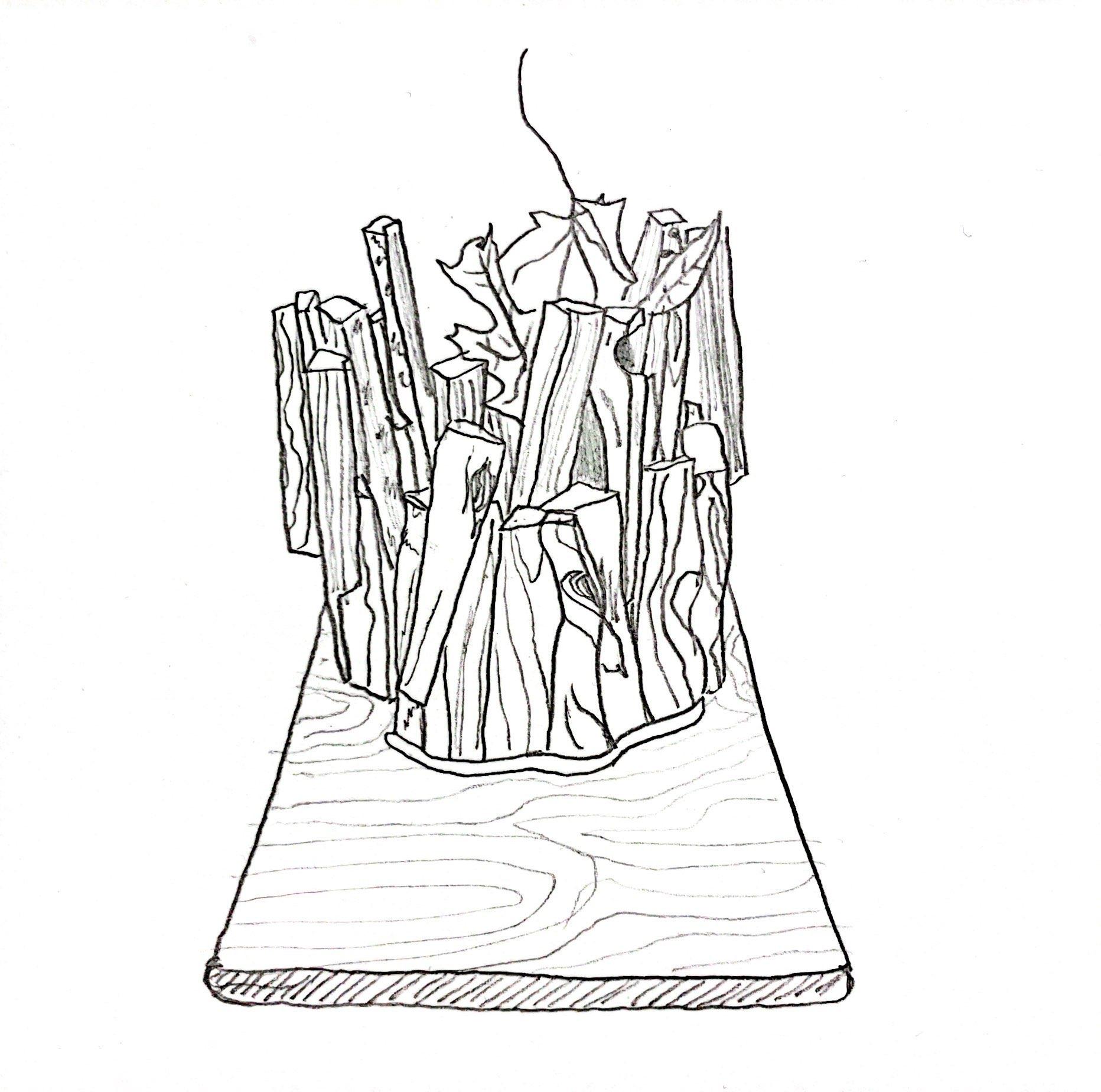
The goal of this project was to investigate, define, and represent our own memories with a focus on spatial aspects. An artifact must be created using architectural elements, textures, and sensory elements from these first memories. The artifact must be small world, an aria with an element of space. The link to the memories had to be clearly represented while remaining abstracted.
The challenge I encountered was a difficult start to the project because each aspect had to be abstracted while remaining clear enough to allow the connections to my memories to be visible. Positives included the introduction of a new way of looking at simple things like wind and determining a spatial pattern from them. It also helped me improve my crafting abilities.
3
My Memories
Snow day
• Cold
• White
• Damp
• Outside
Feeling small
• Everything is bigger
Playground
Woodland walks
• Finding a waterfall
Wet nose
Wind Dog fur Sun seeping through the trees
Nan’s dog
• Comforting
• Soft fur
• Shedding
Dad reading story books
• Peaceful
• Calm
Climbing trees
• Woods
• Adventurous
Grandad’s armchair
• Leather
• Wooden arms
Lavender
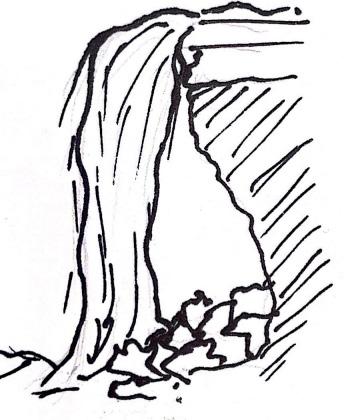
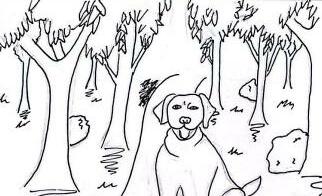
Beginning by sketching and annotating my very first memories, without being selective. Then I chose one of me walking my grandmother’s dogs to begin looking at the spatial qualities and sensory aspects that can be extracted from it.
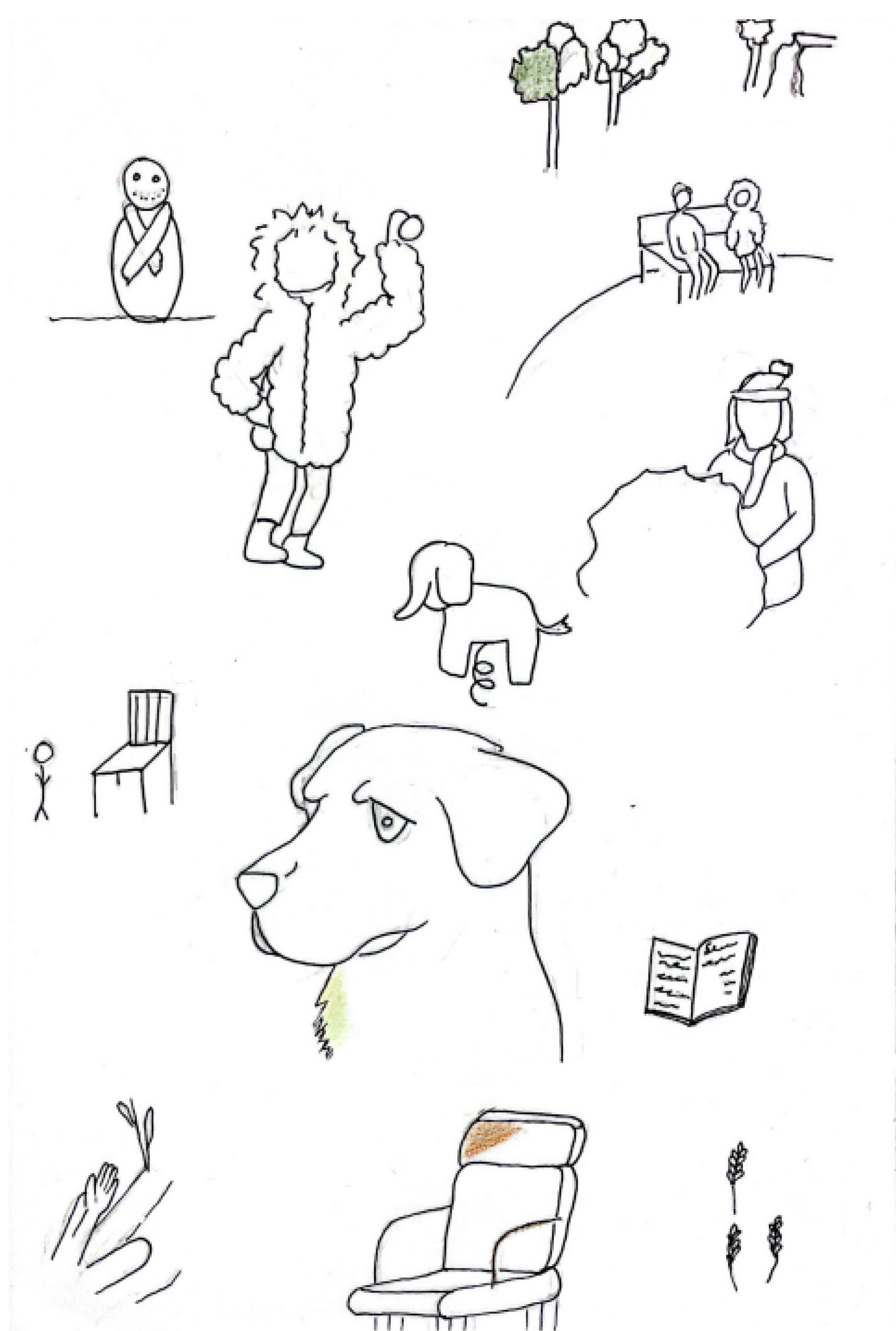
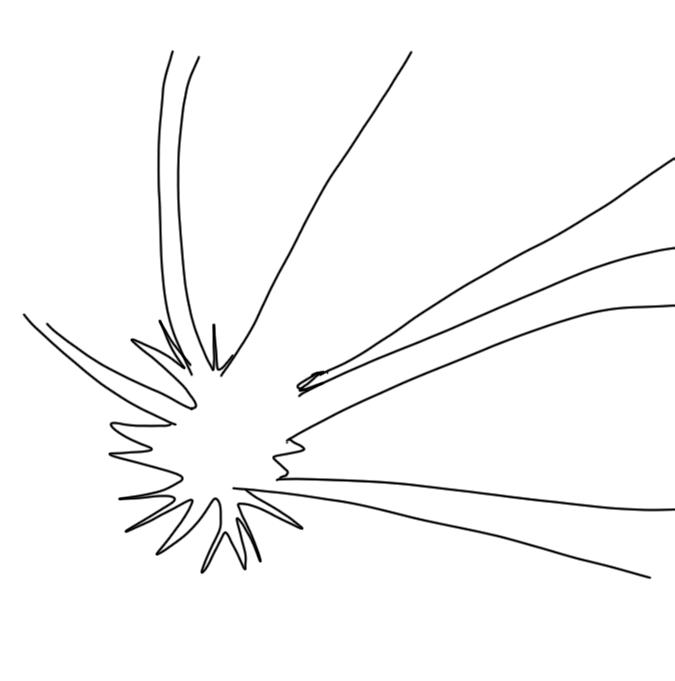
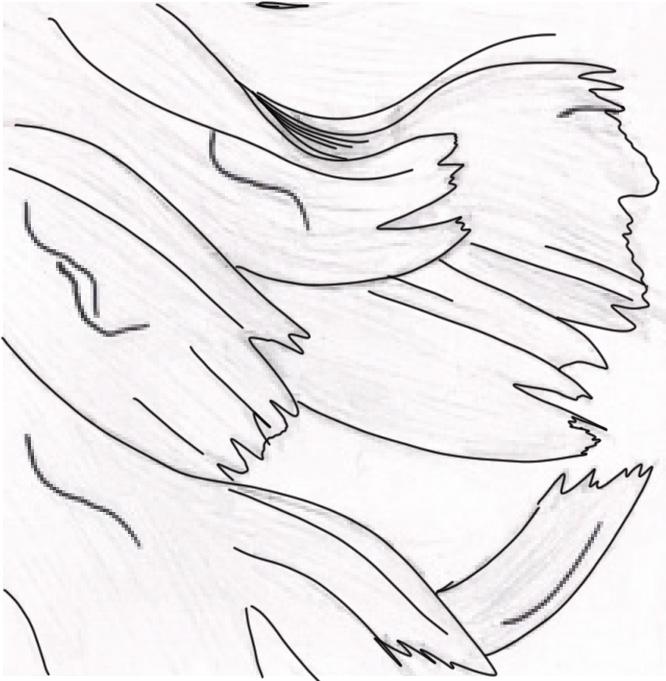
4
Represent hiding but also protection
Light seeps through the trees
Paths covered in leaves, with crisp crunchy sounds
Layers of rough bark
Many contrasts, like light and dark, harsh and curved and rough and soft.
No set path, with random tree placements. Come and get lost in the woods (like he can get lost in memories).
Wood
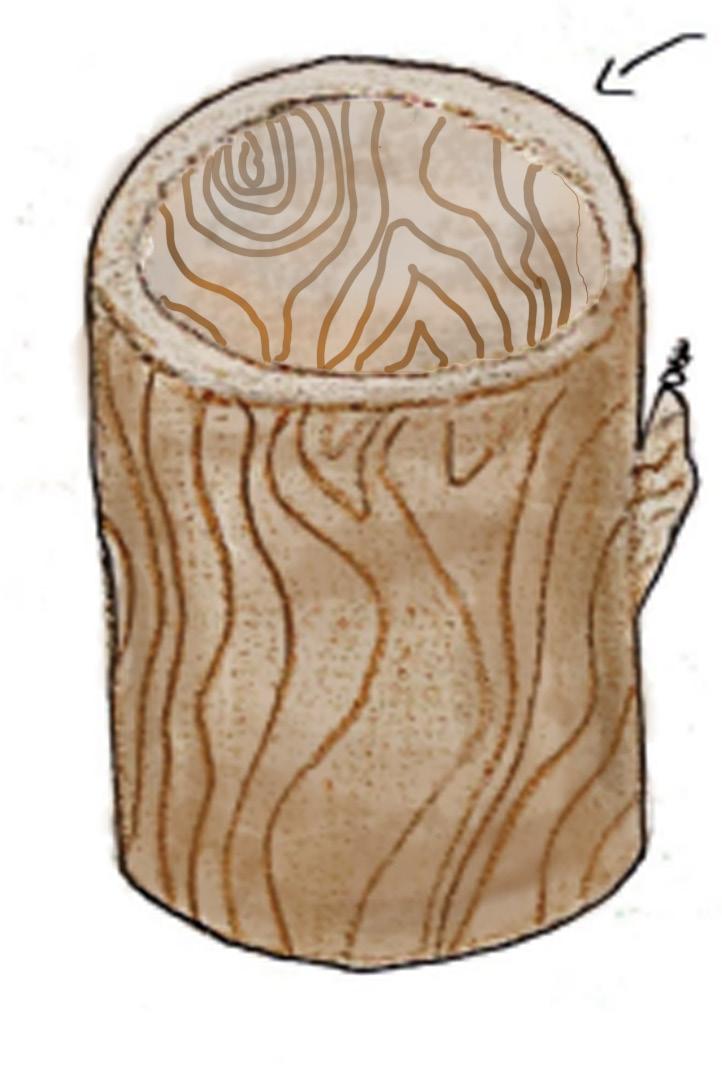
(Both the material and setting)
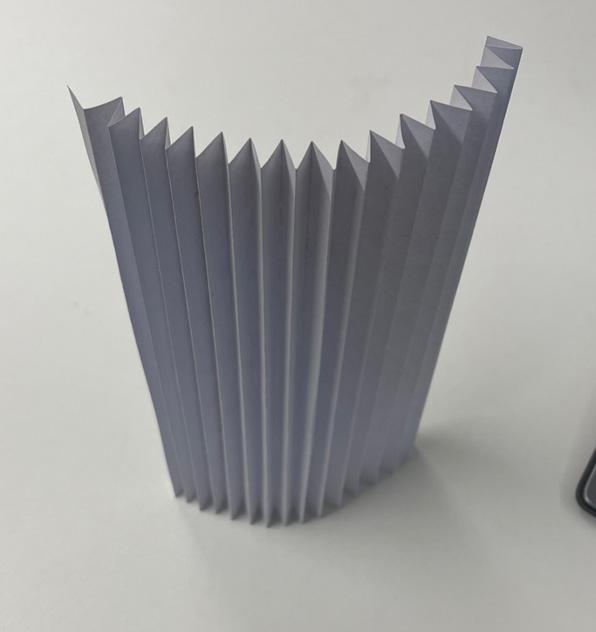
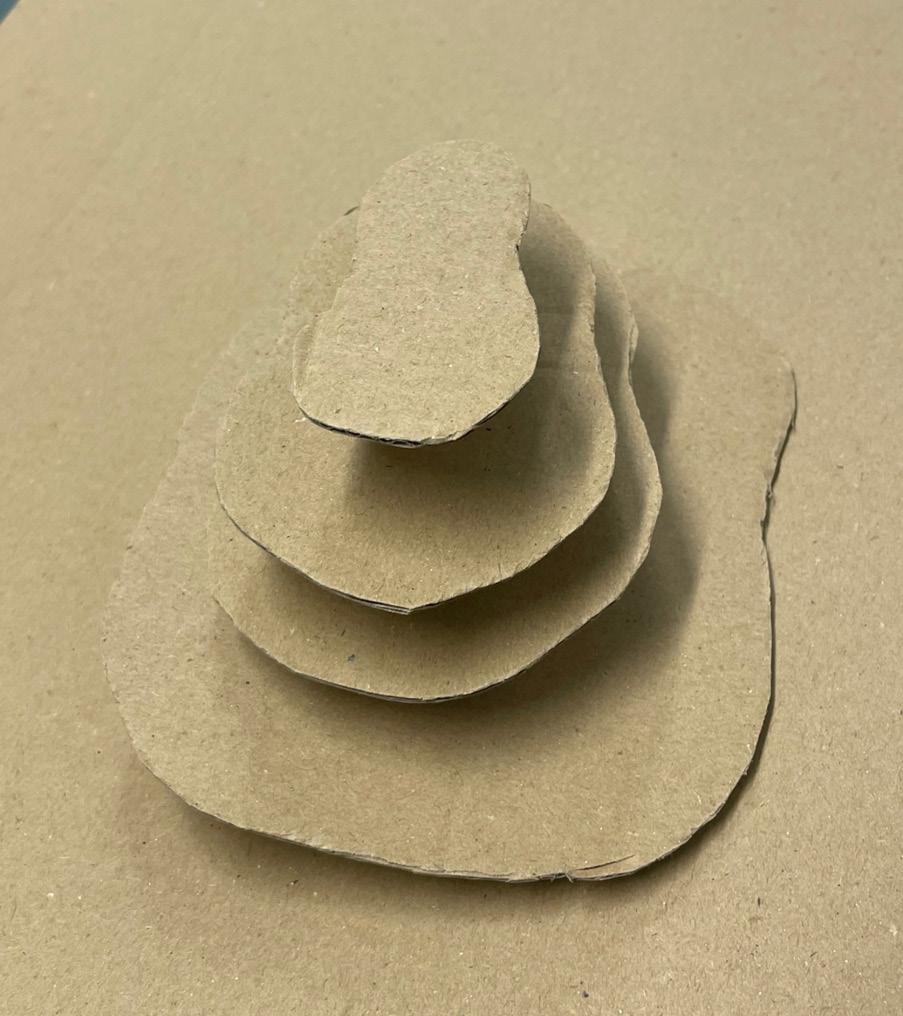
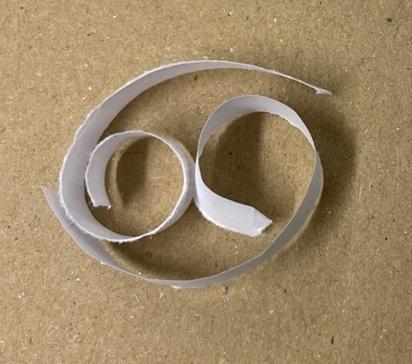
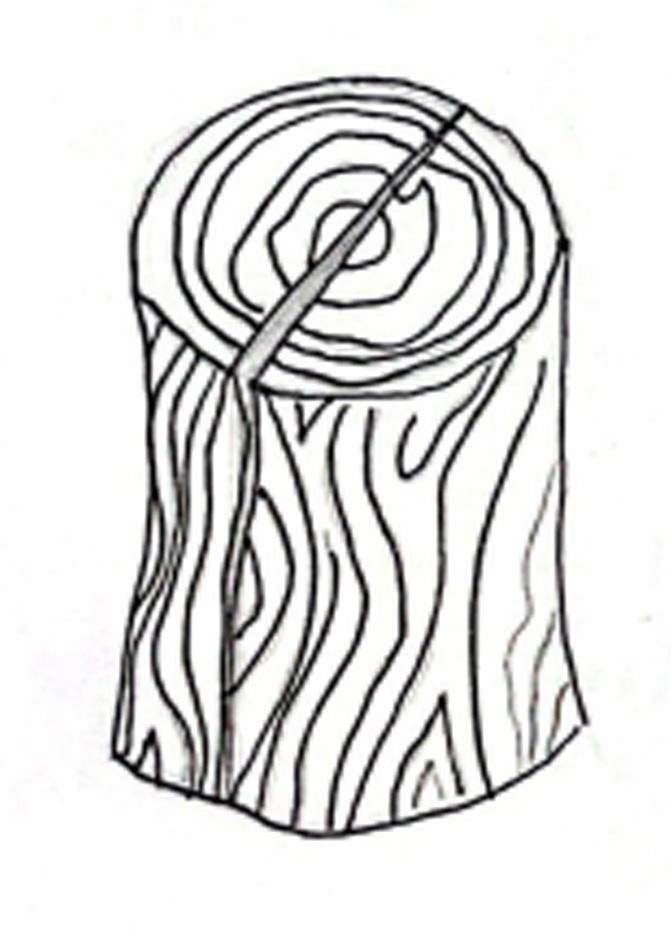
Finding a waterfall in the woods
Rows of trees
Dog walks in the woods – fur texture
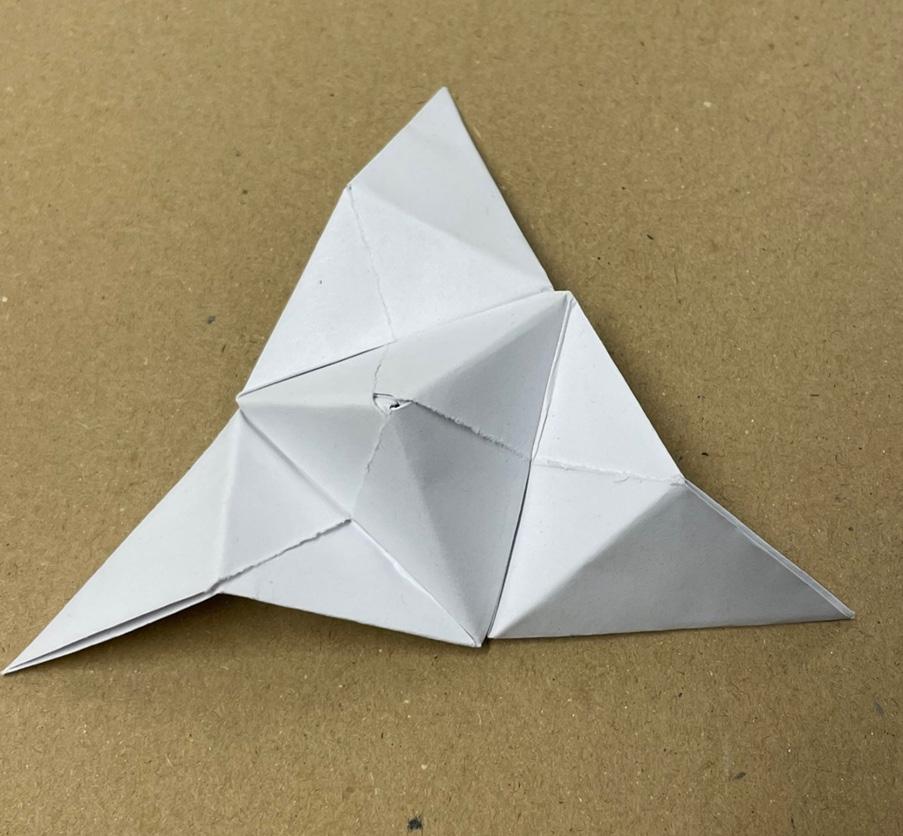
Processed into paper (story books)
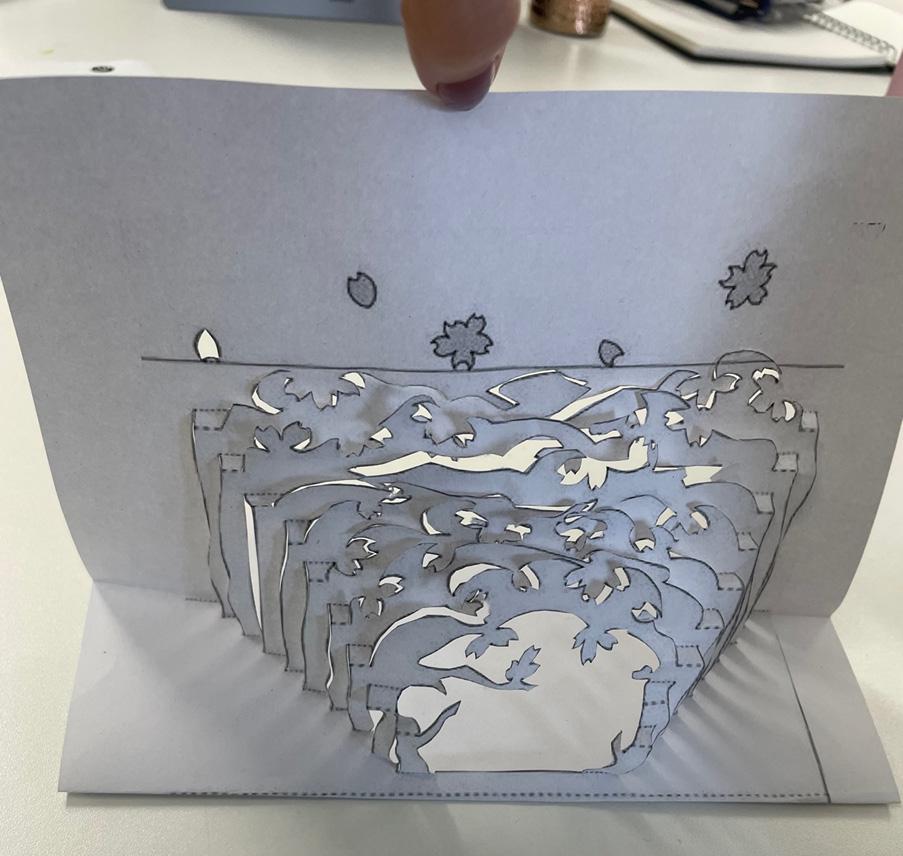
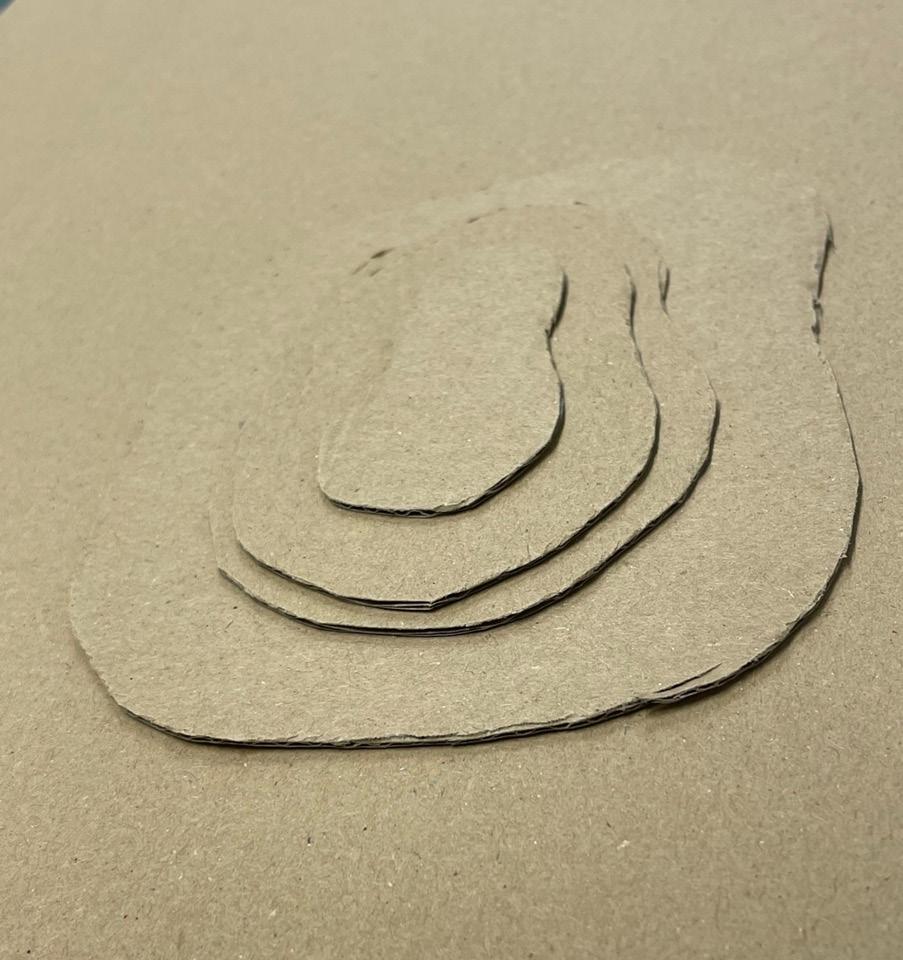
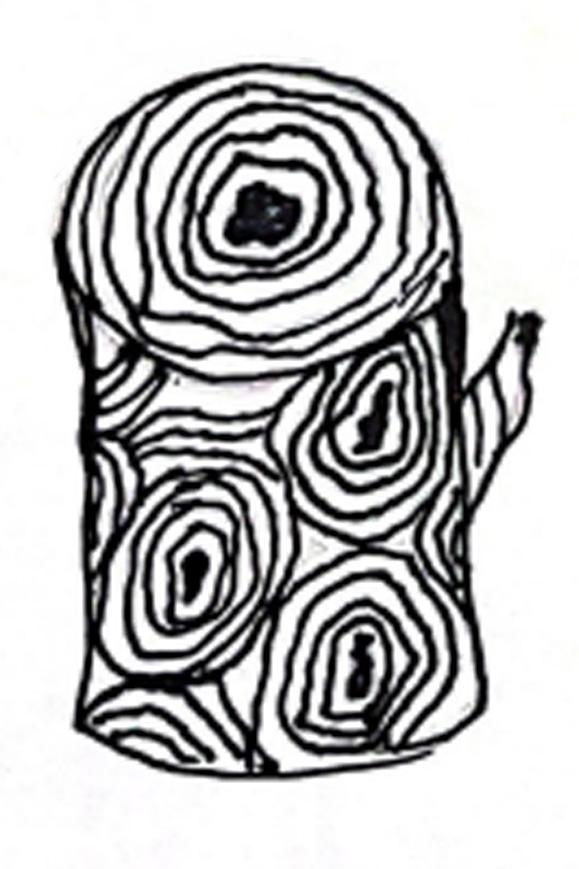
Wood grain swirls
Investigating Wood
Looking back over my memories, one material stands out: wood. With dog walks and discovering the waterfall taking place in the woods and my grandfather’s chair’s wooden arms. As paper is a byproduct of wood, it is also means the reading of story books is related.
5
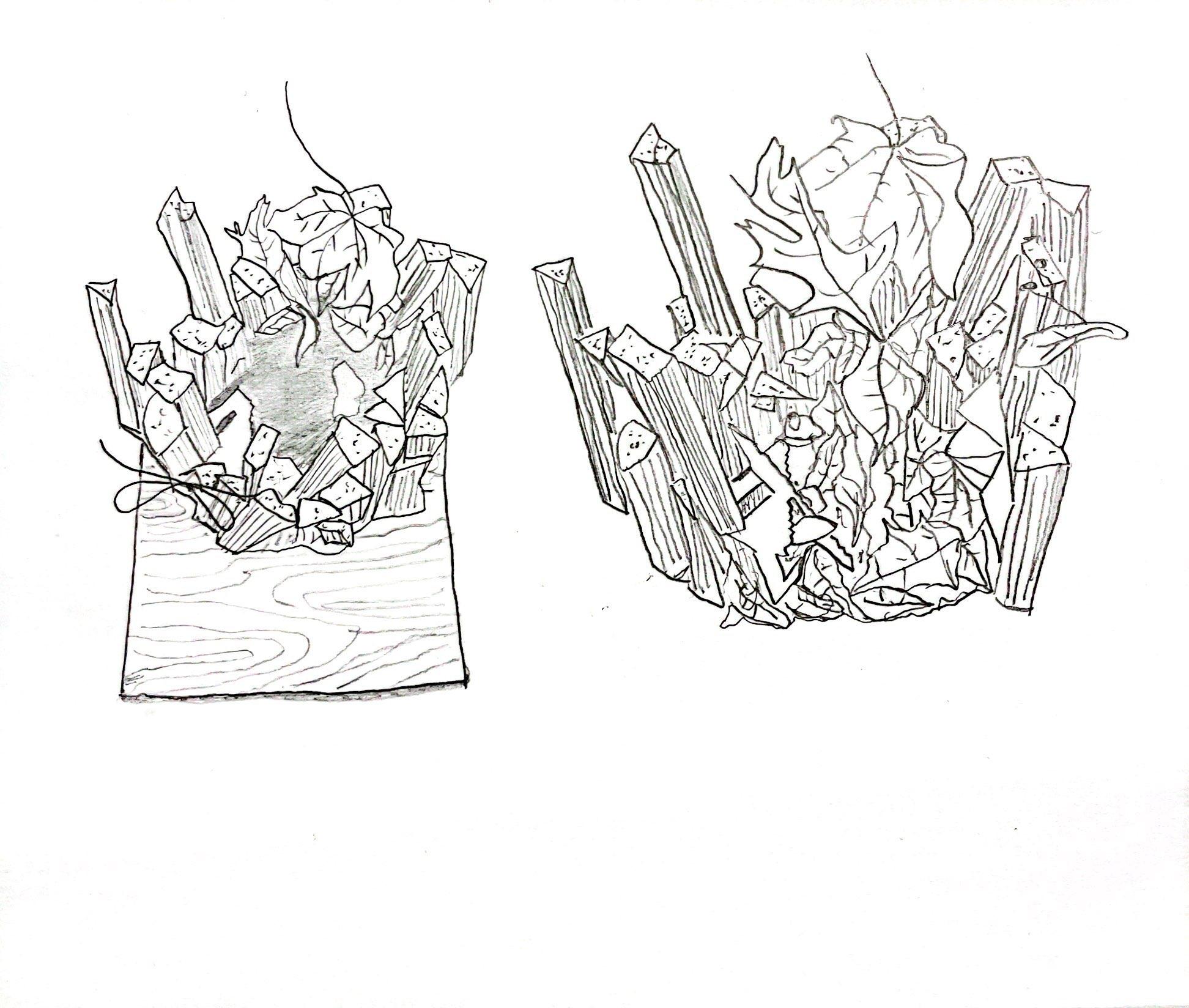
Sketch of the Inside
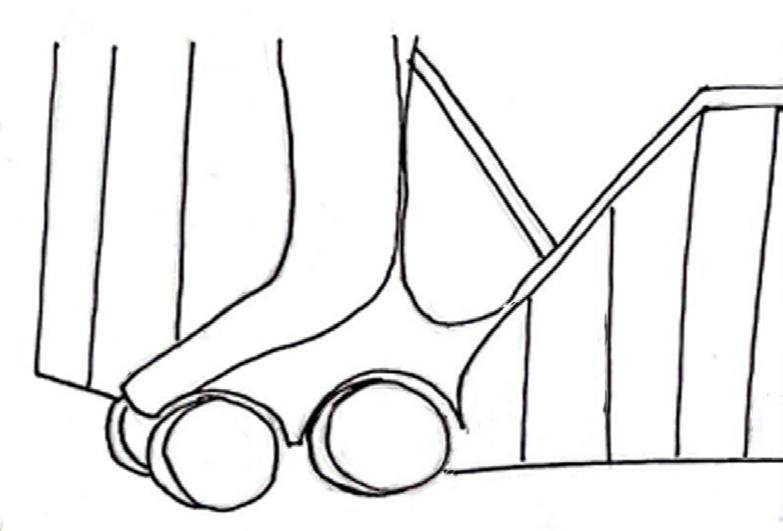
Precedence Roys People
Roy is an artist that places mini figures around London making them interact with everyday objects. Creating a small world under Londoner’s feet. I incorperated this abstraction of scale into my own design.
Killer Heels- Roys People (Ltd, 2016)
Top View Sketch
6
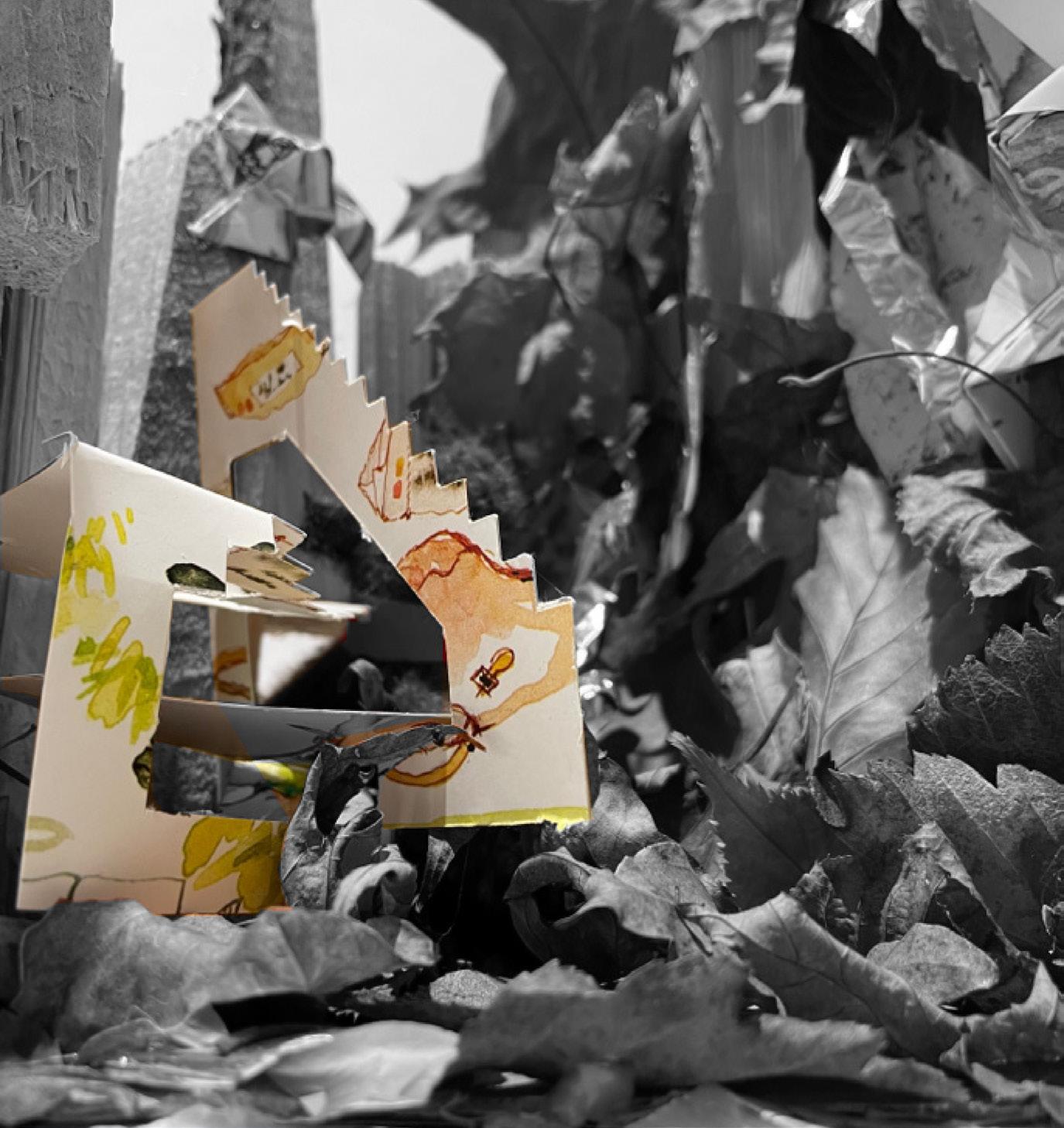
My final piece is titled Woodland. It is a literal depiction of how a single material can encase and induce so many memories. I made a cylindrical structure out of kindling wood that can be opened to reveal a hidden world representing multiple memories on the inside. The scent of the kindling wood can also trigger memories. The cascading leaves represent the memory of a waterfall. The folded structures made of up-cycled storybook paper add contrasting harsher structures, and they also represent my father reading story books to me.
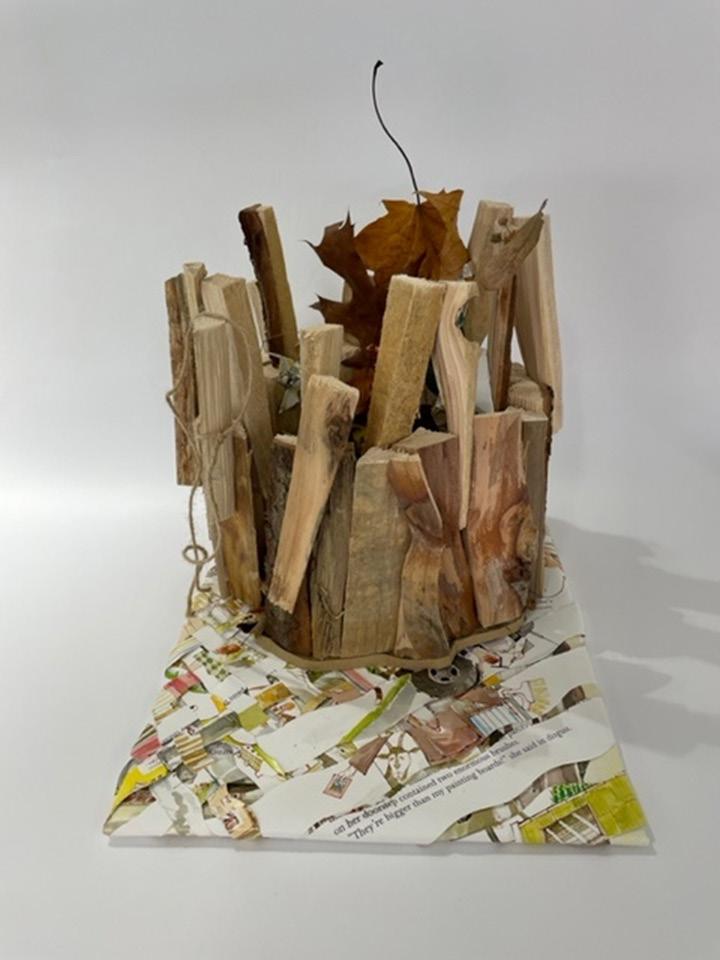
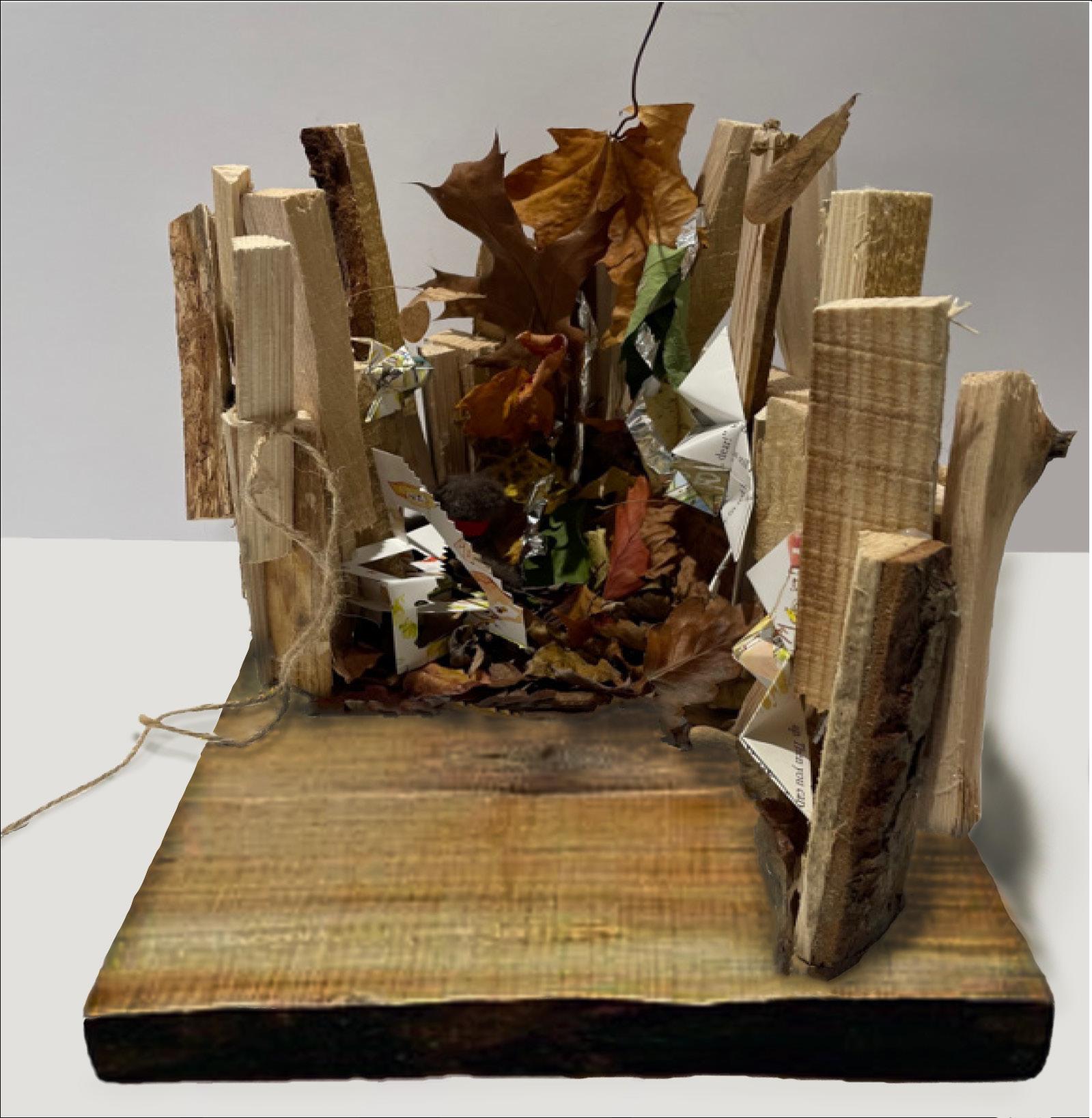
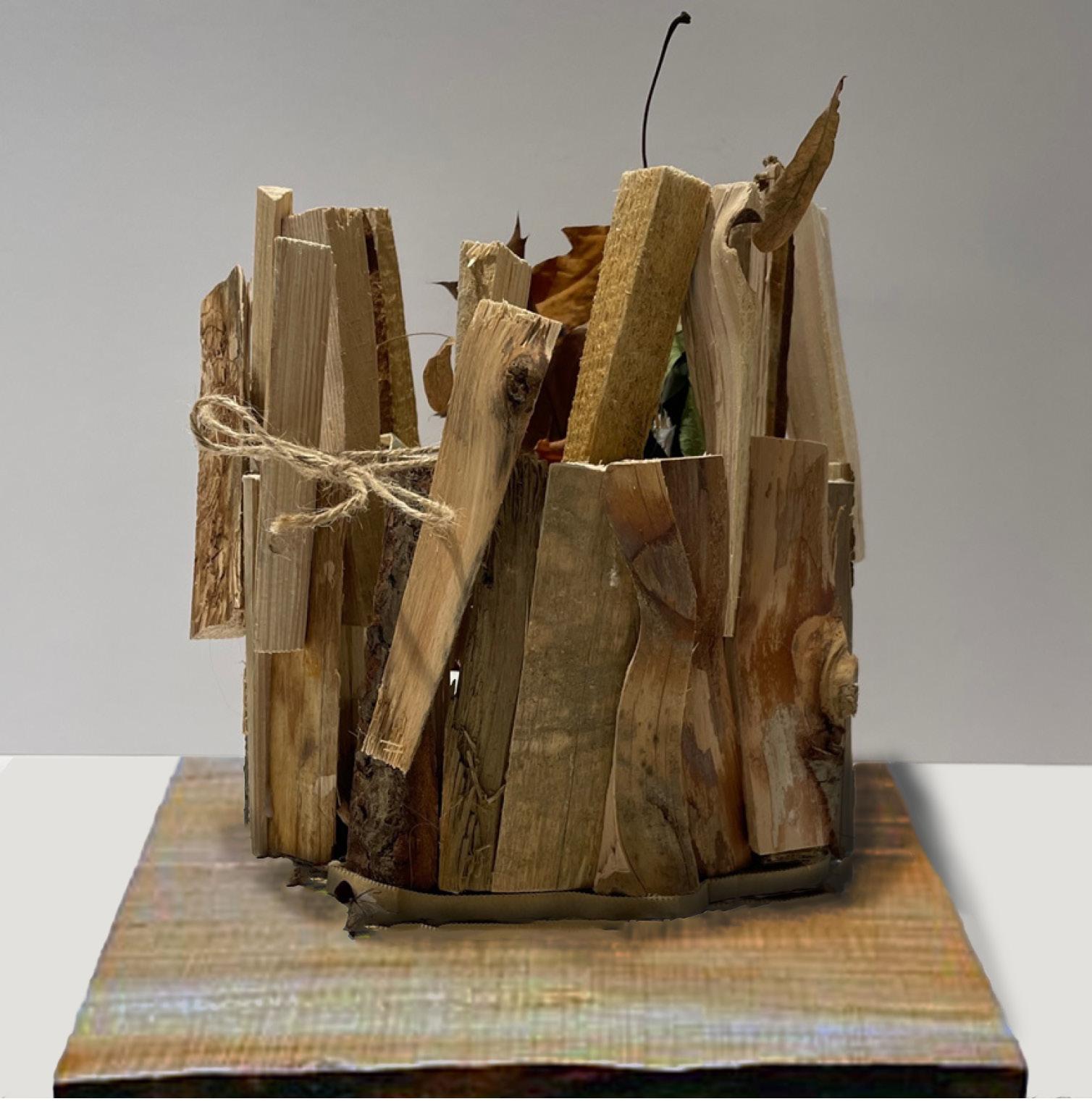
Almost the entire artifact is made of wood or wood byproducts like paper and leaves that grow on trees for some mixed media, textures, and surface effects. Aside from a small dog made of fur hidden among the leaves to add some personality and joy to the small world.Scale is also abstracted in my small world project, which draws inspiration from my precedence studys.
Originally, my model had a weaved base made of storybook pages, but I changed it after receiving feedback that it detracted from the main structure. I looked at the model and agreed that it was particularly busy. As a result, I changed it to a wood base to keep the woodland theme but simplify the design.
7
P2- Represent Micro-mapping the lived space. In the Dark
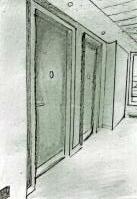
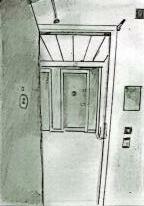
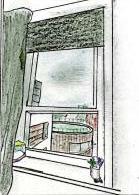
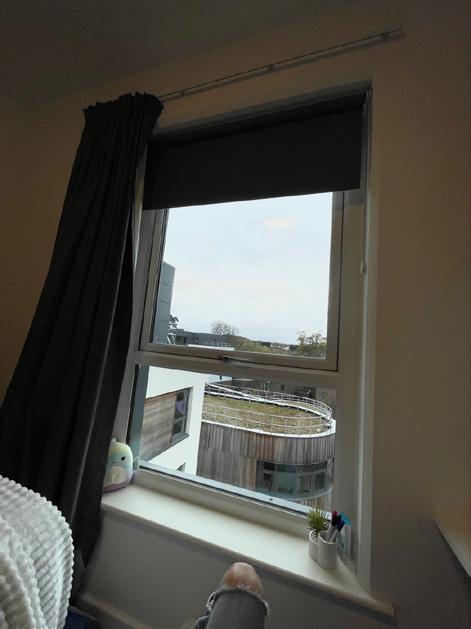
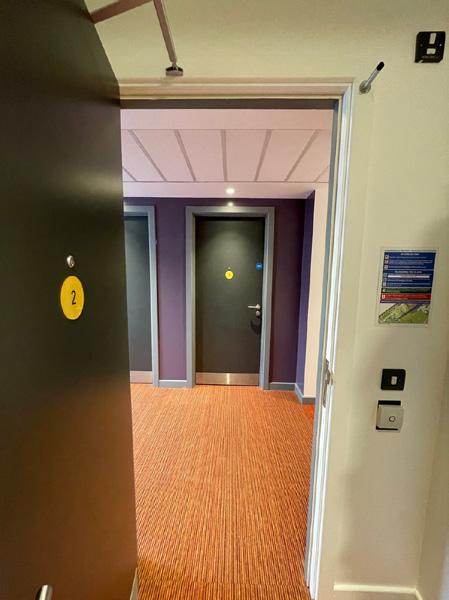
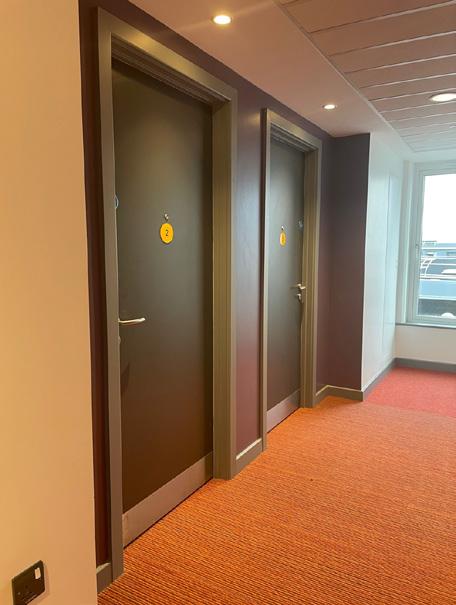
This project involved analyzing our dormitory room to see if it met our needs and desires. The way we used the space was also examined. Taking measurements with body parts as units, creating sensory maps, and placing ourselves in numerous sketches resulted in a highly personalized project.
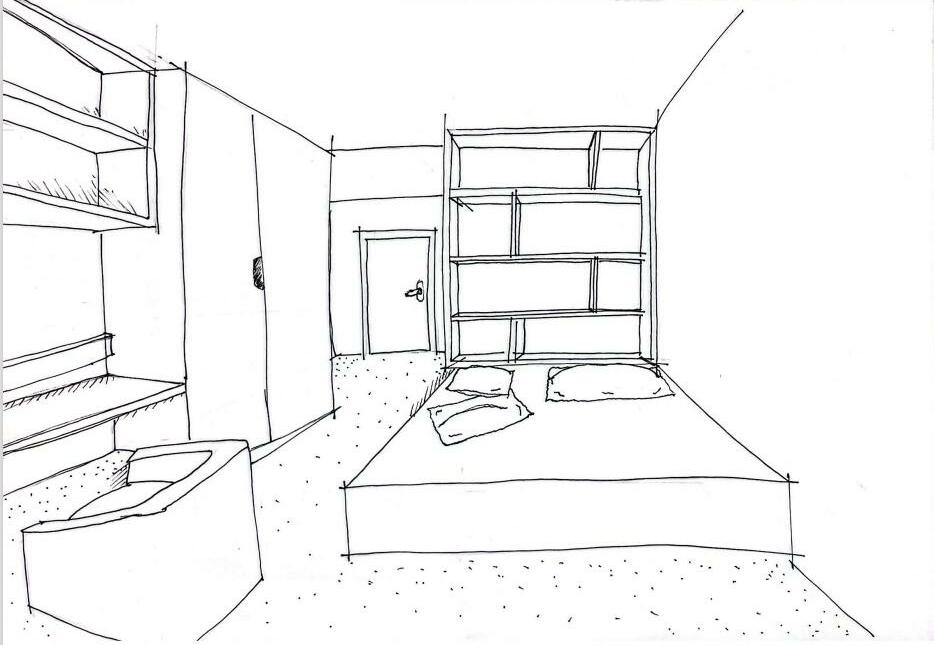
The observations made were combined to form a ‘Map of Desires’. Outlining and representing any changes that would improve the room’s composition and meet our needs and desires.
Looking past the aesthetics of a space and seeing it in a sensory way was a new and unusual experience for me. One of the benefits of this project is that it forced me to start thinking about problems in terms of consumer needs and desires. Design must be attentive and user-centered when displayed.
8
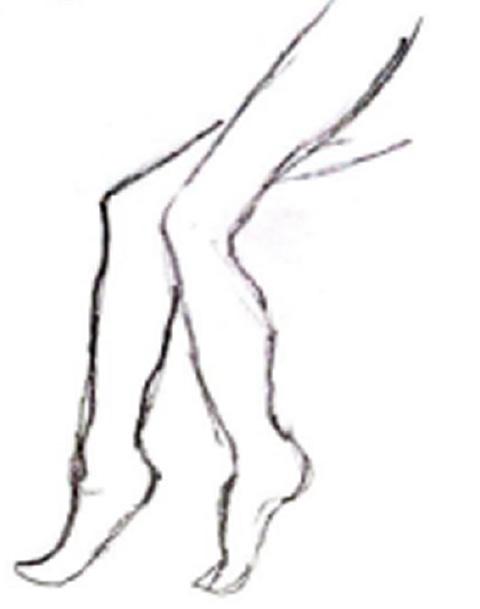
Body Mesurements and Visuals
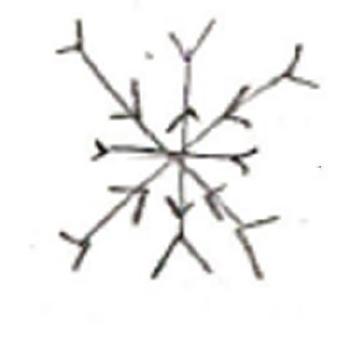
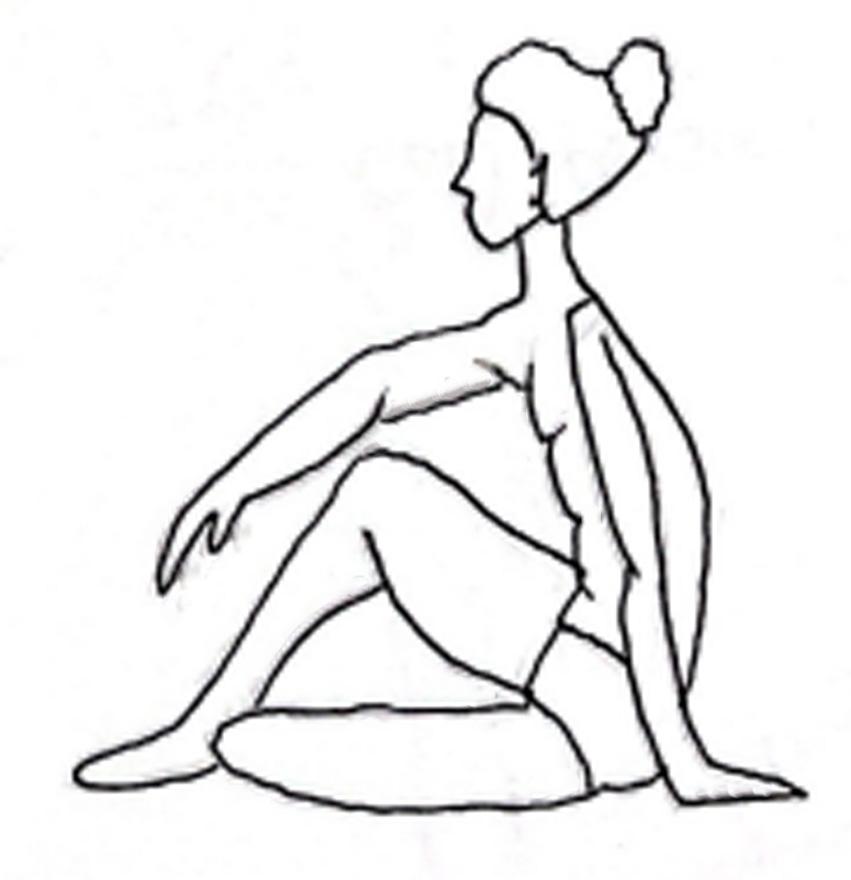
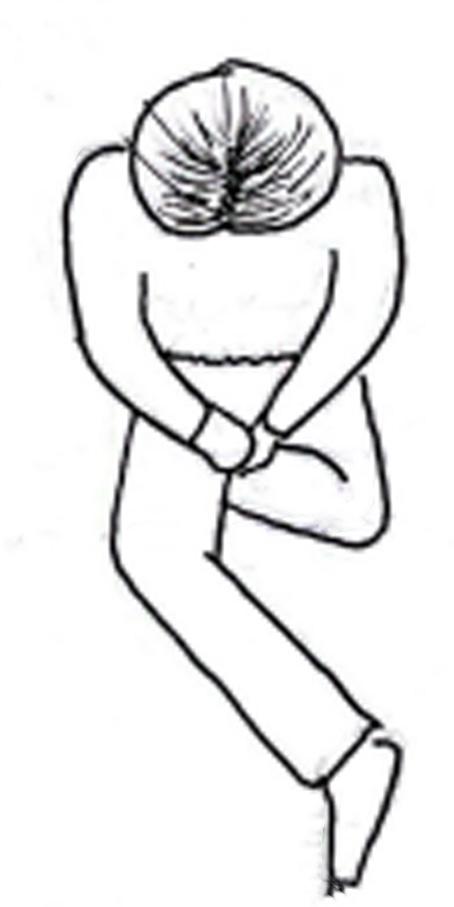
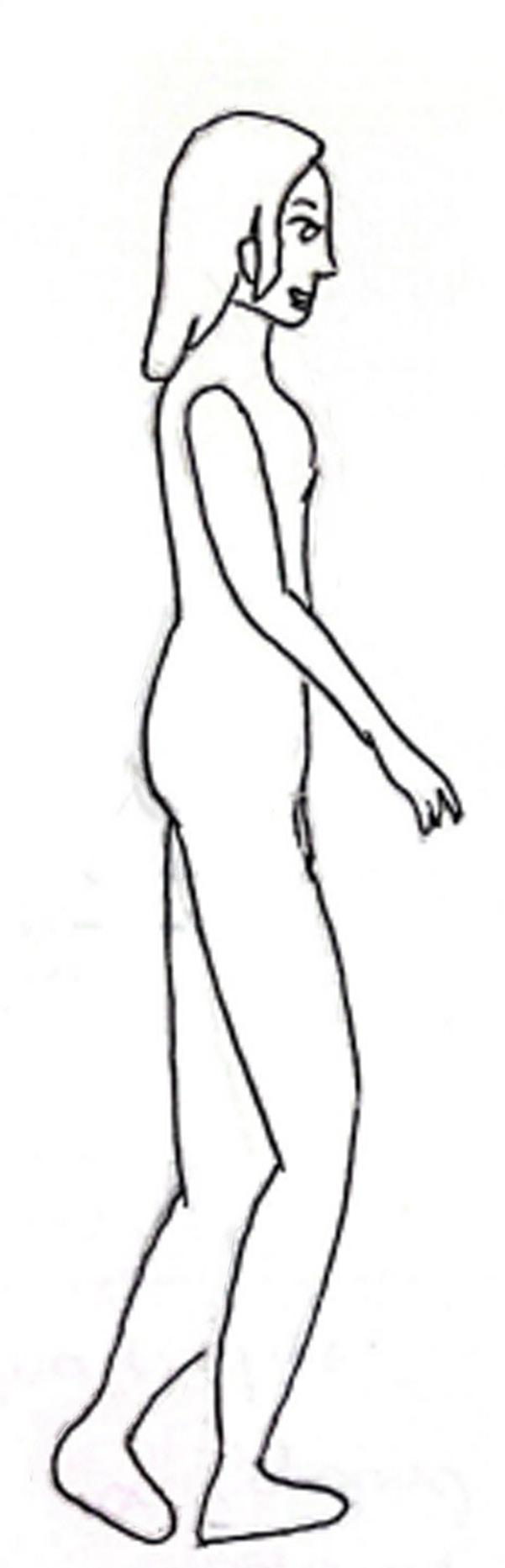
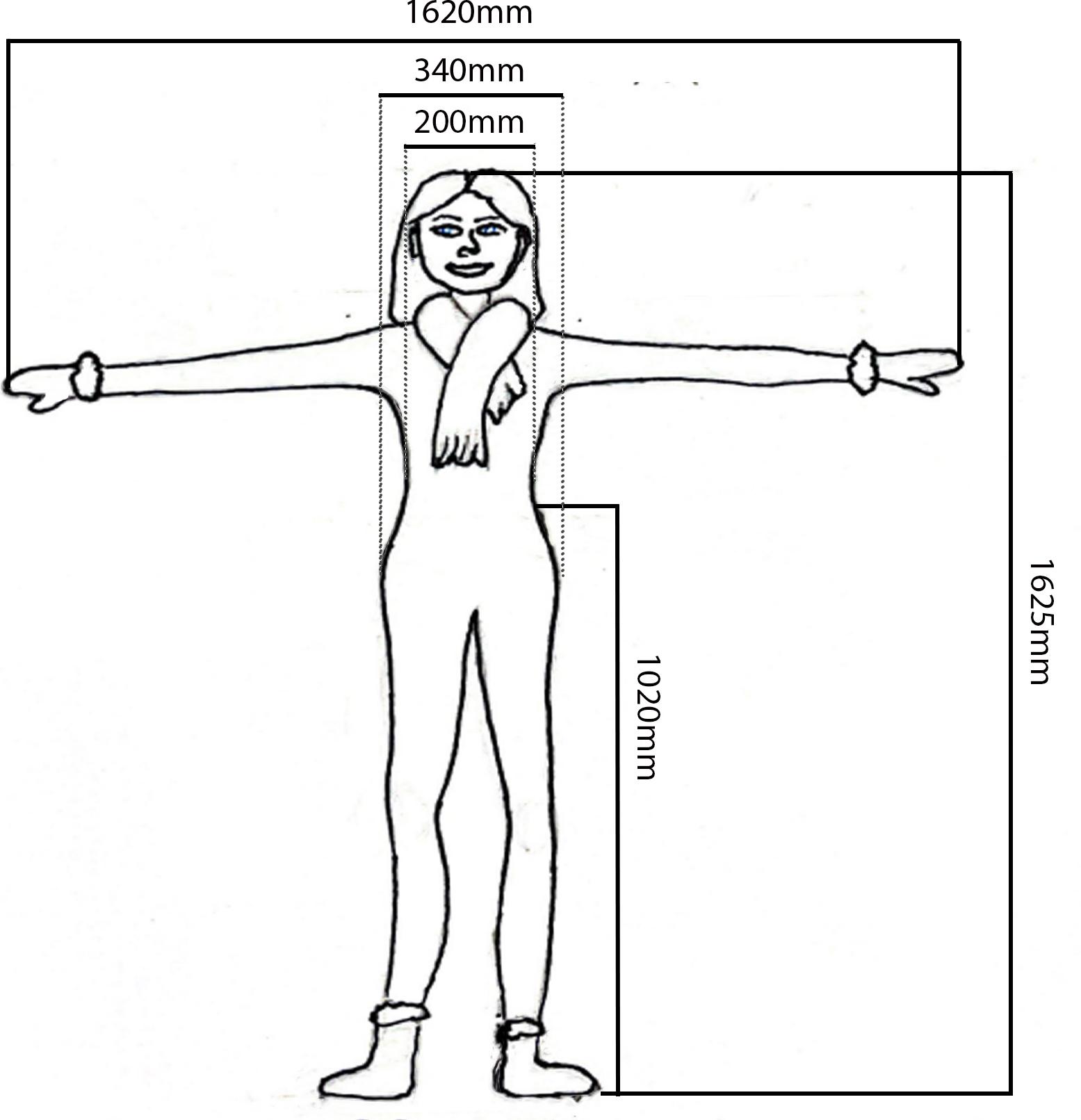
Cold person
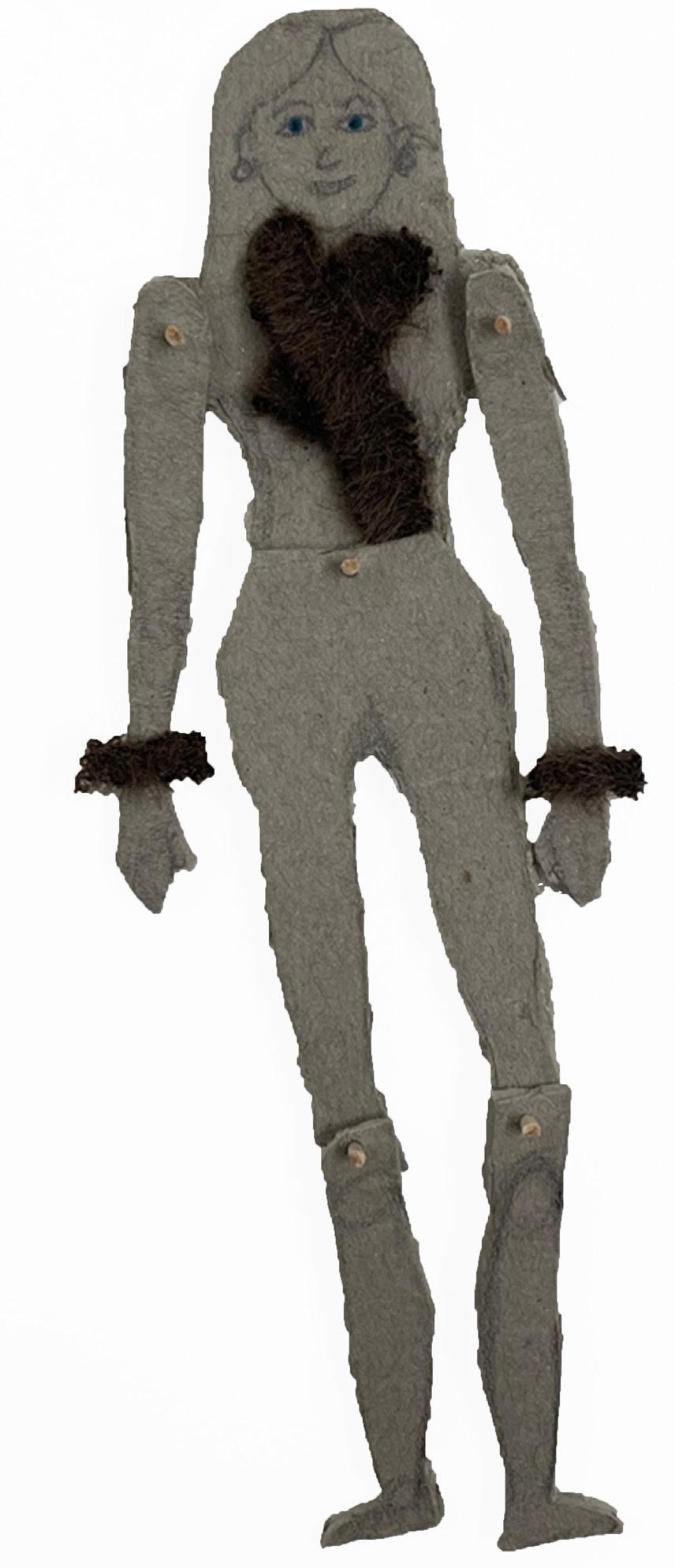
Blue eyes Dancer
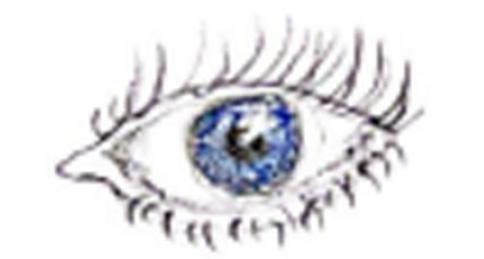
Blend into the background.
Long legs
9
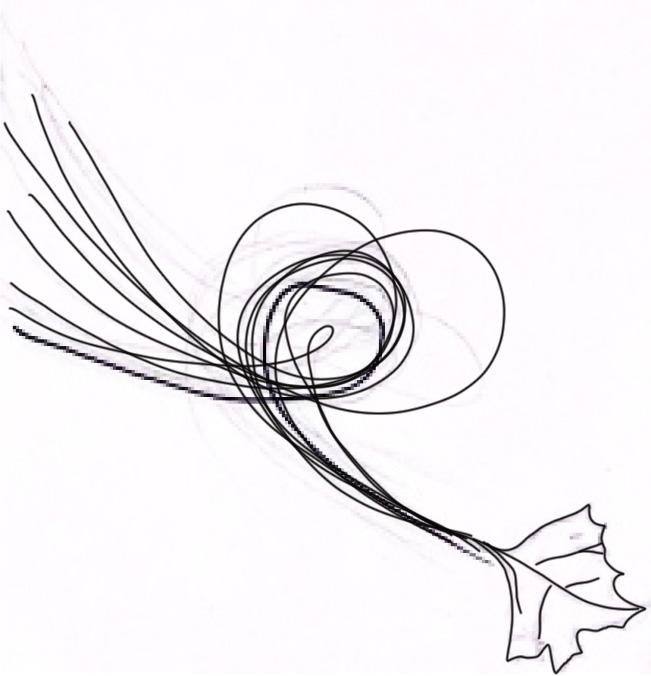
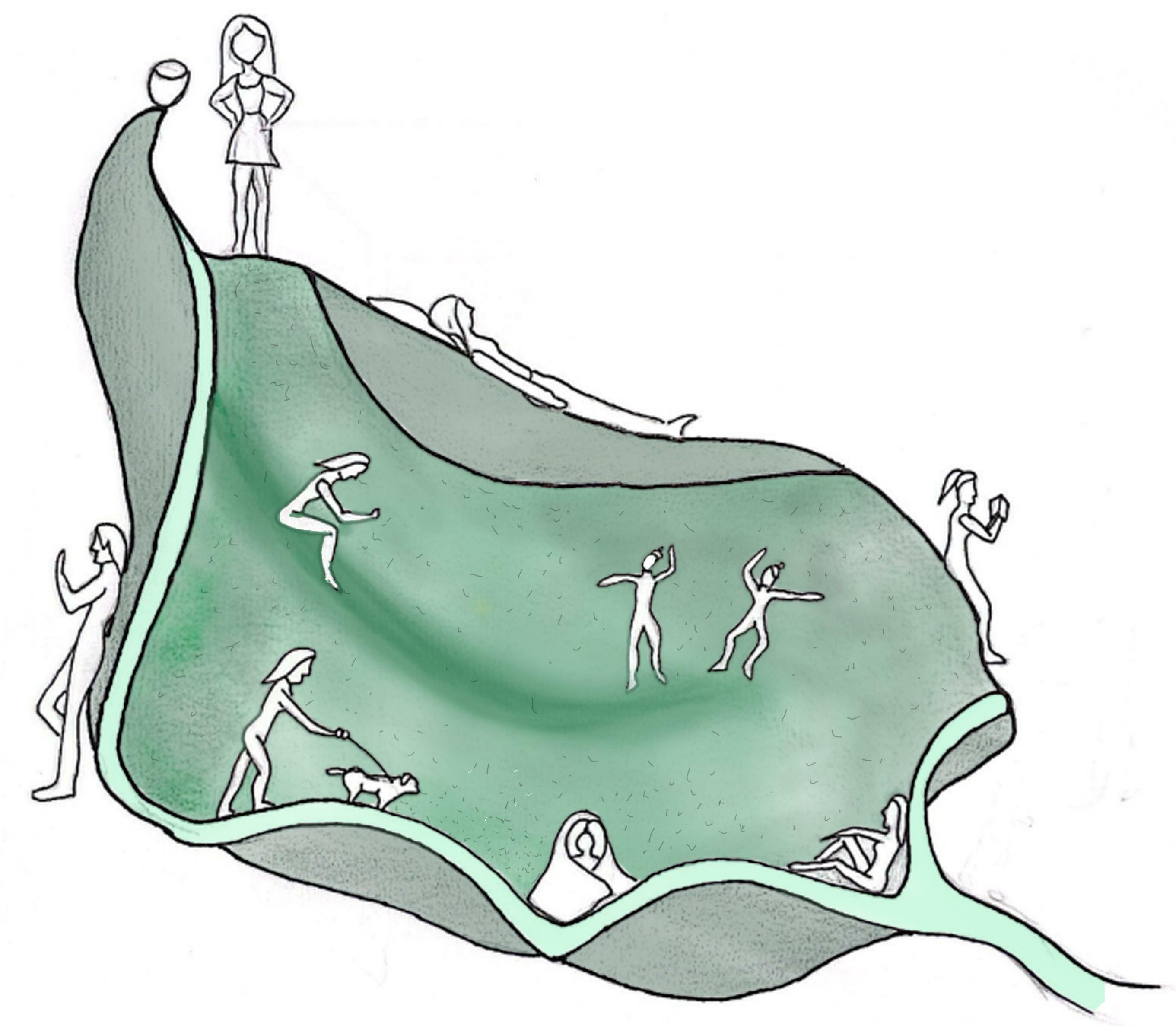
Constellation
This is a sketch of a location that enchants me. I feel at home in nature because it relaxes and comforts me, so I used an out of scale leaf as a spatial element. Like surfaces, leaves have curves and depressions. There are many mini figures of myself on this large leaf doing activities that bring me comfort, such as baking, reading, and being wrapped in a blanket. This is to determine my true desires and to make my space as comfortable as possible.
10
Sensory Map
Desk: Green
• Green signals go, this is where I feel most productive and get the most work done
• Feel energised
• Clean and organised
Chair: Yellow
• Comfort
• Natural light
• Good view out the window
• Relaxed
Window: Blue
• Cold from draught
• Represents the sky
Black
• Dead space
• Messy/unorganised
• Stressful
• Unattractive
Bed: Red
• Warmth
• Cosiness
Wardrobe: Pink
• Love clothes
• Many colours
Black
• Dead Space
• Dark
Radiator: Red
• Hot
• Humid
Entrance: Yellow
• Represents the safety felt when entering the room.
• Relaxing area
• Can see my whole room
• Hit with a floral/ homely scent
Black
• Stress felt when rushing in the morning
• Small enclosed space
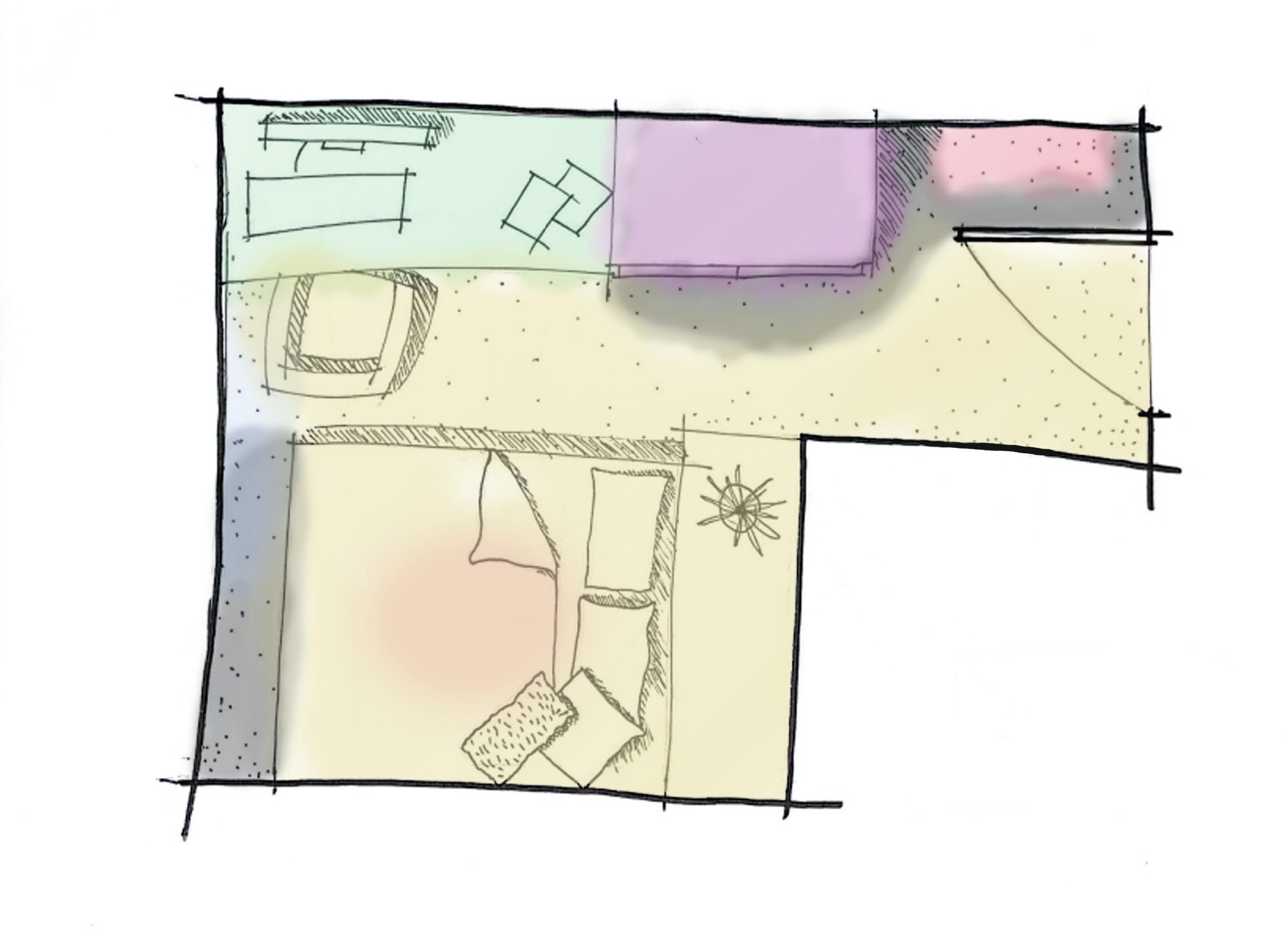
Bed: Yellow
• Represents comfort/relaxation
• Happiness
• Smells like home
I walked around my room, taking in every detail. I was thinking about how I felt in it and how I used it. Based on my observations, I annotated the room, filling each space with a colour I believe corresponds to my experience. Sensory maps allow me to look beyond the aesthetics and analyse each corner of the room in greater depth, as well as locate any arias that I am unhappy with.
11
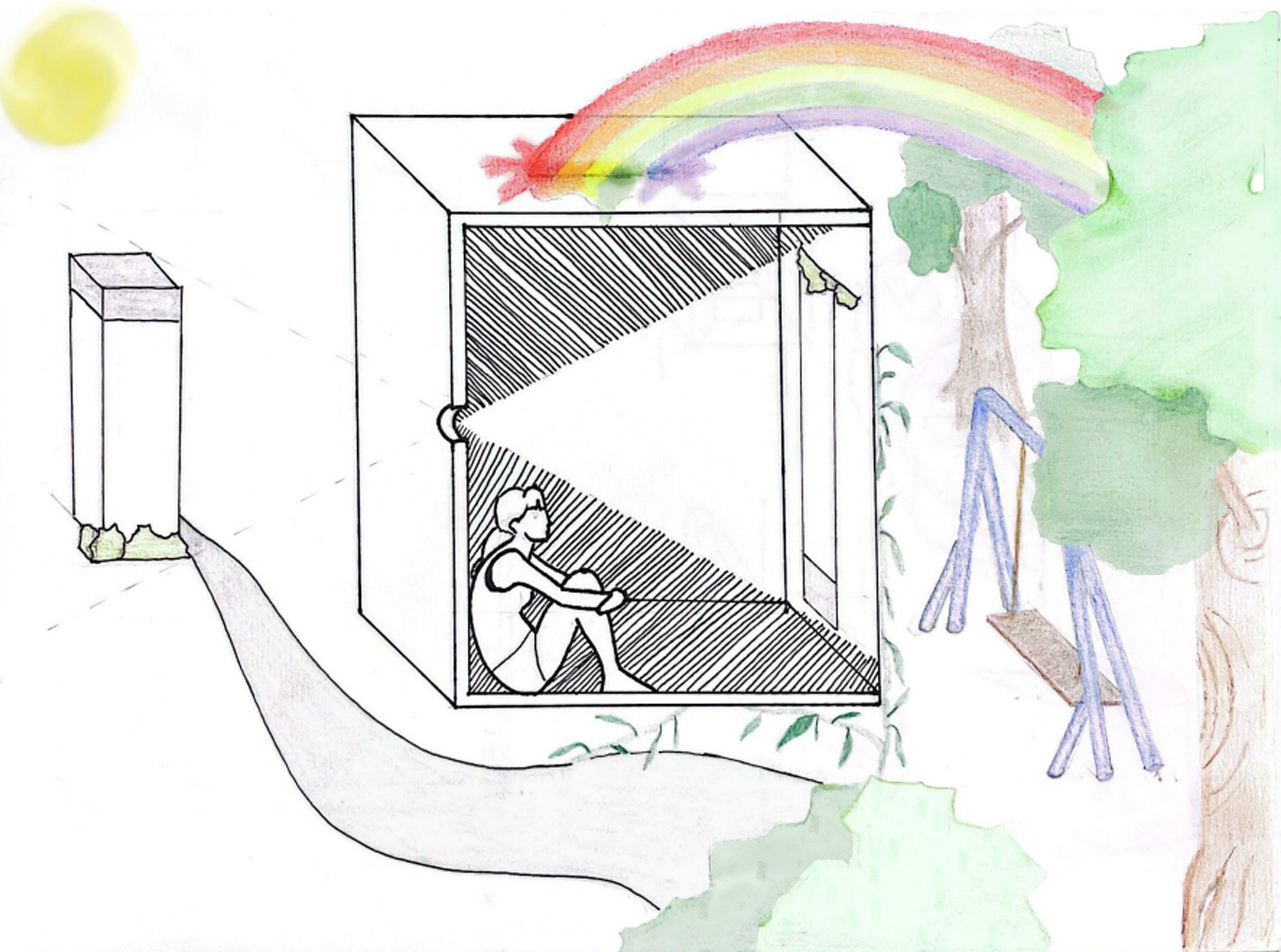
This image depicts how I feel about my current dorm room and highlights any issues I discovered with it.
The room is modeled after a pinhole camera. The small hole that serves as a lens captures an image of the building but fails to capture the sun. As a result, the inside of the room is dark and dull, representing the little sunlight I receive.
The image of the building is flipped on the back wall to represent how my perception of my surroundings becomes distorted as a result of my inability to see them and feeling so disconnected from them. A bright aria is hidden from view behind the back wall of the room. A rainbow symbolises colour, a swing symbolises fun, and plants symbolise nature. The outside of the room acts as a stark contrast to the inside.
To express my feelings about my current surroundings, I am drawn huddled on the floor in the room, isolated, and unhappy.
12
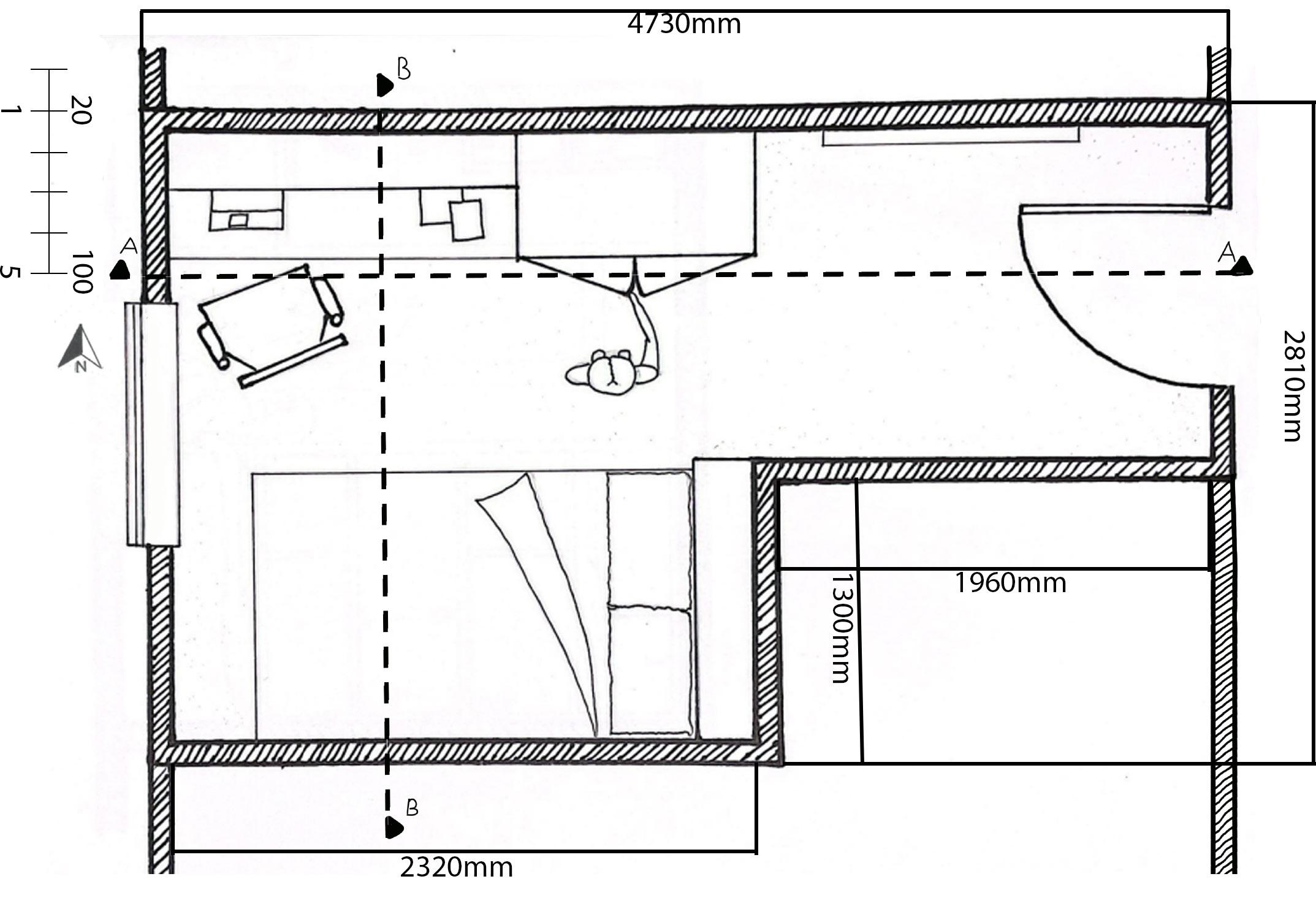
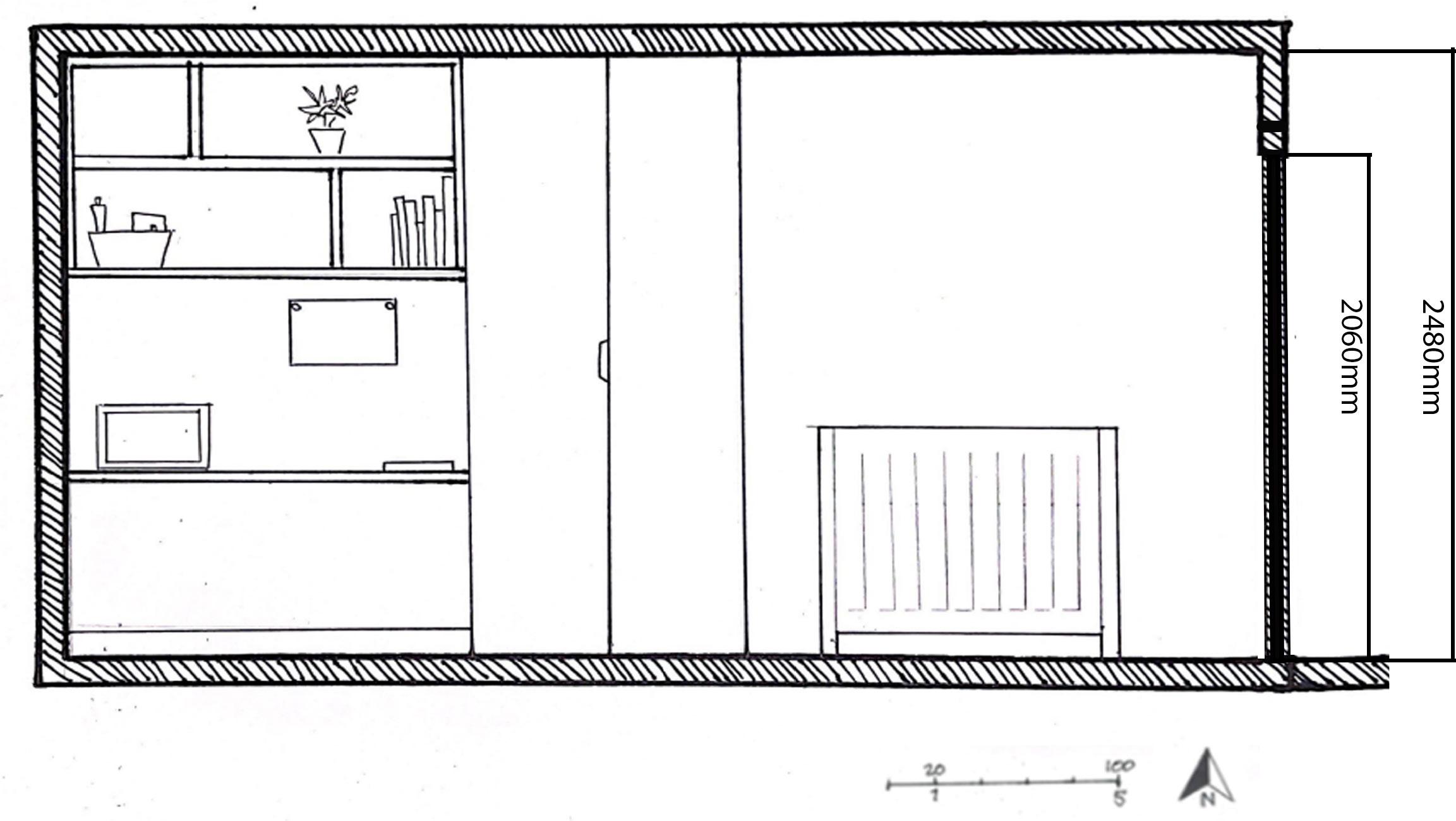
Dorm Room Floor Plan 1:20

13
14
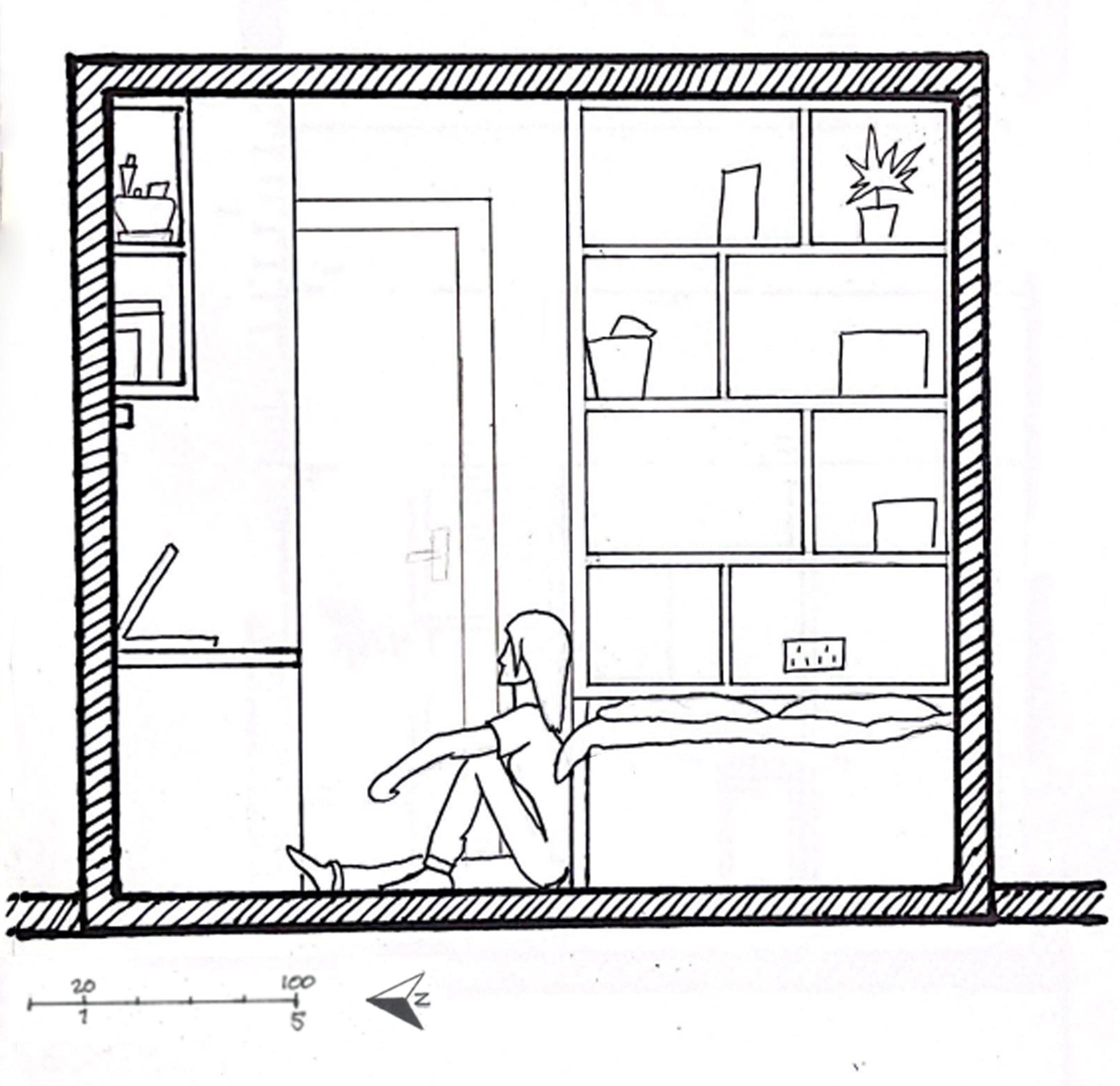
Dorm Room Section A 1:20 Dorm Room Section B 1:20
15
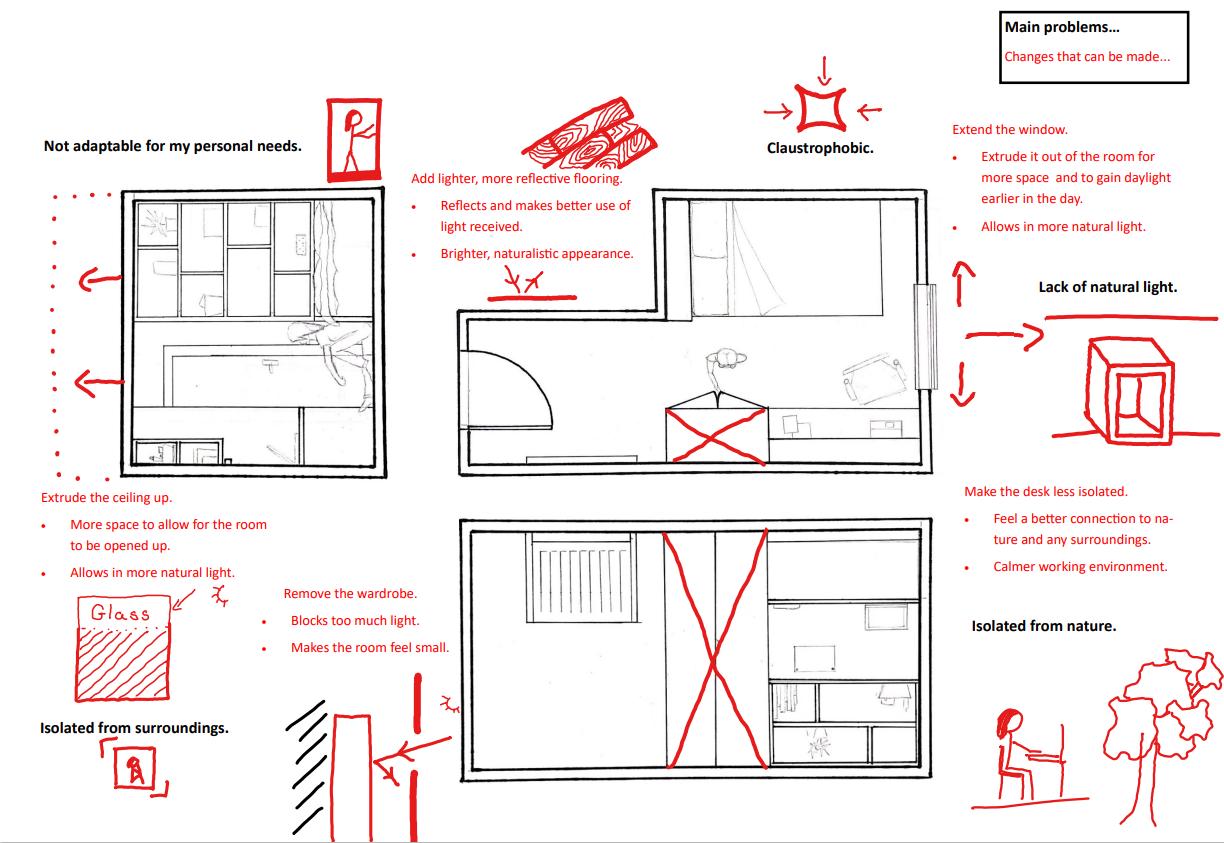
Map of Desires
Clear outline of the problems I discovered in my dorm room and some suggested solutions.
When I look at my desire map, I notice that a lot of my issues revolve around my room feeling very isolated from the outside world, which also causes me to feel quite claustrophobic and trapped. Also related to the lack of natural lighting in my room at all times of day.
16
P3- Adapt
Re-shaping the architectural space. Inside-out, Outside-in
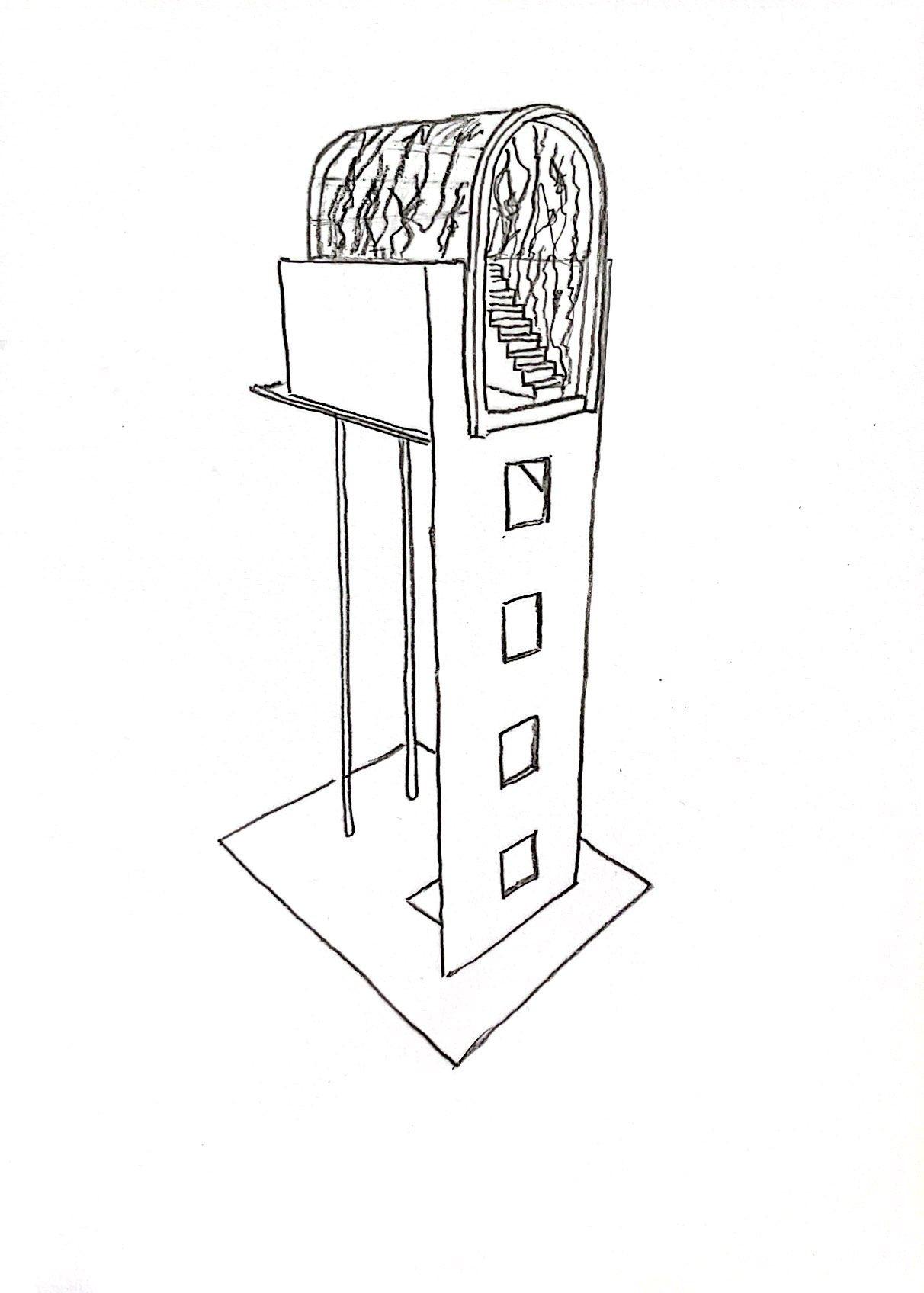
This project builds on the previous project’represent’ by transforming my dorm room to better meet my needs and desires using the’map of desires’ created prior. Solving the issues discovered whilst keeping within given constraints. Existing boundaries must be preserved and respected, the use of thresholds investigated, and a completely new building envelope designed as a parasitic extension. Parasitic architecture is defined as a structure that is connected to a larger structure and feeds off of it’s surroundings.
The project’s ultimate goal is to design a parasitic extension and create a 1:20 scale 3D model of it.
In this project, I struggled to stay within the current boundaries while not disturbing those who live nearby. However, it forced me to design more thoughtfully, taking into account others while still meeting my own needs and desires. It also prompted me to consider technical aspects such as support systems, which I put to the test when creating the 3D model.
17
Precidence
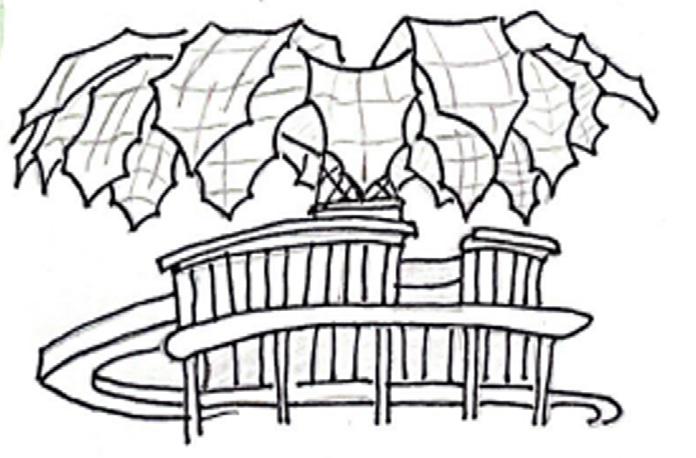
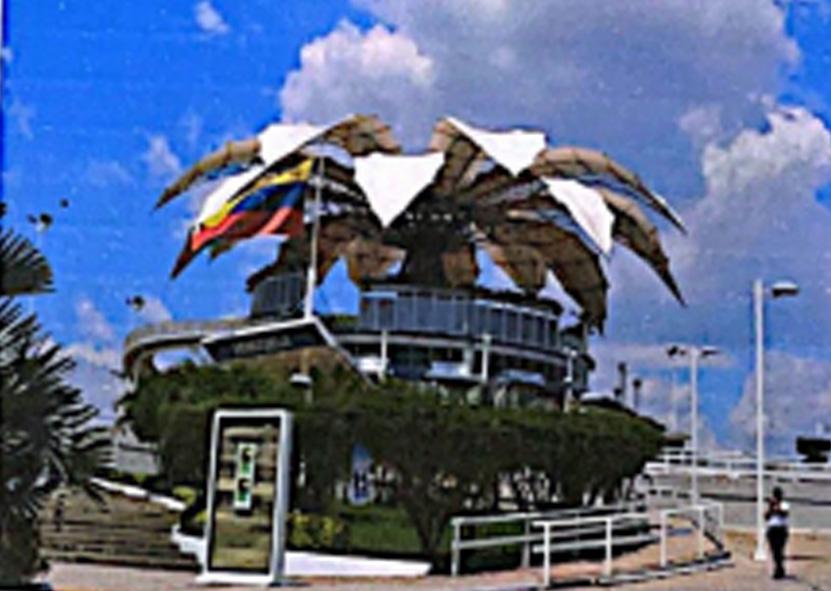
• A hydraulic system allows the restructure to open and close depending on weather and day.
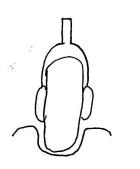
• The building is fully glass clad to maximise natural lighting.
• The roof can be illuminated at night to add colour.
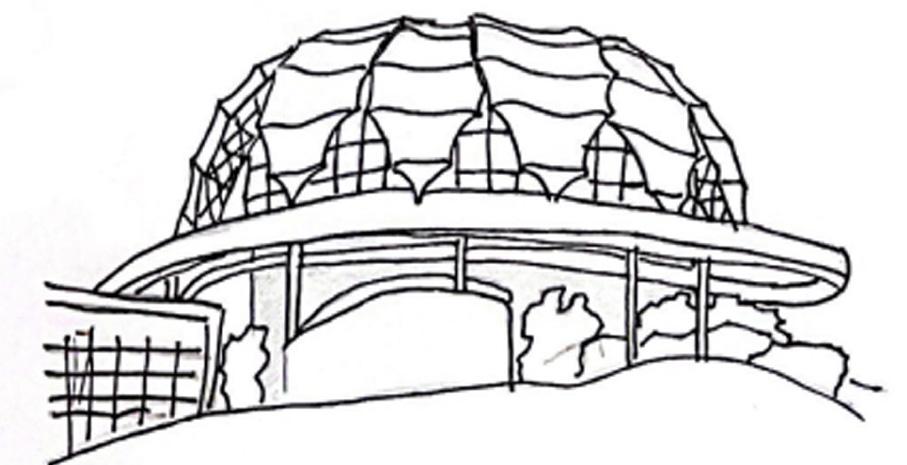
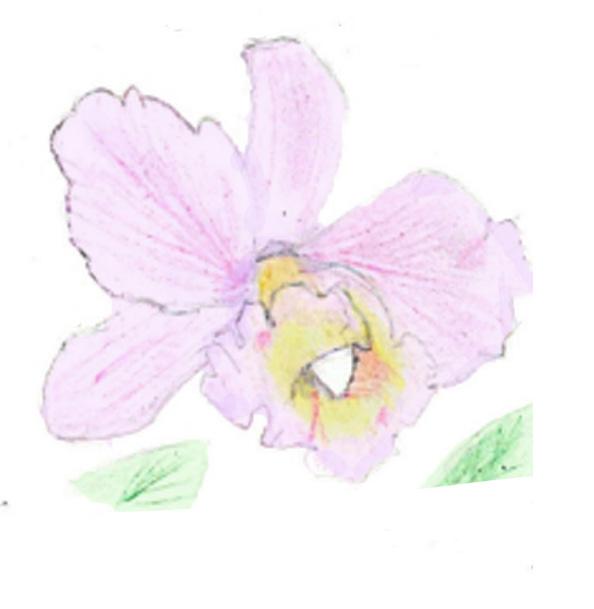
• Naturalistic design, that emulates flower petals.
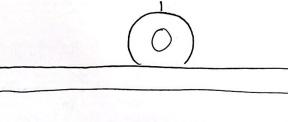
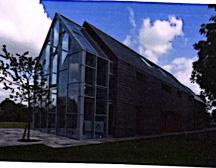
• Telescoping out to show moves along rails to expand and shrink depending on the space needed.
• Clad in Ethylene Tetrafluoroethylene which is strong, lightweight and has the thermal properties of insulating glass at a fraction of the weight.
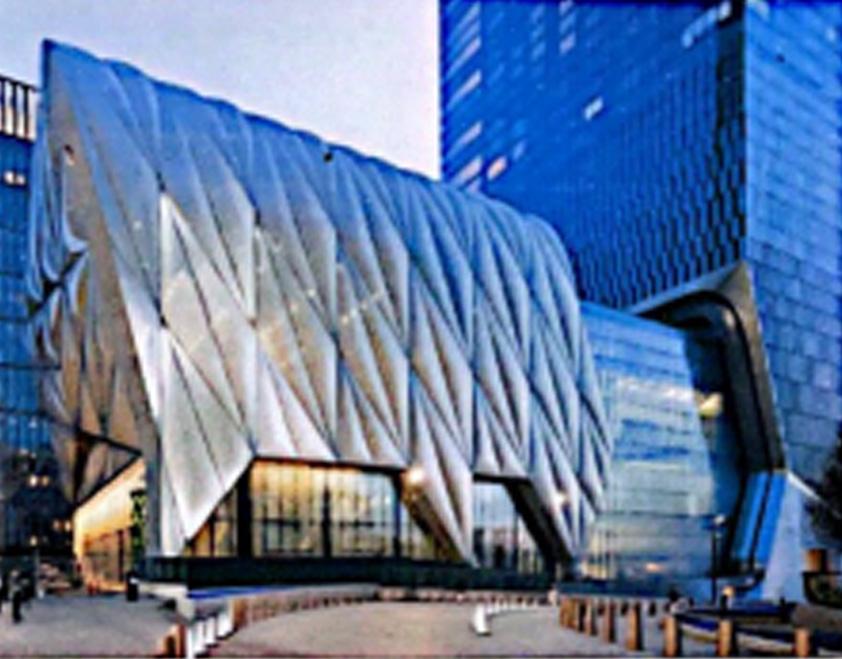
• Translucent material meaning some light can be transferred through. it dulls and deflects harsh light.
• The materials distorts the view for privacy but allows some colours and shapes to be seen, therefore it still feels connected to the surrounding area.
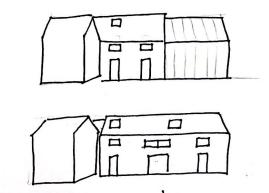
• Mobile walls and roof are move to cover and uncover the dwelling.
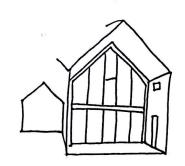
• The dwelling is completely glass so allows in the maximum light when exposed.
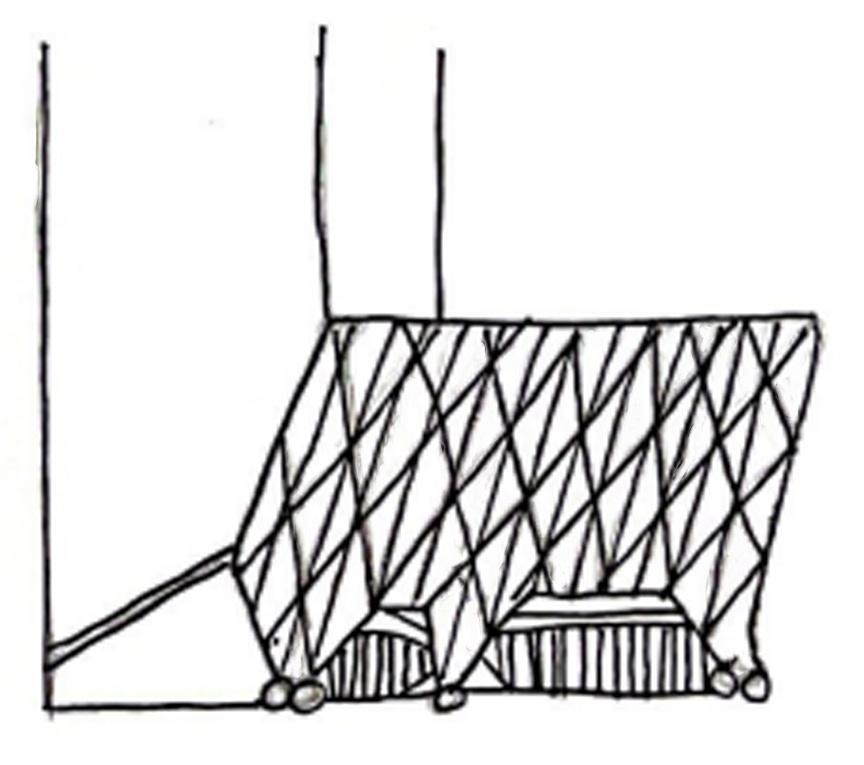
• Railway tracks are used to allow the facade to move in and out.
Flor de Venezuela – Fruto vivas The Shed – Diller Scofidio and Renfro Sliding House – Drmm Architects Flor de Venexuela stadium(Dunnell, 2019). The Shed(Pintos, 2019)18
Sliding House(Etherington, 2009)
Lighting Investigation
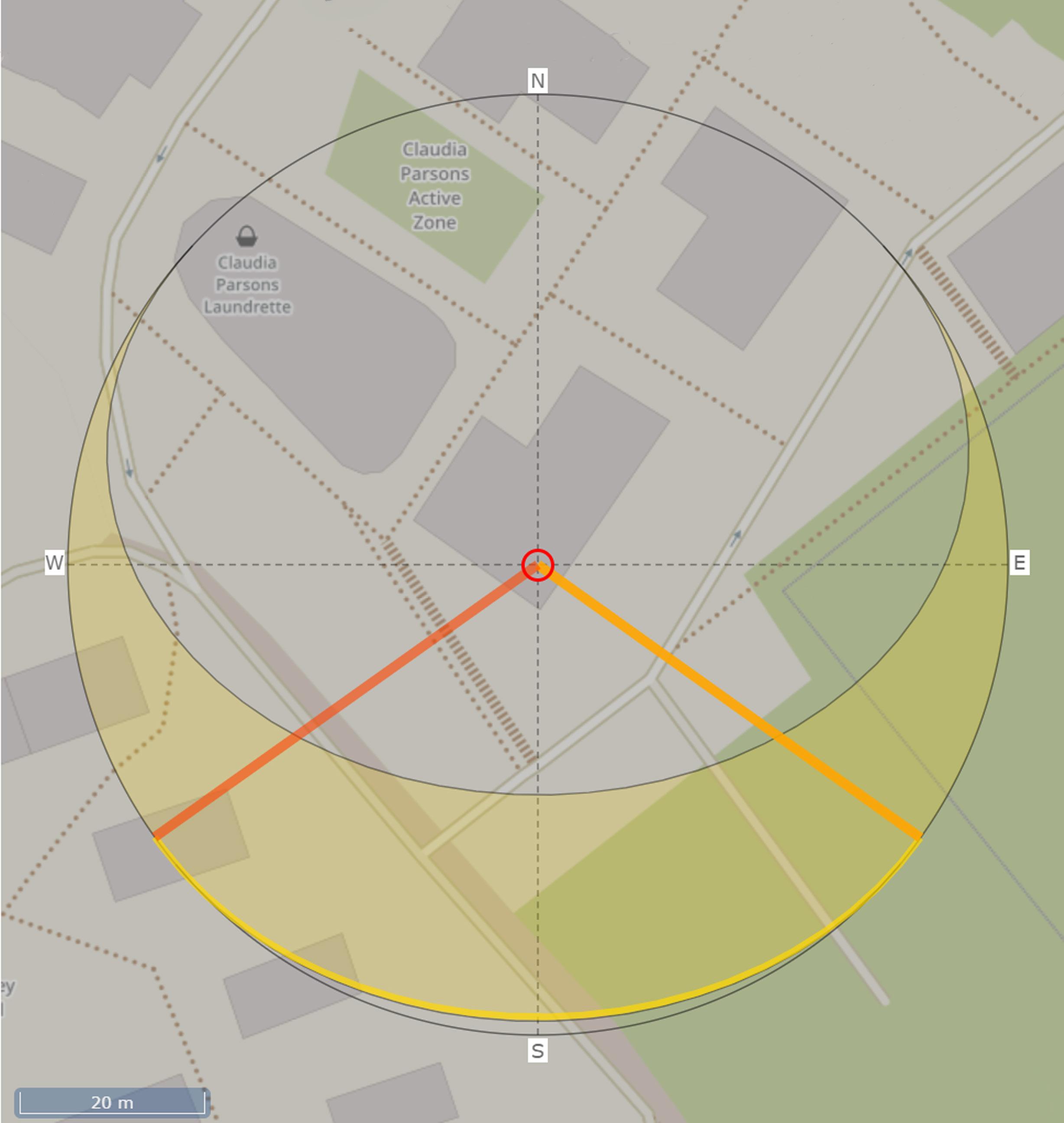
Sun Map Loughb r ough - 15/01/2023
Sunrise Sunset
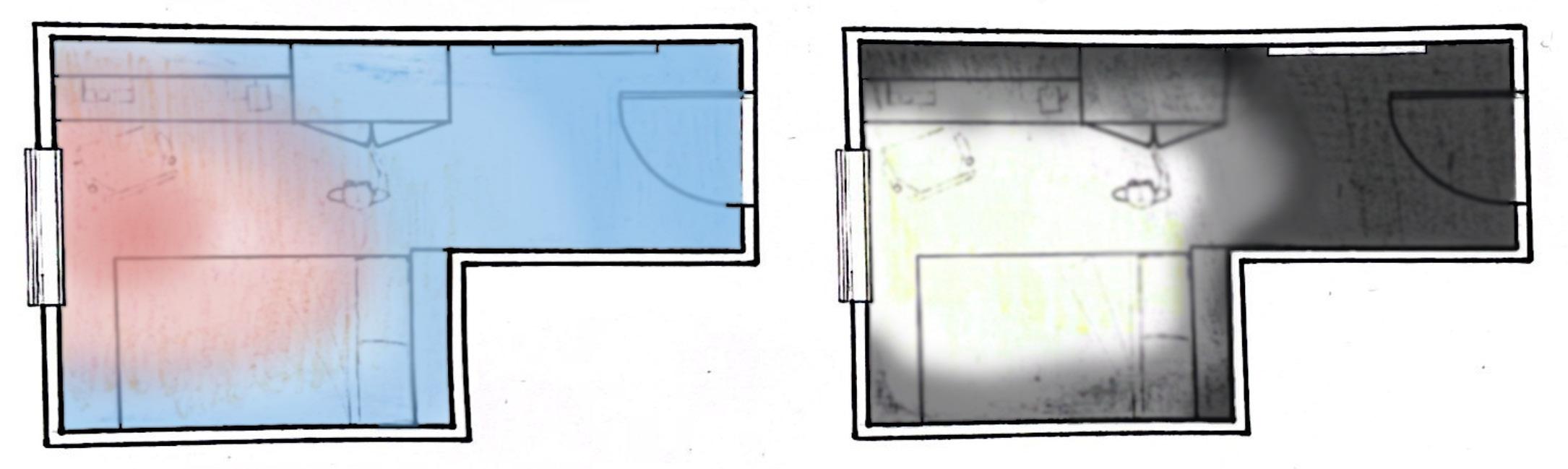
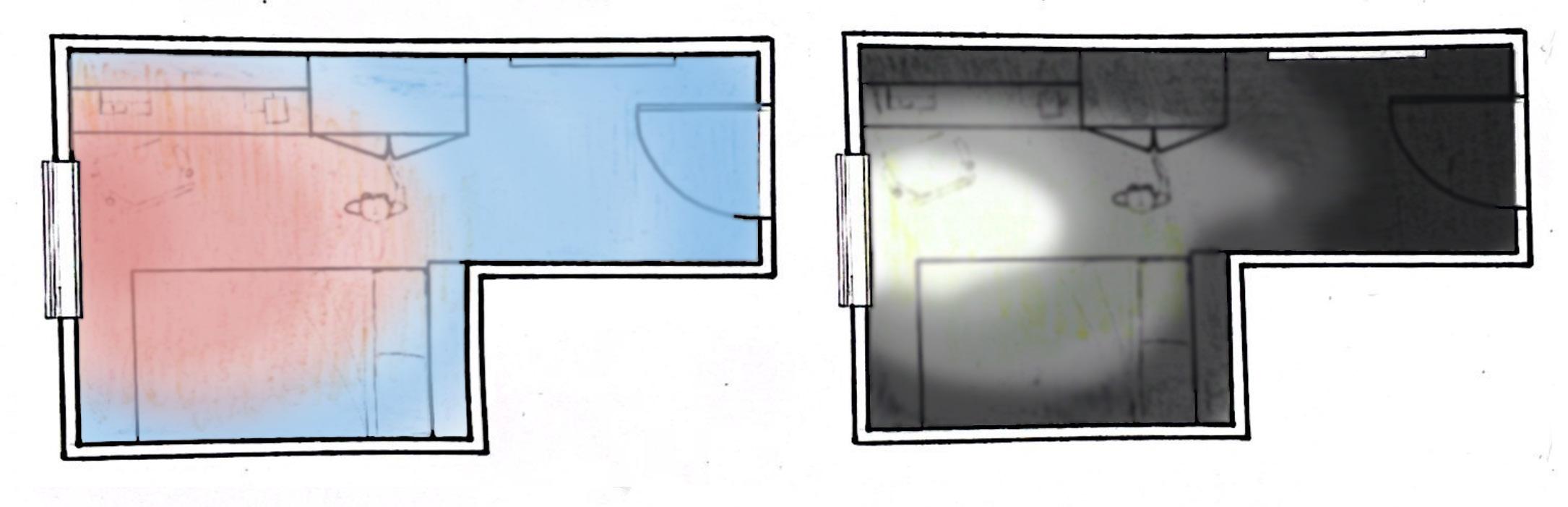
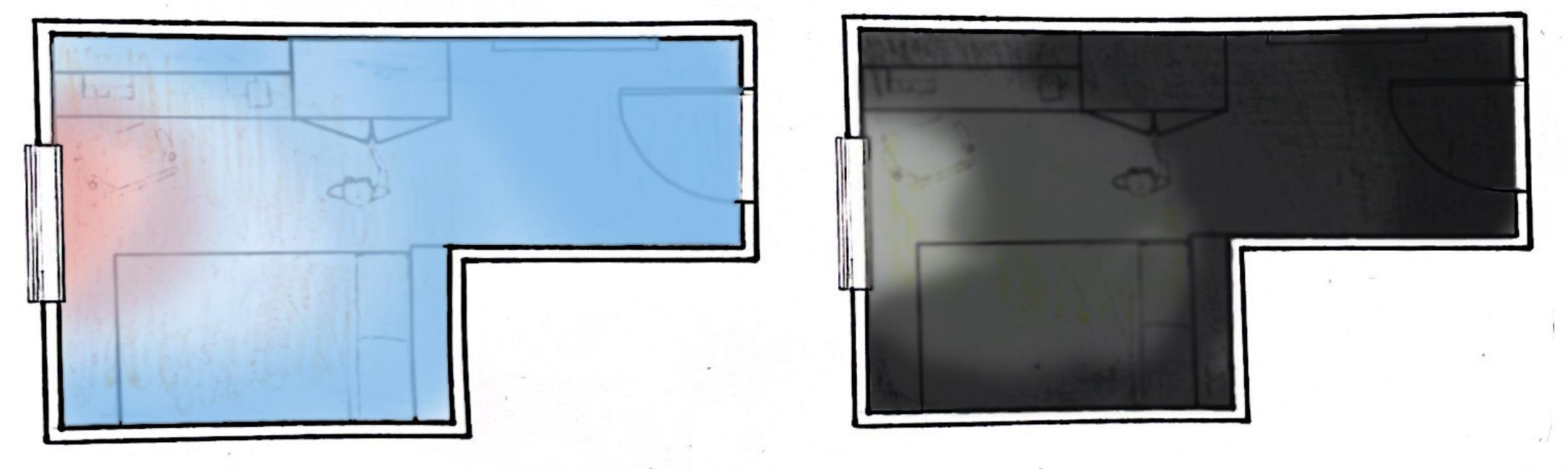
Heat Map Light Map 07:00 12:00 16:00
(Computation path of the sun for Margaret Keay Road, Loughborough, Leicestershire, England, LE11 3, GBR, 2023)
I investigated how light entered my room throughout the day because a lack of natural lighting was discovered in my current room. I examined the sun’s path as well as mapped my observations of the room’s lighting. I also mentioned how cold and isolated the room felt, so I looked into how the lighting affected the temperature of the room.
19
First Design Ideas
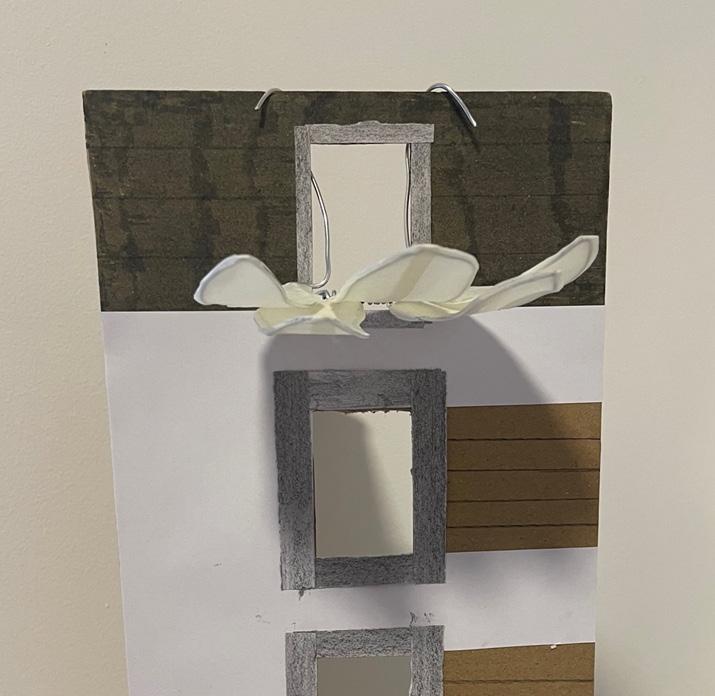
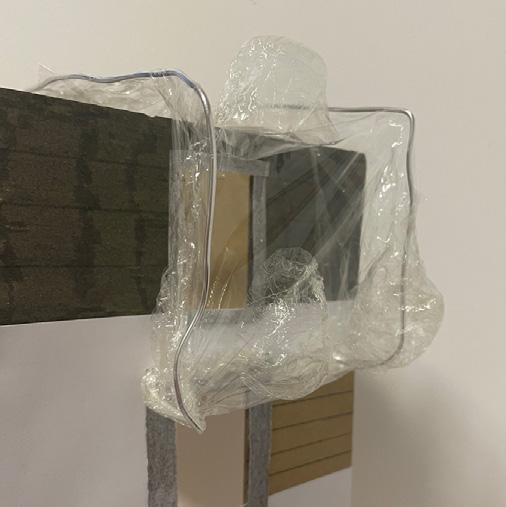
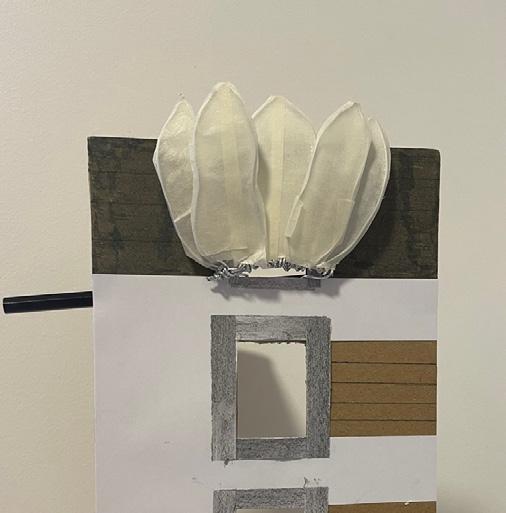
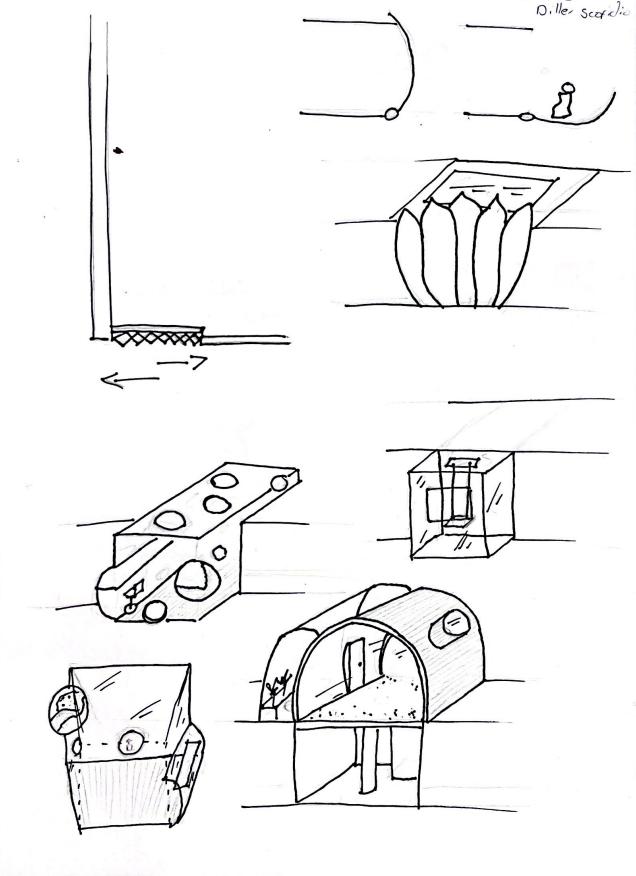
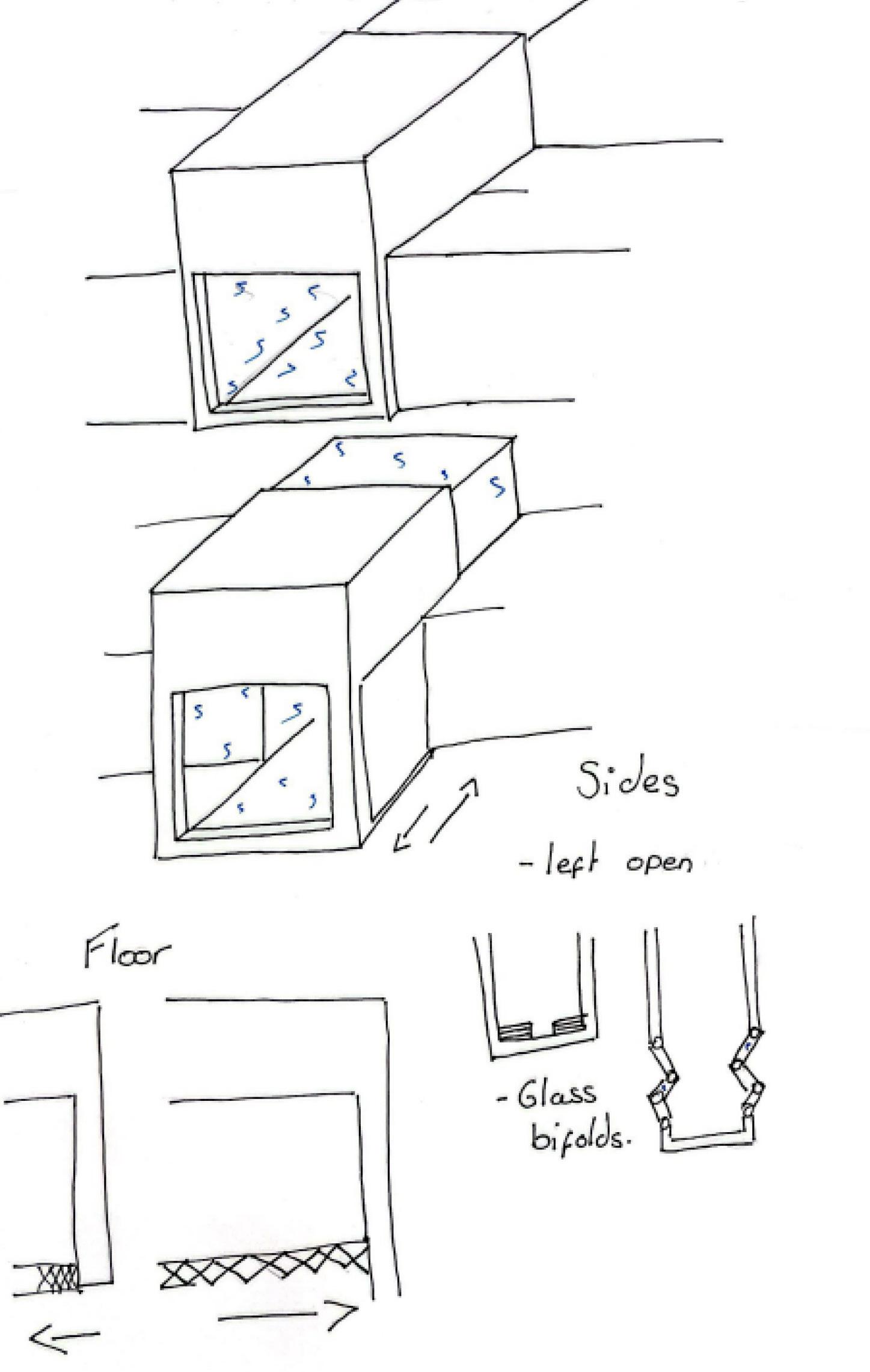
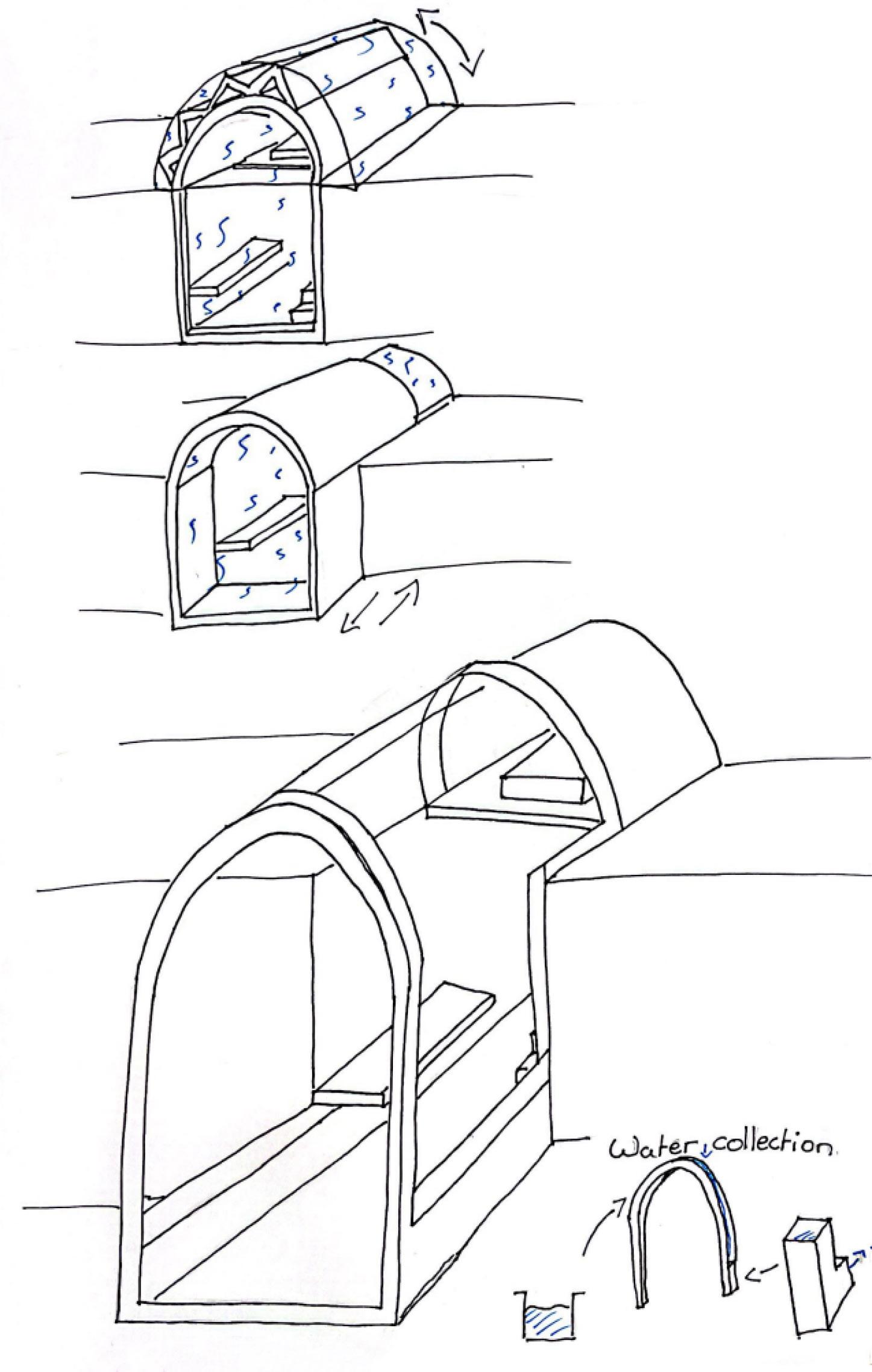
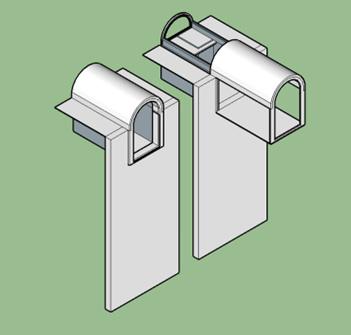
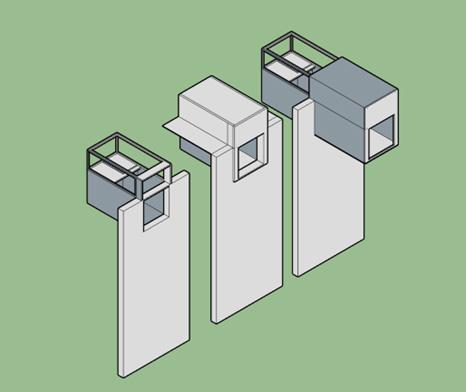
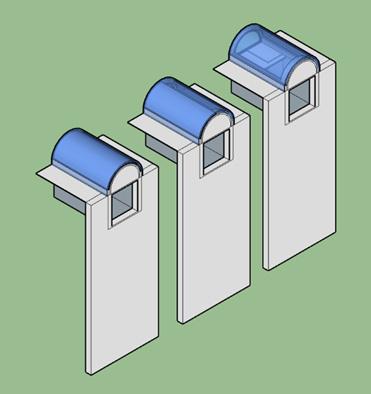
Creating rough models of the two innitial ideas I like best. I created my three design ideas by combining the glass element from one, the moving facade from another and the domed ceiling from another. All were inspired by the sliding house, with two having the facades move in and out and one having a roof cover that can be concertinaed up. These would let in light from all directions, increasing my day lighting hours. They also all provide more space, with my bed being raised. However, none had enough of the naturalistic design I desired, but the format of the two sliding ideas were ideal.
20
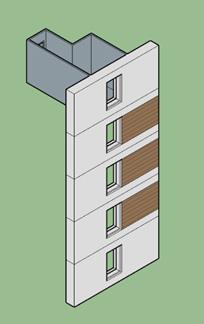
Original building facade. Drawn on sketchup.
21
Design1 Design 2 Design 3
Design 1
Design 1
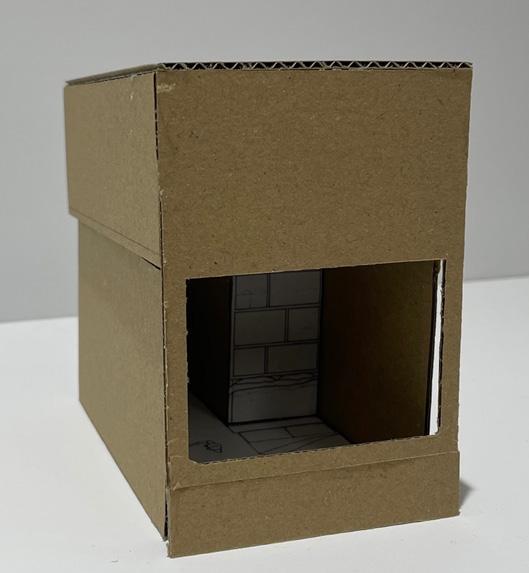
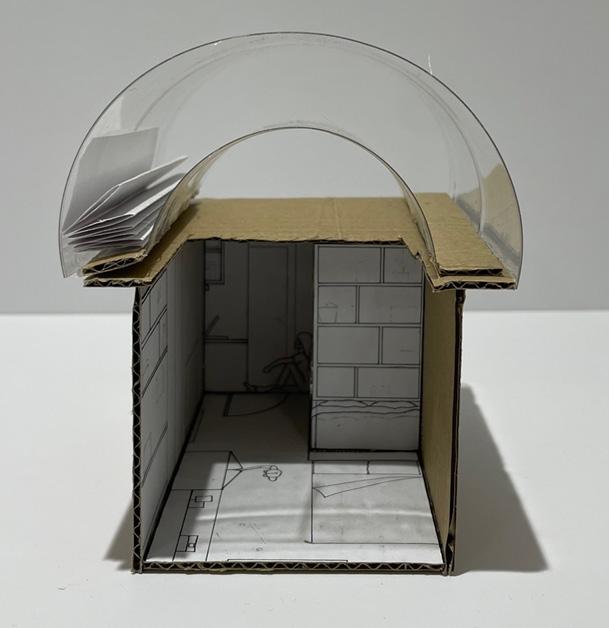
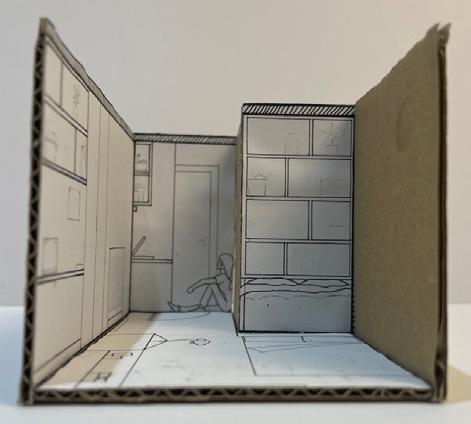
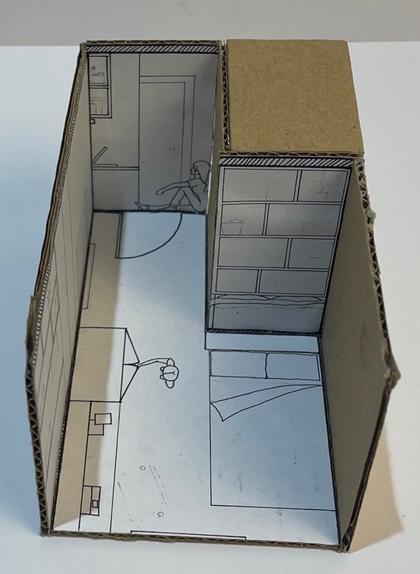
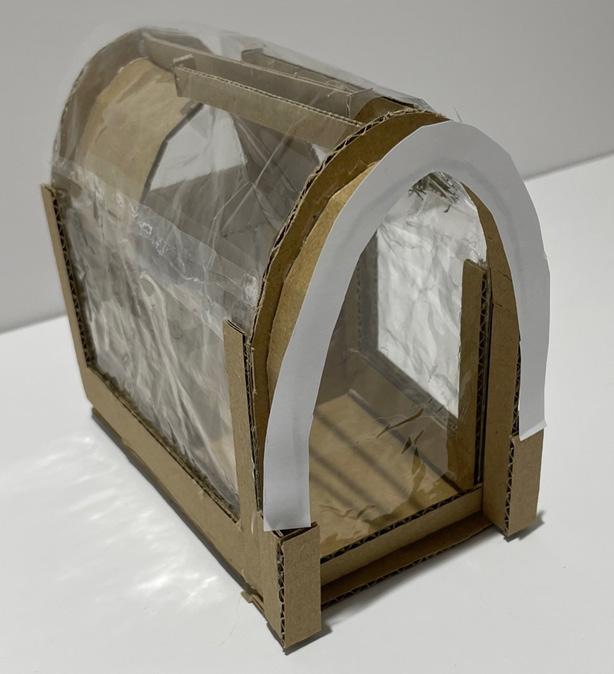
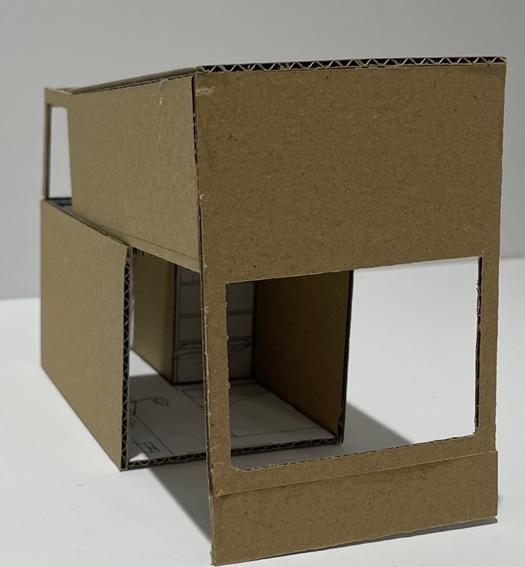
It was important to me that the models were crafted out of upcycled materials. These models were rough, arn,t to be seen by the client and dont need to be to durable. Therefor they didn’t warrent the use of new material and the enviromental impact that comes along with it. (For example Drink bottles and parcel boxes).
Design 2
Experemental models made to be able to see the design 3D. This dosn’t only alow for me to better visulise the design but can also be rooatated 360 for a full visual. A model starts the process of thinking about tecnicalities and how the room will be made.
Design 3
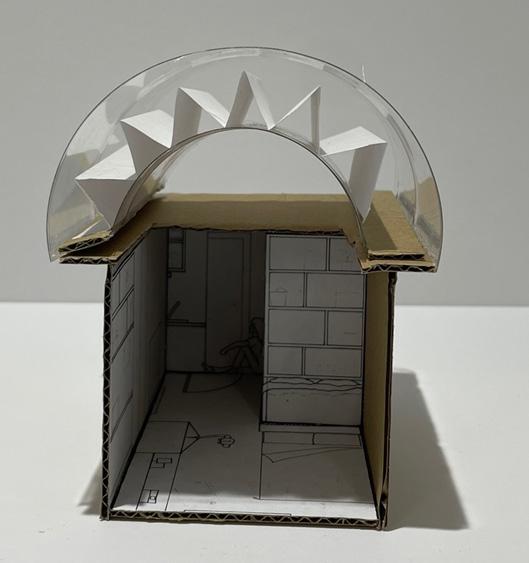
Original
22
Room
Final Design Idea
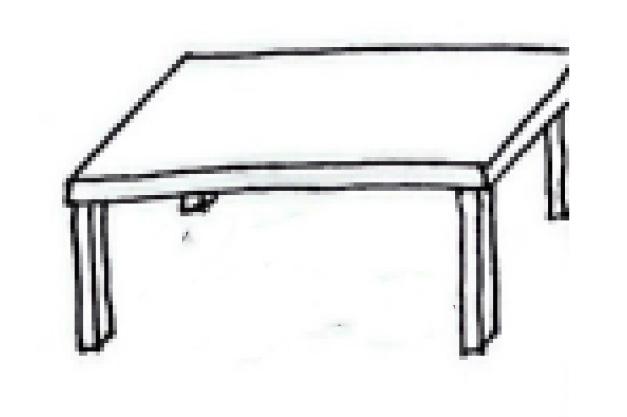
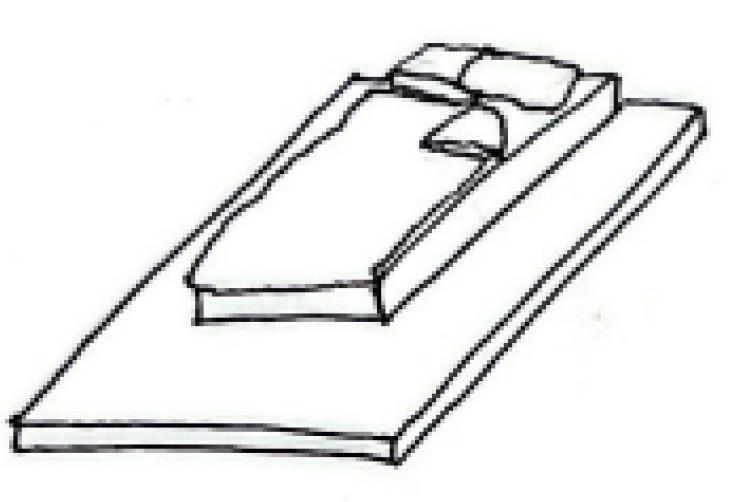
Desk with legs.
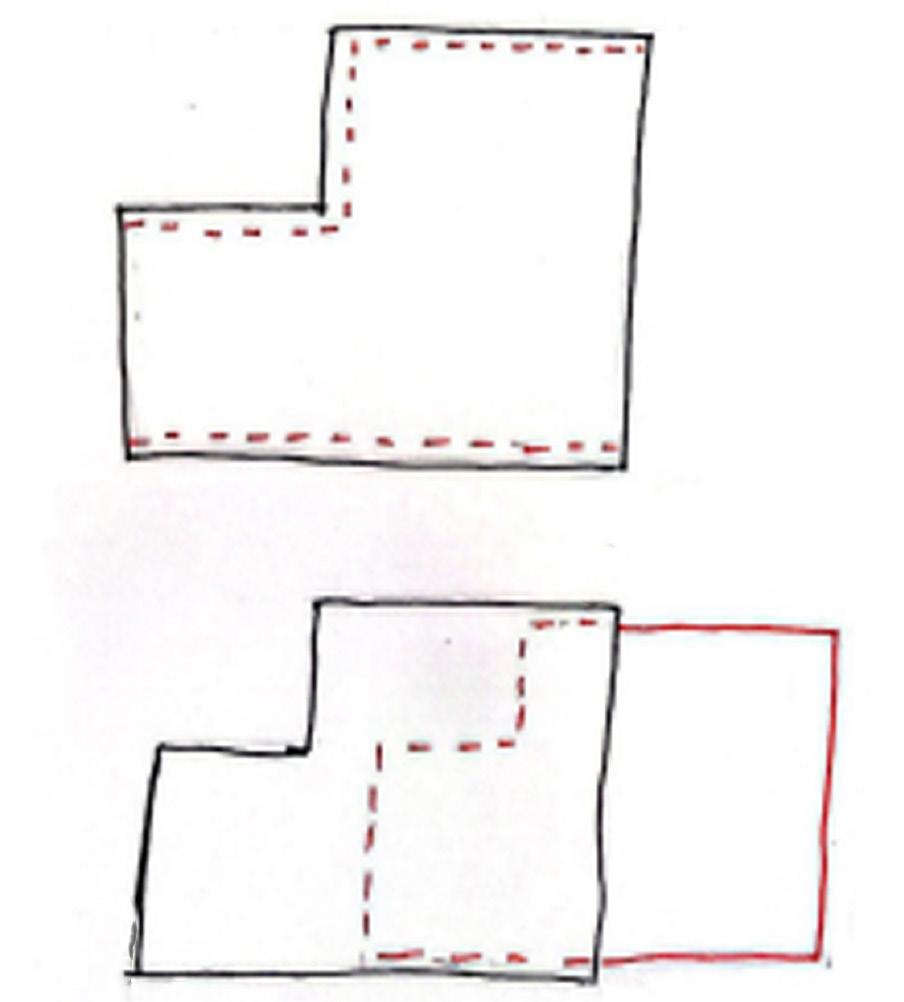
Raised floor to place the bed on.
• More room
• Less claustrophobic
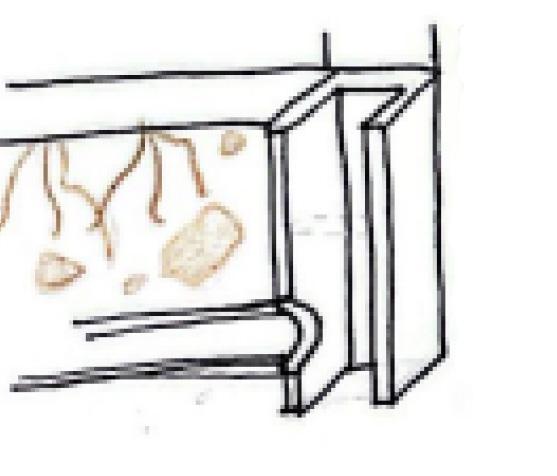
Guttering to collect rainwater to water the plants.
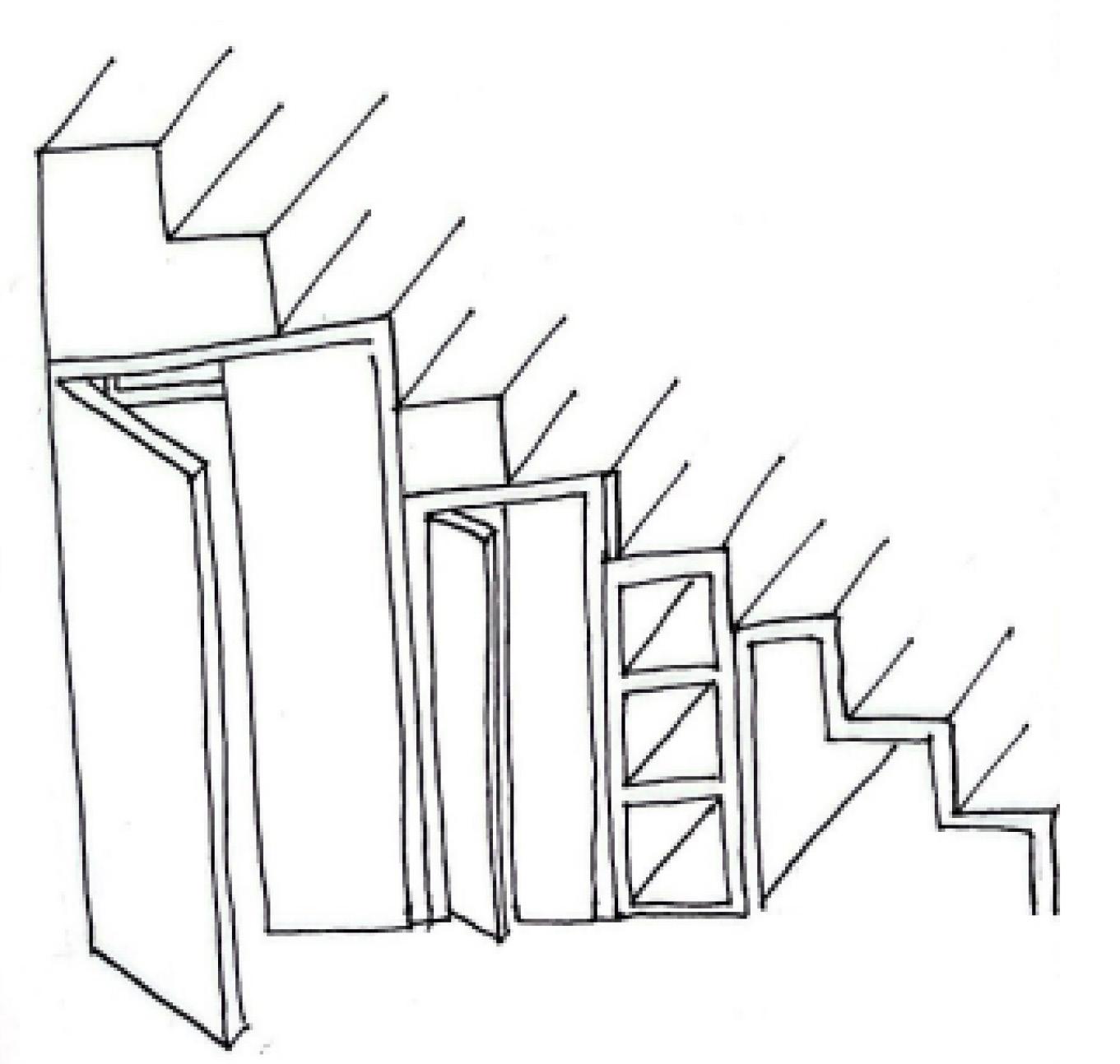
Plants between 2 glass walls.
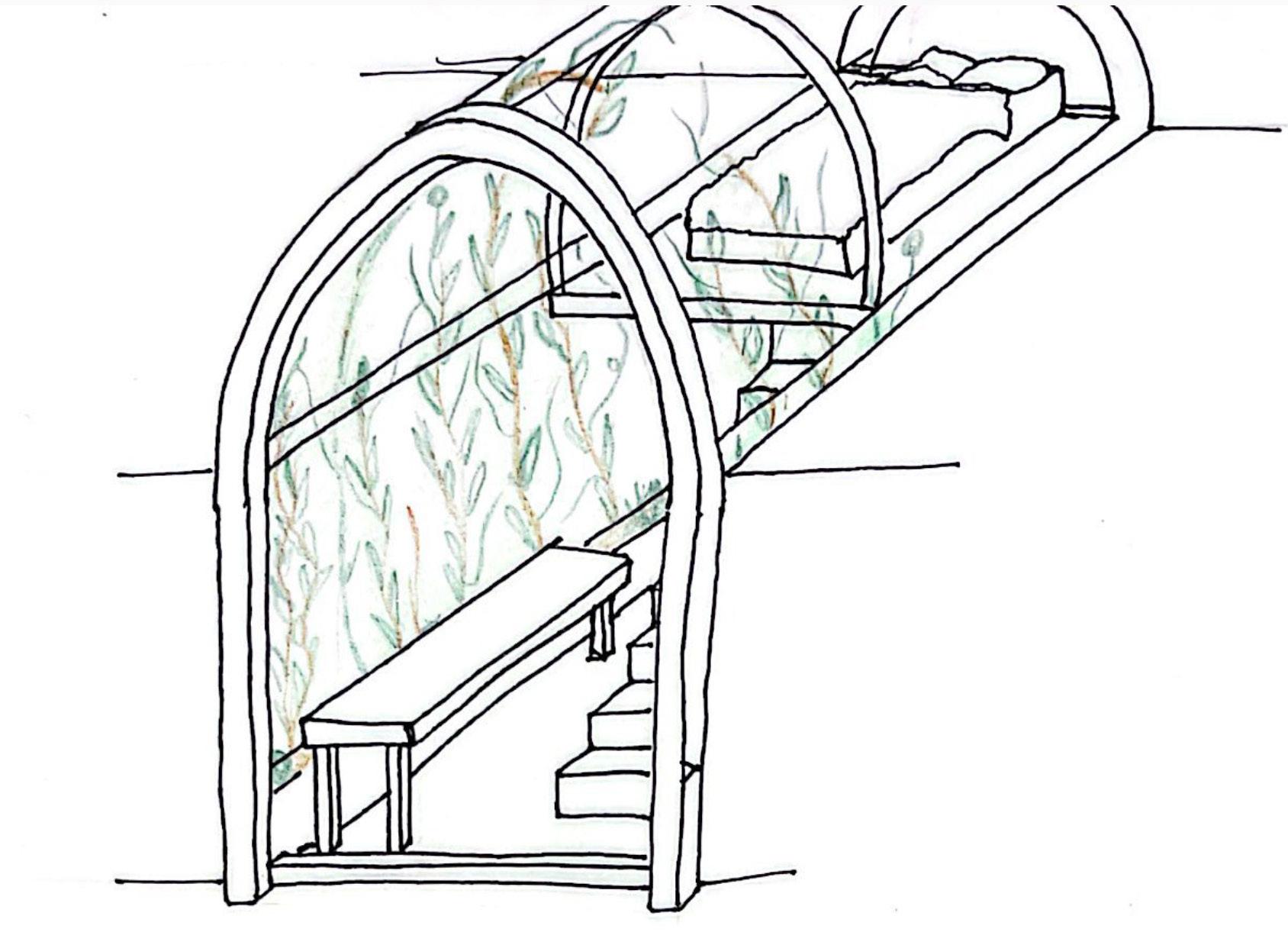
Remove the wardrobe and move it under the stairs.
Vanished wood floor.
• Natural
• Reflects light
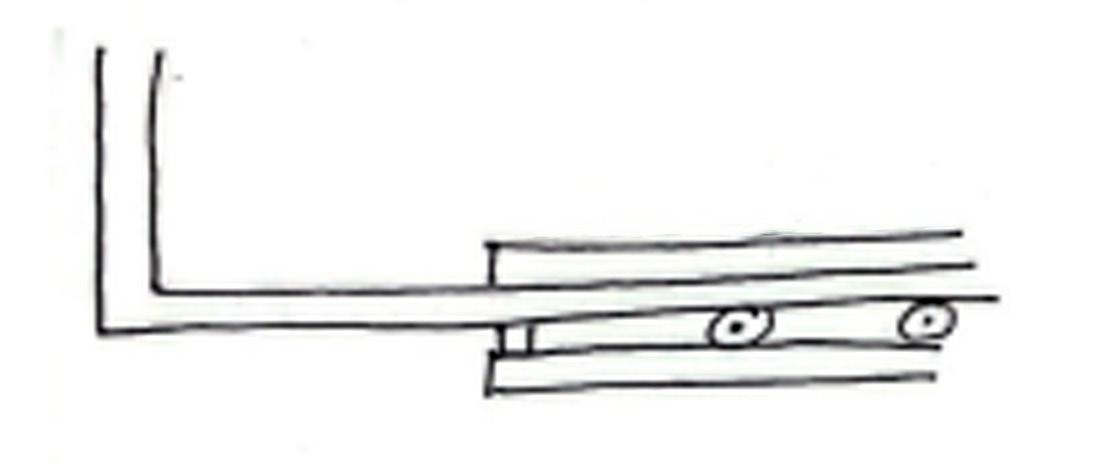
Floor placed under another layer of flooring that pulls out.
HermetosphereSelf-contained eco system in a glass jar.
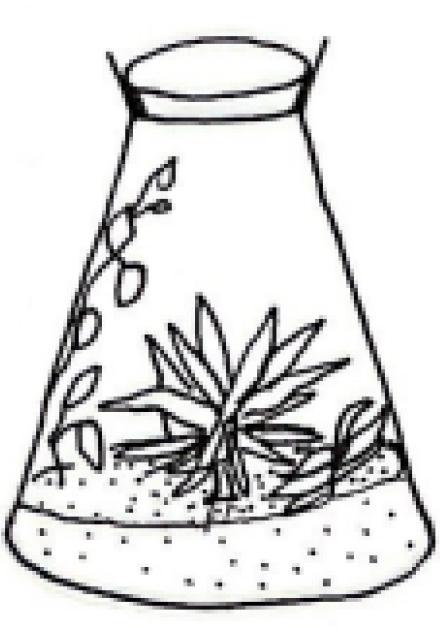
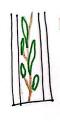
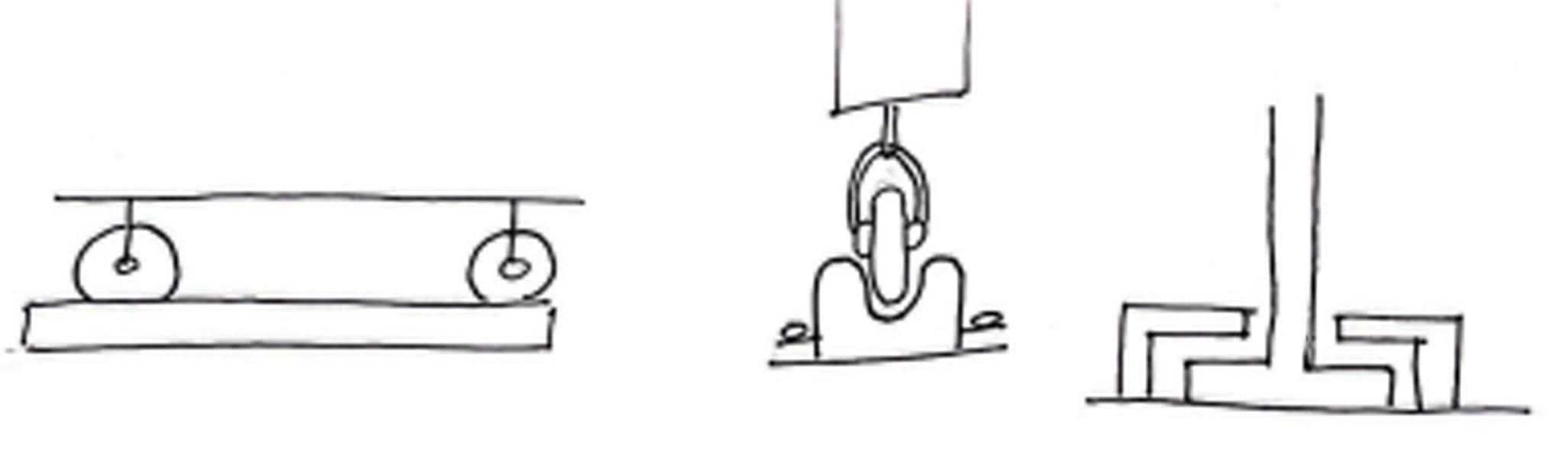
Rails to slide the walls in and out.
Floor layed ontop acts as a support by counter-weight/ counterleaver.
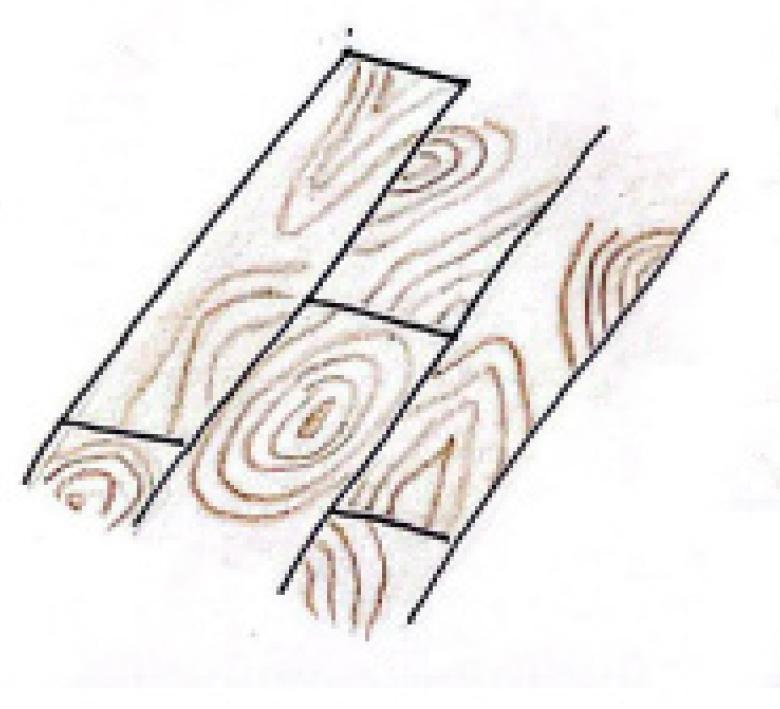
23
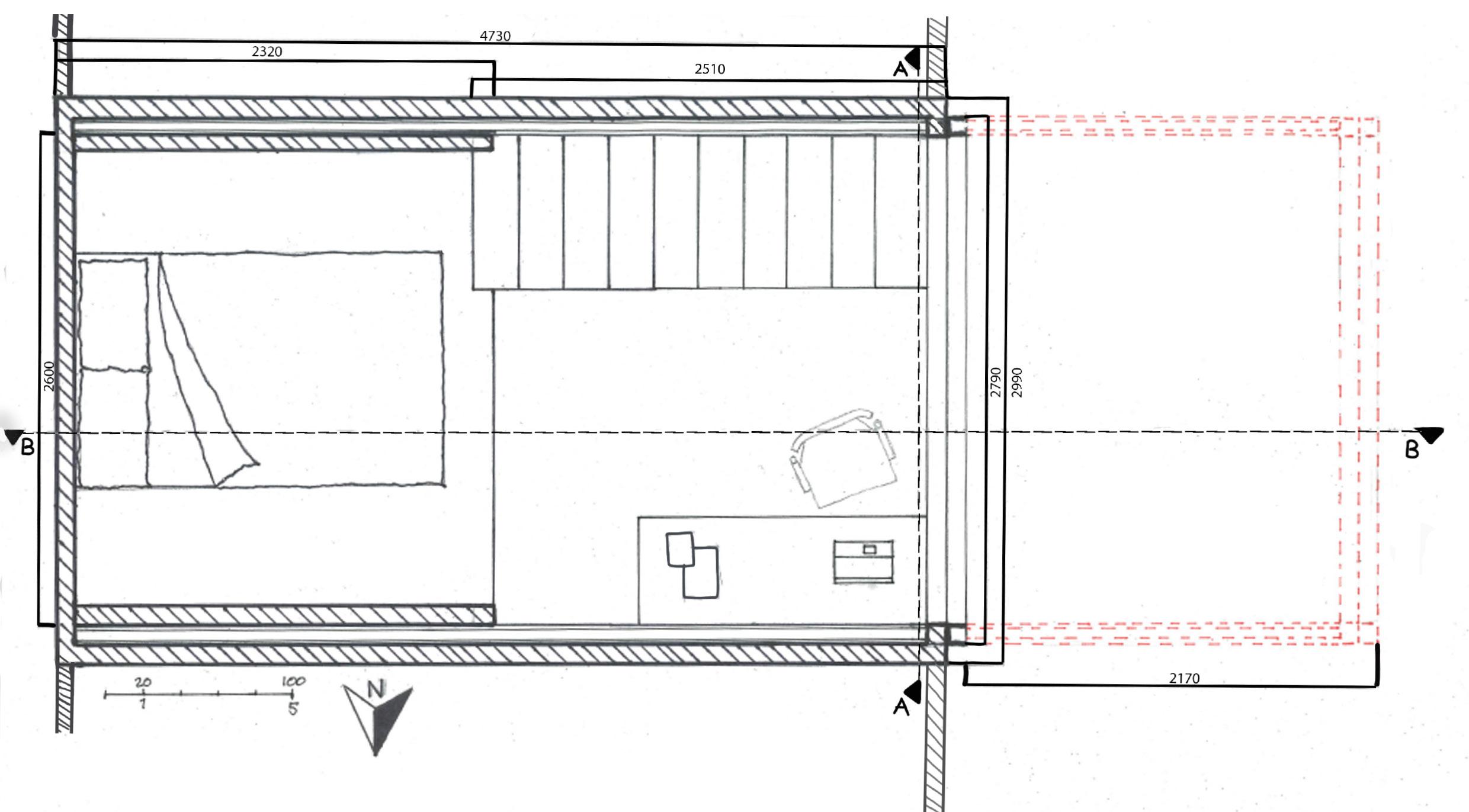
Final Design Floor Plan 1:20
24
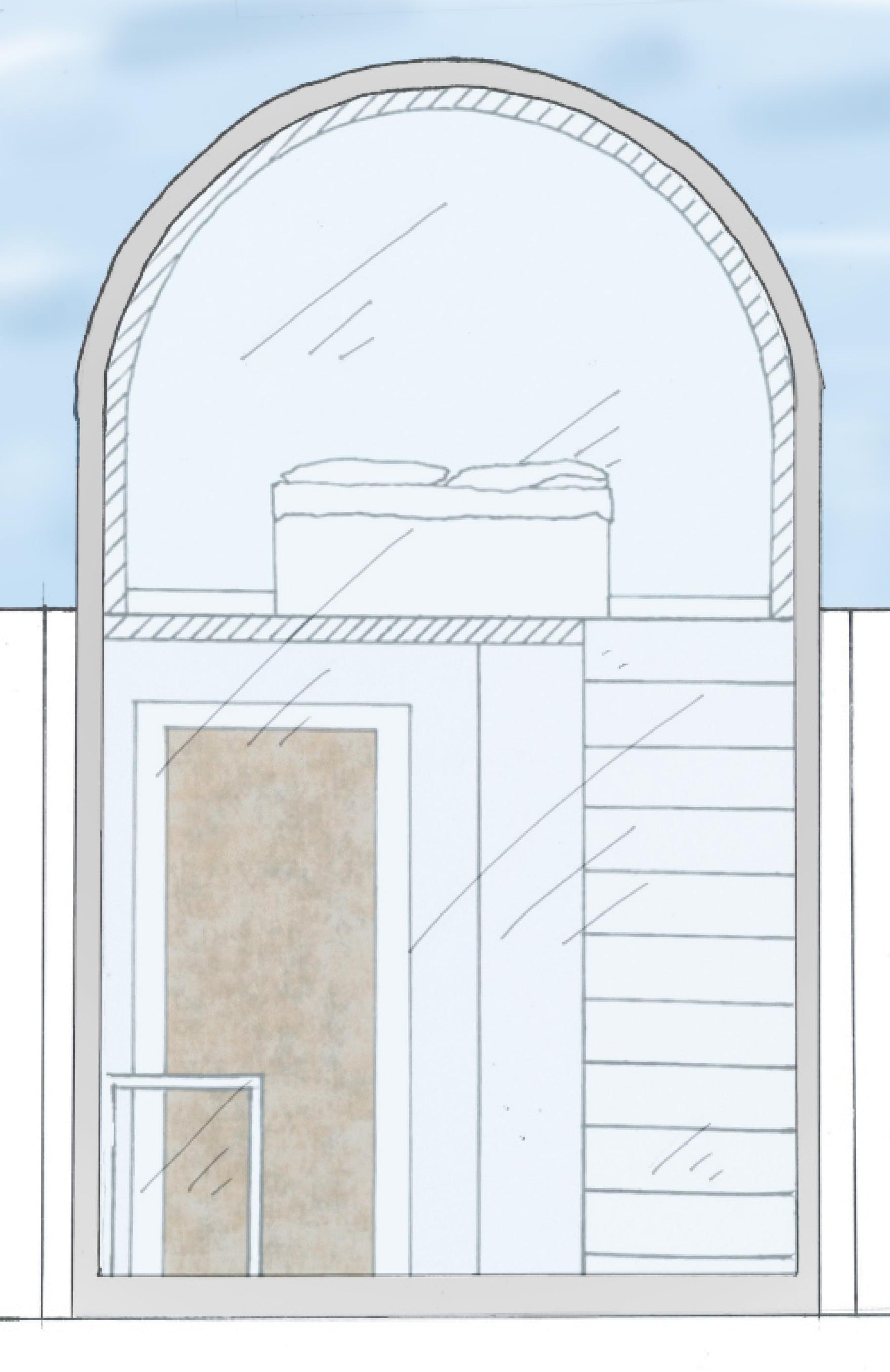
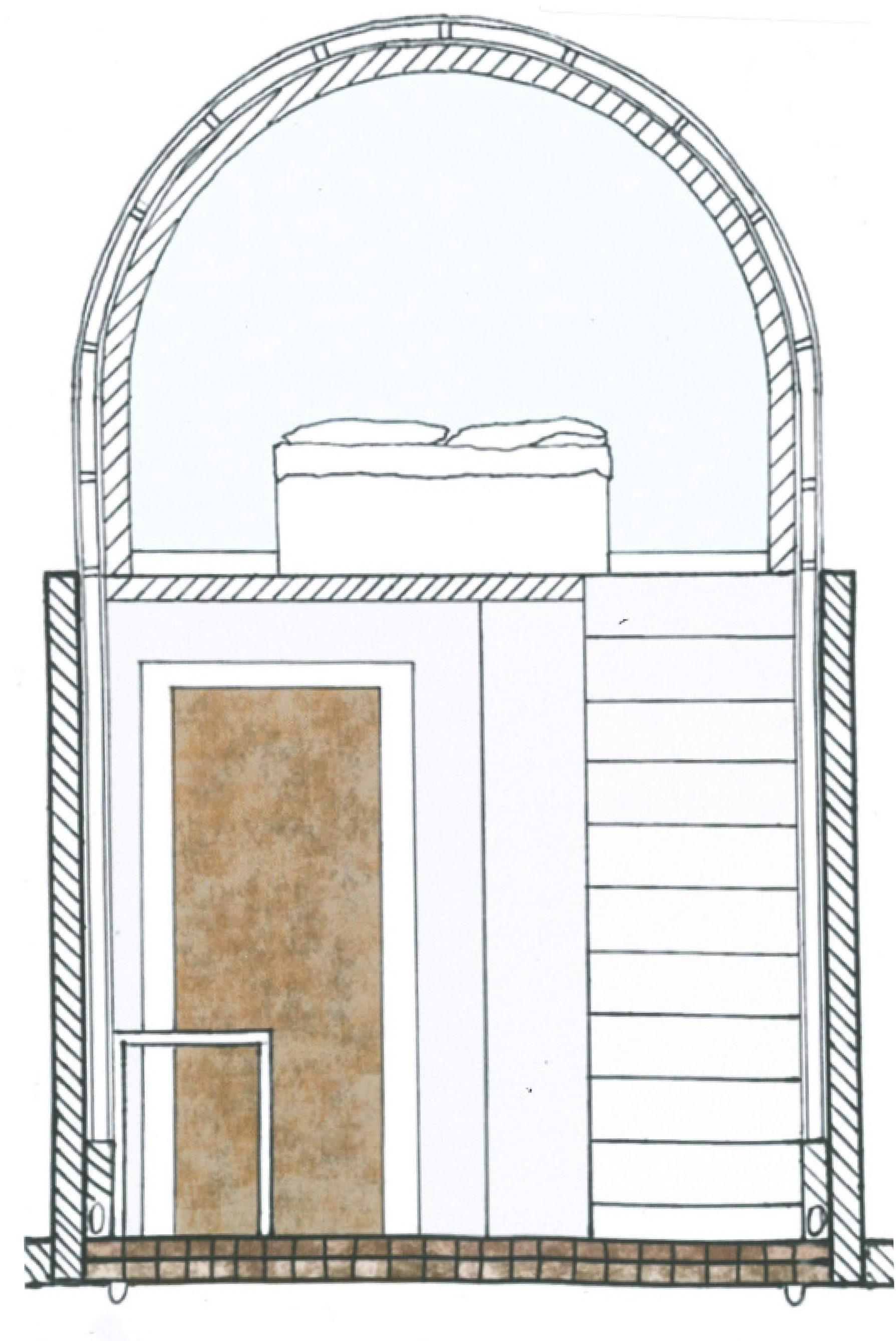
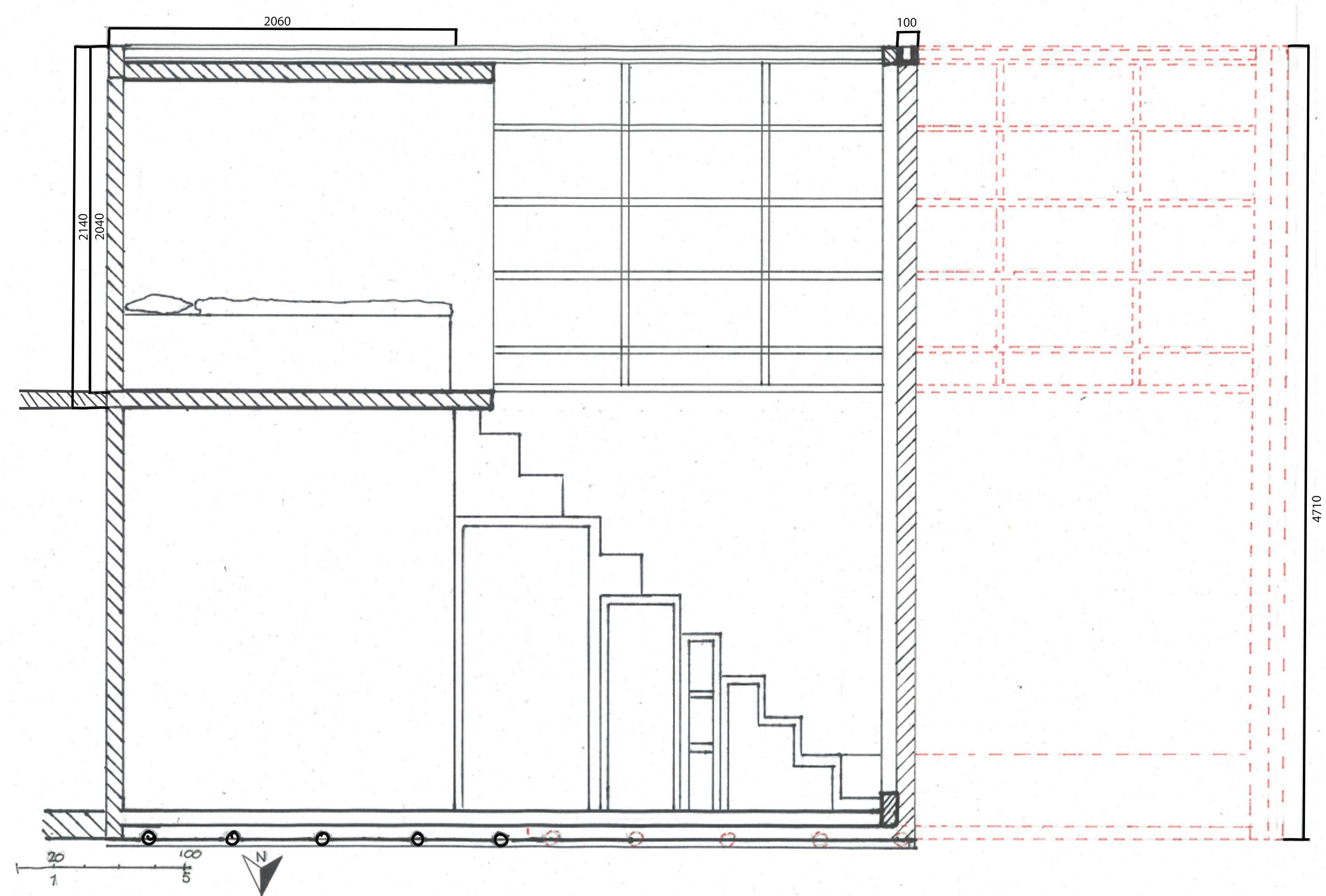
Final Design Front Elevation 1:20 Final Design Section A 1:20
25
Final Design Section B 1:20
26
Final Design Asonametric
Steel cage on the roof structure to support the glass as it curves
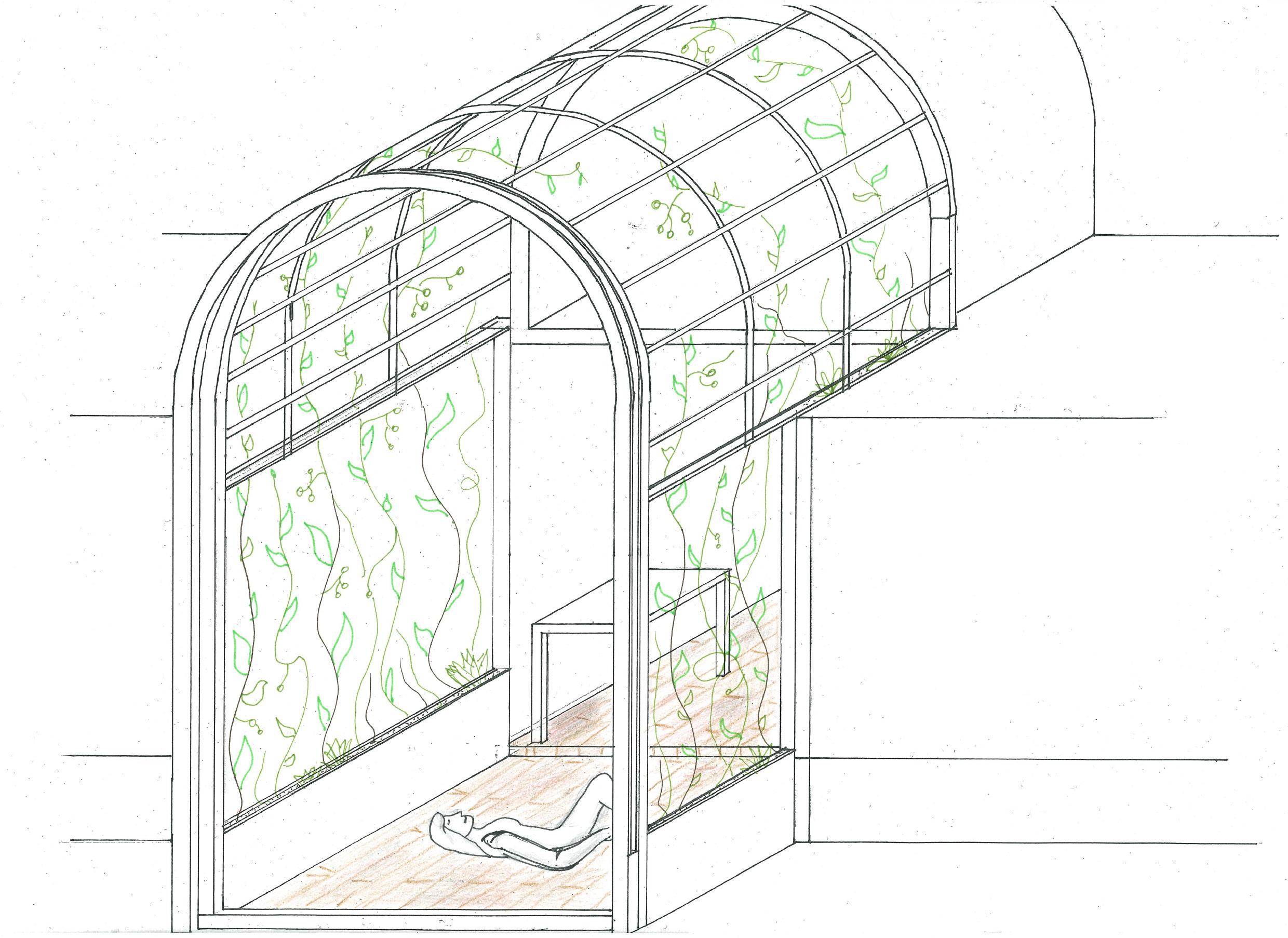
Light colours so all the light recived is reflected back into the room
Material from sustainable sources
Wood flooring
Steel rails and structure
Glass walls
27
Final Design 3D Model Shows how much light enters the room at different times of the day
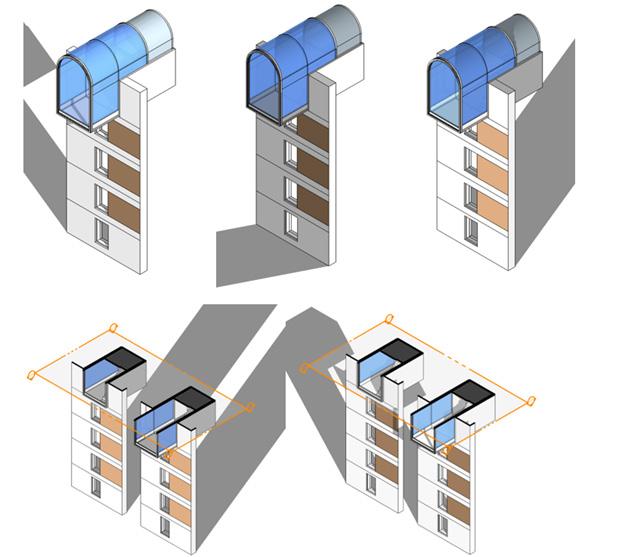
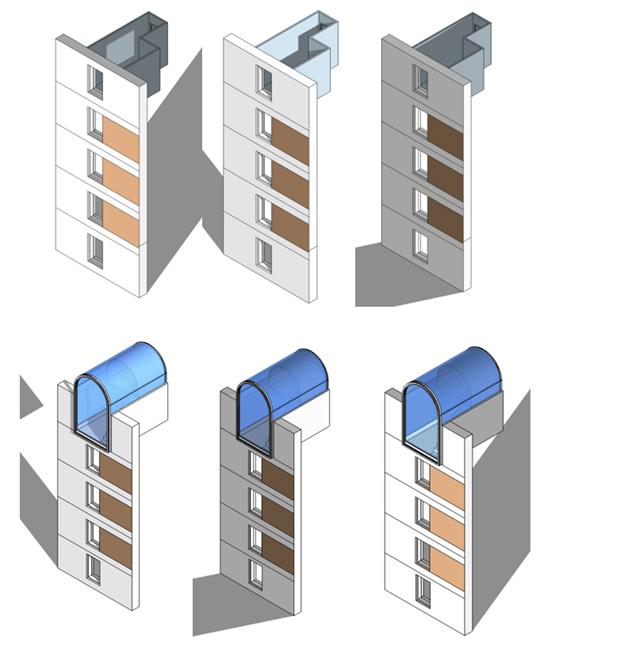
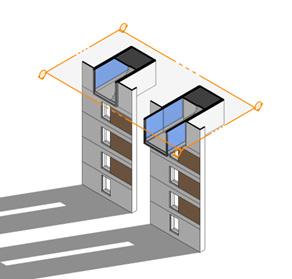
Original Design when closed Design when opened
Design both open and closed, with a section
07:00 12:00 16:00
28
Final Model - Closed
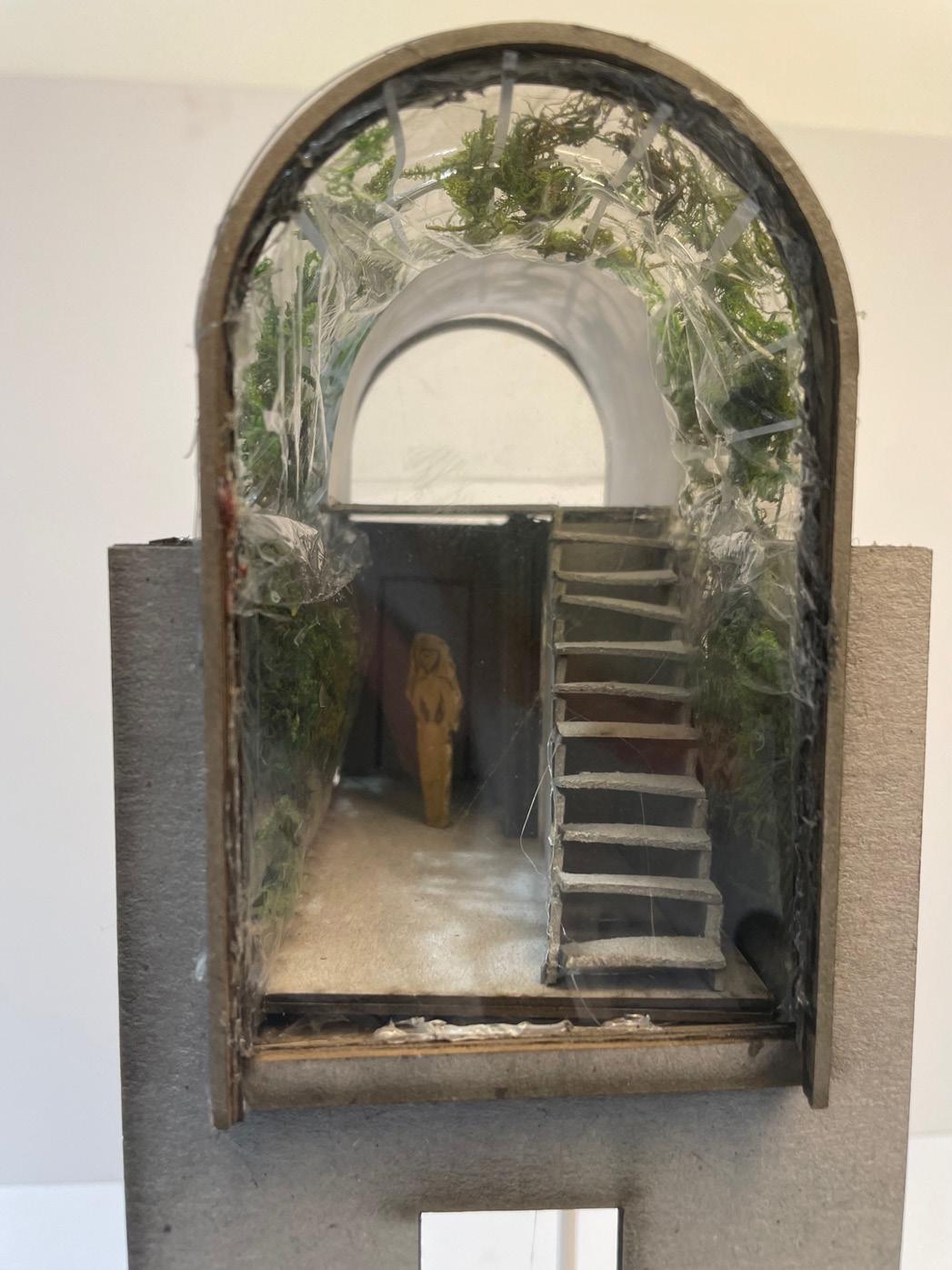
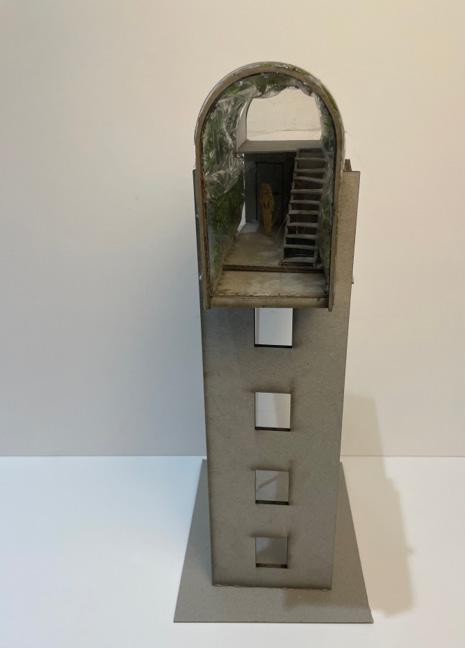
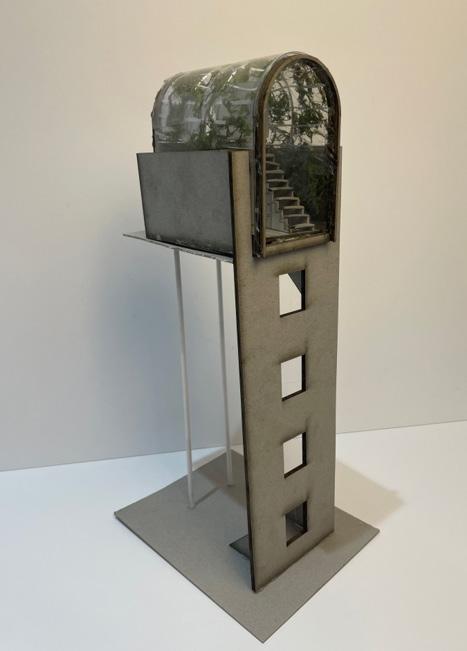
This model is scaled at 1:40. Its main structure is made of Greyboard because it is durable and easy to work with. I laser cut the structure after designing each section in 2D CAD. Because it is transparent and thin, acetate is used to resemble glass. A paper cylinder has been used for support, imitating the walls of the buildings below that would support the structure.
29
Final Model - Opened
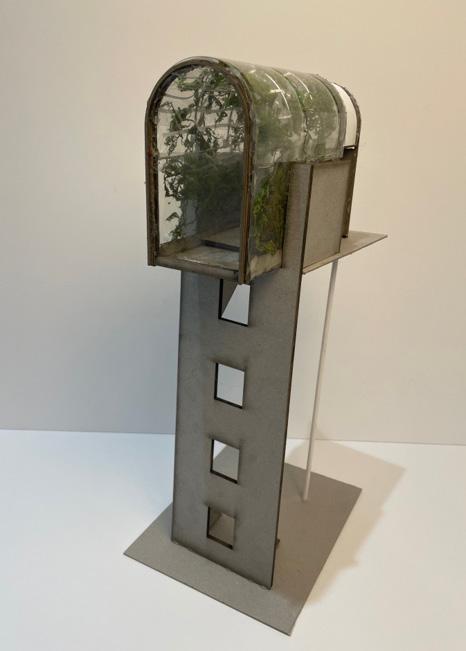
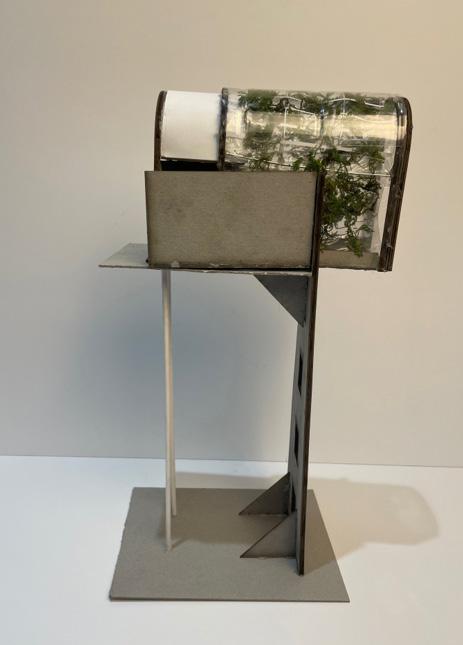
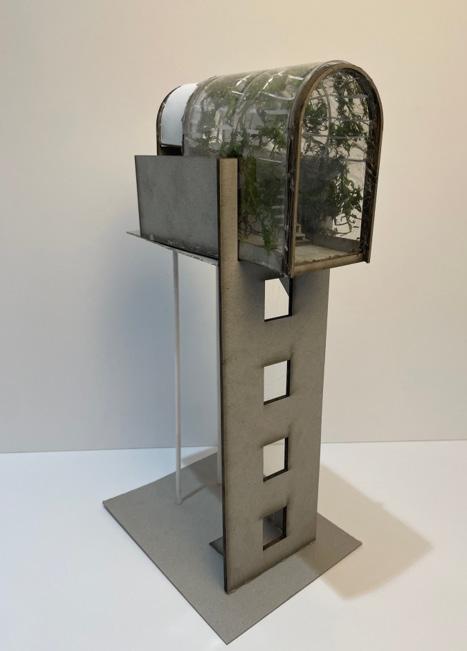
My final design concept meets my needs and desires by providing more space, allowing more light in and connecting me more closely to nature. The inner walls of the room are made up of two glass walls with a cavity filled with low-maintenance plants. These plants will climb the wall and eventually cover the roof surface, providing shade and privacy. A water collection system on the front of the facade will have that travel back into the soil to help irrigate the plants naturally, making the design truly parasitic and feeding off its surroundings.
The curved roof has a peak that is exactly my height, making it completely personalised to me. The inner structure also moves in and out on wheels. This is so that I can have more sunlight hours and space in my room. It also allows the plants to get the most sunlight possible, which promotes growth. The design can also be retracted and closed, making it fully adaptable to my changing moods. It was critical that I did not annoy my neighbours; being able to retract my structure whenever I want means the flat below still has full view and solar gain.
All of the surrounding arias have been left untouched.
My main issues with my room were a lack of natural light (which was resolved by the glass and movement), claustrophobia (which was resolved by making the boundaries transparent and adding more room) and a disconnect from nature (which was resolved by the plants and glass). As a result, my parasitic extension would be ideal for me.
30
Reference List:
1) Computation path of the sun for Margaret Keay Road, Loughborough, Leicestershire, England, LE11 3, GBR. (2023). SunCalc sun position- und sun phases calculator. [online] Available at: https:// www.suncalc.org/#/52.7675 [Accessed 15 Jan. 2023].
2) Dunnell, T. (2019). Flor de Venezuela. [online] Flor de Venezuela. Available at: https://www.atlasobscura.com/places/flor-de-venezuela [Accessed 15 Jan. 2023].
3) Etherington, R. (2009). Sliding House by dRMM. [online] Sliding House by dRMM. Available at: https://www.dezeen.com/2009/01/19/sliding-house-by-drmm-2/ [Accessed 15 Jan. 2023].
4) Ltd, M.P. (2016). Check Out These Photos Of Miniature Figures In Amusing Real Life Scenarios. [online] ePHOTOzine. Available at: https://www.ephotozine.com/article/check-out-these-photos-ofminiature-figures-in-amusing-real-life-scenarios--29385 [Accessed 15 Jan. 2023].
5) Pintos, P. (2019). The Shed, a Center for the Arts / Diller Scofidio + Renfro. [online] The Shed, a Center for the Arts / Diller Scofidio + Renfro. Available at: https://www.archdaily.com/914639/theshed-a-center-for-the-arts-diller-scofidio-plus-renfro [Accessed 15 Jan. 2023].
31