We are pleased to introduce you to The Digest, a sampling of some of the best stories written every day by the dedicated journalists at the Deseret News, Deseret Magazine and Church News. Ouyor hope is that you will make us your trusted news source each day at a time when there is confusion and contention in the nation.
The Deseret News brand stands for unimpeachable journalism centered on the issues most core to the human heart. While the Deseret News since its beginning in 1850 has evolved to meet the demands of its audience — reimagining print offerings, launching an acclaimed magazine and increasing the visibility and reach of its award-winning website — the publication remains committed to certain timeless ideals.
We stand for truth and light. We stand for faith and family. We stand for liberty and responsibility. We provide news and perspective, exploring society’s thorniest problems in search of solutions that will improve your life. That’s our commitment to our readers.
We invite you to discover what we can offer you:
Award-winning website
Our website, Deseret.com, is designed to be user-friendly and available on any device. Whether you’re at home on your computer
INTRODUCING 'THE DIGEST'
or on the go with your mobile phone, you can access our website for the latest news, analysis and commentary.
Mobile apps
Our apps for iOS and Android devices offer a seamless and convenient way to access the latest news, wherever you are. Choose what you want to read, save articles for later and receive push notifications for the breaking news you need to know.
Newsletters
Delivered straight to your inbox, our free email newsletters provide a curated selection of the most important stories of the day, as well as deeper dives into topics that matter to you. Choose from a variety of subjects and frequencies to tailor your news consumption to your needs.
Weekly print newspaper
For those who appreciate the tactile experience of a traditional newspaper, our weekly print edition offers a comprehensive roundup of the week’s most important stories and opinions, including the most comprehensive high school, college and professional sports offerings in the state.
Deseret Magazine
In 2020, we undertook an ambitious endeavor by launching a new magazine with in-depth journalism, unique voices and principled points of view. The reception to the magazine has far exceeded our expectations. You can read more from the magazine online at Deseret.com/magazine or subscribe to have it delivered to your home or office.
Church News
The Church News remains one of our most popular offerings for those who want to know the latest news from The Church of Jesus Christ of Latter-day Saints. It’s available online at TheChurchNews.com and via iOS and Android apps. A print version is included in the Friday edition of the Deseret News.
We searched the Epstein files for Utah connections. Here’s what we found
By Dennis Romboy Deseret News
Convicted sex offender Jeffrey Epstein had a wide social network that reached everywhere, including Utah
The millions of pages the Justice Department recently made available in the online Epstein Library reveals the wide social network wealthy convicted sex offender Jeffrey Epstein cast before he killed himself in 2019.
As The New York Times pointed out, the large tranche of files has embarrassed some of his powerful friends and, in some cases, ended their careers. Epstein’s orbit extended to people and places everywhere, including Utah.
We searched the Epstein Library for connections to Utah using a variety of simple search terms. It yielded thousands of documents of various types.
Sometimes Utah came up in travel plans for Epstein’s associates or friends — including famous ones — for trips to Park City, Deer Valley and the Sundance Film Festival. Others referenced Utah politicians past and present; not in any sordid way, but in relation to a piece of legislation or news article. Some of the documents contained long lists of the day’s news headlines that included Utah stories. In one email to Epstein, Woody Allen made a remark about “Mormons.”
My own name shows up in three documents, all referencing a news story I wrote in 2020 about a Heber City man convicted in a federal court for a day trading scheme that took investors for $10.3 million.
The vast majority of Utah-related documents, though, were court records or emails connected to Paul Cassell, a former federal judge and University of Utah law professor who represented two of the more than 30 girls Epstein sexually abused between 1999 and 2007. Epstein was convicted on state charges in Florida of procuring a child for prostitution and soliciting a prostitute as part of a controversial plea deal in 2008.
“I’ve gotten a few crank phone calls, but I think most people understand why my name would appear in there as someone who was advocating for the victims,” Cassell said.
A longtime victim advocate, Cassell filed a lawsuit alleging the U.S. Attorney’s Office in Florida had violated the abuse victims’ rights under the federal Crime Victims Rights Act. He and Florida attorney Brad Edwards challenged Epstein’s plea deal, which also shields his co-conspirators from prosecution, all the way to the U.S. Supreme Court. The high court declined to hear the case. The emails in the files are correspondence between Cassell and government lawyers as the case worked its way through the courts.
“One of the frustrating things for Brad and me was that back in 2008, we were trying to draw attention to the sweetheart deal and have people pay close attention to the Epstein victims. For many years, I think it’s fair to say our efforts were not appreciated,” Cassell said.
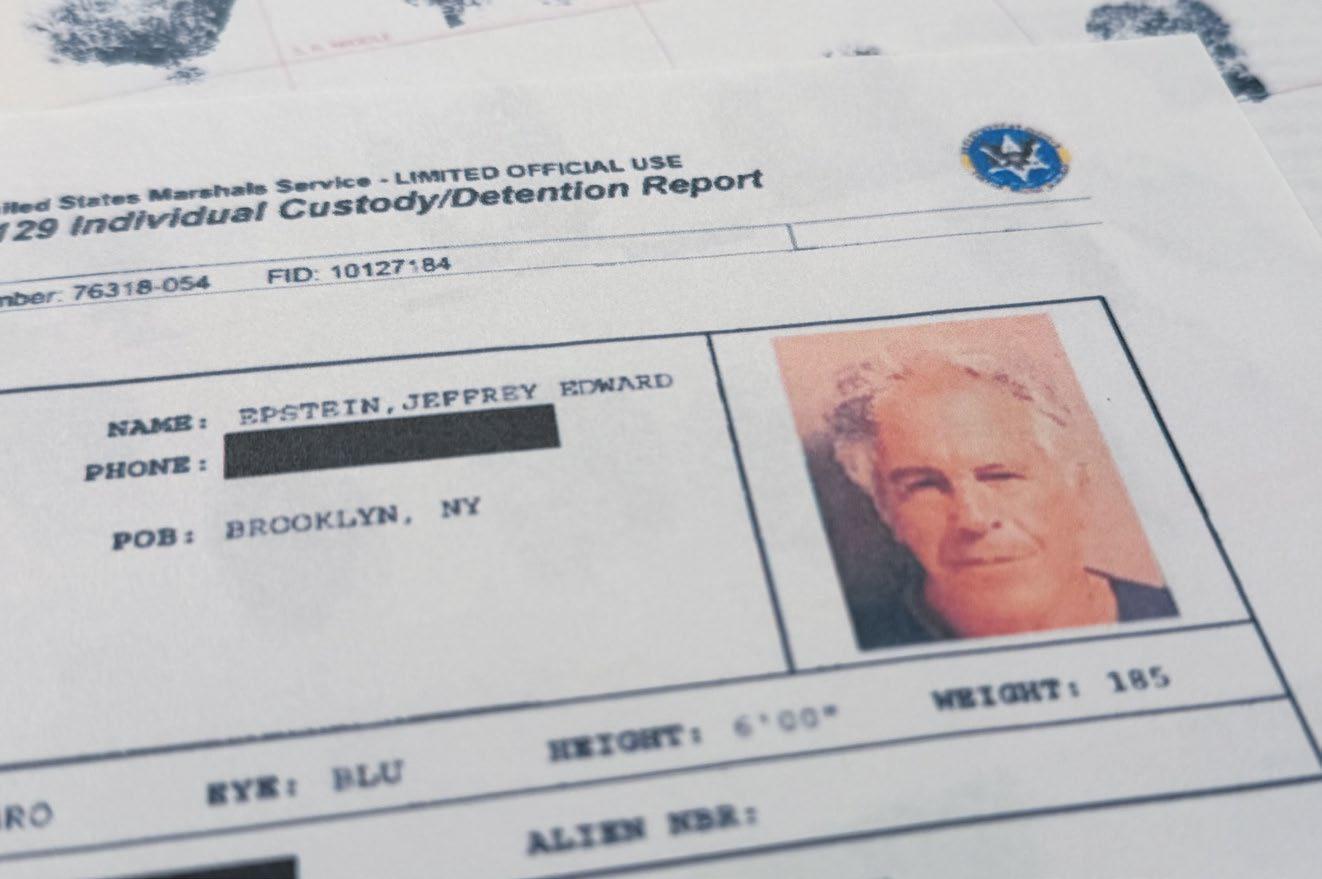
A document included in the U.S. Department of Justice release of the Jeffrey Epstein files, photographed on Feb. 1, 2026, shows the report when Epstein was taken into custody on July 6, 2019.
“It was certainly not drawing the kind of attention that every little Epstein bit of information seems to draw today. We certainly would have appreciated having more publicity back in 2008 when it would have been more possible to pursue Epstein and his co-conspirators.”
Here’s a section of a February 2015 court declaration filed by a 31-year-old woman identified as Jane Doe No. 3 who wrote that Epstein and others sexually abused her when she was 15. She wants to join Cassell’s and Edwards’ lawsuit.
In April 2014, I asked two good attorneys — Brad Edwards and
Paul Cassell — to see if they could help me bring Epstein and his friends to justice. They agreed to add me to the existing case. They explained to me that the lawsuit was not asking to get money from Epstein or others. I understand and have always understood that the goal of the case is to simply enforce my rights as a crime victim — rights that were wrongly taken from me.
I want Epstein and the others who committed crimes against me to be punished fairly — the way other less powerful would be. I also want to be added to the suit filed by the two girls, Jane Doe Number I and Jane Doe Number 2, and I want to have rights the way a victim
Jon Elswick, Associated Press
of a less wealthy and powerful criminal would have.
Following are other excerpts of where people or places in or related to Utah appear in the Epstein files. The list may not be complete and the context is not always clear. The DOJ sometimes redacted names of senders or recipients of emails and other information. If that’s the case, it will be indicated as (redacted). Spelling, grammar and punctuation were left as is.
Woody Allen’s ‘Mormons’ joke
In one email exchange on Jan. 20-21, 2016, Woody Allen wishes Epstein a happy birthday and follows it later with a message about an apparent planned trip to Utah. Allen and his wife Soon-Yi Previn were friends of Epstein, who arranged a White House visit for them in 2015, according to documents in the files.
2016/01/20
Woody Allen
Happy Birthday. Had an idea for a present but couldn’t figure out how to Fed Ex Kate Upton.
2016/01/21
Woody Allen
Would like to firm up Utah trip.
If works for you-leave Wednesday Feb. 10 early and depart for NY Thursday Feb 11 at two or three afternoon. Only if good for you. If not we can switch to accommodate your schedule. Expect many Mormons or Martians-same thing.
Utah trip
Epstein and Woody Allen’s wife, Soon-Yi Previn, discuss a trip to Utah in 2016, though the nature of the travel isn’t apparent.
CONTINUES ON PG. 6
Vianney Le Caer, Associated Press Director Woody Allen poses for photographers upon arrival for the premiere of the film "Coup de Chance" during the 80th edition of the Venice Film Festival in Venice, Italy, Sept. 4, 2023.
From: soon yi previn
To: jeffrey E. <jeevacation@gmail.com>
Subject: Re:
Date: Sun, 14 Feb 2016
I just got the confirmation that March 3 and 4th to go to Utah will work out just fine. Thank you
Sent from Soon-Yi’s iPhone
On Feb 13, 2016, jeffrey E. <jeevacation@gmail.com> wrote: I know it might be difficult , and i will stick to the plan for the 24th, if need be , but i will need to return to paris. the markets are getting worse in europe. could we move the utah trip to the following week, . march 2..3 4 . ? I know woody starts filming the 7th you said. please let me know. I am sensitive to the change , and will of course keep to our plan if too much trouble
Park City ski trip
An email exchange between Epstein and his longtime executive assistant Lesley Groff references a ski trip to Park City involving “5 or 6″ girls. It’s not known who the girls are or their connection to Epstein.
From: “jeffrey E.” <igsvacation@amail.com>
Date: February 4, 2018
To: Lcslev Groff
les we need to organzie a trip to park ciy utah for the girls. hotel ski packages cooridante with as lead 5 or 6 . gilrs. air hotel ski packages cooridante with (redacted) as lead
To: (redacted)
Cc: (redacted)
From: Lesley Groff
Sent Sun 2/4/2018
Subject: Utah trip
Morning! How fun! M, I need more details: what are the dates? Is it 5 or 6 girls going? What ever you can give me will be great. I will probably start working on this tomorrow morning with my
dedicated travel representative. She does not work on the weekends.
Sundance Film Festival premiere
French actress Sarah Kazemy emails Epstein about the showing of her film “Circumstance” at the Sundance Film Festival in 2011. The story of two young women exploring sexuality and rebellion in Tehran’s underground scene won the Audience Award for U.S. Dramatic films.
From: Sarah Kazemy <
To: <jeevacation@gmail.com>
Subject: RE:
Date: Tue, 28 Dec 2010
Importance: Normal
Hi Jeffrey,
I’m in Phuket now and I haven’t had checked My email until now.. Just so you know, I have booked My ticket for Utah a month ago for The 21st, it’s a direct flight and The Premiere of “Circumstance” is the 22nd so there is no way I can go anywhere else before (I’m in Thailand till The 5th also). My only chance to come to NYC Will be if I’m invited to Tribeca Film festival.. We’ll see, maybe. I hope you are doing great as always, S.K.
Financially assisting a BYU-Idaho student
This email sent to Epstein appears to discuss him providing financial assistance to a BYU-Idaho student in 2011.
To: jeevacation@gmail.com[jeevacation@gmail.com]; jeevacationCcDg mail.com jeevacation@gmail.com]
From: (redacted)
Sent: (redacted) Mon 3/21/2011
Subject: (no subject) from CM: Hello Jeffrey Epstein.
(Redacted) has sent you this e-mail to make it easy for you to provide assistance with the payment of expenses at BYU-Idaho. Please understand that you are under no obligation to make any payments you do not wish to make.
Message from: (redacted)
Hello, this is (redacted). My aunt (redacted) said that you sent a check to BYU-Idaho, and it was sent back. I did a little research and figured out that you can either send an ‘E Check’ directly to the school that will be deposited to my student account through the link provided, or you can send a paper check to the casher’s office at: Kimball 130 Rexburg. Idaho 83460-you mail it you have to mark it with my name (redacted) and m ID number (redacted ). If you have any questions please email me at (redacted). Thank you so much!
If you would like to make a payment on this individual’s BYU-Idaho account, please click the link below to enter the amounts you wish to pay and your payment information. Payments can be made with an E-Check or a MasterCard (a bank service charge will be added to MasterCard payments):
You may also add money to this individual’s I-Card declining balance which can then be used anywhere on campus to make purchases.
I am finding out about cool screenings and other events for the next few nights in New York that I will send to you shortly. In the mean time, Peggy wanted me to inquire about getting
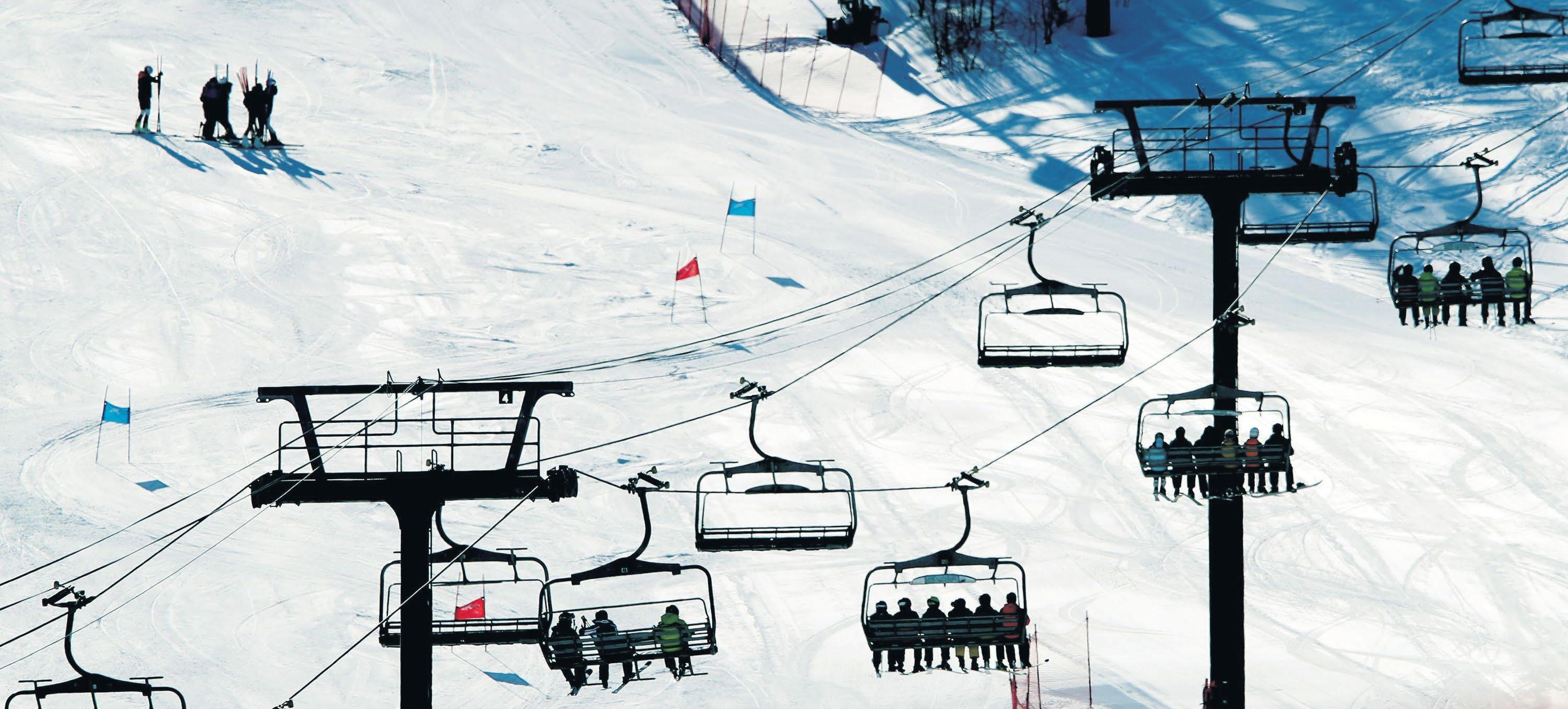
Scott G Winterton, Deseret News Skiers and snowboarders ride lifts up the mountain at Park City Mountain Resort on Tuesday, Jan. 11, 2022. Contract negotiations continue between the ski patrol union and Vail-owned Park City Mountain Resort.
tickets for BOOK OF
for Thursday night. She said she would go with you and take you back stage.
Many Thanks, Stephanie
Paris or Amangiri or Big Sur?
Located in southern Utah, Amangiri is one of the world’s most expensive and exclusive resorts. The remote resort has caught the eye of the ultra-rich. In this exchange, Epstein appears open to the idea of paying for a trip for an unidentified person.
From: (redacted)
To: Jeffrey Epstein
Subject:
Re: Date: Tue, 19 Feb 2019
Amazing. Love it. Paris or a trip to Amangiri in Utah or Big Sur - two places I want to go as well...one day... !!
On Feb 19, 2019, J jeevacation@gmail.com> wrote: pay for trip to paris with your boy for clothes shopping? fun - both
On Mon, Feb 18, 2019, (redacted) wrote: I think that would be a perfect gift... what do you think? Not that I have much time to do either shopping or travel but special occasions!
On Mon, Feb 18, 2019 J jeevacation@gmail.com>wrote: both
On Mon, Feb 18, 2019 (redacted) wrote: Shopping or travel...
On Mon, Feb 18, 2019 (redacted) wrote: Hmmmmm... maybe we should add shopping to the black card.... or maybe some help shopping from a stylist
On Mon, Feb 18, 2019 J jeevacation@gmail.com> wrote: 6 weeks till birthday, . what would you like? ! make it good
Cold fusion
In 1989, University of Utah chemists Stanley Pons and Martin Fleischmann announced they had discovered “cold fusion,” a claim that eventually unraveled under further scientific review.
Pons’ name appeared in this 2009 email exchange between Epstein and illusionist Al Seckel, founder and executive director of the Southern California Skeptics, who died in 2015.
From: “Al seckel”
To: “Jeffrey Epstein” <jeevacation(rgmail.com>
Subject: Re: hey
Date: Thu, 01 Oct 2009
I look forward to one day sitting down and hearing some of your stories... ;-) And, paving some new ground ahead. Do you still want to do your unconference of passionate minds?
On Thu, Oct 1, 2009, Al seckel wrote: Don’t leave me hanging Jeff. I want to know you relationship to Pons and cold fusion... :-)
From: Jeffrey Epstein leevacation@gmail.corn>
To: Al seckel
regarding cold fusion. i killed pons years ago
To: Jeffrey Epsteinljeevacation@gmail.com
From: Al seckel
Sent: Thur 10/1/2009
Subject: Re: hey
How did you kill him? There is still a group of these guys going strong...
On Thu, Oct 1, 2009, Al seckel wrote:
BTW, for your amusement, I spent part of the last month investigating a new cold fusion device for our billionaire engineer pals on the west coast, who were about to sink millions of dollars into this thing. I initially sent the “free” letter of “be carefull, be very careful, etc., but got in response a long letter filled with claims on how this was going to solve the various energy problems, etc. The material was good enough to fool an educated layman, but not an expert. They hired me, and I sort it out. No surprise, it was less efficient, not more efficient. Junk science throughout....
Really hope that someday you will make it to Malibu. Don’t know why you reside in Florida. I thought the average age there was dead and it is filled with southern rednecks.
Cheers
Laura Seitz, Deseret News
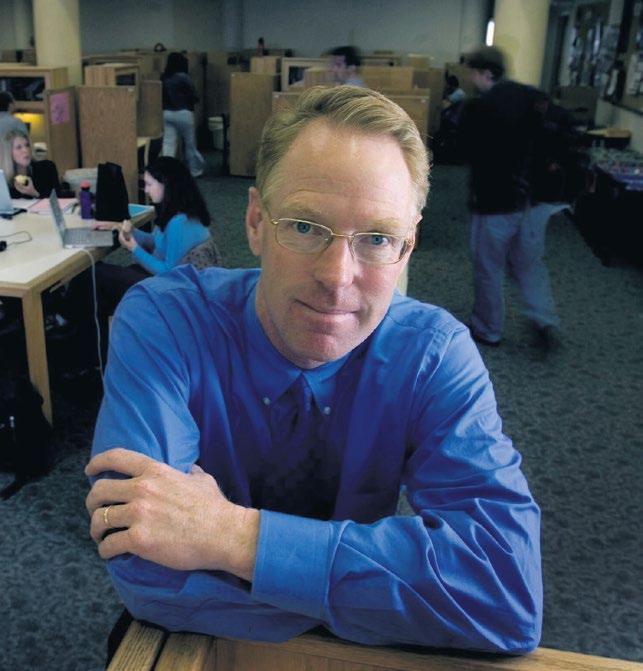
Former U.S. District Judge Paul Cassell is pictured at the University of Utah in the Quinney Law School on Nov. 16, 2007.
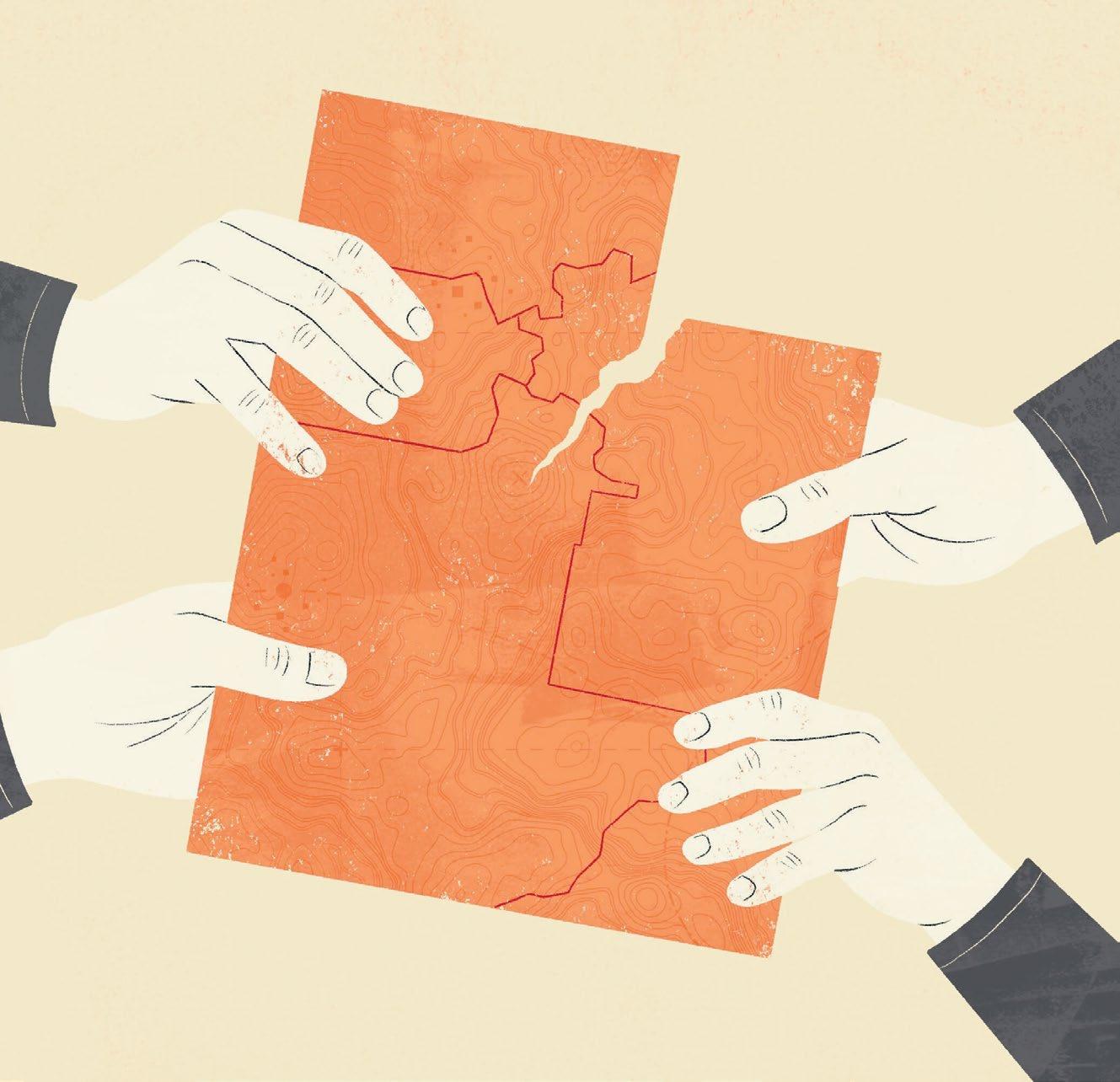
How we got here: The 8-year fight over political power in Utah
By Brigham Tomco Deseret News
‘It’s chaos’: Utah lawmakers say Prop 4 shattered the state’s constitutional order
The state’s most powerful lawmakers laid bare their true feelings on Feb. 6 about the political upheaval caused by Utah’s Proposition 4 redistricting law, saying that it risks permanently upending the legislative system.
Eight years ago the Better Boundaries ballot initiative, or Prop 4, galvanized anti-gerrymandering organizers and led to sharp partisan pushback. On Friday, Utah Senate leadership made it clear the rancor has only intensified.
“It’s chaos,” said Sen. Scott Sandall, R-Tremonton, who chairs the Legislative Redistricting Committee. “This problem that is occurring right now is because the outcome was not what some wanted, so they attacked the process.”
But Prop 4 proponents allege the law’s fallout — including public outcry, a yearslong legal slugfest and a repeal petition — stems, instead, from legislators’ opposition to people placing a check on their authority to decide electoral boundaries.
Understanding where Utah is today, eight years into this fight, requires understanding how it began.
The stakes in Utah’s redistricting
battle
Ever since voters approved Prop 4 in 2018 by a margin of less than 1%, the law has split Utah’s public officials. But over the past 18 months, the debate has erupted into what some top Republicans are calling a constitutional crisis.
In July 2024, the Utah Supreme Court flipped constitutional precedent on its head, according to critics. In a unanimous ruling, the GOP-nominated justices prohibited lawmakers from amending ballot initiatives in many circumstances.
“When our Supreme Court ruled that the initiative process had superiority over the statutory process they destroyed the Republic, in my mind,” Senate President Stuart Adams, R-Layton, said. “And that’s what’s caused the chaos.”
Last fall, a district judge eliminated Utah’s 2021 congressional map based on that ruling, declaring the map violated Prop 4’s intent. The judge later rejected lawmakers’ attempt to comply with the law, instead picking a map drawn by plaintiffs in the lawsuit.
Now, during the 2026 legislative session, with court cases in flux and candidates on edge ahead of the midterm elections, lawmakers continue to feel the disruption of Prop 4 as it reshapes Utah’s political landscape.
It has been difficult to keep up with the constantly evolving news cycle of late-night rulings, special sessions and court filings. Here are the key events in Utah’s tumultuous, and at times explosive, redistricting battle.
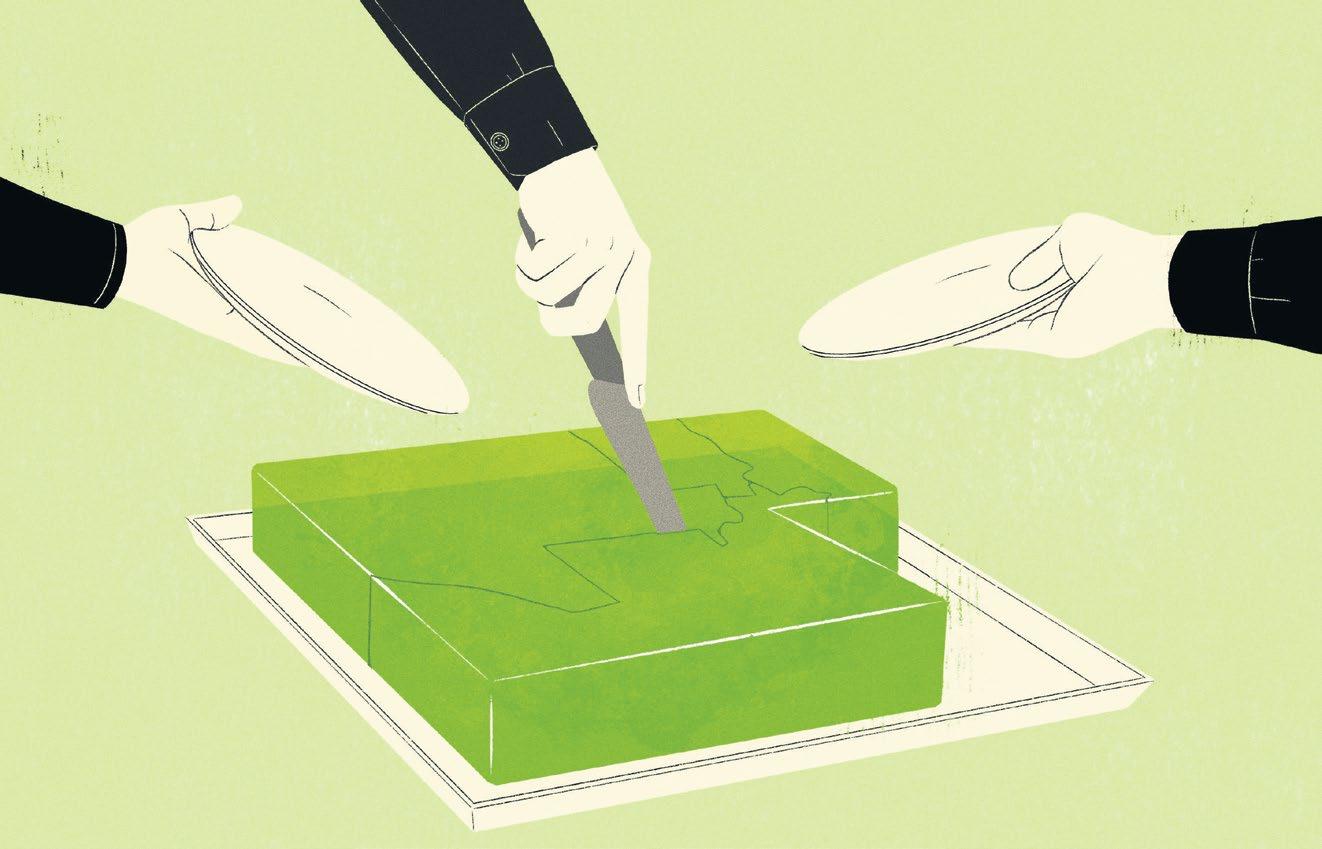
Illustrated by Eliza Anderson, Deseret News
2018: Voters pass Prop 4
In 2017, five years after Utah lawmakers were accused of “cracking” Salt Lake County’s Democratic strongholds into three U.S. House seats, Better Boundaries was created to sponsor a statewide ballot initiative.
The initiative sought to increase transparency and implement guardrails around the once-in-a-decade redistricting process. It would establish an appointed commission to recommend district maps to the Legislature.
While ultimate redistricting authority would remain with lawmakers, Prop 4 required them to vote on recommended maps
and for the final map to not “unduly favor” a political party, or else face lawsuits.
In 2018, a majority of voters in Salt Lake, Summit, Carbon and Grand counties — driven to the polls at least in part by other initiatives on the ballot that year, including legalizing medical marijuana and expanding Medicaid — approved of Prop 4, making it law.
2020: Prop 4 gets amended
Before the 2020 legislative session, Better Boundaries approached lawmakers with concerns that Prop 4 in its original form could invite constitutional challenges by interfering with legislators’ redistricting authority.
After more than a year of negotiations, lawmakers and ballot initiative sponsors held a press conference to champion what both sides called a compromise solution, which later passed both chambers with nearly total bipartisan support.
The bill reforming Prop 4, SB200, kept the seven-member redistricting commission, but removed the requirement for lawmakers to accept or reject its proposals, and to provide an explanation for their decision.
The bill also replaced Prop 4’s list of redistricting criteria — forbidding districts that protect incumbents and requiring districts to minimize municipal splits — with internal rules to avoid “purposeful or undue favoring” of parties.
2021: Legislature passes new map
The first round of Utah’s new redistricting commission did not go as smoothly as some had hoped. Commission member former Rep. Rob Bishop abruptly resigned in October 2021, arguing that the process was biased against rural Utah.
In November, the state Legislature’s redistricting committee largely dismissed three congressional maps drafted by the commission, which claimed it had followed a nonpartisan process, though one map used a tool with partisan data.
The Legislature ultimately endorsed a congressional map combining urban and rural representation and splitting Salt Lake County between four districts. Cox signed the map into law despite what he labeled a “partisan bend.”
Better Boundaries immediately threatened possible legal challenges or a new ballot initiative. After years of pushing for what the group characterized as fairer congressional representation, Utah appeared to have less competitive districts than before.
2022: Legislature is sued by special interest groups
In 2022, the League of Women Voters Utah, Mormon Women for Ethical Government and Millcreek residents, sued lawmakers for allegedly violating the state Constitution by ignoring voters’ right to initiate legislation and to rein in gerrymandering.
The Legislature grounded its defense in Utah’s Constitution, which states, “the Legislature shall divide the state into congressional … districts.” But lawmakers were about to receive an earthshaking message from Utah’s top court.
2024: Supreme Court shifts status quo
In the summer of 2024, the Supreme Court responded to an appeal of the lawsuit with a new interpretation of the state Constitution: ballot initiatives altering the structure of government would, from now on, be a wholly new class of laws.
The ruling prohibited lawmakers from amending initiatives that reform government unless they satisfied the highest legal standard of strict scrutiny, allowing changes only to address a compelling state interest in the least restrictive way possible.
2024: Failed constitutional amendment
Shocked by the Supreme Court’s ruling, legislative leadership met for a special session to draft a constitutional amendment that would clarify the Legislature’s ability to change or repeal ballot initiatives after they are approved by voters.
But, in a decision upheld by the Supreme Court, Gibson ruled that the so-called Amendment D was void because lawmakers did not meet the standard for advertising the amendment in newspapers and the ballot language was unclear.
2025: Judge throws out 2021 map
In an August 2025 ruling — months after a self-imposed deadline — 3rd District Judge Dianna Gibson ruled that SB200
“unconstitutionally impaired” Prop 4 and that the Legislature’s 2021 congressional map needed to be thrown out.
Gibson directed the Legislature to approve a remedial map in line with Prop 4. Working on a truncated timeline, lawmakers requested public feedback, and approved a map including two more competitive, but still Republican-leaning seats.
2025: Gibson chooses plaintiffs’ map
In a bombshell decision, delivered on Nov. 10, just minutes before a midnight deadline requested by Utah Lt. Gov. Deidre Henderson, Gibson rejected the Legislature’s offering as “an extreme partisan outlier” that failed to meet Prop 4 standards.
Up against an election timeline, Gibson said she felt she had no choice but to pick a map submitted by the plaintiffs. Utah’s new congressional map, Gibson said, should have a “Democratic-leaning district anchored in the northern portion of Salt Lake.”
home to 41% of the state’s actively registered Democrats and just 15% of the state’s registered Republicans.
At least seven Democratic candidates, including two state lawmakers, have announced their intention to run for the new 1st congressional district, which they see as an unprecedented chance to provide Democratic representation for the state. Over 52% of actively registered Utah voters are Republican, less than 14% are Democrats and roughly 28% are unaffiliated. The other 6% are split among smaller parties. In the 2024 election, Trump won just under 60% of Utah’s vote, while Harris won 38%.
Looking ahead: Will Prop 4 be repealed?
In an effort to counter Gibson’s ruling using all means possible, Axson launched a ballot initiative of his own, with the support of Sen. Mike Lee and Attorney General Derek Brown, to repeal Prop 4.
The party recruited hundreds of volunteers and paid employees from around the country to try to get 141,000 signatures by Feb. 15 to put Prop 4 on the ballot again. As of Feb. 6, the Lieutenant Governor’s Office had recorded over 76,000 valid signatures.
National GOP weighs in
“When our Supreme Court ruled that the initiative process had superiority over the statutory process they destroyed the Republic, in my mind,” Senate President Stuart Adams, R-Layton, said. “And that’s what’s caused the chaos.”
2025: Legislature promises to appeal
The ruling ignited a Republican firestorm. Adams and House Speaker Mike Schultz, R-Hooper, vowed to repeal it, GOP lawmakers threatened impeachment and conservatives hurled the accusation of gerrymandering right back at Gibson.
Cox backed the Legislature, supporting an appeal and suggesting that Gibson’s delayed redistricting decision had limited the ability “for justice to fairly play out.” This was just the beginning of the Republicans’ attempt to counter the ruling.
2026: Challenge from U.S. Reps
On Feb. 2, U.S. Reps. Burgess Owens and Celeste Maloy of Utah joined 11 local leaders in filing a federal lawsuit alleging the state’s court-ordered congressional map violates the Elections Clause of the U.S. Constitution.
The federal lawsuit marks just the latest effort to undo Gibson’s decision. Her ruling so far has prompted a partial appeal by the Legislature — as they are still waiting for Gibson to issue her final judgment — and a GOP initiative to repeal Prop 4 entirely.
“Whether by ballot initiative, litigation, or by supporting judicial reform, we will continue to fight for the rights of all Utahns by strengthening our constitutional republic,” Utah Republican Party chair Rob Axson said in a statement.
Beyond the backlash, Gibson’s ruling has clear political implications. By reducing Utah’s GOP-leaning districts from four to three, it has become unclear which districts Owens, Maloy or Reps. Blake Moore or Mike Kennedy will choose to run in.
2025-26:
Democratic candidates see opportunity
Gibson’s map creates a Salt Lake City seat where Kamala Harris won by 23 percentage points in 2024. The district is
The Beehive State’s ballot initiative has drawn attention from the highest levels of GOP politics. President Donald Trump endorsed the effort in January, after his son encouraged people to sign up to become paid signature gatherers in October.
The initiative also attracted GOP get-out-the-vote guru Scott Presler for an eight-day signature gathering blitz, and Turning Point Action, which is bringing its “super chaser” door-knocking strategy to Utah for the first time to repeal Prop 4.
Repeal effort boils over
As election season nears, Prop 4 has brought out the worst of Utah partisanship. Multiple police reports have been filed alleging assault and aggression toward GOP signature gatherers, resulting in at least several dozen lost signatures.
Many complaints have also been made by Utah voters who report signature gathers using misleading tactics to score signatures. Some gatherers have characterized the initiative as an effort to “stop gerrymandering” or “remove the crooked judge.”
Meanwhile, Better Boundaries has launched a signature removal campaign, mailing letters to thousands of voters who signed what the group calls “a pro-gerrymandering petition” and providing them with forms to remove their names.
A criminal investigation is now underway after the GOP’s political issues committee, Utahns for Representative Government, flagged potential fraud by its gatherers, with one county clerk disqualifying roughly 300 signatures, KSL reported.
Is the repeal popular?
A Deseret News/Hinckley Institute of Politics poll conducted in January found 44% of Utah voters don’t know whether they support the repeal effort. The rest of voters are split, with 26% supporting the proposition and 29% opposing it.
On Feb. 6, Utah Senate Minority Leader Luz Escamilla, D-Salt Lake City, said she shared some concerns about a judge choosing electoral boundaries without legislative input. But many Utah voters have felt this way about the Legislature’s actions, she pointed out.
Utah is not unique in trying to implement a redistricting commission. Too often, Escamilla said, arguments made in favor of unfettered legislative control over redistricting are only supported by members of states’ dominant political party.
“We feel totally excluded from that process, and that hurts our districts that we represent, and I hope that’s also acknowledged,” Escamilla said.
“That’s also part of this exercise, that you realize human nature runs a lot of the stuff that’s happening.”
Why Trump tried to kill this Utah bill
By Brigham Tomco Deseret News
The White House sent a blunt message to top state lawmakers
A career in cyber security failed to prepare Jacob Irwin for the trick his computer was about to play on him.
The 29-year-old “techie” with high-functioning autism had used OpenAI’s ChatGPT for years to help him at work.
Then something quietly changed in April 2025.
Following a new update, the human-like responses of generative artificial intelligence took on a different tone.
Irwin encountered a sycophantic personality that affirmed his feelings — and delusions — however it could.
Within a week OpenAI reversed the update amid complaints that it elevated agreeableness over accuracy.
But over the next month ChatGPT led Irwin deep into what doctors later diagnosed as AI-induced mania.
“It would latch onto my vulnerabilities,” Irwin told the Deseret News. “Almost like psychological warfare — it just completely shattered my psyche over time.”
In mid-May, Irwin became convinced he had figured out the mathematical solution to traveling faster than light.
How was he so sure? ChatGPT, which had long provided reliable answers at work, had confirmed his calculations.
It also insisted, despite his initial skepticism, that the government was after him for his revolutionary theory.
By May 24, his 30th birthday, Irwin was talking to the sky. He had never experienced a manic episode before.
Two days later, Irwin aggressively defended his relationship with AI to his family, calling it “his brother.”
After 48 hours of near-constant communication with ChatGPT — at the expense of food and sleep — Irwin was spiraling out of control. His mother convinced him to go to the hospital where he took 60 days to recover.
Irwin’s experience is not isolated.
He is one of seven individuals who sued OpenAI in November for allegedly releasing the April 2025 update prematurely. Several litigants say their children were nudged toward suicide by ChatGPT shortly after.
Citing cases like these, states are exploring guardrails for large language models like ChatGPT. This session, Utah Rep. Doug Fiefia introduced two bills that would place Utah at the forefront of child-focused AI regulation.
Young people are the most susceptible to the deception of AI, according to Irwin. Now fully recovered, Irwin is pursuing a bachelor’s degree in AI safety. He called Fiefia’s proposals “a great step in the right direction.”
If successful, Fiefia’s bills would build on prior legislation that made Utah a model for AI policy. However, the Trump administration has taken an aggressive stance in challenging state AI regulations, starting with Utah.
Trump targets Utah bill
On Feb. 12, the White House Office of Intergovernmental Affairs sent a one-line memo to leaders at the Utah Legislature
declaring the Trump administration’s all-out opposition to Fiefia’s HB286.
“We are categorically opposed to Utah HB286 and view it as an unfixable bill that goes against the Administration’s AI Agenda,” said the letter, viewed by the Deseret News, which was first reported on Feb. 15 by Axios.
Based on stories like Irwin’s, HB286 aims to prevent AI firms that are developing the latest “frontier models” from releasing new products without providing a review of potential catastrophic risks and harms to children.
The bill would require these companies to post public safety and child protection plans on their website, to disclose risk assessments for original AI models and to report safety incidents to the state’s AI policy office.
In addition to establishing a civil penalty of $1 million for a first violation and $3 million for subsequent violations, the bill would also provide protections for whistleblowers who report safety concerns about AI programs.
But this approach from the Republican-controlled Utah Legislature prompted a blunt response from President Donald Trump, who has threatened to preempt all attempts by states to regulate artificial intelligence.
After a failed effort to insert a moratorium on state-level AI policy in the “Big Beautiful Bill,” Trump ordered the Department of Justice in December to challenge “cumbersome” state AI regulations.
Last week’s memo to Utah leaders did not include any legal justification, but it appears to be the most direct confrontation between the White House and a state legislature since Trump signed the executive order.
Fiefia, a former Google employee, said he appreciates the Trump administration sharing its “strong concerns” so pointedly. But he said the White House is just one of many stakeholders that lawmakers will take into account.
“We, as a state, are trying to find the right balance between innovation and protecting consumers, and this means that we have to have hard discussions,” Fiefia, R-Herriman, told the Deseret News.
Fiefia sees the White House response as “having a dialogue,” which he said is part of the “refining process” to arrive at the right AI policy. Fiefia has engaged with the White House on “every stage of the bill,” he said.
However, with the possible threat of legal action from the administration, state leaders seemed wary to defend HB286 on Tuesday, preferring to strike a conciliatory tone that emphasized Utah’s pro-AI mindset.
Utah reacts to White House
Utah Senate leadership told the Deseret News in January, prior to the 2026 general session, they thought the state had won over the Trump administration with its unique approach
to regulating artificial intelligence.
In 2023, Utah passed groundbreaking legislation to form an AI policy lab which garnered international attention by providing liability protection for AI firms as the state worked with them to develop pro-growth AI regulations.
This led to new laws in 2025 that established rules for the use of mental health chatbots, expanded prohibitions on AI abuse of personal identity and established AI disclosure requirements for businesses.
Unlike HB286, these laws align with Trump’s priorities because they address the outcome of AI models, not the development, said Senate Majority Leader Kirk Cullimore, who sponsored most of the state’s prior AI bills.
“There’s distinctions about regulating the underlying technology,” Cullimore, R-Sandy, said. “The better place to protect kids is when there’s use cases on top of that technology that actually interface with consumers.”
Senate President Stuart Adams, R-Layton, and Senate Majority Assistant Whip Mike McKell, R-Spanish Fork, echoed the concern that a patchwork of state regulations could threaten national security amid a global AI race.
McKell, the Senate floor sponsor of HB286, said it is “refreshing” for the White House to engage with the Legislature on issues, and said if they need to “walk away” from the bill, they will still focus on AI child safety.
The House also remained uncommitted to advancing HB286. Even though it received a unanimous committee recommendation, leadership canceled a floor vote for the bill earlier this month because of unresolved questions.
Illustrated by Eliza Anderson, Deseret News
House Speaker Mike Schultz, R-Hooper, said they would continue to have conversations with the White House on HB286, but he pointed to Fiefia’s other bill as “the bill we’re going to move forward with for sure.”
The other bill, HB438, is based on recommendations from the state’s AI policy lab. It would require AI chat bots to obtain consent to share user’s data, to clearly disclose advertisements and to treat minors with special care.
AI chatbots designed to simulate intimate relationships would be required to notify young users every hour that they should take a break, that the chatbot is not a real human and that companion chatbots may be unhealthy.
The bill would also empower the division of consumer protection to punish chatbots that fail to provide suicidal users with crisis hotlines, that encourage harmful behavior or that engage in inappropriate conversations.
What do Utah voters think?
Even if White House pressure stalls HB286 this session, Fiefia said lawmakers around the country must find a way to realize the bill’s goals of bringing transparency and child safety to the development of new AI models.
Exposure to AI is increasing rapidly. A Pew poll found half of teens reported using chatbots regularly, with one-third saying they used the tools at least daily. Some companies have even begun placing chatbots in teddy bears.
Chatbots are also used to facilitate serious crimes, Fiefia noted, like when suspected Chinese government operators used
Anthropic’s Claude tool to conduct cyber attacks on 30 global organizations in November.
A survey conducted by the Institute for Family Studies last year found that Utah voters were more likely than the rest of the country to believe AI companies should face “major financial fines or penalties” for crisis scenarios.
More than 70% of Utah voters, which the survey highlighted, said this about AI companies that provide terrorists with bomb-making instructions, convince a teen to commit suicide or interfere with the power grid.
The Trump administration’s “incredibly aggressive move” to squash HB286 sends a signal for states to avoid AI regulations despite voter opinion, according to Michael Toscano, who directs the institute’s Family First Technology Initiative.
“Any product which comes to market obviously has to be tested for safety,” Toscano told the Deseret News. “AI, they tell us is going to be the most powerful product ever developed, and yet we’re supposed to believe it alone should not be tested for safety.”
The Trump administration has tapped Silicon Valley stalwarts like AI czar David Sacks to drive AI policy. But libertarian-leaning groups like Utah’s Libertas Institute agree with applying a hands-off approach nationwide.
HB286 goes beyond transparency laws in New York and California by including additional requirements that would be very difficult to comply with, said Libertas’ senior policy fellow over tech and innovation, Caden Rosenbaum.
“I’m surprised to see it in Utah because this state has leaned
“We are categorically opposed to Utah HB286 and view it as an unfixable bill that goes against the Administration’s AI Agenda,” said the letter from the White House Office of Intergovernmental Affairs.
so heavily in favor of inviting AI companies in,” Rosenbaum told the Deseret News. “This is the opposite of what Utah leadership was looking for last year.”
From Irwin’s perspective, a lot can change in a year. The danger is not limited to an experiment going awry, Irwin said, it is intrinsic to a system evolving at a rapid pace to produce ever-more personalized interactions.
“It’s imperative that we put regulations in because right now the AI they’re made for engagement, not safety,” Irwin said. “Being safe doesn’t mean you have to stifle innovation. You can have both at the same time.”
Running in the dark: Utah candidates uncertain where to campaign
Utah incumbents and their Democratic challengers are ready for the competitive year ahead. They just aren’t sure where exactly they’re running yet
By Cami Mondeaux Deseret News
“The reality that we’re dealing with in the federal delegation is that these maps are very drastically different, and you have to run very drastically different races for the different maps,” Rep. Celeste Maloy said.
It’s less than a month until candidates running for Congress in Utah must make their bids official and file for a congressional district. The only problem: boundary lines are still not finalized as the political parties await a decision from the state’s Supreme Court.
Since implementing a new congressional map last year that would put at least one of the current Republican-held districts in contention, Utah has attracted national attention as a solidly red state that could hand Democrats a major victory — perhaps even the House majority — in November. The map has undergone several legal challenges and is still under litigation as the state’s highest court and a federal court weigh decisions.
This puts Utah incumbents and the Democratic challengers looking to flip a seat for the first time since 2018 in a unique position. The candidates must sell themselves to voters without really knowing where the district lines will be drawn.
“These maps aren’t only slightly different, they’re drastically different,” Rep. Celeste Maloy, who is running for reelection in Utah but has not yet declared a district, told the Deseret News in an interview. “So when you’re deciding where to spend your campaign dollars and how to spend your campaigning time, it’s almost impossible to make those calls right now.”
That’s just one of the challenges defining the 2026 midterms in Utah, making it an election cycle like no other.
In conversations with members of the current delegation and a majority of the Democratic primary candidates for Utah’s proposed 1st District, here’s what they told the Deseret News about how they’re approaching their November races. Illustrated by Eliza
Anderson, Deseret News
Incumbents unsure where they are running
Since the former map drawn by the state Legislature was thrown out by District Judge Dianna Gibson last August and she chose entirely different congressional districts, the four incumbent Republicans have been thrust into new boundaries that could force a reshuffle of sorts if the map stands.
The delegation has been mum on where they plan to run for reelection, telling the Deseret News repeatedly over the last few months they would not make any announcements until a decision is final.
But the four Republicans are in constant communication with each other behind the scenes to strategize a game plan for how they’ll run when the arena is set.
“The reality that we’re dealing with in the federal delegation is that these maps are very drastically different, and you have to run very drastically different races for the different maps,” Maloy said. “And we’re on what, the third map that we’ve seen in six months? So we’re all just learning to roll with the punches and keep adjusting our sails.”
Maloy acknowledged the uncertainty has caused frustration for herself and her campaign team as they don’t know where to focus their resources. That makes it difficult for hosting campaign events and knowing which constituents to target in their outreach efforts.
“It’s been frustrating for me, for my campaign team, for everybody, because we should be out doing a lot of campaign events right now,” Maloy said. “I’ve been fundraising, making sure as soon as we’re ready to go, we have all the resources we need, and we can hit the ground running.”
In the meantime, Maloy has focused her messaging on what the Republican majorities in Congress have accomplished over the last year as well as educating voters on the current political landscape of the redistricting process.
Other incumbents echoed similar strategies. Rep. Mike Kennedy, who represents the current 3rd Congressional District, told the Deseret News that although the boundaries are still under debate, the “focus does not change.”
“No matter what the final map looks like, we will continue advancing common sense solutions that make life more affordable, secure the border, and strengthen our country,” Kennedy said. “Campaigns are about showing up, listening, and putting forward a clear message. As a doctor and a legislator, I learned that listening comes first and that we can solve even our biggest challenges when we work together. I am focused on making life easier for Utah families and delivering results that will have a positive impact for generations to come.”
Democratic opponents don’t know which incumbent they are challenging
Democrats, on the other hand, have the opposite problem. The Democratic hopefuls running for the redrawn 1st District are relying on a judicial decision that keeps those lines intact to boost their chances of a victory.
The district, if upheld, would heavily favor the Democratic candidate and is considered “solid Democratic,” according to the nonpartisan Cook Political Report. The seat would be entirely within Salt Lake County and one that Kamala Harris would have won by 24 points in the 2024 election.
But while underdog candidates looking to flip a seat usually focus their efforts on defeating the sitting incumbent, that has not been the case for these Democrats who so far don’t know which lawmaker they would face in November.
Rep. Blake Moore, R-Utah, currently represents the state’s first district, but those lines have changed drastically with the new map — meaning the incumbent Republican could opt for
another boundary that encompasses more of his current district. As a result, Democrats are not yet sure who they’re vying to unseat.
“It’s certainly confusing for the voters who just don’t know exactly what the districts will look like and whether they’re going to be in the district. And then, you know, there’s the question about who I’m going to be running against,” former Rep. Ben McAdams, who is running for the new 1st District, told the Deseret News in an interview. “People want to know who the incumbent is and if it’s somebody that they may like and so, we don’t have that answer.”
While that’s raised all sorts of unique challenges, many of the Democrats say it’s easy to overcome. After all, they argue, the four incumbents rarely break from one another or the Republican Party at large when it comes to voting on legislation.
For the most part, Utah’s delegation typically sticks together and votes along party lines. Democrats say that gives them an advantage when it comes to battling a shadow incumbent.
“All of them are the same person, you know. So it doesn’t really matter who it is,” state Sen. Kathleen Riebe, who was the first Democrat to jump into the race, said in an interview. “It’s so lopsided that we don’t even know who our candidate is. They haven’t even decided who they want to put in this seat.”
Riebe said that uncertainty on the Republican side has become “like a rally cry” for Democratic voters as they watch the GOP incumbents slow-walk campaign decisions while also spearheading legal challenges against the map.
Incumbent Republicans join the legal fight
While the state Legislature appeals the latest congressional map put in place by Gibson, Maloy and Rep. Burgess Owens have joined local leaders in filing a federal lawsuit alleging the boundaries violate the Elections Clause of the U.S. Constitution.
That’s added a whole other dynamic in the legal fight to settle Utah’s maps as incumbents such as Maloy say it’s an effort to speed up the timeline so candidates can decide on a district to run for reelection.
“What the lawsuit does is try to bring an end to the uncertainty. I’ve been in the uncertainty for a lot longer than I’ve been in the lawsuit, but the lawsuit is an attempt to get answers to questions that I think the state needs answers to,” Maloy said. “We won’t really know where we’re running until we have those answers.”
But Democrats are bullish about their chances, with several candidates telling the Deseret News they expect the map with the deep-blue district will survive.
“The maps are set and as we saw in the recent case in California, federal courts are not interested in telling states how to draw their districts,” James Sonneman, senior campaign adviser to state Sen. Nate Blouin, who is running as a progressive, said in a statement.
Meanwhile, McAdams himself has gotten involved with the legal fight after filing an amicus brief on Feb. 17 seeking to provide “on-the-ground facts” about how changing the district lines this late into the election cycle would cause “real-world disruption and voter confusion.”
The brief does not insert McAdams into the lawsuit filed by Maloy and Owens, but it establishes him as an outside voice expressing support for the newest congressional map.
The pending lawsuits deal solely with the congressional maps for the 2026 midterm elections. But in the background, there is another fight to ensure this kind of battle doesn’t happen again.
And it’s a fight that has gotten the attention of national Republicans, including the president and his closest allies.
State Republicans have launched an effort to repeal Proposition 4, the anti-gerrymandering law passed in 2018 that was used as the legal basis for Gibson’s decision to throw out Utah’s congressional maps. To do so, the GOP set out to gather signatures to put Prop 4 back on the ballot in November.
Those signatures were submitted over the weekend, and organizers have expressed confidence they gathered enough to place the question before voters. County clerks have 21 days to verify the signatures.
“It’s certainly confusing for the voters who just don’t know exactly what the districts will look like and whether they’re going to be in the district. And then, you know, there’s the question about who I’m going to be running against,” former Rep. Ben McAdams said. “People want to know who the incumbent is and if it’s somebody that they may like and so, we don’t have that answer.”
Utah has opportunity to be deciding factor in Washington
If the congressional maps stand or if new boundaries are enacted and establish a competitive district, Utah is poised to become one of the biggest battleground states in the 2026 midterm elections.
With current margins in the House, Democrats only need a net gain of four seats to win back the majority for the first time since 2022. With several contested seats across the country, Utah’s potentially new blue-leaning district could be the key to a Democratic victory — and the candidates in Utah know that.
“I believe this will be the race that turns the tables in Washington,” Riebe said in an interview.
Democratic candidates say the chance for a real competitive district — a dynamic the Beehive State has not seen since McAdams narrowly lost his reelection bid to Owens in 2020 — has revved up voter enthusiasm. And it could pave the way for a more prominent reputation in Congress, state Sen. Derek Kitchen told the Deseret News.
“Given the makeup of Congress, this is, this has the potential to be a very, very significant seat for the House of Representatives,” he said. “I think whether you’re Republican or Democrat in Utah, having a Democratic majority with such a significant seat is going to be good for the whole state.”