
Canberra Doctor is proudly brought to you by the AMA ACT
CIRCULATION: 1,900 IN ACT & REGION



Informing the Canberra medical community since 1988

Canberra Doctor is proudly brought to you by the AMA ACT
CIRCULATION: 1,900 IN ACT & REGION
Informing the Canberra medical community since 1988
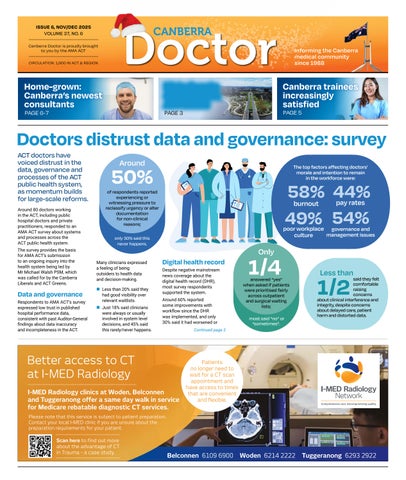
ACT doctors have voiced distrust in the data, governance and processes of the ACT public health system, as momentum builds for large-scale reforms.
Around 80 doctors working in the ACT, including public hospital doctors and private practitioners, responded to an AMA ACT survey about systems and processes across the ACT public health system.
The survey provides the basis for AMA ACT’s submission to an ongoing inquiry into the health system being led by Mr Michael Walsh PSM, which was called for by the Canberra Liberals and ACT Greens.
Data and governance
Respondents to AMA ACT’s survey expressed low trust in published hospital performance data, consistent with past Auditor-General findings about data inaccuracy and incompleteness in the ACT.
50%
Around of respondents reported experiencing or witnessing pressure to reclassify urgency or alter documentation for non-clinical reasons;
only 30% said this never happens.
Many clinicians expressed a feeling of being outsiders to health data and decision-making.
Less than 20% said they had good visibility over relevant waitlists.
Just 18% said clinicians were always or usually involved in system level decisions, and 45% said this rarely/never happens.
Digital health record
Despite negative mainstream news coverage about the digital health record (DHR), most survey respondents supported the system.
Around 60% reported some improvements with workflow since the DHR was implemented, and only 30% said it had worsened or
Continued page 2
Only 1 /4
answered “yes” when asked if patients were prioritised fairly across outpatient and surgical waiting lists;
most said “no” or “sometimes".

The top factors affecting doctors’ morale and intention to remain in the workforce were:
pay rates 54% governance and management issues
Less than said they felt comfortable raising concerns about clinical interference and integrity, despite concerns about delayed care, patient harm and distorted data. 1 /2


I’m enormously happy to report that the future of AMA ACT is on a much firmer foundation after December’s historic member vote to make us a branch of the Federal AMA.
As your AMA ACT president, I’m glad to be looking to a future where we will be able to continue our strong advocacy and industrial relations work, with a renewed confidence that our finances are sustainable. I thank the current Board members for agreeing to transition to our new AMA ACT Branch Council. We have been able to leverage the close connection we already enjoy with the co-located Federal Office, handing over to them responsibility for the back-end parts of our operation– finances,
legal functions, HR, compliance and accounting. As with many organisations today, these costs have risen over time to become a substantial financial burden.
Becoming a Federal branch allows us to share these costs more effectively while maintaining robust advocacy and support for Canberra’s medical community—a priority for both the Federal AMA and ACT doctors. Will AMA ACT look different in 2026? The changes with be subtle.
I’ll continue as your President, representing you in official forums and the media. We’ll hold elections for a new President and Council in May. All current staff remain in their roles, and we’ll keep working hard on a new enterprise agreement for public hospital doctors (see page 4) and providing workplace relations advice and support. You’ll still receive Canberra Doctor and our member updates.
The feedback that we gained from our members ahead of the Inquiry into the ACT health system (page 1) provides us with evidence of the challenges
doctors witness, but also a roadmap for things that simply have to change. We remain as committed as ever to working hard for members to secure the best outcomes for doctors, patients and our community.
In November, I appeared before the ACT Inquiry into Men’s Suicide with Ms Emily Ryan, our junior doctor advisor. Speaking to our earlier submission, I highlighted the significant challenges men face navigating the ACT mental health system— long psychiatric wait times, inconsistent crisis responses, fragmented pathways, and barriers to continuity of care.
The Committee was particularly interested in insights from GPs and psychiatrists, which underscored opportunities for earlier intervention.
AMA ACT advocated for:
Expanded psychiatry and psychology capacity
on ensuring a clinically governed, integrated model, expanded MACH and Early Childhood Health Services, streamlined intake and referral systems, and genuine partnership with paediatricians and GPs. This reform represents a critical opportunity to address longstanding fragmentation in ACT developmental services and we need to ensure that we learn lessons from the NDIS.
After strong advocacy from the AMA, including from our own ACT branch, the Federal Government says it will update the fee schedule for doctors’ report-writing for veterans.
AMA will continue to call for the DVA fee schedule for medical services to reflect the actual cost of providing care.
severely worsened workflow.
Half of respondents rated the DHR’s useability as excellent or adequate, and only 30% said it was poor or unusable.
Several doctors commented that the DHR led to clunky workflows, planned care bottlenecks and the need for workarounds, suggesting a review is warranted.
AMA ACT President Dr Kerrie Aust said she was pleased to meet with Mr Walsh in November and discuss doctors’ concerns.
“Clearly the ACT is not up to scratch when it comes to governance, accountability and transparency in our health system,” she said. “Clinicians are under-represented in decision
making, which erodes trust, culture and engagement. These are all long-standing issues.”
“It is time for large scale system reforms, and we look forward to seeing what Mr Walsh proposes in his final report in June 2026.”
One reform option strongly favoured by many doctors is for the creation of independent health and hospital boards with accountability for quality, safety, performance and culture, including clear reporting obligations.
At the 2024 election, the Canberra Greens promised to establish a statutory independent board to improve governance of the ACT’s health system and improve health outcomes for the community.
To have your say email editorial@ama-act.com.au
Clearer system navigation and better integration with primary care
Targeted supports for men experiencing social isolation, financial stress, or neurodivergent conditions.
We also raised contributing factors the Government could address, including gambling harm, drug and alcohol dependence, and housing access.
AMA ACT recently met with the Health and Community Services Directorate on the Thriving Kids foundational supports redesign. Our focus is
Dr
Minister for Veterans’ Affairs, Matt Keogh, made the commitment during a speech in December, saying the government will ensure payments for reports better reflect actual costs to practitioners.
While we welcome the commitment, the DVA fee schedule for medical services has been significantly eroded by inadequate indexation over many years, including an extended freeze under former governments.
In the ACT, many GPs can no longer afford to accept DVA fees when treating veterans, whose care is typically complex. This is a tragic situation given the best person to provide medical care for a veteran – as for any patient – is their usual GP, who knows their history.
Looking ahead to 2026, our annual Student Welcome Drinks will be happening on the evening of Thursday 29 January 2026 – a fantastic opportunity for students to mingle and get to know experienced local clinicians. Check the AMA ACT website for details. ama.com.au/act AMA’s annual national conference AMA26 will be held in Melbourne from 28‒29 August. The conference is already shaping up to be an amazing event with the incredibly inspiring Jelena Dokic locked in as one of the keynote speakers. The early-bird discount is worth taking advantage of – a whopping 40% for AMA members until 31 January.
Christmas wishes 2026 is looking bright – but first, a well-earned break! It’s been a big year, and I know many of you are feeling it.
A heartfelt thank you to all our members for your support, and special thanks to our dedicated AMA ACT Board members. While not everyone will get the rest they deserve, I hope there’s plenty of merry-making amid the madness, and that you return refreshed for the year ahead.



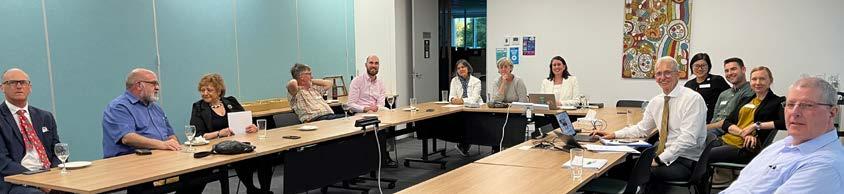
In an historic milestone, members of the Australian Medical Association ACT Ltd (AMA ACT) have voted to become a branch of the Federal AMA, ensuring it will remain a strong and effective voice for doctors in the ACT.
At an extraordinary general meeting on December 3, members voted unanimously for the transition to go ahead. The change was proposed by AMA ACT President Dr Kerrie Aust and the Board early in 2025, after a structured review of the organisation’s sustainability, and
involved extensive consultation with members, including at the May AGM, Town Hall meetings and a straw poll. The change is aimed at securing the financial sustainability of AMA ACT in the context of increasing financial, staffing and compliance pressures.
Effective immediately, the transition means ACT doctors will continue to have a strong voice on local issues. AMA ACT will retain its name, brand and presence, and members will still have a local President and Council (replacing the Board).
AMA ACT will continue to operate from its office next door to the Federal AMA office in Barton, with staff focused on ACT-specific advocacy, industrial relations and
workplace relations support.
However, AMA ACT will no longer operate as a separate incorporated company –finance, HR, compliance, and legal functions now rest with the Federal AMA.
AMA ACT is not the first jurisdiction to make this change – AMA Tasmania became a branch of the Federal AMA in
July 2024. The transition has delivered an 8 per cent saving to the AMA Tasmania budget in the first 12 months, and that money is now being spent on advocacy and support for doctors. AMA Northern Territory has also become a branch, following a vote in October 2025. Dr Aust led the extraordinary general meeting to vote on AMA ACT’s future, with
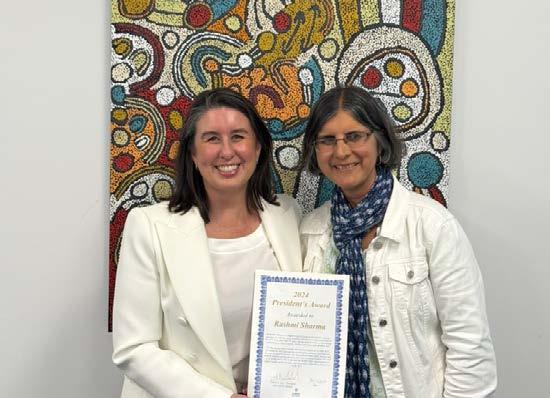
support from AMA ACT CEO Peter Somerville. Beside her at the table were Professor Kirsty Douglas and Associate Professor Rashmi Sharma.
“I’m very pleased with this outcome,” Dr Aust said. “It’s not a small thing to make a change like this, but it was the only viable way we could see to ensure AMA ACT remains a strong voice for doctors in our region for years to come.”
The ACT Government is inviting health professionals to apply for the 2025 Maternity in Focus Workforce Scholarship Scheme, with $50,000 in funding available to support professional development across Canberra’s maternity care sector. These scholarships provide an exciting opportunity for midwives, doctors, nurses, allied health professionals, and other eligible health professionals working in maternity care in the ACT to enhance their skills through further


study or professional development. Applicants must:
1. Be a midwife, nurse, doctor or other eligible health professionals involved in maternity care in the ACT.
2. Be employed by Canberra Health Services, an ACT Government Directorate, Winnunga Nimmityjah Aboriginal Health and Community Services, an Aboriginal community controlled organisation or Tresillian Queen Elizabeth II Family Centre.
3. GPs providing shared maternity care in the ACT are also eligible to apply. Individual scholarships of


up to $6,750 per person are available to support professional development in priority areas identified in the Maternity in Focus: First Action Plan 2022–2025 These areas are central to maternity system reform and include breastfeeding education, perinatal loss and bereavement care, perinatal mental health, culturally appropriate and traumainformed care, and postgraduate courses to become an endorsed midwife. Other relevant postgraduate study, short courses, workshops and conferences may be supported if they align with the Action Plan or address a specific workforce need.

Applications close Friday 13 February 2026. For more information or to apply visit act.gov.au/open/maternity-in-focus


as Medical Imaging brings a new era of gnostic imaging to the ACT. Introducing the first photon counting CT scanner in the

region -
Atlas Medical Imaging brings a new era of diagnostic imaging to the ACT. Introducing the first photon counting CT scanner in the
Healthineers NAEOTOM Alpha. This breakthrough technology delivers unprecedented clarity, consistency, and confidence n diagnosis.
region - Siemens Healthineers NAEOTOM Alpha. This breakthrough technology delivers unprecedented clarity, consistency, and confidence in diagnosis.
Atlas Medical Imaging brings a new era of diagnostic imaging to the ACT. Introducing the first dual source photon-counting CT scanner in the Canberra region - Siemens Healthineers NAEOTOM Alpha. This breakthrough technology delivers unprecedented clarity, consistency, and confidence


atlasmedicalimaging.com.au
Ph 02 6113 6500 | Fax 02 6113 6555 | admin@atlasmi.com.au
Transforming the way Canberra experiences medical imaging Services
Atlas Medical Imaging is a next-generation, clinician-owned medical imaging practice founded by established local Canberra radiologists, together with a team of highly experienced healthcare professionals. Formed in response to the growing need for a more patient-centred, sub-specialist led service in a community setting in the ACT, Atlas was built from the ground up to combine world-leading technology with genuine, compassionate care.
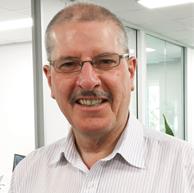
GREG SCHMIDT Senior Workplace Relations Advisor, AMA ACT
Bargaining for the next Medical Practitioners Enterprise Agreement is now underway, and this is an important opportunity for ACT public hospital doctors to have a say on pay, conditions and workload issues that affect everyone.
The ACT Government has commenced negotiations for the new agreement, which will replace the current Workplace
Determination. All public hospital doctors employed by Canberra Health Services and the Directorate of Health and Community Services will be covered by the new agreement and have the opportunity to be involved in shaping it.
From previous bargaining rounds, one thing is clear: when doctors participate and are represented together, our collective voice is stronger. Coming together around shared priorities helps ensure those concerns are clearly heard at the bargaining table.
In the last bargaining round, junior doctors in particular, consistently raised concerns about workload pressures, the need for protected teaching and training time, and better recognition of the growing costs associated with medical training. These issues continue to affect day-to-day practice, and AMA ACT expects to again put them forward as part of this round of negotiations.
Doctors can choose how they are represented during bargaining.
AMA members can appoint the AMA as their bargaining representative, or choose another representative if they prefer (including themselves). ASMOF members are automatically represented by ASMOF and don’t need to take any further action. AMA ACT encourages members employed by the ACT Government to take part — by making an active choice about representation and by contributing to the bargaining claims that will be developed on their behalf.
We will continue to advocate for an Enterprise Agreement that supports sustainable workloads and helps the ACT health system attract and retain doctors. To support this, we’ll be consulting with members through meetings and short surveys, so everyone covered by the agreement has the chance to contribute.
Please keep an eye on your inbox for updates from AMA ACT, or feel free to contact the AMA ACT on industrial@ama-act.com.au at any time to share what matters most to you.

The ACT Government says it has begun making payments under the Workplace Determination, which will proceed as follows:
20 Nov 2025 Payment of cost-of-living payment to eligible employees
18 Dec 2025 First fortnight of salary and allowances at new rate
18 Dec 2025 Medical Education Expenses paid as an allowance for Specialists and Senior Specialists
29 Jan 2026 Back payments of salary paid to currently employed doctors
Unknown Back payments of salary for former employees
AMA ACT your bargaining rep: Go to ama.com.au/act, click the ‘Nominate us now’ button and fill in your details. Alternatively email industrial@ama-act.com.au or call (02) 6270 5410

EMILY RYAN
Junior Doctor Advisor AMA ACT
Graduating ANU medical student, Class of 2025
Having finished university after seven years, I am still waiting for a lot of it to sink in. This is the end of a very long road, for which I am both grateful and relieved. I have been reflecting on my time at ANU, the cohort I’m graduating with, and the
positives and challenges of medical school.
I was grateful to be selected for both the Rural Stream and Indigenous Health Stream at ANU, which helped me complete placements across Australia. I was placed in Bega, Pambula, Moruya, Goulburn, Armidale (NSW), Yulara (NT) and Toowoomba (QLD). I was able to nurture my interest in psychiatry with an elective placement, a rural rotation and a forensic placement at the Alexander Maconochie Centre. These opportunities gave me incredible experiences that will undoubtedly shape my career direction, attitude and values as a junior doctor. What I’ve appreciated deeply about ANU’s program is the professional and academic staff, who have offered us unwavering support and understanding throughout our journey. They are so enthusiastic about our learning, and I often reflect on the effort they each put
in to get us to this point. While the ANU leadership changes have undoubtedly been challenging for the staff, the students have been mostly protected from any significant consequences, which is a testament to the staff’s efforts and resilience. I also deeply appreciate all the doctors and allied health workers who have taken time out of their workdays to teach us, listen to us, answer silly questions and generally put up with having a shadow. Your generosity shapes and inspires future doctors. I’d be lying if I said that medical school hadn’t been one of the most challenging things I’ve done. I particularly struggled with a steep learning curve, a terribly persistent imposter syndrome and a workload that doesn’t leave much room for other areas of life to go wrong. After some unexpected challenges outside of university in my final year, I sought help early from the ANU Medical School support teams and was met with exceptional care. This experience

will stay with me as a reminder that medicine, despite its stigma around help-seeking, can be profoundly supportive. Our cohort’s experience felt different to those before us because there have been significant changes going on in multiple domains. These include ANU leadership changes, curriculum changes and assessment changes, as well as a continuing readjustment from COVID disruptions. I think this slight state of flux has produced graduates who are adaptable, tight-knit and ready to advocate for themselves and each other.
I will miss a myriad of things about being a student, and I’m sure I’ll look back in disbelief that I ever thought life was hard when I spent so many afternoons in the sun on ANU lawns (or at the pub). I’m forever grateful to my peers for their support and collegiality. I’m also eternally
grateful for all the patients who donated their time to our learning across these four years. Next year I am off to Orange for my internship and am very excited to get started. I don’t feel completely ready (I’m not sure anyone ever does), but I am excited to be part of the team, continue learning and begin my career. I hope to carry on the same generosity and patience that I have been shown during medical school.
Canberra’s junior doctors are continuing to report high levels of satisfaction with their training experiences, despite working longer hours than the national average, Australia’s largest survey of medical trainees shows.
Results from the Medical Board of Australia’s seventh annual Medical Training Survey were released in December. Nationally, 17,622 junior doctors responded (37% of the junior doctor workforce), including 387 doctors from the ACT.
The average ACT respondent was 5.6 years post-graduation. 30% identified as specialist non-GPs, 22% as prevocational and unaccredited registrars, 6% as interns and 5% as specialist GP trainees. 36% identified as International Medical Graduates.
In 2025, 81% of ACT respondents said they would recommend their current workplace as a place to train, compared with a national average of 83%. This was the highest level of satisfaction among ACT trainees in the survey’s history, up from 78% in 2024 and 73% in 2023. It follows a concerning period between 2019 and 2022, when ACT satisfaction rates fell as low as 60%.
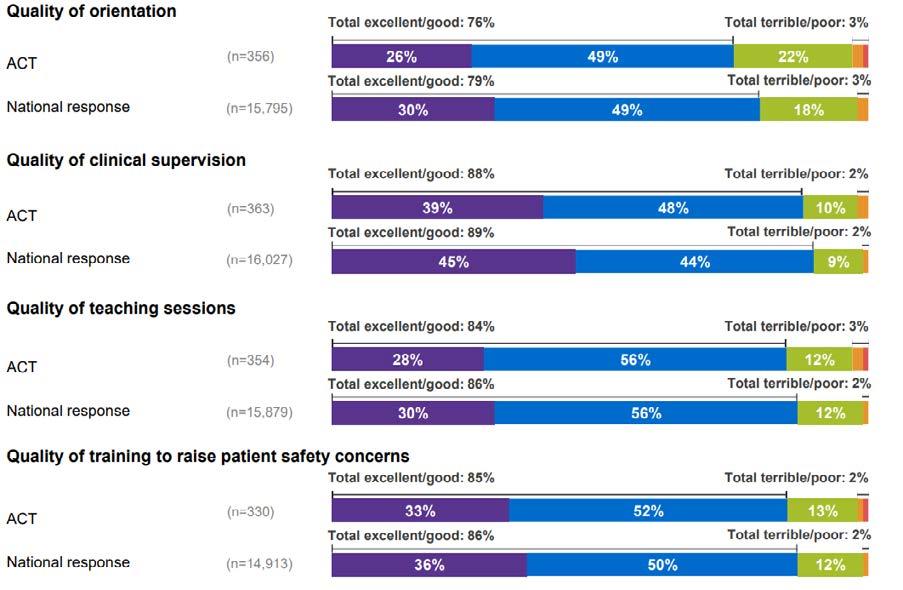
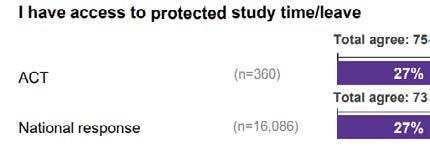
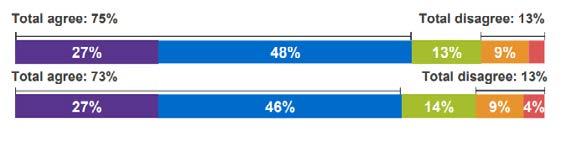
Encouragingly, ACT’s performance in the 2025 survey was in line with the national average on several important measures (see opposite). These included the quality of
orientation, quality of teaching sessions, quality of supervision, and positive workplace culture.
A relatively high proportion of ACT respondents also reported being paid for unrostered overtime most of the time (79% versus 75% national average).
However, ACT respondents worked more hours each week than the national average –47.3 hours versus 44 hours.
70% of ACT respondents reported working 40 hours a week or more, compared with just 58% nationally.
AMA ACT President Dr Kerrie Aust said the survey results demonstrated the value of investing in doctor wellbeing –for instance through Canberra Health Services’ Office of the Director of Prevocational Education and Training.
“In Canberra, we’ve seen additional supports put in place for medical trainees at CHS over the last few years following concerted advocacy, including more support staff and more attention to the issue of unpaid overtime,” Dr Aust said. “It’s really pleasing to see improvements reflected in trainees’ experiences.”
“For Canberra to have the health system our community deserves, we need to be attracting the best junior doctors to the capital. That means making sure they can increasingly access protected teaching time and opportunities to advance their career, as well as ensuring fair rostering and remuneration. AMA will not stop advocating for further reforms in these areas.”


The medical community around Australia is mourning the passing of Emeritus Professor John Murtagh AO, whose extraordinary contribution to medicine and general practice has left an indelible mark on healthcare in Australia and across the globe.
Professor Murtagh’s seminal work, John Murtagh’s General Practice,
has become the pre-eminent reference textbook for general practitioners, medical students, and registrars worldwide. This groundbreaking textbook has educated generations of doctors across more than 20 countries, fundamentally shaping modern general practice.
In 2018, the AMA recognised Professor Murtagh with our highest honour, the AMA Gold Medal. Throughout his career, Professor Murtagh revolutionised medical education through his

innovative teaching methods, empowered patients by making medical knowledge accessible, and inspired countless doctors with his compassionate, patientcentred approach to care.
Professor Murtagh died peacefully at age 89, surrounded by family.
It’s an encouraging sign that Canberra’s health system is in good hands when many of the newest consultants in town did their medical training at the ANU. Canberra Doctor spoke with several of these doctors about why they wanted to work in the city where their medical training began.
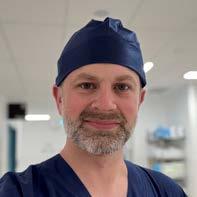
A/Prof Gert Frahm-Jensen FRACS (Vasc)
Clinical Director of Surgery Canberra Hospital
Vascular Surgeon Canberra Hospital
Graduated from ANU medical program in 2010
“I returned to Canberra as a consultant surgeon in 2019, having spent three years in Melbourne and one year in Brisbane.
Canberra is attractive for several reasons. The hospital is a great place to work with excellent colleagues and a broad case mix, which makes every day interesting. Canberra very rarely has any significant traffic, the schools are good, and it is a wonderful place to raise a family.
Since my return to Canberra, we now have the new Critical Services Building which has allowed construction of state-ofthe-art operating theatres that have brought our hospital to the



forefront of technical capacity. This has been encouraging in knowing that we have capacity to look after patients to the best of our ability without being held back by lack of resources.
I probably would not have chosen vascular surgery as a career if it were not for the vascular surgeons I worked with here in Canberra as a junior doctor, so their influence has been significant. Thank you to Dr Wendell Neilson, Prof David Hardman, and the late A/Prof Stephen Bradshaw.”

Dr Hazel Serrao-Brown FRACS
Endocrine & General Surgeon
Canberra Health Services and private hospitals
Graduated from ANU medical program in 2014
“I returned to Canberra as a consultant Endocrine & General Surgeon in 2014, after undertaking sub-specialty training at the Royal North Shore Hospital in Sydney.
I chose to return to Canberra to work with my surgical colleagues, who mentored and supported me throughout my training and continued to do so upon my return.
I loved the Canberra lifestyle, with the proximity to nature and the ease of daily living.
The positive workplace culture in the cohort of Canberra’s general surgeons has always made me want to be a part of the team. This team now includes a fantastic mix of senior and junior surgeons with world class expertise.
I like living in Canberra – a beautiful city, especially in terms of convenience and ease of everyday life, which is something I can appreciate after living in other locations.
Dr Frank Piscioneri and Dr Xiaoming Liang have both been invaluable as mentors and have been a major influence in my decision to return to work in Canberra.”

Dr Nicole Rodrigues FRACS (General Surgery)
Endocrine and General Surgeon, Deakin
Graduated from ANU medical program in 2014
“I returned to Canberra to set up a practice in 2025, after spending two years in Sydney and Melbourne completing subspecialty training in Endocrine Surgery, focusing on management of thyroid, parathyroid and adrenal pathology.
I had made Canberra home in the 11 years that I studied and trained here. I loved the Canberra lifestyle, with the proximity to nature and the ease of daily living. I had set up my life here with my partner, so had always planned to return to work and live in Canberra. I was also very supported by the people I worked with throughout training and was encouraged to come back.
I’ve noticed that Canberra has gotten even busier in the time

that I have been away. I can see that there will be challenges for the health system to meet the demands of this increase in population. However, having worked in interstate centres over the last two years, it is my opinion that Canberra can certainly hold its own and easily compete with the major cities. There are great people who are passionately working within the system to help it meet its potential.”

Dr Cameron Maxwell FANZCA
Cardiac Anaesthetist and Medical Perfusionist
Graduated from ANU medical program in 2014
“I live in Canberra and work three weeks a month at The Canberra Hospital and private hospitals, while also spending one week a month at Royal Prince Alfred Hospital in Sydney. Canberra as a city really called us
back from Sydney, where I spent 2022-23 as a cardiac fellow and consultant. Nature is integrated into Canberra and most suburbs have access to nature reserves or parkland. Being able to see the sunset over the mountains as you walk out of the hospital is something we missed. I also love running and Canberra is such a great running city. Friends and family also brought us back to Canberra. Most of my friends from medical school are now consultant colleagues. It’s lovely being able to work publicly and privately with them.
I hope the Canberra health system continues to grow and attract staff from interstate. For sustainability we need to attract like-minded people to the city. I also hope the health system collaborates with doctors on the floor to gain greater understanding of our needs, so that we can continue to deliver great care to the community.
Prof Thomas Brussel was Head of the Anaesthetic Department when I got into training. He and all the anaesthetists in Canberra Hospital have aimed to grow an inclusive, supportive and collegiate department. This has had a huge impact on my decision to come back to Canberra.”

Dr Nic Holt FRACP
Interventional Gastroenterologist
VMO at The Canberra Hospital and Gosford Hospital
Consultant at GastrotrACT
Graduated from ANU medical program in 2015
“I am a Canberra local and have always wanted to return to give back to the community to which I owe my upbringing and much of my medical training. The Gastroenterology and Hepatology Unit at The Canberra Hospital has some fantastic gastroenterologists, as clinicians, researchers and leaders in the field. It’s a privilege to be working with them again after some time interstate and overseas doing advanced fellowships.
I’m excited about the new endoscopy unit slated to open at The Canberra Hospital in the coming year or so. In addition, facilities in the private sector have developed, and more is possible in the private system now than was possible while I was doing my early training here.
A/Prof Vipul Aggarwal’s leadership has really helped to progress the profile of the unit, and the hospital, around Australia and the rest of the world. He and several of the other gastroenterologists have been steadfast mentors to me over the course of my training in Canberra. I, and the ACT, owe
I would like to see The Canberra Hospital develop over the coming
years to become a centre of excellence.
a great deal to their wisdom, work ethic and expertise.
I would like to see The Canberra Hospital develop over the coming years to become a centre of excellence, and establish its role as a tertiary referral hospital for the ACT and surrounds, rather than just a ‘big country hospital’ as it has been in the past. I think government and the bureaucracy have shown signs of improvement here, but it would be good to see more demonstrations of ambition in the coming years.”

Dr Estella Maria Janz-Robinson
FACD
Specialist Dermatologist
Co-Director/Founder of Skin by Dermatologists in Acton Canberra
Graduated from ANU medical program in 2014
“I returned to Canberra as a fellow in 2025, after spending time at Westmead Hospital, St Vincent’s Hospital, Royal North Shore Hospital, the Skin Hospital Darlinghurst, and various NSW
regional and rural private practices. I fell in love with Canberra during my time here as a medical student – the abundance of nature, picturesque seasonal changes, multicultural festivities, art and sustainability projects, and all the coffee and brunches that rivalled much larger cities. Most importantly, I found a group of friends at ANU who have become like a second family. I have thoroughly enjoyed reconnecting with many of these colleagues since I returned.
It is well recognised that Canberra has a chronic shortage of dermatologists. Throughout all my specialist training across multiple sites and health districts in NSW, I am yet to experience another dermatological service with longer wait times in both the public and private sectors.
Over the next decade I would like to see increased Government funding for specialist recruitment and public dermatological services so that we no longer need to re-direct desperate patients from Canberra, the nation’s capital, to Sydney for standard care.”

Dr Jade Lee
FRANZCR
Diagnostic Radiologist Staff Specialist, CoDirector of Training
The Canberra Hospital
Graduated from ANU medical program in 2014
“Canberra has imprinted on me for good ever since I moved here from California back in 2008. It’s an incredibly pleasant and frictionless city to live and raise our family in, and the coffee and food is pretty sweet as well.
I completed almost the entirety of my core medical education and specialty training in Canberra via ANU and Canberra Hospital. I was fortunate to train in a department with great mentors who supported and encouraged my interests in education, which is how I’ve found myself in the Co-Director of Training role as a fairly fresh-faced Fellow. Since returning to Canberra
Hospital, I’ve enjoyed seeing several of my medical school classmates and friends also working as consultants and advanced trainees. We wandered the halls as confused medical students, ran the hospital together as interns, then registrars, and now we are coming full circle!
We wandered the halls as confused medical students, ran the hospital together as interns, then registrars, and now we are coming full circle!
The growth of CHS over the years has been – and will continue to be – massive. We need proactive and mindful leadership in our specialty groups to continue making productive strides forward.
We’re already seeing many of these roles filled by very clever ANU medical program alumni who are overseeing the development and governance of new hospital sites and departments.
There’s one doctor who influenced my decision to work in Canberra more than anyone else, and that is A/Prof John Cockburn – a brilliant Irish radiologist, musician, and educator extraordinaire, to whom I am ever thankful.”

Dr Samuel Wells
FRACP
Respiratory Physician and Sleep Fellow at The Canberra Hospital
Graduated from ANU medical program in 2014
“I returned to Canberra in 2024 to work as a Respiratory Physician and complete my post fellowship training in Sleep Medicine, following some advanced training at Wagga Wagga and Westmead. I have a very supportive family here in Canberra, and love living in this beautiful city. It’s a bonus that I could return to the hospital where I started my career and work with the people that had supported me on my journey to become a Respiratory Physician. I had a lot of great mentors while training in Canberra in my junior years and always felt well supported. Every day working in Canberra, I am encouraged to do better for myself and for the people of this community. From what I have seen we have a lot of dedicated people working hard within our system to help it expand to meet the needs of our growing community, and to stay on the cutting edge of medicine and provide state-of-the art care.”
The ACT Government is encouraging primary care providers to start thinking about how they can participate in a $1.5 million pilot program aimed at improving access to affordable healthcare for children.
Grants will support providers that commit to bulk billing services for children under 16. This might mean bulk billing all under 16s or seeing even more under 16s if you already bulk bill this group.
The Primary and Integrated Care Policy team at the Health and Community Services Directorate said proposals will be encouraged that have an ongoing impact and reach families who:
have higher health costs, like children with chronic health issues
are likely to defer accessing care due to costs, like
lower-income families
can experience barriers to accessing care, like Aboriginal and Torres Strait Islander children.
Innovative ideas are encouraged and could include:
Establishing a multidisciplinary team
Investments in software or equipment
Building business management skills
Applications will open in February 2026 on the ACT Government website.



Years of lobbying resulted in increased funding to provide a $30,000 salary incentive for GP registrars and paid parental leave and study leave Additional prevocational and vocational training positions in GP are also locked in
Our ongoing calls for m Medicare resulted in a $7.9 billion in Medicare GPs who choose to bu their patients. While w advocate for extra fun Medicare GP rebate st longer consultations
We identified LGBTQIA area for all government welcomed $10 million in training for primary hea delivering inclusive LGB
We were one of the firs for a centre for disease continued those calls th pandemic This year we legislation to establish t
If you’re a doctor, th
After advocating for more support for women’s health we welcomed a Medicare funding boost for long-term contraceptives, the listing of new oral contraceptive pills and menopausal therapies on the PBS and a new Medicare rebate for menopause health assessments
In June a new wounds consumable scheme started We first raised the need for patients to have better access to support with wound care with former health minister Greg Hunt in

AMA ACT is delighted to congratulate the following ACT doctors on reaching special milestones in their AMA membership.
AMA ACT president Dr Kerrie Aust – who herself reached a 10-year membership milestone this year – said the list was a testament to why AMA is the voice of the medical profession.
“I am so proud when I reflect on the many wonderful doctors who have offered continuous support and commitment to AMA over the decades,” Dr Aust said. “Our organisation depends on our members to continue our important work of advocating for a sustainable health system that supports doctors and delivers high-quality care for every patient.”
Kerrie Aust – 10 years
Rakesh Iyer – 10 years
Vimbai Kapuya – 10 years
Emily Rushton – 10 years
Vekram Sambasivam – 10 years
AMA President
Allirra Selkirk – 10 years
David Westcombe – 10 years
Martin Liedvogel – 20 years
Ramila Varendran – 20 years
Karyn Cuthbert – 30 years
Jakub Dreher – 30 years
Timothy Greenaway – 30 years
Stuart Miller – 30 years
David O'Rourke – 30 years
Chris Roberts – 30 years
Vida Viliunas – 30 years
Sindy Vrancic – 30 years
Ian Brown – 40 years
Paul Craft – 40 years
Peter French – 40 years
Michael Gillespie – 40 years
Michael Peek – 40 years
Peter Warfe – 40 years
Klaus Czoban – 50 years
John Donovan – 60 years
Tony Griffin – 60 years
Peter Hughes – 71 years


Dr Karyn Cuthbert, a Senior Staff Specialist in the Hospital in the Home (HITH) Unit at the The Canberra Hospital, has been an AMA member since graduating from University of Newcastle in 1994.
“I believe in supporting our organisation that advocates for the medical profession in its entirety,” Dr Cuthbert said. “I am appreciative of the support that the AMA provides to our profession.”
Dr Cuthbert has worked as an ED specialist at both Calvary and Canberra Hospitals. Since 2012 she has worked exclusively as a HITH specialist when she became the Director of the HITH unit at Calvary (now North Canberra) Hospital and then Canberra Hospital HITH from 2020-2025.
“I am very proud of the two wonderful multidisciplinary
HITH services as they are now, which still have many opportunities ahead,” she said.
Dr Cuthbert was recently voted onto the HITH Society Australasia board of directors, and is involved in a working group with the World Hospital at Home Congress. She is also a senior clinical lecturer for ANU School of Medicine and Psychology.
Dr Vimbai Kapuya, a dedicated Rural Generalist and Medical Educator, marks a decade of membership with the AMA. “AMA is the collective voice of medical practitioners. It is invaluable to have strong representation and advocacy at a national level,” Dr Kapuya says.
Dr Kapuya currently serves as a Rural Generalist at Yass District Hospital, where she has worked for the past nine

years. She also contributes to the award-winning NSW Virtual Rural Generalist Service, delivering virtual care to patients across a wide geographical area, from Bourke to Bega. She completed her medical degree in South Africa before relocating to Australia, where she undertook Rural Generalist training in the Northern Territory through the Australian College of Rural and Remote Medicine (ACRRM). In addition, Dr Kapuya holds a Diploma in Child Health and has completed Advanced Skills Training in paediatrics. With a strong interest in medical education, Dr Kapuya earned a postgraduate certificate in Medical Education from Flinders University. She served as ACRRM Northern Territory Regional Director of Training until December 2025.


As the year winds down and the focus shifts to holidays and family time, it’s tempting to leave financial planning until the new year. But if there’s one resolution worth making before 2026 begins, it’s to plan ahead, not wait for the End of Financial Year.
Taking time now to understand your cashflow and tax obligations can save you stress (and potentially thousands of dollars) down the track.
Get ahead of the EOFY rush
Many practices and healthcare professionals scramble in June to reduce tax liabilities at the last minute. The result? Decisions are made under pressure, without a full picture of cashflow or long-term impact. Instead, plan early in the new year for strategic, informed choices and better results.
Understand your ‘tax holiday’ in private practice
If you’ve recently moved into private practice and started earning income under an ABN, the first year can feel like a ‘tax holiday’. With no employer withholding tax from your pay, it’s common to underestimate what you’ll owe when you lodge your first sole trader Tax Return. Setting aside appropriate funds will prevent a nasty surprise when your tax return is lodged.
Sold an investment?
Plan your capital gains strategy early
If you’ve sold an investment




property, shares, or business asset during the year, don’t wait until June to think about the impact of capital gains tax. Planning now means you still have time to reduce your liability.
Maximise your salary packaging
If you’re working in the public hospital system, salary packaging can be one of the simplest and most effective tax-saving tools available. Make sure you’re maximising your tax-free threshold effectively before the year ends 31 March. A review in January gives you plenty of time to make adjustments.
Supercharge your super contributions
Super remains a powerful tool to reduce taxable income and build long-term wealth. You can claim a deduction for personal contributions up to $30,000, and potentially more using the five-year carry-forward rule. Planning early in 2026 gives you flexibility to time contributions in line with your cashflow.
The bottom line
Plan early. Starting in the new year means you can make confident, wellinformed financial decisions, not rushed ones.

At Cutcher & Neale, we help you stay proactive and prepared, so tax time is stress-free.
Contact us today by calling 1800 988 522 or going to cutcher.com.au/contact
Director Dr4Drs ACT
Drs4Drs ACT was delighted to host Safe Space 10 in October. Our regular Safe Space events are a fabulous opportunity for connection among the Canberra medical community, with attendees ranging from medical students to retired practitioners, and including doctors from a wide range of specialties.
The focus of October’s workshop was on neurodiversity in medical training and practice, with a lively panel discussion about lived experiences, and a highly engaging presentation on strategies to help neurodiverse medical students and doctors thrive.
Psychiatrist, Dr Daniel Heard, stressed the importance of sound study habits, especially for those with ADHD. He shared several evidence-based study strategies, which are listed below:
Active recall
This involves using self-testing and a question-and-answer approach rather than passive re-reading. Studies show that this method results in 0.5-0.8 improvement in outcomes. A range of AI tools can assist, including NotebookLM, which can create a podcast based on the text entered. ChatGPT voice
mode can also be used to generate a bidirectional conversation on a specific topic (a form of body doubling). Meanwhile, Q&A flashcards can be created with Anki.
Spaced repetition
This is about the ‘when’ of revision. It’s recommended to revise material after a delay of 10% of the interval between initial learning and assessment. For example, if an exam is 30 days after first learning the material, then revise it three days after presentation and you will understand and retain more information than cramming the night before, as neural pathways are reinforced through long-term connections. This strategy has been shown to have an effect size of 0.6 - 0.8. Dr Heard noted that a good old-fashioned spreadsheet can help track study topics and progress.
The Pomodoro Method
This is about timing your study and your breaks into focused intervals. Officially it’s 25 minutes study, five minutes’ break, though it can be individualised. Having a break can involve walking, stretching, getting a coffee or snack, and most importantly, letting your mind wander – don’t intentionally think about what you’re studying.
About two hours a day is the maximum productive study most people can manage – which is a lot if done consistently! Beyond that, Dr Heard urged students to use their time on things that recharge them physically, socially and mentally.
looking

In case you’re wondering – the Pomodoro Method is named after the Italian word for “tomato” because its creator, Francesco Cirillo, used a tomato-shaped kitchen timer during his university studies.
Staying organised
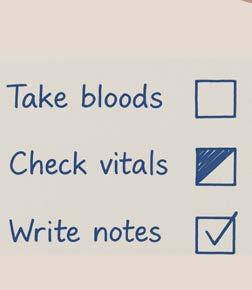
Dr Heard said people with ADHD could be encouraged that clinical medicine was often well suited to them. He stressed that it was important for all doctors, including those with ADHD, to have a simple and reliable means of capturing and tracking tasks. He suggested the Box method (see image).
Finding your niche
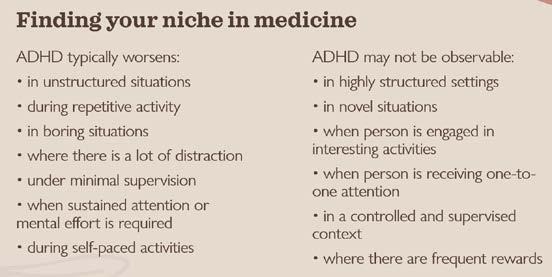
Some specialties and working environments tend to be better suited to doctors with ADHD than others, Dr Heard said. He recommended the second box opposite, which he borrowed from a presentation given by Professor David Coghill, as a guide to helping people with ADHD find their niche.
Drs4Drs ACT offers an independent and free confidential support service run by doctors, for doctors and medical students. We can help with: No problem is too trivial or too serious.



In their final term of medical school, ANU students undertake a pre-internship placement to prepare them for the transition to internship. AMA ACT Junior Doctor Advisor Emily Ryan interviewed a handful of her peers to find out what they learned on their different placements.

Ainsley
Psychiatry, The Canberra Hospital
“It was a joy to be a part of the team for a few weeks. They’re a fantastic group of doctors, nurses, social workers, pharmacists and mental health workers who form such a welcoming and collaborative team.
“It has reinforced to me the importance of having a good team, and how helpful that can be when supporting you through challenges – from both a medical and social perspective. It also challenged me to think more about the role of junior doctors in advocating for their patients and acting as a communication channel to other members of the healthcare team such as allied health and GPs.”



Geriatrics, The Canberra Hospital

Emergency Department, The Canberra Hospital
“I had a great supportive intern who I was able to make good friends with. Having a placement in ED meant that my PRINT term was varied and interesting, and I was able to see patients on my own. This helped me build my confidence at being autonomous clinically. I received a lot of teaching which was valuable to me as I'm interested in ED as a career, and I valued that my intern wasn't that far ahead of me so that I could relate to his knowledge. The Canberra Health staff were very approachable and enjoyable to work with, and I felt very supported. As a result of my internship I feel more confident in understanding the patient's disposition and some of the logistical requirements of patient stays and transfers within the hospital.”
ED and General Medical Ward, Moruya District Hospital
“The highlight was being welcomed into the team and getting experience for my future work next year. There was a learning curve to quickly take notes on ward rounds and practice taking and recording good end-of-the-bed assessments, but I grew in confidence to assess and present patients to senior staff. The experience has changed how I will approach next year’s work – making sure to involve myself in the team and decisions while on the wards.
“I felt genuinely embedded within the team and was often treated as an intern. Doctors and nursing staff were comfortable asking me to take on outstanding tasks and trusted me to follow through by documenting or reporting back. This level of responsibility was far greater than anything I had experienced as a medical student, and it made the placement particularly rewarding. Working across both day and evening shifts highlighted how significantly the workflow and priorities shift throughout the day. Evening shifts, in particular, pushed me to refine my task-prioritisation and time-management skills, and to better understand which issues should be managed overnight versus handed over to the day team. As someone who naturally dislikes leaving tasks unfinished, this was difficult at first, but recognising the importance of appropriate handover helped me adapt.
My PRINT term gave me a much clearer and more realistic sense of what intern life will look like next year. Stepping into more of a ‘doing’ role rather than observing was daunting at times, but it was incredibly valuable in shaping my expectations and confidence for the transition ahead.
“I had several highlights on vascular surgery. My team was great, they thoroughly integrated me into the team and got me involved in patient care, patient counselling and formulating management plans. I was given the privilege and autonomy to see my own patients in Vascular Clinic and present to the head consultant. I was also able to scrub into vascular surgeries and was able to help by consulting other teams on behalf of Vascular. My team instilled a lot of confidence in me that I can get through internship next year and I am very grateful for the experience! There were a few challenges that I experienced during my PRINT term. As my team got me involved in all aspects and I took on more of the role of an intern it became noticeable how you can be pulled in multiple directions during the day. This forced me to practice prioritising tasks as the reality is sometimes you are unable to address every patient concern within a shift. Additionally, I found it an interesting challenge consulting other teams. I really had to work on knowing my patients well and communicating this to other teams in a concise manner.
My PRINT term has made me appreciate even more the role of collaboration between medical teams and allied health. It also reminded me of the importance of trying to find a balance between the busy hospital and life outside of work. Often after a long week you’re exhausted but the other team members provided motivation and advice on how to relax outside of medicine.

GABRIELLE SULLIVAN
Sullivans Legal Co
1. Get your FSA in writing
An FSA is an agreement setting out the commercial and operational relationship between a healthcare practitioner and a facility or practice. It usually covers use of the facility providing various services (such as rooms and equipment, administrative and reception services, fee collection arrangements, marketing services, access to records and IT systems) in exchange for a percentage of the fees it collects on the doctor’s behalf. As with all contracts under the common law, a contract need not be in writing to be enforced – a verbal can suffice. However, this is an unprofessional approach for a serious commercial transaction and leaves far too much room
Doctors enter facility services agreements (FSAs) so they may get on with the proper work of medicine while someone else minds the rooms, the phones and the cash. Done well, an FSA lets each party pursue its own trade and share the proceeds in an orderly fashion. Done badly, it invites tax trouble, superannuation and payroll-tax exposure, and potential disputes about who owes what to whom.
for ambiguity and dispute.
So, get your FSA in writing. Make sure it is correctly signed and dated by all relevant parties, and you keep a signed copy. Basic stuff, but in my practice, parties present all the time with either verbal or unsigned and undated agreements, or can’t find the document at all.
As with all other contracts, an FSA will be interpreted based objectively on what the contract allows the parties to do; it is not interpreted based on what the parties subjectively intended it to mean. Drafting matters.
2. Clearly distinguish contractor v employee status
As for content, it is essential
that an FSA make clear whether the doctor is an employee of the practice, or a contractor/service provider to it. Why? Because many legal entitlements hinge on this key distinction, so misclassifying a doctor as a contractor when the law considers them an employee, exposes the facility to risk of a raft of unpaid employee entitlements claims that can cause headaches down the track: think compensation, interest and penalties for years of unpaid annual and personal leave and overtime, payslip breaches and unpaid superannuation claims. At law, an employee is an individual person who serves in the business of another, pursuant to a contract. An independent contractor operates a business of their own. While conceptually simple, this can be difficult to apply. So, a written agreement that makes it clear the doctor is either operating through a corporate entity (and so can’t be an employee), or which has all the indicia of independent contracting (such as for example the doctor being remunerated on a profit/loss risk basis via billings rather than a wage; the doctor having the right to control work) is a key compliance tool.
Because of recent changes to the Fair Work Act, it is also important the that the FSA accurately reflects the practical reality of what is occurring, so at least for this reason, FSAs need to be reviewed periodically to ensure they are up-to-date.
See Specialist Centre v Medical Practitioner (Civil Dispute) [2019] ACAT 37 for a local case illustrating the pitfalls of informal agreements and ambiguity about whether the doctor was an employee or independent contractor.
3. Be transparent about billing arrangements
Billing and fee splitting arrangements need clarity and transparency. The FSA should specify how patient fees are collected, how the service

fees or percentage splits are calculated, the timing of the payments, who bears risk of bad debts and how GST is managed.
Payroll tax has been a big issue in the ACT. While there is still some scope to draft FSAs in a way that means the facility is not subject to ACT (or NSW) government payroll taxes on the fees it collects, that scope is increasingly limited. Parties should approach FSAs on the expectation that any fees collected amount to ‘taxable wages’ and will attract payroll tax if the threshold is met, unless some other exemption applies (such as the current GP bulk billing exemption on the ACT).
See Thomas and Naaz v Chief Commissioner of State Revenue [2023] NSWCA 40, which is a NSW case involving issues of payroll tax liability on an FSA. It has been cited by ACT regulators as applicable to the ACT.
4. Include privacy, records and data obligations
Health records contain sensitive and personal information.
FSAs should detail who owns medical records (commonly the practice, with some shared rights), as well as access rights when a practitioner leaves, or is the subject of a civil claim.
Obligations under the Health Records (Privacy and Access) Act 1997 (ACT) should be considered and allocated, as well as cyber security and breach protocols.
5. Ensure fairness
Since November 2023, where one party to a contract is a ‘small business’ and the contract is issued in ‘standard form’, the Australian Consumer Law unfair contract terms regime applies. This regime can strike down (and issue large penalties) for terms that are unfair to the small business. So, for FSAs, watch out for onesided or onerous provisions, usually regarding indemnities and termination provisions. (A ‘small business’ is a business with fewer than 100 employees or a turnover of less than $10million per annum, which can be the practice or practitioner. A ‘standard form’ agreement is one that is presented by the drafting party on a ‘take it or leave it basis’ and on terms that are substantially the same as terms used by that party in many other transactions).
Restraint clauses should always be carefully and narrowly drafted if they have a hope of being enforceable under the common law (even if the FSA is not subject to the unfair contract terms regime).
Entering into an FSA arrangement is a key foundation move that will have consequences long into the future. Legal risks are best managed when that arrangement is in writing, clear, fair and up-to-date. Legal advice is highly recommended.

The ACT Government has laid out the rules for its controversial pharmacyprescribing regime, including that GPs should be notified if their patient accesses medicines under the new arrangements.
As of 14 November, pharmacists in the ACT are legally able to supply antibiotics to treat uncomplicated urinary tract infections, and to re-supply the oral contraceptive pill for those who previously had a script from a doctor. The Government says that by the end of March 2026, pharmacists will also be able to supply treatments for specified minor skin conditions.
ACT Chief Pharmacist Amanda Galbraith listed the conditions for participating pharmacists in a letter to “medical stakeholders” in November as follows:
Pharmacists must have completed the required training program.
Pharmacists must follow the approved clinical protocol for the provision of the service, which will also advise the pharmacist on when it is appropriate to refer the patient to their GP or
the Emergency Department.
Pharmacies must have a consultation room that is fully enclosed, private, adequately lit with hand sanitation facilities.
Pharmacists must make a clinical record in electronic software outlining the service, and communicate the treatment to the patient’s GP if the patient consents.
Pharmacies which provide these services must be listed on Health Direct to enable consumers to find participating pharmacies.
Ms Galbraith said pharmacies will be audited to ensure compliance with the requirements.
AMA ACT President Dr Kerrie Aust said it was disppointing that the ACT Government had pressed ahead with pharmacy-prescribing, despite strong warnings that it is not in the best interests of patients.
"The focus on prescribing continues to fail to recognise the skill of diagnostic medicine,” Dr Aust said. “Learning three or four conditions to treat is not sufficient to evaluate a patient thoroughly.”
“Doctors are trained to
consider differential diagnoses and to evaluate the risks of continuing to prescribe medications.
“Pharmacy prescribing is a retrograde step for our health system that has been linked with further fragmentation of care. Consumers have also raised concerns about inadequate separation between prescription and dispensing.”
Dr Aust noted AMA members reported experiencing problems with pharmacy prescribing during the trial period. “Patients have been treated at pharmacies with no clinical handover to their regular GP, and in some cases have been treated inappropriately without safety-netting for subsequent medical review.”
AMA Queensland surveyed more than 1,300 doctors across the state in 2022 and found 240 cases where doctors had to treat patients who experienced complications as a result of participating in a pharmacy prescribing pilot for UTIs.
Ms Galbraith told Canberra Doctor if a GP is concerned about an aspect of a patient’s pharmacy treatment, the quickest way to resolve this is by speaking

We are excited to announce the opening our new collection centre in Dickson.
Suite 2, 151 Cowper St, Dickson
(Two doors up from our existing Dickson location)
Open 7.30am to 6pm Monday to Friday 7.30am to 12pm Saturday P 6285 9415
Appointments available all day. Patients can visit capitalpath.com.au/appointments to make an appointment.

directly with the pharmacist involved or the pharmacy/ practice where they work.
She also said GPs can email her directly at chiefpharmacist@ act.gov.au, if they have concerns about an instance of pharmacist prescribing.
“This will allow the Pharmaceutical Services Section within the Health and Community
Services Directorate to review the concerns and educate pharmacists about their obligations to practice under the instruments,” Ms Galbraith said.
Doctors can also lodge a notification with the Australian Health Practitioner Regulation Agency (Ahpra) if they have a significant safety concern about a pharmacist’s conduct.

Aboriginal and Torres Strait Islander medical students are invited to apply now for the Australian Medical Association’s 2026 Indigenous Medical Scholarship.

Since 1994, the scholarship has helped grow the Aboriginal and Torres Strait Islander medical workforce by supporting First Nations peoples who are enrolled in a medical degree in Australia. The AMA hopes to build on
the increasing success of the scholarship program, with 2025 marking the first time in the scheme’s history that three individual scholarships were awarded in a single year off the back of support from generous donors. Applicants must be enrolled full-time in a medical degree in Australia and have completed at least one year. Applications for the 2026 scholarship close on 31 January 2026.
To apply visit ama.com.au/about/ indigenous-medical-scholarship
To make a tax-deductible donation to the scholarship fund visit ama.com.au/indigenous-medical-scholarship
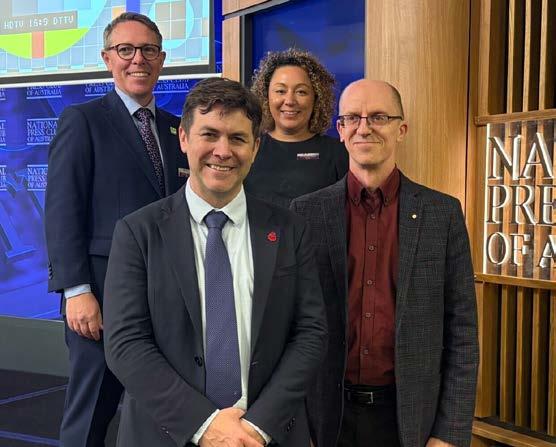
Dr Daniel Timms is the inventor of the BiVACOR total artificial heart, an achievement for which he received the 2025 Australian Society for Medical Research Medal. Speaking at the National Press Club in October, Dr Timms shared his inspiring story – “how a 23-year-old Brisbane engineering student, with his plumber-tradie dad” successfully pursued “medicine’s holy grail”. Here is an edited extract of his speech.
DR DANIEL TIMMS
National Press Club address 22 October 2025
My father Gary was a plumber, a brilliant tradesman, with an incredible grasp of fluid dynamics, often building ponds and waterfalls in the backyard as we were growing up. Unfortunately, while I was at university studying mechanical engineering, learning the theory of fluid dynamics from textbooks, my father was diagnosed with heart failure. Suddenly the complex equations that were on my page and the tragic reality of his failing pump collided. I watched some of the best doctors in the world at Brisbane’s Prince Charles Hospital, with all their knowledge and compassion, ultimately telling him they were running out of options. The plumbing in his chest was failing and unlike a broken pipe you can’t just swap it out. For an engineer, a failing pump is a problem to be solved, but for a son it’s a call to action. That call to action has been my life’s work. Heart disease is a leading cause of death globally, even more than cancer. In Australia right now, over 150,000 people are living with heart failure. For most severe cases the only proper solution is a miracle: a human heart transplant. This miracle is rare. The extraordinary generosity of donor families enables us to perform just over one hundred transplants in Australia each year. One hundred transplants for 150,000 patients. The maths is brutal. We needed a new solution.
The dream of a total artificial
heart isn’t new. It’s a grail quest that has captivated engineers, surgeons and clinicians for over half a century. The original designs were large pulsing pumps with flexible membranes and mechanical valves that went ‘click clack’, trying to mimic the lub-dub of the heart. But these early devices were beset by fundamental challenges. First and foremost, there was the challenge of durability. Your heart beats 40 million times a year and pumps a swimming pool of blood every single day. Any component – a membrane, a valve, a hinge – that flexes 40 million times a year is going to wear out. And for a device meant to keep you alive, wearing out isn’t an option. The second issue of these early designs was size: many were simply too large for
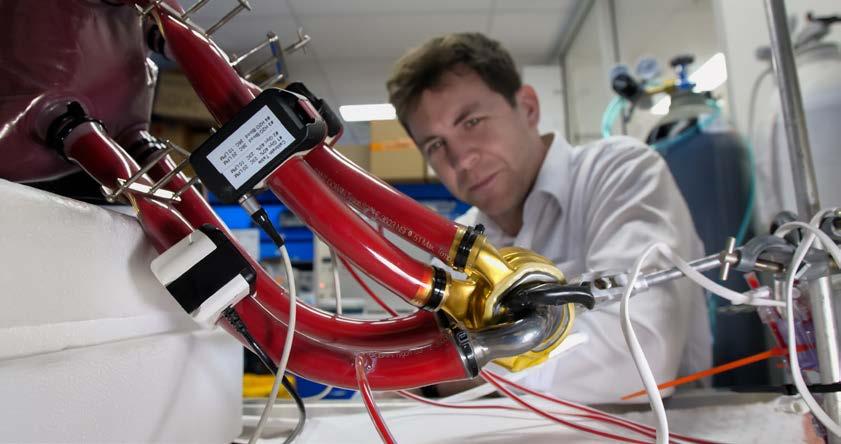
We started out in our garage, and would often spill over into the kitchen, deep into the night. We would take multiple trips to Bunnings to build a network of pipes that would approximate the human body, to test out our new ideas and pump prototypes.
many women and children. Thirdly, there was the blood trauma. The moving parts and flexible surfaces caused damage to fragile blood cells, leading to clots and other complications. Therefore, these versions of a total artificial heart were only suitable as a temporary measure, to keep a patient alive until a compatible donor became available. These challenges led to a technological shift over the years. Instead of mimicking the pulsing mechanism of a native heart, innovators focused on the flow mechanism, by rapidly spinning discs to move the blood and propel it continuously – similar to how fixed wing aeroplanes with jet engines solve the challenge of heavier-than-air flight. This led to the development of Ventricular Assist Devices. These remarkable devices use a single rapidly spinning disk to propel the blood around the body. They don’t pulse; they provide continuous flow. These devices have been revolutionary
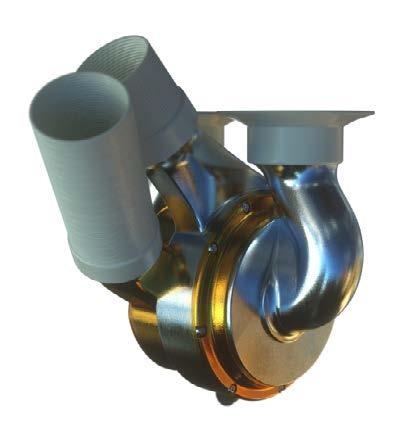
failing heart, not replace it. They typically support only one side of the heart, the left side. But what happens if the entire heart fails?
The durability problem with the old pulsing style heart seemed unsolvable and the new continuous flow devices did only half the job. We needed a new idea. So, this is where my engineering background and my father’s plumbing intuition came together almost 25 years ago in a backyard in Brisbane.
As a PhD student with a wounded tradie by my side, we decided to explore a new idea for an artificial heart. What could be so difficult? It’s just a pump for another system, right? We hoped we might save my dad if we were fast enough. It was that kind of naïve stubbornness that set the stage for the relentless decades-long pursuit of medicine’s holy grail. We started out in our garage, and would often spill over into the kitchen, deep into the night. We would take multiple trips to Bunnings to build a network of pipes that would approximate the human body, to test out our new ideas and pump prototypes. The biggest problem with previous artificial hearts was mechanical wear and durability. The solution? What if we could make a pump with just one moving part, and that part didn’t touch anything? No friction. No mechanical wear. That’s the central idea for BiVACOR. So, we designed a Total Artificial Heart that is built around a single spinning disk. It uses a rotary pump similar to a pool
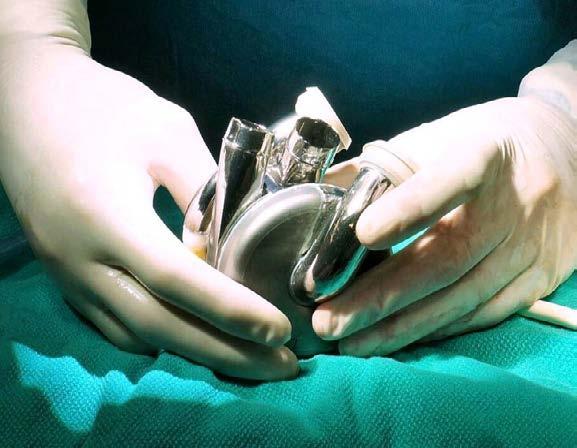
pump, or a spinning rotor in an outdoor motor. But crucially, that disk is levitated, floating in the blood by a precisely controlled magnetic field – the same principle as high-speed trains. There are no bearings, no seals, no valves, no mechanical contact with the casing. Unlike the heart assist devices that only support one side of the heart, the single rotor has two sides, each with a different blade design. The left side pumps blood to the entire body, while the right side pumps blood simultaneously to the lung. It’s two pumps in one, working in perfect balance. This rotor is housed inside a small titanium-built biventricular rotary pump that connects to the body through somewhat flexible connections to the soft tissue. Because it eliminates friction, it also reduces blood trauma and enables the device to last for an expected 10 years or more –similar to heart transplantation. Because it’s so simple in its concept, it’s relatively small. It’s compact enough to fit in a wider range of patients, including many women and children, and smaller Asian populations. The device is connected via a wire that exits the skin to a small control box with a battery pack.
Unfortunately, time ran out for my father. But it’s still there for the 150,000 Australians and many more patients and their families worldwide who wish to have their loved one around for another five, ten or who knows, maybe 20 years. The journey has taken 25 years. The most important thing I’ve
learned is this: you can’t solve a problem this big on your own. Ground-breaking innovations for class three medical devices are simply two big, too expensive, and too complicated for one person, one company or one country. You have to build a local and global dream team of expertise.
This is the strength of global collaboration. It brings together the world’s brightest minds, but it also does something else – it distributes the enormous financial risk. This is absolutely essential because the journey for a device like this from concept to patient not only takes a long time, but can cost hundreds of millions of dollars.
Early on we formed a collaboration between Queensland University of Technology and the Prince Charles Hospital to develop the initial concept, test it in circulation loops and ultimately support having the device externally connected. Incidentally, this was around the time that my dad, Gary’s health began to decline. He was being treated in the ICU by the very same doctors at the PCH who we were
collaborating with in the lab located just five minutes away. We perfected the magnetic levitation technology with experts at Ibaraki University in Japan. We created early prototypes with the brilliant engineers at the The Helmholtz Institute in Germany. We collaborated with NASA on the principles of aerospace grade system components and redundancy that they used on the shuttle program, and applied them to the design of the external control box.
Ultimately, armed with a Queensland Government Smart State international award in 2013, we found a way to advance to preclinical and clinical trials by partnering with the renowned Texas Heart Institute in the United States – the same institute that implanted the first total heart in a patient in 1969. They solicited funding from a local furniture salesman affectionately known as Mattress Mack, who like a lot of us also had a personal connection to heart failure after his brother’s death. This propelled him to whip out his cheque book and write a cheque for $2 million pretty much on the spot, which enabled our worldwide team to travel to Houston and undertake another ambitious project.
This is the strength of global collaboration. It brings together the world’s brightest minds, but it also does something else – it distributes the enormous financial risk. This is absolutely essential because the journey for a device like this from concept to patient not only takes a long time, but can cost hundreds of millions of dollars. This valley of death for innovation is where so many good ideas perish. By sharing
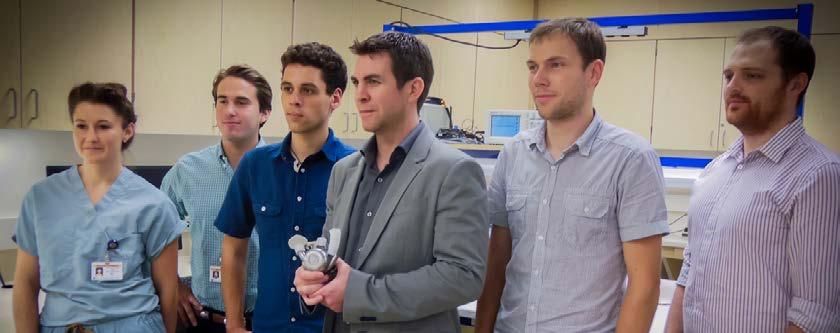
this financial burden across international partners, research institutions and governments we make the moonshot feasible. This global collaborative approach also accelerates clinical trials. Conducting clinical feasibility studies across the US and Australia, which we’ve done since the first implant in July 2024, enables faster patient recruitment and provides vital data across diverse populations. It raises the global standard of care. One of our proudest milestones happened in Australia in March 2025. With the support of our Australian team, a patient received and was supported by the BiVACOR total heart for more than 105 days before successfully receiving a heart transplant. Remarkably he was discharged home – I went home with him in the Uber. Monitoring his own blood pressure, walking around the streets of Sydney, he was living his life. We proved it can be done.
A growing campaign is calling on the Albanese Government to release more earnings from its $20bn Medical Research Future Fund (MRFF) to support lifesaving research.
Created in 2015, the MRFF was designed to deliver $1 billion each year in new funding for medical research.
However, despite the fund’s growth, the annual allocation has remained stagnant at $650 million.
Dr Daniel Timms, whose BiVACOR program was an MRFF recipient, told the National Press Club that medical research institutions were “craving for additional support.”
“Grant success rates are often low. We are witnessing a cultural shift where our best and brightest struggle to get their ideas off the ground.”
“It’s time for a sensible conversation about this. It’s not about depleting a national asset. It’s about using it wisely and fully to build the next national assets.”
Dr Monique Ryan, Kooyong MP and paediatric neurologist, has been leading the campaign to unlock more funding from the MRFF, together with leading research and academic organisations.
“Locking away this critical funding threatens the future of life-saving innovation,” Ryan said.
The Association of Australian Medical Research Institutes’s Half the Funding, Half the Future campaign aims to ensure that in the 2026–27 Budget, the MRFF finally delivers on its promise and restores full disbursements to Australian medical research.
To find out more or to join the campaign visit aamri.org.au/mrff/
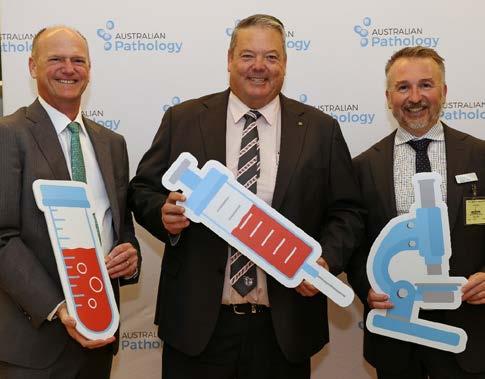
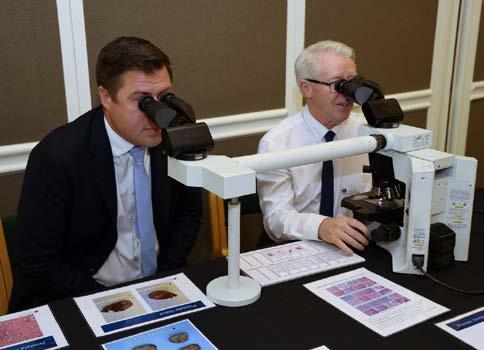
The Parliamentary Friends of Prostate Cancer Group held its annual Big Aussie Barbie at Parliament House in November. Pathology Australia helped coordinate the day, with support from Sonic Healthcare through Capital Pathology.
Politicians had a chance to talk with specialist pathologists, to see prostate cancer cases under a microscope, and to have a PSA blood test after a short clinical consult. Any of those with concerning results (7% of the tests conducted) received a phone call from Dr Paul Whiting, Capital Pathology’s medical director.
One speaker from the Prostate Cancer Foundation of Australia gave a moving personal account of how he had a PSA test done at the event last year, which led to diagnosis of a metastatic deposit of prostate cancer, which has been successfully treated.
“His story hit home,” said Capital Pathology CEO Jason Gluch. “It’s so important that men seek help, look after their health, get a PSA test and see their doctor.”
Dr Gluch said the event was a great opportunity to reinforce the importance, value and expertise of pathology in early detection, diagnosis, follow up and management of prostate cancer – the most commonly diagnosed cancer in men. Several politicians took the opportunity to do Q&A videos for social media about prostate health and PSA testing.
The ANU Medical Student Women’s Juggle Event 2025 in October gave students an invaluable opportunity to speak with practising clinicians about balancing the competing priorities that come with a career in medicine. Small groups of 4–5 students rotated between tables to speak with different doctors on a range of topics, including maintaining hobbies and interests outside of medicine, and bearing the emotional and mental load of clinical practice. Many students shared how powerful it was to hear from doctors who’ve navigated the juggle—balancing career, family, and personal growth. The room buzzed with encouragement, and the sense of community was palpable. It was a reminder that while the juggle is real, so is the support.



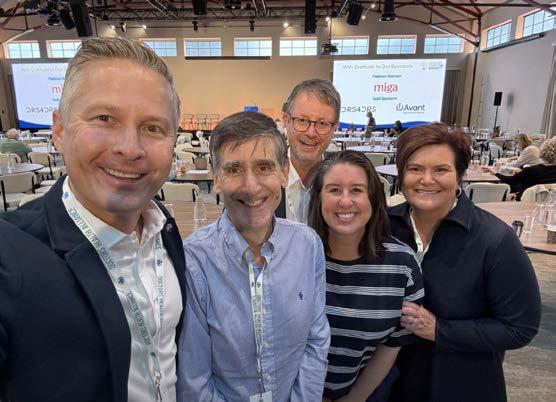
The Doctors’ Health Conference was a wonderful opportunity to connect with colleagues and see the latest evidence for supporting doctors and reducing the risk of suicide.
Dr Kerrie Aust reflected: “We have a good idea of what doctors need to thrive, but the balance sheet is still weighted towards those things that the individual can do, without enough support at the system level to improve people’s experiences in the workplace and provide the time and resources for self-care. It is very hard to heal in broken systems.
“We will continue to advocate for the implementation of Every Doctor, Every Setting across Canberra Health Services.”
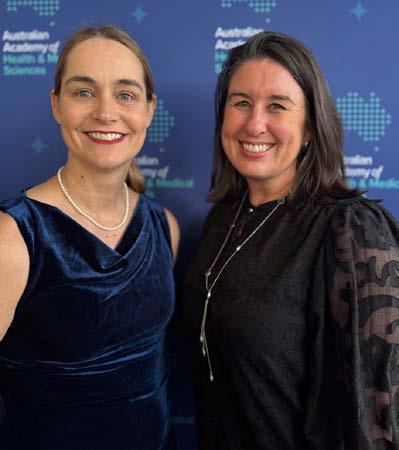
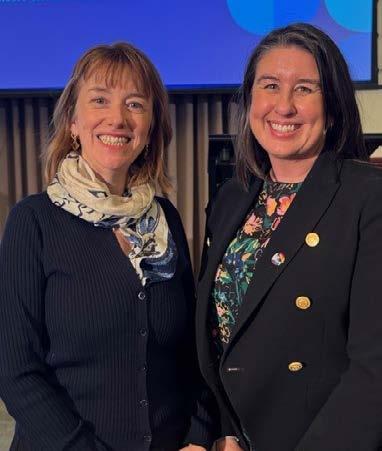

Dr Betty Ge, AMA ACT Board Director and Australian Federation of Medical Women’s (AFMW) National Coordinator was honoured to represent AFMW at the 33rd Medical Women’s International Association (MWIA) Triennial Congress in Cairo, Egypt, from October 12–14, 2025. “It was an unforgettable experience that reinforced my passion for advancing female leadership in medicine and connecting with inspiring medical women from around the world,” Dr Ge said.
Coastal breezes are over-rated. Canberra has its own ways to chill this summer — from shady picnic spots and river swims to galleries and rooftop bars.
The ACT is home to more than 90 parks, including Namadgi National Park, Tidbinbilla Nature Reserve, and Canberra Nature Park, plus leafy urban spaces scattered across the city.Top swimming spots along the Murrumbidgee River include Casuarina Sands and Pine Island Reserve, both with electric barbecues and picnic areas. Use the parks.act.gov.au/find-a-nature-park to filter by location, activities, and amenities. If you’re swimming in natural waterways, remember conditions can change quickly. Check the risks, never swim alone, and stay alert for hazards. More safety tips are on the ACT Parks website at parks.act.gov.au/before-you-go/Safety-in-and-around-waterways
Prefer a pool? Canberra has plenty. Checkout:
Dickson Aquatic Centre – family-friendly with a splash park
Canberra Olympic Pool – diving boards and sand volleyball
Manuka Pool – a beautifully preserved 1930s gem
Feeling adventurous? Try Canberra Aqua Park at Black Mountain Reserve — a floating inflatable obstacle course on Lake Burley Griffin, open all summer.
Escape the heat indoors with Canberra’s vibrant arts scene. Highlights this summer include:
National Museum of Australia – Hallyu! The Korean Wave: Explore 200+ objects from K-pop costumes to interactive dance displays.
National Gallery of Australia – The 5th National Indigenous Art Triennial: After the Rain, featuring 10 large-scale, immersive and multidisciplinary installations.
The Canberra Theatre is bringing big smiles these school holidays:
Bluey’s Big Play – 7–8 Jan
Storytime Ballet: The Nutcracker – 8–11 Jan
Cirque Alice – 22–31 Jan
RACGP’s GP25 Conference in Brisbane in November brought together over 1300 general practitioners, educators, policymakers and advocates, including a large Canberra contingent (pictured).
Leaders from ANU’s Academic Unit of General Practice delivered a powerful suite of presentations at the conference.
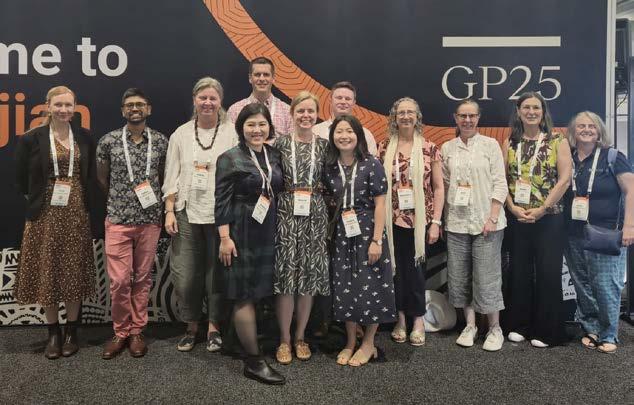

The Outdoor Cinema at the Botanic Gardens is showing Christmas favourites like Elf, Love Actually, and Home Alone.
Arc Cinema at the National Film and Sound Archive is a beautiful art deco cinema, screening classics including Edward Scissorhands, Muriel’s Wedding, and The Matrix.
Toast the sunset at one of Canberra’s scenic spots –
Vineyard views: Pialligo Estate or Brindabella Hills Winery
Rooftop bars: Leyla (Barton), The Howling Moon (Braddon)
Lakeside favourites: The Jetty, Margot



A News Magazine for all Doctors in the Canberra Region
ISSN 13118X25
All electoral matter in this edition of Canberra Doctor is authorised by Peter Somerville on behalf of the Australian Medical Association's ACT branch.
Published on behalf of the Australian Medical Association ACT branch.
Level 1, 39 Brisbane Ave, Barton ACT 2600 (PO Box 560, Curtin ACT 2605)
Editorial Sarah Colyer sarah-colyer@ama-act.com.au
Design Juliette Dudley reception@ama-act.com.au
Advertising Ph 6270 5410
Fax 6273 0455 reception@ama-act.com.au
Canberra Doctor welcomes reader contributions. Submit your stories or letters to editorial@ama-act.com.au
The
SARAH COLYER
Canberra
Doctor Editor
As Christmases come and go, the distinct memory of each one becomes tangled up like tree lights. For me it’s a happy bundle of flashbacks – uncles in paper hats telling cracker jokes; cousins splashing in the pool; three generations of women washing up the fancy dinner set as the clock nudges midnight.
There’s one Christmas however that remains a stark memory in my family. It was 2010, a stinking hot Western Sydney day, and the relatives from Newcastle were making the three-hour trip south. Grandma had arrived early with my aunt and uncle, and was sitting under a ceiling fan in the living area. Mid-sentence, she began slurring her speech and slumped to one side.
‘Something’s wrong with Grandma’. In an instant we were by her side, propping her up, calling triple zero. At the same time,
the doorbell was ringing. ‘Merry Christmas! We’re here!’ The rest of the family were at the front door, gifts piled high, their joy turning to panic as they heard what had happened. Suddenly everyone was gathered around Grandma, holding her hand, mopping her lips, making desperate chit-chat as we waited for the ambulance.
I can’t remember much from the rest of that day, except Mum’s phone call from the hospital that night, telling us Grandma had received the clot busters and had a good chance of survival.
In the days following we met the treating neurologist, Associate Professor Martin Krause, who gave the family great confidence that Grandma was receiving the best medical care.
Grandma went on to live a further 18 months after that day. It was a period of tremendous change for her as she moved to a residential aged care facility, and ultimately into a high care bed. Those were
Former AMA ACT President
Dr Gary Jones has retired after 23 years caring for patients at Yass Hospital.
Dr Jones’ career began in 1976 as an intern at Woden Valley Hospital and spanned roles in general practice, obstetrics,

difficult days, especially for my mum and aunt, who bore an enormous load of caring responsibilities. Nevertheless, the whole family, including Grandma, regarded those years as extremely precious.
I remember Grandma’s cheer at the old cattle dog who roamed the corridors at the aged care facility where she first went to live, and how beautifully painted her nails were in those days, thanks to some kind volunteers. I remember long phone calls with her, talking about events in the life of each family member, as she loved to do. We all knew Grandma’s time was short after her stroke, and so we made special efforts to see her regularly,
intensive care, and rural health. Dr Jones was AMA ACT president from 19861987. In 2002 he joined Yass District Hospital as a Visiting Medical Officer in 2002 and he has been a trusted clinician and mentor ever since.


Exercise your brain
See answers on page 11
driving from Sydney to Newcastle and back in a day sometimes. Those years taught us much about what it means to love, and to be loved. We all made sacrifices we will never regret. None of this would have been possible without the sacrifices made by those ambos and hospital staff on that fateful Christmas in 2010. Instead of being with their families, those beautiful people were serving ours. So, if you’re among the many healthcare professionals who find themselves missing family celebrations due to work this year, thank you. You may never know the impact of your sacrifice, but there’s every chance it will be profoundly felt for years to come.
Canberra GP Dr Betty Ge sends warm thanks to Dr Hazel Serrao-Brown for her exceptional care and thoughtful communication. Her expertise as an endocrine general surgeon was evident throughout the patient’s journey, and her ability to listen, explain clearly, and address concerns with genuine warmth made a real difference. The patient felt reassured and well-supported, and is deeply grateful for her thorough,
1. If Santa delivers one present to every child in Australia this Christmas, approximately how many presents would he deliver (to the nearest million)?
2. Which country is credited with popularising eggnog as a Christmas drink?
3. Which country played Australia in the very first Boxing Day Test match at the MCG in 1950?
4. Who played the character Amanda in the romantic Christmas film The Holiday?
5. Cyclone Tracy devastated Darwin on Christmas Day in which year?
compassionate approach. Congratulations also on completing 12 months in her consultant role—her dedication and skill continue to shine through in every interaction with patients and GP colleagues. Can you think of an outstanding colleague who deserves credit for something they’ve done? Let us know at editorial@ama-act.com.au
6. What is the recommended first step if stung by a bluebottle while swimming?
7. Bing Crosby’s White Christmas became iconic partly because its nostalgic lyrics resonated with people during which global event?
8. What are the two main species of prawns farmed in Australia?
9. In A Christmas Carol, what is the name of Scrooge’s deceased business partner?
10. What is ‘Holiday Heart Syndrome’ commonly associated with?
Partnered Health is your next move without leaving the city you love.




management
• biceps tendon repairs
• arthroscopic and open shoulder and elbow surgery
• cubital and carpal tunnel release
• surgery for arthritis, tendinitis, ganglions and traumatic conditions of the hand and wrist

Dr Sasikala Selvadurai MBBS; FRACP; Dip Palliative Medicine (Clinical)

• Comprehensive Geriatric Assessments Cognitive & Capacity Assessments Falls Prevention Measures, Movements Disorders (Parkinson’s Disease)
• Medications Profile Optimisation and Goals of Care decisions Committed to elderly wellbeing and healthy ageing with a focus on improving functional, nutritional and psychosocial aspects



Oaths or Affirmations
Statutory Declarations and Affidavits
ACT offers an independent and free confidential support service run by doctors, for doctors and medical students. No problem is too trivial or too serious.
(including for Ahpra)
Friday 28 and Saturday 29 August 2026 | Pullman Melbourne on
Australia’s largest gathering of doctors is back. AMA26 unites medical professionals from every specialty and career stage for two powerful days of learning, inspiration, and connection.
Discover a program designed by doctors, for doctors, featuring keynote speakers, including Jelena Dokic, research abstracts, interactive workshops, the AMA Presidential Election, and key AMA business sessions. This year’s theme, Leading Change in a Connected World, celebrates the power of collaboration, innovation, and leadership to shape the future of healthcare.
AMA26 will also feature the AMA's annual Gala Dinner on Saturday 29 August, celebrating our inspiring AMA award winners, alongside a three-course meal, drinks and live entertainment.


The start of a new year is the perfect time to get ahead.
With proactive planning, you can make strategic decisions that minimise tax, strengthen cash flow, and set your business or practice up for success, long before 30 June arrives.
At Cutcher & Neale, our experienced advisors help you turn insight into opportunity:
Strategic tax forecasting
Structuring for growth
Superannuation and wealth strategies
Cash flow management
Asset protection
SYDNEY | MELBOURNE | BRISBANE | NEWCASTLE
Why plan now?
• Identify opportunities early
• Avoid last-minute surprises
• Stay ahead of legislative changes
• Make informed financial decisions
• Gain the clarity and direction you need
1800 988 522 | medical@cutcher.com.au | cutcher.com.au
Book your complimentary consultation with our trusted advisors today.