Canberra Doctor Issue 2 2026

Page 1


Canberra Doctor is proudly brought to you by the AMA ACT

CIRCULATION: 1,900 IN ACT & REGION

Celebrating Women's History Month

Informing the Canberra medical community since 1988

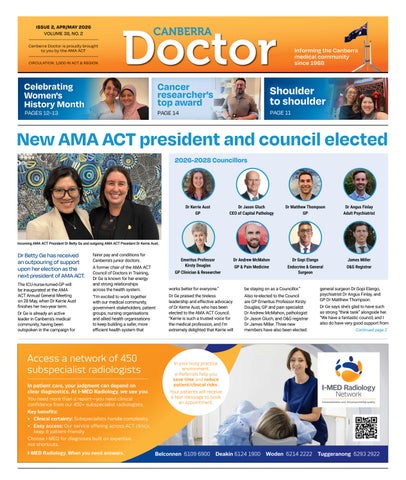
New AMA ACT president and council elected

Dr Betty Ge has received an outpouring of support upon her election as the next president of AMA ACT.

The ICU-nurse-turned-GP will be inaugurated at the AMA ACT Annual General Meeting on 28 May, when Dr Kerrie Aust finishes her two-year term.

Dr Ge is already an active leader in Canberra’s medical community, having been outspoken in the campaign for

fairer pay and conditions for Canberra’s junior doctors.

A former chair of the AMA ACT Council of Doctors in Training, Dr Ge is known for her energy and strong relationships across the health system.

“I’m excited to work together with our medical community, government stakeholders, patient groups, nursing organisations and allied health organisations to keep building a safer, more efficient health system that

a network of 450 subspecialist radiologists

In patient care, your judgment can depend on clear diagnostics. At I-MED Radiology, we see you.

You need more than a report—you need clinical confidence from our 450+ subspecialist radiologists. Key benefits:

• Clinical certainty: Subspecialists handle complexity.

• Easy access: Our service offering across ACT clinics keep it patient-friendly.

Choose I-MED for diagnoses built on expertise, not shortcuts.

I-MED Radiology. When you need answers.

2026-2028 Councillors

works better for everyone.”

Dr Ge praised the tireless leadership and effective advocacy of Dr Kerrie Aust, who has been elected to the AMA ACT Council.

“Kerrie is such a trusted voice for the medical profession, and I’m extremely delighted that Kerrie will

be staying on as a Councillor.”

Also re-elected to the Council are GP Emeritus Professor Kirsty Douglas, GP and pain specialist

Dr Andrew McMahon, pathologist

Dr Jason Gluch, and O&G registrar

Dr James Miller. Three new members have also been elected:

general surgeon Dr Gopi Elango, psychiatrist Dr Angus Finlay, and GP Dr Matthew Thompson.

Dr Ge says she’s glad to have such as strong “think tank” alongside her. “We have a fantastic council, and I also do have very good support from

In your busy practice environment, e-Referrals help you save time and reduce patient/clinical risks

Your patients will receive a text message to book an appointment.

Dr Kerrie Aust GP
Dr Jason Gluch CEO of Capital Pathology
Dr Matthew Thompson GP
Dr Angus Finlay Adult Psychiatrist
Emeritus Professor Kirsty Douglas GP Clinician & Researcher
Dr Andrew McMahon GP & Pain Medicine
Dr Gopi Elango Endocrine & General Surgeon
James Miller O&G Registrar
Incoming AMA ACT President Dr Betty Ge and outgoing AMA ACT President Dr Kerrie Aust.

This is my final column as AMA ACT President before I hand over the reins to the wonderful Dr Betty Ge.

I’ve long believed in the importance of doctors standing together and speaking with a collective voice through the AMA. Seeing what we’ve achieved over the last few years, and what still lies ahead, has only strengthened that belief.

There’s only so far any of us can go alone. When the system is strained – by culture, inefficiency, or both – it becomes harder for clinicians to bring their best selves to work each day.

That’s why AMA ACT’s work focuses on three key areas:

1. Supporting individuals;

2. Improving workplace efficiency; and

3. Creating a culture of wellness.

President’s Notes

WITH PRESIDENT, DR KERRIE AUST

This aligns with the evidencebased Stanford Model of Professional Fulfilment, which sets out the conditions clinicians need in order to thrive at work, and avoid burnout. Across the past two years, I’ve seen the AMA ACT make progress in all three areas.

1. Supporting individuals

By now, I hope every doctor in the ACT knows about Drs4Drs ACT – the place to turn when you need support. AMA ACT has backed this vital service from the outset, helping recruit volunteers and raise awareness across the profession. The hotline is private and confidential, staffed by experienced doctors, and no issue is off limits. I have no doubt it saves lives, and it has helped many colleagues continue to practise safely through periods of extreme stress.

COVER STORY Continued from page 1

lots of senior leaders – hospitalbased staff specialists, private specialists and GP specialists –who I’m sure I’ll be leaning on for feedback and advice,” Dr Ge says. “AMA is really like a home to me. I appreciate the community, the leadership, the strong advocacy and the connection with fellow doctors who wish to make a positive change for our profession.”

What are Dr Ge’s priorities for her two-year term? “Patient access to GPs is a very important issue, as we know that general practice is the backbone to our whole healthcare system. We really must improve the viability of general practices by making sure they get the support they need.”

Also on the agenda is securing a better deal for ACT’s public hospital doctors in the next Enterprise Agreement. “This is about making sure doctors feel appreciated, safe and supported for the hard work they do, so that we have a sustainable medical workforce, and safe and efficient health care.”

Dr Ge said AMA ACT would also be

working with stakeholders to drive improvements across different departments in the ACT public hospital system. “We’re already seeing improvements in sections like Orthopaedics and O&G, where more trainees are now satisfied with their training experience. We need to continue on this trajectory and see strategic investments that drive similar improvements across all departments.”

“There will always be disagreements across any health system, but having a respectful culture around the discussion is what’s important.

“In the end, safety and efficiency are the key things. We want a health system that’s a safe environment for everyone – physically, mentally and culturally – and we need better integration of the different sectors like community services, public hospitals, private hospitals and allied health, so it’s a continuous journey for the patient, and for the staff working in it, to optimise the health outcomes for our local community.”

AMA ACT also supports doctors by strengthening connection and community. Through our events and committees, we have a warm, welcoming professional network –so no-one needs to feel alone. A recent highlight was our Women’s History Month Dinner in March (see photos on page 12).

2. Improving workplace efficiency

When it comes to improving workplace efficiency, a major win for AMA ACT advocacy has been the independent inquiry into the ACT health system, which is due to report mid-year. I’ve met several times with Mr Michael Walsh, who is leading the inquiry, to highlight the critical role doctors play in safe and efficient decision-making across the health system. Doctors are like the spinal cord of our health system, and so processes that impinge on clinician autonomy weaken the whole system. I’m confident the inquiry will put forward some positive recommendations, and you can be sure AMA ACT will be there to see that they are implemented. Another efficiency gain has been reforms to enable ACT GPs to diagnose and prescribe for ADHD. Our GP workforce is highly skilled, and AMA ACT will always advocate for GPs being supported to practise at the top of their scope. This change will free up critical psychiatrist appointments.

3. Creating a culture of wellness

It’s encouraging to hear accounts of positive workplace culture in hospital departments in our city. Obstetrics and Gynaecology is a recent example, following investment in adequate staffing. We’re also hearing improved satisfaction from doctors in Orthopaedics. Furthermore, more ANU graduates are staying in Canberra for

their junior doctor years.

All this is testament to recent investments to support junior doctors, in line with clear AMA ACT advocacy. Unfortunately, there remain departments with troubling workplace culture. Where this is the case, AMA ACT is an important voice for doctors. Over the past few years, I’ve seen the power of collective advocacy as we’ve supported clinicians to address serious challenges in their departments. Dr Laila Khan has written a compelling article on the power of AMA’s collective voice on page 3. Looking across Canberra Health Services, AMA ACT’s enterprise bargaining work is a core part of how we improve the workplace culture over the long-term. Right now, we’re working with the ACT Government and ASMOF to secure better conditions for doctors at every career stage.

Looking ahead

There is much at stake in the near future as the North Canberra Hospital expansion gets underway. AMA ACT will keep ensuring doctors have a strong voice throughout the process, so the new facility supports safe and efficient patient care and a working environment where staff can thrive.

I have no doubt Dr Betty Ge will ably lead AMA ACT through this next season with her characteristic energy and wisdom. She has a strong track record advocating for junior doctors and is well respected across Canberra’s health system. She’ll also be well supported by the incoming AMA ACT Council (see page 1).

Thankyou

Finally, thank you to the many doctors who have supported

our advocacy during my term as president, in both quiet and loud ways; helping build solutions, serving as sounding boards, and offering encouragement on tough days. Thank you especially to our outgoing Council members Clair Bannerman, Marisa Magiros, Rashmi Sharma and Walter Abhayaratna who have all given a great deal of their time and expertise. Last, but not least, thank you to our dedicated team in the AMA ACT office. Our CEO, Peter Somerville, has been a steady hand guiding our organisation through significant change as we became a branch of the Federal AMA. Peter’s depth of wisdom on workplace relations is an enormous asset to our profession. Greg Schmidt, our Senior Workplace Relations Advisor, is the calm voice on the end of the phone for doctors experiencing difficulties at work, and we appreciate his tireless efforts negotiating on doctors’ behalf. Juliette Dudley, our talented designer, has lifted our professional presence and profile both online and through our publications. Sarah Colyer, our in-house journalist, has told many of your stories in the pages of this magazine, while also helping give me a clear voice. Thanks also to the many wonderful staff at the Federal AMA office, who support us in so many ways. It’s been an immense privilege to be your AMA ACT President. The AMA has supported me personally when I faced workplace issues over the years; and professionally as a strong voice for public health, and for the health of doctors in Canberra. While I’m glad to be passing on the baton, I look forward to continuing as part of the AMA family as a Council member.

Incoming AMA ACT President Dr Betty Ge, AMA ACT CEO Peter Somerville, and outgoing AMA ACT President Dr Kerrie Aust.

Finding a voice: Why joining the AMA matters

The Canberra Hospital, National Capital Private Hospital & Canberra Heart Clinic

Returning to Canberra as a staff specialist cardiologist has been both a professional milestone and a deeply personal homecoming. Like many clinicians who train and work across different health systems, I came back with fresh perspectives, renewed energy, and a strong commitment to contribute meaningfully to the public healthcare system that shaped my early career.

What I did not fully anticipate, however, was how important it would be to find a collective voice.

Joining the Australian Medical Association (AMA) ACT branch has been one of the most

valuable steps I have taken since returning. Medicine, particularly in the public hospital system, can at times feel isolating when it comes to raising concerns. Clinicians are often navigating complex pressures—clinical demand, resource constraints, administrative processes— while striving to maintain the highest standards of patient care. Identifying issues is one thing; knowing how to raise them constructively and safely is another.

The AMA has provided a platform where those concerns can be voiced, explored, and, importantly, legitimised. Through the AMA, conversations that might otherwise remain confined to corridors or informal discussions are brought into a structured, respectful forum. Whether the issues relate to workforce sustainability, patient flow, infrastructure, or clinical governance, the ability to engage with colleagues across specialties—and to do so with organisational backing— has been empowering. Equally valuable has been the sense of shared experience. It is reassuring to realise that many of the challenges we encounter are not individual frustrations but systemic issues that require coordinated attention.

The AMA facilitates this

recognition and helps translate it into advocacy that is both measured and effective.

Importantly, the role of the AMA is not adversarial. It serves as a bridge— connecting clinicians with decision-makers, encouraging dialogue, and fostering solutions that are grounded in frontline experience. For those of us working within public hospitals, this function is critical. It allows concerns to be raised early, constructively, and with the aim of improving outcomes for both patients and staff.

As a returning clinician, joining the AMA has also helped me reconnect with the local medical community in a meaningful way. It has provided insight into the unique challenges and strengths of the ACT health system and offered an avenue to contribute beyond the bedside or clinic room. Strong healthcare systems depend not only on skilled clinicians, but on open communication, advocacy, and a willingness to engage with difficult

Through the AMA, conversations that might otherwise remain confined to corridors or informal discussions are brought into a structured, respectful forum.

issues. Organisations like the AMA play a vital role in enabling this. For any doctor—whether newly arrived, returning, or long-established—there is real value in being part of that collective voice. In my experience, it is not just about representation; it is about being heard, being supported, and being part of shaping a better system for our patients and our profession.

To find out more about AMA membership go to ama.com.au/join-the-ama or call 1300 133 655

‘Cartilage Queen’ retires after 50 years

Much-loved Canberra rheumatologist Dr Kathleen Tymms, AM, recently announced her retirement after more than fifty years in clinical practice. Dr Tymms’ lifetime of service has had a profound impact on the lives of her patients and fellow rheumatologists – including more than 30 of whom she has mentored over the years.

“I have to say I’ve had very few bad days in my career,” Dr Tymms reflects. “I enjoy the journey with my patients, particularly the ones I have known since childhood. Many of the patients I saw in paediatric rheumatology thirty to forty years ago are still with me.”

Dr Tymms came to Canberra as an intern in 1977 after graduating from the University of Tasmania. Here she discovered a love for rheumatology under the mentorship of Dr Andrew Brook and became a rheumatologist in 1984. She has lived and worked in the capital ever since, barring a year as a fellow at Royal North Shore Hospital in Sydney. In addition to working in her private clinic in Canberra and at the public hospital, she sees patients at Moruya on the South Coast.

What’s changed?

Over the years, Dr Tymms has seen many advances in her profession.

“Biological drugs have been a real game changer – they either stop the disease or slow its advance, so patients have a much better outlook than in the past.”

“And now something really exciting is GLP-1 agonists, with evidence they may have an anti-inflammatory effect, with application in conditions such as psoriatic arthritis, rheumatoid arthritis and gout.”

Another change has been the growing number of evidence-based guidelines and recommendations.

“If the disease is not in remission or ‘low disease activity’ and I decide not to alter a patient’s treatment, I’ve got to document the reasons for that. And if there are barriers to a particular treatment, I must work with the patient to see if we can overcome those barriers. These are good developments.”

Rheumatology is also much more

To know the best treatment for an individual you need to understand what’s happening in the patient’s life. – Dr Tymms

“There’s a chronic under-supply of both adult and paediatric rheumatologists. People like me, we’re an ageing workforce… we’re retiring or reducing our workload.

“We desperately need to expand the number of advanced training positions. At the moment there’s only 18 new rheumatology training positions in Australia each year. To create enough workforce in the next decade, we need 32.”

“There are plenty of doctors who want to get into the specialty – there just aren’t enough training places.”

Looking ahead

In the case of her own practice at least, Dr Tymms is happy to have found a wonderful younger colleague to take over. “Dr Katherine Crawley trained with us. She is excellent and I totally trust her to take over my patients at both the Canberra and South Coast practices.”

Meanwhile, Dr Tymms is looking forward to a change of pace in her retirement. “I’m looking forward to reading books and going back to book club and bridge club. Maybe I’ll join a choir, do some volunteer work and get physically fitter.”

Since announcing her retirement, Dr Tymms has been inundated with well wishes, including tributes and poems from 29 rheumatologists who she helped train or mentor.

One of the poems, reprinted, opposite, honours her as a ‘pioneer, legend and cartilage queen’.

The poem references Dr Tymms’ beloved pet corgi, who developed rheumatoid arthritis a few years ago. “Why would it happen to a rheumatologist?” Dr Tymms laughs. “I couldn’t spend my expensive biologic drugs on the corgi. So, the corgi is only on one milligram of prednisone, but she’s doing all right.” Dr Tymms will this year be awarded life membership of the AMA, having been a member for fifty years.

Ode to Dr Kathleen Tymms

There once was a doctor, renowned and serene, A pioneer, legend — the cartilage queen. She wrangled with joints, both swollen and sore, And conquered arthritis, from clinic to floor.

Her patients adored her, from city to bush, She’d drive out to see them — no hint of a rush. Through droughts and through floods she’d cheerfully roam, Bringing methotrexate — and hope — to the home.

Her corgis were loyal, her partners in care, With stumpy wee legs and the world’s finest hair. But fate had a twist (as rheum stories go): One dog got arthritis — in each tiny toe!

For decades she mentored with humour and grace, And carved out a path women proudly embrace. In a field full of men with their tweed and bravado, She led with compassion (and sometimes Prosecco).

So raise up your glasses, your naproxen too, To the doctor whose joints have all earned a renew. May her mornings be lazy, her afternoons free, And her corgis un-swollen, as happy as she!

Dr Tymms with Dr Chandi Perera, Director CHS Rheumatology Unit, who she mentored as a junior doctor.
Dr Tymms’ graduation.

A new era of superannuation is coming. Are

you ready for payday super?

From 1 July, Payday Super will fundamentally change how you run payroll, manage cashflow, onboard staff, and stay compliant. This is the most significant superannuation change for employers in years.

Watch our on-demand webinar and have your questions answered. Walk away knowing exactly what to do, what to change, and how to stay compliant.

We will guide you on:

 The new rules’ impact on practice cashflow and payroll timing

 Changes to your systems and onboarding processes

 Compliance and penalty risks for your practice

 Practical steps you can take now to protect your practice

Get the clarity and confidence you need to turn compliance pressure into a competitive advantage. Watch Now >

‘From the ground up’: Redesigning ANU’s medical program

PROFESSOR PAUL FITZGERALD

Director, School of Medicine and Psychology

ANU College of Science and Medicine

When the ANU medical school was initially established, now over two decades ago, it effectively inherited its curriculum from the University of Sydney who had a clinical school of its medical program based in Canberra prior to that time. Since establishment, the program has been modified in

numerous ways, but these have often been additions, growing an increasingly complex and challenging to administer curriculum.

A substantive attempt to revise the curriculum began towards the end of the last decade but this was effectively derailed by the onset of COVID.

However, over the last 18 months, we have taken this mission back up and commenced a process of comprehensive review of the curriculum which we intend will produce a medical program suitable for the coming decades and which reflects the unique place of the program here at ANU in the nation’s capital.

To date, we have established a structure to oversee the process, lobbied for and obtained resources to support it and engaged in a series of consultation activities with the School of Medicine and Psychology (SMP) community engagement groups. These include the SMP Advisory Board, the Biyamburruwalanha Aboriginal and Torres Strait Islander Governance Group, Alumni Group,

Community Engagement Group and our medical student society and body. These consultations initially were part of a process to define the distinctive features we propose to base the development of the program around, and a set of guiding principles. The distinctive features were refined over several consultation rounds and now are providing meaningful guidance as we move forward in the program planning phase. There were four features identified. They are that the program will:

„ have a person-centred biopsychosocialcultural approach, in contrast to a diseasecentred approach;

„ provide unique insights into health systems and policy (reflecting our location in the capital and potential connections to health policy and systems across territory and federal government);

„ provide enrichment opportunities aligned to local, national and global health challenges. These will include in areas such as general practice, mental health, Indigenous health and rural and remote medicine, reflecting both local needs in the ACT and surrounding regions but also national health priorities;

„ provide experiences that support resilient and adaptable graduates.

Regarding addressing the last principle, we have just appointed a lead for Student Wellbeing and Development. This is separate from the role of Head of Student Welfare and year-based student welfare advisors. This group is responsible for supporting students who are experiencing challenges across their medical program journey. The new role will have a more proactive and preventative approach, developing a comprehensive approach to help students build

resilience and capacity to work successfully and thrive in a rapidly evolving health care system.

This renewal project will also allow us to develop a curriculum that is built ‘from the ground up’ to meet the relatively new Australian Medical Council (AMC) standards, and especially the AMC defined graduate learning outcomes.

Our curriculum team, headed by A/Prof Nick Taylor, are well advanced in defining the learning outcomes for the program based on the AMC graduate learning outcomes and during 2026 will be moving to defining/refining our learning approaches and learning settings including the structure of what clinical rotations will look like in the program going forward.

Although this work is very much focused on the ‘new’ program, which will most likely commence in 2029 (it takes a long time to progress major program changes through the university systems), we are also making meaningful changes to the existing program. For example, we have transitioned from problembased to team-based learning, are implementing major changes to assessment, have simplified

and improved our research training and project, and are developing a new comprehensive evaluation framework.

We are also embarking on a major expansion of our Indigenous Health Team and program, to address the substantially expanded AMC standards in this area. This will include substantial curriculum changes, moving to integrate Indigenous Health through the program, and much more comprehensively address cultural safety and Indigenous community engagement.

Finally, we are revising and refining our pathway programs and admissions processes. For example, we have new Indigenous student pathways and are reviewing the role of our Bachelor of Health Sciences degree, especially thinking about whether we can develop shorter pathways, which will enhance accessibility of medical training. We are excited by the opportunities we have to ensure the ANU medical program grows to fit the evolving medical landscape and provides all our students a world class education.   Any

ANU Medical School Canberra Hospital Campus. Photo: Sarah Colyer.

Reducing medication-related harms in aged care: Tools and tips

Dr Mary Ann Kulh sees patients with medicationrelated harms almost daily in her work as geriatrician at North Canberra Hospital and in private practice.

“It’s incredibly common. Usually, the older person presents with something very nonspecific like a fall, delirium or fatigue,” Dr Kulh says.

“These patients are often very frail, have polypharmacy, and have a history of adverse events due to medications.

“The other big factor, particularly in residential aged care, is a delay in getting medical attention. Staff might have recognised that a person is more drowsy since starting an opiate for example,

but it might take a few days for the staff to recognise that it’s related to the medication, and for the GP or nurse practitioner to come and review them.”

A new tool

Dr Kulh is part of an expert group that has developed the first highrisk medication list for Australian Residential Aged Care. The list has been converted into an easyto-use mnemonic, OZ-ABCD.

O is for opioids

Z is for “Z-drugs” such as zolpidem and zopiclone, as well as benzodiazepines

A is for antipsychotics and lithium

B is for blood thinners (anticoagulants)

C is for chemotherapeutic agents and methotrexate

D for diabetes medications with high-risk of hypoglycaemia

“As geriatricians, we’re doing the OZ-ABCD in our head all the time when reviewing medications without realising it, because we do it on a daily basis. But now this is accessible to everyone,” Dr Kulh says.

“It can be very intimidating looking through a list of 10 or 12 medications and knowing where

to start when reviewing a patient, which is why it’s so valuable to have this simple mnemonic.”

Dr Kulh says OZ-ABCD will help with teaching and training aged care staff, nurses, pharmacists and junior doctors. It also gives aged care providers greater clarity over which medications are affected by safety standards regarding high-risk medicines.

GP involvement key Across the ACT, Dr Kulh says some residential aged care homes consistently perform better on medication safety compared to others.

“The homes that do this well almost always have strong governance frameworks,” she says. “They have well-functioning Medication Advisory Committees that routinely look at medicationrelated harm — like falls, cognitive decline or delirium and adverse drug events — rather than waiting for something to go wrong.”

Dr Kulh strongly urges GPs to consider getting involved in these committees despite the time commitment. “The time invested in these committees saves a lot of time later down the track. It will also protect older adults who are in residential aged care from medication-related harm.”

To conclude, she says it’s worth remembering the fundamentals of good prescribing in older people:

“Start low, go slow, and keep residents and carers informed”.

“If you stop a drug, or start a drug, you always monitor the effect of it, and you are specific about what you’re monitoring for.”

“Clear communication is critical,” she says. “In the busyness of practice, we often start or stop a medication and forget to tell

the carer or the family. It’s worth always ensuring you communicate with the aged care home and care manager, as well as informing the older person and carer.”

REFERENCE:

A. J.Cross, M.Chaudhry, D.Goordeen, et al., “Development of a HighRisk Medication List for Australian Residential Aged Care: A Modified Delphi Study,” Australasian Journal on Ageing45, no. 1 (2026): e70141, https://doi.org/10.1111/ajag.70141.

DR MARY ANN KULH

Working with Patients who use Domestic or Family Violence

Family violence is undoubtably one of the most difficult scenarios health professionals encounter in clinical practice, and there is much to learn about how to recognise the signs and respond effectively.

First, a note on terminology. ‘People who use violence’ is the preferred wording among those working in this space today. Although it may sound jarring, the phrase highlights that violence is a behaviour that can be changed. It makes sense to use this language rather than words such as ‘perpetrator’ or ‘offender’, because we want people to seek help.

The following insights come from a recent seminar run by Dr Anita Hutchison, GP advisor to the Capital Health Network for the Family Safety Program, together with Belinda Campbell and Nikki Armstrong of the Domestic Violence Crisis Service.

Prevalence

Research shows that domestic and family violence is predominantly perpetrated by men against women and children. 1 in 3 Australian men have used violence against an intimate partner and this usually occurs ‘behind closed doors’. It is estimated that 1 in 10 men who use violence in their relationships attend a general practice.

Recognising violent and abusive behaviour

Domestic and family violence is not incident-based. While individual acts are important, they don’t tell the whole story. Even individual behaviours that may seem minor on their own can together create a climate of fear, dependence and loss of autonomy.

To identify that a patient is using violence, explore their pattern of behaviour over time. Some examples of how this behaviour may present in general practice include:

„ Lying or minimising use of violence – “It wasn’t that bad, she over-reacted.”

„ Mutualising the violence –

“It takes two to tango”

„ Framing themselves as the victim – “I’m the victim of her craziness”

„ Rigid expectations due to gender – “She shouldn’t be talking to other men”

„ Child exhibits trauma-related behaviours including bedwetting, soiling or school refusal

„ Intrusive support person –patient always attends with partner or family member who often talks for the patient

Beware collusion

Collusion refers to ways that a health professional may reinforce, excuse, minimise or deny a person's violence towards family members and/or the extent or impact of that violence. Collusion takes many forms and can be subtle including using simple gestures implying agreement such as nodding or a sympathetic smile. Collusion results in a person using violence feeling that their thoughts and feelings around their “reasons” to use violence have been validated and approved.

Alcohol and drugs

Alcohol/drug misuse or mental health conditions are contributors but not causes of domestic and family violence. Treatment for these conditions doesn’t guarantee behaviour change regarding using violence.

Practical tips for responding

„ Minimise collusion (in actions and in written notes), document interactions and refer patients to appropriate services

„ Adopt a respectful, invitational, curious, questioning approach. See “Practice prompts” box and ensure questions are asked without family or friends present.

„ Be interested in their life and circumstances, while recognising that violence is a choice. Some useful wording is: “The trauma you experienced as a child had the following impact on you (probe their recollection). Do you want to be responsible for someone else feeling the same way you did? It is a choice to use violence. It’s also a choice to seek help and make changes.”

„ Signs that a patient may be

open to referral to a specialised men’s behaviour change program include they discuss being genuinely worried that their partner/children will leave them; they disclose using violence; and they are genuinely remorseful and apologetic for using violence. See boxes with referral options – people can self-refer. Note that courts don’t mandate behavioural change programs as the person needs to want to change for the program to be effective, or else the program can be weaponised.

„ Referral to a behaviour change program can create expectations and accountability. Expect incremental change and note this is only one strategy – there needs to be a coordinated approach that

also includes risk assessment and management/mitigation.

„ Be careful when providing support letters to not link a diagnosis as the cause for a person using violence. Support letters are often used in court to grant perpetrators

PRACTICE PROMPTS

„ Safety – “What needs to change to make sure everyone is safe?”

„ Accountability – “What was happening for you? What did you do?”

„ Empathy – “What do you think it was like for her/them (the other family members)?”

„ Parenting – “How do your actions affect your kids?”

„ Future orientation – “What kind of partner/father do you want to be?”

„ Support engagement – “Would you like help to make these changes?”

unsafe access to children.

„ Look after yourself and seek supervision and debriefing as needed. Consult your practice colleagues and MDO for advice.

„ Avoid seeing all family members as this can create conflict of interest and risk.

*Ensure that any questions are asked without family or friends present.

WHERE TO REFER

The Domestic Violence Crisis Service (DVCS) offers two Men’s Behaviour Change Programs:

„ Room 4 Change

„ Caring Dads

To find out more about either program visit dvcs.org.au/services/ mens-behaviour change

DVCS crisis line

„ Patients using violence can call 02 6280 0900 (24/7 crisis line)

„ Afterhours consultation and debriefing

„ Support for victim-survivors

„ Crisis support and referral for people who use violence

Other recommended services:

„ Everyman: everyman.org.au

„ Menslink: menslink.org.au

„ No to Violence: ntv.org.au/mrs

„ Parentline: parentlineact.org.au

„ PCYC: pcyc.net.au

„ MHub: mhub.org.au

„ Yeddung Mura: goodpathways.org.au

WHERE NOT TO REFER

Couples counselling or family therapy

„ Avoid any form of couple counselling, therapy or mediation.

„ Couples counselling mutualises the issue, and insinuates that violence is a responsibility that should be shared.

Anger management

„ Reinforces perpetrators’ beliefs that violence is a result of their anger, and/or a result of ‘losing control’ rather than a choice to use violence.

„ Reinforces perpetrator perception; that they are victims of the people “who make them angry”.

General psychologists/counsellors

„ Usually do not have specific skills or experience related to gender-based violence, or for working with people who use violence.

Parenting programs

„ Parenting programs do not address issues of domestic violence.

„ These programs often pose an opportunity for perpetrators to shape the narrative with agencies and systems. Attendance at these programs can at times be tokenistic, as opposed to a meaningful endeavour in parenting skill development.

Alcohol and drug programs (alone)

„ Alcohol or drug programs are not a cure for domestic violence and should be referred to alongside Men’s Behaviour Change Programs.

Learning to lead: Lessons from psychology

Stepping into a new leadership role can be a daunting prospect, but there is much to learn from observing those who do it well. Despite common perceptions, good leadership isn’t about innate charisma. What matters is building motivation, trust, and performance in your team. The following principles—drawn

from research in motivational psychology—focus on meeting people’s core needs so they can bring their best selves to work. When those needs are supported, teams can flourish, with higher engagement, creativity, and resilience.

1. Foster psychological safety.

Teams excel when people feel free to share ideas, admit uncertainties, or flag problems without fear of judgment. This concept creates a shared belief that interpersonal risktaking is safe. Lead by example— regularly ask for honest feedback on your decisions (“What could I have approached differently?”) and respond with openness rather than defence. This simple habit turns potential setbacks into shared learning and sparks real innovation.

2. Invest in real connections.

High workloads tempt us to focus solely on deliverables, yet I’ve

watched relationships erode when leaders skip the human side. Make space for genuine interactions: consistent oneon-ones, casual check-ins, or moments away from the desk. When people feel genuinely seen and supported, they show greater resilience, loyalty, and willingness to go the extra mile.

3. Play to strengths.

Motivation surges when individuals feel competent and autonomous. Take time to understand what energises each person, their natural talents and preferences, then align tasks and opportunities accordingly. This approach yields far better results than endlessly addressing weaknesses.

4. Commit to your own growth.

Leadership improves through deliberate effort, just like any clinical skill. Seek feedback, reflect on what works, and

pursue relevant learning—books, courses, or workshops.

5. Seek a mentor.

Having a trusted senior colleague to meet with regularly is transformative. A good mentor offers perspective on blind spots you can’t see yourself, models healthy decision-making under pressure, and helps you navigate tricky interpersonal dynamics or ethical dilemmas. Schedule consistent catch-ups—perhaps monthly—and come prepared with specific challenges (“How do you balance giving tough feedback while maintaining trust?”). Over

Top three vital signs for your health cover

Has it been a while since you last reviewed your health insurance policy? Regular health cover checks are essential to ensure you’re receiving the level of protection you need.

Here are three vital signs to look for when reviewing your cover

1. Your cover aligns with your life stage

Our health needs evolve over time, and your health cover should too. If you’ve had the same policy for a long time, you may be covered for services you no longer need — or missing inclusions that better support your current life stage. Your hospital policy tier (Gold, Silver, Bronze or Basic) gives a general indication of your cover level, but reviewing the specific clinical categories will tell you whether you’re truly getting value. Policy makeup can differ significantly between funds, so it pays to check the detail.

2. You’re

seeing value and have choice

Private health insurance covers services outside of Medicare including dental, optical, ambulance and allied health consultations. Review whether your current inclusions match your usage; you may find opportunities for savings or realise you need to boost your cover. Knowing your ambulance cover is particularly important; don’t wait for an emergency to find out what you’re entitled to. Also check whether your fund has preferred provider arrangements, as these offer financial benefits but can limit your choice and continuity of care. You can read more about what private health insurance can cover in an emergency at doctorshealthfund. com.au/emergency_services_cover/

3. You have medical gap cover that will perform when needed

Medical gap cover schemes help reduce or eliminate out-of-pocket costs during private hospital treatment. These schemes vary between funds, can be complex, and change over time, so regularly reviewing this aspect of your policy ensures you’re well prepared before any hospital admission.

Doctors’ Health Fund is here to help.

We understand the demands on your time mean looking after your own health cover can take a back seat. That’s why we’re committed to providing expert guidance when you need it. Contact us today and let us help you with your health cover check.

time, this relationship builds your confidence, accelerates your learning curve, and often prevents costly missteps that come from going it alone. In psychology, this is called seeking clinical supervision but it can be applied to learning to lead as well.

6. Distinguish signal from noise.

Leadership brings a constant stream of urgent demands, but not everything deserves equal attention. Protect time for what truly matters: developing your people, thinking strategically, and working toward longterm goals.

EMPLOYMENT LAW

There is a form of courage demanded of the person at the reception desk of a medical practice that can be easily overlooked.

It is the courage of continued civility and getting on with the job in the face of distress; of remaining composed and decent toward people who are anxious, frightened, flustered, lonely, forgetful or in pain – and who often misdirect those feelings to the nearest available person. The laminated sign warning that rudeness to staff will not be tolerated is a common sight in reception areas, and a telling one. Patients arrive in distress and place high job demands on the administrative team – seemingly a structural feature of these roles. Leaving aside matters of retaining talent and moral obligation, Australian work health and safety (WHS) laws impose broad-ranging legal duties to identify and manage these psychosocial hazards.

Multiple duty holders

By design, legislative WHS duties are broad in both scope and application. In the ACT, the Work Health and Safety Act 2011 (ACT) (the WHS Act) is not confined to traditional employeremployee relationships.

The WHS Act imposes a primary duty of care upon a person conducting a business or undertaking (PCBU) to ensure, so far as is reasonably practicable, the health and safety of ‘workers’ (s 19(1)). Section 19(2) extends the primary duty of care to ensuring the health and safety of ‘other persons’ is not put at risk from work carried out as part of the conduct

Keeping staff safe takes more than a laminated sign

of the business or undertaking. Further duties are owed by those with management or control of a workplace (in part or whole), by officers of PCBU’s (including some senior executive employees), and on workers themselves. These duties can be overlapping and concurrent, with responsibility allocated according to the extent of management and control. Importantly, duty holders have express obligations to consult, cooperate and coordinate with all other duty holders in relation to the same matter. The idea that a facility service provider alone bears WHS responsibility is, in most cases, a fiction. Accordingly, there can be multiple duty holders in relation to any particular hazard or worker. Whether a medical practitioner is the owner of a practice and the employer of the receptionist, or is instead a tenant operating under a facility services agreement through which administrative staff are provided, the critical WHS questions are not: ‘Am I the employer?’ or even:

‘Am I the PCBU?’. They are rather: ‘What do I control?’ – and ‘Who else must I coordinate with?’.

Psychosocial hazards

Psychosocial hazards are work-related hazards that may cause psychological harm. The WHS Act treats workplace psychosocial hazards in the same manner as physical hazards.

In the ACT, this position has been reinforced through the Work Health and Safety (Managing Psychosocial Hazards at Work) Code of Practice Approval 2023 (the Code), which provides specific guidance on hazards including:

„ work-related violence and aggression

„ low job control

„ poor support

„ lack of role clarity

„ inadequate reward and recognition

„ traumatic events

„ conflict or poor workplace interactions

„ harassment/bullying; and

„ high job demands.

What is ‘reasonably practicable’

There is no absolute duty to guard against all possible harm. WHS duties are qualified by what is ‘reasonably practicable’ (and within the duty holder’s control).

That qualification, however, is not a safe harbour from compliance. The WHS framework requires a standard risk management approach to psychosocial hazards: a continuous process of identifying, assessing, controlling, and reviewing risks. Once risks are identified and assessed, controls must be implemented to eliminate or minimise those risks in accordance with the hierarchy of controls. This means prioritizing higher order measures – such as design, engineering and isolation controls – before relying on lower order administrative or behavioural controls.

In practice, this may include firstly physical barriers, panic buttons, clear means of egress, and rostering arrangements that avoid leaving a worker alone at the reception desk during peak periods of patient distress. It may also involve workplace and triage practices that do not place upon the most junior worker the burden of explaining lengthy delays to patients in pain, or systems that prevent waiting rooms filling faster than they can be managed.

The laminated sign is an administrative control. At best, it is the final line of defence – not the defence itself.

The Regulations and the Code make it clear that control measures must take into account:

„ the duration, frequency and severity of the exposure

„ the design of work including job demands and tasks

„ the layout and environmental conditions of the workplace

„ systems of work and how work is organised and supported

„ workplace interactions and behaviours; and

„ the provision of information, training, instruction and supervision.

As psychosocial risks are not static,

duty holders cannot assume that hazards will remain the same or that existing controls will remain effective. Ongoing review processes are required to monitor, maintain, and adjust controls, and to keep appropriate records as to their effectiveness. The compliance key here is to clearly allocate someone who is to be accountable for these tasks.

Proof of striving

Discharging WHS duties starts with having a documented WHS policy, supported by training records, an up-to-date risk and incident register with closed-loop responses, and evidence of periodic review. Anti-sexual harassment policies are now mandatory. The legal standard is

demonstrable striving, not perfection.

The Code provides accessible and practical reading and gives clinicians and practice managers guidance as to what regulators expect to see.

Conclusion

Reception staff are not peripheral to a medical practice. They are the first point of contact – and often the most exposed. The question for every facility services provider, practice owner and contractor-doctor who might assume themselves untouched by WHS duties, is a simple one: if WorkSafe ACT attended tomorrow and asked to see your evidence of compliance with your WHS duties relating to psychosocial risk, what would you produce?

sullivanslegal.com.au or email gabrielle@sullivanslegal.com.au

Shoulder to Shoulder

We’re kicking off a new regular column in Canberra Doctor this edition, celebrating the many wonderful friendships among medical colleagues in the capital. GPs Dr Betty Ge and Dr Clara Tuck Meng Soo are first off the blocks, but perhaps you’ve got your own friendship to celebrate?

Email editorial@ama-act.com.au and we’ll help you and the person you stand Shoulder to Shoulder with tell your story.

Clara:

I first met Betty at an ACT Health Forum which our ACT Health Minister attended to answer questions from a panel of doctors. At the time, Betty was a junior doctor at one of the ACT public hospitals. I remember her bouncing up to me and if you knew Betty, bouncing is a good way to describe her. When she found out who I was, she told me that she was interested in applying to work at one of my practices. I remember thinking that she showed great enthusiasm and warmth and initiative and she would make a great GP registrar. Betty duly came to work at a couple

of my practices in 2022. Although I didn’t work with her, I did attend meetings at the practices and she came across as articulate, passionate about general practice and the care she provided her patients, and a great member of the team. I was keen for her to continue working with me but circumstances intervened and she ended up working at Ochre Health Garran. A lot of her patients and the staff were very sad to see her go. After she left my practices, we often continued to come across each other. Betty took up a role at AMA ACT and I was involved in various

advocacy roles. We found that we had really good conversations whenever we met. I can’t remember whose initiative it was but we also started catching up for coffee and dinners. I think we connected with each other because both of us have an open and direct way of communication. Both are us are passionate about general practice and how good general practice can be when it is done well and supported to be what it can be. My background is ethnic Chinese from Malaysia and Betty comes from northern China. I think our shared Chinese heritage and the fact that we are both migrants to Australia with Australian partners has also created a bond between us. Recently, we spent a few days together in Sydney while attending the Sydney Gay and Lesbian Mardi Gras as part of the AMA float. We had a great time going shopping at Paddy’s Market for something outrageous to wear for the Mardi Gras parade and having some deep and meaningful conversations with each other. She also looked after me when my asthma flared up one night! I really look forward to having more weekend getaways with Betty. Obviously, Betty is a different generation to me and while I am at the end of my medical career, she is just approaching her peak years. As I write this, Betty has just been elected as President of AMA ACT. I think that with her passion and her intelligence and her moral compass, she will be a wonderful President. Betty is just a wonderful person and I’m so pleased that I can call her a friend. And hopefully, her energy and my neurodiversity means that we will have lots of wonderful adventures together!

Betty:

I should start with a confession: I am genuinely honoured to call Dr Clara Soo a friend. I even had to check — half-joking, half-serious — whether she was comfortable being officially labelled as “friend” rather than “senior mentor,” “guiding star,” or “goddess of grace.” She agreed, with her usual calm amusement, so here we are. Having trained entirely in the ACT in my medical career, I had the privilege of meeting many impressive medical leaders early in my career, but Clara remains one of the most extraordinary medical women I’ve encountered — unique in ways that defy neat categories. I first met her at ANU when she delivered a lecture on gender and sexual health. She was a quiet, steady force in the room — impossible to overlook. My first impression was of an elegant swan gliding through the ocean of medicine, with ducklings like me paddling frantically behind her. She somehow managed to guide us through storms without ever losing her own footing. Our paths crossed again when I entered the world of general practice via the AGPT program. As a brandnew GPT1 registrar, I nervously interviewed with Clara and Dr Donna Curnow at East Canberra General Practice. Clara saw strengths in me that I hadn’t yet recognised myself and welcomed me with warmth and generosity. I remain deeply grateful to both her and Donna for their time, energy, and willingness to share their clinical wisdom. We connected not only through our shared Chinese-Asian roots but also through our commitment to health equity and advocacy for vulnerable patients. Like many, I was stunned when Clara returned her OAM in 2021. I still asked her “why?,” even though I already knew. Awarded in

2016 for her decades of work with LGBTQIA+ communities, people living with HIV, and those with drug dependencies, she chose to relinquish that honour to stand firmly with the communities she serves. It was classic Clara: principled, courageous, and quietly fierce. To me, she leads like water — calm on the surface, steady in purpose, reshaping the landscape without any fanfare. In her advocacy for LGBTQIA+ communities and other vulnerable groups, she moves like a river through stone: gentle when listening, steadfast when confronting injustice. And when systems fail the people who need them most, her voice becomes the force of a storm tide — clear, fierce, and impossible to ignore. She embodies the paradox of water: soft enough to hold others with care, strong enough to carve new paths where none existed in the harshest environment. Calling her a friend still feels like a privilege I need to double-check, but I’m grateful every day that I have a friend like her to show me the way.

Are you ready for more laughs, singing, and dancing brought to you by some exceedingly talented medical students?

The ANU MedRevue is a cornerstone event of the ANU Medical School calendar – and should be in yours too.

Breaking away from the traditional sketch-show format of university revues, the ANU MedRevue is known for its unique style. The entire production is written, produced, directed, and choreographed by medical students from all four year levels at the ANU Medical School, adding to the spirit and authenticity of the production. As we celebrate Med Revue’s 20th anniversary, we can’t wait to bring this show to the stage – so don’t miss out!

All proceeds are donated to Companion House, supporting their important work assisting refugees and survivors of torture and trauma in Australia.

sales open on 1 April | Visit facebook.com/ANUMedRevue for more

WOMEN'S HISTORY MONTH

AMA ACT’s Women’s History Month Dinner, held on 26 March at Hotel Realm, brought together doctors and health system leaders for an intimate evening focused on women’s health, advocacy and connection.

Hosted by AMA ACT President Dr Kerrie Aust, the dinner conversation explored the physical, mental and financial aspects

'We all left feeling inspired’: Women’s History Month Dinner

of women’s health, with moving personal accounts and professional reflections from clinical leaders.

The panel featured Dr Meredith Whiting, psychiatrist; Rana Elmir, clinical social worker and trauma specialist; Dr Vida Viliunas, anaesthetist; and Jodie Walshe, financial wellbeing specialist from Cutcher & Neale. Attendees also included ACT Minister for Health Rachel StephenSmith and other senior health system figures, who took the time to listen to clinicians.

Dr Kerrie Aust reflected: “It was a very special evening. People connected across different specialties and career stages. I think we all left feeling inspired and better connected as we work together to address many challenges women face, including in our profession.”

The evening aligned closely with the AMA’s Women’s Health Position Statement, which highlights the need to improve clinical care for women, alongside social, economic and workforce factors that shape women’s health outcomes.

It was a very special evening. People connected across different specialties and career stages. I think we all left feeling inspired and better connected as we work together to address many challenges women face, including in our profession.

– Dr Kerrie Aust

Friday 28 and Saturday 29 August 2026

Pullman Melbourne on the Park

Australia’s largest gathering of doctors is back. AMA26 unites medical professionals from every specialty and career stage for two powerful days of learning, inspiration, and connection.

Discover a program designed by doctors, for doctors, featuring keynote speakers, including Jelena Dokic, research abstracts, interactive workshops, the AMA Presidential Election, and key AMA business sessions. This year’s theme, Leading Change in a Connected World, celebrates the power of collaboration, innovation, and leadership to shape the future of healthcare.

AMA26 will also feature the AMA's annual Gala Dinner on Saturday 29 August, celebrating our inspiring AMA award winners, alongside a threecourse meal, drinks and live entertainment.

ama.eventsair.com/ama26-national-conference

Top award for clinician tackling accessible cancer care

Canberra’s Professor Mark Polizzotto has been recognised with highest honours for his pioneering research to bring affordable cancer medicines to patients in Africa, with an award named after one of his mentors.

Professor Polizzotto has received the National Health and Medical Research Council’s David Cooper Clinical Trial and Cohort Studies Award for the highestranked clinical trial of the year.

“It’s a great connection for the award to be named after David, as he was the one who encouraged me to come back to work in Australia when I was doing research in the US,” Professor Polizzotto said. “In fact, David’s work to make HIV treatments more accessible has really shaped my team’s approach with cancer research.”

As Clinical Director of Cancer Services at Canberra Health Services, Professor Polizzotto is acutely aware of the vast resources required to provide stateof-the-art cancer care. “Hundreds of dollars are spent in the blink of an eye in this building,” he said from his office in The Canberra Hospital’s dedicated cancer centre. “In many parts of Africa, the total healthcare budget is only in the hundreds of dollars per person a year.’’

This tragic reality has led Professor Polizzotto to explore lower-cost cancer treatments that can be administered by healthcare workers

who aren’t oncology specialists.

His global team have received an NHMRC grant of almost $5 million over the next five years for a phase-3 randomised trial of simple oral immunotherapy (pomalidomide) versus standard intravenous chemotherapy (liposomal doxorubicin) for Kaposi sarcoma (KS).

“The trial is entirely funded by Australia. It’s a fantastic endorsement of the ability of Australian science to make a difference in the world, and not just in our own neighbourhood.”

While much research has been done over the years to drive down the cost of treating the world’s “big three” infectious diseases (HIV, malaria and tuberculosis), Professor Polizzotto said there had been comparatively little work of this kind in oncology. “That’s despite the fact that cancer kills as many people in Africa as HIV, malaria and TB combined.”

Professor Polizzotto’s team is focusing on KS – the most common cancer in

men in Africa’s southern nations, where it kills thousands of people each year. KS is relatively simple to diagnose based on skin lesions, making it ideal for a trial of cancer treatments in low-resource settings.

“My colleagues and I already had close relationships with HIV clinics in Uganda, Botswana and Zimbabwe that see a lot of KS, so it was natural for us to collaborate with them for this study,” he said. The drug being trialled, pomalidomide, was FDA-approved for KS in 2020 on the back of phase I and 2 trials led by Professor Polizzotto’s team. The phase III trial, which is now recruiting, is aiming to enrol 400 adult patients for two-years follow-up.

While the main trial outcome is noninferiority compared to chemotherapy, it will also consider tolerability – in particular, whether women of childbearing age are willing to take contraceptives while being treated with the teratogenic drug, which is a derivative of thalidomide.

“We need to learn how acceptable it would be to women and also to their

families, because decisions around family planning are complex in those parts of the world,” he said.

Professor Polizzotto says if successful, the trial could lead to patients being able to access cancer treatment closer to their homes. “Travel is a huge barrier to accessing cancer care in Africa, where there’s no safety net for the family if the main earner has to stop work to travel to hospital.”

“Because the treatment is relatively simple, we are able to conduct this trial at a rural clinic in Uganda as well as other larger tertiary centres.”

Professor Polizzotto says one thing he loves about working in Africa is the clarity people have about the importance of medical research.

“There’s no question in Africa that medical research, done well, and done in partnership, improves lives. I’d love to bring some more of that belief back to Australia.”

Men's Health Week Dinner & Panel
Professor Polizzotto with his award; and with the research team.

AMA ACT IN THE NEWS

NEW LEADERSHIP

Outgoing AMA ACT President Dr Kerrie Aust spoke on ABC Radio Canberra, 14 April, about Dr Betty Ge's election. She also spoke about her achievements during her presidency.

“We are absolutely delighted to have Betty become our President-elect for the AMA ACT. Betty is a long-standing GP here in Canberra who has provided incredible services… We’re really excited to have somebody with her calibre taking the reins.”

“I’m proud of some really important things which will leave a legacy going into the future… Our advocacy around getting the health system inquiry underway…Getting prescribing for ADHDs for GPs has been really important in helping to improve access… But really I think one of the things that I’m really proud of is our advocacy for in the hospital. So everything from supporting the wage theft claim, to we now have a culture where junior doctors are paid for their overtime. They don’t have to fight for it. They just have to submit it.”

TRANSPARENCY

AMA ACT President-elect

Dr Betty Ge spoke on ABC Radio Canberra,14 April, about her priorities in her new role.

Dr Ge raised concerns about the level of access to GPs in Canberra and inadequate support for doctors in the capital.

“Our government bodies usually respond to evidence, which is very fair, but if there’s no transparency of the data, there’s no way to hold them accountable and improve our systems.”

PRIVATE HEALTH

AMA President Dr Danielle McMullen spoke on ABC Radio Canberra, 7 April, about the Federal Government’s proposals to improve choice and transparency for private health consumers.

“I think most Australians understand that unless they’re going through

a public hospital system, they will face some out-of-pocket costs for their healthcare and they’re okay with that. They just need to know roughly what it is. And that’s the kind of transparency that we’re supportive of and making sure that Australians do understand what sorts of bills they may be facing.”

VACCINATION

Dr Kerrie Aust spoke about the importance of booking a flu vaccine with your GP on ABC Radio Canberra, 25 March.

“We’re all starting to book our GPled flu vaccine clinics around early April into May. So, it’s a good idea to start getting in contact, having a look at which vaccines you should be having. And if you’ve got some kids, starting to think about whether we’re going to give them the injection or whether they might be a better option to have the new one, which is the nasal spray called FluMist.”

Education expenses on your tax return: What doctors need to know.

VAPING

Dr Michael Bonning, Chair of Public Health at the AMA, spoke on ABC Radio Canberra, 31 March, about the harms of vaping.

“These products have been well marketed by influencers on social media, making them very attractive to a new generation, and that has taken our cancer control efforts and nicotine and tobacco control efforts and set them back.”

E-MOBILITY SAFETY

Dr Kerrie Aust spoke on ABC Radio Canberra, 17 March, about e-scooter and e-bike safety regulations.

“We have to look at, first of all, what kind of speed limits can we put on some of these bikes and e-scooters, in particular bikes, and how do we class them?...

Advertorial

As an Australian doctor, education is a constant part of your career. Courses, conferences, exams and training don’t stop after graduation, and many of these costs may be tax deductible. But things can get complicated when reimbursements, grants, scholarships or education allowances are involved, especially when payments come through payroll.

Understanding what you can and can’t claim on your tax return can help you avoid overclaiming or missing out.

What education expenses are claimable?

In general, you can claim self education expenses if the learning relates directly to your current medical role and helps

you maintain or improve existing skills. This commonly includes:

„ Course fees and exam costs

„ Conference and seminar registration fees

„ Medical textbooks and journals

„ Online learning subscriptions

„ Travel and accommodation for eligible education (excluding private components)

For example, a registrar undertaking compulsory college training or CPD activities is often able to claim related out-of-pocket expenses.

However, education to help you move into a new specialty or a different career path is typically not deductible.

What about reimbursements?

If your employer reimburses you for an education expense, you

generally can’t also claim that expense on your tax return

This applies whether the reimbursement is paid separately or included through payroll.

If only part of the expense was reimbursed, you may be able to claim the costs that weren’t reimbursed

Tip: always keep receipts and payslips so it’s clear what you paid personally versus what was covered by your employer.

Grants, scholarships and education allowances

Grants, scholarships and education allowances need careful handling.

„ Education allowances paid through payroll are usually treated as taxable income. If you’re taxed on the allowance, you may then be able to claim the eligible education expenses

it covers (the deductible costs offset the taxable income).

„ Scholarships or grants may be tax free or taxable, depending on their purpose and how they’re structured. If a grant is tax free, you generally can’t claim a deduction for expenses it directly covers (no taxable income means no deductible claim for the associated costs).

„ If a payment is taxable income and you personally incur education costs, deductions may be available.

This distinction matters, and assumptions can lead to errors.

The bottom line for doctors Education expenses are often claimable, but only when you’ve personally paid the cost and it directly relates to your current medical work and income

One of the things that the AMA has been calling for is some better national surveillance data on e-mobility scooters and e-bike injuries. This is really important because it’s difficult to frame a conversation about safety without having appropriate data.”

Our most viewed social media posts:

„ Congratulations Dr Betty Ge

„ Great news for O&G at The Canberra Hospital

„ What an inspiring evening: Last night’s AMA ACT Women’s History Month dinner

generation. Once reimbursements, allowances or grants enter the picture, the rules tighten.

Given the sums involved and the scrutiny doctors face, getting this right is important. If you’re unsure, it’s worth getting tailored tax advice before lodging.

Contact us today 1800 988 522 or visit www.cutcher.com.au/contact

Campaign urges patients to 'Have the Jab Chat' with their GP

The AMA has launched a national social media campaign encouraging Australians to speak with their doctor about vaccination, as widespread misinformation creates uncertainty and fuels declining immunisation rates.

The ‘Have the Jab Chat’ campaign responds to growing community confusion about where to go for health information, and how that is influencing decisions about vaccination.

“When it comes to vaccination, Australians deserve advice that is qualified, personalised and confidential — they deserve a doctor,” Federal AMA President Dr Danielle McMullen said.

Doctors in the ACT are supporting the social media campaign by posting photos of themselves getting vaccinated.

AMA ACT President Dr Kerrie Aust said it was great to see so many local practices getting involved.

“I’m loving seeing all the photos coming through of doctors getting their jab. This really increases confidence in our community that vaccines are safe and effective, and our message is

‘Come in and have a chat about getting your vaccine too’,” Dr Aust said.

Australia’s vaccination rates have declined since the COVID-19 pandemic, with coverage for key childhood vaccines now falling below the 95 per cent level needed for strong community protection.

Dr McMullen noted: “Misinformation spreads faster than facts online, and increasingly sophisticated content — including deepfakes — can make unreliable information sound credible. That creates real confusion for people who are genuinely trying to make the right decision about their health.”

Dr McMullen said that while governments had expanded vaccine delivery to more healthcare professionals, access was not the core issue, and this approach had not increased uptake.

“These retail pathways are largely reaching Australians who are already willing to be vaccinated, while the real decline is coming from people delaying or deferring due to uncertainty and information overload.

“That’s where general practice plays a critical role, with a strong track record of improving vaccination rates through trusted relationships and continuity of care that supports informed, confident decisions.”

Gungahlin Marketplace Collection Centre

Our new flagship collection centre in Gungahlin Marketplace is now open.

Shop H27-H28, Ground Floor

The Marketplace Gungahlin Shopping Centre

Open 7.00am to 6pm Monday to Friday 7.30am to 1.30pm Saturday P 6285 9440

Appointments available all day. Patients can visit capitalpath.com.au/appointments to make an appointment.

A poster from the Have the Jab Chat campaign.
The vaccination crew at Your GP.
Dr Marisa Magiros getting the jab at Univeristy of Canberra MCC.
Dr Denise Kraus with nurse Yu-Ting Huang at East Canberra General Practice; Office manager Jenni with Dr Lewis Ryan at Fisher Family Practice.

Out and about

Visiting Capital Pathology

Dr Kerrie Aust visited Capital Pathology to see pathology processing in action, from the magic of tube automation (no wonder we get our results so fast!) through to the manual processes being completed by the Pathology Registrars checking specimens for breast cancer.  “It was wonderful to meet the team behind the doctor’s call centre, and some of the ways that Capital Pathology are caring for our environment including the hybrid car fleet and the recycling of packaging material,” Dr Aust said. Pictured above are The Doctors Services team: Bryannah Holtz, Kestra Howard, Alexandria Pitman and Lilly Scout; and Registrars Dr Seun Fatunla and Dr Sandra Jolly-Gardens with Capital Pathology CEO Dr Jason Gluch.

Medical Women's Croquet Day

The Medical Women’s Society of the ACT held its annual

event on the 19th April 2026 on the picturesque

Hotel Canberra.

Visiting North Canberra Hospital

Mother Hub

Visiting the Health Minister

Meeting the press

EVENTS CALENDAR

GP Community Connect Dinner

Tuesday, 19 May, 6:00pm-8:30pm

National Museum of Australia

Presented by ACT Health, this free event on World Family Doctor Day is an opportunity for the GP workforce to connect, share innovation, and engage with policymakers on key issues affecting general practice in the ACT.

Who should attend? GPs, practice nurses, practice managers, policy makers, and peak body representatives. Register at: bit.ly/3OxrZJX

Safe Spaces: Drs4Drs ACT

Saturday, 23 May, all-day

Join Drs4Drs ACT for a supportive, practical Safe Spaces event exploring how doctors can stay well and seek care, with speaker A/Prof Jill Benson. Who should attend? Doctors at any career stage who want practical, supportive approaches to wellbeing and help-seeking. Register at: bit.ly/48uEcFW

Payday Super: Is your private practice ready?

Tuesday, 26 May, 7:00pm-8:30pm

In collaboration with AMA, Cutcher & Neale are delivering this webinar to support members through the upcoming Payday Super changes which will be taking effect July 1 2026. This practical webinar is designed specifically for practice mangers, owners and principals who want clear guidance on what Payday Super means for them.

The webinar is eligible for self-logged CPD of 1.5 hours. Register at: bit.ly/41Yht1k

ANU Medical Society MedRevue

28, 29, 30 May, 7:00pm-10:00pm | Erindale Theatre

An annual musical comedy extravaganza entirely written, produced, directed, choreographed, managed and performed by medical students from the ANU Medical School. This year’s show, performed over three nights, parodies the beloved musical Mamma Mia! All proceeds go to Companion House. Bookings: bit.ly/4ezsCxd

Conversations in Men's Health:

Dinner and Panel Discussion

18 June, 6:30pm-9:00pm | Hotel Realm, Barton

This ACT Men's Health Week we’re bringing together doctors and thought-leaders for an open, honest and engaging panel discussion on the realities of men’s health today. Panellists will include local doctors, as well as Senator David Pocock and clinical psychologist Nesh Nikolic. Information and tickets: ama.eventsair.com/ama-actmens-health-week-dinner-and-panel/registration

AMA26 National Conference

28-29 August, 2026

The AMA26 National Conference will bring together some of the most respected voices in medicine, healthcare leadership and beyond. Register: ama.eventsair.com/ama26-national-conference

Speaking with the Health Minister on behalf of ACT doctors and their patients: Dr Kerrie Aust and Dr Betty Ge with Minister Rachel Stephen-Smith.
Dr Kerrie Aust dropped in on the Mother Hub at Deakin to see how they’re caring for women, babies and families.
Catching up with Ian Meikle owner editor of CityNews.
sports
croquet lawns of the Hyatt
Dr Kerrie Aust with Dr Daniel Gilbourd during a recent visit to hear doctor's views on the next Enterprise Agreement.

A News Magazine for all Doctors in the Canberra Region ISSN 13118X25

All electoral matter in this edition of Canberra Doctor is authorised by Peter Somerville on behalf of the Australian Medical Association's ACT branch.

Published on behalf of the Australian Medical Association ACT branch.

Level 1, 39 Brisbane Ave, Barton ACT 2600

Contact

Editorial

Sarah Colyer sarah-colyer@ama-act.com.au

Design & Advertising

Juliette Dudley jdudley@ama-act.com.au

Mailing address PO Box 560, Curtin ACT 2605

AMA ACT acknowledge the Ngunnawal and Ngambri peoples who are the traditional custodians of the Canberra area and pay respect to the Elders, past and present, of all Australia’s Indigenous peoples.

AMA ACT is committed to safe and inclusive work places, policies and services for people of LGBTQIA+ communities and their families.

Subscribe online

The stories that matter to Canberra's medical community - delivered straight to your inbox.

Subscribe to our bi-monthly email newsletter to be notified when our next issue is published. Go to mailchi.mp/ama-act/ candocsubscribe

Contributions

Canberra Doctor welcomes reader contributions. Submit your stories or letters to editorial@ama-act.com.au

Disclaimer

How words shape wellbeing

There’s a whole industry built on the idea that to escape from everyday life — to retreat — is to tend to wellbeing. We hear it in our language when things are hectic:

“I need to switch off.”

“I just have to unplug.”

“It will be nice to escape for a while”.

From fast-paced, high-demand, trauma-exposed environments, the need to switch off is real

— and important. But it’s not the outcome that will sustain us through challenges.

The question that can often be missed is: what needs to switch on?

When the goal is to connect — to where we are, what

we’re doing, and who we’re with, including ourselves — we more readily process that from which we need to distance ourselves, and we can better welcome the joy that exists outside of it. When the goal is solely to disconnect from stressors, we risk missing the good stuff. Presence, calm, and energy come from connection — to moments, people, and ourselves. This is mindfulness, and there’s no shortage of literature on its benefits to wellbeing in healthcare professionals and beyond. Yet, what we know in theory we often fail at in practice. The desire to be less affected by stressors remains, but the old unhelpful language creeps back in, and so do the habits of disconnection over presence. Language and thought are

The language of ‘escape’, ‘retreat’ and ‘disconnect’ is not always helpful to wellbeing.

inextricably linked. We use words to describe how we feel, what we need, and who we are. Words have been used to change the world. A simple shift from disconnection to presence in our vocabularies could have us changing our own worlds. So perhaps the question isn’t how to switch off, but where, when, and how to switch on. To connect to our breath, our bodies, the person in

front of us, and the moment we’re in. A five second pause between tasks, a step outside, a message that becomes a conversation. Not retreat, but return. When the language shifts to “I just need to connect”, what might change? Cass has master’s degrees in linguistics and applied positive psychology. She lives in Canberra.

Five walks for Canberra’s cooler months

Cooler weather makes now a great time for day walks in and around Canberra.

From familiar city lookouts to longer routes in Namadgi National Park, the following walks highlight the range of landscapes in our beautiful bush capital.

Go to the ACT Parks website for information on access to the tracks and how to stay safe and prepared.

1. Mount Ainslie Summit Walk

Grade: Easy–Moderate Distance: ~4.5 km return

A defining Canberra walk. The steady climb leads to panoramic views over the city, lake and parliamentary triangle.

2. Black Mountain Summit Track

Grade: Moderate Distance: ~5 km return

A network of forested tracks with multiple approach options,

some steep sections and broad views near the summit. Despite its proximity to the city, it feels surprisingly secluded. Up & back 1.3km each way, with extra 2km if Forest Loop added on.

3. Yankee Hat Rock Art Walk (Namadgi National Park)

Grade: Easy–Moderate Distance: ~6.5 km return

A culturally significant walk across open grasslands to the Yankee Hat rock shelter, home to the ACT’s only publicly accessible Aboriginal rock art. Recently reopened with new boardwalks, a viewing platform and interpretive signage.

4. Cooleman Ridge Walk

Grade: Easy–Moderate, with some steep sections Distance: ~5–7 km return (varies by start point)

A long ridgeline walk linking Mount Arawang and the Cooleman Trig, with expansive

For more information visit parks.act.gov.au/things-to-do/walking-and-running

views across Weston Creek and toward the Bullen Range and Brindabellas (pictured above).

5. Murrumbidgee Discovery Track –Casuarina Sands to Kambah Pool

Grade: Hard | Distance: 14km one-way (part of the 27km Murrumbidgee Discovery Track)

Passing river oaks, red stringy

barks and scribbly gums on the drier slopes, the track climbs high above the river as it nears Kambah Pool. There are great views of the river and surrounding countryside all the way. The distance and relative difficulty make this walk suitable only as a one-way excursion, so arrange transport at both ends. Please note: cycling is not permitted on this section of the track.

DR. GOPI ELANGO

Dr Gopi Elango is an Australian-trained FRACS General Surgeon with advanced fellowship training in Endocrine Surgery, Head & Neck Cancer Surgery, and Surgical Oncology. His practice delivers rapid access to consultation, and timely definitive surgery including:

• Endocrine Surgery (Thyroid and Parathyroid)

• Surgical Oncology (Melanoma and Sarcoma)

• Head and Neck Surgery (Salivary Gland, Lip and Facial Cancers, Oral Lesions and Oral Cancer)

• Complex Neck and Lymph Node Surgery

• General Surgery (Hernia, Gallbladder Disease, Pilonidal Disease, Haemorrhoids and Laparoscopic Surgery)

• Medications Profile Optimisation and Goals of Care decisions Committed to elderly wellbeing and healthy ageing with a focus on improving functional, nutritional and psychosocial aspects

n

n

Advertise in Canberra Doctor. Professional design included. Contact: Juliette Dudley jdudley@ama-act.com.au

Dr Tanya Gray Avant member

Turn static files into dynamic content formats.

Create a flipbook