




Please
At first blush, the bond markets were appeased, and the Labour backbenchers didn’t revolt so the objective for Rachel Reeves of ‘walking the tightrope’ was met. Digging deeper into the numbers, the forecasts of GDP growth assume an ongoing growth rate of 1.5% per year from 2027 forward. Behind this is a recovery in household consumption with this replacing Government spending as the driver of GDP growth in the later forecast periods. To achieve this, we must assume that the Government meets its spending and revenue raising targets and will not be coming back, to coin the phrase from Oliver, with ‘Can I have more please?’
On inflation, the forecast is for CPI to be exactly on target at 2.0%, no more, no less, for 4 years from 2027-2030. Heroic if we achieve that - then ‘price stability’ delivered!
On borrowing, we will be increasing it in the short-term, meaning the 3 years to 2027/28, with a reduction in borrowing from the March 2025 forecast in 2028/29, and a new slightly lower forecast for 2030/31. The concern here is these reductions are only delivered if today’s tax ‘choices’ produce the significant sums expected in these final three years of the forecast period. To highlight the risk, the 2030/31 period has assumed that tax decisions taken today will generate some £29.8bn of additional revenues.
The costs to traditional businesses that occupy real estate and are part of the service economy will continue to rise. National Living Wage increases, National Minimum Wage increases and Business Property Taxes for all but low value properties will continue to put pressure on the cost bases of these businesses and, as we know, the service sector makes up the majority of our economic output. The assumption here is that unemployment will drop significantly through the forecast period.
As a final note, on the plus side, the advice rendered to not introduce a new exit tax, nor to change the taxation of LLPs, has been heard.

Marvin Rust Head of A&M Tax EMEA
• This popular savings method is being restricted from 6 April 2027, with the annual cash limit set at £12,000, within the overall annual ISA limit of £20,000 (the balance capable of being invested in shares). However, savers over the age of 65 will continue to enjoy a £20,000 cash limit each year.
• Thresholds on personal tax and employer National Insurance contributions have been frozen for three years from 2028-29, bringing more workers into the higher rate bands.
• The Government has announced changes to the tax of savings income for income tax purposes by adding 2% to the current rates of tax. From April 2027 the savings basic rate will be 22%, the higher rate will be 42% and the additional rate will be 47%. This is expected to bring in over £1.5bn over the next 5 years.
• Tax on dividend income will increase by 2% from April 2026. The ordinary rate will rise from 8.75% to 10.75%, and the upper rate from 33.75% to 35.75%. The additional rate will remain unchanged at 39.35%.
• The Government is clearly targeting taxpayers who earn their income from “passive” sources which is not surprising given the recent noise about making the system fairer for all whilst not penalising “working people”. However, it is somewhat surprising that the additional rate of dividend tax has not been increased in line with the lower rates and we can see some people arguing this is not making the wealthy bear more of the burden and is instead targeting those with lower incomes only.
• On the upside, any unused £1m allowance for the 100% rate of agricultural property relief and business property relief may be transferred between spouses and civil partners.
• On the downside, there will be anti avoidance provisions to prevent apparent loopholes, including ensuring UK agricultural property held via non-UK companies is treated as UK real estate, taking effect immediately for lifetime gifts or from 6 April 2026, on death.
• In certain circumstances, for undrawn pension funds, personal representatives will be able to direct pension schemes to withhold 50% of taxable benefits and pay Inheritance Tax due. This will take effect from 6 April 2027.
• A £5m cap is to be introduced on IHT charges for pre-30 October 2024 excluded property trusts from 6 April 2025.
• From April 2026, the employee limit will be increased to 500, the gross assets test to £120m, and the company share option limit to £6m. The maximum holding period will increase to 15 years, to include existing EMI contracts. From an administration perspective, the EMI notification requirement will be removed from April 2027.
• From April 2026, the VCT and EIS company investment limit will increase to £10m, and £20m for Knowledge Intensive Companies (“KICs”). At the same time, the lifetime company investment limit will increase to £24m, and £40m for KICs. Again from April 2026, the gross assets test will increase to £30m before share issue, and £35m after. At the same time, the rate of VCT income tax relief will decrease to 20%.
• The Government plans to reduce the Capital Gains Tax relief available on qualifying disposals to EOTs from 100% to 50%. This will take effect from 26 November 2025.

Anthony Whatling, Managing Director at Alvarez & Marsal Tax said: “Employee Ownership Trusts have long been sold as a 0% tax route for founders – but the reality is far less generous. When the trust eventually sells the shares, the proceeds paid to employees are taxed as income, not capital gains, meaning the effective tax rate is usually much higher than headline figures suggest.
These reforms risk making an already complex structure even less attractive. Founders are usually paid in instalments because the trust rarely has the cash up front. Yet the Government now plans to halve the relief, leaving founders facing an effective tax rate of up to 12%.
It’s unclear when exactly this tax will fall due – even though many founders wait years before receiving their full proceeds. For entrepreneurs, these changes risk turning EOTs from a viable option into a far costlier and far riskier one.”
“For the people with the ability to impact growth - the entrepreneurs, founders and business owners who create jobs and investment - it’s hard to see what in this Budget says, ‘come to the UK and build’.
“It was disappointing not to see any specific measures announced that would increase the flow of wealthy entrepreneurs to the UK. The fouryear Foreign Income and Gains regime announced last year is too short to attract entrepreneurs to the UK, and the potential tail of inheritance tax exposure after people leave the UK is also a disincentive.
“There is also the problem of a lack of visa routes to allow these individuals to settle here. Hopefully, the Chancellor can back up her commitment to entrepreneurs by looking at these shortfalls.”
• HM Treasury has announced that there will be additional amendments to the draft legislation outlining how carried interest will be taxed from 6 April 2026. The details of these changes are to be announced separately alongside the Finance Bill next week. The continued uncertainty around the taxation of carried interest, along with the wider range of business tax increases announced at the Budget, will weigh on the minds of asset managers when considering the attractiveness of the UK as a place to set up or expand their business.
• Despite warnings from business after last year’s increases, there were more this time around.
• In April 2026, the National Minimum Wage for over-21s will increase by 50p per hour to £12.71.
• For under 21 adult workers, the National Minimum Wage will increase by 85p to £10.85 per hour.
• For younger workers (16 & 17-year-olds and apprentices), the minimum wage will increase by 5p to £8 per hour.
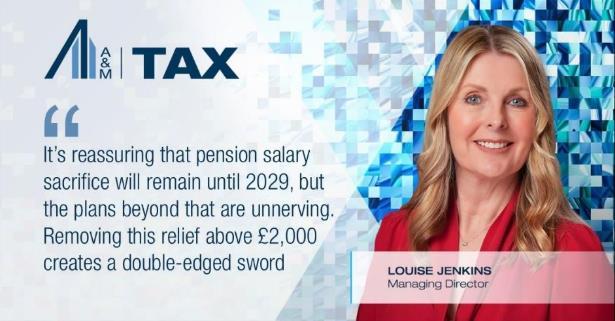
Salary sacrifice for pension contributions:
• With effect from 6 April 2029, the tax efficiency of contributing to pensions through salary sacrifice arrangements will be curtailed by setting a limit of £2,000 per year, before the normal employer and employee NICs kick in again.

Louise Jenkins, Managing Director at Alvarez & Marsal Tax said: “The reforms to EMI plans are a welcome strengthening of what is already regarded as the Rolls Royce of employee share option schemes in the market. Government expects around 1,800 additional companies to adopt EMI over the next five years, with roughly 70,000 employees set to benefit. The latest available data, for the 2023–24 tax year, shows an average grant value of around £12,340 per employee.”
• The Government has announced changes to the taxation of property income for income tax purposes by adding 2% to the current rates of tax. From April 2027 the property basic rate will be 22%, the higher rate will be 42% and the additional rate will be 47%. Finance cost relief will be provided at the separate property basic tax rate which will now be 22%. This is expected to bring in over £1.5bn over the next 5 years.
• This is not surprising given the intention to bring those who earn their income from what the Government see as more “passive” sources more in line with those earning their income from employment. However, having a potentially different rate of tax for the deduction of financing costs will make tax computations more complex for those affected.
• The Government has announced the introduction from April 2028 of a new High Value Council Tax Surcharge (“HVCTS”) on properties worth more than £2m. The charge will be collected alongside Council Tax but will be payable by Councils to central Government.
• Homeowners, rather than occupiers, will be liable to the surcharge and will continue to pay their existing Council Tax alongside the surcharge. Social housing will not be in scope. Houses will be revalued every 5 years, and the first valuation will be done in 2026 whereby the Valuation Office will conduct a targeted valuation exercise to identify properties above £2m and therefore in scope.
• A public consultation on details relating to the surcharge will be held in early 2026 including consulting on details of a full set of reliefs and exemptions as well as rules for more complex ownership structures including companies, funds, trusts and partnerships.
• Properties above the £2m threshold will be placed into bands based on their property value. The minimum charge will be £2,500 for properties valued between £2.0m and £2.5m and the rate will increase across the bands with the maximum being £7,500 for properties worth more than £5m.
• Whilst this will likely cause pressure on property prices near the thresholds (and particularly properties worth around £2m) it is probably not as severe as rumours had suggested in terms of taxing higher value properties.
• The significant increases to the National Living Wage and National Minimum Wage will disproportionately punish the hospitality industry. With margins already so tight, and the public still not through the cost-of-living crisis, the real impact could be closures of businesses – a body blow for the industry which has historically been a first employer for those entering the workforce.
• On business rates, prima facie, news on the lower multiplier for hospitality is welcomed. However, although the Chancellor expects c.750k properties to benefit, the announced higher rate for properties worth over £500k suggests little meaningful relief for our larger owners and operators.
• We would recommend Mayors in England think carefully before introducing any visitor levy on overnight accommodation. The industry simply cannot afford any actions that deter people from staying in our hotels.
• Hidden in the small print of today's Budget, e-invoicing will become mandatory for B2B and B2G transactions effective from April 2029. The roadmap for this implementation will be announced in the 2026 Budget, realistically giving UK businesses two years to prepare for the change. This announcement comes as a complete surprise, as all previous indications from HMRC have suggested there would be a consultation process.
• As expected, the Chancellor confirmed plans to remove the low-value import threshold, although the timing remains unclear, with previous signals suggesting a phased approach or full implementation by 2029. At present, goods imported from countries like China, with a value less than £135, are exempt from import duty. This has benefited fast-growing online retailers which ship large volumes of low-cost products directly to UK consumers.
• Removing the exemption has a direct impact on prices. For example, a £10 T-shirt made in China will attract a 12% duty, increasing the retail price to around £11.20. A £100 pair of leather boots would incur £8 duty at an 8% rate.
• It’s important to note that the change won’t affect imports from countries covered by the UK’s Developing Countries Trading Scheme - such as Bangladesh - or goods made within the EU, which remain duty-free. The measure is intended to level the playing field for domestic retailers competing with overseas e-commerce platforms, but it will inevitably add to consumer costs and increase administrative burdens for importers.
• The Government today made significant changes to the taxation of betting and gaming in the UK. This approach reflects its view that online betting and gaming is potentially more socially harmful than in-person betting and gaming.
• With this in mind, remote gaming duty (which is levied on products such as online casino games and virtual slot machines) has been increased from 21% to 40% with effect from 1 April 2026. From 1 April 2027, general betting duty has been increased from 15% to 25% for remote bets (excluding UK horseracing). Bets placed through self-service betting terminals on licenced betting premises will remain subject to the 15% rate.
• Bingo duty has been abolished entirely and, contrary to pre-Budget speculation, the rates of machine games duty remain unchanged.
• HMRC’s consultation response to the proposed changes to the Soft Drinks Industry Levy (SDIL), and the one official pre-Budget release, confirms the following:
• the Government will reduce the current lower threshold for SDIL to 4.5g of total sugars per 100ml
• removal of the current exemption for milk-based drinks with added sugar (the so called “milkshake tax”). There will be a ‘lactose allowance’ to account for naturally occurring sugars in the milk.
• A technical consultation on the draft legislation will occur ahead of the rules coming into effect on 1 January 2028.
• With a rare bit of certainty in this Budget, the main rates remain unchanged at 19% for companies with small profits (under £50,000) and 25% for others.
• Also, having previously determined to maintain investment stability, capital allowances were once again subject to change. Whilst full expensing remains, from 1 April 2026 for Corporation Tax and 6 April for Income Tax, main rate writing-down allowances will reduce from 18% to 14%.
• On the plus side, a new 40% First Year Allowance, including most expenditure on assets for leasing and expenditure by unincorporated businesses will be introduced from 1 January 2026.

Steve Smith, Managing Director at Alvarez & Marsal Tax, commenting on the changes to capital allowances said: “The Chancellor described private investment as the lifeblood of economic growth, yet the capital allowances changes in this Budget risk pulling in the opposite direction. I expect the changes to dampen business investment at a time when firms need certainty and incentives to commit long-term capital.
“The extension of First Year Allowances to leased assets is a sensible improvement, but it falls short of what was needed. Removing the restriction altogether and allowing leased assets to qualify for Full Expensing would have provided a much stronger signal and incentive to investors.”
• For the first time in several Budgets, the R&D rules have remained static.
Kathie Haunton, Managing Director at Alvarez & Marsal Tax said:
“Earlier in the year, Rachel Reeves said ‘Britain is the home of science and technology’, so some may be disappointed as there was nothing announced to increase research and development tax incentives. The wait continues to see how effectively the Advanced Assurance regime will improve the administration of the scheme.”

• With a rare bit of certainty in this Budget, the main rates remain unchanged at 19% for companies with small profits (under £50,000) and 25% for others.
• Also, having previously determined to maintain investment stability, capital allowances were once again subject to change. Whilst full expensing remains, from 1 April 2026 for Corporation Tax and 6 April for Income Tax, main rate writing-down allowances will reduce from 18% to 14%.
• On the plus side, a new 40% First Year Allowance, including most expenditure on assets for leasing and expenditure by unincorporated businesses will be introduced from 1 January 2026.

In addressing the impact of the Budget on large ticket private equity and infrastructure transactions, Jack Hollyman, Managing Director at Alvarez & Marsal Tax Said “This was an interesting Budget for sure.
The points I think are important to note from a financial investor perspective when thinking about the impact on their portfolio companies are as follows:
• The removal of national insurance relief on pension contributions made via salary sacrifice
• The reduction in tax depreciation writing down allowances.
• The new stamp duty holiday on IPOs; and
• The advance tax certainty for major projects, for infrastructure investors specifically.
The removal of national insurance relief for salary sacrifice pension contributions applies from April 2029. This will be a direct cost for investment management firms as employers, and will also reduce EBITDA for portfolio companies and that will no doubt be priced in by bidders.
Tax depreciation in the form of writing down allowances (known as capital allowances) will reduce to 14% from April 2026 (the current rate is 18%). This reduction in tax relief for capital expenditure will result in additional cash taxes within portfolio companies. On the positive side, there is a new 40% first year allowance for capital expenditure on leased assets from January 2026.
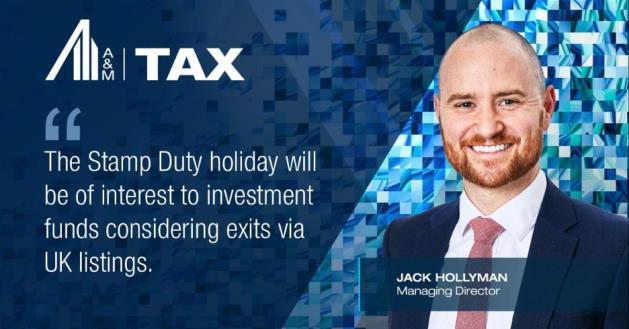
The new stamp duty ‘holiday’ applies to new listings on the London Stock Exchange. Investors will be exempt from the 0.5% tax on purchasing shares of newly listed UK companies for up to three years post-IPO. This change will be of interest to investment funds considering exits via UK listings, particularly noting that stamp duty on secondary sales on an IPO is often paid by the seller.
The consultation response for Advance Tax Certainty Service for major projects was released with welcome confirmation that the service would be launched in July 2026. It will be available to UK and non-UK entities undertaking new investment planned on a specific UK project. There is a minimum spend requirement of £1bn on all project expenditure incurred in the UK, less financing costs and expenditure on share interests. The service will cover a broad range of taxes across corporation tax, VAT, stamp taxes, employment taxes and the construction industry scheme.”
• From 1 April 2026, the fixed late filing penalty for CT Returns will double to £200. This will be legislated in Finance Bill 2025-26.
Other changes – Anti avoidance
• The Government intends to modernise the anti-avoidance provisions that relate to share exchanges and company reorganisations, and that those provisions will apply with immediate effect. However, there are no further details in any of today’s publications.
• Likewise, there will be as yet unknown immediate changes to the non-resident capital gains tax rules, apparently closing loopholes for protected cell companies and clarifying legislation for investors, with further administrative reforms from 6 April 2026.

Claire Lambert
Managing Director clambert@alvarezandmarsal.com

Paul Baldwin
Senior Director pbaldwin@alvarezandmarsal.com
Please visit our dedicated Chancellor’s Budget landing page to view more content and commentary from our specialists.