Sustainable Concrete in Developed Area: A Review
Mohammad Kaif, Faiz Ahmad, Md Kamaluddin Department of Civil Engineering, Zakir Husain College of Engineering & Technology, AMU, Aligarh, UPABSTRACT :
Understanding the vital role of civil engineers in advocating for sustainable construction practices is becomingincreasinglycrucialasourworldgrappleswith significant environmental and economic challenges. This study sheds light on the pivotal contribution of civil engineers to sustainable concrete construction, underscoringthe importance of their expertise in crafting infrastructure that is both environmentally sound and resilient. Additionally, the manuscript delves into the significance of procurement regulations in promoting sustainable development, stressing the need for carefully formulated policies and guidelines that incentivize environmentally friendly practices. It emphasizes the potential of collaborative efforts between civil engineers and policymakers as a key driver for sustainable construction. Furthermore, we have discussed how sustainability can achieve in civil engineering through recycled aggregate, industrial bi-product and carbon capturing utilizing and storage. We have analysed sustainability concrete by their mechanical properties, durability and other many more properties. In the last we also seen sustainability impact on environment as we knowthattraditionallyproductionofconcretecausesalot of environmental pollutionand problem so tackle thiswe uses sustainability in this production that causes less environmental damage. We also gave the idea of green concrete and consequences of uses it. The paper highlights the pressing need for sustainable development in concrete technology due to its significant environmental impact, particularly in terms of energy consumption and CO2 emissions.It discusses various Korean research efforts in this area, focusing on sustainable strengthening and reinforcement of concrete
structures, the use of recycled aggregate and supplementary cementing materials, and their application in precast concrete. These initiatives aim to mitigate the environmental and ecological consequencesofconcreteproductionwhileensuringthe longevity and resilience of concrete structures. Sustainability is crucial for the health of our planet and society, with concrete being a widely used but carbonintensive building material due to cement production. The environmental impact of greenhouse gases and resource scarcity necessitates finding sustainable alternatives for concrete production, emphasizing the importance of designing with both short-term and longterm environmental consequences in mind.
Introduction :
In the constructionindustry, sustainable development is a major focus for scientists and researchers. “Sustainable development is the development that meets the needs of the present without compromising the ability of future generations to meet their own needs”. To achievethis goal, it's crucial to come up with newmethodsandmaterialsthatcanprolongthelifespan of bothexistingandnewstructures.Concrete stands out as the go-to material in construction projects, whether it's for buildings or roads. It's incredibly popular worldwide and is seeing a significant rise in demand. This uptick in demand is mainly due to factors like the growing global population, urban sprawl, and the ongoingdevelopment of infrastructure indifferent parts of the world. Traditional concrete consists of four main ingredients: water, cement, fine aggregate (such as sand), and coarse aggregate (like gravel or crushed stone). However, the process of making traditional concrete contributes significantly to carbon
dioxide (CO2) emissions. This is mainly because cement production, which is a key component of concrete, requires a lot of energy. Every year, a massive amount of resource is used in concrete production, including 1.5 billion tons of cement, 9 billion tons of aggregate, and 1 billion tons of water. These resources are used to build a wide range of structures, from buildings and houses to dams and more. Additionally, there are indirect carbon emissions associated with the construction of concrete structures, which come from manufacturing and transporting construction equipment, formwork, reinforcement materials, and various other components. Recent research has been looking into ways to make concretemoresustainablebyreplacingtraditionalcement and other components withwaste materials like glass, fly ash,andricehusk.Avarietyoftechnologiesandmethods have been developed to create sustainable concrete and address the carbon emissions linked to its production. Onekeystrategyisfindingalternativebindersfromwaste materials to use in making concrete, which can help reduceemissionsassociatedwithcement.Therearemany options for these alternative binders that can replace conventionalcementinconcretemanufacturing.Byusing waste mat erials in concrete production, we're not only finding a valuable use for these materials but also reducingtheamountofwastesenttolandfillsandhelping to prevent pollution. Using waste materials in this way canhelpus save significantamounts of greenhouse gases and natural resources. The construction industry offers a practical solution for managing waste because many waste materials can be effectively used in concrete production. There are three main approaches suggested for achieving sustainability in the concrete industry:
i) Reducing concrete consumption by introducing new structural and architectural designs for both new construction projects and the renovation of existing structures.
ii) Employing smarter methods for mixing concrete to decrease the amount of cement needed.
iii) Using supplementary cementitious materials to reduce the cement content in concrete.
In line with the last two approaches, various mix designs have been developed to optimize the proportions of concrete mixes. Sustainable development requires us to conserve natural resources and reduce carbon emissions. In the construction sector, this can be accomplished by incorporating waste materials like glass, fly ash, and rice husk into concrete, which is one of the most commonly used materials. To achieve sustainable construction objectives, numerous low-carbon technologies and strategies have been developed to tackle and potentially eliminate the carbon emissions associated with concrete construction.
1 MeaningofsustainabilityinCivilEngineering:
Sustainability in civil engineering is indeed a holistic approach that takes into account economic, environmental, and social considerations to ensure that infrastructure meets the needs of current generations without compromising the ability of future generations to meet their own needs. Introducing practices such as recyclingmaterials, utilizing renewable energysources, and designing infrastructure with sustainability in mind are key strategies to achieve this goal. By integrating these principles into the planning, design, construction, operation, and maintenance of infrastructure, civil engineers can contribute to creating a more sustainable and resilient built environment for present and future generations, how to achieve sustainability in Civil Engineering?
1.1 BY RECYCLED CONCRETE AGGREGATE(RCA)
Recycled aggregates are vital in green concrete, aiding in lessening the environmental toll of concrete production by repurposing waste materials and decreasing the need for natural resources. Their inclusion in concrete supports sustainable development
and circular economy ideals, encouraging efficient resource usage and waste reduction. Various waste sources, like construction and demolition debris (C&D), along with glass and plastics, can serve as origins for recycled aggregates. These materials undergo processing and crushing to achieve varied sizes, replacing natural aggregates in concrete blends either partially or completely.
Substituting natural aggregates with recycled ones reduces the need to extract raw materials like sand, gravel, and limestone, thereby lessening the environmental footprint and conserving resources for future generations. Repurposing waste materials like C&D waste into recycled aggregates helps divert them fromlandfills,decreasingoverallwastegenerationandits environmental consequences. Processing and transporting recycled aggregates generally demand less energy than extracting and transporting natural aggregates, leading to reduced energy consumption and greenhouse gas emissions. Furthermore, using recycled aggregates can sometimes lead to cost savings, as they may be more accessible and less costly than natural aggregates.
1.2 BY INDUSTRIAL BI-PRODUCTS:
Industrialby-productsarevitalforgreenconcrete,asthey allow for the repurposing of waste from different industries, lessening the environmental impact of concrete production. Their utilization aligns with sustainable development and circular economy principles, promoting efficient resource use and waste reduction. Common examples like fly ash, silica fume, blast furnace slag, metakaolin, rice husk ash, limestone powder, and agricultural waste serve as supplementary cementitious materials (SCMs), reducing the reliance on traditional cement.
i. Fly Ash
Many thermal power plants globally rely on coal for energy production, resulting in the generation of vast amounts of fly ash (FA) as a by-product. Annually, around 750 million tons of FA are produced from coal
combustion worldwide, with potential for future increases. Additionally, the constituents of FA pose risks to human health, soil quality, and water sources. Hence, maximizing the use of fly ash as a cementitious material in the concrete industry is crucial to mitigate these issues. Moreover, it contributes to reducing the energy consumption and environmental impacts associated with Portland cement.
ii. Silica Fume (SF)
Silica fume (SF) is predominantly composed of amorphous silicon dioxide (SiO2) and is a byproduct of the alloys industry, particularly metallic silicon or ferrosilicon production. The process involves reducing high-purity quartz to silicon at temperatures of 2000°C, resulting in SiO2 gases. These gases are then oxidized andcondensedatlowertemperatures,yielding85 –90% very fine amorphous silica known as silica fume. Currently, global annual production of SF stands at approximately 1.5 million tons. Substituting Portland cement with silica fume in concrete production enhances both the strength and durability of the concrete.
iii. Ground Granulated Blast Furnace Slag
During pig iron manufacturing, a blast furnace combines iron ore, metallurgical coke, and fluxing agents, melting them to remove impurities. As pig iron melts at 1050°C and slag at a higher temperature, only slag remains in the furnace, serving as a by-product or waste. To produce ground granulated blast furnace slag (GGBFS), the slag is water-quenched and ground with gypsum. Approximately 260 kg to 300 kg of slag is produced per ton of pig iron. It's crucial to note that the sustainabilitybenefitsofusingGGBFSarerealizedonly when it's treated as waste material; otherwise, its advantages are diminished.
i. Metakaolin
Metakaolin originates from kaolin, a fine white clay known as hydrated aluminium disilicate (Al2Si2O5(OH)4), used in ceramics production for
centuries. Through calcination of kaolin, metakaolin is formed. Heating kaolinite between 500°C to 800°C leads to water loss via dehydroxylation. Metakaolin typically comprises about 50-55% SiO2 and 40-45% Al2O3, rendering it highly reactive. Additionally, it generates calcium silicate hydrate (CSH) gel and reacts with calcium hydroxide (CH).
1.3 BY CARBON CAPTURE, UTILIZATION, AND STORAGE (CCUS):
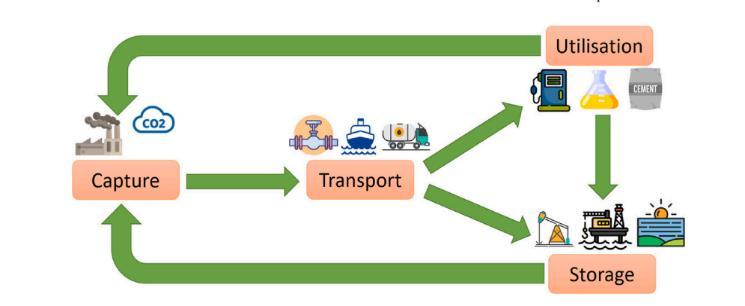
Carbon capture, utilization, and storage (CCUS) is an emerging technology designed to combat climate change by capturing carbon dioxide (CO2) emissions from industrial processes and power generation. It involves utilizing the captured CO2 for various purposes and storing the remainder in secure geological formations to prevent its release into the atmosphere. The carbon capture process entails separating and capturing CO2 from emission sources like power plants and industrial facilities. Technologies like post-combustion capture, pre-combustion capture, and oxy-fuel combustion are employed for this purpose, each with its own advantages and limitations. The choice of technology depends on factors such as the application, emission source, and economic considerations. Captured CO2 can be used in various ways, including chemical production, enhanced oil recovery,and biofuel cultivation. The remaining CO2 is stored in geological formations such as saline aquifers or depleted oil reservoirs, which are carefully monitored to prevent leakage.
CCUS plays a crucial role in reducing greenhouse gas emissions from industrial activities and power production, aligning with global initiatives like the Paris Agreement. Captured CO2 can be repurposed in various ways, such as producing chemicals, construction materials,and syntheticfuels,fosteringeconomic growth and supporting a circular, low-carbon economy. Additionally, CCUS serves as a transitional technology, allowing industries and power plants to decrease their carbonfootprint while cleaner,renewable energysources are being expanded
2. Analysis of Sustainability concrete
As it is known that amount of construction wastes is increasing day by day due to some activities like demolitionofoldbuildings,wars,accidentaldamageetc and we have limited resources. This problem puts a burden of Social & economical pressure on resources. To overcome this problems we have to use Sustainable concrete. So Sustainable concrete is the need of the hour. Sustainable concrete Comprises recycled aggregate, concrete with glass powder, sustainable reinforcement etc. Here we don't take details of these concrete instead we only analysis the Sustainable material/ concrete according to civil engineering point of view and also discuss their sustainability.
2.1 MECHANICAL ANALYSIS OF SUSTAINABILITY OF CONCRETE
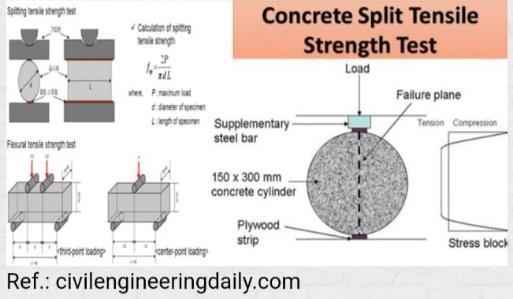
According to Civil Engineering there are many mechanical properties, like compressive strength (Fig. 01.), Tensile strength (Fig. 02.), Shear resistance, bending resistance etc. We have seen that some researchers perform many experiments on these properties and compare their data b/w sustainable concrete and ordinary concrete.
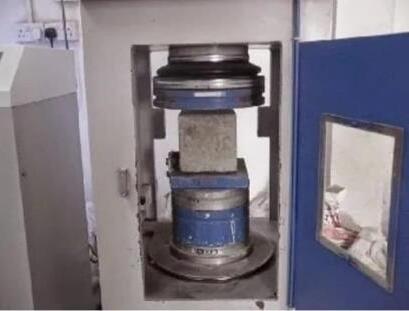 Fig. 01. Concept of carbon capture, utilization and storage
We discuss some of them here:
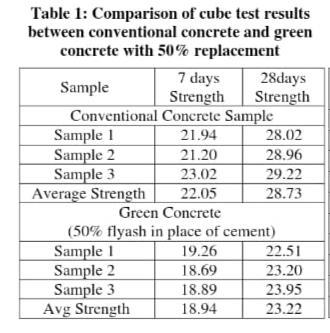
a) On increasing the fly ash concentration (Sustainable material) In concrete. Compressive strength decreases.
On other words higher the % age of fly ashes in concrete minimum will be compressive strength. There is a good hope that strength is not much less. Using fly ash is good as it is economically cheaper and has sustainable property. Thus it Can be used in rural infrastructure projects (Table 1).
b) Using Sustainable concrete enhances the workability and reduce the environmental impact. Environmental benefits are more as compared to their limitation. This makes overall sustainable the construction material.
2.2DURABILITY OF CONCRETE:
Durability means how long the structure will withstand without any damage and without any repair. So it is the most important property of Concrete. There are various
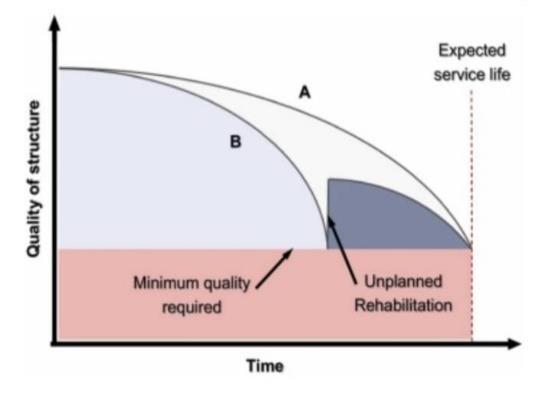
factors that control the durability of concrete i.e, absorption,permeabilityanddiffusion.Therelationb/w durability and strength, serviceability is shown is fig given below. These properties results in long-term performance Thus Concrete structure with long durability requires less maintenance and repair as compared to others. Hence it conserver resources and money being exploited unnecessary.
3.Impact of Sustainability Structural on Environmental:
Concrete, the world's most abundant building material, contributes significantly to carbon dioxide and greenhouse gas emissions, exacerbating global warming. In response to growing environmental concerns, researchers are focusing on minimizing these emissions through "Green Construction," which prioritizes resource efficiency and sustainability. Green concrete, a key component of this approach, offers numerous benefits including reduced environmental impact, lower energy costs, decreased greenhouse gas emissions, and lower maintenance costs. By incorporating post-consumer waste and industrial byproducts as partial replacements for Portland cement clinker, concrete becomes more durable and environmentally friendly, contributing to sustainable construction practices.
Cement production is energy-intensive and contributes to carbon dioxide emissions, mainly due to the high temperatures required. However, cement constitutes only a small portion of concrete, with aggregates and water requiring much less energy. To mitigate environmental impact, alternatives like fly ash, blast
Fig. 02. Compressive test of concrete (Ref. Reuse from India mart website) Fig. 03. Splitting Tensile test (Ref. civilengineeringdaily.com)furnaceslag,silicafume,andricehuskashcan partially replace cement, reducing carbon emissions. These byproducts come from various industries and processes. Additionally, concrete is fully recyclable, with crushed concrete usable as aggregate in new applications. Incorporating these by-products offers beneficial properties to concrete. In 2003, 3milliontons of flyash were used in cement manufacturing and 12.2 million tons in concrete production, reflecting a significant industry reliance on by-products. Industry efforts to address climate change have led to a 29% decrease in carbon dioxide output from cement plants over three decades. Research has promoted the use of industrial by-products in cement manufacturing, such as the consumptionof 130milliontires as fuel incement kilns in 2004, reducing fossil fuel consumption and waste. In Denmark, various stakeholders, including producers, contractors,engineeringfirms,andresearchinstitutions, have established the "Centre for Green Concrete" to innovate new environmentally friendly concrete types and structural solutions.
The manufacture of traditional cement contributes significantly to CO2 emissions, prompting the need for sustainable alternatives like green concrete. By recycling waste materials from various industries and agriculture, we canreduce reliance on natural resources and minimize environmental impact. Incorporating these waste materials into concrete mixes, guided by performanceandcostconsiderations,offersapromising solution. Additionally, leveraging nanotechnology to introduce nanoparticles or nanomaterials enhances the strengthanddurabilityofgreenconcrete.Thisapproach holds potential for commercialization, providing developers and contractors with an eco-friendly alternative.
Conclusion:
Wehaveseenthatconcretewithsustainabilityhasmuch morepositiveimpactonenvironmentaswehavetodeal with present as well as future. There is a saying “Civil Engineering is dealing with past, present and future’’.
After analysing the properties of sustainable concrete we have to conclude that properties of sustainable concrete is less but not on a such large scale. We can use this concrete in a number of construction project where strength does not matter a lot. Sustainable concrete is a good option not only for removing wastes but also helps in reducing amount of CO2 emissions from cement factories. Researchers and Scientists are working on this field to provide good living standard of life. The need to prioritize sustainability in concrete production calls for minimizing CO2 emissions by increasing the use of supplementary cementitious materials like fly ash and slag, which are byproducts of industrial processes. Additionally, promoting the use of recycled materials for aggregates can reduce the demand for natural resources. Efficient and judicious useofnaturalresourcesisessentialtominimizewastage and enhance sustainability in concrete production.
References :
[1] Adesina, A., 2020. Recent advances in the concrete industry to reduce its carbon dioxide emissions. Environ. Challenges 1, 100004. https://doi.org/10.1016/j. envc.2020.100004
[2] Aghimien, D.O., Aigbavboa, C.O., Thwala, W.D., 2019. Microscoping the challenges of sustainable construction in developing countries. J. Eng. Des. Technol. 17 (6), 1110–1128. https://doi.org/10.1108/JEDT-01-2019-0002.
[3] Agwa, I.S., Zeyad, A.M., Tayeh, B.A., Adesina, A., de Azevedo, A.R., Amin, M., HadzimaNyarko, M., 2022b.Acomprehensivereviewontheuseofsugarcane bagasseashasasupplementarycementitiousmaterialto produce eco-friendly concretes. Mater. Today: Proc. https://doi.org/10.1016/j.matpr.2022.03.264
[4] Hills, C.D., Tripathi, N., Carey, P.J., 2020. Mineralization technology for carbon capture, utilization, and storage. Front. Energy Res. 8, 142. https://doi.org/10.3389/ fenrg.2020.00142.
[5] Khatib, J. (2009). Sustainability of construction materials. Elsevier.
[6] Opoku, A., & Ahmed, V. (2015). Leadership and sustainability in the built environment.
[7] Sim, J. and Park, C., Compressive Strength and ResistancetoChlorideIonPenetrationandCarbonation of Recycled Aggregate Concrete with Varying Amount of Fly Ash and Fine Recycled Aggregate, Waste Management, 31, 2011, pp. 2352-2360
[8] Papadakis, V.G. and Tsimas, S., Supplementary Cementing Materials in Concrete Part I: Efficiency and Design, Cement and Concrete Research, 32, 2002, pp. 1525–1532.
[9] M.S Shetty ―Concrete Technology‖ 3rd Edition, S. chand& Company Limited. Delhi 1992
[10]J.Bai,Durabilityofsustainableconcretematerials, Sustain. Constr. Mater. (2009), https://doi.org/10.1533/9781845695842.239
[11] V. Penttala,―Concrete and sustainable development‖, ACI Materials Journal, vol. 94, no. 5, pp.
409-416, September 1997
[12] V. M. Malhotra, ― Reducing CO2 emissions‖, Concrete International, vol. 28, no. 9, September 2006, pp. 42-45