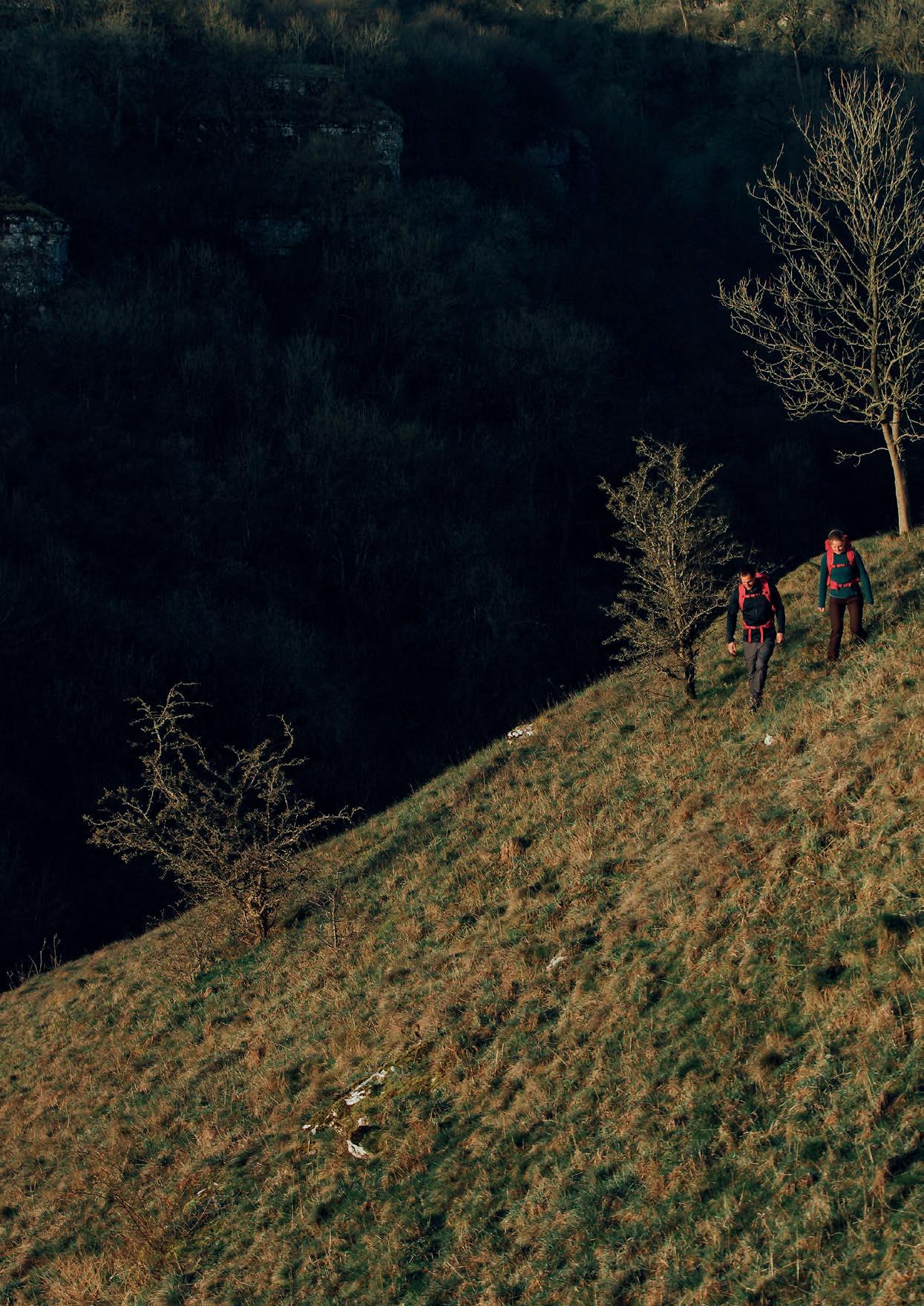
It feels oh-so-good to get back to our way of life again. In fact, that’s a bit of an understatement.
To travel beyond our ‘local’ (which we have a new respect for), to see mates in the flesh and be outside together, with no one stuck on mute.
Accommodation is going to be at a premium this summer, which got us thinking about camping. A lot. Some backpacking and bikepacking trips are on the cards for sure.
Wishing you all a very, very warm and overdue welcome back outside.
Hurrah to summer days making memories doing things we love with friends, it’s been a while. This year we have kept busy with new innovative products, new stores and best of all - Covid willing - the return of Big Shakeout, our annual end of summer party. Go Nice Places Do Good Things is back in town… Dave Hanney, Alpkit CEO and Co-owner
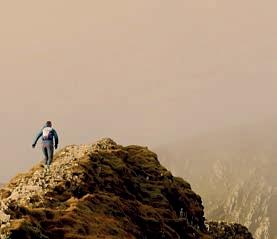
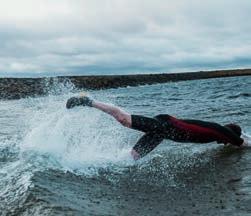
Swim. Run. Dip. Hike
Big dreams, tiny homes. PG. 14 Planning the West Highland Way PG.8
Making of the Definition
Go Gently in Good Company; in praise of long distance walking PG.6
Top packing tips to help you... Go like a Pro
10 Ice Climbing in... Portugal?!
12 Alpkit Foundation & Yvonne Witter PG. 20 The New Way to Explore the Old Ways PG. 25 Sonder Components
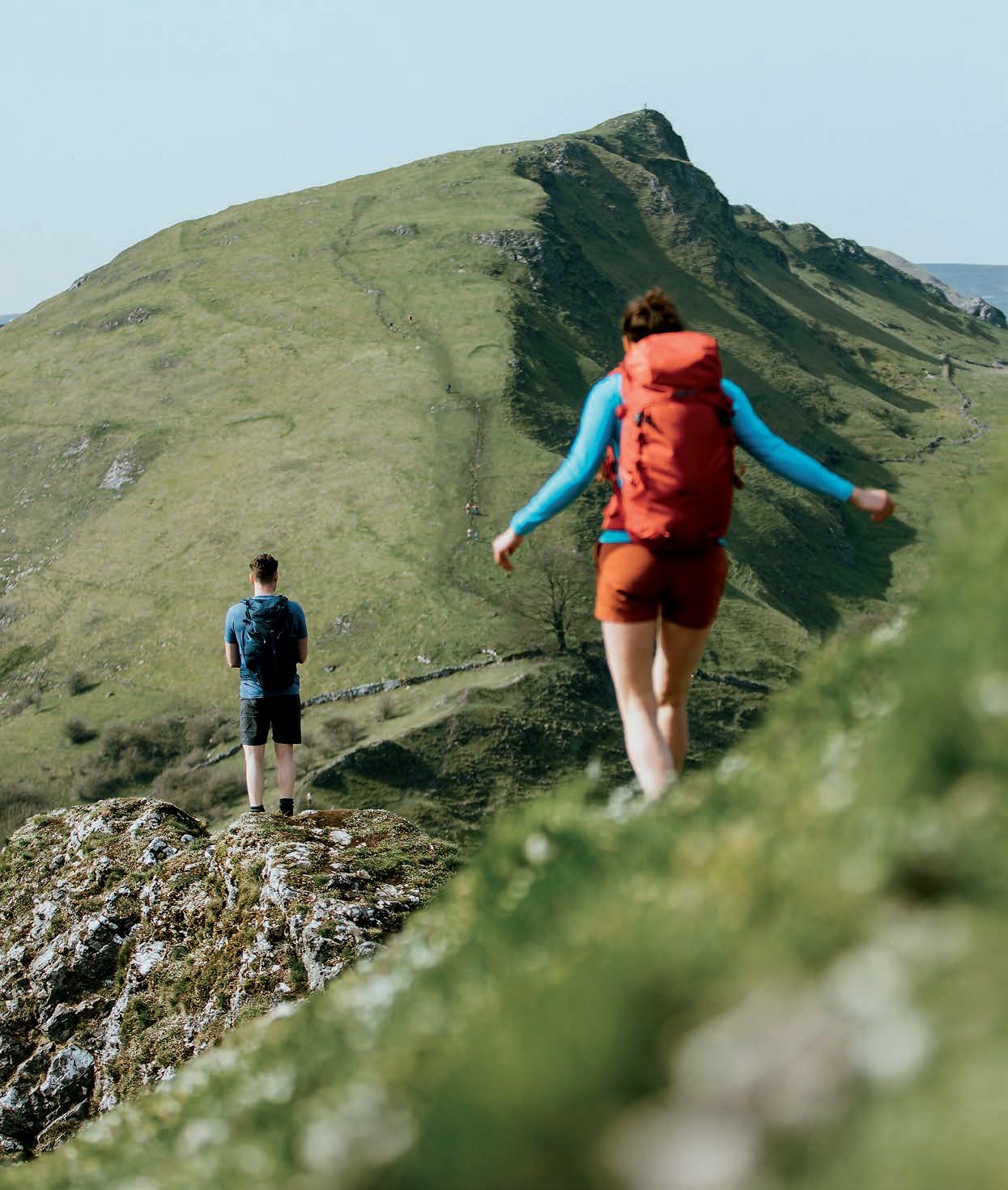
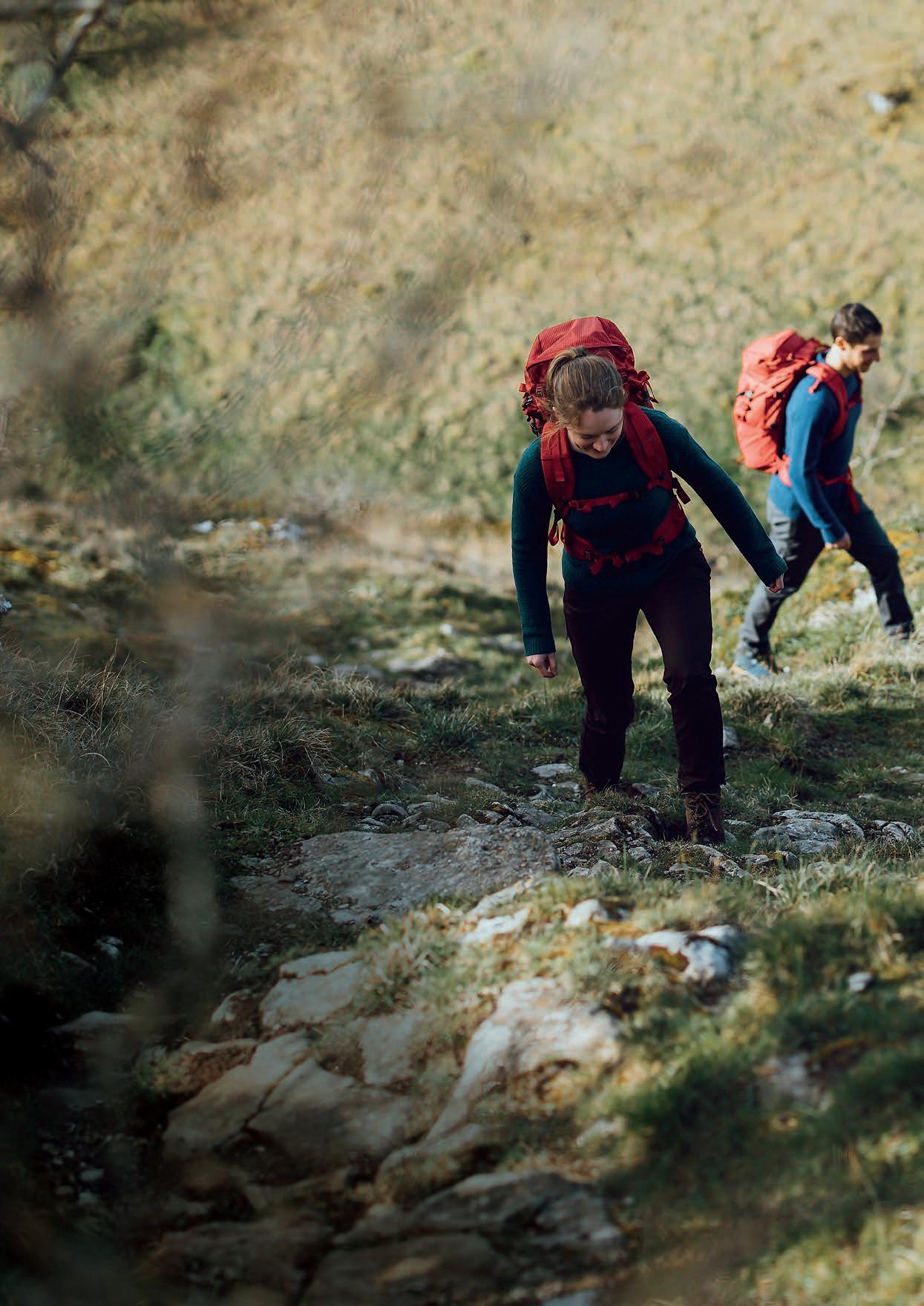
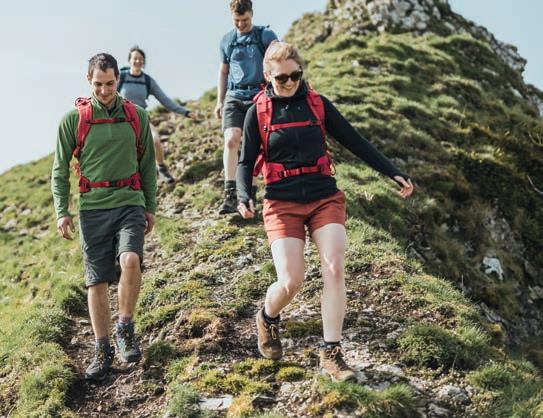
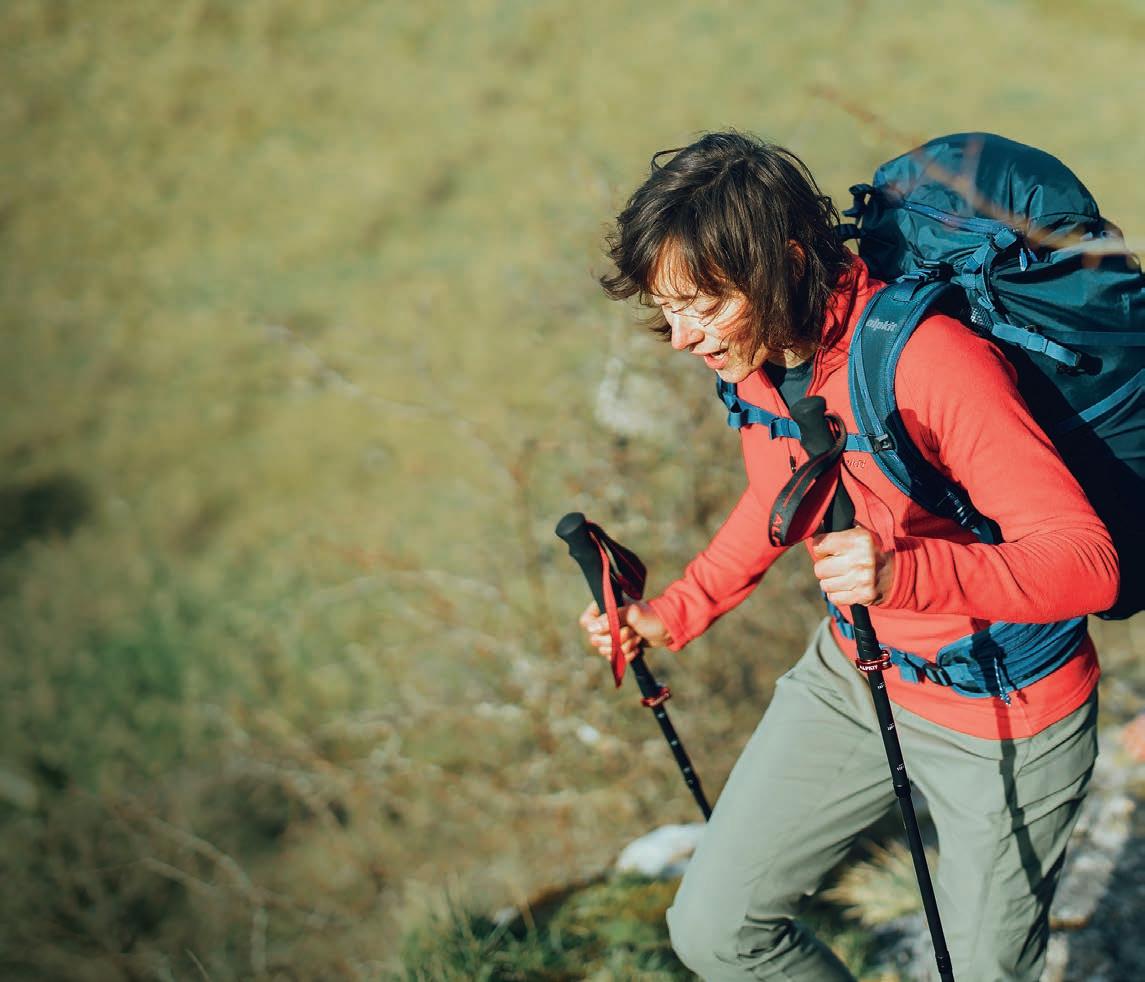
A day’s walking in good company is good for the soul. Make it into a two dayer and you’re all feeling well and truly at one with nature. By the end of a third you’re almost convinced you were raised by wolves.
Exponentially excellent.
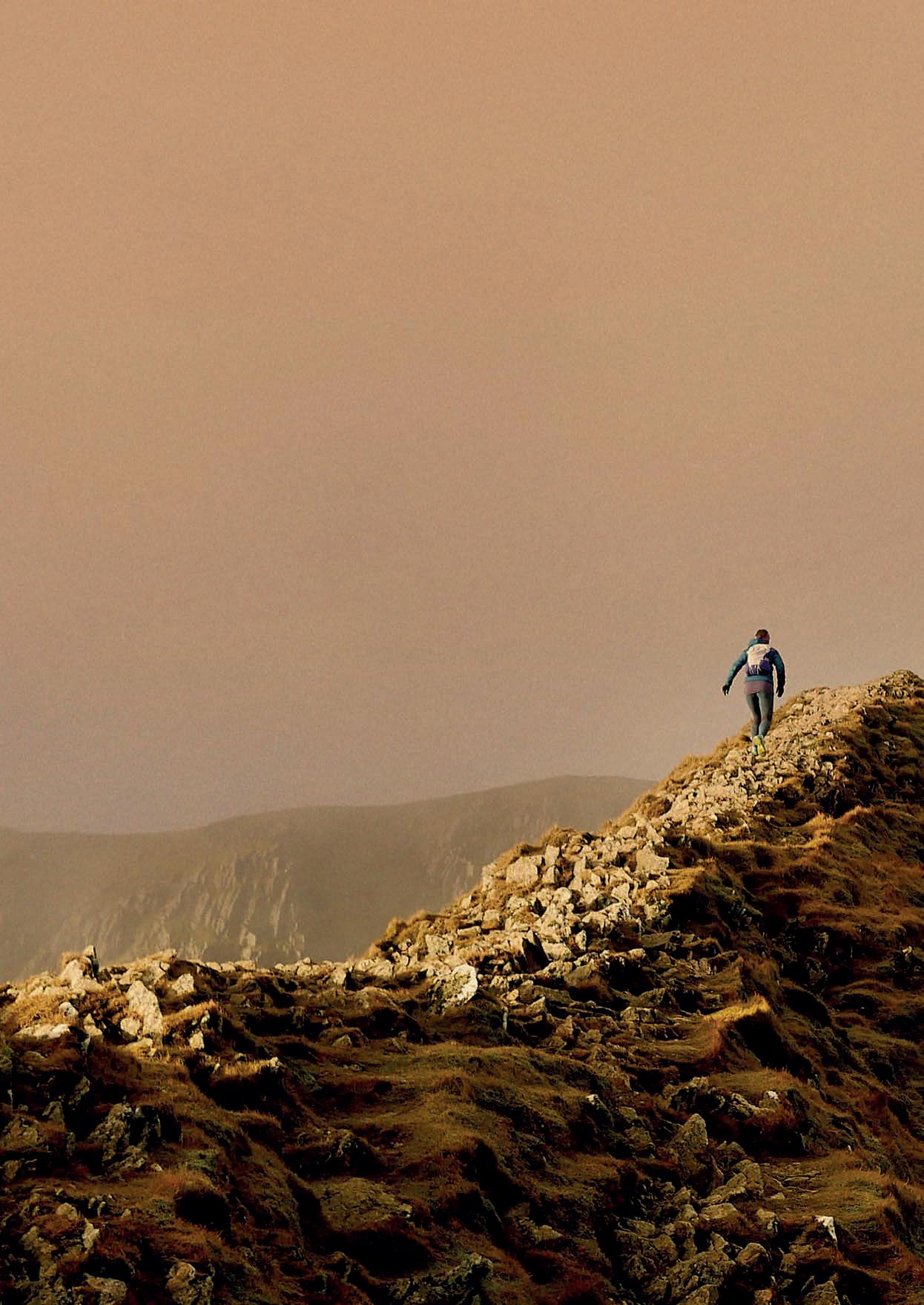
It’s a wonderful thing, living out of a backpack for a few days, going at your own pace. Sliding deeper into a new rhythm more in tune with nature’s routine of sunset and sunrise. Adapting to your aches and pains, watching weather systems move around or over you. Life becomes simpler, but more vivid for those days.
It’s exponential too, the feelings are compounded the longer you go. The UK is crammed with brilliant long distance walking paths, too many to name. Look at trails beyond these shores and you’ll soon have a bucket list to last a lifetime. Planning is half the fun; plotting each day around distance, elevation, sleeping spots or resupply. How far you cover is subjectivea big day’s walk could be 6 miles or 20 miles depending on your mindset.
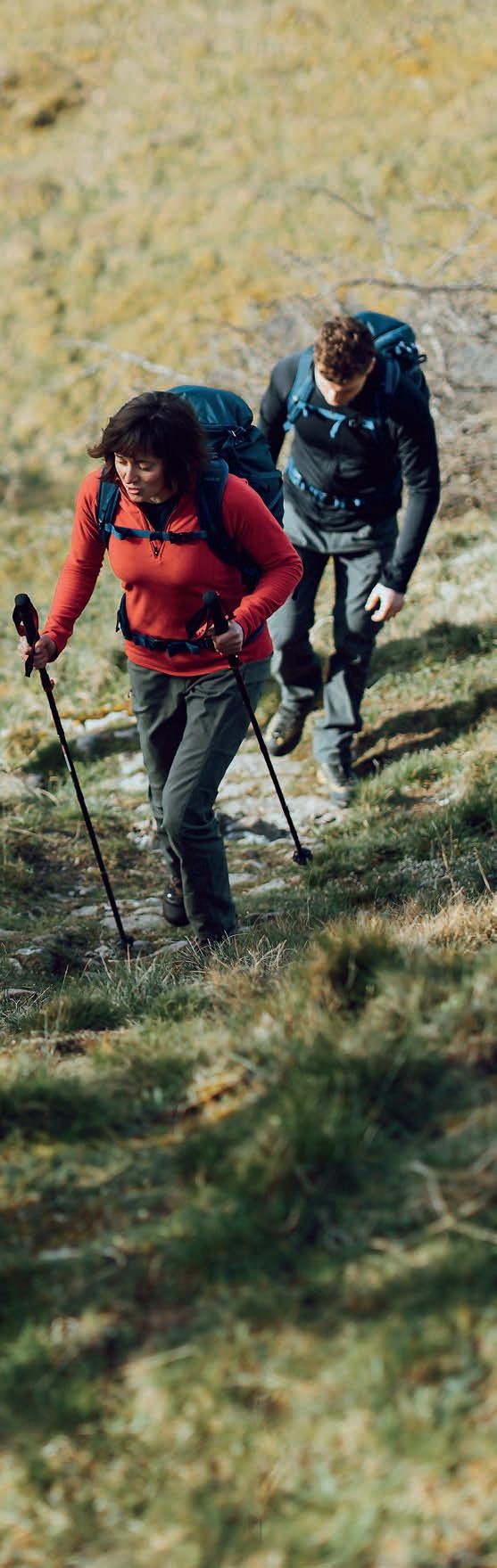
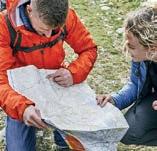
Friends that walk together. There’s a good chance you’ll form some lifelong memories with someone you backpack with, both from the good bits, or the inevitable difficult bits. It’s a wonderful experience to share. Someone to remember the time you fell in the river. Someone to pull out a huge bar of dark chocolate in the tent as the rain hammers down. Someone to help with map reading. While it might feel safer with a few of you, we should say it’s still worth telling someone where you’re going before you leave.
Embracing the faff.
Ah yes, there are few better situations for the faffer to showcase their talents than the night before a backpacking trip. Trying to second guess the British weather doesn’t make it any easier. This however is where walking with a group of mates really comes into its own. Split that cooking kit between all of you. Share a tent. You only need one first aid kit and probably don’t need 4 water filters. Snack sharing is a touchy subject mind, bring your own please.
Hike comfy
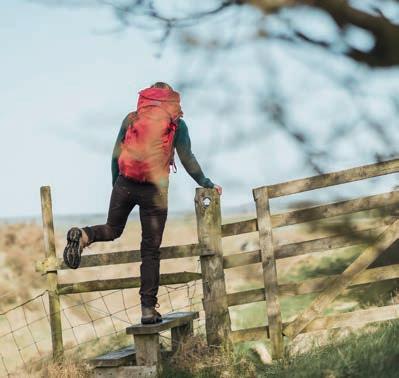
Hannah scales the 123rd stile of the day in Kraft trousers and an Orion 45 pack.
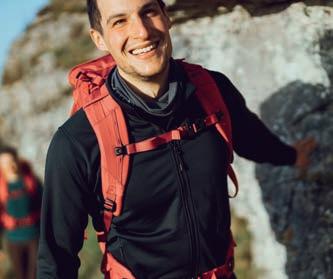
Seb wearing a smile that says ‘my coffee has not kicked in yet’, Akita jacket and Ledge 35 pack.
What are you waiting for?
There’s no rulebook to follow really; grab some friends you haven’t seen enough of in the last 12 months, plot a route, pack your backpack and head out.
If it’s your first multi-day walk, you could use YHAs, bunkhouses or B&Bs though we suspect these places will be at a premium this summer. They are great places for finding out more; crossroads for various adventures happening at once.
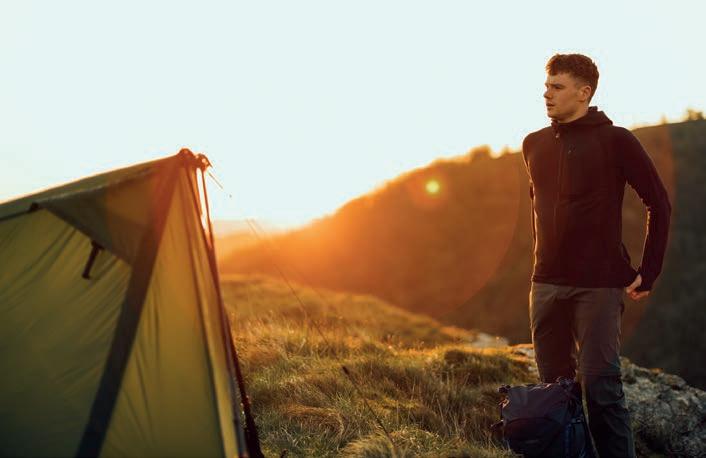
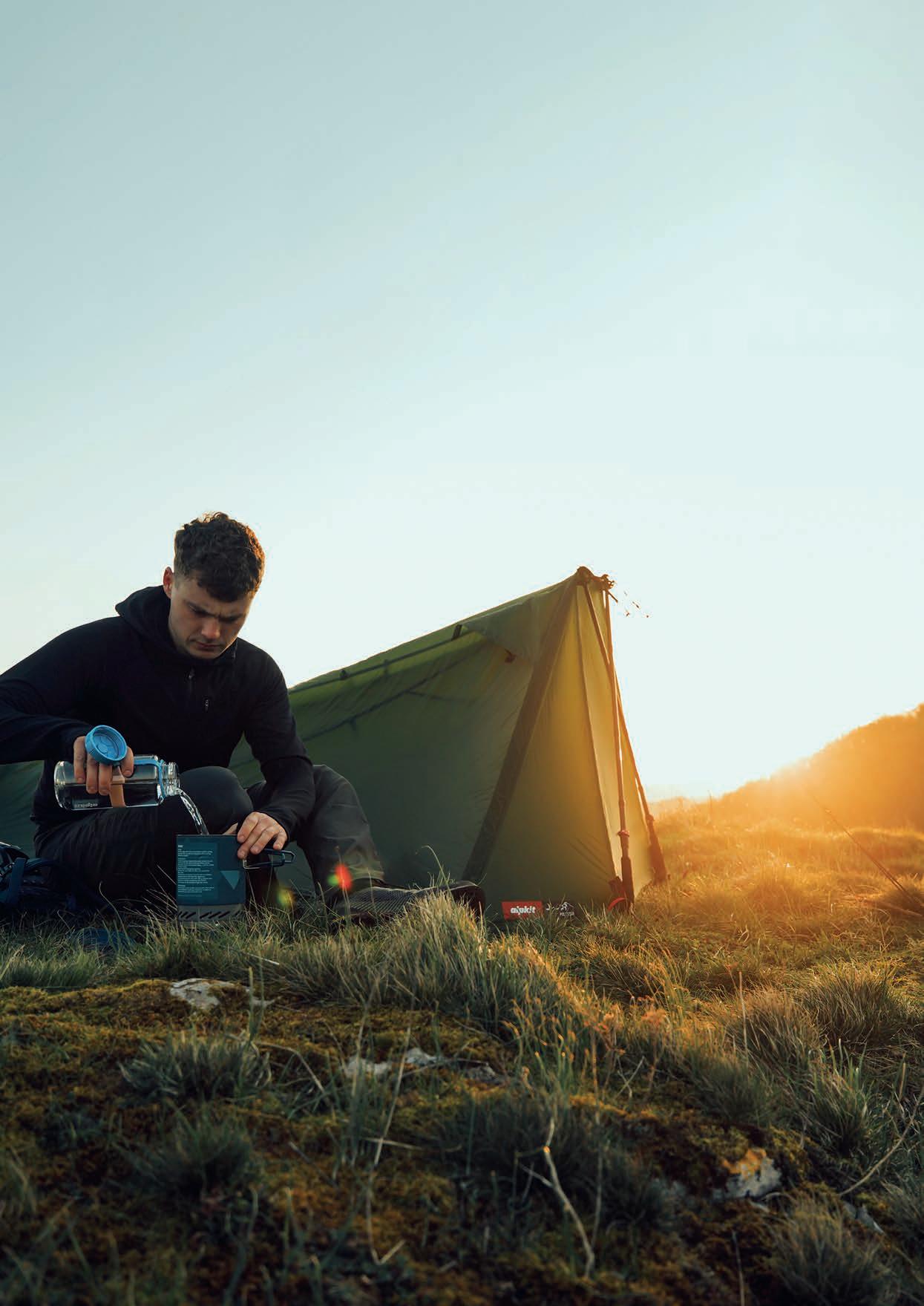
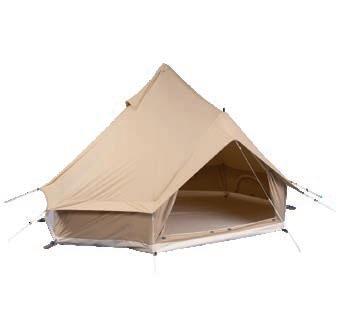
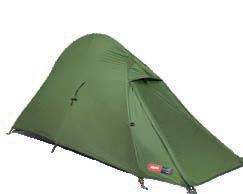
If you’re looking for total self sufficiency then camping (be it ‘wild’ or on a site) goes hand in hand with walking. Our new Polestar tent uses walking poles to support itself so packs extra small.
For route inspiration, there’s some links to the right to the Long Distance Walkers Association website and a very interesting project called the Slow Ways network.
If you’re wild camping, read up on the rules for where you’re headed. Pitch late and leave early.
Top tips from our Alpkit Night In seminar series
Jenny Graham ‘I’m a lip butter addict. I’ve even used chamois crème before! Bivvy Bag is my preferred shelter. I love taking a tent if I’m gonna spend a lot of time in it, but otherwise I go with the bivvy bag.’
Al Humphries recommends couscous - it doesn’t weight much and cooks quickly. He also reckons a rucksack with decent shoulder pads and straps is worth its weight in gold.
Emma Pooley ‘Think of calories and take things that are fatty and sugary...’
Chris Townsend never leaves on a trip without a good book, which we’re inclined to agree with for nights in the tent. You can tear the pages out as you go if you’re really keen.
MULTI-DAY WALKING INSPIRATION
Long Distance Walkers Association
Formed in 1972 and the go-to website for exploring the UK’s long distance path network. Information, inspiration, challenges and links to local walking clubs too.
ldwa.org.uk
Slow Ways
A collaborative project to create a network of walking routes connecting all of Great Britain’s cities, towns and even villages using existing footpaths. They are looking for volunteers to test and review routes too... slowways.uk
Watch every Alpkit Night In on the Alpkit YouTube channel
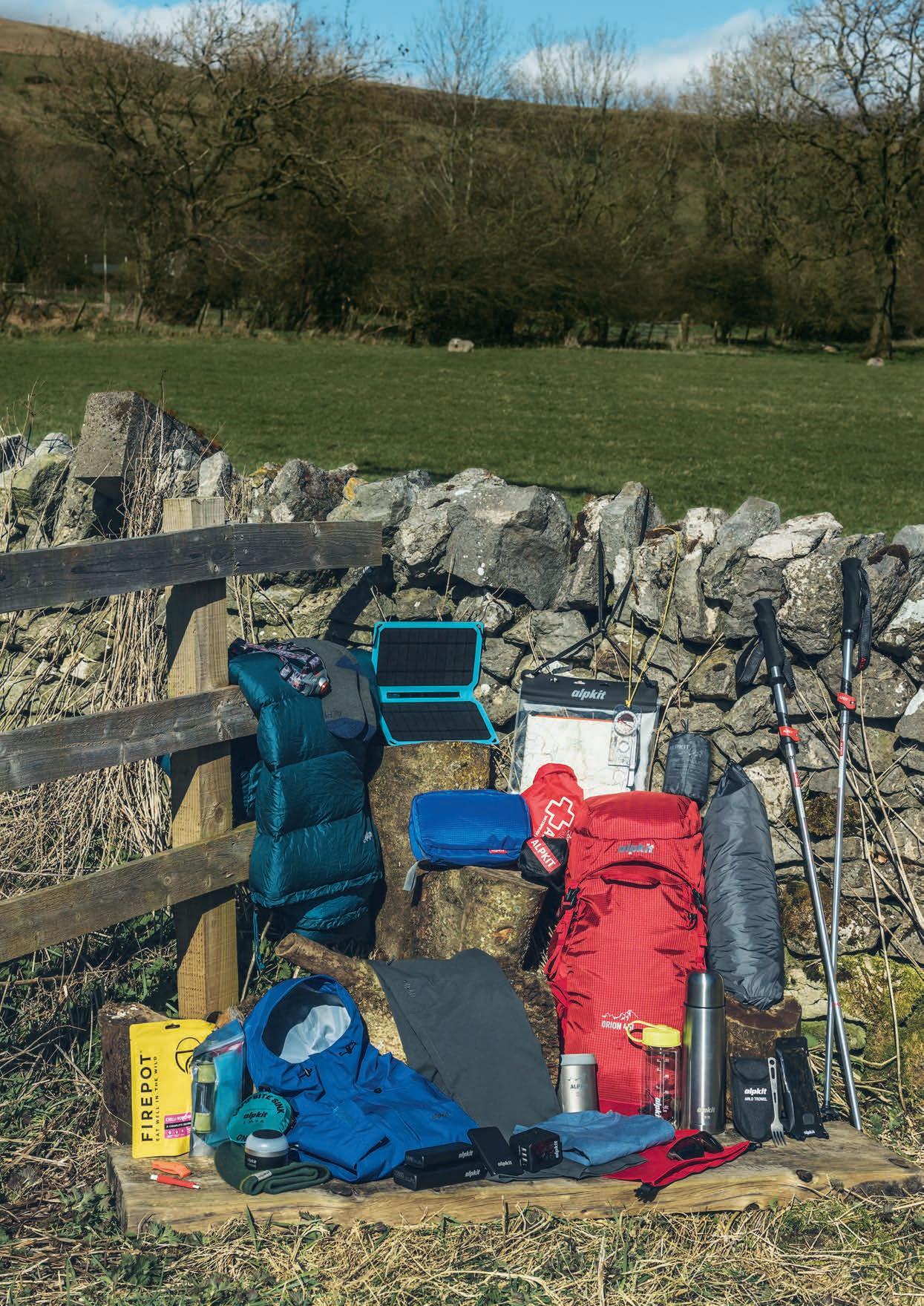
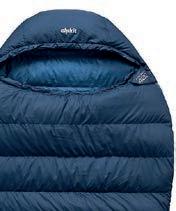
1. Cloud Nine 3-season ultralight sleeping bag. £189.99
2. Manta Head Torch Rechargeable (lasts up to 11 hrs). £39.99
3. Heavy weight trekker 2-pack full-length winter walking socks. £19.99
4. Scrub Wash Bag with hanging hook and 7 compartments. £9.99
5. Numo sleeping mat
Inflatable and ultra lightweight. £47.99
6. Backpacker First Aid Basic kit in a roll-top waterproof bag. £14.99
7. Williams Map Case Waterproof even in sideways rain. £11.99
8. OS Explorer Map 1:25k trusty walking map for getting unlost. £8.09
28. Soundbite Rechargeable Bluetooth speaker/lantern. £34.99
29. Norden Beanie Merino wool blend hat. £19.99
Polestar Tent
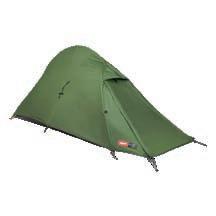
A stable, sub-1kg 1-person tent that pitches using your trekking poles. £139.99
Redefining Innovation
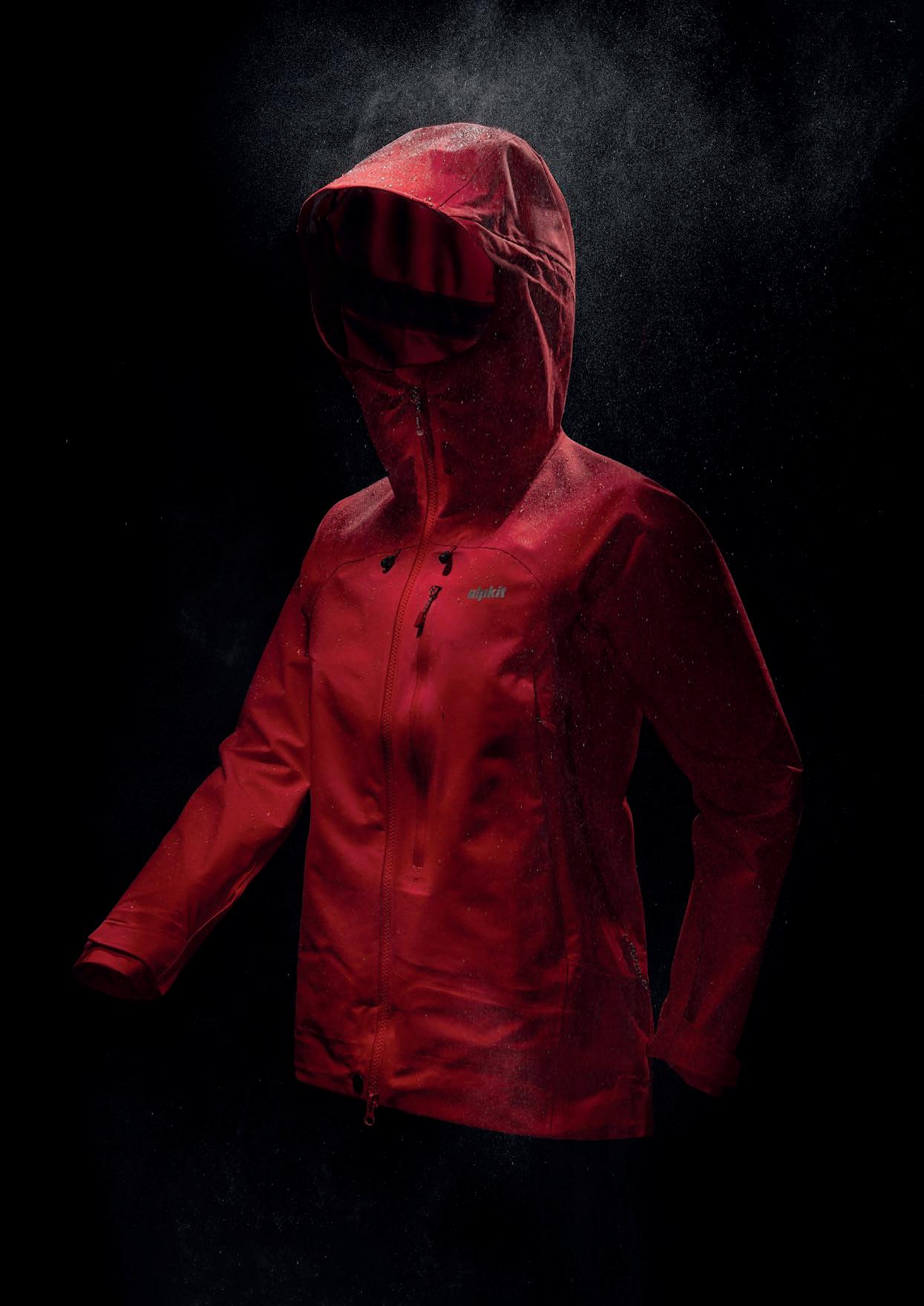
A World’s First PFC Free Mountaineering Jacket
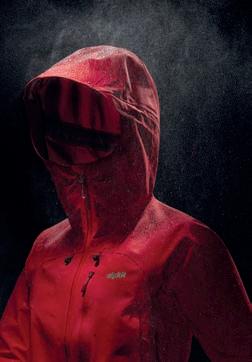
Definition is a world-first. A PFC-free mountaineering jacket. It’s a fortress against the elements at high-altitude. And it gives you freedom of movement.
But there’s more to it than that. Here are the elements that make the Definition the pinnacle of sustainable high performance.
Low Impact from Start to Finish
We love product innovation, we're fans of lightweight. But not at any cost.
Product innovation for the 2020's will be defined by our ability to deliver urgent action on the climate crisis and address inequality in the outdoors without compromise to performance.
PFCs & Fabric
Many waterproofs have durable water repellent coatings that leave a residual trail of toxic PFC chemicals behind them.
We’re one of the very few brands that have completely eliminated PFCs from our entire range of waterproofs. Definition is a worlds-first PFC free mountaineering jacket. You’ll still need to wash and re-apply an environmentally-friendly DWR such as Nikwax every 6 months or so. This is good stewardship that keeps your jacket in prime condition. Good as new.
#1 Expert design
We make gear you’ll love for longer.
#2 Lower Impact Fabrics That Last
We search long and hard to find quality fabrics from the lowest impact sources.
#3 Great factories make great products
And together we work to understand the environmental impact of our production and move to renewables throughout the supply chain.
#4 Fast Development Slow Transport
We commit to flying less than 10% of product from factories to the UK. Everything else goes by boat.
#5 Accessible prices
Our gear works harder and costs less. We reject the idea that sustainability comes with a price tag.
#6 Rejuvenating Definition
Our products are easy to care for. And our reproof and repair services keep them working like new.
#7 Recyclable
We take your old gear back and find it a new home. And we guarantee it won’t go to landfill.
The gear you use day in, day out, year after year, is ultimately the best for the environment. Durable, repairable, functionally strong products. The products you form a bond with and carry memories of exploits and adventures.
Product Lifecycle Analysis assesses the environmental impact of products. From extraction of raw materials, through the production process to the point it is used and then ultimately recycled or ends in landfill.
Over 65% of the impact of a product is in the raw material and production processes. This means looking after it and using it for a long time isn’t just good for your wallet, it’s good for the planet. So you can treasure that old waterproof from the 1990's knowing you’re doing it right.
The most sustainable jacket is the one you already own.
The most sustainable jacket is the one you already own.
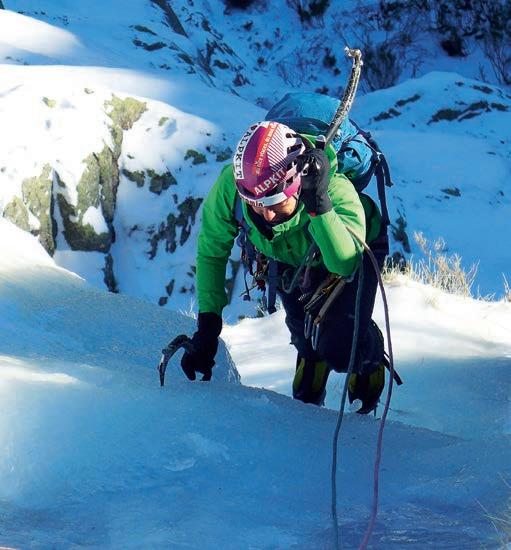
“We thought, ‘What are the chances to find an ice climb with more than 200m of continuous ice in the Serra da Estrela?’ - probably less than finding Niagara Falls frozen over.”
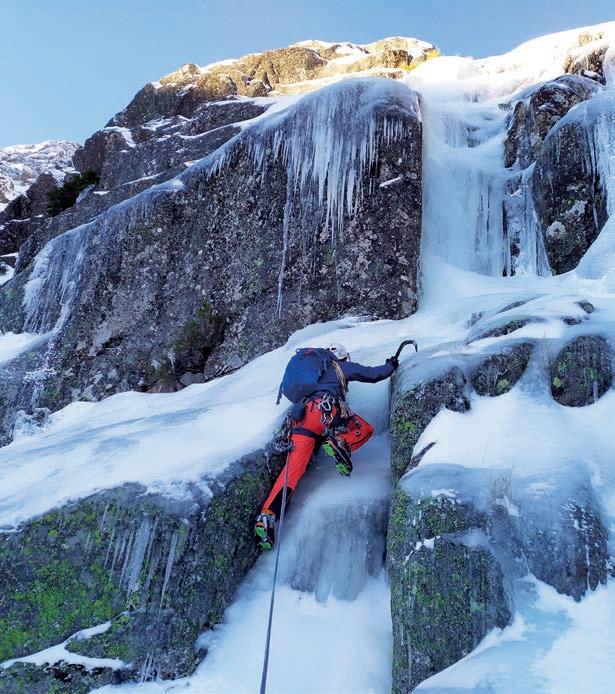
There is a granite tower here called Cântaro Magro, a perfect place for trad climbing in every season except winter. When conditions allow, it’s also the perfect place for winter ‘Scottish climbing’ on its west and north shadow faces. In the abnormally cold winter of 2021, we even found stretches of ice clinging to a 500m gully on its sunny east face… very rare in Portugal.
We arrived, as usual, at the base of the face around 8am and we were surprised to see what looked like a long line of ice that did not correspond to our original plan for the day. We thought ‘What are the chances to find an ice climb with more than 200m of continuous ice in the Serra da Estrela?’ - p robably less than finding the Niagara Falls frozen. That was good enough to change our plans.
In the beginning the ice was in pretty good condition although being an East face, with sun hitting almost all day, we had to deal with thin ice. Nevertheless good enough to place some ice-screws. We progressed fast, as the climb was never hard. Just plain good fun and longer than we’d had in decades of ice-climbing here.
At about midday, the ice was not that good anymore, but we could see the end of the route. Paulo shouted “Hurry up, let’s see if we can still do the last pitch before it falls!”
We were totally astonished to be able to climb 250m of continuous ice in our ‘backyard’ Serra da Estrela, on a wall that rarely has any ice! Needless to say that the next day, it was already impossible to repeat that particular climb. The longest ice route ever done in Serra da Estrela was no more.
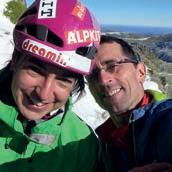
Words and images by Alpkiteers Daniela Teixeira and Paulo Roxo
In 2016, we left the big city and moved to the quiet village of Manteigas in the heart of Serra da Estrela: the only mountain in Portugal where you can do mixed and ice-climbing...
setting a new standard in bikepacking. again.
Our new range is stuffed with everything we’ve learnt in the last 13 years at the forefront of bikepacking.
Tested over hundreds of thousands of miles, up to and beyond their limits by our Alpkiteers, racing and exploring all over the world. We know exactly how to make the best bags.
Building trust in who you makes your gear takes time, we get that. We’ve been designing, developing and handmaking bikepacking luggage in Nottingham since 2008 - bikepacking is a part of Alpkit and Alpkit is a part of bikepacking. That’s something you can trust.
EXO-RAIL ANTI SWAY
KOALA GRAB AND GO HARNESS
FUEL POD ELECTRIC CABLE PORT
GLIDER SOFT TOUCH VELCRO
STEM CELL ONE HANDED OPENING
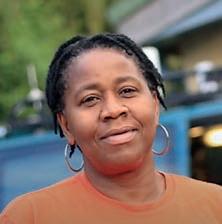
Yvonne Witter is chair of Peak District Mosaic Group. She’s an Ordnance Survey #GetOutside champion and Yvonne’s on a serious mission...
Positively Totally Activism
To support new audiences, including black and minority ethnic communities, in gaining greater access to Peak District National Park. Yvonne works with people who want to increase physical activity and visit the surrounding countryside to improve health and wellbeing. Yvonne is an unstoppable force.
We met Yvonne through Alpkit Foundation, which recently provided support for Peak District Mosaic’s mindfulness walk. To speak to Yvonne is to receive a dose of positivity and optimism. You feel invigorated. Full of joy. And a desire to get out and get involved. We asked where her love of the outdoors came from and how she ended up leading the way for Peak District Mosaic.
“I grew up in Jamaica and being outdoors was our way of life. The outdoors was my playground. If I wanted to go anywhere, I walked. Our transportation was our feet! If we went to the shops, we’d walk. If we went to school, walk. Go to the river, walk. Visit family, walk!”
“When I was 26 I came back to England with my children. Walking and the outdoors remained a central part of my life, partly from habit and partly from necessity.
“I didn’t always have bus fare to travel to college and university. I would often drop off my boys and walk to college and later university, about 4 miles there and back.
Unstoppable
“I liked it. I’d de-stress. It helped with my physical and emotional wellbeing. “One day I saw a leaflet in the library for the Sheffield Strollers. This was the first time I started to go walking in a group.
“I really started to get other people into the outdoors when I joined Peak District Mosaic. I was an outdoors champion. A missionary to get people outside! I learned about map-reading, navigation, planning routes and how to lead groups.
“Then I started my own walking group. We were the Conquerors! We always said, “We’re going to conquer outside!” I remember the first trip. We met in Hathersage and had to wait for ages because I’d told everyone the wrong train time. It was freezing! We did a walk around Hathersage on the only paths I knew. It was a great, great day.
“I’d invite people from my community and my church and we got more organised. And WE HAD FUN! Sometimes there were twelve of us. Sometimes fifteen. Sometimes just six or seven. It didn’t matter – we were conquering outside together!
“I became the chairperson of Peak District Mosaic in September 2014. Was it 2014? I remember because the following weekend I ran a marathon for my 50th birthday. So yes, it must have been 2014. I’ll always remember the date.
“In 2017 we became an independent charity. We go walking, cycling, well-dressing. We go on residentials. It’s something completely different for people.
NEXT UP FOR ALPKIT FOUNDATION AND PEAK DISTRICT MOSAIC:
Alpkit Foundation will support Peak District Mosaic in their 70th anniversary celebration of the Peak District National Park in August. Champions and supporters from communities in Manchester, Sheffield and Stoke-on-Trent will be given the opportunity to access nature and learn about the history and landscape of the first National Park.
ALPKIT FOUNDATION: WHERE YOUR MONEY IS MAKING A DIFFERENCE
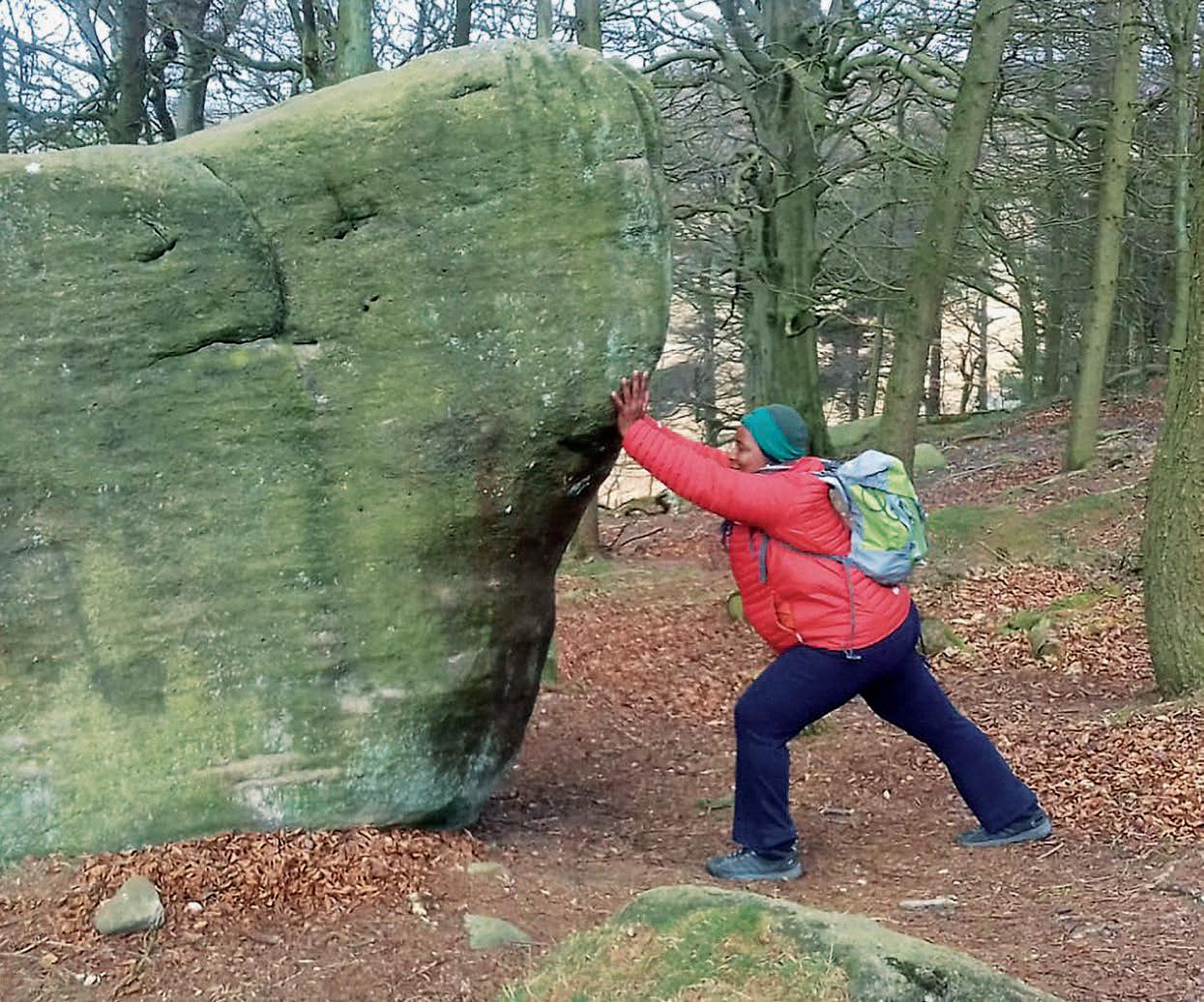
This is Yvonne, at home in the Peak. She applied to the Alpkit foundation for funding of an event where all the Peak District Mosaic Champions can meet at the same place. That meant mini buses from Sheffield and Stoke, a car from Manchester and some fruit and water. Total funding was £620. Small steps make a big difference. This is just one project out of a 1000, made possible by you, our customers. Thank you.
MEET THE PEAK DISTRICT MOSAIC GROUP
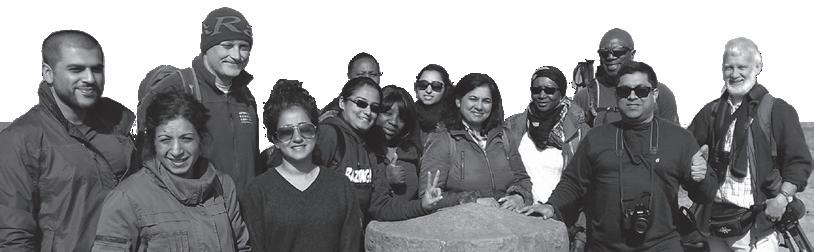
The Peak District Mosaic Group is a collective made up of individuals from black and minority ethnic communities around the Peak District National Park. They give their time to mentor, increase confidence and support communities to access the national park, working with anyone who wishes to increase their physical activity and improve health and wellbeing by visiting the national park and surrounding countryside. Follow Peak District Mosaic on Twitter: @CHAMPIO51749703
APPLY OR DONATE
Do you know of a deserving project or think you’re someone that only needs a bit of backing to make a big difference? It’s simple to apply or donate. Find out more at alpkit.com/foundation.
OVER £300,000 AWARDED TO MORE THAN 1000 INCREDIBLE PROJECTS
ALPKIT DONATES 1% OF SALES AND AT LEAST 10% OF ANNUAL PROFIT TO SUPPORT GRASS ROOTS PROJECTS.
Alpkit Foundation is the charity that helps people go nice places do good things. We’ve supported over 1000 grass-roots direct action projects that tackle issues such as diversity & inclusion in the outdoors, participation, education, conservation and protection of our natural environment and health & well-being.
Katie Palmer, one of our Alpkiteers, is a runner/cyclist from Kendal. She can often be found on the Lakeland fells with a pocketful of fig rolls and her loyal brown Kelpie dog Ernie by her side.
Photography: Ian Palmer
In a recent ‘Uphill Athlete’ podcast about women in ultras, coach Scott Johnston said ‘…typically the men that come in grossly overestimate their current fitness levels, whereas women come in… self-deprecating and more concerned they’re not good enough. In both cases they’re typically wrong’.
I know, I know. Sweeping gender generalisations are not very 21st century. But my goodness, here in the Palmer household and indeed, many athletic households that I know, there’s more than a nugget of truth in Johnston’s words. There are undoubtedly some confident lasses and self-doubting lads out there but, in my humble experience, when faced with a ‘bigger than anything I’ve ever done before’ challenge, this is what I’ve seen in both myself and in others:
Man: I really fancy doing that therefore I can and I will.
Woman: I really fancy doing that but I don’t think I’m fit enough and even if I train really hard, will it be enough in the time I have and what if I can’t do it and what if I get injured during training and what if after all that I fail…arghhhhhh?!
The West Highland Way
95.6 miles with 3155m of ascent from the outskirts of Glasgow to Fort William. 35,000 people do it annually, mostly walkers, taking around 8 days on average. Ultrarunner Rob Sinclair ran the whole lot in 13 hours and 41 minutes in 2017. Alpkiteer husband Ian Palmer ‘is going to run it’ this summer in 4 days. I, on
the other hand, am already considering booking a physio appointment/hospital bed/my own funeral to cope with the ‘inevitable’ physical catastrophe this challenge will wreak upon my body. Breakfast table conversations are currently something like this:
Me: I’m just not sure I can do this.
Ian: Course you can, I’ve done it before, it’s fine, it’s pretty much flat.
Me: You came home after 1 night and said it was one of the worst experiences of your life (see Ian’s article on the Murdery Bothy). Plus it’s 3000m of ascent.
Ian: It wasn’t too bad. Except the awful bits.
Me: It’s too far. I can only run 15 miles at the moment. How am I supposed to do an extra 10 then repeat it for the next 3 days?
Ian: I don’t know what you’re making such a fuss about, it’s just like walking to Lancaster from here and I can see that from the window.
Me: But what about you? You’re hardly doing any running at the moment.
Ian: Pah, I’ll be fine. I’ve got legs.
In reality, I am racking up way more running miles than Ian, but, professional selfdoubter that I am, cannot currently imagine being able to run a marathon distance every day for 4 days. My body composition is 75% tendinopathy, (hamstrings, hips and a random elbow) and 25% fear. Is it madness to be even considering it?
Our plans are further hampered by the logistics of doing the WHW during a pandemic. Summer 2021 is set to be bursting at the seams with staycationers so that
35,000 could swell to 45 or 50 thousand and they all need beds for the night. Many will want tables in pubs for their evening meals. Will there be room for us?
Our Four Options
1. The ‘luxury’ edit. Book B&Bs each nights, eat out and carry small packs. The downside is the cost and the risk of everything being booked up.
2. Book a Sherpa service to take camping kit to 3 sites along the way. The downside is trying to get into a sleeping bag in a tiny tent with crampy legs plus campsites might be getting booked up soon.
3. Ian runs each day. I drive the camper van to the evening stop then running back to meet. This appeals to my legs but less so to my sense of adventure or pride.
4. Carry everything on our backs but reduce speed to a walk. If campsites are full, we can wild camp but the downside is that it will take forever.
Options 1 and 2 mean committing to specific dates when the weather could be terrible, but we can actually run the route. 3 and 4 give us the freedom to do it on a whim when the weather is good but will mean either one or both of us will have to compromise on the running.
So, what’s next? Firstly, we’ll have to agree on which option we take and, if necessary, get things booked. Secondly, we’ll have to tailor the training which might mean keeping on upping the mileage or it might mean practicing walking with heavy packs. Lastly, I’ll have to try to suppress my ‘worst case scenario’ anxieties and try to think more like Ian; can we do it? Yes we can! After all, we do indeed ‘have legs’ so how hard can it be…?
Big dreams, tiny homes.
We’ve put all our tiny home making experience into our two newest offerings. With holiday accommodation at the premium this summer, we figured specialist tents for bike and backpacking where weight and space are at a premium would be just the ticket. That’s your cue to plan a dream trip... go pitch.
No poles, no problem.
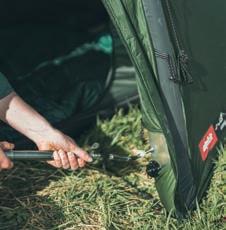
Ben uses his walking poles to pitch (and as dual lightsabers when no-one is around) just before sunset. He’ll be up with the sunrise.
POLESTAR
A tent with no poles; the backpacker’s dream.
A stable sub-1kg tent that pitches using your own trekking poles, cutting down on weight and packsize without compromising on reliability or comfort.
Polestar
£139.99
980 grams 1 person 3 season Pitches using your trekking poles
Incredibly stuff-able; destined for your bikepacking bags.
3-season tent for space-starved bikepackers and backpackers. Uses an innovative TPU air pole in place of a long alloy pole and inflates by bike pump (Schrader valve) or foot pump.
1200 grams 1 or 2 person
3 season
Air pole inflates by bike or foot pump
Sarah is our newest Alpkiteer, wahoo! A proud Welshwoman with exploration in her blood, she documents her often slightly bonkers hiking, paddleboarding and camping adventures on YouTube. We asked her a few questions so you can get to know her a bit better.
1/ Can you describe yourself in a few words? A lover of the outdoors, and an advocate for UK adventure (because the UK is amazing!) I like to spend more time outside than in, and have way too many hobbies.
2/ Where did your outdoor interest originally come from? I didn’t have what you might class as an ‘outdoorsy’ upbringing but I did grow up outside. We made dens, climbed on everything, cycled everywhere and spent the entire school holidays outside from sunrise to sunset, making our own fun.
I studied the Science of Health at university and through the Officer Training Corps went on expeditions hiking across Iceland and Corsica. That really expanded my horizons and made me realise what I could do.
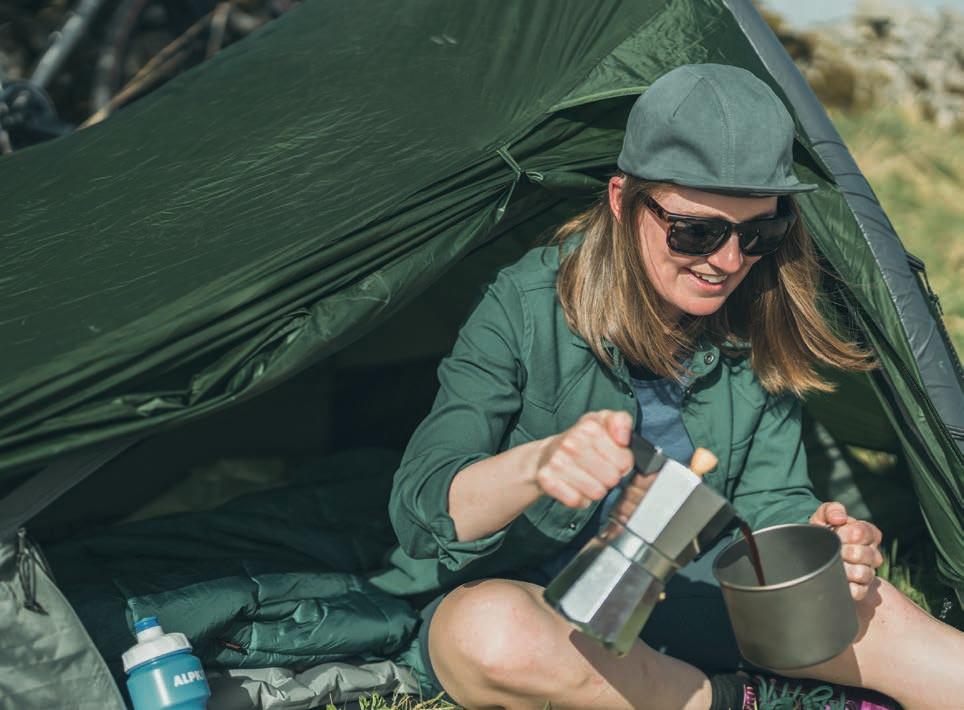
3/ When wild camping do you prefer a Sunrise or Sunset? Sunrise, every time. It means I have the whole day ahead of me. I like to be up in the mountains before anyone else, sipping coffee and having a moment of peace before the day gets crazy.
4/ What advice would you offer a first time hillwalker? Always pack enough food and layers - you can tackle anything if you’re warm and fed!
5/ Are there any National trails you would like to do? The Cambrian Way - it goes from one end of Wales to the other. Having explored many areas in Wales, I’d like the opportunity to join many of them up into one long trail. Also the Cape Wrath Trail in Scotland, which I’m hoping to do some, if not all of, this year.
6/ Where does your motivation come from? Like when it’s raining or you have to wake up extra early? I think it’s just knowing what I’ll get out of doing it. If I find myself thinking ‘I don’t want to’, I quickly snap out of it because I know that once I’ve gotten over the hurdle of the early start or the weather, I’ll have an amazing time. Also, if I look at the alternative, which would be to not do the thing, then that sucks more.
7/ Do you prefer sleeping in a tent, bivvy or tarp? Tent, if I’m doing a bivvy or tarp it’s just because I want to carry less stuff. I love being in my tent, it’s like a cosy little bedroom.
8/ Any tips on how to incorporate wild swimming during a hike? Firstly remember to take your swim stuff if you think there’s even a tiny chance you might want to do a swim - I can’t tell you how many times I’ve taken unplanned dunks and had to sacrifice an item of clothing as a towel.
If it’s winter then do it towards the end of the hike so it won’t be long until you’re back in the car with the heaters on. Also, definitely pack a hot drink - you need to be warmed from the inside afterwards, especially if you’re a freezer like me.
9/ What’s your no.1 item of gear? Ooooooft that’s hard. Does my van count? It means I get to bring all the options with me. Otherwise, it’s probably my water filtration systema game changer for expeditions.
10/ What adventures do you have planned for 2021? If 2021 goes to plan then I’ll be paddle boarding, hiking and cycling across Scotland this year. If it doesn’t, that’ll be on the 2022 agenda.
Otherwise, I’m really looking to get some bikepacking adventures in and more long distance UK hiking trails. Anything could happen though, I take opportunities as they come.
Sarah at the summit of Stac Pollaidh, Scotland
Run. Swim. Hike. Dip.
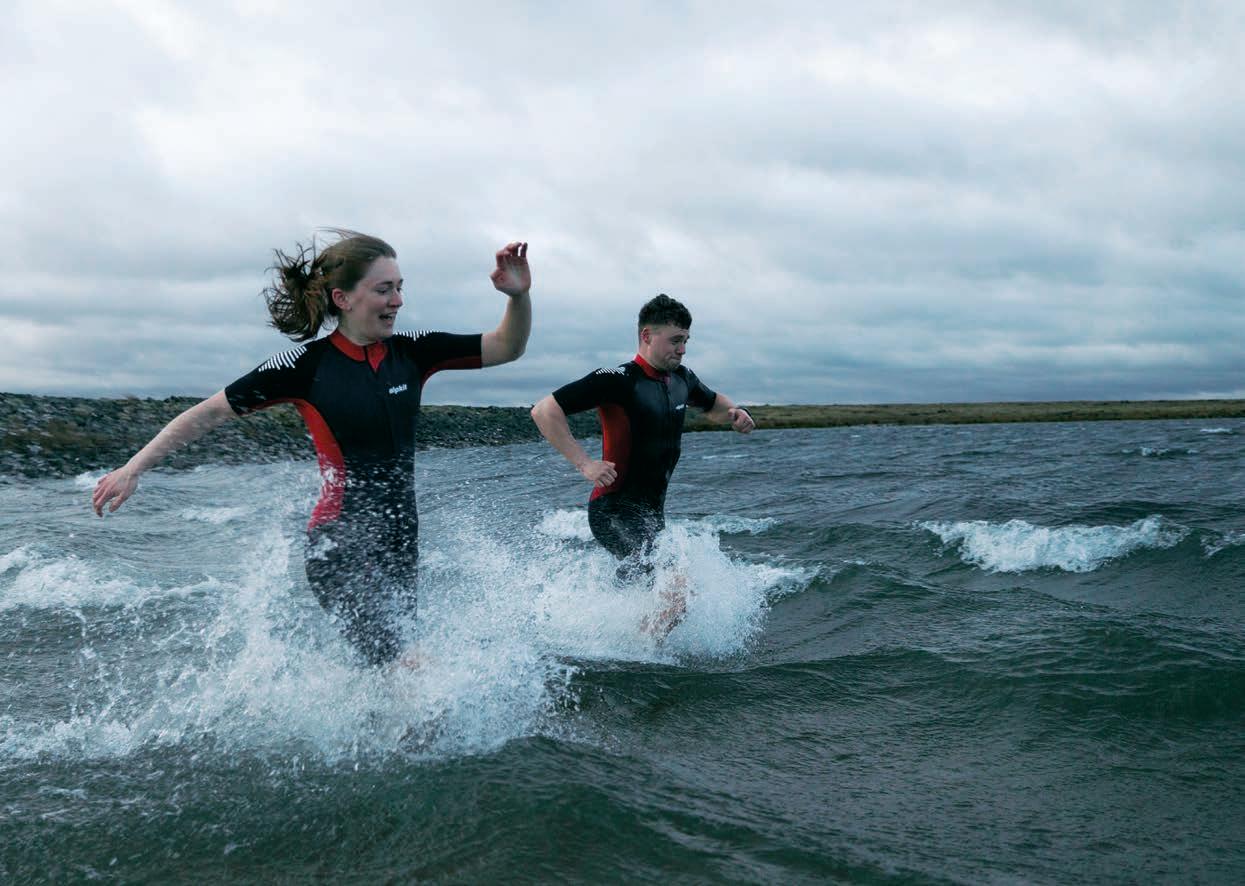
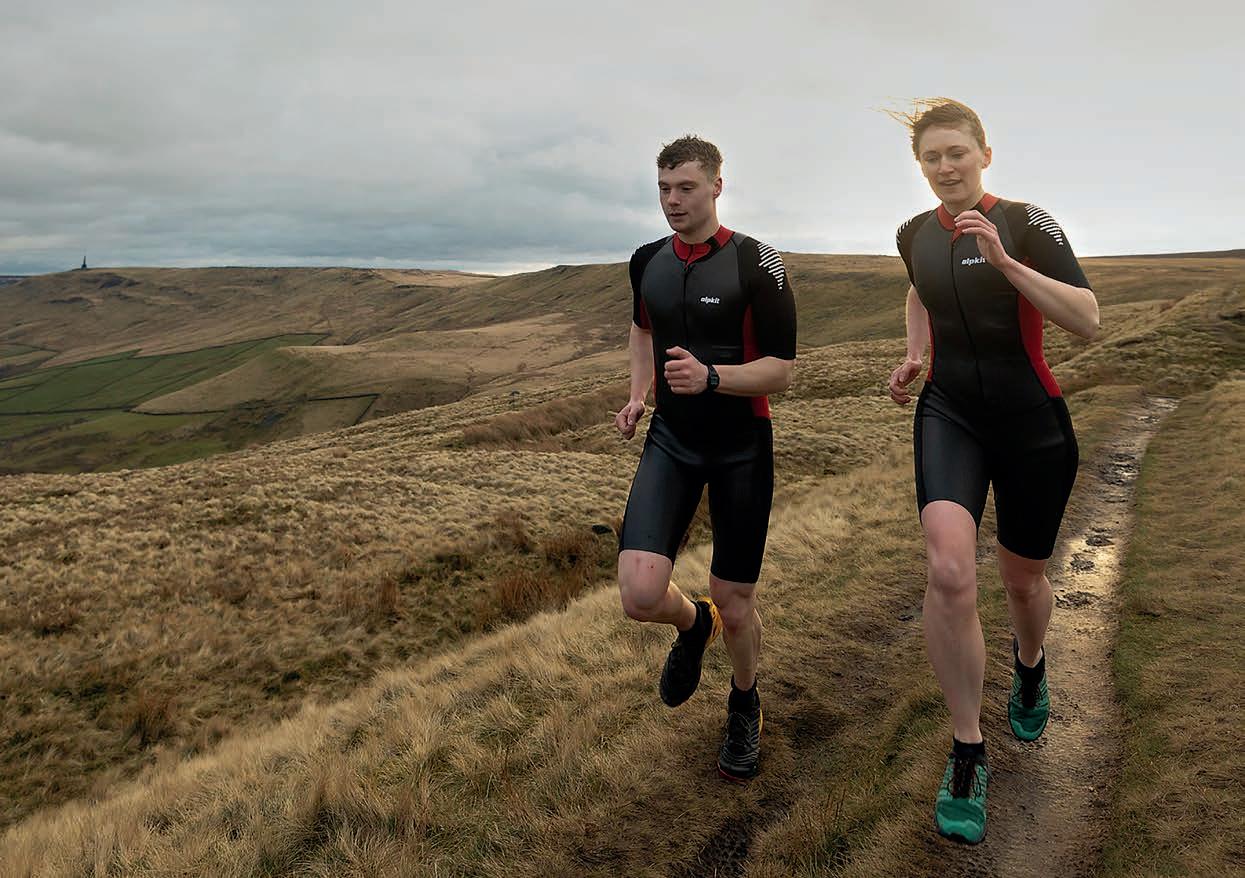
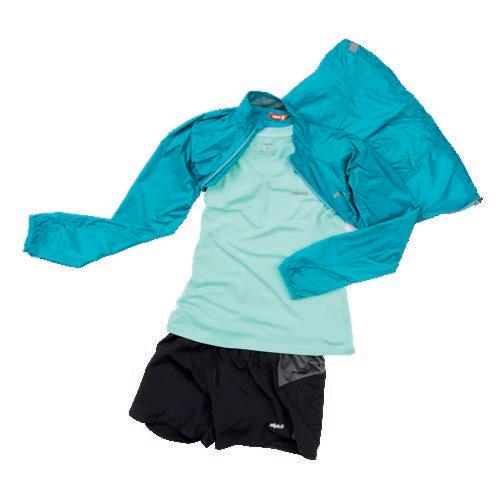
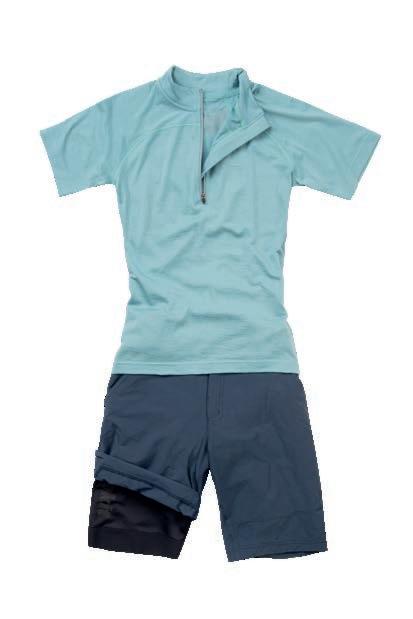
Wearing the Duel means obstacles become opportunities. A completely different way to get from A - B; overland and through water.
Easy to put on for running with a front zip, and easy to be seen with reflective shoulder graphics. The short legs and arms with thinner hip panels are perfect for total freedom of movement.
Swim, run, swim and do it all again.
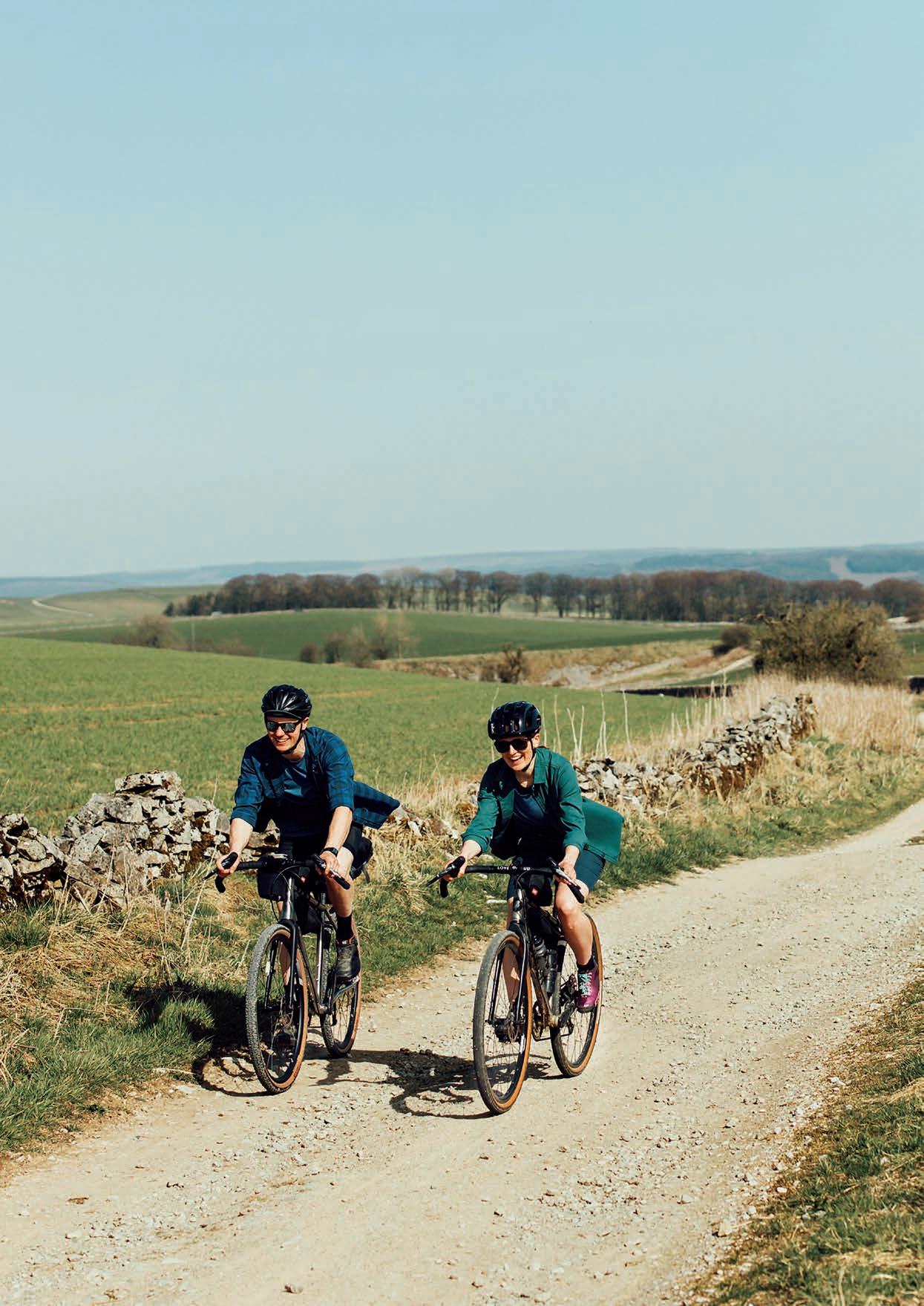
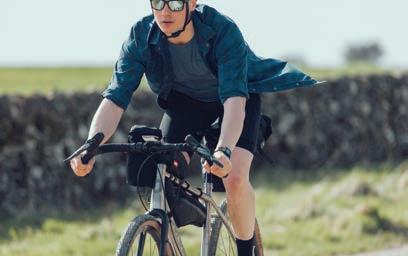
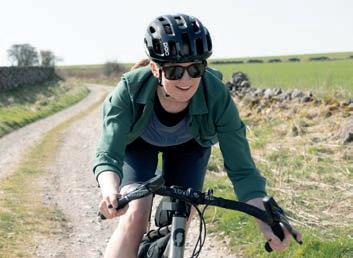
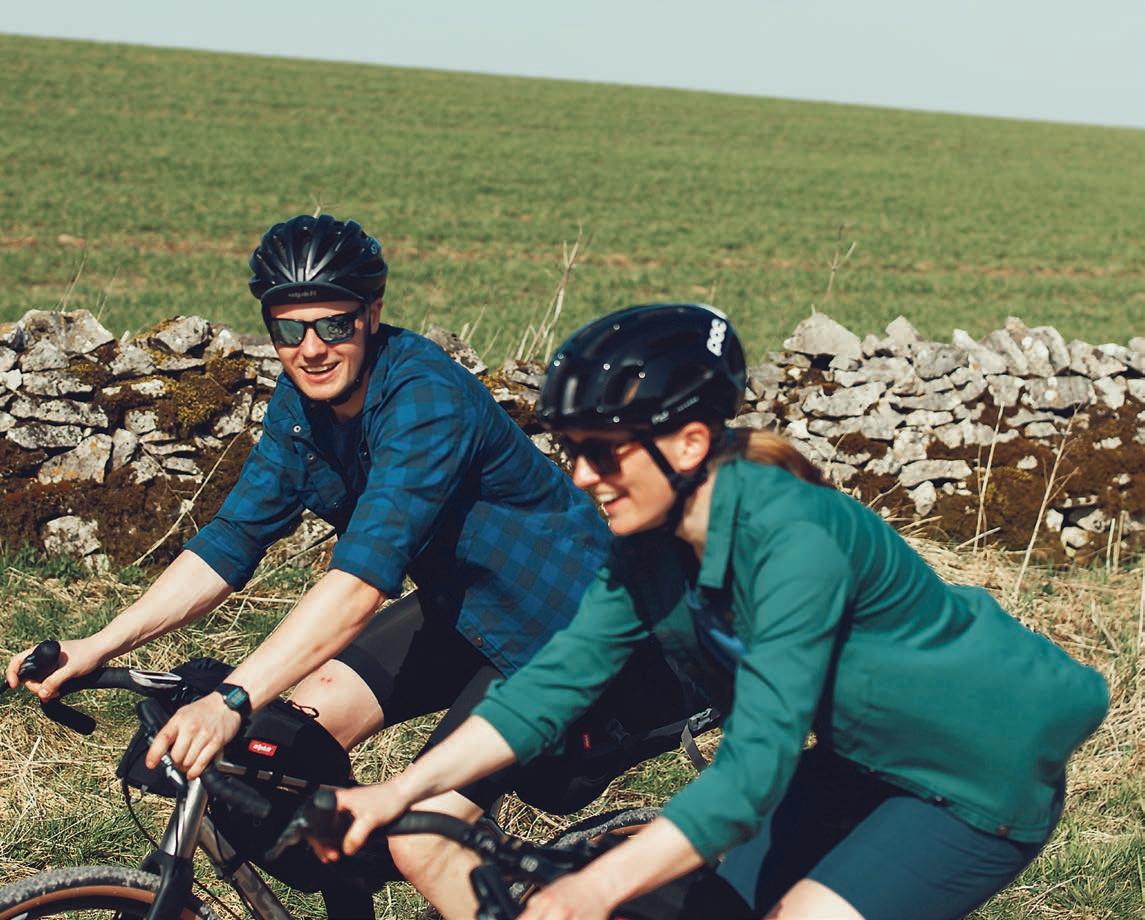
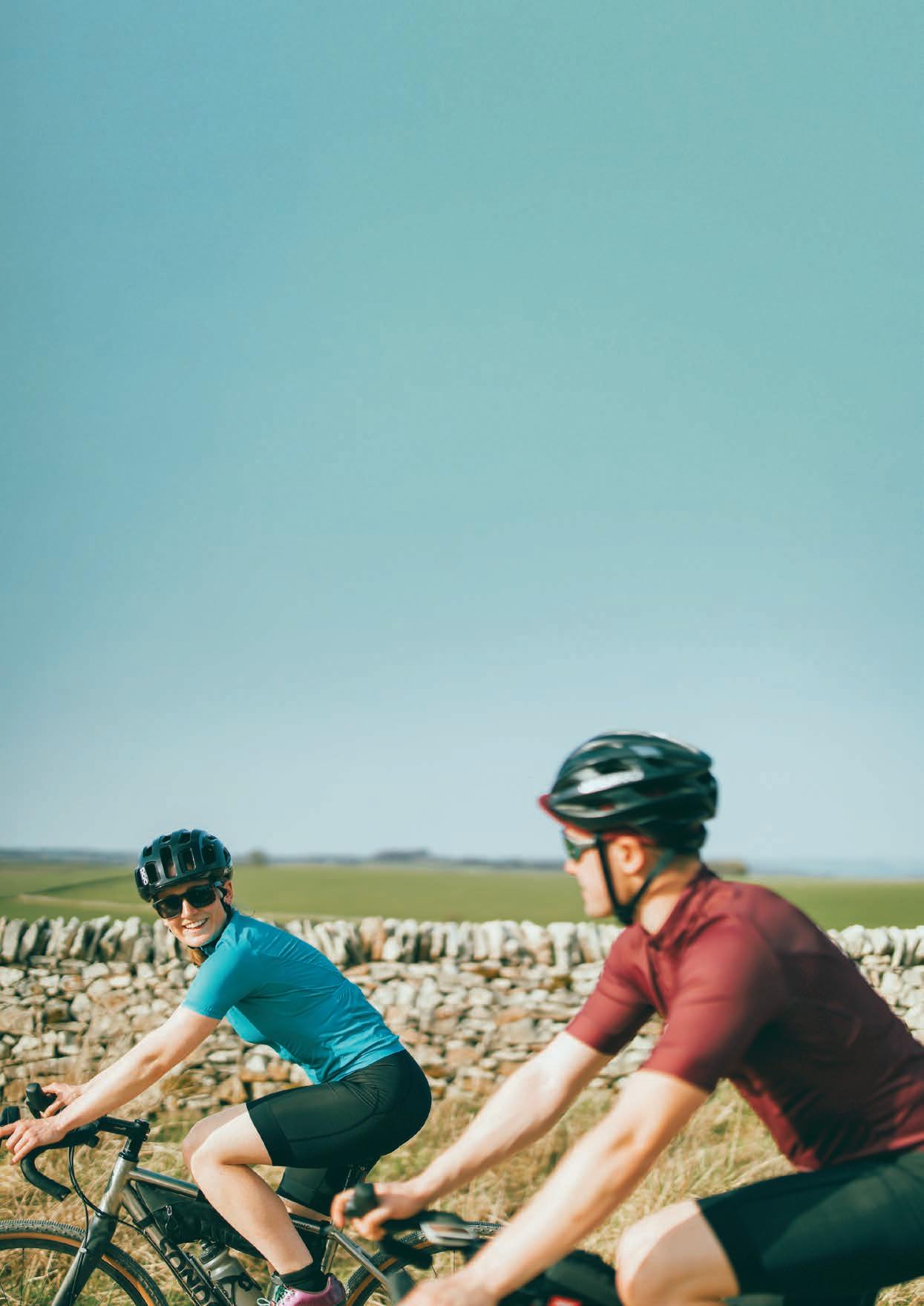
Bikepacking is one of our favourite ways to investigate the UK’s oldest rights of way. It’s also a great excuse not to shower for several days. Win win!
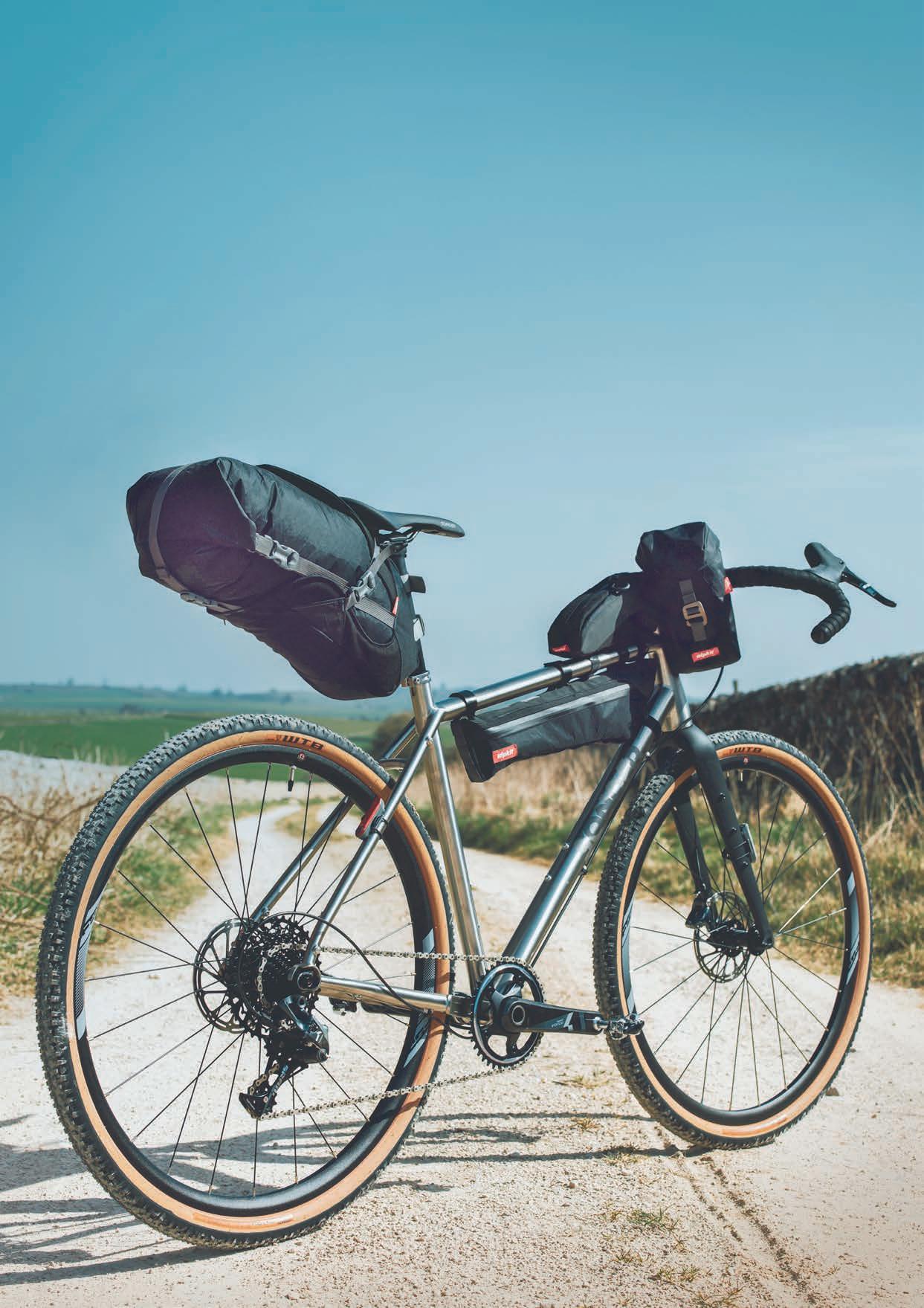
BIKES FOR LIFE Our Titanium frames are backed by our Alpine Bond for 10 years. When you buy any Sonder, it’s designed to last you a long time. But it’s particularly true of our Titanium frames. They take knocks and bumps brilliantly and don’t corrode or rust. Titanium is also easy to recycle: most of the energy is used in refining the ore so recycling titanium is very worthwhile when they eventually reach the end. We love Ti.
Our new 1200g air inflated tent was developed with bikepacking in mind.
Woodsmoke Shirts
What came first, flappy shirts or gravel riders? Nobody knows.
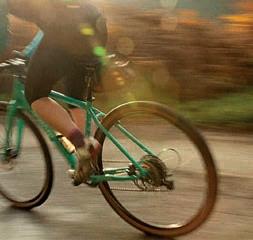
Pack all of your kit into tiny bags, affix them firmly to your bicycle of choice, plot a route and hit the road/trail/doubletrack.
Once you begin looking for rideable rights of way, ones that hit the sweet-spot of not too rough or overgrown, open to the bicycles and not a dead end, you’ll start seeing them everywhere. Humans have moved themselves, their armies, livestock and allsorts between places for a long time and not every route has been deemed tarmacable for motorised use. These less used ways are the holy grail for a good on/ off road bike packing trip.
It’s nice to trace these old ways and appreciate how people moved around in times gone by. The UK is littered with them too, so you’re in a good place. Find some friends to explore some old ways and you’re in for a good bikepacking trip.
Route planning
A real Camino?
Ben and Hannah
ways
Roads built to move herds of cattle should have more than enough room for you and your mates to bimble along, with no cars to worry about. The technology has come on a bit; modern merino should keep things smelling a bit better and 18th C shepherds were yet to benefit from tubeless tyres. No doubt they’d love a BruKit to have roadside brews ready in just minutes.
Blessed be the route makers. The most likely to cop a load of stick if the route is deemed too hard, not hard enough or without frequent enough cake and coffee eating opportunities. There are plenty of places to go for tried and testing route inspiration. Komoot, for example or bikepacking.com are a good starting place. If you’re taking it on yourself, just remember to cater for riding with all the extra weight and how good it feels to take things a bit slower when exploring.
Aeronaut
seeking old
in the White Peak on an incredibly rare sunny day in March.
Aeronaut
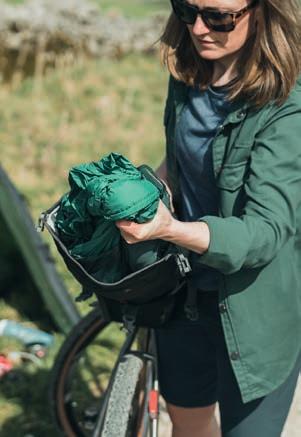
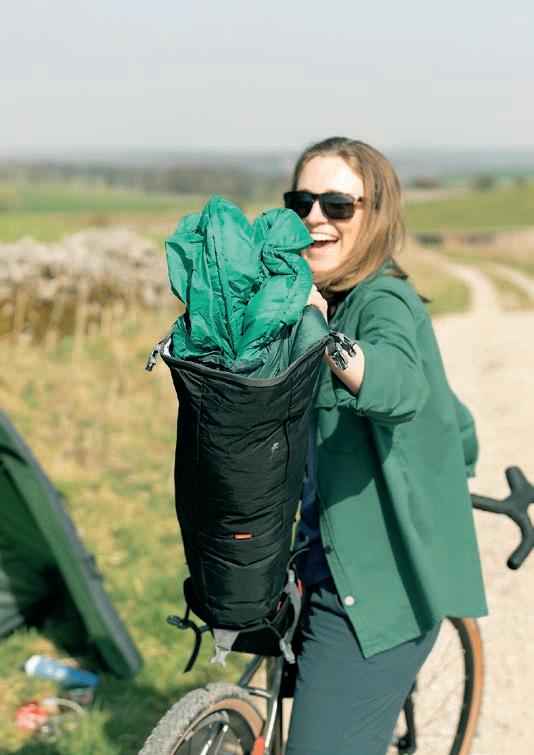
Hannah demonstrates how well a tent that doesn’t need poles crams into a seatpack.
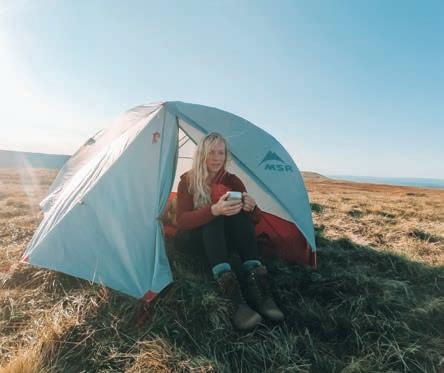
A tent made for bikepacking
Ah yes, we’ve been mulling this over for quite a while now - what would our perfect bikepacking tent be? The Narnia wardrobe with inbuilt jacuzzi version didn’t get far along the development line so we turned our attention to increased stuffability
Tent poles cannot be stuffed easily into bikepacking bags. This is the likely reason why the bivvy bag or tarp option is so well favoured among bikepackers.
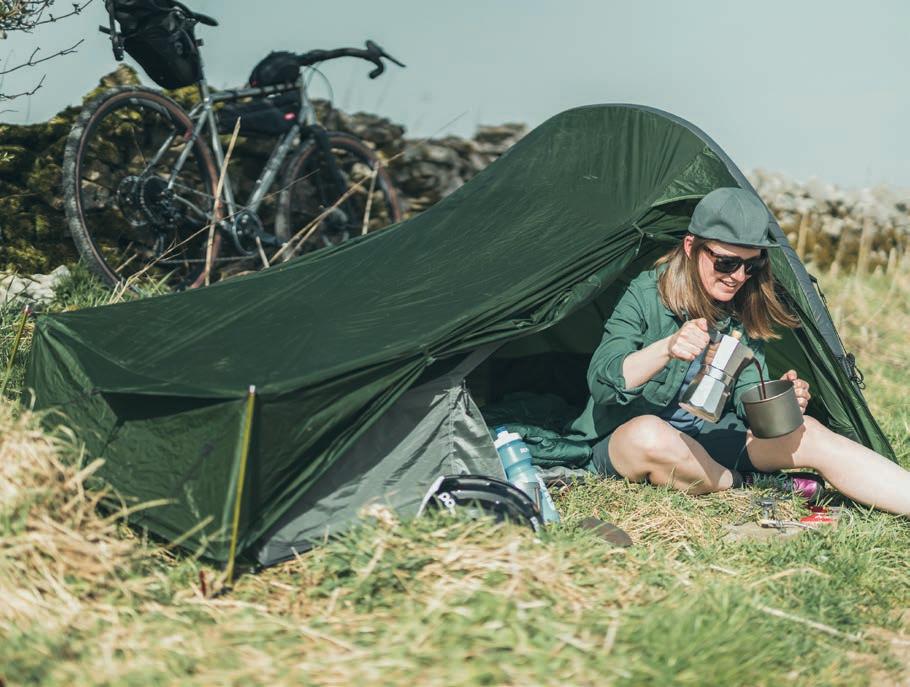
So, what if we remove the need for long poles? That was the thinking behind our new Aeronaut tent. The structural stability comes courtesy of an inflatable ‘pole’ that you can simply inflate with your trusty bike pump. Fancy CO 2 canisters not recommended for this application.
The result is a roomy, fast pitching lightweight tent that you can stuff into your most oddly shaped bag at some ungodly hour. We’ll keep working on the jacuzzi bit.
DROVERS’ ROADS
Ancient routes used to drive large herds or flocks between markets or grazing grounds, dating back to the medieval ages.
Many original drovers’ roads have been tarmacked for motorised usage now as they picked the best route through the countryside.
The most characteristic feature of these roads are high hedges and walls or the occasional sharp turn in the road, which provided shelter. Scotland and Wales have the best original examples now, but you can find them in England too. They often make for great gravel riding.
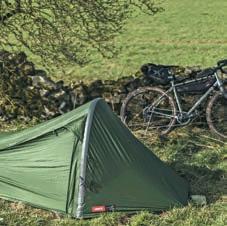
A classic ‘side of the trail’ bikepacking pitch.
Bikepack with friends, it’s good for you.
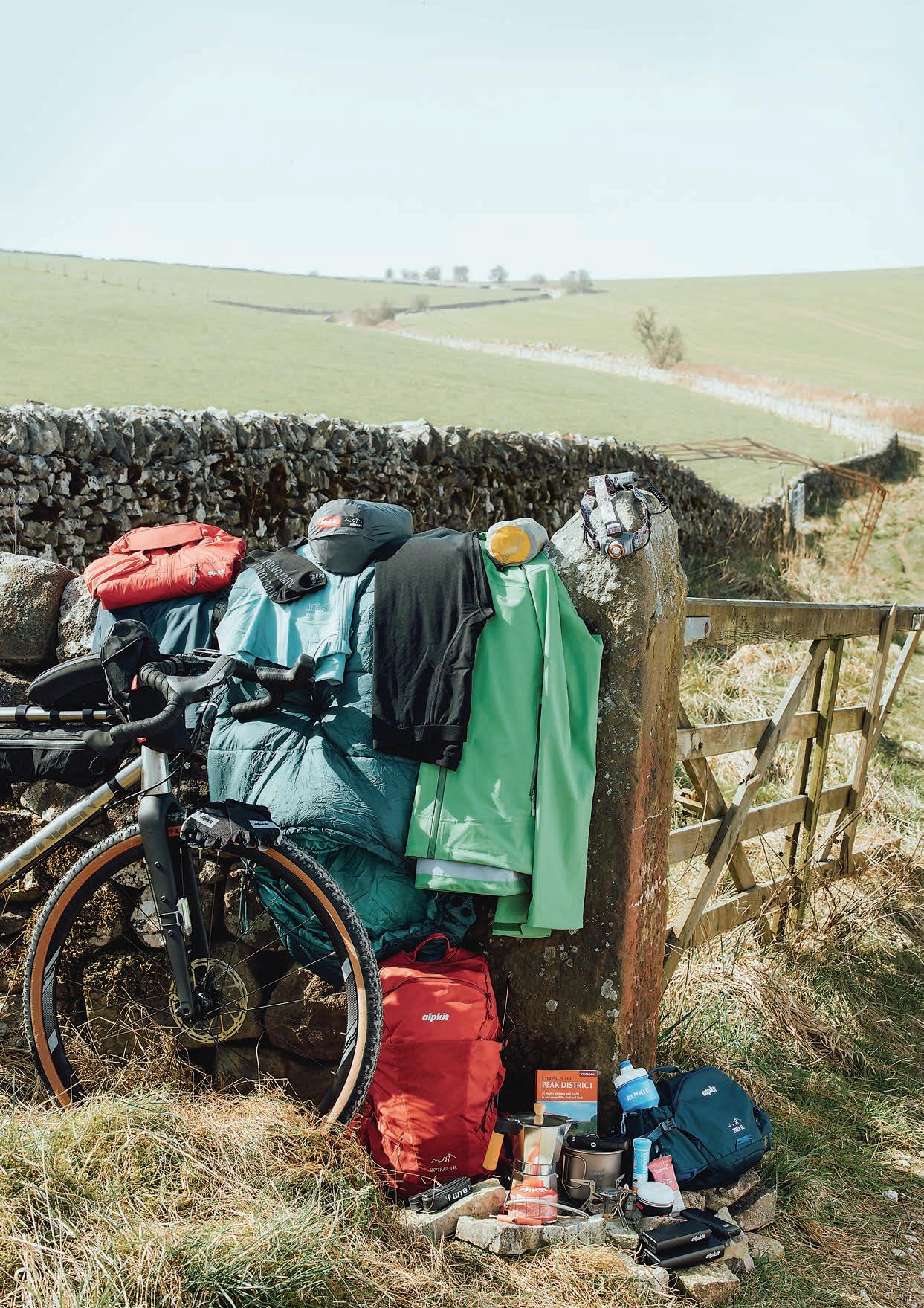
GEAR FOR pedal-powered Exploration
1. Morphosis Jacket Hybrid insulated. £99.99
2. Momentum 3-pack Merino socks. £23.99
3. Strada Cycling Shorts Quick drying for biking and touring. £59.99
4. Kepler Velo Jersey 100% Merino cycling short sleeve. £59.99
5. Rhythm Gloves Fingerless with zoned palm padding. £19.99
6. Aeronaut 1
Stuff-able 3-season inflatable tent. £179.99
Sonder Camino
7. Kepler Long John Temperature regulating ultrafine Merino. £49.99
8. Cloud Base Lightweight inflatable camping mat. £44.99
9. Balance Jacket Multi-activity fit Waterproof. £179.99
10. Manta Head Torch Rechargeable (lasts up to 11 hrs). £39.99
15. Koro Camping Stove High powered titanium. £47.99
16. Nuun Sport hydration x10 tablets. £6.99
17. Outdoor Provisions All-natural energy bars. £1.90
18. Lampray USB charging station and lantern. £39.99
19. Sonder key Hex key for bikes. £4.99
20. Primus Power Gas 3-season mix camping gas canister. £3.99
21. Juice Boost 5,000mAh. £14.99
22. Juice Tank 10,000mAh. £29.99
23. Juice Holder 20,000mAh. £34.99
24. MyMokka Stovetop espresso maker. £12.99
25. WTB Inner Tube Road 700c tube. £6.00
26. Cycling in the Peak District Guide. £12.95
27. Possum Frame bag Twin pocketed, shaped for modern MTB. £75.99
28. NEW Enduro Pod Top tube-mounted 0.75L bikepacking bag. £33.99
29. Stem Cell Stem-mounted bag for bikepacking. £32.99
30. Tau Rechargeable LED bike lights. £14.99
1. BUILD
Use our Bike Builder to tell us exactly how you want your Sonder.
Different bars and a dropper post? Suspension upgrade and 650B wheels with a tubeless set-up?
Questions during your build? We’re just at the end of the phone.
TRY BEFORE YOU BUY
2. PAY
Credit/Debit Card.
All major Cycle to Work schemes. Finance available with flexible options to suit you.
Bikes are available to demo for free for an hour or two from our stores. Or, you can hire a Sonder for the whole day, weekend or longer. We’ll deliver it to your door and arrange a pick-up when you’re done. You’ll get a full refund of the rental cost should you go on to by one.
MEET THE FAMILY
See the full range, from rowdy to roady at sonderbikes.com
3. PLAN YOUR NEXT RIDE
The team at Alpkit HQ will send a photo of your bike as it’s being built. You’ll get tracking details and it’ll arrive nearly fully assembled. Just put in the front wheel, bars and pedals and you’re good to go.
28 DAY RIDE GUARANTEE
If you don’t love your Sonder you can send it back for a no-quibble refund within 28 days.
This is Liam. Dream bike builder. Human.
YOU’RE ONE IN A MILLION
(One in 111,476,736 to be precise)
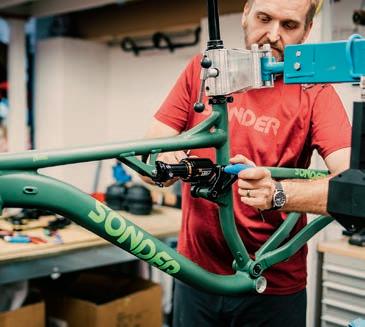
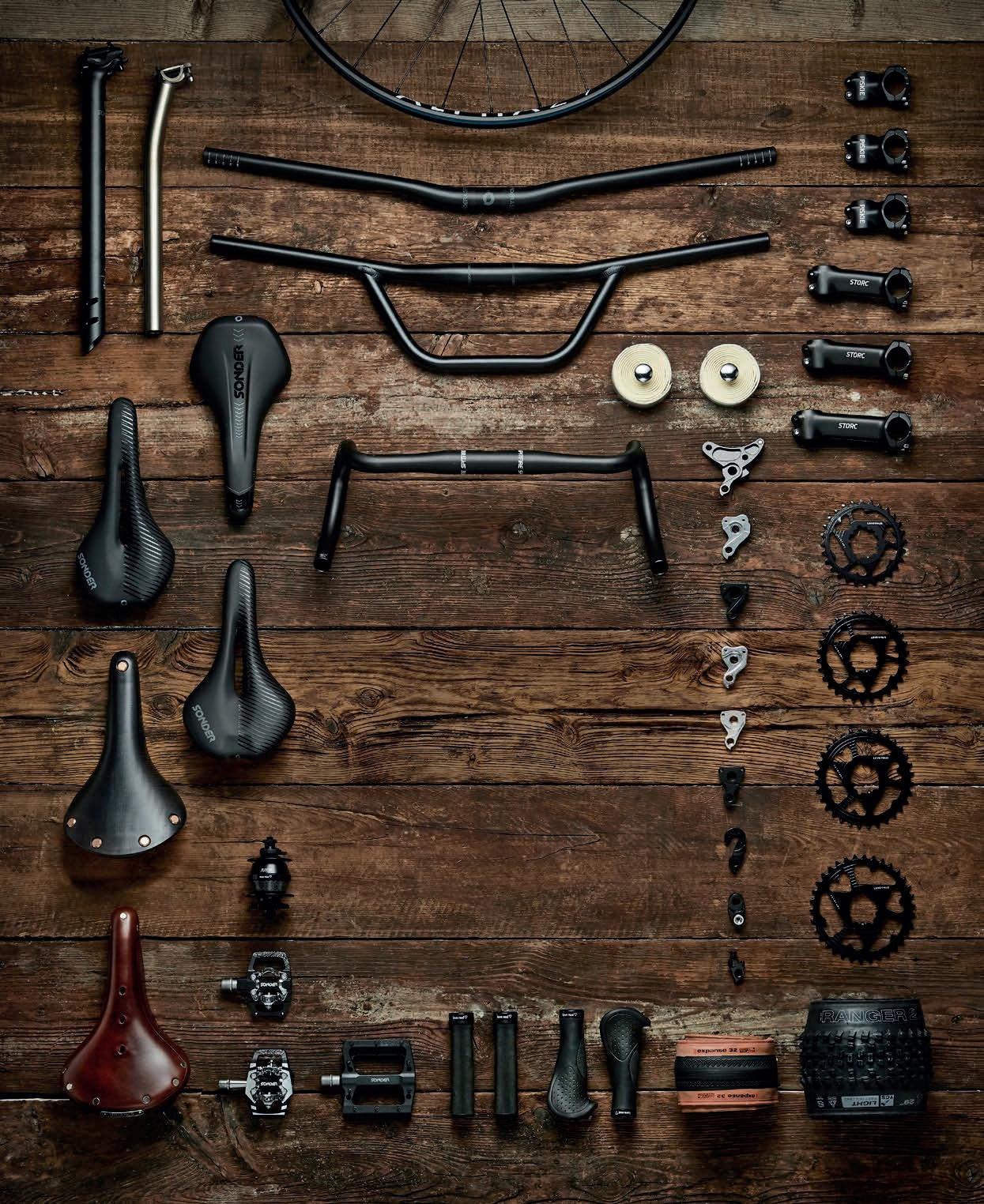
That’s how many combinations are possible with our range of Sonder components. Individually designed for a specific purpose, expertly made and field-tested by us, ready to assemble for you in the UK.
So whatever your size, riding style, niggles or quirks, you can find your perfect build; all parts working together in harmony, just like we’ve designed them to.
We ,re dreaming of those seemingly endless summer weekends where you can hike early in the mist and be back to grab lunch in the garden and a snooze in the hammock.
Stealing all the ice cubes for your water bottles before slipping into riding kit to blast around the local dusty trails.
Barbecue refuel, stay up late and sleep with no covers. Contented but impatient for tomorrow.
Start Sunday early running in the fells with the dog, salty sweat drying in your hair as you make coffee back at home. Topped off with golden hour problem solving at the crag with friends.
Koulin
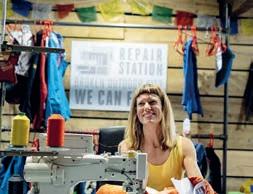
Make do and mend with the Alpkit Repair Station Their experienced seamsters will repair your best loved kit and give it a new lease of life. From specialist down wash, reproofing an old waterproof to mending zips and fixing