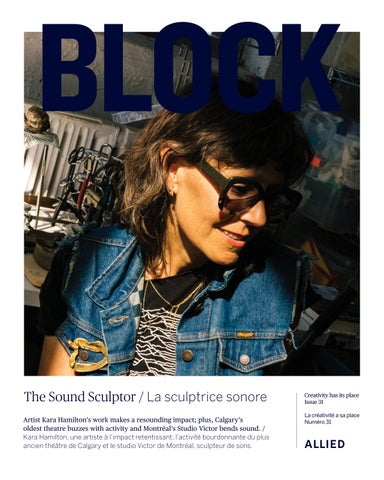

The
Sound Sculptor / La sculptrice sonore
Artist Kara Hamilton’s work makes a resounding impact; plus, Calgary’s oldest theatre buzzes with activity and Montréal’s Studio Victor bends sound. / Kara Hamilton, une artiste à l’impact retentissant, l’activité bourdonnante du plus ancien théâtre de Calgary et le studio Victor de Montréal, sculpteur de sons.
Creativity has its place
Issue 31
La créativité a sa place
Numéro 31
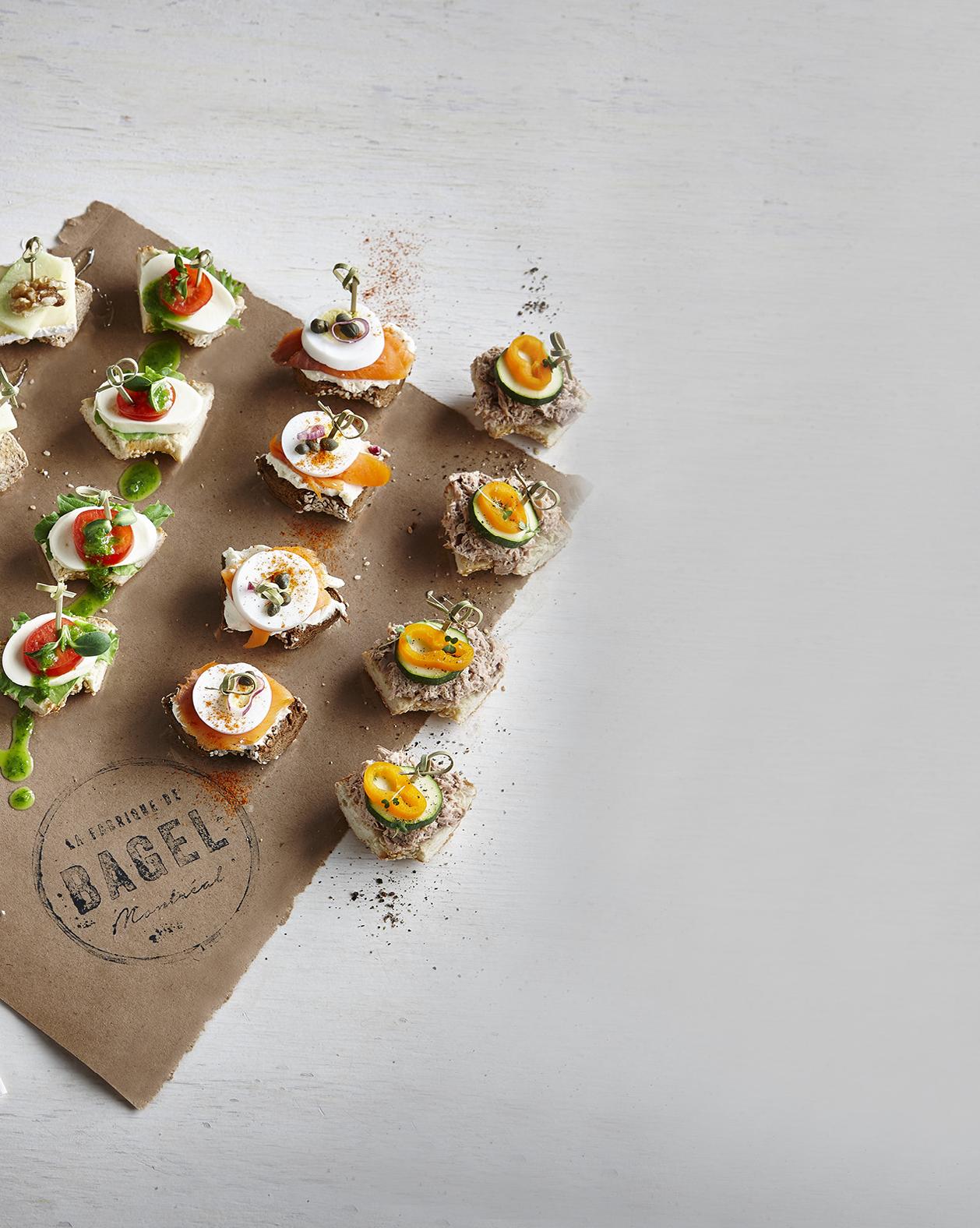
9 FABRIQUES AU QUÉBEC de Montréal à Granby
frais du jour


In this issue / Dans ce numéro
CONTRIBUTORS / NOS COLLABORATEURS 5
THE STARTING BLOCK / BLOC DE DÉPART Reflecting on this issue’s theme: sound and music. / Réflexion sur le thème de ce numéro en son et en musique. 7
THE MOMENT / LE MOMENT A live recording and conversation at The Grand in Calgary. / Une séance d’enregistrement au théâtre The Grand à Calgary. 8
MY SPACE / MON ESPACE A Toronto DJ rehearsal space that takes craft seriously. / Un lieu de répétition pour DJ qui prend le métier au sérieux. 13
THE BUSINESS / L’ENTREPRISE Making performance more accessible with the Inside Out Theatre’s Col Cseke. / Col Cseke rend le théâtre plus accessible avec Inside Out. 14
ARTIST’S BLOCK / ART EN BLOC Mani Mazinani’s block is a pentatonic scale. / La gamme pentatonique du cube de Mani Mazinani. 16
THE INTERIOR / L’INTÉRIEUR A look inside the former RCA Victor’s Canadian headquarters in Montréal. / On jette un œil sur l’ancien siège social canadien de RCA Victor à Montréal. 18
THE CREATOR / LA CRÉATRICE On the cover: Artist
Kara Hamilton works in negative sound. The curatorial collective she founded with fellow cancer survivors explores sound’s impact on well-being. / En couverture : l’artiste Kara Hamilton explore le son, son absence et son impact sur le bienêtre avec le collectif qu’elle a fondé avec deux autres survivantes du cancer. 24

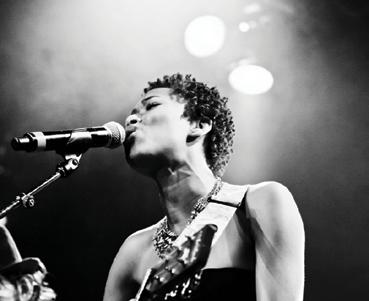
WORK-IN-PROGRESS / LE CHANTIER
Ebonnie Rowe and Honey Jam celebrate 30 years of empowering female artists. / Ebonnie Rowe et Honey Jam célèbrent 30 ans d’émancipation des femmes artistes.
30
THE CONVERSATION / LA CONVERSATION An architect and an organizer sing praises for live performance and music education in cities. / Un architecte et un directeur d’école de musique chantent les louanges du spectacle vivant.
MADE / FABRIQUÉ Vancouver-based Cree and Métis artist Michelle Sound’s cyanotype drums. / Les tambours cyanotypés de Michelle Sound, artiste crie et métisse vancouvéroise.
36
40
MAKE ROOM FOR THE ARTS / FAITES PLACE À L’ART Students and artists make beautiful music at the Allied Music Centre. / Élèves et artistes mettent leurs paroles en musique à l’Allied Music Centre.

THE 1 KM GUIDE / GUIDE 1 KM
43
Ice cream and tattoos in Saint-Henri and recommendations from RCA Victor-adjacent restaurant owner Ryan Gray. / Entre crème glacée et tatouage, le palmarès des bonnes adresses de Ryan Gray dans SaintHenri à Montréal.
44
NOW & THEN / D’HIER À AUJOURD’HUI How Montréal’s former Read building entered a new era. / Le changement d’ère de l’édifice Read à Montréal. 46
RETHINK / REPENSÉ It’s easy to complain about noise in the city, but there’s lots to like as well. / Les bruits citadins ne riment pas tous avec nuisance. 47
THE BLUEPRINT / LE PLAN D’ACTION A professional DJ advises on how to make a perfect mixtape. / Conseils de pro pour compilation parfaite.
48
FILL IN THE BLANK / VEUILLEZ COMBLER L’ESPACE Mitchell Keys’ urban infill. / La dent creuse de Mitchell Keys. 49

create. think. dream. invent.
Akin is a Toronto-based artist-run organization that provides creative studio space as well as arts-based programming.
We have two galleries and eight studio locations with memberships starting at $80/month. All memberships include 24/7 access, wifi, utilities, insurance, shared storage facilities, restroom and kitchenette access, communal workspaces and common area cleaning. Prices include HST.
We also offer sponsorship and donation opportunities for art supporters. Please visit our website and reach out to us at info@akincollective.com if you’d like to connect! www.akin.art

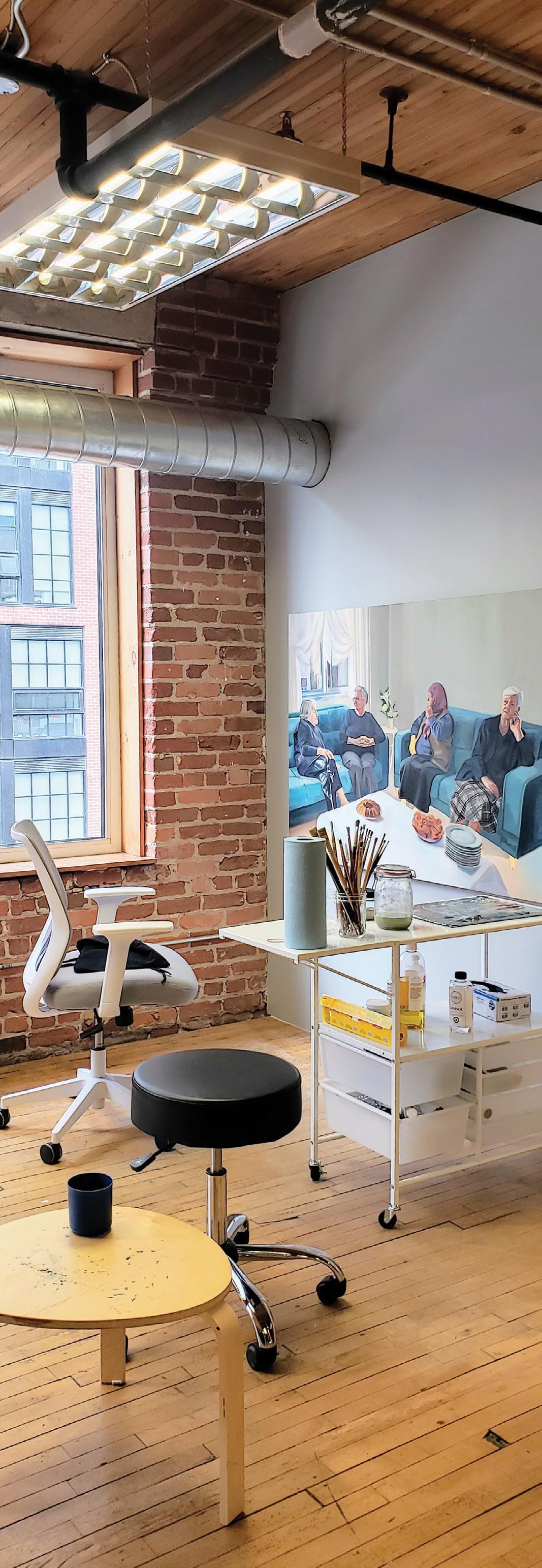
Pictured is Su Tarhan’s (@sutarhan) Akin Richmond-Bathurst studio. This Akin studio provides work space for over 100 creatives and it would not would not have been possible without Allied’s support.
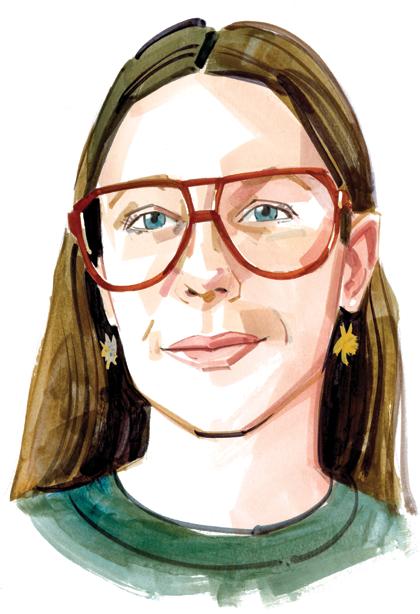
Artist and illustrator Melinda Josie does books, editorial work and freelance commissions (The Business, p. 14). In her downtime, she enjoys walks in the woods and foraging for mushrooms. / Artisteillustratrice, Melinda Josie (L’entreprise, p. 14) travaille pour l’édition et la presse en indépendante. Ses passetemps? Les promenades en forêt et la cueillette de champignons.
Mani Mazinani (Artist's Block, p. 16) is a Tehran-born, Toronto-based artist who makes installations, videos, films, sculptures, photographs, multiples, sounds and music. He is the 2025-'26 Connected Minds Artist-inResidence, developing his Solar Organ project. / Né à Téhéran, Mani Mazinani (Art en Bloc, p. 16) est un artiste multidisciplinaire torontois : installations, vidéo, sculpture, photographie, musique. Il travaille sur son projet Solar Organ dans le cadre de la résidence d’artiste Connected Minds 2025-2026.
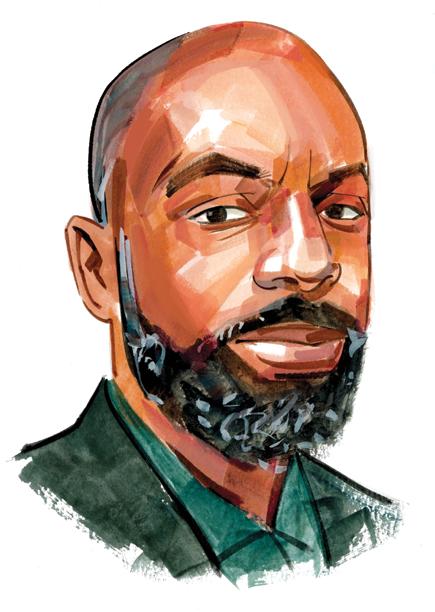

Byron Armstrong (The Creator, p. 24) is an award-winning freelance journalist who writes about arts, culture and community. His words have appeared in Forbes, The National Gallery of Canada, Esse Arts + Opinions, The Globe and Mail (books) and Whitehot Magazine. / Journaliste pigiste primé, Byron Armstrong (La créatrice, p. 24) se spécialise en art, culture et vie communautaire. Il collabore avec Forbes, le Musée des beaux-arts du Canada, Esse arts + opinions, The Globe and Mail (livres) et le magazine d’art contemporain Whitehot.
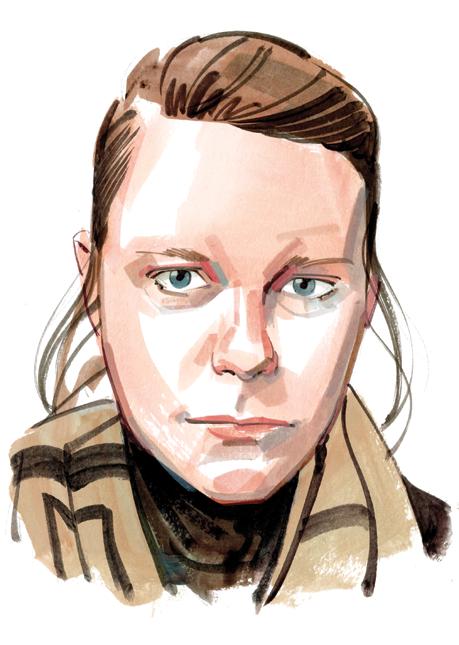
Kristina Ljubanovic is a designer and journalist, the strategy director at Whitman Emorson and the editor-in-chief of this magazine. For Rethink (p. 47), she wrote about some city sounds she likes. / Designer, journaliste, directrice de la stratégie chez Whitman Emorson et rédactrice en chef de ce magazine, Kristina Ljubanovic compile ses sons urbains préférés dans Repensé, p. 47.
ILLUSTRATIONS BY / PAR KAGAN MCLEOD
EDITOR-IN-CHIEF / RÉDACTRICE EN CHEF
Kristina Ljubanovic
CREATIVE DIRECTOR / DIRECTRICE ARTISTIQUE
Jacqueline Lane
FOUNDING CREATIVE DIRECTORS / COFONDATRICES ET CODIRECTRICES ARTISTIQUES
Yasemin Emory, Whitney Geller
MANAGING EDITOR / DIRECTRICE DE LA RÉDACTION
Hilary Riem
COMMISSIONING EDITOR / RESPONSABLE DES COMMANDES
Mélanie Ritchot
PHOTO & ILLUSTRATION EDITOR / ICONOGRAPHE
Catherine Dean
ASSISTANT PHOTO & ILLUSTRATION EDITOR / ASSISTANT ICONOGRAPHE
Michael Nyarkoh
DESIGNERS / GRAPHISTES
Aisling Gogan, Grant Irving
TRANSLATOR / TRADUCTRICE
Catherine Connes
COPY EDITORS – PROOFREADERS / RÉVISEURES – CORRECTRICES
Suzanne Aubin, Jane Fielding, Lesley Fraser
ALLIED
134 Peter Street, Suite 1700 Toronto, Ontario
M5V 2H2 Canada alliedreit.com
WHITMAN EMORSON
213 Sterling Road, Studio 200B Toronto, Ontario M6R 2B2 Canada
inquiry@whitmanemorson.com whitmanemorson.com
BLOCK IS PUBLISHED TWICE A YEAR. / BLOC EST PUBLIÉ DEUX FOIS PAR AN.







When space is intentionally and carefully designed, it doesn’t just amplify sound; it sculpts it. / Un espace conçu avec l’acoustique en tête ne se contente pas d’amplifier le son : il le sculpte.
The anechoic chamber at Orfield Laboratories in Minneapolis is purported to be the quietest place on the planet; the folded fibreglass surfaces absorb 99.99 per cent of sound. Of course, this is quite unlike our normal experience of the world, but it goes to show that architecture plays a large role in how sound bounces around and reaches—or doesn’t reach—our ears. When space is intentionally and carefully designed, it doesn’t just amplify sound; it sculpts it. In this way, architecture can be considered an instrument.
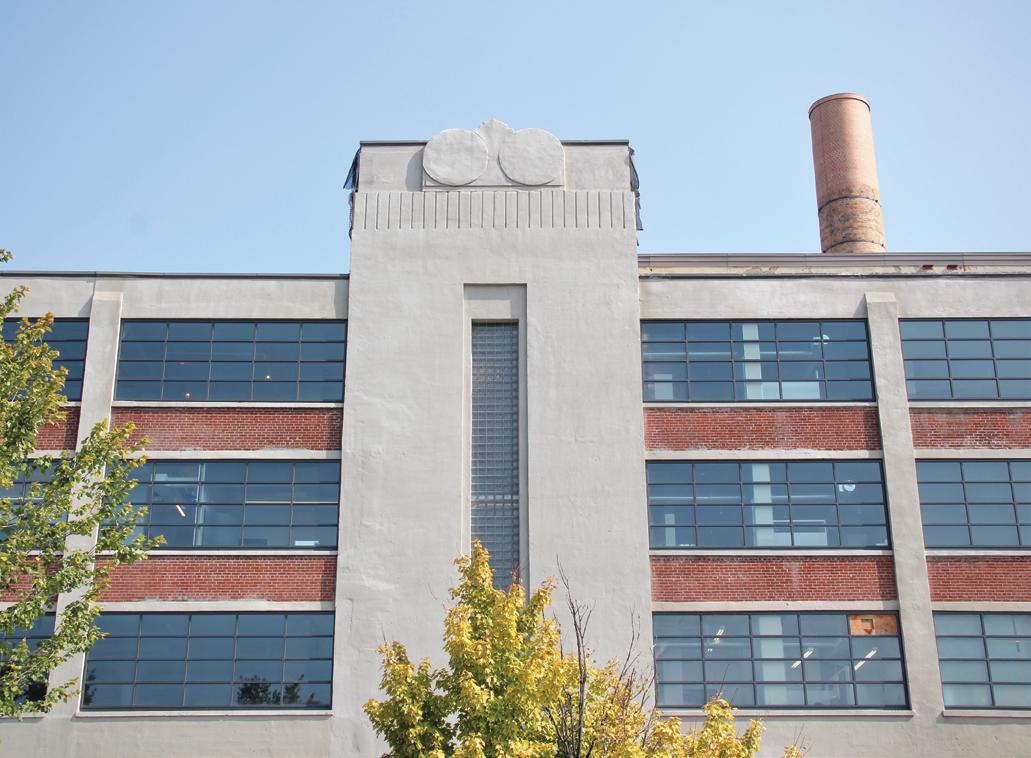
Allied has more than a few “instruments” in its portfolio—spaces tuned for performance and meant for gathering and sharing. Of historic importance, there’s 1001 Rue Lenoir in Montréal, which is currently being renovated and will soon feature a new entrance, lobby, glass atrium and interior courtyard. In its previous life, it was RCA Victor’s Canadian headquarters, where the Victrola gramophone was produced and where you can now book time to record in its legendary studio (The Interior, p. 18). Similarly iconic within its urban context, there’s The Grand in Calgary, a more-than-100-year-old theatre that’s as vibrant as ever, playing host to a live taping of a CBC podcast (The Moment, p. 8). Allied houses music-makers in newly built facilities as well. Warner Music Canada has its home at The Well in Toronto, and, significantly, there’s the Allied Music Centre, connected to iconic Massey Hall and a state-of-the-art hub, theatre and recording space, which, as part of its programming, invites young people in and connects them to professional artists (Make Room for the Arts, p. 43).
This issue of Block , themed around sound and music, recognizes the importance space has on sound, and how music education can inspire, Deaf communities can participate in the power of performance (The Business, p. 14), and birdsong can heal (The Creator, p. 24). Cue the soundtrack. Photo by /
À Minneapolis, la chambre anéchoïque des laboratoires Orfield est le lieu le plus silencieux de la planète : ses parois en fibre de verre absorbent 99,99 % du son. Une expérience impossible à vivre dans le monde qui nous entoure, mais qui nous montre que l’architecture joue son rôle dans la propagation du son jusqu’à nos oreilles (ou non). Un espace conçu avec l’acoustique en tête ne se contente pas d’amplifier le son : il le sculpte. En ce sens, l’architecture fait office d’instrument de musique.
Allied compte plus d’un « instrument » dans son portfolio : des espaces qui résonnent avec spectacle, rassemblement et partage. D’importance historique, le 1001, rue Lenoir à Montréal, en cours de rénovation, sera bientôt doté d’une nouvelle entrée, d’une verrière et d’une cour intérieure. Dans sa vie antérieure, c’était le siège social canadien de RCA Victor, où le gramophone Victrola était produit.
Aujourd’hui, on peut y réserver une séance d’enregistrement dans son mythique studio (L’intérieur, p. 18). Tout aussi emblématique, The Grand à Calgary : un théâtre plus que centenaire et toujours vibrant, dans lequel des passionnés sont venus assister en direct à un balado de RadioCanada (Le moment, p. 8). Allied accueille également des musiciens dans ses nouvelles installations. Warner Music Canada a élu domicile à The Well à Toronto et l’Allied Music Centre, centre ultramoderne relié à l’emblématique Massey Hall et équipé d’une salle de spectacle et d’un studio d’enregistrement, jumelle, dans le cadre de sa programmation, des jeunes et des artistes professionnels (Place à l’art, p. 43).
Tout au long de sa trame sonore, ce numéro de Bloc souligne la place faite au son, à l’éducation musicale en tant que source d’inspiration, à l’inclusion des personnes sourdes aux arts de la scène (L’entreprise, p. 14) et même aux chants d’oiseaux aux vertus thérapeutiques (La créatrice, p. 24). À bon entendeur, salut!
The complex at 1001 Rue Lenoir in Montréal is being redeveloped (scheduled for completion in 2026), but its legacy as RCA Victor’s Canadian headquarters reverberates on. / Ex-siège social canadien de RCA Victor, le complexe situé au 1001, rue Lenoir à Montréal se refait une beauté (fin des travaux prévue en 2026) tout en préservant son passé sonore.
2025-09-19
BY / PAR XIMENA GONZÁLEZ
PHOTOS BY / PAR AIDEN JAMES
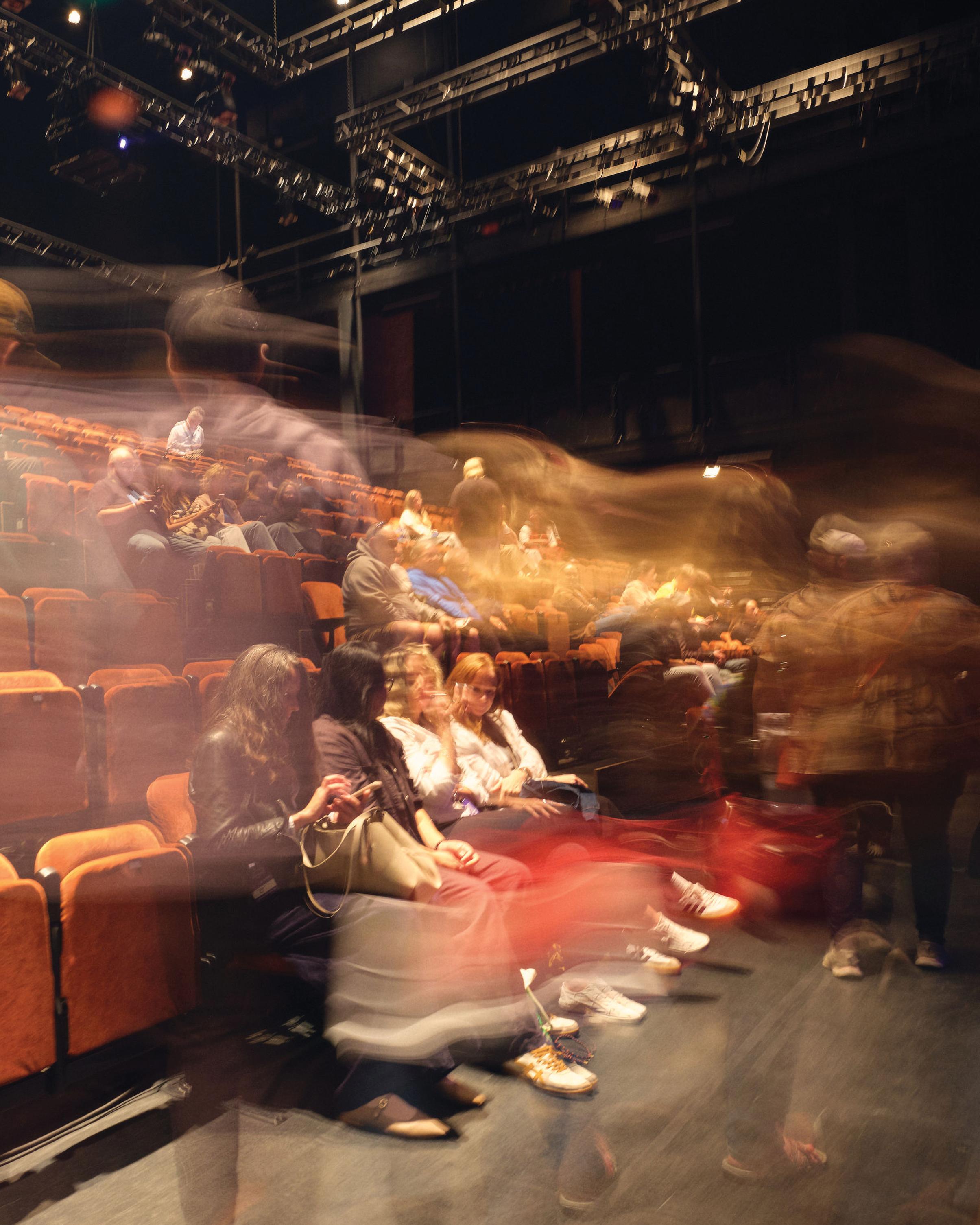
“It’s showtime,” quipped the catering director on a recent Friday afternoon, as attendees to the 2025 edition of PodSummit YYC trickled out from the Flanagan Theatre, a 350-seater at The Grand, in the heart of Calgary, where they had just caught a live recording of CBC’s Crime Story podcast.
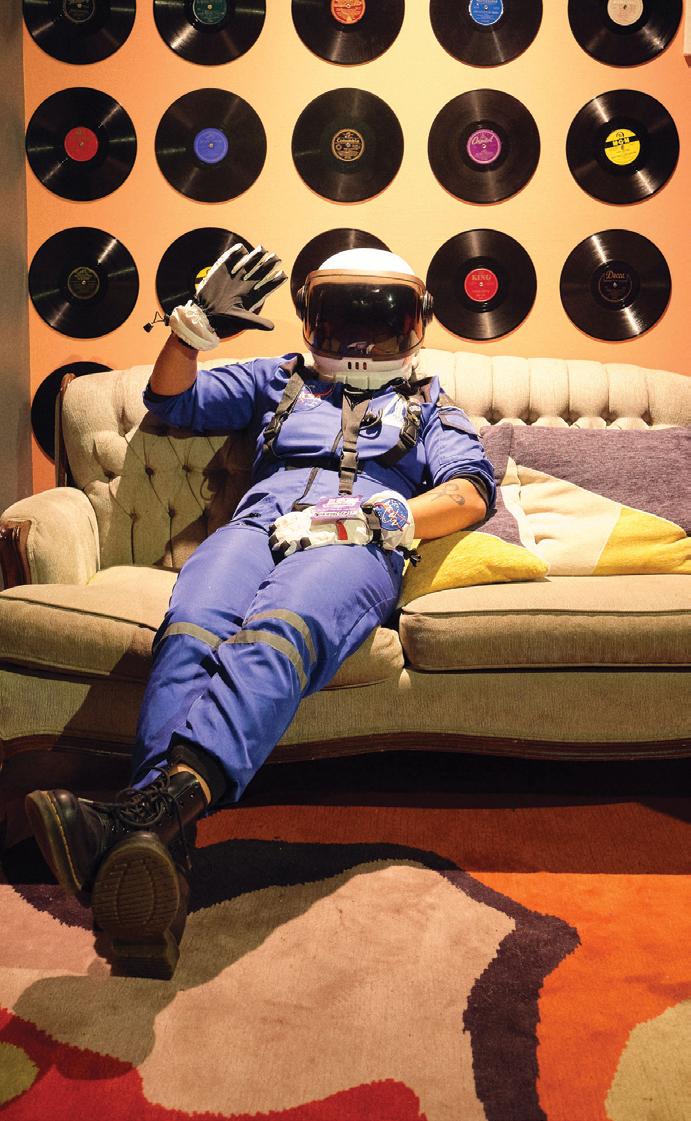
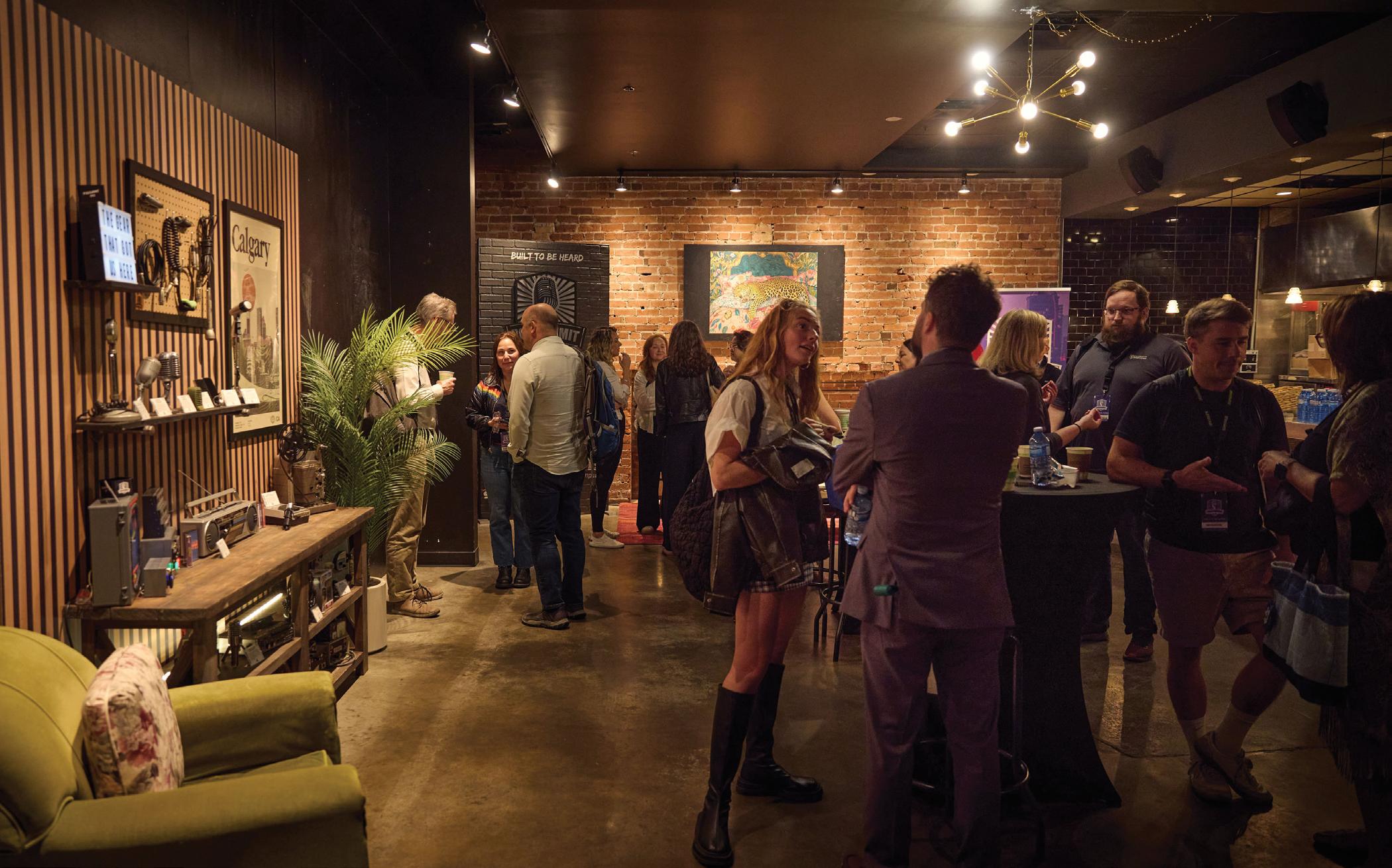
A long table brimming with hors d’oeuvres welcomed the small crowd into the subtly lit lobby, which quickly filled with the energetic chatter of approximately 100 guests. Some took a seat on one of the brightly coloured sofas spread across the space. Others studied a montage of early radio artifacts that the event’s organizers had installed by an exposed brick wall. The 113-year-old building forms part of the historic Lougheed Block.
An aspiring podcaster, who had travelled from British Columbia to attend the summit, thought the ambience fostered by The Grand was as intimate as a podcast.
Meanwhile, Tim Truax, CEO of PodSummit, mingled with guests at the reception, following a successful first day, confident that the technical aspects of the simultaneous presentations set to take place on Saturday were being looked after by the venue’s experienced team. “The one thing you don’t want to have to go wrong in a podcasting event is the sound,” he says. “Having the support of three techs in the Flanagan Theatre—lighting, sound and execution—has been incredible.”
Calgary’s oldest theatre is much more than a piece of architectural heritage; it fills an underserved niche in a city with a penchant for glitzy venues. “It’s an unusual space,” says Erynn Lyster, The Grand’s executive director. “There are not many spaces of this size in Calgary—it’s neither too big nor too small.”
Besides the Flanagan Theatre and its charming lobby, the iconic venue also boasts a 1,230-square-foot studio space that serves the needs of upstart artists, underpinning the important role The Grand continues to play in Calgary’s arts community.
“We contribute to downtown revitalization by nurturing emerging artists and arts organizations,” Lyster says. “We are focused on building capacity within the arts sector, so that people can start their careers at The Grand and move on to larger venues as their skills grow.”
« Que le spectacle commence! », lance en plaisantant le traiteur du PodSummit YYC aux participants à l’événement qui sortent au compte-goutte du Flanagan Theatre, la salle du théâtre The Grand à Calgary, où ils viennent d’assister ce vendredi à l’enregistrement du balado Crime Story de Radio-Canada.
Une longue table débordant d’appétissantes bouchées les attend dans le hall à l’éclairage tamisé. Les conversations animées de la centaine d’invités emplissent rapidement l’espace, certains installés dans les canapés aux couleurs vives, d’autres examinant avec intérêt d’anciens objets radiophoniques, rassemblés par les organisateurs devant le mur en briques apparentes de ce bâtiment de 113 ans, faisant partie du Lougheed Bloc.
Un cadre aussi intimiste que celui d’un balado, à en croire un aspirant baladodiffuseur venu de Colombie-Britannique pour l’occasion.
Le PDG de PodSummit, Tim Truax, se mêle à la fête après une première journée réussie, confiant que les aspects techniques des présentations simultanées prévues pour le lendemain sont entre de bonnes mains. « La pire chose qui puisse arriver lors d’un événement de baladodiffusion, c’est un problème de son, confie-t-il. Bénéficier du savoir-faire des trois techniciens du Flanagan, lumière, son et réalisation, est formidable. »
Le plus ancien théâtre de Calgary est bien plus qu’un bâtiment d’intérêt patrimonial : il comble un manque dans cette ville au penchant pour les lieux fastueux. « C’est un espace peu commun, explique Erynn Lyster, directrice générale du Grand. Il n’y a pas beaucoup de salles de cette taille à Calgary, qui ne sont ni trop grandes ni trop petites. »
En plus du Flanagan Theatre et de ses 350 places, ce lieu emblématique dispose d’un studio de 115 m2 qui répond aux besoins des artistes en devenir, étayant l’importance du Grand sur la scène calgarienne.
« Nous contribuons à la revitalisation du centre-ville en soutenant les artistes émergents et les organismes artistiques, poursuit Erynn Lyster. Notre priorité est le développement des compétences dans le secteur artistique : on peut commencer sa carrière au Grand pour se faire la main et ensuite se produire dans des salles plus grandes. »
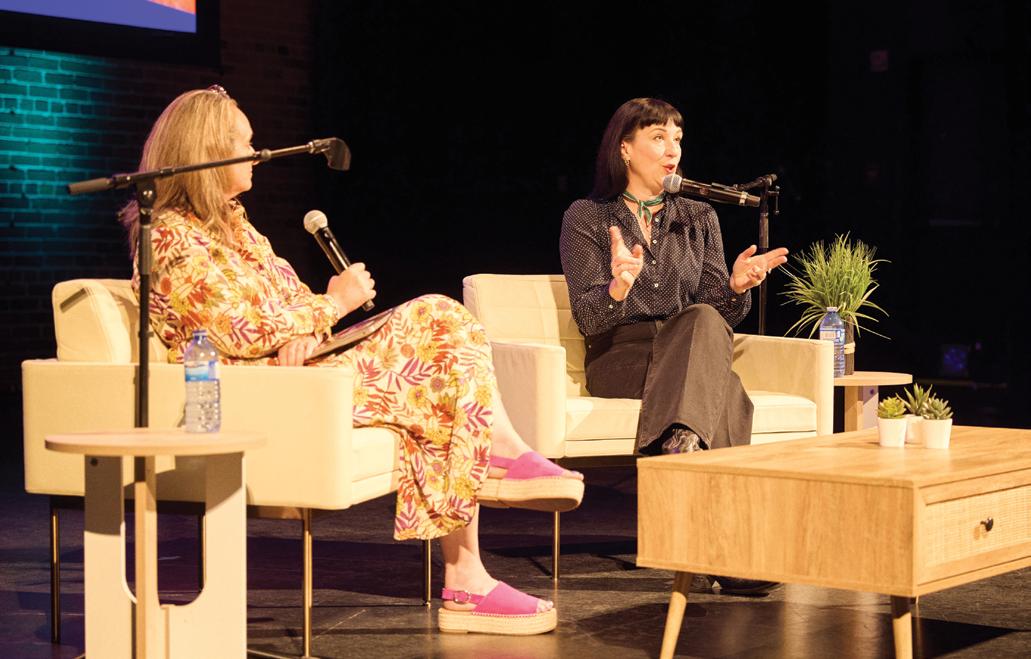
PREVIOUS SPREAD: “We wanted to hold the event in a space that felt different, that felt immersive. The Grand really fit that vision,” says PodSummit CEO Tim Truax. Attendees witnessed a live taping of CBC podcast Crime Story, hosted by journalist Kathleen Goldhar and crime reporter Jana G. Pruden. / PAGE PRÉCÉDENTE : « On voulait organiser l’événement dans un lieu différent, plus immersif : The Grand cochait toutes les cases », explique Tim Truax, PDG de PodSummit. Les participants assistent à l’enregistrement du balado Crime Story de Radio-Canada, animé par la journaliste Kathleen Goldhar avec la journaliste-criminaliste Jana G. Pruden.
BELOW: The Gear That Got Us Here is an installation that “lets people see where podcasting comes from,” says Truax. / CI-DESSOUS : l’exposition The Gear That Got Us Here « montre les origines de la baladodiffusion », note Tim Truax.
RIGHT: “The Grand has been around since 1912, so it has a huge, rich history. It’s connected to the past,” says the venue’s executive director Erynn Lyster, while looking to the future. This is the second year the podcasting event has animated The Grand’s Flanagan Theatre and attendant spaces. / CI-CONTRE : « The Grand existe depuis 1912, son histoire est longue et riche. Il est lié au passé », explique Erynn Lyster, directrice générale du théâtre, tout en étant tourné vers l’avenir. C’est la deuxième année qu’il accueille ce sommet de la baladodiffusion qu’est PodSummit dans la salle Flanagan.
Calgary’s oldest theatre is much more than a piece of architectural heritage; it fills an underserved niche in [the] city. / Le plus ancien théâtre de Calgary est bien plus qu’un bâtiment d’intérêt patrimonial : il comble un manque dans [la] ville.


Sonic Space Murs du son
Estrelar’s gear-serious private studios, in the heart of Toronto’s Parkdale neighbourhood, are built for DJs—for rehearsing sets, recording mixes, celebrating small wins and, most importantly, hanging out (with styling and decor that says “stay awhile”). “When you’re learning, you need isolation to find your own approach,” says founder Sandrine Somé. “I wanted a place that feels like home but takes the craft seriously.” / Estrelar à Toronto, ce sont des studios de son privés pensés pour les DJs. Au programme : répétitions, mixages, enregistrements, célébrations des victoires et détente entre collègues dans une déco qui invite à s’attarder.
« Quand on débute, on a besoin de s’isoler pour trouver son style, explique la fondatrice Sandrine Somé. Je souhaitais un endroit qui donne l’impression d’être chez soi tout en prenant le métier au sérieux.
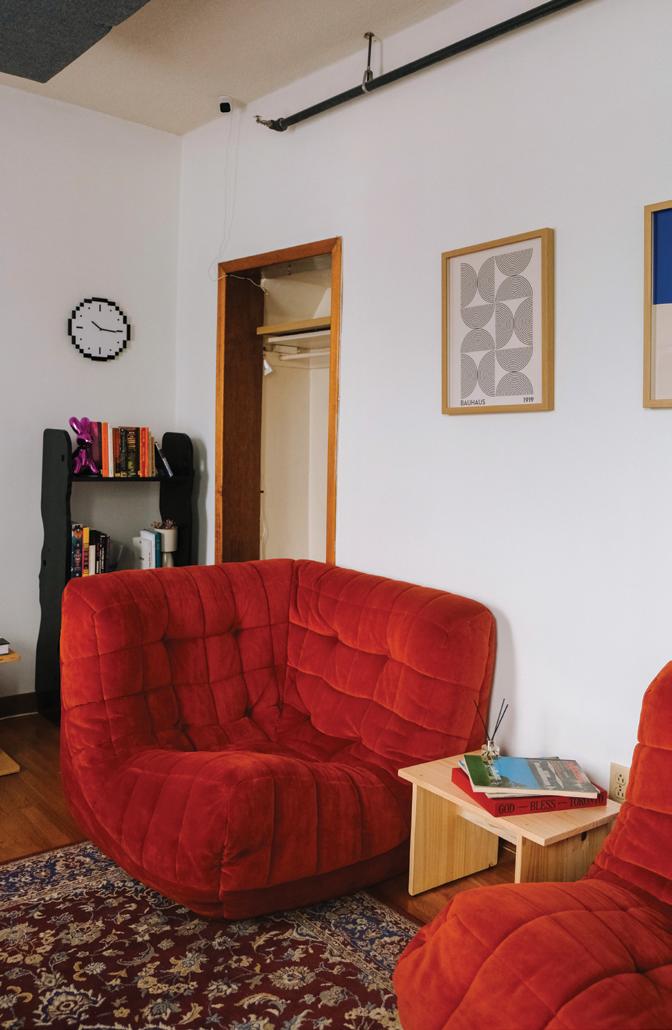
1. Orange Couches / Des canapés orange
“These modular orange couches came from a gallery that shut down. Eric Chen’s branding for Estrelar has that [same] sunset energy. The couches tie the rooms together and make the studio feel like a living room.” / « Ils proviennent d’une galerie qui a fermé. Leur couleur coucher de soleil dégage la même énergie que celle voulue par Eric Chen pour Estrelar. Ils créent un lien entre les pièces et leur donnent un air de salon. »
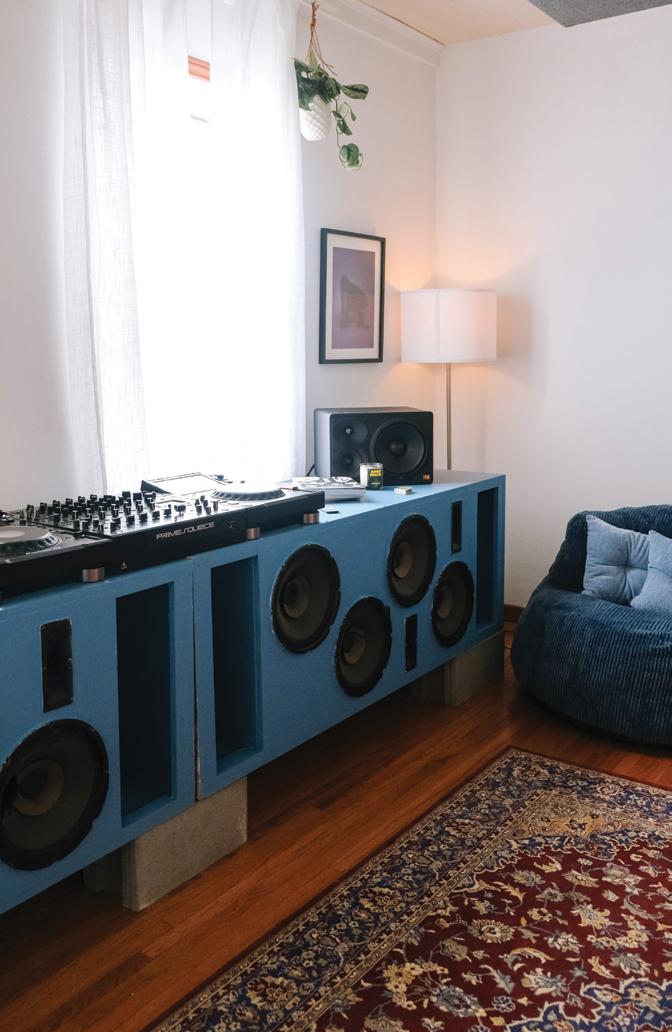
2. Blue Speakers / Des enceintes bleues
“Our friend Droop gave us [this] giant speaker stack. It actually works, but in a 200-square-foot room, it would shake the building, so we painted it a calming blue and turned it into a console.” / « C’est un cadeau géant de notre ami Droop. Elles fonctionnent, mais dans une pièce de 18 m², elles feraient trembler tous les murs. On en a donc fait une console, peinte dans un bleu apaisant. »
3. Book from Burkina Faso / Un livre du Burkina Faso
“One of my most cherished books is Peuple de la Nuit by Sanlé Sory, a photographer from Burkina Faso, where my family is from. Keeping it in the studio matters to me; people flip through it, and it puts our practice in conversation with a wider African visual history.” / « L’un de mes préférés : Peuple de la nuit de Sanlé Sory, un photographe burkinabé, comme ma famille. J’aime l’avoir près de moi, les gens le feuillètent et il établit un parallèle entre notre pratique et une histoire visuelle africaine plus large. »
4. Estrelar Candles / Des bougies Estrelar
“We developed our own candles with a maker in Ottawa whose business supports youth mental health. I’m drawn to musky, ambery notes, so we made three scents: Sunset Sonata (a jazz-at-dusk mood), Echoes of Dub (a meditative reggae-dub feel) and No Requests (a house-disco-let-theDJ-play vibe). [They’re] another way to curate the room.”/ « On les a cocréées avec un cirier d’Ottawa qui appuie la santé mentale des jeunes. On a trois parfums aux notes ambrées, musquées comme j’aime : Sunset Sonata (du jazzy à la nuit tombante), Echoes of Dub (un mix entre dub-reggae et méditation) et No Requests (plutôt disco house, laisse le DJ jouer). C’est une autre façon d’aménager l’espace. »
5. Photograph / Une photo
“[This] print is by my friend Othello Grey. It’s moody and a bit grainy, the figure almost hiding, and it holds the room quietly. Like our furniture and books, it came through community. That’s the material of Estrelar.” / « Elle a été prise par mon ami Othello Grey. Elle est sombre, a du grain et son sujet est presque caché. Elle apaise la pièce. Tout comme nos meubles et livres, elle vient de la communauté. C’est la matière d’Estrelar. »
BY / PAR JEREMY PAUL
It’s a Calling Une voix d’accès
BY / PAR JESSICA BARRETT
ILLUSTRATION BY / PAR MELINDA JOSIE
We spoke with Col Cseke, artistic director of the Inside Out Theatre, which works with deaf and disabled artists and those with mental-health conditions, about fighting for legitimacy and becoming a pillar of the community.
I had a personal inclination towards wanting to feel a part of communities that are helping and caring. As I grew with theatre skills, I realized theatre can be a tool for social change.
It’s been a little more than 10 years that I’ve been at Inside Out, and the company has grown in really wild and amazing ways. There’s been a lot of growing up for ourselves and investing in developing deaf and disabled artists who are often shut out of traditional theatre training programs or systems for developing artists. We really had to fight to be seen as professional. It’s not charitable for you to come and see our shows; we’re doing excellent work. Part of that was finding other professional theatre companies to partner with and kind of getting some of their credibility. It goes both ways.
Around 2017, theatre companies across Canada were suddenly like, “We should make our work accessible.” We started our Good Host program, offering ASL interpretation, described audio for blind audience members and relaxed viewings for people with sensory issues or autism to theatre companies across the city. We’re making theatregoing more accessible to all these different Calgarians who didn’t have this opportunity before. It’s also a way for us to say to our theatre community, “We have some expertise here, and we are able to provide that for you.” We’re a valuable fixture of our theatre community now.
Our new venue, The Erratics Indie Arts Club, is both a space for us and a home base for indie and emerging theatre companies in Calgary. Through COVID and other things, we’ve lost some of the smaller spaces that indie companies worked out of, so we want to explicitly dedicate this space to that subset of the community.
On parle combat pour la légitimité et conforter sa place dans la collectivité avec Col Cseke, directeur artistique de la compagnie théâtrale Inside Out, qui travaille avec des artistes sourds, handicapés et souffrant de maladies mentales.
J’ai toujours eu envie de faire partie de communautés solidaires, qui prennent soin des autres. En développant mes compétences théâtrales, j’ai réalisé que le théâtre pouvait être un vecteur de changement social.
Depuis un peu plus de 10 ans que je travaille chez Inside Out, j’ai vu la compagnie grandir de manière incroyable. On s’est beaucoup investis dans le développement d’artistes sourds et handicapés, souvent exclus des parcours de formation traditionnels. On a dû se battre pour être considérés comme des professionnels. Ce n’est pas faire acte de bonté que de venir voir nos pièces : on fait de l’excellent travail. On a aussi cherché à s’associer à d’autres compagnies théâtrales afin de bénéficier d’un peu de leur crédibilité. Ça marche dans les deux sens.
Vers 2017, les compagnies théâtrales canadiennes se sont rendu compte qu’elles devaient faciliter leur accessibilité. On a alors lancé notre programme Good Host, qui propose à tous les théâtres de Calgary des services d’interprétation en langue des signes américaine, des audiodescriptions pour le public aveugle et des représentations adaptées pour les personnes atteintes d’hypersensibilité sensorielle ou d’autisme. On rend le théâtre plus accessible à tous ces Calgariens et Calgariennes qui ne pouvaient pas en profiter. C’est également une façon de dire à notre communauté théâtrale qu’on a de l’expertise dans ce domaine et qu’on souhaite la partager. On a désormais de la valeur à ses yeux.
Notre nouvelle salle, The Erratics Indie Arts Club, est un espace à la fois pour nous et pour les compagnies indépendantes et émergentes de Calgary. À cause de la COVID, entre autres, elles ont perdu pas mal de petites salles dans lesquelles elles se produisaient. Ce lieu leur est expressément dédié.
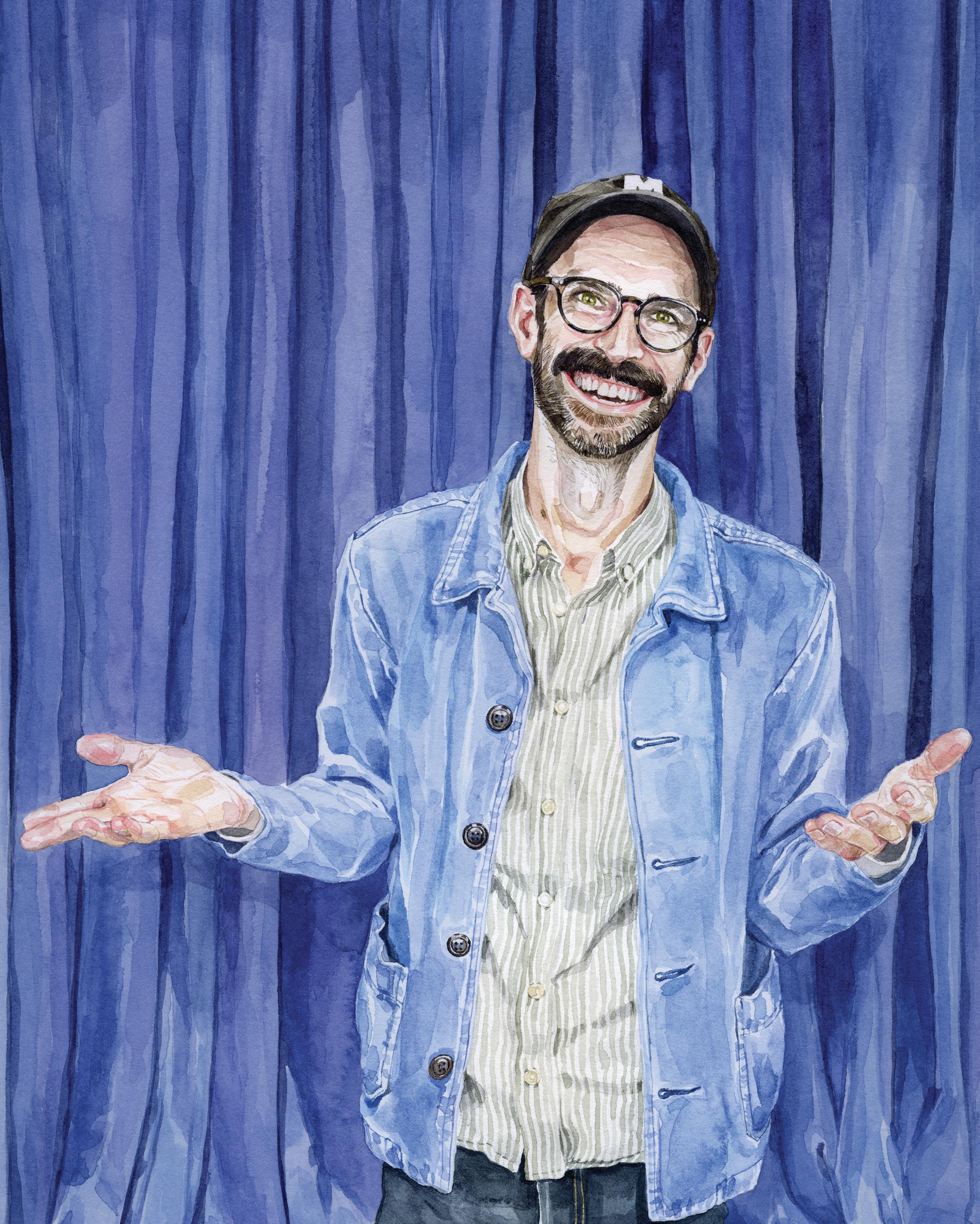
THE BEST ADVICE I’VE EVER RECEIVED / LE MEILLEUR CONSEIL QU’ON M’AIT DONNÉ
“When I was young, Vanessa Porteous, a brilliant theatre artist and director, told me, ‘You just can’t be an asshole.’ It made a lot of sense: Calgary theatre, and Canadian theatre generally, is just too small a place. The broader lesson that has become the foundation of my career is that relationships are the most important thing.” / « Quand j’étais jeune, Vanessa Porteous, brillante comédienne et metteuse en scène, m’a dit : “Tu ne peux pas te permettre de jouer au con.” C’était très logique : la scène théâtrale calgarienne, et canadienne en général, est un tout petit milieu.
J’en ai tiré une leçon : le plus important dans ce métier, ce sont les relations. »
Cubic Chord by/de Mani Mazinani
“Sound waves move through space as radiating patterns,” says Mani Mazinani. His block, photographs of plates with the cymatic patterns of five tones forming a pentatonic scale, gives form to the auditory. “A sight of what is usually a sound.” / « Les ondes sonores se propagent sous forme de motifs rayonnants », explique Mani Mazinani. Son cube, des photos de plaques aux figures cymatiques à cinq tons composant une gamme pentatonique, rend l’audio visible. « Une vue de ce qu’est un son. »
Artist’s Block / Art en Bloc

Artist’s Block / Art en Bloc

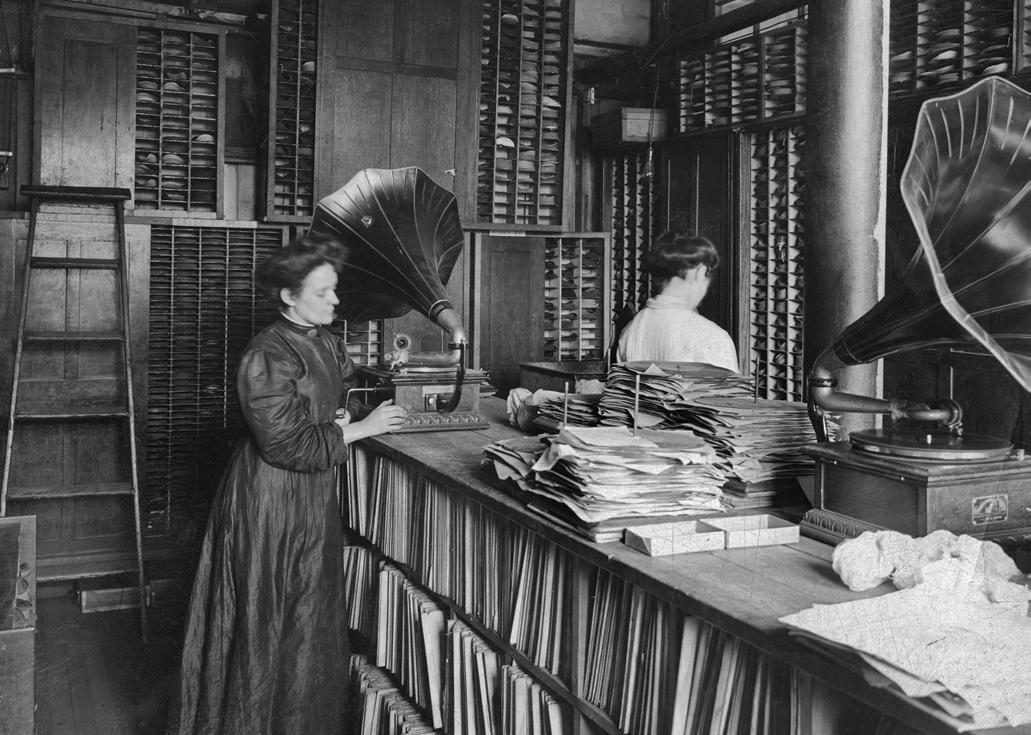
THIS PAGE / PAGE 18: GRAMOPHONE ASSEMBLING ROOM, BERLINER GRAMOPHONE COMPANY, MONTRÉAL, QC, 1910, MUSÉE MCCORD, MP-1982.69.7; OPPOSITE PAGE / PAGE 19: RECORD MATRIX ROOM, BERLINER GRAMOPHONE COMPANY, MONTRÉAL, QC, 1910, MUSÉE MCCORD, MP-1982.69.5
Factory Settings Accords d’usine
BY / PAR DANIEL BROMBERG
BY / PAR DANIEL BROMBERG
At the northwest corner of Montréal’s SaintHenri neighbourhood, there’s a recording studio unlike any other. Built in the 1930s as one of five RCA Victor Studios (its siblings in Nashville, Rio de Janeiro, New York and Los Angeles have long since been transformed or demolished), this space boasts a patented technology designed to bend sound itself.
“That’s a good angle: preservation,” says David Cervantes, who now oversees the space, under the name Studio Victor. “This is the only studio that still has its original wooden polycylindrical walls. Think about reverberation and how sound bounces off certain shapes.”
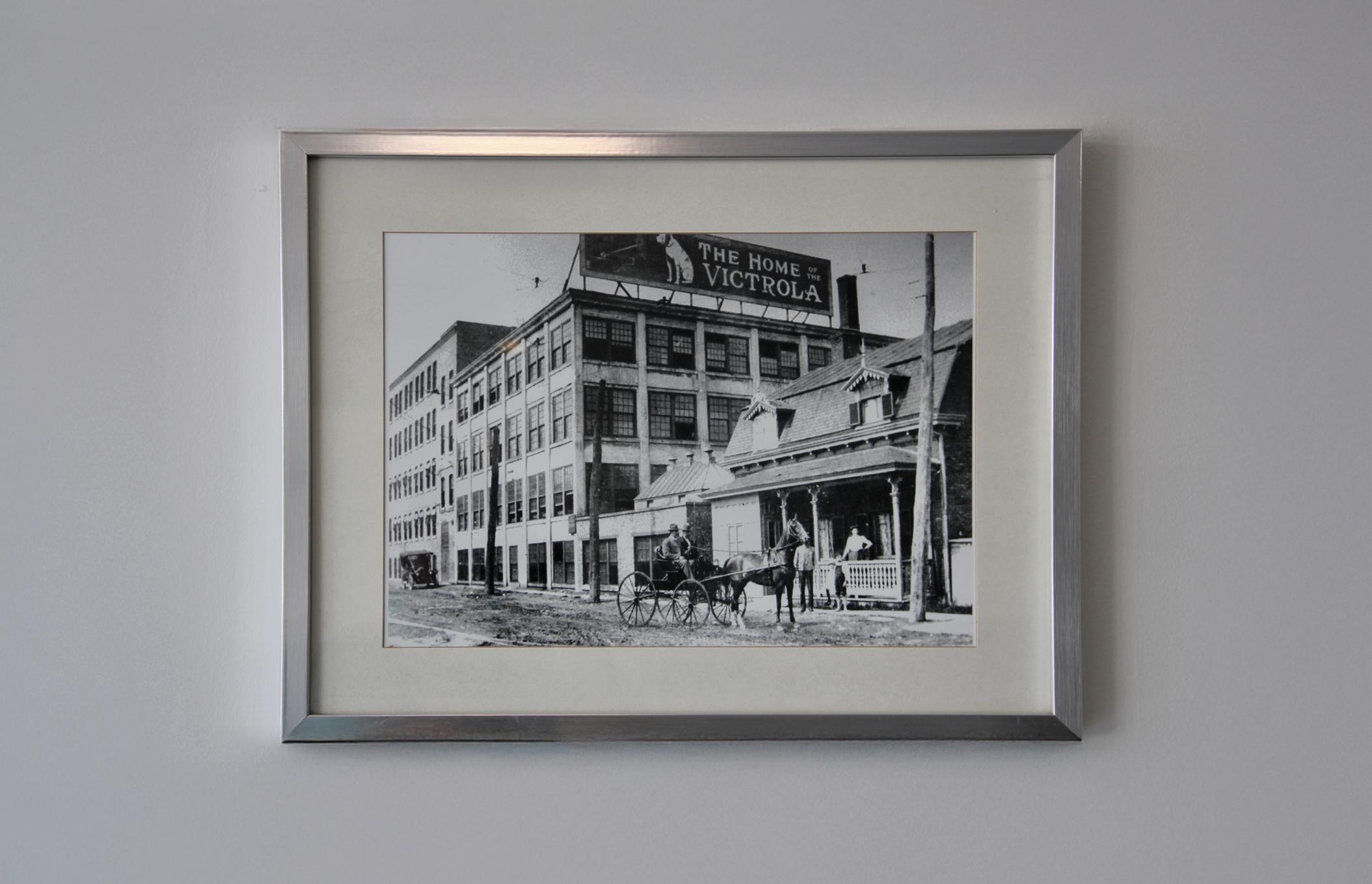
The story began decades earlier with Emile Berliner, the Germanborn inventor who brought the gramophone to Montréal. Berliner eventually opened a factory at Rue Saint-Antoine and Rue Lenoir, in Saint-Henri, the site that would later become RCA Victor’s Canadian headquarters. It was from this very building that the Victrola gramophone was produced, its emblem, inscribed with the words “His Master’s Voice,” a signpost of Montréal’s early dominance in recorded sound.
Au nord-ouest du quartier montréalais de Saint-Henri se trouve toujours l’un des cinq studios de la RCA Victor aménagés dans les années 1930, ses homologues de Nashville, New York, Los Angeles et Rio de Janeiro ayant été transformés ou démolis. Sa particularité? Il est doté d’une technologie brevetée de réflexion du son.
« C’est un bon angle d’approche, la préservation, lance David Cervantes, qui veille sur cet espace appelé aujourd’hui le studio Victor. C’est le seul studio encore équipé des murs acoustiques polycylindriques en bois d’origine. Pensez réverbération du son dans toutes les directions. »
L’histoire commence des années plus tôt avec Emile Berliner, inventeur allemand du gramophone, et l’ouverture de son usine de production à l’angle des rues Saint-Antoine et Lenoir, futur siège social canadien de RCA Victor. C’est ici que naît le gramophone Victrola, dont le logo His Master's Voice (La Voix de son maître) témoigne du rôle retentissant qu’a joué Montréal dans le domaine de l’enregistrement sonore.
LEFT AND ABOVE: Emile Berliner, the inventor of the microphone, gramophone and flat disc, founded The Berliner Gram-o-phone Company of Canada in 1899 and built his manufacturing plant, a five-storey brick building, at Rue Saint-Antoine and Rue Lenoir in 1908. The company was acquired in 1924 by the Victor Talking Company, which later became RCA Victor. / CI-CONTRE ET CI-DESSUS : Emile Berliner, inventeur du microphone, du gramophone et du disque plat, a fondé la Berliner Gram-o-phone Company of Canada en 1899 et a construit son usine de production, un bâtiment en brique de cinq étages, à l’angle des rues Saint-Antoine et Lenoir à Montréal en 1908. En 1924, elle est rachetée par la Victor Talking Company, qui deviendra RCA Victor.
PHOTOS
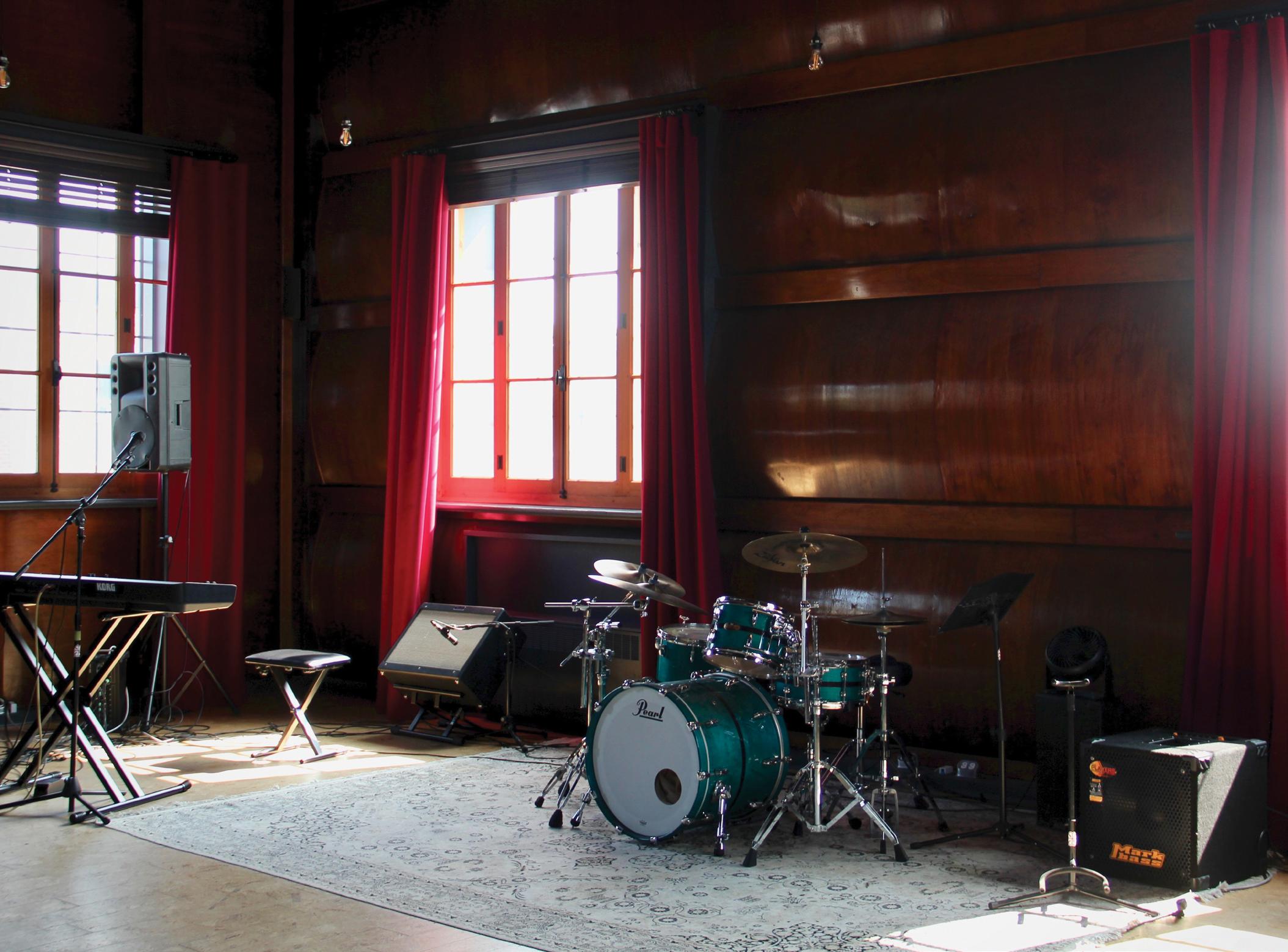
This space boasts a patented technology designed to bend sound itself. / Le studio est doté d’une technologie brevetée de réflexion du son.
ABOVE: The polycylindrical wood walls of Studio A in RCA Victor's Canadian headquarters reflect sound in all directions. Hidden behind drywall and lost to time, the acoustic treatment was discovered in 1985 and the space restored as Studio Victor. / CI-DESSUS : Les murs polycylindriques en bois de l’ancien studio A réfléchissent le son dans toutes les directions. Longtemps dissimulés derrière des panneaux de gypse, ils sont redécouverts en 1985. Après rénovation, l’espace devient le studio Victor.
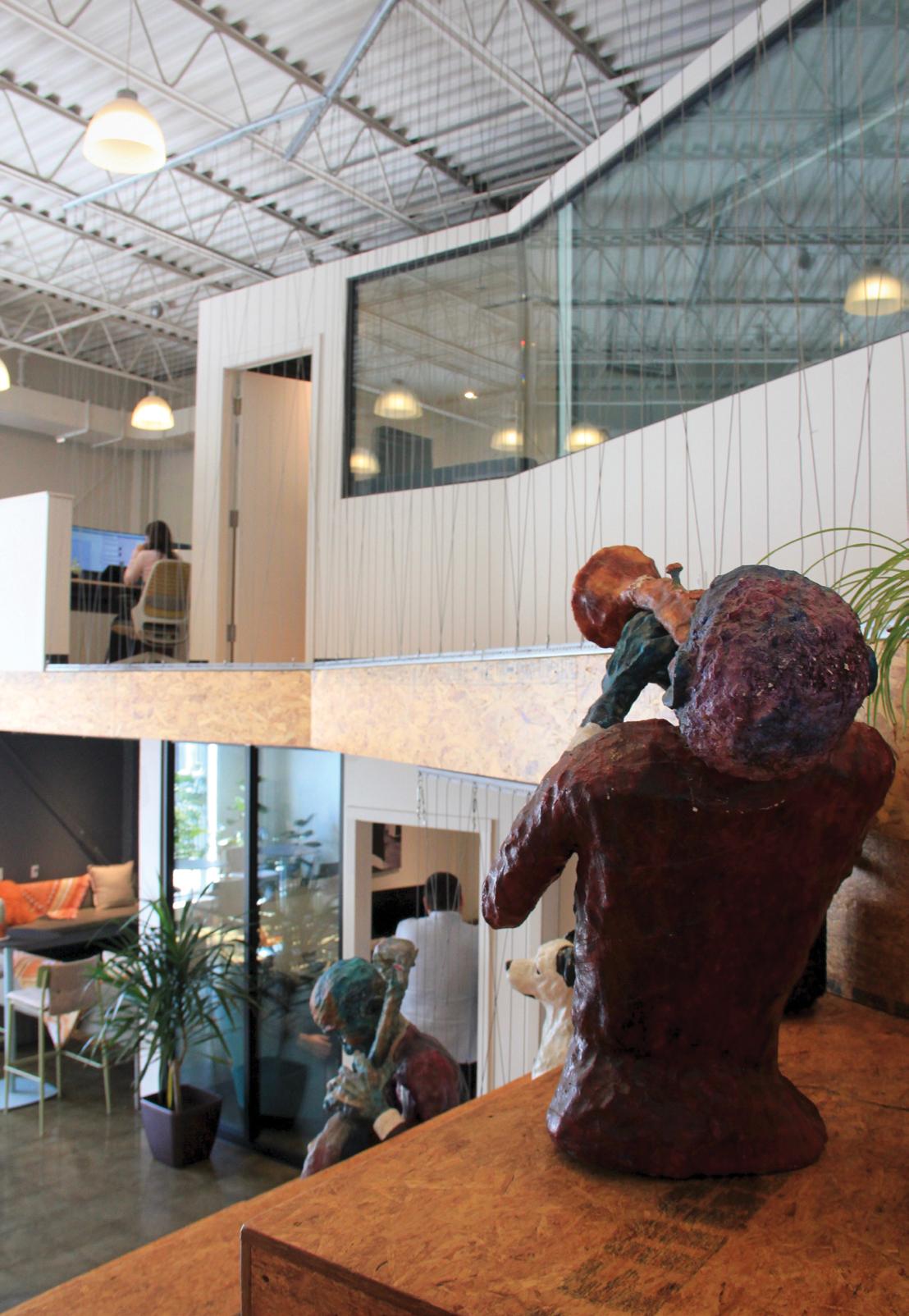
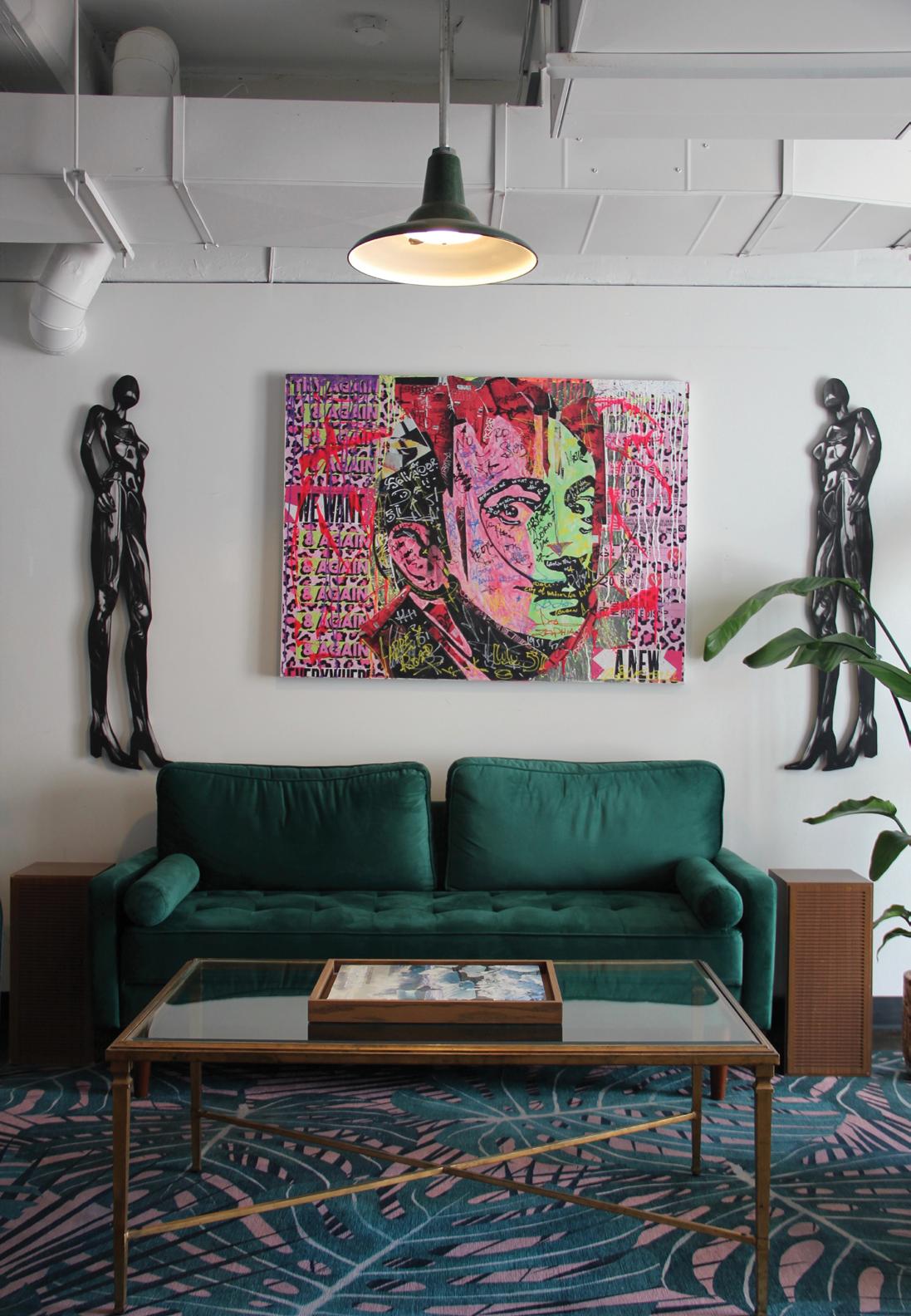
OPPOSITE PAGE: Saint-Henri-born sound engineer and producer Gaétan Pilon closed Studio Victor in 2016. But just one year later, La Hacienda Creative took hold and, with Newsam Construction and MXMA Architecture & Design, renovated the space to pay homage to its past while also updating it to create complementary bright and lively workspaces and collabfriendly chipboard bleacher seating. / CI-CONTRE : Gaétan Pilon, producteur et ingénieur du son originaire de Saint-Henri, ferme le studio Victor en 2016. L’année suivante, La Hacienda Creative prend le relais et fait appel à l’entrepreneur général Newsam et à l’agence d’architecture MXMA pour le rénover. Son passé est mis en valeur et modernisé par l’ajout d’espaces de travail lumineux et colorés et de gradins en aggloméré propices à la collaboration.
The studio originally functioned as a state-of-the-art laboratory, hosting acoustic music and vocal recordings. By the 1940s, however, RCA was exploring new ventures—everything from radar and sonar research to military contracts—and the wood surfaces and high ceilings were hidden behind drywall as the space was repurposed.
When leaks and renovations exposed the forgotten wooden walls in the early 1980s, Montréal entrepreneur Gaétan Pilon sensed an opportunity. He opened Studio Victor in 1985, adding a mixing room and launching what became one of the city’s most important recording facilities. For three decades, countless albums were cut here—including by Québécois artists Roch Voisine, Les Cowboys Fringants and Jean Leloup—giving the space a second life as a premier destination for musicians. It also played host to several international producers, like the Beatles’ George Martin, Alan Parsons and Bette Midler.
Pilon closed Studio Victor in 2016, announcing the space a victim of the advancement in new technologies such as digital recording that challenged the economics of the traditional analog format. But
À ses débuts, le studio fait office de laboratoire ultramoderne pour l’enregistrement de musique tant acoustique que vocale. Puis, dans les années 1940, RCA se diversifie, développant des radars et autres sonars pour l’armée. L’espace est alors réaménagé et les hauts plafonds et murs de bois bombés disparaissent derrière des panneaux de gypse.
C’est en venant réparer un dégât d’eau au tout début des années 1980 que Gaétan Pilon, entrepreneur montréalais, les découvre. Cinq plus tard, il change de vocation et ouvre le studio Victor, doté d’une nouvelle salle de mixage flambant neuve. Un vrai coup de maître, puisque ce studio d’enregistrement deviendra l’un des plus prisés en ville.
Pendant 30 ans, d’innombrables albums y verront le jour, ceux des artistes québécois Roch Voisine, Les Cowboys fringants et Jean Leloup notamment. George Martin, le producteur des Beatles, Alan Parsons et Bette Midler défileront aussi entre ses murs.
Victime du progrès, le format numérique remettant en question la rentabilité du bon vieux vinyle, Gaétan Pilon se voit contraint de plier boutique en 2016. Après le passage d’un studio de création sonore
The Interior / L’intérieur
not for long. It opened again, in the hands of a sound design studio that refurbished it to meet their needs. After they vacated, Cervantes stepped in, determined not to let the space stand shuttered, and reopened the studio for rental use while offering the loft-style office space as part of a broader membership experience.
It’s now open to professionals who can book it for writing sessions, classes and jam sessions, and amateurs can also rehearse in a room once reserved for stars—a shift Cervantes sees as part of its democratic new life. “It’s funny,” he says. “Some musicians never got to play in Studio A during their professional careers. Now they come back as amateurs and finally get the chance.”
Nearly a century on, the studio is alive and well. What began as a manufacturing plant now doubles as a working studio and a living museum of Canadian music history—and as a reminder that architectural heritage, if carefully preserved, can be a continuing legacy.
qui modernise les lieux, David Cervantes entre en scène. Déterminé à conserver l’illustre studio, il le propose à la location et élargit l’expérience client avec le grand espace style loft à partager. Il est désormais ouvert à tout professionnel qui souhaite le réserver pour des séances d’écriture ou des sessions d'improvisation collective ainsi qu’aux amateurs qui peuvent venir répéter dans une pièce autrefois réservée aux vedettes, un changement que David Cervantes considère comme partie intégrante d’une nouvelle accessibilité.
« C’est drôle : certains musiciens n’ont jamais eu l’occasion de jouer dans le studio A au cours de leur carrière. Aujourd’hui, ils reviennent en tant qu’amateurs et ont enfin cette chance », explique-t-il.
Près d’un siècle plus tard, l’ancienne usine de production résonne toujours. Elle sert à la fois de studio de travail et de musée vivant de l’histoire de la musique canadienne, tout en rappelant que le patrimoine architectural, s’il est préservé avec soin, est un héritage durable.
BELOW: A framed image of the Saint-Henri factory in the early 20th century. The billboard shows the “His Master’s Voice” (HMV) trademark, with dog Nipper listening to the gramophone, which brought mass-produced music to Canada and marked the beginnings of the country’s recording industry. / CI-DESSOUS : une photo de l’usine de Saint-Henri au début du 20e siècle. Sur l’enseigne, on voit le célèbre chien Nipper, intrigué par un gramophone, et le logo His Master's Voice (HMV et La Voix de son maître en français), qui marquent l’arrivée de l’industrie du disque au Canada.




The Sound of Silence Le son du silence
Artist Kara Hamilton creates “sound voids.” As part of a curatorial collective of cancer survivors, she interrogates sound’s power to soothe. / Kara Hamilton crée des « vides sonores ».
Membre d’un collectif de survivantes du cancer qui organise des expositions, elle interroge le son et son pouvoir apaisant.
BY / PAR BYRON ARMSTRONG PHOTOS BY / PAR AARON WYNIA
RARES FOR
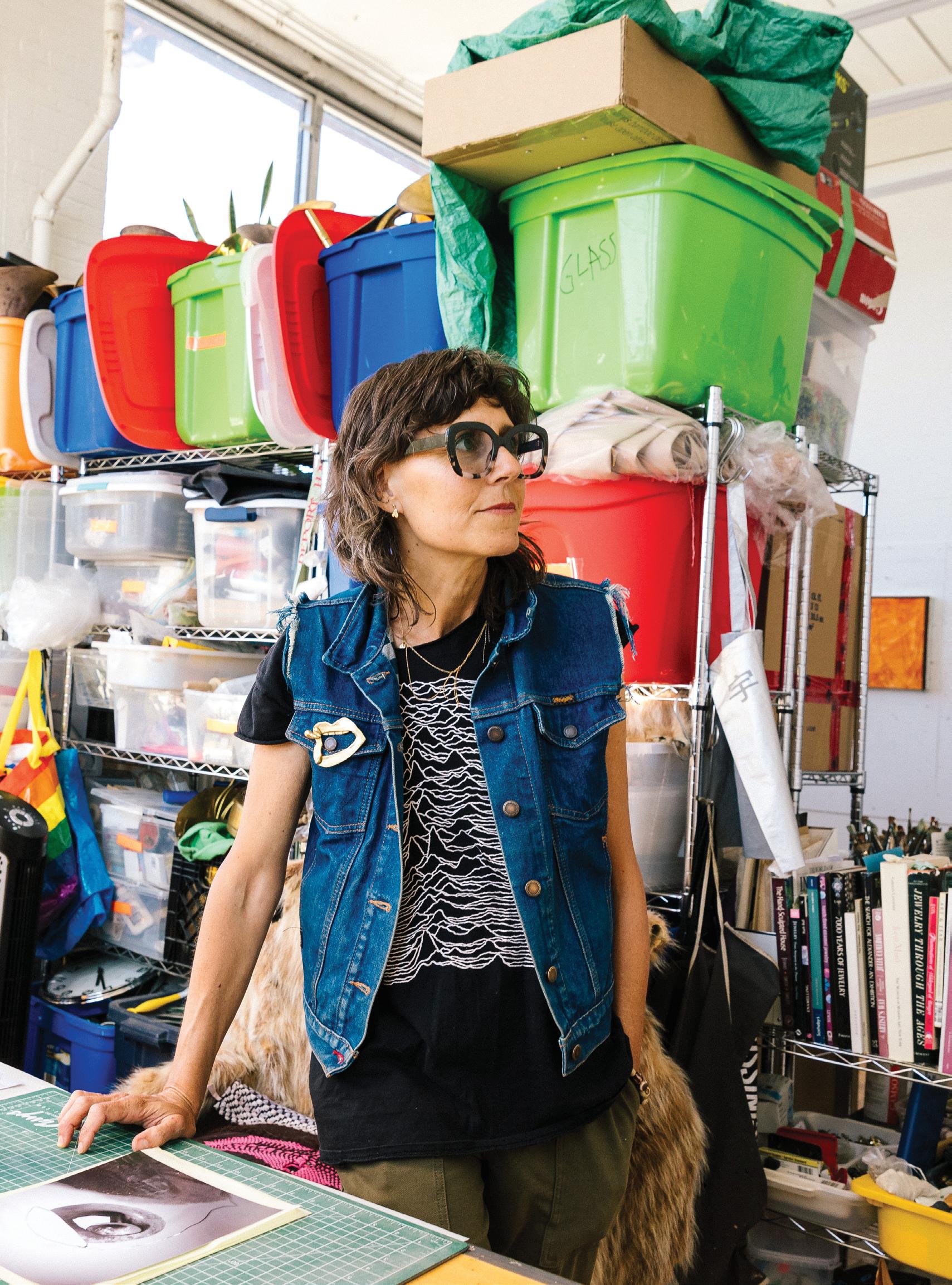
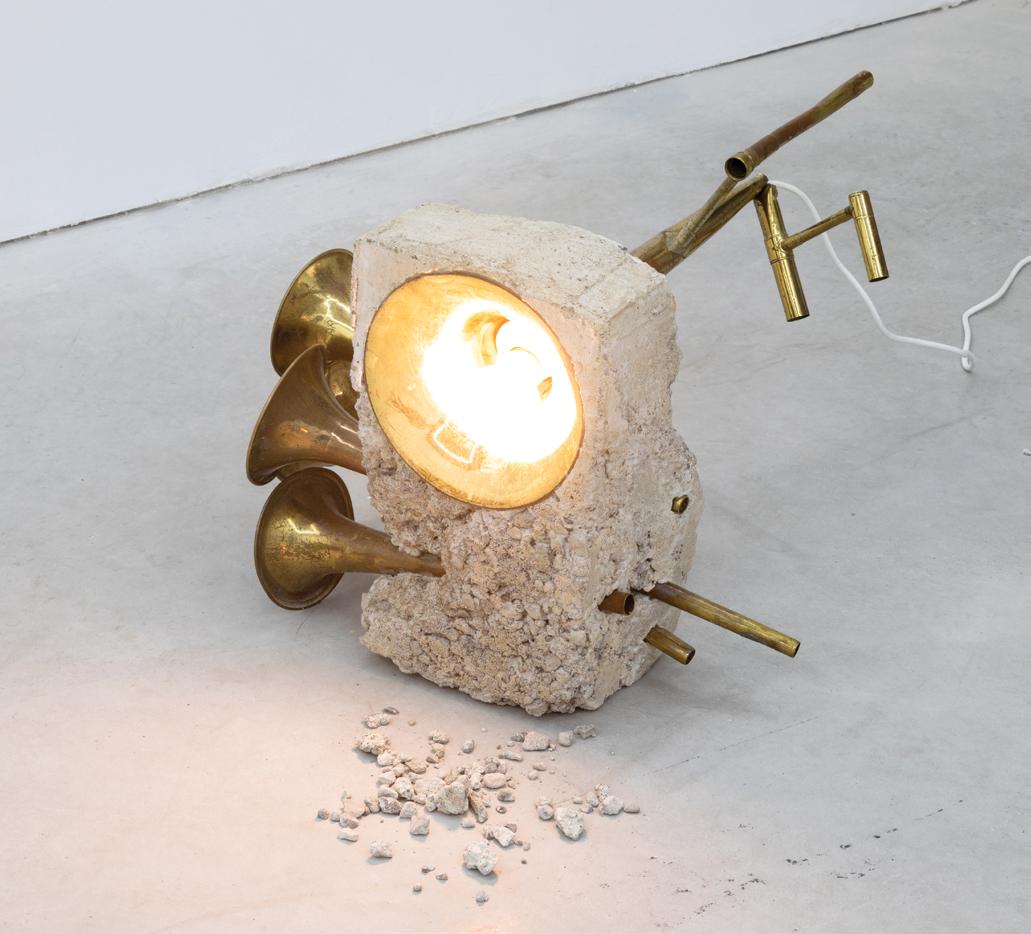
Canadian artist and curator Kara Hamilton, the musical instruments found in her studio are not really meant to be played. Discarded trumpets are turned into mysterious sculptures by casting them in bronze, their bells muted and their valves stilled.
In her role as L.L. Odette Sculptor in Residence, Hamilton collaborated with students at York University’s School of the Arts, Media, Performance & Design to create two sculptures for the Lassonde Art Trail, launching in 2026 at Toronto's new Biidaasige Park. In this work, forms rise from the earth, one with a trumpet emerging from its ear, another with horns from its mouth. “They’re in conversation but silent conversation,” Hamilton says, “because sculpture is silent, but it’s also implying this negative sound.”
The concept of presence and absence shows up frequently in Hamilton’s sculptural work, connecting to a broader theme of what she calls “hauntology”—an “always-present absence.” Serving as containers for “sound voids,” Hamilton’s sculptural shapes explore the power of resonance and absence and the quiet spaces between them and speak volumes about her lived experience straddling her studio and hospital rooms.
Hamilton’s artistic practice is deeply informed by her personal history as a multiple-time cancer survivor. Art and illness—or the art of living gracefully with a serious illness—is what makes her obsession with silent communication more than just an artistic decision. This reality is the foundation of her involvement with Co-Conspiracy Means (to) Breathe Together (CMBT), a curatorial collective she founded with fellow survivors and arts professionals Yan Wu, a curator, translator and writer who currently serves as the public art curator for the City of Markham, and Patricia Ritacca, an independent curator and arts educator who also serves as the art curator at the University Health Network’s (UHN) Princess Margaret Cancer Centre.
sont les sons qui sortent des instruments de musique de l’atelier de Kara Hamilton, artiste et commissaire d’exposition canadienne. Les trompettes usagées se transforment en sculptures mystérieuses, leurs pistons étouffés dans le bronze.
Sculptrice en résidence au centre L. L. Odette, elle a réalisé avec les étudiants de l’école des arts de l’université York de Toronto deux sculptures pour le Lassonde Art Trail, un parcours à ciel ouvert qui sera inauguré en 2026 dans le nouveau parc Biidaasige. Dans cette œuvre, des silhouettes jaillissent de terre, une avec une trompette en guise d’oreille, une autre avec des cors dans la bouche. « Elles communiquent, mais en silence, explique-t-elle, car la sculpture est silencieuse tout en laissant entendre ce son négatif. »
Le concept de présence et d’absence apparaît fréquemment dans les sculptures de Kara Hamilton, rattaché à un thème plus large qu’elle nomme « hantologie » : une « absence toujours présente ». Servant de réceptacles à des « vides sonores », elles explorent le pouvoir de la résonance, de l’absence et de l’accalmie entre les deux, et en disent long sur le temps qu’elle a passé dans les chambres d’hôpital.
L’œuvre de cette multisurvivante du cancer est profondément influencée par son histoire personnelle. L’art et la maladie — ou l’art de vivre avec dignité en étant gravement malade — sont à la base de Co-Conspiracy Means (to) Breathe Together (CMBT), un collectif qui organise des expositions en milieu hospitalier et qu’elle a cofondé avec deux autres survivantes et professionnelles des arts : Yan Wu, traductrice, rédactrice et commissaire indépendante, qui occupe le poste de commissaire en art public de la ville de Markham, et Patricia Ritacca, enseignante en arts et commissaire indépendante, qui travaille notamment pour le centre de cancérologie Princess Margaret à Toronto.
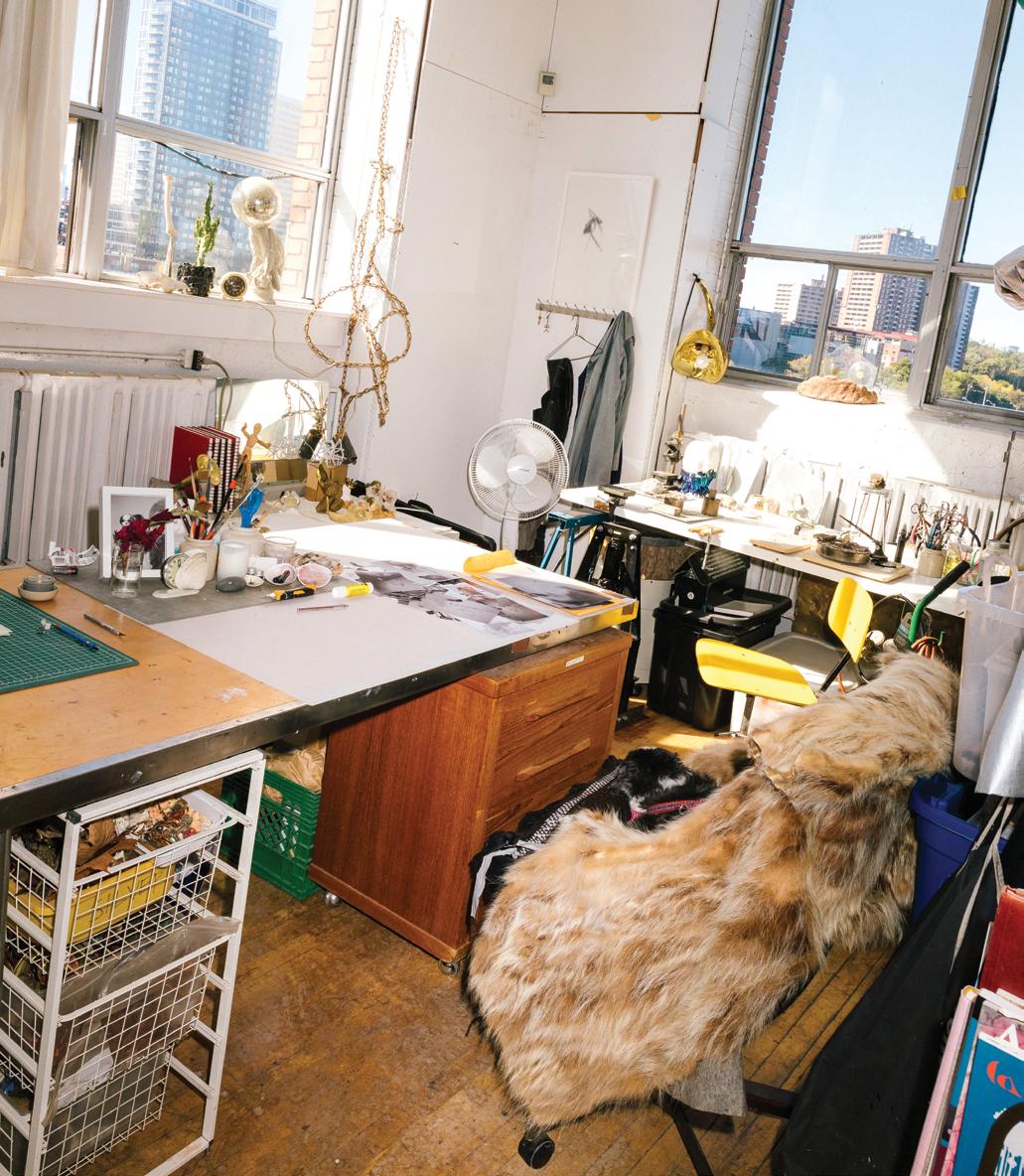
PREVIOUS SPREAD AND THIS PAGE: Kara Hamilton and her studio space in Toronto’s east end. A childhood visit to a Bauhaus artist’s studio—a sensory experience of colour, sound and smell—created a “safe and comfortable” place she has sought to recreate ever since. / PAGE PRÉCÉDENTE ET CI-CONTRE : Kara Hamilton et son atelier torontois. Un lieu « sécurisant et confortable », à l’image d’un atelier d’artiste du Bauhaus qu’elle a visité enfant et qu’elle décrit comme une expérience sensorielle de couleurs, de sons et d’odeurs.
OPPOSITE PAGE: The three arts professionals, (left to right) Yan Wu, Hamilton and Patricia Ritacca, all cancer survivors, who formed the curatorial collective Co-Conspiracy Means (to) Breathe Together (CMBT) in 2024. Ritacca recalls watching her father, during a long hospitalization, calm down and become transported by the artworks she was installing. “It’s like a mental-health support,” she says, “soothing the nervous system, breathing, reflecting and bringing in other senses.” / PAGE 27 : Yan Wu (à gauche), Kara Hamilton et Patricia Ritacca, toutes trois professionnelles des arts et survivantes du cancer, ont formé en 2024 le collectif Co-Conspiracy Means (to) Breathe Together, qui organise des expositions en milieu hospitalier. Patricia Ritacca se rappelle avoir vu son père, lors d’une longue hospitalisation, se laisser transporter par les œuvres d’art qu’elle installait. « C’est un soutien mental, explique-t-elle, qui apaise le système nerveux, la respiration, les pensées et fait appel à d’autres sens. »
The collective’s name itself is an act of reclamation. “We actually talked about conspiring first,” Hamilton explains, “an aggressive term” for their mission to improve the art in hospitals. Discovering that the Latin root of “conspire” means “to breathe together” cemented the collective’s name. Their goal—a shared breath, a team effort to introduce quiet and introspection into situations that are frequently characterized by confusion and anxiety—was encapsulated by it.
The belief in art’s power to heal is personal for all three women, and CMBT aims to curate experiences that recognize the complex and multi-faceted realities of being a patient, not just to hang artwork on hospital walls. Having spent endless hours at medical facilities, they were frustrated by the art they saw. “The work tends to be super safe and really generic to avoid offending anyone,” says Ritacca. “Generic pink and floral vinyls can feel condescending and infantilizing for patients with gendered illnesses like breast cancer.” For Wu, the issue isn’t necessarily about the quality of the art in hospitals so much as experience: “Contemporary artworks that positively address the traumatic experience of being in the hospital setting are lacking or absent from the health-care environment, which is something we are delivering.”
Their inaugural installation, Between Leaf & Light , created by artist Scott Rogers and installed at the Royal Victoria Regional Health Centre in Barrie, Ont. fills a sun-drenched waiting area with a gentle, immersive chorus of bird songs. Here, the always-present absence of Hamilton’s sound void is reversed by Rogers’ CMBT-curated installation, where “the instrument” is absent but the sound is present. It’s a carefully
Le nom du collectif est un acte de réparation en soi. « Au départ, on avait pensé à conspiration », explique Kara Hamilton, mais ce mot leur paraissait trop « agressif » pour qualifier leur mission. Quand elles ont su que conspirer venait du latin con « avec » et suspirare « respirer », soit « respirer ensemble », elles n’ont plus hésité. Il résumait leur objectif : un souffle commun, un effort d’équipe pour apporter calme et introspection là où règnent le plus souvent confusion et anxiété.
CMBT ne se contente pas d’accrocher des tableaux aux murs des hôpitaux : il propose des expériences artistiques qui reconnaissent la réalité complexe et multifacette de la vie d’un ou d’une patiente. Ayant passé d’innombrables heures dans ces établissements, toutes trois ont été frustrées par ce qu’elles y voyaient et ont développé leur propre vision de l’art-thérapie. « Les œuvres d’art à l’hôpital ont tendance à être prudentes et génériques afin de ne froisser personne, explique Patricia Ritacca. Pourtant des acryliques à fleurs roses peuvent sembler condescendants et infantilisants aux femmes atteintes de cancer du sein par exemple. » Pour Yan Wu, le problème est plus une question d’expérience que de qualité de l’art exposé : « Les œuvres d’art contemporain qui abordent de manière positive l’expérience traumatisante de l’hospitalisation sont rares, voire inexistantes dans le milieu médical. C’est ce que, nous, nous proposons. »
Leur première installation, Between Leaf & Light, signée par l’artiste Scott Rogers et présentée au centre régional de santé Royal Victoria à Barrie, en Ontario, emplit une salle d’attente lumineuse de doux chants d’oiseaux. Contrairement à l’absence sonore toujours
The Creator / La créatrice

“Generic pink and floral vinyls can feel condescending and infantilizing for patients with gendered illnesses like breast cancer.” / « Des acryliques à fleurs roses peuvent sembler condescendants et infantilisants aux femmes atteintes de cancer du sein par exemple. »
The Creator / La créatrice
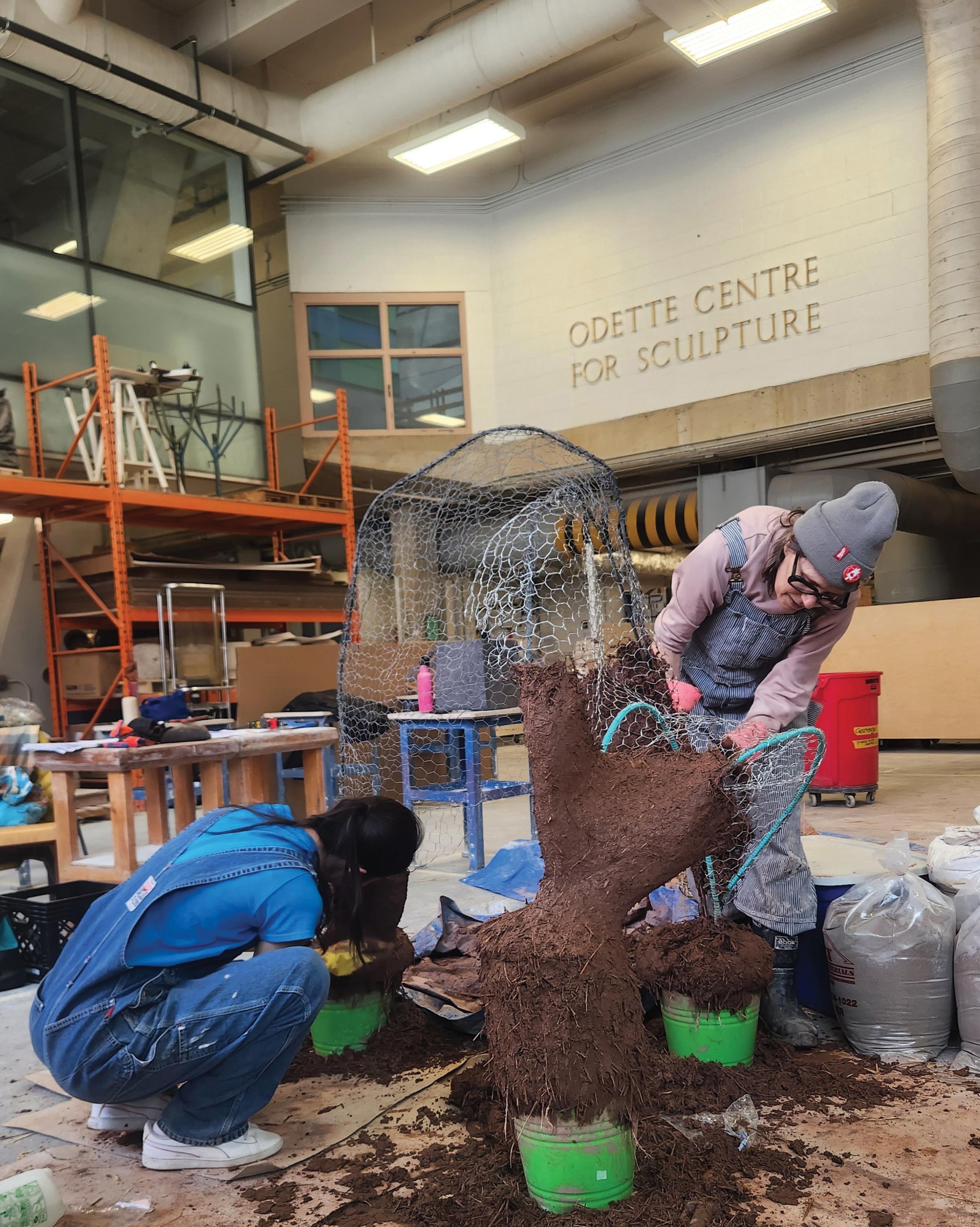
Photo by / par Adam Krop courtesy of / offerte par Kara Hamilton
The Creator / La créatrice
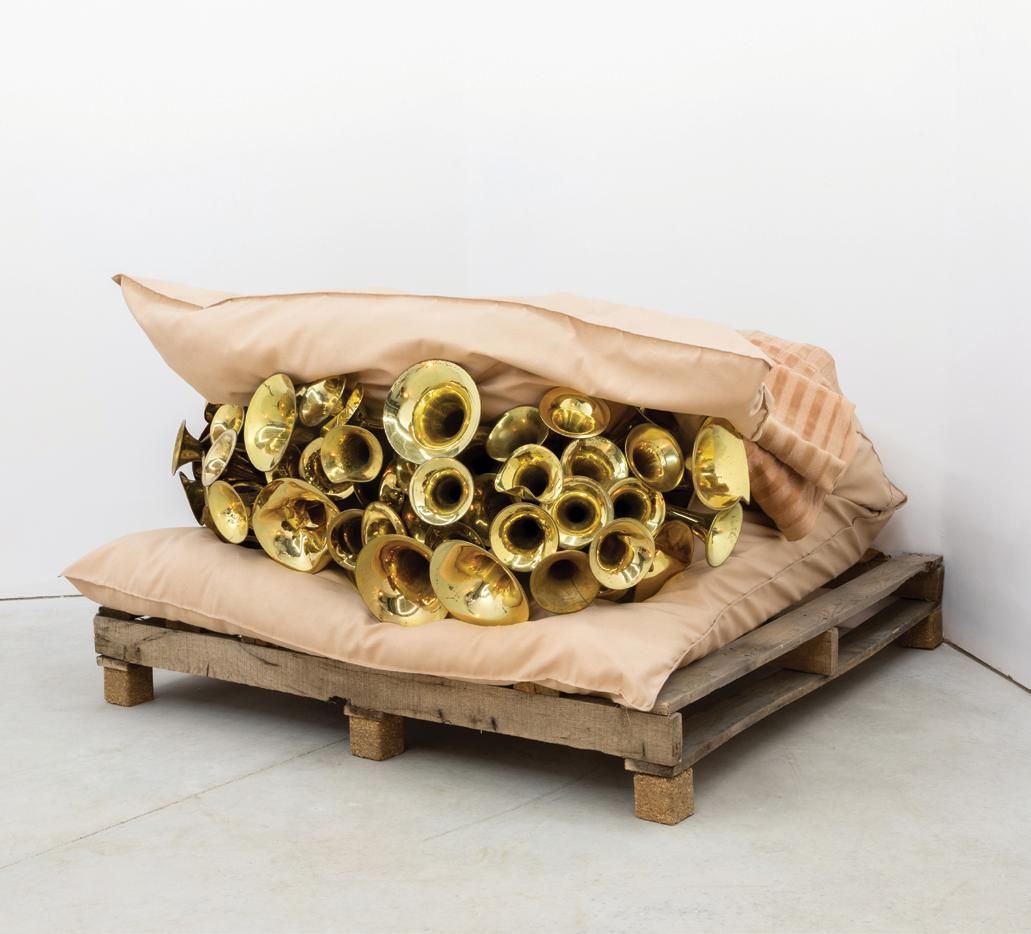
OPPOSITE PAGE: In her role as L.L. Odette Sculptor in Residence, Hamilton worked with students at York University’s School of the Arts, Media, Performance & Design to workshop built compositions using ecological materials similar to cob, made of clay, sand, straw and water, for use in a public art sculpture for the future Lassonde Art Trail. / CI-CONTRE : pendant sa résidence au centre de sculpture Odette, Kara Hamilton a collaboré avec les étudiants de l’école des arts de l’université York de Toronto. À l’aide d’argile, de sable, de paille et d’eau, ils ont réalisé des silhouettes pour le Lassonde Art Trail, un parcours d’art public inauguré bientôt.
ABOVE: Sculptural works by Hamilton from the series Nothing is Wild, exhibited at the Cooper Cole Gallery in Toronto in 2019, incorporating discarded instruments, stilted and silent. / CI-DESSUS : des sculptures extraites de la série Nothing is Wild, signée Kara Hamilton et exposée à la galerie Cooper Cole de Toronto en 2019, aux instruments de musique figés et silencieux.
researched intervention that challenges lazily curated landscapes through birdsong, which activates the parasympathetic nervous system and the vagus nerve, slows heart rates, relaxes muscles and promotes a state of calm. “I read recently that birds sing when the environment is safe,” Ritacca notes. “The waiting room is the perfect place to bring in this natural soundscape promoting security and a sense of peace and well-being.”
The collective conducted surveys with patients, worked closely with staff and clinicians and collaborated with the artist to remove more urgent bird calls that could signal danger versus the soothing birdsong that indicates safety. Introducing this nuanced approach into the scientific, evidence-based world of a hospital has been a deliberate process. The collective acts as a bridge, translating artistic intent into therapeutic benefit. The response, while sometimes mixed among staff who hear the piece daily, has been overwhelmingly positive from patients and many medical professionals. As such, CMBT is more than a curatorial project. It is the artistic outcome of their shared survival, where they have “conspired” to breathe together and create spaces of respite. They use art not just as a decorative distraction, but as a sophisticated tool for emotional regulation, leveraging the quiet power of a sound void or the gentle assurance of birdsong to offer a moment of peace.
présente de Kara Hamilton, ici c’est « l’instrument » qui est absent, le son, lui, est bien présent. Ces chants, sélectionnés avec soin, ont pour effet d’activer le système nerveux parasympathique et le nerf vague, de ralentir le rythme cardiaque, de détendre les muscles et de favoriser un état de calme. « J’ai lu que les oiseaux chantent lorsque l’environnement est sûr, note Patricia Ritacca. Une salle d’attente est l’endroit idéal pour ce paysage sonore naturel qui procure un sentiment de sécurité et de bien-être. »
Le collectif a sondé les patients et travaillé en étroite collaboration avec le personnel, les cliniciens et Scott Rogers afin de supprimer les cris d’alarme utilisés par les oiseaux en cas de danger pour ne garder que les plus apaisants. Introduire une approche nuancée dans le monde factuel qu’est celui de l’hôpital est un acte délibéré : le collectif sert de pont, traduisant l’intention artistique en bienfait thérapeutique. Si les réactions du personnel, qui entend cette œuvre au quotidien, sont parfois mitigées, celles des patients et de nombreux professionnels de santé sont très positives. Plus qu’un organisateur d’expositions, CMBT est le résultat artistique de la survie de trois femmes qui ont « conspiré » pour créer des espaces de répit. Pour elles, l’art est autant une distraction décorative qu’un instrument sophistiqué de régulation émotionnelle, qui tire parti de la puissance d’un vide sonore ou de la douceur d’un chant d’oiseau pour offrir un moment de paix.

Sweet Accolades
Le succès au féminin
Honey Jam, a concert series and platform for artist development, is celebrating 30 years (success is sweet) by doing what it does best— supporting and showcasing female talent. / Honey Jam, plateforme pour artistes avec formations et concerts, célèbre ses 30 ans en faisant ce qu’elle fait le mieux : soutenir et mettre en lumière le talent féminin.
BY / PAR MARYAM SIDDIQI
PHOTOS COURTESY OF / OFFERTES PAR HONEY JAM
In late July, Toronto’s Massey Hall filled with music lovers. It was a night of celebration, not just of the 18 artists who took the stage to fill the iconic concert venue with their incredible voices but of a movement—one that has been 30 years in the making and was started by just one person.
Ebonnie Rowe launched Honey Jam in 1995 as a showcase for female musical artists and talent and a celebration of hip hop culture. It was a platform and community for women artists before Lilith Fair, the internet and social media. And “the whole thing happened by accident,” Rowe says.
After starting a mentorship program for Black youth, Rowe heard from female mentees in the program about the effects they were feeling from misogyny that was common in hip hop music at the time. She got in touch with DJX, who had the biggest hip hop radio show at the time, and that initial concern evolved into her own radio show, then a magazine and a launch party for the magazine. That party was called Honey Jam. It was clear from the response to what was meant to be a one-off event that there was a need for more. And so Honey Jam has evolved. Along with the annual concert, Rowe introduced workshops to educate the artists about music production, licensing, publicity and more, vital to the success of a music career. “It was just a blank canvas to figure it out. And a lot of the figuring-it-out had to do with the needs of the artists, because that’s who it was there to serve,” Rowe explains. Planning for both the concert and the curriculum starts more than a year in advance. “I’m thinking about what we are going to do, what time of the year and what elements can be improved. And while
Fin juillet dernier, une foule de mélomanes se pressait au Massey Hall de Toronto pour une soirée de célébration. Celle des 18 artistes sur scène, qui ont fait vibrer cette salle de concert mythique de leurs voix incroyables, et celle d’un mouvement, né il y 30 ans à l’initiative d’une seule personne.
Ebonnie Rowe a lancé Honey Jam en 1995 : une vitrine pour les autrices, compositrices, interprètes et pour la culture hip-hop au féminin. Une plateforme et une communauté pour les femmes artistes avant le Lilith Fair, Internet ou les réseaux sociaux. Et « tout cela est arrivé par accident », note la fondatrice.
C’est en entendant les participantes de son programme de mentorat pour la jeunesse noire se plaindre de la misogynie véhiculée dans les chansons hip-hop de l’époque qu’elle a l’idée de contacter DJX, alors animateur de la plus grande émission radio consacrée à ce genre musical. Elle monte ensuite sa propre émission sur le sujet, puis crée un magazine et organise sa soirée de lancement appelée Honey Jam.
La réponse à ce qui aurait dû être un événement ponctuel a été limpide : les besoins étaient immenses. Honey Jam a donc évolué. En plus du concert annuel, Ebonnie Rowe propose des ateliers de formation : production, licences, publicité et autres indispensables à la réussite d’une carrière musicale. « C’était une page blanche. Et une grande partie du travail consistait à déterminer les besoins des artistes, car c’était elles que nous voulions aider », explique-t-elle.
LEFT: Ebonnie Rowe was asked to edit an all-female edition of Mic Check, an entertainment magazine that Dr. Jay De Soca Prince wrote for in the '90s. The wrap party for the issue was called “Honey Jam.” What was supposed to be a one-off concert became a decades-long journey for Rowe. The cover illustration is by Tanya Paajanen. / CI-CONTRE : Mic Check, un magazine pour lequel Dr. Jay De Soca Prince écrivait dans les années 1990, a invité Ebonnie Rowe à participer à un numéro 100 % féminin, dont la fête de bouclage s’intitulait « Honey Jam ». Ce qui aurait dû être un concert unique s’est transformé en occupation à temps plein. L’illustration de couverture est signée Tanya Paajanen.
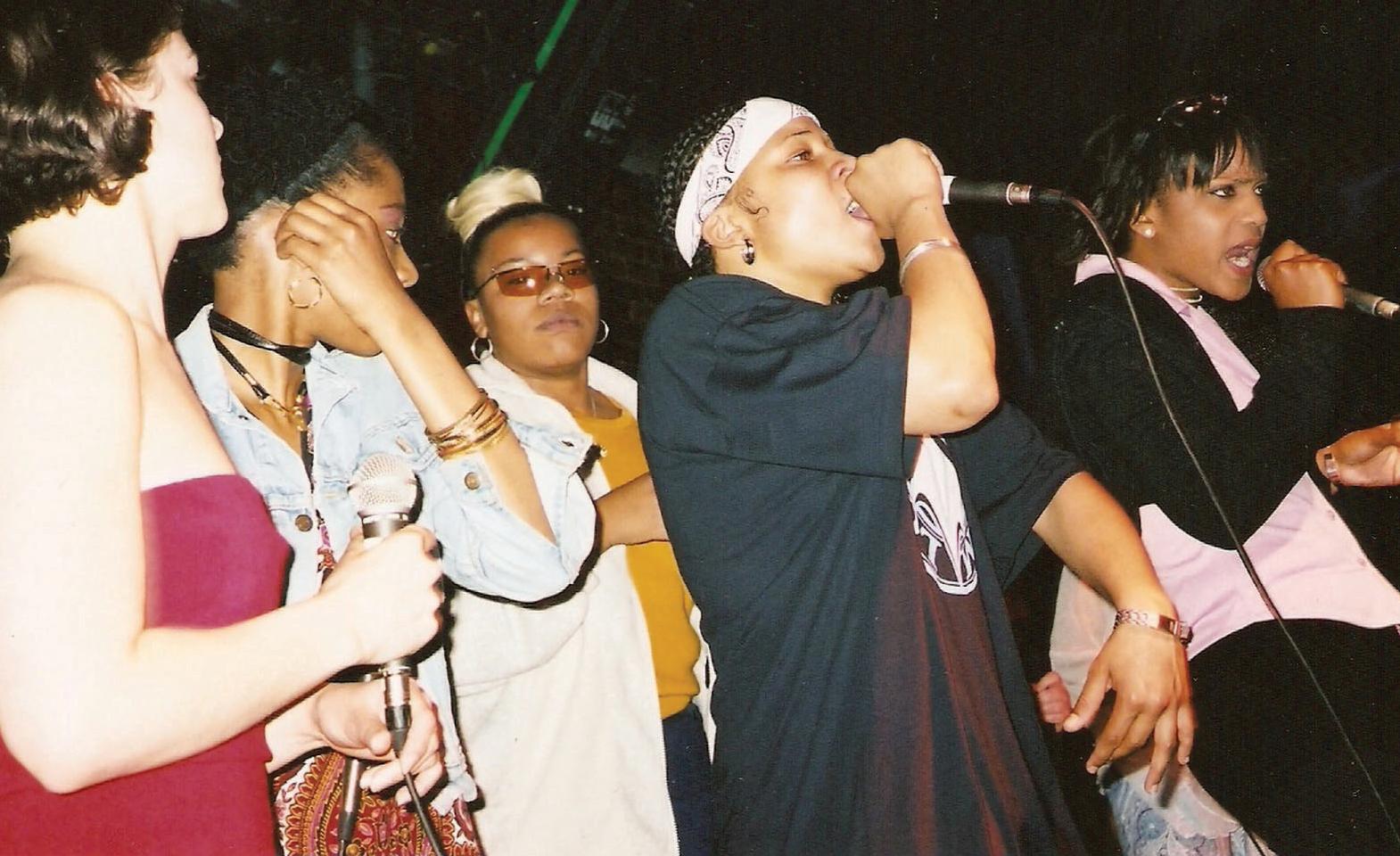
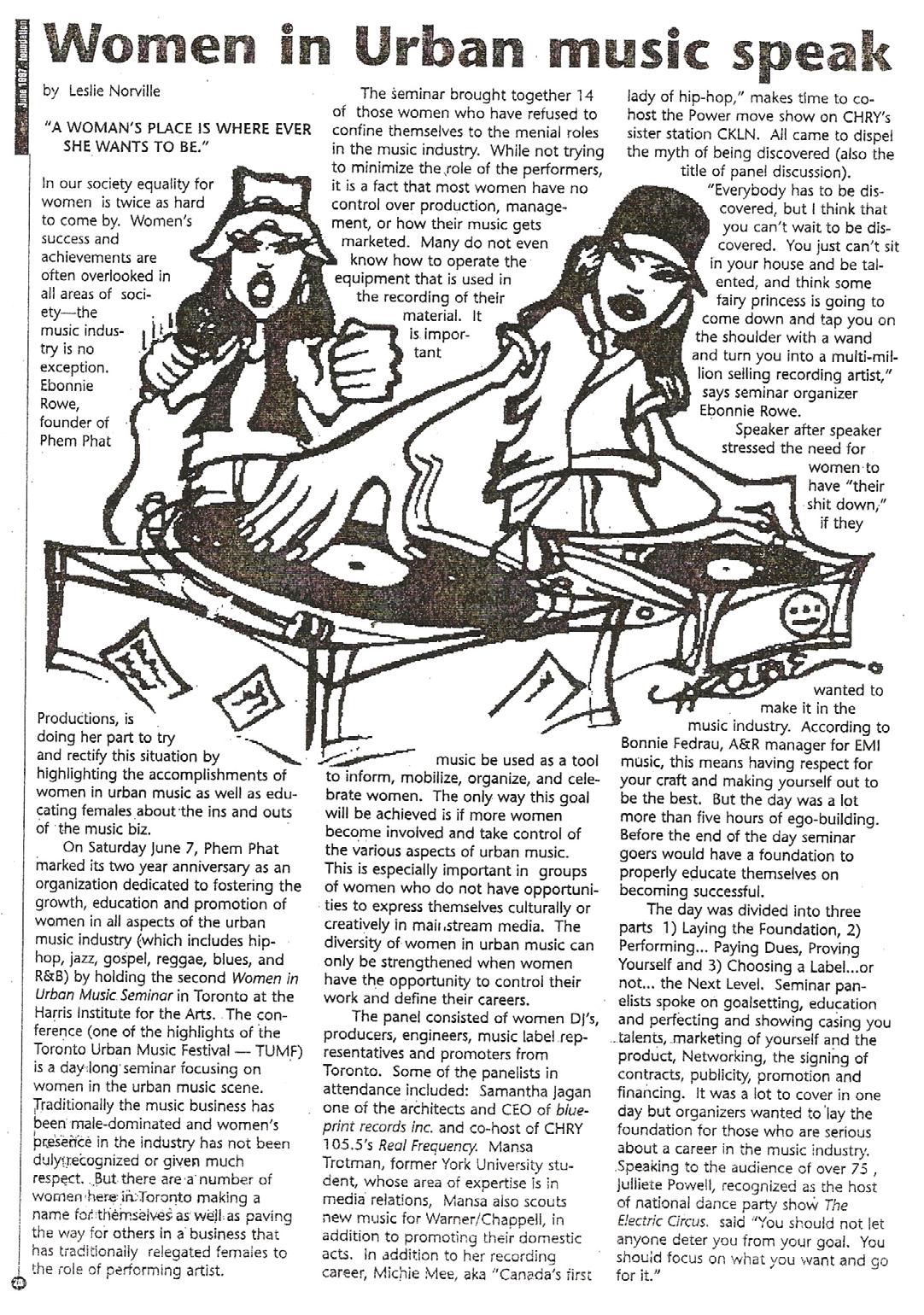
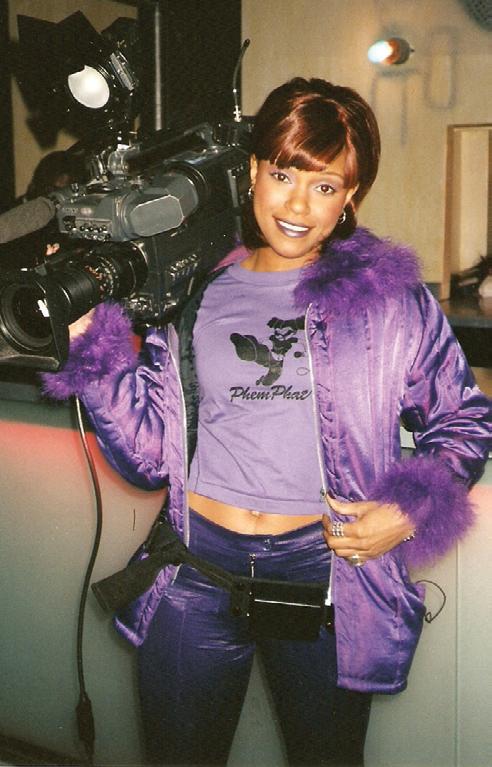
Rowe recognized that the misogynistic language dominant in hip hop lyrics was negatively impacting girls’ self-esteem. She came up with the idea for a platform and safe space for emerging female artists. (Clockwise from top): Freestyle finale at a Honey Jam event; “Canada’s first lady of hip hop” Michie Mee sporting a PhemPhat (the entertainment group Rowe founded) baby tee; Rowe (left) with artist and media personality Jemeni (centre) and music publishing exec and Honey Jam board member Vivian Barclay; an article clipping from 1997 on Phem Phat’s Women in Urban Music Seminar that says, “A woman’s place is where ever she wants to be.” / En voyant l’impact négatif des paroles hip-hop misogynes sur l’estime de soi féminine, Ebonnie Rowe a eu l’idée de créer une plateforme et un lieu sécuritaire pour les artistes émergentes. Dans le sens horaire : finale freestyle d’un concert Honey Jam; Michie Mee, « première dame du hip-hop canadien », porte un t-shirt PhemPhat, l’entreprise de divertissement d’Ebonnie Rowe; Ebonnie Rowe en compagnie de Jemeni, artiste et personnalité médiatique, et de Vivian Barclay, directrice de la maison d’édition musicale et membre du CA d’Honey Jam ; un article de 1997 à propos du colloque de PhemPhat sur les femmes dans la musique urbaine dit : « La place d’une femme est là où elle veut être. »



Members of the Honey Jam community receive mentoring, industry education, vocal coaching and invaluable performance and networking opportunities. (Clockwise from left): Nelly Furtado and Rowe in 2012. (Furtado performed in a talent showcase at age 18 and found her manager through Honey Jam); Juno Award winner Jully Black, another alum, made a surprise appearance during the freestyle finale at a Honey Jam event at the Mod Club in the early 2000s; I.P. The Poet at that same venue in 2018. / Les membres d’Honey Jam profitent de mentorat, de formations professionnelles, de cours de chant et d’occasions inestimables de réseautage et de représentation. Dans le sens horaire : au début des années 2000, Jully Black, lauréate d’un prix Juno et exmembre d’Honey Jam, fait une apparition surprise au concert du Mod Club ; I.P. The Poet dans la même salle en 2018 ; Nelly Furtado et Ebonnie Rowe en 2012 : à 18 ans, Nelly Furtado participe à un radio-crochet et y trouve son agent grâce à Honey Jam.


we’re finishing the programming for the current year, I’m applying for funding for the next year,” Rowe says. While this is under way, she’s also navigating opportunities with community partners like the Toronto International Film Festival—“things throughout the year that we can extend as opportunities and experiences to the artists.”
Key to expanding the impact of Honey Jam has been opening up the opportunities for artists to audition and get involved in the program. Live auditions—one minute per artist—are held in Toronto in June, but dates are announced in January. “We start promoting to the outside provinces first, for the people who want to come in person and might need to apply for a travel grant or figure out how they’re going to do that,” Rowe says. Artists can submit virtual auditions, and in 2024, Rowe held live auditions in Montréal too.
Artists who make the cut, typically 15 per year, join a prestigious group of women. Alumni from the program include Jully Black, Nelly Furtado, Michie Mee and Tasha T. “It’s a sisterhood,” Rowe says of Honey Jam today. “It’s an incubator. It’s a platform, a stepping stone, a place to learn and grow and network.”
As with many arts organizations, the future depends on funding. But Rowe is determined to continue the legacy she launched three decades ago. “Once I decide I’m doing something, I’m all in,” she says. “I’m a disciple of Malcolm X. He said, ‘By any means necessary,’ and I live that. I don’t know how to turn it off.”
LEFT: Rowe was named a member of the Order of Canada this year for shaping the Canadian music industry by supporting emerging female artists through her non-profit multicultural, multi-genre development efforts. / CICONTRE : Ebonnie Rowe a été nommée membre de l’Ordre du Canada en 2025 pour façonner l’industrie musicale canadienne en soutenant les artistes émergentes par son programme de développement multiculturel et multigenre à but non lucratif.
La planification du concert et des ateliers commence plus d’un an à l’avance. « Je réfléchis à ce que nous allons faire, au calendrier ainsi qu’aux améliorations à apporter. Et tout en peaufinant la programmation de l’année, je fais une demande de financement pour la suivante », poursuit-elle. Parallèlement, elle explore les possibilités de partenariat, comme avec le Festival international du film de Toronto : « des occasions et des expériences à offrir tout au long de l’année à nos artistes. »
La clé pour accroître l’impact de Honey Jam? Ouvrir grand les portes par les auditions. En direct, d’une durée d’une minute par artiste, elles ont lieu à Toronto en juin et les dates sont annoncées dès janvier. « On commence par en faire la promotion dans les provinces extérieures pour que les personnes qui souhaitent venir puissent avoir le temps de s’organiser ou de demander une bourse de voyage si besoin. » Des auditions virtuelles existent aussi ; 2024, Ebonnie Rowe s’est déplacée jusqu’à Montréal pour tenir les auditions.
Les artistes retenues, au nombre de 15 par an, entrent dans un groupe prestigieux de femmes. Jully Black, Nelly Furtado, Michie Mee et Tasha T sont des anciennes d’Honey Jam. « C’est une sororité, un incubateur, une plateforme, un tremplin, un lieu pour apprendre, s’épanouir et réseauter », résume-t-elle.
Comme pour beaucoup d’organismes culturels, l’avenir dépend du financement. Mais Ebonnie Rowe est aussi déterminée qu’il y a 30 ans : « Quand je décide quelque chose, je m’implique à 100 %. Je suis une disciple de Malcolm X et de sa devise “Par tous les moyens nécessaires”. Je l’ai faite mienne. Et je ne sais pas m’arrêter. »
RIGHT: Jaclyn Kenyon performs at Massey Hall in Toronto as part of the anniversary showcase, Honey Jam 30. / PAGE 35 : Jaclyn Kenyon sur la scène du Massey Hall de Toronto pour les 30 ans d’Honey Jam.

by / par Tom Arban
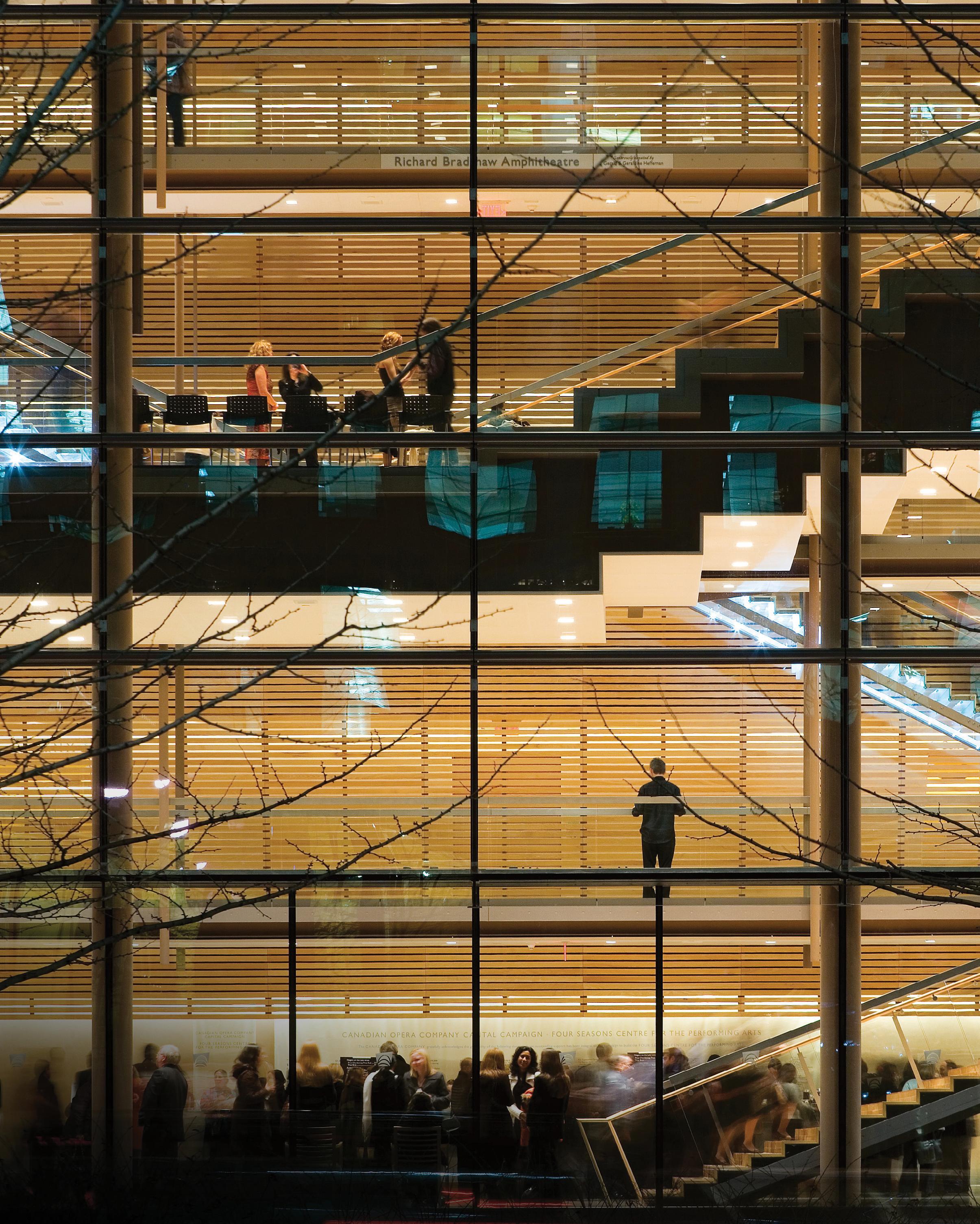
The City Room of the Four Seasons Centre for the Performing Arts in Toronto is highly visually accessible from the street. / La City Room du Four Seasons à Toronto, un centre pour les arts de la scène, est visuellement accessible depuis la rue.
Photo
Photography
Making Space for Music Place à la musique
BY / PAR RICHARD MARSELLA AND / ET DONALD SCHMITT PHOTO COURTESY OF / OFFERTE PAR DIAMOND SCHMITT ARCHITECTS
In Set Pieces, Diamond Schmitt Architects’ compendium of insights and case studies from their portfolio of performing arts buildings, Donald Schmitt recalls a formative experience when the curtain between artist and audience was drawn back. Here, he’s joined by Richard Marsella, executive director of Community Music Schools of Toronto, to discuss why access—to music education, to the “high temples” of music culture—is key to community development.
DONALD SCHMITT: As part of the urban redevelopment and revitalization of Regent Park—a diverse community where well over 60 languages are spoken and a place of arrival for many new citizens of the city of Toronto—one of the key opportunities or essential pieces of infrastructure that was thought about was a place for arts and culture. A particular focus emerged on music education. What had been previously known as the Regent Park School of Music, [which] operated out of quite a small [space], had the opportunity to grow and develop and reach out more fully to the community.
RICHARD MARSELLA: One of the tenets of community music is access; removing all barriers—knowing how expensive music lessons are in a city. All of the programming that we’re offering at Community Music
Dans Set Pieces, un abrégé d’études de cas tirées du portfolio de bâtiments dédiés aux arts de la scène de Diamond Schmitt Architects, l’architecte Donald Schmitt se remémore une levée de rideau entre artiste et public. Il discute avec Richard Marsella, directeur général de Community Music Schools of Toronto, d’une des clés du développement communautaire : l’accès à l’éducation musicale et aux « hauts lieux » de la musique.
DONALD SCHMITT : Dans le cadre de la revitalisation urbaine de Regent Park, un quartier torontois où on parle plus de 60 langues et qui accueille beaucoup de nouveaux arrivants, un lieu dédié aux arts et à la culture faisait partie des infrastructures essentielles qui ont été étudiées. On s’est intéressé à l’éducation musicale en particulier. L’ancienne école de musique Regent Park, qui manquait vraiment de place, a eu l’occasion de s’agrandir et de toucher un public plus large.
RICHARD MARSELLA : Un des principes fondamentaux de la musique communautaire, c’est l’accessibilité, la suppression de toutes les barrières, surtout quand on connaît le coût d’un cours de musique en ville. Tout ce que nous proposons à la Community Music Schools of Toronto [école de musique communautaire de Toronto] est
Schools of Toronto is completely free. And when I look at space, Don, you were talking about our old row house on Queen Street, which was very humble—nothing was soundproofed. It was kind of charming that you’d hear the drums in the basement, guitar and piano on the second floor and early-childhood music in the attic. Then we move into Daniels Spectrum and all of a sudden we’ve got sound isolation in each of our studios. We have much more space, and it’s all accessible; wide hallways, a recital hall. It really levels us up. There was a surge in students; we more than doubled our student population. We’re currently reaching about 550 kids—children and youth ages 3 to 18—here in Regent Park alone.
DS: It was a space designed with the same acoustician and theatre consultants that we worked with on the Four Seasons Centre for the Performing Arts. So it was treated as a very serious level of space, with a whole range of smaller theatre and teaching spaces. That sense of taking it very seriously, making it accessible and bringing communities together is, I think, very important to community development and community vitality.
RM: Space is really everything, when you look at what you can achieve with this community-music model of being completely free to a neighbourhood. We’re dreaming equally as big for Jane and Finch as we have been in Regent Park and looking to build a brand-new 5,000-square-foot building with Diamond Schmitt. It’s amazing to do it with architects and a whole team that really get what our dream is and are able to collaborate with us to achieve that. When we first moved into [Daniels Spectrum], people were like, “It’s so regal.” Well, our kids deserve it.
DS: That’s it exactly. That’s what’s important about building at Jane and Finch or why Regent Park has been successful; it’s the same quality of spaces, at a different scale and so forth, but making that central to different communities.
Also, the city has these high temples of music culture: the symphony, Koerner Hall [at The Royal Conservatory of Music] and the Four Seasons (that we did). But it’s important that they’re not seen as places that are elite for only a small group of the community—that they engage across all communities, all economic strata in society.
The design of performing-arts spaces can blur the distinction at the threshold, make it easier for people who may be intimidated about going to a performance because “I don’t know when to clap” or “I might not be wearing the right stuff,” to make a physical connection between artists and the public. In the City Room at the Four Seasons, we were able to really bring the [performance] space to the sidewalk using transparency. [Then] talks and events and free lunch concerts [can connect to] the public realm and do so in a way that provides lots of vitality for the orchestra and the performers.
That’s one of the things we’ve learned: musicians thrive in an environment where they can have an immersive relationship with the
audience. At the New York Philharmonic’s Geffen Hall at the Lincoln Center, before we renovated it, it was a proscenium room and the musicians couldn’t hear themselves—they felt a real isolation from the audience. We rebuilt it so the stage was surrounded by the audience. It’s wonderful for the audience to see the creativity and musicianship of the orchestra or the ensemble, but it’s also really fabulous for the musicians. They draw energy and spirit from that.
Developing that immersive relationship between artist and audience is not only important in the hall but [also] important between the institution and the city beyond—that sense of connecting to the community and making the big performance places community crossroads in the city.
RM: I love that mantra. With that in mind, with every space you approach, how can you go wrong? It doesn’t stop with you; the programming teams at these spaces bring [them] to life, but you’re giving them, if I can use a musical term, an instrument for them to play on. Students and graduates of our program have performed at the Four Seasons on a number of occasions, so I see how it is working the way you had intended.
DS: In a way, it’s all connected to the point that you were making about access, making it comfortable for people to cross the threshold, to get engaged, without compromising the quality of the rooms as instruments for music.
“Musicians thrive in an environment where they can have an immersive relationship with the audience.”
RM: Through the pandemic, we saw what the opposite side of that spectrum looked like and, sure, we got creative in virtual spaces, learning and adapting, but there is nothing like an accessible worldclass, well-designed space for gathering and making music together—in a room. It became so obvious when we came back to it. It’s crucial to being that soul in a community.
If it’s approached and designed properly—not only the space but the people [who] occupy the space (I keep going back to that)—I think you really have a formula for long-term impact in a community.
DS: That relationship of being with the musicians who are making the music–whether it’s a big room with 2,000 seats or 40 people at the Monarch Tavern, there’s always that thrill of connecting with the process of making music, the artistry and energy and immediacy of it. That’s why live music will never lose its magic.
entièrement gratuit. Et que dire de l’espace… Don, tu parlais de notre ancienne maison de la rue Queen, où rien n’était insonorisé. On entendait la batterie au sous-sol, la guitare et le piano au second, les premières notes des tout-petits au grenier, c’était charmant! Quand on a emménagé au Daniels Spectrum, on a découvert l’insonorisation dans chaque pièce. C’est bien plus spacieux et entièrement accessible : de larges couloirs, une salle de récital. On a pu enclencher la vitesse supérieure. Les élèves ont afflué, on en a plus du double. Actuellement, on accueille 550 jeunes, âgés de 3 à 18 ans, rien qu’ici à Regent Park.
D. S. : Pour la conception de ce centre culturel, on a fait appel aux mêmes acousticiens et consultants en théâtre que ceux avec lesquels on a travaillé pour le Four Seasons Centre for the Performing Arts. L’aménagement a été pris très au sérieux avec une série de petites salles et des espaces pour enseigner. Cette volonté de réflexion, d’accessibilité et de rassemblement des communautés est, je crois, très importante pour le développement et la vitalité communautaires.
R. M. : L’espace, c’est ce qui fait toute la différence, quand on voit ce qu’on peut accomplir dans le quartier avec ce modèle musical communautaire entièrement gratuit. On a la même ambition pour le quartier Jane and Finch, où on envisage de construire un bâtiment de 460 m2 avec Diamond Schmitt. C’est formidable de pouvoir collaborer avec des architectes et toute une équipe qui comprennent vraiment notre rêve. Quand on s’est installé au Daniels Spectrum, les gens trouvaient le lieu « royal ». Mais nos enfants le méritent!
D. S. : Tout à fait. Ce qui est important dans le fait de construire à Jane and Finch ou dans le succès de Regent Park, c’est que ce sont des espaces de même qualité, à une autre échelle, placés au cœur de différentes communautés.
Toronto a ces grands temples de la musique que sont l’Orchestre symphonique, le Koerner Hall [au Conservatoire royal] et le Four Seasons, qu’on a réalisé. Et il est important qu’ils ne soient pas considérés comme des endroits réservés à une élite, qu’ils s’adressent à toutes les communautés, à toutes les strates sociales.
La conception de lieux de spectacle peut estomper les différences dès l’entrée, faciliter la création d’un lien physique entre les artistes et un public qui pourrait être intimidé à l’idée d’assister à un concert, car il ne saurait pas quand applaudir ou comment s’habiller par exemple.
Dans la City Room du Four Seasons, on a utilisé la transparence pour amener la salle [de spectacle] dans la rue. Les conférences, les événements et les concerts gratuits du midi peuvent ainsi rejoindre la sphère publique, et ce, d’une manière qui apporte de la vitalité à l’orchestre et aux interprètes.
C’est une des choses qu’on a apprises : les musiciens s’épanouissent dans un milieu où ils peuvent établir une relation
immersive avec le public.Avant qu’on la rénove, la salle Geffen Hall du Lincoln Center, qui accueille l’Orchestre philharmonique de New York, comportait un proscenium : les musiciens ne pouvaient pas s’entendre et se sentaient isolés du public. On l’a repensée pour que la scène soit entourée par le public. C’est merveilleux pour ce dernier, qui voit la créativité et le talent de l’orchestre, et pour les musiciens, qui en retirent de l’énergie et de l’entrain.
Développer cette relation immersive est non seulement important dans une salle entre un artiste et le public, mais aussi entre le public et l’établissement et, au-delà, la ville. Qu’il y ait un sentiment de lien avec la collectivité, que les grandes salles de spectacle soient des lieux de rencontre communautaires dans la ville.
« Les musiciens s’épanouissent dans un milieu où ils peuvent établir une relation immersive avec le public. »
R. M. : Ce point de vue me plaît. Comment peut-on se tromper avec une telle approche? Les équipes de programmation donnent vie à ces lieux, mais vous, les architectes, leur offrez, si je peux employer un terme musical, un instrument dont ils peuvent jouer. Les élèves et les diplômés de notre programme se sont produits à plusieurs reprises au Four Seasons, je vois donc que cela fonctionne comme vous l’aviez prévu.
D. S. : D’une certaine manière, c’est en rapport avec ce que tu disais à propos de l’accessibilité, du fait de mettre les gens à l’aise pour franchir le seuil, pour se lancer, sans compromettre la qualité des salles en tant qu’instruments au service de la musique.
R. M. : Pendant la pandémie, on a vu à quoi l’inverse ressemblait. Alors oui, on a su faire preuve de créativité dans le monde virtuel, on a appris, on s’est adapté, mais rien ne vaut un lieu accessible et bien conçu pour se réunir et jouer de la musique, ensemble, dans une pièce. C’est devenu une évidence quand la vie a repris son cours normal. Être cette âme au sein d’une communauté est crucial.
Si l’approche et la conception sont bonnes, celles du lieu comme des personnes qui l’occupent (j’y reviens sans cesse), je crois qu’on tient la recette d’un impact à long terme dans la collectivité.
D. S. : Assister à un concert, que ce soit dans une salle de 2 000 places ou de 40 au Monarch Tavern, déclenche toujours cette connexion émotionnelle avec la musique jouée en direct, le talent artistique, l’énergie qui s’en dégage et l’immédiateté de l’instant. Rien ne remplacera jamais la musique en personne.
Deer Lake by/de Michelle Sound
BY / PAR MÉLANIE RITCHOT
BY / PAR CEREMONIAL/ART
From the Deadly Aunties series of drums draped in denim, fringe and fur to a photographymeets-beading piece adorning the book cover of Billy-Ray Belcourt’s A Minor Chorus, Michelle Sound’s practice explores personal and familial narratives, maternal labour, identity and cultural knowledge. A Cree and Métis artist and mother based in Vancouver, she recently opened a solo exhibition at the Ferry Building Gallery, featuring cyanotype-printed drums like Deer Lake, which references the body of water near the Century Gardens in Burnaby. / De Deadly Aunties, une série de tambours en denim, franges et fourrure, à la couverture du livre de Billy-Ray Belcourt, A Minor Chorus, mêlant photographie et perles, Michelle Sound explore récits personnels et familiaux, travail maternel, identité et savoir culturel. Cette mère-artiste crie et métisse a choisi la galerie d’art Ferry Building de Vancouver pour son exposition en solo : des tambours tendus de peaux cyanotypées, comme Deer Lake, en hommage au lac du même nom situé près du jardin Century Gardens de Burnaby.
1. Michelle Sound has been making drums for more than 15 years. When working with cyanotype, she prefers using elk hide for its thickness and white colour, which makes it an ideal canvas for the blue hue to develop before it’s wrapped around the wooden drum frame. / Cela fait plus de 15 ans que Michelle Sound fabrique des tambours. Pour le cyanotype, elle préfère la peau d’élan : une toile de fond idéale par son épaisseur et sa blancheur pour le développement de la couleur bleue, avant d’être tendue sur le fût en bois.
2. In this camera-less photo process, she applies cyanotype solution and, once in the sun, the hide gradually gains pigment around any objects placed on it. It’s a gentle balance, as details will
be lost if it is overdeveloped. / Elle y applique une solution photosensible, puis y dépose des végétaux. Sous l’exposition au soleil, les parties de la peau non recouvertes se pigmenteront progressivement. C’est un équilibre délicat : une exposition trop longue et tout détail sera perdu.
3. While time allows for the image to develop, the wind sometimes tampers with it. “You’ve just got to let it go and be surprised by the outcome every time,” Sound says, pointing to a flower that shifted mostly off this drum’s surface. / Le vent vient parfois jouer les trouble-fête. « On n’y peut rien, il faut accepter de se laisser surprendre par le résultat à chaque fois », explique-t-elle en montrant une fleur qui a changé de position.
4. Sound typically works with traditional plants and medicines, but here she picked indigenous species and plants introduced through settlement—from the Century Gardens in Burnaby, established in 1967 as an ode to the British monarch—to reflect overlapping histories. “If I’m going to make a record of this place, that’s what it includes.” / Afin de traduire les chevauchements de l’histoire, celle qui aime travailler avec des plantes médicinales traditionnelles a choisi ici des espèces indigènes ou introduites lors de la colonisation, cueillies dans les Century Gardens, une ode à la monarchie britannique datant de 1967. « Il fallait ça pour représenter ce lieu au mieux. »
PHOTO
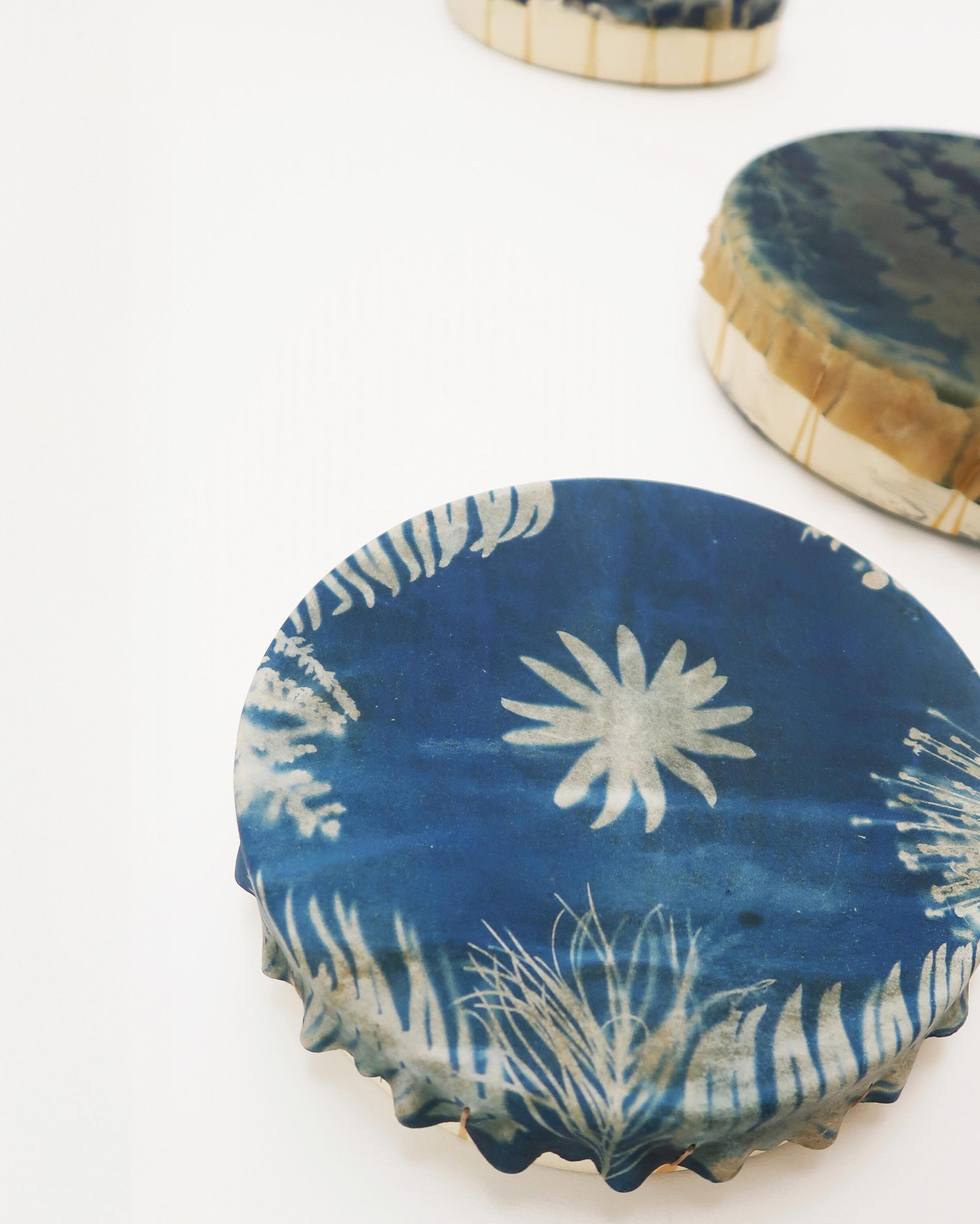
5. The central flower represents a portal, referencing Squamish Chief Joe Capilano’s story of the Seal King and a hidden waterway in Deer Lake, as told to poet E. Pauline Johnson. The floral image links to another portal-like image on a sister drum, representing the other side of the portal. / La fleur au centre symbolise un portail, en référence à la légende du lac Deer et à son passage secret, racontée par le chef squamish Joe Capilano à la poétesse E. Pauline Johnson. Elle renvoie à une autre image florale sur un tambour jumeau, représentant l’autre côté du portail.
Do you know where your data is?
Managed Canadian Nextcloud Hosting
Repatriate your data with Canadian alternative canWork.Cloud
Try up to 6 users free for 6 months. Code: block2025 ct.coop/block2025
What is canWork.Cloud?
It’s a set of apps that you can use to share files, chat via a messenger system, set up appointments, calendar, create surveys, & make polls. Built around Nextcloud Hub. REPLACES DROPBOX | GOOGLE WORKSPACE |


canWork.Cloud
Open Source Software as a Service (OS SaaS)
Nextcloud Hub | Email | Meetings | and more
Ethical and Green AI Hosting
Hosted in Canada
Privacy Focused
Secure / Compliant
Backup & Disaster Recovery
No Vendor Lock-in
Flat Rate Enterprise Pricing
In Harmony De concert
BY / PAR KRISTINA LJUBANOVIC
“I used to think growing up would be easy,” go the lyrics of “Breathless,” one of four songs written by students from Toronto’s Parkdale Collegiate Institute and recorded at the Deane Cameron Recording Studio in the Allied Music Centre.
More typically, sentiments like these get scrawled in journals or on bathroom-stall doors (or their social-media equivalent). But for elementary and secondary students in the Collaborations Songwriting Project—one of many outreach and education programs meant to invite communities into the hallowed Massey Hall—their words and ideas, with the help of an artist collaborator, get put to music.
“It may seem intimidating to write a song, but it really is very scalable to the students’ abilities,” says Vanessa Smith, director of education and outreach at Massey Hall and Roy Thomson Hall. And it comes together quickly. Artists are paired with classes, and in their first session, “which is whatever [their] classroom period length is,” says Smith, “they’re able to write a verse and a chorus” in addition to developing the metre, tune and melody.
Later, Collaborations invites the students to return to the Allied Music Centre to see their collaborator onstage, attend a sound check or, as the Jean Lumb Public School did, perform with their artist, Good Lovelies. (“‘Massey Hall is a go!’ are words not many music teachers get to say to their 12- to 14-year-old students,” says teacher Katherine Fraser in an email.)
Maybe most exciting, as was the case with Parkdale CI students and their artist collaborator, Canadian R&B artist Shakura S’Aida, they gain insight into songwriting, learn about the recording process (and various career paths in the industry) and, ultimately, lay down tracks. The impact of the experience can reverberate for a long time.
“The fire of making music has been lit [for] many students who didn’t even know what that was all about,” says Parkdale CI teacher Liz Prosser.

« Je croyais que grandir serait facile », dit Breathless, l’une des quatre chansons écrites par les élèves de l’école Parkdale de Toronto et enregistrées au studio Deane Cameron de l’Allied Music Centre.
On trouve normalement ce genre de sentiments dans les journaux intimes (ou leur équivalent sur les réseaux sociaux). Ici, grâce à Collaborations, un projet d’écriture collaborative parmi les programmes de vulgarisation visant à inviter le public au Massey Hall, et grâce à l’aide d’un artiste associé, les mots des élèves du primaire et du secondaire sont mis en musique.
« Écrire une chanson peut être intimidant, sauf que c’est très modulable selon les aptitudes de chacun », explique Vanessa Smith, directrice de l’éducation et de la vulgarisation aux Massey Hall et Roy Thomson Hall. Et l’apprentissage est rapide. On jumelle un artiste à une classe et, dès la première séance, « qui correspond à la durée de cours habituelle, ils sont capables d’écrire un couplet et un refrain », tout en développant la mesure et la mélodie.
Les élèves sont ensuite invités à revenir au Allied Music Centre pour assister à un test de son, à un spectacle de leur artiste associé ou carrément chanter avec lui, comme l’école publique Jean Lumb avec les Good Lovelies. (« Rares sont les professeurs de musique qui ont l’occasion de dire à leurs élèves de 12-14 ans : “À nous le Massey Hall!”», confie la professeure Katherine Fraser.)
Encore plus passionnant, comme ce fut le cas pour les élèves de Parkdale associés à l’artiste canadienne de R&B Shakura S’Aida. Ils se familiarisent avec le métier de parolier, le processus d’enregistrement (et les autres professions de l’industrie musicale) et finissent par enregistrer leurs propres chansons. L’impact d’une telle expérience peut résonner en eux longtemps.
« On a allumé la flamme de la création musicale chez de nombreux jeunes qui ignoraient tout de ce domaine », conclut Liz Prosser, professeure à Parkdale.
Photo by / par Jennifer Rowsom
Scan the QR code to hear the songs created by students from Parkdale CI with support from Shakura S’Aida. / Balayez le code QR pour écouter les chansons composées par les élèves de Parkdale avec l’aide de Shakura S’Aida.

1001 Rue Lenoir
AS TOLD TO / PROPOS RECUEILLIS PAR DANIEL BROMBERG ILLUSTRATION BY / PAR SARAH FARQUHAR
Once RCA Victor’s powerhouse of recording, manufacturing and distribution, 1001 Rue Lenoir helped define Montréal’s sound in the heart of the Saint-Henri and nearby Little Burgundy neighbourhoods. Ryan Gray, co-owner of Nora Gray, Elena and Gia Vin & Grill (next door to the RCA), shares his fave spots that hit the right notes, inspired by the building’s storied role in Montréal’s music history. / Ancienne usine de production et studio d’enregistrement de la RCA Victor, le 1001, rue Lenoir a sculpté le son de Montréal au cœur des quartiers de Saint-Henri et de la Petite-Bourgogne. Ryan Gray, copropriétaire de Nora Gray, Elena et Gia vin & grill (à côté de la RCA), nous dévoile son palmarès de bonnes adresses, inspirées par le rôle qu’a joué le bâtiment dans l’histoire musicale de la ville.
1. GIA VIN & GRILL, 1025 RUE LENOIR + 2. ELENA, 5090 RUE NOTRE-DAME O.
“Led by chef Janice Tiefenbach, Gia is our centralItalian-inspired eatery, and it’s really hitting its stride. Pro tip: Request a seat in the outdoor garden in the summertime. Then there’s Elena. Great hospitality; local, seasonal, wood-fired sourdough pizza; homemade pasta; Montréal’s most iconic salad; and natural wine. I’m biased, but it’s still all true.” / « Dirigé par la chef Janice Tiefenbach, Gia propose une cuisine inspirée du centre de l’Italie et a trouvé son rythme de croisière. Conseil de pro : en été, demandez une table dans le jardin. Quant à Elena, c’est un super accueil, des pizzas au levain cuites au feu de bois locales et de saison, des pâtes maison, la salade la plus célèbre de Montréal et des vins naturels. Je ne suis pas objectif, mais tout est vrai. »
3. PAS DE PROBLÈME, 4754
RUE NOTRE-DAME O.
“Brand new on the scene, this spot is a big vibe— period. With great coffee and excellent reggae music in a chill setting, this place is designed for a slow hang. Don’t sleep on the homemade Jamaican patties.”/ « Ce nouveau venu dégage une ambiance ultracool. On y vient pour oublier tous ses problèmes en sirotant un excellent café ou en savourant un pâté jamaïcain maison sur des airs de reggae. »
4. BAIT & SCHLANG TATTOO, 4929 RUE NOTRE-DAME O.
“I don’t have tattoos, but if I did they would be by Nick and Travis at Bait & Schlang.” / « Je n’ai pas de tatouages, mais si j’en avais, ils seraient signés Nick et Travis de Bait & Schlang. »
5. MARCHÉ ATWATER, 138 AVENUE ATWATER
“The true beating heart of Saint-Henri. Built in 1933, the art deco public market is one of Montréal’s most beautiful buildings. For its fresh produce, butchers, cheesemongers and food stalls, both residents and top chefs make weekly grocery runs here.” / « Centre vital de SaintHenri, ce marché public Art déco datant de 1933 est l’un des plus beaux bâtiments de Montréal. Ses maraîchers, bouchers, fromagers et autres producteurs attirent chaque semaine résidents et grands chefs. »
6. CRÈMERIE DALLA ROSE, 4609 RUE NOTRE-DAME O.
“Best ice cream shop in the sud-ouest. Go with seasonal specials like corn and blueberry in the summer or the Elena Panettone at Christmas. Their pistachio gelato rivals some of the best I’ve had in Italy. Tell Nick I sent you.” / « La meilleure crèmerie du Sud-Ouest. Optez pour les saveurs bleuet ou blé d’Inde en été et panettone di Elena à Noël. Leur crème glacée à la pistache rivalise avec les meilleures d’Italie. Dites à Nick que c’est moi qui vous envoie. »
SOUND CALLBACK / SUR UNE AUTRE NOTE
7. PLACE DU BONHEUR-D’OCCASION, 506-522 RUE ROSE-DE-LIMA
Named after Gabrielle Roy’s 1945 novel The Tin Flute, this public square nods to Saint-Henri’s working-class roots and an era when nearby Little Burgundy—a neighbourhood once referred to as the “Harlem of the North”—pulsed with jazz music. / Cette place publique, qui porte le nom du roman de Gabrielle Roy publié en 1945, rend hommage aux origines ouvrières de Saint-Henri et à une époque où le quartier voisin de la PetiteBourgogne, surnommé alors le « Harlem du Nord », vibrait au rythme du jazz.
Analog to Digital Du papier aux écrans
BY / PAR SYDNEY LONEY
In the early 20th century, Montréal’s Paper Hill was a district devoted to all things print and paper, home to pulp mills and paper-manufacturing plants. One of those plants was at 425 Viger Ouest (also known as “the Read building,” although for its developer Cinus G. Read, not for its ties to the printed page). Built in 1912, the stately 10-storey brick and concrete structure was designed by famed architecture firm Ross & MacFarlane. It debuted as Canada’s largest commercial building, encompassing an entire city block, and its classical design is characteristic of the Chicago School, with a tripartite facade, each horizontal section establishing a rhythmic pattern through varied window sizes and decorative masonry.
The property didn’t change much over the decades until Allied acquired it in 2005 and embarked on a mission of modernization and preservation. The building gained a 13-storey concrete extension on its northeast corner and a trio of steel-framed floors atop the original build, all enveloped in glass, complementing the original brickwork and creating a visual harmony between past and present. In 2022, Google chose 425 Viger to house its 300 Montréal employees, from AI researchers to software developers, further cementing its evolution from concrete to steel, paper to digital, past to present.
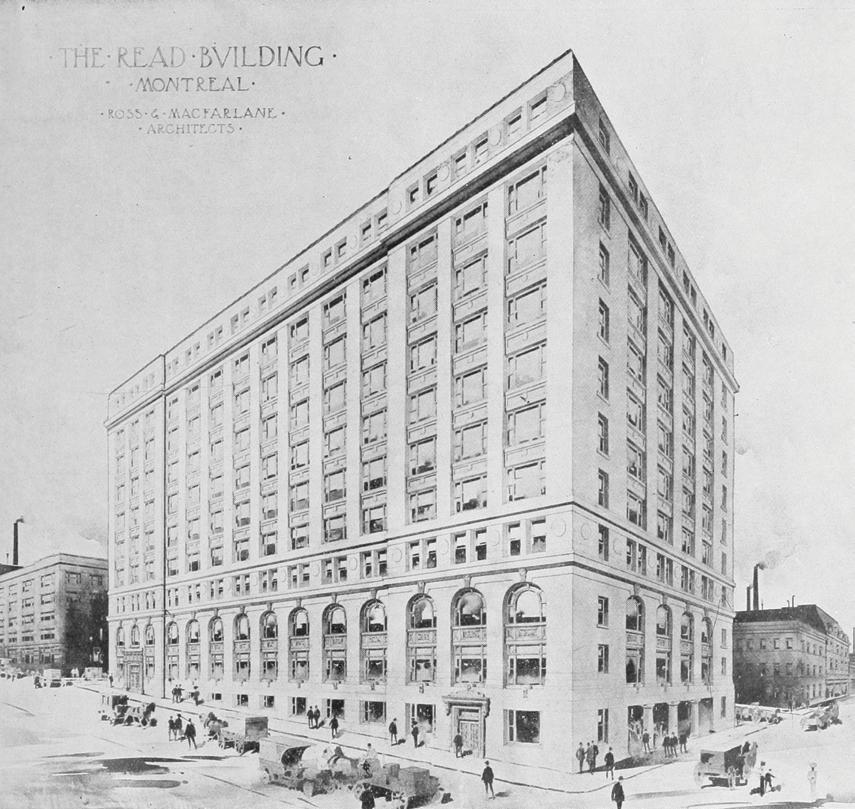
Au début du 20e siècle, les journaux, imprimeurs et usines de pâte à papier montréalais sont tous regroupés dans un même secteur appelé Paper Hill. Une de ces manufactures, située au 425, rue Viger Ouest, est l’édifice Read (du nom de son promoteur immobilier, Cinus G. Read, n’ayant aucun lien avec l’industrie papetière). Imaginée par le célèbre cabinet d’architectes Ross & MacFarlane, cette structure monumentale de 10 étages en brique et béton qui couvre tout un pâté de maisons décroche, dès sa sortie de terre en 1912, le titre de plus grand bâtiment commercial du Canada. Elle se démarque également par sa façade tripartite de style Chicago, rythmée horizontalement par des fenêtres de tailles variées et une décoration formant trois motifs bien distincts.
En 2005, Allied acquiert l’édifice, resté quasiment en l’état, et se donne pour mission de le moderniser tout en préservant son patrimoine architectural. Il est rehaussé de 13 étages en béton côté nord-est et de trois étages à ossature métallique au-dessus de la construction d’origine, le tout couvert de verre, créant une harmonie visuelle entre le passé et le présent. En 2022, Google y installe ses 300 employés montréalais, concepteurs ou chercheurs en intelligence artificielle, consolidant ainsi son passage du béton à l’acier, du papier au numérique.
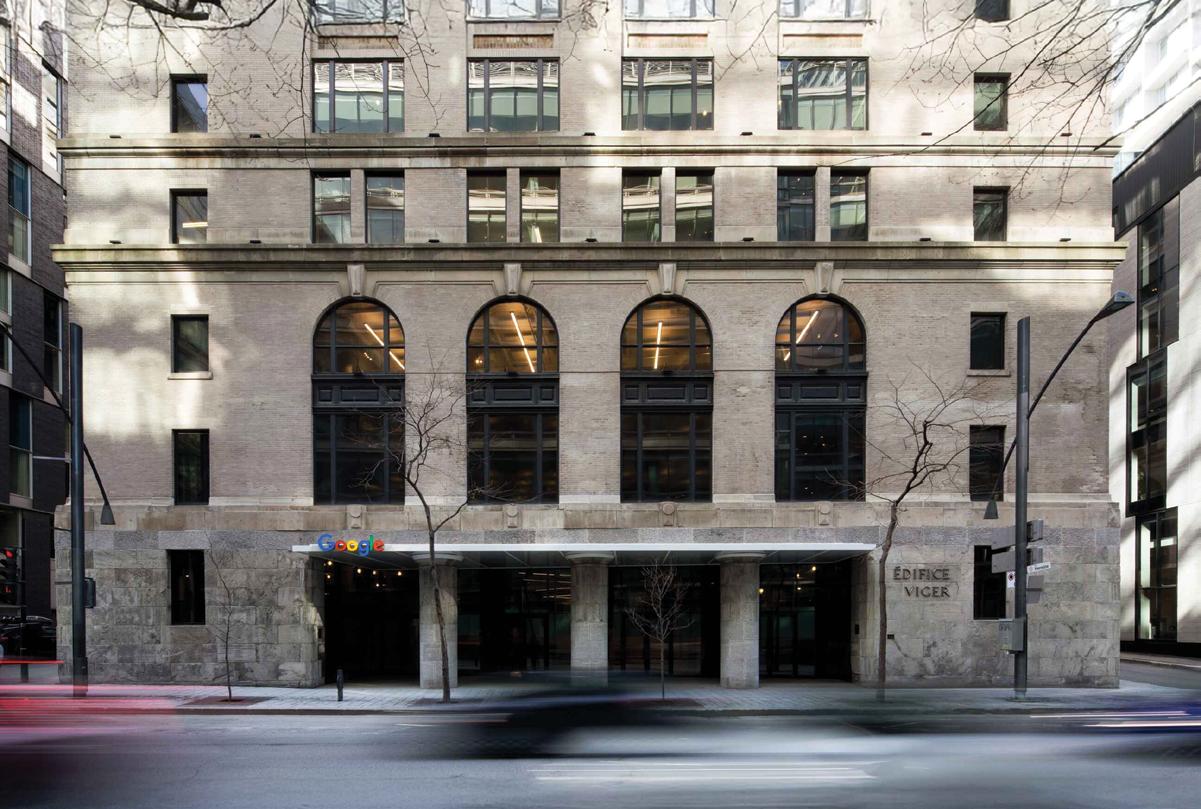
City Sounds Sons urbains
BY / PAR KRISTINA LJUBANOVIC
ILLUSTRATION BY / PAR JASON LOGAN

In 2008, I drove with two friends (one would later become my partner and the father of my kid) to Atlanta, Georgia, to see the honourable Tom Waits hold court at the historic Fox Theatre. We left ungodly early and drove straight through the day, arriving in the late afternoon. Checked into the hotel room (numbered, notably, 666) and exhausted, we fell asleep and woke to the sound of fireworks outside the window. It was the Fourth of July. Tom Waits was fabulous, ripping and roaring through his repertoire—the tenor and quality of his voice alone merits essays and odes. I bought a small chapbook as a souvenir, titled True Confessions (a conversation with himself). In it, Tom lists 48 sounds he likes, including “My wife’s singing voice,” “Soccer crowds in Argentina” and “A Zippo lighter.” Inspired by that list, and the city where I live, Toronto, I tasked myself with coming up with 24 (half Tom’s number) city sounds I like. It’s easy to complain about noise in the city, but there’s lots to love as well. Says Tom: “The world’s making music all the time.” Consider this my City Composition in 24 Parts. / En 2008, je suis allée à Atlanta avec deux amis (dont mon futur conjoint et père de mon enfant) pour assister au concert de Tom Waits dans cette salle mythique qu’est le Fox Theatre. Partis aux aurores, on a roulé toute la journée sans s’arrêter. À notre arrivée à l’hôtel, épuisés, on s’est tout de suite endormis (dans la chambre 666, soit dit en passant). C’est le bruit des feux d’artifice qui nous a réveillés. On était le 4 juillet. Tom Waits était phénoménal, enchaînant ses succès de sa voix rauque and roll, qui mériterait à elle seule des essais et des odes. J’ai acheté un petit livre en souvenir, intitulé True Confessions (a conversation with himself), dans lequel Tom répertorie 48 sons qu’il aime, dont « la voix de ma femme quand elle chante », « les partisans de soccer argentins » et « un briquet Zippo ». Inspirée par cette liste et par ma ville, Toronto, j’ai eu envie d’y trouver 24 sons que j’aime (la moitié de Tom). Les nuisances sonores citadines ont beau être légion, beaucoup sont plaisantes. « Le monde fait de la musique tout le temps », dixit Tom. Voici donc ma Composition urbaine à 24 parties.
1. The streetcar’s ding and rumble on tracks
2. The din of backyard parties
3. Piano lessons through an open window
4. Children leaving school at the bell
5. When the bar door opens and laughter and chatter roll out
6. Birds cheeping and bugs chittering in High Park
7. The opening and closing suction of a freezer door at the grocery
8. A live band performing in a bar, heard muffled from the street
9. The shocking silence when you’re positioned between two red lights
10. The sounds of street food being cooked, sizzling, steam escaping
11. A basketball bouncing on hot asphalt
12. The thwack of a tennis ball being hit on a public court
13. Splishy and splashy outdoor pool noises
14. Snow crunching under your feet on a cold morning
15. The strains of a violin as you descend underground to a subway station
16. Cats mewing and purring on sidewalks
17. Seagulls yelling at each other
18. The Old City Hall clock tower bell’s prolonged ding-dong on the hour and quarter-hour
19. The bee-boop of the scramble intersection at Bloor and Yonge
20. The musical cacophony of different languages being spoken on the street
21. Lake Ontario’s waves quietly rolling in
22. The stately and dignified ferry horn
23. The mechanical wind-through-trees sound of electric cars reversing
24. The bells and whistles (and breaking of bottles) at the CNE midway
1. Le ding du tramway et son grondement sur les rails
2. Le brouhaha d'une fête de ruelle
3. Un cours de piano par une fenêtre ouverte
4. Les enfants sortant de l’école à la sonnerie
5. Les éclats de rire au sortir d’un bar
6. Le gazouillement des oiseaux dans High Park
7. La ventouse de la porte du congélateur à l’épicerie
8. Les chants étouffés depuis la rue d’un concert de bar
9. Le silence assourdissant quand on est coincé entre deux feux rouges
10. La cuisine de rue et ses grésillements fumants
11. Un ballon de basket rebondissant sur l’asphalte brûlant
12. Le claquement d’une balle de tennis frappée sur un terrain public
13. Les joyeux éclaboussements d’une piscine en plein air
14. Le crissement de la neige sous les pieds par un matin froid
15. Les accords de violon dans les escaliers d’une station de métro
16. Le ronronnement d’un chat de trottoir
17. Les mouettes qui se répondent
18. Le long ding-dong de l’ancienne mairie toutes les heures et tous les quarts d’heure
19. Les bip-bips de l’intersection bondée de Bloor et Yonge
20. La cacophonie musicale des langues parlées dans la rue
21. Le bercement des vagues du lac Ontario
22. Le klaxon du ferry, débordant de dignité
23. Le sifflement de vent dans les arbres que font les voitures électriques en reculant
24. Les clochettes, sifflets (et bris de bouteilles) de la foire CNE
Anatomy of a Mixtape Anatomie d’une compliation
BY / PAR AISLING GOGAN
ILLUSTRATION
BY /
PAR AISLING GOGAN
The perfect mixtape is a portable universe where every track holds meaning and every transition matters. British-born Filipino and Copenhagenbased selector and DJ Mark Wingco breaks down the anatomy of a soulful, seamless mix. Follow these steps to create your own (and scan the QR code to sample his flow). / La compilation parfaite? Un univers portatif où chaque morceau a un sens et chaque transition compte. Mark Wingco, DJ philippin d’origine britannique basé à Copenhague, décortique l’anatomie d’une compilation touchante et fluide. Voici les étapes pour composer la vôtre (et un code QR pour écouter son flow).
1. WHO’S LISTENING / LA CIBLE
“Who the mix is for is important; essentially, your mixtape is there to set the tone and vibe. I tend to draw from nostalgia and what moves me.” / « Savoir à qui on s’adresse est important. Votre compilation est là pour créer une ambiance. J’ai tendance à puiser dans la nostalgie et ce qui me touche. »
2. OPEN STRONG / L’OUVERTURE
“The beauty of an opening track is that it can and should lead you to all possibilities, sonically. Everything flows from here.” / « La beauté du premier morceau est qu’il peut et doit vous ouvrir toutes les portes sur le plan sonore. Tout en découle. »
3. THE BUILD / LA CONSTRUCTION
“Finding cadence is important for a sense of rhythm. Choosing tracks based on BPMs [beats per minute], even keys, helps give each song time to breathe. I like things to go in waves.” / « Trouvez le bon tempo. Choisir les morceaux en fonction de leur BPM [battements par minute], ou de la tonalité donne le temps àchaque chanson de respirer. J'aime y aller par vague. »
4. A HIGH NOTE / LA NOTE FINALE
“The last track needs to bring a sense of emotion that ties everything together. What do you want your final song to say? Is it a big, extravagant, epic floor-filler or something that levels you out?” / « L’émotion du dernier morceau doit harmoniser le tout. Quel effet voulez-vous qu’il ait? Plutôt grandiose et extravagant pour faire danser tout le monde ou plutôt apaisant? »
5. A HIGH NOTE / LA NOTE FINALE
“Making a mixtape isn’t a science. Everyone has their own sound that’s true to them. Like any journey, how you navigate it is the key.” / « Faire une compilation n’est pas une science exacte. Chacun a son propre son, qui lui ressemble. Comme toute traversée, elle dépend de la façon dont on navigue. »
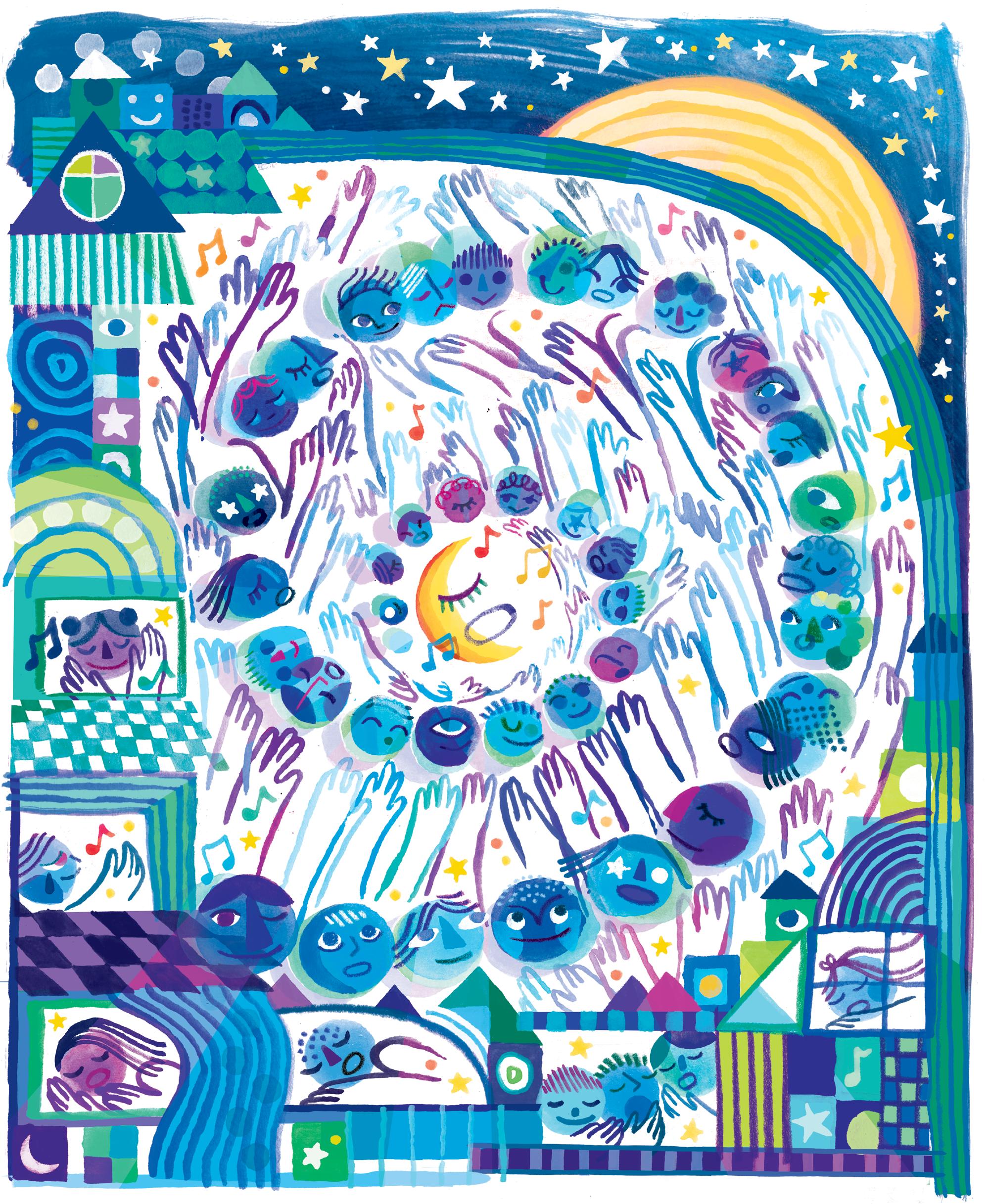
EACH ISSUE, WE ASK AN ARTIST: WHAT WOULD YOU DO WITH YOUR OWN URBAN INFILL? / DANS CHAQUE NUMÉRO, NOUS DEMANDONS À UN ARTISTE CE QU’IL FERAIT DE SA PROPRE DENT CREUSE
BY / PAR MITCHELL KEYS

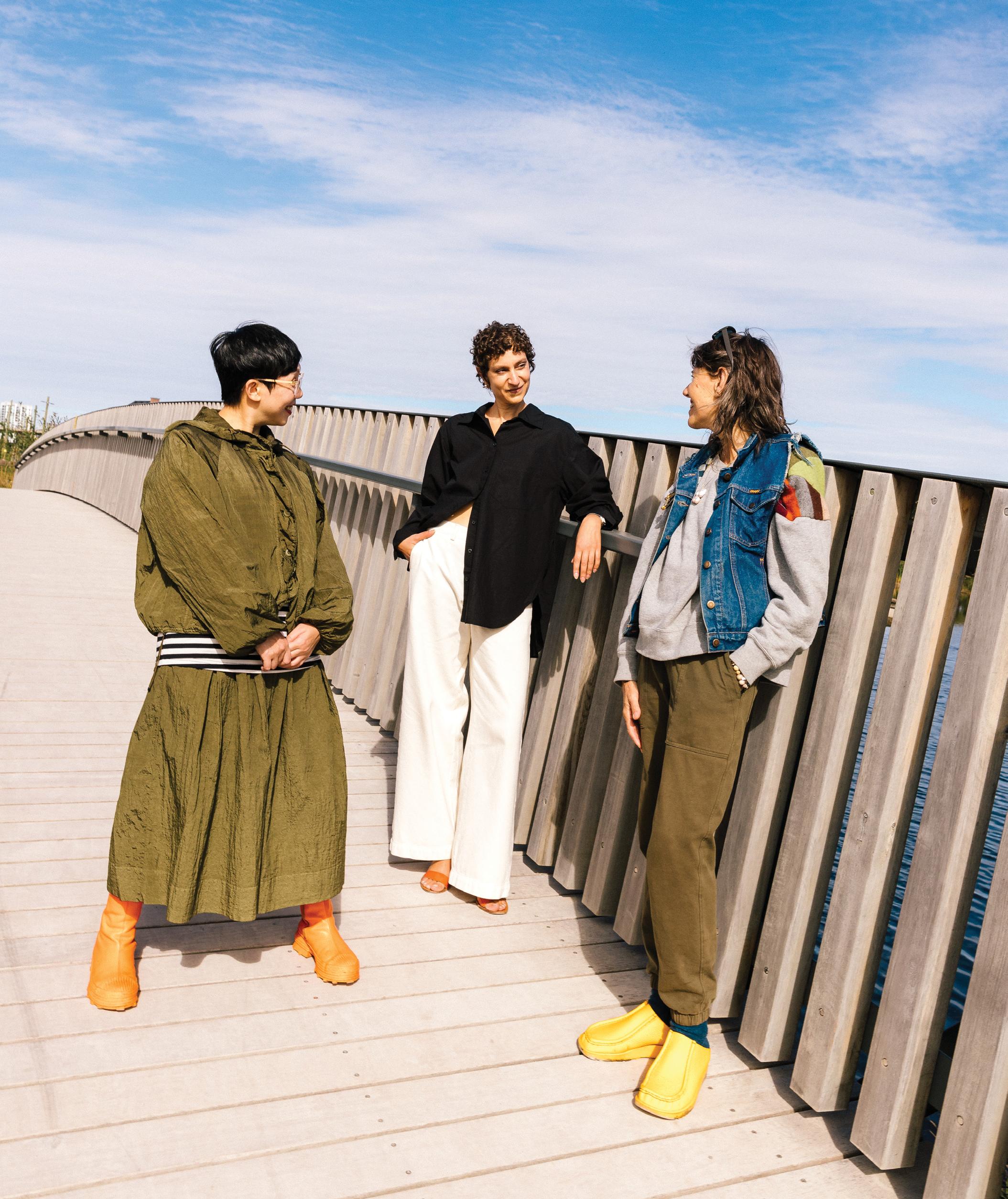
YAN WU, PATRICIA RITACCA AND / ET KARA HAMILTON, BY / PAR
AARON WYNIA, OCTOBER / OCTOBRE 2025, BIIDAASIGE PARK, TORONTO