Dear Friends,
It’s hard to believe that we have already entered 2026. Not so long ago, the year 2026 seemed like a date set in the distant future. But the challenges and opportunities of the future are here now, and at the Allegheny Intermediate Unit (AIU) we continue to innovate and invest in the students, families and schools that form the bedrock of our communities.
In this edition of AIU Connections, we have chosen to spotlight some of those who are crucial to learning success – our teachers. In the pages that follow, learn more about the lessons these educators have absorbed over the years, and how they continue to bring their passion for learning into the classroom by serving as mentors for others.
We take a peek behind the curtain of our Occupational Therapy/ Physical Therapy (OT/PT) program as staff show how our youngest learners master gross motor skills through the power of play.
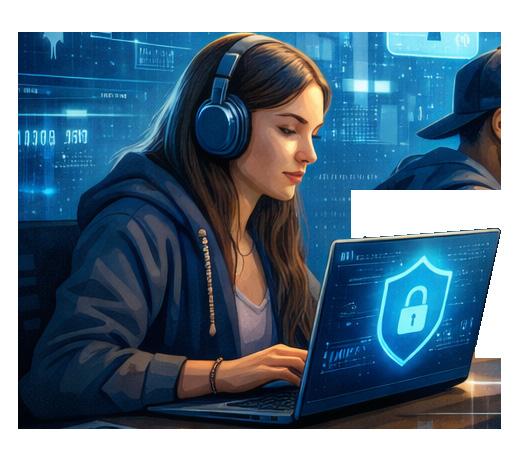
As our world continues to rapidly change, the AIU is helping districts protect their data and other valuable digital assets through Cyber Hub, an initiative of the organization’s Technology Services Department. In addition to helping districts navigate today’s cyber challenges, our staff are also collaborating with schools as they introduce students to future careers in a rapidly-growing field – cyber security.
So, in our world of constant change, take some time to slow down and get lost in the pages of this edition of AIU Connections. The future will be with us soon enough, and the present is an exciting place to be right now as we endeavor to serve every learner. Happy reading!
Sincerely,

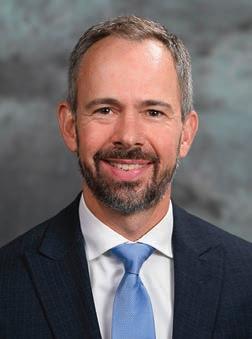
Dr. Robert J. Scherrer Executive Director Allegheny Intermediate Unit

W inter /S pring 2026
AIU Connections is published biannually by the Allegheny Intermediate Unit’s Marketing & Strategic Communication Department under the direction of Sarah McCluan.
Publisher
Dr. Robert Scherrer
Editorial Director
Amanda Ritchie
Lead Designer
Sarah Campbell
Creative Director
Michael Tarquinio
Copy Editors
Andrew Chiappazzi
Will DeShong
C ontributors
e D itorial
Will DeShong
Sam Kulp
Jeremy Tepper
Emily Wiley
p hotography
Will DeShong
Sam Kulp
Michael Tarquinio
Emily Wiley
Advertising Manager
Amanda Ritchie
Production Assistant
Carolyn Weissgerber
About the cover
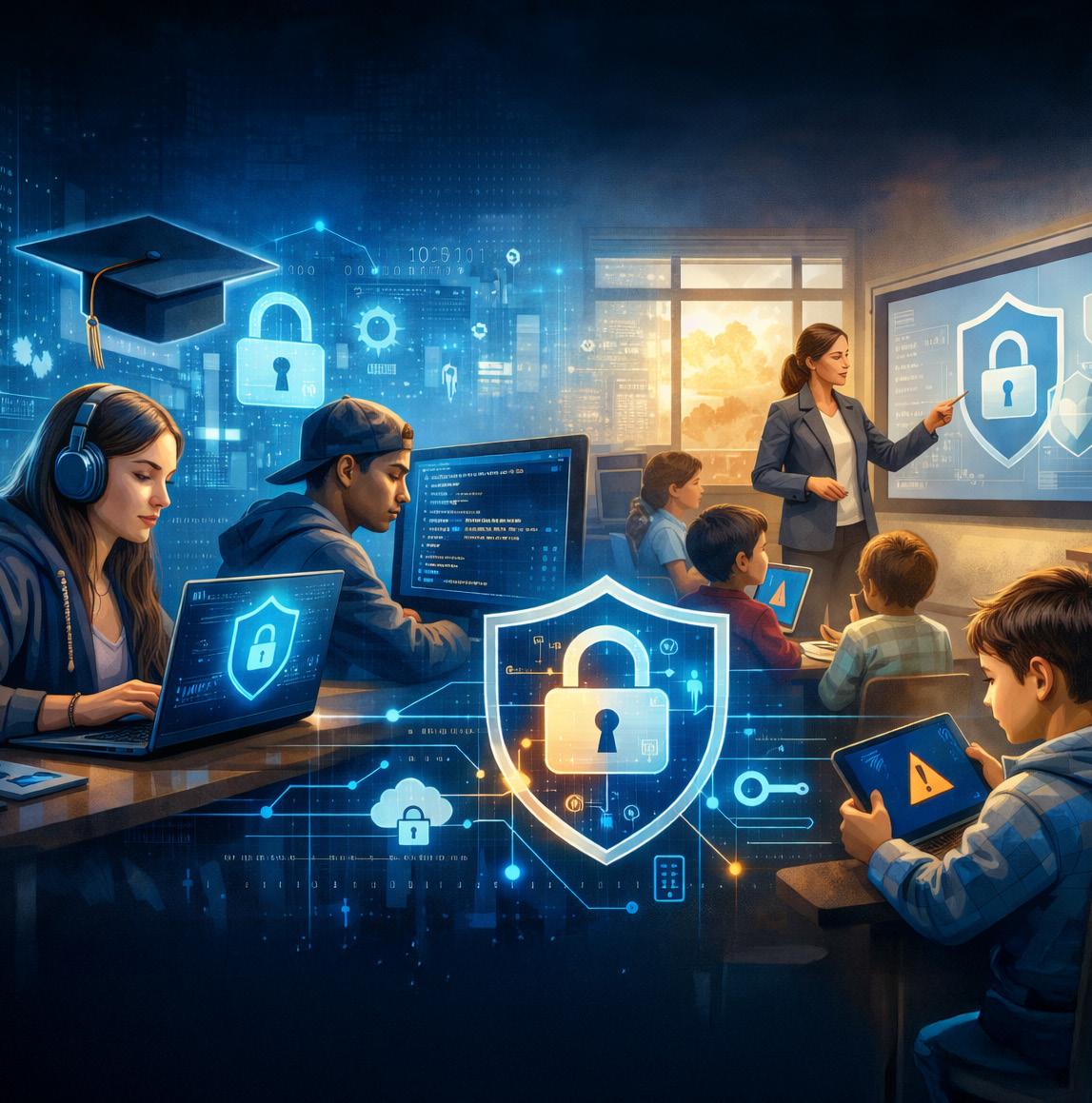
Our cover features an AI-enhanced illustration that depicts cybersecurity efforts ranging from protecting school resources and environments, to educating the next generation of cyber professionals. The Allegheny Intermediate Unit is located at 475 East Waterfront Drive, Homestead, PA 15120.
Please send letters to the editor and advertising inquiries to amanda.ritchie@aiu3.net.
2026 Allegheny Intermediate Unit
23 – Building digital defenders: How the Pittsburgh Regional Cyberhub is preparing students for the future of
25 – AIU Digital Trust Hub: Cybersecurity support for districts
Future Defender: South Fayette student joins the U.S. Cyber Games Pipeline







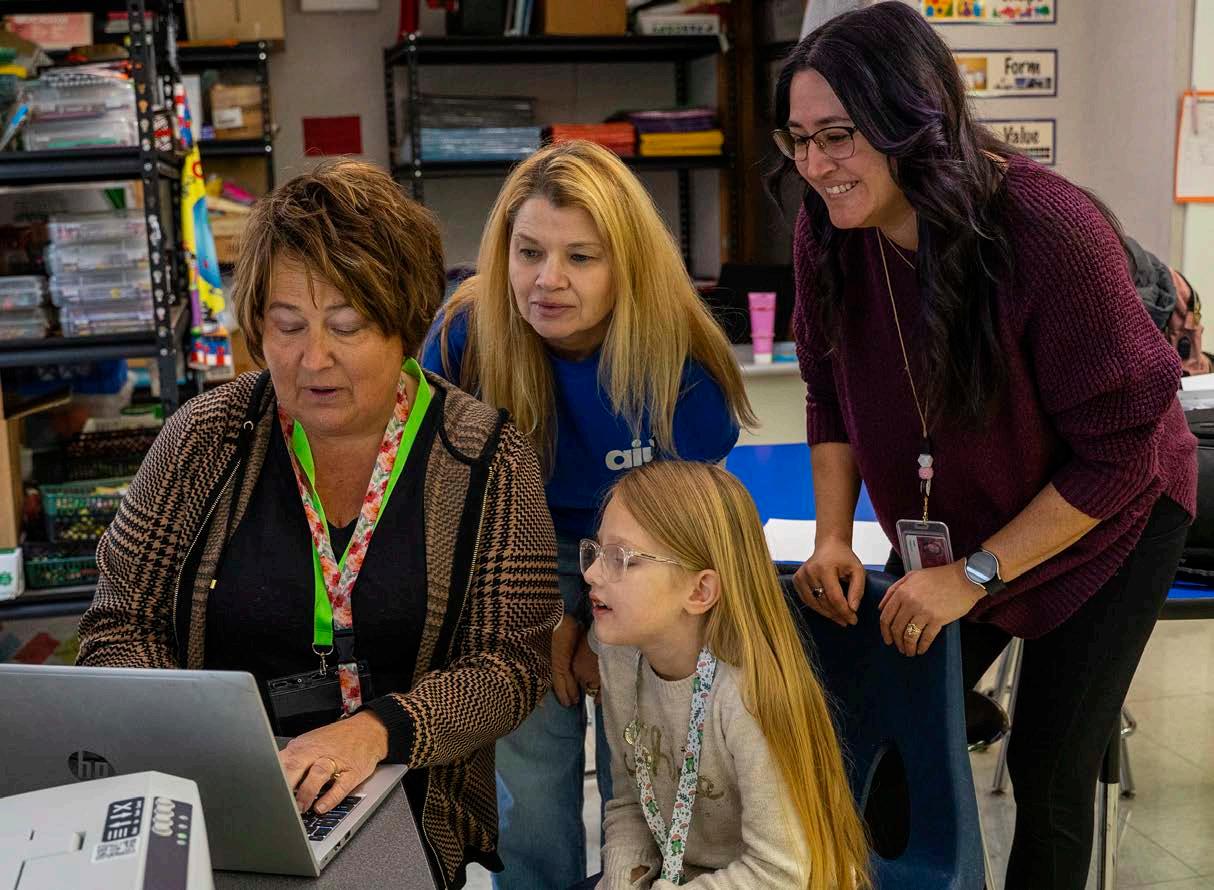
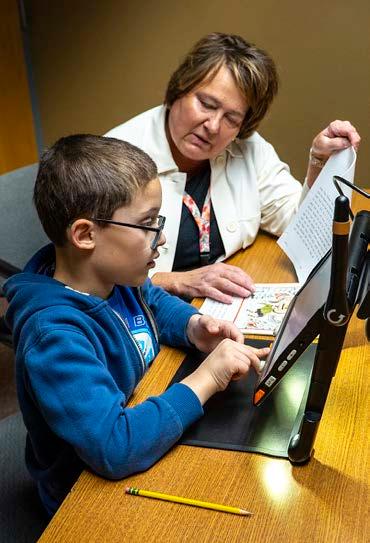
Patty D’Ascenzo understands that while a disability may shape a student’s world, it does not define their potential. Education, she believes, is about more than academic achievement; it’s about meeting students where they are, removing barriers to learning, and giving them the tools and support they need to succeed. That philosophy has guided her career, shaping the way she approaches accessibility, instruction, and advocacy for students who are blind or visually impaired.
Surprisingly, D’Ascenzo’s career didn’t begin in a classroom — it started in a cubicle. As a quality assurance analyst at Dollar Bank, she improved systems for end users, making sure the software worked for everyone. She didn’t know it then, but that early focus on accessibility would shape her future.
In 2000, she stepped away to raise her two sons yet kept applying her problem-solving skills in their schools — organizing Junior Achievement programs, digitizing the library catalog, and helping bring textbooks into the local library. Along the way, she realized her real passion wasn’t fixing systems, but helping people succeed with them.
In 2008, a classified ad changed everything. She applied for a paraprofessional position in an autistic classroom at Mon Valley School. “I remember they asked what set me apart,” she laughed. “I said, ‘my age.’ I figured life experience counted for something.”
It did. In that classroom, she found the power of small victories — a spoken word, a finished task — and she was hooked. “I just kept looking for the next way to help,” she said.
The “next way” arrived four years later. D’Ascenzo was offered a part-time position as a materials specialist for the AIU Blind/Visually Impaired Support Program, organizing large print books, technology, and tactile materials for students. A separate role handled Braille production, but it was difficult to keep that position filled. Seeing an opportunity, D’Ascenzo proposed combining the two into a single full-time job.
She began teaching herself Braille through online courses. Inspired by a colleague who was blind, she asked questions, took notes on what worked and didn’t work, and immersed herself in research.
When D’Ascenzo first met Mandy Smith in 2018, the eighth grader was furious that life had changed without her permission. “Being a teenager is hard enough,” D’Ascenzo said. “Losing your vision makes it even harder.
Determined to help Mandy, D’Ascenzo spent nights teaching herself screenreader commands so she could teach Mandy. Over time, frustration gave way to trust. She advocated fiercely, insisting Mandy be held to the same academic expectations as her peers.
She grew the position within the program, earning recognition from the Pennsylvania Training and Technical Assistance Network (PaTTAN) for improving how schools manage accessible materials. As she adapted resources for students, she saw another gap: the need for qualified teachers. She no longer wanted to assist; she wanted to teach. In 2018, D’Ascenzo enrolled at the University of Pittsburgh to become a Teacher of the Visually Impaired (TVI) and pursue a master’s degree in education.
Today, D’Ascenzo serves as accessible instructional materials coordinator for the AIU Blind/Visually Impaired Support Program. Her role bridges teachers, administrators, and technology teams — translating educational needs and creating solutions for students. She explained that we can’t truly know what students can do unless we actively address barriers to learning, giving all students a fair opportunity to succeed.
She also focuses on helping students learn to communicate their needs, troubleshoot on their own, and carry that confidence into adulthood. “These students deserve an equal opportunity to engage,” she said, echoing the AIU’s mission to champion equitable opportunities for every learner.
After losing her vision and the ability to draw the anime she loved, Mandy found a new creative outlet in ceramics.
She later gifted D’Ascenzo this mermaid sculpture as a symbol of her appreciation.
Photo: Courtesy of Patty D’Ascenzo

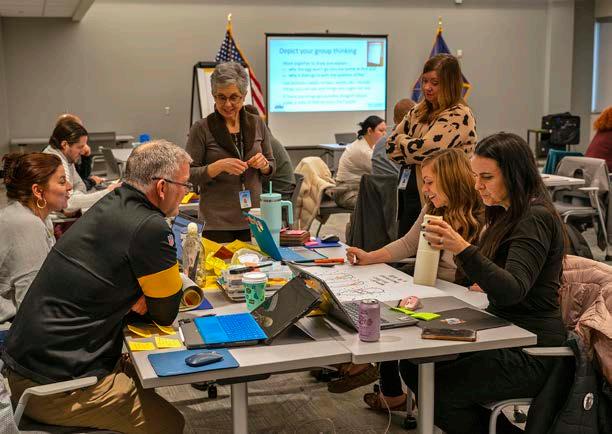
Amy Palo has taught social studies to students in the Cornell School District for nearly two decades. Along the way, she has also become a mentor and resource for educators across the country. In addition to teaching students about civics, she is continuously helping other educators grow through professional learning experiences and leadership in local, regional, and national networks.
“I really like to share,” Palo said. “When I find a strategy or content that I’m excited about, I’m motivated to share that with my peers. And in the same way, I’m always motivated to learn from others.”
“Teachers want PD that is relevant, not redundant,” Palo explained. “They want to learn something new, see it modeled, and walk away with a strategy they can use right away. Professional development should be reinvigorating, not a chore.”
“It’s about building confidence and community at the same time.”
Her approach captures a vital aspect of education: teachers aren’t just the recipients of professional development — they’re helping shape it.
Through her involvement with the Allegheny Intermediate Unit’s Social Studies Network, the National Council for the Social Studies, and educator councils like Retro Report and iCivics, Palo designs workshops that reflect what teachers need: relevance, practicality, and collaboration.
That hands-on, teacher-driven philosophy is exactly what Paul Cindric, Ed.D. program director of Curriculum, Instruction & Professional Education at the AIU, believes is transforming professional learning today.
Will DeShong and Michael Tarquinio
“The AIU’s wide array of professional development and learning options are extremely beneficial to educators due to our offerings being designed and facilitated by experts in their fields,” said Dr. Cindric, an experienced teacher and professional development instructor at the AIU. “As one of the largest intermediate units in the state, the AIU has the unique capability to draw from a deep bench of knowledgeable educators who are authorities in their respective disciplines.”
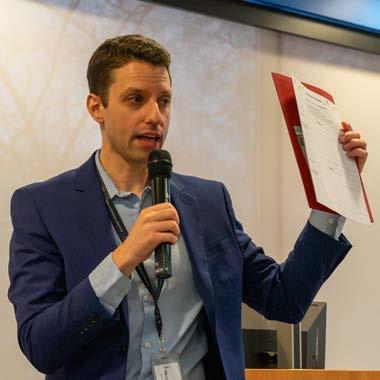
Lisa Yonek, Ed.D., reading coordinator at the AIU’s Reading Achievement Center, sees that same sense of reciprocity as essential to the profession. “When we lead our professional development, we create a culture of shared expertise,” Dr. Yonek said. “It’s about building confidence and community at the same time.”
Dr. Cindric has seen how empowering teachers to share their expertise creates ripple effects across schools and districts. His own work at the AIU centers on helping instructional practices, and cultivate classroom
That work has evolved greatly over the course of his career. Dr. Cindric said asynchronous, virtual options, like the AIU’s Continuing Professional Education offerings, have helped change the way
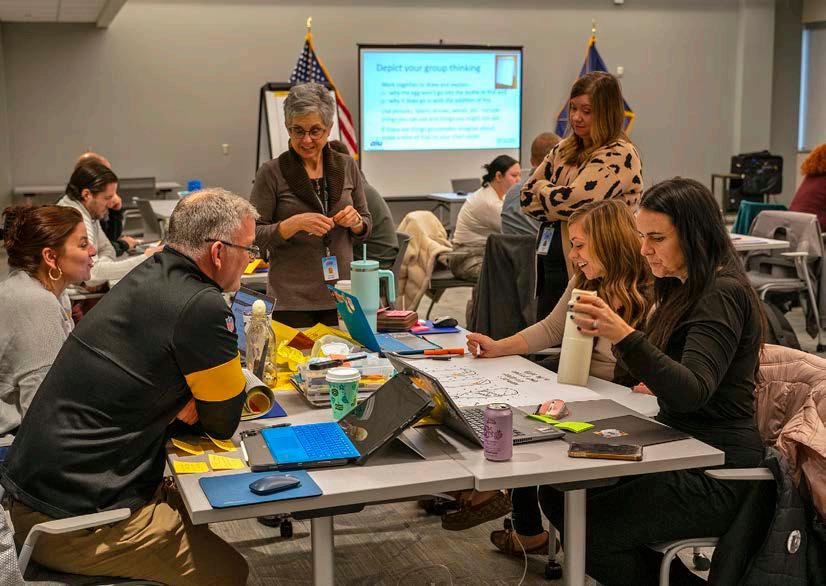
“The adven revolutionized both the manner and access of professional learning options for educators by providing convenience in the scheduling and completion of courses, as well as the incorporation of technological applications that ensure the mastery of complex topics,” Dr. Cindric said. “The AIU has capitalized on these benefits to offer programming for educators across Pennsylvania and beyond.”
Palo’s work, for example, has extended far beyond her district, from collaborations with local universities to being featured at national conferences. Each experience, she said, deepens her understanding of how professional learning strengthens teaching practices. “I really want to make other teachers’ lives easier,” Palo reflected. “I find it most rewarding when someone can walk away from a session with something they can immediately use. PD is about supporting one another.”
Dr. Yonek has spent more than 30 years in education and now uses her experience to help educators translate research into classroom-ready strategies that meet the diverse needs of learners. One of her favorite aspects of leading professional development is offering the support she had received throughout her career. “I think back to when I first started teaching, and now I am helping other educators improve their classroom practices,” she said. “It’s very fulfilling.”
Palo said that even as she delivers professional development to others, she continuously seeks opportunities for her own growth. Her recent Fulbright Distinguished Awards in Teaching Research project at the University of Glasgow allowed her to study how Scottish educators teach civic literacy. Those lessons have improved both her classroom instruction, as well as her ability to guide her colleagues.
“I try to think about how I can be a resource to other teachers,” she said. “But I’m also dedicated to finding PD for myself. It’s cyclical, not hierarchical. We’re all learning from each other, all the time.”
For more information on professional development opportunities at the AIU, visit aiu3.net/professionalgrowth.
Enrollment is subject to registration deadlines and capacity. Dates are subject to change.
All CPE courses are virtual and asynchronous. Fees and registration deadlines apply. CPE courses fulfill 90 Act 48 hours and requirements for Level II Certification and Master’s Equivalency. Start dates are subject to change. Register at aiu3.net/cpe.
Multiple Intelligences in the Classroom: Strategies, Techniques and Materials, 2/13
Culturally Responsive Teaching, 2/16
Infusing STEAM into K-12 Classroom, 2/16
Best Practices in Teaching K-12 Online, 2/16
A Closer Look at Learning Disabilities: A Refresher Course for all Classroom Teachers, 2/16
Anxiety and Stress: Teacher and Student Wellness, 2/16
Adverse Childhood Experiences, 2/16
Digital Literacy, 2/18
Autism in Pop Culture, 2/20
Get Active About Learning, 2/21
How to Develop Good Digital Citizens for the 21st Century Learner, 2/23
Are Your Students Tuned in?
Strategies for Engaging Every Student, 2/23
Backwards: Flipped Classroom Concept, 2/23
Apps and iPads for the K-12 Classroom, 2/23
Connecting with Kids, 2/25
Implementing Equitable Trauma Responsive School Practice, 2/25
How to Design a Digital Classroom for the 21st Century Learner, 2/25
Introduction to Text Comprehension, 2/27
Cultivating a Growth Mindset, 2/27
Working with Fractions and the Four Operations: Instructional Practices for the Middle Grades, 3/1
AI Tools in the Classroom: Introduction and Exploration, 3/2
Integrating the iPad into the Classroom: There are Apps for That, 3/2
Being Mindful:
Teacher and Student Wellness, 3/2
Break the Ice: Icebreakers for All Ages, 3/2
Group Work Dynamics: Collaboration and Assessment, 3/2
Teaching Historical Thinking Concepts, 3/2
Any Device Technology Tools in K-12, 3/2
Project-Based Learning and Challenge-Based Learning, 3/4
Addressing Learning Disabilities in Education, 3/6
The First Days of School: How to Be an Effective Teacher, 3/6
Writing Alive: Strategies, Techniques and Materials, 3/6
Word Power: Vocabulary Instruction for All, 3/6
Tech Tools for the 21st Century, 3/9
Coping Skills:
Teacher and Student Wellness, 3/9
Building Bridges: Working with (Difficult) Parents, 3/9
4 Free Technology Essentials for Educators, 3/9
When It’s Not Just Kids Being Kids: Bullying and Beyond, 3/11
Uncovering the Truth About Fake News, 3/11
Making an Impact: Building Positive Relationships with Students, 3/11
Stronger Together: Building Powerful SchoolCommunity Connections, 3/11
ADHD in Education, 3/13
Empathy: Teacher and Student Wellness, 3/16
Teaching K-12 Problem Solving with Computational Thinking in all Subjects, 3/16
A New Look at Working with Students with Autism, 3/20
Technology for Formative Assessment, 3/20
AI Tools in the Classroom: Planning and Instruction, 3/23
Moving From Problems to Solutions: Building Resiliency Skills, 3/25
Our CPE Course Catalog & Registration is now hosted on Genius.
Returning Educators: Please create a new Genius account using the same email you used in Frontline to register for CPE courses.
Unless otherwise noted, MSC workshops are free to member districts and held in-person at the AIU Central Office. Prerequisites may apply. Register at aiu3.net/msc.
Mathematics:
Math Coaches/Administrators Network, 3/13
Unlock the Power of Amplify Desmos Classroom: Elevate Your Classroom, 4/8
There’s still time to register for these virtual asynchronous offerings at aiu3.net/rac Comprehension, Close Reading, and Complex Text: Laying the Foundation K-2, $600
Keys to Comprehension: ELA Grades 3-8, $600
Text Dependent Analysis: Effective Instructional Practices: ELA Grades 4-8 Part 1: $600, Part 2: $450
Thinking Through the Pencil: ELA Grades 4-8, $600
Adolescent Literacy Institute: Middle and High School English & Reading Teachers, $600
Word Wizards: ELA Grades 3-12, $450
This network is free to member district coaches, including literacy, math, technology, and instructional coaches. Contact Heather Moschetta, Ph.D., at heather.moschetta@aiu3.net for information on how to join.
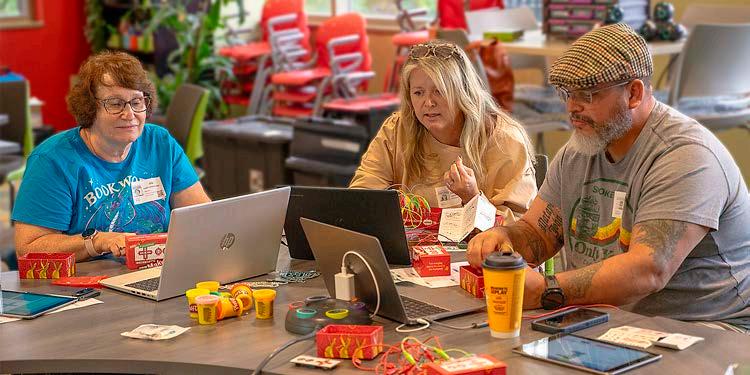
FREE professional development opportunities for educators in Pennsylvania. Visit aiu3.net/transformED for more information.
transformED Educator Workshops focus on hands-on practice with new ideas, skills, and tools—paired with peer-to-peer support—to help teachers return to their classrooms confident, capable, and ready to inspire, engage, and support their students.
Tech-Based Strategies to Support ELLs in Your Content-Area Classrooms (K-12), 2/17
AI Meets Hands-On Learning: Interactive Creations for Any K-12 Classroom, 2/25
Customizing AI Tools to Personalize Learning & Simplify Tasks, 2/26
Innovation in World Language Teacher Convening, 3/3
STEM Educator & Innovator Role-Alike, 3/4
AT Making: Solder, Switches, & Stuffing, 3/5
Grow Your Canva Skills with Portfolio Projects as Your Guide, 3/5
10 AI Tools to Transform Your Teaching, 3/10
A LEGO Learning Lab: Serious Play with Brick Clubs and Spike Robotics, 4/14
Design, Create, Innovate: Laser Cutting for an Enhanced STEAM Experience, 4/16
Girls in Gaming Summit (Student Opportunity), 5/4
Get Hyped About Hydroponics, 5/12
Unless otherwise noted, all TaC sessions are free, offer Act 48 credits, and are held in-person at the AIU Central Office. Educators who work for LEAs in the AIU region will be given priority registration. Learn more under Training Opportunities at aiu3.net/tac.
The Right to be Heard & Understood, 2/19
Supporting Students with Dyslexia, 2/23
Cultivating Community: Fostering Agency, Belonging, and Connection, 2-part series, starts 2/24
Feedback That Moves Students - More Than a Grade: Giving Feedback to Moves Students Forward, 3/4
Teach It Like You Mean It: Mastering the Art of Classroom Routines, 3/4
Schema-Based Instruction in Mathematics: Multiplicative Schemas, 3/12
Advanced Tiers Academy, 3/19
Supporting Struggling Students: Classroom Behavioral Interventions, 2-part series, hybrid, 3/23
b y s am K ulp
aT a
the Learning & Educational Child Development Center (LECDC) in Homestead looks like a typical childcare center: toddlers knock over blocks and smash playdough in a bright, colorful room. Look closer and you’ll see teachers nearby, asking questions and taking notes about each child’s progress. Beneath the cheerful chaos is something steady and deliberate — an Early Head Start Child Care Partnership (EHSCCP) program built for purposeful learning.



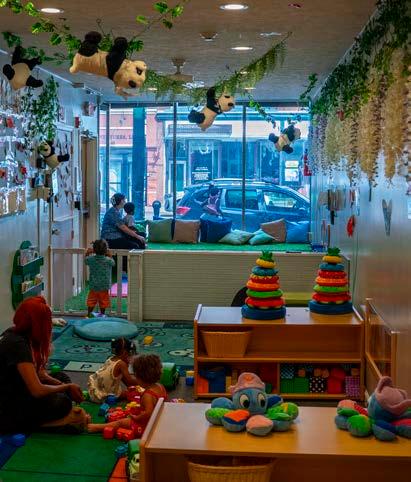

EHSCCP strengthens childcare program quality through strict standards and ongoing assessment. Enrolled children follow a research-based curriculum supporting five developmental domains: approaches to learning, physical, cognitive, social/emotional, and language and literacy development. Learning experiences are intentionally planned in alignment with these domains to promote healthy development and school readiness.
Owner Danielle Daye said the center has long prioritized high-quality education. Six years ago, that commitment earned LECDC the top rating in the Pennsylvania’s Office of Child Development’s STARS program, which assesses staff education, learning environment, leadership, and family partnerships. “Any program can meet state guidelines, but providing the best support possible has always been our goal,” Daye said.
To begin, Daye connected with Beverly Mannion, Early Head Start assistant program director at the AIU, in late 2024. Mannion said the standards are demanding, and many centers lack the staff or resources to meet them. “Danielle was prepared and eager to do what was needed to provide the best possible care for the children.” With grant support from the Council of Three Rivers American Indian Center, the AIU and LECDC made the necessary upgrades per Head Start’s performance standards. The AIU also supported staff credentialing and on-site professional development, with EHS infant-toddler family consultants building relationships with center staff and continuing to observe classrooms and model best practices.
Two of LECDC’s classrooms were overhauled to meet student safety, nutrition, and active supervision guidelines. Fall-proof flooring was installed for gross motor development, furniture was selected for safe toddler use, storage was lowered for full visibility, and materials were selected for durability to withstand infant and toddler play. “Everything is intentionally selected to support students’ health and development,” said Lyndsay Bush, infant/toddler family consultant for the AIU. Students are assessed four times a year to track progress and identify potential delays early, helping teachers tailor support based on each child’s individual needs.



“The process has been so enriching for the staff, because they see how much they’ve grown as educators.”
AIU EHS staff meet regularly with parents to review assessment findings, share tools for learning at home, and connect families to a range of services, including dentists, physicians, speech and language pathologists, physical therapists, and other early inter vention services.
The AIU’s involvement has enabled LECDC to assist families beyond the classroom. Through this federally funded program, eligible parents gain access to a network of experts to help advocate for their child’s health and development at no cost. “Having these close relationships with families leads to great outcomes,” Bush said.
“The AIU has been with us every step of the way,” Daye said. “The process has been so enriching for the staff, because they see how much they’ve grown as educators.” That growth is taking root where it matters most — in stronger outcomes for children and added support for the families who rely on LECDC.


A superhero-themed approach to develop strength, coordination, and confidence in
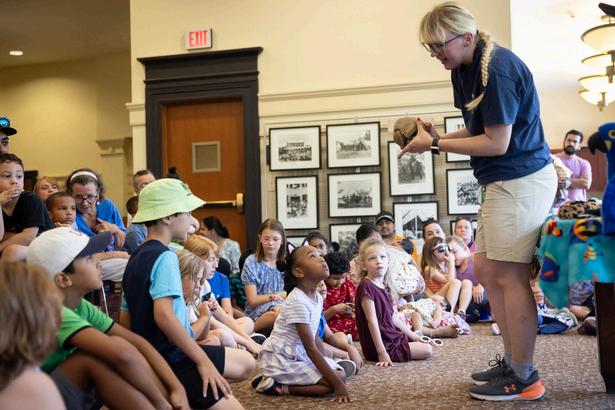
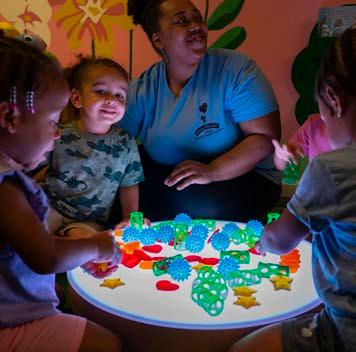
p lay i S more than a break F rom learning — it i S learning . In early childhood, playful movement and hands-on exploration build critical cognitive, social, and emotional skills.
In Preschool Early Intervention (PEI), students have diverse learning and developmental needs and motor skills can significantly impact cooperation, coordination, communication, and regulation. When children struggle to climb, jump, balance, or manipulate materials, it is difficult for them to play with peers and engage in daily classroom routines.
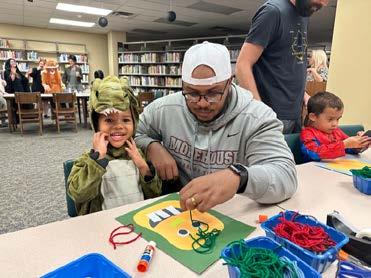
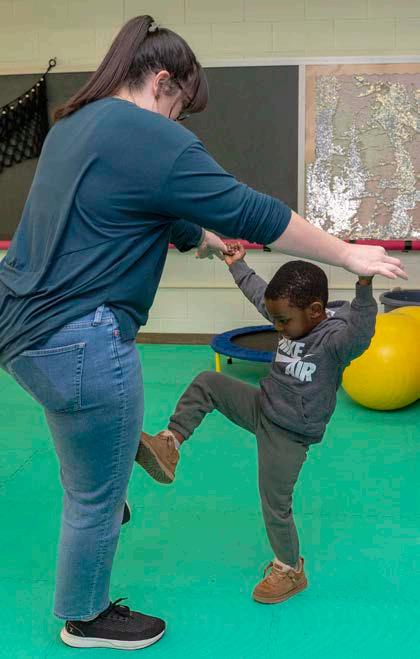
Occupational and physical therapists have long supported play-based learning, but these supports have traditionally happened in individual therapy sessions. The AIU Occupational/Physical Therapy Services Program is shifting that model, aligning with PEI’s move toward Embedded Instruction by reinforcing skills during daily routines rather than separate activities. “We are putting the fun in functional play,” explained Ginger Nese, OT/PT program supervisor.
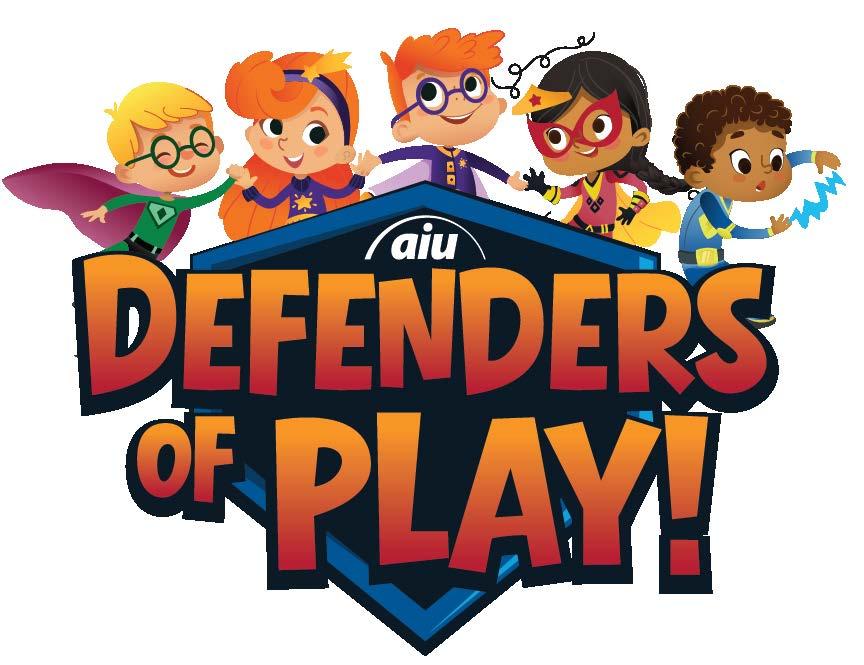
Modeled after the success of Sensory in Action, (an initiative launched last year to incorporate sensory motor development into preschool routines), Defenders of Play brings the same evidence-based research to gross and fine motor skill development. Designed for all students across all settings, the program can be used in homes, childcare centers, preschools, and of course, PEI classrooms.
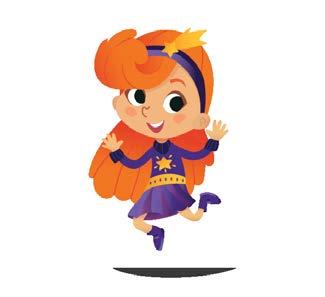
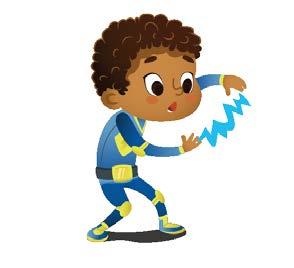
Introduced this school year, a squad of superheroes joins forces to make motor growth accessible to every child. More than just cute characters, they deliver evidence-based, MTSS-aligned programming designed to build gross and fine motor skills.
MTSS (Multi-Tiered System of Supports) is a framework that matches each child’s functional needs with layered support: universal, targeted, or intensive. Defenders of Play is intentionally designed to incorporate all three tiers within the classroom setting. Therapists partner with teachers by providing instruction and coaching while also implementing universal motor activities for all learners, allowing targeted or intensive supports to be added as needed. Rather than being isolated in “therapy time,” motor development becomes part of the classroom experience, allowing every child to participate at the appropriate level.
“We are putting the fun in functional play.”

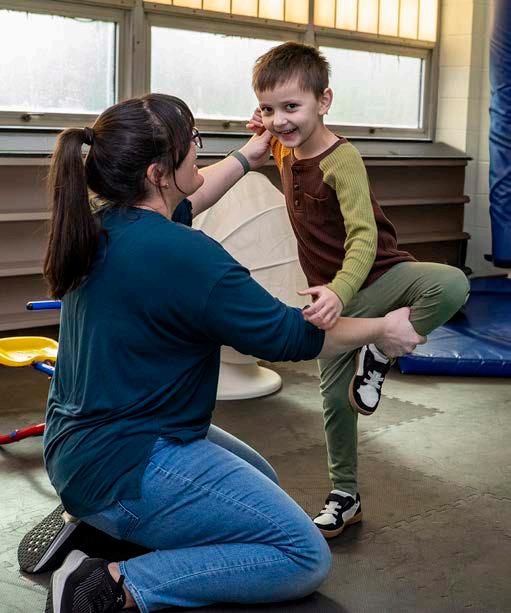
Teachers are already seeing the impact. “Rather than our students feeling like they are completing a structured school task, they are building strength through fun activities,” said Taylor Bianco, special education teacher in PEI. Jennifer Kraus, PT assistant, added, “We can send the students on a superhero mission by having them complete an obstacle course during gross motor routines.”
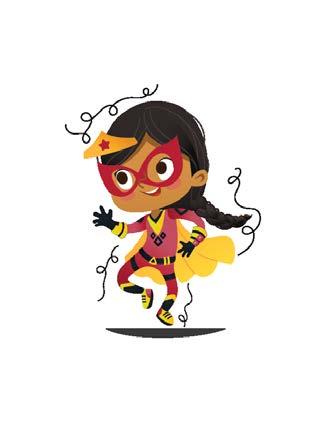
The four units of Defenders of Play focus on core muscles, upper- and lower-extremity activities, motor planning, and a flexible “wild card” unit to close out the school year. The first unit, “Wiggle Warriors,” turns core strength into superhero training. With bright visuals and kid-friendly language, students learn that tummy and back muscles are their “power center,” helping them run, climb, crawl, balance, and maintain good seated posture to support cutting and coloring. Activities feel like hero missions: building hero towers in tall kneeling, passing “energy orbs,” squeezing “power” putty, and striking superhero yoga poses.
Therapists support implementation with a colorful newsletter and a themed materials bag containing puzzles, bubble wands, laminated activity cards, and other tools for superhero missions. They model activities in the classroom while coaching teachers and parents along the way. “The goal is not to add one more thing to teachers’ plates,” Nese emphasized, “but to support them in what they already do.”
OT/PT Program Director Holly McElhinny said that success will be measured through both qualitative feedback and survey data, focusing on effectiveness and ease of use. With ongoing resource development, staff training, and collaboration, Defenders of Play is built to last. When motor development is embedded into play, every child gets the chance to join the mission, grow their powers, and thrive.



A new podcast from the AIU brings together educators, public health leaders, community partners, and youth voices to strengthen student mental wellness countywide
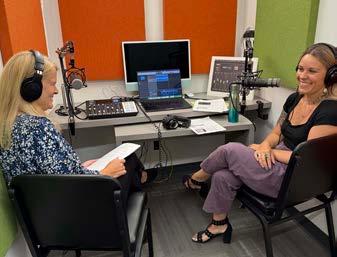
Welcome to Open Doors, a new podcast from the AIU that explores the people, programs, and partnerships making a difference in students’ lives.
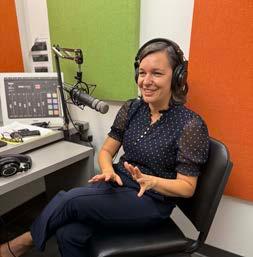
From behavioral health resources to after-school programs and community partnerships, Open Doors shares stories and strategies that help students succeed in school and beyond. Hosted by Shannon Fagan, the podcast opens doors to learning, support, and connection so every student can thrive.
The show builds on the AIU’s approach to systems-level student support — shaped by SEEKS SES (Supporting the Expansion and Enhancement of K-12 School Based Social Emotional Supports) and lessons learned through the initiative, including the importance of coordinated partnerships, sustained adult learning, and proactive prevention. Those lessons now shape both the podcast’s content and the initiative’s evolution to incorporate opioid use prevention education as part of a comprehensive student wellness strategy.
Produced by Emily Wiley, communications specialist at the AIU, the first three episodes reflect SEEKS SES’ focus on collaboration, student well-being, and the systems that work.
The inaugural episode, “Beyond Public Health,” features Allegheny County Health Department Chief Operating Officer Kim Joyce, who shares how the department is going beyond
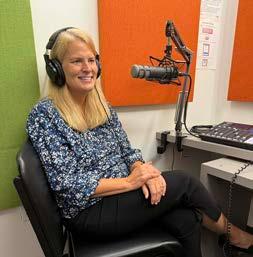
traditional public health to help shape the future of schools — and how its partnership with the AIU is strengthening mental health supports for students across the county.
Episode two, “The SEL Movement,” features Shannon Wanless, Ph.D., director of the University Center for Social & Urban Research at the University of Pittsburgh. A leader in a countywide push to make social-emotional learning everyone’s responsibility, she said supporting the adults who care for kids is essential for building belonging and a dependable system of support for every child.
In “Transforming Teen Mental Health,” policy specialist Sarah Pesi of the Jewish Healthcare Foundation joins high school student youth advocates — Joy Oranwa from Penn Hills and Aanya Angadi from South Fayette Township — to discuss the urgency of the teen mental health crisis and the power of young voices in reimagining support statewide.
Upcoming episodes will spotlight mindfulness through movement, the Stop the Judgment Project’s work to break stigma, and a mobile resource van building trust between schools and communities. Until then, keep the doors open.
Listen wherever you get your podcasts or visit aiu3.net/opendoors.
b y E mily W il E y NEARLY 200 STUDENTS FROM ACROSS THE REGION GATHERED AT ACRISURE STADIUM ON NOVEMBER 18 FOR A DAY DEDICATED TO MENTAL WELLNESS.
The student symposium — hosted by the Pennsylvania Department of Education and organized by the AIU — was part of a statewide series designed to elevate student voice and agency. But this wasn’t an event where young people sat quietly while adults did the talking. Students were asked to speak up, speak honestly, and help shape what schools should look like.
In her opening remarks, Amy Lena, deputy secretary for the Office of Elementary and Secondary Education, stated a familiar concern. “Adults often create policies for students without actually hearing from them first.” The symposium challenged that pattern by putting students at the center of the conversation. Their insights will help inform a comprehensive “State of the State: Mental Wellness Report” to be shared with Governor Josh Shapiro.
“ Nobody can help you if you don’t speak up.”
From the moment students arrived, AIU organizers worked to create an environment where students felt seen, heard, and valued. Quiet spaces were available for anyone who needed a break. Therapy dogs wandered around, inviting smiles and calming nerves. A photo booth offered opportunities for fun and creativity. At round tables, small group discussions were guided by trained staff who understood these conversations require care, patience, and trust. The goal was simple yet profound: empower young people to discuss what supports their mental wellness, what challenges they face, and what meaningful change could look like in their schools.
SEEKS SES (Supporting Expansion and Enhancement of K-12 School-Based Social, Emotional Supports) helped lay the groundwork for the day. Launched in 2023 with funding from the Allegheny County Health Department, SEEKS SES focuses on supporting social-emotional wellness, strengthening university partnerships, and improving mental health resources in schools. “The grant has ended, but the work is not done,” said Shannon Fagan, SEEKS SES and special projects coordinator at the AIU. The initiative continues to bring districts together, elevate student voice, and share insights that can guide future programming across the region.
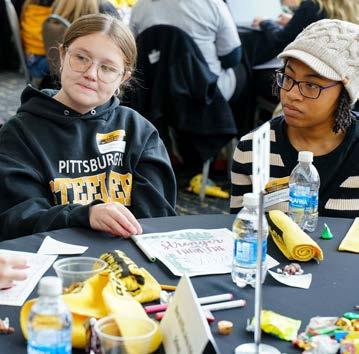
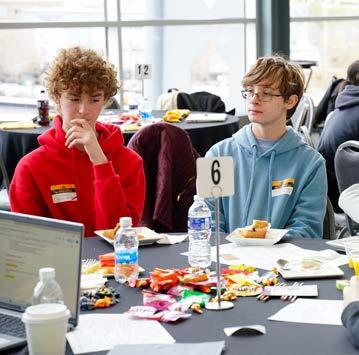
The symposium’s keynote speaker, former Pitt football player Tre Tipton, spoke candidly about his own mental health journey. Tipton reminded students it’s harmful to bottle up emotions and asking for help is a courageous, lifesaving act. “Nobody can help you if you don’t speak up,” he said. Tipton, the 2021 recipient of the Disney Spirit Award recognizing college football’s most inspirational player, brought an especially powerful perspective to the conversation. His honesty resonated across the room, sparking conversations about stigma, vulnerability, and the importance of confiding in trusted friends and adults.
Throughout the symposium, students shared the ways they already support one another through peer leadership groups like Sources of Strength, student advisory councils, advocacy networks, and the simple everyday work of watching out for a friend. Joy Oranwa, a junior from Penn Hills High School, said students need adults who listen to everyone — not just the loudest voices — and who invite students into decisions that shape schools. “We have first-hand experience with the things that are going on in the school and the classroom,” she said, noting that too often adult priorities crowd out student realities.
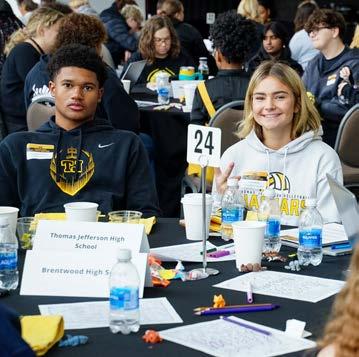
For many students, the most meaningful part of the day was discovering they weren’t alone. Penn Hills senior Maria Hernandez captured that feeling simply: “Encouraging even one more person to speak their mind is enough for me.” Luna Croyle of Cornell High School added, “When adults check in on us, it really makes an impact. It feels good to feel seen.”
The AIU hopes this is just the beginning. With students energized, educators inspired, and partnerships strengthened, many expressed a desire for more events like this — spaces where students can safely share their stories and influence the systems meant to support them. Because when students say, “my voice matters,” adults have a responsibility to listen.
“
Encouraging even one more person to speak their mind is enough for me.”

Modern classrooms rely on laptops, tablets, and other electronics. While these devices are typically safe, damaged lithium-ion batteries can become serious fire hazards. In rare cases, battery failure can trigger “thermal runaway,” a chain reaction that leads to overheating and combustion.
Aaron Skrbin, director of Safety and Security at the AIU, urges schools to stay proactive. “Given the widespread use of lithium-ion batteries in today’s technology, it’s important for schools to recognize and manage the risks associated with them,” he said. “As the number of battery-powered devices continues to grow, so does the potential risk.”
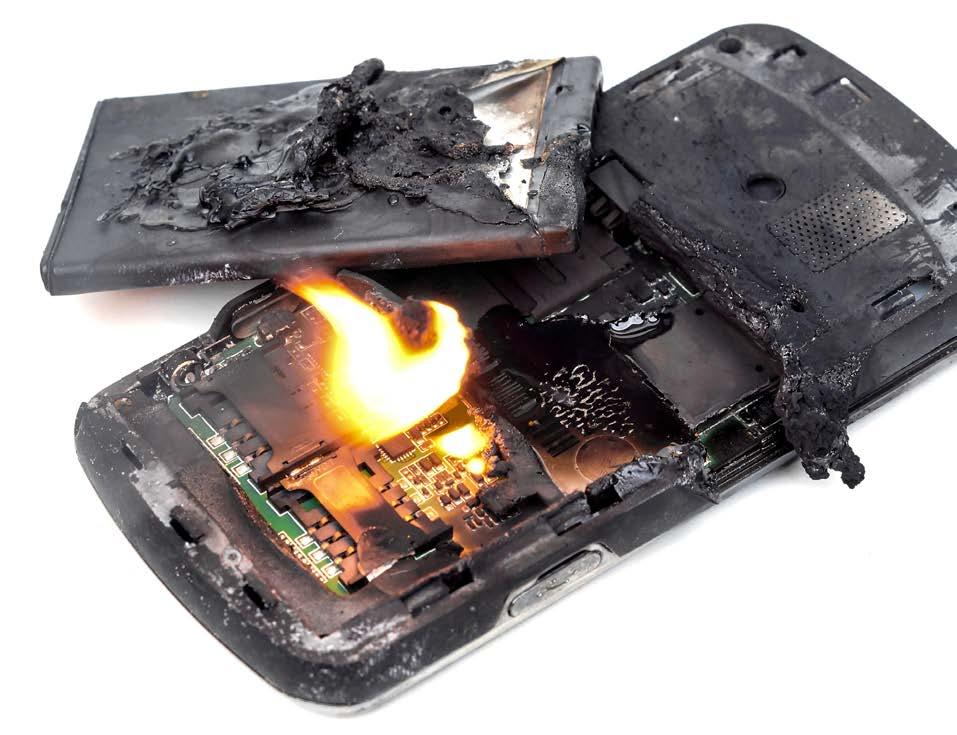
With that in mind, staff and students can take a few basic steps to minimize the likelihood of a fire:
• Avoid heat exposure.
Prolonged exposure to hot environments (around 95°F) can damage batteries. Don’t leave devices in hot cars or direct sunlight, even if the device is turned off.
• Use compatible chargers.
Batteries can be damaged over time by chargers with much higher wattage than recommended. Use the appropriate cables and adapters for each device.
• Watch for warning signs.
Look for visible damage such as swelling, bulging, or cracks in the battery or device, and have it serviced by a professional.

“As the number of battery-powered devices continues to grow, so does the potential risk.”
Even with prevention, it helps to understand what can happen during a failure. “Battery fires may release noxious gases that can cause illness even in small amounts,” Skrbin said. “In the event of a full failure, battery fires burn extremely hot and can last for a prolonged period.”
His bottom line is that safe habits and quick response make all the difference. “The best thing to do is to follow manufacturers’ guidelines,” Skrbin said. “Don’t leave battery powered devices charging unattended for extended periods of time and know the signs of failure. And if a fire does occur, always call 911 and allow trained responders to handle it safely.”
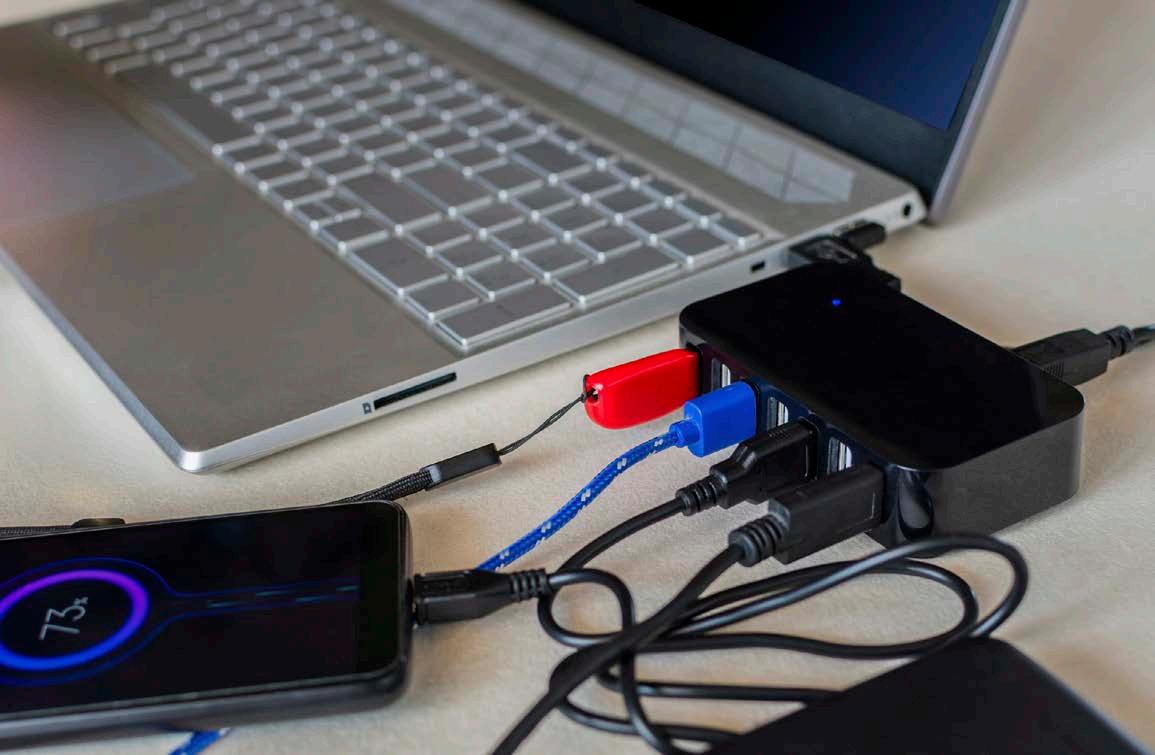
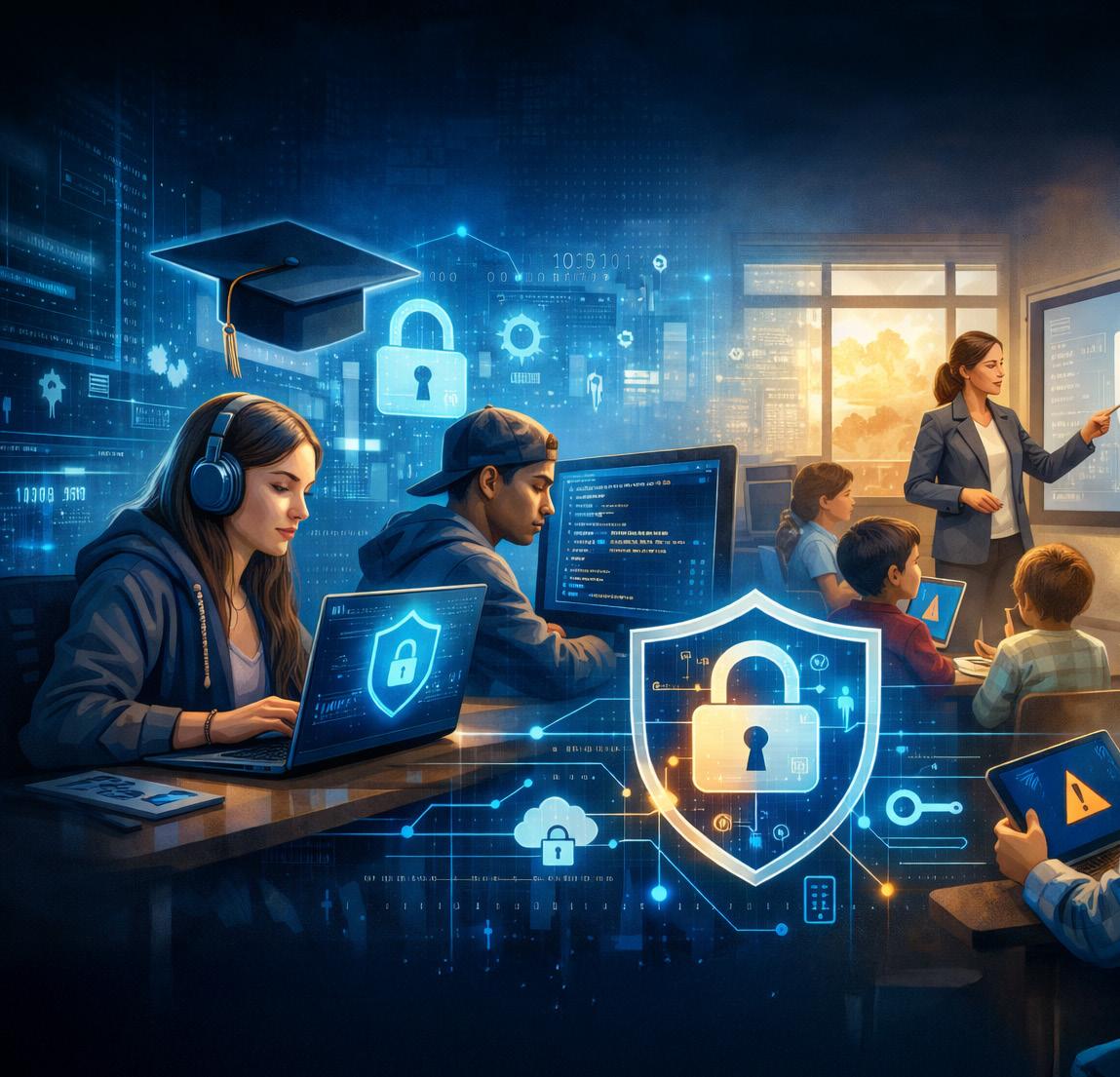
THE DIGITAL WORLD IS EVOLVING FAST — AND SCHOOLS ARE RACING TO KEEP PACE. Cybersecurity education is no longer optional; it’s essential for preparing students to thrive in an increasingly digital society. Initiatives like the Pittsburgh Regional Cyberhub help students build real-world skills by connecting districts with vetted curricula, university partners, and industry mentors. And when it comes to protecting those learning environments, the AIU’s Digital Trust Hub supports districts in strengthening cybersecurity readiness and connecting security efforts to data privacy, governance, and responsible use of EdTech. Read on to learn how these resources are shaping tomorrow’s workforce while safeguarding today’s classrooms.


in the country, with more open positions than qualified candidates. But it’s about more than hackers, firewalls, and complex code. In classrooms across Allegheny County, students of all ages are learning about digital citizenship, policy and compliance, and data protection while also exploring cybersecurity as a potential career path.
At the center of this movement is the Pittsburgh Regional Cyberhub, also called CyberhubPGH, an initiative designed to connect K-12 schools, higher education, and employers to strengthen cybersecurity education and workforce development in the region. The partnership includes: the University of Pittsburgh Institute for Cyber Law, Policy, and Security; InnovatePGH; the Pittsburgh Technology Council; and the Allegheny Intermediate Unit, with funding from Richard King Mellon Foundation. Specifically, the AIU’s role is to spark interest and help build foundational knowledge in cybersecurity careers from an early age, which will be essential to inspiring the next generation of cyber professionals.
“When schools receive federal e-rate funding, they’re required to offer digital citizenship lessons,” said Katherine Curran, who helps lead the AIU’s K-12 Cyberhub work group. “But the requirement is simply that they must offer it,” she continued. “It doesn’t say what the content needs to be or how often it should happen.”
That inconsistency has led to a patchwork of experiences for students. Digital citizenship could mean an annual assembly, a brief unit included in a library or tech class, or part of a more robust stand-alone course. The result, Curran noted, is that a student’s understanding of cybersecurity depends largely on their ZIP code. That’s where the CyberhubPGH comes in.
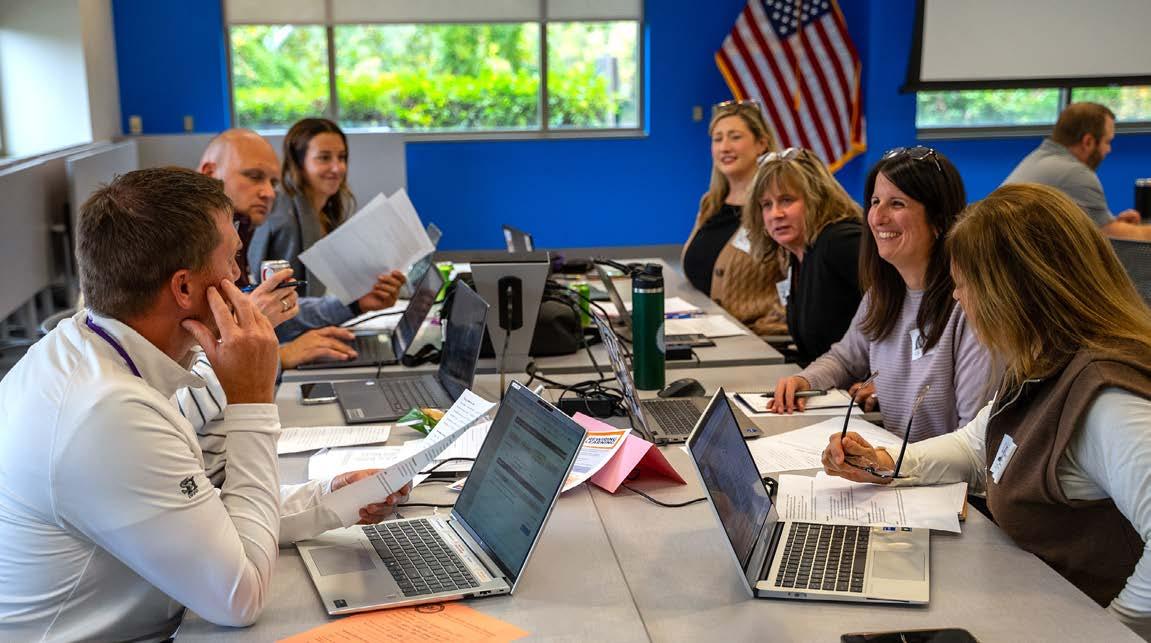
“Think of the Cyberhub as a connector of resources,” said Richard Platts, chief technology officer at the AIU. “If a district wants to offer cybersecurity in the classroom, we can help them find the right resources.”
The AIU can guide districts toward existing, vetted options rather than asking them to build a program from scratch. This often starts with basic digital safety: keeping software up to date, recognizing phishing attempts, and using strong passwords. Additional resources may include curricula such as Paradigm or Code.org; partnerships with high education institutions like the University of Pittsburgh, Robert Morris University, or community colleges; professional learning opportunities for educators through organizations such as PaTTAN; and extracurricular activities.
“When we talk about equitable access, this is what we mean,” Platts said. “We want every student in our region to have some way to explore this career field, even if their district doesn’t have a full cybersecurity program.”
Curran noted that Pittsburgh isn’t the only city investing in cybersecurity, but it benefits from a uniquely collaborative environment, with K-12 schools, universities, and employers all working together to meet the same workforce need.
Across industries, from banking to health care to government, cybersecurity skills are essential.
“Oftentimes you hear people say cybersecurity is national security,” Platts said. He added that the AIU’s efforts are aimed at preparing students not just for high-demand jobs, but for roles that help protect local communities and critical systems.
The AIU is still in the early stages of measuring the impact of CyberhubPGH, but signs of progress are clear. With support from program evaluation teams, the initiative is tracking partnerships, professional development sessions, and new district programs sparked through the hub’s networking efforts.
For now, success looks like connection — between educators and industry experts, and between students and opportunities.
CyberhubPGH’s role, Curran emphasized, is to make sure districts aren’t trying to do this work alone. By connecting teachers, curriculum, and regional partners, CyberhubPGH is turning cybersecurity into a visible career path that can begin in a K-12 classroom.


b y E mily W il E y
The AIU Digital Trust Hub helps schools manage their digital ecosystem with confidence by pairing strong protections with practical guidance. One of its five pillars is cybersecurity, focused on strengthening districts’ digital defenses and response readiness. The Hub also supports data privacy, advocacy, data governance, and vendor assessment, so security efforts align with policy, process, and safe EdTech choices.
Membership connects districts to a growing network working together to protect students and schools. Benefits include access to the 1EdTech Trusted Apps Dashboard for vetting tools, cybersecurity consultations, and security and privacy education resources for staff. Districts gain expert support, collaborate with peers, and learn best practices to safeguard student data while building a secure digital learning environment.
For more information, contact DTHinfo@aiu3.net.





















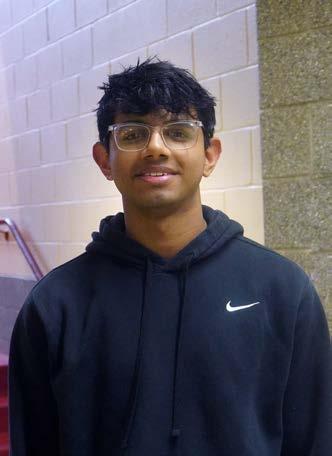
South Fayette High School junior Monish Polimetla has earned a prestigious national honor: an invitation to the U.S. Cyber Games Pipeline Program, a highly selective training initiative that develops the country’s top young cyber athletes. Often described as the “Olympics of cybersecurity,” the U.S. Cyber Games prepare students to represent the United States in international competition.
“ CYBERSECURITY IS THE FUTURE, AND BEING PART OF THE U.S. CYBER GAMES PIPELINE PROGRAM IS A HUGE STEP TOWARD THAT.”
Polimetla’s invitation places him among a small number of elite individuals nationwide recognized for exceptional talent and potential in cybersecurity. Even more impressive, he earned this distinction through self-directed study and competition beyond school hours, demonstrating the curiosity and persistence that define successful cyber professionals.






Running from January through May 2026, the Pipeline Program connects participants with industry mentors, hands-on challenges, and advanced workshops focused on protecting computer systems and combating digital threats. Top performers can earn free college-level cybersecurity credits and professional certifications — opportunities that typically require significant time and investment.
“Monish’s invitation is an incredible accomplishment,” said Lynette Lortz, computer science teacher at South Fayette High School. “He’s performing at a level typically seen among college students or earlycareer professionals, and we could not be more proud of him.”
Polimetla is currently enrolled in Lortz’s Cybersecurity III course, the capstone of the district’s highly ranked cybersecurity pathway. The program is nationally modeled through its participation in Digital Promise’s League of Innovative Schools. “Cybersecurity is the future, and being part of the U.S. Cyber Games Pipeline Program is a huge step toward that,” Polimetla said. “I’m grateful for the chance to learn from the best and to represent South Fayette at this level.”
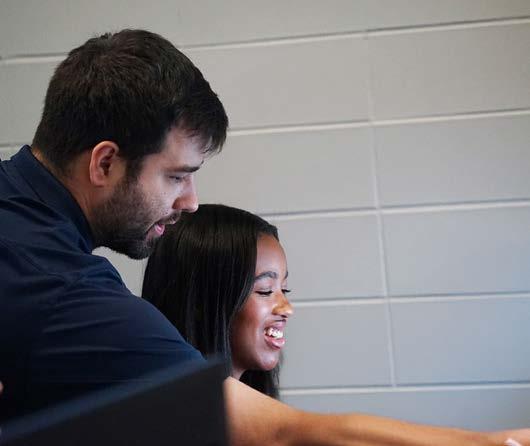

Some of Tyler Perhac’s students in Gateway High School’s Introduction to Cybersecurity class walked in with years of experience already under their belts. Baylee Blanton, a senior, taught herself to code as a kid. Josh Fry, a junior and the son of a cybersecurity specialist, has been interested in the field for years.
With tech skillsets on the rise and internet reliance growing, more local schools are adding cybersecurity courses.
Gateway High School is in its first year offering its Introduction to Cybersecurity course, while Woodland Hills Senior High School is in its second year. Other districts such as South Fayette Township, South Allegheny, and several career and technical centers, including Parkway West and A.W. Beattie, offer similar courses, too.
South Fayette, for example, offers a three-year cybersecurity course that allows students to earn industryrecognized certifications and work directly with mentors in the field, while Pine Richland plans to launch a cybersecurity course in partnership with Robert Morris University next year.
For high school curricula — now increasingly centered on career exploration and job preparedness — the development is natural. A June 2025 CyberSeek report found the number of U.S. cybersecurity jobs grew 12% over the past year.
“I’ve known that I’ve wanted to do cybersecurity for the last four years of my life. When I found out that Gateway was going to offer a cybersecurity class, I was really excited,” Fry said.
“It’s really helpful to bring awareness to cybersecurity and how to protect your data because our generation likes to put everything online.”



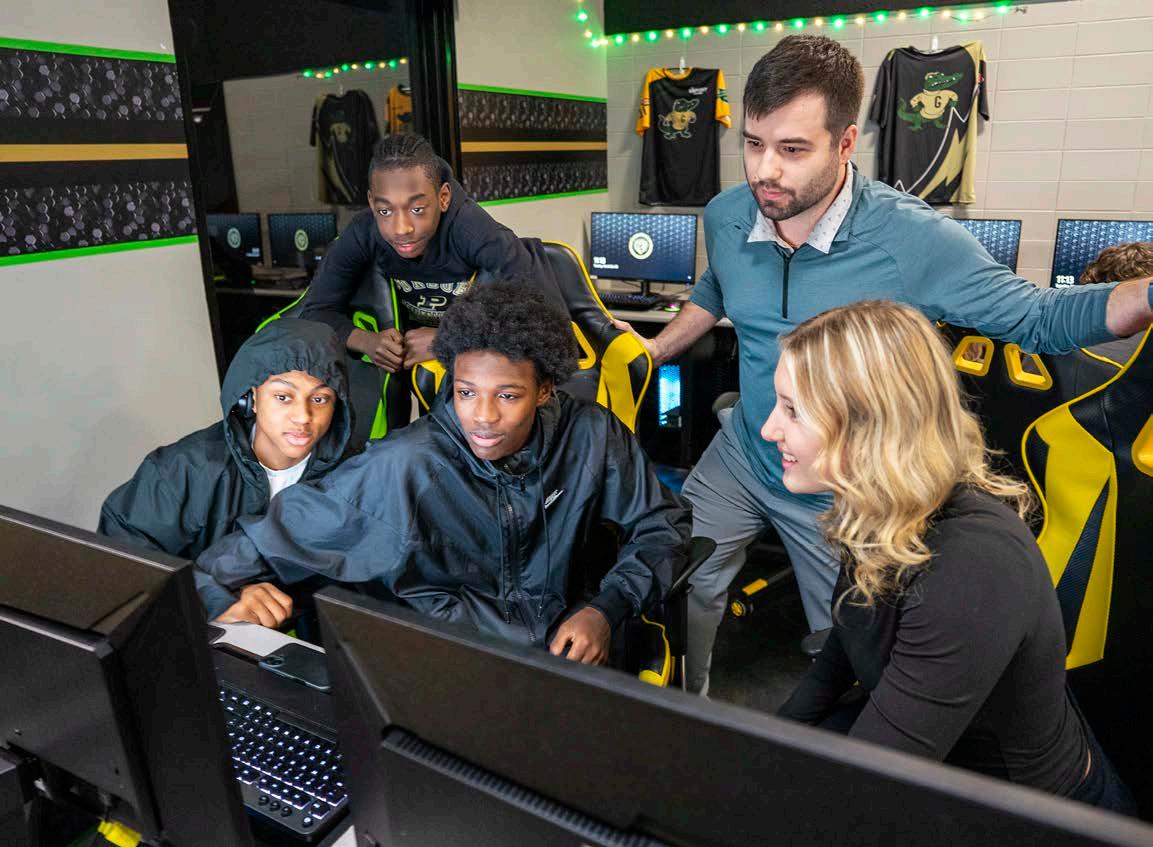
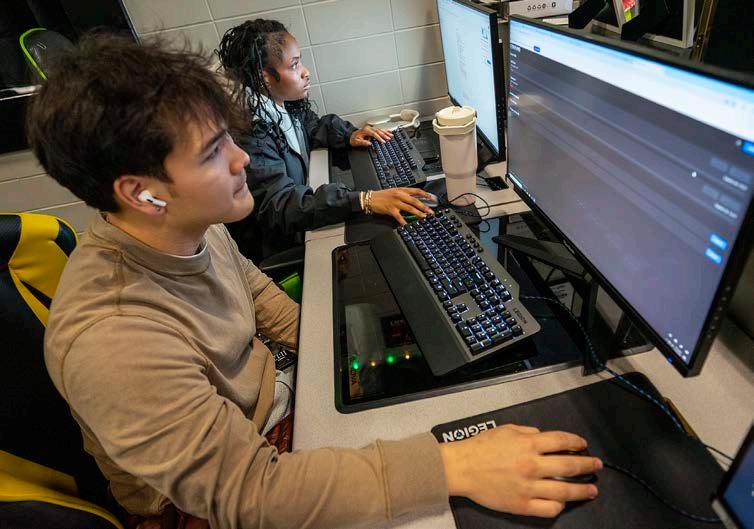
Perhac, who also teaches other newer, trending courses like Esports, dives into careers in the cybersecurity field, and introduces students to phishing and spam, coding, encrypting, SQL programming, and database management, among other subjects. He hopes to raise students’ awareness of the cybersecurity field, while also enabling students to get entry-level certifications and enter the workforce immediately out of high school.
At Woodland Hills, Aaron Minor — trained through Pitt’s GenCyber program — teaches the course and has watched former students go on to study cybersecurity at college. His course is steeped in cyber. org’s curriculum. He and Perhac echoed that students most enjoy the hands-on labs, where they act almost like hackers or cybersecurity professionals, finding vulnerabilities in systems or, alternatively, trying to protect them.
“They do some of the things that cybersecurity professionals do, but they’re also kind of hacking,” Minor said. “They’ll hack a Windows 7 machine and then use a Kali Linux machine to access it and see things.
It’s neat watching the kids go through the labs. I think it’s their favorite part of the course.”
While some of the skills learned in these classes might seem niche, the overarching problem-solving, trial and error nature lends itself well to other classes, and into general life. At the very least, students also get a deeper look into the dangers of the internet and how to safeguard themselves from them, important reminders for students who might be inclined to overshare on the internet. For that reason alone, Minor believes the course should be required.
“I think it’s really helpful to bring awareness to cybersecurity and how to protect your data because our generation likes to put everything online,” Blanton said. “I think a lot of kids my age might not understand the dangers out there on the internet, but this class will help give students a better idea of those dangers and how to protect yourself.”


The Allegheny Intermediate Unit provides a rigorous two-year induction program for new educators approved by the PA Department of Education.
Educators across Pennsylvania in traditional school districts, charter schools, private schools as well as individuals choose our Induction Program to meet their requirements in a cost-effective and convenient way.
Scan code or visit aiu3.net/induction to learn more.
100% Online Curriculum With Supportive Faculty
Master of Science in Education in Special Education (PreK–12)
Lead with Purpose. Teach with Impact. Our PreK–12 Special Education program builds your expertise in assessment, curriculum, instruction, and behavior support— preparing you to make a lasting impact in schools and communities for all learners.
Master of Science in Education in Applied Behavior Analysis (ABA)
Compassionate Care. Evidence-Based Practice. Our program balances teaching the technical skills needed with the interpersonal skills required to assist you to become a highly skilled, well-rounded, and compassionate practitioner. The program is aligned with BACB coursework requirements toward becoming a board-certified behavioral analyst (BCBA) and coursework requirements toward the licensed behavior specialist (LBS) in PA.
Invest in Your Future. Make a Real-World Impact.
Full-time students taking two or more classes per semester receive a 25% Tuition Award. Also, Catholic school teachers or administrators in the Pittsburgh, Greensburg, or Altoona-Johnstown Dioceses may qualify for a 60% Tuition Award toward a Duquesne School of Education degree or certificate. Get Started Today!
(412)396-5274 specialed@duq.edu
duq.edu/SpecialEducation
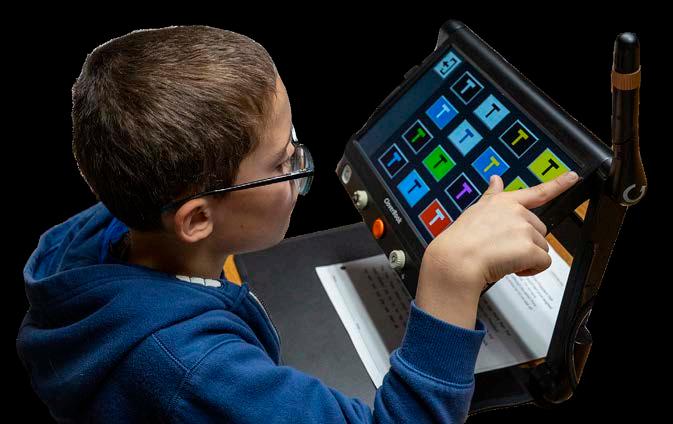
What if accessibility wasn’t just about meeting legal requirements, but about sparking innovation in education? At the Allegheny Intermediate Unit (AIU), technology leaders are reframing accessibility not as a checklist, but as an opportunity to design better, more inclusive learning experiences.
Under the Americans with Disabilities Act (ADA), Title II requires public entities, including schools, to make digital content accessible. Updated regulations direct school districts to comply with the Web Content Accessibility Guidelines (WCAG) 2.1 Level AA standards. These guidelines help ensure that online materials are perceivable, operable, understandable, and robust for all users.
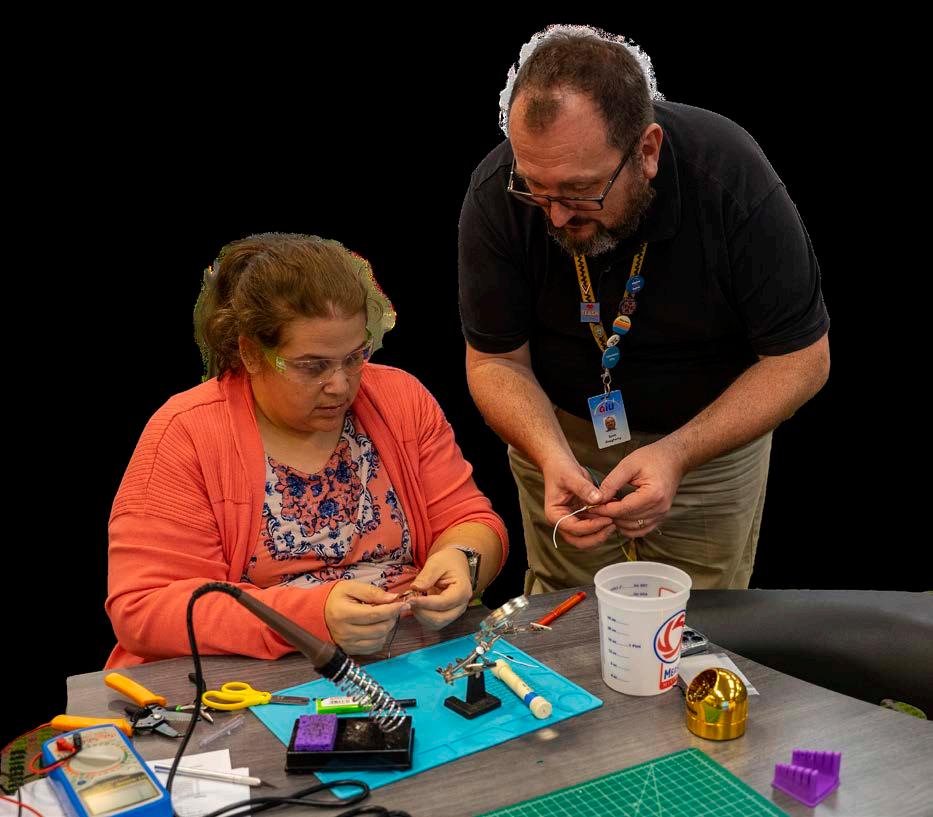
Kendra Bittner and Scott Dougherty, training and consultation coordinators for assistive technology at the AIU, emphasized that accessibility is about equitable access.
“It’s not about a few students needing something different, it’s about making sure every learner can reach their potential,” Bittner said.
Many schools face common accessibility challenges, including websites without alternative text for images, videos lacking captions, documents posted as inaccessible PDFs, or digital tools that can’t be navigated without a mouse. Even color choices or text contrast can unintentionally create barriers for students and families. Addressing these issues isn’t just about compliance, it’s about communication and inclusion.
“Every document we generate, whether it’s a permission form, a worksheet, or an announcement, needs to meet accessibility standards,” Dougherty said. “But doing that also makes our communication clearer, more consistent, and more inclusive.”
The most commonly used software, including Microsoft Office products and Google’s online suite of tools, all include accessibility features that make the process of creating accessible documents easier. But it remains up to educators to proactively take concrete steps to ensure compliance, such as auditing existing materials, using accessible templates, and, perhaps most importantly, continuously being mindful of the information they are sharing.
“The whole crux of Title II is that we need to be doing this every day,” Dougherty said. “Because accessibility isn’t an extra feature — it’s good design.”




The Allegheny Intermediate Unit’s Continuing Professional Education (CPE) program offers great value for PA educators!
These graduate-level credit courses are offered to educators during three academic terms each year: fall, spring, and summer.
Overview
• Each CPE course counts as 90 Act 48 hours and as 3 credits towards Level II Certification.
• Educators can apply up to 18 CPE credits towards a Master’s equivalency.
• CPE courses (with the exception of ESL courses) are offered in an asynchronous format through Canvas, our learning management system.
Highlights
• Approved by the Pennsylvania Department of Education
• Facilitated by qualified instructors
• Offered online in an asynchronous format through our Canvas learning management system
Areas of Focus
• Classroom Management
• Education Technology
• ESL Specialist Certification
• General Education
• Reading/Writing
Contact:
Dejana Raggi, CPE Coordinator
dejana.raggi@aiu3.net
412-394-4935
• Special Education
• STEM/STEAM
• Student Behavior
• Wellness
To register or learn more, scan code or visit aiu3.net/cpe.

“When we take care of the people who take care of students, everyone benefits.”
burnout anD compaSSion Fatigue can affect educators at every level. Teachers, aides, administrators, and other staff members all devote countless hours and energy into helping students thrive, and it can become difficult to juggle the emotional needs of students, the other demands of the job, and the pressures of personal life.
“Burnout doesn’t mean you’re failing — it means you’ve been carrying too much for too long,” Cheryl Lucas, clinical manager of Employee Assistance Program clinical services with the Allegheny County Schools Health Insurance Consortium, told educators at the Allegheny Intermediate Unit during a wellness workshop.
Lucas described burnout as a gradual unraveling: a slow depletion of energy and motivation caused by constant high demand without the chance to rest and recover. “When it’s high demand indefinitely, we become vulnerable,” she said.
Over time, that constant pressure can leave educators feeling physically exhausted, and detached from their sense of purpose. Addressing burnout requires more than a few stress-management tips. It calls for a whole-person approach to wellness, one that acknowledges that wellbeing has many interconnected layers.
Through its wellness initiatives, the AIU encourages its employees and educators across its member districts to focus on six areas of wellness: purpose, physical health, emotional balance, financial stability, social connection, and community support.
Janet Breiding, assistant director of Human Resources at the AIU, said supporting staff wellness is essential for both individuals and organizations. “When we take care of the people who take care of students, everyone benefits,” Breiding said. “Wellness is a key part of how we sustain a healthy, thriving workplace.”
Lucas emphasized the importance of reconnecting with purpose, especially in education careers. “We’re our own worst critics,” she said. “We keep raising the bar higher and higher until it’s unreachable.”
Reflection, professional growth, and mentorship can help staff maintain a sense of meaning and pride in their work. Physical and emotional wellness are also crucial: small, restorative practices, such as short walks, meditation, or quiet breaks during the day, help teachers recharge and sustain their energy.
Social and community wellness are equally important. Reaching out to colleagues, sharing responsibilities, and asking for help can prevent isolation and strengthen resilience. Lucas encouraged staff to “plan ahead, delegate, and ask for support when needed,” creating a culture of empathy and teamwork.
Breiding said districts can help support financial wellness by including access to planning resources to help with that aspect of life. “If someone is struggling financially, it’s going to start affecting all aspects of their well-being,” she said. “We want to do what we can to make sure employees have the resources they need to manage that side of their lives.”
By addressing burnout through dedicated wellness
“ plan ahead, delegate, and ask for support when needed.”
strategies, schools can create environments where educators feel supported, energized, and motivated. “Having a coordinated, organization-wide approach to wellness ensures that support is consistent, sustainable, and embedded into the organizational culture,” Breiding said.
475
Homestead, PA 15120
o ur m ission
We are an educational community that advocates and advances equitable opportunities for every learner.
o ur V ision
Through equitable access, all learners achieve their full potential.
For more than 50 years, the Allegheny Intermediate Unit has s erved suburban school districts across Allegheny County as a liaison to the Pennsylvania Department of Education. a llegheny i nterme D iate u nit aiu3.net | 412-394-5700