CONNECTIONS W INTER -S PRING 2023 Verbal Reasoning • Evidenced-Based Concepts Fluency • Sight Recognition • Phonemic Awareness • Writing • Language Structures Classroom Observation • Explicit Instruction Data Analysis • Phonological Awareness • Differentiated Instruction • Evidenced-Based Systematic Instruction • Reading • Decoding Comprehension • Vocabulary • Auditory Processing • Language Processing • Listening Comprehension • Blending • Phonemic Awarenes • Word Recognition • Literacy • Cognitive Processing • Verbal Reasoning Evidenced-Based Concepts • Fluency • Sight Recognition • Phonemic Awareness • Writing • Language Structures • Classroom Observation • Explicit Instruction • Literacy Interdisciplinary Collaboration • Computing Systems • Data & Analysis • Reflection & Modification • Critical Thinking • Diverse Perspectives • Hardware • Networks & Organization • Inference & Communication Personal Expression • Algorithms • Hardware Troubleshooting • Inference & Models • Solving Real-World Problems • Defining Computational Problems • Logic • Systems Hardware & Software • Impacts of Computing Cybersecurity • Data • Critical Thinking • Algorithms • • Troubleshooting • Program Development • Future Ready • Visualization & Transformation Devices • Interdisciplinary Collaboration • Computing Systems • Data & Analysis • Reflection & Modification • Models Classroom Observation • Explicit Instruction Data Analysis • Phonological Awareness • Differentiated Instruction • Evidenced-Based Systematic Instruction • Reading • Decoding Comprehension • Vocabulary • Auditory Processing • Language Processing • Listening Comprehension • Blending • Phonemic Awarenes • Word Recognition • Literacy • Cognitive Processing • Verbal Reasoning Evidenced-Based Concepts • Fluency • Sight Recognition • Phonemic Awareness • Writing • Language Structures • Classroom Observation • Explicit Instruction • Literacy Data Analysis • Phonological Awareness • Differentiated Instruction Writing • Phonemic Awareness • Systematic Instruction • Reading Networks & Organization • Models • Variables Development • Future Ready • Visualization & Transformation Devices • Interdisciplinary Collaboration • Computing Systems • Data & Reflection & Modification • Interdisciplinary Collaboration • Computing Systems • Data & Analysis • Reflection & Modification • Critical Thinking • Diverse Perspectives • Hardware Networks & Organization • Data • Inference & Communication • Personal Expression • Data • Critical • Algorithms • Hardware Troubleshooting • Inference & Models • Solving Real-World Problems • Defining Computational Problems • Logic • Systems Hardware & Software • Impacts of Computing Diverse Perspectives • Future Ready • Critical A LLEGHENY I NTERMEDIATE U NIT
Out-of-this-world field trips, outreach programs, and virtual STEM opportunities

Scan the QR code to learn more or visit CarnegieScienceCenter.org/ FieldTrips.
options for grades k–12
By supporting what you are teaching, Carnegie Science Center’s curriculum-aligned programming encourages students to let curiosity drive them, think critically, use teamwork, and creatively express their ideas.
No matter what learning looks like for your students this year, we are here to support you in making science FUN and accessible for Grades K–12 – whether it is at the Science Center, at your school, or online.
Scan the QR code to sign up for our monthly, Educator E-News: Learn about new and upcoming programs that meet your curriculum needs. Plus, enjoy exclusive access to free lesson plans and activities. Please know your email address is never shared outside of the Carnegie Museums of Pittsburgh network.

Bayer, Chevron, FedEx, Duquesne Light Company, Eaton, Kennametal Foundation, NOVA Chemicals, PPG Foundation
Center for STEM Education and Care er Development Founding Partners:
F rom the e xecutive D irector
Dear Friends and Colleagues,
As we continue our journey in the 2022-2023 school year, I cannot help but think about the interconnectedness of our modern world. With the proliferation of artificial intelligence, the development of extended reality, ever-increasing computing power and the reams of publicly available data, individuals have more power than ever before to come to conclusions about the world around them. The COVID-19 pandemic accelerated many societal trends and forced people across the globe to think differently about their place in the world. Our shared experiences over the last two years have changed the nature of our relationships with others as well as with established institutions such as public education.
The dark months of the COVID-19 pandemic gave rise to intense uncertainty and anxiety but also brought many of us closer as we worked together to solve novel problems and return to a sense of normalcy. Now as our society and schools build upon what we have learned, these connections with our partners are even stronger.
To highlight these and other connections between our classrooms and yours, the Allegheny Intermediate Unit (AIU) has launched its first edition of the AIU Connections magazine. The first edition of this publication features a variety of stories that illustrate how the AIU works with its partners to serve learners every day. In these pages you can learn more about the Science of Reading as well as the importance of computer science in schools. Through a recurring feature known as the AIU Spotlight, we introduce an AIU employee and share how they build meaningful connections through their work. Other articles take a look at several initiatives, including our diversity, equity and inclusion efforts.
I would like to sincerely thank all of our community and school district partners for your collaboration and support. At the AIU, we see ourselves as part of an educational community that advocates and advances equitable opportunities for every learner. Thank you for your continued partnership as we connect across our region to help all learners achieve their full potential. Happy reading!
Sincerely,
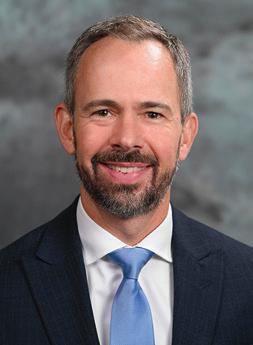
Dr. Robert J. Scherrer Executive Director
Allegheny Intermediate Unit

AIU by the Numbers
900 students from more than 80 different countries are currently served through our English as a Second Language program
Early childhood classrooms currently operated through Head Start, Early Head Start, Pre-K Counts and Preschool Early Intervention
1,496 hours of free educator training provided by Training & Consultation team in recent 12-month period* * 12/1/2021 – 11/30/2022
served through our Alternative Education Program in 2022
AIU Connections • Winter/Spring 2023 1
students
AIU Connections
W inter / s pring 2023
This is the inaugural issue of AIU Connections, published twice annually by the Allegheny Intermediate Unit’s Marketing & Strategic Communication Department under the direction of Joseph Shaulis and Sarah McCluan.
Publisher
Dr. Robert J. Scherrer
Editorial Director
Amanda Ritchie
Creative Director
Michael Tarquinio
Copy Editors
Andrew Chiappazzi Will DeShong
C ontributors
e D itorial
Will DeShong Junior Gonzalez Sarah McCluan Dan Rinkus
Amanda Ritchie Dr. Lisa Yonek
p hotography
Joe Appel
Andrew Chiappazzi Junior Gonzalez TL Merkin Dan Rinkus Amanda Ritchie Michael Tarquinio Dale Walk
a rt / i llustration
Bill Ivins
Advertising Manager
Amanda Ritchie
Production Assistant
Sarah Campbell
Special thanks to Dr. Jill Jacoby
F eatures
Table of ConTenTs
16 Improving Outcomes: Some of the many ways the AIU works to enhance education 18 Who We Are: The AIU at a Glance 24 The Science of Reading: An interdisciplinary field of study rooted in 50 years of scientific research on the cognitive processes that occur when a child learns to read 29 The Importance of Computer Science in K-12 Education: The benefits of empowering students to form active vs. passive relationships with technology
D epartments
4 Diversity, Equity & Inclusion (DEI) n The AIU’s DEI Director Promotes Inclusivity for All n DEI Conference to Tackle Critical Issues Facing Local Students, Educators n Building a ‘Common Language’ with New DEI & Belonging Training 6 AIU Spotlight on Dr. Holly Pope: n Beyond the Answer: Understanding the Mechanics of Math 8 Professional Growth n Head of Teaching & Learning Values Collaborating With School Districts to Reimagine Learning n AIU Supports Transition to Updated Science Education Standards n Continuing Education Opportunities 12
Special Education Services
n Special Education Director Committed to Ensuring Students’ ‘Full Potential’ n The Power of a Routine: Applying Routine-Based Interventions in Early Intervention n Connecting Students to the Resources They Need 14 Family & Community Engagement
The Allegheny Intermediate Unit is located at 475 East Waterfront Drive, Homestead, PA 15120.
Please direct letters to the editor and advertising inquiries to Amanda Ritchie at amanda.ritchie@aiu3.net.
© 2023 Allegheny Intermediate Unit
n Director of Early Childhood, Family & Community Services Packs a Punch n Learning Programs Receive Massive Funding Boost n Restoring, Building, Growing: ‘Just Discipline’ Aims to Lift Up Students
Subscribe to receive AIU Connections via email.
Allegheny Intermediate Unit • aiu3.net 2



AIU Connections • Winter/Spring 2023 3 15 29 12 16 6 8 24 14
The AIU’s DEI Director Promotes Inclusivity for All
b y W ill D e s hong
The Allegheny Intermediate Unit’s mission to serve every learner requires a strong commitment to promoting inclusivity in educational settings.
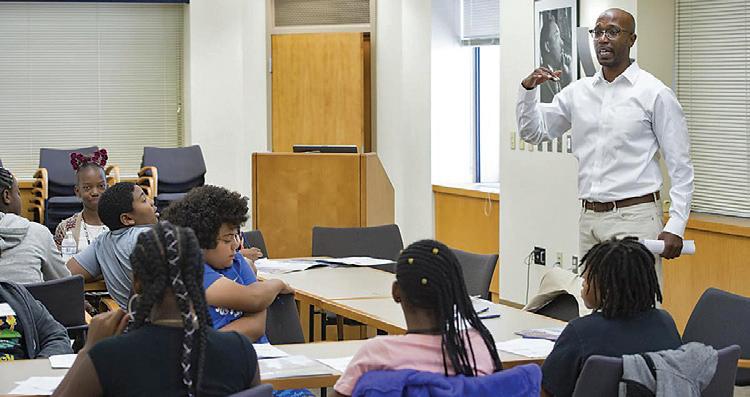
Michael Jones was hired by the AIU in March 2021 to serve as the director for the organization’s newly formed Office of Diversity, Equity and Inclusion (DEI). A member of the Executive Leadership Team, Jones was tasked to create a vision and plan to help lead the organization’s DEI efforts.
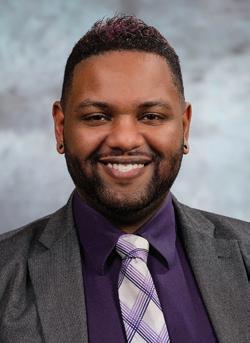
“It is vital that we offer a welcoming and inclusive workplace for all of our employees,” Jones said. “But we also must strive to promote and inspire the same high level of inclusivity in schools across the region.”
Jones shares his knowledge and expertise by working in collaboration with leaders from public school districts in Allegheny County, as well as numerous other educational entities. His office hosts a variety of DEI-focused events throughout the year in an effort to boost awareness and understanding of different communities and populations.
Prior to joining the AIU, Jones worked in human resources and higher education. While he has worked in multiple industries during his career, his goal of being an agent of change and resource for underrepresented populations continues to be at the forefront of his work.
s ave the date
Second Annual
Outside of work, Jones said he is passionate about singing, playing instruments, musicals, connecting with friends, cars, cooking and “anything dealing with water.” His passions mirror his educational background, which includes a bachelor’s degree in music therapy and a master’s degree in social work.
“I didn’t choose the path for my education and career, I just believed in what I was passionate about and followed it to discover my purpose,” Jones said. “As ‘Michael’ evolves, so does the knowledge I aim to obtain and the career I am to be in.”
DEI Conference to Tackle Critical Issues Facing Local Students, Educators
b y W ill D e s hong
M ar C h 25, 2023
Attendance is free to employees of the AIU and its member districts. The cost for other individuals is $100. Educators can earn Act 48 or continuing education credit hours.
Register on Eventbrite.
The Allegheny Intermediate Unit’s second annual Pittsburgh Regional Diversity, Equity and Inclusion (DEI) Educators Conference will be held on March 25 at the DoubleTree by Hilton Hotel and Suites in downtown Pittsburgh. Presented by the AIU’s Office of DEI, sessions will cover pertinent topics involving race and ethnicity, LGBTQIA+ discussions in schools and practices concerning students with disabilities.
“This is an excellent professional development opportunity that can help foster a more welcoming environment for all students, as well as the educational professionals, in our districts,” said Michael Jones, director of the AIU’s Office of DEI.
This year’s keynote speaker is slated to be Eva Reign, the breakout star of Pittsburghnative Billy Porter’s directorial debut, “Anything’s Possible,” a film that centers on the experience of a Black transgender teenager. The discussion will center on issues facing trans students in Allegheny County.
Allegheny Intermediate Unit • aiu3.net 4
m ichael J ones
Diversity, equity & inclusion
Online Trainings
Diversity, Equity, Inclusion and Belonging: New Online Trainings Offer Chance to Build a ‘Common Language’
b y W ill D e s hong
The Allegheny Intermediate Unit recently launched a series of online training modules intended to help educators promote and maintain a diverse, equitable and inclusive work environment.
The Diversity, Equity, Inclusion and Belonging (DEIB) Training modules launched in October to all AIU employees and have since become available to all public school districts in Allegheny County.
Michael Jones, Director of Diversity, Equity and Inclusion at the AIU, said the modules take a fresh and direct approach, allowing the training to fit busy work schedules.
Jones said the content may already be common knowledge to some, but others will gain a baseline of common vocabulary and understanding through realto-life scenarios. The modules are in line with the AIU’s mission to advocate and advance equitable opportunities for every learner.
Jones said the modules also will connect to various DEI events presented by the AIU this school year, allowing the training modules to serve as a basis for more in-depth discussions occurring during the in-person events.
“We’ve already had great interest in the trainings,” Jones said, referencing the response from AIU employees throughout the first few months of the program. “I’ve received a lot of positive feedback. I believe this is making a difference and is a valuable workplace development tool.”
After completing an introduction course, the available modules include:
n Exploring Our Identities
n Addressing Bias
n Tools for Allyship
n Your Role as a Leader
n Equity, Performance and Development
n Leading an Inclusive Team
n Building a Diverse Team
n Understanding Our Impact
School districts interested in using the modules are encouraged to contact Jones to set up individualized training programs. Teachers interested in the courses should contact their administrators.
Urgent Need for English as a Second Language Teachers
Receive 50% tuition reimbursement when you obtain your Pennsylvania Department of Education ESL Program Specialist Certification through the AIU’s K-12 ESL Teacher Recruitment Program.
To meet our great need for ESL teachers, the AIU designed this program to help educators who have not yet obtained one or more of the required certifications.
Candidates hired as long-term substitutes are eligible to receive 50% tuition reimbursement upon completion of the AIU’s ESL Program Specialist Certification Program, which can be completed in less than a year.
Interested candidates should visit aiu3.net/careers and apply to be a K-12 ESL teacher long-term substitute.
Questions?
Contact Dr. Kelly Noyes at kelly.noyes@aiu3.net
The AIU’s K-12 ESL Teacher Recruitment Program applies to candidates hired during the 2022-2023 school year.
Learn more about the AIU’s ESL Program Specialist Certification Program.
AIU Connections • Winter/Spring 2023 5
Understanding the Mechanics of Math
b y D an R inkus
A lifelong educator is proving that solving math problems is about much more than getting the right answer.
Dr. Holly Pope, who earned her doctorate in math education at Stanford University, joined the Allegheny Intermediate Unit as coordinator for School Improvement and Comprehensive Support in January 2022. She works with Comprehensive Support and Improvement (CSI) schools, a designation by the Pennsylvania Department of Education based on school progress reports and multiple data points for schools requiring additional support in particular subject areas.
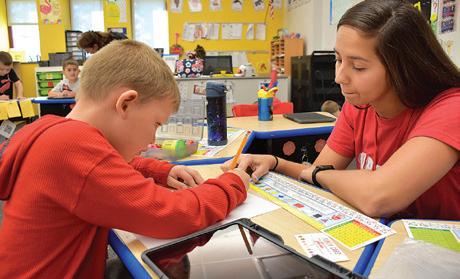
In the Sto-Rox School District, where the Primary Center has been identified as a CSI school, Dr. Pope works closely with administrators and teachers to develop and implement a school improvement plan for the K-3 primary center. “So many times, these schools get labeled as ‘underperforming’ or ‘bad’ schools,” she said. “I’m privileged to see all the good teachers, administrators, and students — and the work they are doing.”
“I have a chance to actually think about learning and teaching math with teachers while also supporting the school improvement process,” Dr. Pope said. “The most rewarding part of my work as a school improvement facilitator is watching these amazing educators go above and beyond to meet the needs of their students. I love celebrating with them as they meet goals that they’ve set. And I love supporting them, if the need arises, to adjust their plan to meet their goals.”
It’s not a one-size fits all approach, though. Dr. Pope has a variety of ways to help students and teachers across all the school districts she serves.
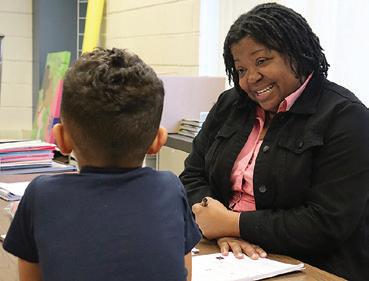
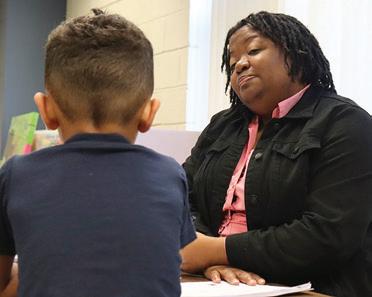

“For some schools, I support them by coordinating their monthly meetings and connecting them to different resources. Other schools have asked me to support them with their academic goals, like Sto-Rox,” she said. “One school asked me to support them with Culturally Responsive Instruction—while another school needs my support with formative assessment and classroom management.”
While students will benefit from Dr. Pope’s work, it is her coordination with teachers that will set the stage for improvement.
Regarding Sto-Rox Primary Center, “There’s a part of each day that is set aside for professional learning,” said Dr. Pope. “I support them in their classrooms and help them enact some of the things we talk about during our learning time. It’s like a cross between doing workshops with the teachers and doing coaching with them, too.”
“Sometimes there are hard conversations to be had,” she said. “But I try to develop trusting relationships with the school improvement teams so that those conversations are productive and constructive. I don’t mind those conversations if it means that children will get opportunities to learn.”Dr. Pope and administrators in Sto-Rox acknowledge this process will not be a quick fix.
Allegheny Intermediate Unit • aiu3.net 6 beyoNd the
ANswer:
‘‘ aiu spotlight
The most rewarding part of my work as a school improvement facilitator is watching these amazing educators go above and beyond to meet the needs of their students.”
“Unfortunately, a lot of people have the belief that elementary math is just that—elementary. That it’s basic,” she said. “A lot of it is about mathematical thinking, not just about memorizing and being able to do procedures like long division. It’s more about understanding why you’re doing the steps of the long division.”
Being able to communicate the thinking behind those steps is the key to unlocking students’ potential.
“It’s all about getting the students to start thinking about math in different ways, and how flexible it is,” she said.
Here’s a pop quiz.
How would you answer the following math
18 × 5 = ____.
problem?
There are a variety of ways to solve it. You could pull up the calculator app on your smartphone or smartwatch and have the answer in an instant. Or you might write or visualize the number 18, the number five and mentally perform the multiplication steps that you were taught decades ago.
“When we learned math back then, being able to do those calculations quickly was important,” Dr. Pope said. “We don’t need that now because we have computers, we have phones — we have things that can do those quick calculations. It’s more important to be able to understand why you are multiplying the eight times the five and carrying it over. Why are we doing that?”
The answer to that question is all about mastering multiple points of view.
“There are other ways to solve that problem,” said Dr. Pope. “Some people might multiply, 18 x 10 to get 180, and divide that in half. Some might multiply 20 x 5 to get 100, and subtract the extra 10 to get 90. Each way, you get the same answer. But the flexibility in thinking is what’s important.”
Back in Sto-Rox, the district staff and Dr. Pope work hand-in-hand. “The administrators are supportive and have created space for teacher learning, and the teachers are very thoughtful and dedicated to their students,” she said. “We have done a lot of work talking about effective ways to teach mathematics, based on research on cognitive sciences and mathematics education.”
Once the school year got underway, Dr. Pope and the teachers collected data from each student, and then Dr. Pope made her way into the classroom to co-teach in a process that’s tailored to each teacher.
“I demonstrate best practices and invite the teachers to try them in their classrooms,” she said. Depending on the teacher’s preference, Dr. Pope models methods in classrooms for their students, or she observes the teacher and offers feedback.
Dr. Pope’s other goals include a focus on having teachers provide clearer learning goals and communicating them to students. Teachers are also working on providing more chances for students to respond to open-ended tasks.
“This will strengthen students’ capacity to reason and think critically across subject areas and grade levels,” she said.
AIU Connections • Winter/Spring 2023 7
Head of Teaching & Learning Values Collaborating With School Districts to Reimagine Learning
 b y a man D a R i TC hie
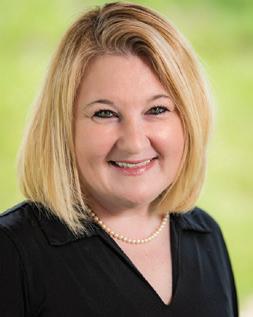
“ m y motto al W ays is , ‘ C hildren first , ” said Jill Jacoby, Ed.D., assistant executive director of the Allegheny Intermediate Unit’s Teaching & Learning Division. The AIU welcomed Dr. Jacoby in August 2021 to lead teaching and learning initiatives for K-12 educators and administrators.
“Our job in public education is to provide opportunities for the growth and development of children through their individual differences,” Dr. Jacoby said. “I believe the AIU is an integral part of the educational ecosystem in Southwestern Pennsylvania in reimagining and personalizing learning in K-12 spaces. The AIU is quickly becoming a regional hub for research, training and innovation. The Teaching and Learning team is listening to the needs of regional districts and collaboratively working to support the advancement and enhancement of learning in the classroom.”
A seasoned educator, Dr. Jacoby has held various educational roles since beginning her career as a second/third grade teacher in Central Pennsylvania. From 2002-2014, she served as elementary school principal at Fort Cherry School District in McDonald, Pennsylvania, before rising to serve as the district’s superintendent for nearly eight years.
AIU Supports Transition to Updated Science Education Standards
b y a man D a R i TC hie
The Pennsylvania Department of Education (PDE) recently updated its science standards for the first time in approximately 20 years. Schools will have the next three years to implement the new integrated standards for what the state is referring to as the PA STEELS – science, technology & engineering, environmental literacy & sustainability –standards.
The AIU’s Math and Science Collaborative (MSC) is working to help educators gain familiarity with the shifts in science teaching and learning as necessitated by the new standards, which are largely based on the Next General Science Standards and the Framework for K-12 Science Education. The MSC will also help schools update their curricula by the 2025-26 school year.
Last spring, the MSC held a kickoff event to introduce educators to the new vision for science education, which shifts the focus from “learning about” to “figuring out.”
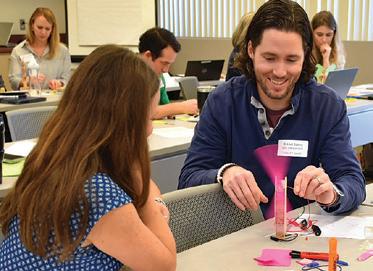
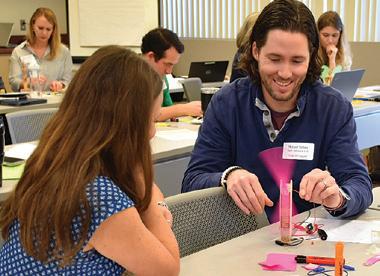
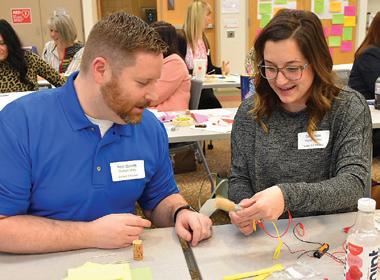
The AIU’s Math & Science Collaborative hosted a kickoff event last year to introduce educators to the new vision for science education, which shifts the focus from “learning about” to “figuring out.”
PDE developed the revised standards in part to help meet the growing demand for skilled and well-educated workers in science, technology, engineering and mathematics (STEM) fields. One of the foundational principles of the new standards states that science, engineering, technology, environment and ecology should be explored through an integrated and active learning process.
Allegheny Intermediate Unit • aiu3.net 8
J ill J acoby
proFessional groW th
“My career has allowed me to view the K-12 educational system through many lenses — from the classroom, building, and district levels—and also from the point of view as a parent of children in the system,” said Dr. Jacoby. “I have a broad understanding of how important it is to lead through the use of systems— and those systems need to work in an intentional manner to create positive outcomes for all students. Also, I lived the ebb and flow of COVID-19, which gave me a clear understanding of the complexities we face as we forge ahead.”
Dr. Jacoby holds her doctorate from the University of Pittsburgh and master’s and bachelor’s degrees from Bucknell University. She lives in Moon Township with her husband, who is a special education teacher, and their three children.
“My favorite thing about educational leadership is the ability to be collaborative thought partners with regional educators and work together as learners to create a better tomorrow,” said Dr. Jacoby. “I get to do this work each and every day at the AIU.”
The MSC has four science institutes underway at the AIU this school year: K-2 STEM; Grades 3-5 Science; Grades 6-12 Life Sciences; and Grades 6-12 Physical Science. The institutes explore the progression of the newly adopted science standards and help educators to develop a shared understanding of phenomenon-based and problem-driven science instruction that effectively incorporates all three dimensions of the standards—disciplinary core ideas, science and engineering practices and cross-cutting concepts. The MSC will offer those same institutes again as well as administrator training on the shifts in science teaching and learning.
In preparation of the rollout, PDE launched the Pennsylvania Science Education Leaders (PennSEL) Network to improve science teaching and learning for all students. The AIU was selected to join a cohort of leadership teams, representing one of 29 state regions.

The AIU’s PennSEL team leader is Corinne Marko Murawski, Ed.D., MSC science and mathematics coordinator. She said that the network provides new opportunities for educational leaders to reflect on practice, share ideas and collectively solve problems. PennSEL also serves the MSC in an advisory capacity to help it follow through on its mission and vision for science education in our region.
“If it was not evident before the pandemic, COVID has brought to light just how important the STEM fields are to helping us understand the world around us and find solutions to emerging problems,” Dr. Marko Murawski said. “Our new science standards will help us do just that. By engaging in phenomenon-based, three-dimensional science learning, our students will experience science in a way that is much more aligned to how science is enacted in the world outside the classroom. We are truly shifting from just ‘learning about’ to lots more ‘figuring out.’”
AT THE CARRIE FURNACES
AIU Connections • Winter/Spring 2023 9
Our job in public education is to provide opportunities for the growth and development of children through their individual differences.”
r i v e r s o f s t e e l . c o m / e d u c a t i o n
ON THE EXPLORER RIVERBOAT
Training & Consultation (TaC) Training
All TaC sessions are free and offer Act 48 credits unless otherwise noted. Some free training opportunities are only open to educators in AIU member districts.
2/1 A Executive Function Skills: Why & How to Embed Them In Daily Instruction
2/7 Virtual: FBA to PBSP: Assessing Behavior & Designing Effective Interventions: Developing a Function-Based PBSP
2/9 Teaching New Skills to Build Learner Independence Series - Leisure Skills
2/9 Teaching New Skills to Build Learner Independence Series Play
2/9 Virtual: Supporting Struggling Learners in Mathematics through the Science of Math
2/14 Virtual: MTSS Administrative Overview
2/15 Virtual: Math for Educators: A PLC Focused on Supporting Struggling Learners in Math: Decision Trees
2/16 Science of Reading for Secondary Teachers: How to Instruct & Support Students who Struggle with Reading
2/16 Virtual: Classroom Management: Continuum of Responses & Inappropriate Behaviors
2/22 - 3/22 Classroom Management Series: Creating a Positive & Engaging Learning Environment
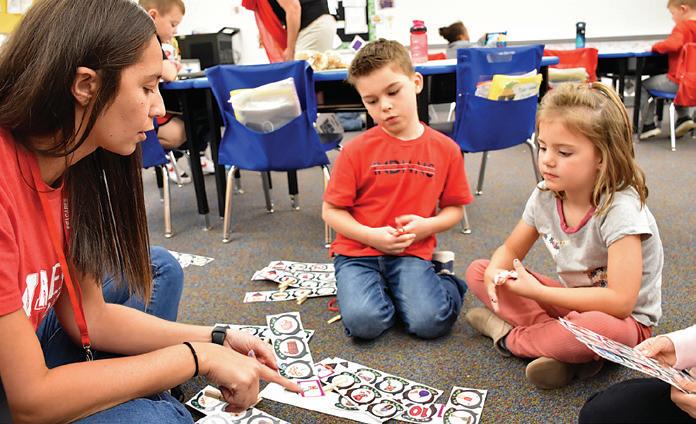
2/22 - 2/23 Virtual: Using the VB-MAPP: Assessment & Instructional Programming to Build Language
2/27 Virtual: Executive Function 101: Organization & Time Management
2/28 Virtual: FBA to PBSP: Assessing Behavior & Designing Effective Interventions
3/7 Supporting Literacy: Leveraging the Speech Language Pathologist’s Expertise
3/9 Virtual: Classroom Management: Engagement & Opportunities to Respond
3/14 - 3/28 Supporting Students with Autism: Vocabulary & Reading Comprehension
3/14 Hybrid: Utilizing Trauma Responsive Practices in the Classroom; Day 1: 3/14 – Virtual Day 2: 3/20 – In Person
3/15 Virtual: Math for Educators: A PLC Focused on Supporting Struggling Learners in Math: Making the Most of the Math Block
3/20 Virtual: Executive Function 101: Flexibility, Metacognition & Series Wrap-Up
3/21 Assessment: A Deeper Dive
3/21 MTSS Administrative Overview
3/29 - 3/30 Student Focused SEL: It’s Not Just One More Thing
4/3 When a Positive Learning Environment Isn’t Enough: Advanced Strategies to Support Individuals in the Classroom
4/5 Virtual: Classroom Management: Increasing Frequency, Duration, and Intensity for Targeted Students
4/12 The Reevaluation Process: More Than Just Compliance; Best Practices for Meaningful RRs
5/17 Virtual: Math for Educators: A PLC Focused on Supporting Struggling Learners in Math: Piecing It All Together
Allegheny Intermediate Unit • aiu3.net 10
Reading Achievement Center 2/8 to 5/10 Comprehension, Close Reading & Complex Text: Laying the Foundation K-2 Asynchronous virtual option available 20 Act 48 Hours; $450 Did you know? The AIU’s upcoming trainings and events can be viewed on our online calendar, which can be accessed from the AIU homepage. View TaC calendar online
Virtual Continuing Professional Education Courses
Fees and registration deadlines apply; CPE credits can fulfill requirements for Level II or Master’s Equivalency certifications and Act 48; Enrollment is limited to 20 students per course.
2/2 - 2/26 Group Work Dynamics: Collaboration & Assessment
2/6 - 2/27 Best Practices in Teaching K-12 Online
2/6 - 3/4 How to Design a Digital Classroom for the 21st Century Learner
2/8 - 3/7 21st Century Skills
2/10 - 3/3 Supporting Students with Autism in Education
2/13 - 3/10 A Closer Look at Learning Disabilities: A Refresher Course for All Classroom Teachers
2/13 - 3/11 Integrating the iPad into the Classroom: There are Apps for That
2/15 - 3/8 Creating & Supporting a Positive, Bully-Free School Climate
2/17 - 4/14 Autism in Pop Culture
2/17 - 3/20 Writing Alive: Strategies, Techniques & Materials
2/20 - 3/17 Are Your Students Tuned In? Strategies for Engaging Every Student
2/20 - 3/13 Examining Classroom Management
2/20 - 3/18 How to Develop Good Digital Citizens
2/24 - 4/17 Cultivating a Growth Mindset
2/24 - 3/20 Establishing Habits of Mind in K-12 Computer Science
2/27 - 3/24 Anxiety & Stress: Teacher & Student Wellness
2/27 - 3/21 Apps & iPads for the K-12 Classroom
2/27 - 3/20 Infusing STEAM into K-12 Classrooms
2/27 - 3/25 Uncovering the Truth About Fake News
3/1 - 3/22 Connecting with Kids
3/1 - 3/28 Project-Based Learning & Challenge-Based Learning
3/2 - 3/26 Beat the Bullying: A Look into Prevention & Intervention
View all CPE courses online
3/6 - 3/31 Backwards: The Flipped Classroom Concept
3/6 - 3/27 Differentiated Instruction
3/6 - 3/31 Introduction to Text Comprehension
3/6 - 4/1 Tech Tools for the 21st Century
3/10 - 3/31 Addressing Learning Disabilities in Education
3/10 - 4/10 Multiple Intelligences in the Classroom: Strategies, Techniques, & Materials
3/13 - 4/4 Any Device Technology Tools

3/13 - 4/7 Being Mindful: Teacher & Student Wellness
3/13 - 4/8 Culturally Responsive Teaching
3/13 - 3/31 Working with Fractions & the Four Operations: Instructional Practices for the Middle Grades
3/15 - 4/5 When It’s Not Just Kids Being Kids: Bullying & Beyond
3/17 - 4/17 The First Days of School: How to Be an Effective Teacher
3/20 - 4/15 Digital Literacy
3/20 - 4/11 Teaching K-12 Problem-Solving Using Computational Thinking in All Subjects
3/24 - 4/14 ADHD in Education
3/27 - 4/18 Four Free Technology Essentials for Educators in the 21st Century
3/27 - 4/21 Building Bridges: Working with (Difficult) Parents
3/27 - 4/21 Coping Skills: Teacher & Student Wellness
3/29 - 4/19 Moving From Problems to Solutions: Building Resiliency Skills
3/30 - 4/21 Making an Impact: Building Positive Relationships with Students
3/31 - 4/21 A New Look at Working with Students with Autism
Advanced Placement Summer Institute
The Allegheny Intermediate Unit offers virtual and in-person workshops for AP teachers during the last week of June.
This year’s offerings include:
In-person AP Workshops at South Fayette Township High School n Art & Design n Biology
Virtual AP workshops n Calculus AB
n Computer Science A n English Language and Composition n English Literature and Composition n Psychology n Spanish Language & Culture n Statistics
n U.S. Government & Politics n U.S. History
n World History: Modern
The AIU is a College Board® endorsed provider of our annual Advanced Placement® (AP) Summer Institute. Educators from all over the U.S. and overseas participate in our AP Summer Institute workshops facilitated by AP course consultants and subject-matter experts who have a depth of experience and knowledge of AP courses. Access registration information at aiu3.net/apsi.
Scholarships Available
The College Board offers Summer Institute scholarships to teachers who meet eligibility criteria. Scholarship applications close February 14. Learn more:
AIU Connections • Winter/Spring 2023 11
Special Education Director Committed to Ensuring Students’ ‘Full Potential’
 b y J unio R g onzalez
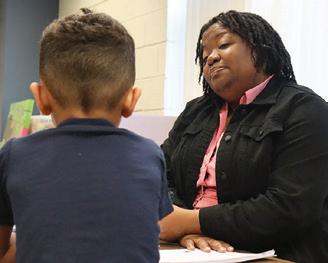
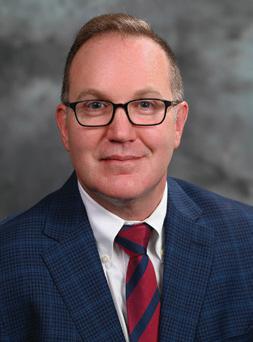
Upon meeting Dr. James Palmiero, the assistant executive director of the AIU’s Special Education & Pupil Services Division, you instantly notice his dedication to the educational well-being of students across Allegheny County. He springs up when discussing our programs and recalls interactions with staff and students with awesome precision. “The best part of my job at the AIU is working with dedicated administrators and staff who share a commitment to a common vision: ensuring that learners achieve their full potential,” Dr. Palmiero said.
Equal parts passionate, meticulous and funny, Dr. Palmiero leads a division of staff based in countless educational settings across Western Pennsylvania—from our central office in Homestead to classrooms and home visits, as well as virtual interaction. Lessons learned throughout his career serve as his internal compass. “No matter where I’ve been, every position taught me the importance of recognizing and honoring other’s views,” he said. “I try hard to draw from those lessons in all that I do at the AIU. Yet, I know I will always be a student in that space and need to learn more.”
Prior to his current role, Dr. Palmiero served as the Pittsburgh regional office director of the Pennsylvania Training and Technical Assistance Network (PaTTAN). Dr. Palmiero has worked in various positions, including childcare settings, elementary schools, district central offices, higher education institutions, and state-wide initiatives. He’s also taught abroad on a Fulbright Fellowship and considers it one of the best experiences of his life.
He finds inspiration in others, something he learned early in life. “My father always told me as a child that kites fly highest against the wind. It’s hard to fly high against the hardships we face,” he said. “But I see so many examples of others who fly much, much higher than me. Those people inspire me to be a better person.”
Dr. Palmiero earned doctorate and master’s degrees from the University of Pittsburgh and a bachelor’s degree from Indiana University of Pennsylvania.
Keury Da Mata had lots of new challenges as she entered eighth grade at PineRichland Middle School last year after her family moved from Brazil. In addition to navigating the cultural and language differences, Keury, who has cerebral palsy, needed the right tools to get around. She couldn’t safely ride the bus in her sports wheelchair, as it was incompatible with the district’s vehicles.
 b y J unio R g onzalez
Noel Hustwit, the district’s director of student services and special education, and Judy Wagner, AIU in-school physical therapist, teamed up to expedite support services for Keury and reached out to the AIU’s Special Education & Pupil Services Division for help locating a compatible wheelchair. Holly McElhinny, director the AIU’s occupational and physical therapy services, scoured the AIU’s vast network, including its equipment and resource library, and secured a like-new manual wheelchair that was donated to Sunrise, one of three AIU-operated special education schools.
Allegheny Intermediate Unit • aiu3.net 12
J ames p almiero special eDucation services
Connecting Students to the Resources They Need
The Power of a Routine
b y J unio R g onzalez
Wake up, brush your teeth and have breakfast before heading to work. We develop such routines over time through repetition from a young age. The AIU Preschool Early Intervention staff coaches parents and caregivers to use everyday activities and routines as learning opportunities for young children with developmental delays. The practice is known as routine-based intervention, which is part of the Pennsylvania Office of Child Development and Early Learning’s new early intervention education initiative called Coaching Across Settings.
Lisa LaRue, director of the AIU’s Preschool Early Intervention, program says the AIU provides coaching services to preschool teachers, childcare staff, and family members “to guide them on how to implement effective strategies in the child’s everyday routines and activities.”
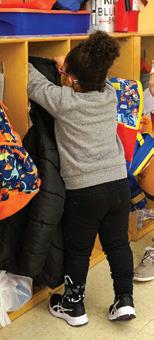
Routines-based coaching can occur in a variety of settings: community preschools, including Pre-K Counts and Head Start; childcare; special education preschool classrooms; small groups and/or homes. AIU Preschool Early Intervention staff incorporate routines-based intervention through common daily activities. For example, preschool routines could include self-care routines such as taking off a book bag and hanging up a jacket in a cubby. They also practice listening and participation routines through circle time or small group instruction activities and work on gross motor routines like walking to the playground.
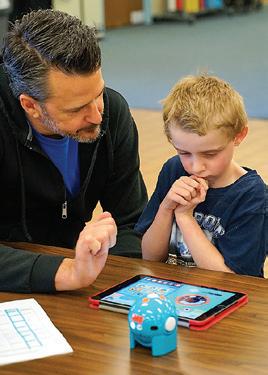
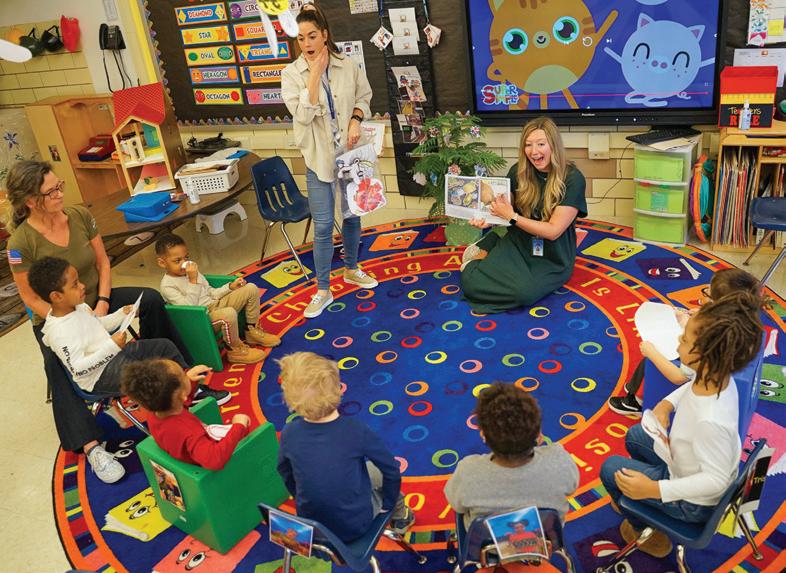
Upon sitting in the chair for the first time, Keury exclaimed, “I’m in heaven!” — taking delight in the additional comfort provided by the wheelchair’s tilt-in-space feature, which can help adjust one’s posture and relieve discomfort. Keury also received a donated power wheelchair, which enables her to get around quickly and with greater independence.
She is keen on making new friends, and the power wheelchair helps do just that. Wagner recalled recently observing Keury participating in physical education class, interacting with her peers on the basketball court as they shot baskets. “It was a beautiful thing to watch,” she said.
DiD you knoW?
The AIU operates three schools for students with multiple and complex needs. Mon Valley School, Pathfinder School and Sunrise School are dedicated to the academic, social and vocational development of more than 540 learners.
AIU Connections • Winter/Spring 2023 13
Director of Early Childhood, Family & Community Services Packs a Punch
b y D an R inkus
“ i truly believe the W ay to era D icate poverty is through e D ucation , said Dr. Wendy Smith, director of the AIU’s Early Childhood, Family & Community Services Division.”
That is the lens through which Dr. Smith sees her role at the AIU. For more than 20 years, Dr. Smith has served children, youth and families in Southwestern Pennsylvania as a leader in nonprofit and social service organizations.
“The idea of being able to be part of a system that makes sure the most vulnerable students have a way to have their educational needs met and their potential achieved? That is what is exciting to me,” she said.
A native of Eagleville, Pennsylvania, Dr. Smith graduated from Harvard University with a bachelor’s degree in psychology and earned her doctorate in developmental psychology from the University of Pittsburgh. “I gravitated to that because I just love understanding what helps people to become their best selves,” she said.
Dr. Smith believes family bonds are essential to a person’s development, especially during life’s early stages. “From a developmental psychology perspective, family is so integral in terms of a child’s long-term outcomes,” she said.
Dr. Smith previously served as early learning resource center director for the Allegheny County Department of Human Services, enhancing systems and services that improved the lives of children and families. She also founded the Pittsburgh branch of Higher Achievement, improving college preparation for underserved communities.
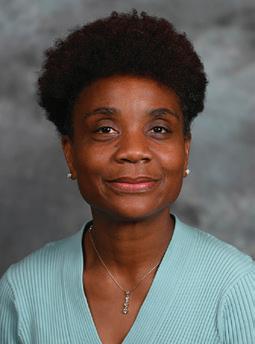
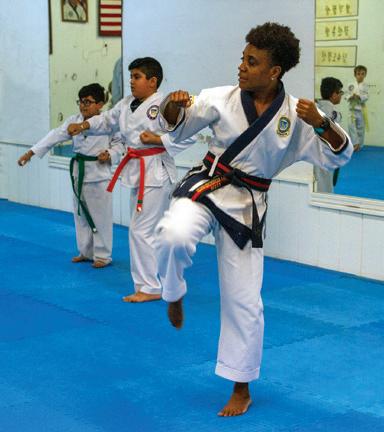
Dr. Smith often speaks of a holistic approach to education, that all of a person’s needs factor into how they learn. That approach also factors into one of her passions: Tang Soo Do, a Korean martial art derived from Karate. “You’ve got balance, flexibility, strength in the legs, and cardiovascular. It’s a full-body workout,” she said.

In addition to fitness, faith plays a central role to Dr. Smith. Her husband, Brian, is pastor of a church in Wilkinsburg, and their son, Jaden, is a sophomore at Central Catholic High School.

Allegheny Intermediate Unit • aiu3.net 14
W en D y s mith
Family & community engagement
In addition to attending Tang Soo Do class herself, Dr. Smith teaches the martial art to children.
Restoring, Building, Growing: ‘Just Discipline’ Aims to Lift Up Students
all it takes is a Dose oF punitive punishment. A suspension from school, perhaps. Whatever the reason, it can set children on a path that all too often ends behind bars. Disrupting the “school-to-prison pipeline,” as it’s known, is one of the prime directives of the Just Discipline Project.
“The students who get suspended the most often have underlying issues,” explained program director Shawn Thomas.
Without addressing those issues, more suspensions may follow, along with truancy and eventually, encounters with police.
An initiative of the University of Pittsburgh’s Center on Race and Social Problems, the Just Discipline Project (JDP) helps improve student behavior through relationship-building rather than punitive discipline. Thanks to intervention by the AIU, JDP is now in place at Sto-Rox Upper Elementary School, one of the newest partners for the program, which now serves more than 7,000 students across Western Pennsylvania.
Continued on page 20.
Learning Programs Receive Massive Funding Boost
b y D an R inkus
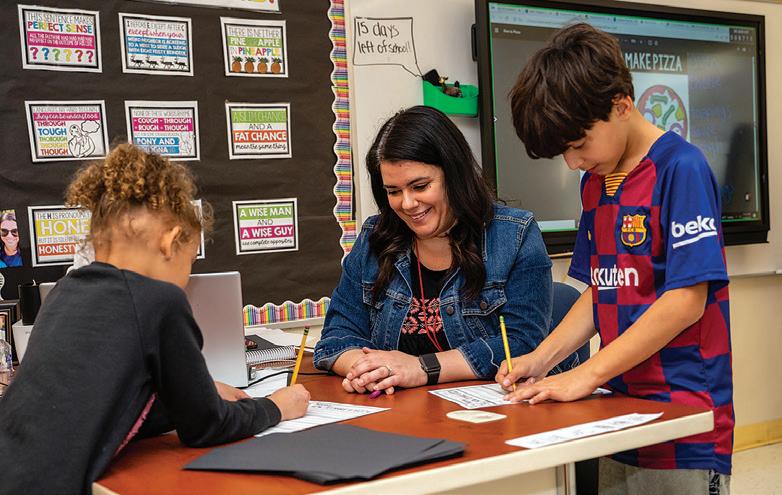
Two of the AIU’s Family & Community Engagement programs are receiving hundreds of thousands of dollars in state and federal funding for critical services that help people attain jobs, further their education and provide for themselves and their families. The Pennsylvania Department of Education approved a five-year grant for the AIU’s Adult Basic Education program and a three-year grant for the AIU’s Family Literacy program. With nearly $800,000 in funding for the next year alone, both the Adult Basic Education and Family Literacy programs will have resources to change lives for the better.
The Adult Basic Education program will receive $202,500 in state funding and $150,268 in federal funding in the first year. Up to 150 people may utilize the program, which serves adults across Allegheny County through GED exam preparation and English as a second language (ESL) courses.
In addition, inmates at the Allegheny County Jail can take those and other courses to prepare themselves for productive lives outside of jail.
With the latest funding, the AIU’s Family Literacy Program wants to enroll up to 70 families, with children under
the age of eight, to receive GED test preparation, literacy instruction and ESL classes. Non-native English speakers and their families especially stand to benefit from ESL as they look for work and educational opportunities.
AIU Connections • Winter/Spring 2023 15
Shawn Thomas, program director of the Just Discipline Project, working with students. Photo courtesy of the University of Pittsburgh.
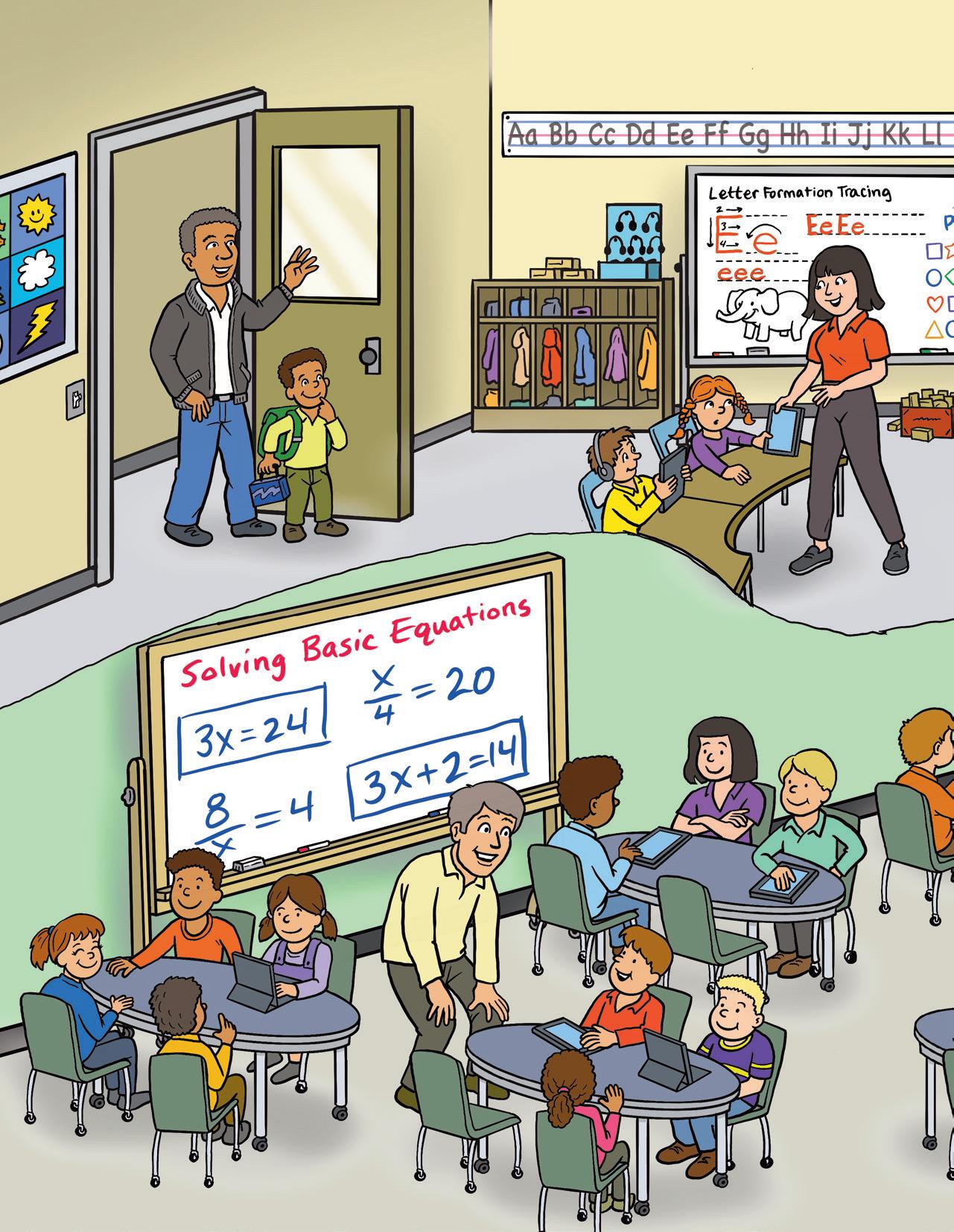
IMPROVING OUTCOMES: Some of the many
Family Needs and Support:
Family needs and support offerings help strengthen families through adult education, literacy programs and family support centers.
Fatherhood Program:
The Responsible Fatherhood Program helps fathers connect with their children to become more nurturing and self-sufficient.
Early Childhood Education: Early childhood education programs like Head Start and Pre-K Counts help to prepare children for kindergarten.
MSC:
The Math & Science Collaborative helps K-12 educators apply research-informed instructional practices that engage all students in rigorous and equitable STEM+C learning.
For more department with districts English learners
Professional Development:
The AIU offers a variety of in-person and virtual professional development, including workshops, transformED fellowships and role-alike networks.
Induction:
Approved by PDE, our two-year virtual induction program helps new Level 1 professional educators acclimate to the demands of working in a school environment.
Special Ed: The AIU helps districts provide special education services each student’s individual
Illustration by Bill Ivins ©2022
many ways the AIU works to enhance education
Early Intervention:
Our highly qualified staff provides free early intervention services to young children with qualified developmental delays.
programs help kindergarten.

ESL: than 30 years, our ESL department has coordinated efforts districts to best serve the needs of learners from across the globe.
Ed: provide child-focused services tailored to meet individual needs.
WFL:
Waterfront Learning helps districts provide comprehensive virtual learning throughout the year and offers virtual credit recovery, enrichment and summer bridge courses.
TaC :
Our Training & Consultation team helps ensure the effectiveness of special education services and teaches educators how to implement positive behavior support systems.
Who We Are
the agency oFFers services in these areas:
Professional Growth: Whether it’s deepening one’s understanding of a particular topic, or mentoring the next generation of leaders, we are all continuously learning and growing. Since its inception, the AIU has been the go-to resource for all aspects of professional growth in the education field. Opportunities include:
n Continuing Professional Education
n Educational Technology & Innovative Practices
n Instructional Coaching
n Math & Science Collaborative
n PDE Initiatives
n Reading Achievement Center
n Social Studies
n Training & Consultation
n transformED
Special Education Services: For 50 years, the AIU has offered a variety of unique, child-focused special education services for students with special needs. Our caring staff of highly-qualified teachers and therapists foster students’ success by tailoring services to meet each student’s individualized needs through:
At the AIU, we touch the lives of thousands of children, families and educators every day.
One of 29 intermediate units across the state, the AIU is a regional educational services agency and a crucial part of Pennsylvania’s public education system. Our caring staff of educators, administrators and support staff provide specialized services to Allegheny County’s suburban school districts as well as non-public, charter and vocationaltechnical schools at nearly 350 unique locations. In addition to serving as a liaison between the Pennsylvania Department of Education and our 42-member school districts, we proudly operate three schools for exceptional children, two alternative schools, 10 family centers and 130 programs for children, adults and families.
While the list at right is not exhaustive, it does provide a glimpse of the breadth and depth of programs and services provided to learners of all ages. It is through these efforts that the AIU works toward its vision that through equitable access, all learners achieve their full potential.
n AIU-Operated Special Education Schools (Mon Valley, Pathfinder, Sunrise)
n Special Education Support Services, including blind/visually impaired, deaf/hard of hearing, occupational/ physical therapy, speech/language, community-based instruction and travel instruction
n Pupil Services, including psychological testing and social work services
n Special Education Administrative Support
n Preschool Early Intervention Services
Family & Community Engagement: The AIU works collaboratively with school districts, private businesses, government entities and nonprofit organizations to bring services and resources to students, children and families throughout the region through:
n Early Childhood Education (Head Start, Early Head Start and Pre-K Counts)
n Alternative Education Program
n Children and Youth Experiencing Homelessness
n Family Needs & Support, including 10 family centers, family literacy, and fatherhood initiative
n Adult Literacy & Education
Student Programs: At the AIU, we believe that learning is a life-long activity that can happen anywhere. We meet students where they are and support them as they achieve their goals through:

n English as a Second Language
n Academic Events & Competitions
n Career Awareness & Education
n Non-Public Schools Program
n Waterfront Learning (online learning)
Administrative Services: Every day, school district operations become more complex. The AIU offers the following shared and administrative services to help schools realize new opportunities:
n Evaluation, Grants & Data
n Finance & Business Operations
n Human Resources
n Legislative, Marketing & Strategic Communication
n Technology Services
n Diversity, Equity & Inclusion
n Safety & Security
Allegheny Intermediate Unit • aiu3.net 18
b y s a R ah m C C
luan
AIU Connections • Winter/Spring 2023 19 Free to applicants 30,000+ jobs available Take the first step in finding your first job, or your next job in education. PA C ertifi C ated J obs Teachers Administrators Counselors Nurses Psychologists and more... N o N -C ertifi C ated J obs Paraprofessionals Secretaries Custodians Bus Drivers Food Service Workers and more... Visit: paeducator.net
Continued from page 15.
“This partnership enhances our work of building a comprehensive community for all of our kids,” said Licia Lentz, Ed.D, director of Alternative Education for the AIU. “It promotes welcoming, reengagement and accountability.”
Dr. Lentz connected Sto-Rox with JDP through a grant proposal she wrote for the Pennsylvania Commission on Crime and Delinquency, in a multi-pronged effort to stop violence in the school district community. JDP was awarded a separate grant to pursue its work by the Federal Department of Education’s Institute of Educational Sciences. For Dr. Lentz, matching Sto-Rox and JDP was essential. She had witnessed JDP’s success as assistant principal of the first school to welcome the program, the former Woodland Hills Intermediate School.
Dr. Jay Huguley, principal investigator, conducted research in 2015 on school discipline, including the overrepresentation of Black children among students receiving out-of-school suspensions—finding that exclusionary discipline pushed children into the criminal justice system. In 2017, after visiting and studying restorative justice programs in Houston, Texas and Oakland, California, Dr. Huguley and Mr. Thomas modified some of the components of those programs and created a model specifically for the Western Pennsylvania area—calling it the Just Discipline Project.
“Our foundation is community building,” Thomas said. “You cannot restore anything without a sense of community amongst teachers, as well as with students. We help teachers and students connect with each other better so that there’s less conflict in the first place.”
In addition to building a sense of community, the three-tiered program focuses on strategically responding to conflicts and providing individualized support.
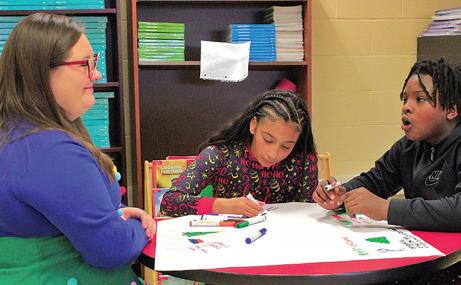

Jennie Smith, a former teacher turned JDP coordinator, helps Sto-Rox students feel supported and work through their feelings. She can also be a critical resource for teachers, in addition to parents and guardians. Whether she is putting together healing circles or listening to students in the lunchroom, she wants everyone in the school to feel comfortable.
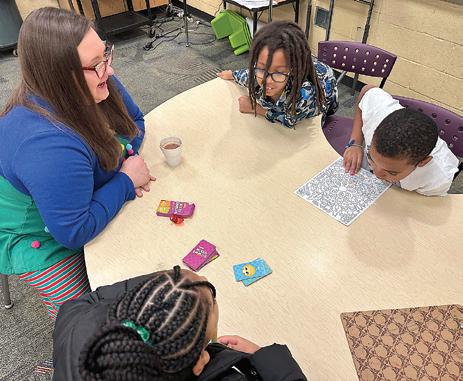
“Creating that welcoming and open environment, where they’re able to freely share and feel that they are heard and supported, is being proactive against anything else happening down the road,” Smith said.
The project puts an emphasis on students—not only ending punitive punishments they experience in schools, but helping them grow as well. It’s a process, Thomas points out, that includes student leadership.
“We go through a process with select students and train them in a restorative approach,” Thomas said. “It gets to a point where the students are more capable of doing their restorative practices then the adults.”
That means parents can expect their children to become agents of change.
“In our data, most students feel that there is a low sense of belonging in their schools,” Thomas said. “So, our student leadership group, they attack that, and they become so much a part of the community that they bring the students and the teachers together.”
Dr. Lentz is pleased with the intent and results for the project’s work in Sto-Rox—and with the AIU and its partner districts.
“Restorative justice is a mindset,” she said. “It is truly about changing hearts and minds and building community through accountability, hope and love.”
Allegheny Intermediate Unit • aiu3.net 20
Jennie Smith, a former teacher turned JDP coordinator, works with Sto-Rox students and educators to create a welcome environment for all.
How We Help
n Behavioral & Therapeutic Supports
n Individual & Group Counseling
n Community Service
n High-Quality Instruction
n Restorative Practices
Our Schools
Community School West 19 May Avenue McKees Rocks, PA 15136 412-464-4051
Community School East 519 Penn Avenue Turtle Creek, PA 15145 412-464-4043
Academic Institute at Allegheny County Jail 950 Second Avenue Pittsburgh, PA 15219 412-424-4042
Contact us
Licia Lentz, Ed.D. Program Director licia.lentz@aiu3.net 412-394-5804
Alternative Education Program
Celebrating over 60 years of success
The Alternative Education Program (AEP) at Allegheny Intermediate Unit serves students in grades seven through 12 who are temporarily excluded from their classrooms.

Restorative Practices
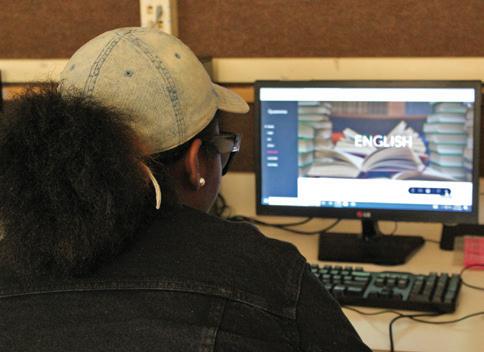
The AEP uses restorative practices as an alternative to traditional discipline. The goals are to increase the use of restorative practices to help cultivate a climate of community and acceptance and to aid in the decrease of classroom disciplinary referrals and suspensions.
Emphasis will be placed on establishing transition plans for returning students to ensure the repair of harm and the inclusion of students into the regular population.
Transition Programming
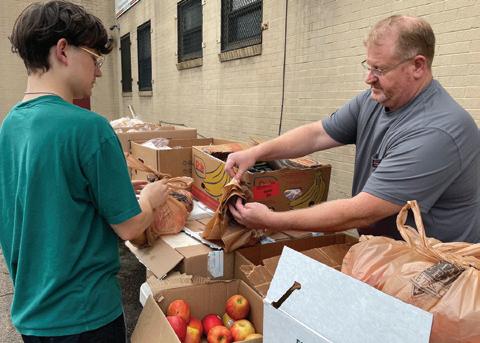
We give our students opportunities to work their way back into their school community. Our statecertified instructors take students into the real world, providing them with venues for self-improvement.
The work fosters deeper community relationships with students and staff through communitybuilding circles, healing circles, and welcoming circles with students returning from suspensions, expulsion or any out-of-school situation.
Learn more at aiu3.net/aep
AIU Connections • Winter/Spring 2023 21
Committed
to education and leadership
CHOOSE THE PROGRAM THAT’S RIGHT FOR YOU
• Undergraduate programs leading to Instructional I certification.
• One-year alternative certification program leading to Instructional I certification.
• Master’s programs leading to Instructional I certification.
• Master’s programs leading to Pennsylvania Department of Education (PDE) specialist certifications and PDE administrative certificates.

• Stand-alone PDE specialist and administrative certification programs.
Point Park offers an effective, efficient teaching certificate program. The School of Education faculty are supportive and honest. The feedback I received from the faculty helped me grow professionally and personally. The program offers flexibility and the resources needed to obtain a teaching certificate in a short period of time.”
CRAIG JOHNSTON
– Physics Teacher, Ringgold High School
– ABCTE, ‘21

and
• Ed.D. in leadership and administration that can be completed in three or two years, with the ability to transfer in post-master’s credits. Explore Point Park University’s undergraduate and graduate degrees and certificate programs in education, including many online offerings:
want to make a difference?
22
POINT PARK UNIVERSITY SCHOOL OF EDUCATION
BENEFITS FOR STUDENTS
• Average class size of 15 students allows for personalized learning and maximum support from faculty.
• Faculty members are experienced educators who can provide real-life advice and networking opportunities.
• High completion and student satisfaction rates.
• Ability to complete all post-baccalaureate programs entirely online.
• Flexible asynchronous course offerings designed with the working professional in mind.
• Dynamic curriculum tailored to the changing needs of today’s students and classrooms. Learn more about degree concentrations and certification areas:
PointPark.edu/Education
ABCTE ALTERNATIVE CERTIFICATION PROGRAM
Point Park is the only PDE recognized institution in Pennsylvania that offers an American Board for the Certification of Teacher Excellence (ABCTE) program.
For those who hold a bachelor’s degree in any subject, the ABCTE program is the most direct path to teacher certification. In as little as one year, students can gain Instructional I certification by:
• Passing the online ABCTE teaching knowledge and content area exam.
• Completing two online 8-week courses at Point Park.
• Completing a 60-day student teaching placement. School of Education
23
The Simple View Formula
Word Recognition
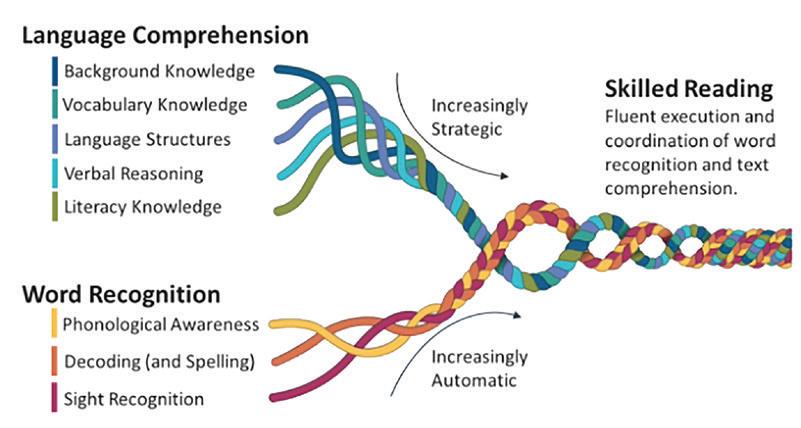
Through 50 years of scientific research involving thousands of studies, we now understand the psychological and cognitive processes that occur when a child learns to read. Despite the evidence, many educators are not trained in understanding or utilizing these evidence-based concepts, an interdisciplinary field of study known as the Science of Reading (SoR).
Language
Comprehension
The ability to understand spoken language
Equipped with evidence-based knowledge of how the brain acquires the skill of reading, we can employ the explicit instruction that has been found to build neural connections between several pathways in the brain responsible for word recognition. Teachers who have studied these concepts are better equipped to implement reading instruction aimed at the various areas of the brain that need to be activated in order to build automatic word recognition, which enables a student to focus cognitive energy on text comprehension. Yet, colleges and universities often fail to include SoR in their educator coursework.
To better understand what skills contribute to reading comprehension, researchers Gough and Tunmer developed a framework known as The Simple View of Reading (1986) that views comprehension as the product of automatic word recognition and language comprehension. Without proficiency in both of these domains, text comprehension will be flawed. Psychologist Hollis Scarborough expanded on that framework with a concept known as the Reading Rope, which gives more detail to the skills of each domain that work together in the reading process. All of the strands are important for reading comprehension to take place.
Reading Comprehension
The ability to understand written language
Both the Simple View of Reading and the Reading Rope are helpful to educators today because they provide a framework in setting up instructional components for the literacy block. School districts and universities have a responsibility to provide this information to their teachers and make certain that all programs and resources are aligned to what the research has taught us.
Scarborough, H. S. (2001). Connecting early language and literacy to later reading (dis)abilities: Evidence, theory, and practice. In S. Neuman & D. Dickinson (Eds.), Handbook for research in early literacy (pp. 97-110). New York: Guilford Press.
Allegheny Intermediate Unit • aiu3.net 24 i n TR
o D
u CT ion by D R . l isa y onek , C u RR i C ulum & R ea D ing C oo RD ina T o R a T T he aiu ’ s R ea D ing a C hievemen T C en T e R
i
n T e R vie W s by a man D a R i TC hie
The ability to transform print into spoken language
Many programs that don’t follow the SoR often use a balanced or guided reading framework and students spend a lot of instructional time in small groups without the support of a teacher. Students who are not “on grade level” are assigned books and receive small group instruction with text and skills that are below their grade level. Consequently, these students never experience grade level reading material or engage in reading complex text. Their growth is slower when they are continually grouped with below grade level peers and spend less time with the teacher.
Conversely, students immersed in instruction aligned to SoR receive more explicit, systematic and sequential instruction in the five areas of reading. All students are taught phonics skills using a scope and sequence and comprehension skills using complex, grade-level text aligned to the standards. Students who struggle to read receive small group instruction in areas of need while still having access to grade level text and content. Another key difference in districts that follow the SoR is that all students are screened and assessed using valid and reliable assessment tools that help teachers and administrators identify students who may be in need of additional support. Such students are given additional assessments to diagnose needs and monitor progress on a consistent basis to determine if the instruction and intervention are helping the student improve.
From an equity standpoint, all students—including those receiving special education, English language learners and those at grade level—deserve a reliable and valid assessment system paired with explicit instruction steeped in what science has proven.
A number of districts in Allegheny County have demonstrated their commitment to utilize the SoR principles in their classrooms to improve literacy outcomes and have turned to the AIU’s experts for support. West Allegheny, North Hills, and Keystone Oaks school districts are among those partnering with the AIU to provide comprehensive SoR training to their educators.
The West Allegheny School District has been working with the AIU to train all K-3 teachers in SoR through the Reading Achievement Center (RAC) Reading Apprenticeship course. With all content aligned to SoR pedagogy, the course provides on-site support for participants. RAC also works with the district to provide customized support to all K-8 teachers to ensure alignment of all curriculum, resources and instruction— and equips administrators to support teachers through planning, professional development, data analysis and classroom observations.
North Hills and Keystone Oaks districts have partnered with the AIU’s RAC and Training & Consultation programs to develop a systematic plan to train all K-5 teachers in a national SoR professional development program known as LETRS (Language Essentials for Teachers of Reading and Spelling). Accredited by the International Dyslexia Association, LETRS provides a structured literacy approach to teaching language and reading skills with SoR pedagogy. Full participation in LETRS is a two-year commitment and teachers progress through the various components of literacy instruction, including phonology, basic and advanced phonics, fluency, vocabulary, comprehension and writing.
Read on to learn how professional learning with RAC in SoR has impacted teachers and students at West Allegheny School District.
The K-3 Reading Apprenticeship

Through 12 in-person sessions, the RAC’s K-3 Reading Apprenticeship course provides intensive, comprehensive training in reading pedagogy, theory, research and proven instructional practices. RAC also provides individualized datadriven planning and coaching to support teachers with meaningful implementation of content and strategies from sessions.
Administrators may accompany their registered par ticipants to any or all sessions at no additional cost.
Contact Dr. Lisa Yonek at lisa.yonek@aiu3.net for more information.
AIU Connections • Winter/Spring 2023 25
Kristen Martin, Literacy Specialist at Wilson Elementary School
Kristen Martin, who has served as a literacy specialist at Wilson Elementary School for nearly 10 years, conducts universal screening at the start of each school year to detect which students need extra support.

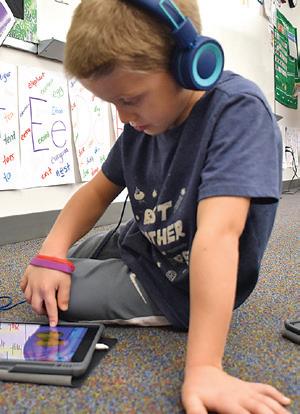
“Digging deep into diagnostics to figure out where there are literacy gaps allows me to be prescriptive, so I can be an interventionist and close those gaps and make kids successful readers,” she said. “You know they’re behind, but you find out where the breakdown is.”
Although Martin went to school to be a literary specialist, she said she felt very far removed from early reading after teaching at the middle school level for 23 years. “For me, RAC training was critical in helping me jumpstart and give kids what they needed right from the beginning.”
“Because of the pandemic, the Science of Reading is more critical now than ever,” she said. “Our school district, we’re lucky. We’ve been able to send almost every
Kristen Orndoff, Kindergarten Teacher at McKee Elementary School
Kristen Orndoff, who is in her fifth year as kindergarten teacher, completed RAC training in 2020. “RAC taught me the importance of aligning your instruction to meet each student’s individual needs,” she said.
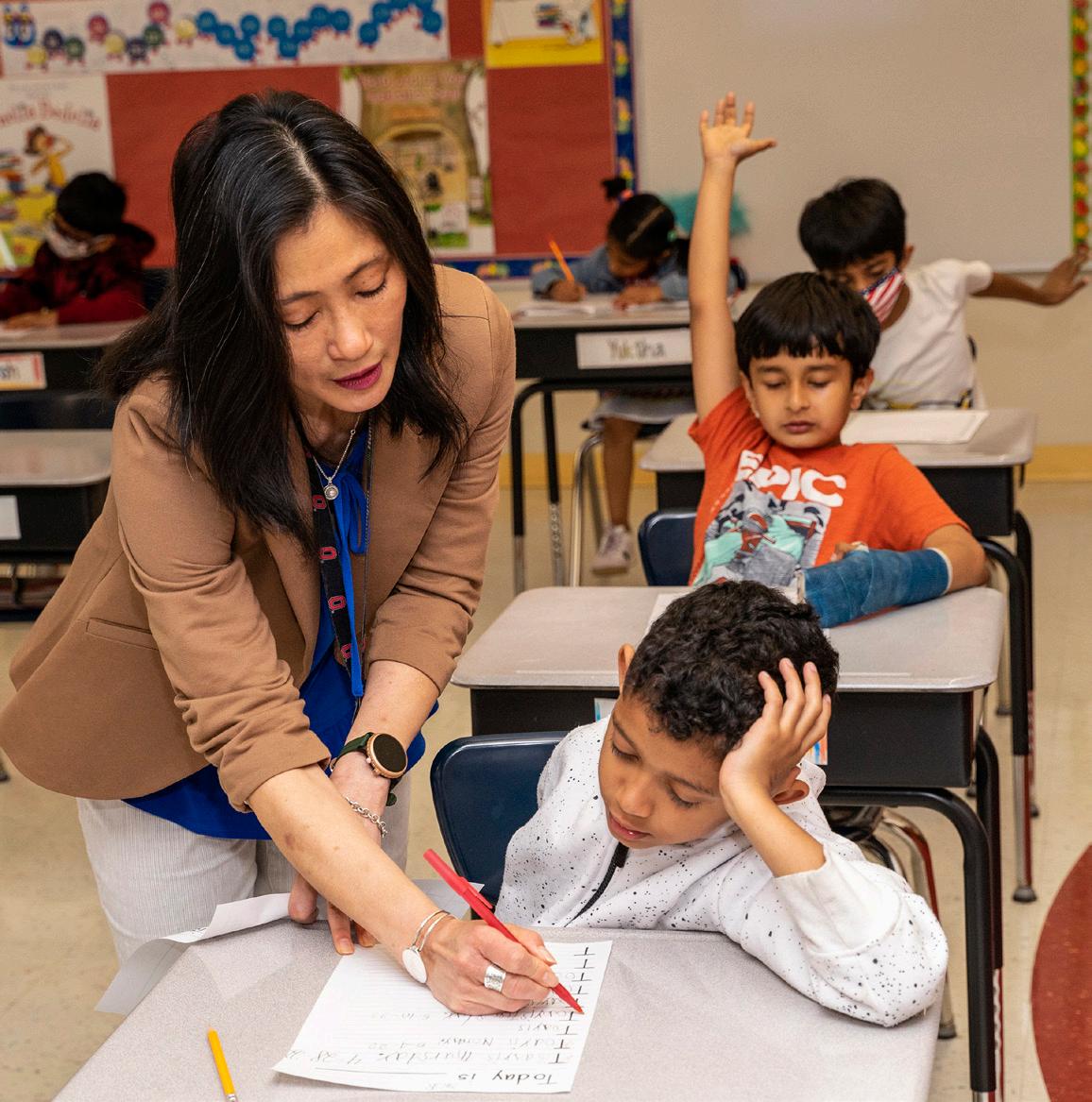
Orndoff brought SoR into her reading centers, where students do small-group work based on their needs and abilities as shown in the accompanying photos. She differentiates groups by aligning them to assessment data collected at the beginning of the year through one-on-one assessments and data she collects by monitoring each student’s knowledge and progress in building literacy skills. Orndoff reviews the data and adjusts groups as necessary on a weekly basis. “My kids look forward to centers because it gives them that piece of independence while also allowing them to interact socially with the other students and to learn from their peers,” she said.
“RAC sparked those ideas of how I can meet each individual learner on their individual level,” she said. “I took everything I learned from RAC to promote high student engagement through more explicit instruction — higher level thinking based on the students’ capabilities.”
Orndoff recalled doing much more whole-group instruction prior to learning about SoR. “It was not as engaging,” she said. “It was definitely harder to keep the students focused— to keep their attention. I would teach a sight word to the students as a whole group and then we would just go on to a boring worksheet. That’s not what the students needed.”
It’s easy to see the difference when she looks back at the progress of students she taught prior to receiving RAC training compared to the progress she sees now. “My students are progressing faster,” she said. “You can see that through phonemic awareness. You can see it through their writing. They’re able to recognize letters and their sounds quicker, which they are already putting into words. Writing is a huge part of it.”
Orndoff said RAC challenged her to challenge the kids. “You have to understand, they’re just starting to learn their letters and their sounds,” she said. “But when you’re incorporating more writing of words for them, that’s building their skills so much faster. For example, this is the sixth week of school and I’m already seeing my students start to form words, whereas before, I might not have students forming words until November or December.”
Allegheny Intermediate Unit • aiu3.net 26
A kindergarten teacher and two literacy specialists in the West Allegheny School District share their experiences of aligning their instruction methods to meet the needs of each of their students and the importance that RAC training has played in reaching their goal of serving every learner.
Kristen Orndoff spends time with each small group as they complete their reading center activities.
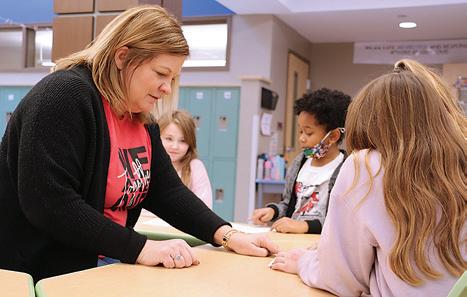
K-2 teacher through RAC training, and having those tools has been critical with the learning gaps.” Martin said she is seeing a lot faster growth from students now that they are focusing on SoR. “Before, there was such a disservice to the foundation skills” she said.
Last year, for the first time, Martin released at least four first grade students from interventions by December.
“Gaps were closed,” she said. “They were right at level with their first grade peers. They didn’t need to come to the reading clinic anymore. Every year, the second and third grade intervention groups get smaller because you’re closing those gaps for them quicker. Everything is based on research. It’s systematic, it’s explicit and it starts where their needs are. And you work from there.”
“Since the Science of Reading has become such a strong focus in our school district, I always say, ‘I’m going to work myself out of a job here’,” she laughed.
Michelle Bateman, Literacy Specialist at Donaldson Elementary School
Although it’s Michelle Bateman’s first year as a literacy specialist, she has more than 20 years of teaching experience. She taught third grade for 14 years, second grade math for two years, and more recently, second grade English Language Arts for four years.
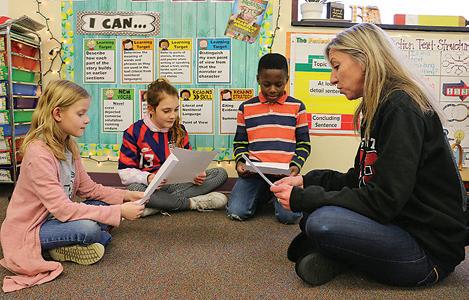
She credits RAC for helping her make the transition to reading intervention. “The RAC training was overwhelming — but it was amazing,” she said. “We did all of these activities, and I loved that it was hands-on. I brought everything that I learned at RAC back to my classroom and changed pretty much every way that I taught kids how to read, spell, decode and encode. Having that tool kit really made a difference.”
Bateman recalled her time teaching third grade about seven years ago. “We were still doing the memorization of spelling lists. Back then, it was, ‘If you don’t get them right – keep writing them, keep memorizing them and keep spitting them back out.’ And then a week later, when we’re doing our actual writing, they’re not spelling the words correctly. And that was just kind of the cycle that we were all in,” she said.
“The approach and the teaching methods that I’ve learned through the AIU has made my students’ learning actually stick. And now their knowledge is carrying over and they are actually learning to spell and read—and not just memorizing things for a brief amount of time.”
Bateman said she appreciates the different approaches that she learned through RAC training to work with kids who aren’t catching on as quickly as their peers.
“RAC has given us other research-based activities that helped us solidify things for those kids who aren’t getting the basics of the program,” she said. “There are activities that we can do to figure out exactly where they are getting stuck. There are so many things we can try to help them make those connections. So rather than having them do extra worksheets or papers to try to memorize something that they don’t even understand well in the first place, they are now able to truly learn.”
The AIU’s Reading Achievement Center provides professional development and customized services that utilize research-based methods, tools and resources designed to transform and sustain effective literacy instruction.
AIU Connections • Winter/Spring 2023 27
Kristen Martin guides her students as they work through a lesson. Photo courtesy of West Allegheny School District
Michelle Bateman leads a small group of students through a reading activity. Photo courtesy of West Allegheny School District
The Importance of Computer Science in K-12 Education
b y a man D a R i TC hie
As we march toward the third anniversary of the start of the COVID-19 pandemic, there is still so much that we don’t know about its long-term impact on K-12 education. One thing we do know is the sudden shift to remote learning forced many schools to integrate technology, practically overnight.
“We’ve experienced an accelerated shift to technology since the start of the pandemic,” said Dr. Jill Jacoby, assistant executive director of the AIU’s Teaching & Learning Division. “Most kids now have technology that they never had before. We need to elevate that and keep the momentum moving instead of going back to what was.”
Despite greater access to technology, computer science (CS) education has significantly slowed during the pandemic, according to research by Code.org, a nonprofit dedicated to the vision that every student deserves the opportunity to learn CS as part of their core K-12 education.

Few schools were able to add classes to the curriculum over the past few years, but Code.org says now is the time to reassess the knowledge, skills and curricula that will engage students, support learning objectives and prepare students for the future. According to Code.org’s latest annual State of CS report, CS content engages students and helps them develop critical thinking and problem-solving skills—and learning CS correlates with stronger outcomes for students in math, science and reading.

Allegheny Intermediate Unit • aiu3.net 28
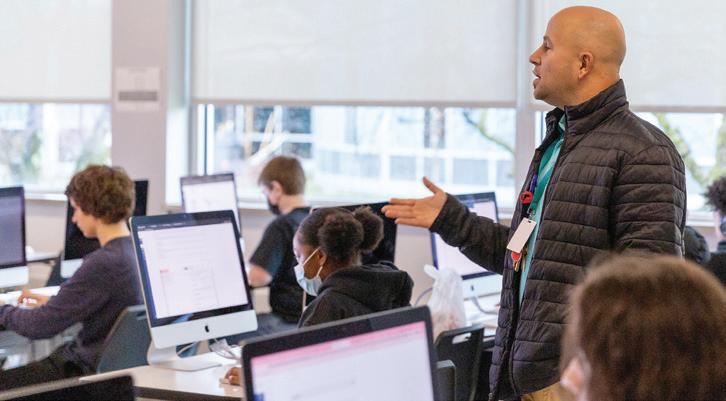
In Woodland Hills Senior High School, teacher Aaron Minor works with his Computer Science 1 students on coding conditional statements in Python.
Photos: Andrew Chiappazzi
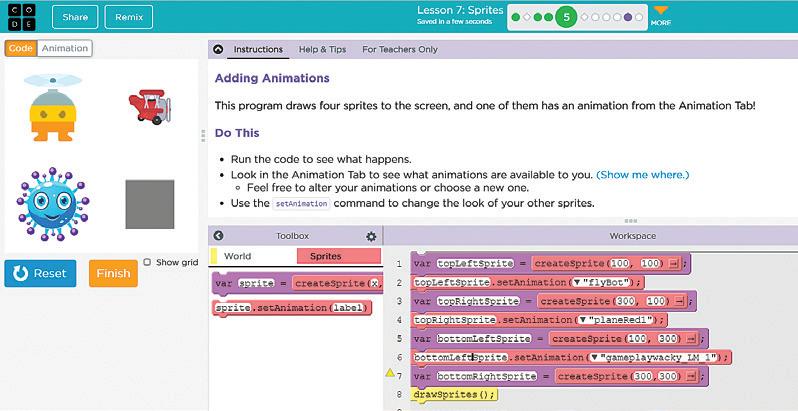
This screenshot shows a lesson module from CS Discoveries, Code.org’s introductory course designed for students in grades 6-10 to learn about problem-solving, programming, physical computing, usercentered design, and data while building their own websites, apps, animations, games and more.
The Big Picture
Tyler Samstag, director of instructional innovation at the AIU, said he thinks the fundamental aspect of CS comes down to having an active relationship with technology and “feeling empowered to create and use technology as opposed to passively consuming.”
There are now schools teaching very young students how to leverage technology in an active way, Samstag said. “You don’t
to just play video games—
make video games,” Samstag said. “You
make
movies.”
own website, music
Kevin Conner, curriculum and instructional technology coordinator at the AIU, is a certified facilitator of CS professional development.
“When someone says they believe teaching computer science in schools is important, I often wonder first if they are thinking more about computer programming than teaching students about what computers can do, Conner said. ”The Computer Science Teachers Association says both are necessary, but I think the emphasis gets placed more often on programming.”
“In my experience, elementary school teachers like the idea of having their students learn to program (code) with user-friendly platforms like Scratch, which lets students quickly build a program that can tell a story, build a game or control a device. But we need students to also understand how computers connect through a widely networked world and how they can be used to create systems that influence every facet of our daily lives.”
Conner suggests talking about practical things that young students have experience with to make the concept of CS less abstract. “Even in kindergarten, there are important concepts that can be learned in easy-to-understand ways that not only build a foundation for programming but are useful in building thinking skills. Students can learn sequencing by listing or drawing the steps involved in making a peanut butter sandwich,” Conner said.
AIU Connections • Winter/Spring 2023 29
have
you
can
your
and
“You don’t have to just play video games— you make video games. You can make your own website, music and movies.”
Code.org Regional Partner
In Duquesne City School District, Michelle Stowell’s seventh graders are learning how to code a device to retrieve a block.
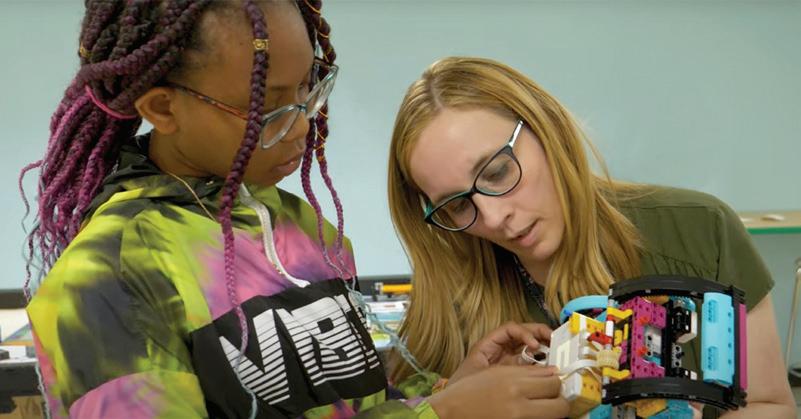
Stats from Code.org
53% of U.S. high schools offer foundational CS (up from 51% prior year), but disparities in access persist.
Rural schools, urban schools and schools with high percentages of economically disadvantaged students continue to be less likely to offer foundational CS; Black/African American, Hispanic, and Native American/Alaskan students are less likely to attend a school that offers foundational CS.
English language learners, students with disabilities and economically disadvantaged students are underrepresented in foundational CS compared to their overall population.
The national average participation rate by young women in high school foundational CS is just 32%.
With support from its regional partners, including the AIU, Code.org works to expand access to CS in schools while increasing participation by young women and students from other underrepresented groups.
“As a Code.org regional partner, the AIU helps build capacity for CS education throughout Pennsylvania,” said Linda Muller, AIU coordinator of professional education and computer science. “We are creating an ecosystem of professional learning providers for all of Code.org’s CS education programs, including CS Fundamentals, CS Discoveries, CS Principles, and most recently, Computer Science A (CSA).”
The AIU first teamed up with Code.org as a regional partner in 2018 and has since helped train more than 4,600 K-12 educators to teach CS in at least one of the four Code.org offerings:
n CS Fundamentals offers courses for students in grades K-5. As students progress through six courses, they learn to program through increasingly sophisticated activities while building skills in collaboration, problemsolving and persistence.
n CS Discoveries is an introductory course designed for students in grades 6-10 to learn about problem-solving, programming, physical computing, user-centered design, and data while building their own websites, apps, animations, games and more.
n Designed for students in grades 9-12, CS Principles introduces students to foundational concepts of computer science and challenges them to explore societal impacts of computer science.
n CSA introduces students to software engineering and object-oriented design while learning the Java programming language.
The AIU provides computer science education through a variety of educational learning options designed to help PreK-12 schools build capacity for teaching computer science.
This past November, the AIU hosted its first Hour of Code PA Challenge student competition with fellow Code.org regional partner Montgomery County Intermediate Unit (MCIU). Requiring no prior experience with coding, the virtual outreach event featured coding activities with self-led tutorials and teacher resources for students in grades 6-8 and grades 9-12. The AIU and MCIU showcased student projects via social media during Computer Science Education Week, December 5-11.
Allegheny Intermediate Unit • aiu3.net 30
Photo: Dale Walk
Literacy of the 21st Century
Linda Muller, coordinator of professional education and CS at the AIU, said CS education is much more than problem-solving.
“It’s teaching students how to apply computer science as a tool for learning and expression through a variety of disciplines and interests. These are essential skills in a world that is increasingly influenced by technology,” said Muller. “Computer science is the literacy of the 21st century, which is why it is very important that K-12 schools offer and expand CS education at every grade level.”
Where to start?
“Schools can begin by envisioning elementary and middle school CS instruction as a vehicle for equity that enables all students to build confidence and skills that will help them to be better prepared for more rigorous high school CS courses,” said Muller.
Of the nine policies recommended by Code.org to make CS education fundamental, Pennsylvania has instituted six. (See report card at right.)
“It’s a great start,” said Muller. “The state can strengthen our CS education policies by adopting CS standards, developing a statewide plan for K-12 CS education, and requiring all Pennsylvania high schools to offer CS courses. We also need to continue to support equity in CS education by recruiting more students from underrepresented populations.”
Pennsylvaniaʼs COMPUTER SCIENCE Report Card
Create a state plan for K-12 computer science
Definite computer science and establish rigorous K-12 computer science standards
Allocate funding for computer science teacher professional learning
Implement clear certification pathways for computer science teachers
Create presservice programs in computer science at higher education institutions
Establish computer science supervisor positions in education agencies
Require that all high schools offer computer science
Allow a computer science credit to satisfy a core graduation requirement
Allow computer science to satisfy a higher education admission requirement
Source: Code.org, CSTA, & ECEP Alliance (2022). State of Computer Science Education: Understanding Our National Imperative. Retrieved from https://advoacy.code.org/stateofcs
“The good news is, 77% of Pennsylvania high schools offer foundational CS courses — an increase from 59% in 2019,” said Muller. “However, access to foundational CS courses trend 10% lower in high schools with a larger percentage of students receiving free or reduced meals.”
Because growing and cultivating a workforce knowledgeable in CS is crucial to the nation’s economic health and security, Code.org believes in a proactive approach in engaging students in CS education. Furthermore, instruction in computer science provides a unique opportunity to support students’ development of core skills. Multiple studies indicate that students who learn computer science perform better in reading, math and science in primary school; score better on standardized AP exams in secondary school; are 17% more likely to enroll in a university; and perform better at problem-solving.
According to a 2021 CNBC study, 57% of tech executives surveyed said that finding qualified workers was their company’s biggest concern. In 2022, more than 800 CEOs signed a letter encouraging states to make CS part of the K-12 curriculum, and 50 governors of the U.S. states and territories committed to expanding CS education in their states by signing the Governors’ Compact for CS.
In Pennsylvania, there are 16,514 open computing jobs with an average salary of $89,590. The demand in the Keystone State is 2.6 times higher than the overall U.S. state average rate of demand, according to Code.org.
Gov. Tom Wolf has long been a big proponent of expanding CS education in the Commonwealth. To ensure students will have the skills and knowledge to meet the economic needs of the 21st century, the Wolf Administration launched the PAsmart initiative in 2018 to expand access to STEM and CS teaching and learning. The administration has since strategically invested $60 million in education and workforce development through the initiative.
Read on to learn about two AIU programs that have benefited from PAsmart grants over recent years.
AIU Connections • Winter/Spring 2023 31
Introducing Early Learners to CS through Storytime STEM-Packs
Educators are encouraged to introduce foundations of computer science in early learning classrooms. But what does that look like in practice?
Developed by the Allegheny Intermediate Unit’s Math & Science Collaborative, Storytime STEM-Packs™ are a line of innovative, standards-aligned teaching materials designed to help teachers facilitate engaging, hands-on STEM+C activities centered around science, technology, engineering, mathematics and computing.
Storytime STEM-Packs promote problem-driven learning in preschool through second grade and they are a result of research conducted through multiple federal, state and private grants for math and science education.
“We interviewed 130 educators and realized that they were all asking for the same thing,” said Gabriela Rose, a science coordinator with the Allegheny Intermediate Unit’s Math & Science Collaborative. “They wanted materials that are fun and engaging for kids, easy to use with minimal prep time, and aligned to STEM and computer science standards.”
“Storytime STEM-Packs always start with the storybook,” said Rose. “It provides the context and the excitement for the children, but more importantly, it levels the playing field to allow all kids to engage.”
Storytime STEM-Packs include everything needed to facilitate an engaging, hands-on STEM activity, including a popular children’s book, learning materials and cards, and a step-by-step facilitator guide. Each STEM+C
Scaling CS Academy Across the State
Carnegie Mellon University’s CS Academy is an online, graphics-based computer science curriculum taught in Python, which is a free open-source programming language. The AIU teamed up with CMU to scale the CS Academy curriculum across the state in a collaboration funded by PASmart, an initiative created by Governor Tom Wolf to help students and workers prepare for the jobs of today and tomorrow.
Using a train-the-trainer model, participants from 18 intermediate units (IUs) across the state came together to complete a two-day training. The IU participants had to work through the entire curriculum and pass a certification test before they could facilitate the two-day workshop for others.
Adventure puts the child into the shoes of a programmer, using age-appropriate unplugged activities and Bee-Bot robots, which are small programmable floor robots designed for early learners.
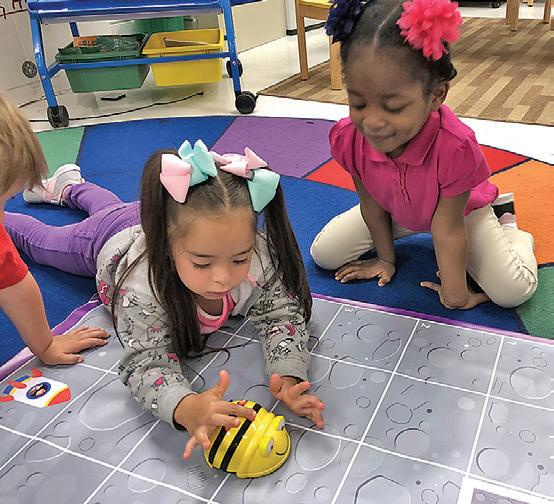
“Kids learn more when they’re kind of figuring out things on their own,” said Amanda Loughner, an elementary school STEAM teacher in the Derry Area School District of Westmoreland County. “When they figure things out on their own—and learn and discover on their own— it’s of so much more value to them. And these Storytime STEM-Packs really help kiddos to do that.”
“The two-day workshop really is a crash course to build a teacher’s capacity to then go and teach it,” said Tyler Samstag, director of instructional innovation at the AIU.
With a second round of PASmart funding, the AIU invited six previously trained IU facilitators back as CS Academy Ambassadors and recruited nine new IU facilitators. As of this writing, the IU facilitators have already trained 139 high school educators, from 41 districts across Pennsylvania, to teach the CS Academy curriculum.
Kevin Conner, curriculum and instructional technology coordinator at the AIU, is among those who completed the CS Academy training and now teaches other educators how to facilitate the course.
Allegheny Intermediate Unit • aiu3.net 32
According to the K-12 Computer Science Framework, engagement in a structured computer programming environment aids young children’s number sense, visual memory, and language skills. Storytime STEM-Packs provide that type of structured computer programming environment, while at the same time preserving a highly engaging play-like environment, as children enact scenes from the storybook and solve problems related to the characters in them.

For example, Dragonland Adventures transports children into the world of Girl and Dragon, where they enact scenes from the story on the colorful Dragonland Adventure mat. After reading the stories, children put a costume on Bee-Bot and then program “Dragon-Bot” to find a girl in the castle, return to the cave, and play hide and seek.

“We will use our Bee-Bot robots to practice our computer science skills,” said Loughner. “So we turn Bee-Bot into the dragon and they use a little construction ball of paper, and they toss it for the dragon to hide behind the rock, like the dragon does in the story. Then they have to use sequencing cards to write the algorithm to get “dragon” (Bee-Bot) wherever the rock falls on their Dragonland Adventure mat.”
While facilitating the activity, Loughner watches as Bee-Bot slightly overshoots its target, signaling a problem with the students’ algorithm.
“Oh, what happened?” she asks the children. “There was one too many, huh? We have to take one away,” pointing out that they can apply their knowledge of the outcome to reprogram the Bee-Bot correctly.
A Bee-Bot covered with a paper dragon costume.
In 2015, the National Science Foundation I-CORPS for Learning grant was awarded to Rose as the principal investigator to scale up an educational innovation. Subsequent foundation grants provided STEM-Packs and professional learning opportunities to public libraries, Head Start classrooms and PreK-2 teachers. Most recently, the MSC has been awarded a second PAsmart Advancing CS and STEM grant that will provide Storytime STEM-Packs to participating intermediate units, Head Start programs, and public libraries— with a focus on high needs schools and libraries in urban and rural communities across Pennsylvania. The funding will serve approximately 400 educators and 6,000 children, including those from AIU districts.
“I’ve been fortunate to learn programming to be able to help teachers learn it and see how it applies to their practice with students,” Conner said. “The best part is that it allows the teacher and their students to be co-learners working on problems together and finding solutions together, which is a pretty great thing to occur in classrooms.”
“CS Academy has been working to expand their curriculum offerings,” Samstag said. “They’ve created two new curricula — one is geared toward younger students, like middle school students, and one is more based on applications of computer science.”
The new CS2 curriculum is in active development. Designed for students who have completed the CS1 course, the new course will look at applying and extending computation problem-solving skills in a variety of application areas, such
as art, science, music, math, data analysis and visualization, simulations, game design, web applications, security, machine learning and artificial intelligence and more. The sequencing and duration of the units will be flexible in order to allow teachers to customize the course to best suit their students’ interests.
“It’s really exciting,” Samstag said. “CS2 will take students deeper and allow them to see computer science within the context of spaces that align with their interests and passions. When we brought our intermediate unit partners together, folks were really excited about the applications for visual arts and music.”
While students may not initially associate the arts with computer science, programming like CS2 helps them understand the overlap. “At this point, computer science permeates everything in the world,” Samstag said.
AIU Connections • Winter/Spring 2023 33
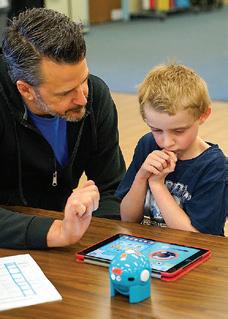

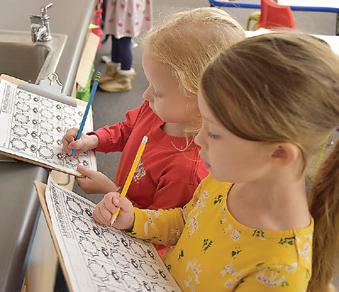
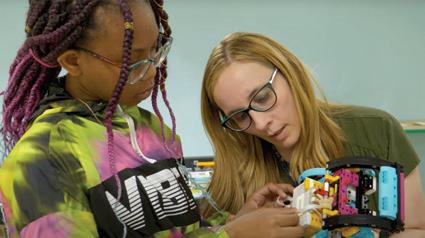
Non-Profit Organization US Postage PAID Pittsburgh PA Permit No 2516 475 East Waterfront Drive
PA
a llegheny i nterme D iate u nit aiu3.net | 412-394-5700 22-221-7-online
Homestead,
15120
