This concept package marks the beginning of a considered and collaborative design journey for your home at Bethells Beach.
Through early collaboration with Xanthe White Landscape Design, a series of five concept directions were explored and tested — each responding to the land, climate, and the way you wish to live. From this process, two clear and robust architectural responses emerged: The Trellis and The Bridge.
Rather than presenting a broader set of less resolved options, this package focuses on these two refined concepts to support a more meaningful and productive conversation.
Each concept has been developed in parallel with landscape thinking — where architecture and land are not separate layers, but part of a single, integrated response. These ideas are not final answers, but grounded starting points — designed to be tested, discussed, and evolved together.
To support this, interactive 3D models have also been provided, allowing you to move through each concept in your own time and begin to understand the spatial experience, scale, and connection to landscape.
PRINCIPAL DESIGNER
YOUR TEAM
PRINCIPAL DESIGNER
Alki Design is led by Charlotte Muschamp — architectural designer and founder, working at the intersection of people, place, and performance. Her work is grounded in a deep respect for landscape and a belief that architecture should not sit on the land, but belong to it.
With a focus on natural materials, passive design, and lowimpact construction, Charlotte’s approach brings together technical performance with a quieter, more intuitive way of
building — one that prioritises light, material honesty, and connection to environment. Projects are shaped not only by climate and site constraints, but by the rituals of daily life — how spaces feel in the morning, how they hold shelter from wind, how they open to sun, and how they age over time.
In coastal environments such as Bethells Beach, this approach becomes even more distilled — responding to exposure, salt, movement, and the ever-present relationship to the ocean.
The project explores the design of a primary family dwelling, with consideration for a future minor dwelling and the integration of landscape across the site. The intent is to create a home that supports both everyday living and extended family connection, while remaining grounded in the physical and environmental realities of Bethells Beach.
INFLUENCES
The design is shaped by a deep connection to the ocean, surf culture, and coastal living. There is a strong desire for simplicity, durability, and low-maintenance materials, alongside spaces that support both gathering and retreat — allowing the home to respond to changing seasons and rhythms of use. Central to the approach is the integration of architecture and landscape as a unified experience, rather than separate elements.
ESSENCE
At its core, the project seeks to create a home shaped by land and climate — robust, quiet, and connected. Spaces are designed to feel grounded and protective, while opening selectively to light, view, and air. The architecture supports a way of living that is informal and tactile — barefoot, weathered, and attuned to the rhythm of the coast.
4 Alki Architecture + Design Studio, Concept
Tracey + Nick Macrae
Te Henga Cabin
GOALS
GOAL №1
Design with the Land
To respond directly to the site’s slope, soil conditions, and coastal exposure — working with the land rather than against it.
GOAL №3
Create Shelter and Exposure in Balance
To provide protection from prevailing winds and coastal conditions, while allowing controlled openness to sun, views, and outdoor living.
GOAL №2
Integrate Architecture and Landscape
To develop a cohesive relationship between built form and landscape design, where both are considered together from the outset.
GOAL №4
Enable Flexible, Long-Term Living
To support family life over time — accommodating change, guests, and evolving patterns of living without compromising the core spatial clarity.
5 Alki Architecture + Design Studio, Concept Tracey + Nick Macrae Te Henga Cabin
SITE ANALYSIS
OVERVIEW
The site at 270 Bethells Road is shaped by a combination of environmental, climatic, and regulatory conditions that guide the design from the outset. Geotechnical investigation confirms the land is suitable for residential development, with sandy dune soils supporting both shallow and pile foundations. These soils are free-draining and stable, though sensitive to disturbance, requiring a light-touch approach to how the building meets the ground.
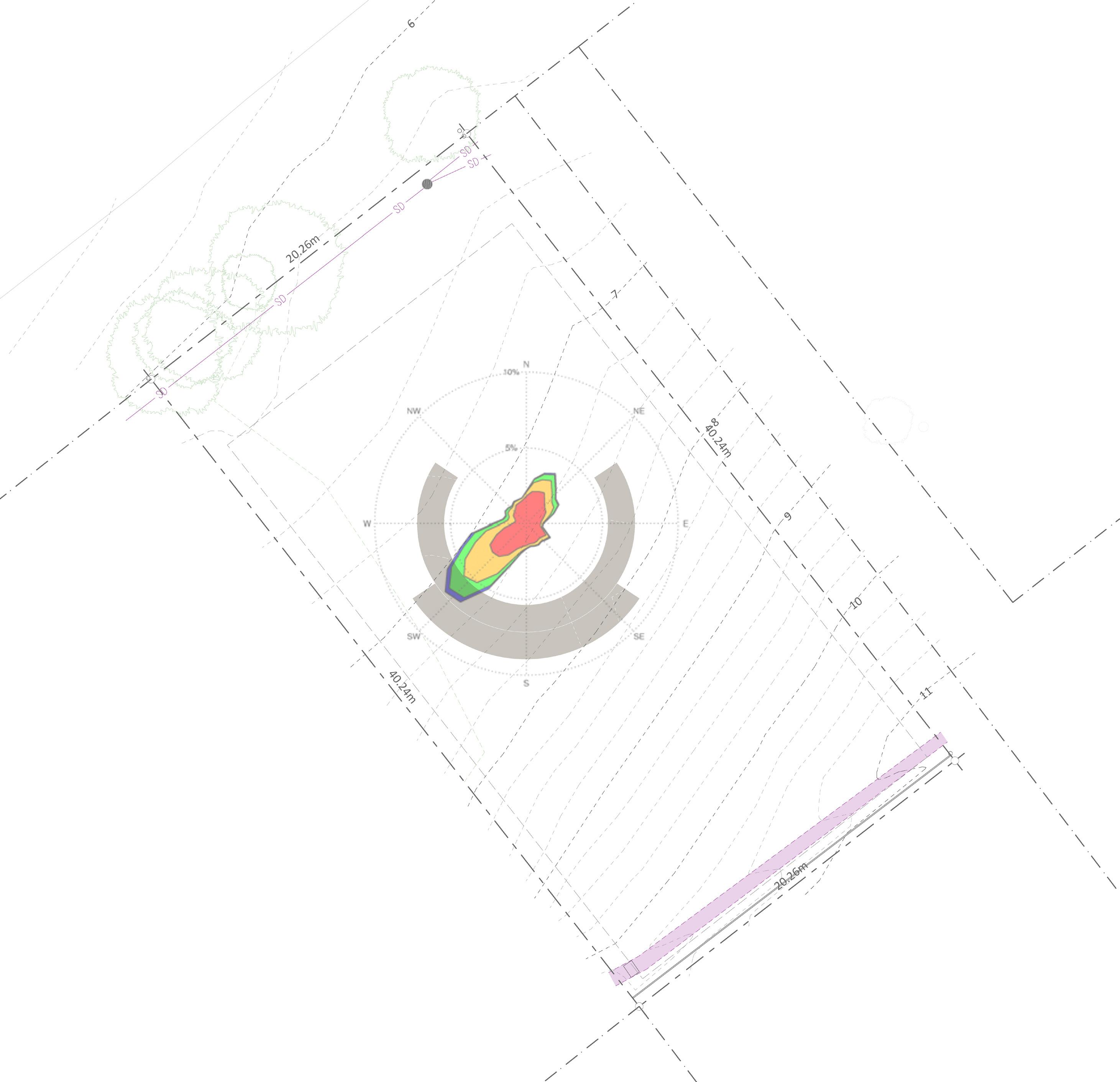
The site sits within a very high wind zone and exposure zone D, and is subject to strong coastal conditions including salt-laden air and prevailing south-westerly winds. These factors influence building form, material selection, and the need for sheltered outdoor spaces.
Wastewater is required to be managed on site through a secondary treatment system with a pressurecompensated drip irrigation dispersal field. This introduces defined setbacks and infrastructure zones that must be carefully integrated into the overall site strategy, and will require resource consent.
The property sits within the Residential – Rural and Coastal Settlement Zone, where development must respond to landscape character, infrastructure limitations, and environmental sensitivity. Together, these constraints establish a framework for a modest, wellsited building that integrates with the land rather than dominating it.
Te Henga, Waitākere
+ Coastal Settlement
6 Alki Architecture + Design Studio, Concept
Tracey + Nick Macrae
Te Henga Cabin
SITE ANALYSIS
CLIMATE + ENVIRONMENTAL CONDITIONS
The site is defined by its coastal exposure — where wind, salt air, and shifting light conditions shape how the land is experienced throughout the day and across seasons.
The ground slopes from the southern boundary down toward the northwest, transitioning from a moderate gradient to a more gentle fall. This creates opportunity for subtle level changes, sheltered outdoor spaces, and controlled relationships to sun and wind.
North-facing orientation allows for strong solar access, while prevailing south-westerly winds reinforce the need for shelter, layering, and careful positioning of openings and outdoor areas. Outdoor living is best understood not as a single open space, but as a series of protected zones that respond to changing conditions.
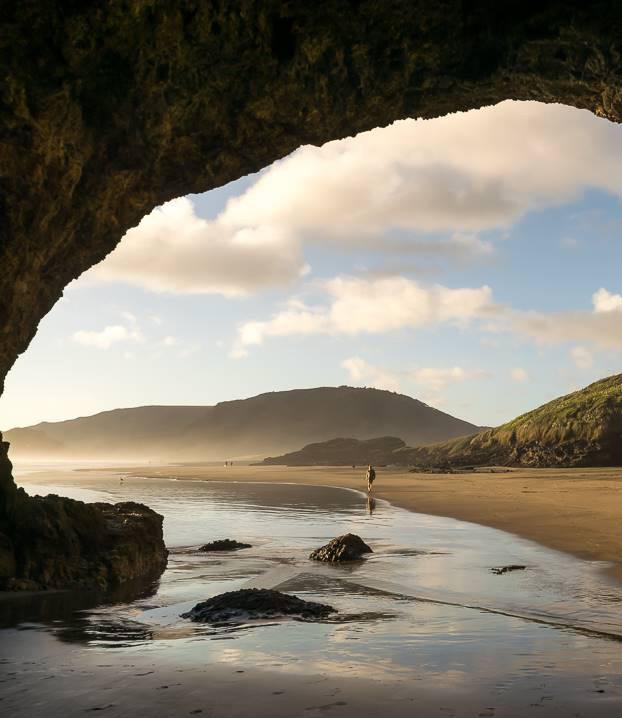
The site holds two key outlooks. To the northeast, views extend above the tree line toward the estuary, following the Waitākere River inland through the valley. To the northwest, the land opens across the reserve toward Te Henga Hill beyond. These longer views are balanced by a more immediate sense of place — with Bethells Beach and the local café just beyond the dunes to the west. While not directly visible, their presence is felt, reinforcing the site’s connection to the wider coastal landscape.
The sandy ground conditions allow for effective drainage and reinforce a building approach that sits lightly on the land. Combined with the coastal environment, this favours durable, low-maintenance materials and a restrained architectural response that can weather and age over time.
CLIENT PROFILE / TRACEY + NICK MACRAE
Tracey and Nick, along with their family, share a deep connection to the ocean and the rhythms of coastal life.
Their brief reflects a desire for a home that supports surf, movement, gathering, and retreat — a place that feels both grounded and open, shaped by nature rather than imposed upon it.
At its core, this project is about creating a home that is intentional, enduring, and quietly connected — to each other, and to the landscape it sits within.
8 Alki Architecture + Design Studio, Concept
Tracey + Nick Macrae
Te Henga Cabin
The Trellis
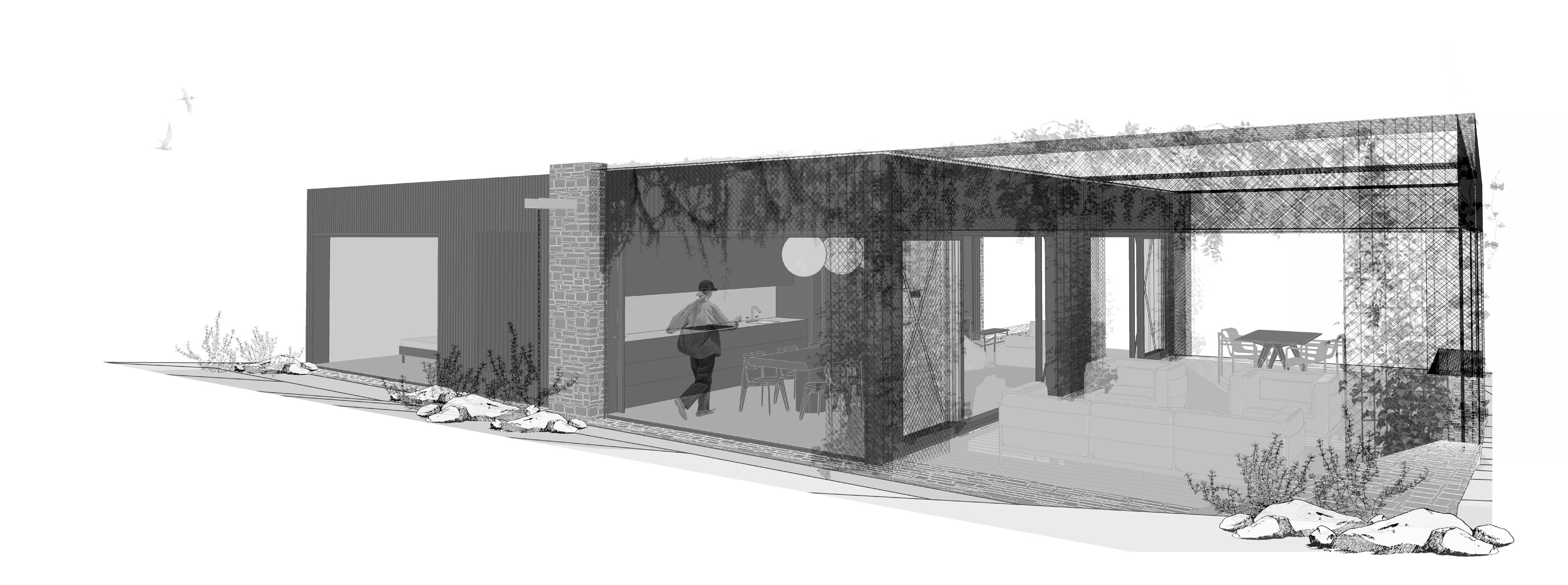
The Trellis is conceived as a building that dissolves into the landscape — softening the boundary between what is built and what is grown. Rather than sitting as an object on the site, the architecture is layered, allowing vegetation, structure, and space to overlap and merge over time.
This approach creates a gradient of occupation — from fully exposed to fully enclosed — allowing moments of engagement and retreat to coexist. The home supports
both ways of being: immersed in the rawness of the coastal landscape, or withdrawn into the comfort and refinement of shelter.
Orientation is anchored to the north-east, capturing solar gain and long views up the Waitākere River valley, while minimising exposure to the harsher western sun. The result is a home that opens deliberately, rather than indiscriminately — shaping light, view, and experience with restraint.
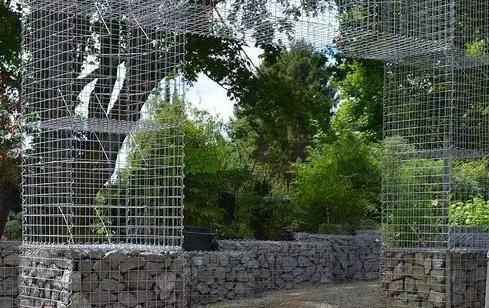
gabion basket features
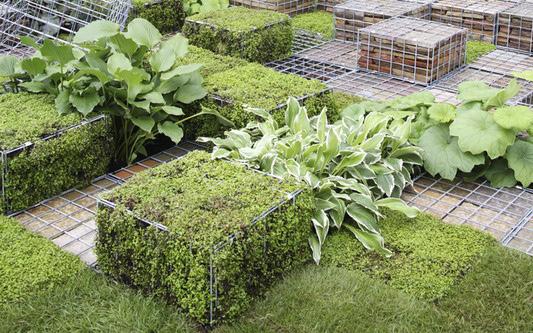
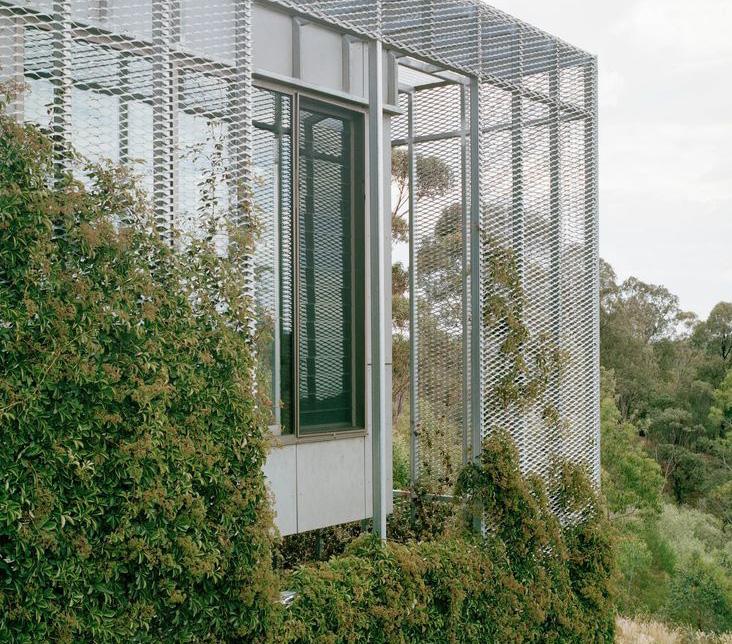
mesh trellis to accomodate architectural garden
INSPIRATION
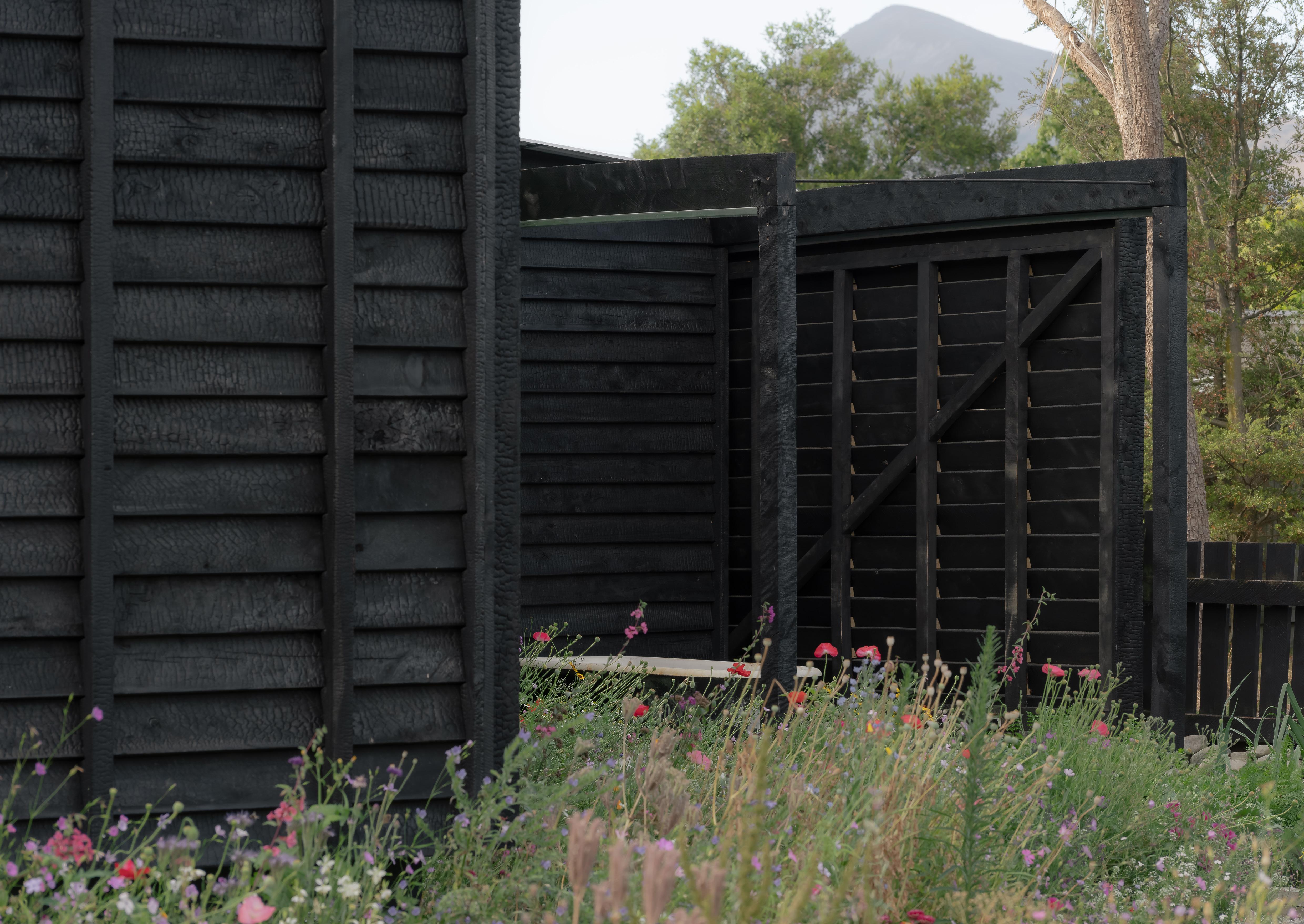
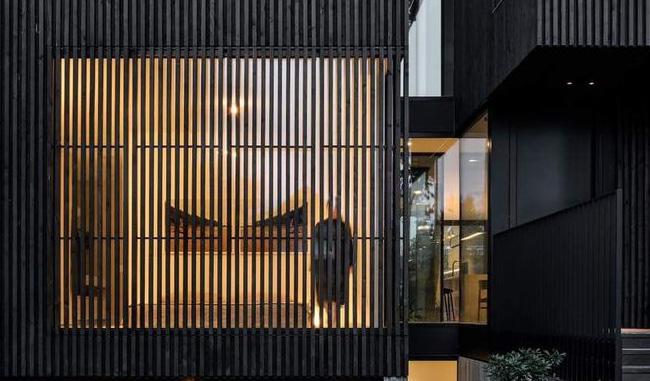
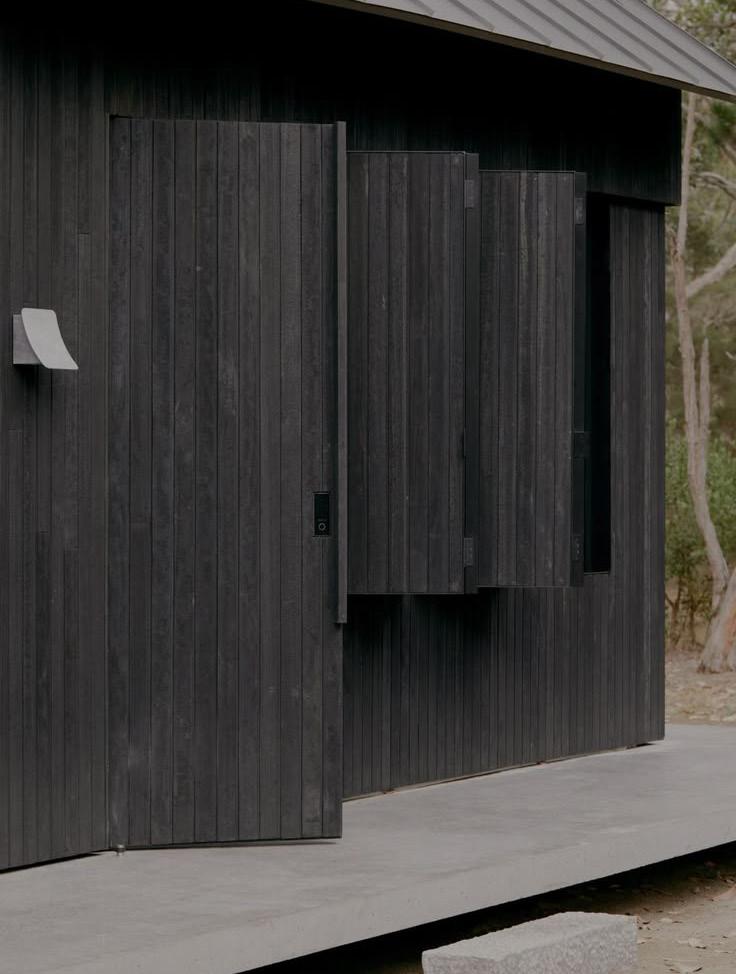
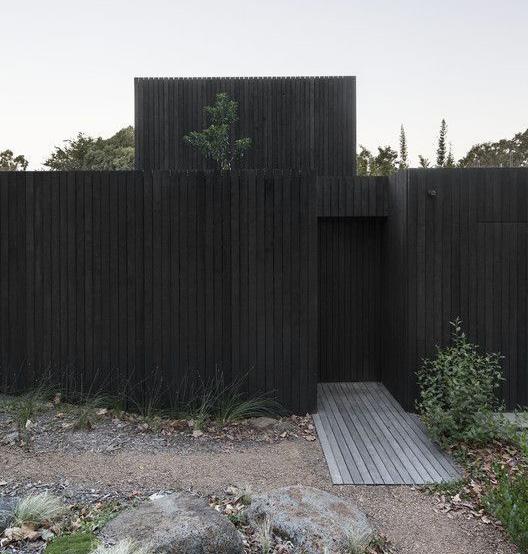
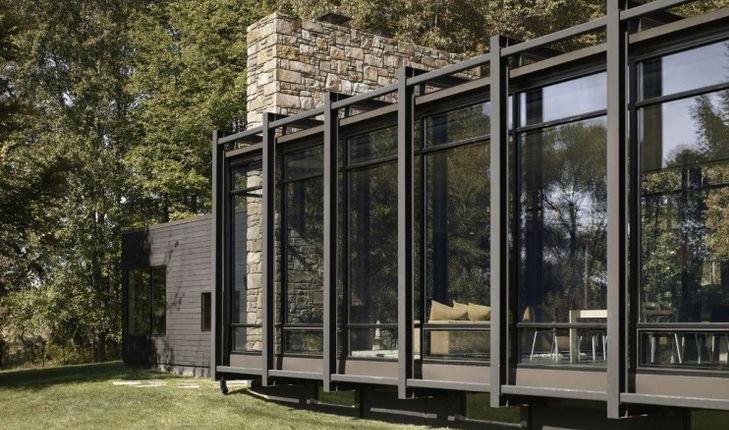
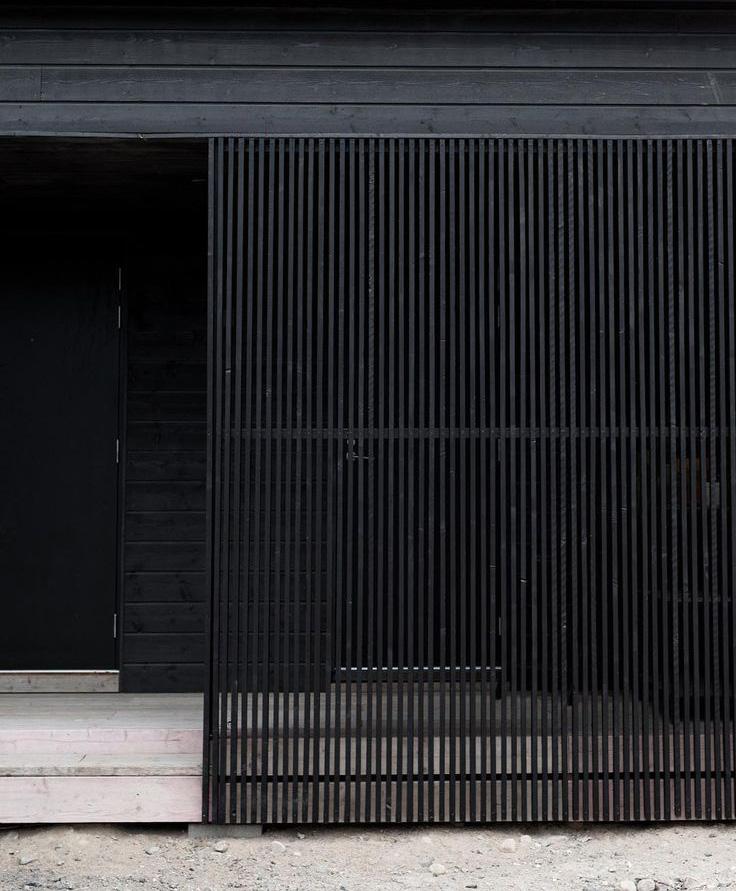
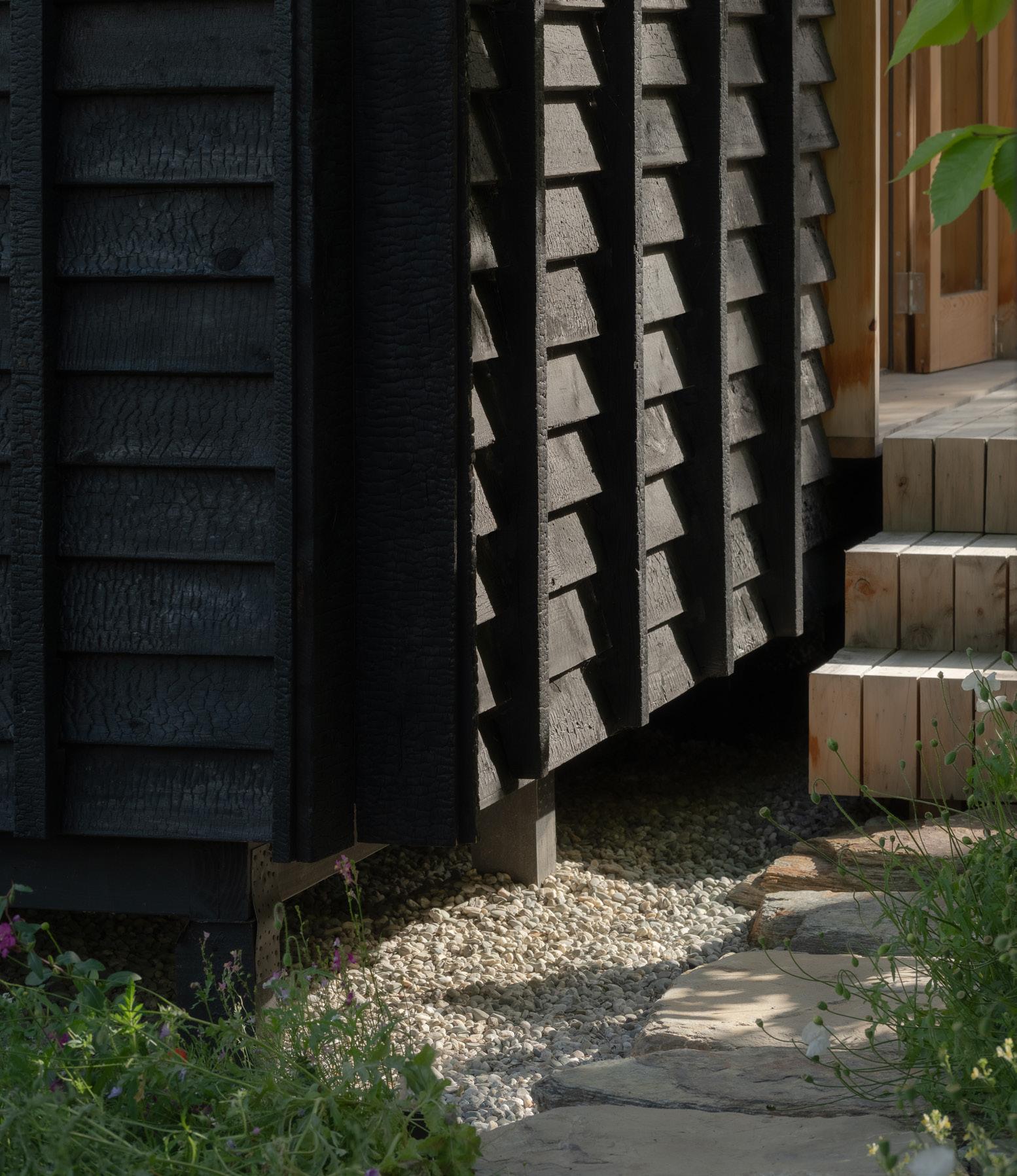
A lightweight metal mesh trellis forms the outermost layer — an exoskeleton that supports climbing vegetation and allows the building to slowly merge with its surroundings. Behind this, charred yakisugi timber provides durability and depth, responding to the coastal climate with minimal maintenance.
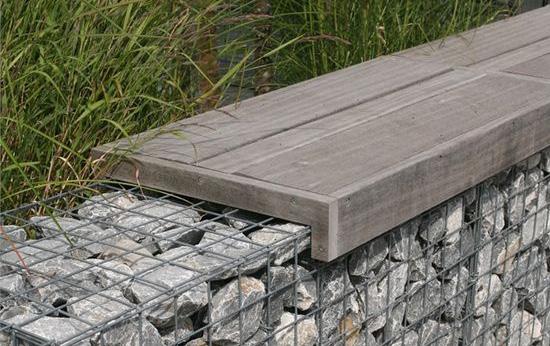
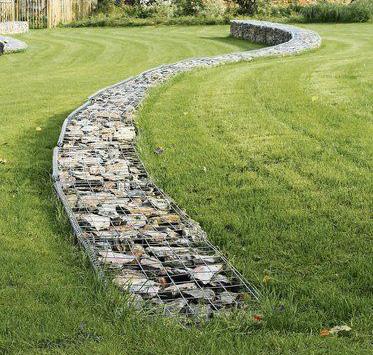
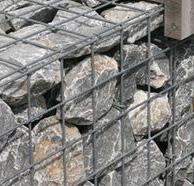
Gabion baskets anchor the building to the ground, introducing weight and texture at the base. Together, these elements create a balance between heaviness and lightness — between anchoring and dissolving — reinforcing the conceptual relationship between architecture and landscape.
cladding + openings
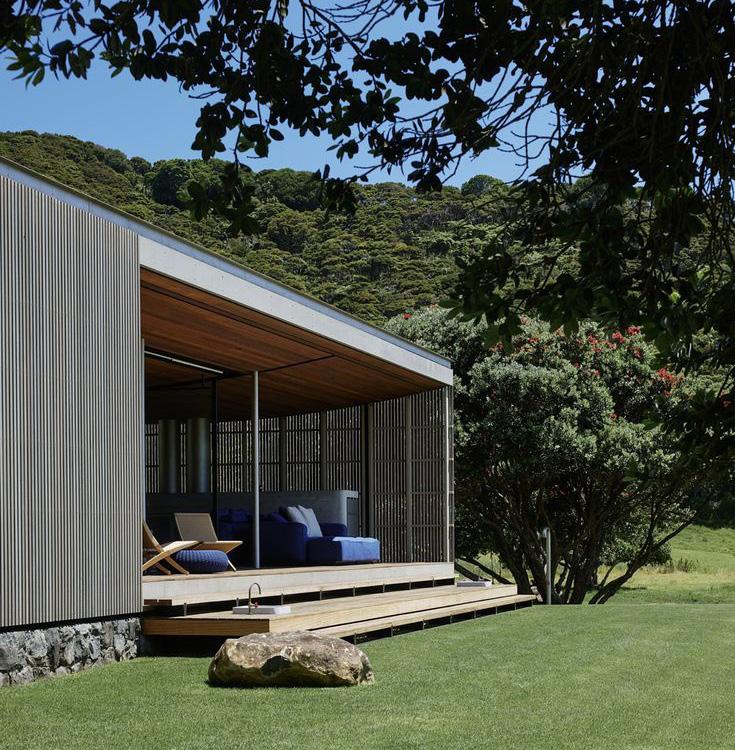
Herbst Architects 'Omata Beach House'
Yakisugi
Macrae
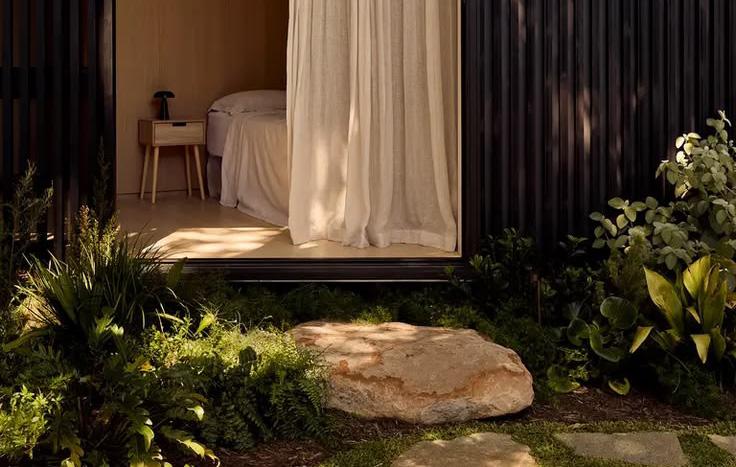
landscaping bleeding into master suite +
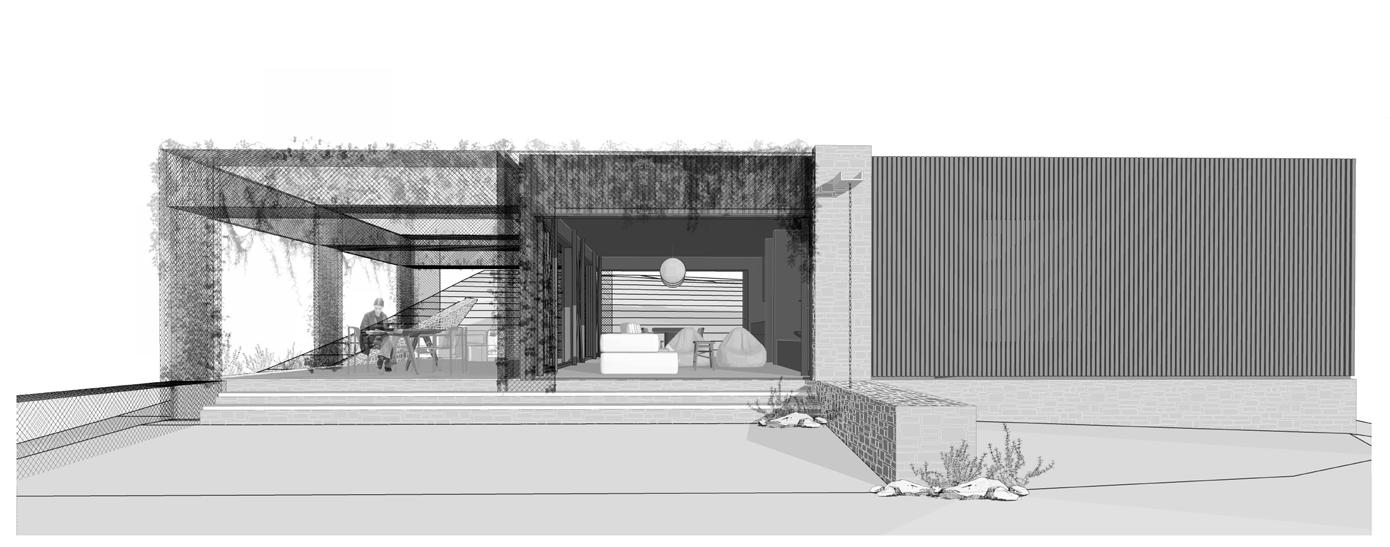
The northern edge of the site becomes the primary zone of occupation, where architecture and landscape are most closely intertwined.
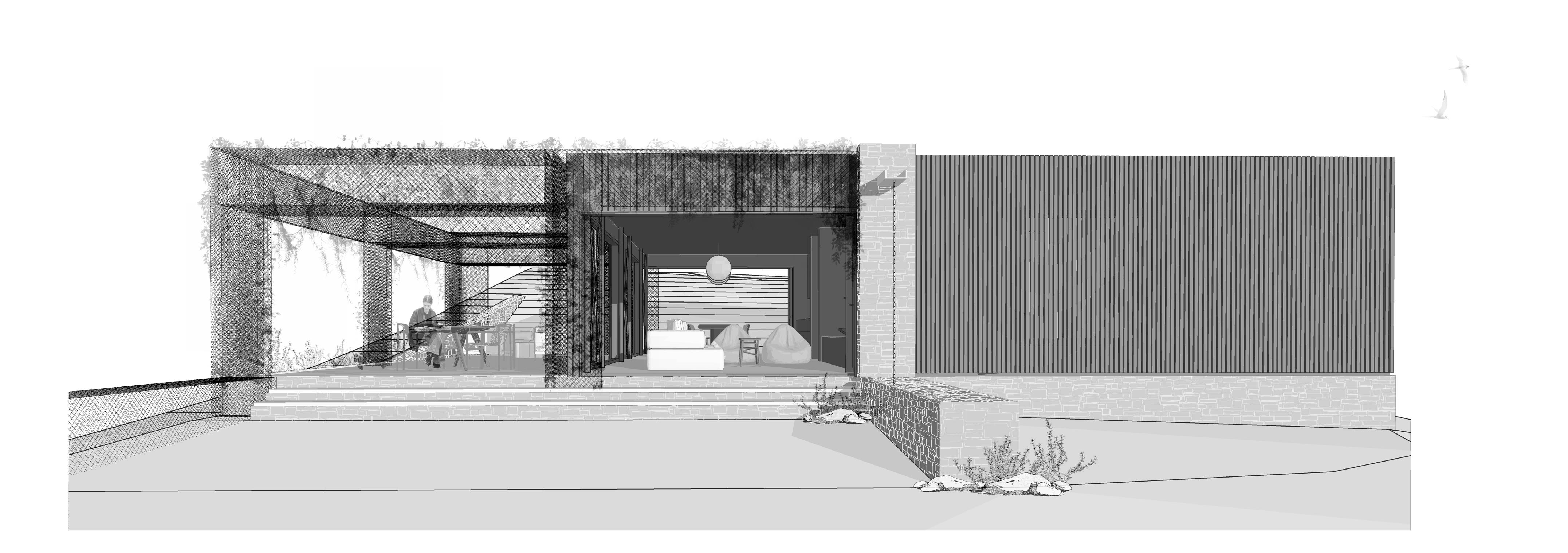
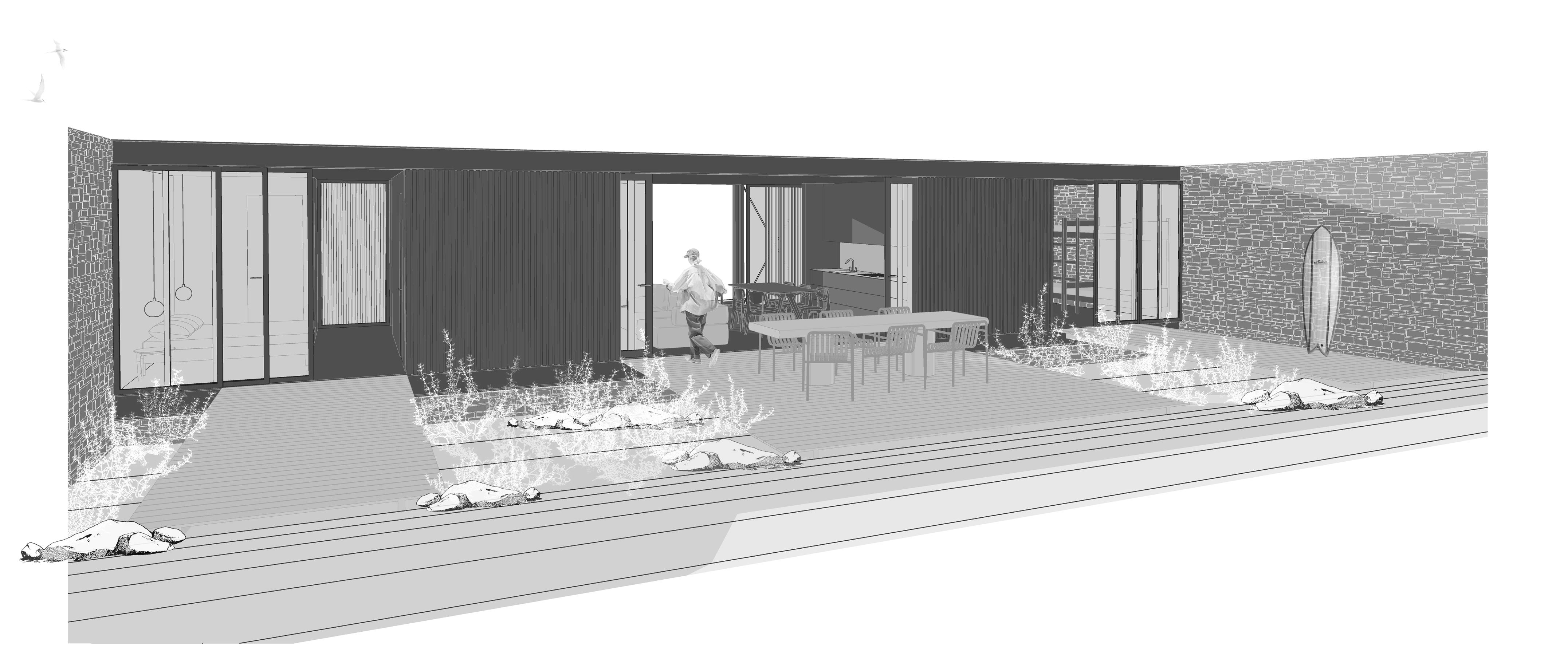
Here, the trellis extends outward to form a semi-covered outdoor room — a space that sits between house and landscape. This threshold is neither fully inside nor outside, allowing daily life to shift fluidly with weather, season, and use.
Landscape moves developed in collaboration with Xanthe White reinforce this condition — softening edges, layering planting, and embedding the architecture within a living framework. The result is not a defined “backyard,” but a series of outdoor rooms that extend the home into the valley beyond.
The Trellis
CONCEPT ONE
FLOOR PLAN
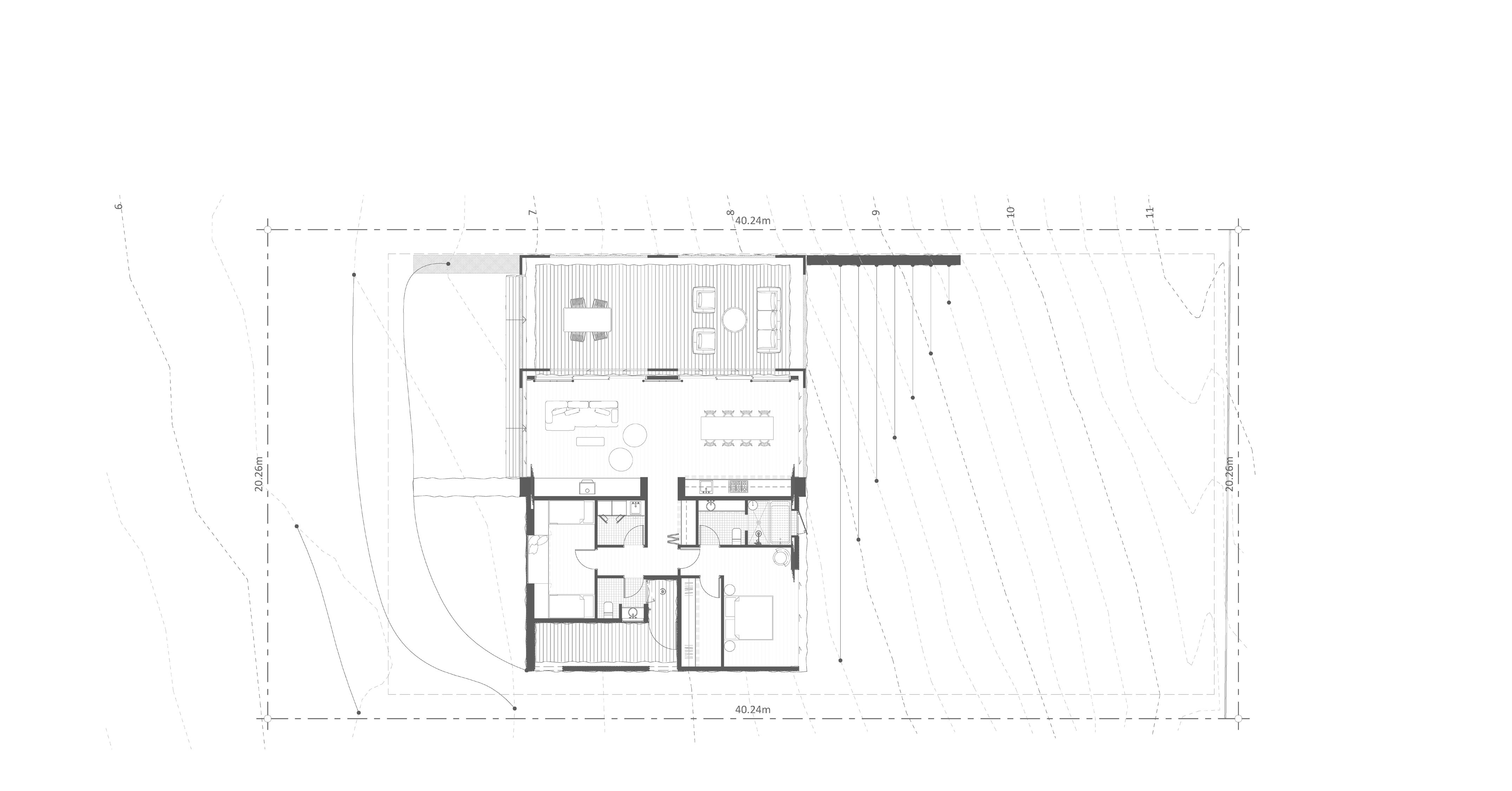
The plan is organised into three linear layers running east–west, each with a distinct level of exposure and use.The northern layer is the trellis — a permeable outdoor living zone aligned with sun, view, and landscape. This space extends the footprint of the home and establishes the primary interface with the site.
The central layer contains the kitchen and living spaces — forming the core of the home. This zone operates as a hybrid condition, able to fully open to the trellis or close down for shelter. When open, the boundary dissolves and the living space expands outward; when closed, it becomes a place of retreat and observation.
The southern layer houses the more private and service-oriented spaces — bedrooms, bathrooms, laundry, and bunk areas. These spaces are more enclosed and protected, forming a buffer to the prevailing winds while maintaining selective connections to the landscape.
The roof is expressed as a low-sloped, continuous plane, with a simple parapet form that reinforces a restrained, grounded geometry. It binds the three spatial layers together, allowing the plan beneath to read clearly while minimising overall visual impact.
A defined splice between the central living zone and the more enclosed southern layer marks the shift from open, hybrid living to full retreat. This is expressed through a vertical gabion basket wedge that extends to the roofline, anchoring the building and creating a clear spatial break.
A scupper is integrated into this element, directing rainwater through the gabion to form a controlled waterfall — introducing a moment of movement and texture where water, stone, and light intersect.
1. low slope roof
2. slatted timber roof
3. outdoor trellis area 4. waterfall scupper feature
board + outdoor gear storage above slatted decking 'a drop + rinse zone'
built-in furniture
INSPIRATION
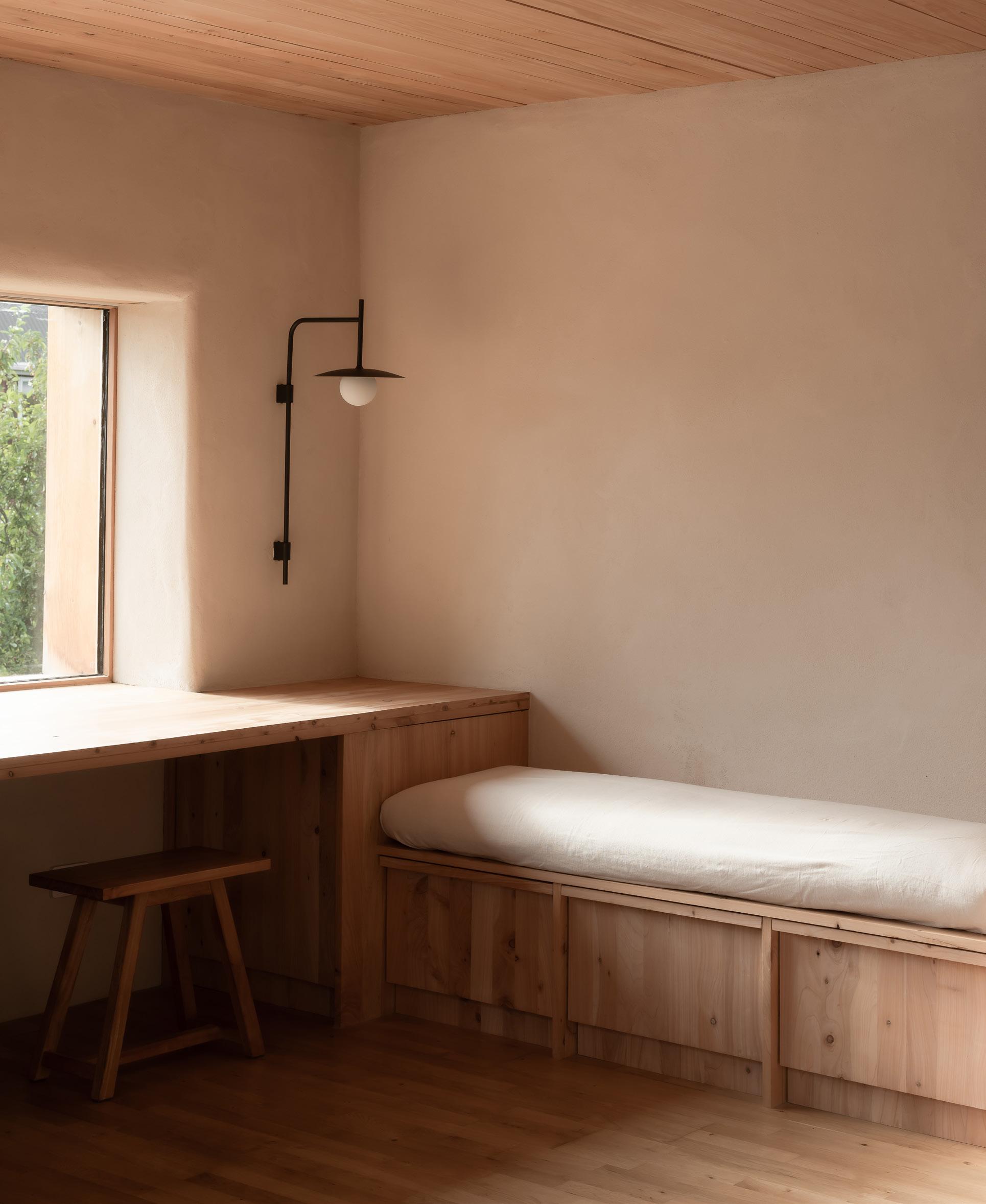
The interior is conceived as warm, tactile, and grounded — a counterpoint to the rawness of the coastal environment.
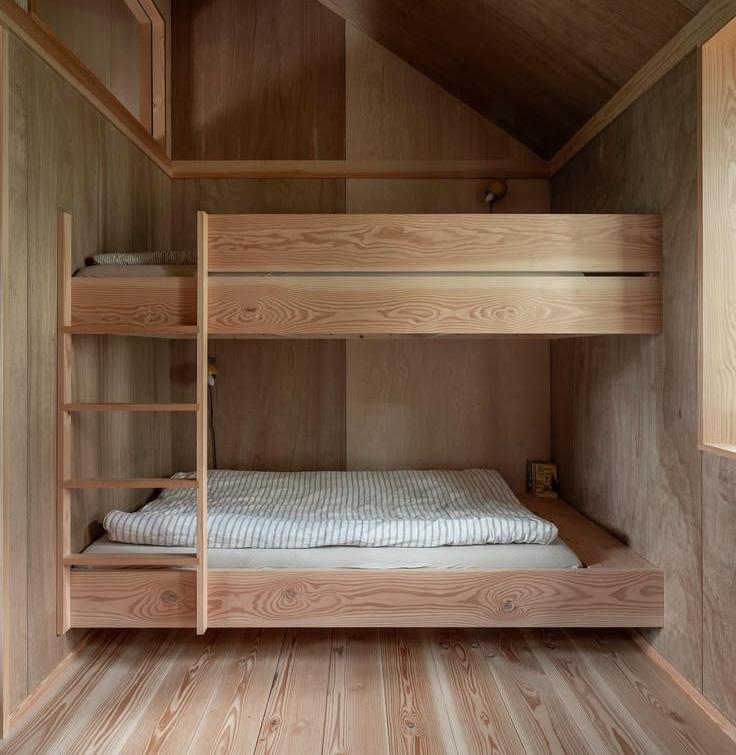
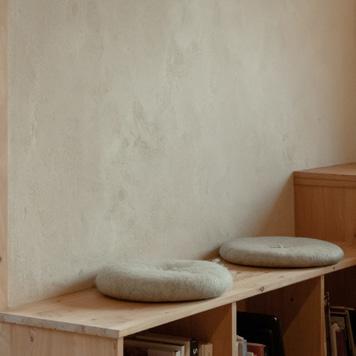
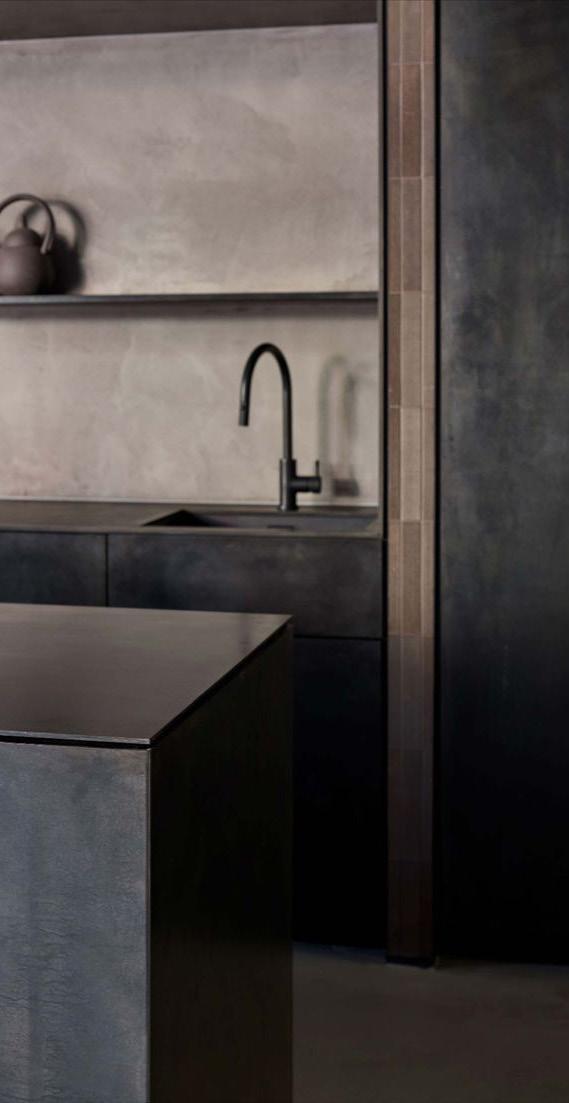
Materials are natural and restrained, with timber, lime plaster, and soft finishes creating a calm and durable backdrop. Builtin furniture and joinery reduce clutter and reinforce a sense of permanence and simplicity.
Spaces are designed to feel both informal and refined — supporting the rituals of coastal living while allowing moments of comfort and retreat. Fireplaces, window seats, and integrated bunks create places to gather, rest, and observe, reinforcing the home as both shelter and refuge.
interior palette (with lime plaster)
stone steps bleeding into landscape
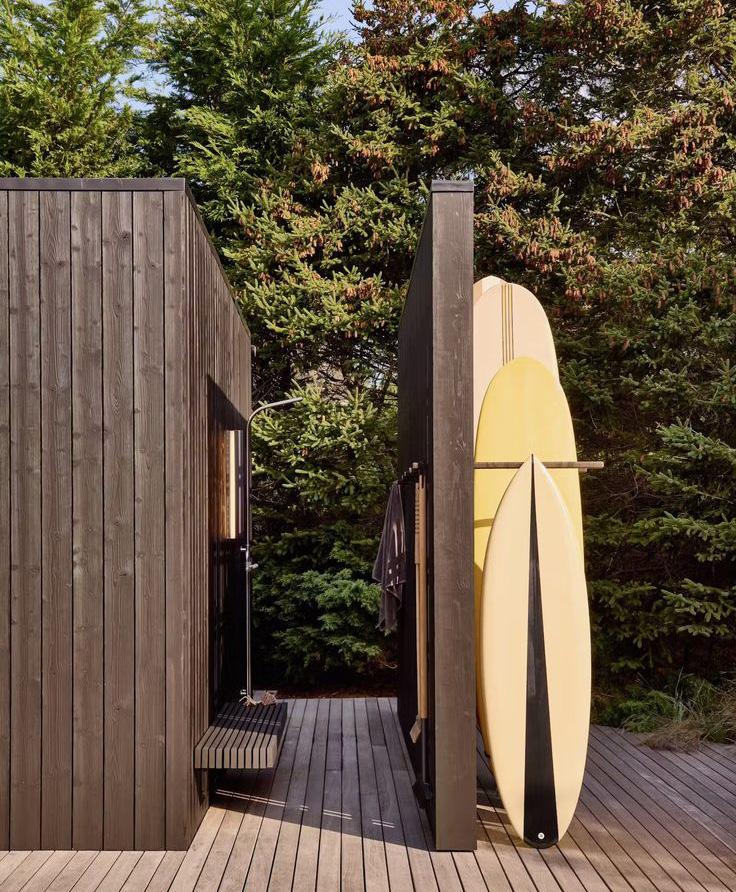
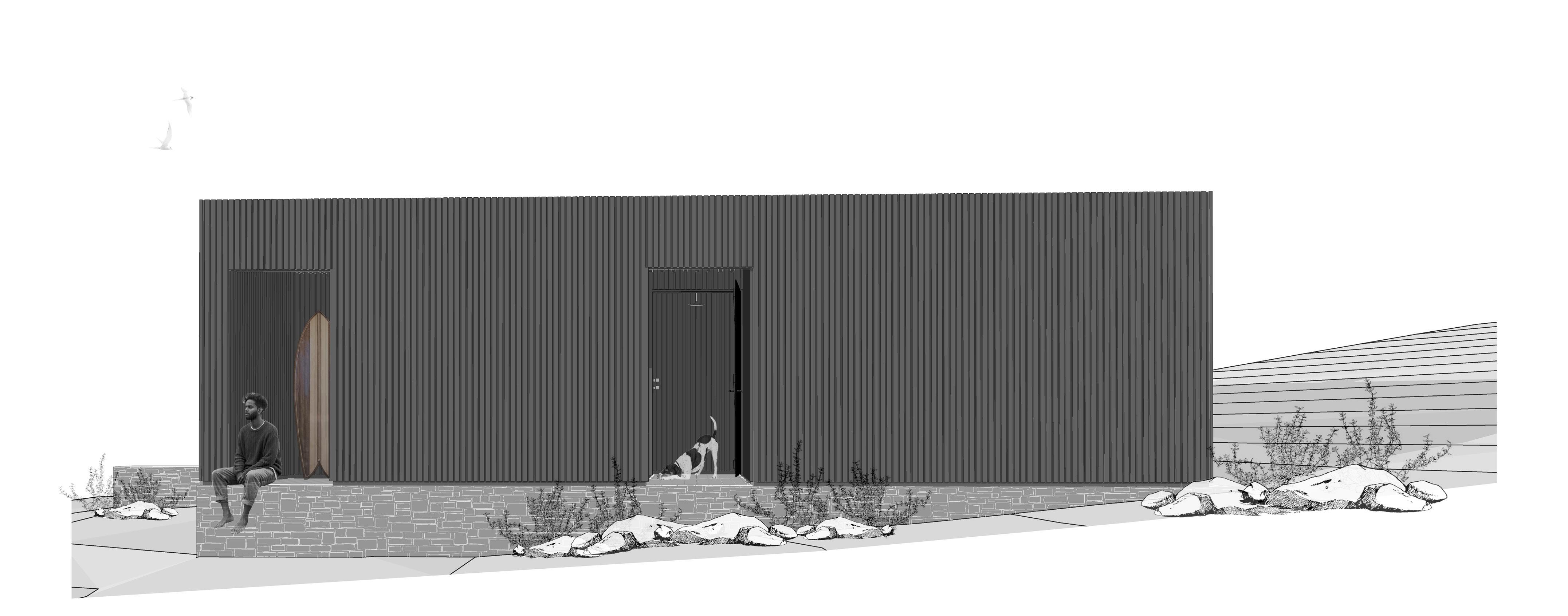
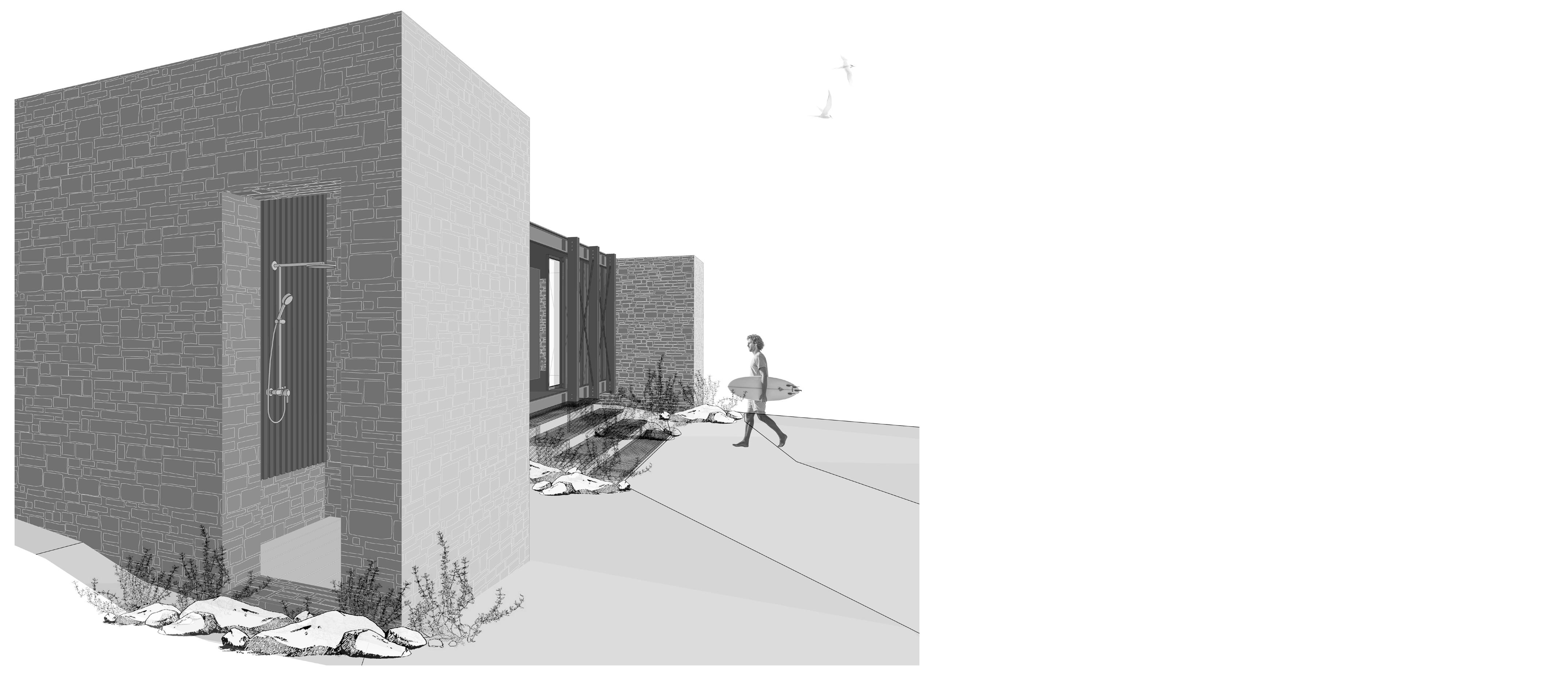
The western edge of the building accommodates the more utilitarian aspects of coastal life — outdoor showering, surfboard storage, and transition spaces between beach and home.
These functions are integrated into the architecture rather than treated as add-ons, allowing the building to support the realities of sand, salt, and movement. Circulation from exterior to interior is direct and practical, with a clear sequence from
outdoor shower to indoor shower and through to the laundry — allowing sand, salt, and wet gear to be contained and managed before entering the main living spaces.
This edge reflects the more rugged side of the home — where function, durability, and exposure are embraced, supporting a way of living that is active, informal, and deeply connected to the ocean.
The Trellis, Fin.
Break
The Bridge.
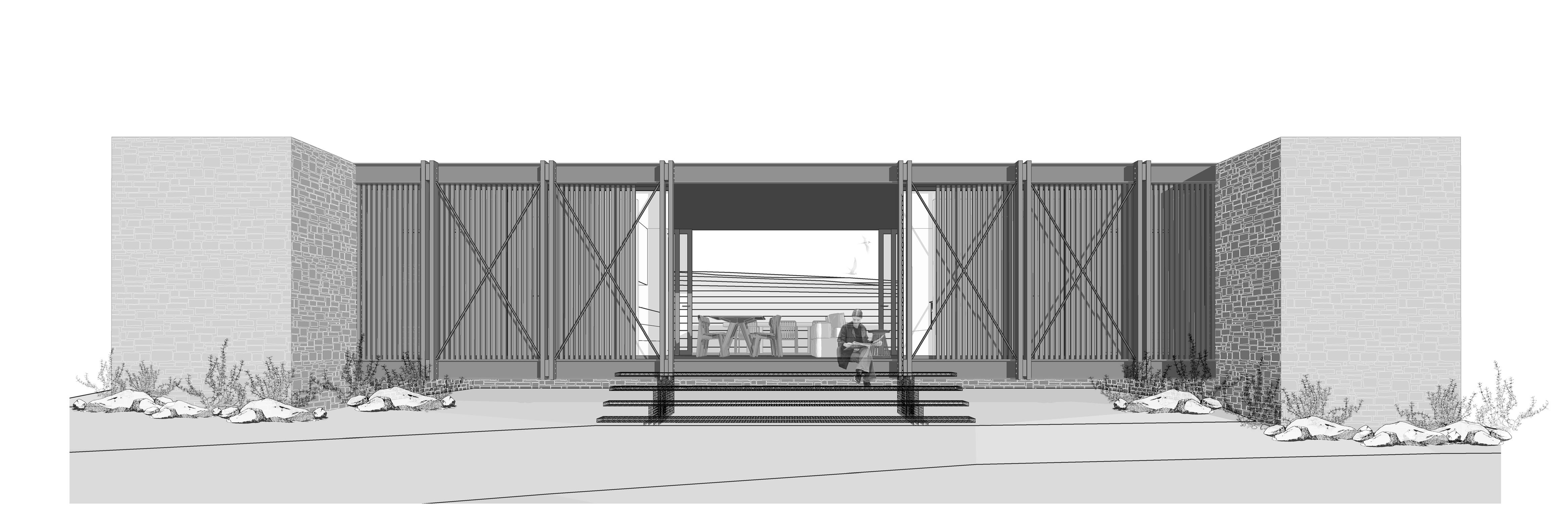
The Bridge is defined by a strong central axis — a clear line of movement that connects street to landscape, passing directly through the heart of the home.
This axis becomes both circulation and structure, organising the plan and anchoring the building between two grounded stone elements. The primary living spaces sit elevated along this spine, forming a suspended volume that bridges between the public edge of the street and the more intimate landscape beyond.
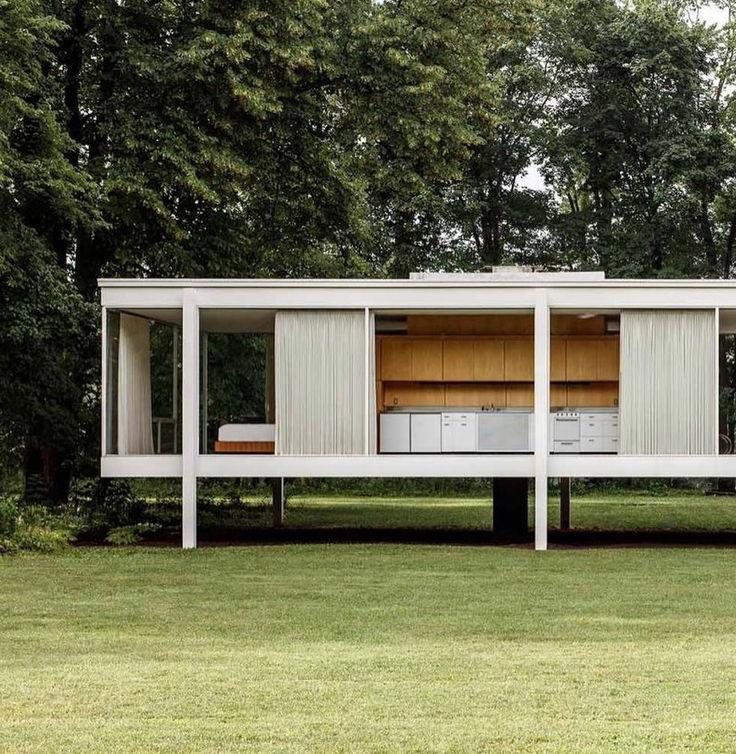
Rather than dissolving into the land, this concept takes a more deliberate stance — creating a point of observation. The home sits slightly lifted, allowing it to engage with the wider landscape while maintaining a clear architectural presence, creating a sense of lightness — as if suspended between two landscapes.
gabion basket landscape walls tapering into landscape
INSPIRATION
Material expression is defined by contrast between weight and lightness.
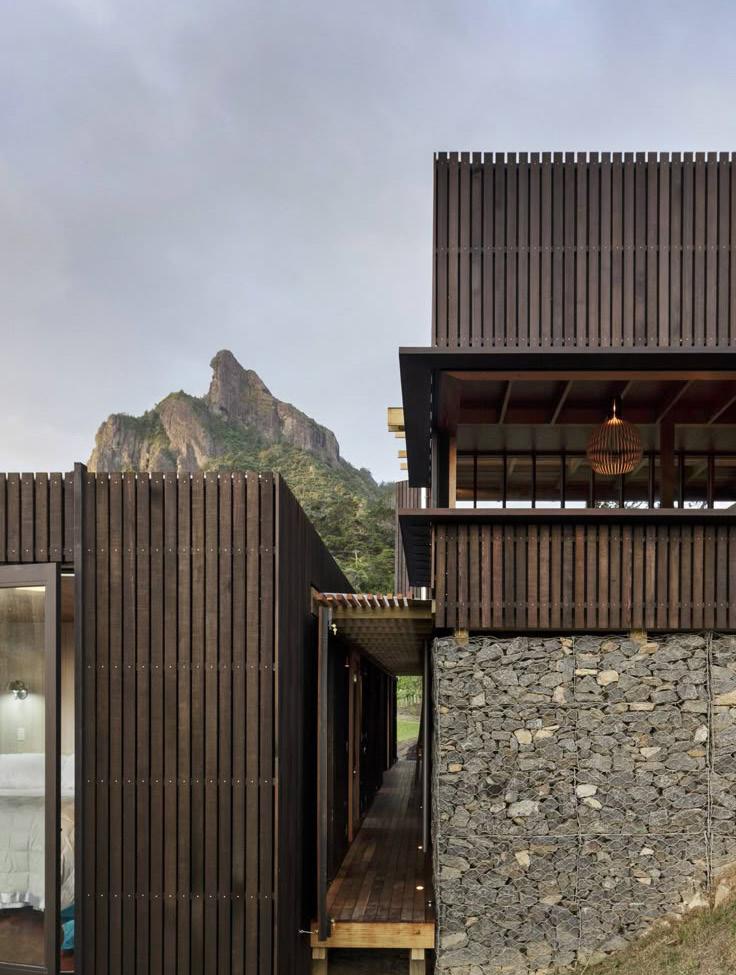
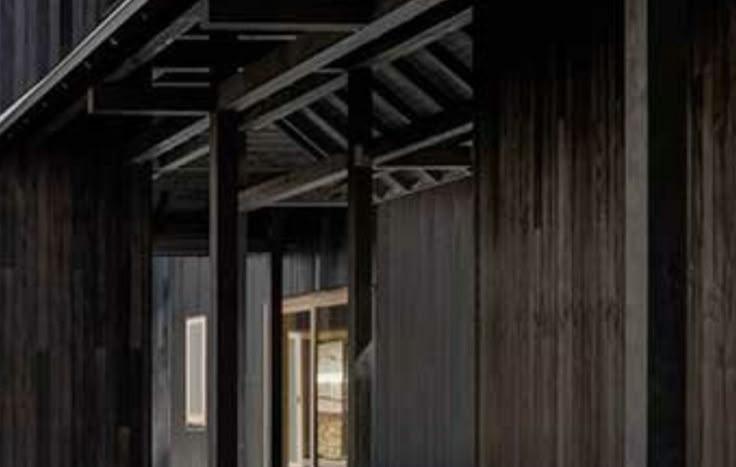
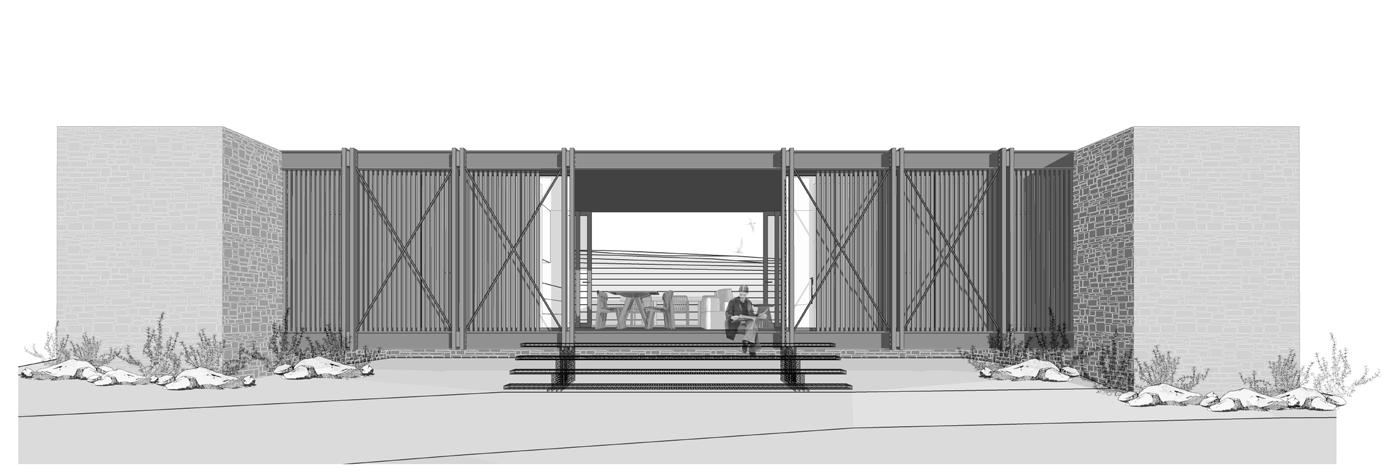
Gabion stone anchors ground the building at either end, embedding it into the site and providing a sense of permanence. Between these, the central volume is expressed as a lighter, elevated structure — clad in yakisugi timber and articulated through a clear structural rhythm.
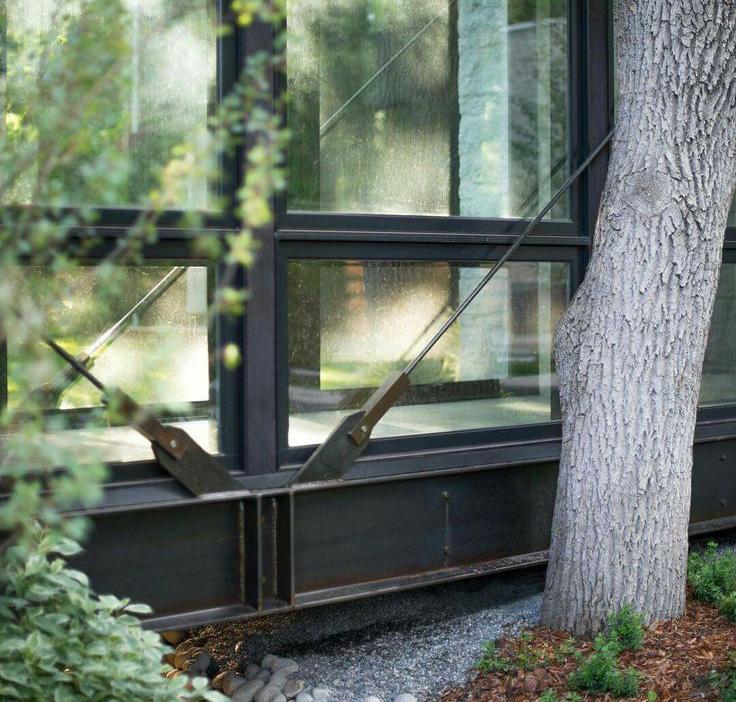
Exposed framing and bracing reference a tectonic language, where structure is visible and celebrated. This creates an exoskeletal quality — reinforcing the idea of the home as a spanning element between two anchored conditions.
timber screens above stone gabin baskets
Mies Van der Rohe's 'Farnsworth House'
charred timber rainscreen
stone 'anchor' either side of bridge floating bridge core with expressed bracing + structure 18 Alki
Macrae
gabion basket wall tapering into hillside
The Bridge.
To the south, the building opens to a more intimate, layered landscape.
Floating decks extend from the central living space, sitting lightly above planted ground and transitioning into the rising hillside. The gabion anchors begin to dissolve into this terrain — reducing in scale and blending into the landscape, allowing planting to take over.
This creates a deliberate contrast across the site. The streetfacing edge reads as controlled and defined, while the rear becomes softer, more immersive, and landscape-led. Here, Xanthe’s work becomes dominant — shaping a garden that feels enclosed, rich, and deeply connected to the home.
CONCEPT TWO
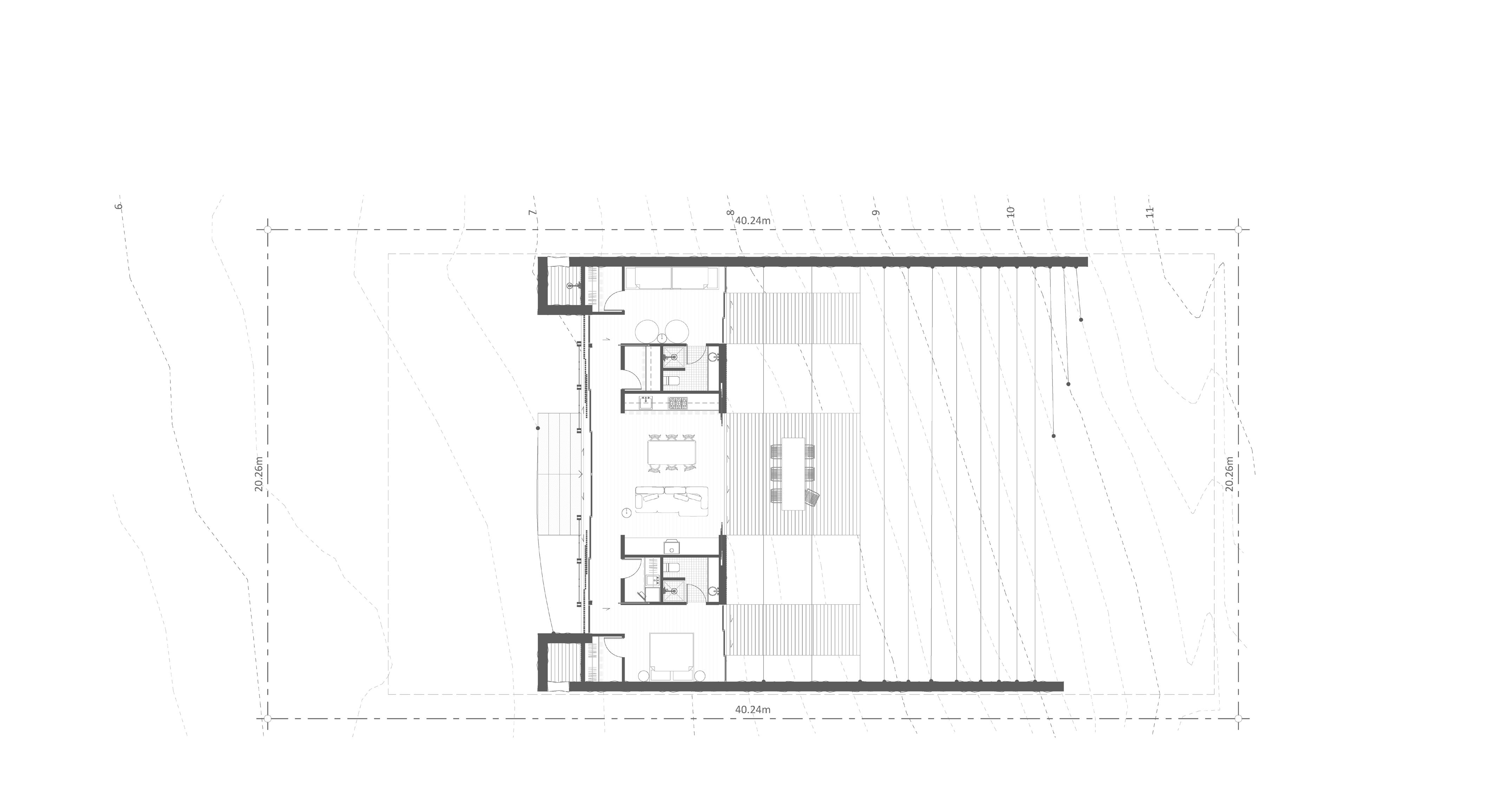
FLOOR PLAN
The plan is organised symmetrically around a central axis, with the primary living space occupying the core of the home.
Kitchen, dining, and living sit within this elevated central volume, opening to both north and south. Sliding doors on either side allow
the space to fully engage with its surroundings — creating a sense of being suspended between two landscapes.
To the east and west, private and service spaces form balanced wings. The eastern side houses the bunkroom, bathroom, and scullery, capturing morning light, while the western side accommodates the master suite, ensuite,
walk-in robe, and laundry for a more relaxed evening occupation.
Circulation is direct, with minimal hallway space and the ability to open or close bedrooms as required. All spaces maintain a connection to the outdoors, reinforcing the relationship between interior life and landscape.
tapered landscape wall
tapered landscape wall
Macrae
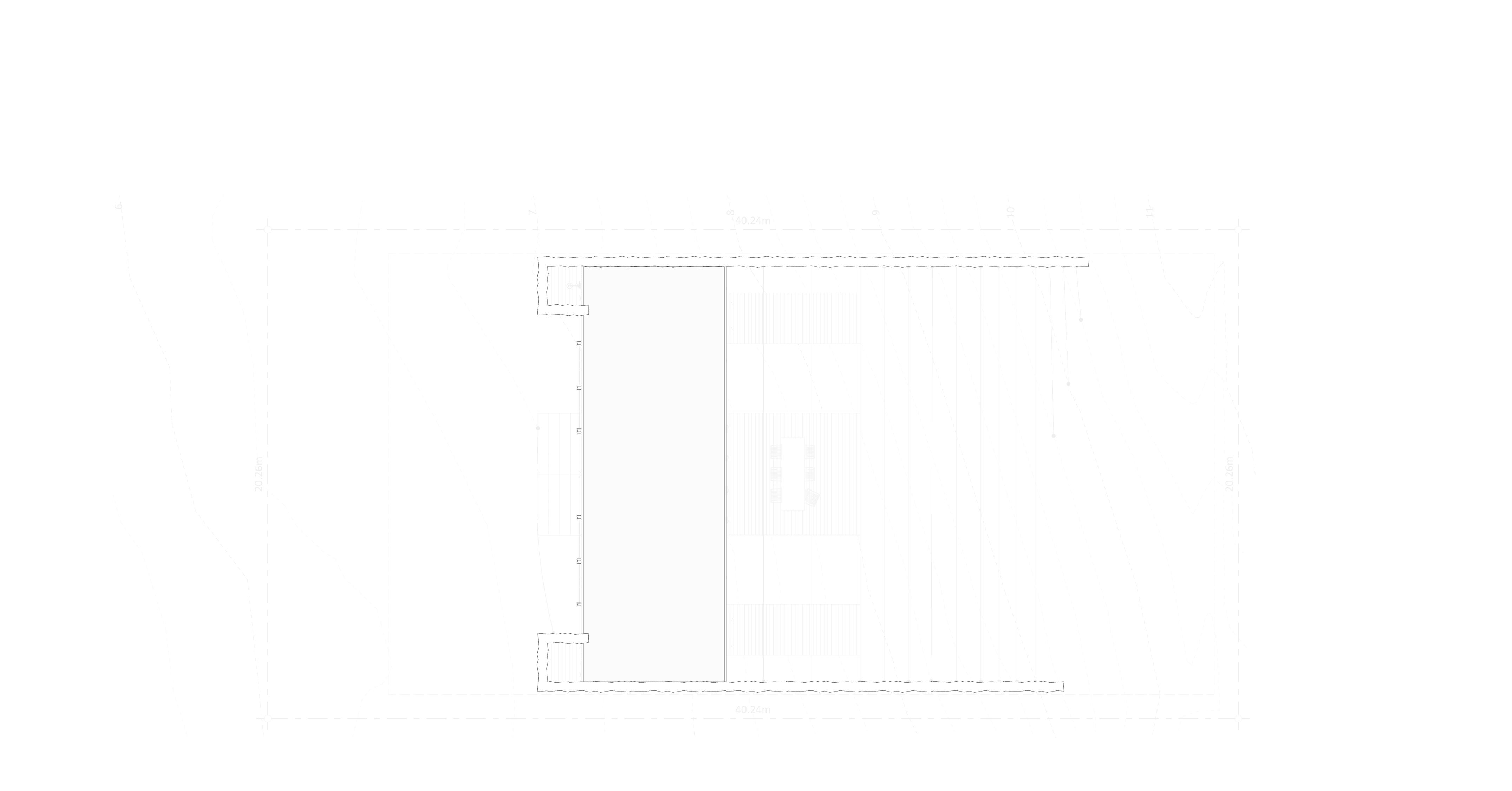
CONCEPT TWO ROOF PLAN
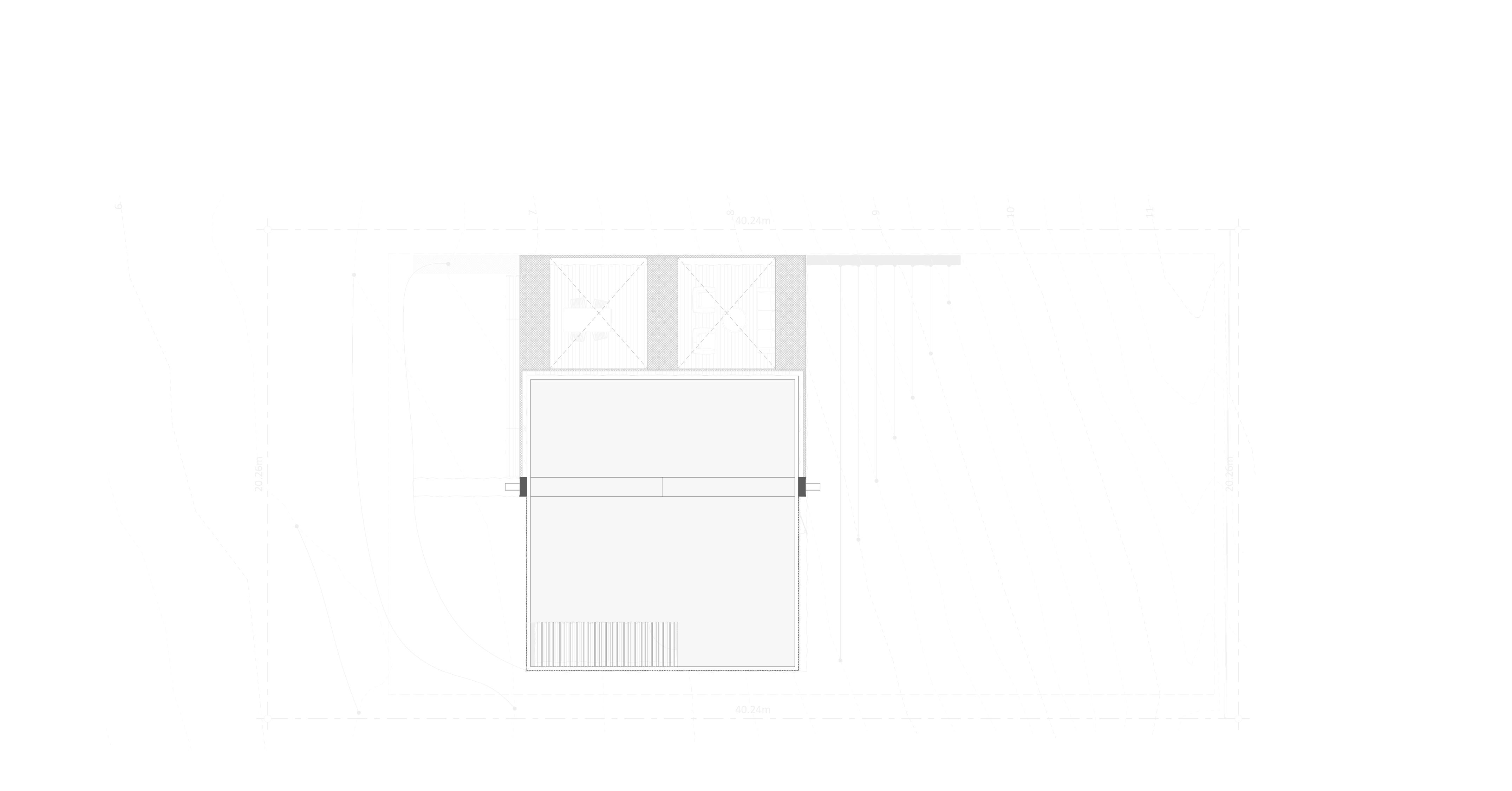
The roof is expressed as a simple, flat plane, reinforcing the clarity of the central axis and the overall geometry of the building.
Its restrained form allows the structure beneath to be legible — with the elevated living volume reading clearly between the two anchored elements. The simplicity of the roof supports the architectural intent, allowing proportion, structure, and landscape relationships to remain the primary focus.
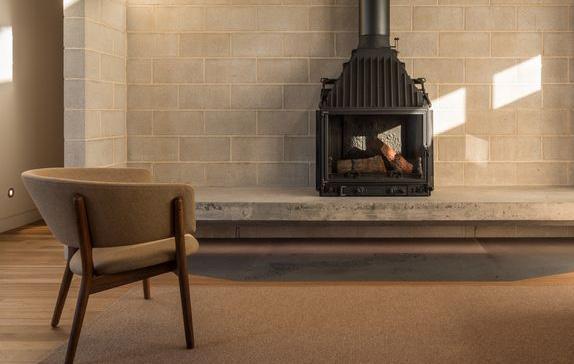
The interior continues the contrast between structure and landscape.
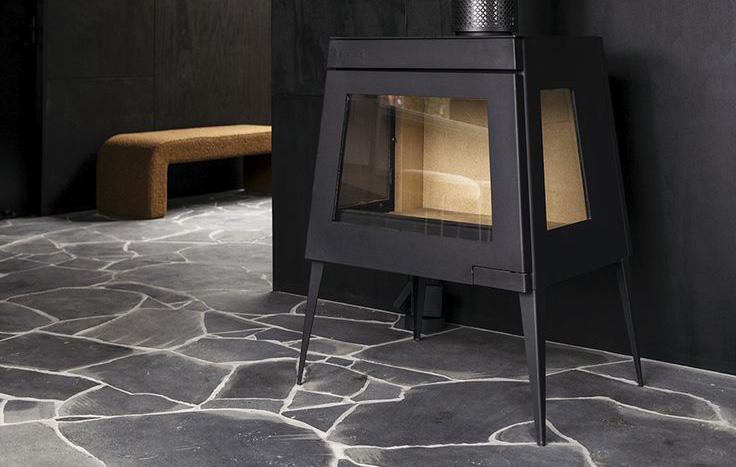
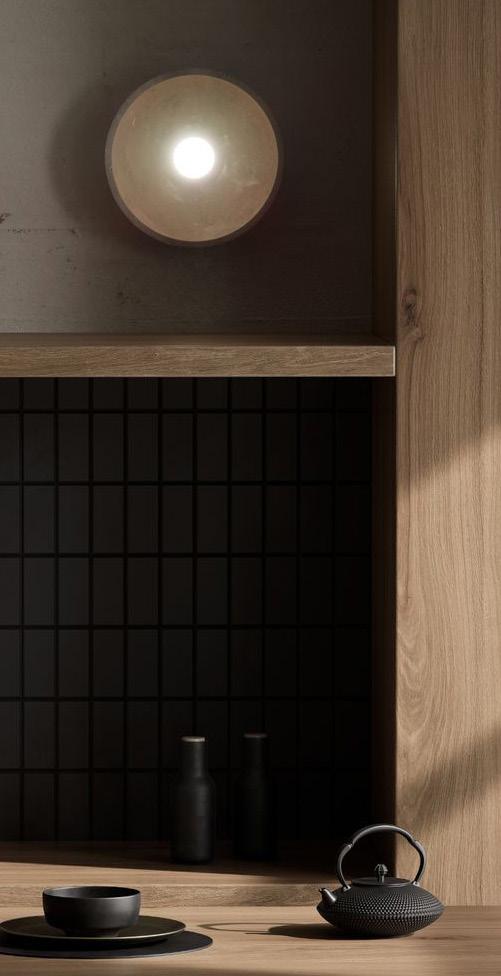
Materials are restrained and tactile — lime plaster, dark timber, and stone elements creating a grounded and durable palette. Gabion walls extend into the interior, blurring the boundary between inside and outside and reinforcing the continuity of material.
The central living space is open and expansive, while the surrounding rooms offer moments of enclosure and retreat. A fireplace anchors the core, providing warmth and a point of gathering within the otherwise open plan.
interior palette (with lime plaster + gabion stone features)
The Bridge, Fin.
The anchored elements at either end of the building house the more utilitarian aspects of coastal life.
Outdoor showering, surfboard storage, and gear handling are integrated into these stone volumes, allowing sand, salt, and movement to be managed at the edges of the home. This keeps the central living space elevated and clean, while still maintaining direct and practical access from exterior to interior.
Operable shutters along the main façade provide an additional layer of control — allowing the home to open fully, screen for privacy, or close down entirely when unoccupied. This flexibility supports both everyday living and the rhythms of a coastal retreat.
shower screened off within 'anchors'
Break
CONCEPT COMPARISON
Both The Trellis and The Bridge offer strong and considered responses to the site — grounded in the same environmental understanding, yet expressed through two distinct architectural approaches.
The Trellis works by dissolving the boundary between architecture and landscape, layering spaces to create a gradual transition between outside and in. It is grounded, immersive, and closely tied to the land — offering a sequence of sheltered, tactile environments that evolve with planting and time.
The Bridge takes a more defined position, organising the home along a central axis and lifting the primary living space between two anchored elements. It is structured, legible, and slightly elevated — creating a sense of lightness and observation, with a clear distinction between the public and private realms of the site.
Both concepts prioritise connection to landscape, careful orientation, and efficient planning. Each supports flexible living and a strong relationship to outdoor space, while responding to the practical realities of coastal life.
Where they differ is in how they engage with the land — one embedding and softening, the other spanning and framing.
The Trellis
CONCEPT 001
SPATIAL APPROACH
Layered and linear — a gradual transition from open landscape to enclosed retreat.
ARCHITECTURAL EXPRESSION
Permeable and textural — a softened structure that dissolves into planting and natural systems.
LIVING EXPERIENCE
Immersive and sheltered — a home that feels embedded within the landscape, offering moments of retreat and quiet connection.
The Bridge
CONCEPT 002
SPATIAL APPROACH
Axial and symmetrical — a central spine organising living and program across the site.
ARCHITECTURAL EXPRESSION
Structured and expressed — a clear tectonic language with anchored elements and a suspended core.
LIVING EXPERIENCE
Elevated and connected — a home that frames the landscape, offering openness, lightness, and a strong sense of position.
PROCESS + ITERATION
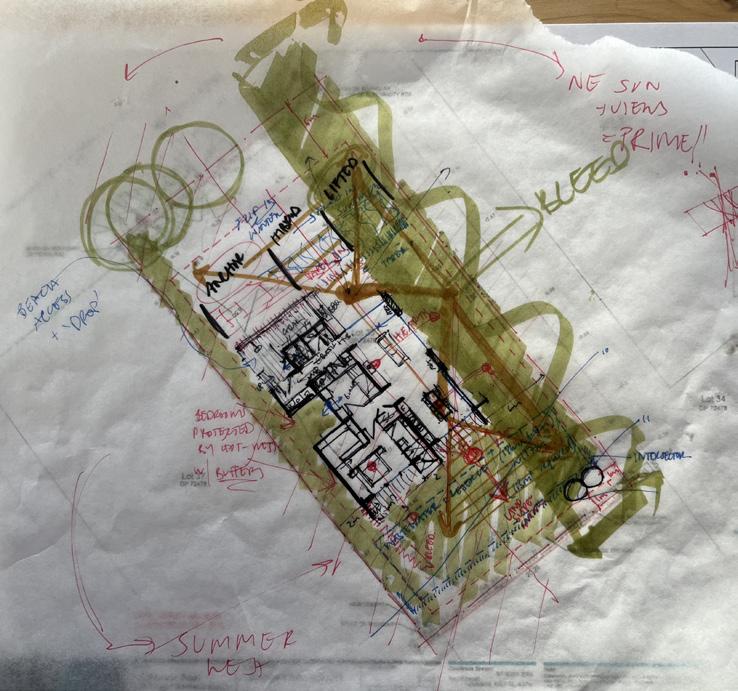
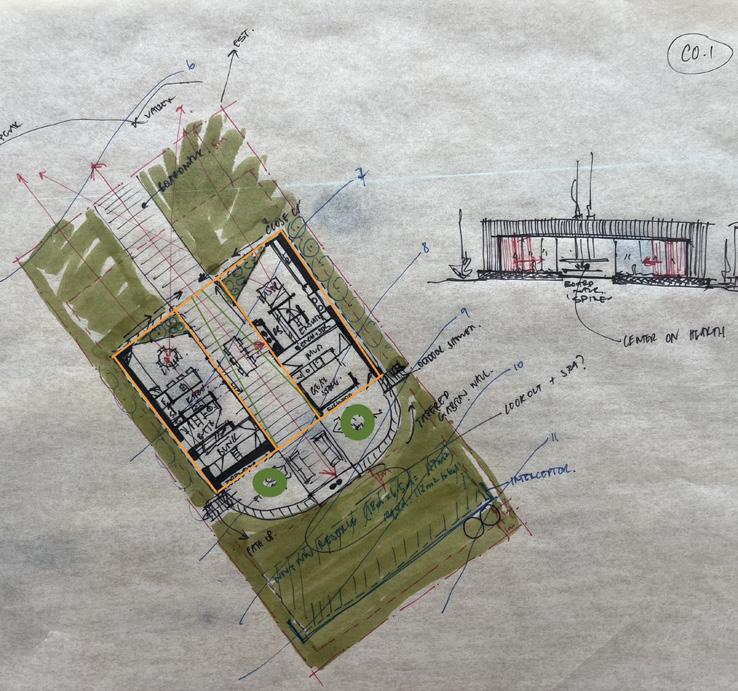
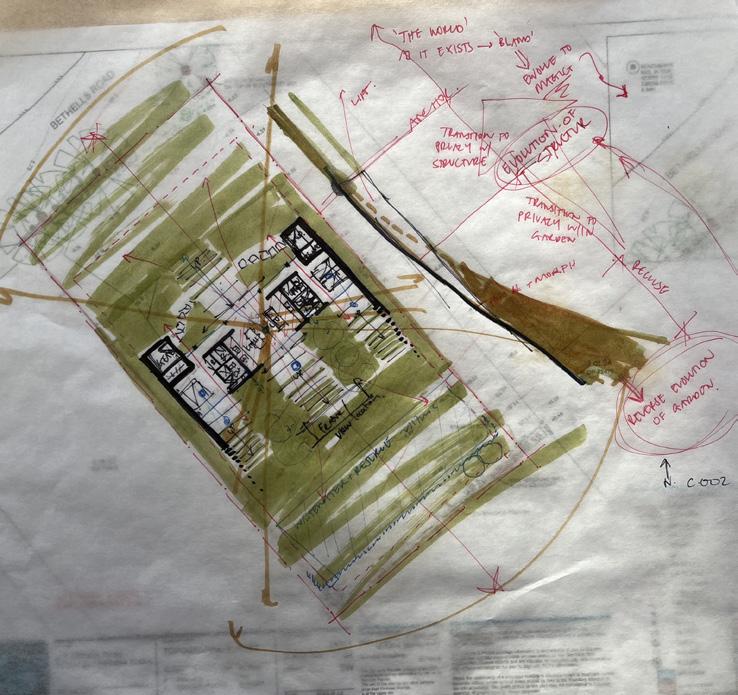
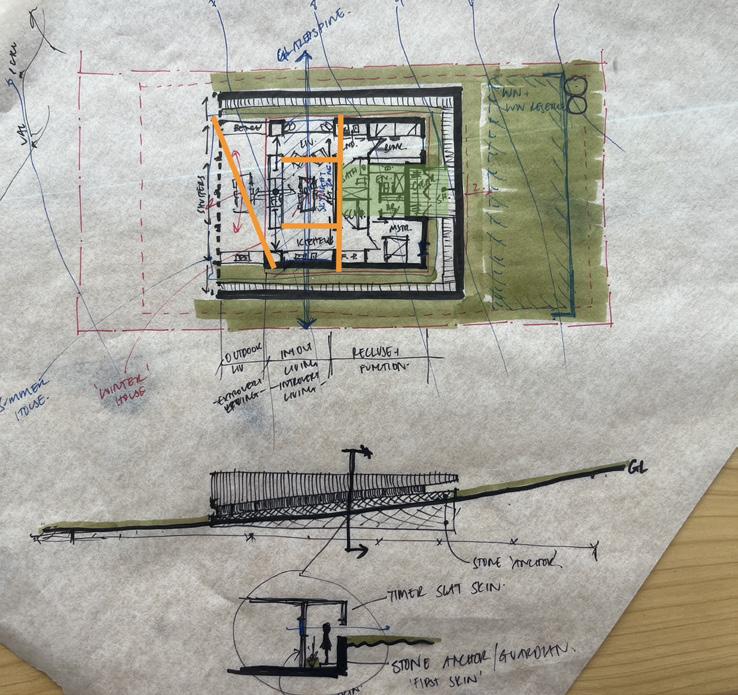
A series of early sketch iterations were developed in collaboration with Xanthe White Landscape Design, exploring spatial relationships, siting, and landscape integration.
These studies tested multiple directions before being distilled into the two refined concepts presented.
26 Alki Architecture + Design Studio, Concept
Tracey + Nick Macrae Te Henga Cabin
NEXT STEPS
NEXT STEPS
YOUR REVIEW Take your time to explore each concept, sit with the ideas, and reflect on what feels most aligned with your hopes for this next chapter. This is your space to dream, to imagine, and to shape a project that truly reflects your intention.
OUR REVIEW Let’s catch up over Zoom to walk through the concepts together. I’ll have the 3D model on hand so we can explore the layout, materials, and sense of space in more detail. Allowing us to better understand where to next..