HOW TO REBUILD YOUR SOCIAL CIRCLE
making friends after 50 factoring in happiness
HOW SMILING IS VITAL TO HEALTHY AGING

friends through the ages
THE VALUE OF MULTIGENERATIONAL FRIENDSHIPS
SNORING FROM BOTH SIDES OF THE PILLOW
WEIGHT TRAINING INSPIRATION
SPA GETAWAYS YOU CAN DRIVE TO plus!
2023 | 55PLUSLIFEMAG.COM
SPRING
At Woodland Pond, the sprawling natural beauty of the Shawangunk Ridge provides the perfect setting for your ideal retirement lifestyle. Whether yours is an epic adventure or an exploration in arts and culture, you’ll find every opportunity to create a tale that’s all your own.


What’s more, as the only not-for-profit continuing care retirement community in the Mid-Hudson Valley offering lifecare, you can rest assured that you’ll have access to a full spectrum of the highestrated care options, if ever needed — all with predictable and affordable costs for life.

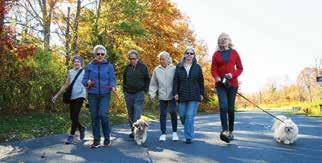
MID-HUDSON VALLEY’S ONLY CONTINUING CARE RETIREMENT COMMUNITY 845.256.5521 | WOODLANDPONDNP.ORG 100 WOODLAND POND CIRCLE, NEW PALTZ, NY 12561 Start Your Next Chapter JOIN OUR WAITLIST
We provide the backdrop. You w r ite the stor y.
Primary Care is Having More Time for Play.
It’s not always easy to get to the doctor these days, which is why we make connecting with your primary care provider fast and convenient through our patient portal. To get started, visit: HHHN.org

Planning for Long-Term Care is for those you love
BY BRIAN M. JOHNSON, MBA, CLTC | DIRECTOR, ADVISORS INSURANCE BROKERS
Caring for a loved one is never easy.
Physically, it is often dangerous; having to lift someone from a chair or bed or needing to stand next to him/her while bathing can put the caregiver in harm’s way.
Mentally, it can be draining. The caregiver is always on the clock, watching every move their loved one makes.

Financially, providing care for a loved one often results in the caregiver using their own savings and maybe leaving their job because of the responsibility they now have.
Emotionally, it’s devastating watching someone you love become dependent on others. The stress alone sometimes causes the caregiver to become sick as well. Many people can relate to this scenario; however, when you’re going through it, loneliness and depression are common.
When everything is good, many of us will say “I’ll do anything I have to do for my mom, dad, spouse, etc;” which is a noble and selfless thought. However, when and if that time comes that you suddenly find yourself providing care for another, you learn quickly how hard it is.
In our country, a record 10,000 people per day are turning 65. With people living longer in retirement, social programs like Medicaid are under immense pressure and a lack of caregivers. There is a perfect storm brewing on the horizon. Many of the clients and advisors we speak to every day are focused on protecting a life’s worth of savings, which of course is important. Yet we find that clients’ main motivation in planning for extended health care is to avoid being
a burden to those they love. If you relate to this, then you’re probably wondering about what you can do.
We can piece together a plan using a combination of family and community supports, personal income and assets, Medicaid (Welfare) and some variety of LongTerm Care insurance.
Even if your plan involves family caregivers, they would act more as care supervisors than as care providers. By using a properly designed insurance policy and taking into consideration any disposable income you may have, in conjunction with the right legal documents, a plan can be affordably implemented. If you can’t afford insurance and are relying solely on Medicaid, proper research now can help ensure you and your family understand your benefits and rights.
No matter what your plan entails, it’s also wise to start lining up caregivers, community programs and volunteer organizations so that it’s easier to get access to providers when and if the time comes. Our office uses a comprehensive Long-Term Care planning questionnaire as a as a road map for our advisors and their clients. All this can also open a dialogue with family members, which is important in formulating a plan for extended health care.
Long-Term Care is the biggest risk we all face. It must be planned for if we want to protect our families and ensure we have options for our care.
To request a copy of the planning questionnaire, please call 518-371-5522 ext. 154. n
ADVISORS INSURANCE BROKERS Brian M. Johnson, MBA, CLTC is Director of Business Development at Advisors Insurance Brokers in Clifton Park. He can be reached at (518) 371-5522 x154. ADVERTISEMENT 4 55+ LIFE MAGAZINE | SPRING 2023


3 LEVELS OF SENIOR LIVING. 6 EXCEPTIONAL COMMUNITIES. NISKAYUNA • LATHAM • TROY • EAST GREENBUSH • QUEENSBURY • SLINGERLANDS INDEPENDENT LIVING MEMORY CARE A PARTNER YOU CAN TRUST At Eddy Senior Living, we have been keeping you and your loved ones safe for over 40 years! (518) 280-8385 • EddySeniorLiving.com Contact us today to schedule your tour! ASSISTED LIVING


features 15 MAKING FRIENDS AFTER 50 The importance of rebuilding your social circle 20 FRIENDS THROUGH THE AGES The value of multi-generational friendships 24 THE HAPPINESS FACTOR Why finding happiness is critical to healthy aging 55pluslifemag.com Sign up for our monthly e-newsletter and be the first to hear about online-exclusive stories, contests and giveaways Follow us @55pluslifemag on Facebook and Instagram! GET MORE ONLINE Contents 6 55+ LIFE MAGAZINE | SPRING 2023



RiversCasino.com 1 Rush Street | Schenectady, NY 12305 Must be 21+. Gambling problem? Scan here or call 1-877-8-HOPENY or text HOPENY (467369) to talk with someone now about your gambling. Rush Rewards Members 55+ can enjoy exclusive weekly offers every Wednesday!
travel
28 LAKESIDE LIVING
You won’t find chain stores near this New Hampshire landmark

34 TRAVELING WELL
Wellness treatments abound at spas not far from home
home & garden
46 A CHIP OFF THE (NEW) OLD BLOCK
Alexander Bassey’s woodworking hobby became a new career
62 HOLY SHEET
When choosing sheets, are thread counts even important?
food & drink
40 SPRINGTIME FRESHNESS
Lighter fare to celebrate the new season

42 THE SPIRIT UNITES THEM
When father-daughter time goes pro
health & wellness
50 CATCHING SOME ZZZ’s Dealing with a partner who snores
54 HOBBY HABITS
Why hobbies are good for you mentally and physically
59 MAKING MEMORIES
Recording loved ones creates lasting family keepsakes columns
57 BE YOUR BEST
Benita Zahn on the importance of weight training at any age

64 ESSAY
A reader’s walk down Memory Lane
66 THE VINE
Why laughter really is the best medicine
online only
BOOK REVIEW
I’m Wearing Tunics Now: a humorous look at aging
Contents pages photos: See individual stories for credits. Cover photo, iStockphoto.com/Tassii. Contents 40 28 34 8 55+ LIFE MAGAZINE | SPRING 2023



Custom closets at affordable prices Let Clozetivity Custom Closets transform your space! Always dreamed of a beautifully organized closet, but couldn’t justify the price? You shouldn’t have to take out a second mortgage to get a well-organized closet. Clozetivity makes closet design affordable and attainable. Life is complicated. Closets shouldn’t be! REACH-IN & WALK-IN CLOSETS · GARAGES LAUNDRY ROOMS · MUDROOMS · PANTRIES STYLE YOUR CLOSET. STYLE YOUR LIFE. Contact us to schedule your free consultation! CLOZETIVITY OF THE CAPITAL REGION 518-779-9700 · clozetivity.com/capitalregion
Marketing
Terri Jacobsen
Tony Pallone Consulting


Caitlin Manner
Joanne Cleaver
Valerie DeLaCruz
Rebecca Gatto
Caitlin Manner
Rod Michael
Sheryl Nance-Nash
Janet Reynolds
Cari Scribner
Brianna Snyder
John Torsiello
Benita Zahn
Each Home Instead® franchise is independently owned and operated. ©2021 Home Instead, Inc. PAID TRAINING SUPPORTIVE OFFICE STAFF PART & FULL TIME SCHEDULES Do you have a passion for helping others? Join our team today. Apply at HomeInstead.com/334 or call (518) 346-6769 10 55+ LIFE MAGAZINE | SPRING 2023 55+ Life magazine is published four times a year. Home delivery subscriptions are available for $29 annually (nonrefundable). Sign up at 55pluslifemag.com. 38 Mall Way, #83, West Sand Lake, NY 12196 518-713-4765 • editor@55pluslifemag.com 55+ Living Guide, LLC. Copyright 2023. All rights reserved. This publication may not be reproduced in any fashion, including electronically, in part or whole, without written consent from 55+ Living Guide, LLC. Visit us at 55pluslifemag.com Connect with us @55pluslifemag Publisher & Editor-in-Chief
Michael | alison@55pluslifemag.com
Editor
Alison
Consulting
Janet Reynolds
Consultant
Consulting Art Director
Online Content Producer
Contributing Writers
Discover Forest Grove & Waite Meadows
New single-family & twin homes
Just a short drive from historic Saratoga Springs, Forest Grove has something for everyone. When completed, this new home community will offer a combination of over 300 single-family and twin homes. Plus Forest Grove will offer a breadth of amenities like a fully-furnished 5,000 sq. ft. community center with an event space, a full kitchen, a large fitness center, a pool with plenty of seating, an outdoor pavilion, pickleball courts, a dog park, and more.
Forest Grove makes it easy for residents to enjoy exploring the neighborhood with sidewalks, street lamps, pocket parks, and 7+ miles of walking trails, all made possible with Belmonte Builders’ donation of over 300 acres of green space to the Town of Wilton.
• New single-family & twin home community
• Five minutes from downtown Saratoga Springs
• Saratoga Springs address, low Wilton taxes
• Saratoga School system
• Breadth of amenities for all ages


• Homes starting in the high $400s
For more information, contact Sharon Byrne 518-527-4914 or sharon@belmontebuilders.com
Conveniently located just off of Route 146 in Clifton Park, Waite Meadows is an exclusive new 34-home community happily situated in a country setting. Just a short drive from downtown Clifton Park with easy access to the Northway, Waite Meadow’s quiet, picturesque setting is also just minutes away from great shopping and dining.
A welcoming boulevard and three large estate lots greet you as you enter the neighborhood and lead to two large cul-de-sacs and lots of green space. Large lots , a community walking trail, street lights, public water and sewer, and access to the renown Shenendehowa school district make this beautiful new-home community the perfect place to build your forever home.
• Exclusive new 34-home community


• Great location, close to downtown Clifton Park
• Community walking trail & green space
• Shenendehowa School system
• Variety of floor plans with many options to choose from
• Homes starting in the $600s


For more information, contact Spencer Lewis 518-512-9646 or spencer@belmontebuilders.com
Learn more about Belmonte Builders, our communities & floor plans at www.BelmonteBuilders.com


In neighborhoods with a Homeowner's Association, Homeowners will be subject to all HOA covenants and design guidelines and will be required to pay HOA dues. For complete details see your sales representative.
about our Buy More Save More promotion
Ask
Faces of Friendships
Do you ever catch yourself thinking about childhood friends that maybe you lost touch with and wonder where they are now? You’re not alone. Friendships change over the years. Some come and go; others stick for life. One thing that is always constant is the way friendships enrich our lives.
Friendships and social connection are vital to our longevity and quality of life. They help us grow, motivate us, and teach us something about life itself. I have always said it’s not about the quantity of friends as much as it is about the quality of the friendships you have and cultivate over the years an idea that rings even more true as we age.
I’m finding myself initiating friendships with people significantly younger and older than me and I value the ways both enrich my life. Explore making friends over 50 (page 15), the value of multi-generational friendships (page 20), and how happiness is critical for healthy aging (page 24).
Spring is the perfect time to renew yourself after a long winter and I can’t think of a better way to treat yourself than a spa getaway. (page 34). Relax, renew and refresh your mind and body. Even better? Do the getaway with a friend.
 Alison Michael photo by Saratoga Portrait Studio/Becky Miller.
Publisher’s Note alison@55pluslifemag.com 12 55+ LIFE MAGAZINE | SPRING 2023
Life is better with friends





Now leasing! Enjoy a 55+ active adult lifestyle Single Floor Townhouse-Style Luxury Duplex Rentals Contact us for more info: 518-309-2048 LeaseTownhomesAtWoodlandsEdge@gmail.com TownhomesAtWoodlandsEdge.com 91 HUTCHINS ROAD, BALLSTON SPA • Rents starting at $2500 • Two Bedrooms and Two Baths • One or Two Car Attached Garages • 9 Foot Ceilings, Fireplace and Patio • Granite and Stainless Steel • Maintenance Free Living, includes Lawn Care, Snow Removal and more • Community Gardens • Pet Friendly with Dog Park
Movein Specials
Making Friends
The importance of rebuilding your social circle
BY CAITLIN MANNER
If you are looking around you and wondering, “Where did my friends go?” you’re not alone. Perhaps you’re an empty nester, a retiree, or recently bereaved or divorced. Whatever the reason, you feel like you finally have some free time, but the circle of people who used to surround you is shrinking.

In our younger years, making friends just seemed, to some extent, to happen without thinking. We met people on the sides of the soccer fields or at PTA meetings or around the office cooler. Now, without those moments or at least fewer of them finding new friendships can feel a bit impossible. Making friends can feel a bit like trying to date again after ending a long relationship: You’re out of practice, the pool of potential friends seems minuscule, and it just feels weird to hang out where you used to meet new people. However, having strong, close friendships is essential to staying happy and healthy, so you need to get back out there.
The importance of friendship
Aside from the obvious merits of friendship, a growing body of evidence shows that friendships greatly impact your health, especially as you age. Isolation and loneliness are major factors in depression and can negatively affect our mental, physical, and cognitive health. Brian McCabe, a retired social worker from Guilderland, says that loneliness is one of the main complaints he dealt with as a social worker. “I often worked with people struggling with anxiety or depression,” he says, “but once I got to know them, a lot of the time the underlying issue was loneliness.”
McCabe says many of his patients made an effort to develop intimate relationships when they were younger, but for a variety of reasons those friendships broke down over time. “By the time they get into their 60s and they’re struggling with depression and loneliness, they weren’t really motivated
(after 50!) Lifestyle SPRING 2023 | 55PLUSLIFEMAG.COM 15
Photo: iStockphoto.com/Morsa Images.
to seek out new friends,” he says, “or they had friendships, but they didn’t meet their [emotional] needs.”
If you’re over 50, you might have reached the point where the friends you made while you were schlepping your kids from activity to activity are no longer the people you rely on for social interaction. And that’s fine. But it’s not a good idea to just shrug and accept social isolation as your fate. Even if you still adore your spouse, it can be problematic to rely on them for all your friendship needs. Now is the time to either fortify the friendships you value, or seek out new friends, which isn’t as hard as you think.


The difference between male and female friendships
Perhaps unsurprisingly, men and women handle relationships quite differently starting at a very early age. Friendships between young girls are generally conversation-based and emotionally intense, while boys’ friendships are more casual. One Oxford psychologist, Robin Dunbar, put it this way: “[Boys/men] depend much more not on who you are, but the fact that you belong to my club. Doesn’t matter what defines the club … it could be just the guys who go drinking on a Friday night together, or play soccer.” Dunbar notes that even Facebook profile pictures corroborate this evidence,
as men are more likely to show pictures of themselves among a group of people, whereas women’s photos are usually with a best friend or spouse.
McCabe’s clients often adhered to these generalities as well. “It’s almost stereotypical with men: They kid each other, tell jokes and funny stories, which is all fine and well I do that with my friends but it doesn’t meet your needs really deeply if that’s as far as it goes,” he says. “With men, that tendency to be a jokester doesn’t really produce the outcome that you need. It doesn’t increase the pool of people you can connect with in an intimate way.”
As a corollary to this issue, McCabe saw many more men self-medicating with alcohol and other substances. He said it’s like a cycle of lone-

16 55+ LIFE MAGAZINE | SPRING 2023
Who’s stressed? Not you. Lily Hill’s Vermont-made CBD products have you covered. · Organic ingredients · 3rd party lab tested · Discounts for veterans · Money back guarantee shop online at lilyhillcbd.com Illustration: iStockphoto.com/yuoak.
liness, because the male instinct is to self-isolate and “circle the wagons,” but then they would turn to self-medication and that would only further isolate them. The other side of the coin is that when married, women tend to do more of the emotional upkeep required to maintain long-term friendships. Sometimes this means that by the time a man has become middle-aged, he has been absorbed into his spouse’s social circle, and his friends are merely the other husbands who belong to his wife’s friends. More often than not, that is a recipe for men to feel lonely later on in life.
Women, on the other hand, do a better job of maintaining their social support structure. They are more inclined to desire regular communication
and more intimate conversations with a broader circle. One theory for the difference has to do with the so-called “love potion” hormone: oxytocin. Studies have shown that when women are stressed, instead of having a fight-or-flight response (as most men do), women, at least hormonally, experience a “tend and befriend” reaction. When oxytocin is released as part of a stress response, women are more inclined to gather loved ones around them, which in turn releases more oxytocin, which further counters the stress and produces a calming effect. The long-term effect of the different stress responses is that women are more likely to develop strong, enduring friendships with a few other women, while the fight-or-flight response could hinder the same relationships for men.
In McCabe’s experience women suffer from loneliness too, but they tend to cope differently. He says that instead of turning inward, women rely heavily on family, particularly grown children. “[The women] would be very dependent on [their children] but also upset with them,” he says of these clients, “because they couldn’t give them what they fully needed.” It wasn’t that the children didn’t care, but they were busy with their own families and couldn’t provide the intense emotional support their mothers needed.
Specialized Osteoporosis Program

Improve bone health, posture, and balance through strength training and yoga!
12 WEEK PROGRAM (broken into 3 phases of 4 weeks each)
PHASE 1 is $600 and includes instructional videos, weight vest, resistance band, and follow-up videos.
PHASE 2 is $400 and includes a guidebook for healthy lifestyle tips for osteoporosis.
PHASE 3 is $350 & includes a continuation or discharge plan.
TIME & DAY: Tuesday and Thursday 12, 1:30, or 3 PM.
(6 person maximum)
PROGRAM LOCATION: Weight Lifting Battleground Fitness, 426 Maple Ave. Unit 1, Saratoga Springs
SIGN UP: Email info@inmotionintegrativept.com
Free 20-minute phone consultation from website to learn more

SPRING 2023 | 55PLUSLIFEMAG.COM 17
Lifestyle
inmotionintegrativept.com
ADDITIONAL SERVICES Physical Therapy • Medical Therapeutic Yoga Virtual Sessions • Home Visits MEET YOUR INSTRUCTORS Michaela Martin Registered Yoga Teacher, Certified Personal Trainer Sarah Avery Doctor of Physical Therapy, Professional Yoga Therapist FOR SOME IDEAS ON HOW TO MAKE FRIENDS, TURN TO 18
A few ideas on how to make friends…
MAKE YOURSELF A PRIORITY
Leadership studies have shown that people with more physical, material, and intellectual resources have more social “capital,” which allows them to continue to seek out new relationships and forms of social involvement.
MAKE A LIST OF WHAT YOU DO WELL
What do you love to do? What do you wish you were better at? If it helps, make a list of your preferred hobbies, and then make one for all those things you’ve always wanted to try.
Illustrations: iStockphoto.com/Flashvector.
PICKLEBALL
It’s a craze that is sweeping the nation, and there is one demographic that has flocked to it in particular. McCabe says, “I go to the local Y, and every Thursday the whole gymnasium is set up for pickleball. There had to be 40-50 people there, and clearly they were all well into their post-55, 60s, 70s, even into their 80s!”
AND USING THAT LIST…
…start looking up groups, classes, or events that relate to those hobbies. (See our story on hobbies on page 52.) If you have a green thumb, the Master Gardener program is always looking for more people. If you took one pottery class in your 30s and always wanted to do it again, see if there’s a program at a local community center or school. You could join a walking group, which would help you meet people and keep you fit, so it’s a win-win.
An Active Adult Community for Ages 50+
• Luxury 1- and 2-bedroom apartment homes, starting at $1,325
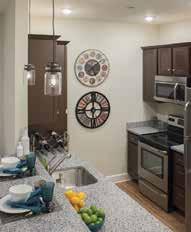

• Includes cable, internet, water and sewer, trash and snow removal
• Maintenance-free living
• Resident activities
• No amenity entrance fees
• Community room, outdoor patio, fitness center and much more!

• Most pets welcome
• Open for tours by appointment only
50 Elliot Rd., East Greenbush, NY 12061
518-949-2321 | www.TheKensey.com
18 55+ LIFE MAGAZINE | SPRING 2023
CONTINUED FROM 17
When you’re depressed, McCabe explains, volunteering might seem like an interesting concept, but you’re too lethargic, anxious, or empty to actually act on that advice. So particularly for those recently bereaved or suffering from substance abuse, these groups can be a lifesaving way to socialize with people who understand what you’re going through.
JOIN A GYM
If you’ve ever taken a fitness class, there are almost always people in there chatting away. These people met somehow, and we’d put good money on the fact that it was through that class. Don’t be afraid to sign up for something new at a gym or even a senior center. Yes, the fact that chairs are involved in exercise might be depressing, but at least it’s a start!
VOLUNTEER
Volunteering with local organizations, schools, or libraries is another great way to meet people who share the same values. McCabe always recommends volunteering because “then you’re doing something that is altruistic — which can make you feel good about yourself — but it also increases the chances you can meet someone [with similar ideals].” The important thing is to get involved, and friendships will evolve from there.
EMBRACE TECHNOLOGY
The beauty of social media is that it has opened new avenues for reconnecting with people. “I would encourage in my practice to not be afraid of technology; get on board with modern ways. And get comfortable with texting!” says the 76-year-old McCabe. “That’s a thing young people do constantly. If it weren’t for texting we wouldn’t be as well-connected as we are, which is a wonderful thing.”
Girlfriends Getaway Bolton Landing on Lake George,
NY • May 12-14 2023
A Weekend YOU Deserve!
Create your own agenda during this empowering weekend with access to 17 talks, workshops, demos, and fitness classes. Enjoy a welcome reception with entertainment, gourmet luncheon, and fashion show at The Sagamore Resort on Lake George.
For tickets, $145, visit www.girlfriendsgetawaybolton.com or call the Bolton Landing Chamber of Commerce at (518) 644-3831

SPRING 2023 | 55PLUSLIFEMAG.COM 19
Lifestyle
SEEK OUT A SUPPORT GROUP
The value of multi-generational friendships
Friends Through the Ages
BY JANET REYNOLDS
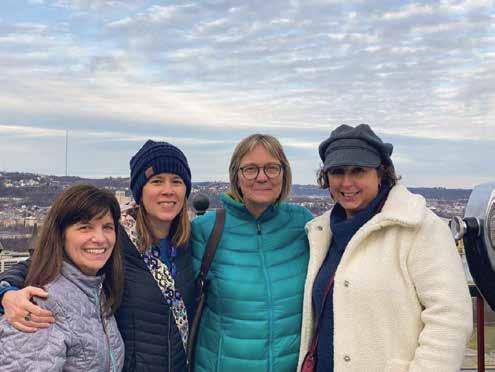
On paper we don’t look as if we might have much in common: a 68-year-old writer and editor with three children in their 30s and a 12-year-old grandchild; a 55-year-old nurse with two sons in their 20s; a 48-yearold chief administrator at University of Michigan with a high school senior daughter; and a 44-year-old general manager at an international public relations and communications company who is the mother of two young children.
Yet, what began nearly seven years ago when we met as writers for an Outlander fandom blog has morphed into a lifelong friendship. We have been there for each other for everything from the birth of a child after a long fertility journey to the death of grandparents, a parent and a husband. We have celebrated life’s successes, too, from the big like a first-choice college acceptance to the smaller moments like baseball teams winning tournaments. Outlander hardly ever comes up.
And we’ve done all this despite not living near each other we hail from Connecticut, Georgia, Ohio and Michigan and despite an age gap spanning 24 years.
As the one who literally could be the mother of at least
two of these women and who is actually closer in age to my friends’ parents, I am constantly amazed Ashley, Denise and Nikki I’m just going to call them by their first names want to be my friends. Intellectually, I know I shouldn’t be. After all, I’ve got a lot to offer in a friendship. But I’m so much older! Why would they want to be my friend?
The answer, they say in a recent get-together at Denise’s home in Ohio, is multifaceted but boils down to this one overarching point: Age doesn’t even come up on their collective radar.
“I don’t even look at us as different ages,” says Denise, who is 55 and has been asked to be in the bridal party of one of her 30-year-old coworkers. “We’re all at different stages and lean on each other for different reasons.”
“If there is magic here, it is that we are at different stages,” echoes Nikki, whose daughter FaceTimed us all the “aunties,” as we’re called when we were together while opening the email to see if she got into University of Michigan (she did). “We cover the spectrum of life and there’s always a well to draw from. This is where I feel comfortable if there’s this thing [bothering me] and I know someone will have ideas.”
“There’s something to be said for being in the same stage,”
20 55+ LIFE MAGAZINE | SPRING 2023
Lifestyle
The author with her group of friends, whose ages range from 44 to 68. From left, Denise, Ashley, Janet and Nikki.
Hakuna Matata
BY DAVID A. KUBIKIAN, ESQ. | HERZOG LAW FIRM
Afew weeks ago, my family and I had the pleasure of watching The Lion King on Broadway. Setting aside the obvious brilliance of the actual costumes and production, the show — and really, the Lion King story itself — reminded me of my work life (as an Estate Planning/Elder Law attorney) as well as the realities of my home life and the aging of my parents and in-laws. The different stages of life come and go without our consent. While it certainly is the “Circle of Life” as is sung in The Lion King, it’s one of the other songs in the show which I wish were more like reality.
Everyone knows the song “Hakuna Matata.” Even if you think, well, it’s a kids’ song from a kids’ movie and there are older people who won’t know it, I beg to differ. The Lion King movie was released in 1994, and a 30-something taking their kids to the movies in 1994 is a 60-something taking their grandchildren to movies these days. Translation: We are all slowly becoming “older people.” (Sorry.)

The title of the song means “No worries, for the rest of your days…” If only that were the case. There are plenty of worries during each stage in life, but the worries in the last quarter tend to be more than just worries… and more of an eventuality. Taking a “Hakuna Matata” mindset when it comes to planning for the aging process or your estate may sound like deciding to look at a glass as being half full —
but it is actually more akin to putting your head in the sand. Bad things happen, regardless of whether you plan for them. Whether or not you have a comprehensive estate/elder law plan can make the difference between saving hundreds upon hundreds of thousands of dollars and preserving your money — or not.
Planning comes in two main categories: Estate Planning and Elder Law. The former deals with the Who gets what? part. The latter deals more with two other questions: How will my long-term care needs be met when I get older? and How much money will actually be left for my loved ones?
Depending on how life shakes out, there may be times when not having a plan doesn’t necessarily hurt you. Perhaps there’s no significant long-term care event — or, if there is, you find some exemption to the brutal Medicaid rules that you qualify for — i.e., you luck out. But I would compare that to living without car insurance or health insurance. Most days you don’t think you need it, but when you do… man, it’s good you maintained it. Of course, the insurance analogy isn’t perfect because unlike car or health insurance, the “Circle of Life” continues. After all, every Broadway Show has an ending. Make 2023 the year you create or update your plans. If you don’t have a Trust, consider one. If you don’t have a Power of Attorney, get one immediately.
ADVERTISEMENT
www.herzoglaw.com 518.465.7581
Be proactive, so you can have LESS worries, for the rest of your days...
DAVID A. KUBIKIAN is a principal of the Herzog Law Firm and he concentrates his practice in the areas of Estate Planning, Medicaid Planning/Elder Law, and Estate Administration and Litigation. David prides himself on providing a superior client experience.
adds Ashley, the youngest of our group, “but the diversity makes this a safe space.”
Indeed this erosion of ageist thinking is just one of the many benefits of intergenerational friendships, experts say. “It’s the best win-win model we have,” says Helen Dennis, a national expert on aging and what’s sometimes called the new retirement. “There are some who say if we had more communication and relationships between and among the generations, we would not have ageism.”
That possibility makes sense, Dennis continues, because people involved in these friendships would be having positive experiences with people outside their cohort. “These experiences would be generalized as opposed to something you read or a one-off experience,” she says.
Multi-generational friendships seem to be on the rise, according to some studies. According to a 2019 report from the Barna Group, 68% of Americans say they have a close friend who is either 15 years older or younger. A quarter of those have an older friend, while 16% have a younger friend. The report notes that of those with multi-generational friendships, 27% said they have both older and younger friends. Women are more likely to have friendships with older friends than men 31% vs. 19%.
A 2019 AARP survey echoes much of the Barna Group’s research. That report also notes that multi-generational friendships can come from work (26%), the neighborhood (12%), religious practices (11%) or mutual friends (10%).
“The fact that someone is from a different life stage or age makes it more interesting,” Dennis says. “It’s not same-old, same-old.”
“The basic elements of friendship are that you really like each other. The relationship is enriching. Honesty and caring
and being a resource to one another could you have that same conversation in your life stage? Yes, but the younger or older may come with a different experience,” she adds. “The older adult can be an inspiring force and the younger generation has a message for us all in perhaps focusing on the simpler things in life. Being exposed to different experiences can be life-enhancing for the older adult.”
And that, in turn, is one reason experts suggest that these kinds of friendships also have an additional potential upside for those who are the older ones in the friendship: healthier aging.
Research shows that remaining socially connected helps older adults have better physical and psychological outcomes. “The research is very strong,” says Dr. Mary Gallant of the School of Public Health at the University at Albany. “It’s very important to retain friendships and social engagements of all kinds.”
Unfortunately, Gallant says, decreased social engagement is far too often a normal part of aging. “Either your own physical health or physical functioning impedes participation in social events, or your own social network changes as a spouse, partner, or friends have health problems or they die so the size of the social network shrinks,” she says. “Intergenerational friendships are one way for older people to counter that natural phenomenon.”
And the benefits of these go beyond the mere friendship itself, Gallant says. “For older adults they can provide access to a different social network. They can open up different avenues for social engagement, expand someone’s social network and connect older people to another whole set of people, potentially.” Friendships outside their standard cohort can also help older adults keep abreast of newer technologies and ways to learn new things.
Gallant agrees with Dennis about the long-term potential impact of these kinds of friendships on societal views around aging. “It’s a way to reduce and counteract some of the negative stereotypes about age and aging,” she says. With today’s families less likely to live near each other, Gallant says, “intergenerational friendships provide a way for younger people to understand more about aging and older adults. They’re friends with an older person rather than having dinner with their grandmother every Sunday so younger people can learn about what aging is and isn’t.”
“Older adults in this country in particular are marginalized,” Gallant continues. “Their contributions aren’t recognized and as a result a common experience is to feel invisible, to feel sort of ignored. It’s all tied up with ageism and stereotypes. Intergenerational friendships can potentially counteract that.” n
22 55+ LIFE MAGAZINE | SPRING 2023
Lifestyle
I don’t even look at us as different ages ... We’re all at different stages and lean on each other for different reasons.”
‘‘
— Denise, 55
We cover the spectrum of life and there’s always a well to draw from.”
‘‘
— Nikki, 48
The diversity makes this a safe space.”
‘‘
— Ashley, 44
Acommunityforallages!

The
Happiness Factor
Why finding happiness is critical to healthy aging
 BY REBECCA GATTO
Getting older can be disheartening, depressing, even scary. Our bodies start to work less well, friends and partners increasingly face health issues, and we start to realize that the road ahead is a lot shorter than it once was.
Demographic research suggests, however, that getting older doesn’t have to rob us of our joy. In fact, according to Psychology Today, most happiness studies that compare the relative life satisfaction of generations find a curve that looks like a smile. Younger and older generations tend to be the happiest, with a dip in the middle.
A fact sheet from the World Health Organization identifies the differentiating factor that allows people to enjoy their golden years: health. When people feel good, they’re able to pursue their passions, learn new things, support their communities, and make the most of the wisdom they’ve gained from decades of rich experience.
While some part of this is genetic, most, according to the WHO, can be attributed to people’s environments. That includes not only the safety and accessibility of their homes and communities, but also their social support network. These contributing factors, the WHO points out, are largely dependent upon circumstance and means.
Still, there are steps individuals can take to prolong their happy, healthy years particularly if they adopt behaviors that improve physical and mental health. A landmark Harvard study that followed a group of students for nearly eight
decades discovered that certain personal choices reliably predicted a better late-life experience, especially if people started “investing” in their future health while they were still young.
Whether we like it or not, following boilerplate health advice like quitting smoking, avoiding alcohol, eating whole foods, and taking daily walks can make a world of difference in how it feels to get older. But, the researchers discovered, intangible pursuits can be just as critical. People who continued learning, creating, and living a vibrant social life were much happier as time went on.
Strong second acts
Take, for example, Leslie Yolen. After college, she hoped to pursue a career in art. But life presented its own obstacles. After a divorce, a move, and a career change, her goals revolved around simply making ends meet for herself and her son there’s that difficult midlife dip that’s often reflected in happiness research.
Still, a successful career in education empowered her to support her family while still keeping her passions in the picture. First, she worked as a classroom art educator in the Niskayuna Central School District, then later as arts education associate for the New York State Education Department’s Office of Curriculum and Instruction. Yolen is proud of what she accomplished during her time working in the State Education Department, but it was hard work. Dreams of becoming a full-time artist had to wait.
24 55+ LIFE MAGAZINE | SPRING 2023
Photos: iStockphoto.com. Kite, skynesher; swing, wundervisuals; meadow, Kemter.
“All my time and energy was sucked into kids and school,” she says. “I couldn’t really do my own art at the level that I wanted to.”
Now, Yolen is 67 years old, approaching five years in retirement, and currently preparing for her next sculpture show. She has handily picked up the thread of her self-described “starving artist” days, minus the financial struggles. Her days are spent playing with two Great Danes that she adopted as puppies, stoking the wood fires in her home, and painting or sculpting in her studio, which is visible from her living room window.
“I’ve really embraced my artwork and tried to sort of make up, I guess, for a little lost time,” she says.
That’s not to say Yolen hasn’t had to contend with some of the common physical limitations that accompany additional candles on the birthday cake. For instance, she also loves crafting pottery, but can no longer spend the hours hunched over a wheel that the medium requires.
“I started to have back issues from being a potter,” she says. “I have, basically, sciatica, which is impacting my lifestyle here of gardening and heating with wood and running around with these big beasts,” her beloved dogs. She says her next big move will be to a smaller home.
Despite the challenges that come with picking a passion back up later in life, Yolen has developed a perspective on life that enables her to enjoy the benefits, too.

“All that worry about money and making ends meet is
gone,” she says. “It was worth it all. I gave up my best years, but I’m trying to be really grateful for the time I have and the space I have and this beautiful place that I have.”
Staying flexible and going with the flow

A positive mindset has also contributed to new and rewarding endeavors for Doreen Bishop, who will celebrate her 65th birthday in July.
“There are more years behind me than there are in front of me,” Bishop says. “As you get older, you’re always shocked at where you are.”
Bishop is now a popular teacher at The Hot Yoga Spot, where she originally signed up for classes as a student because she wanted to lose some weight. “I was starting to feel old,” she says.
But yoga, Bishop discovered, offered more than just an opportunity to burn some calories. It gave her space to care for herself holistically. She eventually earned her teaching certification simply because she enjoys learning new things and being part of a strong community both of which are activities recognized by the WHO as contributing to healthy and happy aging.
It might seem like a daunting leap to go from following along in class to joining the studio’s staff. But Bishop says she’s discovered that getting older has emboldened her decision-making, because time feels more limited.
“You’re kind of at the end, but also you’re hoping that the
SPRING 2023 | 55PLUSLIFEMAG.COM 25
Lifestyle
choices that you’ve made, and continue to make, can extend that a little more,” she explains. “Yoga gives you the ability to also take more chances and have more confidence to try other things.”
In fact, in the past two years, Bishop has launched into her interests in a big way, starting two more new careers. She’s become certified as a phlebotomist and works as a medical assistant at The Bone and Joint Center and she attributes her confidence to yoga.
“I hope I inspire people,” she says. “That’s why I don’t mind telling my age, because I want people to realize that at this age, you can still be really evolved and active. It’s never too late to try something new.”
Plus, she says, getting older may come with some difficulties, but it also has its benefits. “When you’re younger, you’re just trying to get through the day,” she says. “Everything focuses on your children or you have a full-time job. I just think it’s a different mindset for sure.
“Generally as you get to my age, your children are grown, they have their own lives,” she continues. “It’s just you to take care of, so you have more time to maybe reassess your goals as you get older and try to take that time for yourself.”
For Bishop, there’s an added bonus. She hopes to pave the way for her own daughters to age confidently, and to know that they can always try new things. And she plans to be there to witness it all.
“I want to see them have their own families,” she says. “That’s a motivating factor to keep going. You don’t want to get to the point where you’re sitting in the chair watching them.”
Aging happily into the future
Remember that data that suggested happiness has a U-shaped curve throughout people’s lifetimes? There’s a caveat, and it’s a big one.
That pattern holds true, researchers found in 2022, only for middle-income individuals. People with severe financial hardship become less happy as they get older, with a small uptick around traditional retirement years. And wealthy people’s happiness stays fairly constant throughout life.
Based on the latest research and the WHO’s recent guidance, then, it’s not terribly surprising that retirement success stories abound in the Capital Region. Even in comparison to other parts of New York State, our region boasts low poverty rates.
But as populations gray, both worldwide and at home, the question of how to stay happy as we age will only become more important. A 2019 report by the Center for an Urban Future found that New York State has 3.2 million residents aged 65 and up more than the entire population of 21 other states. That meant that almost one in six New Yorkers were of retirement age, a record-setting fraction that experts expect will continue growing.

According to New York State Office for the Aging’s 2021 annual report, the services aging people need most right now include transportation, personal care, and help managing chronic diseases. The key to success, the report says, is to integrate social services with clinical care. In other words, a holistic approach works best, not just on an individual level, but on a large scale.
Graduating out of middle age doesn’t have to be scary. With the right support and a healthy mindset, people in their 60s, 70s, 80s and beyond are trying new things, supporting their families in new ways, and rediscovering what it means to be themselves.
As Bishop, who has six grandchildren, puts it: “Grandparents have changed. Grandparents don’t just wear aprons and bake cookies. There’s a lot more to us than that now.” n
Photo: iStockphoto.com/bombermoon.
Lifestyle 26 55+ LIFE MAGAZINE | SPRING 2023


FAMILY OWNED & OPERATED Affordable pricing with no buy-ins • Washer/dryer in each apartment Utilities included • 4-star restaurant & bar • Pet friendly 24-hour maintenance services … and much more! 100 Saratoga Blvd., Saratoga Springs 518-584-7766 • prestwickchase.com Call today for a tour! 11 YEARS IN A ROW! Upstate New York’s Premier Independent Living Community “For the best season of your life”
Lakeside Living
Lake Winnipesaukee offers vacationing without a chain store in sight
 BY JOANNE CLEAVER
The patio in front of the Yum Yum Shop is the place to be on a mellow morning in Wolfeboro, New Hampshire. A group of regulars — older men in shorts and polo shirts — relax in white Adirondack chairs, petunias spilling around them, as they hoist cups of coffee and debate world affairs between bites of date bars and doughnuts. Keeping an eye on them is the bakery’s iconic running gingerbread man, frozen in midstride on the blue and white sign, just as he has since 1948.
28 55+ LIFE MAGAZINE | SPRING 2023
Here on the southeast corner of Lake Winnipesaukee, in the town of Wolfeboro, you can get a latte and a whoopie pie, but not from Starbucks. You can have a tower of onion rings with a lobster roll fresh from the seacoast that’s only 90 minutes away, but you can’t get a McDonald’s burger. You can stay at a historic inn, but you can’t get a room at a Hampton Inn.

Wolfeboro anchors the ragged ring that is Lake Winnipe-
saukee (WInni for short, for obvious reasons). It’s the largest lake completely within the borders of New Hampshire and, as visitors are informed repeatedly, Wolfeboro lays claim to the invented title of America’s original and oldest resort area. That’s due to the families of industry captains who streamed to this oasis of mountain cool from Boston, Portsmouth and even points south every summer beginning in the late 1700s.
SPRING 2023 | 55PLUSLIFEMAG.COM 29 Travel
Photo courtesy Mount Washington Cruises.
Since then, Winni has democratized recreation, with family-owned resorts and municipal beaches decorating its rocky shoreline. Visiting is less stepping back in time and more stepping into a parallel America that forgot to create franchises.
With its piney shores and rocky ledges, the lacy perimeter of the lake makes a swift and efficient daytrip a challenge. It takes at least four state routes 28, 11A, 106 and 109 to start southwest from Wolfeboro and end up back in Wolfeboro. A more logical approach is to choose one of the larger villages Wolfeboro, Meredith, Alton or Laconia and
spinoff daytrips from there.
In September, my husband and I snagged one of the last day cruises on the venerable Mount Washington, a white, wooden Victorian-style pseudo-paddleboat that crisscrosses Winni from Wolfeboro to Weirs Beach and, occasionally, points in between. It was 70 degrees on the dock, but once in the middle of the sapphire lake, as a bracing breeze swept down from the actual Mount Washington (to the east), we were glad we’d brought windbreakers and sweaters. Clam chowder, lobster rolls and coffee were just the thing as the boat skirted islands so small that they were essentially boul-
GETTING THERE AND GETTING AROUND
From Concord, New Hampshire, take Rte. 28 northeast through fields and forests to Wolfeboro.
Coming from the west, head for Tilton, New Hampshire. Its exit from Rte. 93 is the only mecca for chain retail and restaurants. Have lunch, though, at the Tilt-n Diner, a raucous throwback to the bobby-sock era. Part of the locally popular Common Man chain, you can indulge in the same rich clam chowder sold at that company’s ritzier locations. Fortified, head east on Rte. 3 to the hamlet of Laconia, which decorates the southwestern appendix of meandering Lake Winnipesaukee.
If you center your visit in Wolfeboro, you can engineer a car-
free weekend. Fly into the Manchester-Boston Regional Airport (MHT) and take a local car service, such as JCN Shuttle (603-515-1894) or Murphy’s Transport (603-340-0723) to get you to and from the airport. Plan a long weekend itinerary relying on the Mount Washington’s daily loop from Wolfeboro to Weirs Beach, kitty-corner across the lake, to explore the far side. Check the boat schedule, including mail boat ride-alongs, online. Have breakfast in Wolfeboro, a hot dog lunch at the Boardwalk Bar & Grill adjacent to Weirs Beach, and be back via the Mount Washington for dinner on the shore as the sun sets behind the White Mountains. Wolfeboro also offers all manner of canoe and kayak rentals and local outfitters for fly-fishing and hiking daytrips.
 Photo: Bob Kozlow, courtesy Lakes Region Tourism Association.
Travel
30 55+ LIFE MAGAZINE | SPRING 2023
AMENITIES INCLUDED AT POND VIEW:


• Snow Removal
• Trash Removal
Single-story, maintenance-free living with attached garages, patios and decks. Cottages offer modern conveniences… all completed with a charming and friendly community lifestyle. • Pet Friendly • Cable & Internet •

• Water Usage
• Community Gardens
• 5000 Sq Ft Clubhouse
• Pools
• Attached Garages
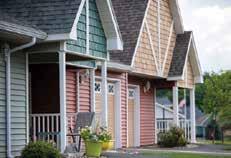

COTTAGE LIVING, designed for active, independent “55 and better” residents. Life at The Spinney is more than a great home...it’s a COMMUNITY OF FRIENDS. HOME TO A NEW GENERATION
Craftsman Style Cottages— CALL 518-479-0800 FOR A TOUR TODAY! 2490 Pond View, Castleton-on-Hudson, NY 12033 Mon–Fri: 8–4pm TheSpinneyatPondView.com PondViewLeasing@TheSpinneyGroup.com
Enjoy
—
24 Hour Maintenance • Front & Back Porches
• Washer & Dryer in Unit • Community Activities
ders bearing pine trees like fragrant torches.
Even on a bright yellow day, just a quiver before the birches turned golden and the maples blazed orange, the dark green of the pines cast deep shadows on the long lawns of quiet summer camps and trophy vacation cabins. The boat pulled into Weirs Beach, an apron of sand overlooked by ice cream stands, souvenir shops and shingled houses with beach towels flapping from their fences. A few people got off and a few people got on. Another hour across Winni and we were back at the Wolfeboro dock. Another time, we’ll come back for a sunset cruise.
With its reliable waves of tourists, the Winnipesaukee region is a happy hunting ground for locally made crafts, especially blown glass and wood furniture. Now, visitors can center a visit

around making their own souvenirs. Just opened in January, Makers Mill in Wolfeboro offers destination-worthy workshops for aspiring painters, sewers and woodcrafters. Intended to both draw visitors who want to experiment with new skills by way of recreation, and to support local entrepreneur-artisans with rental space and equipment, Makers Mill offers one more reason to anchor a week or long weekend in Wolfeboro.
And in keeping with the New England spirit of making your own, Van Otis Chocolates in downtown Wolfeboro offers sweet fuel in the form of maple cream truffles and chocolate shaped in the state’s distinct stovepipe silhouette. As evidence of the eternal appeal of chocolate, the shop nudges the neighboring Yum Yum shop with a little Yankee one-upmanship: founded in 1935, it’s 13 years older. n
IF YOU GO
As is the case at many seasonal destinations, Winni regulars book a year or more in advance, especially for summer and the short, bright October run of foliage. In the absence of chains, you’ll have to check with individual hotels and resorts to find open dates. The lake is studded with vacation rentals, many available through local agencies as well as national platforms like Airbnb and Vrbo. The Wolfeboro Inn sprawls on the northern perimeter of downtown and its spacious parking lot is the default drop-off and pickup spot for regional buses and tour groups. Another option is the Pickering House Inn has raised that bar with its luxury breakfast and Shaker take on modern décor.
Lakeview dining is the thing on Winni. Besides downtown Wolfeboro, which is studded with ice cream shops and diners, each little town has its own casual waterfront dining spot. One noteworthy addition, in late 2022, is The Breeze, at 25 Dock Road in Gilford. Elevated above an unlikely shoreline populated by boat repair shops and a public service marina, The Breeze offers surprisingly wide views and innovative twists on old classics. Right on the lake loop (though not on the water) are two solid dining standbys: in Wolfeboro, Morrisseys’ Front Porch for a hearty helping of New England seafood and on the western perimeter, in Meredith, Hart’s Turkey Farm Restaurant, which serves Thanksgiving goodness all year round.
Travel 32 55+ LIFE MAGAZINE | SPRING 2023
Photo: iStockphoto.com/Gerry Fagan.

REASONS TO TRAIN WITH TRAIN HD A STRENGTH AND CONDITIONING FACILITY DESIGNED TO SUPPORT WHOLE BODY HEALTH þ FREE wellness consultation þ Expertise in customizing individualized plans to support bodies as they age þ One-on-one training and small group fitness þ Comprehensive programs that target every part of your overall health þ Scientific solutions for nutritional awareness, sleep improvement, stress management, injury prevention …and much more! Get started with a 30-day trial *DETAILS BELOW *If we don’t deliver on our promise to guide you to better health, we will give your first 30 days for free. 265 Osborne Road, Albany · (518) 818 0209 · trainhd.com
Providing Quality Senior Housing Communities




Since 1995!
Columbia Crest
ColumbiaCrest@ahfinc.net
90 One & Two Bedroom Apartments | Min. age requirement 60 Rent: 1 Bedroom $398–$870* | 2 Bedrooms $995-$1160*
427 Columbia St., Cohoes, NY 12047 | (518) 235-4558
Highpointe HPAM@ahfinc.net
82 One & Two Bed Apartments | Min. age requirement 55 Rent: 1 Bedroom $582–$939* | 2 Bedrooms $1044*
30 Rockrose Way, Malta, NY 12020 | (518) 583-7977


Northern Pines
ALL PROPERTIES ARE SMOKE FREE, AND INCLUDE HEAT AND HOT WATER IN RENT!
NorthernPines@ahfinc.net
36 One & Two Bedroom Apartments | Min. age requirement 55 Rent: 1 Bedroom $586–$727* | 2 Bedrooms $851*
120 Northern Pines Rd., Wilton, NY 12831 | (518) 581-8959
Van Allen
VanAllen@ahfinc.net
110 One & Two Bedroom Apartments | Min. age requirement 55 Rent: 1 Bedroom $556—$872* | 2 Bedrooms $672—$1180*
790 Rte. 9W, Glenmont, NY 12077 | (518) 767-0923
Whitehall Court
Whitehall@ahfinc.net
72 One & Two Bedroom Apartments | Min. age requirement 62 Rent: 1 Bedroom $665—$698* | 2 Bedrooms $817*
360 Whitehall Rd., Albany, NY 12208 | (518) 446-1920
Wilton Commons
WiltonCommons@ahfinc.net
36 One & Two Bedroom Apartments | Min. age requirement 55 Rent: 1 Bedroom $578—$703* | 2 Bedrooms $830*
100 Wilton Commons Dr., Wilton, NY 12831 | (518) 581-7696
*Rents are based on income guidelines determined by the area’s median income.
American Housing Foundation, Inc. • 10 Starbuck Drive, Suite 209, Green Island, NY 12183 • (518) 279-3810 • ahfinc.net
Garry J. Kearns, Executive Director
Traveling
Wellness treatments abound at spas not far from home
 BY SHERYL NANCE-NASH
Wellness is the word of the moment. In a post-pandemic world, who isn’t looking to exhale, hit the reset button and move forward to the next chapter in their life story?
Increasingly, wellness and travel go hand in hand. The Global Wellness Institute predicts that wellness travel will grow by 21% annually, expanding the market to more than $1 trillion by 2024.
If you’re among the masses who are ready for a transformative trip but don’t feel ready to jet to the Maldives, no worries. Plenty of top spa getaways designed to help you reset and relax are within a few hours’ drive of the Capital Region. Here’s a look at some of the spa getaways close to home.
MIRAVAL BERKSHIRES RESORT & SPA
Lenox, Massachusetts
Guests at this exclusive resort just 90 minutes away from the Capital Region are encouraged to put down distracting digi-
tal devices and live in the moment. Go home with memories of nature walks, guided meditation, energy sessions with aura photos, slow flow yoga, hikes, celestial sound bathing, floating meditation, journaling and more. The Life in Balance Spa is where you’ll find otherworldly treatments like the Obsidian and Sage Detoxifying Ritual, 100 minutes in a gravity-defying float through a mental, spiritual, and physical “cleanse” and a full body massage. The spa also offers Vasudhara, a Miraval exclusive. This 50-minute experience helps ease muscles with Thai stretches and a warm water float.
miravalresorts.com/berkshires
NIAGARA CROSSING HOTEL & SPA
Lewiston, New York
This charming boutique hotel is a great home base for exploring the nearby Niagara Falls and getting yourself some spa action at the same time. Pamper yourself with spa packages like
SPRING 2023 | 55PLUSLIFEMAG.COM 35
Travel Well
Photo: iStockphoto.com/Ridofranz.
the “Lewiston Retreat,” a full-body experience designed to get your groove back, your energy flowing optimally and balance your body’s natural biorhythms. The magic comes from lymphatic dry brushing, scalp massage, full-body massage, and the grand finale, a lemon essential oil foot treatment.
niagaracrossinghotelandspa.com
MOHONK MOUNTAIN HOUSE
New Paltz, New York
A short drive from the Capital Region, this Victorian castle resort features 40,000 acres of forest. Start your de-stressing by hiking some of the 85 miles of trails, paddleboarding on the lake, dancing or taking a tai chi, yoga or meditation class. Relax in the outdoor heated mineral pool or try forest bathing by a mindful walk along the cliff trails and lake. Pamper yourself at the spa with an exfoliating body glow designed to invigorate the circulation system, or the Mohonk Red Massage, a combination of Swedish massage and traditional Thai stretches.
mohonk.com
TOPNOTCH RESORT
Stowe, Vermont
You can’t go wrong with the backdrop of the Green Mountains and 120 wooded acres at the foot of Mount Mansfield.

This AAA four-diamond resort is home to the Equestrian Center, which offers trail rides, horseback riding and carriage rides. Get your mind off everything but the ball at the resort’s Tennis Academy. Also available to try are Pilates, aqua aerobics, yoga, and other fitness classes. Catch your breath in the spa’s 60-foot solarium pool and whirlpool with cascading waterfall or an R&R CBD Massage. Want to do more for your body and soul? Consider booking a reiki, cranial sacral or energy healing session.
topnotchresort.com
BOTA BOTA
Montreal, Quebec, Canada
Bota Bota gets the award for creativity. This spa is a boat anchored in the St. Lawrence River in the heart of Old Montreal with wonderful views of the city’s historic port. The popular water circuit is said to work out the kinks in your mind and body. This relaxation procedure begins with a hot, dry sauna, followed by a quick immersion in a cold bath (1560 seconds long). The cap to the water circuit? Twenty to 30 minutes of relaxing in a hanging hammock. Bota Bota also offers massages like Lomi Lomi, an hour-long inner journey, and Shiatsu, where touch is used to restore circulation and improve the flexibility of muscle tissue. The Winds and
36 55+ LIFE MAGAZINE | SPRING 2023
Mohonk forest bathing.
— Photo by Dana Gallagher
Tides treatment is a sugar exfoliation with full-body hydration and a scalp massage. Finish off your visit with a meal at Bota Bota’s La Traversee. Try favorites like the pork meatballs and veggie burgers.
botabota.ca/en/
WHITEFACE LODGE
Lake Placid, New York
The Whiteface Lodge offers rustic luxury with views of the Adirondack Park. Complimentary fitness classes like Pilates, yoga and aqua aerobics, as well as tennis, pickleball and basketball offer workout options for those who want more of the many outdoor activities that have made the Adirondacks a popular vacationland. The indoor and outdoor pools and hot tubs are perfect after a day of hiking mountain trails, biking, kayaking or canoeing, or in winter, ice skating. The lodge’s spa is ranked among the top 100 spas in North America by Conde Nast Traveler and is not to be missed. The spa’s signature Whiteface Arnica Recovery Wrap includes exfoliation with arnica-infused sugar, followed by an arnica-infused shea butter masque to seal in the healing herb, topped off with a deep tissue massage with arnica oil. Or maybe The Lodge Mud Wrap, a detoxifying full body mud masque, is more your style. Whatever your needs, Whiteface Lodge can likely fulfill them.
thewhitefacelodge.com
MANDARIN ORIENTAL
Boston, Massachusetts
The Spa at the Mandarin Oriental stands out for its unique treatments like Himalayan Singing Bowls, a treatment where the resonating instruments are placed on and around the body. Soft vibrations and sounds help balance the body as the massage therapist gets to work. Another favorite is the Inner Strength treatment, a blend of healing and balancing
You'll find indoor pools at Topnotch Resort, left, and Whiteface Lodge, below.


— Photos courtesy of venues
aromatherapy oils combined with massage to relieve tension and anxiety. Visitors can also enjoy a crystal steam room and vitality pools. The fitness center is decked out with Peloton bikes, a strength training circuit and free weights Kinesis wall, and more.
mandarinoriental.com/en/boston/back-bay
NEMACOLIN WOODLANDS RESORT
Farmington, Pennsylvania
Nemacolin, snug in the countryside, is all about decompressing. The Holistic Healing Center has an array of options to set you on a better path, be it salt-water float therapy, cryotherapy, acupuncture, infrared sauna therapy, reiki, personalized tai chi sessions, yoga sound baths, vibrational massage or Tibetan bowls. And that’s just for starters. The spa also includes chocolate strawberry pedicures and warm stone facials. Consider trying one of the signature treatments like the Dream Catcher, which turns to the wisdom of Native American therapies and Hawaiian Lomi Lomi massage. You’ll start with ritualistic music and the burning of white sage. The nearly two-hour treatment includes cranial sacral, reiki and bodywork guaranteed to send you straight to Zen.
nemacolin.com
KRIPALU CENTER FOR YOGA & HEALTH
Stockbridge, Massachusetts
Kripalu Center for Yoga & Health is so much more than a training site for those interested in becoming yoga instruc-
SPRING 2023 | 55PLUSLIFEMAG.COM 37
Travel
tors. With the Kripalu R&R experience, a quick retreat can include as much or as little as you like. Start your day with a silent breakfast, spend your morning with a guided hike or self-care, life skills, or posture workshops. Join a noon Share Circle or YogaDance. After-lunch options include meditation, guided hikes and Ayurveda workshops. Late afternoon options include yoga and meditation classes and after-dinner classes include blissful bedtime yoga, sound healing, and community circles. The food is good and five-star tasty. Come for the day or book a longer stay to really unwind.
kripalu.org


THE LODGE AT WOODLOCH
Hawley, Pennsylvania
How fast can you say relax? The innovative treatments at this adults-only resort are designed to help you do just that
from almost the moment you enter the property. The resort offers more than 50 wellness offerings, including meditative walking along a labyrinth, yoga, and vibrational sound therapy that combines powerful vibrations and sound to relax you immediately. Refresh yourself with the Himalayan Salt Sauna and Tyrolean Bucket Shower. For those who like a workout in between relaxing, the Lodge has a spinning studio and rowing room with WaterRowing rowing machines. The current buzz is about the new Snow Room, where visitors can experience and benefit from the pairing of hot and cold therapy.
thelodgeatwoodloch.com
THE LAKE HOUSE ON CANANDAIGUA
Canandaigua, New York
Located right on Canandaigua Lake, this resort offers a plethora of outdoor activities as well as plenty of spa opportunities. Soak up the good vibes at the resort’s creekside barrel sauna that recalls the tradition of purification rituals. The Willowbrook Spa’s Detox Deluxe features 90 minutes of bliss breath work, acupressure, purifying massage, body scrub, and an infrared body wrap with scalp treatment. Having trouble sleeping? Their deep sleep body realignment includes slow rhythmic touch, a scalp massage and sleep-inducing teas and tinctures as well as an Amethyst Biomat to help balance your body. The spa also offers a series of skin care options, too.
lakehousecanandaigua.com
38 55+ LIFE MAGAZINE | SPRING 2023
Yoga provides rejuvenation at Kripalu Center for Yoga & Health, above left, and The Lodge at Woodloch.
— Photos courtesy of venues. The Lodge at Woodloch photo by Andrea Killam Photography

Travel
Above: Picture yourself in one of the barrel saunas at Lake House on Canandaigua.
SPRING 2023 | 55PLUSLIFEMAG.COM 39
— Photo courtesy of venue
RECIPES COURTESY OF JENNIFER SEGAL AT ONCE UPON A CHEF
SPRINGTIME
With the new season often comes a desire for some new meal ideas. As we wave bye-bye to winter and the filling foods that helped us get through it, it’s time to greet spring with some freshness. Here are two to try.
FRESH LENTIL SALAD WITH GOAT CHEESE
INGREDIENTS

• 1 cup French green lentils (or common brown or green lentils)
• 3 cups chicken broth
• 1 bay leaf
• 1 large carrot, finely diced
• 2 ribs celery, finely diced
• 1 teaspoon finely chopped fresh thyme (or ½ teaspoon dried)
• 3 tablespoons chopped fresh parsley
• 1 garlic clove, minced
INSTRUCTIONS
FRENCH LENTIL SALAD WITH GOAT CHEESE

• 1 teaspoon Dijon mustard
• 1 teaspoon honey
• ½ teaspoon salt
• ¼ teaspoon ground black pepper
• 2 tablespoons freshly squeezed lemon juice, from one lemon
• ¼ cup extra virgin olive oil, best quality such as Lucini or Colavita
• 3 ounces goat cheese
1 Before cooking the lentils, rinse them well and pick over them to remove any small rocks or debris. Combine lentils, chicken broth and bay leaf in a medium saucepan. Bring to a boil; then turn heat down and simmer until lentils are tender, 25-30 minutes for French green lentils or 20-25 minutes for common brown or green lentils. Remove bay leaf, strain and let cool.
2 In a large bowl, combine all remaining ingredients except goat cheese. Add cooled lentils and toss to combine. Taste and adjust seasoning if necessary. Transfer salad to serving dish, crumble goat cheese over top and serve.
NOTE: When preparing this recipe, be sure to build in at least 10 minutes to cool the lentils after they have cooked.
SERVINGS: 4 AS A SIDE DISH, 2 AS A MAIN COURSE TOTAL TIME: 45 MINUTES, PLUS 10 MINUTES TO CHILL
For more spring salad recipes, visit 55pluslifemag.com.
40 55+ LIFE MAGAZINE | SPRING 2023
FRESHNESS
ROASTED BEET SALAD WITH WALNUTS, GOAT CHEESE & HONEYDIJON VINAIGRETTE
INGREDIENTS FOR THE VINAIGRETTE
• 2 tablespoons honey
• 1½ tablespoons Dijon mustard
• 3 tablespoons red wine vinegar
• 1½ tablespoons minced shallots
• ½ teaspoon salt
• ¼ teaspoon ground black pepper
INSTRUCTIONS FOR THE VINAIGRETTE
• ¼ cup plus 2 tablespoons vegetable oil FOR THE SALAD
• 10 ounces mixed greens
• About ½ lb vacuum-packed roasted beets, cut into wedges (see note)
• ½ cup walnuts, coarsely chopped
• 3 ounces goat cheese
• In a small bowl, whisk together the honey, Dijon mustard, red wine vinegar, shallots, salt and pepper. Whisking constantly, slowly add the oil in a steady stream. (Alternatively, add all the ingredients to a jar, cover with the lid, and shake vigorously to blend.) Taste and adjust seasoning if necessary.
FOR THE SALAD
• Place the greens in a large bowl, drizzle with about half of the vinaigrette and toss to combine. Add as much of the remaining vinaigrette as desired and toss again. Arrange the greens on a large platter or divide onto plates, then top with beets, walnuts and goat cheese. Serve immediately.

NOTE: If you’d like to roast your own beets, you’ll need 1 bunch of medium beets (about 3). Here’s how to do it: Heat oven to 425°F and set an oven rack to the middle position. Wipe or scrub the beets clean; then trim stems down to one inch (leave “tails” on). Place the beets on a large piece of aluminum foil, drizzle with 1 tablespoon olive oil, and then wrap foil around the beets to form a neat packet. Roast directly on a rack in the middle of the oven until tender, about 1 hour. Test for doneness by piercing the largest beet with a knife. If it enters easily, it’s done. Unwrap the beets and let sit until cool enough to handle. Use your hands or a paring knife to peel the skin, then cut into wedges.
Make-Ahead Instructions: The vinaigrette can be made up to 4 days ahead and stored in the refrigerator. Before serving, let it sit at room temperature for about 30 minutes, and then shake to re-emulsify.
SERVINGS: 6 TO 8
PREP TIME: 20 MINUTES | TOTAL TIME: 20 MINUTES
LIGHTER FARE TO CELEBRATE THE NEW SEASON
Food & Drink
ROASTED BEET SALAD WITH WALNUTS, GOAT CHEESE & HONEYDIJON VINAIGRETTE
SPRING 2023 | 55PLUSLIFEMAG.COM 41

42 55+ LIFE MAGAZINE | SPRING 2023
Rory Tice and Sophie Newsome
photo by Nicole Nero.
The Spirit Unites Them
When father-daughter time goes pro
BY BRIANNA SNYDER
It was Sophie Newsome’s 21st birthday and her dad had gifted her … vodka.
Not an unusual gift for a 21st birthday. But Sophie’s dad an English-born carpenter with a decades long career in historic restoration had recently developed an interest in and passion for fermentation and distillation. So this vodka gift was special. He had made it and infused it himself.
“Everyone loved it,” Newsome says. And she saw an oppor tunity. “I was like, ‘We gotta do something with this.’ At first he brushed me off. He was like, ‘No, that’s crazy. No way.’”
But Newsome started to pursue it anyway. She looked into the cost of a license for a farm distillery and was surprised to discover it was about $1,000. Not cheap, she says, “but attainable.” She was beginning to persuade her father that doing something was possible.
They started to tour distilleries in the region. Her dad, Stuart, began constructing barrels for aging spirits. Between Stuart’s interest and love for history and Sophie’s devotion to the farmto-table movement, they’d found common ground on a philosophy and an aesthetic. They wanted to be in the Hudson Valley, near farmers and the food they grow right here. They purchased the Olde York Farm in Claverack. The farm had two barns on its property that were built in 1790 and 1805; it was listed on the National Register of Historic Places and badly in need of restoration. The Newsomes got to work.

Cooper’s Daughter sold its first bottle in 2016 and today you can find their products throughout New York, New
Jersey and in Illinois. (A “cooper,” by the way, is a maker of barrels and casks. All Cooper’s Daughter aged products are created in barrels handmade locally.) Sophie Newsome, as the flavor developer for the distillery, focuses on local grains, fruits, botanicals, and tree syrups for infusion. What goes into the spirits changes from season to season, year to year. “We use the Hudson Valley as our inspiration to create these flavors,” she says.
You’ll find more than a dozen different spirits at Cooper’s Daughter, depending on the season, at least 10 of which are available for tasting in their tasting room. On weekends, you can get food from the food truck pop-ups in the cocktail garden along with drinks from the distillery. They also host paint and sip events and small classes. Among their most popular spirits are their flagship black walnut bourbon and their cacao maple vodka. For spring, their rhubarb and honey vodka is very popular, Newsome says.
Each spirit’s delicate infusion of flavor is designed for sipping as much as for cocktail mixing. “We like to make it easy for people,” Newsome says.
Newsome is now 32, and leading this woman-owned dis-
Above: Sophie Newsome develops flavors for the 10-plus spirits available in the tasting room at Cooper’s Daughter, a distillery she started with her dad (and barrel-maker) Stuart. At far left, Newsome’s husband Rory Tice is head distiller and operations manager for the business.

SPRING 2023 | 55PLUSLIFEMAG.COM 43
Food & Drink
Stuart Newsome photo by Michael Altobello.









Premier Malta location! Choose from upscale twin homes ready for early occupancy, or custom build on the lot of your choice! From the low $400’s. AMENITIES INCLUDE: Fully Furnished Model Home Now Open. I-87 N’way Ex 13 South to Right on East High, Wiggins on the right • 2 & 3 bedrooms • 2+ baths • Open Designs • Granite in kitchen • Gas heat/AC • 1 or 2 car garages • Full basements • Fully landscaped • Full exterior grounds care including snow removal Welcome... to your new lifestyle Cynthia M. Quade Licensed RE Broker/Owner (518) 376-2965 cmquade@gmail.com ONE-realtygroup.com A 55+ ACTIVE, ADULT COMMUNITY CRAFTSMAN STYLE RENTAL COTTAGES 1 Floor Living • Attached Garages Cable & Internet • 24 Hour Maintenance Private Porches & Patios Washer & Dryer in Unit Trash Removal Pet Friendly The Spinney at Van Dyke • Open Mon-Fri: 8 AM - 4 PM 6 Parker Mathusa Place, Delmar, NY 12054 TheSpinneyatVanDyke.com • VanDykeLeasing@TheSpinneyGroup.com CALL 518-689-0162 TODAY to schedule a tour! NEW COTTAGES COMING SOON! 44 55+ LIFE MAGAZINE | SPRING 2023
tillery and cooperage, and her husband Rory Tice serves as head distiller and operations manager. Newsome’s dad still works alongside her, restoring features on the farm and, to some extent, building barrels. As he’s gotten older, he’s moved away from building as many as he once did. But he just helped to complete the restoration of the farm’s tollhouse, built in 1790, which now houses Cooper’s Daughter bourbon barrels.
Cooper’s Daughter also just acquired an apple orchard in Red Hook, another restoration project that Newsome says
will eventually provide a harvest for making vodka. “We’re hoping one day we’ll be able to host our own farmers or makers markets there,” she says.
For Newsome, establishing the values and philosophy of Cooper’s Daughter was easy. “We’re organic whenever possible,” she says. “We came to this business with these values. That’s why we chose to move to the Hudson Valley, so we could be in a place where we could talk to farmers and see where food is grown. We use the Hudson Valley as our inspiration to create these flavors.” n
Rhubarb & Rose Limeade
Build in a 16-oz. glass filled with ice:
• 2 oz. Rhubarb & Honey Vodka
• 1 oz. Rose Liqueur
• ½ lemon
• ½ lime
• 10 drops rose bitters
Top with limeade. Garnish with edible flowers or lemon wheel.
RECIPES
BC Basil
Build in a 9-oz. cup with one large ice cube:
• 2 oz. Smoked Maple Bourbon or Black Walnut Bourbon

• ½ oz. Thai basil liqueur
Line cup with cucumber slices.
Rhubarb Marg
In a large metal mixing cup with ice, mix:
• 2 oz. Rhubarb & Honey Vodka
• 1 whole lime, squeezed
• ½ oz. Black Currant Liqueur (or Rose Liqueur)
• ½ oz. blackberry lavender shrub
Shake, shake, shake.
Then strain into rocks glass with salt rim filled with ice.
SPRING 2023 | 55PLUSLIFEMAG.COM 45 Food & Drink
Photo by Nicole Nero.
A Chip off the (New) Old Block
Alexander Bassey’s woodworking hobby became a new career
BY CARI SCRIBNER
What began as a woodworking hobby in Alexander Bassey’s garage in Grafton has grown into a business offering handcrafted, heirloom-quality tables and countertops.
Bassey had always tinkered with wood projects. But then, 14 years ago, his hobby outgrew his garage when a relative closed the doors on his cabinetry shop on Long Island, and Bassey bought all their tools.
“That was the turning point,” Bassey says. “Everything really took off after that.”
While he had been in construction and therefore knew many area vendors, Bassey still had legwork to do to jumpstart Alexander Butcher Block. He knocked on local doors such as Curtis Lumber in Malta, as well as other retailers that would become his early customers.
Flash forward to today: Bassey recently made a $50,000 table for Google in New York City. Local restaurants, including Toro in Colonie, had Alexander Butcher Block bar tops, tabletops and counters installed. The small business also
takes on commercial office furniture jobs.
But Bassey’s client base isn’t composed completely of high-ticket jobs. You can also buy a custom coffee table for around $850. “When people come in, we do our best to stay within their budget,” Bassey says.
Be prepared to be dazzled when you go through the doors of the Troy showroom and see the gleaming light bouncing off the ultra-shiny tabletops. The luxe finishes are produced with Bassey’s trademarked TimberGlass Wood Finish, a crystal clear coating that makes the surface 100% waterproof, scratch-resistant, bleach- and chemical-resistant as well as extremely durable.
For nearly 20 years, Bassey explored and experimented on different combinations of ingredients to create this unique finish for his tabletops. After many trials and failures, he finally reached his goal in early 2022. Thanks to TimberGlass, his company’s wooden products can be used in wet areas without developing water rings, such as around sinks or when people don’t use a coaster on a coffee table.

46 55+ LIFE MAGAZINE | SPRING 2023
Wood texture: iStockphoto.com/LesyaD.
Above, left to right:
Ambrosia maple wide-plank countertop with custom support legs
Live edge walnut river bar top with blue epoxy

At left:
Ambrosia maple wide-plank countertop


Below: 5-inch-thick walnut L-shaped countertop Mappa burl river table with blue epoxy

All pieces pictured feature Alexander Bassey’s trademarked Timberglass Wood Finish.
— Photos courtesy Alexander Butcher Block

Home & Garden
SPRING 2023 | 55PLUSLIFEMAG.COM 47








48 55+ LIFE MAGAZINE | SPRING 2023 Roads were made for journeys. SERVICES: Exhaust • Oil Change • No Starts NYS Inspections • Alignment • Brakes Heating & Air Conditioning • Tune Ups Check Engine Light Diagnostics 30k, 60k, 90k Service HOURS: M-F 7:30a-4p We offer most major brands of tires. Here are a few of our preferred brands. 68 Sicker Road, Latham 518-785-5516 • kiskistires.com Servicing Personal Vehicles & Business Fleets Precious Cargo Aboard! Keep them safe. NEW LOCATION! Model shown 75750 • *See dealer for full warranty details. The gross horsepower of this engine was laboratory rated at 3600 rpm by the engine manufacturer in accordance with SAE J1940 or SAE J2723. As configured to meet safety, emission, and operating requirements, the actual horsepower on this class of mower will be significantly lower than what may be stated on this ad. • PRO DNA. Engineered from our most trusted commercial mowers All Seasons Equipment, Inc 60 Freemans Bridge Rd, Scotia, NY, 12302 518-372-5611 www.allseasonsequipinc.com HOURS: M-T-F 8-5, W-TH 8-6, SAT 8-2 See dealer for full warranty details $3799.00 75750 List Price $3999.00 50" TimeCutter® Count On Toro for the Results You Want, Season After Season. www.toro.com BIG POWER. Powerful performance with 23 HP Kawasaki® engine
All the products, from countertops to tables, are made from North American hardwoods, primarily walnut, cherry and maple. Some customers look for storm-damaged slabs with imperfections that give the wood its own unique character.

“Our client base is all over the map,” Bassey says. “Our wood ranges from what people might consider ugly to super nice and elegant.”
The products range from the standard butcher block-style edge grain, in which wood is glued side-to-side, to the end grain style, a gorgeous checkerboard pattern made painstakingly by placing the boards straight up end-to-end and gluing them together. Another option is the live edge top that follows the natural grain of the wood, resulting in fascinating wavy edges that ensure no two will ever be the same.
Once clients have decided on the style of the top, they can choose from among several types of edging. The Pencil Edge the most popular choice is a slightly rounded edge, while the Roman Ogee Edge with its intricate design is often used on more traditional, formal-style tables.
A true family business, Bassey’s son Alexander, 19, and daughter Isabella, 17, are learning the business alongside their dad, something they began doing in middle school.
Raising the bar
“We expect it to stay in the family,” Bassey says.
As for future expansion and possible franchising, Bassey still has his thinking cap on. “In some ways, it’s grow or die,” he says. “We either need to stay very small or get much larger. But franchising isn’t on the radar right now.”
Bassey staffs the showroom, while his three employees work in the shop, located nearby the store in Troy.
With a deep commitment to minimizing their carbon footprint, Bassey uses locally sourced urban-salvaged slabs, retired orchard, cemetery and other forest-salvaged trees. Unlike other epoxy resins on the market, Alexander Butcher Block resins use bio content without toxic compounds or heavy metals. The resin is made from renewable sources with what Bassey says are the safest and most environmentally friendly materials and processes.
Additionally, all Alexander Butcher Block excess wood and project waste is recycled. A majority of their cutoffs are resourced to local craftsmen to make smaller pieces such as cutting boards. Any additional excess wood and even the sawdust are swept up and sent to a local processor to be recycled into mulch.
“The wood lives out its life and goes back into the earth,” Bassey says. n
for 55+ apartment living in the Capital Region!


Enjoy a centrally located, park-like setting on 10 acres in Colonie, with a long list of amenities including:
• landscaped courtyard

• outdoor pool
• BBQs and fire pit
• gazebo
• fitness center
• bocce court
• fenced dog park
• on-site walking trail
OPENING FALL 2023
Home & Garden
THE MONTAGE, 28 EVERETT ROAD EXT., ALBANY • DEVELOPED BY CRISAFULLI ASSOCIATES Accepting deposits now! (518) 708-6786 • montagealbany.com • community events • covered garage spaces
24/7 maintenance …and much more! SPRING 2023 | 55PLUSLIFEMAG.COM 49
•
Catching Some ZZZ’s
Dealing with a partner who snores
BY REBECCA GATTO
If you’ve ever spent a sleepless night counting sheep while your partner snores, you may have found yourself briefly dreaming of the single life.
You wouldn’t be alone in a 2022 survey, two in five respondents said they had ended a relationship over sleep incompatibility. And even if you’re able to overcome the interruptions with a white noise machine or earplugs, the repercussions in romantic relationships can reverberate long after sunrise.
Snoring is hardly a benign nuisance. Research suggests that poor sleep of any kind can lead to stress and interpersonal conflict between romantic partners. A 2016 study from the Journal of Psychophysiology found that people who slept poorly underperformed on tests that measure

empathy, setting couples up to struggle when conflict inevitably arises.
Interrupted sleep can also indirectly stress relationship satisfaction by causing financial disruption and unemployment. A 2021 study found that people with Obstructive Sleep Apnea (OSA), a serious condition with snoring as a common symptom, are more likely than others to be let go from their jobs.
Relationship troubles are often the trigger that brings patients to Albany ENT and Allergy Services Sleep Specialist Dr. Siobhan Kuhar, Ph.D., and diplomate of the American Board of Sleep Medicine (DABSM).
“Many times, because I’m a sleep physician, patients are coming in to see me because at least one of the bed part-
50 55+ LIFE MAGAZINE | SPRING 2023
Health & Wellness
Photo: iStockphoto.com/Wavebreakmedia.
FACTS AND FIGURES
Americans who report snoring regularly
37 MILLION
Source: Yale Medicine
People who have ended a relationship over sleep disturbances
2 IN 5
Source: StudyFinds

Obstructive Sleep Apnea patients who have been fired from more than one 45%


Source: Sleep Health
ners is perhaps beyond snoring but actually gasping awake or waking up poorly rested,” Kuhar says. “It will come to the point where people are no longer sleeping in the same bed because of it, and this will provide the motivation for the person to come in and be evaluated.”
One partner may be the chief snorer, but there’s often enough blame to go around. In fact, a proliferation of smartphone apps built to detect snoring, with names like SnoreLab and SleepWatch, suggest that plenty of partners out there are determined to prove to their significant others that they’re not so innocent, after all.

“At least half the time, you’ll hear from the person in the hot seat that their bed partner also snores,” Kuhar says.
While people can sometimes feel defensive about snor-






SPRING 2023 | 55PLUSLIFEMAG.COM 51 Scan this QR code to view all of our communities
Tri City Rentals, we serve you best by offering superior customer service and an apartment you are proud to call home. With over 50 years of experience, residents can count on our knowledge and expertise to provide the ultimate living environment. Whether it’s a new job opportunity in the area or you’re looking for a change of scenery, let Tri City Rentals open the door to your next home. Towers of Colonie 420 Sand Creek Road, Albany 518-459-7417 Fenimore Trace 13 Fenimore Trace, Watervliet 518-273-1981 Sheridan Apartments 1275 Gerling Street, Schenectady 518-377-2203 Capitol View 7 Elm Court, Rensselaer 518-465-9767 Park Ridge 3B 25th Street, Troy 518-272-7445 Regency Park North 140 Cronin Road, Queensbury 518-793-6422 tricityrentals.com
At
As a Nurse Wellness Coach, I take a holistic approach in helping my clients be in the driver’s seat of their complete health journey. With personal and professional experience, goal-setting and strategy, I help empower clients in creating a plan to lead a more balanced life. I act as your whole health advocate and accompany you on your journey, to get that best version of you!


⦁ FREE consult
⦁ Personal nurse wellness coaching

⦁ Reiki session with/without nurse wellness coaching
518-217-5115 ⦁ info@downwiththewellness.com downwiththewellness.com
• Estate Planning & Medicaid: Wills, Trusts, Power of Attorney, Health Care Proxy, Living Wills, Medicaid Applications & Re-certifications


• Estate & Trust Administration: Administering a Trust or an Estate, Probate, Will Contests, & Beneficiary Issues

• Guardianships: Intellectually/Developmentally Disabled Persons & Incapacitated Persons



• Eldercare Bookkeeping: General Bookkeeping Assistance, Full-Service Bookkeeping & Financial Software Assistance
• Corporate Law: General Counsel, Formation & Succession Planning


Thank you to the staff at Meier Law Firm, PLLC for giving us peace of mind by providing us with an estate plan that protects our assets, provides a coherent support system and carries out our recommendations.
— Jeanne H. & William M.
52 55+ LIFE MAGAZINE | SPRING 2023
call us at 518-313-7809 to schedule a consulation!
to visit our website! TheMeierLawFirm.com 10 Utica Avenue Latham, NY 12110
Please
Scan
“Coaching your capabilities in becoming the best version of yourself!”
◀ Dawn Kralovich, RN, BSN, PN1-Nutrition Coach, Reiki Master
ing, she emphasizes that it’s only a symptom rather than a personal shortcoming. Sleep disturbances are a normal if frustrating part of aging. “Snoring certainly does get worse as we get older,” she says.
Reduced muscle tone and weight gain are common culprits, causing the airway to become obstructed. Orthopedic pain can also limit individuals’ options for sleep positions, making it harder to compensate for breathing troubles. And any kind of obstruction that prevents comfortable breathing through the nose, from allergies to a deviated septum, can also contribute.
“When the mouth opens, the tongue actually falls further
back,” Kuhar explains. “That’s most often the cause of that loud vibratory sound that we associate with snoring.”
The good news is that while there are a multitude of causes for snoring, it is often treatable. The first step is for the snorer to visit a doctor. Snoring can be a sign of more serious conditions, such as OSA. Once that’s been ruled out, your specialist can also check your nasal pathways for obstructions and test for allergies, especially to dust mites, which tend to concentrate in sleeping areas.
Caring for your health might also do wonders for your relationship. As Kuhar likes to say: “When I treat one person’s sleep disorder, I treat two people’s sleep problem.” n
SNORING SOLUTIONS
Anyone can try one of the multitude of do-it-yourself solutions, even if they haven’t yet pinpointed the underlying cause of the snoring. Dr. Kuhar recommends the following:
• If it’s comfortable, try sleeping on your side, or with your shoulders elevated.
• Cleanse your nasal lining with saline spray or rinse to wash away irritants.
• Consider environmental controls such as mattress covers and air filters to reduce allergens.
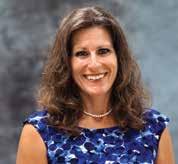

• Keep track of weight gain, which can influence the severity of snoring.
• Use adhesive nasal strips to hold the airway open.
• Try an over-the-counter mandibular advancement device, or “snore guard.”
C apital R egion H ea R ing
Health & Wellness
Diagnostic Testing · Digital Hearing Aids · Custom Hearing Protection The audiologists TRUSTED by the New York State Police Academy for the past 18 years CAPITALREGIONHEARING .COM WE PARTICIPATE WITH HEARING AID DISCOUNT PROGRAMS Patrick Bergmann, AuD Doctor of Audiology Victoria Harris, AuD Doctor of Audiology ALBANY 4 Palisades Drive 518-599-0068 WYNANTSKILL 9 West Sand Lake Road 518-326-1742 ALL MAJOR INSURANCES ACCEPTED SPRING 2023 | 55PLUSLIFEMAG.COM 53
Hobby Habits
Why hobbies are good for you mentally and physically
BY JOHN TORSIELLO
sureNotwhat to do in the free time you’ve found post-retirement or even as you’re winding down from full-time work? Taking up a new hobby or spending more of your newly found free time on a passion you’ve always had but have put on the back burner while working can be good for you mentally and physically.
“Hobbies can be a great way to stay mentally and physically active, which can help postpone age-related diseases such as dementia and Alzheimer’s disease by helping increase neuroplasticity,” says Beth Ehrichs, a life and executive coach and therapist in Albany. “That means your brain stays more flexible, just like your muscles do with training and stretching.”
Hobbies can also help adults meet new friends and increase their social support network or “village.” “Expanding your village and staying active socially as you age helps to stave off depression and loneliness,” Ehrichs says. “Many people 55+ become lonely as their children grow up and move out. Hobbies help reduce the void that frequently comes when the years of prioritizing your kids’ needs come to a full stop. Hobbies are also a great way for couples to reconnect after the kids move on to adulthood.”
If your hobby of choice is a more sedentary one crossword puzzles, building models or knitting Ehrichs suggests adding another more physical pastime to the mix for optimal health. “One way to counter the negative effects of hobbies that have you sitting for long periods of time is to incorporate a second hobby such as walking several times a week with friends or family.”
Judy Torel, a certified life coach and personal trainer with a focus on people over 50, thinks hobbies can also help older people relax a bit from the information overload so common in today’s world. “When you practice and become proficient
at a hobby, then your brain can actually go into autopilot mode and you can give it some time away from the daily barrage of new information and stimulus,” she says. “Hobbies such as sculpting or painting or knitting or sewing or gardening or walking all serve the purpose of providing ‘active mental rest,’ which is becoming uber-important in our current culture and in our second 50 years on the planet.”
Hobbies with repetitive movements or patterns provide a necessary mental reprieve, she says. “So, walking or jogging or elliptical machines, pottery wheel clay-making, knitting, digging in the dirt (gardening), swimming, bicycling indoor or outside, jewelry-making, calligraphy, dancing, golfing, tennis, woodworking, and martial arts are some ideas that involve repetitive movements so you can be conscious but also ‘zone out’ mentally from thinking about other things at the same time,” Torel says.
Tom D’Agostino, a clinical psychologist in Albany, believes hobbies can provide purpose in a person’s life at a time when people may be struggling to fill the void in a life that once revolved around working. “One of the most important aspects is that human beings strive for purpose. Our mental health can suffer when our actions are disconnected from intent, meaning and values,” he says. “While hobbies do not solve that dilemma, they can provide a vehicle.”
No one hobby is better than another, says D’Agostino. “That’s the cool thing. We have the freedom to define and learn what works best for us,” he says. “Obviously there are some limitations to that. I will say that in general hob -
54 55+ LIFE MAGAZINE | SPRING 2023 Lifestyle
Illustrations: iStockphoto.com/Oksana
Skrypichaiko.
bies that are destructive to our physical or mental health wouldn’t be in the category of ‘better.’ I’d also add that hobbies that are unrealistic given our circumstances can also become about something else and ultimately hurt our mind and body.”
David Seedy, managing partner of Flights2 Gamestore and Hobbies in Albany, says the period of isolation brought on by the COVID pandemic, while “awful,” was also a blessing as it relit long-forgotten loves of a simpler time with closeted hobbies. “There was a resurgence and explosive interest all of a sudden in all things hobby-related,” he says. “It was a refreshing breath of air for the industries that have been waning for almost two decades.”
While many may not consider volunteering a hobby, Erichs says volunteering can be a great way to boost your positive mood and feeling of being necessary, especially after retirement. “Volunteering with those less fortunate also helps us keep a positive perspective as we develop various aches and pains and other ‘delights’ of aging,” she says. “Helping others has been shown to improve our sense of well-being.”

There are as many hobbies as there are people, it seems. Model train collecting and building is a multimillion dollar industry that attracts kids and seniors alike. While there is an initial investment in the proper tools and equipment, woodworking is another hobby that attracts older individuals with time to spend in the shed or basement making a special chair or table for the home. Restoring automobiles is a hobby that attracts individuals nostalgic about the past.
It’s all a matter of choosing what’s right and fun for you and doing something that fits into your schedule or time allotment. Hobbies can keep our minds fresh and engaged and when that happens, the body follows. n


Helping seniors live their best lives. 182 Washington Ave Ext Albany, NY 12203 518-689-0453 daughtersofsarah.org Spacious, fully-private apartments Chef-prepared Kosher meals Individualized care plans Engaging social, educational, and entertaining activities SPRING 2023 | 55PLUSLIFEMAG.COM 55



CDPHP is an HMO and a PPO with a Medicare contract. Enrollment in CDPHP Medicare Advantage depends on contract renewal. Capital District Physicians’ Health Plan, Inc. | CDPHP Universal Benefits,® Inc. Y0019_23_23861_M f $0 primary care physician office visits f $0 mail order prescriptions on hundreds of medications f In-home support for companionship, help around the house, transportation, and more f Up to $75 in over-the-counter (OTC) health supplies from CVS f Vision and dental benefits with all plans offering enhanced dental coverage For more details call (518) 641-3400 or 1-888-519-4455 (TTY/TDD: 711) or visit www.cdphp.com/medicare. † Our hours are 8 a.m. - 8 p.m. seven days a week from October 1 - March 31. From April 1 - September 30, Monday –Friday, our hours are 8 a.m. - 8 p.m. A voice messaging service is used weekends, after-hours, and federal holidays. Calls will be returned within one business day. CDPHP Medicare Advantage plans received 5 out of 5 Stars overall from Medicare. (2023) Every year, Medicare evaluates plans based on a 5-star rating system. 5-Star Medicare Plans means you can still enroll! Confused about Medicare? We are local… and we can help! 518-929-1506 CapitalRegionMedicareSpecialists.com 56 55+ LIFE MAGAZINE | SPRING 2023
WhyWEIGHT?

Building muscle is critical to aging well
If 60 is the new 40, how do we ensure that we look and act like 40 despite the number of candles on our cake? The key is to avoid sarcopenia. That’s the scientific term for losing muscle mass and gaining fat as we age.
The repercussions of sarcopenia can be deadly because it increases our risk for falls and frailty. To keep sarcopenia at bay you’ve got to start weight training. In fact, twice a week strength/resistance training is recommended by the Centers for Disease Control in addition to 150 minutes of moderate to vigorous aerobic exercise.
If you’re looking for proof you can build muscle in your senior years, look no further than Tami Allen and Dottie Cummings. Allen is 80 years old and a powerlifter. This onetime horsewoman has had both knees and a hip replaced so her riding days are over. She tried CrossFit six years ago but realized it was a younger person’s sport, what with the tire-flipping and other activities that were too aggressive for her. As she says, she didn’t need to train for the Olympics but rather for her life. She wanted to be fit, maintain her strength, and improve her balance.
Allen joined Thrive Fitness & Wellness near her home in Columbia County and began working with fitness studio head trainer Derek Gelato. By November 2022 she was ready to compete in a powerlifting competition where this mother of four, grandmother of 14 and great-grandmother of five dead lifted 203.4 pounds, her personal best.
Today, Allen is in the gym three times a week and says she’s found camaraderie with other women who train there and inspiration from the younger folks who are working out. “You can’t wait and put off your life,” Allen says of her dedication, “because if you do, you’ll never do it.”
Dottie Cummings, 79, agrees. Like Tami she was always active. She ran through her 30s and then took up biking around age 50. While she still enjoys those activities and dancing, she says, a few years ago she realized her upper body strength was diminishing. Fear of becoming reliant on others to help her with daily activities sent her to the gym. Now she’s got no trouble opening jars, hauling a 40-pound bag of water softener pellets or bags of mulch for her garden,
and when she travels no one has to lift her suitcase to and from the overhead bin.
And there’s been another payoff. Before Cummings started the weight training program, she had all three markers for osteoporosis. Thanks to bone-building medication and weightlifting, only one marker remains. She’s proof of what the National Institute of Arthritis touts that weightlifting makes our bones denser. Bone-tissue growth is stimulated because when we do strength training the body to overcome gravity, causing your muscles to pull on your bones.
Paul Arciero is a professor of health and human physiological sciences at Skidmore College and director of the Human Nutrition and Metabolism Lab at Skidmore. “Resistance and strength training provide the pattern for living a life of independence,” he says.
But we also must make note of our diet. Arciero says that as we age our body loses its biochemical ability to utilize protein, key to muscle health. He encourages us to double the RDA values for protein consumption. Meat, fish, eggs, and Greek yogurt are all good protein sources. Legumes, lentils, and black beans, along with grains like barley and quinoa, are good plant-based complementary proteins. He also suggests creatine supplementation for muscle health. Studies show it can increase muscle mass and muscle strength.
Will weight training help you lose weight? Perhaps. But weight is only one metric for overall health. Feeling stronger, clothing that fits better, and an improved mental outlook are all benefits of keeping fat at bay and muscle front and center.
As for Allen and Cummings, they’ve both become emissaries, spreading the word about the value, importance and delight of strength training. That’s just another reason you’ll find Cummings in the gym three times a week. It’s not only for her well-being, she says, but to serve as proof positive that older women don’t have to be weak. Allen puts it this way: She wants to be known as the “hot old lady” in the crowd. n

SPRING 2023 | 55PLUSLIFEMAG.COM 57
BENITA ZAHN is a certified health and wellness coach working in the Capital Region. Visit benitahealthcoach.com.
Be Your Best
Benita Zahn photo by Michael Gallitelli.
Go to 55pluslifemag.com to see photos of Tami and Dottie at the gym!







58 55+ LIFE MAGAZINE | SPRING 2023 Ready to refresh your kitchen this spring? The appliance experts at Marcella’s Appliance Center are here for you, featuring the area’s best and largest selection of in-stock appliances from your favorite brands, including luxury appliances from Dacor. Get started on the kitchen of your dreams today. Shop in-store, by phone or online at www.marcellasappliance.com. Schenectady Showroom 560 Broadway, Schenectady, NY 12305 518-381-1957 Clifton Park Showroom Shoppers World, 15 Park Ave, Clifton Park, NY 12065 518-952-7700 Since 1957 Kimberly Square (518) 512-3033 Clifton Park Clifton Park Center (518) 982-0015 Lake Placid 2420 Main St. (518) 837-5104 Awarded Best Tincture & Topical 2019 Sold exclusively at
Making Memories
Recording loved ones creates lasting family keepsakes
 BY CAITLIN MANNER
amantha Costanzo Carleton says that she is really glad she wasn’t able to answer the phone a few years ago when her grandmother, Grandma Lily, called to sing “Happy Birthday” to her. “Something told me ‘You’re gonna want to save this.’ So I did. And I was one hundred percent right, because unfortunately she passed away very suddenly not long after that.”
When Carleton and her sister were growing up, they would usually stay with their grandmother in the mornings before school. It was a family tradition that on their birthdays she would be already sitting at the piano as they walked in the door, ready to sing “Happy Birthday” and “Las Mañanitas,” which is the Latin American version of the song. “Having that voicemail, I just pull it up every so often because it’s a little piece of this tradition we had as little kids that she started … that I now keep forever.”
Expecting her first child when she was interviewed for this article, Carleton, who is 30, is thankful that she will also be able to pass this memory down to her daughter in the years to come. “I was really immersed in the Cuban culture growing up [in California], and being out in Massachusetts, as much as I love it, it’s hard to maintain those connections and traditions,” she says. “Every bit that I have, I’m filing away for
[my daughter].”
Carleton’s story illustrates something that more and more people are discovering for themselves: that audio recordings of our loved ones are just as crucial to preserving our memories of them as photographs or any other memento. In fact, they might be even more special.
How sounds evoke memories
Sensory memory is “a mental representation of how environmental events look, sound, feel, smell, and taste.” Vivid details are processed as working memory and then rapidly erode as the brain clears space to process other things. But there is a long-term component of sensory memory that is often left to poets to describe. In literature, it’s called the Proust effect the moment when a taste or smell causes the mind to vividly recall a moment involuntarily.
While our senses of taste and smell (grouped because they are biologically linked) are legendary for evoking powerful moments of recollection, sound is more vague, it would seem. In studies, scientists have discovered that the same part of our brain that’s in charge of processing our sense of hearing is also responsible at least in part for storing emotional memories. Certain sounds, then, can trigger emotions that might’ve been lying dormant, although they’re just softer, in a
SPRING 2023 | 55PLUSLIFEMAG.COM 59 Health & Wellness
Photo: iStockphoto.com/fizkes.
Embracing Innovation to Improve Care and Provide Peace of Mind

At The Pines at Glens Falls, we know that providing exceptional care requires superior technology. The introduction of Circadia Health’s Contactless Remote Patient Monitoring System allows our teams to enhance the level of care our residents receive.


The symptoms of many illnesses such as pneumonia, bronchitis, COVID-19, and UTIs can be detected 2-3 days earlier by utilizing this remote technology that is placed in every patient room.
The FDA-approved system is supported by a panel of clinicians who analyze the data and medical records for each patient to look for patterns. It alerts our staff members when changes in condition occur.
The benefits of this technology include:

• Early detection of changes within residents that may not yet be visible to the eye
• Enables early intervention and treatment to be conducted in-facility
• Reducing and/or preventing admissions, readmissions, and emergency department visits
We make Senior Living Simple.
Senior care options can be overwhelming and confusing. We help families navigate all their options to live their best life. Getting the care they need while supporting their independence.
Oasis Senior Advisors is here to help, because the right place means everything.
Ray Shafer, CSA 518.930.6416

RShafer@YourOasisAdvisor.com
OasisSeniorAdvisors.com/Albany
170 Warren Street | Glens Falls, NY 12801
518.793.5163 | F: 518.793.5165
T:
www.PinesGlensFalls.com
NEVER MISS AN ISSUE! 55+ Life is now available for home delivery! Visit 55pluslifemag.com to get your annual subscription Get it delivered… 60 55+ LIFE MAGAZINE | SPRING 2023
sense. The sound of a familiar voice is more likely to evoke a powerful feelings than distinct memories, but these are just as important to preserve.
Ways to record your loved ones
Dozens of ways exist to record a loved one. Certain books, for instance, are designed for this very purpose. My husband’s grandfather, Papa Gene, used one to record himself reading “The Night Before Christmas” for my children before he passed. It’s easy to do: A microphone is embedded in the book’s spine, so you merely press a button and read aloud following the printed text. Each page is recorded individually and played automatically as the pages are turned.
Interviewing family members to capture their oral history is another option. Carleton’s family members also have recordings of her great-grandmother, Sara Maria. She was staying with a cousin of Carleton’s grandmother. “[The cousin] made two video recordings asking her all these questions about her history and it’s amazing, because there’s so much info there that I didn’t know! Down to her full name, which was in very classic Hispanic style she had like 10 names,” Carleton says. Sara Maria was “an absolute force of nature,” and Carleton is thankful that videos exist today documenting her vivacious energy. “The best part for me is that it’s not just the history … She lived to be 103, and the recording was made [a few years before that], so you get so much of her personality,” she says. “She kept getting sidetracked and asking things like, ‘What are you drinking? Is that wine?!’”
If you love someone with a memory-related condition like
dementia or Alzheimer’s disease, these recordings can be both challenging and poignant. When recording them, let the relative lead the discourse in order to avoid triggering any anxiety or frustration. You could ask questions like “When did you feel most alive?” or “Are there specific things you would want our family to know about you?”
For shorter snippets, like Carleton’s birthday songs, voicemails and voice memos are more than sufficient for preserving someone’s messages. Almost all smartphones and laptops are equipped with a voice memo app of some sort that could easily be used to save a digital recording. Along those same lines, your phone is a great tool for recording video, or you could use a hand-held digital recorder. If you don’t live near the person, you can easily record a Zoom call at the click of a button.
When to record your loved ones

There is no time like the present. Life famously throws curve balls when you least expect them, so if you want a recording of a loved one, don’t put it off.
If you’re not feeling a strong sense of urgency, you could start a tradition linked to a holiday your family likes to celebrate. Christmas is a great time of year to do it, as you’re already gathered and prone to reminiscing about years past. You could have different family members take turns recording each other, or have a “guest of honor” that everyone interviews in turn each year. However you do it, you’ll end up with a strong oral history and an important family heirloom to pass down for generations. n
SPRING 2023 | 55PLUSLIFEMAG.COM 61
Photo: iStockphoto.com/ SDI Productions.
Health & Wellness
Holy Sheet
When choosing sheets, are thread counts even important?
BY BRIANNA SNYDER
When it comes to picking sheets, you need to know this little secret: That whole “thread count” thing is kind of a marketing gimmick. There are so many other things to look for when you’re searching for the perfect set of sheets. According to the National Sleep Foundation, the kinds of yarns or threads used in sheets is often more important than the thread count. So let’s take a look at what your sheet packaging is trying to tell you.
What exactly does “thread count” mean?
“Manufacturers calculate thread count by adding up the vertical warp and horizontal weft yarns in a square inch of fabric,” reports the New York Times. High thread counts are often associated with softness (or beware “luxury”), but actually a higher thread count just means a thicker sheet. And that might actually be less comfortable, as heavier sheets tend to run hotter and breathe less. Plus, a 300 thread count on percale sheets is going to look and feel different than it does on sateen.
Most sheet manufacturers may be lying about that thread count.
Thread counts aren’t regulated, so there’s a lot of wiggle room in how you constitute a “count.” In 2016, the Huffington Post reported that in some cases, for example, manufacturers
might twist, or braid, several threads together, and then inflate the count. So a set of sheets with 125 vertical and 125 horizontal threads woven together aka a 250 thread-count set of sheets might include the braiding of those threads in threes, which gets packaged and marketed to you as a 750 thread-count sheet set. Woof.
So what does matter in picking good quality sheets?
As ever, the quality of fabric matters more than the quantity of its threads. You also want to do a little bit of experimenting to determine your preference. Sheets tend to be woven in two styles: percale (light, durable) or sateen (silky, wrinkle-resistant), and quality varies within each.
In your shopping, you’ve likely seen Egyptian, Turkish or Pima cotton on sheet labels. The New York Times reports that those terms may correspond with high quality -- but they also might not. A better indicator of quality is “long-staple cotton,” which indicates a longer cotton fiber. Longer fibers mean the finish is smooth, strong, and durable.
What’s price got to do with it?
Sheets are a little bit like wine when it comes to cost. Highly rated sheet sets exist for each budget, with a lot just depending on your preferences.

62 55+ LIFE MAGAZINE | SPRING 2023
iStockphoto.com.
Photos:
Couple, Nastasic; sheet texture: narcisa.
Home & Garden
AT A GLANCE
What are the ideal thread counts for popular fabrics? The New York Times breaks it down like this.
PERCALE

• Optimal: 250-300 threads
• Average quality: about 180 threads
But 200 can also be good. Going up to 400 or 500 threads could signal good-quality yarns, but they’re very likely to be pretty heavy sheets.
SATEEN
• Optimal: 300-600 threads
• Average quality: about 250-300 threads
John Hughes, owner and operator of the Gardner Farm Inn in Troy, says that when he first opened his bed-andbreakfast, he dressed the beds in Ralph Lauren and Calvin Klein sheets. He’s since discovered that the Kirkland sheets he replaced them with are better. “People have always said they like these sheets,” he says. At 100% Pima cotton, the Kirkland sheets run about $80 for a queen set, compared with about $120 for something similar by one of the name brands Hughes mentioned.

Which sheets should I pick?
We don’t know which ones you’ll like best, but here’s a checklist for you to keep on hand as you do your shopping.
• Look at the fiber content. For soft and affordable, you’ll have a hard time going wrong with 100% cotton, although cotton mixed with polyester is more affordable and wrinkle-resistant.
• Keep the thread count under 500. Anything higher is likely hot air. (Literally: If they’re actually sheets with a higher-than-500 thread count, you’re going to be very hot at night.)
• Make sure you know what size is best suited to your mattress. (Good Housekeeping recommends 15 inches as a good standard, but it’s not a bad idea to measure your mattress, especially if you have a topper.) n
SPRING 2023 | 55PLUSLIFEMAG.COM 63 Please Call for Rates and Information! 99 1924 - 2023
MEMORY
he small postcard announced the 50th reunion for Colonie Central High School’s class of 1972. Should I go? Rummaging through a pile of books in a closet, I found the yearbook. Looking at the bouffant hairdos and ’70s fashions, I was overcome by memories and dragged out my photo albums with the yellowing, poorly lit Kodak photos and started my trip down Memory Lane.
I got my first pair of bell bottoms at Denby’s on State Street in Albany in 1966. The British invasion was in full swing. Twiggy was on the cover of Vogue, and miniskirts with go-go boots were all the rage. In home ec. class, we made miniskirts that measured 15 inches from waist to hem while we learned how to install a zipper. I was Team Paul: Beatlemania had me swooning over the long-haired quartet who were irreverent and shocking to my parents, which made them even more attractive. I loved recreating Beatles’ harmonies as I

sang along on my 8-transistor portable radio until the 9-volt battery wore out.
To set the mood, I set my Pandora station to “’60s classics” and flipped through the photo album pages, humming along to The Rolling Stones, The Dave Clark Five, Herman’s Hermits, Tom Jones and Lulu. I recalled using my weekly allowance at Grant’s Department Store in Albany to buy the latest 45s of the Supremes’ “Stop! In the Name of Love” and the Four Seasons’ “Rag Doll.” Leslie Gore tapped into young love angst with “It’s My Party” and its follow-up teen revenge tune “Judy’s Turn to Cry.” The Beach Boys galvanized my imagination with their West Coast surfer vibe.
Funny how I can remember these lyrics without even thinking, yet I can’t remember what I did yesterday unless I look at my datebook.
Back then I looked forward to Saturday night dances at Pine Grove Methodist Church. Circling the dance floor until the music started and we could pair up, these events were precursors to future mating rituals. Squeaky cold metal fold-
64 55+ LIFE MAGAZINE | SPRING 2023 Essay
Illustration: iStockphoto.com/TheresaTibbetts.
LANE
ing chairs lined the walls of the church’s community room, the polished linoleum floor gleaming in the dim lights. Wearing Yardley pearlescent lipstick and Windsong perfume, I suited up for dancing to Steppenwolf’s “Born to Be Wild,” Lovin’ Spoonful’s “Do You Believe in Magic?” and Cream’s “Sunshine of Your Love.”

A few photo album pages later, I am in my hippie days, with embroidered peace signs on my frayed hip-hugger jeans, a fringed suede jacket, tie-dyed henley shirt and Frye boots. The proliferation of singer-songwriters like Joni Mitchell, James Taylor and Bob Dylan inspired me to get a guitar and start writing songs. Yeah, I wanted to be cool, Flower Power and all that. I begged my mother to let me go to the hip counterculture extravaganza that was Woodstock but was secretly glad when she said no. All that mud.
After high school I took off for art school in Boston for a brief stint before realizing tuition and art supplies were a luxury trumped by rent and groceries. Dropping out, my idealism was crowded out by pragmatism, evolving with my
Recalling our past in the present
BY VALERIE DELACRUZ
paycheck and “grown-up” concerns, along with my style.
A few pages further in the photo album, I see the more sophisticated mid-’70s styles: flared pants so long they covered my platform shoes, Diane Von Furstenberg’s iconic knitted jersey wrap dress, paisley and flame-stitch prints and lots of no-iron polyester. By the end of decade, disco had turned everything upside-down and the Bee Gees’ “Saturday Night Fever” spawned the catchy “Stayin’ Alive” and John Travolta’s white three-piece suit. My long straight hair was tortured into curly perms.
On a mission to streamline “stuff,” I’m condensing all of these photos into one concise album showing the timeline of these changes. It’s true what they say about everything coming back around. I’m wearing bell bottoms and listening to the soundtrack of my youth as I sift through them.
And on the night of the reunion, I took my time gussying up, shaving my legs (why? no one would see them), carefully applying makeup and styling my hair. I was ready for my close-up.
I even sprayed on some Windsong perfume. n
SPRING 2023 | 55PLUSLIFEMAG.COM 65
You Just Gotta LAUGH
Laughter really is the best medicine
BY ROD MICHAEL
Iwas trying to remember the other day the last time I laughed so hard my stomach hurt. Even though I have been taking Prevagen extra strength, at that I could not remember. So, I think it is safe to say over a few months ago.
When I was kid, I laughed at just about anything. A weird noise, a stupid joke, or even the dog doing something it should not have been doing in the house. You know what I mean about the dog, don’t you? My mother would tell me to knock it off, that the neighbors might start talking about me. I thought to myself, maybe they need to laugh a little more themselves.
It is said that a kid laughs over 300 times a day and that most adults struggle to get 15 chuckles or snorts out. I realize that as we grow older life seems to get in the way, but come on now, we all need a good laughing jag, don’t we?
Can a giggle a day keep the doctor at bay? When we laugh our body releases feel-good chemicals called endorphins. These endorphins can help with chronic pain, improve mood and reduce stress. Laughing also increases our intake of oxygen-rich air, stimulating our heart, lungs and muscles. While negative thoughts can manifest into chemical reactions, decreasing our immunity, positive thoughts can release neuropeptides that relieve stress and potentially more serious illnesses. Laughter can help cope with difficult situations and improve our ability to connect with other people.

If you are struggling with your sense of humor, try watching a funny video or an old sitcom, or go online and download some knock-knock jokes clean or dirty! This past summer, a good friend sent me a video of someone breaking wind yes, you know what I mean! I lost it. I could not breathe for five minutes and, like a nut, I kept watching it over and over again. I refuse to delete it from my phone; it
is hysterical.
So, if you are having a bad night, put on some music and break out some of your old dance moves (or invent new ones). Learn some simple stupid jokes and share them with someone. Go to a comedy club or give me a call, and I will send you that video!
I must admit, our family does a fair amount of laughing. This past Christmas we went to my son and daughter-inlaw’s house to celebrate. We were slowly opening our gifts one at a time and sharing them as we went. We had just finished opening the last of our gifts when my daughterin-law screamed, “Wait, I forgot, there is one more gift for you!” She walked out of the room and paraded back in with what looked like a very nicely wrapped wine bottle. She handed it to me and started laughing hysterically. I turned to her and said, “What the heck is going on here?” She said, “Open it!.”
I pulled a bottle of wine from the wrapping. It was half full, with a cork stuck loosely in the end. I said, “What the h-ll is this,” as well as a few more expletives. The room went wild with laughter as she said, “Do you remember the other night when I called you about this bottle of wine?” I said, “You mean the one you could not stand?” She said, “Yes, that one. So here it is. You can have the rest of it!”
I reminded her that I had suggested she dump it down the drain, but it was too late. The whole room was in tears! It was a Merry Christmas after all.
There are a couple of takeaways. The first is, I cannot wait until her birthday; it is going to be a doozy. The second is never give Rod Michael a half-bottle of wine; I have a lot of stress that I need to get rid of!
Laughter is the best medicine. Go on, give it a try, even if the joke is on you! n
66 55+ LIFE MAGAZINE | SPRING 2023 The Vine
iStockphoto.com/Marcelo
Photo:
Fabian Mollaretti.



We put the spring back in your step. Celebrating ten years of Saving Lifestyles® through whole orthopaedic care. (518) 489-2663 | orthony.com
