Alopecia-Hair Loss From Flea & Ticks
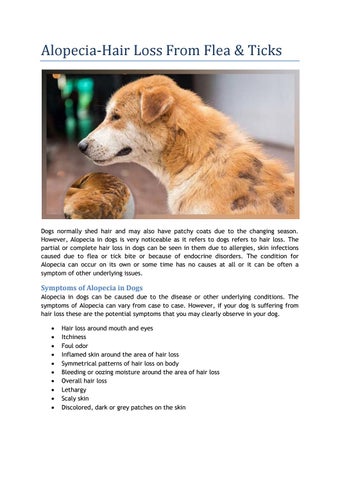
Dogs normally shed hair and may also have patchy coats due to the changing season. However, Alopecia in dogs is very noticeable as it refers to dogs refers to hair loss. The partial or complete hair loss in dogs can be seen in them due to allergies, skin infections caused due to flea or tick bite or because of endocrine disorders. The condition for Alopecia can occur on its own or some time has no causes at all or it can be often a symptom of other underlying issues.
Symptoms of Alopecia in Dogs Alopecia in dogs can be caused due to the disease or other underlying conditions. The symptoms of Alopecia can vary from case to case. However, if your dog is suffering from hair loss these are the potential symptoms that you may clearly observe in your dog. • • • • • • • • • •
Hair loss around mouth and eyes Itchiness Foul odor Inflamed skin around the area of hair loss Symmetrical patterns of hair loss on body Bleeding or oozing moisture around the area of hair loss Overall hair loss Lethargy Scaly skin Discolored, dark or grey patches on the skin
Causes of Alopecia In Dogs Allergies-Allergies are a frequent cause of hair loss in dogs. This can occur due to parasitic triggers such as fleas and ticks. These are everlasting creatures which can affect your dog in a way that he suffers from painful and itchy skin that ends up causing hair loss.
Infection or Infestation-Parasite such as fleas, ticks and mites not only cause allergies but is also another source for alopecia in dogs. It causes hair loss around the eyes, ears, abdomen, chest; the signs of inflammation and redness indicate that your dog may have mites or fleas and ticks.
Cushing’s disease- This is a condition where the body overproduces steroid hormones, can cause hair loss as well. Cushing’s disease also known as Hyperadrenocorticism is a condition caused due to the prolonged exposure of the body’s tissue to excessive levels of the hormone cortisol.
Pressure Sores-Decubital ulcers also known as pressure sores are generally injuries that can happen when a dog’s elbow or bony pressure points come into contact with hard surfaces regularly. This constant pressure and friction cause the skin to callus, lose hair and that sometimes crack and bleed.
Other Causes of Alopecia In Dogs • • • • • • • •
Injuries and scarring Nervous behavior like chewing and licking Thyroid issue Diabetes Reaction to splinter, glass or other foreign bodies in the skin Exposure to chemotherapy Hormonal Imbalance Skin Cancer
Diagnosis of Hair Loss In Dogs It is imperative for pet parents to immediately take your pet to the veterinarian when they’re experiencing hair loss and treat the condition. Moreover, the diagnosis of hair loss in dogs is based on his skin condition, symptoms and pattern of hair loss.
Biopsy-This is done to check the presence of skin cancer or tumor in dogs. A sample of the affected skin area is sent to the laboratory to determine diagnosis and treatment.
Blood Profile-It is the normal bloody testing to detect hormone abnormalities, thyroid disorder, immune system conditions and diabetes.
Skin Scrapping-This is where the dog’s skin is scraped with a blade to gather hair follicles on to a slide to detect the presence of mange mites.
Allergy Testing-Blood or skin test is done to track down the list of potential allergens
Allergen Elimination Trials-Allergen elimination refers to the elimination of certain shampoos and drugs, hypoallergenic diet or treating fleas that may reveal an allergy the pet has.
Pattern of Hair Loss- Whether generalized, symmetrical, patches of hair loss or hair loss from the paws and face can indicate conditions and signs of different skin diseases in dogs.
Treatment and Prevention of Alopecia in Dogs The treatment for alopecia in dogs may vary depending on the cause of the problem Cushing’s disease may require steroidal treatment and if there is a glandular tumor it should be surgically removed. For allergic reaction or flea and tick infestation, you should provide flea and tick preventions to your dog. Flea and other insect control methods may help to reduce hair loss due to mange mites and fleas. Hair loss in dogs is not much to worry about unless it’s accompanied by other physical symptoms or signs of infection. Ensure to consult your vet before providing any treatment by yourself. Do not ignore the signs of hair loss in your dog.
Reference:-
http://budgetpetworld.weebly.com/home/hair-loss-or-alopecia-indogs-symptoms-causes-and-treatments