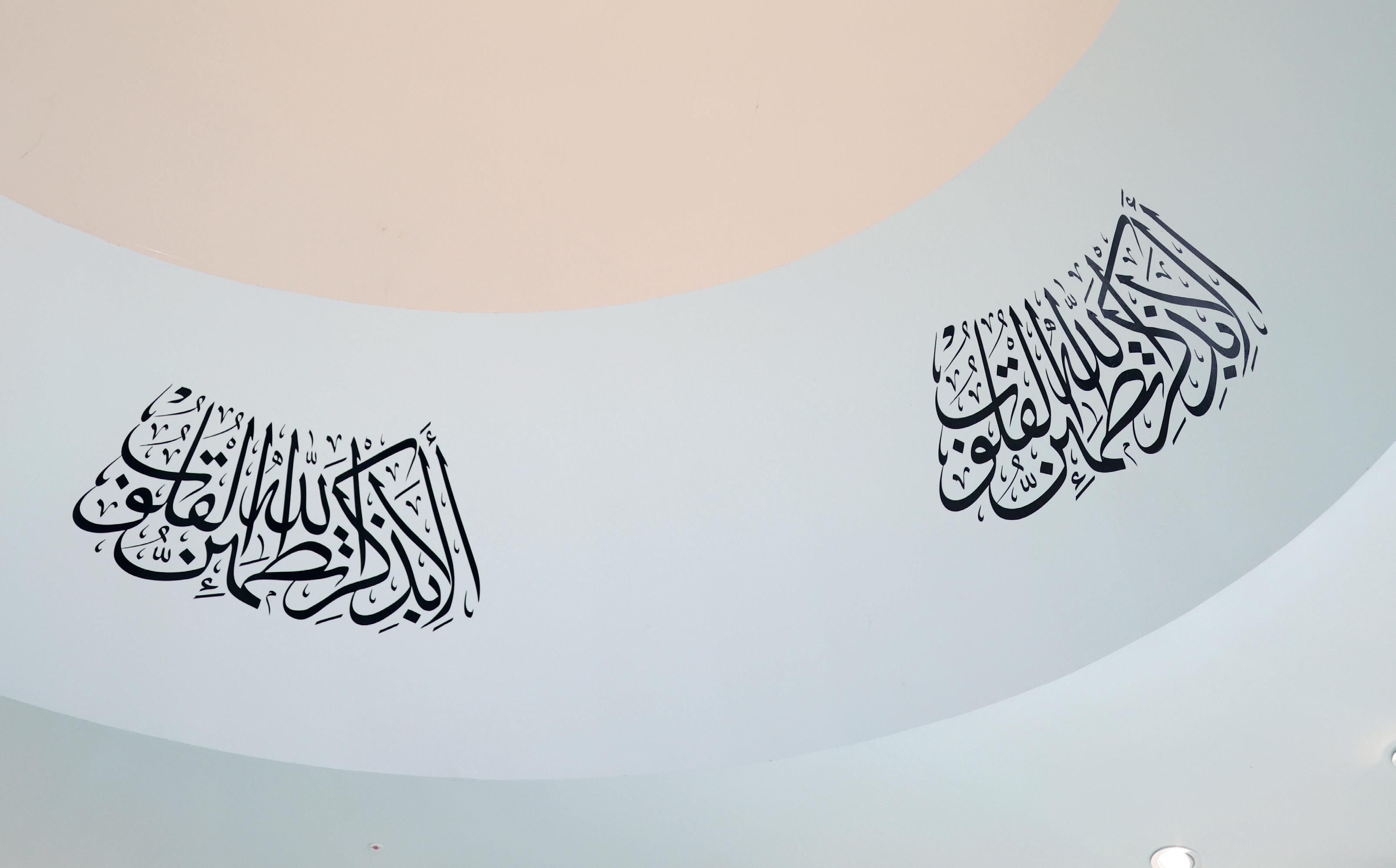
In the backdrop of a growing war and straitening economic circumstances, a question naturally arises: what are we celebrating and how should we go about it? This is a pertinent question, and its answer is simpler yet more profound than you might realise.
In Ramadan, Muslims often familiarise themselves with the pangs of hunger and thirst
associated with fasting from dawn to dusk. We also come to terms with the fact that whereas we exercise renunciation voluntarily, others suffer out of helplessness. In an increasingly individualistic world, Islam instils a sense of empathy and responsibility towards those less fortunate than us.
Continued on page 3
Eating dates before Eid prayer
Hazrat Anas bin Malikra narrated: “Allah’s Messengersa would not go out on the day of Eid al-Fitr until he had eaten a few dates.” In another narration, he said that he would eat them in an odd number.
(Sahih al-Bukhari, Kitab al-‘idayn, Bab al-akli yawma al-fitri qabla l-khuruj, Hadith 953)
Restlessness for a beggar
One day, when the Promised Messiahas was entering his home after offering the Prayer, a beggar asked to be given something, but due to the large number of people present at the time, his voice could not be heard clearly. The Promised Messiahas returned after entering his house and ran his servants here and there to call the beggar, but he could not be found. In the evening, the person returned again. When he made his request again, the Promised Messiahas took something out of his pocket and gave it to him. After a few days, on a certain occasion, the Promised Messiahas said: “The other day when that beggar could not be found, there was such a burden on my heart that I felt extreme unease. I was fearful that I had committed a sin by not paying attention to the beggar and by going into my home too soon. I am thankful to Allah the Exalted that he returned in the evening. If not, God knows how perturbed I would have been. I had also prayed to Allah Almighty so that He would bring the person back to me.”
(Malfuzat [English], Vol. 2, pp.173)
Hazrat Mirza Ghulam Ahmadas, In His Own Words
This Week in History
20 - 26 March
A glimpse into the rich history of the Ahmadiyya Muslim Jamaat
20 March
20 March 2004: On this day, during his tour of Ghana, Hazrat Khalifatul Masih Vaa visited the Ashanti region of the country, visited various institutions of the Jamaat and granted audiences to the local Ahmadis. Moreover, Huzooraa visited the Ahmadiyya Hospital in Asokore and then departed for Kumasi, where Huzooraa visited the mission house. When Huzooraa stood on the balcony on the third floor of the mosque, thousands of Ahmadis were present outside the building, reciting taranahs and waving their hands, showing their love for Hazrat Khalifatul Masihaa. (Al Fazl, 2 April 2004, p. 8)
20 March 2015: At the occurrence of the solar eclipse on this day, Hazrat Khalifatul Masih Vaa led the salat al-kusuf (eclipse prayer) at the Fazl Mosque in London during the period of the solar eclipse. Following the prayers, Huzooraa delivered a short sermon in which he narrated the sayings of the Holy Prophetsa in relation to the significance of eclipses.
Later in the day, during his Friday sermon, Huzooraa said that according to the sayings of the Holy Prophetsa, the occurrence of a solar and lunar eclipse was prophesied as a sign of the coming of the Promised Messiahas and was fulfilled during the lifetime of the Promised Messiahas.
21 - 23 March
21 March 1891: Hazrat Hakeem Maulvi Noor-udDeenra served in the state of Kashmir for years. On this day, in a letter to him, the Promised Messiahas highlighted his help for Jamaat in the following words:
“Your employment is of great benefit to us. Its exterior may seem worldly, but intrinsically, it is all for the faith.
“Although there is a great conflict going on, there seems to be divine wisdom behind you being stationed at such a place.”
For more details about his life in Kashmir, see “Pursuit, betrayal and triumph: The formative years of Hazrat Hakim Maulvi Nuruddin” at alhakam.org (27 May 2022, p. 6).
22 March 2016: Hazrat Khalifatul Masih Vaa strongly condemned the terrorist attacks that took place on this day in Brussels, saying: “On behalf of the Ahmadiyya Muslim Community worldwide, I express my deepest sympathies and condolences to the Belgian people following the barbaric terrorist attacks that have taken place in Brussels. Such heinous and utterly inhumane attacks must be condemned in the strongest possible terms.” (“Head of Ahmadiyya Muslim Community condemns Belgium terrorist attacks”, www.pressahmadiyya.com)
23 March 1951: On the completion of the major construction work of the Mubarak Mosque, Hazrat Musleh-e-Maudra delivered his Friday sermon at Mubarak Mosque, Rabwah, on this day and, to mark the inauguration, led the congregation in a long prostration of gratitude. (Khutbat-eMahmud, Vol. 32, p. 48)
For a further read, see: “Masjid Mubarak – A blessed mosque” at www.alhakam.org (18 May 2019, pp. 21-23).
23 March 1989: On this day, members of Jamaat-e-Ahmadiyya UK had the good fortune of spending this blessed and historic day in the presence of their beloved Imam, Hazrat Mirza Tahir Ahmad, Khalifatul Masih IVrh and witnessed the centenary celebrations.
To learn more, read “Memories of the 23 March 1989 centenary celebrations: A page from the history of Ahmadiyyat” at www.alhakam.org (9 July 2021, pp. 12-14).
23 March 2012: Hazrat Khalifatul Masih Vaa discussed the contributions of Ahmadis to Pakistan and highlighted some significant
historical events during his Friday sermon on this day, which marks Pakistan Day. He fervently prayed for both Pakistan and the Ahmadis living there, emphasising the dire need for prayers in light of the increasing political unrest and the alarming state of the country.
24 - 26 March
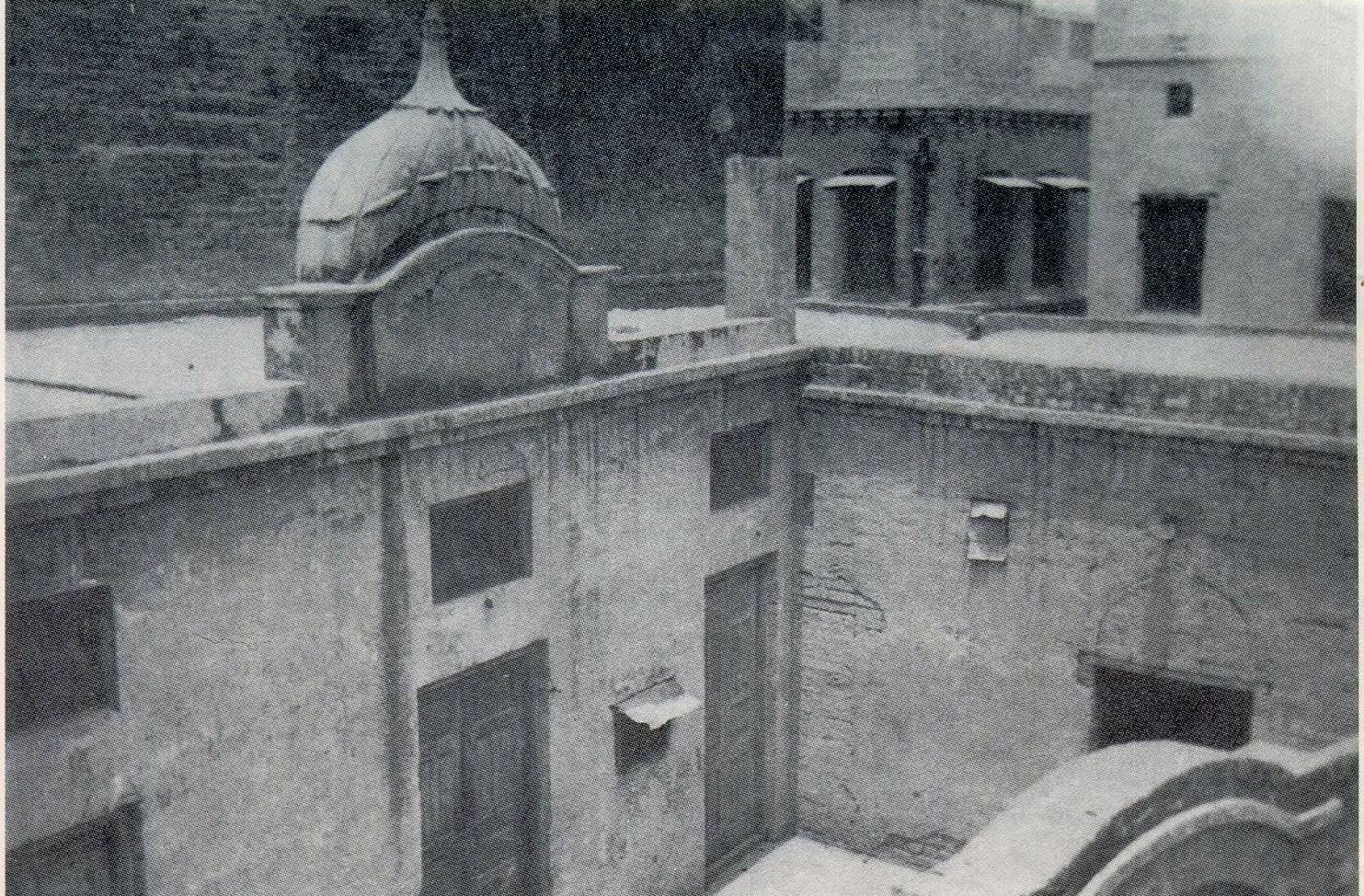
24 March 1936: Hazrat Musleh-e-Maudra led the congregation in prayer to mark the inauguration of a new mosque in Retichalla, a neighbourhood in Qadian, India.
Construction of the mosque had been stalled since 1935 due to government officials. On this day, on its completion, Huzoorra inaugurated it with prayers. (Tarikh-e-Ahmadiyyat, Vol. 7, p. 305)
25 March 1910: The Jalsa Salana, which had been postponed in December 1909, commenced in Qadian and spanned three consecutive days starting on this day. It was attended by 3,000 people. During the Friday sermon of Hazrat Khalifatul Masih Ira on this day, some members were assigned to repeat and echo the words of Huzoorra so that everyone in the large audience could clearly hear his voice. (Tarikh-eAhmadiyyat, Vol. 3, p. 316)
26 March 2004: While Hazrat Khalifatul Masih Vaa was visiting Burkina Faso, the Prime Minister of the country, Paramanga Ernest Yonli, met him on this day.
After the meeting, Huzooraa addressed a press conference in which a delegate asked about the purpose of the meeting with the president. Huzooraa said that it was a courtesy visit. Another asked about the purpose of Huzoor’saa visit to West Africa, to which Huzooraa said that he came to meet his people. (Al Fazl, 9 April 2004, pp. 3-4)
Striving for true Tawhid, love for the Holy Prophet Muhammadsa and prayers for the Muslim Ummah
During his Friday sermon, delivered on 13 March 2026, Hazrat Mirza Masroor Ahmad, Khalifatul Masih Vaa, emphasised the paramount importance of establishing true Tawhid (the Unity of God) alongside cultivating a profound love for the Holy Prophet Muhammadsa. He urged the Jamaat to elevate their faith and readiness for every sacrifice and reiterated the need for earnest prayers for the survival
Continued from page 1
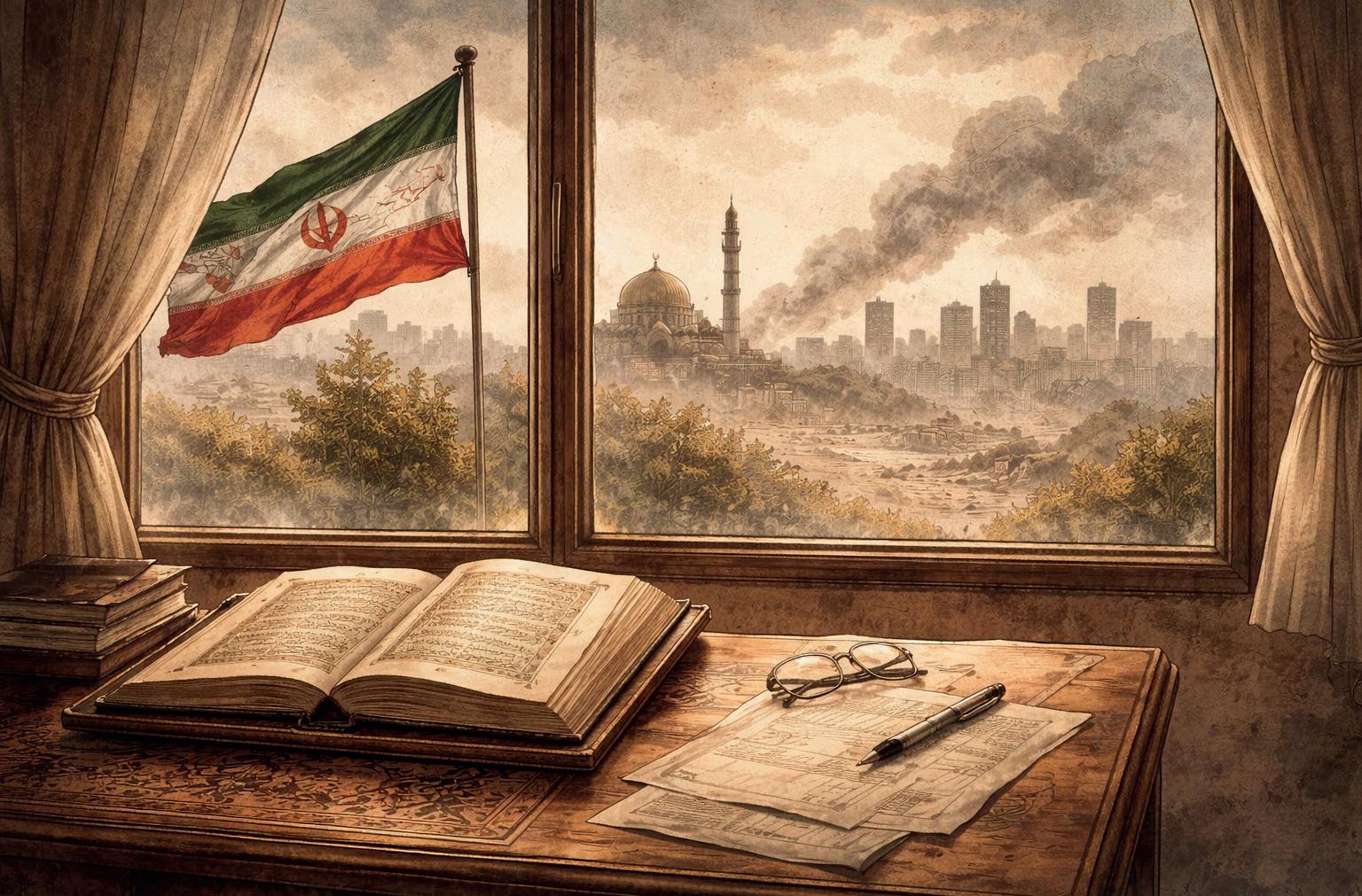
This month of fasting during Ramadan culminates in a day of celebration: Eid. The word itself means a festival, literally meaning a day that returns. This is a happy day for those believers who spent Ramadan in abstinence and worship. But the world is deeply troubled today. Whether it’s the war in Iran or the travesty in Gaza, the state of the world is frightening and begs the question: how do we celebrate Eid?
Hazrat Khalifatul Masih Vaa beautifully explains:
“It should be remembered that Eid, in reality, means joy, and joy is experienced when a person achieves success. If there is no success, then no sensible person would feel happy; rather, they would grieve over failure. Thus, we must view Eid in this light. When someone celebrates Eid, they are in fact claiming success. Therefore, each of us must reflect on whether we have truly achieved success and whether we have the right to celebrate Eid because of it.
“It is worth pondering: if we designate one day as Eid, wear fine clothes, eat well, create outward festivity, make noise, attend and host gatherings – these all involve spending. These things are not free. So if an Eid only involves spending and gives us nothing in return, then it cannot be a true Eid. At best, it gives temporary happiness.
“True Eid is that which gives us something – it is an inner Eid, a spiritual Eid, a heartfelt Eid. It is the Eid that nourishes the soul and grants us something meaningful. For a Muslim, the greatest treasure is to attain the pleasure of Allah – and this is the true Eid, because in it lies real success.” (Al Fazl International, 24 November 2020, p. 6)
In Ramadan, we often make a great effort to align our will with God’s will, performing greater worship than we usually would. Eid comes around to remind us to maintain and increase that standard, understanding that there is nothing like spiritual happiness or fulfilment. Unlike an outward display of happiness that dissipates as the day progresses, a spiritual Eid never ends.
Hazrat Khalifatul Masih IIra states:
“What is Eid? It is to meet God. Therefore, take a lesson from the day of Eid and strive to meet God – such striving that never becomes weak. If you attain this, then there will be no sorrow that cannot be removed and no comfort that cannot be achieved. One who finds God cannot be
and spiritual awakening of the wider Muslim Ummah. He said:
“Thus, this is true Tawhid, the pursuit of which we ought to strive for and seek with earnestness. We should endeavour to raise our faith to that standard at which we stand ready for every sacrifice. We should also cultivate within ourselves a true love for the Holy Prophetsa. In this age, Allah the Exalted has sent the Holy Prophet’ssa
saddened by any death, nor hurt by anger. […]
“No death of a loved one, no conflict, no trial, no illness can make such a person truly sorrowful. So if you desire Eid, know that it is not about wearing white clothes or eating sweet dishes. True Eid is establishing a relationship with God and reconciling with Him. “When this Eid comes, it never departs. There is no evening to this Eid. No era can end it. That day is such that its Eid never finishes. […]
most ardent devotee in order that the work of establishing Tawhid may continue and we have entered into his bai‘at [pledge of allegiance]. Therefore, we ought to strive with all our strength to fulfil its due and we should also pray for this. During the remaining days of Ramadan, we should especially pray that, in establishing Tawhid and in showing zeal for its honour, we may be foremost among all people. May Allah
“This Eid neither ends in this world, nor in the grave, nor in the hereafter. Rather, it begins here and reaches its peak in the next world.” (Khutbat-e-Mahmud, Vol. 1, p. 85)
A great deal of suffering exists in the world today. Humanity faces dark times indeed. In such a state, alongside creating an Eid that lasts forever, we bear a great responsibility. Hazrat Khalifatul Masih IIra tells us what this responsibility is:
“Pledge today that by the time the next Eid comes, a transformation will
the Exalted grant us all the ability to do so and remove our weaknesses. [Amin.]
“Pray also for the Muslim Ummah, as I said last Friday as well; may they too come to understand true Tawhid and act upon it. Only then can they survive; only then can they be safeguarded against the deceitful Dajjali schemes of their enemies. May Allah the Exalted grant them this ability as well.” [Amin.]
be evident within you. In fact, begin this transformation from now. This is a very critical time. In thirteen hundred years, Islam has not faced a time like the present. That is why God has kept for the followers of the Promised Messiahas the same rewards that were granted to the followers of the Holy Prophetsa. If we lose this opportunity, we may never get such a time again.
“Therefore, strive so that the truth of Islam becomes manifest to the entire world and all people enter its fold. Then whatever great rewards anyone has ever attained will be granted to us, and the doors of those blessings will open for us. That will be the true time of Eid – when we achieve these rewards and spread the religion of God throughout the world.” (Khutbat-eMahmud, Vol. 1, p. 47)
These words of Hazrat Khalifatul Masih IIra ring true today more than ever before. Everything mentioned above can be acted upon. And with the blessings of Khilafat, we can find the best example of celebrating Eid in our world today. With regards to how his Eid looks, Huzooraa tells us:
“Before Eid prayer, normally I spend some time preparing my khutba. And after Eid, when I come home, I see my children, my family members and also, I call some of my friends, my relatives and say ‘Eid Mubarak’, or receive calls from them. And then, normally, I come to my office and start working again.
“Then after the Zuhr prayer, I take lunch with my family members and after that, my routine work starts again, as I spend on normal days. So, there is not much difference apart from this, that on Eid days, I receive ‘Eid mubarak’ calls from different people and also, at the same time, I sit together with my family members for one hour and take my lunch with them.” (Mulaqat With Atfal, Northern Regions UK, 1 May 2021)
In the modern era, this gives us a glimpse into how believers should spend their Eid. As we share our happiness with our loved ones, we must not forget the bigger picture: a true Eid that lasts forever can only be attained when we decide to change our definition of celebration to fit what Islam has taught us. Continuing the deeds of Ramadan, we must remember Allah and His creation; we must work hard to create peace where dark forces seek to create war.
May Allah enable us to do so. Amin and Eid Mubarak!
Answers to Everyday Issues
Barzakh, death of children and supplications in ruku‘ and sujud
Guidance regarding basic Islamic issues that Hazrat Amirul Momineen, Khalifatul Masih Vaa, has given on various occasions in his written correspondence and during MTA programmes is being published officially below for everyone’s benefit.
What is the Islamic concept of Barzakh?
Someone from Sri Lanka wrote to Hazrat Amirul Momineen, Khalifatul Masih Vaa, stating that the Promised Messiahas said he saw a vision of the realm of Barzakh [the intermediate state], in which some faces were dark and some were radiant. He asked, “Is the realm of Barzakh in this world or somewhere else, because according to Hadith, Heaven and Hell are in this world?”
Huzoor-e-Anwaraa, in his letter dated 15 November 2023, provided the following guidance regarding this question:
“Heaven, Hell and the realm of Barzakh are all such things that cannot be construed literally. Although they are the creation of God Almighty and part of His universe, we cannot see them with these worldly eyes. Rather, as you have written in your question that the Promised Messiahas said he saw Barzakh in a visionary state of kashf, similarly, possessing a visionary and spiritual eye is essential to knowing the true nature of these things.
“The reality is that due to not understanding the matters mentioned in the Holy Quran and ahadith regarding Heaven and Hell, etc. and construing them literally, people have developed misconceptions about these things in their minds. Yet, the Quran and Hadith have used these physical words as metaphors and allegories to make man understand Heaven and Hell. However, it is also a fact that alongside these allegorical words, the Holy Quran has also stated regarding Heaven:
“‘And no soul knows what joy of the eyes is kept hidden for them, as a reward for their good works.’ (Surah as-Sajdah, Ch.32: V.18)
“Similarly, it is mentioned in a hadith that the Holy Prophetsa said that the bounties of Heaven are such that:
“‘No physical eye has ever seen them, no physical ear has ever heard of them and no thought of them has ever crossed the heart of man.’ (Sahih al-Bukhari, Kitab tafsiri l-qur’an, Bab qawlihi ‘fa la ta‘lamu nafsun ma ukhfiya lahum min qurrati ’a‘yun’)
“Thus, Heaven, Hell and the realm of Barzakh are all such things that we can neither see with our physical eyes nor comprehend them solely through intellect. Rather, a visionary and spiritual eye is required to perceive them; moreover, our knowledge is dependent entirely upon what God Almighty Himself or His Messengersa has told us about them. Expounding upon the reality of Heaven and Hell, the Promised Messiahas states:
“‘According to the Holy Quran, Hell and Heaven are both reflections of a man’s life and are not something new that comes from outside. It is true that in the Hereafter they will be manifested physically, but they will be reflections of the spiritual conditions of man in this life. We do not conceive of Heaven as containing material trees, nor of Hell as full of brimstone and sulphur. According to Islamic teachings Heaven and Hell are the reflections of the actions that a person carries out in this world.’ (Islami Usul Ki Falasafi, Ruhani Khazain, Vol. 10, p. 413)
“Explaining the reality of the realm of Barzakh, Huzooras states:
“‘The second is the intermediate state, which is called Barzakh. In the Arabic idiom, Barzakh is something which is situated between two other things. As that state will be between the first creation and the resurrection, it is called Barzakh. This expression has always been employed for the intermediate state. [...] All this shows that, according to Islamic principles, for the soul to act perfectly, it is necessary for it to enjoy the companionship of a body at all times. On death, the soul departs from this mortal body, but in the intermediate state, every soul is invested with a body in order to enable it to react to the conditions of that state. That body is not like this physical body, but is prepared from light or
from darkness, according to the quality of the person’s actions in this life, as if a man’s actions serve as a body for the soul in that state. In the Word of God, it is repeatedly mentioned that some bodies will be bright and some will be dark. They will be prepared from the light or from the darkness of human actions. This is a fine mystery, but it is not opposed to reason. A perfect human being can enjoy an illumined body in this very life and there are many instances of this which are experienced in a state of vision. This may be difficult of comprehension by a person of average intelligence, but those who have some experience of the state of vision will not regard such a body as is prepared from human actions as a matter of surprise and improbability, but will duly appreciate this phenomenon. In short, this body, which is acquired according to the condition of one’s actions, becomes a source of the recompense of good and evil in the intermediate state. I have experience of this. I have often had experience in a complete state of wakefulness of meeting some persons who had died and I saw that the bodies of some evil-doers and misguided ones were so dark as if they had been made of smoke. In short, I am personally acquainted
with these matters and I affirm emphatically that, as God Almighty has said, everyone is invested with a body after death, which is either bright or dark. It would be a mistake on the part of man to seek to establish these fine insights through the mere exercise of reason. It should be realised that, as the eye cannot discover the taste of something sweet, nor can the tongue behold anything, in the same way, the knowledge of the life after death, which can only be acquired through holy visions, cannot be explained fully on the basis of reason. God Almighty has appointed diverse means for acquiring knowledge in this world of that which is unknown. Therefore, it is necessary to seek everything through its proper means. It is only then that it can be discovered.’ (Islami Usul Ki Falasafi, Ruhani Khazain, Vol. 10, pp. 403-406)
“Furthermore, regarding the realm of Barzakh, it should also be remembered that it is not merely a waiting room; rather, the process of reward and punishment will begin in this very realm and after the reckoning on the Day of Resurrection, the righteous and the wicked will be sent to their ultimate destinations. That is, the righteous will receive high ranks in Heaven according
to their good deeds and as for the sinners, if the punishment they suffer in the realm of Barzakh is completed there, they too will be admitted into Heaven. Expounding upon this subject, the Promised Messiahas states:
“‘An ignorant person might object that, as the third state, which is the state of resurrection, would arrive after a long period, the state of Barzakh would only be a sort of lock-up for the good and the bad and this would be purposeless. The answer is that this is a misunderstanding which is due to a lack of knowledge. In the Book of God, there are two states mentioned for the recompense of the good and the bad, one of which is the state of Barzakh, in which everyone will receive his recompense in a covert manner. The wicked would enter Hell immediately on death and the virtuous would find comfort in Heaven immediately after death. There are several verses in the Holy Quran to the effect that every person will, immediately on his death, encounter the recompense of his actions. For instance, it is said concerning a righteous one:
“‘[‘It was said to (him), ‘Enter Paradise.’’ (Surah Ya Sin, Ch.36: V.27)]
“‘That is, his Lord said to him: Enter thou into paradise; and concerning a wicked one it is said:
“‘[‘And (he will) see him in the midst of the Fire.’ (Surah as-Saffat, Ch.37: V.56)]
“‘This has reference to two friends, one of whom was admitted to Heaven and the other was condemned to Hell. The one who was admitted to Heaven was anxious to find out where his friend was. He was shown that his friend was in the midst of Hell. Thus, reward and punishment start immediately and those condemned to Hell go to Hell and those who are to be admitted to Heaven go to Heaven. But thereafter, there is a day of grand manifestation
which has been appointed out of the great wisdom of God. He created man so that He should be recognised through His power of creation. Then He will destroy everything so that He might be recognised through His Supremacy over everything and then He will gather everyone after bestowing perfect life on them so that He might be recognised through His Power.’ (Islami Usul Ki Falasafi, Ruhani Khazain, Vol. 10, pp. 407-408)”
In Islam, what happens to children who die young?
A lady from Switzerland, mentioning the passing of her nephew, enquired from Hazrat Amirul Momineen, Khalifatul Masih Vaa:
1. Do children who pass away at a young age remain children in Heaven? And is the door to Heaven opened for parents who lose their child?
2. Will all children in Heaven be under the care of Prophet Abrahamas?
3. When we visit someone’s grave, is the deceased informed that someone has come to their grave?
4. Could you prescribe a prayer for this bereavement?
Huzoor-e-Anwaraa, in his letter dated 19 November 2023, provided the following answer:
“Various matters have been mentioned in ahadith regarding children who pass away at a young age, which are, in fact, a source of patience and comfort for parents over this bereavement. Accordingly, Abu Hassan narrates: ‘I said to Hazrat Abu Hurairahra, ‘Two of my sons have died. Would you narrate to me any hadith of Allah’s Messengersa by which you may comfort our hearts regarding our deceased?’ Hazrat Abu Hurairahra replied, ‘Yes, the young children of Muslims are the little fishes [da‘amees] of Paradise. When one of them meets his father or parents, he will take hold of his garment or his hand, just as I have taken hold of the hem of your garment. Then, he will not let
go of it until Allah the Almighty admits him and his father or parents into Paradise.’’
(Sahih Muslim, Kitab al-birri wa s-silati wa l-adab, Bab fadli man yamutu lahu waladun fa yahtasibuh)
“The reason these children are referred to as da‘amees, meaning little fishes, is that just as a du‘moos (the singular of da‘amees) refers to one who can slip into any place, these children will roam about freely in Paradise without restriction and they will not be forbidden from going anywhere. Just as in this world, no one stops children from going to women who are not mahram, nor does anyone observe purdah from them.
“Regarding children being under the care of Prophet Abrahamas, it is narrated by Hazrat Abu Hurairahra that the Holy Prophetsa said that the children of Muslims who pass away before reaching puberty will be in Paradise and Prophet Abraham, peace be upon him, will take care of them. (Musnad Ahmad bin Hanbal, Musnad almukthirina mina s-sahabah, Musnad Abi Hurairah, Hadith 7974)
“Similarly, there is a lengthy narration from Hazrat Samurah bin Jundubra in which the Holy Prophetsa related a dream of his, wherein the angels Gabriel and Michael took him on a tour of Hell and Heaven. In it, the Holy Prophetsa says, ‘We reached near a lush green garden which had large trees and at its base were an old man and some children. I was told regarding them that this old man is Prophet Abraham, peace be upon him and the children around him are the children of the people.’ (Sahih al-Bukhari, Kitab aljana’iz, Bab ma qila fi awladi l-mushrikin)
In Islam, do the dead know when you visit their graves?
“The answer to your third question is that regarding visiting the graves of one’s loved ones and praying for them, it is mentioned in a hadith that when a person passes by the grave of a Muslim brother whom he knew in this world and sends peace upon him,
Allah the Almighty conveys that message of peace to the soul of the deceased and that soul also sends peace upon him in response. Furthermore, whoever visits the grave of his brother and sits by him, the dweller of the grave finds solace in his company and responds to his prayer until he departs from there. (Tafsir Ibn Kathir, under Surah ar-Rum, verse 53) That is why when the Holy Prophetsa would visit the graveyard, he would pray for its inhabitants in these words:
“‘Peace be upon you, O dwellers of this home among the believers and Muslims. And, insha-Allah, we too shall join you. You are our forerunners and we are those who follow after you. I ask Allah for wellbeing for us and for you.’ (Sunan an-Nasa’i, Kitab al-jana’iz, Bab al-amri bi l-istighfari li l-mu’minin)
“The Promised Messiahas has also explained this subject in great detail. Accordingly, while answering a question, he states:
“‘The fact of the matter is that everything narrated in the Hadith of the Messenger of Allah, peace and blessings of Allah be upon him, about the relationship of souls and graves is absolutely true and correct. The deeper nature and essence of this relationship is another matter, of which knowledge is not necessary. [...] Hence, when the soul separates itself from the body or forges a relationship with it, these phenomena cannot be determined by our faculty of reason alone. For if this were the case, philosophers and thinkers would not have gone astray. In the same manner, the relationship that souls possess with graves is a truth, no doubt; however, one cannot learn of it through the use of one’s eyes. It is the task of one’s spiritual eye to perceive this phenomenon. [...] Hence, when it is established that knowledge about the soul is received from the fountain of prophethood, the fact that the soul has a relationship with the grave ought to be viewed from the perspective of Prophets. It is the spiritual eye which shows us that the soul has a relationship with the pile of dust in which a person is buried and that one receives a response when one says the following words:
“‘[‘Peace be upon you, O dwellers of these graves.’]
“‘Hence, an individual who employs the faculties that make it possible to meet the dwellers of graves can see the affinity that souls hold with graves. [...] In order to observe the relationship that souls have with graves, a spiritual faculty and sense are required. Anyone who denies this is mistaken. A vast number of Prophets, on whom be peace, and millions of saints and pious individuals have come and gone in the world; countless people who engaged in spiritual exercises have gone by; and all of them are a living testament to this fact. Whether or not we are able to rationally fathom the reality and causes that lie in these connections between souls and graves, the relationship itself cannot be denied. In short, it is spiritual arguments that settle all of these matters. There is no deficiency on
the part of one’s ears if they are unable to see, for this task is performed by another faculty. I am a witness to the fact, on the basis of my own experience, that the soul definitely has a relationship with the grave; a person can speak to the dead. The soul also holds a connection with heaven, where it is given a position. I proclaim once again that this is an established truth. There is testimony of this even in Hindu scriptures.’ (Al Hakam, No. 3, Vol. 3, dated 23 January 1899, pp. 2-3)
“As for the prayer you asked about for this bereavement, both the Holy Quran and the Holy Prophetsa have taught us this very prayer to be recited at the time of any trial, distress or calamity:
“[‘Surely, to Allah we belong and to Him shall we return.’ (Surah al-Baqarah, Ch.2: V.157)]
“Furthermore, one should exercise patience over this bereavement to attain the pleasure of Allah the Almighty. May Allah the Exalted grant you all beautiful patience over this bereavement and may He bless the parents of the child with the best substitute. Amin.”
What to recite during ruku‘ and sajdah in salat, the Islamic prayer?
Someone from Germany enquired from Hazrat Amirul Momineen, Khalifatul Masih Vaa, stating that Hazrat Khalifatul Masih Ira has written that Subhanakallahumma Rabbana wa bi-hamdika Allahummaghfir li can also be recited during ruku‘ [bowing] and sajdah [prostration]. Is it correct to do so?
Huzoor-e-Anwaraa, in his letter dated 19 November 2023, provided the following
answer:
“Hazrat Khalifatul Masih Ira did not prescribe only this glorification [tasbih] for ruku‘ and sujud. Rather, after first listing the glorifications of �يظِعَلْا
[Subhana Rabbiya l-‘Azim] for ruku‘ and
[Subhana Rabbiya l-A‘la] for sajdah, he then listed the glorification
[SubhanakAllahumma Rabbana wa bi-hamdika Allahummaghfir li] and alongside it, he also provided a note in the footnote that when Surah Idha Ja’a Nasrullah was revealed, the Holy Prophetsa used to recite this second glorification thereafter. (Diniyat Ka Pehla Risalah, p. 3, footnote) “Ahadith corroborate this statement of Hazrat Khalifatul Masih Ira. Accordingly, it is narrated by the Mother of the Believers, Hazrat Aishara, that in compliance with the Quranic commandment [
(Glorify thy Lord, with [His] praise, and
NEWS
Waqf-e-Arzi in Mexico: MKA UK’s week of tabligh bears lasting fruit
Rabeeb
Mirza Missionary, UK
Majlis Khuddam-ul-Ahmadiyya UK has, in recent years, undertaken Waqf-e-Arzi journeys across Latin America. Following previous efforts in Argentina, Guatemala and Chile, nine khuddam were blessed in October 2025 to travel to Mexico to continue this noble mission of tabligh
Mexico, situated in southern North America between the United States and Central America, is home to over 120 million people. While Spanish is the dominant language, the country officially recognises 68 indigenous languages.
Over seven days, the team distributed 14,500 leaflets, established 26 meaningful contacts and, after returning, received the joyful news that two local Mexicans had accepted Ahmadiyyat, alhamdulillah. Throughout the journey, the team was strengthened by letters of prayer from Hazrat Khalifatul Masih Vaa, in which he prayed for protection during travel, blessed outcomes from their efforts and continued opportunities for service.
We saw hearts long thought distant from faith being revived by the hand of God – from a Muslim on the brink of atheism embracing Ahmadiyyat to a young lady who had been searching for the Jamaat for years, finally finding it and accepting it and even to young Christian students disillusioned with their own faith, listening attentively as the message of Islam permeated their hearts.
The team departed from London Gatwick Airport, arriving at Cancún International Airport, before travelling onwards to Mérida in the Yucatán Peninsula.
On 1 October 2025, following Fajr prayer and dars, the first tabligh session commenced in Mérida’s city centre at 10:30 am. Approximately 3,000 leaflets were distributed, with 22 discussions held. A short social media experiment titled “What do you know about Islam?” engaged five local participants. Encouragingly, several individuals expressed interest in attending the weekly discussion programme at the Mission House. Despite heavy rainfall cancelling the evening session, several noteworthy interactions occurred: A local man enquired about the Imam Mahdi, having encountered the concept online. He was informed that
the Mahdi had appeared in the person of Hazrat Mirza Ghulam Ahmadas and was invited to the Mission House. A group of evangelical Christians initiated a heated exchange, but through patience and dignity, the discussion was diffused, revealing that their objections stemmed from unverified online sources rather than primary texts.
Two women asked whether Muslims loved Jesusas. Upon hearing of Islam’s reverence for him as a Prophet of God, they expressed appreciation. An elderly, heavily tattooed gentleman warmly received a leaflet, showed prior interest in the Holy Quran and eagerly accepted an invitation to a mosque event.
On 2 October 2025, the day began with Tahajjud and a dars on the etiquette of tabligh, drawing upon the guidance of Hazrat Musleh-e-Maudra. Two teams visited local universities and city-centre locations, distributing 2,000 leaflets and holding 30 discussions. Seven individuals participated in the ongoing social media initiative.
In the evening, four previously made contacts attended the weekly Mosque Open Day. Among them were two university students – one Christian, one agnostic. Their questions were addressed thoughtfully by the missionary. The young man voluntarily joined Maghrib and Isha prayers, later expressing how deeply he was moved by the warmth he experienced. Both were gifted the Spanish Short Commentary of the Holy Quran and Surah Maryam was recited before them.
A devout Christian young woman who was disillusioned by church hypocrisy, asked about women’s rights in Islam and was informed about Maryas as a spiritual exemplar and Islam’s emphasis on education for both genders. She departed visibly impressed. An elderly visitor from Mexico City lamented the materialism of his church. He was introduced to Islam’s emphasis on direct communion with God. A university student who already followed the missionary on social media stated, “I can see myself following this,” after learning about Khilafat and the unity of the Jamaat.
On 3 October 2025, after Tahajjud and Fajr prayers, the team listened to Huzoor’saa Friday Sermon live at 6 am. Waqar-e-Amal was carried out before Jumuah prayer, which was offered at 12:15 pm.
seek forgiveness of Him.) – Surah an-Nasr, Ch.110: V.4], the Holy Prophetsa used to
during
and
(Sahih alBukhari, Kitab al-azan, Bab at-tasbihi wa d-du‘a’i fi s-sujud)
“Furthermore, it is also narrated in ahadith that the Holy Prophetsa used to recite the glorifications of
and
(Sahih Muslim, Kitab salati l-musafirina wa qasriha, Bab istihbabi tatwili l-qira’ati fi salati l-layl)
“Therefore, both types of glorifications can be recited in ruku‘ and sujud. There is no harm in this.”
(Compiled by Zaheer Ahmad Khan, Head of Records Department, Private Secretariat, London and translated by Al Hakam)
Later, the team attended an interfaith dialogue at Marista University on “Religion and the State,” alongside representatives of Judaism, Christianity, Buddhism and agnosticism. The Jamaat’s perspective was presented with clarity and dignity. A delegation also met the Bishop of Mérida, sharing correspondence between Huzooraa and Pope Francis, which he received with keen interest. A particularly moving account came from a Mexican brother named Salim. Having drifted from faith after personal tragedy and negative experiences in another mosque, he attended the Mission House upon receiving a leaflet. After heartfelt discussions, he stood once again in prayer with the Jamaat. Maghrib and Isha prayers were offered at 8:30pm followed by dinner. This was followed by an informal tarbiyat session with two team members.
On 4 October 2025, the team distributed 3,700 leaflets across morning and evening sessions, holding 26 in-depth discussions.
A Spanish teacher was interested in hosting a Jamaat presentation, a spiritually inclined man was fascinated by the concept of the Promised Messiah and individuals were eager to visit the Mission House. After the Maghrib and Isha prayers, the team attended a traditional Mayan cultural event. Public acknowledgement of their presence enabled further leaflet distribution and new connections.
On 5 October 2025, the day once again commenced with Tahajjud prayer, followed by Fajr prayer and dars. By Sunday, 13,000 leaflets had been distributed and 18 new contacts were made that day alone. At a neighbour’s dinner hosted at the Mission House, 33 guests attended:
A young woman was also present who had embraced Islam two months prior after independently studying the Quran. She prayed alongside the Jamaat and connected with Lajna members. A woman moved to tears upon finding Ahmadis years after being encouraged in London to seek them in Mexico. A young man accepted a copy of Jesus in India after discussing the life of Jesusas
On the final full day, on 6 October 2025, a further 1,000 leaflets were distributed, bringing the total to 14,500. Conversations with university students addressed theological doubts and highlighted the Quran’s preservation. A Spanish teacher from Universidad Cristóbal Colón requested a formal presentation in Spanish.
On the final morning, the team attended an official meeting at El Olimpo government building with Mérida’s Secretaries of Operations, Religious Affairs and Youth, fostering mutual understanding with civic authorities. Following a heartfelt du‘a, the team departed Cancún, arriving safely in London.
The big secret behind fasting: Why you might be fasting for the wrong reasons
Qamar Ahmed Zafar UK
During the month of Ramadan, Muslims find an excellent opportunity to get closer to Allah and progress spiritually. In addition to the many spiritual benefits of fasting, you’ve probably heard this one a lot: fasting helps with weight loss. But what if I told you there’s a scientific secret behind fasting too?
What is this secret? It’s autophagy and mitochondrial repair. I know it sounds like big words, but stick with me, because it’s the kind of thing that could change the way you see fasting – and your health – forever.
The secret nobody’s talking about
We all know fasting can help you lose weight. But here’s the thing: it’s doing so much more than that. Fasting is actually a repair process for your body. It’s not just about cutting calories or shedding pounds; it’s about healing, detoxing and fighting off diseases that can cause long-term harm. We’re talking about stuff like diabetes, cancer and other health issues that might creep up as we get older.
Now, here’s where it gets really interesting: the science behind fasting –specifically the processes called autophagy and mitochondrial repair – was totally unknown to people centuries ago. And Islam had already commanded Muslims to fast.
Autophagy: The body’s own cleaning crew
Think of your body like a house with
Delegation
Basharat ur Rehman
a pantry. When the pantry is stocked full of fresh groceries, you can cook and eat whatever you need. But when the pantry is empty, you have no choice but to start eating the old snacks and leftover food you’ve had for a while. You clean out the pantry, get rid of the outdated stuff and make room for fresh supplies.
That’s exactly what happens inside your body when you fast. When you stop eating, your cells start cleaning out all the old, damaged stuff. This process is called autophagy, and it’s your body’s way of doing a deep clean. The broken-down proteins, the old, malfunctioning parts of your cells – they’re all cleared out. It’s like your body is saying, “Okay, time to refresh, rebuild and get rid of the junk.”
The best part? Autophagy helps fight things like inflammation, ageing and even cancer. You read that right – autophagy plays a role in removing the kind of damaged cells that could lead to tumours and cancer growth.
Mitochondrial
repair: Powering up your cells
Now, there’s another big player in all this: your mitochondria. These little guys are the powerhouses of your cells – they make the energy you need to do everything, from breathing to thinking. Over time, they can get damaged, and when that happens, you start to feel tired, sluggish and maybe even more prone to illness.
But here’s the cool part: fasting helps your body fix those mitochondria. It hits the reset button. Fasting helps your body create new, healthy mitochondria, giving you a fresh burst of energy and making your cells
more efficient.
Fasting and disease prevention: Not just weight loss
So it’s not just about weight loss. Fasting is doing heavy-duty work in the background, protecting you from diseases. Autophagy and mitochondrial repair can help reduce the risk of serious stuff like diabetes, cancer and chronic diseases. Research shows it seriously helps to offset dementia as well! Fasting might be the tool your body needs to fight those things before they even have a chance to take hold.
In fact, studies have shown that fasting can slow down tumour growth and increase the effectiveness of chemotherapy against cancer cells. It’s like your body becomes this powerhouse of repair and protection when you give it the chance. And the crazy part?
Islam told us to fast ages ago – long before scientists figured it out.
References: Klionsky, D J, & Emr, S D (2000). Autophagy as a regulated pathway of cellular degradation. Science (New York, NY), 290(5497), 1717-1721. Longo, V D, & Panda, S (2016). Fasting, Circadian Rhythms, and Time-Restricted Feeding in Healthy Lifespan. Cell metabolism, 23(6), 1048-1059. Lee, C, Raffaghello, L, Brandhorst, S, Safdie, F M, Bianchi, G, Martin-Montalvo, A, Pistoia, V, Wei, M, Hwang, S, Merlino, A, Emionite, L, de Cabo, R, & Longo, V D (2012). Fasting cycles retard growth of tumors and sensitize a range of cancer cell types to chemotherapy. Science translational medicine, 4(124), 124ra27.
of Jamaat Finland visits Joensuu and Tampere
Secretary Tarbiyat, Jamaat-e-Ahmadiyya Finland
On 10 February 2026, a delegation of Jamaat-eAhmadiyya Finland paid a visit to Joensuu, a city in eastern Finland, to meet with influential figures of the city, including the Mayor of Joensuu, the Police Chief of North Karelia, representatives of Joensuu City Library and the Pastor of the Finnish Evangelical Lutheran Church. Our aim was to spread the message of Islam Ahmadiyyat.
The delegation, upon early morning arrival, went to visit the local Jamaat centre in Joensuu, where we met with local Jamaat members who had recently migrated to Finland from Pakistan. Missionary-In-Charge Finland, Shahid Mahmood Kahloon Sahib, advised the new members regarding their religious obligations, whereas President Jamaat Finland, Ata ul Ghalib Sahib, provided valuable guidance on their career paths in Finland.
The delegation then proceeded to Joensuu City Hall, where they met with the Mayor, Jere Penttilä, along with his committee. The delegation gave a brief introduction about Jamaat-e-Ahmadiyya. The humanitarian and communitybased activities carried out by the Jamaat worldwide and in Finland were shared, which were well appreciated by the Mayor and his committee. At the end of the meeting,
the Mayor and committee members were presented with a copy of the Holy Quran with the Finnish translation as a gift.
The delegation then visited the Joensuu City Library, where a meeting was conducted with the Library Manager, Mr Ari Moilanen. The Jamaat shared its message of peace, justice and human rights for all, along with a brief introduction about its history, values and activities worldwide. The delegation proposed an exhibition about the Holy Quran, which is available in over 70 languages and this was received very positively by the committee, which showed keen interest in hosting an exhibition.
Later that day, the delegation had a meeting with the Police Chief of North Karelia. The Police Chief and his team showed genuine interest in the Jamaat’s work and were impressed by the efforts of the Jamaat Finland in promoting peace, harmony and integration within society.
The final meeting of the day was arranged with Pastor Salla Romo of the Finnish Evangelical Lutheran Church of Joensuu. She expressed her gratitude for the visit and welcomed the dialogue session. She was given a copy of the Holy Quran.
Visit to Tampere
On 18 February 2026, another delegation of Jamaat Finland visited Tampere. Meetings were held with the
Bishop Matti Repo of the City of Tampere; the Director of Tampere Libraries, Ms Niina Salmenkangas and the Mayor of the City of Tampere, Mr Ilmari Nurminen. Copies of the Holy Quran with the Finnish translation were presented to all three dignitaries.
The first meeting of the day was with the Bishop of Tampere, Matti Repo, who warmly welcomed the delegation. Shahid Mahmood Kahloon Sahib explained the peaceful teachings of Islam Ahmadiyyat. The Bishop was briefed on the Jamaat’s voluntary services and its active participation in peace-building efforts within society.
The delegation then met with the Director of Tampere Libraries, Ms Niina Salmenkangas. She expressed appreciation for receiving the Finnish translation of the Holy Quran and showed keen interest in wider circulation across libraries in the Tampere region. She requested additional copies for distribution and agreed in principle to allocate space and time for a month-long Holy Quran exhibition within libraries under her jurisdiction.
Later, the delegation met with the Mayor of the City of Tampere, Mr Ilmari Nurminen, along with the City’s Communications Director, Mr Aleksi Murtojärvi. The Mayor appreciated the Jamaat’s voluntary services globally and in Finland and offered support to facilitate appropriate media recognition of these efforts.
Analysing the Iran war through the lens of Islamic morality
In any war, the first casualty is the truth. If we view the current Middle East conflict through the fog of war, it’s impossible to determine the realities and motives on the ground.
Warmongering propaganda has been the wont of Western nations interfering in the Middle East for decades. Muslim nations are painted as “backward” and “barbaric” in need of “democracy” and being saved from their ruthless leaders. This was just some of the rhetoric being used in the build-up to the illegal Iraq War in 2003. That, and the false claim of weapons of mass destruction. Similar arguments are now being used against Iran.
Every effective propaganda must indeed have an element of truth. Many Muslim leaders have been dictators and have oppressed their own people and their Muslim neighbours, abandoning Islamic principles. Such propaganda also serves to further dangerous colonial narratives by Western nations seeking to subjugate Muslim states.
Iran, a nation of 90 million people and a civilisation going back 2500 years, cannot be reduced to simple good or evil narratives. Every nation has its flaws and weaknesses, as well as its positive and praiseworthy qualities. No government on earth is perfect or free from some sort of criticism.
If one views the current conflict through the eyes of Islamic morality, as opposed to the fog of war and theological differences, we can make better-informed and just conclusions. This would help us to understand the Islamic solutions to the tribulations facing the Muslim world.
Deceitful negotiations
The current war in the Middle East began when America and Israel attacked Iran without cause in the middle of negotiations over its nuclear programme. Oman’s Foreign Minister was mediating between Iran and America and stated publicly on 27 February 2026 that a deal was “within reach.” Literally a few hours later, America and Israel bombed Iran, killing its Supreme Leader Ali Khamenei and members of his family in a strike on his residence.
America and Israel did the same in June 2025, leading to the 12-day war. They held peace talks just days before, while planning to attack Iran at the same time.
“We have a very bitter experience of talking with Americans … We negotiated with them last year in June, and they attacked us in the middle of negotiations,” Iranian Foreign Minister Abbas Aragchi told PBS News.
“They promised us [this time] that they don’t have any intention to attack us and wanted to resolve Iran’s nuclear question peacefully … After three rounds of negotiation, and after the American team
said we made big progress, they still decided to attack us,” he said.
These were duplicitous and bad-faith negotiations on the part of the United States. Behind this was Israel, which has long been pushing the US for a war with Iran. Former US Secretary of State Antony Blinken said Israel also pressured President Obama to attack Iran during his presidency, but he resisted and instead negotiated a settlement with Iran. That deal was ripped up by President Trump in 2018 for no apparent reason.
There was no imminent threat to either Israel or America from Iran, according to their own intelligence assessments. A war of aggression is as un-Islamic as it gets. The Holy Quran states that the only just wars are those of self-defence, to save people from tyranny and persecution or to protect religious freedoms. In Islam, you must treat peace talks seriously and seek every avenue for it. Iran has not attacked another country in 200 years. The United States has attacked multiple countries in the last 50 years.
Nuclear morality
America and Israel have long had concerns about Iran’s nuclear program, but there is no evidence that it is seeking to develop one. In fact, there is overwhelming evidence to the contrary. The Head of the International Atomic Energy Agency (IAEA), Rafael Grossi, plainly said there is no evidence that Iran was building a nuclear bomb.
A nuclear power itself, the US tells Iran it must not develop nuclear weapons, even though Iran has never desired to produce them. The Holy Quran says, “Why do you say that which you do not do?” This hypocrisy reveals that the motives of this war had nothing to do with Iran’s nuclear programme. The motive was always to subjugate the entire Middle East.
Should America and Israel not dismantle their own nuclear arsenals first if they are serious about nuclear non-proliferation?
Further, if the United States and Israel were so adamant that Iran should not develop a nuclear bomb, why did they kill the man who was preventing Iran from developing one? Former Supreme Leader Ali Khamenei had issued a fatwa against the development of nuclear weapons since the 1990s because they are indiscriminate bombs and therefore immoral and unIslamic. Iran has repeatedly insisted its nuclear programme was for peaceful energy purposes only.
This is perhaps the most moral stance on nuclear weapons of any country on earth. No other nation that comes to mind has such a clear opposition to nuclear weapons that it deems them religiously impermissible. Those accusing Iran of being a nuclear threat are themselves the biggest nuclear threats. The United States is the only nation on earth to have ever used them on Hiroshima and Nagasaki in 1945. An extremely cruel and indiscriminate weapon
Atif Rashid UK
which leaves land full of radiation, destroys crops for decades and makes generations of people at risk of radiation poisoning. It is estimated that Israel dropped the equivalent of six atomic bombs on Gaza over two years.
The position adopted by Iran on nuclear weapons was wholly Islamic, moral and commendable. If every other nation adopted such a stance, we would have eradicated the risk of nuclear war forever. Iran is also a party to the Nuclear Non-Proliferation Treaty (NPT), while Israel, Pakistan and India are not.
Relying on Western powers for defence
Just weeks ago, America was sending massive amounts of military hardware, warships and defence systems to the Middle East to intimidate Iran during negotiations and threaten it.
At this juncture, Iran clearly and repeatedly warned that if attacked, all US bases in the Middle East would be legitimate targets. The greatest folly of Arab states was to allow US bases in their region. There are at least 19 military bases with 40,000 American personnel in the Middle East –if you look at a map, they surround Iran. Many Gulf states are also friendly with Israel, despite it carrying out massacres in Gaza and killing Muslims en masse.
Did Arab states not witness the behaviour of these countries towards Iraq, Libya, Syria, Lebanon and Palestine? A believer is not bitten twice from the same hole, the Holy Prophetsa said. Yet Muslims today are bitten time and again from the exact same threat.
Commenting on this, Hazrat Mirza Masroor Ahmadaa delivered the analysis of a seasoned geopolitical expert during his Friday Sermon.
“The United States has established military bases in many Muslim countries. But for what purpose? From whom, after all, were these nations facing a threat? In reality, it was these very powers that themselves created the threats. Thereafter, the narrative was advanced that these [Muslim] countries were in danger, and therefore it was necessary to establish military bases to safeguard them.”
The Holy Quran states: “O ye who believe, take not the Jews and the Christians as your helpers, for they are helpers of one
another. Whoso from among you takes them as helpers will indeed be one of them. Verily, Allah guides not the unjust people.”
(Surah al-Ma‘idah, Ch.5: V.52)
These Muslim countries seek help and defence from Western Christian nations and cooperate with them against their own Muslim brethren. Iran is one of the few, if not only, Muslim countries that have stood up against the imperial and colonial motives of the United States and Israel, hence it has been targeted by them.
Hazrat Mirza Masroor Ahmadaa said: “They [Muslim countries] must not regard the great powers of the world as their gods, for the only power that endures forever is the power of God Almighty. If these great powers are regarded as the ultimate authority, they will gradually seize control of the entire Muslim world, one country after another. Even the present outward governments will eventually disappear.”
In Islamic history, even when there were disputes between Muslim leaders, the cause of the Muslim world as a whole would take priority. When Hazrat Alira and Hazrat Muawiyah were in a dispute, and the Romans felt this would be an opportune moment to attack the Muslims, Hazrat Muawiyah sent a stern message to them saying that even if there was a dispute between them, he would surely unite with Hazrat Alira against any external aggressor. (Ali Muhammad al-Sallabi, Muawiyah Ibn Abi Sufyan [His Character And Era] And The Sufyanid State, pp. 263-264.)
If Muslims adopted this stance, then Iran and Arab states would have been saved from the wars being waged on them. After all, who benefits? Neither Iran nor the Arab countries.
Inviolability of civilians
The Holy Prophet Muhammad’ssa teachings on warfare are clear and were far ahead of his time. They predated the Geneva Conventions and were actually implemented. These included, but were not limited to:
- Do not break your pledge
- Do not mutilate (the dead) bodies
- Do not kill the elderly, women, children or noncombatants
- Do not destroy property or uproot crops or fruit-bearing trees
- Leaving the monks and those in places of
worship alone
Even in the midst of warfare against enemies who sought to eradicate them, early Muslims steadfastly stuck by these moral principles.
As far as current reports go, Iran has not targeted or killed many civilians. Instead, the United States bombed a school and killed around 150 schoolgirls. US-Israeli strikes killed the spiritual leader of millions of Shia Muslims and members of his family. More than 1,400 Iranians have been killed. Schools, hospitals, cultural sites and civilian areas have been deliberately targeted. Yet Iran has shown considerable restraint and been measured and proportional. Whether that is because of their limited capability or their moral stance is uncertain. In any case, we have seen extreme aggression and cruelty on one side and restraint on the other.
Hazrat Mirza Masroor Ahmadaa said in his Friday Sermon:
“When the war began, Iran was subjected to bombardment; its cities were devastated, and innocent people and children were killed. The residence of its leader was attacked, and many members of his family lost their lives. These powers believed – and openly proclaimed – that by overthrowing this regime, the Iranian people would attain freedom. However, what was the actual outcome of these actions?”
Having said all this, there is no doubt that there is legitimate criticism of Iran’s government. There have been abuses of women, crackdowns on protests, and religion has been forced down the throats of its citizens. Shia theology is at odds with the beliefs of the rest of the Islamic world. But these things are not confined to Iran –they exist in every country to a greater or lesser degree. Religious differences amongst Muslims are widespread. None of this justifies the bombing of another country unprovoked, the massacre of its civilians under the guise of protecting their freedoms and the assassination of another head of state.
What you won’t hear is that women are also highly educated in Iran and make up 70% of its STEM students. Its approach to women’s rights can often be contradictory, which is why a nuanced perspective is needed. But this article is not an analysis of the country’s internal affairs; it’s an examination of the causes of the current war
and the morality of both sides. What’s clear in this conflict is that Iran was attacked unprovoked and has taken a wholly moral stance in this war, only responding when attacked first and targeting mainly military sites. In this regard, Hazrat Mirza Tahir Ahmadrh said during the Gulf Crisis in 1991:
“I did not expect any treacherous behaviour from Iran, nor do I at the moment. That is because, as I have openly admitted a number of times that their religious differences notwithstanding, the Iranian nation does not behave hypocritically when it comes to Islam; they are the true lovers of Islam. It may be that their perception of Islam is distorted; it may be that we differ from some tenets of the Shiite dogma. It may be that their temporal perspective on Islam or their political conceptualisation of Islam may be erroneous, and I think that it is, but it is inconceivable for the Iranian nation to deliberately betray Islam. Their history is also illuminated with great deeds in the service of Islam. In fact, the academic and scholarly service of Islam conducted by the Greater Iran, some of which is now under Russian occupation, if that service is juxtaposed with the services performed by the rest of the Islamic world, there would hardly be any comparison. Iran’s services to Islam are second to none.” (The Gulf Crisis and New World Order, pp. 194-195).
Today, Hazrat Mirza Masroor Ahmadaa is perhaps the only global Muslim leader who has consistently urged Muslims to peacefully unite, adopt Islamic principles and rely on Allah for their prosperity, not Western nations.
Hazrat Mirza Masroor Ahmadaa said:
“The Muslim world must strive to become peaceful and to live as brothers among one another. This is the true teaching of Islam, not that they should become people who cut one another’s throats… Only then will we be able to safeguard ourselves from the attacks of the world, maintain our dignity and honour, and prevent the forces opposed to Islam from tearing us apart from within.”
If Arab states and the Iranian government peacefully united now and looked at common Islamic interests, rather than looking outside for help, they could much more effectively forge a path to peace and a prosperous future for the entire Islamic world.
Humanity First helps the needy in Georgia
Humanity First Georgia organised its annual Ramadan Food Distribution project, between 12 and 18 February 2026, through the generous support of Humanity First Germany. For four consecutive days, our volunteers traversed difficult terrain and narrow alleys to reach the doorsteps of those in need.
The heart of our mission took us to the Adjara region of West Georgia, where 500 food packets were distributed in the “Dream City” settlement of Batumi. Despite its name, the settlement faces severe infrastructural challenges, including a lack of sewage systems and hazardous electrical wiring. Our focus remained on families displaced by
devastating landslides over a decade ago. Many still live in precarious temporary shelters, waiting for promised relocation.
The second phase of the project took place in the village of Kabali, located in the Kakheti region of East Georgia. Here, we distributed 100 food packets to a community known for its deep-rooted faith. Each packet was designed to be a comprehensive “Ramadan Basket,” providing nutritional stability for the entire month.
This blessed task was carried out with the help of a dedicated team of 14 volunteers. A heartwarming highlight was reconnecting with a local supermarket manager. Five years ago, she had assisted Humanity First with a project; despite the long silence, she was immediately ready to help again, securing low-cost products and providing storage
and packaging facilities.
We also witnessed a clear sign of Allah’s grace regarding the weather. Heavy rain was forecast for the final day in Batumi, which would have made the unpaved roads to the settlement impassable. Alhamdulillah, the weather held just long enough. We delivered the final package to an elderly man at 8 pm and only moments later, the downpour began.
The project resonated deeply with the local community. On social media, our reports reached over 9,400 people, with many expressing their gratitude. One local volunteer remarked:
“We have seen many organisations, but the way you reached the homes that others avoid has touched our hearts.”
Haroon Ahmad Ata Missionary, Georgia
The power of voluntary prayer (nawafil): Maximising the last ten nights of Ramadan
Sajeel Mali
Jamia Ahmadiyya UK
In the final ten days of Ramadan, we are reminded of the intensity of worship by the Holy Prophet Muhammad, peace and blessings of Allah be upon him.
Hazrat Aishara narrated:
“When the last ten nights began, the Holy Prophetsa tightened his waist-belt, spent the night in worship and woke his family up.” (Sahih al-Bukhari, Hadith 1174)
This “tightening of the belt” signifies his resolve to engage in worship even more fervently than during the rest of the month.
As believers, apart from the mandatory prayers, nawafil (voluntary) prayers are among the most potent ways of following this noble example of the Holy Prophetsa and drawing closer to Allah the Almighty.
The importance of seeking nearness to Allah through voluntary worship is highlighted in a hadith-e-qudsi in which Allah the Almighty says:
Nawafil compensate for deficiencies in obligatory prayer Prayer is not only the purpose of our creation but will also be the first deed examined on the Day of Judgment. Allah says in the Holy Quran:
“And I have not created the Jinn and the men but that they may worship Me.” (Surah adh-Dhariyat, Ch.51: V.57)
The Holy Prophetsa said:
“The first thing for which a person will be brought to account on the Day of Judgement will be his prayer.” (Sunan Ibn Majah, Hadith 1425)
The narration continues:
to God, so much so that he is included in the group of God’s friends. At this stage of his life, what happens to him is:
“Meaning: ‘He who opposes My friend for My sake, it is Me who fights with him.’
“[This] Hadith tells us that God pounces upon such a person (the enemy of God) like a lioness whose cub has been carried away by someone.” (Ibid.)
Hazrat Khalifatul Masih Vaa has also stated:
“Along with the performance of obligatory prayers and sunnah mu‘akkadah, a person should also pay attention to offering nawafil to the best of their ability and capacity, for they are the best means of attaining nearness to Allah.” (“Answers to Everyday Issues – Part 100”, alhakam.org, 8 January 2026)
Tahajjud: The powerful night prayer
“My servant does not draw near to Me with anything more beloved to Me than what I have made obligatory upon him, and My servant continues to draw near to Me through nawafil until I love him.” (Sahih alBukhari, Hadith 6502)
The Holy Prophetsa also emphasised the opportunity for voluntary prayer throughout the day:
“Between every two calls (the Adhan and the Iqamah) there is a prayer; between every two calls there is a prayer; between every two calls there is a prayer.” Then he added, “for whoever wishes.” (Sahih alBukhari, Hadith 624)
These narrations demonstrate that nawafil prayers are of great importance. Although omitting them is not sinful like abandoning the obligatory prayers, they protect and strengthen our worship and help structure our daily lives around remembrance of Allah.
Ramadan therefore presents the perfect opportunity to establish the habit of offering nawafil, especially Tahajjud, the pre-dawn prayer.
“If it is complete, it will be recorded as complete. But if it is lacking, Allah will say: ‘Look and see whether My servant has any voluntary prayers and complete his obligatory prayers with them.’” (Ibid.)
Thus, voluntary prayers remove deficiencies from our obligatory prayers.
Speaking about this, Hazrat Muslehe-Maudra in a speech (now compiled as a book entitled Zikr-e Ilahi [Remembrance of Allah]) said:
“The prudent and farsighted person does not restrict himself to the discharge of only obligatory matters, but rather he enters the field of Nawafil so that if there remained any shortcoming in the observance of the obligatory works, they may be compensated for in this way. […] for the person who also offers the Nawafil together with the obligatory Prayers, if some Prayer of his is not accepted, then the Nawafil can come in handy and may fulfil that deficiency.”
(Remembrance of Allah, 2021, pp. 16-17)
He also gave the example of a student taking an exam. If only 50 marks are required to pass, a wise student will not attempt only 50 marks’ worth of questions because even a small mistake could cause failure. Instead, he answers as many questions as possible to ensure success. In the same way, believers should increase their voluntary prayers to ensure their spiritual success.
Similarly, he gave the example of travelling. If you calculate all the costs to be a certain amount and only take the calculated amount with you, what will happen if your calculation is wrong? What if there was an emergency? Of course, a sensible person would prepare beforehand. This is why nawafil are especially important.
Nawafil bring a believer closer to Allah
Even when our obligatory prayers are complete, nawafil prayers elevate our spiritual rank and strengthen our relationship with Allah. The Promised Messiahas said:
“It is only through the nafl that one can make his love for God perfect.” (Malfuzat, Vol. 2, pp. 199-200)
He also wrote:
“A man can attain very high spiritual ranks through nawafil, and he gets very near
Tahajjud holds a special status among voluntary prayers. The Holy Quran states:
“And wake up for it in the latter part of the night as a supererogatory service for thee. It may be that thy Lord will raise thee to an exalted station.” (Surah Bani Isra’il, Ch.17: V.80)
At another instance, the Holy Quran states:
“Verily, getting up at night for prayer is the most potent means of subduing the self and most effective in speech.” (Surah AlMuzzammil, Ch.73: V.7)
The Holy Prophetsa also highlighted the great virtue of the night prayer and said:
“The most excellent prayer after the obligatory prayers is the night prayer.” (Sahih Muslim, Hadith 1163a)
Regarding Tahajjud prayers, the Promised Messiahsa said:
“If our entire lives are spent in worldly engagements, what will we have accumulated for the hereafter? Make a special effort to wake up for Tahajjud and offer it with fervour and joy.
“[…] No matter what work you are involved in – a trader in his trade, a farmer in his farming, or a king ruling from his throne of governance – everyone should keep God as his objective in all his engagements […].” (Malfuzat, 2018, Vol. 1, p. 5)
The final ten days of Ramadan are a precious opportunity to follow the example of the Holy Prophetsa by increasing our worship. Nawafil prayers act as a spiritual safeguard, compensating for shortcomings in our obligatory prayers while also serving as a potent means of attaining closeness to Allah.
Through nawafil prayers, a believer perfects his love for God. If we use these final nights to establish the habit of voluntary prayer, especially Tahajjud, it may remain with us long after Ramadan ends and become a source of continuous spiritual progress.
100 years ago...
Talim-ul-Islam School in Saltpond and news of Islam Ahmadiyyat in Algemeen Handelsblad, Holland (1926)
Dutch East Indies
Maulvi Rahmat Ali HA, our missionary for the Dutch East Indies, writes from Tapatopan [sic; Tapa Tuan]:
“It has been four months since I came here. There is a storm of opposition against us. People call me ‘kafir’, ‘Antichrist’, ‘infidel’ and ‘magician’. But in spite of this, the movement is progressing.
“The headmaster of a school has recently joined our Movement, and in all, there are now about 40 persons in our Jamaat.
“Few people know English and you will be surprised to hear that out of a population of 10,000, only four people can understand something of the Holy Quran. I have now begun teaching the Holy Book.”
Gold Coast
A certain Reverend WT Balmer has written a book entitled “The History of the Akan Peoples”, in which, on page 32, he says the following:
“This religion (Islam), which Africans have respected so much, has always taught that it is right to make slaves and it is no doubt from them that the negroes learnt the fatal custom.”
Mr Fazlur Rahman Hakeem contradicts this mischievous statement in the Gold Coast Times of Cape Coast, dated 30 January 1926, by saying:
“We are sorry the Rev. gentleman has tried to throw stones upon others while sitting in a house made of glass.”
“It is a pity that Islam, which is the first and the only religion that wiped out this fatal custom from the face of the earth, is so shamelessly branded as a religion that not only permits slavery but also enjoins it on its followers. Would that the Rev. Mr Balmer had taken the trouble to refer to an authority on this point before writing such a far-fromthe-fact statement.
“There is not a single verse in the Holy Quran that enjoins slavery and there is not a single instance in the life of the Holy Prophet Muhammad, peace and the blessings of God be on him, in which free men of any religion whatever were reduced to slavery in any of the ways which were prevalent before the advent of Islam in Arabia.
“On the other hand, the Holy Prophet[sa] says, ‘There are three sorts of men who will bring down the wrath of God on them on the Day of Judgment – the man who makes an agreement in God’s name and then breaks it, the man who enslaves a freeman
or sells him and appropriates his price and the man who employs a labourer to do some work and when he has done it, withholds payment of his wages.’”
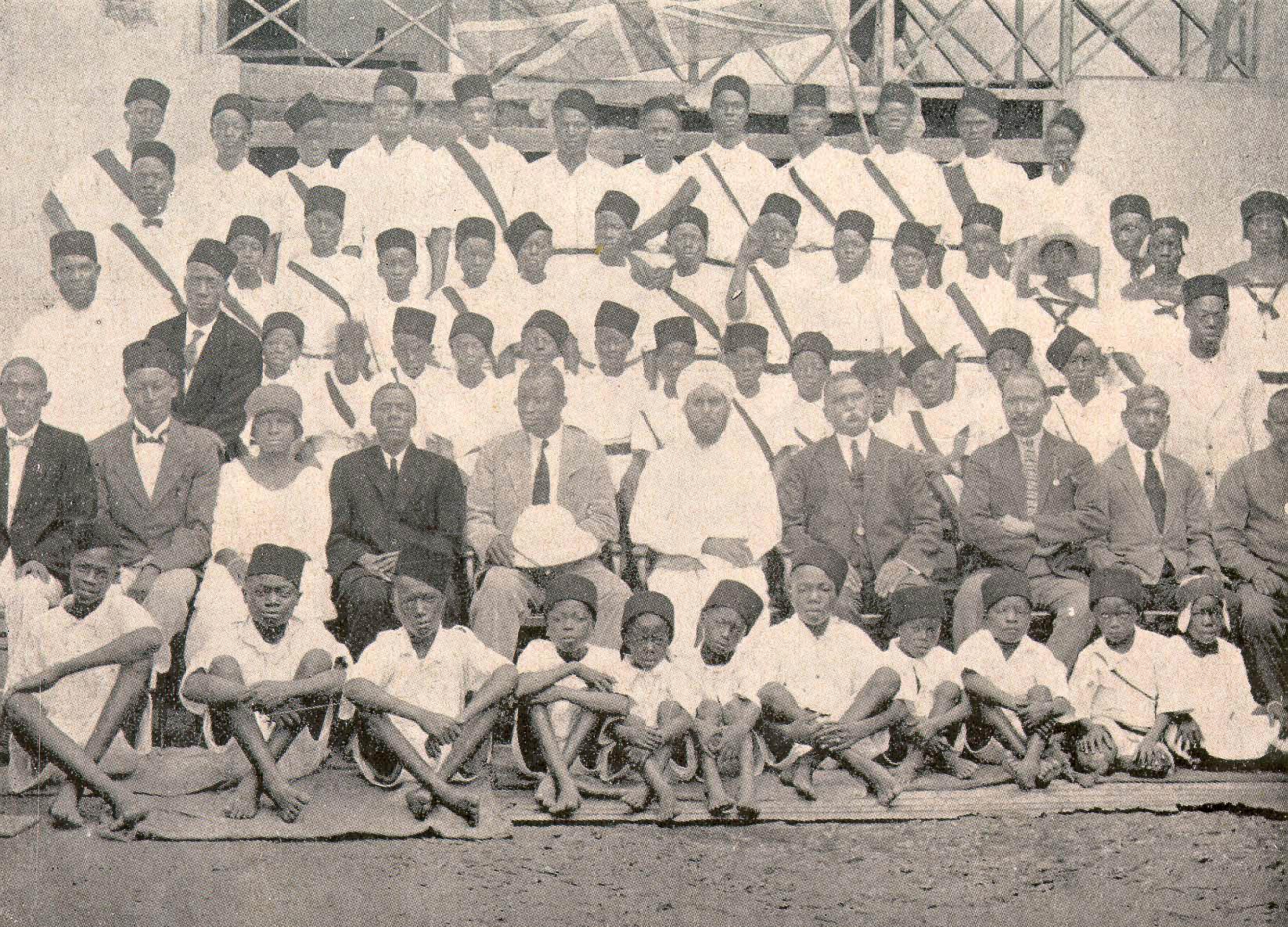
Talim-ul-Islam School, Saltpond
The ceremony of the laying of the foundation stone of the Talim-ul-Islam Ahmadiyya School, Saltpond, took place on 8 February 1926. Mr FR Hakeem, our Gold Coast missionary, said in his address:
“The Holy Quran plainly says, ‘Can the two men of whom one knoweth and the other knoweth not be equal?’ And the Holy Prophet of Islam, Muhammad, on whom be peace and the blessings of God, says, ‘The acquiring of knowledge is a duty laid upon every Muslim – male and female.’ No other religion lays so much stress upon this point as Islam does and yet no people are more ignorant today than the Muslims.
“It is with this view that the Ahmadiyya Movement, which is purely a religious movement and the only true manifestation of the holy faith of Islam, has taken up the educating of the Muslims in its hands and has opened missions and educational institutions all over the world.”
Mr GB Kirk, manager of the Bank of British West Africa, Ltd, while laying the stone, remarked:
“Our presence here this afternoon marks another step forward in the history of education in British West Africa. It is gratifying indeed to know that Saltpond is keeping ahead of the times in the matter of
the progress of her younger generation.
“The fact that education is the root of progress is realised here just as it is realised by HE the Governor, whose forward policy is exemplified in the great Achimota College now being built and by the Honourable Mr Ormsby-Gore (Secretary of State for the Colonies), who is now visiting this country and part of whose itinerary is the study of educational conditions.
“Africa owes a debt of gratitude to the educationalists in all parts of the Empire, who are interested in her welfare. Mr FR Hakeem has travelled from far-distant India to minister to needs that are plainly realised by the Ahmadiyya Movement. The rapid progress of the educational side of this Movement in Saltpond is entirely due to the unsparing efforts of Mr Hakeem and the fine building which is now in the process of construction before us is a great tribute to his energy and enthusiasm and to the able assistance of his committee and all who are interested in the Ahmadiyya Movement.”
Nigeria
We are in receipt of a printed report on the first Annual Gathering of Division III, Lagos Branch, of the Ahmadiyya Movement, which was held on 7 February [1926] at the Ahmadiyya Mosque, Epetedo, under the chairmanship of Brother Lawal Makanju.
The report contains an account of the activities of the community since its inception and the officers are to be congratulated for the useful work which
they have done.
The ground upon which the Mosque stands was gratuitously placed at the disposal of the Community by Mr Musa Aro at a critical time and in spite of the bitter opposition of the persecutors of the Ahmadis.
Similar reports have not been received from the other two Divisions, which have evidently held their annual gatherings. The Secretary of the Division I has, however, sent two photographs of the gatherings, which we hope to publish in due course if possible.
Holland
In the “Handelsblad” (Amsterdam) of 8 February 1926, there appeared the following note:
“We are informed from Padang Pandjang (according to the ‘Locomotief’) that among the Muhammedans at the moment rumours are afloat regarding the spread of a new faith.
“A certain Aboe Bakar bin Oejoep, originating from Paninjauan, Padang Pandjang, wrote to his parents from Lahore, to have themselves converted as quickly as possible to the faith of [the Promised Messiah] at Lahore. This new religious propaganda was started by the new prophet Goelam Achmad[as], who, as one pretends, is to be regarded as a descendant of Muhammad[sa]
“There is at Tapa Toean, Sjech Rahmat Ali, a missionary sent by the Ahmadiyyah Society at Lahore. The said missionary has already attained some success in Tapa Toean and intends to journey down along the west coast of Sumatra.
“In how far the contents of the letter are right, we could not judge, but it is certain that it has caused some commotion among the Muhammedans at Padang, Pandjang and elsewhere in the uplands.”
Seeing the above note, our energetic Sister Hidayat at once addressed the following letter to the Head Editor of the Algemeen Handelsblad, Amsterdam:
“Dear Sir,
“With reference to the article, ‘A New Prophet’, published in the evening edition of your paper of 8 February [1926], we hereby request you to publish the following few lines on the subject.
“‘Maulvi Rahmat Ali, our missionary in Tapa Toean, Sumatra, was not sent by a Society ‘Achmadijah’ at Lahore. He was sent by our Khalief at Qadian, Hazrat Mirza
Bashir-ud-Din Mahmud Ahmad[ra]; he is there with the full permission of the Indies Authorities.
“‘The Ahmadiyya Movement of Qadian, which has its missionaries in Europe and America and all parts of the world, was founded by Mirza Ghulam Ahmad (not a Syed), who died in 1908.
“‘The Movement is purely religious and keeps itself everywhere above politics. The secular authorities, under which an Ahmady finds himself, are recognised as such and obeyed. There is, therefore, no reason whatever for unquietness because of the presence of Mr R Ali in Sumatra.
“‘For further information regarding the Movement and its Founder, we refer to ‘The Temple’, published by the Free Religious
Temple of this city, in which magazine articles appear on the subject.
“‘The writer of the letter from Lahore is unknown to us and does not belong to our Movement.
“‘Yours faithfully, etc.”
At the receipt of the above letter, the “Handelsblad” of 13 February 1926, published the following note:
“We received, with reference to what we published on the 8th inst. from the paper Locomotief, a letter on behalf of the Ahmadiyya Movement in Islam, in which is communicated the following:
“‘That the missionary in Tapa Toean, Maulvi Rahmat Ali, was not sent by a Society Achmadiajh at Lahore, but by the Khalief at Qadian and is in Sumatra with
Ramadan: A month of restraint, not indulgence
For some, Ramadan is a month of careful indulgence instead of disciplined restraint. Kitchens stay busy, tables overflow at sehri and iftar, and anticipation centres on food more than reflection. But the Islamic commandment of fasting was revealed to refine hearts. It has one clear aim: taqwa (righteousness). Allah states in the Holy Quran: “O ye who believe! fasting is prescribed for you […] so that you may become righteous.” (Surah al-Baqarah, Ch.2: V.184)
The Holy Prophetsa said: “A human being fills no vessel worse than his stomach. A few morsels are sufficient to keep his back straight.” (Sunan Ibn Majah, Hadith 3349)
From this hadith, it is clear that merely staying hungry is not enough. This is why the Holy Prophetsa warned: “Whoever does not give up false statements, evil deeds, and speaking bad words to others, Allah is not in need of his leaving his food and drink.” (Sahih al-Bukhari, Hadith 6057) Again, he said: “Many fast, yet gain nothing from it except hunger and thirst.” (Sunan Ibn Majah, Hadith 1690)
In this regard, the Promised Messiahas also explains: “It is in the nature of man that the less he eats the more purified his soul becomes and his powers of experiencing visions increase. The intent of God Almighty through this is to decrease one form of nourishment, and increase another.
“One who is fasting should always keep in view that the purpose is not to just remain hungry, but that he should remain engaged in the remembrance of God Almighty, so that he may attain a state of detachment and separation [from the world]. Thus, fasting means that man give up one bread that nourishes the body alone, and gain another that is the source of satisfaction and satiation of the soul.” (Malfuzat [English], Vol. 9, p. 43)
If fasting does not strengthen righteousness, self-control, and devotion
the full permission of the Indies Authorities.
“‘That the Ahmadiyya Movement of Qadian is a purely religious one, not mixing itself with politics, recognising the secular authority under which it finds itself as such and obeying it – so that there exists in no way any reason for unquietness with regard to the presence in Sumatra of the said missionary.”
British West Indies
Shaikh Ibrahim Mondezi writes from Trinidad:
“We are not loved in the community, because we are adherents of the late Mirza Ghulam Ahmad[as] – the greatest Reformer of this Age. Anyway, our trust and hope are in Allah.
“I have been invited to this District by the members of the Universal Negro Improvement Association, so as to lecture to them at their weekly meetings, as they do not wish to hear their Christian Missionary any longer. Where there is truth, falsehood must go.
“Would you still continue to send me ‘The Review [of Religions]’ at my present address, for the information of our new converts who have embraced ‘Islam’ in the West Indies; and may your journal continue to have a long lease of life, so as to light the world to truth as revealed to us in the Holy Quran – Allah’s last testament to mankind.”
(Transcribed and edited by Al Hakam from the original English, published in the March 1926 issue of The Review of Religions)
to Allah, its purpose is lost. In recent years, Hazrat Khalifatul Masih Vaa has also advised restraint, especially in food and iftar gatherings, teaching us that this month is supposed to reduce excess and cultivate discipline. Let us go over some of this guidance.
Simplicity in suhoor and iftar
Hazrat Khalifatul Masih Vaa stated:
“Whatever I normally eat for breakfast, I eat the same for sehri, and whatever meal I usually eat in the evening, I eat the same for iftar. And at the time of iftar, since it was the sunnah of the Holy Prophetsa to break his fast with a date, I also break my fast with a date. Other than this, I do not eat pakoras, samosas, chaat, or other unnecessary dishes as you do. I do not like to eat so much that I feel discomfort after the evening meal and then struggle to wake up in the morning for the fast.
“Maintain the same routine, and in this way you will also enjoy your sehri. As a society, we have turned it into a tradition that something special must be eaten at sehri and iftar during Ramadan, and as a result we unnecessarily increase our expenses. On the one hand, food costs rise without need; on the other, the stomach is upset and discomforted, and during the fast, the entire day is spent in lethargy.
“The true enjoyment of fasting lies in maintaining one’s normal diet – beginning and ending the fast with the same types of food one ordinarily eats. And the money saved by not indulging in lavish iftar meals should be given in charity to those in need.”
(Virtual Mulaqat with Australian Nasirat, This Week With Huzoor - 26 March 2021)
Guidance on iftar gatherings
Huzooraa emphasised:
“The real objective is to develop righteousness. If this is not the case, then the purpose of fasting is nullified. Nowadays, for a large number of Muslims, the case is not even about going hungry, especially among
the rich. They eat with great diligence at the time of sehri [eating before sunrise to start the fast] and iftari [breaking the fast at sunset]. […]
“Besides, I am not in favour of these grand and lavish iftar parties that take place. They have now become a form of pretentiousness and innovation. During Ramadan, greater attention should be given to reading, teaching, listening to, and reciting the Holy Quran. Greater attention should be given to the remembrance of Allah. Greater attention should be given to worship. However, what actually happens in place of this is that people of different professions come from their jobs and occupy themselves with eating at iftar gatherings.
“And as for those who give out the iftari invitations, instead of giving attention to reading the Quran, Hadith, the remembrance of Allah and worship, they remain engaged in efforts to make the best arrangements, to have everything for iftar, and in making the best iftar meals, in order for them to be praised for making such excellent iftar arrangement[s]. Hence, all these things are not the purpose of Ramadan, and they only take one away from righteousness. […]
“For the sake of Allah, if we abstain from those things which are otherwise lawful, then surely Allah the Almighty will look upon us with His mercy and will put our Satan in chains. We shall continue to cross the vast field of virtues without any kind of obstacle, and by the grace of Allah, the fort of worship and remembrance of God shall continue to shield us from satanic onslaughts.” (Friday Sermon, 15 March 2024)
Hosting iftars and feeding others
On iftar arrangements, Huzooraa further clarified in a virtual mulaqat:
“People host iftar invitations in their homes, do they not? This should not be done. If there is a poor person […], you can send it to their houses.
“If a Jamaat function is being held – such as an organised iftar programme – then the administration may arrange it. However, the administration must themselves remain mindful that they must recite the Holy Quran and that their worship is properly observed. If, alongside this, they are able to prepare a simple iftar, then they may do so.
“Nowadays, it has become a common practice in people’s homes that family members remain occupied with iftar preparations from morning until evening because they have planned an iftar dinner. When the time for prayers arrives, they say, ‘Let us combine the prayers; there is no harm in doing so since we have an iftar dinner.’ Then people invite those whom they prefer, and gatherings are held. This is what I have instructed people to abstain from.” (Meeting with German Missionaries, This Week With Huzoor - 14 February 2025)
This guidance from the Khalifa of the time is essential for our spiritual progress during this blessed month. Ramadan is not meant to be comfortable. Its power lies in the restraint of appetite, of social indulgence, and of distractions for the sake of Allah. Righteousness is the true feast of Ramadan. When the day ends, may we feel closer to Allah – not just fuller. Amin!
Frasat Ahmad Missionary, USA
Mubarak Mosque, Islamabad, Tilford, UK
20 February 2026
Ramadan: A path to enduring nearness to Allah and lifelong self-reformation
After reciting the tashahhud, ta‘awwuz and Surah al-Fatihah, Hazrat Khalifatul Masih Vaa stated:
By the grace of Allah the Almighty, Ramadan commenced yesterday. Allah the Almighty has ordained this blessed month of Ramadan for us so that we may make a concerted effort to establish a relationship with Him and improve our spiritual condition. May Allah the Almighty enable every Ahmadi to derive the utmost benefit from it. However, one should always remember that true benefit can only be attained if, even after the month of Ramadan, we uphold the standards of love for Allah and His worship and, in fact, strive to elevate them even further. Only then will we be able to fulfil the purpose of our creation.
In the previous several sermons, I mentioned the love of the Holy Prophetsa for Allah, the manner in which he would worship, the standard of his worship, and his guidance for believers to act in accordance with it. Following this, I mentioned incidents from the life of the ardent devotee of the Holy Prophetsa, that is, the Promised Messiahas, who followed his excellent example in the truest sense. This
topic remains ongoing, and today it will also be discussed in relation to Ramadan.
I will present some incidents from the life of the Promised Messiahas in this regard, which highlight his relationship with Allah the Almighty and his inclination toward supplication. It is also a special favour of Allah the Almighty that He has presented before us these accounts relating to the worship and love for Allah that occurred between the Master and the servant. This affords us the opportunity to assess ourselves and improve our spiritual condition. Therefore, whatever incidents I relate, or have related previously, each one of us should remain mindful of them in order to assess our own condition and improve our spiritual state. Furthermore, we should continue to strive to follow this guidance and adopt the manner in which the Holy Prophetsa and his ardent devotee offered their worship and maintained their relationship with Allah the Almighty. It should not be that we merely listen to these incidents and rejoice; rather, they should serve as guidance for us.
In relation to incidents from the life of the Promised Messiahas, I will present a narration recorded by Hazrat Mirza Bashir Ahmad Sahibra. He wrote an account related by Maulvi Muhammad ‘Abdullah Sahib Botalwi, who stated:
“Around 1907, Amatur Rahman Sahiba, daughter of the late Qazi Zia-ud-Din Sahib, who was also related to me maternally, gave me a small piece of paper that would otherwise have been considered scrap. However, since it contained handwritten words of the Promised Messiahas and Hazrat Ummul Momineenra, I gladly took it as a blessed memento.”
He further states:
“At some point, I misplaced the paper among some books. Nevertheless, it was connected to an incident that Amatur Rahman Sahiba herself had narrated to me. The informal text written on this piece of paper, which appeared to be scrap, shed light upon the Promised Messiah’sas relationship with Allah, his righteousness, purity and deep inclination toward worship. As such, I considered it necessary to mention it.
“During the days when Amatur Rahman Sahiba was residing in the home of the Promised Messiahas, she observed and later related to me that on one occasion the Promised Messiahas and Hazrat Ummul Momineen wished to experiment to see whether it was possible to write on paper with one’s eyes closed. This took place in a domestic setting, at home, as a simple experiment between husband and wife.
“The Promised Messiahas held a piece of paper and wrote something on it. He stated that he remembered it word for word. Although the piece of paper has since been lost, he said that he remembers it clearly and can state with full confidence that if it were ever found, the same words would be written upon it.
“The Promised Messiahas wrote with his eyes closed that a person should always remain fearful of God Almighty and supplicate to Him five times a day.”
Thus, this was the standard he consistently urged his followers to adopt. His constant concern was that his followers – indeed every believer – should possess
the fear of God and always remain inclined toward worship.
In any case, I will also mention what Hazrat Amma Janra wrote on that note, which related to ordinary household matters. Hazrat Amma Janra wrote simple words: “Mahmud is my dear son; no one should say anything to him.” She then wrote another sentence concerning the children: “Mubarak Ahmad asks for biscuits.” These were the respective writings of the two.
He further narrates that she wrote down ordinary household matters. He then writes that although the Promised Messiah’sas writing appeared somewhat broken, it was nonetheless discernible. Even though it had been written with closed eyes and appeared as though it had been drawn across the page; it was still well-formed and legible. Despite being written with closed eyes, it appeared in straight lines, similar to his other writings. However, the letters written by Hazrat Ummul Momineen [Hazrat Amma Janra] were positioned somewhat above and below the lines, and the alignment was not maintained.
He further states that there is a noteworthy point in this incident which brings him great pleasure and is indeed delightful. Even while sitting informally at home, if the Promised Messiahas was suddenly asked to write something without prior preparation, nothing came to his mind except words of counsel and advice. In contrast, the expression of Hazrat Ummul Momineenra reflected what would naturally come to mind in accordance with her environment.
He further writes that this, in fact, illustrates the difference that exists between divinely commissioned persons and others. His heart was filled with concern for how to bring people closer to God Almighty and how to instil within them a love for worship. (Siratul Mahdi, Vol. 2, Part 4, Narration 1204, pp. 148-149)
Thus, this is a simple incident from a domestic setting, yet it contains a very profound lesson.
Similarly, Hazrat Mirza Bashir Ahmad Sahibra has narrated another incident: Mian Abdullah Sanori Sahibra relates that in 1884, the Promised Messiahas resolved to leave Qadian for a period of seclusion and also to travel within India. Accordingly, he intended to stay in seclusion at Sujanpur in the district of Gurdaspur. Regarding this, he sent me a handwritten postcard.
Mian Abdullah Sahibra, who is narrating this incident, states that he requested permission to accompany him on this journey and travel through India. The Promised Messiahas graciously permitted him. However, he later received a revelation concerning the journey to Sujanpur: “Your purpose will be fulfilled in Hoshiarpur.”
Accordingly, he abandoned the intention of travelling to Sujanpur and decided instead to go to Hoshiarpur.
When he was preparing to depart for Hoshiarpur in January 1886, he wrote to me, calling me to Qadian. He also wrote to Sheikh Mehr Ali, the chief of Hoshiarpur, stating: “I wish to come to Hoshiarpur for two months. Please arrange a house on the outskirts of the city, preferably a two-storey house with an upper room.
Sheikh Mehr Ali vacated his own house for this purpose, which was known as “Tawilah”. The Promised Messiahas set out
in a small [ox-drawn] two-wheeled carriage, travelling along the River Beas.
Mian Abdullah Sahib says, “Sheikh Hamid Ali, Fateh Khan Sahib and I accompanied him. Fateh Khan was from Rasulpur near Tanda in the district of Hoshiarpur. He was a great devotee of the Promised Messiahas, but unfortunately, later came under the influence of Maulvi Muhammad Husain Batalvi and became an apostate. When Huzooras reached the river, he crossed over in a boat. As the boat was moving, the Promised Messiahas addressed me and said: ‘Mian Abdullah, the company of a saintly individual is like this river journey: there is hope of crossing it, but also the danger of drowning.’ That is, the one who keeps the company of a learned elder, a saint and friend of God, can end up either crossing safely as the boat was carrying them across, or they could drown.”
He then states, “At the time, I only heard this superficially, but when Fateh Khan later became an apostate, I remembered these words of the Promised Messiahas.” Nonetheless, he continues, “We halted at Fateh Khan’s village on the way and reached Hoshiarpur the next day. Upon arrival, the Promised Messiahas took up residence in the upper storey of the Tawilah residence. To prevent any disputes among us, he assigned separate duties to all three of us. I was given the task of cooking. Fateh Khan was tasked with purchasing provisions from the market. Sheikh Hamid Ali was assigned responsibility for the matters pertaining to the upper storey of the house and for receiving guests.
“After this, the Promised Messiahas issued a written announcement stating that for 40 days no one should come to meet him, nor should anyone invite him for anything. After these 40 days, he would remain there for an additional 20 days. During those 20 days, visitors could come, invitations could be extended, and people could gather to ask questions.
“The Promised Messiahas also instructed us that the inner door chain should remain fastened at all times (meaning the door should be locked). No one in the house should call upon him. If he called someone, they should only respond to the extent that is necessary. No one was to come to the upper storey. (No one should go upstairs where he was staying.)” Nonetheless, he says that “He instructed that his meals should be sent upstairs, but no one should wait for him to finish eating. The empty utensils should be collected later. He also said that since he was observing a period of seclusion, he would offer his prayers upstairs, while we should pray downstairs. Regarding Friday Prayer, he said that since it is obligatory, a deserted mosque on the outskirts of the city should be found where the prayer could be offered in isolation. Accordingly, there was a small, abandoned mosque in a garden outside the city. On Fridays, the Promised Messiahas would go there, lead us in prayer and deliver the sermon himself.”
Mian Abdullah Sahib narrates:
“I used to go and drop the food upstairs [for the Promised Messiahas] and would not utter a single word, but sometimes, Huzooras would say something to me, and I would respond. Once, Huzooras said to me, ‘Mian Abdullah! During these days, the doors to God Almighty’s immense grace and blessings have opened upon me, and at
times, God Almighty continues to speak to me until late in the night. If I were to pen all of these accounts, they would fill up quite a lot of pages.’”
Mian Abdullah Sahib further narrates:
“It was during this 40-day period that the Promised Messiahas received the revelation regarding the Promised Son [Musleh-eMaud] – and after the 40-day period, it was from Hoshiarpur that the Promised Messiahas announced this prophecy.”
This was published in the announcement of 20 February 1886, which is known in the Jamaat as the Prophecy of Musleh-e-Maud.
Coincidentally, today is also 20 February, which marks the grand fulfilment of the prophecy of the Promised Son.
The Promised Son, who was born in accordance with the prophecy, and his Khilafat remained established for 52 years, and Allah the Almighty bestowed him with great successes. All of the prophecies, divine revelations and hallmarks which were mentioned in the prophecy relating to the Promised Son were all fulfilled in the person of Hazrat Mirza Bashir-ud-Din Mahmud Ahmadra. The reason why I have said this is a coincidence is that this account came before me just today, and it could have come across at any time before or after as well. However, it was the wisdom of Allah the Almighty that it appeared before me today, and I narrated it. 20 February marks “Musleh-e-Maud Day” and the context of this event has also been mentioned, in terms of how the Promised Messiahas travelled [to Hoshiarpur], how he did the 40-day period of worship in seclusion and the glad tidings he received as a result. Across the various jamaats, jalsas are also being held, and one can learn about their history through them as well. Also, one can learn about it through the programmes being aired on MTA. Members should also watch them.
In any case, it is related that when 40 days had passed, the Promised Messiahas remained there for a further 20 days in accordance with the prior announcement. During those days, many people extended invitations, several came for religious discussions, and old acquaintances of the Promised Messiahas also came to visit him. It was in those days that his debate with Murli Dhar took place, which is recorded in his book, Surma-e-Chashm-e-Arya
When the two-month period was completed, the Promised Messiahas departed for Qadian by the same route. About five miles from Hoshiarpur, there is the grave of a certain saint. There is another incident mentioned from this journey. When they reached a place where there was a small garden, the Promised Messiahas descended from the carriage for a short while and said, “This is a fine shaded spot. Let us rest here briefly.”
After this, he proceeded toward the grave, which was said to be of a saint. Mian Abdullah Sahib relates that he followed behind him, while Sheikh Hamid Ali and Fateh Khan remained near the carriage. Reaching the tomb, the Promised Messiahas opened the door, entered, stood at the head of the grave, raised his hands in prayer and supplicated for some time.
He then returned and addressed me, saying, “When I raised my hands in prayer, the saint whose grave this is came out of the grave and sat before me on his knees. Had you not been with me, I would have
conversed with him. His eyes were large, and he had a dark complexion.”
He then said, “See if there is any caretaker here and enquire about this saint’s description.” The caretaker was questioned and replied, “I have not seen him myself, for nearly 100 years have passed since his death. But from my forefathers, I have heard that he was a great saint of this region and had much influence here.” The Promised Messiahas asked, “What was his appearance?” The man replied, “I have heard that he had a dark complexion and large eyes.”
Thereafter, they departed and reached Qadian. The description given was exactly the same as that mentioned by the Promised Messiahas, that the saint had come and sat before him. Some people say that the righteous, the friends of Allah, and even Prophets may at times converse with the deceased or perceive them. These are the unique ways in which Allah the Almighty treats His chosen servants. In any case, the journey concluded, and they returned to Qadian.
Hazrat Mirza Bashir Ahmad Sahibra states that he asked Mian Abdullah about that period of seclusion and enquired what the Promised Messiahas used to do and how he worshipped. Mian Abdullah replied that he did not know, for the Promised Messiahas remained upstairs in the upper storey and they were not permitted to go there without permission. When food was taken up, they would first seek permission.
Mian Abdullah relates that one day, when he went up to deliver the meal, the Promised Messiahas said, “I have received the revelation:
“[‘Blessed are those who are with you and are around you.’]”
And he explained that
referred to himself (meaning the Promised Messiahas) and
referred to those who were with him.”
Mian Abdullah Sahib further relates that he himself remained in the house most of the time and would only go out with the Promised Messiahas for Friday Prayers. Sheikh Hamid Ali also usually stayed inside, but Fateh Khan often spent the day outside and may have been outside at the time of this revelation. This was Hazrat Mirza Bashir Ahmad Sahib’sra opinion.
Mian Abdullah Sahib also mentioned that in those days, Fateh Khan was so devoted to the Promised Messiahas that he would say to us in conversation, “I consider the Promised Messiahas to be a Prophet.” I would become anxious at this statement because, according to the commonly held belief of earlier times, no Prophet could come now. Yet Fateh Khan was so convinced that he referred to him as a Prophet even before he had taken the pledge of allegiance and before any formal claim had been made. This was three or four years prior. However, he later wavered in his belief, and he became an apostate.
Thus, a person must always pray for a good end and strive to be firm in their faith. One must supplicate for it, and especially in the prayers of Ramadan, everyone should pray that Allah the Almighty grant us a blessed end and keep us steadfast in faith.
Mian Abdullah Sahib also relates that once, when he went to deliver food, the Promised Messiahas said, “God addresses me
in such a manner and speaks to me in such ways that if I were to disclose even a small portion of them, all these followers you see would turn away.” And in practice, this is indeed what occurred, for when he later made his claim, some people turned against him and intensified their opposition, unable to conceive that Allah the Almighty could speak in such a manner. (Sirat-ul-Mahdi, Vol. 1, Part 1, Narration 88, pp. 62-65)
There is also another incident concerning the Promised Messiah’sas manner of offering prayer. Some people discuss jurisprudential details of prayer, such as how the hands should be folded and how various movements should be performed. Regarding the Promised Messiah’sas manner of worship, Mian Ali Muhammad Sahib relates that he once saw him offering the sunnah prayer before the obligatory prayer. He had folded his hands above the navel, and the middle finger of his right hand reached as far as the elbow or slightly short of it. When he prostrated, he placed his forehead and nose between his hands upon the ground, and his fingers were straight and directed toward the Ka‘bah.
When he rose from prostration, his turban, which was loosely tied, would slip back slightly, and he would straighten it with his finger. It is recorded that he offered these sunnah prayers in Masjid Aqsa, standing to the south of his respected father’s grave, and thereafter the obligatory prayer began, which was led by Hazrat Maulvi Noor-udDeen Sahibra. (Ashab-e-Ahmad, Vol. 2, p. 13)
Hazrat Muhammad Jamil Sahib also relates that in the early days of the plague, the Promised Messiahas moved with his entire family to an open garden. They would keep watch at night for the Promised Messiahas. During the spread of the plague, an open area is more suitable to live in, and thus the Promised Messiahas [temporarily] moved there. It is related that during the night watch, whenever they passed by the Promised Messiah’ssa tent, they would see him engaged in prayer. It is a wonder when he would actually sleep. (Ashab-e-Ahmad, Vol. 2, p. 358)
Similarly, Hazrat Chaudhry Bhai Abdur Rahman Sahib relates that the Promised Messiahas would offer Tahajjud (pre-dawn voluntary prayer) with great humility. In the small room opposite the small mosque, his voice could be heard. It was his practice to repeat the words:
“[‘Guide us to the right path.’]” (Ashabe-Ahmad, Vol. 2, p. 336)
Thus, we too should repeat this prayer so that Allah the Almighty may always keep us firm upon guidance.
Describing the state of the Promised Messiah’sas Tahajjud prayer, Hazrat Master Nazir Hussain Sahib writes, “Once, while travelling to Jhelum, we stayed in Lahore at the house of my grandfather, the late Hazrat Mian Charagh Din Sahib, in Mubarak Manzil. The Promised Messiahas spent the night there, and a room was prepared for him to sleep in.”
He relates, “I too lay down outside that same room on the verandah near the door. I awoke when it was around three o’clock at night and looked inside the room only to find the Promised Messiahas offering prayer. I performed ablution and began to pray behind him at some distance. I tried my
very best to stand, bow and prostrate myself in prayer for the same amount of time as the Promised Messiahas, but I could not do so. After just two units of prayer (rak‘at) I became extremely tired, and all the while, the Promised Messiahas was still offering the same set of two rak’at in which I had joined him.” The Promised Messiahas was still in the qiyam position of the same two units he had started offering, while Hazrat Master Nazir Hussain says he became tired and he left the prayer with the Promised Messiahas and began offering his own prayer. This was an example of the Promised Messiahas following his master in worship, and of striving to fulfil the due rights owed to the worship of Allah the Almighty.
Hazrat Master Nazir Hussain further relates, “During the day, when we were sitting in the company of the Promised Messiahas, and he was enjoining and urging the Jamaat to offer Tahajjud, I submitted that if one is unable to offer Tahajjud, then what is the least one should strive to do? (People often ask this: what should they do if they are unable to offer Tahajjud?) Upon this, the Promised Messiahas replied, ‘In that instance, one should abundantly recite istighfar [prayer for seeking forgiveness] and remain engaged in the glorification and praise of Allah. Through this, one is ultimately granted the ability to offer Tahajjud.’”
These supplications enjoined by the Promised Messiahas were not meant to become a substitute for Tahajjud, but were meant to ultimately enable one to offer Tahajjud.
Hazrat Mirza Bashir Ahmad Sahibra has also written, “When I become negligent in observing Tahajjud (this statement is either his or the narrator’s), I act upon this instruction, and I am granted the ability to offer Tahajjud.” (Ashab-e-Ahmad, Vol. 3, p. 178)
Thus, this is a prescription which we too should adopt in our times of indolence.
We are currently passing through Ramadan, and so people are generally able to offer Tahajjud. If not, then one should strive to do so. Of course, Tarawih is offered in the mosque, and it serves as a substitute for the weak, the ill or those who cannot wake up in the morning at the proper time or devote extended time. Yet at the same time, it is not a complete substitute, as it cannot fully make up for Tahajjud. The practice of the Holy Prophetsa and the way of his true servant is that one rises at night and offers Tahajjud. Therefore, even if Tarawih has been offered, one should still strive to offer two or four rak‘at of Tahajjud at night – but Tahajjud should certainly be observed.
Similarly, Hazrat Khairuddin Sahib narrates, “Once, during the spring season, the Promised Messiahas set out from Qadian in the morning around eight o’clock for a walk along the road between Juhaini and Qadirabad, which is also known as Sadak When he reached the border of Qadian, the Promised Messiahas offered two rak‘at of voluntary prayer and then, passing near our village, returned to Qadian.” (Ashab-eAhmad, Vol. 3, p. 90)
Thus, even during a walk, he remained mindful of worship. Now it is also the responsibility of those who live in Qadian that, since he offered voluntary prayers both within it and along its outskirts, they should preserve its sanctity and, in fulfilling the
right of that settlement, they should elevate the standard of their worship.
Hazrat Malik Niaz Muhammad Sahib states, “In 1904, when I went to Qadian, the Promised Messiahas used to travel to Gurdaspur in connection with the Karam Din case. When I too went there, he was staying in a house near a pond, and members of the Jamaat were also staying there. The kitchen was operating in the same compound.
“In the court, I observed that a mat would be laid out for the Promised Messiahas, upon which he would sit, and the other members present would also sit upon it. (It was a large mat on which everyone could sit.) One thing I especially noted and still remember was the Promised Messiah’sas constant state of ablution: whenever he went to answer the call of nature, he would invariably perform ablution afterwards. From this, I became convinced that he remained in a constant state of ablution.
“He would softly and continuously recite:
“[Holy is Allah and worthy of all praise; Holy is Allah, the Great].” (Ashab-e-Ahmad, Vol. 2, p. 27)
Hazrat Chaudhry Bhai Abdur Rahim Sahib narrates, “In the early days, it was the Promised Messiah’sas practice generally to arrive at the mosque before everyone else for prayers. Thus, once I tried to reach there first, but he was already at the mosque when I arrived.” (Ashab-e-Ahmad, Vol. 2, p. 336)
The Promised Messiahas spent a portion of his youth, nearly seven years, in Sialkot. There too, the days and nights he spent were marked above all by the love for Allah. Whoever has spoken of that period has particularly mentioned his seclusion, withdrawal from worldly company, and deep absorption in prayer and recitation of the Holy Quran.
In this regard, I will present the testimonies of several reputable and respected elders of Sialkot. Hakim Badr Husain Sahib writes – this is his testimony despite the fact that after the Promised Messiahas made his claim of being commissioned by God, he joined the foremost ranks of the opponents of Ahmadiyyat and even raised hostile objections against certain incidents from his life in the form of a novel. Yet even in the midst of this opposition, he could not forget the pure memory of the Promised Messiah’sas stay in Sialkot.
Thus, he writes, “He possessed a dignified appearance, trustworthy countenance, noble personality, immense patience and lofty thoughts, and I consider no one equal to him in high resolve. As soon as he entered (referring to the room mentioned in this narration), he asked for water to perform ablution; after completing it, he offered the Maghrib prayer. After the prescribed recitations and prayers, he became engaged in the remembrance of Allah.” (Hayat-eAhmad, Vol. 1, p. 158)
Then the respected father of the famous Muslim leader Maulvi Zafar Ali Khan Sahib – namely the late Munshi Sirajuddin Sahib, editor of the newspaper Zamindar – stated, “Around 1960 or 1961, Mirza Ghulam Ahmad Sahib served as a clerk in the district of Sialkot. At that time, he would have been about 22 or 23 years old, and we can testify from personal observation that even in
youth, he was an exceedingly righteous and pious elder. After completing his official duties, all his time was devoted to the study of religious matters and he interacted little with the public.” (Hayat-e-Ahmad, Vol. 1, p. 74)
Once Hazrat Sheikh Yaqub Ali Irfani Sahib met Syed Mir Hasan Sahib in Sialkot –whom I mentioned in the previous sermon as well. He spoke with tears in his eyes and said with deep emotion: “Alas, we did not value him. I cannot describe his spiritual excellences. His life was not that of an ordinary man; rather, he was among those special servants of God who seldom appear in this world.” (Tarikh-e-Ahmadiyyat, Vol. 1, p. 95)
There is also an incident involving a simple villager, illustrating how he too recognised the light of the Promised Messiahas. The countenances of those beloved and chosen by Allah shine with divine light.
Hazrat Mirza Bashir Ahmad Sahibra writes, “My respected mother narrated that the Promised Messiahas once told her that on one occasion, he was travelling to the hill station of Dalhousie for a legal case when it started raining along the way. He and his Companion got down from the carriage and went toward the house of a man living on the hillside near the road. His Companion went ahead and asked the owner for permission to enter, but he refused. (It would have been a small room, as this is often what the houses of the poor are like.)
“An argument broke out between them, and the owner became angry and began to use profanities. When they insisted on entering and he refused, and the exchange grew heated, the Promised Messiahas said: ‘Hearing this quarrel, I stepped forward, and the moment the owner’s eyes met mine, before I could speak, he lowered his head and said, “The fact is, I have a young daughter, so I do not allow strangers into my house. But you may certainly come in.”’
The Promised Messiahas would say, ‘He was a complete stranger; he did not know me, nor did I know him.’” (Sirat-ul-Mahdi, Vol. Part 1, Narration 8, p. 6)
Yet this was in truth the divine light –a sign of nobility and worship – which he perceived upon the Promised Messiah’sas face. Thus, he said, “Very well, you may enter.”
He was always mindful of God Almighty. No commitment or engagement distanced him from the remembrance of Allah. Thus, the same is the case even during court cases; I have previously related an incident at such delicate times when in the middle of a case hearing, ensuring one observes Prayer is a difficult matter. Yet he had so much conviction in the love of God and was lost in Him that even though his case was being submitted before the court – and they could have been called in at any time – the court official could summon him at any time, as soon as it was time for Prayer, he would leave the call of the court and without the slightest concern for any loss that might result from his absence, respond to the call of the Divine court and presented himself before Allah the Almighty. (Sirat-ul-Mahdi, Vol. 1, Narration 17, p. 14)
This is the fundamental matter that everyone ought to remember: when it is time for Prayer, it must be given precedence in all circumstances. This is the example and
model that is the hallmark of a true believer. He learnt this from his master and acted upon it and set this example before us.
Hazrat Sheikh Yaqub Ali Irfani Sahib has described this condition of his in a most beautiful manner. He writes, “The series of court cases was very lengthy and, in some matters, he even had to pursue them further to the Supreme Court.” He further writes: “The matter to which I wish to draw the attention of readers, while acquainting them with this part of the life of Hazrat Mirza Sahib [the Promised Messiahas], is his relationship with Allah. Those who had the opportunity to remain in his company and listen to his words, or who have read his published addresses, know that the Promised Messiahas was the embodiment of the saying:
“Meaning ‘despite being engaged in other works, his heart would remain engaged with the Beloved’, that is, he would remain occupied in the remembrance of God – and this was the guidance he always imparted.
“In court cases, it is generally observed that whether one is a plaintiff or a defendant, both remain in a state of anxiety and restlessness. But when the Promised Messiahas would attend in relation to a case, there was no sign of agitation or worry in his disposition. With complete steadfastness and dignity, his heart remained turned towards the Beloved. While he had to pursue these cases merely to obey his father’s orders and to discharge the duty he owed towards him, during this entire period, he never once missed a prayer, nor did he become heedless of those obligations that relate to the rights of Allah the Almighty. Even within the court, at the time of Prayer, he would become engaged in Prayer as though he had no other task at all.” He has also recorded incidents where, at times, the court would make announcements [for him], yet he remained indifferent.
He further writes: “Even during these journeys related to these cases, his attention would remain fixed upon that Being Who is the Creator and Lord of all the worlds. In the rising sun, in the moon and stars shining in the night sky, in flowing springs and cascading waterfalls, in lofty mountains, in running streams, in the swaying fields, in the chirping of birds and in the sounds of thunder and lightning – everywhere he perceived the reflection of a single Being, and beheld the manifestation of that Source of all Light; that is to say, in everything he perceived the power of Allah the Almighty. Wherever he turned, he saw only the manifestation of the True Beloved. Upon witnessing the moon, if he became restless, it was because even within it he perceived traces of the beauty of the Beloved. In the fountain of the sun, its waves were visible to him; in every star, he beheld the spectacle of His radiance. The grace found in beauty points to the beauty of that True Creator. Every beautiful eye points towards Him, and every curling lock gestures towards that One God. Every flower and every garden is perfumed by the fragrance of the garden of His beauty and beneficence.”
He has described it in a very beautiful manner.
He then says: “The truth is that from the appearance he would travel for these court cases, but in reality, even during these journeys, all ties of loyalty and love for others were severed [except with the beloved].” While describing this state, he writes: “As I have previously mentioned in the account of the journey to Dalhousie, even during that journey, on observing the scenes along the road, he remarked how beautiful were the flowing streams and the green meadows of the mountains. Thus, he remained forever in a state of complete annihilation in that One Being and remained content with him. Whether it was day or night, whether he was in solitude or in company, the remembrance of that True Beloved was never effaced from his heart.” (Hayat-e-Ahmad, Vol. 1, pp. 8587)
Hazrat Mirza Bashir Ahmad Sahibra relates: “My noble mother narrated to me that once the Promised Messiahas said that it had been revealed to him by Allah the Almighty – or that he had been informed by Allah the Almighty – that one should recite
in great abundance. My mother relates that for this reason, he recited it so frequently that even at night, while turning from one side to the other on his bed, this phrase would be upon his tongue.”
Hazrat Mirza Bashir Ahmadra further says, “[…] When I related this narration to Maulvi Sher ‘Ali Sahib, he said that he too had observed that the Promised Messiahas would frequently recite SubhanAllah.”
Hazrat Mirza Bashir Ahmad Sahibra also relates his own observation that he always heard the Promised Messiahas reciting SubhanAllah. He would repeat these words very slowly, with pauses, with attentiveness and in a gentle manner. In this manner, alongside repeating it, he was reflecting upon the attributes of Allah the Almighty. (Sirat-ul-Mahdi, Vol. 1, Part 1, Narration 1, p. 3)
He further writes that Pir Siraj-ulHaq Sahib Nu‘mani related to him that the manner of the Promised Messiah’sas sleep was such that after short intervals he would awaken and softly utter SubhanAllah, SubhanAllah, and then fall asleep once more.” (Sirat-ul-Mahdi, Vol. 1, Part 2, Narration 310, p. 287)
Hazrat Sheikh Ya‘qub Ali Sahib Irfani relates that the Promised Messiahas greatly cherished seclusion and solitude, following the noble example and blessed practice of his Master and Benefactor, the Holy Prophetsa Indeed, had it been within his discretion, he would never have emerged from seclusion. On numerous occasions, he expressed this sentiment in his discourses and writings.
In short, when his natural disposition and inner intricate nature, which preferred solitude and seclusion was deeply inspired and when his intense love for the Divine drew him wholly towards Allah the Exalted, he wrote a letter to his father. By reading that letter, it becomes evident how, from his early youth, the Promised Messiahas was disinclined toward the world and constantly preoccupied with strengthening his bond with Allah the Almighty. This letter, which was written in his youth, reflects his pure nature and noble character.
The letter was written in Persian, and I will read a portion of the letter.
Addressing his father, the Promised Messiahas wrote:
“In these current times, I can clearly see with my own eyes and with a sense of deep concern, that in every land and country, each year some calamity or epidemic arises, separating friends from friends and loved ones from their dear ones. There is not a single year in which I have not witnessed the blazing fires and painful afflictions creating scenes akin to the tumult of the Day of Judgement. Observing such conditions, my heart has grown cold toward the world, and my face has turned pale with apprehension.”
Even in our present times, the state of the world reminds us how fires rage on every side. Therefore, we ought to cultivate an ever-stronger relationship with Allah the Almighty.
The Promised Messiahas further writes:
“I often recall the following couplet of Sheikh Musleh-ud-Din Saadi Shirazi, and tears of anguish flow from my eyes:
relinquished everything. It was, as it were, a form of princely inheritance that he abandoned. His father possessed seven villages as property, yet he renounced them all purely for the love of Allah the Almighty. (Tarikh-e-Ahmadiyyat, Vol. 1, p. 42)
At times, he would also advise his followers in this regard. It is narrated by Mian Muhammad Musa Sahib that on one occasion, during a visit to Qadian, a newly converted Muslim member submitted before the Promised Messiahas: “Grant me permission your Holiness, for my crop is ready for harvest. (He owned a vast amount of land) and I have to oversee its division (which was done amongst the cultivators).”
The Promised Messiahas inquired, “How big is the crop?” He replied, “It is quite a considerable amount of crop.” Thereupon, the Promised Messiahas said, “I have left many villages and chosen the threshold of God Almighty. You ought to remain here a few more days.” (Ashab-e-Ahmad, Vol. 4, p. 424)
And for him to improve his spiritual condition, and leave worldly matters to Allah. He will bestow His grace.
“‘Place not reliance upon this fleeting life; And deem not yourself secure from these worldly endeavours.’”
That is, one should not imagine that having become preoccupied in worldly affairs, one has thereby attained security.
The Promised Messiahas further writes:
“Furthermore, these two verses from the poetic works of ‘Farrukh Qadiani’ – a penname used by the Promised Messiahas in that time – which instil a sense of heartfelt pain are as follows:
“‘O youth, attach not your heart to this lowly world; For the appointed hour of death arrives suddenly.’
“I desire to spend the remainder of my life in solitude, to withdraw from worldly company and immerse myself in the remembrance of Allah the Glorious, so that I might seek forgiveness and make amends for my shortcomings.”
This is quite a lengthy letter, but from this it becomes evident that the Promised Messiahas did not have any desire for any fame or honour, but possessed a pure and sincere relationship with God Almighty. It is a matter of fact that his love for seclusion was such that he would never have appeared in public had it not been in obedience to the command of Allah the Almighty.
The Promised Messiahas further wrote:
“If Allah the Almighty were to grant me the choice between solitude and public life, I would, by the oath of that Pure Being, choose seclusion. It is God Almighty, Who has drawn me into the field of practical service. The delight I experience in solitude – who besides God is aware of it?
For approximately 25 years I remained in seclusion and never once desired to sit upon the seat of worldly renown. By nature, I felt aversion to mingling among people; yet I am compelled by Divine command.” (Hayate-Ahmad, Vol. 1, pp. 111-115, [includes footnote])
Thus, having written to his father, he
In that particular case, knowing the circumstances of the individual, he offered this counsel [for his spiritual training]. Elsewhere, however, he also taught that worldly responsibilities are not to be entirely abandoned. The bounties granted by Allah the Almighty are also to be valued. And so, for the purpose of the moral and spiritual training of this new convert, the Promised Messiahas advised him in that manner. Thus, at times, the advice is given in accordance with one’s unique circumstances. Each person should assess his own condition carefully, and therefore one must neither become so immersed in the world as to drown in it, nor so detached as to neglect the rightful worldly obligations. Islam presents a balanced and comprehensive teaching. But the most important point to always remember is that one must never neglect Allah the Almighty. In this respect, one should always pay great heed to this.
These were just some various aspects of the love, devotion and worship of the Promised Messiahas that have been presented today.
May Allah the Almighty enable us to truly do justice to our worship in this month of Ramadan and also enable us to increase in His love, so that we, as much as possible, continue to partake of the blessings of Ramadan and may the impact of these blessings continue even after it as well. May Allah the Almighty enable us to truly embody the hallmarks of a true believer and Muslim. During these days, particularly pray for those Ahmadis who are going through the hardships of having false charges levelled against them. May Allah the Almighty create ease for our Ahmadi brothers. Remember the Muslim Ummah in your prayers as well. Pray for the world to be saved from destruction as well. May Allah the Almighty safeguard the innocent people from such evils, and if a war or destruction is inevitable, then may Allah the Almighty protect the innocent from it and seize the oppressors.
(Official Urdu transcript published in the Daily Al Fazl International, 13 March 2026, pp. 1-8.