Alex Rose Portfolio
University of Kansas
University of Kansas
Emerging architect pursuing a Master of Architecture at the University of Kansas, with graduate certificates in Health & Wellness Design and Urban Design Brings a background in business, client-facing technical support, and applied CAD production for MEP engineering projects serving Kansas and Missouri school districts Focused on healthcare architecture and the integration of building systems and wellness principles to create environments that support patient experience and improve operational efficiency for clinical staff.
PHONE: 913-634-6992
LINKEDIN: linkedin.com/in/alexdrose
PORTFOLIO: arosestudio.design
EMAIL: alex@arose-studio.com a351r697@ku.edu
University of Kansas Master of Architecture (M.Arch) Track 3 | Expected May 2027
Graduate Certificates (in progress): Health & Wellness Design; Urban Design Selected Projects:
• Kapkemich Health & Treatment Center (Kenya) Inpatient and surgical facility design emphasizing holistic wellness and scalable care systems
• Kansas City River Market Civic Library Civic “Work From Home Hub” prioritizing sustainability, flexibility, and community engagement
• RE-MOD: Supportive Housing Complex Modular urban housing integrating daylighting, building systems coordination, and communitycentered design
University of Kansas — Bachelor of Science, Business Administration 2012–2016
Phi Kappa Psi Fraternity, 2012–2016
Rose & Associates Engineering (Independent Projects, Part -Time)
CAD Drafter & Project Assistant | 2022-Present
• Produced CAD drawings supporting mechanical and electrical system design for K–12 school facilities across Kansas and Missouri, including HVAC layouts and electrical coordination
• Collaborated directly with the licensed engineer (firm principal) on project documentation, submittals, consultant coordination, and construction-phase communication
• Developed applied knowledge of building systems integration and construction documentation, strengthening technical coordination skills
Service Management Group (SMG), Kansas City, MO
Support Engineer (formerly Solution Analyst) | 2018–2021
• Provided technical and analytical support in a SaaS environment, resolving complex client issues while maintaining high levels of client satisfaction
• Analyzed client-provided data to identify root causes and deliver effective solutions for web-based applications
• Collaborated with cross-functional teams to improve templates, data collection processes, and internal troubleshooting documentation
• Built dashboards and reporting tools for Fortune 500 clients, translating data insights into actionable business strategies
New York Life, Overland Park, KS
Licensed Agent & Financial Planner | 2016–2018
• Guided clients in financial planning and insurance solutions through customized strategies
• Strengthened project management, organizational, and interpersonal communication skills
• Architecture & BIM: Revit, AutoCAD, Rhino, SketchUp, Enscape
• Graphic & Communication: InDesign, Illustrator, Photoshop, Bluebeam
• Building Systems: HVAC and electrical coordination (school facilities), construction documentation
• Analysis & Strategy: Data visualization, client reporting, research




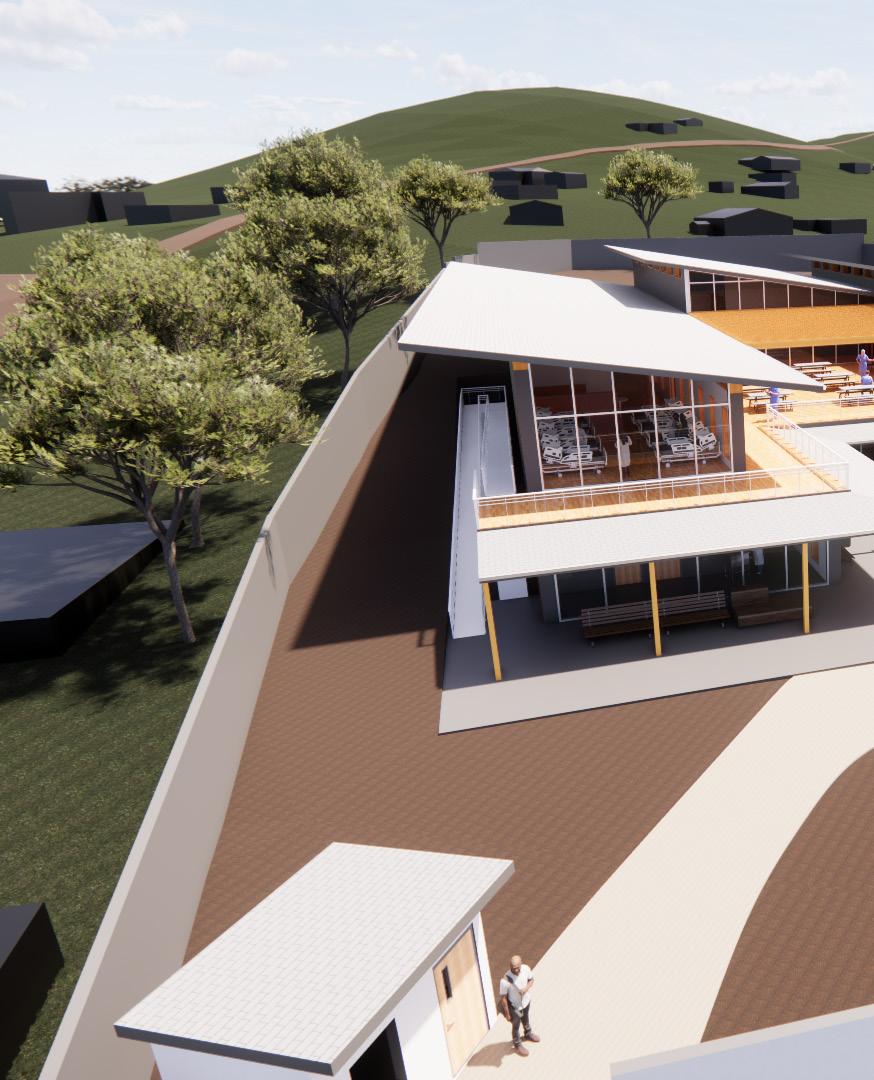
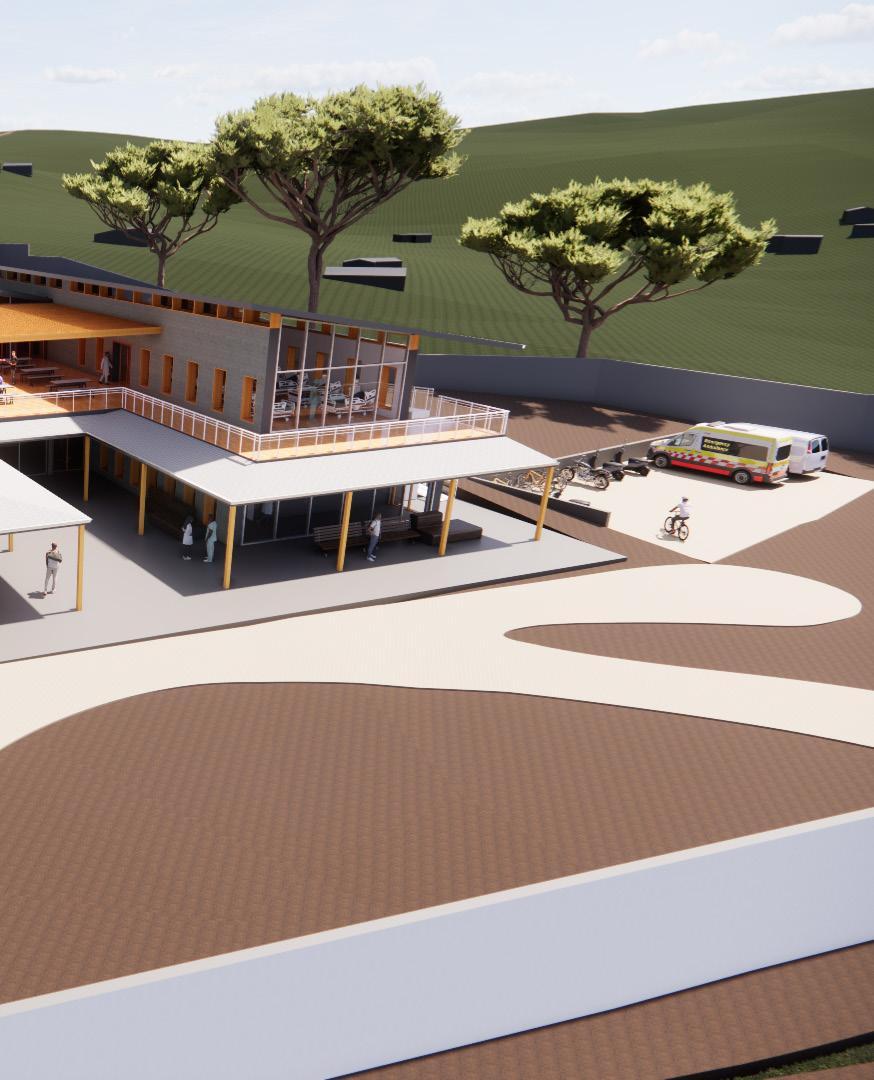
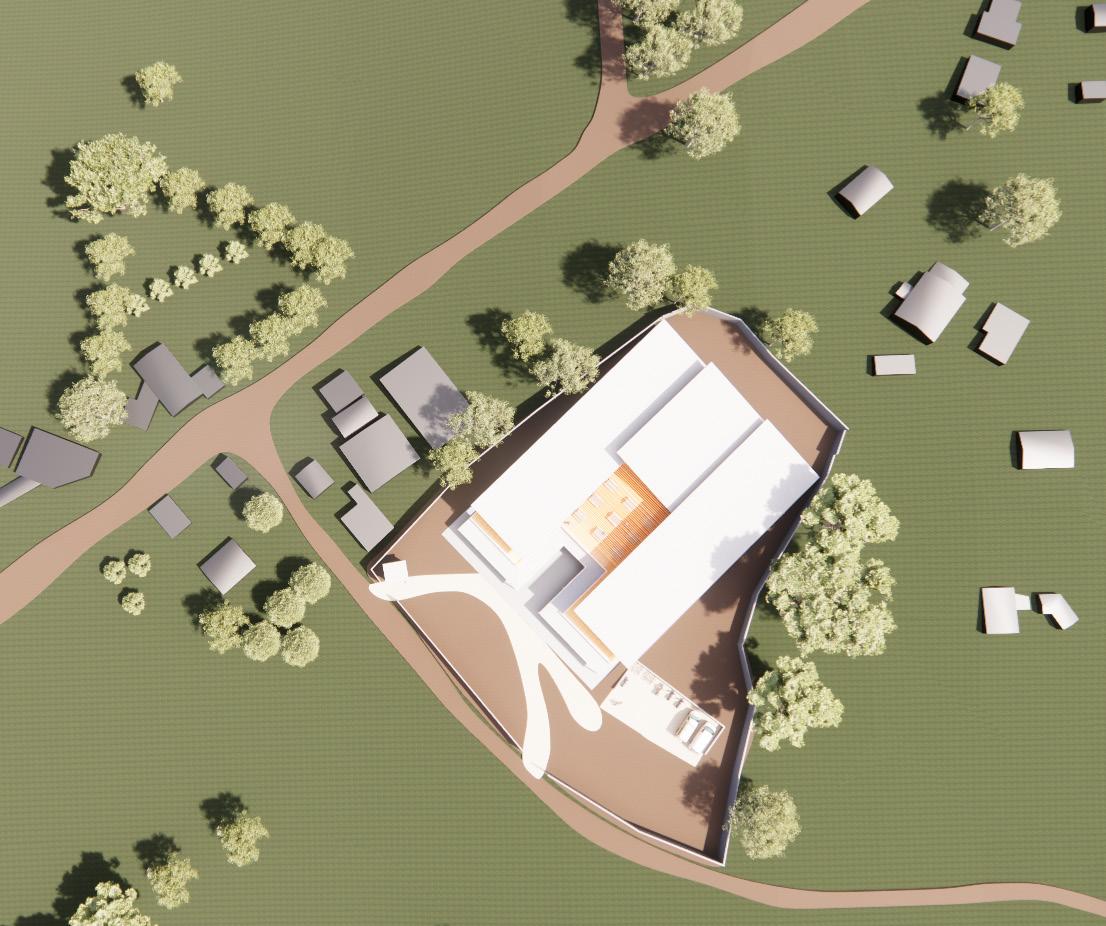
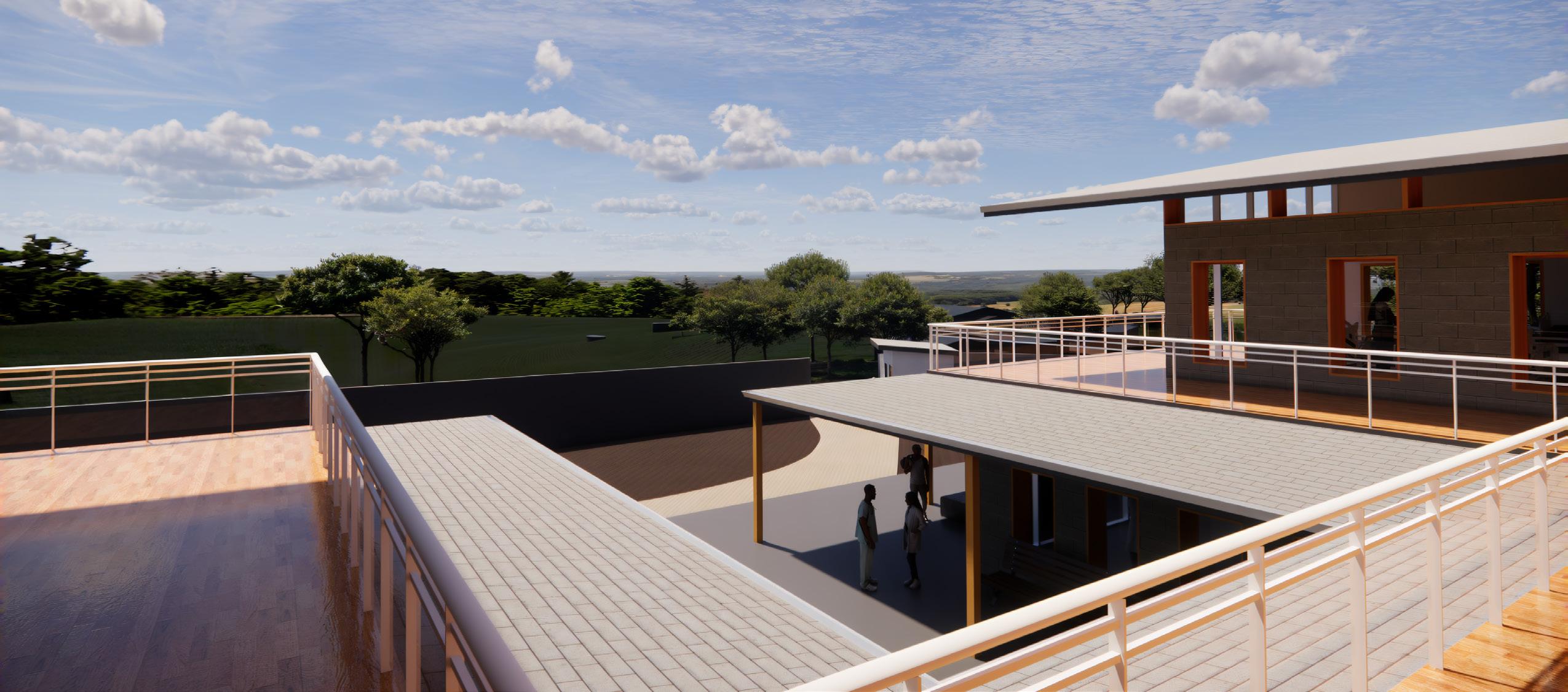
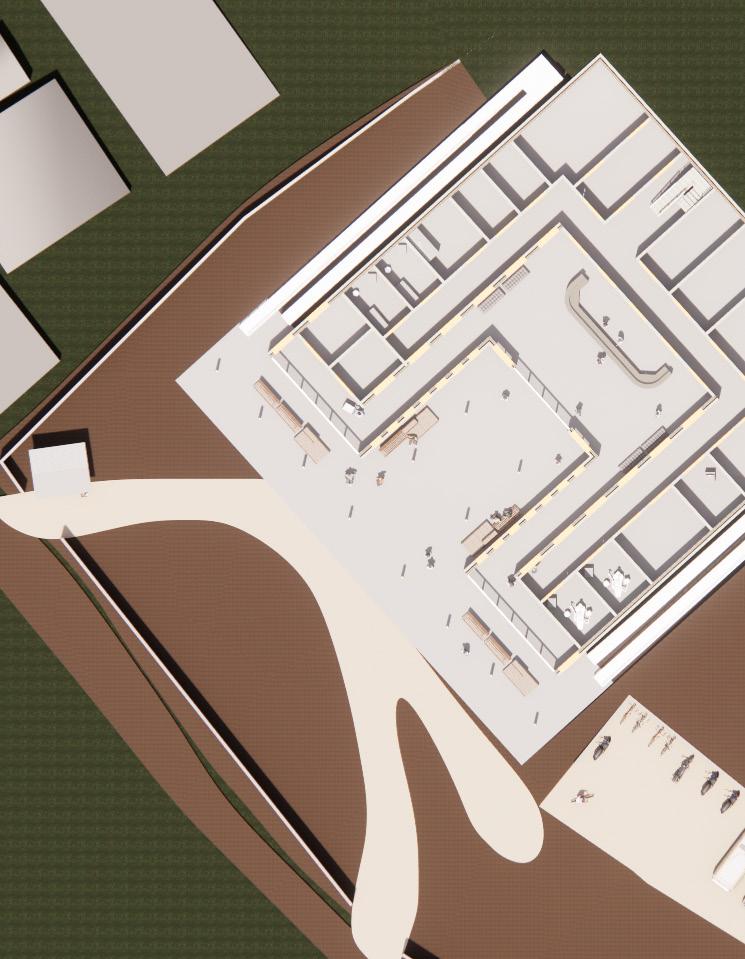
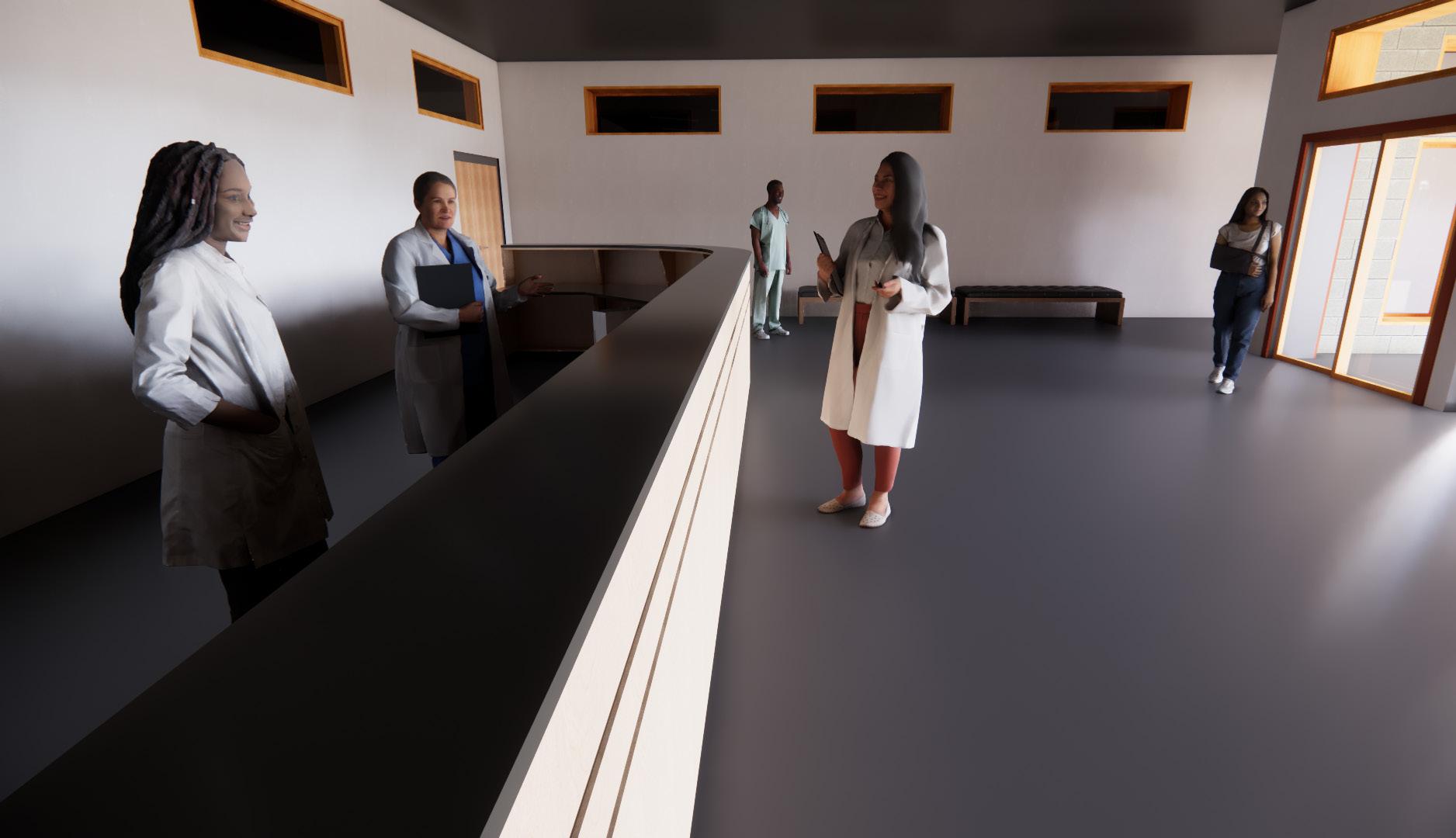
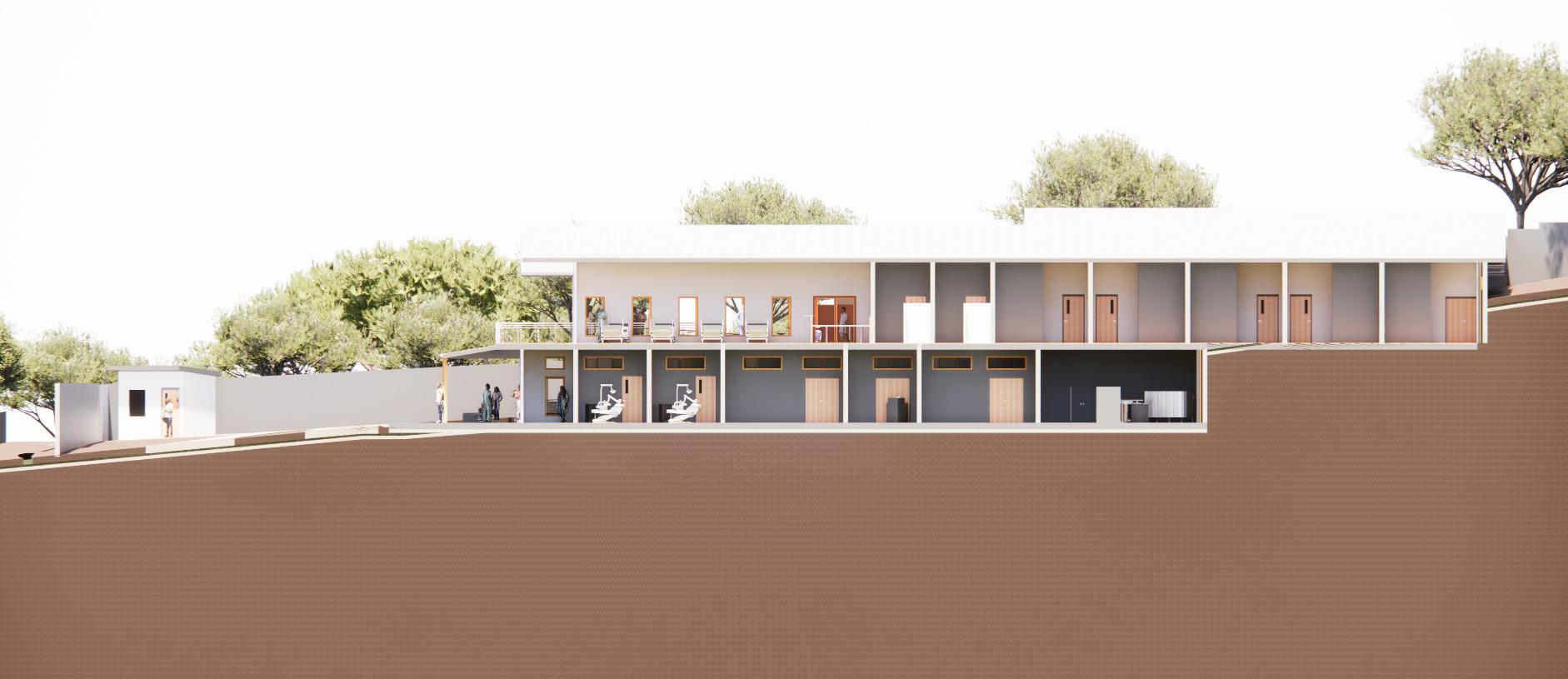
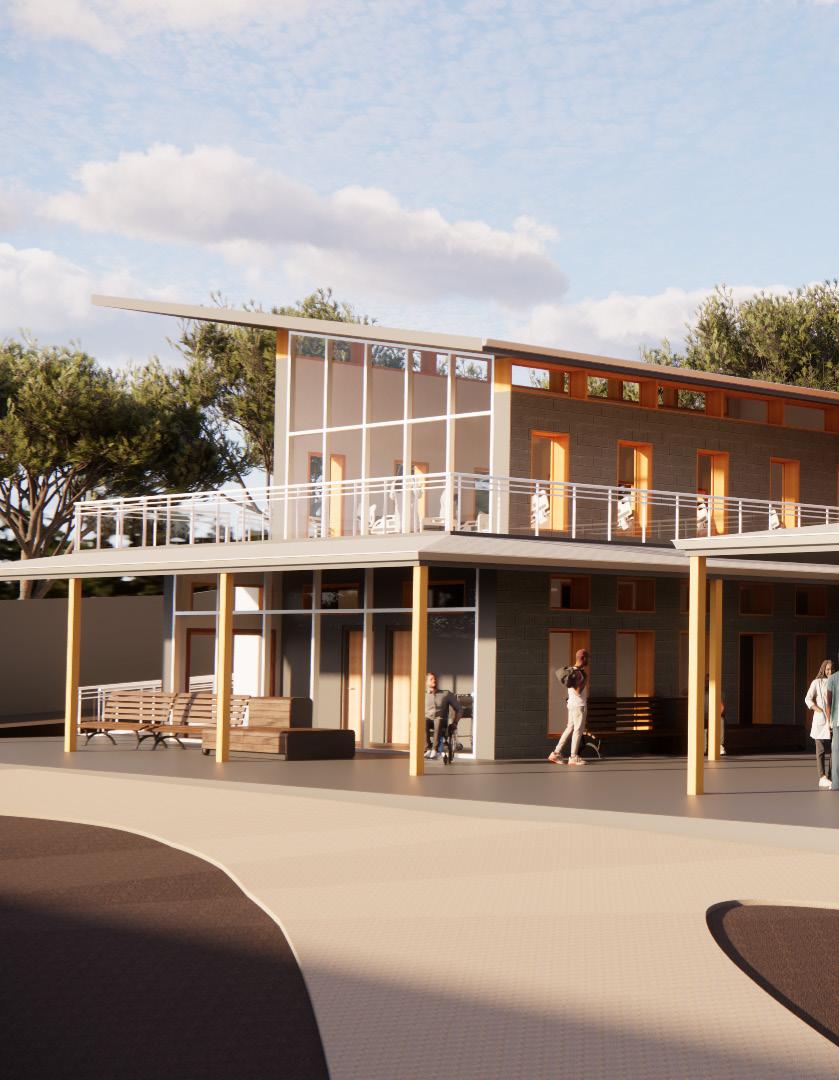
The Kapkemich Medical and Education Complex in Kenya embodies a comprehensive approach to healthcare design, integrating environmental sustainability, cultural sensitivity, and cutting-edge medical functionality. This facility is envisioned as a center of excellence for pediatric and general medical care, aiming to serve both the local and broader community with distinction.
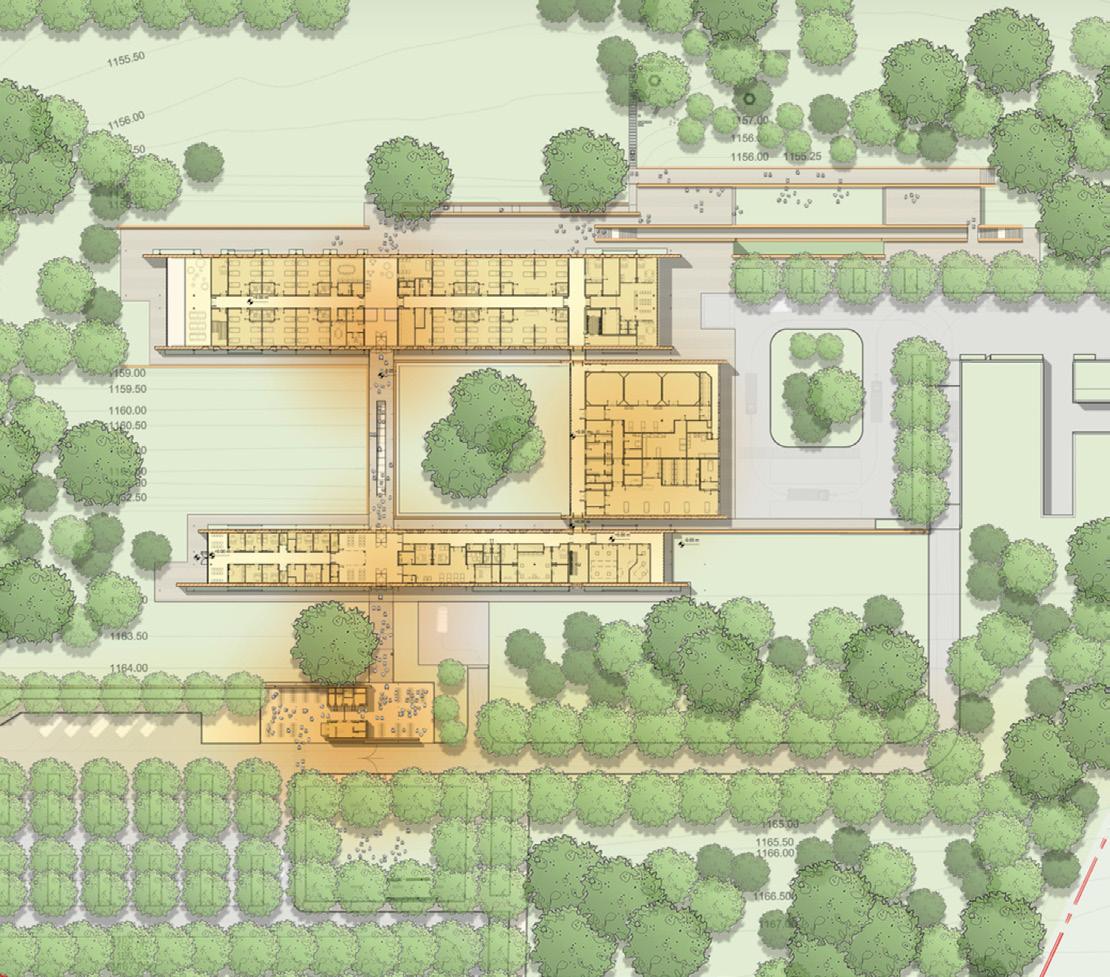
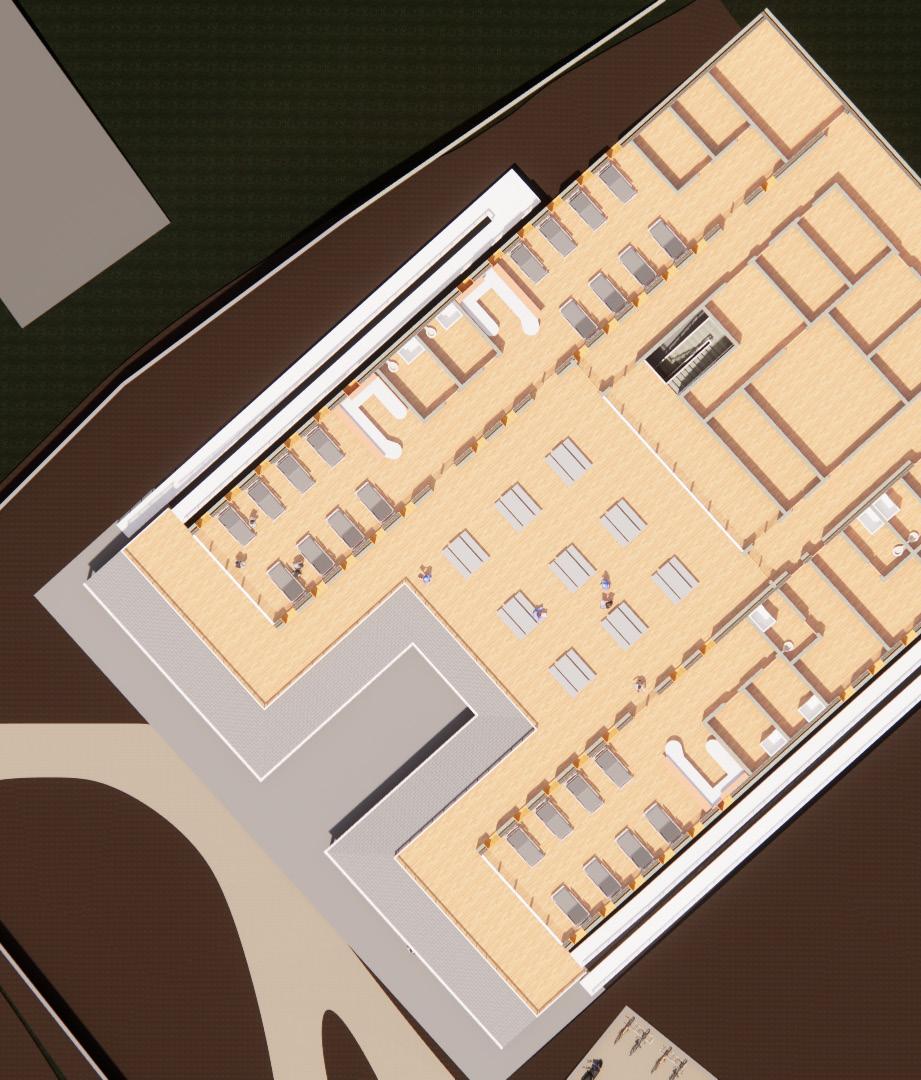
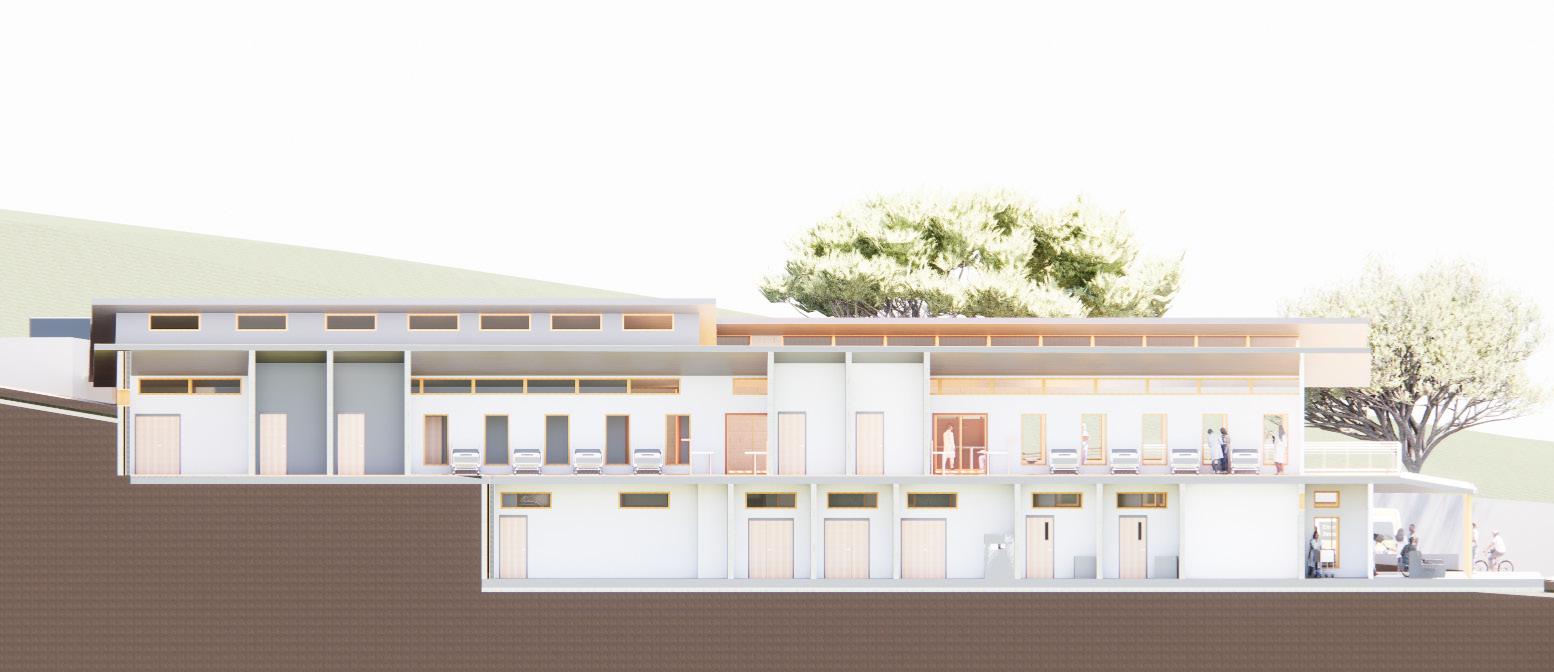
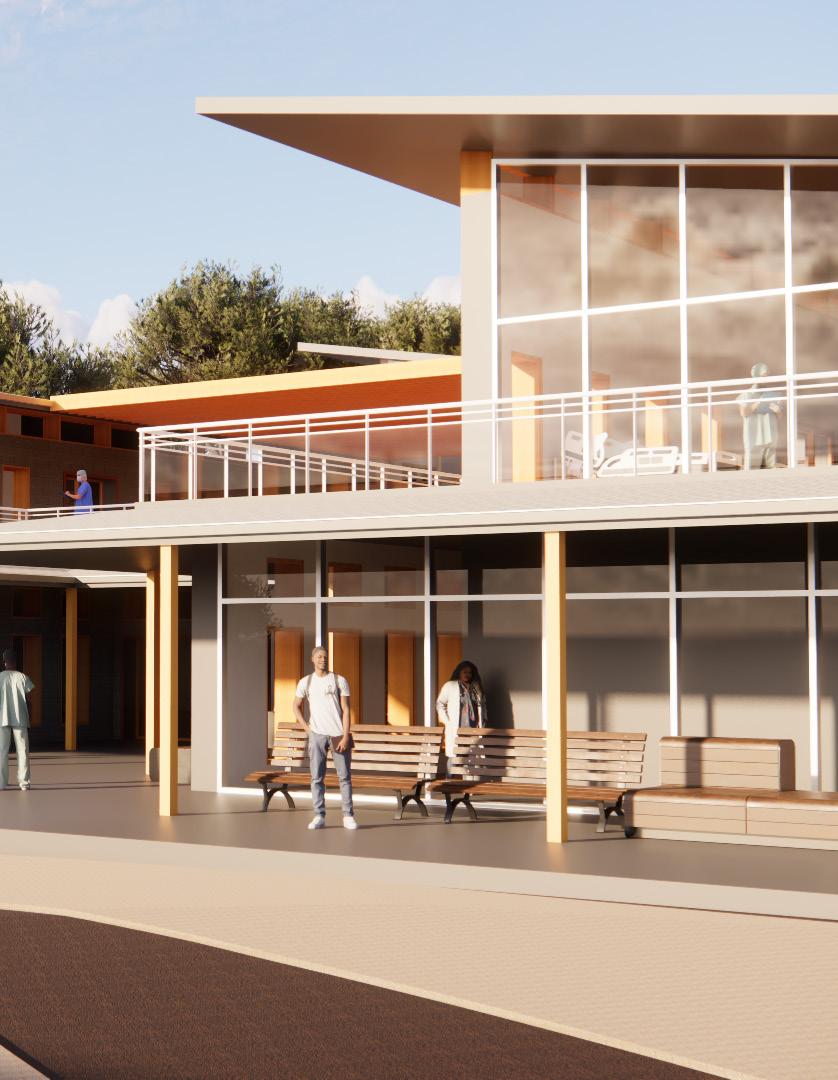
The hospital’s layout is meticulously planned to support efficient workflows, with dedicated zones for inpatient wards, surgical theaters, diagnostic areas, and ancillary services. Emphasis is placed on creating healing environments through natural light, ventilation, and thoughtful spatial organization. The project prioritizes the use of local materials and sustainable construction techniques to minimize environmental impact. The inclusion of insulated CMU walls and strategic cross-ventilation ensures energy efficiency and thermal comfort.
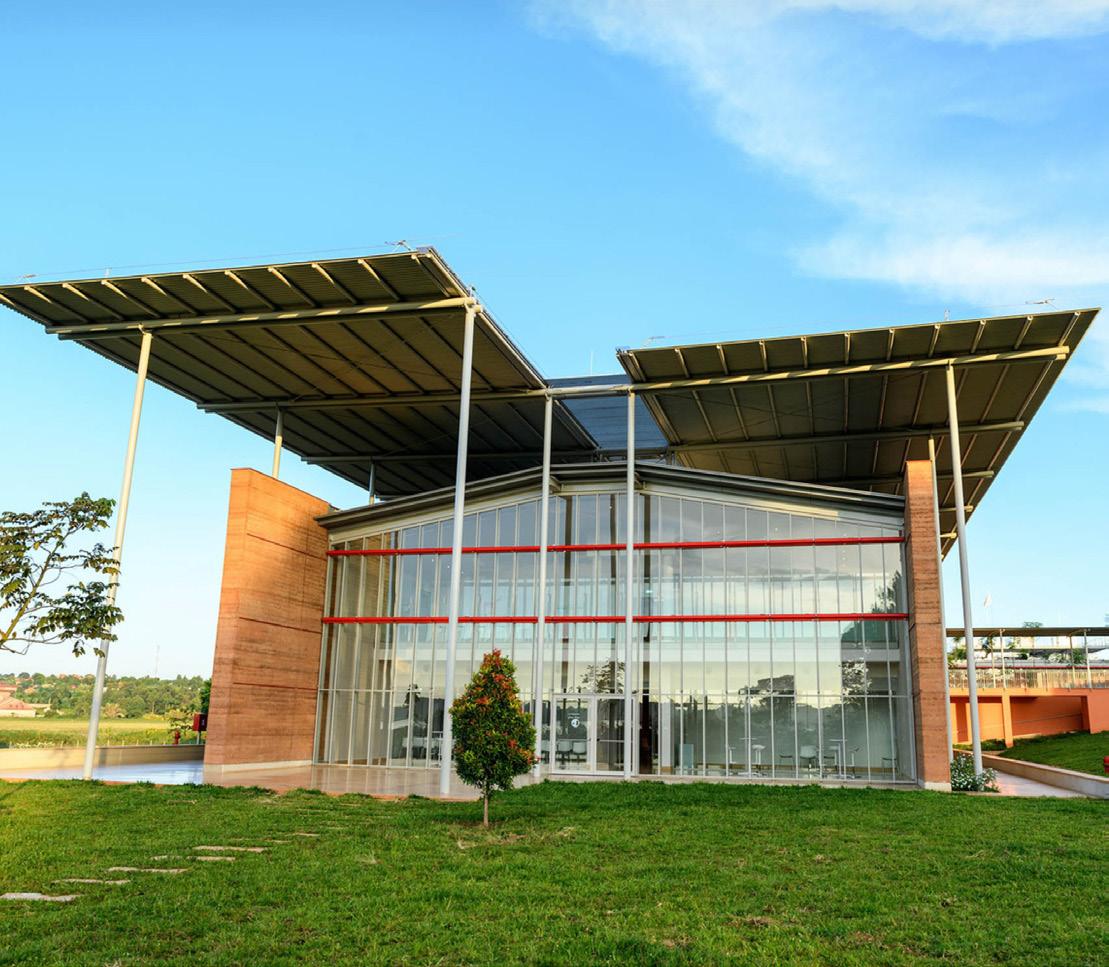
Children’s Surgical Hospital Entebbe, Uganda
Renzo Piano Building Workshop + Studio TAMassociati
Functional Design: The hospital’s layout prioritizes functionality with clear zoning for different functions such as wards, operating theaters, and diagnostic services.
Daylighting: Large windows and open spaces allow for ample natural light, creating a pleasant healing environment. Incorporating natural light in the design enhances the well-being of patients and staff.
Local Materials and Techniques: By utilizing local materials and construction techniques, the hospital respects and integrates into its surroundings.
Indoor-Outdoor Continuum: The design creates a seamless transition between indoor and outdoor spaces, promoting natural ventilation and connection with nature.
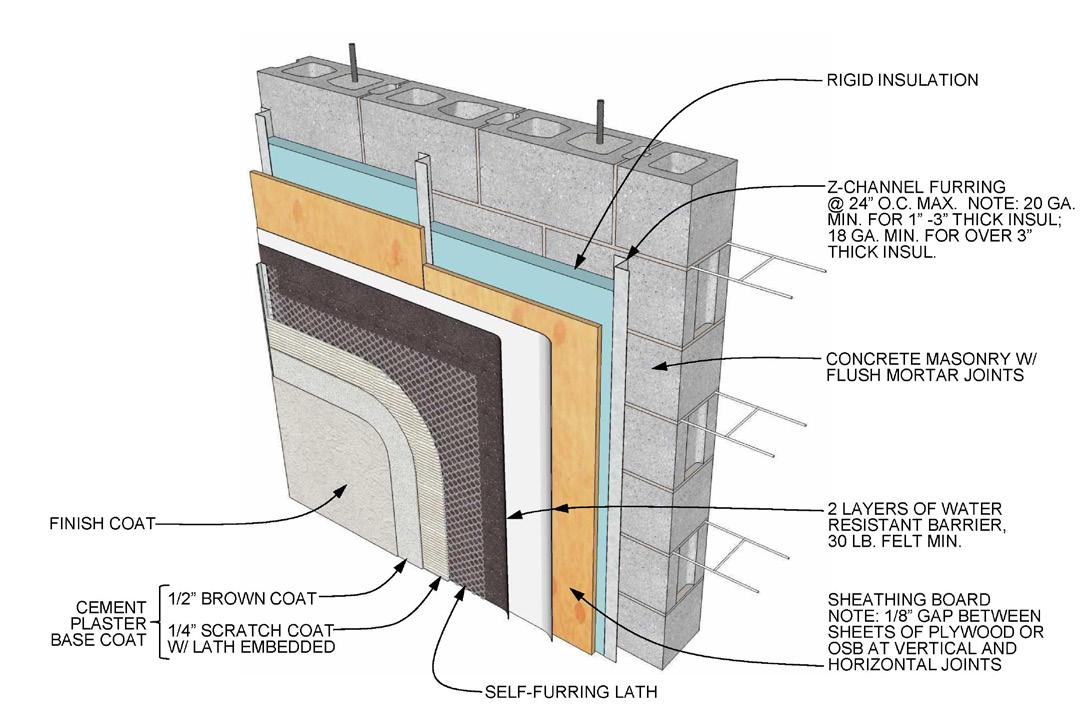
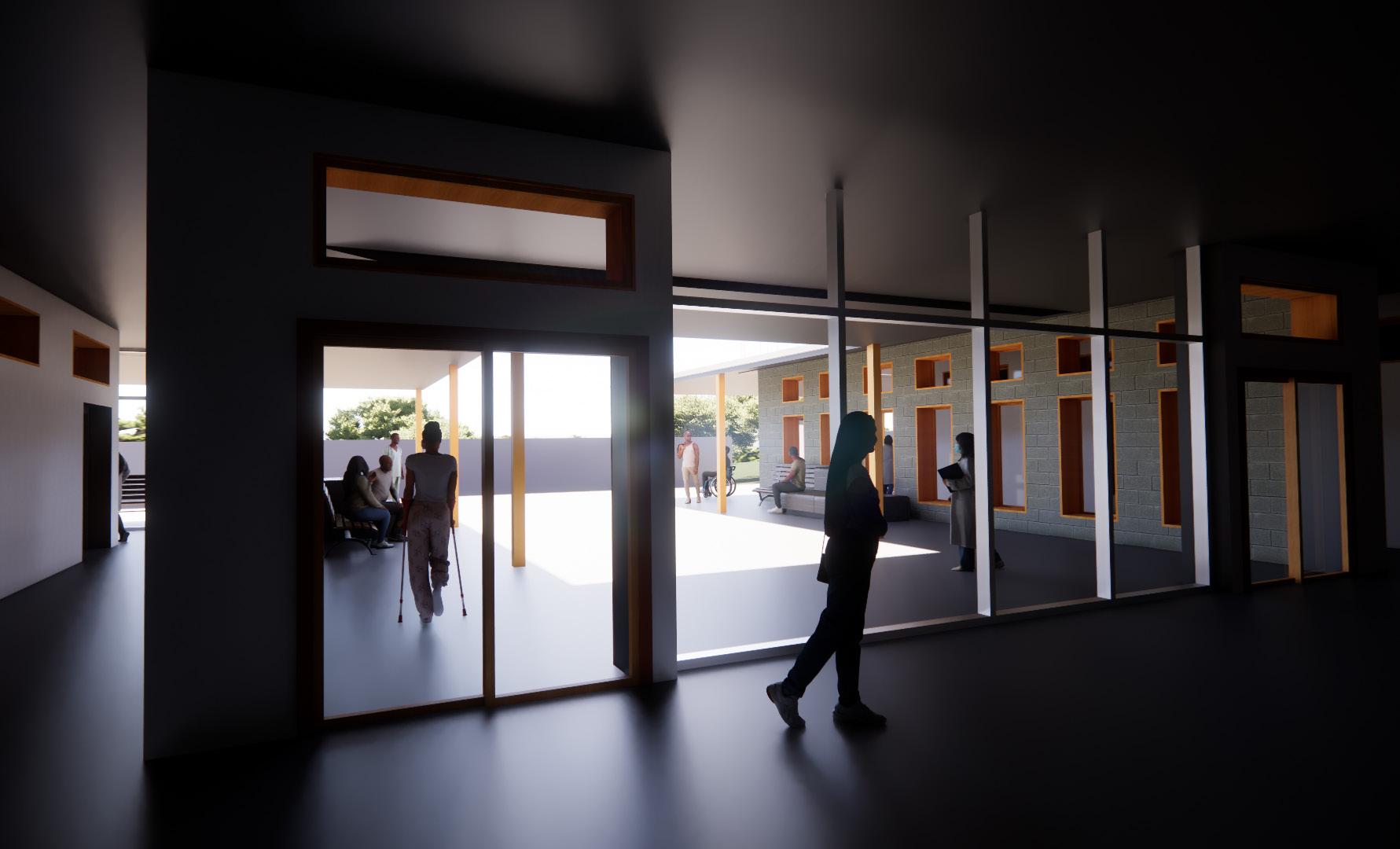
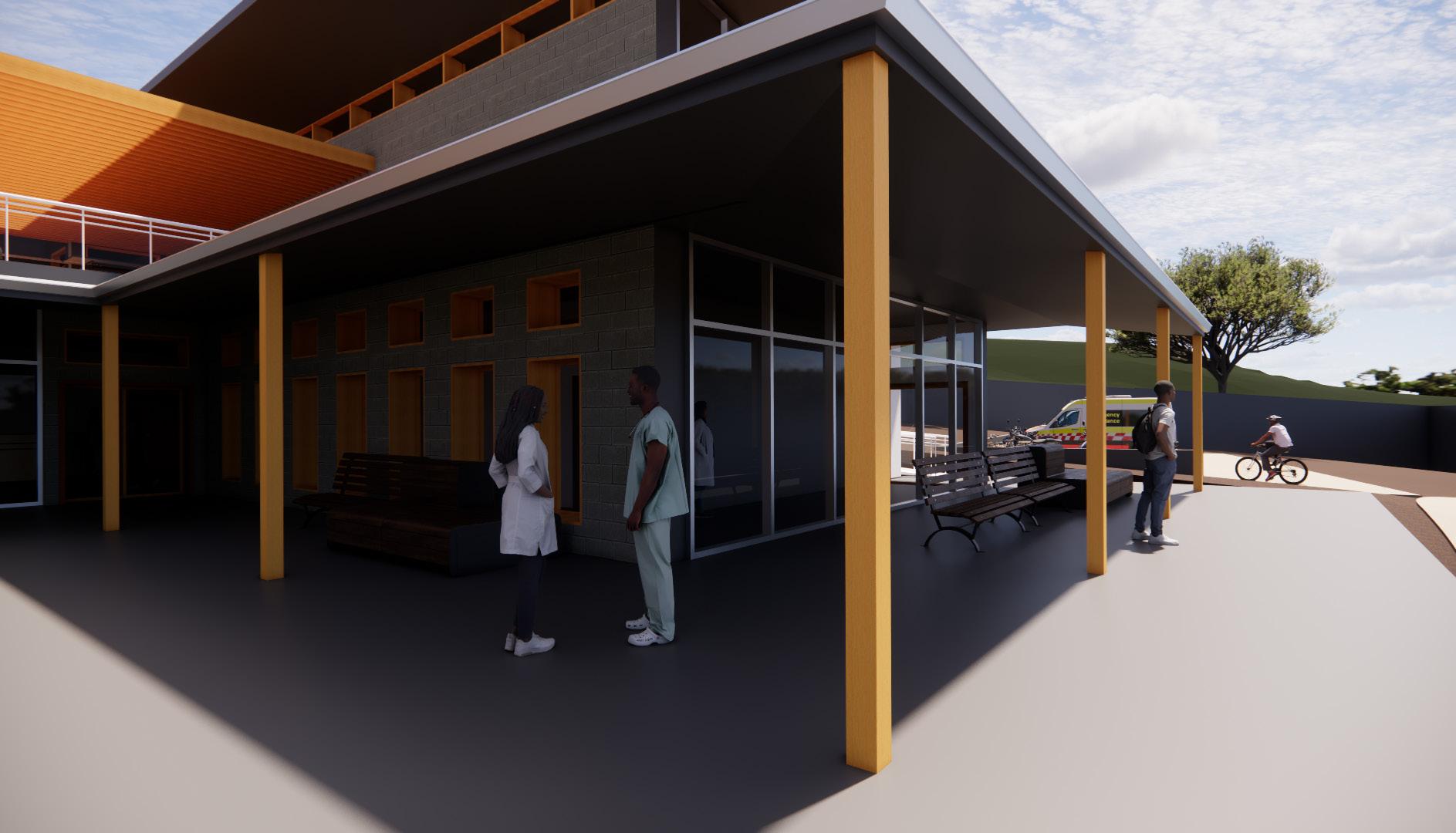
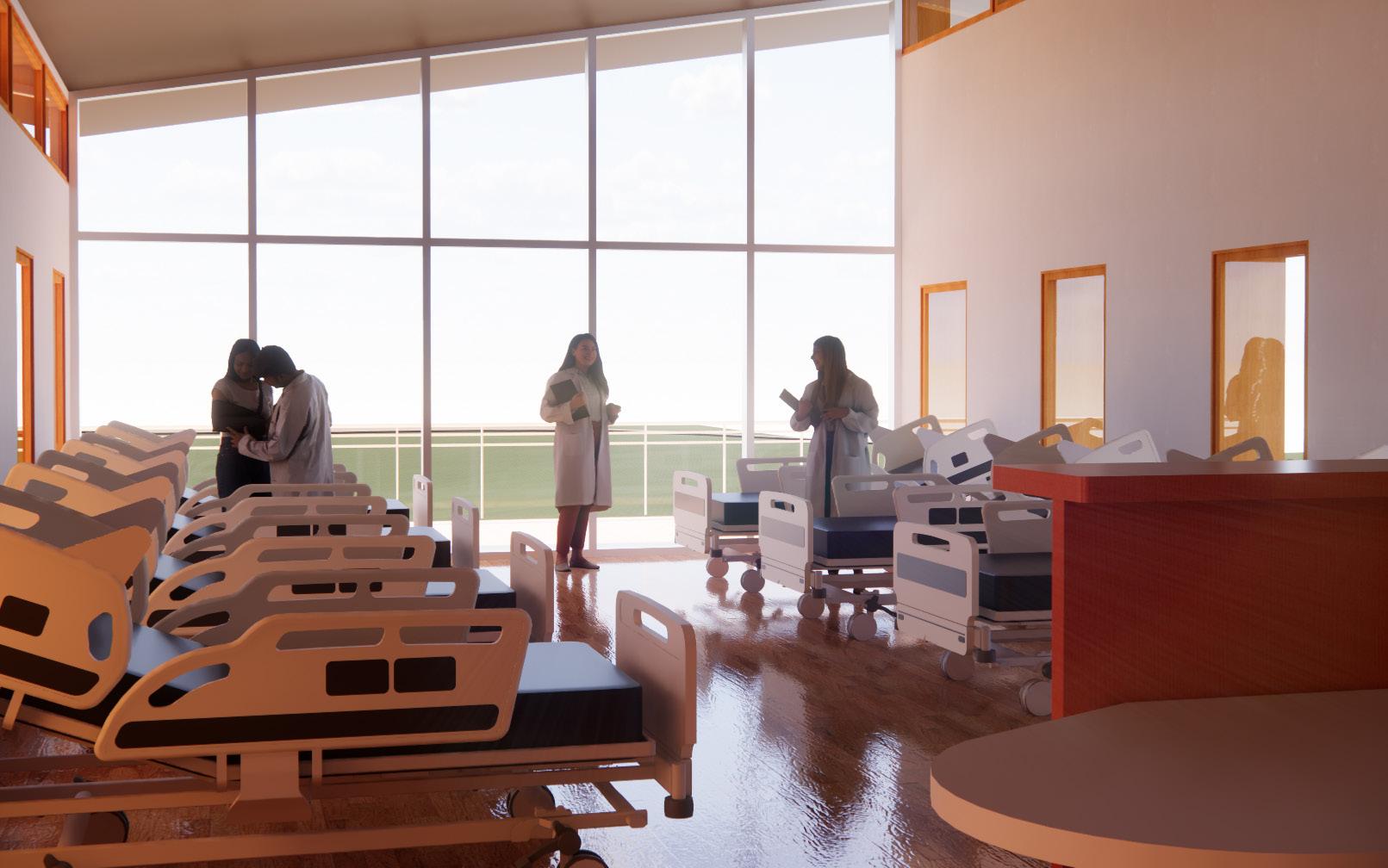
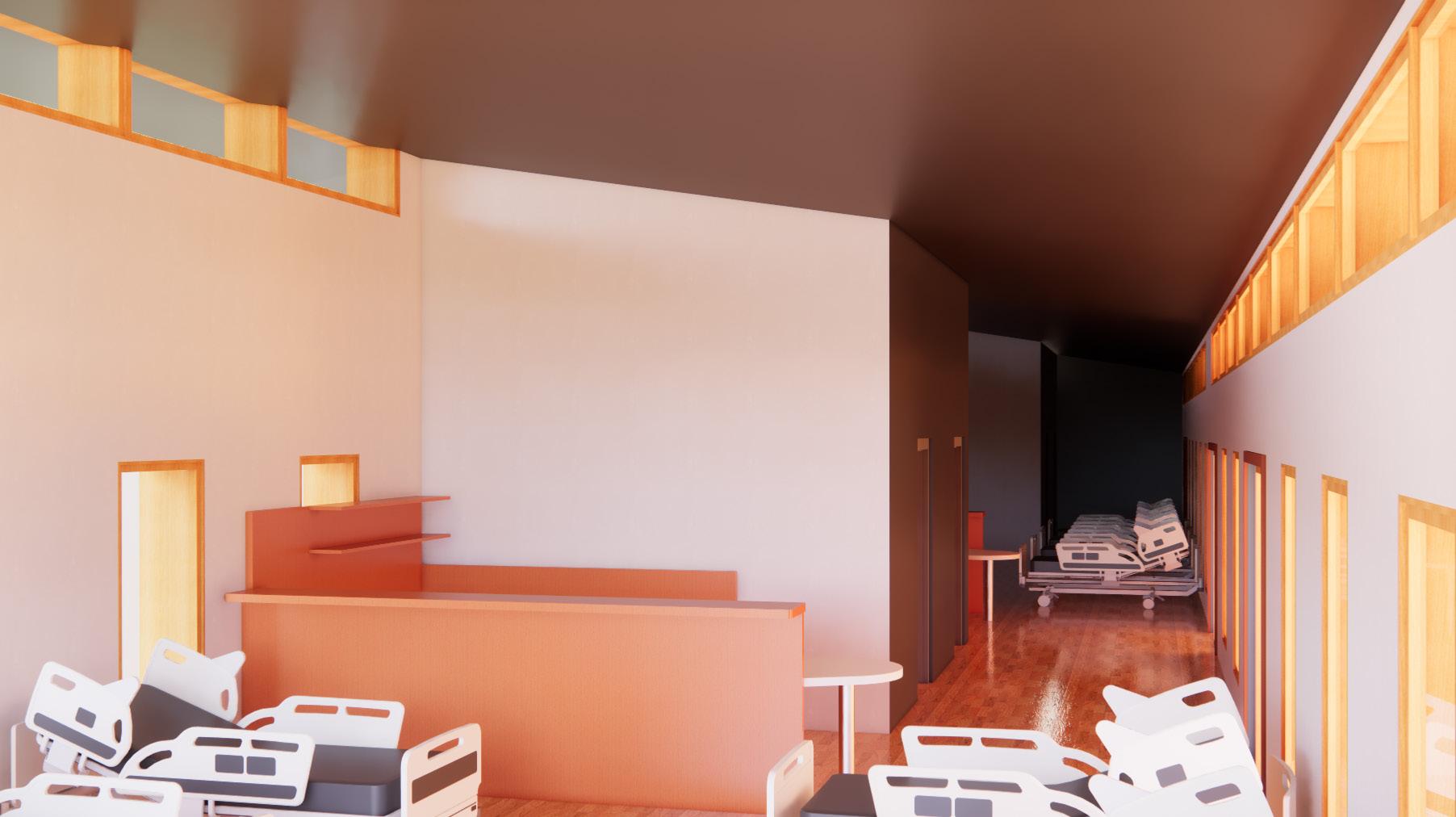
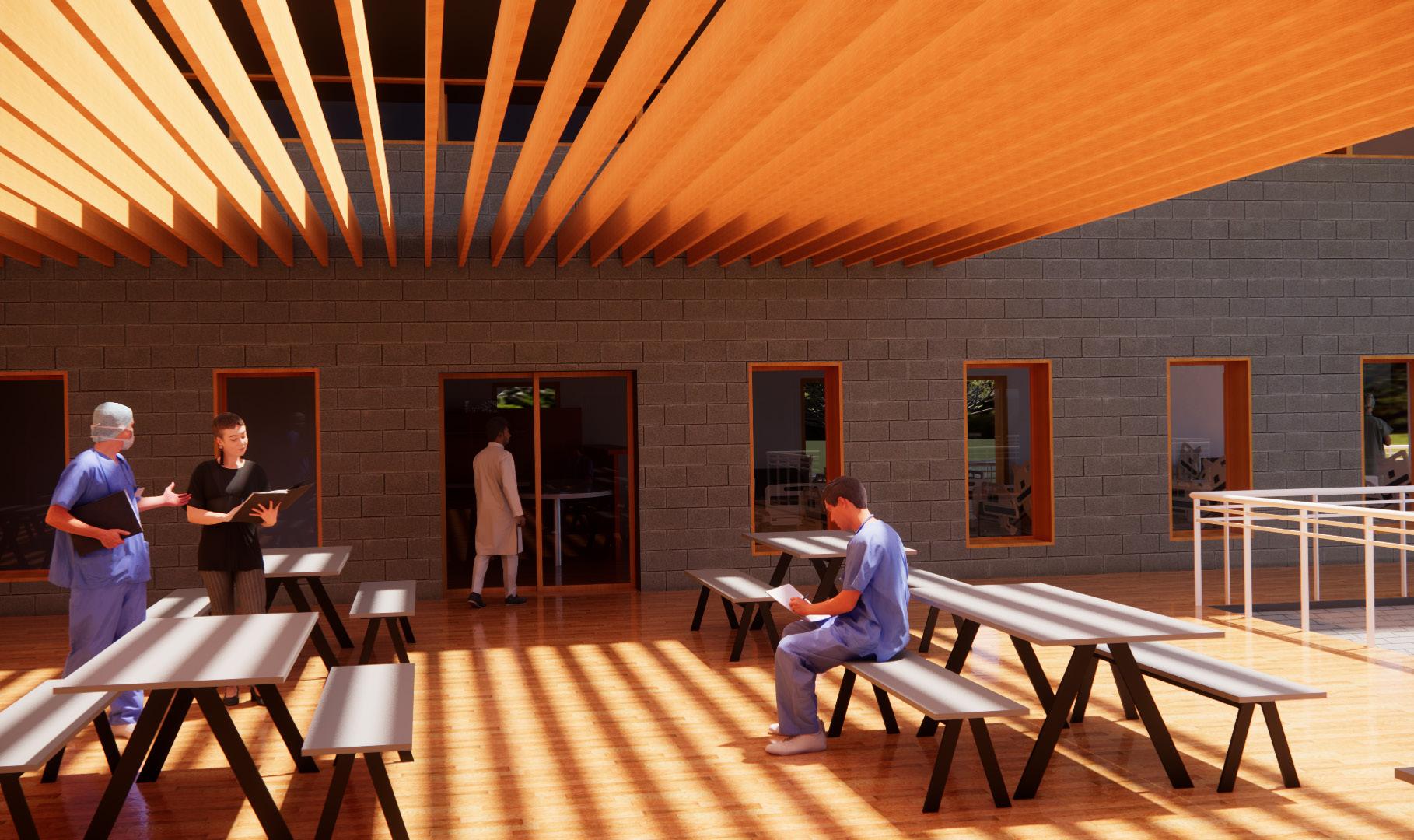
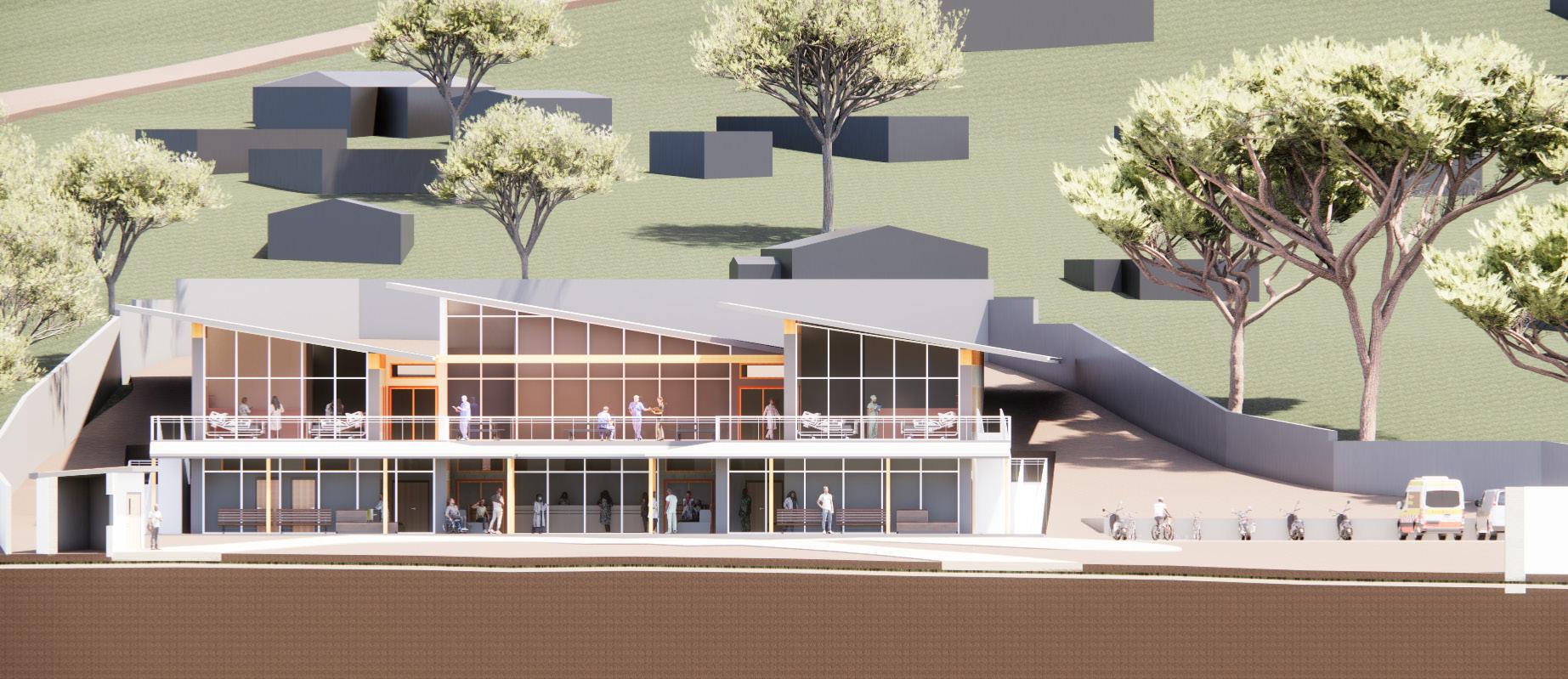
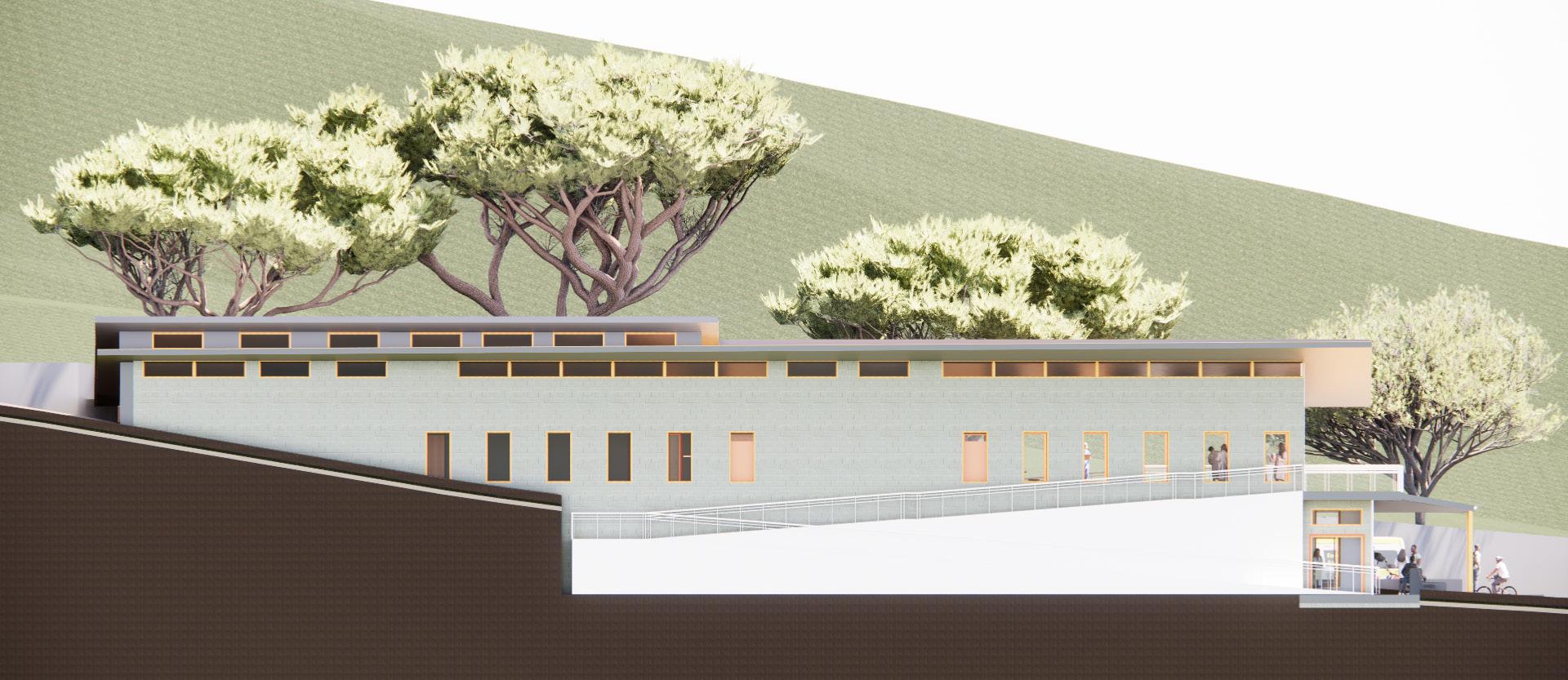
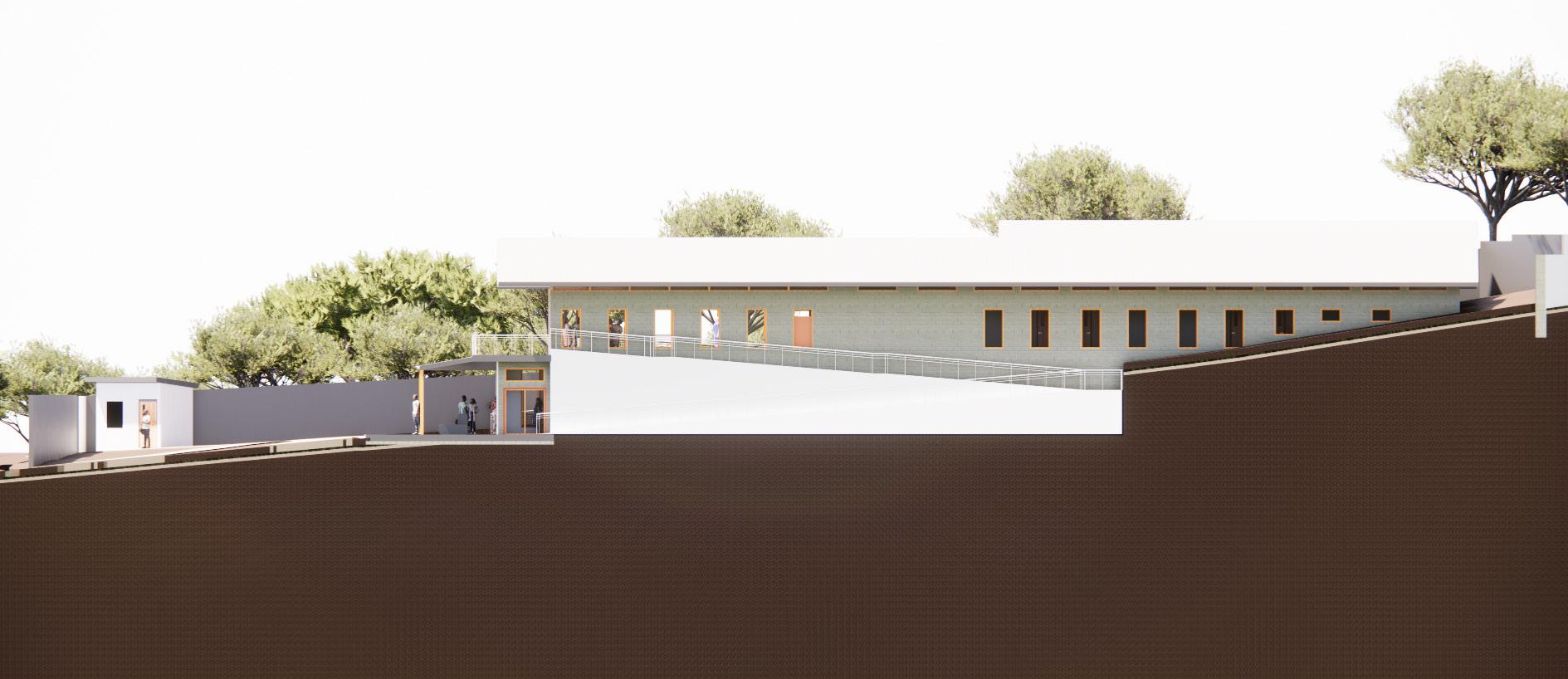
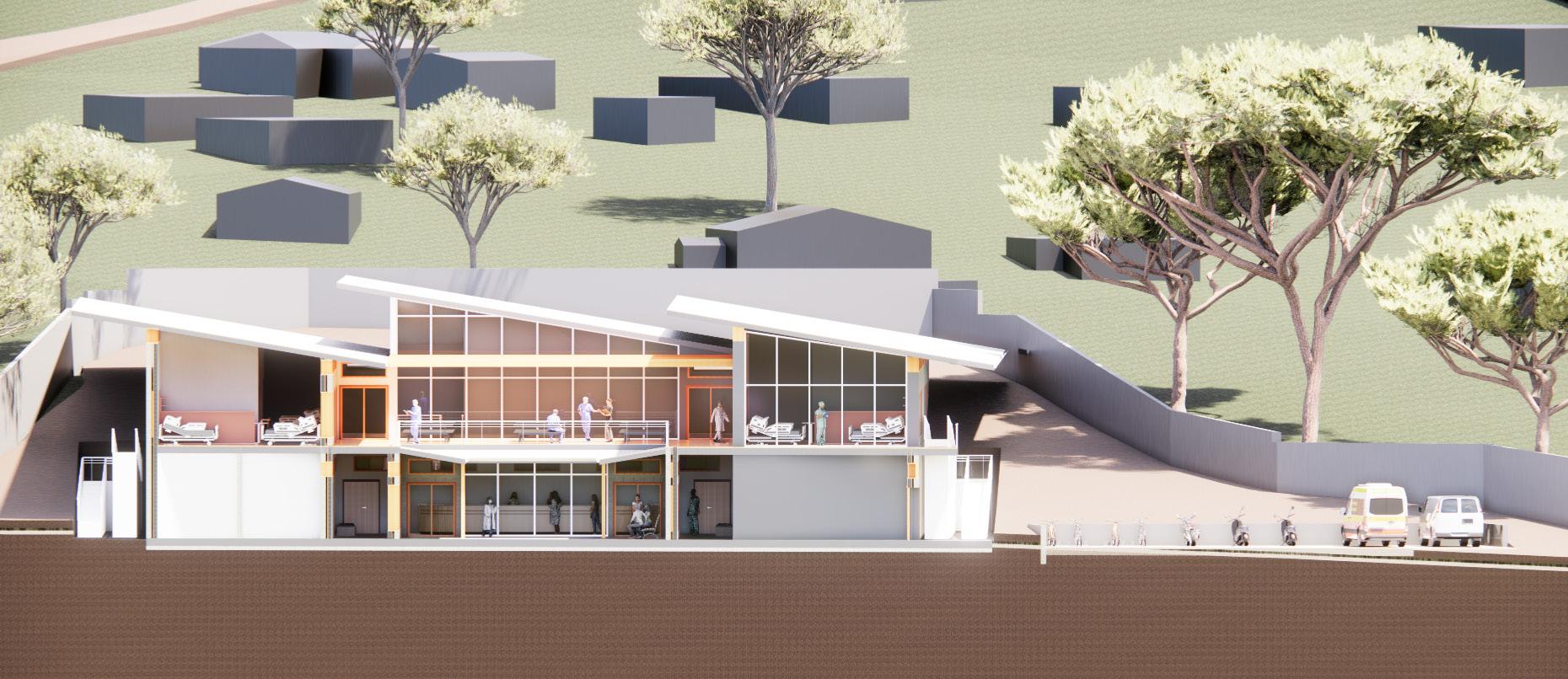
Cross Ventilation from upper windows - cool breeze - improved indoor air quality
A Flexible Civic Hub for a New way of Working
Kansas City, MS
Public Library | Civic Work-from-Home Hub
Alex Rose | ARCH 504 | Spring 2025
Professor Shannon Criss
26,000 sq ft

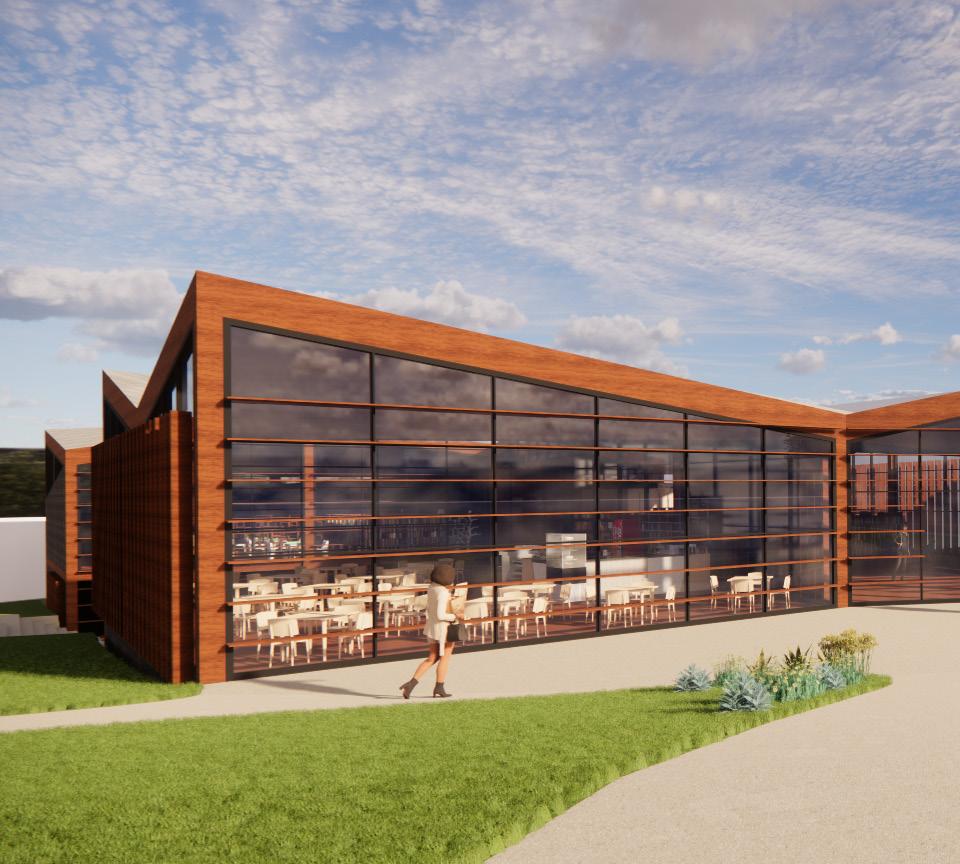
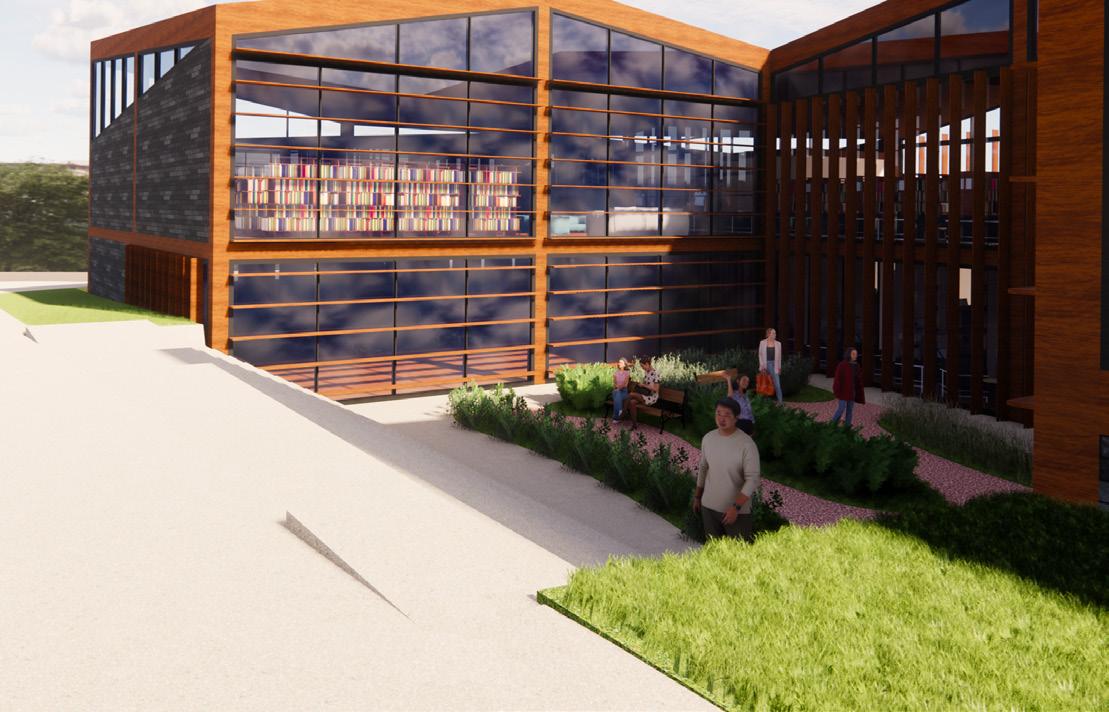
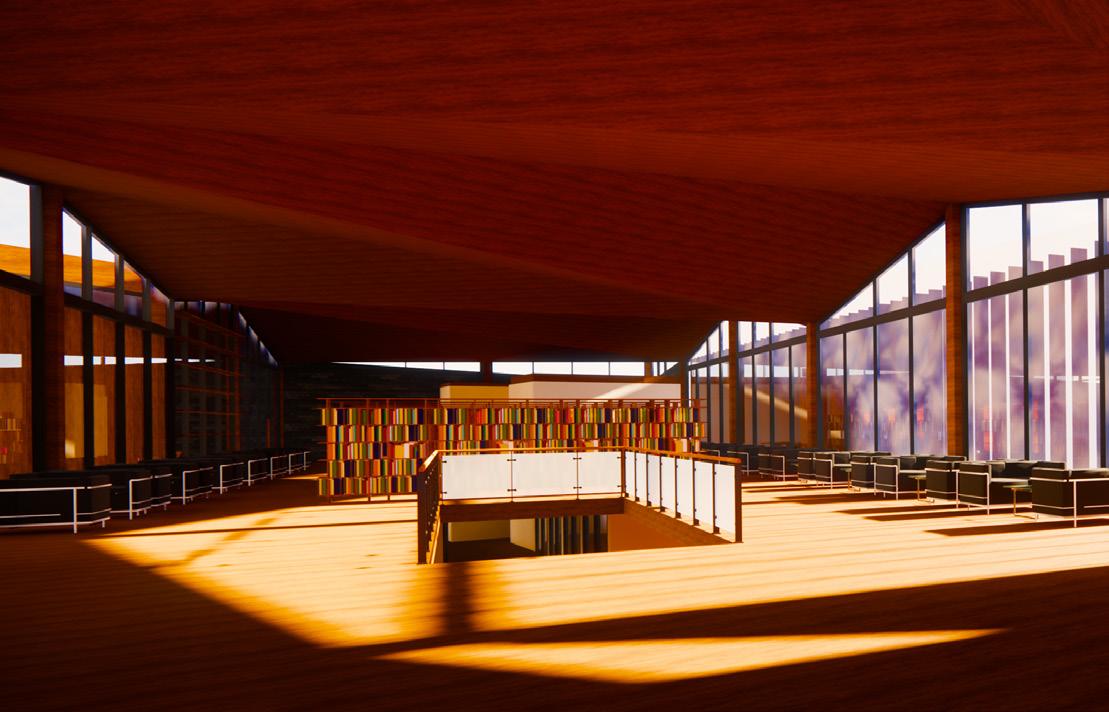
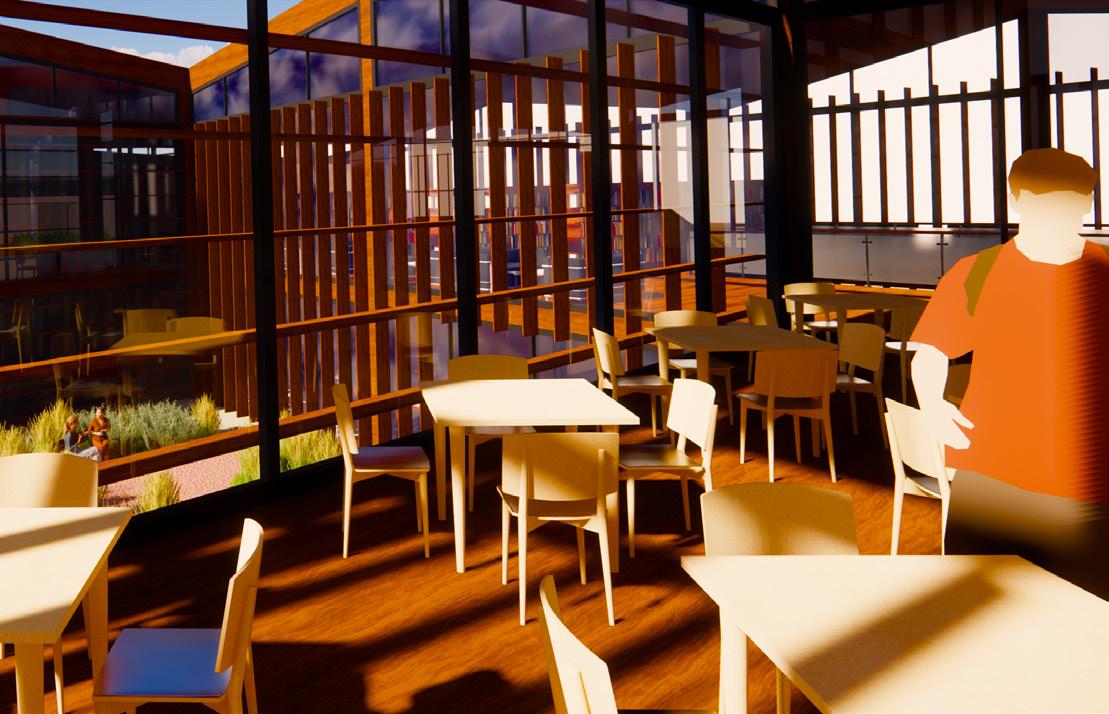
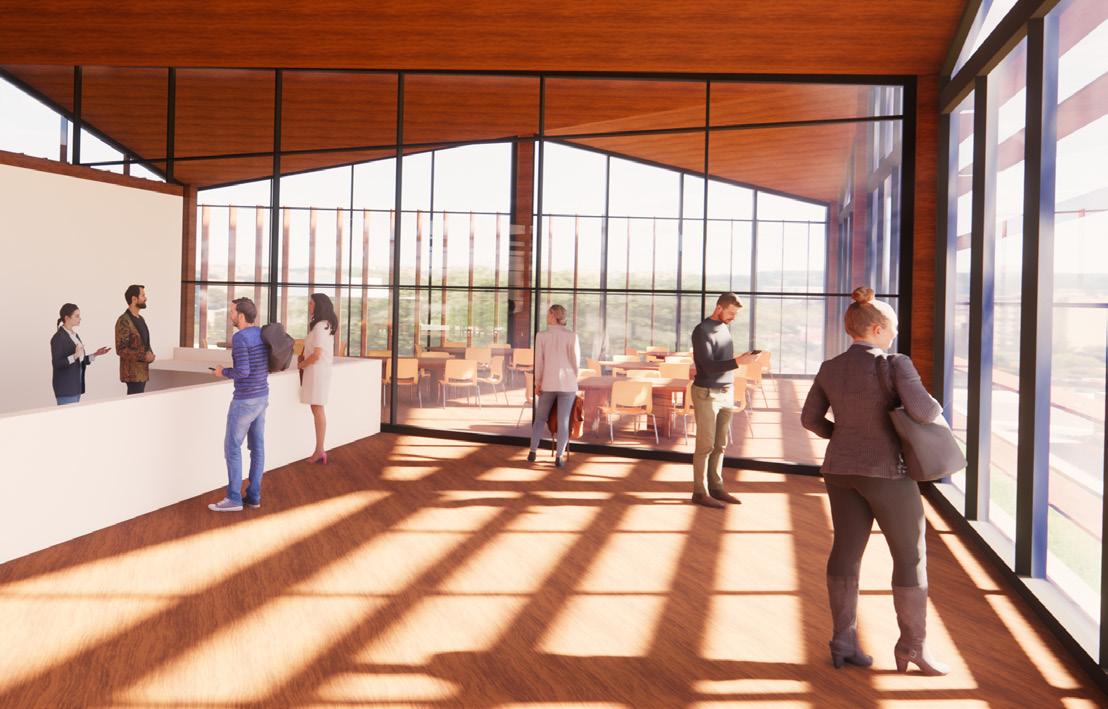
As more people work from home, the role of the public library is shifting. The River Market Civic Library reimagines this civic space as a flexible, tech-ready environment where individuals can focus, connect, and recharge. It supports remote workers, independent learners, and neighborhood life through coworking zones, quiet reading areas, and adaptable community rooms.
Located in Kansas City’s historis River Market, the building responds to its vibrant urban context and sloped topography. A mass timber structure, garden courtyards, and passive design strategiers promote both environmental and social sustainability.
Guided by the values of Connection, Community, Sustainability, and Light, the project offers a welcoming, future-ready model for public space.
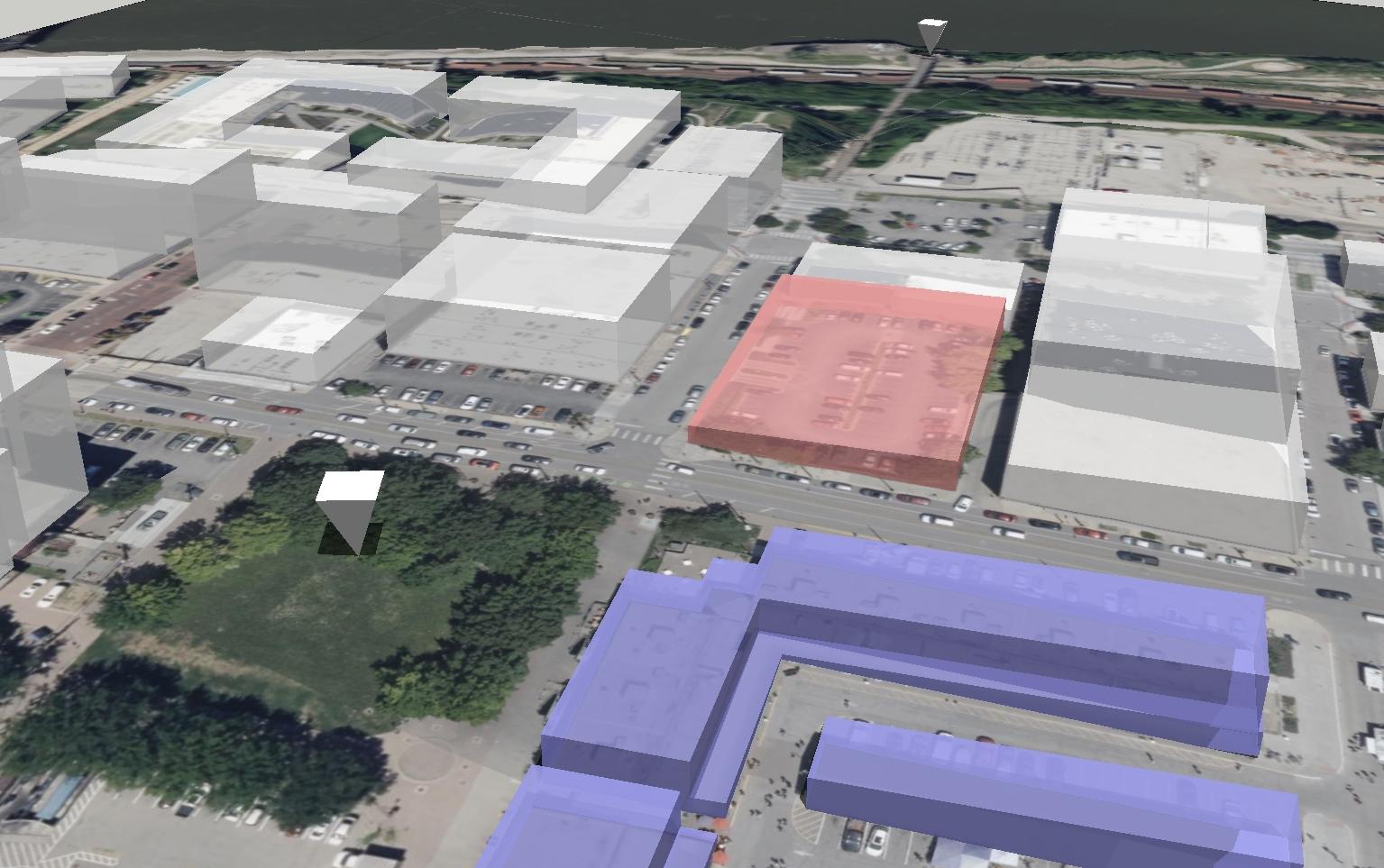
City Market proximity
The site sits directly north of the historic City Market, placing it at the intersection of Kansas City’s commercial, cultural, and pedestrian activity.
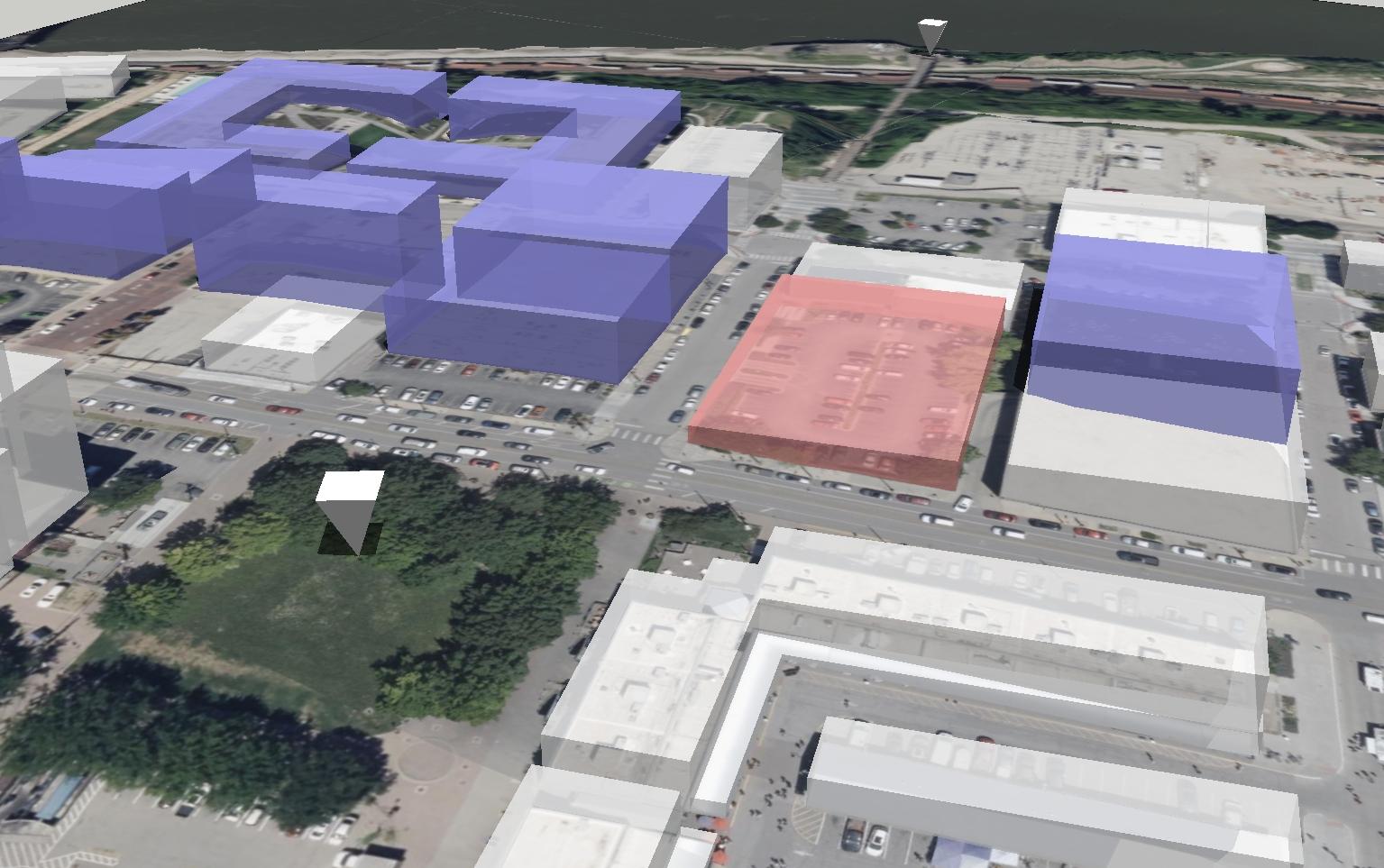
Residential adjacency
Bordered by established residential buildings, the site connects with the rhythms of everyday neighborhood life.
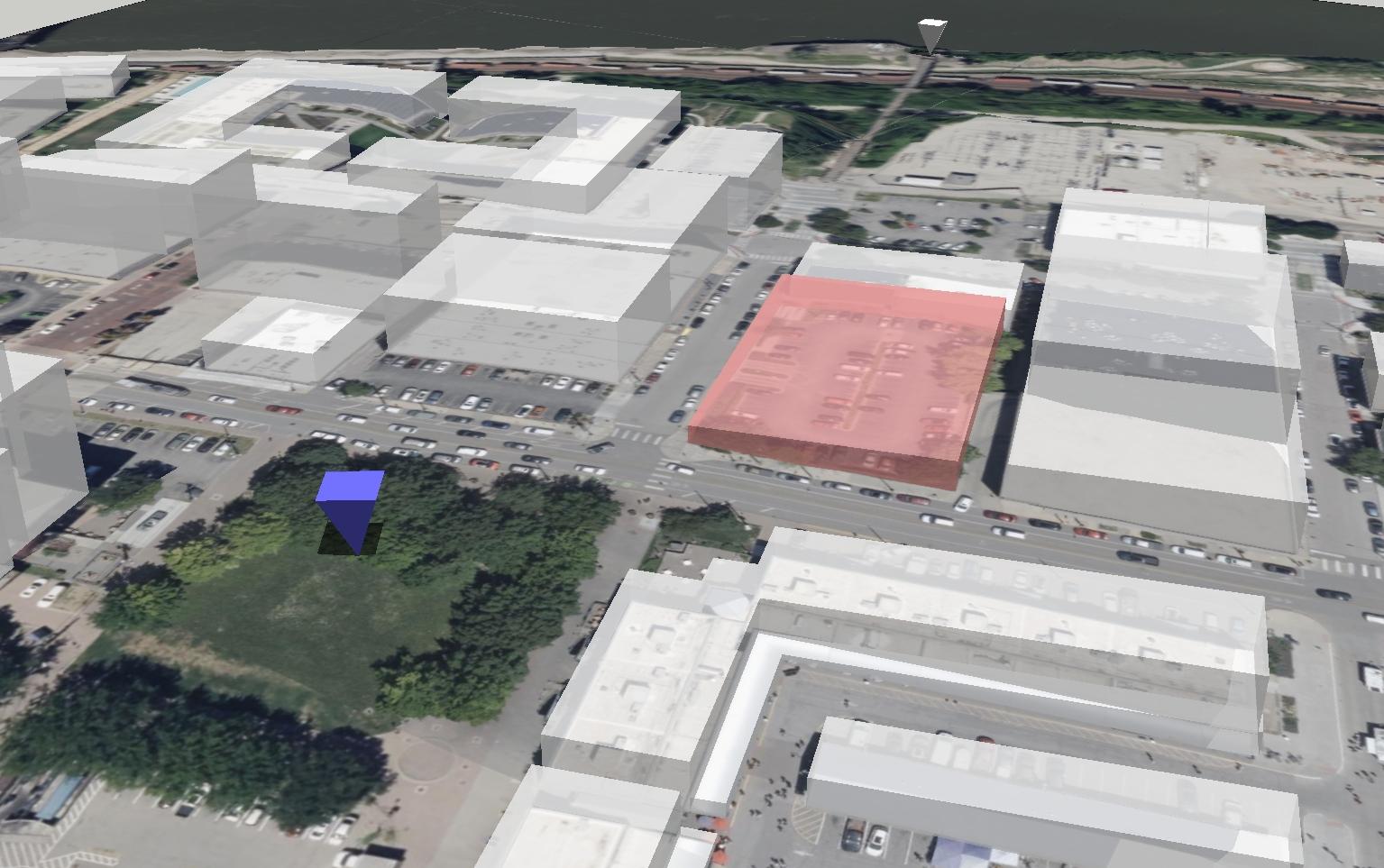
Park connection
With Berkley Park across the street, the site engages nature, offering potential for outdoor learning and programming.
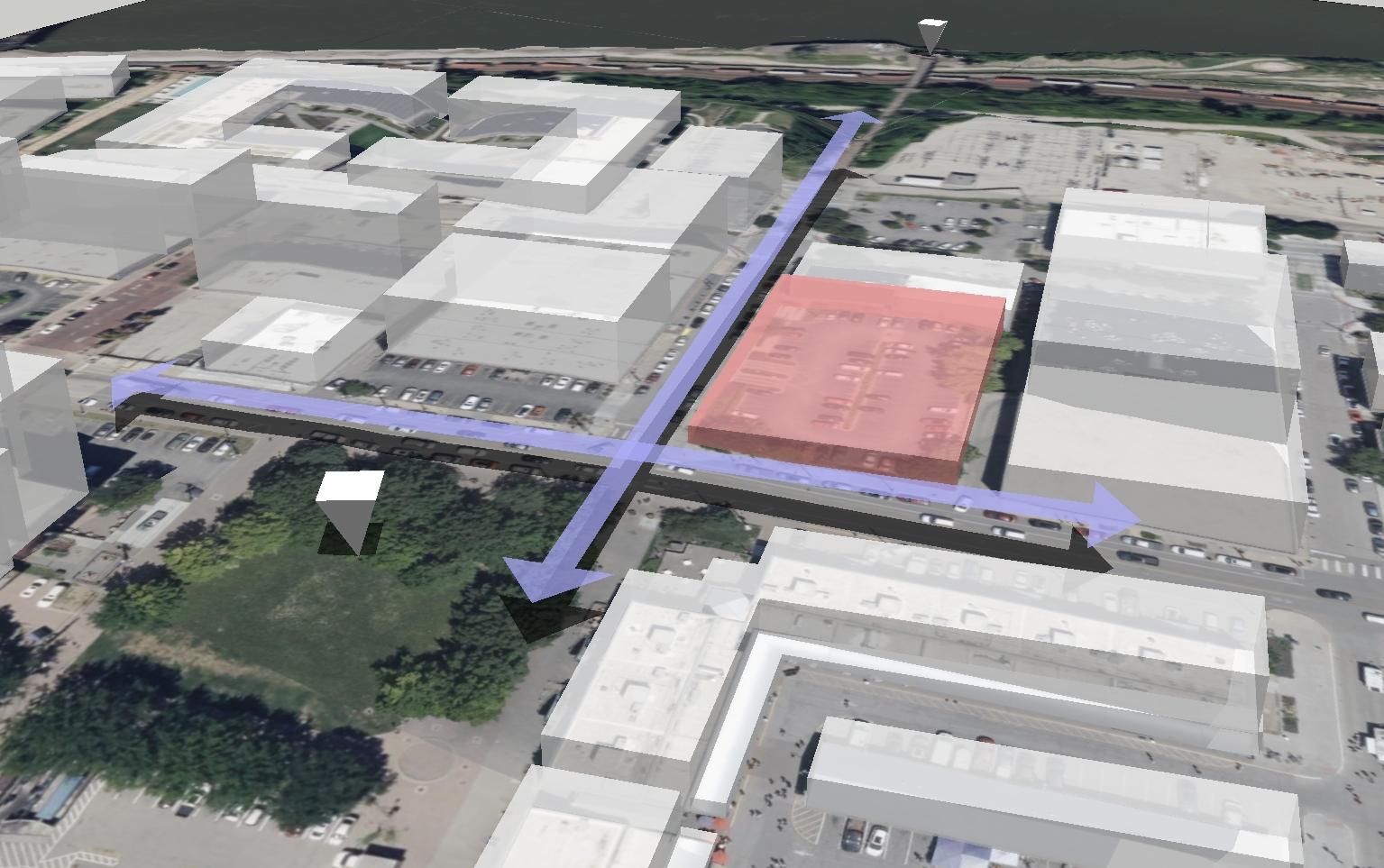
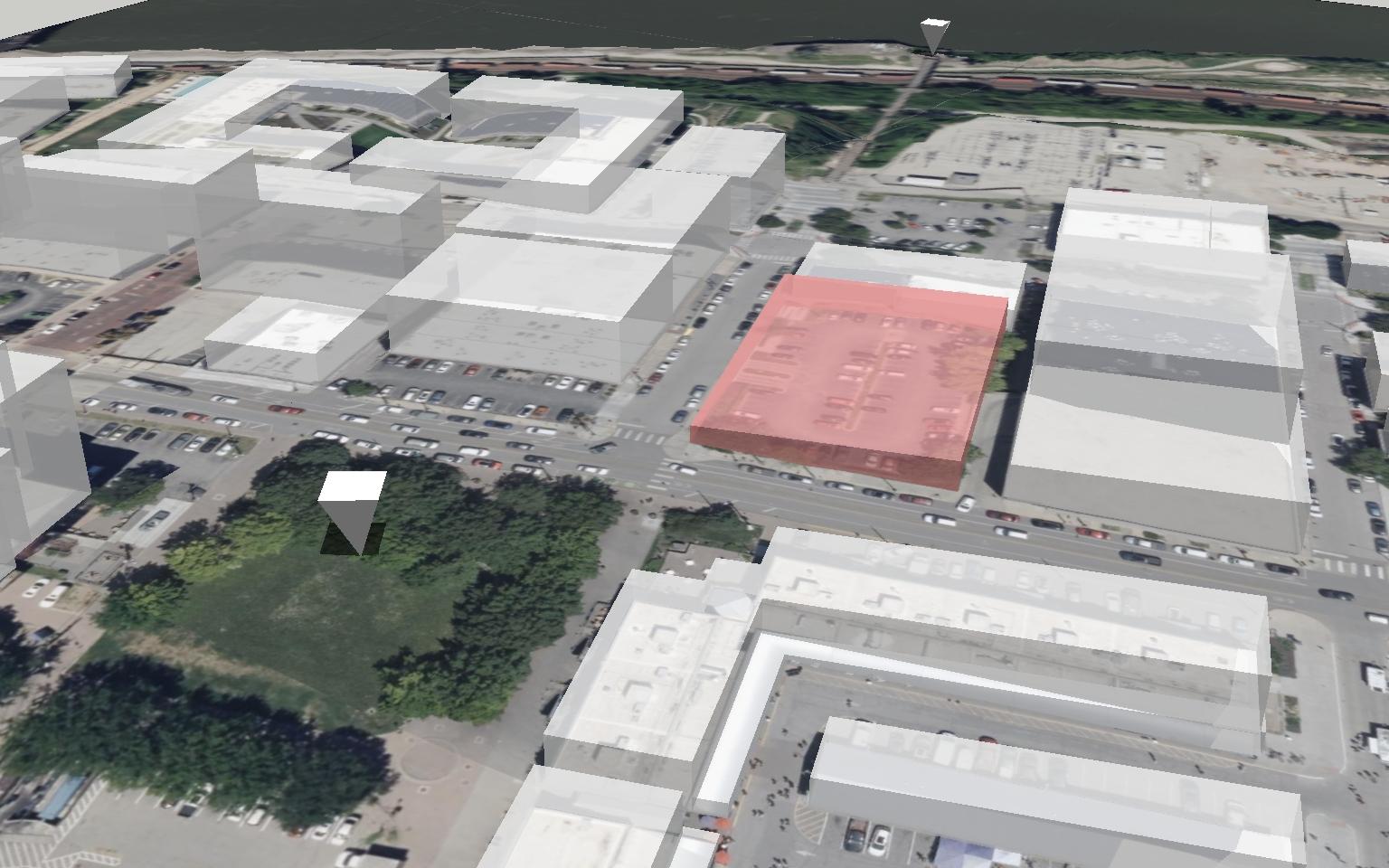
Strong pedestrian and vehicular paths converge at the site, enhancing its accessibility and public connectivity.
Subtle elevation changes across the site introduce opportunities for stepped design strategies, integrated seating, and water management.
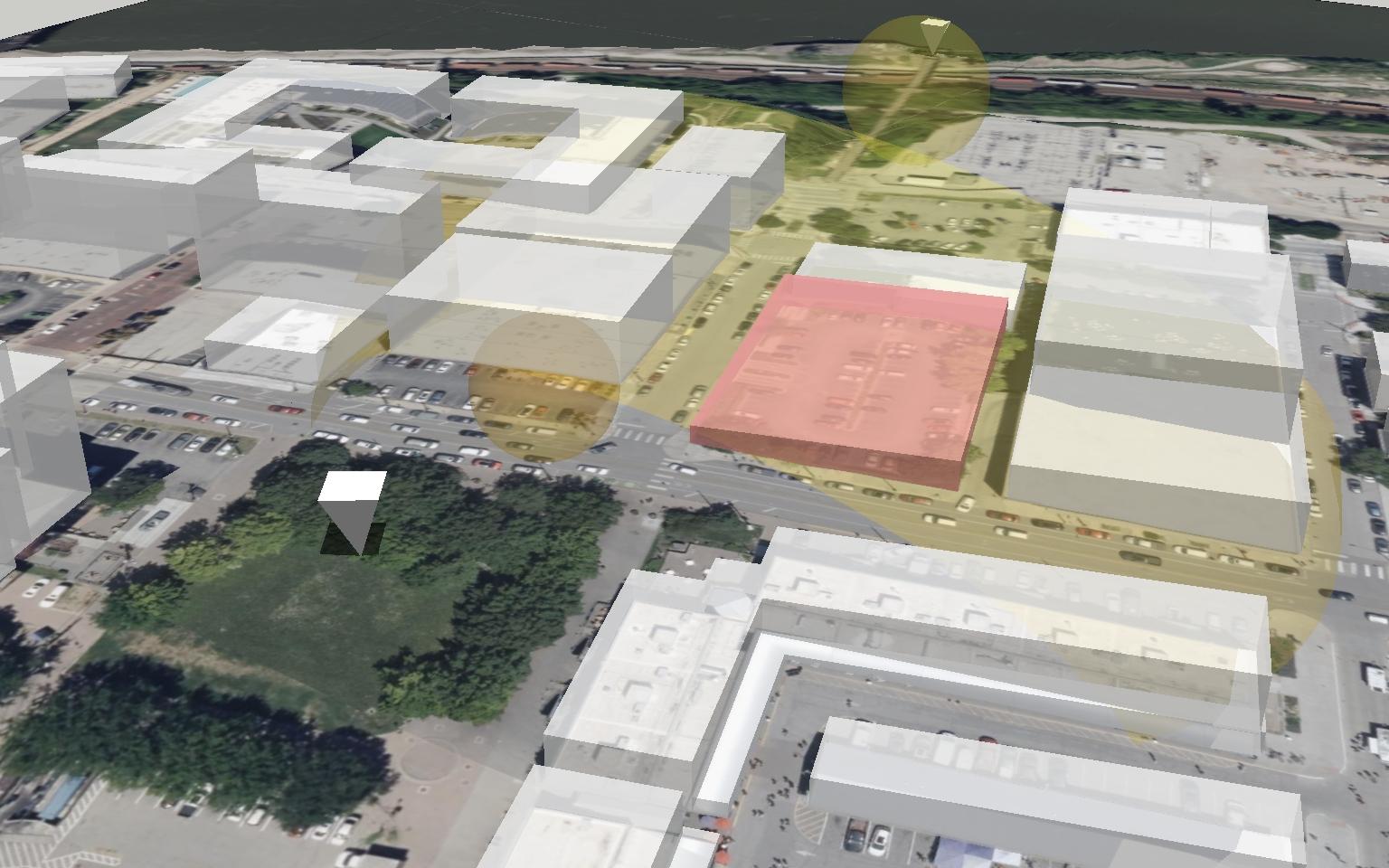
Solar movement across the site guides optimal orientation, enabling passive daylighting and shading strategies throughout the day.
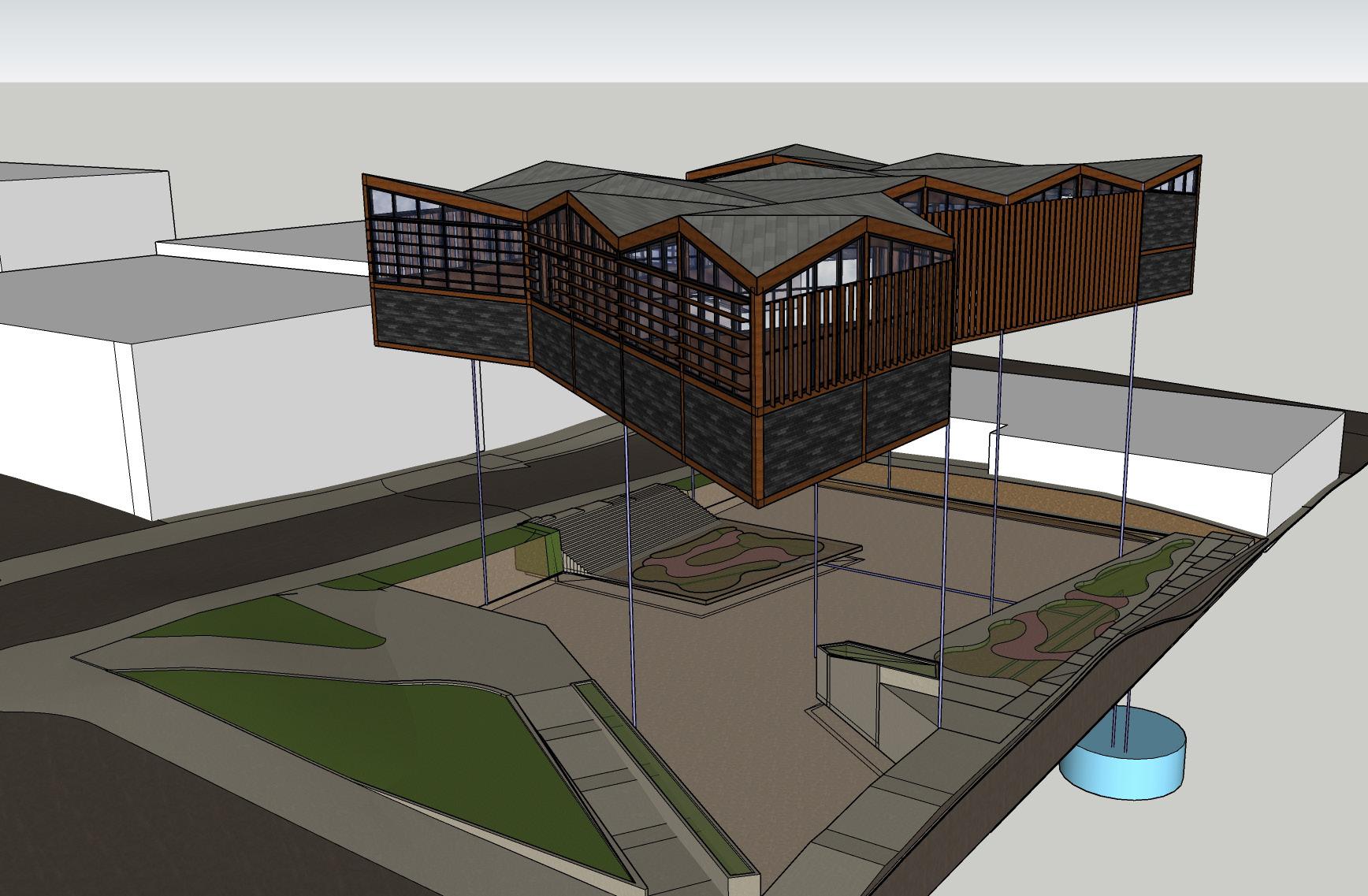
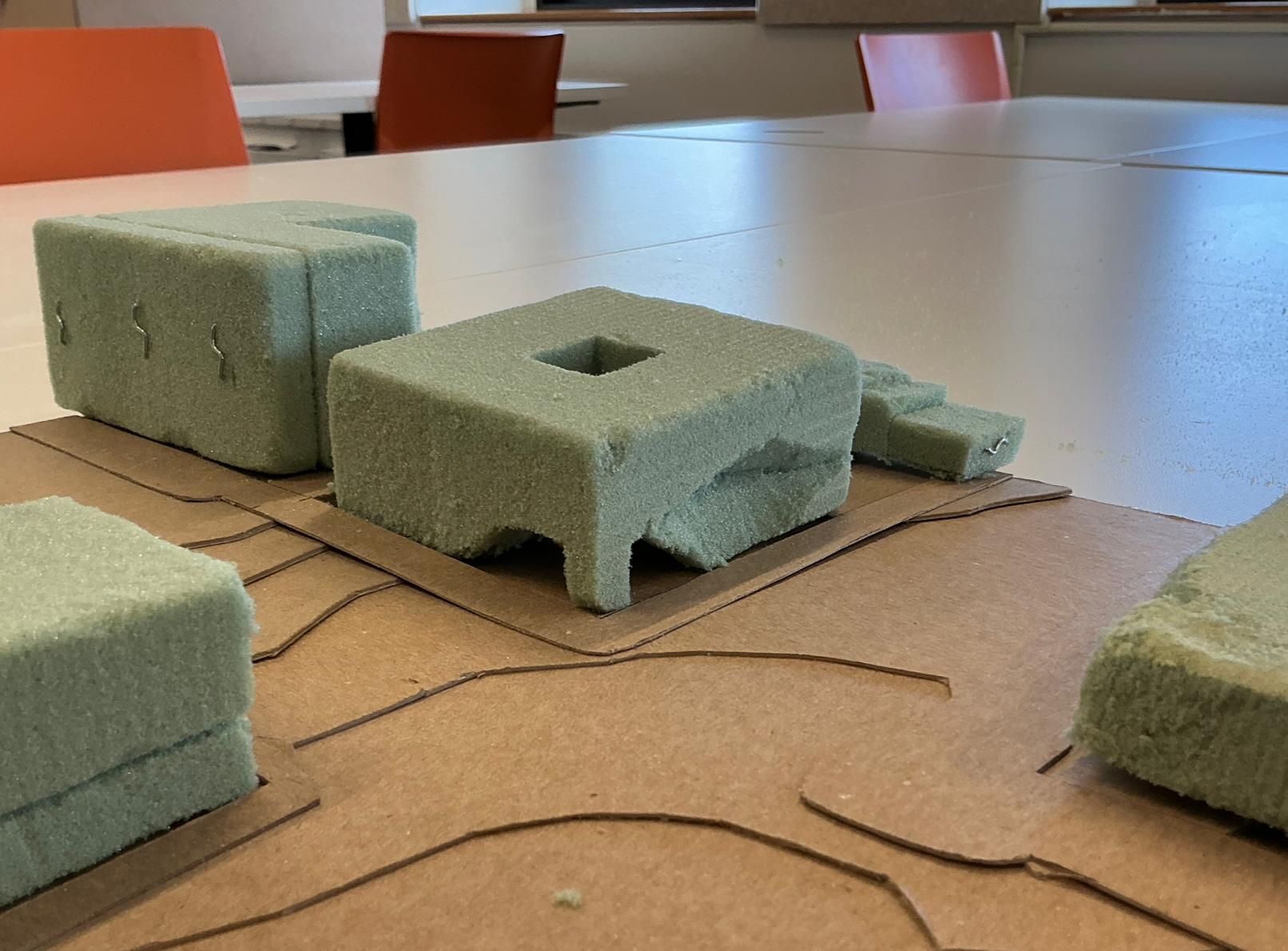
A simple 26,000 sq ft rectangular volume serves as the starting point, maximizing site coverage while respecting height and area constraints.
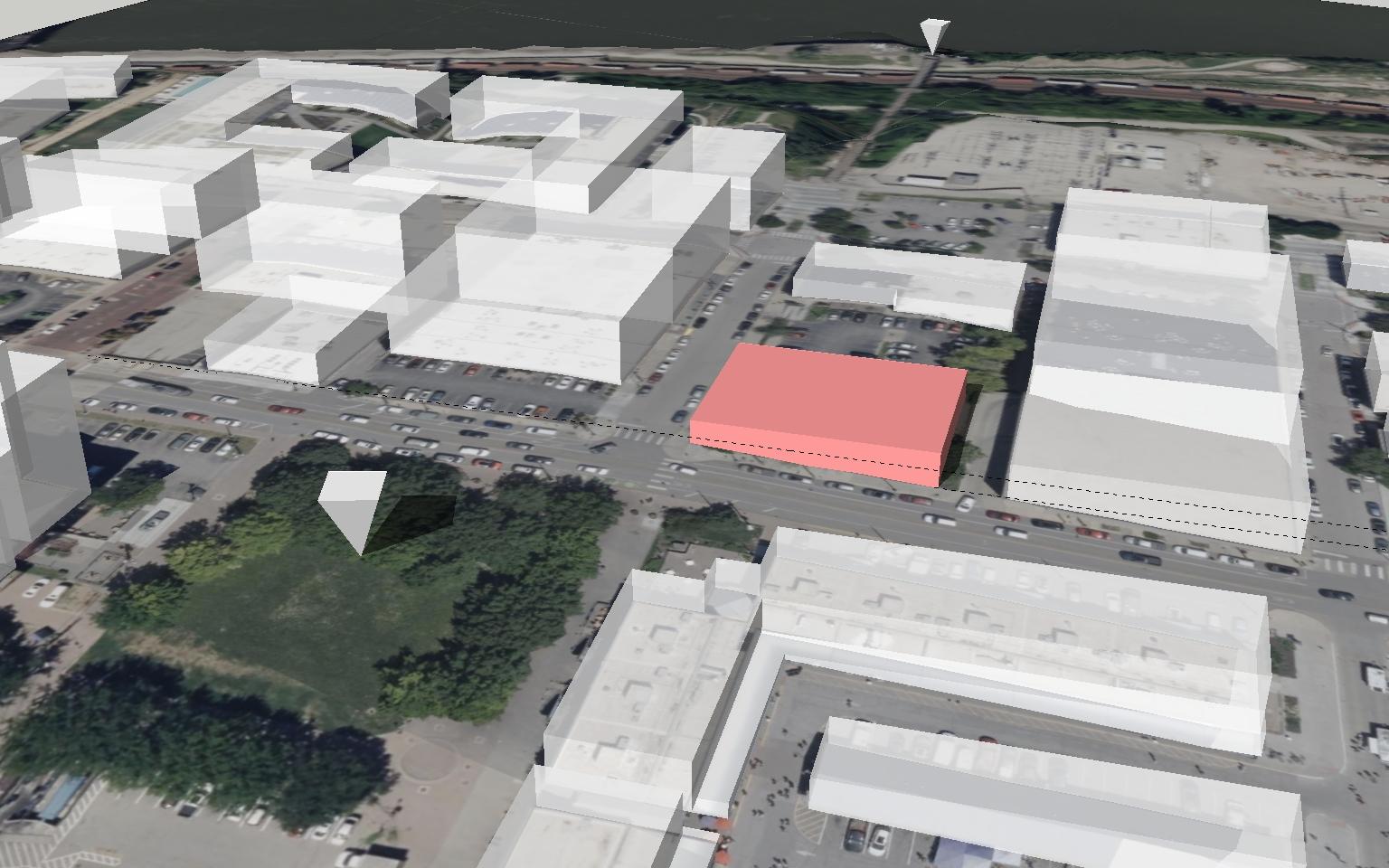
Strategic voids begin to carve the mass, responding to primary pedestrian flows and aiming to visually and physically connect key civic destinations.
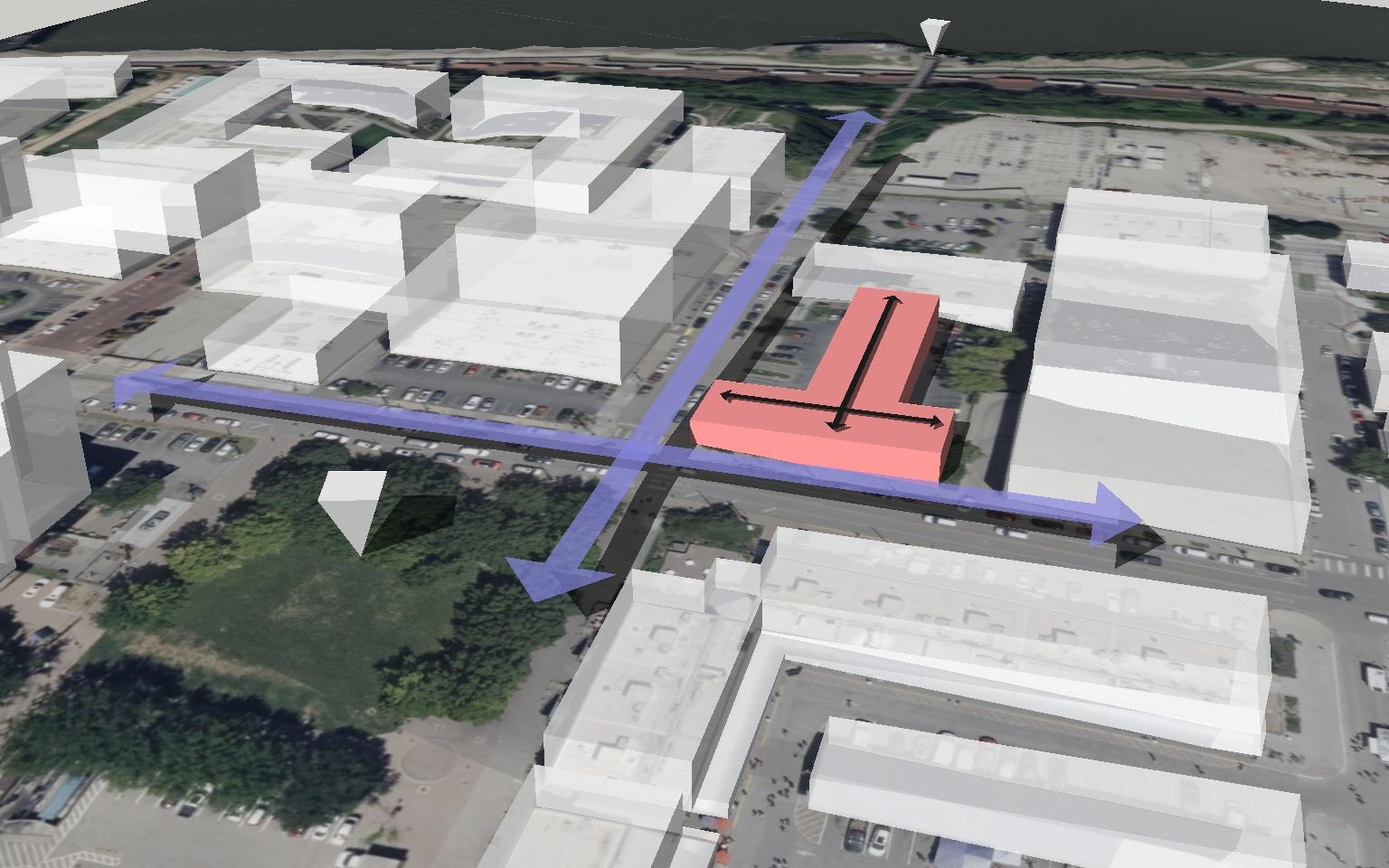
The form evolves to follow the site’s sloping contours while defining entries at each corner, creating an approachable, integrated civic presence.
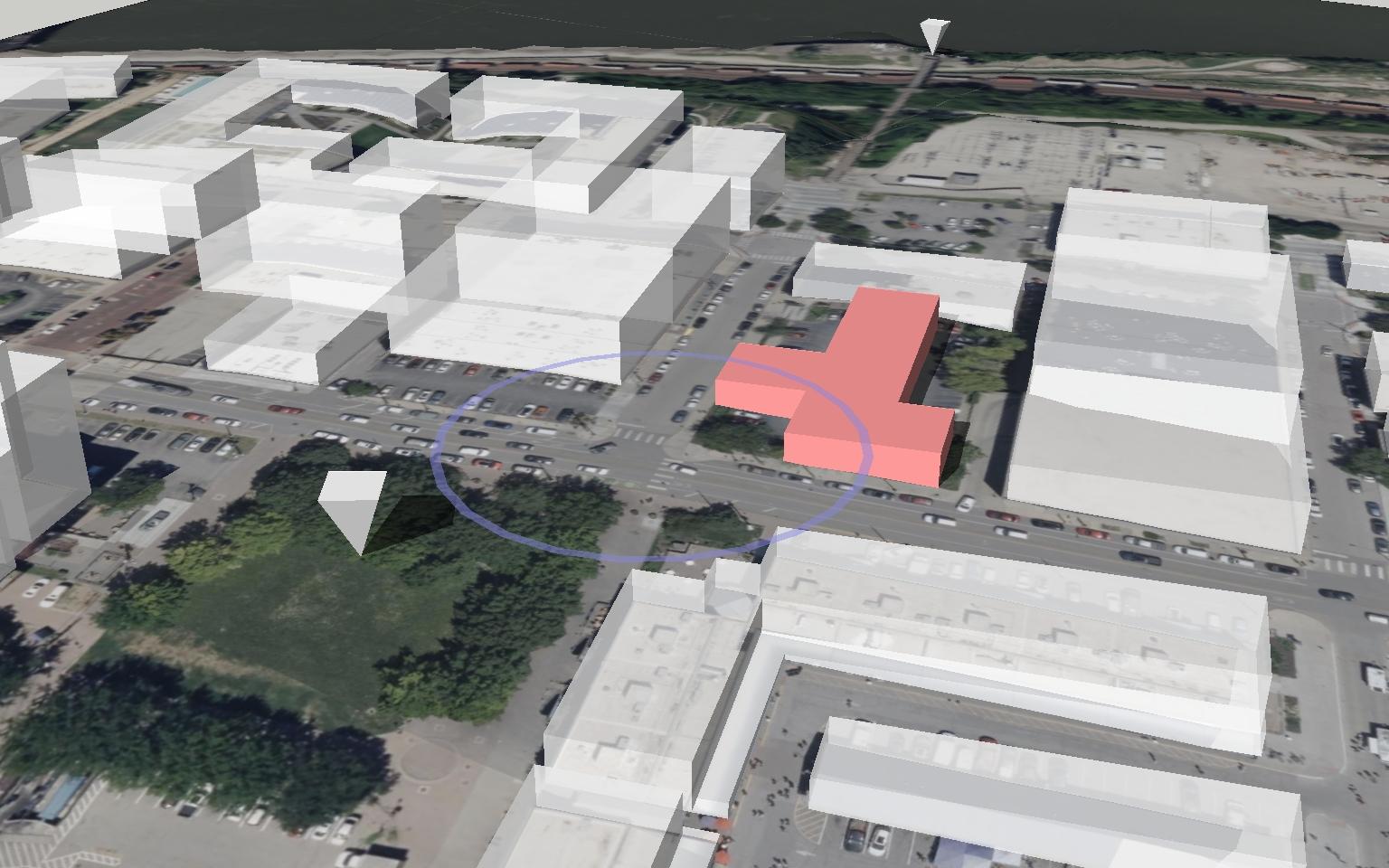
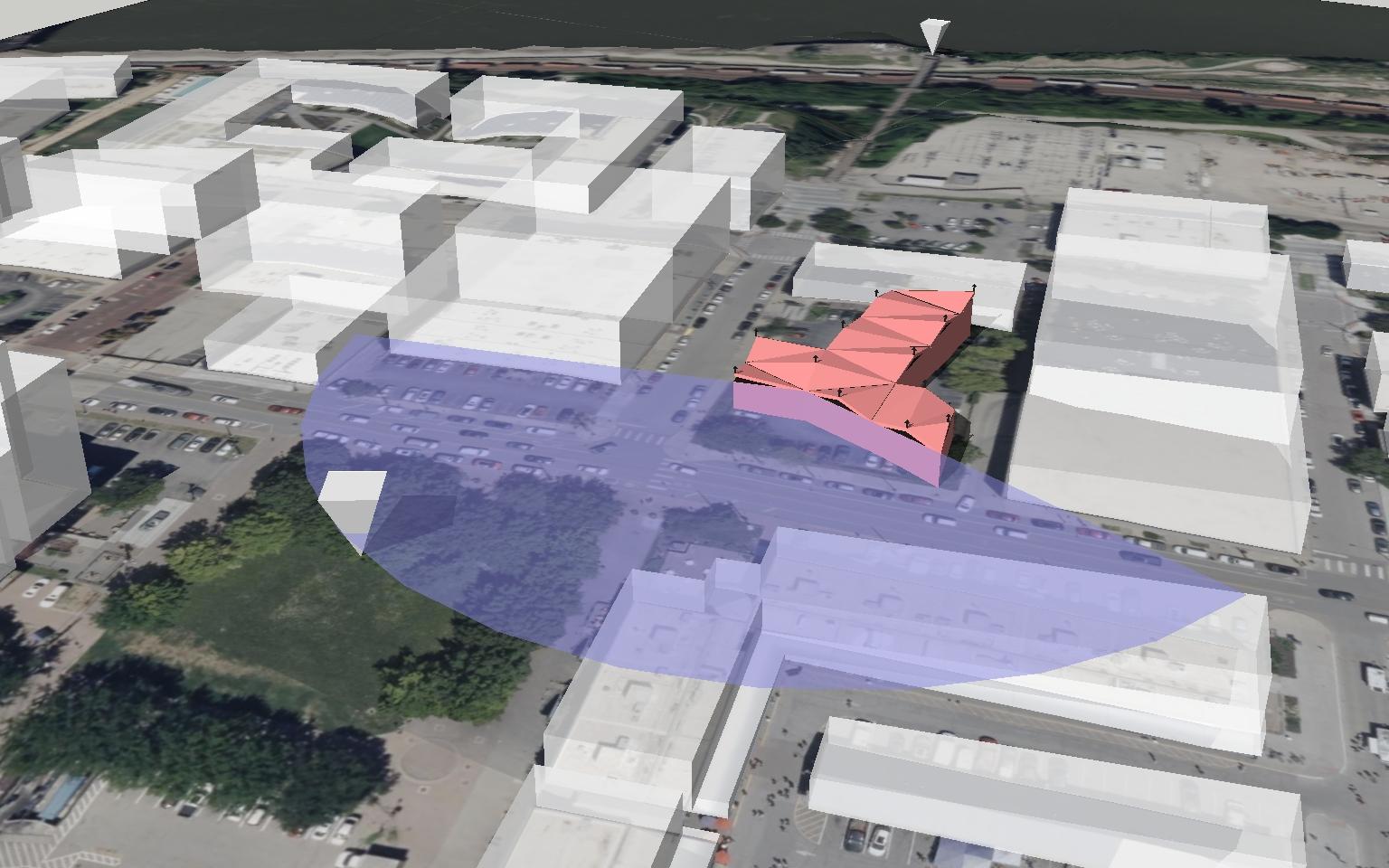
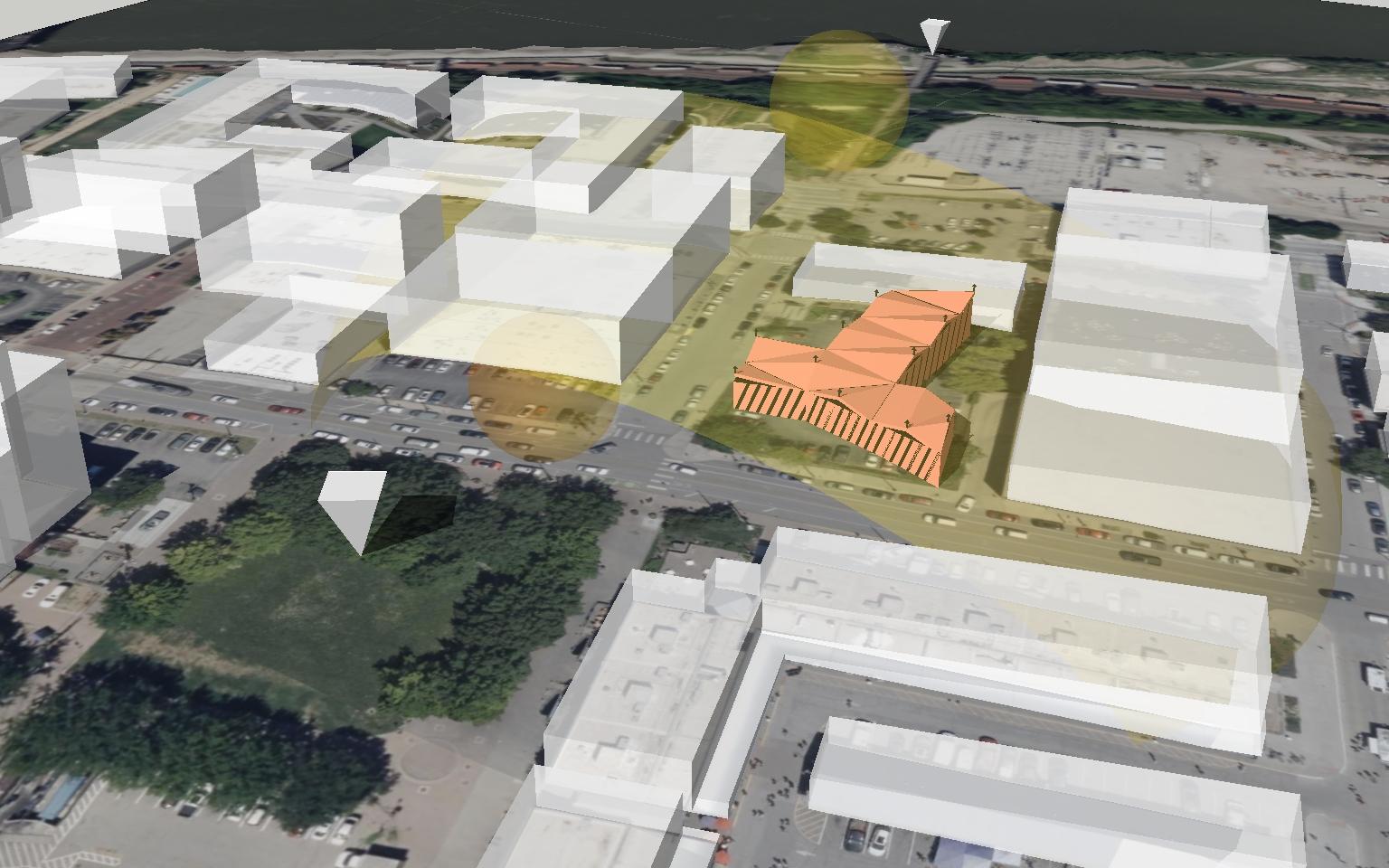
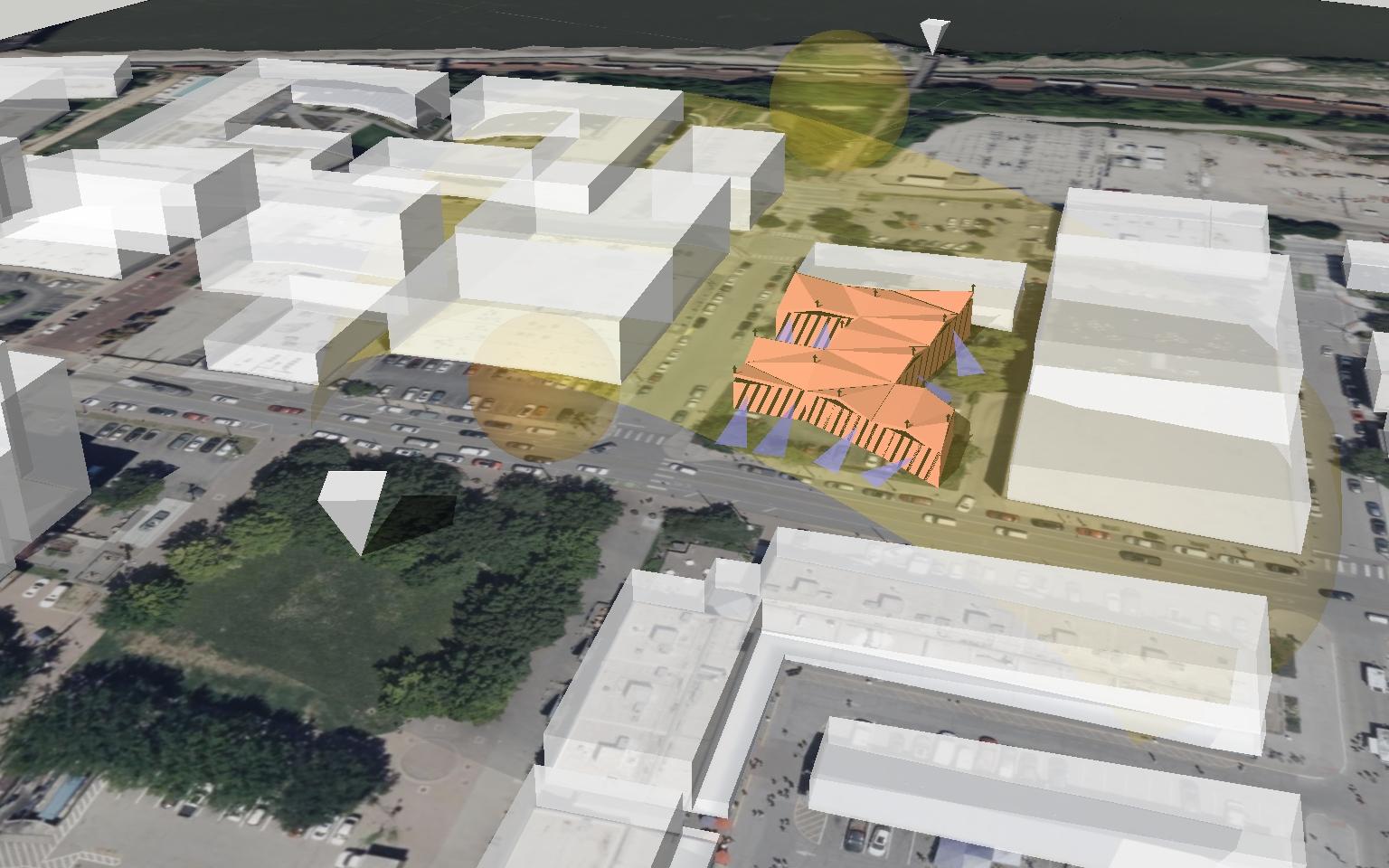
The front facade has been oriented to face 3rd street more in order to welcome visitors from the City Market and adjacent park, strengthening the building’s relationship
A folded roof plane enhances daylight penetration deep into the interior, aligning with sun angles to support passive lighting throughout the day.
An additional mass at the rear captures southeast sun, frames views to the garden, and follows the site’s grade to enhance layered interior experiences.
- Pervious surfaces and landscape plan managing stormwater
- Roof folds to guide rainwater
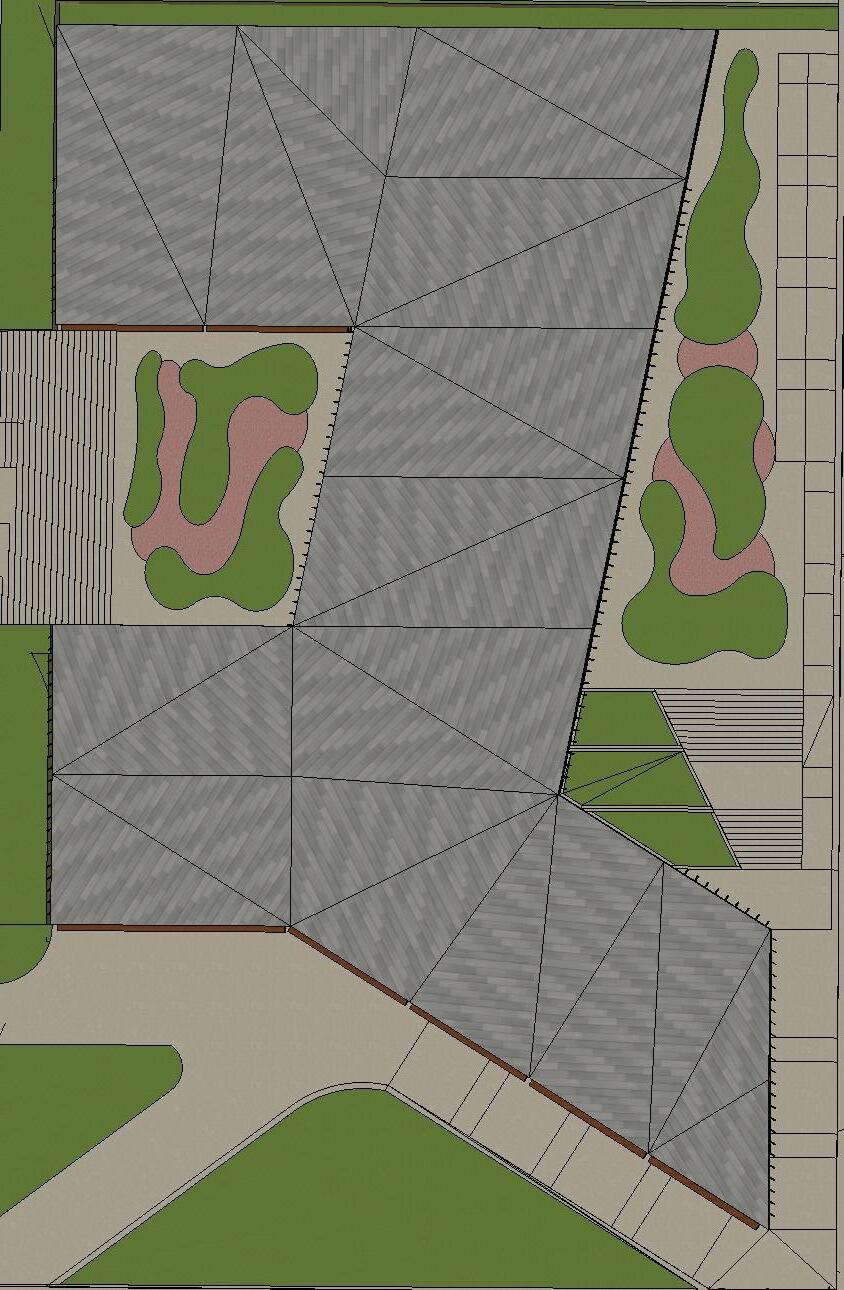
-Strategically placed gardens and downspouts to collect, slow, and and filter runoff
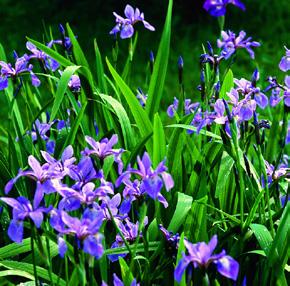
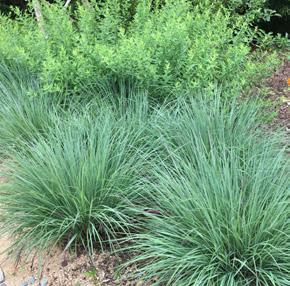
Blue Flag Iris; Moisture-loving dramatic perrenial Little Bluestem; Native prairie grass, drought tolerant
Purple Coneflower; Pollinatorattracting perennial
Red Twig Dogwood; Winter interest and soil stabilization
Swamp Milkweed; Rain garden specialist, butterfly habitat



Water Collection Cistern
Pumping Collected Water Back Up to Landscape for Irrigation
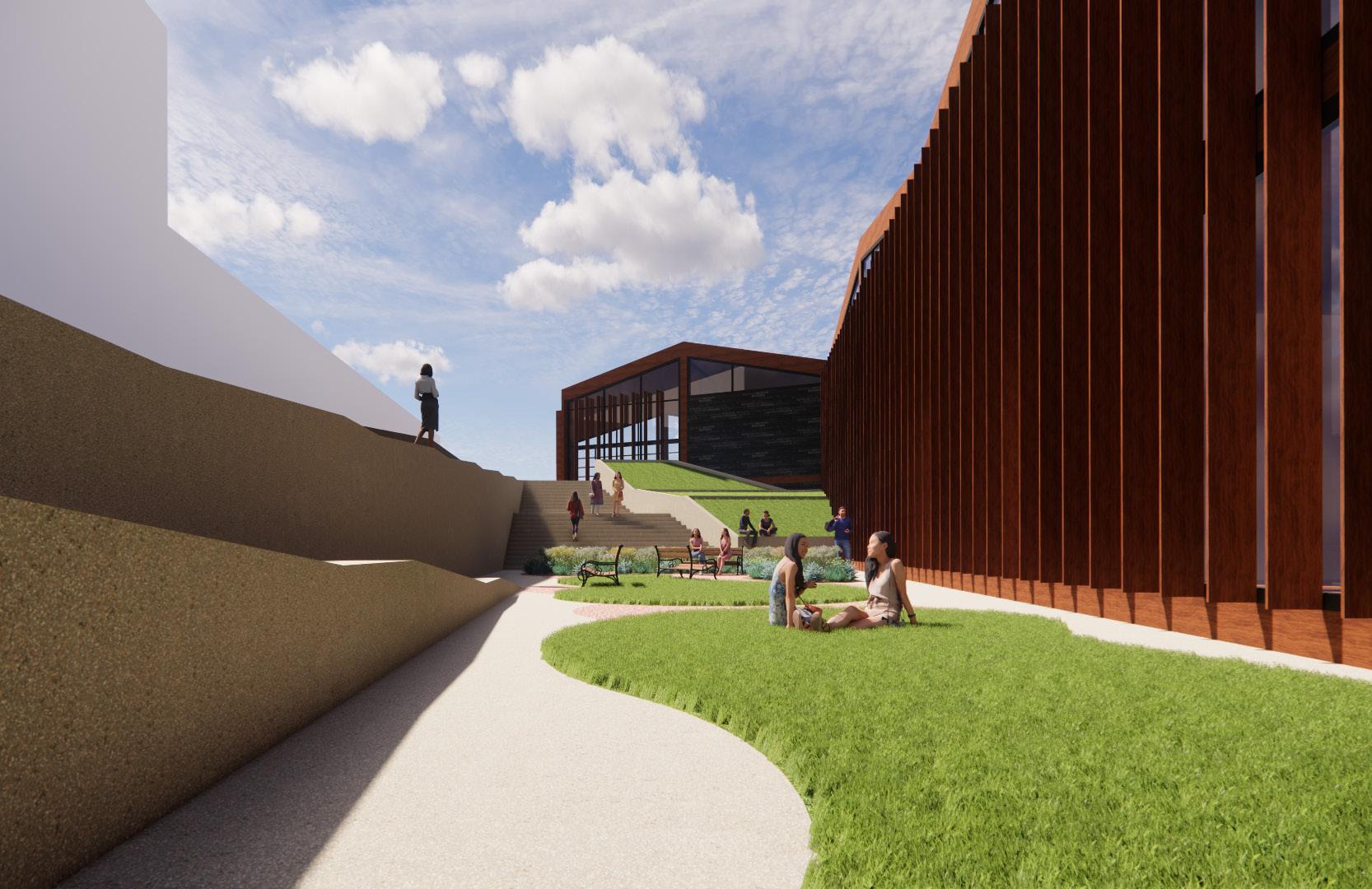
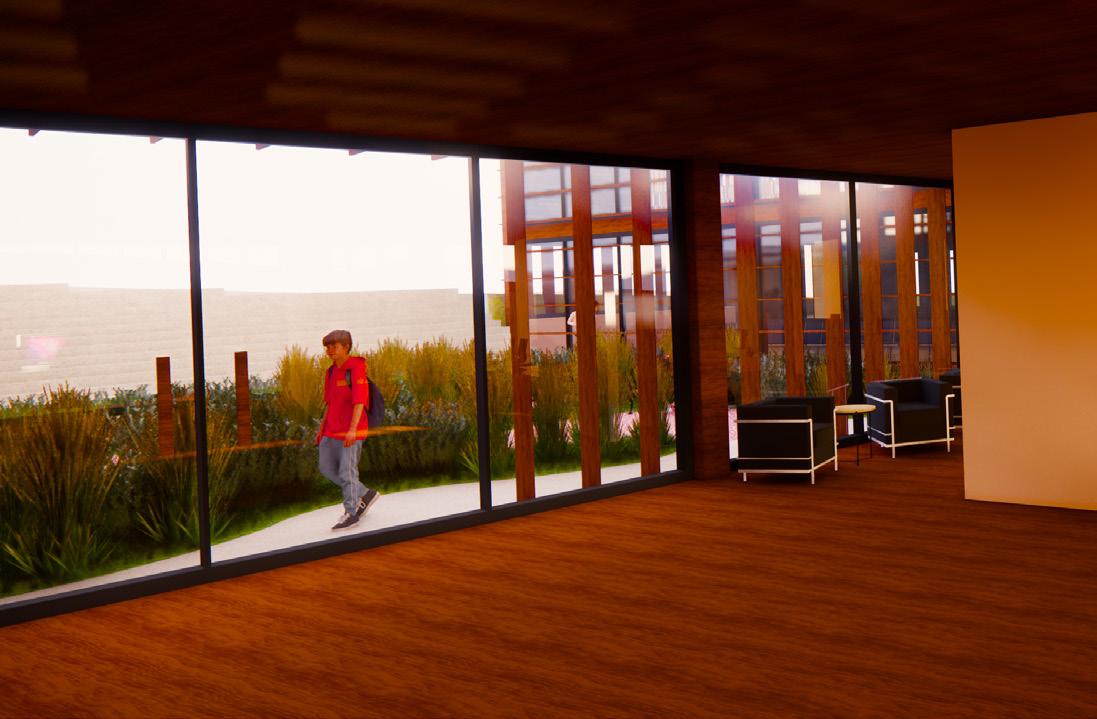
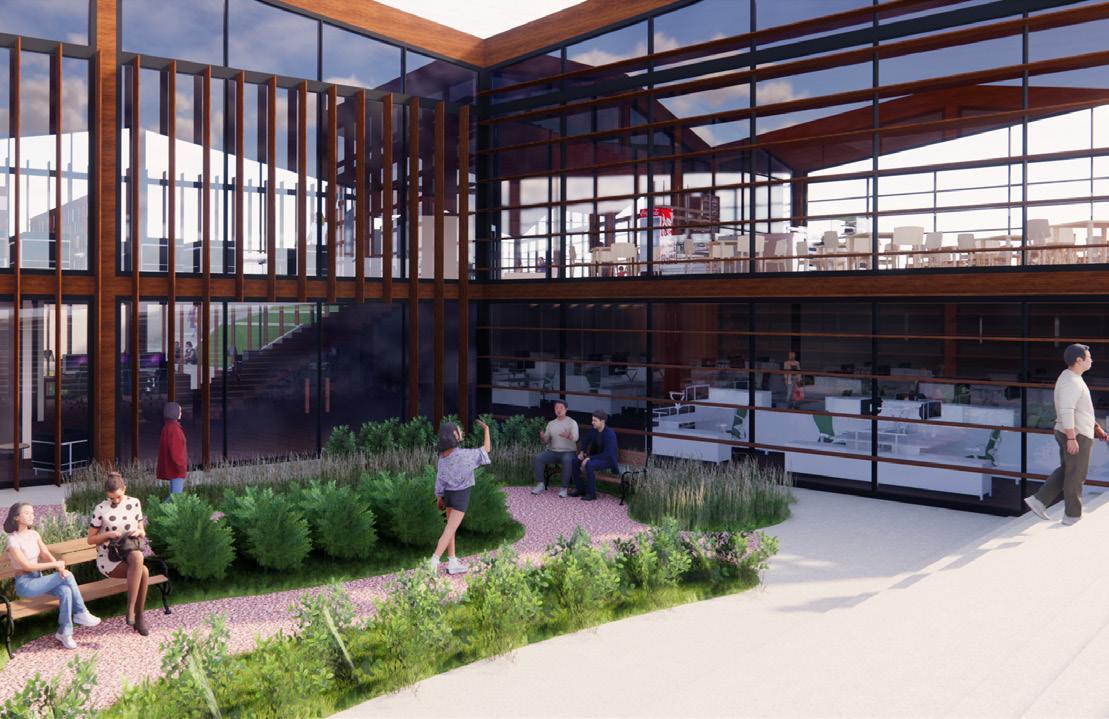
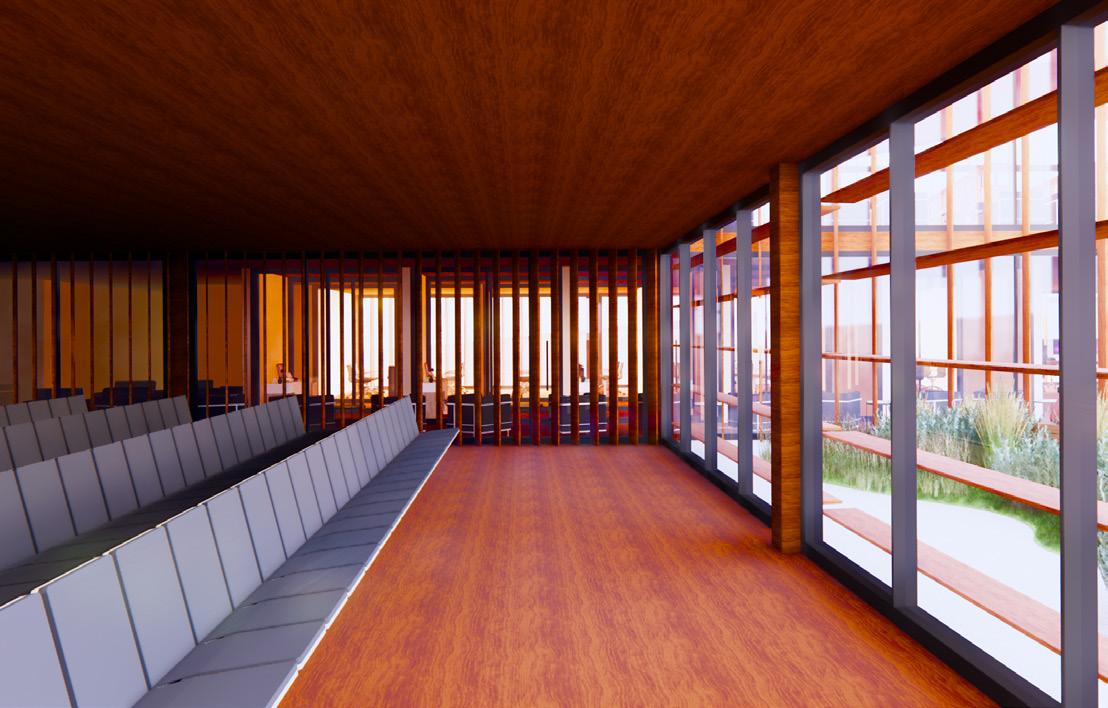
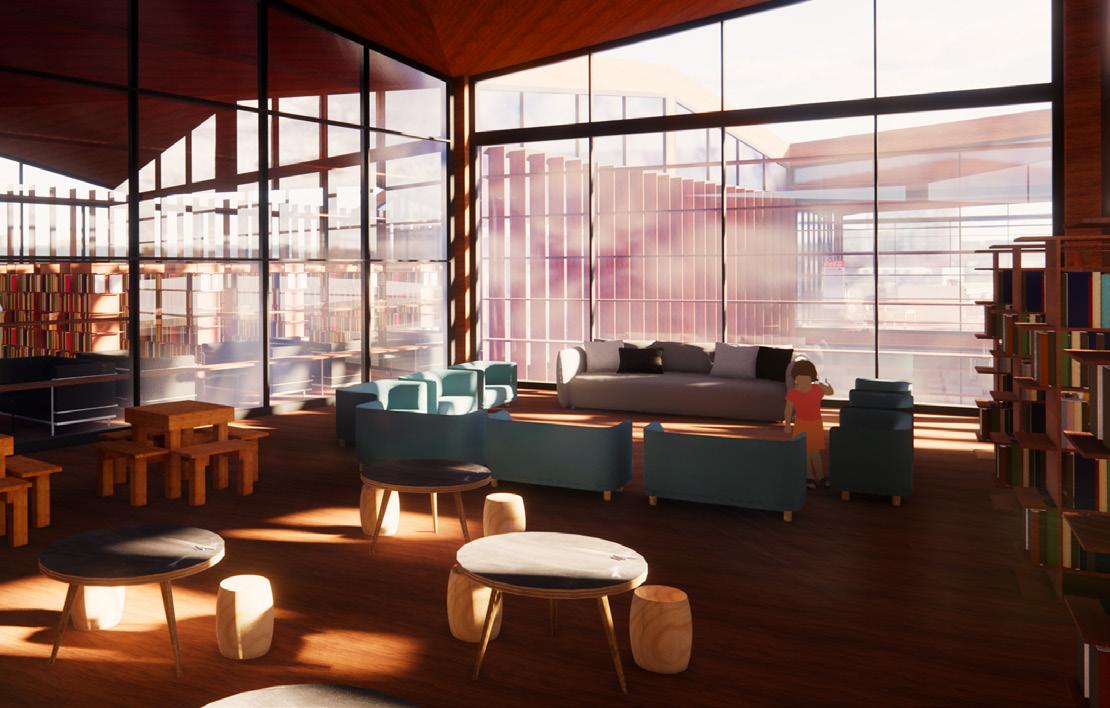
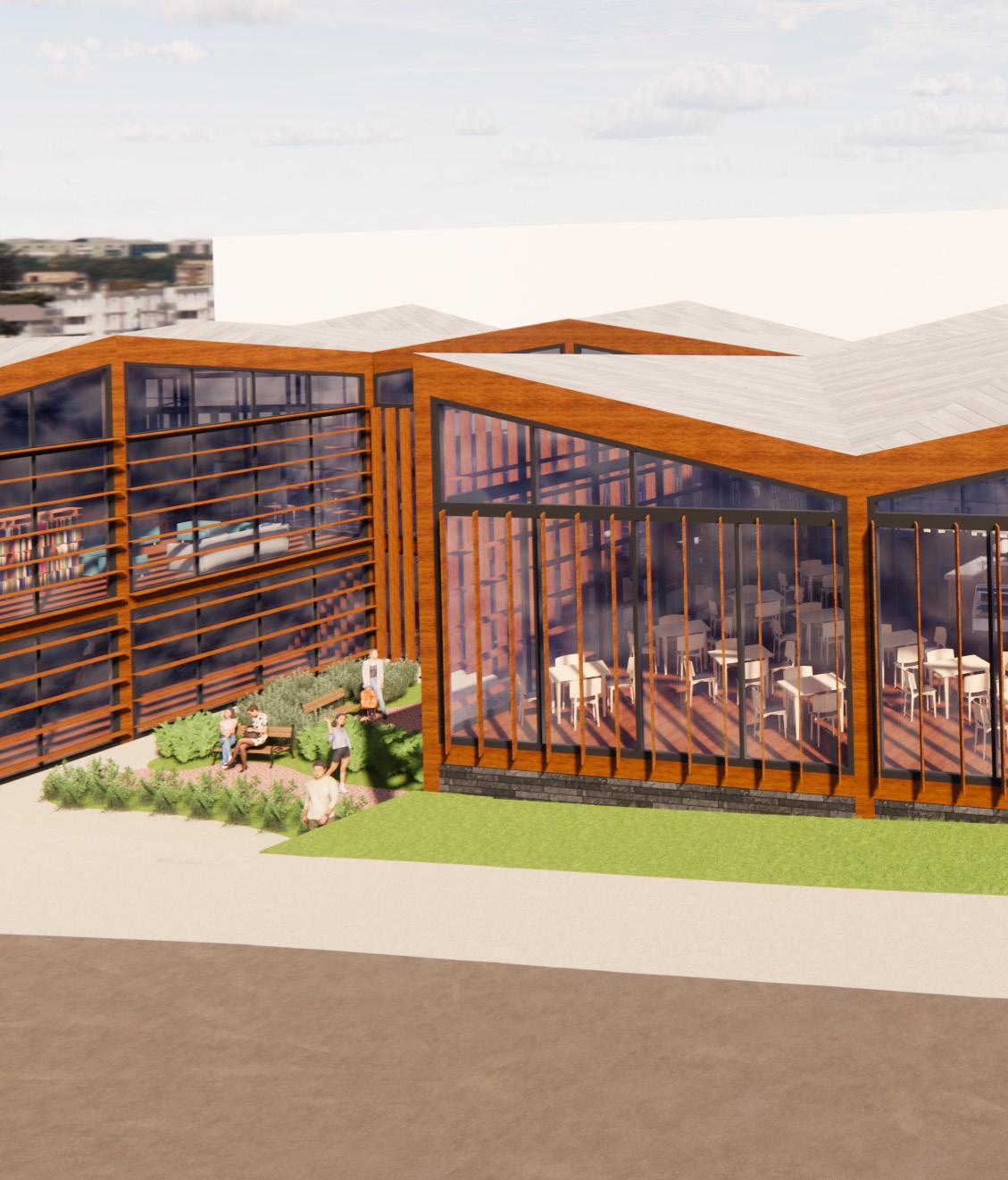
Rooted in community and shaped by context, this library aspires to be more than a building—It’s a daily ritual, a shared space, and a catalyst for connection. Thank You.
Lawrence, Kansas
Museum–Hotel
ARCH 504 | Spring 2025
Alex Rose
Professor Alejandro Aptilon
26,000 SF
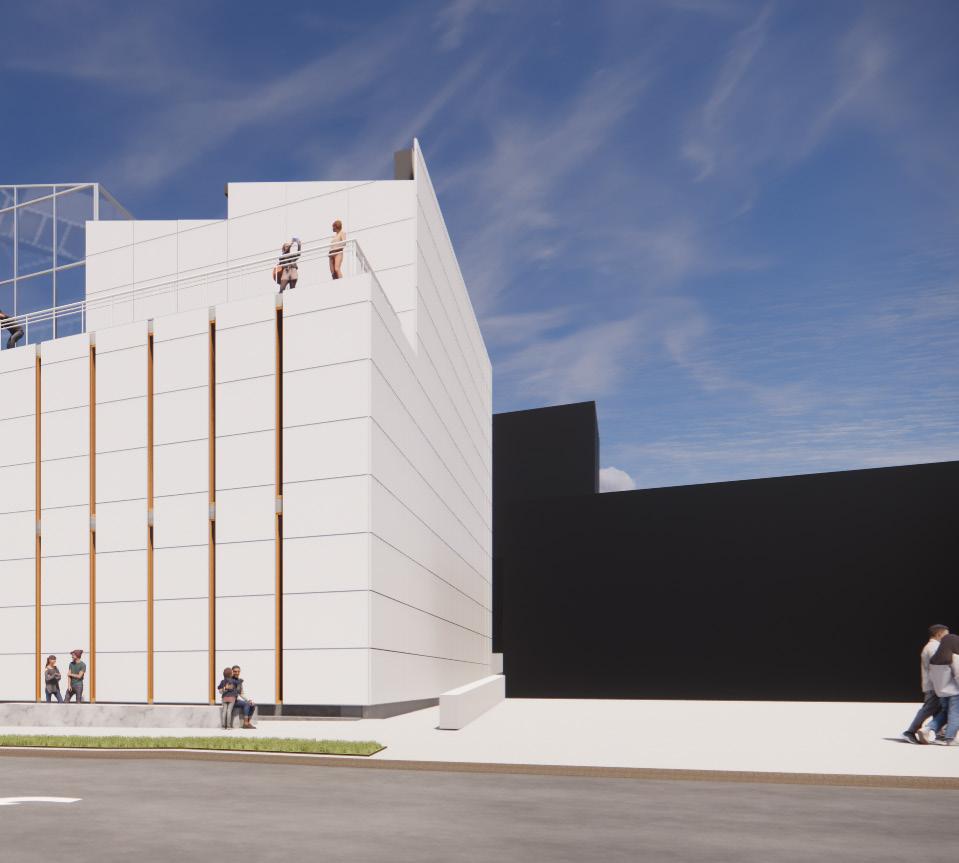
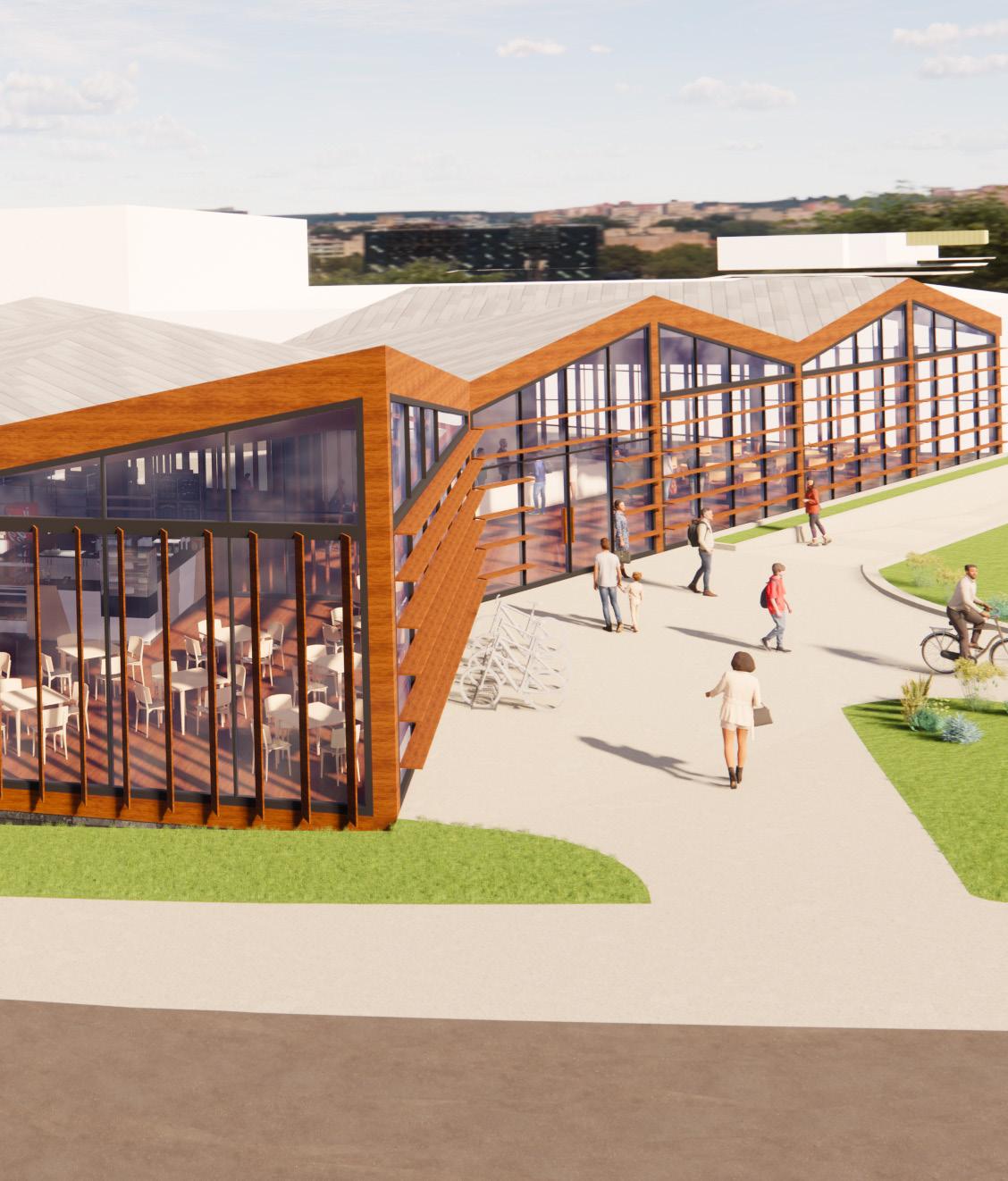
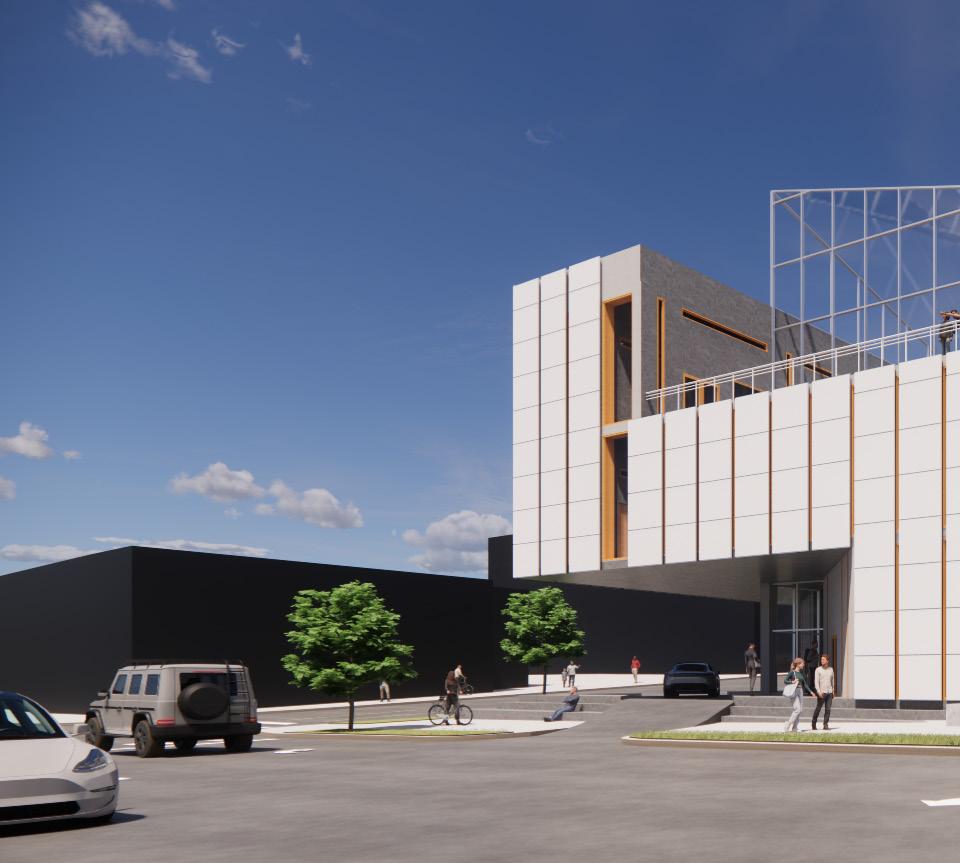
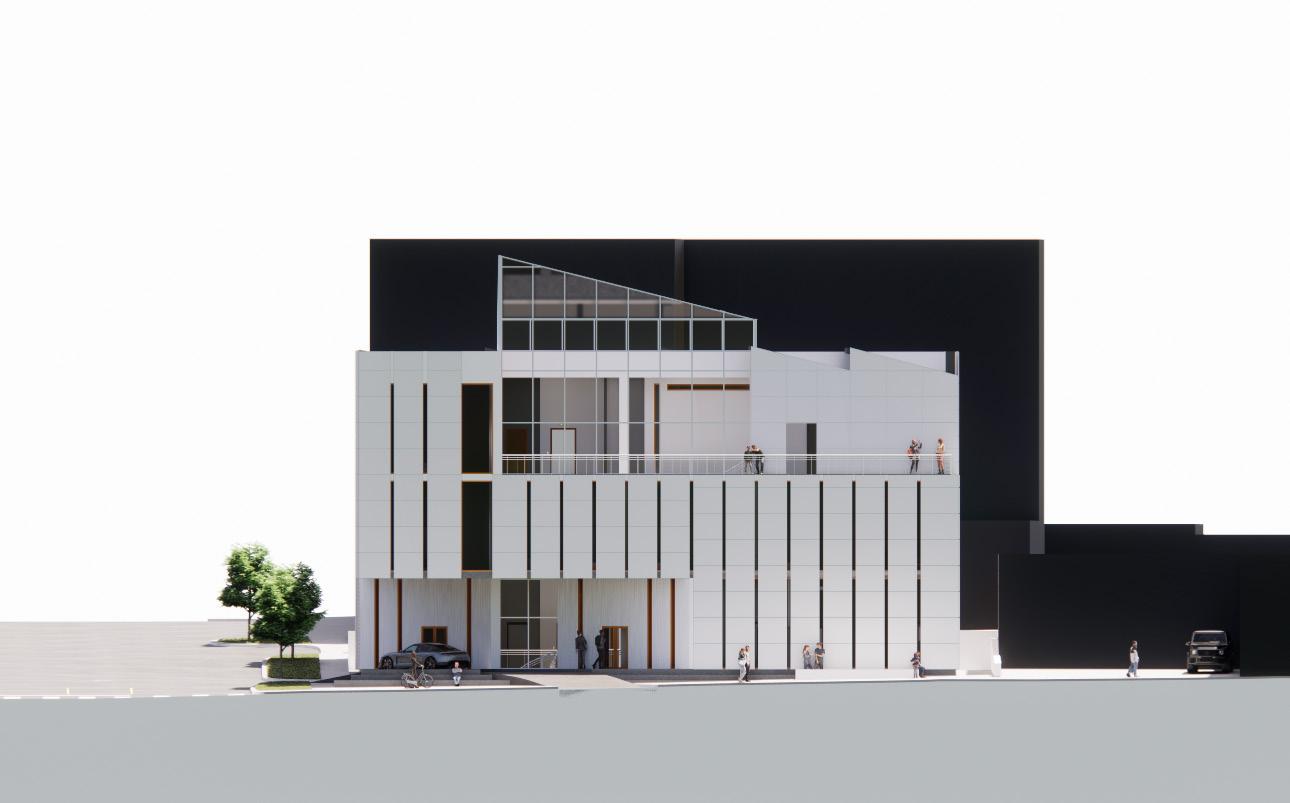
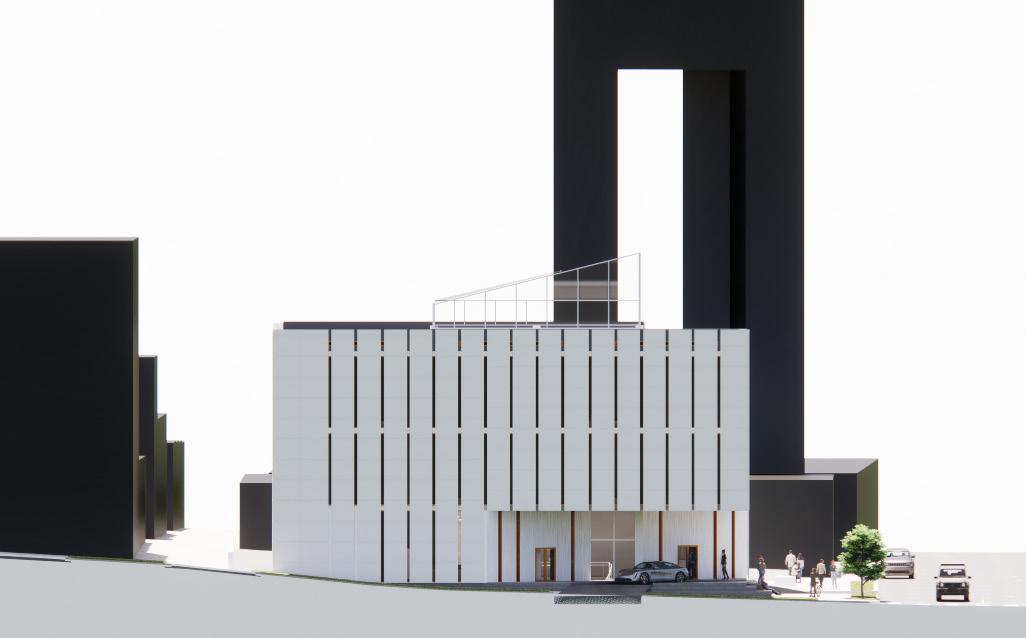
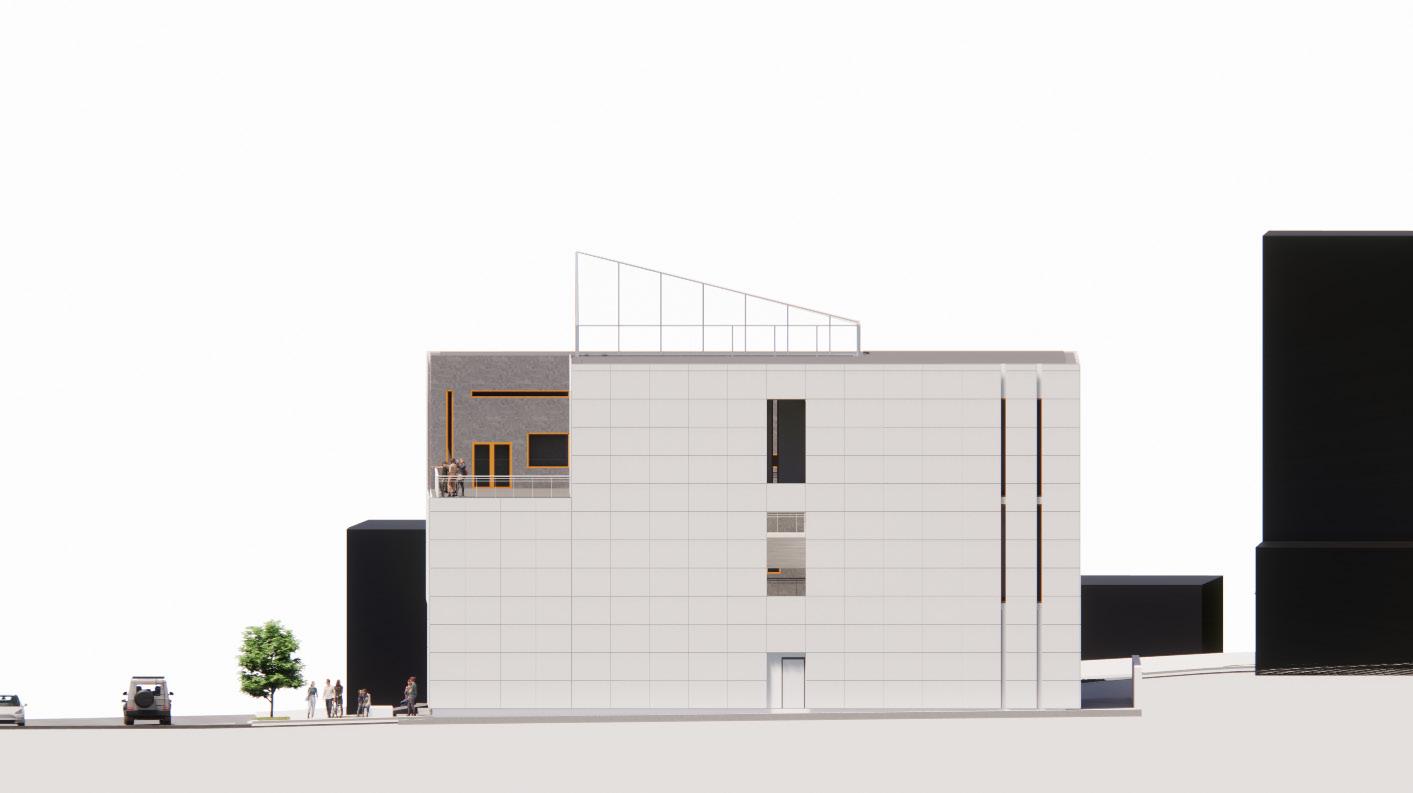
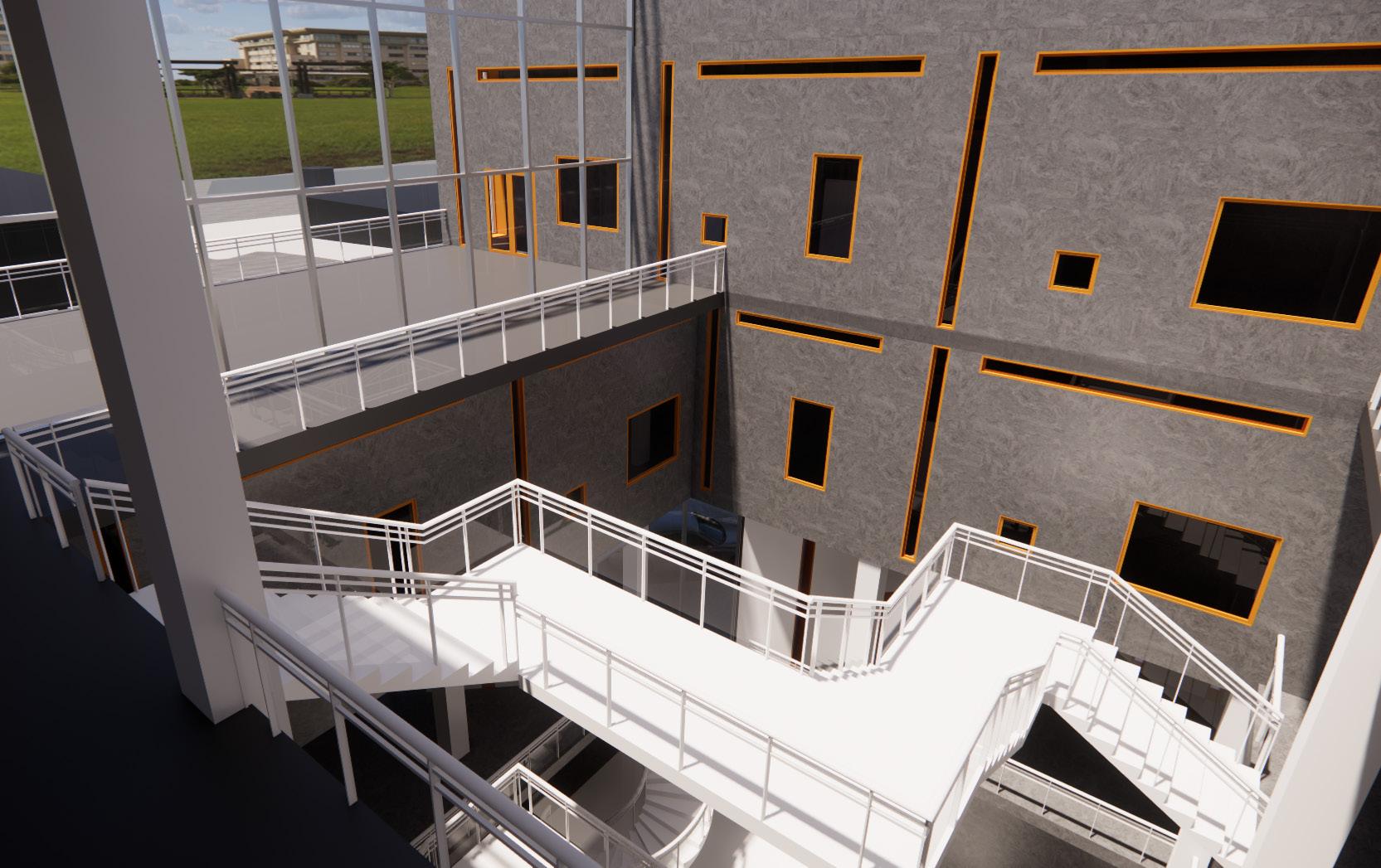
The Lightwell explores how architecture can choreograph light, movement, and program within a dense urban context. By combining a public museum with a private hotel, the project establishes a layered public-to-private organization that supports both civic engagement and retreat.
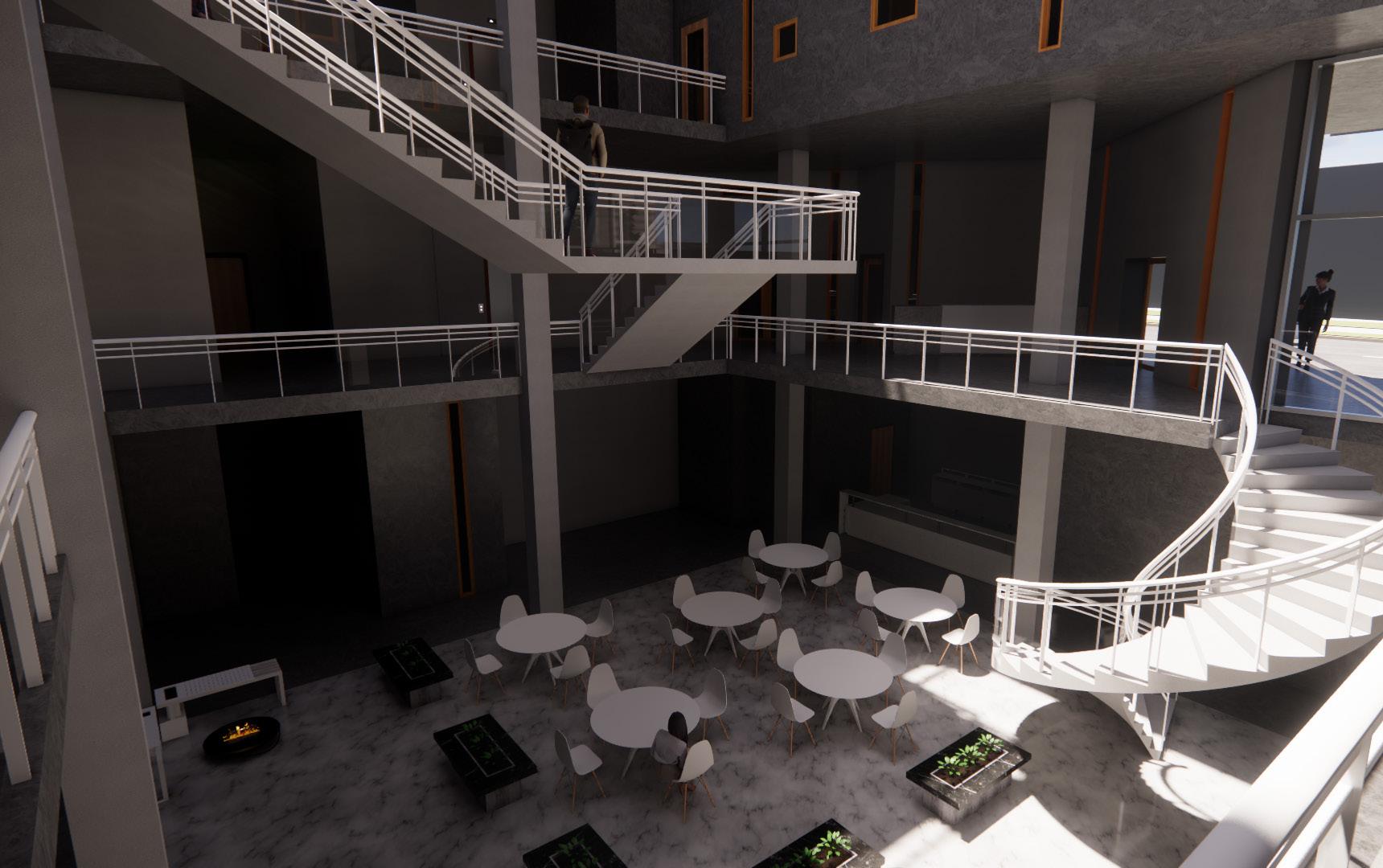
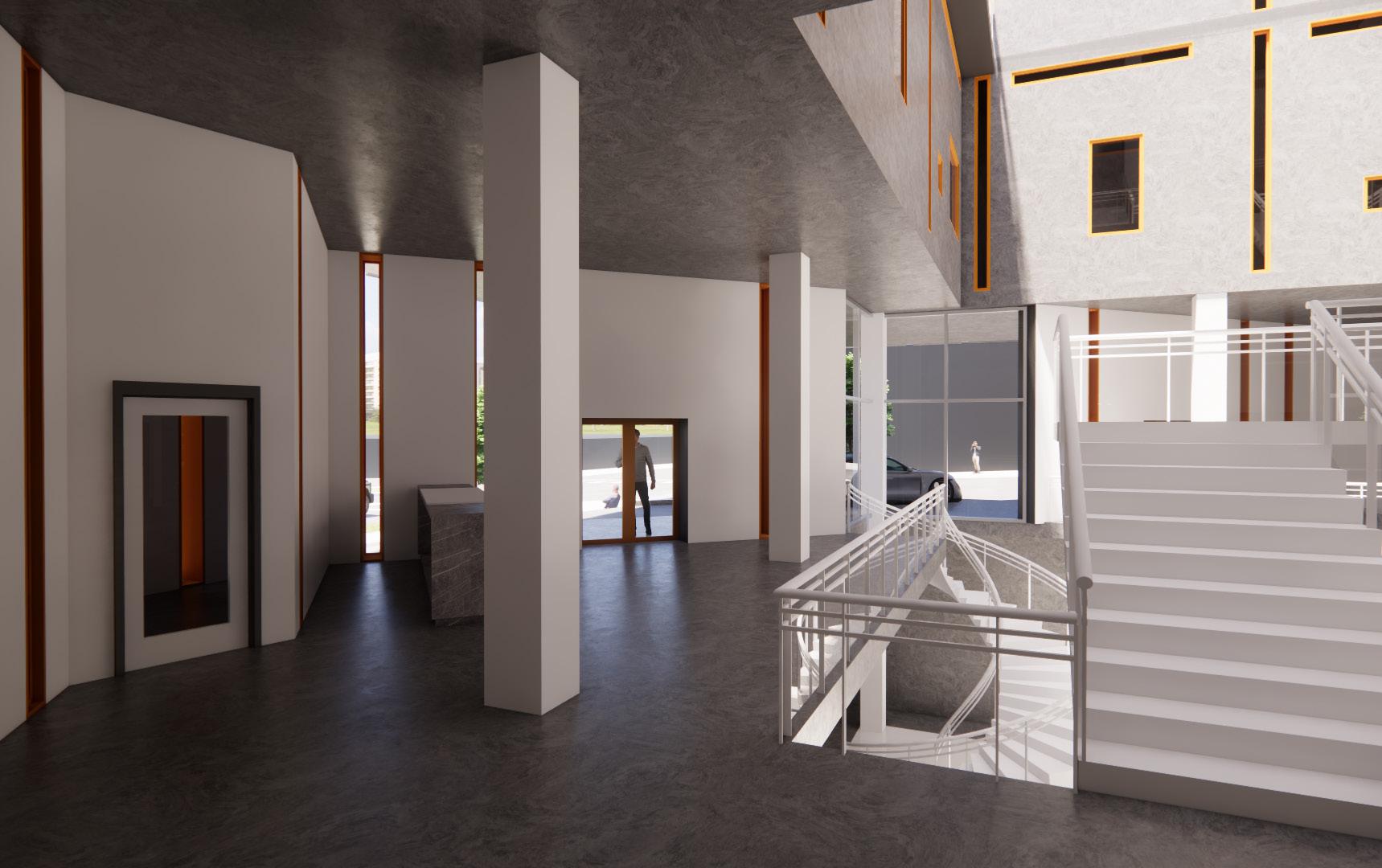
A central lightwell acts as the primary organizational and experiential element, drawing daylight deep into the building while guiding circulation and visual orientation across all levels. Public museum spaces anchor the lower floors, while hotel functions transition upward into quieter, more private zones.
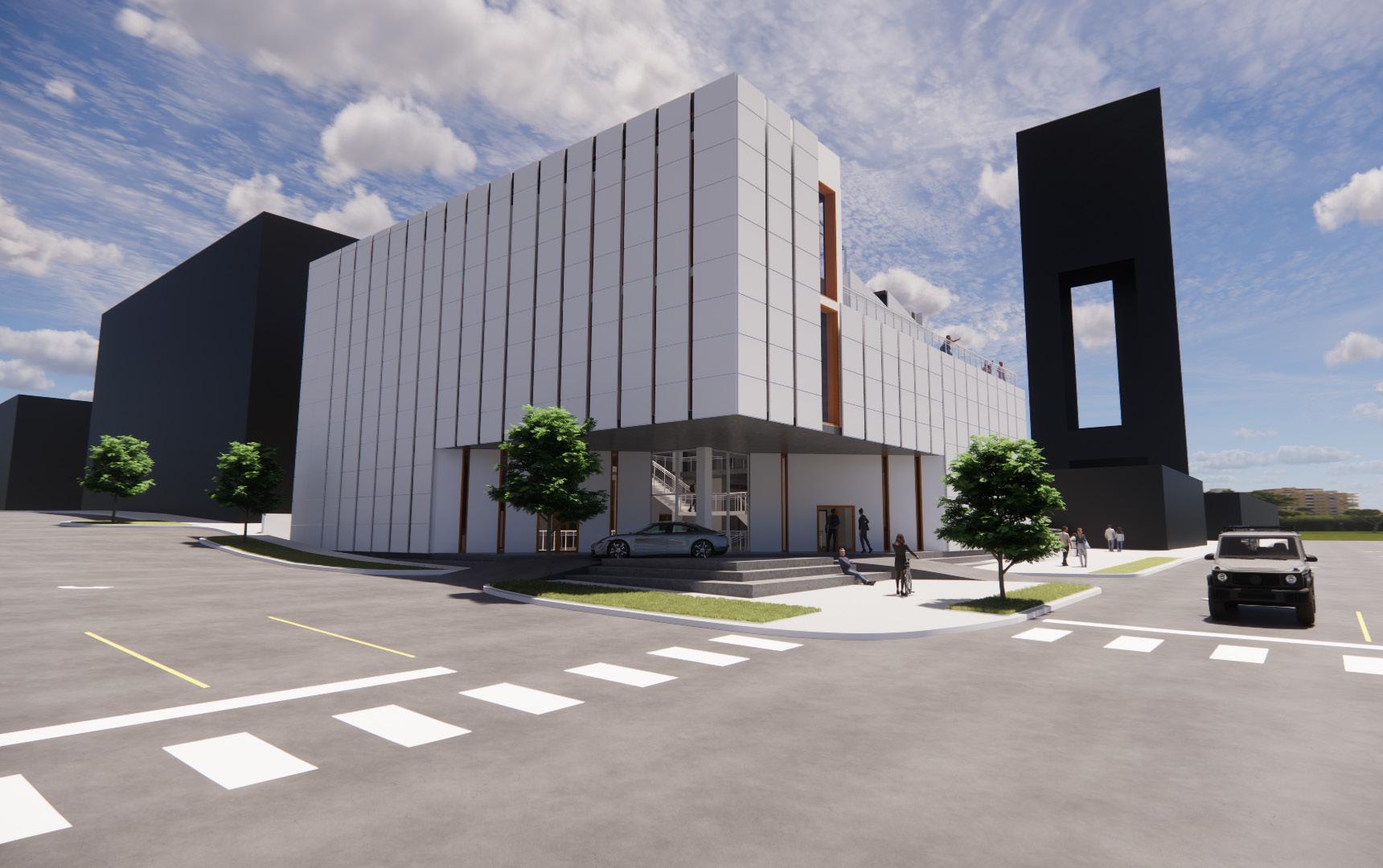
Responding to its downtown context and site constraints, the building uses massing, vertical openings, and controlled daylight to create a calm interior environment within an active urban setting. The result is a building that is experienced through movement and time—where light shapes space, and space shapes experience.
7th and Vermont St., Lawrence, KS
Concept:
The Lightwell is a museum–hotel project that weaves hospitality, art, and architecture into a spatial narrative centered on light, movement, and choice. Located at the corner of 7th and Vermont in downtown Lawrence, the building invites visitors to engage the project through a sequence of vertical experiences—descending into a sheltered atrium or ascending into galleries suspended in light.
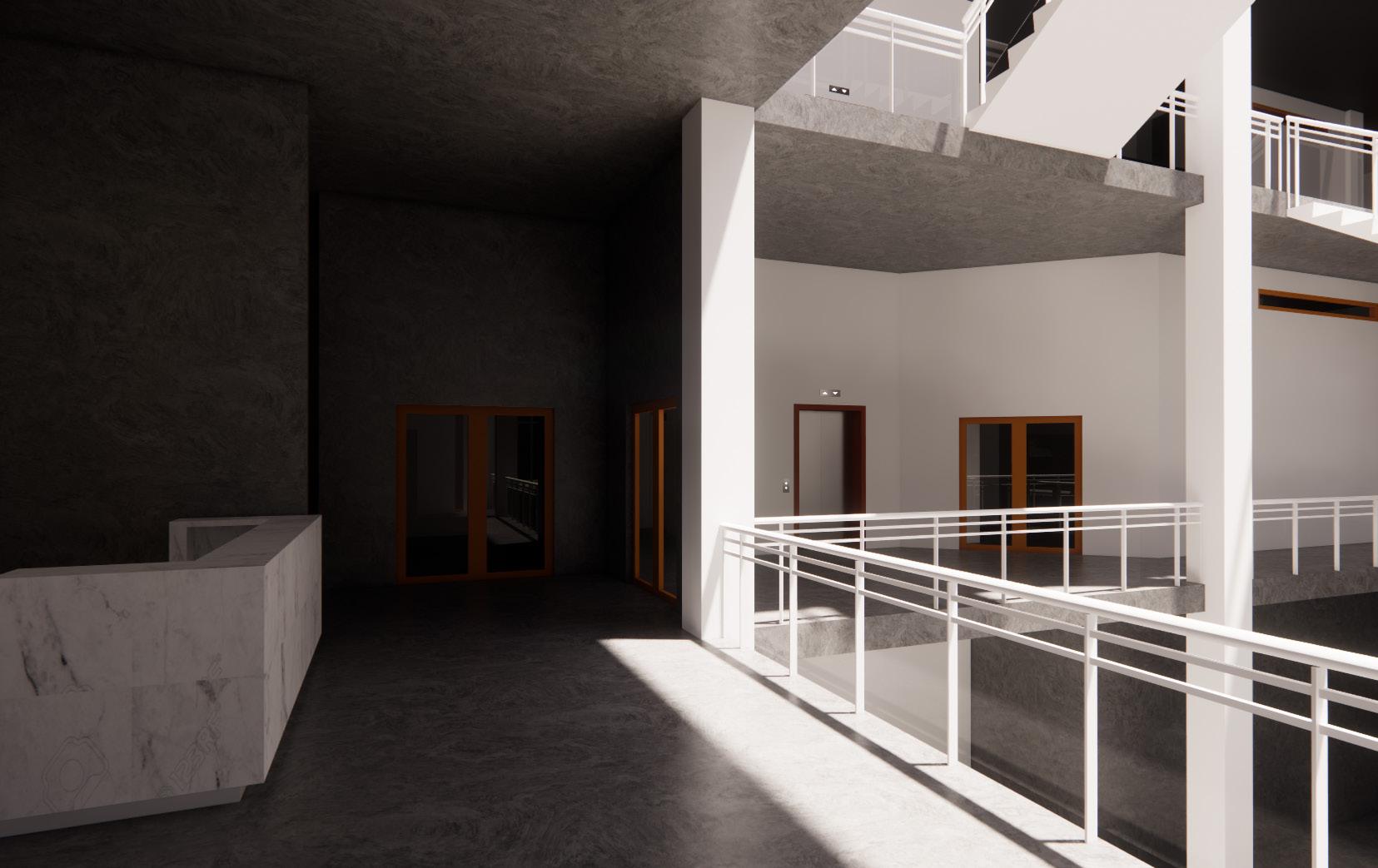
At the heart of the building is a multi-story central void—the lightwell—which organizes circulation, frames visual connections, and modulates daylight throughout the day. This vertical space anchors the project both spatially and experientially, allowing light to become an active architectural element rather than a passive condition.
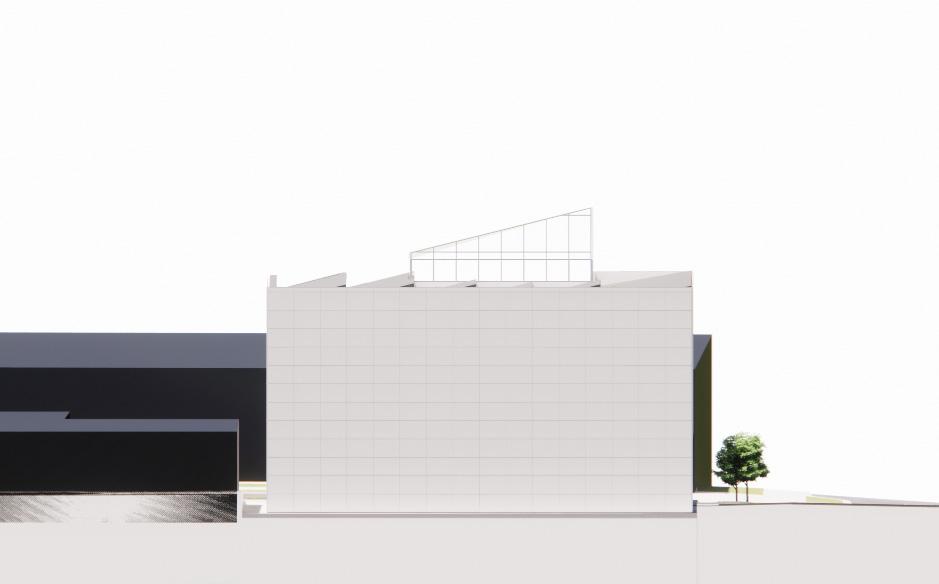
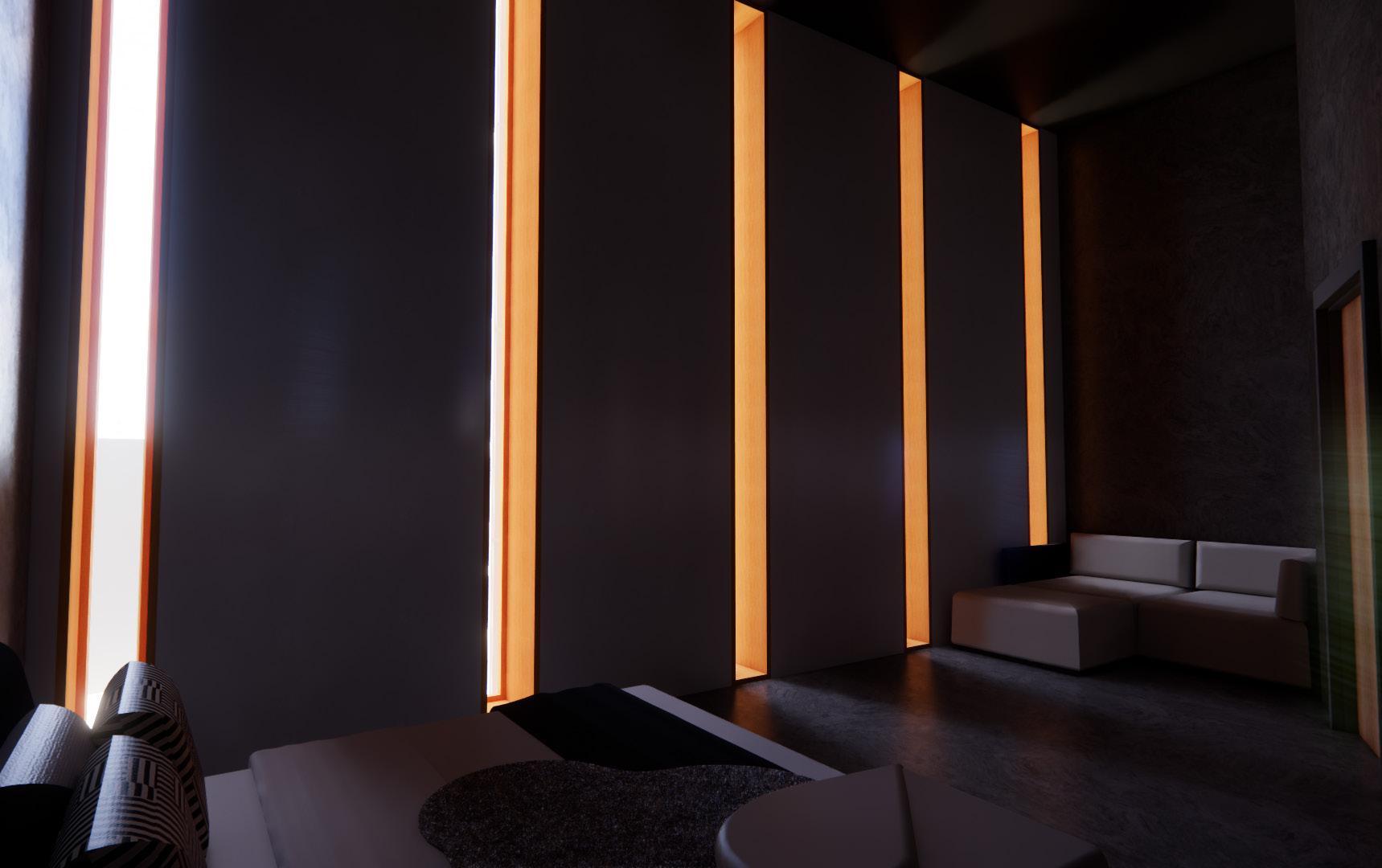
The building is wrapped in a smooth marble rainscreen system punctuated by deep vertical slots and carefully positioned openings. These apertures filter daylight with precision, casting shifting light and shadow across interior walls and thresholds. Through movement and time, the architecture reveals itself gradually—light becomes the medium, memory the material, and architecture the frame for both.
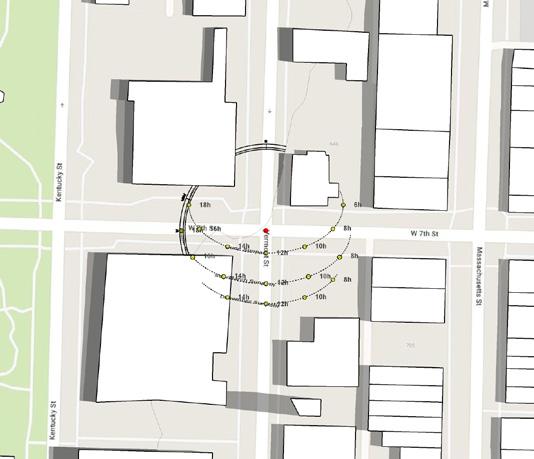
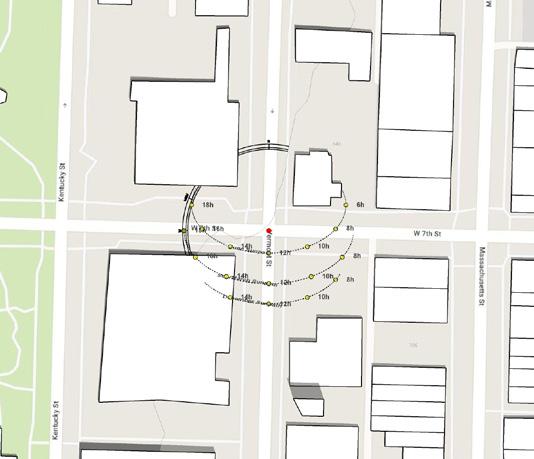
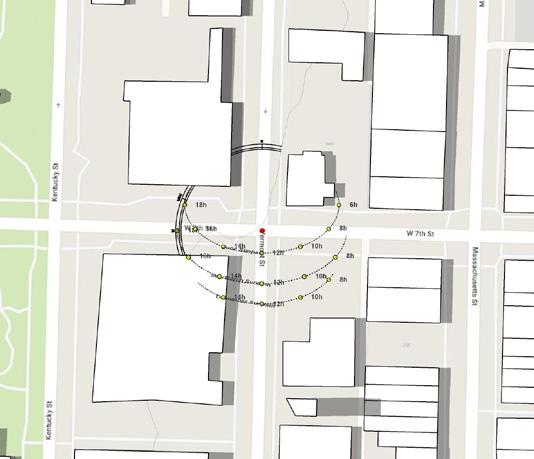
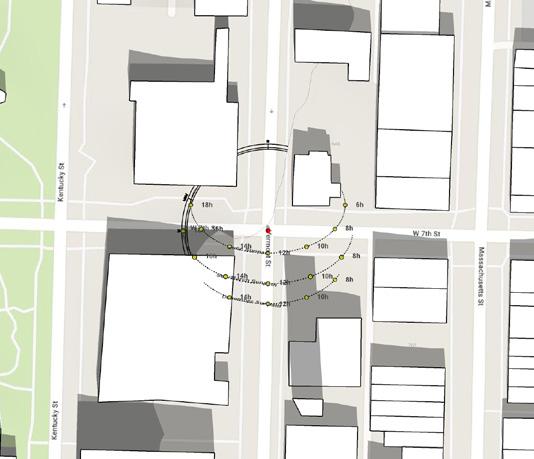
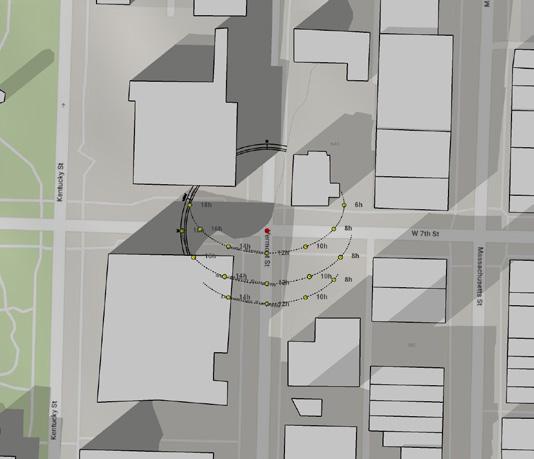
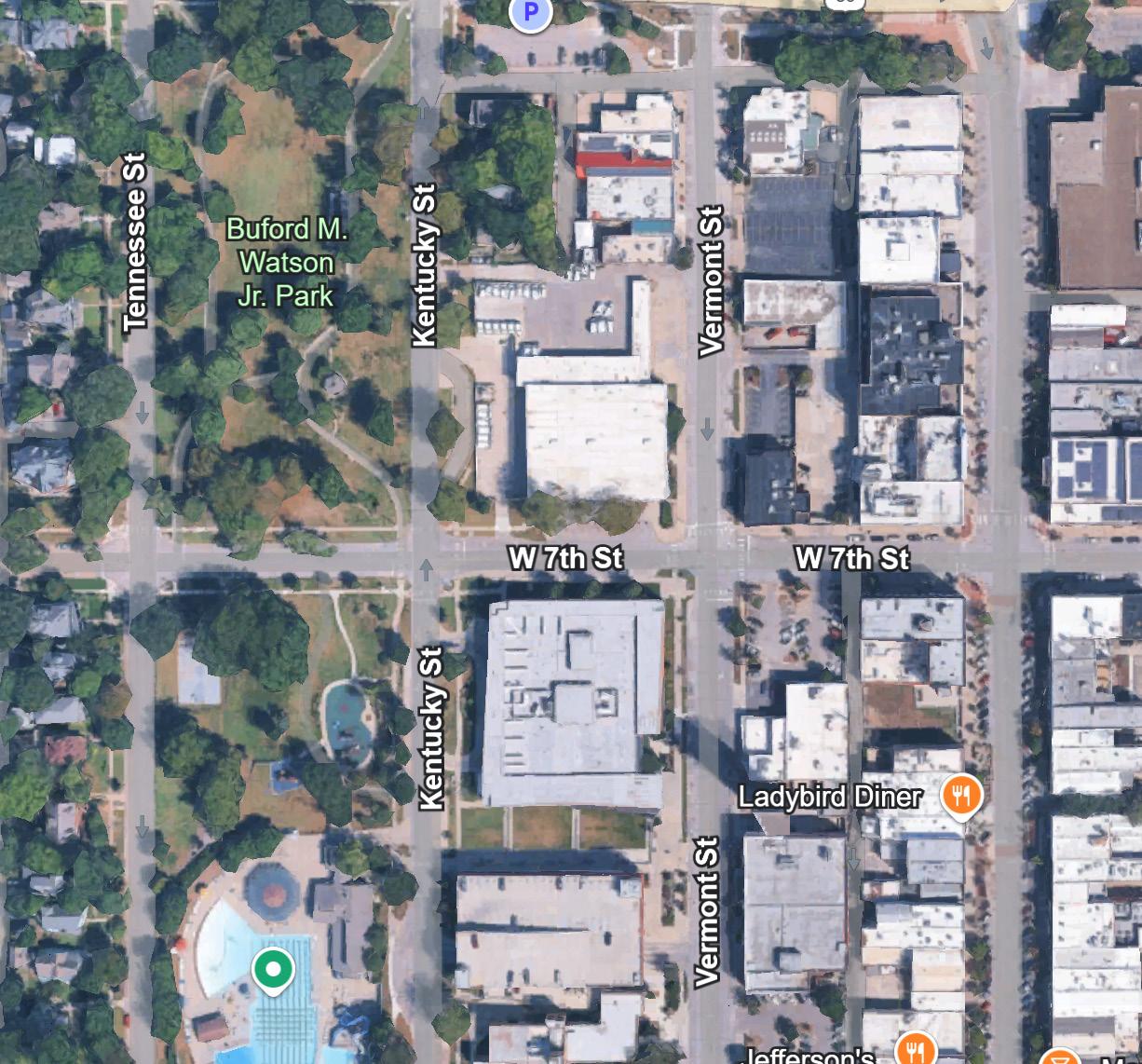
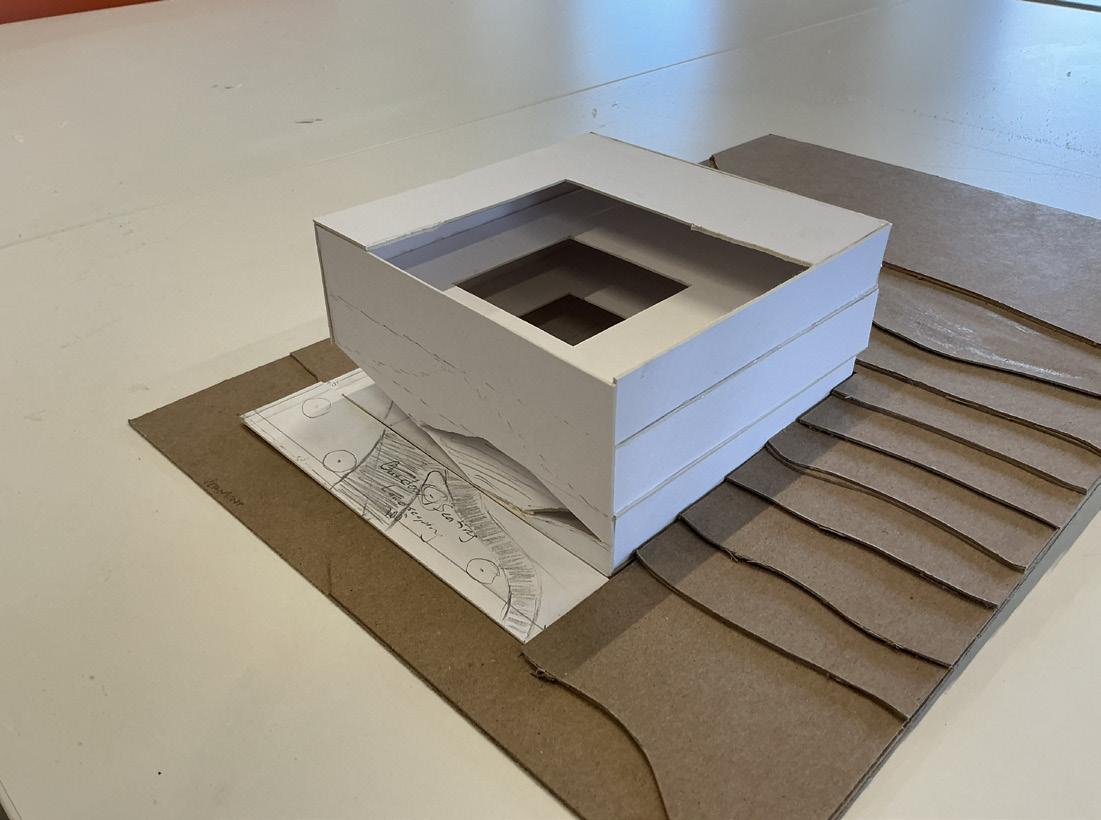
Public-to-Private Gradient
Color-coded plans illustrate a clear zoning strategy:
Public (Museum): Galleries, lobby, exhibition spaces
Mixed Use: Shared amenities, event and gathering spaces
Private (Hotel): Guest rooms and back-of-house functions
This layered organization balances civic engagement with hospitality privacy, reinforcing the project’s dual identity as both cultural destination and place of retreat.
The Lightwell integrates a public museum and private hotel within a single architectural framework, organized around a central vertical void that brings daylight deep into the building and structures circulation across all levels.
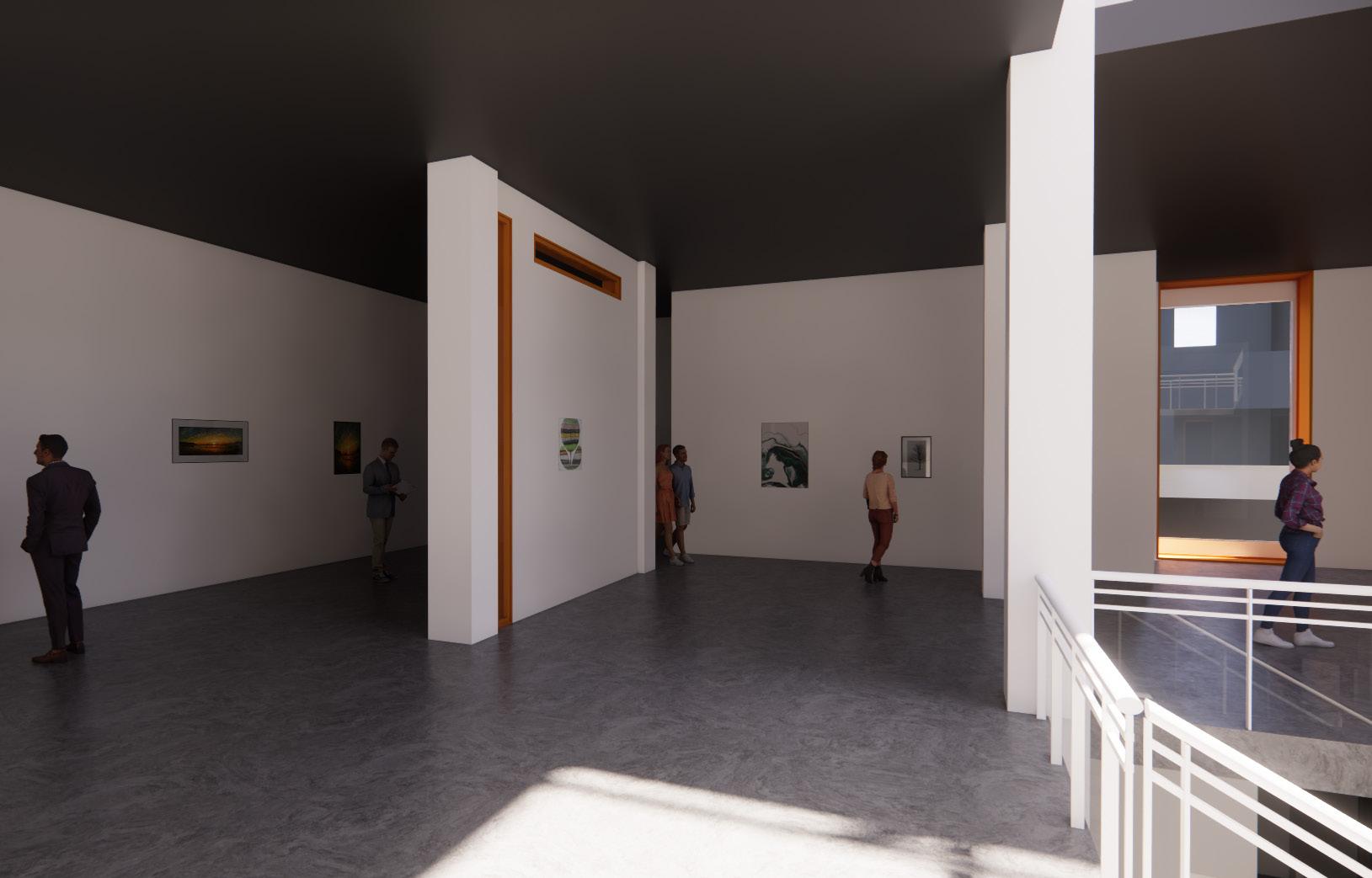
Public-facing museum spaces occupy the lower and mid-levels, maintaining direct connection to the street and supporting flexible exhibition layouts. Hotel functions are positioned above, transitioning from shared amenities to private guest rooms as circulation moves upward.
The central lightwell acts as the project’s primary spatial and organizational element—bringing natural light, visual continuity, and orientation to all floors. Rather than separating programs horizontally, the lightwell allows public, mixed-use, and private spaces to coexist vertically while maintaining clarity, privacy, and intuitive wayfinding.
Alex Rose | ARCH 608| Urban Dwelling | Dilshan Ossen | Fall 2025
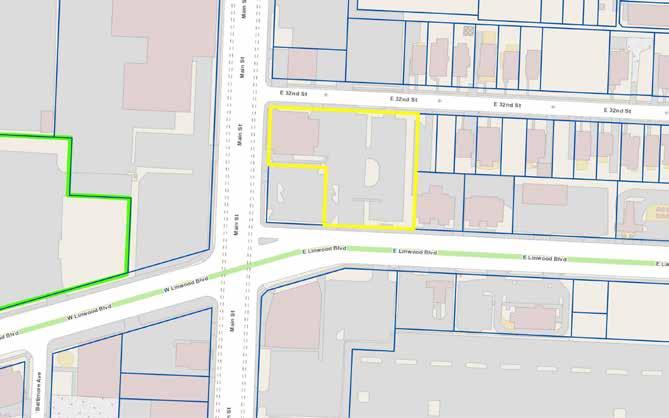
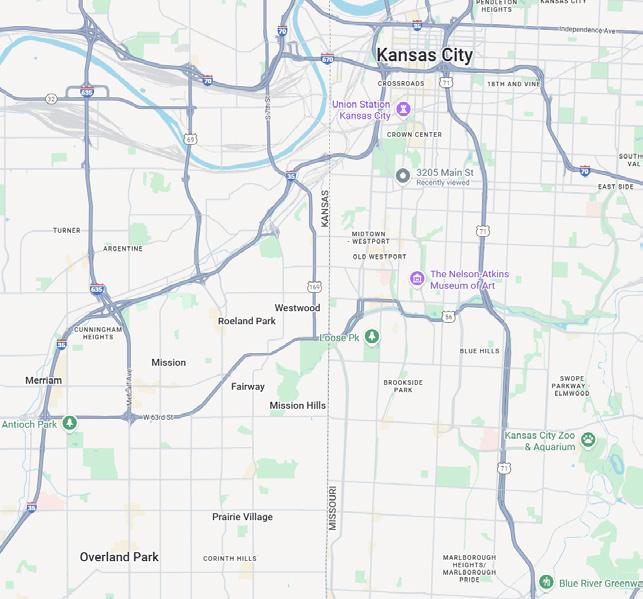
Location: 3205 Main St., Kansas City, MO
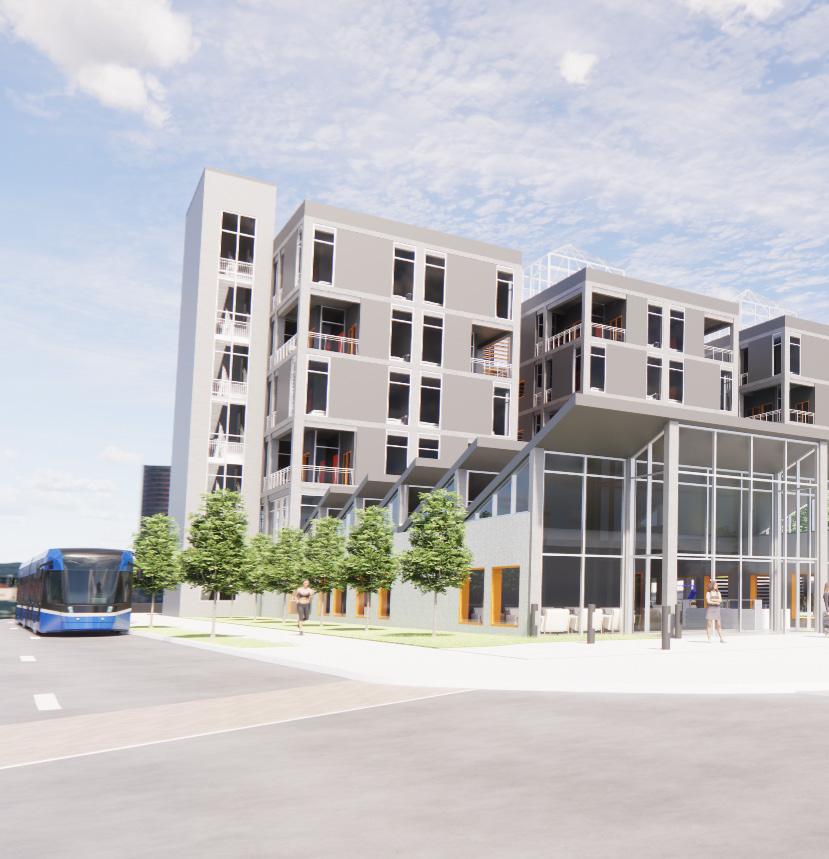
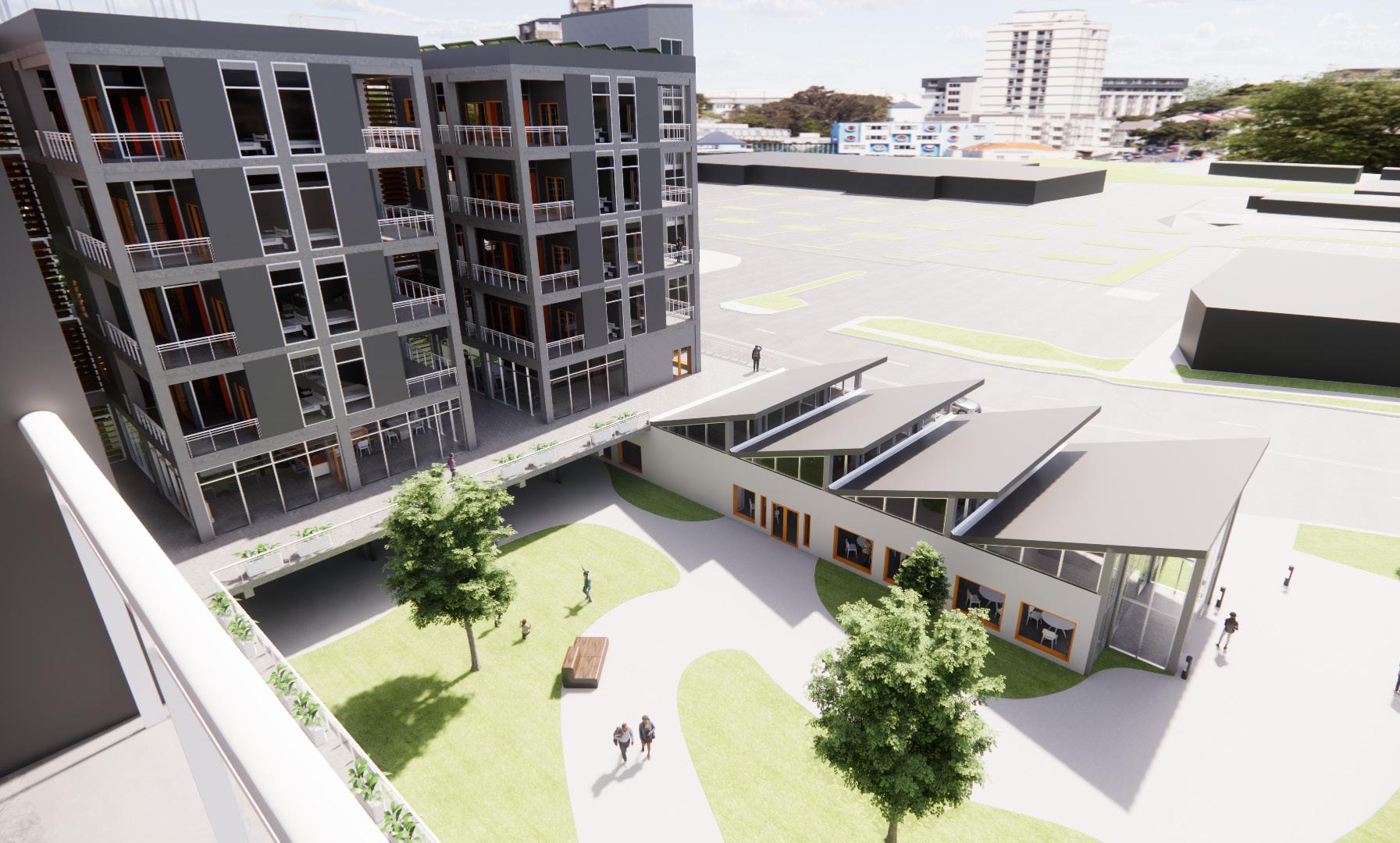
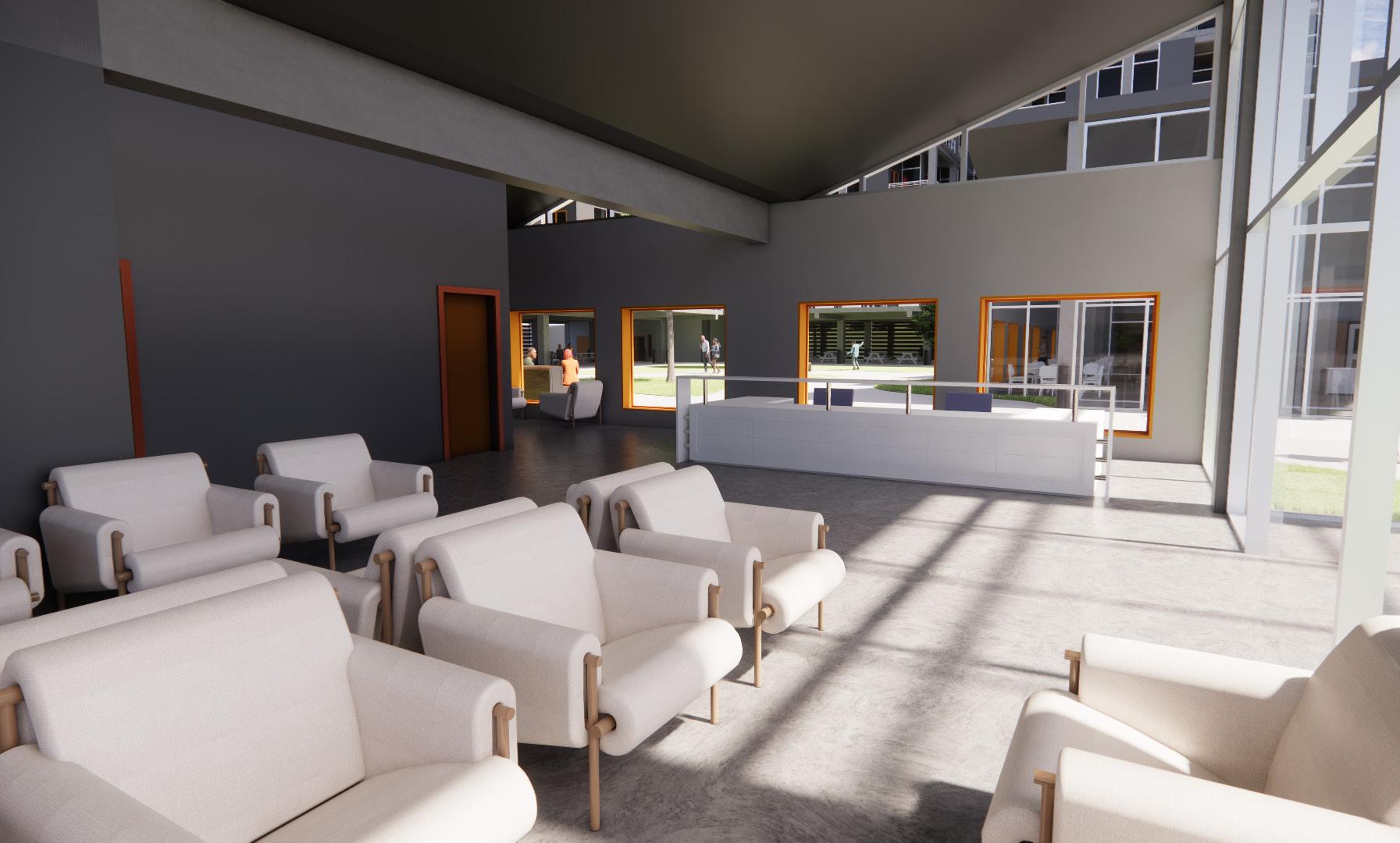
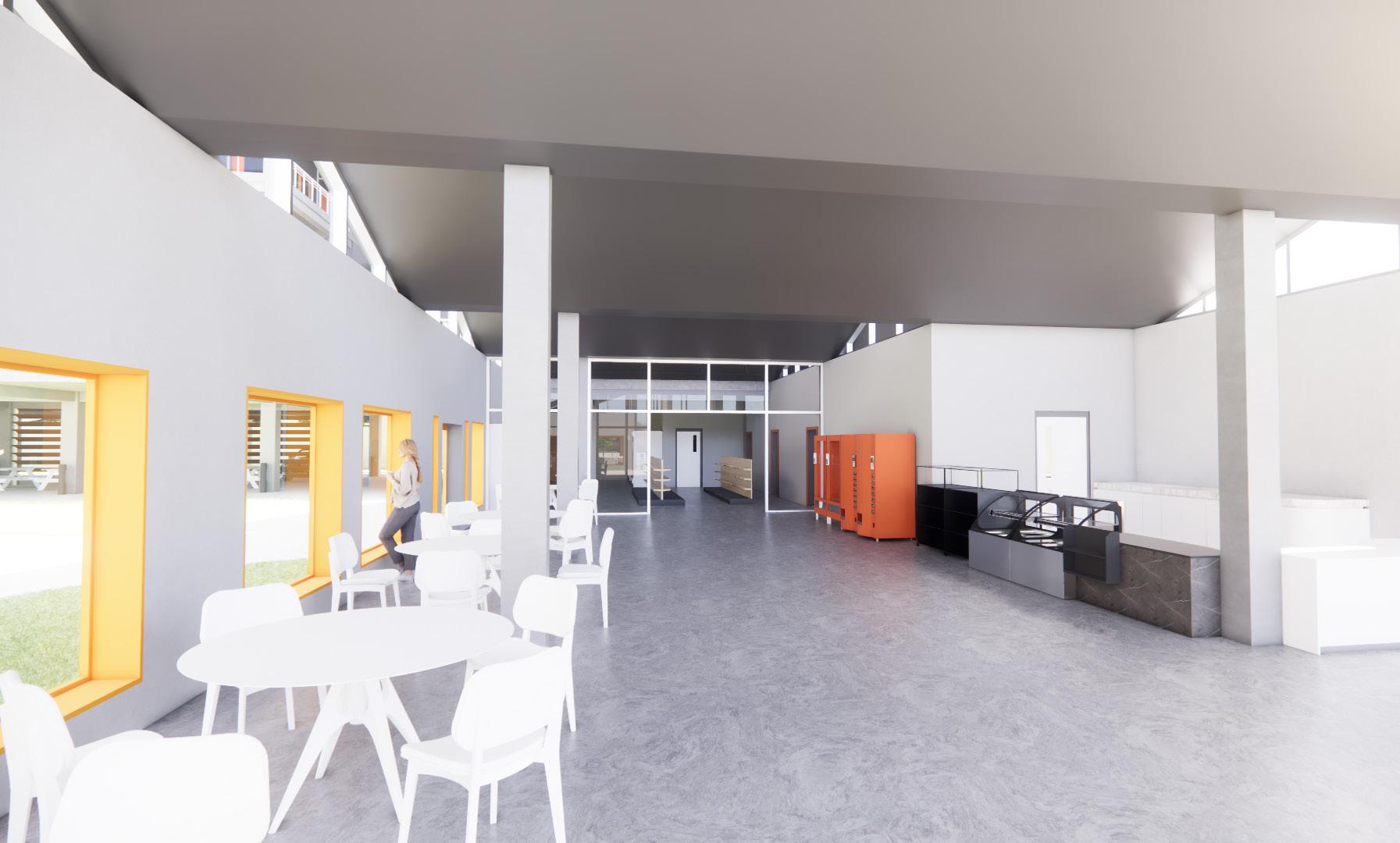
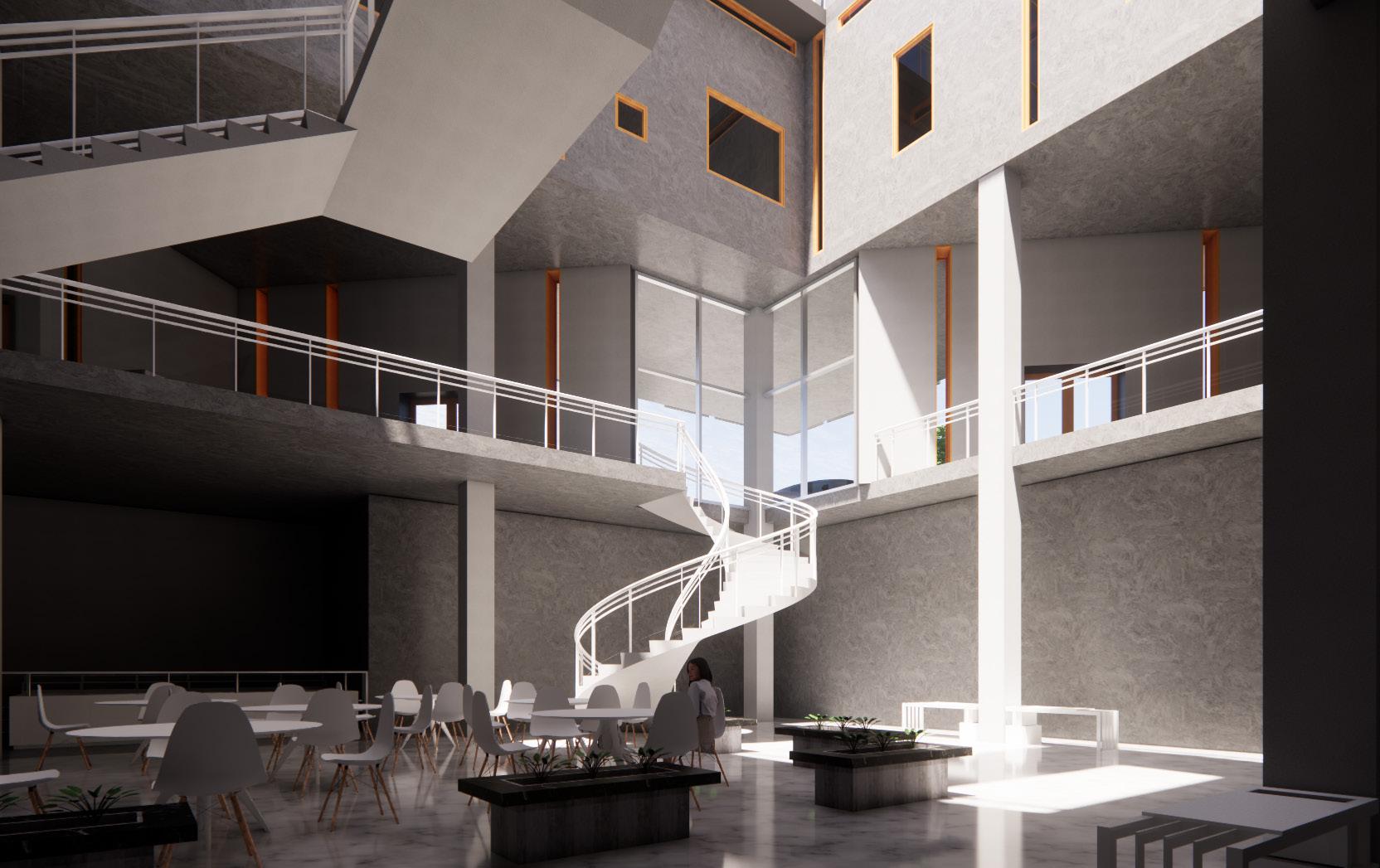
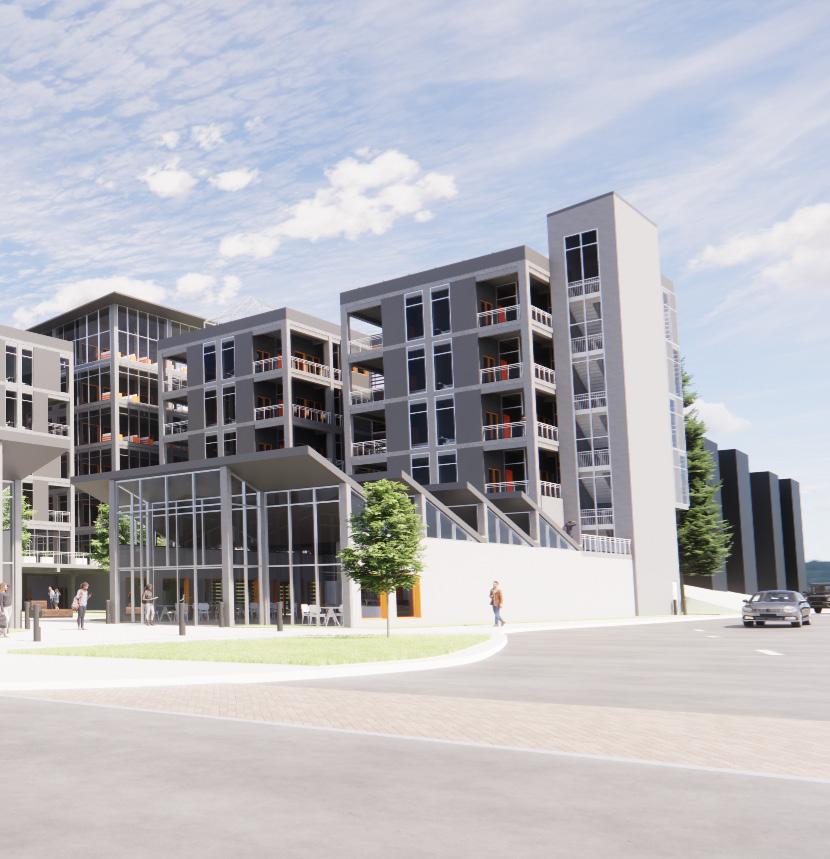
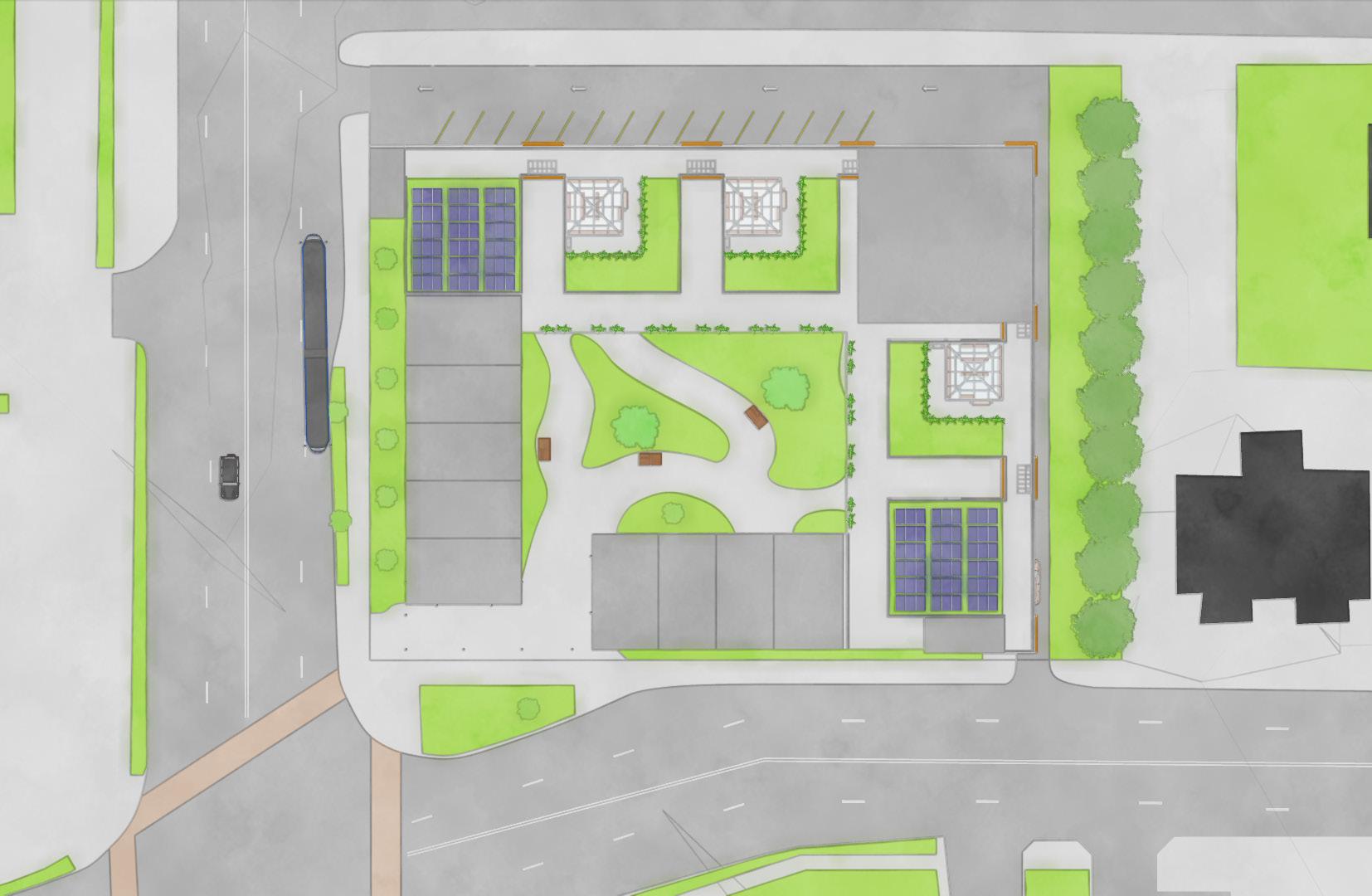
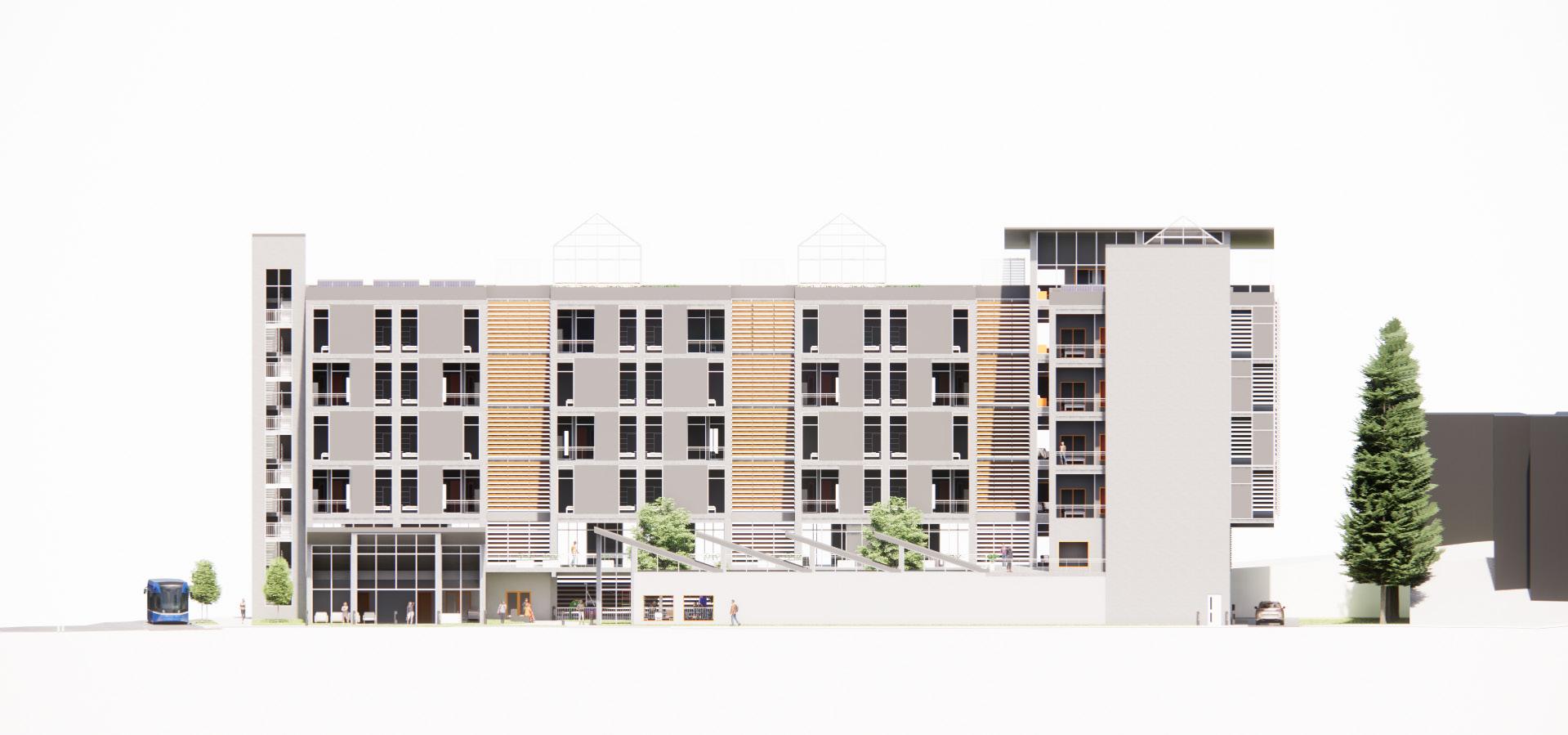
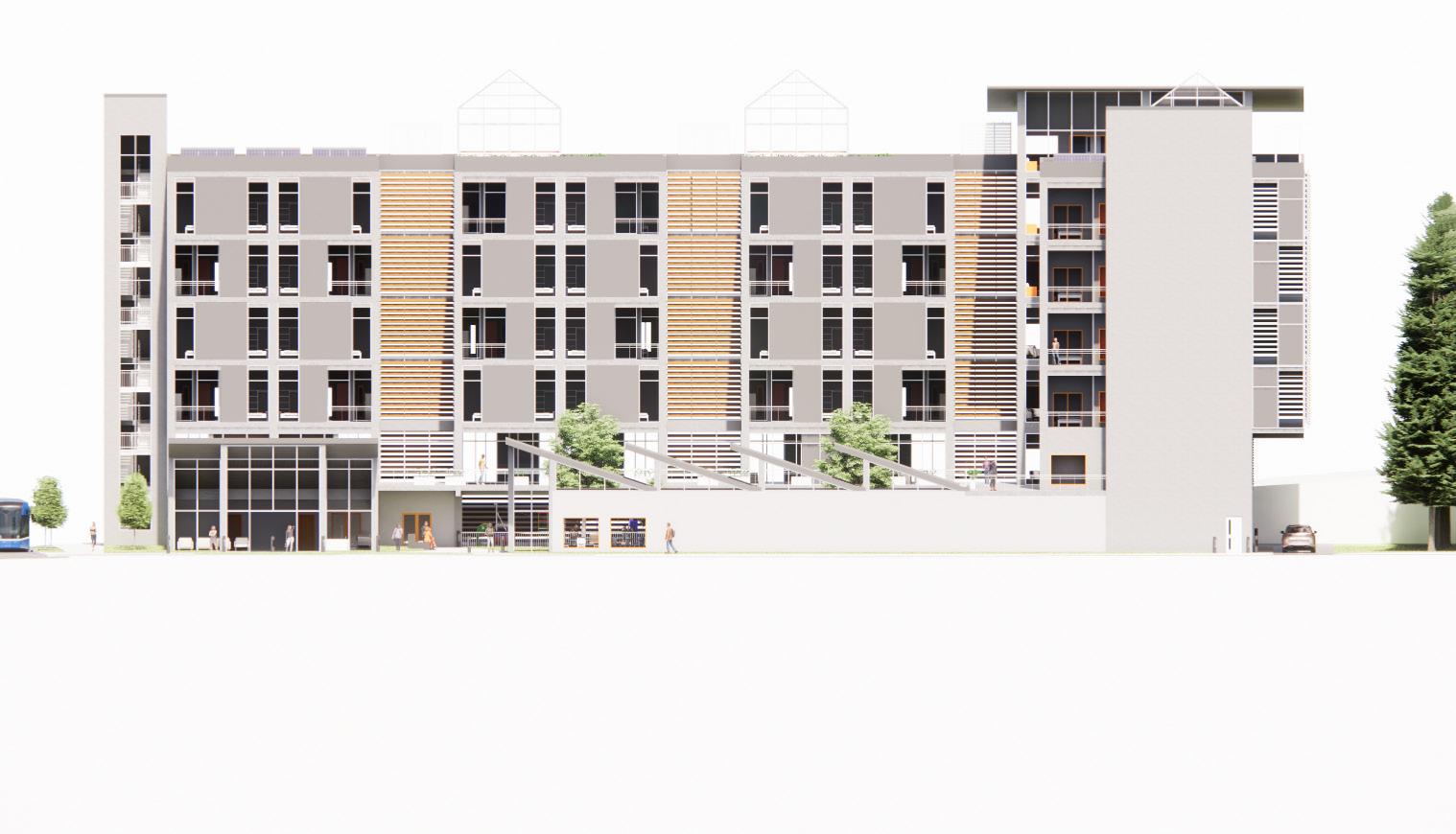
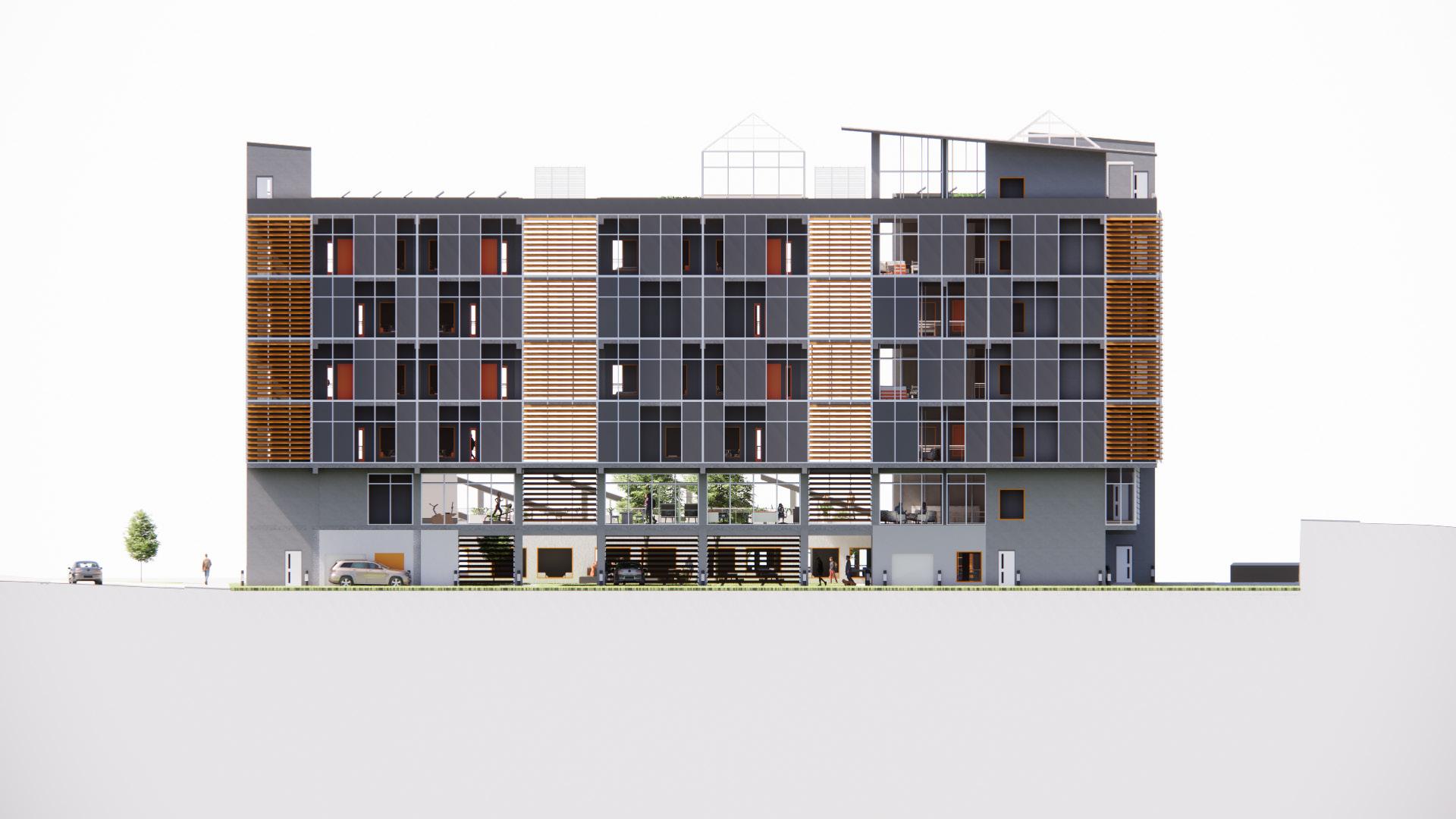
RE-MOD | Homes for the Homeless is a supportive housing proposal located at 3205 Main Street in Kansas City, designed to provide stable, dignified homes for individuals and families transitioning out of homelessness. Organized around a protected central courtyard, the project establishes a clear public-to-private gradient that balances community engagement with personal autonomy. A reinforced concrete structural grid supports modular 1-, 2-, and 3-bedroom units, enabling adaptability and long-term resilience. Sawtooth roofs, light wells, balconies, green roofs, photovoltaics, and rainwater harvesting systems work together to optimize daylight, passive performance, and ecological impact. The result is housing conceived not as temporary shelter, but as durable, community-centered urban infrastructure.

Walking Path
Walking Path
Tram Track
Tram Track
Bus Stop
Bus Stop
Desireable View
Desireable View
Disruptive Noise
Disruptive Noise

Vegetation
Lot Dimension
Right-of-Way (ROW)
Lot Dimension
Dimensions
Right-of-Way (ROW)
Parcel Boundaries
Dimensions
Site 4 Boundaries
Parcel Boundaries
Setback (25’ min.)
Site 4 Boundaries
Setback (25’ min.)
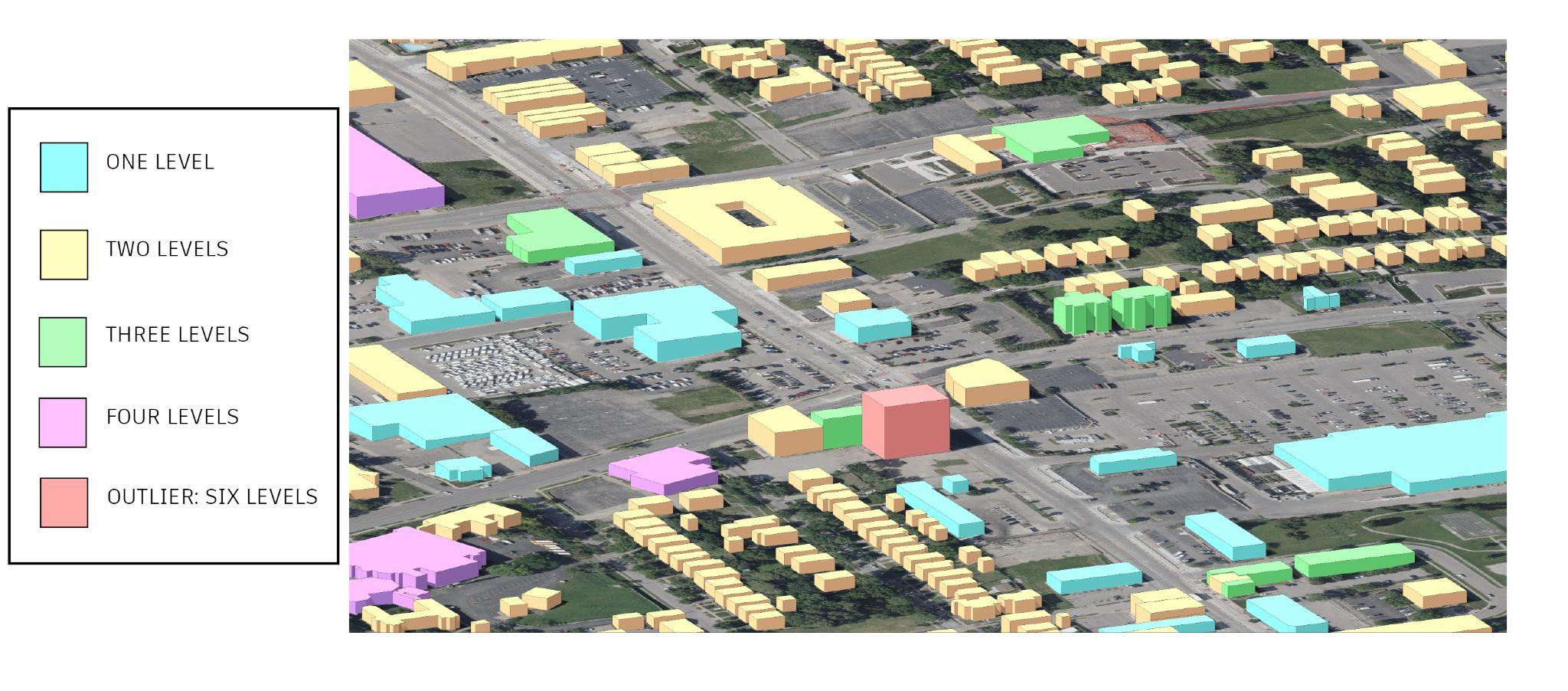
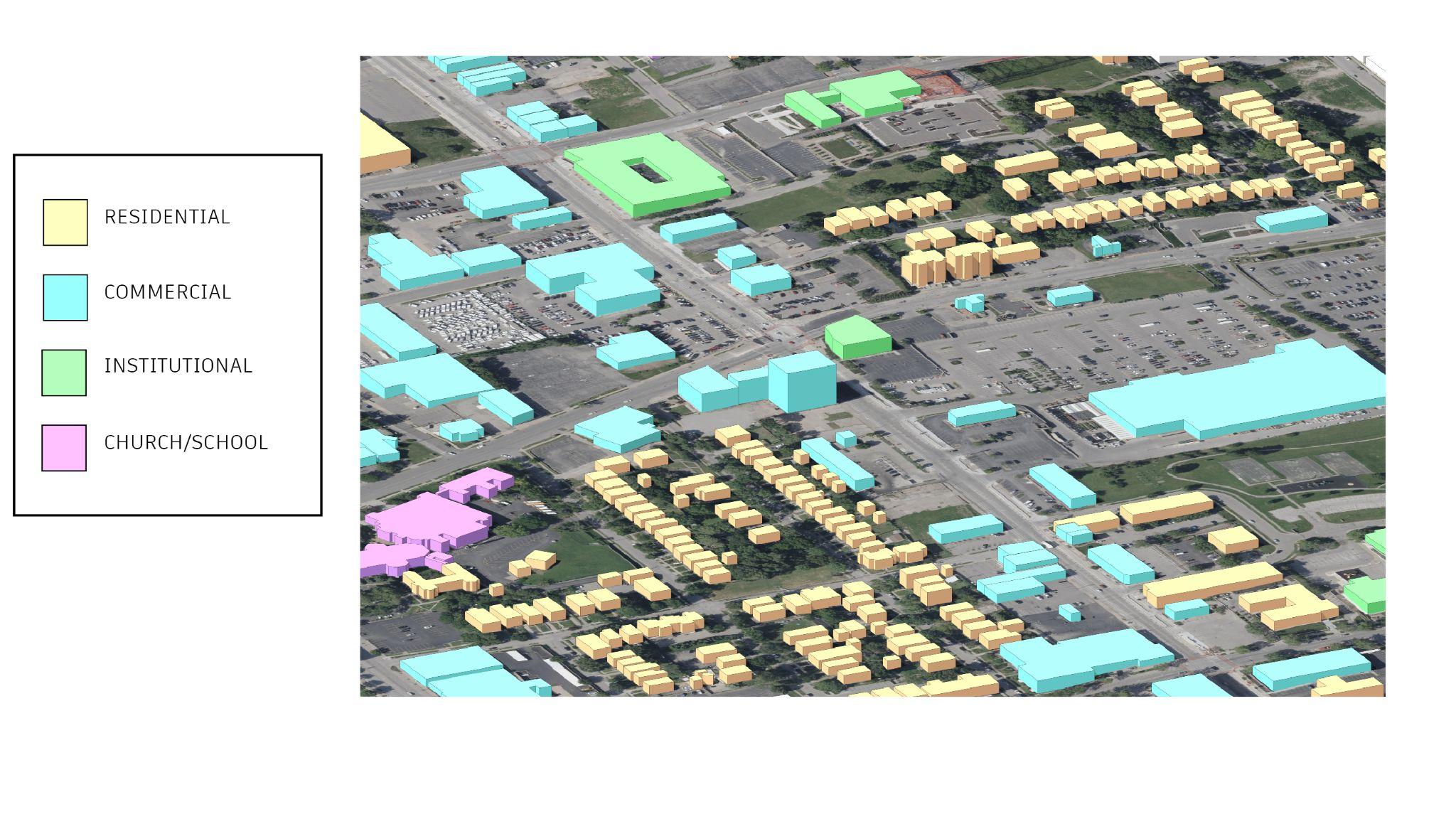
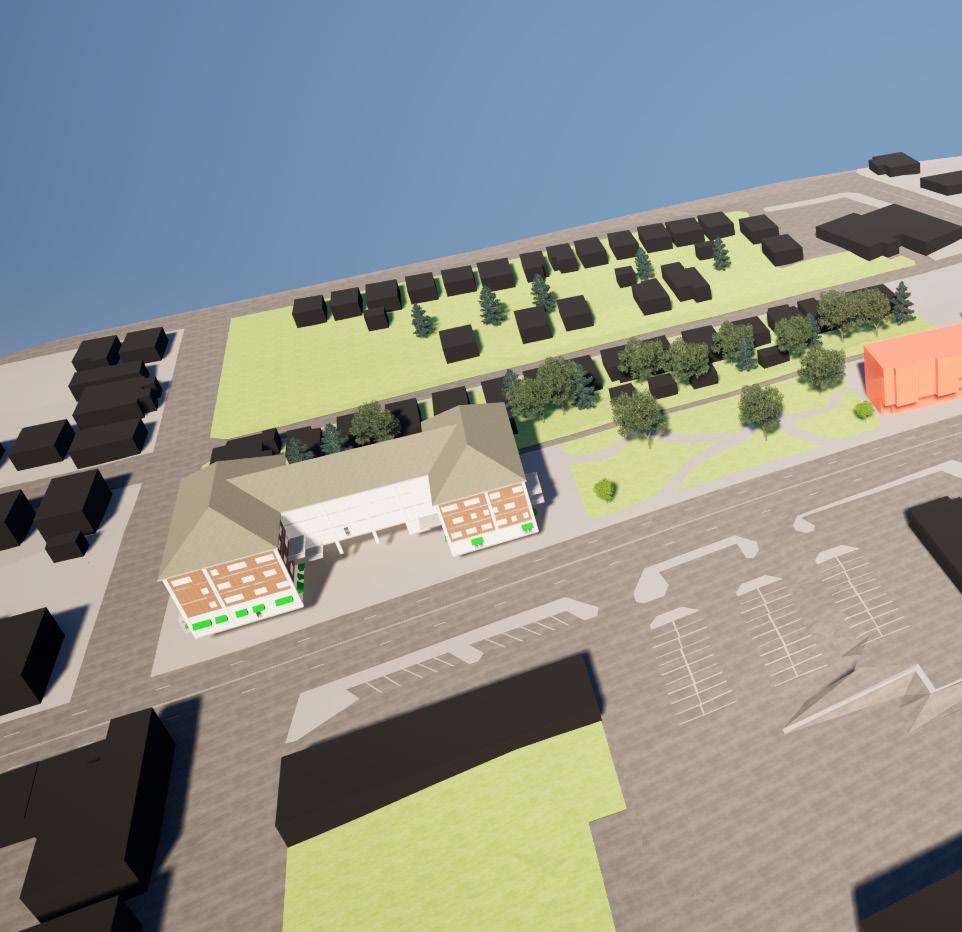
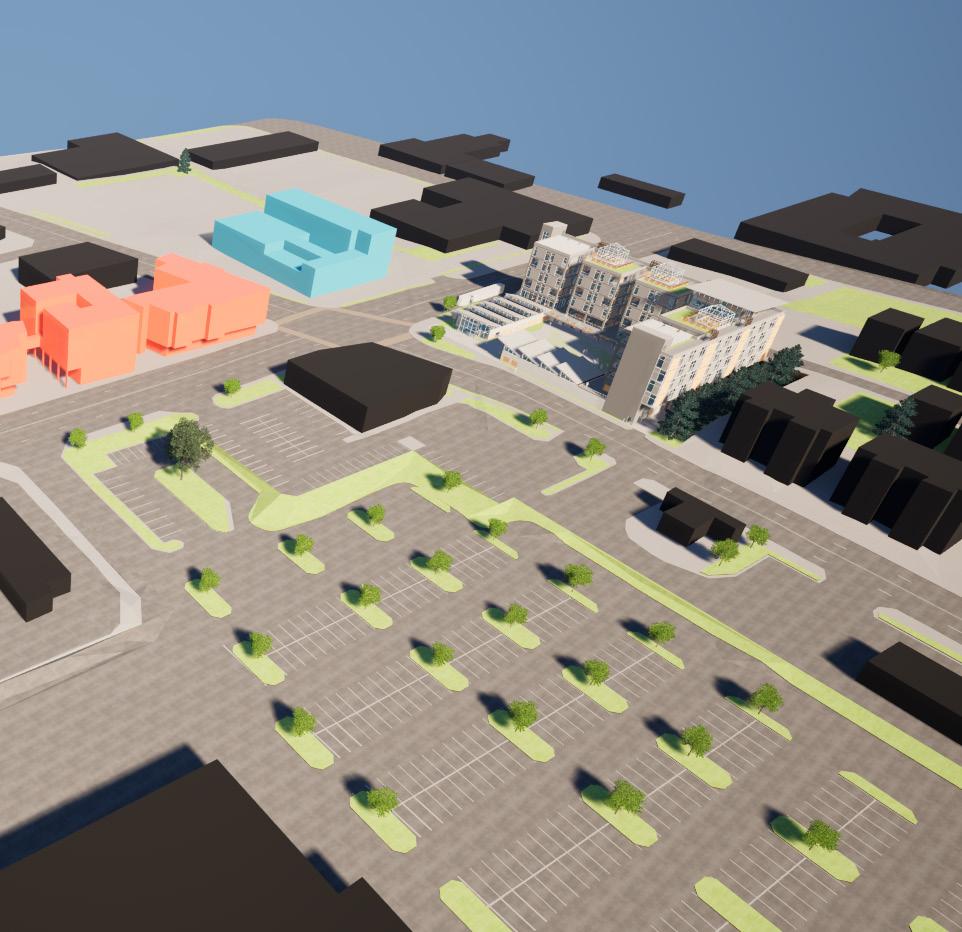
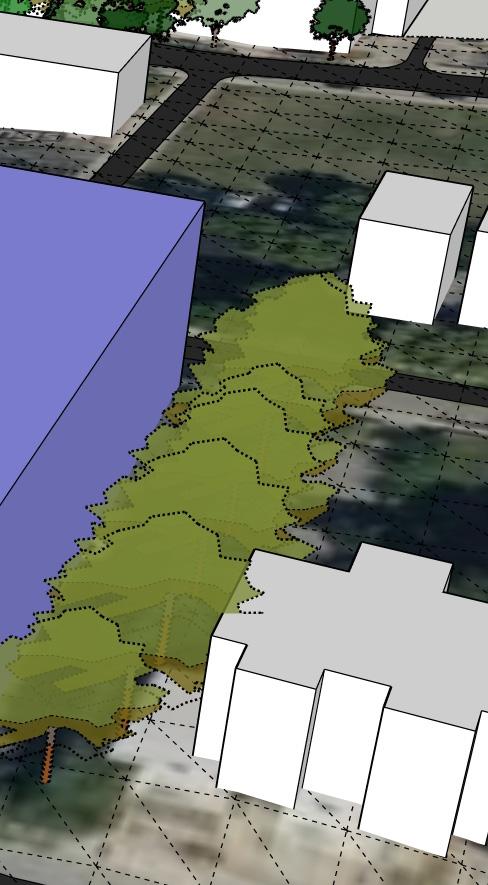
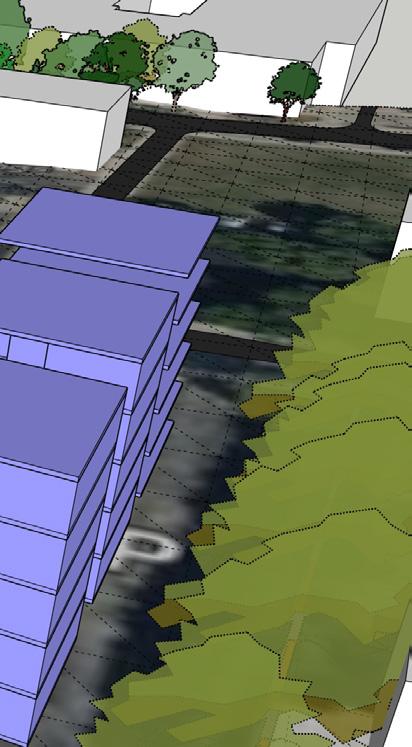
The massing strategy was shaped using a detailed 3D reconstruction of the site and surrounding blocks in Kansas ing heights, transit corridors, and circulation patterns, each massing step could be evaluated against real environmental exposure, prevailing winds, street activity, and adjacent structures influence form, orientation, and courtyard contextual responsiveness—balancing density, daylight, and community space within an authentic Kansas City
Site 4: 3205 Main St., Kansas City, MO
Kansas City, MO. By modeling the neighborhood topography, buildenvironmental and urban conditions. This process revealed how solar performance. The resulting sequence reflects a design rooted in City urban fabric.
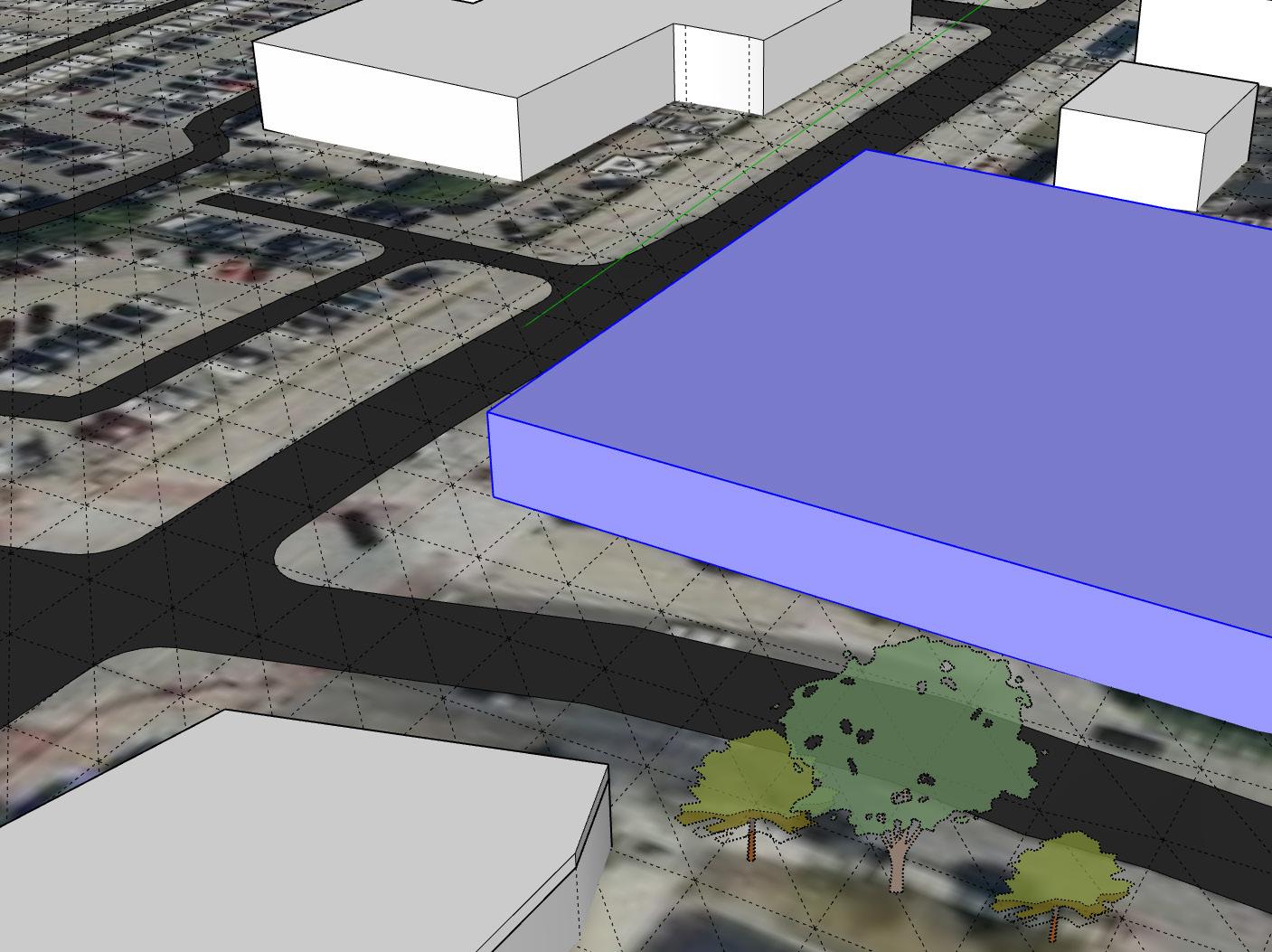
Step 1 - Define - Establish the full buildable mass as a starting envelope for program and spatial testing.
Step 3 - Orient - Lift and shape the mass sightlines, enhance solar exposure, and the internal courtyard edge.
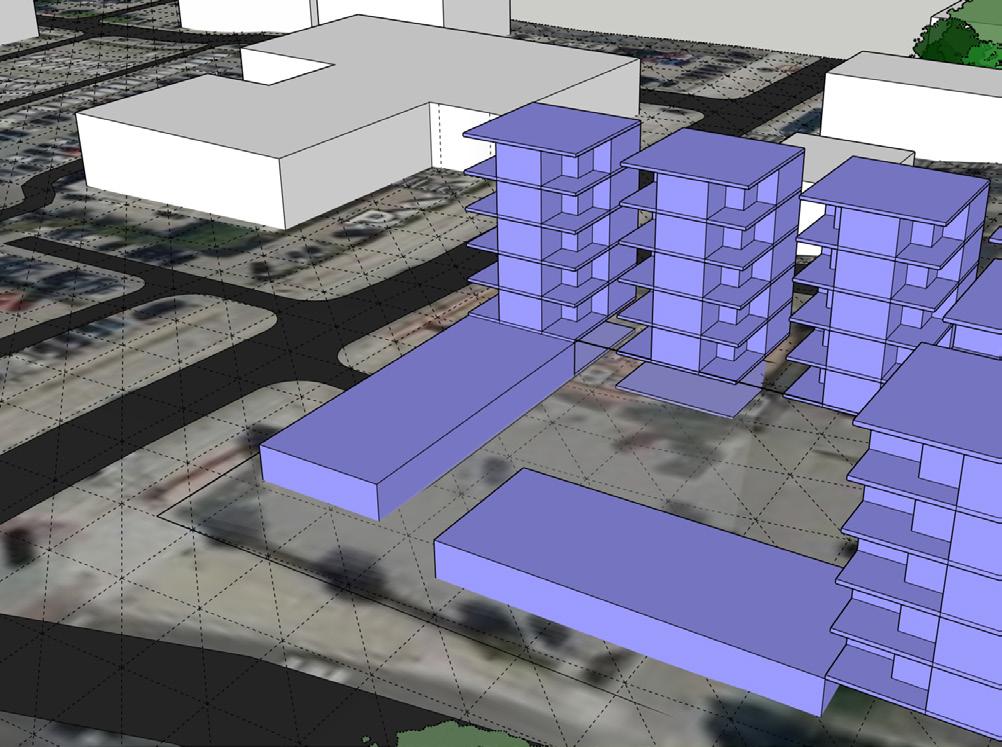
Step 5 - Balconies - Extend the residential with balcony projections to enhance outdoor unit livability, and visual connection to

buildable site program distribution
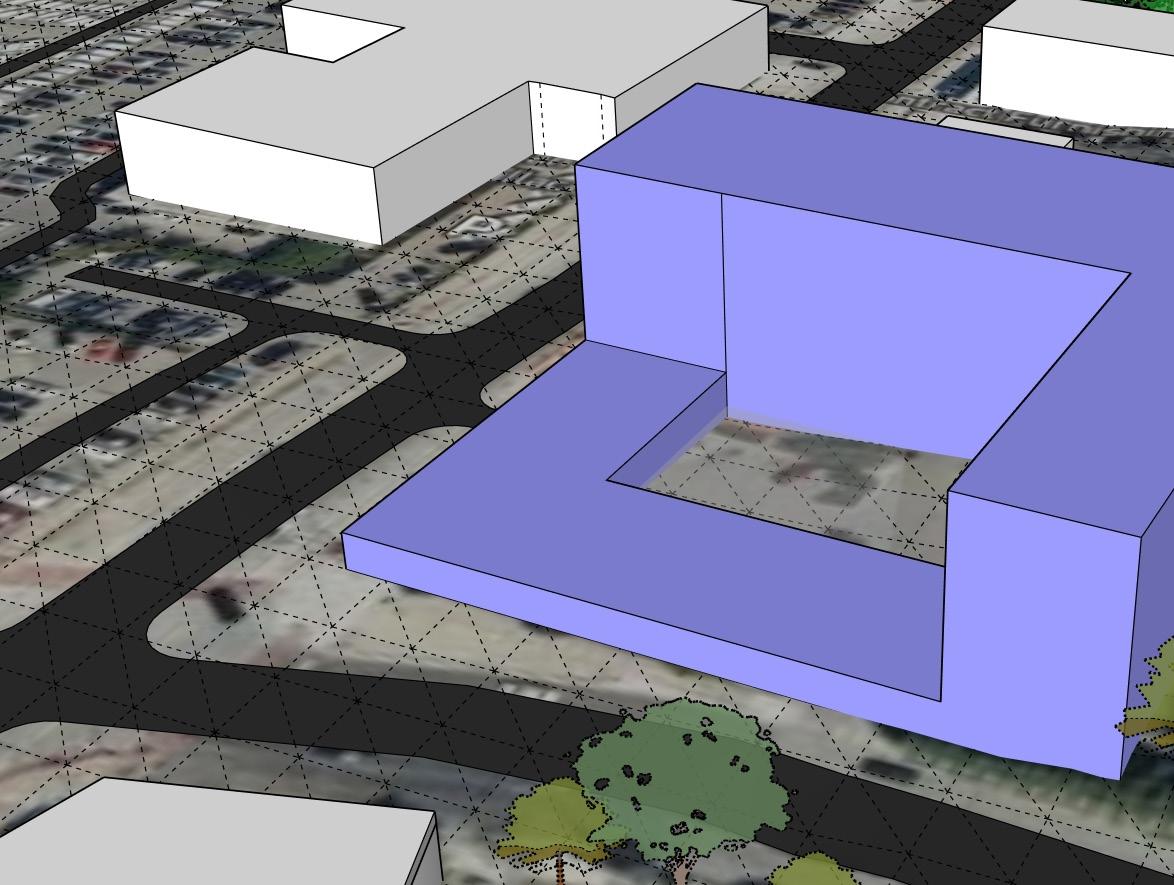
mass to open and strengthen
residential massing outdoor access, the courtyard.
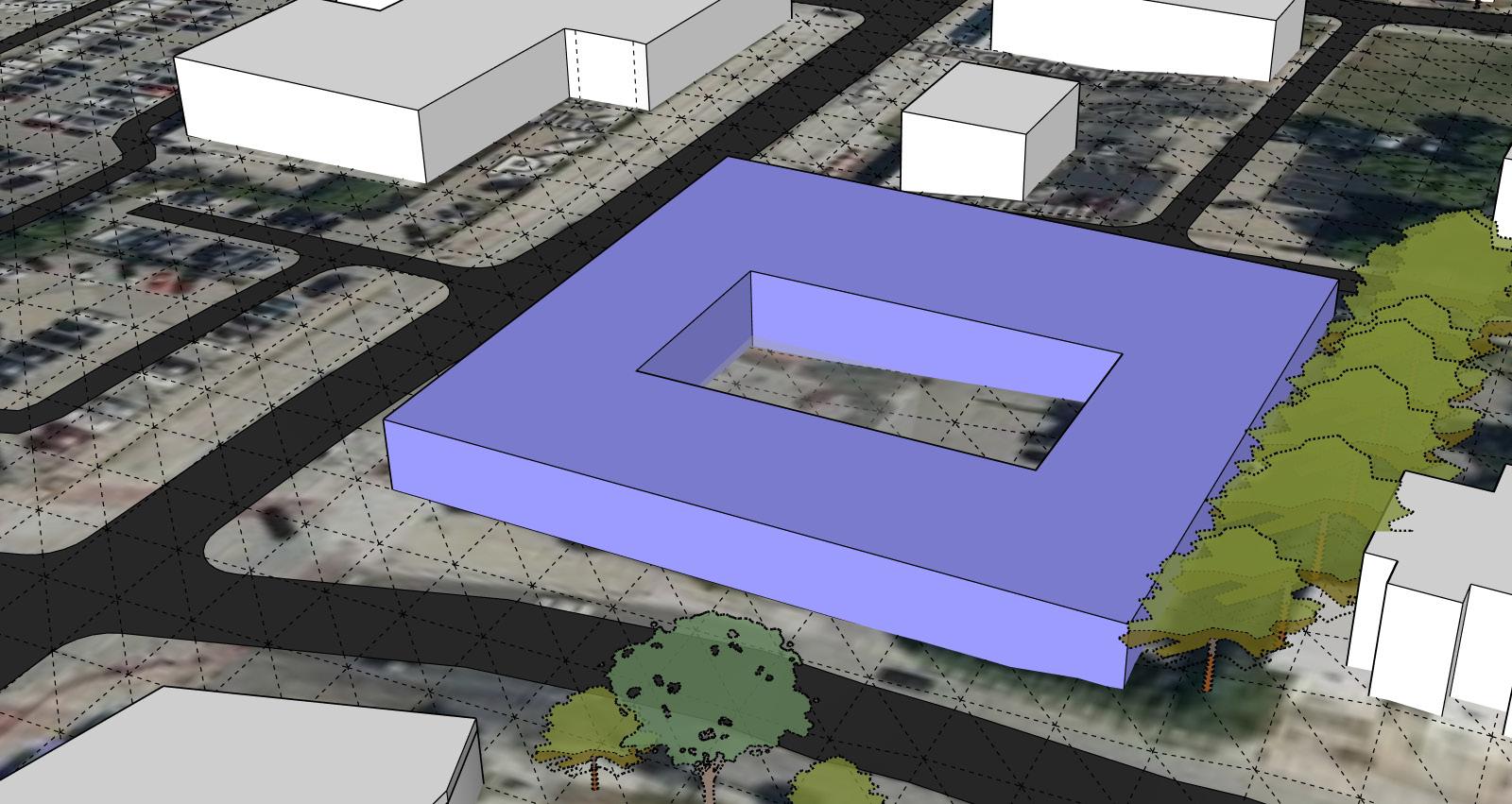
Step 2 - Carve - Remove the central volume to introduce a courtyard, improving daylight, ventilation, and community visibility.
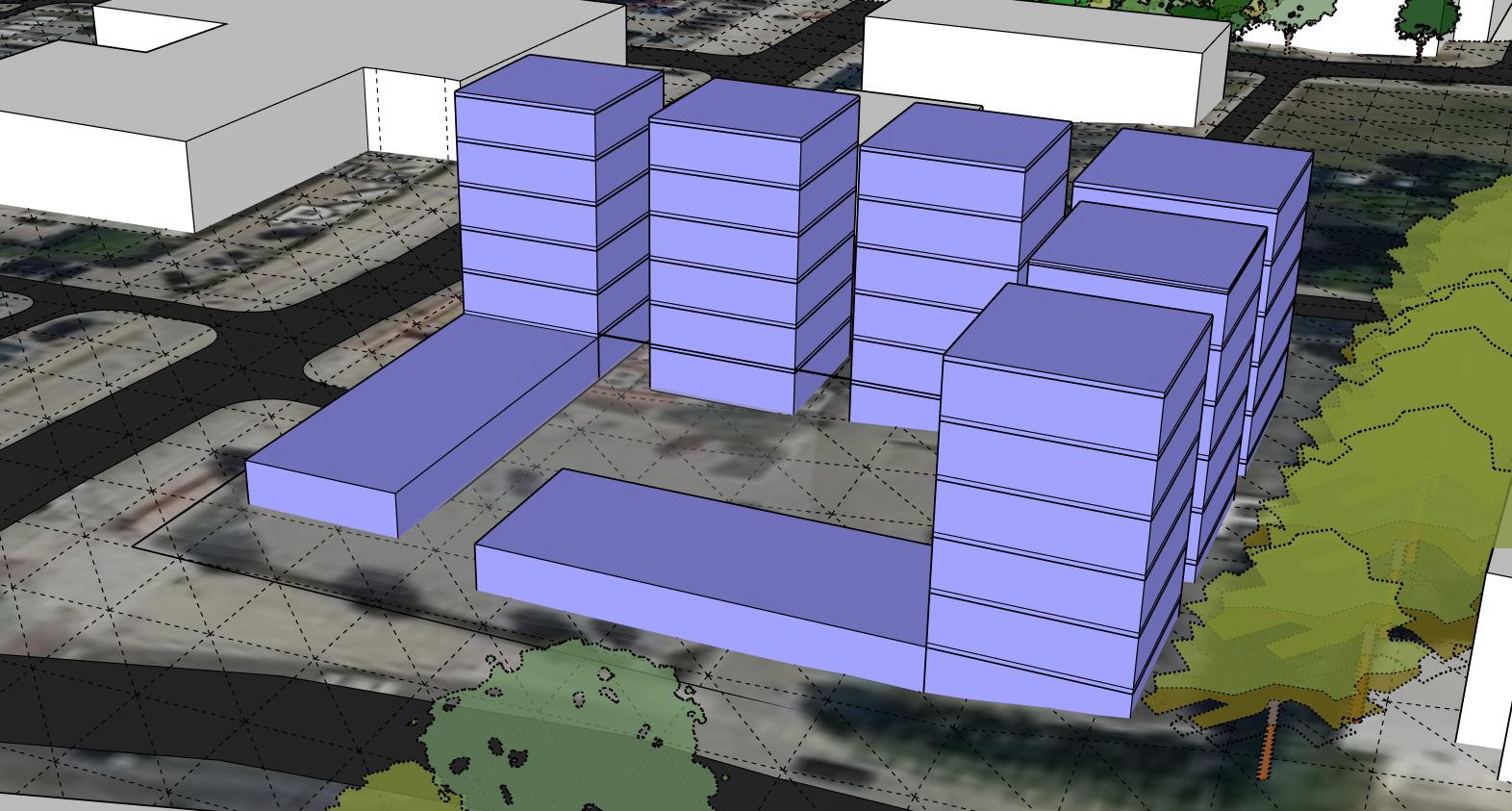
Step 4 - Lightwell - Introduce vertical openings to bring natural light deeper into the mass and improve daylight access for interior units.
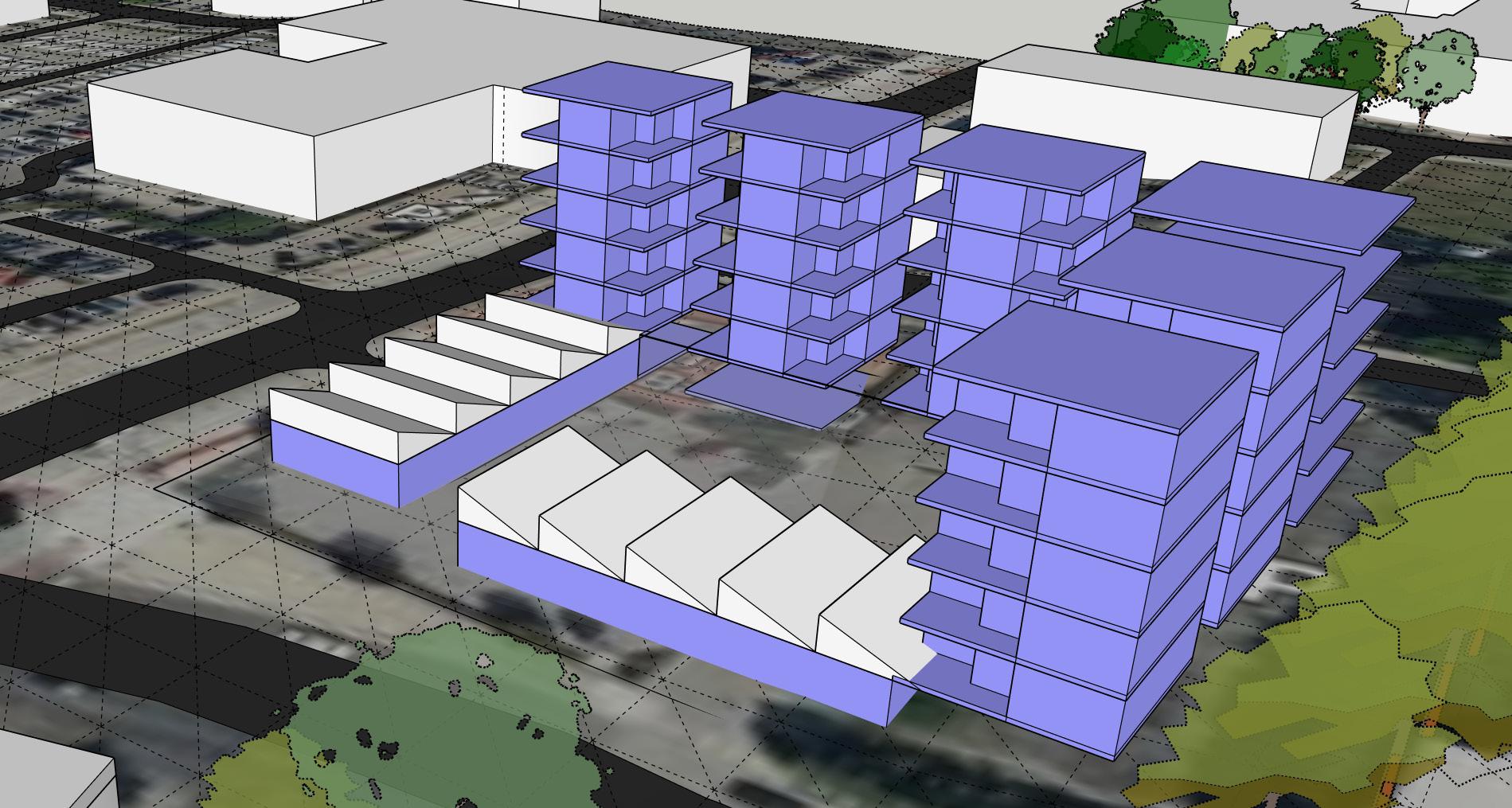
Step 6 - Sawtooth - Introduce sawtooth geometry to optimize sunlight, create rhythmic elevation patterns, and reinforce environmental responsiveness.
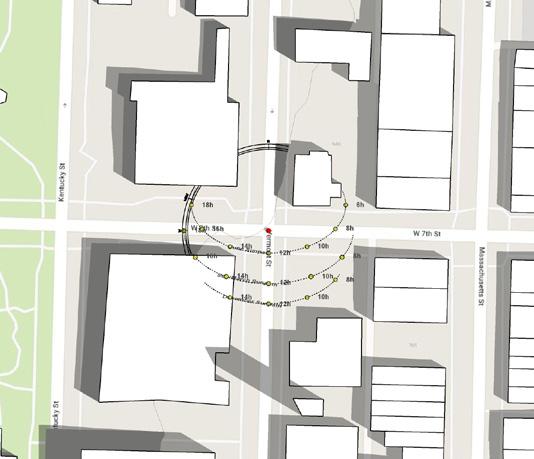
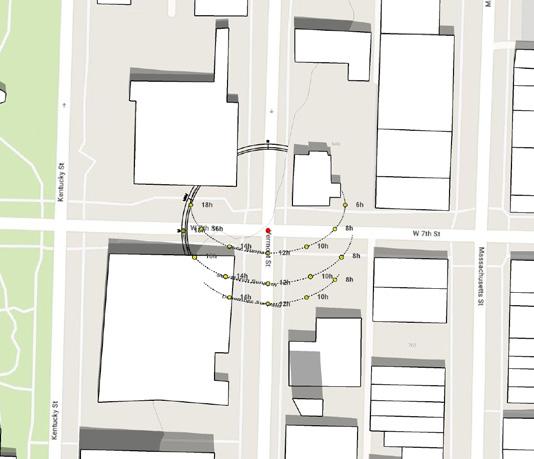
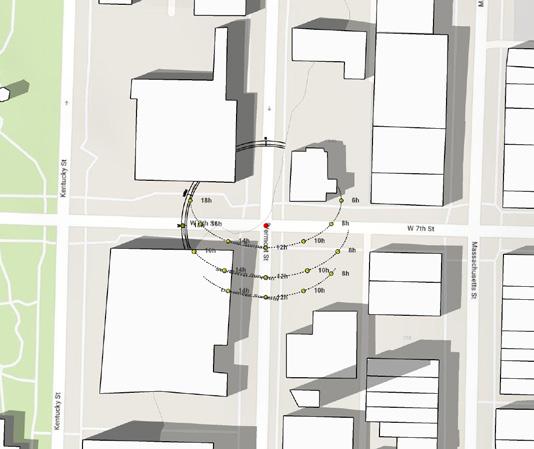
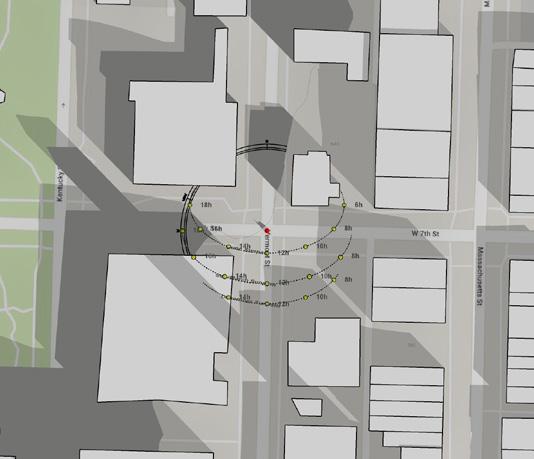
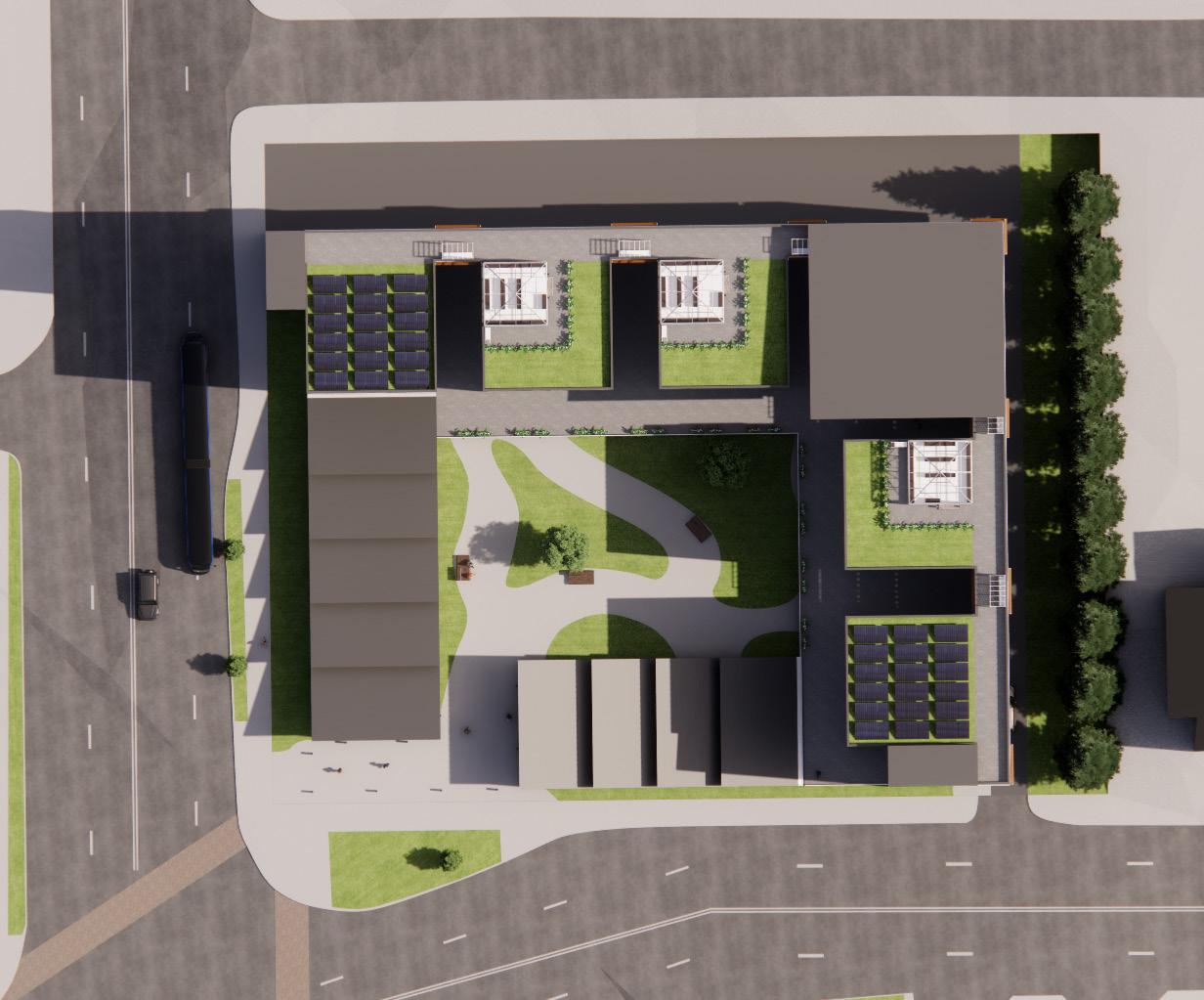
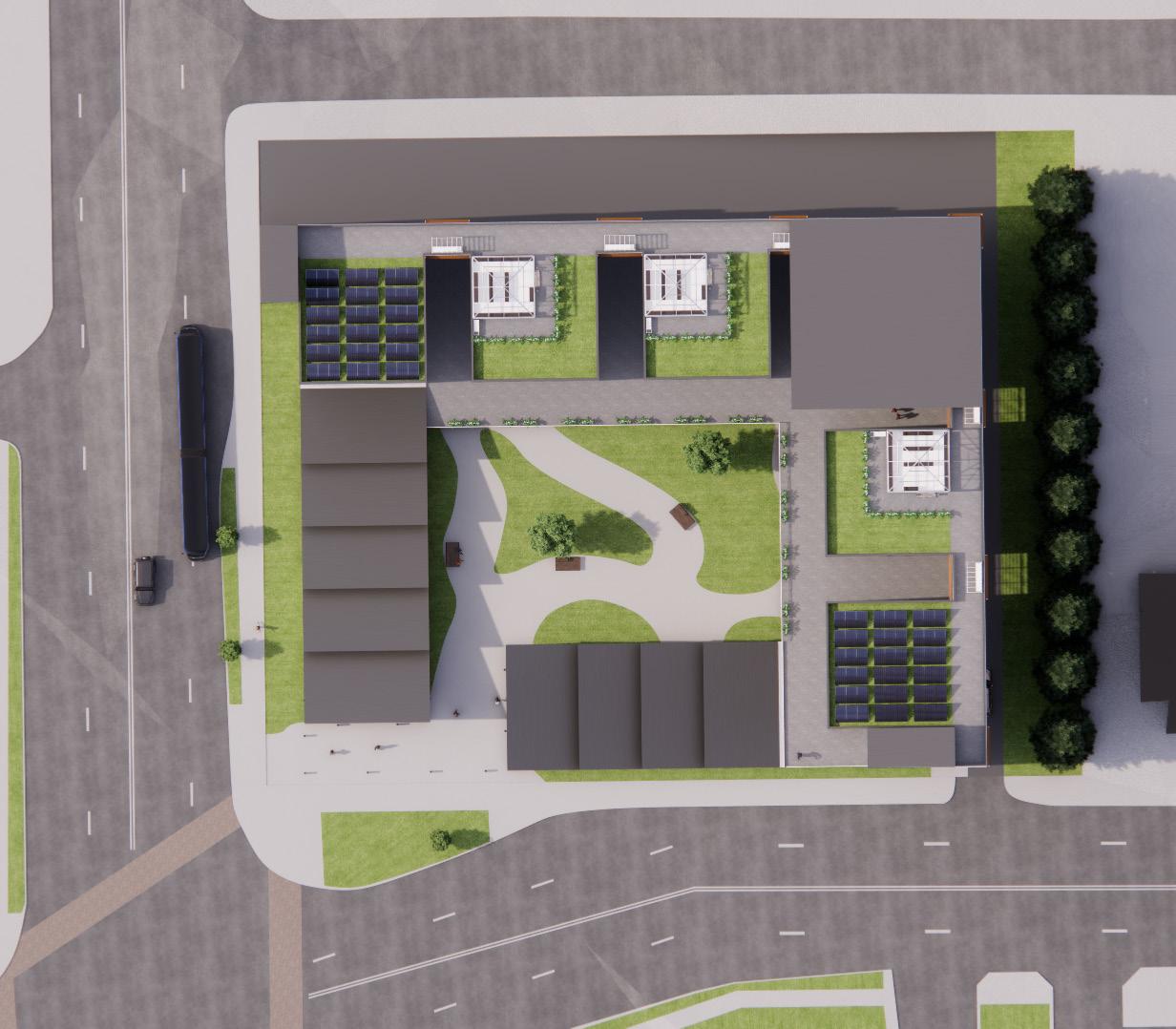
Summer Solstice
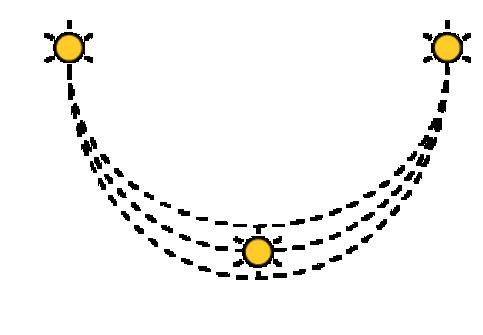
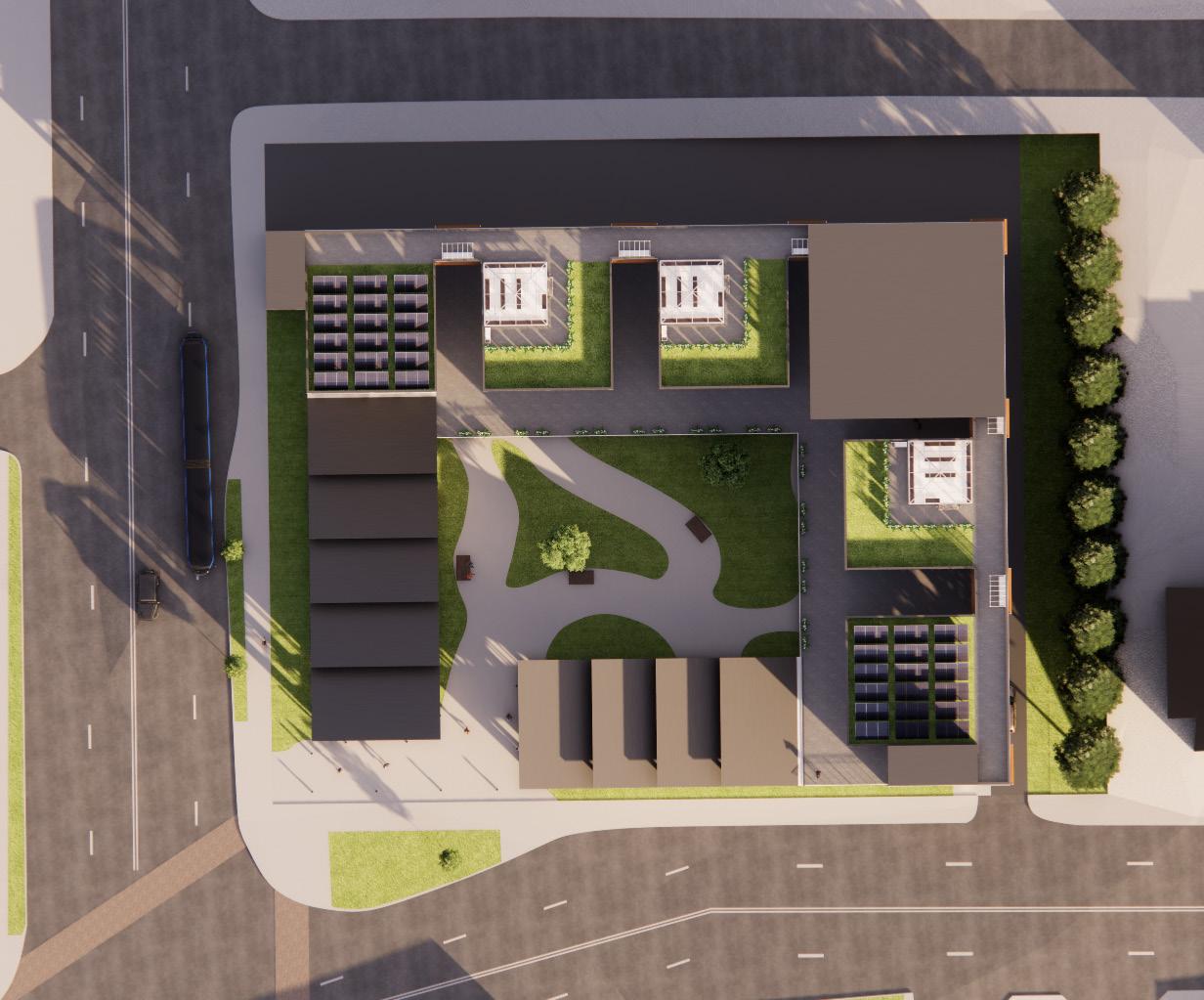
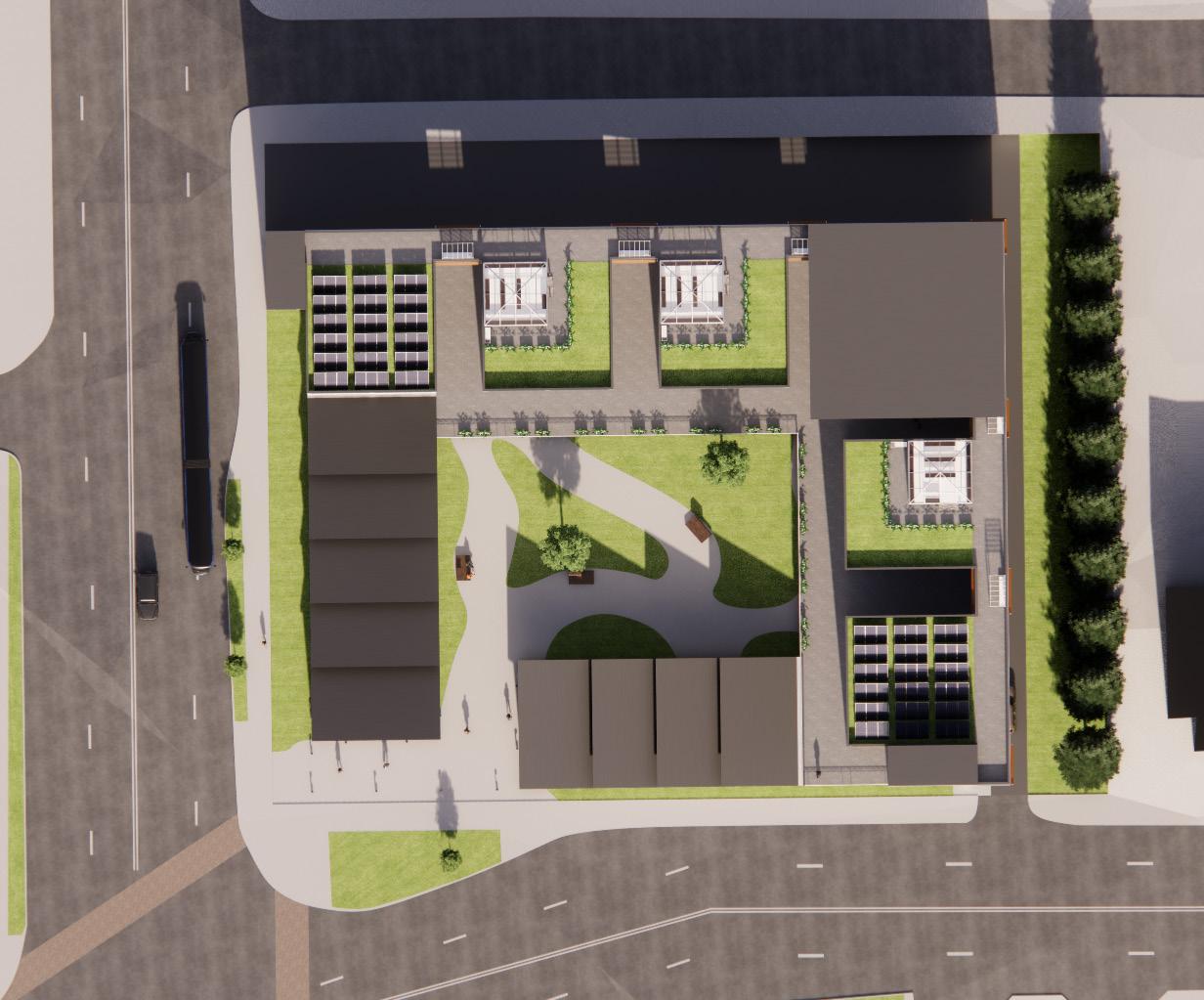
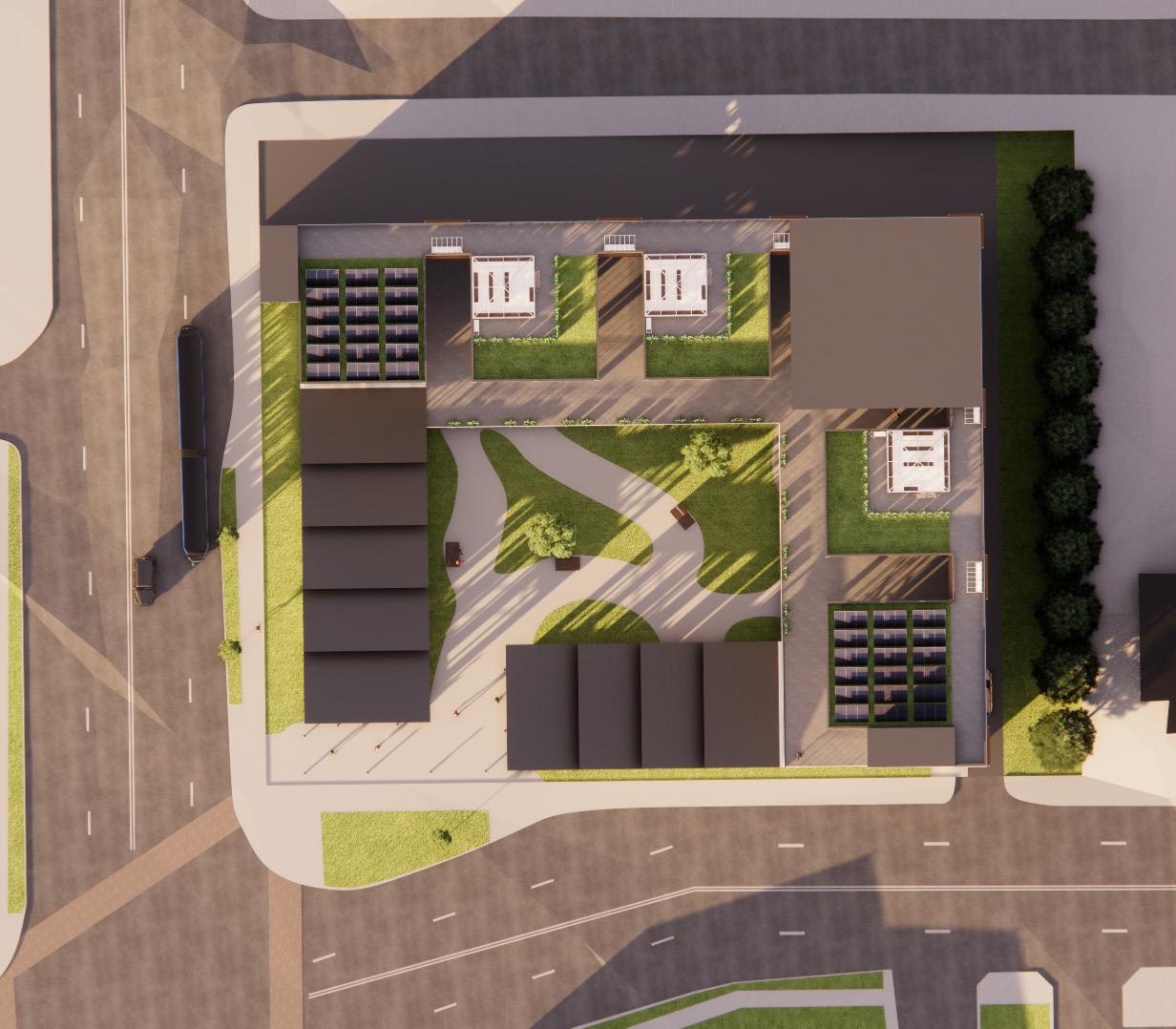
The seasonal sun/shadow studies illustrate how the building massing, sawtooth roof forms, balconies, and courtyard geometry respond to changing solar angles throughout the year.
Summer solar behavior:
During the summer solstice, the sun reaches a high position in the sky, producing short, compact shadows.
Because the majority of the residential massing sits south of the courtyard, these buildings do not obstruct sunlight from entering the central outdoor space. Even the taller residential wings on the east side cast minimal shade at noon— the steep solar angle keeps their shadows tight to the building base.
The courtyard therefore receives abundant direct sunlight during midday, making the outdoor environment bright and active. At the same time, the elevated walkways and overhangs surrounding the courtyard provide cool, shaded pockets for comfort—allowing residents to choose between sun and shade depending on activity and season.
Balconies on the south and west façades further enhance summer comfort by providing passive shading to living spaces.
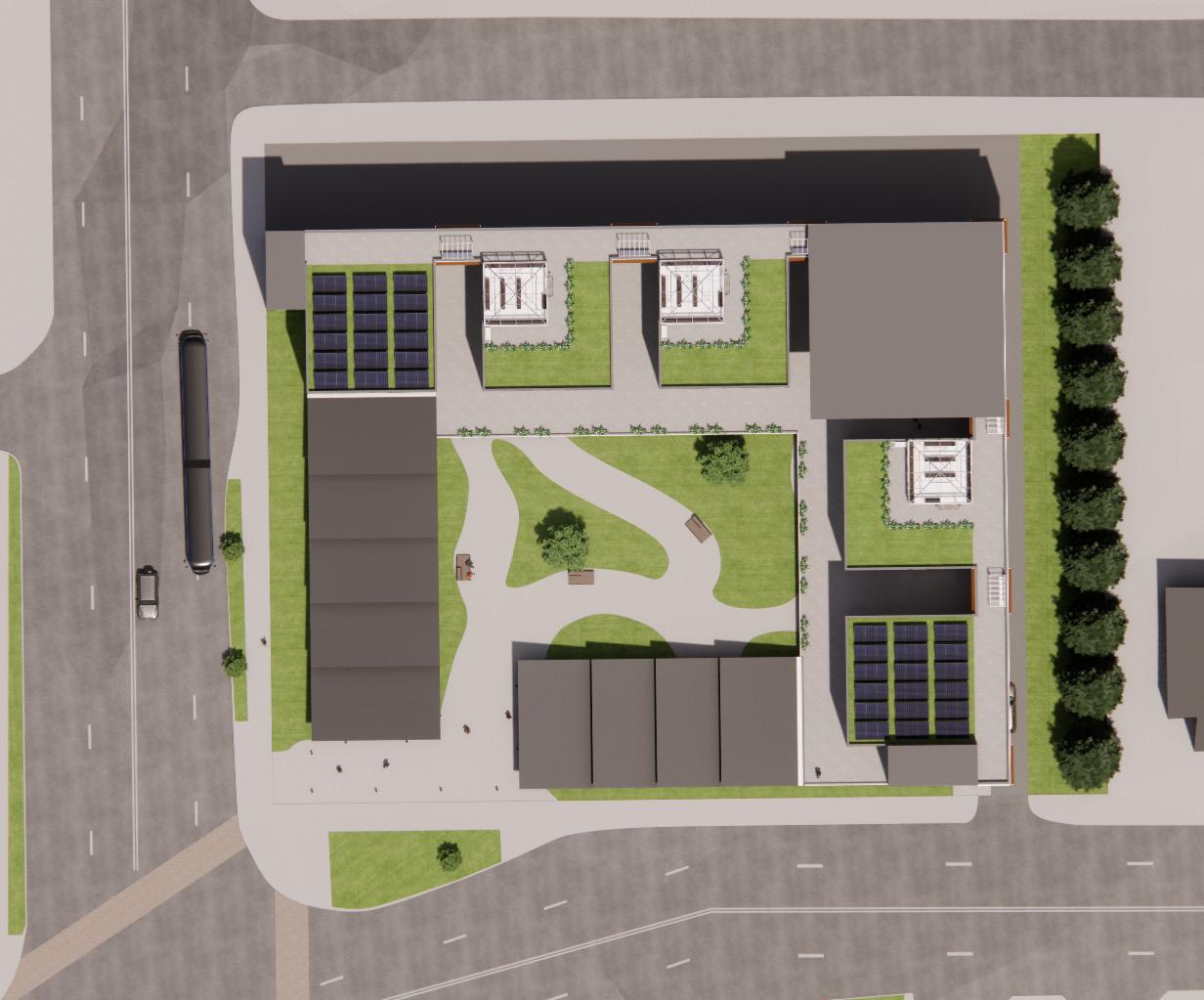
Winter solar behavior:
In winter, the sun sits much lower on the horizon, producing long, extended shadows. During the winter solstice, the café/market building and the east residential massing cast shadows that stretch deeply into the courtyard, especially around midday. Only selective areas of the central lawn receive direct sunlight at this time of year.
The lower sun angle allows the sawtooth clerestories to capture diffuse northern daylight for interior workspaces while still permitting controlled winter solar gain into key residential areas.
Courtyard comfort:
While a portion of the courtyard is shaded, the low-angle winter sun still reaches deeper into residential units, improving passive heating potential and reducing winter energy use. Shaded areas of the courtyard remain usable for circulation, seating, and protected outdoor activities—even during colder months.
Conclusion
The overall seasonal sun/shade patterns confirm that the design successfully leverages solar performance to enhance year-round comfort: Summer:
- High sun angle maximizes light in the courtyard
- Short shadows keep spaces bright and usable
- Overhangs and balconies provide intentional shading for thermal comfort Winter:
- Low-angle sun provides passive heating to residential interiors
- Longer shadows reduce winter glare and moderate outdoor conditions
- Courtyard remains accessible with a balanced mix of sun and shade
Together, these strategies optimize daylight, shading, and thermal performance—ensuring that the courtyard and surrounding residential units remain comfortable, adaptable, and energy-responsive throughout the year.
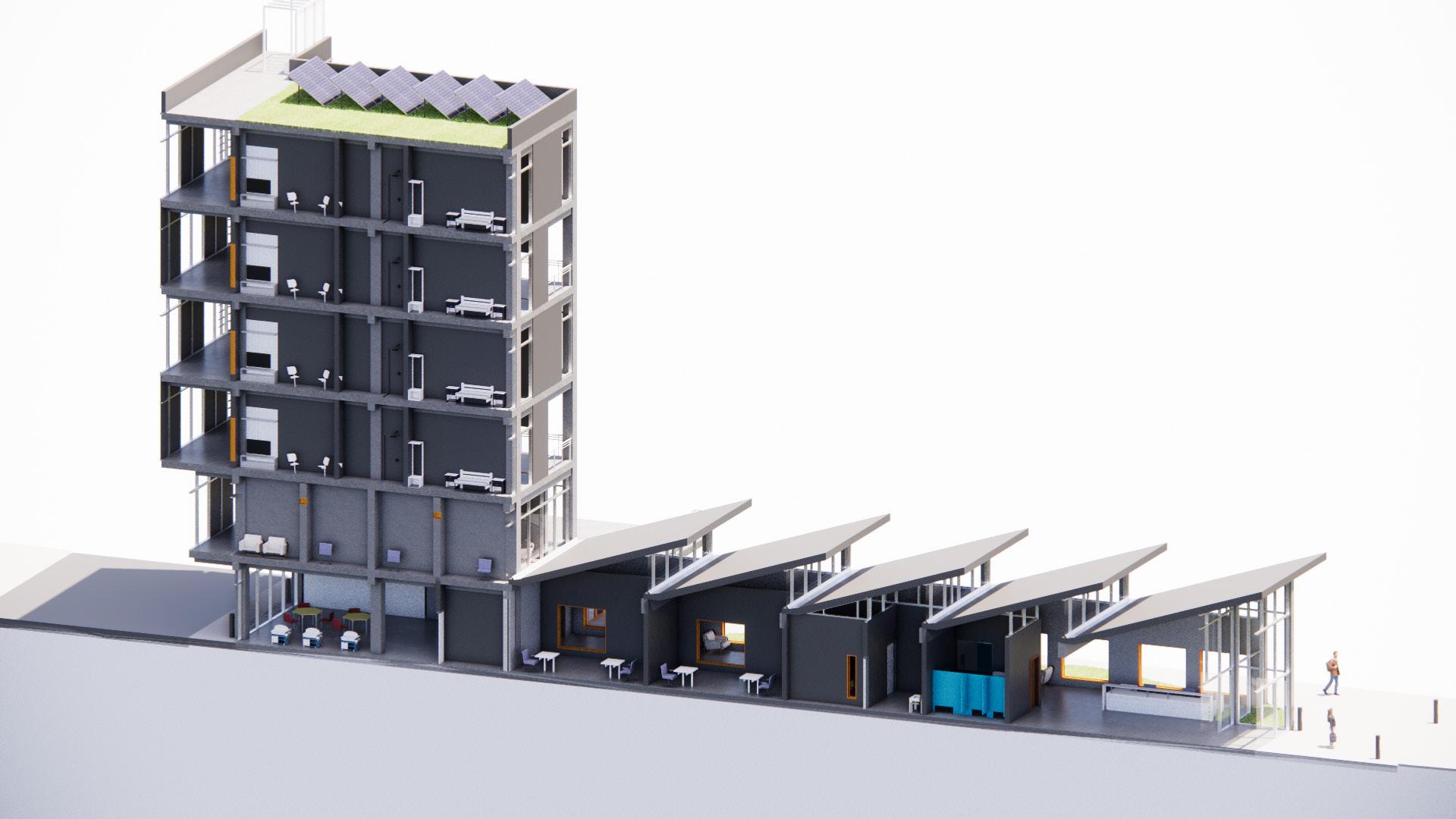
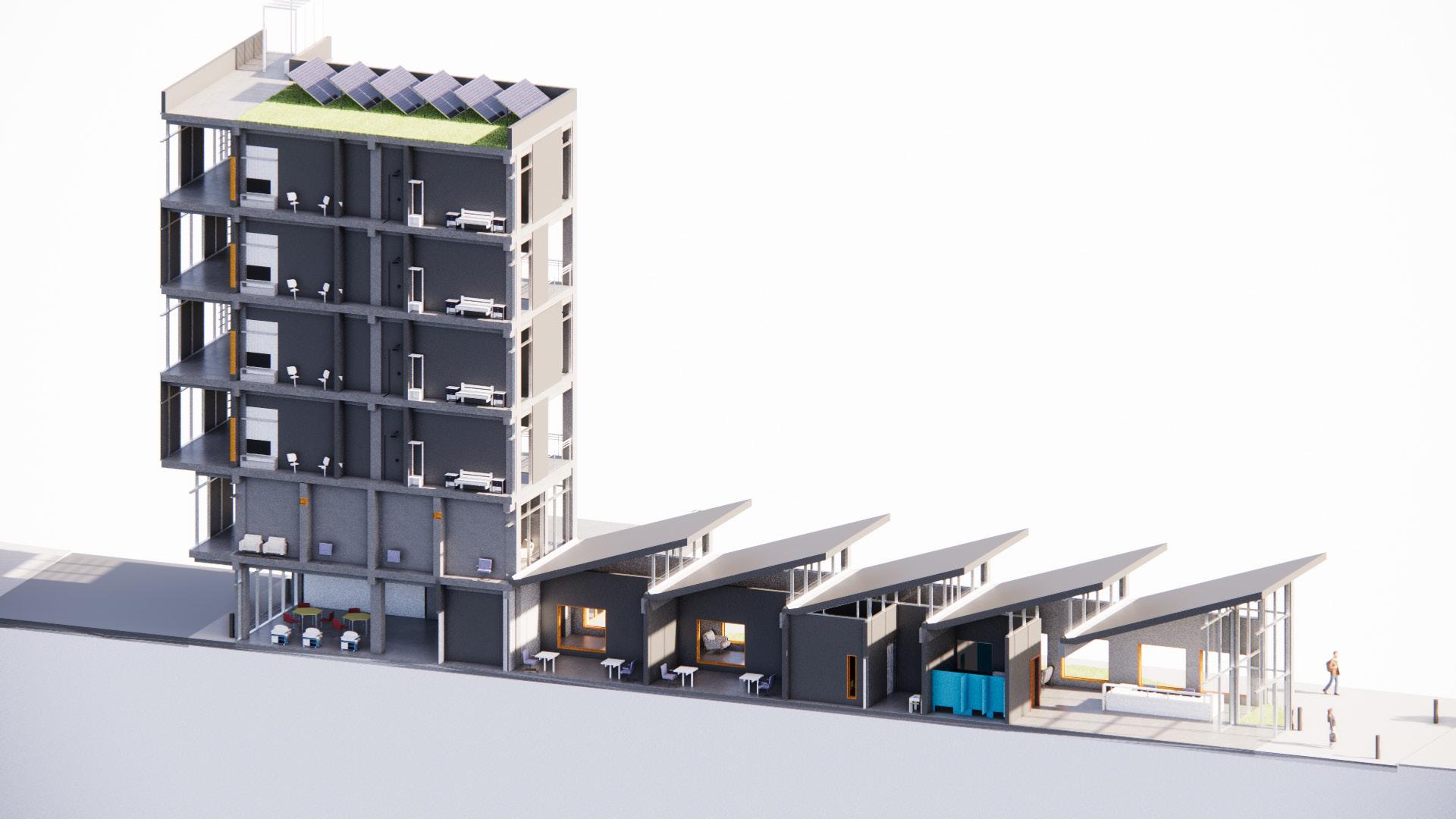
The sawtooth roof geometry is optimized for north-facing daylight, which is diffused, glare-free, and ideal for interior workspaces. The south-facing opaque slopes block direct summer solar gain while allowing winter sunlight to enter at a lower angle.
This geometry yields:
Reduced summer glare + overheating
Improved winter heating through passive solar gain
Strong daylight availability year-round
Enhanced energy efficiency from reduced artificial lighting needs
The PV system is strategically placed on high-insolation roof zones to maximize annual solar energy production, reducing operational carbon and supporting long-term energy resilience.
Vertical light wells deliver natural daylight deep into unit corridors and living spaces, reducing reliance on electric light and improving visual comfort.
Green roofs capture rainfall, reduce stormwater runoff, moderate rooftop temperatures, and enhance building insulation while creating beneficial microclimates.
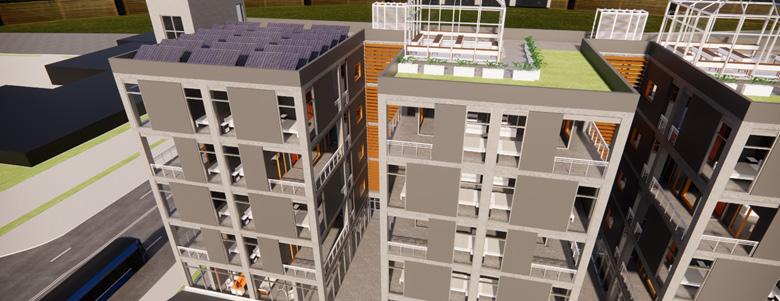
Balcony overhangs minimize high-angle summer solar gain while allowing deeper low-angle winter sunlight penetration—improving thermal comfort and daylight access.
Windows are oriented and sized to maximize daylighting while supporting cross-ventilation, reducing mechanical loads and enhancing indoor comfort.
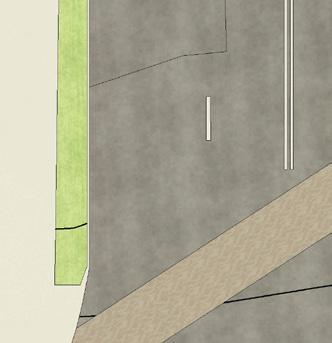
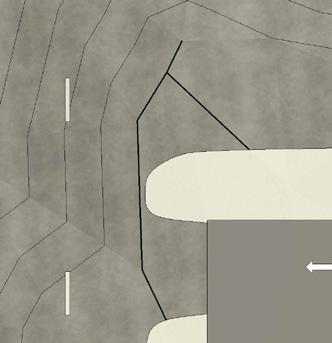
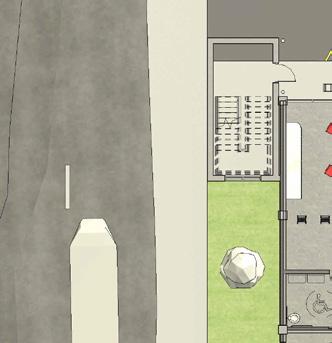
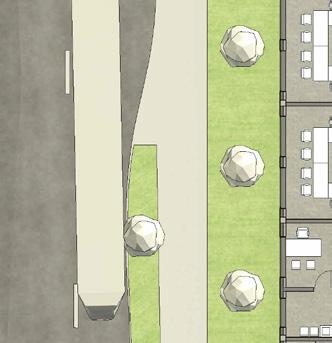
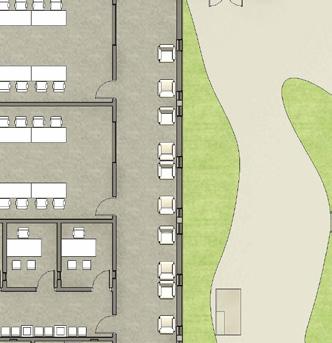
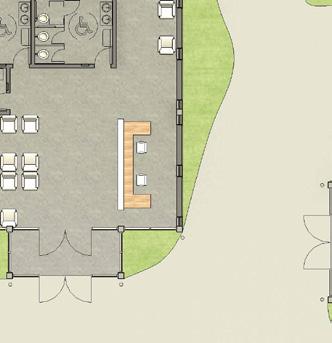
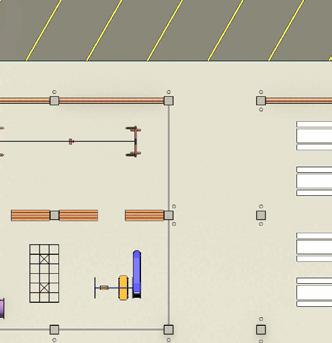
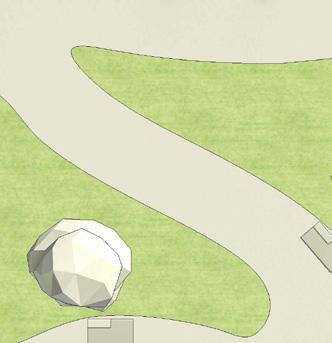
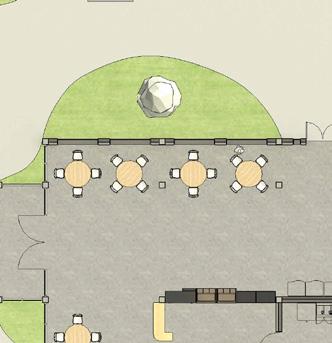
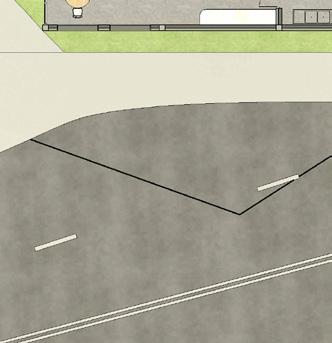
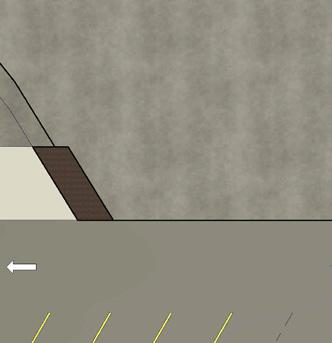
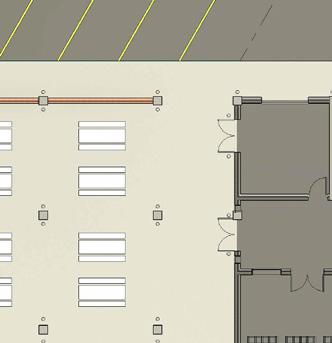
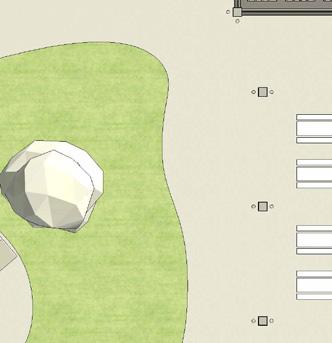
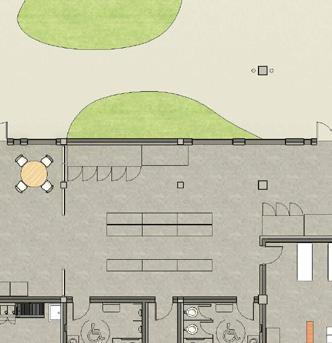
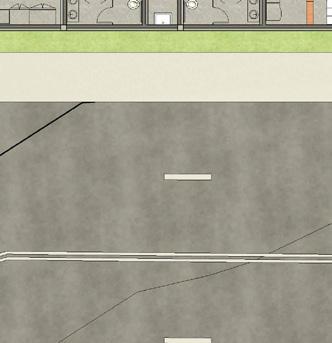
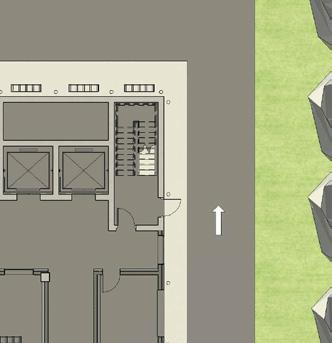

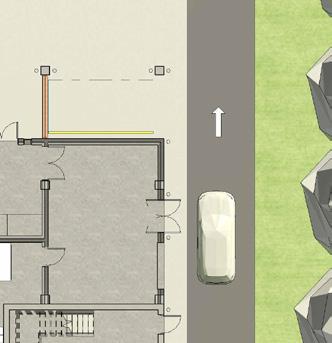


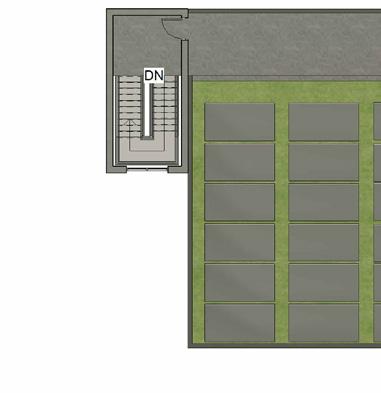
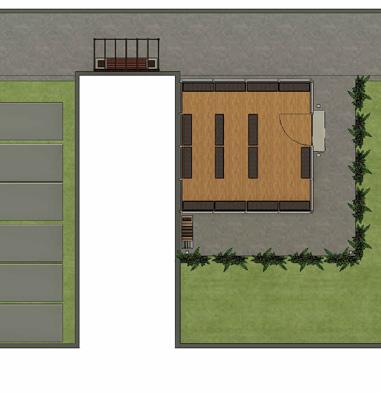
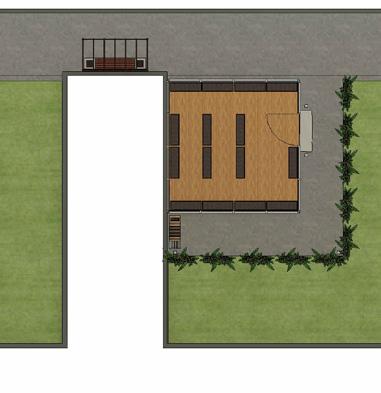
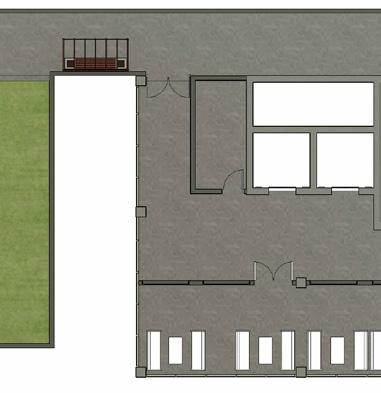
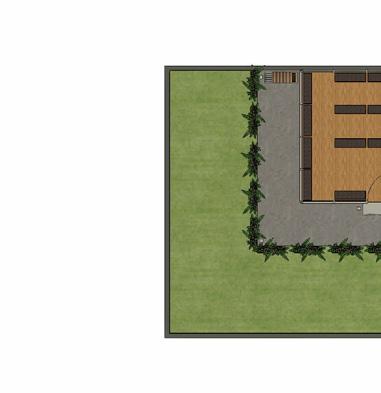
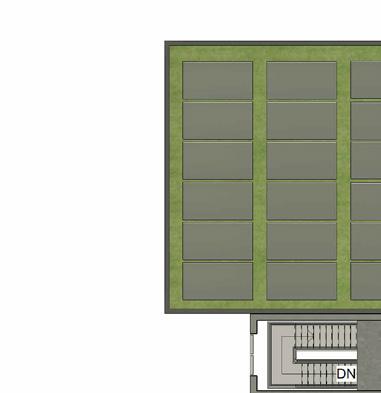

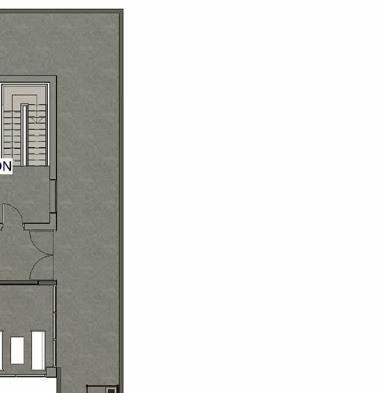
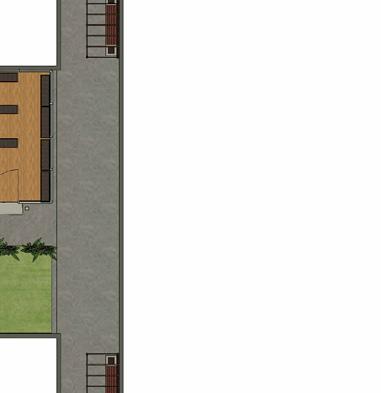





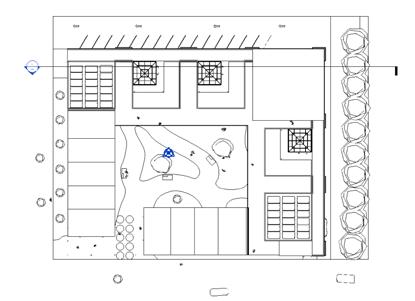
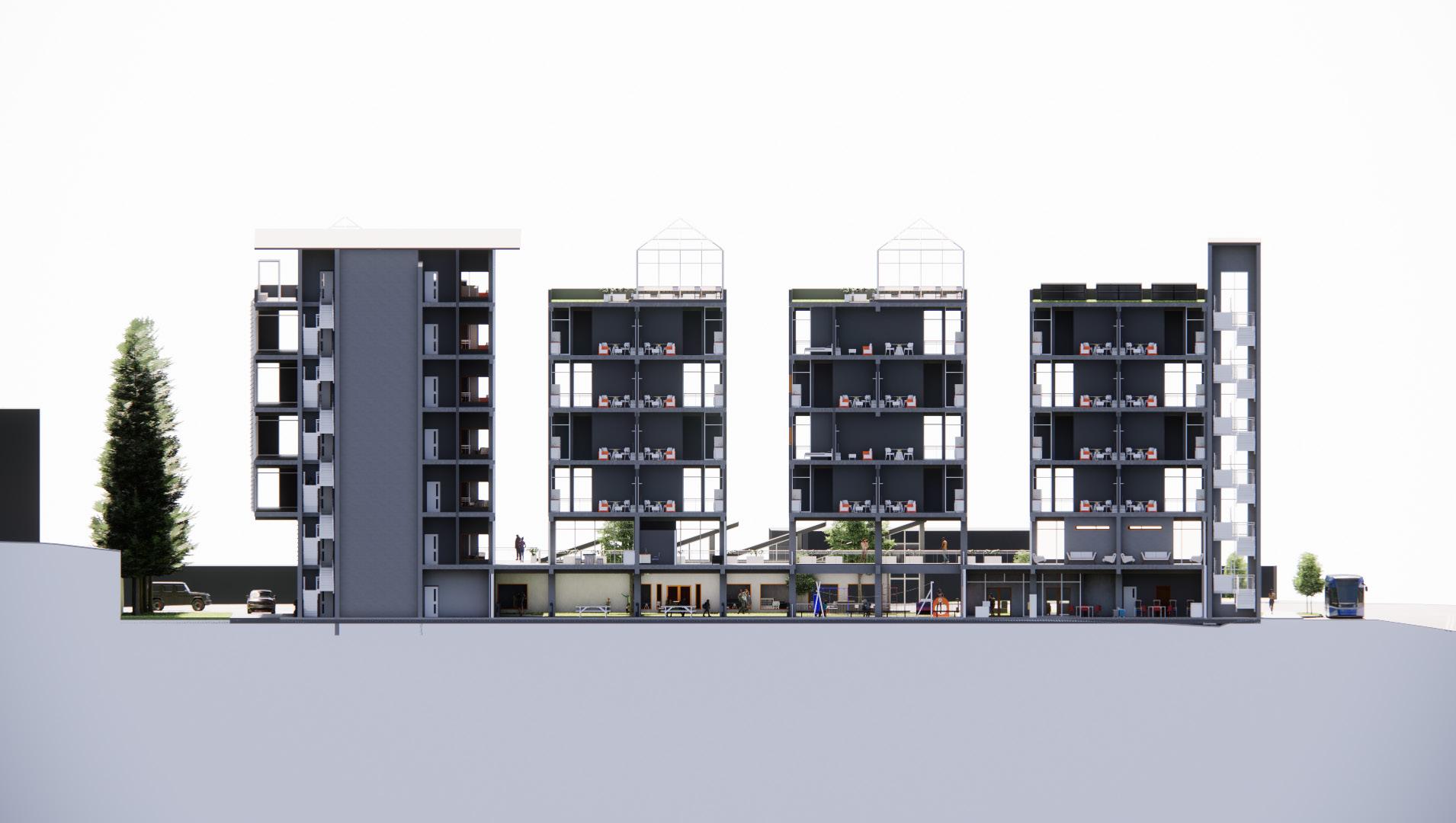
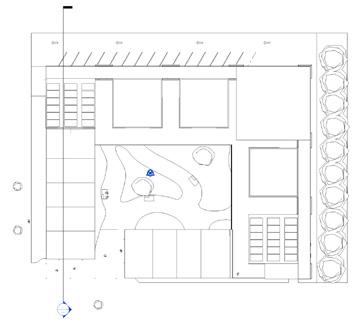
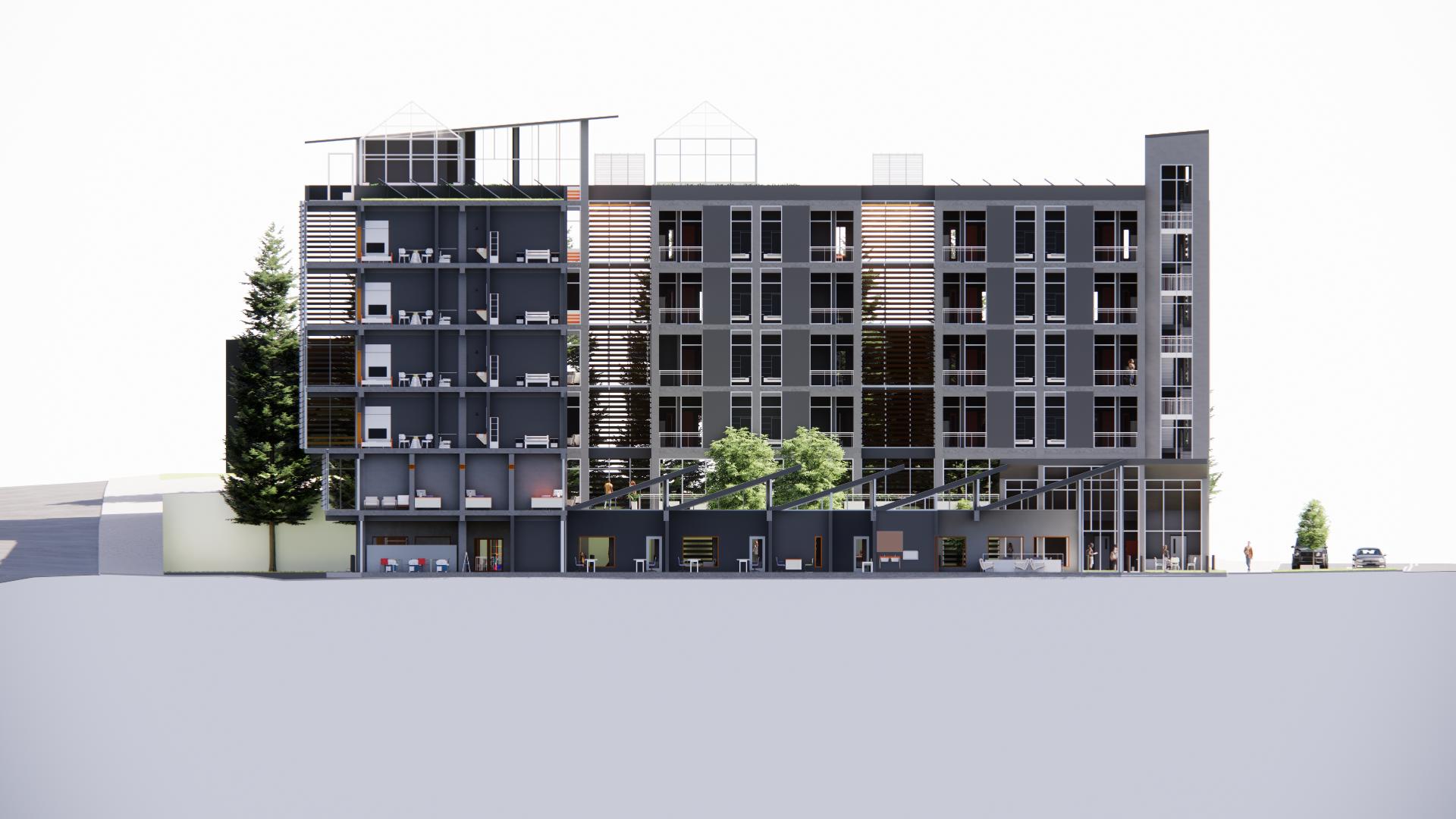
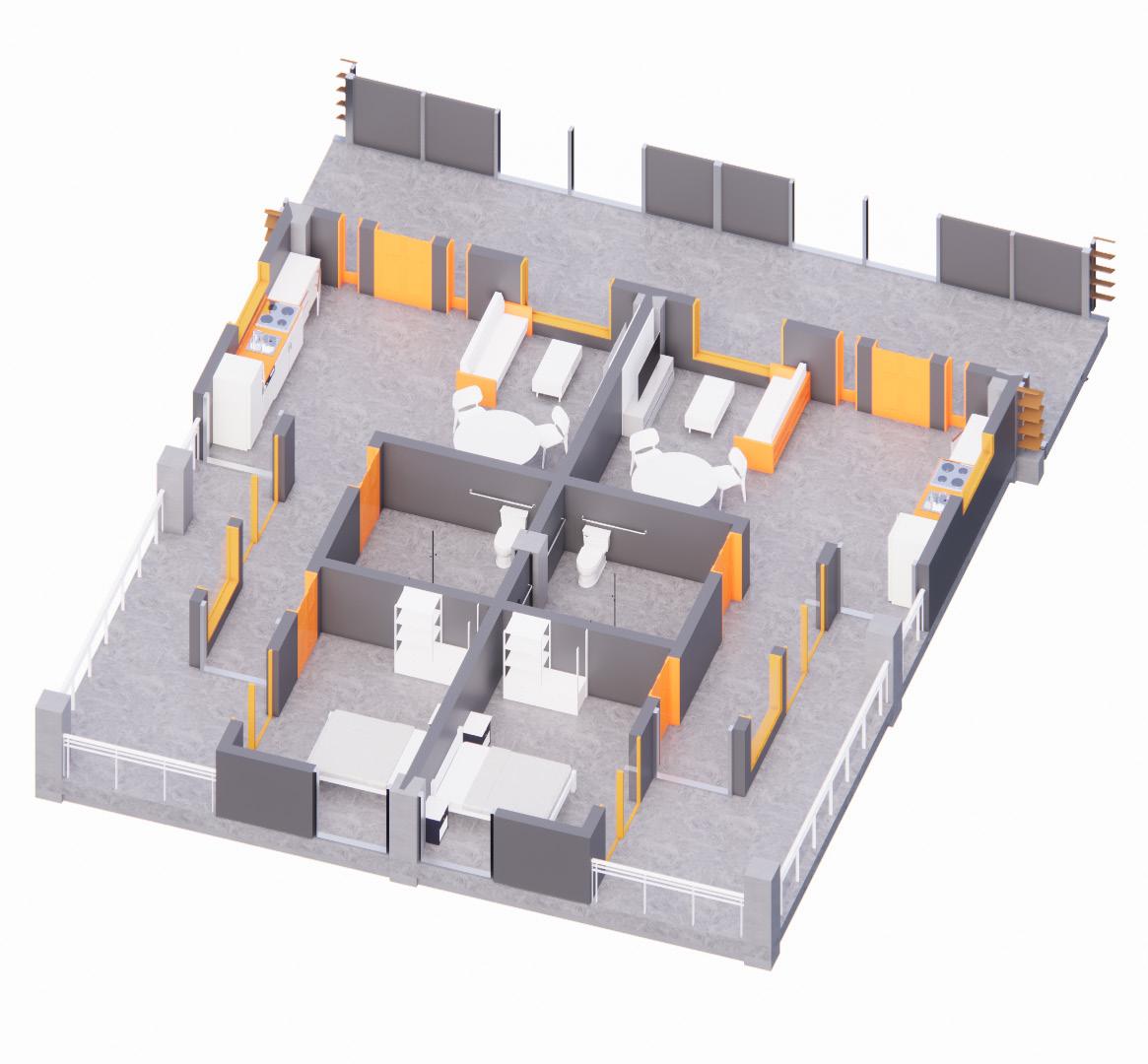
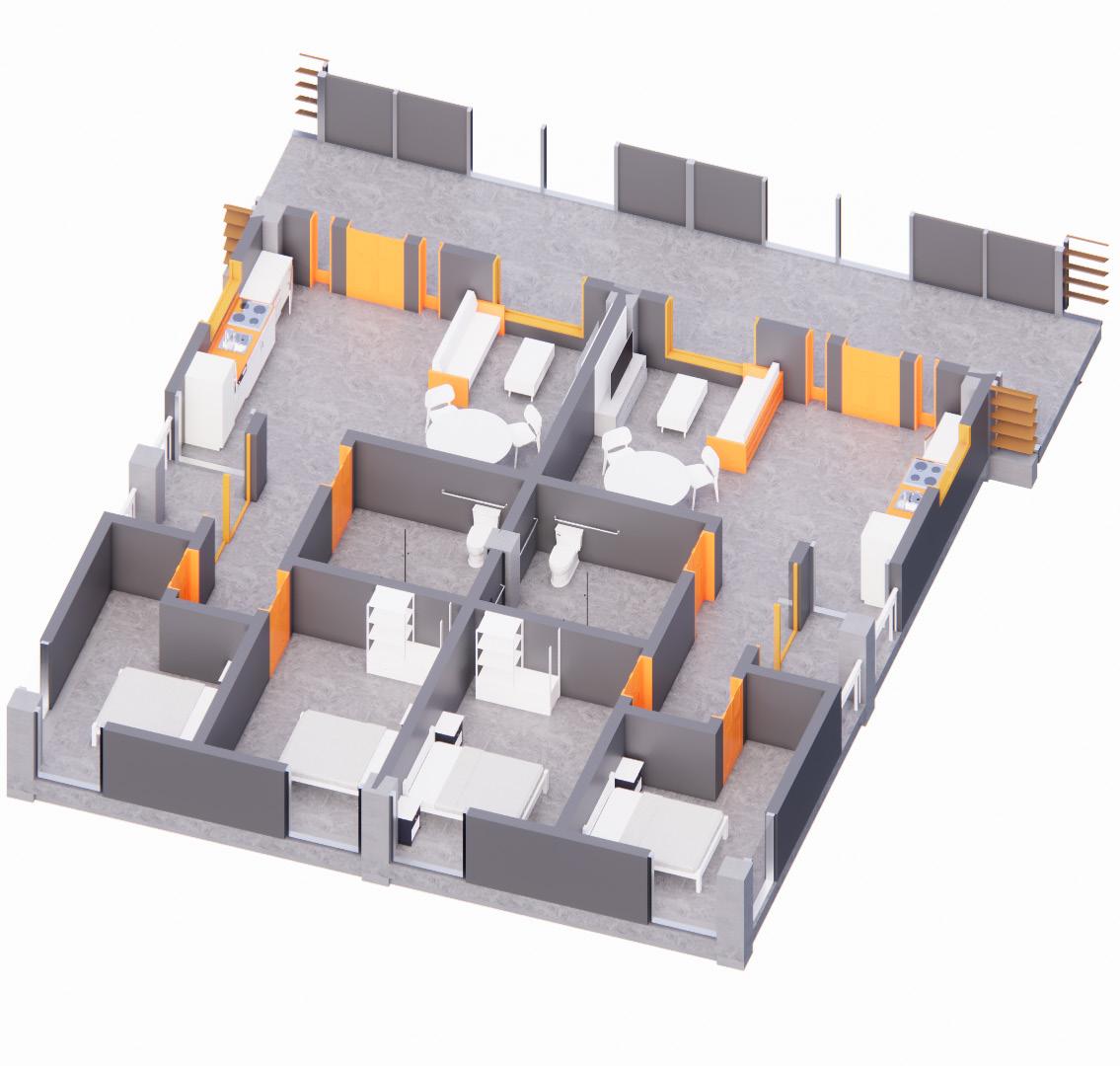
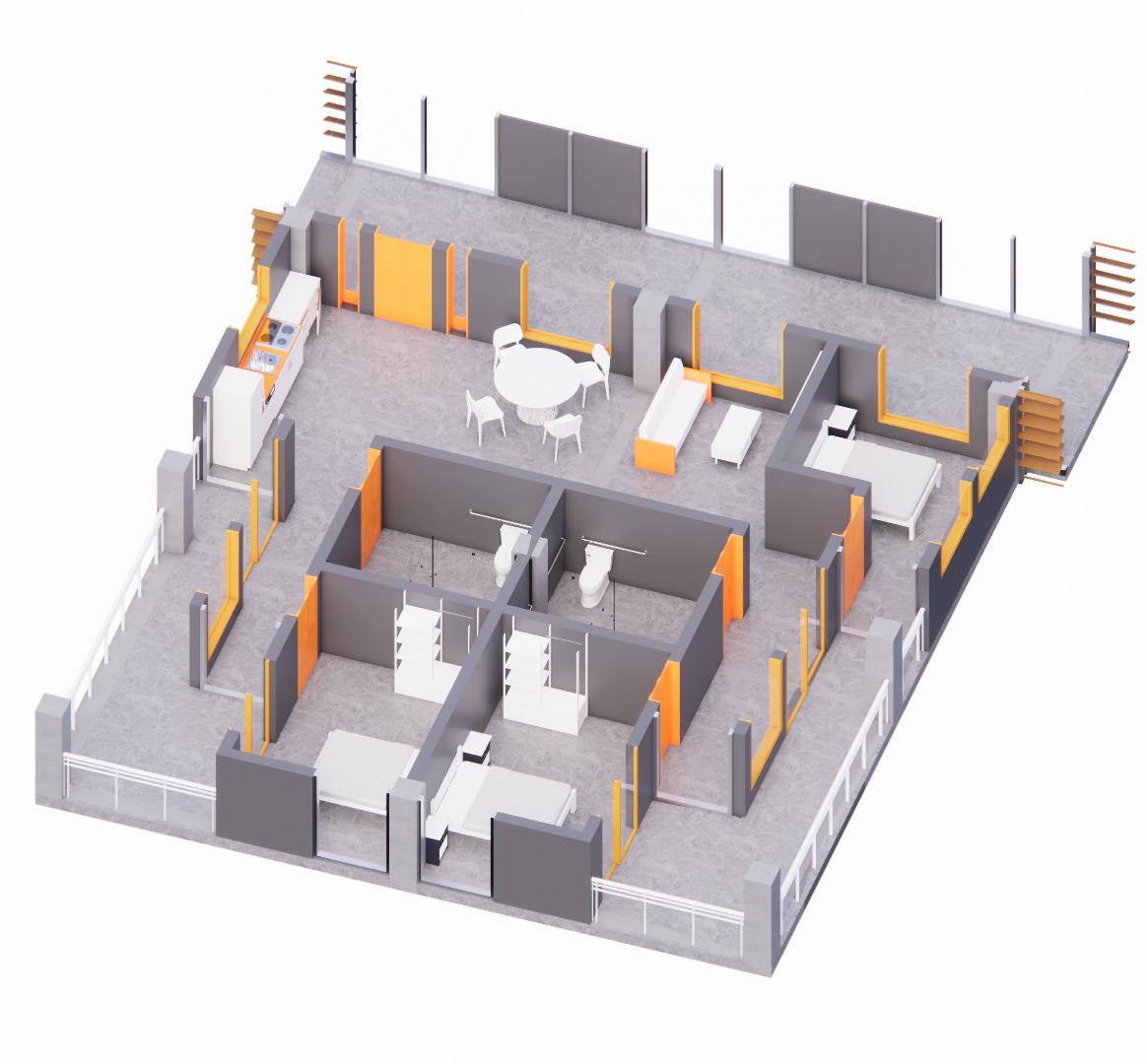
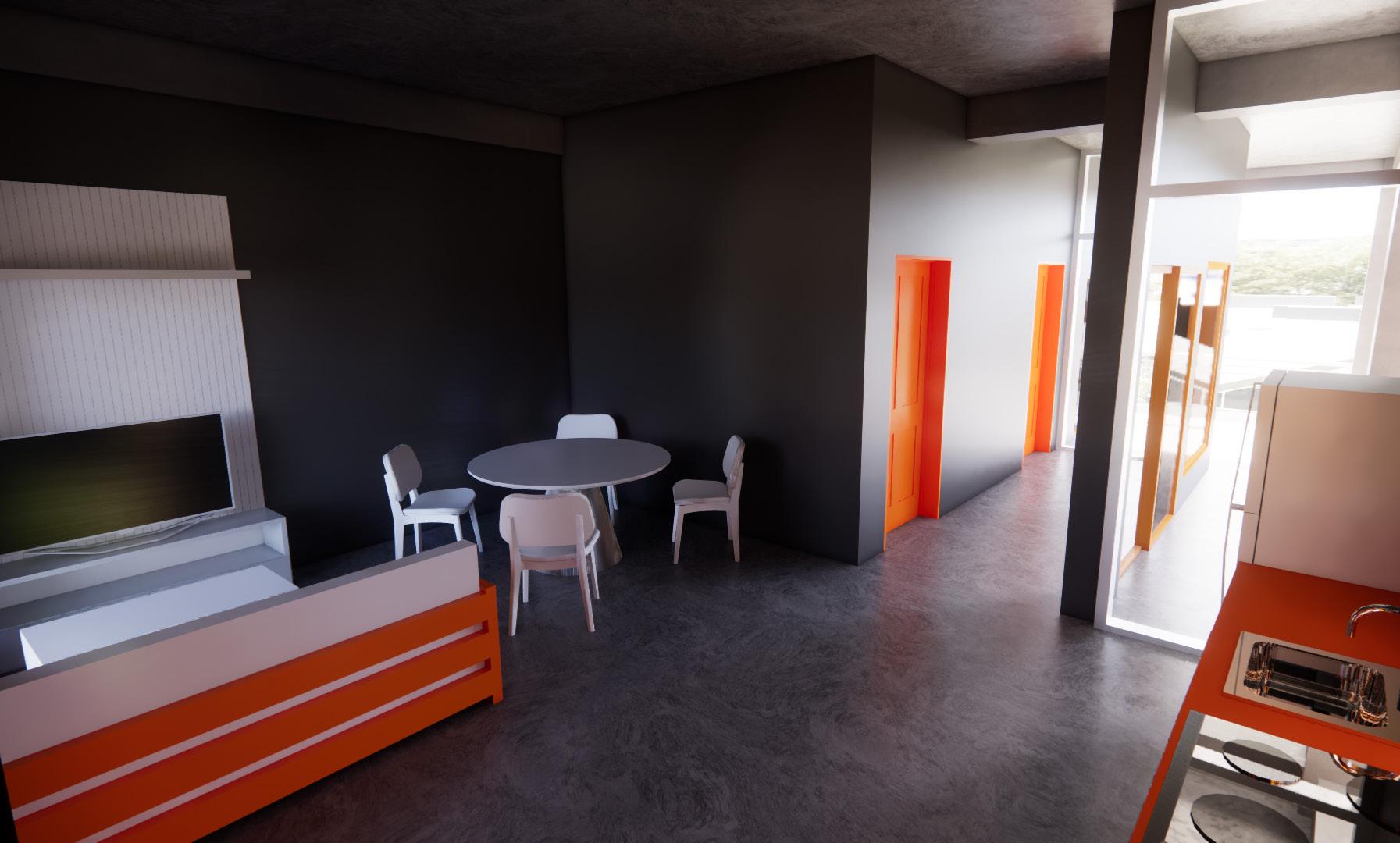
A flexible family of 1-, 2-, and 3-bedroom units is organized around a shared service core, allowing multiple unit types to fit within a consistent structural and planning module.
Each unit emphasizes a clear public-to-private sequence, with kitchens and living areas positioned near the entry and bedrooms placed deeper within the plan. Balconies extend living spaces outward, providing access to light, air, and outdoor relief.
Accessible units follow the same organizational logic as standard units while incorporating widened clearances, accessible bathrooms, and barrier-free circulation. Maintaining a consistent layout across unit types supports resident dignity, ease of navigation, and long-term adaptability.
BR
FLOOR PLANS - 1, 2, 3 BR UNITS
SCALE - 1/16” = 1’0”