THE MAGAZINE OF THE NSW BRANCH OF THE RAIL, TRAM & BUS UNION
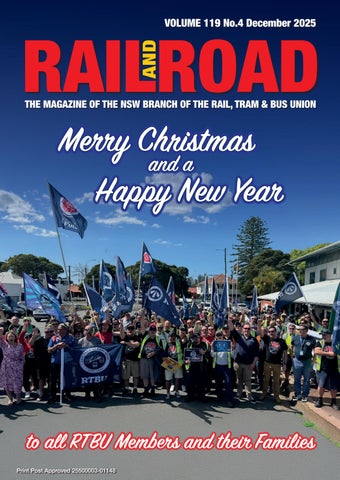
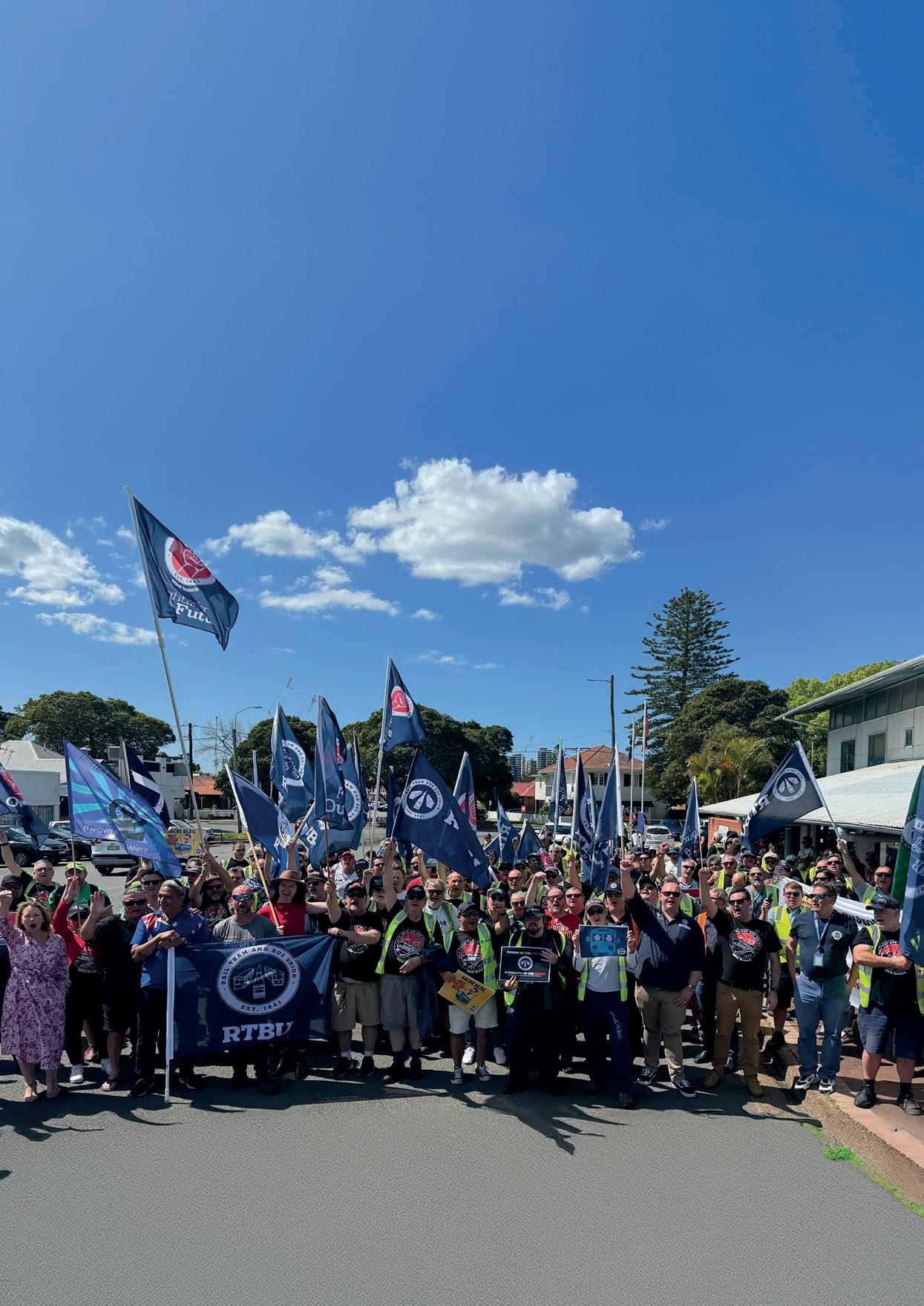
to all RTBU Members and their Families
RTBU Holiday Park
Vacancies - Book your holiday now
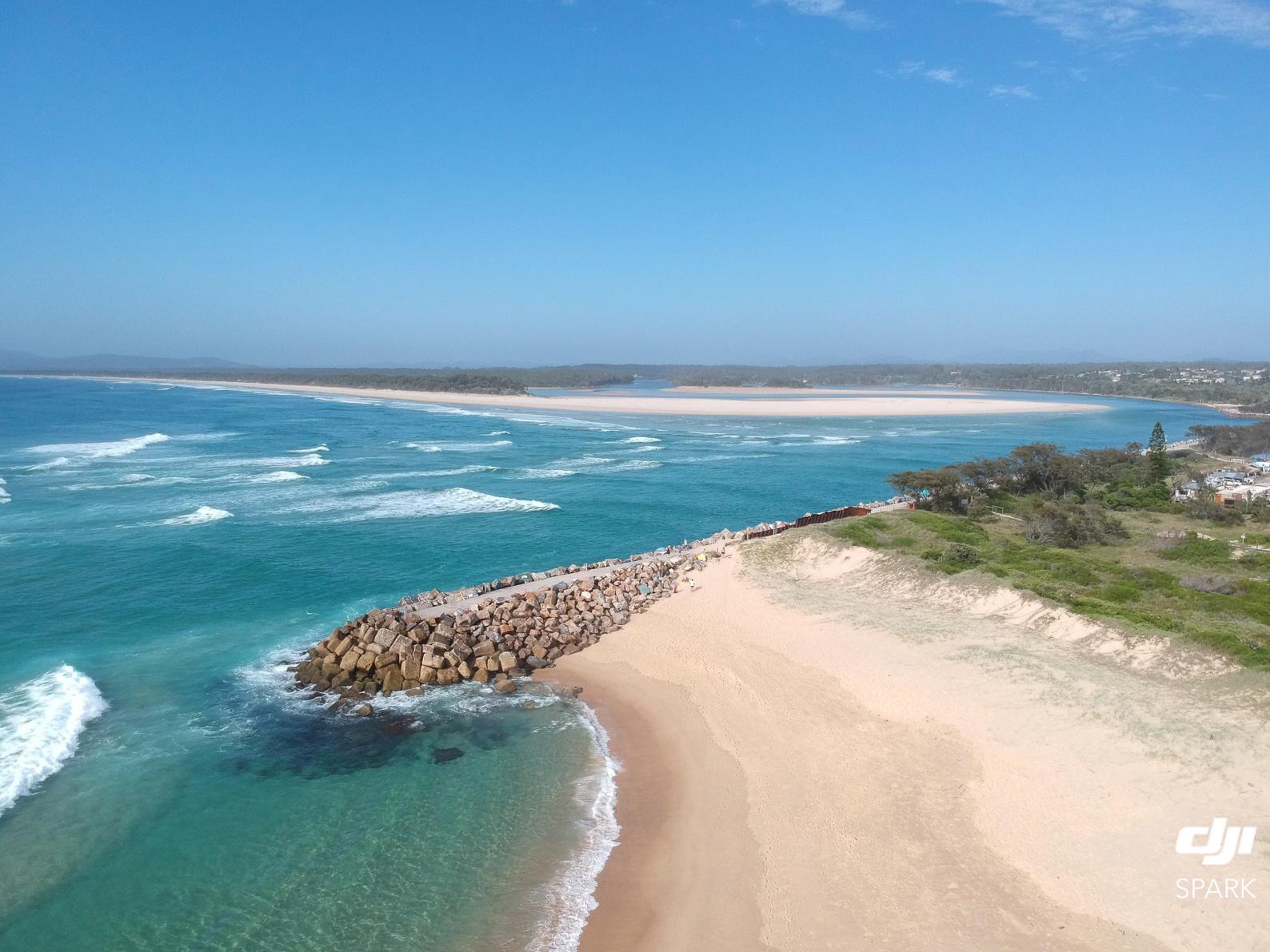
The RTBU Holiday Park is a great place to escape to for a peaceful break in the National Park and a walk along the beach. Avoid the rush and the high season rates - book your holiday now. The Holiday Park is situated in a National Park and Members can enjoy a holiday by the sea and relax with fishing, tennis, boating, swimming or bushwalking. RTBU members can also now get discounted rates at the United Services Riverside Resort at Port Macquarie. Rates for members are reducing from 1 July 2026. For booking enquiries please telephone Head Office on (02) 9264 2511
RAILROAD AND ADVERTISING RATES
Selective advertising is available in RAIL & ROAD at competitive individual issue rates or a discounted annual rate. A design service is also available to have your advertisement professionally designed to your specifications.
RAIL & ROAD is the official journal of the NSW Branch of the Rail, Tram and Bus Union and is produced as part of the union’s communication strategy to inform and report on matters of interest to members. All editorial and advertising inquiries should be addressed to the union office on Tel: 02 92642511; email: nswho@rtbu-nsw.asn.au
Printing - Brightset, Banksmeadow, (02) 9316 4800
Art & Design - P Design - proberson@hotmail.com - Phone 0402 032 949
NSW BRANCH
Head Office
Level 4, 321 Pitt Street,
Sydney NSW 2000
Tel (02) 92642511
Email nswho@rtbu-nsw.asn.au
Website www.rtbuexpress.com.au
Tram and Bus Division
Level 4, 321 Pitt Street, Sydney NSW 2000
Tel (02) 93197277
Email nswbus@rtbu-nsw.asn.au
Locomotive Division
Level 4, 321 Pitt Street
Sydney NSW 2000
Tel (02) 92643400
Fax (02) 92647679
Email nswloco@rtbu-nsw.asn.au
Newcastle
Email nswho@rtbu-nsw.asn.au
Wollongong Office
Level 1, 306a Crown Street, Wollongong, 2500
Tel (02) 9264 2511
Email nswho@rtbu-nsw.asn.au
From the Branch Secretary Toby Warnes
As we come to the final edition of 2025, as always, we reflect on the year that’s been. It’s been a year filled with ups and downs with big wins across the union with the expected struggle along the way. The wins at Sydney Trains and NSW Trains, a big win at Metro Trains, and the ongoing struggle against privatisation of our buses starting to hit full stride in Newcastle shows just what a formidable union we are.
It’s been a year of big lessons as well. The Fair Work Commission has delivered some big blows against the men and women of the rail, tram and bus industries. Among them, an unprecedented suspension order against us in February 2025, a refusal to deal with important cases put before hampering strategic campaigns, and the insanely perverse result with the Full Bench reducing the pay increase for below what had been agreed between Transdev and our union for our Tram members.
But we always knew that our strength comes from members standing together in the workplace, not in courts and tribunals. They’re a useful tool, but we should never rely on them to do the right thing for us.
It’s only fitting that we pause to pay tribute to the retirement of the much loved V-Sets. For more than five decades, the V-sets have been
the beating heart of intercity travel across our network. They’ve carried millions of passengers, generations of workers, and countless memories along their well-worn routes.
The V-Sets represent more than just a mode of transport, they symbolise quality Australian manufacturing, reliability, and pride in a vital public service. Built locally, maintained by generations of skilled hands, and operated by dedicated train crew, these trains stood as a daily reminder of what happens when workers’ voices and expertise shape our transport network.
As we say farewell, we reflect on the years of struggle that went into defending the standards and safety we so long took for granted on the V-Sets. The introduction of the New Intercity Fleet has been far from smooth. The union has fought tirelessly to ensure safety wasn’t compromised by corporate cost-cutting or poor government decision making. Thanks to the collective strength of our members, guards and station staff are now retained on all New Intercity Fleet operations — a victory that literally keeps passengers alive and safe. That same lesson is echoed in the recent NSW Auditor-General’s report into rail procurement, which confirmed what we’ve been saying all along: privatisation, poor planning, and a refusal to listen to
workers (the real subject matter experts) led to massive cost blowouts and safety issues. The report vindicates years of advocacy from our union. When governments and management sideline the people who actually run the trains, it’s the public who pay the price. You can read more about that in this edition.
You will also hear the story of Metro Trains Sydney members standing strong during many long months of bargaining, and who for the first time took protected industrial action that ultimately secured significant wins. From pay rises and sick leave increases, to better rostering protections.
On our buses, Newcastle drivers have shown unity and creativity in their ongoing “calendar of chaos,” bringing French-owned Keolis Downer back to the bargaining table. Despite dubious employer tactics, our members remain strong and united.
As 2025 draws to a close, I want to thank everyone from the RTBU community for your commitment, solidarity, and resilience throughout another big year. Whether you’re keeping our rail, tram, and bus networks running, or standing shoulder to shoulder with your workmates in bargaining campaigns — you are the strength of this union.
I wish you and your families a safe and merry holiday season.
General News
Paying tribute to the beloved V-sets
After five decades of faithful service, the stainless-steel V-Sets will officially bow out in a matter of months. The phase out of the V-Sets on the last remaining line in the Blue Mountains is now officially underway, expected to finish by early 2026. It all started back in July 1968, when the Department of Railways New South Wales placed an order for the first batch of 16 cars with Commonwealth Engineering (Comeng). Built in Granville, the first 4 cars debuted on the Sydney to Gosford route on 22 June 1970. All 16 cars were in operation by September that year.
That first batch of cars had many similar features to the later-built cars, including the one-piece moulded glass with reinforced plastic end in royal blue & grey livery - earning them the ‘Blue Goose’ nickname.
Then came the next batch. From October 1977, the second batch began to enter service, with many differences from the original batch. The electrical equipment was all mounted on the power car, using Mitsubishi Electric equipment. They had stainless steel underframes, were fitted with vacuum retention toilets, and had gold as opposed to green tinted windows. These cars were the first of the V sets, with the V showing that they were installed with vacuum retention toilets. They operated separately from the 1970 cars, as the two types were not compatible with each other. These sets incorporated the State Rail Authority’s corporate colours of red, orange and yellow, and had yellow interiors.
Those V-sets then began rolling out in Lithgow from 1978. The V-set fleet transformed intercity travel by becoming NSW’s first fully double-deck interurban trains.
Then came the third and last batch. From May 1981, DIM Power Cars and DIT trailers started to be delivered. These cars had increased seating compared with the DC series, up from 88 to 96 for the power cars, and from 92 to 112 for the trailers. That’s when this batch of V-sets rolled out Newcastle from 1984, and the South Coast from 1986.
In Service
When introduced, the V sets operated interurban services from Sydney Terminal to Gosford and on the Main Western Line to Mount Victoria. It wasn’t until the Ten Tunnels west of Clarence were lowered in 1978 that they were able to operate to Lithgow.
Following the extension of the electrified network, their sphere of operation was extended to Wyong (April 1982), Newcastle (June 1984), Port Kembla (February 1986), Dapto (January 1993) and Kiama (November 2001). From January 2012, V sets ceased operating South Coast services.
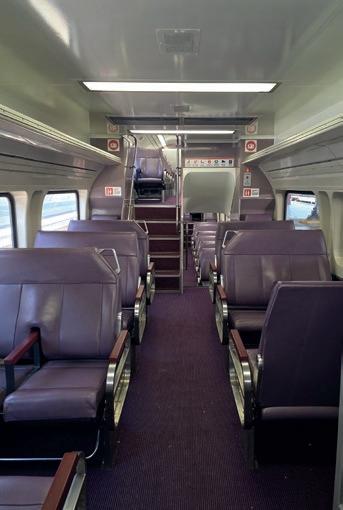
For many long-term transport lovers, the V-Sets aren’t just trains, they’re a comforting piece of nostalgia: their stainless-steel gleam, now purple interiors, and reliable service have formed the well-worn path of daily life across the Hunter, Central Coast,
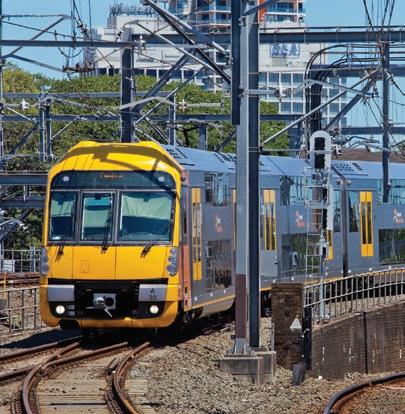
and Blue Mountains regions. Now, fast forward to 2025, and we are having to say goodbye to these well loved trains. A slow phase out of the V-sets has seen Newcastle and Central Coast line already transition to the NIF, with the Blue Mountains line due to take its last journey later this year.
The NIF has been named by Transport as the “Mariyung”, a name that means “emu” in the Darug language. It has not been an easy journey here. This union has spent the last decade untangling the mess of the former Coalition Government’s cheap off-the-shelf purchase fleet from South Korea.
The original train model was riddled with safety issues. Just one example is how originally the new trains were too wide for our tunnels and did not match with several train platforms. But the most concerning issue was the no-guards design. Having no guards on the new intercity fleet was a safety
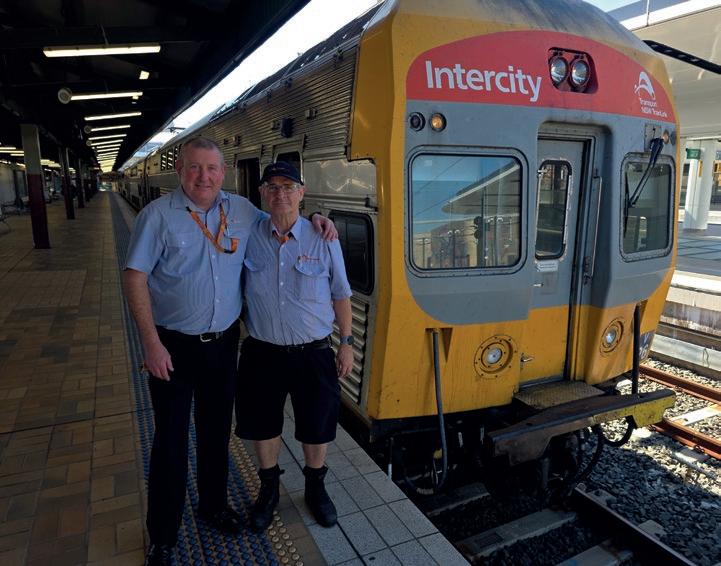
A final goodbye.
disaster in the waiting.
As Rail and Road readers all know, train guards play a vital role in keeping commuters safe and are critical in the event of an emergency. We don’t need to list the reasons.
After years of campaigning, the RTBU NSW won its campaign to reinstate guards on the New Intercity Fleet, forcing the NSW Government to revisit the train design and make important safety modifications before they arrived in Australia.
The new fleet is now on tracks and as predicted by the union – it’s a mixed bag. While key safety issues have been addressed, it’s not all sunshine and rainbows for commuters.
Half of commuters are forced to travel their long haul commute backwards. It’s seeing some commuters battle it out over who gets the forwardfacing seats, making journeys uncomfortable and tense. The seats are also rigid and less comfortable.
But there are undeniable benefits which are well overdue. For passengers with disabilities, access issues or families travelling with prams, the new fleet offers far better access on and off the train, and accessible toilets. These are vital upgrades that ensure our transport network is accessible
for everyone.
There’s also charging ports and wireless internet – although the commuter feedback so far is that there are some issues with these technologies cutting out or not working.
In bidding farewell to the V-Sets— trains which have covered an estimated 140 million kilometres over 55 years, we pay tribute to their reliability, charm, and the memories carried with them. For the V-set enthusiasts among us, two sets will be retained by Transport Heritage NSW in their original livery for appreciation for generations to come.
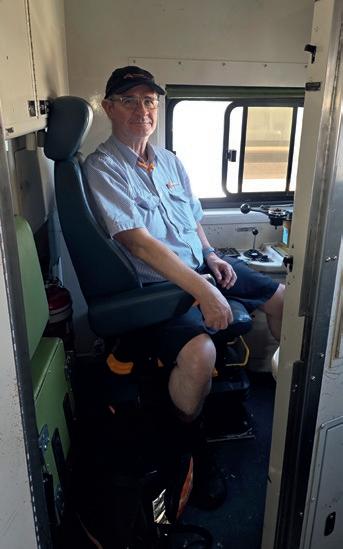
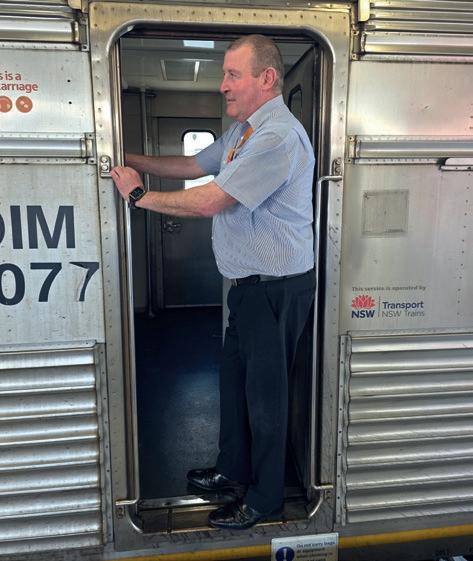
“The best thing about driving the V Set’s is its reliability and unique characteristics in if you are placed in a situation where you need to mechanically fix the train you can with limited tools and resources. The reliability of the train is second to none.”
Steve Hayes, Train driver, Lithow NSW
“Best thing about the V Set’s is that it is an Australian quality built train, it’s lasted the test of
time demonstrating its enduring quality and durability. The customers are very sad that the trains are leaving the Blue Mountains where they have serviced many of generations.
“The seats are the best and very comfortable and the fact they have a vestibule area to keep the warmth in is very important, that’s the feedback from all customers I liaise with on a daily basis. They are definitely going to miss them and so am I.” - Paul Gorman, Guard, Mount Victoria NSW.
Key claims secured in Metro Trains Sydney bargaining
Members voted 97 percent in support of the Enterprise Agreement, giving them a better, safer and fairer future.
RTBU members showed up, stood together, and demonstrated true solidarity to achieve an Enterprise Agreement (EA) that reflects real collective power for workers at Metro Trains Sydney.
Members deserve to be acknowledged for their turnout at stations, wearing their Union shirts, putting up stickers, having the hard conversations and standing shoulder to shoulder along every step of the bargaining journey.
After returning a vote of overwhelming support (97 percent) in favour of the EA, RTBU members will see improvements across pay, penalties, allowances, staffing and safety- and above all, a better, safer and fairer future for members covered by this Agreement.
The circuit-breaker came in October, after eight long months of bargaining with MTS- the RTBU bargaining team secured major movement on key claims that were holding us back from reaching a deal.
It follows members taking Protected Industrial Action after negotiations with MTS came to a standstill over critical issues including sick leave and agreement length.
Thanks to members taking this action, we were able to pressure MTS to move forward with negotiations. And by late October we were back at the bargaining table.
On October 22, we finally saw real progress, with several outstanding claims being finally addressed by MTS.
• A three-year agreement
• Back pay to 22 August 2025
• Pay increases: Year 1 – 4.25%, Year 2 – 4.25% Year 3 – 3.75%
• Accumulated sick leave increased to 100 hours (up from 76)
• Public holiday guarantee of 9 days x 7.6 hours (up from 6 days x 7.6 hours)
• Public holiday penalties for shifts going into New Year’s Eve, Christmas Day and Good Friday
• Zones to be included in the EA, with preferred rostering applying from when MTS takes control of the station (not from first customer day)
• Union induction to take place in the classroom
• All overtime paid at double time
• Staff seating to be provided at stations
• Workplace trainer allowances increased from $35 to $45 per day, with ongoing annual increments
• Additional peak hour CJCS coverage (6.30 am – 6.30 pm) at Chatswood, Epping and Macquarie University, with the Roster Working Group to review periodically
• Additional CJCS positions on PM shifts at Castle Hill and Rouse Hill
• Option to purchase additional annual leave
You should all be very proud of your RTBU Bargaining Delegates for their commitment and determination throughout this process. Proudly supporting union members rights for more than 85 years
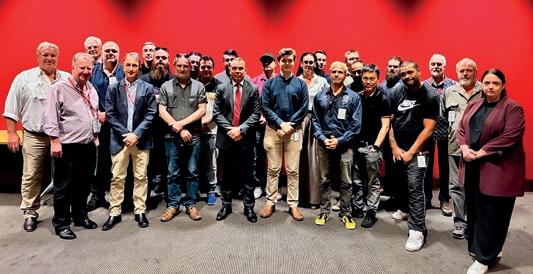
On Thursday 16 October 2025, Delegates from the Signaller Sub-Division demonstrated our unity and strength by participating in a Solidarity Action. We joined our comrades from the Timber, Furnishing & Textiles Union (TFTU) and Australian Workers’ Union NSW Branch (AWU) in a lobby trip to NSW Parliament.
Together, we voiced our concerns about the ALP’s lack of strategic thought, planning and support for workers who will lose their jobs because of the government’s Great Koala National Park decision. This decision threatens to decimate regional jobs and regional communities that deserve good local union jobs.
The TFTU and the AWU had proposed a plan that would allow for a Koala Park and protect vital regional jobs. The decision to create the Great Koala National Park should not come at the cost of ripping out good union jobs in the timber industry, jobs that are the lifeblood of these communities and directly impact their schools and hospitals.
This impacts RTBU members as many live in these areas and transport the timber and machinery used, and to lose it is another kick to an already fragile industry.
We understand the potential hardships that job loss can bring. That’s why we are saying that the NSW
government has an obligation to provide adequate compensation for the job losses because of the Great Koala National Park announcement.
Congratulations to the dedicated union members and Signaller Sub-Division Delegates for standing strong with their fellow unionists in the crucial battle for jobs and the well-being of our regional communities. Your commitment makes a difference!
Members making a difference beyond the tracks: Tackling the mental health crisis
Across New South Wales, countless RTBU members devote their time not only to standing up for workers’ rights, but also to serving their communities through vital volunteer work. Among them are some standout members in Josh Hermann, Maggie Pearce, and Ryan Edwards, have dedicated enormous efforts to championing mental health through the charity talk2mebro.
The talk2mebro movement aims to eliminate suicide among Australians, striving for a future without loss to this tragedy. By promoting early intervention and reducing stigma, this motivated group empowers individuals to take charge of their mental health and support one another by fostering a community where everyone feels valued and heard.
Recently, Josh spoke at a quarterly forum, raising awareness about suicide and offering essential strategies for prevention. A further example is the community catch-ups which are advertised on social media which is proven to be an effective manner for people to reach out and connect.
Josh, Maggie, and Ryan have made crucial contributions to talk2mebro’s mission by mentoring new members, organising events, and building partnerships with local organisations and government leaders, all while managing their careers and personal lives.
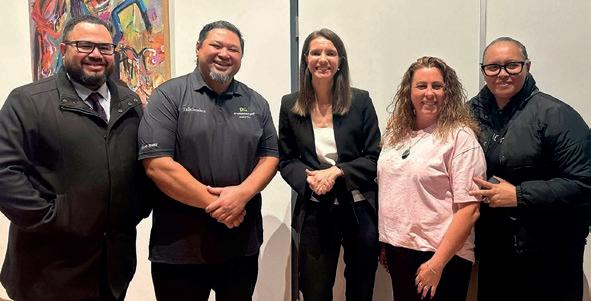
Freddy Purcell and Maggie Pearce recently represented Talk2mebro at NSW Parliament, joining with Tarek Koroi and Mal Fruean to meet with Rose Jackson MLC and other politicians to amplify Talk2mebro’s voice in the community.
If you or anyone you know needs help, please reach out to:
• Talk2mebro – https://www.talk2mebro.org.au/
• Yarn – 13 9276
• Lifeline – 13 11 14
• MensLine Australia – 1300 789 978
• Headspace – 1800 650 890
• Suicide Call Back Service – 1300 659 467
• Beyond Blue – 1300 224 636
• Sane – 1800 187 263
L-R. Tarek Koroi, Freddy Purcell, Rose Jackson, Maggie Pearce, Mal Fruean
Aurizon tactics wearing thin; members stand firm on a fair deal
Aurizon - one of the largest coal freight operators in NSW - has ramped up its spin campaign in recent weeks, pushing misleading claims about bargaining and trying to blur the simple truth about who represents who at the table. Aurizon is even pretending its managers speak for workers at the bargaining table. They don’t, and never will. Aurizon’s negotiators speak only for the company and its shareholders. Their job is to protect profits and corporate interests - not to deliver better wages, safer rosters or fair conditions for workers.
The only people who speak for workers are the elected RTBU representatives. Aurizon has recently been complaining about the number of claims RTBU delegates representing Aurizon members have submitted, conveniently ignoring the obvious - that if the company had treated staff fairly over the last four years, there wouldn’t be so many issues to fix. Members’ claims simply cover the basics every worker understands - fair pay, safe rosters, job security and proper recognition. Instead of responding to issues like sick leave payout on exit, fair overtime cancellation pay, improved classifications, better leave availability and protections from casualisation, management continues to stall, delay and whinge.
Meanwhile, bargaining continues on the key issues, and members are remaining firm. In late October, Aurizon finally put a wage position on the table,
but made the offer conditional, threatening to reduce it if members pushed for improvements to conditions.With real wages having gone backwards and Aurizon posting billions in profits - and over $1 billion returned to shareholders - workers know the wage repair claim is fair and affordable. Negotiations in early and mid-November delivered some progress, including on car-driving safety protections, but unfortunately Aurizon has remained stuck in its old habits - resisting fair roster fixes, pushing unacceptable forced-transfer “grain” arrangements, and trying to use Christmas pressure as leverage.
RTBU members at Aurizon are standing strong. Delegates will continue fighting for an agreement that reflects members’ hard work, protects conditions, and delivers the fairness Aurizon has denied for far too long.
Need to keep up-to-date with what’s happening in your union, need to know more about how fellow members are fighting for workers’ rights and winning battles on a daily basis make sure you grab your next edition of Rail and Road, or check out the rtbuexpress.com.au
Rail Procurement Review
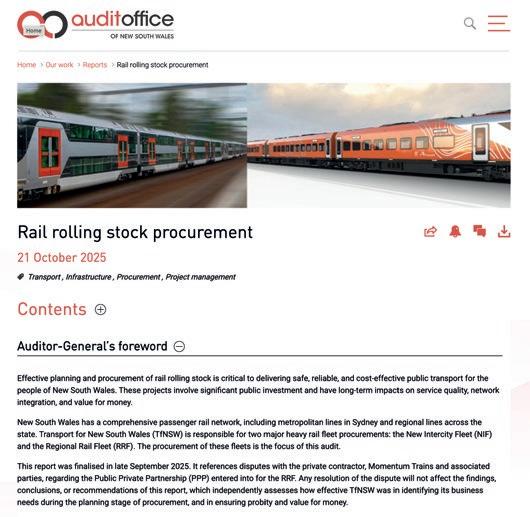
A new report, released late October by the NSW Auditor General, has confirmed what we’ve been saying about the NIF – that poor planning, privatisation, and a refusal to consult workers led to massive cost blow outs and delays.
The report specifically criticised the public-private partnerships that were used in the acquisition of the regional train fleet, saying it added unnecessary complexity and financial risk. The State Government taking control of the project is set to save us $400 million in the long run.
What also stood out was the report noting what we’ve known all along: Transport for NSW ignored the expertise of drivers, guards and operational staff at every point of these projects. And this decision was something that cost the public as a result. When management shuts out the people who run the trains, it leads to everyone paying the price.
Adding to this, one of the reports most scathing findings was around Transport for NSW’s decision to reduce seating capacity on the new intercity trains from a 2 by 3 lay out to a 2 by 2 lay out, despite modelling showing it could lead to over crowding. That decision slashed passenger capacity on Central Coast and South Coastlines, even though overcrowding is a known issue for those services.
For more info https://www.audit.nsw.gov.au/ourwork/reports/rail-rolling-stock-procurement
Tram and Bus News
Newcastle bus drivers say ‘oui’ to wearing
berets
Calendar of chaos actions brings Keolis back to the table as the fight for fair continues
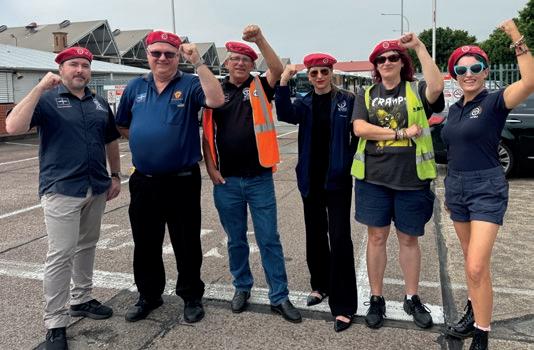
In November Newcastle bus drivers ramped up their fight for fair wages and conditions, launching a new wave of protected industrial action against French operator Keolis Downer Hunter (KDH).
After months of stalled negotiations and corporate spin, members decided it was time to add a little French flair to the EA campaign.
From 3 November onwards, drivers not in uniform can wear red berets as a part of their ongoing protected industrial action. It’s a nod to KDH’s French ownership communicating to the public exactly where their publicly funded, private profit, ends up.
The berets are a symbol of solidarity, strength and determination, to win a fair EA deal.
The berets are a part of a wider set of actions that the RTBU NSW is calling the ‘calendar of chaos’ serving to ramp up pressure on management and push KDH back to the bargaining table.
The calendar, now live on the RTBU Express website, includes a mix of actions designed to minimise disruption for passengers while making life tres difficile for management.
Drivers have spent months trying to get KDH to meaningfully engage on issues like pay, safety and working conditions. Throughout this time, members have faced rising incidents of public abuse, ongoing staff shortages and pay roll errors, all while keeping Newcastle moving every day.
For too long KDH has refused to bargain in good faith, hiding behind excuses and ignoring the real
concerns of the workforce.
But thanks to public media pressure generated by the collective action of members, the company finally returned to the bargaining table in November.
It’s a small but important win, and it’s proof that when members stand together and act, results follow.
The message to management is clear: until there’s a fair pay rise and conditions on the table, members will keep up the pressure.
Solidarity with all of our Newcastle bus members, your unity is formidable! Viva la Union, Viva La RTBU.
As this edition goes to print, there is still no fair deal on offer and the industrial action by members is continuing to ramp up.
Get on the TRAM & BUS EXPRESS
Tram and Bus Express is constantly updated with new information from around the depots – including workplace disputes, industry updates and news about RTBU Members. Members who subscribe to the web site get a fortnightly email with links to all the latest scoops. Printed newsletters will also be distributed around depots.
Win for workers as union secures Region 7 consolidation
In some fantastic news, we recently secured a historic consolidation order for our Region 7 Busways members. Region 7 covers routes from Ryde through to Willoughby. Nearly 1,000 workers will now be covered under the same conditions as the state award, ensuring fairness and consistency across the workforce.
Since Busways’ takeover of Region 7 in 2022, their focus has been to protect profit margins above all else, with the approach becoming very clear last year during negotiations for our new EA. The process became complex, at times leading to involvement from Transport for NSW, the Transport Minister, and the Premier. The need for involvement from the Government stemmed from our fight to get new drivers onto the state award, but ultimately pursuing a consolidation order became our way to win this fight.
This is a huge step forward. For too long, the twotiered system has divided Region 7 and created unnecessary inequality across our sector. Workers
This outcome didn’t happen overnight. It’s the result of years of campaigning, persistence, and unity from members, delegates, and organisers who never gave up on the fight for fairness. It shows what we can achieve when we speak with one voice and stand together for what’s right
The role of the Australian union movement
- Shaping responses to international events
Analysis by RTBU NSW Branch Industrial Officer, Jason Hart
The Australian union movement has long been more than a collective bargaining mechanism for wages and working conditions. It has acted as a political and moral actor, shaping national responses to international events and embedding itself in global struggles for justice, peace, and human rights. From resisting fascist powers before World War II to mobilising against the Vietnam War, and from engaging with international labour standards to defending the principles of human rights law, the union movement has been a conduit between domestic working-class concerns and broader global issues. Its actions can be understood not just as political activism, but as an expression of a “social contract” in which unions see themselves as custodians of the public interest.
The Social Contract and the Union Movement
For the union movement they are not merely negotiating with employers but also acting as a collective force to ensure that the social contract extends beyond economic fairness to social justice. Unions have occupied a civic responsibility to intervene when governments violate, ignore, or compromise universal principles, whether in industrial relations or in foreign policy.
Pig Iron Bob and the Prelude to World War II
One of the earliest examples of the union movement responding to an international crisis came in 1938–39, during the “Pig Iron Bob” affair. Waterside workers at Port Kembla refused to load scrap iron bound for Japan, fearing it would be used for weapons in Japan’s war in China. The government, led by Attorney-General Robert Menzies (earning him the nickname “Pig Iron Bob”), sought to compel the workers to comply. This episode demonstrated how unions could resist government policy when they believed it violated international moral obligations. It also showed their willingness to risk legal repercussions in order to prevent Australia from enabling militarist aggression; an early assertion that the social contract included moral responsibility for Australia’s role in global affairs.
The Vietnam War and Anti-Conscription Campaigns
During the 1960s and early 1970s, Australia’s involvement in the Vietnam War triggered one of the largest protest movements in its history. The Australian Council of Trade Unions (ACTU) and individual unions joined students, churches, and community groups in opposing conscription and military intervention. Union members participated in and organised “Moratorium Marches,” highlighting not only the human cost of the war but also the broader question of democratic consent. The war, seen by many as an unjust intervention in a foreign nation’s self-determination, became a touchstone for union engagement in peace movements. Here again, the social contract logic applied: if the state overreached in its power in sending citizens to fight in an unpopular war, the organised labour movement would act as a counterweight.
Engagement with the International Labour Organisation (ILO)
Australia’s unions have historically been active participants in the International Labour Organisation, a UN agency that sets international labour standards. Through the ILO, Australian unions have advocated for the adoption and enforcement of conventions on workplace rights, freedom of association, and safe conditions. This engagement is more than industrial diplomacy; it is a recognition that Australia’s obligations under the social contract extend into the global community of nations. The ILO provides a formal platform for unions to influence policy in ways consistent with the Universal Declaration of Human Rights (UDHR) and other human rights instruments.
Human Rights
The Universal Declaration of Human Rights (1948) and the International Covenant on Civil and Political Rights (ICCPR, ratified by Australia in 1980) enshrine the right to freedom of association. Article 22 of the ICCPR specifically protects the right of workers to form and join trade unions, subject only to restrictions necessary in a democratic society. Unions have invoked these instruments both to defend their own existence against restrictive legislation and to stand in solidarity with oppressed workers abroad. In the Cold War era, for example, unions protested against regimes - whether communist or authoritarian - that denied these rights, reinforcing the idea that their mandate was global as much as national.
Why the Union Movement advocates for Peace in the Middle East
Peace in the Middle East is “union business” because it concerns the same core commitments to human rights, dignity of labour, and democratic self-determination that have driven union engagement in international affairs for nearly a century.
The Australian union movement’s responses to international events, whether in the form of direct industrial action, participation in global institutions, or invoking international human rights law, illustrate a consistent commitment to the idea that the welfare of Australian workers is inseparable from the welfare of the global community. Guided by an expanded vision of the social contract, unions have positioned themselves as actors in both domestic and international arenas, shaping not only workplace conditions but also the moral direction of the nation. In this light, peace in the Middle East is not a side issue but part of the same historical and moral trajectory that has guided unions from Port Kembla to the ILO, the dignity and rights of workers, wherever they live, are bound together.
International News
Denmark and Norway uncover security flaws in Chinese-made electric buses
Electrifying transport is one of the most effective ways for countries to advance the green transition. But how we carry out that transition matters just as much as the goal itself.
This has become especially clear following recent developments in Norway and Denmark.
An investigation by the Norwegian public transit authority, Ruter, found that electric buses made by the Chinese company Yutong could be remotely deactivated while in use.
Tests were conducted on both newly purchased Yutong buses and older vehicles from the Dutch manufacturer VDL. The trials included driving the buses in underground mines to eliminate external signals.
After the story broke in early November, a Yutong spokesperson stated that the data collected was encrypted and used “solely for vehicle-related maintenance, optimisation and improvement.”
The incident highlights growing concerns about relying on foreign-made products for critical parts of our transport systems. Electrification remains a vital part of the green transition, but it also raises questions of security..
Here in NSW, the government has already procured hundreds of electric buses manufactured in China. This not only brings potential cybersecurity risks but also ethical concerns, given ongoing reports of forced labour in parts of the Chinese manufacturing supply chain.
Australians deserve transparency and security. To achieve both, we need to take two key steps: return bus manufacturing to public hands and build them here at home.
Australian Mutual Bank is a community-based banking organisation that values its members and puts their interests first, providing quality banking, loan and investment services to the community since 1953.
Meet your Member Specialists, Glen Warner and Rebecca Viney
We understand that life can be busy. This is why we have a dedicated team committed to making sure you are looked after. For your convenience, Glen or Rebecca can make arrangements to visit you at work or wherever else is convenient for you to discuss your financial needs and make sure you get the right product and deal to meet your goals.
Contact Glen on 0413 656 361 or Rebecca on 0405 321 213. Alternatively email bd@australianmutual.bank or visit www.australianmutual.bank for further information.
Safety Matters
Union power forces major changes to Work, Health and Safety laws in NSW
In October, new Workplace Health and Safety changes came into place in workplaces across the state. The changes were a result of lengthy campaigning by Unions NSW.
These changes mark the the most significant workplace health and safety changes in 30 years in NSW including:
• Improvements to powers for unions to resolve disputes
• Creation of a bullying jurisdiction
• Creation of a sexual harassment jurisdiction
• NYU laws and protection of freedoms from victimisation
• Support for resolving WHS disputes
• Improved right of entry for unions
• Installation of the right for unions to formulate WHS prosecutions These wins are the result of hard fought and sustained action from workers across the state.
Infrastructure workers contacting their NSW MPs to stop the cuts
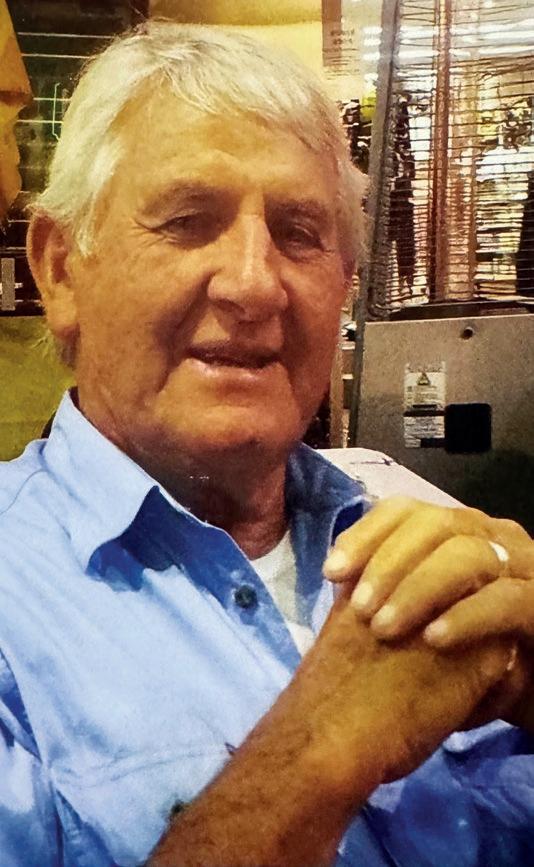
Farewelling Don McKechnie - RTBU Life Member
5/10/1937 - 21/10/2025
Don McKechnie was the South/West Organiser in the Australian Railways Union representing ARU members from Sydney to Albury and west to Dubbo.
He was elected in the mid 1970s at a time of major rationalisation that required him to travel hundreds of miles a day representing members. As a country organiser, Don didn’t have the immediate support or back up of the officers in head office. He had to make decisions with the support of the local sub-branch officers and delegates.
Each year with the wheat season harvest negotiations had to overcome inter depot disputes about work being allocated to which guards depot. Infrastructure members were regularly in dispute with management over camping out allowances. The introduction of the then XPT fleet required negotiation about rosters and depots that would work the new services. The closure of freight centres when small freight was abolished along with the closure of branch lines required Don to head up the Union Staff Review Team and with Management visit the location to help retain the position or find suitable alternate vacancies that displaced members could be appoint to.
Don was a very good negotiator because he was able to satisfy most members and somehow convinced Management that those members who were close to retirement could remain at their current location even though no trains ran there. He must argued that these heritage station needed security to prevent vandalism.
Don McKechnnie when working as a shunter and Secretary of the State Shunters Committee campaigned to have the buffers removed from rail wagons because shunters were killed or seriously injured when coupling or shunting these wagons.
This campaign was supported by shunters across the state. In Albury the late Peter Joos was a shunter and ARU representative and worked tirelessly with Don on this important campaign. Management finally agreed and buffers were removed from rail wagons. Don was then tasked
with setting up the National Vehicle Redesign Committee that had responsibility of inspecting new and interstate wagons to ensure they met NSW standards.
Don was on Branch Council, National Council Delegate, a NSW delegate to the Australian Labor Party Annual Conference, and upon retirement he was awarded Life Membership.
Over his lifetime, Don successfully represented and impacted hundreds of rail workers and their families ensuring their lives and working conditions were better off. Don McKechnie will be membered as a committed unionist who showed that with solidarity and support of memberseven the impossible - is possible.
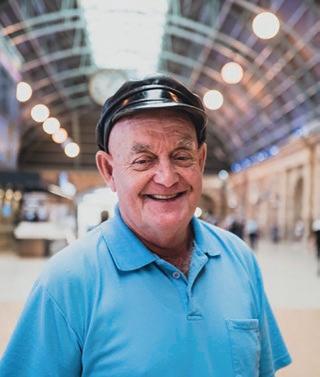
A tribute to Rex Sorby – RTBU Life Member
24/07/1937 – 08/10/2025
Rex Sorby was a proud Gamilary Aboriginal man from Coonabarabran, Burra bee dee who started his railway career as a 16 year old.
Rex worked in the infrastructure, perway division on track maintenance, the work was hot, hard and dusty. Rex was an activist representing his fellow workers and in the 1980 union elections he nominated for the position on Infrastructure Organiser against the Head Office incumbent, and won. Rex took advice, and demonstrated his understanding of the issues affecting his members. Rex was one of the first in the office because he knew his members signed on early and they expected to speak to someone if they had a problem.
It was always interesting to hear Rex on the phone talking to members....” Don’t worry brother I will fix that or “Hi cousin how are things going” Some of the staff asked Rex, you must have a large extended family with all these brothers and cousins. Rex laughed and said nah it’s just the way we talk.
Passing of David Boyd
It is with great sadness that we mourn the recent passing of our Retired Members Association President, David Boyd. David was a loveable larrikin, passionate about his union, his industry and his family and friends. A life well and truly lived. He formally retired from the industry in 2005 but continued his close association as principal driver of the legendry steam train 3801.
As a railwayman his industry career began as a trainee engineman stationed at Eveleigh and Parkes between 1967-1969. In subsequent years he progressed through the locomotive grades being stationed at various suburban and regional locations and was appointed a Locomotive Inspector in 1994.
David was a staunch unionist throughout his railway carer and served in a variety of positions in the NSW Division of the AFULE. The ins and outs of unionism were vigorously discussed in meal rooms, overnight stays in barracks, or when placing locomotives at various depots. These were tough times for both the union and the industry. David was not a wall flower, he could be forthright when the occasion demanded but loved nothing more than a yarn, a beer and spirited camaraderie.
Through his hard work and commitment to improving members working conditions, Rex won the admiration and respect of everyone who worked with him.
It was no surprise that in retirement he took an active role in Aboriginal affairs.
Ms Julia Finn MP wrote, ‘Uncle Rex was recognised as an Elder and much loved member of the Guildford West Community’. Uncle Rex dedicated his life to service, reconciliation and social justice. At Western Sydney University he served as an Elder on campus and contributed to the Aboriginal and Torres Straight Islander Employment and Engagement Consultative Committee and the ethnics committee. Through his work with the Youth Koori Court, Uncle Rex guided young people back onto the right path with wisdom and compassion. Locally he served on the boards of Guildford Leagues Club and the Holroyd Council Aboriginal and Torris Strait Islander and heritage consultative committees, helping establish the annual Schools Recognition Day on Prospect Hill.
A proud Labor man, Rex was the first Aboriginal person elected to the Rail Tram and Bus Union and longtime president of the Guilford West branch.
The RTBU NSW extends our deepest condolences to his wife, Margaret, and son, Darren. His legacy of leadership, justice, and community pride will endure.
David brought his considerable knowledge of the railway industry to the various campaigns pursued by the retired members association for the recognition of rail workers social, industrial and political history. He strongly believed that a strong union culture needed to pass from generation to generation. David could think outside the box as evidence by him being appointed as driver, trainer and assessor for the Byron Bay rail company which was the first to run a solar operated train in 2019.David thought solar power was the power source of the future. We express our sincerest condolences to his family, friends and many railway colleagues. David will be sorely missed but not forgotten.
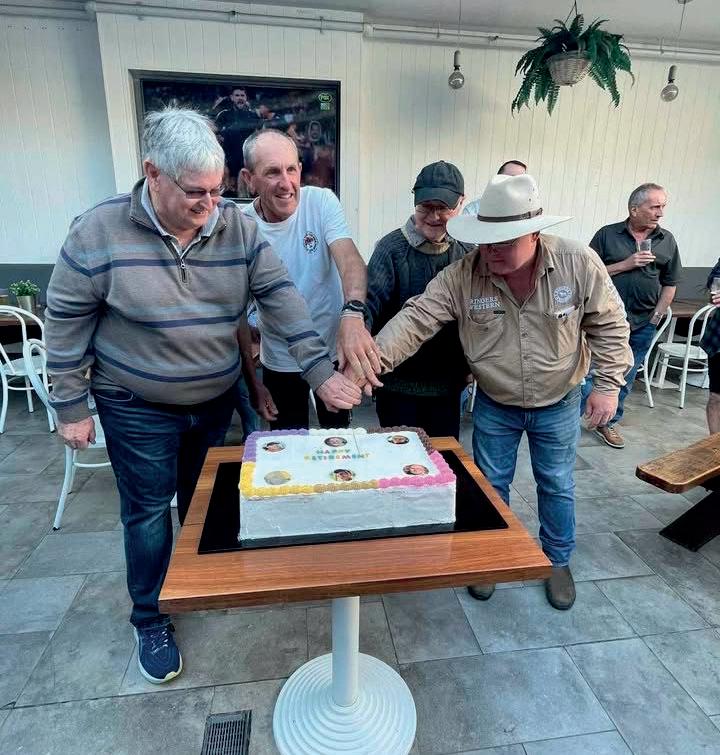
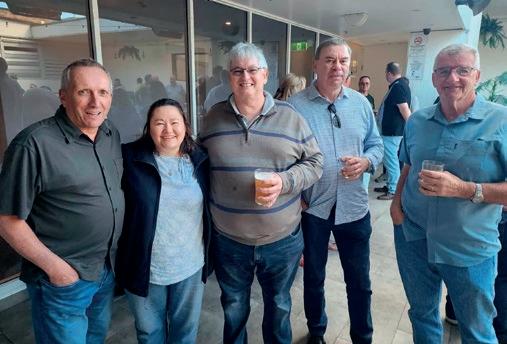
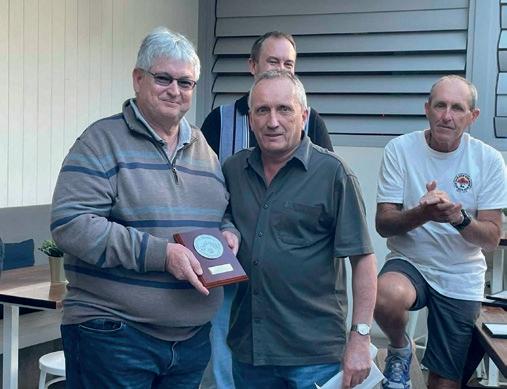
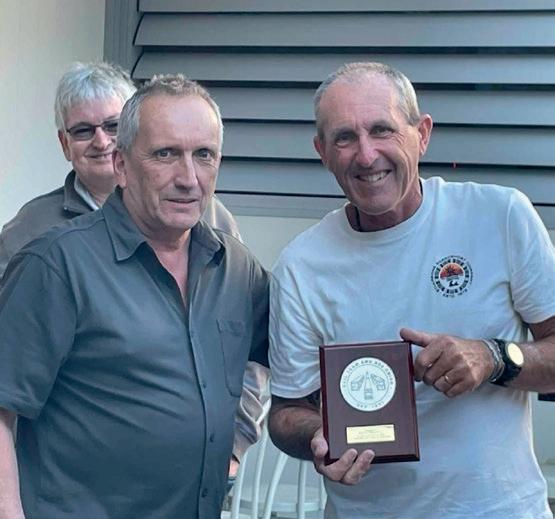
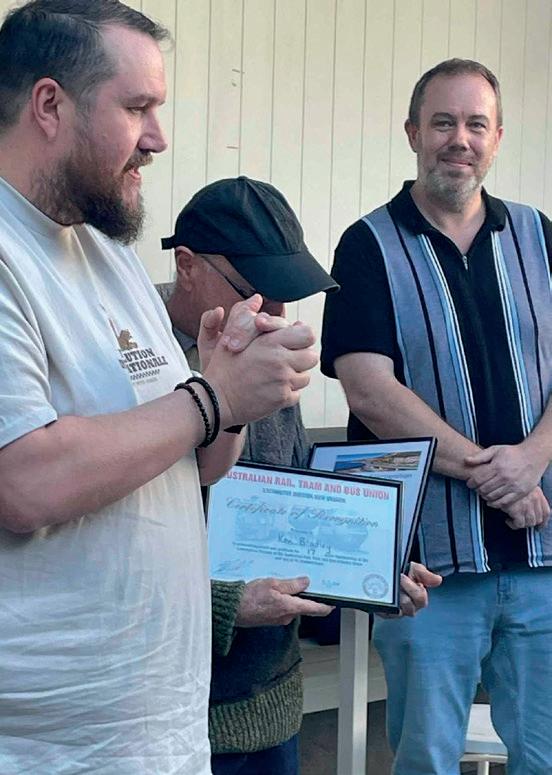
Wollongong Train Depot retirement celebrations
In September, Wollongong Train Depot celebrated the retirement of Drivers Ken Bradley, Rob Kennedy as well as Guards Eric Glasson, Bruce Philpot, James Brown and Brian Ready at the Coniston Hotel.
A great roll up of Co-workers, friends, RTBU Life Members and Officials attended.
A great day was had by all with quite a few ales consumed.
A shout out to the South Coast Railway Picnic Committee for organising a ripper of a day.
O’Dea
Have You Left the Industry? Retired?
Or No Longer Want to be in the Union?
If you have left the industry, permanently or for a period, have retired, or are off work due to illness, or no longer want to be a member of the RTBU, you must resign, or suspend your union membership, in writing.
Our union rules provide that members leaving the union for whatever reason, must do so in writing. If you do not resign in writing, you will continue to be included on our union membership and liable for the dues owing for that time.
Please note: Regardless of whether your union dues were paid by direct debit or through payroll deductions, the employer is not authorised to change your membership details after resignation or leaving the union. You must do this personally.
Please contact the membership office at the union for more information.
Join the RTBU Retired Members Association
Many retired members continue to receive copies of the journal Rail & Road, and take an interest in the life of the union. Many have also said that they would like to maintain a closer connection and involvement with the work of the union. The RTBU Retired Members Association was established to provide a forum for former members to meet, work on campaigns, address issues of particular relevance for retirees and to identify ways of assisting, supporting and contributing to the work of the union.
It is expected that the Retired Members Association will function independently and pursue issues that it identifies as priorities.
If you are a retired member of our union, we would like you to consider joining the Retired Members Association. Membership forms are available from the RTBU Head Office, Level 4, 321 Pitt Street, Sydney or on the union website: www.rtbu-nsw.asn.au
For more information, contact Peter O’Connor at the union office on (02) 9264 2511
For more information, contact Chris Doyle on 0425 327 195 or the union office on (02) 9264 2511
CHANGE OF DETAILS FORM
IMPORTANT Members need to specify the date of their next pay so that when the membership fee debit occurs on a Friday there is sufficient money in the account to ensure the transaction is not dishonoured which results in you then being charged an additional fee by your bank
DETAILS
I/We authorise and request the Australian Rail Tram and Bus Industry Union, until further notice in writing to arrange for my/our account described in this direct debit authority, to be debited with any amounts which the debit user may properly debit or charge me/us through the direct debit system.
I/We authorise and request this direct debit authority to remain in force until cancelled, deferred or otherwise altered in accordance with this service agreement.
MEMBERSHIP APPLICATION FORM
I, the undersigned, hereby apply to become a member of:
1. The Australian Rail, Tram and Bus Industry Union, an Organisation of employees registered under the Fair Work (Registered Organisations) Act 2009 (Cth) as amended, and hereby undertake to comply with the Rules and By-Laws for the time being of the Union; and
2. The Rail, Tram and Bus Union of New South Wales, an Organisation registered under the Industrial Relations Act 1996 (NSW) as amended and hereby undertake to comply with the Rules and By-Laws for the time being of the Union.
I agree to pay $ via DIRECT DEBIT fortnightly OR CREDIT CARD fortnightly or any other amounts as may be determined from time to time in accordance with the Rules of the Union. I certify that I have received a copy of Rule 14, Notification of Resignation from Membership.
1. I/We authorise and request the Australian Rail, Tram and Bus Industry Union, until further notice in writing to arrange for my/ our account described in this direct debit authority, to be debited with any amounts which the debit user may properly debit or charge me/us through the direct debit system.
2. I/We authorise my employer to notify the Australian Rail, Tram and Bus Industry Union of any change of address during my employment.
3. 3. I/We authorise and request this direct debit authority to remain in force until cancelled, deferred or otherwise altered in accordance with this service agreement.
Signature of Applicant
Account Name OR Name on Credit Card Fin an c
IMPORTANT
PLEASE KEEP THE FOLLOWING FOR YOUR REFERENCE
RESIGNATION FROM MEMBERSHIP
OF THE RTBU
1. A member may resign from membership of the Union by written notice addressed and delivered to the Secretary of his/her Branch.
2. A notice of resignation from membership of the Union takes effect:–
(a) where the member ceases to be eligible to become or remain a member of the Union
(i) on the day on which the notice is received by the Union or
(ii) on the day specified in the notice, which is a day not earlier than the day when the member ceases to be eligible to become a member, whichever is later; or
(b) In any other case:–
(i)at the end of two weeks; or
(ii)on the day specified in the notice: whichever is later.
3. Any subscriptions, fees, fines and levies owing but not paid by a former member of the Union in relation to a period before the member’s resignation took effect, may be sued for and recovered in the name of the Union in a Court of competent jurisdiction, as a debt due to the Union.
4. A notice delivered to the Branch Secretary shall be deemed to have been received by when it was delivered.
5. A notice of resignation that has been received by the Union is not invalid because it was not addressed and delivered the Branch Secretary.
6. Resignation from membership of the Union is valid even if it is not affected in accordance with this Rule, if the member is informed in writing by or on behalf of the Union that the resignation has been accepted.
What happens if I get pregnant, sick for an extended period or take leave without pay?
If you are on unpaid maternity leave, sick or are off work for a substantial period of time you can seek to have your membership fees suspended until you return to work by giving written notice addressed and delivered to the Secretary of his/her Branch under Clause 11 (8):
(8) Notwithstanding the foregoing provisions of this Rule, should any member during any financial year be without pay owing to ill health or to other causes which a Branch Executive regards as warranting special consideration, then the Branch Executive may grant the member exemption from payment of all or any contributions imposed in accordance with the Rules for all or part of the period during which he/ she is without pay. During the period of the exemption, the member shall be deemed to be financial.
The Rail, Tram and Bus Union is bound by the Privacy Act and your information can only used for RTBU processes and cannot be used for any other purposes.
The RTBU Executive, Officers and Staff wish all members and their families
Level 4, 321 Pitt Street Sydney NSW 2000
Tel (02) 9264 2511
Email: nswho@rtbu-nsw.asn.au
Website: www.rtbuexpress.com.au
Now that’s super helpful Working to help keep RTBU members accounts safe
At Aware Super we’re here to help – so your people can look forward to the retirement they’ve been working hard for. As Chant West’s Best Fund: Member Services 2025, being super helpful starts with:
Friendly Aussie call centres ready to support your workforce
Online tools and our app, making it easy for your people to manage their super and retirement, anytime, anywhere
Working to keep their account safe and secure, with advanced security features including multi-factor authentication1
They’re working hard for their retirement. Now let us help them.