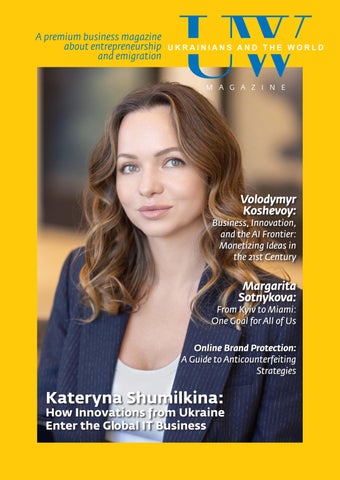
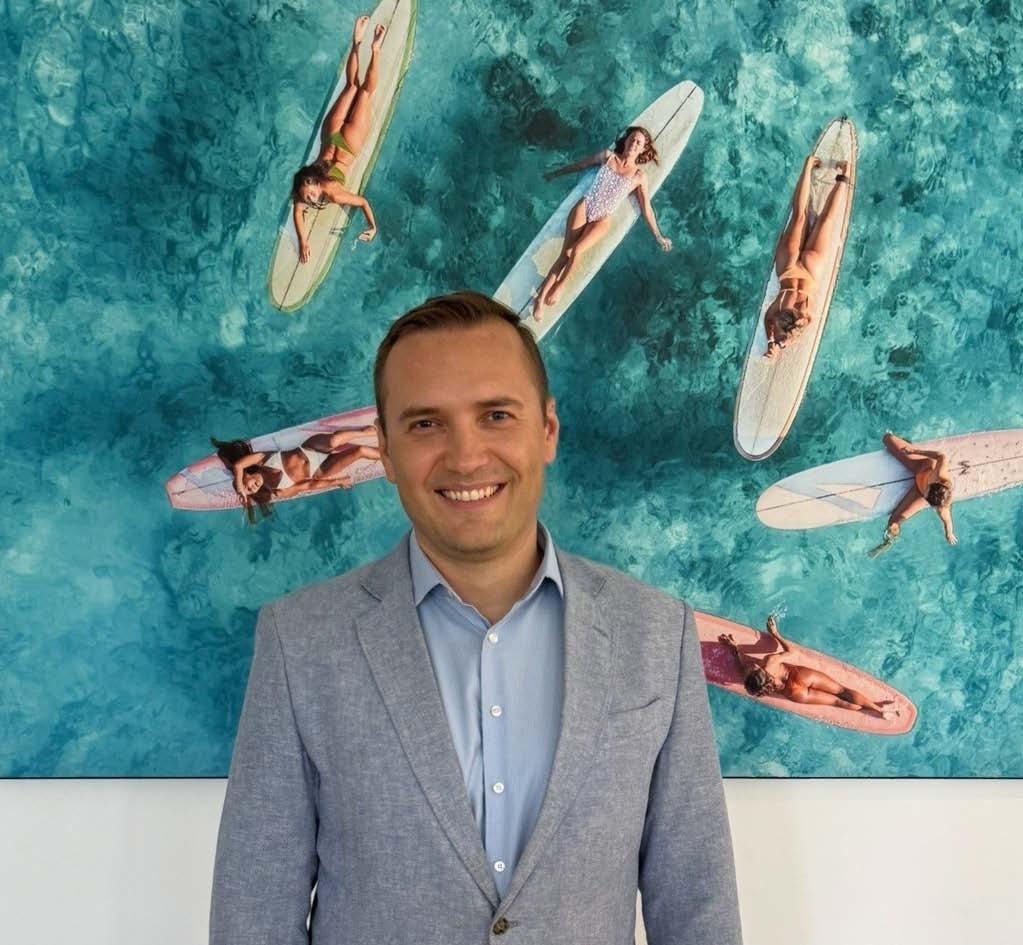
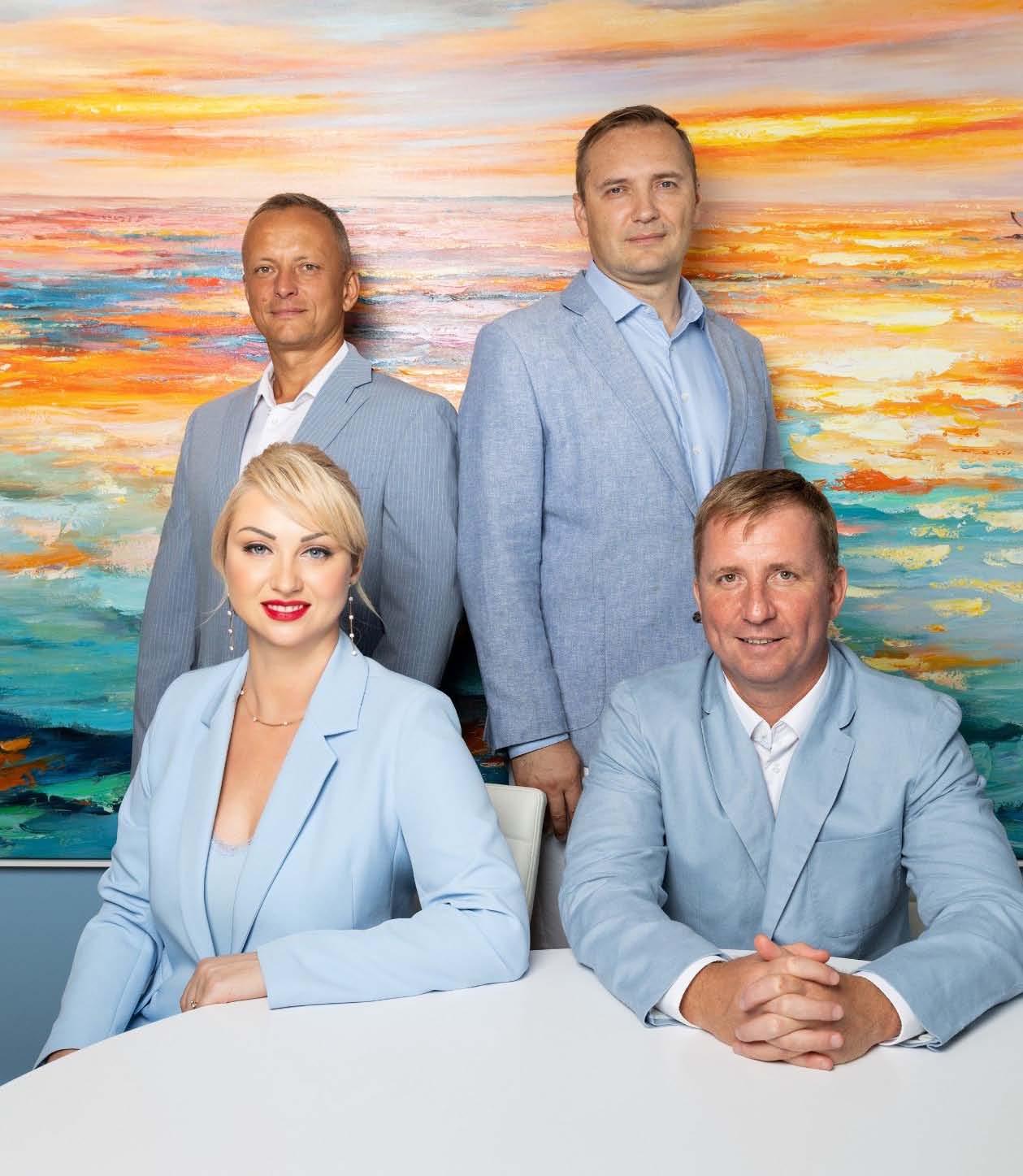
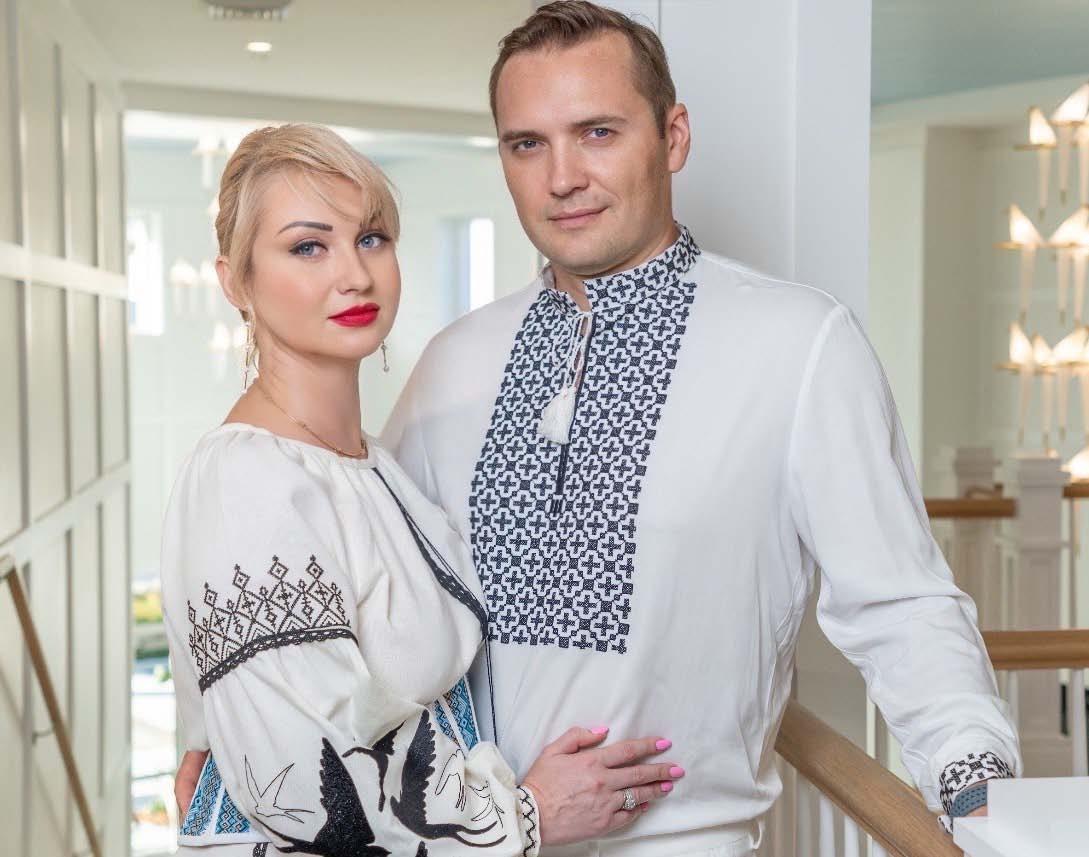
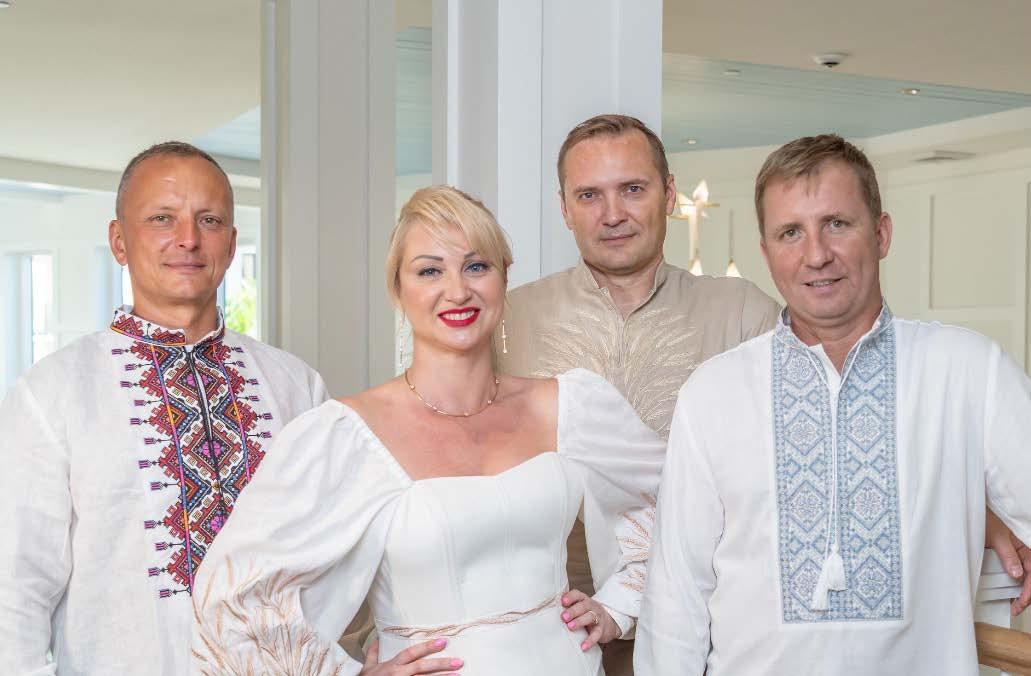
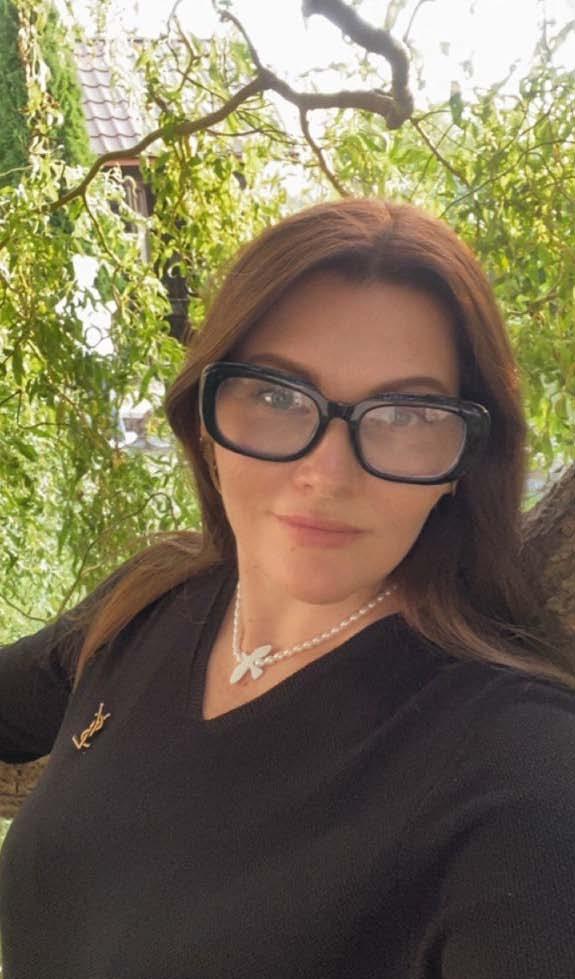
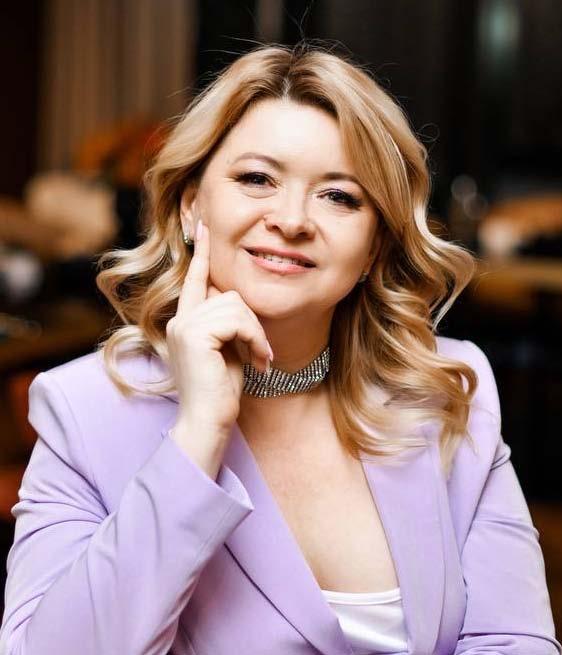
It is my great pleasure to welcome you to the fifth — and very special — issue of Ukrainians and the World Magazine.
Our publication continues to shape its own strategy, voice, and identity. In this anniversary issue, we focus on business and innovation, art and creativity, leadership and social responsibility — the pillars that define Ukrainians wherever they are in the world.
This edition is especially meaningful to me personally. I am delighted to introduce you to the world of legal business in Chicago, where my studies have opened new doors to the American professional environment. We also spotlight Ukrainian innovators and IT professionals who are conquering America and beyond with their talent and vision.
Art and beauty speak a universal language, connecting people and cultures. Through our stories, we explore global trends and the growing role of Ukrainians in this extraordinary time — when creativity, resilience, and intellect from Ukraine are shaping the modern world. Join our community, share your thoughts, and be part of this inspiring journey. Your feedback and support fuel our passion to tell more stories that matter.
With appreciation and respect, Olena Yaremchuk Editor-in-Chief Ukrainians and the World Magazine
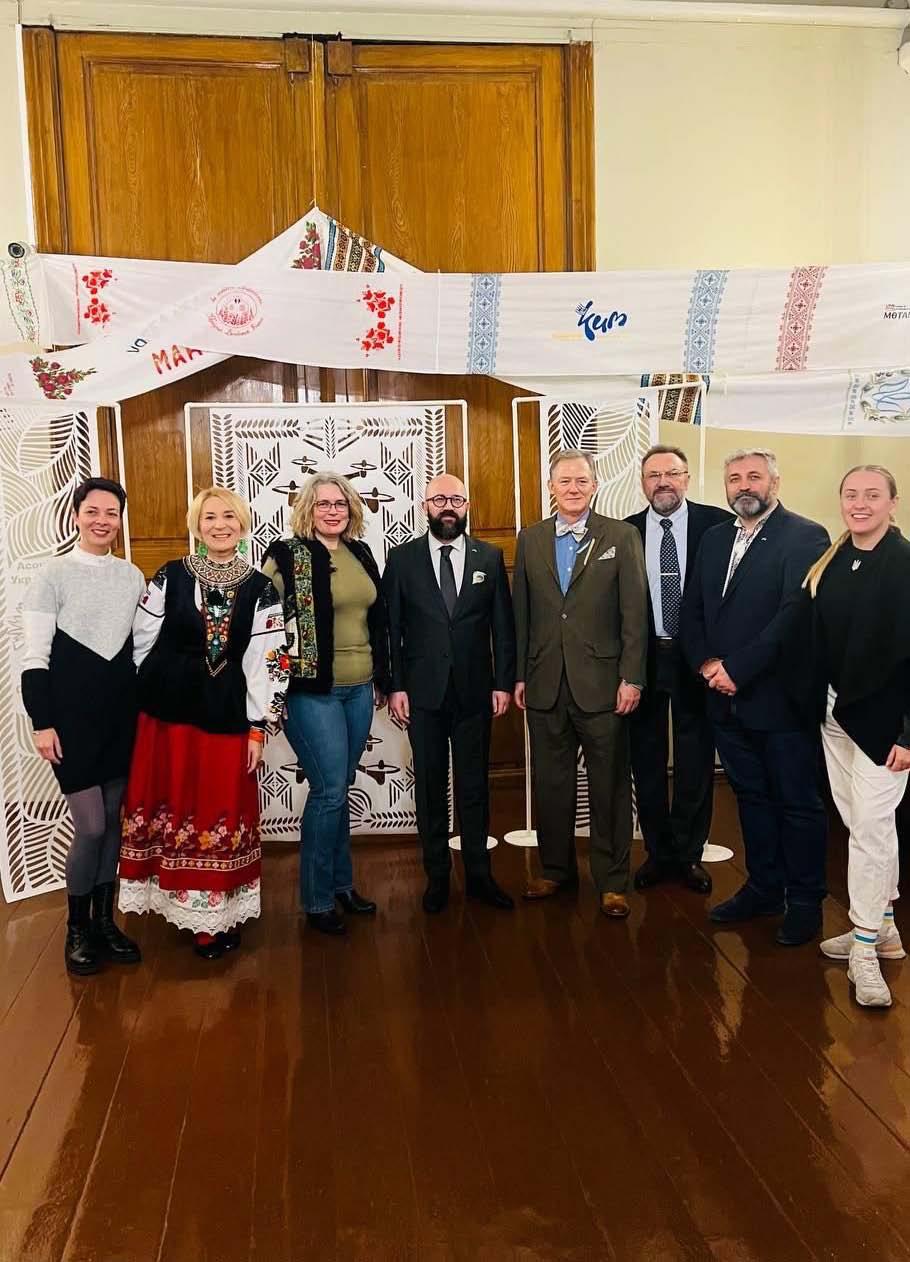
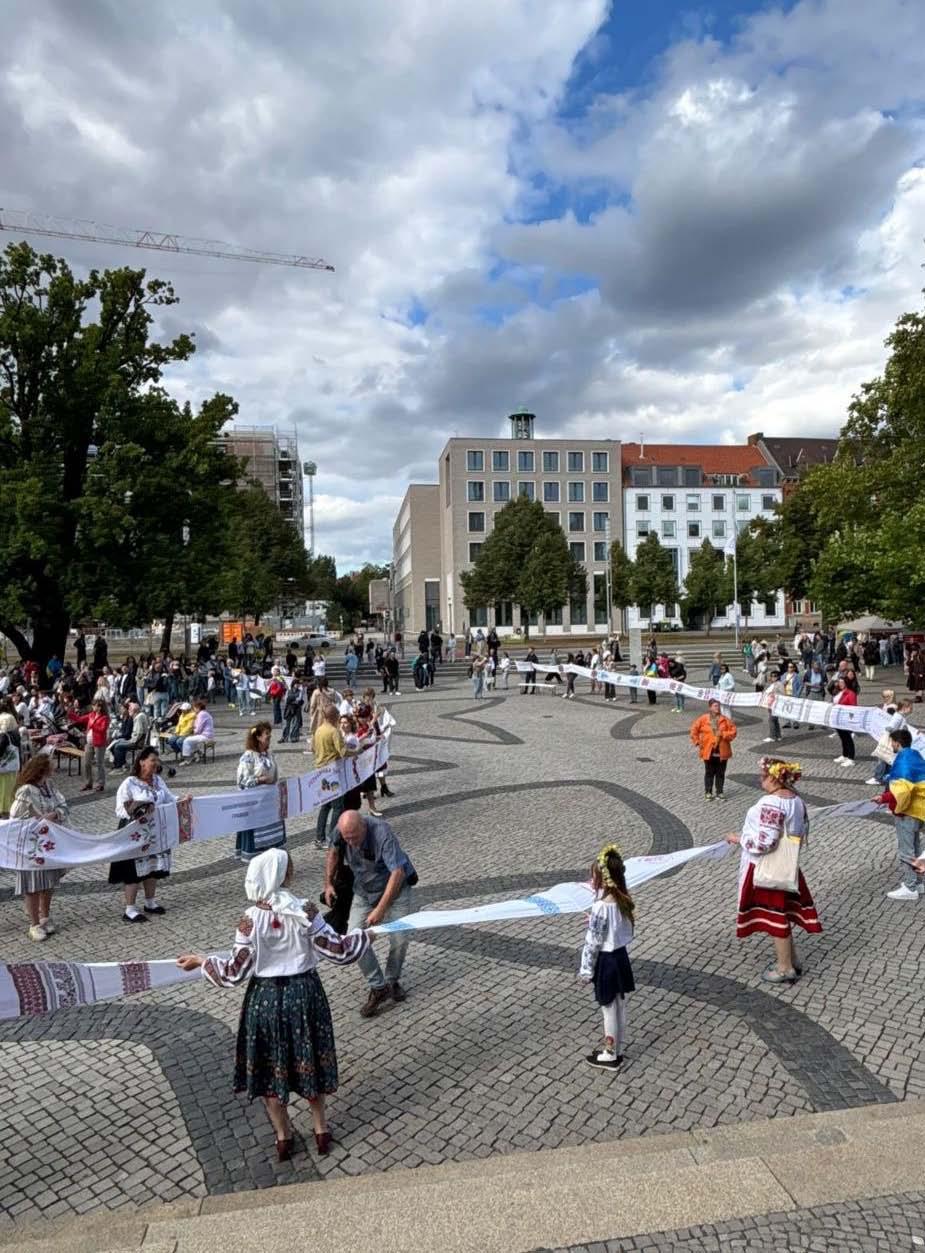
Towel
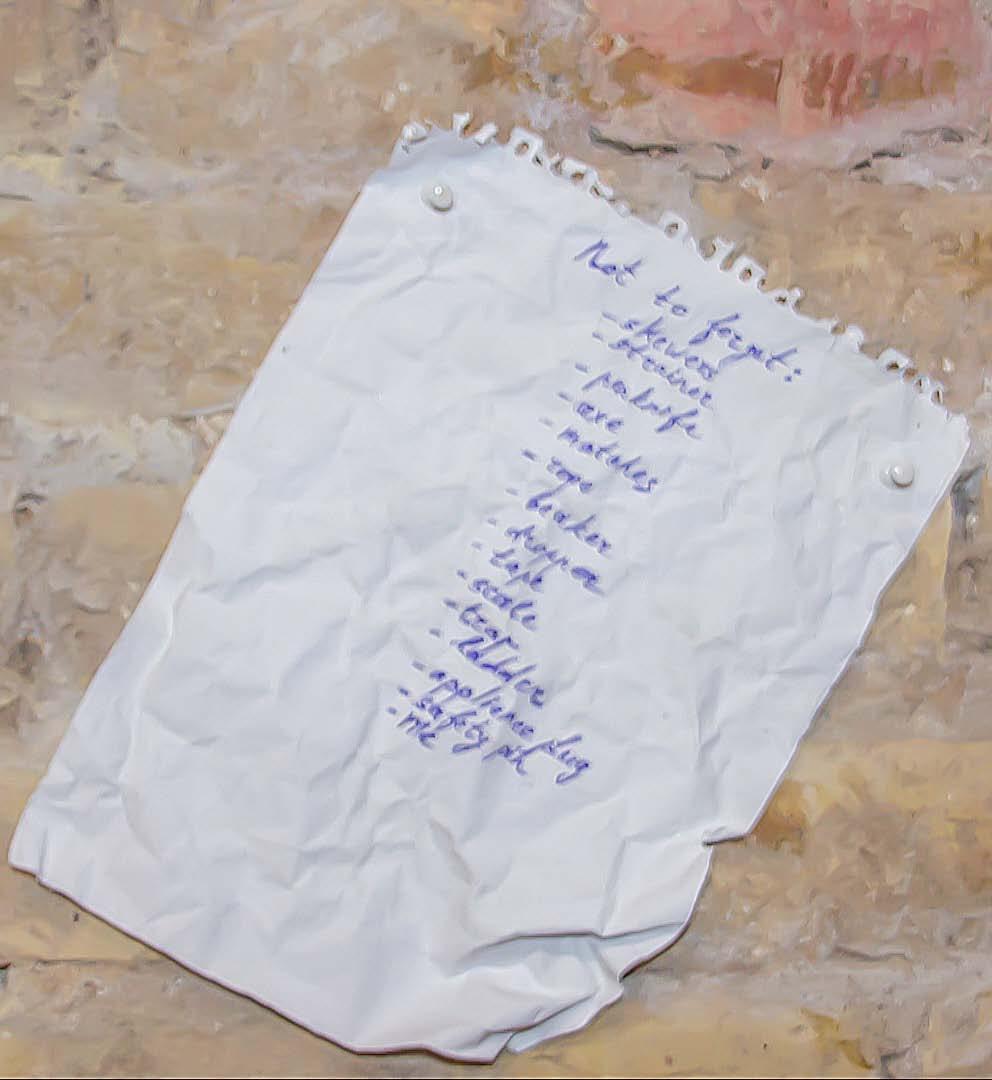
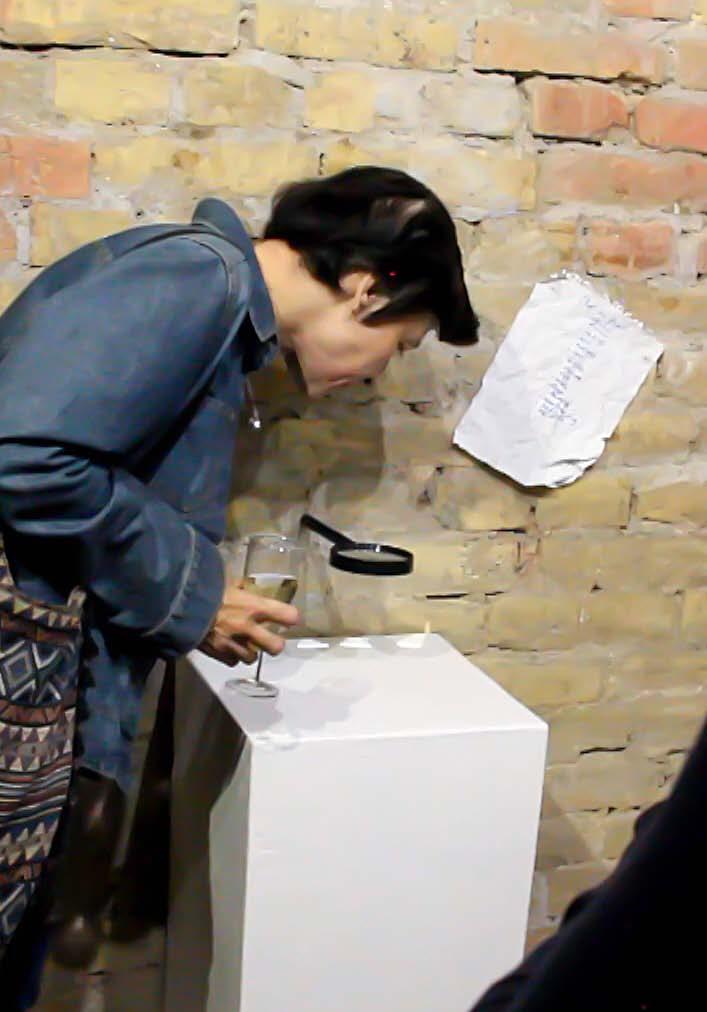
“Lost Correspondence”
T ó chi uc LLC, 10/2/2025,
Light as a Weapon
Where
Why
1. How did you enter the field of marketing and IT? What was the decisive moment in choosing your profession?
I have always been close to communications and creativity. My path into marketing started with my education: I earned a Bachelor’s degree in Marketing and Advertising at the London College of Communication, University of the Arts London, and later continued my studies in Ukraine. Studying in London gave me an international outlook, while working in Ukraine gave me practical experience. The decisive moment was my first encounter with IT companies: I realized that in this industry, marketing has a real impact on business growth and opens the door to global markets. That was the point when I understood this is where I want to build my career.
2. Why did you choose the U.S. market for your company’s development?
We chose the U.S. market because it is the largest and most dynamic in the IT services sector. This is where companies that set global trends are concentrated, and they are open to innovative partnerships. For us, it was not only an opportunity to scale the business but also to test our expertise in the most competitive environment. On a personal level, it was both a challenge and a source of inspiration - because success in the U.S. means your company is ready to play on a global level.
3. Tell us about your IT company: what services do you provide and how do you stand out among competitors?
The company’s story began in Kharkiv in 2015, when a small group of engineers gathered to deliver their first project for an American startup. From a small team, we grew to over 300 specialists and opened offices in Europe, Latin America, and the U.S. I personally joined in 2021 and took charge of the American branch and the
company’s marketing department.
Our focus is on complex projects in healthcare, fintech, and manufacturing. We are ISO 27001 certified, build processes according to GDPR, and implement solutions compliant with HIPAA so that U.S. hospitals can safely work with patient data. This gives clients confidence that they are working not just with a Ukrainian company, but with a partner aligned with global standards.
One example: when a California clinic was looking for a patient management solution, most vendors offered “boxed” products. We, however, proposed a flexible system integrated into their existing medical processes. After six months, the client told us: “You are not just a vendor, you are part of our team.” That is exactly what sets us apart.
4. What are the main challenges for a Ukrainian IT company entering the international market, particularly in the U.S.?
For a Ukrainian company, entering the U.S. market always means facing three main challenges:
Trust. At first, American clients doubt whether they can rely on a company from Ukraine. We proved it with actions: one of our first U.S. contracts started as a $1,000 pilot project, which we delivered flawlessly. Today, that client brings us multi-million-dollar cooperation.
Cultural differences. In the U.S., speed and a strong legal framework are crucial. That’s why we established a U.S. legal entity, certified our processes under ISO 27001, and trained managers to work in an “always on” model. This instantly raised the level of trust.
Resilience. COVID and the war tested our strength. In March 2022, when Kharkiv was under shelling, we still delivered all deadlines for our U.S. clients. That ability
to operate under crisis conditions is what truly sets us apart.
5. You created an author’s methodology “Marketing for Websites of International IT Companies Selling IT Services (based on Kitrum.com).” What makes it unique?
The uniqueness of the methodology lies in combining classical marketing concepts with modern digital tools tailored specifically for international IT companies. Using Kitrum as an example, I demonstrated how a website can function not as a “business card,” but as a fully-fledged sales channel. We developed a visual concept that reflects
the company’s expertise and scale, while implementing a systematic approach to SEO, content, and lead generation. As a result, the website began delivering measurable client flows from different markets.
6. How does this methodology help IT companies not only attract but also retain clients?
The methodology is designed so that the website not only creates the first contact with a client but also supports them throughout the entire journey. It includes personalized communication, CRM analytics, content tailored to different funnel stages, and feedback mechanisms. As a result, the client consistently perceives value in cooperation, which directly increases retention.
7. Which section of the methodology (audit, USP, marketing mix, trust, analytics, etc.) do you consider most critical for success?
I believe all sections of the methodology are interconnected and important, but if I had to highlight one - it would be the audit. It provides a complete understanding of the market, competitors, and target audience, without which it’s impossible to properly form a USP, choose an effective marketing mix, or set up analytics. Essentially, the audit is the foundation upon which the entire strategy is built.
8. You are a member of the Ukrainian Association of Marketers, the Academy of Sciences of Ukraine, and the Association of Young Scientists “Intellectual Leadership.” How does this participation influence your work and development?
Membership in professional associations, the Academy of Sciences of Ukraine, and the TOP Marketing Club of the Ukrainian Association of Marketers allows me to combine practical experience with academic knowledge. It provides constant knowledge exchange, access to the latest research, and the opportunity to test my own methodologies at the academic level.
This ensures my work in IT companies is based not only on intuition or practice but also on proven scientific approaches. In addition, I actively share my expertise by lecturing students and supporting young professionals in their career development.
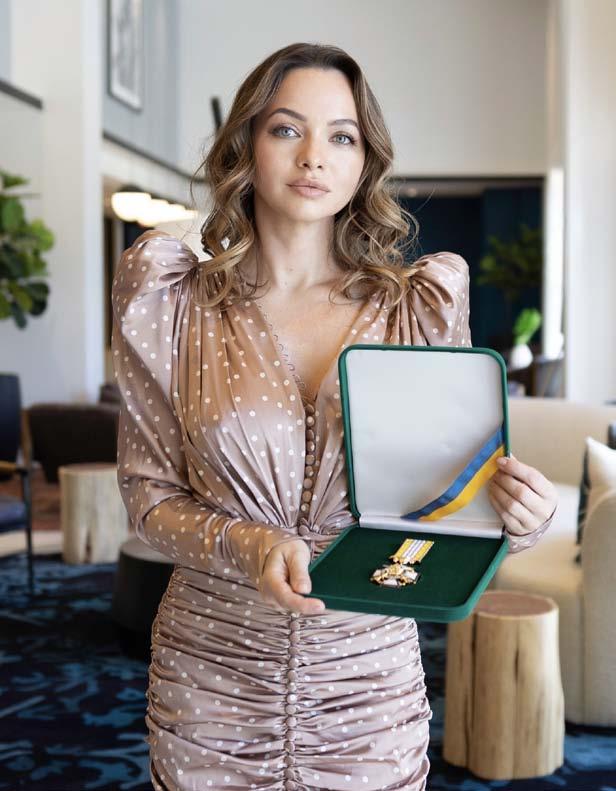
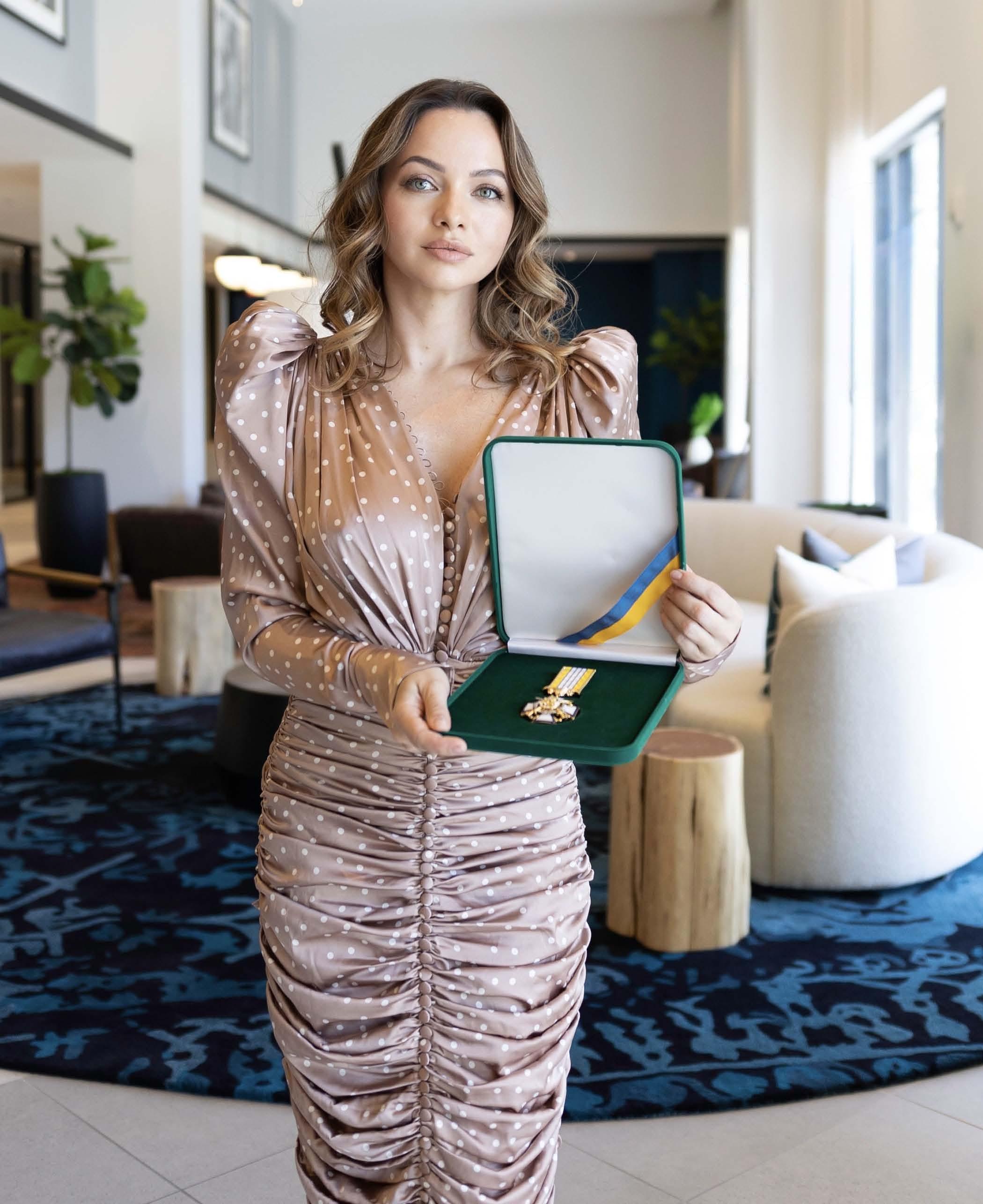
I am also honored to have received academic recognition with the Medal of the Ukrainian Academy of Sciences “For Creative Achievements, 2nd Class”, which confirms the significance of my contributions to the development of modern marketing.
9. What trends in digital marketing for IT do you consider key in the coming years?
In the coming years, I see several key trends. First, AI personalization, which will enable building individual client journeys on IT company websites. Second, datadriven marketing and deep analytics, since without measurement there is no progress. Third, automation of communications through CRM, chatbots, and omnichannel funnels. Content will also remain critical - interactive, educational, and video-based formats that build trust. Finally, brand reputation and company values will gain even greater importance, as clients increasingly look not only at price and quality but also at a business’s ethics and responsibility.
10. What advice would you give to Ukrainian marketers and entrepreneurs aiming to enter the international market?
Don’t be afraid to think globally. Start with a highquality English-language website, transparent processes, and honest case studies that prove your expertise.
I would also recommend beginning with a deep understanding of international markets — their cultural differences, business etiquette, and demand specifics. Equally important is building a strong brand and a USP that resonates with a global audience. And of course, invest in modern digital tools: SEO, content, AI personalization, and marketing automation. These are the things that ensure a stable flow of clients in the long term.
11. How do you manage to combine scientific activity, business, and personal life?
The secret lies in proper time management and the ability to switch between roles. Scientific activity inspires me with new ideas for business, while business provides practical material for scientific research. Personal life and family are my resource that recharges me with energy.
12. Do you have an example or inspiration among Ukrainian or global marketers/business leaders?
I am inspired by both global and Ukrainian leaders. Among the classics, Philip Kotler and David Aaker - whose approaches remain relevant even in the digital era. Among contemporary thinkers, Simon Sinek with his concept of “Start with Why” resonates with my own vision of marketing. In Ukraine, I draw inspiration from entrepreneurs and marketers who, despite war and challenges, build international businesses and shape a positive image of the country on the global stage.
Every MBA classroom discussion about competitive advantage eventually circles back to a single word—innovation. Whether it is a disruptive app that changes consumer behavior, a patent portfolio that anchors corporate strategy, or a novel monetization model that redefines entire industries, innovation is the currency that fuels growth. Yet, in today’s world, innovation is no longer just about inventing something new. It is about strategically protecting it, scaling it, and transforming it into sustainable business value.
For students of business and management, this evolving interplay between technology, patents, and commercialization is not just theory—it is the playbook for tomorrow’s leaders.
Patents as Strategic Business Assets
Traditionally, patents were viewed as legal shields—protection against imitators. But in the age of AI-driven markets, patents have become core financial instruments. A single strong patent can increase a startup’s valuation, secure venture capital, or serve as collateral in mergers and acquisitions.
For example, tech giants like Apple and Qualcomm have built vast patent portfolios not only to protect their intellectual property but to actively generate revenue through licensing agreements. These portfolios become bargaining chips in negotiations and barriers to entry for competitors.
From an MBA lens, this teaches a crucial lesson: IP is not only legal paperwork; it is strategy. Just as balance sheets track assets and liabilities, a patent portfolio is a company’s ledger of future potential.
Technology and the Acceleration of Innovation
Technology has transformed how we generate, test, and scale new ideas. Artificial intelligence, in particular, is revolutionizing the innovation cycle.
- Invention: AI systems now assist in R&D, from drug discovery algorithms identifying new molecules to generative design software producing optimized product prototypes.
- Patent Analytics: AI can scan millions of filings worldwide, helping firms identify “white spaces” where innovation is possible and profitable.
- Commercialization: Predictive analytics allows firms to estimate the potential market for an invention before investing millions in scaling.
As an MBA student, I see this as a shift from reactive innovation (waiting for markets to respond) to proactive innovation (anticipating needs and creating markets).
Monetization: Turning Ideas into Revenue Streams
A common critique of innovation is that “ideas are cheap.” Execution and monetization are where real value is created. Businesses today employ diverse strategies to ensure that patents and technologies don’t just sit on shelves but generate tangible returns:
1. Licensing: Selling rights to use patented technologies remains one of the most effective ways to create recurring revenue. For example, IBM generates billions annually from licensing.
2. Cross-Licensing and Strategic Alliances: Companies exchange patent rights, reducing litigation risks and fostering collaboration in fields like 5G or semiconductor design.
3. Spin-offs and Startups: Universities and corporations alike commercialize patents by launching startups, often supported by venture capital.
4. Litigation as Strategy: Although controversial, firms sometimes enforce patents aggressively, turning legal settlements into revenue streams.
For MBA students, the lesson is clear: an invention without a monetization model is not an innovation—it is a missed opportunity.
Ethics and the Balance of Innovation
But innovation without ethics can backfire. AI sys-
tems trained on copyrighted works without permission, or biotech patents on essential medicines priced beyond reach, remind us that the question is not only “can we innovate?” but also “should we?”
Businesses that ignore ethical considerations risk not just legal battles but reputational damage. Consumers increasingly demand responsible innovation—technology that respects privacy, sustainability, and inclusivity.
For MBAs preparing to lead organizations, this balance is critical. The next wave of business leaders must navigate between profitability and responsibility, ensuring innovation contributes to progress rather than exploitation.
Case Study: AI and Patent Monetization
Consider Adobe, which has begun integrating AI into Adobe Acrobat for contract analysis. This technology does more than automate legal review; it creates opportunities to license the system to law firms, SaaS providers, or enterprises.
Here, patents protect the unique AI models and workflows, while monetization may take the form of subscription pricing, licensing deals, or enterprise packages. The model illustrates the modern cycle of innovation:
- Invent (with AI assistance)
- Protect (through patents)
- Monetize (via scalable business models)
The Global Dimension of Innovation Innovation no longer respects borders. Patent filings in China, the U.S., and Europe influence global supply chains, while startups in Ukraine, Israel, or India can disrupt markets worldwide. For MBA students, this emphasizes the need for cross-cultural, cross-border perspectives.
- In the U.S., patents are assets for venture capital negotiations.
- In Europe, innovation often intersects with stricter data and privacy regulations.
- In Asia, speed and scale dominate, with state-supported innovation ecosystems.
Navigating these differences requires global business acumen—a skillset MBAs must cultivate.
Future Outlook: The Business of Ideas
Looking ahead, the fusion of technology, intellectual property, and business models will intensify. Several trends stand out:
1. AI-Assisted Patent Filings: Startups will rely on AI to draft applications faster and at lower cost.
2. Blockchain in IP: Distributed ledgers may be used to prove ownership and authenticity of creative works.
3. Sustainability-Driven Innovation: Patents in renewable energy, green tech, and circular economy solutions
will attract increasing investment.
4. Democratization of Innovation: Crowdfunding, opensource licensing, and global collaboration platforms will allow individuals and small teams to innovate at scale.
As MBA students, we must not only study these trends but actively participate in shaping them.
Conclusion: The MBA Takeaway
The 21st-century business leader must be both a strategist and an innovator. It is not enough to understand finance, marketing, or operations in isolation. The real challenge lies in integrating technology, intellectual prop -
erty, and monetization into a unified growth strategy. Innovation drives progress, but patents protect it. Technology accelerates invention, but business models monetize it. Ethics guide responsibility, but global perspectives ensure scalability.
For MBAs standing at the crossroads of education and leadership, the message is clear: the future of business is the business of ideas. Those who can harness innovation responsibly, monetize it effectively, and navigate it globally will define the next era of growth.
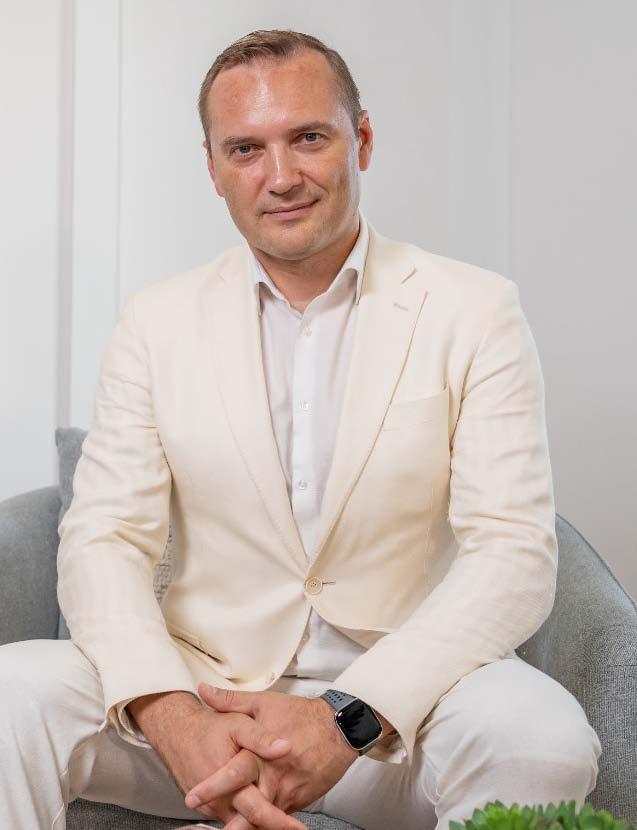
Volodymyr Koshevoy, MBA candidate Miami, Florida
America is a country where entrepreneurship and civic initiatives are embedded in the nation’s DNA. Legal models that shaped today’s global business and nonprofit standards were born here. For Ukrainians, the U.S. offers a double opportunity: to build companies while also advancing cultural and social projects.
Business Structures: Which Model Fits Best?
The U.S. system allows entrepreneurs to choose a format that best matches their goals:
• Sole Proprietorship — the simplest path with minimal procedures, but full personal liability.
• Partnership — business with partners, where risks and rewards are shared.
• LLC (Limited Liability Company) — the golden middle ground: flexible, protects personal assets, and highly popular among small and medium-sized businesses.
• Corporation (C-Corp / S-Corp) — scale and structure. C-Corp suits large investments and public offerings, while S-Corp is for smaller businesses seeking to avoid double taxation.
• Nonprofit Corporation — when the mission is social rather than financial.
Where to Incorporate: Strategic Jurisdictions
Each U.S. state has its own business culture and tax policies. Choosing the right jurisdiction is a strategic decision:
• Delaware — the corporate legend. Home to Silicon Valley giants, with investor-friendly courts and stability.
• Florida & Texas — fast-growing markets, no state income tax, and pro-business infrastructure.
The Nonprofit Sector: America’s Other Strength
The U.S. is also the world leader in nonprofit organizations. Its foundations and institutions drive enormous cultural, educational, and social impact:
• 501(c)(3) — tax-exempt charitable, educational, scientific, and cultural organizations.
• 501(c)(4) — social welfare organizations with more political leeway.
• Associations — professional and trade groups that set industry standards.
• Community-Based Organizations (CBOs) — grassroots initiatives strengthening local communities.
• Foundations — from family trusts to major corporate
philanthropies funding large-scale projects.
Florida: Business on the Global Wave
Florida is emerging as a magnet for international entrepreneurs:
• Fast, straightforward incorporation procedures.
• No personal income tax.
• Business-friendly environment for nonresidents.
• Miami as a global financial and cultural hub.
• A strong Ukrainian community offering support and integration.
• A dynamic brand image that gives business immediate international appeal.
Florida is more than just a jurisdiction — it is a launchpad for Ukrainians seeking to run businesses in the U.S. while staying connected to the global economy.
Chicago: The Capital of Ukrainian America
Chicago is not just another American metropolis — it is the symbolic heart of the Ukrainian diaspora:
• History: Ukrainians have built strong communities here for more than a century.
• Climate: cold winters and warm summers echo Ukraine’s seasons.
• Community: churches, schools, cultural centers, and business associations foster a sense of home.
• Opportunities: a powerful economic and educational hub combining global reach with local support.
For Ukrainians, Chicago represents more than a city — it is a symbol of continuity, solidarity, and new horizons.
Looking Ahead
The U.S. is a space where business and civic initiatives don’t compete — they reinforce one another. For Ukrainians, this creates a unique dual opportunity:
• to launch companies in flexible jurisdictions, and
• to build strong nonprofits that integrate communities and unlock international opportunities.
Delaware offers reliability, Florida provides dynamism and global reach, while Chicago embodies the strength of the diaspora. Together, they form a business ecosystem where Ukrainians can not only adapt but also set a new tone in global development.
Checklist for Ukrainians in the U.S. For Business
• Choose the right structure: Sole Proprietorship or Partnership for early-stage startups; LLC for small and medium-sized enterprises; Corporation for large-scale investment.
• Pick your state strategically: Delaware for investor trust, Wyoming for flexibility, Florida for rapid growth and global exposure.
• Plan your tax model: LLCs protect personal assets and avoid double taxation.
• Leverage local markets: Miami, Houston, and Chicago connect you to international networks.
For Civic & Cultural Initiatives
• 501(c)(3) — the gold standard for charitable, cultural, and educational projects.
• Build partnerships with associations and foundations to access grants and resources.
• Tap into diaspora power: Chicago and Florida’s Ukrainian communities provide strong networks for newcomers.
Practical Insights
• Be visible: conferences, trade shows, and cultural forums open doors to investors and partners.
vInvest in expertise: U.S. legal and financial systems are complex — local advisors are essential.
• Think global, act local: business in the U.S. can be both profitable and a gateway to global markets.
Final Word: America rewards those ready to act. For Ukrainians, it is not just a chance to succeed individually, but to strengthen the community abroad — blending entrepreneurship with cultural leadership on the global stage.
My professional journey began in Ukraine, where I obtained a legal education and worked for several years as a notary’s assistant. It was then that I developed a big dream — to obtain the status of a Notary Public. I worked persistently toward this goal, but quotas, more difficult exams, and extended internships stood in the way. As a result, I never received my certificate. Later, I worked as a state registrar, but the desire to become a Notary Public never left me.
The events of recent years forced me to leave Ukraine. I became an immigrant, and it was in America, in Florida, that life gave me a second chance. Thanks to the support of my friends, Volodymyr Koshovyi and Olena Yaremchuk, I obtained a Florida Notary Public license, and now I can proudly say: my dream has come true.
My professional foundation was built through several important stages of education. In 2004, I graduated from the Dnipropetrovsk State University of Internal Affairs with a specialist degree in Law. A year later, I received a bachelor’s degree from the Dnipropetrovsk State University of Chemical Technology, majoring in Business Economics. Later, in 2019–2020, I completed my studies at the Dnipropetrovsk Regional Institute of Public Administration of the National Academy of Public Administration under the President of Ukraine, earning a master’s degree in Public Management and Administration. This education allowed me to combine legal, economic, and managerial knowledge, which became a reliable foundation for my professional activity both in Ukraine and in the United States.
One of the greatest challenges was facing the differences between legal systems. In Ukraine, the RomanoGermanic system operates, based on codified laws: everything is clearly written, structured, and set out in codes and statutes. For a lawyer, this provides stability and logic: there is a law — and there is its direct application. In the USA, particularly in Florida, a completely different approach is used — the Anglo-Saxon system, where case law plays the key role. Here, legislation is closely
intertwined with judicial practice: court decisions from the past form the basis for resolving similar cases in the future. This means that to work effectively, it is important not only to know the law, but also to be able to navigate legal precedents, analyze them, and apply them in practice. Transitioning from the “systematic” Ukrainian legal framework to the “flexibility” of case law was not easy and required rethinking my professional mindset. However, this experience allowed me to adapt and find myself in a new legal environment.
In April 2025, I passed the exam and obtained a Florida Notary Public license. This was an extremely emotional moment: after many years of dreaming, I was finally able to take a step into the profession that has always been so special to me. I am still a young specialist, but today I already feel proud to be part of this system. I enjoy being part of a legal structure that upholds the rule of law while protecting the rights and obligations of individuals and citizens. A Notary Public in Florida is not just a person with a seal. It is part of public service, as appointments are made by the governor, and each Notary Public in fact becomes a representative of the state.
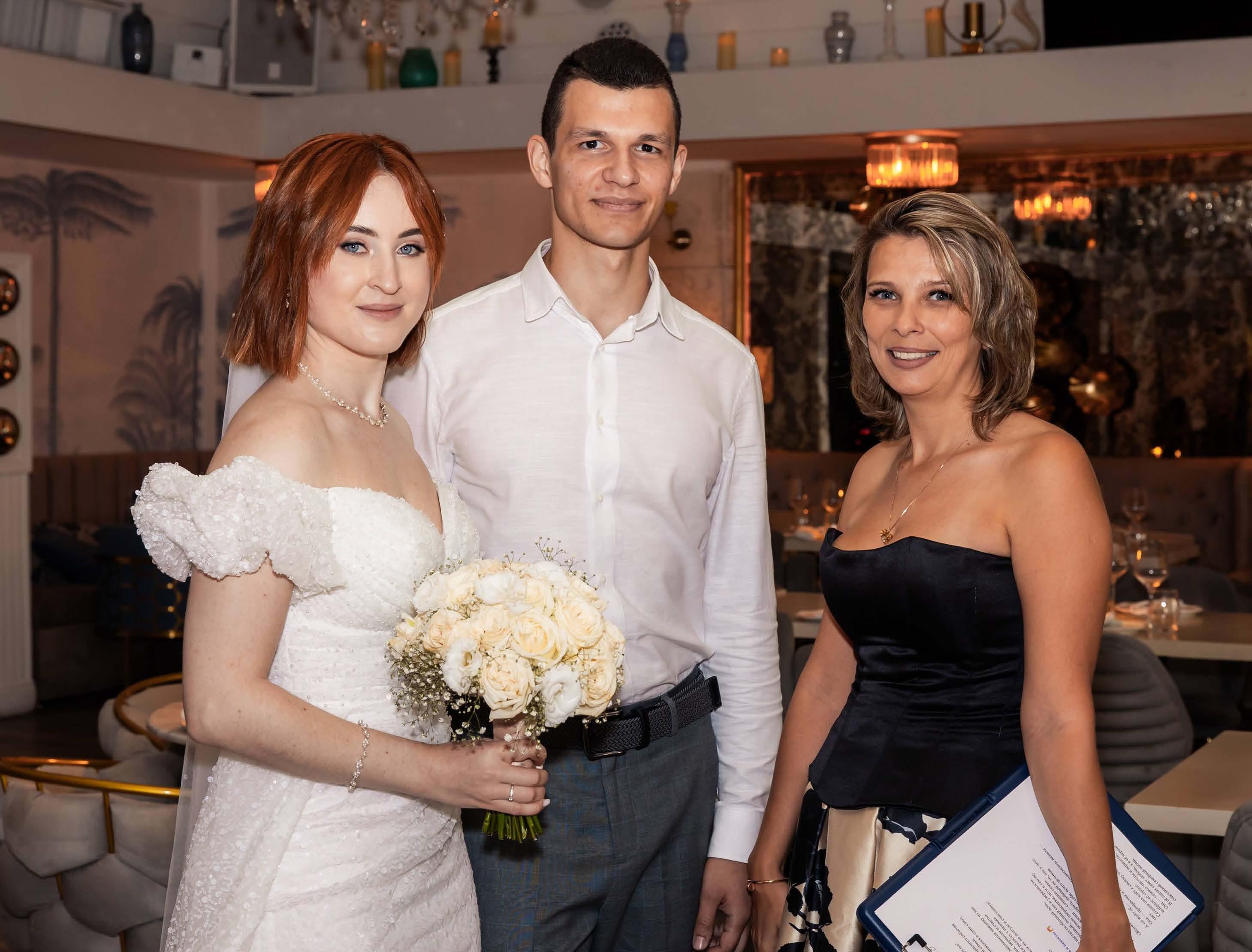
Of course, the functions of a Notary Public are diverse — from notarizing signatures to preparing affidavits and administering oaths. But what inspires me the most is the ability to perform marriage ceremonies. In these moments, I feel that I am part of the creation of a new family, witnessing the joyful smiles of brides and grooms and their loved ones. I enjoy every moment of this process because it brings genuine emotions and leaves bright memories not only in the hearts of the couple but also
in my own.
A Notary Public in Florida is not just someone authorized to stamp documents but is, above all, the face of the state in the eyes of citizens. Every signature, every word, and even one’s behavior outside of official duties shapes public trust in the institution we represent. I feel that this profession requires absolute honesty and impartiality. For me, this is a kind of code of honor: to act fairly, to ensure the protection of human rights and freedoms, and to remain faithful to both the law and my conscience. Being a Notary Public is not just a profession — it is part of my identity and responsibility to society.
My journey toward becoming a Notary Public was long and difficult. In Ukraine, it stopped halfway, but in Florida, my dream found a second life. Today I not only perform professional duties — I live the work I had dreamed about for so many years. For me, being a Notary Public is not just a legal function. It is people’s trust, responsibility to the state, and the privilege of witnessing life’s most important events. When I officiate a marriage ceremony as a Notary Public, I am proud that I am entrusted with confirming the birth of a new family. It is a moment when feelings and promises become a legal fact, and the state recognizes the couple as a new part of society. To be present in such moments is a great honor for me. I am grateful to destiny for this opportunity and believe that my story proves: even if a dream is delayed for years, it will eventually come true when the right time comes.
For many foreign-trained lawyers, the U.S. Bar Exam has become more than just an academic hurdle. It is a gateway to career paths that once seemed out of reach, and a credential that carries weight far beyond American borders. Passing the Bar is not simply another line on a résumé — it is a mark of professional maturity and a signal to the global market that a lawyer can thrive under the highest levels of competition. In today’s world, where business and law routinely transcend national boundaries, the U.S. license functions as a powerful “currency of trust.”
The stories of lawyers from around the world make it clear: the Bar Exam can be truly life-changing.
A practitioner from Hong Kong, for example, leveraged her New York admission to become a recognized international arbitration specialist, earning a place among the Rising Stars of the global legal profession. A Ukrainian colleague, who began in Kyiv’s banking sector, passed the California Bar and soon joined a major international law firm advising on multibillion-dollar tech deals in Silicon Valley.
These are not isolated cases. Admission to practice in New York or California unlocks access to the largest international law firms — the so-called Big Law — where lawyers are expected to navigate complex corporate and financial issues, negotiate across cultures, and align their work with global standards. Beyond private practice, multinational corporations increasingly value in-house counsel with multi-jurisdictional training. Such lawyers often become trusted strategic advisors, combining deep local knowledge with a global perspective.
Not every lawyer is ready to plunge immediately into the rigors of Bar Exam preparation. For many, the status of Foreign Legal Consultant (FLC) offers a practical first step. The FLC designation allows foreign-trained lawyers to work legally in the United States, provide advice on international or home-country law, and build a professional network — all without full U.S. admission.
Consider the example of Maria Rodriguez from Brazil, who spent several years as an FLC in New York before sitting for the Bar Exam. Today, she leads an internation -
al investment practice at a major firm. Her story illustrates how the FLC route can serve as a valuable bridge into the U.S. legal market.
The American legal market is one of the most competitive in the world. A Bar license alone, while essential, is rarely enough. What sets candidates apart is the willingness to take that “extra step”:
Specialized certifications in arbitration, compliance, or financial regulation.
Scholarly or professional publications that showcase expertise to peers and potential employers.
Active participation in international conferences and professional associations, where reputations are built and networks forged.
Pro bono work and mentorship, which not only serve a social mission but also open doors to opportunities in major global practices.
The successes of foreign-trained lawyers who have overcome these hurdles demonstrate a simple truth: the Bar Exam is not just an exam, but a launchpad. It opens the way to a truly global legal career — one that transcends geography, blends knowledge from multiple systems, and creates a professional narrative as unique as the lawyer behind it.
In today’s interconnected world, borders in law exist only on the map. For those with the determination to pursue them, the opportunities are boundless.
Boston
In an increasingly digital marketplace, brands face an unprecedented threat from counterfeiters and unauthorized sellers. The ubiquity of e-commerce platforms has made it easier than ever for bad actors to profit from a brand’s reputation and intellectual property, leading to significant financial losses and reputational damage. A brand’s intellectual property, once a challenge to protect in physical storefronts, is now vulnerable to a new breed of sophisticated, anonymous infringers operating on a global scale. This article provides a comprehensive overview of modern anticounterfeiting strategies, exploring how brands can leverage marketplace tools and powerful legal mechanisms like the «Schedule A scheme» to safeguard their intellectual property, revenue, and customer trust.
1. Background: The Rising Tide of Counterfeiting
The scale of the online counterfeiting problem is staggering. According to recent reports from the Organisation for Economic Co-operation and Development (OECD) and the European Union Intellectual Property Office (EUIPO), the global trade in counterfeit goods was valued at approximately $467 billion in 2021, representing 2.3% of total global imports. Other analyses, such as those from Frontier Economics, have projected the total economic and social costs of counterfeiting and piracy to reach as high as $2.8 trillion. According to the MSU survey, 7 in 10 consumers are deceived into buying counterfeit products online. The economic impact is not limited to lost sales; it also includes brand dilution, erosion of consumer trust, and the cost of enforcing intellectual property rights. Counterfeit products can also pose serious health and safety risks to consumers, a danger often masked by the deceptive veneer of online listings.
The challenges posed by modern e-commerce are unique. Counterfeiters exploit the logistical efficiency of global shipping and the anonymity of online platforms. They often ship low-cost, low-volume goods directly to consumers via postal services, a process known as «de minimis» trade. Under the de minimis rule, goods below a certain value threshold (currently $800 in the U.S.) can be imported into the country duty-free and with minimal formal entry procedures. This allows a high percentage of packages to evade scrutiny from customs officials, as the volume is simply too large for comprehensive inspection. This presents a formidable barrier to enforcement for both brands and government agencies. Furthermore, these illicit operations are not confined to a single country or region; they are highly adaptable and operate
across multiple jurisdictions, making traditional legal enforcement difficult and costly.
Retail e-commerce sales rose to $6.3 trillion in 2023, from $1.8 trillion in 2016, and are expected to grow to $8.1 trillion by 2026, with 4.5 billion users worldwide –or roughly half the population of the planet, according to data tracking site Statista. What’s more, by 2026, ecommerce is expected to make up 24% of all retail sales, up from 18.8% in 2021. Though retail giants like Amazon and China’s Alibaba dominate the e-commerce market, most of this explosive growth can be attributed to small- and medium-sized businesses selling their goods and services online. Of course, the pandemic only juiced the machine even more. In 2021 alone, the number of ecommerce websites grew from 9.7 million to 19.8 million, and there are now 26.5 million e-commerce sites operating worldwide.
To effectively combat this threat, a comprehensive, multi-faceted approach is required. A modern anticounterfeiting strategy must combine three key pillars: technological solutions, platform-based defenses, and proactive legal mechanisms. It is no longer sufficient to focus on a single approach; instead, brands must build a layered defense system that anticipates and responds to threats from all angles. Brand protection is not merely a legal cost; it is a critical investment in maintaining the integrity of a brand’s reputation and the long-term value of its intellectual property.
The first and most critical line of defense for a brand in the digital marketplace is leveraging the brand protection tools offered by the marketplaces themselves. Major
DISCLAIMER: This article is presented for informational purposes only. This article is not intended to be a review of the U.S. Law or court practice. This article may not represent the views of the author’s employing law firm (if any). Although every effort has been made to verify the accuracy of this article, readers are encouraged to verify independently any matters of specific concern or interest.
e-commerce platforms, recognizing their own interest in maintaining a trustworthy environment, have developed a suite of programs to assist brand owners in their fight against infringement.
A. Amazon Brand Registry and Related Programs
Amazon, as the dominant force in e-commerce, has pioneered a tiered suite of brand protection programs that have become the de facto standard. The cornerstone of this ecosystem is the Amazon Brand Registry. By enrolling, a brand owner who holds an active, registered (or pending) trademark gains access to a powerful set of tools. The Brand Registry provides greater authority over product listings, giving brands the ability to ensure that only authorized sellers can represent their products with accurate images and descriptions. It also offers a streamlined system for reporting IP infringement, which is a foundational tool for takedown requests. Beyond enforcement, the registry unlocks a suite of marketing and analytics tools, such as A+ Content and Brand Stores, which help brands monitor their performance and consumer sentiment. This enables them to differentiate their authentic products from potential fakes through rich, high-quality content and a dedicated brand presence.
Practical Steps:
Eligibility: Secure a registered trademark (or pending) in a jurisdiction where Amazon operates. Use a word mark (preferred) or image mark.
Enrollment:
Go to Amazon’s Brand Registry portal and click “Enroll your brand”.
Provide trademark details, business information, product categories, and proof of brand usage.
Post-enrollment:
Access tools like Report a Violation (RAV) for IP takedown requests.
Gain analytics dashboards to monitor infringement and brand health.
Assign users and manage roles.
Why It Matters:
Foundation for other Amazon IP tools (Project Zero, Transparency).
Central hub for managing brand control and listing content.
Two of Amazon’s most potent tools for direct anticounterfeiting are Project Zero and the Transparency Program.
Project Zero: This program represents a significant shift from a reactive to a proactive enforcement model. It combines Amazon’s machine-learning technology with a self-service counterfeit removal tool. Once enrolled,
brands gain the ability to directly remove infringing listings from the marketplace without needing to file a formal report and wait for Amazon’s review. This instant takedown capability is a game-changer for speed and efficiency. The underlying AI technology learns from every takedown, making it more effective at automatically scanning millions of product listings daily to detect and block suspected fakes before a customer ever sees them. This proactive approach helps stop counterfeits at the source, preventing both lost sales and customer dissatisfaction.
Practical Steps:
Prerequisites: Must be enrolled in Brand Registry, have a track record of using RAV with at least a 90% acceptance rate, and complete Amazon-provided training.
Enrollment: Visit the Project Zero page within Brand Registry, follow the prompts, and complete the required training.
Usage:
Use the self-service counterfeit removal tool: locate suspicious listings, conduct a test buy if needed, then remove listings proactively.
Track activity via “Submission history” in the Brand Registry portal. Sellers receive complaints when listings are removed.
Automation: Amazon uses AI to block suspected infringing listings before brand owners even spot them –over 99% are intercepted automatically.
Why It Matters:
Empowers immediate action against counterfeits.
Strong automation support reduces burden and increases efficacy.
Transparency Program: This is a serialization service designed to prevent counterfeit products from ever reaching customers in the first place. For a brand’s enrolled products, Amazon requires a unique, scannable code on every single unit. Before a product ships, Amazon scans the code to verify its authenticity. If the code is not authentic or has already been used, the product is flagged as a potential counterfeit and never makes it to the customer. This program not only prevents fakes from entering Amazon’s fulfillment network but also empowers consumers, who can use a mobile app to scan the code themselves to verify that their purchase is genuine. This builds a powerful layer of trust and security, enhancing the customer experience and reinforcing the brand’s value proposition.
Practical Steps:
Eligibility: Must be a Brand Registry participant.
Enrollment: Access the Transparency portal via Brand
Registry, add your brand/products, and order unique codes.
Implementation Options:
Print and apply Amazon-issued codes in-house.
Use a service provider to label products. Integrate codes directly into packaging. Or, connect with your existing serial numbers.
Fulfillment Integration:
For FBA, Amazon scans codes upon receipt and flags non-compliant units.
For FBM, provide codes when confirming orders to trigger validation.
Impact:
Over 2.5 billion units have been verified, across 10 countries.
Enhances transparency and consumer trust through unit-level authenticity.
B. Other E-commerce Platforms
A successful brand protection strategy must be multiplatform. Relying solely on Amazon’s tools is insufficient, as infringers will simply shift their operations to other marketplaces. Brands must recognize that each platform has its own unique rules and mechanisms, requiring a tailored strategy.
Walmart’s Brand Portal: Similar to Amazon’s registry, Walmart’s Brand Portal provides brand owners with tools to monitor for unauthorized listings and pricing issues. By enrolling a registered USPTO trademark, brands can take control of their product content and submit IP infringement claims through a simplified process. The portal also provides valuable insights into brand performance and content compliance, helping brands to maintain a consistent and accurate presence on the marketplace.
Practical Steps:
Ensure you have an active USPTO-registered trademark.
Using your Seller Center credentials, register for the Walmart Brand Portal.
Submit your company profile, trademark number, brand name, and contact info.
Once approved:
Access the dashboard to submit IP claims (trademark, counterfeit, patent, copyright).
Monitor claim status and history.
Assign Acting Brand Owner or Authorized Reseller roles, enabling control over listings and content editing.
Why It Matters:
Centralized interface to manage listings, claims, and
brand presence on Walmart Marketplace. Improves response speed and visibility vs. older manual processes.
eBay’s Verified Rights Owner (VeRO) Program: eBay’s program, known as VeRO, allows intellectual property rights owners to report listings that they believe infringe on their rights. The program covers a wide range of IP, including trademarks, copyrights, and patents. To report an infringement, a rights owner must file a «Notice of Claimed Infringement» (NOCI), which can lead to the removal of the listing. The VeRO program is a critical component of eBay’s effort to create a safe trading environment and requires active engagement from brand owners to be effective.
Practical Steps for Brand Owners
Register as a Rights Owner
Sign up for eBay’s VeRO Program and complete the Notice of Claimed Infringement (NOCI) form to report potentially infringing listings.
Submit Clear and Accurate Reports
Include details like trademark registration, unauthorized use, and specific examples of infringement to ensure clarity.
Monitor Listings Regularly
Track suspect listings manually or with third-party tools, then submit NOCI forms to eBay via email or fax.
Provide Follow-Up if Needed
If a seller believes a listing was wrongfully removed, they can contact you directly (eBay provides your contact info). If appropriate, you can retract the request.
Publish a VeRO Participant Profile
Clarify your rights enforcement policies by creating a profile that explains your approach and parameters for reporting.
Best Practices and Seller Feedback
Create Compliant Listings
Sellers must use original photos and text, not copy manufacturer or third-party descriptions/images without permission.
Expect Seller Pushback
Sellers often report listings being removed despite being legitimate.
Why It Matters
Protects your IP by removing infringing listings.
Sends a strong signal: misuse of your brand will be targeted swiftly.
Helps preserve brand reputation and consumer trust.
3. The Schedule A Scheme:
A Powerful Legal Tactic
While marketplace tools are a brand’s first line of defense, they are not always sufficient to stop organized and anonymous counterfeiting rings. This is where a powerful legal tactic known as the «Schedule A scheme» comes into play. Originating and most commonly used in the U.S. District Court for the Northern District of Illinois – and to a lesser extent in New York and Miami – this scheme is a procedural approach used to sue multiple unidentified online counterfeiters in a single, consolidated lawsuit.
The core of the strategy is the use of a «Schedule A» to list dozens or even hundreds of anonymous, «John Doe» defendants. The plaintiffs, typically brand owners, file a complaint against these defendants, who are identified by their online merchant names and account IDs. The lawsuit is often filed under seal, meaning the defendants are not initially aware of the legal action against them (sealed “Schedule A”). This enables ex parte requests for temporary restraining orders (TROs) or preliminary injunctions that immediately freeze online marketplace accounts and funds – often without the defendants’ knowledge or opportunity to respond.
A. Procedural Advantages and Mechanics
The primary goal of a Schedule A lawsuit is to obtain an ex parte Temporary Restraining Order (TRO). An ex parte order is one granted by a court without a hearing or notice to the opposing party. This is a crucial, and often controversial, aspect of the scheme. Plaintiffs argue that this is necessary to prevent the defendants from transferring their assets or destroying evidence before they are even served with a lawsuit. If the court grants the TRO, the brand owner can then serve it on the e-commerce platforms and payment processors (like PayPal or Stripe). The result is immediate and devastating for the defendants: their product listings are taken down, their merchant accounts are frozen, and their funds are seized.
The advantages for the brand owner are significant: Cost Efficiency: A single federal court filing fee can be used to sue a multitude of infringers, dramatically reducing the legal costs compared to filing individual lawsuits. This allows brands to pursue a large number of bad actors simultaneously.
Speed and Impact: The ex parte TRO allows for an immediate and comprehensive takedown of infringing listings and a freeze of assets, effectively shutting down an entire counterfeit operation in a single coordinated action. This prevents the «whack-a-mole» problem of a counterfeiter simply moving to a new account.
Discovery: The court-ordered discovery process al-
lows the brand owner to compel the platforms and payment processors to reveal the true identities and contact information of the anonymous defendants, which is often the primary goal of the litigation. This information is a prerequisite for formal service of process and is a powerful tool for intelligence gathering on the counterfeiting operation.
The Northern District of Illinois has become a popular venue for these cases, with thousands filed in the last decade. This is due, in part, to a history of judges in the district being receptive to granting the ex parte TROs that are critical to the strategy’s success. The legal rationale for this procedural device is rooted in the plaintiffs’ need to obtain information about the defendants’ identities to properly serve them, a necessity recognized in Federal Rule of Civil Procedure 26(d)(1).
B. Criticisms and Judicial Scrutiny
While the Schedule A scheme is a powerful tool, it is not without its critics and has been subject to increasing judicial scrutiny. Legal scholars and some judges argue that the practice can be abused. The use of an ex parte TRO, which bypasses due process, is a major point of contention. Critics argue that the due process rights of the defendants are compromised, as their accounts are frozen and their business is halted without them ever having a chance to be heard. This is particularly problematic if the defendants are legitimate resellers or if the allegations of infringement are weak.
A Harvard Law Review article has even referred to the practice as a «Counterfeit Sham,» suggesting that plaintiffs sometimes use the rhetoric of fighting nefarious, large-scale counterfeit rings even when a case involves minor trademark infringement. The key criticism is the imbalance of power: the brand owner, a large corporation, can use a consolidated, streamlined legal process to seize funds and take down listings from hundreds of small, often foreign-based sellers who lack the resources and legal knowledge to defend themselves. This can result in a quick settlement where the defendants lose their seized funds, regardless of the ultimate merits of the case.
This scrutiny is prompting a re-evaluation of the scheme, with some courts beginning to demand more concrete evidence from plaintiffs to justify the extraordinary remedy of an ex parte TRO. Courts are increasingly requiring more detailed affidavits and evidence of irreparable harm before granting such a powerful order. As a result, brand owners must be meticulous in their preparation and have strong, defensible claims to effectively utilize this legal tool.
To summarize, despite operational appeal, the Schedule A approach poses significant due process and procedural fairness concerns:
Lack of Notice and Opportunity to be Heard
Defendants frequently remain unaware – often in distant jurisdictions, ill-equipped for U.S. litigation – until accounts are frozen.
Weak Joinder Justifications
Courts have scrutinized whether multiple defendants satisfy joinder requirements under FRCP Rule 20(a)(2) – i.e., whether they acted together in the same transaction or share common legal/factual questions. Courts are increasingly rejecting mass joinder when defendants appear independent.
Abuse of Secrecy and Ex Parte Relief
The sealed Schedule A and ex parte TRO mechanics reduce transparency and judicial adversarial review, creating potential for overreach and abuse.
Sanctions and Judicial Pushback
Plaintiffs have incurred sanctions for service and joinder failures – even absent bad faith – under Rule 11 when reasonable inquiry was not performed (e.g. Opulent Treasures case).
C. Recent Judicial Pushback
Judicial resistance to SAD tactics is mounting across several fronts:
Panel of Illinois Federal Judges Push Back
Judges Blakey, Harjani, Daniel, and others have dismissed or denied TROs in Schedule A cases – especially when plaintiffs fail to establish a proper connection among defendants.
Standing Order and Stay on Schedule A Cases
Judge Kness imposed a stay on all Schedule A cases on his docket to fundamentally reassess the approach. In a recent opinion, he ruled that the Schedule A mechanism “should no longer be perpetuated in its present form,” citing due process erosion, lack of adversarial proceedings, overbroad asset freezes, and mass joinder abuses.
Practitioner alerts forecast delays and higher proof burdens (e.g., more particularized evidence per defendant, tighter joinder theories).
At the same time, the Northern District of Illinois remains the epicenter for such cases, with thousands filed over the last decade; one judge famously observed, “It has become the Northern District of Illinois vs. the Internet.”
4. Conclusion:
A Multi-Layered Approach to Protection
The fight against online counterfeiting is an ongoing
and complex battle that requires a dynamic and adaptive strategy. The most effective brand protection plan is not a single tool but a multi-layered defense.
Brands must first establish a strong foundation by actively engaging with and fully utilizing the native tools offered by major e-commerce platforms. Enrolling in programs like the Amazon Brand Registry and Walmart’s Brand Portal is a non-negotiable first step, as it provides both the authority and the initial means to combat infringement where it most often occurs. These programs are essential for both reactive takedowns and proactive monitoring.
This platform-specific defense should then be supplemented with more robust technological solutions. Thirdparty brand protection services, leveraging advanced AI, machine learning, and image recognition, can provide a comprehensive shield that monitors a far wider digital landscape, including social media, websites, and app stores. These tools can identify emerging threats before they grow into major problems, providing a holistic view that no single marketplace can offer.
Finally, for the most challenging and organized threats, brands must be prepared to employ aggressive legal tactics. The Schedule A scheme, despite its controversies, remains a powerful mechanism for a swift, large-scale takedown of anonymous infringers and the seizure of their illicit profits. While its use requires careful consideration and adherence to evolving judicial standards, it can be an indispensable tool in a brand’s arsenal.
Ultimately, a modern brand protection strategy recognizes that marketplace tools and legal schemes are not mutually exclusive. They are complementary components of a comprehensive plan. By combining these approaches, brands can create a powerful and unified defense that protects their intellectual property, preserves their revenue, and maintains the trust of their consumers in the ever-evolving online world.
Marketplace tools and legal strategies like the Schedule A scheme should not stand alone – they must be integrated as complementary instruments in a broader enforcement strategy.
Only a harmonized approach – a mesh of platformbased defenses and appropriate legal intervention – creates a durable, defensible strategy that protects intellectual property, revenue, and the brand’s reputation in a digital-first world.
Chicago
A few years ago, if someone had told you that a chatbot would one day write essays, design logos, or draft legal contracts, you might have laughed. Yet here we are—living in a world reshaped by Artificial Intelligence. Generative AI has quietly moved from science fiction to daily reality. It’s rewriting how businesses operate, how lawyers research, how investors decide, and how professionals everywhere create value.
AIhas given the digital world a kind of “brain” that learns, reasons, and adapts. It’s helping doctors analyze scans more accurately, marketers predict trends more precisely, and entrepreneurs make faster decisions with fewer people. The global economy is feeling its impact: productivity is up, business models are shifting, and a new era of digital intelligence is unfolding before our eyes.
But what if this is just the beginning? What if something far bigger is already on the horizon - something that won’t just make us smarter or faster, but will completely change the rules of reality itself?
That “something” is quantum technology. And just like most of us didn’t see the AI revolution coming until ChatGPT’s release on November 30, 2022, the next great transformation might catch the world by surprise again.
BeyondAI: TheQuantumEraisComing
The difference is that this time, we have the chance to be early.
From AI to Quantum: The Next Revolution
When ChatGPT launched, it felt like the world changed overnight. Suddenly, students, startups and corporations were using AI to do things that had seemed impossible just a year earlier. Now imagine if you had known about that shift before it happened. If you had been ready to adapt, invest or build around it. That’s exactly where we are today with quantum computing.
If AI were a rat that’s fast, clever, and everywhere, quantum is not just an elephant; it’s the entire jungle. It’s not just bigger, it operates on an entirely different law of nature. AI learns patterns from data. Quantum redefines what’s possible with data itself. It’s the difference between playing checkers and inventing chess.
AI has taught us how to think smarter. Quantum will teach us what’s truly possible.
Understanding Quantum in Simple Terms
Let’s break it down simply. Every computer today, from ourphone to NASA’s supercomputers thinks in bits. Each bit can be either a 0 or 1. Every photo, video or message you’ve ever seen online is made up of billions of those 0s and 1s, arranged in perfect digital order.
Quantum computers, however, use something called qubits. A qubit can be both 0 and 1 at the same time. Imagine flipping a coin and having it land on heads and tails simultaneously, that’s what a qubit does. Because of this strange property, quantum computers can explore many possibilities at once, rather than checking them one by one like a traditional machine.
If a normal computer is like reading one book in a library at a time, a quantum computer can read every book in the library simultaneously. That’s why scientists call it a “quantum leap”, it’s not just faster, it’s fundamentally different.
This is not magic or science fiction; it’s the power of physics itself. Quantum computers use the same rules that govern atoms and particles, the invisible world that underlies everything we see. By harnessing those rules, they can solve problems that would take today’s computers millions of years.
The Scale of Change:
From AI’s Impact to Quantum’s Promise
Now let’s compare. Artificial Intelligence has revolutionized how we work, it has made our processes smarter, faster, and more creative. Quantum will revolutionize what we can work on it will make the impossible possible.
AI helps banks detect fraud faster. Quantum could
help them predict market crashes before they happen. AI helps pharmaceutical companies analyze medical data. Quantum could discover new medicines overnight by simulating molecules beyond the reach of today’s computers. AI helps designers improve materials.
Quantum could create new ones entirely—lighter than plastic, stronger than steel. AI helps manage traffic. Quantum could redesign entire transport systems to eliminate congestion completely.
And here’s what’s most important—this is not a far-off dream. Governments and global corporations are already investing billions into quantum research and infrastructure. The U.S., U.K., China, and the European Union are racing to lead this transformation. Chicago, in particular, is emerging as one of the world’s quantum capitals, home to leading research centers, startup accelerators, and partnerships with giants like IBM and Google.
When you hear about billions of dollars being invested, it’s not for hype—it’s because those who understand what’s coming know that quantum technology will be bigger than AI, the internet, and industrial automation combined.
Why It Matters to Everyone
Quantum technology won’t stay locked away in laboratories. Just like AI and smartphones, it will eventually touch every part of everyday life—from how we bank to how we heal, from how we secure data to how we make laws.
Your bank could one day use quantum algorithms to protect your data with unbreakable encryption.
Your doctor might prescribe a treatment discovered through a quantum-simulated model of your body.
Your law firm could manage intellectual property for new quantum algorithms and materials.
Your investments could depend on identifying early quantum-ready companies.
This isn’t an elite or geeky technology. It’s the next layer of the digital world—and it will affect everyone who lives, works, or builds within it. The opportunity is enormous, and it’s open to anyone who can see the wave before it breaks.
The Moment Before the Storm
Think back to the months before ChatGPT launched. AI existed, but it wasn’t in the headlines. Then, suddenly, it changed everything. Those who adapted early thrived; those who waited are still catching up.
Today, we are standing in a similar moment, the quiet before the quantum storm. Governments are building the infrastructure, companies are hiring the experts, and early investors are placing their bets. What’s missing are the entrepreneurs, lawyers, and business leaders who
MAGAZINE
will translate this technology into real-world solutions.
The Quantum Economy: How Business, Law, and Opportunity Will Transform
We’re approaching a moment when quantum technology will move out of research labs and into the real world. It’sreshaping how we do business, protect data and create value. Just as artificial intelligence has changed how we work, quantum computing will change what we can work on. The economic impact will be massive, touching everything from banking and healthcare to logistics, law, and energy. For entrepreneurs, investors, and professionals, this is not a distant dream, it’s the next chapter already being written.
What makes this moment especially exciting is that participation is not limited to billionaires or scientists. The quantum field is still young, which means there’s room for anyone willing to invest time, attention, and expertise, alongside or instead of money. The real currency of this revolution is knowledge and skill. Learning how quantum computing affects your industry, developing expertise in quantum related tools, and positioning yourself as a trusted problem solver can create opportunities as valuable as financial investments and in some cases, even more so. Early monetary investments in startups or funds can certainly yield large returns, but investing your time now to understand quantum technology, its applications, and its potential impact may pay dividends that last a lifetime.
Even small, practical commitments can position you as an early expert in your field. You don’t need a physics lab or a billion dollar fund to make a difference. By building expertise in our industry whether finance, logistics, healthcare or law, we can become a bridge between technical quantum advances and real world business solutions. Over time, this knowledge may become your most valuable asset.
And if you’re wondering where this revolution is taking shape, look no further than Chicago. The city is rapidly becoming the quantum capital of the United States. A massive new complex, the Illinois Quantum and Microelectronics Park (IQMP), is under construction on the South Side, transforming a former steel site into one of the most advanced research campuses in the world. The project has already drawn major players: PsiQuantum, a leading firm recently funded with over $1 billion, has begun building facilities there; IBM plans to install one of its most powerful quantum systems on site and the State of Illinois has committed hundreds of millions in incentives to attract startups and researchers. Alongside this, the Duality Accelerator, the first program in the U.S. dedicated entirely to quantum startups is nurturing new ventures, while the University of Chicago and Argonne National Laboratory continue to push scientific boundaries. Chicago is doing for quantum what Silicon Valley once did for the internet.
Quantum technology will shake up industries in profound ways. In finance, quantum algorithms will soon
model risk, pricing, and portfolio performance with unprecedented precision. In healthcare and pharmaceuticals, quantum computing will simulate molecules and reactions, unlocking treatments that currently take years of trial and error. In logistics and transportation, it will optimize routes, inventory, and supply chains across millions of variables simultaneously. And in cybersecurity, as quantum computers grow capable of cracking current encryption, there will be enormous demand for post-quantum cryptography and secure communication networks.
Every one of these sectors will need experts who can translate quantum capability into practical business solutions. For the legal community, this is particularly urgent. Lawyers who understand how quantum affects contracts, intellectual property, and data protection will be in high demand. New types of assets such as quantum algorithms, quantumgenerated materials and data from quantum sensors will require updated legal frameworks. Firms that build expertise now by learning the technology, engaging with researchers, and participating in policy discussions will become the trusted advisors of the next decade.
The opportunity is global. Professionals from anywhere in the world , may it be Ukraine, India or elsewhere can become early leaders by combining domain knowledge with quantum literacy. By studying applications relevant to our industry, collaboration with labs and startups, or providing consulting, training, or advisory services locally, we can claim expertise before most of the world even understands the scope of change. Thought leadership through writing, speaking, or teaching will help establish our position as an early expert in this revolution.
Becoming “quantum-ready” doesn’t require mastering advanced physics. It means committing time and effort to understand the basics, recognize applications in your field, and build a network of expertise. Those who do this now will benefit both intellectually and financially, while shaping the industries that quantum computing will redefine.
The timeline is accelerating. Just as AI emerged from obscurity to mainstream adoption almost overnight, quantum progress is gaining speed with each new breakthrough. Chicago is projected to have a large-scale commercial quantum computer operational by 2028. Governments and corporations worldwide are already investing billions in infrastructure, research, and talent. The moment to prepare, learn, and position yourself is now. Those who invest their time, knowledge, and insight alongside capital will be the pioneers of the quantum era.
The Quantum Future Is Here — Are You Ready?
We are living through a rare technological revolution, one that most are only beginning to understand. Like AI before it, quantum technology promises to redefine what’s possible from business operations and cybersecurity to medicine discovery and global system optimization.
Quantum doesn’t just improve on the old; it changes the rules entirely.
The question is no longer if quantum will transform industries, but when and how ready you are to ride the wave. Entrepreneurs can spot opportunities in startups or advisory services. Investors can gain early advantage in ventures and accelerators. Professionals and lawyers can develop quantum-ready skills to translate breakthroughs into practical solutions and legal frameworks.
Chicago offers a glimpse of this potential with the Illinois Quantum and Microelectronics Park, billions invested by PsiQuantum and IBM and accelerators like Duality driving innovation. Yet opportunities aren’t limited to one city. Globally, those who understand quantum early, connect with research hubs, and position themselves as thought leaders will lead the way.
Participation comes in many forms: financial investment, yes but also time, expertise, and knowledge. By
learning quantum fundamentals, understanding industry applications, and building networks now, you stake your claim before the revolution hits the mainstream.
Quantum’s future is accelerating. Commercial quantum computers, new industries, and transformative applications are arriving faster than most expect. The message is clear: prepare, participate, and position yourself today. Learn, explore, and apply your skills to shape this new era.
This is about more than technology it’s about foresight, initiative, and courage. Just as AI transformed our world, quantum computing will redefine it in ways we are only beginning to imagine. The question isn’t whether it will happen it’s whether you’ll be ready to lead and thrive when it does. The time to act is now.
Nitin Sudhakar
When I opened a branch of the Planeta group here in America, I often heard the same questions from Ukrainians who were forced to move: — “Margarita, how can I find myself in a new land? How do I understand what I should do now?”
FromKyivtoMiami: OneGoalforAllofUs
This question is relevant to all of us, without exception. In Warsaw, in Almaty, in Florida. We all strive to survive and to find our place in a new country, in a new life.
In Search of Truth
I don’t believe in some kind of “karmic missions.” There are no higher forces dictating to us: “You must become this or that, otherwise you will be unhappy.”
We have only one real path — to help one another. It is help that unites people and gives meaning to life. Think about it: the greatest achievements in human history appeared when there was mutual support, when people came together to carry out a mission.
I Have Seen This Story Hundreds of Times In Warsaw, there was a woman who could hardly bring herself to leave her home after the shelling. She came to
our branch. At first, she just listened and learned. Then she began helping others. A few weeks later, she admitted: “For the first time, I feel needed and alive.”
In Miami, a young entrepreneur who had lost his business and his confidence in tomorrow gradually discovered one simple truth: when he stopped fighting only for himself and began to support his colleagues, his life changed for the better. Soon he launched a new venture and found friends who became his support system. These stories teach us that helping others opens the door to your true self.
Why Does This Work?
When you help other people, trust and respect emerge. You are filled with energy and positive emotions, and you stop “burning out” emotionally.
Helping is not a weakness. It is a sign of strength — one that turns loneliness into unity, and despair into a sense of confidence and belief that everything will be fine.
Our Work in Planeta Our group was created to help people rediscover their
“self.” We create a space where you can rebuild self-confidence, understand which direction to move in, and regain the taste for life.
In our branches in Kyiv, Warsaw, and Miami — I see the same thing again and again: when a person helps and accepts help, they return to their authentic self! This works in every city in Europe and the world, from Montenegro to the United Kingdom.
A Message to You
Dear readers, I want to tell you: if life is difficult right now and you are in a tough situation, know this — you are not alone.
Our true goal is the same for all of us — to help. In this lies the strength that can change our lives. We are always ready to lend a supportive shoulder.
There are moments when life feels as if it has collapsed. A storm rises inside, sweeping away every support, leaving only confusion, fear, and the desperate need for shelter. For me, such a storm led unexpectedly to the quiet mountains of Idaho, not far from the healing waters of Lava Hot Springs, where I entered a Vipassana meditation course.
It felt less like coincidence and more like a summons. Something in the soul was calling for healing, for answers deeper than words or theories. The mountain landscape of the American West, serene yet powerful, became the silent backdrop for an inner journey—an encounter not with the world outside, but with the world within.
Vipassana, meaning “to see things as they really are,” offers more than meditation; it offers a new way of living. It shows us that suffering doesn’t arise from the ups and downs of life itself, but from how we react to them— clinging to what we like and pushing away what we dislike. Ten days of silence and self-observation turned the
turbulence of my emotions into something else entirely: a steady current of awareness, acceptance, and quiet strength.
The structure was simple yet demanding: long hours of meditation, silence, and no distractions from the outside world. At first, it felt unbearable. When all noise and activity fell away, the mind began releasing what I had buried—old anger, grief, fear. These emotions did not come as abstract ideas but as sensations in the body: heat, tightness, trembling, waves of pressure.
The teaching was clear: don’t analyze, don’t fight, just observe. This was perhaps the hardest lesson—allowing pain to simply be felt without resistance. Over time, I saw how even the strongest sensations would change, dissolve, and vanish. This was the living reality of Anicca, impermanence.
What once seemed like catastrophic suffering revealed itself as nothing more than shifting vibrations in the body. Seeing this again and again, I began to understand that nothing lasts—neither the pain I feared nor the joys I craved.
Vipassana’s true gift lies in cultivating upekkha—balance, or equanimity. Whether in the form of a sharp pain in the knee after sitting too long, or a deep sadness rising from memory, the practice was the same: acknowledge, observe, and refrain from reacting.
At first, this felt like passivity, but soon I realized it was the opposite. It was strength. To sit with pain without fear, to allow joy without grasping—it was liberation. I discovered that I could be a witness to my storm rather than its victim.
The world outside hadn’t changed, but my axis of life had shifted inward. No longer was happiness tied to gain or loss, approval or rejection. Balance became the new ground beneath my feet.
Vipassana does not promise escape from life. It doesn’t remove pain, nor does it guarantee permanent bliss. What it offers instead is acceptance—the deep knowing that everything, whether joy or sorrow, is part of the great current of impermanence.
This changes everything. Pain still visits, but suffering—the extra layer we add through resistance—begins
to dissolve. Joy still comes, but without the desperation to hold on to it. Life begins to be lived fully, moment by moment, without clinging or fear.
In Idaho, I arrived with an inner storm. I left with the discovery that within me lies an ocean vast and calm, capable of withstanding any storm without being disturbed at its depths.
The ten days of silence were not empty. They were full—full of discoveries, full of lessons that words can only point to. Silence became a teacher louder than any voice, a mirror reflecting the restless mind until it began to quiet on its own.
I returned to ordinary life with no new dogma, no philosophy to recite, but with a living experience: when storms arise, I can return to the breath, to the body, to awareness. And there, in that simple act, I find ground again.
The essence of Vipassana is not magic. It is a shift in consciousness—a shift from reacting blindly to seeing clearly, from drowning in the storm to sailing upon it. In this clarity, life reveals itself as it truly is: impermanent, unpredictable, yet deeply beautiful.
One of the most moving discoveries of the course was not only the practice itself but the spirit surrounding it. Old students return, not to meditate for themselves, but to serve—cooking meals, cleaning halls, creating the
space so that newcomers can do their work in peace.
This selfless service, offered freely without expectation of reward, is itself a meditation. It is the lived truth of the teachings: that true happiness grows not from taking, but from giving. Witnessing this generosity revealed another dimension of Vipassana—the reminder that the path is not solitary. Each step is supported by the kindness of those who have walked before us, and in turn, we support those who will follow.
Vipassana is not a retreat from life; it is a return to it, but with new eyes. The storms outside may not cease, but the storms within lose their power. Balance, clarity, and compassion become the natural response to life’s constant change.
The mountain landscapes of Idaho, with their quiet beauty and nearby hot springs, offered a serene backdrop for this transformation. Yet the real discovery was not in the hills or the valleys—it was in the ocean within, an ocean that remains deep, calm, and steady no matter how fierce the winds of the world may blow.
And that, perhaps, is the quiet miracle of Vipassana: it reveals the peace that was always there, waiting beneath the waves.
Vladimir Koshevoy Colorado
“IfYouDon’tStudy,You’ll EndUpTwistingCows’Tails”
Most of us who are now in our thirties heard this phrase as children. It carried everything at once: fear, shame, and tough motivation. Our parents were raised through prohibitions and intimidation, and they passed this method down to us.
That’s how a simple belief got rooted in the subconscious of an entire generation: “to survive, you must study, work hard, and cling to stability.”
This is why so many of us today struggle to imagine life outside the classic path: school → university → a 9-to-5 job. Any step aside feels risky. Running your own business, freelancing, or pursuing creativity is often labeled “unreliable.” And even when we secretly crave something more, there’s still that inner voice whispering: “don’t stick out, or you’ll end up with nothing.”
These parental scenarios play out in adulthood in different ways.
Some endure a job they hate for decades, too afraid to lose steady income.
Some deny themselves dreams, believing “better to live modestly than end up with nothing.”
Some never allow themselves more than the bare minimum — because that feels “safer.”
But here’s the truth: those fears aren’t truly ours. They are ancestral and cultural imprints, planted in us from childhood. They reflect the experiences of generations who endured scarcity, repression, and loss. Their truth was about survival.
Ours can be different — about growth, choice, and abundance.
In my work with people, I help them see and release those old inherited beliefs that hold them in fear or limitation. In individual sessions, you’ll experience your own transformation: set bold goals, find inner resources, and move toward your dream.
I know this isn’t easy — I’ve walked this path myself. And that’s why I can make it easier, lighter, and more joyful for you. You are capable of more than you think. I’m here to support and empower you.
Olena Lototska Mentor, “Chaos Curator,” making your transformation light and natural Phone +48 788 472 324
When women leaders from different corners of the world gather in one hall, the air begins to explode with the energy of possibilities. This is exactly the atmosphere I felt at the Next Level forum in Vienna, where I had the honor of being a speaker and sharing my experience. And the main question that united everyone present was not «How to manage more?» but «How to stay alive amidst the infinity of social roles?»
Being a leader today means being able to manage not only projects but also your own energy. We—businesswomen, mothers, partners, daughters—try to be perfect at everything, and as a result, we risk losing the most important thing: contact with our own «I.»
Leadership begins with the permission to be yourself, to have your own preferences, your own vision, and what inspires you and makes your wings spread.
My speech was dedicated to precisely this. I offered the audience not another list of time-management life hacks, but three principles, three of their visions, in which they found themselves, their charisma, and their mission. So important for a leader.
1. They found their YES and what brings joy, what they so enjoy doing, what gives the leader and others a good feeling and energy. Our «yes» has its price—the hours of our lives and mental resources. This is the foundation without which the building of our success will develop a crack.
2. Presence instead of perfectionism. An hour of quality communication with a child, when the phone is out of attention, is worth a whole day of being physically present but absent. The same goes for work. When we work, we work concentratedly. When we rest—we let go of control. This quality of presence makes our lives rich,
not just lived through.
3. They found rituals of self-support—this is not a luxury, but fuel. On an airplane, before takeoff, they instruct: first put the oxygen mask on yourself, then on the child. We cannot give light to others if our own source is not recharged. Find your «oxygen mask»: an early walk, ten minutes with a journal, favorite music. This is a strategic investment in your effectiveness.
The forum in Vienna became a powerful reminder for me: true leadership comes not from the desire to be perfect, but from the courage to be authentic. When we feed our soul, we find the strength to lead others. And when we unite, as happened in Vienna, we understand that we are not alone. And in this mutual support lies our greatest strength.
Author: Nataliia Ross, Mentor, Transformational Leadership Coach, Practical Business Psychologist, Speaker. Host of the Reality Show «Intuition and Millions,» author of the «Designers of the Future» method.
Vienna
Telegram: @nataliiaross +48575381065
Instagram: @nataliiaross
Waleria Pawlowska — on metaintuition, leadership in space, and the client who doesn’t need to be convinced
Designthatlistens
“ I don’t need to guess. I just listen. The space speaks, the client too. And my task is to be the guide.”
This is not just a phrase but the credo of Waleria Pawlowska — interior architect, head of the international studio PL&AN GROUP, winner of the EFU Business
Awards, and mentor of a new generation of designers. Her works can be seen in Dubai, New York, Bratislava, and Warsaw — but what cannot be seen in the renderings is the inner state of the client who suddenly “feels at home.”
From style — to state
“I don’t create interiors. I create experiences.”
For Pawlowska, interior design is not about trends, colors, or brands. It’s about the transformation a person undergoes when entering a space. Her authorial approach — metaintuitive design — combines psychology, empathy, bodily perception, and professional architectural training.
Waleria doesn’t ask: “What style do you like?”
She asks:
“Where do you breathe freely?”
“What scent brings you peace?”
Metaintuition: to feel, not to guess
Pawlowska’s method is a combination of deep listening, subtle reading of the client’s energy, and perceiving space as a living organism.
In the design process, she works not with “Pinterest images” but with the client’s subconscious needs — often ones the client doesn’t yet realize.
“Sometimes it’s enough to see how a client touches the table — and I know there can be no gloss in their home. It needs texture, warm wood, subdued light.”
The designer as a guide
Pawlowska’s position is not to be just an executor but a mentor and leader of the project. This is exactly what she shares in her VIP courses for designers, where she teaches to think through:
• feelings, not templates
• deep presence, not just pretty pictures
• structure that serves freedom
“I teach designers not only to design. I teach them to
lead. To create spaces that support emotional well-being.” PL&AN GROUP — international expertise, human depth
The studio brings together designers, architects, visualizers, and analysts who guide clients from idea to turnkey realization around the world. Yet even in projects in New York or Dubai, there remains something deeply personal:
“I work with clients from different cultures, but emotions are universal. Fear, the search for safety, the feeling of home — these are understood everywhere on the planet.”
Design as therapy
Today, Waleria Pawlowska is preparing to launch a new program — a VIP mentorship course for designers, where the theme of metaintuition merges with personal growth, psycho-emotional diagnostics, financial thinking, and aesthetic leadership.
“We live in a noisy world. Metaintuitive design is silence. It’s when you come home and, for the first time that day, exhale.”
The editorial team of “Ukrainians and the World” follows the development of authorial approaches that shape the future of Ukrainian creative business — not only aesthetically, but also on a deeply human level.
Warsaw Follow PL&AN GROUP projects: https://www.instagram.com/pawlowska.architekt?igsh=M XNvY2c2Z2Vibmwx&utm_source=qr Learn more about the course: https://t.me/+kTNJeI7g5-gyZTFk
My name is Nataliia Zaozerska. I am MD, PhD , with over 25 years of clinical practice, internal medicine, pulmonologist, nutritionist, specializing in biohacking and anti-age approaches. I am an active member of the European Society of Cardiology, the European and International Societies of Nephrology, the European Association for the Study of Diabetes, and the author of more than 50 scientific papers and monographs.
TTime, Health, and New Science
ime and health are the greatest heritage we receive for free in childhood. Later in life, each of us decides how to use these resources. Mostly we simply unconsciously repeat the habits of our parents and grandparents — and it is those habits that ultimately shape our health, or lack of it.
Nowadays, you can buy almost everything: travel, comfort, emotions, countless things. But true health cannot be purchased. It can become a subject for investments. It can only be invested in — through conscious daily choices that, over time, bring the most valuable dividends.
My Journey, My Purpose
Medicine has always been more than a profession for me; it is my calling, the voice of my soul, and my life’s mission.
I have always been inspired by those who push science forward, developing new technologies and approaches to help people live better.
I graduated with honors, completed clinical residency and postgraduate studies, and earned my PhD. I taught at Kharkiv State Medical University, and later obtained a second degree at the University of Basel in Switzerland. My career has taken me from a district physician to a medical researcher in one of the world’s leading companies.
From the very beginning, I dreamed of having tools that not only treat disease but also prevent it, restore energy and balance, and unlock the codes hidden in our genetics.
Why I Never Stop Learning
Over the course of human civilization, our understanding of the human biology and genetics has changed
dramatically. What was considered unquestionable 100 years ago — or even just 10 years ago — is now completely redefined.
Science is moving forward at breathtaking speed. And with the rise of artificial intelligence, the possibilities ahead are greater than ever.
Modern medicine is a marathon. If you are not running — learning new knowledge and mastering new technologies — you fall behind, and you cannot truly meet the needs of those who come to you. That is why I never stop learning, integrate the latest scientific insights, and strive to be among those shaping the medicine of the future.
My Greatest Value
Throughout my years of practice, the greatest reward for me has always been the trust of people — the trust of those who came to me in the most difficult moments of their lives, searching for a way to restore their health. Today I am fortunate to work with people not only in Ukraine but also across the world. It is especially meaningful for me to support Ukrainians who are far from home, helping them find answers in complex health situations.
My personalized approach combines cutting-edge science with decades of clinical experience across different fields. This fusion allows to create simple and effective strategies tailored to each person.
My Mission
For me, health is the foundation of everything. It gives us wings to dream, strength to act, and inspiration to love.
I believe that active longevity is never an accident. It is the result of small, constant daily choices we make in favour of ourselves and our future.
My mission is to help people see health as the most valuablecapital, and to provide tools and knowledge they need to live consciously, prevent health risks, and avoid complications.
Through my methodology, which combines modern science, the understanding of genetics and epigenetics, and longevityconcepts, each person can design an unique path to active longevity/ This path leads to a new quality of life, filled with energy, harmony, and the empowering sense of being an operator of one’s own body.
I sincerely strive for every person to become the author of their own health, because health is our greatest resource and the true key to longevity.
With love and care for your health, Nataliia Zaozerska Warsaw, Poland @HealthClinicOnline
Have you ever thought, “Everything makes sense on paper, but something just doesn’t feel right”? That’s your body trying to get your attention. It doesn’t speak in words but in signals: a knot in your stomach says “stop,” while a lightness in your step whispers “yes, go for it.” The trouble is, most of us have forgotten how to listen. We reach for coffee when what we really need is rest, calm our anxiety with cake, and tell ourselves, “I just wanted something sweet.”
Then we wonder why the “rational choice” feels like punishment. The truth is, intuition lives in the body. The mind is busy making endless lists of pros and cons, while the body already knows the answer. Tightness in the chest and shallow breath? That’s a red flag. Warmth and expansion? That’s the green light.
This isn’t mysticism — it’s practical. It saves time, energy, and heartache. When you learn to catch your body’s cues, you naturally steer away from toxic people, deadend projects, and pointless decisions.
And sometimes, the body has a sense of humor. You promise yourself you’ll “just finish this one thing,” and suddenly you’re knocked flat with a fever. Not punishment — just its way of saying: “I warned you.”
So how do you relearn this skill? Start small. A few times a day, pause and ask: “What’s happening with me right now?” Notice even the simplest answers: I’m thirsty. These jeans feel too tight. I’m cold. These tiny observations are the first steps back to dialogue.
The body never lies. It may exaggerate, but it’s always honest. And when you begin to trust it, life doesn’t necessarily get easier — but it does become simpler and more real. Because you’re not an Excel spreadsheet. You’re a living system with a built-in compass. The only question is whether you’ll let it guide you.
I’m Olga Nagirniak — a psychotherapist working in the Gestalt approach, and someone who spends her days listening to the stories told by people’s bodies, while teaching them to hear their own. I work where logic often fails: with intuition, sensations, and that quiet sixth sense that somehow always proves to be right.
Thestoryofamotherand daughterbrand,wovenfromlight
Nobelle:Elegancethatembraces.
“You are multifaceted. Businesslike and fast-paced. Relaxed and sentimental. Vibrant and dynamic. But you are always elegant. Always subtle. Always sensual. In our sweater. Nobelle.”
These words became the heart of the Nobelle brand, born not just as a fashion project, but as a sincere extension of a woman’s soul. This brand is not a marketing gimmick. It is a love story. A story of the bond between mother and daughter. A story in which tenderness is conveyed through the touch of fabric, and elegance through a gaze.
Behind Nobelle stands Elena Akimova—Mrs. Universe World International 2024, designer, mentor, and conqueror of heights. But today she speaks not about accolades, but about what matters most: an embrace that every woman can return to. An embrace woven by the hands of two women—mother and daughter.
About how light is born — Elena, what inspired you to create Nobelle?
— It all started with the desire to give women something truly warm. Not just physically, but also emotionally. A sweater you can wear in the morning, in the eve-
ning, on the go, in the quiet. As a reminder: you deserve comfort. You deserve softness. You deserve effortless elegance.
But the most important inspiration is my daughter. Nobelle is our joint project. From the very beginning. We registered the brand together in California. We discuss ideas together, inspire each other, create visual images, and prepare photo shoots. She helps with the creative design of the website, has a keen sense of style, and maintains the brand’s aesthetic—and that’s what’s invaluable to me. This invisible thread between us is the foundation of everything.
⸻A symbol woven with love — Your aesthetic is subtle and noble. What does the Nobelle logo mean?
— It’s a very personal symbol. It wasn’t born from briefs, but from life. The crest is based on a doe. Slender, elegant, noble. The embodiment of feminine grace,
weightless strength, and natural beauty. And above it are rays of sunlight, like a crown. This isn’t just an image— it’s my daughter’s gaze upon me. And I carried this gaze in my heart until I realized: it is the Nobelle logo.
For her and me, it’s a symbol of inner light. A symbol of femininity that requires no proof. Elegance that comes from within.
On touch as a philosophy
— Why cashmere, kidmohair, silk?
— Because a woman feels through touch. And fabric should speak to the skin—gently. We chose only natural, noble materials that live with a woman. They don’t weigh her down—they elevate her. We believe that clothing can be like love: invisible, yet deeply felt. — What about the color palette?
— It’s like breathing. Nobelle’s colors are warm and soft: cream, sand, powder, gold. They don’t distract— they highlight. These are colors that don’t require flashiness. They create a space where a woman can be herself.
⸻About development and new directions
— What are the brand’s plans for the future?
— We’re growing steadily. We’re currently adding a new line: long, luxurious cardigans that can be worn as a morning ritual or an evening style statement. We’re also introducing unisex styles—lightweight 100% linen sweaters that will suit both men and women who embrace the aesthetic of simplicity.
There will also be a line of soft merino wool cardigans—they’ll be the perfect companions on cool days, a hug you’ll want to return to.
⸻About the Nobelle woman
— What is she like, the Nobelle woman?
— Alive. Strong, but not bronzed. Soft, but with dignity. A woman with her own pace and her own silence within. She moves through life not for applause, but because she hears herself. And this is her light.
About the connection between generations
— What is most valuable to you in creating a brand?
— This story isn’t just about clothes. It’s about the
connection between generations. About how a woman can pass on not only lessons but also wings to her daughter. How we create something real together. Nobelle isn’t just a brand.
It’s a space where a woman feels like herself. Where tenderness is strength. Where mother and daughter can walk side by side, creating light.
About the first step and true recognition — What was the moment of the first launch?
Quiet and powerful. Without fanfare. But with love. The first batch was sold out to those who had long been waiting for not just a beautiful sweater, but an emotional anchor. We received so many words of gratitude, so many stories of «I put it on and didn’t want to take it off»... It’s a reward.
And the most touching response?
One of the first reviews: «This sweater is like a mother who hugs you when you’re feeling down.» I cried. Because that’s the essence of Nobelle—to be a support.
On her personal journey and the strength of femininity
Your journey is impressive: beauty pageants, mountain peaks, design, mentoring. How did all this become part of the brand?
Everything I live by has become a part of Nobelle. I know what it’s like to be strong and tired at the same time. What it’s like to look flawless but just want warmth. I created a brand for women who are strong but still want to be gentle.
— What does Nobelle mean to you personally? — It’s the name of the woman I’ve become. A woman who no longer strives to appear. She simply is. And that’s enough.
Nobelle isn’t just a brand. It’s a breath. It’s a philosophy of the inner crown. It’s a reminder that elegance requires no effort. It simply is. Just like you.
California Photo: Aslan Akhadov
New York in September smells like ambition and perfume. The city transforms into a stage for the greatest fashion experiment — Fashion Week. This is my second time here, and every time it feels like diving into the ocean: you never know whether the wave will carry you to shore or pull you under.
The Sidewalk Runway
I live in Miami, but my heart pulled me back to New York. Not for front-row seats — those are for the chosen few — but for the street runway, where just as much is
decided as inside the showrooms. Out there on the pavement, journalists, influencers, and photographers decide which looks will end up on magazine covers tomorrow and which ones will vanish without a trace.
I brought outfits from the Ukrainian brand Event Outfit — a statement of belief that local designers deserve a place on the global stage. Preparing for this trip felt like going into battle: packing looks, getting to the right locations on time, finding the show venues — all hidden like secret passwords.
Where Worlds Collide
I joined the street style scene near Michael Kors, Off-White, and Collina Strada. This year the space felt strangely empty — and yet overflowing: fewer random spectators, but a flood of celebrities. At one point, I realized I was sharing the frame with people I’d only ever seen on glossy covers.
Here, every step is watched through the lenses of the world’s most respected fashion photographers. To catch their attention, you have to shine brighter than the camera flashes, speak louder in style than the music blasting from the speakers.
This Season’s Trends
On the streets of New York, Spring/Summer 2026
trends came to life — ones that editors were only just starting to talk about yesterday:
Lace — from vintage dresses to bold blazers. This fabric suddenly held all the playfulness the city seems to crave.
Green in all shades — from deep emerald to neon grass. A color of hope, strength, and renewal. It echoed in every third outfit.
Minimalism with a twist — simple silhouettes with surprising details: fringe, crystals, avant-garde bags.
Sport-chic — sneakers paired with suits, hoodies under silk coats. New York stays true to itself — making the impossible mix work.
All of this intertwined with timeless classics — crisp white shirts, denim, and tailored suits — styled boldly
with accessories by fashion-forward creatives.
People and Conversations
What struck me this year was how many Ukrainian influencers I met. Ukrainian and Russian speech filled the air, a reminder that fashion long ago broke free of borders. It’s now a global language — for better or worse. Right alongside were European brands making their presence felt more than ever on New York’s fashion map.
Lessons from New York
This Fashion Week reminded me once again: there are no easy wins. In fact, they don’t exist — hear me when I say that. You have to fight for every photo, every glance from a photographer, every second of attention. But it’s
that very fight that makes you stronger.
For a stylist, a trip to NYFW isn’t a vacation or a glamorous stroll. It’s a trend laboratory, a test site for your courage, and a showcase where you yourself become the exhibit.
I came home inspired and exhausted — but with the feeling that I’d taken one more step closer to my goal: becoming part of the global fashion dialogue. And my main takeaway? It’s worth going. Even without show tickets. Because in New York, the runway is the whole street.
New York
TowelofUnity:
IFriends, warm greetings! In my Netherlands column I want to share the story of the Unity Rushnyk — the Towel of Victory and Peace.
am Oleksii Tryfonov, ambassador of “Ukrainians and the World” in the Netherlands, member of Rotary Club Cherkasy, founder of the intercountry committee Rotary ICC Ukraine–Nederland, charter founder of the Rotary Academy of Ukrainian Culture and Art (RAU), and an active figure of the Slava i Volia foundation. We are taking up the relay of this living symbol. Its pattern grows from deep cultural roots: every cross-stitch is gratitude to our defenders, a prayer for victory, and a promise of peace. Last year, at the festival “Vyshyvanka Unites,” Andrii Yatsenko and Volodymyr Palamar, head of the Association of Ukrainian Organizations in Estonia, launched the project. Ukrainian craftswomen worldwide embroidered towels and sent them to Tallinn, where they were stitched into one. The nearly 200-meter rushnyk was presented on October 1, 2024, the Day of Defenders of Ukraine. This December, the Netherlands will host the relay, uniting communities, studios, and friends to keep weaving a fabric that gathers the world around Ukraine. Amsterdam www.facebook.com/RichManChannel +380504006983
“LostCorrespondence” TóchiucLLC,10/2/2025,Fl
I would like to introduce to the audience the author, artist, and film director of the project “Lost Correspondence”, Tóchi uc LLC — a project that includes:
- the series “Syllabus”, November 2023, Kyiv — specifically, a fragment of performative media filmed in 2022, through which Tóchi is now announcing her debut as a director of a short immersive film.
We would also like to introduce C. Titova, a nominated director and cinematographer who has focused for several years on the means of documentary film and has been taking part in the above mentioned project;
Thus, through explicative fragmentation and descriptive structuring, we emphasize the current series “Tabby”, which will take place this October in Kyiv at the Soviart Gallery;
and the current series “Rabby”, which will open to the public on the same date at Ra Gallery — explicitly there are ongoing parallel series, in which Tóchi works in a remote space
On examining the different media and altering the means by pursuing the mutual purpose trigger, that involved both of you to start everything from always
breaking point , that has occurred in sequence of Tochi’s series unpredictably revealing and Sia’s documentary proceeding refilling. Am I correct in assuming? Your collaboration has lasted time…Prefacing the script we observe the triple looping framing: executional, performing and ontological. Within the series Syllabus, Rabbet, Tabby, Hyf - there is a particularity of searching the indiguity unfolded by talking the syntax. How paradox is turning not to be an error but the method? In the above mentioned series there is the content comprising the objective items fragmented by dissection are polarized toward an absent direct denotation, is it a predictable break of presupposition?
T ó chi uc LLC:
My greetings, friends, in each of the series we read material of comparative semantic–lexical and syntactic analysis. Formally speaking, we clarify an epistemological determination through the articulation.
Tóchi uc LLC
C.Titova
The existential components of the project’s objective content include: installations, immersive short films, and a series of figurative graphics characterized by selection and implementation through lithography in collaboration with V. Lehkyi; as well as the involvement of figurative abstract,
Series “Syllabus”; Object I: “Syllabus” , Item 1: “Syllabus”; Tóchi uc LLC, 2023, Kyiv, RA gallery; Medium: performative; Means: installation
Series “ Syllabus”; Object I: “Syllabus”; Item 2: “Syllabus” Medium: performative; Means: immersive shortmovie; Cast: film & art director: Tóchi uc LLC; operator: E. Petkevich; editor director: C. Titova; acoustic: J. Grey performers: V. Beresovska; M. Podlesniy
Item 1: “Chop Logic”, series “Syllabus” medium: figurative; means: installation; Item 2: «Dissecting Set”; series “Syllabus”
Item
animalistic series adapted for animation — reflective of the work done in the Chernobyl exclusion zone in 2022. In short, rather volumetric work of chronological and reflective research of concept and semiotic theory of process within the syntax and the interpretation of compilational argument, where direct denotation is absent…
Is this a predictable violation of presupposition?
T ó chi uc LLC:
Yes, greetings, friends. The intentional index has become an amphibolic revelation of the condition of the exterior component, affirming the open structure and composition as a means of revealing the syntactic and semantic-logical meaning as an axiomatic function of recursively inductive order — in the context of the problem of isomorphism, propositional formal logic, and the syllabic order within derivation and predicate valency calculation.
Literally, the focused fragment ceases to be an object that has the right to be called a thing in itself and becomes an action — the referent identifies the predicate,
Object II: “ At Ease”, series “Syllabus”; Tóchi uc LLC, Kyiv,2023, Gallery RA
Item 1: “Notion”
reveals its role; inference becomes an actant clarification of the addressee and a search for communicative distinction of substantial and syllogistic order.
The incorporated role affirms the parameter as a means of determinacy : transitive and inferential, denotative and connotative …….and the position through means of conjunction and inverse conjunction, disjunction and inverse disjunction, implication and reverse implication.
Discreteness, through implicative and inversional indices, does not negate but, by transitivity, forms the propositional component, inferentially transformed into categorial meaning through the discovery of the sentential connection, by means of identification and paralogism.
Tautologically: reduction , disposition - as means of derivation;….parcelation, and gradation, - as means of valency…
Returning to that which contradicts — yet upon which the synthetic a priori is founded.
Journalist:
On trying to template the question with the frames of your mutual work on immersive short movies , in context of the above mentioned looping: editing, performing, percussion. Were you confident, consciously determined in the sequence of shots or recorded background fragmentally connotated that loses its denotative role with breaking hidden predicate aligning the scene to be abraced?
Sia: the practical effect of the objective focus makes assumption presupposed, this existential context finds its shape above the scenery but time and space signature linking. Literally the camera does not catch or fix, it makes questioning tracking. And the falsifying shot erases its verification by not affirming but transiting the position with its actant role of the referent. The shot enables its evaluation by categorial inferential disposition, withholding the character to improvise and the audience invited to reconstruct the meaning. Following my colleague’s words, the shot is the axiom that turns to be constant , the light rhythm is the syntagma that turns to be lexeme.…
Miami
Object II: “At Ease”, series “Syllabus”; Tóchi uc LLC, Kyiv, 2023, Gallery RA
2: “Notification”
Object III: “Chop Logic” , Tóchi uc LLC, Kyiv, 2023, Gallery RA Item 1: “Chop Logic”, series “ Syllabus” medium: figurative; means: installation; Item 2: «Dissecting Set”; series “Syllabus”
LightasaWeapon
Without doubt, books, articles, and studies will continue to be written about Ukrainian volunteerism, adding to those that already exist. In 2014, the powerful surge of national volunteer activity came as a revelation even to Ukrainians themselves. People from every walk of life joined in—from teenagers to pensioners—and, of course, countless artists became the driving force of this movement.
With the outbreak of war in Donbas, many sought their own way of helping their homeland. Oleksandr (Oles) Klymenko, already engaged in icon painting, offered his works at a charity auction. The benefactor who purchased one of his icons invited the artist to accompany him to a volunteer battalion, to which the icon was to be presented as a regimental image, in keeping with Cossack tradition.
At the unit’s base, Klymenko noticed ammunition boxes whose lids and bottoms bore a striking resemblance, in size and texture, to the wooden panels he used for icons. The idea of creating a sacred image on the very packaging of war emerged almost at once. The first was an image of the Virgin Mary.
Naturally, there were doubts about reconciling form and content. Yet after seeking counsel from clergy, Klymenko received support from priests of various denominations. After all, every penny from the sale of these unique works was intended for a righteous cause. The main recipient he chose was the First Volunteer Mobile Hospital named after Mykola Pirogov (PDMH)—the largest non-governmental initiative mobilizing civilian doctors to provide medical care in the conflict zone, founded in 2014. The hospital’s “precursor” had been volunteer medical brigades offering first aid to the wounded during the Revolution of Dignity.
Over the years, the PDMH has aided tens of thousands of soldiers and civilians. When Klymenko’s contribu-
tions to the institution exceeded six million hryvnias, he stopped counting. He simply continued working—tirelessly. Soldiers brought him ammunition-box lids from Pokrovsk and Kupiansk, Kharkiv and Bakhmut, Kyiv and Kherson. He worked alongside his wife, Sofiia Atlantova. Their art transforms death into life not only symbolically but in reality: icons are sold, and the proceeds fund doctors who save lives. Together, the couple has presented their project in dozens of cities worldwide. Icons painted on ammunition boxes have become one of the symbols of Ukraine’s struggle against tyranny and darkness.
“I do not want this war, nor do I want this project,” Oleksandr Klymenko said in an interview. “But it exists because it is needed now, because it resists evil, because, in the words of J.R.R. Tolkien: ‘We do not choose the times; we can only decide how to live in the times that have chosen us.’”
Los Angeles
Whereanideaisborn
Some things are hard to automate. Not because algorithms don’t exist, but because attentiveness is required — not digital, but human. A living sense. Experience. And the ability to see what doesn’t yet exist but is ready to be born in the imagination.
My name is Marianna Sorochynska. I am an artist, stage designer, graphic designer, and illustrator. My art is not just about beauty. It’s about essence. About emotion. About meanings that need to be precisely conveyed — through form, color, line, and space. I create what helps others express themselves: for theaters — atmosphere, for brands — a visual language, for inventors — drawings of their ideas.
I work with patent concepts — developing illustrations for technical solutions, adapting the inventor’s vision into the language of drawing. Thanks to my background in drafting, well-developed spatial imagination, and the ability to quickly grasp new domains, I can create precise, functional, and clear visualizations. This is not something artificial intelligence can handle — it requires more than technical skill; it requires understanding the logic of the invention, anticipating nuances, intuitive clarity. Sometimes the idea is still hazy — but I already see its shape.
The same goes for logo design — it’s not about making something look pretty. I study the brand, analyze its values, emotional subtext, the metaphor it carries. I create not just a sign, but a visual identity that stays in memory. Designed to work on a business card and a billboard alike. I don’t outsource this and I don’t use templates.
Each logo is an original work — from idea to final form. That’s the difference between AI-generated graphics and human creative work.
In theater, this becomes even more palpable. Working on scenography, I don’t just build a backdrop. I shape a space. A setting where the story unfolds, where the audience steps into a new world. Be it a children’s play or a deep drama — everything starts with the space. The artist sets the rhythm, the microclimate of the stage, that first impression which speaks to the viewer before any word or sound is heard.
I’ve had the fortune to realize myself in many fields — from stage design in Poland, Germany, and Ukraine, to board game illustration, author M.A.C. cards, capsule fashion collections, portraits, and branding solutions. What unites all these fields is the human approach. I talk to clients. I listen and observe. I think not only about form but about meaning. That’s how real things are made.
Modern technology lets us work from anywhere. And I love that freedom. One day I’m designing a logo for a Canadian company, the next — visualizing a German engineer’s concept, and then working on costumes for a new play. But whatever I do — I create with respect for the idea and for the person behind it.
The world changes. But what’s made with soul — endures. That’s why I keep drawing. And I keep looking for new projects where my experience, vision, and sensitivity can be of service. In art. In visual communication. In working with ideas that are waiting to take shape.
Marianna Sorochynska
Whydobusinesspeople gotoBurningMan?
Burning Man is a big pioneer camp for adults, only without counselors and caretakers. Here you can express yourself however you want and do practically anything, with few exceptions. And at the same time, life here is literally boiling 24/7 so that over time you begin to miss silence.
Burning Man is not just a festival, but a unique cultural phenomenon built on radical freedom, creativity, and community. Every year at the end of August more than 70,000 people from all over the world gather in the Black Rock Desert in Nevada, USA, to build on the ancient dried-up lake a temporary city — Black Rock City, which disappears without a trace after 9 days. Participants are not spectators, they build, create, organize:
• Architectural and art installations — from giant dragons to meditation temples
• Mobile camps and “art-cars” — music stages, bars, themed performances
• Exchange points — there is no money: everything is based on the principle of gifting, here you can be fed, given drinks and it’s all free, you can just give something in return
• And of course, many performances and high-quality music: from symphony orchestras to famous DJs There is a widespread misconception that Burning Man is a music festival with unlimited drugs. On Google there is even a popular query: Can you go to Burning Man if you don’t use drugs? And I, as a person who has been practicing Vipassana for 16 years, not using drugs or alcohol, gave a definite answer to this question with my
experience — YES! )) And it is a very interesting experience!
In fact, here everyone finds what they came for. And this is the magic of the Burn. Personally, I went to meet interesting people, recharge with energy, and get new experiences and realizations. I went to the Burn without any expectations and had no idea what actually awaited me there.
I went as a volunteer, to build a camp. At first you arrive in the pristine desert on the bottom of the dried-up ancient lake. You enjoy the silence and special energy, the insane beauty of sunrises and sunsets. Every morning I started my day with tea and meditation in the desert and enjoyed its energy and silence. But gradually in a few days you see how the desert turns into a huge city, filling
with buildings, art objects, sculptures and people. Before your eyes grows a huge city with a population of 70 thousand people, which after 9 days dissolves, leaving not a single trace of its existence. Returning to the desert its rightful place to live its calm unhurried life.
This was my first Burning Man and I had no idea what awaited me.
At this Burn we experienced the strongest sandstorm in its entire history. When we had almost finished building our camp, the sandstorm destroyed our three days of work completely. And afterwards everything was flooded with rain, as if the desert wanted to wash away the traces of its crime.
We turned out to be unprepared for this either technically or emotionally.
The next day we started all over again. And again the storm, and then again the rain. And so for three days in a row. Each day the storm weakened, and we became stronger.
The desert tested us, cleansed us, washed away the false, showed who is who.
I badly injured my hand already in the first storm. Friends from the camp tried to send me to the hospital. But I knew that doctors would forbid me to work, and I refused. I didn’t want to be unfit.
This storm was one of the best episodes of my first Burning Man. It awakened my inner beast and showed who was around.
Those who lived through it with dignity became stronger and wiser.
After the elements tested us for strength, the magic of the Burn opened in all its beauty. Every morning I arranged tea meditations, and my new friends, with whom I made friends there, complemented them with sound healing. It was magical. So many wonderful people from all over the city were drawn to us. I met a huge number of talented businessmen, IT specialists, engineers, designers, artists, top managers from all over the world.
One day I gave a seminar on MindFu – the art of Mindful Management, which I actively develop. A lot of in-
teresting people gathered for it, including from famous international companies. It was my first experience as a speaker under the open white sun of the desert and heat over 40 degrees. And it was incredible. Right after Burning Man I received a huge number of messages in my LinkedIn with gratitude for my seminar.
In general, the public at Burning Man is very diverse: from students to billionaires, from artists to Google engineers. There are no VIP zones here, only you, the dust, and your ability to be yourself. Among the participants were Elon Musk, Mark Zuckerberg, Larry Page, Jared Leto, Susan Sarandon and others. Here everyone is forced to take off their crowns and epaulets, they forget about their regalia and achievements and just live like everyone else. For example, every day the CEO of a huge billion-dollar company made me coffee, dinner was cooked by a Michelin chef, and a cool auditor filled our RV with water. But at the same time, we were all on the same wave and enjoyed the fact that we could be useful to each other here and now.
The foundation of Burning Man culture consists of 10 principles formulated by one of the founders, Larry Harvey:
• Radical inclusivity — everyone is welcome
• Gifting — gratuitous exchange
• Decommodification — no sales
• Radical self-reliance — bring everything you need, including water and food
• Radical self-expression
• Communal effort
• Civic responsibility
• Leave no trace — no waste, everything is carried away
• Participation — no spectators
• Immediacy — be here and now Burning Man also has its own symbols: The Burning of the Man and the Temple.
On Saturday evening the giant figure of the Man is burned — a symbol of transformation, purification and energy. All this is accompanied by an unbelievably cool show, perhaps one of the best I have ever seen.
On Sunday — the Temple burns solemnly, filled with letters, photographs and memories of loved ones who are no longer alive. This is a deep and touching ritual.
Burning Man is a laboratory of the future, where people create a micro-society with an alternative economy, live the experience of total creativity and honesty, learn
life without consumption and corporate culture. Many believe that Burning Man changed their life, revealed inner resources, helped find community and even — a new meaning. “Burning Man is not a place, it is a state of consciousness” — Larry Harvey.
Interesting facts:
• Black Rock City for 9 days becomes the third largest city in Nevada
• Built as a real city with streets (in the shape of a semicircle, with hour markings)
• The most frequent souvenir — desert dust on shoes
• Internet almost doesn’t work — everyone lives offline
• Participants leave ZERO WASTE
The hardest thing for me, a person who loves silence, was that 24/7 around you there is noise. I had to discover earplugs ))
I left Burning Man very happy and absolutely sure that it was a wonderful, unforgettable experience, which I am unlikely to ever want to repeat again. Experienced burners laughed at me: Wait a couple of weeks, and you will realize that it’s time to start preparing for the new Burning Man. And so it happened.
Nevada
Alona Komisarchuk
I am Alona Komisarchuk, a Ukrainian woman living in New York City, though my heart is always with Ukraine. My life is a journey of continuous growth, learning, and service. I am currently adapting my studies in the U.S. to become a nurse because I strive to be of help to people — physically, emotionally, and spiritually.
My mission is to be a bridge between cultures, to support Ukrainians around the world, and to show that Ukrainian identity is not just about the past — it holds a powerful future.
Together with the magazine “Ukrainians and the World,” I want to share the stories of those who are not afraid to dream, transform, and take action. Ukrainians abroad are a great force, and my goal is to unite this force around knowledge, support, beauty, and self-belief.
My love for literature teaches me to listen more deeply and understand more fully, while my love for Ukraine teaches me never to give up.
I believe that the true beauty of our nation lies not only in appearance but in dignity, intelligence, kindness, and the desire to create a new reality.
I am the voice of a young Ukrainian woman in a vast world — and my heart will always beat to the rhythm of Ukraine.
My name is Yevgeniya Smirnova, I used to work for many years as a Ukrainian litigation lawyer and after obtaining my degree in the UK, I gained experience in private international law (issues related to various business processes, especially in the financial sector). I have been living in the US for three years now, first in Florida and now in Massachusetts.
It is very important for me to share my own experience, which I am still gaining on the road of life. I love discovering new things - a city I’ve never been to, a painting I’ve never seen, a song I’ve never heard. This is what brings peace and meaning to my life.
I am Liliia Bielousova, a Ukrainian woman who has been living in the United States, in the state of Oregon, since 2022.
My inner calling is to help parents raise happy and successful children. To help adults find their way back to themselves — to a conscious, joyful life. This mission guided me in Ukraine — and I carried it with me into my new life across the ocean.
When I moved to the U.S., I had to start everything from scratch — and sometimes from even lower than that. But it was within this challenge that I discovered strength.
I founded the consulting company Conscious Parenting, LLC, and now I’m on the verge of launching an Educational and Developmental Center for children called Playful Pals LLC.
The idea was simple yet profound: If I could walk this path myself, I can guide others through it too.
Creative expression has always been close to my heart. My deepest passion lies in creating original intellectual products.
I love giving birth to new meanings, shaping ideas into forms that touch, inspire, and transform. Writing books, creating games, developing training programs — this is how I stay connected with myself, the world, and the people I serve.
This is more than a profession. It’s a calling — to catch something invisible, make sense of it, and pass it on to others.
And I find deep fulfillment in seeing how my creations help people better understand themselves, discover new horizons, heal relationships, or find the strength to change.
Today, together with the magazine “Ukrainians and the World,” I help Ukrainians not only adapt to their new realities but also rise — to believe in themselves, realize their dreams, and find inner grounding even far from home.
I sincerely believe that the future lies in strong communities — where people support one another, share experiences, offer comfort in hard times, and celebrate victories together.
In spaces where there is warmth, where every voice is heard, where everyone can truly be themselves — new stories of strength are born.
And “Ukrainians and the World” is exactly such a community.
Liliia Bielousova
Parent and child coach, trainer in parenting and personal growth programs
Country: USA
State: Oregon City: Gresham
Phone: +1 (971) 895-3274
Email: acp.liliia@gmail.com
Website: www.acparenting.com
Instagram: liliia_bielousova
LinkedIn: Liliia Bielousova
Olha Anisimova
I had long dreamed of doing something to unite and support the Ukrainian community in the United Kingdom—especially in London and Cardiff.
There are many Ukrainians here working in various fields: the beauty industry, real estate, transportation services, as well as talented artists, musicians, painters, and organizers of charity events and concerts. But there was a lack of a platform that could connect them all and provide essential information. When I discovered the wonderful magazine UKRAINIANS AND THE WORLD, published by Olena Yaremchuk, I was truly impressed. This magazine represents the Ukrainian community in over 17 countries around the world. It offers a high-quality presentation, engaging articles, and a noble mission. That’s why I am delighted to become the magazine’s representative in the United Kingdom.
About me: I hold a degree in law and previously worked in the legal field in Ukraine. Currently, I provide consultations on launching, developing, and financing business projects in the UK. (If you’re interested in more details, feel free to read about it in Issue # 2 of UW Magazine, page 44.) In my free time, I enjoy sports, traveling, socializing, and visiting exhibitions, museums, and other cultural events.
Contact: Olha Anisimova
London, United Kingdom
+44 7455 890540 (WhatsApp)
Email: ariadnamail702@gmail.com
Instagram: @primevera23
www.linkedin.com/in/olha-anisimova-3b3a40167
Natali Ross
I’m Natali Ross — a psychologist, mentor, and creator of the “Designers of the Future” method.
My calling is to help Ukrainians around the world reconnect with their true power, align with their inner core, and elevate their lives — professionally, personally, and financially.
I create spaces of transformation — where knowledge turns into wisdom, experience becomes capital, and a person becomes the leader of their own life.
My mission is to support a new generation of leaders: deep, sensitive, and courageous. Those who don’t just dream, but create. Who don’t wait for the right time, but are the time of change. Who lead — with love, awareness, and inner strength.
I believe it is exactly these kinds of people who are reshaping the face of the nation.
And today — it’s our time to show the world who Ukrainians truly are.
My passions: traveling, learning, personal growth, connecting with like-minded souls, and creating impactful projects.
Sergiy Wenger — CEO of the American consulting company Wenger Consulting and President of the Mindful Management Institute.
For over 30 years, I have been leading companies and managing projects around the world — and life has now brought me to the United States. I help companies and entrepreneurs grow their businesses, overcome crises, develop and implement strategies, create new products and ventures, build strong values and corporate culture, and become more resilient and conscious.
My personal mission is to plant the space with meaningful knowledge and share relevant experience. For many years, I’ve been exploring and developing Mind Fu — the art of conscious management. It allows for a radical shift in the managerial paradigm within companies and takes business into a fundamentally new dimension.
That’s why the mission of Ukrainians and the World resonates deeply with mine, and I’m excited to share my insights with its readers.
Profession: Management and Marketing Country: USA City: Chicago @zotievich@gmail.com Телефон: +12244187886 linkedin: Sergiy Wenger
Oleksii
Tryfonov
Why I Became an Ambassador of the Magazine «Ukrainians and the World» in the Netherlands The relationship between Ukrainians and the Dutch has deep roots, originating from historical ties shaped through trade and cultural exchange. The year 2022 became a harsh trial, as Russian aggression brought immense suffering to Ukrainians. However, the Dutch showed unwavering support for our country, standing on the side of humanity and justice. From the beginning of the war until May 2025, the Netherlands has become a second home for many. My name is Oleksii Tryfonov, and I am proud to serve as an ambassador of the magazine Ukrainians and the World in the Netherlands. This role allows me to collect and highlight the stories of Ukrainians living in this country so that the world can learn about our culture, resilience, and remarkable achievements. The magazine serves as a platform for Ukrainians living abroad to share their experiences and build solidarity within the Ukrainian community—people who are seeking safety and new opportunities. Moreover, Ukrainian culture, traditions, and values have positively influenced the relations between our two countries. We share a common vision of the importance of peace, tolerance, and cooperation.
Oleksii Tryfonov Ambassador of the Ukrainian Community and the Magazine in the Netherlands. +380 50 400 6983