The final edition of the year is upon us so quickly This is always a celebratory moment, as we look back at a full year of events around the world in which we have brought so many of you together.
December is also the month of our longest-running seasonal spectacular – our aurora borealis – which is the Middle East Family Office Investment Summit in Dubai
With each year, and each summit, I strive to grow Alea Global Group in ways that make it most useful to my friends and colleagues.
With that in mind, I am delighted to announce our support of Sara Al Ateeqi in her new event series for financially fluent women in Saudi Arabia (you will find details within this issue)
Also covered in this edition is news of incredible developments in creating synthetic blood for human transplants, as well as the excellent work of Human Dimensions in transforming lives
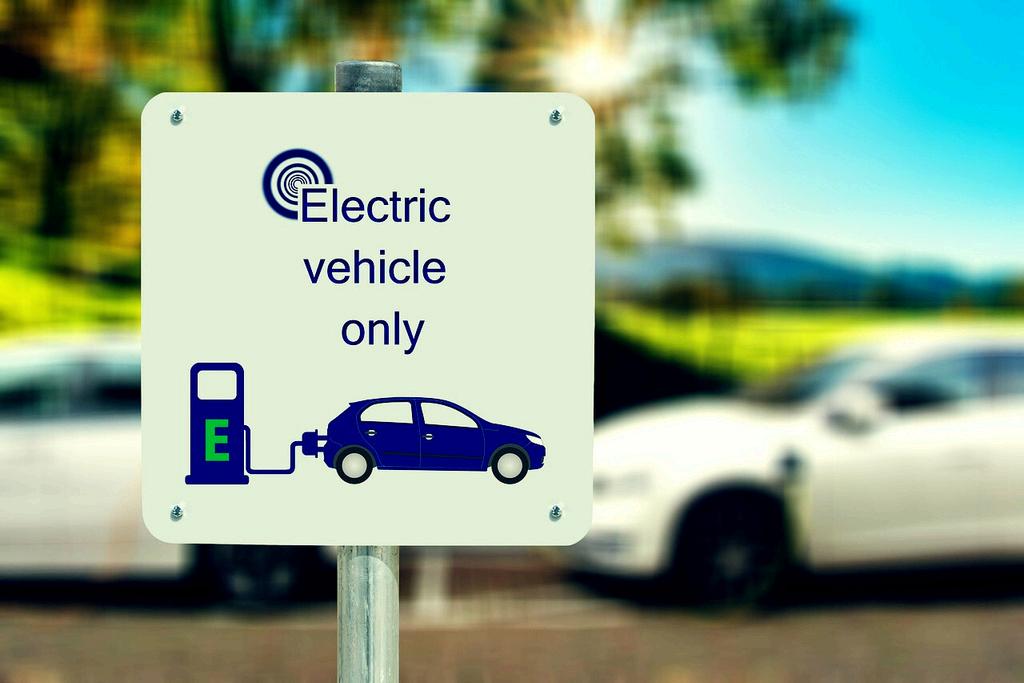
We look at the battle between BYD and Tesla to revolutionise our vehicles, and we assess the opportunities for family offices in LATAM ahead of our first summit in 2026
The opening of the Grand Egyptian Museum, and the return of Concorde, are equally exciting for travellers We also examine the curious history of the different but related class systems in both the UK and Australia and how they came to be
Do you have something we should cover? Contact me at info@aleaglobalgroup.com
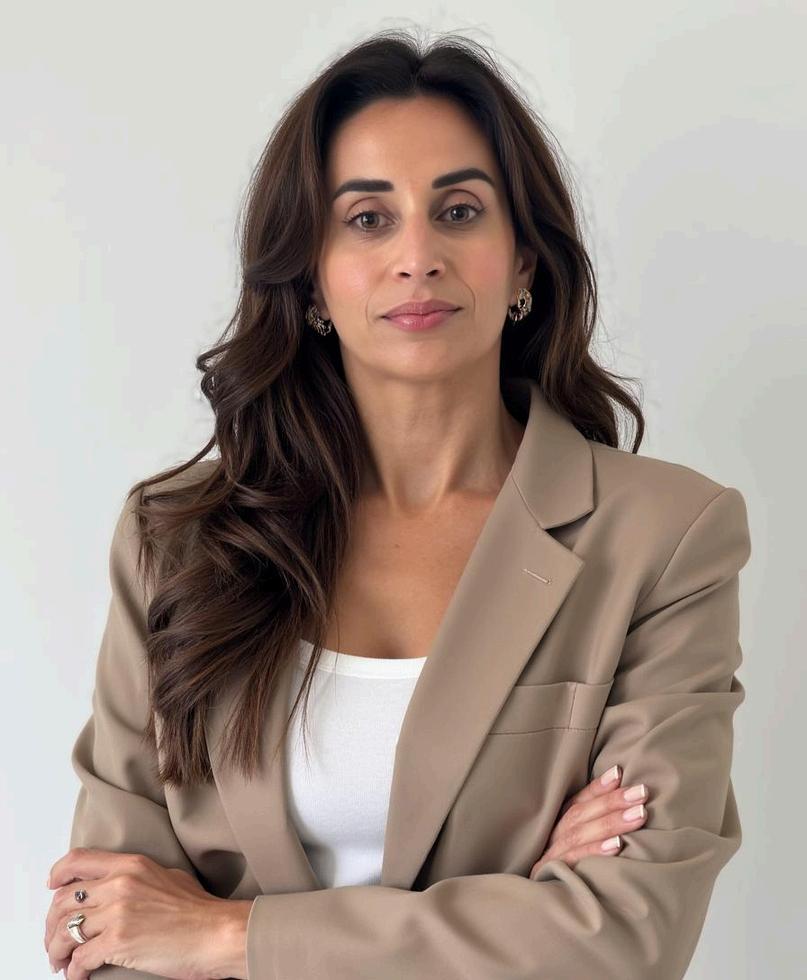
With Sara Al Ateeqi presents
The Wealth Table: A Private Series for
Financially Fluent Women
Riyadh, Saudi Arabia
3 February 2026
16:30 to 20:30
Where financial fluency meets community, and your next level begins.
We welcome you to an exclusive gathering for ambitious women ready to elevate their wealth-building strategies. This curated series combines expert insights with meaningful peer connections in an intimate setting.
Each session features a mini keynote by your host and mentor Sara, plus curated conversations with industry voices, interactive learning moments, and premium networking.
Limited to a select group of participants who are serious about financial growth and ready for substantive money conversations.
About Sara
CEO & Vice Chairman, AlMal Investment Company & Director, Oasis Venture Capital Fund, Kuwait
With over 15 years of experience in private equity, venture capital, and investment strategy, Sara has worked on complex financial decisions across global markets. Her investment work spans earlystage startups to large-cap companies, with a focus on long-term value creation.
What to expect
Expert-led mini keynotes – Personal insights and trend analysis from Sara to frame each session’s focus
Presentation – Keynote discussion and audience Q&A for realworld application
Interactive learning moments – Table exercises, journaling, and paired sharing to make insights immediately actionable for all participants
Premium networking & light bites – Curated refreshments and intimate connections with all your fellow ambitious women
To participate, email info@aleaglobalgroup.com.
Registration is subject to Advisory Board approval and payment of attendance fee
THE UK AND AUSTRALIA:
THE COMPLEX LEGACY OF CLASS AND MIGRATION
The UK and Australia share a language and deep historical roots, but they have cultivated distinct social ecosystems around class.
While Britain’s class system is famously woven into its cultural fabric, Australia has built a powerful national narrative of egalitarianism The reality in both countries, however, is more complex.
Understanding how migration including the convict era shaped Australia, and how both nations have evolved, reveals why their social landscapes feel so different today
Britain: An Evolving, Yet Persistent, Class Structure
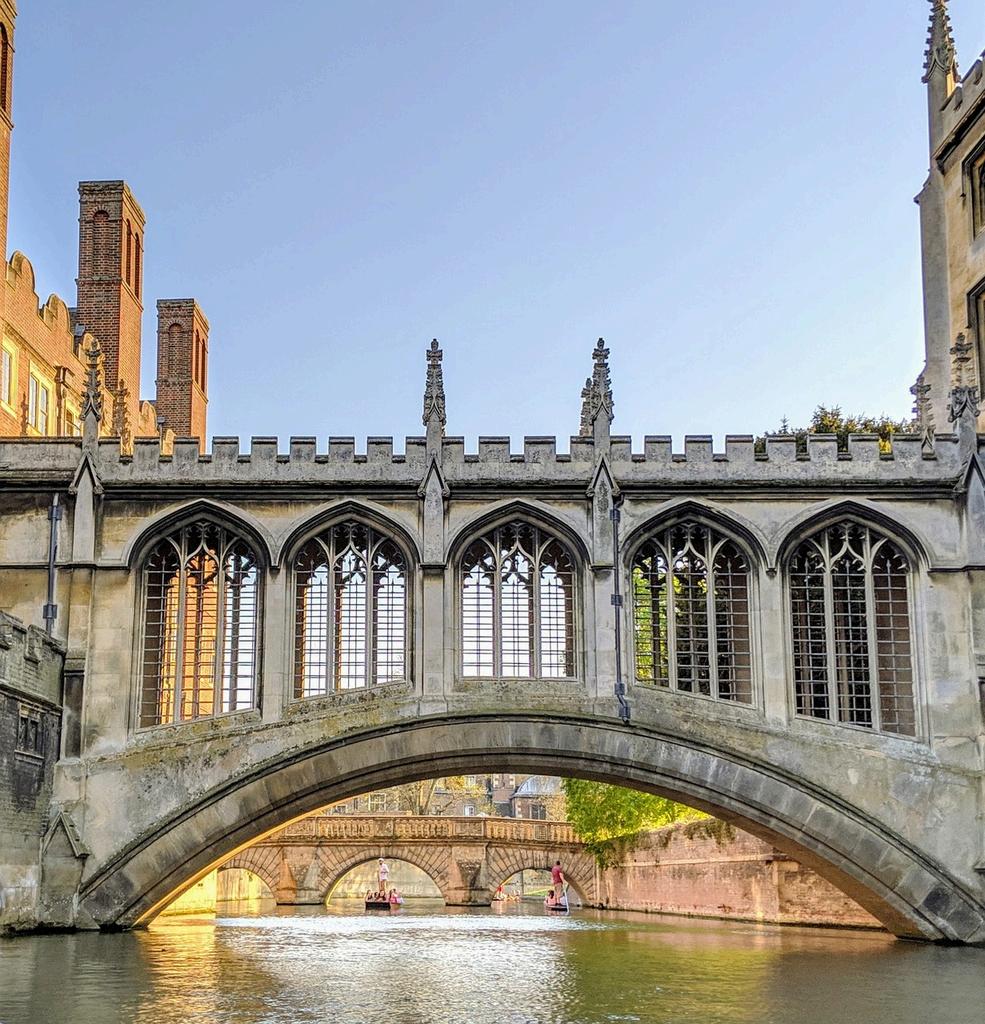
In the UK, class remains a potent force that extends beyond income to encompass ancestry, education, accent, and social networks Elite institutions like Oxford, Cambridge, and private schools still act as powerful gatekeepers to influence Class has a significant cultural stickiness; new money does not always erase old social markers, and the psychological weight of class identity continues to shape personal opportunities
However, to describe the British system as purely static would be a mistake The post-war creation of the Welfare State and the NHS were monumental efforts to mitigate class-based disadvantage. The decline of traditional industries and the rise of a new elite in finance and tech have created new pathways for wealth, even as they introduced new economic inequalities
Yet, these changes often operate alongside the old structure; cultural barriers and the reproduction of privilege across generations remain significant hurdles to a truly mobile society
In recent decades, however, social mobility in the UK has stalled and today Britain ranks among the OECD countries with the lowest levels of intergenerational mobility.
Australia: The Egalitarian Myth and a More Complex Reality
Australia’s founding myth is built on the idea of a ‘fair go ’ , born from its origins as a penal colony Between 1788 and 1868, approximately 160,000 British and Irish convicts were transported, many from the working poor. While it is true that some emancipated convicts and their children found opportunities unimaginable in Britain, this is only part of the story
Colonial society quickly developed its own hierarchy A wealthy ‘Squattocracy’ landowners who occupied vast tracts of Indigenous land dominated politics and the economy, and successful ex-convicts often became fervent defenders of this new social order, eager to distance themselves from their past
Later migration waves like the ‘Ten Pound Poms’ reinforced the working-class character of the non-Indigenous population. But this narrative of class mobility has a major, often unstated, caveat: the White Australia Policy (1901-1973) For most of the 20th century, Australia actively built a society that was egalitarian for a privileged racial group (white, preferably British migrants) while legally excluding others This critical context challenges the simplicity of the ‘fair go ’ ideal
Social Mobility: A Nuanced Contrast
The clearest difference between the two nations lies in the nature of mobility Both countries have mobility, but they measure it differently: Britain culturally, Australia economically
In Australia, class is more openly tied to economic success. A rise in income property ownership, and professional status is more readily accepted as a passport to a higher social tier. This creates a powerful culture of aspiration However, this ‘economic’ model of class has a shadow
The ‘egalitarian pretence’ the belief that class doesn't exist can make it harder to openly address the systemic barriers and cultural capital (such as which school you attended) that still influence opportunity Furthermore, soaring property prices are now cementing wealth inequality, making intergenerational mobility more difficult.
In the UK, the class system is more explicitly cultural Upward economic mobility does not automatically grant someone the subtle social codes of the
established middle or upper classes. An accent, a lack of the "right" educational pedigree, or unfamiliarity with certain social norms can act as powerful, if unspoken, barriers
While the UK has a more sophisticated vocabulary for discussing class, this discourse can sometimes become a circular debate about identity rather than a catalyst for economic change
Indigenous Australians: The Foundation of Dispossession
Any analysis of class in Australia is incomplete without acknowledging its original peoples The disadvantage faced by Aboriginal and Torres Strait Islander peoples is not a product of the migrant class system but its foundation
Their dispossession from the land, violent frontier conflicts, and exclusion from the rights of citizenship until the mid-20th century created a deep, structural inequality that predates and operates separately from the dynamics of white Australian society This remains the nation's most profound and enduring social challenge
Australia
Pros:
A strong cultural belief in aspiration and a ‘fair go ’
Generally, less overt deference to inherited social status
Historically, a strong link between economic success and social mobility
Cons:
The ‘egalitarian pretence’ can mask how class and privilege operate, making inequality harder to confront Increasing wealth gaps, especially intergenerational wealth via property, threaten mobility
A history of racial exclusion and profound, ongoing Indigenous disadvantage
UK
Pros:
A long-established and nuanced public discourse around class and inequality
Institutions (like the NHS) built with the explicit aim of reducing classbased disadvantage
Cons:
A class structure that, while evolving, remains potent and culturally ‘sticky’ Privilege is effectively reproduced through networks, education, and cultural capital.
Social stigma attached to regional accents and working-class identity can persist despite economic success
Their shared history produced divergent systems: the UK preserved the cultural architecture of class, while Australia reinvented hierarchy through economics, race, and land
Australia’s convict and working-class foundations did not create a classless society, but rather one that privileges economic achievement over inherited status at least in its self-image
Britain’s deeper history has resulted in a class structure more resistant to economic change alone Yet, both nations grapple with the persistent power of privilege.
Australia’s challenge is to see beyond its egalitarian myth to address its entrenched inequalities, both old and new Britain’s challenge is to continue dismantling the cultural barriers that hinder its potential for fluid mobility They are not simply opposites, but two different answers to the enduring question of how a society organizes its hierarchies
BYD vs Tesla: Two Competing Blueprints for the Future of the Global EV Industry
For more than a decade, Tesla has been the cultural symbol of the electric-vehicle revolution: a company that redefined what a car could be and, in the process, rewrote the rules of the global automotive industry
Yet as the 2020s unfold, a rival has quietly, methodically, and now decisively emerged. BYDm the Chinese battery and automotive giant has transformed from a domestic manufacturer into a global powerhouse, challenging Tesla not only on sales volume but on technology, manufacturing, and strategic execution Their rivalry now shapes the trajectory of the EV transition itself
Although both companies are best known for their electric cars, the deeper story is that Tesla and BYD represent two fundamentally different visions of industrial power. Tesla, born in Silicon Valley, frames the car as a software platform on wheels and positions itself as a technology company first BYD, founded in Shenzhen as a rechargeablebattery manufacturer, approaches the EV as the apex of a tightly integrated industrial ecosystem
Their philosophies diverge across every dimension: strategy, leadership, scale, manufacturing, technology, risk, and global expansion Understanding their differences reveals where the balance of power in the world’s most important growth industry may ultimately settle.
Tesla’s rise was built on the idea of rethinking the car at its core Its interiors are minimalist and screencentric, its drivetrains emphasize performance over practicality, and its vehicles are updated continuously via over-the-air software.
A handful of models Model S, 3, X, and Y carry the bulk of its global volume, with new products introduced sparingly The company has invested heavily in autonomy, using a controversial camera-only ‘vision’ system and pushing toward full selfdriving capability faster than regulators are comfortable with
Tesla’s brand remains one of the most powerful in the world, synonymous with innovation, luxury, and the future. Yet its identity is inseparable from its CEO, Elon Musk, whose unpredictability generates both investor enthusiasm and reputational volatility
BYD’s identity is quieter but in many ways more formidable Launched in 1995 as a battery manufacturer, the company mastered the most technically difficult and capitalintensive part of electric-vehicle production long before it built its first car.
That legacy still defines it: more components of a BYD vehicle are made inhouse than at almost any other automaker in the world Batteries, semiconductors, motors, inverters, and even some microchips are manufactured internally, giving BYD cost control and supply-chain resilience few companies can rival Its Blade Battery an ultra-safe, long-life lithium-iron-phosphate (LFP) design is widely viewed as one of the most important battery innovations in the industry Tesla even buys BYD batteries in select markets
Where Tesla builds a narrow product range with long production cycles, BYD takes an almost opposite approach It produces dozens of models under multiple brands, from mass-market sedans and compact SUVs to luxury EVs under its Denza and Yangwang marques and rugged, off-road electric vehicles under its Fang Cheng Bao brand.
It serves both the high end of the market and the value segments, and it produces not only pure EVs but also plug-in hybrids models that play a critical role in markets where charging infrastructure remains inconsistent BYD behaves less like a tech startup and more like a fastmoving Toyota: broad segmentation, rapid iteration, and relentless cost control
These differences extend deeply into technology strategy. Tesla continues to invest heavily in high-energy-density batteries like its 4680 cell,
emphasizing performance, range, and integration with autonomous driving However, production scaling has been slow
BYD has chosen a different path: its LFP technology prioritizes stability, affordability, and safety factors that are increasingly important as EVs move from premium buyers to the mass market. While Tesla leads in software sophistication and autonomous-driving ambition, BYD adopts a more conservative, hardware-rich approach, using combinations of cameras, radar, and LiDAR in its premium vehicles It prioritises reliability over ambition
Leadership is perhaps the most striking contrast between the two companies Elon Musk is one of the most influential business figures of the century and his vision has undeniably accelerated both Tesla’s growth and the global adoption of EVs. But his leadership style introduces meaningful risk: regulatory scrutiny, investor turbulence, and brand controversies often follow him
BYD’s chairman, Wang Chuanfu, is the antithesis of Musk’s public persona A chemist by training, Wang leads with technocratic discipline BYD rarely relies on charismatic storytelling; instead it operates with quiet confidence, maintaining stability and focusing on long-term industrial strategy. Investors often describe BYD as predictable where Tesla is explosive
preserve profitability as it expands globally; Tesla’s is to sustain margins while competing in increasingly crowded markets
Manufacturing strategy may ultimately determine the long-term winner Tesla’s Gigafactories in the U S , Germany, and China are engineering achievements, emphasizing automation and manufacturing simplification through innovations like gigacasting. BYD’s factories, however, resemble full industrial ecosystems producing core components internally rather than relying on suppliers This integration gives BYD a strategic shield in turbulent supply-chain environments and allows it to reduce costs as it scales in ways Tesla cannot fully replicate
Geopolitics add another layer of complexity BYD’s rapid expansion into Europe and the Global South has been met with both consumer interest and political scrutiny Concerns over Chinese industrial dominance may lead to tariffs and trade restrictions particularly in Europe and the United States.
Tesla faces no equivalent barriers in Western markets, but it is deeply exposed to China, where it competes on less favourable terms than domestic players, including BYD itself The geopolitical landscape may therefore favour Tesla in North America and disadvantage it in China, while BYD thrives in emerging markets but struggles against protectionism in the West
mobility from two entirely different philosophies
Tesla is betting on a software-centric, autonomydriven ecosystem, leveraging brand power and technological risk-taking
BYD is betting on cost leadership, industrial scale, and a broad product mix that can thrive across diverse markets with varying infrastructure and income levels. If Tesla is the luxury innovator, BYD is the industrial consolidator
The next decade will determine whether the EV landscape resembles the smartphone industry with Tesla playing the role of Apple or whether BYD becomes the Toyota of the electric age, dominating through scale, reliability, and manufacturing mastery The more likely outcome is a world where both companies lead but in different domains
Tesla will continue to set the pace in software, autonomy, and brand-driven innovation; BYD will set the pace in volume, affordability, and global market penetration
What is already clear is that the centre of gravity in the EV industry is shifting The duel between Tesla and BYD is not just a corporate rivalry it is the contest that will define the automotive market for decades to come
Japan has long been recognised as a global leader in the quest to create artificial blood, and in 2025 the country remains at the forefront of one of medicine’s most inspiring scientific frontiers. While the technology is still in its early clinical stages, the progress made so far and the quality of the research behind it make this an exciting field to watch
The idea of a universal, shelf-stable, lifesaving blood substitute is no longer science fiction; it is an emerging reality, shaped by decades of meticulous Japanese innovation
The core of Japan’s effort centres on hemoglobin vesicles (HbV), tiny engineered particles designed by researchers at institutions including Nara Medical University, Keio University, and Waseda University These vesicles contain purified hemoglobin the molecule that carries oxygen in red blood cells encapsulated in a protective lipid membrane
Because they lack the surface antigens that define human blood groups, HbVs have the remarkable potential to be compatible with all blood types. That makes them one of the most promising
universal blood-substitute candidates in existence The appeal of the technology is profound Unlike donated blood, which has a short shelf life and requires cold storage, hemoglobin vesicles can remain stable for far longer and do not depend on refrigeration.
This means that, one day, emergency responders, rural clinics, military medics, and hospitals facing shortages could access a reliable supply of oxygencarrying fluid regardless of donor availability In countries with ageing populations or low donation rates Japan among them the implications are transformative
While some early reporting overstated the speed of clinical progress, the actual achievements to date are still significant Initial Phase I safety trials began around 2022, involving small volumes administered to healthy volunteers
These tests were encouraging: the artificial blood substitute appeared to be well tolerated, with only mild, temporary side effects reported For a first-in-human trial involving a completely new class of medical product this is a strong start and a testament to the technology’s careful design.
As of November 2025, the research teams have not yet announced the launch of larger Phase I/II studies, which would test higher volumes or evaluate clinical scenarios Although some media outlets speculated that such trials might begin in 2025, no official registry entries or peer-reviewed updates confirm this step Rather than indicating a setback, this reflects the deliberate, methodical pace appropriate for a complex biotechnology that interacts directly with the bloodstream In this field, caution is a sign of quality, not delay
What remains particularly positive is that the foundational science continues to hold up Every aspect of the hemoglobin vesicle platform from its oxygen-carrying capacity to its immunological neutrality aligns with what clinicians hope for in a safe and versatile blood alternative. Unlike earlier generations of blood substitutes, which often triggered severe side effects,
Japan’s vesicle-based design avoids many of those pitfalls The field’s leading experts frequently describe HbV as one of the most promising oxygen-carrier systems currently under development anywhere in the world
Looking ahead, several developments could accelerate momentum The publication of full Phase I data in a peerreviewed journal would be a major milestone Registration of a larger, dose-escalation human trial would mark the next formal step on the path toward eventual approval.
Advances in large-scale manufacturing already a focus of the research groups will also be crucial for turning the concept into a deployable medical product
For now, the outlook remains cautiously optimistic The promise of artificial, universally compatible blood is enormous, and Japan’s pioneering work continues to move the field forward Every year brings refinements in formulation, stability, safety testing, and production methods While it is too early to project a firm clinical launch date, the scientific foundation being laid today dramatically increases the likelihood that, within the next decade or two, artificial blood will become a practical part of modern medicine.
Japan’s artificial blood research is not simply an ambitious project it is a tangible sign of what coordinated, long-term scientific vision can achieve If successful, it could change emergency medicine, improve global healthcare equity, and save lives in situations where traditional blood supplies fall short The work is ongoing, the challenges are real, but the trajectory is unmistakably forward Artificial blood may not be ready for hospitals yet, but thanks to Japan’s steady progress, it has never been closer
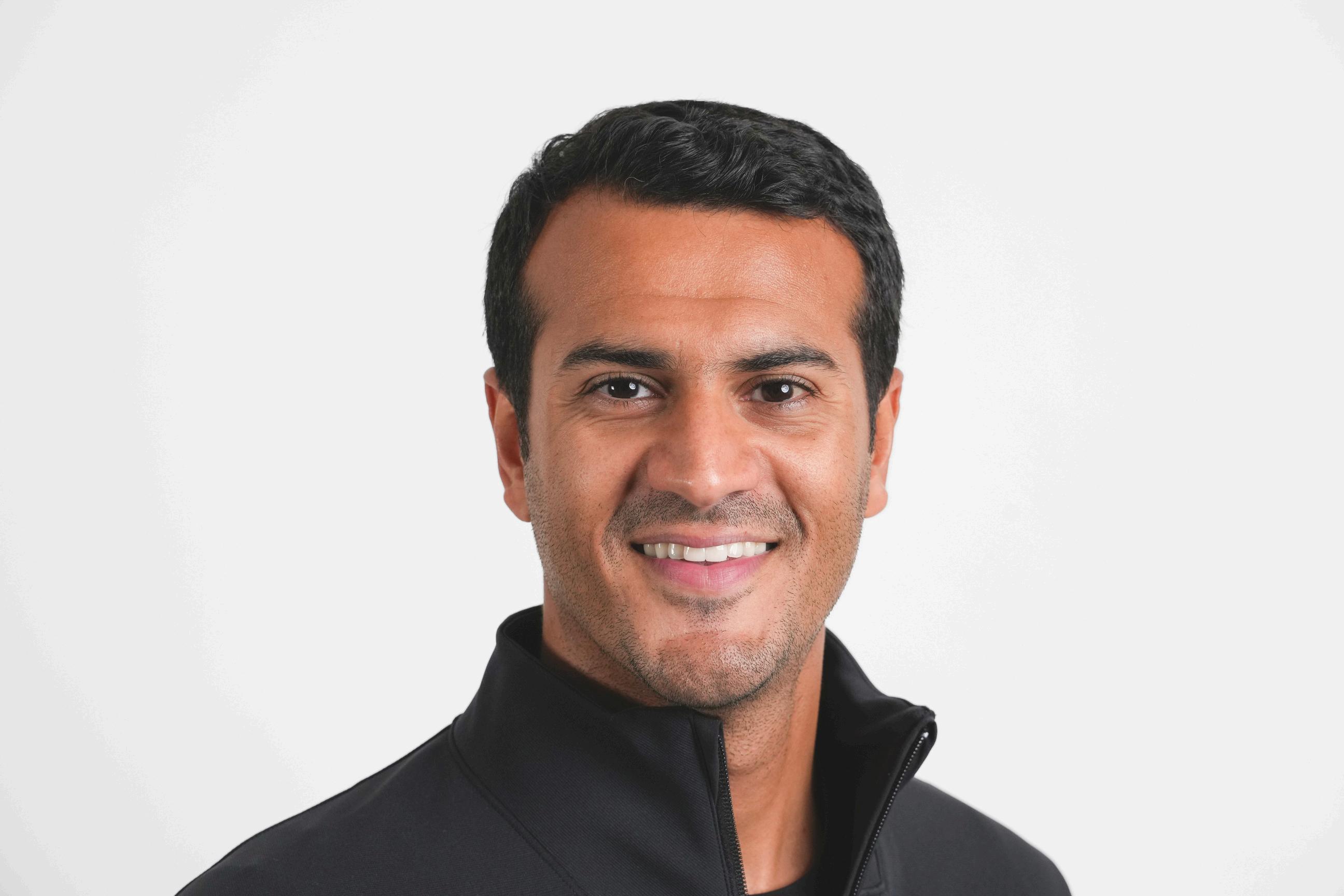
Introducing Abdul Rahman Al'Bader
Abdul Rahman Al'Bader is transforming lives and fortunes with his program
Human Dimension.
We spoke to the former athlete on how he’s helping others to achieve peak performance in all areas of life.
How would you explain what Human Dimension does in a single sentence?
We bring an understanding of state-of-mind performance to executives and teams that unlocks deeper levels of potential and high performance
What does that work look like on a day-to-day basis?
Our work takes place through a structured training program either one-to-one with leaders or with leadership teams delivered in a workshop format that is always tied to a specific outcome the client cares about Rather than adding techniques or more things to do, we focus on helping people understand the mechanics of the mind so that clarity becomes their default operating state
What begins to show up in clients’ day-to-day experience is what I describe as high psychological fitness, which has three parts
1. A consistent flow of clear, intelligent, and responsive thought
2 Clients start to navigate their day from insight rather than overthinking They notice that fresh thinking and good ideas show up naturally and reliably
3 A more balanced emotional experience
4 There is a noticeable increase in feelings of well-being like confidence, good attitude, and feeling warmly towards others
5 Higher levels of resilience
6 The ability to bounce back quickly into clarity and emotional balance Clients recover faster, reset faster and bring their best selves back online sooner
So the upstream shift is psychological fitness and the downstream impact is improved performance better decisions stronger teamwork and better results
Are you able to give some examples of individuals or organisations you have worked with so far?
I work with a wide range of professionals and organisations so it’s difficult to narrow it down to one field Without mentioning names, I’ve worked with medical doctors, CEOs, leadership teams, entrepreneurs, architects, athletes, and people working in finance and investment
What I’ve noticed across all of these different domains is that the challenges may look different on the surface but the mechanics behind performance are the same When people understand how their mind works and they operate from clarity rather than noise, their performance, leadership, and results all move in the right direction
What kind of results have you been able to achieve?
The interesting thing about this work is that the results improve even without anything else changing When people begin operating from a clearer state of mind, leaders have access to more strategic insight that drives revenues up
Mistakes and errors drop leading to lower costs Meeting times go down while the meeting effectiveness goes up. And as people's minds are less cluttered their productivity increases It’s universal in the way it impacts results When clarity improves, performance improves across the board
How did you go from being an athlete to working in this particular field?
As a professional swimmer, I was always puzzled by the inconsistency in my performance How could I perform well one day and struggle the next, even when everything else was the same? I was also fascinated by some of my best performances that appeared as if out of nowhere. It felt like there was another resource to my best self that I did not yet understand
Years later, I came across an understanding that finally explained what that resource is and the variability in my performance The moment I realised that, my interest shifted completely from
physical performance to the mind behind performance I knew immediately that this was relevant far beyond sports, and since then, I have been bringing that understanding to leaders and organisations
Are there any simple tips you can give people who may not be able to work with you right now but who feel they need to improve themselves?
This is a really good question Because the impact of this work happens when the individual begins to develop their own understanding of the mind and clarity, I encourage people to get curious about their own state of clarity
When you begin to see that you have already had moments of brilliance and clarity before, and you have only a basic understanding that in a less agitated mind, those moments are more available for you you will begin to naturally move towards the state of clarity
How can people find and work with you?
The easiest way to get in touch is through LinkedIn at @abdulralbader
LATAM 2026: Strategic Opportunities for Global Family Offices
Alea Global Group’s next event is our annual LATAM Family Office Investment Summit in partnership with Alba Medina Flores This well-established event attracts international family office investors and a wide array of regional opportunities
For family offices seeking diversification beyond the traditional corridors of Europe, North America, and Asia, Latin America (LATAM) is emerging as one of the most strategically compelling destinations in 2026.
While headline growth remains modest, the region holds deep structural advantages in food security, energy transition, critical minerals, infrastructure, and digital finance sectors that are increasingly relevant to long-term global portfolios
Growth in Latin America and the Caribbean is expected to reach 2.4% in 2025 and 2.3% in 2026 according to the UN Economic Commission for Latin America and the Caribbean (ECLAC) The IMF offers similar forecasts While these numbers point to steady rather than rapid expansion, they mask the region’s outsized importance in global supply chains and commodity markets.
LATAM remains the world’s leading net food exporter, with food exports reaching approximately US$349 billion in 2022 It plays a significant role in global agricultural production and agrifood exports
Beyond agriculture the region is essential to global energy transition efforts, supplying around 35% of the world’s lithium and 40% of its copper both critical to decarbonisation
Latin America is increasingly seen as a future leader in global energy transition According to IRENA accelerating the transition could boost South America’s annual GDP growth by 1 1 percentage points through 2050 and generate 12 million energysector jobs
Chile, Argentina, and Bolivia now control over 60% of global lithium resources while Chile remains the world’s largest copper producer Major industry players are taking notice Rio Tinto, for example, has committed US$900 million for a stake in Chile’s Maricunga lithium project
Significant investments are also being made in biofuels green hydrogen and renewable power with platforms emerging across Brazil Colombia and the wider Andean region For family offices, this presents a window into mid-market developer financing, coinvestment in infrastructure platforms, and entry into green-molecule production ecosystems
Infrastructure & Logistics: A Major Investment Gap
The Inter-American Development Bank has indicated that Latin America requires significant infrastructure investment to meet sustainable development goals by 2030 potentially upwards of US$2 trillion Core demand spans transport, energy, water, logistics, and digital connectivity
Private capital is increasingly filling the gap, with recent transactions underscoring strong momentum Concession-backed infrastructure assets especially toll roads, highways, and utilities offer inflationlinked, long-duration returns.
Mexico, in particular, stands out as the region’s most advanced near-shoring hub Its strategic position under USMCA and deep integration with U S supply chains are driving long-term demand in manufacturing, electronics, aerospace, and automotive sectors. This has led to rising interest in logistics hubs industrial parks and data infrastructure key targets for family offices seeking stable real-asset exposure
Gulf capital has begun entering Mexico as well In 2023, the Saudi Agricultural and Livestock Investment Company (SALIC) partnered with Mexican food group Grupo Gusi in a strategic agribusiness joint venture focused on protein supply chains representing one of the first major Saudi investments in Mexico’s export-oriented food sector
Latin America’s fintech sector has expanded dramatically in recent years with the number of fintech firms growing from 703 in 2017 to over 3,000 by 2023, according to the InterAmerican Development Bank and Finnovista The surge is fuelled by high smartphone usage, low traditional banking access, and a digitally engaged youth demographic
Estimates suggest the sector could grow from a valuation of US$71 billion in 2024 to over US$125 billion by 2033 Payments, SME lending, and embedded finance are especially promising segments for family offices looking to enter via early-stage funds VC coinvestments or platform rollups
Agribusiness & Food Security: Global Significance and Local Scale
LATAM is a cornerstone of the global food system It contributes substantially to global agricultural and fisheries output and is the world’s top net food exporter Forecasts suggest the region will continue to supply a large share of global exports in commodities like soybeans, sugar, corn, and chicken through the 2030s.
These figures underpin major export opportunities and supply-chain investments, especially in Brazil, Argentina, and Paraguay For family offices, the most scalable routes may lie in the ecosystem around production: coldchain, logistics, storage, processing, and vertically integrated export platforms
Mining & Critical Minerals: Essential to Global Decarbonisation
The region supplies a large share of the world’s critical minerals, including approximately 35% of lithium and 40% of copper Chile alone holds the world’s largest copper reserves Argentina and Bolivia are also expanding their extraction capacity in line with rising global demand
Opportunities for family offices are strongest not at the mine face but in the value chain: refining midstream infrastructure transport corridors, and battery-material processing platforms Selective equity stakes or infrastructure-linked financings may offer attractive long-term returns aligned with ESG objectives
Latin America provides access to long-duration opportunities in sectors where global demand is accelerating For family offices with multigenerational capital and a global remit, the region offers:
Diversified exposure to agriculture, minerals, and green energy
Inflation-linked real assets, especially in infrastructure and utilities
Fast-growing consumer tech and fintech platforms
Access to supply chains tied to North America, Asia, and Europe
Long-standing institutional platforms such as sovereign wealth fund footprints and multilateral co-investment facilities provide ready-made vehicles for capital deployment
Strategic Considerations for 2026
The most effective family office strategies in LATAM will be thematic, long-term, and partnership-led. Co-investing with established regional players prioritising platform scalability and ensuring governance discipline will be essential Emerging ESG frameworks, especially around renewables, food, and financial inclusion, offer added alignment with mission-driven capital
Approached strategically LATAM is not just a diversification play it is a long-term value engine for family offices positioning themselves at the centre of global transition
To learn more and connect directly with leading stakeholders in the region join us at latamfosummit.com
Why LATAM Belongs in Global Family Office Portfolios
Welcome Back to the Future of Travel: Supersonic Flight Returns for the Global Business Traveller
It was the early 1980s an era of Walkmans neon trainers and cassette mixtapes
You’d arrive at London Heathrow or Paris Charles de Gaulle and catch that unmistakable glimpse of Concorde’s slender nose pointing confidently toward the sky
Inside the cabin offered a calm almost club-like atmosphere Champagne flutes chimed softly while the latest hits from Michael Jackson, Madonna and George Michael drifted from televisions in the departure lounge
Then in what felt like no more than the span of a long working lunch, you were already descending over the skyline of New York a journey that normally consumed the better part of a day reduced to a dramatic gesture of technological ambition.
This was Concorde’s magic It wasn’t simply that it was fast; it was that it gave business travellers the one luxury that no amount of money could buy elsewhere: time In those days, crossing the Atlantic in just over three hours felt like the future arriving early. Today that future might be returning
Concorde took its last flight in 2003 and its retirement was announced due to a combination of rising maintenance and fuel costs alongside reduced passenger demand for travel following 9/11
A catastrophic crash in 2000 had also ruined its otherwise perfect safety record The crash occurred due to a metallic strip falling onto the runway in Paris from a different plane, and bursting the Concorde’s tyre which then ruptured the plane, causing it to crash two minutes after take-off The fatal outcome added to the pressure on Concorde and its ageing fleet, and it bowed out of the luxury travel market apparently for good
A new generation of supersonic flight inspired directly by Concorde’s legacy but designed with modern technology, materials and regulations is now aiming to re-enter commercial service before the end of the decade, with leading developers targeting 2029
The idea of travelling at more than twice the speed of sound is no longer a nostalgic throwback; it is steadily edging back toward the runway While the initial network will focus on over-water routes like the North Atlantic, the implications for today's business traveller are still profound
A journey that once wiped out an entire working day could become a two- or threehour hop again Meetings in London followed by an evening engagement in New York could shift from logistical headache to realistic routine
For executives who frequently move between key transoceanic hubs, the return of supersonic travel offers the possibility of linking the world’s financial and creative capitals with unprecedented efficiency. The distances stay the same but the workday begins to stretch in new directions
What makes this moment different from the Concorde era is the technology driving it Advances in aerodynamics, engine design and sustainable fuels promise greater efficiency and lower operating costs than were ever possible in the 1970s and ’80s
Regulatory frameworks in the United States and beyond have also begun to clear space for a new class of high-speed commercial aircraft, making the business case stronger than at any point since Concorde’s retirement in 2003
There is still much to unfold early routes, inaugural operators and pricing structures remain under discussion but the energy around supersonic travel has undeniably returned For corporate travel planners and senior executives, this represents not just a transportation upgrade but a strategic shift
In a global economy where speed, presence and timing increasingly define competitive advantage, cutting transcontinental travel times by more than half has the potential to reshape entire industries
The romance of the Concorde era still lingers that sense of boarding something rare, elegant and a little ahead of its time But what is emerging now is more than nostalgia It is the revival of an idea that always made sense: that the world’s busiest business travellers deserve an option that respects the value of their hours as much as their miles
The age of ‘arrive before you left’ may soon be more than a memory It may once again be a booking option
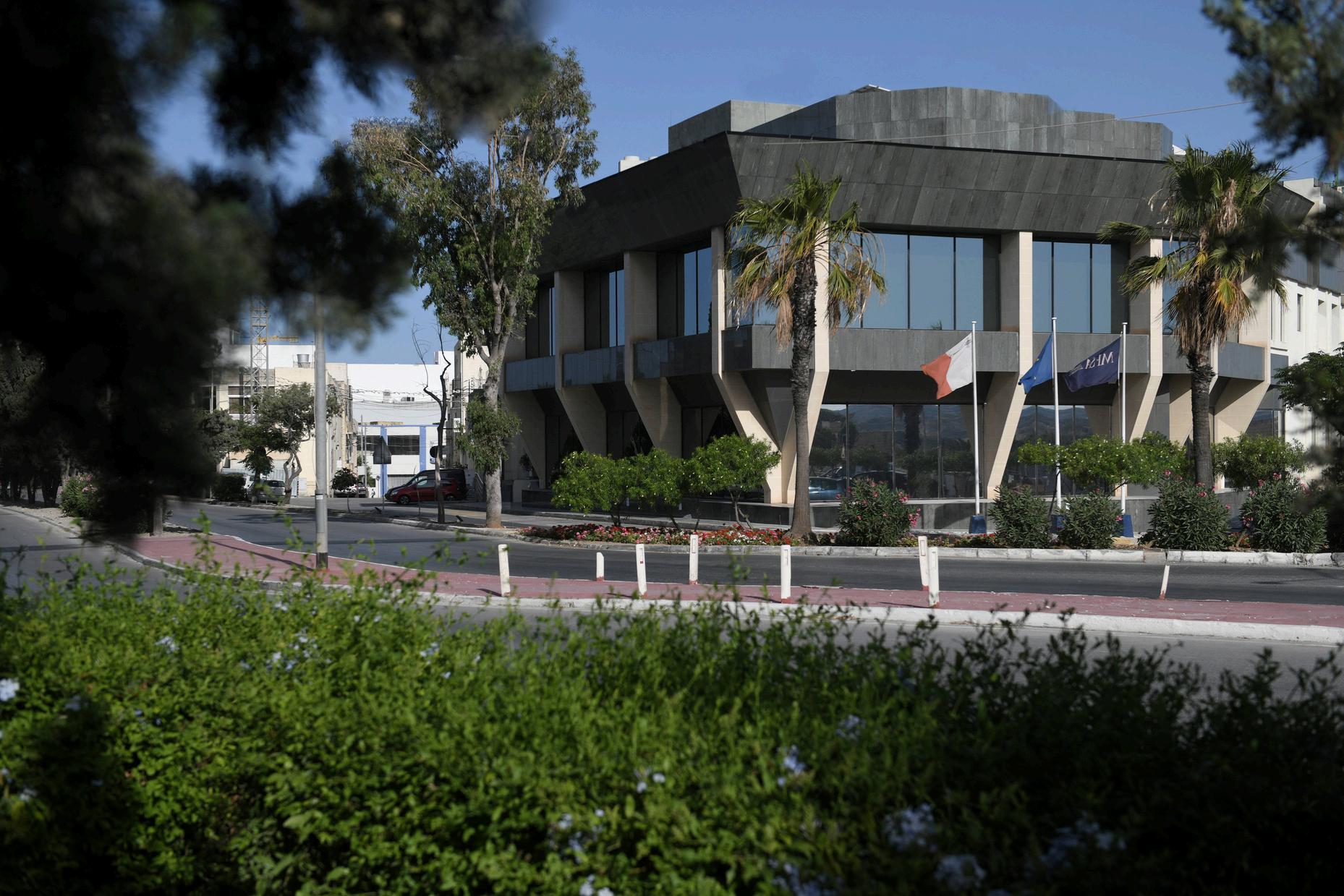
The Malta Financial Services Authority
The Malta Financial Services Authority (MFSA) is the single regulator for financial services in Malta
Its main functions include the protection of consumers, integrity of financial markets, financial stability and the supervision of all financial services activities
MFSA supports Finance Malta in the promotion of Malta’s standing as a dynamic European hub for the sector. Committed to leading Malta’s financial services sector into a future defined by resilience, innovation and international trust, the MFSA seeks to be a catalyst for positive change
It advocates for smarter, more balanced regulation across the financial sector and holds an advisory role to Government in the formulation of policies on matters relating to the industry
In the carrying out of its functions, the MFSA prioritises collaboration, efficiency and forwardthinking
Vision: To be a leading, agile and forward-looking financial services regulator, contributingtowards a strong and dynamic financial sector.
Values: Integrity, trustworthiness, dependability, excellence and independence
A forward-looking regulator
The MFSA is proactively preparingforfuture opportunities and responsibilities by shifting to a more intelligent, risk-based and data driven supervision, as well as investing in technological transformation to meet the demands of an increasingly complex financial landscape.
Agile and responsive
Efficiency remains at the core of the MFSA’s strategy, with a philosophy of “more streamlined regulation, more effective outcomes”.
It is committed to striking the optimal balance when it comes to minimising administrative burden and maintaining high standards.
In this respect, the internal harmonisation of supervisory tools and workflows has provided greater clarity for authorised persons and the MFSA has worked closely with the Financial Intelligence Analysis Unit (FIAU), the Malta Business Registry (MBR) and the Central Bank of Malta (CBM), to align compliance reporting and reduce regulatory burdens wherever possible.
The MFSA works closely with its peers and partners and contributes to a number of committees within the European Securities and Markets Authority and is a signatory of the international Organisation of Securities Commissions Engagement with regulated entities, national competent authorities and industry associations has been strengthened through technical committees and bilateral meetings which encourage the open exchange of ideas and establishment of effective unified approaches across different sectors
Financial Education
The MFSA has a skilled workforce and investing in people is an essential part of the authority’s commitment to build a futureready organisation Through the MFSA’s Financial Supervisors Academy (FSA), our team receives training on various topics, promoting a culture of continuous improvement and knowledge-sharing
We also collaborate with institutions such as the University of Malta to support skills development and ensure a strong future pipeline of talent For example, through initiatives such as the University’s Centre for Distributed LedgerTechnologies (CDLT) and the Postgraduate Diploma in Financial Regulation and Compliance.
Family Office Offering
Malta provides an attractive home for private investment. With a stable, transparent and comprehensive legal and regulatory environment, investors can benefit from the skilled, English-speaking workforce, the strategic location within the European Union, and an extensive network of double taxation treaties.
Within the context of Family Offices, the MFSA has recently recalibrated its regulatory frameworks with the aim of facilitating the structuring and operations of Single-Family Offices in Malta.
These reforms include amendments to two key frameworks:
1.The Notified Professional Investor Funds (NPIF) framework -NPIFs are a special type of collective investment schemes targeting professional investors which are only subject to a 10 working day notification process NPIFs can be managed by a fund manager, established in Malta, which is exempt from the requirements of an investment services license, subject to certain conditions being met such as an investment of a minimum EUR 5mn and investor must have aggregate net assets of EUR 50mn. This allows Family Office vehicles to invest private wealth without raising external capital
2 The Trustees of Family Trusts frameworkUnderthe Trustees framework relating to Family trusts, trustees who meet certain criteria on their activities do not need to seek full authorisation like professional trustees, instead, they must simply apply to Mfsa for registration. Moreover, the afore mentioned framework has been amended to update the definition of ‘family member/family dependent’ to encompass more contemporary circumstances surrounding family relations This definition now also extends to cater for ‘family clients’ as potential beneficiaries, where the trust in question forms part of a Family Office structure investing in a NPIF ’Family clients’ include [i] former family members; [ii] key employees; [iii] former key employees; [iv] non-profit or charitable organisations which are funded exclusively by one or more family member, family dependant or family client
The Opening of the Grand Egyptian Museum
Egypt has unveiled its most ambitious cultural project to date: the Grand Egyptian Museum (GEM), located just a short distance from the iconic Giza Pyramid Complex outside Cairo
With this landmark institution, the country stakes a claim not just as custodian of ancient heritage, but as a 21st-century destination for global culture, tourism and innovation.
Origins & Vision
The idea for GEM was first floated in the early 1990s, as Egyptian authorities recognised that the old Egyptian Museum in Tahrir Square was no longer sufficient for the scale and ambition of the country’s antiquities The official launch of the project came in 2002 (foundation stone) and full construction began in 2005 Delayed multiple times by economic, technical and regional challenges, GEM finally opened in full in late 2025
The vision is bold: to create the world’s largest museum dedicated to a single civilisation (Ancient Egypt), housing tens of thousands of artefacts, integrating cutting-edge technology, and transforming the visitor experience while boosting tourism and national prestige
Design & Build
The Museum was designed by the Dublin-based firm Heneghan Peng Architects, founded by Róisín Heneghan and Shih-Fu Peng Their winning design from a 2003 international competition is celebrated for its monumental yet sensitive approach to the Giza Plateau
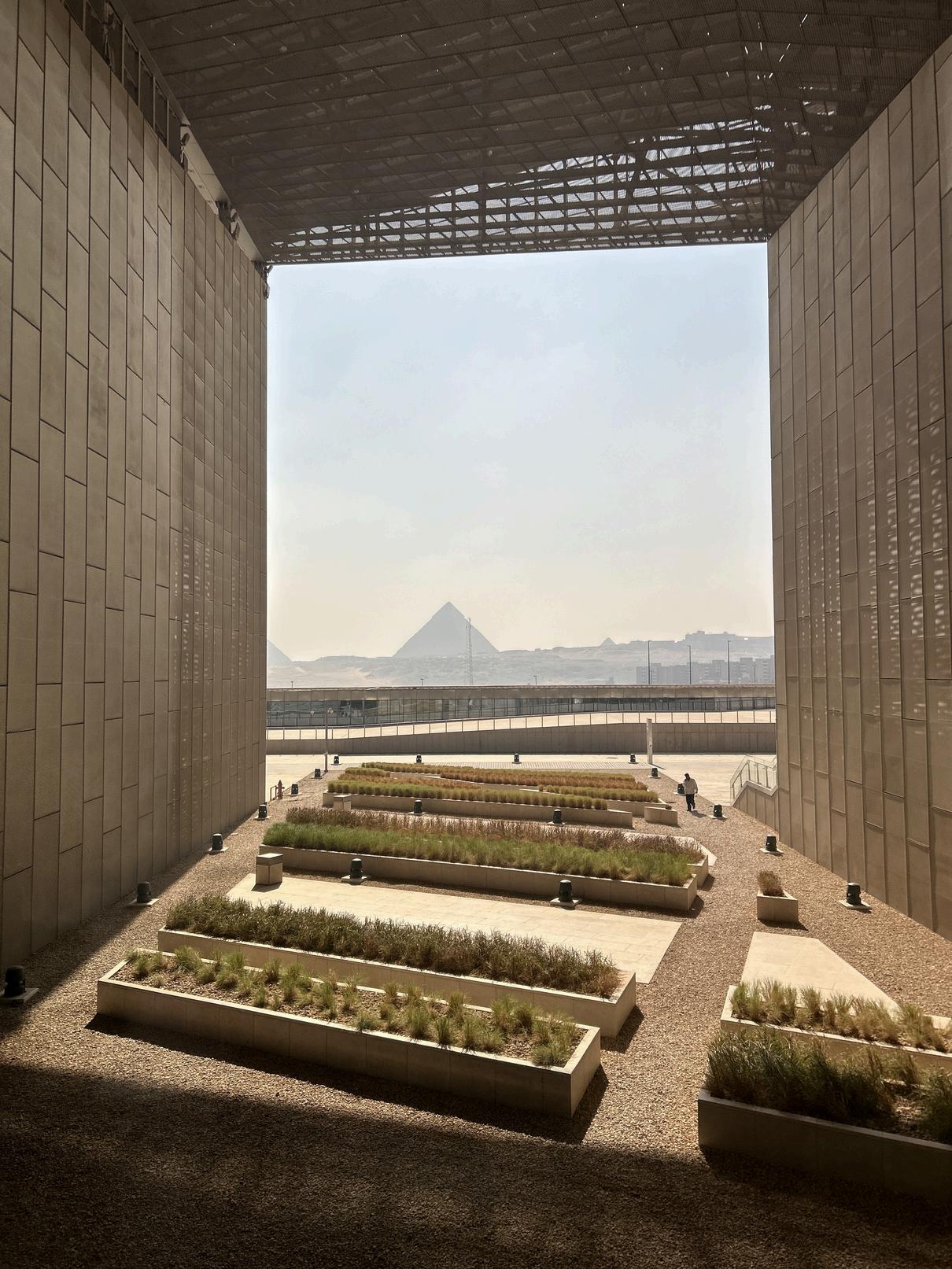
GEM sits on a vast site near Giza roughly 2 km from the Pyramids and covers hundreds of thousands of square metres The building comprises a striking triangular façade, glass, alabaster stone, and large transparent surfaces that allow views of the Pyramids For example the north and south walls are aligned with the Great Pyramid of Khufu and the Pyramid of Menkaure, creating a strong visual link to ancient monuments
Construction was executed by a joint venture of Egyptian and international firms (including Orascom, BESIX) and required intense coordination to move large statues fragile artefacts and design a state-ofthe-art conservation centre
Exterior & Shape
From the outside, GEM presents itself as both monumental and contemporary The building’s angled geometry alabaster-clad façade and expansive plaza of date palms give it a timeless yet fresh feel Visitors approaching the museum are greeted by sweeping grounds, palm-lined vistas, and the Pyramids looming in the background an immediate blending of past and present. According to press descriptions, the main atrium’s glass roof floods the entrance with light and from within one can glimpse the Great Pyramid just beyond the building’s edge
Interior & Galleries
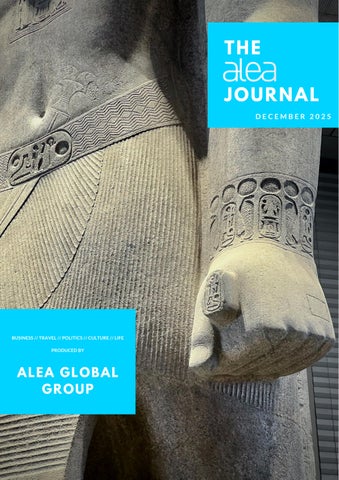
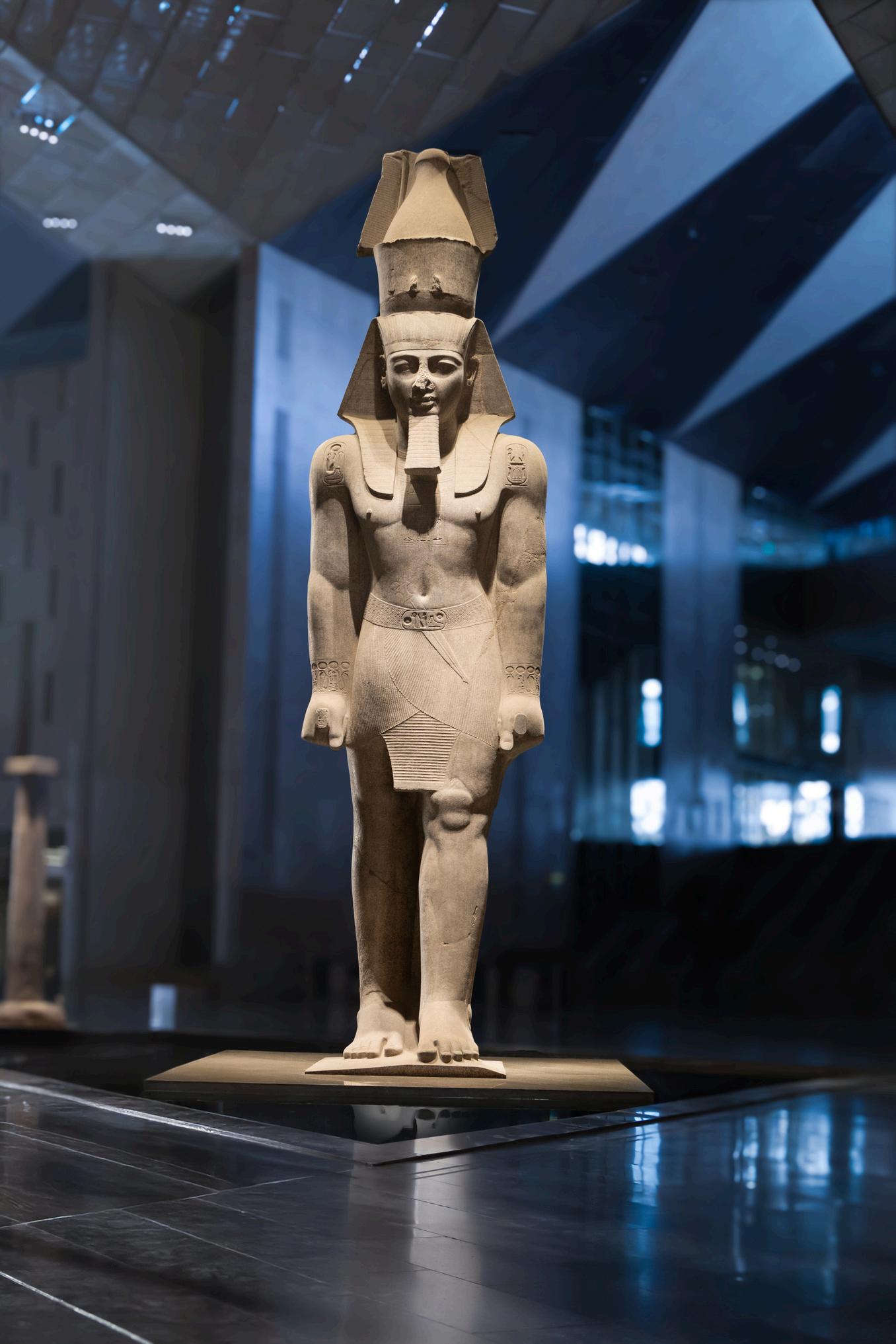
Inside, the museum features twelve main permanent galleries, plus temporary exhibition halls, a large children’s museum, educational and conference facilities One of the first spaces to grab attention is the Grand Hall (Atrium) more than 10 000 m² in area dominated by the colossal 11-metre 83-ton statue of Ramesses II, moved here from Ramses Square in Cairo
Among the most celebrated sections are the two halls dedicated exclusively to the treasures of Tutankhamun over 5 000 artefacts from the young pharaoh’s tomb displayed together for the first time
Ambient lighting, environmental controls for temperature and humidity, and immersive displays help present these objects in a way that honours their significance while offering a pristine visitor experience
Technology & Visitor Experience
GEM isn’t just about ancient objects; it’s about delivering them through modern means Multimedia installations augmented reality interactive screens large-format video and guided tours aim to engage younger generations and international travellers alike
The museum also houses one of the largest conservation and restoration complexes in the Middle East laboratories and storage facilities designed to preserve artefacts for decades to come
For visitors, the experience is designed for ease and engagement: clear pathways, multilingual signage, sweeping views of the Pyramids, spacious galleries, and accessible amenities. The setting near the Giza Plateau adds to the allure you aren’t merely visiting the museum you ’ re situating yourself almost within Egyptian antiquity
Reception & Ambitions
The opening of GEM has been received with international acclaim Egyptian stars who took the stage included actors such as the iconic Sherihan Ahmed Malek, Ahmed al-Ghozzi, Salma Abou Deif, and Huda al-Mufti, alongside athletes Ahmed alGendy, Farida Osman, and Feryal Ashraf
The ceremony was overseen by Director and Director of Photography Maazen Elmotagawel who was also responsible for the same role in the Royal Mummies Parade celebration in 2021
Prestigious media outlets refer to its scale, ambition and cultural importance Politically and economically the museum plays a key role in Egypt’s tourism strategy: it is expected to draw millions of visitors, help diversify the economy, and reposition Egypt as a global cultural destination
The backers have stated ambitions which extend beyond artifact-display They speak of GEM as a centre for archaeology, research and education; a venue for international conferences; a hub for archaeological labs and conservation science; and a cultural anchor for the region
Why It Matters
For business travellers and culture-savvy visitors, GEM offers a compelling destination: it is easily accessible from Cairo lies in proximity to other major heritage sites, and offers a level of presentation and ambition rarely found Whether you're planning a corporate event, an incentive trip, or combining meetings with high-end culture, the museum now stands as a world-class attraction.
It also sets a standard for how cultural heritage can be leveraged to stimulate tourism, education and international engagement The marriage of ancient artifacts and modern architecture, immersive tech, and meticulous conservation means that you are not simply witnessing antiquity you are participating in a story that spans millennia told through a new lens
Upcoming Events
15-16 December 2025
Middle East Family Office Investment Summit
Dubai, UAE
3 February 2026
The Alea Sessions Riyadh, Saudi Arabia
10 February 2026
The Alea Sessions Washington, USA
19-21 February 2026
Big Future Festival
14-15 April 2026
LATAM Family Office Investment Summit Mexico City, Mexico
12-13 May 2026
Europe Family Office Investment Summit Rome, Italy
14-15 October 2026
APAC Family Office Investment Summit Shanghai, China