BALANCED LIVING
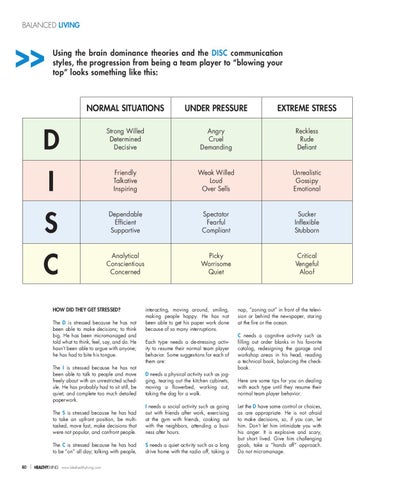
Using the brain dominance theories and the DISC communication styles, the progression from being a team player to “blowing your top” looks something like this:
NORMAL SITUATIONS
UNDER PRESSURE
EXTREME STRESS
D
Strong Willed Determined Decisive
Angry Cruel Demanding
Reckless Rude Defiant
I
Friendly Talkative Inspiring
Weak Willed Loud Over Sells
Unrealistic Gossipy Emotional
S
Dependable Efficient Supportive
Spectator Fearful Compliant
Sucker Inflexible Stubborn
C
Analytical Conscientious Concerned
Picky Worrisome Quiet
Critical Vengeful Aloof
HOW DID THEY GET STRESSED? The D is stressed because he has not been able to make decisions; to think big. He has been micromanaged and told what to think, feel, say, and do. He hasn’t been able to argue with anyone; he has had to bite his tongue. The I is stressed because he has not been able to talk to people and move freely about with an unrestricted schedule. He has probably had to sit still, be quiet, and complete too much detailed paperwork.
80 |
interacting, moving around, smiling, making people happy. He has not been able to get his paper work done because of so many interruptions. Each type needs a de-stressing activity to resume their normal team player behavior. Some suggestions for each of them are: D needs a physical activity such as jogging, tearing out the kitchen cabinets, moving a flowerbed, working out, taking the dog for a walk.
The S is stressed because he has had to take an upfront position, be multitasked, move fast, make decisions that were not popular, and confront people.
I needs a social activity such as going out with friends after work, exercising at the gym with friends, cooking out with the neighbors, attending a business after hours.
The C is stressed because he has had to be “on” all day; talking with people,
S needs a quiet activity such as a long drive home with the radio off, taking a
www.lakehealthyliving.com
nap, “zoning out” in front of the television or behind the newspaper, staring at the fire or the ocean. C needs a cognitive activity such as filling out order blanks in his favorite catalog, redesigning the garage and workshop areas in his head, reading a technical book, balancing the checkbook. Here are some tips for you on dealing with each type until they resume their normal team player behavior. Let the D have some control or choices, as are appropriate. He is not afraid to make decisions, so, if you can, let him. Don’t let him intimidate you with his anger. It is explosive and scary, but short lived. Give him challenging goals, take a “hands off” approach. Do not micromanage.