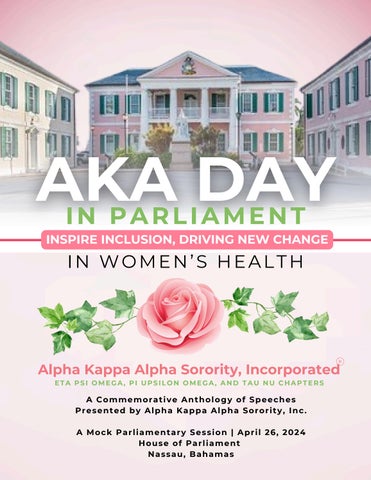

AKA DAY
IN PARLIAMENT
INSPIRE INCLUSION, DRIVING NEW CHANGE
IN WOMEN’S HEALTH



Alpha Kappa Alpha Sorority, Incorporated
ETA PSI OMEGA, PI UPSILON OMEGA, AND TAU NU CHAPTERS A Commemorative Anthology of Speeches Presented by Alpha Kappa Alpha Sorority, Inc.
A Mock Parliamentary Session | April 26, 2024
House of Parliament Nassau, Bahamas
AKADAY

IN WOMEN’S HEALTH

Alpha Kappa Alpha Sorority, Incorporated
ETA PSI OMEGA, PI UPSILON OMEGA, AND TAU NU CHAPTERS
TABLE OF CONTENTS
Letter from Presidents, 4-9
Letter from 2024 Advocate for Social Justice Committee Chair, 10-11
Letter from 2025 Advocate for Social Justice Committee Chair, 12 Resolution, 14
Summary/Recommendations, 16-19
THE SPEECHES IN ORDER OF PRESENTATION:
Ramona Wells, 21-22
Alana Major, 23-24
Samantha Anderson, 25-26
Angelique McKay, 27-28
Rashema T. Ingraham, 29-30
C.C. LaFleur, 31-32
Rhonda M. Wright, 33-34
Gaynell Rolle, 35
Ruddesha Strachan, 36
Dr. Indirah Dames-Adderley, 37-38
Dr. Tai Dorsett, 39
Kay-Andra Gardiner, 40
Tanisha Tynes-Cambridge, 41-42
Kelli Ashley Armstrong, 43
Tanyann Bowe, 44
Marshell Bain, 45-47
Terah L. Hanna-Sweeting, 48-49
Tezel Lightbourne, 50-51
Zoë Gibson-Bowleg, 52-53
Kim Johnson, 54-55
Pictures, 56-57
Stay In Touch, 58

Alpha Kappa Alpha Sorority,Incorporated®
ETA PSI OMEGA CHAPTER
P O Box
CB-11097
Nassau, Bahamas

May 9, 2024
To Whom It May Concern,
My name is Phylicia Ferguson, and I am honoured to serve as the President of The Eta Psi Omega Chapter As a representative of a diverse and vibrant community of women, we strive to advocate for the health and well-being of all women, irrespective of background or circumstance
Within our sorority, we are proud to celebrate the diversity of voices and experiences that enrich our community Our members hail from different cultural, socioeconomic, and professional backgrounds, offering a kaleidoscope of perspectives on issues affecting women & health It is this diversity that strengthens our advocacy efforts and underscores the urgency of the proposed initiatives.
Among the key issues highlighted in the speeches are access to reproductive healthcare, maternal health disparities, mental health support, and systemic barriers to women’s leadership. These issues are not merely abstract concepts, but tangible challenges faced by countless women across the country. Our members are deeply committed to addressing these issues and advocating for meaningful change.
Our ultimate goal with this submission is to catalyse action and dialogue within the government to prioritize women & health We seek meaningful engagement, whether through a meeting with government officials to discuss these issues further, support for specific legislative proposals, or a commitment to incorporate women & health considerations into policymaking decisions
We are sincerely grateful for the attention that the government accords to these critical issues and for considering the perspectives shared by our sorority members Your willingness to engage with us gives us hope for progress and positive change
Furthermore, we extend a sincere offer of collaboration. We are eager to work hand in hand with the government on women & health initiatives, offering our time, resources, and expertise to support efforts aimed at improving the health and well-being of women nationwide
Thank you for your time and consideration We eagerly await the opportunity to discuss these matters further and to collaborate on initiatives that will make a meaningful difference in the lives of women across the country
Warm regards,
Mrs. Phylicia Ferguson President
Eta Psi Omega Chapter
Alpha Kappa Alpha Sorority, Incorporated®
Alpha Kappa Alpha Sorority, Incorporated
Pi Upsilon Omega Chapter Freeport, Grand Bahama, The Bahamas piupsilonomegaaka@gmailcom
May 22, 2024
The Honorable Myles K Laroda
Minister of Women’s Affairs
Nassau, New Providence, The Bahamas
Dear Sir/Madam:
Re: AKA Day at Parliament
My name is Mrs Elva Simmons-Davis and I am the President of Alpha Kappa Alpha Sorority, Incorporated, Pi Upsilon Omega Chapter, located on the island of Grand Bahama As the President of Pi Upsilon Omega Chapter, I am honored to represent 42 college-educated, creative, inspiring, innovative, community-minded women with a shared vision who truly epitomize service to all mankind.
I humbly submit this letter of intention in which our Sorority members have submitted speeches from their participation in the AKA Day at Parliament. These speeches succinctly detail and outline our ongoing advocacy of bringing awareness to the myriad of issues surrounding women’s health, particularly mental health, and the lack of adequate access and facilities to curtailing these issues Our submission of these speeches aims to engage the Government of The Bahamas in unmediated action and adopt and implement tangible and far-reaching legislature that will fulfill the need for efficient, available, fully functioning mechanical and human resources on the island of Grand Bahama that are specifically geared towards the long-term mental and physical wellbeing of women.
At the core of our Sorority is the unwavering support of women and girls. Women play such an all-encompassing role in our society that it is a natural inclination to be a proponent of their well-being Our members possess a plethora of knowledge and expertise in supporting the marginalized and the disenfranchised Living in Grand Bahama with its limited healthcare resources, there are members of our Sorority who have experienced firsthand the unimaginable scarcity of resources as it pertains to women’s physical and mental health. We intend to lobby for a dedicated women’s health and wellness facility in which we can have access to free mammograms, free cancer screenings and minimal payments for cancer treatments. At this facility, women will participate in parenting classes. They will have ongoing mental health support. Most importantly, this facility would be a place where women would never have to suffer in silence or isolation
Our Sorority continues to work assiduously in educating the public about women’s health issues and concerns through seminars, town hall meetings and webinars. We have collaborated with experts in the various segments of women’s health to present fully researched findings on the overwhelmingly inadequate support and unreadily available access to much-needed services Of all the initiatives we have introduced, I am most proud of our Period Pad Kits Distribution, our Pink Goes Red for Heart Health in Women, and our observance of Mental Health in Women during May
Amid these challenging times, it is evident that women's healthcare in the Bahamas is facing numerous obstacles Improved access to healthcare is crucial; many women are unable to afford essential services such as non-communicable disease screening, prenatal care, mammograms, cancer screening, and infectious disease screening. The cost of these services can lead to life-threatening situations. It is imperative for our government to prioritize these issues, and collaboration with the international community can significantly improve the situation.
In our ongoing effort to create a monumental paradigm shift in women’s health in Grand Bahama, we shall utilize all avenues to present our concerns and initiatives to the Government of The Bahamas. We have arrived at a critical juncture where our endorsement of women’s health can no longer remain passive The adage of business as usual has expired As a Sorority, we are fully committed to unapologetically interrupting the patriarchy to ensure that women’s health is prioritized when policies are being drafted We call on the Bahamian government today, as our future depends on it
I am grateful to the Government of The Bahamas for allowing our Sorority to use the platform of AKA Day at Parliament to raise awareness about the importance of women’s health in The Bahamas
On behalf of Alpha Kappa Alpha Sorority, Incorporated, Pi Upsilon Omega Chapter, I am extending an invitation to the Government of The Bahamas for further in-depth discussions and collaboration in addressing women’s health initiatives in Grand Bahama. Our sorority is committed to providing the time, expertise, and resources to ensure that a respectful and open alliance is formed with the Government of The Bahamas. Our sisterhood goes beyond the boundaries of our sorority. We are women supporting women throughout the world.
Sincerely,
Elva Simmons-Davis President
Alpha Kappa Alpha Sorority, Incorporated Pi Upsilon Omega Chapter
Alpha Kappa Alpha Sorority, Incorporated
TAU NU CHAPTER | UNIVERSITY OF THE BAHAMAS
Nassau, The Bahamas
May 9, 2024
The Honorable Philip Davis
Prime Minister
The Commowealth of The Bahamas
Nassau, The Bahamas
Dear Prime Minister Davis,
I trust this letter finds you well My name is Ms Marshell Bain, and I am privileged to serve as the President of the Undergraduate Chapter of Alpha Kappa Alpha Sorority, Incorporated, Tau Nu Chapter, at the University of The Bahamas.
I am writing to highlight the significance of "AKA Day in Parliament," an initiative that is deeply rooted in our sorority’s commitment to advocacy and community service, with a special emphasis on women's health Alpha Kappa Alpha Sorority, Incorporated, has a rich history of promoting academic excellence, leadership, and service to all mankind The Tau Nu Chapter continues this tradition by addressing issues that are critical to the well-being of our communities.
"AKA Day in Parliament" serves as a platform for our members to engage with policymakers and advocate for legislative actions that support and improve women's health This initiative is particularly important because it underscores our commitment to addressing health disparities and ensuring that all women have access to the healthcare they need. The focus areas include maternal health, reproductive rights, cancer awareness and prevention, mental health, and access to affordable healthcare services.
Women’s health is not only a personal issue but a public one that affects families, communities, and the nation as a whole By championing these causes, we aim to foster a healthier and more equitable society The support of "AKA Day in Parliament" would significantly enhance the visibility and impact of our efforts. Specifically, we kindly request your assistance in reading the various speeches delivered on that day. Your endorsement would send a powerful message about the importance of women's health and demonstrate a commitment to creating policies that benefit all Bahamian women
We firmly believe that with your support, we can make substantial progress in our advocacy efforts. We would be honored to have the opportunity to discuss this initiative further with you and explore how we can work together to advance these crucial health agendas
Thank you for your time and consideration We look forward to the possibility of your support in this meaningful endeavor
Sincerely,
Marshell Bain President, Undergraduate Chapter
Alpha Kappa Alpha Sorority, Incorporated
Tau Nu Chapter
University
of The Bahamas
Alpha Kappa Alpha Sorority, Incorporated
ETA PSI OMEGA CHAPTER
P O Box CB-11097
Nassau, The Bahamas
May 9, 2025
To Whom It May Concern:
“Communities, and countries, and ultimately the world are only as strong as the health of their women.”
- Michelle Obama, former First Lady of the United States of America.
Understanding the weight of this statement, the Bahamian Chapters of Alpha Kappa Alpha Sorority Incorporated® conducted its second annual AKA Day in Parliament on April 26, 2024 Under the theme, ‘Inspire Inclusion, Driving New Change in Women’s Health’, this mock Parliament showcased our Sorority’s commitment to women’s health and well-being.
Our letter calls for your attention to the attached speeches that highlight critical issues and provide innovative solutions for improving women's health in the Commonwealth of The Bahamas Grounded in evidence-based research, while also recognizing social observations and honoring lived experiences, these speeches offer valuable insight and actionable recommendations that can significantly enhance the health and well-being of women in our nation. From chronic disease management to reproductive health, preventive care, mental health, and caregiving support strategies, these speeches empower women to take control of their health while advocating for equitable environments to take such action, ensuring they can lead fulfilling lives and contribute positively to society
These speeches will provide a comprehensive understanding of the current landscape of women's health and inspire further action to drive positive change. Your leadership and commitment to this cause can pave the way for significant improvements in healthcare delivery and outcomes for women throughout The Bahamas
In addition, we pledge our unwavering commitment to implement and sustain initiatives to improve women's health. Our Sorority has been dedicated to studying and alleviating problems concerning girls and women to improve their social stature for 117 years; therefore, we remain committed to advocating for better health policies, raising awareness, and providing resources to empower women to take control of their health We are eager to collaborate with your office and key stakeholders to implement evidence-based strategies that address the health inequities affecting women and girls throughout our archipelago.
Thank you for your thoughtful consideration. We look forward to your support, leadership, and collaboration in advancing women's health.
In Service,
Mrs Tanya McFall-Major & Ms Tezel Lightbourne
2024-2025 Advocate for Social Justice Committee Co-chairs
Alpha Kappa Alpha Sorority Incorporated | Eta Psi Omega Chapter
Alpha Kappa Alpha Sorority, Incorporated
ETA PSI OMEGA CHAPTER
P O Box CB-11097
Nassau, The Bahamas
June 3, 2025
To Our Esteemed Leaders and Citizens of The Commonwealth of The Bahamas,
AKA Day in Parliament: Inspire Inclusion - Driving New Change in Women’s Health
It is with vision and purpose that I welcome you to this powerful anthology a curated collection of speeches authored and presented by dynamic Bahamian women, each advocating for a healthier, more equitable nation.
As 2025 Chair of the Advocate for Social Justice Committee, and a presenter in our 2024 Mock Parliamentary Session, I knew these voices could not be confined to a single day This initiative was conceived to ensure that the concerns, data, and bold recommendations voiced in Parliament would live on to influence real change.
Our commemorative booklet is not simply a reflection, it is a roadmap. The recommendations within touch on critical pillars: women’s leadership, access to care, mental health, reproductive justice, equity, and systemic reform. They speak not only to what is, but to what must be.
I believe that when informed, inspired women engage with governance, transformation follows It is my deepest hope that this body of work will be received as both resource and catalyst and that the government will act on its recommendations with clarity and commitment
Our Chapter stands ready to support the development of these ideas into actionable policy through research, outreach, and collaboration. We remain committed to the cause of justice in women’s health and beyond.
Thank you for receiving this work with the openness it deserves May it fuel the kind of change that truly uplifts every Bahamian
For our Beloved Bahamaland, Alana Major, MBA, FLMI
Advocate for Social Justice Chair, 2024-2026
Eta Psi Omega Chapter Alpha Kappa Alpha Sorority, Inc.
AKADAY
IN WOMEN’S HEALTH
Alpha Kappa Alpha Sorority, Incorporated
ETA PSI OMEGA, PI UPSILON OMEGA, AND TAU NU CHAPTERS

Whereas
todrivechangeforWomen’shealthrequiresacommunityeffort,andto furtherthehistoriccontributionsmadebydoctors,nurses,andleadersinhealthcarein The Bahamas, many of them being Women, we must continue such efforts with vigorinhopeofinspiringinclusionandtofinancetheresearchandinnovationneeded tobringchangetoWomen’shealthcare.
toaddressthecrucialissuessurroundingWomen’swellbeing and healthcare and as an extension of the initiatives surrounding Women’s History Month, the Women of Alpha Kappa Alpha Sorority, Inc., Eta Psi Omega Chapter (“Women of Parliament”), wish to hold an ‘International Women’s Day in Parliament’ to raise and discuss inter alia the limitations regardingWomen’shealthcareinTheBahamas.
theWomenofParliamentrecognizethattodrivepositive changeinwomen’shealthcareinoursurroundingcommunitiescaninvolveaplethora of initiatives inclusive of “Empowering Our Families, Building Economic Wealth, Enhancing Our Environment, Advocating for Social Justice and Uplifting Our Local Communities”, and wish to address such initiatives under varioussub-topics.Acopyofthelistofsub-topicsisattachedheretoasAppendix 1.
thattheWomenof Parliament on behalf of Alpha Kappa Alpha Sorority, Inc, Eta Psi Omega Chapter – meeting in Joint Session – in celebration of the historic contributionofWomeninBahamianSocietyandinsupportofprogressiveeffortsto bring new change in Women’s healthcare, will meet on the 26th of April AD 2024 at the House of Assembly to discuss matters of “Inspiring Inclusion: DrivingNewChangeinWomen’sHealth”inourBahamiancommunities.
AKADAY
IN WOMEN’S HEALTH
ETA PSI OMEGA, PI UPSILON OMEGA, AND TAU NU CHAPTERS ~Recommendations~
Alpha Kappa Alpha Sorority, Incorporated
IN WOMEN’S HEALTH
Alpha Kappa Alpha Sorority, Incorporated® – Bahamas Chapters
Recommendations to the Government of The Commonwealth of The Bahamas
Presented following the 2024 AKA Day in Parliament Nassau, Bahamas April 26, 2024 INSPIREINCLUSION,DRIVINGNEWCHANGE
Introduction
On April 26, 2024, members of Alpha Kappa Alpha Sorority, Incorporated (Bahamas Chapters) gathered in the House of Assembly for the second annual AKA Day in Parliament for a Mock Parliamentary Session. Through a series of powerful speeches, the sorority sisters highlighted diverse health-related issues affecting women and girls across The Bahamas. This document provides:
1 National Recommendations from the Sorority Member’s Collective Speeches, and 2 Recommendations in Alignment with Government Priorities, including opportunities for next steps and partnership
I. National Recommendations from the Sorority Member’s Collective Speeches
Alpha Kappa Alpha Sorority Incorporated, Bahamas Chapter members presented a unified call to improve women's health outcomes, strengthen care delivery systems, and promote equity across the healthcare, education, and public leadership sectors. The following thematic recommendations emerged from the speeches delivered:
1. Mental Health & Emotional Wellness
Expand National Health Insurance (NHI) to cover mental health care, including both traditional and nontraditional therapy options (eg, art, music, and dance therapy)
Promote early mental health education in schools and destigmatize mental illness through public awareness campaigns.
Ensure mental health services are integrated into maternal, adolescent, and workplace wellness strategies.
Encourage trauma-informed care training for professionals and increased mental health support for caregivers and women in uniformed services.
2. Sexual & Reproductive Health
Provide mandatory reproductive health education for adolescent girls in schools
Align the national legal ages for marriage and sexual consent to protect minors and uphold international human rights standards
Expand maternal health services and workplace protections for women over 35, recognizing their unique reproductive needs and increased health risks.
Strengthen national breast health initiatives by lowering the recommended mammogram age from 35 to 30, ensuring earlier detection and better outcomes for Bahamian women
Ensure free or subsidized access to contraception, menstrual products, and sexual health screenings
Encourage work environments that are supportive of breastfeeding mothers. Advocate for equitable maternal care, including insurance coverage for prenatal, delivery, and complex pregnancy services.
Recommend Human papillomavirus (HPV) vaccination (Gardasil 9) be made mandatory for preteens to prevent cervical cancer.
3. Leadership & Workforce Equity
Implement leadership development programs and mentorship pipelines for women in Healthcare, Science, Technology, Engineering, and Mathematics (STEM), and public service
Introduce gender quotas for leadership roles and enforce pay equity audits across government and healthcare institutions.
Provide family-friendly workplace benefits such as on-site childcare, lactation rooms, and flexible work hours.
4. Prevention of Noncommunicable Diseases (NCDs)
Introduce taxes on sugar-sweetened beverages and improve front-of-package labelling
Expand healthy eating education campaigns in schools and workplaces
Promote community fitness, nutrition, and wellness initiatives through grassroots networks.
5. Food Security & Nutrition
Support community gardens and urban farming as accessible, sustainable food sources.
Subsidize local food production to reduce dependency on imported goods and improve nutritional quality
6. Environmental & Occupational Health
Invest in green public infrastructure and environmentally sustainable clinics to improve working conditions, especially for women.
Expand heat stress protections and address air pollution in vulnerable communities.
7. Protection Against Violence
Strengthen laws and support systems for survivors of gender-based violence, including shelters, legal aid, and rehabilitation services.
Introduce school-based healthy relationship education programs and reinforce positive masculinity campaigns
8. Disability & Elder Health Equity
Improve physical access to clinics and hospitals.
Establish focal points for people with disabilities in every public health institution. Offer support training and financial aid to caregivers, particularly women supporting elders or persons with disabilities.
9. Universal Health Coverage (UHC)
Expand the scope of NHI Bahamas to include more comprehensive services. Raise national awareness about NHI benefits to encourage wider participation, especially among women, caregivers, and youth.
10. Education & Youth Development
Expand STEM education with targeted emphasis on high-impact fields such as aeronautics, agriculture, and disaster recovery sectors that can significantly enhance national sustainability and contribute to GDP growth
II. Recommendations in Alignment with Government Priorities
The sorority recognizes and applauds the Bahamian Government’s progress on several health, social, and environmental fronts. We offer the following complementary steps to strengthen national efforts:
1. National Health Insurance (NHI)
Current Efforts: National Health Insurance Authority (NHIA) currently provides primary healthcare to over 150,000 residents
Next Steps: Expand NHI coverage to include maternal mental health, comprehensive sexual health services, and holistic therapies Ensure access is extended to Family Islands and underserved groups through mobile clinics and digital platforms
2. National Energy Policy (30% Renewables by 2030)
Current Efforts: Public-private partnerships are pushing toward renewable targets.
Next Steps: Prioritize green health infrastructure (e.g., solar clinics, ventilated buildings) to reduce heat stress, improve indoor air quality, and support female labourers Link environmental metrics with public health monitoring
3. Disability Rights & Access (Persons with Disabilities Act)
Current Efforts: The Disabilities Commission exists and oversees national protections
Next Steps: Operationalize these protections in healthcare through accessibility audits, the installation of ramps and communication aids, and patient advocate programs in hospitals. Require regular sensitivity training for health personnel.
4. Education and Youth Development
Current Efforts: STEM and Technical and Vocational Education and Training (TVET) opportunities available in public schools
Next Steps: Incorporate early reproductive health education and consent into curricula Offer mentorship for girls pursuing careers in science, medicine, agriculture, and public policy
5. Gender-Based Violence Prevention (GBV)
Current Efforts: National GBV Plan in place under the Ministry of Social Services.
Next Steps: Enforce multi-agency response protocols. Expand trauma support services and fund additional crisis shelters. Promote GBV prevention messaging in schools and through male allyship programs.
6. Urban Renewal & Community Health
Current Efforts: Urban Renewal includes community agriculture and wellness hubs
Next Steps: Scale these programs nationally by establishing one community garden per constituency Link urban agriculture with nutritional campaigns and school programs to address NCDs and food insecurity
7. Women in Leadership
Current Efforts: Women hold senior roles in health and public service.
Next Steps: Formalize promotion targets and succession planning. Mandate pay equity audits and introduce a national mentorship registry for emerging female leaders in healthcare and governance
Conclusion
Alpha Kappa Alpha Sorority, Incorporated, Bahamas Chapters, through our 2024 AKA Day in Parliament initiative, proudly presents these collaborative recommendations as both a reflection of our sisterhood’s thought leadership and a contribution to nationbuilding. We remain committed to working with the Government of The Bahamas, civil society, and private sector stakeholders to help shape a healthier, more equitable future for all Bahamian women and families.
We are serious about progress and ready to partner in purpose
AKADAY
IN WOMEN’S HEALTH
Speeches~
Alpha Kappa Alpha Sorority, Incorporated
ETA PSI OMEGA, PI UPSILON OMEGA, AND TAU NU CHAPTERS
POLICIES TO SUPPORT WOMEN IN STEM CAREERS IN HEALTHCARE
RamonaWells
Madam Speaker, I rise to move the following Resolution
RESOLUTION
WHEREAS to drive change for Women’s Health requires a community effort, and to further the historic contributions made by doctors, nurses, healthcare professionals and healthcare leaders in The Bahamas, many of them being Women, we must continue such efforts with vigor in hope of inspiring inclusion and to finance the research and innovation needed to bring change to Women’s healthcare.
AND WHEREAS to address the crucial issues surrounding Women’s well-being and healthcare and as an extension of the initiatives surrounding Women’s History Month, the Women of Alpha Kappa Alpha Sorority, Incorporated®, Eta Psi OmegaChapter, Pi Upsilon Omega Chapter and Tau Nu Chapter(“Women of Parliament”), wish to hold an ‘International Women’s Day in Parliament’ to raise awareness and to discuss inter a lia the limitations regarding Women’s healthcare in The Bahamas.
AND WHEREAS the Women of Parliament recognize that to drive positive change in Women’s healthcare in our surrounding communities can involve a plethora of initiatives inclusive of “Empowering Our Families, Building Economic Wealth, Enhancing Our Environment, Advocating for Social Justice and Uplifting Our Local Communities”, and wish to address such initiatives under various sub-topics. A copy of the list of sub-topics is attached hereto as Appendix I.
NOW BE IT THEREFORE RESOLVED that the Women of Parliament on behalf of Alpha Kappa Alpha Sorority, Incorporated®, Eta Psi Omega Chapter, Pi Upsilon OmegaChapter and Tau Nu Chapter – meeting in Joint Session – in celebration of the historic contribution of Women in Bahamian Society and in support of progressive efforts to bring new change in Women’s healthcare, will meet on the 26th of April A.D. (Anno Dom·ini) 2024 at the House of Assembly to discuss matters of “Inspiring Inclusion… Driving New Change In Women’s Health” in our Bahamian communities.
Madam Speaker,
I rise today on the shoulders of some brave, bold and brilliant Bahamian women like:
1.Dr. Desiree Cox: A distinguished biochemist and molecular biologist known for her research on cancer biology and drug discovery. Dr. Cox's work has led to advancements in understanding and treating cancer
2 Dr Tameka Lundy: An accomplished neuroscientist known for her research on brain development and neuro-degenerative diseases Dr Lundy's work has shed light on the underlying mechanisms of Alzheimer's disease and other neurological disorders
3.Dr. Raeshan Davis: A young Bahamian researcher currently leading the fight for STEM Education Funding for Minorites in the United States of America at LouisianaState University.
4 She is Bahamian, Bold and Brilliant
Madam Speaker,
The list goes on and on with outstanding Bahamian Women that continue to leave their MARK in the STEM Arena.
As we gather here to celebrate our 2nd Alpha Kappa Alpha Sorority, Incorporated, Eta Psi Omega Chapter Day in Parliament, I am honored to address the critical issue of policies to support women in STEM careers within healthcare, particularly in the context of our beloved Bahamas This is not merely a matter of gender equality but a deliberate call for the advancement of our nation and the well-being of our people
Indeed, the contributions of women in STEM are indispensable to driving progress and addressing the complex challenges facing healthcare today.
Despite the remarkable strides made by Bahamian women in STEM and healthcare, they continue to face systemic barriers that hinder their full participation and advancement According to statistics from the Bahamas Department of Statistics, while women constitute the majority of our population, they remain underrepresented in STEM fields, accounting for only 35% of STEM graduates in recent years.
However, the story of Bahamian women in STEM is one of resilience and determination. From Dr Marion Bethel, the first Bahamian woman to receive a PhD in Mathematics, to Dr Merceline Dahl-Regis, a pioneer in public health who played a pivotal role in the eradication of polio in the Bahamas, our nation boasts a legacy of trailblazing women who have made significant contributions to STEM and healthcare.
Madam Speaker,
Despite these accomplishments, disparities persist Women in STEM careers within healthcare continue to face challenges such as gender bias, unequal access to resources, and limited representation in leadership positions According to a recent report by the World Health Organization, women make up only 25% of leadership roles in global health organizations.
This underscores the urgent need for policies that support and empower women in STEM careers within our healthcare system These policies must address the root causes of gender inequality, providing equitable access to education, training, and resources They must also promote workplace inclusivity and support systems, ensuring that women have the opportunities and support they need to thrive in their chosen fields.
Moreover, policies should recognize and celebrate the achievements of Bahamian women in healthcare and STEM, providing role models and inspiration for future generations By investing in women’s education, leadership development, and research initiatives, we can harness the full potential of Bahamian women to drive innovation and excellence in healthcare
My sisters and to women across the archipelago of the Bahamas. As I take my seat, let us soak in the words of Bahamian aerospace Engineer Aisha Bowe, "The only limits that exist are the ones you place on yourself" By championing policies to support women in STEM careers within healthcare, we can unlock the limitless potential of Bahamian women, driving progress, and prosperity for generations to come We are indeed our ancestors WILDEST DREAMS.
Madam Speaker,
I thank you for allowing me this opportunity to STAND ON THE BUSINESS of Alpha Kappa Alpha Sorority, Incorporated
ENCOURAGING DIVERSITY IN WOMEN’S HEALTH LEADERSHIP ROLES
AlanaMajor
Madam Speaker, I deem it an honour to stand before you once again in this Honourable House, this esteemed Pink & Green Place nestled in these idyllic Bahama isles and amongst women
Encouraging Diversity in Women’s Health Leadership Roles.
To God Be The Glory!
Madam Speaker, the disparity in healthcare leadership is striking, with women predominantly delivering global health care but men largely leading it This observation, coined "DELIVERED BY WOMEN, LED BY MEN," by the World Health Organization in their Gender and Equity Analysis of the Global Health and Social Workforce in 2019, reflects a stark reality: 69% of global health organizations and 80% of boards are LED BY MEN. Despite women comprising 70%of the global healthcare sector and providing care to around 5 billion people, they hold just 25% of healthcare leadership positions at the executive level, as highlighted in a 2022 Forbes article The value of diversity in Women's Health Leadership, emphasized in a 2023 McKinsey study, reveals the financial benefits of diversity, with companies exceeding 30% representation of women on executive teams significantly outperforming those with lower representation. These statistics underscore the urgency of addressing the need for women in healthcare leadership, both for equity and for organizational success
Madam Speaker, women's representation in health leadership roles faces significant disparities, including Gender Bias, hindering advancement and a Glass Ceiling, restraining upward mobility. Underrepresentation perpetuates limited visibility, and Work-Life Balance Challenges, particularly caregiving responsibilities, further impede progress. Despite these barriers, choosing more women health leaders is crucial! Women offer diverse perspectives, empathy, collaboration, and holistic problem-solving rooted in caregiving roles They champion equity, tackle healthcare disparities, and embody compassion, resilience, and a commitment to serving mankind
Thankfully in The Bahamas, women have made notable advancements in healthcare leadership, with several prominent female leaders holding key positions in government agencies, healthcare institutions, and professional organizations.
Highlighting the insurance industry in The Bahamas, today we salute Lynda Gibson, Former Head of Atlantic Medical, Patricia Hermanns, Former Head of the National Insurance Board and Family Guardian and a woman who formerly served as the Youngest Woman Head of a Health Insurance Company in The Commonwealth of the Bahamas, Alana Major.
Madam Speaker, Whilst these strides have been made, and we have FLOURISHED, as women we are still lagging and while we have become impatient about gaining we must gain MOMENTUM, we must continue to witness gains so that we may SOAR! Whilst we may be frustrated at the necessity of continuing the conversation, (Dey gat us repeating oursef over and over again), yet our very PROGRESS depends on it!
To encourage women's leadership in health while addressing their specific needs we must consider the depth of our commitment and act on that commitmentpost-haste One may ask, “Alana, Are You Serious?” “Yes! Very Serious!”
Serious about Supportive Childcare Services, providing high-quality childcare and familyfriendly policies that support employees with caregiving responsibilities availing on-site childcare facilities, after-school programs, AND DARE I SAY, Workplace Lactation Support! “Am I serious? Very Serious!”
Serious about Leadership Development Programs, addressing the unique challenges women face in navigating career pathways and supporting their advancement by providing training, mentorship, and networking opportunities, up to and including, but well beyond, the Smoker’s Lounge. “Am I serious? Very Serious!”
Serious about Gender Equity Policies, such as quotas for women to hold leadership positions, with a transparent promotion process and paying equitably! PAYING EQUITABLY! “Am I serious? Very Serious!” “I look like I playin’? This is a SERIOUS MATTER!”
Finally, Madam Speaker, having now declared the position, amplified the cause and called all players to action to Encourage Diversity in Women’s Health Leadership Roles I leave with an encouraging word as My Mother would remind me, “Be not weary in well doing, for you shall reap if you faint not”
To every woman worldwide striving for more women's leadership in health, to every aspiring woman in our region and country dedicated to improving opportunities, and to my Alpha Kappa Alpha Sorority Sisters driving advancement for women's rights … I encourage you and say
(SLAPS FINGERS)
“Get dem Reggie! Hunh! Show dem what we’s do!” Madam Speaker, It has been my pleasure! (HOLD HEART) Thank you!
BUILDING MENTAL HEALTH STRATEGIES FOR YOUNG WOMEN
SamanthaAnderson
MADAM SPEAKER,
Today I rise on the occasion of the Alpha Kappa Alpha Sorority, Incorporated® Day in Parliament under the theme, ‘Inspire Inclusion, Driving New Change in Women’s Health’. It is my esteemed honour and a privilege to represent the Eta Psi Omega Chapter as I speak on ‘Building Mental Health Strategies for Young Women’
MADAM SPEAKER,
According to the preliminary results of the 2022 Bahamas Census of Population and Housing released in April 2023, women account for more than fifty percent (50%) of the Bahamian population. Upon review of the age distribution of the population, as published by The Bahamas National Statistical Institute, young women – aged fifteen (15) to twenty-four (24) years, also account for more than fifty percent (50%), thus, outnumbering young men. Recognizing this population trend, and the invaluable impact that women have had on Bahamian society, it is important to address an issue that not only demands, but also deserves, our undivided attention – the importance of protecting the mental health of young women
In a world where pressures abound, and expectations soar, our adolescent daughters face unique challenges that require collective action and support This issue is not endemic to The Bahamas, but is a challenge faced by young women across the globe. In fact, in a publication authored by the UK based Mental Health Foundation, ‘While your back was turned: How mental health policymakers stopped paying attention to the specific need of women and girls’ , evidence was provided that indicated that young women are three times more likely than men to experience common mental health problems ‘Building Mental Health Strategies for Young Women’ is about equipping them with the tools and strategies to navigate life's ups and downs with resilience and grace
So, let us delve into some essential strategies for nurturing and safeguarding the mental health of our young women.
MADAM SPEAKER,
First and foremost, we must foster open communication and create safe spaces for our young women to freely express themselves. Too often, societal norms dictate that young women should suppress their emotions or conform to unrealistic standards of perfection But by challenging these norms, we can empower our young women to embrace their feelings, whether those feelings are joy, sadness, anger, or fear By validating their experiences and offering non-judgmental support, we empower them to confront their emotions head-on, encourage healthy coping mechanisms and develop emotional intelligence.
Secondly, promoting self-care practices is paramount in cultivating mental well-being. Young women are often overburdened with schoolwork, extracurricular activities, and social obligations, leading them to neglect their needs. It's essential to teach them the importance of self-care rituals, whether practicing mindfulness, engaging in physical activity, or simply carving out time for relaxation
Thirdly, fostering solid social connections is instrumental in promoting mental health among young women This provides them with a vital support network to lean on during times of need I myself recognize the value of social connection by my very presence here today as a member of the first and finest sisterhood I know first-hand, how important it is as a young woman to create solid social connection as this sisterhood has buoyed me in life.
Fourthly, we must educate young women about mental health and reduce the stigma surrounding seeking help. Far too often, mental health issues are shrouded in secrecy and shame, preventing young women from seeking the support that they may desperately need
Lastly, we must advocate for systemic changes to support the mental health of young women This includes implementing policies that prioritize mental health education in schools, ensuring access to affordable mental health services, and challenging societal norms that perpetuate harmful stereotypes and expectations.
MADAM SPEAKER,
As I conclude my contribution today, I wish to emphasize that, building mental health for young women is a multifaceted endeavour that requires concerted effort from all members of society
Together, let us commit to creating a world where every young woman has the opportunity to flourish mentally, emotionally, and socially
Thank you, Madam Speaker.
USING CULTURAL COMPETENCIES TO IMPROVE WOMEN’S HEALTH IN THE BAHAMAS
AngeliqueMcKay
Thank you, Madame Speaker, and Good Morning
Before I proceed, I would like to highlight that I am also QUEEN MOTHER ASAFOKEREBA OF POKESU AND THE AHANA PEOPLE OF WESTERN GHANA.
MADAME SPEAKER,
It is indeed a privilege to stand before you today at another historic gathering of AKA IN PARLIAMENT as a member of ALPHA KAPPA ALPHA SORORITY INCORPORATED
I rise on behalf of the Women and Girls of The Commonwealth of The Bahamas, empowered by the spirit of my female ancestors that would have come before me, standing on their strong shoulders as they continue to guide me.
I have been entrusted by the women of ALPHA KAPPA ALPHA SORORITY to bring awareness to the use of cultural competencies to improve women’s health in The Bahamas Cultural Competencies in health care means delivering effective quality care to patients who have diverse beliefs, attitudes, values and behaviors As unreal as it may seem in 2024, there still exists something called HEALTH INEQUALITY globally that means that The Bahamas is not exempt The United Nations Global Report worldwide tells us that 90% of ALL PEOPLE have some form of bias against women This is a staggering statistic and crosses over into healthcare. We in The Bahamas would not have as diverse a population to be placed under the cultural competencies umbrella, as a result, I choose the diversity of Bahamian women to focus on, as there are certain demographics of women that are still disenfranchised in our communities. TODAY MADAME SPEAKER, I AM THEIR VOICE.
Upon researching what is offered by our National Health Insurance program here in The Bahamas, I found that Mental Health Services are not supported in this program We know that a healthy mind contributes significantly to a healthy body
I will lay a foundation with two cornerstones that will justify my focus today.
”WHEN
WOMEN FIND BALANCE THE WORLD IS AT PEACE”
“BEHIND EVERY SUCCESSFUL WOMAN IS A TRIBE OF OTHER SUCCESSFUL WOMEN THAT HAVE HER BACK”
MADAME SPEAKER These are not just quotes, these are FACTS I am a testament to these, and I announce that my tribe of successful women are the women of Alpha Kappa Alpha Sorority Incorporated
I want to focus on bringing awareness and support to the area of mental health and the implementation of various forms of therapy to allow us as a nation to build strong resilient minds. In MY daily prayer I pray for a sound mind just as strongly as I pray for a healthy body.
Statistical research has shown us that 72% of the Public Hospital Authority population is female, 50% of The Board of Executive Managers and Senior Executives are women. Being armed with this information we intend to approach this body as an advocate as we traverse this road to have mental health services included on our list of offerings by National Health Insurance
In The Bahamas and globally mental health is whispered aboutin the shadows and corners, people tend to shy away from speaking about mental health and as a result rarely seek help for the illness. As we advocate for the inclusion in National Health Insurance we want to include not only Traditional forms of psychotherapy, but nontraditional forms of therapy as well
As working women, we spend the majority of our 24-hour days in the workplace. We must address mental health in the workplace and not have it viewed as a secret disease, and remove the stigma attached to therapy. This stigma causes our women to feel insecure and shy away from seeking help resulting in further damaging their mental health state Nontraditional forms of therapy would be less intimidating and do not carry the stigma attached to traditional psychotherapy
We are seeking a partnership with the government to include mental health services under National Health Insurance to allow for Psychotherapy, Art, Music, and Dance Therapy. These forms of therapy help those who suffer from depression, substance abuse, mood, eating and anxiety disorders, as well as learning and developmental disorders These are a few on the extensive list of areas therapy assists with
In closing I say,
“STRONG WOMEN SUPPORT ALL WOMEN, AND “EMPOWERED WOMEN, EMPOWER WOMEN” I AM WOMAN!
THANK YOU MADAME SPEAKER.
COMMUNITY GARDENS & URBAN FARMING: ENHANCING NUTRITION
RashemaT.Ingraham
Madame Speaker, I rise to support the resolution by emphasizing how community gardens and urban farming can enhance nutrition.
Subsistence farming was a way of life for Bahamian families, and while the practice still exists in some rural parts of the family islands, current global uncertainties in shipping and looming crises in various regions underscore the need for all communities to return to the soil Cultivating our lands is paramount to securing our health and strengthening our resilience in the face of external uncertainty Recent studies show that climatic events have been the second driver of food insecurity throughout the world Food security worsens for the fifth year in a row!
Research underscores a critical reality: produce can lose up to 90% of its nutritional value within the first 72 hours after harvest. With a significant portion of our food imported, we may have access to food, but we're not necessarily receiving the nutrients we require.
In days of old, Bahamian yards boasted of fruit trees and vegetables, resulting in a population known for its strength, vitality, and longevity Community gardens and urban farming initiatives as an evolution of those historic practices offer promising solutions to alleviate food deserts in the Bahamas
Urban farming has earned notice due to concerns about food sustainability, climate change, and the desire for healthy and fresh foods. Its farming for the cultivation and distribution of food within a city or on the outskirts.
Madame Speaker, while Bahamian data shows there is an increase in female farm registrations for large scale agriculture, on a smaller scale, women are the traditional overseers of the household's food supply, seamlessly managing everything from grocery shopping to meal preparation Picture the empowerment and sense of ownership they would feel, tending to crops that yield the very produce gracing their tables
Office gardens are also becoming increasingly popular, the recently constructed CG Atlantic Building on The Mall Drive in Grand Bahama a prime example. Similar office gardens can be easily integrated throughout.
Leveraging existing constituency gardens and urban renewal initiatives provides a solid foundation This grassroots movement not only promotes food sovereignty and wellness but also fosters a sense of collective responsibility and engagement within the community
Madame Speaker, access to fresh, nutritious food is not merely a matter of sustenance; it's the bedrock of a thriving community and influences every aspect of our lives In the Bahamas, where the rhythm of life is deeply intertwined with the land and sea, reconnecting with our roots in agriculture is not just a nostalgic nod to our grandparents' way of life; it's a revolutionary act of reclaiming our health, heritage, and future.
Women in the Bahamas hold the key to turning the tide for future generations as nurturers, caregivers, and stewards of the land Our departure from traditional agricultural practices has come at a steep cost, with processed foods and imported goods eroding the fabric of our well-being and cultural identity. We Must not remain adrift in a sea of convenience and compromise. By embracing our role as guardians of the earth and advocates for healthy living, women in the Bahamas will lead the charge towards a brighter tomorrow. Let us cultivate not just crops but communities; let us sow not just seeds but the seeds of change It's time to rekindle the bond between people and produce and nourish our bodies, minds, and spirits with the bounty of our land In doing so, we empower ourselves, uplift our families, and create a legacy of wellness that will endure for generations to come
Madame Speaker, if we are serious about optimal health for women and a nation that depends on her, we must take nutrition seriously, urban farming and community gardens inspire not only inclusion, but a change needed for a healthier future.
Thank you.
THE IMPORTANCE OF UNIVERSAL HEALTH COVERAGE
CCLaFleur
Good Day Madame Speaker, Alpha Kappa Alpha Sorority, Inc, its Officers, fellow members, friends and guests.
THE IMPORTANCE OF UNIVERSAL HEALTH COVERAGE
As women what do we want most for our family? For those we love to be happy and healthy Happy is conceptual, and falls under a broad spectrum of qualifiers, but healthy is healthy and literally means that all is “well within us”, both mind and body. Which is why it is so incredibly important that we all have the means to be well, because honestly, being unwell is expensive. This is the overall premise for Universal Health Coverage.
Universal health coverage is not a new concept; from Ancient Egypt to the world today, most societies have recognized the importance of ensuring all individuals have access to quality health care In modern terms UHC means that all people have access to the full range of quality health services they need, when and where they need them, without financial hardship.
Protecting people from the financial consequences of paying for health services out of their own pockets reduces the risk that people will be pushed into poverty because the cost of needed services and treatments requires them to use up their life savings, sell assets, or borrow – destroying their futures and often those of their children
The National Health Insurance Authority (NHIA), an agency of our government, was established under the National Health Insurance Act and is currently led by a BRILLIANT, BOLD, BEAUTIFUL, and 1 female Bahamian, Mrs Christy Young Butler In 2017, NHI started on a journey to deliver accessible, affordable, and quality healthcare for the benefit of all Bahamians To date, NHI has enrolled over 150,000 persons into the program and this number continues to grow while maintaining patient satisfaction rates over 90% by offering a suite of Primary Care benefits, leveraging an expansive provider network, and implementing a modern electronic health record (EHR) with telehealth capabilities.
I, personally, would not like to purchase another steak-out ticket for the purpose of defraying the cost of medical care for a friend or loved one Get your annual physicals with the NHI Benefit…an ounce of prevention is worth a pound of cure!
Benefits cover Adults, Maternity, Infants and Kids. What strikes you most about the demographics of this coverage? Adults are male and female, maternity is female, infants are tied to females and kids are also most often aligned with female coverage We will never downplay the roll and contributions of dedicated husbands and fathers, but statistics report that up to 81% of all caregivers, formal and informal, are female, and they may spend as much as 50% more time giving care than male counterpart caregivers. Even in heterosexual relationships where both partners work full time, women still spend 40% more-time caregiving than their male counterpart. I am often perplexed because generically speaking males are considered the “stronger” of our species, but with these reportable statistics it is evident that we women carry this load It is in our nature
The Langston Hughes poem, Life for Me Ain’t Been no Crystal Stair, is about a woman with hardships and she is telling her son that just because of these challenges you don’t stop…you keep going. Yes, for us as women we never stop, we keep going, because life is not always a Crystal Stair, but let us also use our resources to lighten our load Let us use our voice in support of Universal Health Coverage
Our gender, women, literally and physically carries from conception, our future. When we conceive it is important to receive the appropriate antenatal care and support required while we are pregnant. If we are “healthy” throughout this time, it then transcends into birthing an infant, who then immediately requires health care That infant grows and matures and requires paediatric care and finally during the majority of our lives we require adult care All of this comes with a financial cost Discrimination is used in a variety of ways, and I am not here to speak on any but one, and that is the discrimination of the haves and the have nots when it comes to being healthy Should only the haves have access to quality health care because they have the financial means? I would venture to say “no”, because let’s face it the haves need the have nots From slavery to today we all need each other to be healthy, which is why Universal, and I am going to stress, UNIVERSAL Health Care is so incredibly important. Of the 195 countries in the world today, only 78 have some form of Universal Health Care. UHC should be a right, not a privilege. EVERYONE should be afforded the RIGHT to access affordable, quality healthcare.
Let’s face it, this is TRULY ‘A
SERIOUS MATTER’ OF…LIFE AND DEATH!
THE PREVALENCE OF NON-COMMUNICABLE DISEASES IN THE
BAHAMAS RhondaM.Wright
Madame Speaker, Chapter Presidents, Officers and my fellow sisters of Alpha Kappa Alpha Sorority, Inc., Good Morning.
It is my esteemed honour to address the reduction of an issue that impacts families, entire communities and indeed countries It has in fact, detrimentally affected our region, and the citizens of The Commonwealth of The Bahamas That is, ‘The High Prevalence of Non-Communicable Diseases’
Non-communicable diseases (NCDs) are non-infectious health conditions that cannot be spread from person to person and can last a long time. They pose a significant threat to public health worldwide, and the situation is no different in The Bahamas. In fact, it is dire These diseases, which include cardiovascular diseases, cancer, diabetes, and chronic respiratory diseases (CRD’s), are responsible for approximately 70% of all deathsglobally, according to the World Health Organization (WHO)
When we confront the stark reality here in The Bahamas, statistics indicate that NCD’s account for a staggering 75% of all deaths, according to data from W.H.O., with cardiovascular diseases leading causes of NCD deaths, with a whopping 33%, followed by cancers at 15%, and diabetes at 7% There are multiple categories of risk factors of NCD’s including behavioural, environmental, and metabolic factors But let’s talk about the behavioural risk factor that has implications across all age groups, the food we eat Our diet and nutrition, or the lack thereof.
According to STEPS survey 2019, nutrition related risk factors for the adult population indicated that 85 3% reported consuming less than 5 servings of fruit or veggies daily, 73% were overweight, and almost 50% were considered obese These figures not only increase the risk of developing NCDs, but also exacerbate existing health conditions, leading to a vicious cycle of illness and suffering.
But it's not just about the numbers; it's about the lived experiences of men, women and children across The Bahamas. It's about the mother who struggles with diabetes, the child embarrassed by their weight, the daughter battling breast cancer, the grandfather coping with hypertension, and the health careworker working around the clock to deliver care Behind every statistic lies a story of pain, yet resilience, and amidst these grim statistics also lies a glimmer of hope. That is, behaviour change coupled with the power of policy, particularly when it comes to diet, to reduce the prevalence of NCDs.
This requires individual responsibility for healthy lifestyle choices, and a multi-sectoral approach that involves collaboration between government, civil society, and the private sector, at all levels A few recommendations for governmental consideration:-
1 Implementation of taxation of sugar sweetened beverages, as has been successfully done in Barbados.
2.Further subsidize the production of local fruits and vegetables, to put a dent in the amount of food we import, and to reduce the barrier of cost, for the masses.
3 Continue to lobby for the strengthening of food labellingregulations such as front of package oc-ta-gonal label warnings to guide purchasing decisions
4 Invest in year-round public awareness campaigns by partnering with civil society, increase the prominence of the Healthy Bahamas Coalition, and Wellness Unit of Ministry of Health and Wellness to promote healthy eating and lifestyle habits more consistently, making the direct connection between our diet and NCD’s.
Collaborate with private sector to encourage employers to implement employee incentivized wellness programs which promote healthy eating & physical activity among employees, healthy work/life balance, freeing up more time for healthy food preparation, AND provide whole food, plant-based options in the cafeteria
The bottom line, the answer lies in educating and empowering our society to make healthier choices AND, in creating an environment that supports those choices.
Madame Speaker, NCD’s have exacted a heavy toll on health, well-being, and quality of life, robbing us of our loved ones and putting a heavy financial burden on our healthcare system But I submit, that by implementing these recommendations, in collaboration with all sectors of society, the Bahamas government can in fact, make significant strides towards reducing the prevalence of non-communicable diseases, and improving the overall health and well-being of its citizens.
As for each of us gathered here, on an individual level, while the barriers to eating healthy are indeed real, and it is not your FAULT, BUT, it is most certainly your personal choice to FIGHT! To decide to be intentional about choosing foods that will help, rather than harm, in combination with other healthy lifestyle choices, to contribute toward reducing the prevalence ofNCD’s in our Bahamaland, and to creating the quality of life you deserve, and that is truly your birthright.
Thank you, Madam Speaker
THE ROLE OF GOVERNMENT IN WOMEN’S MENTAL HEALTH
GaynellRolle
Madam Speaker, I am honored to join my sisters of Alpha Kappa Alpha Sorority Inc. and the thousands of warriors advocating for continued awareness of a matter that is often overlooked but crucial to the well-being of our population - mental health. Mental health is a fundamental element of our overall health and happiness, and we must pay particular attention to its unique challenges As a society, we are responsible for creating an environment that safeguards and nurtures the mental well-being of all across all sections of society
Madam Speaker, I wish to focus on women mental health and by paying tribute to my niece, our country’s latest suicide victim due to the silent killer mental illness. Women face distinct psychological challenges due to various sociocultural factors, including gender inequality, discrimination, violence, and reproductive health issues We must acknowledge these issues and work towards addressing the underlying causes rather than providing temporary solutions or quick fixes
It is essential to provide accessible and affordable mental health services for women. Mental health care, including therapy and counseling, must be readily available through public health services, ensuring that financial constraints do not prevent women from seeking the help they need We must empower women to take charge of their mental well-being through education about self-care and stress management techniques
Madam Speaker, policies that focus on gender equality should be central to any government's efforts to promote women's mental health. Gender-based discrimination and unequal power dynamics often contribute directly to mental health issues in women Measures must be taken to eliminate gender bias in the workplace, educational institutions, and society Promoting equal opportunities for women and encouraging leadership roles, along with breaking down societal stereotypes, can undoubtedly contribute to positive mental health outcomes.
Governments need to address the internal struggles women face due to reproductive healthcare issues Women often encounter mental health challenges related to infertility, pregnancy-related complications, postpartum depression, and access to safe childbirth By prioritizing reproductive healthcare and ensuring comprehensive support systems, governments can alleviate the mental health burden associated with these issues.
Lastly, Madam Speaker, collaboration between governments, mental health professionals, and non-governmental organizations should be continuous. Together, these stakeholders have established a multidimensional approach to address women's mental health challenges effectively This collaboration should include increased funding for research, evidence-based programs, and community-based interventions Additionally, governments can increase its awareness campaigns to eradicate the stigma surrounding mental health in society, thereby empowering women to seek help without fear of judgment or discrimination.
In conclusion, Madam Speaker, the role of government is pivotal in shaping women's mental health outcomes We must recognize the unique challenges faced by women and develop policies and programs that address these concerns effectively By ensuring accessible, affordable, and comprehensive mental health services, promoting gender equality, and collaborating with relevant stakeholders, we can create an environment that supports and nurtures the mental well-being of women across the nation. Let us work together towards a future where every woman has the opportunity to flourish and thrive unhindered by mental health challenges
BREAKING THE SILENCE: DISCUSSING WOMEN’S SEXUAL HEALTH OPENLY
RuddeshaStrachan
Good Morning Madam Speaker and my fellow sisters of Alpha Kappa Alpha Sorority Incorporated I come before you today to speak about a serious matter, Women’s sexual health
As stated by the World Health Organization, “sexual health is a state of physical, emotional, mental and social well-being in relation to sexuality; it is not merely the absence of disease, dysfunction or infirmity. Sexual health requires a positive and respectful approach to sexuality and sexual relationships, as well as the possibility of having pleasurable and safe sexual experiences, free of coercion, discrimination and violence
For sexual health to be attained and maintained, the sexual rights of all persons must be respected, protected and fulfilled.” (WHO, 2006a).
From birth control choices to menopause treatments, women’s sexual health can be complex What’s more, us women may feel uncomfortable discussing intimate issues with our friends or partner. Nevertheless, sharing questions and experiences is one of the best choices to make. When we understand our bodies and needs, we can then make better decisions about our health.
Madam Speaker, we need to break the stigmas that surround the sexual health of women These stigmas can lead to us not getting the appropriate knowledge or treatment needed A main reason behind the stigma of women’s sexual health is the lack of awareness. Topics such as this are considered taboo in many societies.
When sexual health is taught in school it often focuses on the biological aspects of sex, which include anatomy and the prevention of unplanned pregnancies However, the emotional and psychological aspects of sexuality are also needed to have a holistic view of sexual health
Body objectification towards women taking place on social media, magazines, television, and other forms of media is also a factor behind the stigma surrounding women’s sexual health. We are portrayed as objects rather than human beings. Unfortunately, this causes hesitation in discussing sexual health concerns because we feel objectified and judged for this
Madam Speaker, education is the key to breaking these stigmas. The more comfortable people become about educating youth and teens about their bodies, the better young girls can identify health issues they may be having. Having forums where we can discuss sexual health openly without being judged by others.
Good sexual health is important for women’s general health and well-being It allows us to make choices and decisions about our lives This is not only important for physical well-being but also the right for healthy and respectful relationships, health services that are inclusive, safe and appropriate, access to accurate information, effective and affordable methods of contraceptives and access to timely support and services in relation to unplanned pregnancy
Thank you, Madam Speaker
MENTAL HEALTH ADVOCACY FOR FEMALE LAW ENFORCERS
Dr.IndirahDames-Adderley
Madam Speaker,
I rise today in support of the resolution and bring to light to a topic that is only spoken about in the shadows. Firstly, I would like to applaud all of the brave women from throughout The Commonwealth of the Bahamas who have courageously chosen to enter the field of law enforcement
Madam Speaker, there is growing recognition within the field of law enforcement about mental health and its importance in organizational development and officer performance.
Our communities rely on law enforcement officers to perform their duties according to the law, and make sound judgments, from something as simple as a traffic stop to lifethreatening situations involving grave danger. Daily, they are expected to be dispute resolution experts, counselors, and mentors Members of the public come to law enforcement officers when they need Whether it is a boarding apprehension on the high seas or an arrest locally, law enforcement officers must manage the stresses of the general public They absorb the inconsolable tears of a victim or relative of a victim, they absorb the energy of an upset crowd, they absorb the physical wrath of a resistor of an arrest, all while securing and processing brutal crime scenes, gathering intelligence and information, and reassuring the neighborhood that they are doing everything within their power to secure our country. Law enforcement officers are our family and friends, they are human beings with the same types of regular issues that you have, but inherent in their jobs is an elevated level of stress for both men and women.
These stresses can manifest into post-traumatic stress disorders, depression, substance abuse, and sleep disorders The frequent exposure to these types of physical, cognitive, emotional, and social stressors over time can contribute to poor mental and physical health
Women in law enforcement face a unique set of mental health challenges that stem from both the inherent stressors of law enforcement and the additional pressures of navigating a traditionally male- dominated field. Research has shown that women in law enforcement may experience higher levels of stress, anxiety, and depression compared to their male counterparts. This can be attributed to various factors, including Gender Bias and Discrimination, Sexual Harassment, Work-Life Balance, and Exposure to Trauma
Yet they may be reluctant to access treatment International studies have revealed that officers have reported that they would not utilize services for mental health conditions despite having access to these services due to the stigma. These stigmas identified included fears surrounding confidentiality, being seen as weak and unstable, or having negative career repercussions, for example, lack of promotion or being found unfit for duty. If left untreated, the well-being of these officers would be worsened.
Mental health challenges faced by women in law enforcement and approaches to address them requires a closer look at both the systemic issues within the field and the specific interventions that can promote better mental health outcomes
Interventions such as training and awareness to include gender specific issues can help the implementation of comprehensive training programs that include gender-specific issues that can help demystify mental health challenges and encourage officers to seek support Also, the establishment of support networks and mentorship programs that offer a platform for sharing experiences and coping strategies can be helpful
Madam Speaker leadership within law enforcement agencies play a crucial role in addressing mental health challenges by creating an environment that supports the wellbeing of all officers. Set the tone by openly discussing mental health, advocating for resources and support services, and demonstrating a commitment to diversity and inclusion
It is critical to implement policy reforms that address gender discrimination, sexual harassment, incivility, and workplace bullying and include clear procedures for reporting incidents and mechanisms for accountability to ensure a safe and respectful work environment.
In conclusion, by recognizing and addressing the unique mental challenges faced by women in law enforcement, agencies can foster a more inclusive, supportive, and effective environment. That benefits the officers and the communities they serve.
It was my honor, Madam Speaker
FEMALE ATHLETE’S HEALTH: BREAKING BARRIERS IN SPORTS MEDICINE
Dr.TaiDorsett
Madam Speaker, officers, my sisters of Alpha Kappa Alpha Sorority Incorporated and guest, Good Day
I rise in support of the resolution in particular the female athlete health as we encourage barriers to be broke in sports medicine.
Madam Speaker, the global sporting community can finally celebrate a triumph of perseverance, innovation, and equality in the realm of sports medicine As we delve into the crucial domain of female athletes' health, we embark on a journey to dismantle barriers, shatter stereotypes, and pave the way for a future where every athlete, regardless of gender, thrives at the pinnacle of their potential. But what does this mean for the Bahamas? Are we keeping up with the paradigm shifts of the global community?
Over the years, the unique health needs of female athletes have been overlooked or misunderstood. Yet, it is undeniable that their bodies, minds, and spirits endure challenges that demand specialized care and attention From the adolescent years, through the peaks of athletic prowess, and into the golden years of retirement, female athletes traverse a landscape where hormonal fluctuations, bone health concerns, and reproductive issues intertwine with the demands of rigorous training and competition. As a gracefully aging athlete myself I can testify to the unique changes my body has endured in comparison to my male counterparts So, as I speak on this topic, my passion does not just come from the outside looking in, my past present and future self has been submerged in sports Soccer, swimming, track & field, football and now as a physician I have the unique ability and insight to merge the world of sports with the realm of medicine, to examine, detect and close the gaps in sports medicine as it relates to our gender
But today, we stand on the cusp of transformation Through groundbreaking research, innovative technologies, and a collective commitment to inclusivity, the sporting community is now reshaping the landscape of sports medicine to better serve the needs of female athletes From pioneering treatments for menstrual irregularities to tailored nutrition plans that optimize performance and recovery, we are breaking new ground with each stride More and more female athletes are deciding to give birth at the peak of their athletic career and are able to bounce back into the swing of things only months after delivery. Serena Williams, Shelly Ann Fraser Pryce and our very own Shaunae Miller Uibo are just a few to name Old wives tales describe pregnancy as ‘one foot in and one foot out ‘so imagine how enlightening it is to see science and research discovering ways for an evolving gravid body to stay in optimal athletic condition, continue attenuated rigorous training throughout out pregnancy and then return to the sport like they never left, a fairytale to say the least for any aspiring Bahamian female athlete, because, in this day and age women can have it all, the career, the body, the family and the peace
Yet, our journey is far from over. We must continue to challenge the status quo, advocate for equitable access to care, and champion the voices of female athletes who have long been sidelined by systemic biases. Together, we have the power to revolutionize the way we approach healthcare in sports, ensuring that every athlete, regardless of gender, receives the support and resources they need to thrive
So let us seize this moment as a call to action. Let us commit ourselves to the pursuit of excellence, not just on the field of play, but in the realm of sports medicine in general. Let us break down barriers, defy expectations, and empower the next generation of female athletes to soar to new heights of achievement and well-being Madam deputy speaker, This is a serious matter.
THANK YOU MADAM SPEAKER!
PROMOTING BODY POSITIVITY & SELF-LOVE
Kay-AndraGardiner
You is Kind You is smart You is important Don’t you wish you were judged that way Madam Speaker, these are the affirmations made popular by the movie The Help Affirmations that subtly got many young women thinking about how we talk to ourselves daily. I ask, however, are those words enough.
Today we gather in these hallowed halls not just as women, but as warriors in a battle against the toxic culture of body shaming and self-doubt I am honored to address a topic that resonates deeply with me As a woman who has lost 416% of my bodyweight, I know a thing or two about struggling to love my body and I am passionate about Promoting body positivity and self-love.
Body positivity, as defined by the American National Eating Disorders Association (NEDA), is “the assertion that all people deserve to have a positive body image, regardless of how society and popular culture view ideal shape, size, and appearance”
Studies say that 80% of women struggle with body image issues. A staggering statistic that speaks volumes about the pervasive impact of societal conditioning. The NEDA also states that by age 3, the average young girl has received her first Barbie which symbolizes body perfection The problem with this is that at 5’9, weighing 110 lbs with an 18” waist and size 3 shoes, Barbie would fit the weight criteria for anorexia, be unable to menstruate or bare children The ideal is not only unattainable, it is deadly and has become the normal standard of beauty.
But Madam Speaker, I stand here today to challenge that norm and encourage us to redefine beauty on our terms. Terms that celebrate our uniqueness and where we can wear our flaws as badges of honor
In tandem with this impassioned plea for self-love and acceptance, I urge our government and community leaders to consider the implementation of national campaigns and policies aimed at bolstering body positivity across all facets of society. It is incumbent as leaders entrusted with the well-being of our nation's citizens, to actively promote inclusivity and dismantle the harmful narratives perpetuated by mainstream media and societal norms Initiatives such as educational programs in schools, public awareness campaigns that show a diversity in body types, and legislative measures to regulate industries that profit from unrealistic beauty standards can all play pivotal roles in fostering a culture of acceptance and celebration of diverse body types. Let us harness the power of policy and advocacy to pave the way for a future where every individual feels empowered to embrace their unique beauty without fear of judgment or prejudice.
As Maya Angelou once said, “success is liking yourself, liking what you do, and liking how you do it” True words that encapsulate the true essence of self-love and acceptance Success isn’t measured by the number on the scale or the size of your jeans. It is measured by the love and respect you have for yourself. We are not Barbies. We are real girls and women with the marks to prove we are more than plastic.
Madam Speaker, as the leading voices in our communities promoting body positivity and self-love, I want to encourage all women and girls to practice self-compassion by being kind to yourself, especially in moments of self-doubt and in the face of criticism Challenge negative thoughts and replace them with affirmations that celebrate your strengths, your uniqueness, and your inherent worthiness. Lastly, cultivate a supportive environment through relationships that are built on mutual respect, acceptance, and encouragement
PROMOTING HEALTHY RELATIONSHIPS: SCHOOL-BASED POLICIES & PROGRAMS
TanishaTynes-Cambridge
Madam Speaker,
There is an 18th century saying, “As a twig is bent, so the tree is inclined” This saying demonstrates the importance of guiding and moulding our youth in constructive ways so that they become responsible members of our society as adults. Healthy relationships are a crucial aspect of every child’s development and promoting healthy relationships is vitally important to youth development.
Therefore, Madam Deputy Speaker, you might ask, What does this look like in a Bahamian school setting?
Madam Speaker, students must First learn the importance of self-respect and respect for others. Second, students must practice communicating and engaging with each other in a supportive manner Third we must reinforce the adage that HONESTY is in fact the best policy
Our teachers and administrators should also embody and nurture these same characteristics which ought to permeate every aspect of our national school policies and programs. Such school policies should be implemented as early as possible as they govern how students interact with others daily. The result will be student retention, the graduation of a larger number of well-adjusted, emotionally and socially conscious young adults Additional benefits will include a decrease in crimes against persons, more stable families and a more productive workforce
Madam Deputy Speaker, to ensure the long-term success of our programs and policies they must include rewards and merit-based systems that openly recognize and reward positive behaviours in every school in The Bahamas The conduct of students and educators during school and while participating in extracurricular activities must be monitored and all positive behaviours reinforced
By way of example, my nephew Alexander while attending Middle School in Tampa, Florida, would hold the cafeteria door open for all the girls to enter as he was taught at home by his father to do for his mother and sisters. His male friends and peers would take advantage of the opportunity to enter as well Over time, Madam Deputy Speaker, the school’s administration noticed Alexander’s humility and kind acts and he was recognized and rewarded in a most clever way He received a special pass enabling him to skip the cafeteria line for the remainder of the school year.
Madam Speaker, this is just one example of encouraging good social awareness and fostering healthy relationships through a school-based policy or program.
A comprehensive school-based program should include lessons and activities designed to emphasise positive outcomes, establish and recognise boundaries, and practise conflict resolution among other things. Presently, the subject “Family Life'' which is a part of the Ministry Of Education’s Health and Family Life Curriculum, focuses on adult relationships and intimacy and is taught at the high school level throughout The Bahamas Adding a component on women’s health could prove beneficial in the secondary schools and the addition of a program in the primary schools to teach younger students “social graces” and how to establish healthy relationships with family, friends, and individuals in positions of authority would set a sound foundation on which the current Family Life program can build.
Therefore, Madam Speaker, I make the following program recommendations confident that with patience and consistency they can be successful.
1 Team building programs and workshops within the schools will help our students to identify the importance of differing opinions, boundaries, roles, responsibilities and time commitments
2. We should implement a school-based program that would teach young people how to effectively communicate, how to listen, and express themselves both in private AND in social settings; free from hostility, violence and conflict With a surge in crime and violence it is incumbent upon us to emphasize and encourage effective communication geared at de-escalating tense situations to combat the behaviours that lead to continued conflict.
3. Programs that incorporate self-respect and respect for others should be introduced. Respect is arguably the most important characteristic of a healthy relationship. Fostering and nurturing respect of self and others should be at the heart of all our programs, lessons and interactions in our schools It is the foundation of healthy relationships and without it relationships are doomed to fail
In conclusion, it is my opinion that the earlier we introduce school-based policies and programs which foster healthy relationships, the less will be the need for corrective measures such as anger management and conflict resolution programs later in life Madam Deputy Speaker, I therefore close by again citing the 18th century saying which serves as a guideline in designing school-based policies and programs to promote healthy relationships, “As a twig is bent, so the tree is inclined”
Madam Speaker, I now yield to the next presenter.
ENVIRONMENTAL POLICIES TO IMPROVE WOMEN’S HEALTH
KelliAshleyArmstrong
Thank you, Madam Speaker. This week is an important week for environmentalists around the world, with the annual observance of Mother Earth Day on the 22nd of April. The sisters of Alpha Kappa Alpha Sorority, Incorporated, like many others who observe the day, took part in various activities that Enhance Our Environment and therefore our health So today, in the spirit of Earth Week, I will speak about Encouraging Environmental Policies to Improve Women’s Health, which is a very serious matter
One of our greatest environmental challenges globally is pollution. The 2021 Health and Climate Change Country Profile for The Bahamas, developed in collaboration with our Ministry of Health, our Department of Environmental Planning and Protection, the World Health Organization, the Pan American Health Organization, and the United Nations Framework Convention on Climate Change, identified air pollution as one of the highest priority climate-sensitive health risks for The Bahamas “Climate change is expected to increase the frequency of heat waves, which can pose a particular threat to human health, resulting in loss of life, livelihoods, socioeconomic output, reduced labour productivity, rising demand for and cost of cooling options, as well as contribute to [pollution of the soil, water, and air]”
Madam Speaker, women make up more than half of our labour force, often executing our workplace and household duties in poorly ventilated buildings, which only exacerbate heat stress and air pollution. Some of the TopLeading Causes of Death Among Women in The Bahamas, inclusive of Hypertensive diseases, Breast Cancer, and Influenza, are worsened by air pollution.There are existing environmental policies currently being led by our government that address these challenges and have many cobenefits Of utmost importance are the ones that comprehensively address air pollution
For example, our Environmental Health Services Act, allows for the Minister with responsibility for the Environment to develop regulations for “prevention and control of pollution of the air, including control of emissions of smoke, gases, dust, particles, fumes or any combination of these, offensive odors or excessive noise from factories, vessels, vehicles or any other premises or thing.” Understanding that transportation is the second largest contributor to climate change emissions, we desperately need to update and enact our Environmental Health (Vehicle Emissions) Regulations.
Our National Energy Policy challenges us to have at least 30% of renewable energy solutions in our energy mix by the year 2030 Appreciating that the cost and intermittency of traditional fossil fuel based energy solutions have been a barrier to maintaining proper ventilation and adequate cooling systems, it is imperative that we encourage investments in more sustainable options.
Our Forestry Order implores us to protect our mangroves that can not only provide shade during ambient and personal heat waves, but also sequester massive amounts of emissions, filtering pollutants in the soil, water and air so that we don’t absorb them through our food, skin and breath
Madam Speaker, we need to act urgently on climate change By fully committing to these existing environmental policies and strategies, we can significantly decrease air pollution, reduce heat stress, improve women’s health and save Mother Earth Thank you!
EMPOWERING WOMEN WITH DISABILITIES: INCLUSIVE HEALTH PROGRAMS
TanyannBowe
Thank you, Madam Speaker, online participants and to all that serve Alpha Kappa Alpha Sorority Inc I, Tanya Bowe stand in your presence today to speak about Empowering Women with Disabilities: Inclusive Health Programs.
The World Health Organization defines health as “a complete state of physical, mental and social well being, and not merely the absence of disease or infirmity.” According to the Cambridge dictionary disability is defined as an illness, injury, or condition that makes it difficult for someone to do some things that other people do, and that is usually permanent or lasts for a long time
Madam Speaker it has been said that, while “health is not everything, everything is nothing without health” This is because good health is a prerequisite for the enjoyment of and participation in many fundamental aspects of life, including education, work and society.
The Convention on the Rights of Persons with Disabilities (CRPD) reinforces and strengthens protection for persons with disabilities in relation to health and rehabilitation It recognizes that persons with disabilities have the right to the highest attainable standard of health and that State parties must recognize that right without discrimination based on disability and further guarantees the right of persons with disabilities to access rehabilitation services of all kinds Moreover, the Convention recognizes the right of persons with disabilities to access, within their communities, a range of in-home, residential and other support services.
The right to health is well established in international human rights law, including in the International Covenant on Economic, Social and Cultural Right, which recognizes the right of all persons especially women to the highest attainable standard of health.
In the Bahamas Madam Speaker a person with any disability has rights that are protected under the law If you are a caregiver of a person with a disability, your dependent has these same rights, which include:
THE RIGHT
To be treated with dignity and respect, free from discrimination,
To equal access to opportunities for suitable employment, as well as equal access to training, education and health care services,
To a barrier-free and disabled-friendly environment enabling you to access buildings, social amenities, transportation and services,
THE RIGHT
Upon request, to be aided by a person of your choice in voting in parliamentary elections or referendums
According to the Disability Act, if you feel that you or someone you know have been discriminated by a business, a provider of service, or your employer, you have the right to file a complaint to the Commission for Persons with Disabilities.
ADDRESSING WORKPLACE STRESS: PROMOTING OCCUPATIONAL HEALTH FOR WOMEN
MarshellBain
Esteemed Members of Parliament, and guests,
It is with great enthusiasm and determination that I address you today on a topic of utmost importance to women in our beloved Bahamas: addressing workplace stress and promoting occupational health.
As proud members of Alpha Kappa Alpha Sorority, Incorporated, we are committed to upholding the principles of sisterhood, service, and social justice Today, we stand united in our mission to advocate for the well-being of women in all facets of society, including the workplace
Let us begin by acknowledging the harsh realities that many women face in the workforce. According to recent statistics from the International Labour Organization, women are disproportionately affected by workplace stress, with nearly 60% reporting high levels of stress compared to their male counterparts. This disparity is compounded by the intersecting factors of gender discrimination, caregiving responsibilities, and unequal access to resources and opportunities.
As women in parliament, we have a unique opportunity to enact change and champion policies that prioritize the health and well-being of women in the workforce As the great Maya Angelou once said, “Each time a woman stands up for herself, without knowing it possibly, without claiming it, she stands up for all women" Let us stand up for our sisters and advocate for workplace environments that foster health, happiness, and success.
To address workplace stress, we must first recognize that it is not simply an individual issue, but rather a systemic problem that requires collective action. By promoting a culture of work-life balance, implementing flexible work arrangements, and providing access to mental health resources and support services, we can create environments where women can thrive both personally and professionally
Furthermore, it is imperative that we address the underlying causes of workplace stress, including gender-based discrimination and unequal opportunities for advancement As Alpha Kappa Alpha Sorority, Incorporated, we are guided by the principle of "Service to All Mankind." Let us translate this principle into action by advocating for policies that promote gender equality, pay equity, and measures to combat workplace harassment and discrimination.
In conclusion, addressing workplace stress is not only a matter of promoting individual well-being, but also a fundamental issue of gender equality and social justice As women in parliament and members of Alpha Kappa Alpha Sorority, Incorporated, let us continue to stand together, lift each other up, and fight for a future where all women can thrive in the workplace and beyond
Thank you, Madam Speaker.
Madam Speaker, Persons with disabilities especially women experience significant barriers to accessing health care Barriers, which can be particularly severe for those living in rural areas, these include: physically inaccessible medical clinics and hospitals; lack of proper transport to enable them to seek medical care or rehabilitation services; lack of communications and accommodation in health care settings; untrained personnel and inadequate staffing; negative attitudes from health care providers; harmful practices, particularly in relation to persons with psychosocial disabilities; denial of treatment on grounds of disability
Madam Speaker, the most significant and widespread myth affecting human rights and disability is the idea that disability is simply a medical problem that needs to be solved or an illness that needs to be “cured”
This notion implies that a person with a disability is somehow “broken” or “sick” and requires fixing or healing. By defining disability as a problem and medical intervention as the solution, individuals, societies, and governments avoid the responsibility for addressing the barriers that exist in the social and physical environment.
Society creates many of the social and physical barriers we consider “disabling,” and we should focus on eliminating those barriers, not on “fixing” or “curing” disabilities This includes changing the created environment, providing information in accessible formats and ensuring that laws and policies support the exercise of full participation and nondiscrimination
As I conclude Madam Speaker, Overarching Barriers Faced by Women with Disabilities in Accessing Health Challenges to persons with disabilities continue to exist in both developed and developing countries.
To ensure a fully inclusive health sector, it is essential for government officials to consult with and ensure the participation - at all stages of health-related policy development, implementation, monitoring and evaluation - of persons with disabilities across the full range of disability, along with their representatives Valuable contributions that can help improve this include but is not limited to: continued training of doctors, nurses and health professionals; design of accessible health services; advice on accessibility to the created environment; advice on communication access; identification of strategies for inclusion; as well as provision of support to families of persons and patients with disabilities.
Madam Speaker, my suggestion is that A disability access focal point could be designated within each hospital or health clinic to serve as a resource for women with disabilities and their families
Thank you Madam Speaker!
In closing Madam Speaker, body positivity and self-love are not mere buzzwords; they are radical acts of defiance against a culture that seeks to diminish our worth and confine us to narrow standards of beauty. As we step out into the world beyond these walls, let us carry with us the wisdom and courage to do what is needed to affect the change we wish to see in the world, not just for ourselves, but for future generations of women who will look to us for guidance and inspiration Together, let us stand tall, united in our commitment to fostering a culture of acceptance, empowerment, and love.
You is Kind. You is Smart. You is Important. You are enough.
Thank you, Madam Speaker
PROTECTING THE HEALTH OF OUR CAREGIVERS
TerahL.Hanna-Sweeting
Good morning, MADAM SPEAKER,
I speak today on a topic about a wonderful and amazing group of people whose welfare we must consider and should be of concern to all of us. They are called caregivers! just who are caregivers? They are persons male or female who gives care to someone who NEEDS help taking care of themselves, maybe a child, AN adult or A patient who have chronic illnesses or disabilities A caregiver can be health professionals, family members, friends, social workers or even members of the clergy
Madam Speaker, the rallying call for a caregiver should be psalm 121:1-2 “I lift up my eyes to the hills; from whence will come my help? My help comes from the lord, who made heaven and earth.” Why is this so important? simply put Madam Speaker because caregiving is both rewarding and challenging!
Although I have noted who a caregiver may be Madam Speaker, research tells us that 85% of the time it is a member of the family, 10% a friend, 3% neighbours and 2% nonrelative The national alliance for caregiving has also indicated that children 8 to 18 years old maybe caregivers Surprising, madam speaker? not really, THESE YOUNG PEOPLE SOMETIMES BECOME THE LIFELINE FOR THE ELDERLY OR SICK as their chores may consist of shopping, fixing meals, or just BEING A COMPANION FOR THOSE IN NEED. They may also provide some hands- on care as bathing or assisting with walking or even feeding.
Madam Speaker, today in our country I believe it is fair to say that caregivers represent A LARGE POPULATION OF THE WORKFORCE, between 35% and 50% of some form of care is provided for others who are in need of it Our population is aging and life spans have increased Thus, you can see that the need for caregivers continues to increase Many will say, Whyam I speaking about caregivers today? On a personal note, when one was needed it was difficult to find qualified persons and because of the need for their service, our need is to see that their health is considered as well, for we hope they will continue to be of useful service.
Let us just pause for a moment and consider the following: WHO CARES FOR THE CAREGIVER?
Caregiving can provide emotional and physical strain on caregivers patients maybe uncooperative, challenges with transportation, time management, communicating and dealing with health declines Other factors may include finances, family concerns and changes in the family life When you add these to the physical and social care of the person it produces a negative effect on the caregiver This madam speaker produces burnout for the caregiver!
Remember, caregivers should be providing the skills of effectively communicating, able to solve some problems, have empathy and show positivity when dealing with those who have a need for their services. Therefore, if caregivers suffer burnout which may be seen as a lack of energy, fatigue, problem sleeping, BEING GRUMPY, weight loss or gain, change in eating habits, losing interest and neglecting themselves OR THEIR PATIENT/WARD Madam Speaker, caregiving can take a toll on A PERSON even in the best of circumstances
Therefore, the need for professional help and support becomes necessary. This is the time (before burnout) when staff of health and social groups can be of great assistance. They can provide information and resources to help ease the burden of caregiving May I remind this house, Madam Speaker that “a caregiver’s wealth is their good health!” Caregivers, then, must with the aid of others take care of themselves Caring for themselves health wise will give them the stamina and strength they need to provide the care of others required.
Care givers with our assistance can have longevity if with “the village” assistance, the government, the church, the community Yes Madam Speaker, you and I can and should make sure caregivers look after themselves by: being active, eating well, prioritizing sleep, make time to relax, keep up with their own health, reach out for support when needed and learn to take a break AS needed. I, therefore, madam speaker, ask this house and my colleagues to appreciate the vital service caregivers give and the need for all of us to provide the resources where necessary to see that their good health and welfare are maintained A CALL FOR VARIOUS AGENCIES TO PROVIDE CERTIFICATIONS AND WORKSHOPS TO ASSIST OUR CAREGIVERS TO BE THE BEST THEY CAN BE IS ESSENTIAL
Finally, Madam Speaker, I wish to say to all caregivers leaning on the “good book” the bible is good encouragement, yes, Madam Speaker, the good book for all of us especially Proverbs 3:5-6 “trust in the lord with all your heart and lean not on your own understanding, in all your ways submit to him and he will make your path straight”
Madam Speaker, colleagues of this honourable place, caregivers remember, The Lord is here to comfort you. Fear not of those who seem to abandon you. Always keep God’s plan in view. Don’t try to handle everything on your own.
Thank you, Madam Speaker for allowing me to speak on the health of our caregivers some 40 million worldwide and how we may assist these “angels” who make life easier for others LETUS DO MORE, BE MORE AND CARE MORE THANK YOU, MADAM SPEAKER, as I take my seat
ADDRESSING HEALTH INEQUALITIES IN UNDERSERVED COMMUNITIES
TezelLightbourne,MPH
“I arise in the morning torn between a desire to improve the world and to enjoy the world This makes it hard to plan the day” – E B White
Madam Speaker, I empathize with the internal struggle that the author may have faced while writing this quote; this is a beautiful world with many opportunities for enjoyment; however, it must have been a great challenge to do so knowing the unfair and disheartening situations surrounding him. As a Public & Global Health professional speaking on health inequalities in underserved communities, I find myself in this same position and “This is a Serious Matter” indeed
Health inequalities are defined by the National Health Service in England as “the unfair and avoidable differences in health across a population and between different groups within a society.” These include how long people are likely to live, the health conditions they may experience, and the care that is available to them When these differences in health status are based on the unfair distribution of health resources between different population groups, those are known as health inequities They arise from the social conditions in which those people are born, grow, live, work, and age; these include income, education, unemployment and job insecurity, working life conditions, food insecurity, housing, the environment, social inclusion and non-discrimination, and access to affordable health services of decent quality (among many other factors). Think of it as a plant: if health inequalities are the fruit, then health inequities are the root
Madam Speaker, based on all that my Sisters have shared, there are stark differences between men and women regarding health, and even more so when we explore how their identities and realities overlap. I am happy to share just three of many examples: While men and women equally participate in producing children, the World Health Organization (WHO) cited that almost 800 women died every day from preventable causes related to pregnancy and childbirth in 2020 Those deaths mostly occurred in lower and middle-income countries
The International Journal for Equity in Health points out that while the human papilloma causes disease in both females and males, globally almost 90% of the disease burden - which is mostly preventable through the Gardasil 9 vaccine – falls on females.
NHI Bahamas does not cover essential sex-specific services like the delivery of babies and special maternity care for complex pregnancies; this results in having to pay to obtain additional insurance or pay out of pocket to have those services covered
Madam Speaker, we have come to understand what health inequalities are; we will now explore who experiences these inequalities the most and where they are most likely to occur in The Bahamas. According to the Oxford Dictionary, to be underserved means, “to be inadequately provided with a service” Women have already been identified as the main burden bearers, but let us tease this out further Additional groups in The Bahamas that come to mind include but are not limited to: people living with disabilities, People who are aging, people in the Over the Hill community, people in the Family Islands, people whose first language is different than English, and so many others
Please note that I noted each group as such because they are people first, with loved ones, dreams, hopes, aspirations, and fears similar to everyone else. This leads to the question of why: why do these groups have different health experiences than the general
Bahamian populace? The danger of vulnerable groups not having their needs met for so long gives the false implication that they are undeserving. The truth is that we are inherently worthy of good health and access to resources to attain that, which is a fundamental human right As we have been taught by Our Lord Jesus Christ, “When you did it to one of the least of these, you were doing it to me! Regarding the matter of when to address inequalities, let us make haste as a society to adjust our moral conscience and take action swiftly
Part of the mission of Alpha Kappa Alpha Sorority, Incorporated is “to study and help alleviate problems concerning girls and women in order to improve their social stature”. As previously stated by one of my Sisters, when we elevate women and girls, the world benefits Addressing health inequalities in underserved communities is a tall order, but the high investments cannot compare to the large social and economic savings. In theAmerican Hospital Association’s article, “Making the Financial Case for Health Equity”, they observed that, “More equitable outcomes could actually save America up to $1 trillion per year, as a result of improving outcomes and the patient experience”
Furthermore, they stated that their hospitals and health systems can no longer afford to allow health inequities to continue I strongly support that we follow the sentiments of our neighbors to the North So I am happy to answer the question of how to address health inequalities in underserved communities with the following recommendations: Routine data analytics on health risk factors to identify and address trends, particularly in underserved groups;
Expanding health insurance coverage without biases or prejudices for gender;
Having fully equipped, comprehensive hospitals in the Northern, Central, and Southern Bahamas to shorten the time for access to care and avert airlifting to New Providence;
Conducting retrospective, prospective, and concurrent epidemiological studies with social determinants of health in mind;
Crafting culturally competent health promotion campaigns to educate and empower at various levels of society;
Careful urban planning that fosters affordable and sustainable housing, eating, and exercise (including implementing quotas on the number of liquor and convenience stores per square mile, enforcing price control for grocery stores that price gouge, and );
Seeking out and maintaining strategic partnerships for health systems
Strengthening (including funding climate-smart facilities with modern health equipment);
Training, hiring, fairly compensating, and retaining talent from The Bahamas (including community health workers) to serve throughout the country; Developing and taking action on laws, policies, and procedures that prioritize protection, gender, and inclusion;
Implementing sexual and reproductive health initiatives (including access to safe abortions, family planning, contraceptives, and sexual wellness training in schools) to promote informed decision-making and reduce the incidence and prevalence of unplanned pregnancies and STI and HIV/AIDS transmission in school-aged girls and women;
Providing dignified care to undocumented migrants in the Detention Center and developing pathways for those wanting to legally reside to access quality and affordable health services (including translation services) And the list goes on
“I arise in the morning torn between a desire to improve the world and to enjoy the world. This makes it hard to plan the day.” I celebrate the phenomenal work of our health professionals, particularly our women at the helm of public health (from our past like public health pioneer Dr Merceline Dahl-Regis; and from our present like our current Chief Medical Officer, Dr. Pearl McMillan), as I believe they all faced this same dilemma. By opting to improve circumstances for the underserved, they make it moreenjoyable for all
Thank you, Madam Speaker.
PREVENTING GENDER BASED VIOLENCE: STRENGTHENING THE LEGAL FRAMEWORK
ZoeGibson-Bowleg
Thank you Madame Speaker
According to a 2022 survey conducted by the Inter-AmericanDevelopment Bank of 1,260 women from across New Providence, Grand Bahama and the Family Islands:
1 in every 4 women reported they had suffered physical and/or sexual violence.
More than 1 in every 5 women reported they had suffered physical violence with 65% reporting the physical violence was severe
1 in every 3 women reported they had suffered psychological or emotional abuse
Almost 1 in every 10 women reported they had experienced economic violence
This is a serious matter.
As I rise today, in these pink and green halls, I rise to address a matter of utmost importance to the health and well-being of our nation's women and children: preventing gender-based violence and strengthening the legal framework to combat this scourge on our society. The statistics present a startling picture of our society. These are our mothers, sisters, daughters, aunts, cousins, and friends the very soul of our community. Look at the Preamble to our Constitution. We believe that The Bahamas is a sanctuary where people should live free from the spectre of fear and violence.
To truly and effectively strengthen the legal framework in our country, we must take decisive action on several fronts Yes, we must ensure that our laws are comprehensive and enforceable. Yes, we must prioritize the implementation of these laws Yes, we must ensure that the relevant agencies have sufficient resources, training, and coordination to prosecute perpetrators, and deliver justice to survivors in a timely and sensitive manner. Yes, we must strengthen support services for survivors, including shelters, counselling, and legal aid, to rebuild their lives free from violence
Madame Speaker, if we were to find ourselves in a Bahamas where all of these conditions were met, we would be a model nation. But, Madam Speaker, that is not our reality I ask that we begin by being honest and that we ask ourselves: At what point in the Bahamian psyche did we normalize violence against our women? And, How do we undo the societal acceptance of violence entrenched in gender stereotypes?
Prevention stands as our most potent tool in halting violence before it takes root It requires unwavering political dedication because those in power may have to make unpopular decisions. It involves enacting legislation that promotes gender equality. It involves a substantial investment in women’s organizations across this country such as Alpha Kappa Alpha Sorority, Inc and The Links Incorporated, to name a few, who through their missions aim to confront the manifold forms of discrimination women encounter daily We must invest in education initiatives that challenge harmful gender norms and promote healthy relationships based on respect, equality, and consent In doing so, we may have to face some uncomfortable truths.
Madame Speaker, I would be remiss if I did not highlight the importance of positive masculinity and the role that men and boys play in eliminating gender-based violence We need to engage our men and boys as allies in the fight By promoting positive masculinity, we can encourage men and boys to become active agents of change in our community.
Madame Speaker, as representatives entrusted with the well-being of our nation, it is incumbent upon us to lead the charge in fostering a society where violence against women and girls becomes an unthinkable relic of the past The hope of this moment is the peaceful Bahamian spirit – that recognizes the strength and sustainability of a peaceful society Let us unite in our commitment to prevention, championing a future where every woman and girl can live free from the fear of violence, where every woman and girl feels protected and safe and where equality and justice reign supreme in our beloved Bahamaland.
Thank you Madame Speaker for allowing me the opportunity to stand today on the business of Alpha Kappa Alpha Sorority, Incorporated
IMPROVING ACCESS TO ADOLESCENT HEALTH SERVICES FOR GIRLS
KimJohnson
Thank you, Madam Speaker.
Good morning Madam Speaker, Sisters of Alpha Kappa Alpha Sorority Incorporated, the listening audience in the gallery, and The Bahamas I rise to speak on ways we can Improve Access to Adolescent Health Services for Girls
Health care access is the ability to obtain healthcare services such as prevention, diagnosis, treatment, and management of diseases, illness, disorders, and other healthimpacting conditions. For healthcare to be accessible it must be affordable and convenient Then I must ask the question Madam Speaker, “What is access in public health” in our country? I have come to understand that this question can mean “the timely use of personal health services to achieve the best health outcomes”
In our country, whether it is the outer bands of our family islands or here in Nassau, we have availability to clinics, walk-in medical centers, pharmacies, and the hospitals. Yes, they are accessible. Now, think, ask yourself, are there hindrances whichmay be preventing our girls, daughters, granddaughters, nieces, grandnieces, female students, and teenagers from accessing the health care services she may need? The government of the Bahamas supervises and administers the healthcare system in the country Pregnant women, children, civil servants, and senior citizens over 60 years old have access to free healthcare. Regardless of one's ability to pay, access to public health care services is often free of charge. With that being said, Madam Speaker, Sorors, and my listening audience what then prevent girls’ access to adolescent health services when adequate free preventive services are accessible for all women in the Bahamas?
The hindrances being listed are not limited, but range to encompass every female in this archipelago to include psychological barriers, the uncertainty of poverty, cultural or religious issues, family concerns, the lack of basic skills or education, and the lack of a job and personal skills are hindrances faced by adolescent females in our country. How do we improve this as a nation? How do we include our girls to raise them from seeing the school’s nurse as the main health care provider for their lives? How do they move from relying on the white cup with the hanging teabag with its revolving door one would think that the Nurses’ office has become a Starbucks meet and greet center.
The COVID-19 pandemic has made the situation a little more challenging at times, Madam Speaker, unfortunately many of our young girls still lack access to insurance and health care coverage Let’s work together, be realistic and honest that we will not remove each barrier yet we can help to lower with everyone onboard First, let us take our girls within themselves and encourage them to take care of SELF Encourage daily physical activities, lower the eating of fatty foods, chips, burgers, and oh yeah the instant processed food of the cup of noodles. Let’s try to which we know is the heavy challenge for those who may suffer in silence, however it must be addressed at targeting social media pressures, peer pressure, depression, bullying, drug and alcohol abuse, sexual activity, and – topics for listed for another day WITHOUT, a young lady cannot be insured unless the parent has the financial access or the mind-thought that death is inevitable We cannot lower insurance premiums from big insurance companies BUT why not as females we agitate to have insurances which not only include medical benefits but the elusive topic death benefits and the need for a purchase. More community awareness and school information with the help of pamphlets, workshops and throughout the community to ensure that EACH female in this archipelago know that access to health agencies is important; top priority as an emerging woman
To improve access to adolescent health services to girlsMadam Speaker, Sorors, WE must move to PREVENTION prevent our young girls with alternative positive involvements (sports and hobbies) from becoming involved in illicit behaviors which may change the trajectory of a positive healthy lifestyle, promote mandatory women’s reproductive health within schools and at all clinics, and finally because young woman experience a higher risk of mental health issues with puberty such as anxiety, depression, eating disorders, antisocial behaviors, ADD and ADHD and yes self-harm.
As I close to sit, Madam Speaker, Sorors of Alpha Kappa Alpha, my fellow Bahamians, my listening audience at large, to promote health among the upcoming beautiful women of my country, the mango skins, the jelly coconut goddesses, the sapodilla skin color beauties YES each of us to promote health awareness we must implement health communication, health education, encourage and work along with insurance policies and systems, and even environmental changes. To fix health problem sisters is not as easy as fixing a green salad, heading to walk on any island beach, sleep, or provide social support to a local charitable event –
You Matter
When everything is going wrong, And you are struggling to carry on, I want you to know you matter. When you are feeling the hurt and pain, And try your hardest to say sane. I want you to know you matter. When you feel you’ve no one to care, And you are falling into despair I want you to know you matter. Thank you.
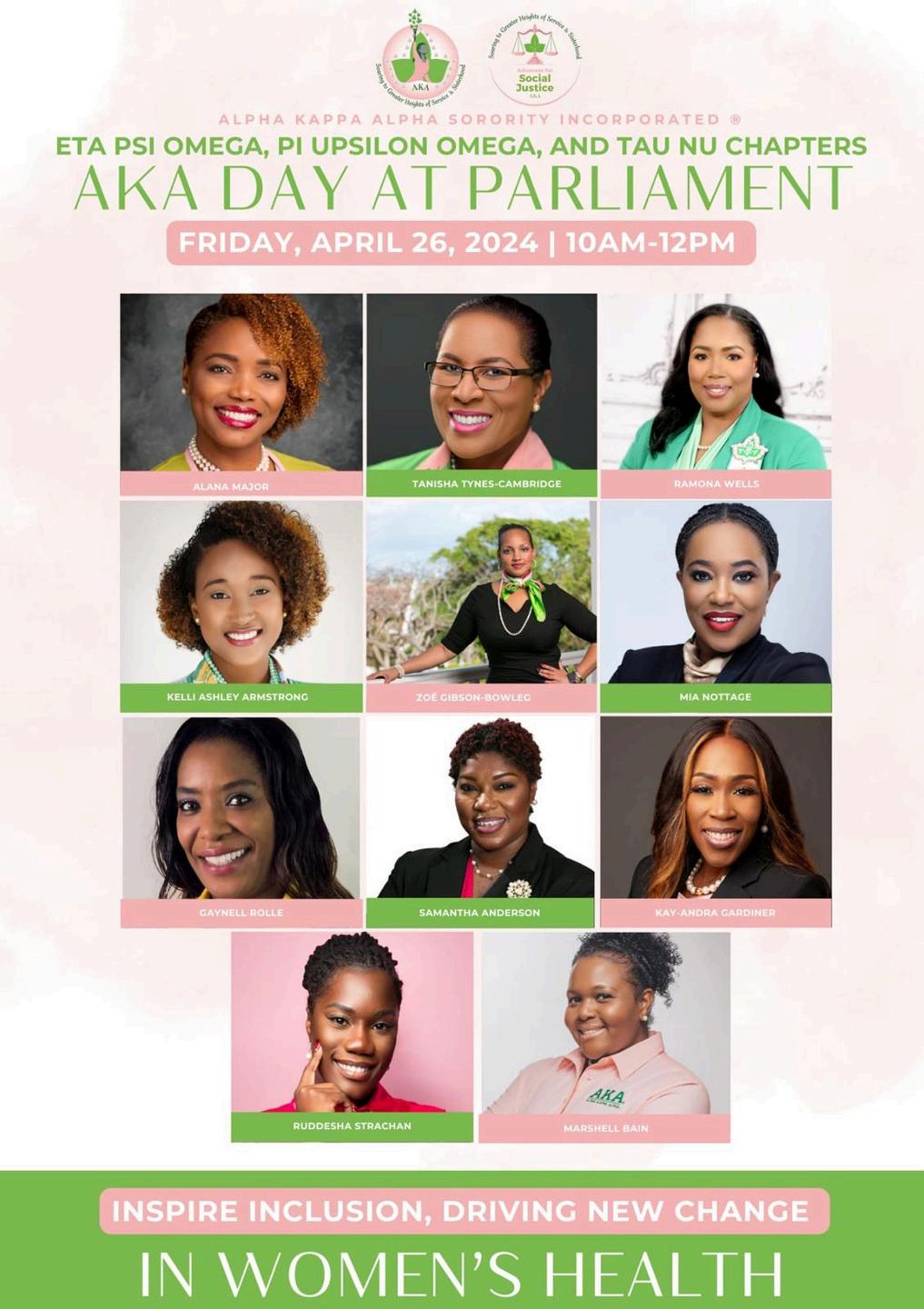
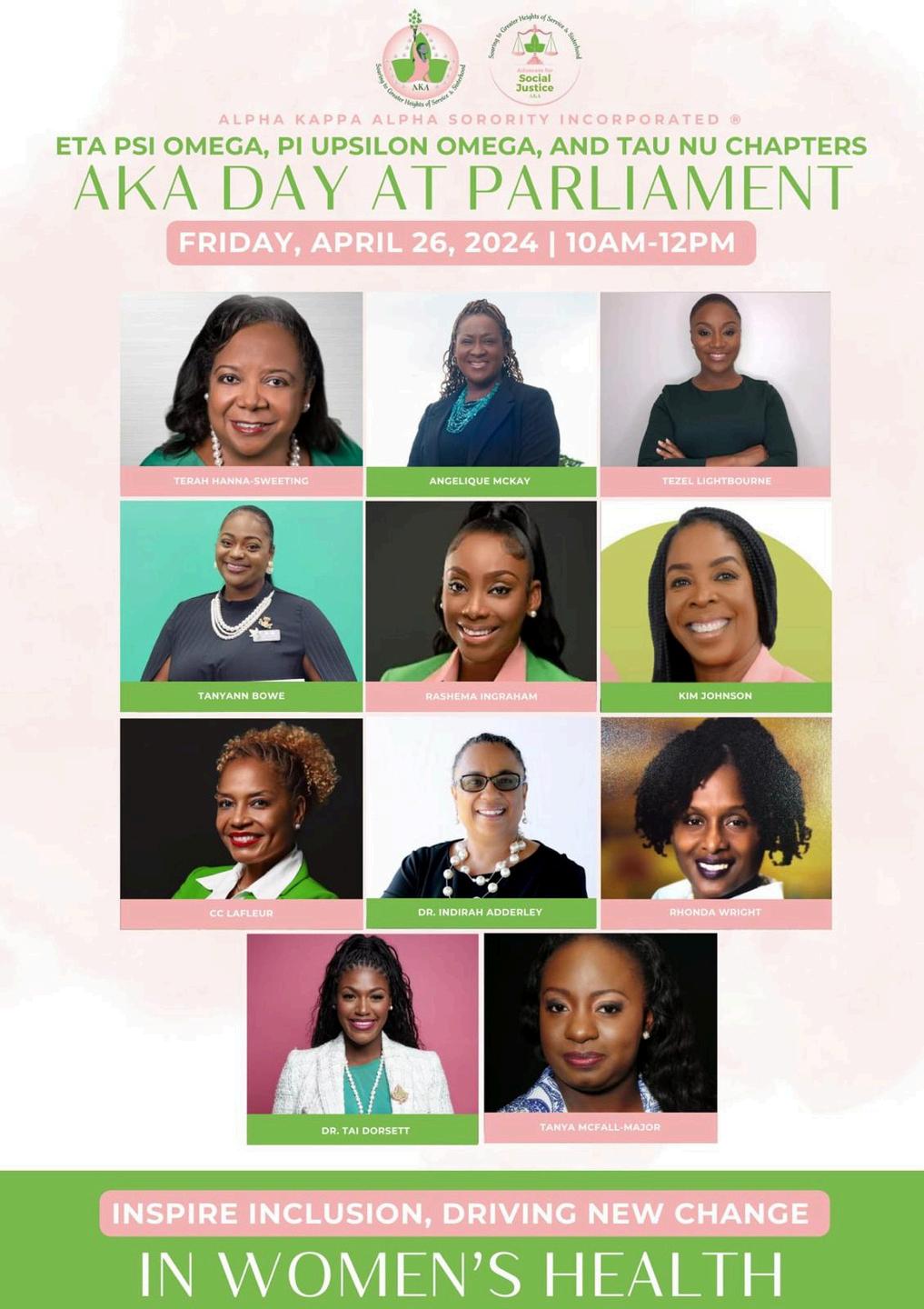


Acknowledgements&Contributions
This publication, AKA Day in Parliament: Inspire Inclusion – Driving New Change in Women’s Health, reflects the collective effort of Sorors dedicated to advancing women’s health and civic engagement in The Bahamas.
Project Lead & Editor
Alana A. Major, Chair, Advocate for Social Justice Committee
Committee Contributors
Eta Psi Omega 2024 & 2025 Advocate for Social Justice Committees
Speechwriters & Presenters (2024 Mock Session)
As listed on Page 3
Editorial & Policy Support
Phylicia Laramore
Ramona Davis Wells
D’Asante Beneby Small
Tezel Lightbourne
Tanya McFall Major
Design & Production
Graphic Design: Mansion Legacies & Alana Major
Digital Access & QR Code: Alana Major
Photography/Media: Zhivago McPhee & Pixl Studios
Printing: Mansion Legacies
Our Gratitude
We extend gratitude to The Prime Minister, The Speaker of the House of Assembly, The President of the Senate, and the Women Parliamentarians and Senators who continue to champion progress for Bahamian women
Historical Note
This booklet represents a landmark moment in civic engagement for Alpha Kappa Alpha Sorority, Incorporated® and leadership for the Eta Psi Omega Chapter in The Bahamas. It stands as a testament to the transformative power of women’s voices in shaping policy, advancing inclusive leadership, and driving meaningful public reform. May this work inspire continued collaboration, informed advocacy, and new opportunities to strengthen women’s health and well-being throughout our nation
AKA DAY IN
PARLIAMENT
INSPIRE INCLUSION, DRIVING NEW CHANGE
IN WOMEN’S HEALTH
SCAN ABOVE TO VIEW eBOOKLET
Alpha Kappa Alpha Sorority, Incorporated
ETA PSI OMEGA, PI UPSILON OMEGA, AND TAU NU CHAPTERS