AIT Research Theme: Technology, Policy and Society
AIT Unit: GDS/DDS/SERD
Project Duration: 1 June to 31 December 2023
Project Sponsor/Client: Deutsche Gesellschaft für Internationale Friedrich Ebert Stiftung, Bangkok
Expected Social Impact: There is little reflection on S-curve and BCG policies of Thai government from gender perspective. FES will use this output for their policy advocacy.
Description:
The study analyzes the possible impact on women and men’s employment from the current economic policies especially focusing on the S-curve industry promotion and BCG (bio, circular and green economy) model, and
provide policy recommendations for a gender-responsive labor and economic policies in Thailand.
MAKING NBCS IN AQUACULTURE MONITORING MORE GENDER RESPONSIVE IN SOUTHEAST ASIA: WHAT GETS MEASURED GETS DONE
AIT Research Theme: Technology, Policy and Society
AIT Unit: SERD/GDS
Project Duration: 1 September 2023 - 30 September 2027
Project Sponsor/Client: IDRC-AQUADAPT, Canada
Project Partner: GAFS
Expected Social Impact: Improved aquacultural climate resilience, nutritional security and livelihood security through improving the NbCS aquaculture projects to be more gender responsive by using a gender monitoring schema for NbCS aquaculture.
Description:
The project is to develop a gender monitoring schema to ensure integration of gender equity and social inclusion
in nature-based climate solutions in aquaculture system and projects.
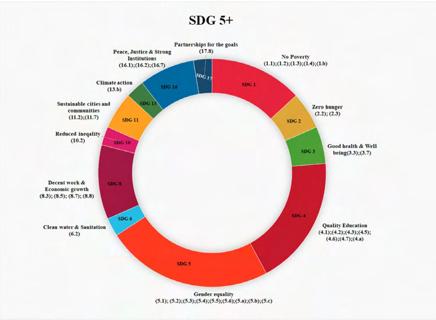
CLIMATE CHANGE AND GENDER EQUALITY: MOVING TOWARDS SDG 5
20 February 2023 – Prof. Joyashree Roy and Dr. Shreya
Some talk about the existing social dynamics, embedding gender considerations, and facilitating women’s participation in the design and implementation of climate change adaptation projects in their recent article “How different initiatives about climate change can improve gender equality and progress toward SDG 5”.
Gender inequality originating from historical, socioeconomic, developmental processes, and deeply rooted social norms is a major factor exacerbating vulnerability to climate change impacts across sectors and regions. An important question in this context is whether ongoing adaptation projects, implemented to reduce climate risks and existing vulnerabilities, are widening or resolving this historical burden of gender inequality.
Prof. Joyashree, Dr. Shreya, and their colleagues reviewed more than 17,000 global studies across nine major systems and sectors and synthesized evidence on climate adaptation projects’ positive and negative impacts on gender equality.
The assessment found that there is a lack of targeted action for enhancing gender equality. Both positive and negative impacts on gender equality have been created in all nine major systems and sectors. The study pointed out that it is crucial to comprehend the context in which measures taken to adapt to climate change have harmful effects on gender equality and to develop policies around such negative impacts to prevent further escalation of those effects.
In addition, the literature review presents an approach to evaluate the net impact – positive and negative. The study found that such net impacts are negative in four systems and sectors: ocean and coastal ecosystems; mountain ecosystems; poverty, livelihoods, sustainable development, and industrial system transition.
The article highlights that existing societal dynamics disempower women, social exclusion prevents women from accessing technology, and forced migration inflicts labor burdens on women, asserting these as the reasons why climate change adaptation projects have a net negative impact on gender equality within the four systems.
Furthermore, the authors have identified five key areas that would enable future climate change adaptation projects to contribute to gender equality. It includes addressing the structural inequalities at the policy level, designing an
inclusive decision-making process, revisiting legislation to regulate welfare measures targeted towards women in the labor force, enhancing active participation of women and marginalized groups and including them in the training information technology, and resources for (new) adaptation projects.
The study also identifies the gaps in evidence and shares future research priorities.
UNVEILING THE SPECTRUM: EMBRACING DIVERSITY IN SEXUALITY
AND GENDER
17 March 2023 – In a world that champions gender inclusivity and sensitivity, concepts associated with identities, privileges, diversities existing in sexual orientations, gender identities, expressions, consent, and harassment are often ignored and undermined. This can be attributed to the gaps we have in terms of knowledge, attitudes, and practices associated with these sectors, creating a gap in advocacy as well as actions, particularly when it comes to gender issues.
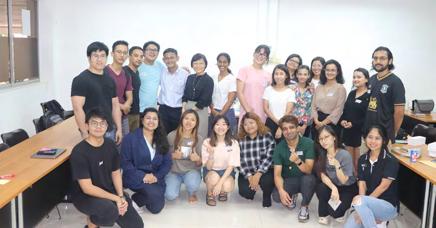
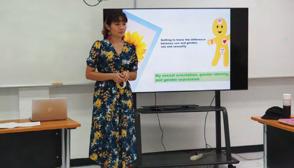
Realizing this and aligning with the campaign #EmbracingEquity, SU Gender and Culture Committee and Gender Equity Movers Society (GEMS) came together to advocate and enhance the knowledge, attitude as well as practices on the issues discussed above, organized the three-session long workshop from March 15- 17, titled “Unveiling the Spectrum: Embracing Diversity in Sexuality and Gender” to mark Women’s History Month 2023.
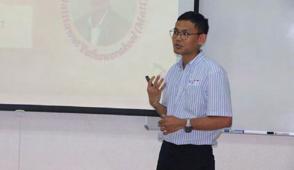
The sessions were led by three students of Gender and Development Studies, Farheen Masfiqua Malek, Renz Prudenciado, and Saittawut Yuthaworakool. The primary focuses of these sessions were Beyond the Binary: Exploring Power Dynamics (Farheen), Unboxing Gender: Discovering Diversities and Celebrating Diversity (Renz), and Labels or Limitations: Empowering Choices through Consent (Matt).
Participants representing different nationalities and fields of study thoroughly enjoyed the sessions in terms of content relevance, content delivery, and discovering the true selves of the individuals. The participants learned the difference between equality, equity, and justice. Gender is not binary, but there are so many layers to it, what consent really means, and all the dimensions it has. They also learned about the diversity of gender and consent. Some participants requested more programs on violence against men, while others emphasized the need for workshops on the Prevention of Sexual Exploitation and Abuse (PSEA).
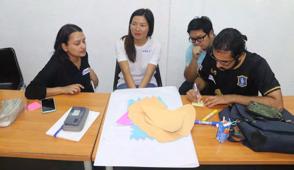
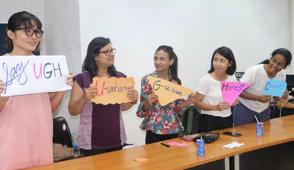
Participants at the event, Harune Kaneda and Hayatullah Mushwani, shared their positive experiences of the sessions. Harune stated, “I enjoyed all sessions, but particularly making a campaign with a group was most
interesting.” Similarly, Hayatullah said how it was interesting for him to learn about gender and sexual orientation.
The trainers also had interesting insights after the program. Renz stated that understanding and accepting diverse sexual orientations, gender identities, and expressions are crucial to becoming a good parent and creating a safe space for others. Matt said that he did not expect that his session would turn out to be an extremely fun and interactive experience.
Concluding the event, Prof. Kyoko Kusakabe, Gender and Development Studies, Department of Development and Sustainability, congratulated the organizers, trainers, and participants for addressing sexual harassment and promoting diversity. She emphasized on the importance of such events at AIT and encouraged open discussion about gender and diversity. “Small actions can create big changes. Through fruitful, fun, and stimulating events like this, we can encourage open discussion and promote diversity and inclusivity on campus. Let’s continue to take small steps towards a comfortable learning and working space for all,” Prof. Kyoko added.
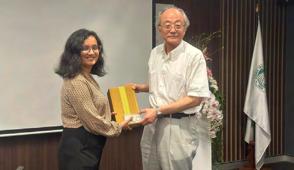
To honor the continuous support at AIT, SU honored AIT President Prof. Kazuo Yamamoto with the title of “Gender Ally of the Year” for supporting the efforts toward Gender equality. Similarly, SU recognized Prof. Kyoko Kusakabe as a “Leading Lady towards Gender Equality” in appreciation of her relentless work towards fostering Gender Equality and inspiring others to do the same for more than two decades.
NEW CENTER ON GENDER AND FORCED DISPLACEMENT AT AIT’S GDS PROGRAM TO ADVANCE POLICY CHANGE IN SOUTH AND SOUTHEAST ASIA
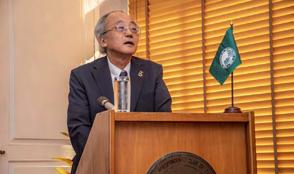
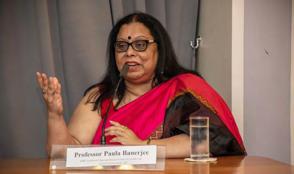
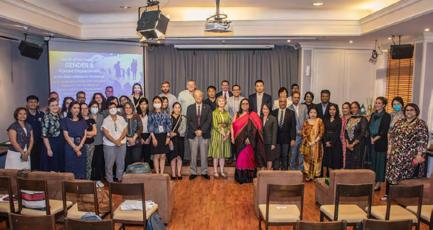
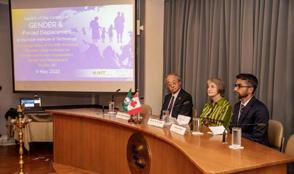
On May 9, 2023, the Asian Institute of Technology (AIT) launched the Center on Gender and Forced Displacement (CGFD) and inaugurated the IDRC Endowed Research Chair Professor on Gender and Forced Displacement. Professor Paula Banerjee, a distinguished scholar in gender, migration, and forced displacement, will lead the center as its director.
The CGFD is dedicated to producing top-tier research on gender issues related to various forms of forced displacement, including conflict-induced, climate change, environmental disasters, and development-induced displacements, with a focus on South and Southeast Asia. Its goal is to create locally-informed, gender-responsive knowledge that will guide policy-making at national, regional, and global levels.
This initiative aims to address gaps in research and policy concerning the gender dimensions of forced displacement, especially in areas with severe vulnerabilities and limited resilience capacities. The center will explore how gender intersects with other social factors, such as ethnicity, sexual and gender identity, and caste, to understand the diverse impacts of displacement on these groups.
AIT’s Gender and Development Studies (GDS) program, which celebrated its 25th anniversary in 2022, has a rich history of research in migration and displacement. The CGFD and the IDRC Endowed Research Chair will build on this foundation and enhance the institute’s research capabilities. The center will collaborate with universities, governments, UN agencies, NGOs, and community
organizations to foster cross-learning and build regional research capacity.
AIT Interim President Prof. Kazuo Yamamoto emphasized the significance of the CGFD and its potential to drive innovative solutions for gender-related issues in forced displacement. H.E. Dr. Sarah Taylor, Ambassador of Canada to Thailand, praised the center’s focus on gender and displacement, highlighting its alignment with Canada’s feminist approach to refugee responses. Professor Banerjee underscored the center’s mission to amplify the voices of displaced women and ensure gender considerations are central to policy decisions.
For more details on the CGFD and the IDRC Endowed Research Chair, please visit the AIT website or contact the Gender and Development Studies program.
AIT TO ANCHOR SAR 100 REGIONAL TECHNICAL CAPACITYBUILDING AND LEADERSHIP PROGRAM FOR WOMEN ENGINEERS IN SOUTH ASIA
On June 30, 2023, the Asian Institute of Technology (AIT) launched the WePOWER SAR 100 program, a pioneering initiative aimed at empowering women in the power and energy sector across the South Asian Region (SAR). This program, part of the South Asia Regional Infrastructure Connectivity (SARIC) initiative, is led by the World Bank and funded by the Australian Department of Foreign Affairs and Trade (DFAT) through Palladium International. It is designed to develop leadership and technical skills among mid-career women engineers from Bangladesh, Bhutan, India, Maldives, Nepal, Pakistan, and Sri Lanka.
The SAR100 program spans eight months, featuring ten intensive 3-week modules, each including a supervised practicum. The program culminates in a capstone seminar at AIT’s Bangkok campus, where successful participants will earn a 15-credit equivalent professional credential from AIT’s Energy Development: Systems, Management & Technology (EDSMAT) program.
Prof. Faiz Shah, the program lead, emphasized the collaborative nature of SAR100, noting its role in enhancing gender diversity in the energy sector—a critical area for sustainable development. He highlighted that the program was meticulously designed in consultation with SAR representatives and involves leading faculty from Australia, North America, and Thailand, as well as national experts from India and Pakistan. Prof. Shah expressed AIT’s honor in hosting the program and its Regional Knowledge Hub, welcoming 100 women energy leaders to the institute.
Dr. Jai Govind Singh, the academic lead, expressed excitement about the program’s launch, particularly its innovative approach to hybrid education. He noted the involvement of experts from the World Bank, University of Melbourne, Electricity Generating Authority of Thailand, and AIT’s energy sector network in SAR countries, underscoring SAR100 as a model for expanding access to high-quality learning.
The SAR100 curriculum is tailored to enhance participants’ technical capacity in managing regionally integrated power systems with high renewable energy penetration. It also focuses on understanding power markets and developing leadership skills that promote gender awareness and counter unconscious bias.
Prof. P. Abdul Salam, Dean of AIT’s School of Environment, Resources, and Development, recognized SAR100 as a testament to AIT’s commitment to regional development and making quality education accessible to more professionals, particularly women. He highlighted the program’s potential to support women in balancing their professional and caregiving roles.Emerging from discussions at the WePOWER regional meeting in December 2022, SAR100 is supported by national training partners across SAR countries, including Bhutan Power Corporation, Bangladesh Power Management Institute, and the National Power Training Institute of India, among others.
BREAKING BOUNDARIES: AIT’S GLOBAL INITIATIVE FOR GENDER-INCLUSIVE
MIGRATION SOLUTIONS
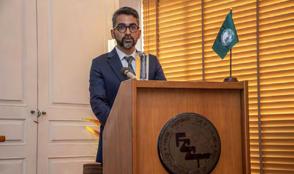
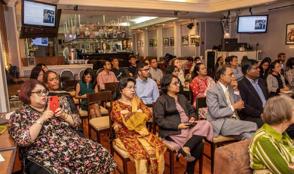
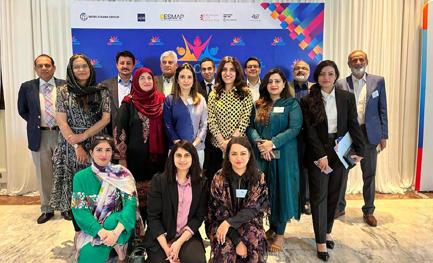
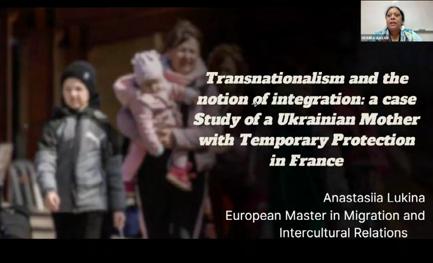
On 10 November 2023, the Asian Institute of Technology’s (AIT) Center on Gender and Forced Displacement held an online seminar focused on gender, forced displacement, and migration challenges. Titled ‘Seminar on Gender and Forced Displacements: Protection of Ukrainian and African Refugees,’ the event provided valuable insights into the diverse experiences of refugees and migrants, highlighting AIT’s commitment to advancing gender equality and social inclusion in migration discourse.
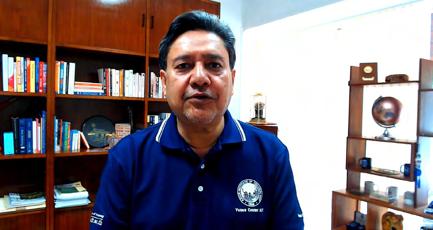
Professor Paula Banerjee, leading the initiative, emphasized the importance of understanding gender dynamics within migration. The seminar aimed to contribute to policymaking and academic discussions that accurately reflect the varied experiences of migrants, particularly through gender-sensitive approaches.
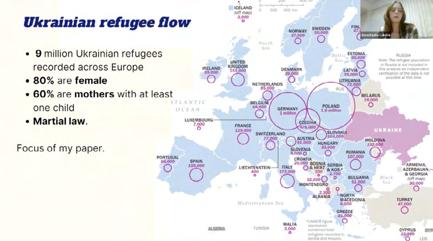
The event featured two notable presentations by emerging scholars. Anastasiia Lukina presented her research on Ukrainian refugee mothers in France, shedding light on the complexities of integration. Her findings, which explored the intersectionality of gender, migration, and identity, underscored the importance of inclusive policies and social initiatives. AIT is using these insights to advocate for more effective migration policies.
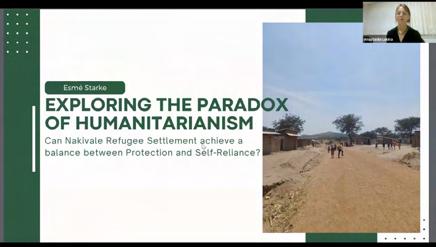
Esme Starke’s presentation focused on the challenges faced by Rwandan refugees in Nakivale, particularly the paradox of self-reliance. Her research revealed how humanitarian aid could sometimes hinder rather than help refugees’ independence. This prompted AIT to call for a reevaluation of aid strategies to better empower refugees.
AIT continues to lead research initiatives on gender and migration, issuing a global call to action. The institution seeks collaboration with policymakers, academics, and NGOs to create a more inclusive and supportive environment for migrants, ensuring that gender considerations remain central to the dialogue. This seminar underscored AIT’s dedication to shaping policies that promote equality and empowerment for all displaced individuals.
AIT’S STRUCTURAL ENGINEERING PROGRAM ACHIEVES REMARKABLE
GENDER DIVERSITY MILESTONE
27 December 2023 – In the historically male-dominated field of structural engineering, women have been quietly and steadily making significant contributions for many years. Now, as societal attitudes and opportunities evolve, more and more women are rising to the forefront of this profession, breaking through barriers and challenging longstanding stereotypes.
A remarkable milestone in this journey towards greater diversity and inclusion has been achieved by the Asian Institute of Technology’s Structural Engineering (STE) program of the School of Engineering and Technology (SET). Currently, one-third of the students in the program are female. In 1965, there was only one female student in the Masters of Structural Engineering program—a stark contrast to the current 33% representation. This notable shift reflects the growing presence of women in technology and their substantial contributions to the world’s development.
This achievement is a testament to AIT’s unwavering commitment to an inclusive, forward-thinking, and equal approach to education. The institution’s dedication has resulted in an enriched learning environment, allowing for diversity in the world of structural engineering.
The women joining the STE program at AIT hail from various corners of the globe, reflecting the international nature of the institution and the global impact of women in structural engineering. Their diverse backgrounds and experiences contribute to a comprehensive understanding of structural engineering principles and their applications in different regions and contexts.
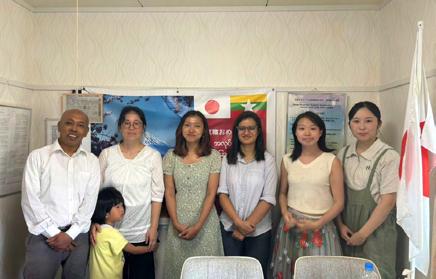
Among the many inspiring female students at AIT, Kyi Noo Khin from Myanmar, Jutamas Taweesit from Thailand, Sanisha Shakya from Nepal, Nattaporn Ponpai from Thailand, and Nitisha Kafle from Nepal stand out as shining examples of how female role models in the field can
inspire and encourage young women to pursue careers in structural engineering.
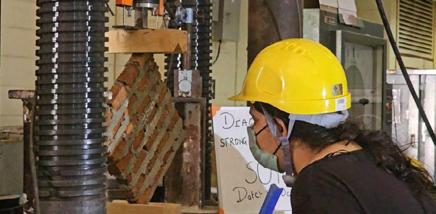
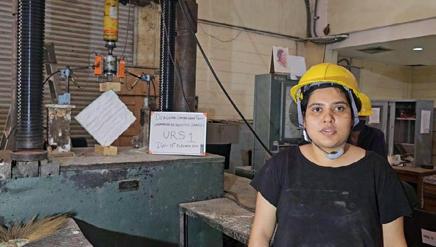
Ms. Khin, Ms. Jutamas, Ms. Sanisha, and Ms. Nattaporn are actively collaborating on a term project centered around the casting of a beam designed to demonstrate a specific failure mechanism in flexure while maintaining resilience against shear failure. Their primary goal is to ensure a ductile failure mechanism, a critical aspect in structural engineering that allows for deformation and provides warning signals before a potential catastrophic failure. Simultaneously, Ms. Nitisha is dedicated to her Master’s Thesis, focusing on the comprehensive testing of a scaled masonry building. Her research aims to deepen the understanding of the structure’s behavior during seismic events, offering valuable insights into the field of earthquake engineering.
This achievement at the Asian Institute of Technology is a testament to the transformative power of education in breaking down gender barriers and promoting diversity and inclusion. It marks a significant step towards a more equitable and balanced representation in the field of structural engineering, providing opportunities and inspiration for women worldwide to thrive in this dynamic and essential profession.
Ms. Khin, Ms. Jutamas, Ms. Sanisha, and Ms. Nattaporn (Left to Right)